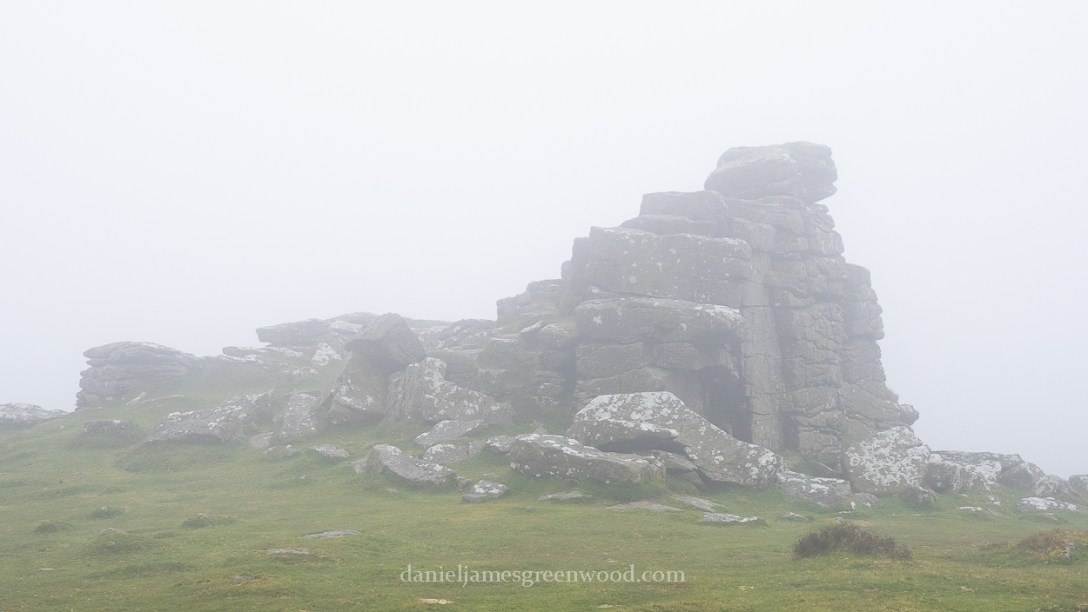
Dartmoor, Devon, May 2023
It was a misty morning high on Dartmoor. We began walking from Bennett’s Cross, passing Birch Tor and heading through wintry heather moorland. The white tails of wheatears burst across the paths as we disturbed them. Their journeys here are some of the longest undertaken by any migratory animal on the planet.
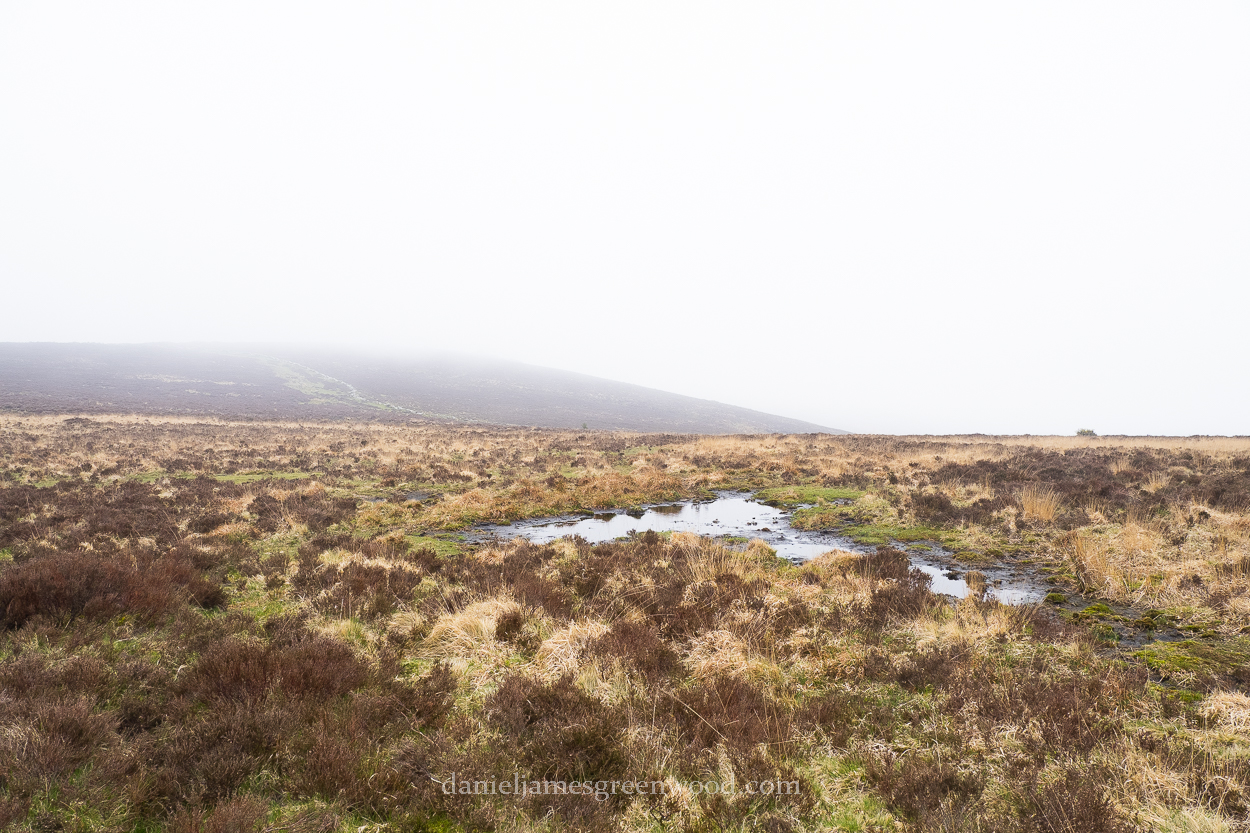
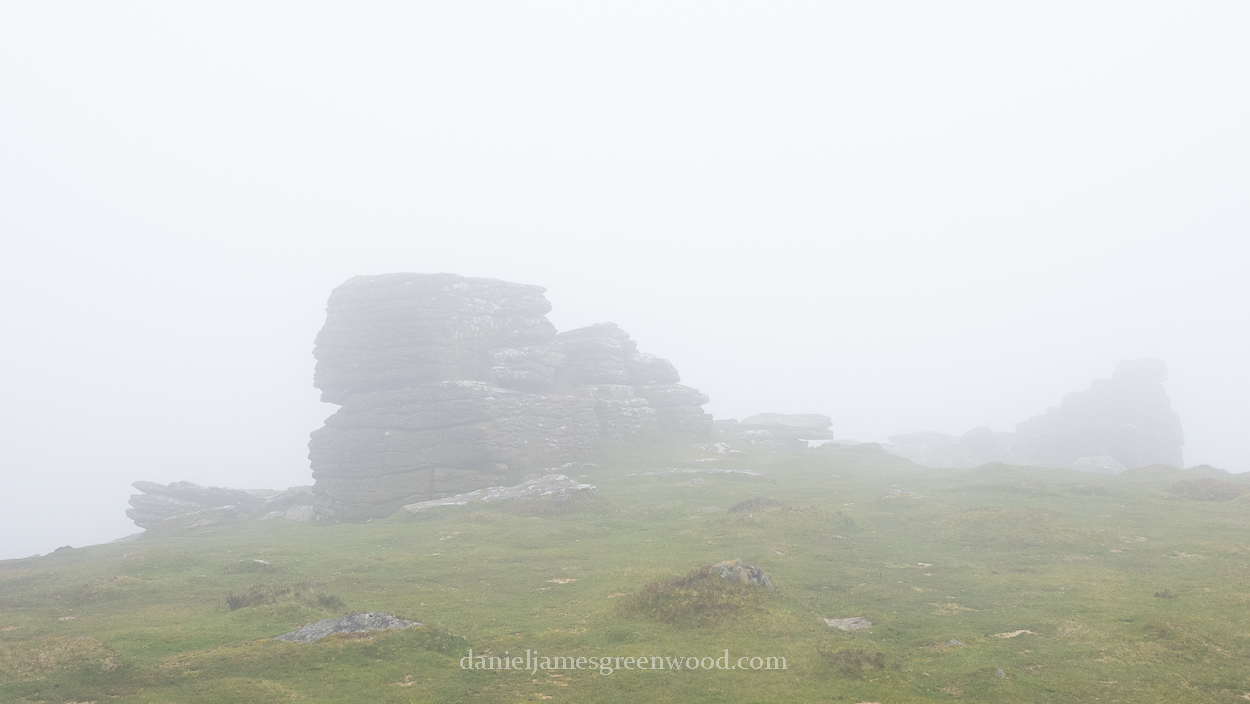
After a short plateau in the moor we crossed a quiet road and ascended Hookney Tor. Here the mist came in from the north, sucking up the wider moor, and the long stone wall that framed views in that direction. We switched east to pick up the unsigned Two Moors Way and walked between the rocky eruptions of Hookney Tor.
As we continued down on the Two Moors Way, a grey bird cut across the edge of the visible moor, some 25ft ahead, before the land was hidden by the mist. It was a male cuckoo, another African bird looking for a mate to breed in this harsh terrain.

The cuckoo slid away into the mist and we headed south for our prize – the 3000 year old settlement of Grimspound.

Approaching, only the collapsed stones of the outer enclosure were visible, painted white by the crust lichens that thrive on Dartmoor stone. In the distance we could hear the voices of other visitors to this ancient place. A family were visiting, posing for photos inside one of the small enclosures that had been rebuilt.
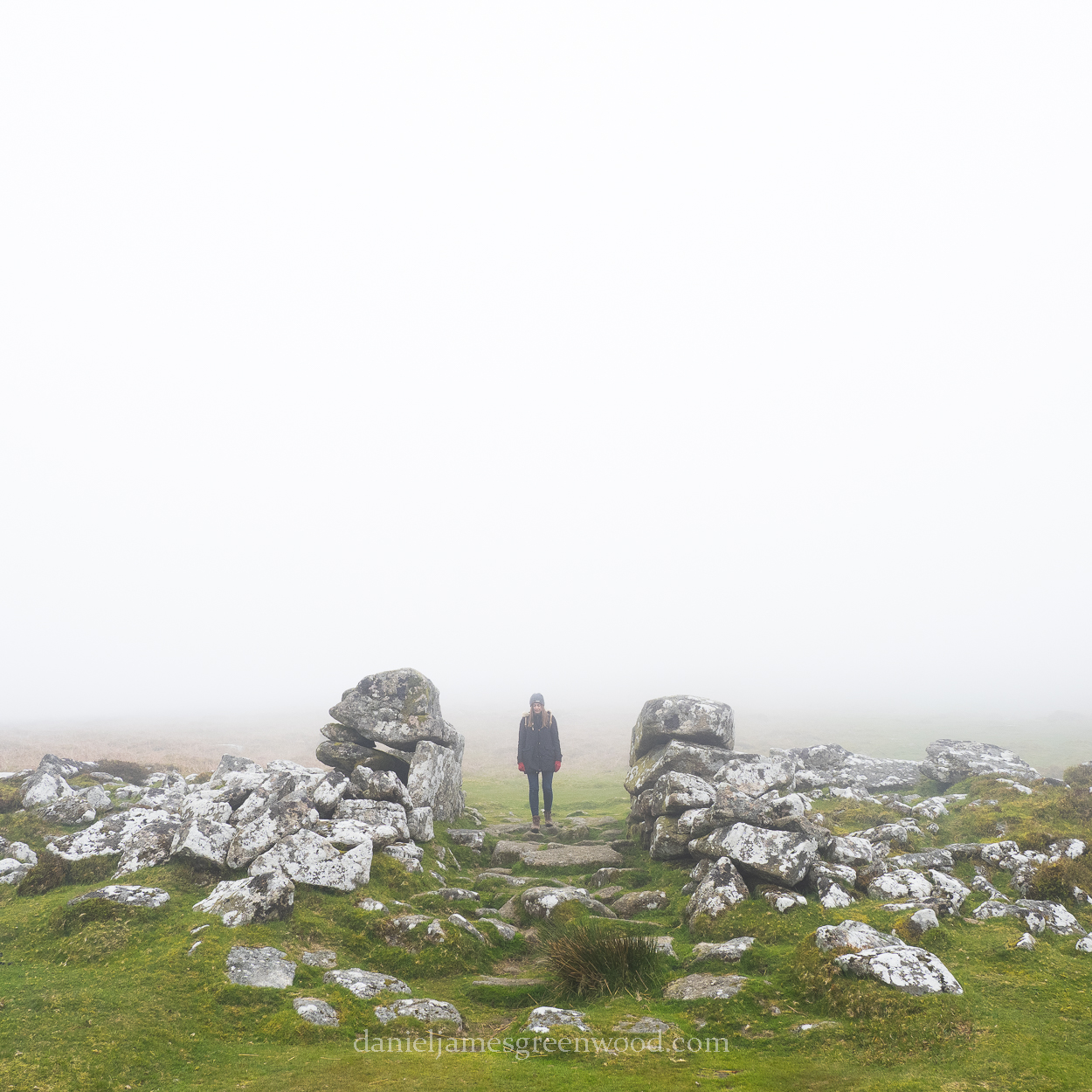
Entering into the ring of fallen stones, the smaller huts came into view. This wall will have been intended to protect the inhabitants and their livestock from wild animals like wolves (now long extinct) and any attacks from other people.
Thanks for reading.



 Unlocking Landscapes