
Continuing my series of posts about the landscape of the Jungfrau mountains in Switzerland, here is a look at some of the woodland plants seen above Grindelwald.
Just to say: picking or trampling on wildflowers is not advised, and may be illegal in some locations. The meadows shown here form part of people’s livelihoods as well as being sensitive habitats. Woodlands are extremely sensitive to our footsteps so stick to designated paths where you can. Check the regulations around foraging before you go and show respect for people and wild plants, animals and fungi when you visit. There’s a lot of livestock around, usually behind fences, but they’re so noisy you can’t miss them.

The photos here are a mix of mirrorless camera and phone. The plants photos are mainly taken with my Pixel 7a, the landscape photos with my Olympus EM1 Mark III. All have been lightly processed.

The walk
The walk was a fairly short one in length, mainly due to the altitude and general tiredness from travelling. It would be a good one if you’re visiting from Interlaken on a day when it’s not worth going higher or it’s too early in the season.

The walk is about 2.5 miles and can be done more quickly if you’re not taking photos of plants!
All the high trails, including the Eiger Trail, were closed when we visited. Climate change may be making rockfall more common and therefore the higher trails are more dangerous.

It’s possible you can do this walk and see absolutely no one, but for a farmer or two, after you pass the toboggan run.

We took the Pfinstegg cable car up to the Berghaus restaurant, had some chips, and walked down to the village, past the toboggan run.

What you can’t hear is the sound of middle-class Americans talking about their Adriatic travel plans.
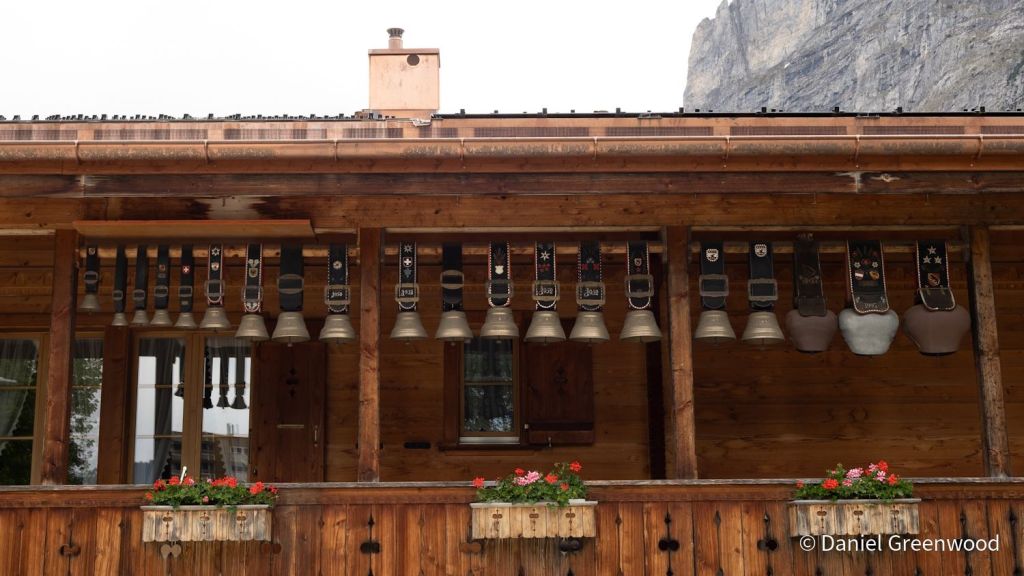
One image I wanted to share was this exhibition of alpine heritage. Here you can see the array of bells used in the Jungfrau for cattle management. The sound of the cowbells is one of the signifiers that you are in the Swiss Alps. Of course the same can be said for many mountain regions, but each one has its cultural differences. That’s a different blog entirely!
Alpine flowers (1300m)
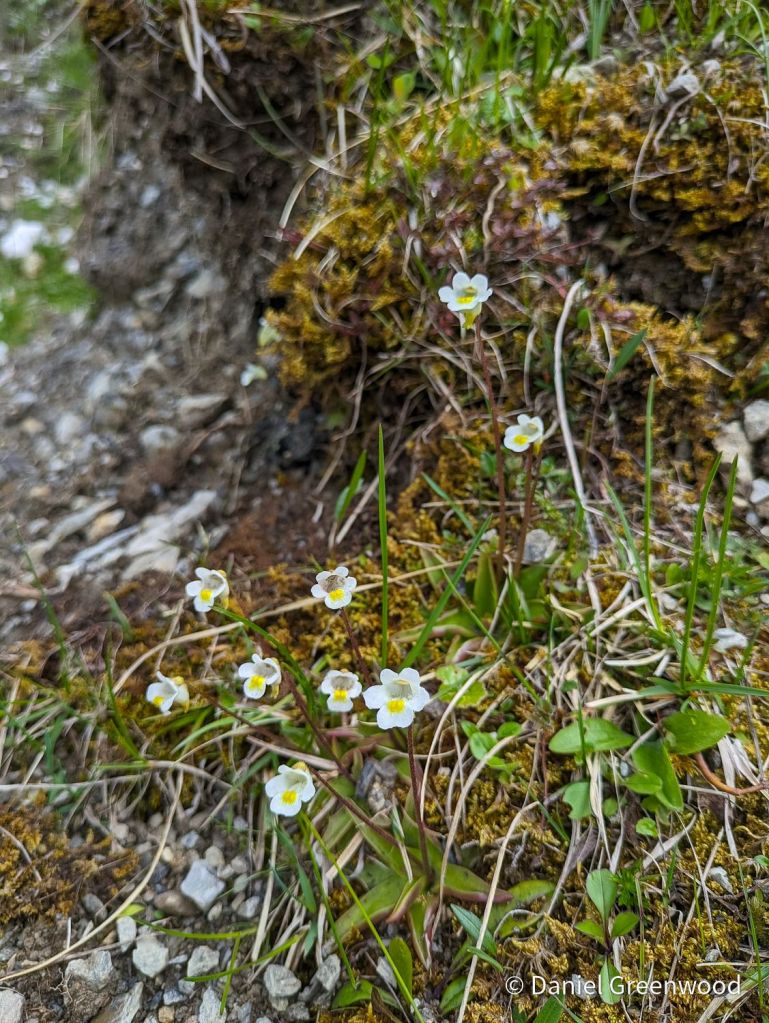
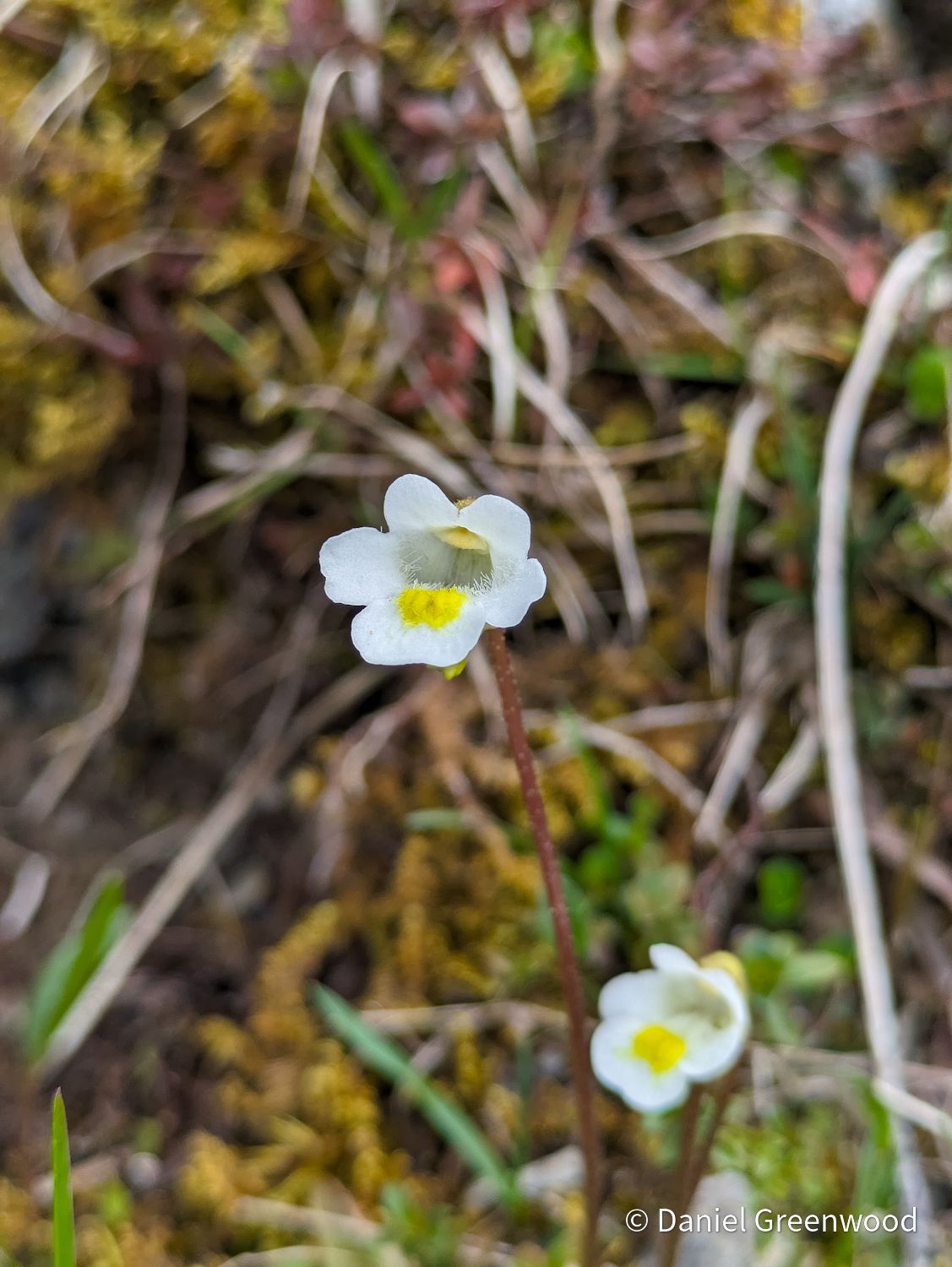
One of the more common sightings in the alpine zone was alpine butterwort, (Pinguicula alpina).


Another common one was shrubby milkwort (Polygaloides chamaebuxus).

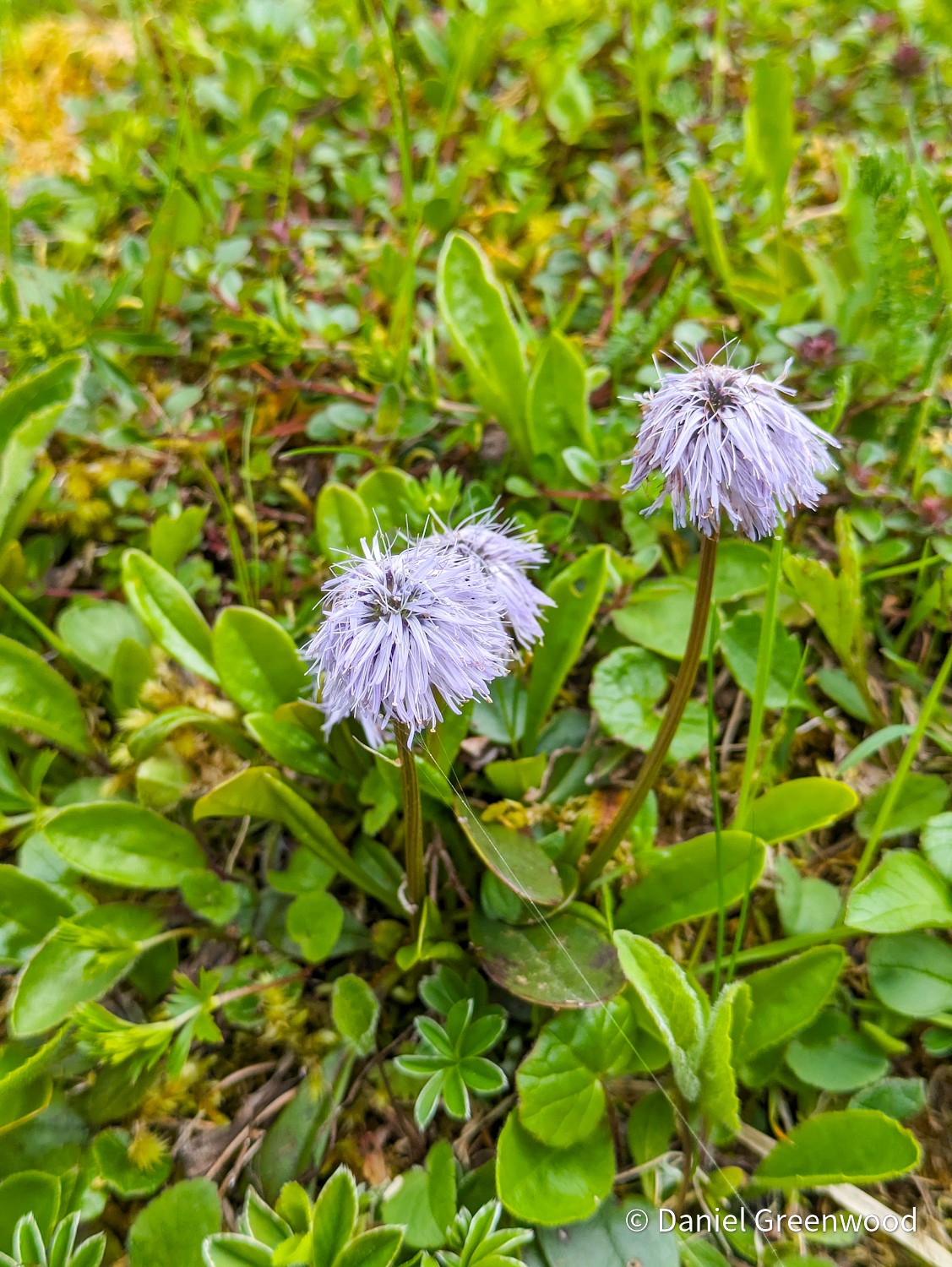
A regular of this habitat was leafless stemmed globularia (Globularia nudicaulis). They look like little lilac mops.

At this point the views of Grindelwald began to be swallowed by the spring woodlands.
In the woods

As you can imagine, the water was crashing down as the snow melted. A lot of work is going into observing the changes in the glaciers in the Swiss Alps, which is happening at an alarming rate here.

You can get views of the Lower Grindelwald Glacier from this walk (though this was taken lower down). This glacier shrunk by over a mile between 1973 and 2015.

I love a new violet species that’s easier to identify than ours at home. This is twoflower violet (Viola biflora) and was only seen in the woods at the edge of lanes.
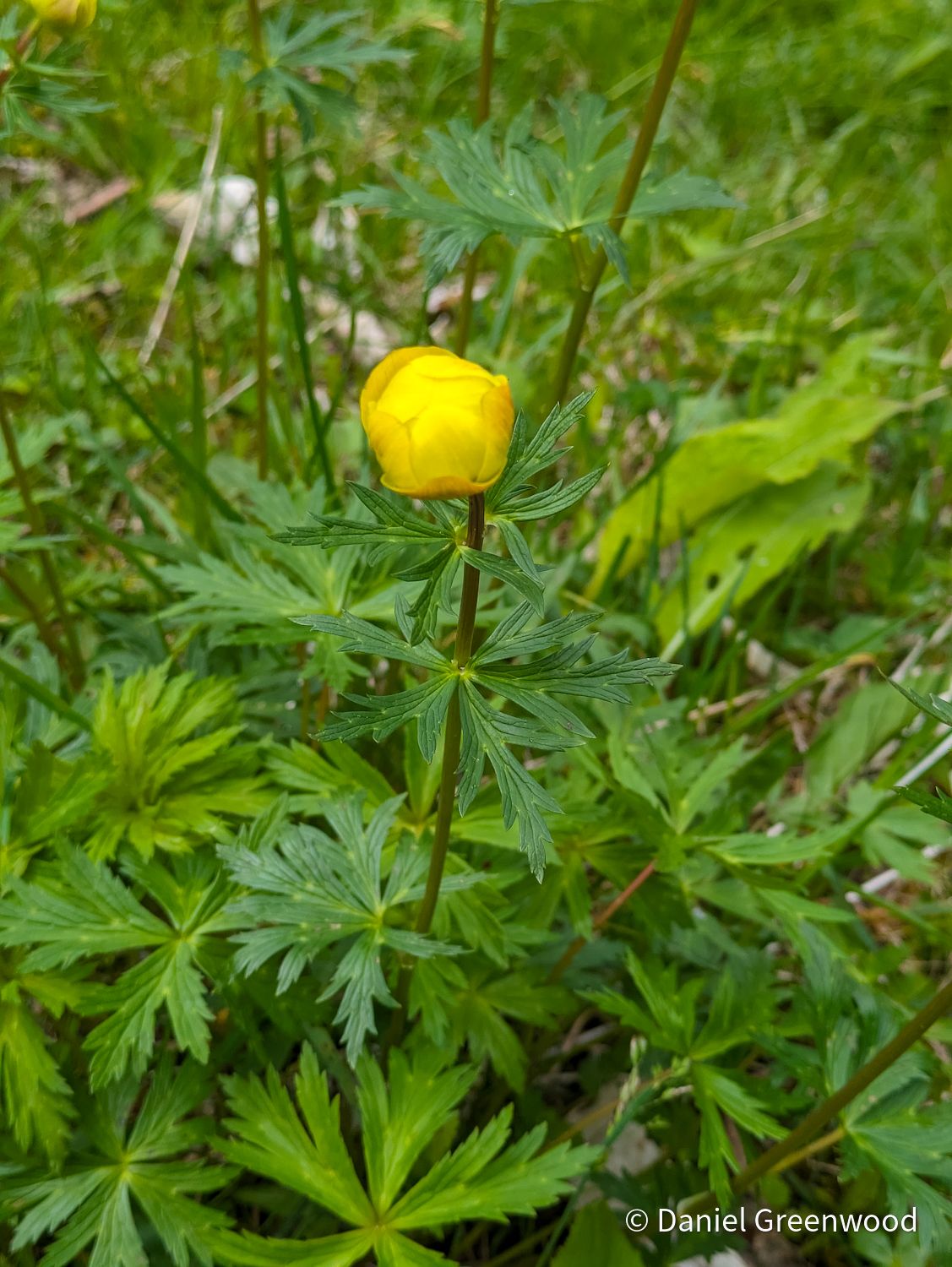
It’s always nice to find globeflower (Trollius europaeus), a species of buttercup.

This was a new species for me – may lily (Maianthemum bifolum). It looks more similar to something like black bryony or bindweed to the untrained eye (this one).

This cranefly was resting on the leaves of yellow archangel, a woodland plant we seem to be losing in the UK.

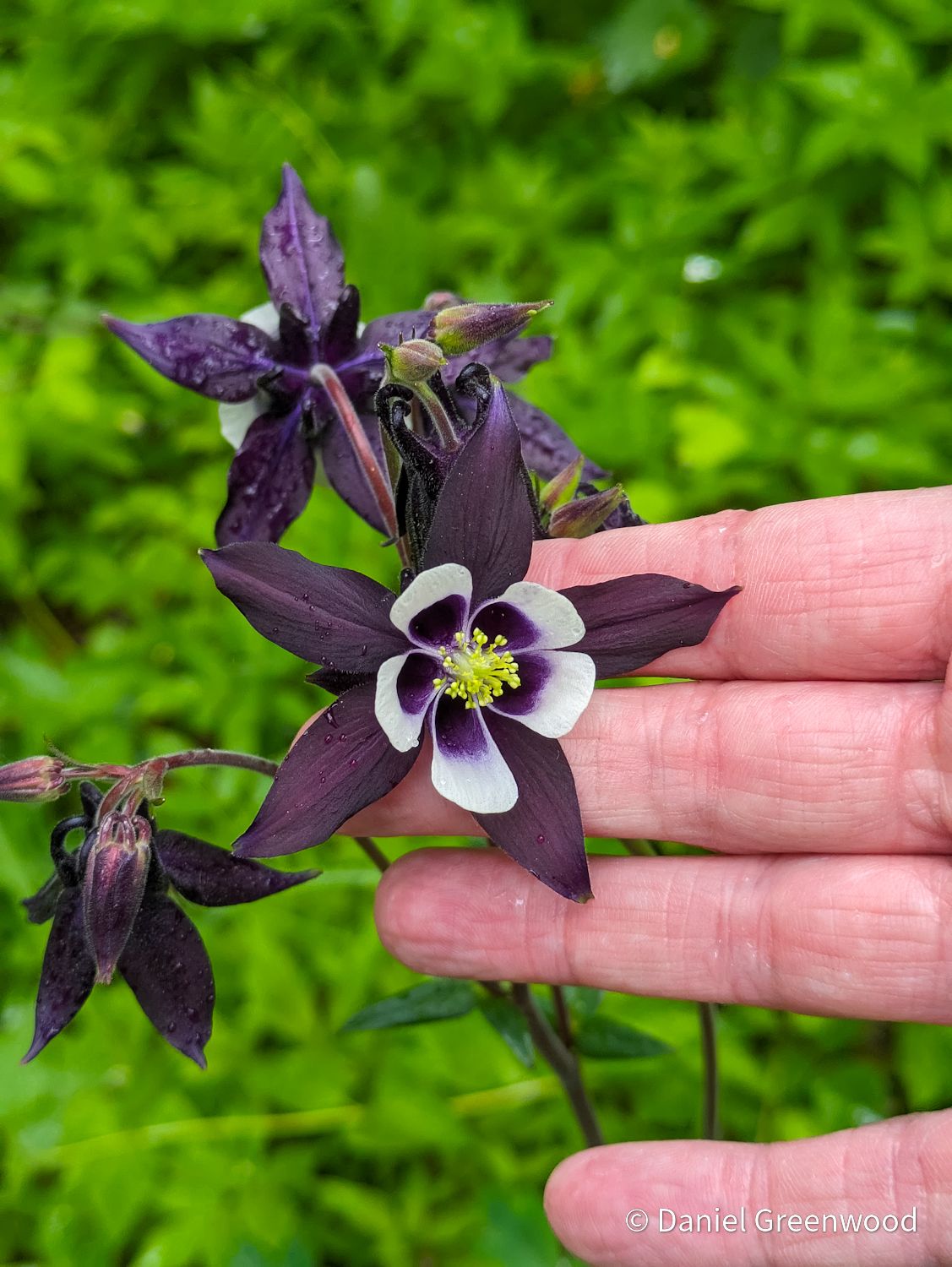
It’s always a joy to encounter herb paris (Paris quadrifolia). I think the columbine (Aquilegia vulgaris) seen here is probably a garden escape, though it is an ancient woodland plant as well, so I may be wrong. I hope it’s the wild one!
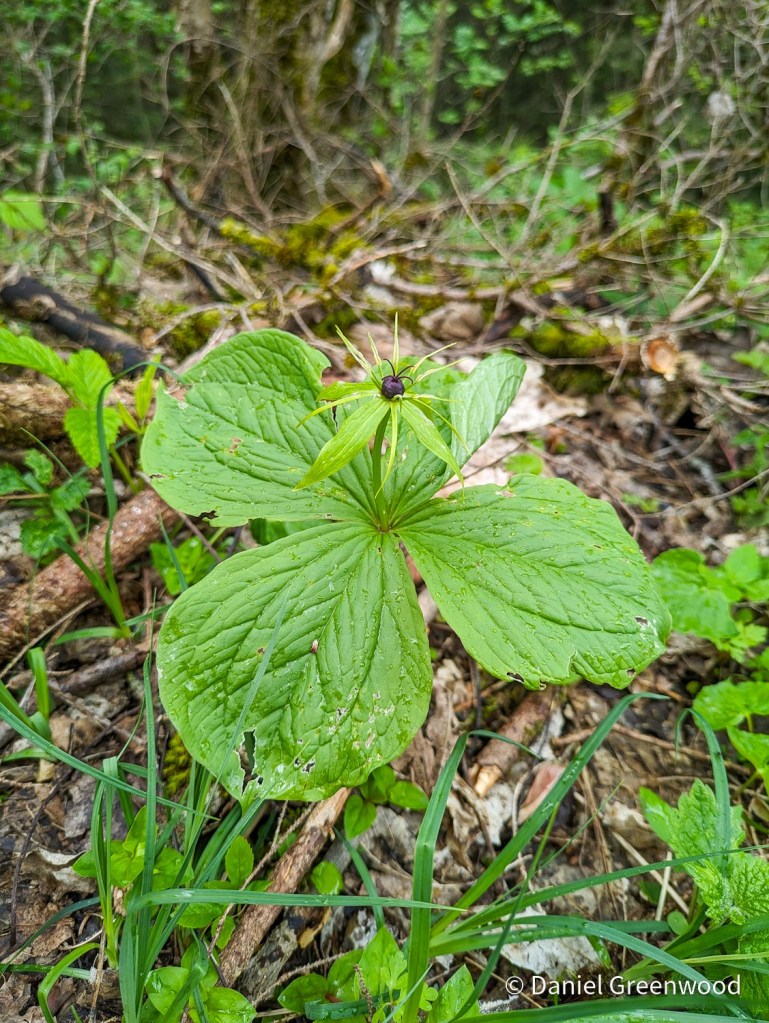
There was more herb paris, but only in the woods.
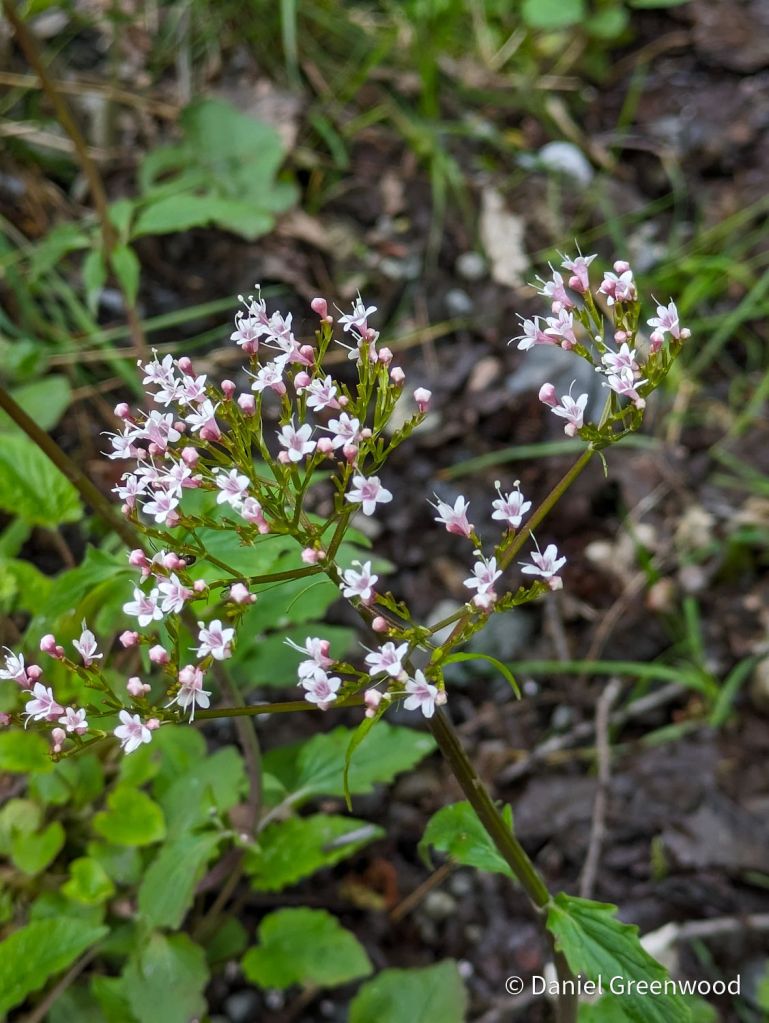
There were a couple of valerians. This one is three-leaved valerian (Valeriana tripteris). It was growing in wet areas.
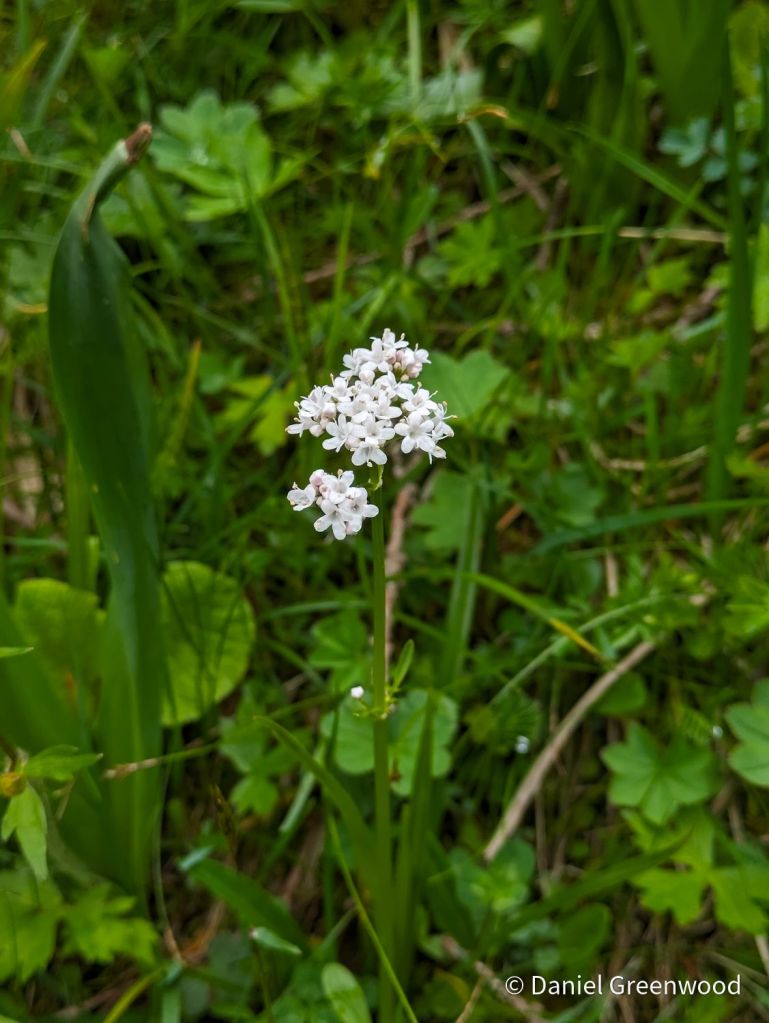
I also saw marsh valerian (Valeriana dioica).

Now, there weren’t a lot of orchids out at the time as it was probably too early in the season. But this is bird-nest orchid (Neottia nidus-avis), which I’ve only really seen in the chalky woods of the North Downs in England.

This is fly honeysuckle (Lonicera xylosteum), a strangely shrubby honeysuckle compared with the climber we have in the UK. It’s been introduced to Britain but I’ve never bumped into it.
Hillside meadows

Let’s just take in the views of the Wetterhorn for a bit…
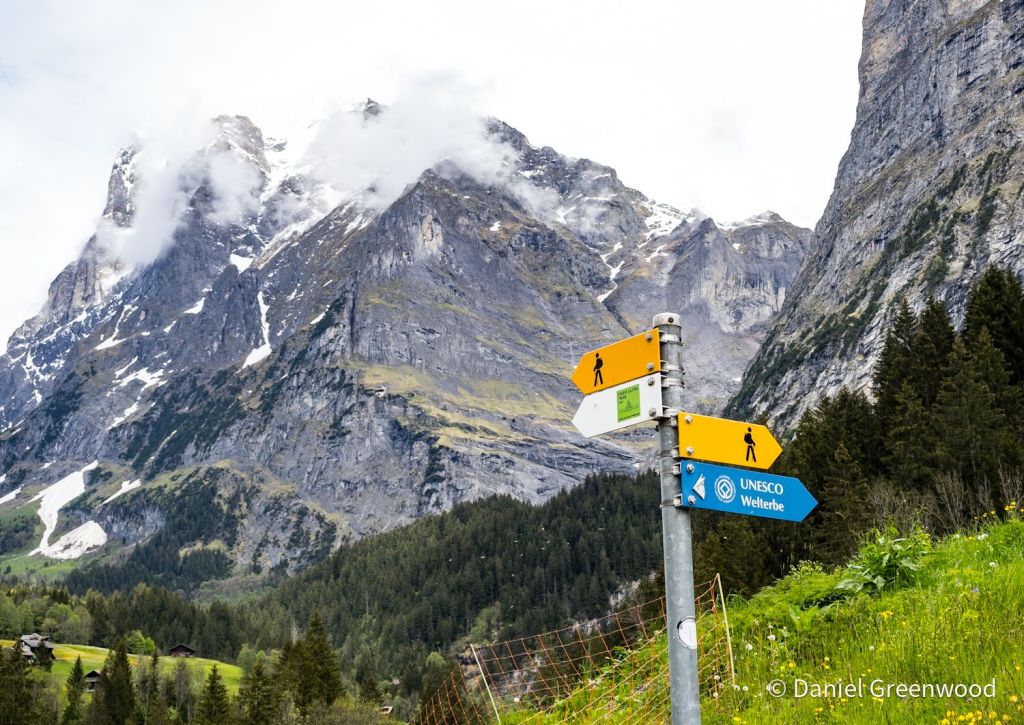
I’d like to be out walking in World Heritage landscapes every week, but alas, it will just have to be once or twice in life.

Looking south-west towards the Eiger.

Mountain sainfoin (Onobrychis montana) was one of the most eye-catching plants, growing at the edges of the lane if I remember rightly.
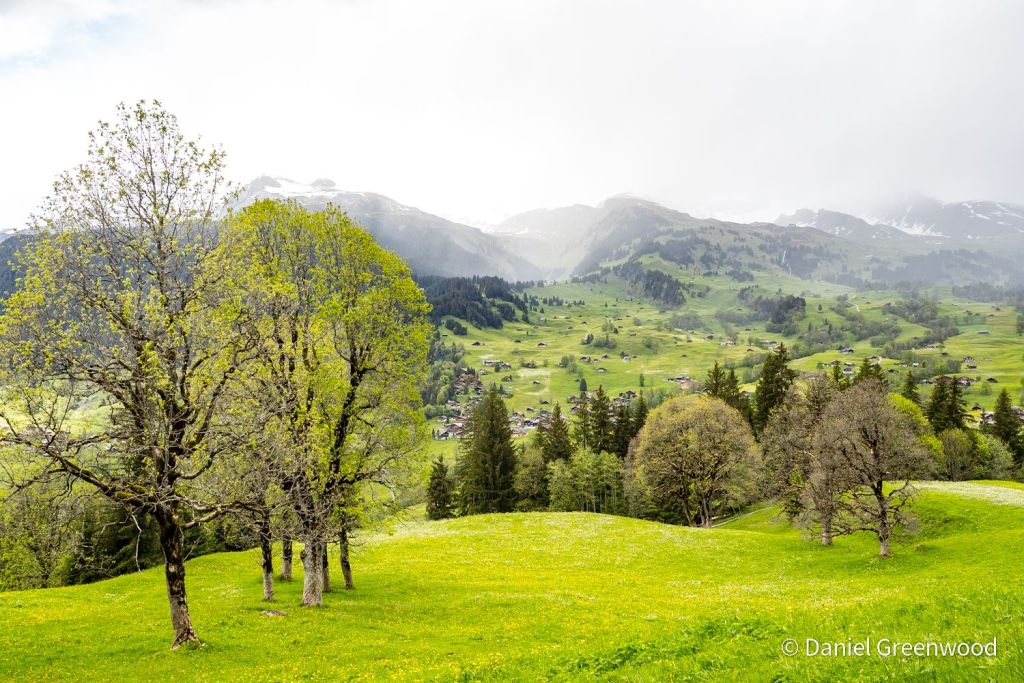
The spring really glows in this image, despite the misty conditions. The sycamores are coming into leaf.
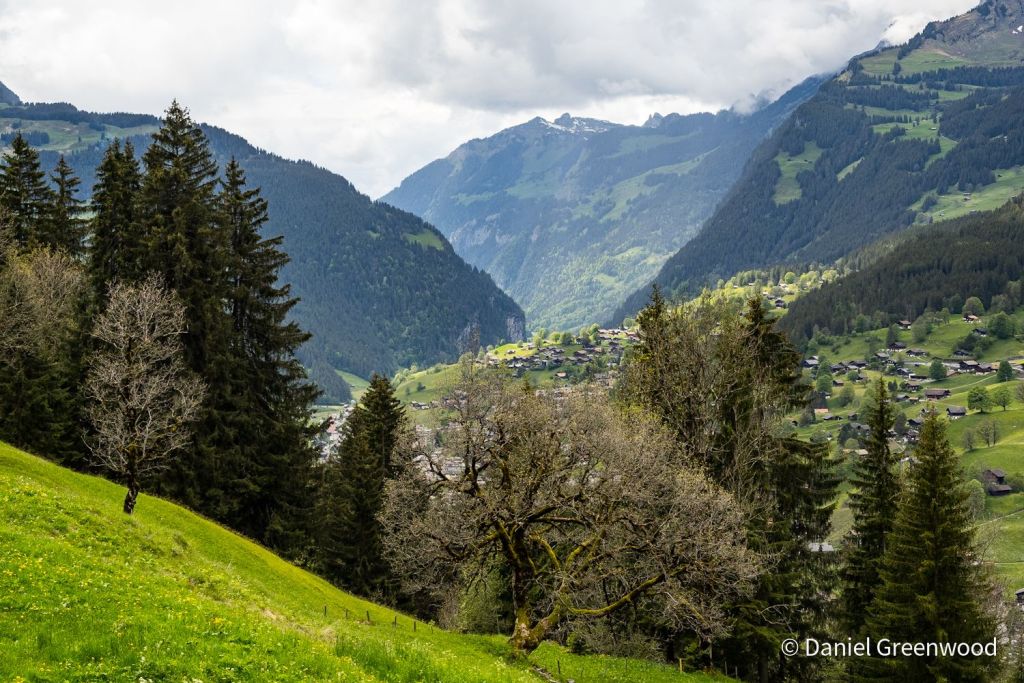
This is a view down the valley where the train returns to Interlaken.
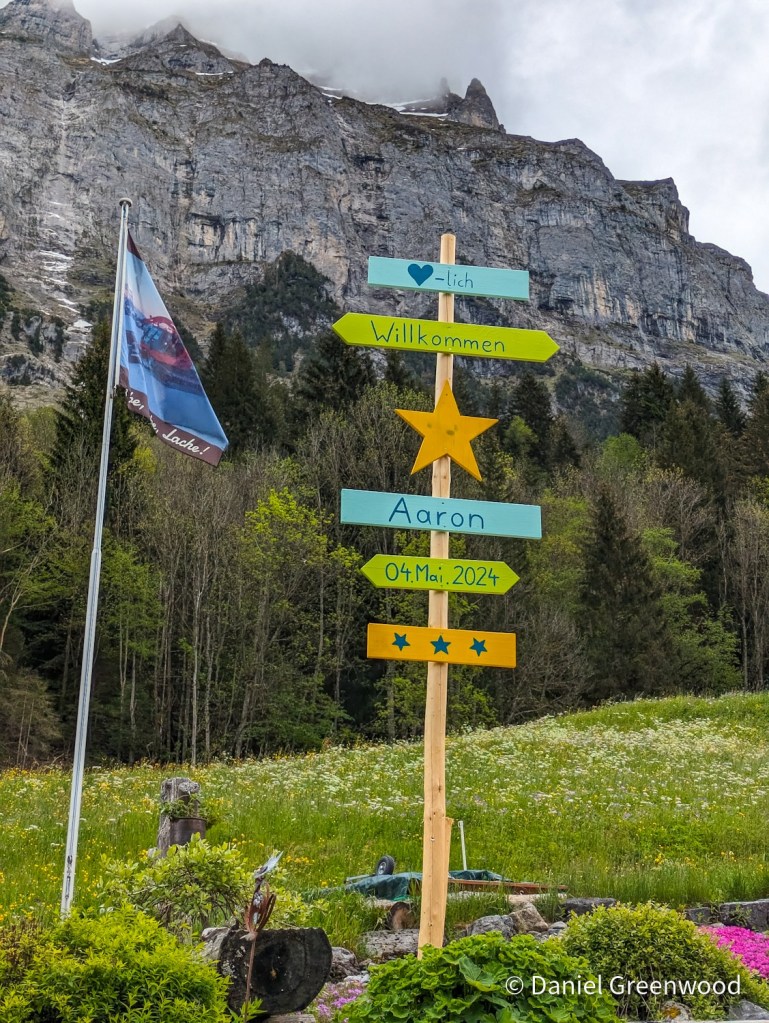
This is something I’d never seen before – a totemic welcome for Aaron who was born on 4th May 2024. Perhaps this is a tradition in this part of Switzerland?
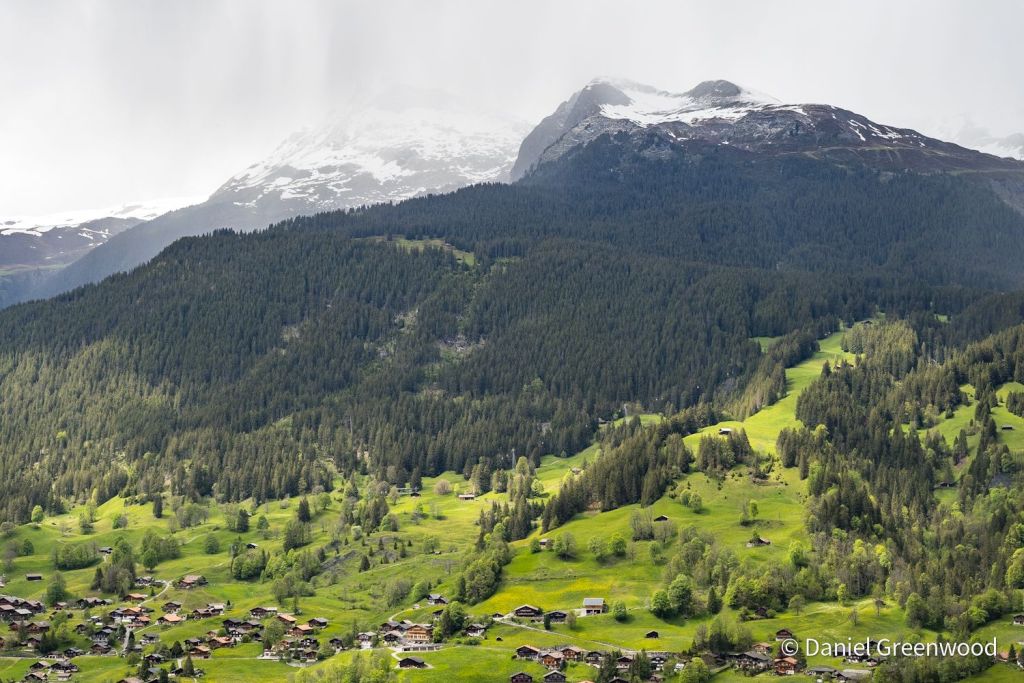
The views across towards Grindelwald First come into view as space opens up on the woods. You can see all of the chalets that dot the meadows.

I was intrigued by these rustic chalets that were more indicative of a rural way of life, compared with the guesthouses in the valley. It looked lived-in or at least used by people who made use of wood products. What a lovely place to be able to escape to in the summer. Of course communities would have developed from these single dwellings across the Alps.

This image looks north towards the other side of the valley. The yellow hue in the meadows is either kidney vetch or birds-foot trefoil.

The lovely spiralling shell of a snail roosting in a tree.

These umbellifer-rich meadows were a joy to behold.
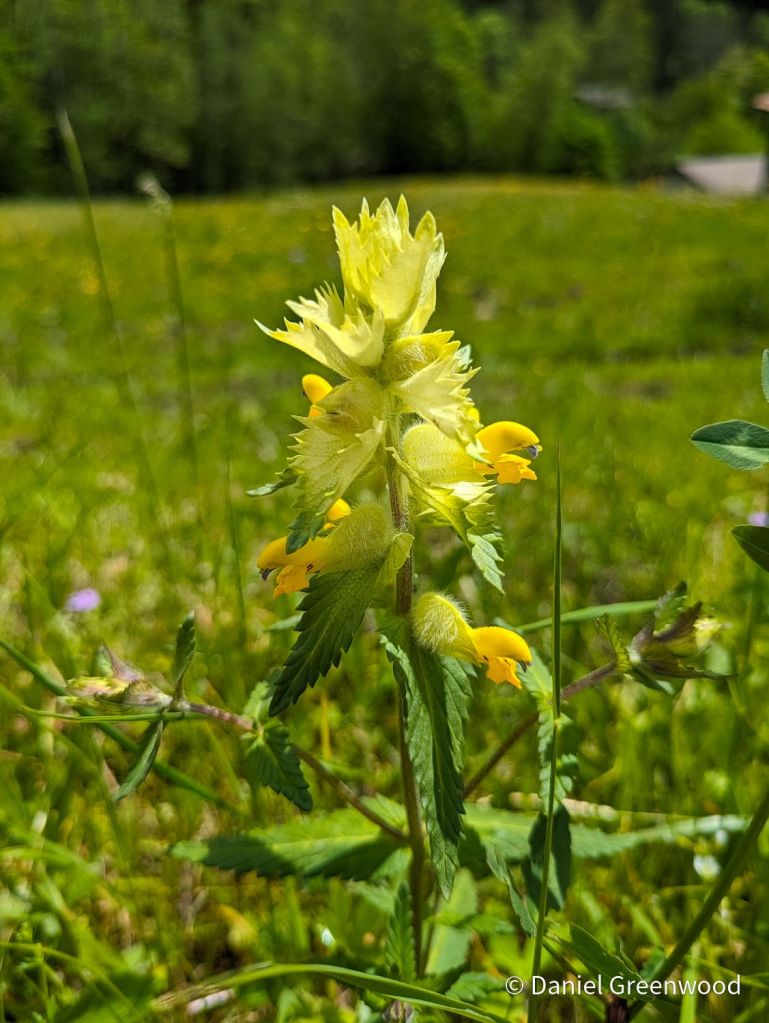
The lower we got (c.1000m) the more abundant yellow rattle become. This is probably Rhianthus serotinus.

This is the Black Lütschine, one of the rivers that flows into Lake Brienz. It was very powerful. Its source is the Lower Grindelward Glacier, pictured earlier in this post.
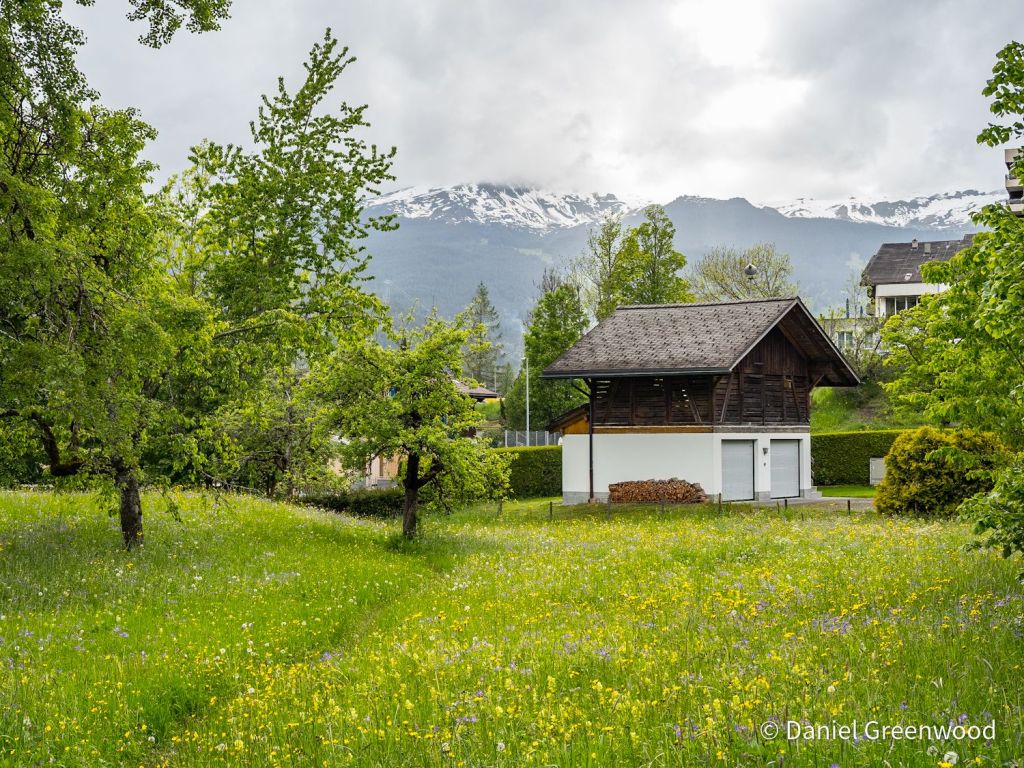
The meadows around people’s houses – this looks like an orchard – were in fine condition.
Thanks for reading.
I write these blogs in my spare time because I want to raise awareness about the beauty and diversity of our landscapes. If you enjoy reading them you can support my blog here.

 Unlocking Landscapes
Oh my goodness, how this makes me want to go back to the Alps….I broke my leg this year, but I’m already booked for next year! One plant we saw a lot in the woods around Obergurgl was yellow foxglove (Digitalis luteum) and very pretty it is too. Isn’t butterwort insectivorous? There’s a dark blue species in the Arolla forest close to Obergurgl…
Hello! Ah that’s great you will be going back. I don’t know much about butterwort but it does look inviting to an unsuspecting invertebrate 😸
I think we were too early for foxgloves, I’d love to see the yellow one.
I have a number of other posts to come, including some for Austria which I haven’t got to yet. So much to share! 🌻
Thank you also for your ongoing support ☕
Still amazed at the number of wildflowers you saw. And so many of them different to those we saw in Switzerland just two months later. As ever Daniel, an interesting read.
Allison
I think we caught that spring woodland sweet spot, you were there when the more vigorous wildflowers had become dominant. I can’t imagine it like that! Thank you la 👍🏻