I’m still dining out on mid-April at the moment, it’s such a lovely time of year.
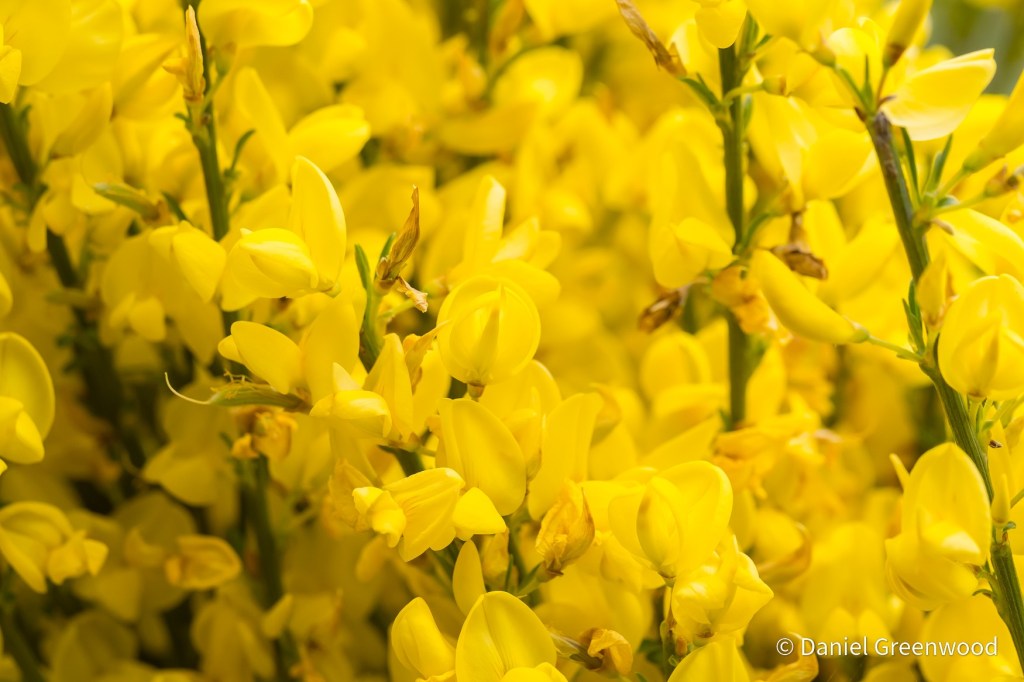
The broom (Cytisus scoparius) we planted several years ago has bloomed magnificently this year. It’s been a treat to both smell, and to see it attract a whole range of pollinators.
Dandelions have been all over social media recently with the recipes for ‘dandelion honey’. I am reliably informed that it’s jam or syrup rather than honey because you’re not a bee. It’s good that people are becoming more aware of dandelions which are incredibly important for pollinators.
We’ve expanded our berry bed in the garden to include an extra redcurrant, blueberry and gooseberry. Above are the lovely flowers of redcurrant.
My little laid hazel hedge is coming along nicely. These fresh red stems are a welcome sign.
As part of the hedge I’ve planted a couple of oaks that have been in pots in our garden for a number of years. One of the oaks is from my grandmother-in-law’s garden near Epping Forest, the other grown from an acorn from Dulwich Wood. I love the redness of the leaves when they first appear, whether or not these are tannins I would need to check the science.
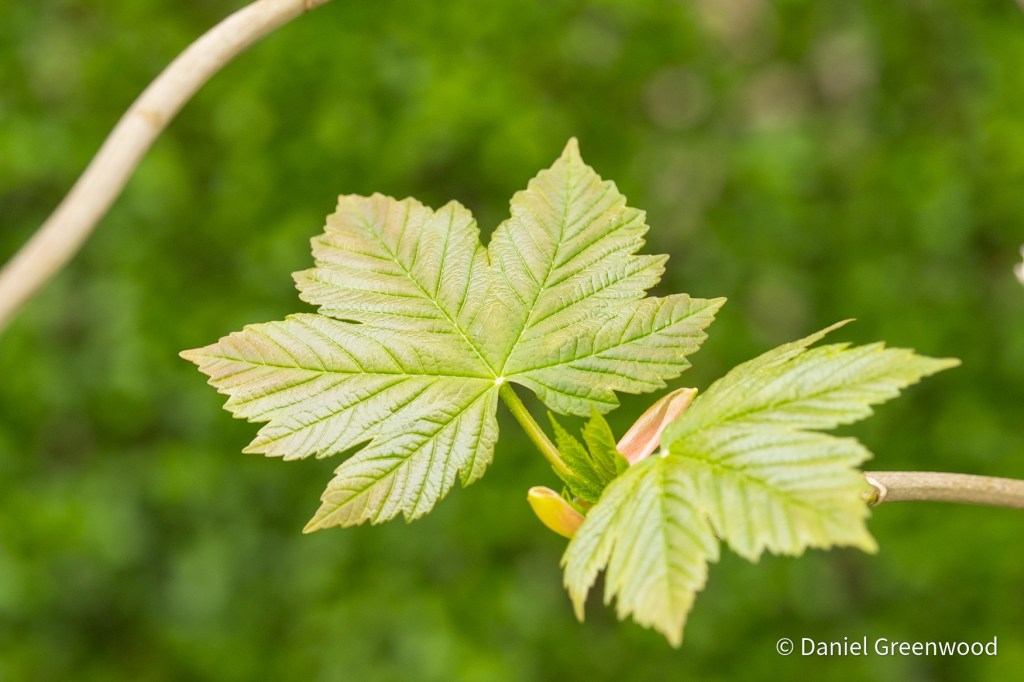
Elsewhere the sycamore is now leafing. Soon these will be sticky with aphid honeydew. The sparrows and blue tits will be hoovering the aphids up to feed their nestlings.
Speaking of those little devils, our swift box has been moved-into after 3 years of waiting for something to happen. Of course it would be best if swifts were there, but sparrows are also red-listed and their habitat is being lost as people are forcing them out of the eaves. Much of that is probably unintentional, but it’s still something we need to look at.
In the invertebrate world, the droneflies have calmed down a bit and are willing to pose for their macro close-up. This is probably a tapered dronefly (Eristalis pertinax).
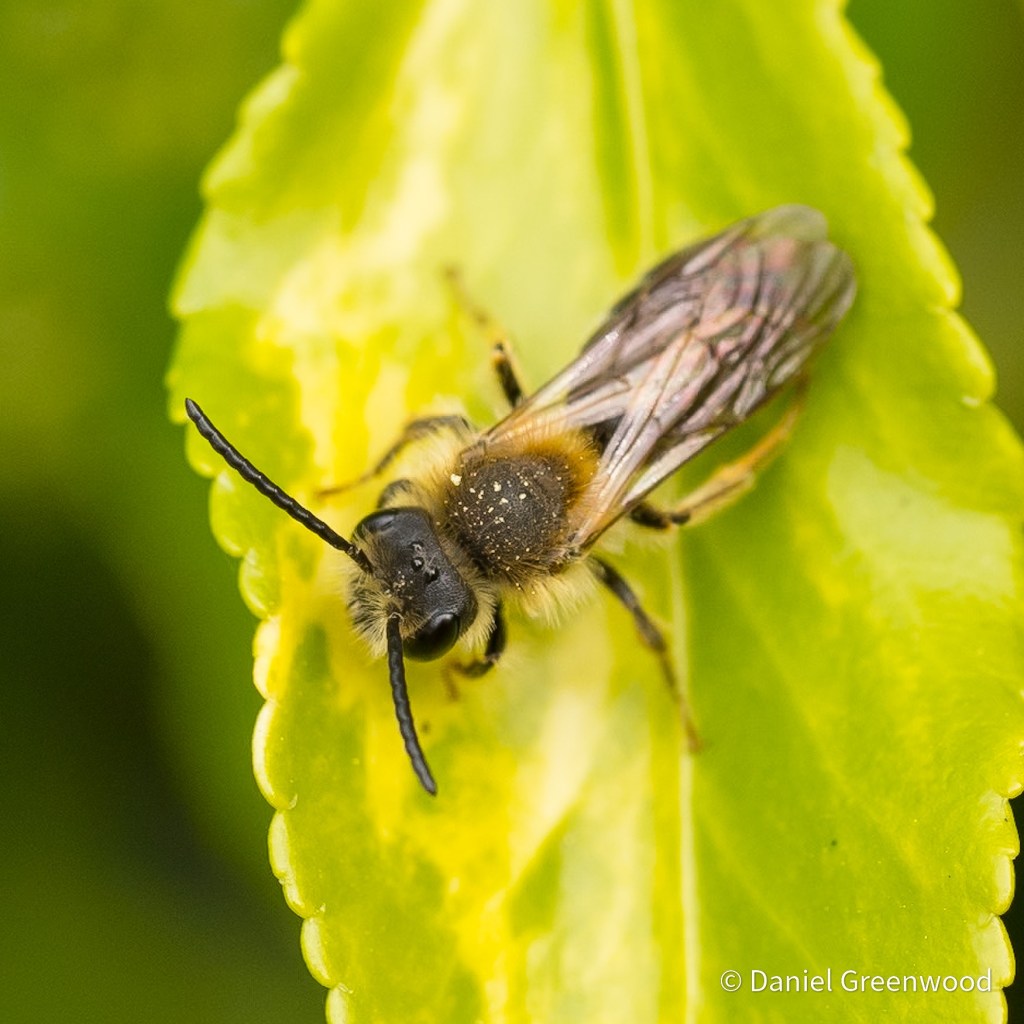
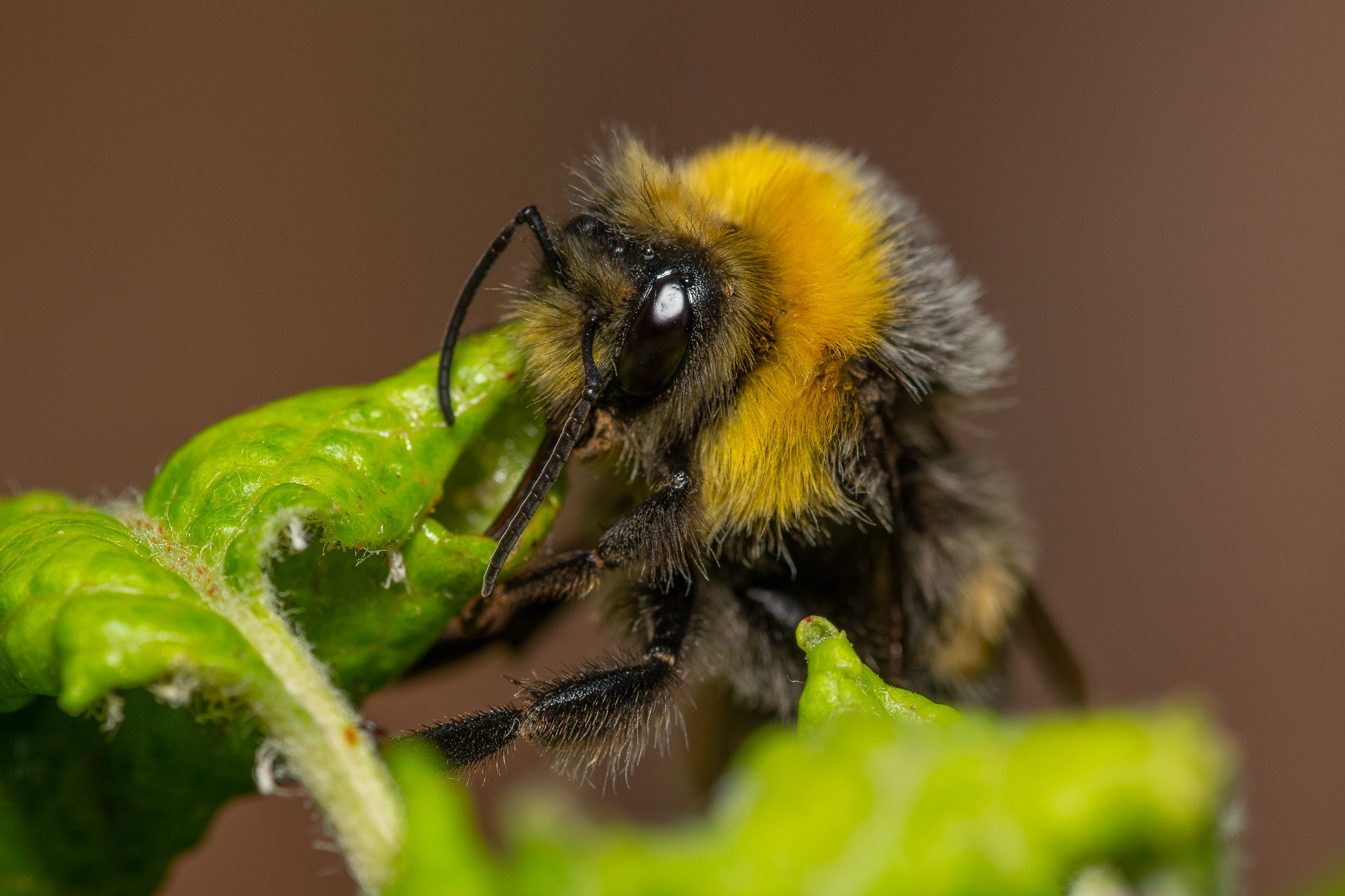
This is my first decent set of images of a solitary bee this year. It’s probably one of the mining bees (Andrena) but I don’t have an ID yet.
Another solitary bee species had found its way into our living room. I took a few photos before letting the little bee back out into the world.
After eating an apple one evening I decided to copy what my dad was always doing, and plant some seeds. I potted a couple of apple pips in compost and left them on the windowsill.
The pips began to grow into little seedlings. I was astonished, these pips just had to drop into some soil and trees grew.
There’s no doubt to me that this experience, along with time spent under a hawthorn and small willow tree in my parents’ garden as a child, helped me to learn to love trees. It’s the dynamism, the strength, the age, the ability to grow from seemingly nothing we could survive on.
The apple tree matured, was re-potted, and was eventually delivered to me by my parents in 2018 when I moved to Sussex. It’s about 2 metres tall and just sits in its pot, not really doing much, putting out leaves, letting the seasons come and go.
As far as I’ve known, this tree will never flower or produce fruit. That’s all I’ve ever read or been told. It needs to be grafted with some other apple, ready to produce fruit.
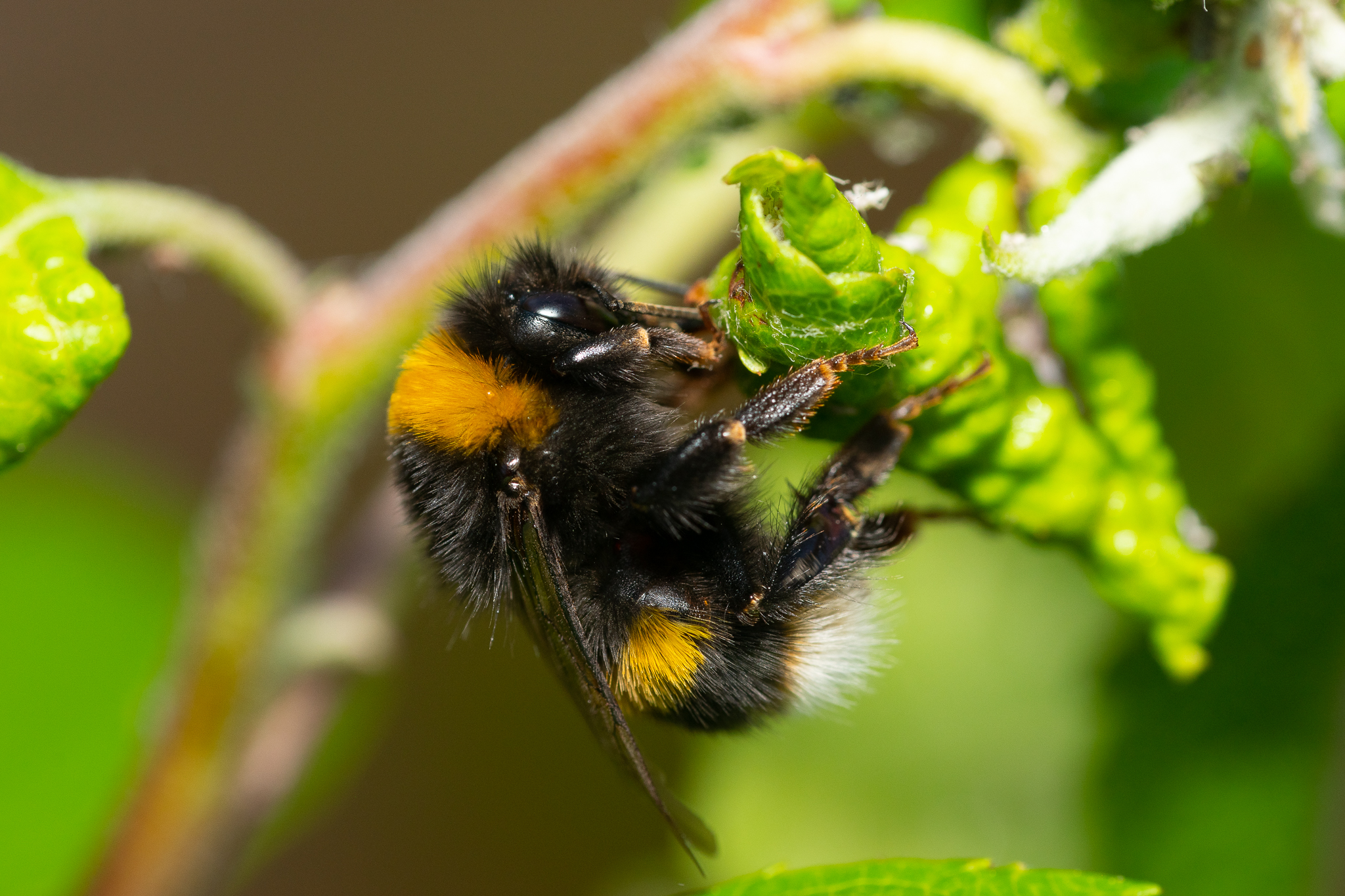
I blogged about the tree in 2021 as part of 30 Days Macro, when bees nectared from the leaves after they became curled up by farming ants(?) and drenched in aphid honeydew.
And so… the other morning I was sitting in my garden enjoying the spring sounds, smells, and sights of new flowers. I stood up and turned to go back inside when I saw a pink flower on the apple tree.
I couldn’t believe my eyes.
17 years of nothing, and then these bright pink and white petals appear.
It made me think of the passing of time, of all that’s happened, where I am in life. It reminded me of where the tree came from, that my dad’s annual sowing of seeds had inspired me to even consider putting that pip in the little pot of compost.
Will it produce fruit? I don’t know, I don’t actually eat apples anymore (too acidic)! I don’t even know what type of apple it is.
But it felt like a signal – life can surprise you – that trees are resilient, dynamic, and beautiful.
On Friday 11th April I was hanging out in the garden when I glanced over at the small container pond on our brick patio. It’s an old metal wash basin filled with plants and, well, water.
Birds bathe in it, foxes drink from it, and something rather special now lives in it.
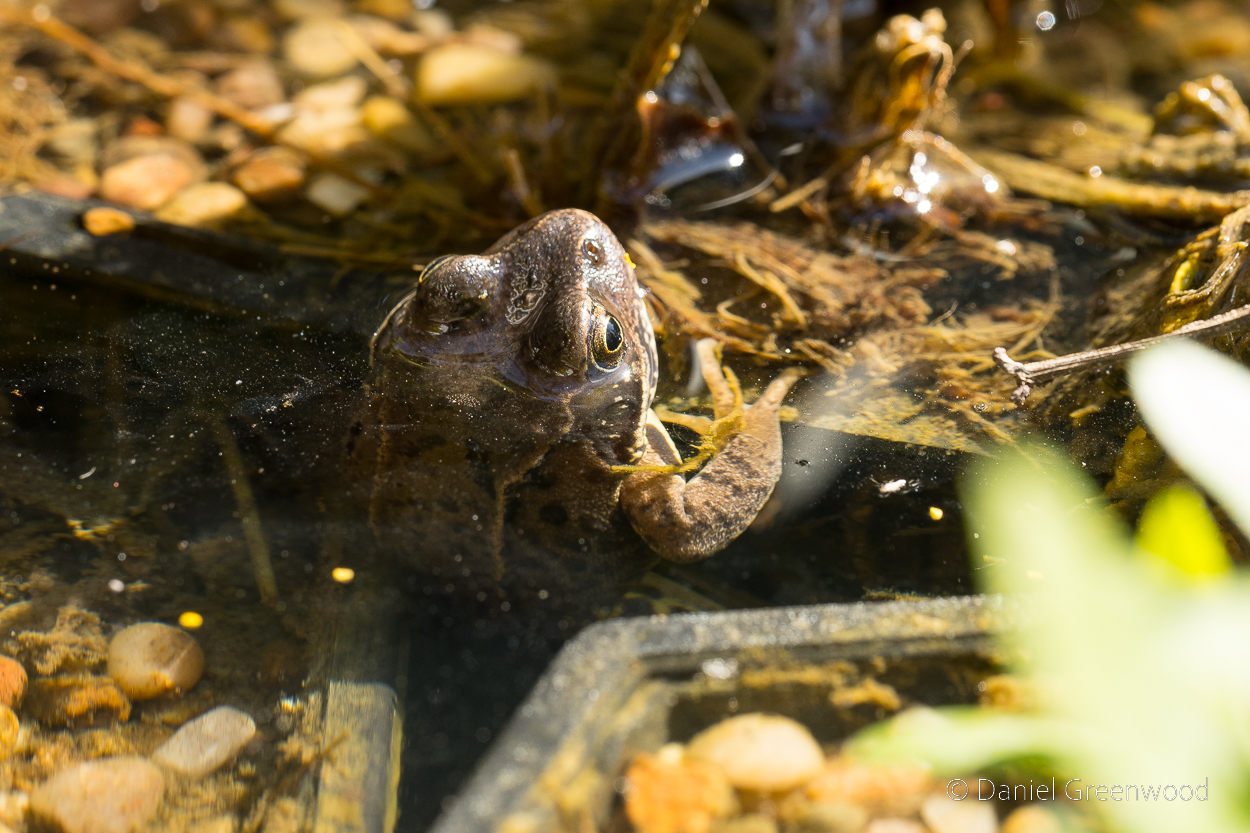
The first thing I saw in the ‘pond’ were two eyes looking back at me, and two big arms and webbed hands (are they hands?) holding onto one of the plastic plant containers.
It’s been so dry for the time of year, wildlife is really suffering with the lack of water. If you have the chance to build any kind of pond you should do it! We don’t have enough space in our garden to dig a ‘proper pond’, but we have been able to use a container we bought at an antique dealer. Without it, where would the frog go?
Elsewhere I’ve noticed the number of drone flies has ebbed a bit, but there are still plenty around. This is probably a tapered-drone fly, a species of hoverfly.
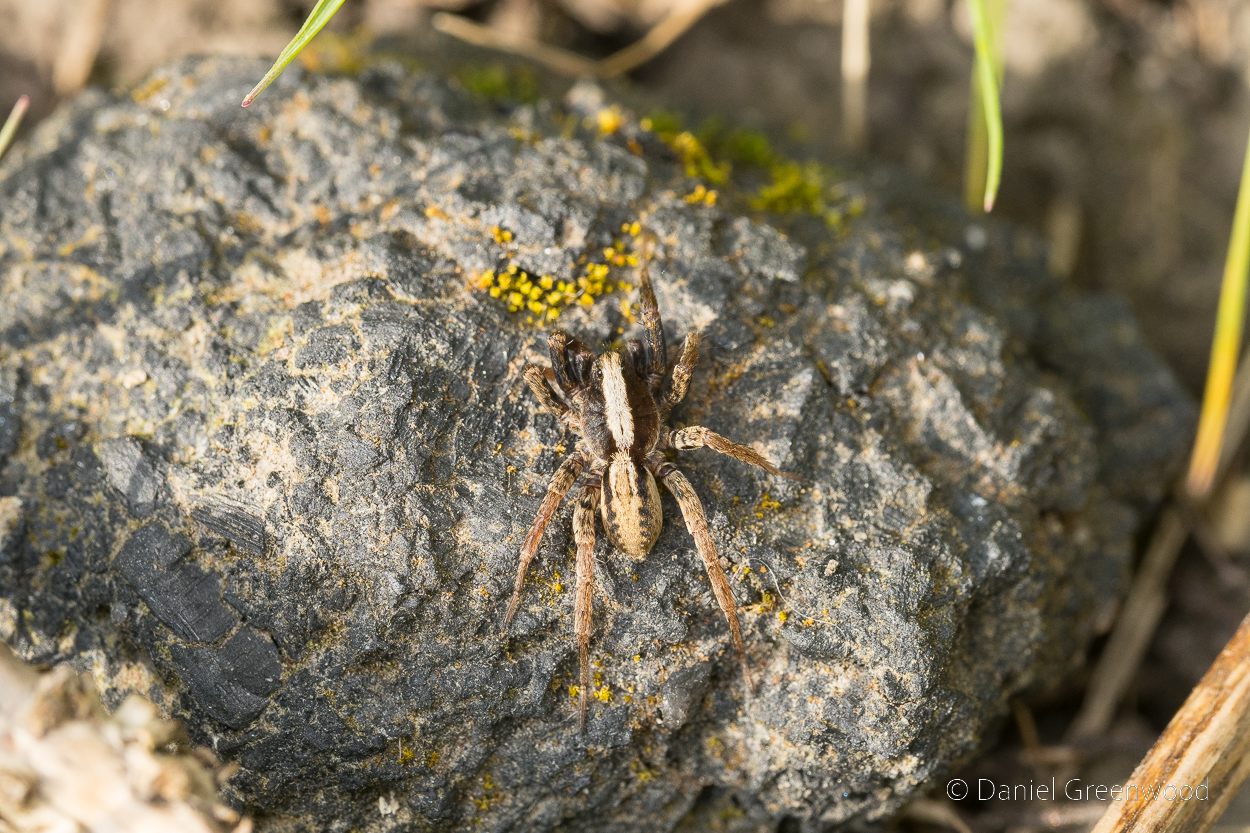
Sitting on this piece of charcoal (which you may notice is now being colonised by a very small moss) was a little spider. iNaturalist has suggested this is a fox spider.
It’s rather cuddly isn’t it? No?
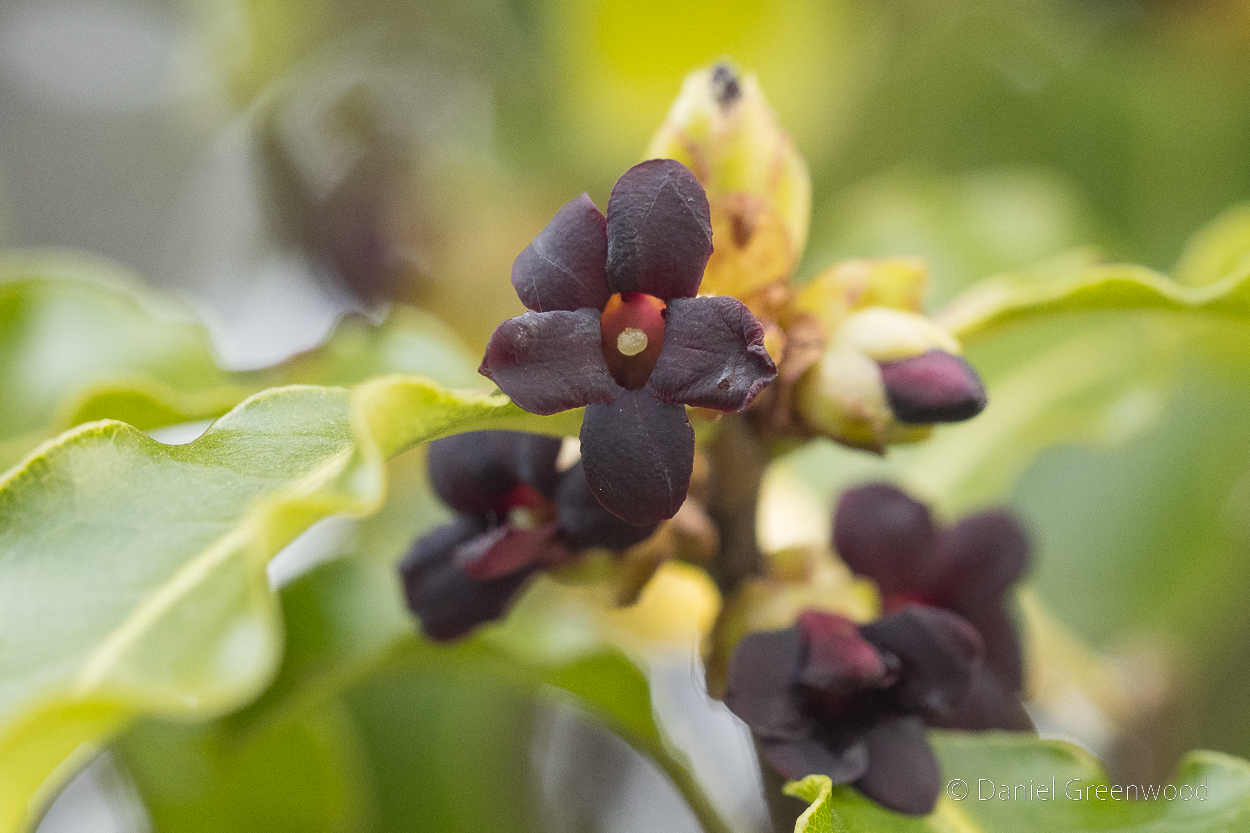
At night we’ve begun to notice a powerful fragrance around the house. It’s a bit like honeysuckle but is probably a cheesewood, a species of plant from New Zealand. This grows in a neighbouring garden but reaches over to us. It’s absolutely covered in pollinators and the smell- wow. It doesn’t seem to be invasive so could be a good option for your garden if you like pollinator-friendly shrubs.
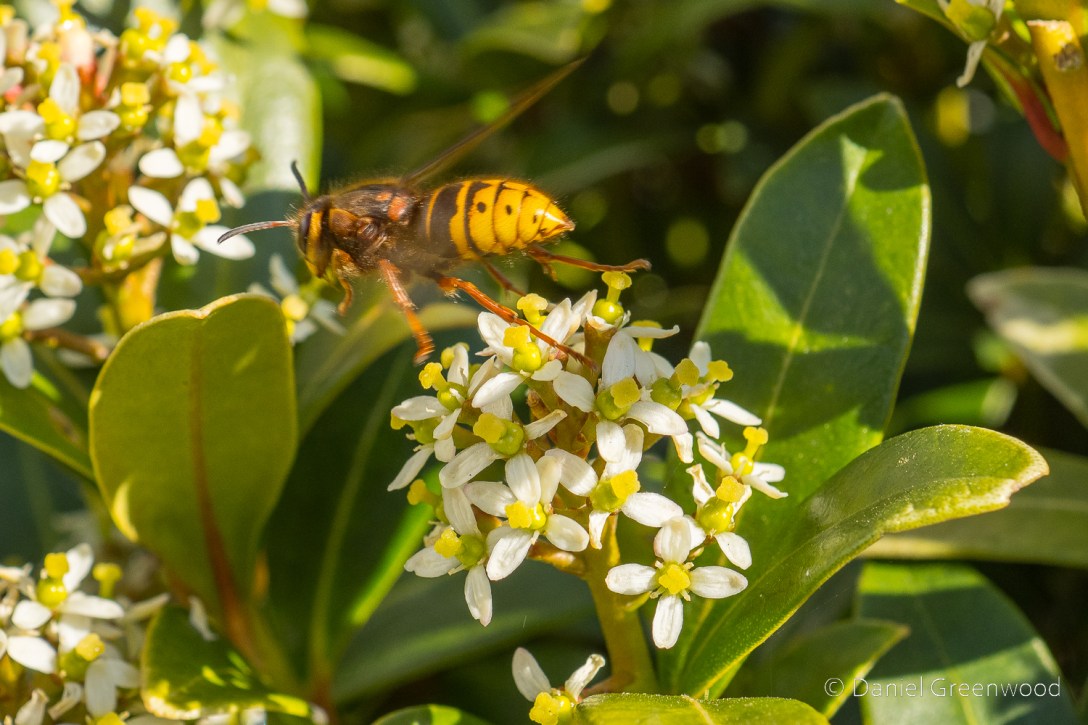
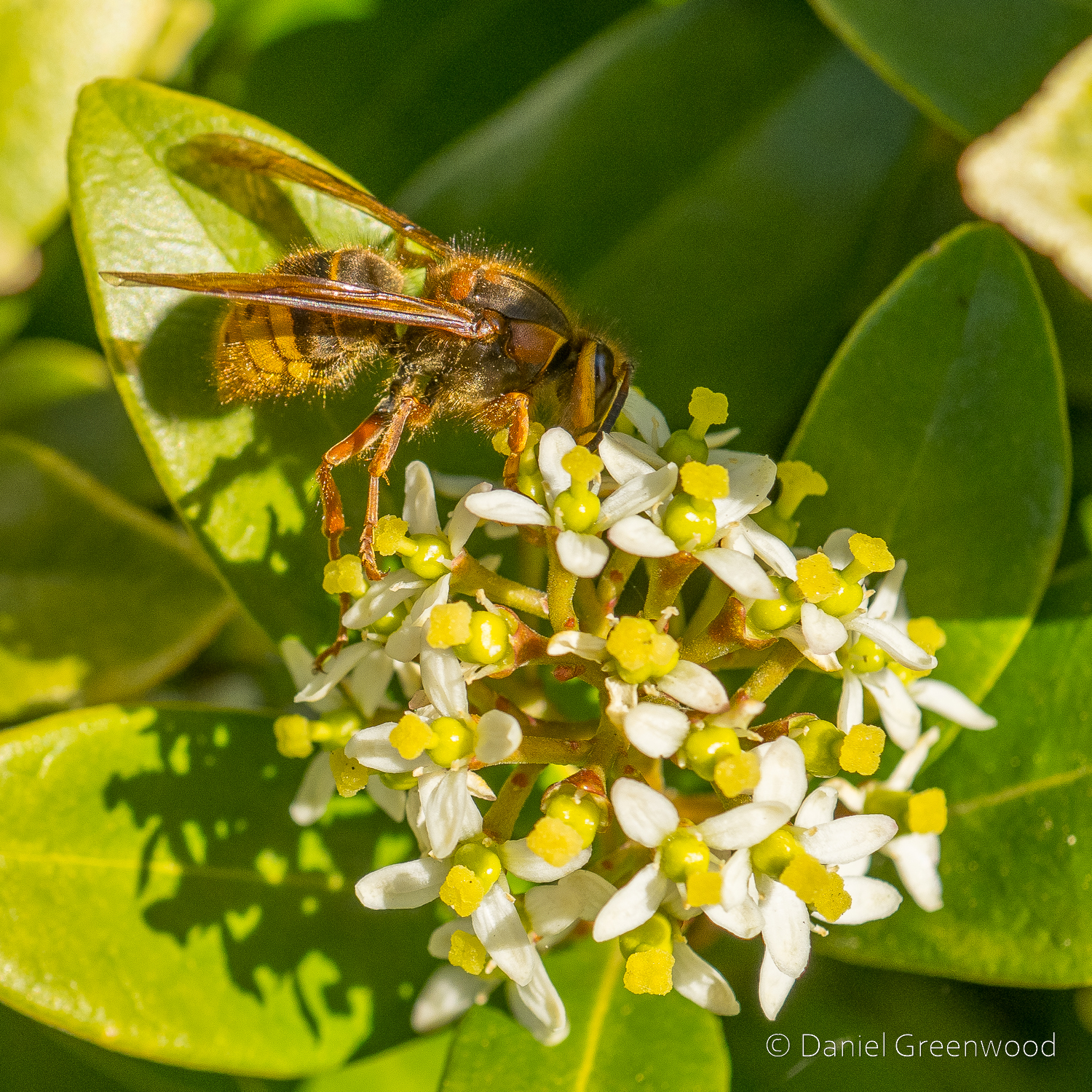
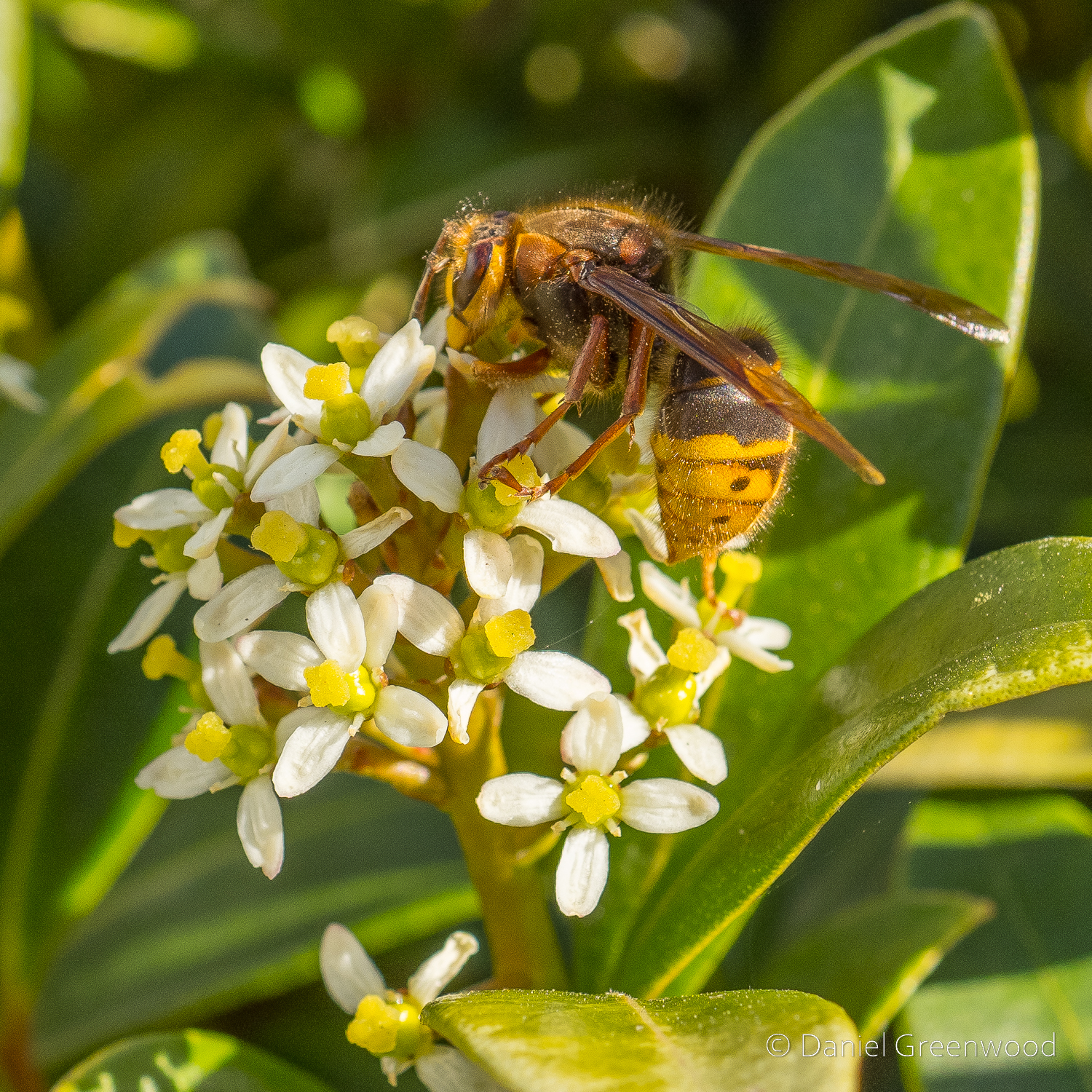
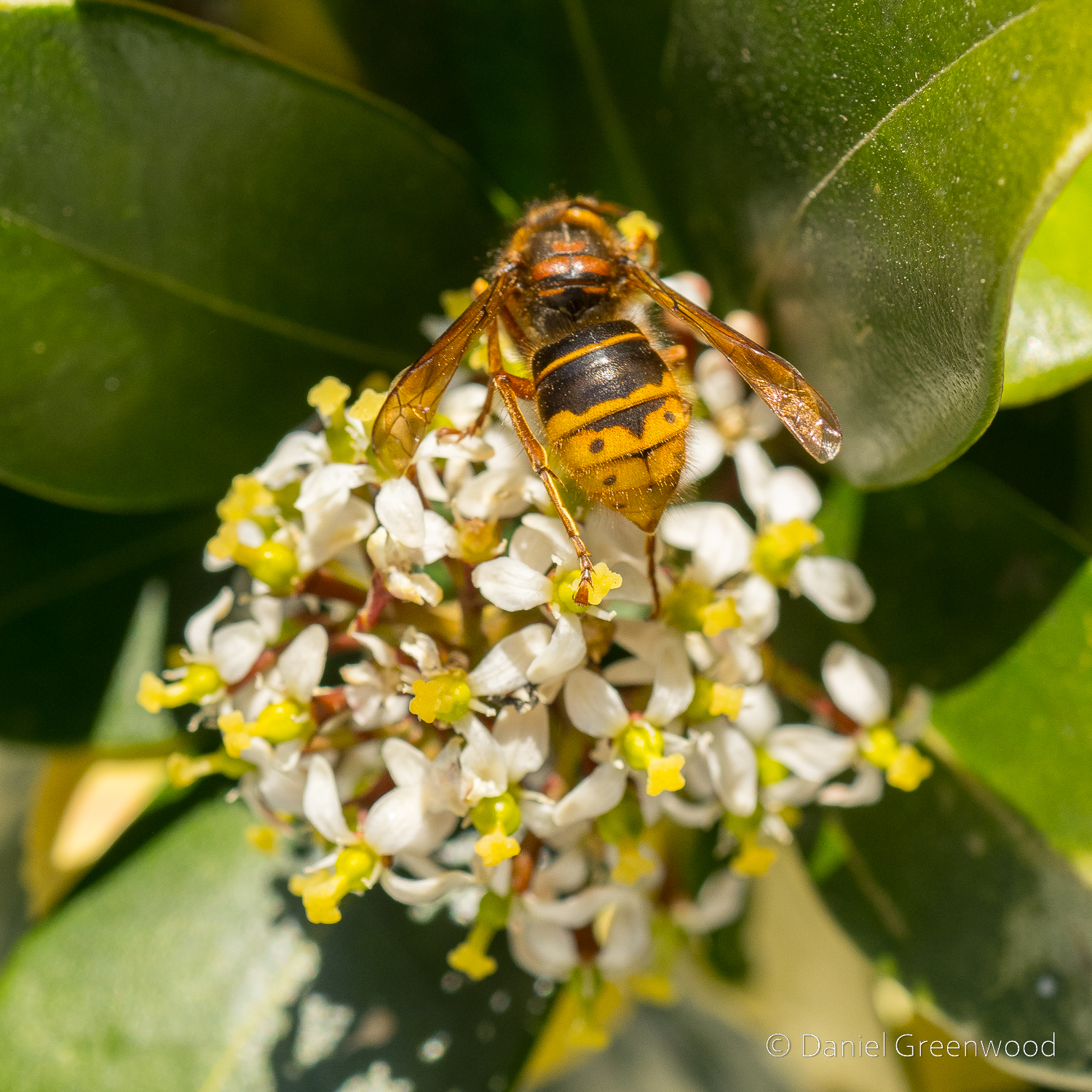
I was sitting in my garden when a large, wasp-like insect zoomed into view. It dropped into the skimmia and began nectaring on the flowers.
‘Hornet!’ I called out, but trying to be quiet enough not to spook the insect. I captured these images, convinced it was a hornet, the first I had ever seen in my garden.
When I popped a crude phone photo (not the world class images above) onto iNaturalist I began to have second thoughts. The first suggestions were for a species of wasp, the median wasp. That is now the consensus, and so my hornet drought goes on. But it is a beautiful thing.
My house is quite old, built in the 1840s. The path outside our door is known as a ‘twitten’, a Sussex colloquial name for a little footpath. The path is bricked (like many of them are) and always flushes with spring flowers. Lesser celandine and grape hyacinth are two of the species that enjoy the margins.
Does this rose regrowth remind you of a certain American President?
A few holes have appeared in the lawn. I haven’t seen who created these mini-bunkers but I am confident they’re mining bees of some kind.
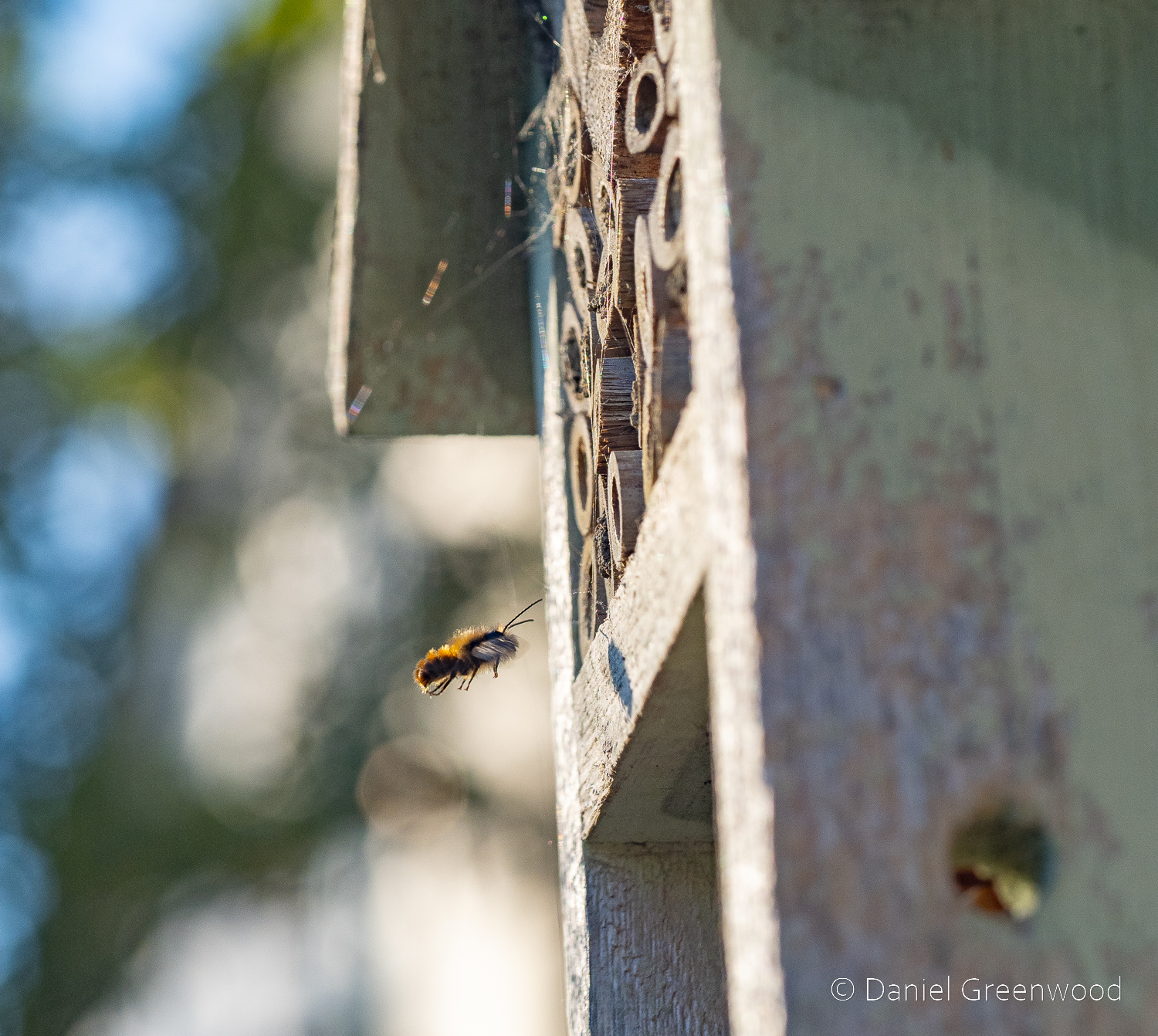
The red mason bees have been rather slow to appear this year and many of the bamboo slots are still sealed. Some of the bees have been hovering around the entrances, as above.
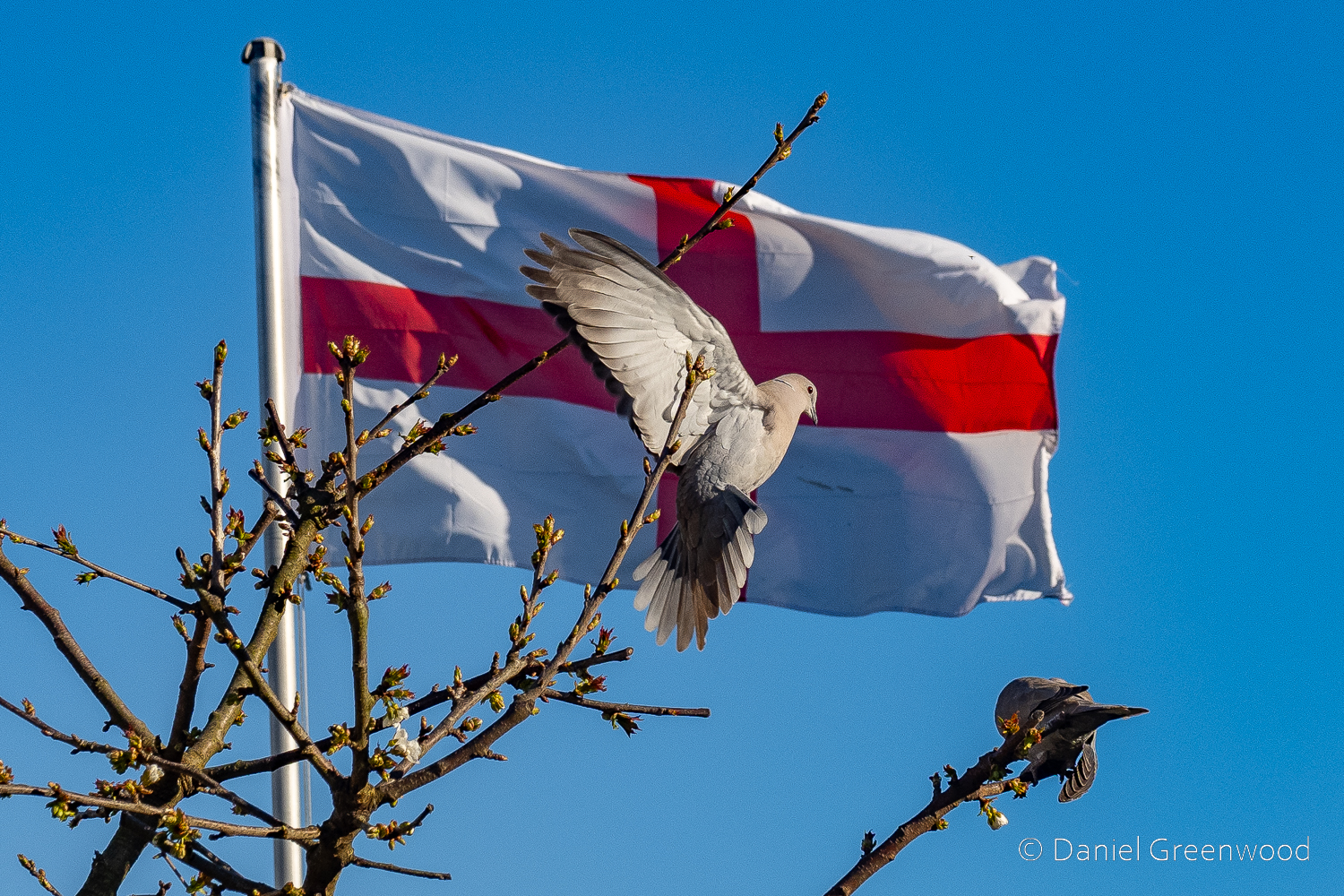
I took this photo of two – yes, two – collared doves with my macro lens. Macro lenses usually often can act as a telephoto lens because you need space between you and the thing you’re photographing to ensure you don’t spook the subject. The flag isn’t mine, as you may have guessed if you’ve ever met me or read this blog before 😉
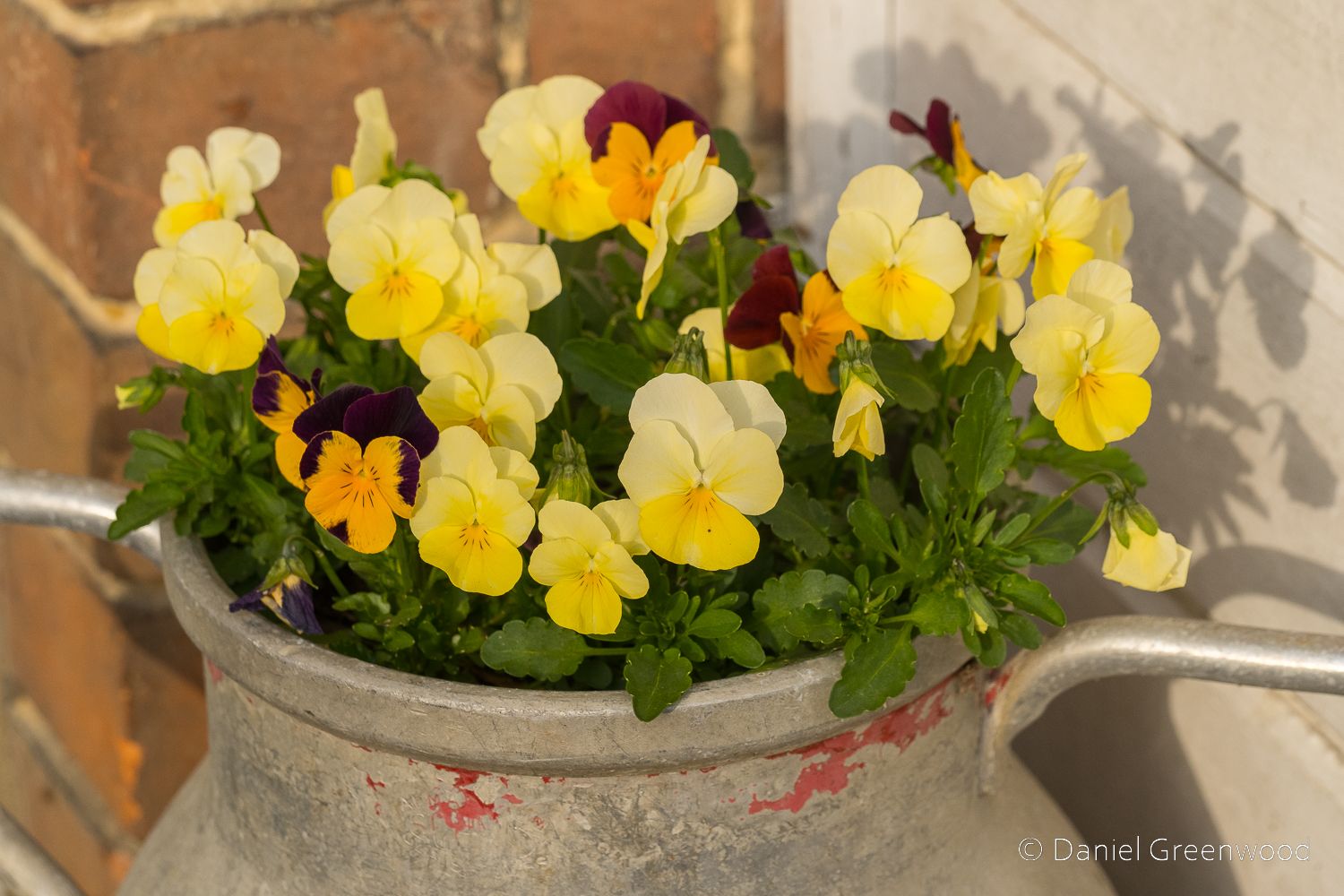
The pansies are doing well in the milk churns, a good place to end.
Five years ago we were facing up to the Covid-19 lockdowns. In response to the stay-at-home orders I began a weekly macro blog, an assignment from the gods? No, just our Supreme Leader at the time Boris Johnson and his better half in Public Health Chris Whitty.
While I can’t promise weekly blogs due to work and life commitments, it’s definitely time to dust off the macro lens after its winter slumber and step out into the garden to see what’s happening!
As ever, there’s far more going on than you might think. I also think it’s important that we look at and try to understand invertebrates when this misinformation is coming from the leader of the country (I know it could be worse, but get your facts straight, folks).
We depend on nature and our ecosystems and their wildlife for our food, clean water, fresh air and function. Wildlife has a right to exist and the world does not revolve around our species.
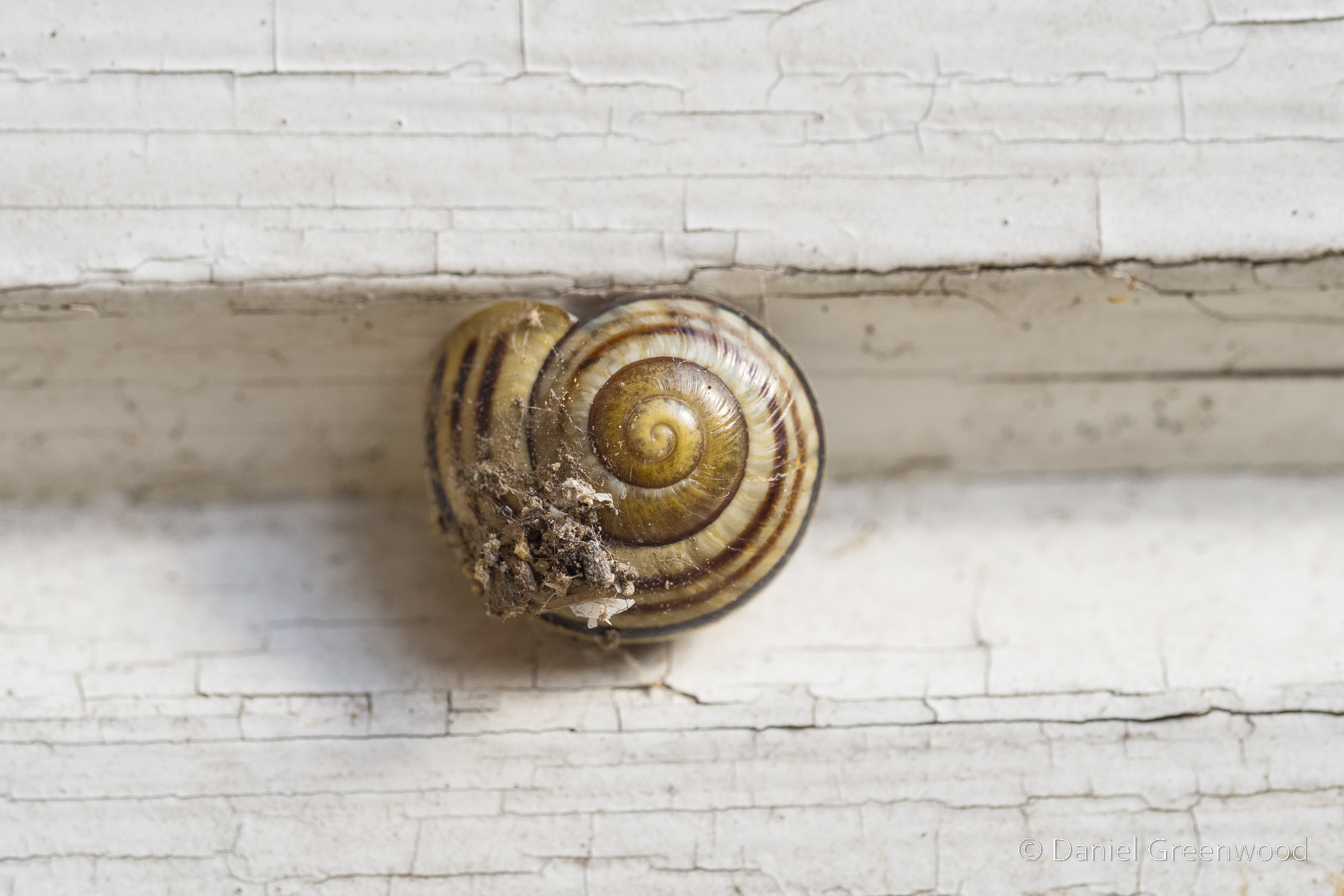
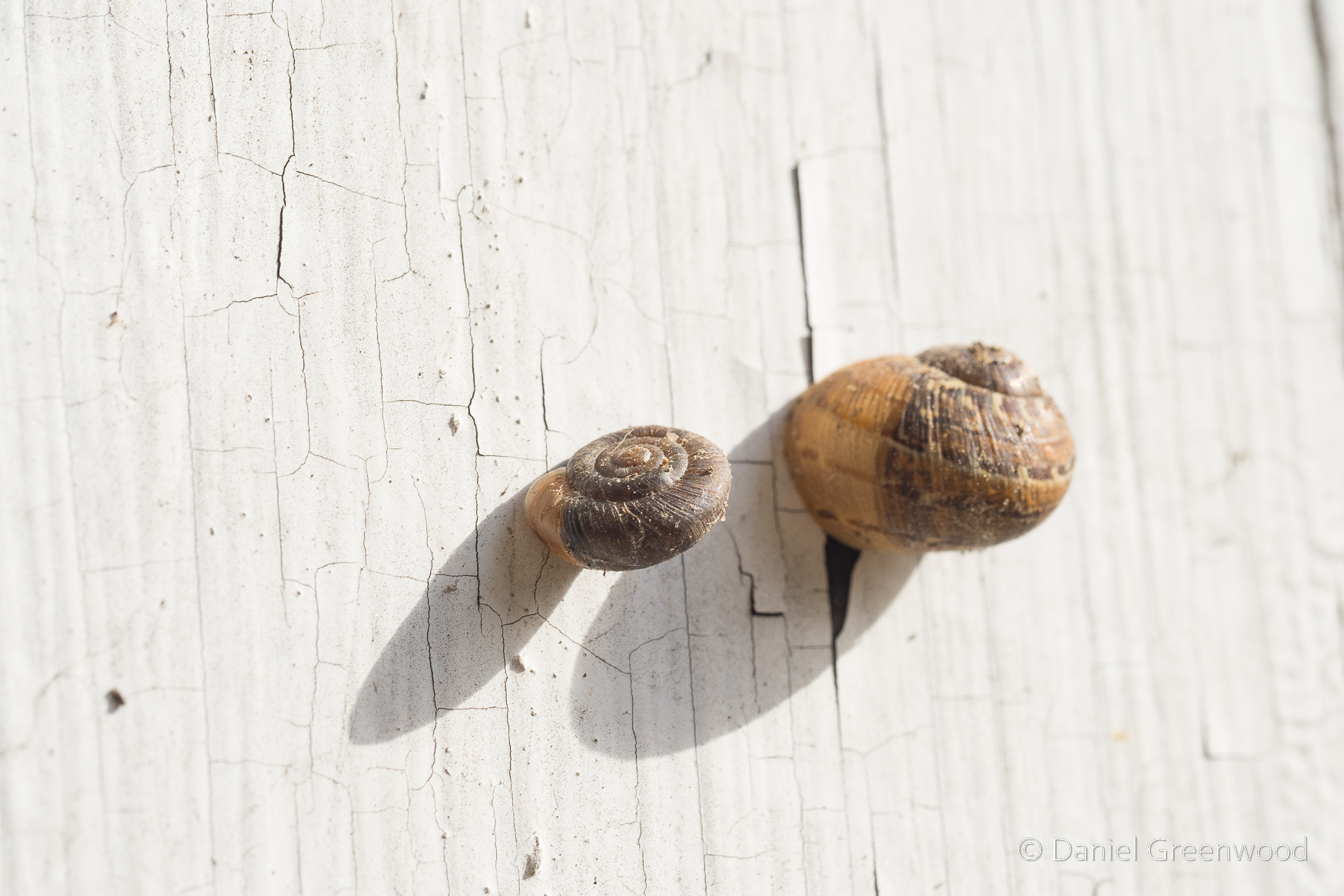
The snails are roosting in our front porch. My wife was wondering if they might be too hot there, as the paint’s white and it can get quite sweltry in there.
It looks to me like something is going on with the shells and they may be roosting to grow their shells. It’s not something I know much about. Please let me know in the comments if you have any info 🙂
We have some nice pansies my wife planted out by our front door. You can see the bee drive-in here with the dark landing marks and the brush of hairs to ensure the pollen of other pansies are retrieved from a visiting bee.
The broom plant flowers in a subtle way, these little yellow petals appearing from the red sepals.
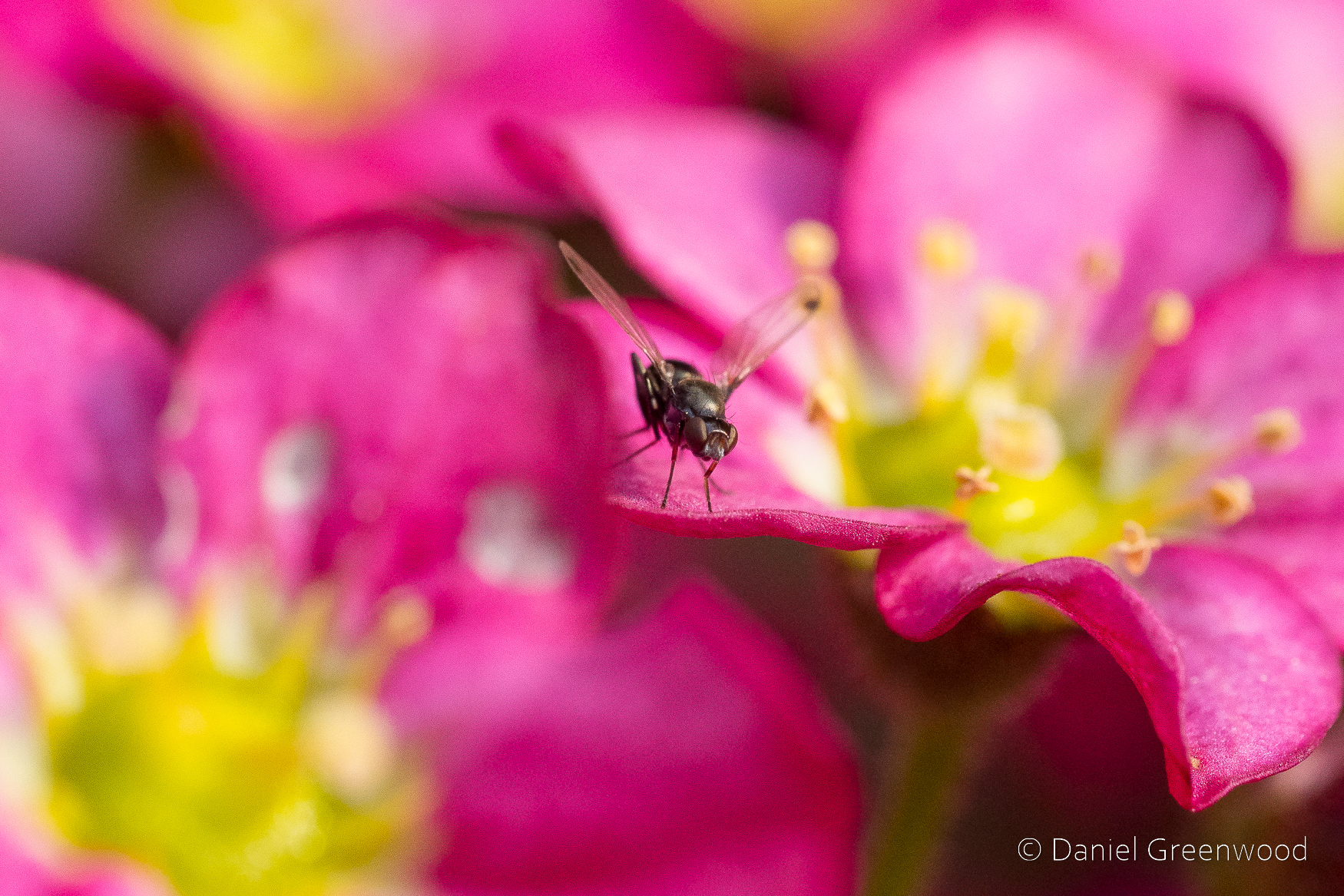
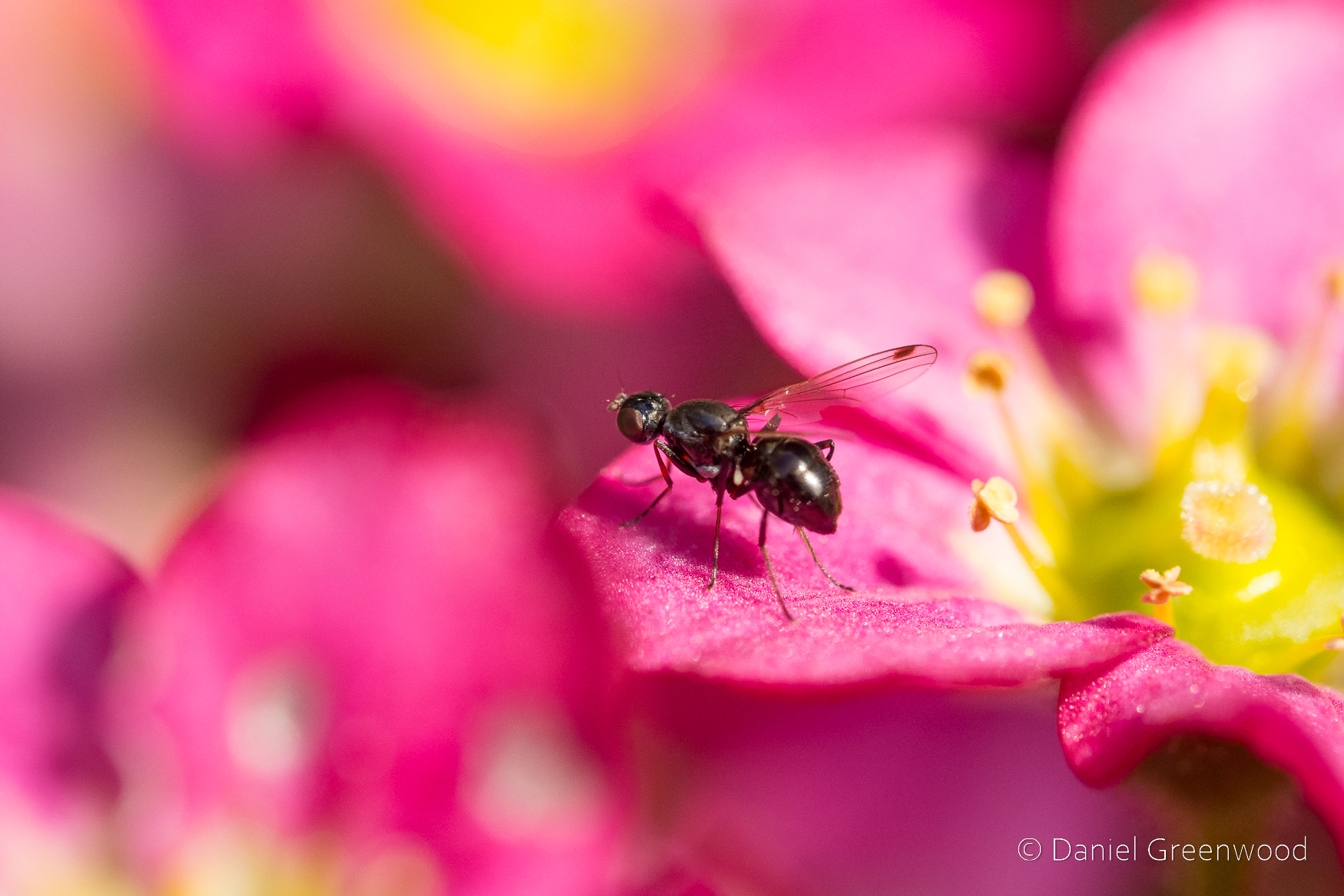
This is a common little fly that seems to stand around on leaves and petals for ages!
Their eyes are very cool, and I enjoyed the single spot in their wings as well. These flowers are some saxifrages my wife bought from the garden centre.
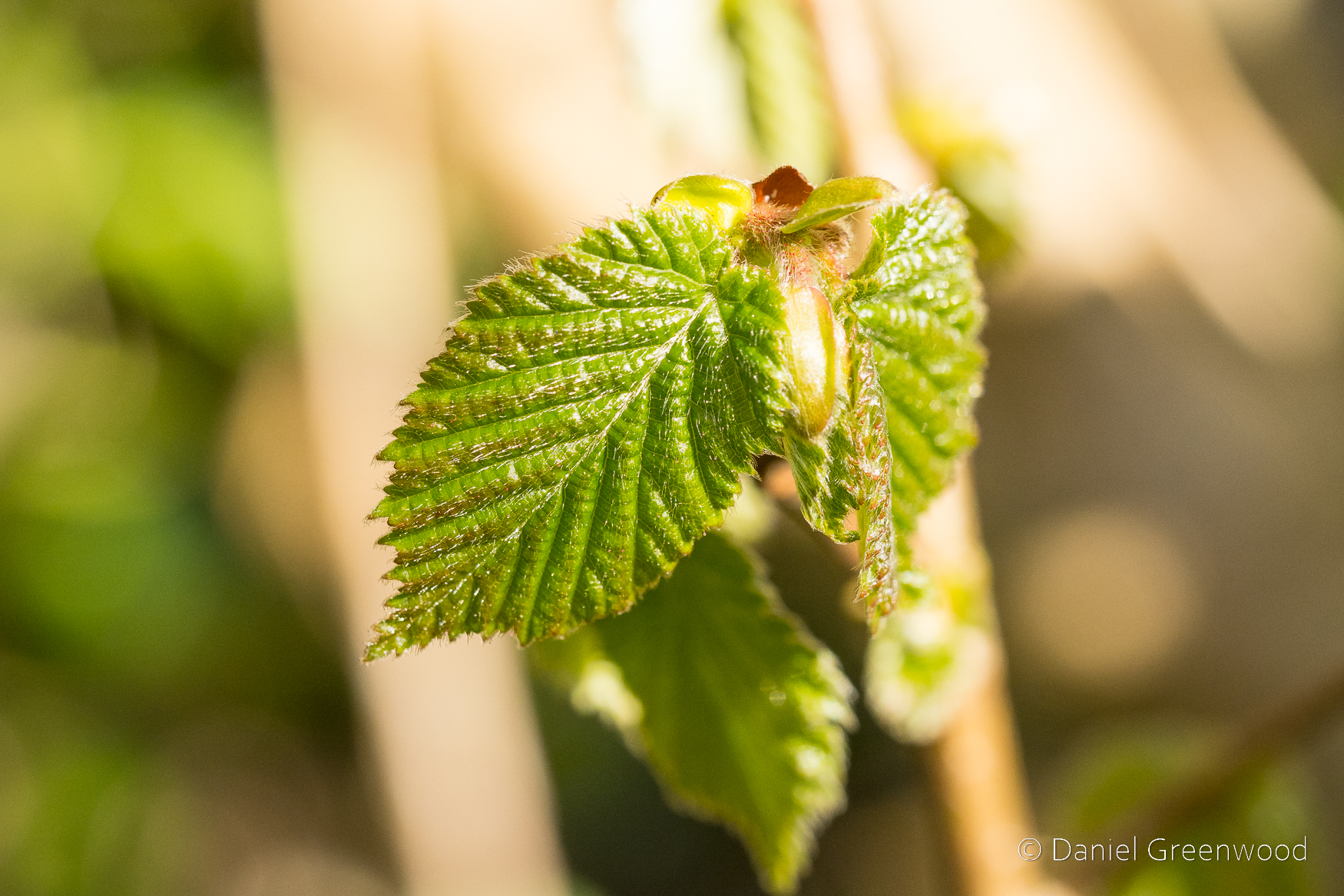
In January on a cold Saturday afternoon I laid or ‘plashed’ the hazel shrub I had planted out in our hedge. It’s a little hedge, but the usual shrub that made up the hedge has died back so I needed to take action. It’s so pleasing (‘pleaching’?) to see the hazel respond so well and new shoots to appear from the lain-down stems.
I also uprooted a sapling that a squirrel had cached as a seed, which is doing well. I planted this out around the time of frosts, which shows hazel’s hardiness. I did know that was the case, but it’s nice to see it come through.
The normal hedge I mentioned is this Skimmia japonica. It’s good for pollinators, no doubt. But it doesn’t seem to last well without pruning.
It was abuzz with drone flies as spring really began to arrive in mid-late March.
These drone flies (Eristalis) are probably the most common winged-insect in our garden at the moment. They’re quite funny I think.
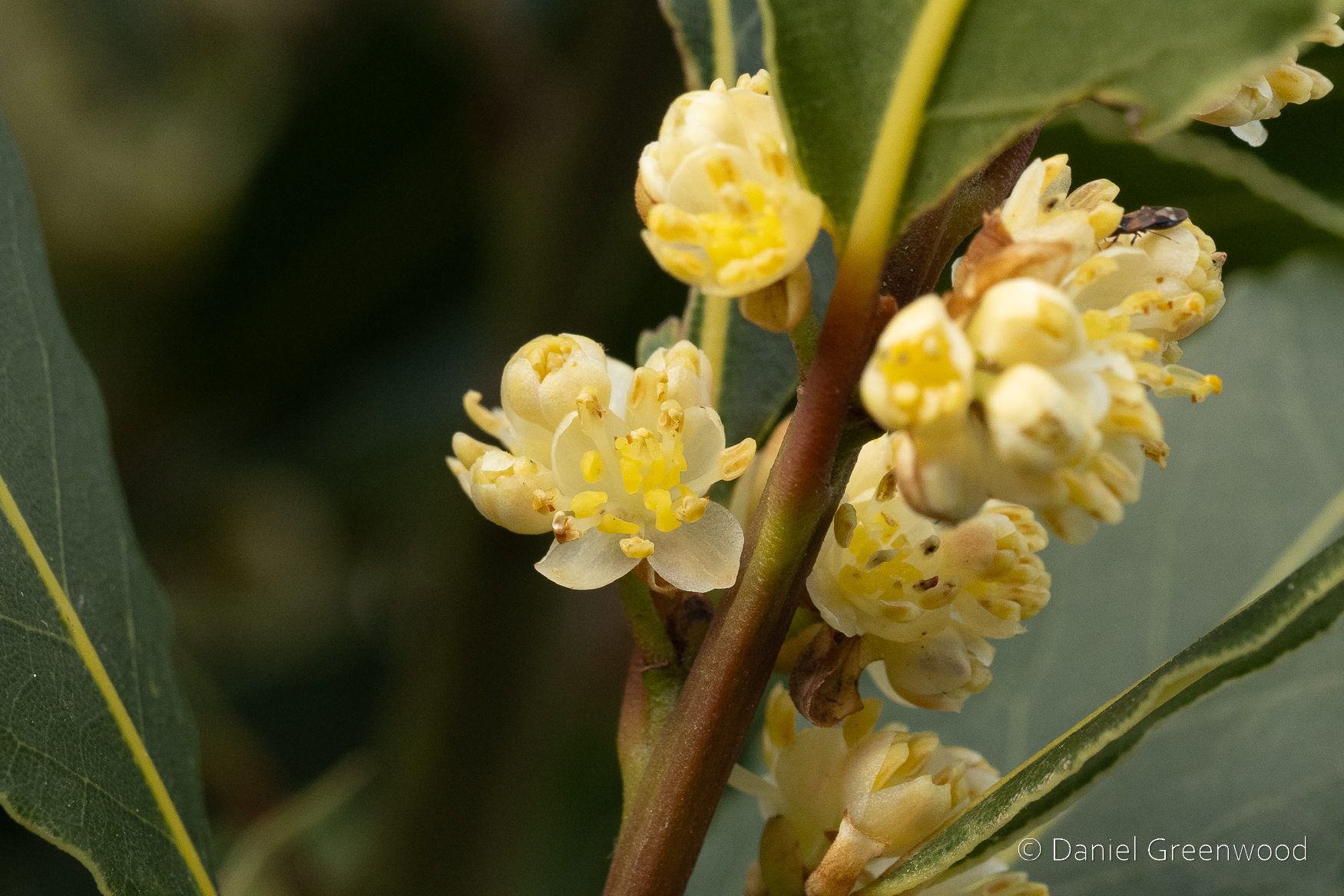
Bay flowers promise so much, but they are quite modest really. I am hoping this provides some decent nectar for any invertebrate that needs it.
I spotted this little crab spider hanging out on one of my thermal t-shirts. It’s probably Misumena vatia, the most common of the crab spiders.
A cat monument in our garden in memory of our cat Kaiser who loved this spot in the flowerbed. The wolf spiders also love this spot because it gets so warm. The white stone of the cat is even warmer than the surrounding soil. I think this may be a male and a female wolf spider, with the male the smaller of the two, with the palps (dark spots at the front of its head, in the cat’s eye!).
The fence next to the cat monument was a helpful basking spot for the first nursery web spider I’ve seen so far this year.
The flowering of our magnolia is short and sharp, but these globular flowers are a delight. Magnolias are very old trees in evolutionary terms, and here’s to another year under their belts.
I’ve been making an effort to go for a walk in my local slice of the Sussex Weald before work in recent weeks. The impact it has on my brain, body and soul is profound, having lost my connection with woodland somewhat recently.
Early spring is a special time in woodland, watching the the leaves appear, the first spring birds, and the woodland flowers. It is so much better than those hot, shady and sterile days of summer, in my view.
The chiffchaffs have been arriving, but the song thrush rules this chunk of the Weald. Its repeated phrases echo through the still leafless branches.
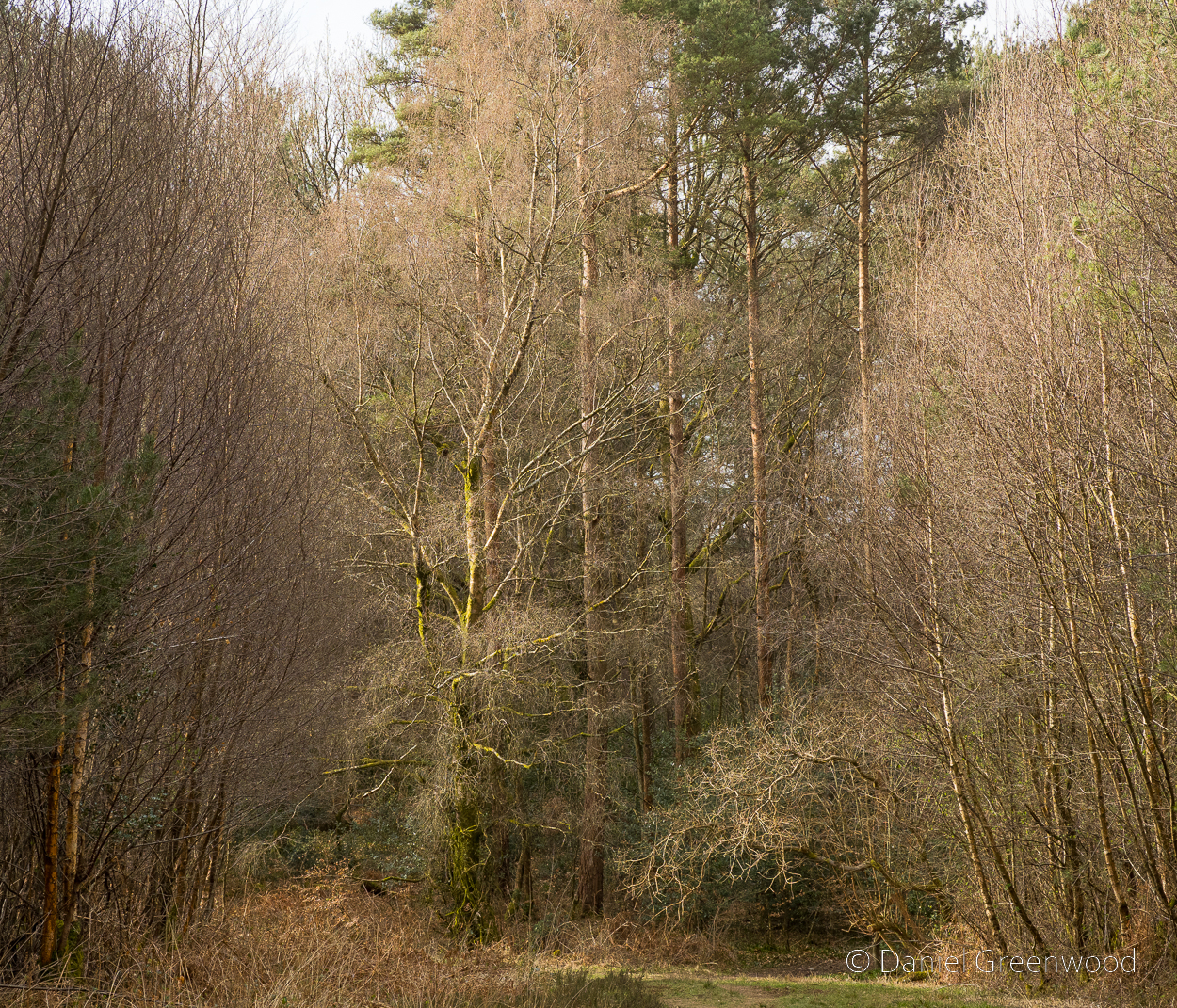
Wild branches against ranks of pine and birch.
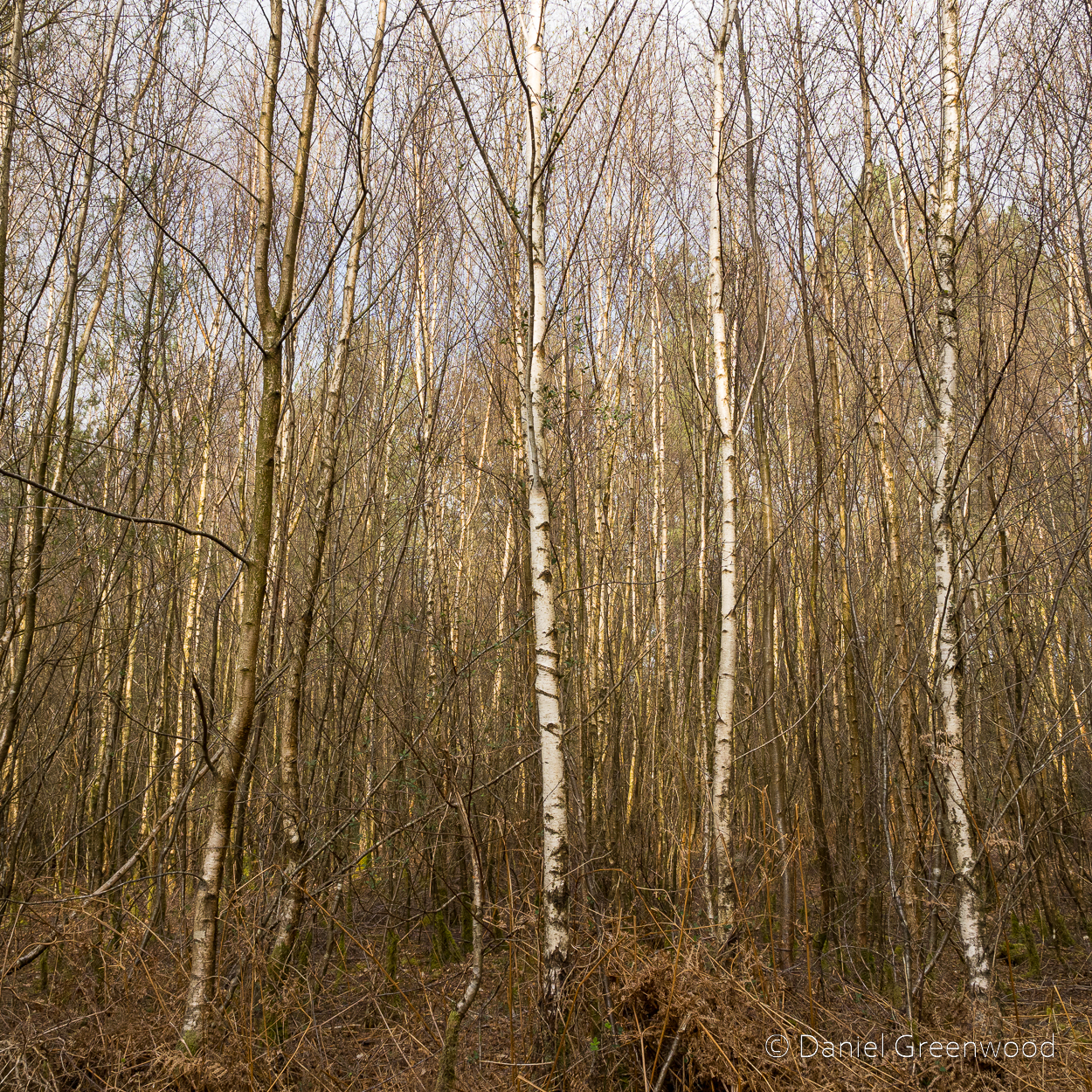
Those birches, growing on old heathland, waiting for the onset of new leaves.
A birch tree harassed by honeysuckle, catching the morning light.
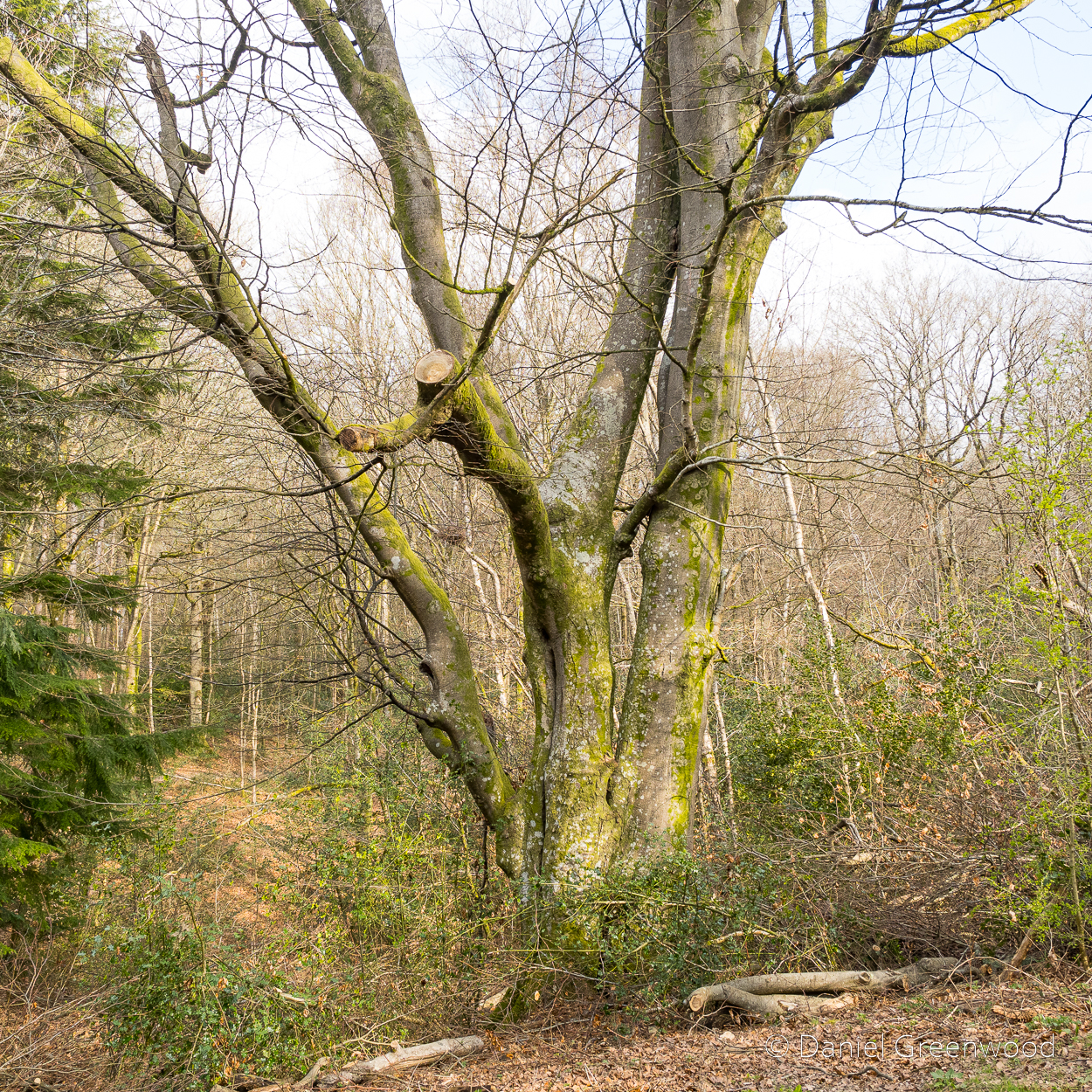
A green beech tree with lots of moss and algae.
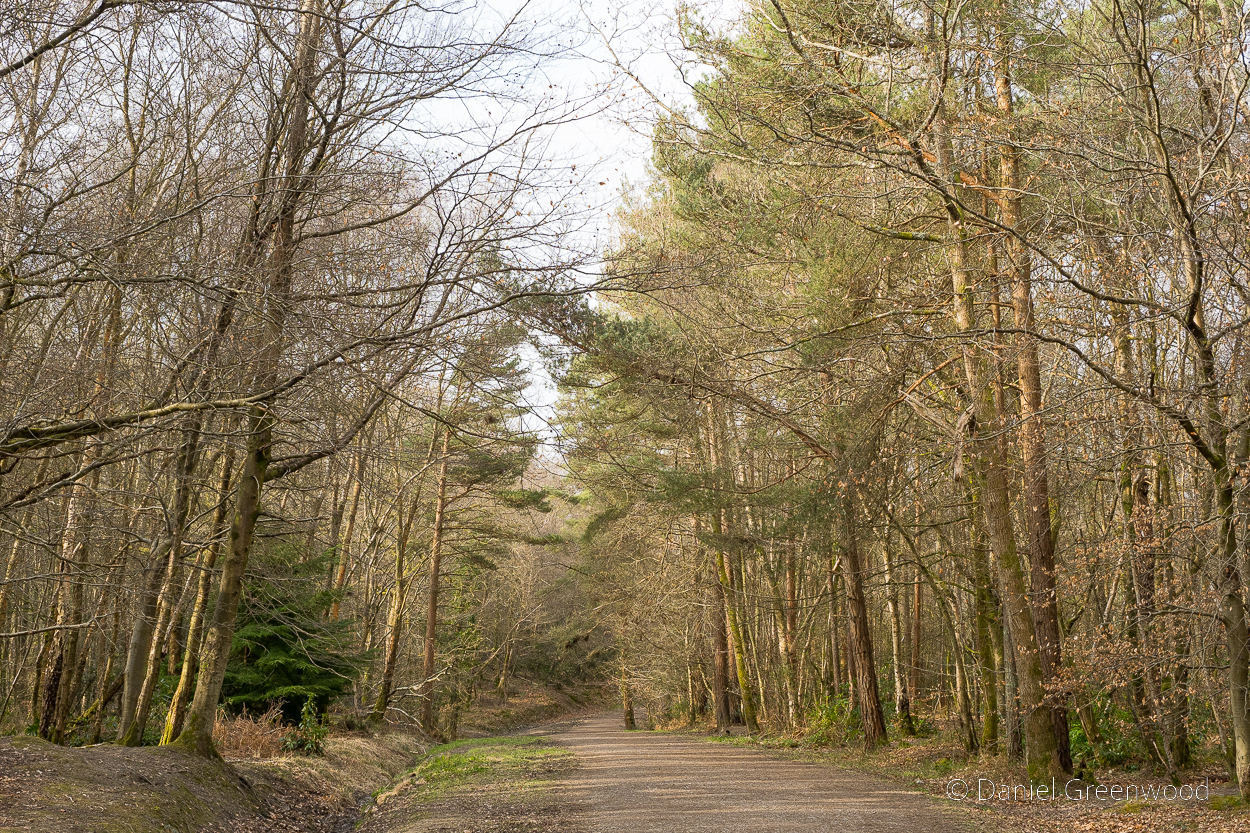
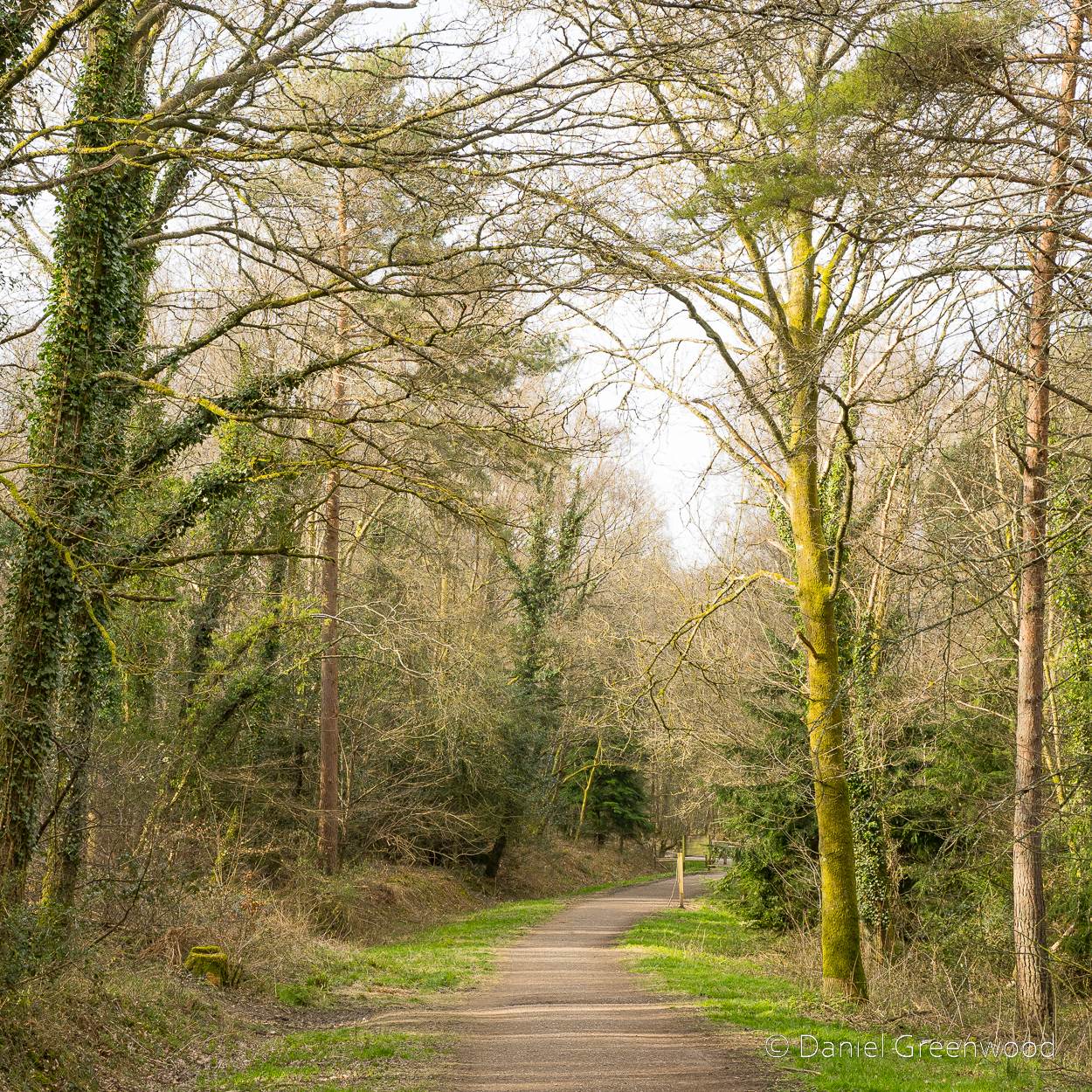
The ride, with pines reaching across on either side.
Silver birches among bluebell leaves.
An old beech tree.
Bluebell leaves appearing below a mess of beech twigs and old leaves.
The grassy banks of the woodland ride. I often hear firecrest singing along these edges where the ivy climbs and a few evergreen trees like the cypresses grow.
This is a showcase of the posh mushroom pics I gathered with my proper camera during a visit to the wonderful Dartmoor National Park in November 2024. Mad props to my wife who is chief squirrel during these Devonian photo forages.
The photos were taken on Sunday 10th November 2024.
I write these blogs in my spare time because I want to raise awareness about the beauty and diversity of fungi. If you enjoy reading them you can support my blog here.
A reminder that I am not encouraging people to pick or remove mushrooms in these areas. You could very easily clear all the mushrooms we saw within minutes. I think that would be sad because it would mean other people wouldn’t get to see them and learn or be inspired by them. I think with rare species like waxcaps that are featured here, we should be taking photos and submitting them to apps like iNaturalist or Plantlife’s waxcap campaign. In some areas that would be illegal anyway, due to site protections.
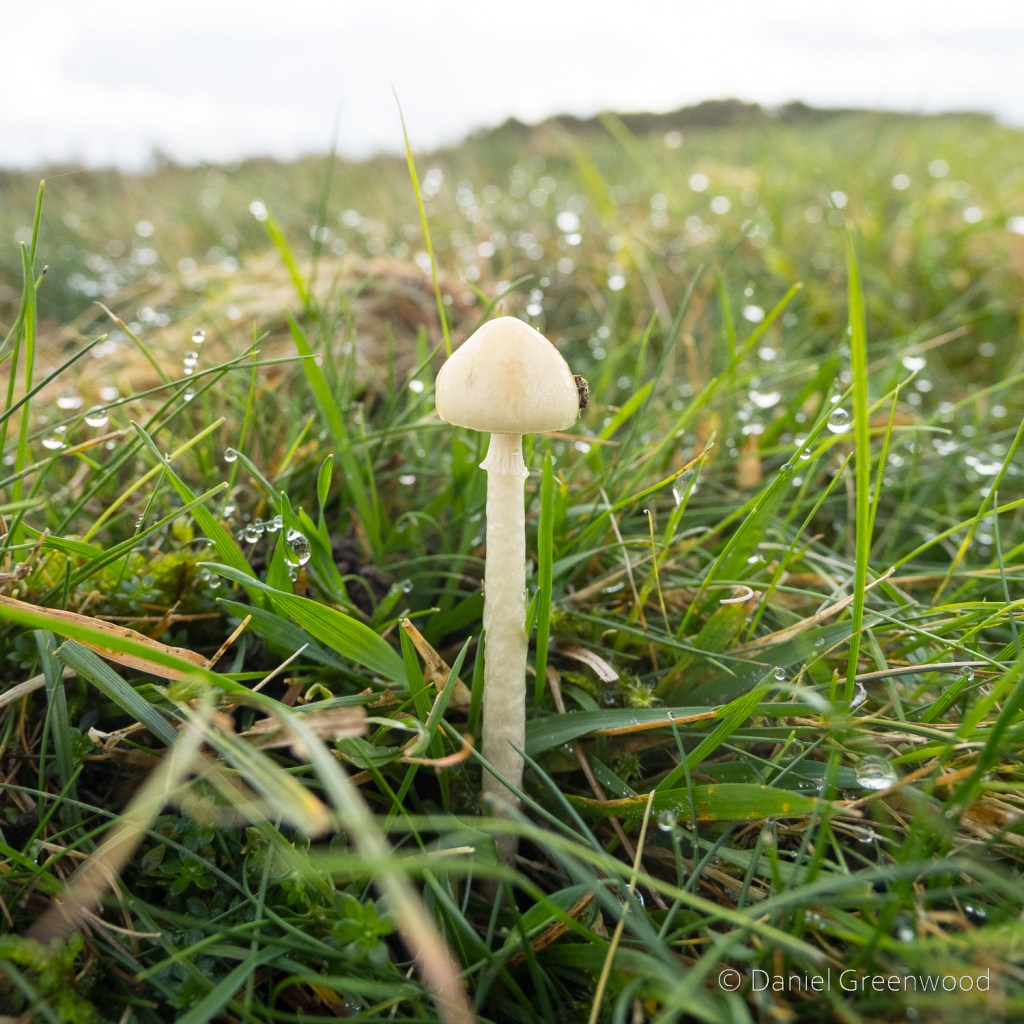
While I don’t believe 2024 will go down as a vintage mushroom season, there were a lot of lovely waxcaps to be found on the moor in a place we’ve been visiting since 2016. Moorlands seem to be quite good for waxcaps, not that I know why, and also for lichens because they are rocky, wet and the air is fresh.
I’ll post the images in chronological order for my own sanity.
This is the landscape where the fungi lived – moorland with a view towards the Teign estuary.
The first fungal find were these eyelash cups (Scutellinia) growing on animal dung! Plenty more dungi to come.
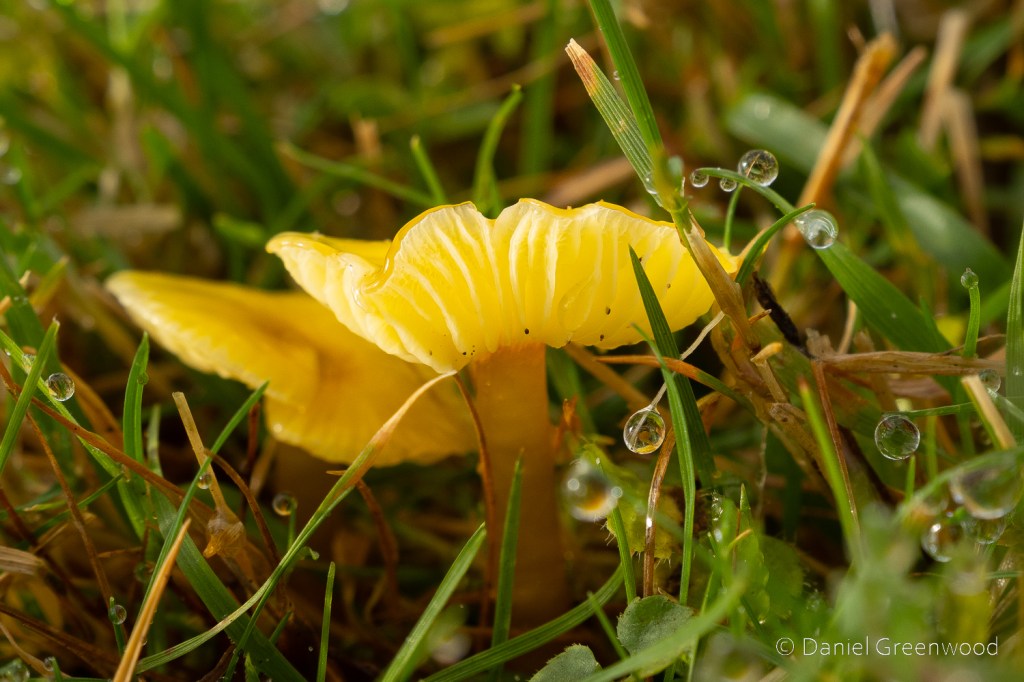
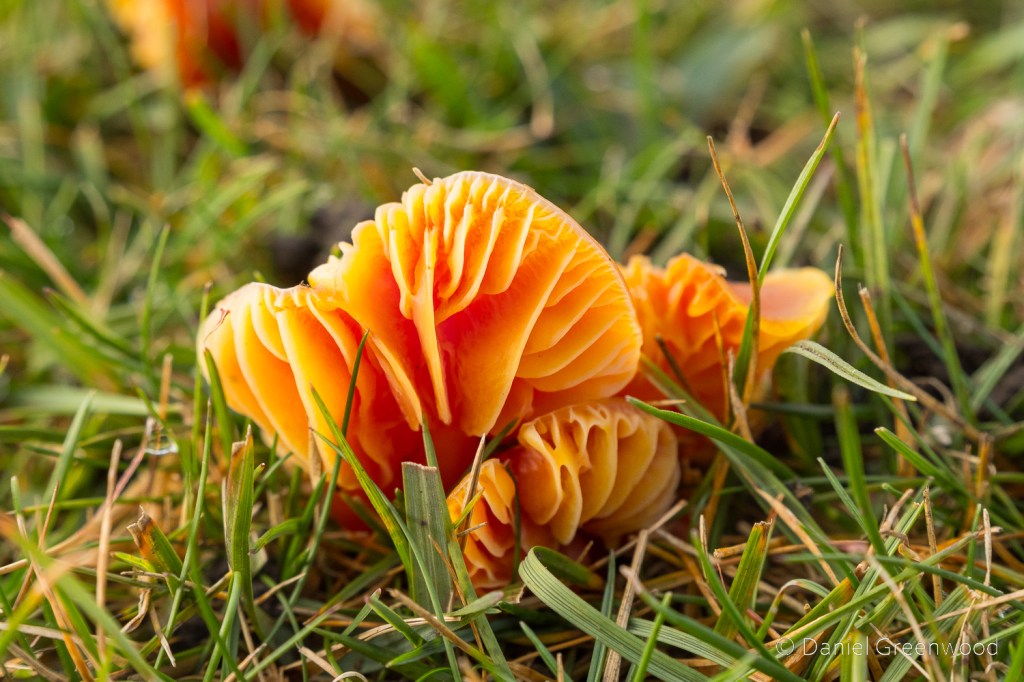
Waxcaps make up the crux of the mushrooms we found. These beauties are butter waxcaps (Hygrocybe ceracea).
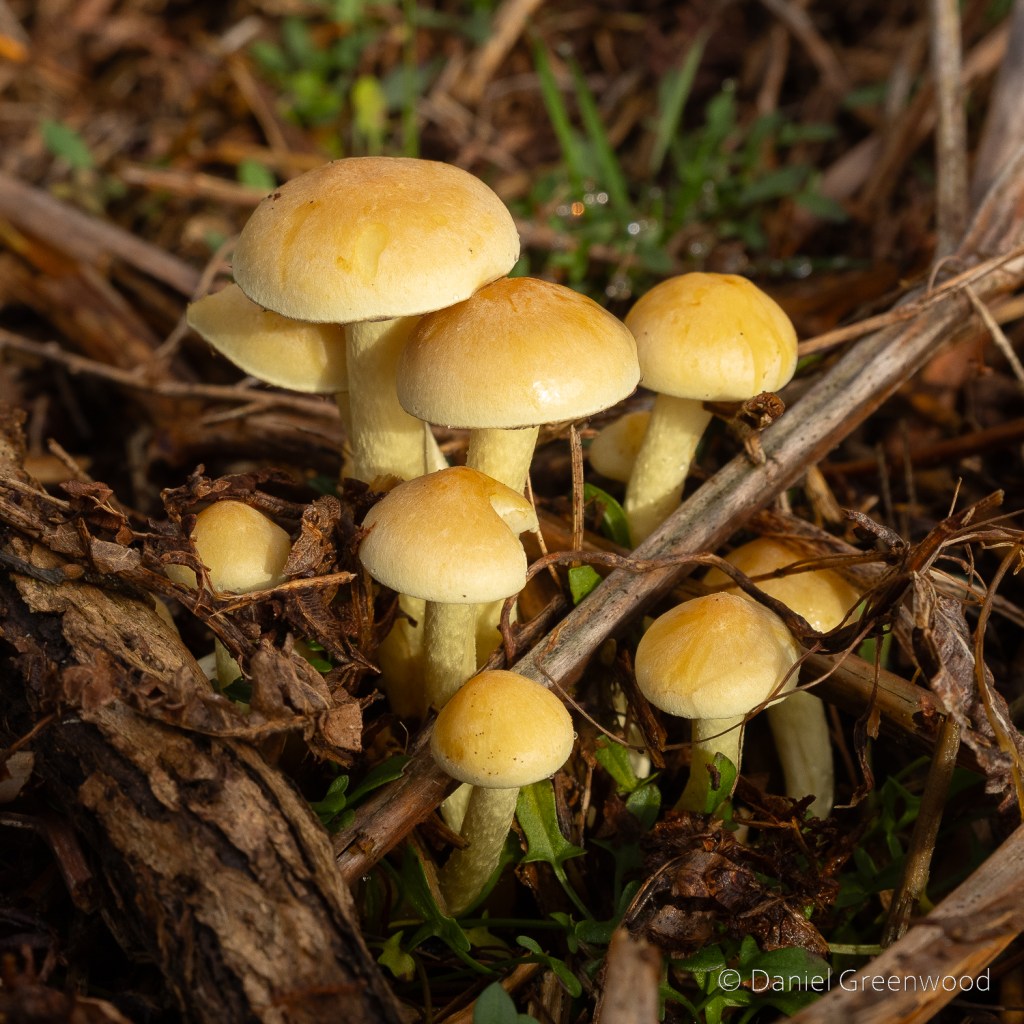
Not to be outdone, some very photogenic sulphur tuft (Hypholoma fasciculare) were found as we climbed the moor.
These mottlegills (Panaeolus) are quite common in places with grazing livestock like Dartmoor ponies.
My best guess is that this was one of the moss bells (Galerina).
These lichens are beautiful. I don’t see them very often because I have to travel west see moorland. They’re probably gritty British soldier lichens (Cladonia floerkeana).
I’m unsure what this species is, but it’s a beauty.
As we approached the more remote moorland (in terms of people living out there) the waxcaps began to appear in the cropped turf. This is another example of how important grazing to some degree is, and how it mimics very ancient processes. These mushrooms would not grow in closed-canopy woodlands.
This is one of the red waxcaps, but I’m unsure if it’s honey waxcap or not. It looks too orange for scarlet waxcap.
This is one of several species under the umbrella of blackening waxcap or witches’ bonnet (Hygrocybe conica complex).
This is a species I only really see in the west of England or Ireland. It’s one of the dog lichens (Peltigera).
These are crimson waxcaps (Hygrocybe punicea), stunning mushrooms indeed. There were some young men passing by who stopped to admire the colours of these impressive shrooms.
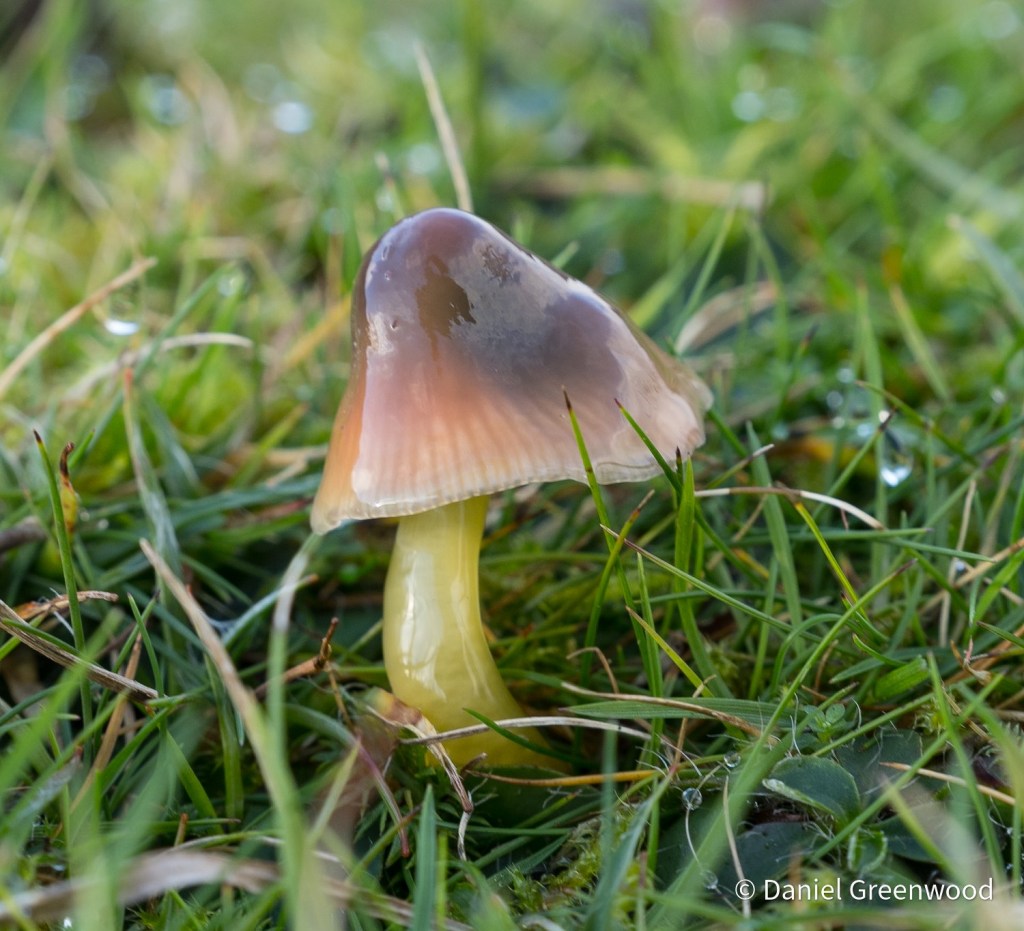
I don’t have an identification yet for this gorgeous waxcap and the closest I can guess is a colour variation of parrot waxcap (Gliophorus psittacinus).
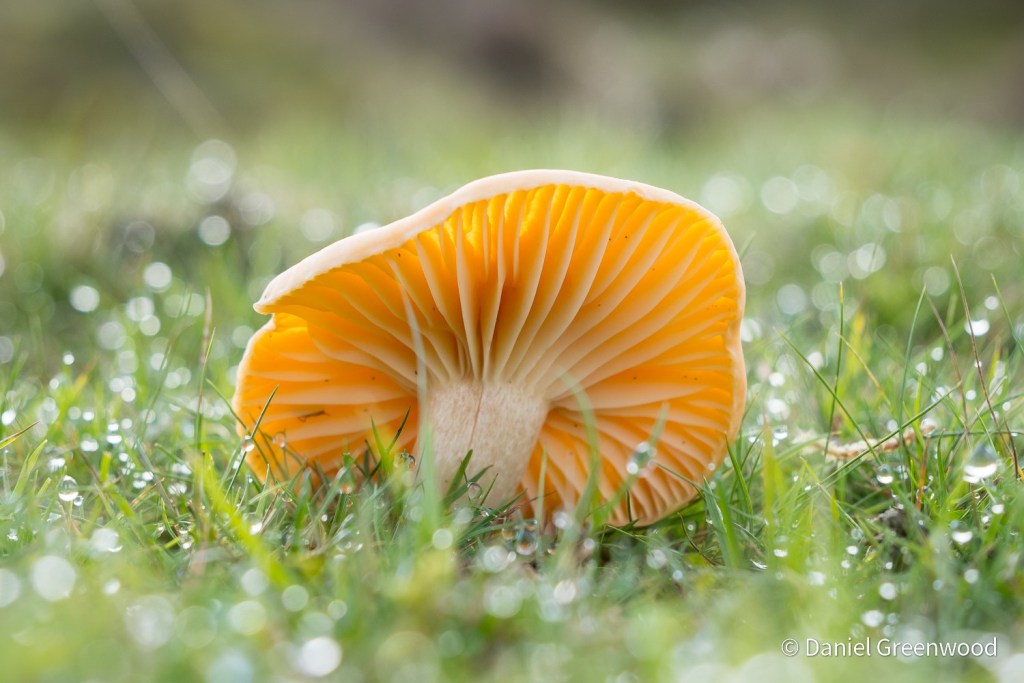
This is meadow waxcap (Hygrocybe pratensis), often fan-like, always best photographed from ground level.
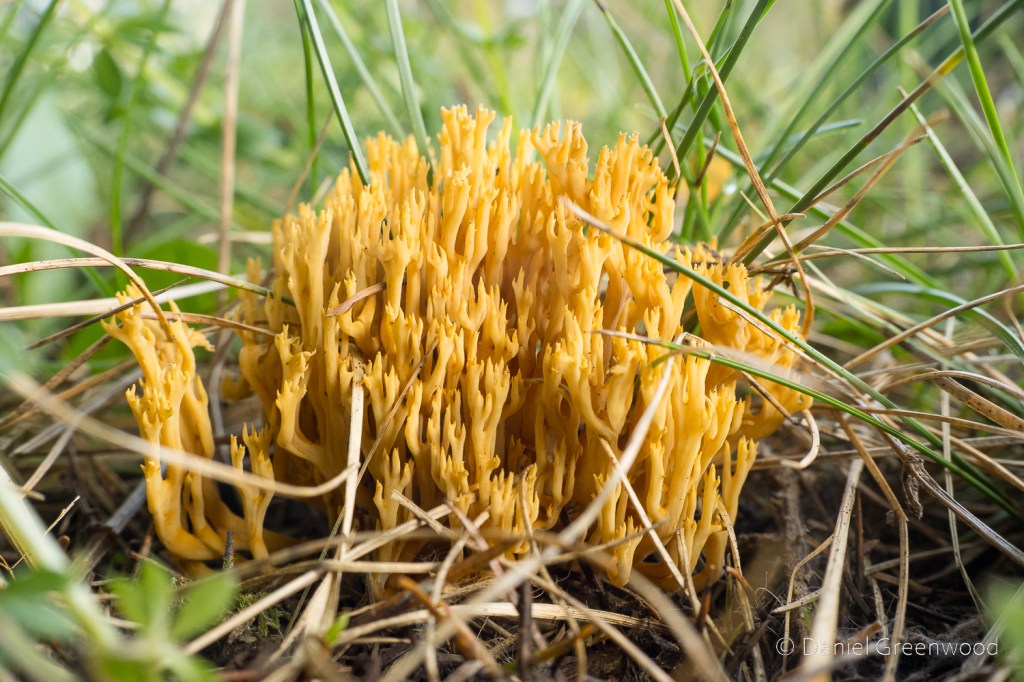
I’m not up on my corals and suchlike, but these are probably in this family.
The walk ended in a little graveyard, great places for waxcaps, by the way. That was evidenced again by this clutch of what I would say were scarlet waxcaps (Hygrocybe coccinea).
Phew!
Thanks for reading.
I write these blogs in my spare time because I want to raise awareness about the beauty and diversity of fungi. If you enjoy reading themyou can support my blog here.
This time five years ago I was hunkering down into my Macro Monday blog series as the pandemic locked down on us all. Now we are at the short end of the lean mushroom season. Spring is about to, well, spring, so the temperatures will rise and fungi will fruit again in modest numbers.
With that in mind, I made a right fool of myself with my neighbour this week. But then again, at least I’m not threatening them with military invasion and putting tariffs on the bird identification information I share.
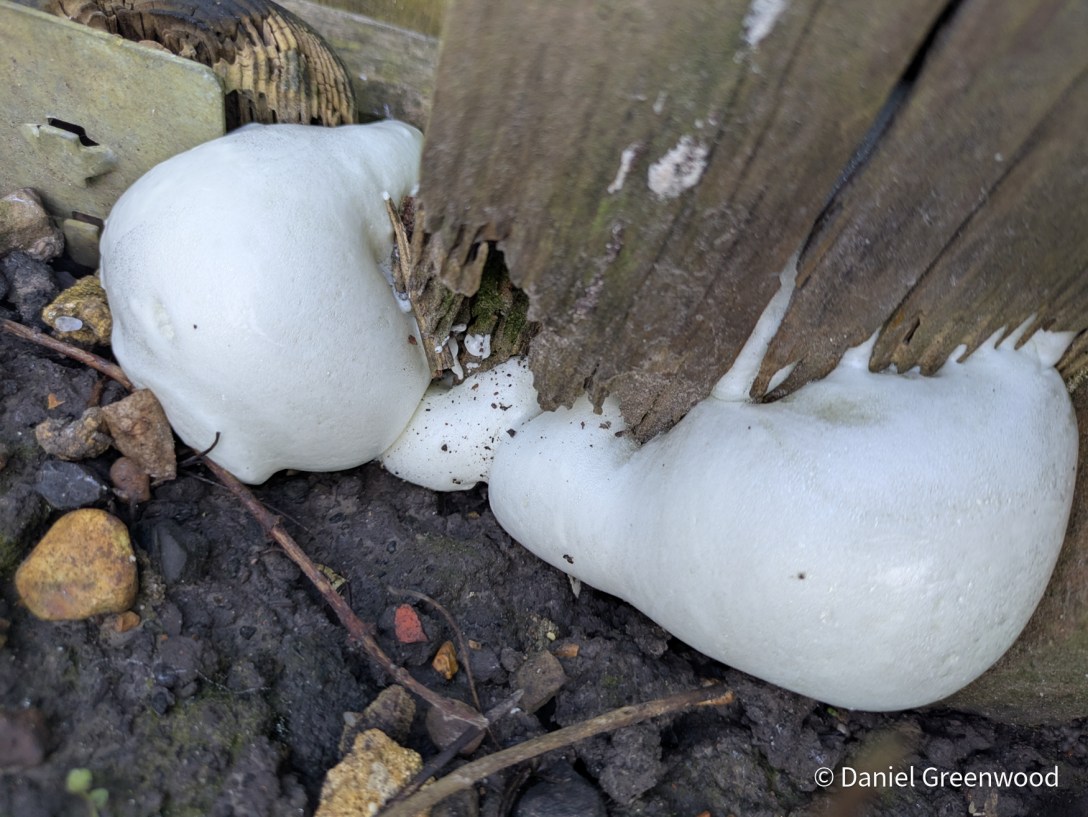
No, instead I got excited about what I thought was false puffball (Enteridium lycoperdon), a species of slime mould (not actually fungi, but growing in the same way and places) that can be observed at this time of year.
On the way out for my morning walk, I spotted some white mushrooming thing at the bottom of my neighbour’s fencepost. Wow, I thought, false puffball on our doorstep!
The organism was white, had appeared quite quickly, and was growing in a damp location on decaying wood. Perfect!
I sent some photos over to my neighbour to say what I’d seen. Obviously he had no idea what I was on about, and so he checked with his roofer who confirmed they had sprayed expanding foam (in two seriously random locations, in my defence) while working on the house the other day.
If false puffball is what it says it is, does that now mean that expanding foam is false false puffball?
For comparison, here’s the real thing from back in that fateful month of March 2020:
One thing I have learned from this process of misidentification is that my blog appears quite high up in the rankings on Google for ‘false puffball’. It comes at a time when Google emailed me to ask if they could feature some of my photos on their store blog and do an interview.
‘What’s in it for me and my phone,’ I asked.
One of the richest companies in the world, and it turns out they don’t want to pay to use your images or harness your knowledge and experience. What a bunch of puffballs. I hope you appreciate it’s the principle here that matters. Remember those, principles?
So it goes that the only way I have ever been paid as a photographer is when you lovely people ‘buy me coffee’ via my Ko-fi page. Thank you to everyone who has supported me.
Anyway, I hope Google like these absolutely stunning false puffball images. Shot on a Gaggle Tinsel 35c. Feel free to use guys! 🙂
In May 2024 I visited Salzburg in Austria for the first time. It’s a beautiful city in a wonderful part of Europe. The photos are taken with my Olympus EM-1 Mark III with a sprinkle of my Olympus TG-6 compact, and Pixel 7a.
One of my wife’s prerequisites for the visit (part of our honeymoon rail adventure – see Swiss Alps posts) was to attend the Sound of Music tour which begins in Salzburg. I love the film (thanks to my friend and blog reader Allison for lending me the DVD), but admit to remaining silent on that bus!
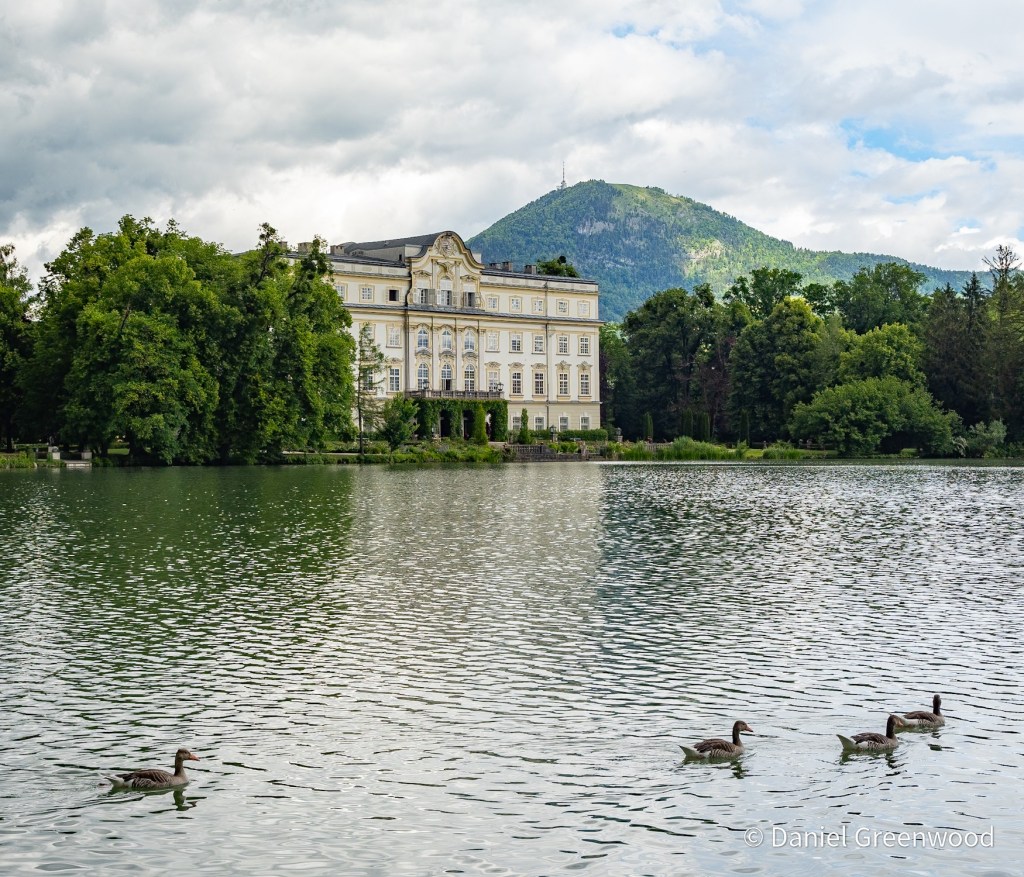
The building above is Schloss Leopoldskron and was used in the film, combined with another location. In the distance you can see the hill of Gaisberg which lurks throughout this post.
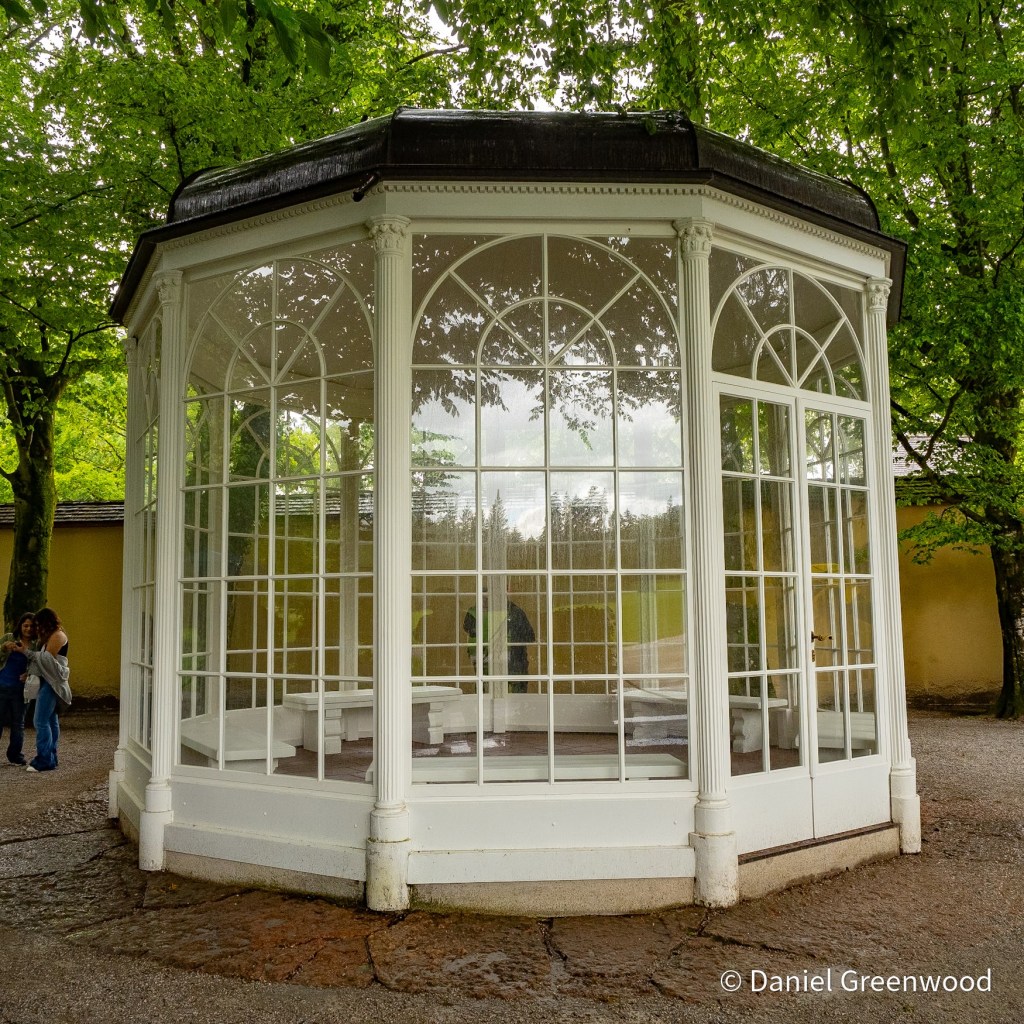
Just outside the city centre we were driven to Schloss Hellbrunn and the famous gazebo where ‘Sixteen Going on Seventeen’ was set. The scene inside the gazebo was a set as it was too small for actual dancing.
Our excellent guide finished the tour (which takes you much further outside Salzburg) at the Mirabelle Palace Gardens. In the distance you can see the iconic Hohensalzburg Fortress.
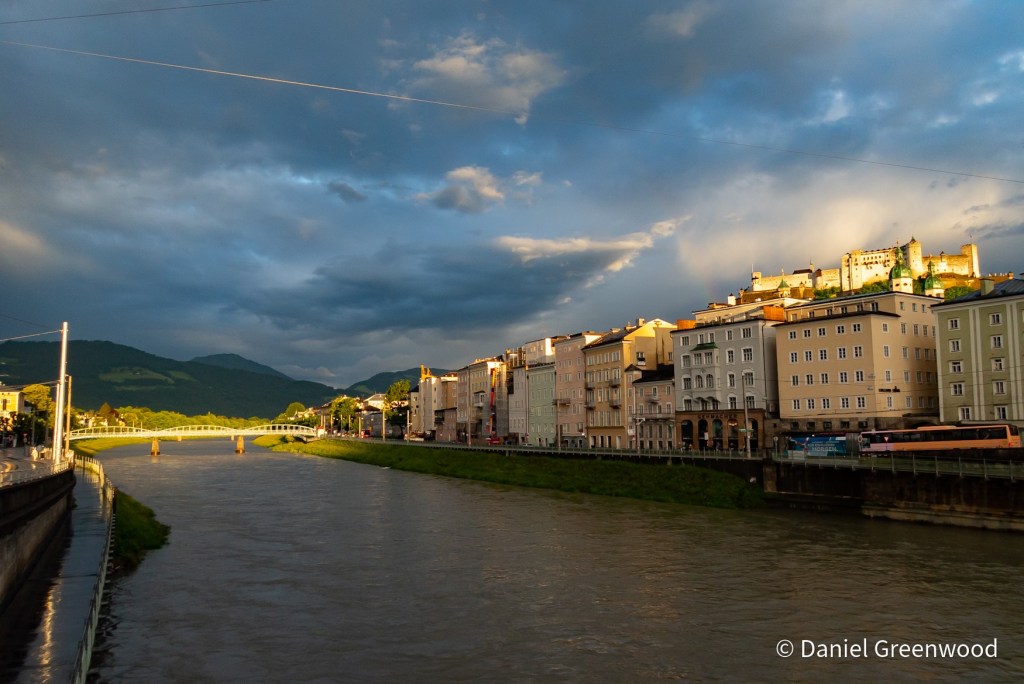
Here’s the Hohensalzburg Fortress in spectacular light after heavy rain later that evening. Taken with my Olympus TG6 compact camera.
The evening light falling across one of several bridges that connects the old and new towns of Salzberg, crossing the Salzbach river.
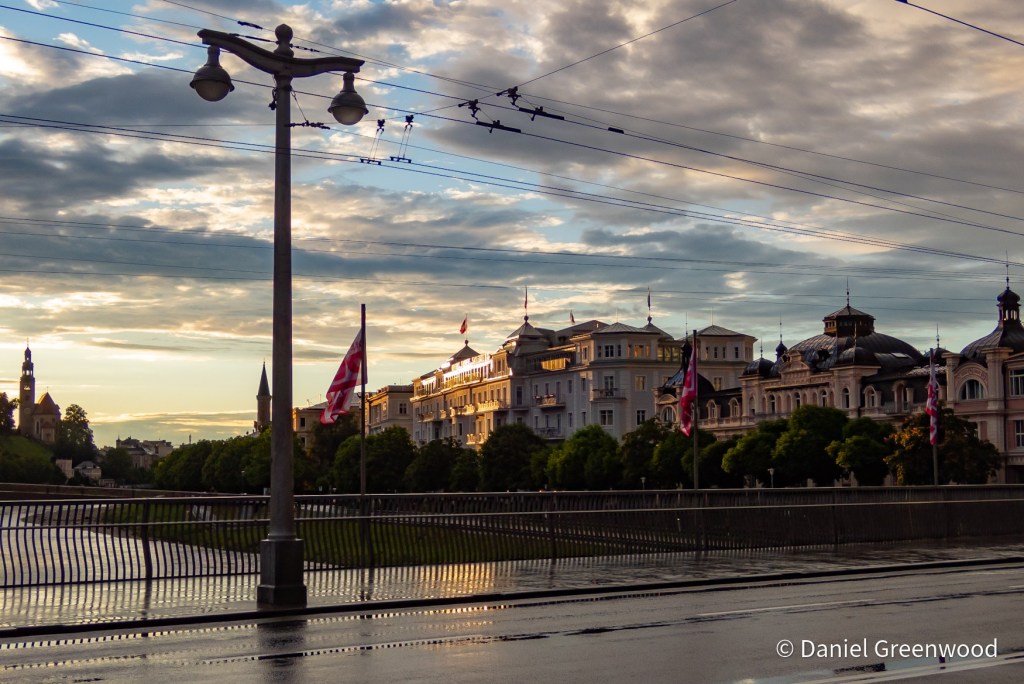
The reverse view to the north-west.
The following morning we passed the St. Sebastian Church, sited along a pedestrianised street. Mozart’s father and wife are buried in the cemetery here.
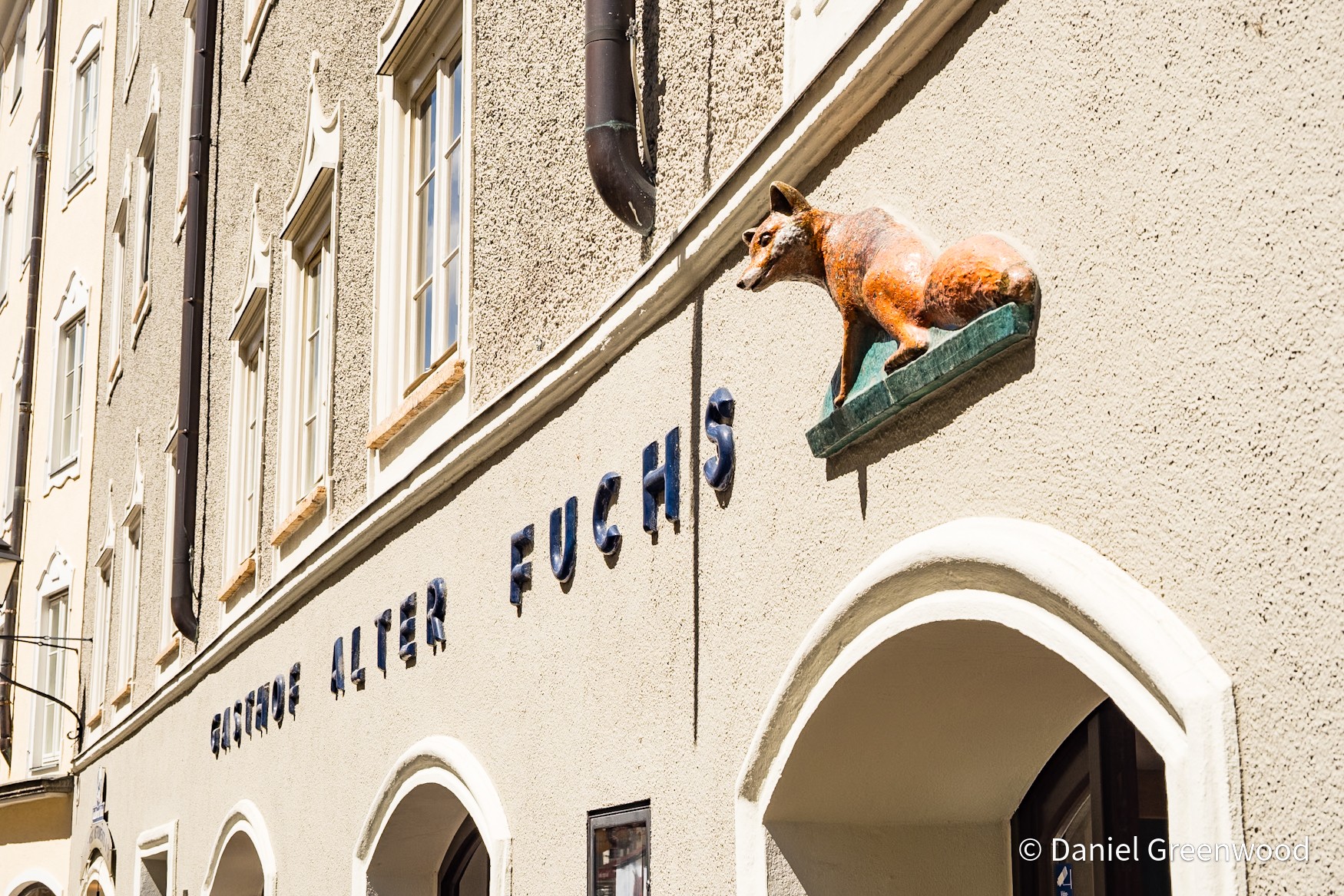
The Old Fox was a pub we ate at later that evening, as we have a penchant for foxes (not eating them). The food was good, but like many places in Austria their approach to accommodating and supporting people with nut allergies needs work. It’s a lovely old pub inside and out.
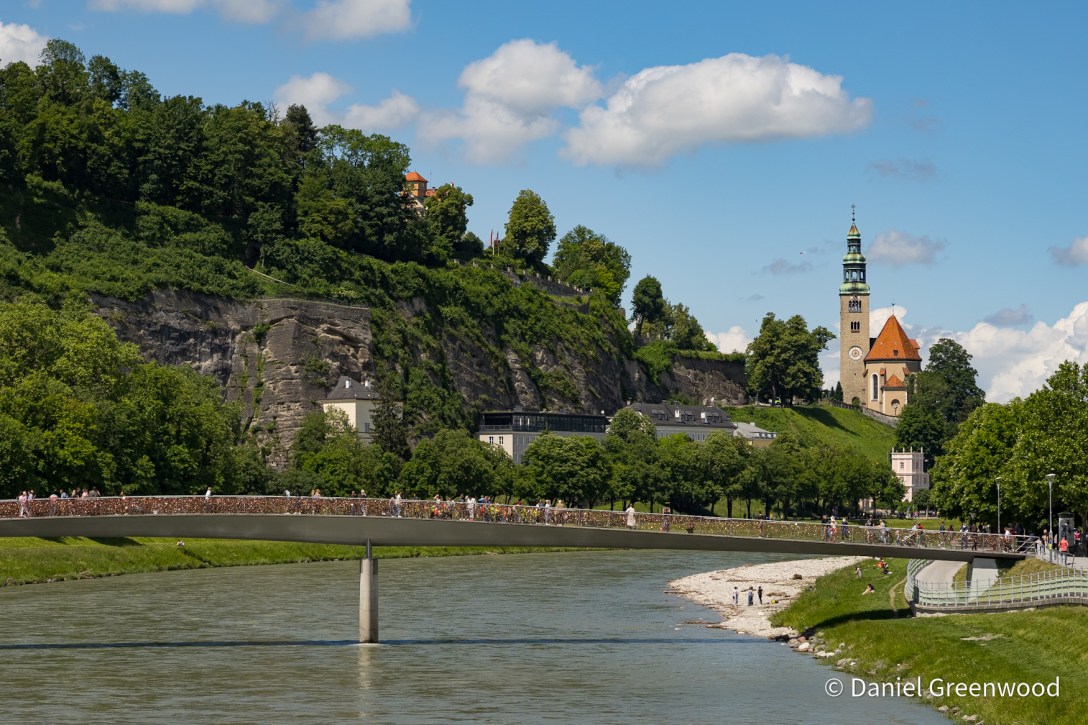
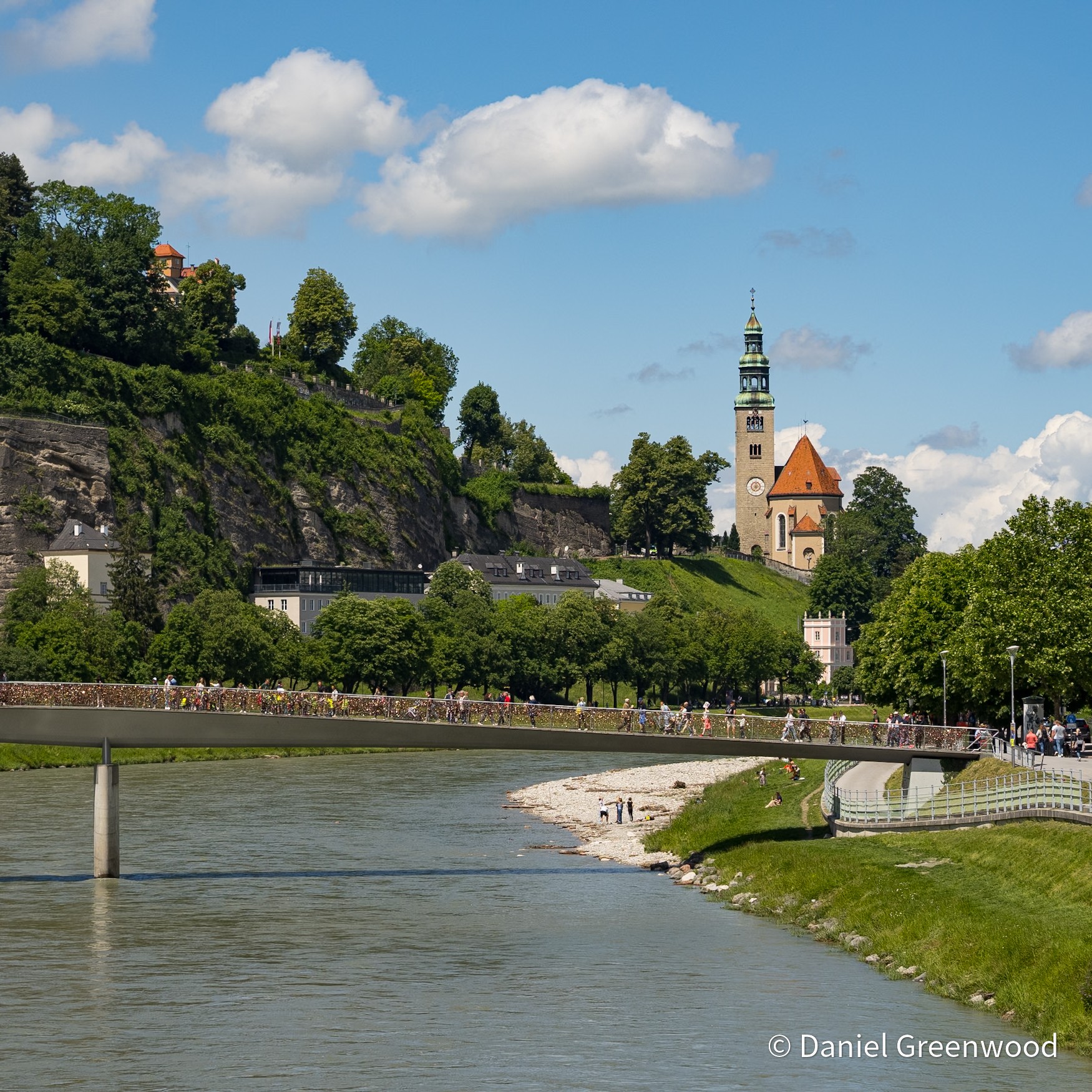
Mülln Parish Church seen from one of the bridges across the Salzach. The hill here is the outcrop that holds the Fortress.
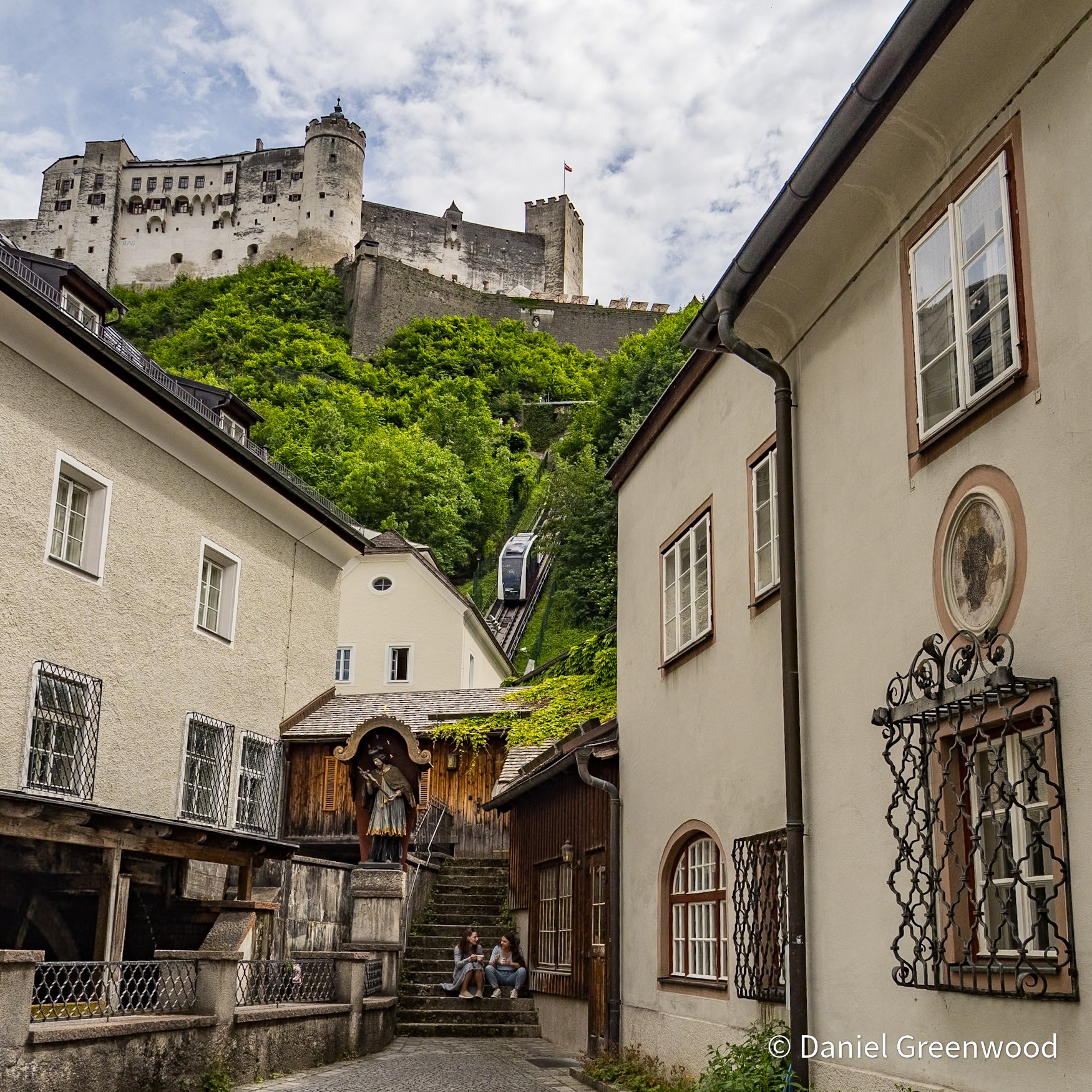
I think this is my favourite image that I captured from Salzburg. It shows so much of the city’s character, including the ancient heritage, layers of architecture, a cable car (very useful in Austria), and the life of the place. The processing is maybe a bit harsh.
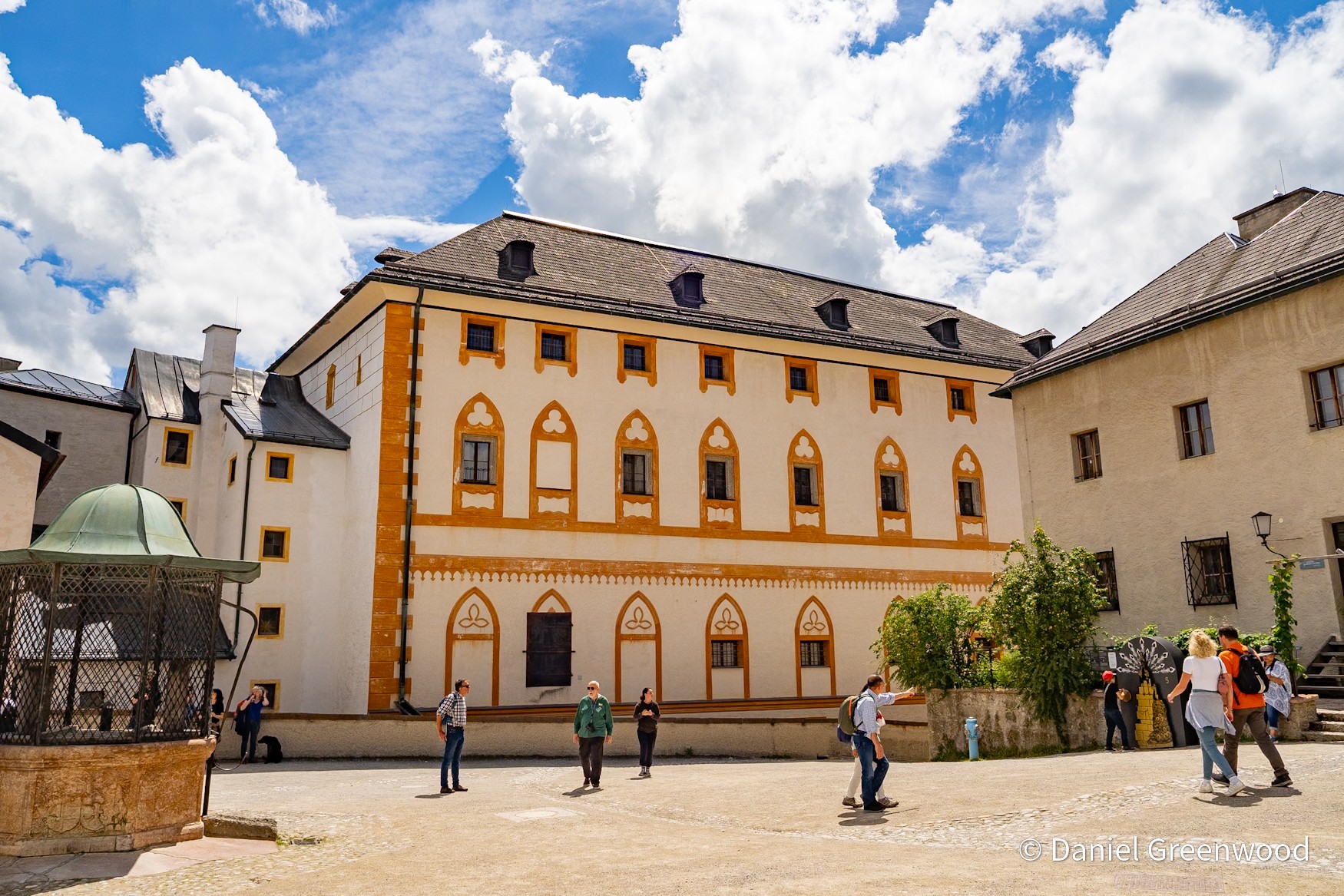
Inside the Fortress walls, now a major tourist attraction. Of course there’s a lime tree, it is central-eastern Europe after all.
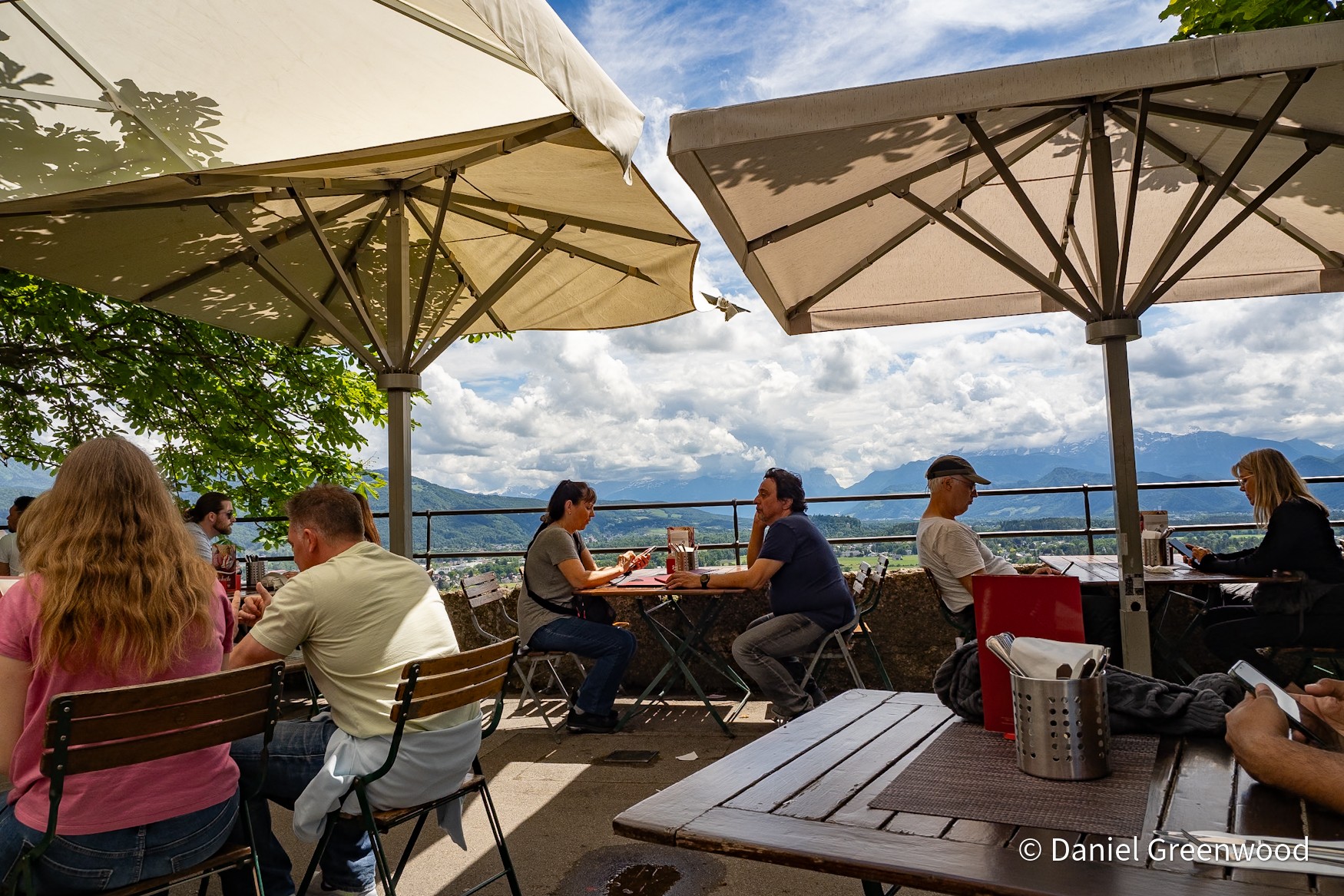
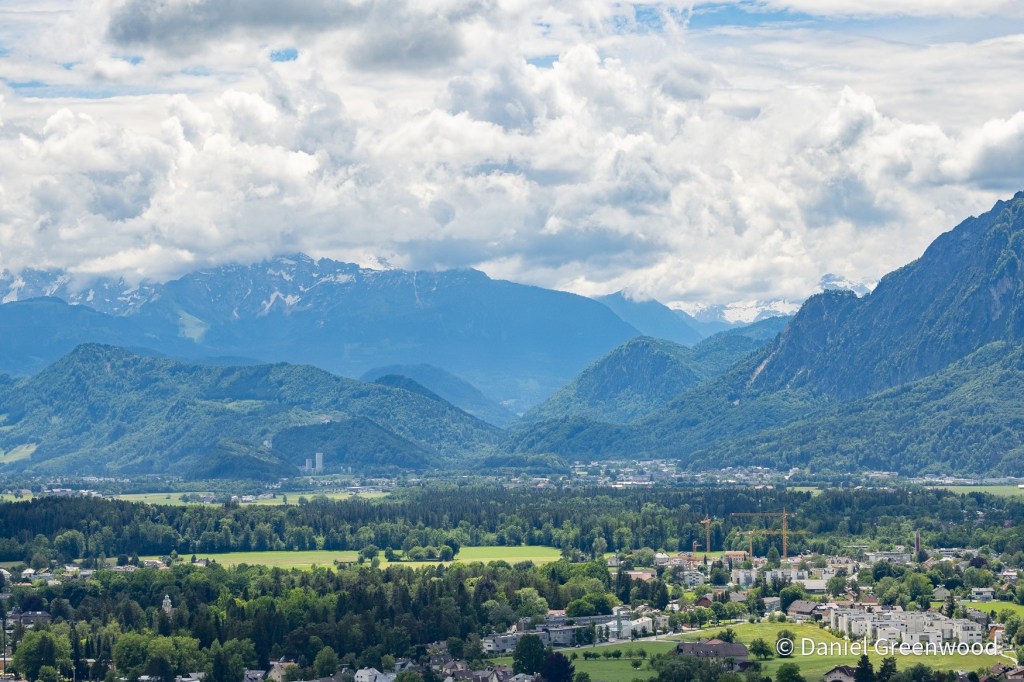
The views of the Salzkammergut mountains from the Fortress are spectacular.
The Salzach river snaking away to the north and north-west where it becomes the boundary between Bavaria (Germany) and Austria. It eventually finds its way into the mighty river Inn.
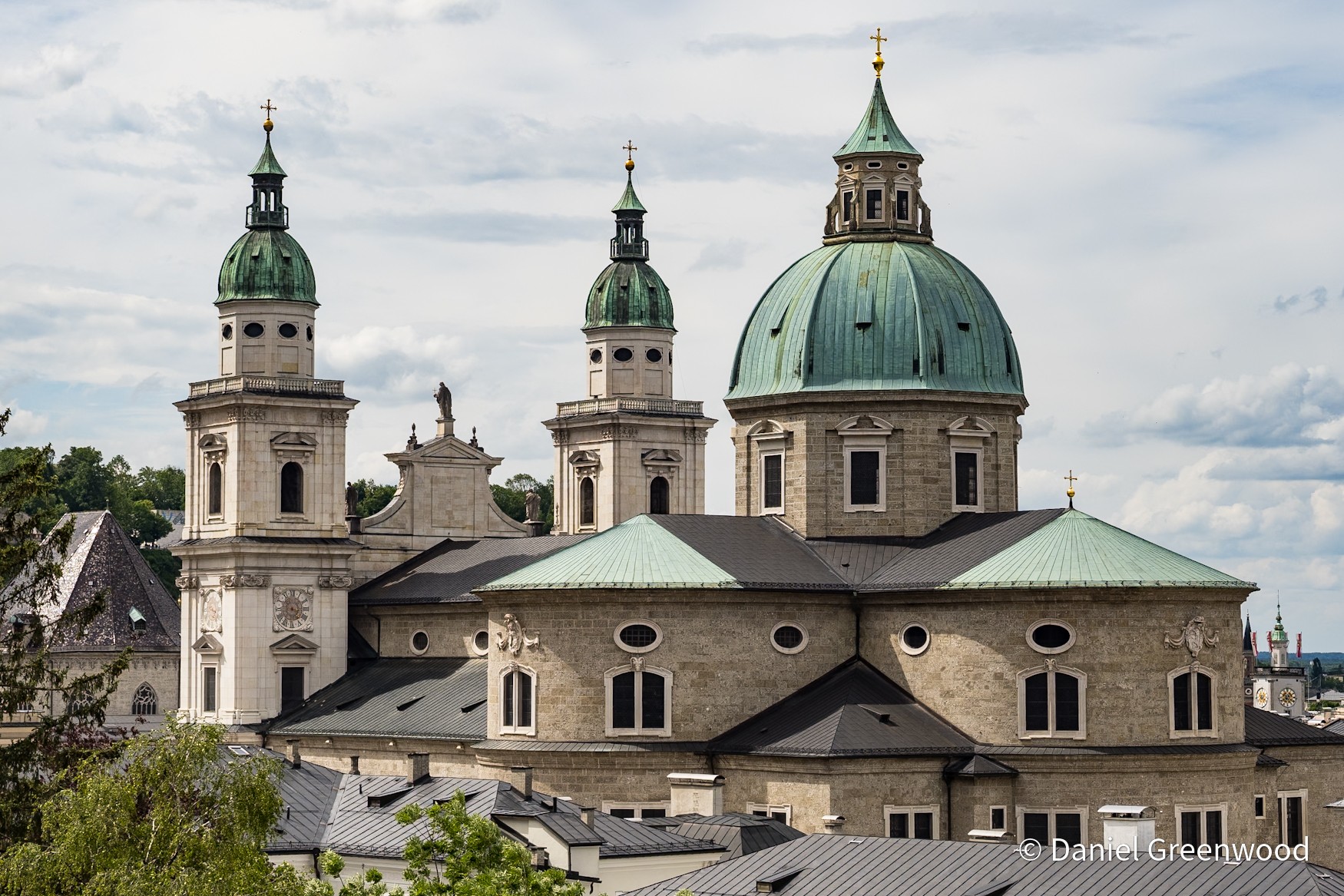
This is the first view in this post of Salzburg Cathedral, originally built in the 700s.
The cathedral has been restored after it was bombed by the Allies in October 1944 as the Second World War reached its climax. Many thousands of people, including civilians, lost their lives in the British and American bombings of Austria and Germany.
The towers were reconstructed by 1959.
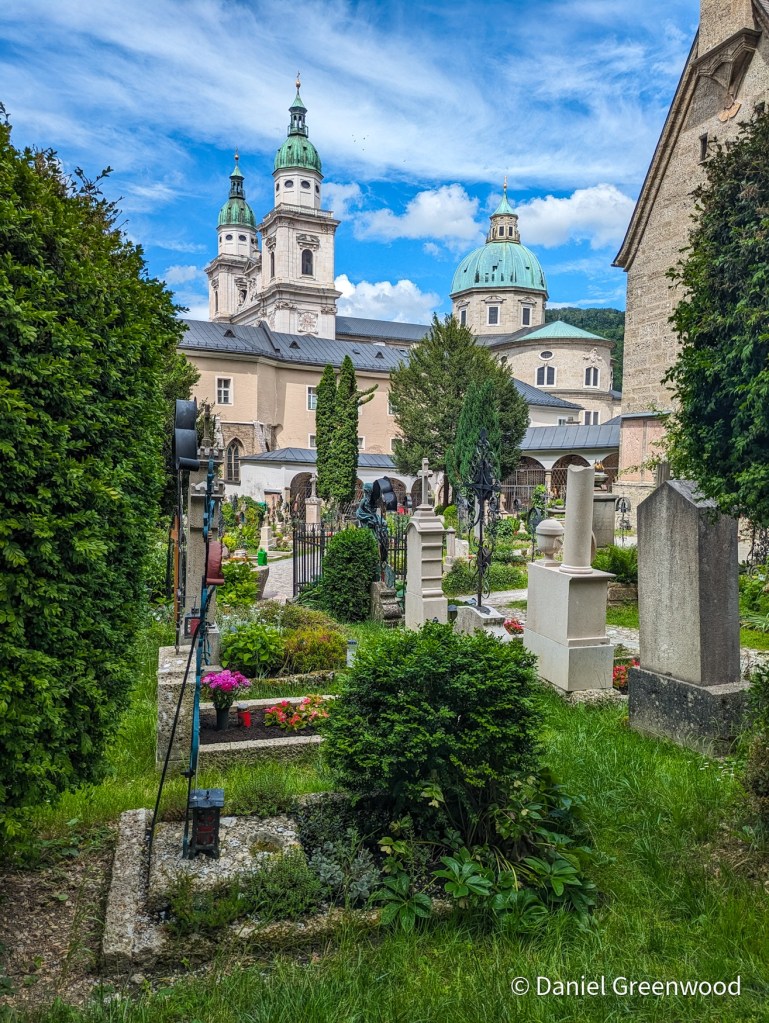
The cemetery near the cathedral is a lovely, quiet spot. This is a Pixel 7a pic, hence the fancy colours.
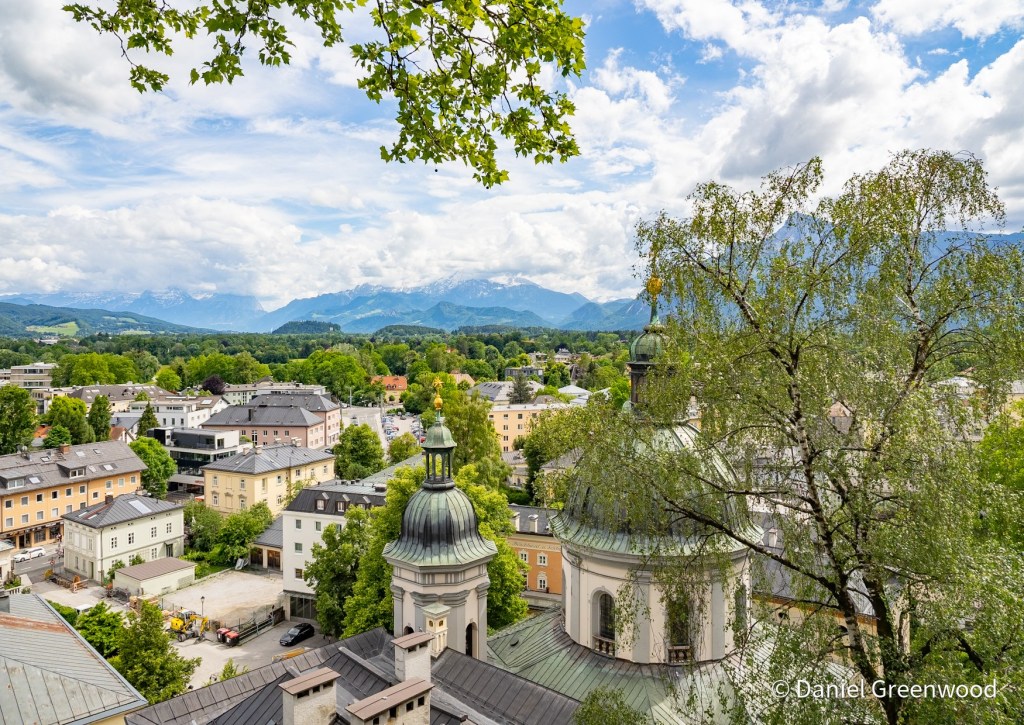
There are many lovely towers to see in Salzburg. Here you can see evidence of how green the city is, looking into the mountains.
Gaisberg as seen on the approach to the monastery, with a Sound of Music fan eagerly making their way there.
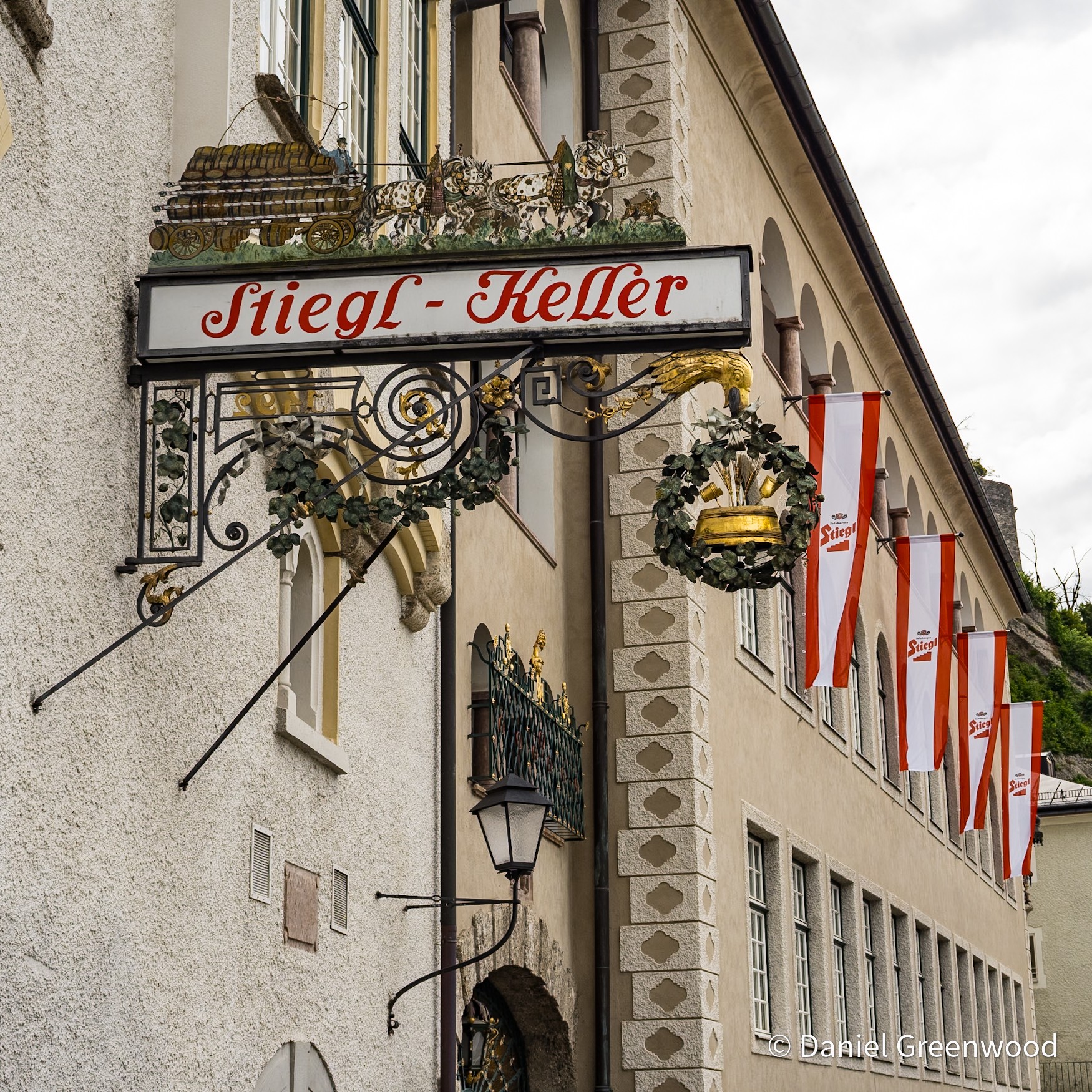
Stiegl was the nicest beer that I tried during our time in Austria. It’s a wheat beer. This is one of their breweries and apparently dates back in part to the 1400s.
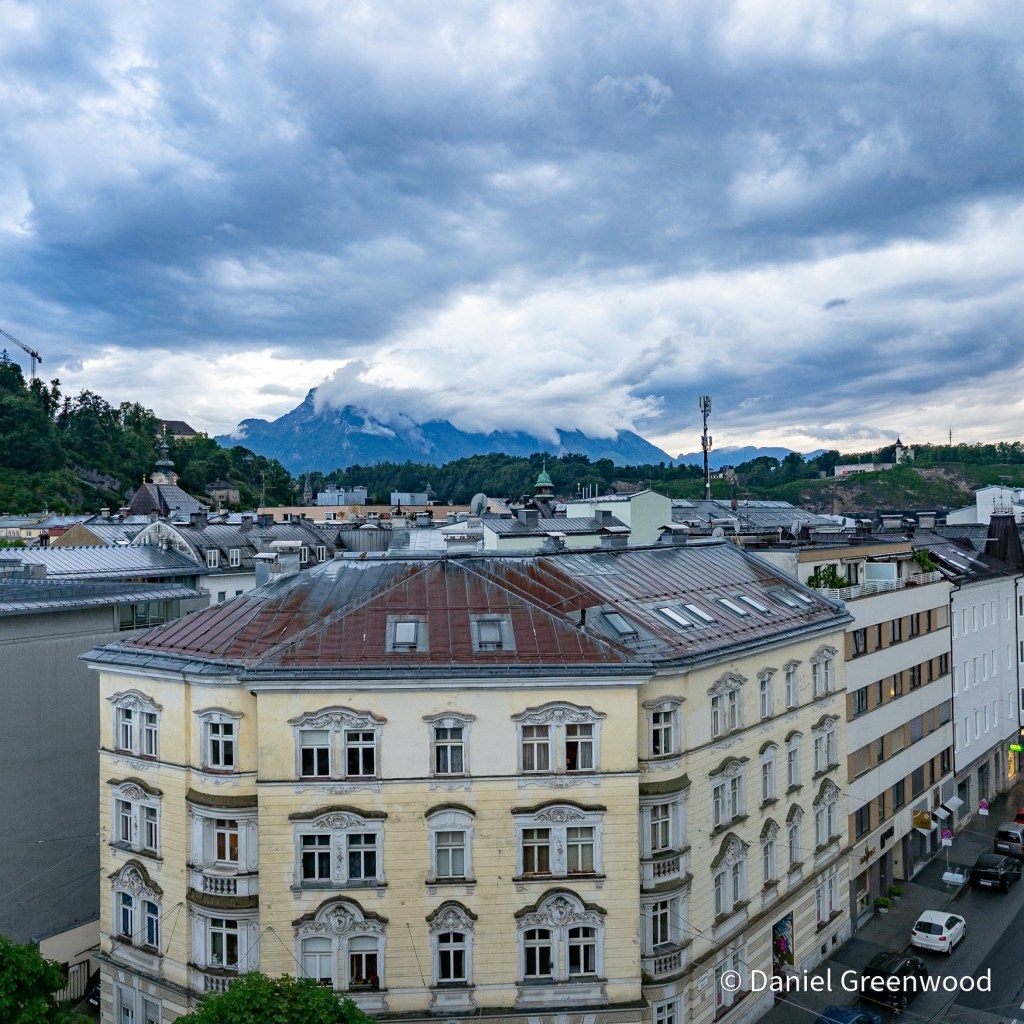
The view from our hotel room was special, mixing Salzburg architecture with the surrounding peaks of Salzburgerland. An almighty storm arrived not long after this photo was taken.
Looking from another window in our room, the clouds drifted over Gaisberg.
Thanks for reading.
I write these blogs in my spare time because I want to raise awareness about the beauty and diversity of our landscapes. If you enjoy reading themyou can support my blog here.
Continuing my series of posts about visiting the Jungfrau region of the Swiss Alps in May 2024, this one focuses on the sycamore trees which are so abundant there. They were seen on a short but constantly ascending walk at the foot of the Wetterhorn.
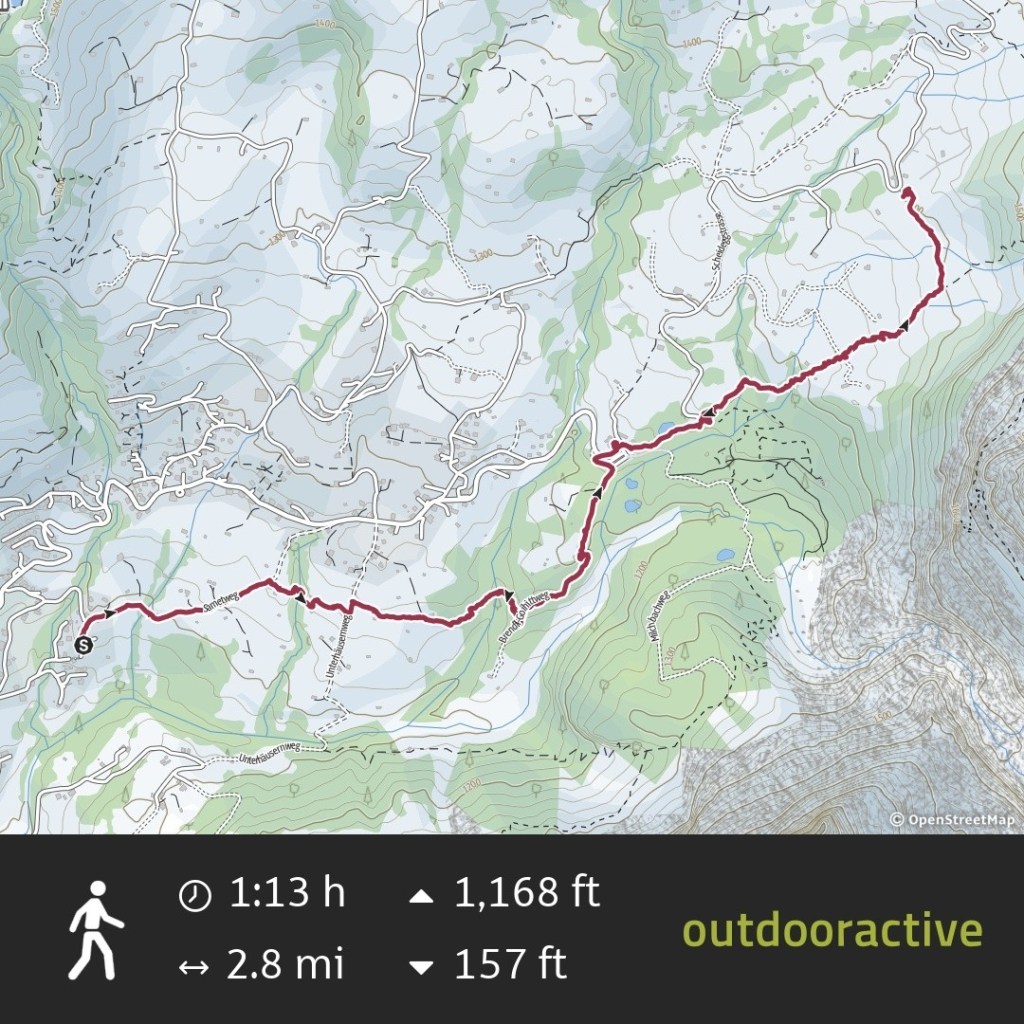
If you want to do this 3-mile walk for yourself, it begins in Grindelwald and ends at the owl sanctuary/mountain café with a return bus available at the end. This is the route we took (ignore the starting point, just begin anywhere in Grindelwald):
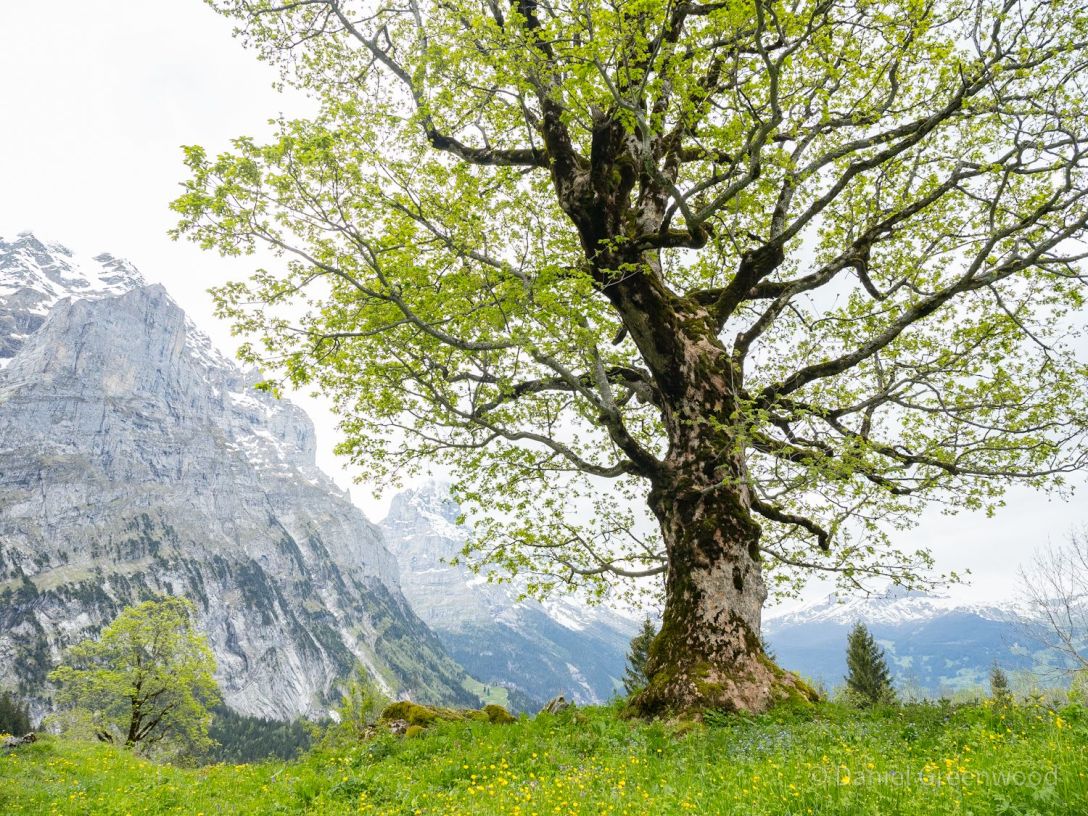
I’ve posted a couple of times about the sycamore tree (Acer pseudoplatanus) as I think it straddles that special boundary between human culture and wildness that is probably my creative sweet-spot. In Britain sycamore is at once reviled by nature conservation puritans, accepted by rewilding pragmatists, and held as a symbol for the British love of trees in the form of the illegally felled and now martyred Sycamore Gap tree.
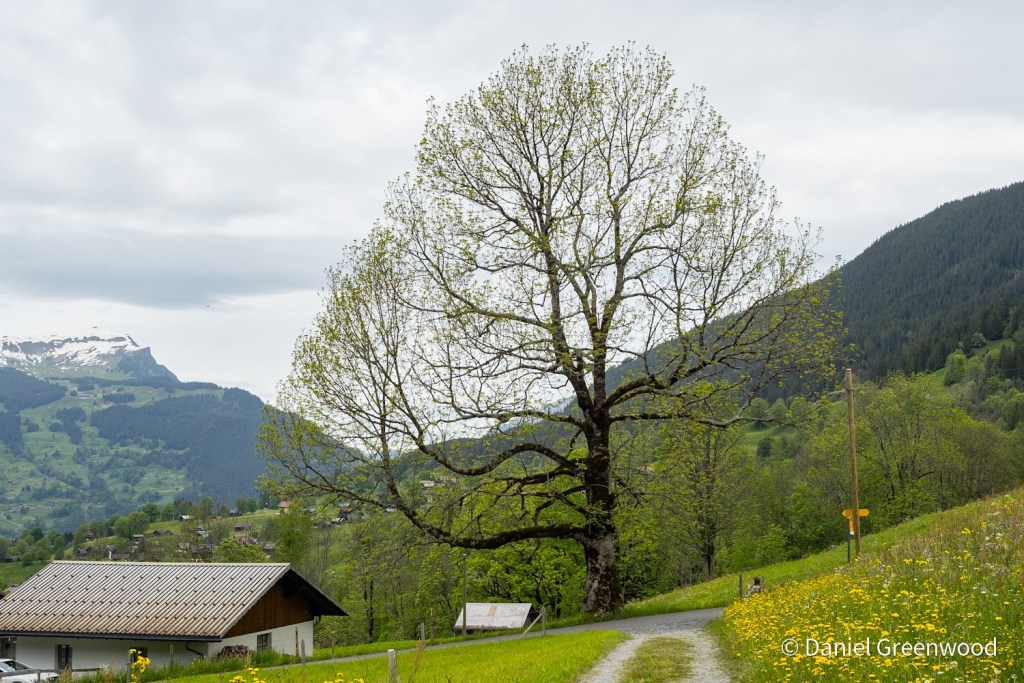
In the Bernese Oberland I saw sycamores playing a fundamental role in cultural landscapes at the foot of the Wetterhorn, one of the Jungfrau’s towering peaks.
What do I mean by cultural landscapes? My understanding and use here indicates a landscape that remains wild or ‘natural’ but with a heavy human influence still. English national parks are cultural landscapes, whereas those managed by wolves and grazing animals without human management plans in North America, are ‘wildernesses’. That in itself is questionable from a Native American perspective, but another blog.
A reminder that you shouldn’t pick flowers, trample on them, or knowingly disturb wildlife or livestock in these extremely sensitive places. In terms of you being trampled, cattle were behind electric fencing where present.
The signage is impressive in Switzerland, some provide hours and minutes route descriptions of destinations. Not something I’d seen before, but now there’s no going back, or at least if there is, you will know how long it takes!
The walk crosses the Horbach river at least once.
A large, moss and lichen-covered ash tree (Fraxinus) showing no signs of ash dieback disease, thankfully.
It was nice to see some roughness and history in what is an otherwise ‘spick and span’ setting. I presume the huts are built on stone to prevent rising damp decaying the timber frame.
Spiked rampion was a new plant for us. Apparently it’s endangered in the UK. It was growing in woodlands and meadows around the Grindelwald area.
His a mighty view of the Horbach looking towards the Eiger.
Red-banded polypore is common in continental Europe but not as easy to find in the UK, so I always enjoy seeing it.
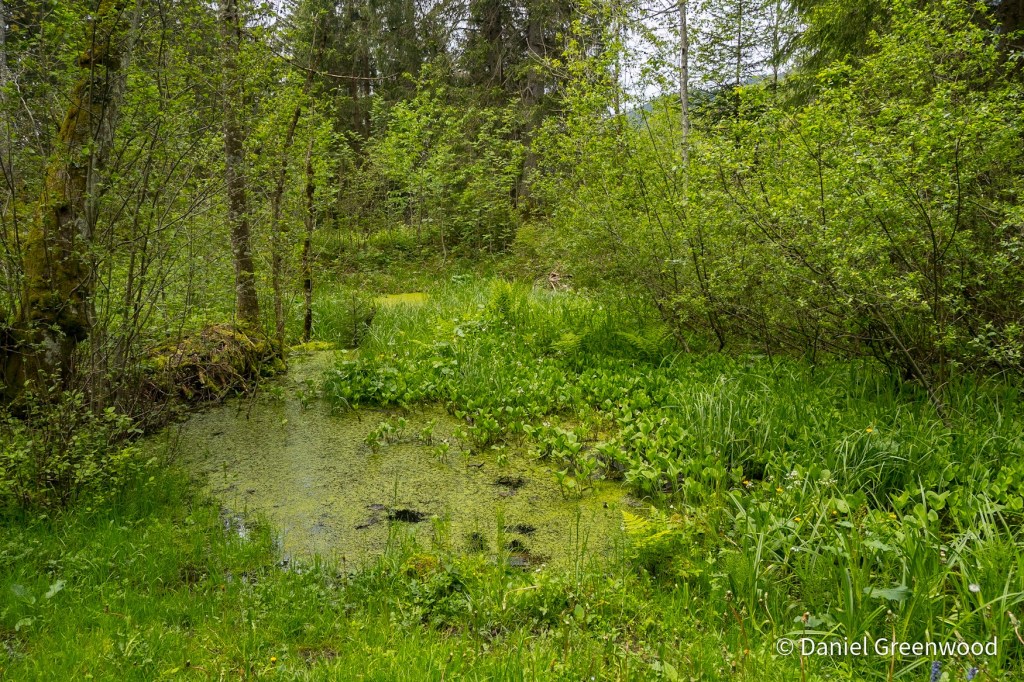
I love woodland ponds, especially ones as wild and dynamic as this one. This is probably an ancient pond.
After this point you reach a hotel which I didn’t take any photos of. It’s a good place to have a hearty meal. Just don’t expect to charge any devices, we heard an English couple seemingly fall out with the staff over that. Oops.
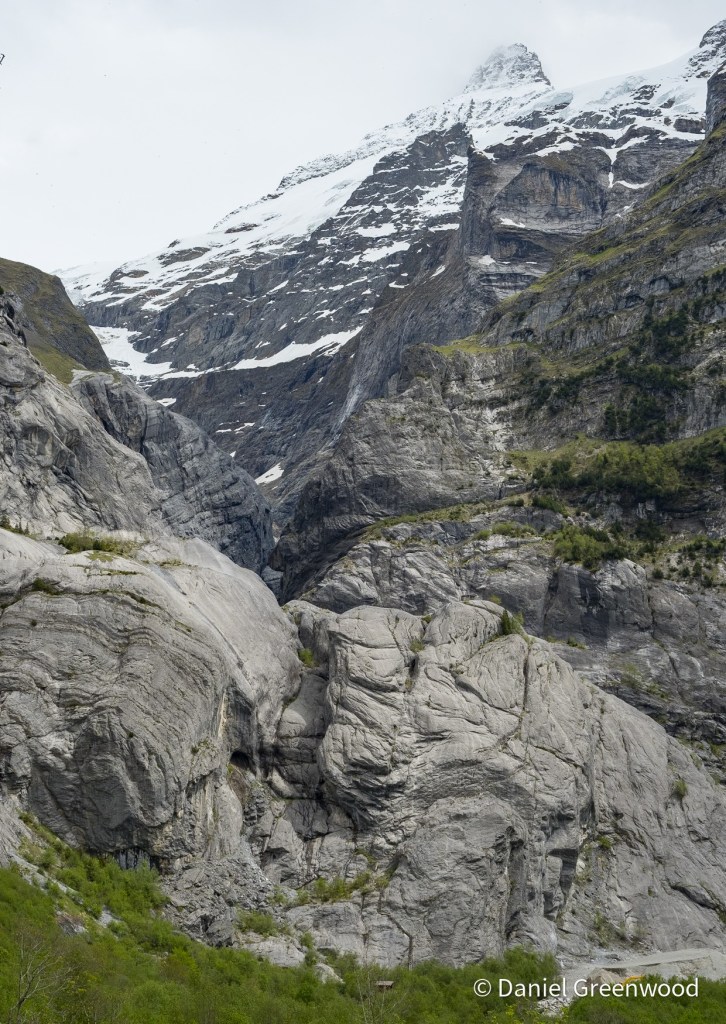
After stopping at the hotel you pass this incredible cut in the mountain side. The rock looks twisted and dramatically compressed. There’s a small quarry in operation, glimpsed in the right hand corner.
These walks always involve huts belonging to local people. What a life that once would have been.
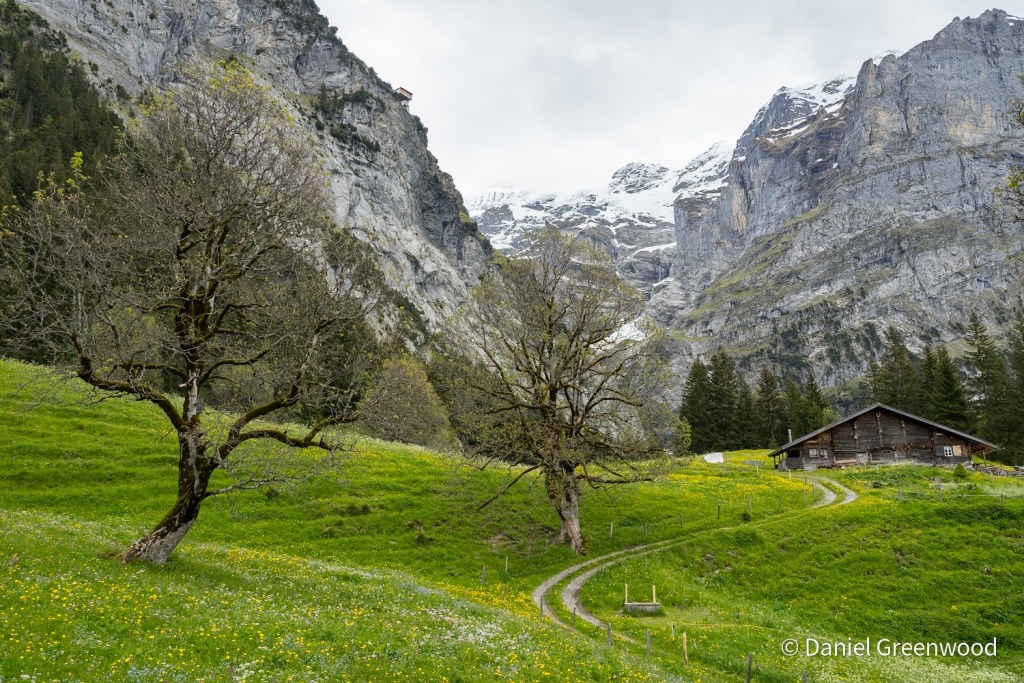
After this hut we turned into the sycamore wood pasture.
I know very little about mountain hydrology and the role that meltwater plays in feeding ecosystems lower down. But looking at the lushness of this meadows makes me wonder about how the ice melt provides such a fertile location for grassland, and sycamores. Sycamores do well in damp conditions, but not too wet.
Other lifeforms that enjoy wet conditions are of course mosses. They’re thick on this trunk. I didn’t spend any time attempting to identify any.
Fairy foxglove (Erinus alpinus) is another new plant we encountered. It was growing on the footpath.
Walking in such an awesome location can feel rather overwhelming.
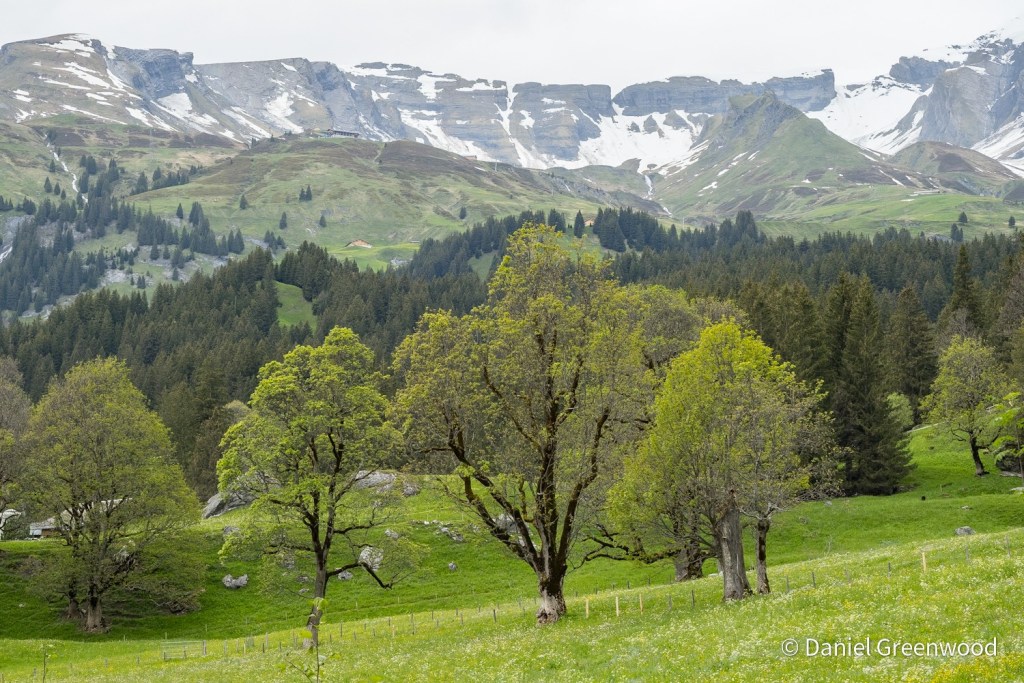
View north-east with a group of moss-darkened sycamores before growths of spruce. I think the peaks beyond the snowy tops can be reached by walking into the Grindelwald First gondola, accessible via the town centre.
A view south-west towards the Eiger ridge.
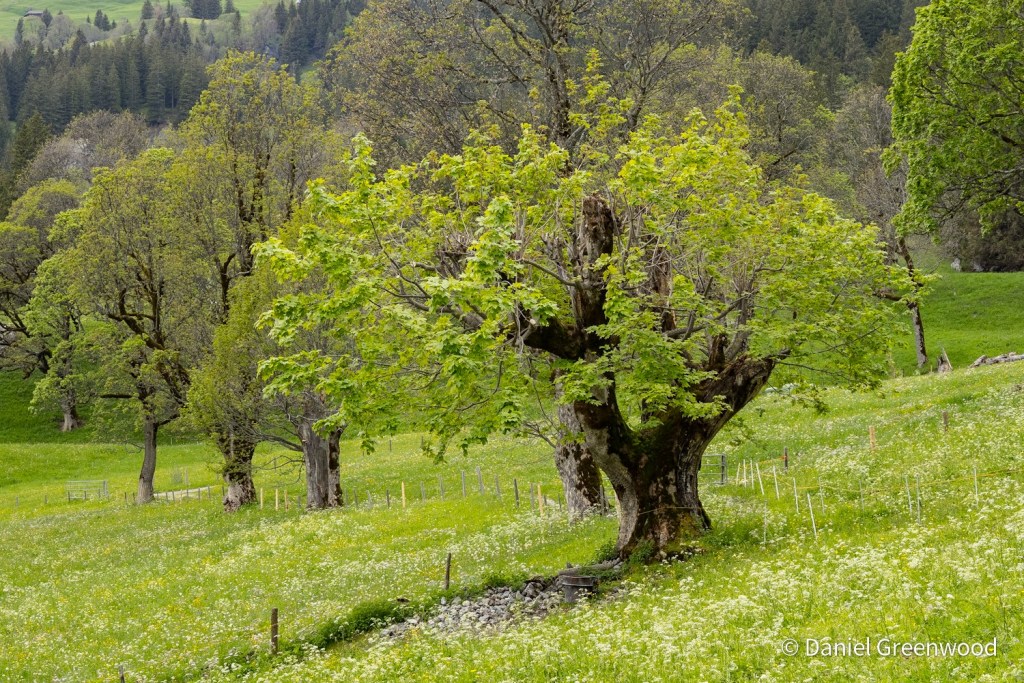
An old pollard sycamore coming into leaf for another year. The trunk is thick with moss and no doubt with lichen and algae too.
The Eiger Trail passes up here over the snow but it was closed due to rockfall.
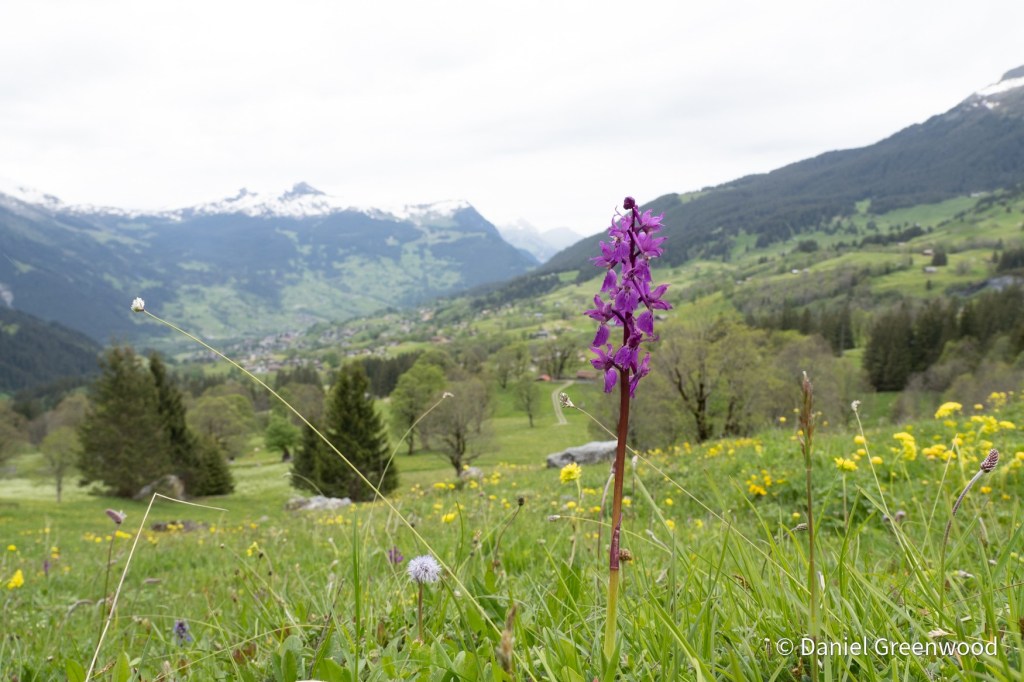
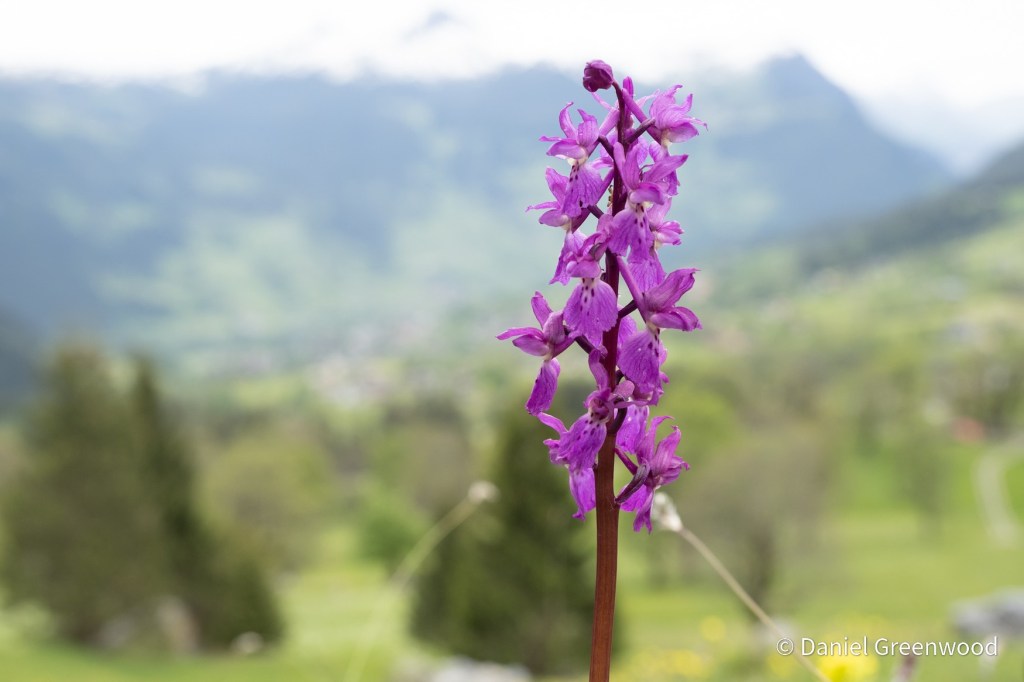
Early-purple orchid was not a common sighting during our time in the Alps, so seeing one against the vista of Grindelwald was nice.
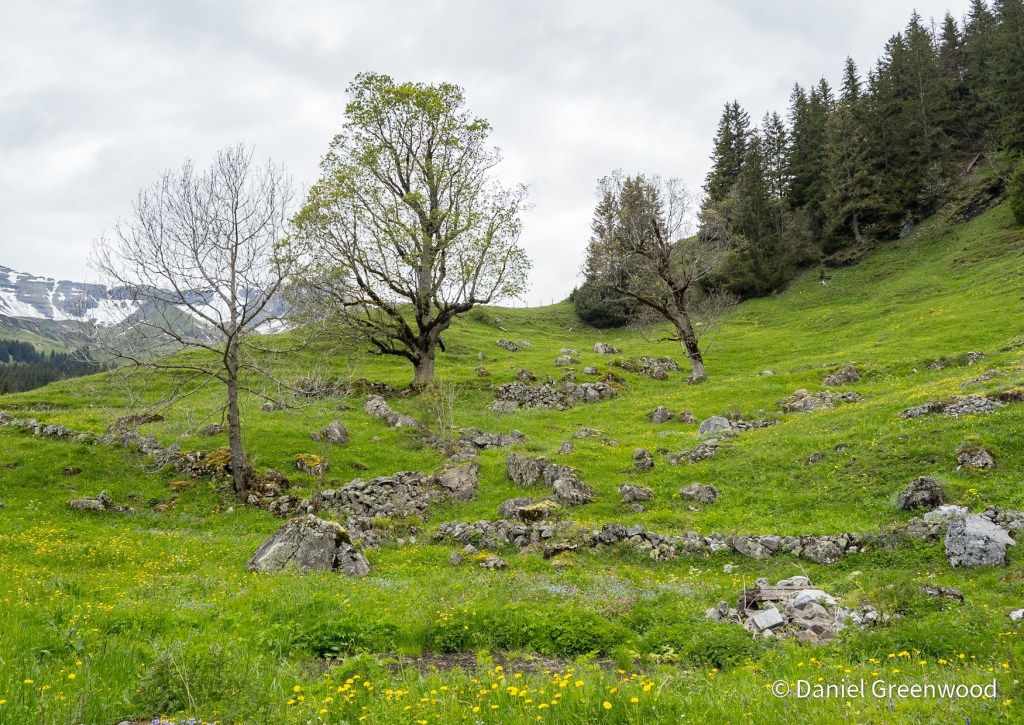
I was intrigued by these stone walls, reminding me of forgotten settlements seen in Ireland, Scotland, Dartmoor or Yorkshire. It’s a contrast with the tidy timbers of Grindelwald.
The walk ends at this lovely cafe on the road, across from the bird sanctuary.
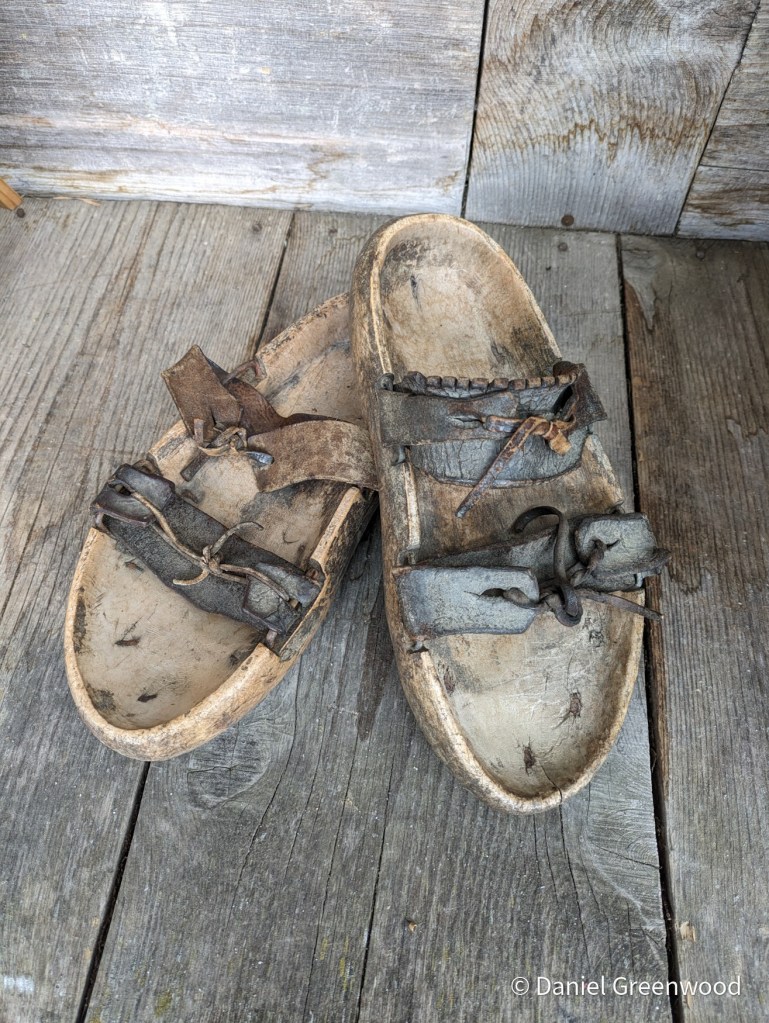
Some old shoes on display. Made with sycamore wood?
Just a few of the treats on offer.
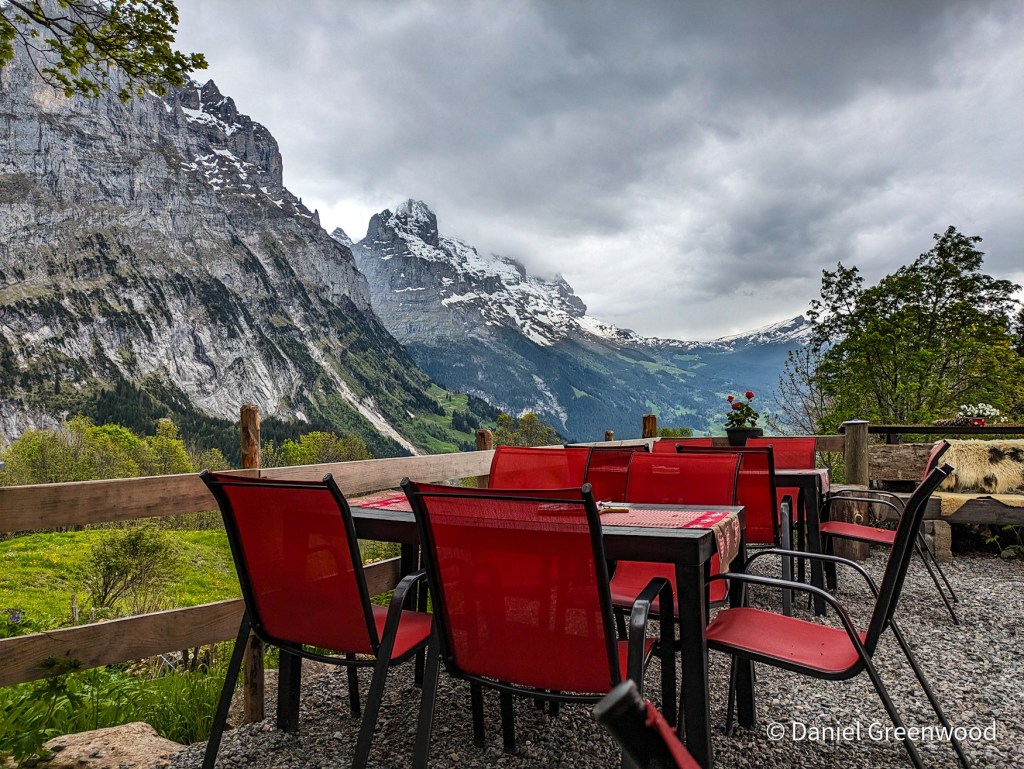
There aren’t many cafes that can beat this view.
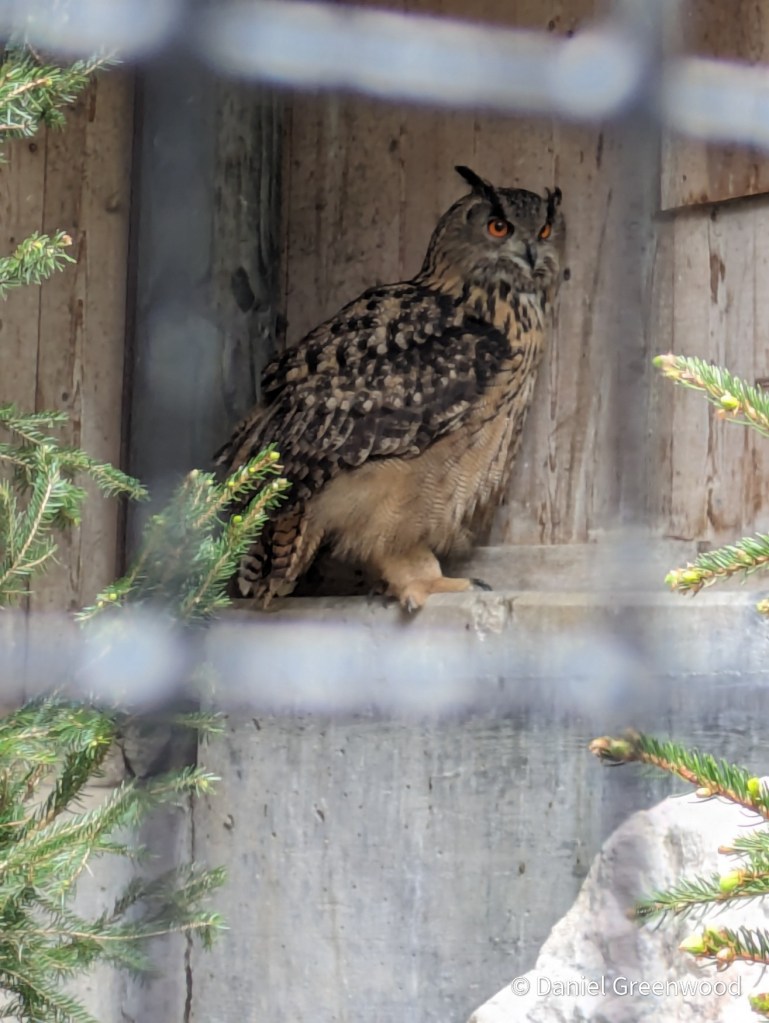
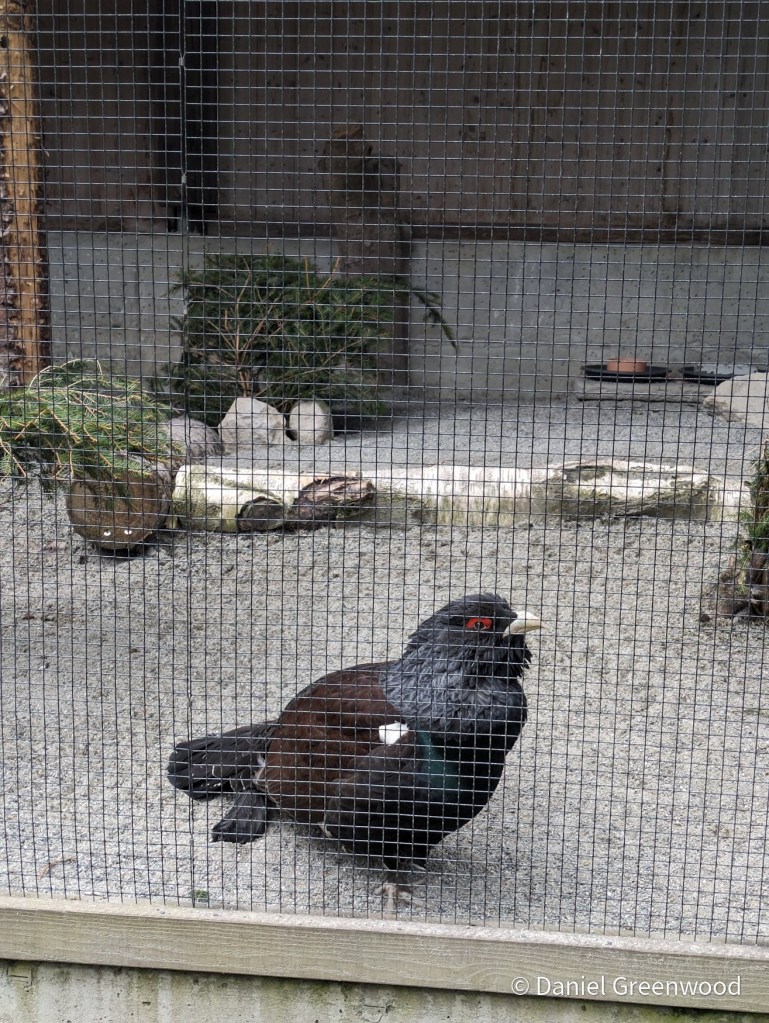
The Alpine Bird sanctuary (Alpenvogel Park), home to capercaillie, eagle owl, snowy owl, long-eared and tawny owls.





































































 Unlocking Landscapes