Rhinoceros beetle on Dartmoor 🦏

I spent the end of April in Dartmoor National Park, but not quite staying on Dartmoor as the initiated would say. It was unseasonably dry and warm, resulting in a large moor-fire days after we left. Looking at the state of the moor (below) it was hardly surprising. Underfoot it was tinder dry.
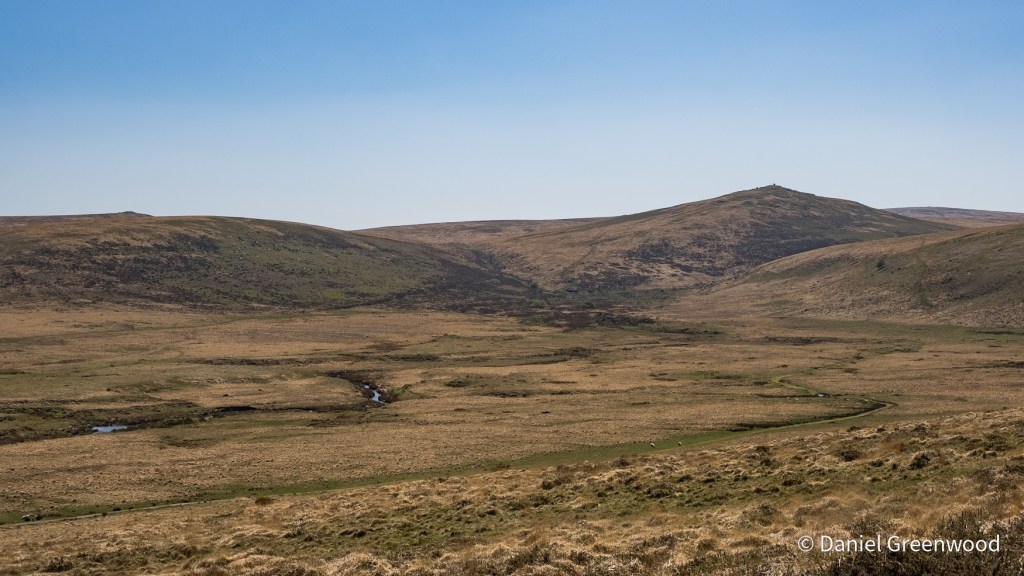
What do we do about wildfires, regardless of who or what started them? Whenever there’s a fire you do get calls for more trees in upland areas and for a ban on agricultural fires and restrictions on sheep grazing. Dartmoor’s hills are southern England’s uplands, holding the highest points in the region.

And breathe…

I had some time to take a few purist macro images, some with a does-it-all lens and some with my phone. Here are the results.

The first stop was Devon Wildlife Trust’s Dart Valley Nature Reserve. We often sit here and take in the scenery and birdsong. It’s special.

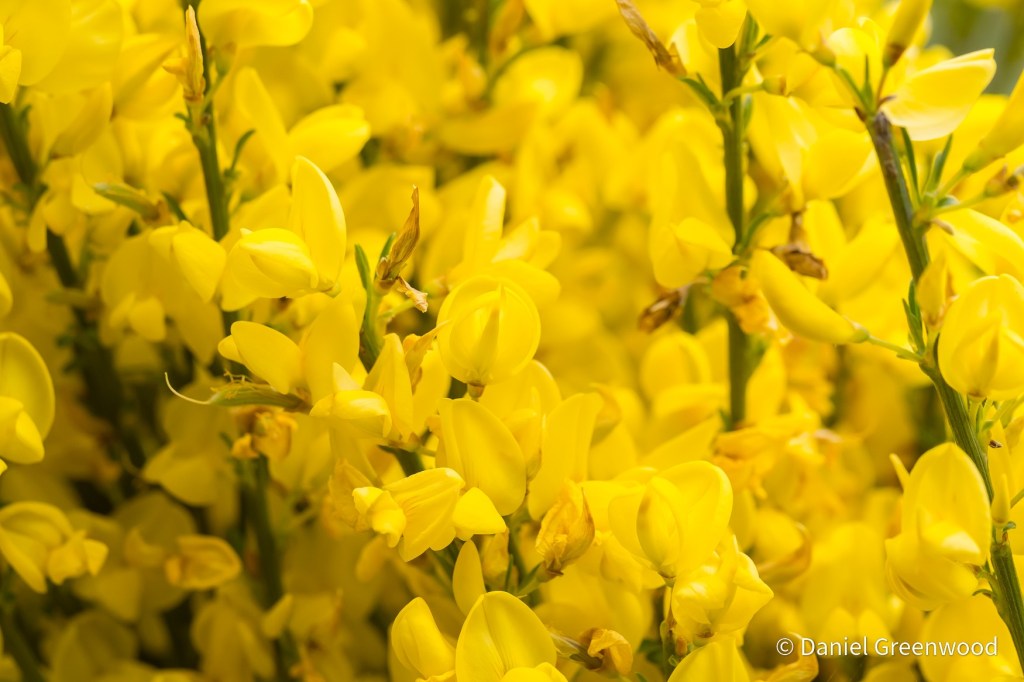
Gorse was flowering widely across Dartmoor. It’s also know as ‘chag’ historically on Dartmoor, giving the name to the village of Chagford.

Hawthorn was leafing across the landscape, an iconic moorland tree in Devon. The leaves are edible when young and have been known in the past as ‘bread and butter’.

Ferns were uncoiling in the more shaded areas. I think this is hard fern.

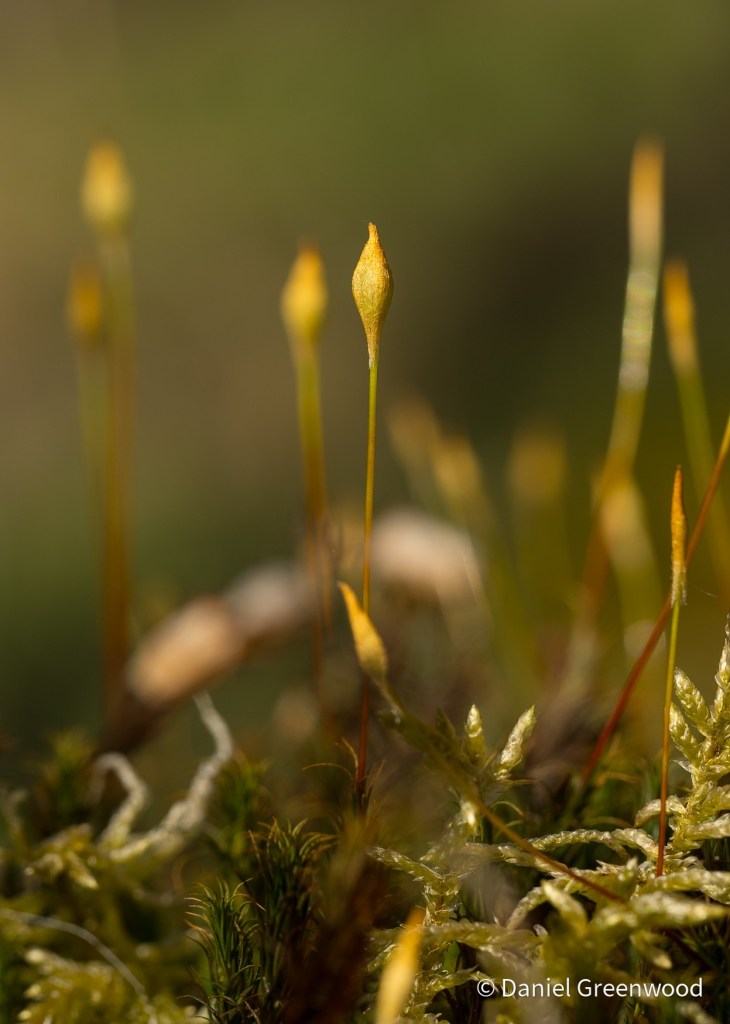
Juniper haircap moss is one that produces its ‘sporophyte’ in April. The very dry mosses were still able to do their thing.
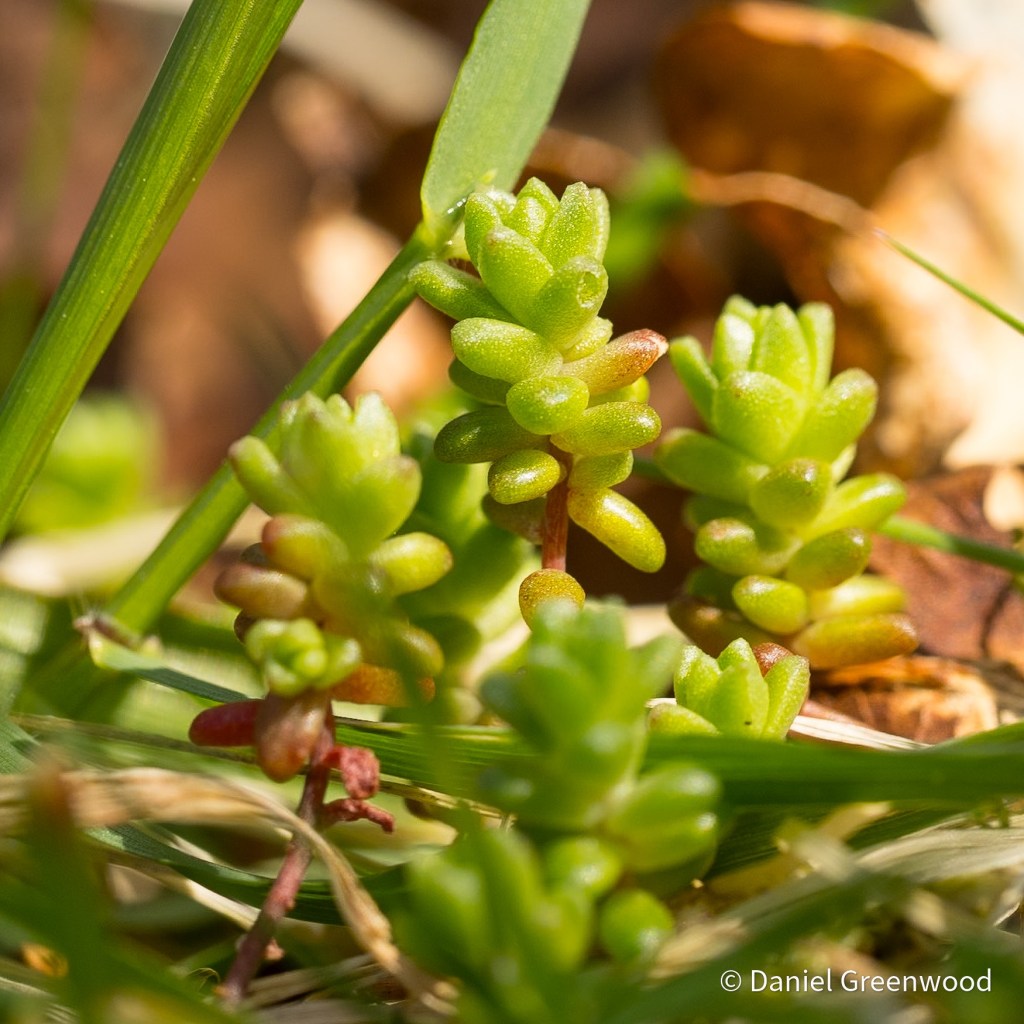
Stonecrops I’m not expert on, but you can see their succulent-ness up close.
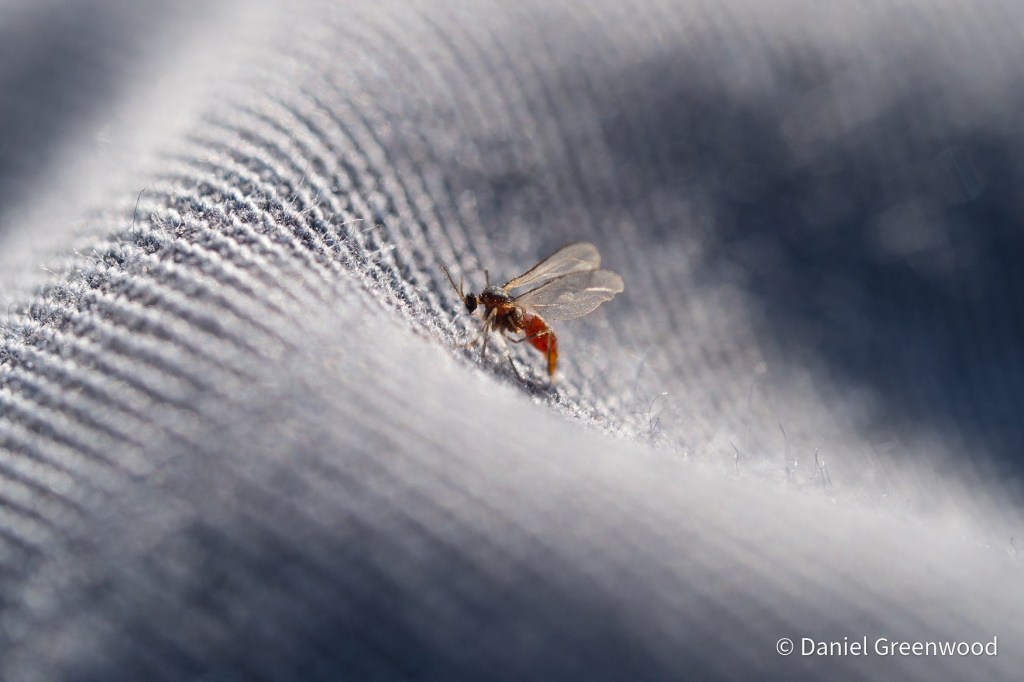
This solitary wasp of some kind was on my trousers. It was really small, as you can see from the threading of the fabric.

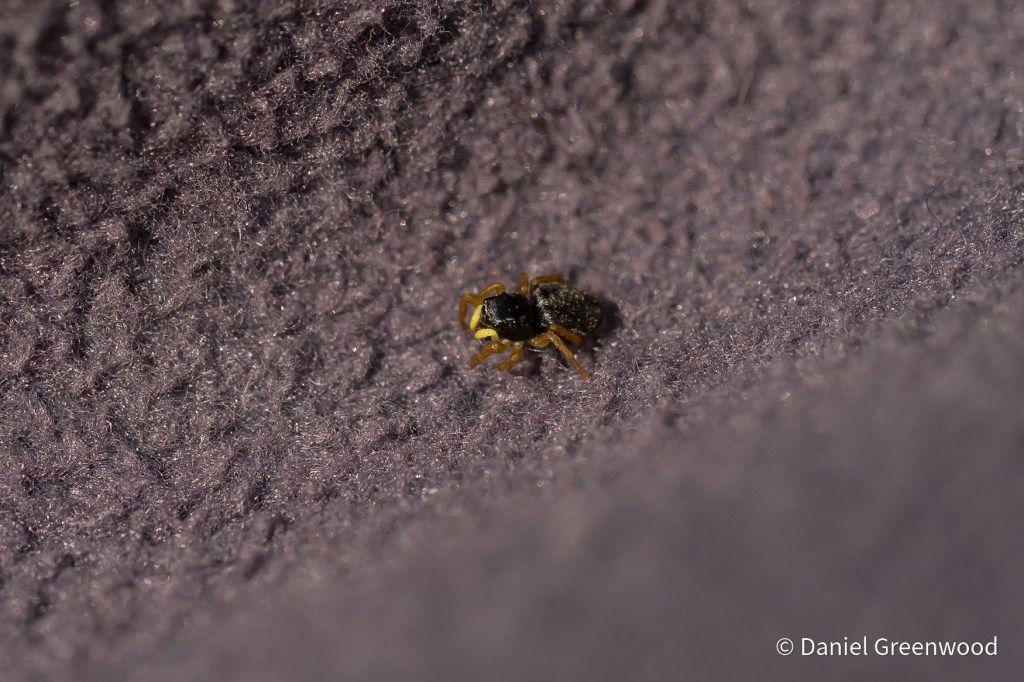
They’re not great images but this jumping spider arrived on my fleece. I would need extension tubes for better close-ups. It’s one of the heliophanus species.
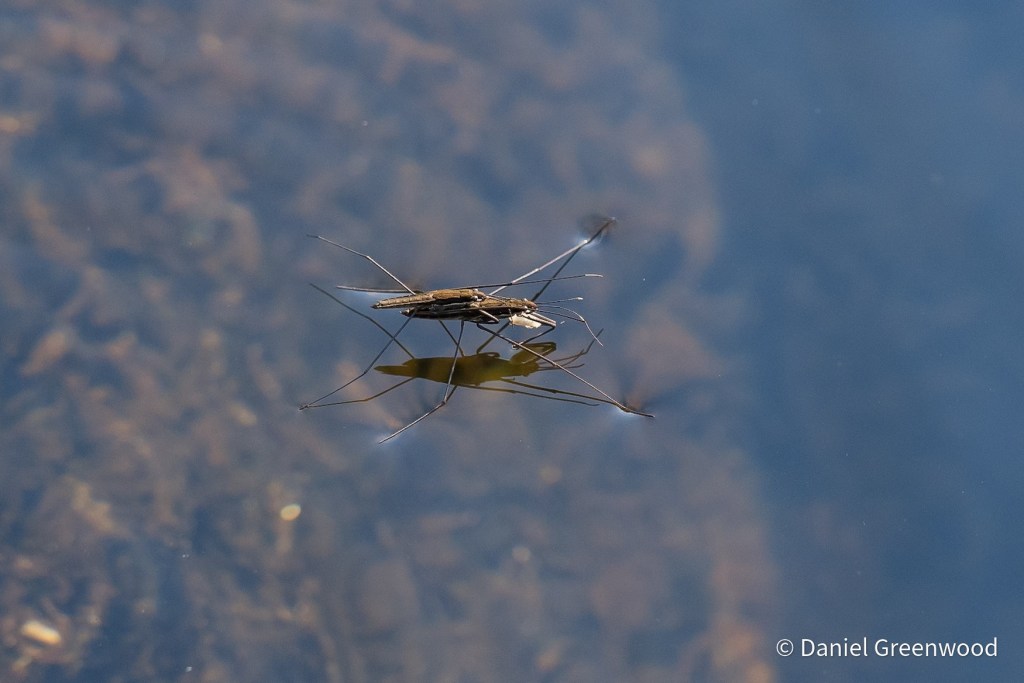
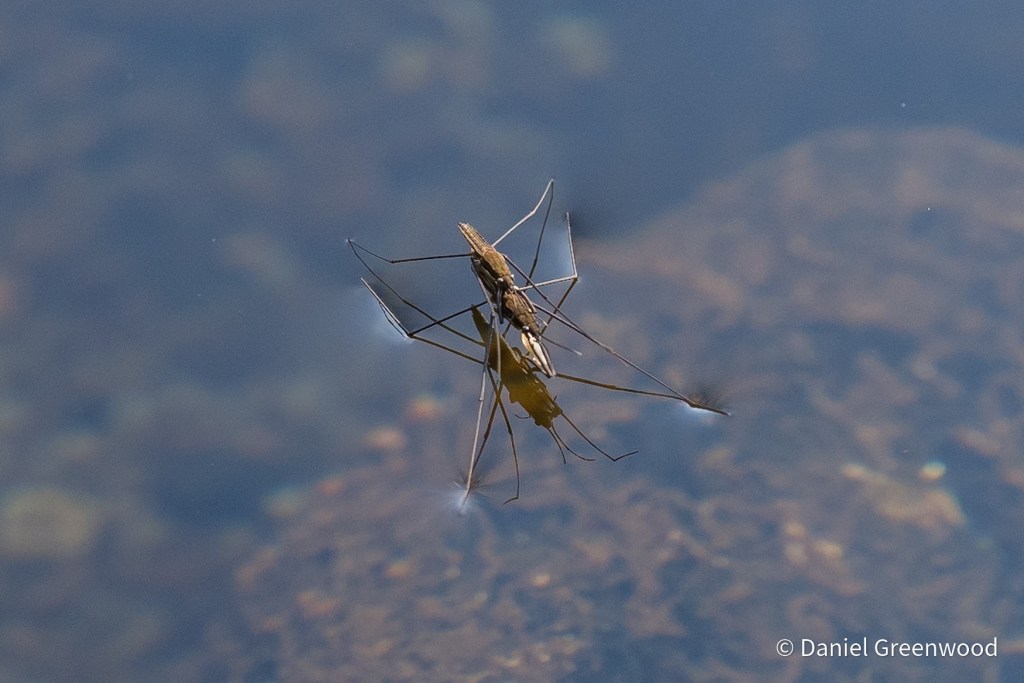
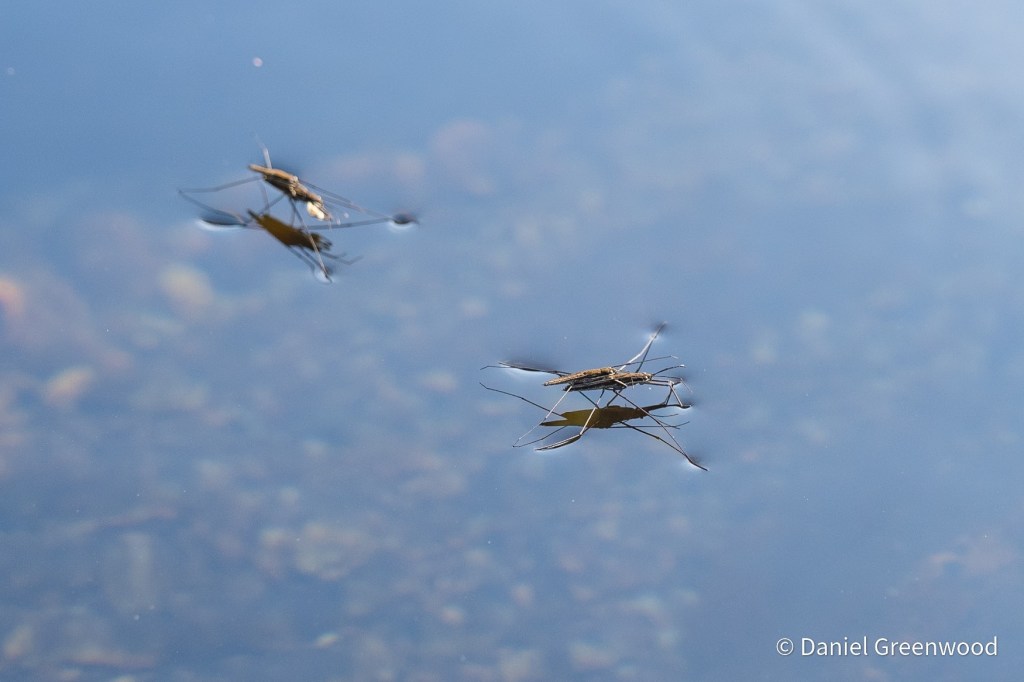
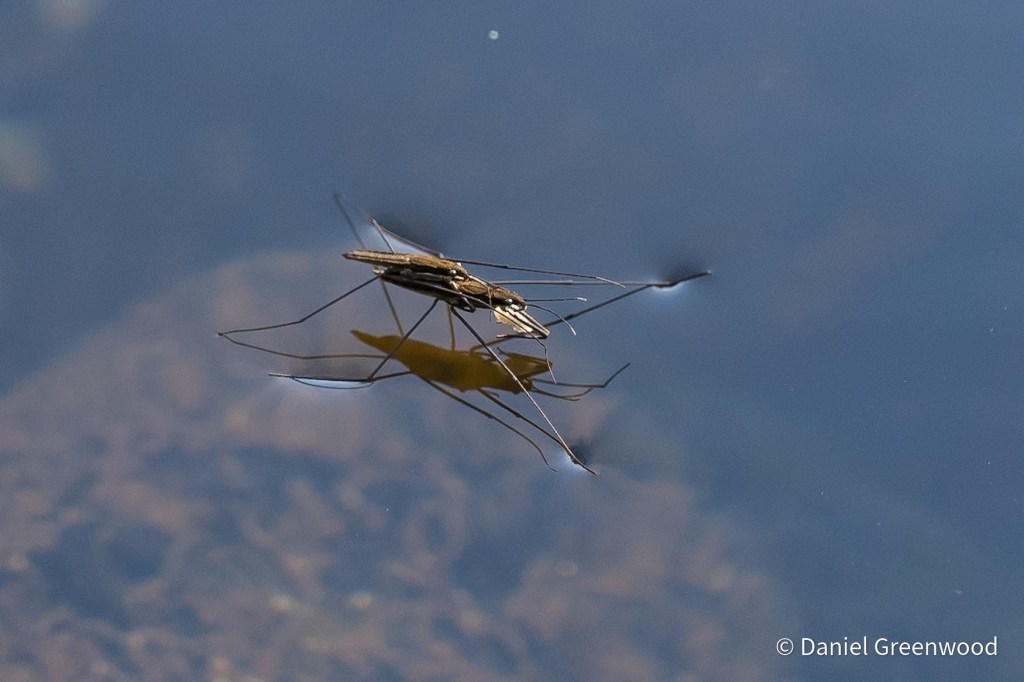
I was really drawn to the pond skaters making merry in the side pools by the river bank. It was only when I took some photos that I saw that they were actually mating. The final image focuses on their legs as they bend the surface of the water to stay afloat.
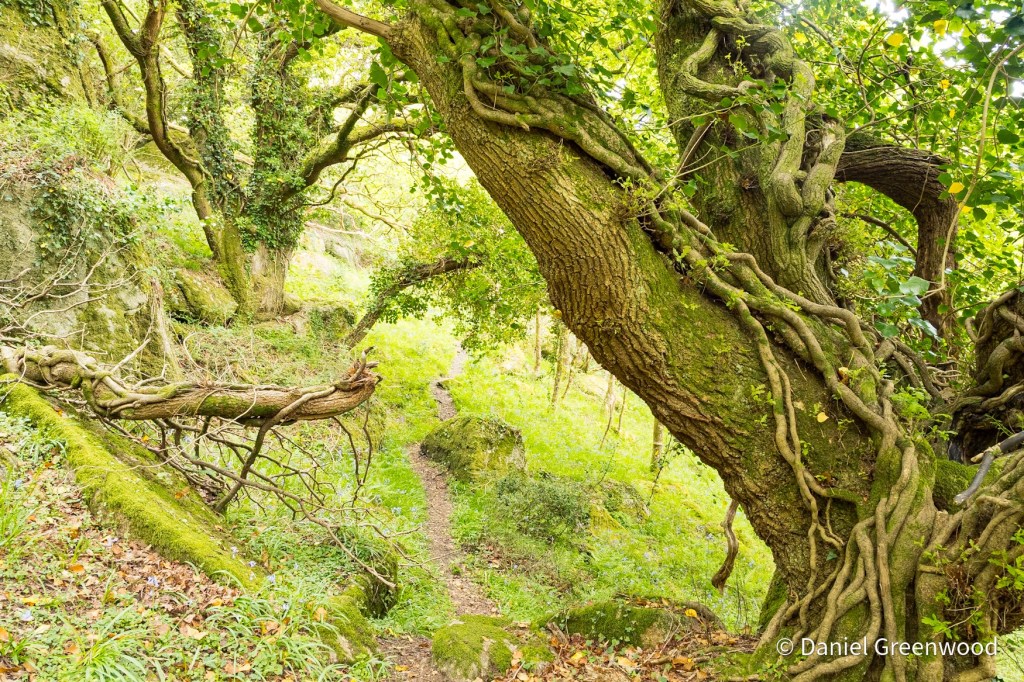
Later in the week we did a long walk around Lustleigh, through the picturesque bluebell rainforests above the River Bovey. These woods are spectacular and very rich in wildlife.

Wild garlic was in flower, mainly found along the lanes rather than deep in the woodland.

Dartmoor is a good place for cool beetles. This violet oil beetle was nibbling on some lesser celandine leaves. This is a phone pic, cropped, so not perfect focus or detail.

My hiking companion miraculously found this long-horn beetle on one of the many mossy oaks we passed. It’s a greater thorn-tipped longhorn beetle.
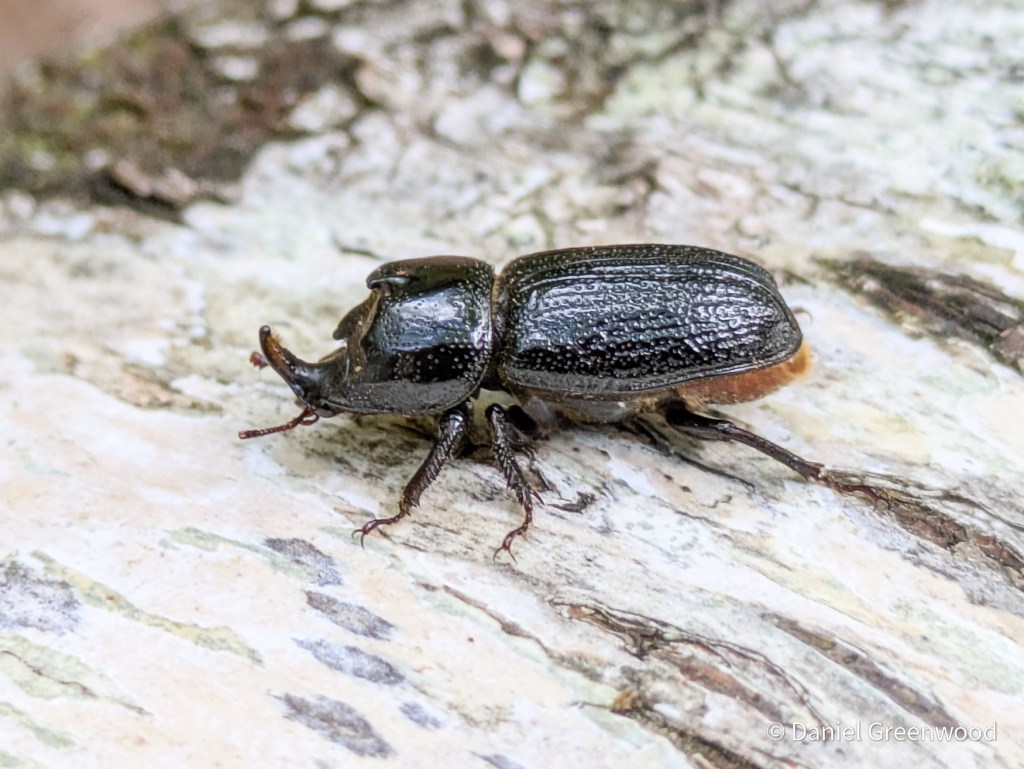
There was a large birch tree that had fallen across a path, and just as I was about to slide over it I saw my first ever rhinoceros beetle on UK soil. Again I only really could get a phone pic, but it still did a reasonable job.

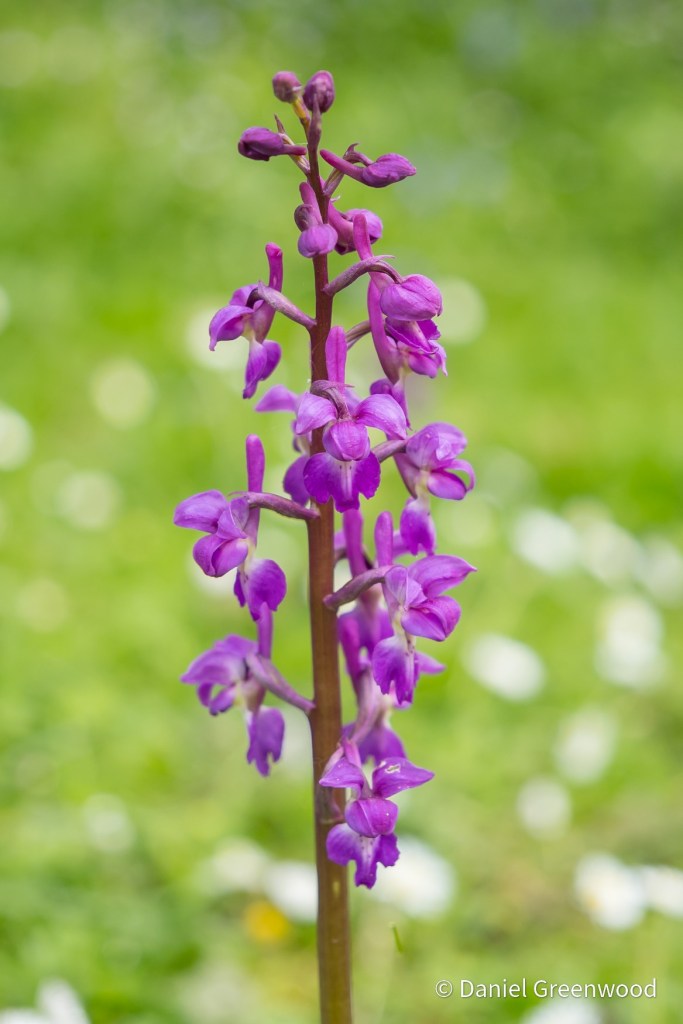
Elsewhere the early purple orchids were flowering. They are such beautiful plants.
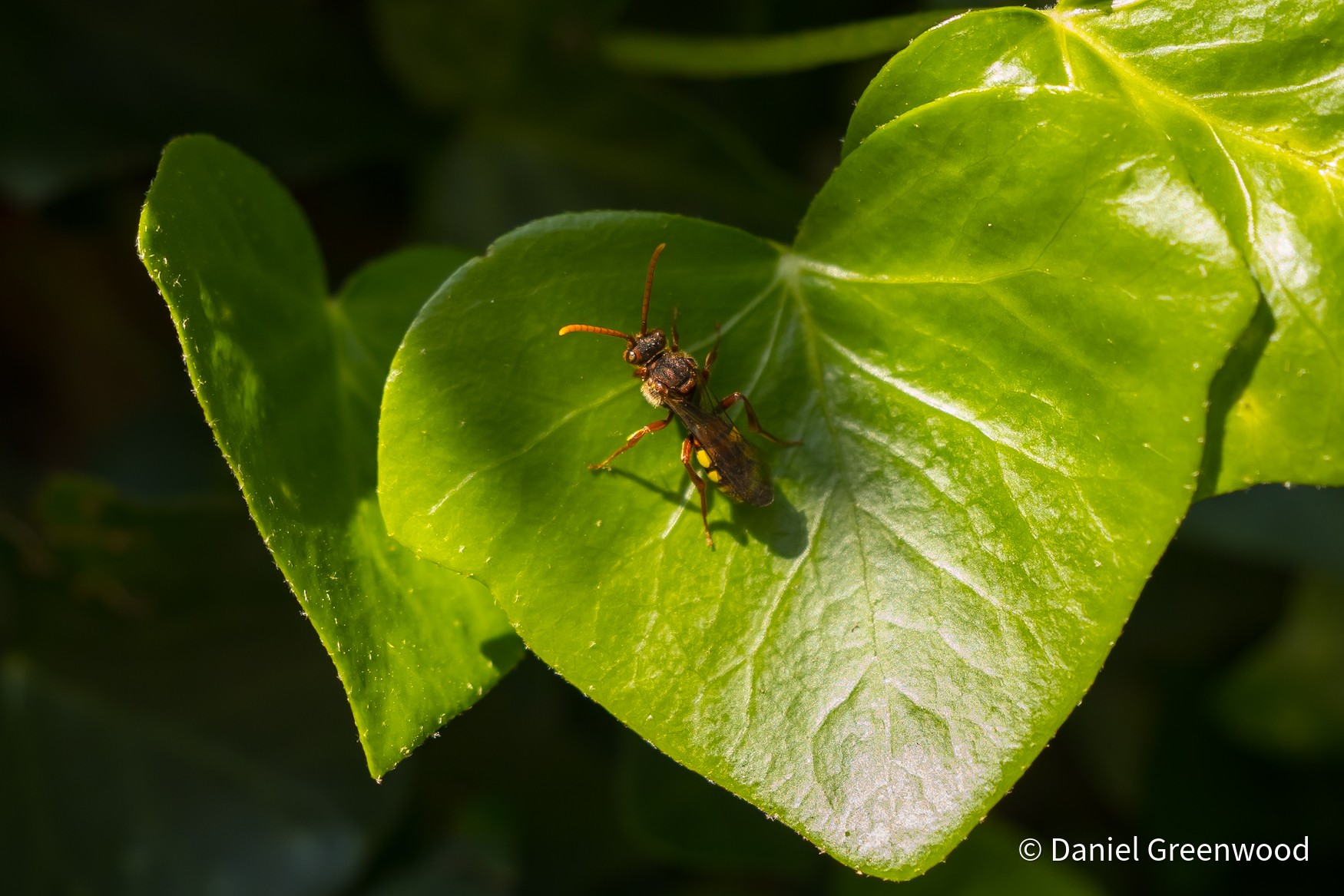
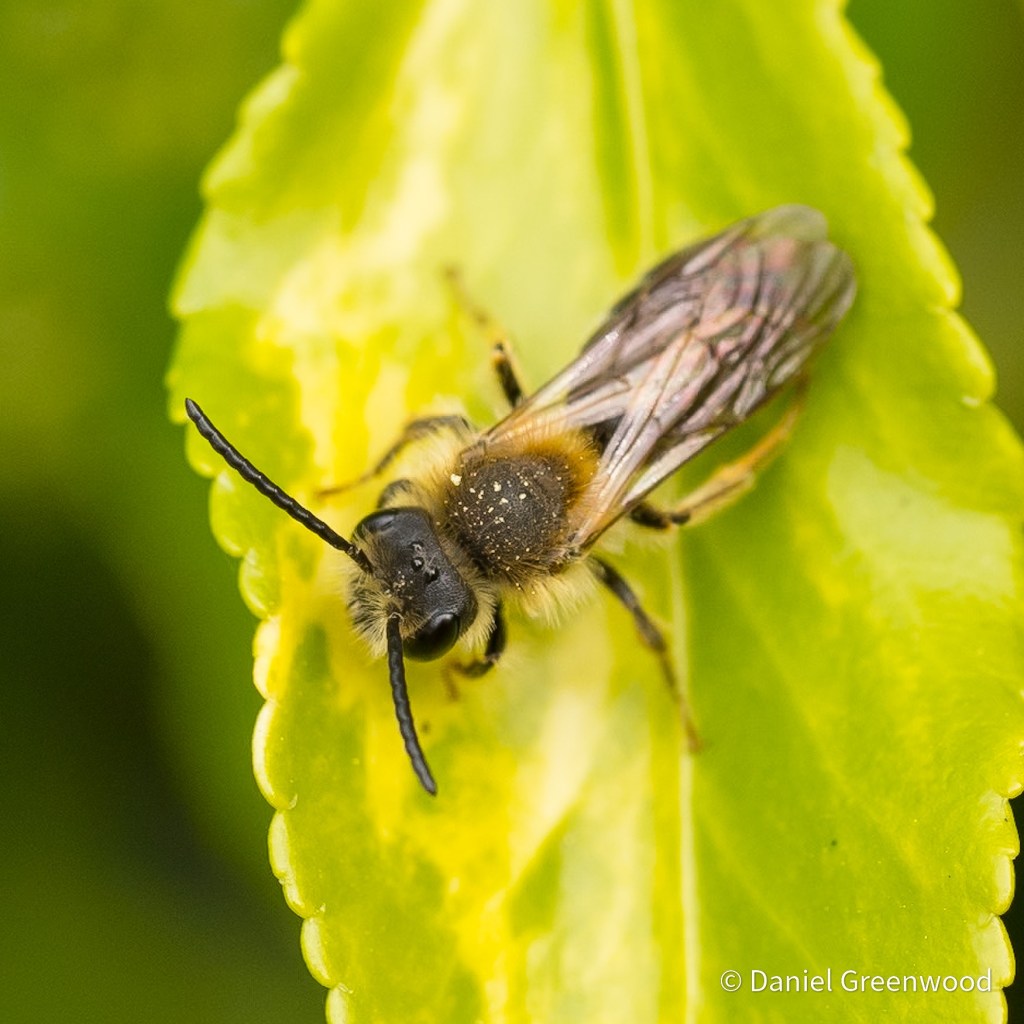
And finally, on another walk near South Zeal I managed to get a few decent images of a species from one of my favourite bee families – the nomad bees. This could be a flavous nomad bee, but I’m not sure. They are beautiful and quite hard to catch in time for a photo.

Thanks for reading.

Macro | Dartmoor | Support my work

Oaks leaves like little fires

I’m still dining out on mid-April at the moment, it’s such a lovely time of year.

The broom (Cytisus scoparius) we planted several years ago has bloomed magnificently this year. It’s been a treat to both smell, and to see it attract a whole range of pollinators.

Dandelions have been all over social media recently with the recipes for ‘dandelion honey’. I am reliably informed that it’s jam or syrup rather than honey because you’re not a bee. It’s good that people are becoming more aware of dandelions which are incredibly important for pollinators.

We’ve expanded our berry bed in the garden to include an extra redcurrant, blueberry and gooseberry. Above are the lovely flowers of redcurrant.

My little laid hazel hedge is coming along nicely. These fresh red stems are a welcome sign.

As part of the hedge I’ve planted a couple of oaks that have been in pots in our garden for a number of years. One of the oaks is from my grandmother-in-law’s garden near Epping Forest, the other grown from an acorn from Dulwich Wood. I love the redness of the leaves when they first appear, whether or not these are tannins I would need to check the science.

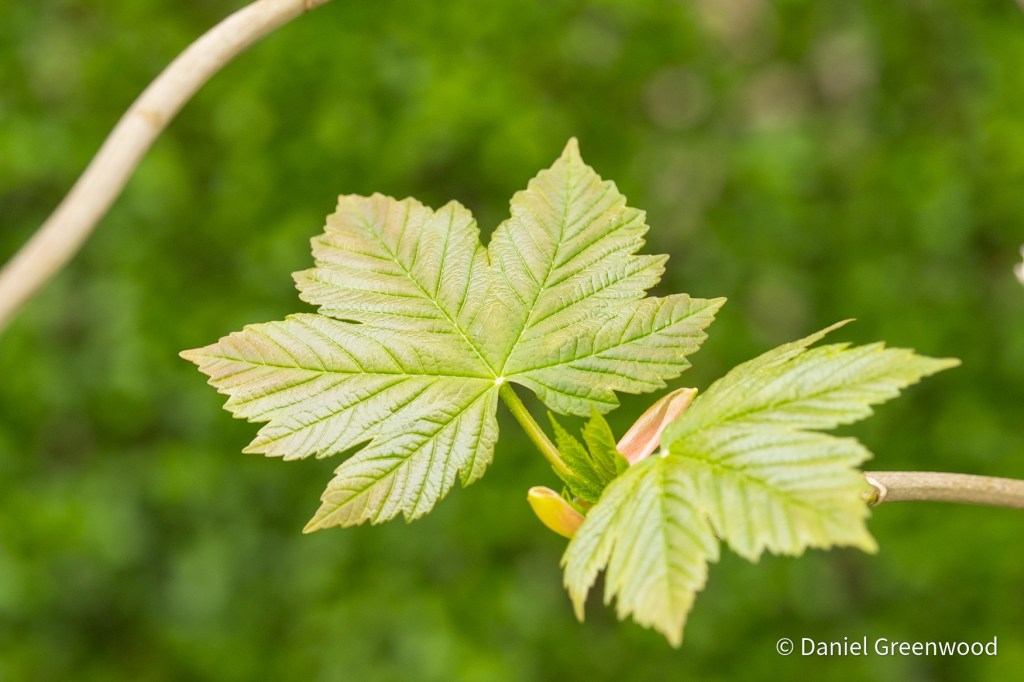
Elsewhere the sycamore is now leafing. Soon these will be sticky with aphid honeydew. The sparrows and blue tits will be hoovering the aphids up to feed their nestlings.

Speaking of those little devils, our swift box has been moved-into after 3 years of waiting for something to happen. Of course it would be best if swifts were there, but sparrows are also red-listed and their habitat is being lost as people are forcing them out of the eaves. Much of that is probably unintentional, but it’s still something we need to look at.

In the invertebrate world, the droneflies have calmed down a bit and are willing to pose for their macro close-up. This is probably a tapered dronefly (Eristalis pertinax).

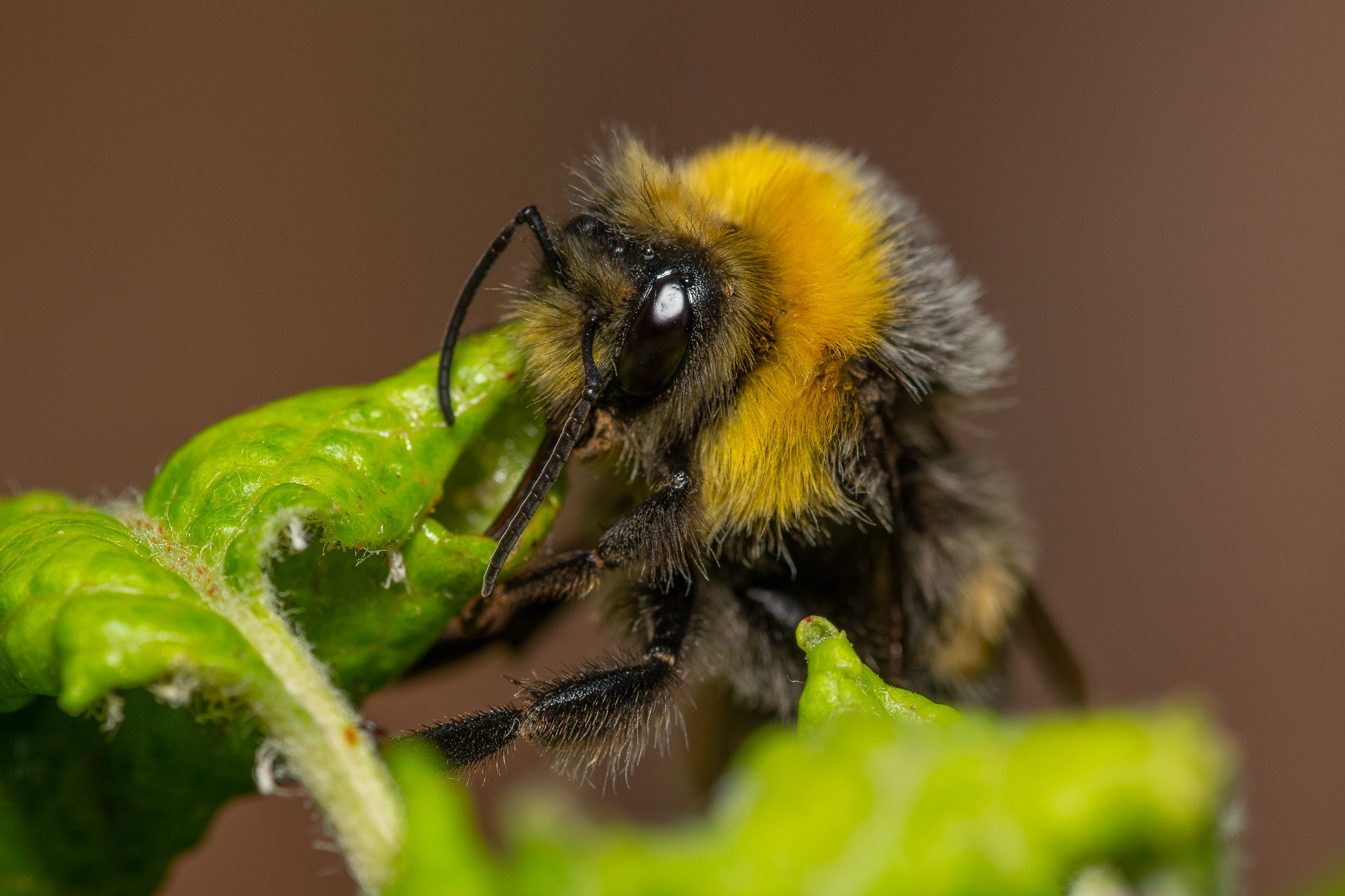
This is my first decent set of images of a solitary bee this year. It’s probably one of the mining bees (Andrena) but I don’t have an ID yet.

Another solitary bee species had found its way into our living room. I took a few photos before letting the little bee back out into the world.

Thanks for reading.
Macro

After 17 years, a small miracle

In 2008 I took an interest in growing things.

After eating an apple one evening I decided to copy what my dad was always doing, and plant some seeds. I potted a couple of apple pips in compost and left them on the windowsill.

The pips began to grow into little seedlings. I was astonished, these pips just had to drop into some soil and trees grew.

There’s no doubt to me that this experience, along with time spent under a hawthorn and small willow tree in my parents’ garden as a child, helped me to learn to love trees. It’s the dynamism, the strength, the age, the ability to grow from seemingly nothing we could survive on.

The apple tree matured, was re-potted, and was eventually delivered to me by my parents in 2018 when I moved to Sussex. It’s about 2 metres tall and just sits in its pot, not really doing much, putting out leaves, letting the seasons come and go.

As far as I’ve known, this tree will never flower or produce fruit. That’s all I’ve ever read or been told. It needs to be grafted with some other apple, ready to produce fruit.

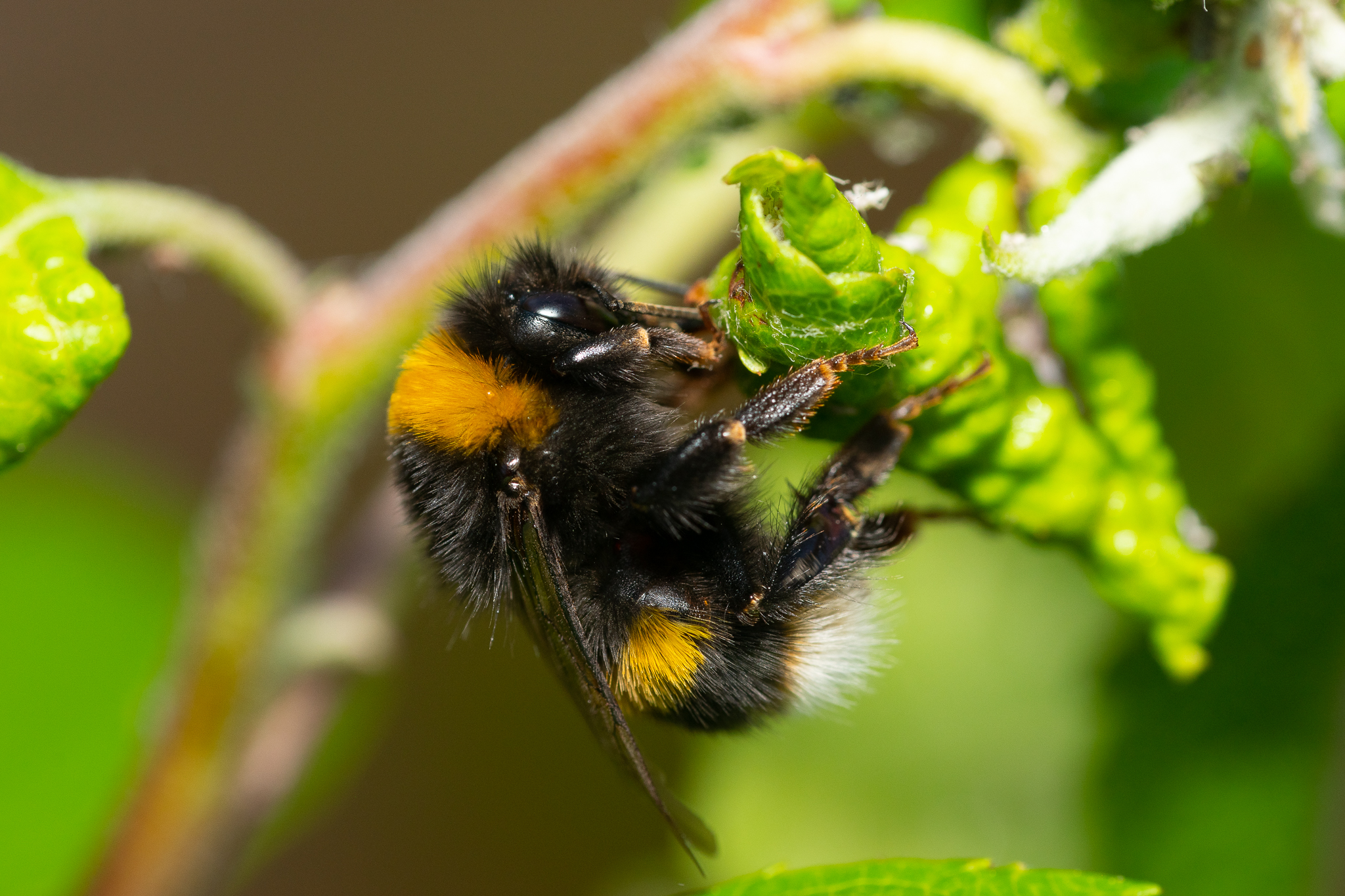
I blogged about the tree in 2021 as part of 30 Days Macro, when bees nectared from the leaves after they became curled up by farming ants(?) and drenched in aphid honeydew.

And so… the other morning I was sitting in my garden enjoying the spring sounds, smells, and sights of new flowers. I stood up and turned to go back inside when I saw a pink flower on the apple tree.

I couldn’t believe my eyes.

17 years of nothing, and then these bright pink and white petals appear.

It made me think of the passing of time, of all that’s happened, where I am in life. It reminded me of where the tree came from, that my dad’s annual sowing of seeds had inspired me to even consider putting that pip in the little pot of compost.

Will it produce fruit? I don’t know, I don’t actually eat apples anymore (too acidic)! I don’t even know what type of apple it is.

But it felt like a signal – life can surprise you – that trees are resilient, dynamic, and beautiful.

Thanks for reading.

Any pond will do

On Friday 11th April I was hanging out in the garden when I glanced over at the small container pond on our brick patio. It’s an old metal wash basin filled with plants and, well, water.

Birds bathe in it, foxes drink from it, and something rather special now lives in it.

The first thing I saw in the ‘pond’ were two eyes looking back at me, and two big arms and webbed hands (are they hands?) holding onto one of the plastic plant containers.

Phone pic for scale

It says a lot about the state of nature in Britain that frogs are such a cause of excitement. We have obliterated our ponds in England, but there is a movement to try and bring back some of the most important ones – the oldest ones lost from farms.

It’s been so dry for the time of year, wildlife is really suffering with the lack of water. If you have the chance to build any kind of pond you should do it! We don’t have enough space in our garden to dig a ‘proper pond’, but we have been able to use a container we bought at an antique dealer. Without it, where would the frog go?

Elsewhere I’ve noticed the number of drone flies has ebbed a bit, but there are still plenty around. This is probably a tapered-drone fly, a species of hoverfly.

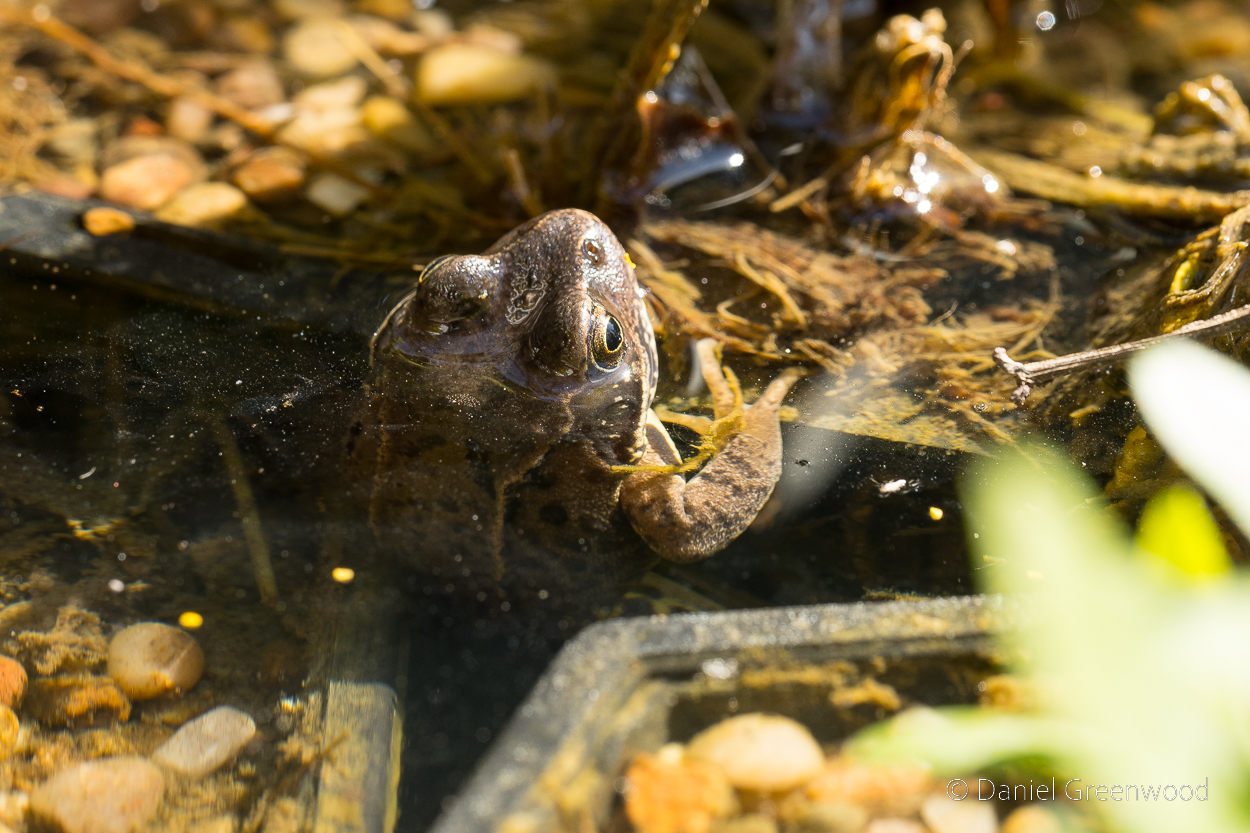
Sitting on this piece of charcoal (which you may notice is now being colonised by a very small moss) was a little spider. iNaturalist has suggested this is a fox spider.

It’s rather cuddly isn’t it? No?

At night we’ve begun to notice a powerful fragrance around the house. It’s a bit like honeysuckle but is probably a cheesewood, a species of plant from New Zealand. This grows in a neighbouring garden but reaches over to us. It’s absolutely covered in pollinators and the smell- wow. It doesn’t seem to be invasive so could be a good option for your garden if you like pollinator-friendly shrubs.

Thanks for reading.

When is a wasp a hornet?

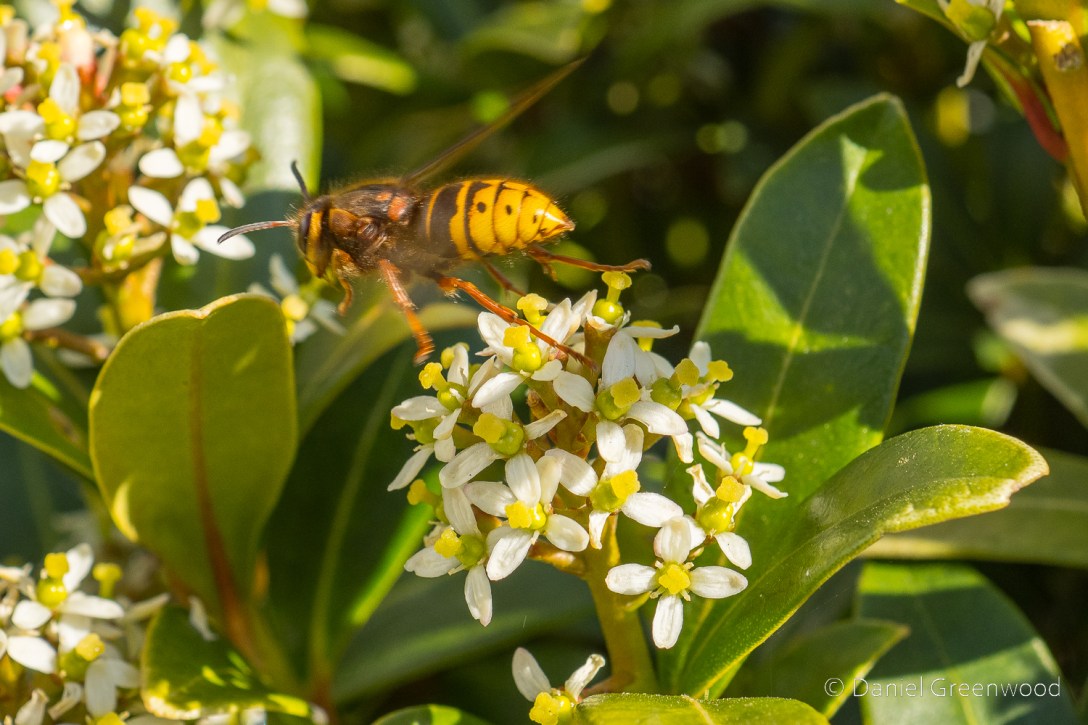
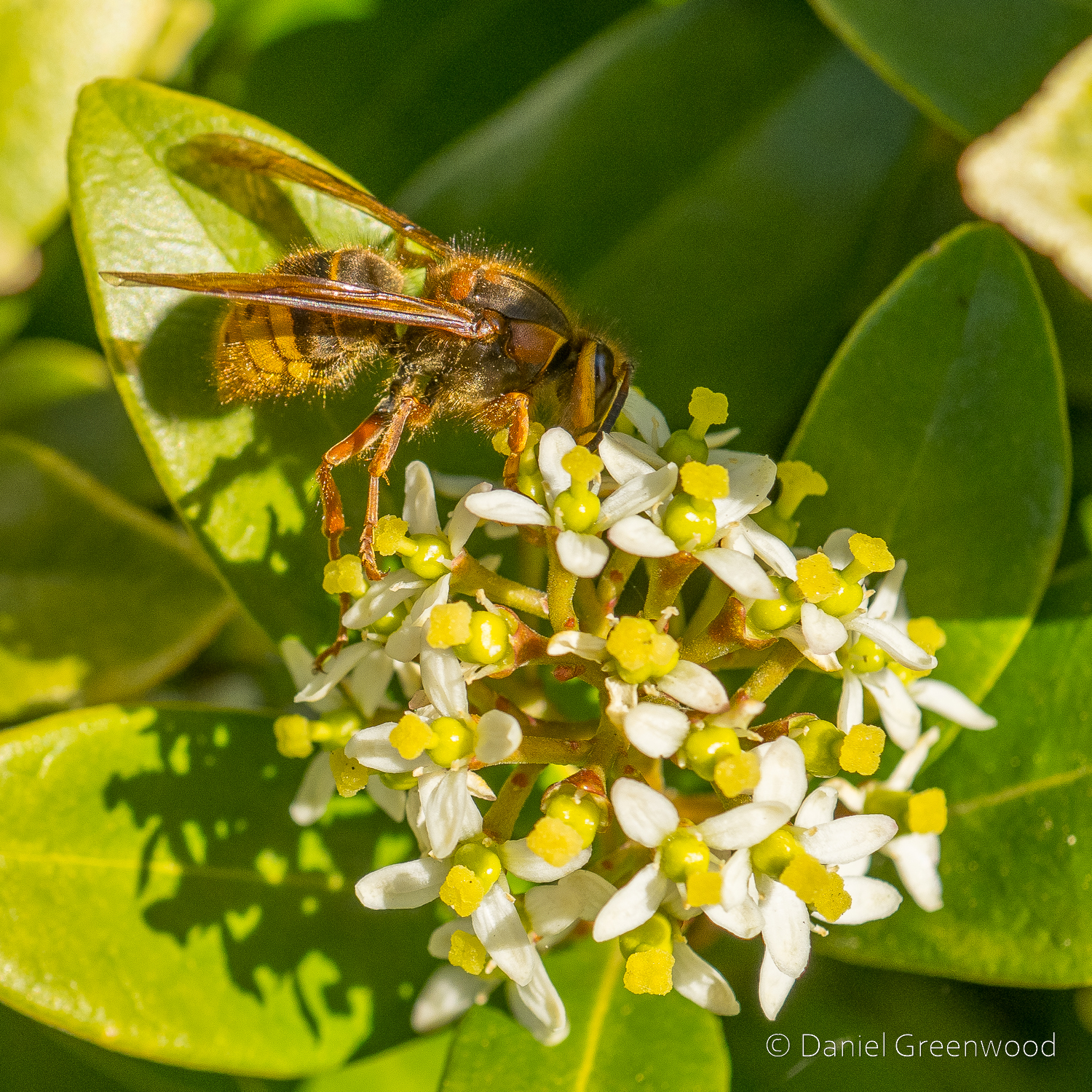
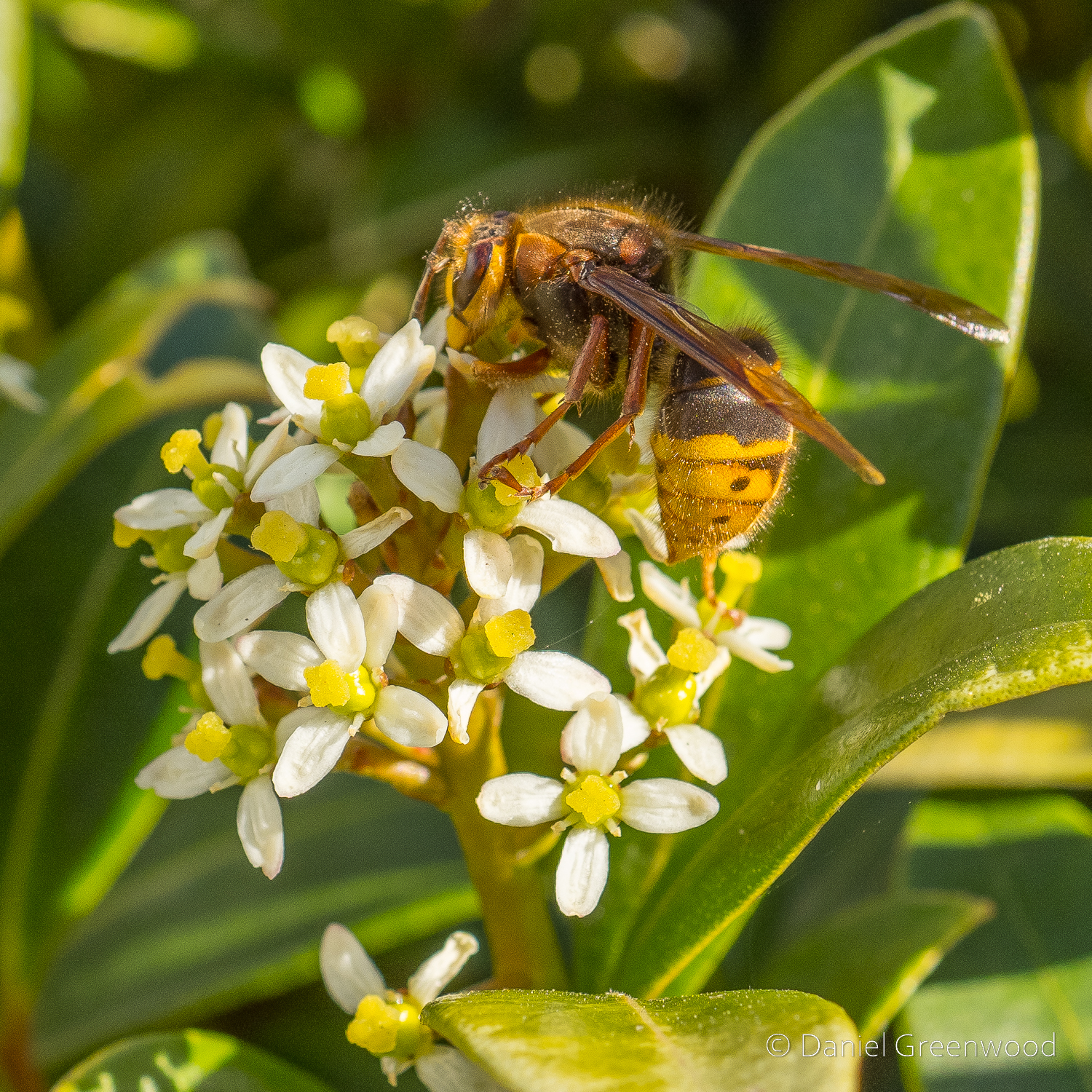
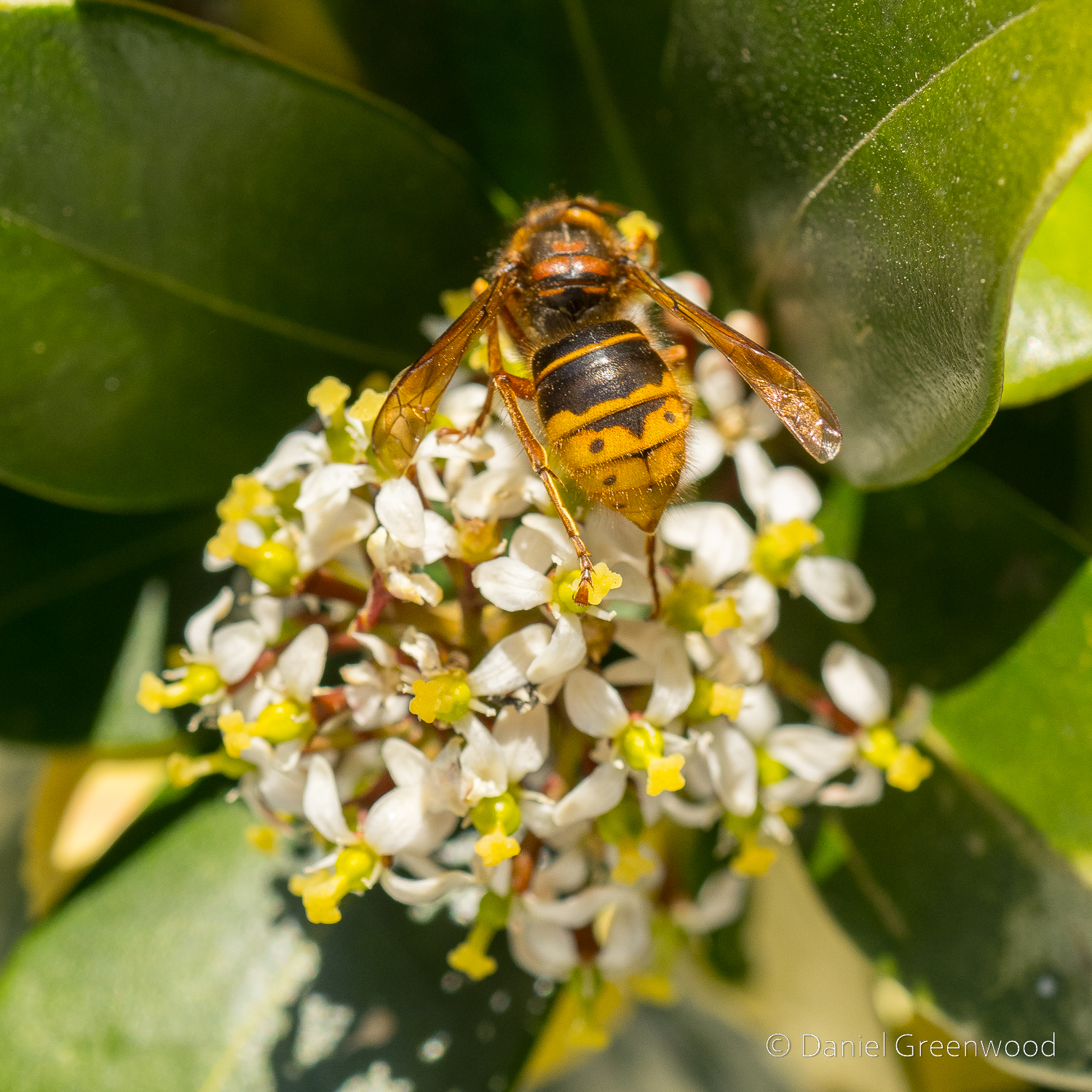
I was sitting in my garden when a large, wasp-like insect zoomed into view. It dropped into the skimmia and began nectaring on the flowers.

‘Hornet!’ I called out, but trying to be quiet enough not to spook the insect. I captured these images, convinced it was a hornet, the first I had ever seen in my garden.

When I popped a crude phone photo (not the world class images above) onto iNaturalist I began to have second thoughts. The first suggestions were for a species of wasp, the median wasp. That is now the consensus, and so my hornet drought goes on. But it is a beautiful thing.

My house is quite old, built in the 1840s. The path outside our door is known as a ‘twitten’, a Sussex colloquial name for a little footpath. The path is bricked (like many of them are) and always flushes with spring flowers. Lesser celandine and grape hyacinth are two of the species that enjoy the margins.

Does this rose regrowth remind you of a certain American President?

A few holes have appeared in the lawn. I haven’t seen who created these mini-bunkers but I am confident they’re mining bees of some kind.

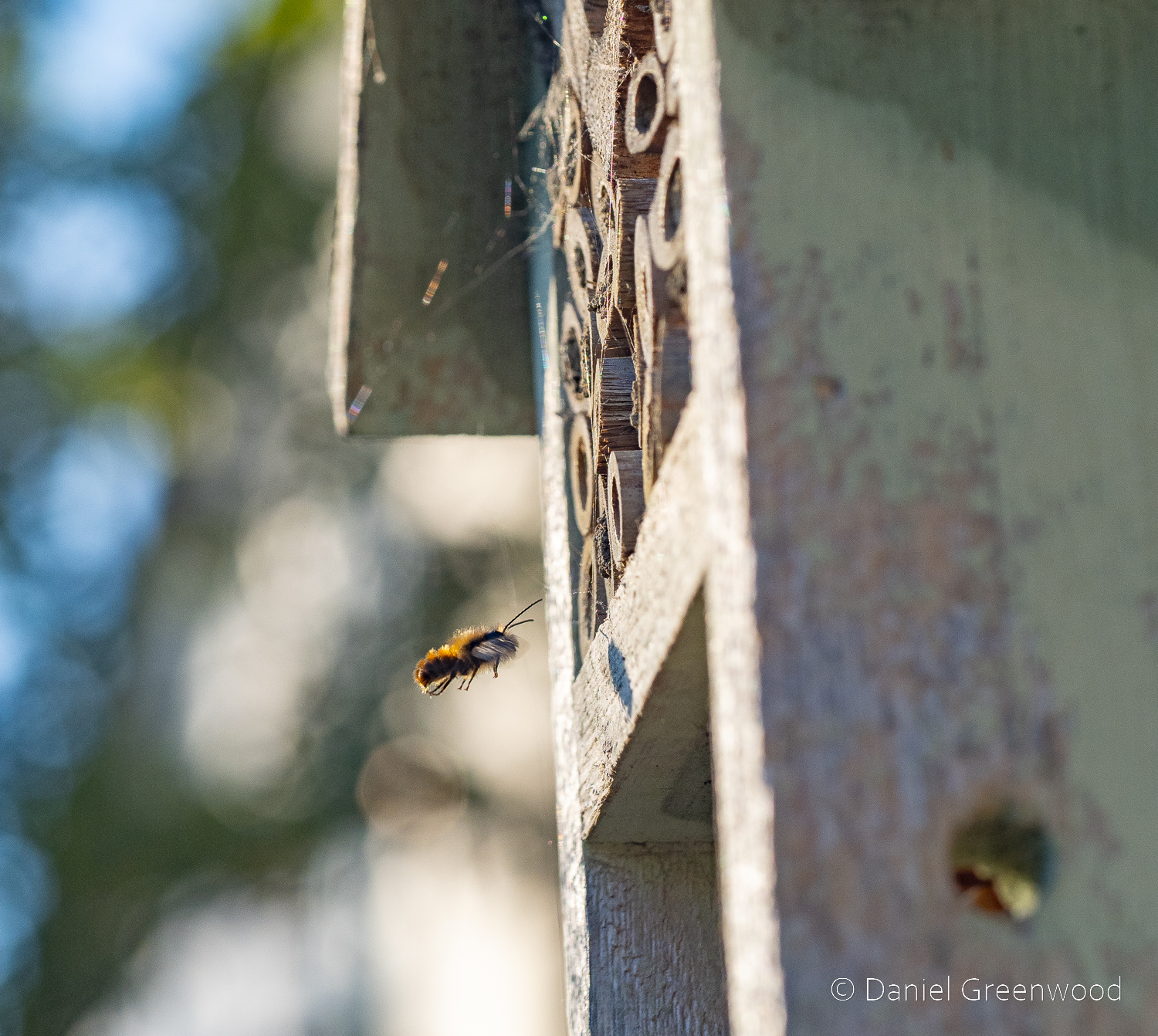
The red mason bees have been rather slow to appear this year and many of the bamboo slots are still sealed. Some of the bees have been hovering around the entrances, as above.

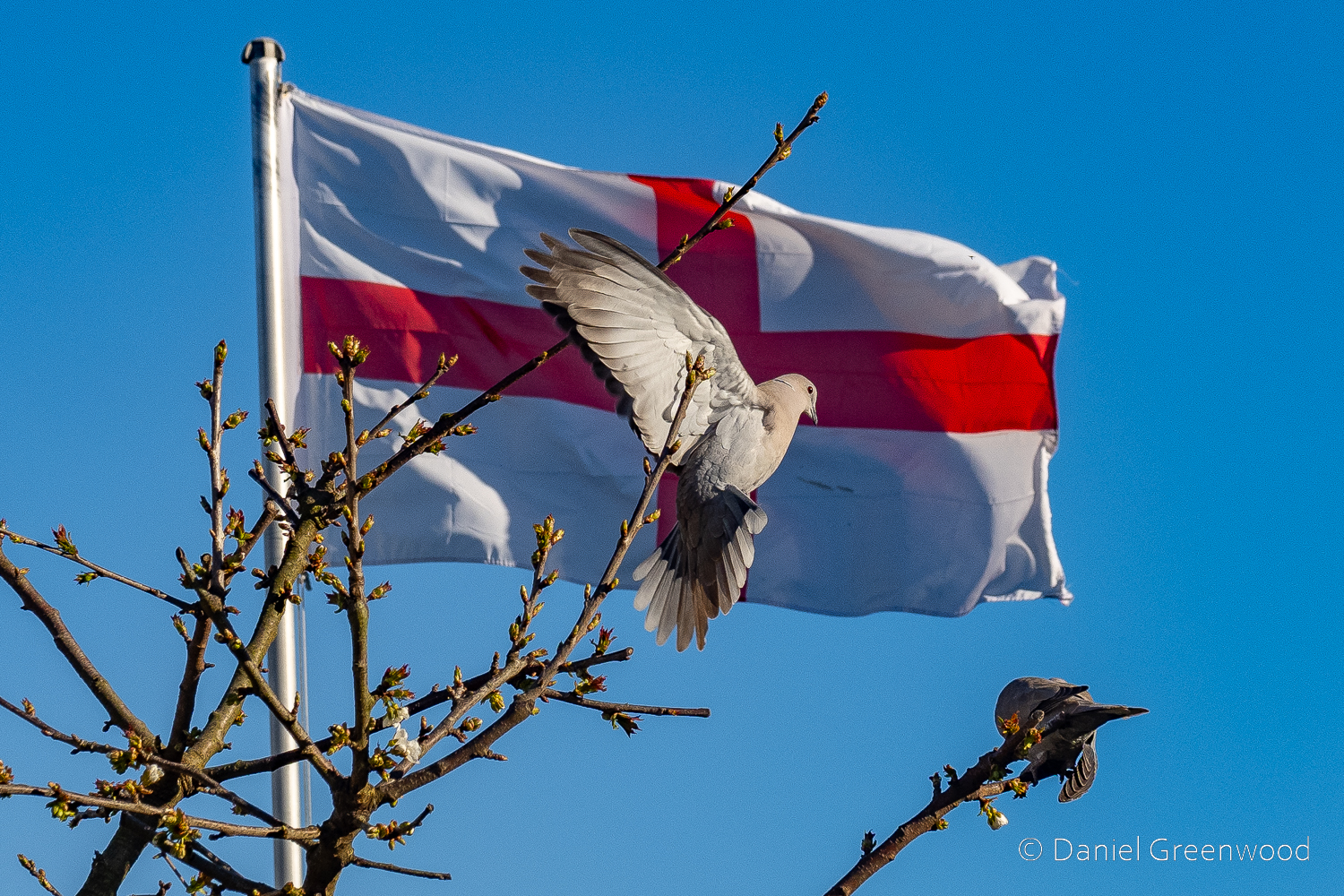
I took this photo of two – yes, two – collared doves with my macro lens. Macro lenses usually often can act as a telephoto lens because you need space between you and the thing you’re photographing to ensure you don’t spook the subject. The flag isn’t mine, as you may have guessed if you’ve ever met me or read this blog before 😉

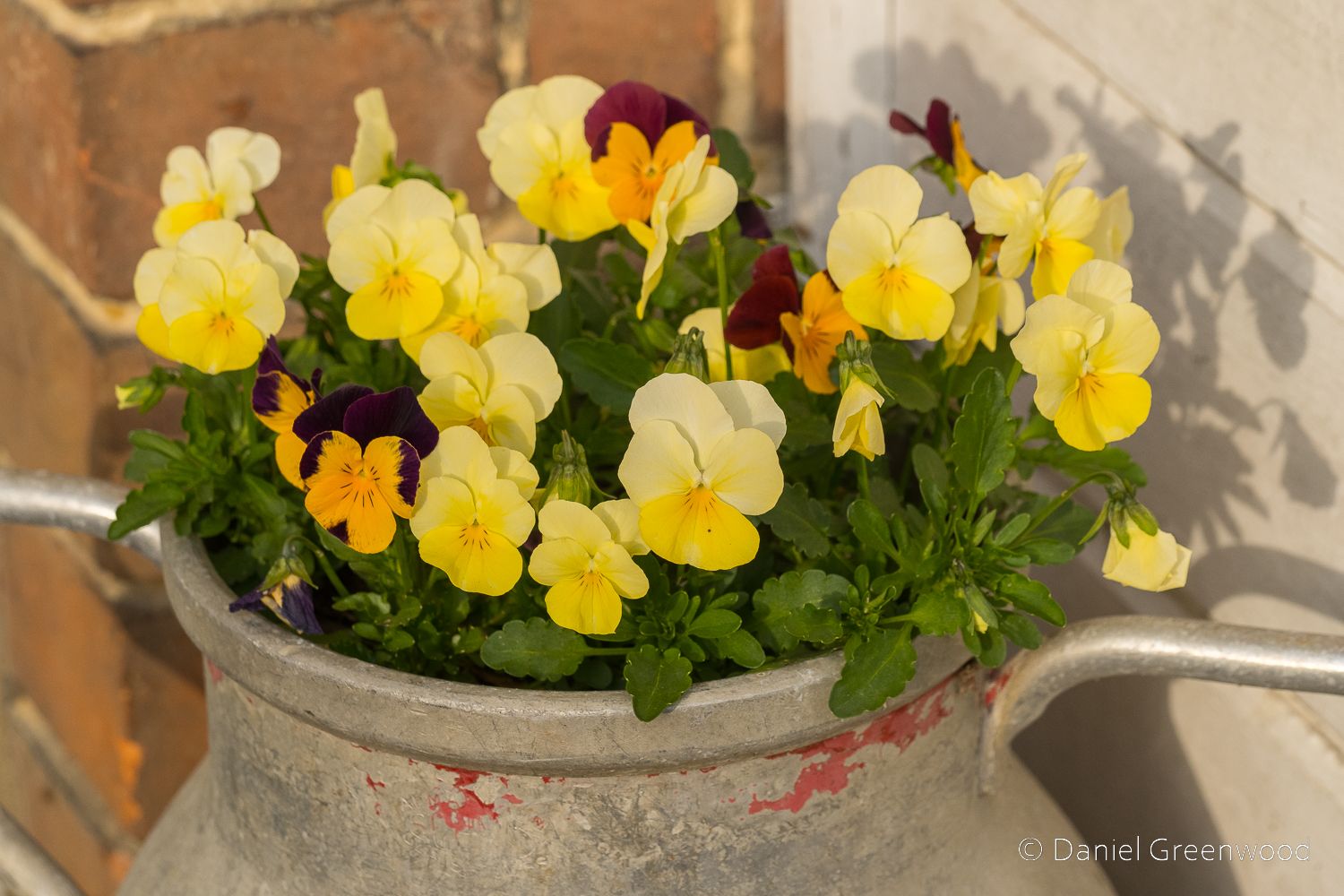
The pansies are doing well in the milk churns, a good place to end.

Thanks for reading.

Macro

Spring 2025 arrives

Five years ago we were facing up to the Covid-19 lockdowns. In response to the stay-at-home orders I began a weekly macro blog, an assignment from the gods? No, just our Supreme Leader at the time Boris Johnson and his better half in Public Health Chris Whitty.

While I can’t promise weekly blogs due to work and life commitments, it’s definitely time to dust off the macro lens after its winter slumber and step out into the garden to see what’s happening!

As ever, there’s far more going on than you might think. I also think it’s important that we look at and try to understand invertebrates when this misinformation is coming from the leader of the country (I know it could be worse, but get your facts straight, folks).

We depend on nature and our ecosystems and their wildlife for our food, clean water, fresh air and function. Wildlife has a right to exist and the world does not revolve around our species.

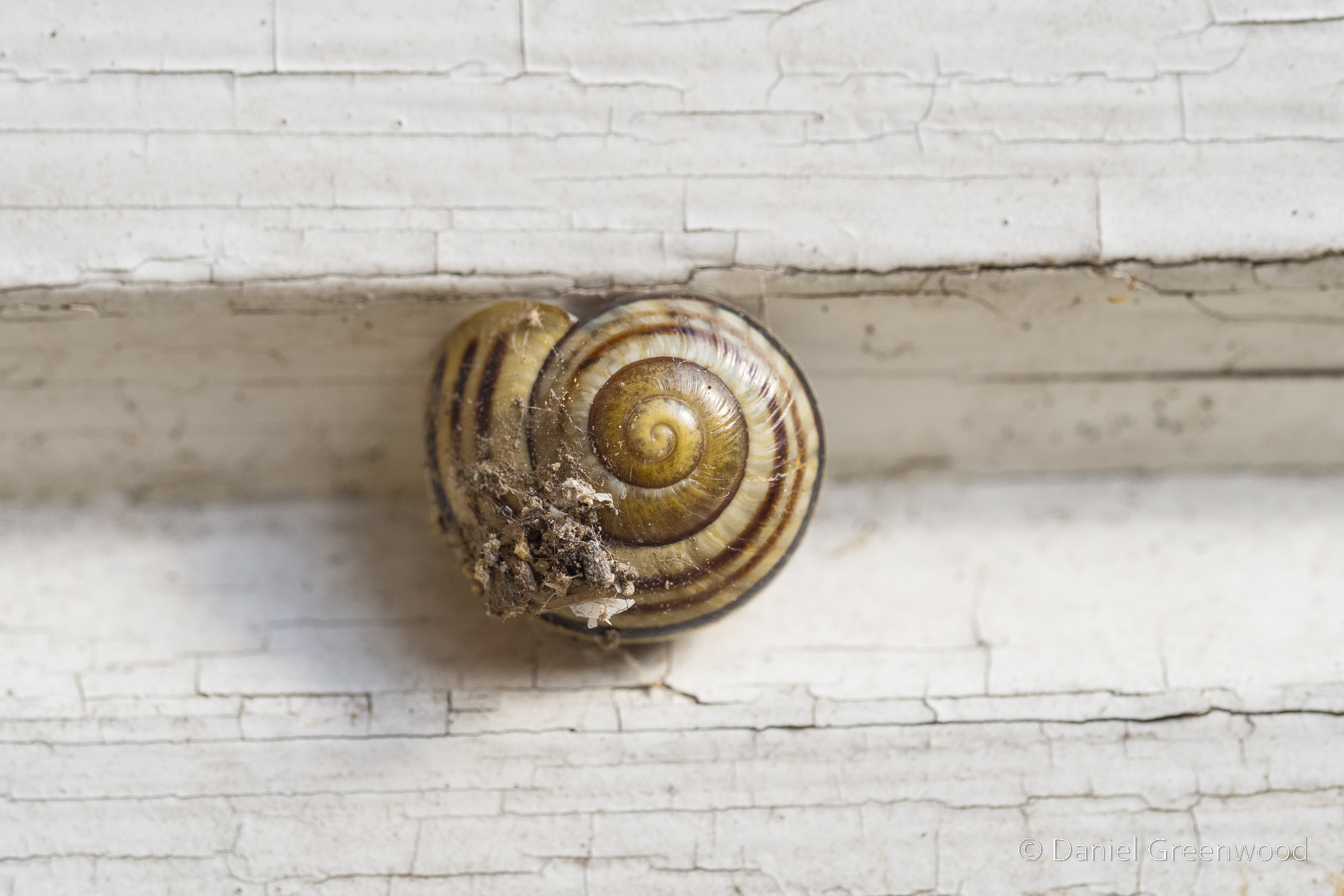
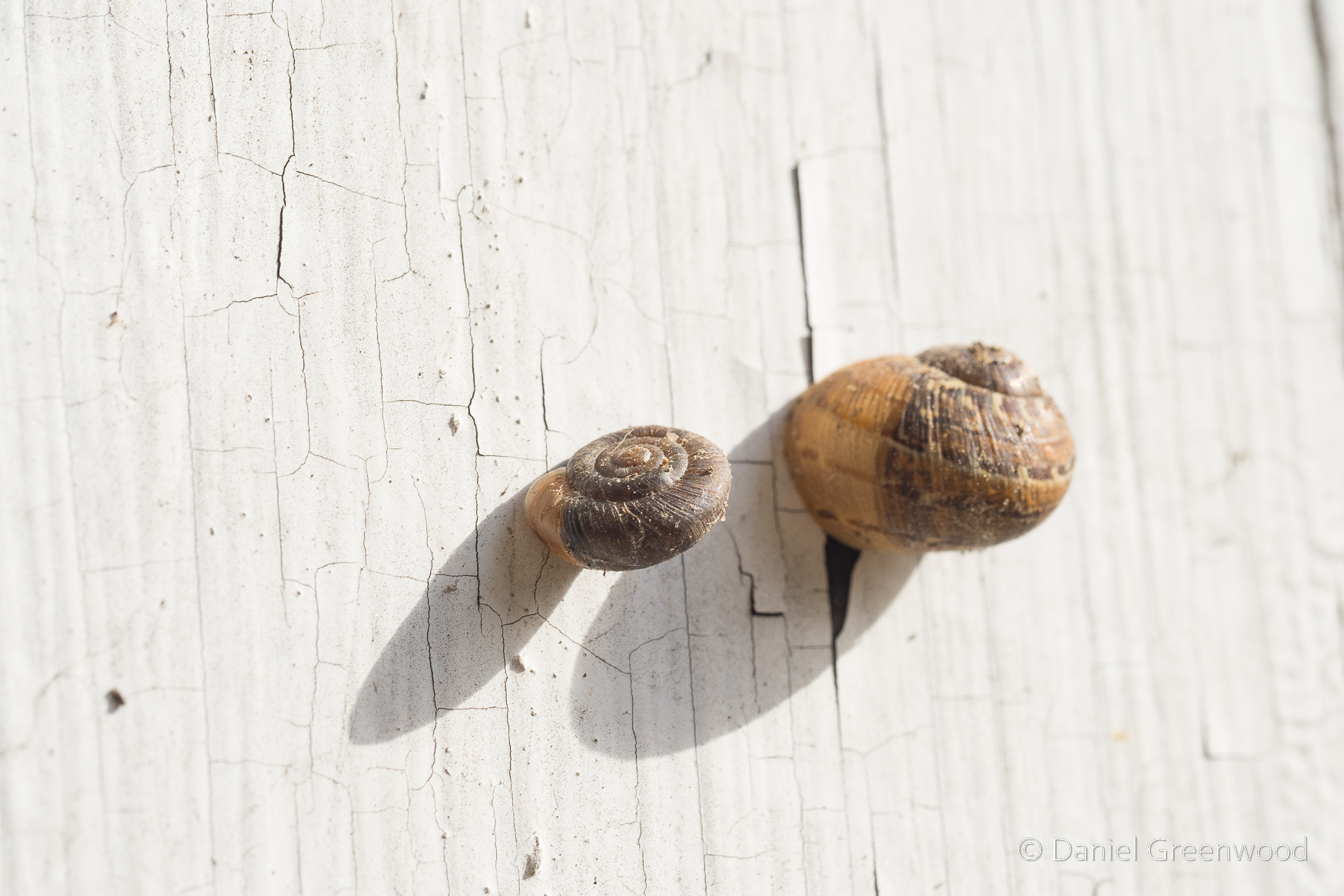
The snails are roosting in our front porch. My wife was wondering if they might be too hot there, as the paint’s white and it can get quite sweltry in there.

It looks to me like something is going on with the shells and they may be roosting to grow their shells. It’s not something I know much about. Please let me know in the comments if you have any info 🙂

We have some nice pansies my wife planted out by our front door. You can see the bee drive-in here with the dark landing marks and the brush of hairs to ensure the pollen of other pansies are retrieved from a visiting bee.

The broom plant flowers in a subtle way, these little yellow petals appearing from the red sepals.

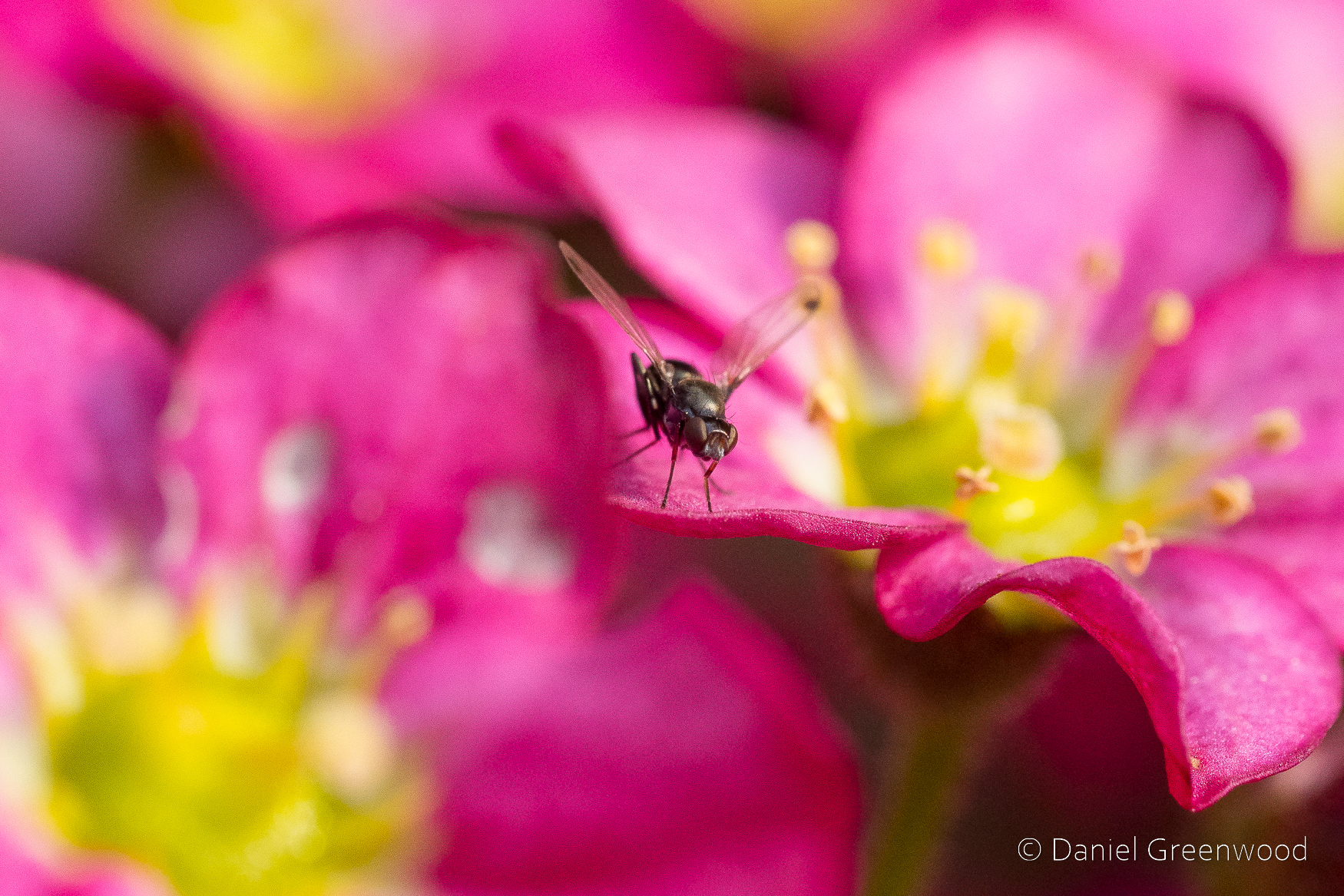
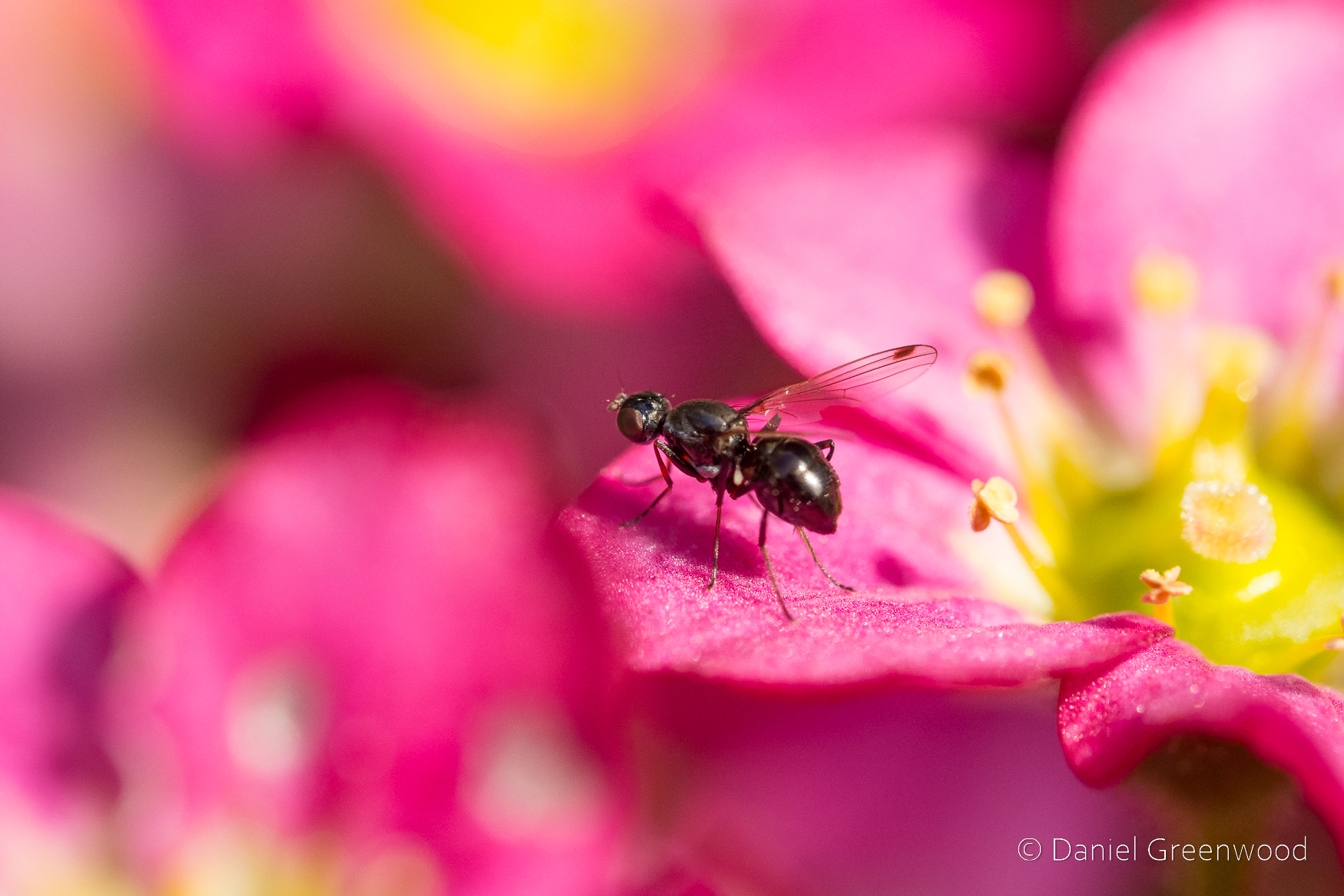
This is a common little fly that seems to stand around on leaves and petals for ages!

Their eyes are very cool, and I enjoyed the single spot in their wings as well. These flowers are some saxifrages my wife bought from the garden centre.

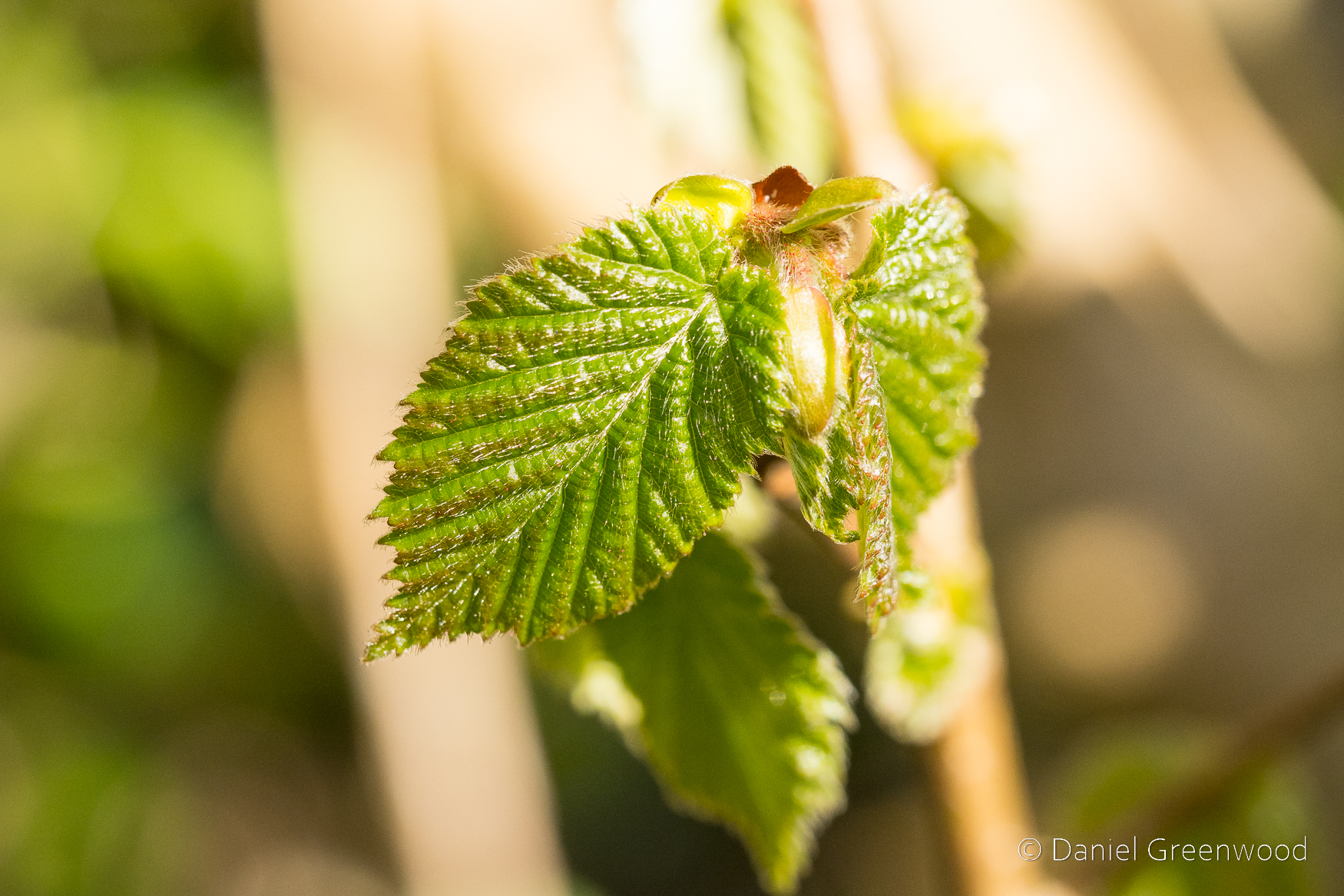
In January on a cold Saturday afternoon I laid or ‘plashed’ the hazel shrub I had planted out in our hedge. It’s a little hedge, but the usual shrub that made up the hedge has died back so I needed to take action. It’s so pleasing (‘pleaching’?) to see the hazel respond so well and new shoots to appear from the lain-down stems.

I also uprooted a sapling that a squirrel had cached as a seed, which is doing well. I planted this out around the time of frosts, which shows hazel’s hardiness. I did know that was the case, but it’s nice to see it come through.

The normal hedge I mentioned is this Skimmia japonica. It’s good for pollinators, no doubt. But it doesn’t seem to last well without pruning.

It was abuzz with drone flies as spring really began to arrive in mid-late March.

These drone flies (Eristalis) are probably the most common winged-insect in our garden at the moment. They’re quite funny I think.

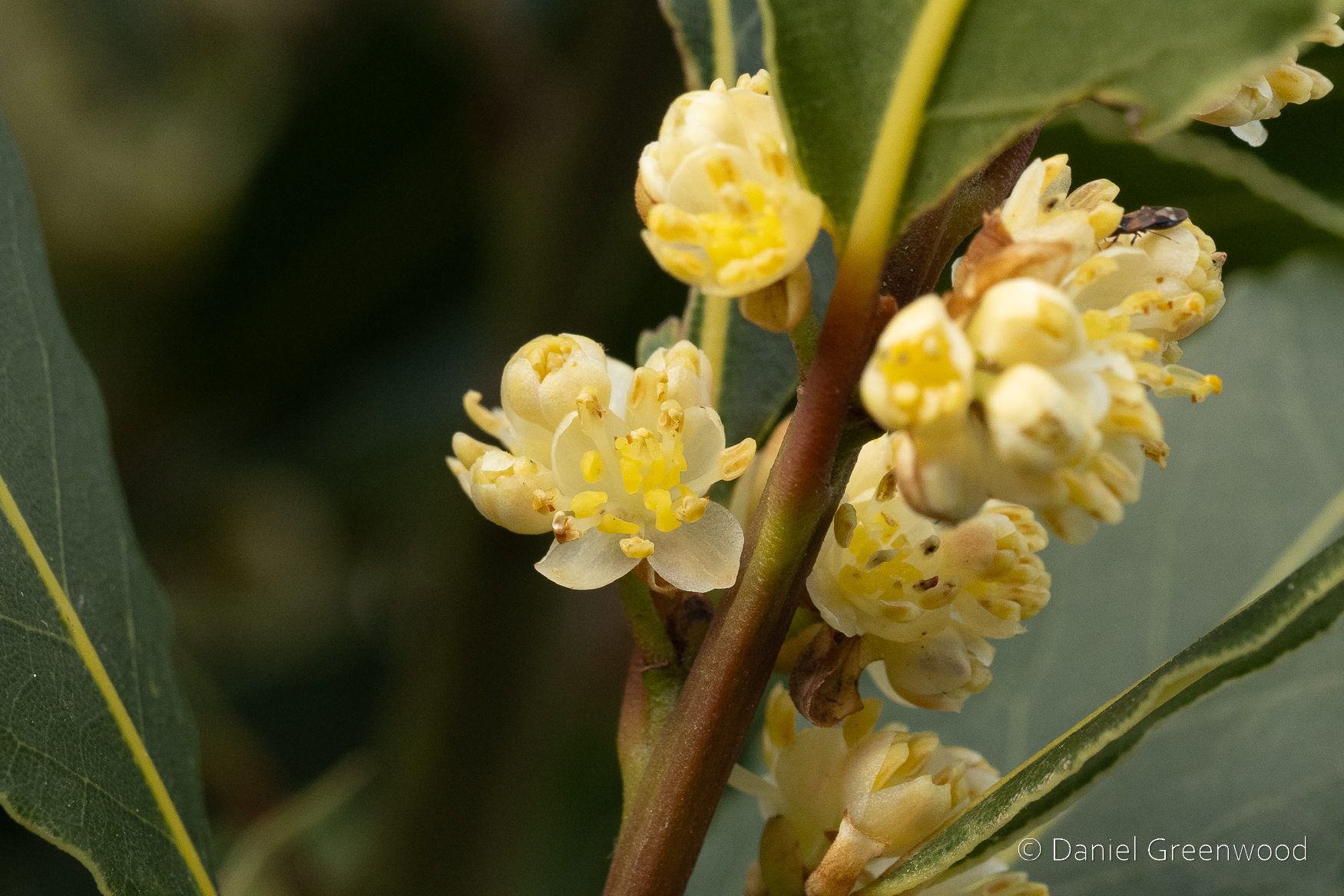
Bay flowers promise so much, but they are quite modest really. I am hoping this provides some decent nectar for any invertebrate that needs it.

I spotted this little crab spider hanging out on one of my thermal t-shirts. It’s probably Misumena vatia, the most common of the crab spiders.

A cat monument in our garden in memory of our cat Kaiser who loved this spot in the flowerbed. The wolf spiders also love this spot because it gets so warm. The white stone of the cat is even warmer than the surrounding soil. I think this may be a male and a female wolf spider, with the male the smaller of the two, with the palps (dark spots at the front of its head, in the cat’s eye!).

The fence next to the cat monument was a helpful basking spot for the first nursery web spider I’ve seen so far this year.

The flowering of our magnolia is short and sharp, but these globular flowers are a delight. Magnolias are very old trees in evolutionary terms, and here’s to another year under their belts.

Thanks for reading.
Macro

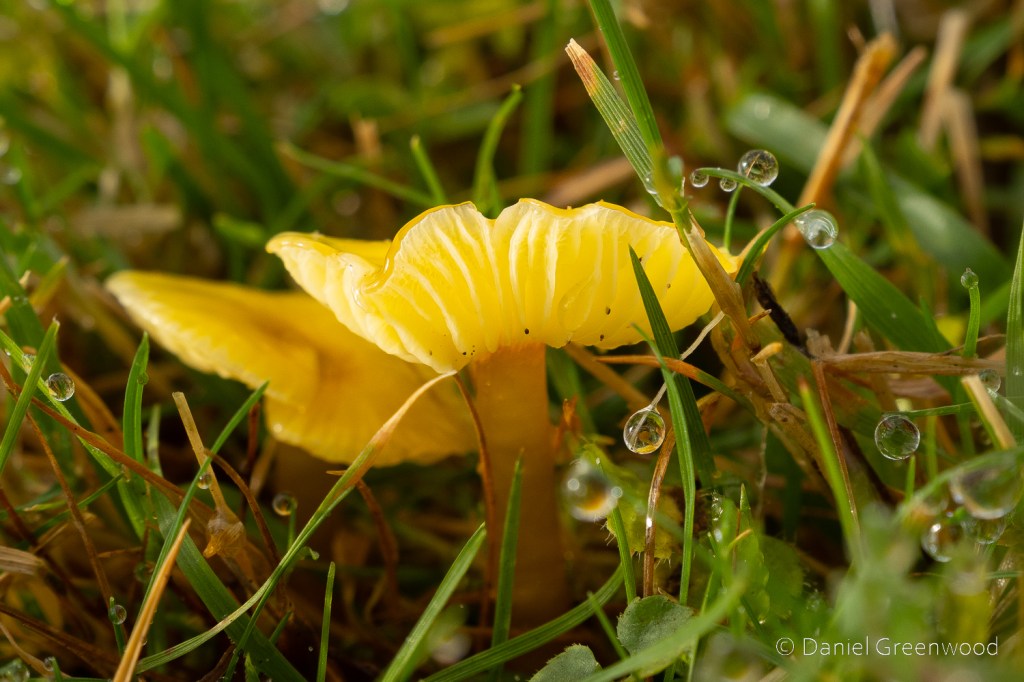
Dartmoor waxcaps

This is a showcase of the posh mushroom pics I gathered with my proper camera during a visit to the wonderful Dartmoor National Park in November 2024. Mad props to my wife who is chief squirrel during these Devonian photo forages.

The photos were taken on Sunday 10th November 2024.

I write these blogs in my spare time because I want to raise awareness about the beauty and diversity of fungi. If you enjoy reading them you can support my blog here.

A reminder that I am not encouraging people to pick or remove mushrooms in these areas. You could very easily clear all the mushrooms we saw within minutes. I think that would be sad because it would mean other people wouldn’t get to see them and learn or be inspired by them. I think with rare species like waxcaps that are featured here, we should be taking photos and submitting them to apps like iNaturalist or Plantlife’s waxcap campaign. In some areas that would be illegal anyway, due to site protections.

While I don’t believe 2024 will go down as a vintage mushroom season, there were a lot of lovely waxcaps to be found on the moor in a place we’ve been visiting since 2016. Moorlands seem to be quite good for waxcaps, not that I know why, and also for lichens because they are rocky, wet and the air is fresh.

I’ll post the images in chronological order for my own sanity.

This is the landscape where the fungi lived – moorland with a view towards the Teign estuary.

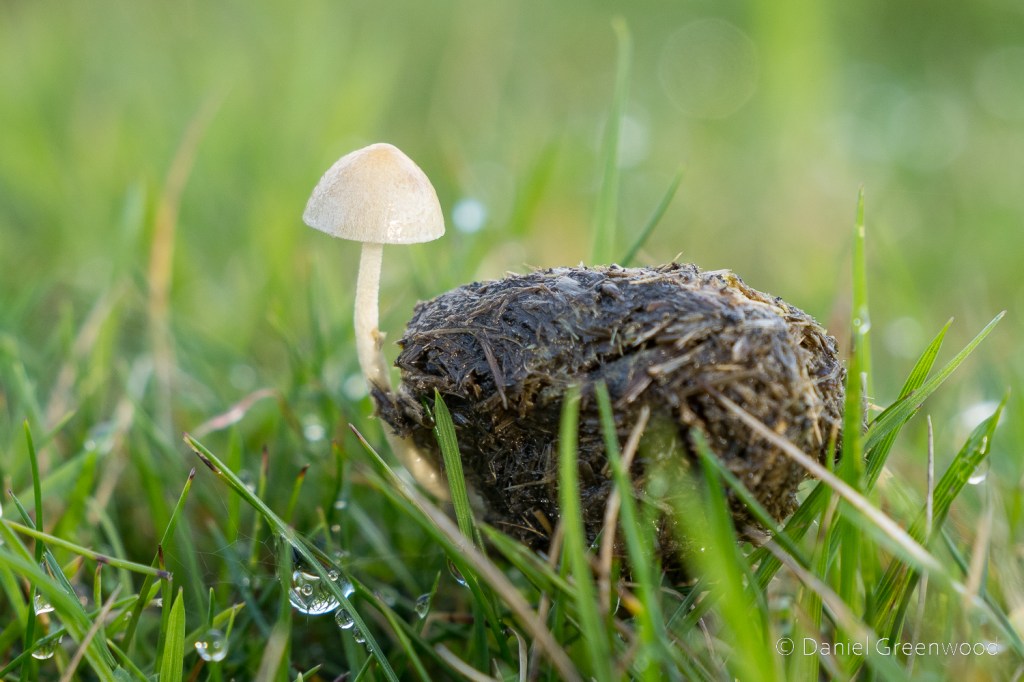
The first fungal find were these eyelash cups (Scutellinia) growing on animal dung! Plenty more dungi to come.

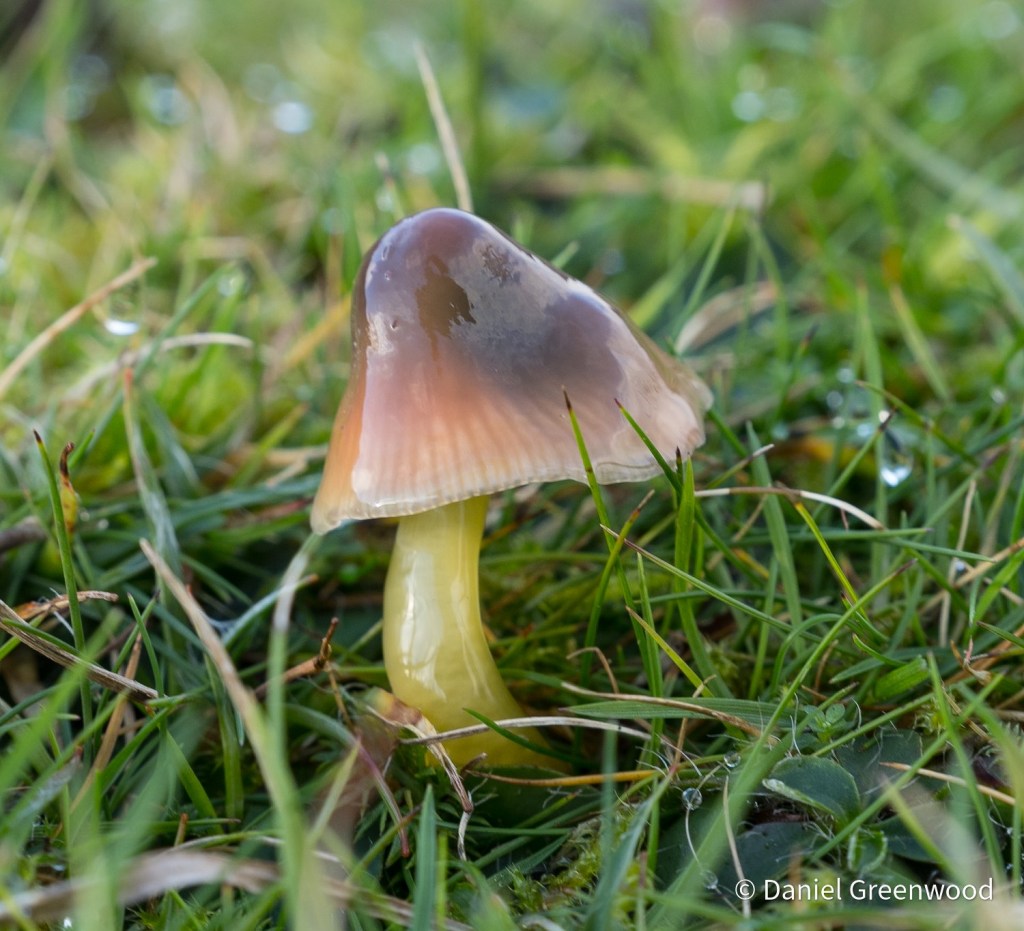
Waxcaps make up the crux of the mushrooms we found. These beauties are butter waxcaps (Hygrocybe ceracea).

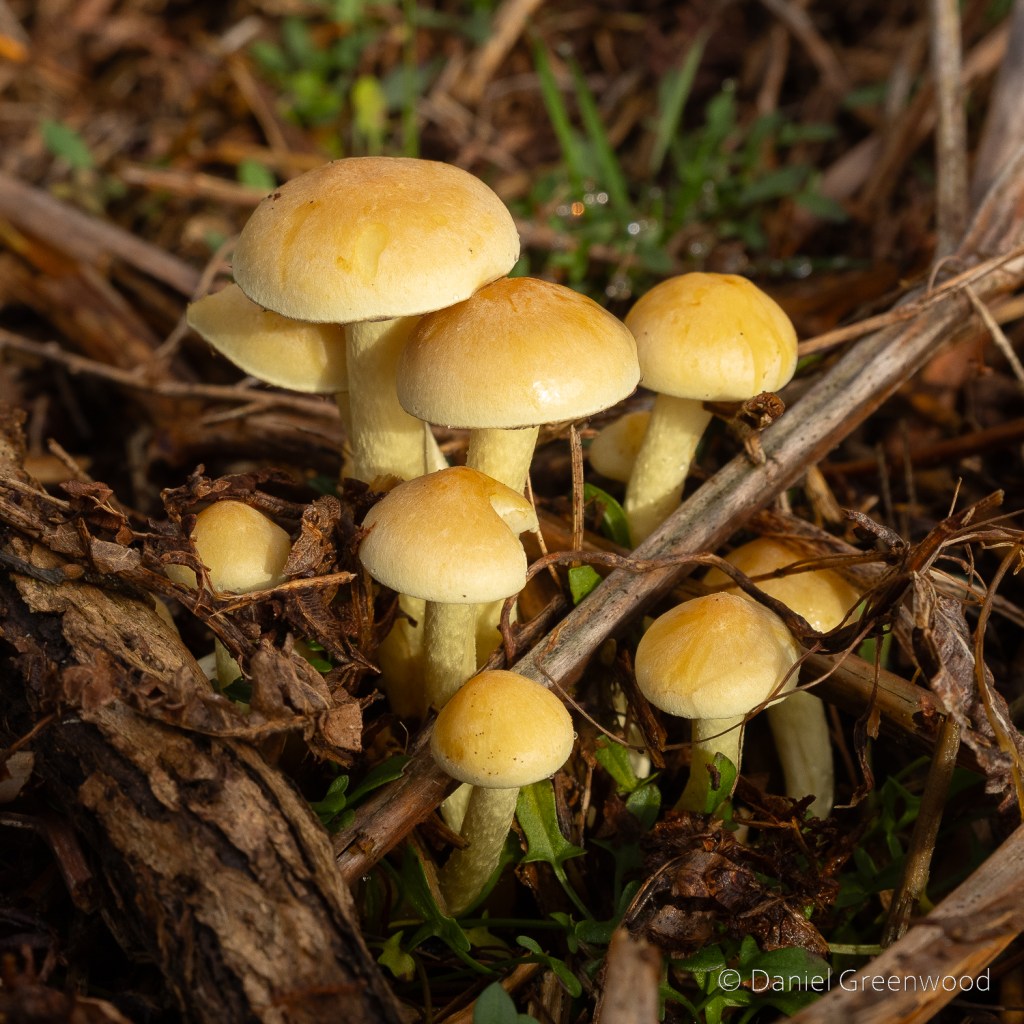
Not to be outdone, some very photogenic sulphur tuft (Hypholoma fasciculare) were found as we climbed the moor.

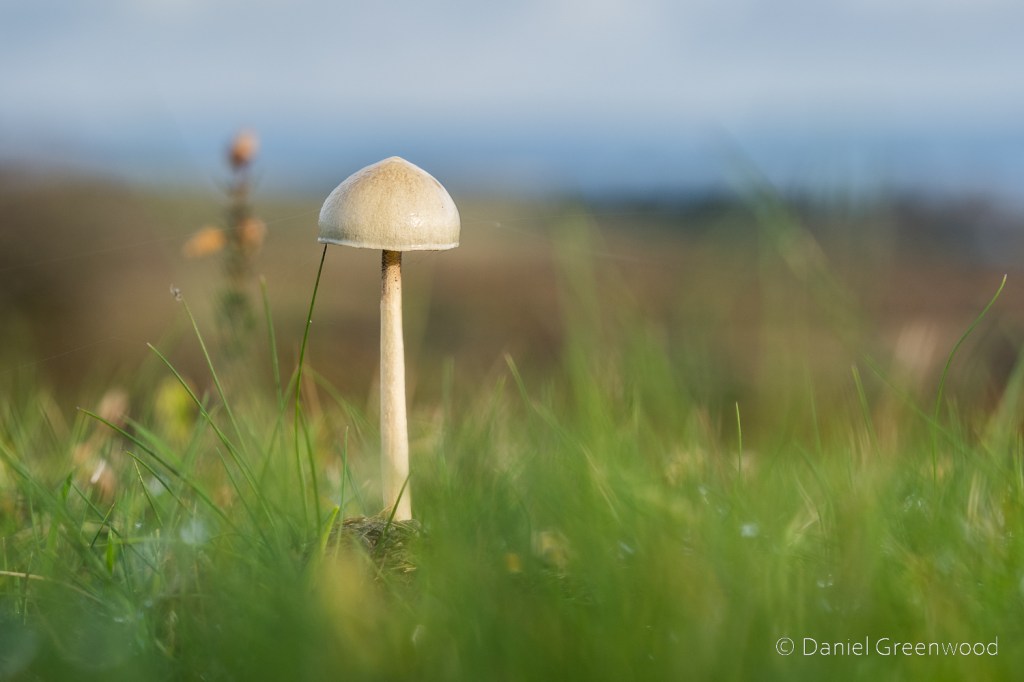
These mottlegills (Panaeolus) are quite common in places with grazing livestock like Dartmoor ponies.

My best guess is that this was one of the moss bells (Galerina).

These lichens are beautiful. I don’t see them very often because I have to travel west see moorland. They’re probably gritty British soldier lichens (Cladonia floerkeana).

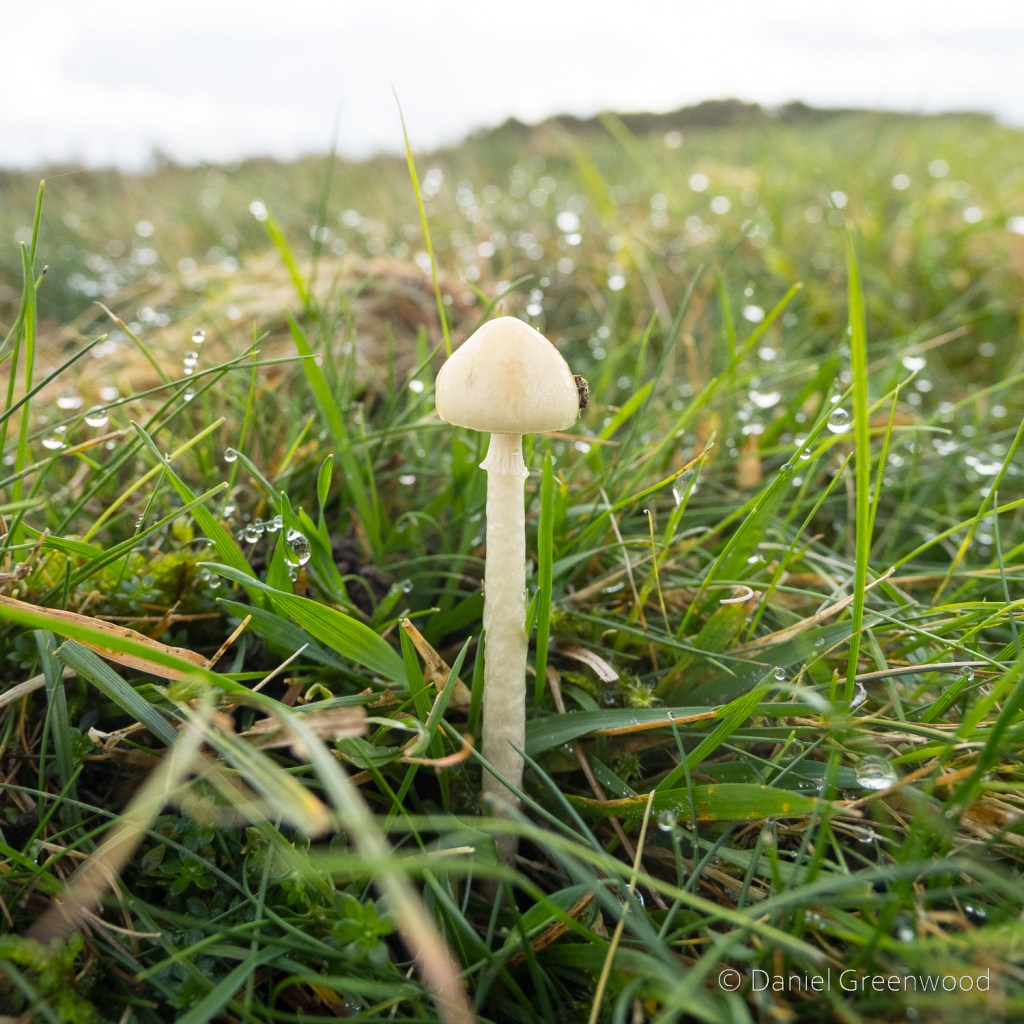
I’m unsure what this species is, but it’s a beauty.

As we approached the more remote moorland (in terms of people living out there) the waxcaps began to appear in the cropped turf. This is another example of how important grazing to some degree is, and how it mimics very ancient processes. These mushrooms would not grow in closed-canopy woodlands.

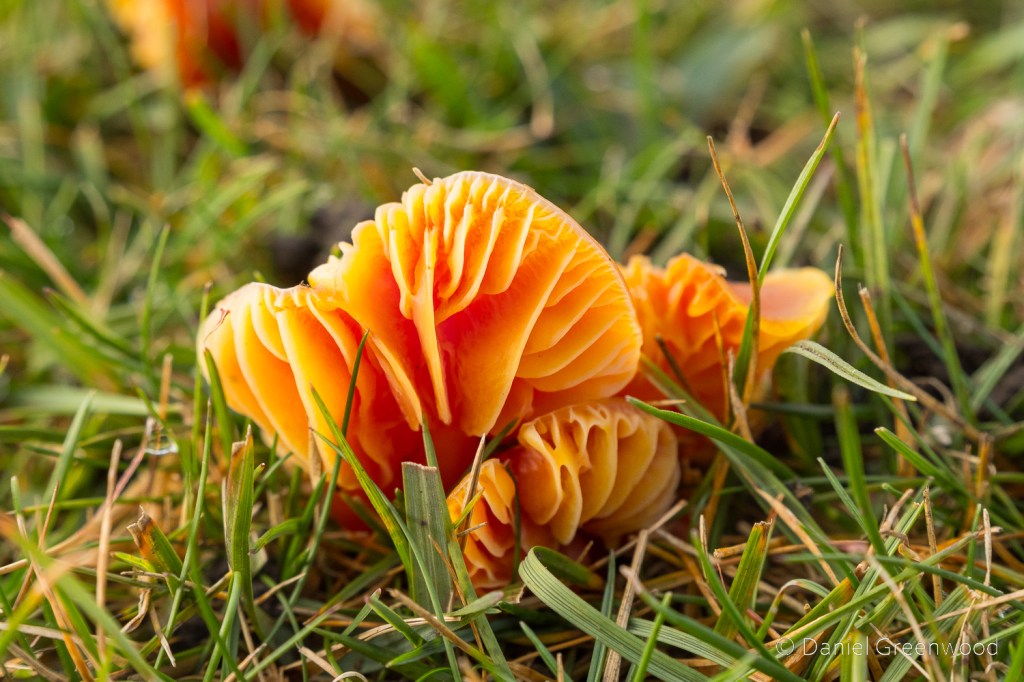
This is one of the red waxcaps, but I’m unsure if it’s honey waxcap or not. It looks too orange for scarlet waxcap.

This is one of several species under the umbrella of blackening waxcap or witches’ bonnet (Hygrocybe conica complex).

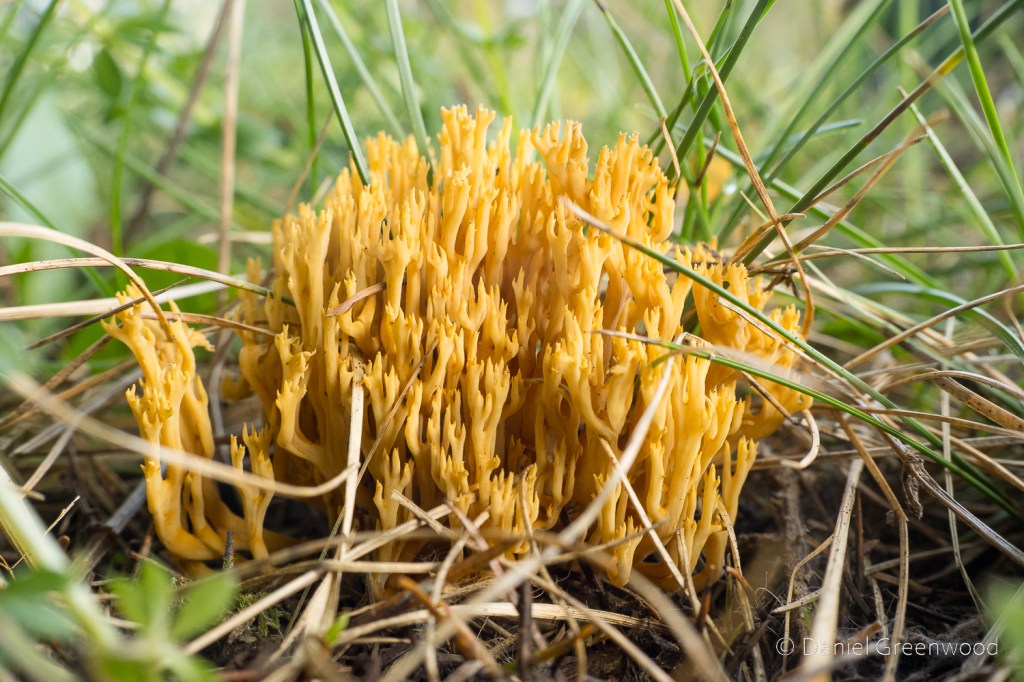
This isn’t an award winning image but it’s likely to be meadow coral (Calvulinopsis corniculata).

This is a species I only really see in the west of England or Ireland. It’s one of the dog lichens (Peltigera).

These are crimson waxcaps (Hygrocybe punicea), stunning mushrooms indeed. There were some young men passing by who stopped to admire the colours of these impressive shrooms.

I don’t have an identification yet for this gorgeous waxcap and the closest I can guess is a colour variation of parrot waxcap (Gliophorus psittacinus).

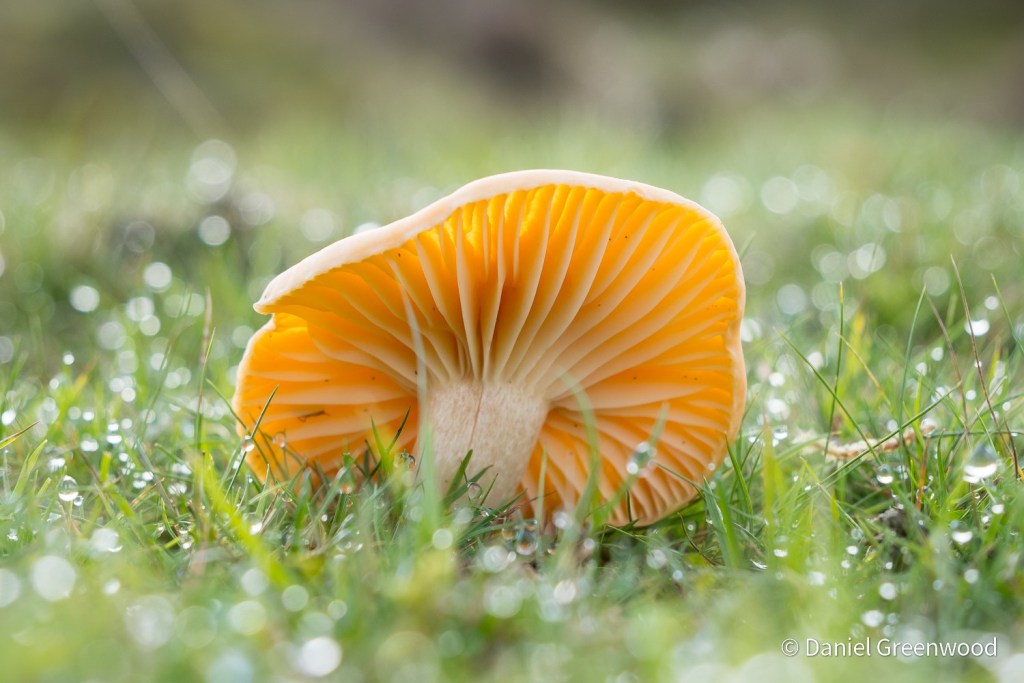
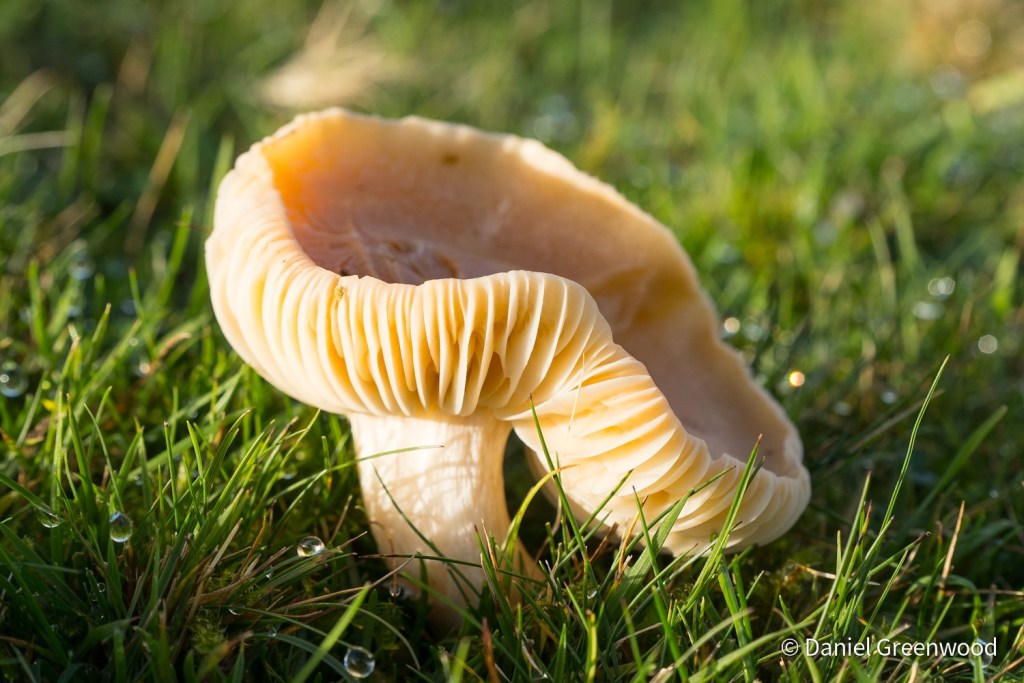
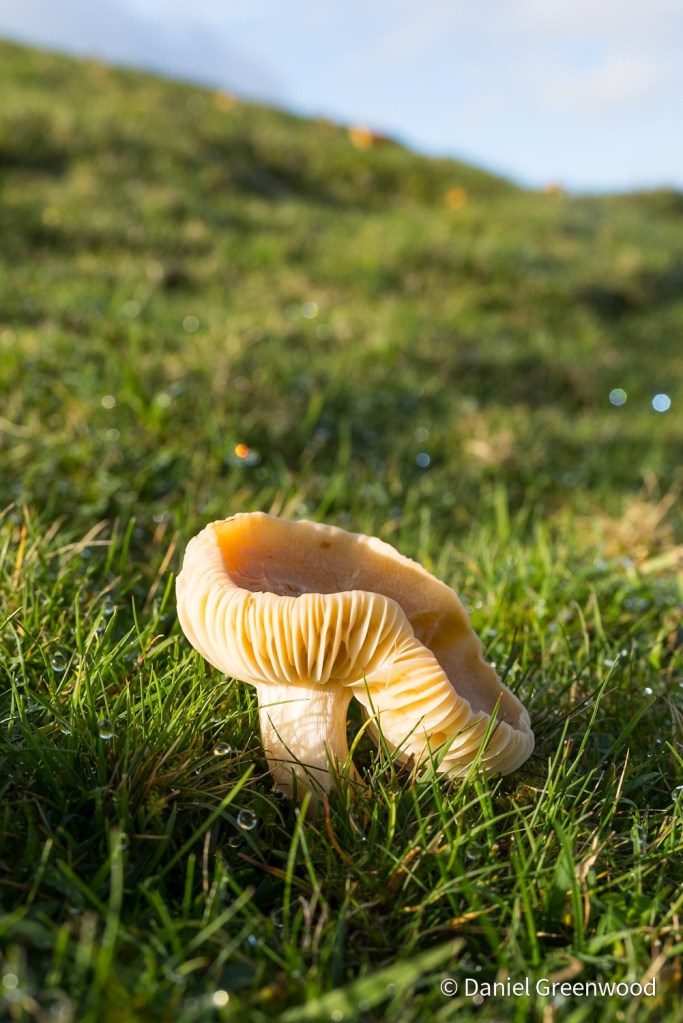
This is meadow waxcap (Hygrocybe pratensis), often fan-like, always best photographed from ground level.

I think this is golden waxcap (Hygrocybe chlorophana).

Now we’re back at the dungi. This was a very small mushroom, growing on a rabbit or hare dropping.

These are probably dung roundhead (Protostropharia semigloblata). Despite the animal dung, they’re beautiful!

I’m not up on my corals and suchlike, but these are probably in this family.

The walk ended in a little graveyard, great places for waxcaps, by the way. That was evidenced again by this clutch of what I would say were scarlet waxcaps (Hygrocybe coccinea).

Phew!

Thanks for reading.

I write these blogs in my spare time because I want to raise awareness about the beauty and diversity of fungi. If you enjoy reading them you can support my blog here.

Swiss Alps: alpine wildflowers on Männlichen 🇨🇭

The Jungfrau, Switzerland, May 2024

Carrying on from the magnificent meadows of Grindelwald post, this post covers some of the alpine plants my wife and I saw on our honeymoon hike around Männlichen in May 2024.

The view from Männlichen

It was rather wintry atop the peaks of the Jungfrau with snow still covering grasslands above the treeline.

The Jungfrau peaks left to right: the Eiger, Jungfrau and Mönch

The Peaks of the Jungfrau

Männlichen is accessible via gondola from the Grindelwald Terminal station. The Grindelwald stations can be confusing so do look into it to ensure you don’t get off at the wrong station, wherever you’re going.

View into the Lauterbrunnen Valley from Männlichen

When you reach the gondola station you alight at 2220m. Here you get fantastic views of the major peaks of the Jungfrau – Eiger (Ogre, 3970m), Jungfrau (Young Girl, 4105m), and Mönch (Monk, 4107m).

As it was still snowy and we were only kitted out for ice-free hillwalking, we walked down to the middle gondola station on the road.

Along the way we saw a lot of nice wildflowers, most of which we hadn’t seen before.

Wildflowers near Männlichen (2200-1800m)

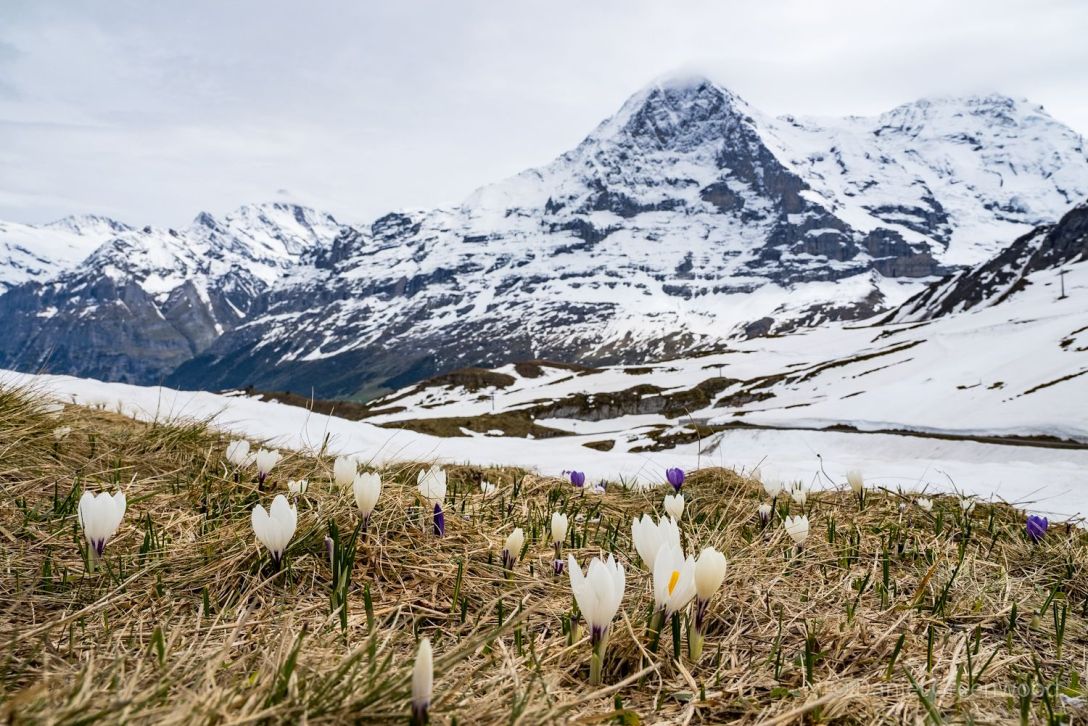
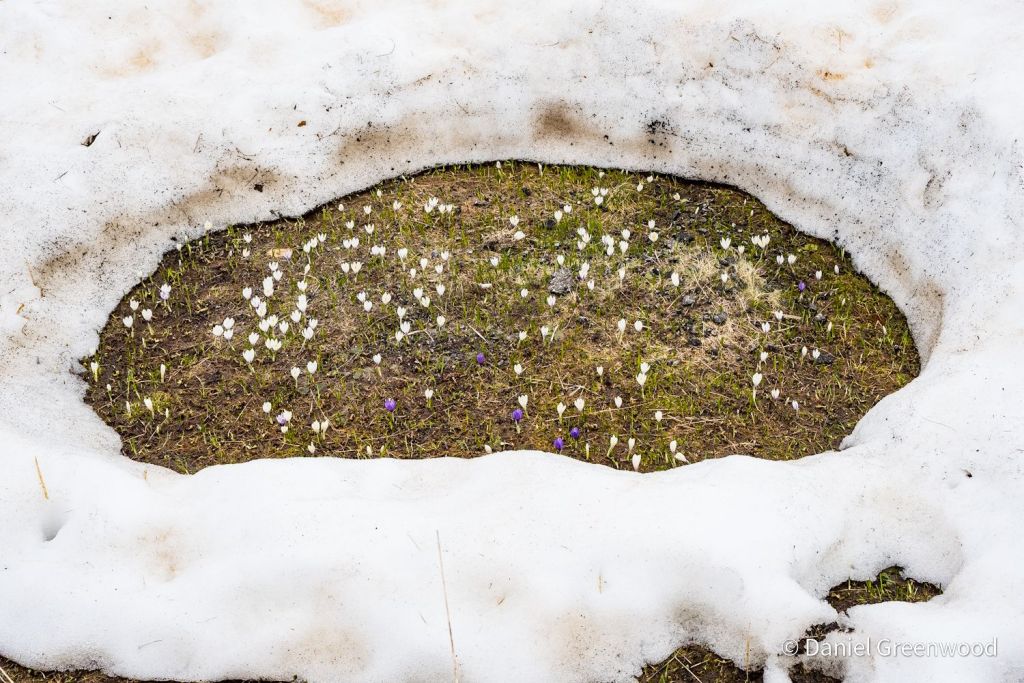
The most dominant flower was a species of crocus that was appearing from under the snow.

This shows that rather nicely.

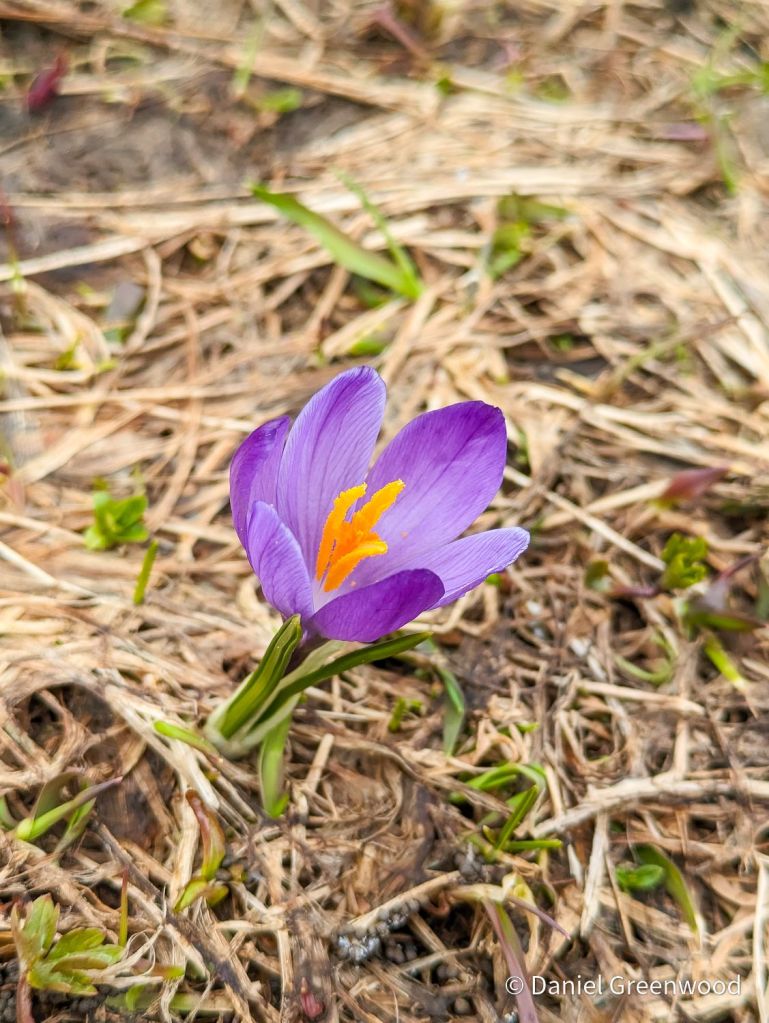
White crocus (Crocus vernus), and a purple variety:

Meadow saffron always come to mind.

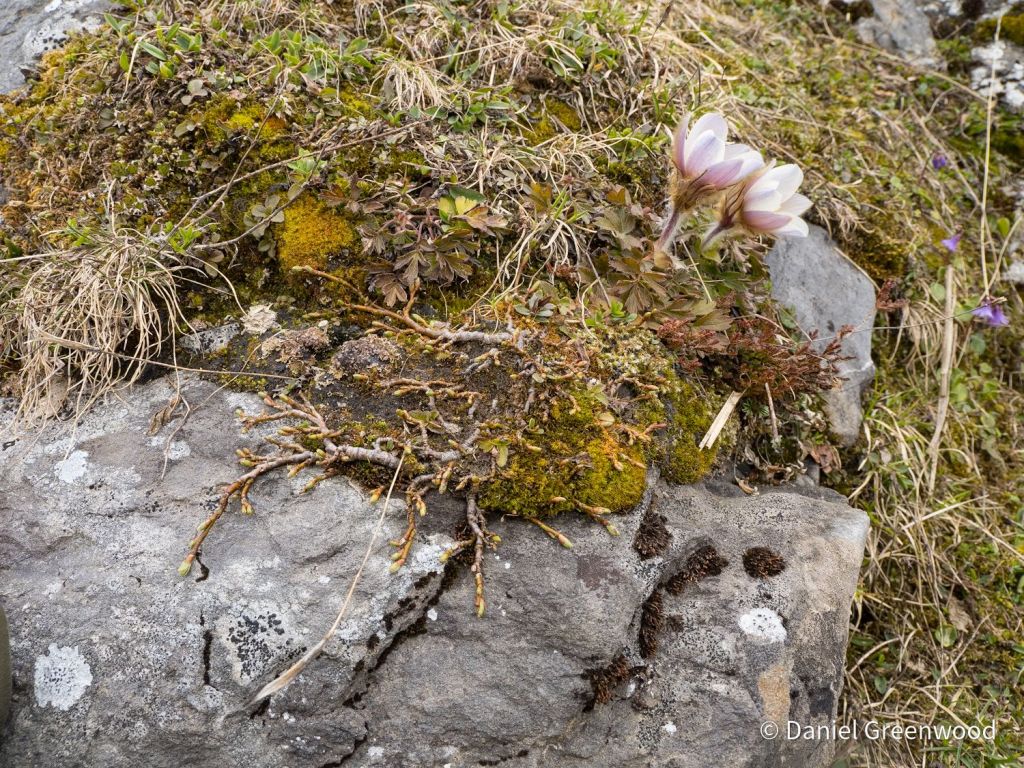
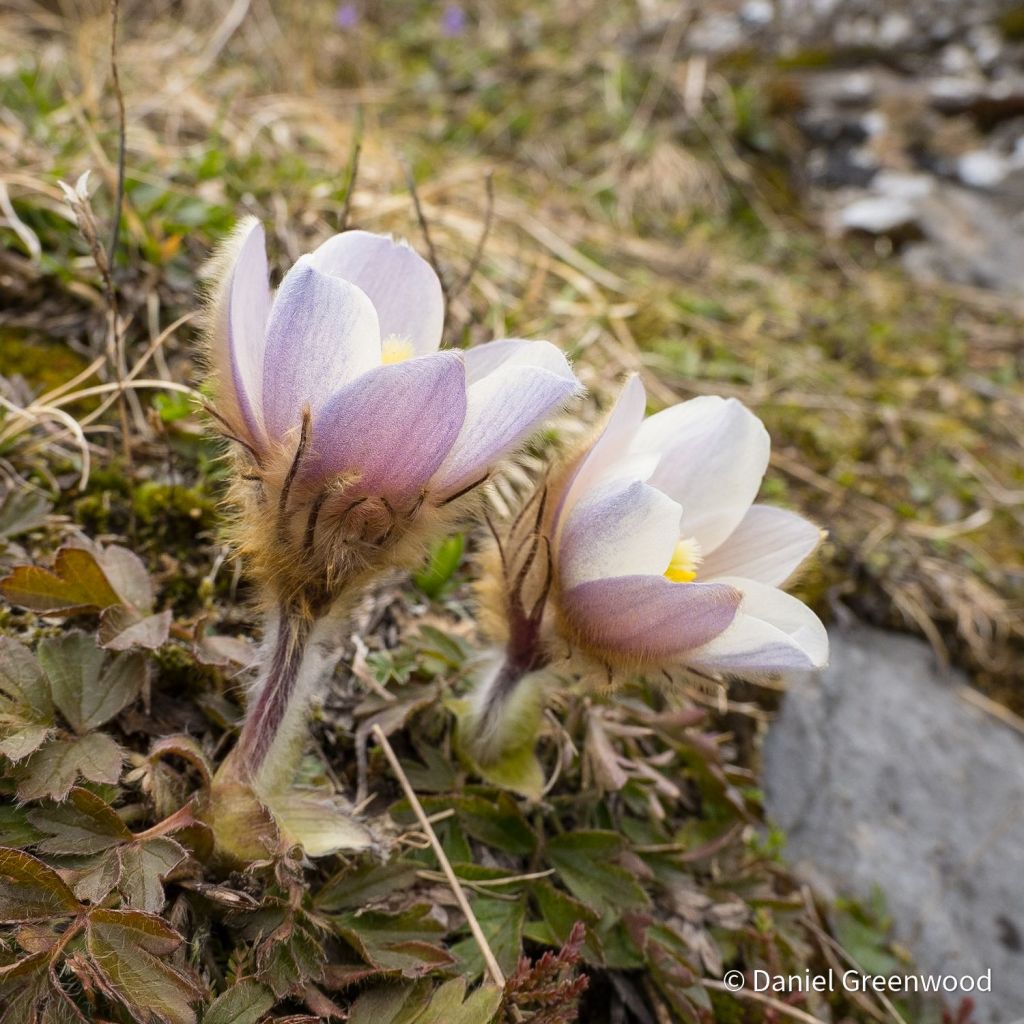
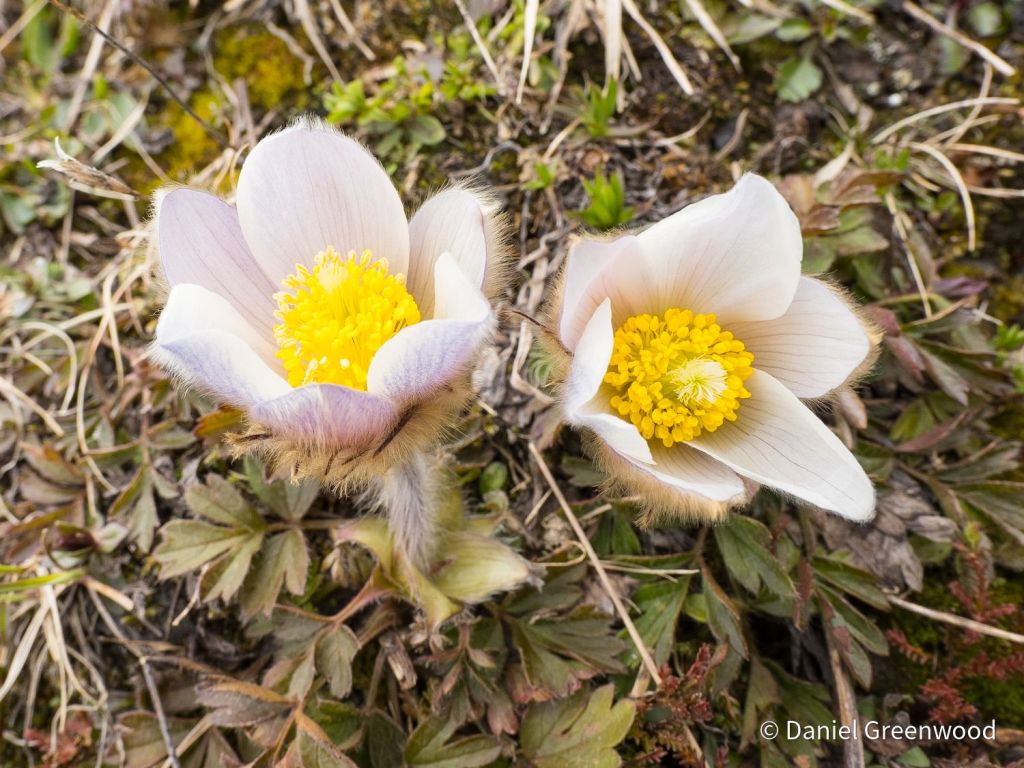
A nice surprise was this spring pasqueflower (Pulsatilla vernalis) close to the top where the first rocks were appearing from the snow.

They are rather hairy.

Pasqueflower is found on chalk and limestone grassland in England, though I’ve never seen it. The Cotswolds is a stronghold.

It’s almost as hairy as a bat, or a tarantula.

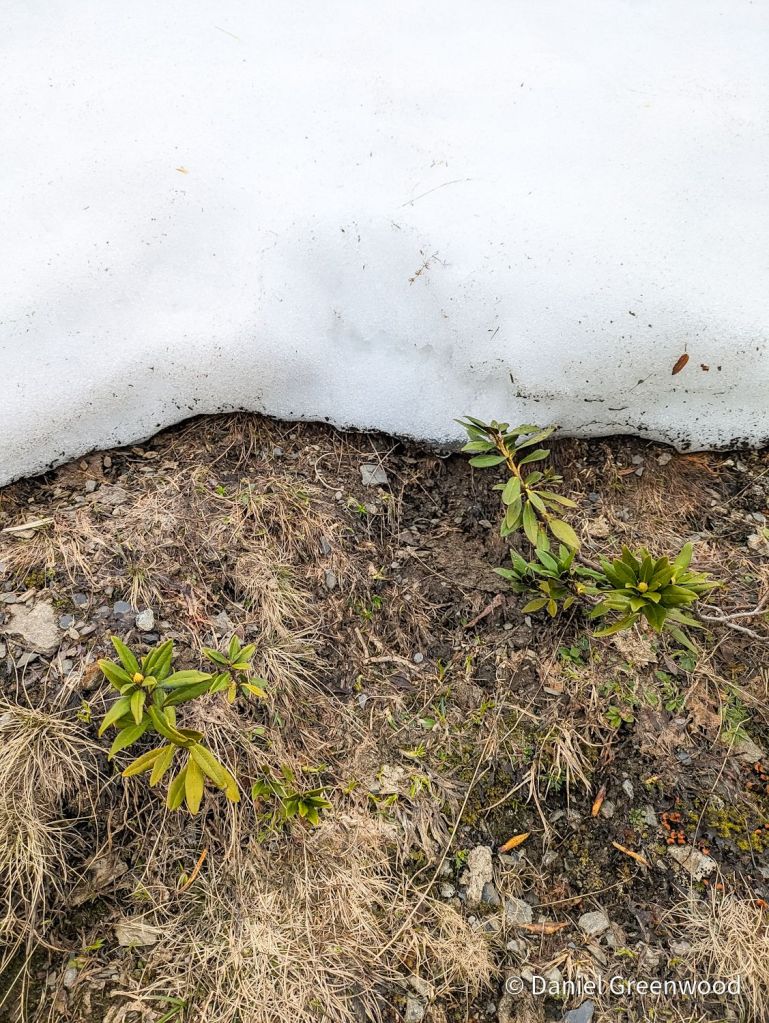
Appearing from the snow was another new plant for me – rusty-leaved alpenrose (Rhododendron ferrugineum).

I’ve never seen any species of rhododendron in their natural habitat. I’m used to seeing the ornamental versions either in gardens or when they escape and cause harm in other habitats.

Snowbell (Soldanella alpina) is a plant I’ve seen in the Bavarian Alps but I’m not there often, so this is a nice thing to see.

The flowers are very ornate, though most flowers are! They look like paper lampshades.

Purple mountain saxifrage (Saxifraga oppositifolia), not well represented in these pics, and probably quite early in its growth.

This is probably mountain everlasting (Antennaria dioica).

Now this has a great name – sweetflower rockjasmine (Androsace chamaejasme). Sounds like a James Taylor song.

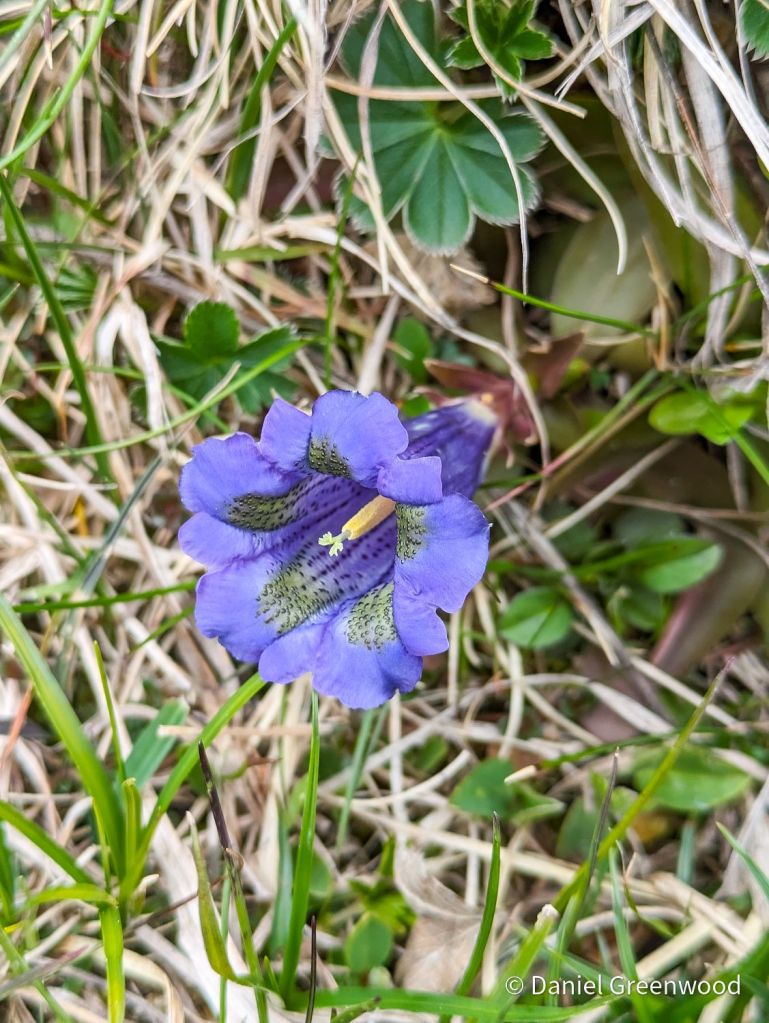
One of the joys of the Alps for us was seeing the range of gentians. They are a stunning blue colour, the kind of vibrancy that only wildlife can muster naturally. This is probably trumpet gentian (Gentiana acaulis).

Birds-eye primrose is a species I’ve only ever seen in the Yorkshire Dales before, near Malham Tarn. The slopes down from Männlichen did have a moorland feel to them, like the Dales does.

Colts foot is one of the first spring flowers and these were very high up. Hardy daisies indeed.

Bright little lion’s manes, though not purely alpine in their habitat preferences.

This is probably cow berry (Vaccinium vitis-idae), a relative of bilberry.

I’m fairly sure this is bilberry.

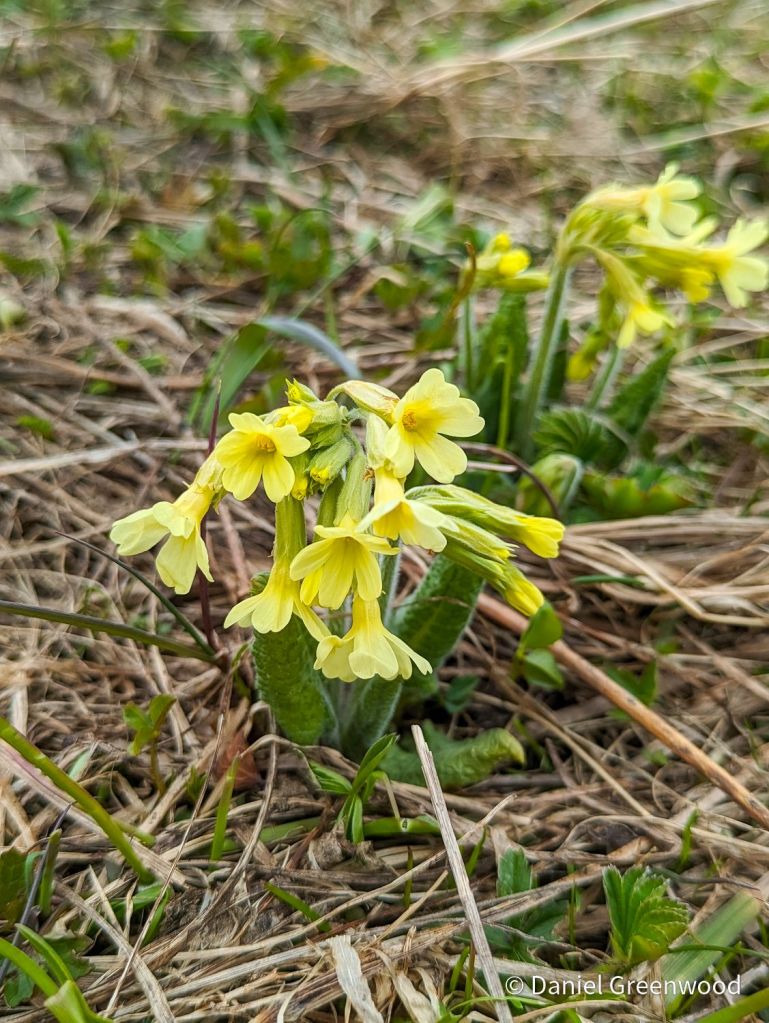
Oxlips are no longer common in England, and I can only ever remember seeing them in Germany or Czechia in spring.

I think these may be oxlips, but their abundance has thrown me. This was near to the middle gondola station on the way down.

Jostling for prominence.

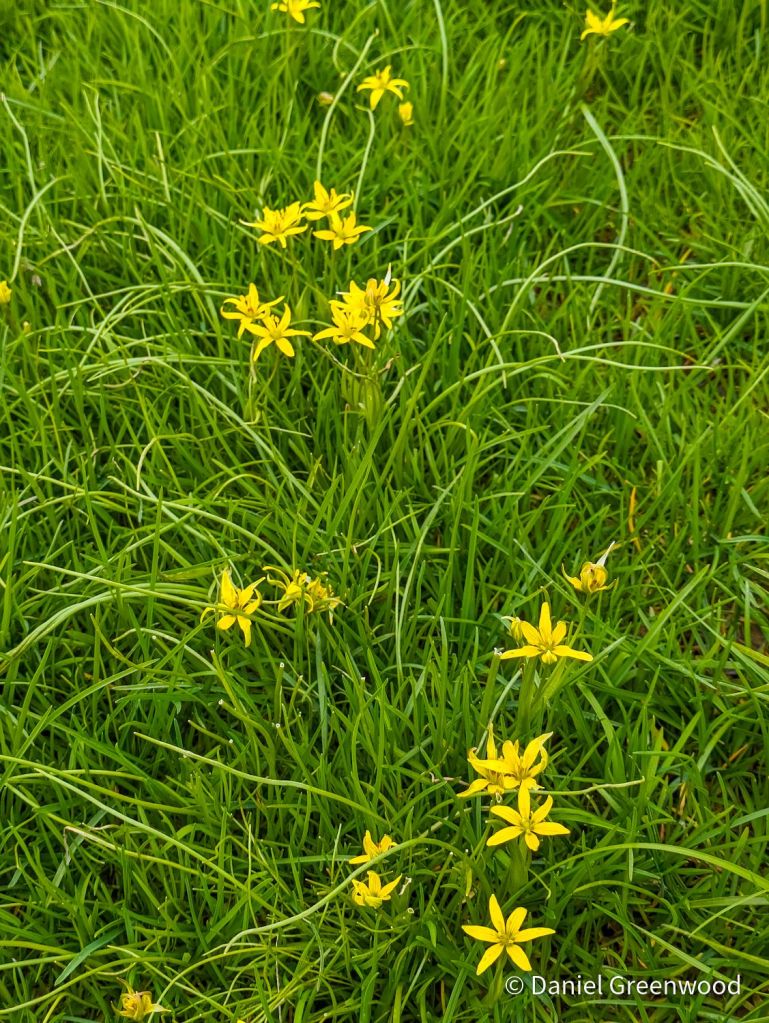
Nearby to them was this lovely plant, yellow star of Bethlehem. If only peace could come to that part of the world today.

Next I’ll be covering more woodland finds around Grindelwald, and later in the mountains around Lake Brienz. Then it will be what everyone seems to navigate to this website for – sycamore content.

Thanks for reading.
I write these blogs in my spare time because I want to raise awareness about the beauty and diversity of our landscapes. If you enjoy reading them you can support my blog here.

Swiss Alps: Grindelwald’s magnificent meadows 🦗

In May 2024 my wife and I went on our interrail honeymoon to the Jungfrau region of the Swiss Alps. I am finally ready to post my photos from the trip, starting with some macro photos. I’ve popped in some short videos here to give a bit more texture and sound to bring things to life.

My cat whispering wife

It was an incredible trip, all done by rail there and back. The nostalgia is already with me.

In addition, I’m aiming to post about the spring alpine flowers and the amazing sycamore wood pasture. Hopefully one each week. I posted about the smattering of fungi back in May on Fungi Friday.

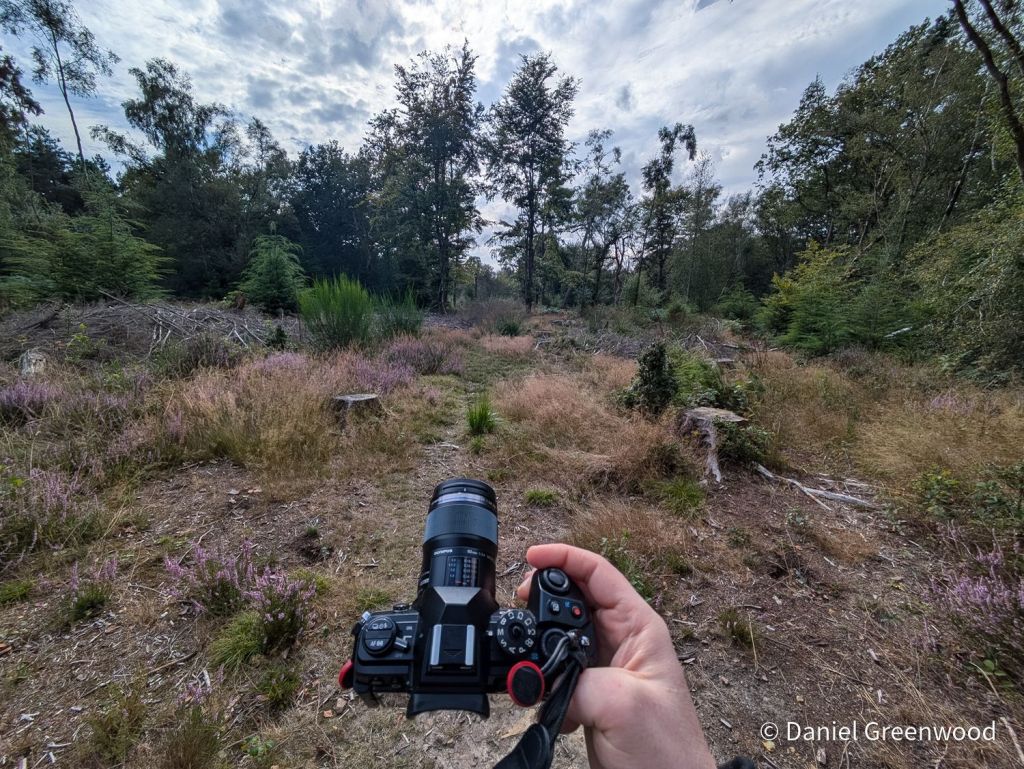
On the trip I took only one lens with me, one capable of pretty much any photography between 12-45mm (equivalent to 24-90mm in full frame cameras). That includes excellent close up capabilities. I also had a pocket compact camera and my phone.

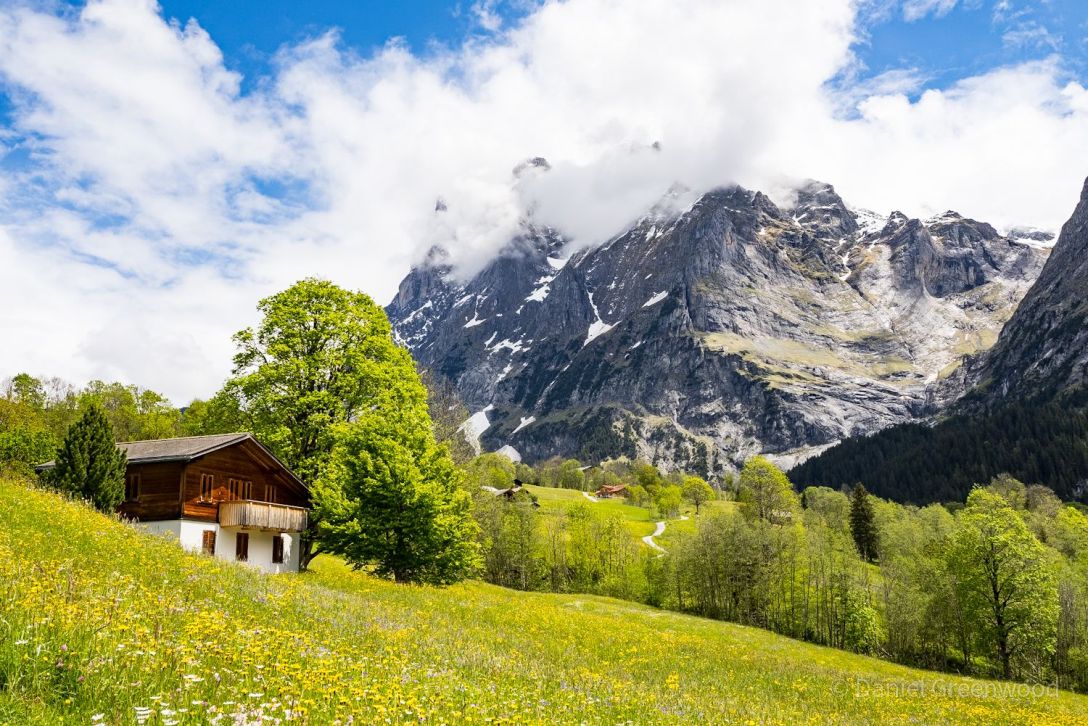
The meadows were in full bloom, days from being cut for hay to feed the alpine cattle through the winter months.

Breathtaking alpine meadows

Oxeye daisies with the Wetterhorn (I think) in the background. This pic is taken with my Olympus TG-6 compact.

It was nice to see the variations in the grassland species in the different locations. At about 1200m up these meadows were packed with umbellifers. They make up the wash of white here. This meadow must have been impacted by the snowmelt as it nourishes the foothills in spring.

The typical mix around Grindelwald was one of red clover, scabious, oxeye daisy and hawkbits.

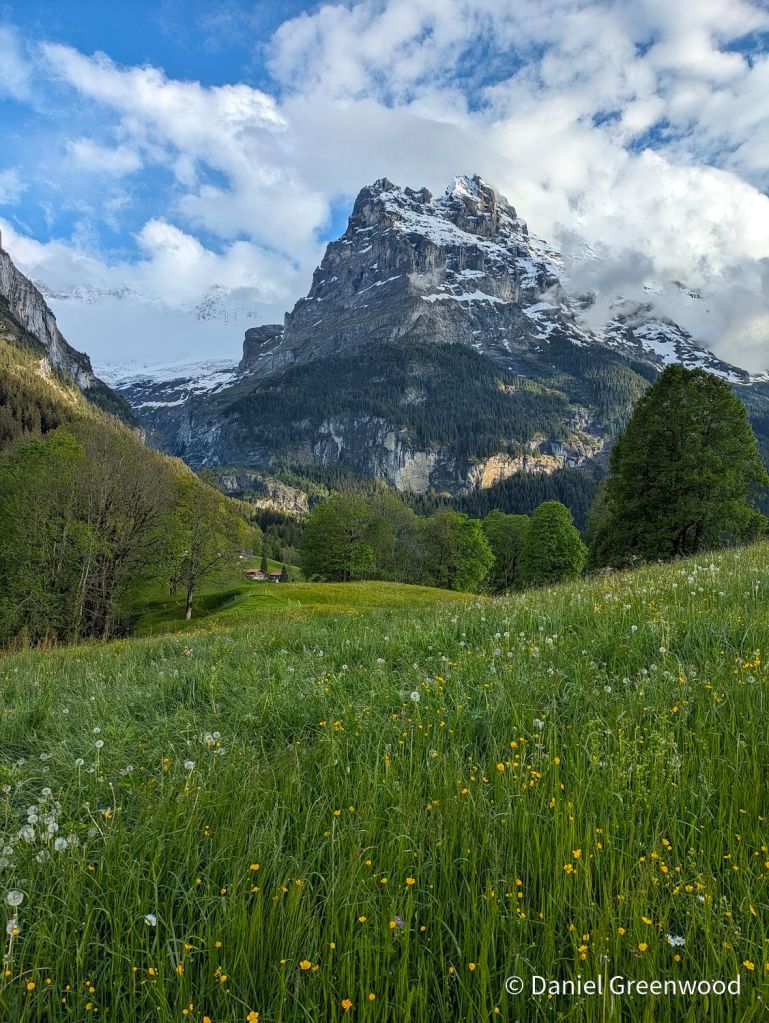
The Eiger looms over chalet homes and rich hay meadows. You can see the allure of Switzerland. High living standards and abundant nature.

It is a breathtaking place, as this beautiful phone pic suggests (as in the phone’s capabilities!). This meadow was one that lacked the diversity of others, with the dandelions being evidence of nutrient enrichment, which encourages more vigorous plants at the expense of others. The most diverse meadows will have lower levels of nutrients in the soil.

The Grindelwald meadows were at a height of around 1000m. They were peaking and very loud at times. Just listen to this:

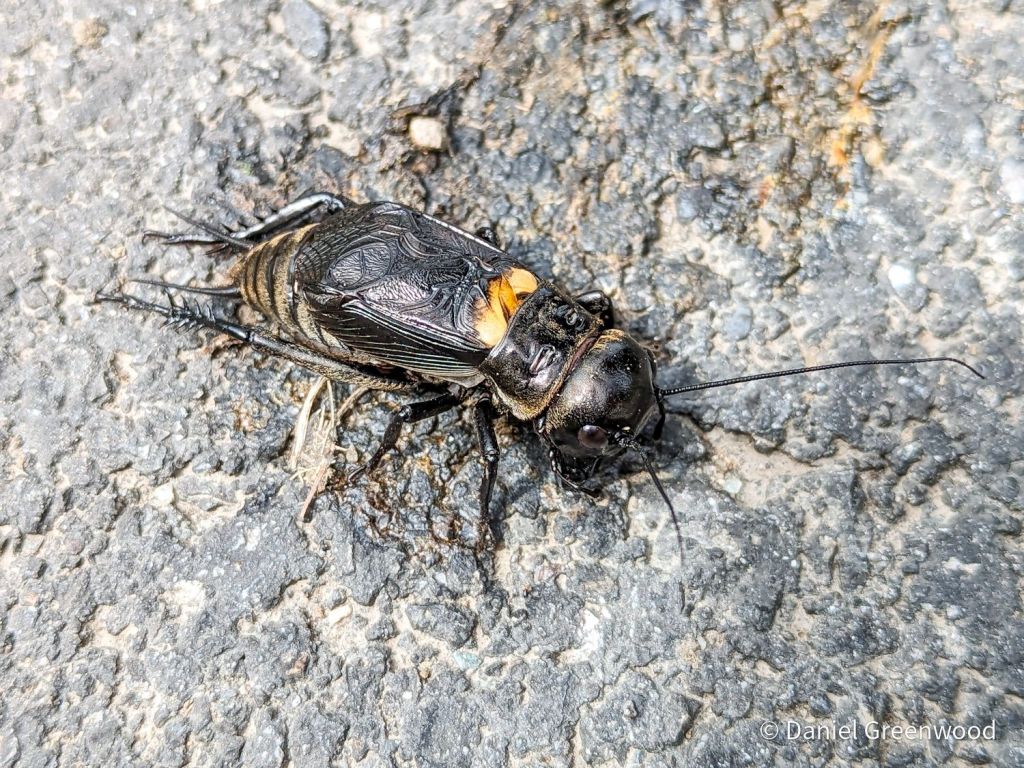
It was a chorus of crickets, not something that we get in England much anymore. The management of these meadows follows a largely medieval practice of haymaking, though it is now mechanised:

This is probably a family cutting and collecting the hay. This photo was taken from a cable car heading up to Männlichen.

Now onto the invertebrates that lived in the meadows.

Bush crickets

The sound in the meadows was made by the European field cricket, a species that has received support via conservation projects close to me in West Sussex. According to the iNaturalist page it’s flightless, so when it becomes locally extinct it struggles to repopulate lost ground. In the UK it has suffered from the decline in heathland, its favoured habitat. The cricket above was travelling across a lane to reach another meadow. There were a number of them squashed by vehicles. It’s unavoidable.

Moths and butterflies

During a walk in the valley woods at the foot of the mountain this green-veined white butterfly (I think) was on the wing. The main butterfly we saw was the swallowtail, but they were too fast, restless and far away for my lens to reach.

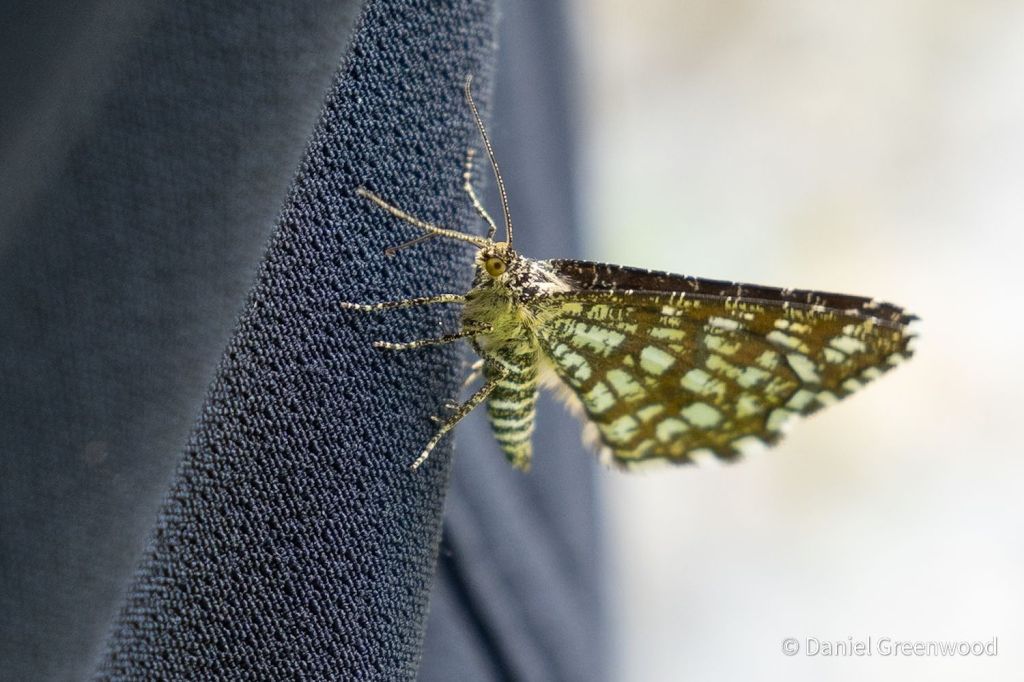
In stark contrast, this latticed heath moth alighted on my actual lens before being coaxed onto my trousers:

This is a species we also have in southern England.

Wasps and sawflies

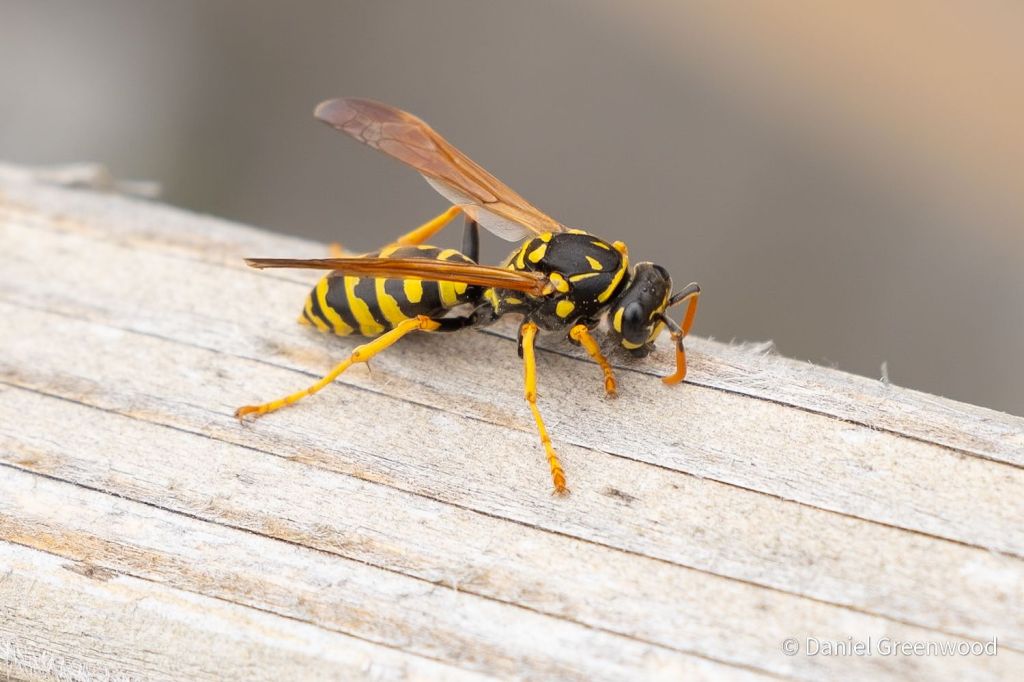
One insect you don’t see in the UK, as far as I know, is the European paper wasp.

They have a lovely orange hue to their antennae, feet and wings. I’ve seen them before in Czechia making nests in residential post boxes. Here you can see one gathering wood shavings for nest building.

Meadow cranesbill was another common flower in the – you guessed it – meadows. I noticed that one area we passed when returning to our accommodation had a number of cranesbills that held sawflies in their flowerheads. The iNaturalist sawfly oracles have decided this is Tenthredo koehleri.

Beetles

Beetles are not my strong point, unless they are from Liverpool. This is a species of click beetle from what I know, visiting an oxeye daisy flower.

Spiders

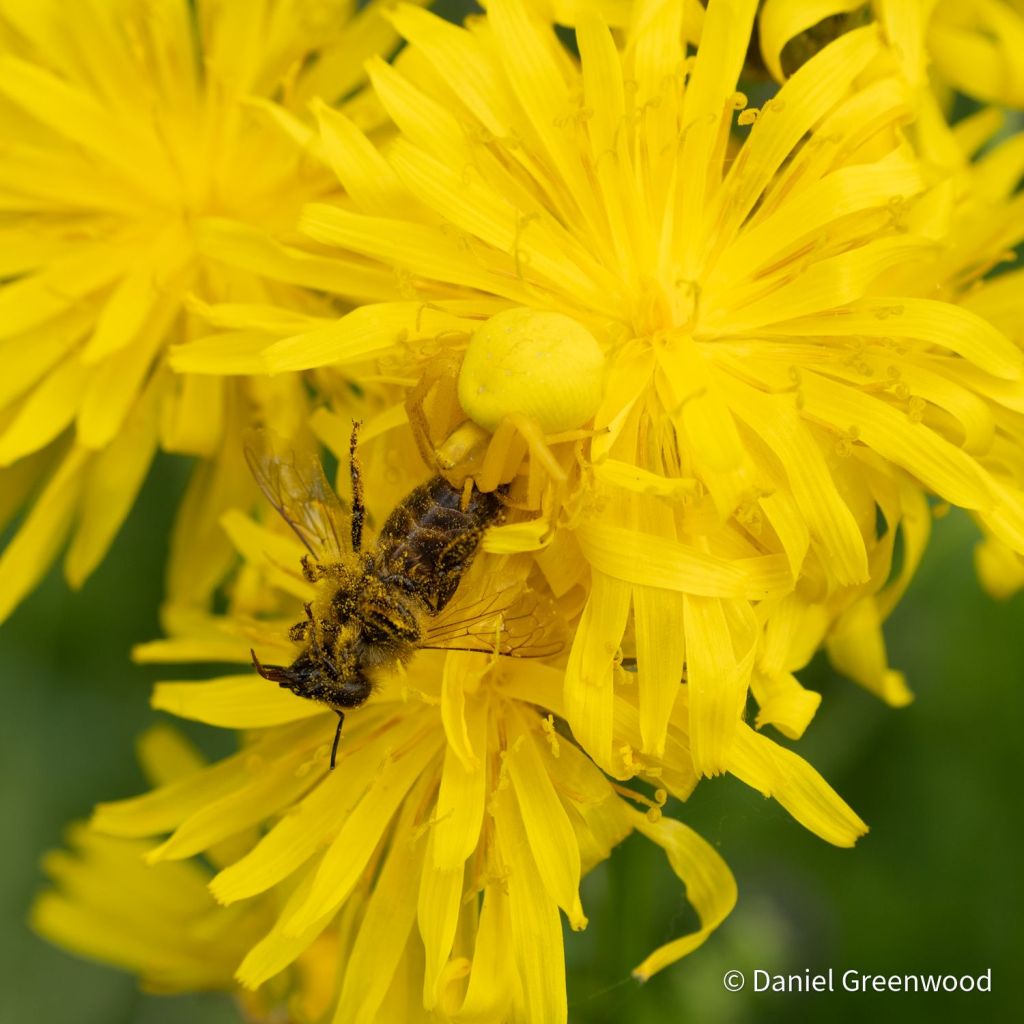
Now, I did mention those beardy daisies the hawkbits, earlier. I’m not up on my ID with these plants, but I did spot a crab spider which had joined in their colouring and caught a honeybee (I think) in one of the flowerheads. This was a statk example of how they can change their complexion to camouflage themselves in certain plants.

That’s all I really managed in the macro photos stakes. There’s much more to come from the Swiss Alps though.

Thanks for reading.

I write these blogs in my spare time because I want to raise awareness about the beauty and diversity of our landscapes. If you enjoy reading them you can support my blog here.

You can find my fungi blogs on Fungi Friday.

The magic birch tree

High Weald, West Sussex, August 2024

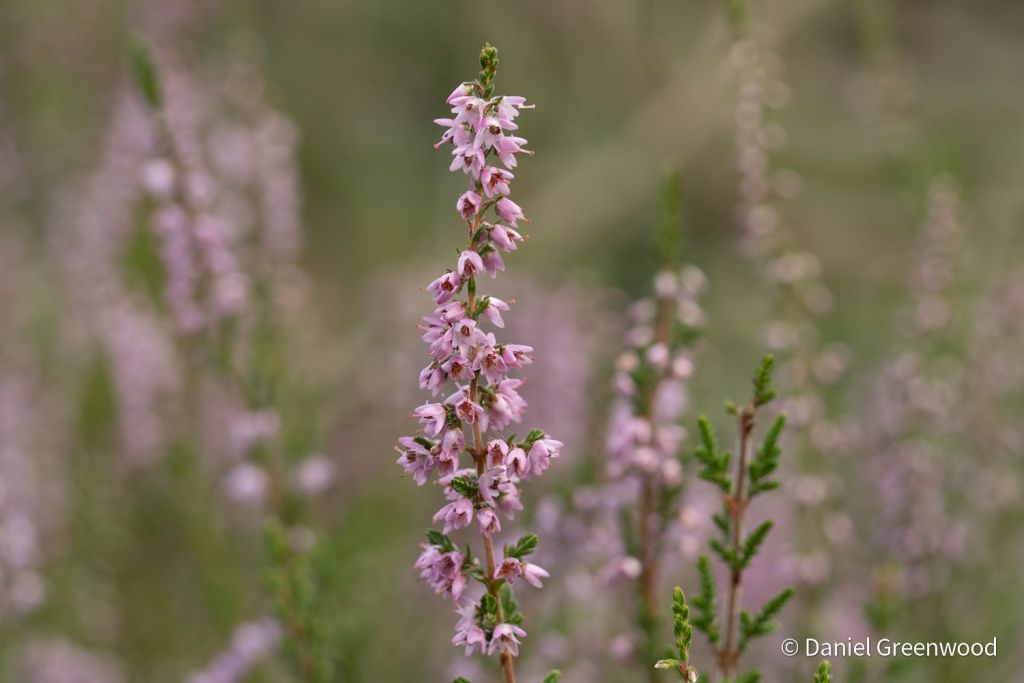
I had some hours to take one Friday afternoon in August and so headed to my local heathy woodland to seek out some summer fungi.

I found zero mushrooms, but did learn that summer wasn’t quite over.

In a clearing created a few years ago by the removal of non-native conifers, a heathland has flourished. Sussex, like other southern counties, once had far more heathland before it was either built on or converted to coniferous forestry (like this particular site).

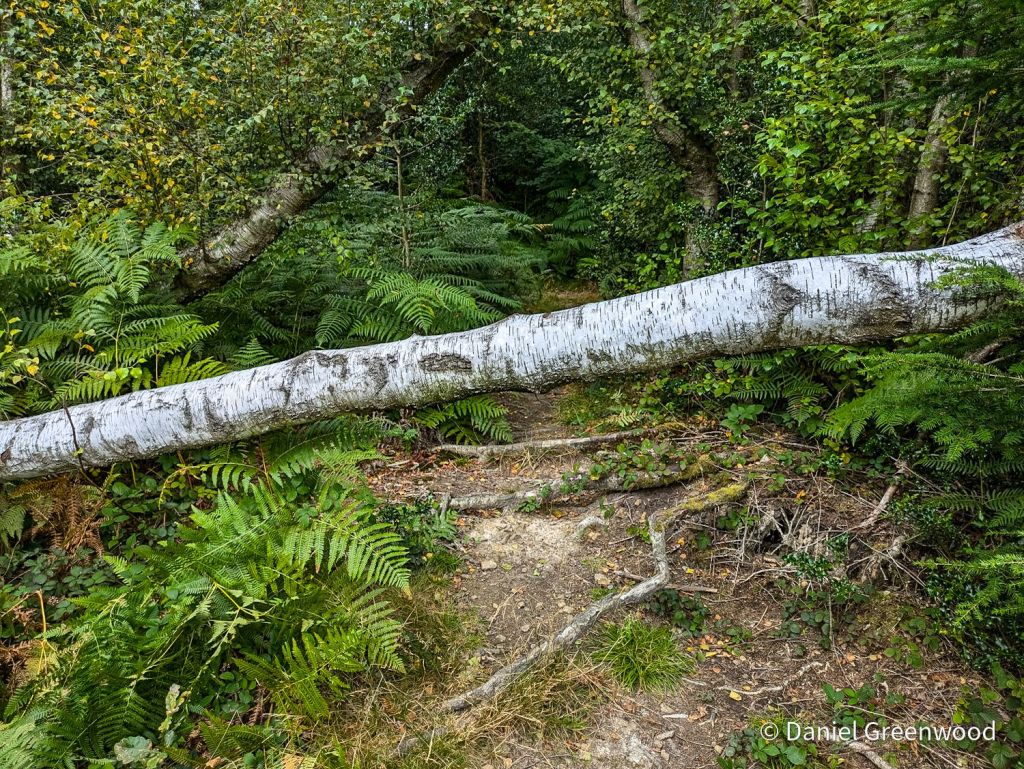
This little patch of restored heathland was zinging with insect life, not least on a fallen birch tree.

Enter: the magic birch tree. Or at least sunbathe on it.

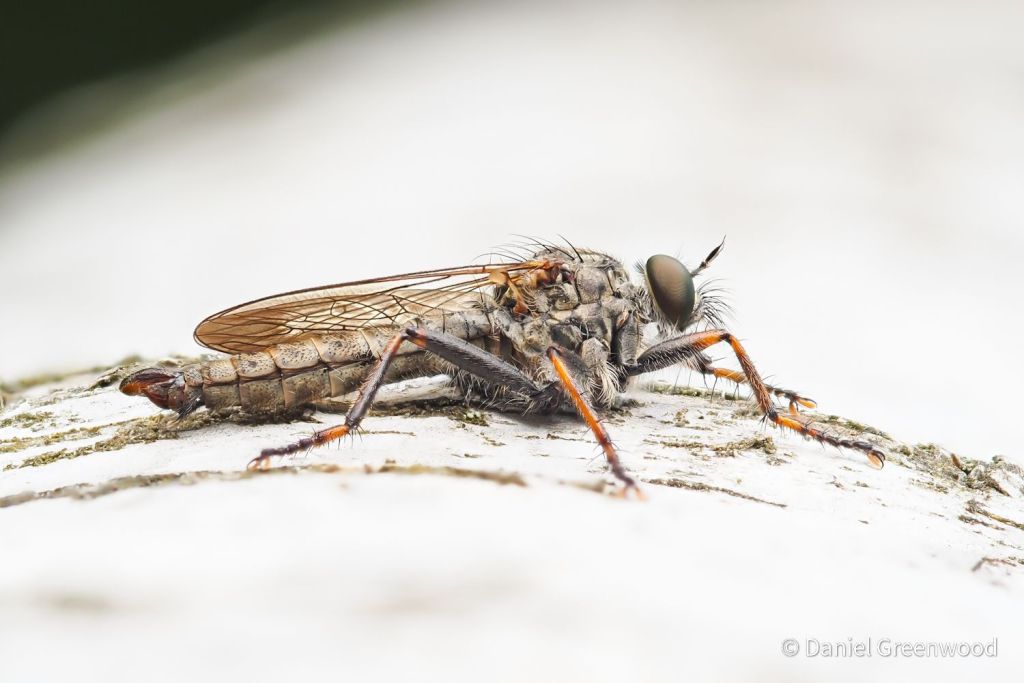
I revered it in such a way because it was providing roosting space for one of my favourite subjects – robberflies!

I’ve blogged recently about robberflies’ love of wooden fenceposts and handrails. I suppose a suspended birch trunk is just that. Nature’s handrail.

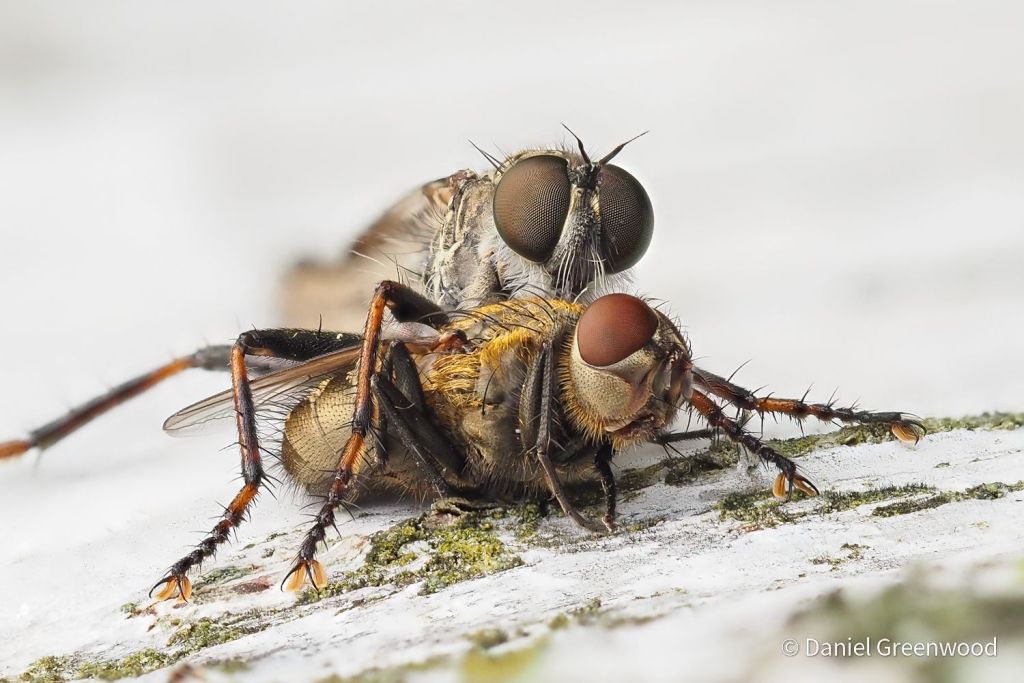
I managed to get my best ever photos of robberflies here, thanks to the capabilities of my camera, and a little bit of that famous fencepost knowledge.

Robberflies are predators of other flies, but also wasps. The photo above was taken using an in-built function of the camera to stack about 15 photos together to create a seamlessly in-focus image. It worked to great effect here.

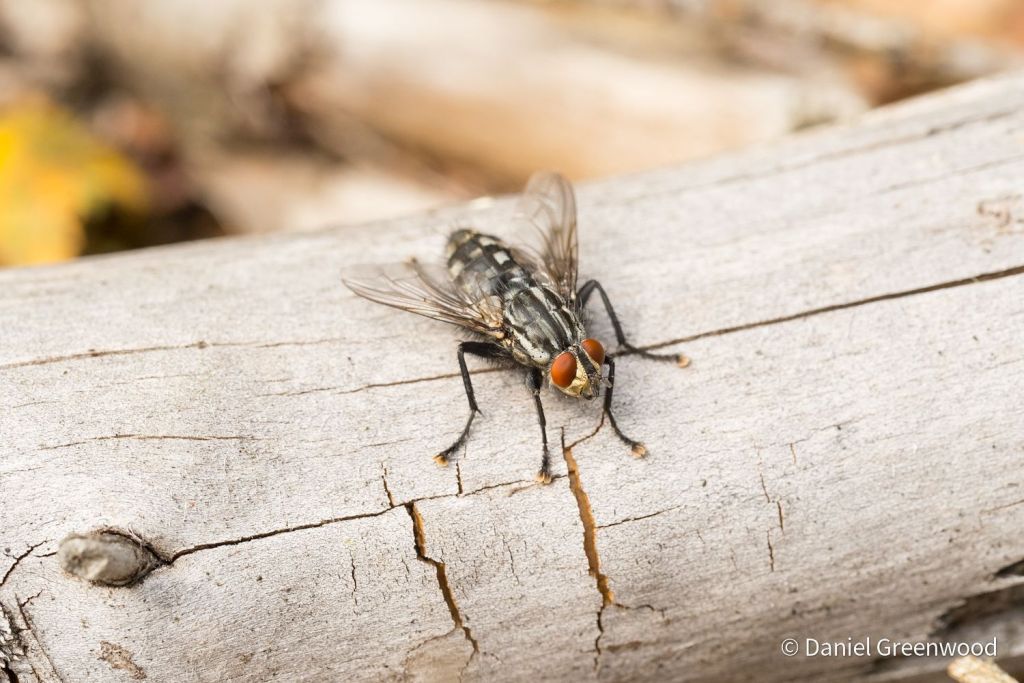
Less dramatic was this flesh-fly, one that is actually quite smart in their black and white get-up with red compound eyes.

On the toe of my shoe a hoverfly that looked like a scuba diver was resting.

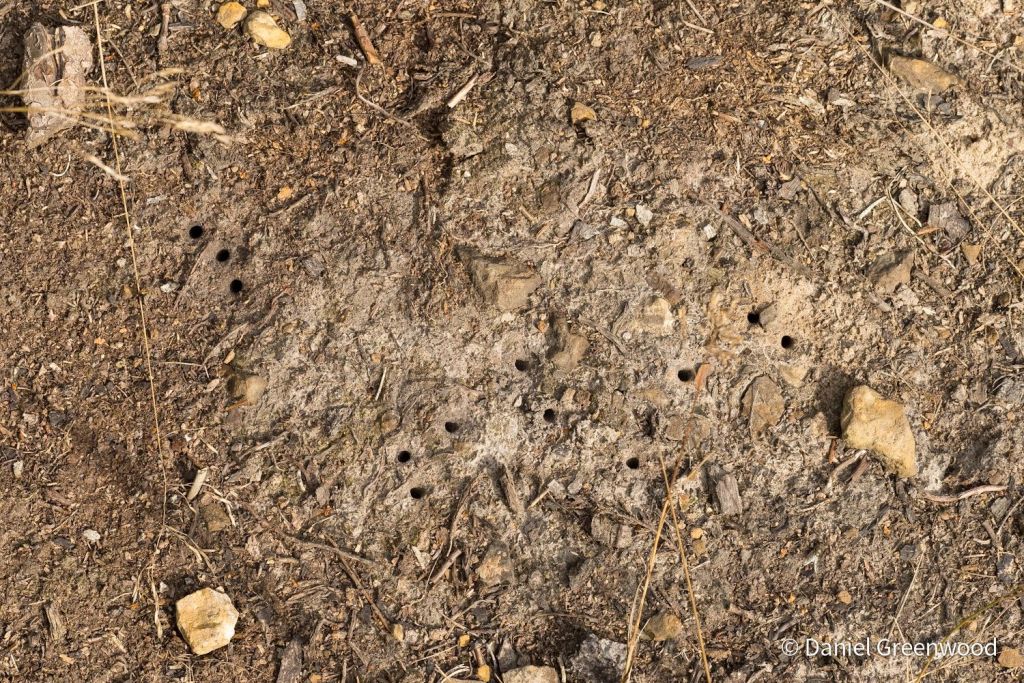
There was plenty of evidence of burrowing insects in the form of these pilot holes.

I didn’t get to see who lived here. Probably solitary wasps or bees.

What this blog can never express is the sheer number of grasshoppers. Every footsteps sent insects like the one above flying for the safety of a grassy tussock.

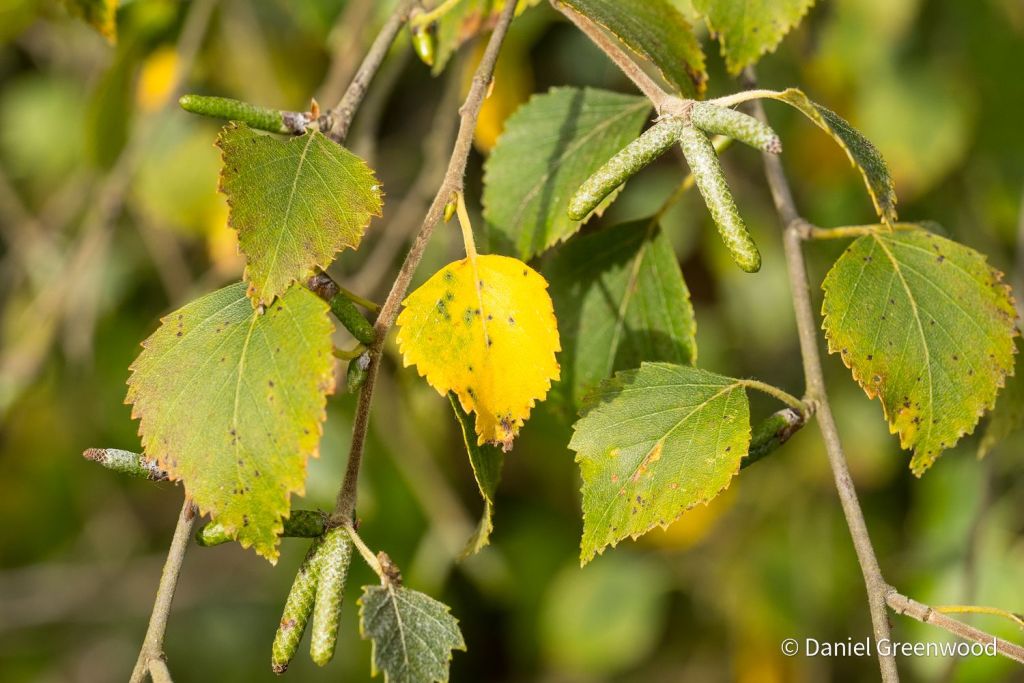
The birches were showing signs of autumn and its inexorable approach.

Thanks for reading.
Macro