Austrian Alps: Innsbruck by sleeper train

Innsbruck, Tyrol, Austria, June 2025

This is a longer post of the images I captured during a recent visit to Innsbruck in the Austrian Alps. We travelled to Innsbruck on a sleeper train from Amsterdam. It’s such a great experience and is significantly lower in carbon emissions compared with flying. If you consider the fact it’s travel and accommodation, as well as the ability to see so much more, it’s a better way to travel. We set off from London on the Friday morning, on an 11am train to Amsterdam, and by 19:00 we were on the sleeper and heading south-east towards Germany.

All that said, we booked a sleeper train from Brussels to Vienna on our honeymoon in 2024 and the train didn’t show up! So travelling by train needs flexibility and patience. I still think it’s worth it, for you as well as the climate.

The photos here are taken with my Olympus EM-1 MIII and TG-6 compact cameras, edited in Lightroom.

In Innsbruck

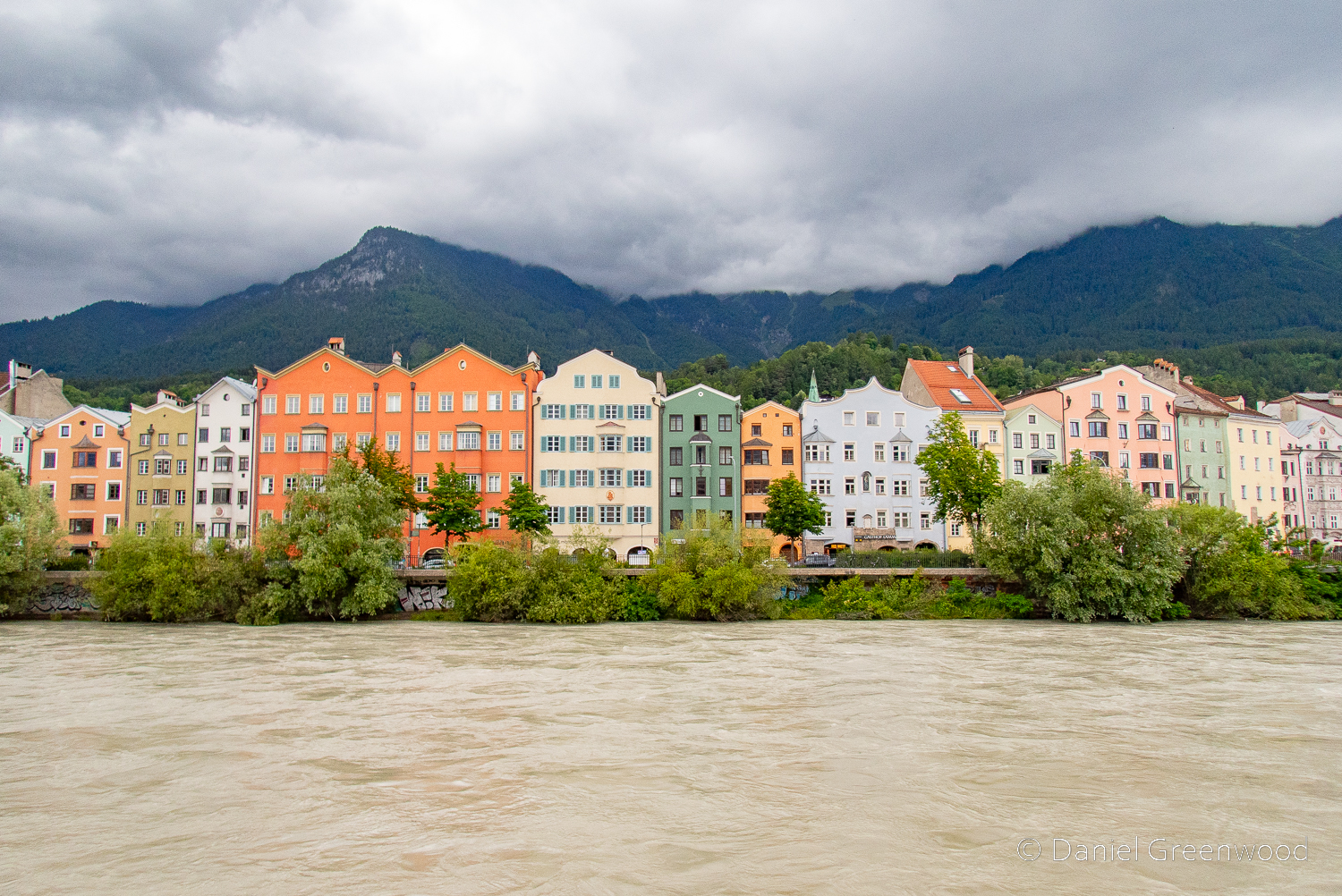
According to my Lonely Planet guide to Austria, Innsbruck was founded in the 1100s. The name basically means ‘bridge over the River Inn’, which splits the north from the south of the city. It’s an epic river, which was in full flow when we visited, probably bolstered by glacial melt from the surrounding mountains.

The colourful apartment buildings on the north side of the Inn (seen here at the bottom of the frame) are a sight to behold from the banks of the south side. It’s hard to appreciate how difficult it would been to build a bridge over a river of this size and power once upon a time. No wonder that when they did manage it, the whole place was named after it!

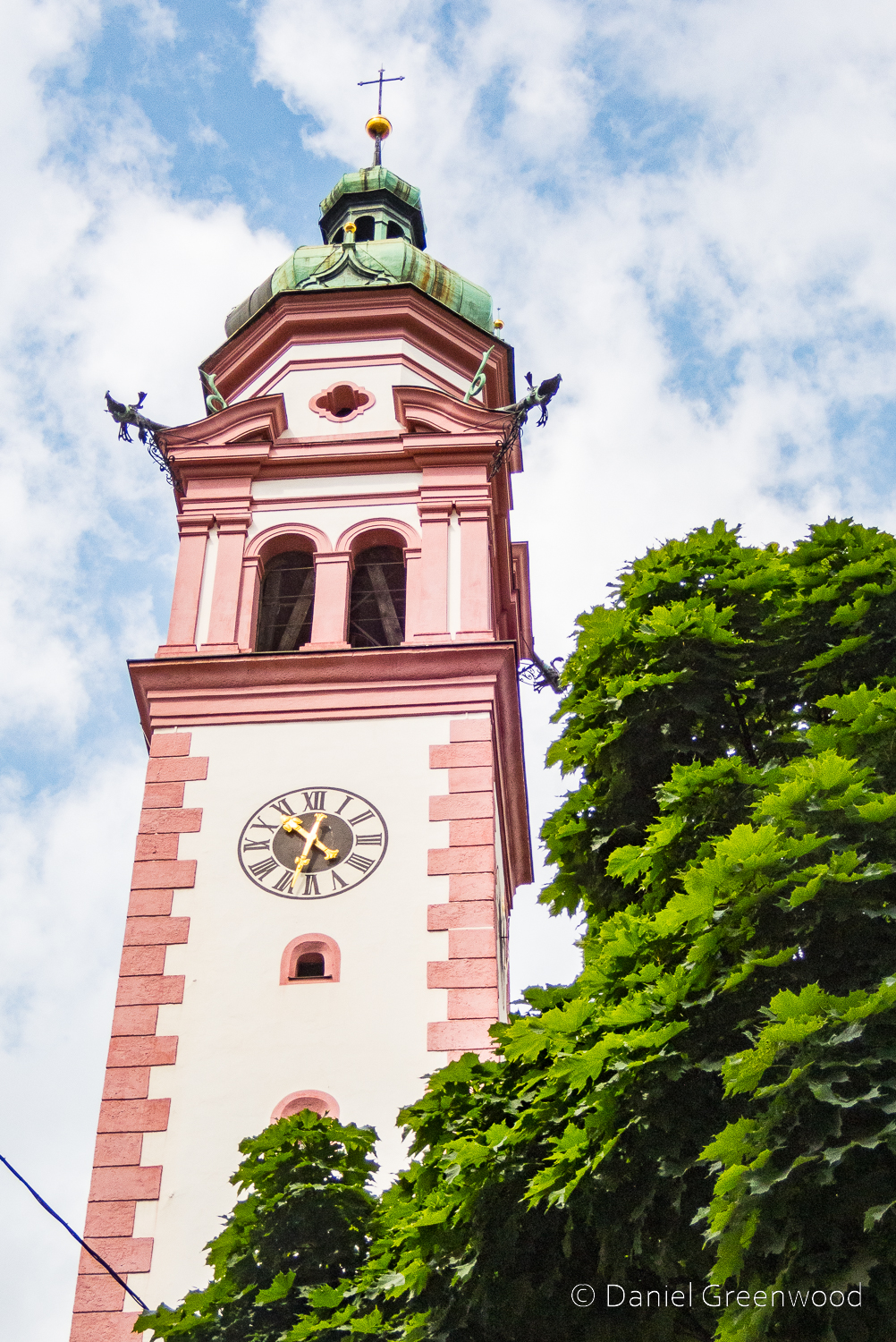
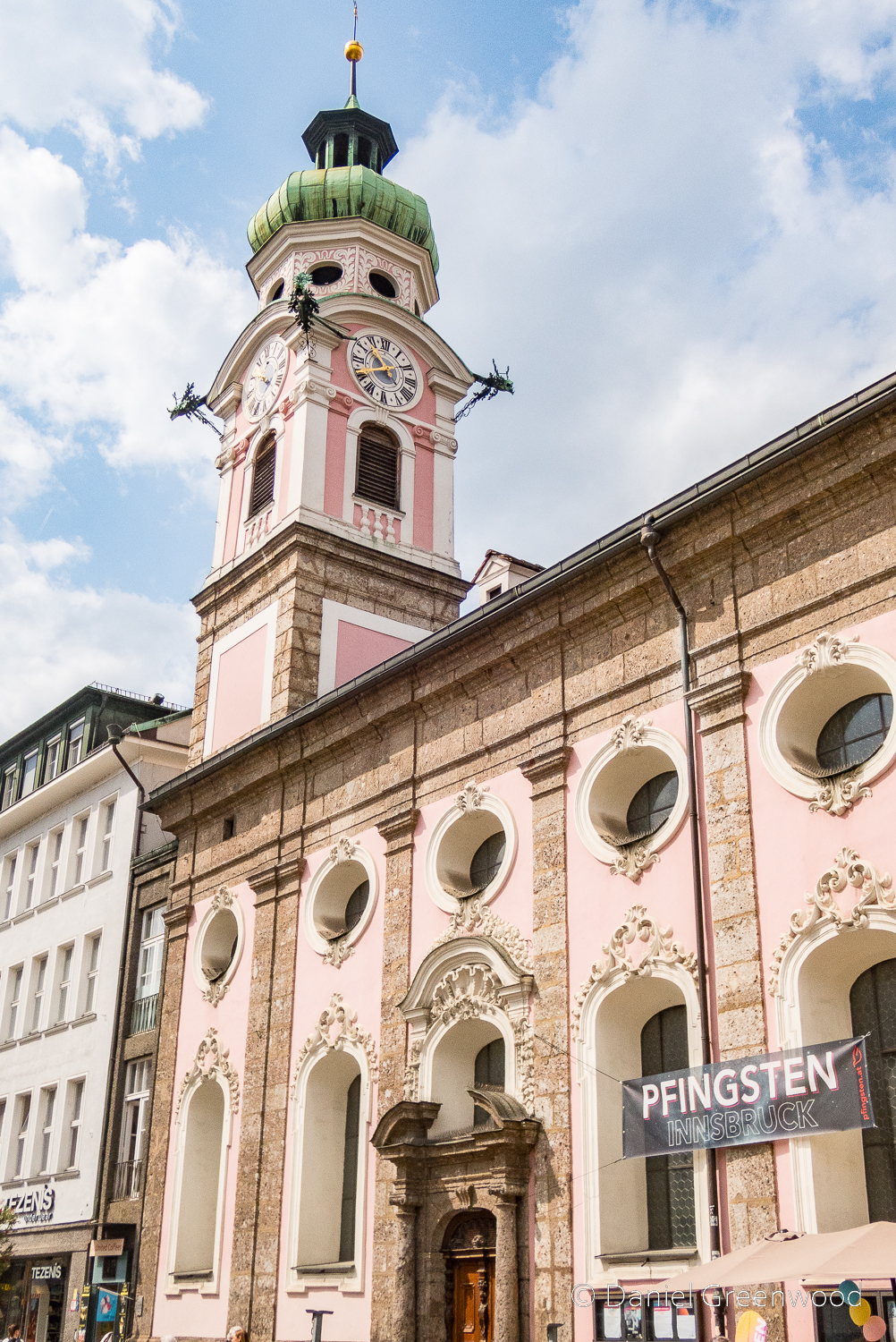
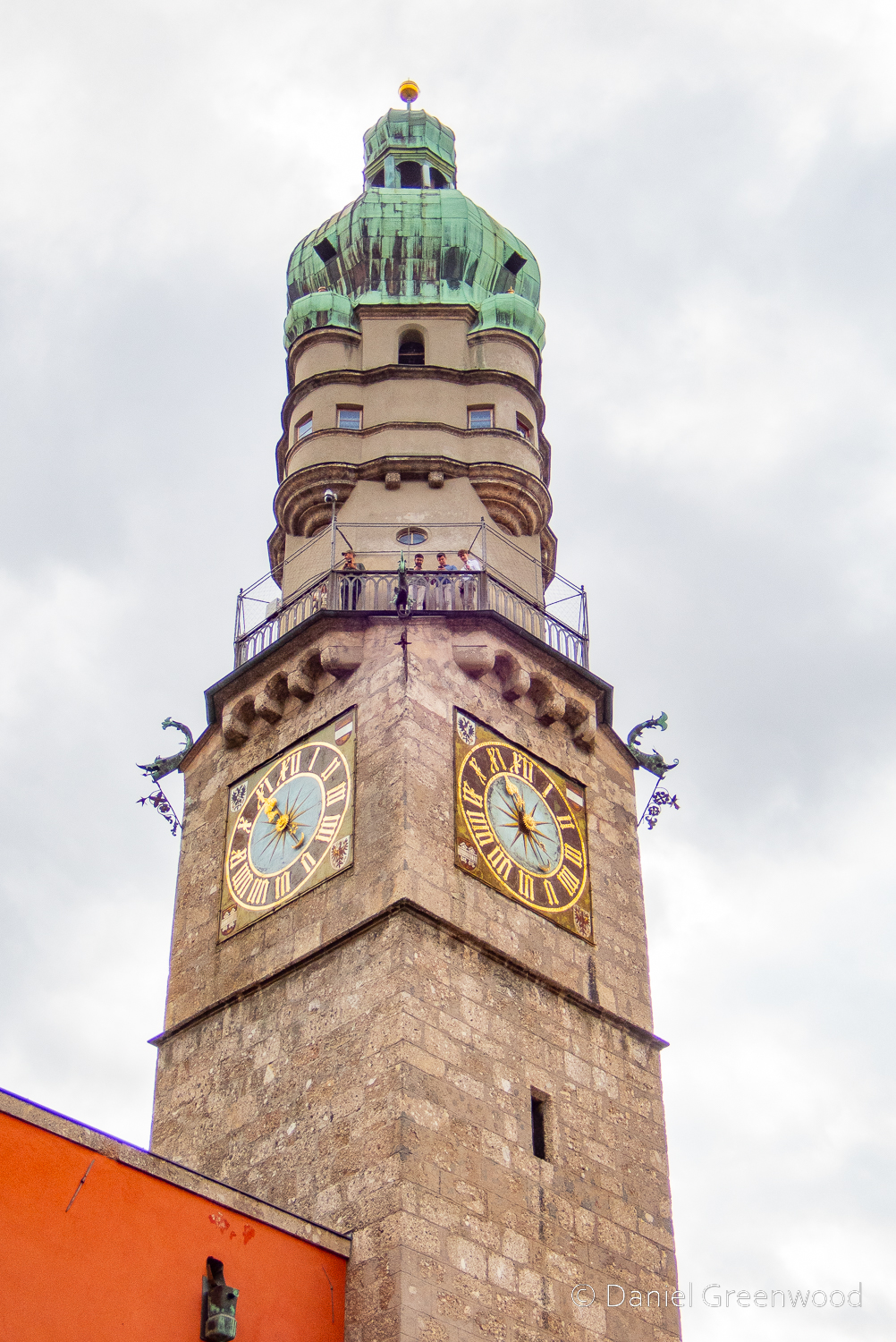
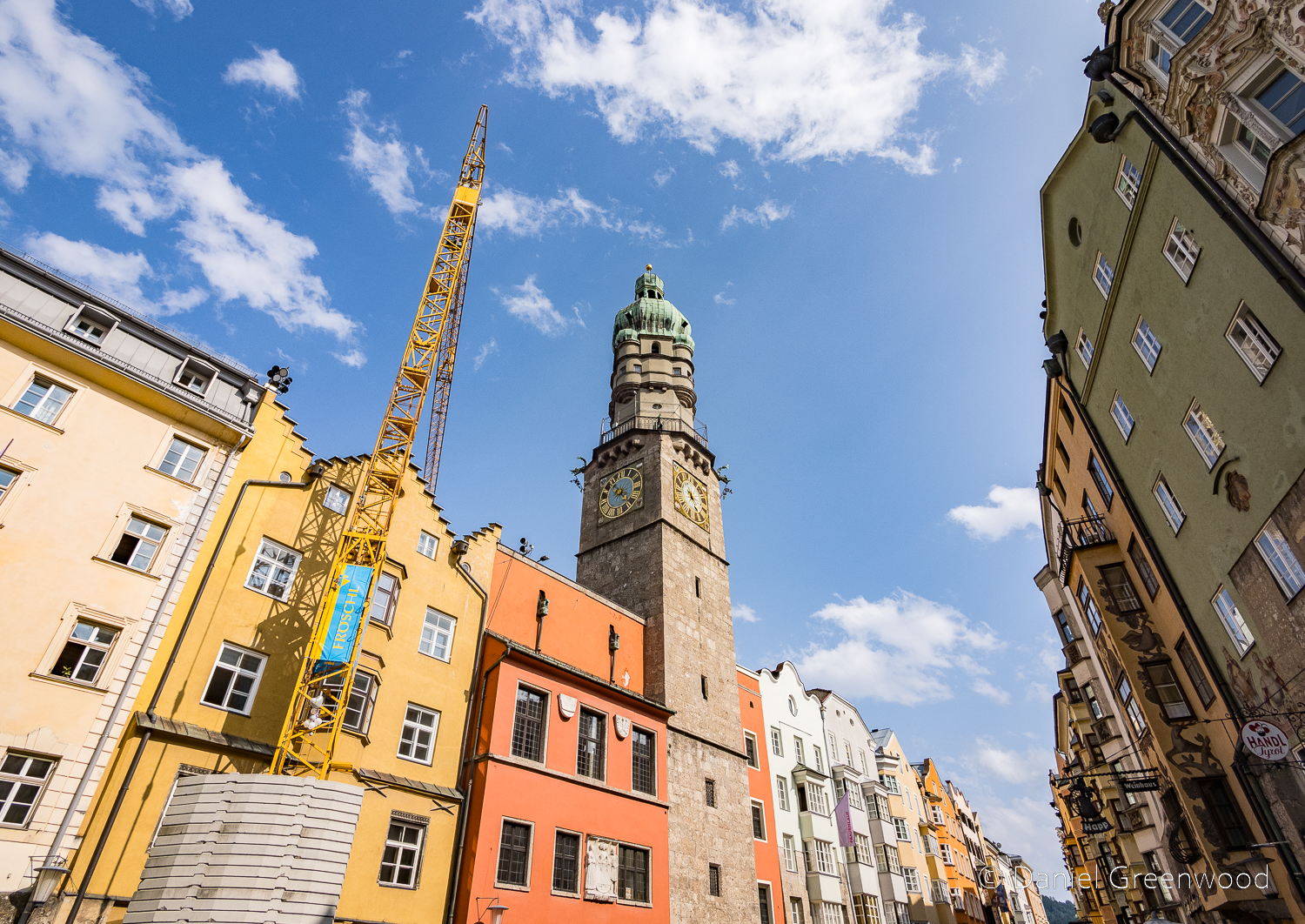
Innsbruck is a city of towers and spires. I don’t know how many were destroyed in the Second World War. As in Salzburg, I’m sure many were rebuilt. The tower seen in the last of the images above can be ascended for a small entry fee via a pair of spiral staircases. I have issues with heights, and I found this quite difficult. I was a bit ill at the time so that probably made it worse. The views from the tower are of course worth it if you can cope with the ascent.
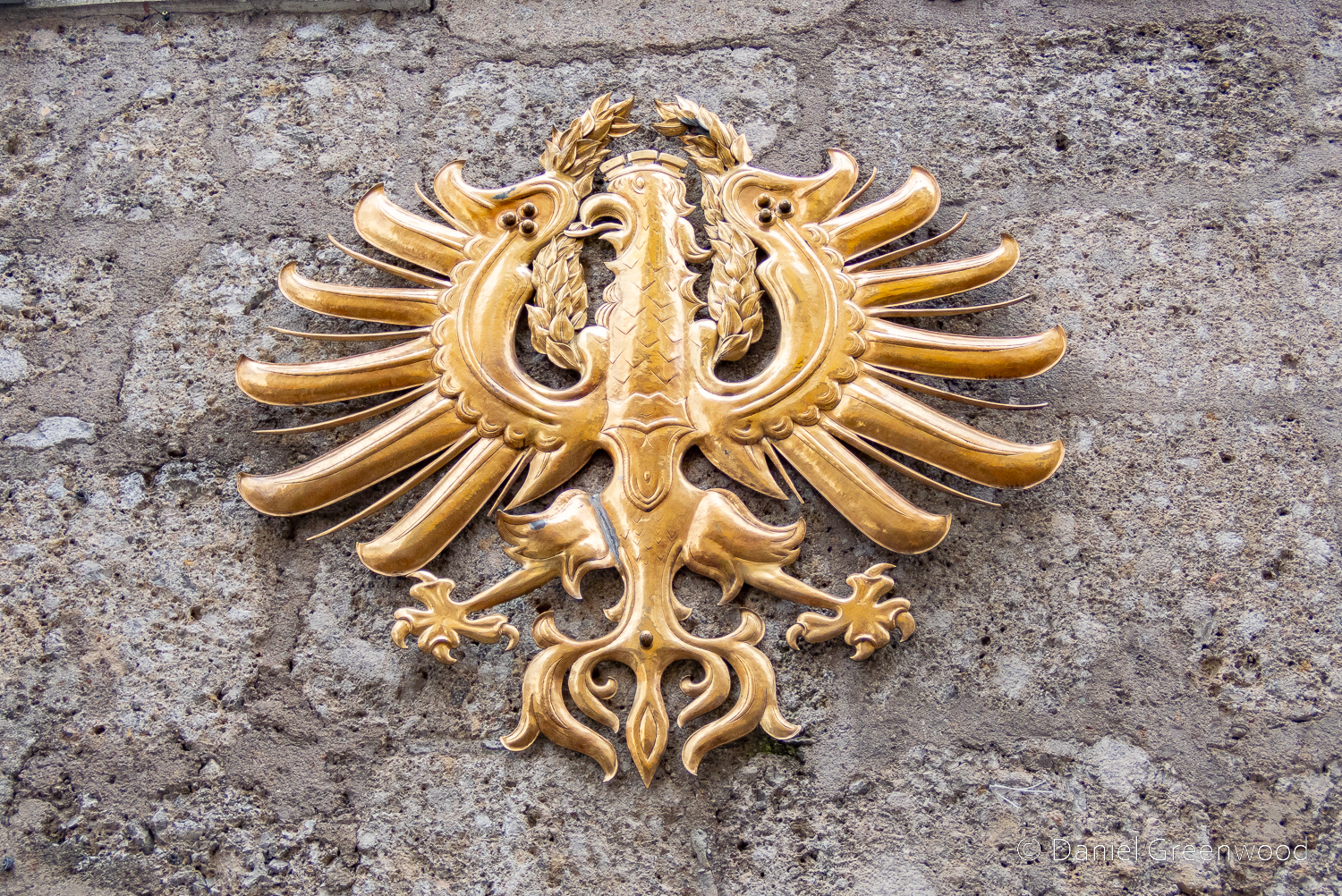
These metal workings were prevalent in the Aldstadt. They’re nice to photograph, particularly against cloud where their colours come to life. I don’t know anything about them, but they seem to be an Austrian thing, and date back several hundred years.
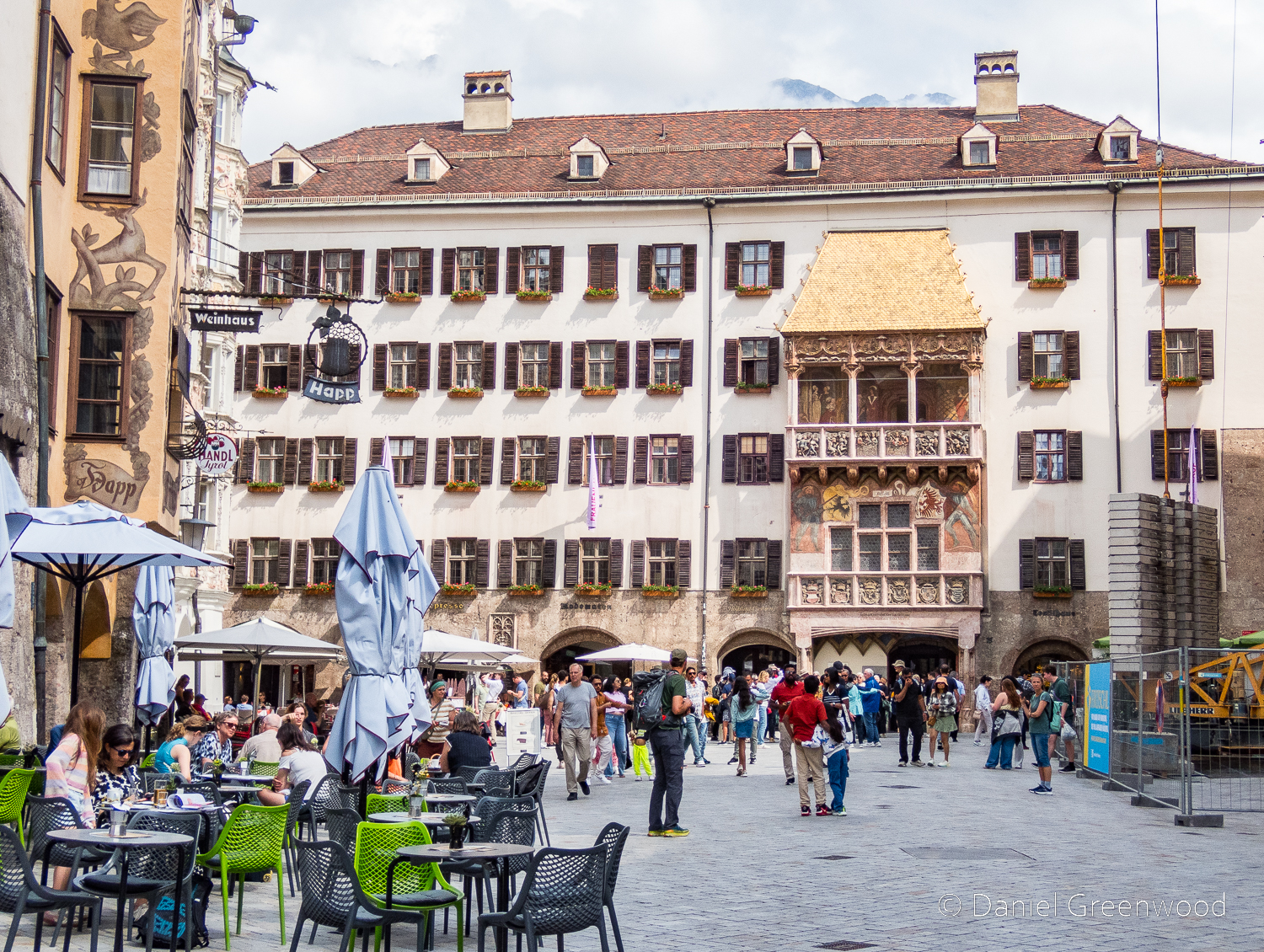
The ‘Golden Roof’ (Goldenes Dachl) was the main draw for tourists (I had read about it but wasn’t thinking of it when we found it). It was created in 1500 and was used by Habsburg royalty to purvey the scenes below.

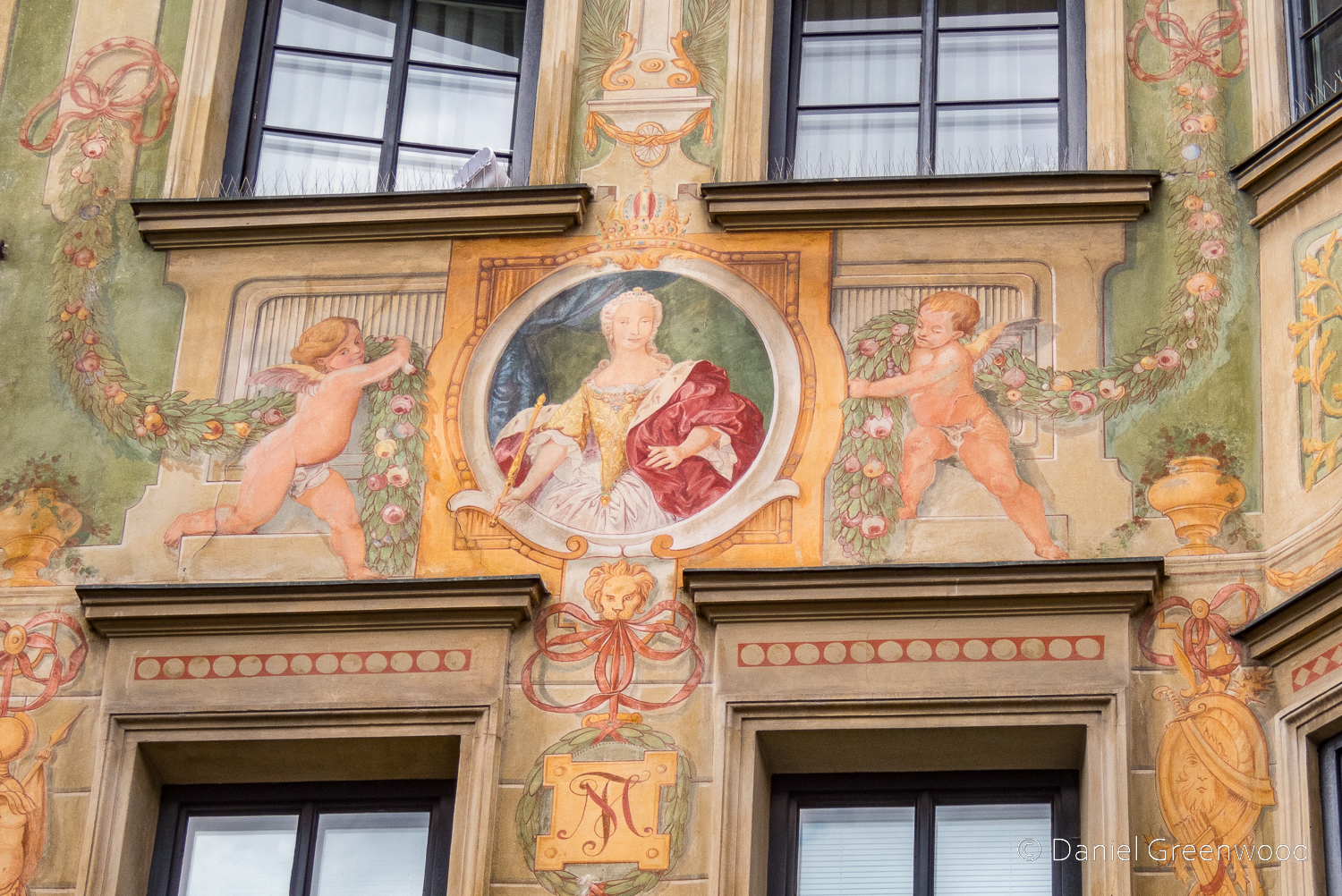
On the 700-year-old Maria Theresa Street (Maria-Theresien-Straße) you can see frescoes depicting Maria, the only female ruler of the Habsburg Empire between 1740-1780. There’s a good summary of the history of this ancient street on the Innsbruck tourism website.

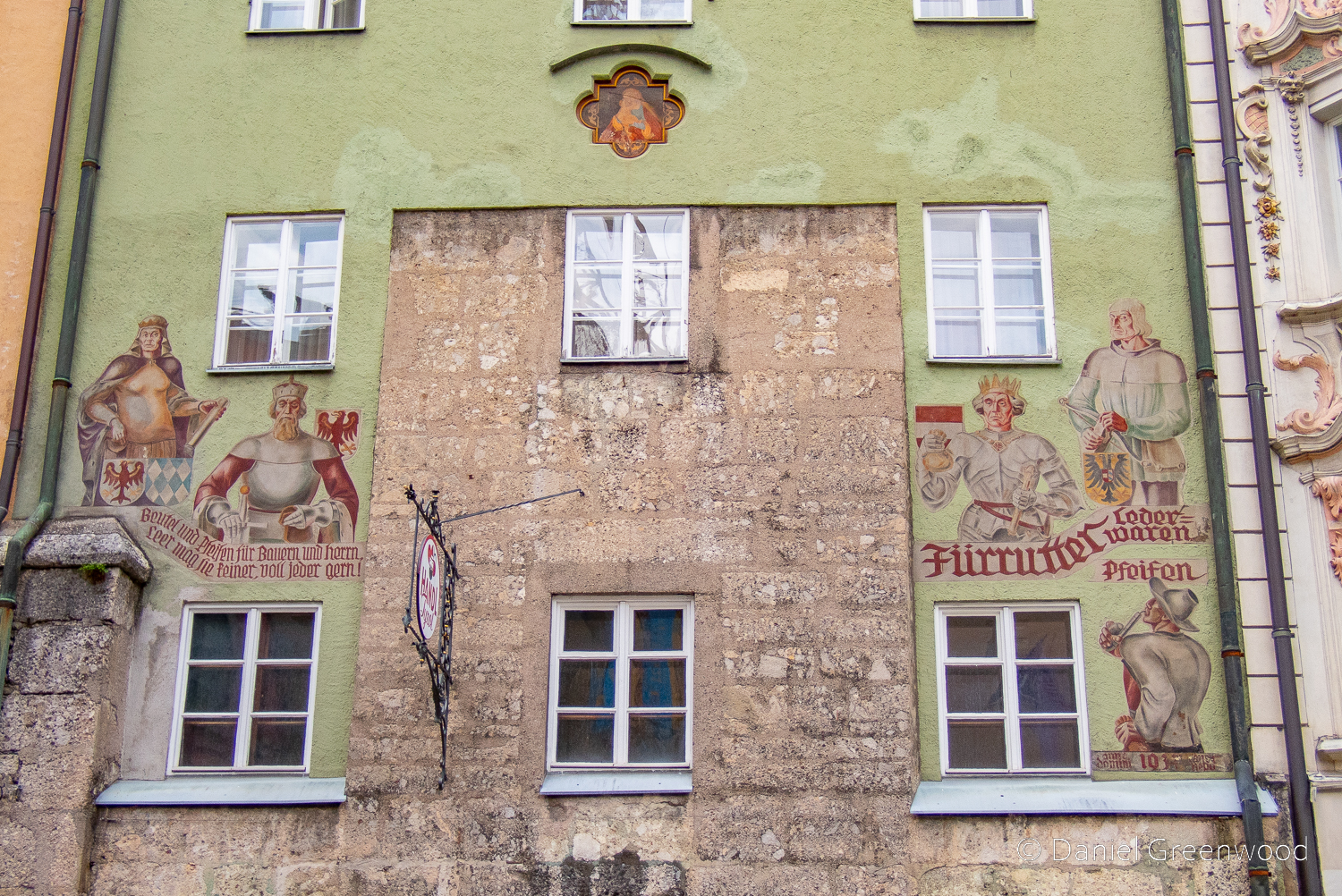
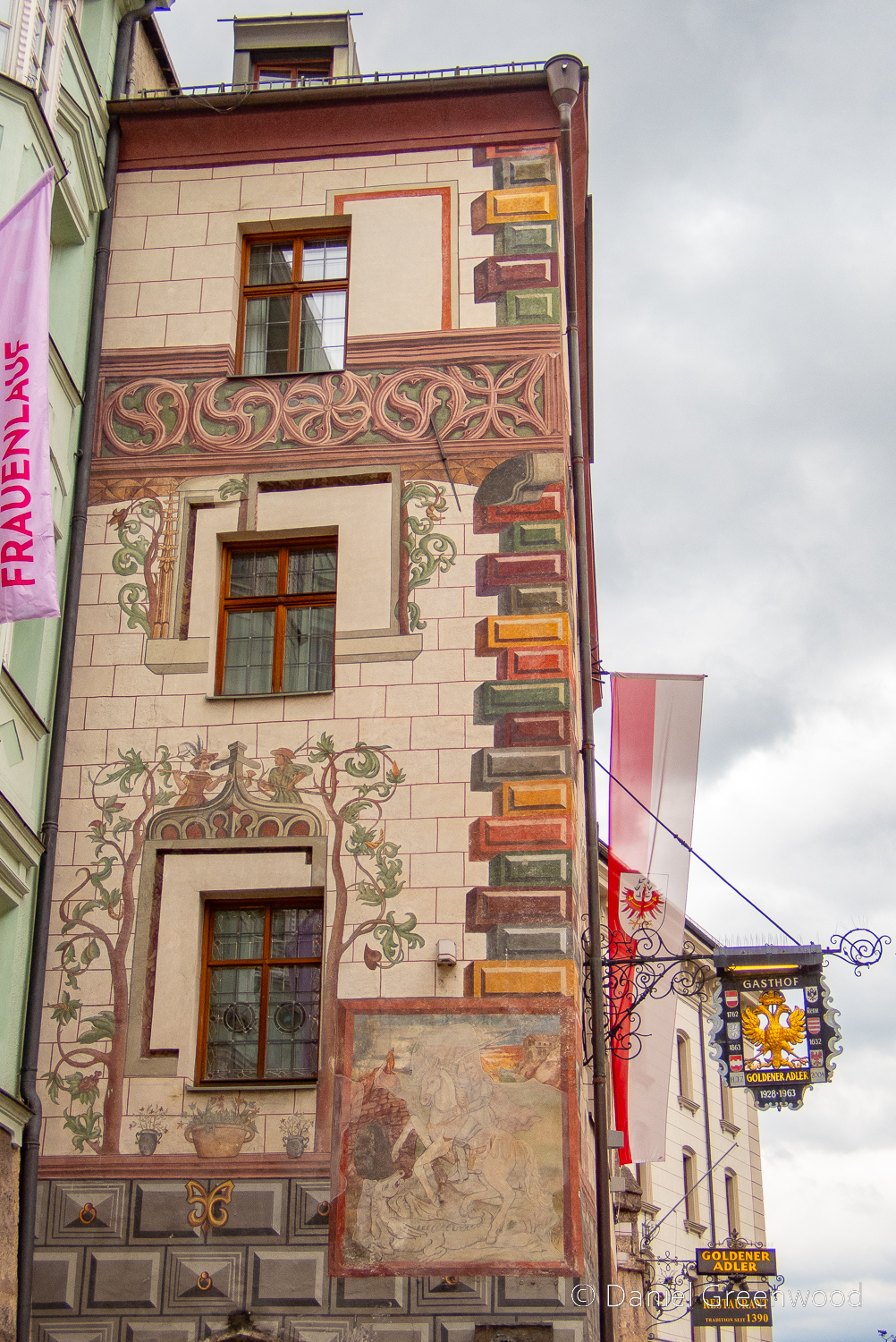
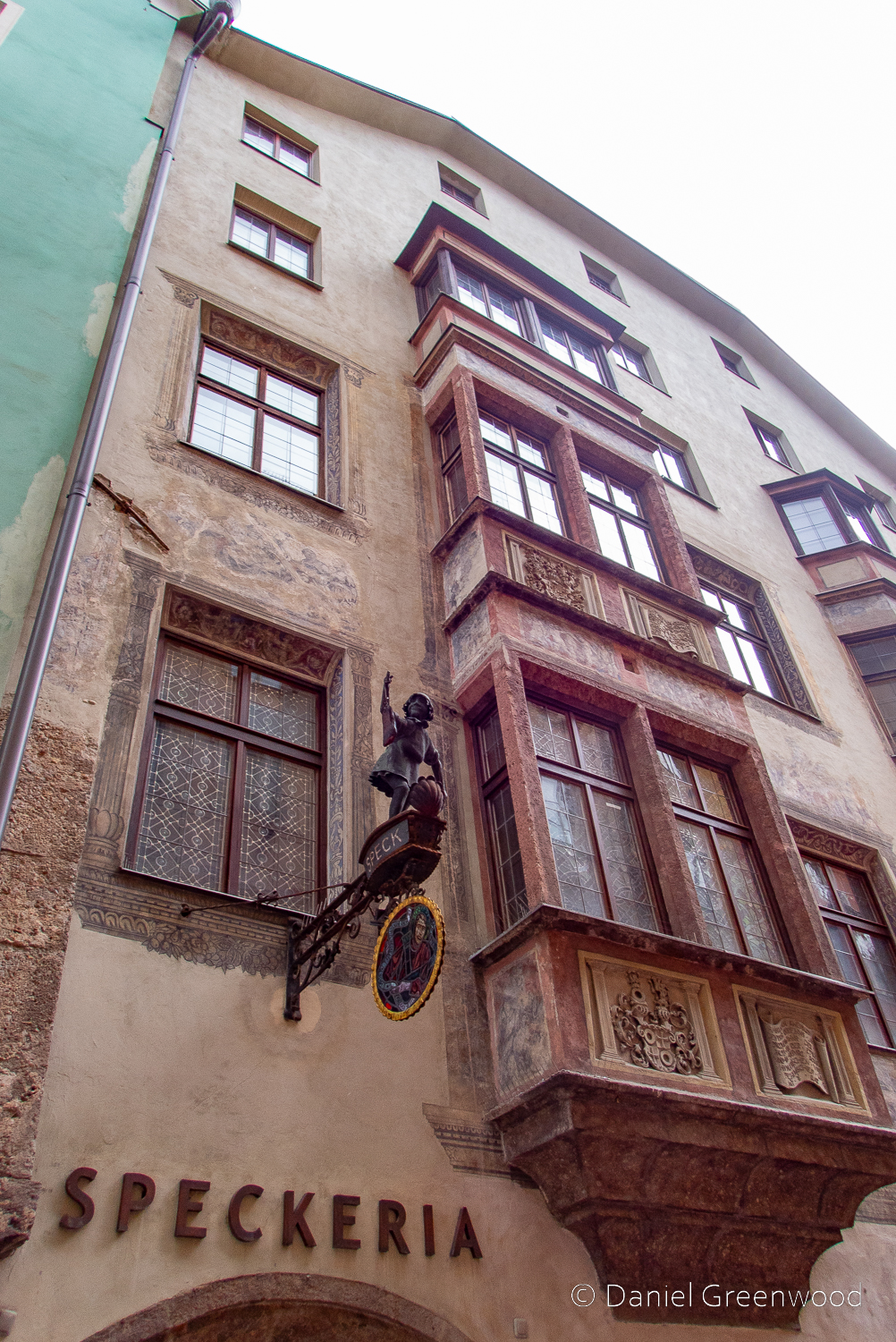
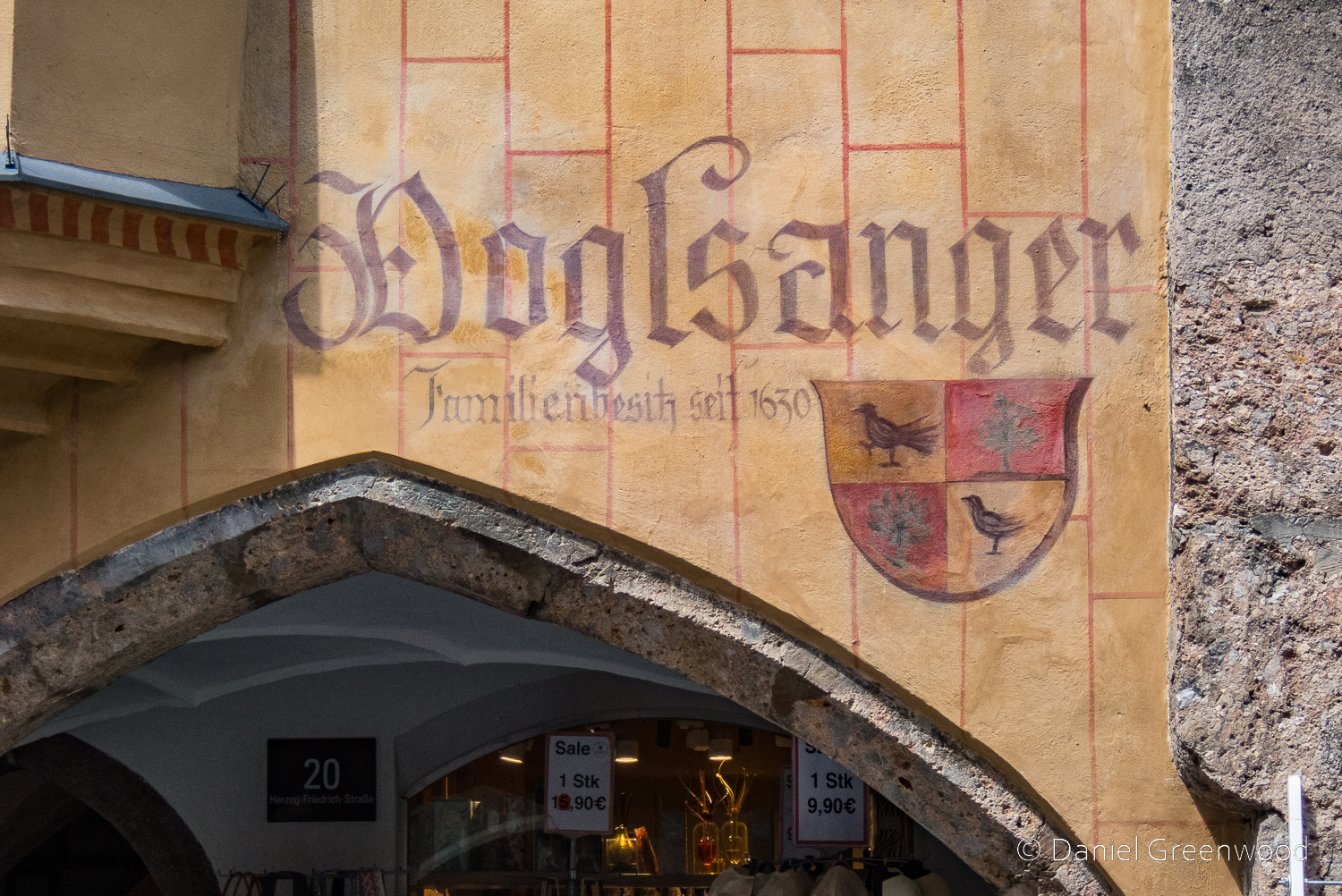
There are lots of interesting frescoes around the Aldstadt (Old Town) in Innsbruck, some originally painted as much as 400 years ago.
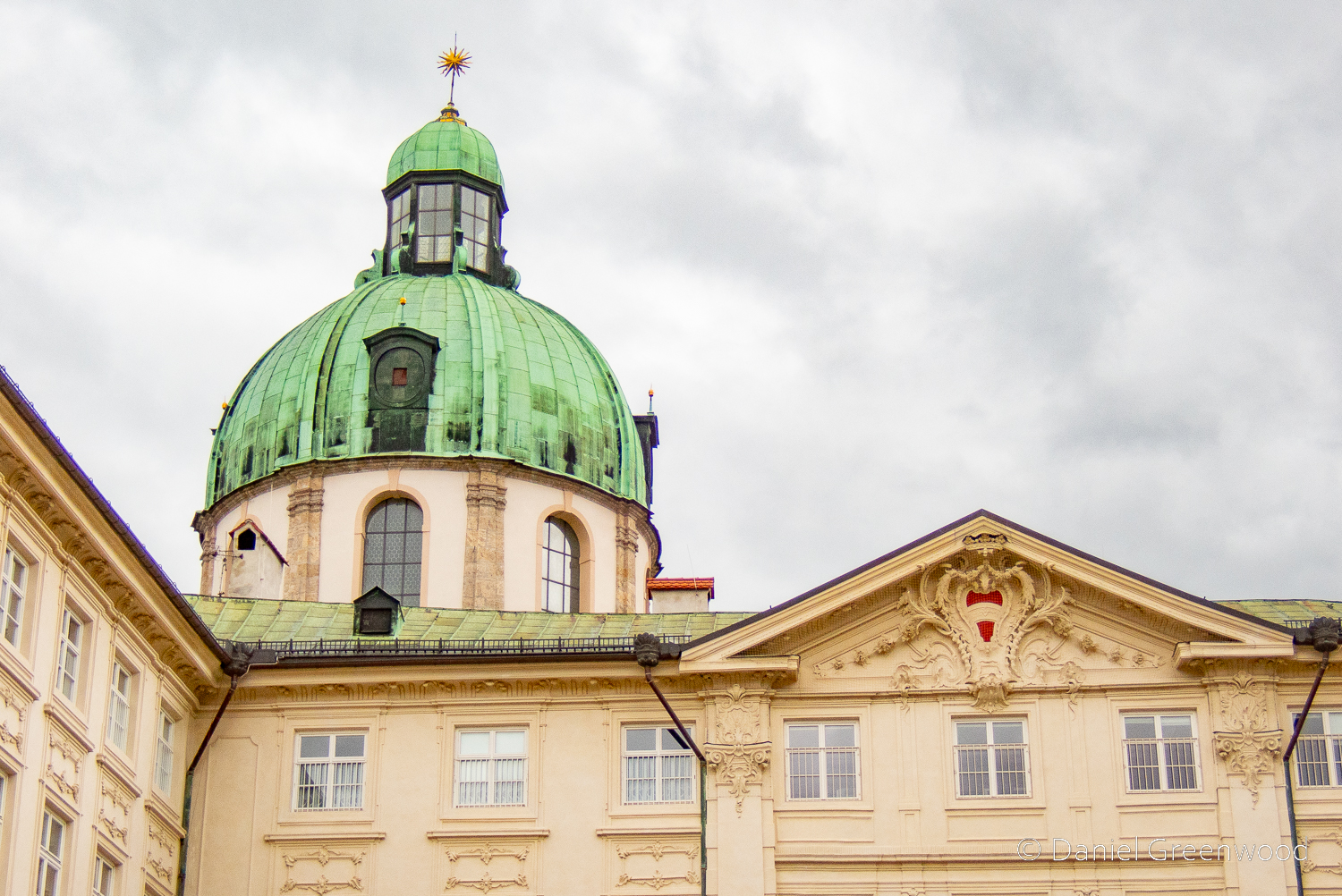
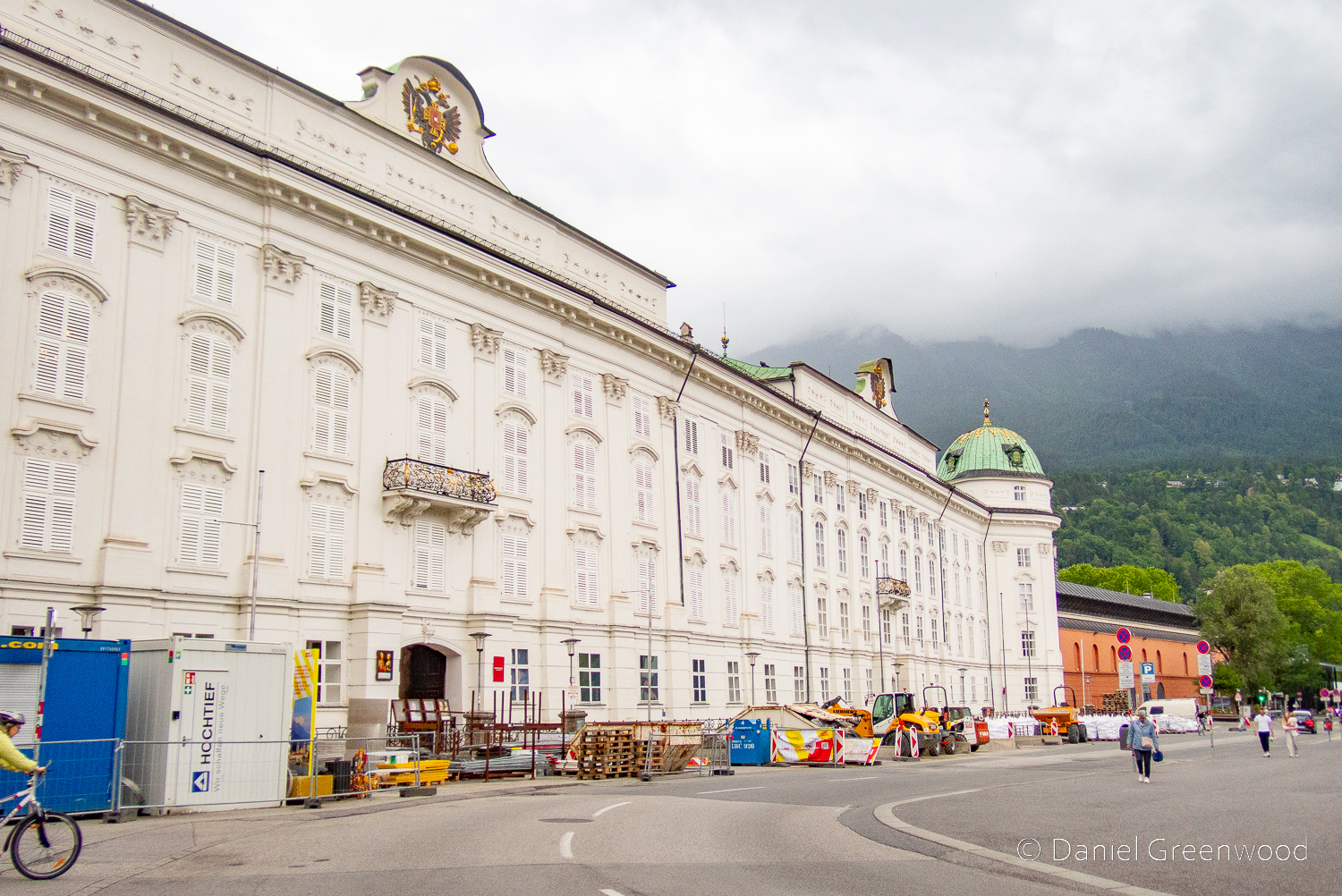
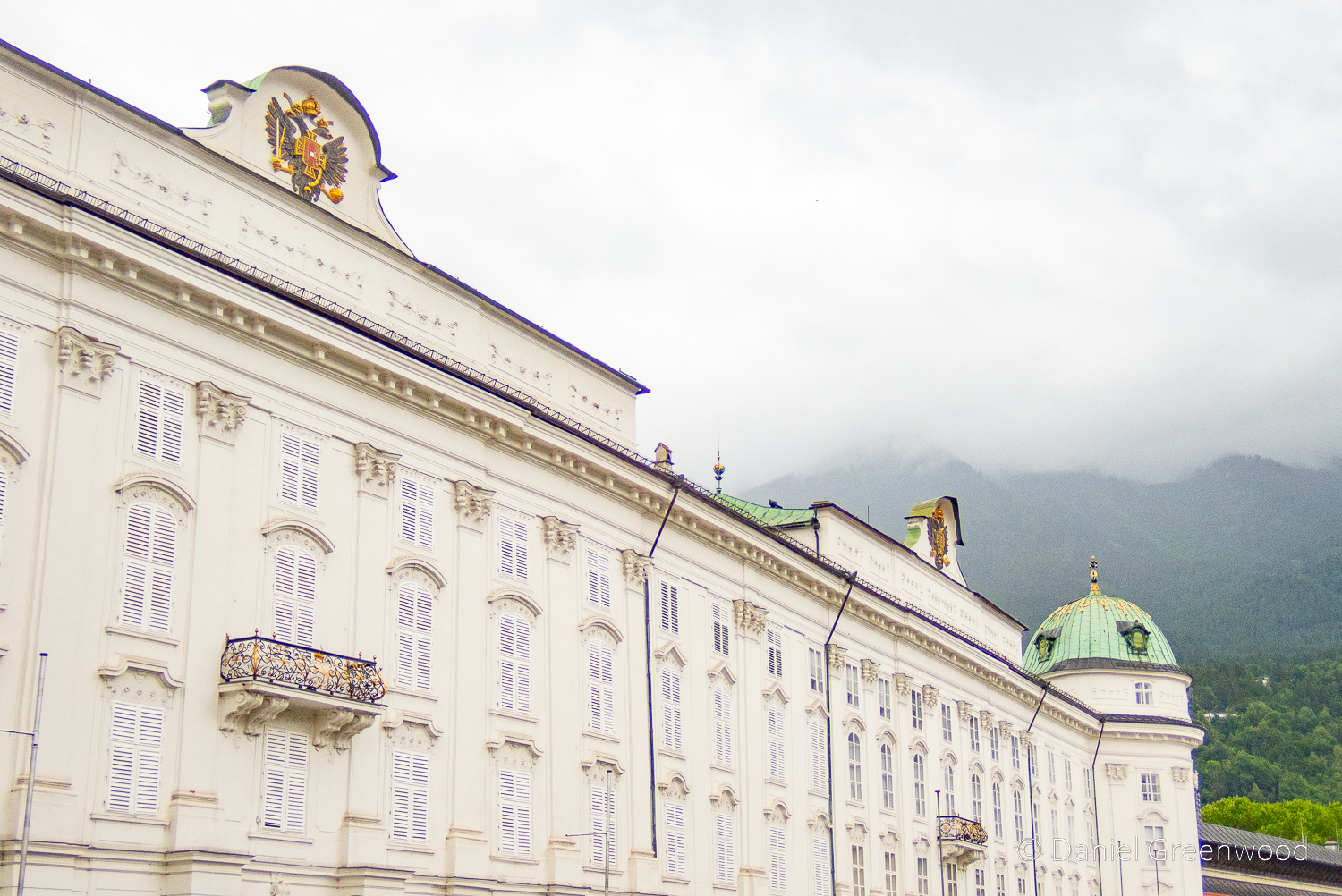
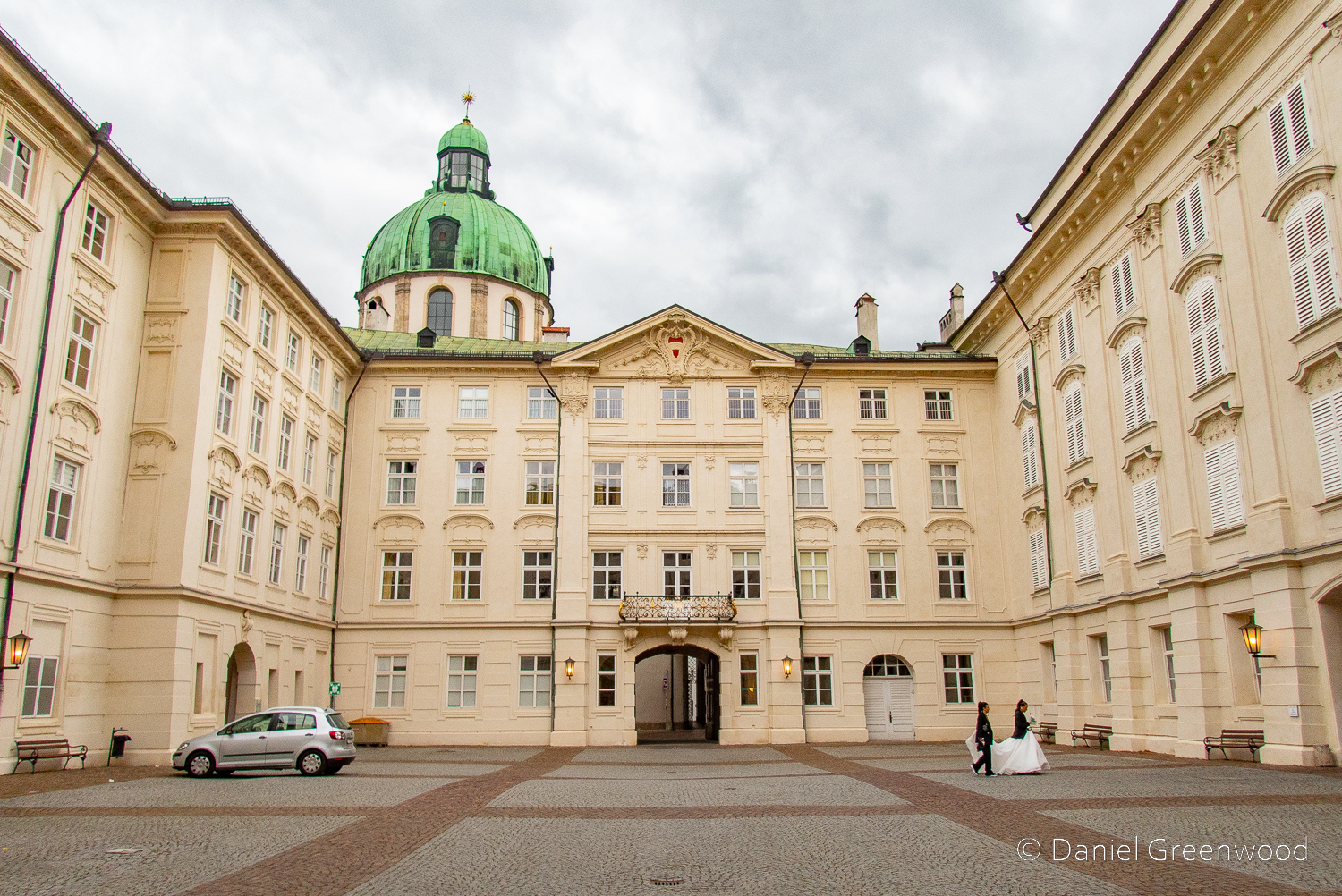
The Hofburg or Imperial Palace encloses the Aldstadt. Dating to the 1400s, it is considered one of the three most important Austrian buildings (according to Wikipedia). There were a number of weddings happening when we arrived on the Saturday morning. In the final image of the set here you can see one woman in her wedding dress being escorted somewhere – presumably before the ceremony.
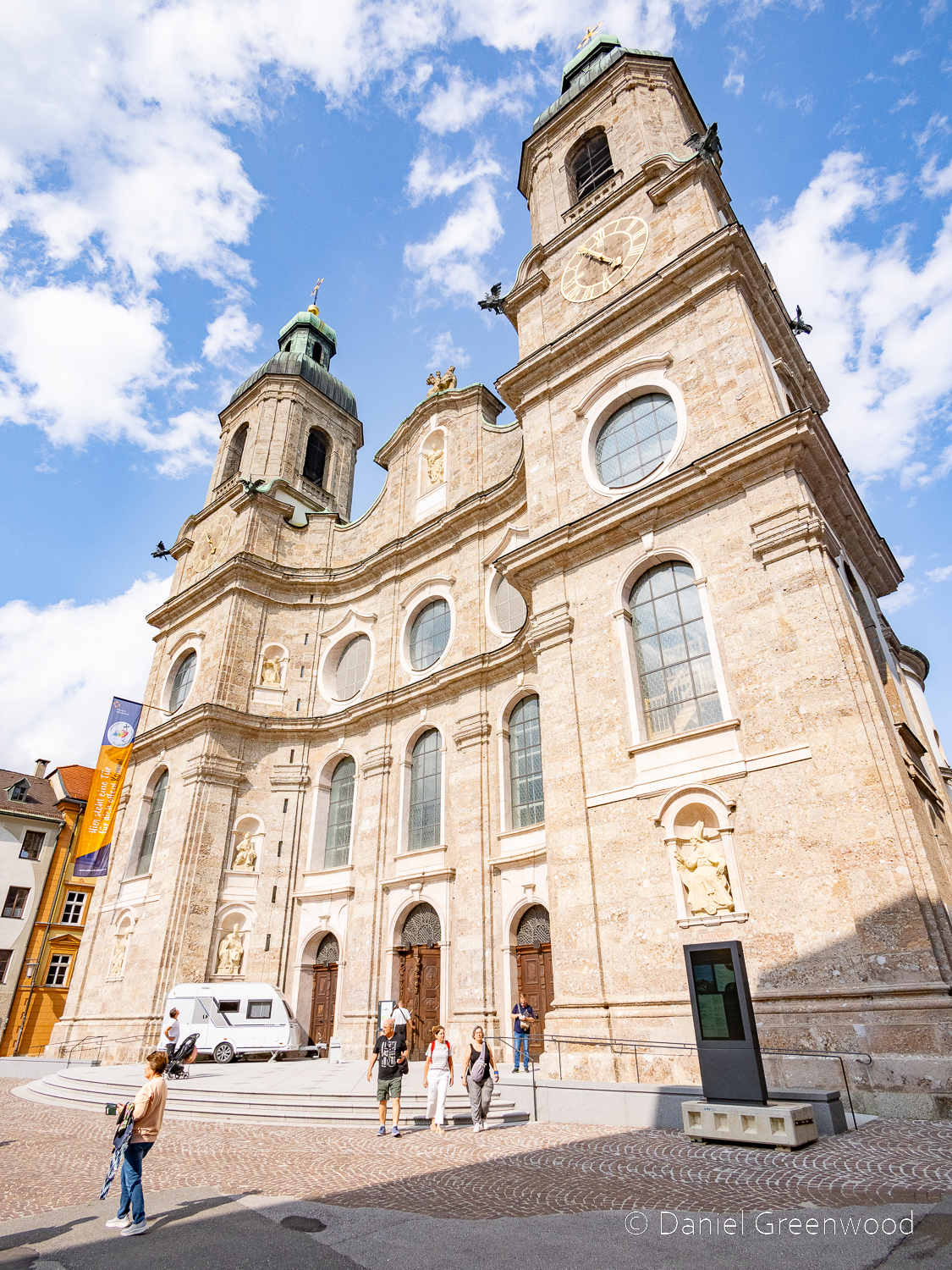
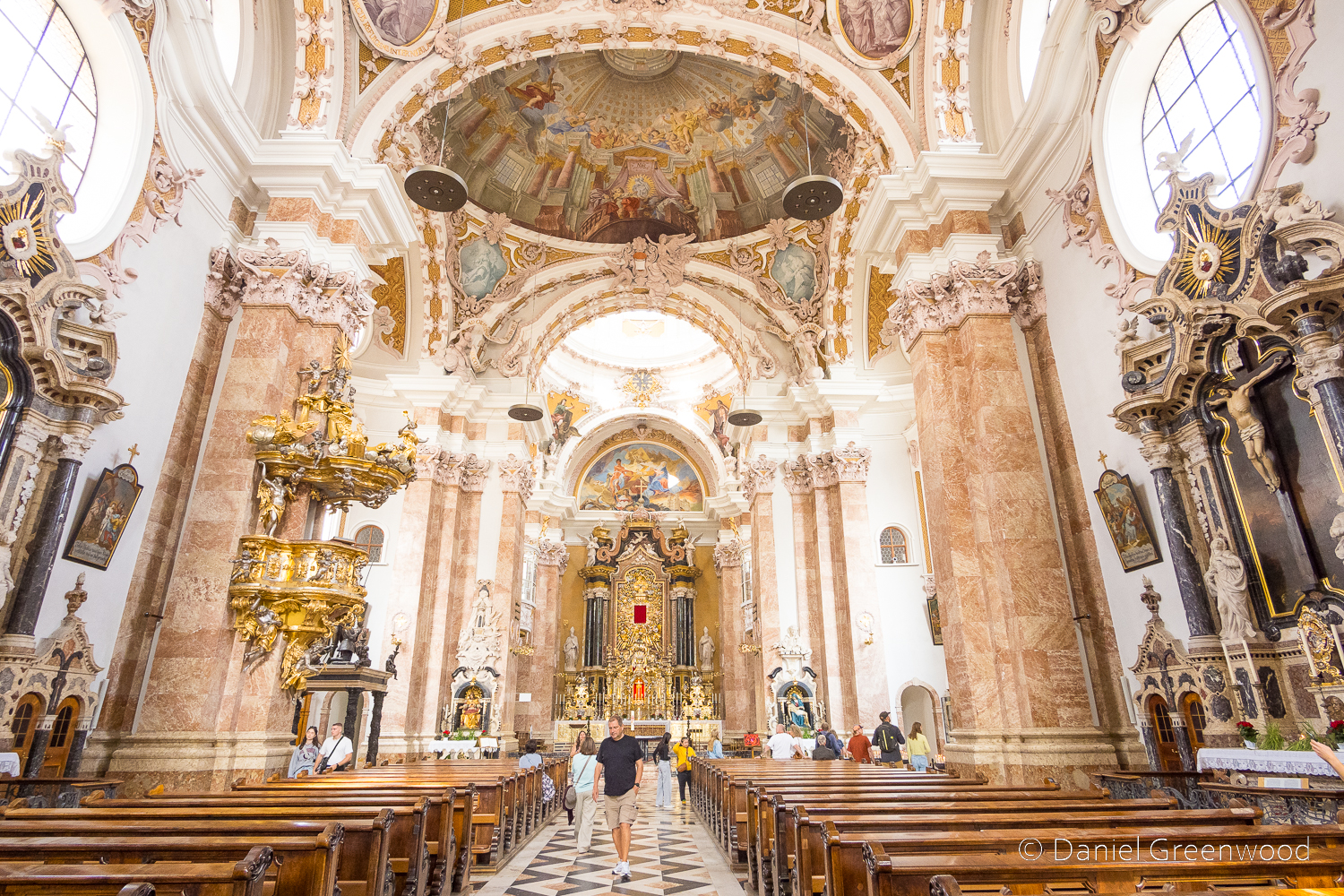
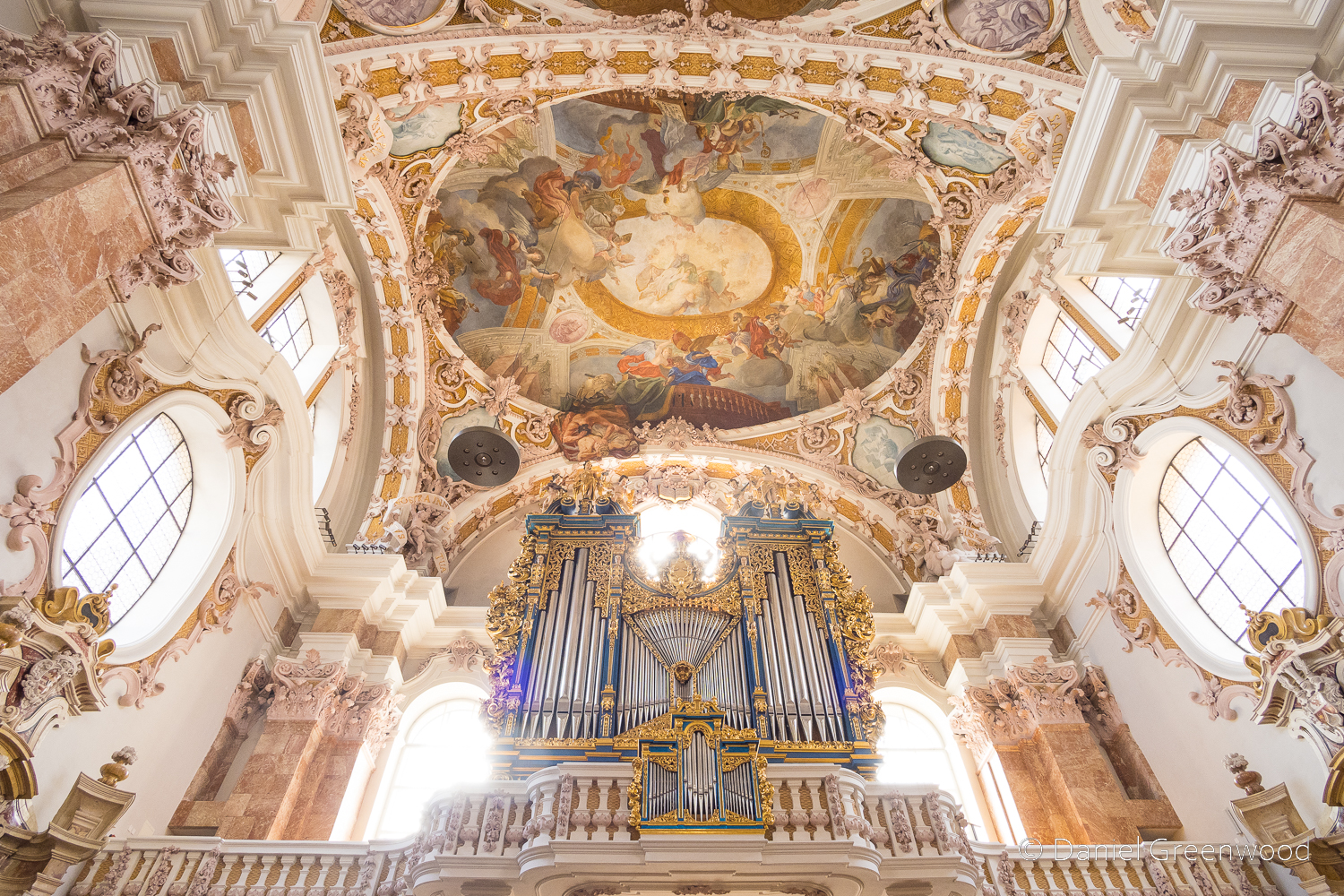
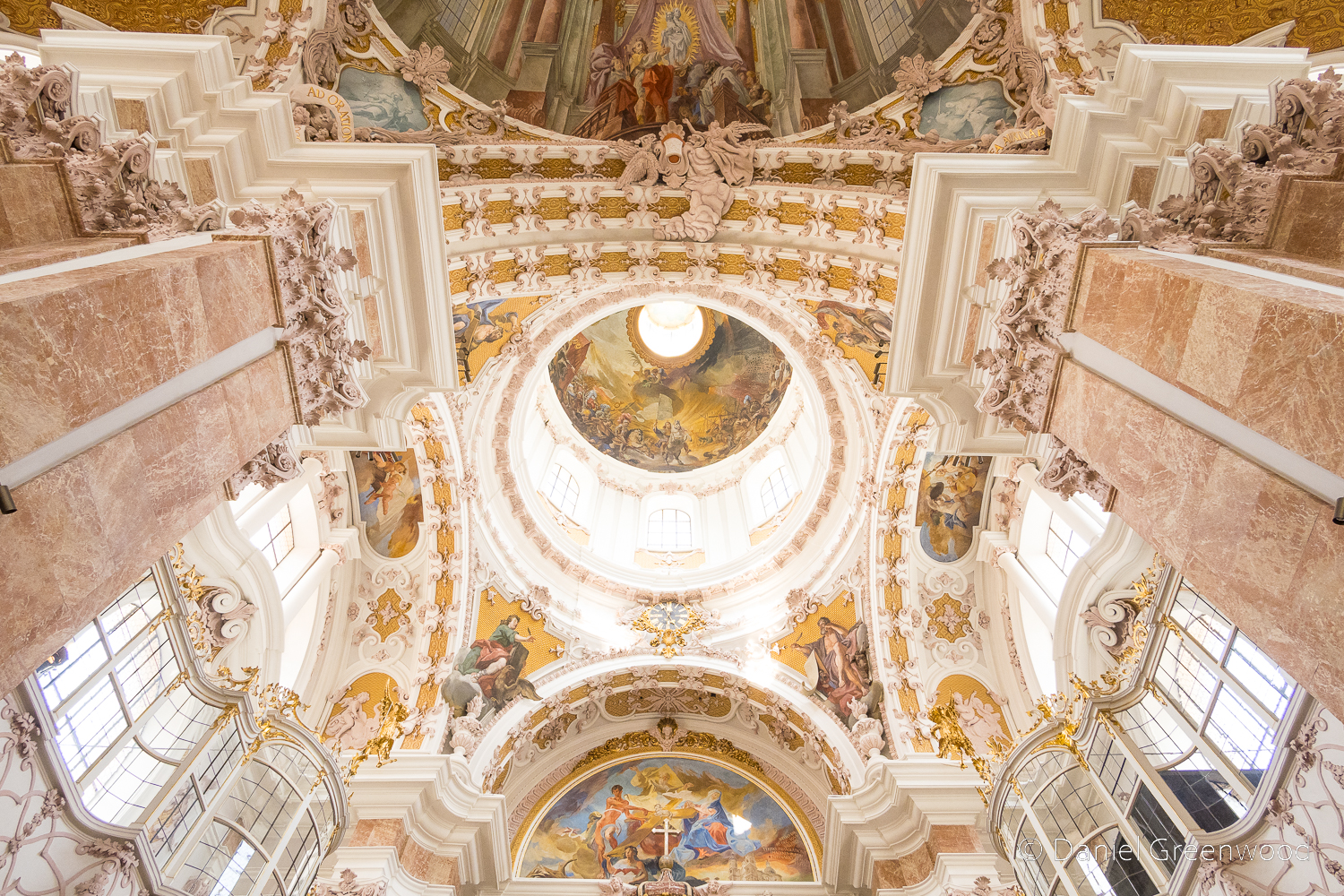
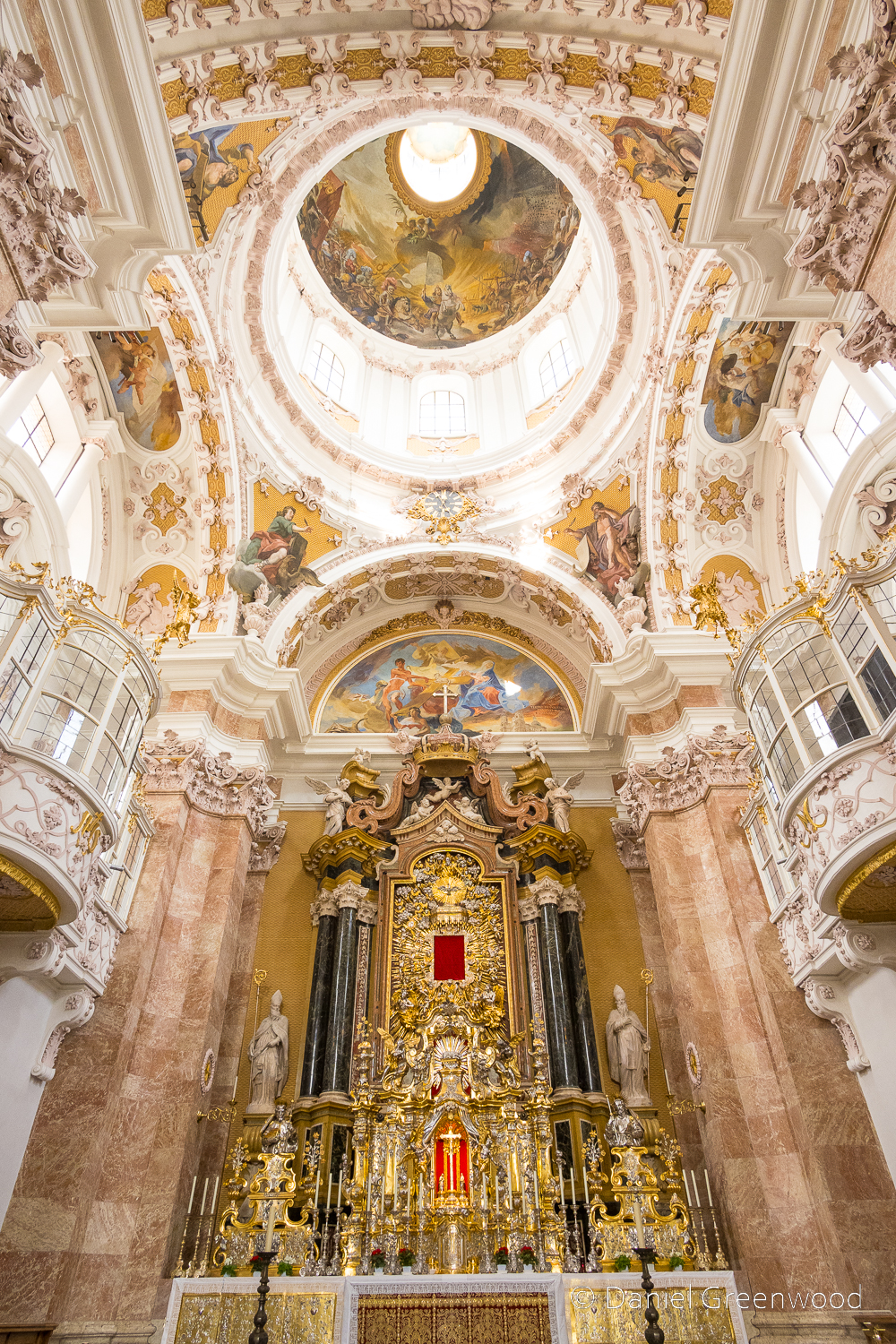
Innsbruck Cathedral (Dom zu St. Jakob) sits close to the Inn. These were taken with my 9mm f1.7 wide angle lens, which is a thing of beauty.

Now it’s time to head into the hills (by cable car)!
Above Innsbruck

You can travel to the ‘Top of Innsbruck‘ via the Nordkette cable car. It’s a good option for high level walking and to get a sense of the grandeur of the Alps around Innsbruck.
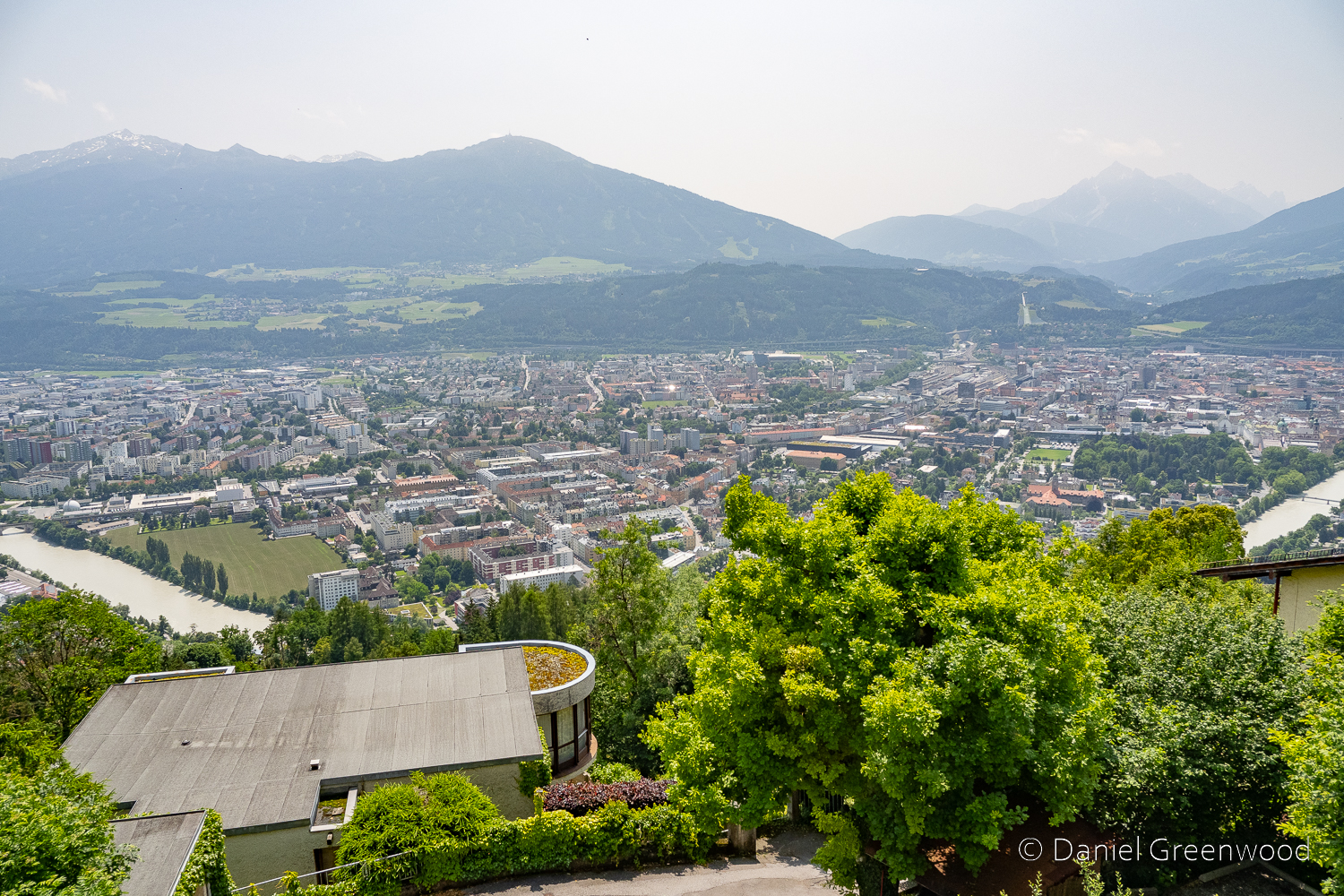
The first cable car is the Hungerburgbahn which drops you at Hungerburg – and no, that’s not a marketing ploy for a restaurant. Here you change for a cable car to take you up to Seegrube.

It was mid-June and the views from Seegrube were dimmed by the thick haze that rested across the mountains. I have edited these photos to draw out the shapes and colours of the peaks as best I can without ruining them.
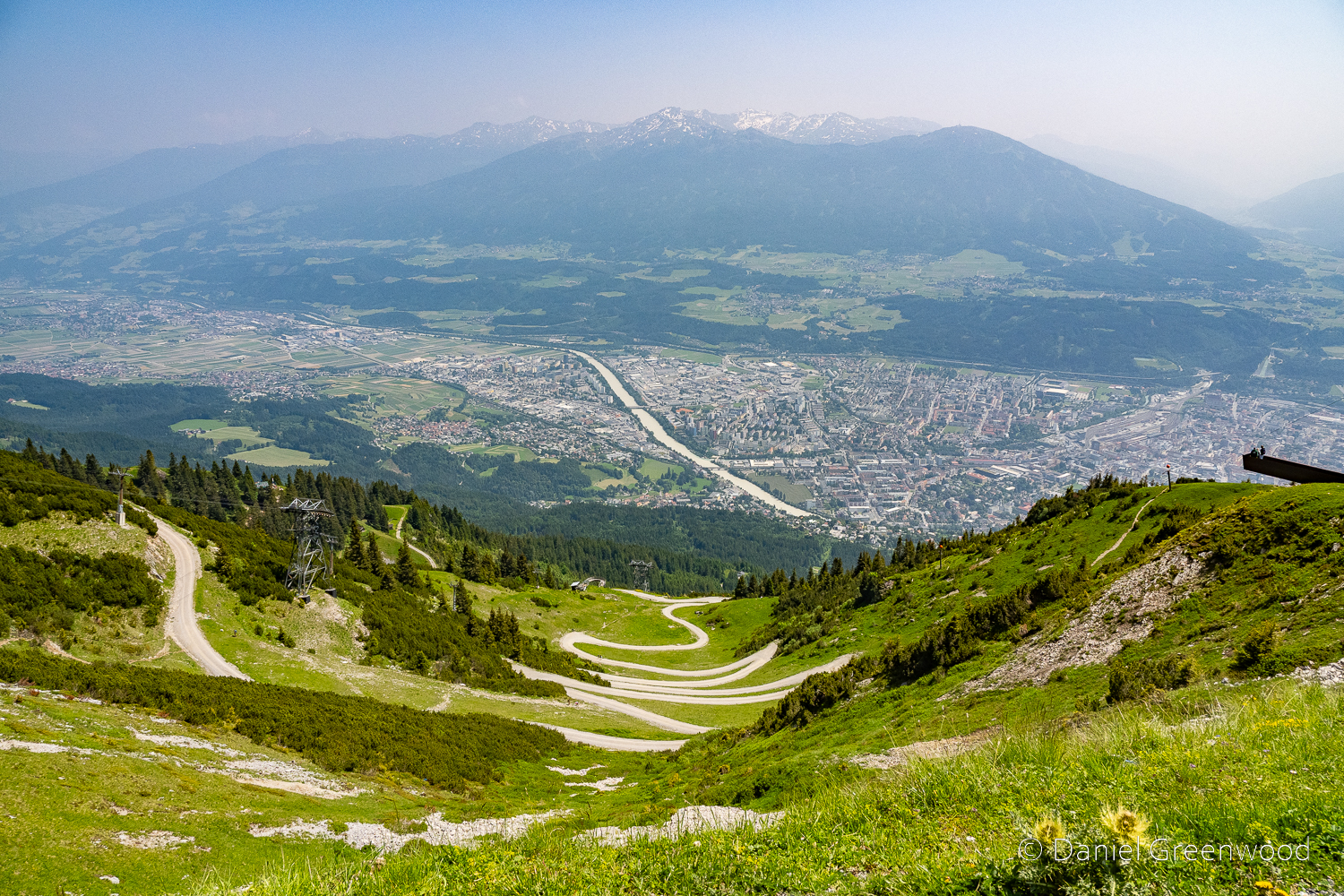
The road winds down to Hungerburg. In the middle-distance the Inn cuts through the city.

This is looking south towards the Italian Alps. Brutal warfare took place here between the Austro-Hungarian/German army, and newly-founded Italian army in the First World War. I didn’t know anything about this element of WWI (known as the White War) until my uncle told me about it. It was only after visiting Innsbruck that I realised the setting for the fighting was not far from here. Over 150,000 soldiers died in those battles, mostly due to disease or the extreme cold.
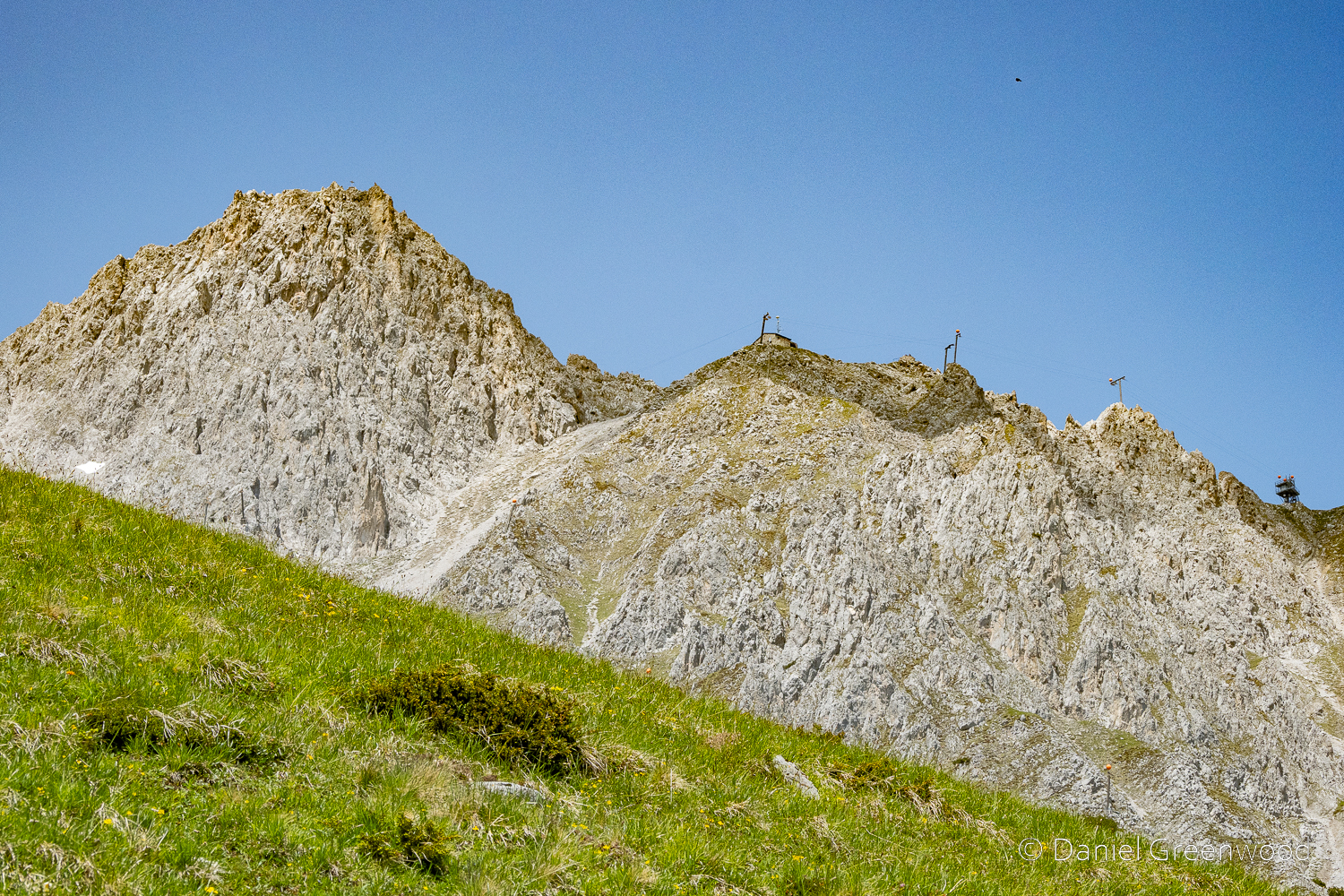
From Seegrube you can take a final cable car (not absolutely final!) to Hafelekarspitze (2,256m at the point of stepping off the cable car).
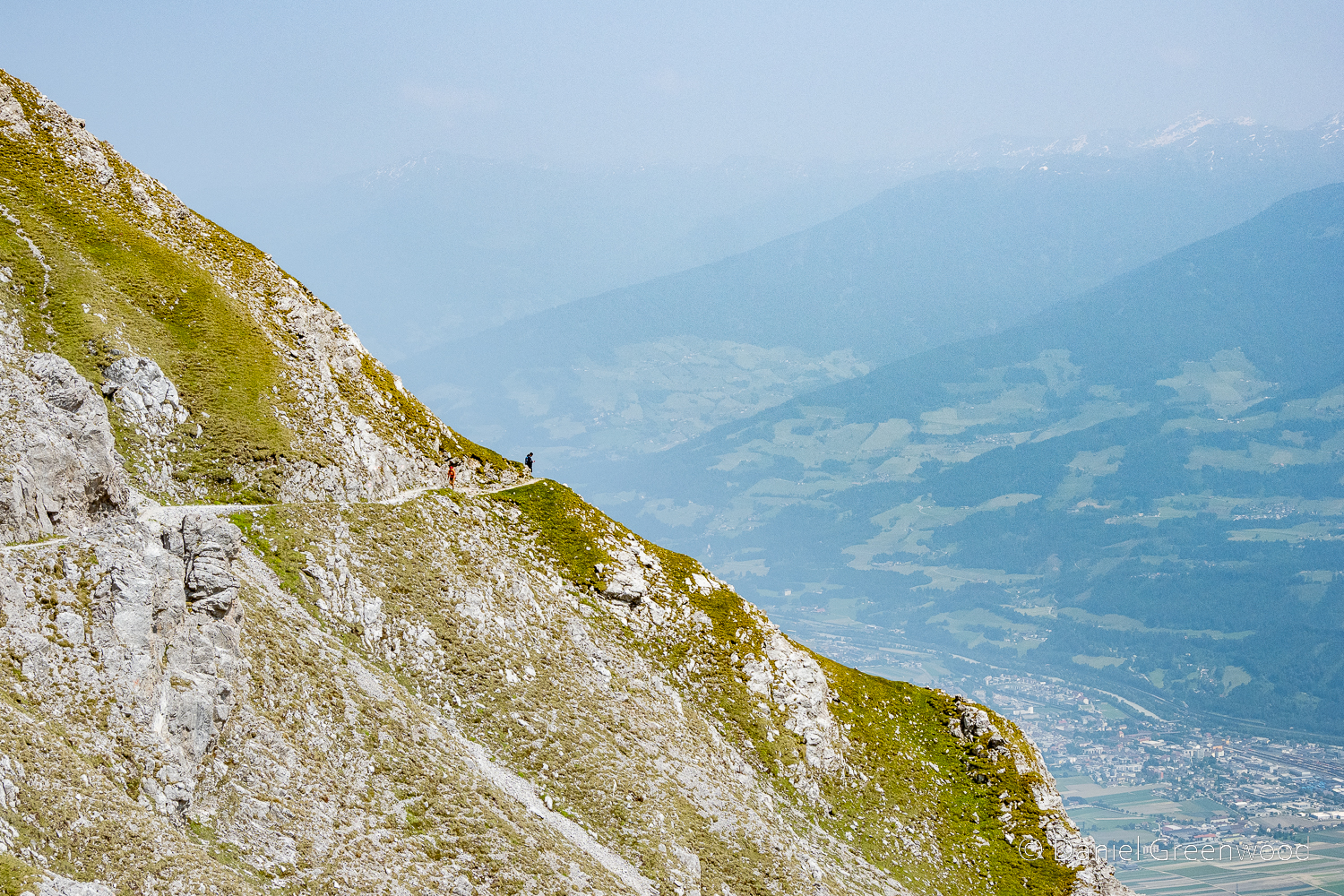
There are plenty of paths to take.

Looking back down from the Hafelekarspitze terminus. Unfortunately I wasn’t well enough to crouch down for any macro photos of the alpine plants, but there weren’t actually that many here because of the erosion.

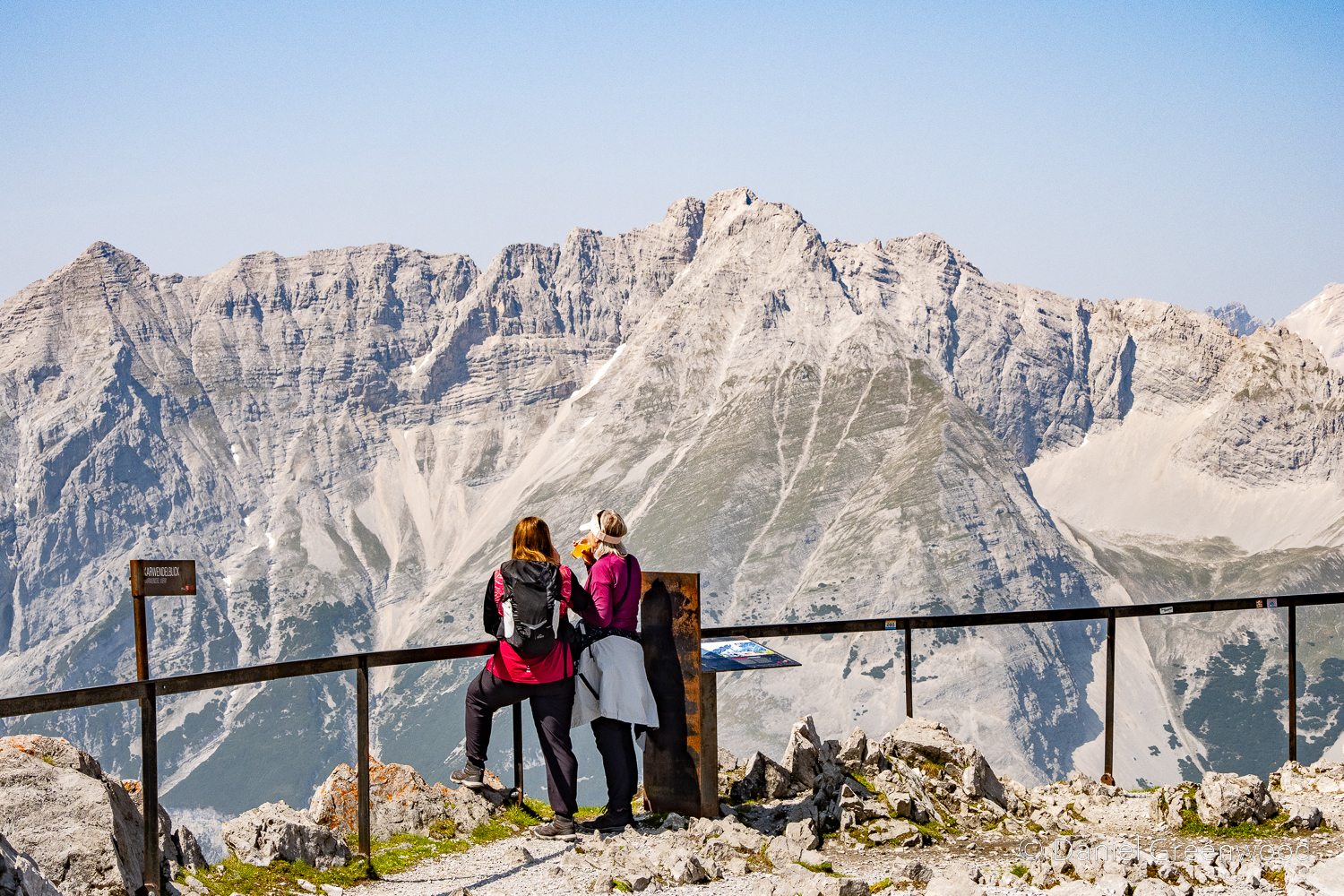
Heading over a mound (sounds like a terrible understatement) you arrive at breathtaking views into the Alps. The sudden rearing up of these vast rocky peaks almost knocked me sideways. The cable car fees are worth it for these views.

Some snow was still lingering among the clefts in the limestone.
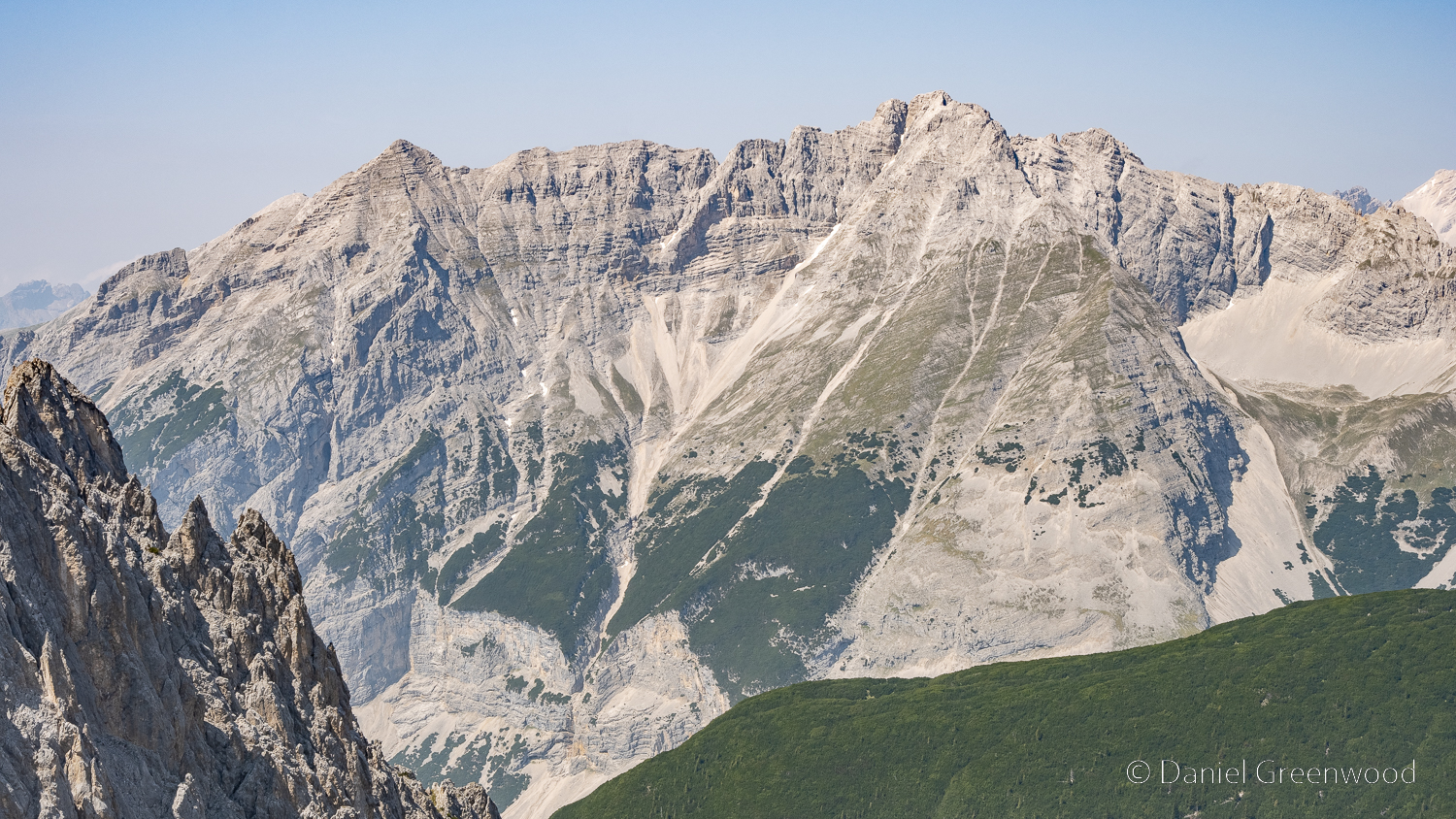
I love the streaks in the vegetation where water finds its quickest way down of the tops of the peaks. And then there’s just a random chunk of woodland there like the arm of a velvet green divan.
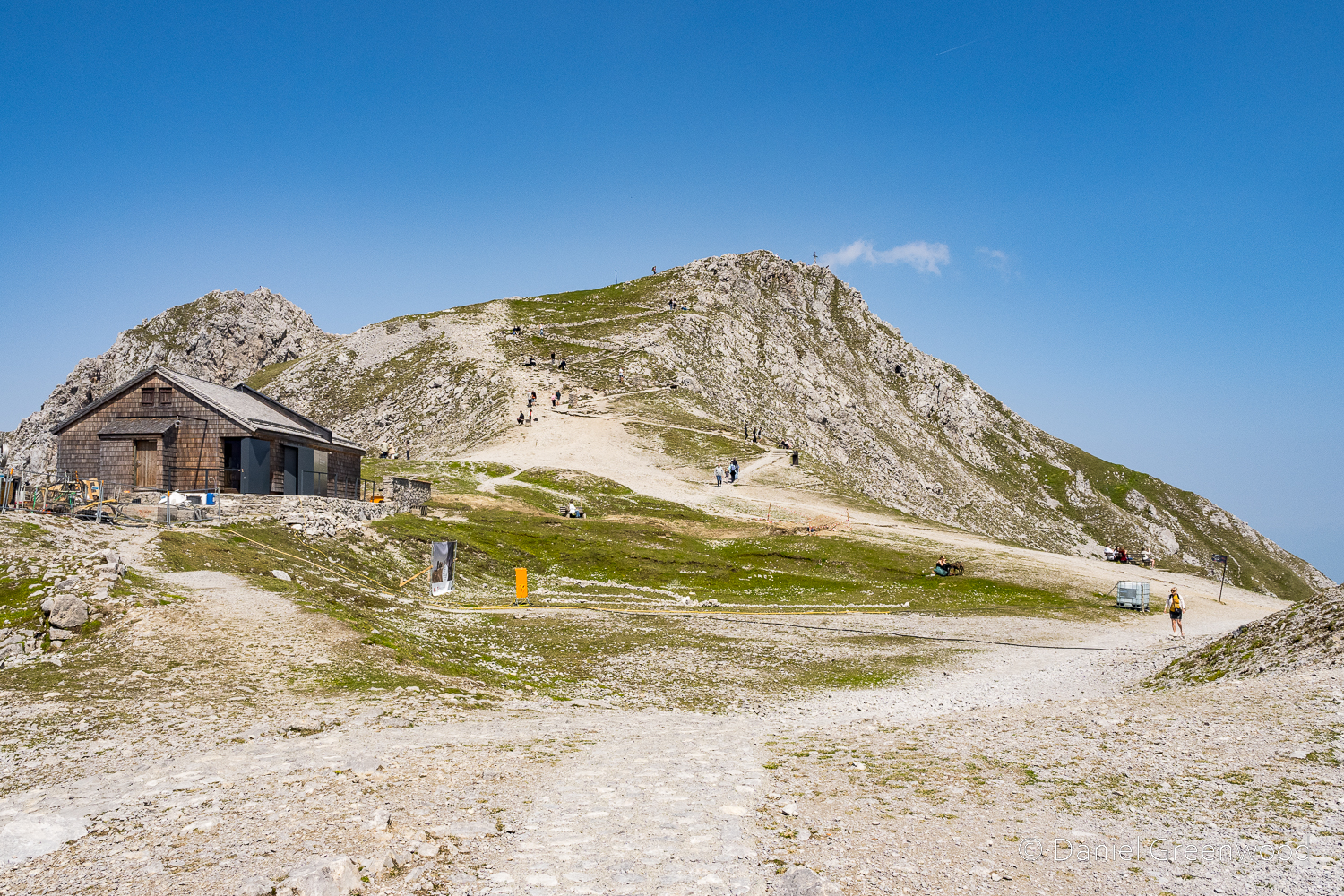
The reality of the space behind the camera – lots of limestone, hundreds of people, and a lot of erosion (of which I was obviously contributing to!).

Leaving Innsbruck

We left Innsbruck on a train to Salzburg, passing the peaks of the Karwendel Alps which lead eventually to Bavaria in Germany. I love travelling on Austrian trains, especially in the Alps. I don’t read a word of a book because the views are so amazing, and you can order food if you’re in first class, which is so much more affordable than in the UK.

I like to use my compact camera on these journeys and just snap photos randomly at the window without considering framing, or worrying to much about what the frame will capture. In the image above there’s what looks like a haybarn in the Inn valley, where the grass will be grown for either feeding animals or some kind of biomass.

Thanks for reading.

Austrian Alps | Support my work

Austrian Alps: wildflowers on Zwölferhorn

Zwölferhorn (1522m), Salzkammergut, Austria, June 2025

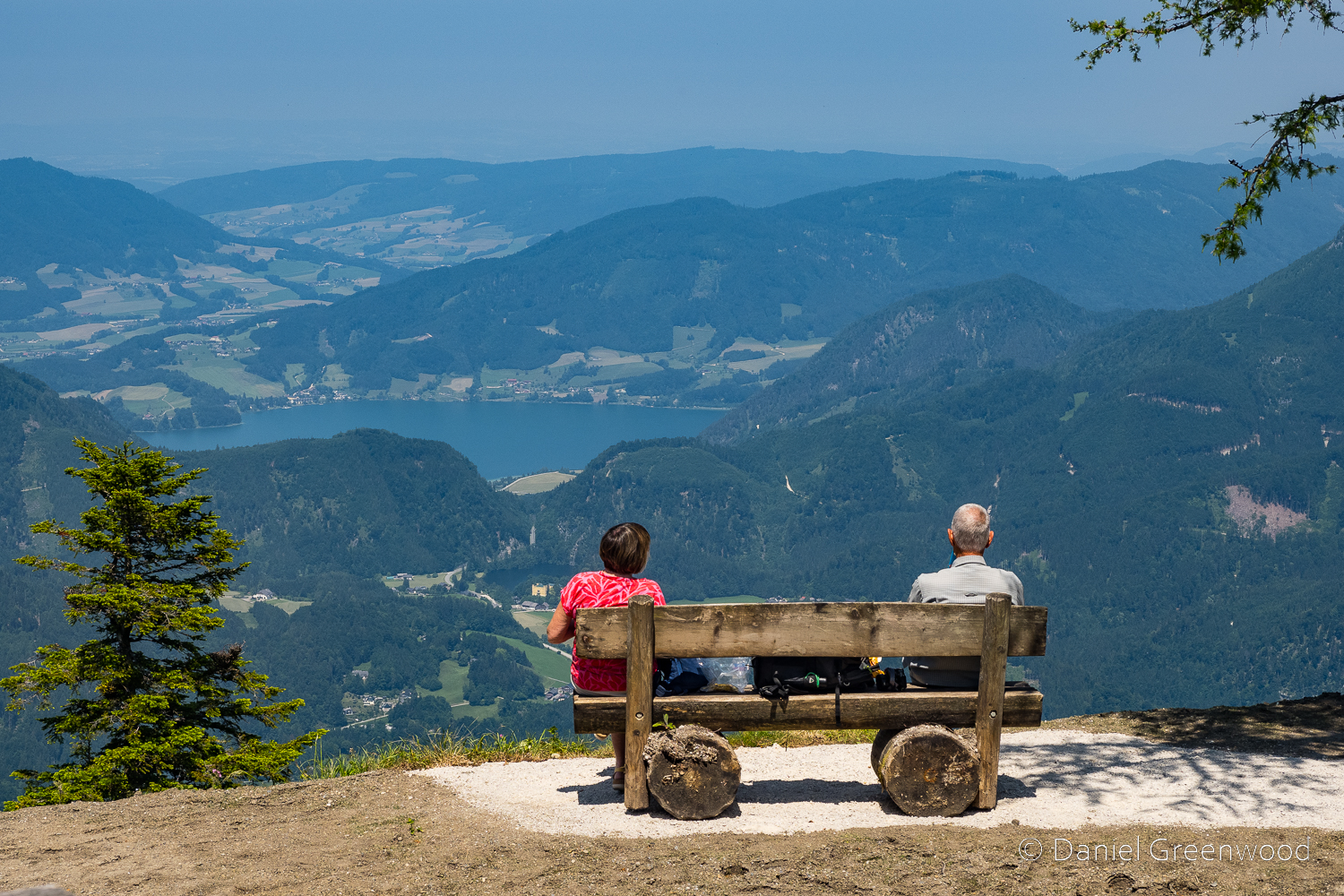
In mid-June my wife and I visited the Austrian Alps for the second year in a row. We took the cable car from the village of St. Gilgen (featured in the opening scenes of The Sound of Music) to the 1500m heights of Zwölferhorn, so named because according to shepherds down the years the sun sits atop the peak at 12noon (zwölf) everyday.

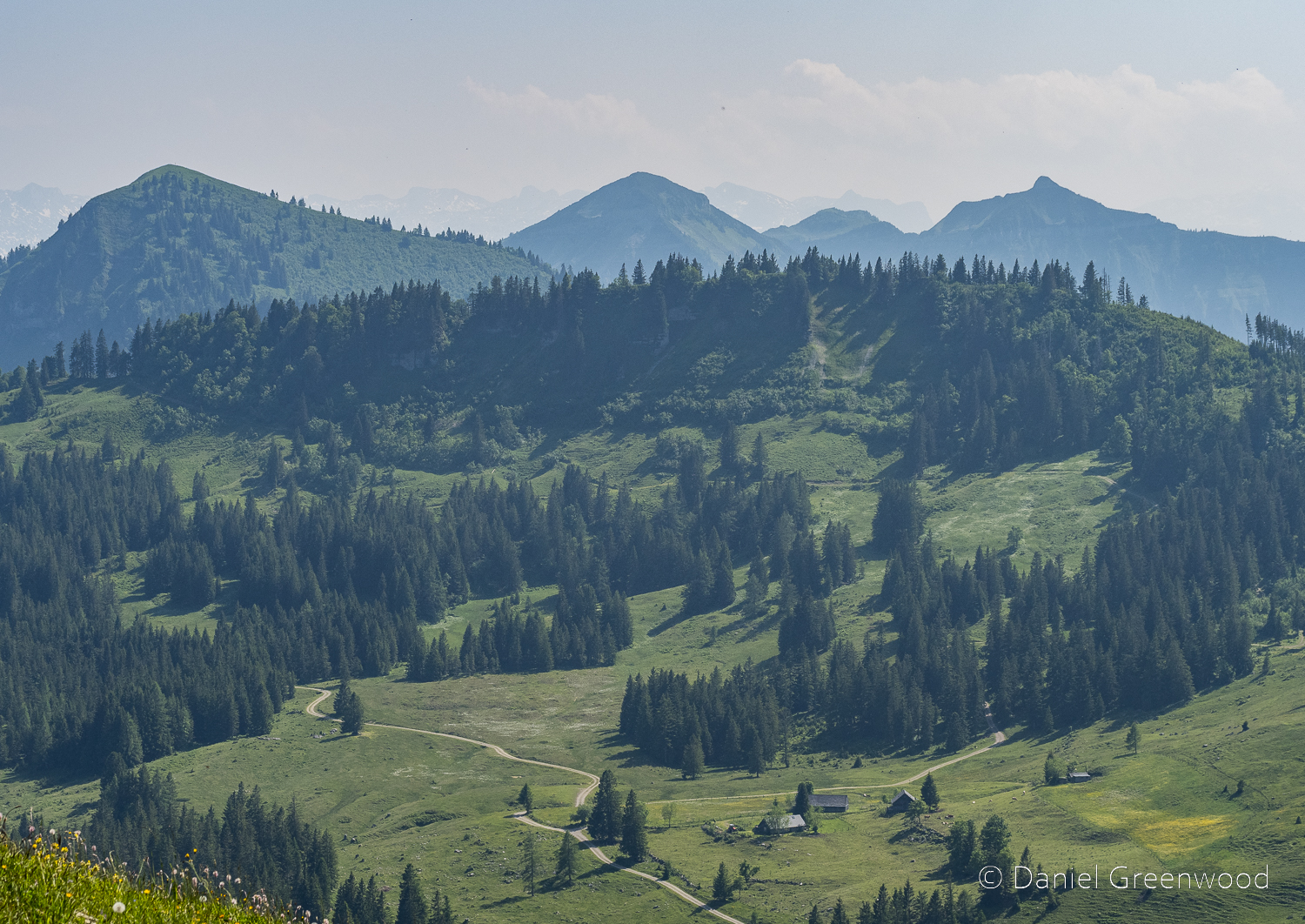
The views from the top are magnificent, as you would expect from the Austrian Alps, though a bit hazy on this hot day in the Salzkammergut.

Part of the allure of this place in spring-early summer is the wildflowers high in the mountains.

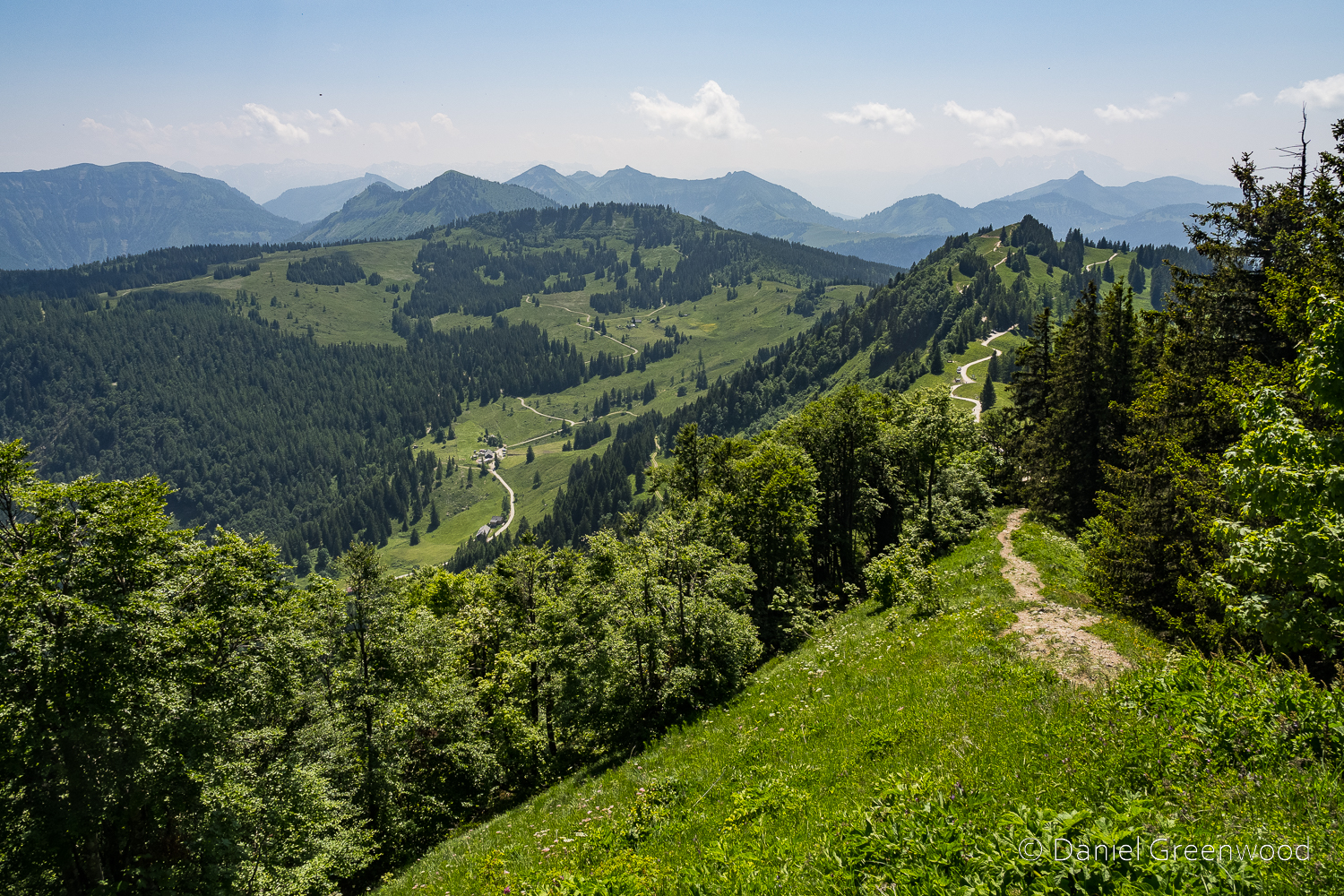
To the south and west the mountains seem to run forever. South-east of here is the famous Hallstatt and the Dachstein Massif, which I will include some long-range images of in an Austrian Alps post to follow.

A view into Salzkammergut

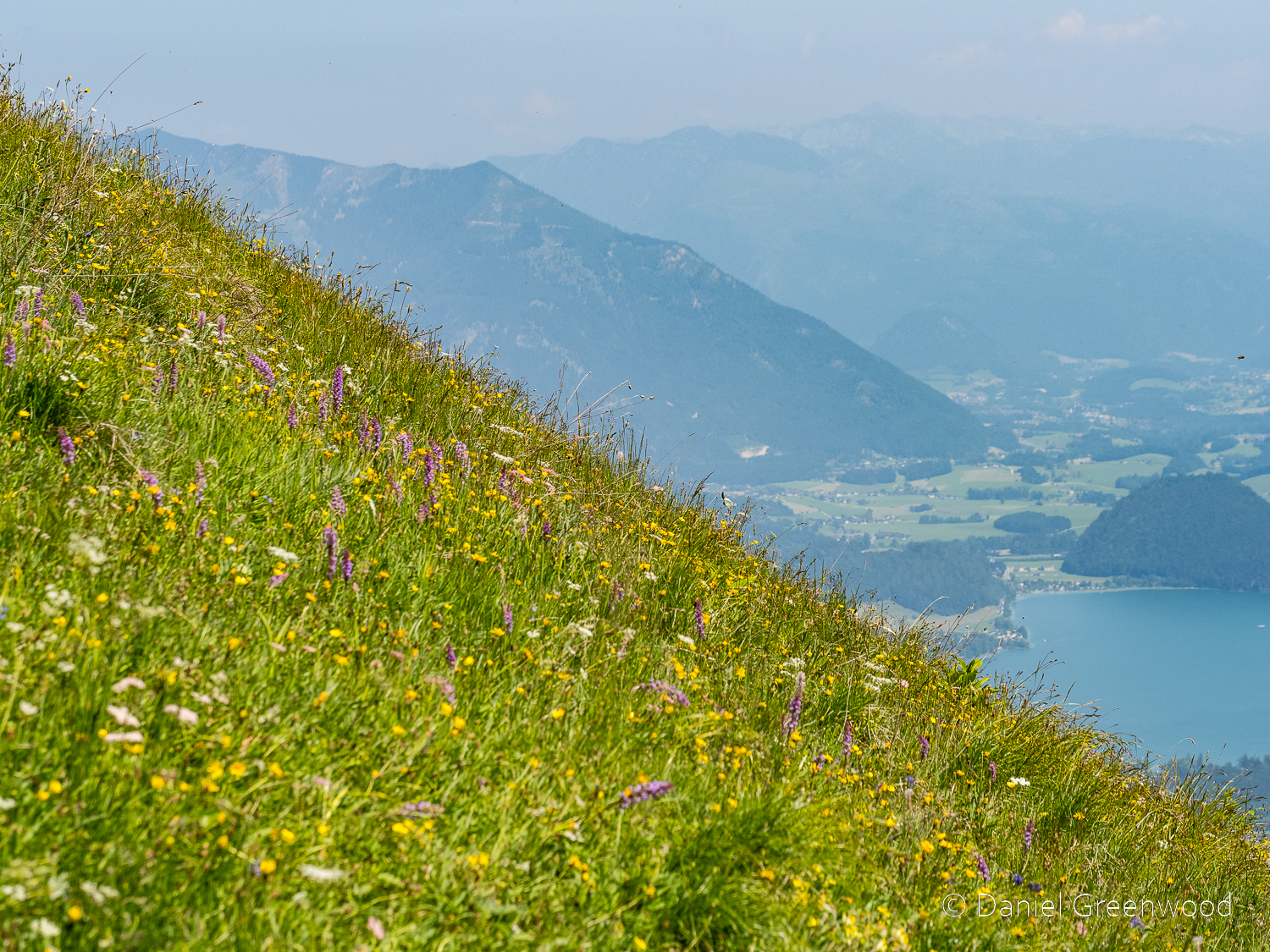
These mountains have been managed in the same way for many hundreds of years – though there were probably fewer trees in the past – which has led to a rich diversity of flowers and their dependent invertebrates. We saw an abundance of both when visiting this time.

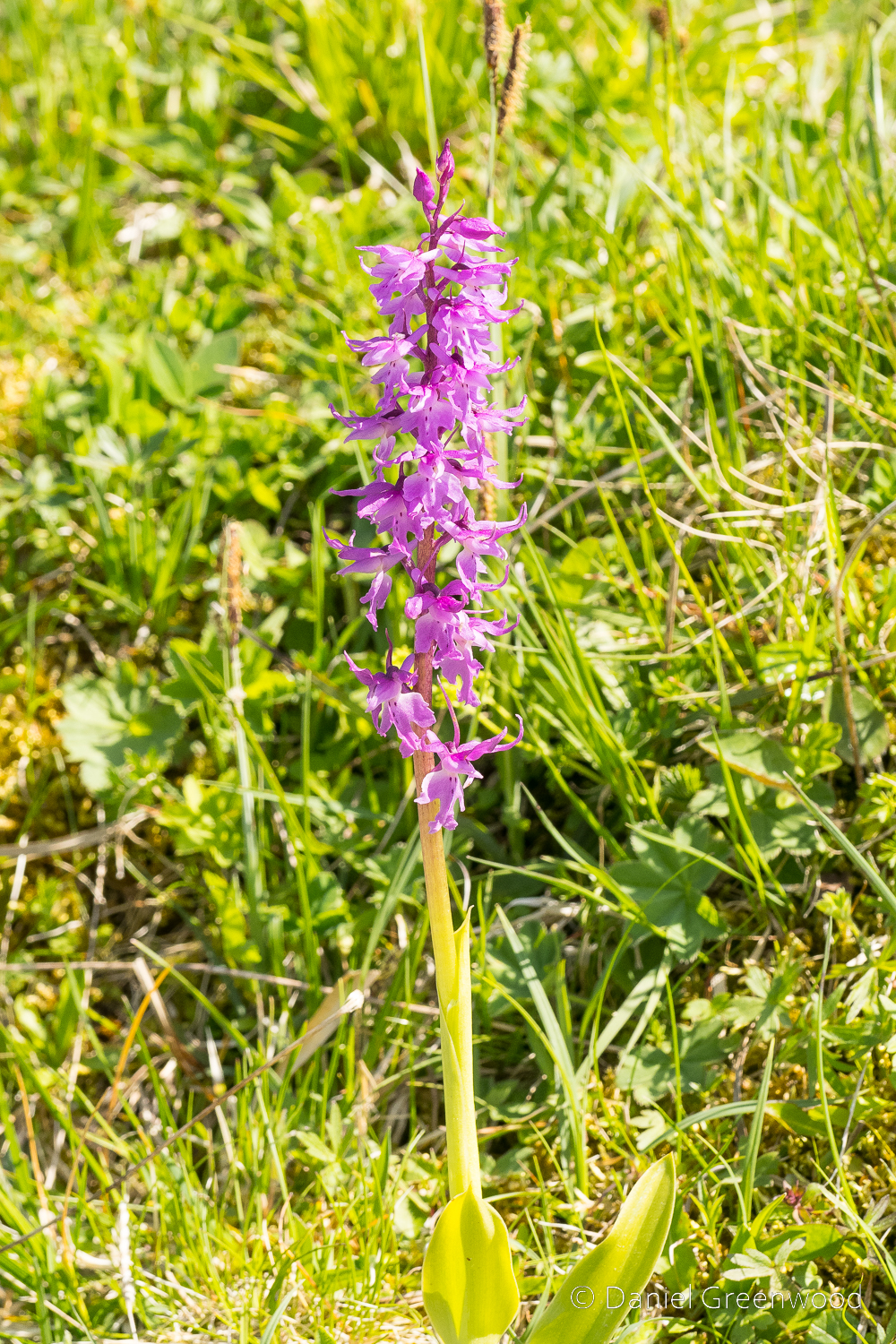
The sloping meadows were ‘littered’ with early purple orchids (Orchis mascula). We kept to the paths at all times for both safety as they were steep, and so as not to damage the grasslands. Having a camera in these places doesn’t give me a divine right to trample stuff!

Some of the orchids up close. Early-purple was the only species we saw.

This is hoary plantain (Plantago media) which gave a nice focal point to the alpine meadows.

I was intrigued by this daisy (Asters) as there were signs for arnica in the area. On iNaturalist it’s been identified as willow-leaved yellow oxeye.

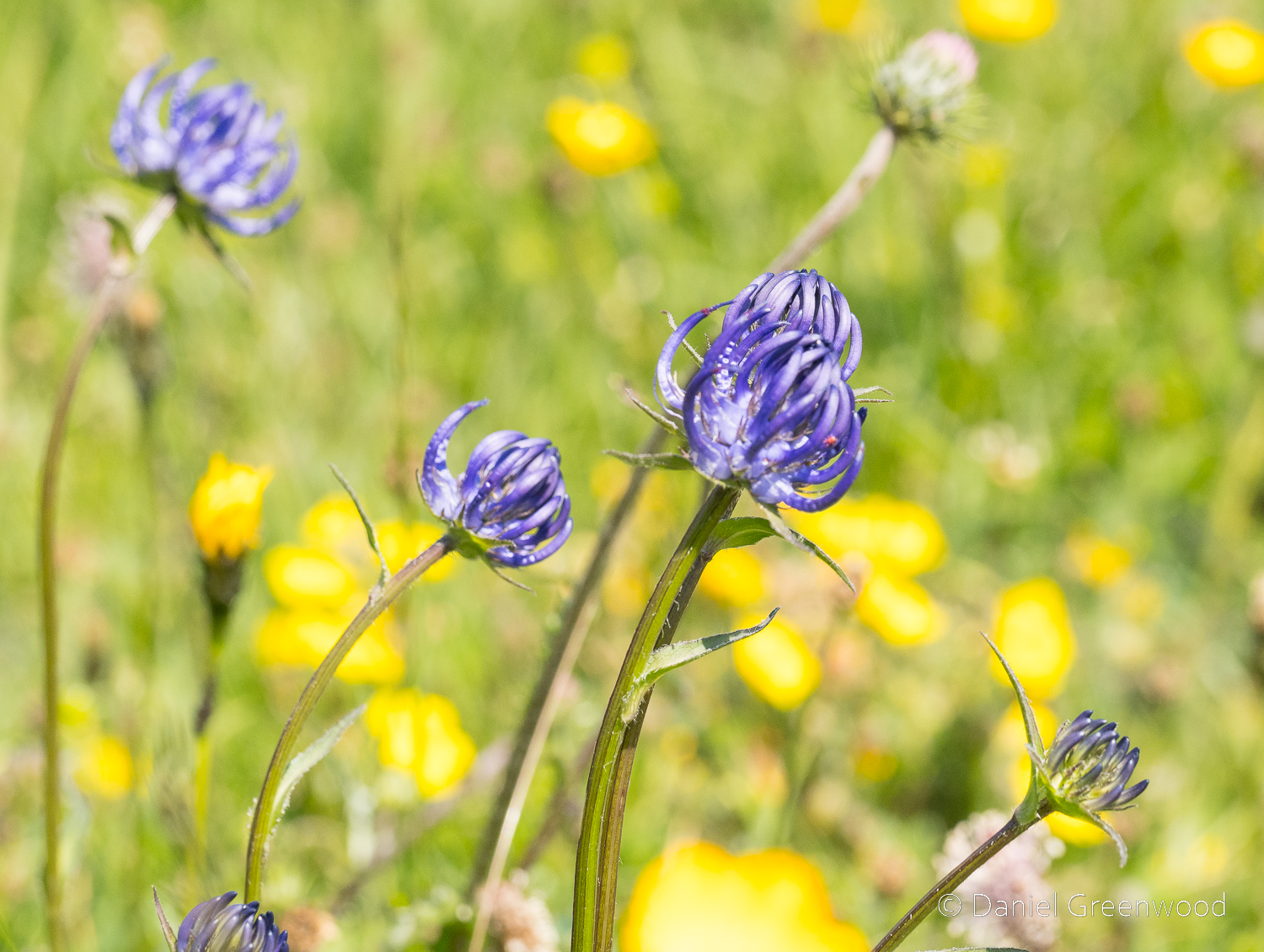
This came out a bit out of focus in the wind – it’s the ‘Sussex flower’ of the chalk Downs, round-headed rampion.

This is a new species for me, the slender Scotch burnet moth! Apparently they are native to Britain and much of Europe, and managing to nectar at the same time as mating, impressive.

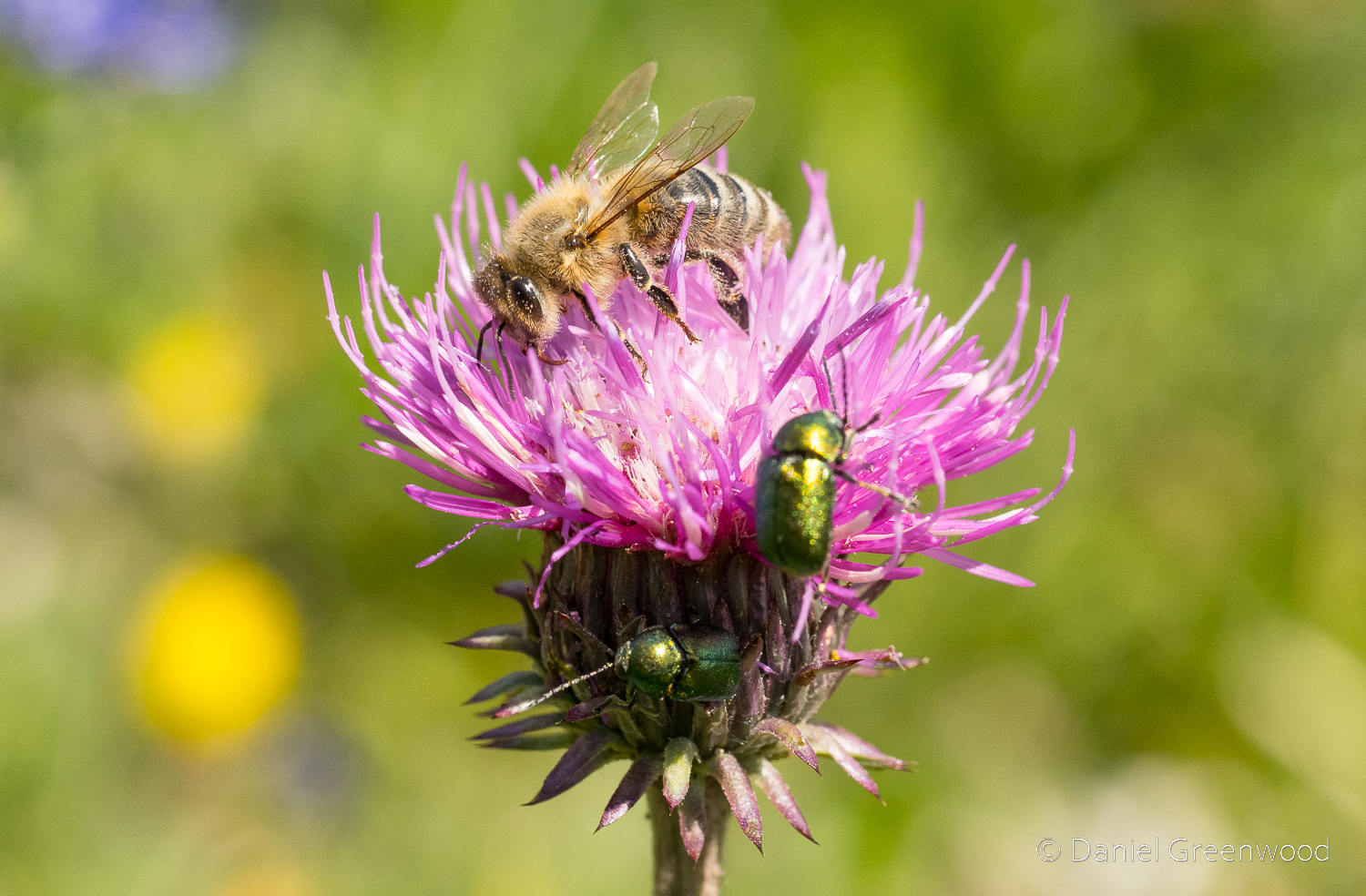
This photo made me laugh (I’ll explain). I was trying to get the honey bee and the green metallic beetle on the top in focus at the same time, so much so that I didn’t even see the second beetle lower down on the flower, which is actually in focus. This is knapweed, but I’m not sure if it’s a montane species or a variant to the common one.

While this is not a well-focused pic, it does enough to show you what is probably a duke of burgundy butterfly. In the UK it’s recovering but very rare.

The number of butterflies, day-flying moths, bees and hoverflies up here was a sight to behold. It was impossible to photograph anywhere near a reasonable percentage of all the things with wings. There were tens of fast-flying hummingbird hawkmoths on the wing, but getting photos of them would have resulted in falling down off the mountain. Also, we heard a cuckoo up here, which is quite late in the season for them.

The most common butterfly was the small tortoiseshell, another one I know from home. Insert obligatory remark about how it’s not so common anymore! Isn’t it gorgeous?

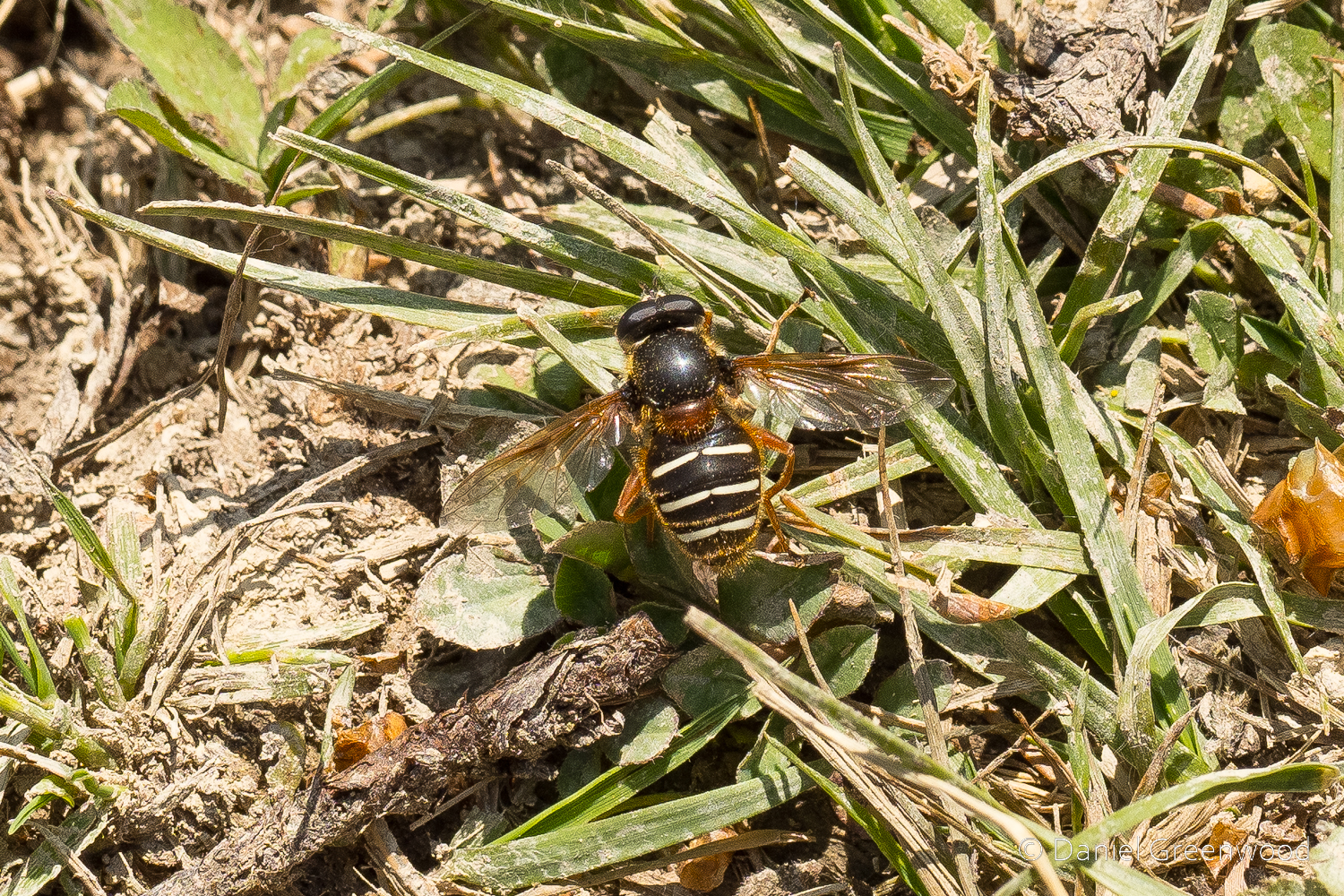
And to finish, there’s nothing more enjoyable in life than the sight of an unusual hoverfly. This was a new species for me, named on iNaturalist as the white-barred peat hoverfly. That would have been my second guess after Robocop hoverfly.

Here are some landscape images to see out this post of a wonderful walk and afternoon in the Austrian Alps. All taken with a macro lens!

Thanks for reading, Grüß Gott!

Macro | Support my work

Postcard from the Alps 🏞️

No normal blog post this week as I’ve been away in the Austrian Alps, and am behind on my macro processing.

I did manage to take some macro photos high above the treeline, and saw lots of species of insects in the time we were up there. Will look forward to sharing those in the weeks ahead.

These are phone pics taken in raw file format, and then processed via my phone. The quality is really impressive to me.

Thanks for reading.

Snapshots of Salzburg 🧂

In May 2024 I visited Salzburg in Austria for the first time. It’s a beautiful city in a wonderful part of Europe. The photos are taken with my Olympus EM-1 Mark III with a sprinkle of my Olympus TG-6 compact, and Pixel 7a.

One of my wife’s prerequisites for the visit (part of our honeymoon rail adventure – see Swiss Alps posts) was to attend the Sound of Music tour which begins in Salzburg. I love the film (thanks to my friend and blog reader Allison for lending me the DVD), but admit to remaining silent on that bus!

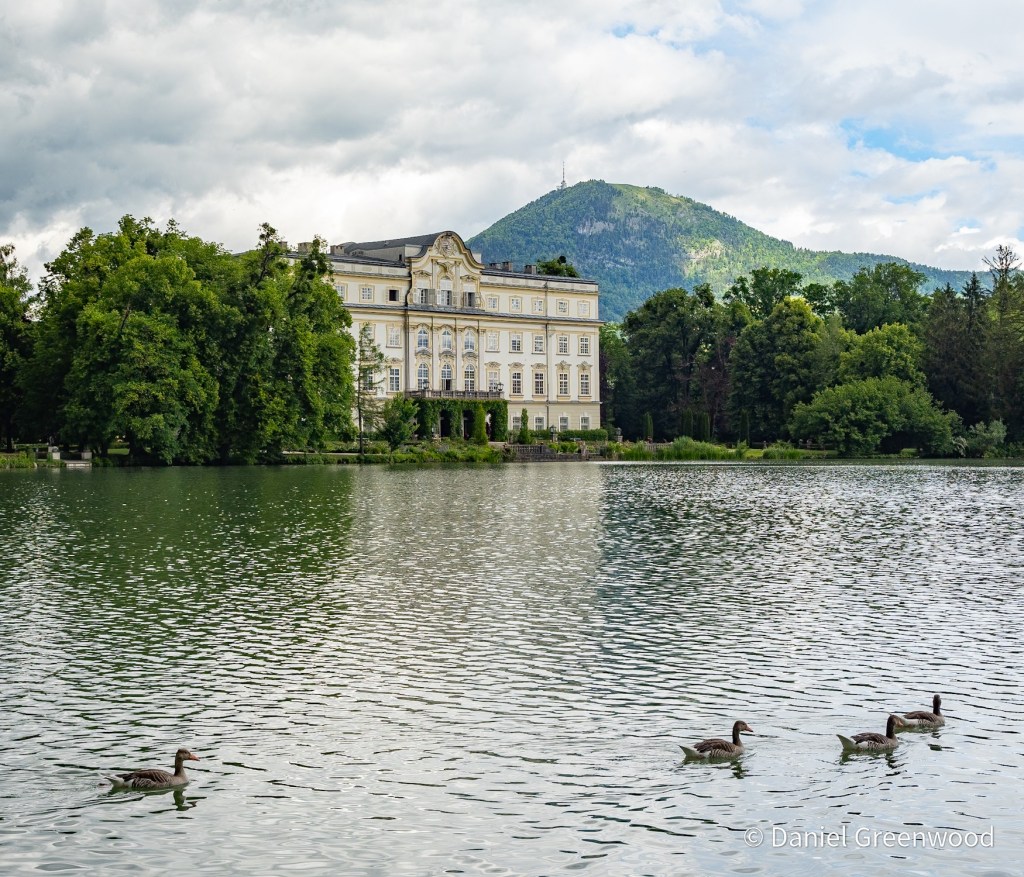
The building above is Schloss Leopoldskron and was used in the film, combined with another location. In the distance you can see the hill of Gaisberg which lurks throughout this post.

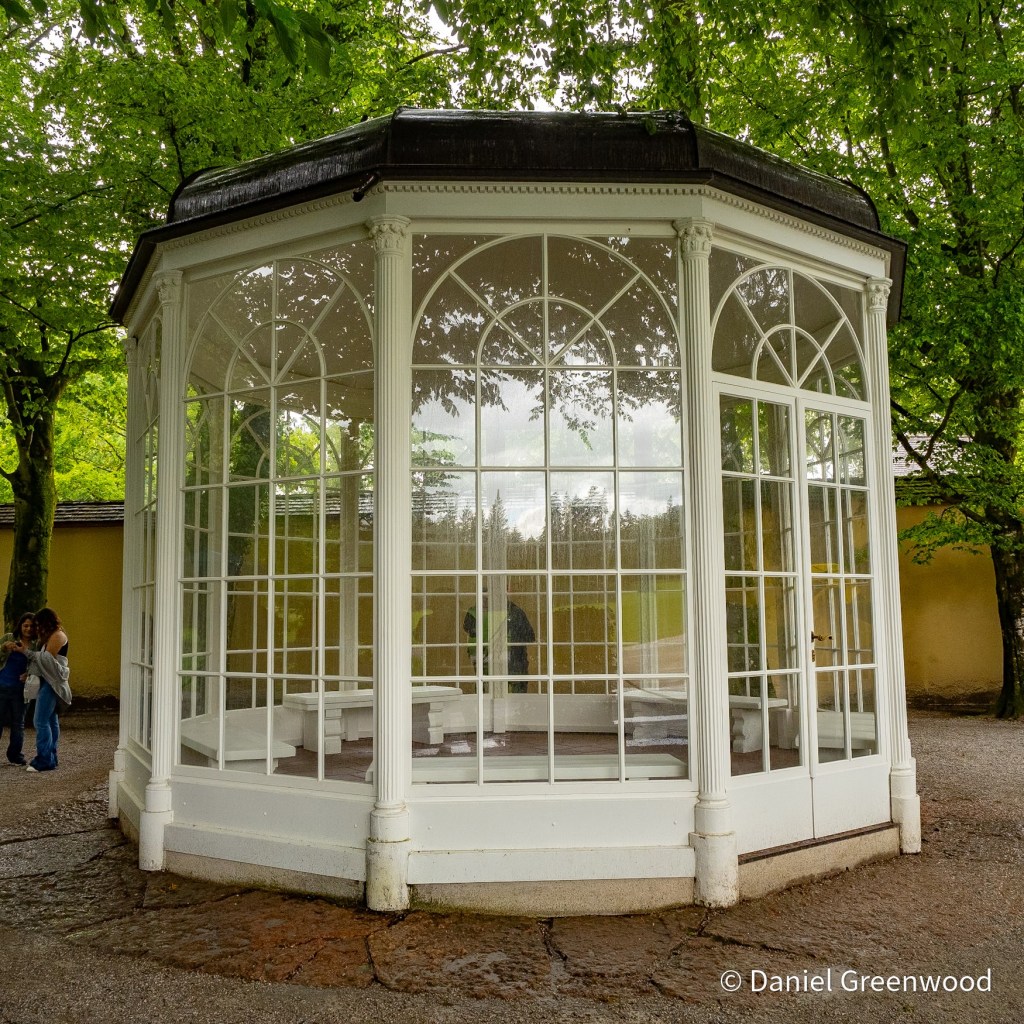
Just outside the city centre we were driven to Schloss Hellbrunn and the famous gazebo where ‘Sixteen Going on Seventeen’ was set. The scene inside the gazebo was a set as it was too small for actual dancing.

Our excellent guide finished the tour (which takes you much further outside Salzburg) at the Mirabelle Palace Gardens. In the distance you can see the iconic Hohensalzburg Fortress.

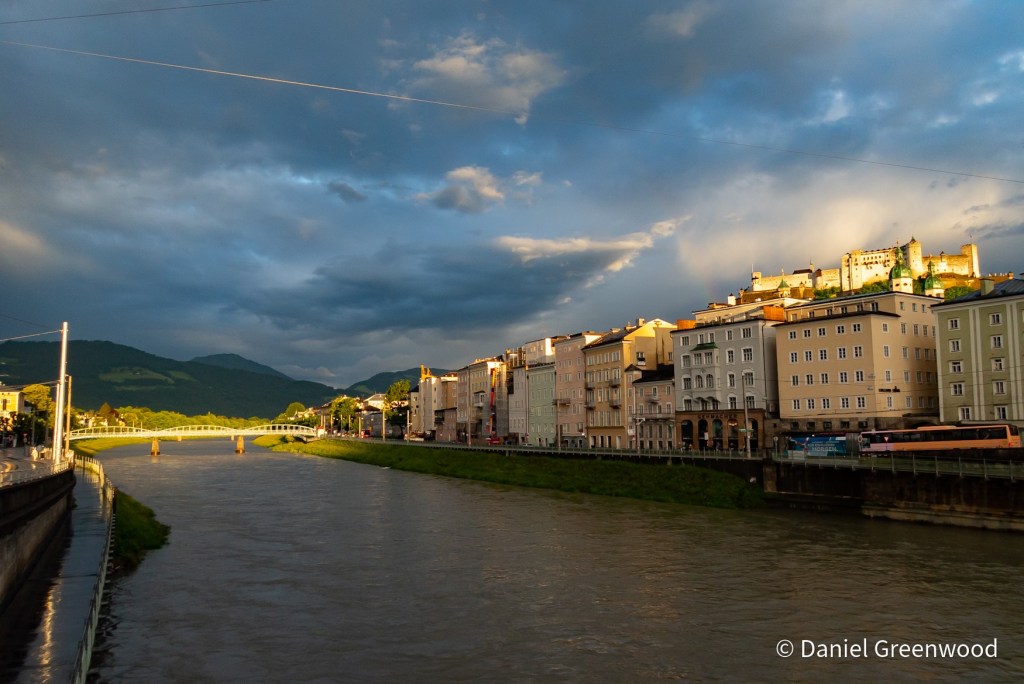
Here’s the Hohensalzburg Fortress in spectacular light after heavy rain later that evening. Taken with my Olympus TG6 compact camera.

The evening light falling across one of several bridges that connects the old and new towns of Salzberg, crossing the Salzbach river.

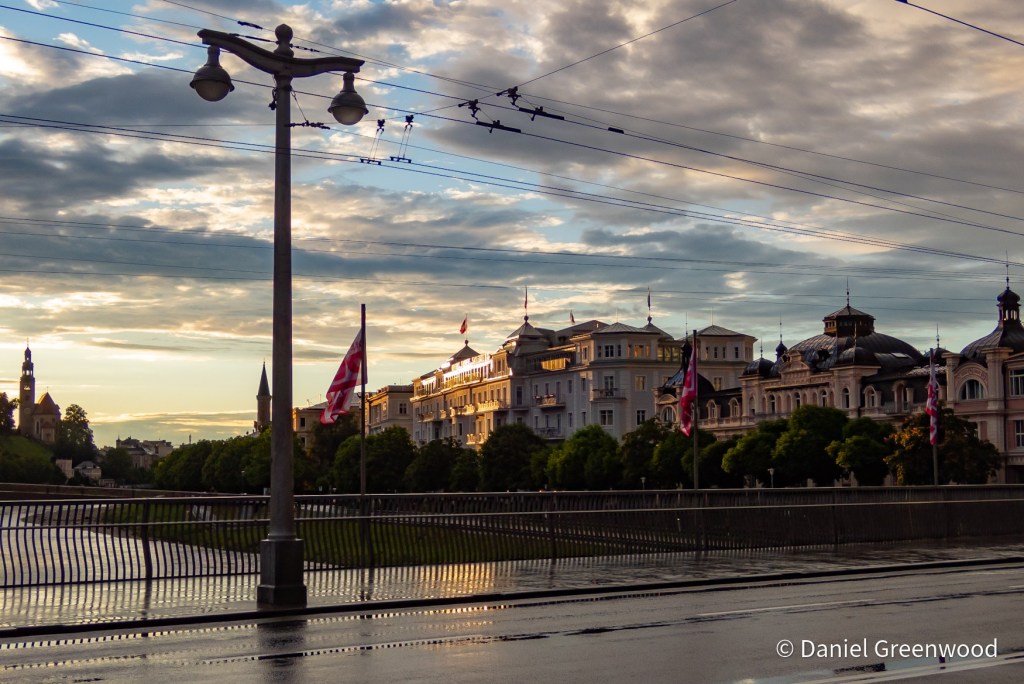
The reverse view to the north-west.

The following morning we passed the St. Sebastian Church, sited along a pedestrianised street. Mozart’s father and wife are buried in the cemetery here.

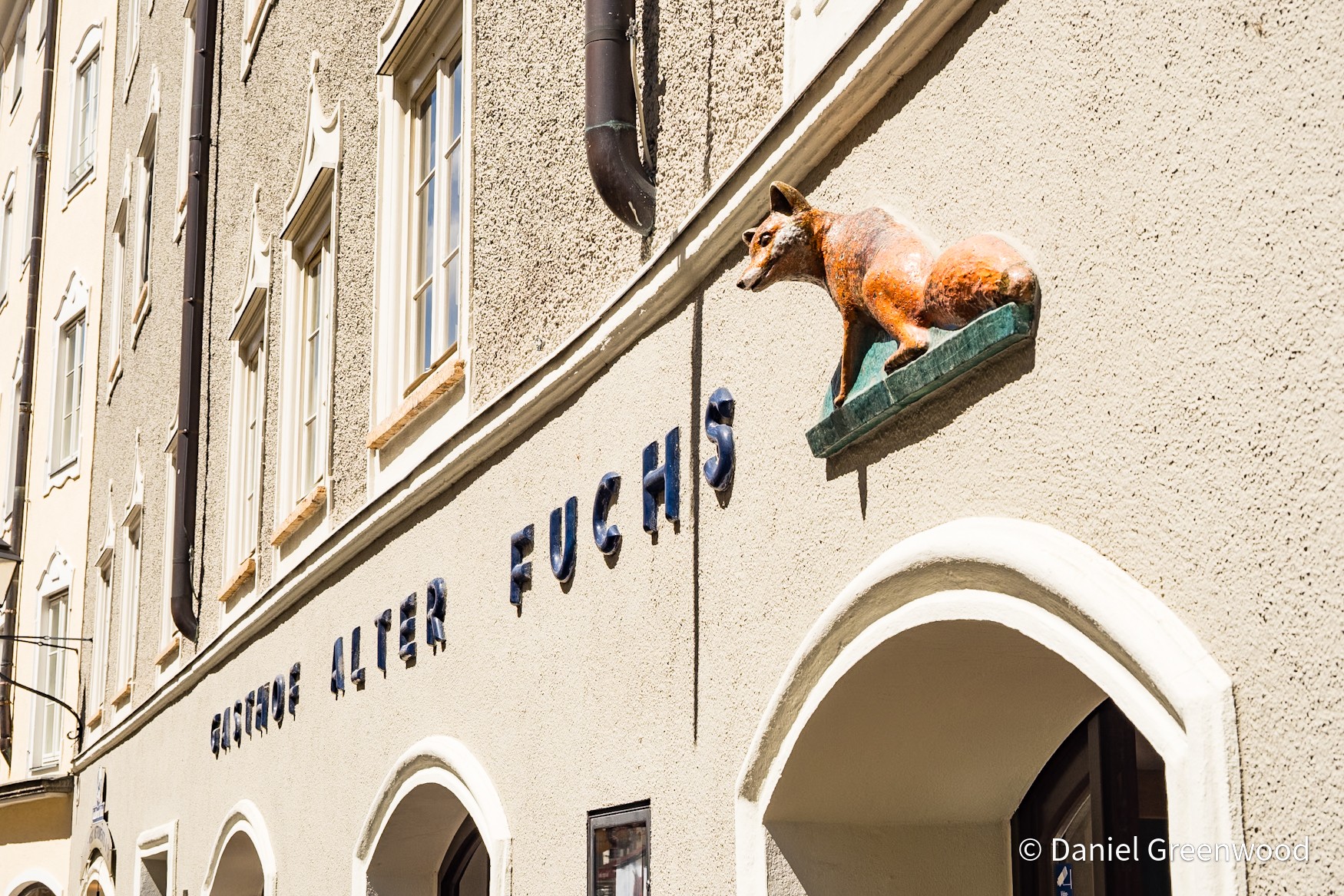
The Old Fox was a pub we ate at later that evening, as we have a penchant for foxes (not eating them). The food was good, but like many places in Austria their approach to accommodating and supporting people with nut allergies needs work. It’s a lovely old pub inside and out.

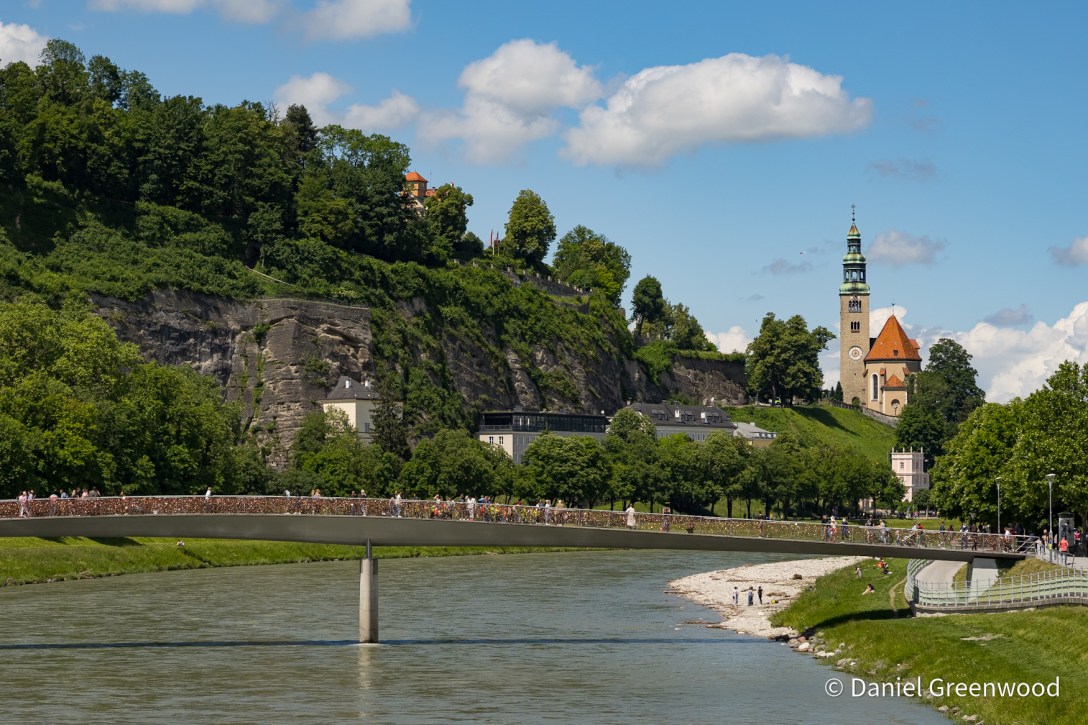
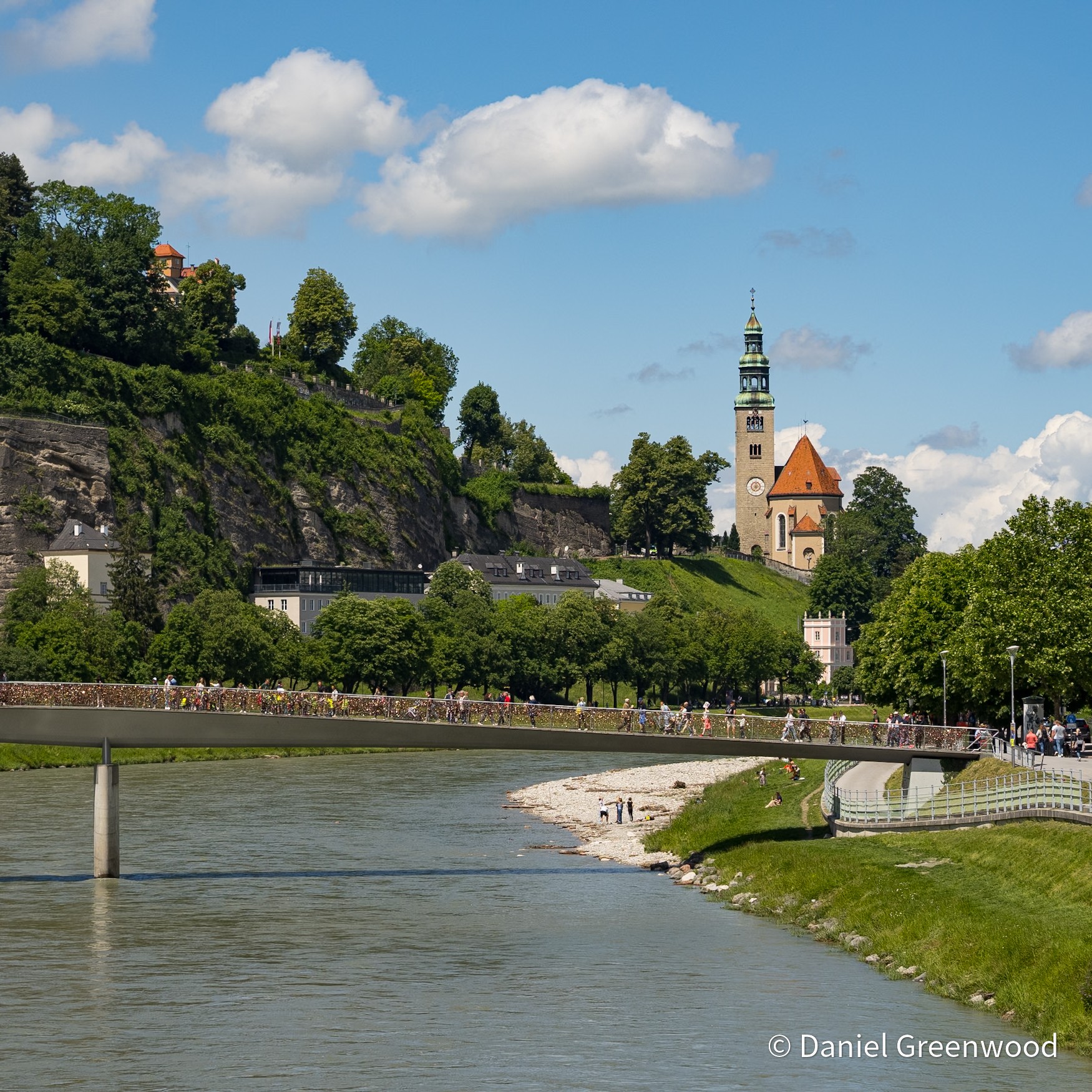
Mülln Parish Church seen from one of the bridges across the Salzach. The hill here is the outcrop that holds the Fortress.

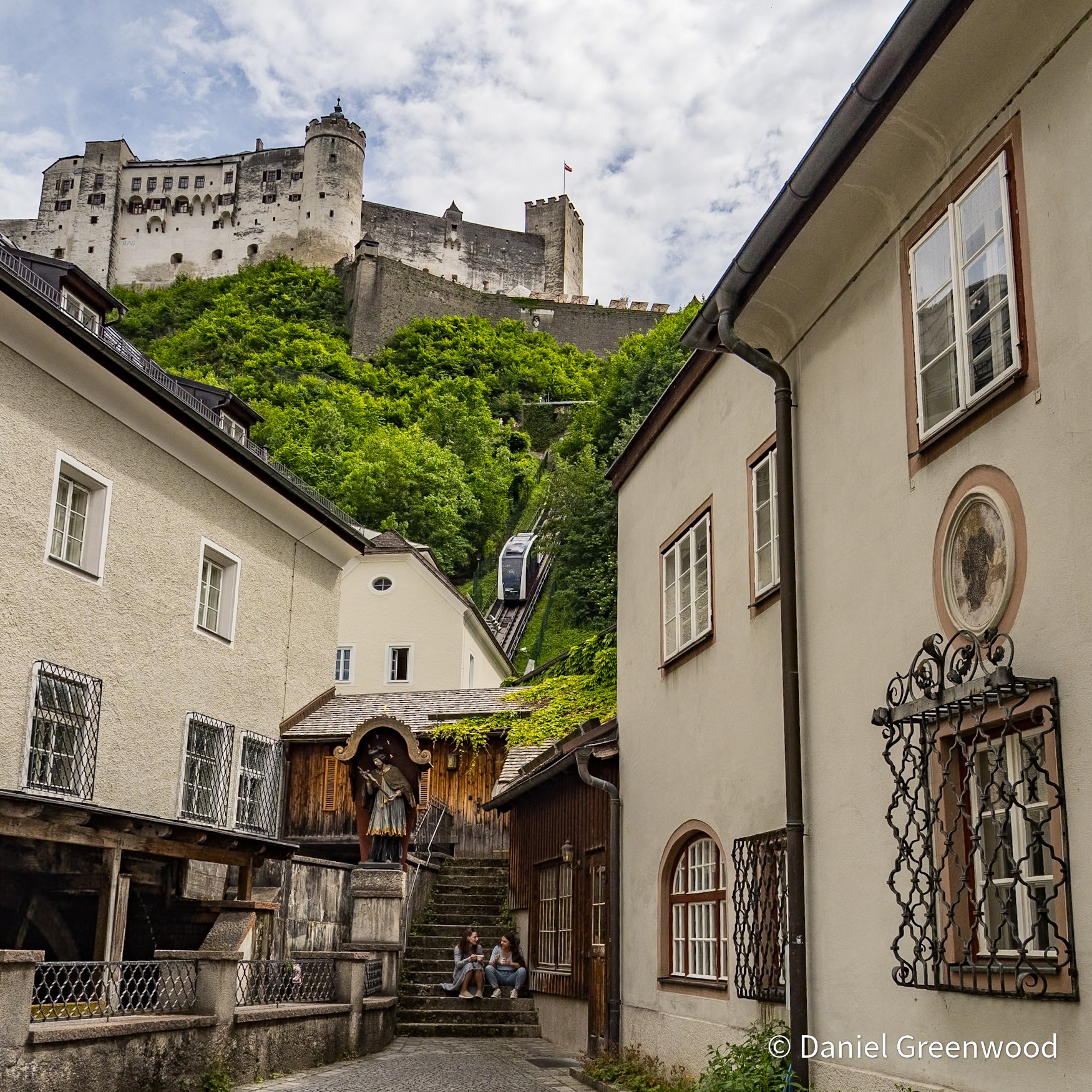
I think this is my favourite image that I captured from Salzburg. It shows so much of the city’s character, including the ancient heritage, layers of architecture, a cable car (very useful in Austria), and the life of the place. The processing is maybe a bit harsh.

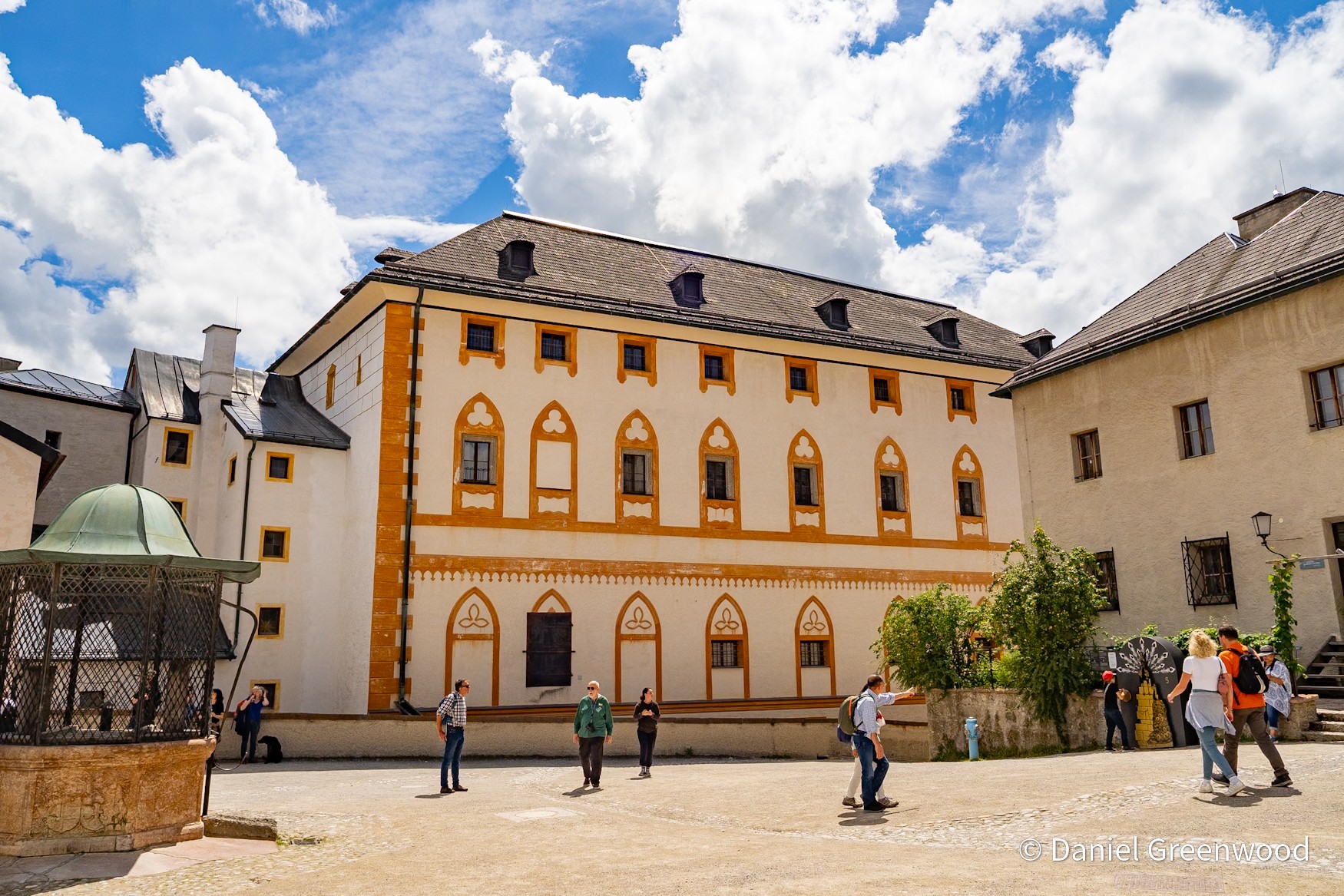
Inside the Fortress walls, now a major tourist attraction. Of course there’s a lime tree, it is central-eastern Europe after all.

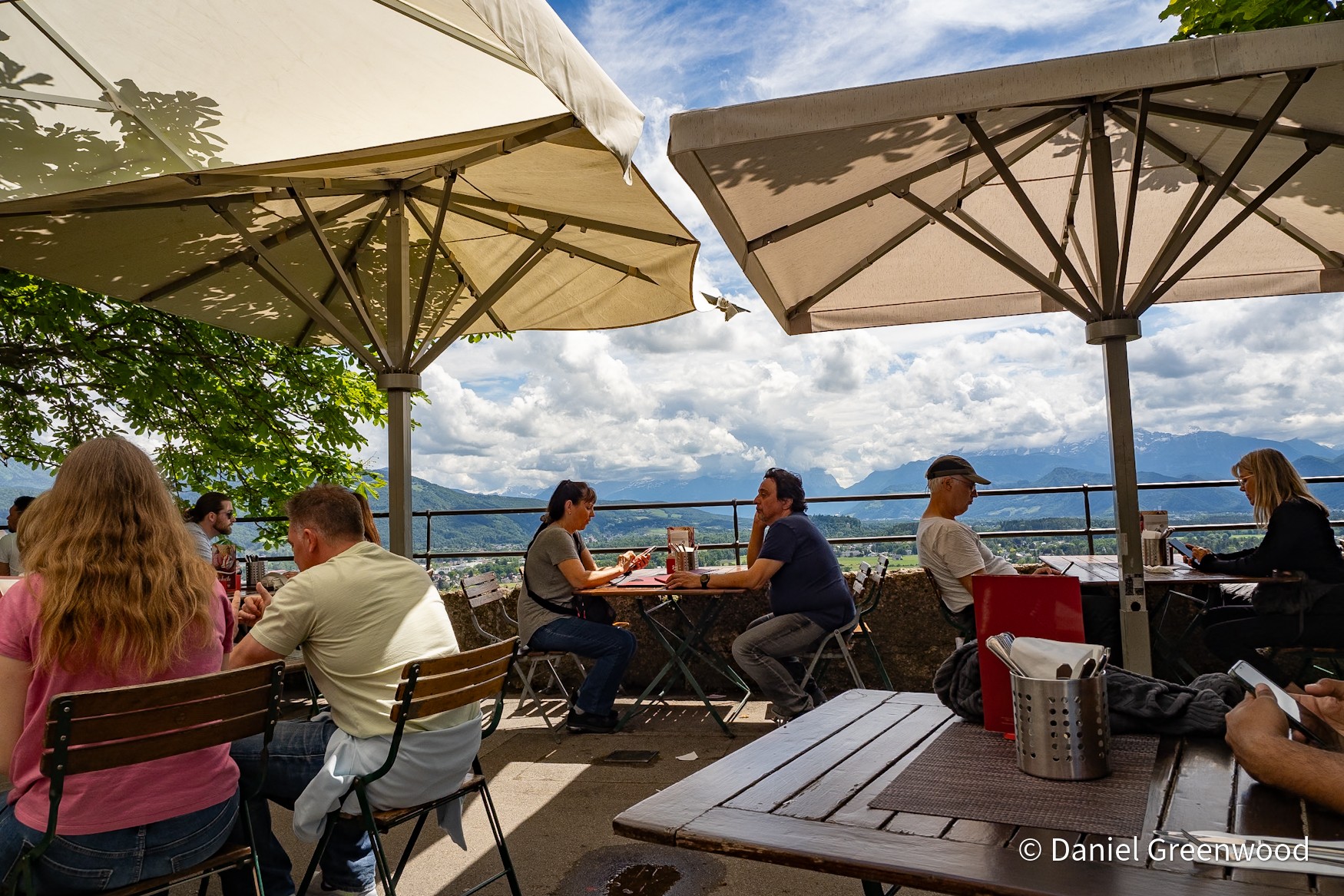
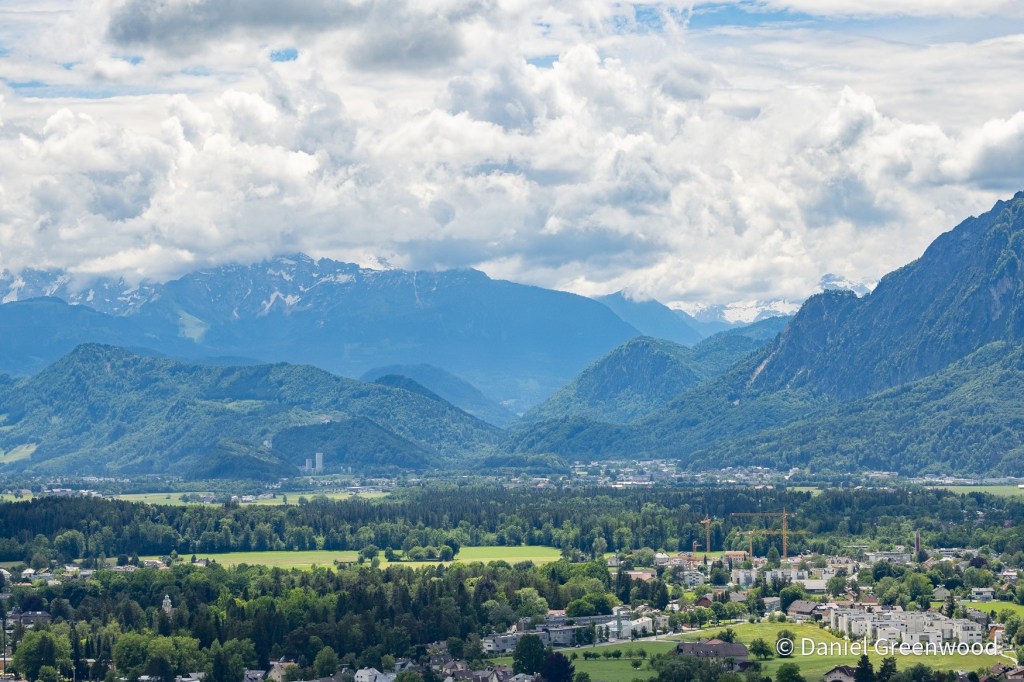
The views of the Salzkammergut mountains from the Fortress are spectacular.

The Salzach river snaking away to the north and north-west where it becomes the boundary between Bavaria (Germany) and Austria. It eventually finds its way into the mighty river Inn.

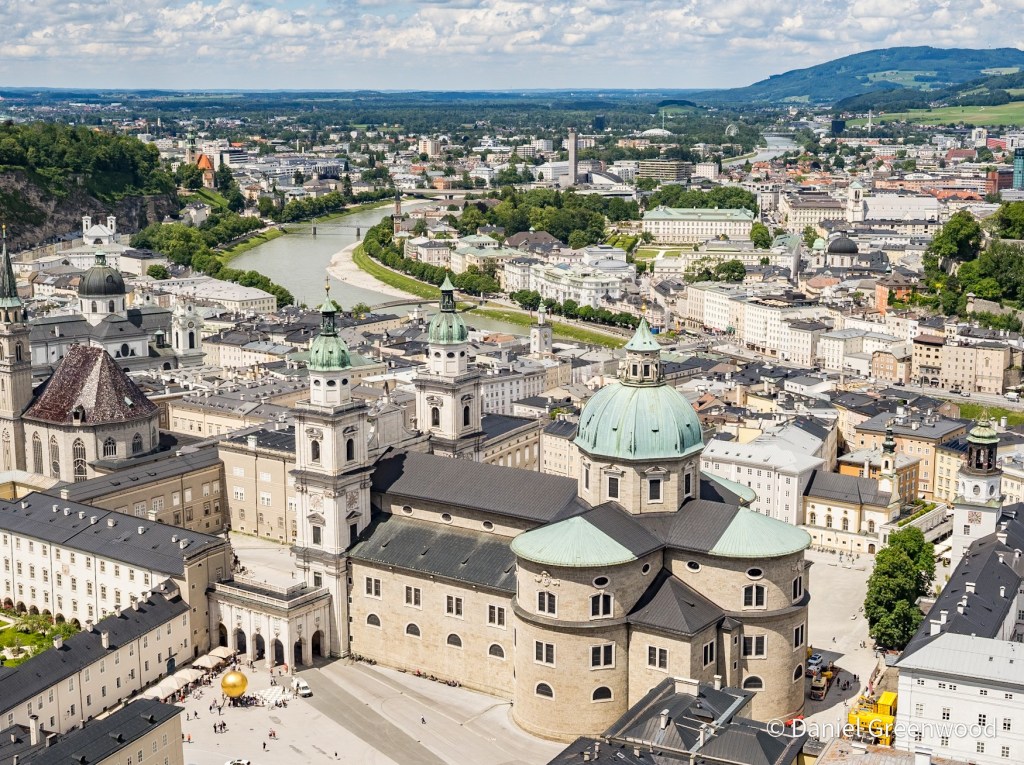
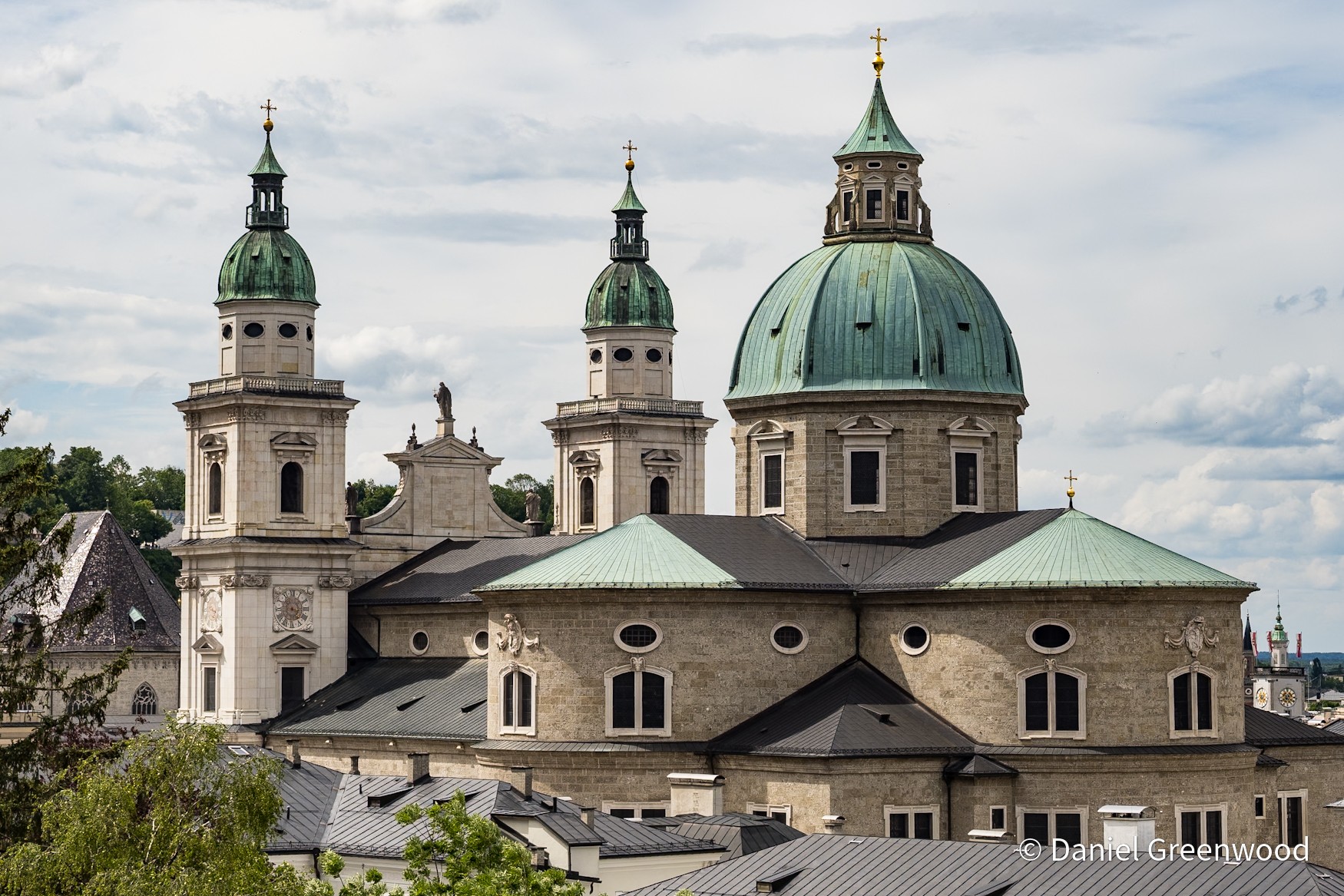
This is the first view in this post of Salzburg Cathedral, originally built in the 700s.

The cathedral has been restored after it was bombed by the Allies in October 1944 as the Second World War reached its climax. Many thousands of people, including civilians, lost their lives in the British and American bombings of Austria and Germany.

The towers were reconstructed by 1959.

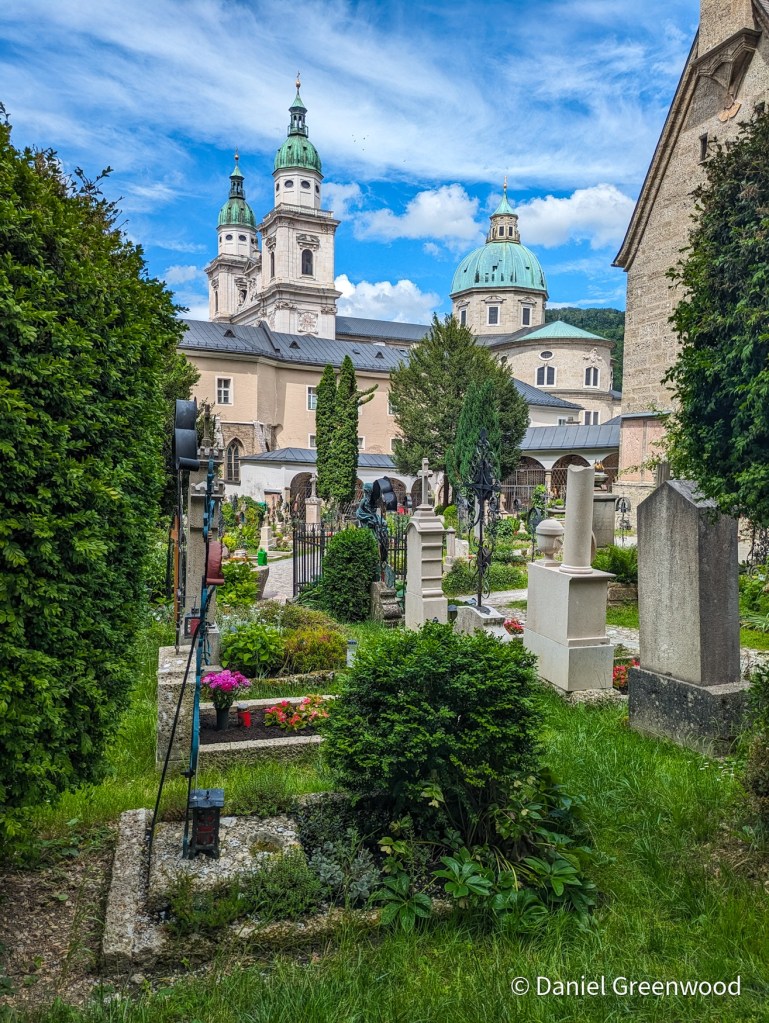
The cemetery near the cathedral is a lovely, quiet spot. This is a Pixel 7a pic, hence the fancy colours.

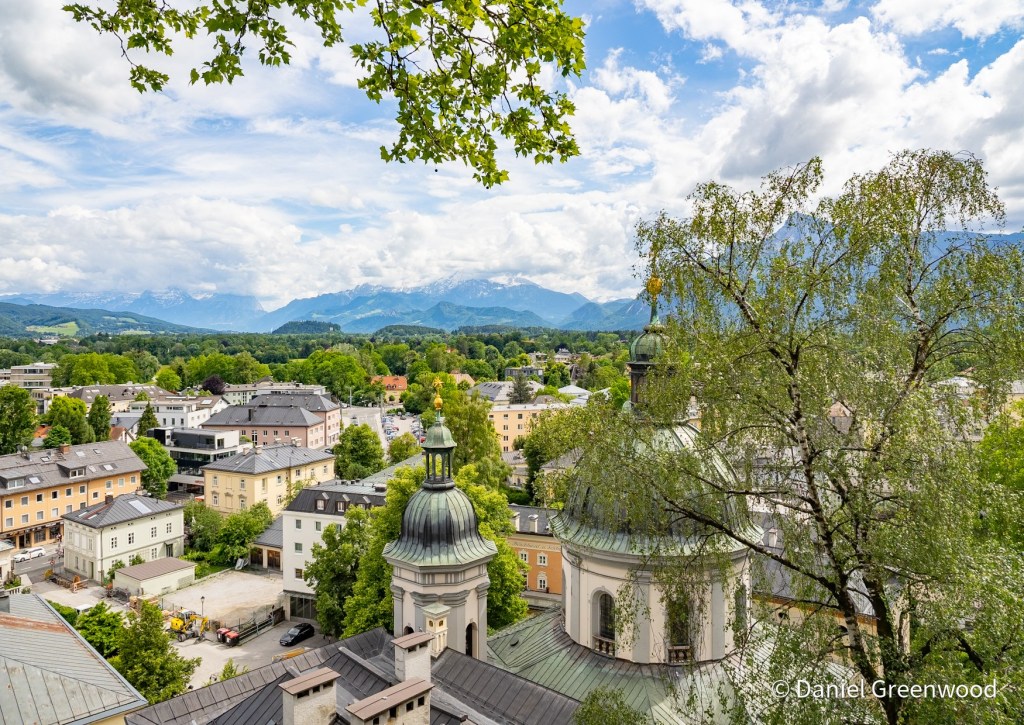
There are many lovely towers to see in Salzburg. Here you can see evidence of how green the city is, looking into the mountains.

Gaisberg as seen on the approach to the monastery, with a Sound of Music fan eagerly making their way there.

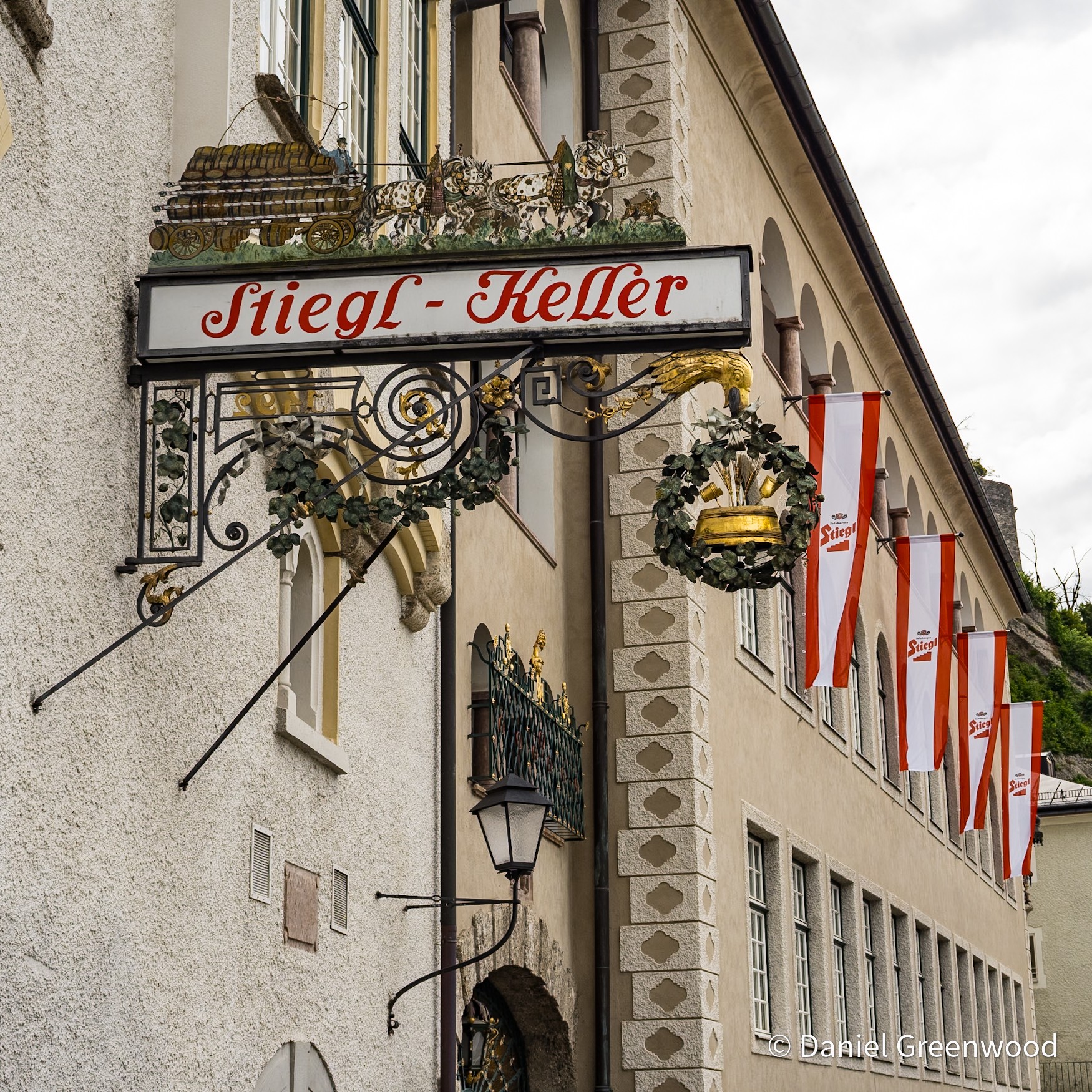
Stiegl was the nicest beer that I tried during our time in Austria. It’s a wheat beer. This is one of their breweries and apparently dates back in part to the 1400s.

We walked up from the city to the Benedictine Abbey of Nonnberg, another location for The South of Music.

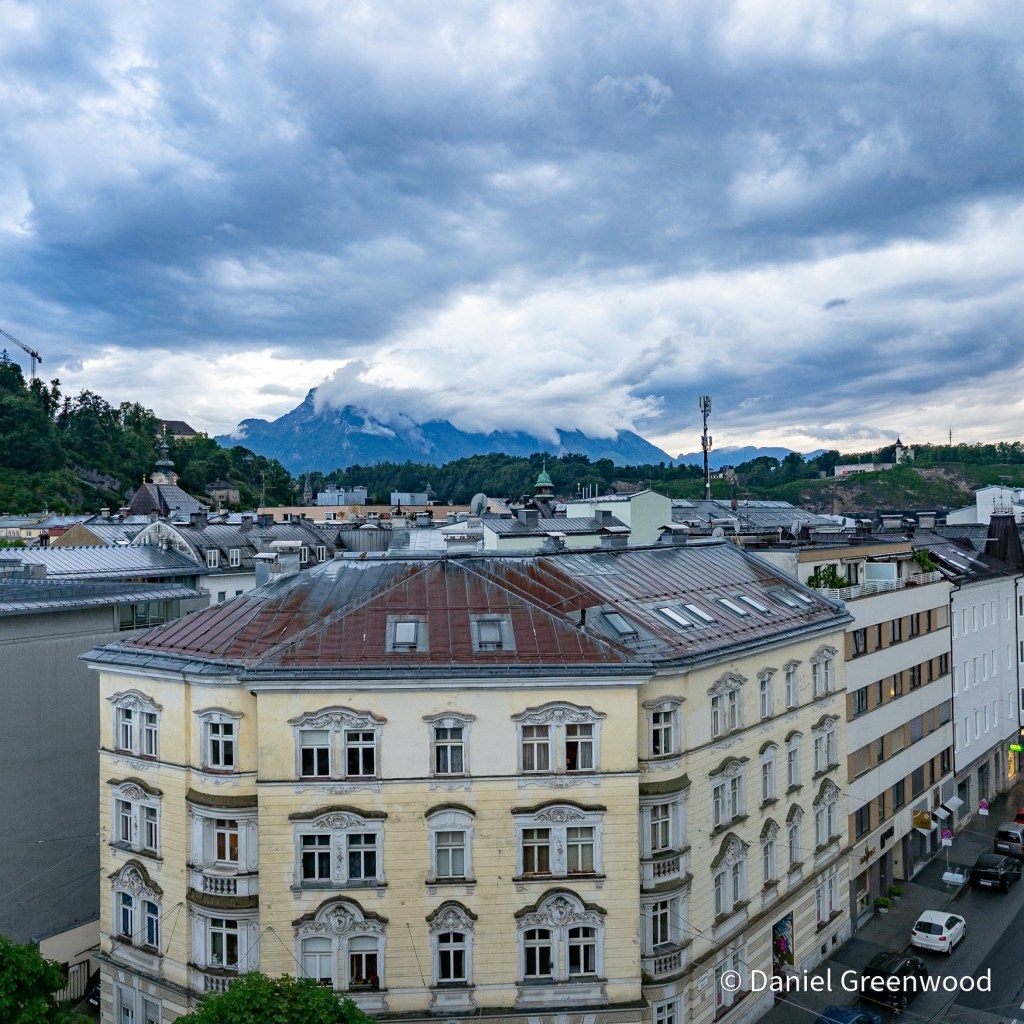
The view from our hotel room was special, mixing Salzburg architecture with the surrounding peaks of Salzburgerland. An almighty storm arrived not long after this photo was taken.

Looking from another window in our room, the clouds drifted over Gaisberg.

Thanks for reading.
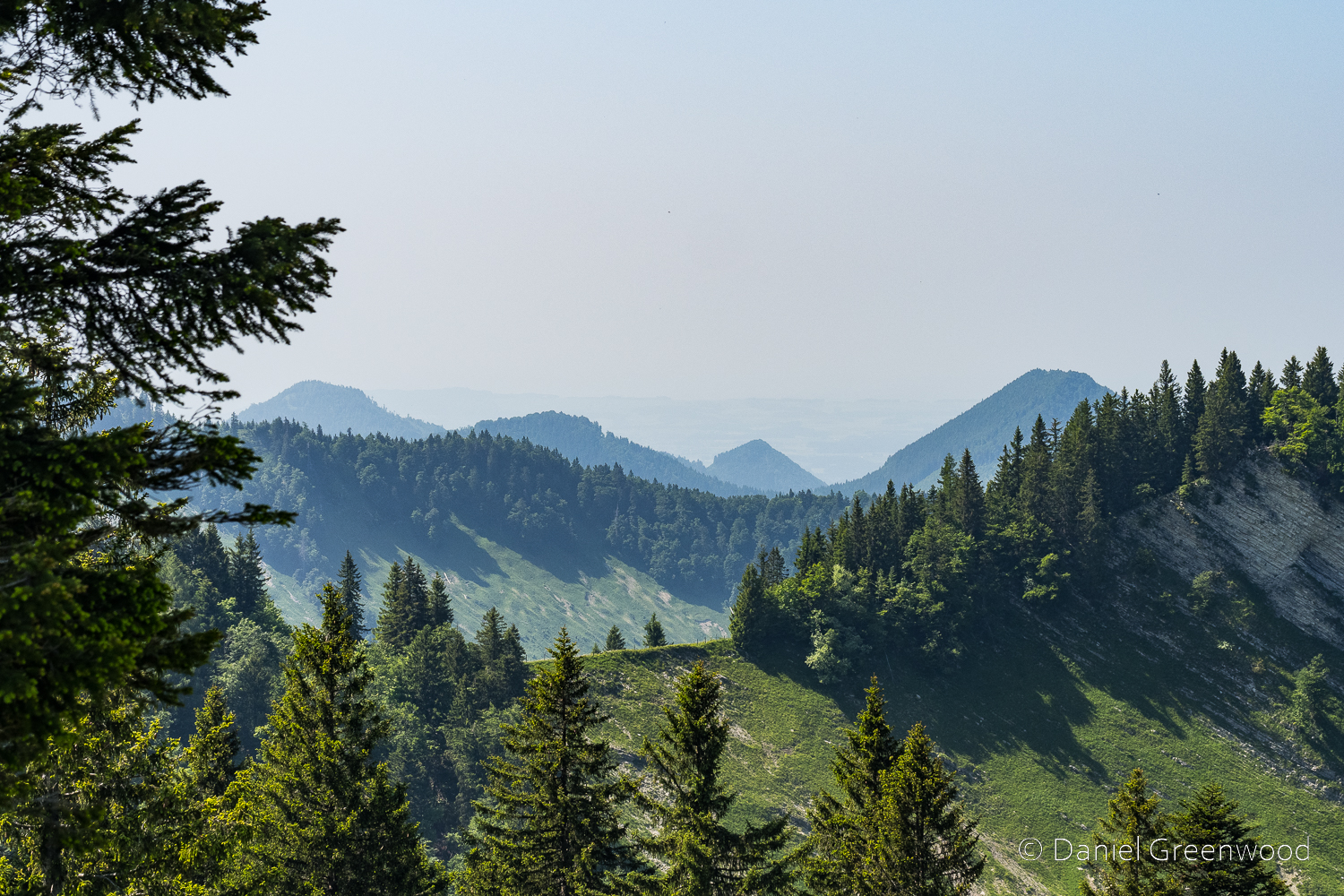
I write these blogs in my spare time because I want to raise awareness about the beauty and diversity of our landscapes. If you enjoy reading them you can support my blog here.