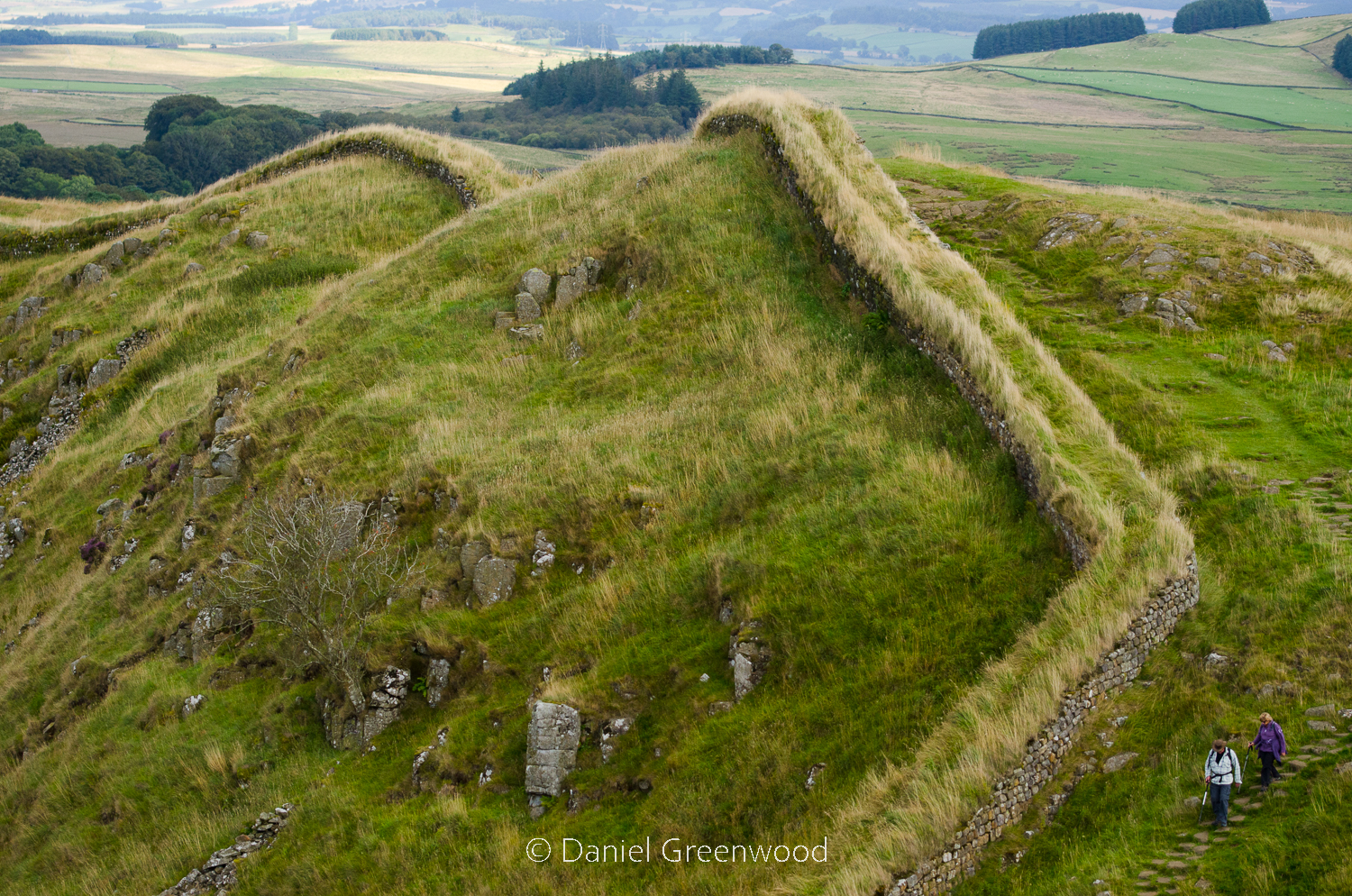
One tree story has captivated the UK media in recent months – the illegal felling of the 200-year-old sycamore that grew at Sycamore Gap, one of the most iconic sections in Hadrian’s Wall. For those who don’t know, Hadrian’s Wall is a Roman wall that is also a National Trail in Northumberland, northern England. It was Roman Britain’s northern frontier, the last holdout against the Scots further north.
The appalling felling of this wonderful tree, and subsequent degradation of Britain’s cultural heritage, has unleashed torrents of anger from many different quarters. The culprits, whoever they are, probably now realise that life will be far from simple for them going forward. The regret, you would hope, is immense.
There is a need to understand why anyone would do this, and for it to be understood in the wider context of nature depletion taking place in England, often under Government sponsorship. We should consider infrastructure projects like HS2, which have felled far larger and older trees, and degraded our landscape heritage in ways that have not been seen in a long time. And it’s not a project that is going particularly well.
I don’t want to go on about tree felling misery too much. Instead I thought this would be a useful opportunity to look at the place of sycamore in Britain. It’s not exactly everyone’s favourite tree, but I do love it. If you have any perspectives on sycamore, please feel free to contribute in the comments.
The helicopter tree
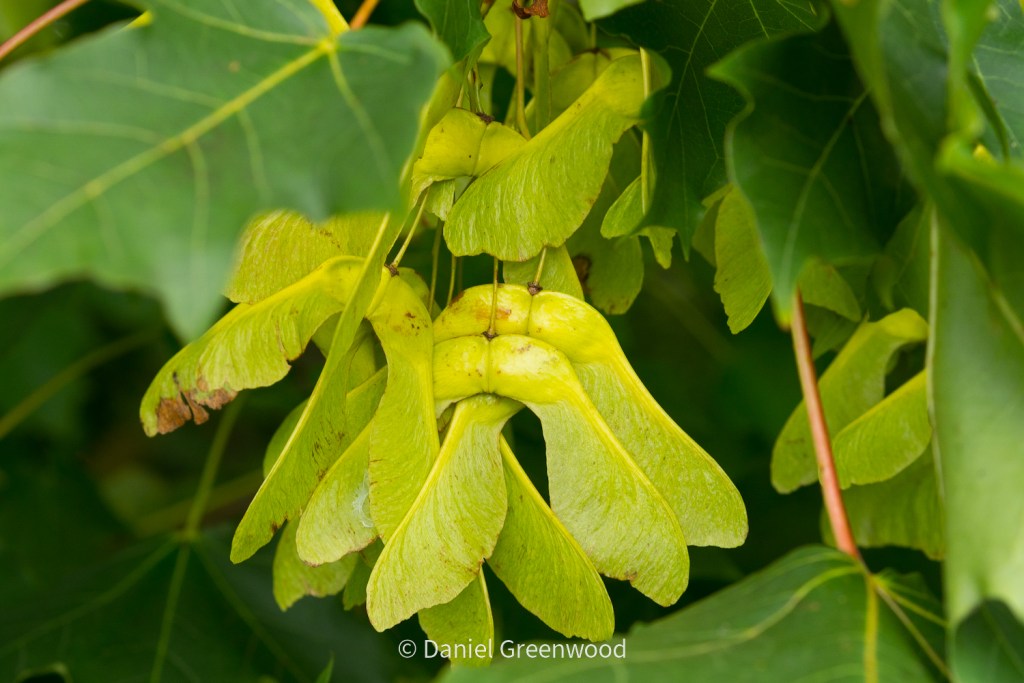
As a child my relationship to trees was about seeds rather than leaves. Acorns, conkers, and ‘helicopters’ were the ones I knew. ‘Helicopters’ was the game we would play in the playground throwing the winged seeds of sycamores into the air to see whose landed first. The seeds spun as they fell from the sky, a very happy memory of childhood nature connection.
It is strange how as children these seeds were used as tools of competition, with conker matches taking place via attached strings (a hole had to be drilled through the middle of the conker) and the seeds smashed against each other until only one was left in one piece. Conkers in this instance are the nuts of horse chestnuts.
Winged-seeds are not uncommon in nature, with birch seeds being one very effective winged-seed that can travel for miles and sprout in many different landscapes.

An unloved ‘non-native’?
In woodland management circles sycamore is often viewed as a non-native ‘weed’. People hate it! One problem is that its place in Britain is not fully understood, and there are some reversions to arguably xenophobic views of ‘non-native’ species. Oliver Rackham said that sycamore is either 400 years a British tree or from the Roman period (43-400AD). Though it probably had human help in ‘arriving’ in Britain, it has happily naturalised in many places. It’s likely to have been in Britain for longer than 400 years (see below).

Its lack of popularity among land managers, and particularly volunteer community groups (for some weird reason), is that it’s not believed to support a lot of insects or have expansive fungal relationships. But some of these ideas are contested, and I have seen sycamores in the Scottish Highlands that are dripping in lichen, moss and algae.
Sycamores hold a high density of aphids in the spring which makes them an important foraging resources for birds like blue tit, house sparrow and other small passerines during the nesting season. We have lost massive amounts of insect biomass in England since the 1980s, so sycamore has a big role to play in restoring that.

The Birnam Sycamore
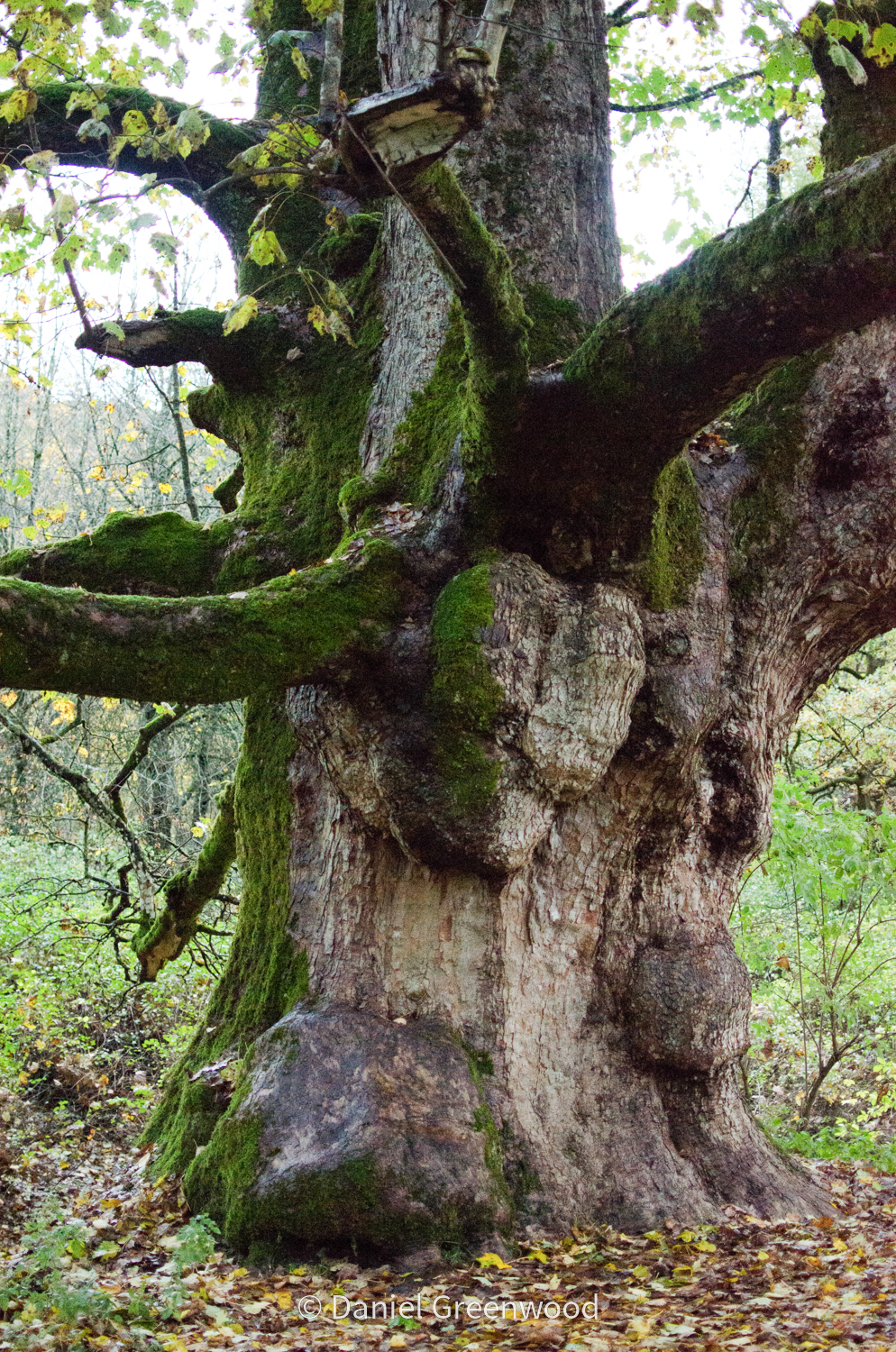
In 2012 my late uncle Joe took me to see the Burnham Sycamore, an ancient and gigantic tree in Dunkeld in Perthshire. This tree is said to be 300-years-old, pushing very close the idea that it has only been in Britain for 400 years. I haven’t seen a sycamore of this size since, but it goes to show that it could become one of the giants of the British Isles, given time.

A potential replacement for ash?
The wet and cooler climates of Britain and Ireland provide a happy home for sycamore. In Dartmoor National Park in Devon, sycamore grows in places where ash no longer can due to its severe dieback. Again it can be seen festooned with mosses and lichens, providing habitat for lots of different organisms. It seems to enjoy the ‘Celtic landscapes’ of Britain and Ireland and their high levels of rainfall, just like the lichens and mosses it hosts.

New self-seeded woodlands are rather unloved by most land managers in Britain, but with so many tree diseases affecting native trees, sycamore’s ability to create new woodland from scratch is significant. Ash is no longer able to create new woodland, whereas sycamore can. As a pioneer species it can create the condition for the ancient oak and beech woods of the future that are loved by so many.

Squirrel damage
In London, sycamore is struggling to reach maturity in some woodlands. This is because of the actions of grey squirrels, another non-native but classified invasive species that, unsurprisingly, divides opinion. Squirrels strip the bark of sycamore in summer, probably to gather material for their drays. Perhaps they are also aware of the antiseptic nature of the tree, a bit like how some birds of prey add oak leaves to their nests as a natural insecticide. The impact of squirrels results in a mess of dead brown leaves and fragmented twigs. It veteranises a tree but usually at an age too young to make them of long-term ecological value.
Spoon-maker’s dream
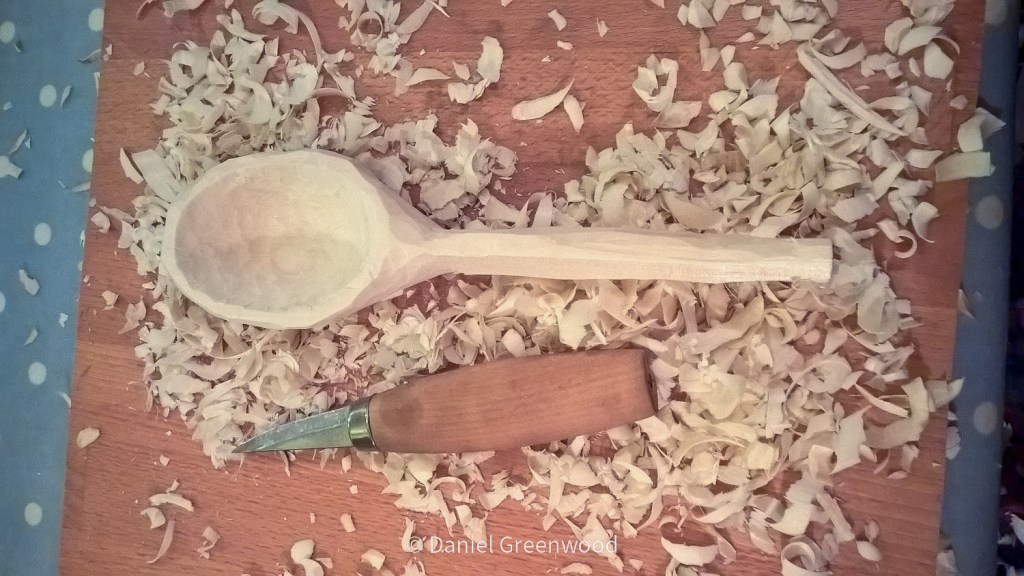
For anyone who’s dabbled in whittling, sycamore is one of the absolute best options available. It is naturally antiseptic and has a lovely soft and smooth wood for carving when fresh. There are untapped industries in this kind of woodland produce that could have reduce the demand for plastic utensils and other wooden products from questionable sources.
So, as many people mourn the illegal felling (or maybe coppicing?!) of the sycamore gap tree, it gives us the chance to see where this wonderful tree species sits in our lives. It appears that the fondness is far greater than people realised.
Thanks for reading.
I write these blogs in my spare time because I want to raise awareness about the beauty and diversity of our landscapes. If you enjoy reading them you can support my blog here.
 Unlocking Landscapes