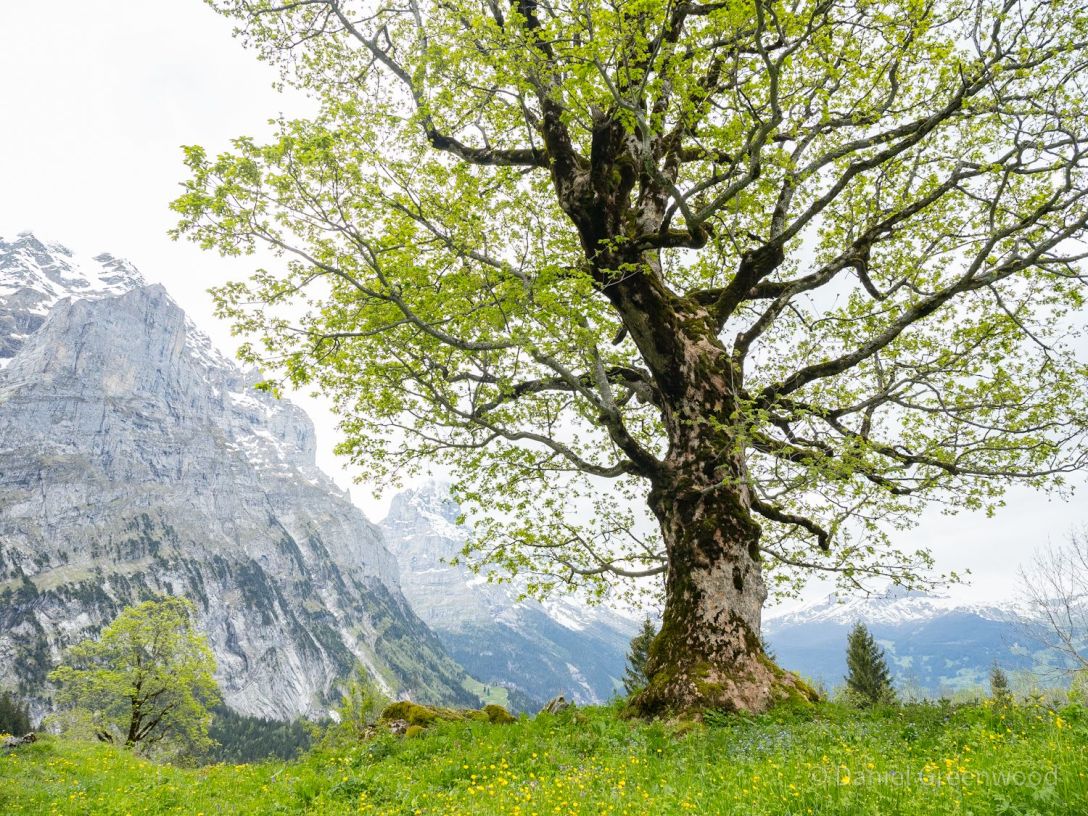
Continuing my series of posts about visiting the Jungfrau region of the Swiss Alps in May 2024, this one focuses on the sycamore trees which are so abundant there. They were seen on a short but constantly ascending walk at the foot of the Wetterhorn.
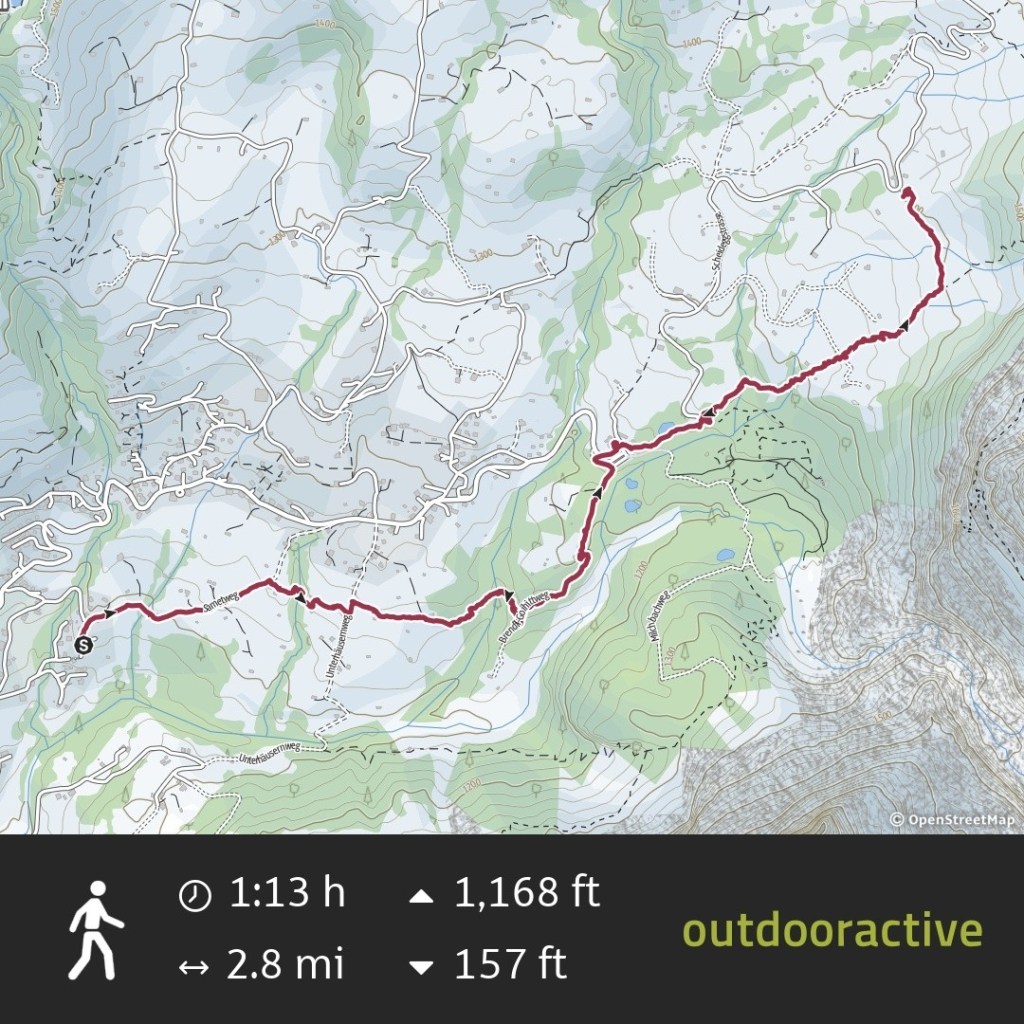
If you want to do this 3-mile walk for yourself, it begins in Grindelwald and ends at the owl sanctuary/mountain café with a return bus available at the end. This is the route we took (ignore the starting point, just begin anywhere in Grindelwald):
I’ve posted a couple of times about the sycamore tree (Acer pseudoplatanus) as I think it straddles that special boundary between human culture and wildness that is probably my creative sweet-spot. In Britain sycamore is at once reviled by nature conservation puritans, accepted by rewilding pragmatists, and held as a symbol for the British love of trees in the form of the illegally felled and now martyred Sycamore Gap tree.

In the Bernese Oberland I saw sycamores playing a fundamental role in cultural landscapes at the foot of the Wetterhorn, one of the Jungfrau’s towering peaks.
What do I mean by cultural landscapes? My understanding and use here indicates a landscape that remains wild or ‘natural’ but with a heavy human influence still. English national parks are cultural landscapes, whereas those managed by wolves and grazing animals without human management plans in North America, are ‘wildernesses’. That in itself is questionable from a Native American perspective, but another blog.
There isn’t a lot of information about sycamore wood pasture as a cultural landscape but for this dissertation about sycamore wood pasture in the Northern Alps.


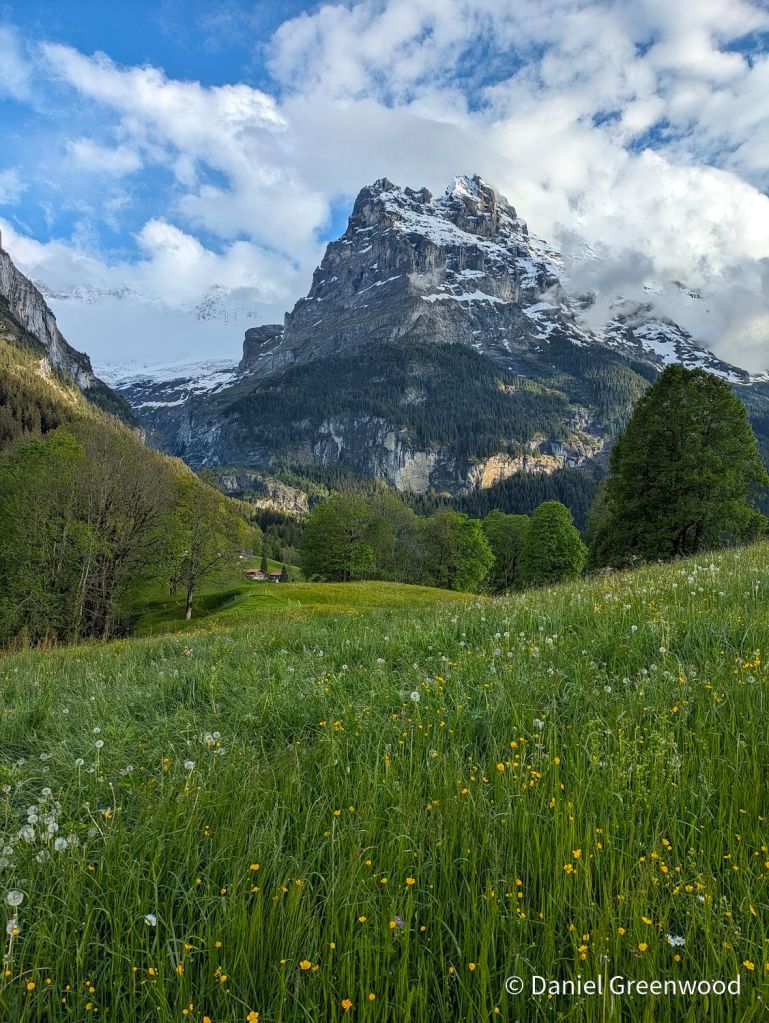
The Wetterhorn seen above meadows of yellow rattle, and kidney vetch, both growing in profusion.
I posted more generally about the meadows of Grindelwald (a mile west of this location) here:
A reminder that you shouldn’t pick flowers, trample on them, or knowingly disturb wildlife or livestock in these extremely sensitive places. In terms of you being trampled, cattle were behind electric fencing where present.

The cattle are an iconic element of these landscapes in the Alps, and provide an important role in grazing the grasslands.

The signage is impressive in Switzerland, some provide hours and minutes route descriptions of destinations. Not something I’d seen before, but now there’s no going back, or at least if there is, you will know how long it takes!

The walk crosses the Horbach river at least once.
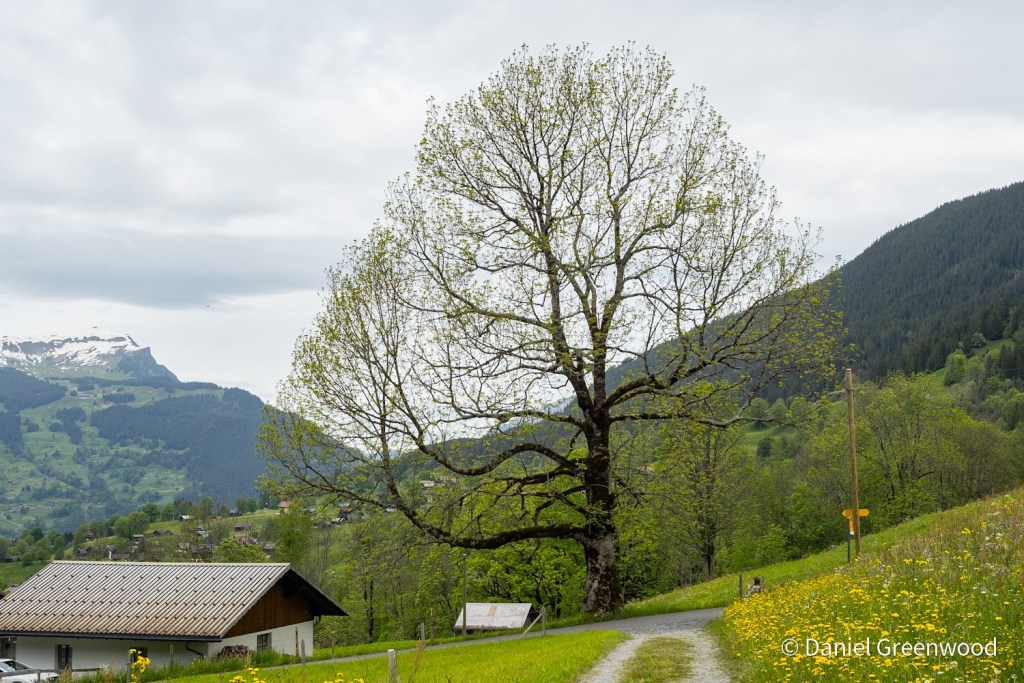
A large, moss and lichen-covered ash tree (Fraxinus) showing no signs of ash dieback disease, thankfully.

It was nice to see some roughness and history in what is an otherwise ‘spick and span’ setting. I presume the huts are built on stone to prevent rising damp decaying the timber frame.

Spiked rampion was a new plant for us. Apparently it’s endangered in the UK. It was growing in woodlands and meadows around the Grindelwald area.

His a mighty view of the Horbach looking towards the Eiger.

Red-banded polypore is common in continental Europe but not as easy to find in the UK, so I always enjoy seeing it.
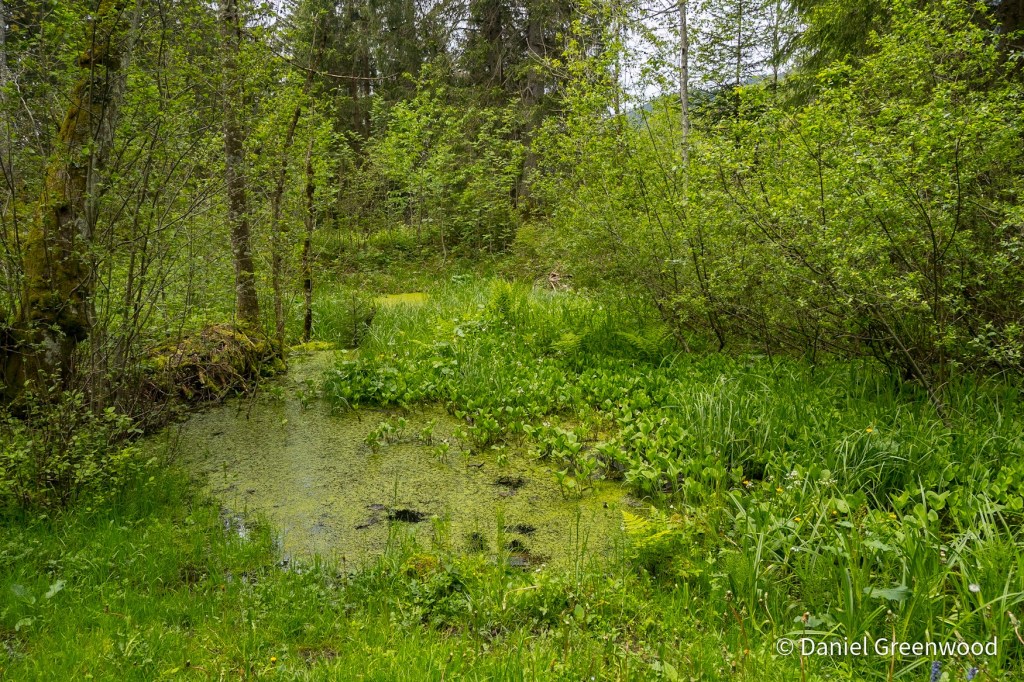
I love woodland ponds, especially ones as wild and dynamic as this one. This is probably an ancient pond.
After this point you reach a hotel which I didn’t take any photos of. It’s a good place to have a hearty meal. Just don’t expect to charge any devices, we heard an English couple seemingly fall out with the staff over that. Oops.
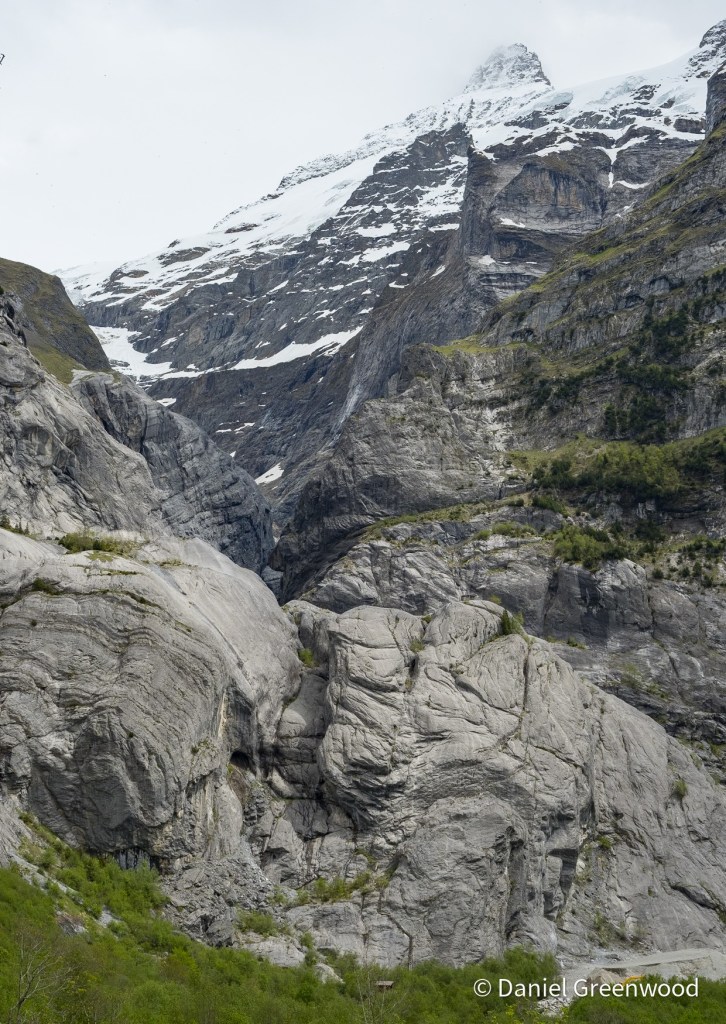
After stopping at the hotel you pass this incredible cut in the mountain side. The rock looks twisted and dramatically compressed. There’s a small quarry in operation, glimpsed in the right hand corner.

These walks always involve huts belonging to local people. What a life that once would have been.
After this hut we turned into the sycamore wood pasture.

I know very little about mountain hydrology and the role that meltwater plays in feeding ecosystems lower down. But looking at the lushness of this meadows makes me wonder about how the ice melt provides such a fertile location for grassland, and sycamores. Sycamores do well in damp conditions, but not too wet.

Other lifeforms that enjoy wet conditions are of course mosses. They’re thick on this trunk. I didn’t spend any time attempting to identify any.

Fairy foxglove (Erinus alpinus) is another new plant we encountered. It was growing on the footpath.
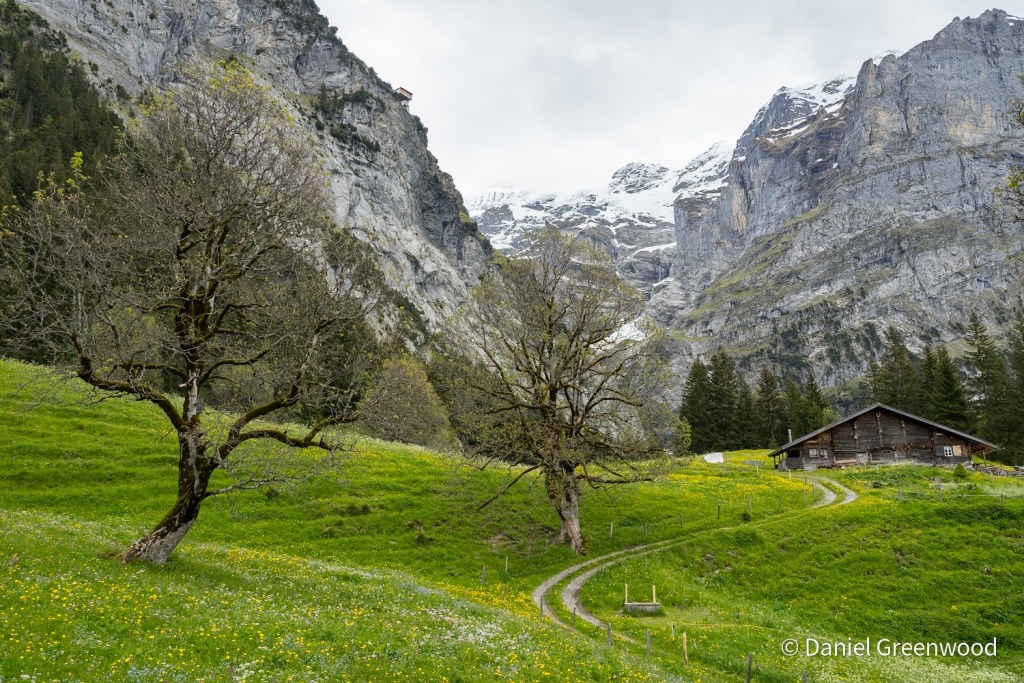
A view into what I think is the Upper Grindelwald Glacier (Oberer Grindelwaldgletscher).

Walking in such an awesome location can feel rather overwhelming.
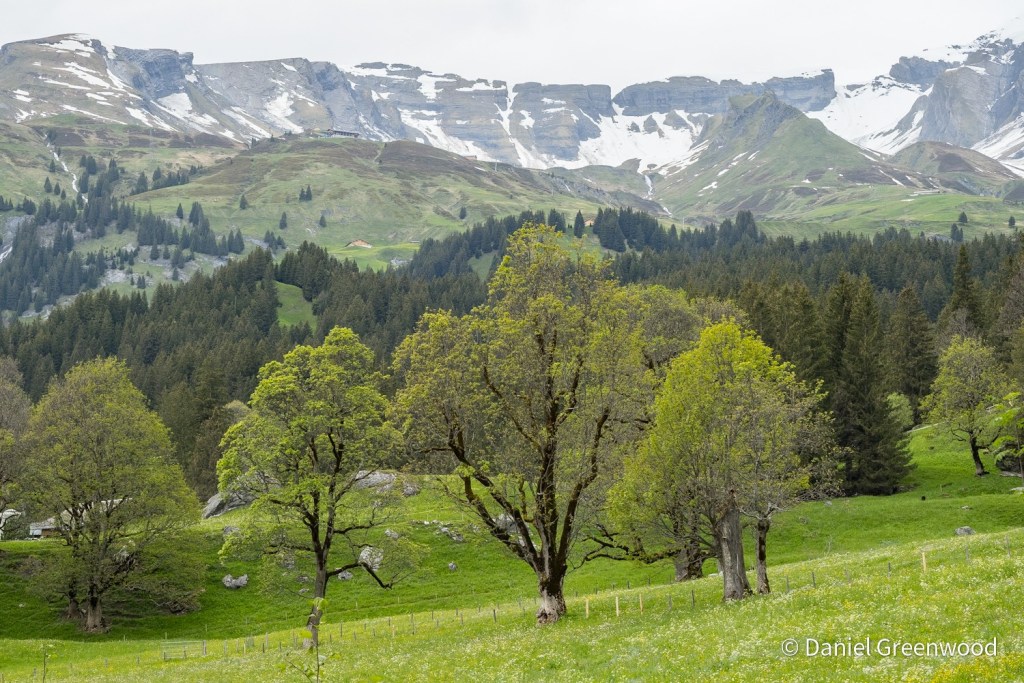
View north-east with a group of moss-darkened sycamores before growths of spruce. I think the peaks beyond the snowy tops can be reached by walking into the Grindelwald First gondola, accessible via the town centre.

A view south-west towards the Eiger ridge.
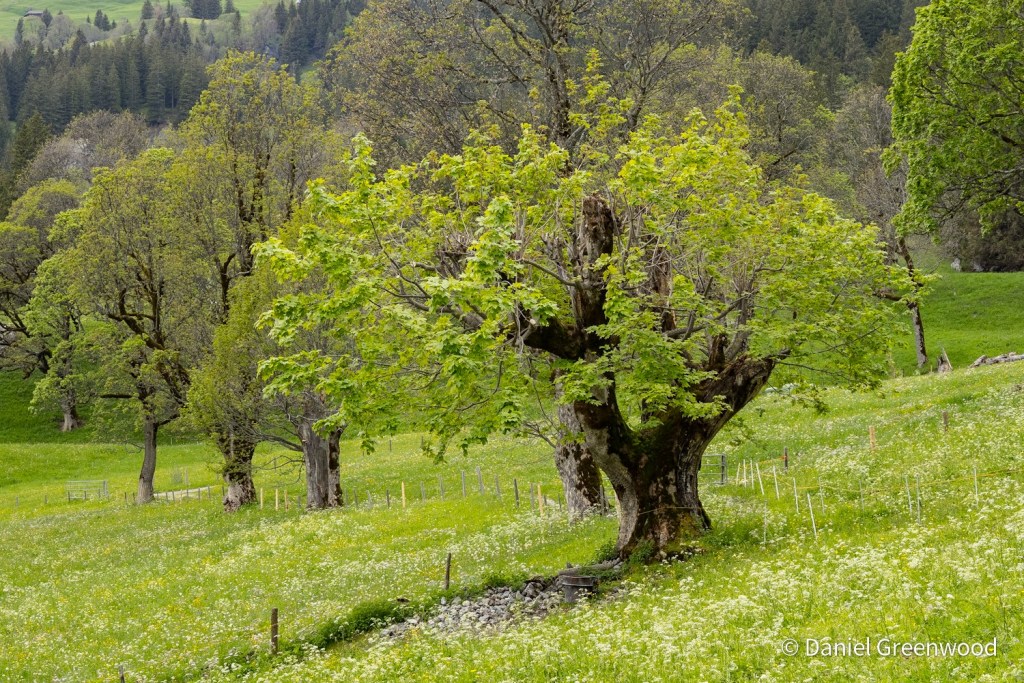
An old pollard sycamore coming into leaf for another year. The trunk is thick with moss and no doubt with lichen and algae too.

The Eiger Trail passes up here over the snow but it was closed due to rockfall.
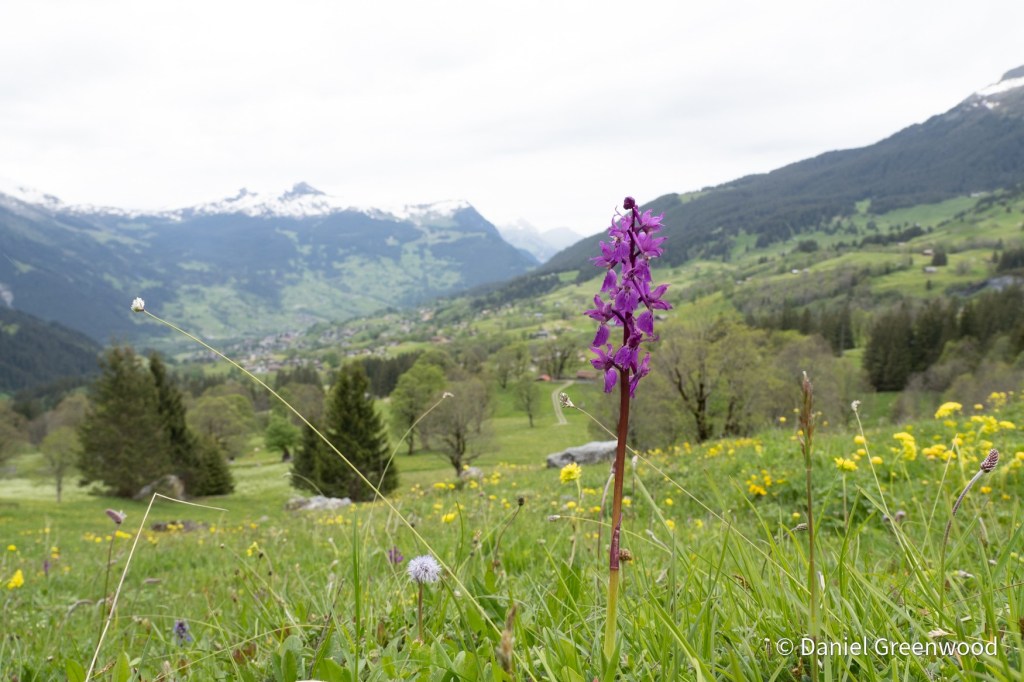
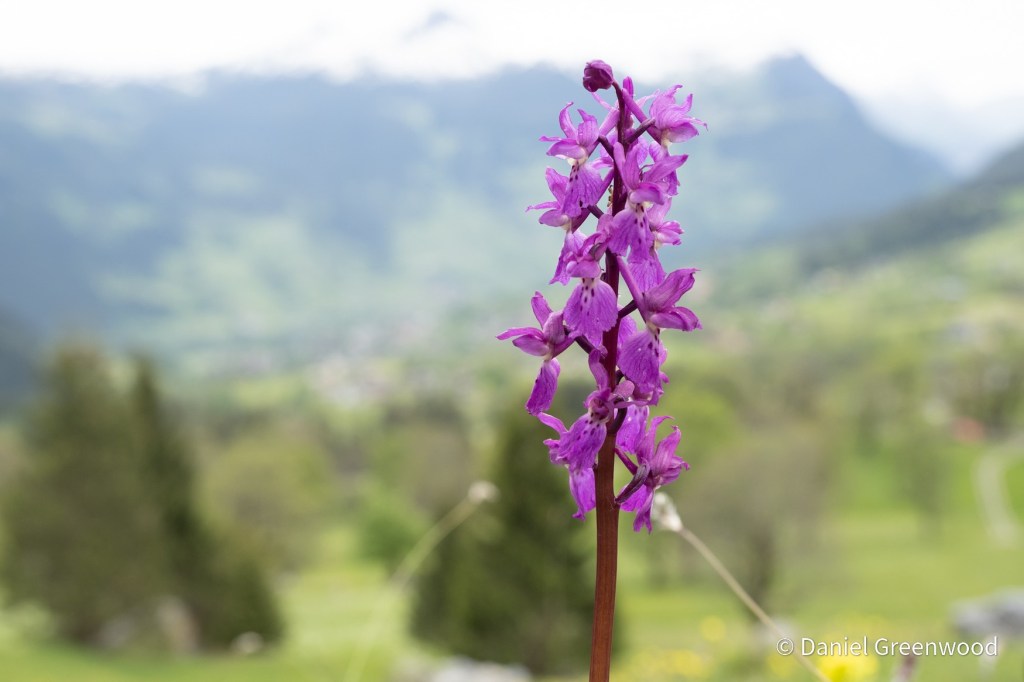
Early-purple orchid was not a common sighting during our time in the Alps, so seeing one against the vista of Grindelwald was nice.

Looking west towards Männlichen (see post here).
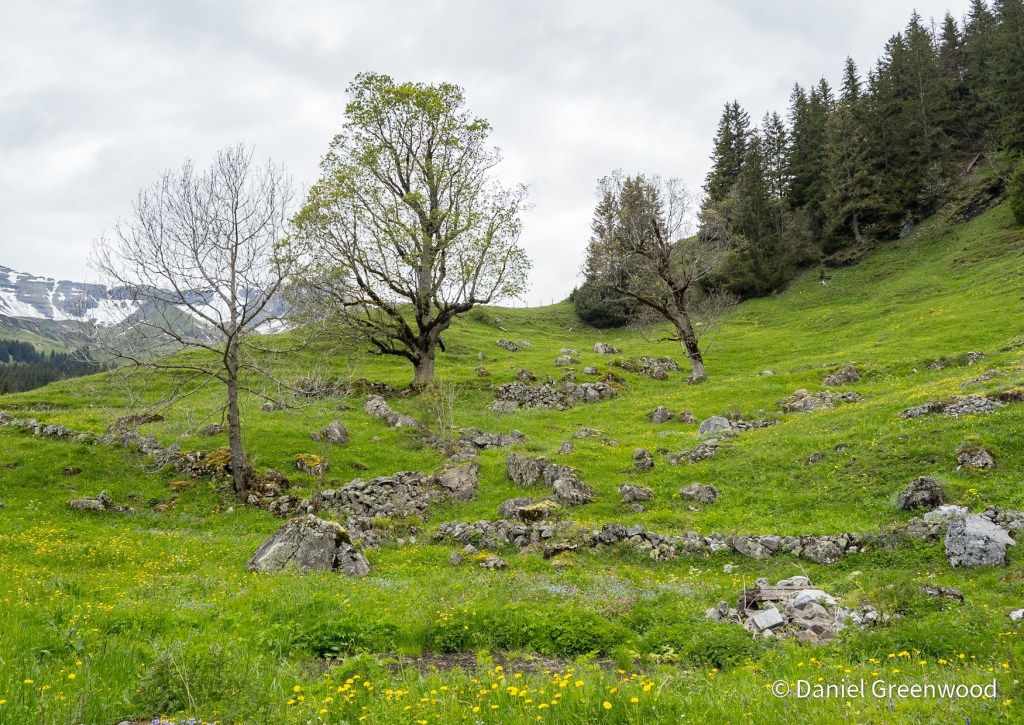
I was intrigued by these stone walls, reminding me of forgotten settlements seen in Ireland, Scotland, Dartmoor or Yorkshire. It’s a contrast with the tidy timbers of Grindelwald.

The walk ends at this lovely cafe on the road, across from the bird sanctuary.
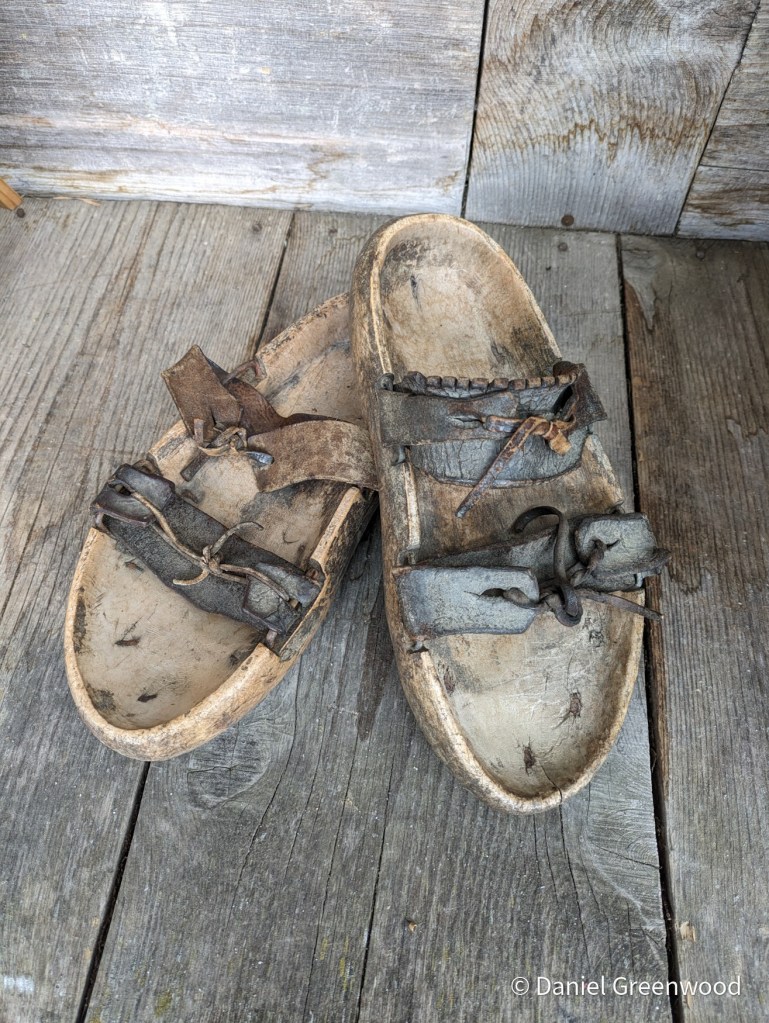
Some old shoes on display. Made with sycamore wood?

Just a few of the treats on offer.
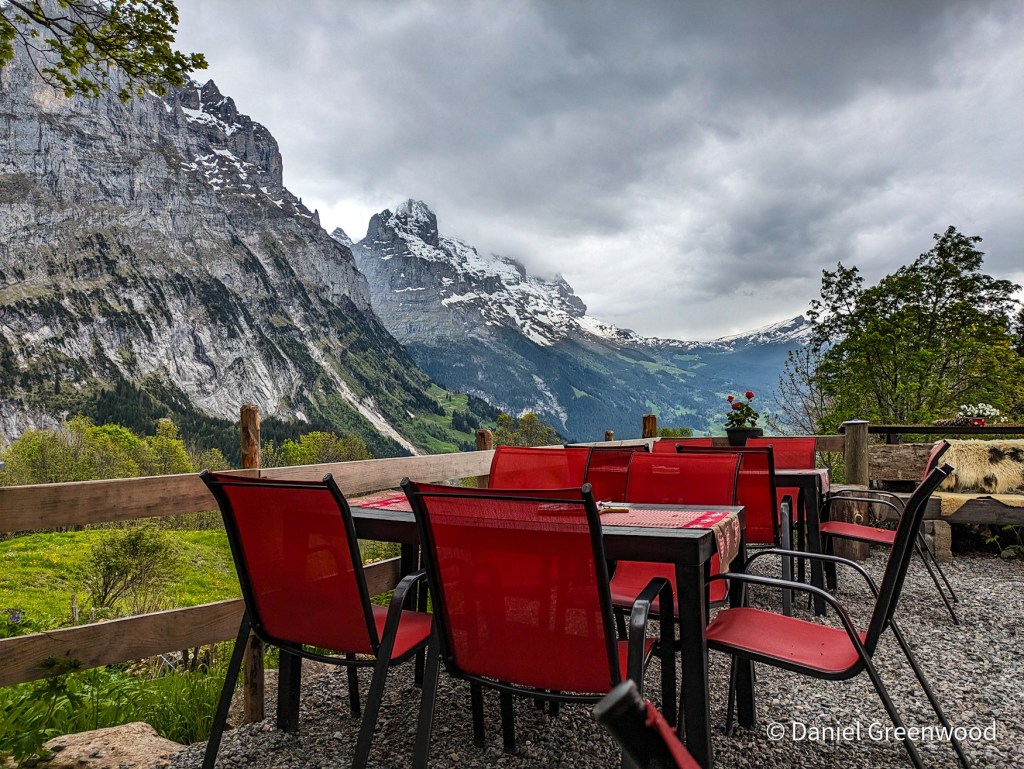
There aren’t many cafes that can beat this view.

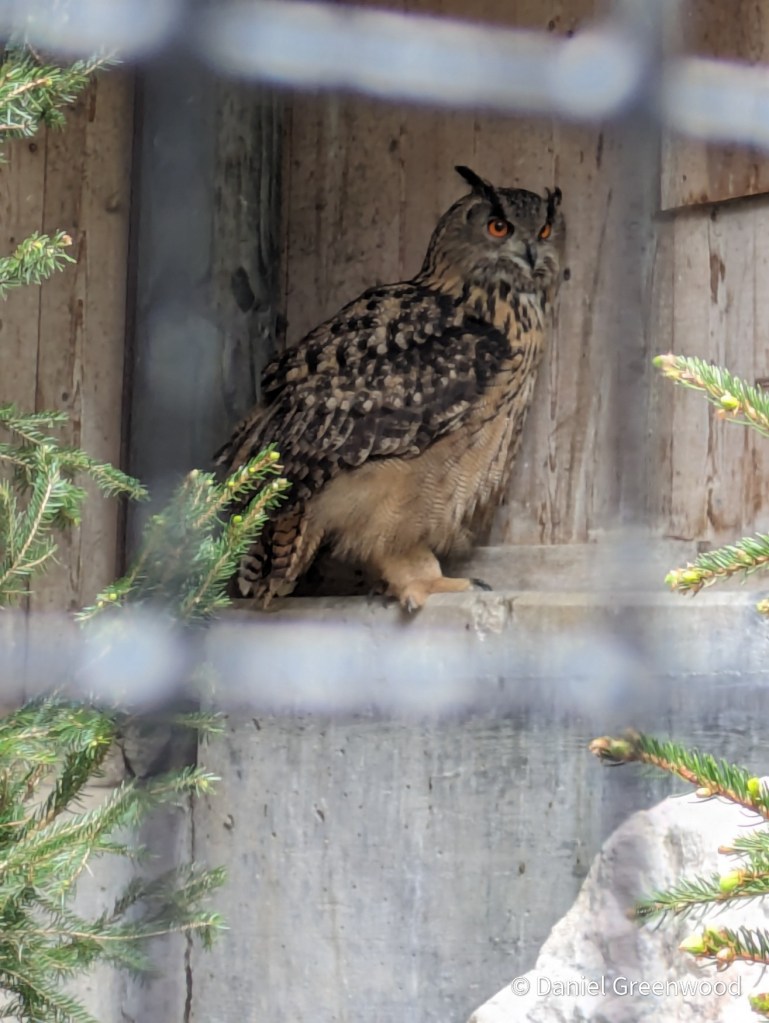
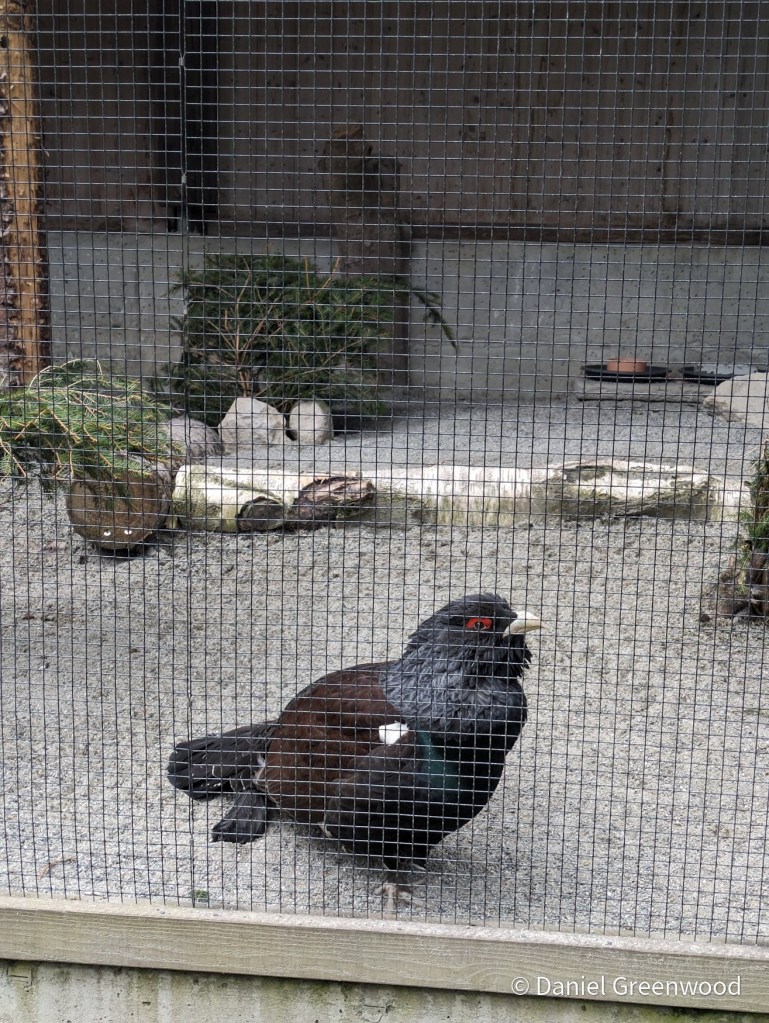

The Alpine Bird sanctuary (Alpenvogel Park), home to capercaillie, eagle owl, snowy owl, long-eared and tawny owls.
Thanks for reading.







 Unlocking Landscapes