
Around 9th May 2025 the red mason bees were working to seal their little chambers shut, as can be seen below.

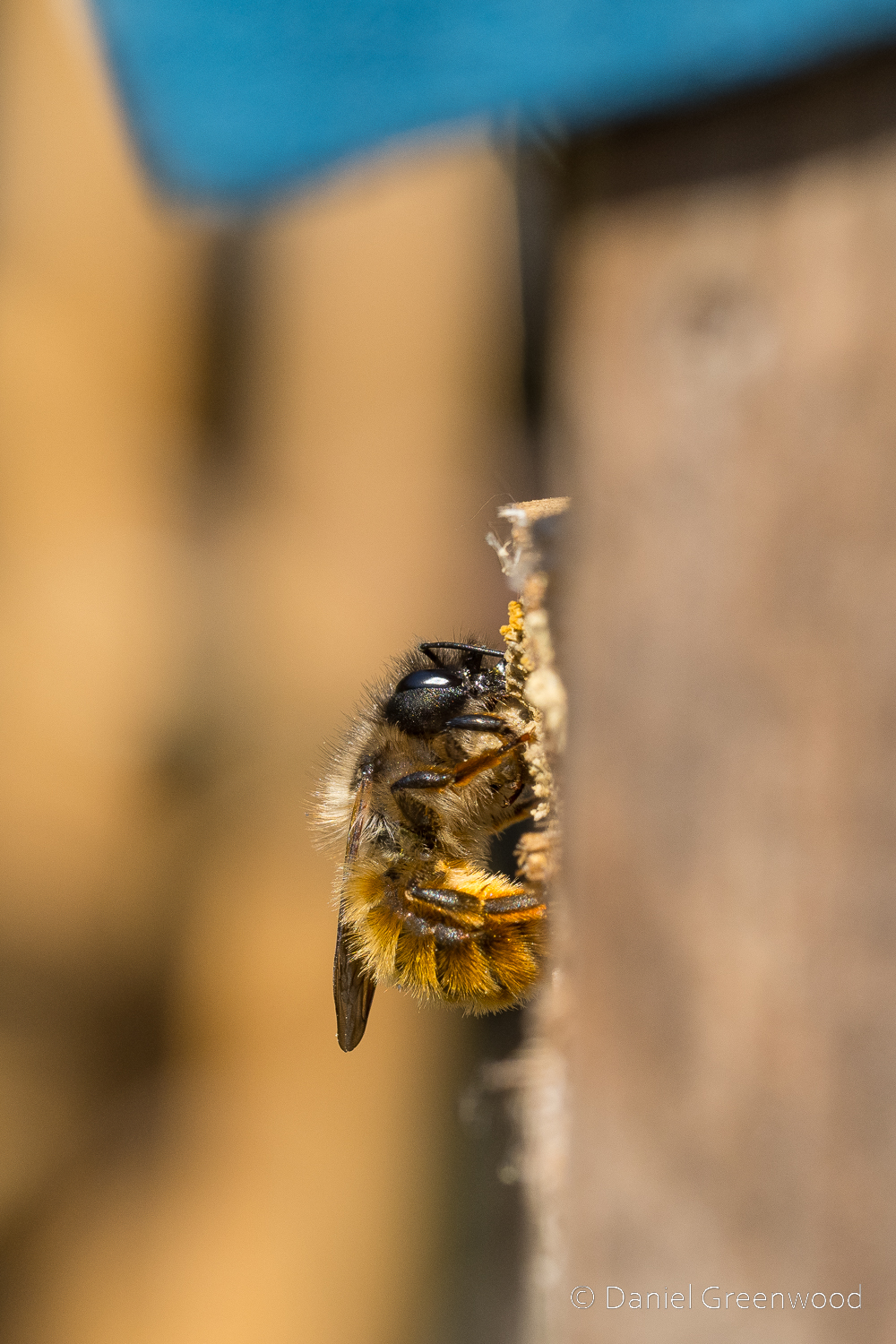
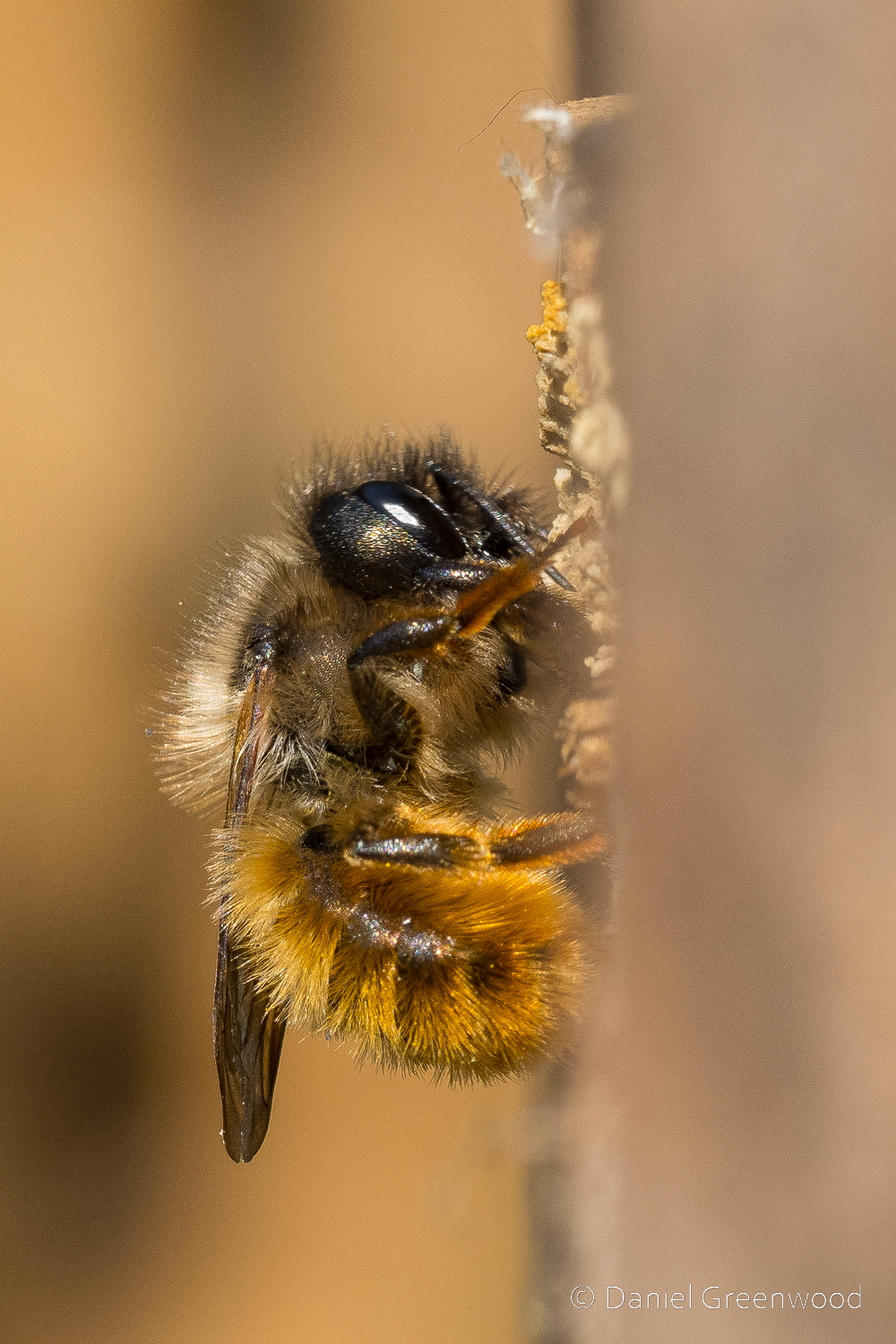

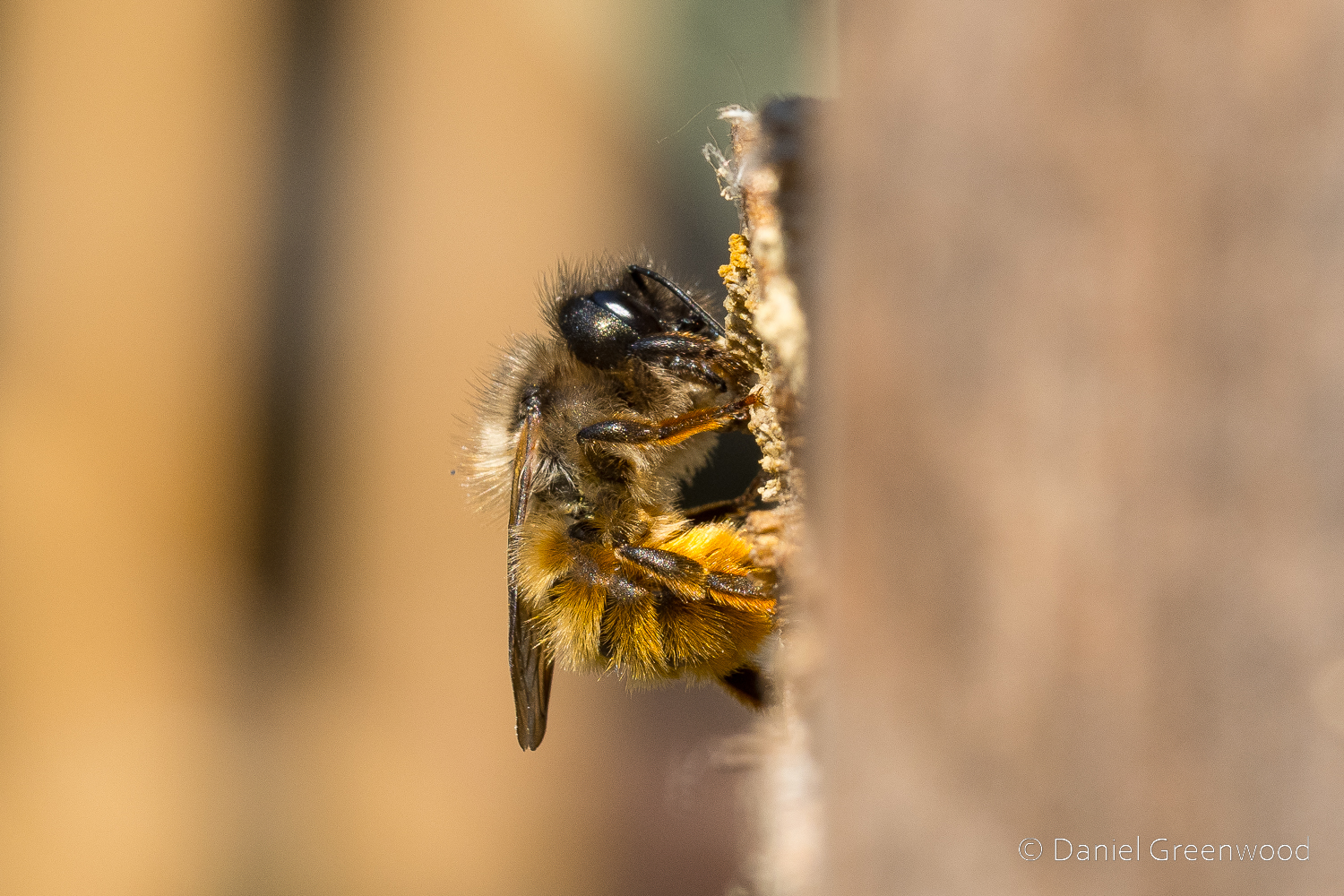
2024 was a better year for these solitary bees in my garden, with far fewer in 2025. Their numbers will naturally rise and fall over the years. They’re important pollinators, especially in agriculture, so helping them has a wider societal impact for people who desire it.
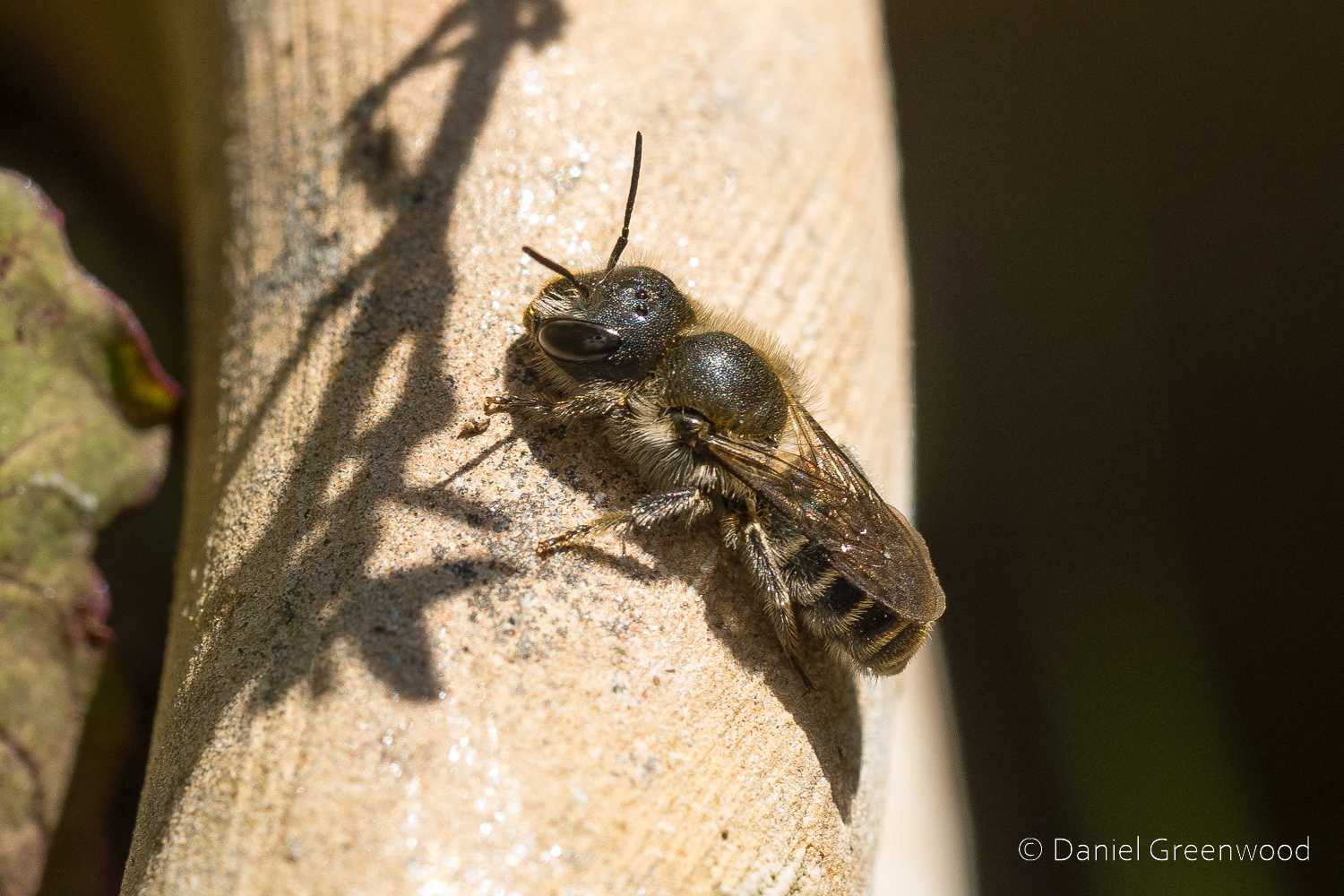
In the first of the hotter spells each year I begin to notice these small bees. They’re usually sunning themselves on the edges of ceramic pots, wooden sleepers or fences. I am fairly sure this is a blue mason bee. They are quite skittish but do often return to the same perch if they can see that you’re not an immediate threat.
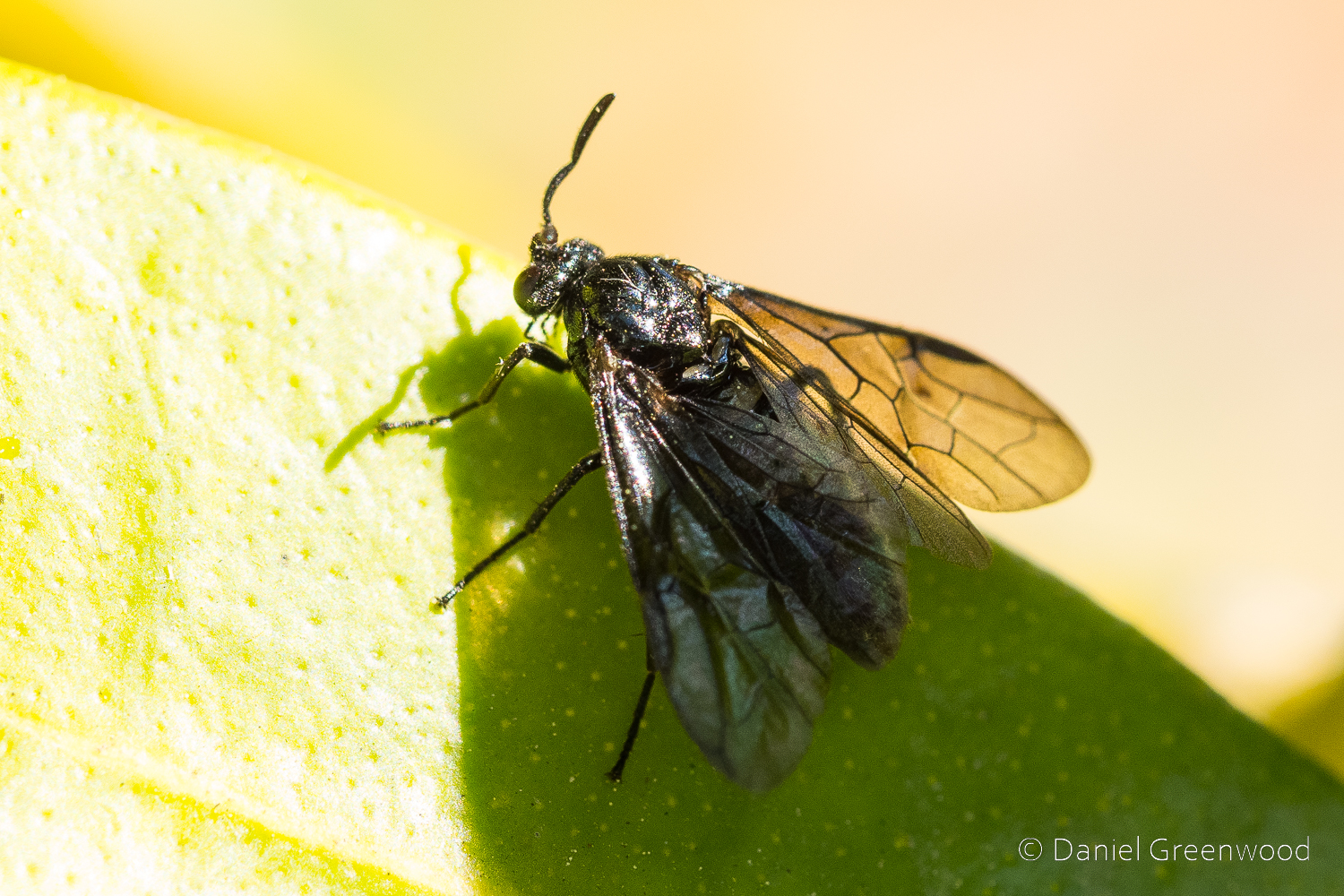
Elsewhere in the order hymenoptera (bees, wasps and ants) I saw this unusual-looking winged-insect hiding in the leaf shade. I’ve had to edit this a bit to bring the shadows out, but it’s a species of sawfly. It seems to have two antennae in the shadow, but for the life of me I can only see one!

I noticed the first swollen-thighed beetle of the year perched on the burgeoning fennel leaves.
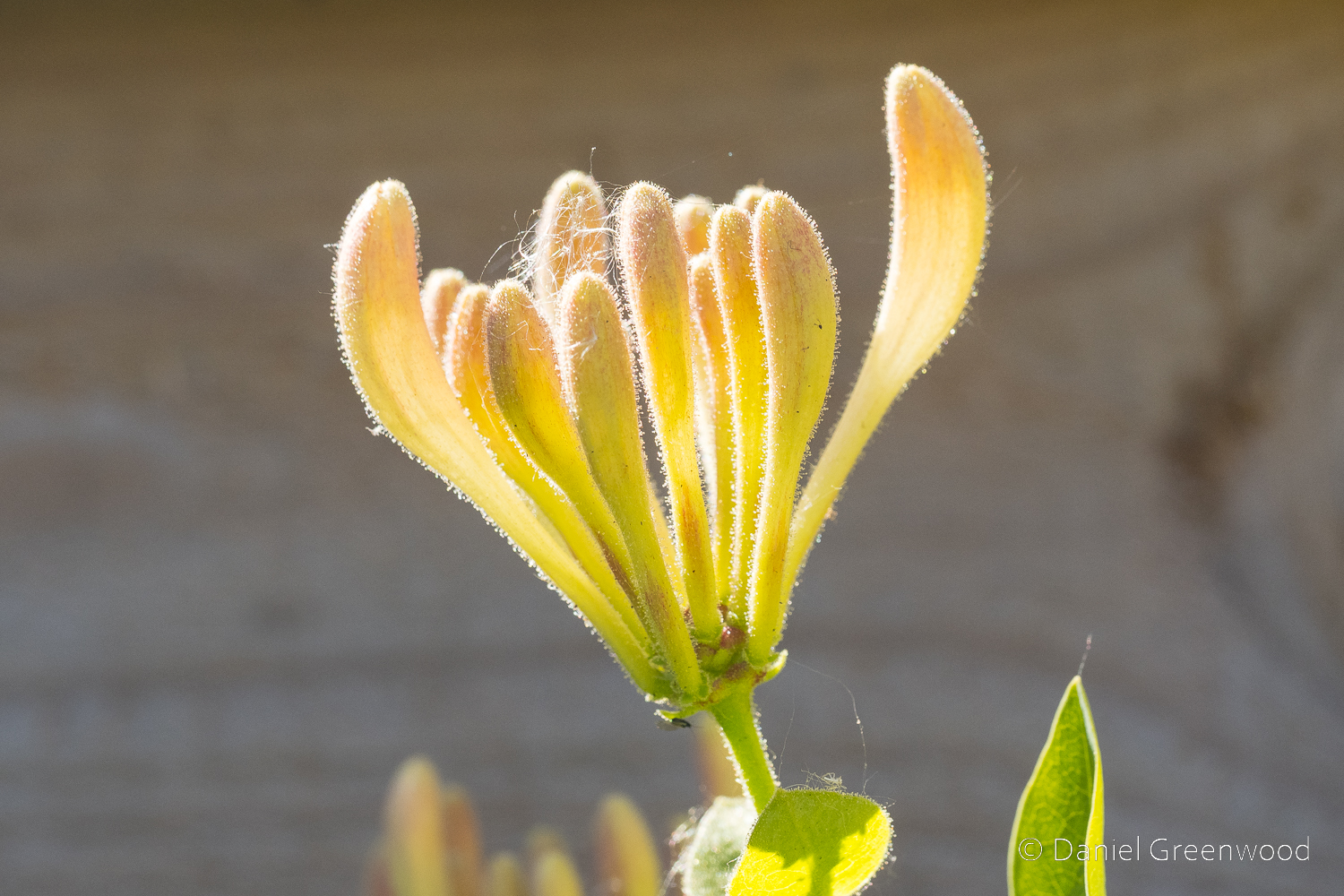
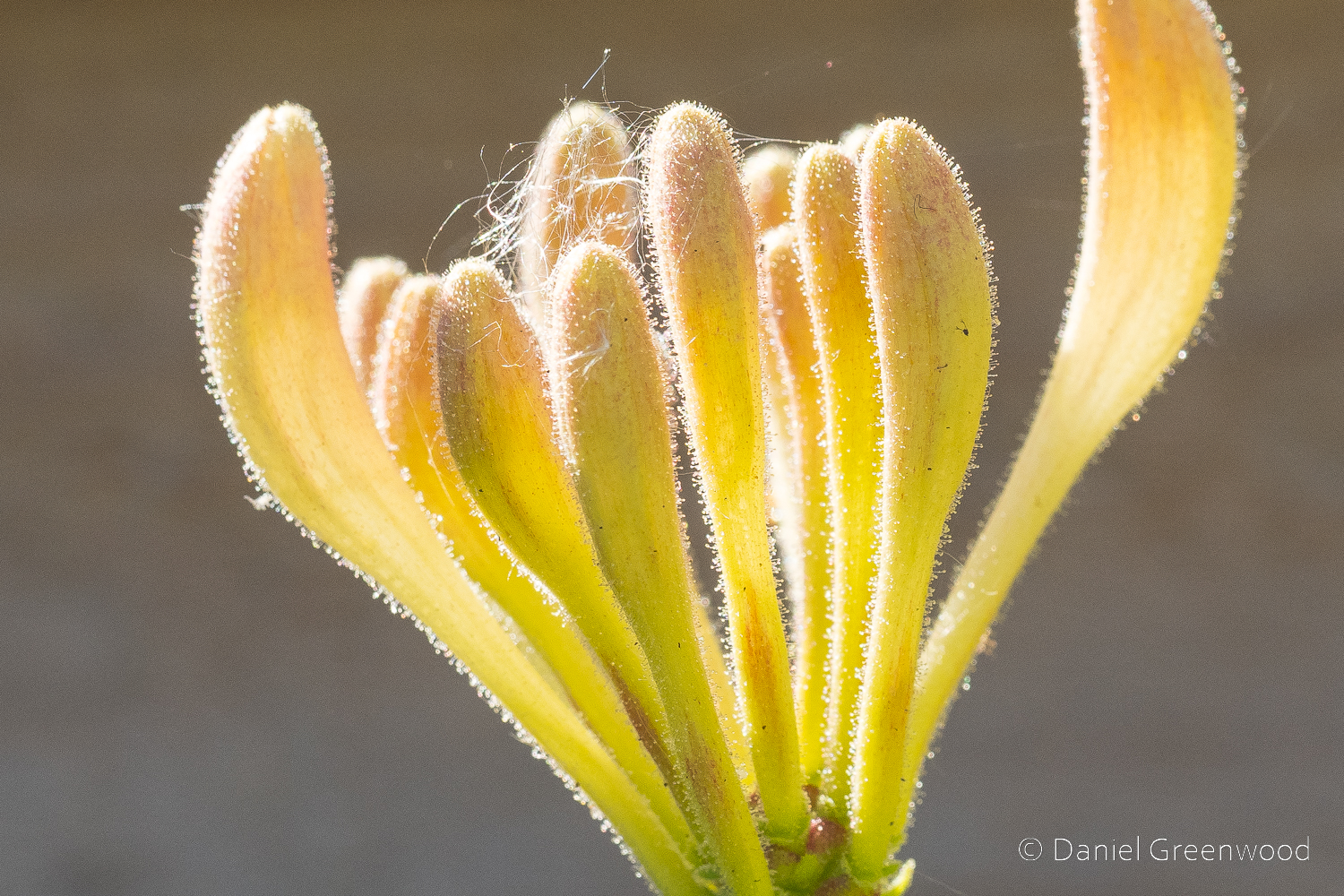
In taking a few pics of this honeysuckle I noticed that there appear to be little sticky nibs on the flowers. I’m wondering if this is to trap pollen when bees visit, or potentially to snare invertebrates in the carnivorous sense. I can’t find anything online about that, but I now know just how invasive it is in North America.
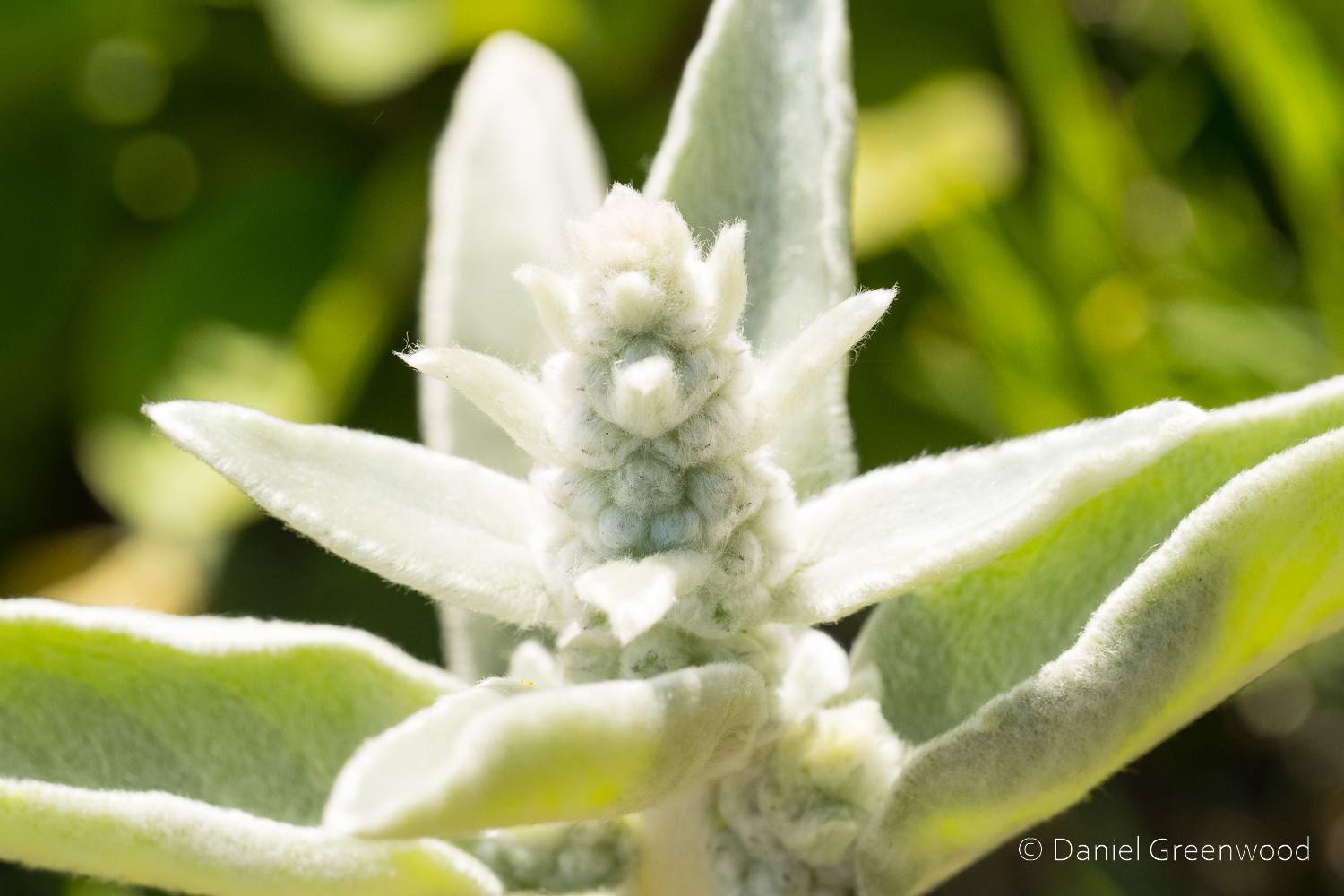
And finally, the trusty Stachys was close to flowering by the 9th May. It looks very cosy and comfy here, ready for the wool carder bees. What I didn’t know about this plant (known as woolly hedgenettle) is that it’s native to Armenia, Iran and Turkey. I bet it has some very cool insects feeding on it there.
Thanks for reading.
 Unlocking Landscapes