Midsummer buglife 🪲

Warnham Local Nature Reserve, West Sussex, July 2024

I was making my first meaningful trip out to a wild space after being ill with Covid, to see if I could concentrate enough on taking some macro pics. Thankfully there were some very docile bugs pleading for their close up. Here you go, team.

I’ve missed a lot of the macro season this year, what has probably been one of the ‘worst’ summers in this part of England. Lots of rain, quite cool, clear lack of insects. I’m only just getting over brain fog so not able to compute how worrying the insect declines are right now. It seems that approving the use of bee-killing pesticides without appropriate risk assessment doesn’t help.

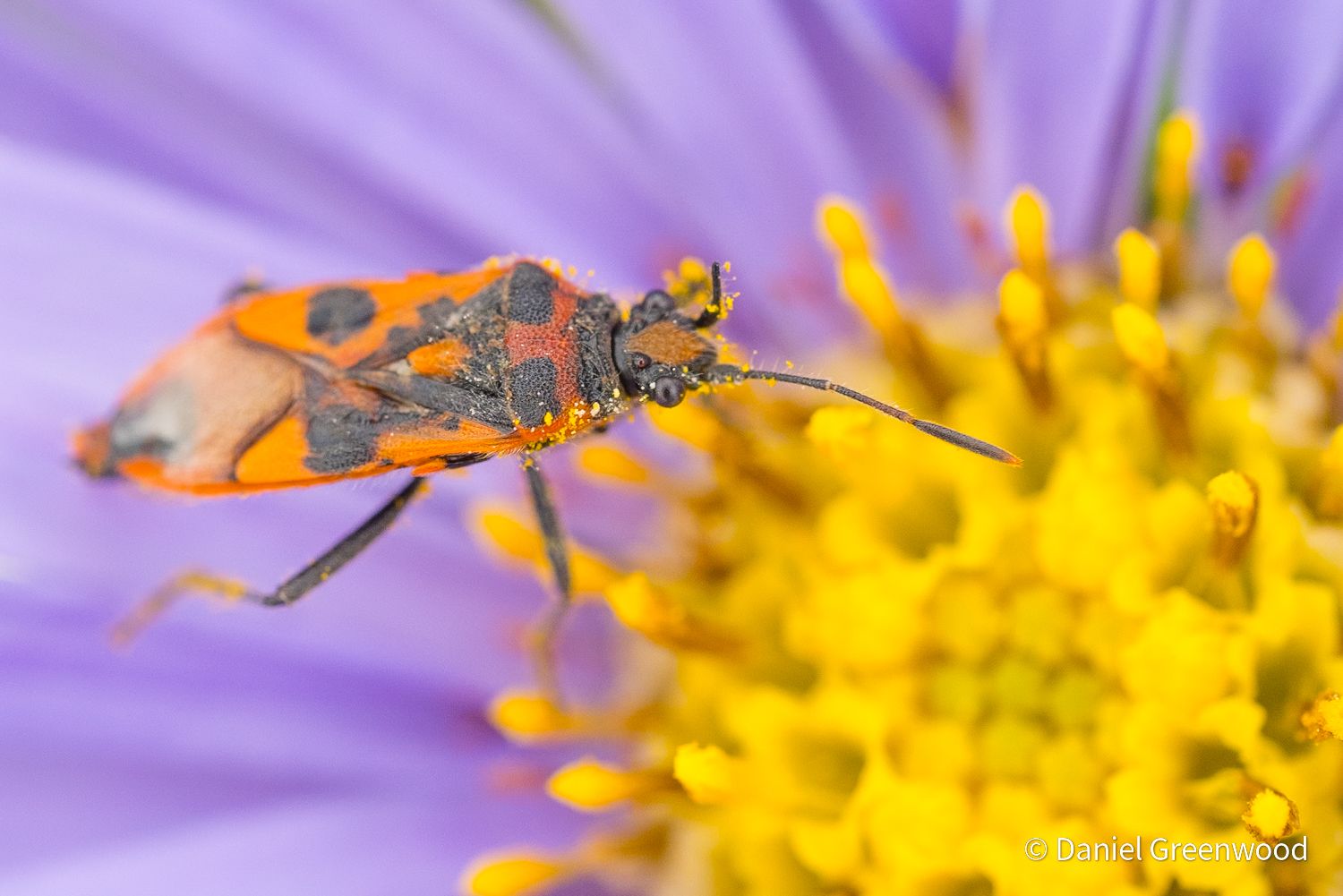
I was fortunate to spot this cinnamon bug nectaring in the flowerhead of a Michaelmas daisy within a few minutes of my visit to Warnham Local Nature Reserve. I love how this pollinating beetles get so covered by the pollen. It’s a bit like me after eating a choc ice.

Though flies are feared and reviled for their connections with unpleasant organic matter in this world, some of them are very interesting to look at. Many of them also tend to be pollinators. It’s not all about the bees. This fly is probably Nowickia ferox, which feeds on flowers. Moth fans – look away now. Their larvae develop in the dark arches moth.
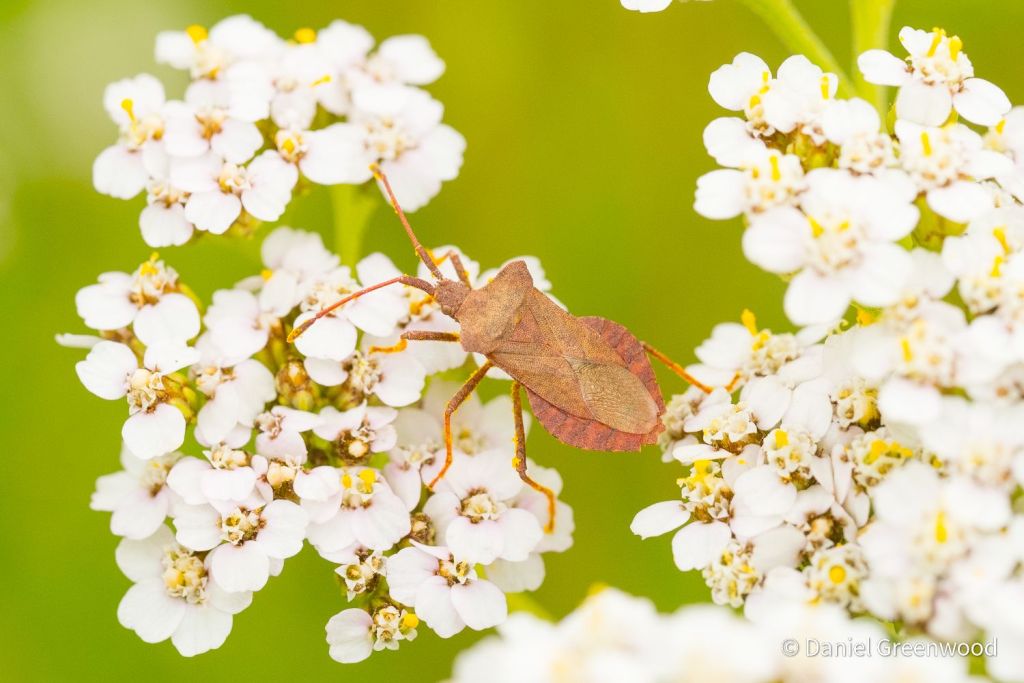
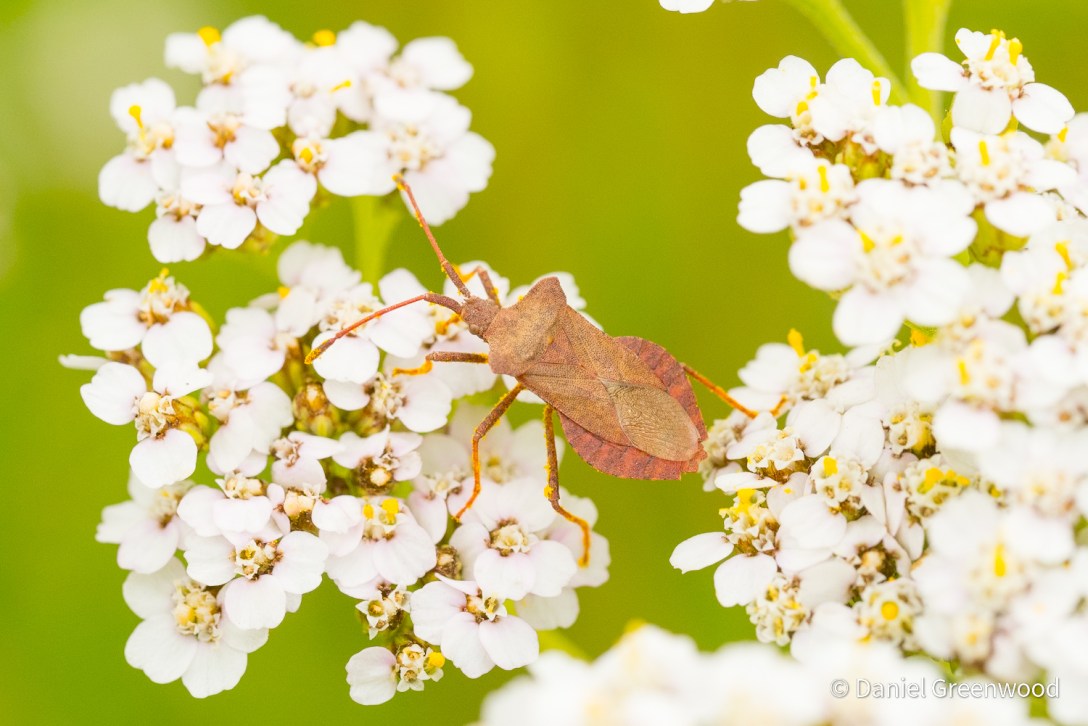
Dock bugs are a common sight in southern England, especially in flowery grasslands and meadows. They are very easy to photograph – they’re like the mushrooms of the insect world, slow moving, if at all. How trusting.

Elsewhere, this mid-summer period is one of hoverflies, many which looked very similar to the untrained eye (this one) but which can be nice subjects among the flowers of hogweed and other umbellifers.

I was pleased with this photo of a dancefly as it nectared on some ailing hogweed flowers. That is one heck of a proboscis. The light is very soft and the background is a serene green.

Over the years (I’ve been using a dedicated macro lens since 2014) I’ve learned about species behaviour, and how a little bit of knowledge can really help you to find wildlife. In terms of invertebrates, I remember a blog written about fenceposts and how they were a good place to find roosting insects. This is solid advice.

During this visit, in the forefront of my mind was a past, failed attempt to photograph a robberfly where it sat on a handrail. On that same handrail I didn’t find a robberfly, but instead my mother and father-in-law, which was also nice. But, that wasn’t the end of the story…

Turning to head home, realising how fatigued I was, and lacking in normal, basic levels of energy, I spotted something. A robberfly was sat on a different handrail! It’s so pleasing to have this sense of validation for my fencepost knowledge.
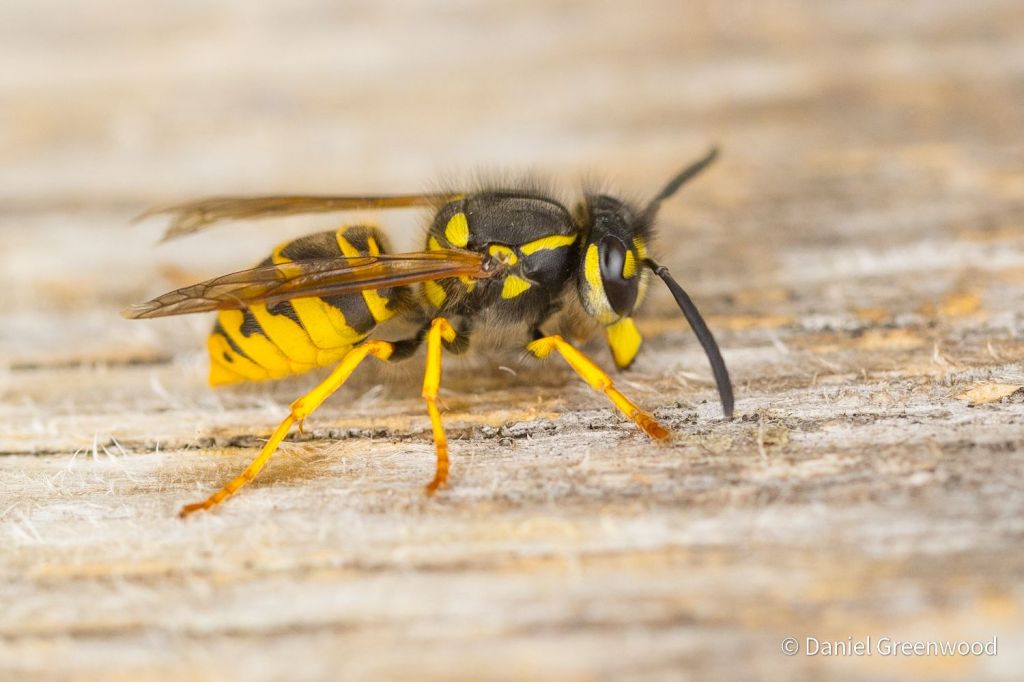
In the world of wasps, we are of course in the throes of the UK Media Silly Season (despite there being a General Election, potential dictatorship in the US, and far-right riots across the UK!) and wasps are in the news. Interestingly the mwin story is, where are they?

iNaturalist users think the wasp above is a German wasp. What you can see is the wasp gathering wood shavings for a nest. But that wasn’t the only wasp I saw.

July and August are good months to see the iconic ichneumon wasps. I absolutely love them, an interest which was deepened by reading The Snoring Bird (I recommend it). I wasn’t fast enough for this ichneumon to really get a strong pic, but this will do.

Even worse was this attempt to photograph one of the Gasteruption ichneumons. People, I am just too short for plants that want to grow this tall. I do enjoy the bokeh here though (circular light in the background). Take that, full-frame cameras!

So, all in all a decent showing for a fatigued individual.

Thanks for reading.

Photos taken with Olympus EM1 Mark III and 60mm f2.8 macro lens, edited in Lightroom.

Macro

Winter oyster mushrooms 🍄

A chilly afternoon in the Weald of West Sussex on one of those days in early January when you remember their names again. “Moonday” 9th January 2023 was appropriate seeing as the famous old block of cheese was up in the sky that night, howling back down to us. A wolf moon, indeed.

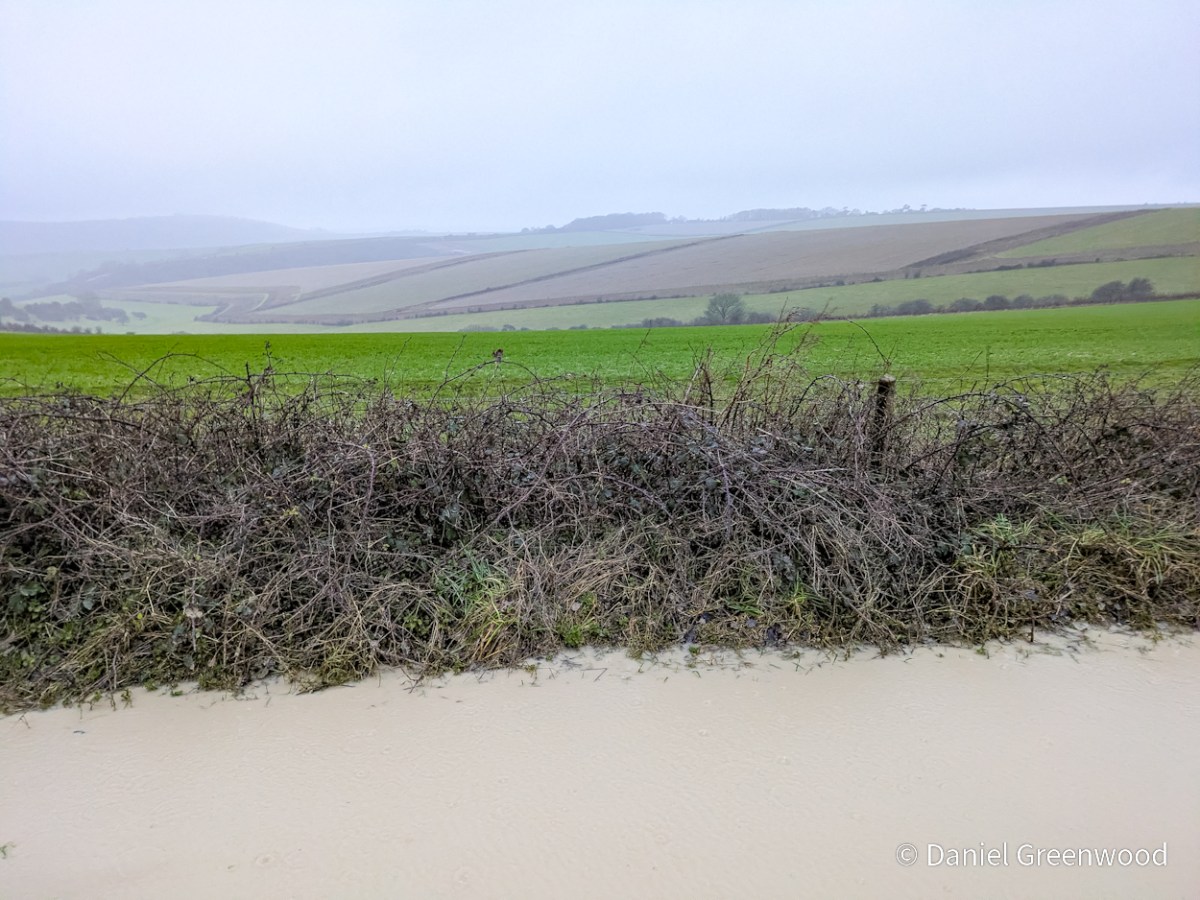
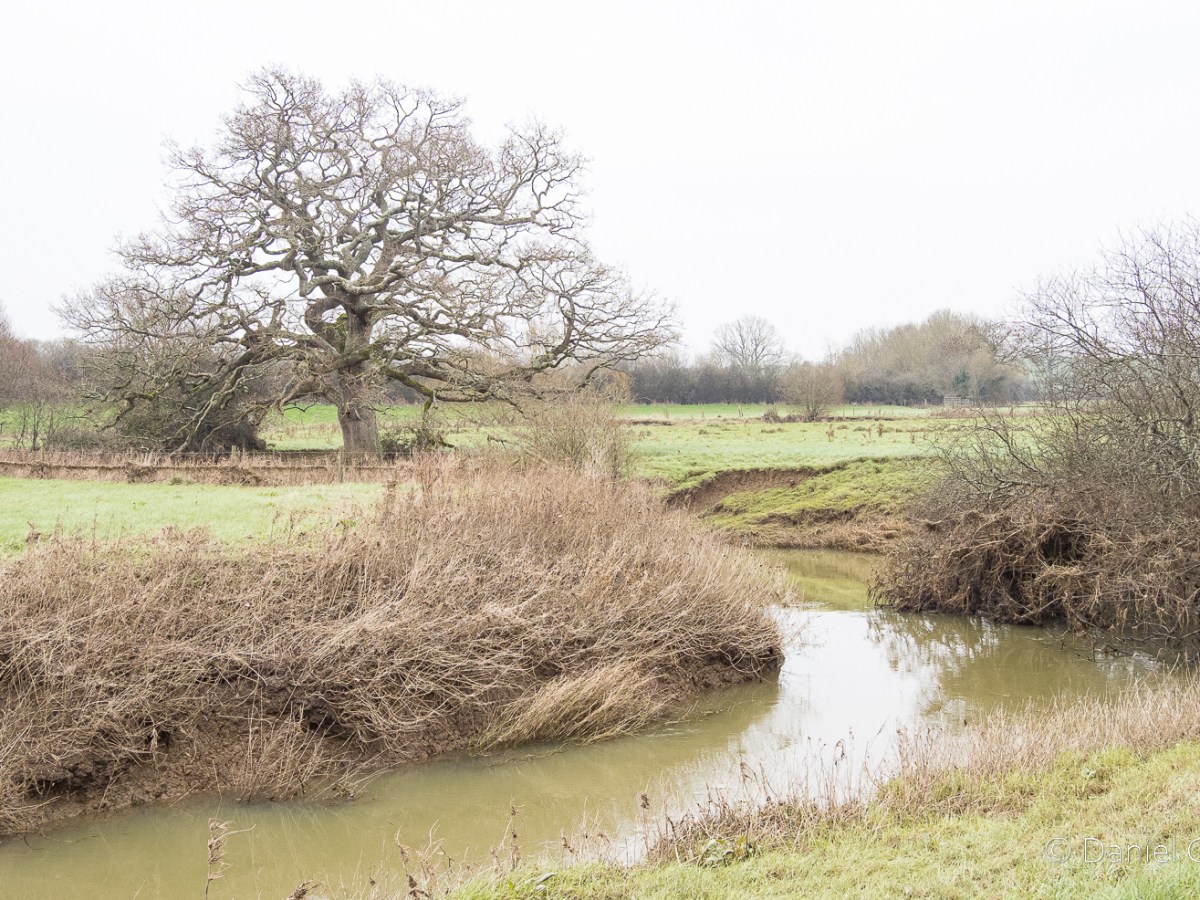
Moons are easier to come by than ‘shrooms, the main focus of my walk around a wet woodland reserve where the river ran free of its banks, merging among poplars like something from prehistory (i.e. no Internet).

A boardwalk cuts the edge of the wetlands where I usually expect to find velvet shank mushrooms. Along with scarlet elf cup, this is one of the winter gems of the fungal kingdom in Northern Europe. In truth, I didn’t find any that I could photograph without having to (theoretically) enter into a wetsuit or small boat.

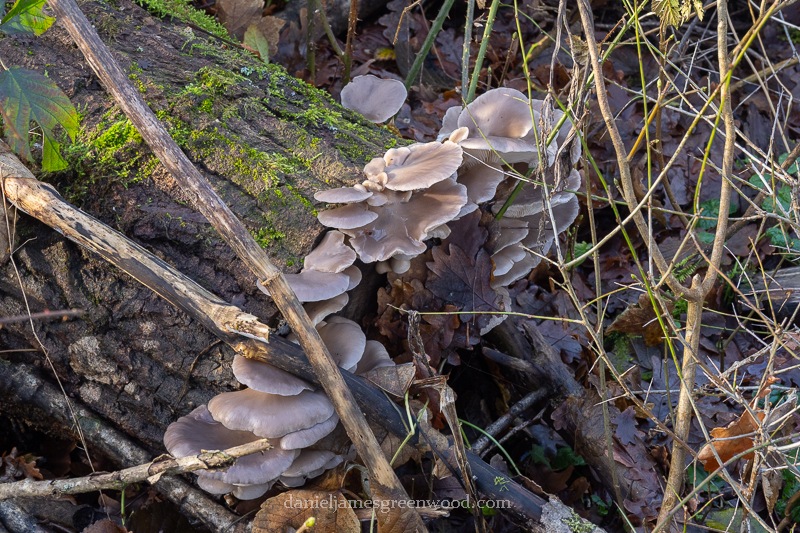
Instead it was a coastal species that proved easiest to snap, if only in name. One of my favourite Twitter accounts and reader of this blog recently posted some oyster mushroom photos. Another timeline glimpse made me think – this is a seasonal trend, and I should keep an eye out in real life.

They’re a beautiful fungus with dark, purple-grey tops and pale, almost white gills underneath. They’re edible, but I was just there for the pics. You can buy them in the shops or grow them yourself at home. Another friend/regular reader even has them growing in her garden from timber sleepers. Well jel.

One of my favourite actual, single funguses lives here. I’m pretty sure it’s a willow bracket, growing from the bottom of a branch like a hat plucked off someone’s head below/a UFO/some kind of weird leather cushion from the Victorian period.

It makes me laugh every single time. A reminder: if some part of nature isn’t humouring you, “you’re not doing it right”.

Thanks for reading.

Fungi | Sussex Weald

Recent posts

November 2025: beware of pity

I’ve had a burst of American visitors in recent days (to my blog, not my house). So thanks for visiting, y’all, and sorry about the year you’ve had. You may have noticed I’ve slipped to monthly posts on here. Between April and October I posted blogs every Monday without pause, which is a tricky task…

Summer-autumn 2025: unveiling the sun

Here’s my seasonal update of stuff you don’t need to know about, but then welcome to the Internet. What I’m writing Soon I will be self-publishing my third poetry collection, Fool’s Wood. It’s seven years since my last one and this collection has taken longer because of LIFE. There will be a booklet and also…

The Sussex Weald: A movement in the shadows

Warnham - 27-10-2019 blog-13

Warnham, West Sussex, October 2019

It’s so warm in the sun. Dragonflies touch the edge of the boardwalk as they mate in heavy flight. The sun glistens in the water. Flocks of tits have formed as winter approaches. I wait for one group to appear from shadowy alder carr but they keep their distance. Long-tailed tits chirrup and bounce between branches well beyond the boardwalk and space of water that separates us.

A couple of weeks ago we were shown harvest mice nests in the reeds and willows by a local ecologist. One of them is still here, the small bundle of grasses and leaves. Not much bigger than a cricket ball. I turn again to the alder woodland and a willow has crashed and fallen in the water. Its trunk has split, creating an entrance into its rotten core. The sun floods this wet woodland and the light brightens the dark glut of trees.

The broken willow again:
a movement in the shadows.
Whiskers and a pink nose.
Brown fur and paws.

It exits a hole where the heartwood used to be and slips back inside, down to water level. Out again it reveals itself on the willow bark with two paws spread out like furry stars, a white throat and breast. It turns its head to one side and sniffs the air. It dances back inside and disappears.

Warnham - 27-10-2019 blog-17

A couple approach me with caution. Aware I am now kneeling on the boardwalk I stand up and turn to them:

‘I’ve just seen an American mink,’ I say.

Explore the Sussex Weald