
My garden, West Sussex, June 2024
I’ve posted before about the so-called ‘zombie fungus‘, but that wasn’t in my own garden!
There are a few fungal concepts that have become mainstream in recent years, namely the wood-wide web and ‘zombie’ fungi. The latter has become popularised because of The Last of Us, a programme I haven’t watched and can’t say anymore about. The most famous parasitic fungus that can control its host is cordyceps.

My wife actually found this (not cordyceps) when she was inspecting the gooseberry bush, which was steadily being eaten by sawfly larvae. I’ll post about them next.

What is this exactly? It’s a fly that has been parasitised by a fungus called Entomophthora. It basically is able to control the movement of the fly by making it move to a prominent position for its final moments, or at least I think that’s what’s happening.

The prominent position then allows the fungus to spread its spores on the wind or from a more beneficial height to reach its next host, however that occurs.
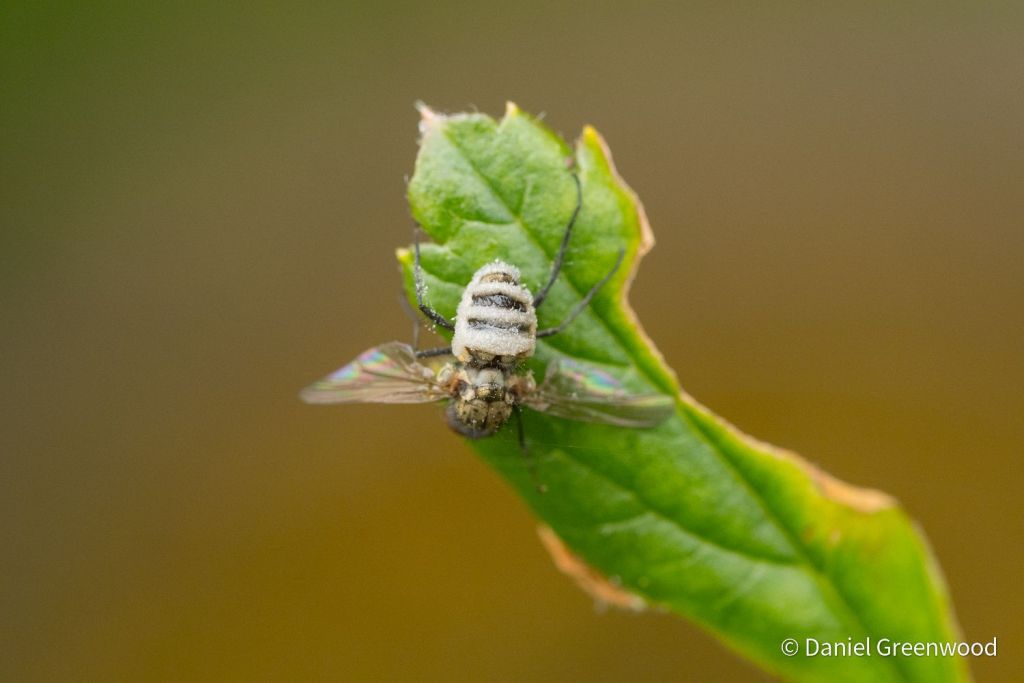
It’s not quite as gory as cordyceps, where a fungal fruiting body rises from the body of its host. It is altogether more macabre and sad-looking, though. Cordyceps can be very colourful.
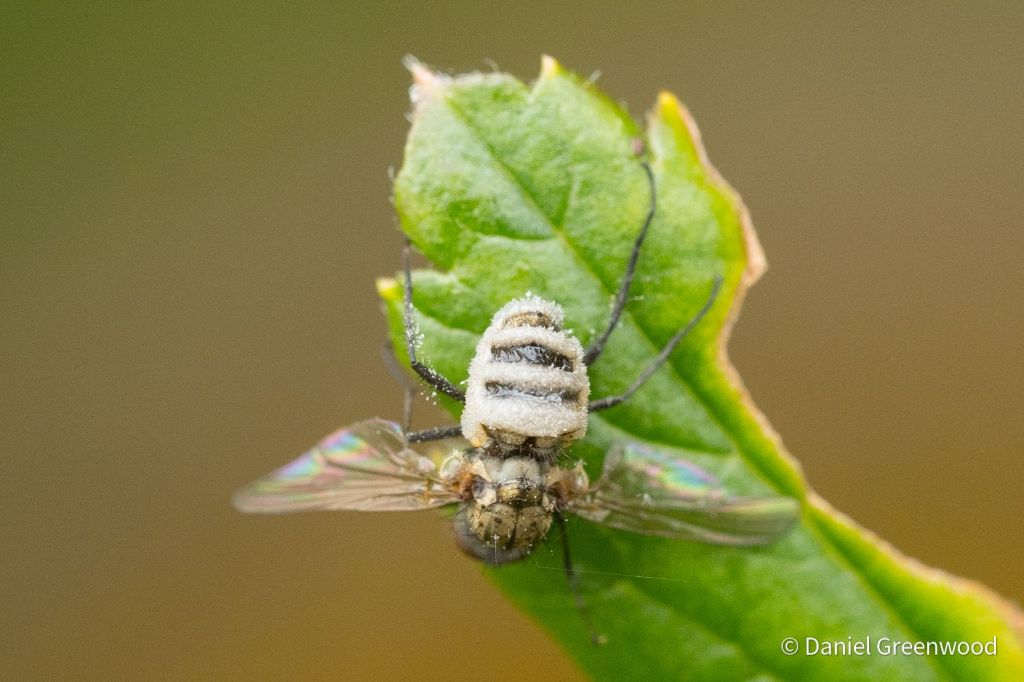
In reality it is just an example of the immense biological diversity out there, the interactions between two kingdoms – animals and fungi.
Thanks for reading.
 Unlocking Landscapes