
New Forest National Park, Hampshire, August 2023
I was in the New Forest National Park camping for a couple of nights in August. The rainy July in southern England gave me great hope of finding some nice shrooms in what is one of England’s mushroom wonderlands. It didn’t disappoint!
Bolete bonanza
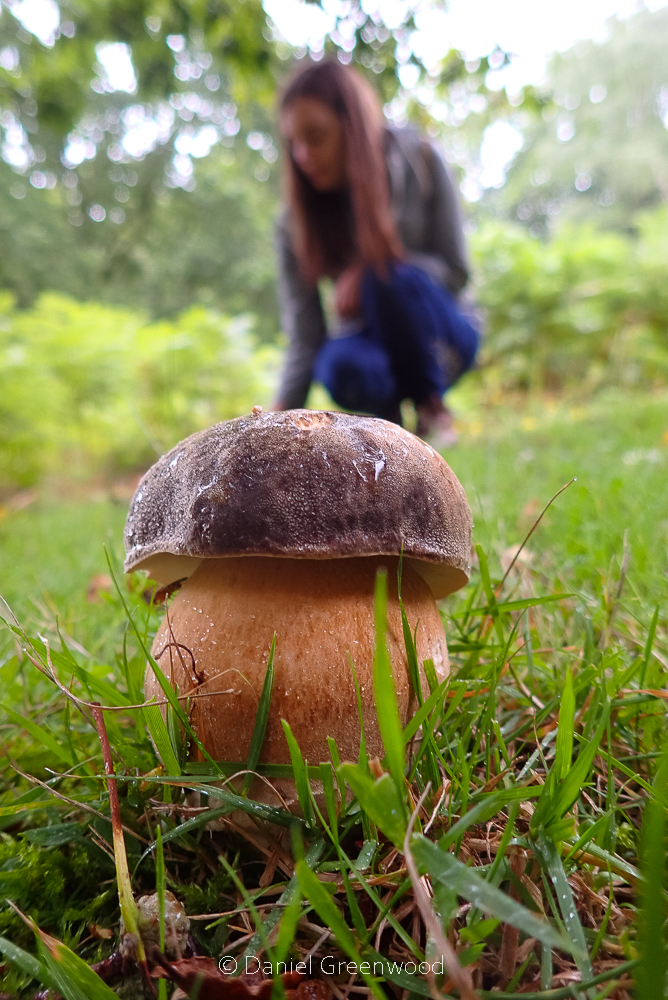
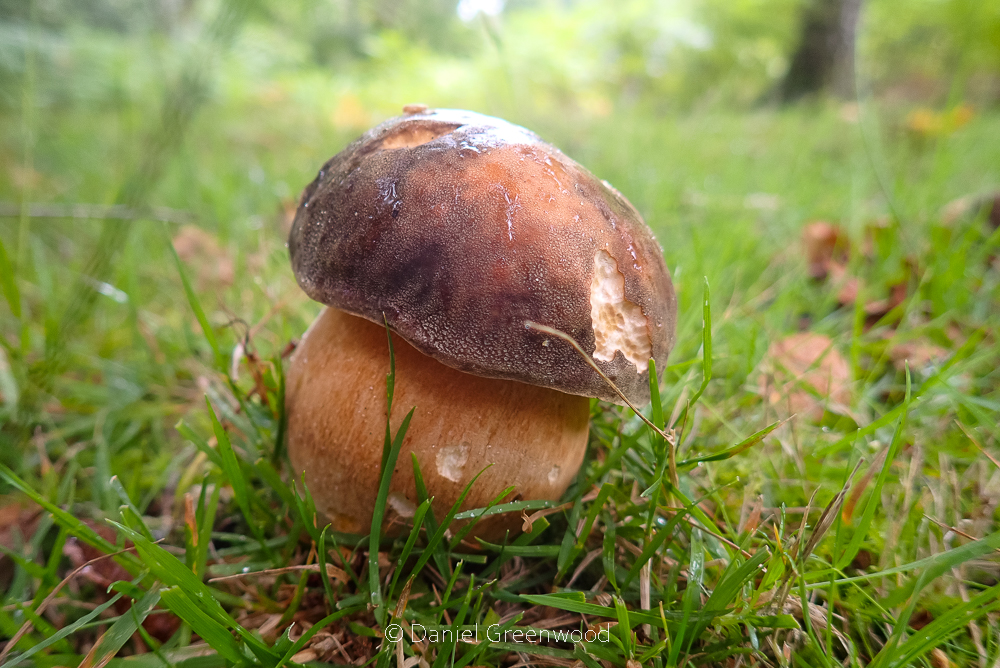

I was so happy to find these boletes, one having already been uprooted. They were the perfect shape and just an absolute joy to see. I have been told these are ceps, but I’m not entirely sure if they’re not another species. I’m unclear on the variety among cep-like boletes, and if the colouring isn’t indicative of another species.
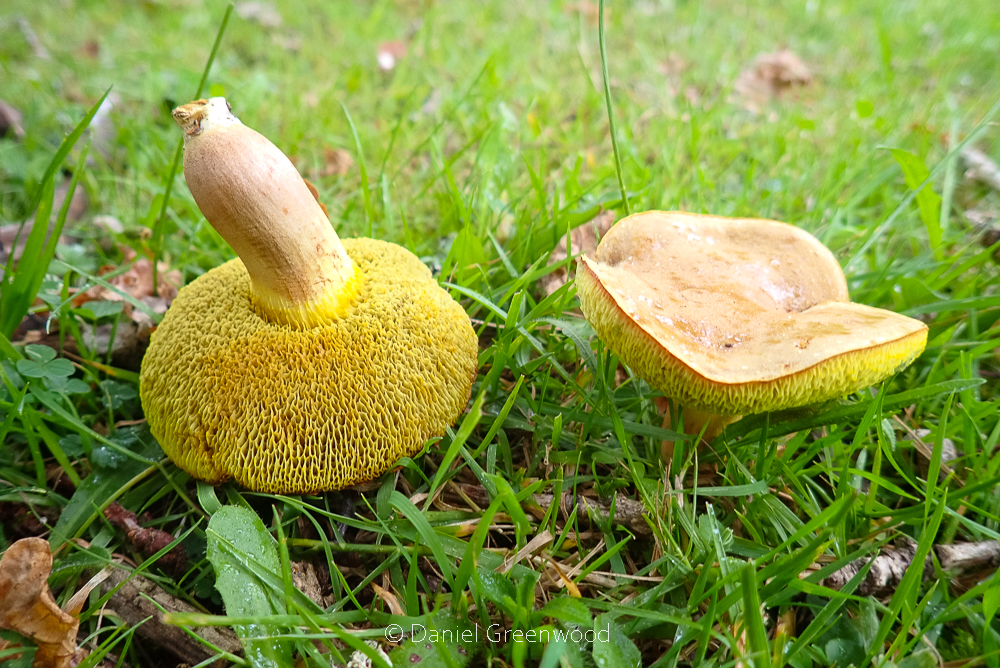

These lovely yellow-pored boletes are in the genus Xerocomus.

About half a mile or less away we found this beauty sitting alone among the grass and leaf litter. It’s an orange bolete. It doesn’t appear to have a distinct association with one species of tree, but this area was common in oak and birch.
Much later that day, on the return stretch, we found this well-camouflaged group of what I am sure are ceps due to their colouring and other diagnostic features.
You can see the distinctive webbing on the stipe here, and the pennybun cap is all you need really:


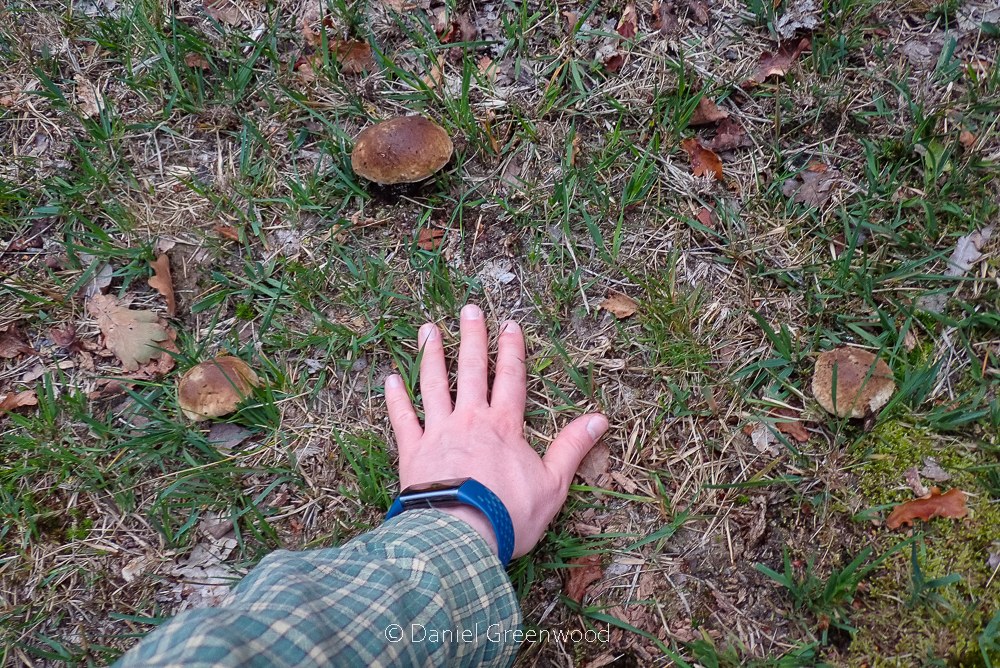

As the evening drew in, I found this orange bolete that may have been picked by a deer (there was a herd in the area).
Webcaps
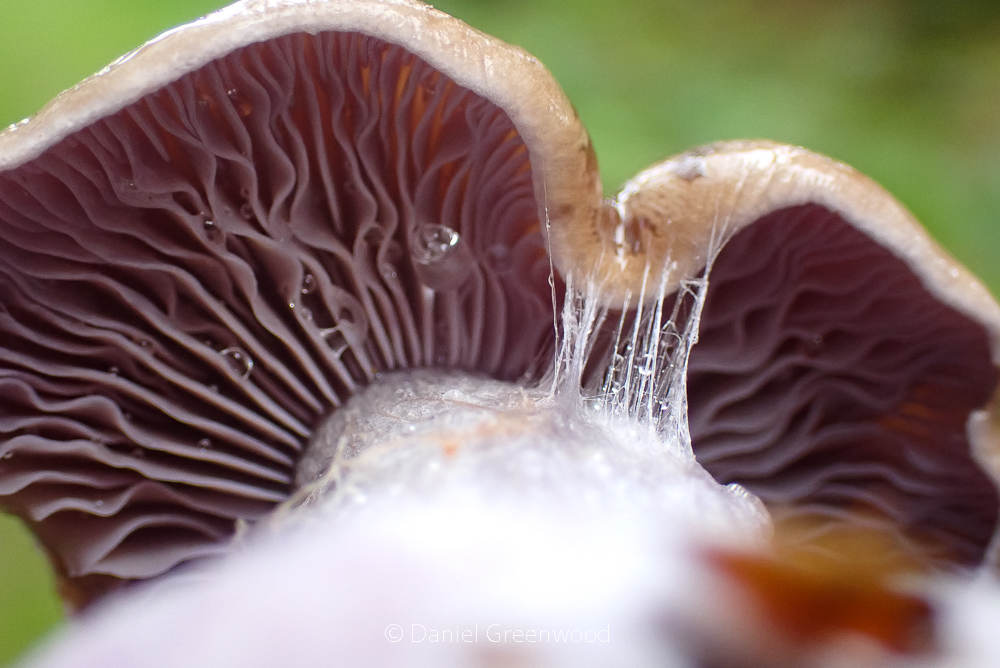
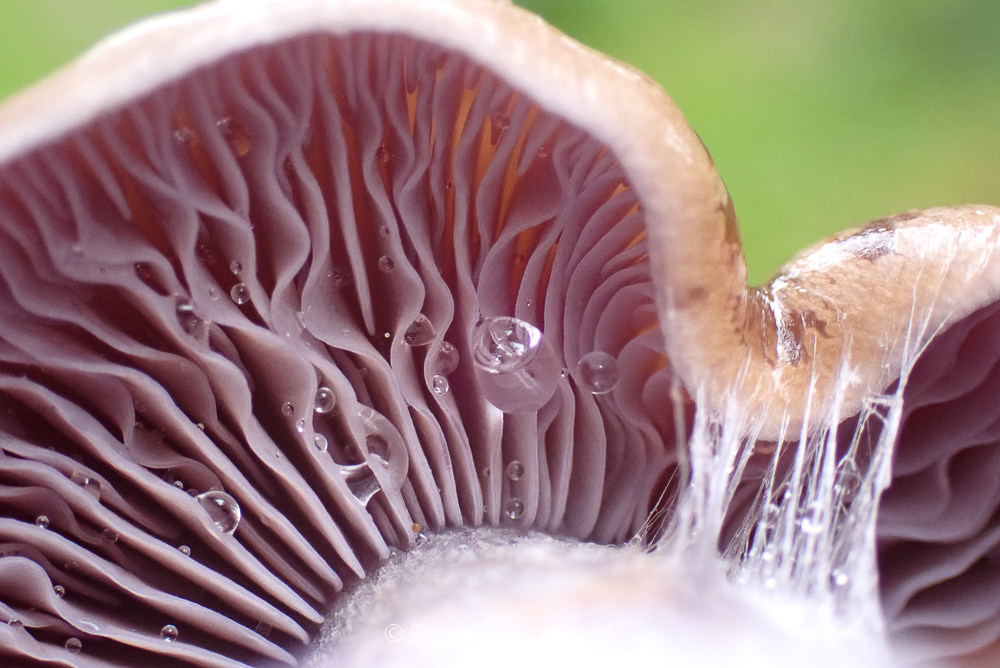


Earlier in the day, while passing between two plantations on a grassy ride, I noticed this uprooted mushroom on the ground. Two bites had been taken from it, probably by deer or a small mammal. The remnants of the veil between the cap and stipe, covering the gills, gave me the thought that this was a webcap. The gills were very beautiful, embellished by the water droplets.
iNaturalist has come back with an ID of webcap subsect ‘Purpurascentes‘. I can’t find any other info on the subgroup distinction.
Rustgills


Rustgills are a group I’m not particularly familiar with. Having developed my fungi knowledge in isolated city woodlands, I didn’t really see rustgills until I moved to Sussex and spent time in larger areas of woodland. This patch was unavoidable. No wonder there is a species known as the spectacular rustgill.
Rustgills are in the genus Gymnophilus. They’re confusable with scalycaps (Stropharia) due to shape and colour.
Chantarelles


And finally some golden chantarelles, already nibbled by slugs and uprooted, probably by deer (as I have said 1000 times in this post!).
The New Forest has a “no pick” policy and there are concerns about illegal, commercial-scale picking for posh restaurants, just FYI. All of these mushrooms had already been “naturally” uprooted (probably by deer).
Thanks for reading.

 Unlocking Landscapes
Indeed a bonanza!
Great post as always!
I’m looking at going to the New Forest this weekend with my girlfriend for some mushroom photography, are there any areas that you recommend for mushrooms?
https://danieljamesgreenwood.com/2020/10/02/fungifriday-the-new-forest/ If you can remember where you found those amanitas that would be amazing as I’m yet to find any!
Hi Tom, thanks for your support.
That post was a 10-mile circular from the White Buck in Burley. The mushrooms are best away from major footfall areas. For fly agaric you should seek out birch stands, often in grass underneath. Have a great time.
Daniel