
High Weald, West Sussex, January 2024
At the entrance to the woodland a sign warns of forestry activities. It’s time to expect deep rutting to the tracks and soil, and conifers pulled out of this vast area of afforested heathland, and old oak and beech woodland.
A song thrush lifts up from the track and onto a nearby branch. Their lives are bitter battles of survival in January. In early spring their music travels the woods and fields, parks and gardens. The bird stoops on the branch, eyeing me in that wild way.
The sun is shining and the birches gleam white in the treetops.
Pine needles are bleached to an almost aquamarine.

On the main trackway the machine rutting appears from a tract of maturing pine, oak and birch. A track churned-out by huge tyres and now full of milky-brown rainwater. The tyres, inevitably, have dug up sections of ditches where fleabane, hemp agrimony and common spotted orchids abound in summer.
Then again, this trackway and its ditches were likely created for the forestry works, so it’s maybe a case of swings and roundabouts. The extraction works are set to end here in the near future, no doubt to allow the woodland to move at its own pace. Plantation trees will be replaced by self-seeded birch, and the jays’ forgotten oak cache, if the deer don’t eat them.
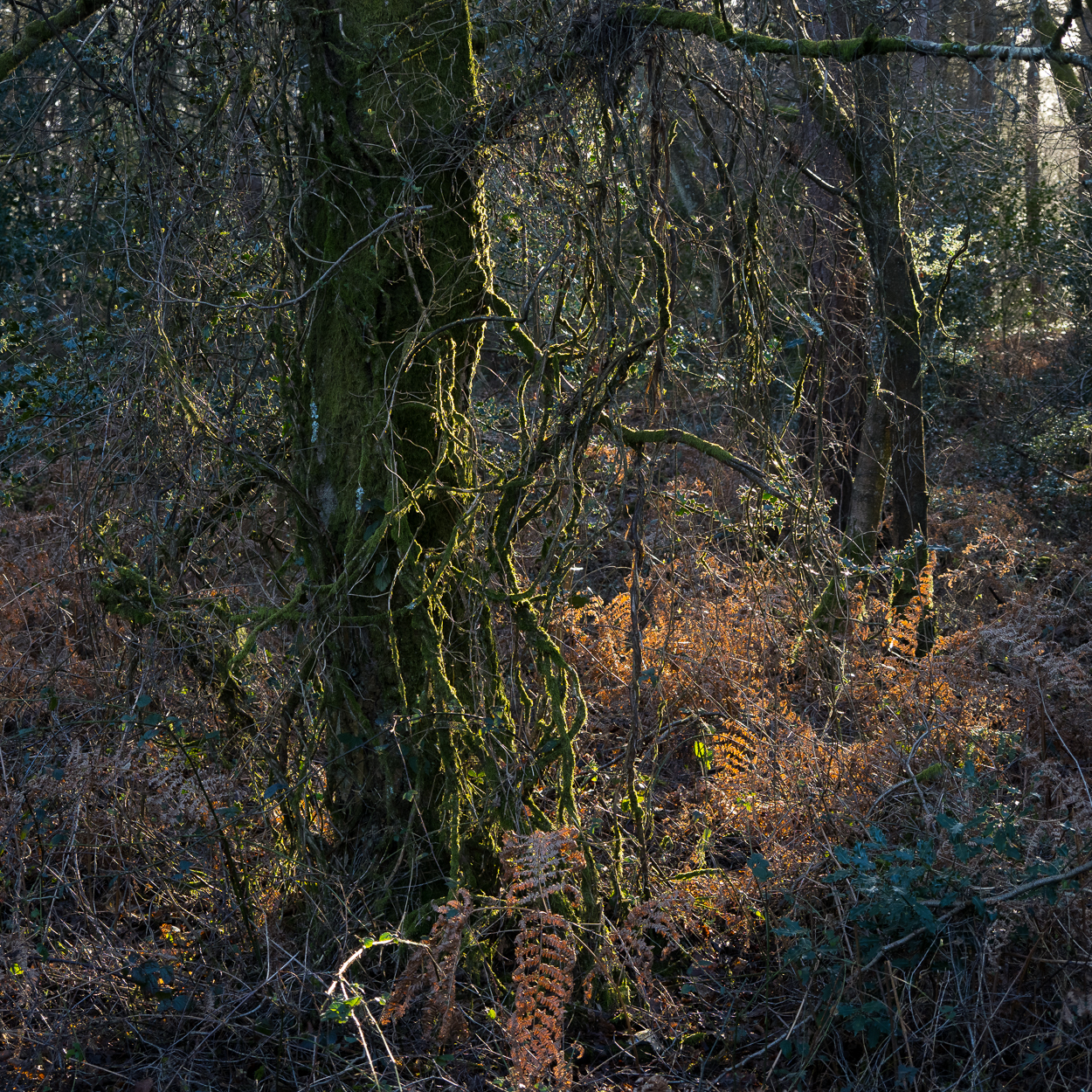
There is something unexpectedly wild about forestry landscapes, their lack of obvious human culture. There is not much coppicing here, not much lopping or billhooking. No dining tables are set by charcoal burners, or mud huts packed up inside clearings.
No one is claiming it for their own, not even the foresters.

 Unlocking Landscapes
At least the conifers are pine, rather than spruce or Douglas fir.
There’s a lot of that redwood I can never remember the name of
There are so many coniferous trees, and I can only remember the names of a few.
The birth of a new small wilderness perhaps
That’s probably the idea