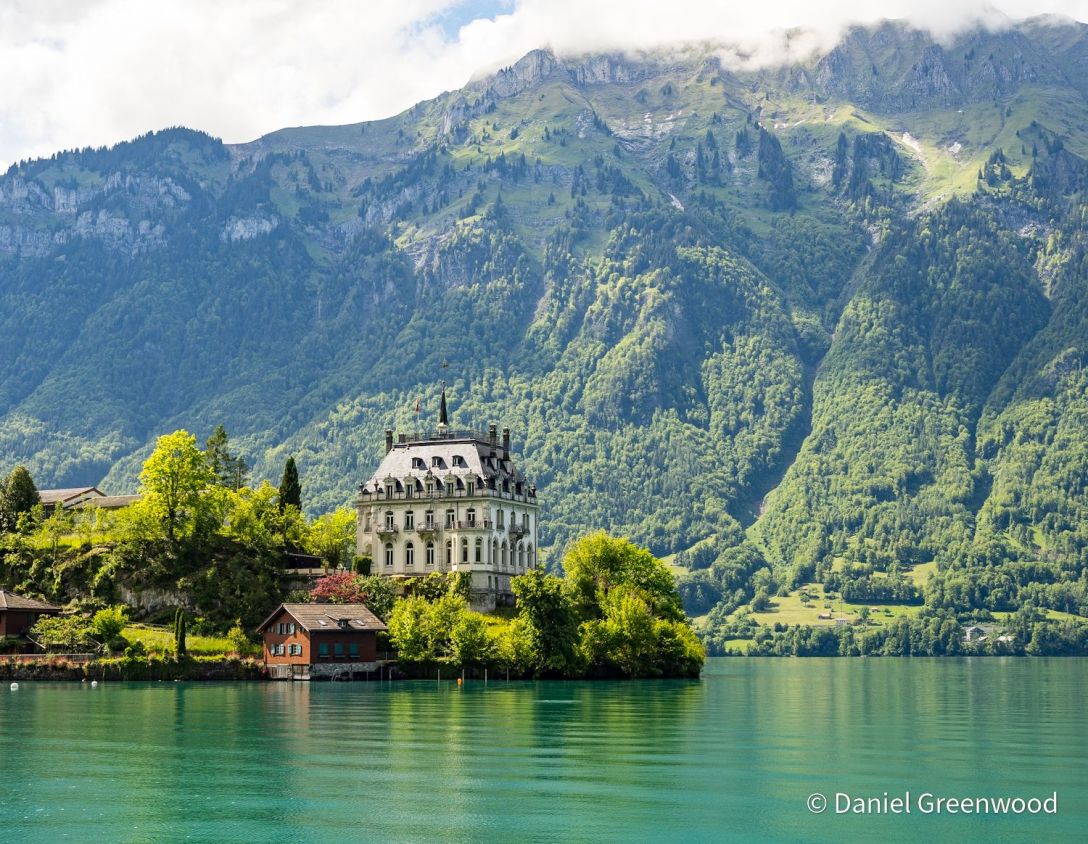
Lake Brienz, Switzerland, May 2024
You’ll have to forgive me this blatantly tourist blogpost, but I’m sure the images will be pleasing on the eye. I think about these mountains often (the Swiss Alps near Interlaken) and have posted about them previously:
These photos were taken after taking a tourist ferry from Interlaken onto Lake Brienz, across the water to visit Giessbach Falls, of which the Reichenbach Falls is famous for Arthur Conan Doyle’s depiction of Sherlock Holmes’ death there.
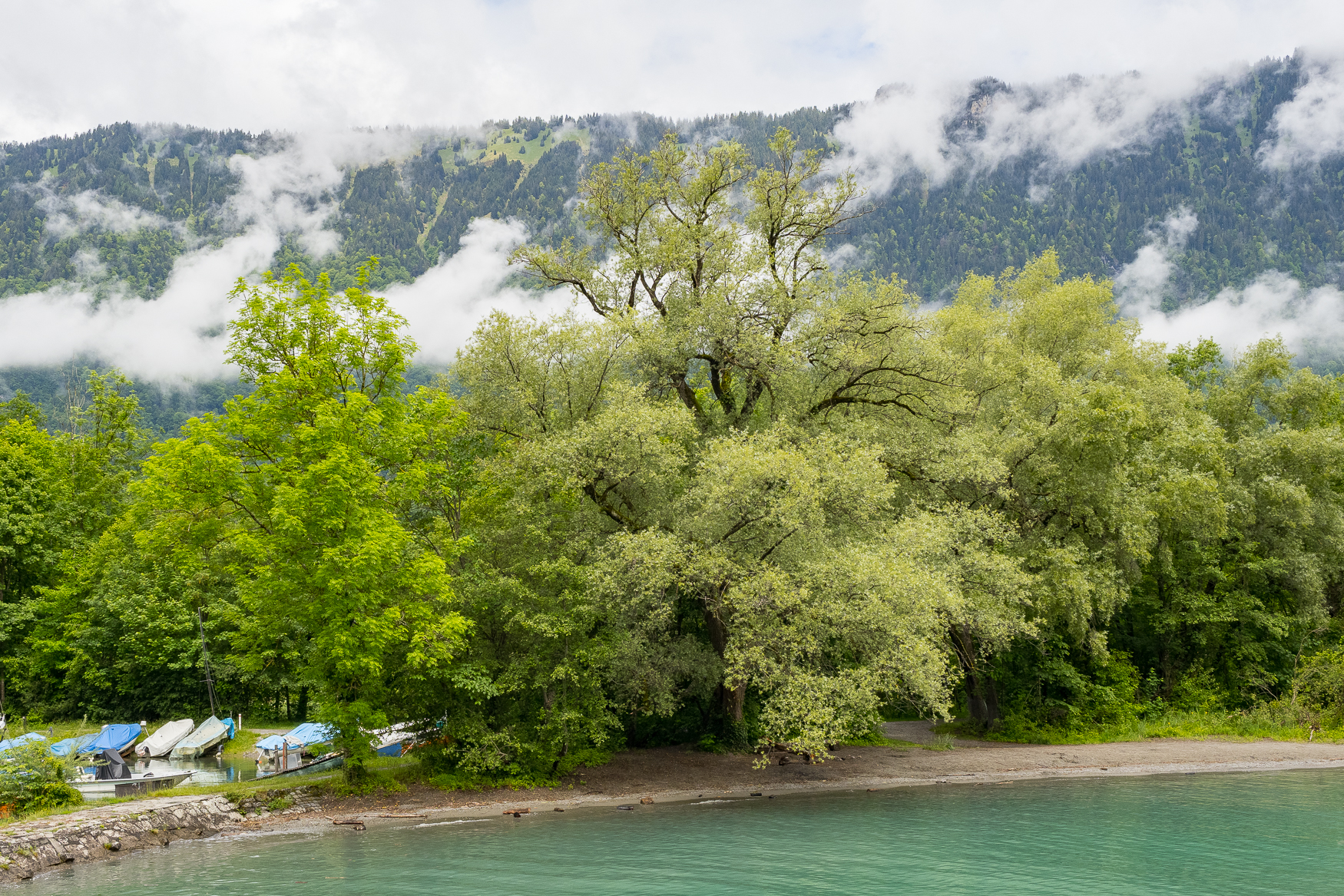
The trees were beginning to show their leaves, with this beautiful willow catching my eye.
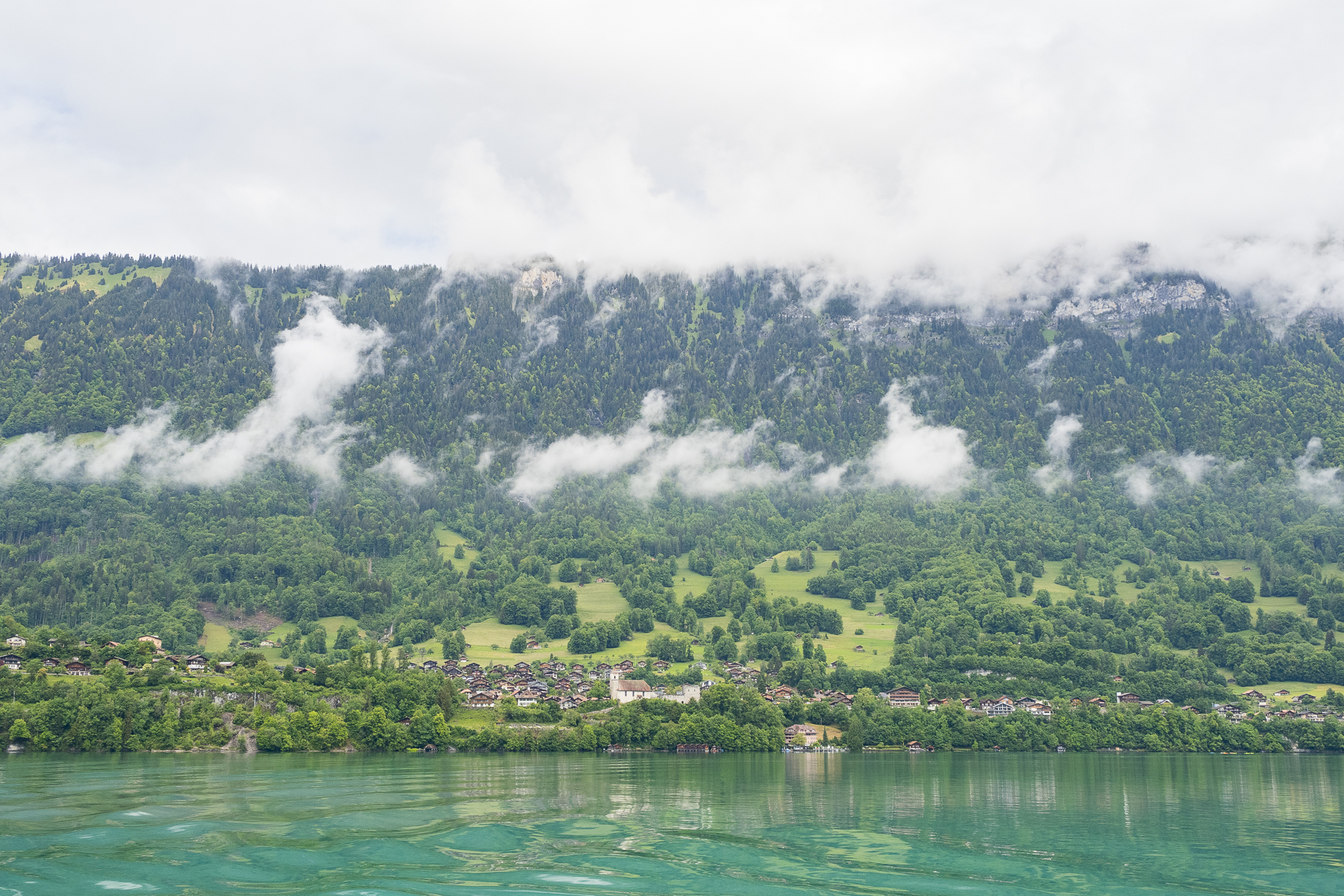
As the boat moves out into the lake, the village of Ringgenberg comes into view at the bottom of the mountain slopes. I’m not going to attempt to name the peaks as there are so many and I don’t know them.
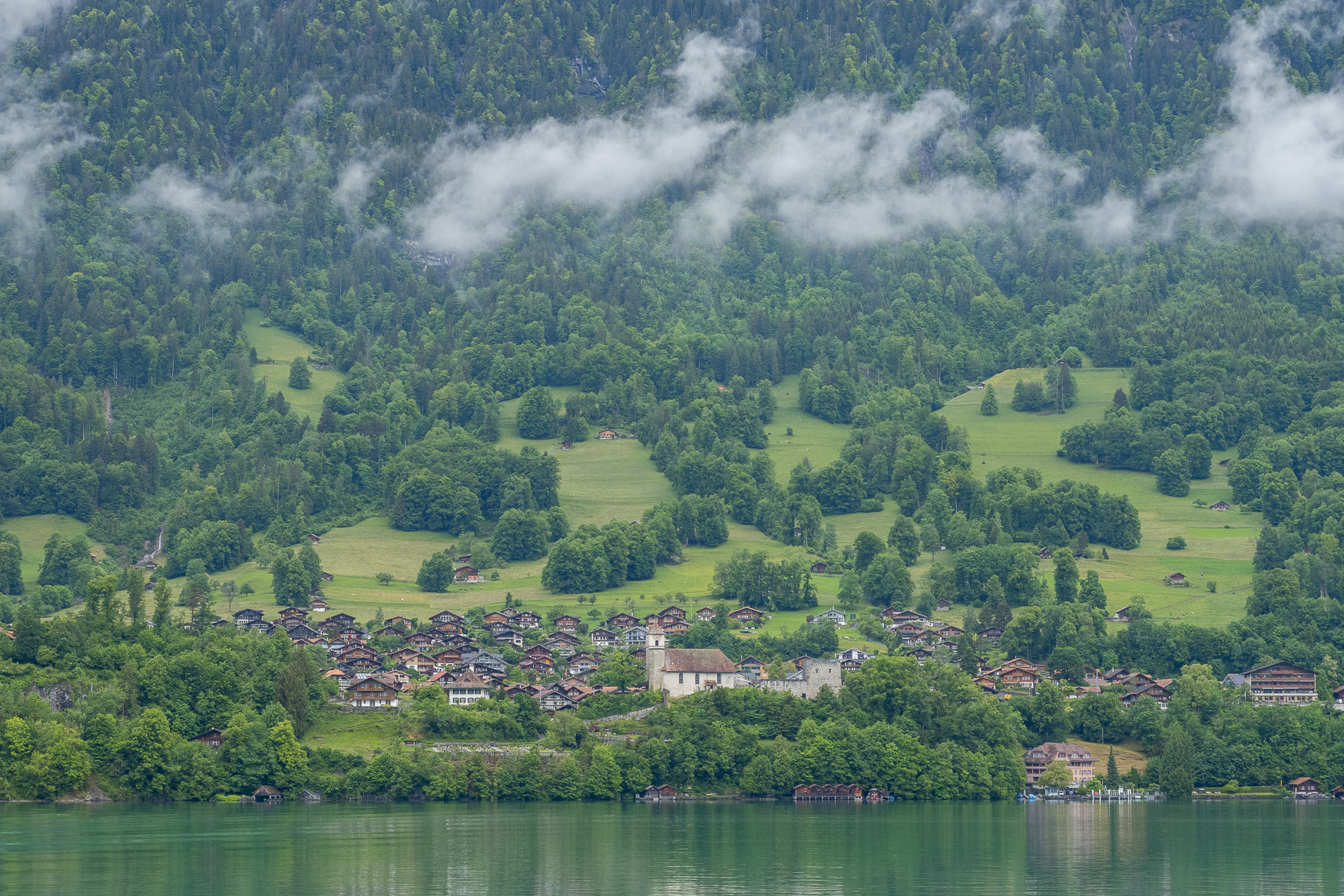
Ringgenberg Castle appears surrounded by chalets looking out onto the water.
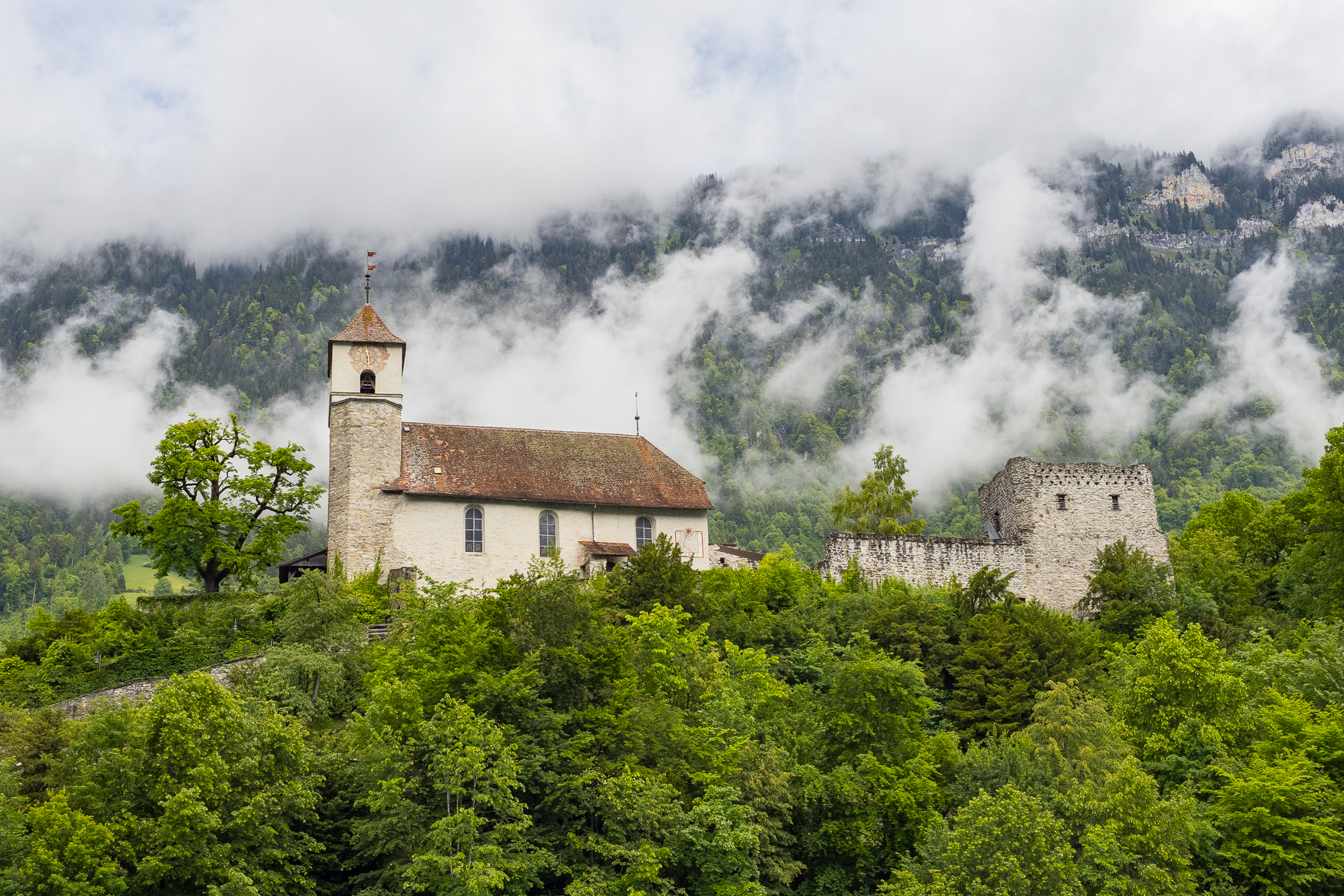
The rocky heights above Brienz Lake were first occupied and fortified by the Late-Bronze Age.
Wikipedia
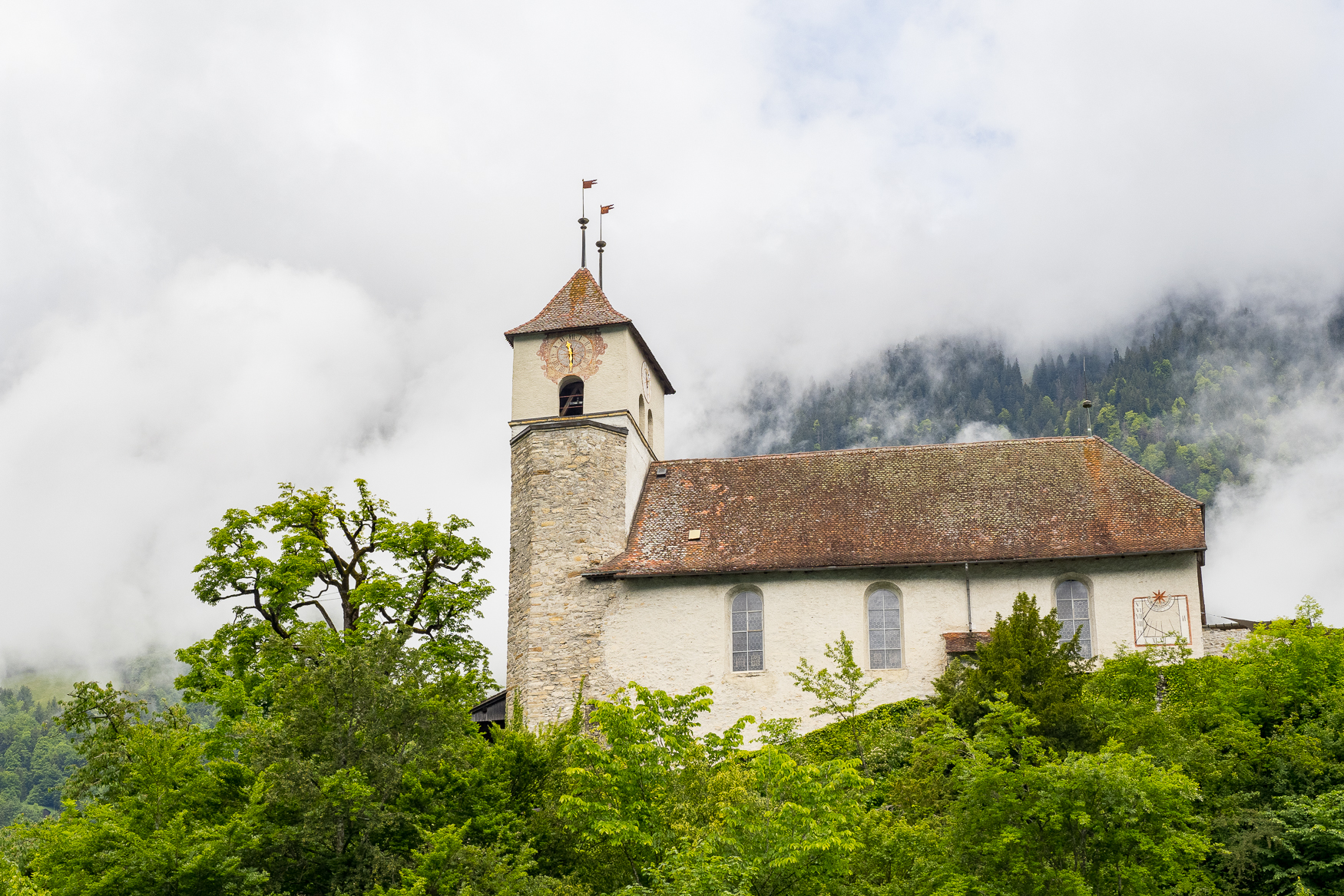
What confuses me about the building is that it looks like a church as much as a castle.
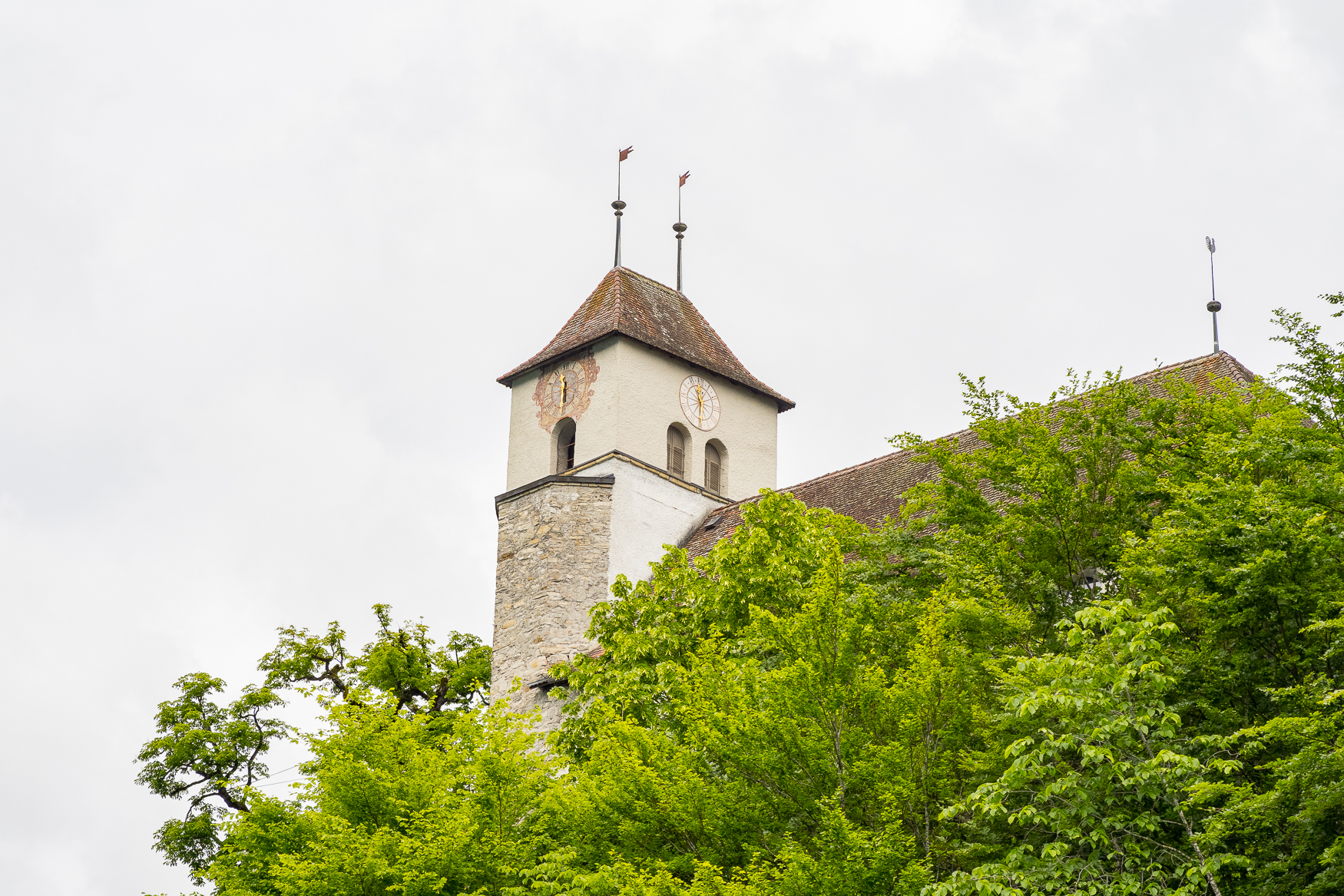
Especially with what here looks like a belltower.
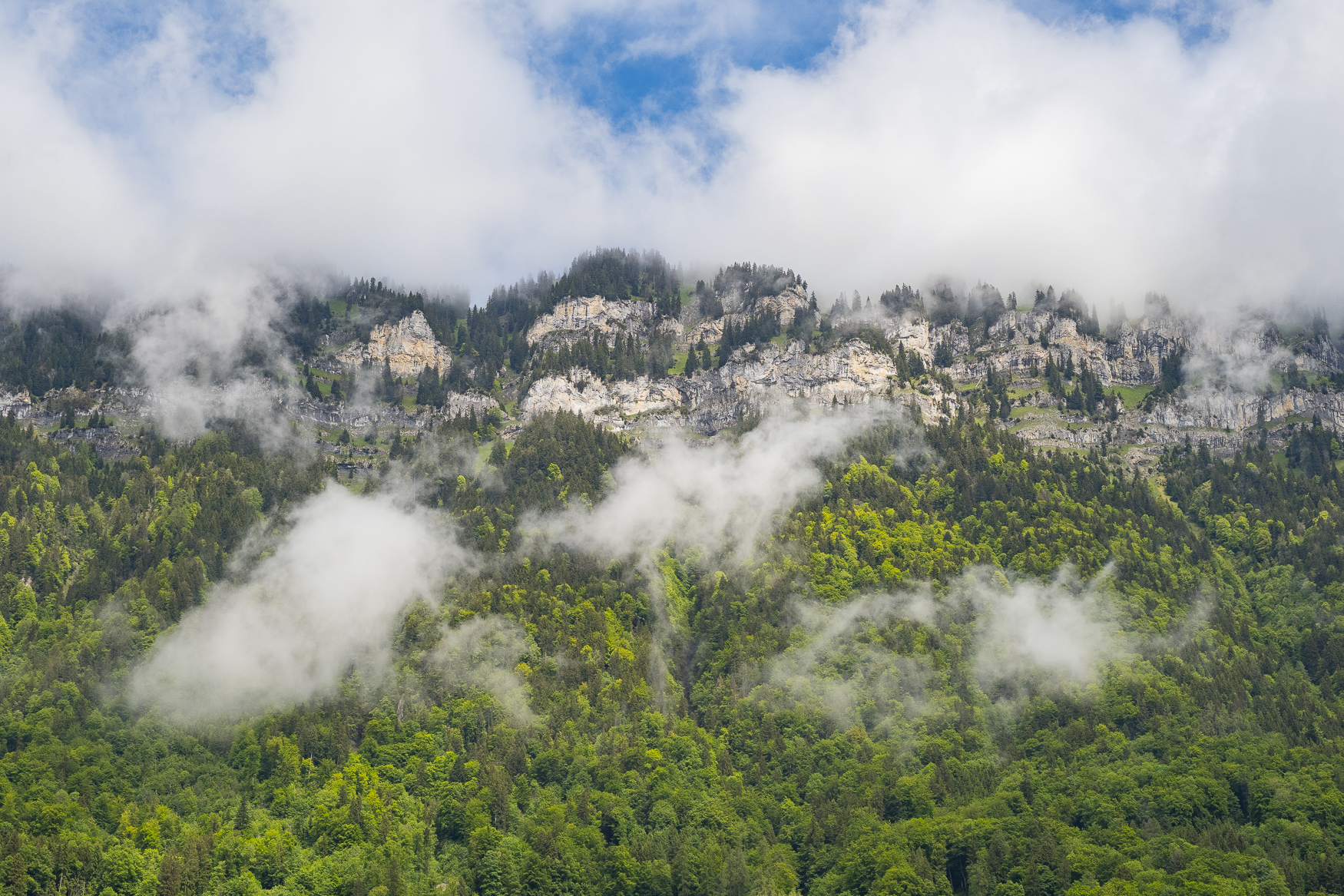
I love this view and would love to walk the footpaths up there. I wonder what flowers appear in the summer, and how diverse the fungi are up there in the autumn.
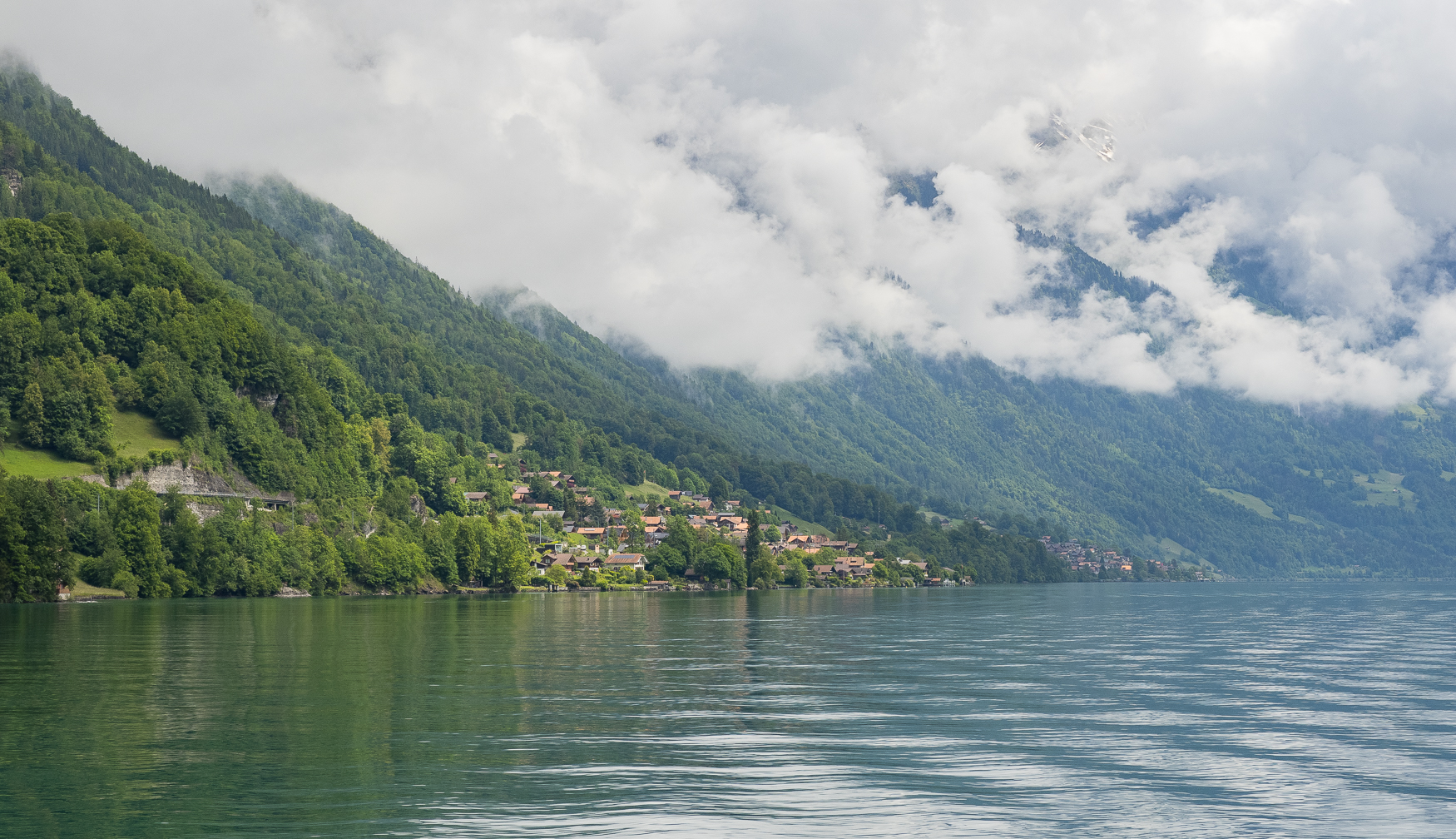
A wonderful view across the water. The boat turns off to the south shore of the lake to dock at the Giessbachbarn – the funicular railway that takes tourists up to the Giessbach Hotel.
The Giessbach funicular was designed by the Swiss engineer Carl Roman Abt. When it was opened in 1879, it was the first funicular with a two-rail single track layout with a relatively short passing loop in the middle. Its turnouts had no moving parts, which was a remarkable achievement for the time.
Wikipedia
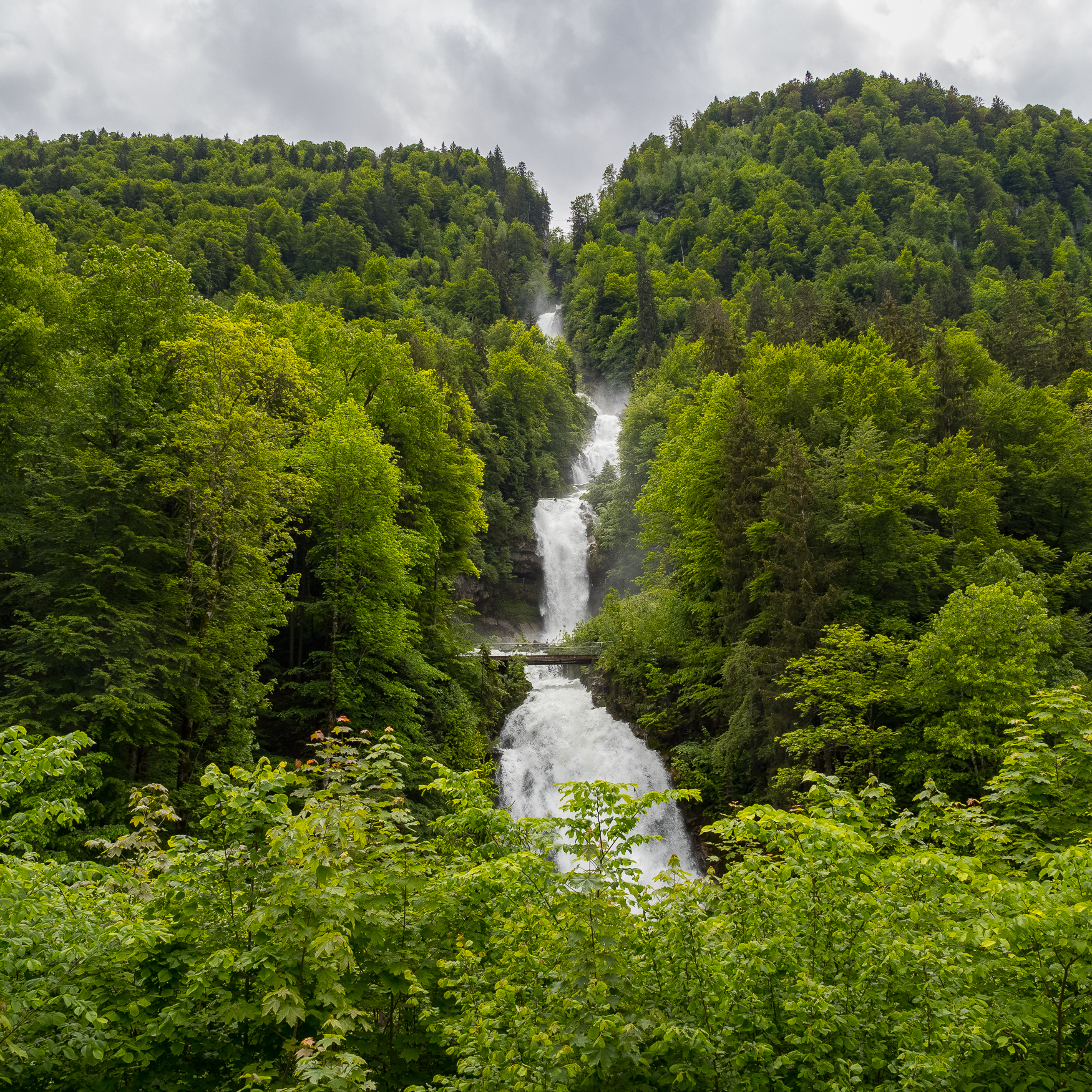
The first view of the Giessbach cascading down the mountain after taking the Giessbachbarn. I had a wonderful meeting with a Liverpudlian couple who I learned grew up a street away from my lovely dad, and whose house my aunt used to visit when she was a child! Liverpool is a village, really.
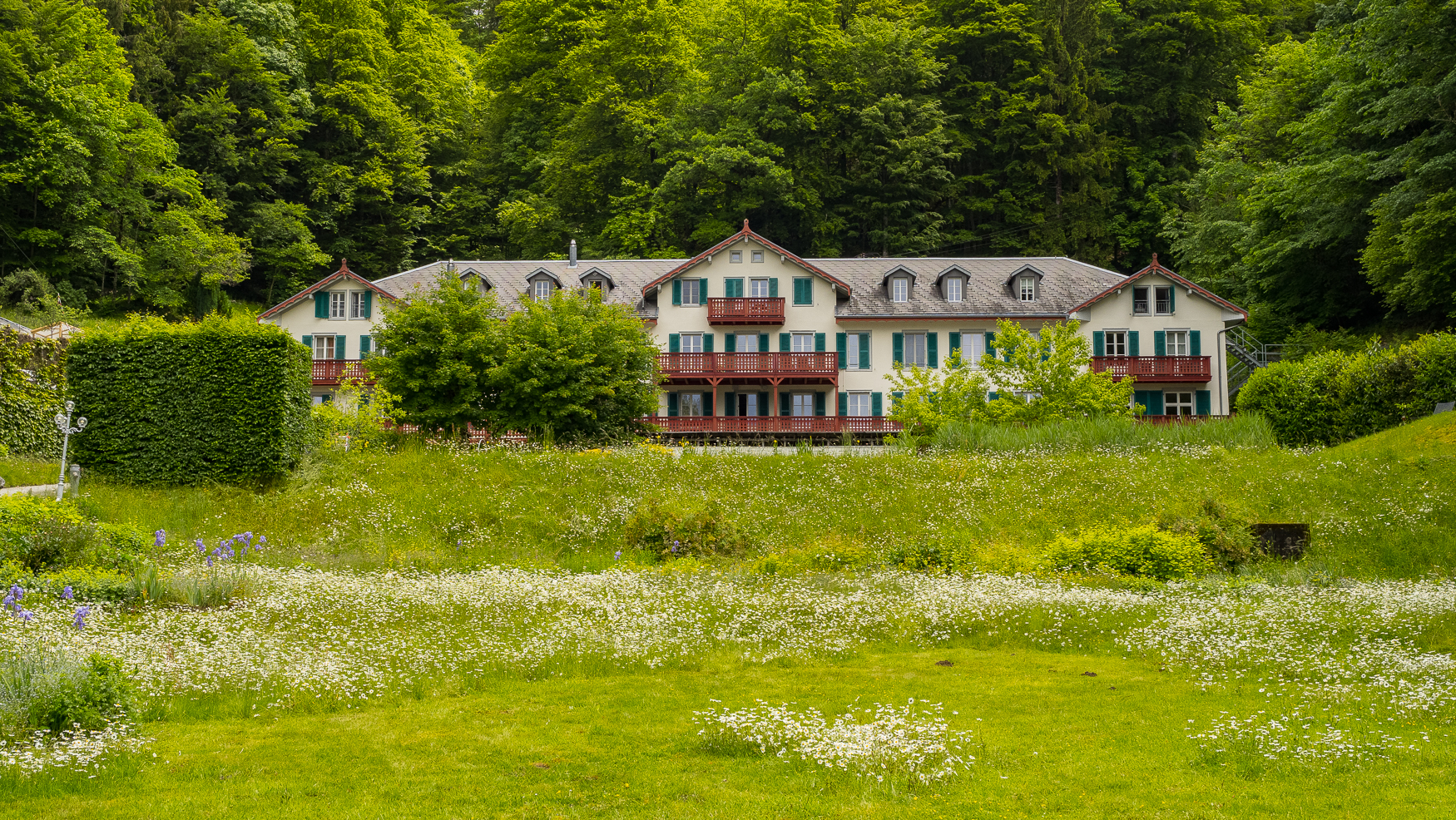
A grand abode.
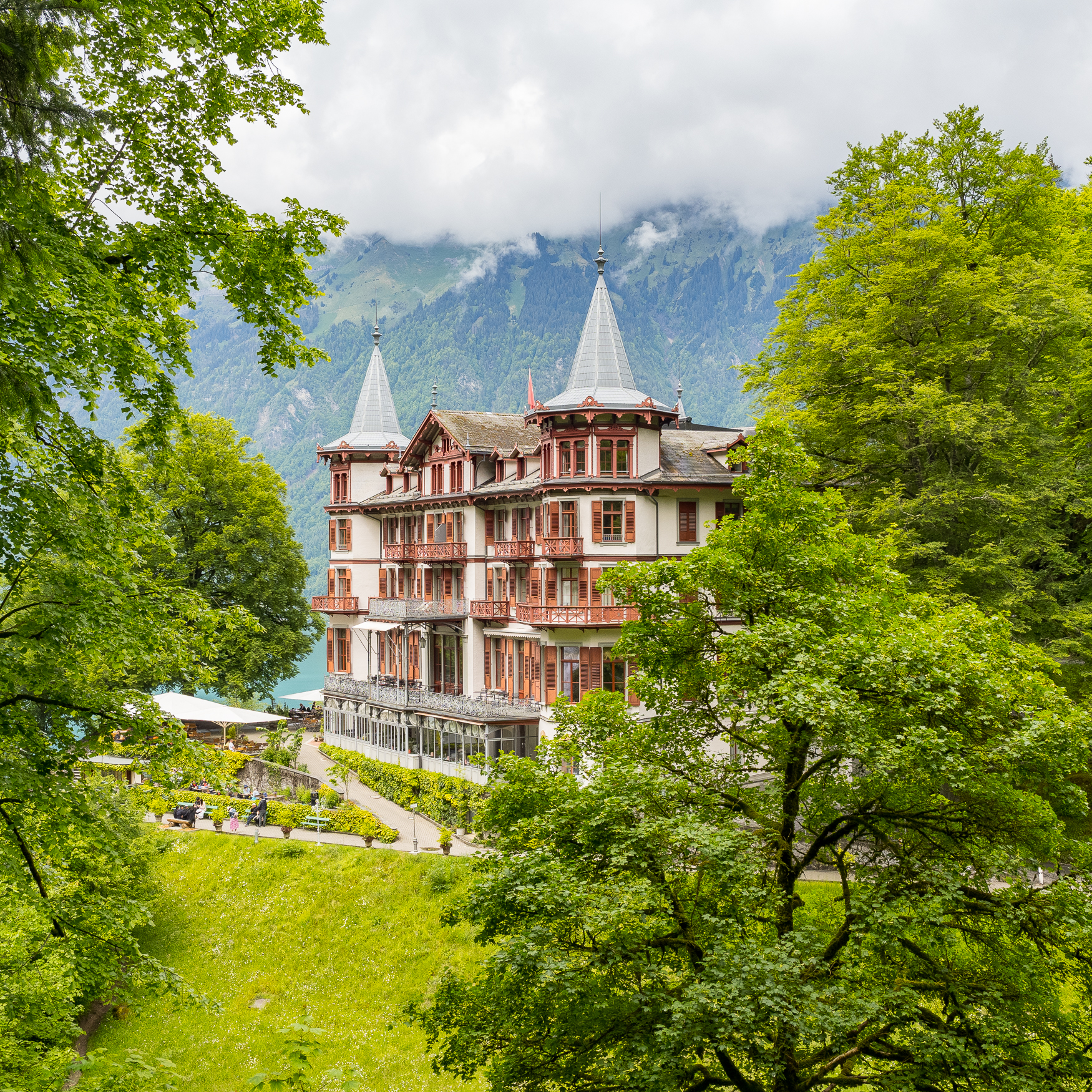
The Geissbach Hotel. This makes me think of the sanatorium in Thomas Mann’s The Magic Mountain.
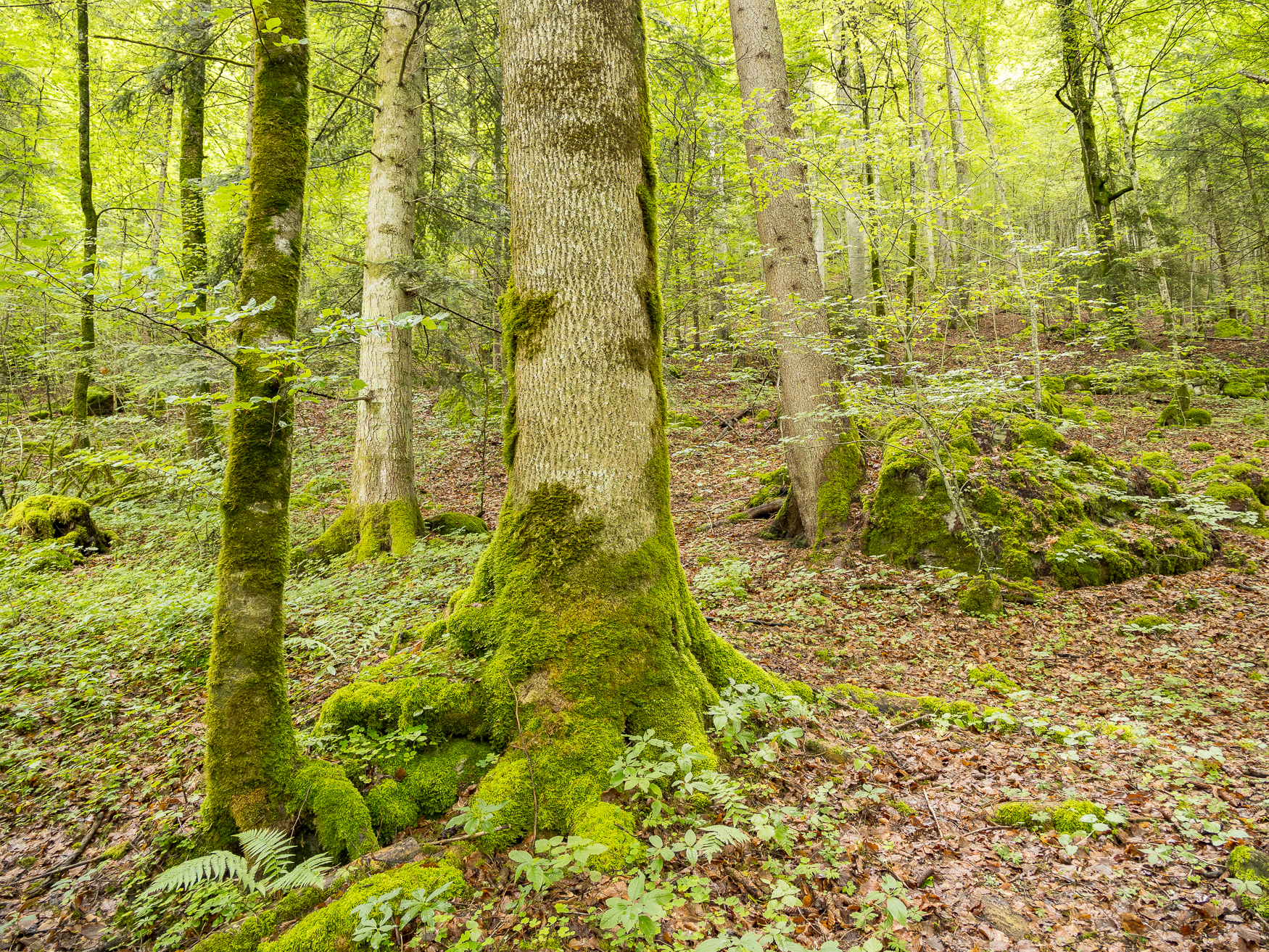
As you can see from other photos, woodlands cloak the mountain sides below the peaks. This woodland looked native and broadleaved, with beech, lime, and ash, among the spruce.
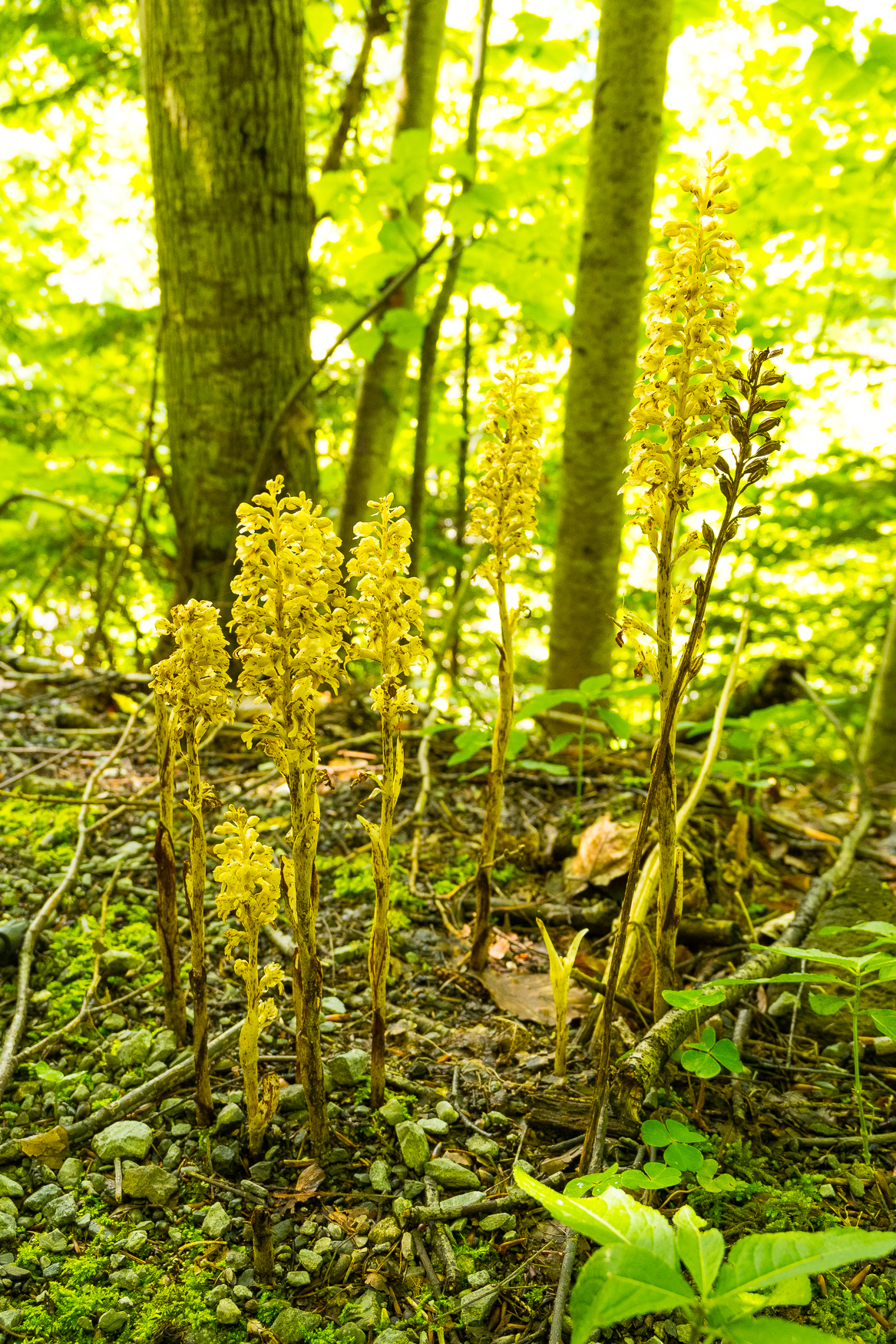
There were communities of bird’s nest orchid dotted around.
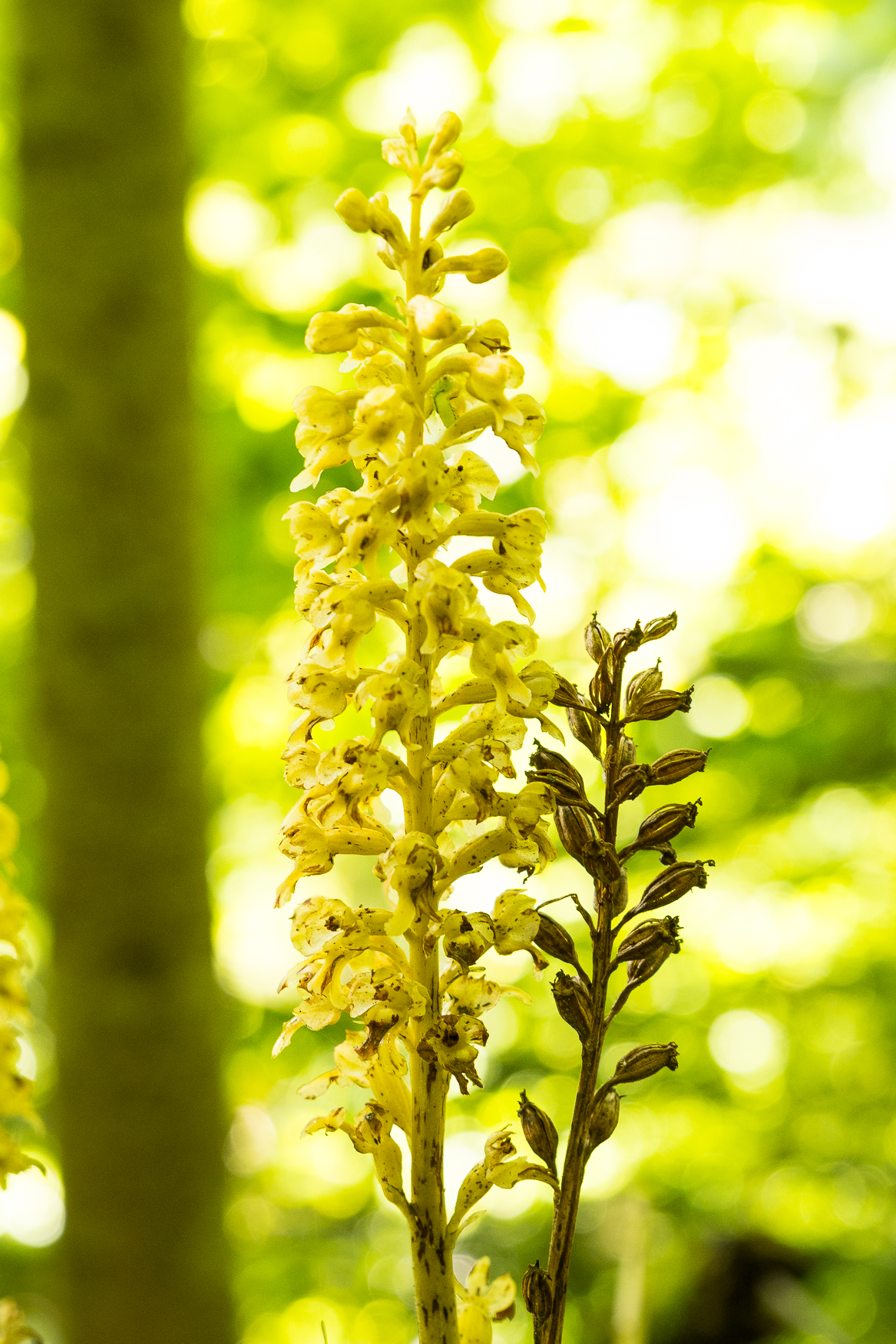
This orchid, like others, needs a fungal partnership to live.
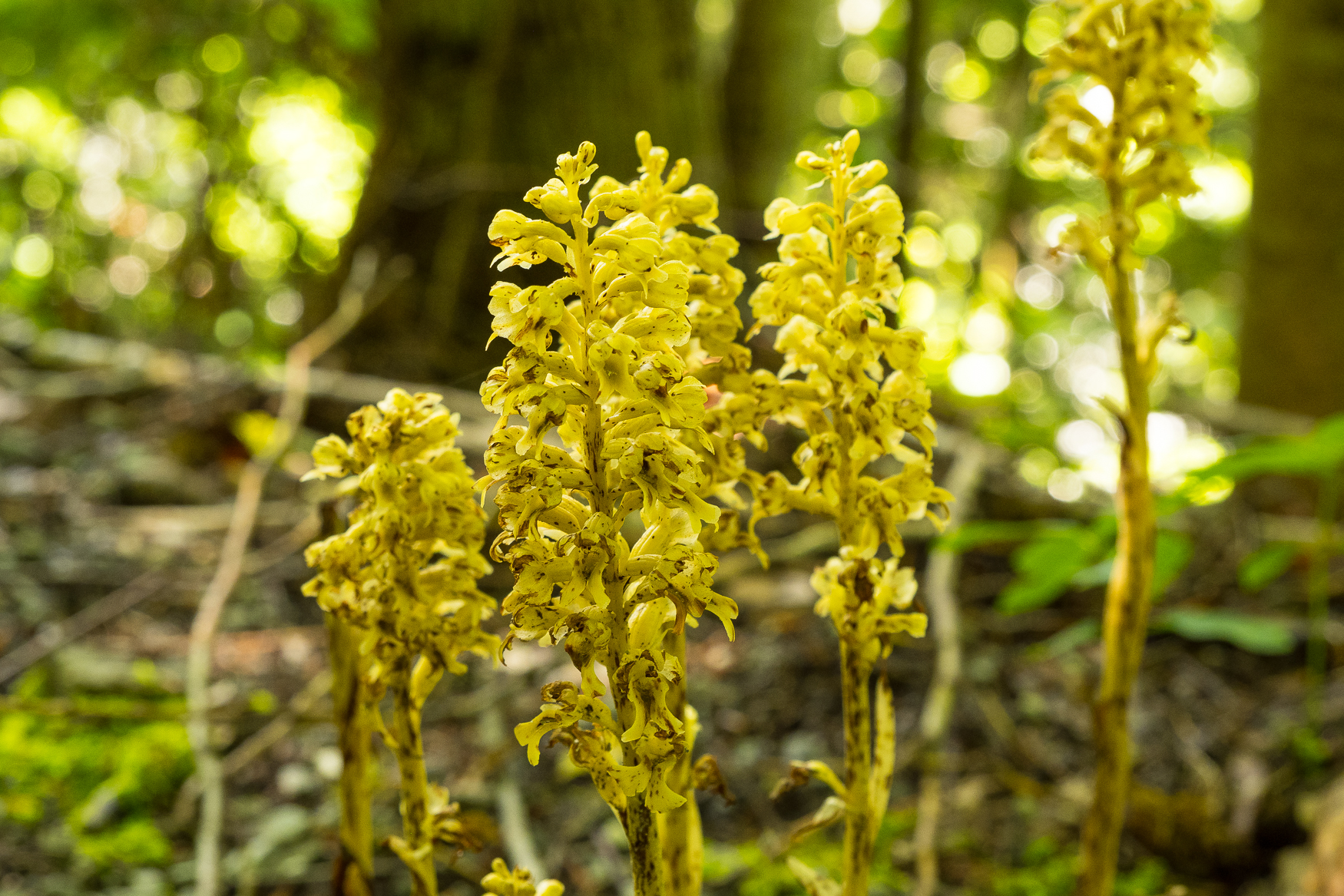
They have no chlorophyll (the green pigment that contains chloroplasts that can photosynthesise sunlight into sugars), as they don’t need it. The orchid is parasitic on the roots of trees, which is where they gain what they need for a fungal partnership.
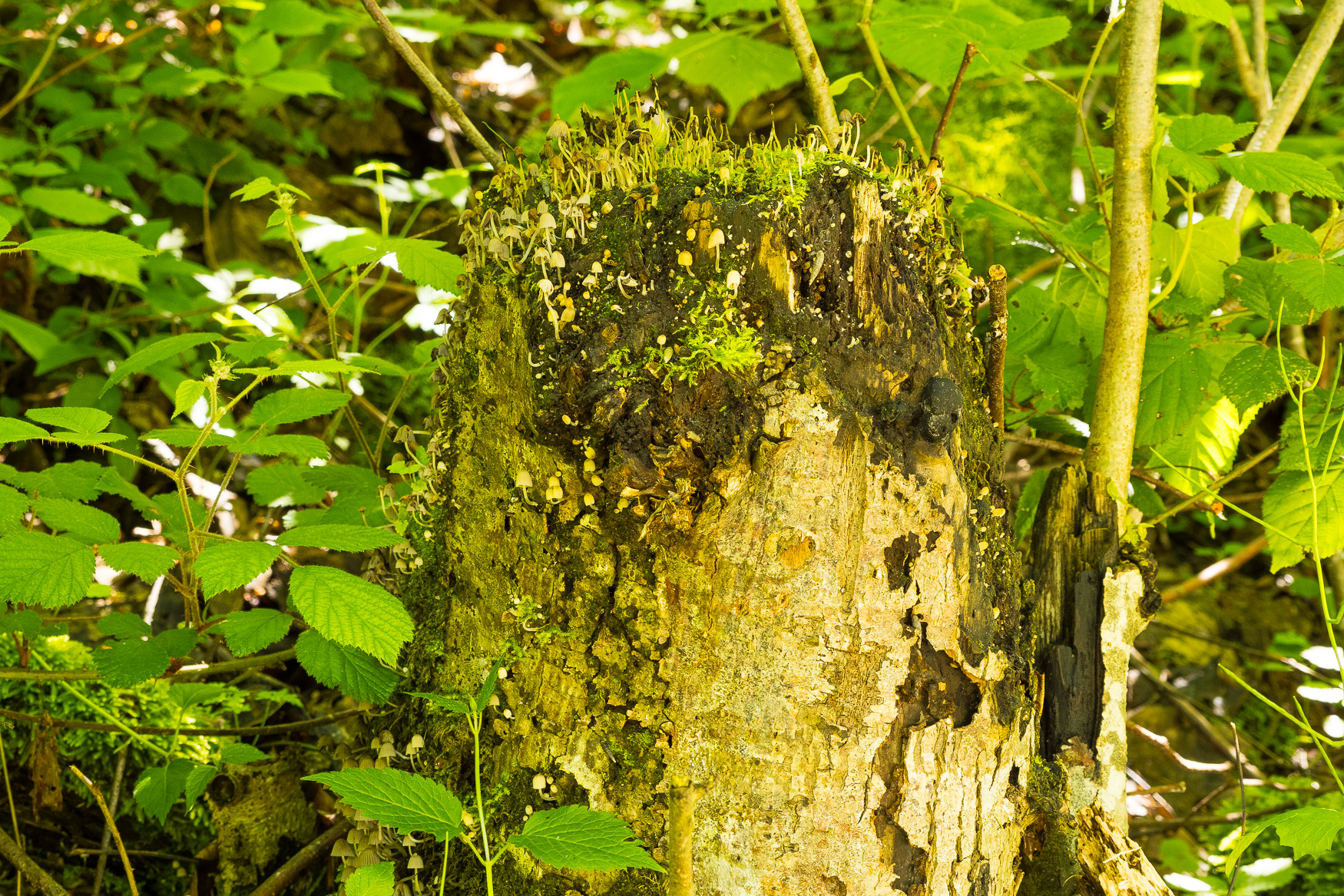
There was a nice amount of fungi in the woodlands. I wrote a post dedicated to fungi in the Jungfrau mountains back in 2024:
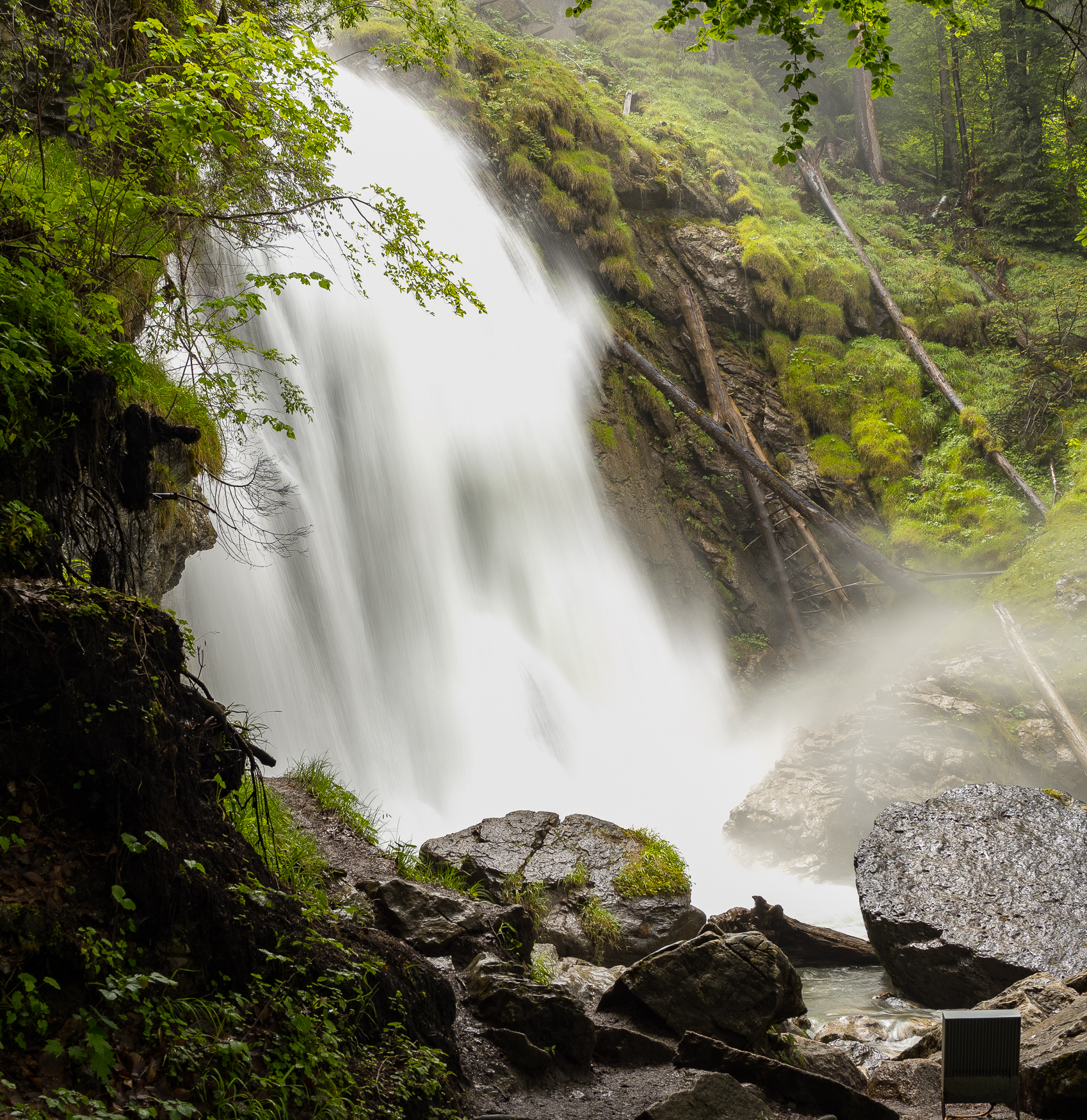
The Geissbach Falls with a slow shutter speed.
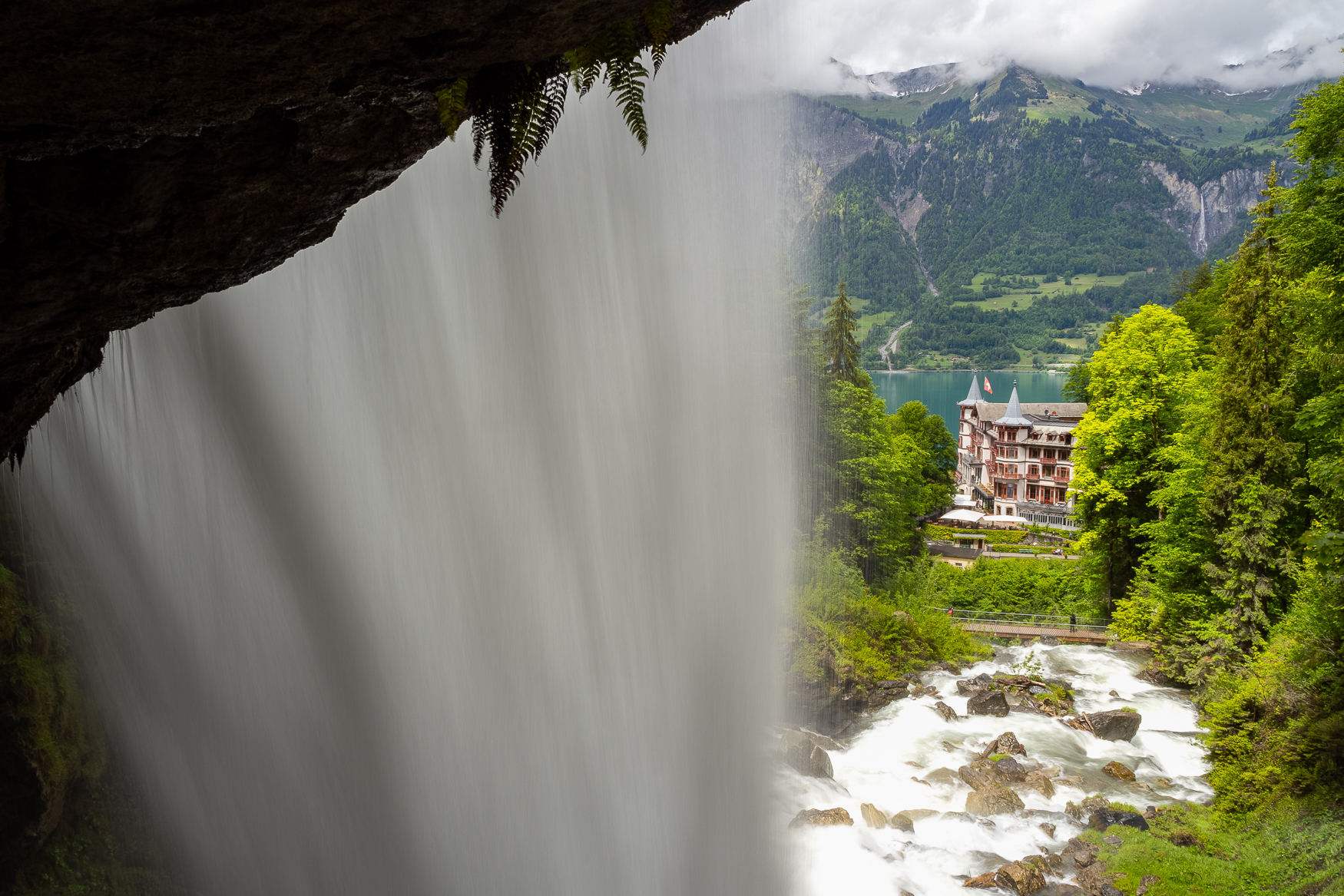
This is a photo millions of people will have taken. The position is an iron walkway behind the falls, looking back to Lake Brienz and the Geissbach Hotel.
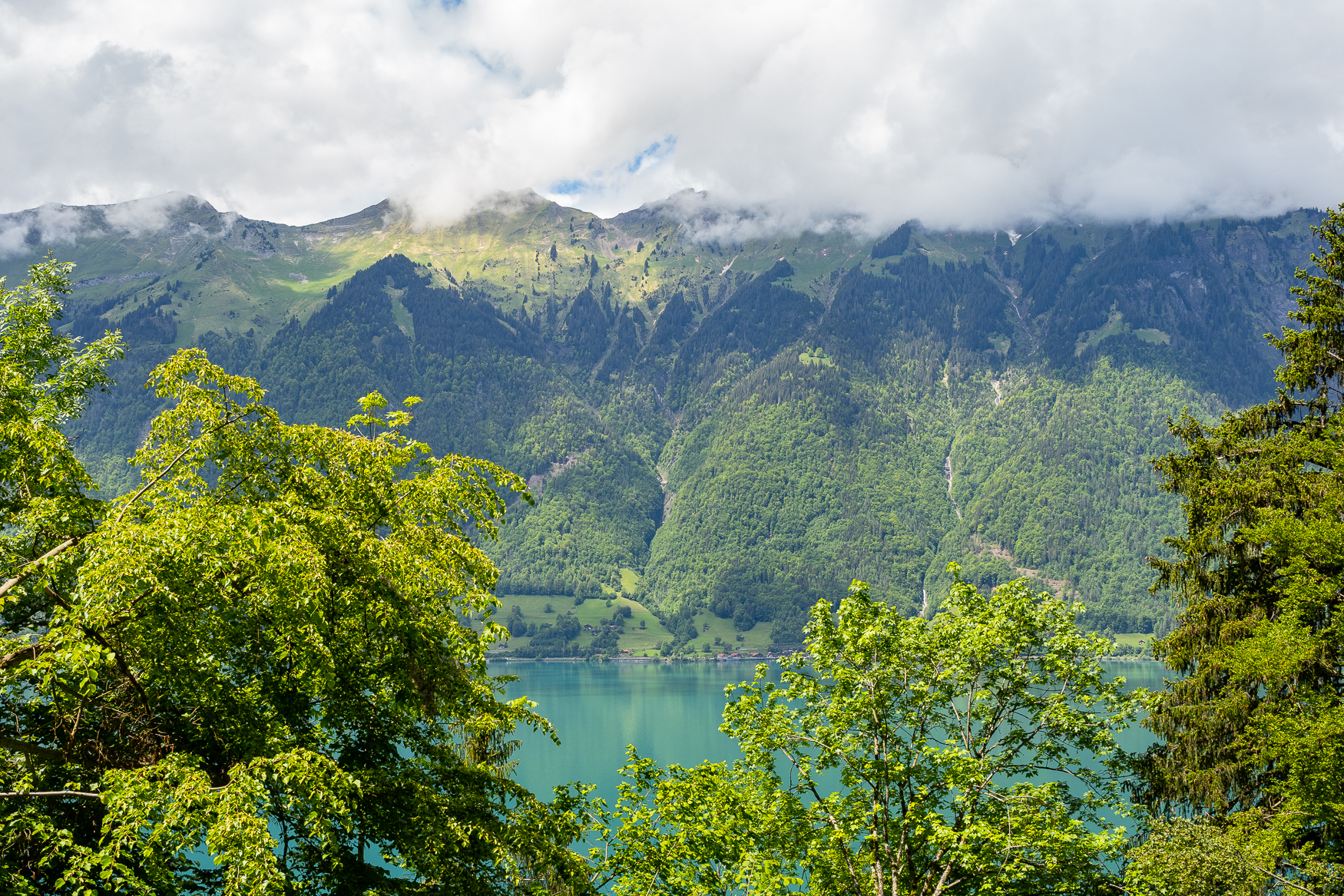
Delicious.
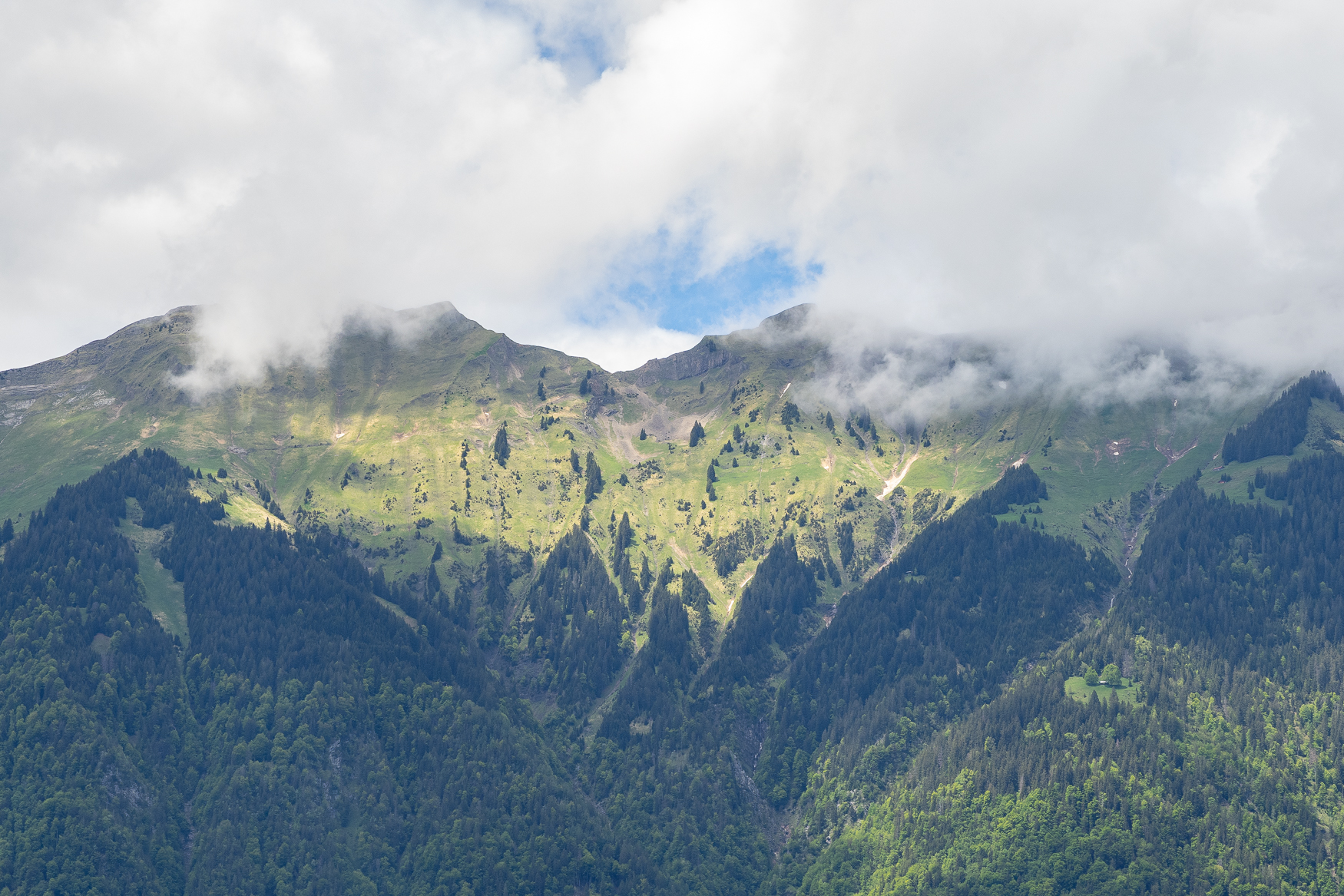
The treeline seen vividly from across the lake. There is a footpath that runs across the very top of the mountains here.
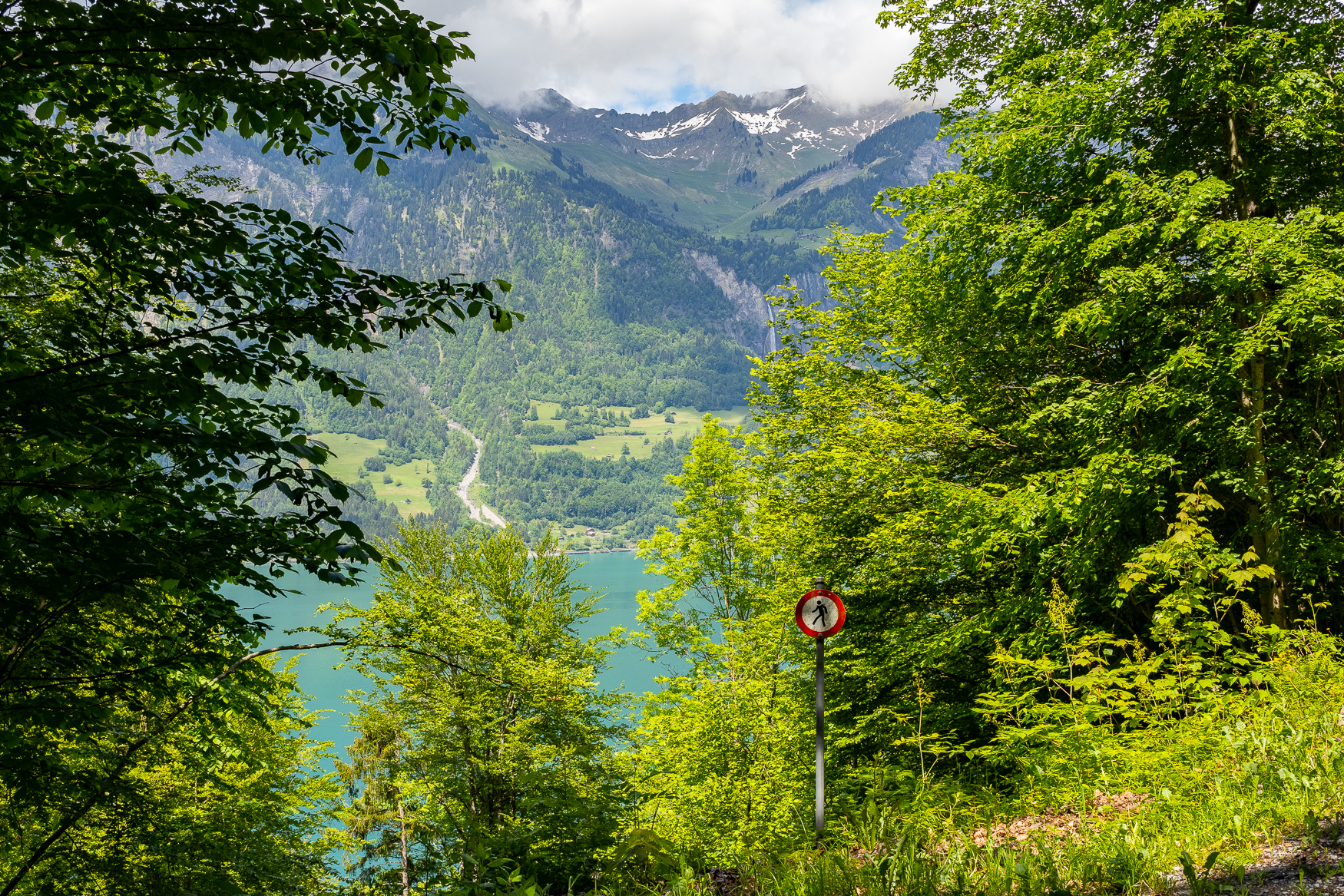
A helpful sign warning about the sheer drop at the edge of the track.
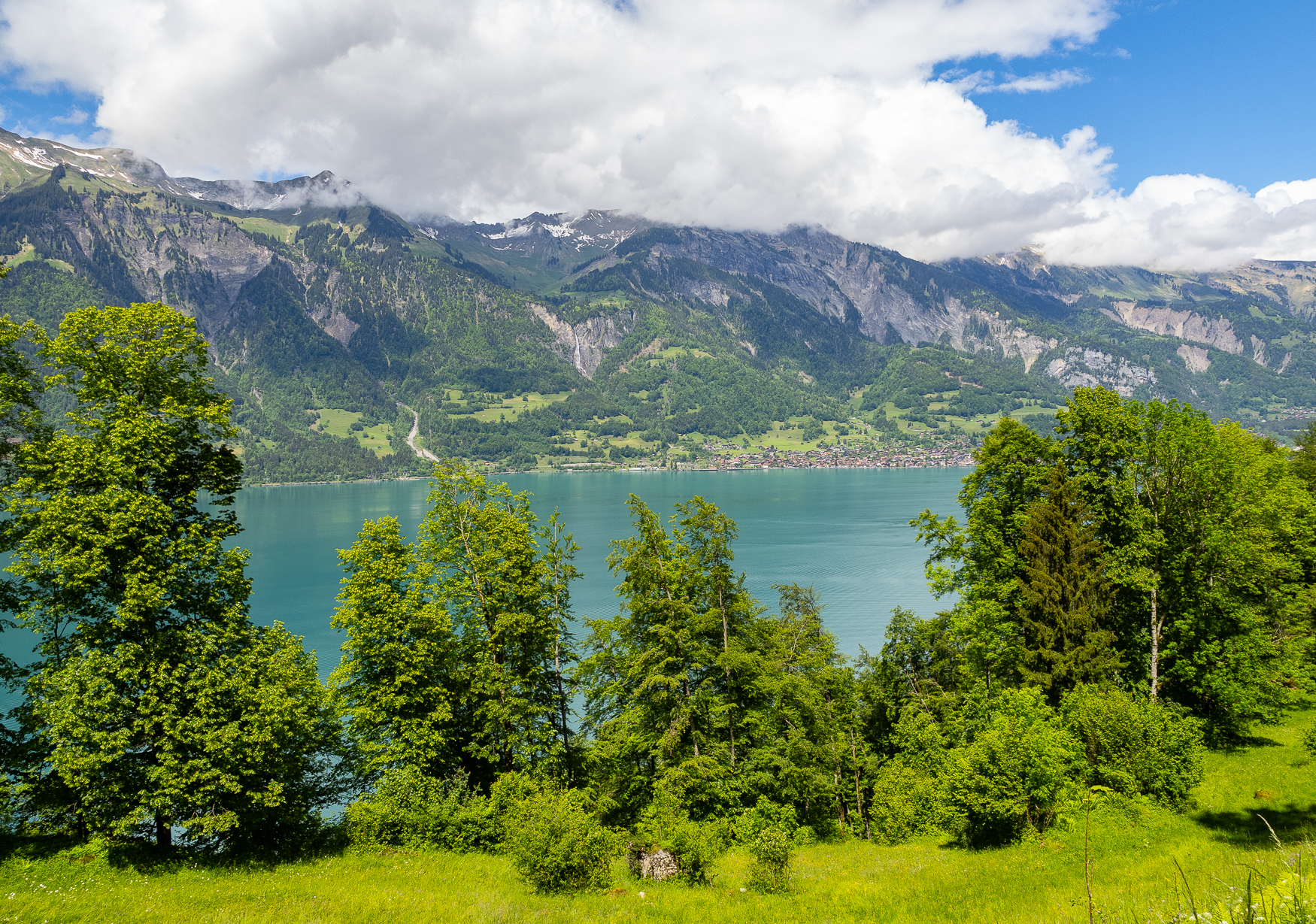
We were walking west towards Iseltwald to take the return ferry to Interlaken. The woodland ebbed away as meadows appeared, clearly used for livestock grazing and hay.
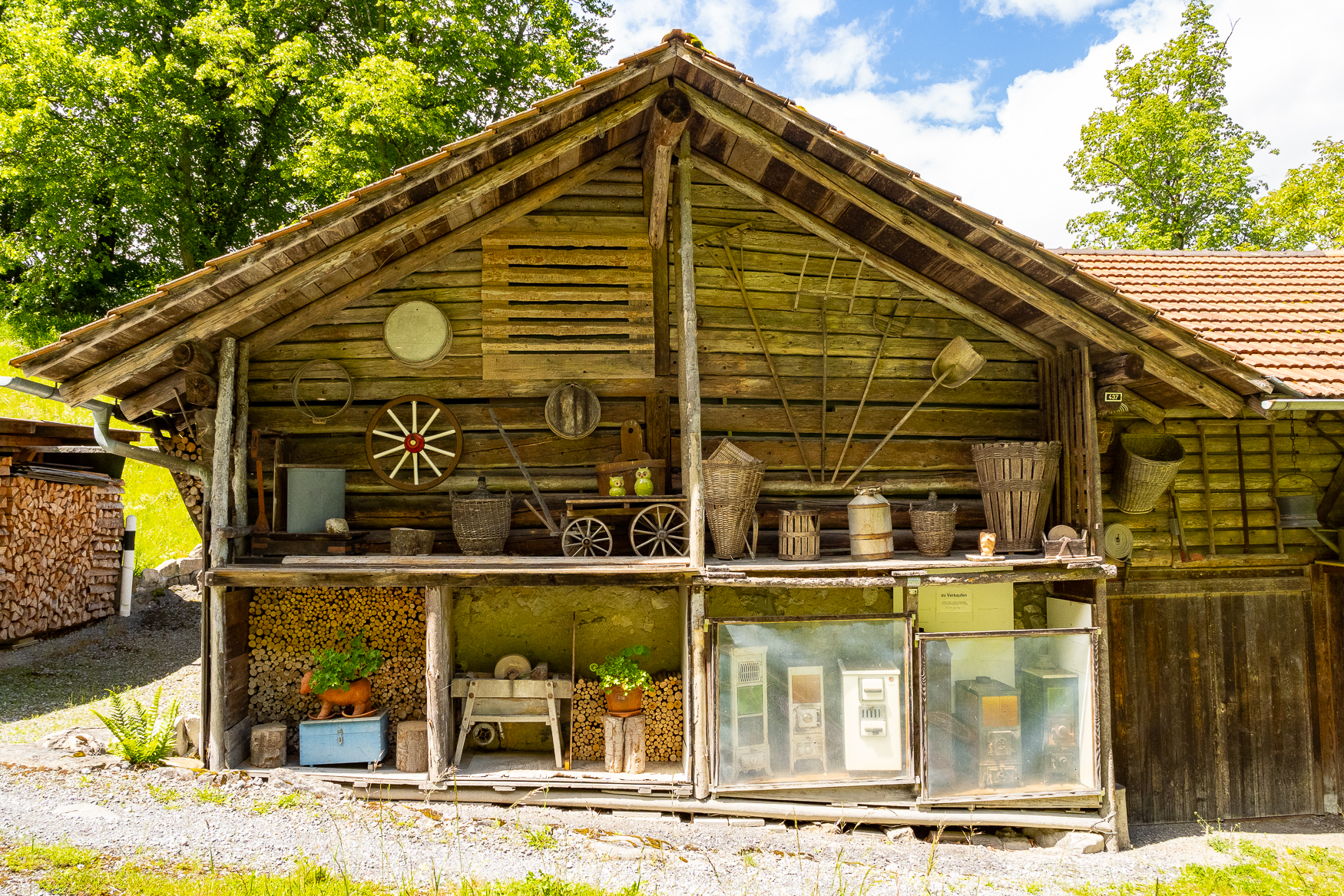
A charming display of old Swiss crafts. I think the bottom right had square contains old heaters?
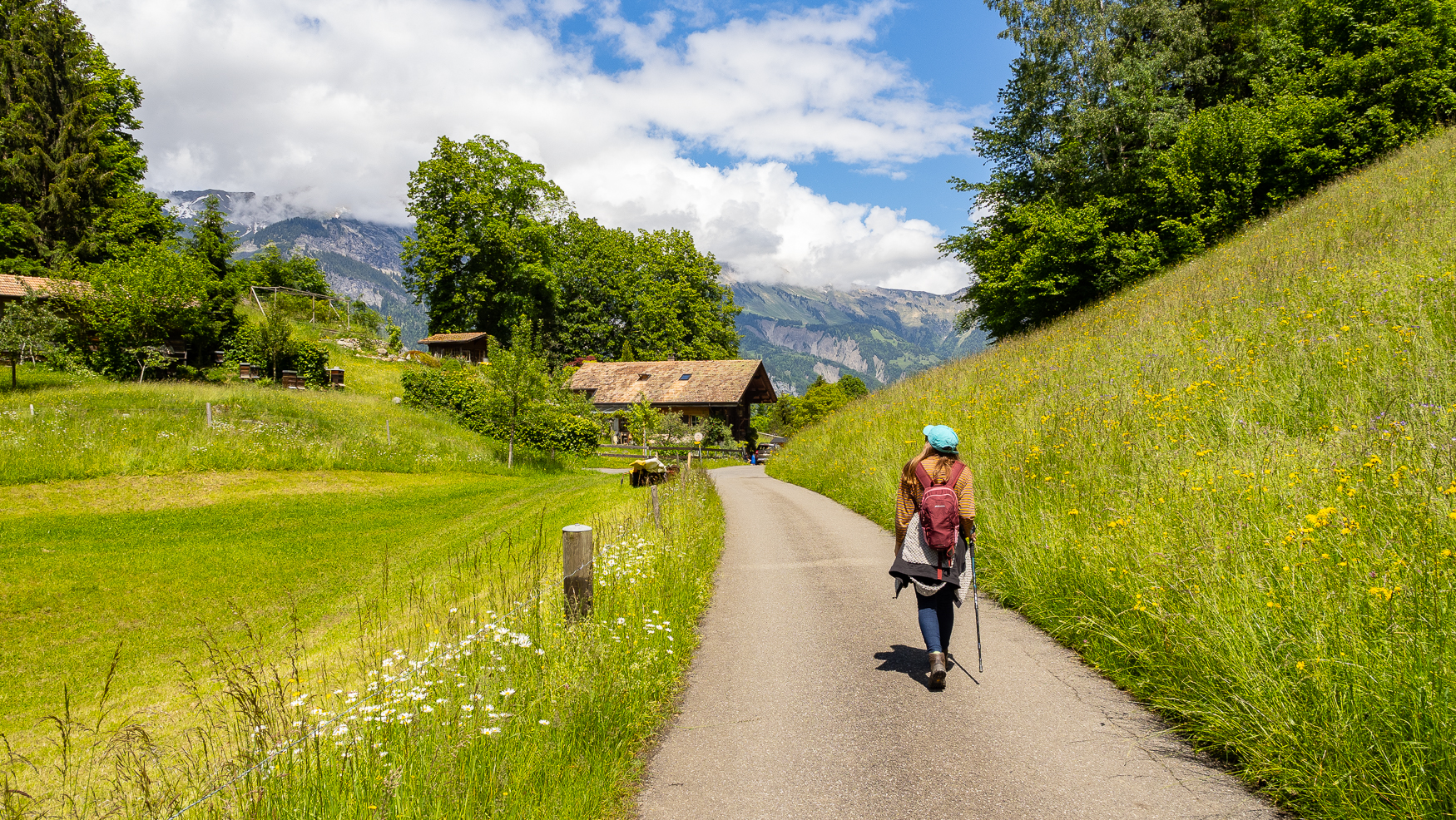
This looks back east on the path we had come from, the meadows cut on one side. If you look closely you may spot the beehives on the middle-left, which is why Rosie wanted us to turn back – so she could see what the beekeeper was doing!
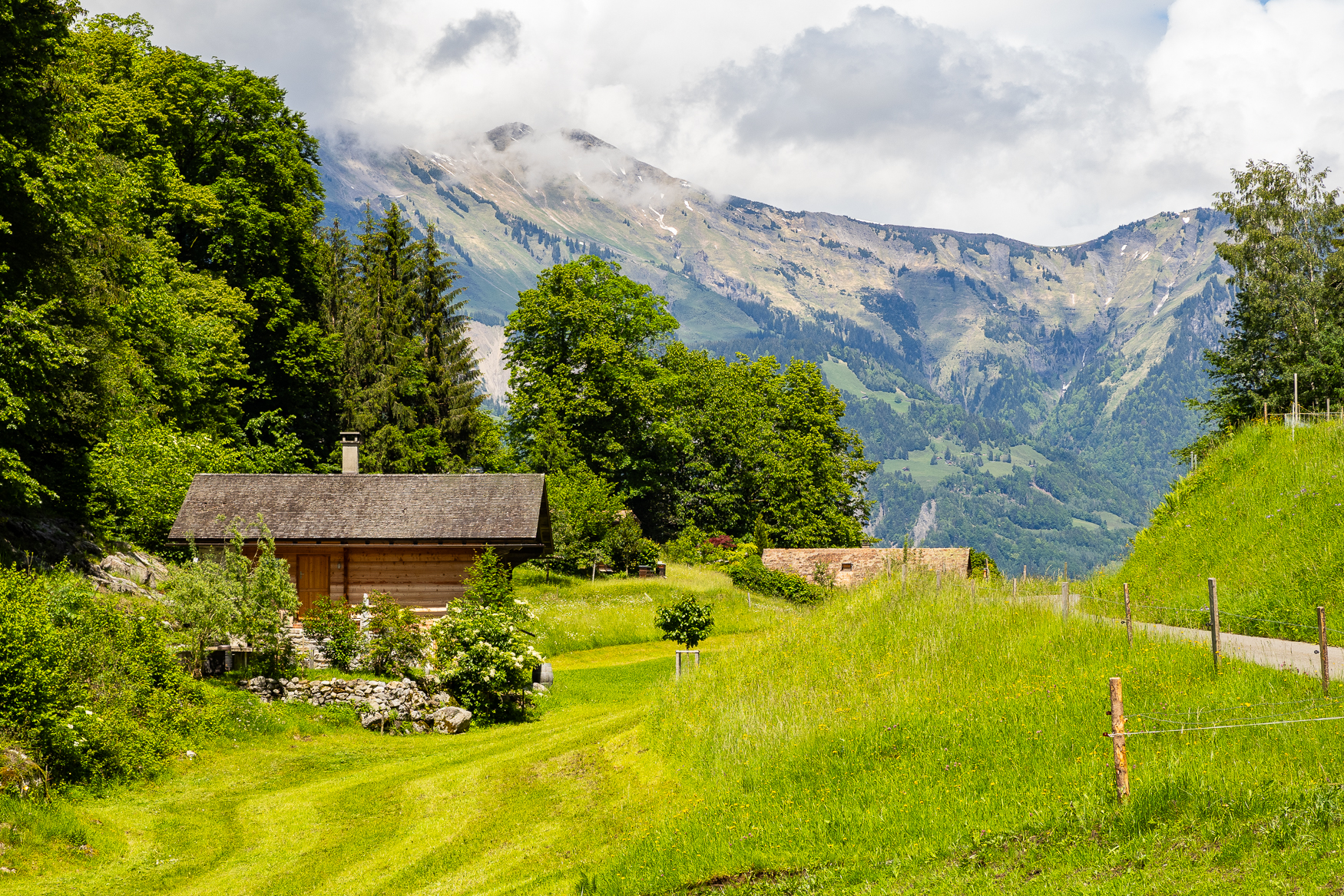
A beautiful setting but no doubt tough in the winter months, if people do live here all year round.
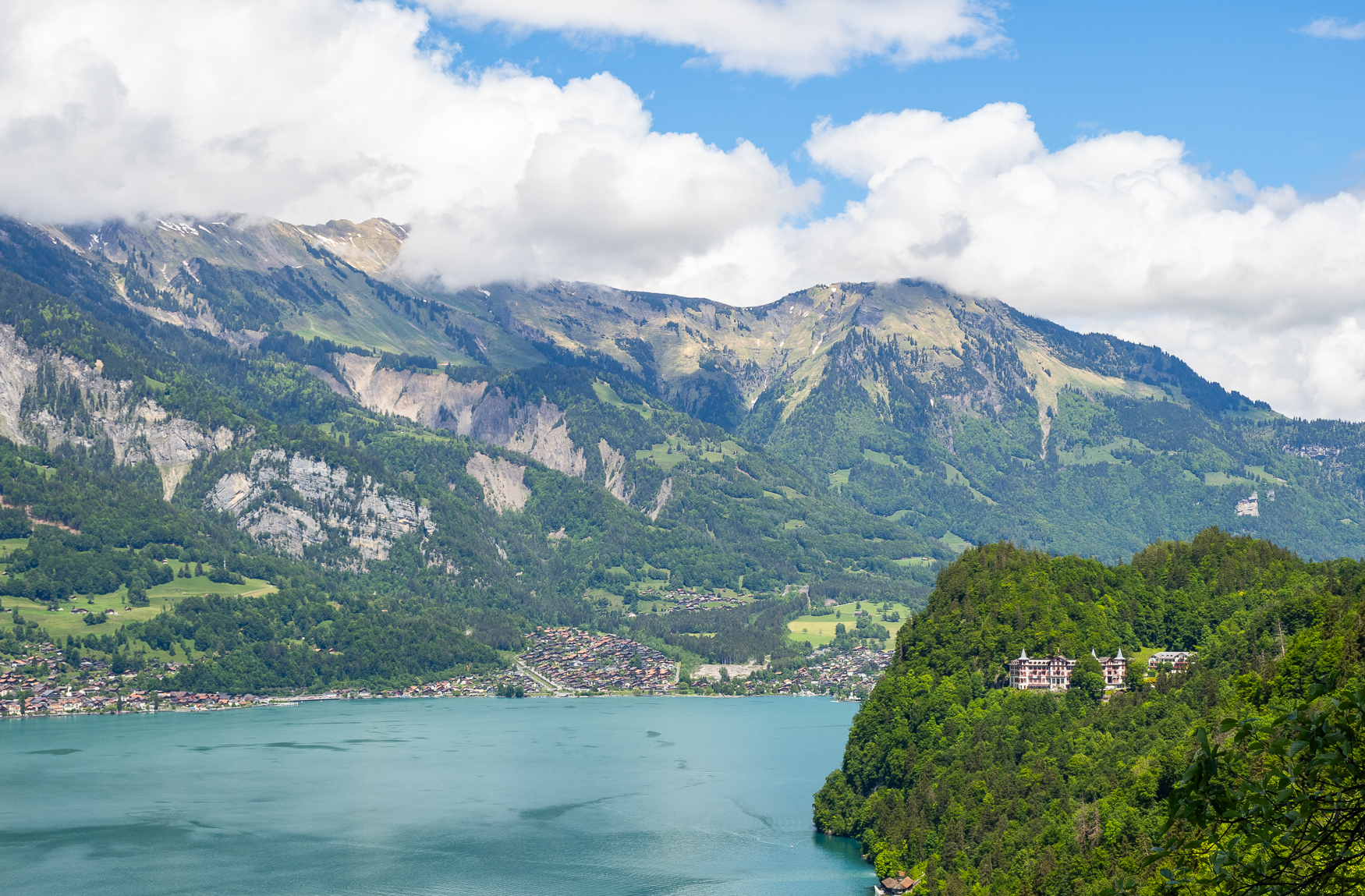
Our progress along the path can be seen here as the Geissbach Hotel comes into view. The lines in the water show the movement of the boats.
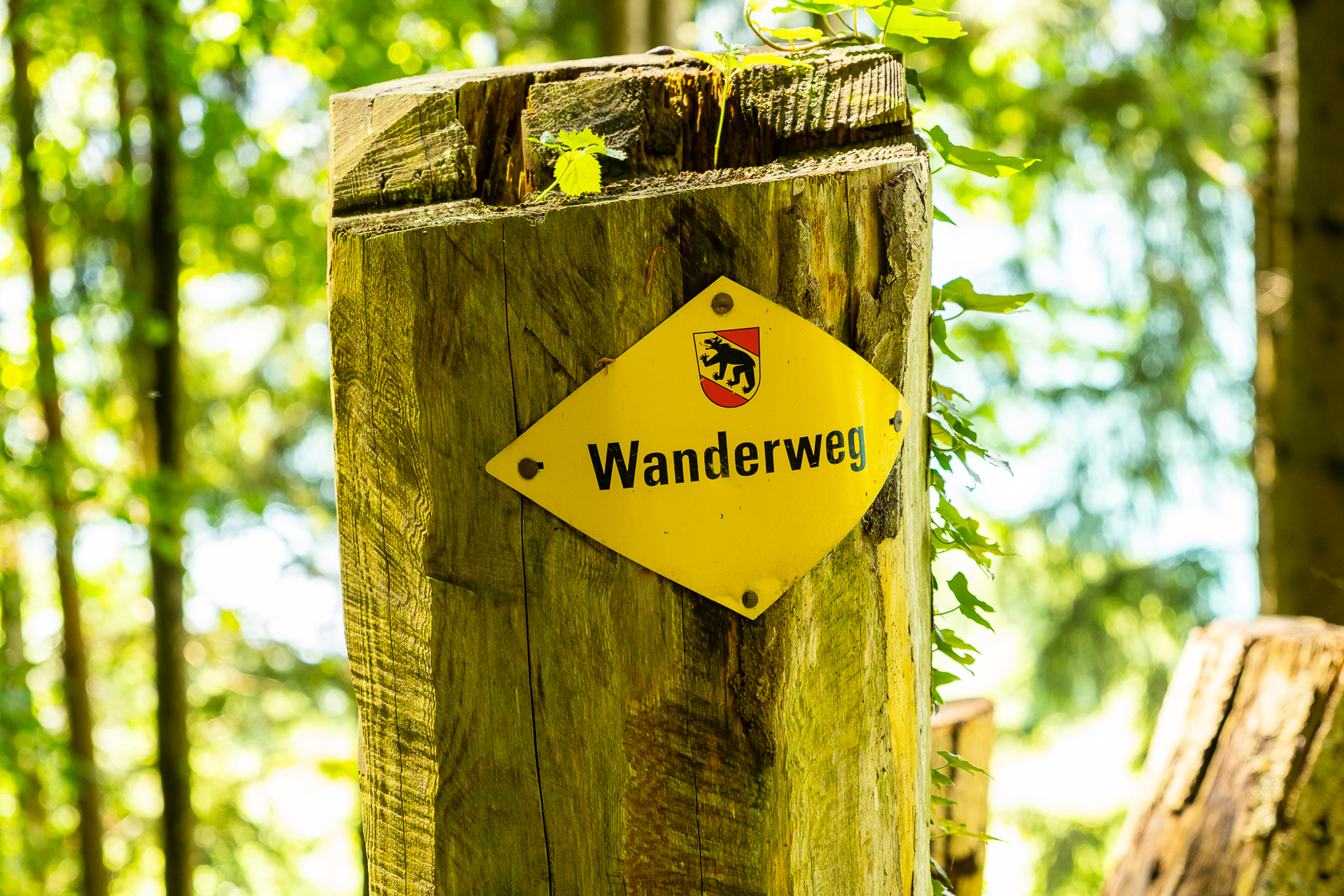
‘Wanderweg’ is a much more pleasing word than ‘footpath’ (which is funny because it has Germanic roots). It has more in common with ‘desire line’.
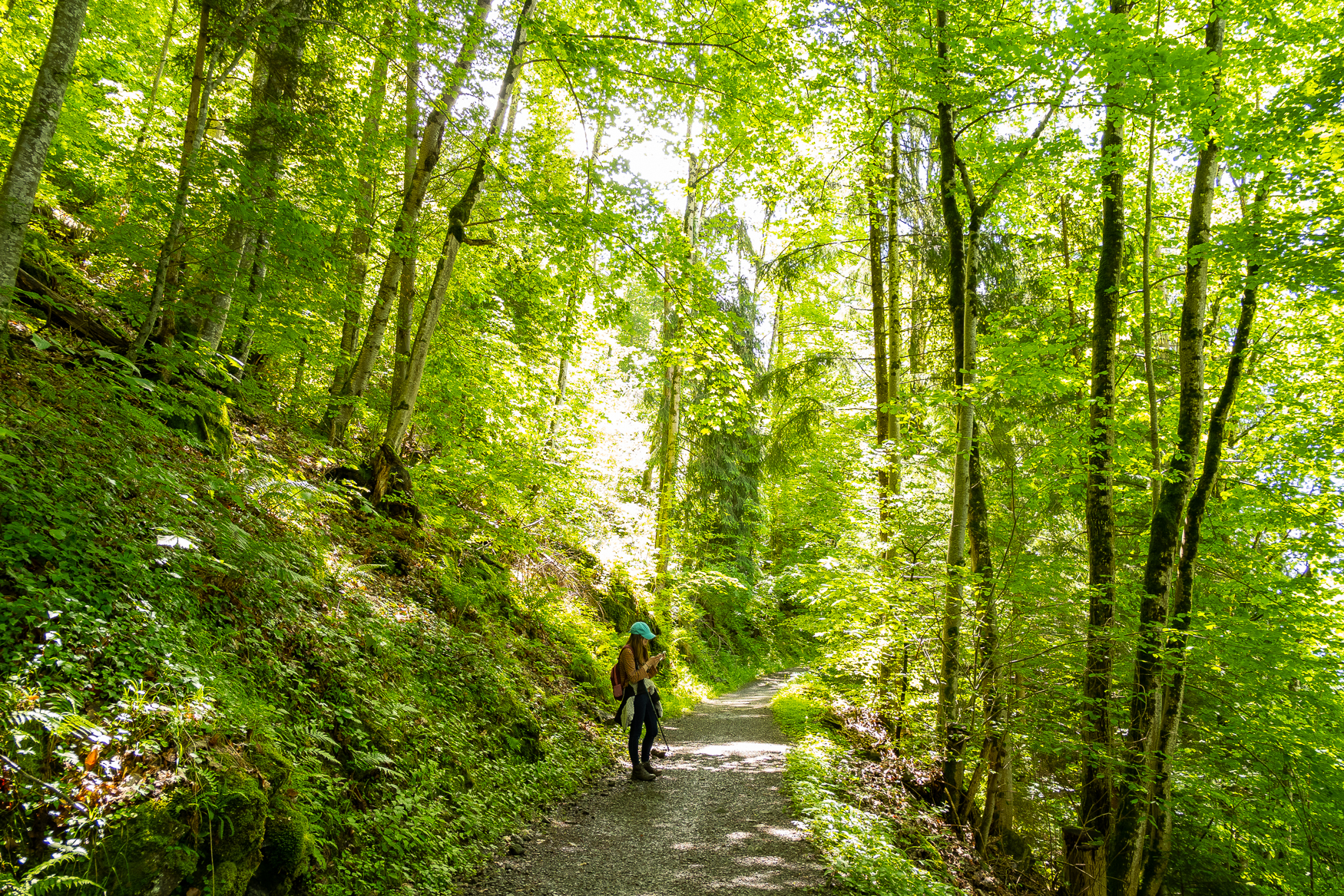
Back among the lime woods. It’s likely there was small-leaved lime here, which is something now very uncommon in Britain because it has been grubbed out over the centuries. The limes in the UK are a hybrid, known as common lime.
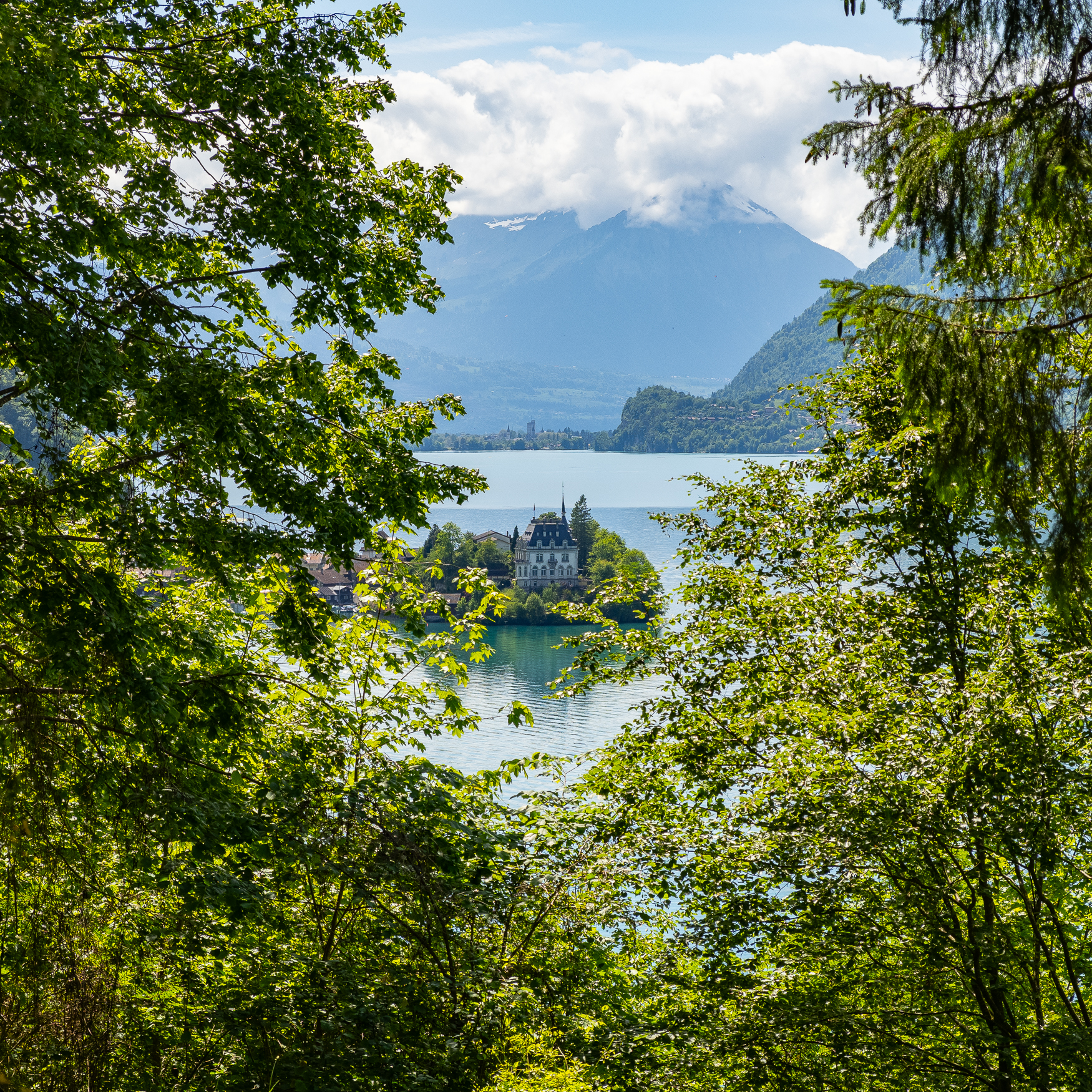
The view to Iseltwald as we began to descend into the village.
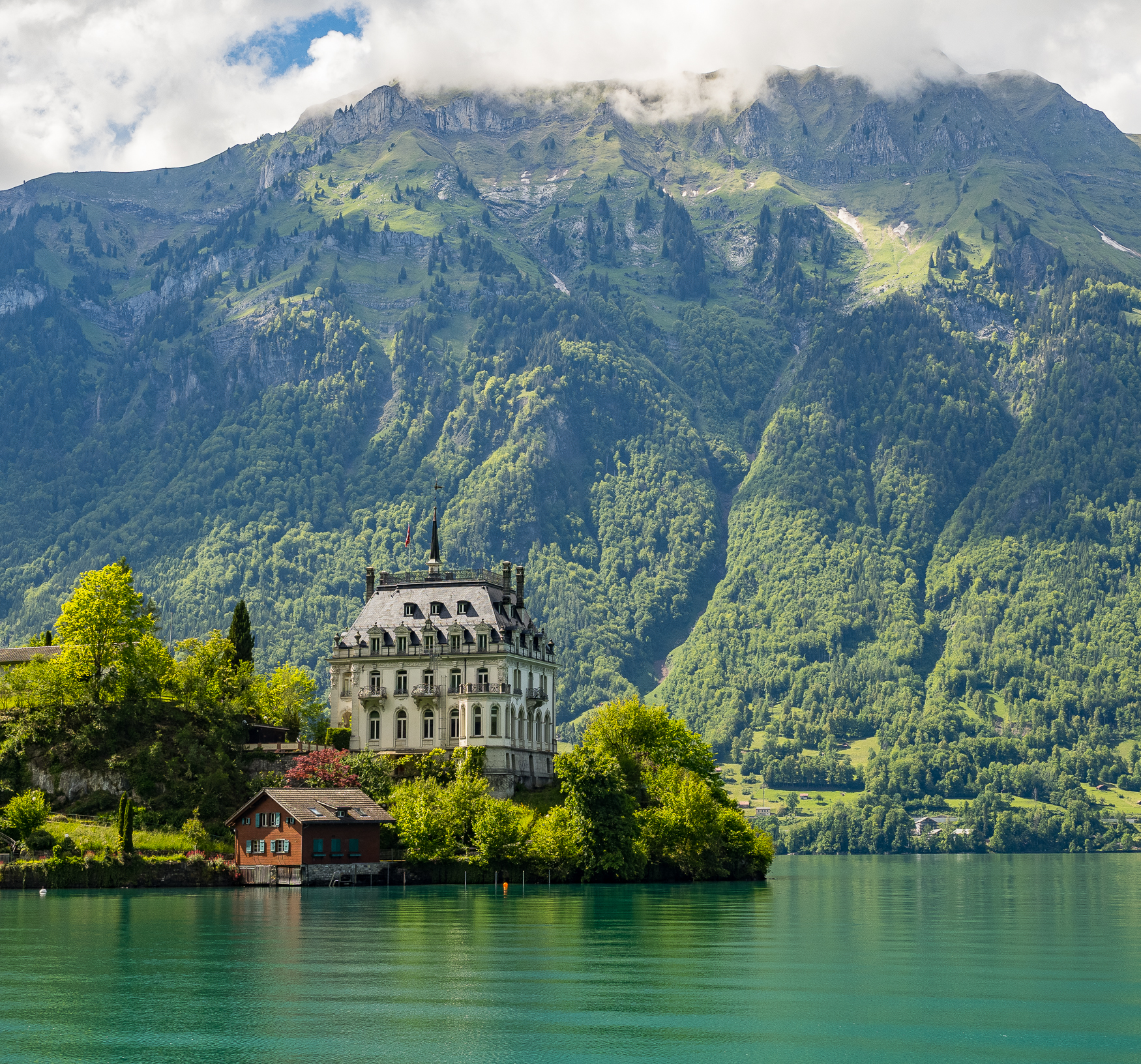
This iconic building is Schloss Seeburg, another photo that many people will have taken.
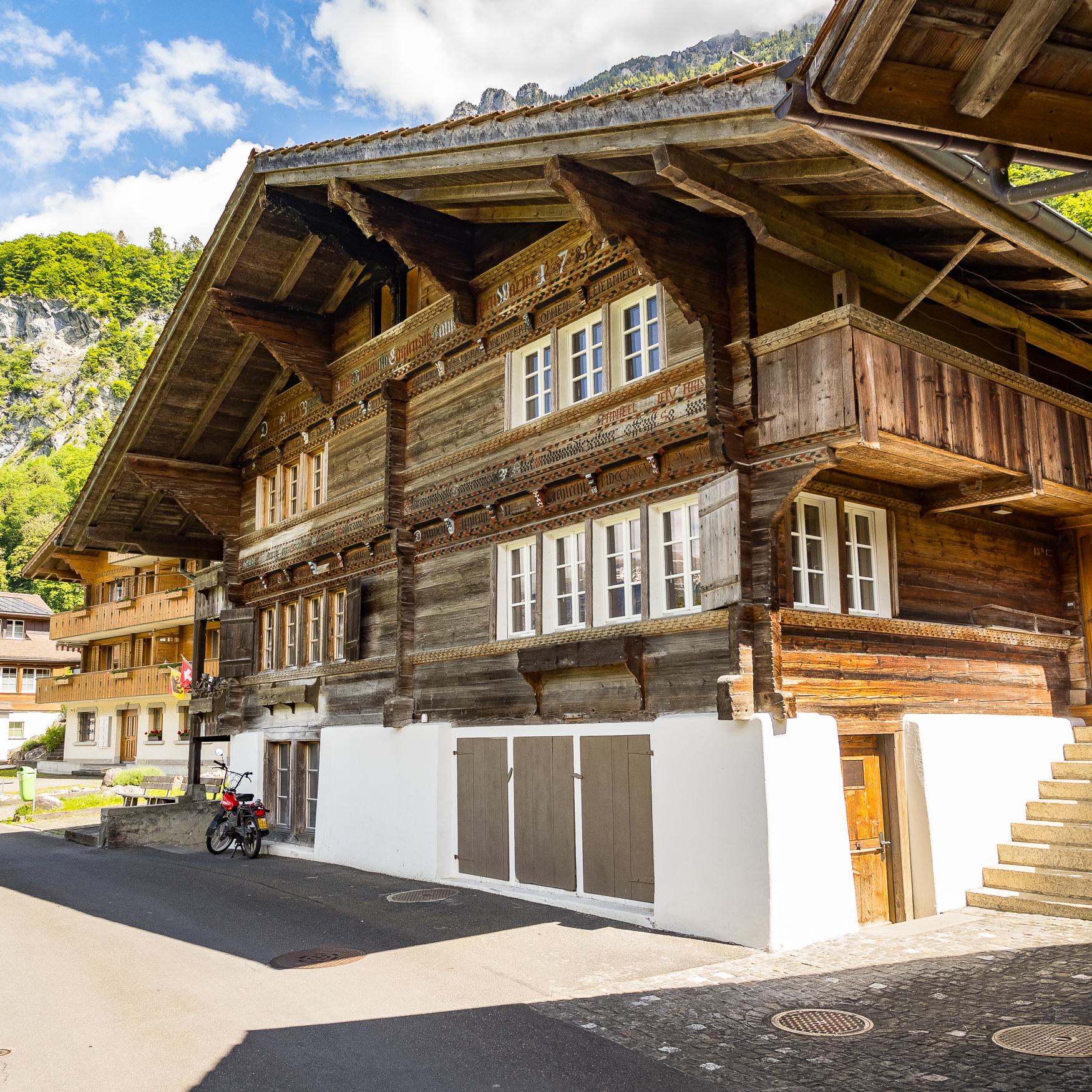
This chalet dates to the 1730s. I like the decoration. These buildings are so different to those of a similar age in Britain because these Swiss chalets need to be able to protect their inhabitants from snow. I presume this is why the roof extends as far as it does. I wish we built houses more like this nowadays.
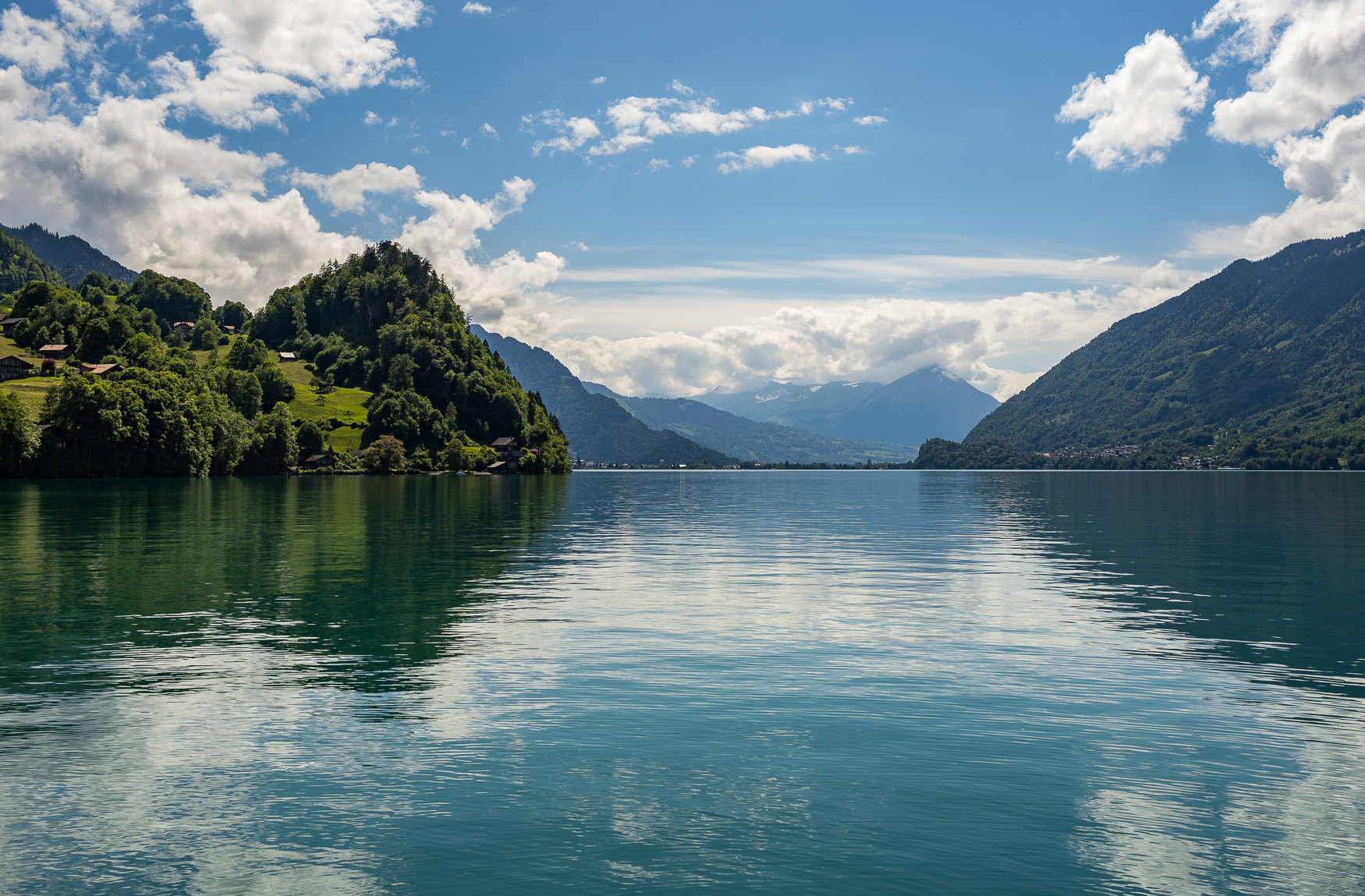
Looking back towards Interlaken across Lake Brienz. The water in this area is turquoise because of the mountain snow melt. The glaciers grind down the bedrock creating what’s known as rock flour. This travels down with the snow melt and provides this turquoise in lakes such as Brienz. That’s as far as my knowledge (and research) goes.
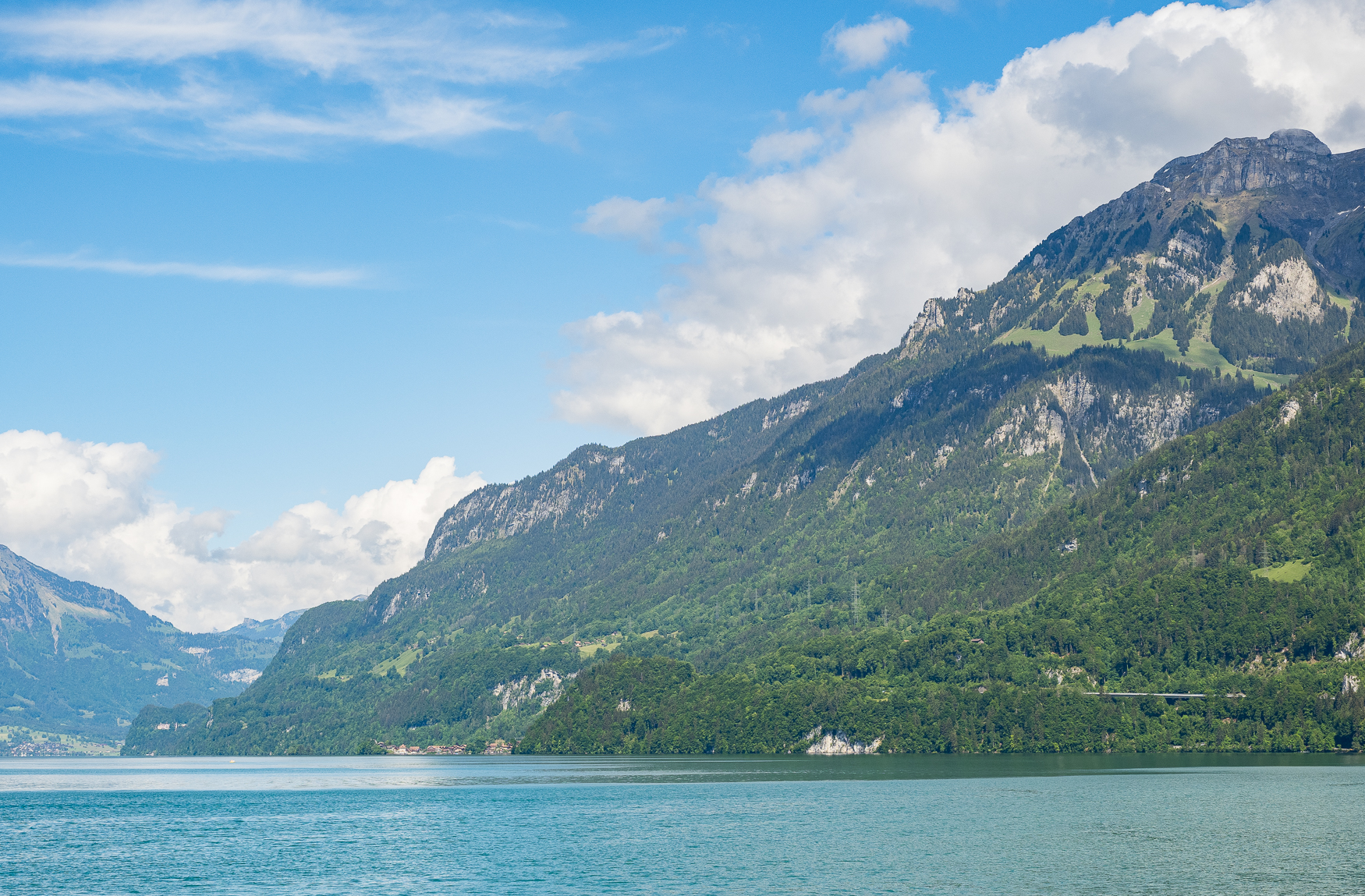
The view east as we returned to Interlaken on the boat.
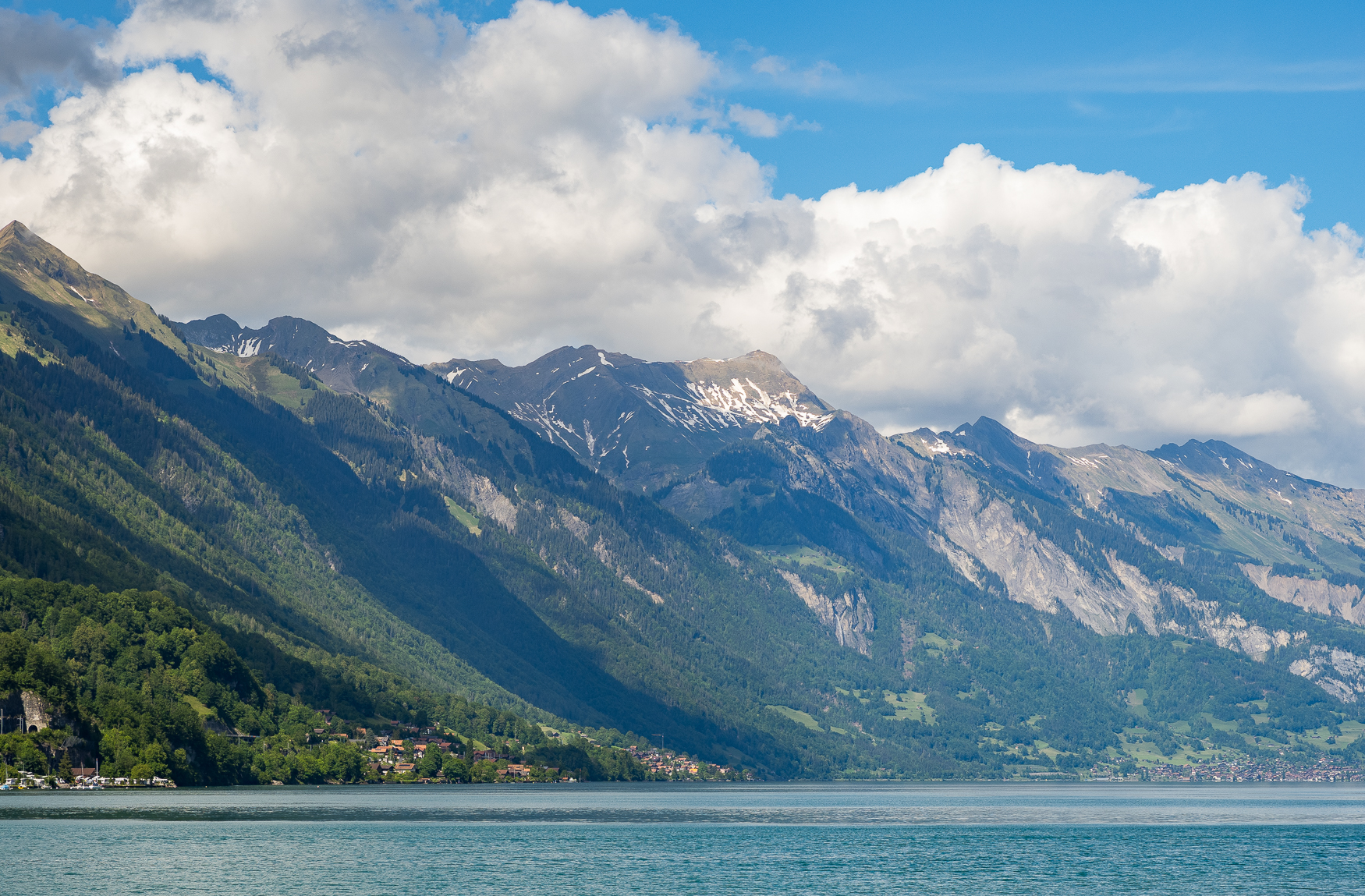
And one final view of the northern mountains around Lake Brienz.
Thanks for reading. More blogs about my visit to Switzerland:


