
Meadow brown
Writing, photography and more by Daniel Greenwood


– Cox’s Walk, London, July 2012
We’re coming toward the end of our bat transect, our detectors raised into a night lit by the orange glow of a line of streetlamps and closed by the canopy of oak. Nothing. Further up the slope there was a hint of a noctule bat’s chip-chop call coming through the static of the airwaves, but nothing else. Rain begins to fall and we make our final marks on the record sheet. There are very few bats around, the woodland all but shorn of them. At the bottom of the path are two figures, a third, dwarfish silhouette evidently that of a large dog. From here it’s unclear whether they are moving away or towards us. A fox appears between us and, turning to look back from where we’ve come there rests another. In this break of light and dark, the fox watches us with content, almost with sympathy. Nevertheless, we’re surrounded.
As time goes and our chatter dwindles, the people approach. It’s a man dressed in a cream suit and a woman. He is indeed rotund, stopping and strolling, she strafing either side of him, circling tree trunks, in and out of darkness. We’ve finished now – there’s no point dawdling – no one says anything about it, but there’s a sense of apprehension. We stop – I don’t know why. I call out: we’re doing a bat survey! I’m shaking the black box in the air. A voice travels back:
‘You can do what you like.’
The fox at the top continues in its restful manner. We are the scene.
The woman is clear now, she wears blue dungarees and a red bandana holding up dreadlocks. She disappears behind an oak trunk, flashing us a glance, like a child playing cowboys and Indians. She smiles, emptying a plastic bucket around the trunk. The man has stopped, I can see his large oval spectacles. He turns to the tall iron fence protecting a small copse of maturing silver birch. The woman comes from behind the tree again:
‘Don’t be scaring me foxes away,’ she says, gently, with a hint of the Caribbean in her voice.
We all stop and look to the copse. The streetlight cast onto the trees and fence shows movements of the amber fur of a trail of fox cubs. They slink through the fence and arc towards the tree surrounded by piles of pink sludge – the contents of the lady’s bucket.
‘Ain’t they beautiful,’ says the rotund man in his cream white suit and oval spectacles.
The fire was built in
the embers of song
thrush, the tilt
of stars and
overflowing April
moon.
Smoke and darkness,
left out somehow
from the image of
fire’s mystery, its
coming and going,
killing and scaling,
of landscapes,
smoke can also
mean hurt.
A curly-headed mass
of hair reveals
pan-pipes, a swooning
tune of a young
man, brought here
to judge the pull of
the people.
I confess I bow,
mostly, to the
call of the tawny.
As with fires, as
with light, people
fade into night
and sleep, and caverns
of orange appear
between logs,
chambers of nature’s
tinsel.
A roe deer darkness
is one of atavistic
terror for the city-dweller,
the plodding white tush
in leaf litter.
So I stare into fire and I wonder,
which part of the wood,
will the flames kindle under.

This article was featured in the News Shopper
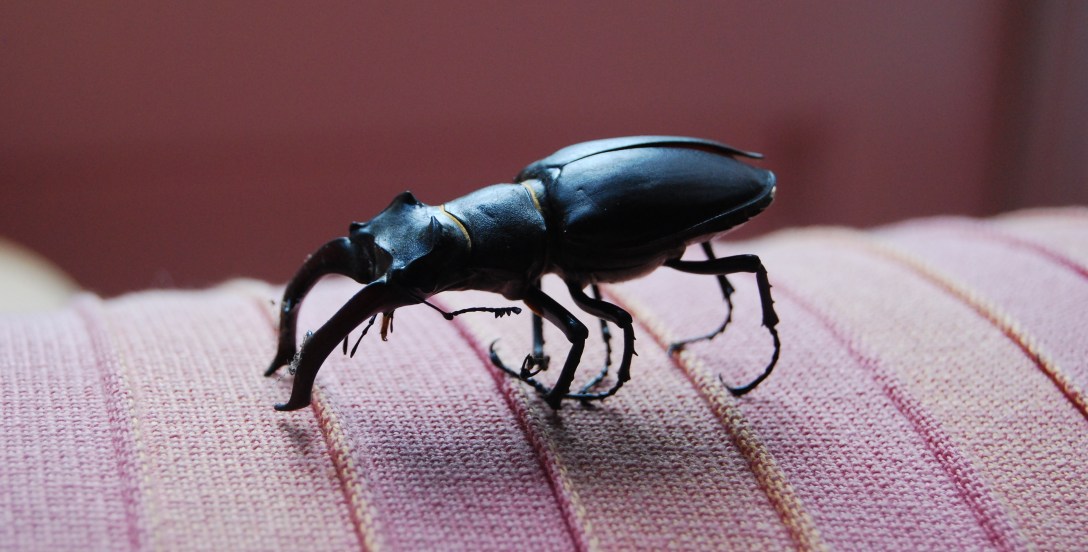
Growing up in Lewisham as a kid, the sight of a stag beetle on the pavement was not unusual. You can see where insects get the name ‘mini-beasts’ when you look at this particular creature: its huge mandibles give it a sense of outward aggression, as if it’s constantly spoiling for a fight. When you witness a stag flying around the impression is of a veritable thug who’s had too much to drink. But stag beetles are perfectly harmless and have, like much of Britain’s wildlife, suffered immense declines since the Second World War. Why is this? Stag beetles are dependent on rotting wood in woodland habitats. The suburban sprawl of the post-war period saw extensive loss of habitat, ancient woods were felled and grubbed out and the ensuing countryside tidy-up has been so damaging to our wildlife, particularly for our bees and butterflies. But, funnily enough, London is a great place to find stag beetles, particularly Lewisham and Southwark. In the past week I’ve seen three male stag beetles, two of them in flight looking for a mate and one dead on a doorstep. The heavy rain and summer break-outs have created good opportunities to view male stags flying around, as windy and wet weather is unsuitable for a cruising stag dude. London Wildlife Trust has launched a campaign to map the distribution of stag beetles in the city, and people have been sending in their sightings in the hundreds. It seems there’s a real affection for this mini-monster amongst Londoners, it’s ignited people’s interest in wildlife, rekindling memories of childhood, when stags were more common (and, apparently, treated very unfairly!). It’s also interesting a new-wave of wildlife watchers who can take the lead on protecting this precious species in the decades to come.
What can you do to help stag beetles after you’ve let London Wildlife Trust know about your sighting? If you have a garden, allow a wild fringe to evolve and create deadwood piles near trees to mimic a woodland habitat. If you have a tree that’s dead or been felled, let the part of the wood or at least the stump remain there. It’s all about keeping things messy. It’s a good idea to keep your cat in from dusk onwards, when the beetles are likely to be roaming. If you don’t own a garden why not join a local Friends of group for a park or nature reserve and help to create stag beetle habitat, or set an area aside for them in your community garden. Stags beetles need our help, and by finding out where they are today we can help to protect and promote them for the foreseeable future.
More information:

Photograph by Martin Brewer
— Nunhead Cemetery, London, April 2012
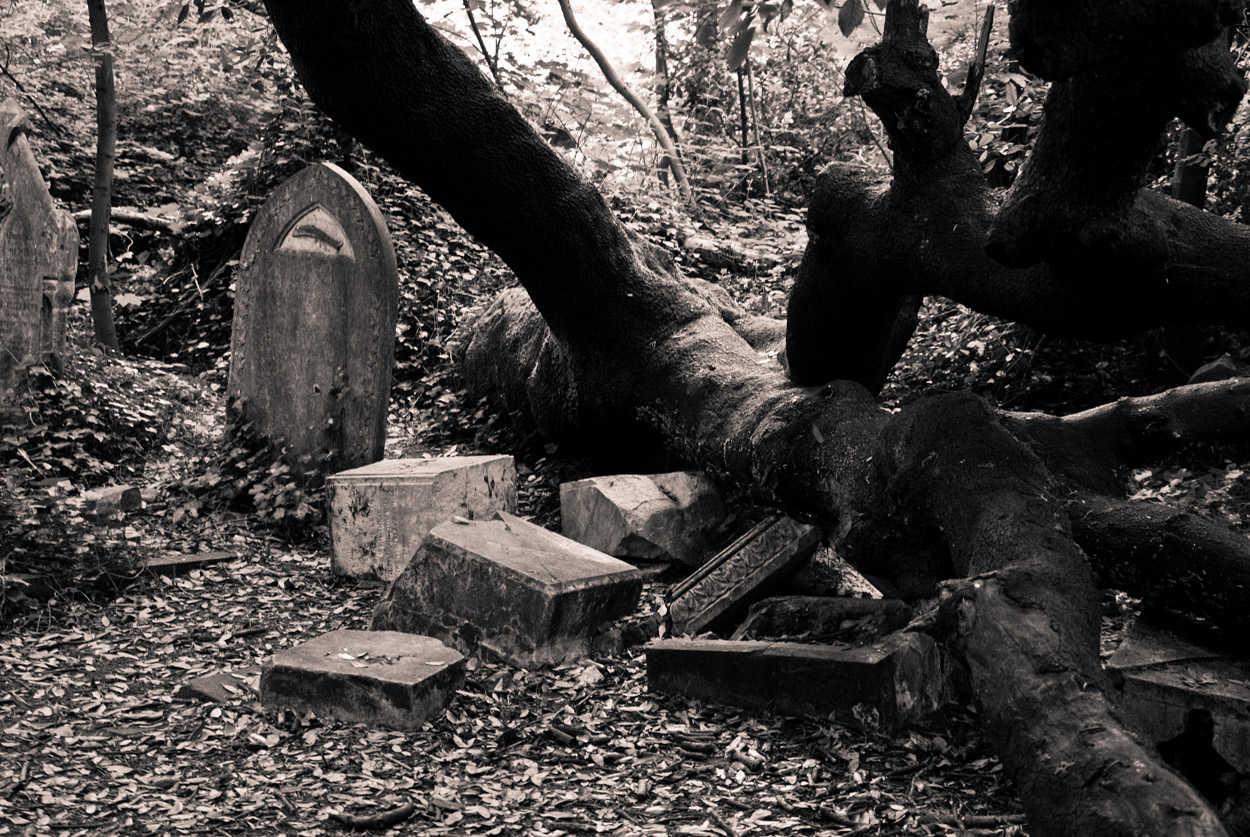
In the cemetery won by sycamore and rendered woodland, two male song thrush are duelling with one another, throwing out tunes, rewriting and rollicking the black cloud with their language. This mysterious, handsome thrush is to me like a singing pudding endowed with flight. I leave them to it. My ears are working overtime, the scene dripping, the algae glows on the trunks of dark trees, the moss is vibrant on the gravestones appearing as shipwrecks at the bottom of an ocean. The denseness of the trees squeezes the sound: blue tit trill, the calling great tit and guttural canon of the crow marking the enclosure of forthcoming leaves and canopy. A family, their dog muddied, happy, intoxicated by the aroma of wet woodland, people relaxed, even pleased – woodland puts us back into our bodies. The sun inches out and makes crystals from the droplets of fallen rain, there is the feeling that the soil is sighing from the torrents. Deep refreshment has touched the natural world. My waterproof holds drops of water that leave strange dents in the material, my jeans are darker now. Wait – a song ending, a sweet, fluty refrain. Silence. Woodland dripping, I retrace my steps back down the path. The song comes from a leafless ash canopy – descending, descending, falling apart. Willow warbler. I see it, its long tail and constant hopping between branches. How far has it come? It sings again and moves on. The matt black storm clouds progress, the inkling of lightning, the thunderous thump.
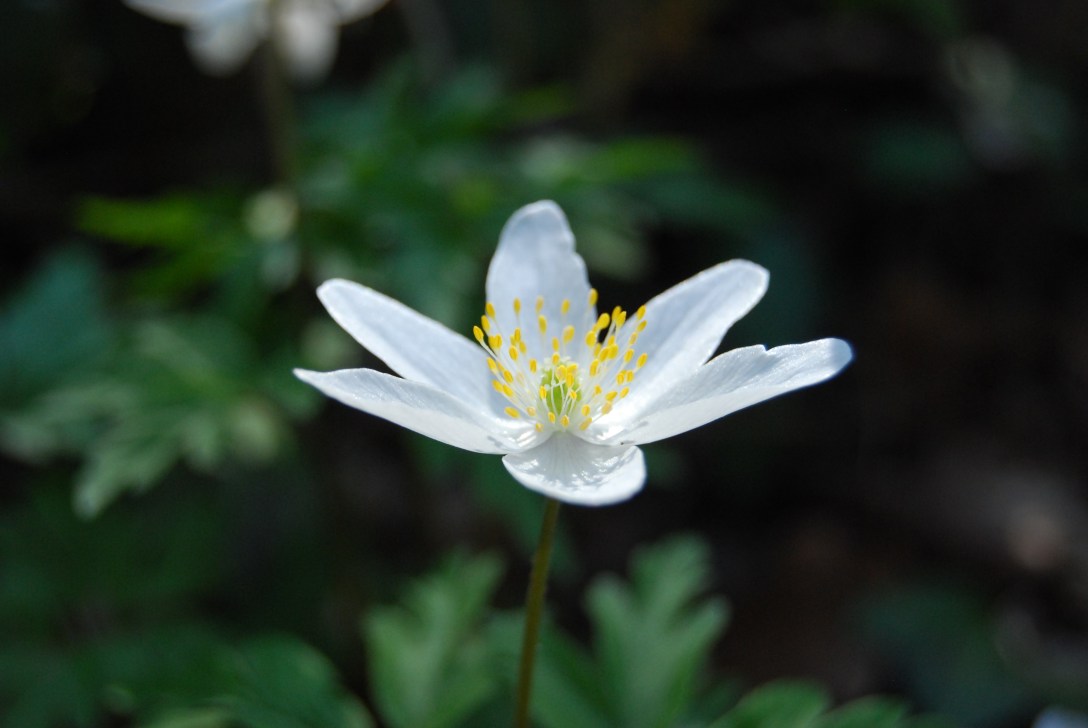
Every week I volunteer at one of my local woodlands and I reap the rewards of working with the natural environment. The skills I’ve gained from toiling with wood and earth will never be lost, the longer I can spend outside the more useful they will become. How have I learned the art of coppicing, dead-hedging, hedge-laying, tree identification and management? By working with people who know, people who can pass these skills on. We have worked this way for centuries, wood is a vital part of human existence, it gave us shelter when used for structure, warmth when burned for the fire, and fruit when the time came to pick. We built fences, bows and arrows, walking sticks, ships, wooden spoons, food bowls, huts and houses. Now our trees line the streets and sit evenly in our parkland, the idea of cutting a tree means death to us and we have no idea of why trees are here and how they have been used. The wood used for our desks and chairs (if wooden anymore) isn’t from the local woodland, nor is it really English, instead shipped from Eastern Europe, Scandinavia and, most criminally, from the Amazon rainforest.
I see the potential in woodland. By investing in the natural environment our governments could satisfy the desire for ‘job creation’, and we’re talking real jobs, work where both the mind and the body are engaged. Woodland provides work for anyone and everyone – studying the ecosystem in detail for those of an intellectual or scientific mindset, surveying lichens, birdlife, insects and our declining woodland wildflowers. And for those who want physical work pure and simple, the wood offers that chance, felling trees, carrying timber, working with your hands and alleviating the weight of the mind. This is how our ancestors have survived and built communities, and it may be the answer to our loss of direction as individuals and as a society. Nature wants to work with us, the landscape is man-made, we haven’t stepped out from a wildwood in to pristine parkland. Many of the old species are gone, many are on their way out, much of what remains is being overrun by the shade of a closed canopy and the spread of invasive species, escaping from gardens and parks. All this goes without mentioning the importance of the wild, of the wild creatures which still live among us and treat our cities and towns, railway lines and airports, as wild places. The pigeon and the peregrine see our brick blocks as cliff faces, space to roost and raise young or to hunt from. We have not escaped the natural world, we are wildlife, too.
The woodsman (or woodsperson!) is a job, a role, a way of life which has existed in some capacity since men and women walked the earth, either felling the primeval woodland for farmland or making a home and life from the woodland at the edge of the communal clearing. Woodland is for people and wildlife and we should invest in this resource, not merely our money but our time. Trees will always be growing as long as the earth is healthy. Trees are used to us working with them: ash, hazel, small-leaved lime, field maple and alder are all trees which thrive from coppicing, a schedule of felling the tree at its base every 7-12 years depending on species. Some species, if cut regularly and at the right time, will live indefinitely. So don’t scoff at the idea of woodland being an empty bet for giving people work. It might just be the very thing we’ve been looking for. Working woodlands for local people means freedom from the uncertainty of the global energy market, and the chance to take a part of our lives into our own hands. Woodlands need not be seen as a carbon sink, the idea should be to reduce our dependence on fossil fuels and engage with new technologies which will allow us to reduce our impact on biodiversity, air and water quality and soils. A wood-burning stove is a way of heating the home with local resources and our independence from wood fuel is new, it is not too late, by any means, to return to using wood again to fuel at least part of our lives.
But it’s not possible for everyone to grow willow or ash and fell it for themselves, not everyone has a garden, nor does everyone have a home. That’s why it’s important to make woodlands a publicly managed resource, the complete opposite to the notion of selling public woodland to the private sector. Instead we need to focus on three principles: protection, management and access. Protection for ancient woodland from short-term development and prestige infrastructure projects such as High Speed Rail 2, management of our closed-canopy woodland where the ground is shaded out and no new generation of trees able to grow, and reasonable access for the public, who depend on woodland to maintain a sense of well-being and a connection with the natural world, to forget about the industrial hubris of the age and revel in the tranquillity of the wild. Woodland is worth our time and money.
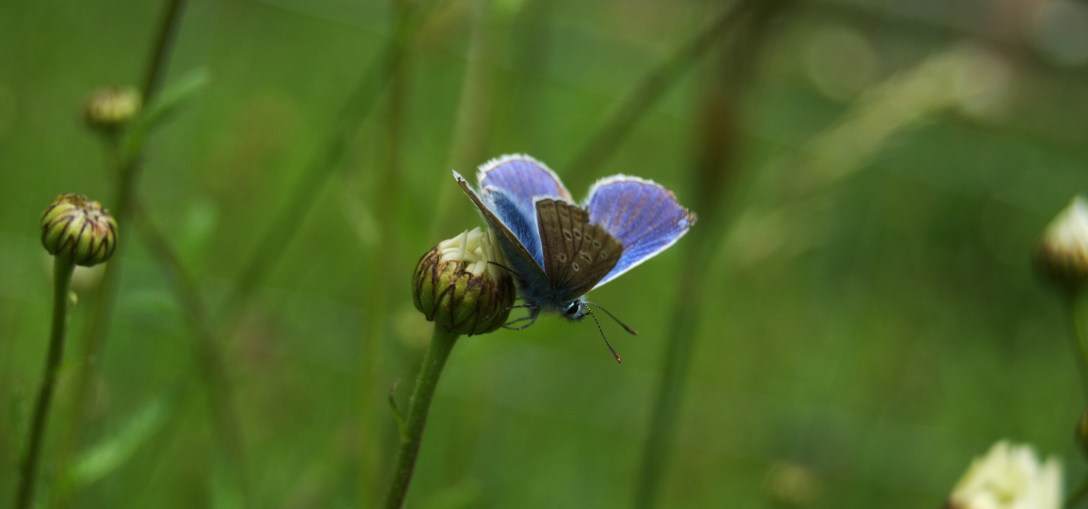
On Saturday (9th June 2012) London Wildlife Trust and the Old Surrey Downs Project held the annual Hutchinson’s Bank open day. With the Heritage Lottery Funded From Thorn to Orchid Project, Hutchinson’s Bank has been managed instensively by both local and travelling volunteers over the past 12 months to remove the encroaching scrub of young trees which, if left unchecked, will shade-out the foodplants of a diverse array of butterflies. Here are some of the butterflies encountered on the day, many of which will thrive thanks to the ongoing management of the 35 acre reserve. The small blue and dingy skipper are two butterflies suffering severe declines nationally.

Small blue (Cupido minimus)

Brimstone (Gonepteryx rhamni)

Green hairstreak (Callophrys rubi)

Dingy skipper (Erynnis tages)

Small heath (Coenonympha pamphilus)

Common blue (Polyommatus icarus)
 Unlocking Landscapes