Birdsong fills the dour skies

York Robin

– York, December 2012

Having travelled up north today, one thing is clear – it’s a grey day in England. The fields are flooded, rivers have broken their banks, swamping hedgerows like spurious borders between water-bound states. Perhaps it’s a vision of the future. In York it’s much the same as we walk the walls. These giant slabs of stone encase the city’s heart, having done so for centuries. My footwear is unsuitable, leather boots with worn, grip-less soles. My companion is even more ill-suited in her heeled boots, though somehow she doesn’t slip as I do. Perhaps it’s the familiarity of the native. I fail to pick up placenames or any other manmade pointers, often quick to admire the old structures of men, we sometimes overlook nature’s work entirely. Instead of history, I’m drawn to the algae-green branches of lime trees and the peeling bark of mature sycamores, the small chunks of tree skin leaving ripples, as if they’ve disappeared into the flesh of the thing itself.

The walls break up and we have to climb the slender stairwells again to continue. I’m struck by how many people say hi, how many smile and seek eye contact. The sheer banks below show the early leaves of nettles and cow parsley, some plants are flowering, a large pink mallow the most striking. Have they evolved to find winter cover in the wall’s company? A flock of starlings spread between plane trees, ticking and whistling. I insist we wait and listen. Their roundabout call is a joyful sound.

We descend again and find the River Ouse has flooded the walkways, sandy rivulets reclaiming stone. A white swan mingles with a gang of Canada geese to feed on the bank opposite. Under the bridge a dog defecates, its owner pointedly collecting it with a little plastic bag. A fire and rescue dinghy glides past, a crew member waving as I take their picture. We return to the street above and cross the bridge. Mud from the river has coloured the tarmac of a car park.

Back on the wall we watch two hooded teenagers hide their bikes in the black walkway of a terraced housing estate. They are wary of leaving their belongings out in the open. Down below a strip of no-mans-land offers up the remains of a bike immortalised in long grass, like the inhabitants of Pompeii to molten rock. Up ahead we squeeze out of the way of oncoming walkers and stop to admire a scene of sparrows flocking to a garden bird feeder. It reminds my friend of her time in Spain, ‘a happy sound’, and we watch their grey shapes darting between food and the shelter of the gutter. Their calls explode into single shrieking notes. A juvenile sparrowhawk crashes into the feeder from over the fence, what seemed to be ample shielding from the outside world. The hawk is unmistakable with its dark brown barred wings. It falls out of sight, presumably pinning its prey to the patio, or in the shrub below the feeder. We wait for news. A good few minutes later the shrieking – unceasing during this time – heightens further. The sparrowhawk makes its getaway over the fence and cars parked in the street beyond, the shadow of a sparrow in its talons.

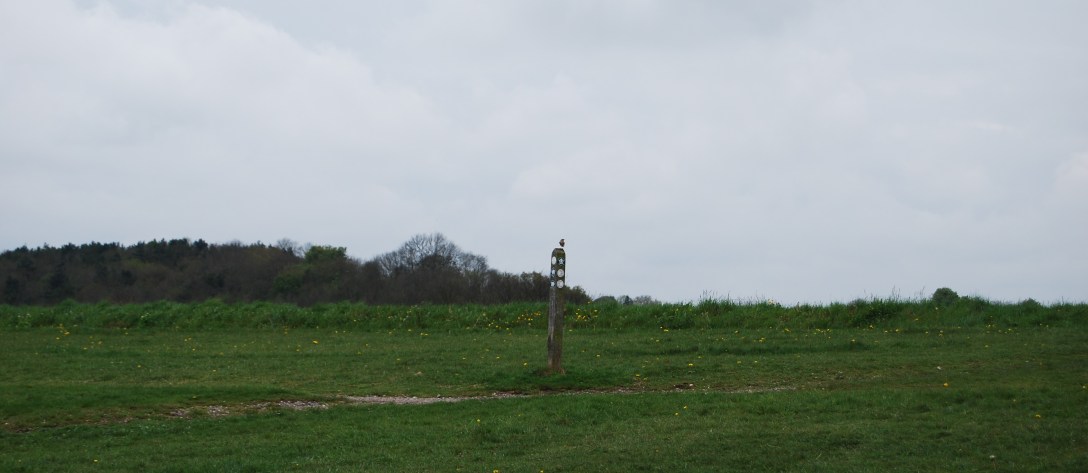
The bells of York Minster sound over the ornamental gardens, their spacious mown lawns and the first beech trees of our time up here. Robins sing from all sides, one is silhouetted in a branch close to our ears, its blackened bill working as it counters the dour skies and echoing bell toll with its shimmering wildsong.
The beast takes to the air

Arthur's Seat

– Edinburgh, Scotland, November 2012

From behind one of Edinburgh’s characteristically grey stone buildings comes the indomitable and once volcanic summit of Arthur’s Seat. As if some chunk of another planet had landed here in the heart of a city of world heritage status, the change in terrain is sudden. For all the undoubted beauty of Edinburgh’s old architecture, this lump of wild, unapologetic land is a welcome relief from the rain-drenched busts of cathedrals and church towers. A housing estate has been built on the brink of Holyrood Park, the broad wingspan of a female sparrowhawk appears from a ring of beech, birch and ash woodland marking the way in. A magpie gives chase to the hawk, goldfinch skip across the scene, their merry, glistening calls overheard.

Crows are skating the zenith of Arthur’s Seat, but not merely one kind. Tens of jackdaws are in flight, some barging one another, competing for spots in the flock. At an opening in the landscape the Firth of Forth appears. Two students are painting the scene onto canvases attached to easels. Their demeanour is one of calm, of contentment in observing and being observed: there are plenty of tourists taking to the steps up to the top, stopping to admire the young artists as they come and go. A young woman is sitting on the grass beside them, her hood drawn over her head. She eats morsels of food from an orange carrier bag.

Carrion crows toe the tarmac and paving looping around the old volcano, a road we ignore in trying to reach Duddingston Loch. Instead we follow a path covered with foliose lichens, erupting in small boulders and swathes of prickly gorse. I forgot how easily the needles pass through denim. It appears to be a trail home to a community of jackdaws and white-tailed bunny rabbits. At our feet are the defiant pink and purple flowers of viper’s bugloss, half wilted. Our path leads to a dead end of gorse and a precipice: Duddingston Loch can be seen clearly from here, a white swan moving on the surface of the water.

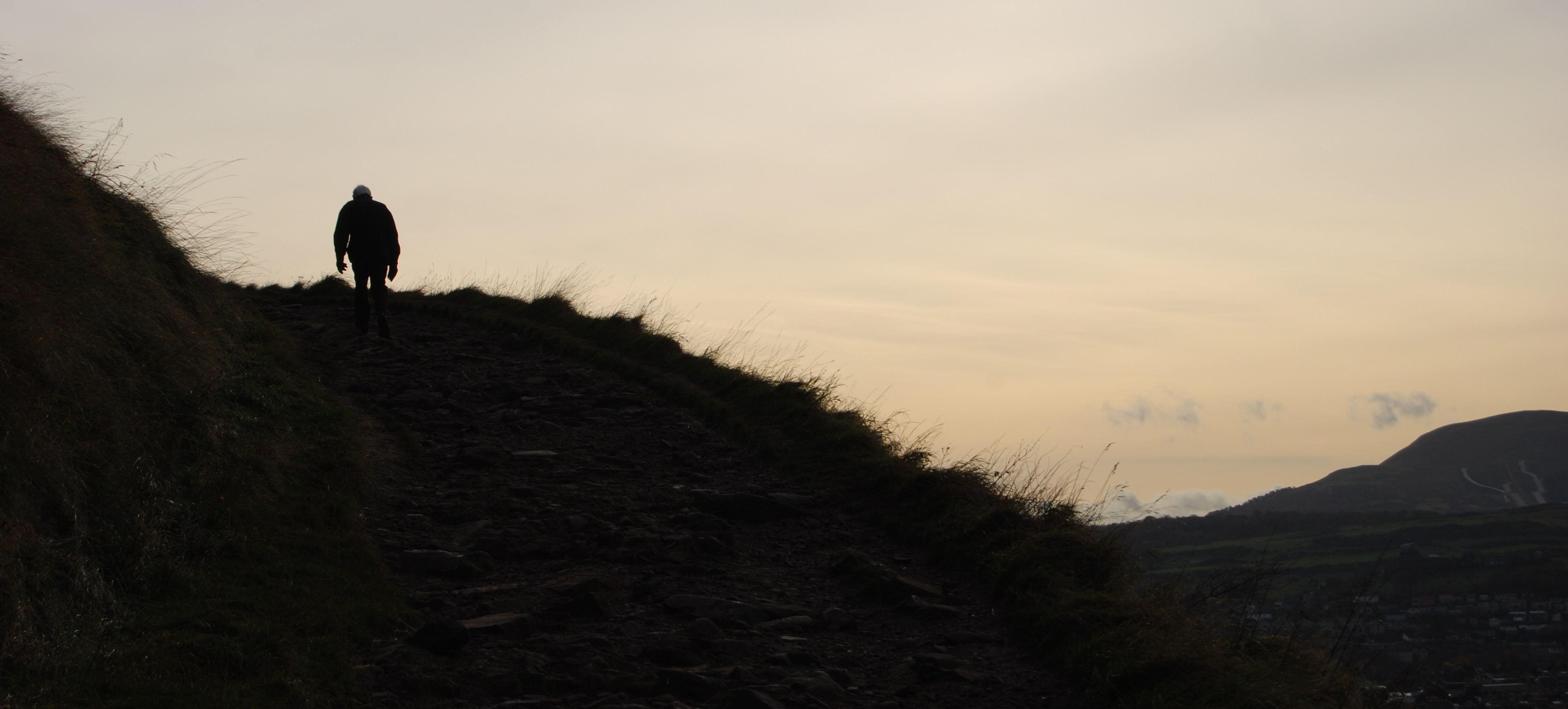
We turn back, trying not to tread into burrows, slipping on the greasy moss and grass. A flock of jackdaws float overhead. We stop to view the city, the Pentland Hills to the south, a ski slope visible like a mistake. Below us there’s Prestonfield golf course, a solitary golfer dragging his gear across a line of ornamental cherry trees swept to the west by years of pressure from air rushing across from the coast. From the crags of Arthur’s Seat comes the guttural kronk of a raven, scattering the jackdaws like leaves, with one feisty ‘daw attempting to lead a mob in revolt. We return back along the road and encounter the dispute once more, the raven sheltering in the dim fissures of rock, almost invisible, but for its rupturing calls, its black, glossy beard exploding as it calls out. Soon enough another raven arrives and the retired beast takes to the air, its digital wingtips and diamond shaped tail reaching out into the chill wind.

Somewhere between a cuckoo and a high speed train

Mid-Colne valley

– Broadwater Lake, Harefield, May 2012

A chill wind moves across Broadwater Lake. Black-headed gulls are screaming from rafts built for the common terns which arrive here from their African wintering grounds. It is pleasing to be greeted by one of the newly emigrated. It swoops past, coming closer each time, raising aloft and diving into an arc that brings it back down to the surface of the water and away. The sky is alive with swifts feeding. When the suns does come out clouds of midges move like slow bands of rain after me and on the River Colne I see mayflies touching the water. There’s plenty of food if you’re feathered.

The track separates the Colne on the western side and the lake in the east. The river is separated again by a thick bank of nettles and cow parsley, that common umbellifer that signals spring. There are interjections from vibrant red campion flowers amongst the spread of green, probably indicators of the woodland that was here long before the lakes were dug for gravel and, when finished with, filled by rainwater to create today’s scene. The trees along the river are bursting with song, almost all with the fluid voice of the garden warbler, a bird so plain it’s unmistakable. It has a shy, modest look about it, as if too retiring to boast about its aural beauty. They’re in the bramble too, and it’s a song to silence the prick of the thorns.

On the other side of the river masses of dogwood cover the willow scrub. In the reedbeds struggling to establish along the bank of Broadwater Lake a sedge warbler is singing. It has a white eyestripe and differing palette of browns to mark it out from other plain-looking birds like the reed warbler. Its song is outstanding. I pick out the calls of a blue tit, great tit, goldfinch, greenfinch and the fink! of a chaffinch. This sedge warbler is a masterful mimic.

But there is one song which stands out most, and I hear it around the bend, further up from the lake. The cuckoo. It draws the breath.

A new bout of warm sunshine offers a male orange tip the chance to forage along the track, a pair of Canada geese are ushering twenty-four golden young away and into the Colne. It has the uncanny resemblance to teachers flocking fluorescent infants onto public transport. The geese wack in my direction as they go down river.

Cuck-oo, cuck-oo!

In the distant northern corner of the lake hundreds upon hundreds of house martins are skimming the surface, and from here it appears synchronised. I strafe the glasses from left to right and they are constant. Swifts are treating me like an obstacle, I’m sure I nearly took a hit from a dark and floppy hirundine.

The cuckoo is calling.

I pass back the way we came, again meeting the Canada geese, regarding me once more as a predator. A pair of reed bunting are busy between the scrub along the Colne, passing across to the edge of the lake, the black-headed male clinging to a willow stem, a stick in his bill like a dancer with a rose between his teeth. This bird is building a nest, the female appearing in the bush next door. They disappear into the thin stock of reeds at the edge of the lake.

As I head off in search along the track the cuckoo calls at its clearest, the sun free of cloud, piping. The bird calls from across the Colne, surely from a perch, we scan the trees and find the grey head and neck of the male but it’s bothered and takes to the air. It’s satisfying, so satisfying to see the bird my ancestors took for granted.

I continue along the track, buoyed with the sense that all is right with the world, that England is okay – if this bird has returned again then we must have something to be happy about. Of course, the calling cuckoo is only confirmation, whereas the sight of it is something else. This bird’s voice has become so much a part of our connection with birds, nature, wildlife, time, the world, whatever, that it’s become part of our language, even becoming a word to define mental ill health. It made it into a part of our mechanical world where other species haven’t, the sound of an hour passing and a new beginning. A world without the cuckoo is unthinkable to most. To see the bird calling is a privilege, and then you know it isn’t the gardener playing a trick, the old family clock, or a child portraying ‘madness’.

I’m in a daze. Two birds are squabbling overhead, I’m sure they’re sparrowhawks, but then I’m not. It’s two male cuckoos fighting over territory.

***

Outside the reserve and back on the main road my ears are ringing with the sound of birds – a blackbird somewhere along the way has recorded its fluid melodies into the fundament between my ears. A buzzard passes over the Colne in perfect silence, head twisting, two crows pursue it.

I climb to a pub on the hill over on the other side of the lake, to see the view of the mid-Colne valley and to get a sense of perspective. The weather is fluctuating, the wind is flung out and a few specks of rain touch the windscreens of parked cars, the sun breathes fire into the once dark globules of ornamental copper beech trees on the hill opposite and across the lake. The sunshine stays, the valley gleaming. Its beauty comes like a puncture. The swifts cover the expanse, wheezing and sailing across the vista. In the ragged hedge of hawthorn and field maple just in front of me a whitethroat appears, offering a few tentative renditions of its gravelly warble. A man walking a very slow and floppy-eared dog has spied me.

‘We see red kites very often, almost every day,’ he says. It’s his day off. He turns to take in the view of the valley, his thoughts turning to the proposal to build High Speed 2, a high speed trainline, through neighbouring Korda Lake and across the Colne. ‘It’s a nightmare,’ he says. ‘Hopefully they put it underground.’

The sky is an azure blue with discarded cloud, the sun intense. Broadwater Lake is a space of trembling, sparkling water. This was once a gravel quarry but now is a place which, in this moment, with swifts, warblers and the indefatigable cuckoo, retains a sense of the Arcadian paradise with which we paint our memories of the English countryside. With the threat of upheaval from HS2 it’s unclear how long that will remain.

The dead and the living are mingling on the Downs

Thistle

– Farthing Downs and New Hill, London, September 2012

The living and the dead mingle on the Downs this morning. Meadow brown butterflies kick up from the ruins of grassy tussocks and rusting bramble. They are as shed leaves moved by an autumnal breeze. Brown and orange, one white dot in their black eyespots, they sit in the tops of young, dwarfish oaks, or else are lost to the souring land. Workers have opened up more grassland with chainsaws and fire, stumps of ash are torn and splintered – a battle has taken place here. Jackdaws survey the new clearings, and the old ones, too, a strange officialdom about them, their calls back and forth, scathing blue-grey eye – are they coroners or corvids? This is their work, the image fits.

The yellow rattle has mostly turned, the wind pushing across the road and down the slope. But there isn’t the sound this parasitic plant is named for. There’s the drone of a biplane, probably from Kenley, there’s the teasing whir of a bicycle passing along the cutting, the sound of aging leaves stirring, sycamore yellowed by the changing season. Scabiouses and hawk’s-bits add punctuations of colour to the mushroom-drab Downs, the grey Sunday sky burnt by sun, puddles of blue appearing. In the long grass crickets click like a machine shutting down, the dead and the living mingling on the Downs.

A Farewell to Redwood

Farewell to Redwood

Dorset, April 2011

The passage of the old stable quarters ran to a doorway opening out onto the back of the house. The doorway itself appeared blocked at first viewing, blocked by the trunk of a tree so large that it filled the entire frame. The pianist staying at the house had spoken to me about the tree.

‘I like to bang my head against it,’ he’d said. He had a face like a fox.

The tree goes by different names: Wellingtonia, Big Tree, Giant Redwood and Giant Sequoia. During my time as neighbour to it I called it a jumble of names, sticking with ‘American Redwood’. The tree was twice as tall as the house, a 19th century mansion, and viewing it from the stable courtyard gave a sense of the tree’s grand but gentle scale. The bark is a deep red where worn and soft as a wafer to touch. It has none of the scratchiness of our mature natives like oak or ash. It runs in one towering trunk. Perhaps the white settlers who came upon the Americas harboured a secret adoration for these towering, ancient things (the oldest tree in the world is a Giant Sequoia) felled with such relish, an adoration which survived generations, resulting in an Empire State Building. The tree I had the pleasure of experiencing in Dorset is a prime example of the beauty and power that nature exerts when allowed to grow. This tree was near to 200 years old, probably planted with the house by the adventurous Victorians who’d lived here.

The Redwood had an apartment block feel to its design. Walking along the passage, face to face with the trunk and into the garden, a mouse-like bird scarpered out of view. After a few encounters with the white-bellied creature I witnessed it disappear into a small bore in the soft bark. The bird was a treecreeper, named after its tendency to climb the bark of a tree from its base, poking its bill between the cracks for insects. It climbs up the trunk pinching between the cracks for insects. It climbs and then flies to the bottom of another to begin its ascent all over again. It will only do this on trees of a certain age and size. The size and permeability of the Redwood make it a highly desirable habitat. In the middle of the tree a pair of goldcrests would sing thinly, spinning coins coming to an abrupt halt. The thin nature of the canopy made it a viable way to enjoy not merely the sound of the bird but also to see it. They would be there at lunchtime without fail.

A number of chimneys were built into the stables and across to the house itself. A pair of jackdaws would spend parts of the day bringing sticks and placing them in the vacant portals. Jackdaws are thought to mate for life and a pair here would ‘jack’ to one another as they constructed their nest. In the mid-afternoon, the lull after lunch, they strolled along the lawns either side of the house in an almost synchronous fashion, digging for worms. This was a group of about twenty birds, and in the gloaming they returned to the highest reaches of the Redwood to roost for the night, their chatter lessening before night and silence fell.

From the stable courtyard an expanse of woodland opens up in the near distance. There was another Redwood on that horizon, equally tall but dead. I was walking to the walled garden one morning with the head gardener when he told me the story:

‘Someone was taking their horses out into the wood that way one day and they got to chatting with someone they knew,’ he said. ‘They turned their backs for ten minutes and by the time they looked back the horse had eaten its way round the tree. The thing just went and died. Terrible shame.’

When I said goodbye to the house and the stables I wished the Redwood a farewell. Not just to the tree but the creatures living with it, the treecreeper disappearing into the bark, the singing goldcrests and sleeping jackdaws.

The contents of the lady’s bucket

The contents of the woman's bucket

Cox’s Walk, London, July 2012

We’re coming toward the end of our bat transect, our detectors raised into a night lit by the orange glow of a line of streetlamps and closed by the canopy of oak. Nothing. Further up the slope there was a hint of a noctule bat’s chip-chop call coming through the static of the airwaves, but nothing else. Rain begins to fall and we make our final marks on the record sheet. There are very few bats around, the woodland all but shorn of them. At the bottom of the path are two figures, a third, dwarfish silhouette evidently that of a large dog. From here it’s unclear whether they are moving away or towards us. A fox appears between us and, turning to look back from where we’ve come there rests another. In this break of light and dark, the fox watches us with content, almost with sympathy. Nevertheless, we’re surrounded.

As time goes and our chatter dwindles, the people approach. It’s a man dressed in a cream suit and a woman. He is indeed rotund, stopping and strolling, she strafing either side of him, circling tree trunks, in and out of darkness. We’ve finished now – there’s no point dawdling – no one says anything about it, but there’s a sense of apprehension. We stop – I don’t know why. I call out: we’re doing a bat survey! I’m shaking the black box in the air. A voice travels back:

‘You can do what you like.’

The fox at the top continues in its restful manner. We are the scene.

The woman is clear now, she wears blue dungarees and a red bandana holding up dreadlocks. She disappears behind an oak trunk, flashing us a glance, like a child playing cowboys and Indians. She smiles, emptying a plastic bucket around the trunk. The man has stopped, I can see his large oval spectacles. He turns to the tall iron fence protecting a small copse of maturing silver birch. The woman comes from behind the tree again:

‘Don’t be scaring me foxes away,’ she says, gently, with a hint of the Caribbean in her voice.

We all stop and look to the copse. The streetlight cast onto the trees and fence shows movements of the amber fur of a trail of fox cubs. They slink through the fence and arc towards the tree surrounded by piles of pink sludge – the contents of the lady’s bucket.

‘Ain’t they beautiful,’ says the rotund man in his cream white suit and oval spectacles.

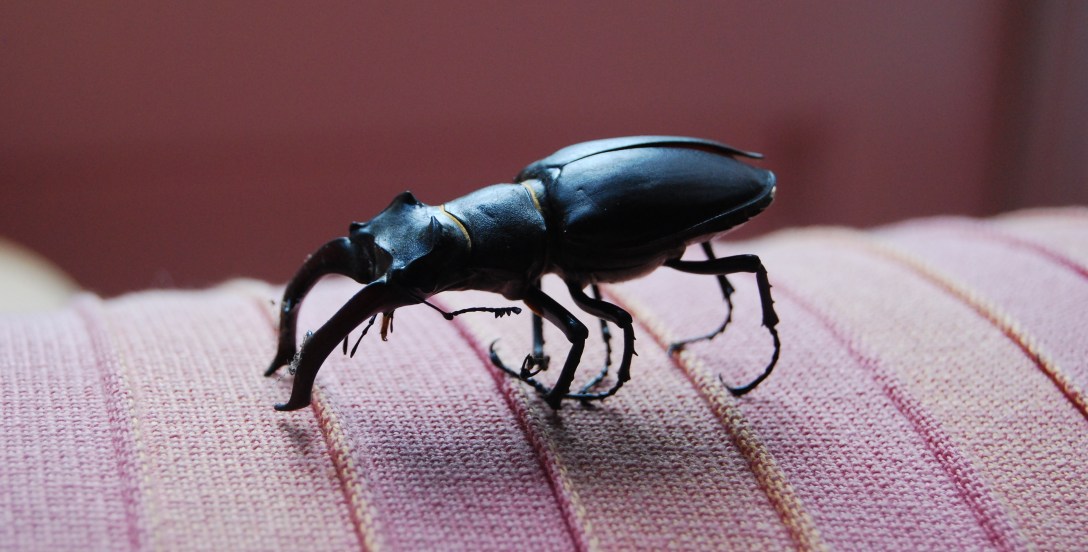
Have you seen a stag beetle in London recently? You’d be surprised

This article was featured in the News Shopper

Growing up in Lewisham as a kid, the sight of a stag beetle on the pavement was not unusual. You can see where insects get the name ‘mini-beasts’ when you look at this particular creature: its huge mandibles give it a sense of outward aggression, as if it’s constantly spoiling for a fight. When you witness a stag flying around the impression is of a veritable thug who’s had too much to drink. But stag beetles are perfectly harmless and have, like much of Britain’s wildlife, suffered immense declines since the Second World War. Why is this? Stag beetles are dependent on rotting wood in woodland habitats. The suburban sprawl of the post-war period saw extensive loss of habitat, ancient woods were felled and grubbed out and the ensuing countryside tidy-up has been so damaging to our wildlife, particularly for our bees and butterflies. But, funnily enough, London is a great place to find stag beetles, particularly Lewisham and Southwark. In the past week I’ve seen three male stag beetles, two of them in flight looking for a mate and one dead on a doorstep. The heavy rain and summer break-outs have created good opportunities to view male stags flying around, as windy and wet weather is unsuitable for a cruising stag dude. London Wildlife Trust has launched a campaign to map the distribution of stag beetles in the city, and people have been sending in their sightings in the hundreds. It seems there’s a real affection for this mini-monster amongst Londoners, it’s ignited people’s interest in wildlife, rekindling memories of childhood, when stags were more common (and, apparently, treated very unfairly!). It’s also interesting a new-wave of wildlife watchers who can take the lead on protecting this precious species in the decades to come.

What can you do to help stag beetles after you’ve let London Wildlife Trust know about your sighting? If you have a garden, allow a wild fringe to evolve and create deadwood piles near trees to mimic a woodland habitat. If you have a tree that’s dead or been felled, let the part of the wood or at least the stump remain there. It’s all about keeping things messy. It’s a good idea to keep your cat in from dusk onwards, when the beetles are likely to be roaming. If you don’t own a garden why not join a local Friends of group for a park or nature reserve and help to create stag beetle habitat, or set an area aside for them in your community garden. Stags beetles need our help, and by finding out where they are today we can help to protect and promote them for the foreseeable future.

More information:

People’s Trust for Protection of Endangered Species (PTES)

London Wildlife Trust

BBC Nature

Descending, descending, falling apart

by Martin Damien

Photograph by Martin Brewer

— Nunhead Cemetery, London, April 2012

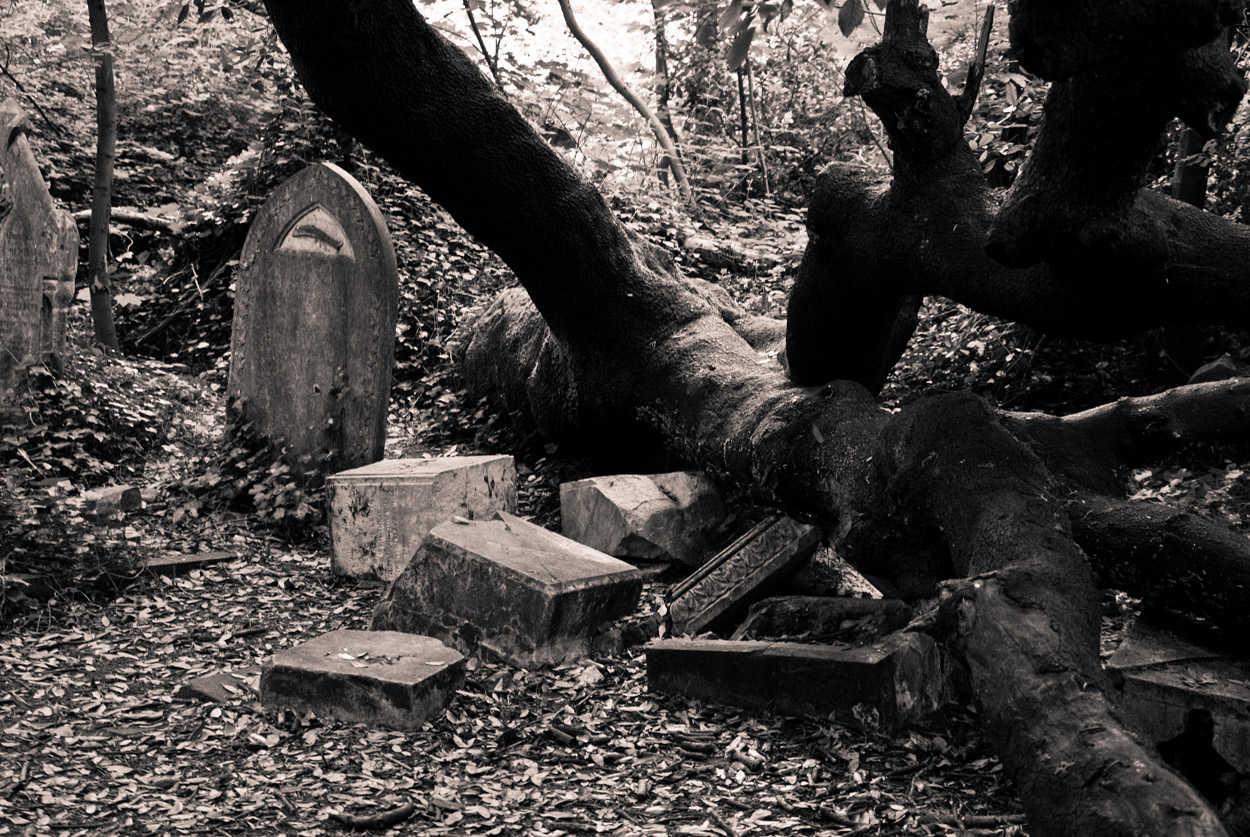
In the cemetery won by sycamore and rendered woodland, two male song thrush are duelling with one another, throwing out tunes, rewriting and rollicking the black cloud with their language.  This mysterious, handsome thrush is to me like a singing pudding endowed with flight. I leave them to it. My ears are working overtime, the scene dripping, the algae glows on the trunks of dark trees, the moss is vibrant on the gravestones appearing as shipwrecks at the bottom of an ocean. The denseness of the trees squeezes the sound: blue tit trill, the calling great tit and guttural canon of the crow marking the enclosure of forthcoming leaves and canopy. A family, their dog muddied, happy, intoxicated by the aroma of wet woodland, people relaxed, even pleased – woodland puts us back into our bodies. The sun inches out and makes crystals from the droplets of fallen rain, there is the feeling that the soil is sighing from the torrents. Deep refreshment has touched the natural world. My waterproof holds drops of water that leave strange dents in the material, my jeans are darker now. Wait – a song ending, a sweet, fluty refrain. Silence. Woodland dripping, I retrace my steps back down the path. The song comes from a leafless ash canopy – descending, descending, falling apart. Willow warbler. I see it, its long tail and constant hopping between branches. How far has it come? It sings again and moves on. The matt black storm clouds progress, the inkling of lightning, the thunderous thump.

The promise of woodland

Woodland is vital

Every week I volunteer at one of my local woodlands and I reap the rewards of working with the natural environment. The skills I’ve gained from toiling with wood and earth will never be lost, the longer I can spend outside the more useful they will become. How have I learned the art of coppicing, dead-hedging, hedge-laying, tree identification and management? By working with people who know, people who can pass these skills on. We have worked this way for centuries, wood is a vital part of human existence, it gave us shelter when used for structure, warmth when burned for the fire, and fruit when the time came to pick. We built fences, bows and arrows, walking sticks, ships, wooden spoons, food bowls, huts and houses. Now our trees line the streets and sit evenly in our parkland, the idea of cutting a tree means death to us and we have no idea of why trees are here and how they have been used. The wood used for our desks and chairs (if wooden anymore) isn’t from the local woodland, nor is it really English, instead shipped from Eastern Europe, Scandinavia and, most criminally, from the Amazon rainforest.

I see the potential in woodland. By investing in the natural environment our governments could satisfy the desire for ‘job creation’, and we’re talking real jobs, work where both the mind and the body are engaged. Woodland provides work for anyone and everyone – studying the ecosystem in detail for those of an intellectual or scientific mindset, surveying lichens, birdlife, insects and our declining woodland wildflowers. And for those who want physical work pure and simple, the wood offers that chance, felling trees, carrying timber, working with your hands and alleviating the weight of the mind. This is how our ancestors have survived and built communities, and it may be the answer to our loss of direction as individuals and as a society. Nature wants to work with us, the landscape is man-made, we haven’t stepped out from a wildwood in to pristine parkland. Many of the old species are gone, many are on their way out, much of what remains is being overrun by the shade of a closed canopy and the spread of invasive species, escaping from gardens and parks. All this goes without mentioning the importance of the wild, of the wild creatures which still live among us and treat our cities and towns, railway lines and airports, as wild places. The pigeon and the peregrine see our brick blocks as cliff faces, space to roost and raise young or to hunt from. We have not escaped the natural world, we are wildlife, too.

Working woodlands

The woodsman (or woodsperson!) is a job, a role, a way of life which has existed in some capacity since men and women walked the earth, either felling the primeval woodland for farmland or making a home and life from the woodland at the edge of the communal clearing. Woodland is for people and wildlife and we should invest in this resource, not merely our money but our time. Trees will always be growing as long as the earth is healthy. Trees are used to us working with them: ash, hazel, small-leaved lime, field maple and alder are all trees which thrive from coppicing, a schedule of felling the tree at its base every 7-12 years depending on species. Some species, if cut regularly and at the right time, will live indefinitely. So don’t scoff at the idea of woodland being an empty bet for giving people work. It might just be the very thing we’ve been looking for. Working woodlands for local people means freedom from the uncertainty of the global energy market, and the chance to take a part of our lives into our own hands. Woodlands need not be seen as a carbon sink, the idea should be to reduce our dependence on fossil fuels and engage with new technologies which will allow us to reduce our impact on biodiversity, air and water quality and soils. A wood-burning stove is a way of heating the home with local resources and our independence from wood fuel is new, it is not too late, by any means, to return to using wood again to fuel at least part of our lives.

But it’s not possible for everyone to grow willow or ash and fell it for themselves, not everyone has a garden, nor does everyone have a home. That’s why it’s important to make woodlands a publicly managed resource, the complete opposite to the notion of selling public woodland to the private sector. Instead we need to focus on three principles: protection, management and access. Protection for ancient woodland from short-term development and prestige infrastructure projects such as High Speed Rail 2, management of our closed-canopy woodland where the ground is shaded out and no new generation of trees able to grow, and reasonable access for the public, who depend on woodland to maintain a sense of well-being and a connection with the natural world, to forget about the industrial hubris of the age and revel in the tranquillity of the wild. Woodland is worth our time and money.

A wheatear drops in

A wheatear drops in

– Farthing Downs, London, May 2012

The slope is exhausting. I push against my knees in order to reach the plateau without panting. Though it’s not as steep as it sounds, a flock of jackdaws glide in and bounce across the grass adding to my sense of human weakness. Turning back to look, it’s barely a slope, just an awkward drop down into the woodland below. In the distance, a world far, far away, the nearly-complete Shard and the Gherkin look like grey wreckage. The path ahead is bordered by two strips of scrub and small trees, in the open land across the road cutting through the downs a skylark is rolling out its splatter of trills and warbling. The bramble has come to life around me, a mouse or vole too quick for my eyes crosses to the other side. I swallow the air – it’s Croydon, but it tastes like the countryside. Beyond the dip into woodland Happy Valley opens out and up again, a vista of wildflower meadows and a fringe of trees. There is a hint of the hillsides of west Dorset within the boundary of The City of London. A pair of linnet alight in a small hawthorn, dull brown with specs of mud on their breasts, the red crown yet to come into full colour. They match the day – grey, brown, muddied. The aborted song of a bunting is coming from the branches above them, the striking colour of a yellowhammer sings from the still wintry scrub. It calls and calls, turning its head to look, not minding me at all, another arrives in a hurry.

The full view of Farthing Downs is open now as I continue to wander along the eastern flank. Two swifts newly arrived in the country dart about, twisting and turning, their black wings flapping a little like penguins under water. There are people over the surmount, people walking, people on horses, people with dogs. I approach a gate where a woman and her daughter are struggling with their dogs, one bounding around as if it’s been cooped-up for months. Right in front of me a wheatear drops in, landing on the small mound of an anthill. This robin-sized chat has travelled from Africa to be here in Croydon and will soon be moving to its northern breeding ground. The bird is nervous – the sprinting dog has been released upon the downs but it doesn’t notice the migrant wheatear, instead it runs at me full-pelt, swerving to my side, cracking its skull against my forearm. The lady who owns it has stepped in her other dog’s poo in trying to clean it up and is wiping her foot across the grass, grimacing. I’m muttering to myself – this is the first wheatear I’ve ever seen in the United Kingdom. The bird bursts into flight, landing on a fence post. I marvel at its feat of migration.