The mysteries of the night wood remain

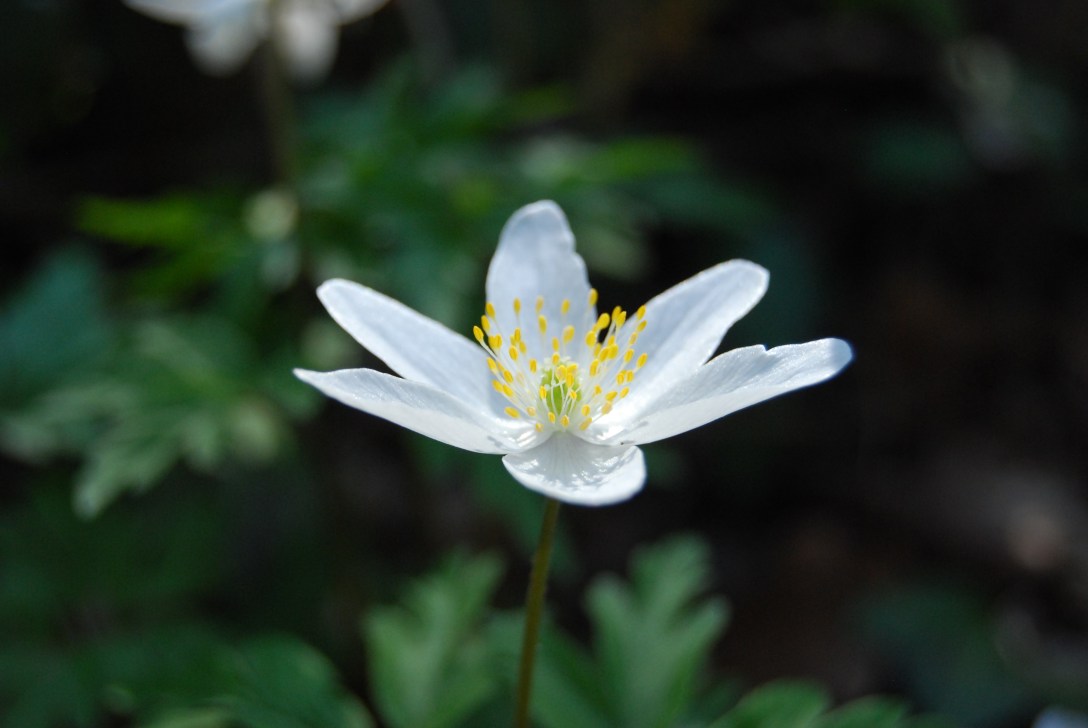
Wood anemone

Last year I was commissioned to write this piece about the four seasons in Sydenham Hill Wood. Woodlands are beautiful, yes, but the lives of their inhabitants are not as gentle or pleasant as we might like to think. Here are my four dispatches.

Spring

Along the trackbed of the disused railway wild garlic grows. It’s a remnant of the wood’s ancient lineage, its deep green is welcome refreshment on a grey spring afternoon such as this. Every so often you find other indicators of the wood’s age. Wood anemone are growing in isolated clumps and English bluebells, too, some hybridising with the Spanish garden variety. The hornbeam standing along the track is another pointer to the old age of Sydenham Hill Wood.

Above our heads is another species sure to have been breeding here for some time. There are three tawny owl chicks sitting in the top of a large ash tree not yet in leaf, and through the bare branches we have a clear view of them. They snuggle into their plump, downy coat of feathers, calling to their parents, with rasping voices you might not expect them to make.

The wood’s bird community is watching, not least because the tawny owls are the top predator in the wood and one of the chicks’ parents is nearby trying to make a kill. Last week we found a crow’s head by the pond and it now appears likely that the adult tawny that spawned the trio above is the culprit. The birds know it too: there is an anxious din of woodland birds – woodpecker, crow, robin, great tit, blue tit, ring-necked parakeet, nuthatch – as the rufous adult tawny emerges from its hiding place.

The chicks are further along than expected, they move one at a time over our heads and closer to mum or dad, their spread of primary wing feathers giving them a tactile appearance, each like a finger. The parakeets are the most successful in bothering the young owls as they shriek and dive around them, the vibrancy of these exotically coloured birds muted by the task, on a dour afternoon in the spring wood.

Summer

The leaves of trees under torchlight are sticky with honeydew, a little like our faces, damp with sweat and bothered by mosquitoes. I swat them away.  The wood is perspiring, wet with aphids. The air is thick with the funk of wild garlic that has flowered and gone. Stars are appearing in the ocean of night sky. A dot of light moves across the expanse. Is it a satellite?

A male tawny owl calls from acres away. We blow through a hazel whistle carved in a fashion to mimic the owl, and the bird itself responds in kind, edging closer and closer to us after each play of the whistle, its voice becoming clearer: What’s the time Mr. Owl? Now there is no foliage between us and anxiety stirs. We decide it’s better to stop in case the tawny thinks we’re another male. They are renowned for their aggression in protecting territory.

With the wood under the spell of darkness, the industrial world is reduced to a dreamy wash. Beyond the lining of trees could be an endless wildwood or an open pasture – the imagination runs free in the absence of engines and electric light. Some centuries ago the old woodland was felled and turned into farmland that skylarks, corn bunting, lapwing, turtle dove and cuckoo would have colonised. These birds are now absent from land that is used for cricket, golf and rugby.

From the glade’s sleeping bed of rosebay willowherb the great ghost of a hawkmoth ascends. I swoop the child’s pond-dipping net I am holding towards the monstrous insect, bringing the net and my knees to the ground. I carefully peel it away from the grass, revealing only shadows. The mysteries of the night wood remain.

Autumn

We’re sitting around the moth trap again tonight. A large flock of crows are returning to a roost in the direction of Dulwich Park. There’s something about vast movements of crows, it gives the sense of an ending. In old times this would have been the signal to down tools at the close of a day labouring, ‘when the crow flies’, as they used to say.

The insect numbers have visibly dropped since summer but the pipistrelle bat hunting just above our heads shows there must be enough for them to eat. The twilight is metallic blue, stars are lanterns in the sky untouched by trees.

We’re surrounded by oak woodland, with smatterings of birch, ash, willow and hornbeam. We can only hope the darkening wood conjures something beautiful for us to behold. The leaves around us are soon to fall and even in this fading light you can sense the change, nature exhausted after the sex of spring and summer’s heat. A hobby flies the same path as the bat, catching a moth in midair.

Night falls. Nocturnal mammals begin their movement through the leaf litter, their sound much bigger than they actually are. A moth has been drawn to the bulb of our moth trap and we retrieve it in a clear plastic pot. It’s medium-sized, purple and mustard in colour. It’s the barred-sallow. This moth has evolved to match the leaves of autumn, but it’s early, many of the trees are still verdant green. We release the insect and it disappears into the dark.

Winter

A slender pathway cuts through the ground layer of ivy, most likely to have been forged by a train of foxes. A large ash has been pulled down by the wind, the underside of the ivy leaves wrapped around it are a fresh colour, like the flesh of a lime fruit. To the side a den has been made with string tied to the rotting logs that rest against a tree in a tepee form. Sometimes people spend a night in the wood and so the sign of a tent or den surrounded by food packaging and drinks bottles is not unusual. There isn’t much litter to be found tonight, other than things the ivy has subsumed, bottles or cans taken in by the soil or blown over from the road. Spiders make a home for themselves in empty bottles and the woodlouse is a common inhabitant of an old shoe. Now the leaves of premature bluebells peek through the earth and we take care not to trample.

We come upon a clearing around a large yew tree, the soil cleared of ivy and plant life by the acidity and shading of the tree’s needles. The trunk is rippled and worn like an old doll’s limb. It’s one of a line of yews that would have been a hedge in the grand Victorian garden that was once here. The villas were built in the 1800s, but too grandiose to last, they were abandoned during the Second World War and, deemed unsafe, were eventually bulldozed into the earth. The ground dips to reveal the whitish bricks of a wall and a trail of broken glass. Behind us is a group of silver birch trees, quarantined amidst layers of ivy and the yew. These birch look like they’re waiting for something.

The other side of the wall shows a support structure for the terrace of the old Victorian villa, where the slow life of the woodland has been allowed to resume. A blackbird calls in the canopy and a great tit sings its winter song down in the woodland glade. The sun is setting low through the slope of trees. It’s time to go home.
The silence overcomes us

Loch Garten

– Loch Garten, Scotland, November 2012

Bar a few cars passing us on the approach road there is no one here. And but for the track itself, the birch, heather and lichen covered Scot’s pine exude a sense of ancient wilderness. There are no human trails through the heather and soggy mounds of moss, only a few signs of other mammals escaping into the wilder regions. Some odourless spraint we discover at our feet intrigues us: pine marten, otter? I don’t know. A bit further back, we watched a red squirrel hug the trunk of a pine, climbing a branch higher as we took steps closer. The images we’re fed in England of confiding creatures doesn’t match the shy nature of these Scottish animals.

The sound of chainsaws is moaning, unending. It may be work that will help these famously mistreated woodlands, cleared with such fervour by the English, but the noise is irritating. We turn into Loch Garten and our minds to the capercaillie, a member of the grouse family which is renowned for the defence of its territory to all comers. Our host in Aviemore showed us a photograph in the guesthouse lobby of a celebrity capercaillie that entertained the masses in the 1990s. Anyone who passed the field bordering the bird’s pinewood territory would be met with a fanfare of its black tail feathers, not unlike a peacock. The framed photograph in the lobby showed that the bird lacked a tail feather. This led to uproar locally – someone’s dog had attached the bird and it had lost its feather. That, however, proved to be untrue. A local farmer had put out feed for his horse in the field next to the capercaillie’s dwelling, and the bird had begun to join the horse for dinner. Eventually, the horse grew tired of the charismatic grouse eating its food and bit it on the arse. Mystery solved. There is no chance of us witnessing such scenes today at Loch Garten.

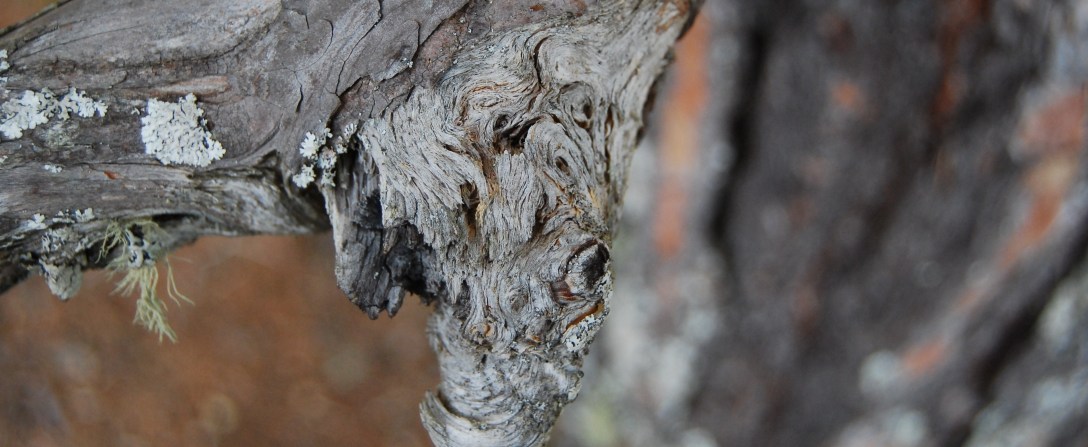
But what’s to be enjoyed in the absence of the Cairngorms’ other celebrity birds, the ospreys that travel here from Africa to breed? The Loch itself. The roots of mature pines spread freely from the soil as the opening of the Loch appears before us: the gentle movement of its surface, the image of Craiggowrie in the distance, the silence overcomes us. How peculiar that silence can feel louder than chainsaws. Nan Shepherd wrote about it up in the mountains but here it is lapping on the water at just a few hundred feet. The movement of the water’s edge does not end there, it moves across the sandy soil, into the pine forest, rippling through me. From the bordering pine forest comes the cheerful trill of a crested tit, it sounds like the only thing on earth. The pines on the waterfront have beard lichens snagged in in their branches, so much like the facial hair of miniature woodland elders, dark green and bright blue. The gnarled dead wood of the pine holds their ghastly expressions. We turn on our heels and head for the depths of Abernethy Forest.

The promise of woodland

Woodland is vital

Every week I volunteer at one of my local woodlands and I reap the rewards of working with the natural environment. The skills I’ve gained from toiling with wood and earth will never be lost, the longer I can spend outside the more useful they will become. How have I learned the art of coppicing, dead-hedging, hedge-laying, tree identification and management? By working with people who know, people who can pass these skills on. We have worked this way for centuries, wood is a vital part of human existence, it gave us shelter when used for structure, warmth when burned for the fire, and fruit when the time came to pick. We built fences, bows and arrows, walking sticks, ships, wooden spoons, food bowls, huts and houses. Now our trees line the streets and sit evenly in our parkland, the idea of cutting a tree means death to us and we have no idea of why trees are here and how they have been used. The wood used for our desks and chairs (if wooden anymore) isn’t from the local woodland, nor is it really English, instead shipped from Eastern Europe, Scandinavia and, most criminally, from the Amazon rainforest.

I see the potential in woodland. By investing in the natural environment our governments could satisfy the desire for ‘job creation’, and we’re talking real jobs, work where both the mind and the body are engaged. Woodland provides work for anyone and everyone – studying the ecosystem in detail for those of an intellectual or scientific mindset, surveying lichens, birdlife, insects and our declining woodland wildflowers. And for those who want physical work pure and simple, the wood offers that chance, felling trees, carrying timber, working with your hands and alleviating the weight of the mind. This is how our ancestors have survived and built communities, and it may be the answer to our loss of direction as individuals and as a society. Nature wants to work with us, the landscape is man-made, we haven’t stepped out from a wildwood in to pristine parkland. Many of the old species are gone, many are on their way out, much of what remains is being overrun by the shade of a closed canopy and the spread of invasive species, escaping from gardens and parks. All this goes without mentioning the importance of the wild, of the wild creatures which still live among us and treat our cities and towns, railway lines and airports, as wild places. The pigeon and the peregrine see our brick blocks as cliff faces, space to roost and raise young or to hunt from. We have not escaped the natural world, we are wildlife, too.

Working woodlands

The woodsman (or woodsperson!) is a job, a role, a way of life which has existed in some capacity since men and women walked the earth, either felling the primeval woodland for farmland or making a home and life from the woodland at the edge of the communal clearing. Woodland is for people and wildlife and we should invest in this resource, not merely our money but our time. Trees will always be growing as long as the earth is healthy. Trees are used to us working with them: ash, hazel, small-leaved lime, field maple and alder are all trees which thrive from coppicing, a schedule of felling the tree at its base every 7-12 years depending on species. Some species, if cut regularly and at the right time, will live indefinitely. So don’t scoff at the idea of woodland being an empty bet for giving people work. It might just be the very thing we’ve been looking for. Working woodlands for local people means freedom from the uncertainty of the global energy market, and the chance to take a part of our lives into our own hands. Woodlands need not be seen as a carbon sink, the idea should be to reduce our dependence on fossil fuels and engage with new technologies which will allow us to reduce our impact on biodiversity, air and water quality and soils. A wood-burning stove is a way of heating the home with local resources and our independence from wood fuel is new, it is not too late, by any means, to return to using wood again to fuel at least part of our lives.

But it’s not possible for everyone to grow willow or ash and fell it for themselves, not everyone has a garden, nor does everyone have a home. That’s why it’s important to make woodlands a publicly managed resource, the complete opposite to the notion of selling public woodland to the private sector. Instead we need to focus on three principles: protection, management and access. Protection for ancient woodland from short-term development and prestige infrastructure projects such as High Speed Rail 2, management of our closed-canopy woodland where the ground is shaded out and no new generation of trees able to grow, and reasonable access for the public, who depend on woodland to maintain a sense of well-being and a connection with the natural world, to forget about the industrial hubris of the age and revel in the tranquillity of the wild. Woodland is worth our time and money.

Woodland Diary: Sycamore coppicing

Holly blue

This was the first workday for the Friends of One Tree Hill (FrOTH). We coppiced 10 sycamore (Acer pseudoplatanus) trees and cut back the bramble (Rubus frusticosus) which is so dominant on the site.

In the case of sycamore we were felling trees of some thirty-feet or more in height that were competing with the sessile oak trees (Quercus patraea). These oaks are regenerating on the slope of the south-facing hill and are slow growers compared to the highly successful sycamore. We felled the trees also to allow light in and let the herb layer regenerate. This is a technique which helps insects and butterflies in particular.

PlantLife reports that by 2002 97% of British broadleaf woodland had become high forest. In 1951 that figure was at 51%. This means that most of our woodland is dark and overgrown generally because humans have stopped relying on woodland as a resource for firewood, furniture, grazing of livestock and so on. One of the great misconceptions about woodland is that felling a tree is somehow a bad thing when, on the contrary, wildlife flourishes when trees are cut down in moderation and sunlight can get in to bring life to the woodland floor.

One ancient tradition which has gone out of fashion is the art of coppicing. This is a process of cutting a tree down to its base, generally of hazel (Corylus avellana) or ash (Fraxinus excelsior), which means that the tree shoots new, straight growths. These poles were used for a variety of things, often as fencing.

Sycamore is not a typical coppice tree, but the stumps we cut down to in One Tree Hill will shoot similar growths in the spring and summer. In the meantime the wood we have cut will be used either to make log piles for beetles and other bugs to inhabit, otherwise the material will be used to make handrails or dead hedges in the wood.

The point of managing a wood in this way is to show that using the material, i.e. trees, is not a negative thing and can boost wildlife in the short term. The Pearl-bordered fritillary (Boloria euphrosyne) is one butterfly which saw a decline in numbers after the tradition of coppicing declined in the 20th century after we began to rely on gas to heat our homes and use wood imported from overseas. You can see that a tree has been coppiced if you spot thin shoots and the hairy green leaves of a hazel. 

This technique is renowned for its benefits for wildflowers such as wild primrose (Primula vulgaris) and bluebells (Hyacinthoides non-scripta) which can burst into life when the coppice is cut. These are plants indicative of ancient woodland and seeing as One Tree Hill is located in the area which was once part of London’s Great North Wood, we are hoping that some plants, in certain areas, could reappear one day, not to mention the wildlife which feeds from them. Sydenham Hill & Dulwich Woods and Dulwich Upper Wood are two fragments of the Great North Wood which have ancient woodland flora growing there, and have done for thousands of years. Perhaps one day One Tree Hill can be in a similar vein of health.