Wasps vs. spiders

Saturday 31st May felt like a passing of the seasons, with spring departing and summer arriving. That could be seen in the invertebrate world, with more summer species out there in my garden.

This post is generally wasps and spiders, with some lovely little bees to calm you down afterwards.

As ever, some of these things are so ridiculously small that without magnification (in my case a macro lens) you (I) wouldn’t necessarily see them.

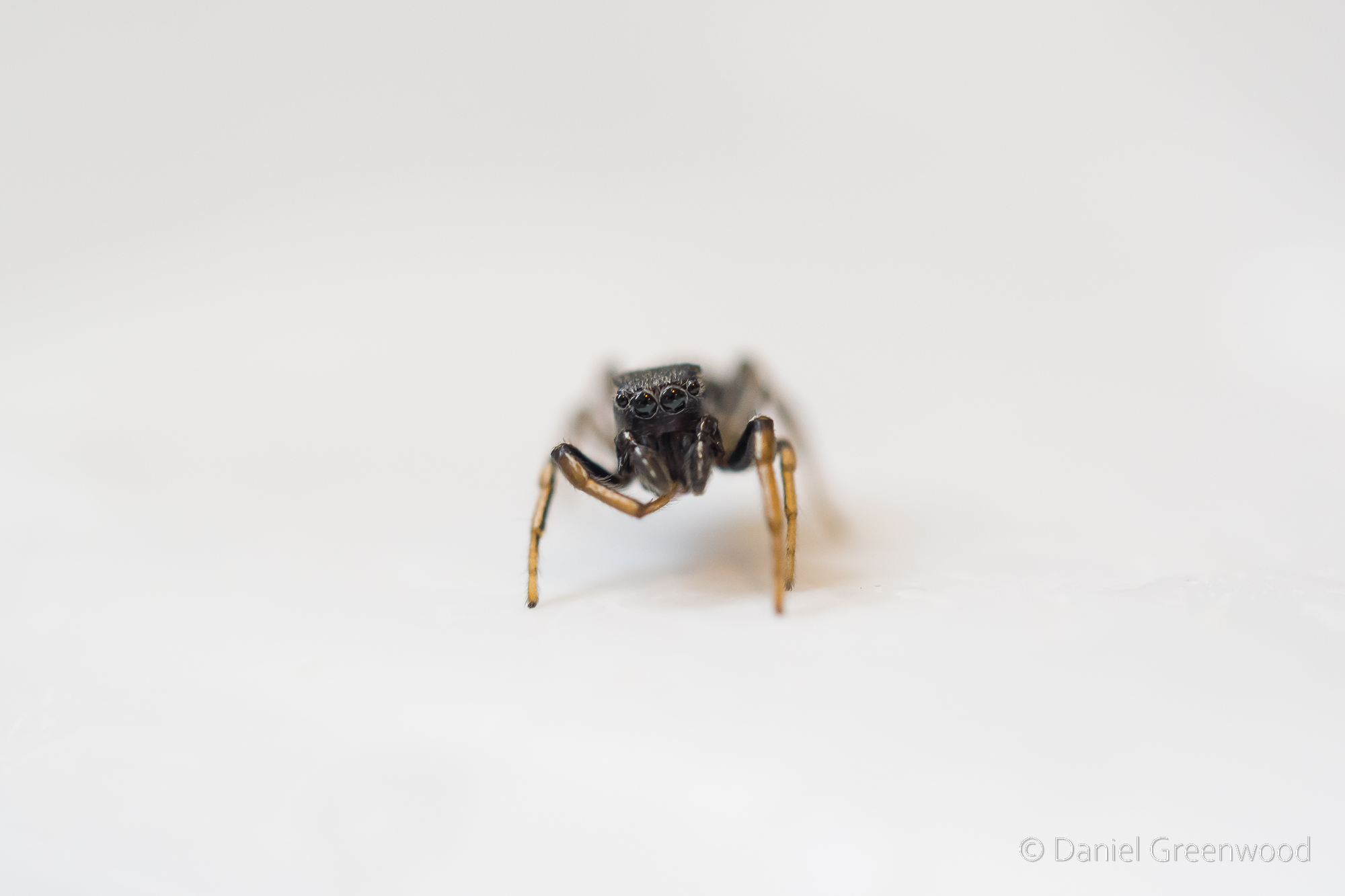
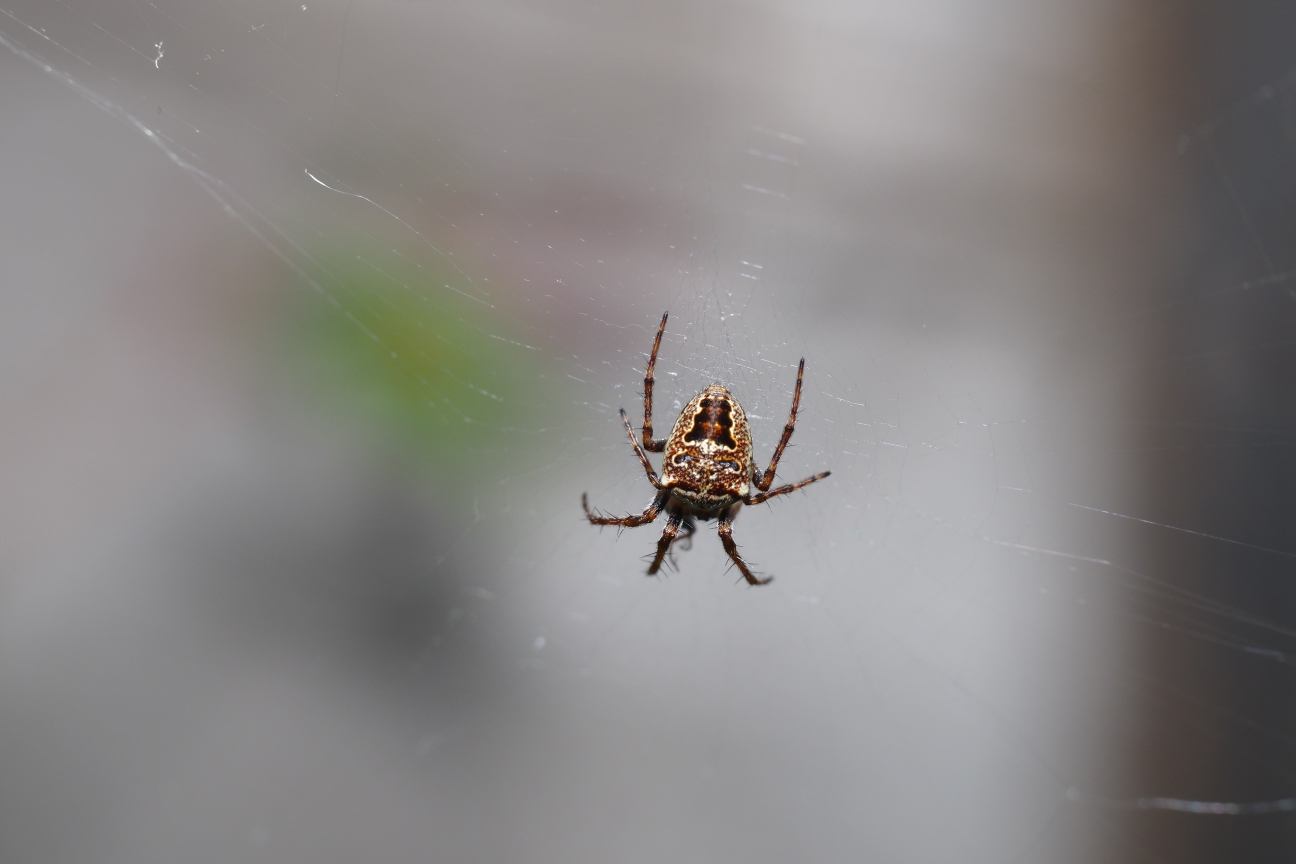
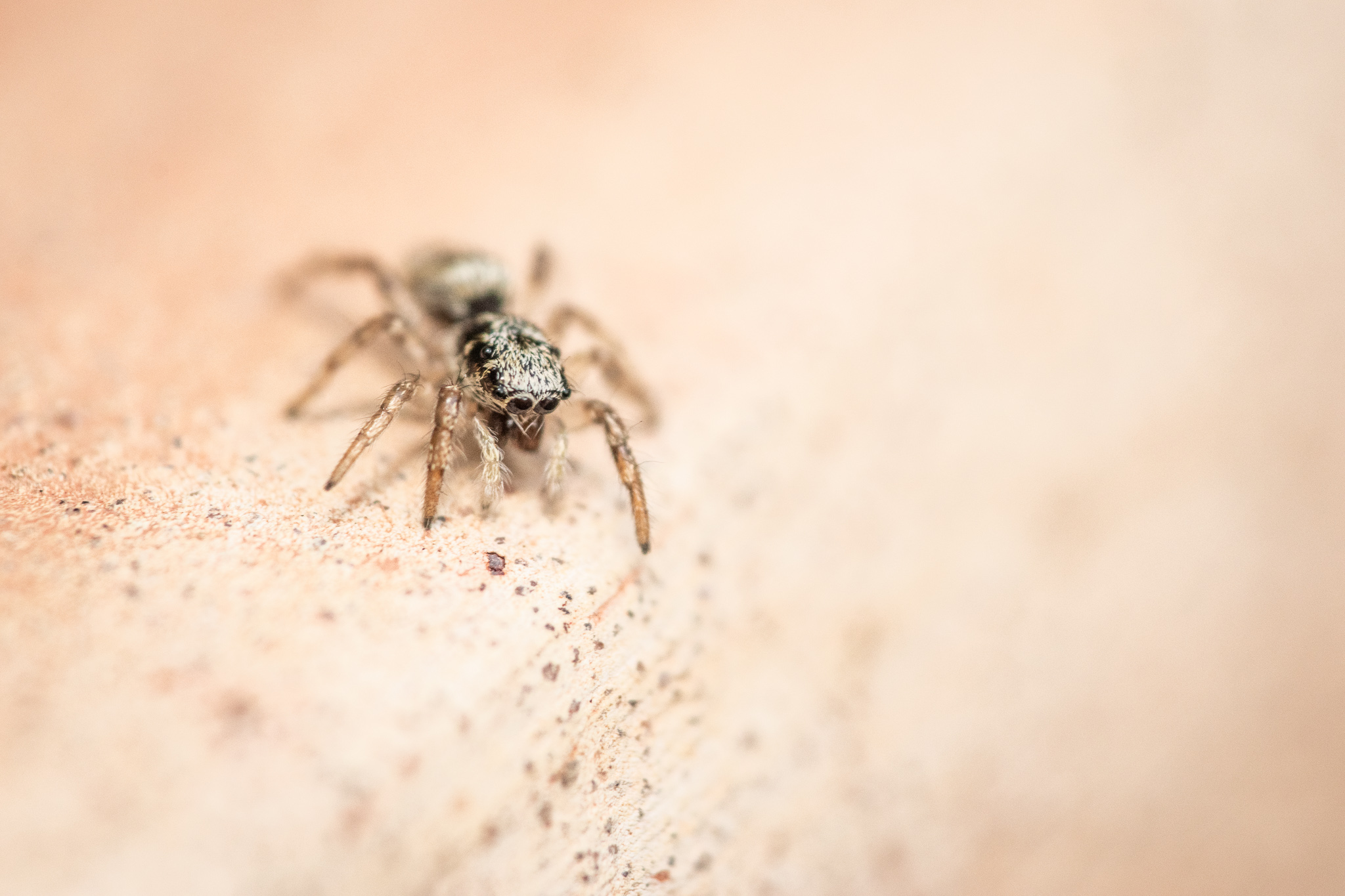
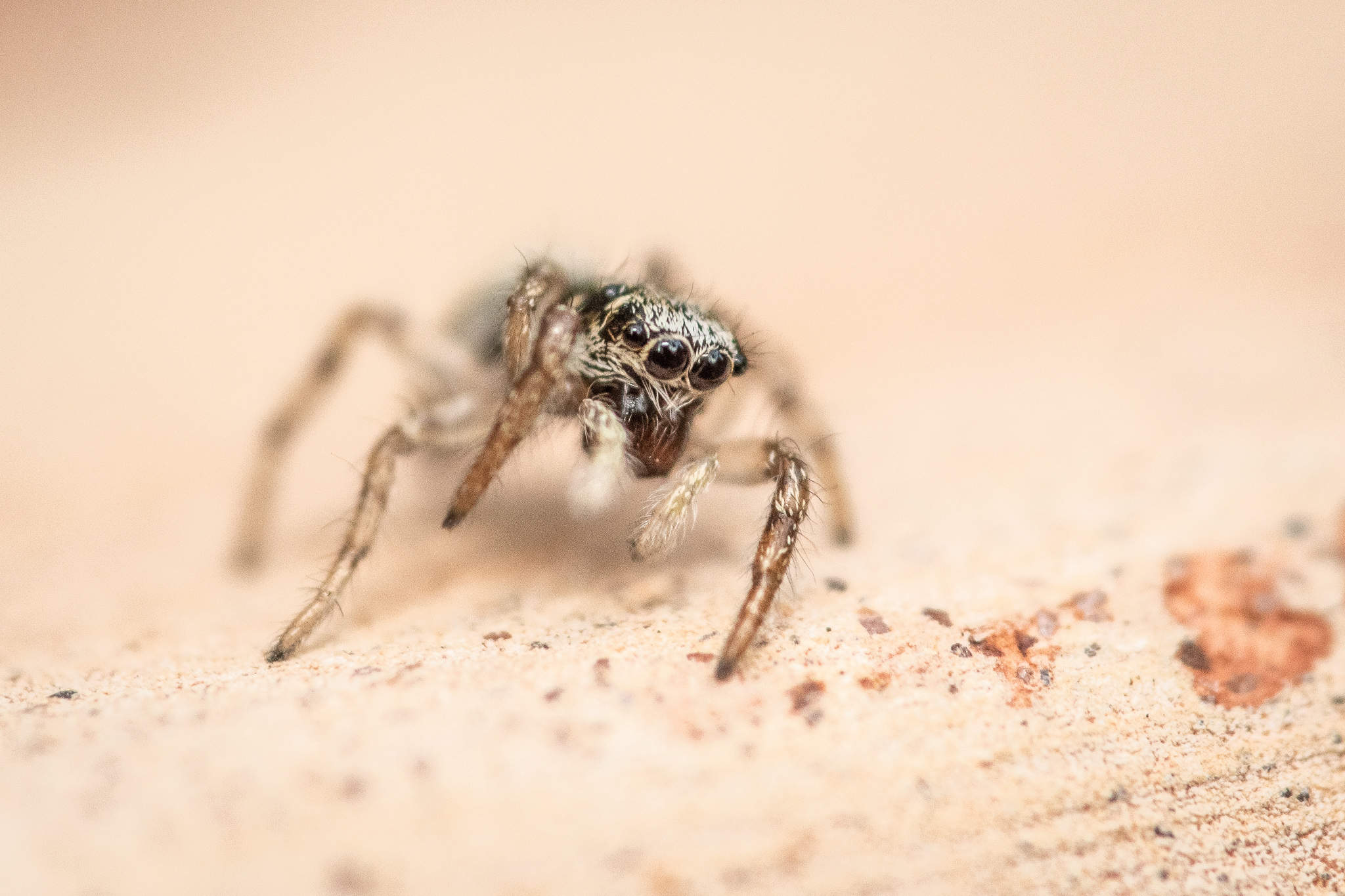
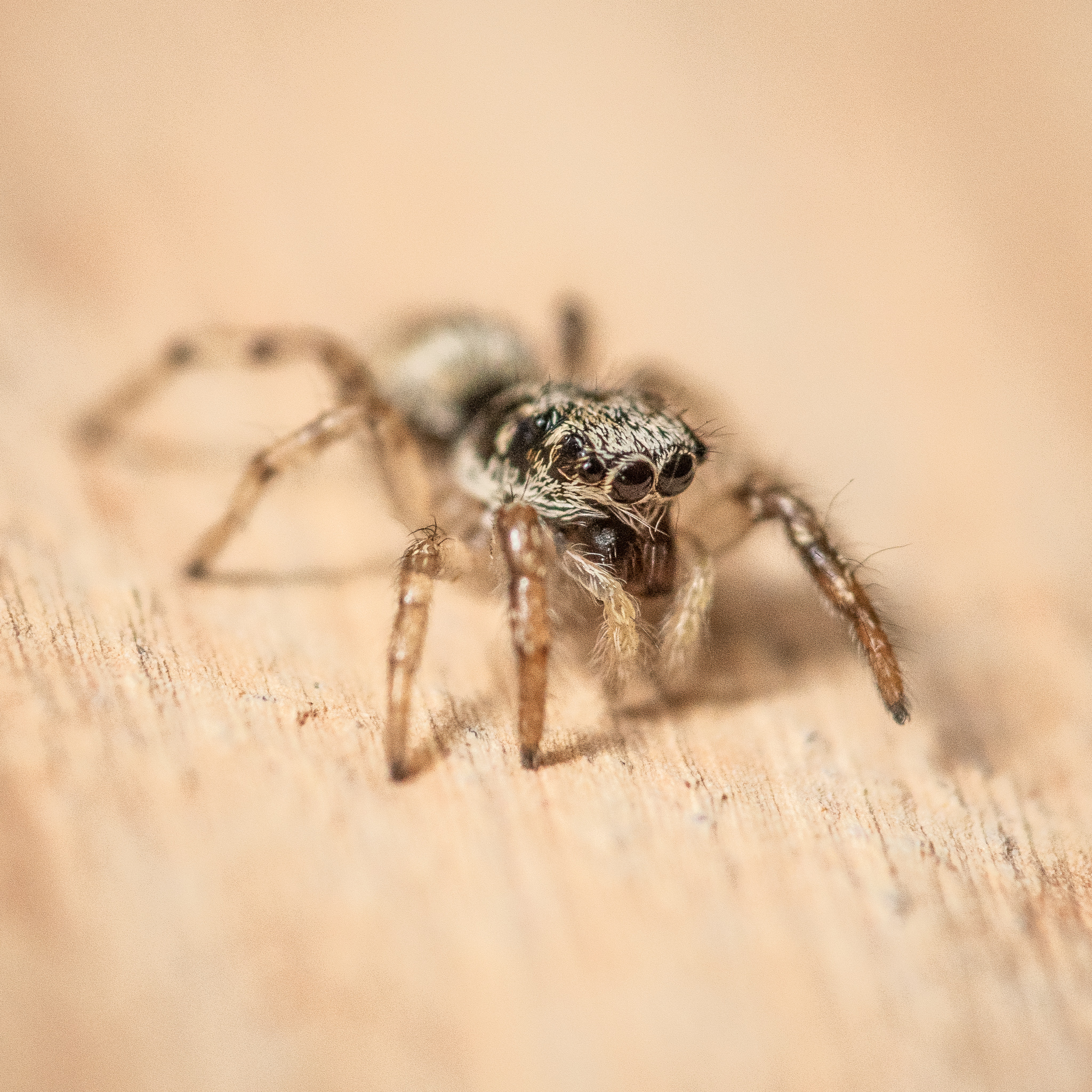
I should have known it was going to be a good photography day when this little jumping spider appeared in my kitchen sink! The light was rubbish so I’ve had to draw out the shadows and ‘de-noise’ these photos a bit. I’m unsure of the exact species, but I do get an apparently uncommon oak jumping spider in my garden/near the house sometimes, and this may be one.

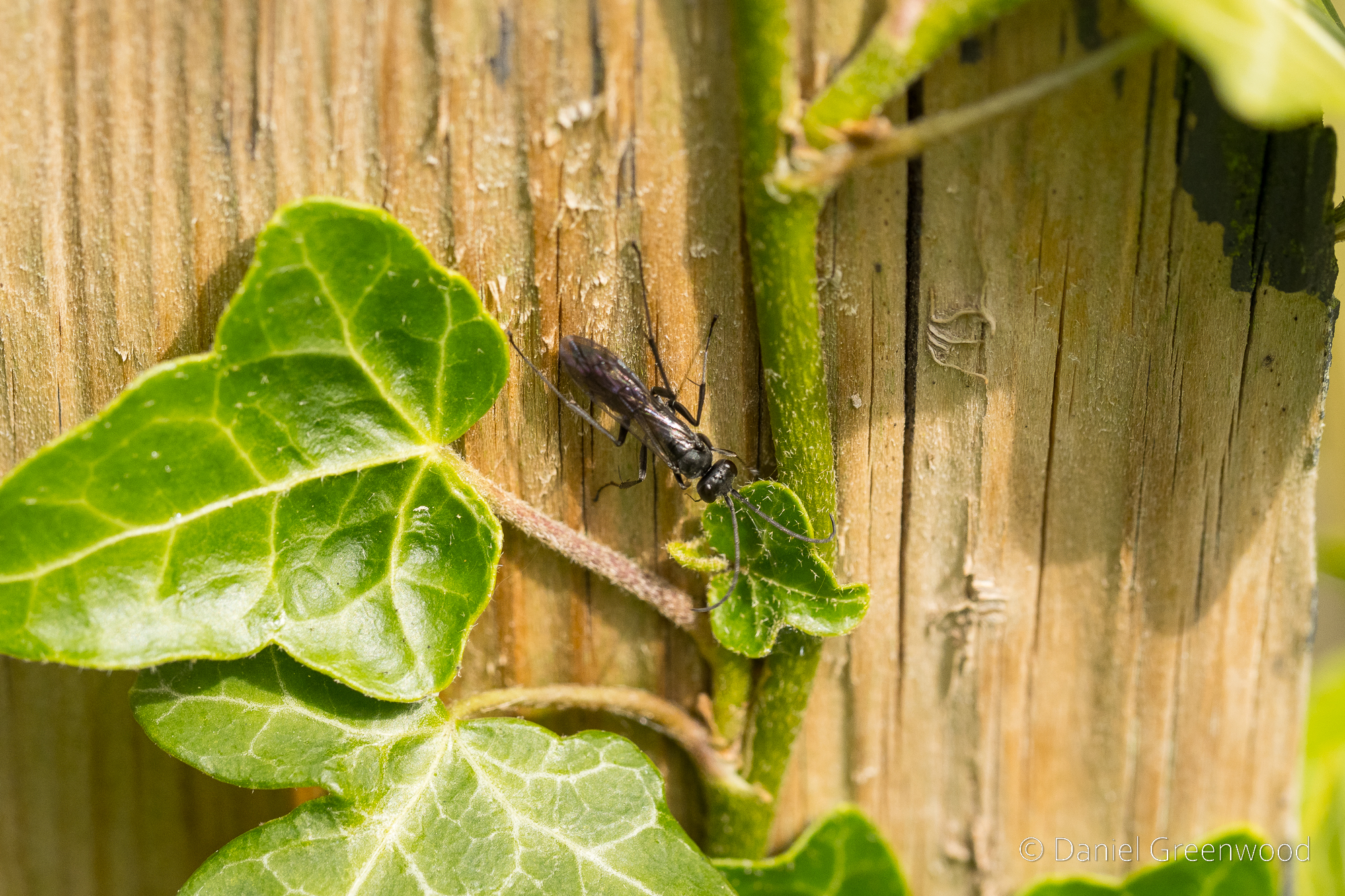
While we’re on spiders, here’s a wasp – a spider-hunting wasp! I’ve learned that sitting down on the grass by a shrub for 15 minutes isn’t just a forest-bathing exercise, it’s also a good way to allow the life to move around you. One fence post was being explored by this very busy spider-hunter. And then, something amazing happened.

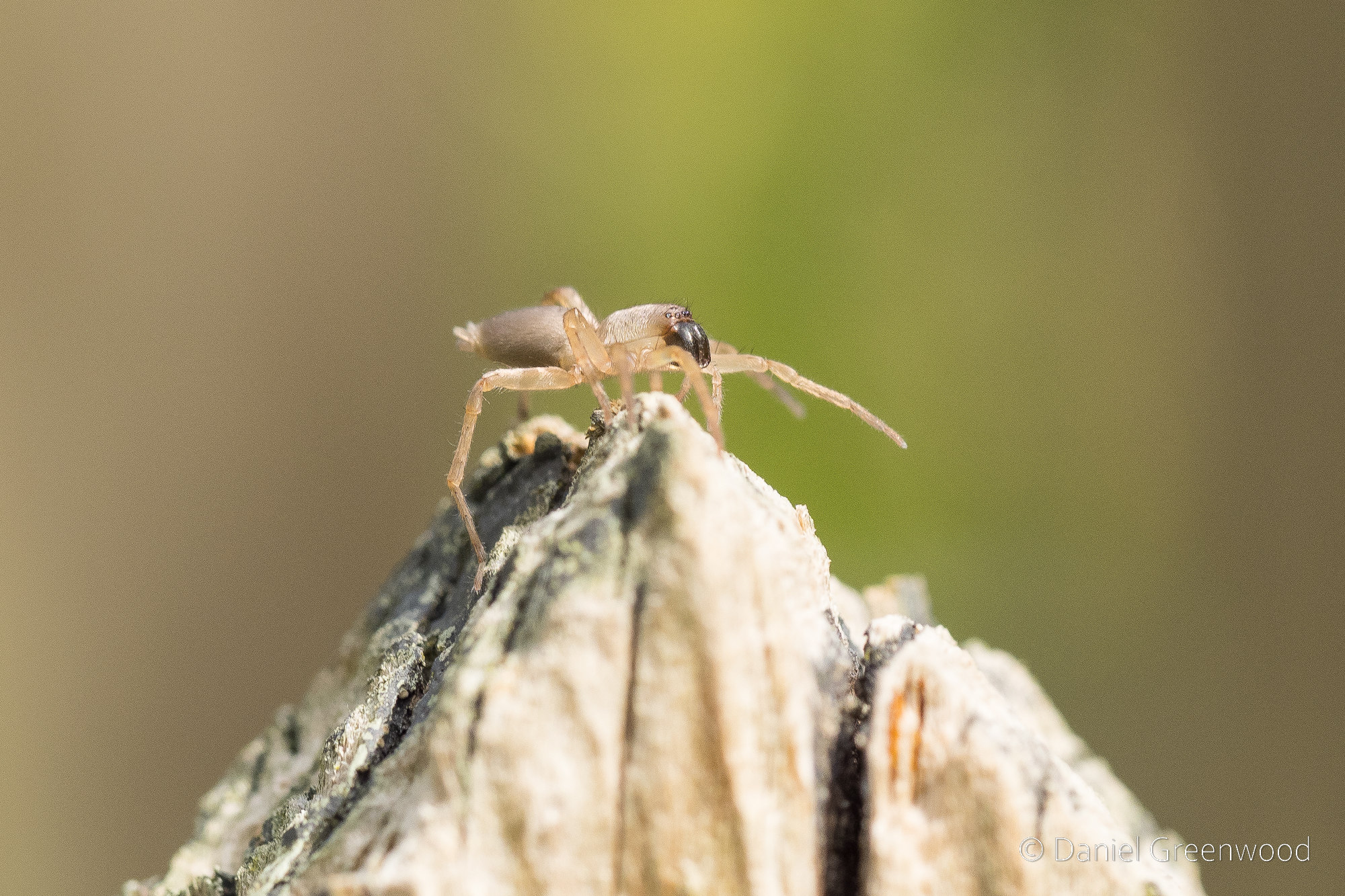
On a vacant fencepost (that’s just how I consider them now) a spider appeared at the top. The spider-hunting wasp saw their moment and burst onto the post, but missed the spider by milliseconds!

The spider-hunting wasps paralyse their prey and then carry them away to a cache. It’s pretty grizzly, but if you think that wasps have been in existence for over 100million years, and spiders, gosh, they’ve been around for over 300million (humans 200k and unlikely to make 1million at this rate), it’s something that’s been going on for a long time. If you’re annoyed about one species of wasp bothering you, imagine how spiders felt when 100million years later a spider-hunting wasp evolves from nowhere!
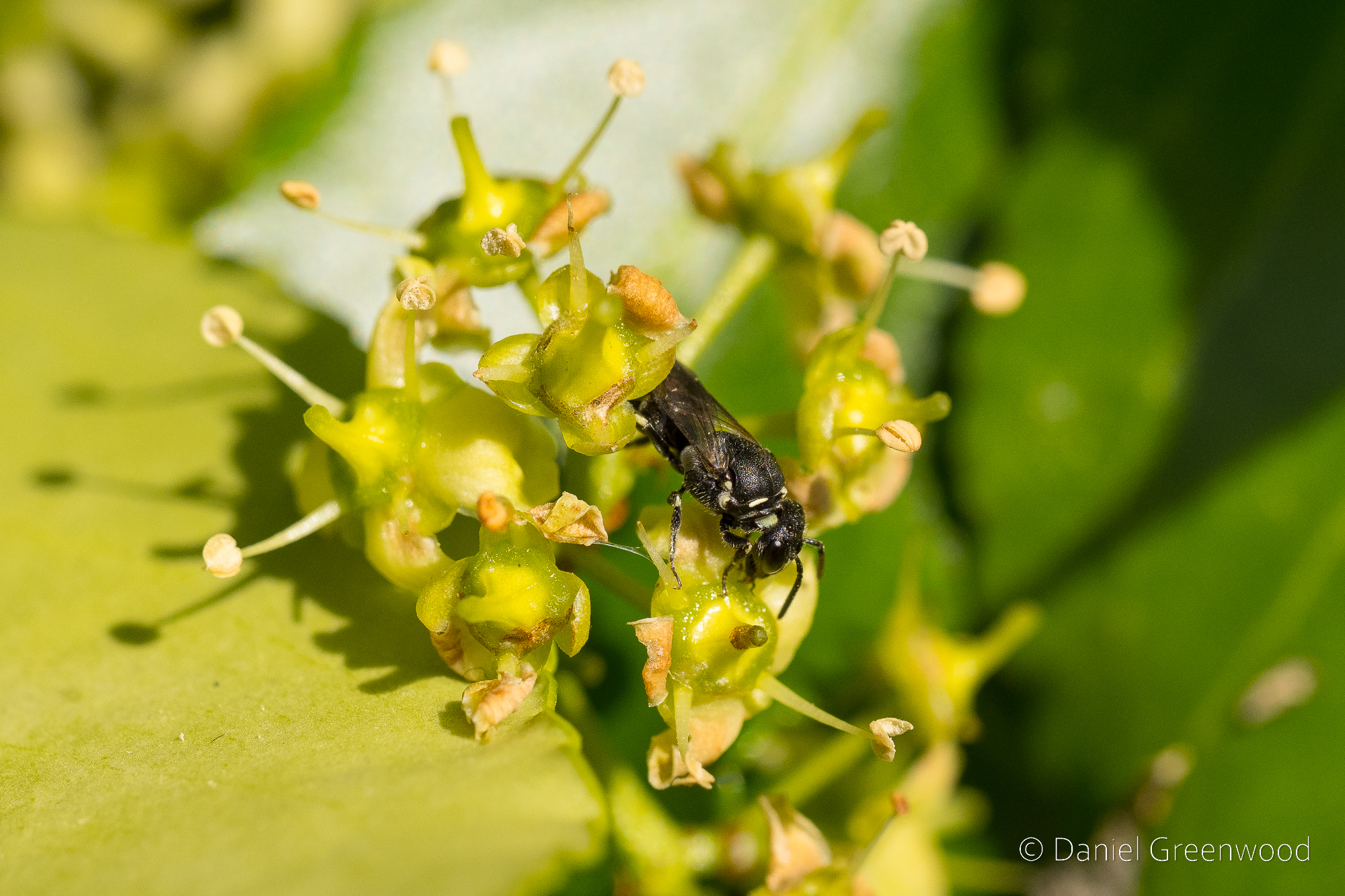
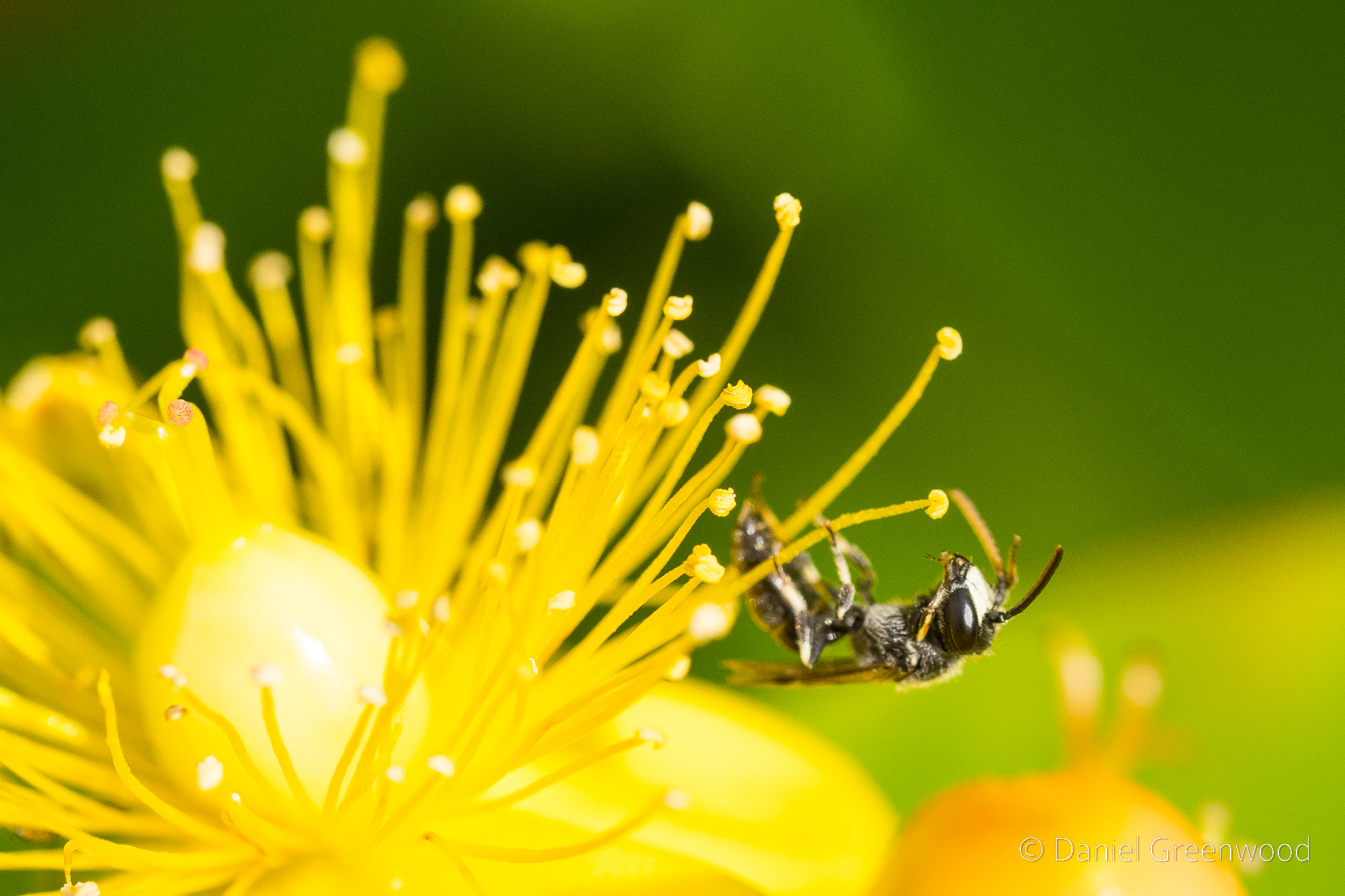
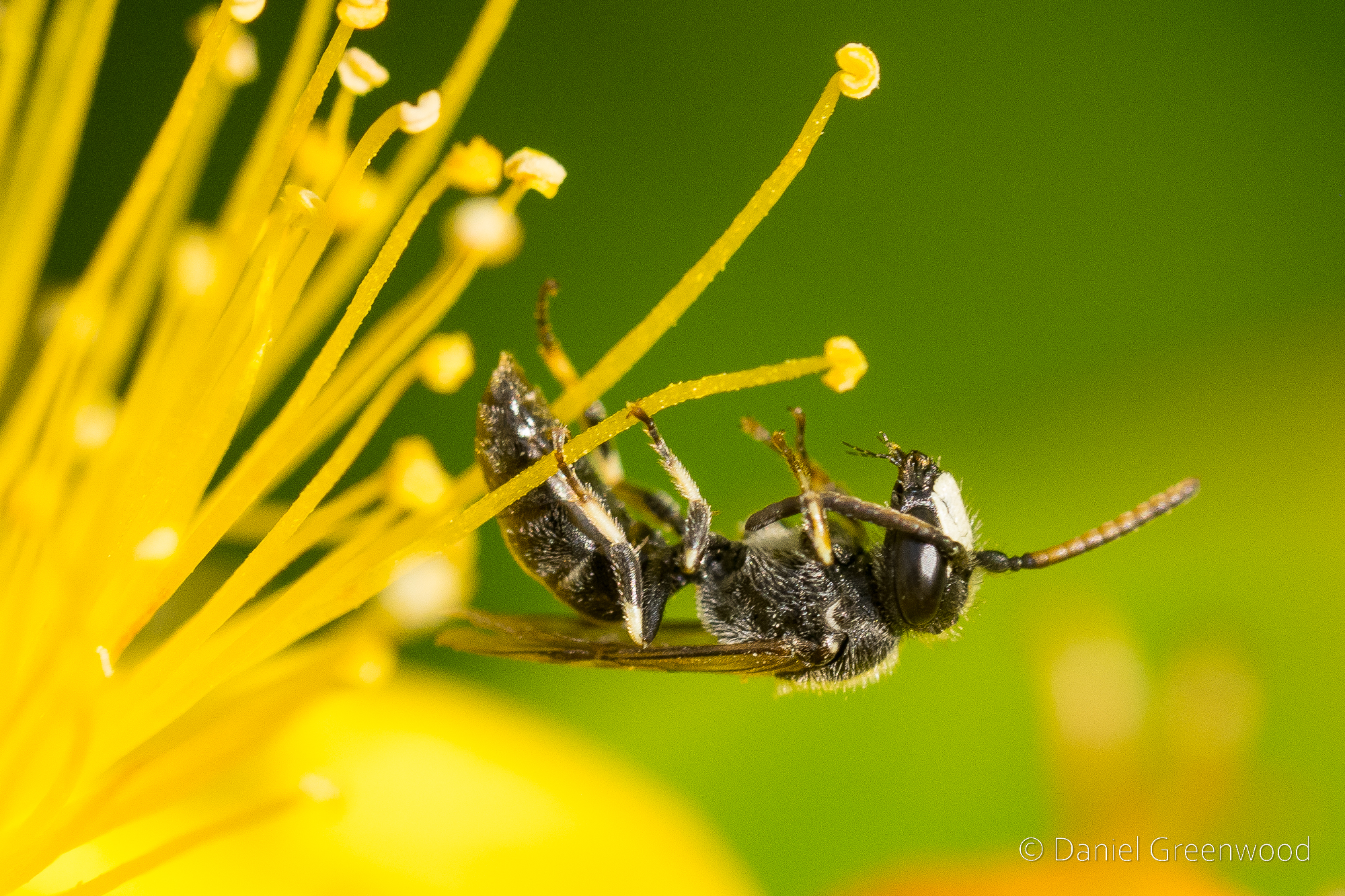
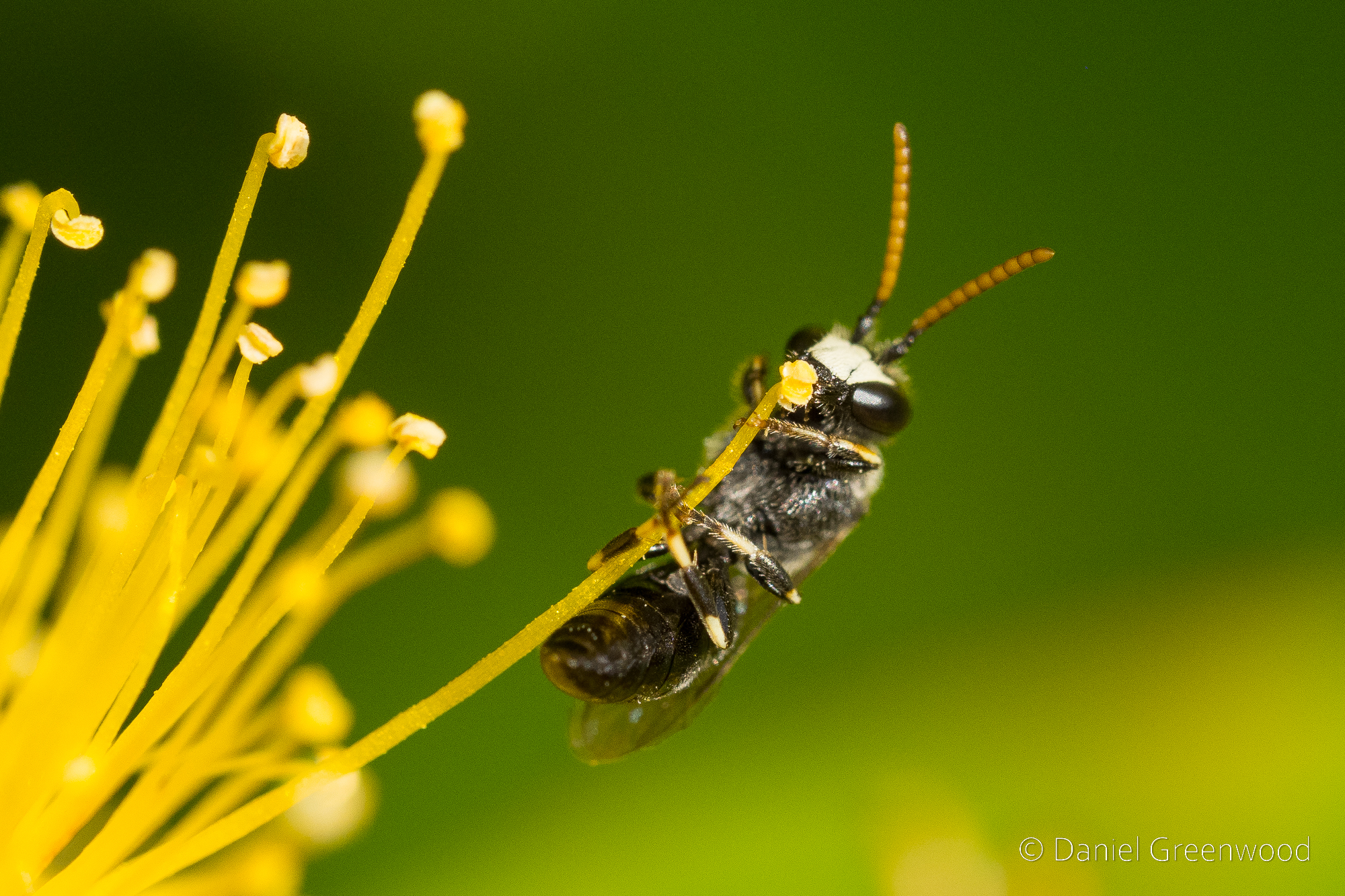
This is around the time when I begin to notice the very tiny yellow-faced bees (Hylaeus). I’m happy to identify them to that level, and don’t really take it any further.

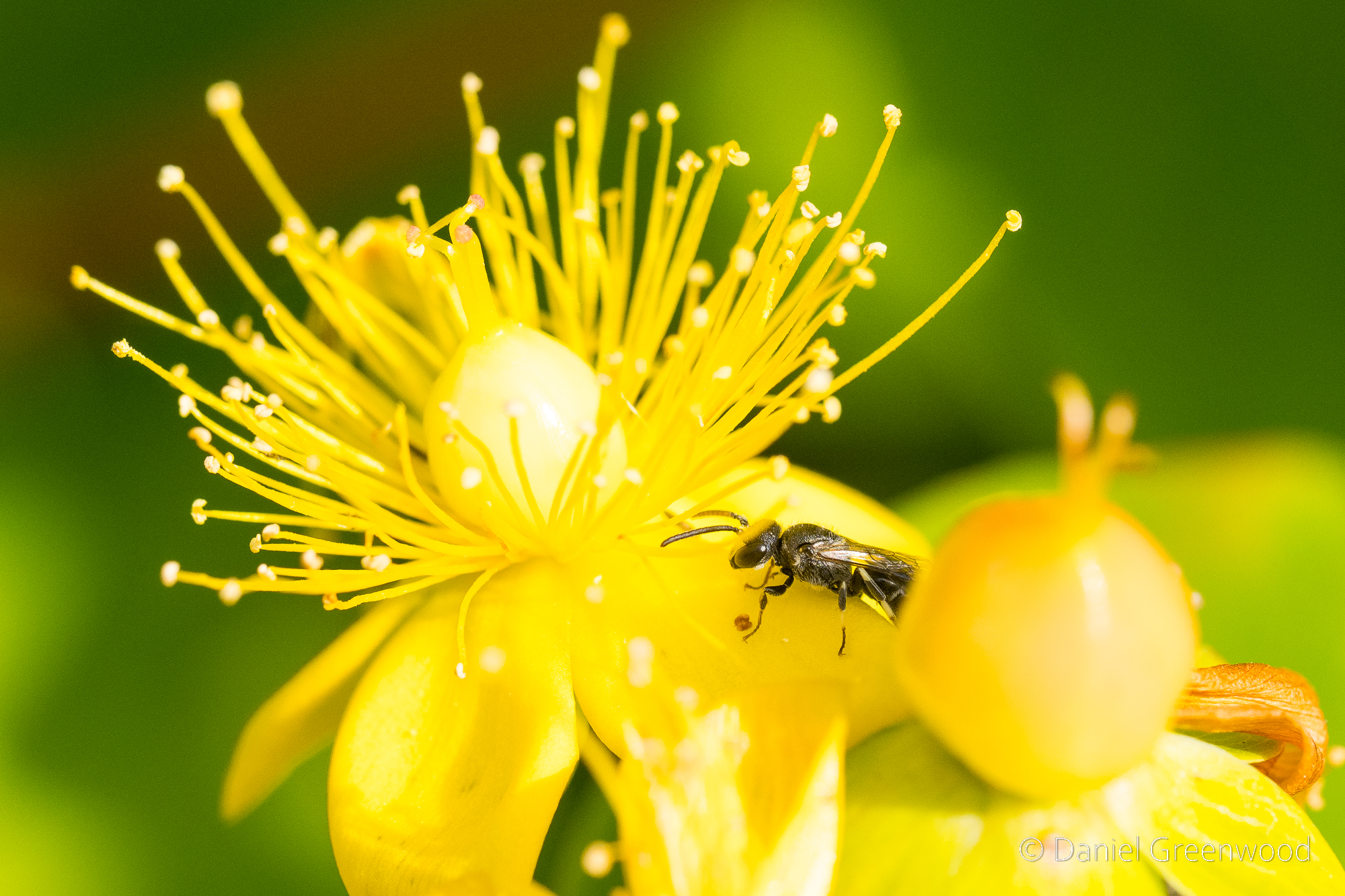
And here we have some of the ‘best’ images I’ve taken this year. This yellow-faced bee is probably less than 4mm in length. Here it’s nectaring on the stamens of a cultivated garden hypericum. This was grown from a cutting taken from my grandmother-in-law’s garden and is a very good plant for pollinators, though it does need maintaining. I love the way the bee uses the stamen a bit like an Elvis impersonator on a standing microphone. Ah-huh-huh.

Here’s a bumblebee for scale!

I don’t think I’ve seen as many honey bees as in recent years, but there was a glut of them around May. There are reports of problems in the U.S. this year (bit of an understatement, considering who’s running things there).
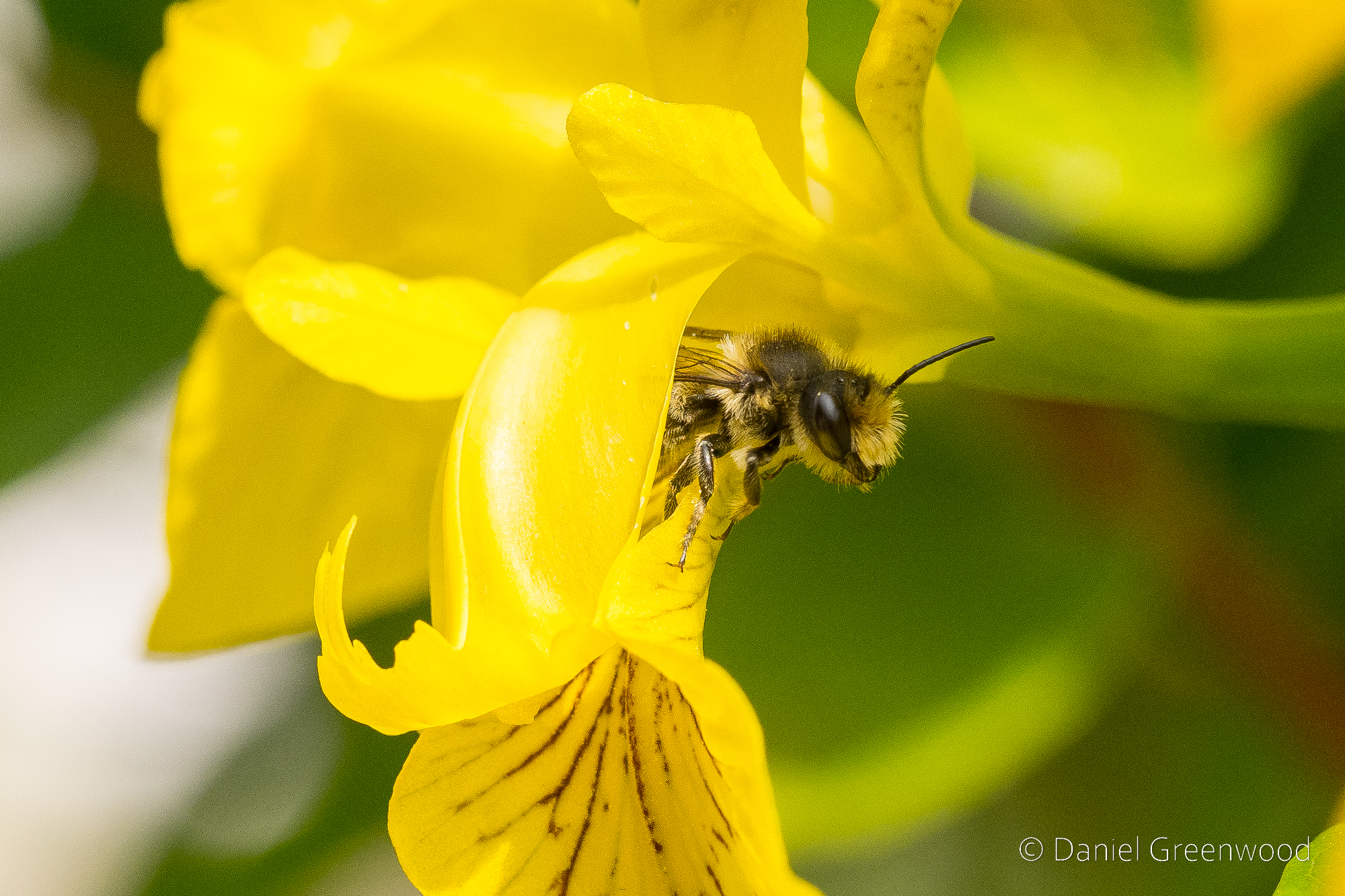
This solitary bee was visiting the flag iris in our little pond. I do enjoy the bee’s sideways escape. Not sure of the species, might be one of the Andrena mining bees.

I will now make like this bee and leave it there. Thanks for reading.
Macro | Support my work

Macro 📷: spring spiderlings

Just a note that throughout June I’m posting a macro photo each day for the Wildlife Trusts’ #30DaysWild campaign, which you can keep up with here!

There has been a clear shift in the invertebrate world and it’s resulted in a lot of macro photos for me. So much so that I can’t fit them all in one post and will need to post more than once a week!

After early May’s heavy downpours, warmer weather arrived towards the end of the month and with that the insects, spiders and other arthropods. Summer feels closer now, with June being that tipping point between cooler spring weather and the hot mess of July.

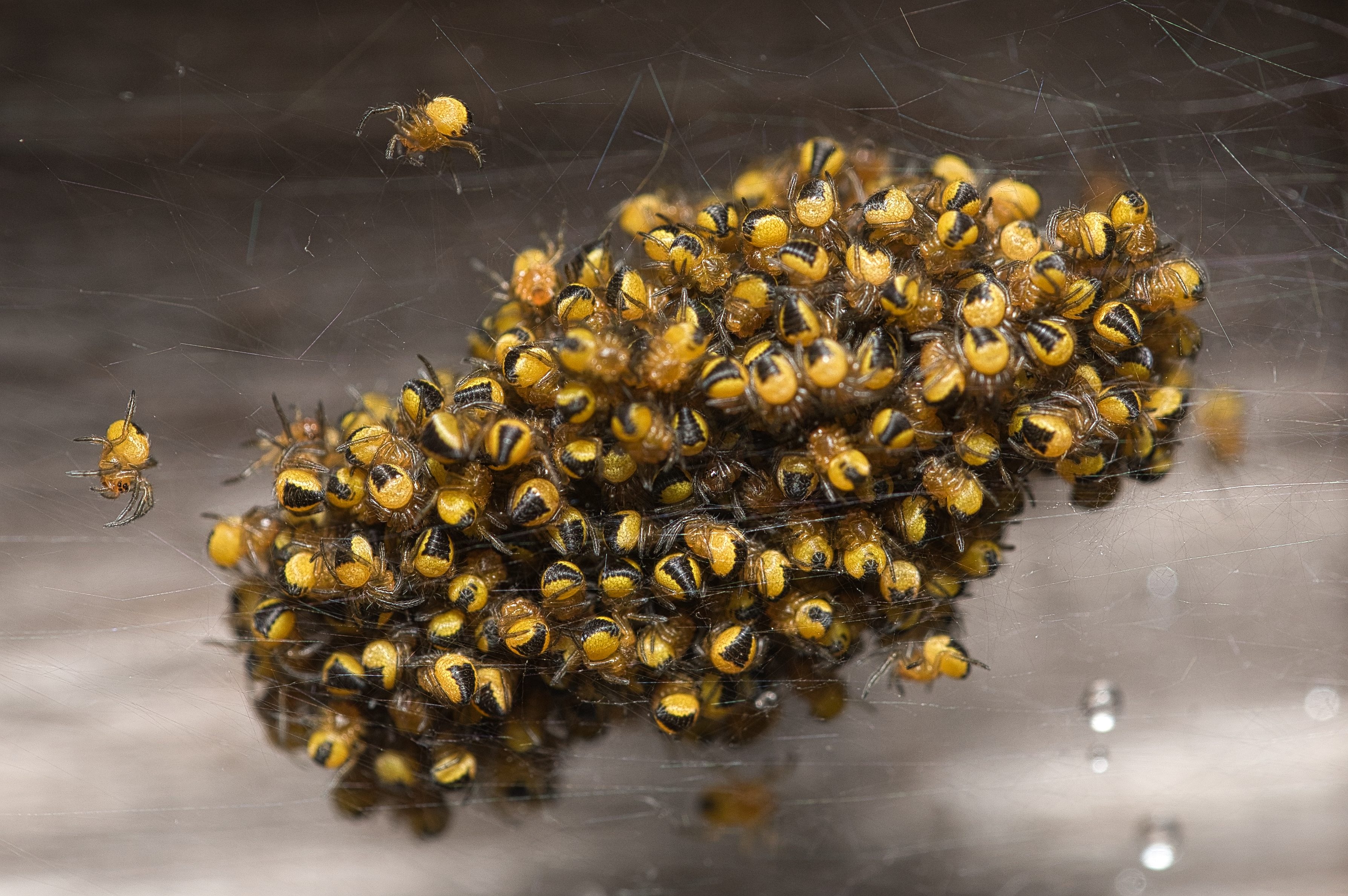
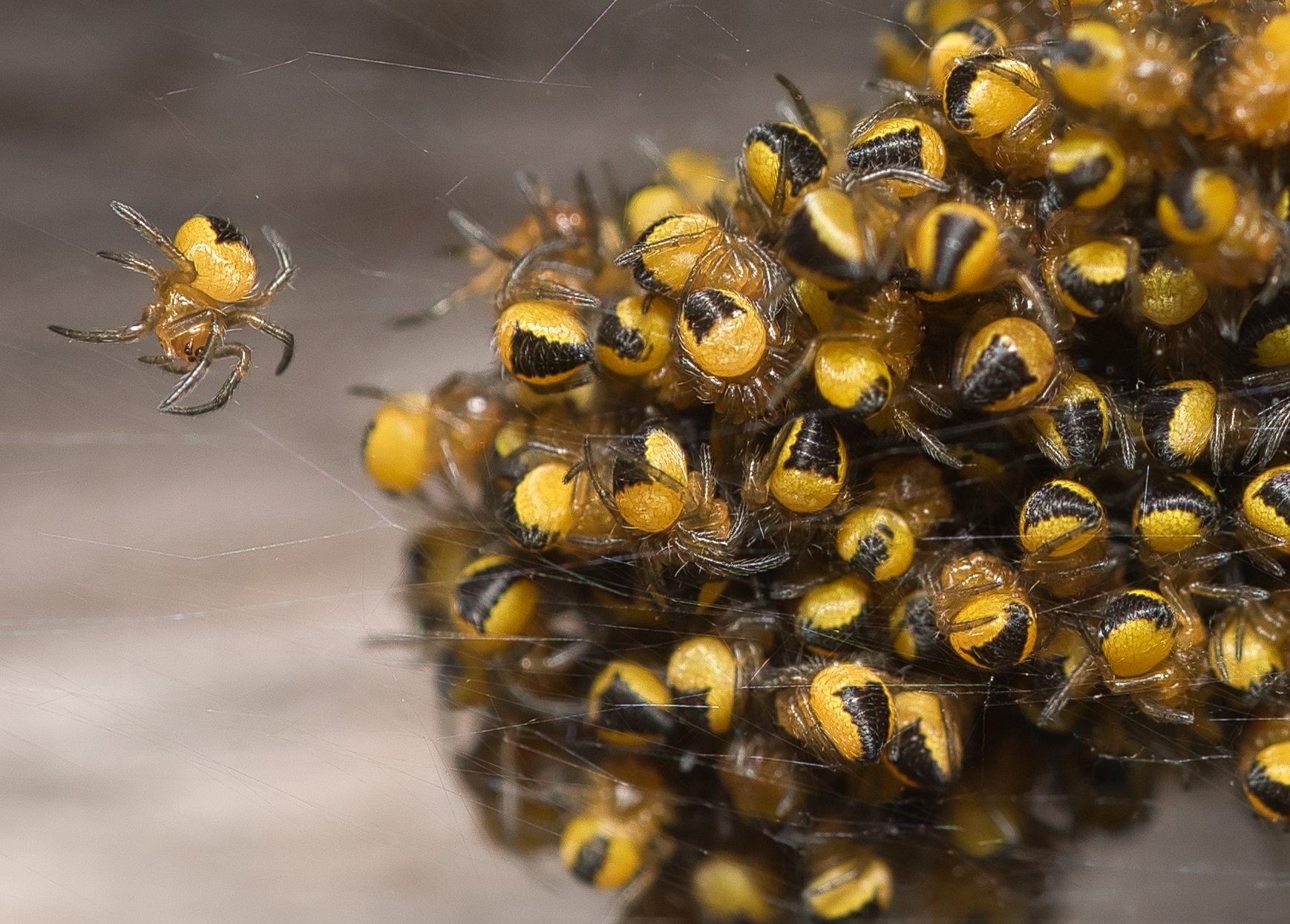
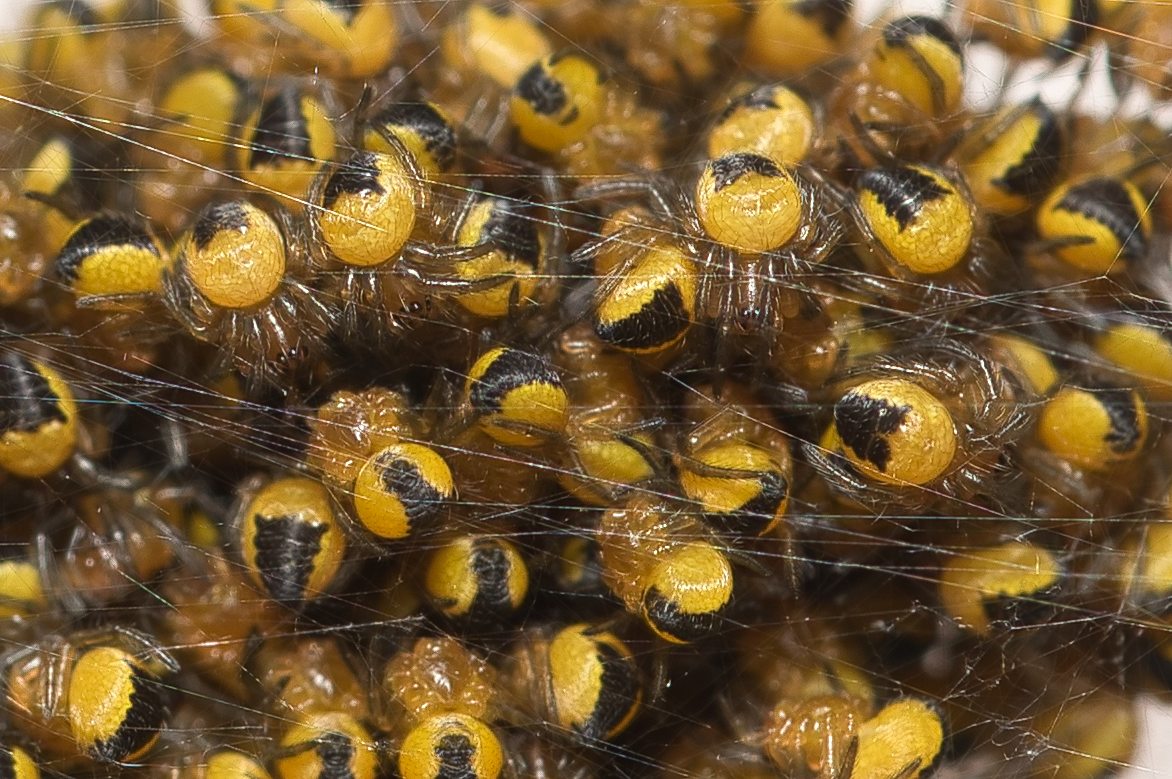
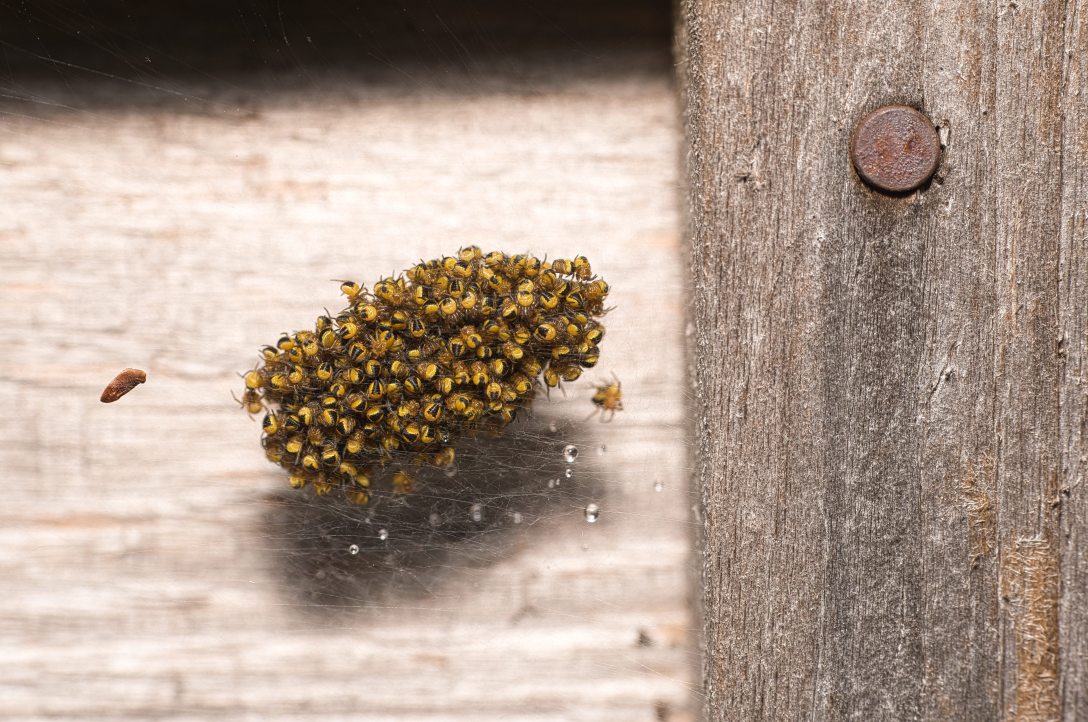
One day last week I noticed a small clutter of, well, things on the garden fence. From a distance they looked like a smudge. At closer viewing they were tiny spiders all bundled together. This will be quite disconcerting to some people perhaps, including a friend of mine who I hide social media posts from because of his arachnophobia. I don’t have that problem luckily and I’m fascinated by spiders.

I had no idea what the spiders were until I submitted the record to iNaturalist and then waited for a suggestion. I leafed through my new spider book and landed on a page with the same image as the one that heads this post. They are garden spider spiderlings! The scientific name is Araneus diadematus.

It is pretty amazing that they will develop to be such large spiders, holding their places in webs over the summer months. Imagine the biomass of flies and other insects this clutch will manage to consume over the months ahead. Then again, many of them will be taken as prey themselves by birds and other insects. Don’t forget there are such things as spider-hunting wasps.

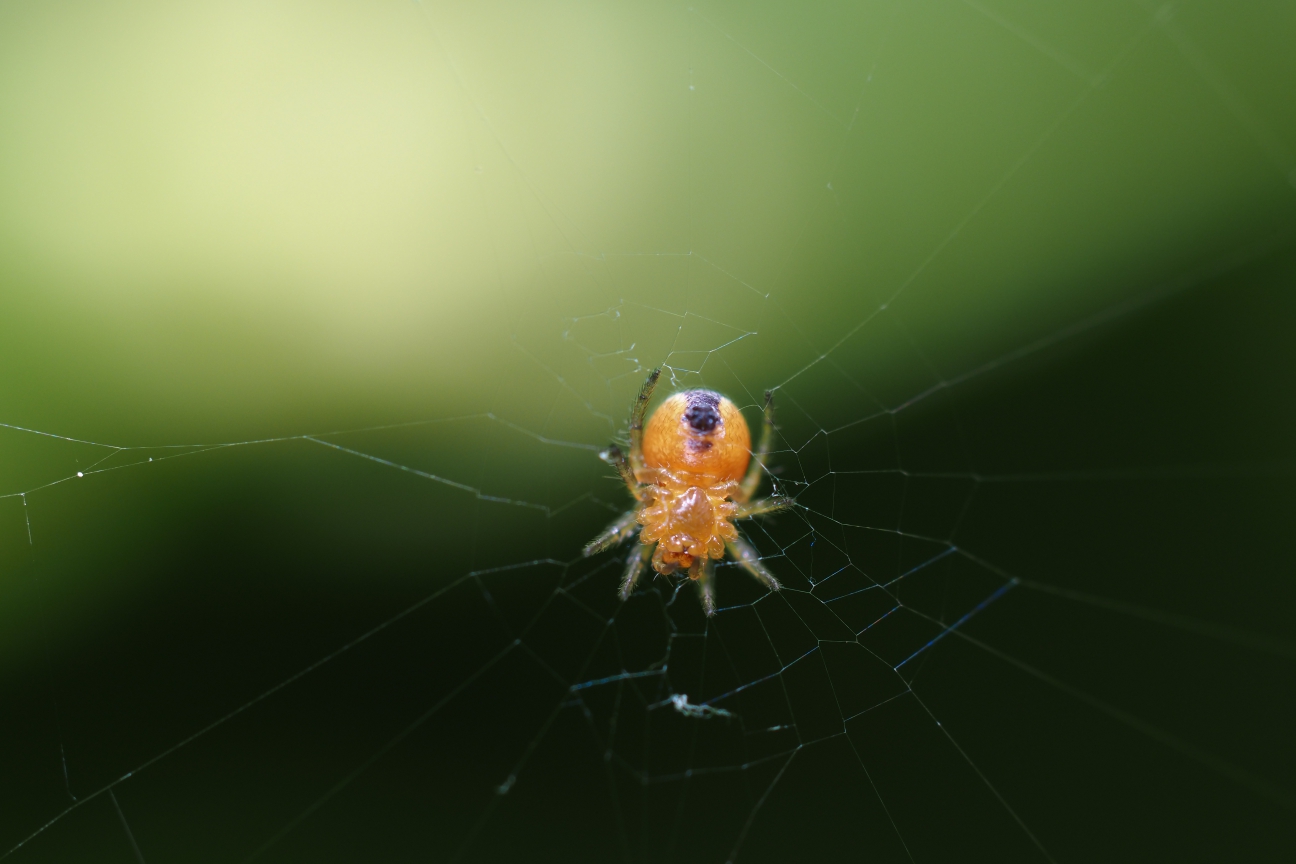
Here is one of those spiderlings (I am guessing) having set up its own web on the other side of the garden (approx. 3-4 metres).

And here was one of the adults garden spiders. I don’t know enough about the ecology of this species to say if this could be the parent or one which appeared earlier in the spring. One thing is assured – they will be getting much bigger and by August you won’t be able to miss them.

Thanks for reading.
More macro

Recent posts:

November 2025: beware of pity

I’ve had a burst of American visitors in recent days (to my blog, not my house). So thanks for visiting, y’all, and sorry about the year you’ve had. You may have noticed I’ve slipped to monthly posts on here. Between April and October I posted blogs every Monday without pause, which is a tricky task…

Macro Monday: it’s spider time!

GDN_16-8-2020_lo-res-18

Macro Monday 17th August 2020

*Warning*: as you may have guessed, this post contains spiders. Some people may find some of these photos unpleasant, but it may help you to learn to overcome your fear. I am not a spider-psychologist so this is not professional advice, as ever.

Here are frequently asked questions about spiders if you want to dispel any myths!

Well, what a week that was. Very high nightime temperatures and unbearable heat through the day. I barely spent any time outdoors, let alone in the garden. I really struggle in temperatures over 30 degrees. Most of the images this week come from the post-heatwave days towards the end of the week.

GDN_16-8-2020_lo-res-21

One evening, after the heat had largely dipped, I noticed some odd behaviour from a zebra jumping spider.

GDN_16-8-2020_lo-res-23

It was hanging from the leaf of a climbing rose we have growing from a terracotta pot on the front of our house.

GDN_16-8-2020_lo-res-22

I noticed there was another, smaller, zebra jumping spider (ZJS) lower down on the pot. I think this was some kind of territorial or even courting behaviour. Eventually the ZJS made it down to the terracotta.

GDN_16-8-2020_lo-res-18

It was running around on the edge of the pot, looking for the smaller ZJS. It was a total nightmare to get in focus.

GDN_16-8-2020_lo-res-17

There was also some time to clean its legs while it tried to find out what the other ZJS was up to.

GDN_16-8-2020_lo-res-13

I’ve seen these lovely spiders all throughout the spring, but much less so in the summer. It was nice to see them again.

GDN_16-8-2020_lo-res-11

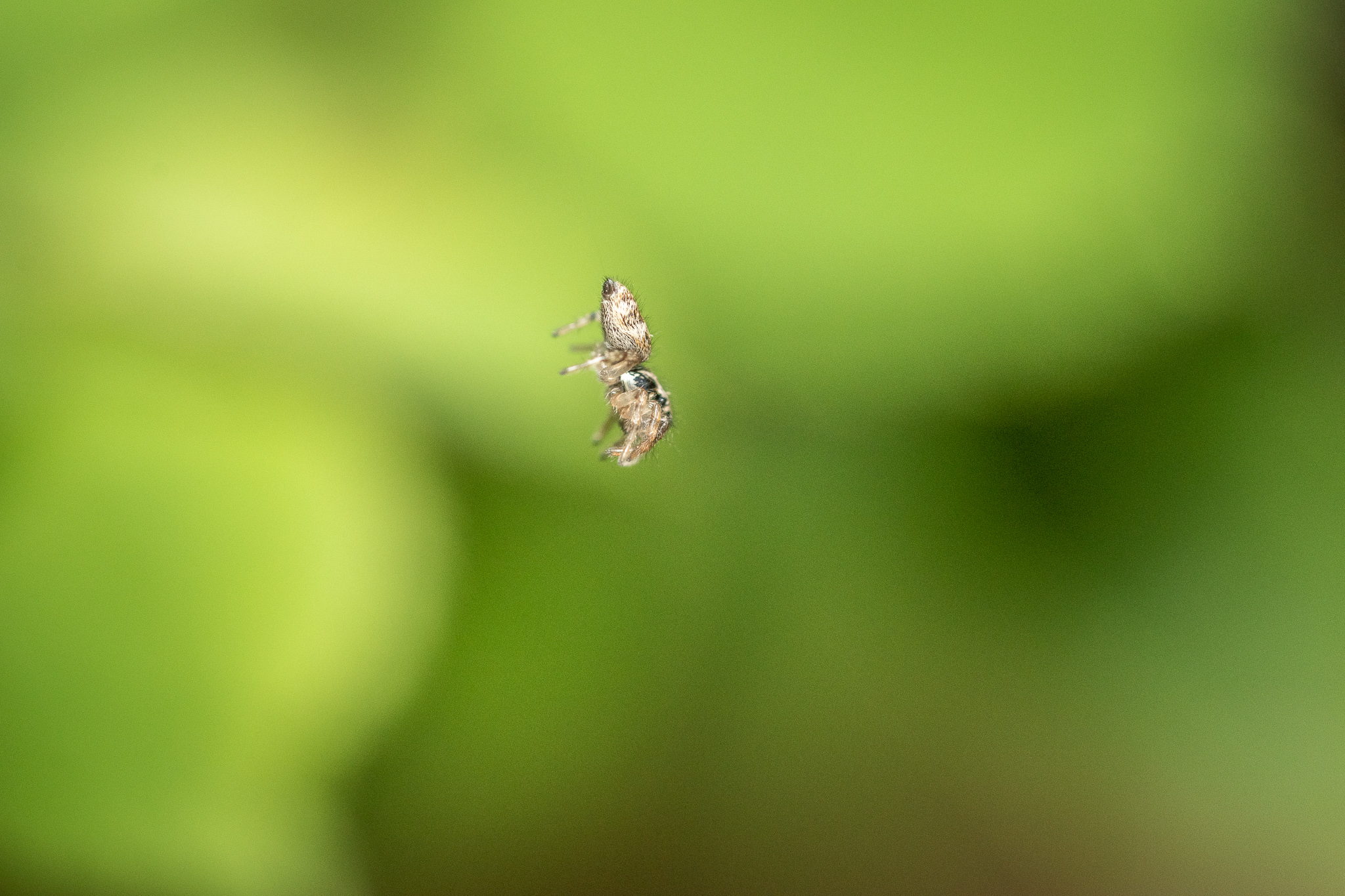
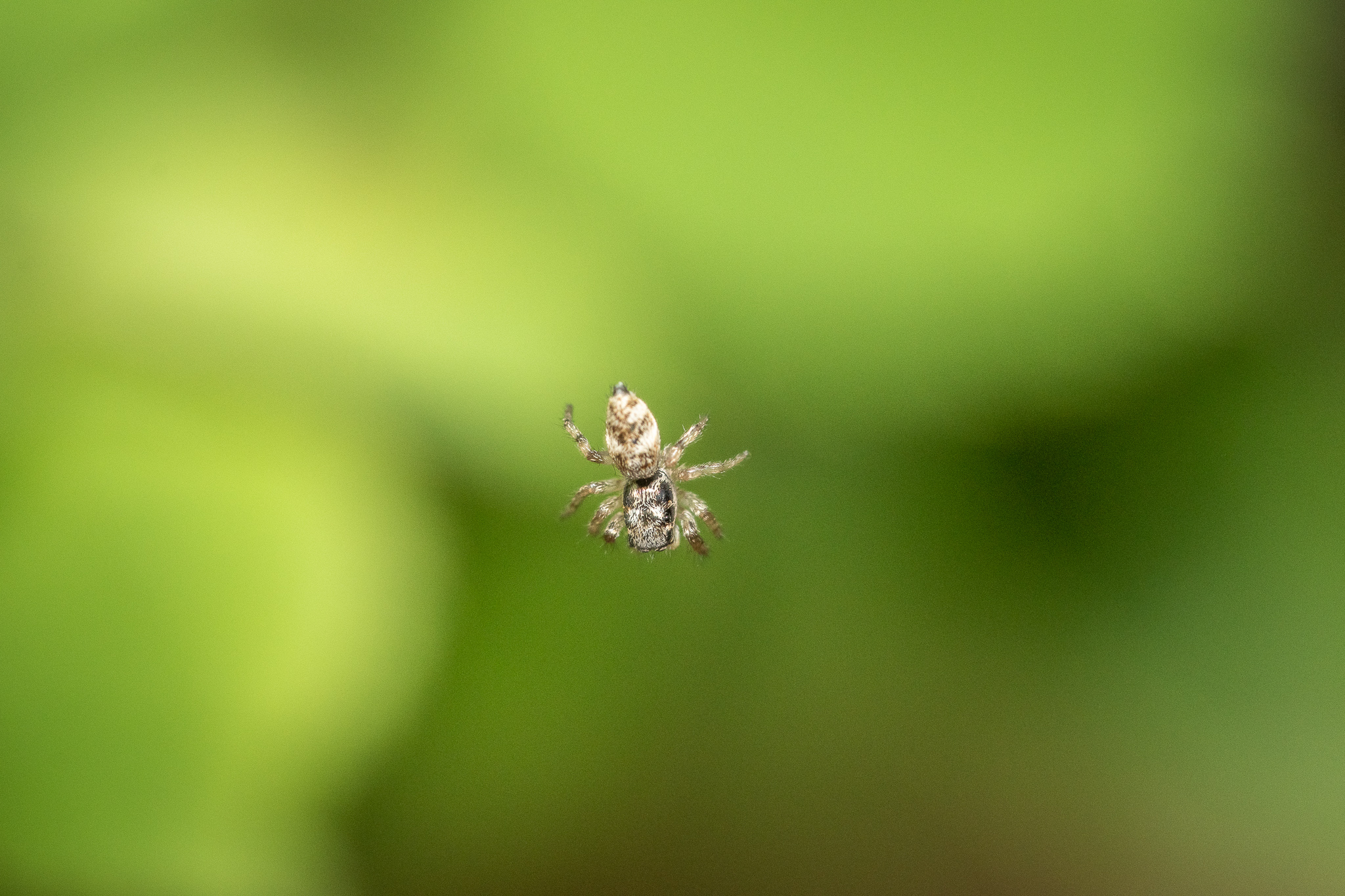
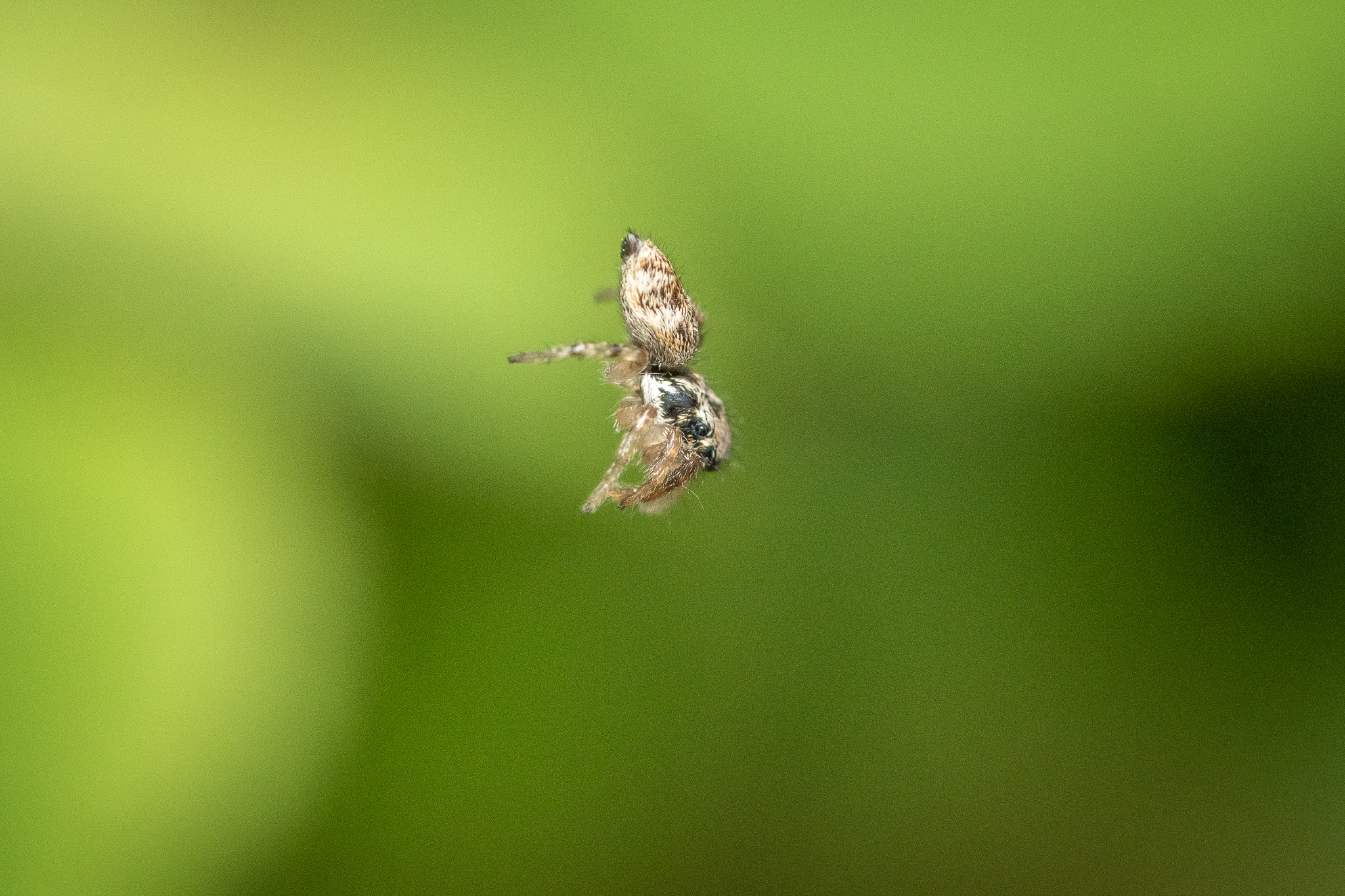
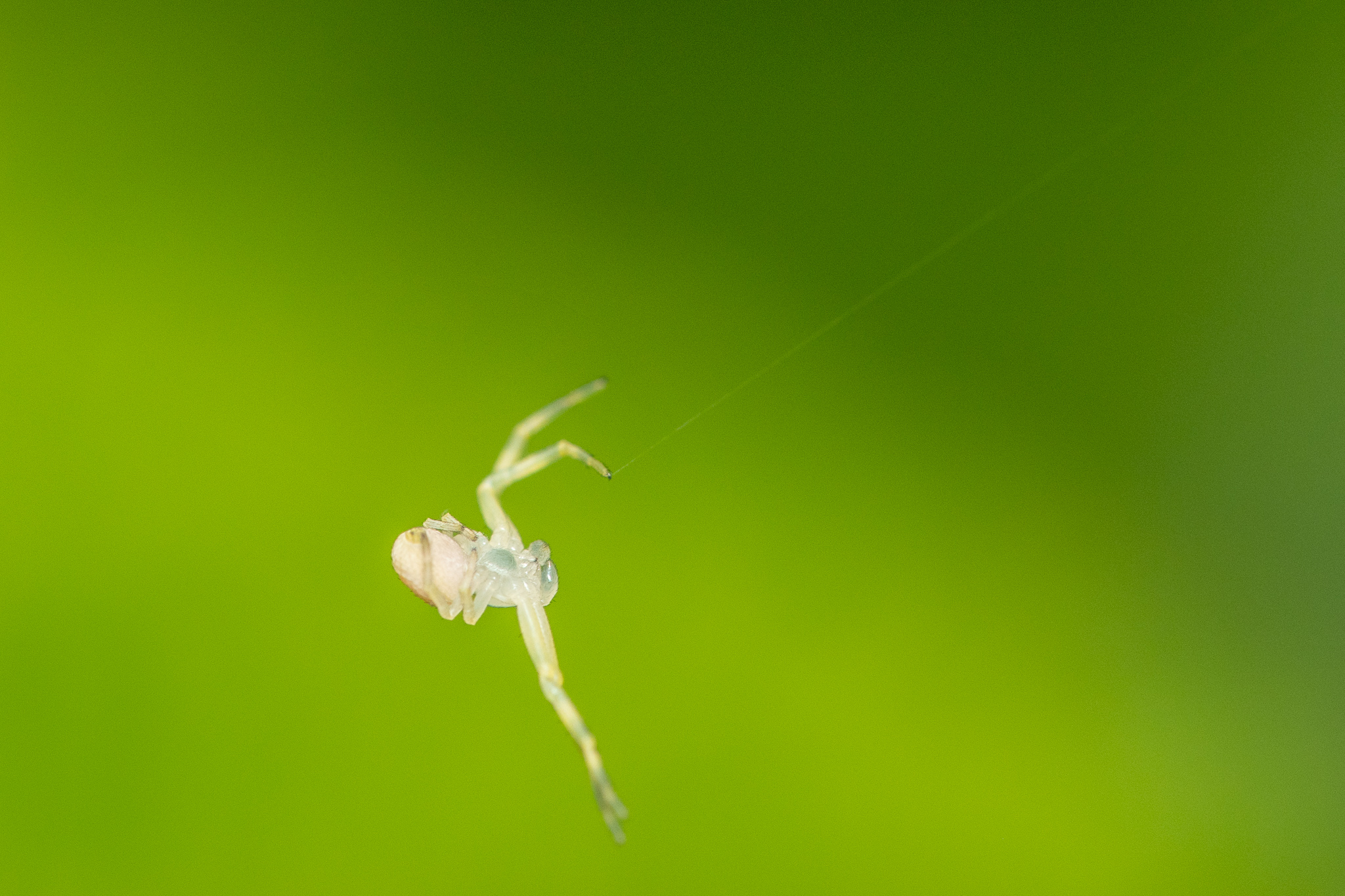
I also noticed this crab spider floating in midair on its silk. There is something quite weird about this image I think. The limbs look a bit like human or robot arms. This was a pure fluke of hoping it got into focus, even then you can’t really see the spider properly.

GDN_16-8-2020_lo-res-06

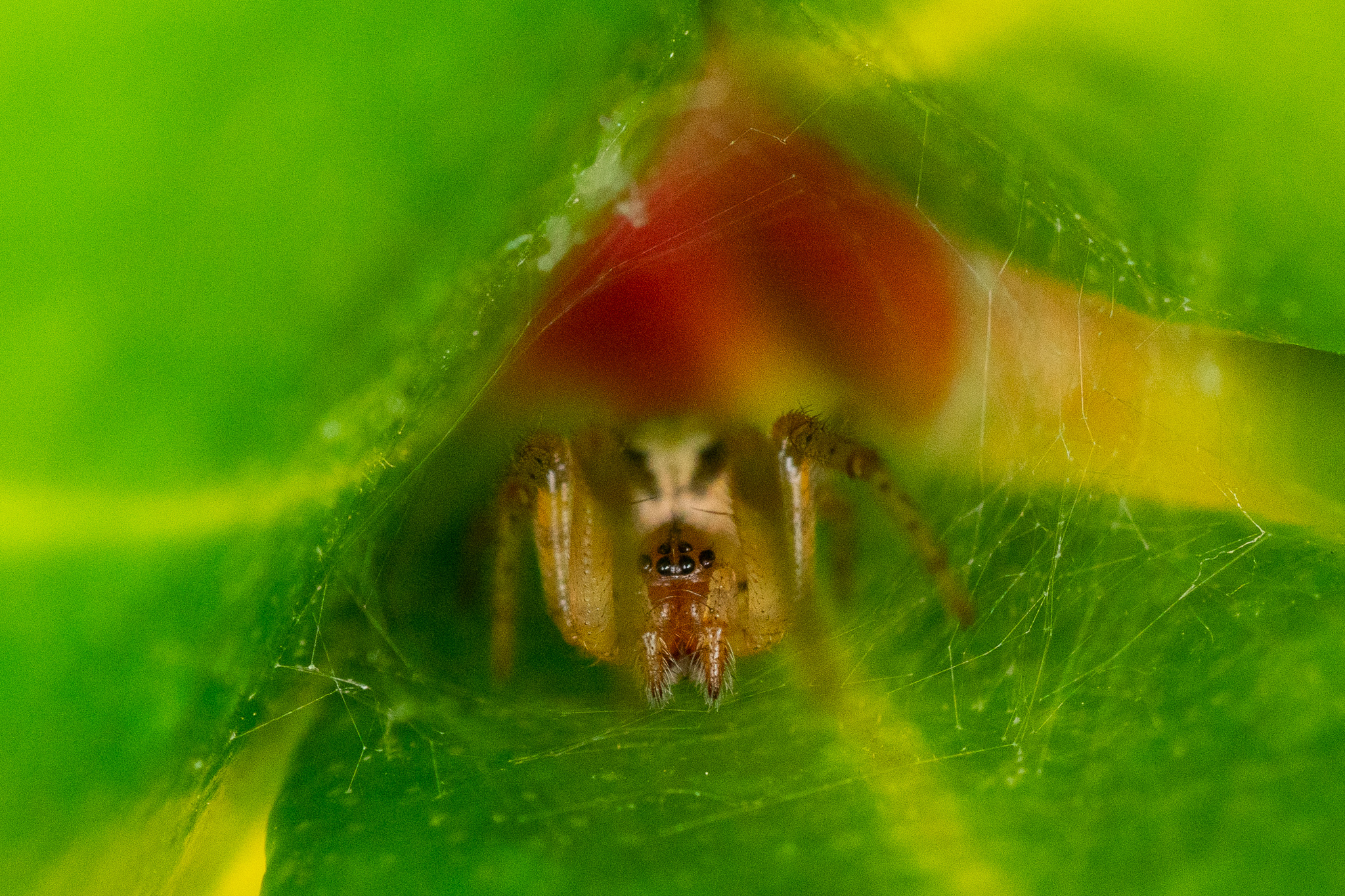
I’ve noticed far fewer insects in my garden, probably because the plants we have are largely over. I need to get some late-summer to autumn flowering species like stonecrop to keep things rocking and rolling. I had a look through the hedge while having an afternoon break after the storm took the heat away. I noticed this spider tucked away down in a bunch of leaves in the hedge. The silk is there to help catch prey but also it will react to movement, triggering the spider to attack.

OLYMPUS DIGITAL CAMERA

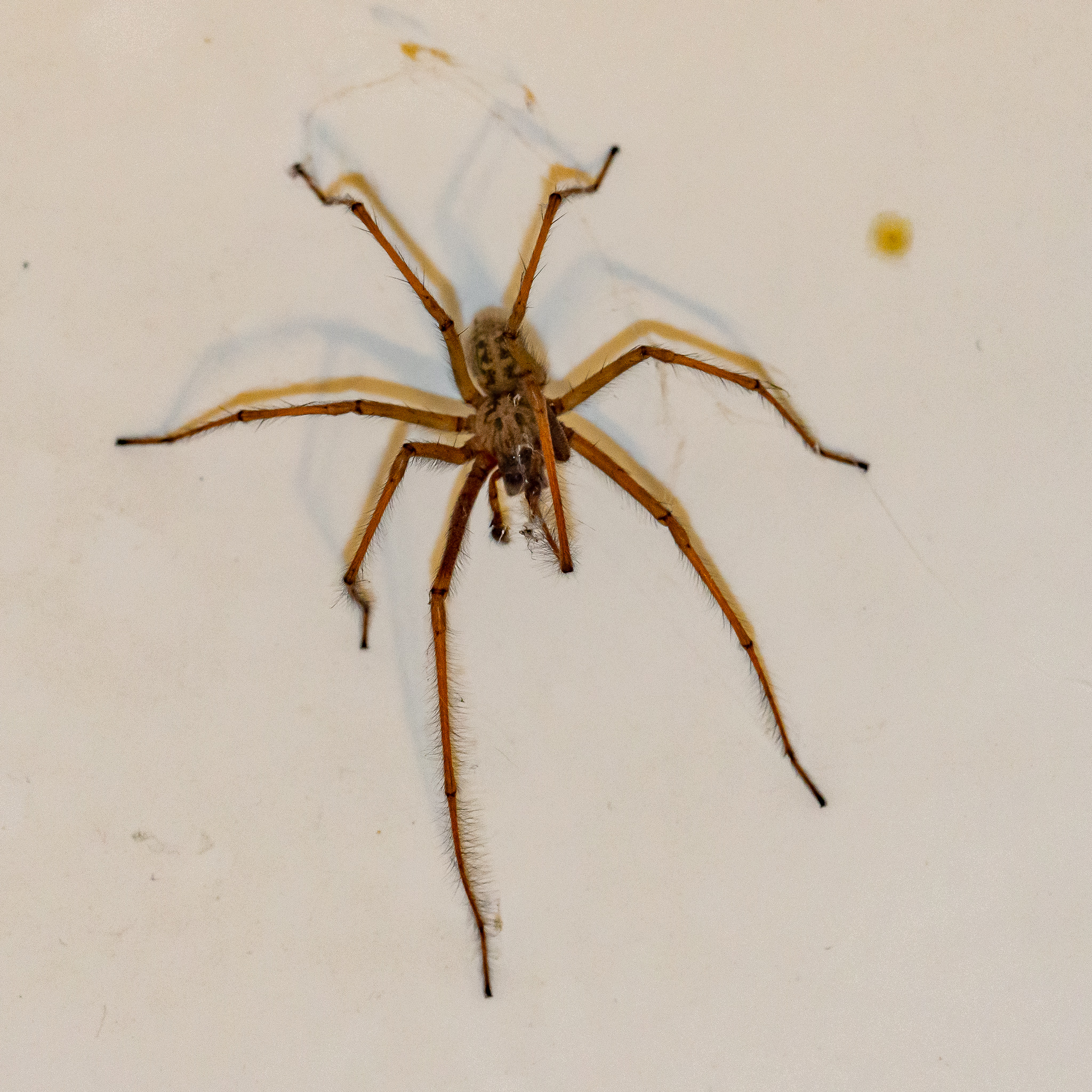
I visited my family home for the first time in 6 months last weekend, a really special experience after such a long time away. My parents are avid readers of this (perhaps that should say, the readers) blog and my mum pointed out to me that there was a big spider in the bath that I might want to include here! YES MUM!

OLYMPUS DIGITAL CAMERA

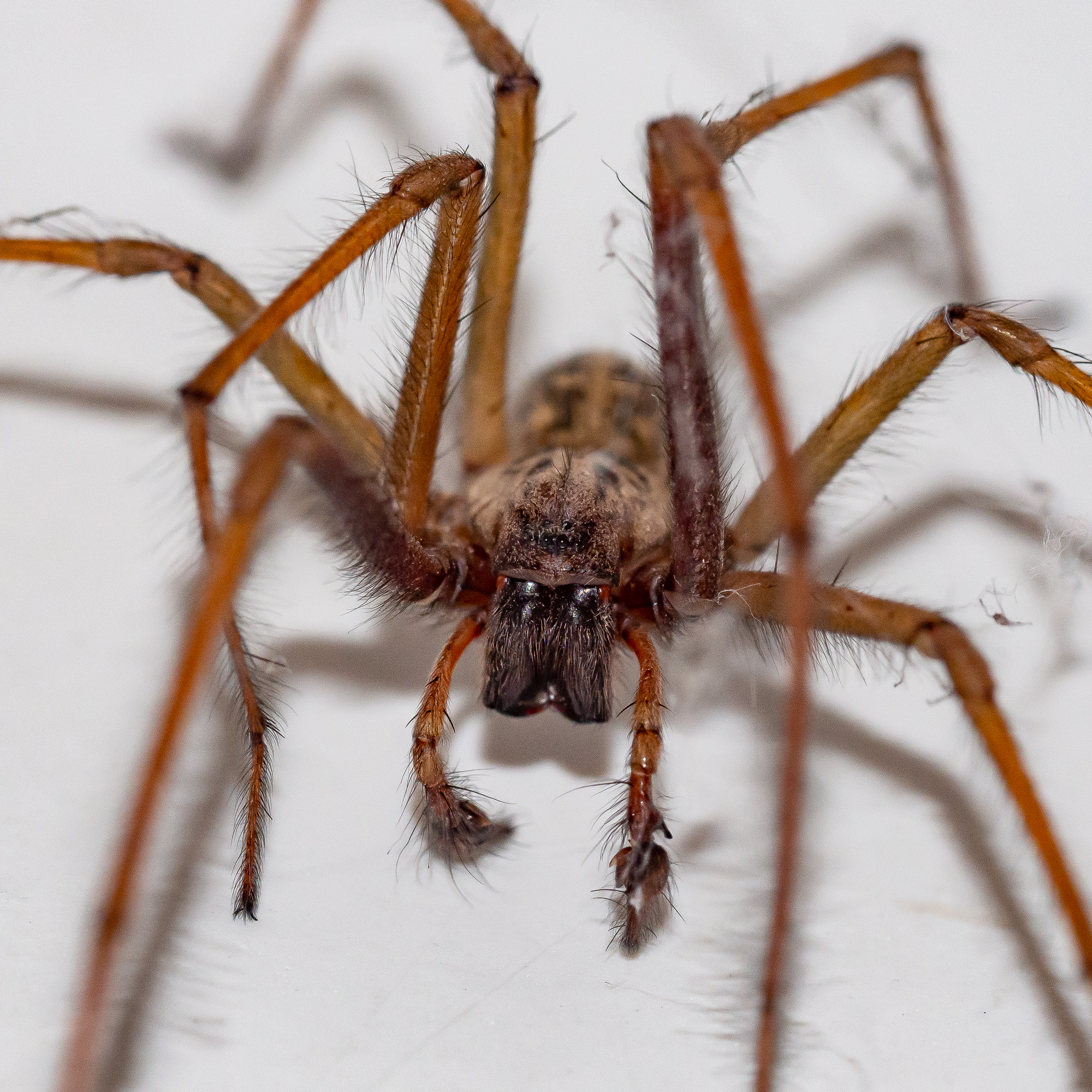
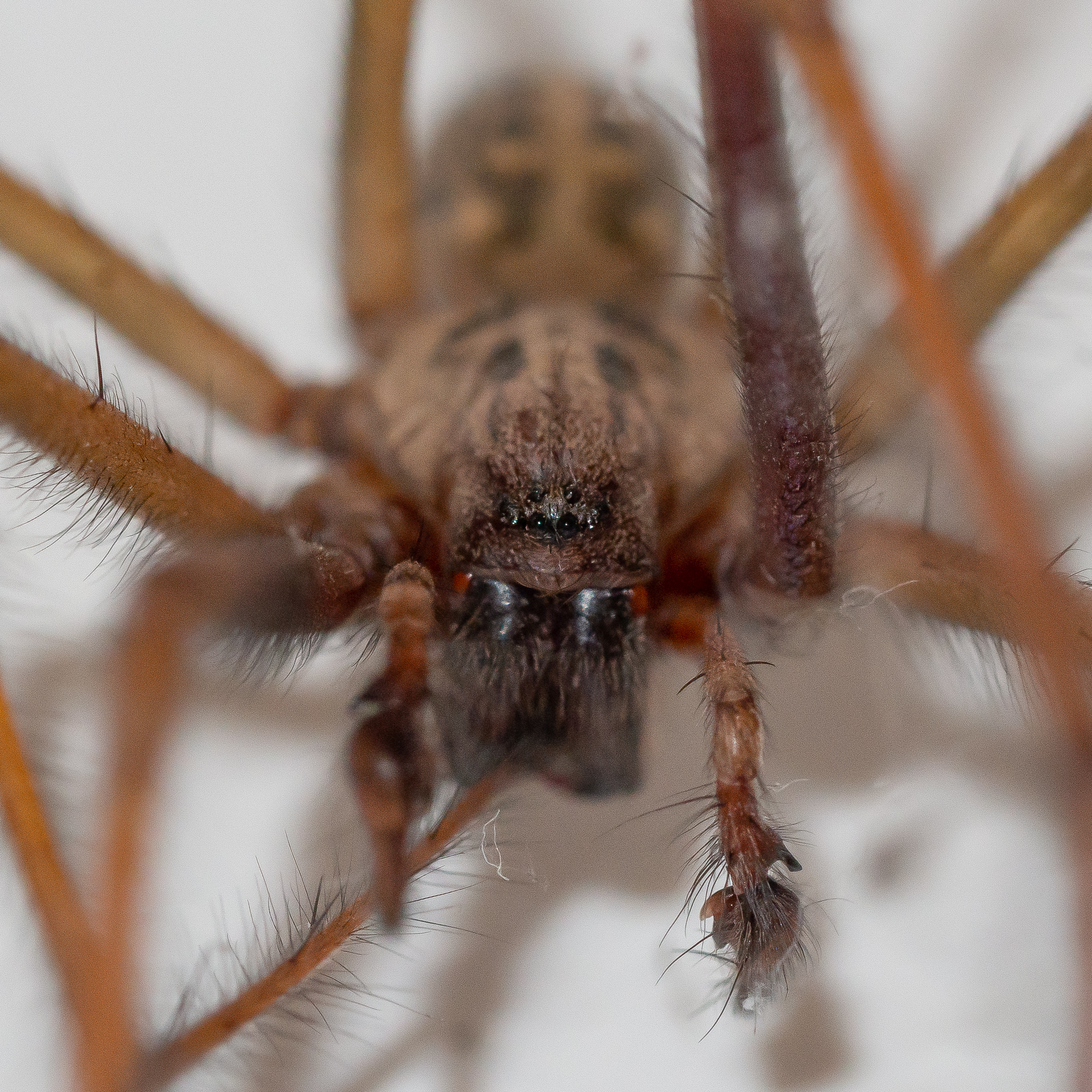
Now there have been several times this week when I’ve noticed out of the corner of my eye a shadow moving across the floor. This is something a lot of people are very unhappy about! But it’s the time of year when giant house spiders are becoming more evident. They are fiersome looking things yet they are harmless. They are more afraid of you than you are of it. They have every right to be afraid, because people will likely try and kill them when they see them, out of misplaced fear.

OLYMPUS DIGITAL CAMERA

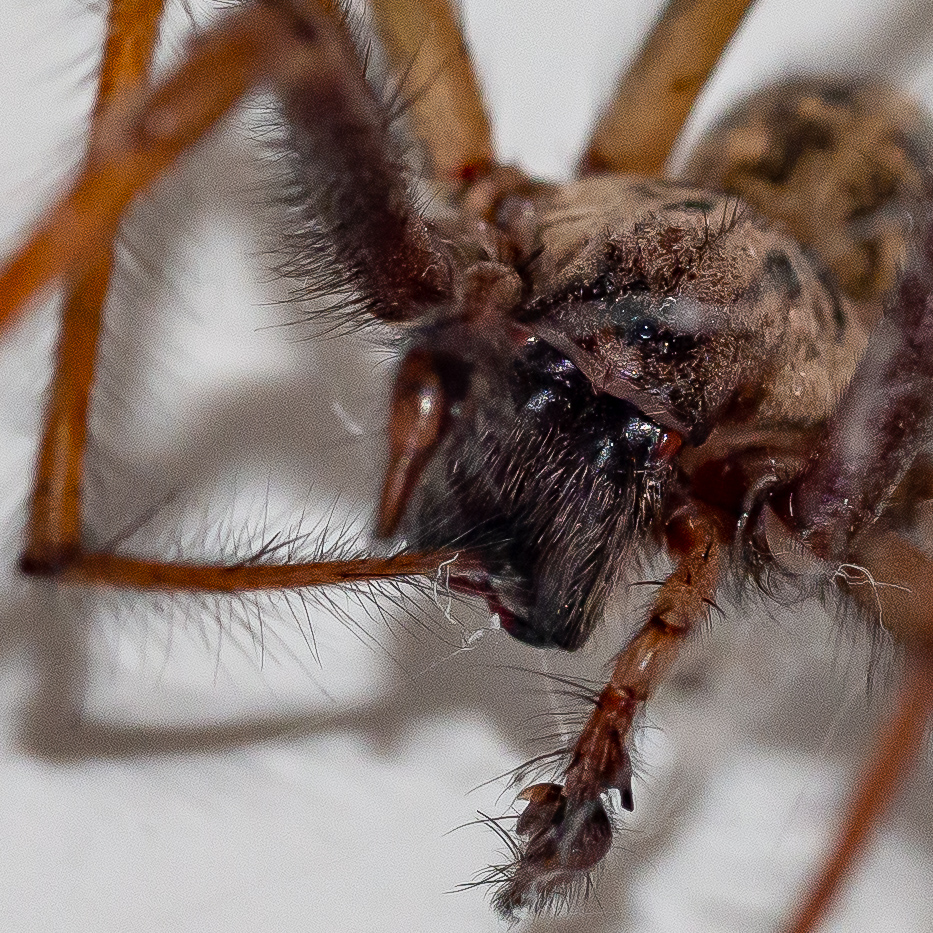
That said, they are a bit scary to look at and those mandibles are massive. I had my small mirrorless camera with me and a macro lens. The images are quite harsh and grainy because the light was so dank and the flash is a pop-up one without a diffuser.

OLYMPUS DIGITAL CAMERA

The spider didn’t actually mind me at all. It was trying to remove some spider silk from its legs by running them through its mandibles.

Far from wanting to harm this animal, I am pleased that we can have such close encounters with big insects like these. If you let them go about their business, there’s no problem. No spider in Britain is venomous. This is not Australia!

Thanks for reading.
Photos taken with Nikon D5600 with Sigma 105mm f2.8 macro lens and SB-700 flash. Giant house spider photos taken with Olympus EM-10 MIII with 60mm f2.8 macro lens.

More macro