Zombified fly in the garden ๐ŸงŸโ€โ™‚๏ธ

My garden, West Sussex, June 2024

I’ve posted before about the so-called ‘zombie fungus‘, but that wasn’t in my own garden!

There are a few fungal concepts that have become mainstream in recent years, namely the wood-wide web and ‘zombie’ fungi. The latter has become popularised because of The Last of Us, a programme I haven’t watched and can’t say anymore about. The most famous parasitic fungus that can control its host is cordyceps.

My wife actually found this (not cordyceps) when she was inspecting the gooseberry bush, which was steadily being eaten by sawfly larvae. I’ll post about them next.

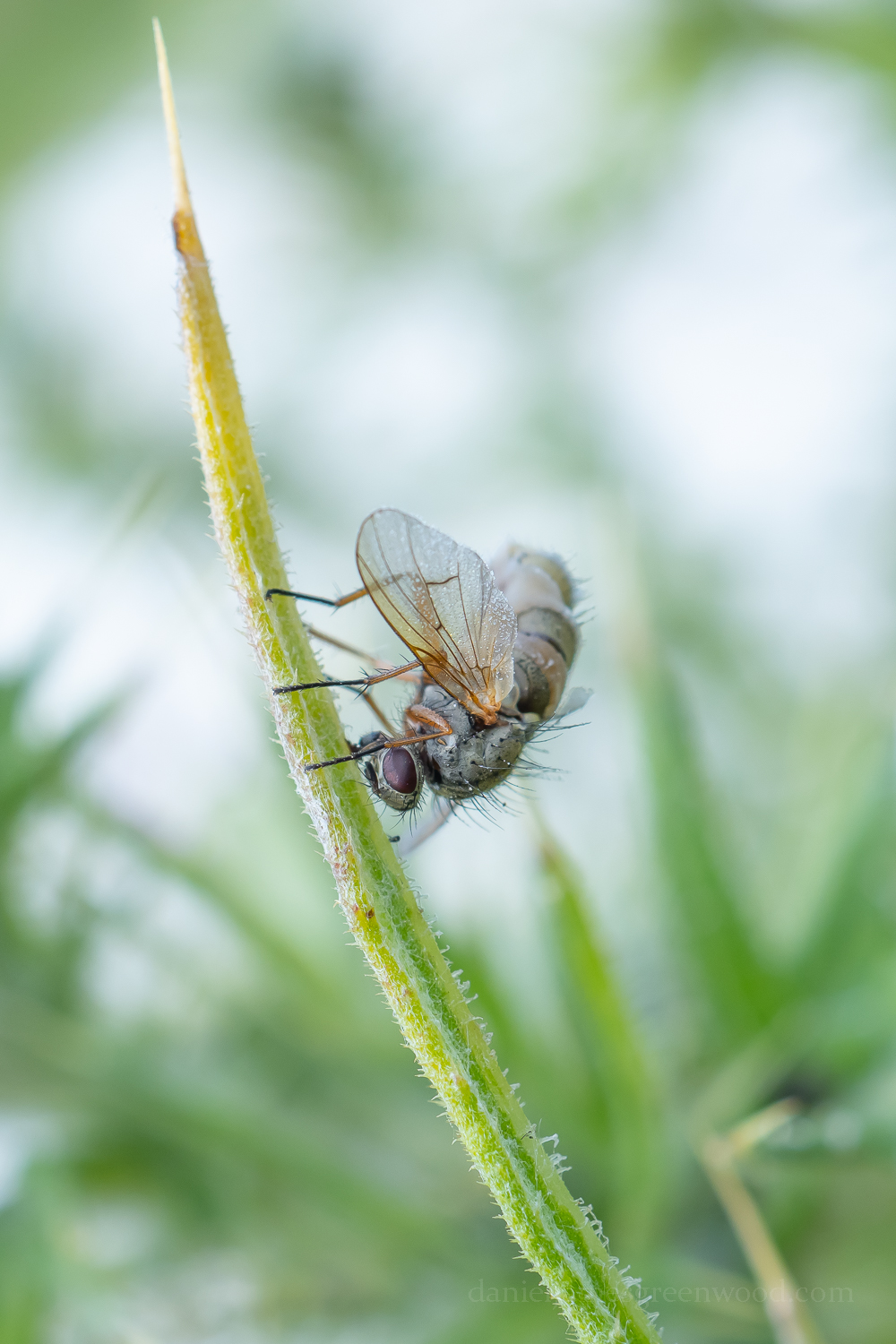
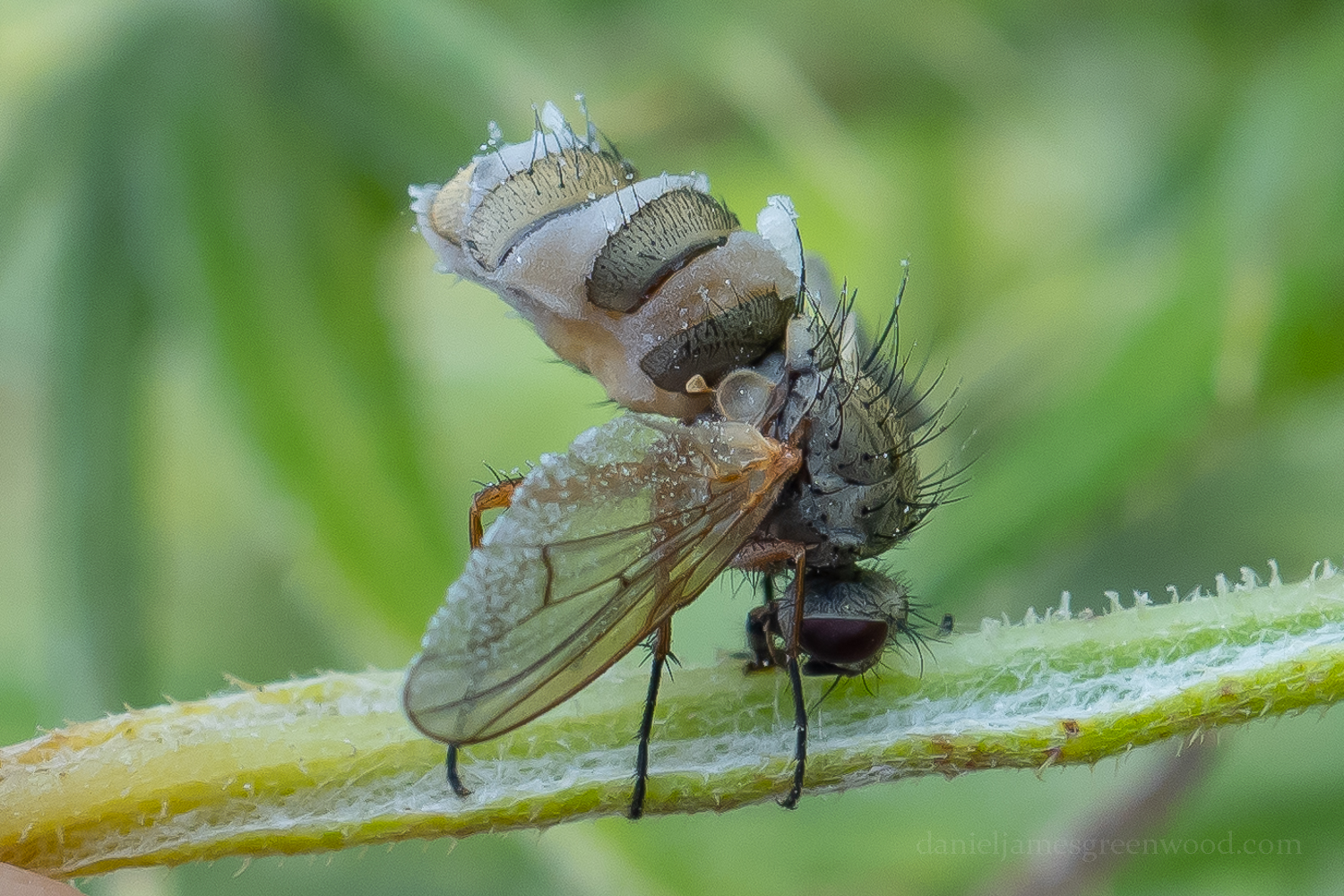
What is this exactly? It’s a fly that has been parasitised by a fungus called Entomophthora. It basically is able to control the movement of the fly by making it move to a prominent position for its final moments, or at least I think that’s what’s happening.

The prominent position then allows the fungus to spread its spores on the wind or from a more beneficial height to reach its next host, however that occurs.
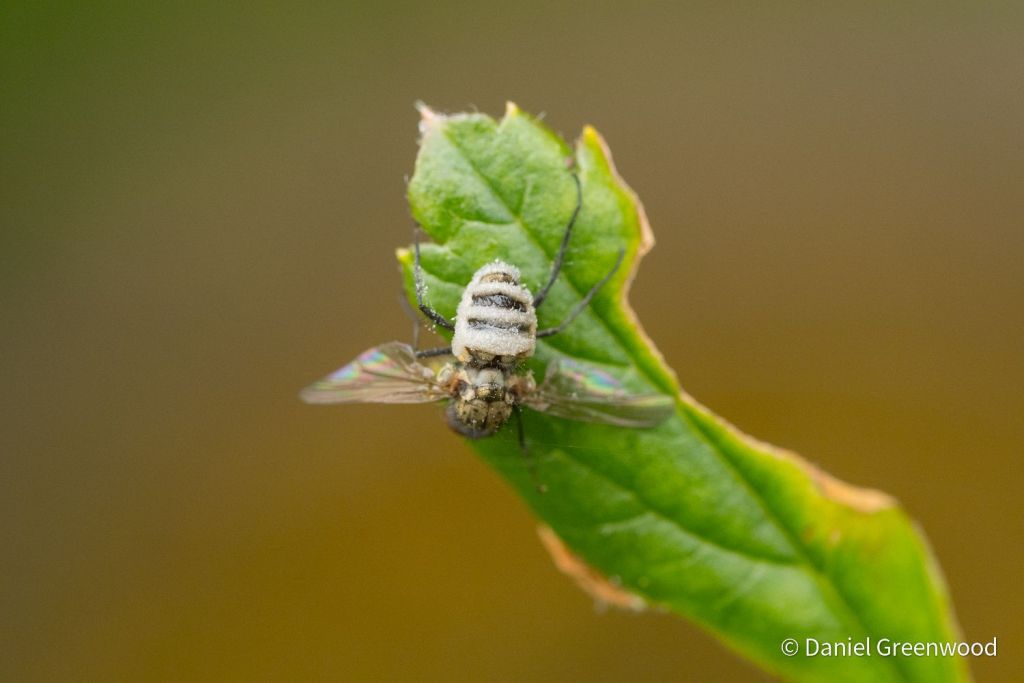
It’s not quite as gory as cordyceps, where a fungal fruiting body rises from the body of its host. It is altogether more macabre and sad-looking, though. Cordyceps can be very colourful.
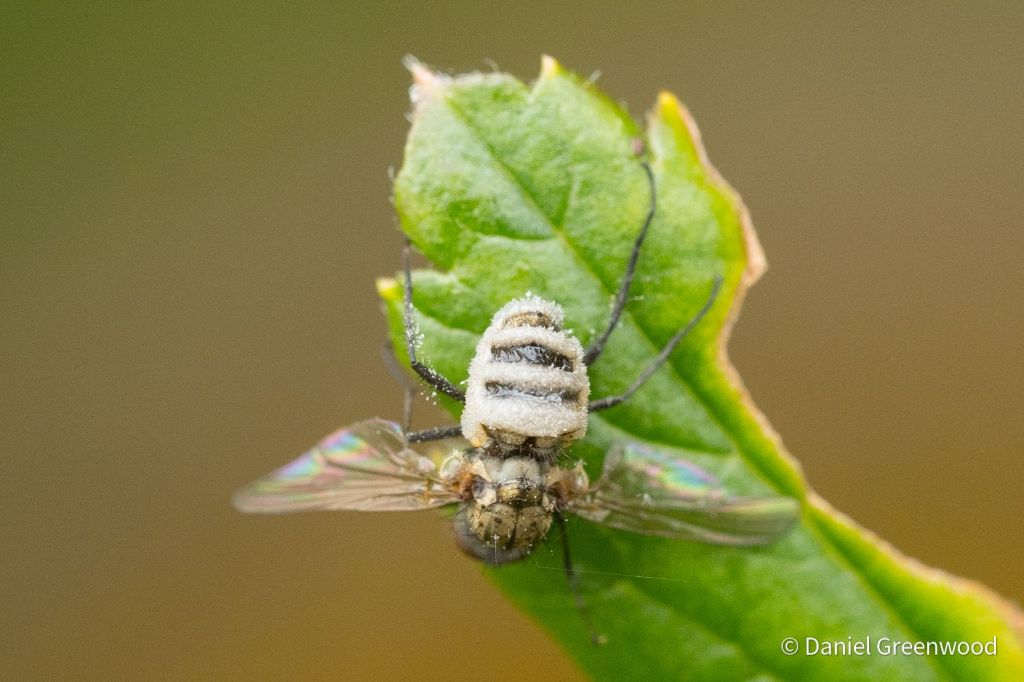
In reality it is just an example of the immense biological diversity out there, the interactions between two kingdoms – animals and fungi.

Thanks for reading.

Macro | The fungus capable of mind control

The fungus capable of mind-control ๐Ÿ„

In June I was down on the Sussex coast at the mouth of the river Cuckmere. During a bioblitz event I was supporting I discovered something I never expected to see. At the foot of either the first or seventh of the Seven Sisters cliffs, the fenceline and surrounding grasslands were alive with invertebrates. One large thistle plant was covered in all kinds of insects. I felt especially drawn to a beautiful orange and black ichneumon wasp clambering over the spiny leaves. But there was something else that caught my eye.

The fly as found

I noticed a dead fly in a quite unnatural position, a bit like an upside down koala. It was clamped onto one of the spines in a way that reminded me of the famous victims of the parasitic ‘zombie fungus’ cordyceps. Luckily I had my macro lens with me and could get a close-up of the fly.

The fly after I had bent the spine tip of the plant over

The body looked an unusual shade for this species and, looking closer, you could see it was kind of mouldy. I showed everyone I could, taking away the images and several questions I needed to answer for myself!

That afternoon I put the photos on Twitter and had a quick reply from Lukas Large, a known fungi expert in the UK. He said it was a species of entomophthora, a group of fungi that kill flies, just as this one had done. It does much more than that beforehand, however.

Somehow, the fungus enters a final stage of mummification where it ‘gains control’ of the fly’s brain and therefore control over its functions. The fungus is then able to make the fly move to a high position in order to disperse its spores from the dead fly. That is mind blowing in more ways than one.

Thanks for reading.

Latest from the Blog

November 2025: beware of pity

I’ve had a burst of American visitors in recent days (to my blog, not my house). So thanks for visiting, y’all, and sorry about the year you’ve had. You may have noticed I’ve slipped to monthly posts on here. Between April and October I posted blogs every Monday without pause, which is a tricky taskโ€ฆ

Summer-autumn 2025: unveiling the sun

Here’s my seasonal update of stuff you don’t need to know about, but then welcome to the Internet. What Iโ€™m writing Soon I will be self-publishing my third poetry collection, Foolโ€™s Wood. It’s seven years since my last one and this collection has taken longer because of LIFE. There will be a booklet and alsoโ€ฆ