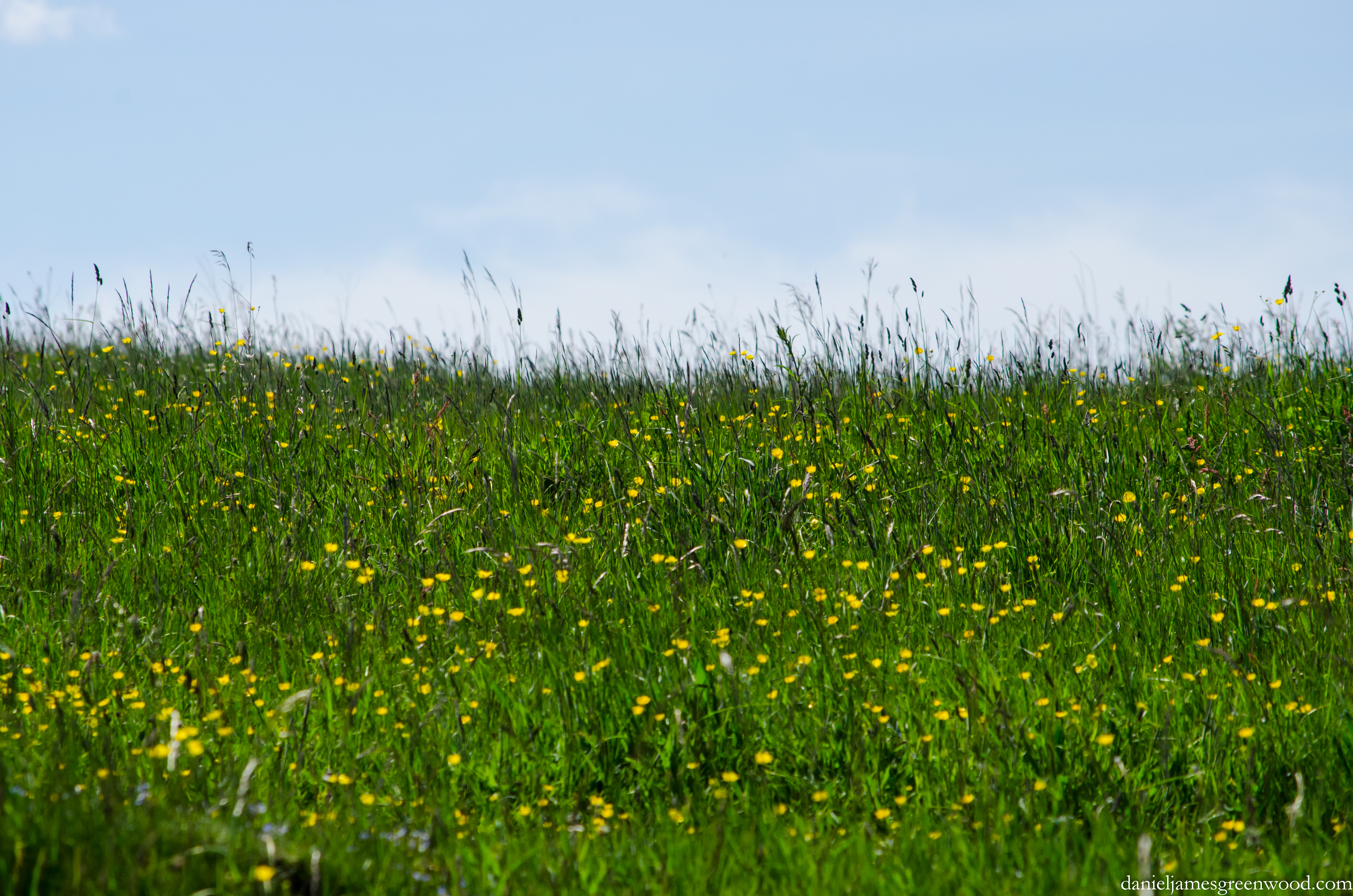
A profusion of buttercups

Meadow buttercups
Meadow buttercup

Farthing Downs, London, June 2013

Stepping on to the Downs, a marked change has taken place in the two weeks since I’ve been here. The grass has lost its wintry edge and there grows a profusion of meadow buttercups. On the woody margins white butterflies steer themselves through the day, the slight of a cool breeze will no doubt register with them. A man is sitting on a bench taking pronounced drags from a spliff. I imagine ushering him to the gate as does someone wanting to be in a room alone. What is that link with landscape and human solitude.

A holly blue flutters about in a restless fashion, unwilling to perch, itself ushering me away, perhaps. I take the hint. The jackdaws are still here, so faithful to this place, much more so than me. This is why wildlife is so deserving of the land, perhaps more so than we. It doesn’t have a choice. Last time I watched them in a snowy sky but now they move through the ankle high wildflowers like shadows. They call out and burst free into the air when I enter into their field of vision.

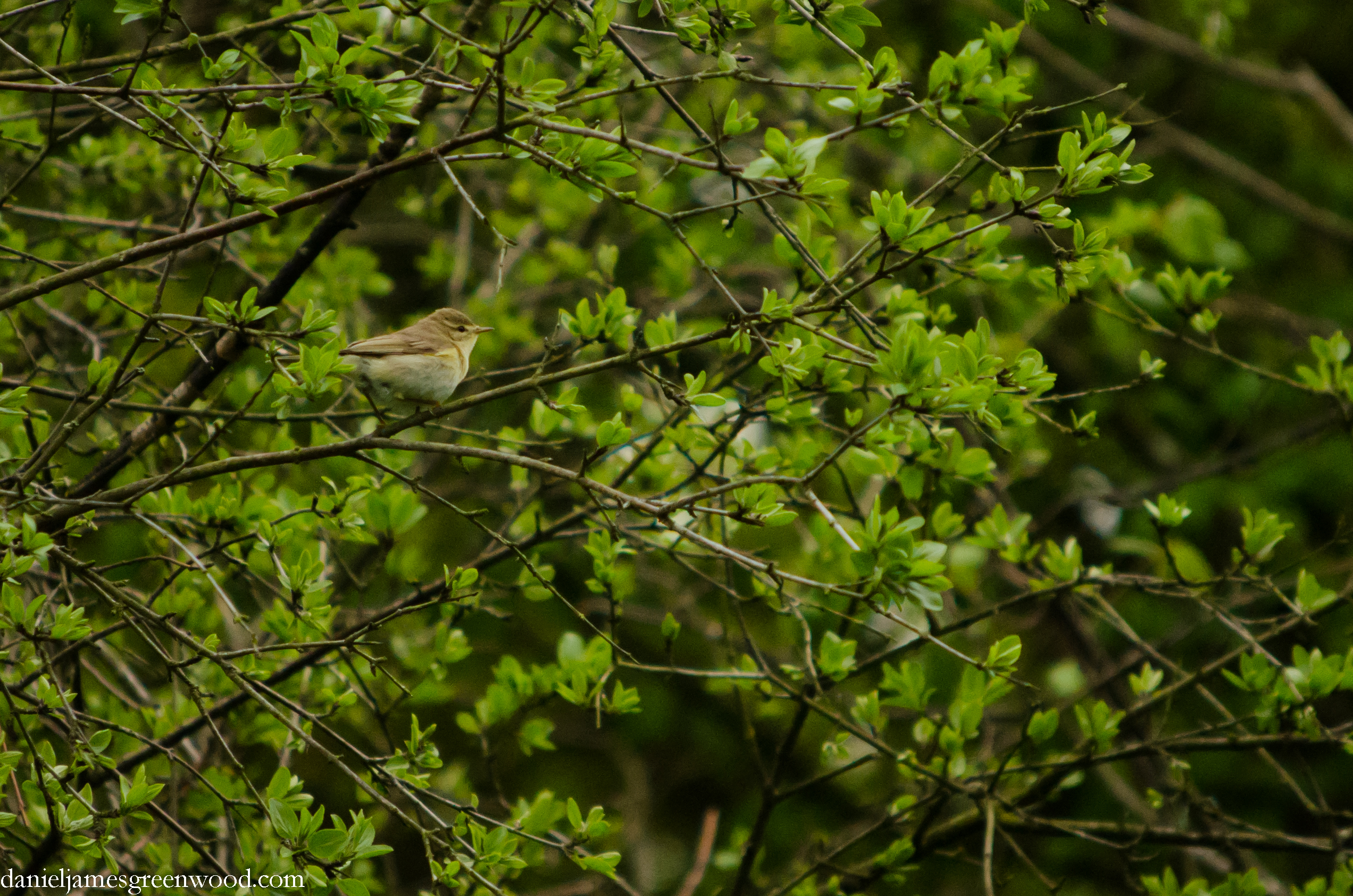
Willow warbler crop 1
Willow warbler

I walk into the scrubby chunk of woodland that the path cuts through. I am struck by the change, the green, the lividness of the living. A woody, leafless hawthorn reminds me that both states remain all year round. Chiffchaffs are calling to each other up ahead, followed by the only slightly different voice of a willow warbler, a bird almost identical to the others. I sit in the shade on the edge of the path and listen. A willow warbler appears from the bush and lands on the branch of a young hazel tree. It has some insects in its bill and it whistles incessantly, huuu-eet. I take a picture and sit still. After a short wait a green woodpecker yaffles and the willow warbler dives into the long grass and bramble. Two weeks ago this bird did the same but without food in its bill. Now it’s feeding silent young down there in the thorns and tussocks. A couple pass me where I sit.

‘Are you looking for a lesser spotted whatever-it-is?’ the lady asks.

I explain the situation, pleased they don’t think I’m up to no good. Her partner turns to me: ‘I know you.’

‘And I know you.’

We remind ourselves of when and where from. We both agree things have improved since then. They leave happily, I get up and carry on through Farthing Downs.
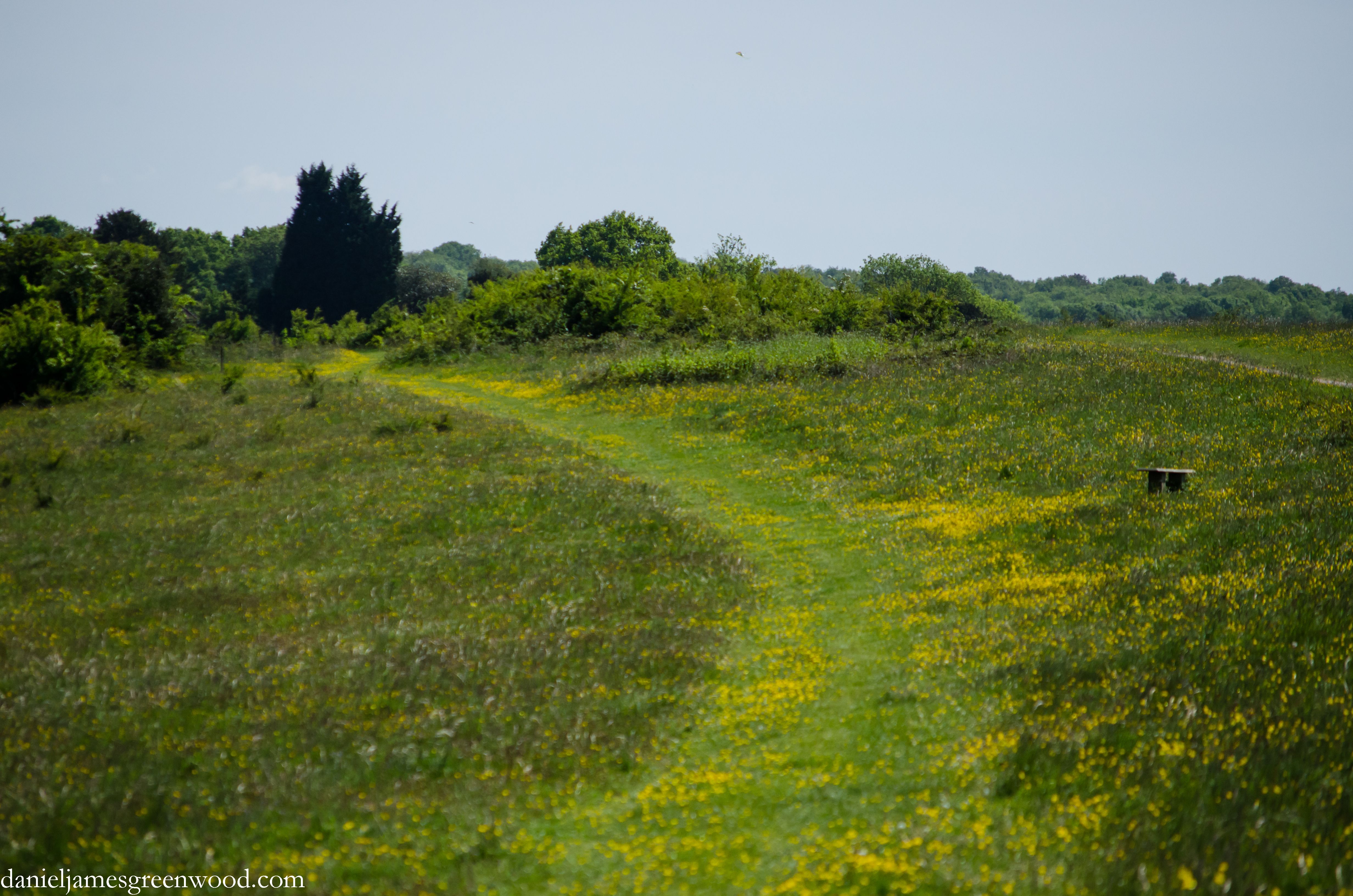
Farthing Downs in June 1
Farthing Downs

The year’s first brood of small heath butterflies have hatched on the Downs. A pair rest on separate patches of bare soil created by livestock, conducting the heat of the sun. They live as adults for as little as seven days and I admire their freedom, their lolling and landing, they circle me, perhaps jittery when I move but not much bothered. They are orange smudges against the green downland. I sit with them. A soldier beetle clambers up a blade of grass and wrestles with its own weight, a clumsy, dim creature, it straddles the seed head, whirs its antennae and unleashes its wings from its black backpack, struggling into the air.

Soldier beetle
Soldier beetle

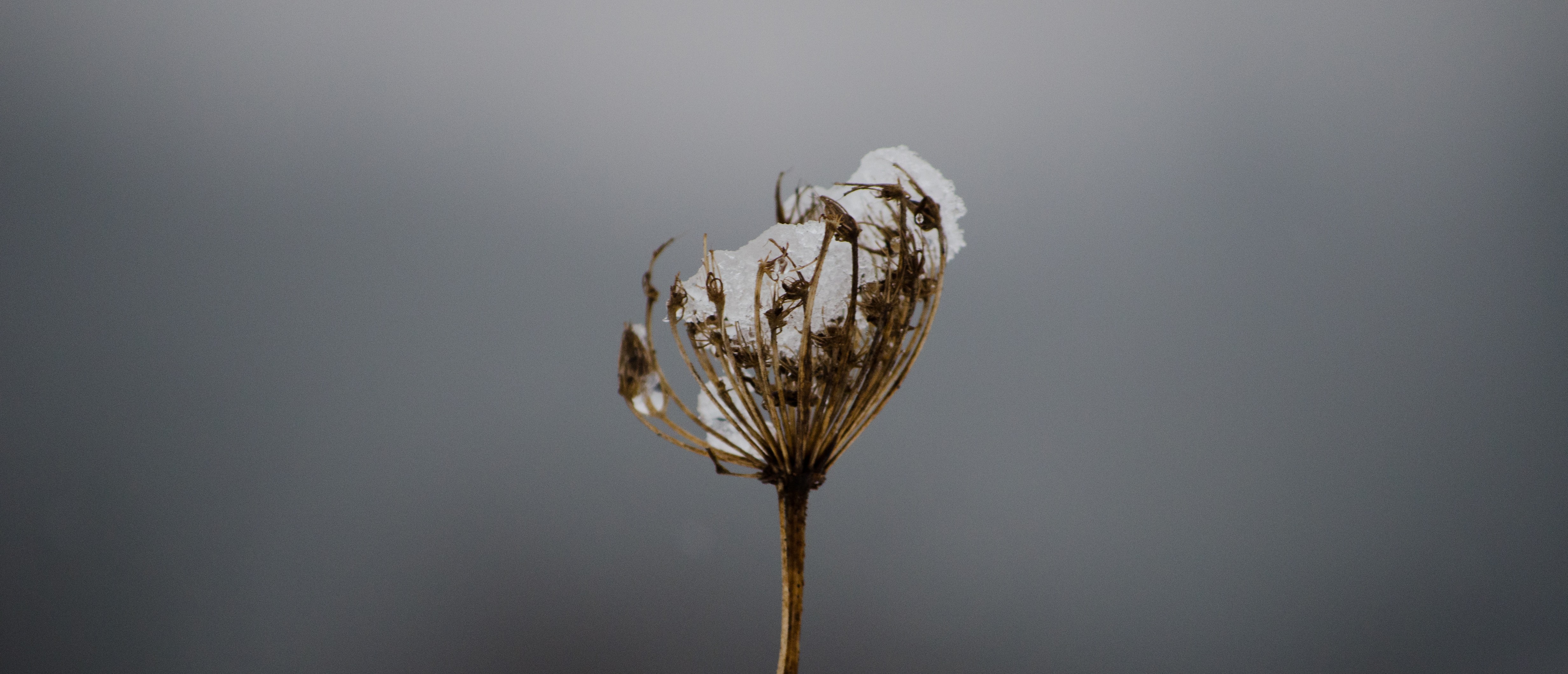
Even under snow

Even under snow

Featured on The New Nature

– Farthing Downs & New Hill, London, February 2013

Snow covers the Downs. From the town comes the agitated clamour of traffic and, somewhere, the eagerness of a chainsaw. The layer of snow is fresh, renewed by flakes heavier out here on London’s periphery. Beneath my feet the seeds of field scabious, knapweed, yellow rattle and marjoram wait for the thaw, warm in the soil. Just as winter’s onslaught can’t be held off, nor can spring and summer wildflowers be maligned for long. The small pockets of woodland lack the crunch of the open Downs. The snow has melted quickly there, the ivy bright in the tree-dark, a young oak drips loudly, the sound heard out in the snowscape. Winter’s renaissance will be short lived.

A flock of some forty jackdaws whip around in the white sky. They have seen Farthing Downs at its brightest, remaining here to make something of it, even under snow. Their image is otherworldly, as if the past is being ripped out and unleashed, helpless, across the sky. A car passes in the lane blaring tunes, stopping, the driver steps out – at first I think to accost me and perhaps the camera – kneeling down he photographs his car with his phone, front and behind. Two magpies are flushed into the air. He steps in and rolls away. The snow melts and flows in a stream down the chalky hollow of the woodland descending to Happy Valley, heavy droplets falling from gleaming hazel coppices and blackened hawthorn. The world is working.

© Daniel James Greenwood 2013

The dead and the living are mingling on the Downs

Thistle

– Farthing Downs and New Hill, London, September 2012

The living and the dead mingle on the Downs this morning. Meadow brown butterflies kick up from the ruins of grassy tussocks and rusting bramble. They are as shed leaves moved by an autumnal breeze. Brown and orange, one white dot in their black eyespots, they sit in the tops of young, dwarfish oaks, or else are lost to the souring land. Workers have opened up more grassland with chainsaws and fire, stumps of ash are torn and splintered – a battle has taken place here. Jackdaws survey the new clearings, and the old ones, too, a strange officialdom about them, their calls back and forth, scathing blue-grey eye – are they coroners or corvids? This is their work, the image fits.

The yellow rattle has mostly turned, the wind pushing across the road and down the slope. But there isn’t the sound this parasitic plant is named for. There’s the drone of a biplane, probably from Kenley, there’s the teasing whir of a bicycle passing along the cutting, the sound of aging leaves stirring, sycamore yellowed by the changing season. Scabiouses and hawk’s-bits add punctuations of colour to the mushroom-drab Downs, the grey Sunday sky burnt by sun, puddles of blue appearing. In the long grass crickets click like a machine shutting down, the dead and the living mingling on the Downs.

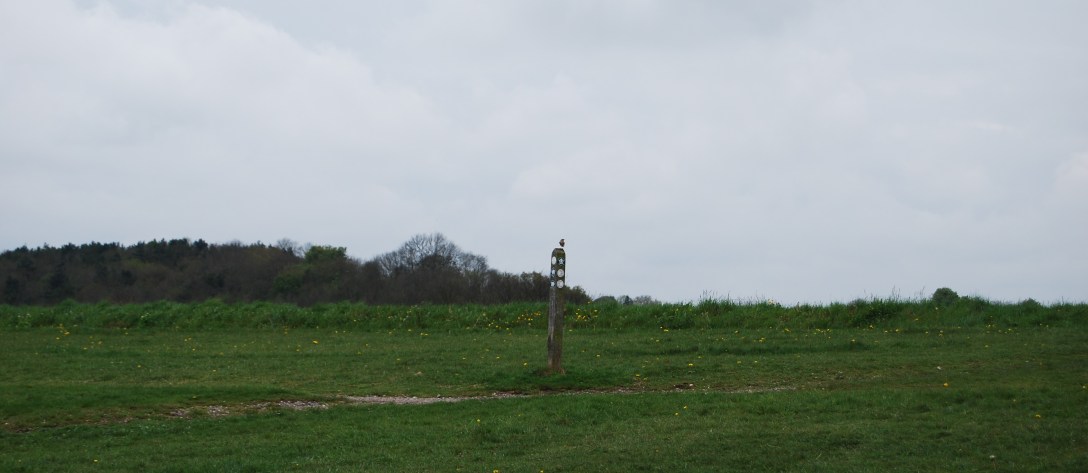
A wheatear drops in

A wheatear drops in

– Farthing Downs, London, May 2012

The slope is exhausting. I push against my knees in order to reach the plateau without panting. Though it’s not as steep as it sounds, a flock of jackdaws glide in and bounce across the grass adding to my sense of human weakness. Turning back to look, it’s barely a slope, just an awkward drop down into the woodland below. In the distance, a world far, far away, the nearly-complete Shard and the Gherkin look like grey wreckage. The path ahead is bordered by two strips of scrub and small trees, in the open land across the road cutting through the downs a skylark is rolling out its splatter of trills and warbling. The bramble has come to life around me, a mouse or vole too quick for my eyes crosses to the other side. I swallow the air – it’s Croydon, but it tastes like the countryside. Beyond the dip into woodland Happy Valley opens out and up again, a vista of wildflower meadows and a fringe of trees. There is a hint of the hillsides of west Dorset within the boundary of The City of London. A pair of linnet alight in a small hawthorn, dull brown with specs of mud on their breasts, the red crown yet to come into full colour. They match the day – grey, brown, muddied. The aborted song of a bunting is coming from the branches above them, the striking colour of a yellowhammer sings from the still wintry scrub. It calls and calls, turning its head to look, not minding me at all, another arrives in a hurry.

The full view of Farthing Downs is open now as I continue to wander along the eastern flank. Two swifts newly arrived in the country dart about, twisting and turning, their black wings flapping a little like penguins under water. There are people over the surmount, people walking, people on horses, people with dogs. I approach a gate where a woman and her daughter are struggling with their dogs, one bounding around as if it’s been cooped-up for months. Right in front of me a wheatear drops in, landing on the small mound of an anthill. This robin-sized chat has travelled from Africa to be here in Croydon and will soon be moving to its northern breeding ground. The bird is nervous – the sprinting dog has been released upon the downs but it doesn’t notice the migrant wheatear, instead it runs at me full-pelt, swerving to my side, cracking its skull against my forearm. The lady who owns it has stepped in her other dog’s poo in trying to clean it up and is wiping her foot across the grass, grimacing. I’m muttering to myself – this is the first wheatear I’ve ever seen in the United Kingdom. The bird bursts into flight, landing on a fence post. I marvel at its feat of migration.