Wasps vs. spiders

Saturday 31st May felt like a passing of the seasons, with spring departing and summer arriving. That could be seen in the invertebrate world, with more summer species out there in my garden.

This post is generally wasps and spiders, with some lovely little bees to calm you down afterwards.

As ever, some of these things are so ridiculously small that without magnification (in my case a macro lens) you (I) wouldn’t necessarily see them.

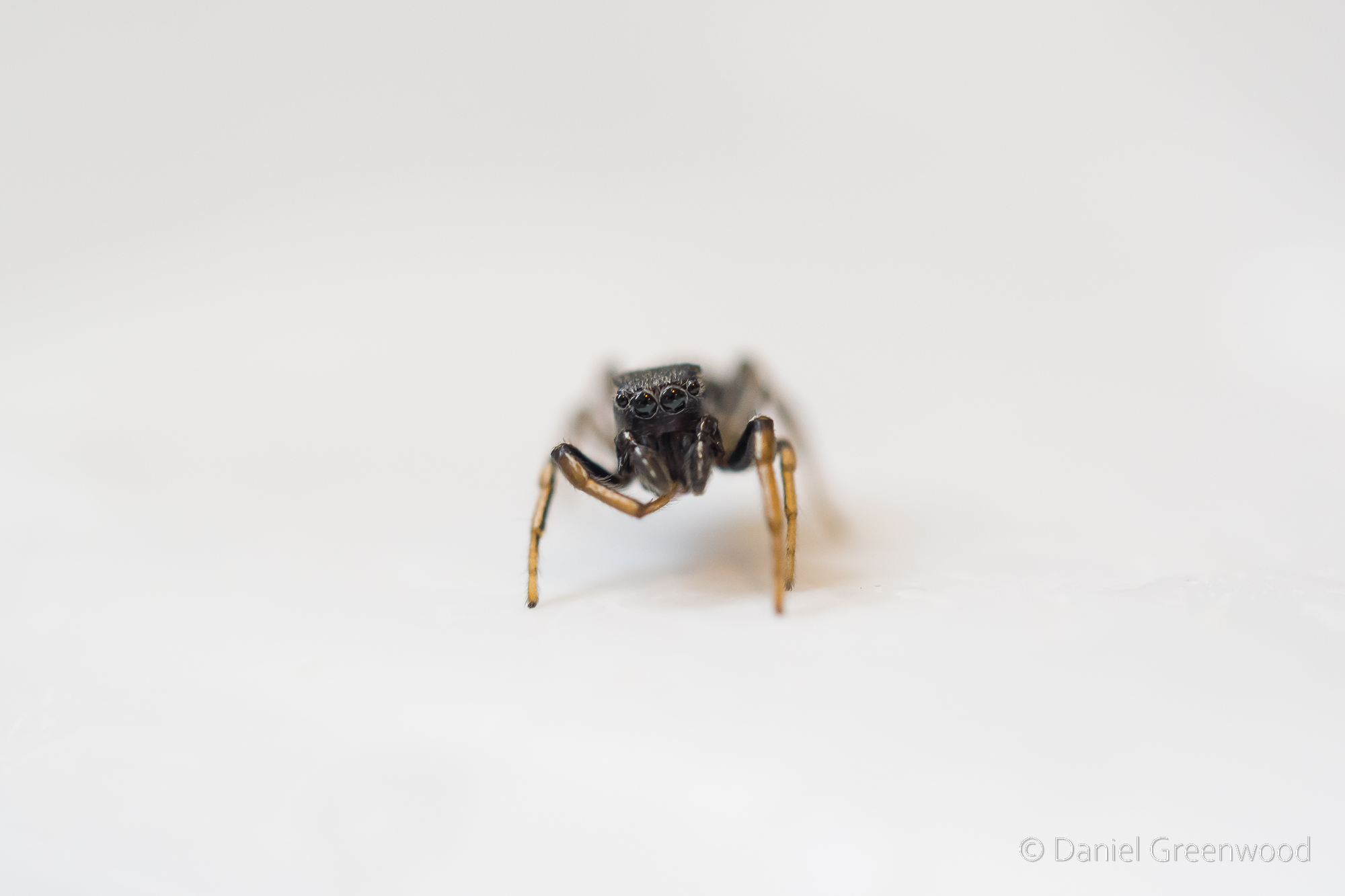
I should have known it was going to be a good photography day when this little jumping spider appeared in my kitchen sink! The light was rubbish so I’ve had to draw out the shadows and ‘de-noise’ these photos a bit. I’m unsure of the exact species, but I do get an apparently uncommon oak jumping spider in my garden/near the house sometimes, and this may be one.

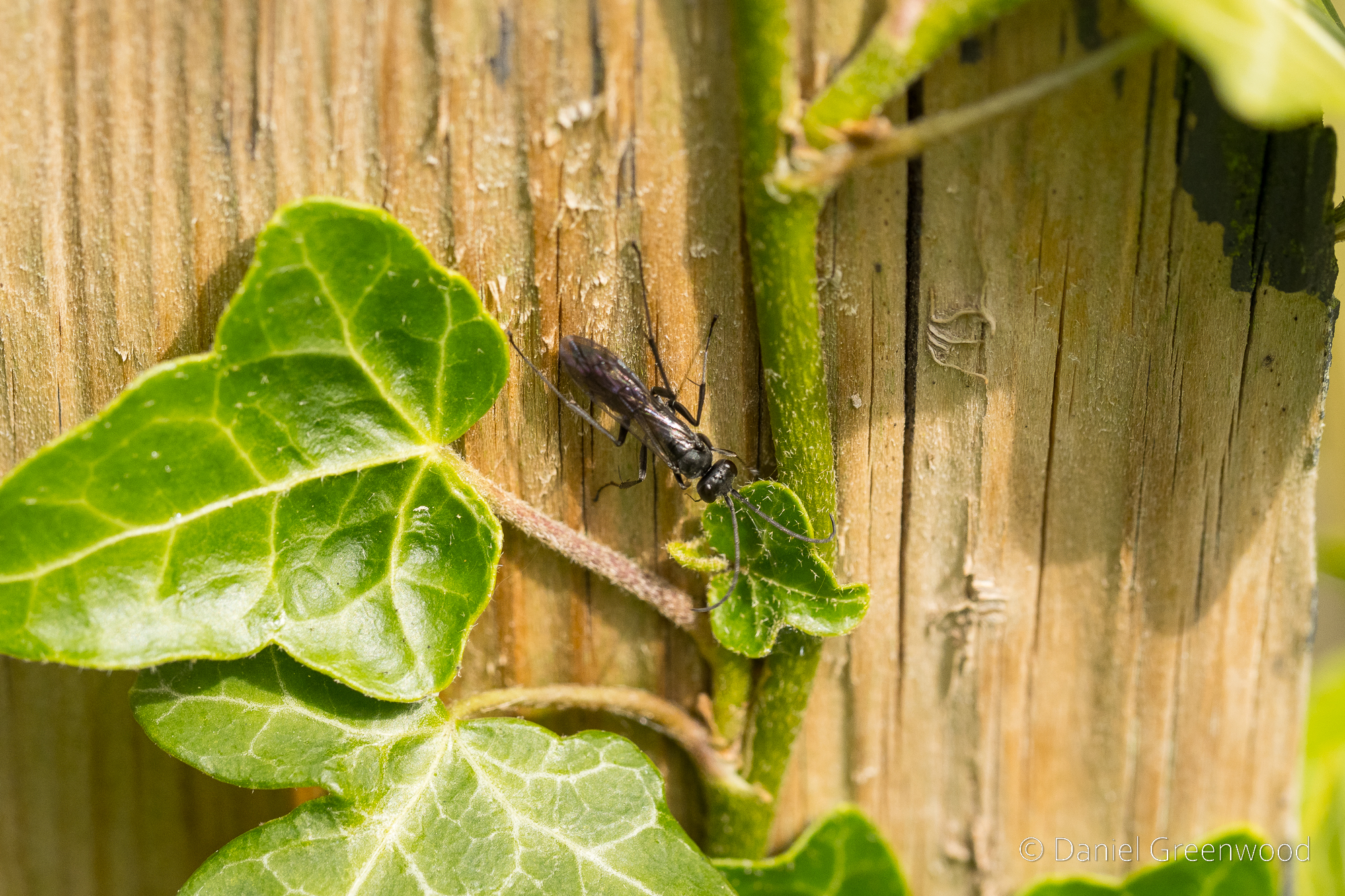
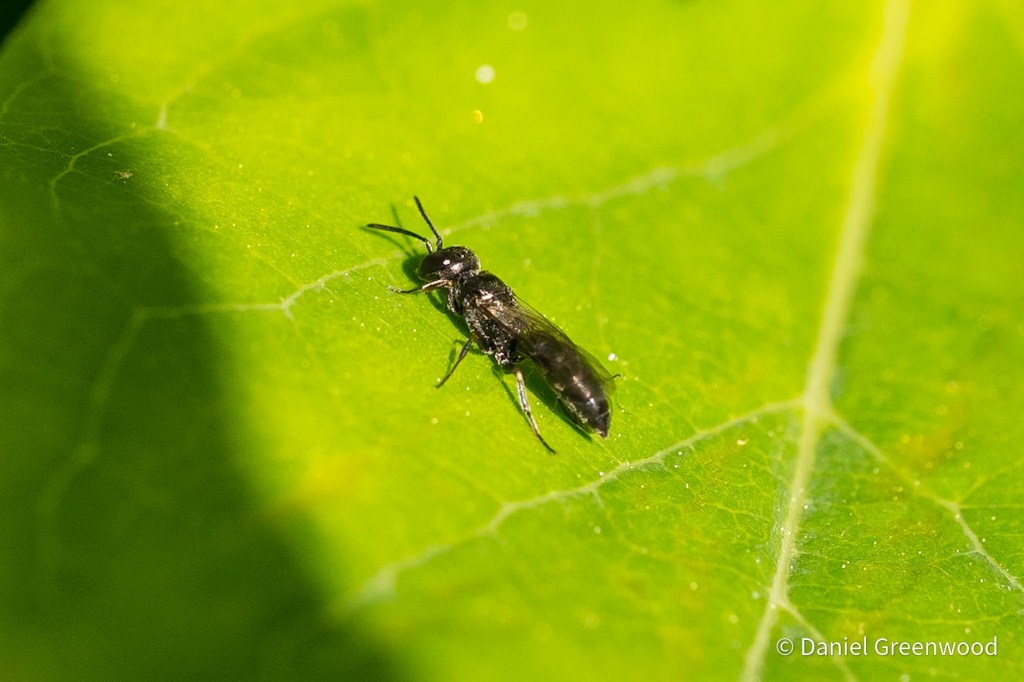
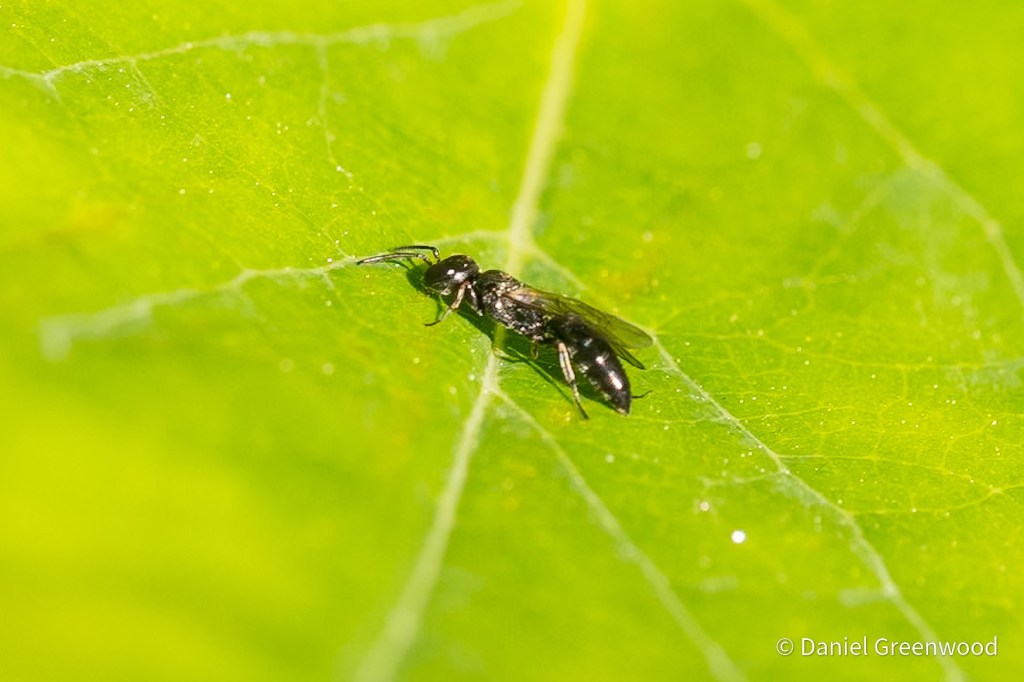
While we’re on spiders, here’s a wasp – a spider-hunting wasp! I’ve learned that sitting down on the grass by a shrub for 15 minutes isn’t just a forest-bathing exercise, it’s also a good way to allow the life to move around you. One fence post was being explored by this very busy spider-hunter. And then, something amazing happened.

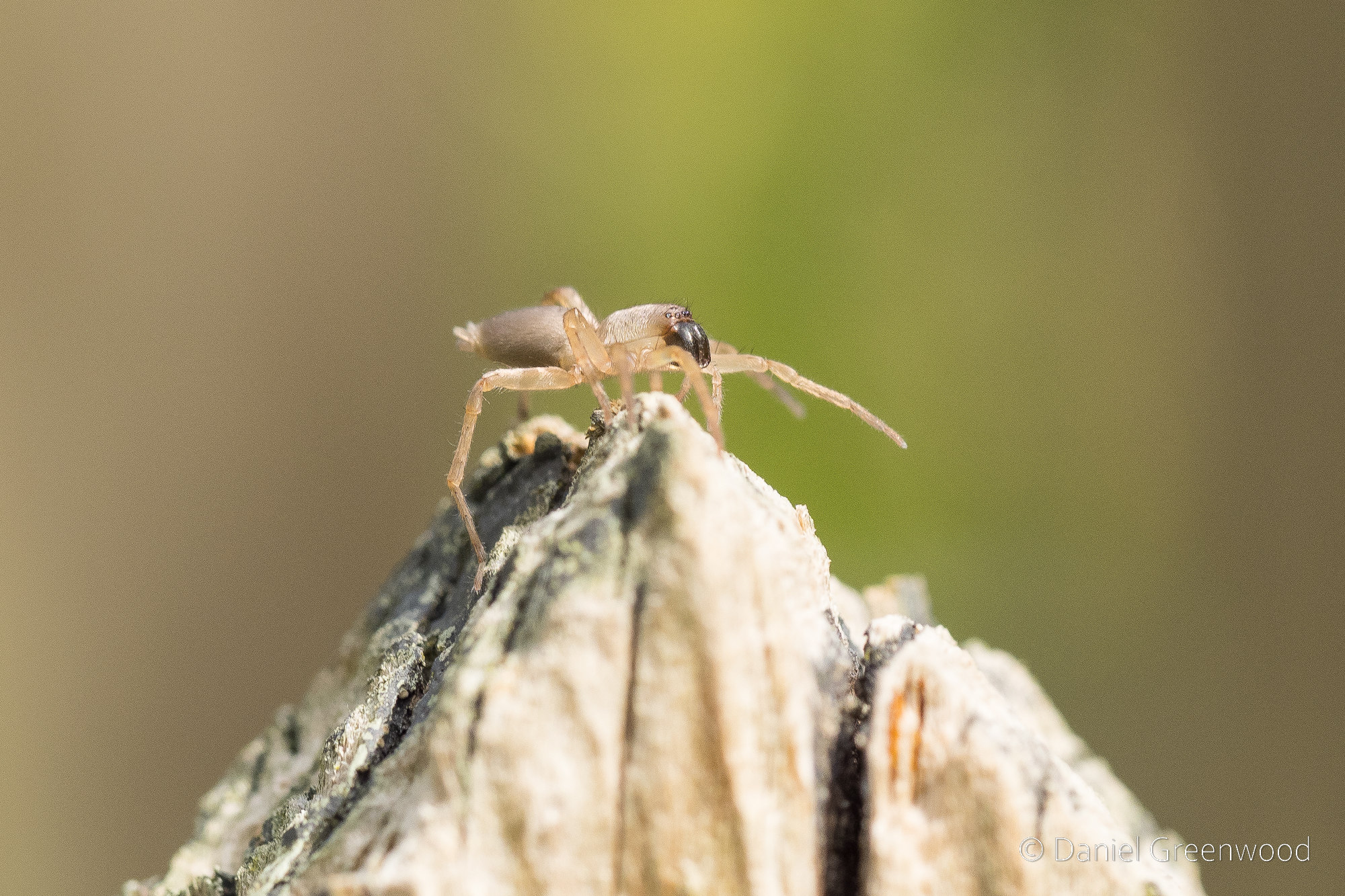
On a vacant fencepost (that’s just how I consider them now) a spider appeared at the top. The spider-hunting wasp saw their moment and burst onto the post, but missed the spider by milliseconds!

The spider-hunting wasps paralyse their prey and then carry them away to a cache. It’s pretty grizzly, but if you think that wasps have been in existence for over 100million years, and spiders, gosh, they’ve been around for over 300million (humans 200k and unlikely to make 1million at this rate), it’s something that’s been going on for a long time. If you’re annoyed about one species of wasp bothering you, imagine how spiders felt when 100million years later a spider-hunting wasp evolves from nowhere!
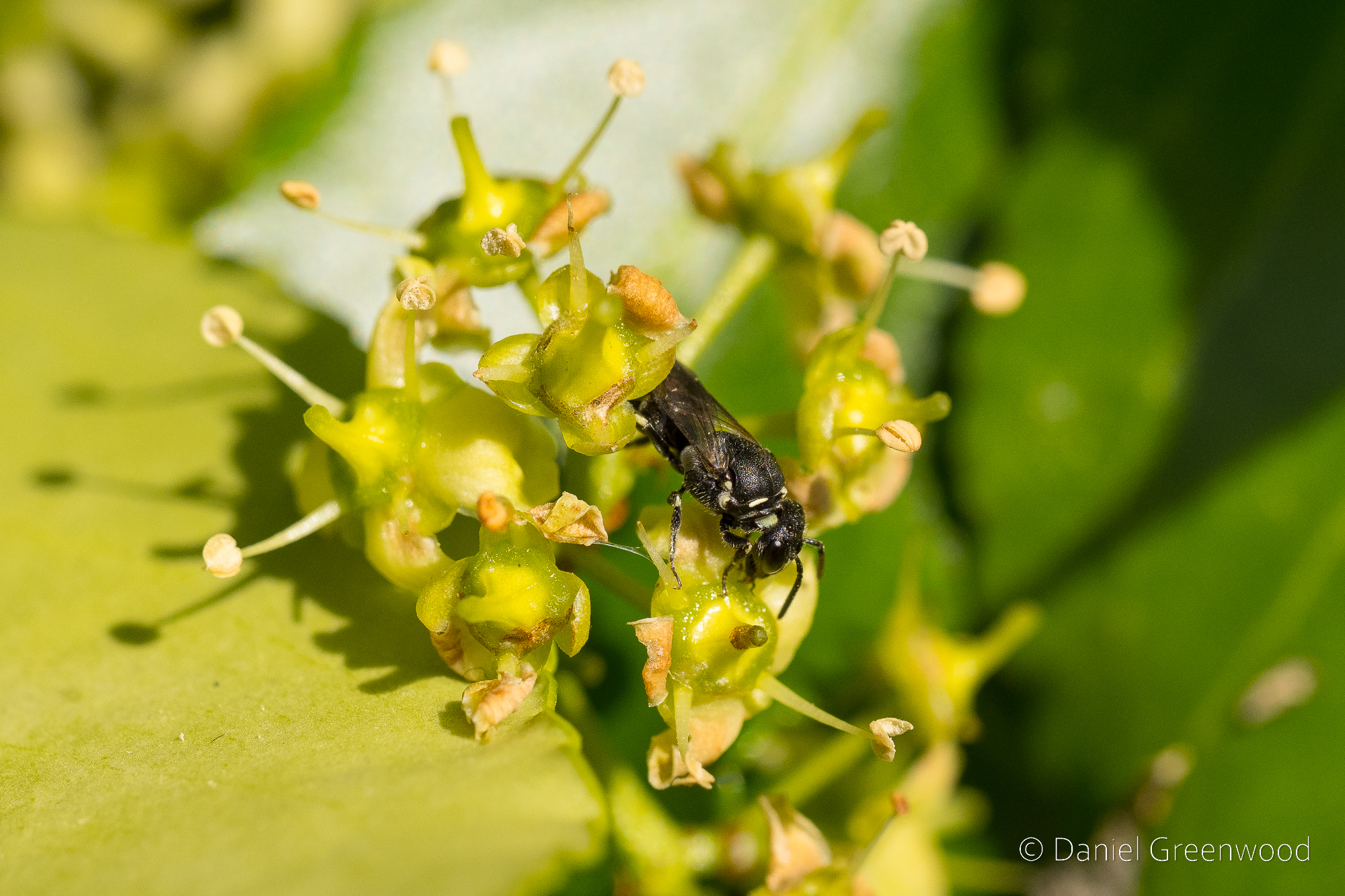
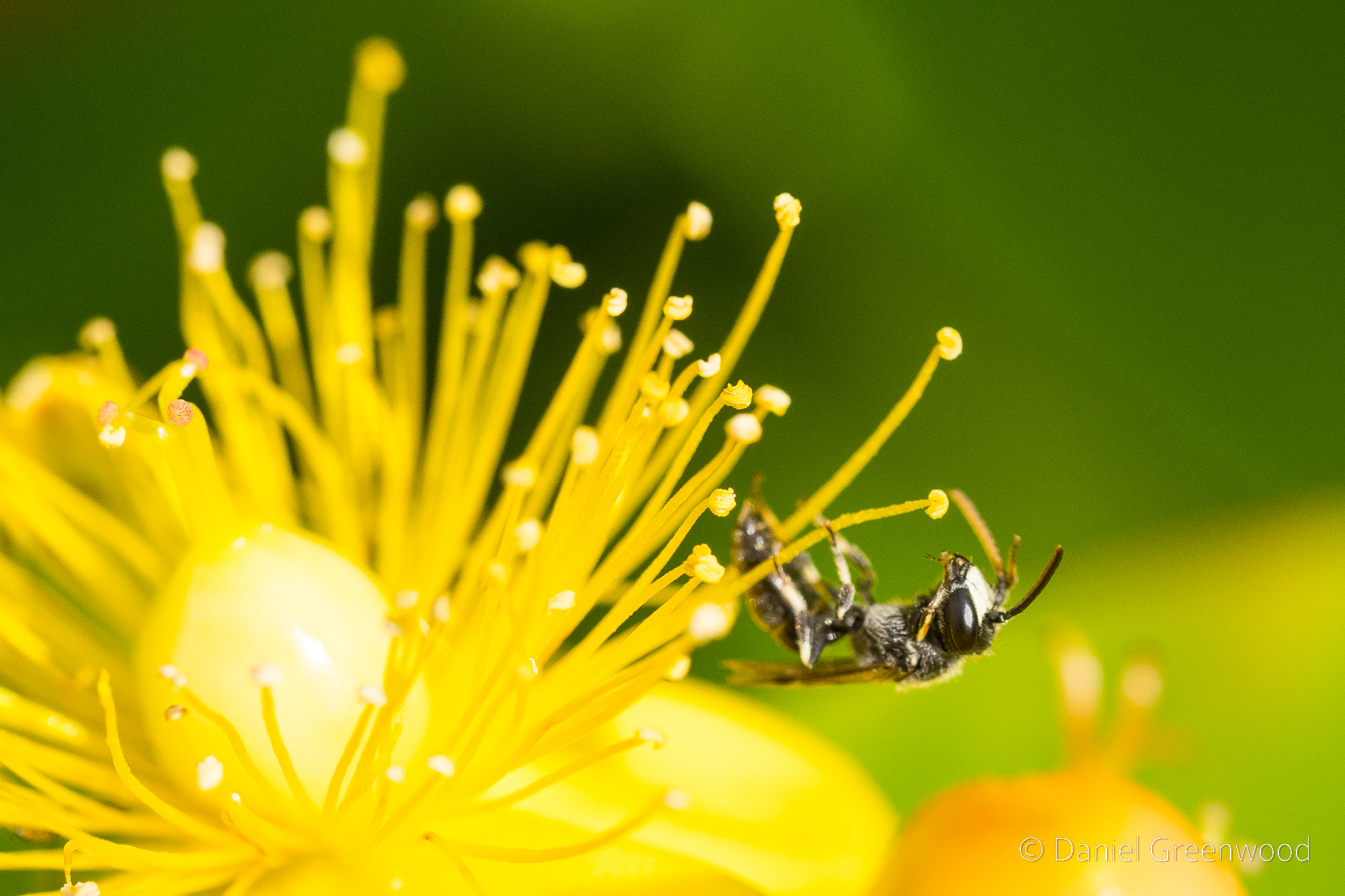
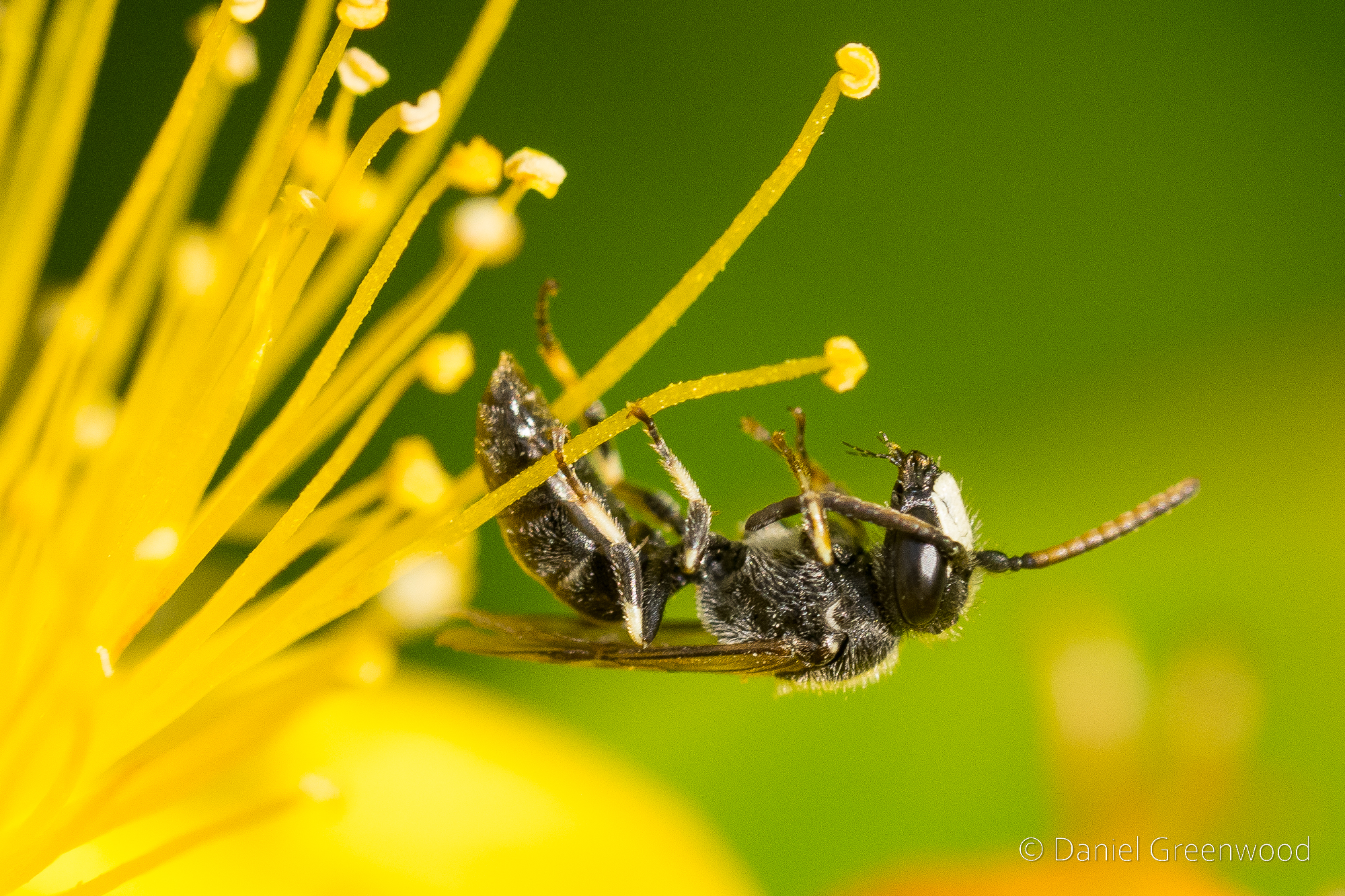
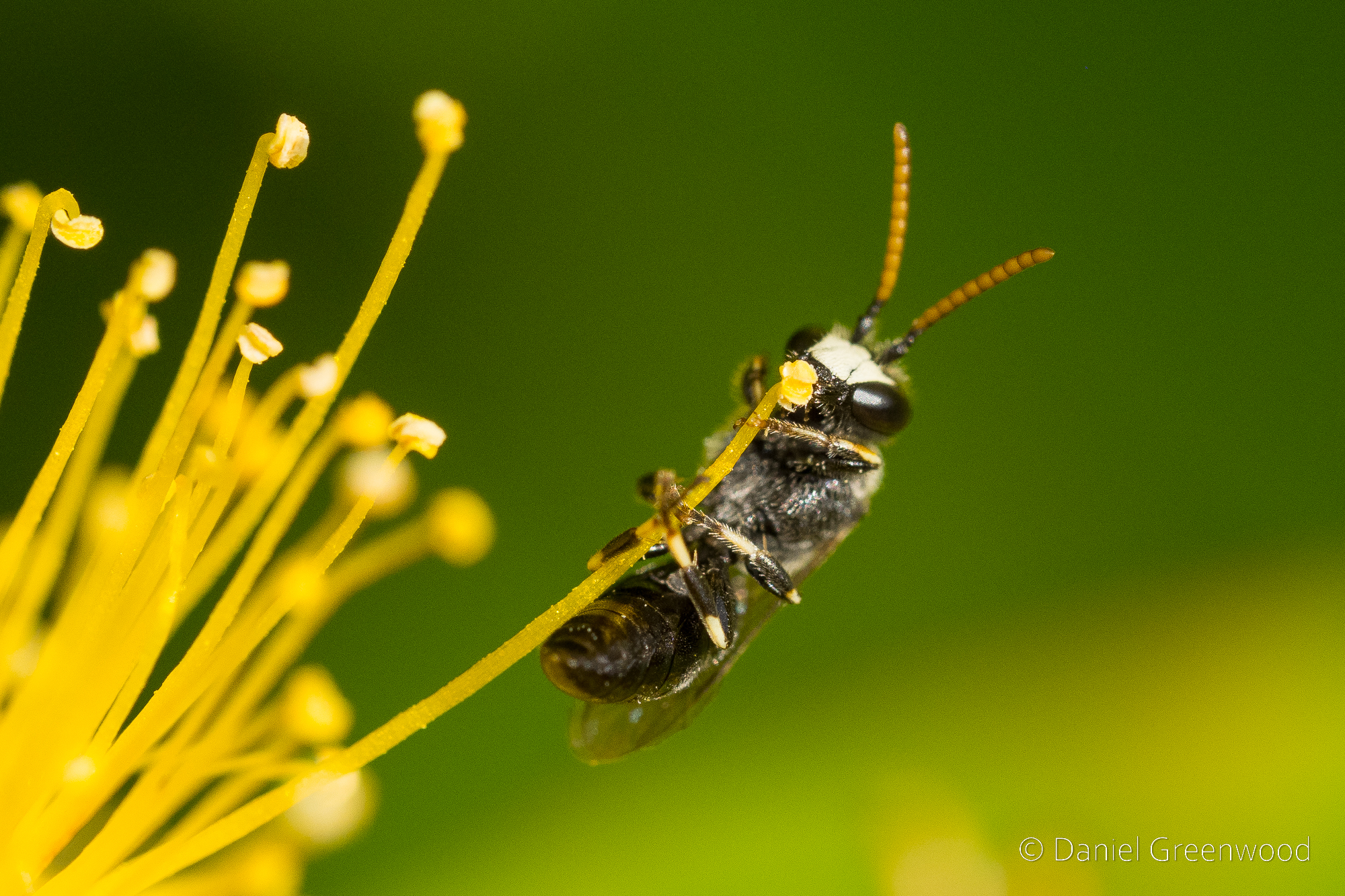
This is around the time when I begin to notice the very tiny yellow-faced bees (Hylaeus). I’m happy to identify them to that level, and don’t really take it any further.

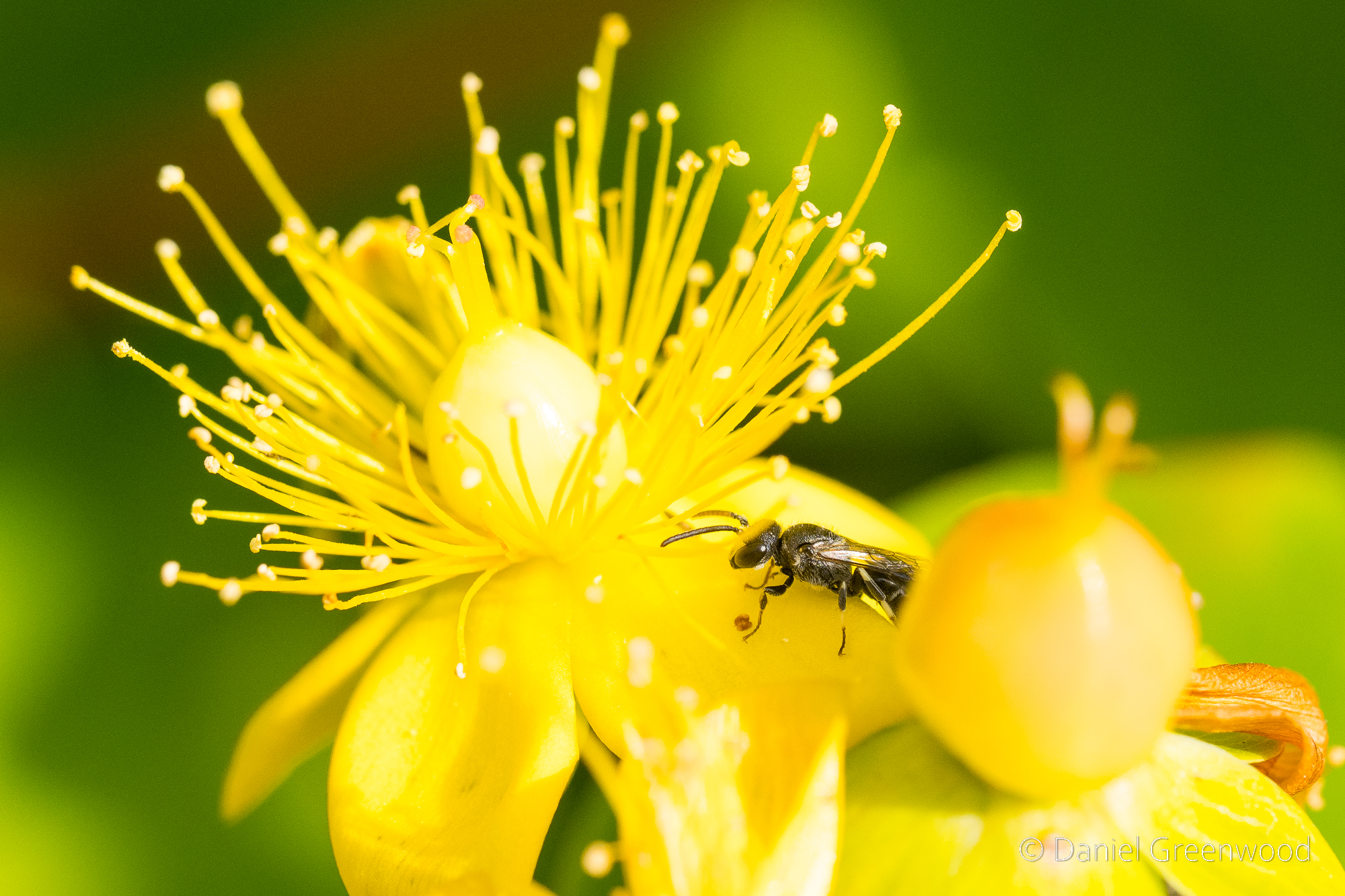
And here we have some of the ‘best’ images I’ve taken this year. This yellow-faced bee is probably less than 4mm in length. Here it’s nectaring on the stamens of a cultivated garden hypericum. This was grown from a cutting taken from my grandmother-in-law’s garden and is a very good plant for pollinators, though it does need maintaining. I love the way the bee uses the stamen a bit like an Elvis impersonator on a standing microphone. Ah-huh-huh.

Here’s a bumblebee for scale!

I don’t think I’ve seen as many honey bees as in recent years, but there was a glut of them around May. There are reports of problems in the U.S. this year (bit of an understatement, considering who’s running things there).
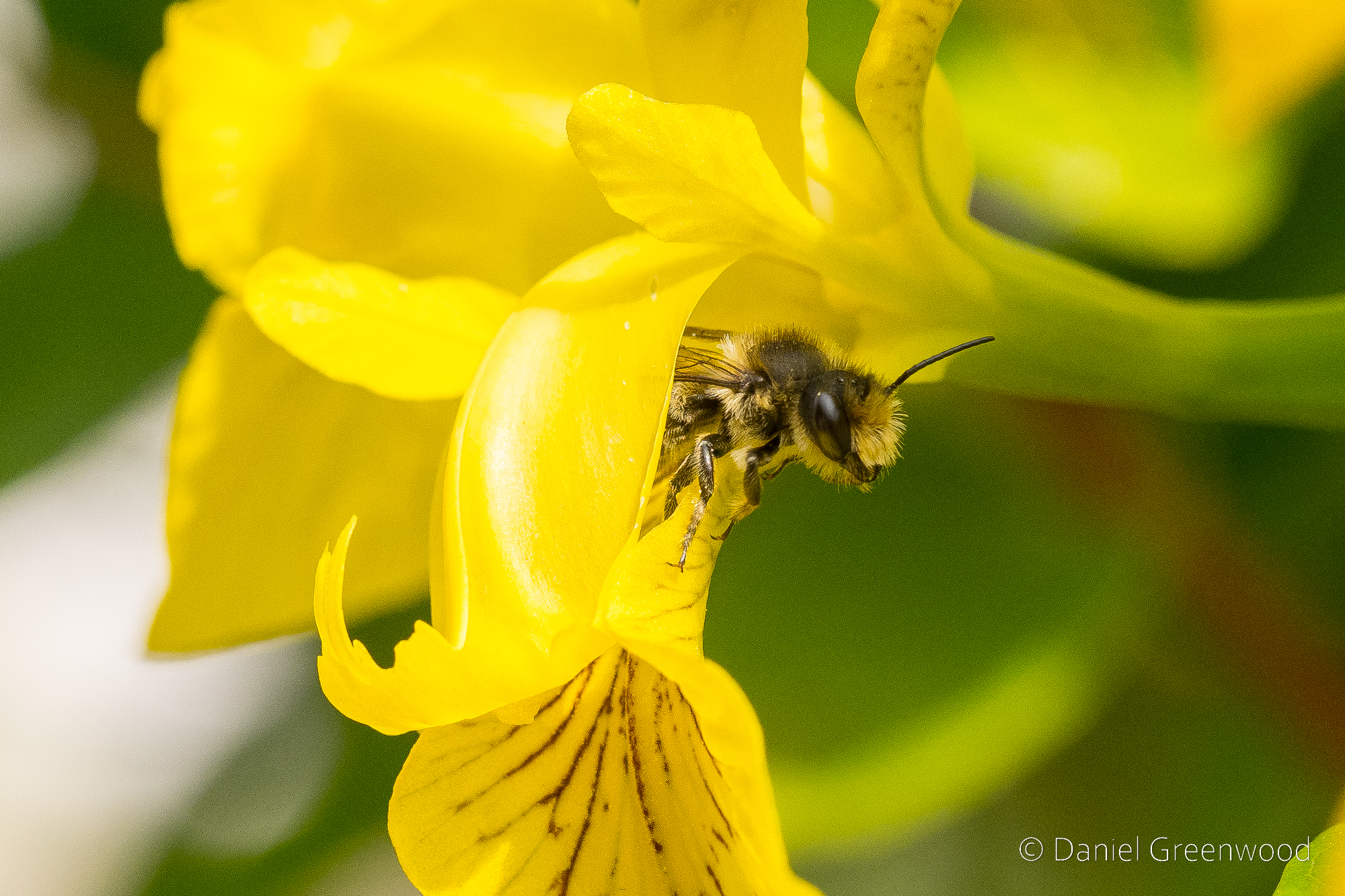
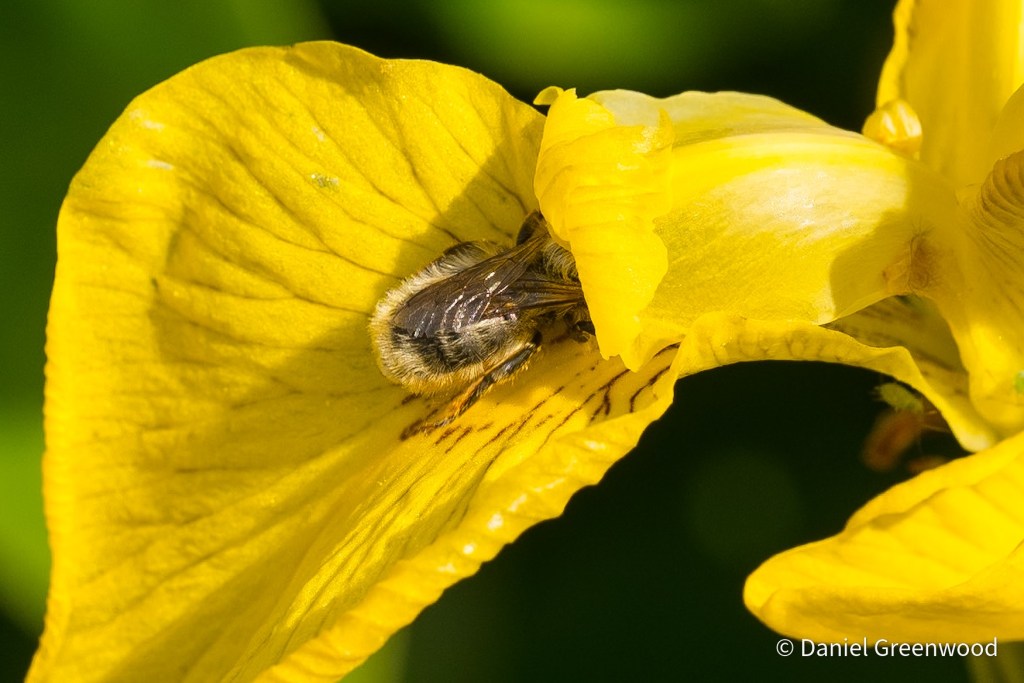
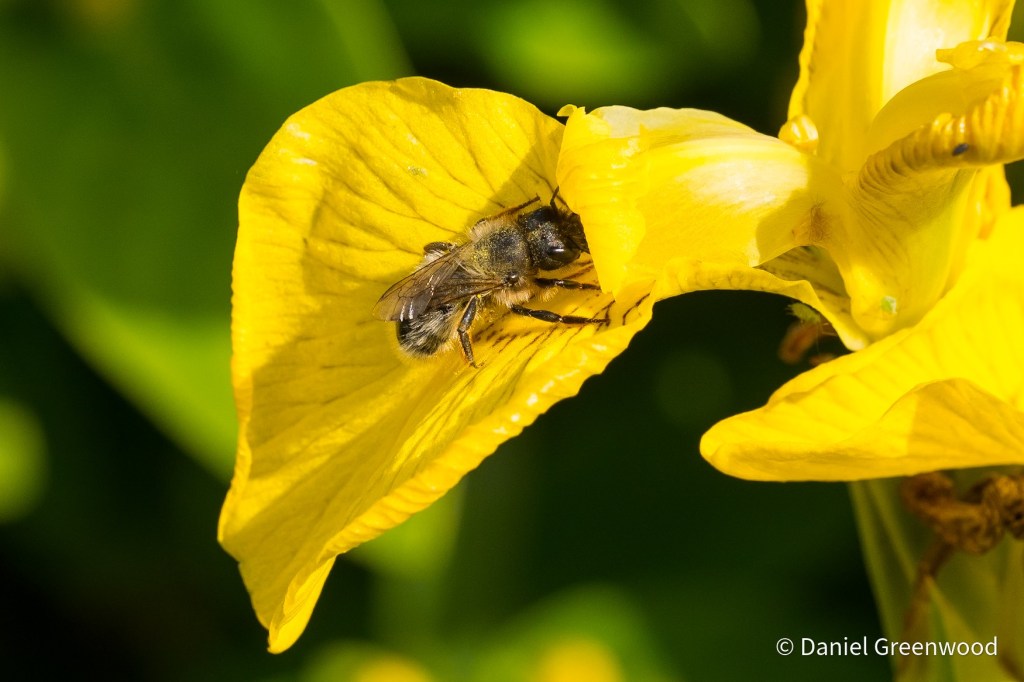
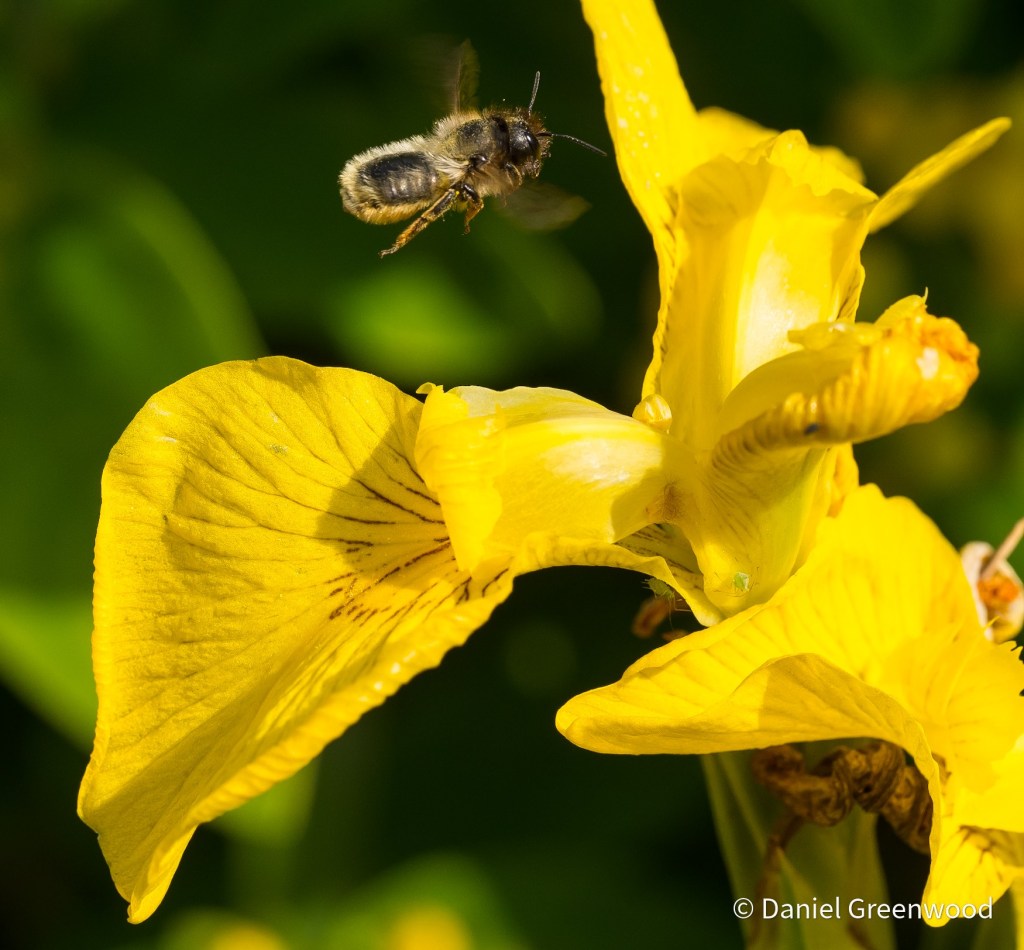
This solitary bee was visiting the flag iris in our little pond. I do enjoy the bee’s sideways escape. Not sure of the species, might be one of the Andrena mining bees.

I will now make like this bee and leave it there. Thanks for reading.

Macro | Support my work

Aphids watch out! 👽

I’m posting garden macro photos from the 17th and 30th May. I have some really interesting photos from the 31st but that is probably more than one post in itself.

There are a couple of intriguing species I encountered in my garden between mid-late May, one of the very best times to look for our tiny invertebrate friends in this part of the world.

These are by no means great images (I would need extension tubes to increase the magnification) but the species may be an interesting type of wasp. It might be an aphid wasp, which is a group of wasps I haven’t heard of or seen before (there are thousands, even in the nature-depleted UK).

I’ve posted about aphids this year, and have noticed just how good a year they’re having. I listened to this episode of the Food Programme last week on the subject of potatoes, and didn’t realise aphids could trouble potato farmers. Perhaps they need to start gardening for aphid wasps!

We have a tiny pond which supports frogs and is planted with native aquatic plants. One of those plants is flag iris, which the bigger bees love. I enjoy seeing the bees climb through the yellow petals to nectar on the stamens. This bee is probably in the megachile group, perhaps one of the leafcutter species. Someone on iNaturalist suggests it’s a mason bee, so I’m not sure.

I like how leafcutters are in their own world. They often appear after the red mason bees and hairy-footed flower bees have gone, but they seem like they’ve always been there, so focused are they on their leafcutting tasks.

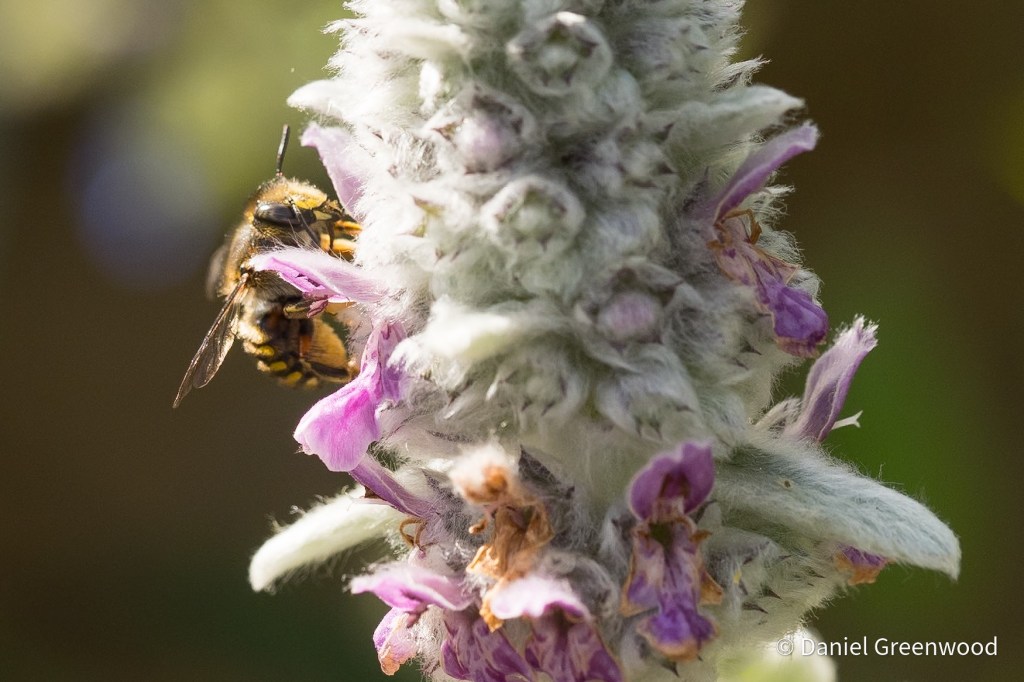
Another welcome sight in the bee world (it’s so much more than honeybees!) are the wool carder bees. I planted this stachys (or lambs ears) for the WCBs in 2020, and they immediately arrived.

Regular readers of this blog may recognise this species from previous posts, who just couldn’t keep out of this week’s post. I used to look like this. These may be an orange-vented mason bee.

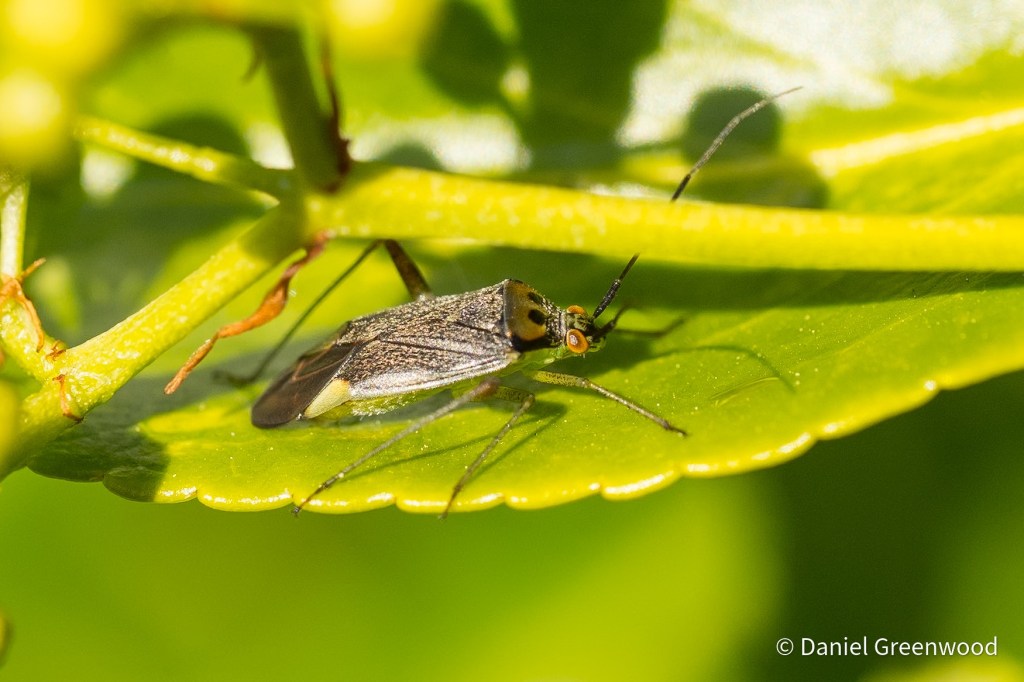
This capsid or mirid bug was chilling in the hedge, as they often do.

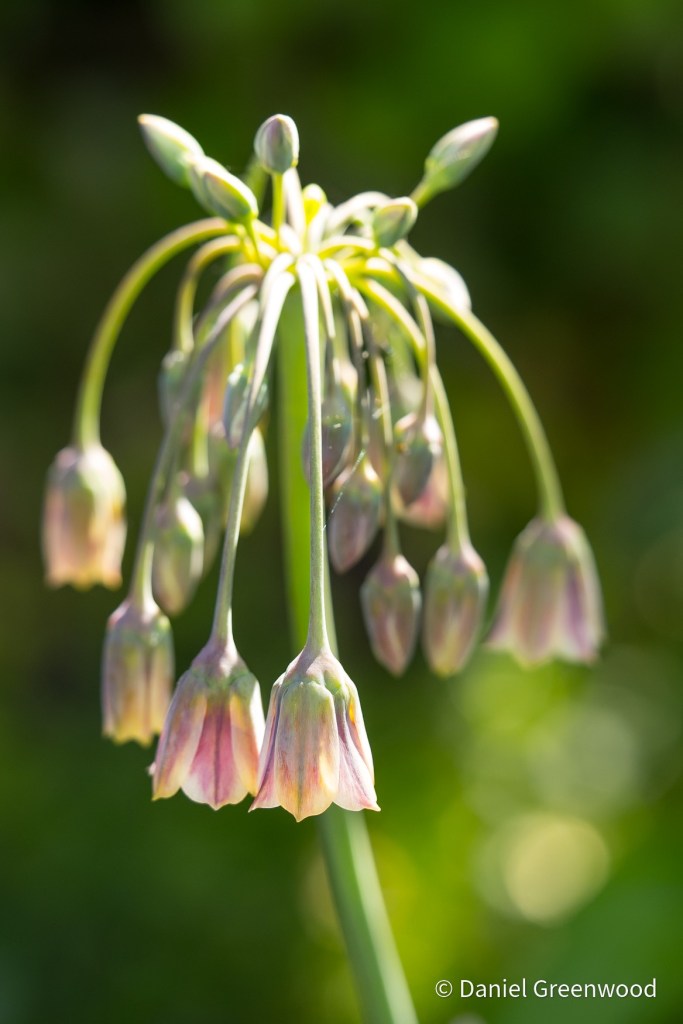
And finally, those trusty honey lilies were looking their best in the evening light, as their flowering period drew to a close.

Next week we’ll see out May with some pretty epic wasp vs. spider scenes and miniscule bees.

Thanks for reading.

Macro

Bumbling up

Onto the 15th May 2025, when the bumblebees were beginning to increase as the workers emerged. But we won’t begin there.

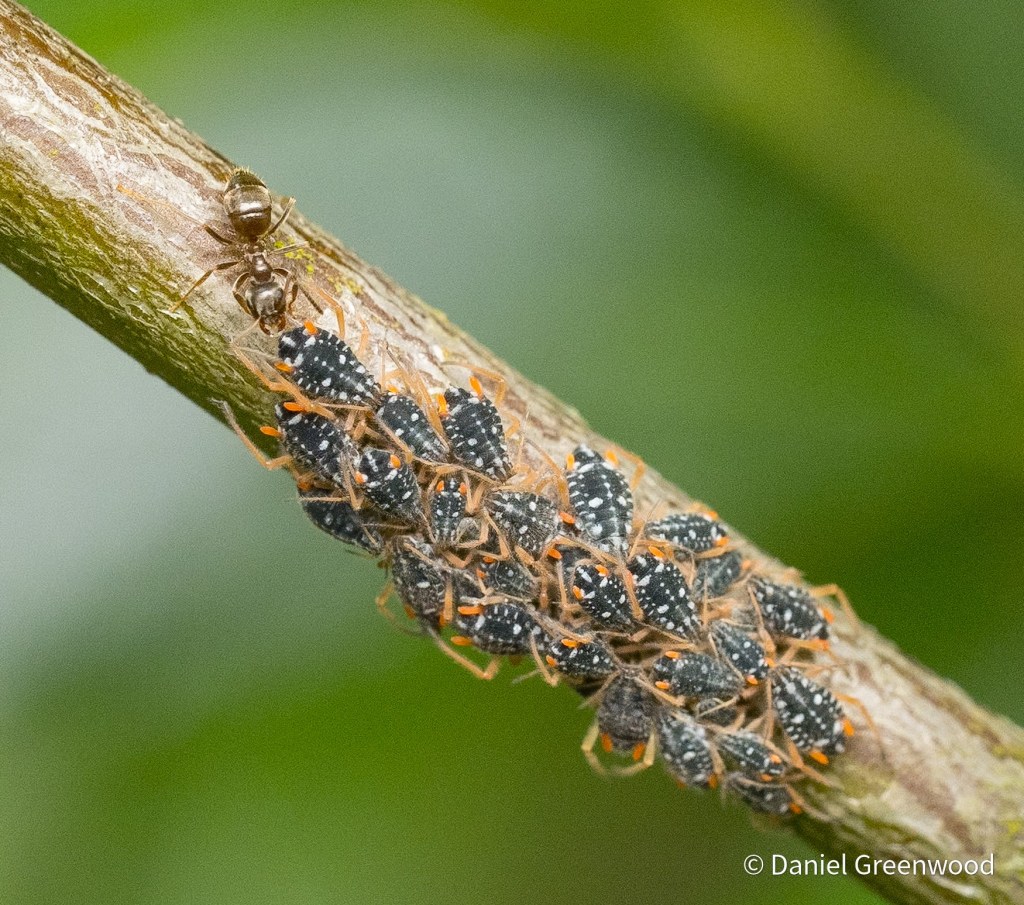
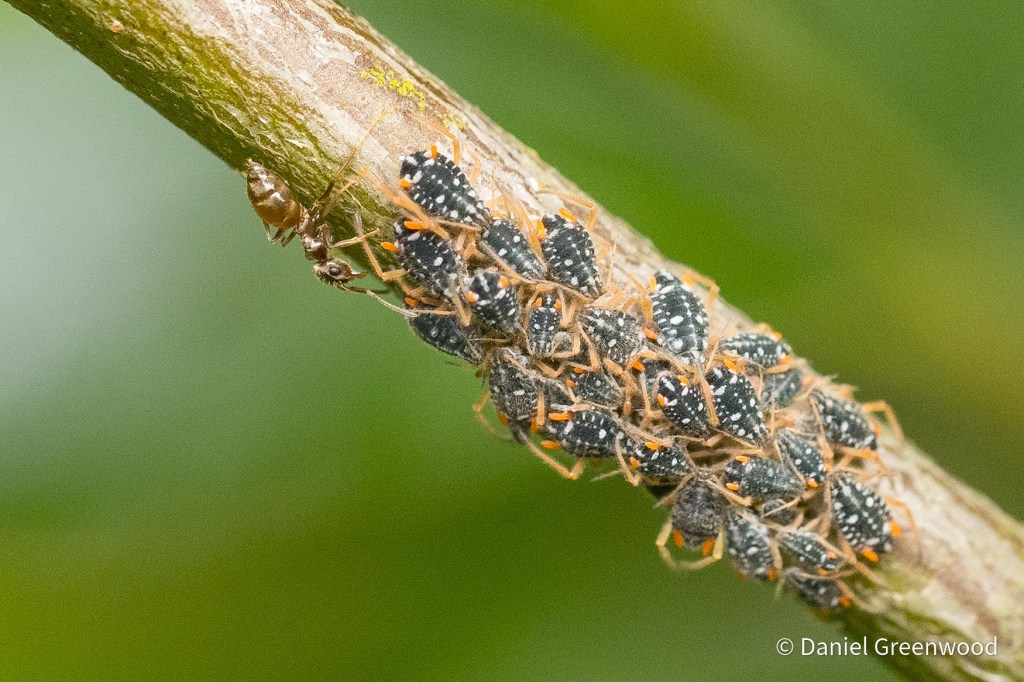
The path to my house is overhung by a self-seeded willow sapling (probably to the annoyance of the postman). One morning I noticed the twigs held a cluster of aphids, tended to by ants.

The ants are probably farming the aphids by providing them with a degree of protection and harvesting the honeydew they excrete. These are probably willow bark aphids but my insect book says there are over 600 species in the UK and many are very hard to identify!

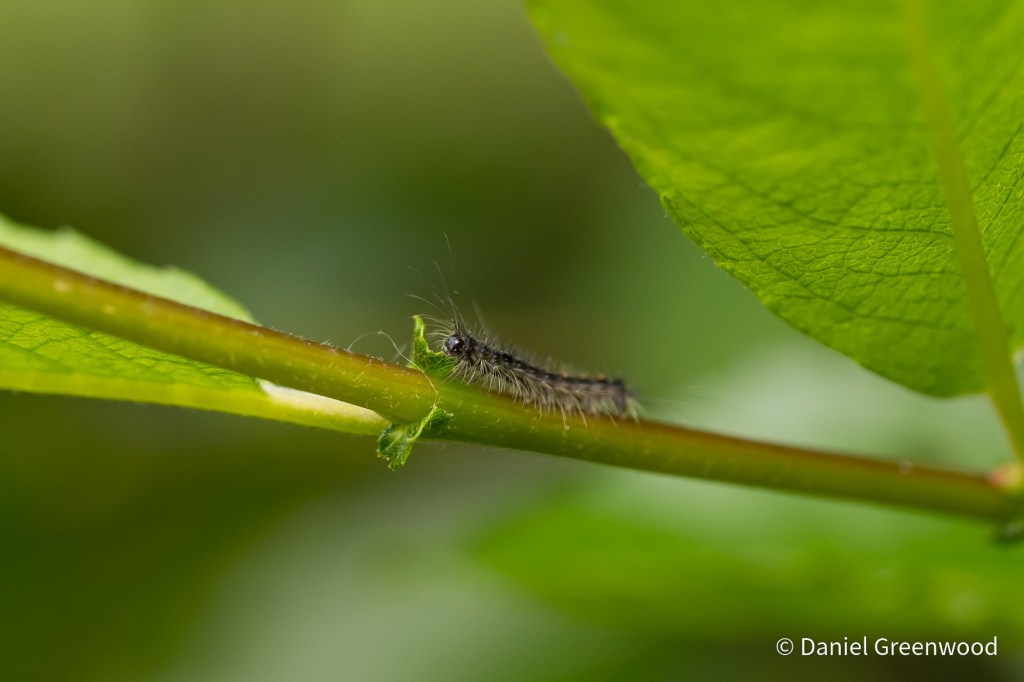
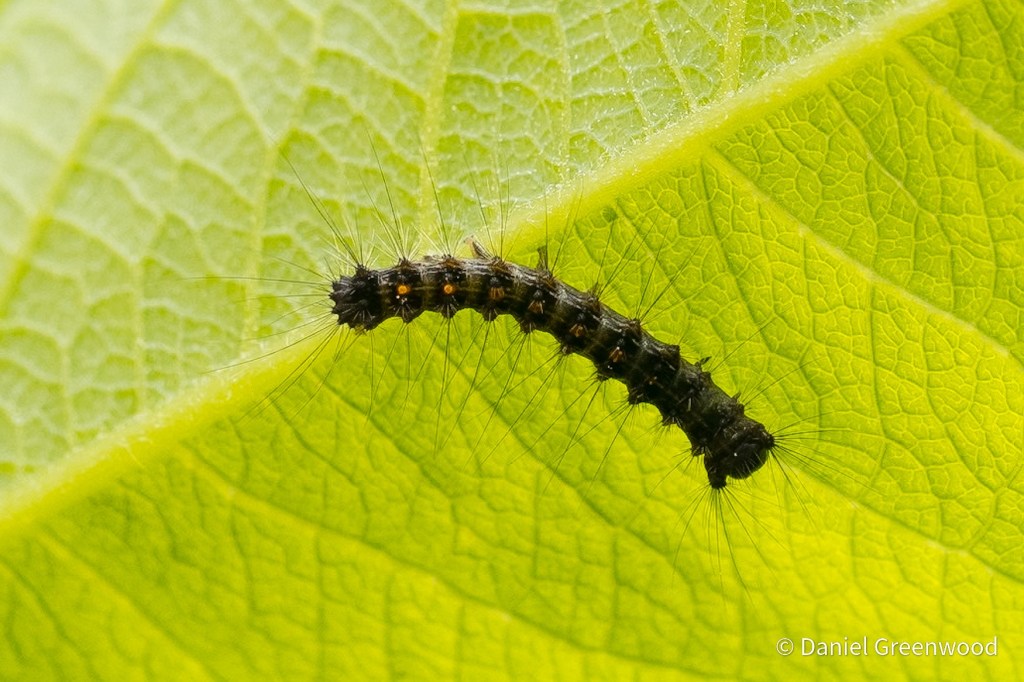
Elsewhere on the willow this little caterpillar was chomping away.

I think this is the same species but I’m not sure what it is. Caterpillars are not a strong area for me.

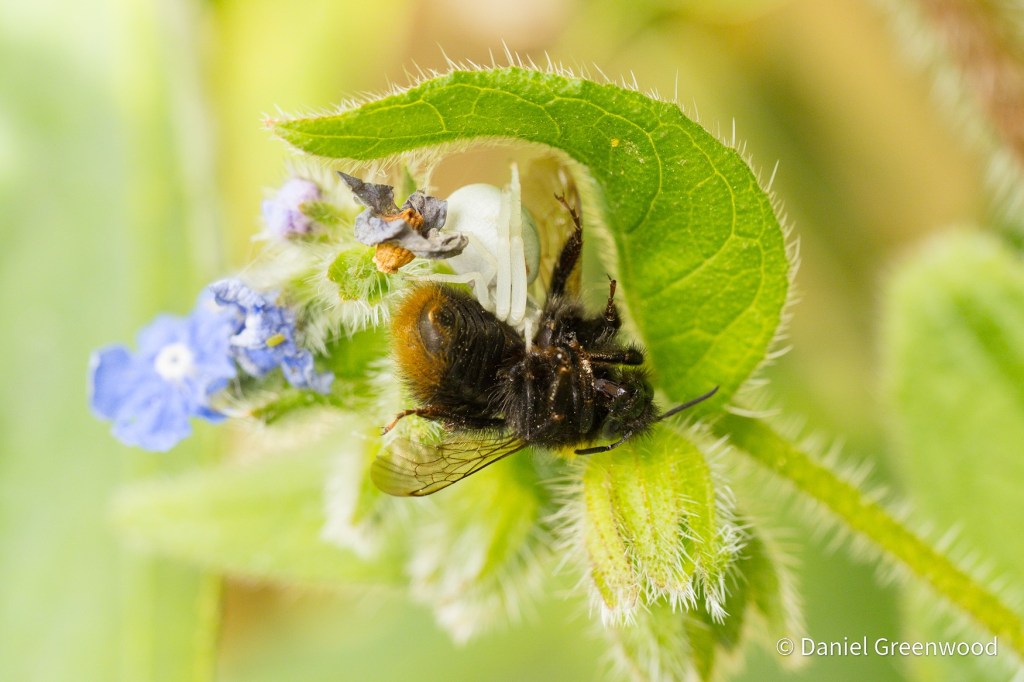
Moving onto bees, I spotted this bee that had been predated by a crab spider (probably Misumena vatia). I am wondering if this might be a cuckoo bumblebee, a kind of mimic that is in fact solitary and raids bumblebee nests, rather than being part of the community. The second photo is from some time later when the spider had moved their prey around.

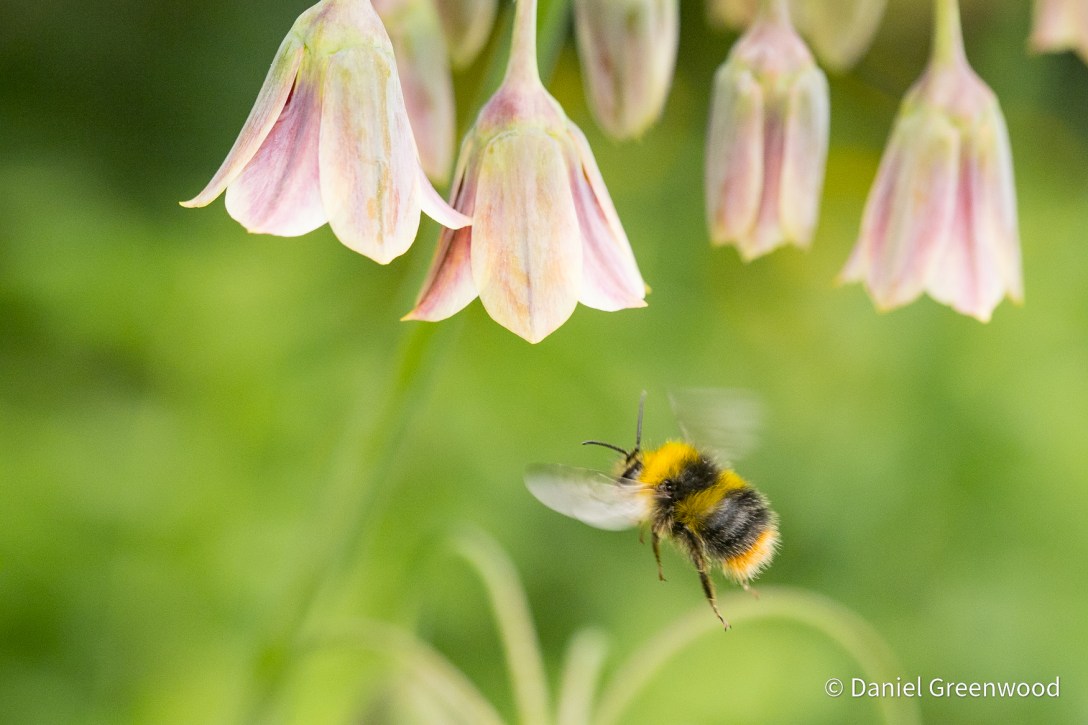
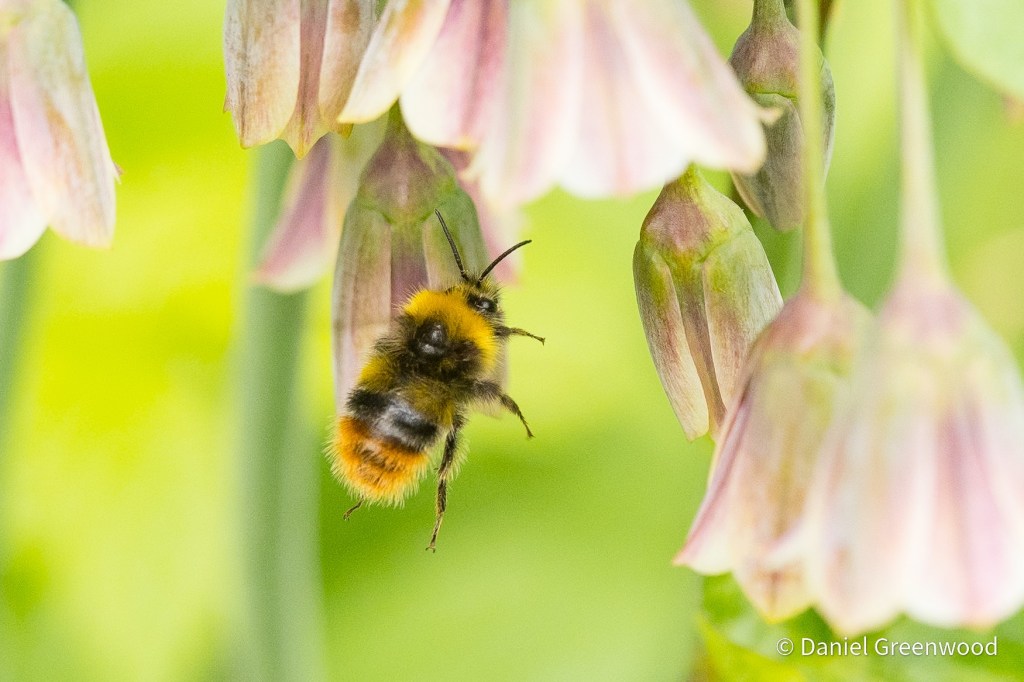
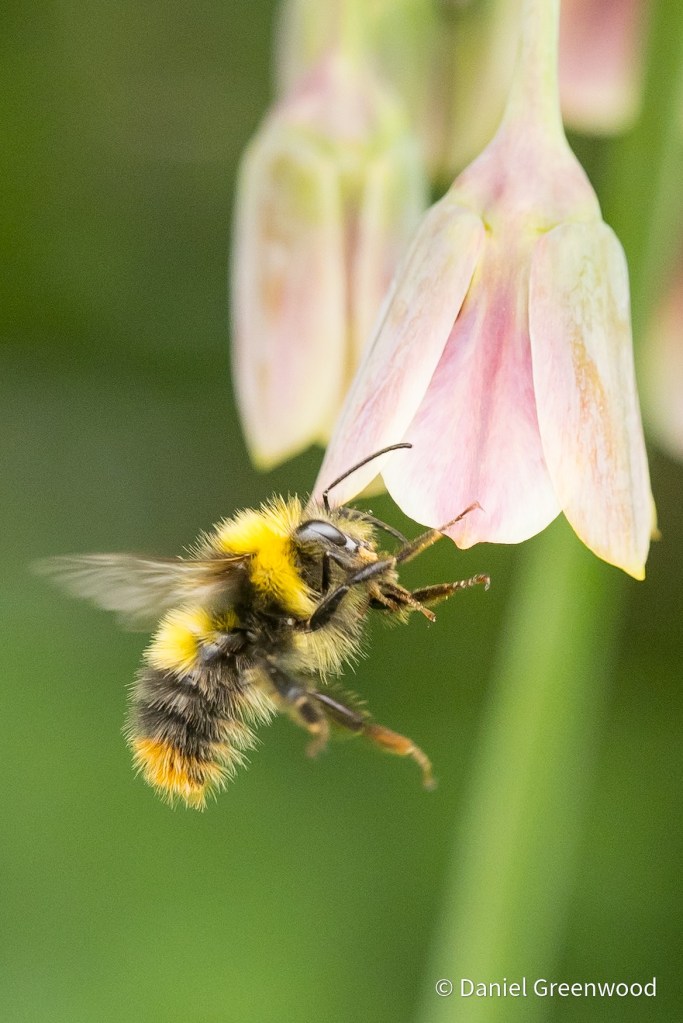
A couple of weeks ago I wrote about the Sicilian honey lilies that have been flowering in my garden. The bumblebees were out in force among these flowers. They seemed to find it a bit difficult to access the flowers from below, but they were foraging en masse. This is one of the first times I’ve used the high speed shutter option on my camera, and it has provided excellent results. I’m not sure of the species, another area I need to brush up on, along with the aphids.

This spider is pregnant, you can see the egg sack. I think it’s a fox spider.

Thanks for reading.

Macro

Mason bees closing doors

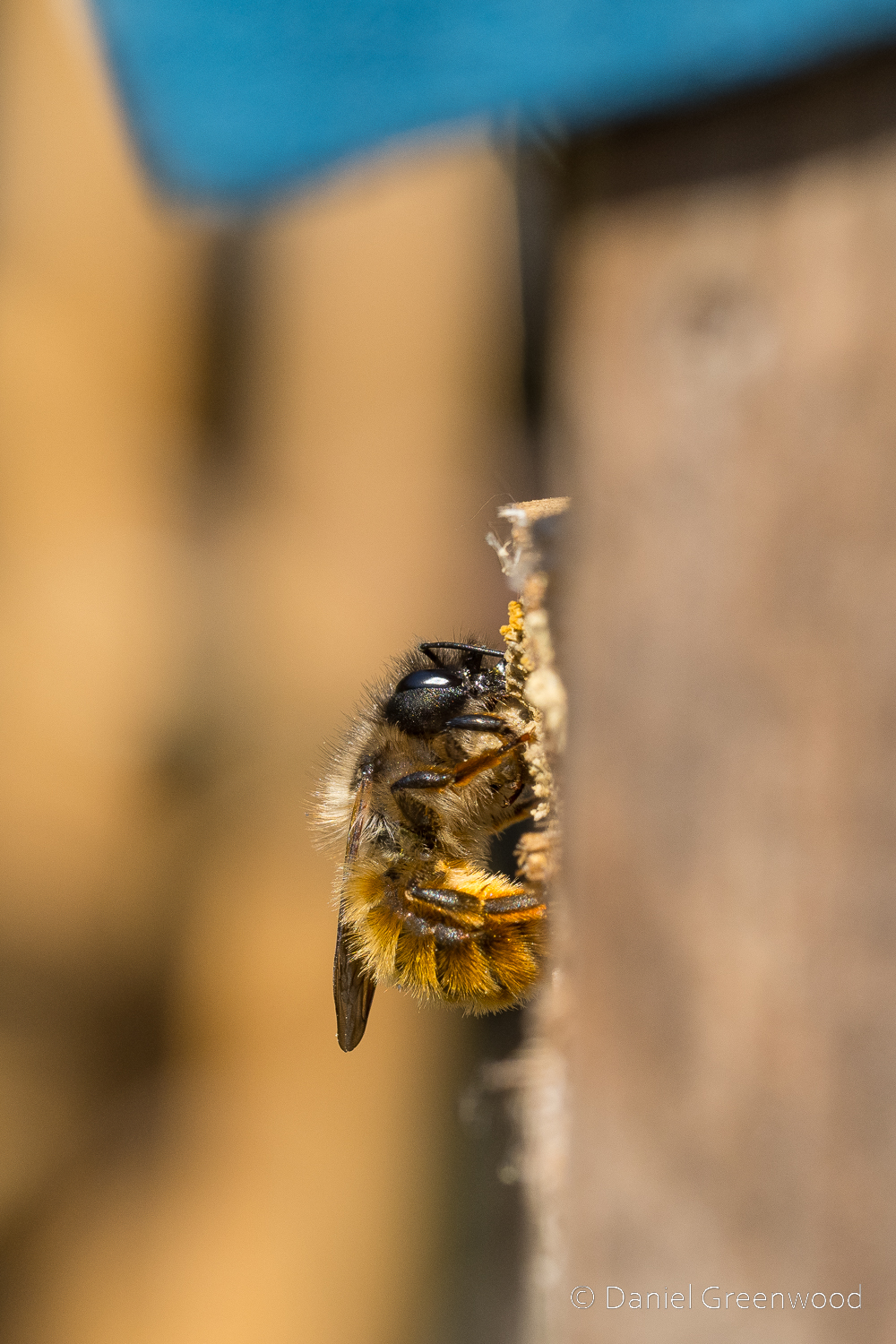
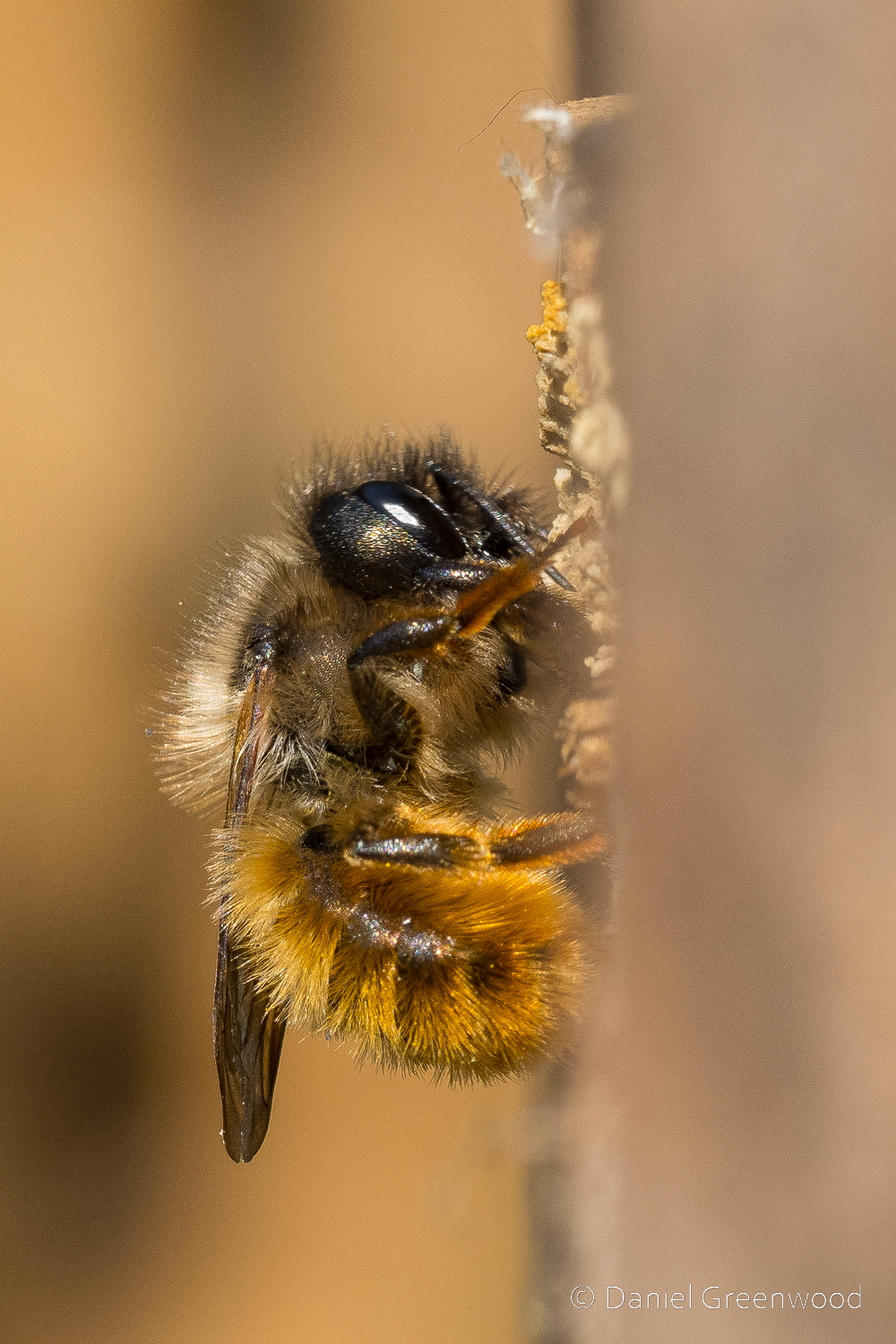
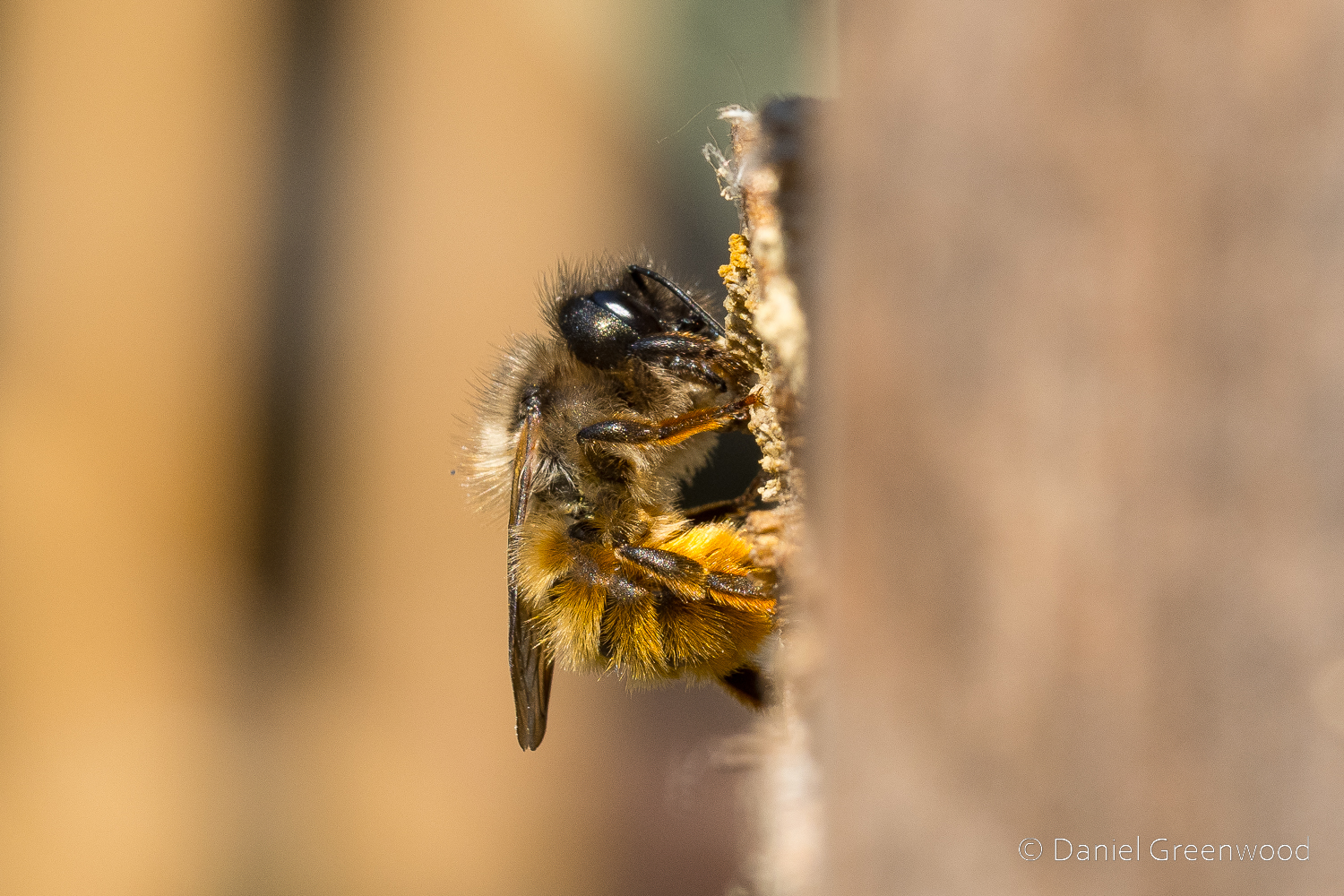
Around 9th May 2025 the red mason bees were working to seal their little chambers shut, as can be seen below.

2024 was a better year for these solitary bees in my garden, with far fewer in 2025. Their numbers will naturally rise and fall over the years. They’re important pollinators, especially in agriculture, so helping them has a wider societal impact for people who desire it.

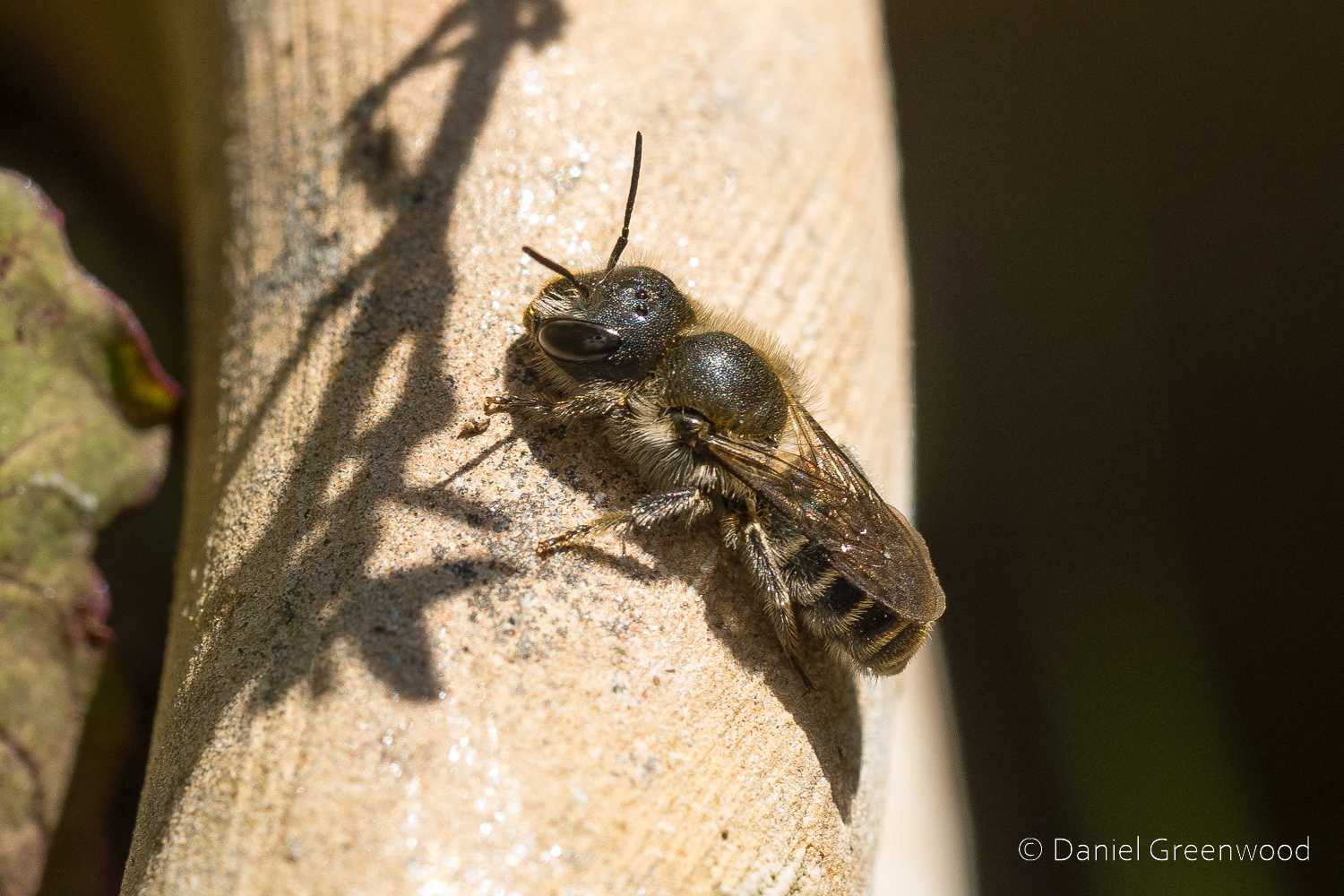
In the first of the hotter spells each year I begin to notice these small bees. They’re usually sunning themselves on the edges of ceramic pots, wooden sleepers or fences. I am fairly sure this is a blue mason bee. They are quite skittish but do often return to the same perch if they can see that you’re not an immediate threat.

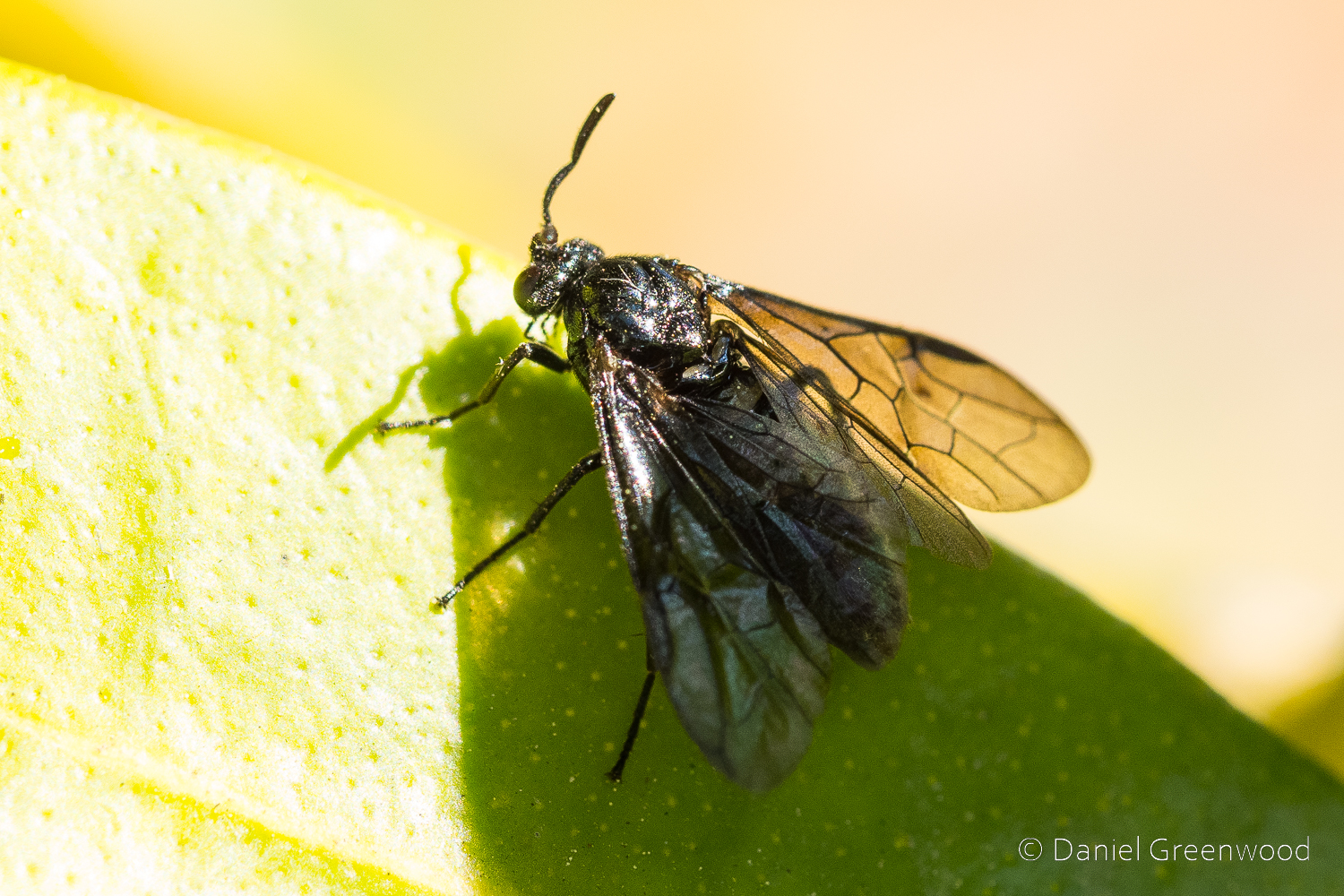
Elsewhere in the order hymenoptera (bees, wasps and ants) I saw this unusual-looking winged-insect hiding in the leaf shade. I’ve had to edit this a bit to bring the shadows out, but it’s a species of sawfly. It seems to have two antennae in the shadow, but for the life of me I can only see one!

I noticed the first swollen-thighed beetle of the year perched on the burgeoning fennel leaves.

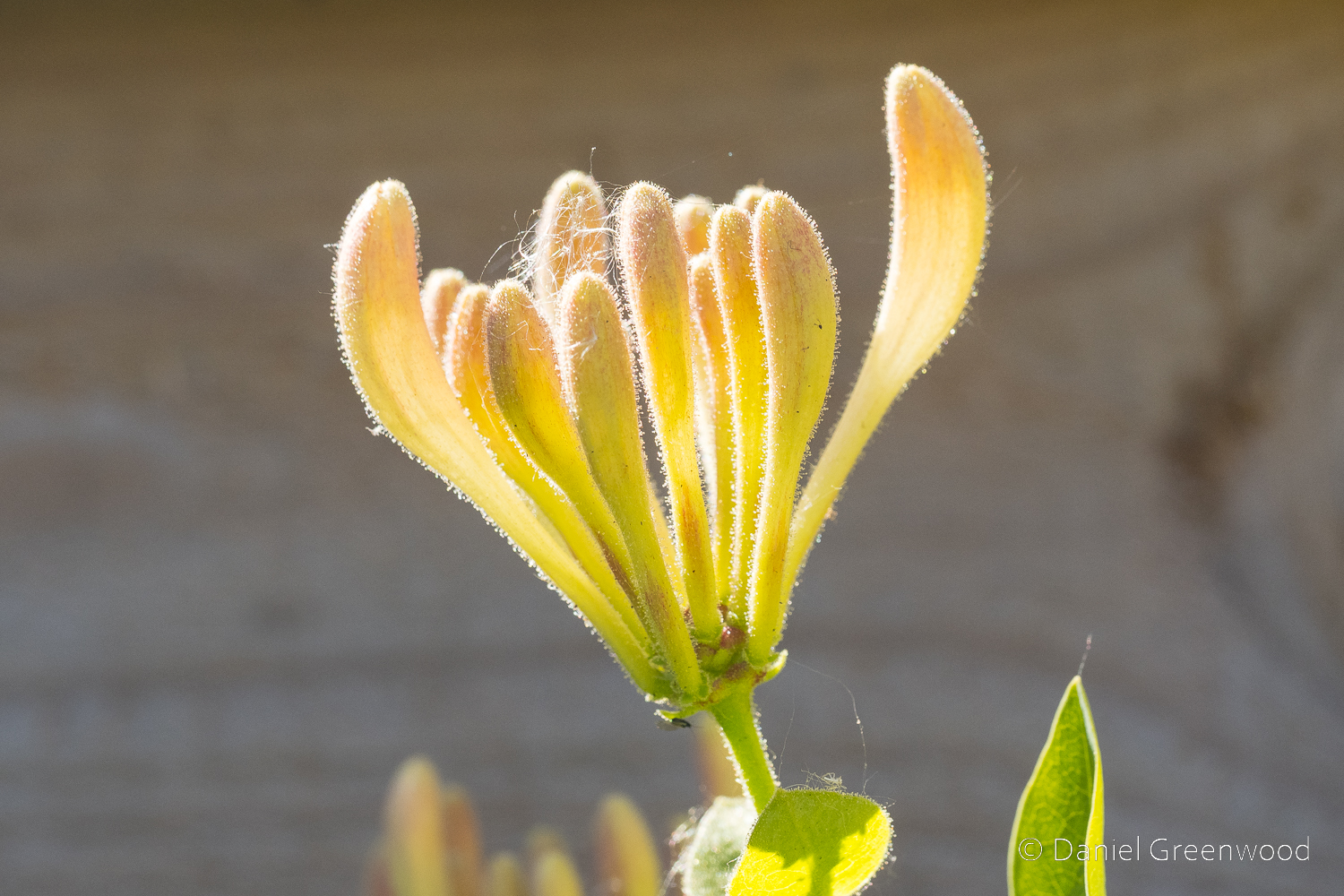
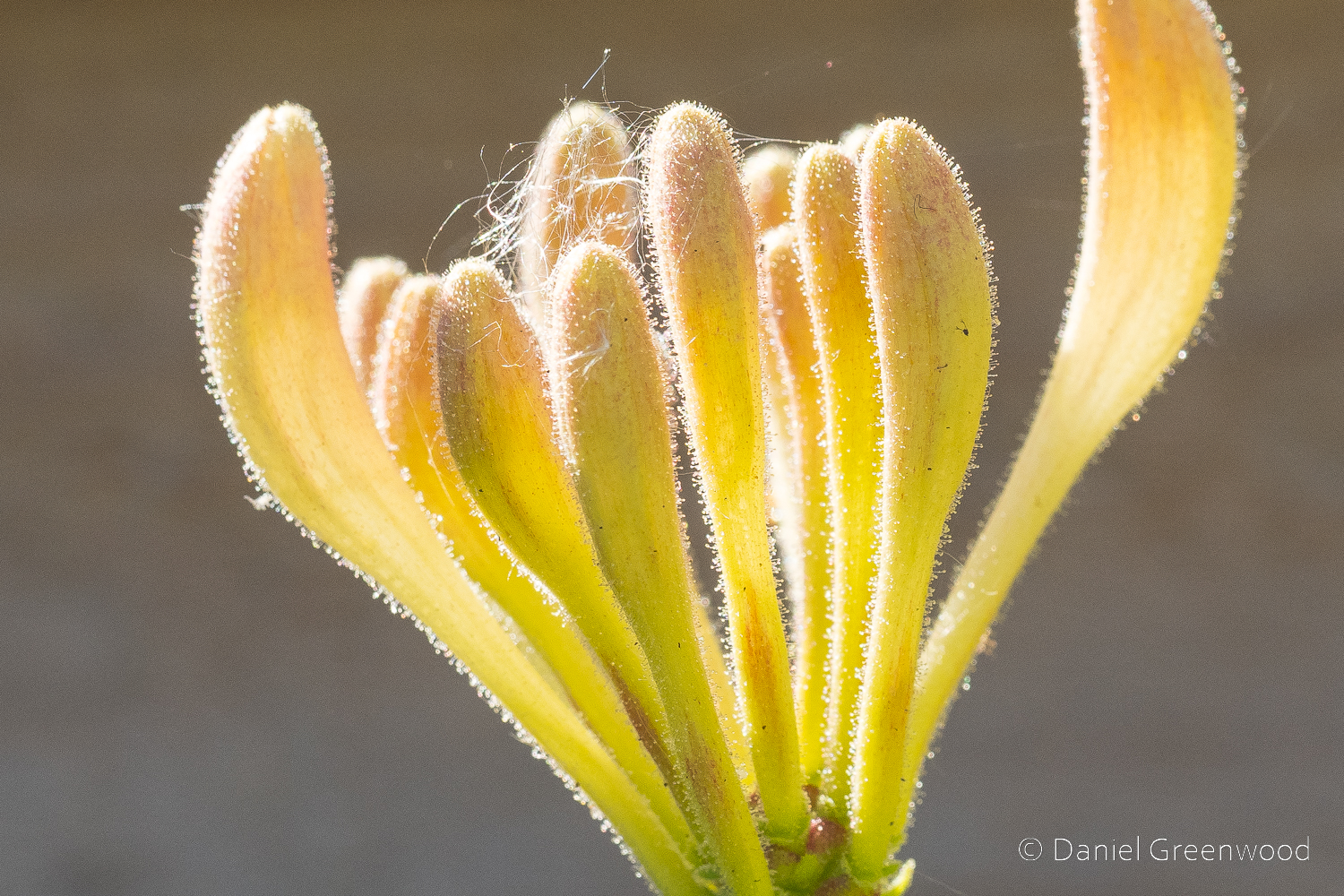
In taking a few pics of this honeysuckle I noticed that there appear to be little sticky nibs on the flowers. I’m wondering if this is to trap pollen when bees visit, or potentially to snare invertebrates in the carnivorous sense. I can’t find anything online about that, but I now know just how invasive it is in North America.

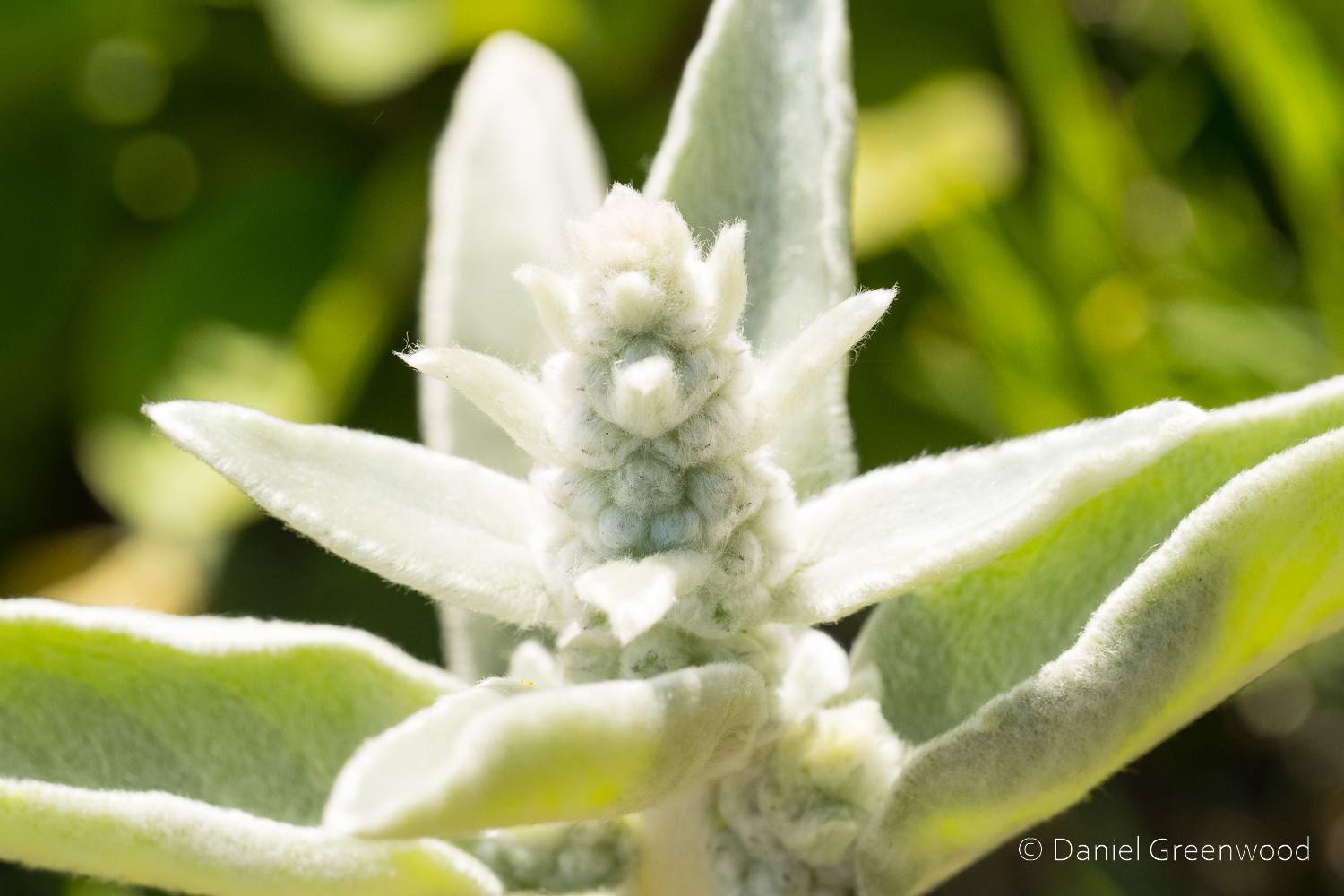
And finally, the trusty Stachys was close to flowering by the 9th May. It looks very cosy and comfy here, ready for the wool carder bees. What I didn’t know about this plant (known as woolly hedgenettle) is that it’s native to Armenia, Iran and Turkey. I bet it has some very cool insects feeding on it there.

Thanks for reading.
Macro | Support my work

Early mining bee

The bees are out in force at the moment, so I’m taking a lot more photos. Posts will now be one per day of photos, as there are too many in a week now to cram into one post! You may not care about this.

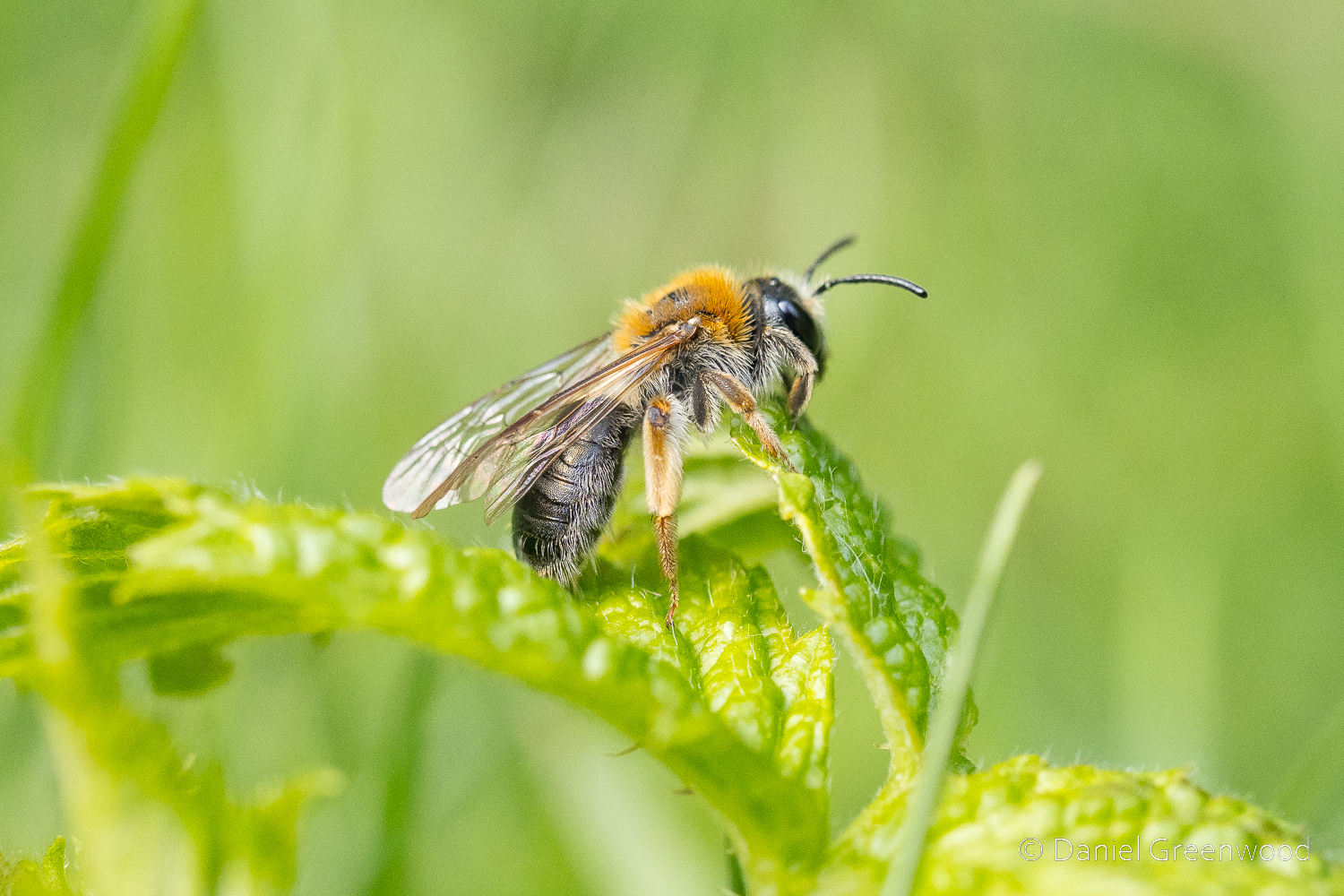
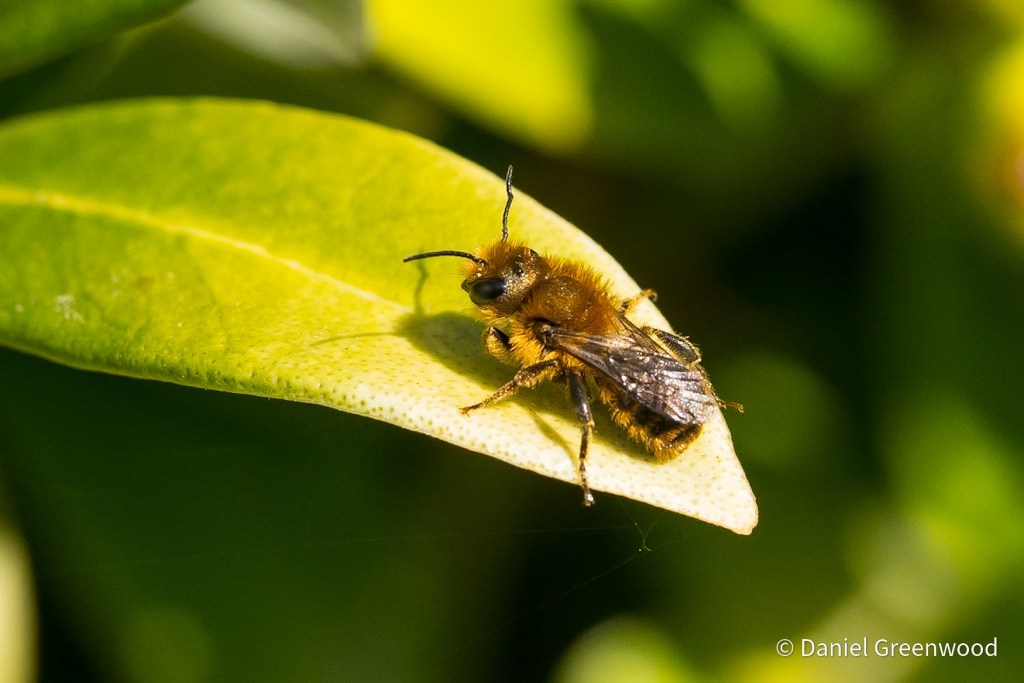
Early one morning before work I noticed a little bee resting on some raspberry leaves in my garden. I grabbed my camera from the house and got some photos. It was early and the temps were low so the bee wasn’t very energised. It may have spent the night there. This is probably early mining bee, which is one of the more common species in SE England from what I know.

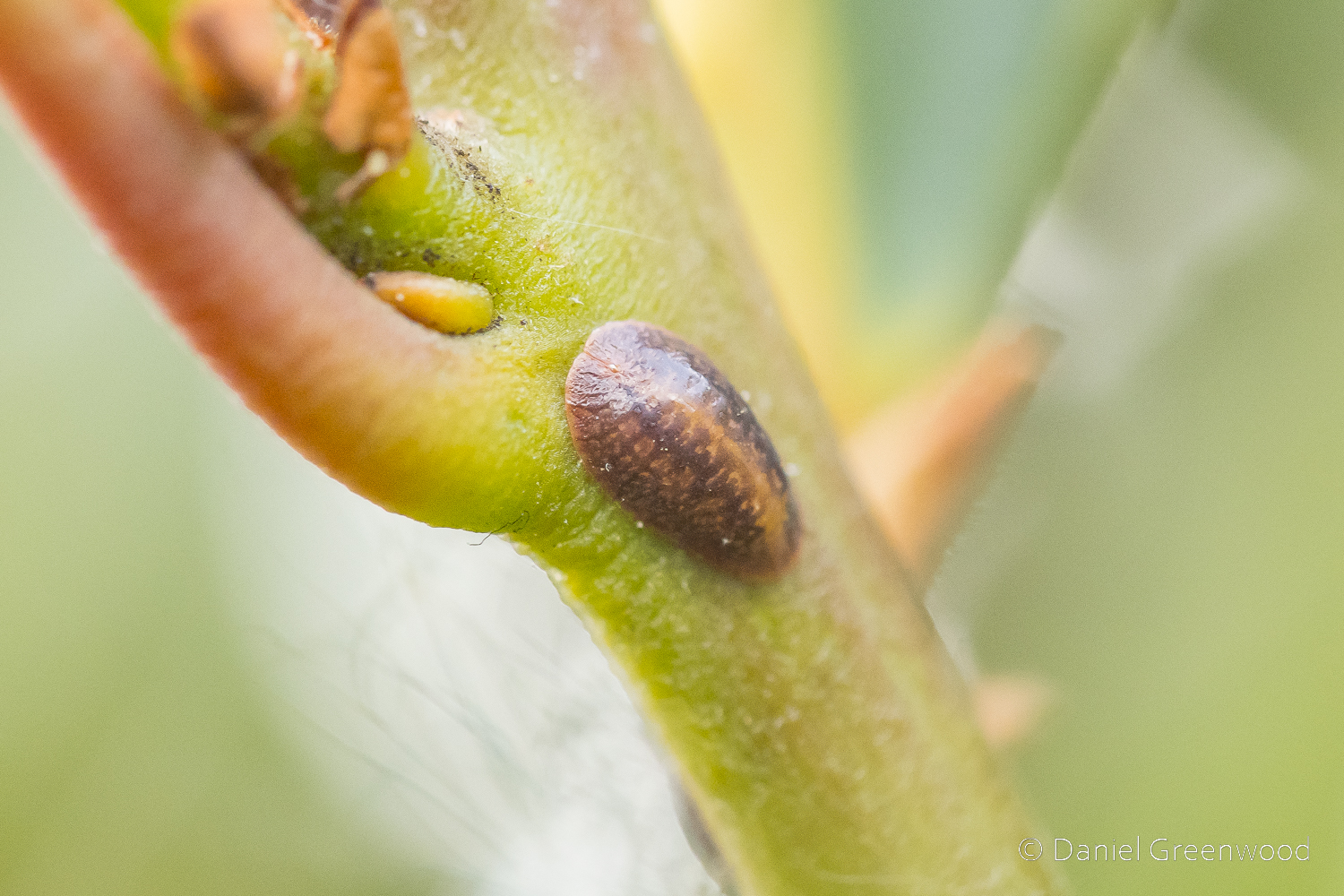
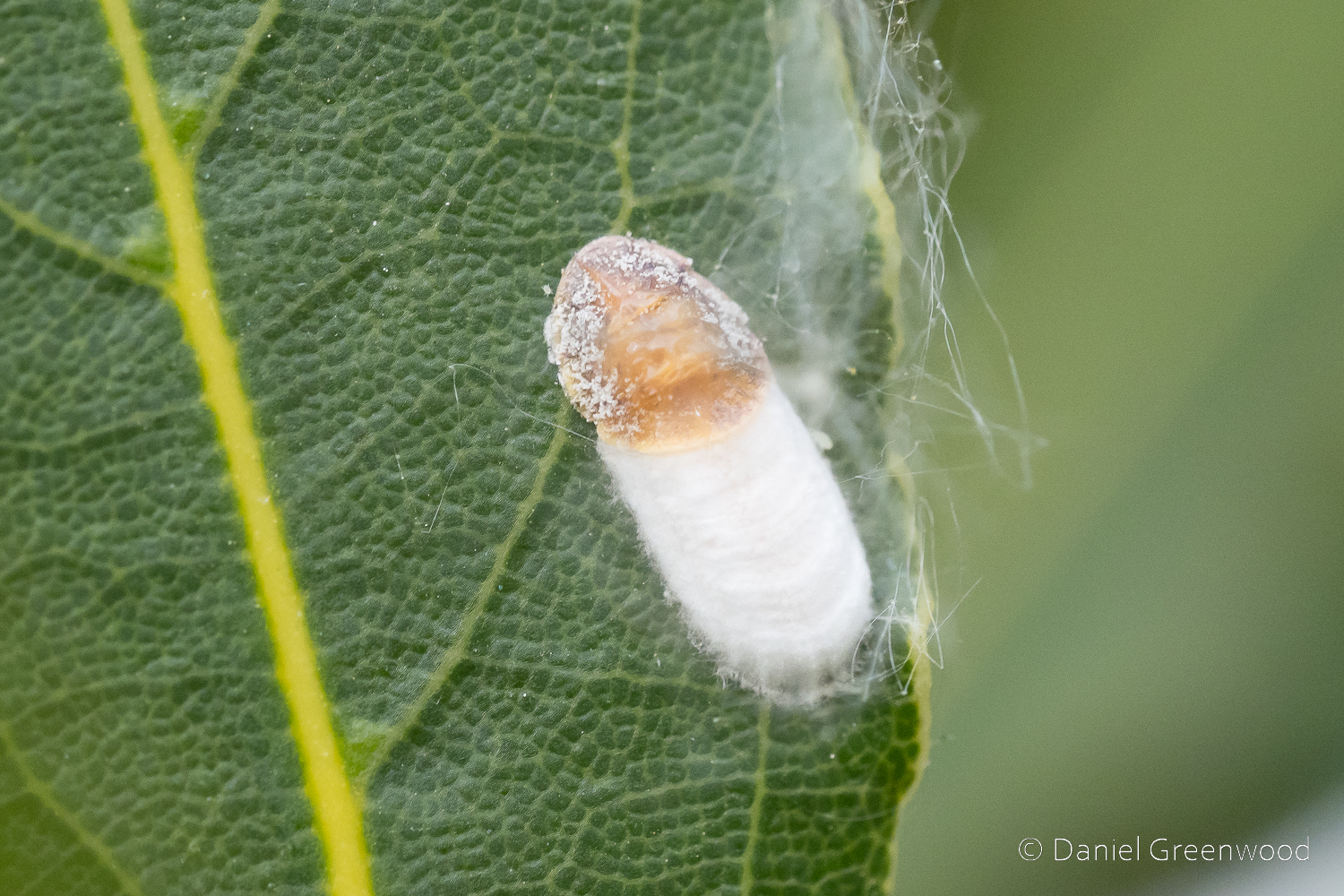
Now then, I think these are scale insects (Coccoidea) in different stages. They’re attached to the stems of plants and also the leaves. Apparently they cause problems in coffee plantations – not a problem for me. Not only do I not drink coffee, it would be impossible to grow it in my garden.

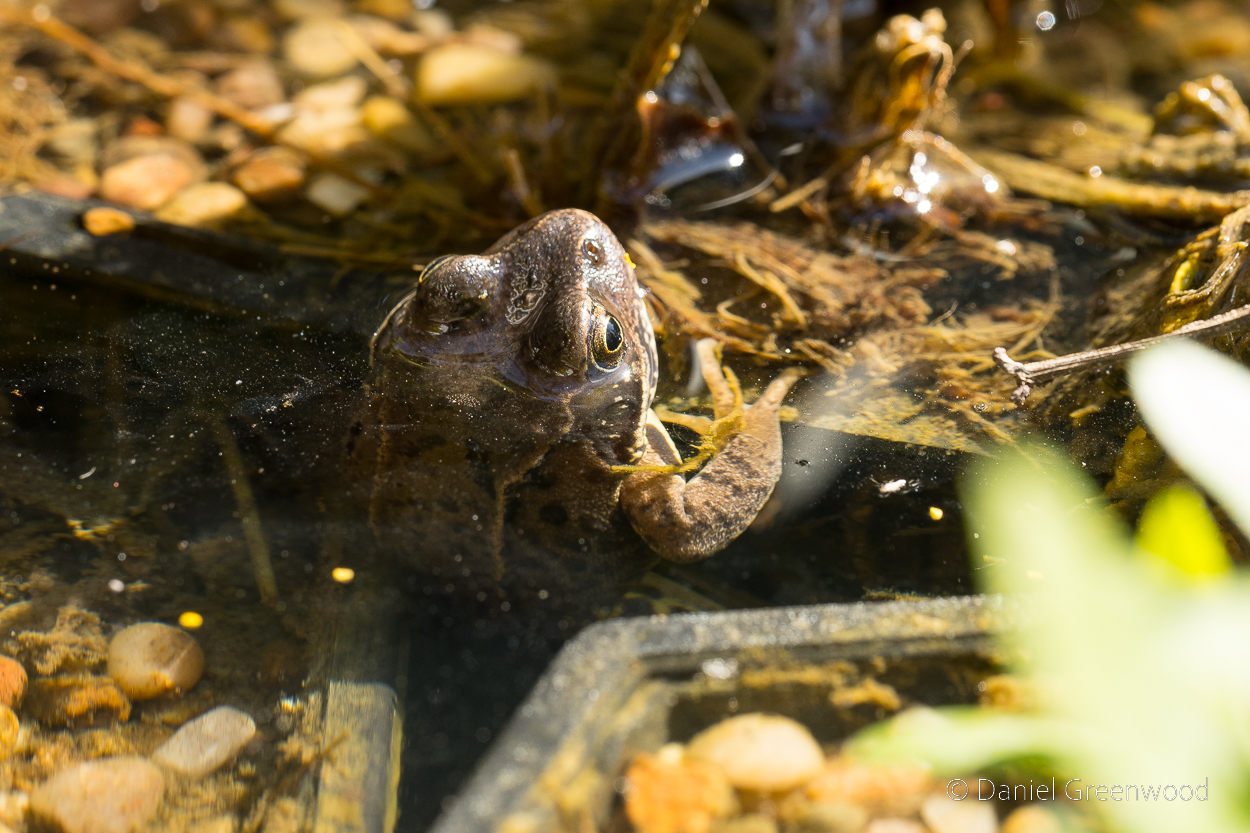
Our frogs have been enjoying the basin pond, as per a recent post. It’s tough for them right now, we’re experiencing extremely dry conditions in southern England and are ‘on track for the driest spring on record‘.

The apple flower I waited 17 years for is producing an apple!

Elsewhere the red currants and gooseberries are well on their way.

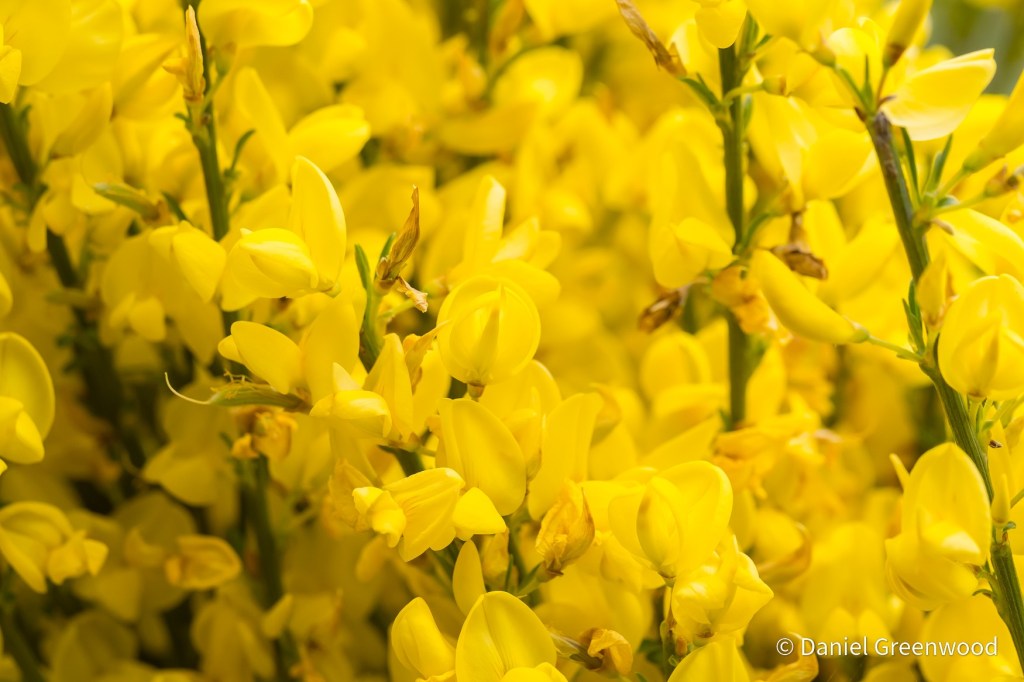
The magnificent blooms of the broom have now gone to their typical seed pods.

Thanks for reading

Oaks leaves like little fires

I’m still dining out on mid-April at the moment, it’s such a lovely time of year.

The broom (Cytisus scoparius) we planted several years ago has bloomed magnificently this year. It’s been a treat to both smell, and to see it attract a whole range of pollinators.

Dandelions have been all over social media recently with the recipes for ‘dandelion honey’. I am reliably informed that it’s jam or syrup rather than honey because you’re not a bee. It’s good that people are becoming more aware of dandelions which are incredibly important for pollinators.

We’ve expanded our berry bed in the garden to include an extra redcurrant, blueberry and gooseberry. Above are the lovely flowers of redcurrant.

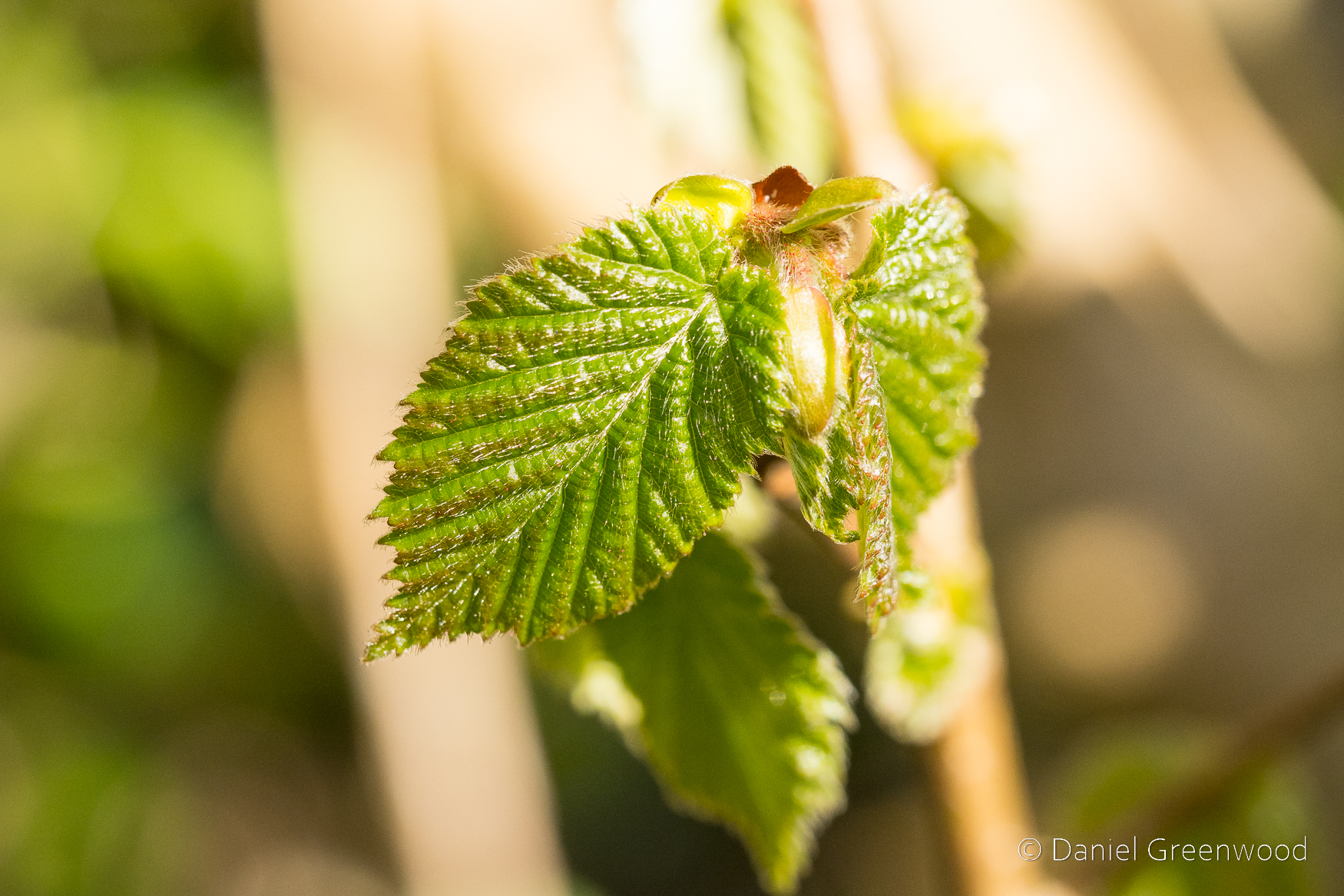
My little laid hazel hedge is coming along nicely. These fresh red stems are a welcome sign.

As part of the hedge I’ve planted a couple of oaks that have been in pots in our garden for a number of years. One of the oaks is from my grandmother-in-law’s garden near Epping Forest, the other grown from an acorn from Dulwich Wood. I love the redness of the leaves when they first appear, whether or not these are tannins I would need to check the science.

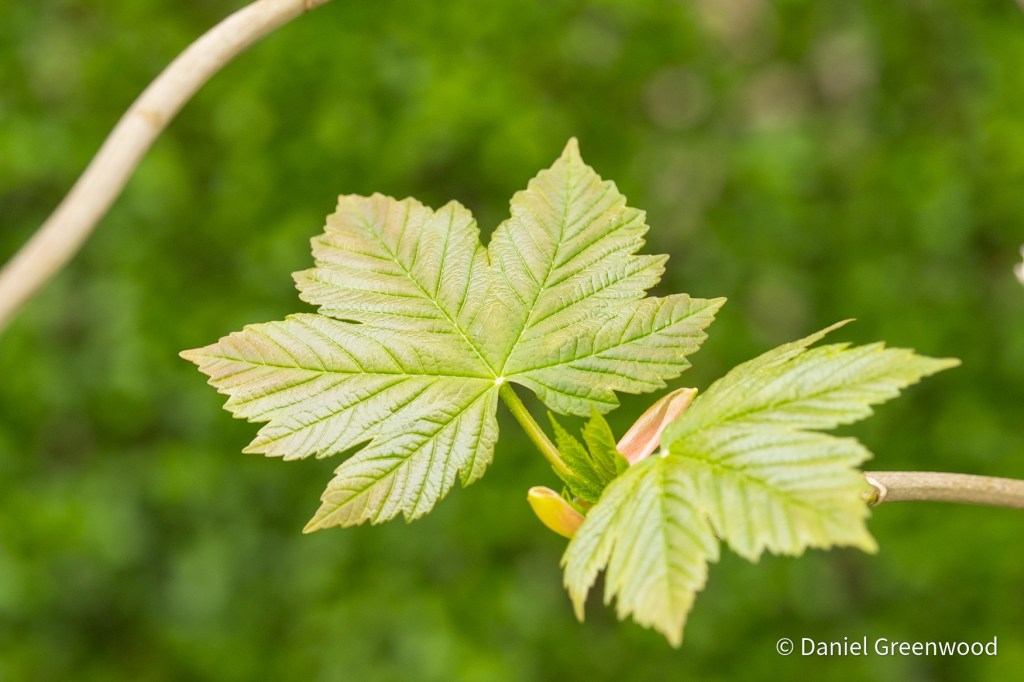
Elsewhere the sycamore is now leafing. Soon these will be sticky with aphid honeydew. The sparrows and blue tits will be hoovering the aphids up to feed their nestlings.

Speaking of those little devils, our swift box has been moved-into after 3 years of waiting for something to happen. Of course it would be best if swifts were there, but sparrows are also red-listed and their habitat is being lost as people are forcing them out of the eaves. Much of that is probably unintentional, but it’s still something we need to look at.

In the invertebrate world, the droneflies have calmed down a bit and are willing to pose for their macro close-up. This is probably a tapered dronefly (Eristalis pertinax).

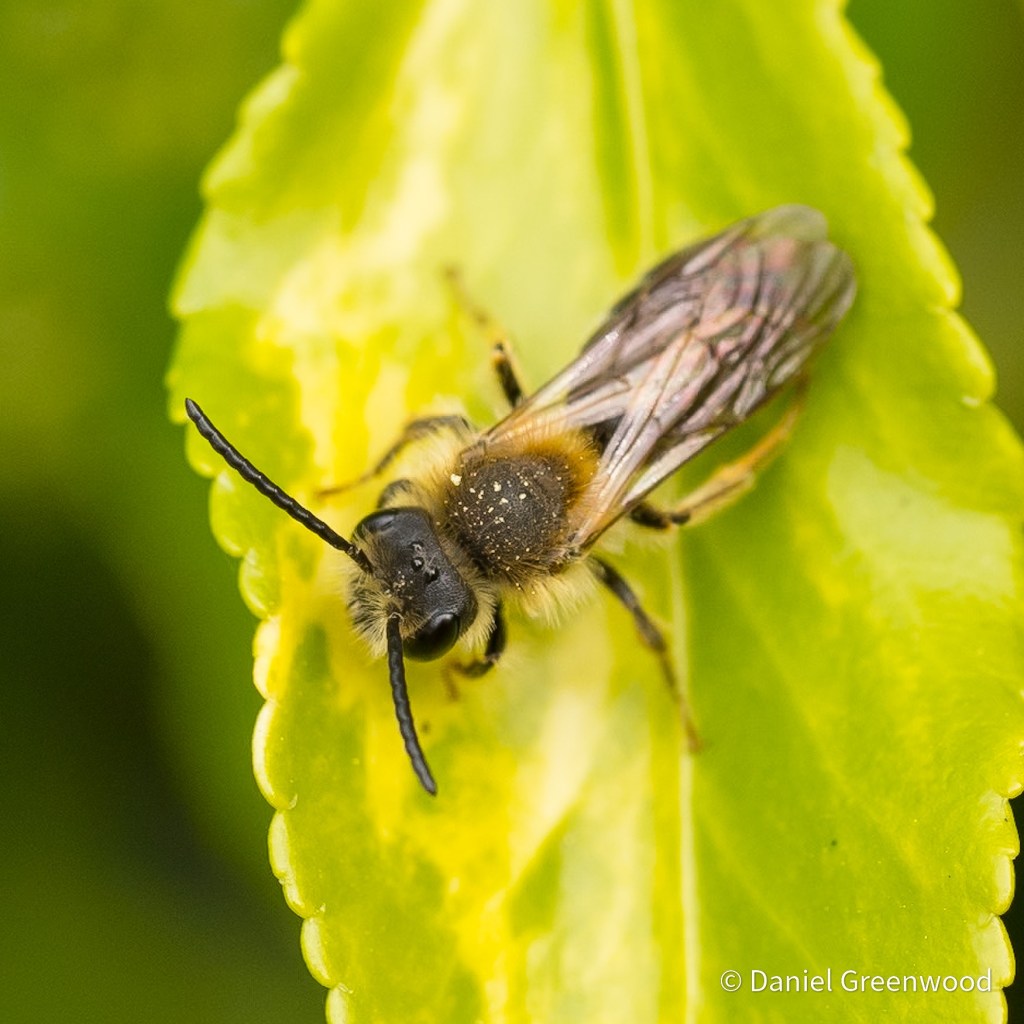
This is my first decent set of images of a solitary bee this year. It’s probably one of the mining bees (Andrena) but I don’t have an ID yet.

Another solitary bee species had found its way into our living room. I took a few photos before letting the little bee back out into the world.

Thanks for reading.

Macro

Any pond will do

On Friday 11th April I was hanging out in the garden when I glanced over at the small container pond on our brick patio. It’s an old metal wash basin filled with plants and, well, water.

Birds bathe in it, foxes drink from it, and something rather special now lives in it.

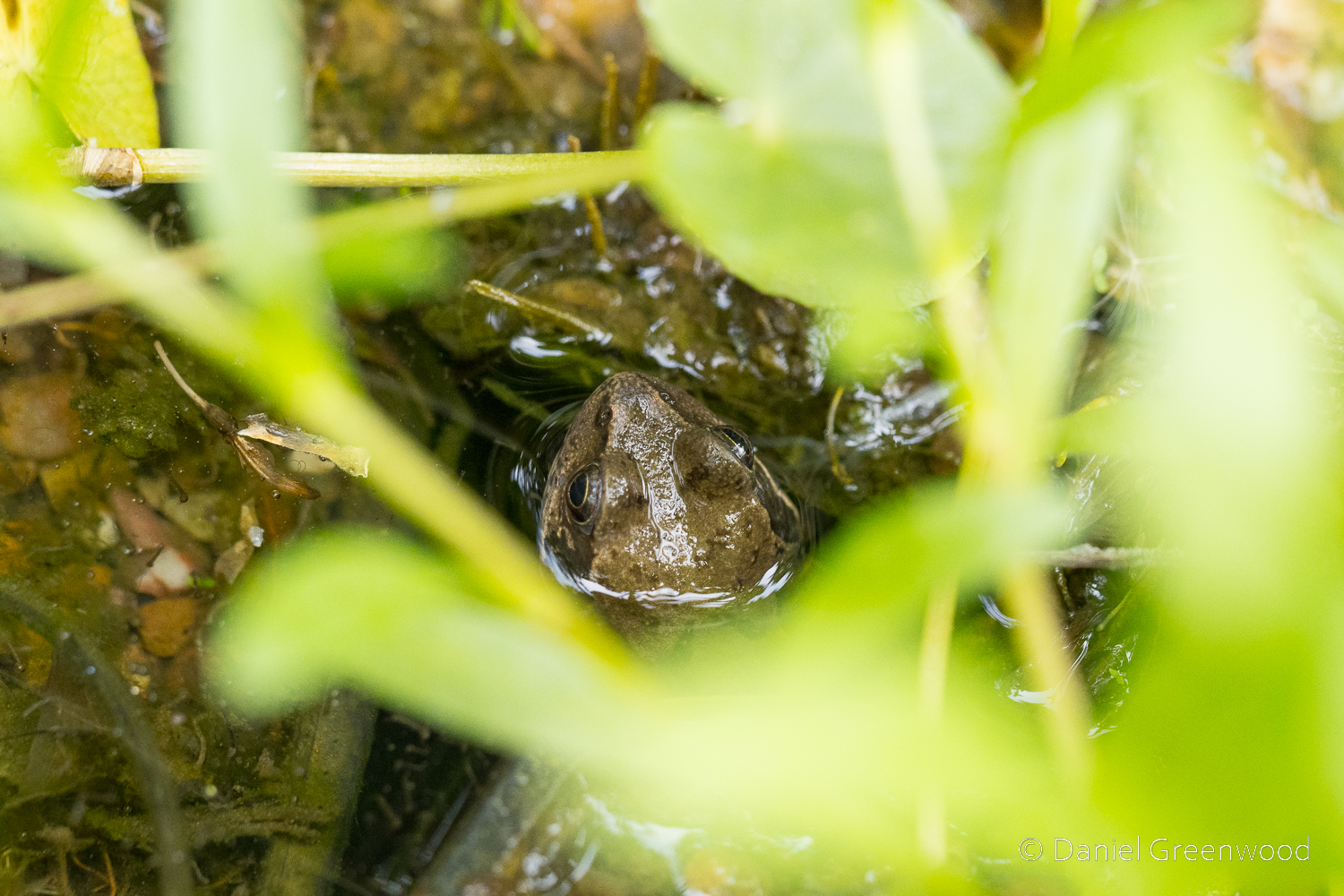
The first thing I saw in the ‘pond’ were two eyes looking back at me, and two big arms and webbed hands (are they hands?) holding onto one of the plastic plant containers.

Phone pic for scale

It says a lot about the state of nature in Britain that frogs are such a cause of excitement. We have obliterated our ponds in England, but there is a movement to try and bring back some of the most important ones – the oldest ones lost from farms.

It’s been so dry for the time of year, wildlife is really suffering with the lack of water. If you have the chance to build any kind of pond you should do it! We don’t have enough space in our garden to dig a ‘proper pond’, but we have been able to use a container we bought at an antique dealer. Without it, where would the frog go?

Elsewhere I’ve noticed the number of drone flies has ebbed a bit, but there are still plenty around. This is probably a tapered-drone fly, a species of hoverfly.

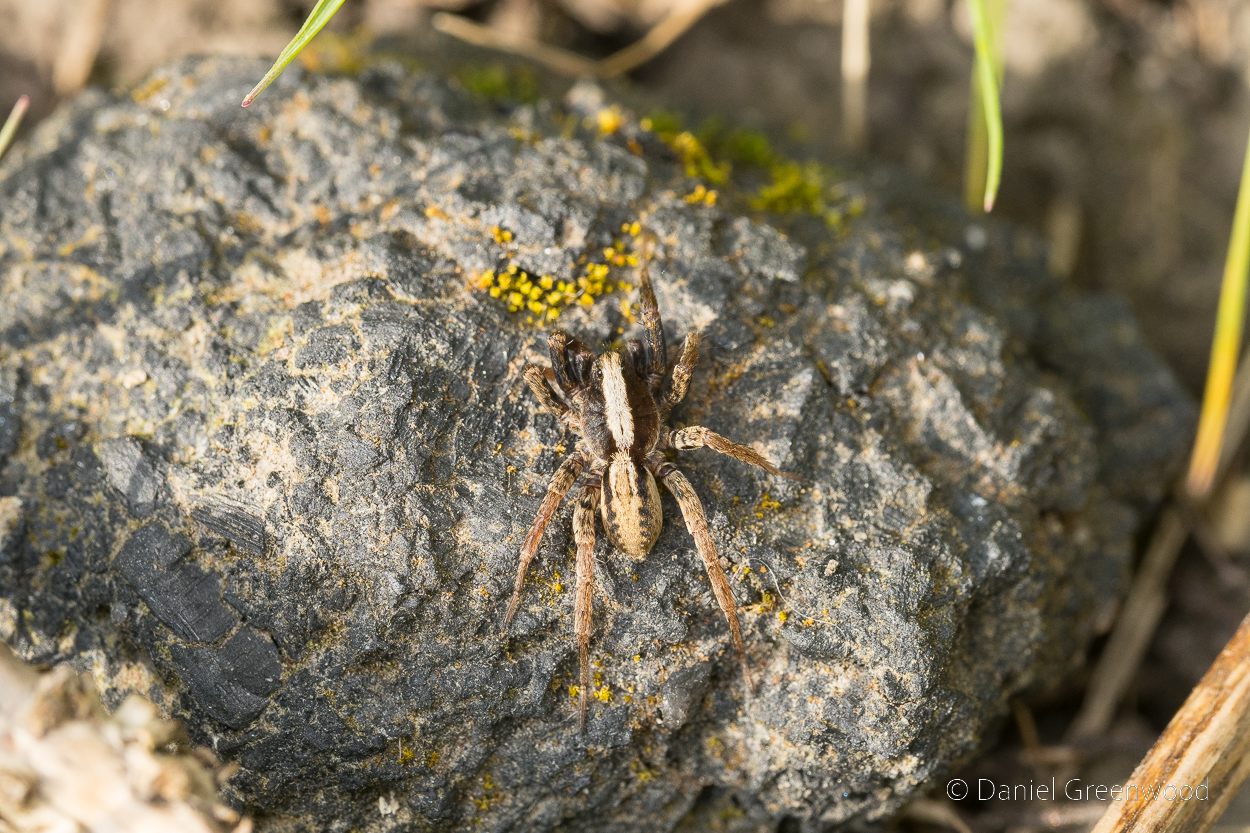
Sitting on this piece of charcoal (which you may notice is now being colonised by a very small moss) was a little spider. iNaturalist has suggested this is a fox spider.

It’s rather cuddly isn’t it? No?

At night we’ve begun to notice a powerful fragrance around the house. It’s a bit like honeysuckle but is probably a cheesewood, a species of plant from New Zealand. This grows in a neighbouring garden but reaches over to us. It’s absolutely covered in pollinators and the smell- wow. It doesn’t seem to be invasive so could be a good option for your garden if you like pollinator-friendly shrubs.

Thanks for reading.
When is a wasp a hornet?

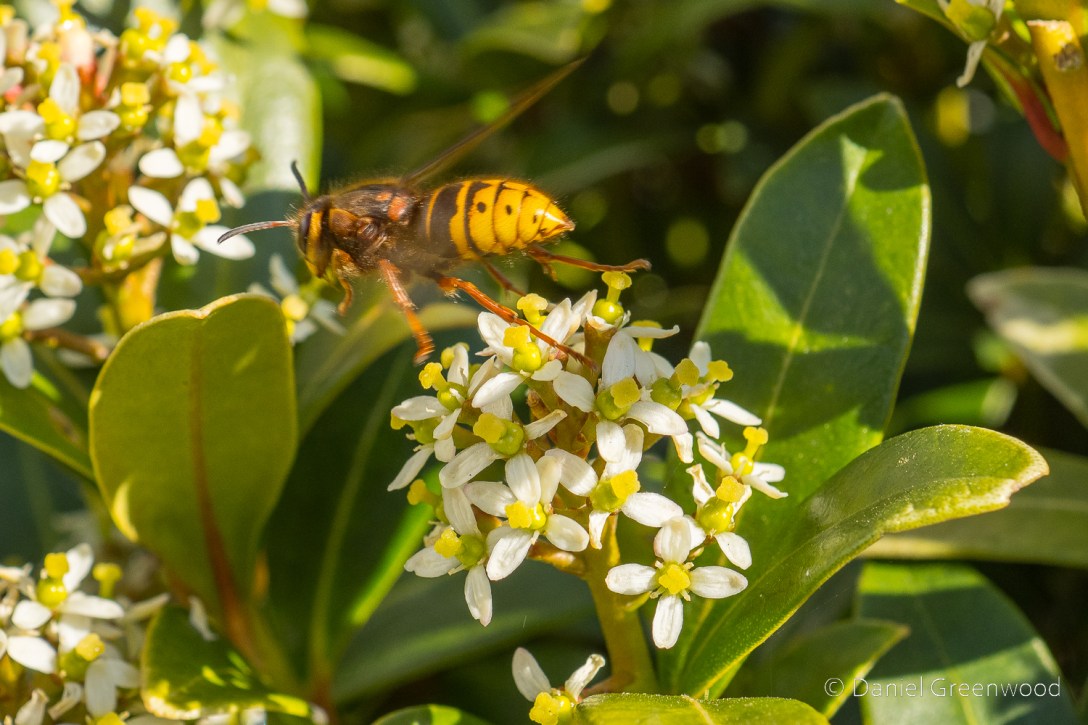
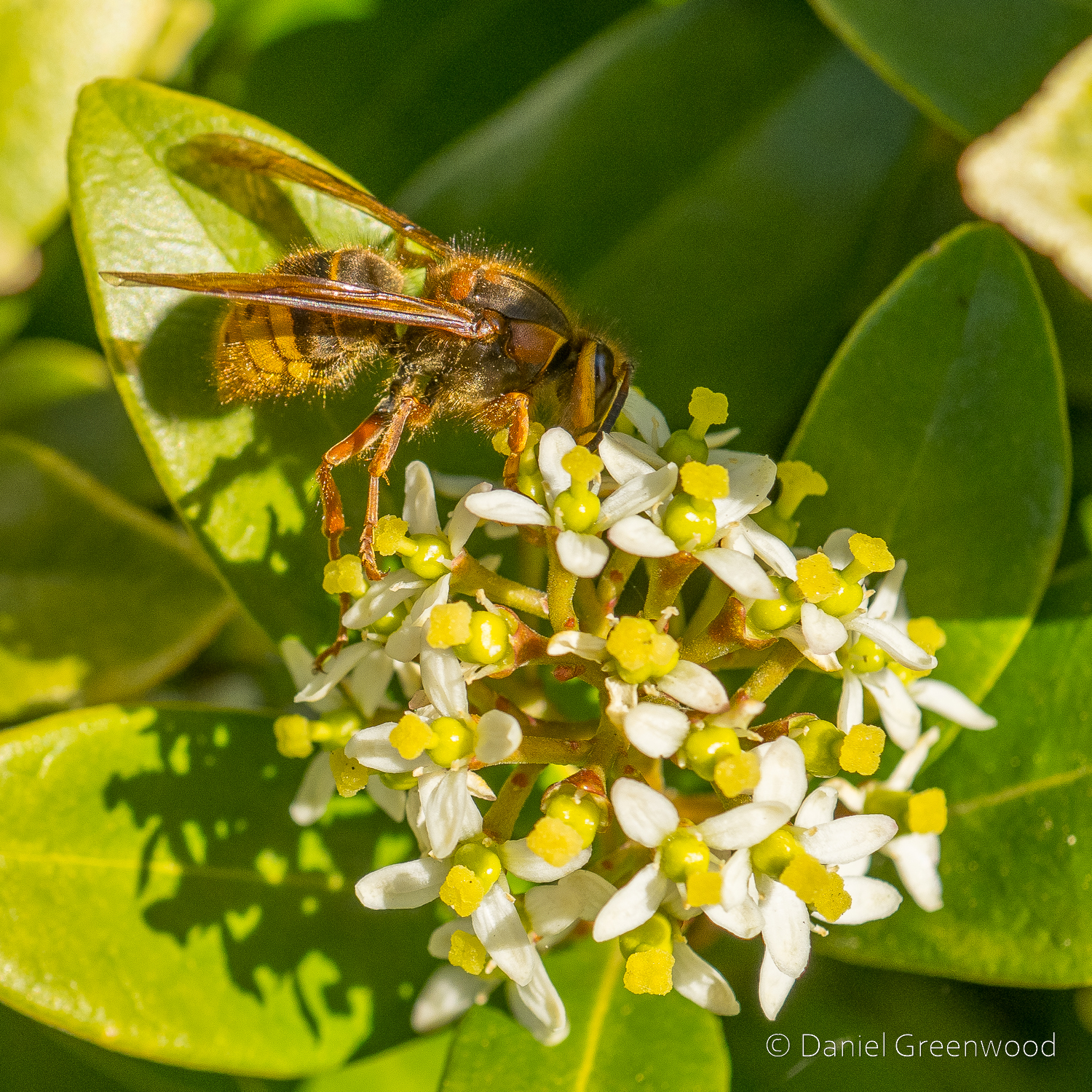
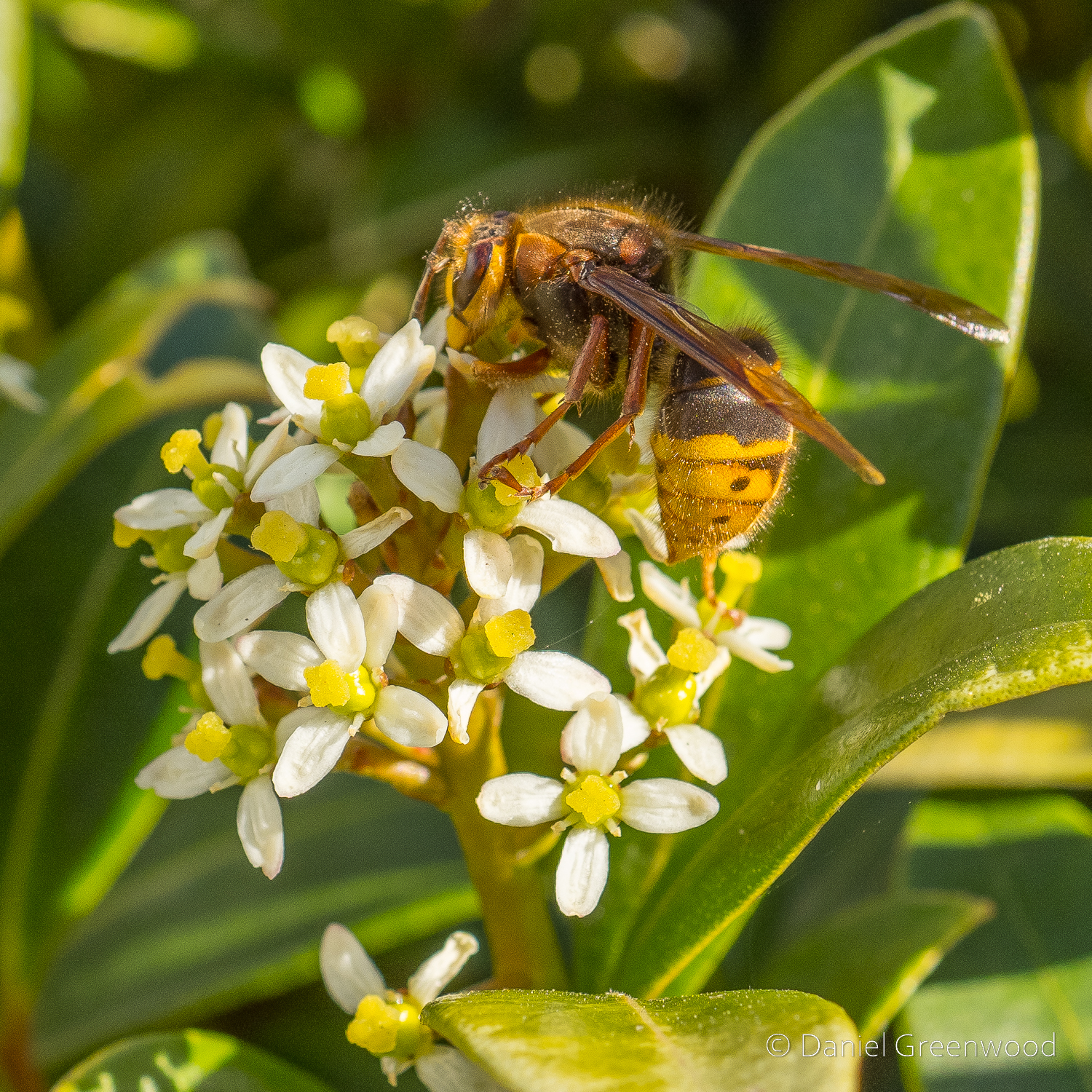
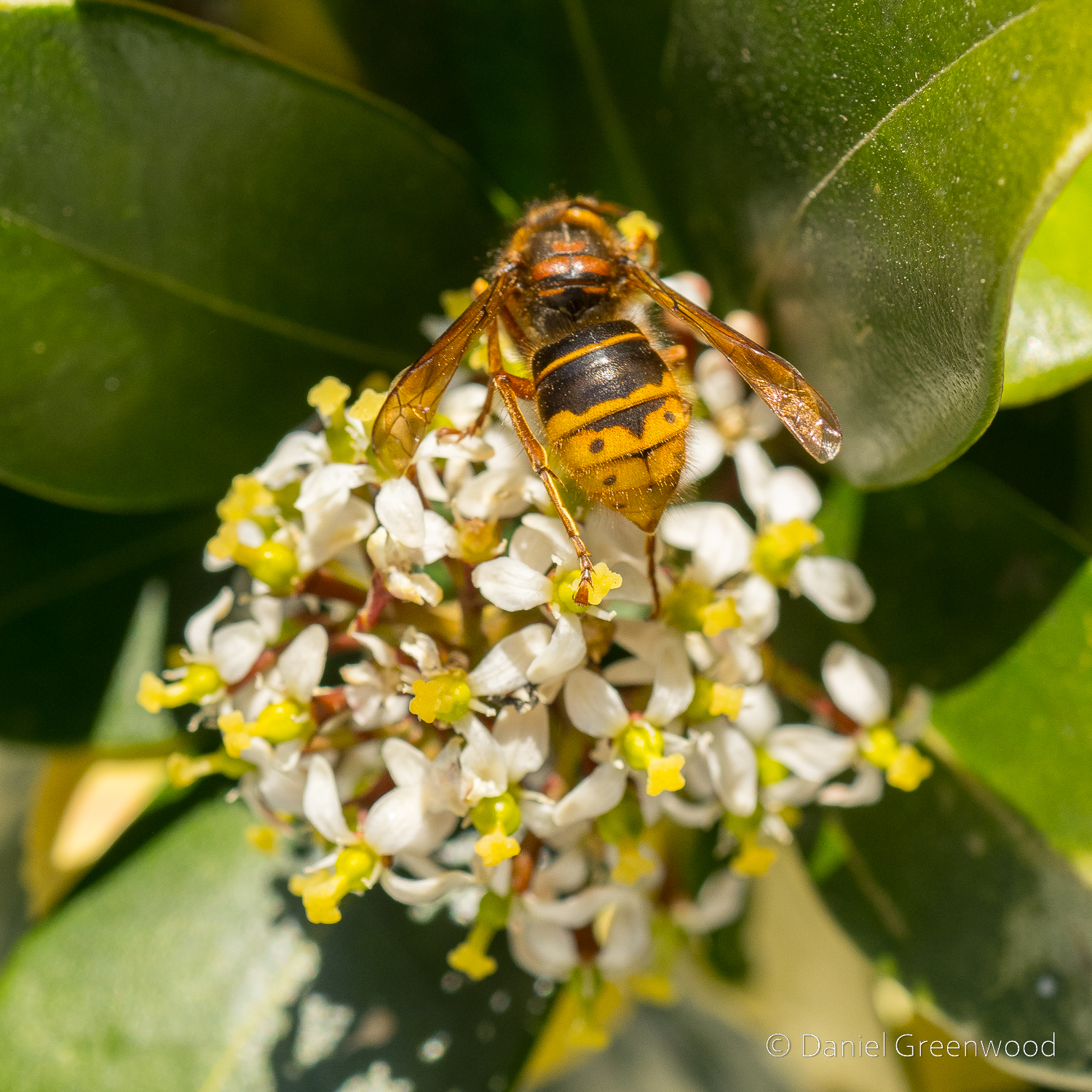
I was sitting in my garden when a large, wasp-like insect zoomed into view. It dropped into the skimmia and began nectaring on the flowers.

‘Hornet!’ I called out, but trying to be quiet enough not to spook the insect. I captured these images, convinced it was a hornet, the first I had ever seen in my garden.

When I popped a crude phone photo (not the world class images above) onto iNaturalist I began to have second thoughts. The first suggestions were for a species of wasp, the median wasp. That is now the consensus, and so my hornet drought goes on. But it is a beautiful thing.

My house is quite old, built in the 1840s. The path outside our door is known as a ‘twitten’, a Sussex colloquial name for a little footpath. The path is bricked (like many of them are) and always flushes with spring flowers. Lesser celandine and grape hyacinth are two of the species that enjoy the margins.

Does this rose regrowth remind you of a certain American President?

A few holes have appeared in the lawn. I haven’t seen who created these mini-bunkers but I am confident they’re mining bees of some kind.

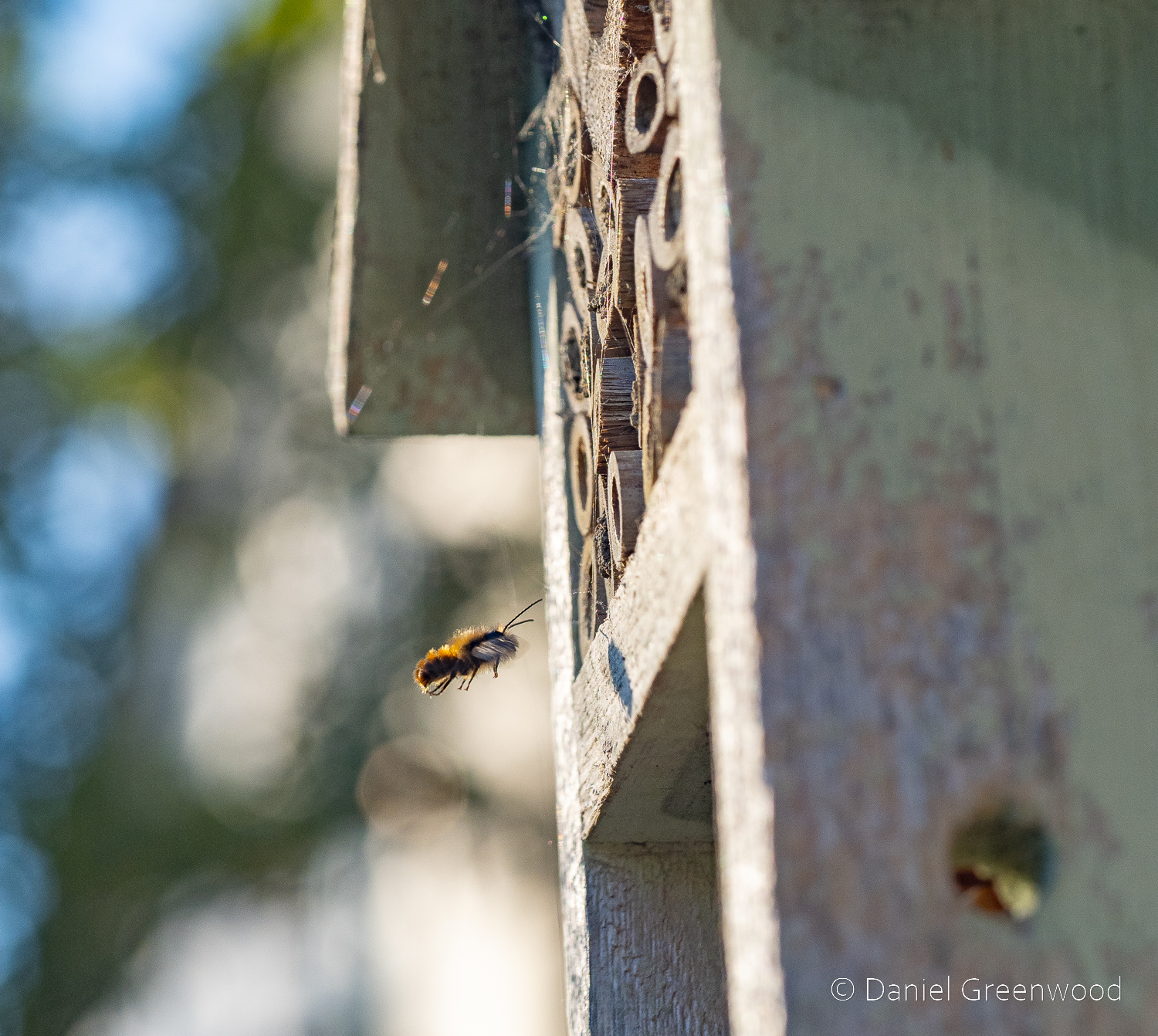
The red mason bees have been rather slow to appear this year and many of the bamboo slots are still sealed. Some of the bees have been hovering around the entrances, as above.

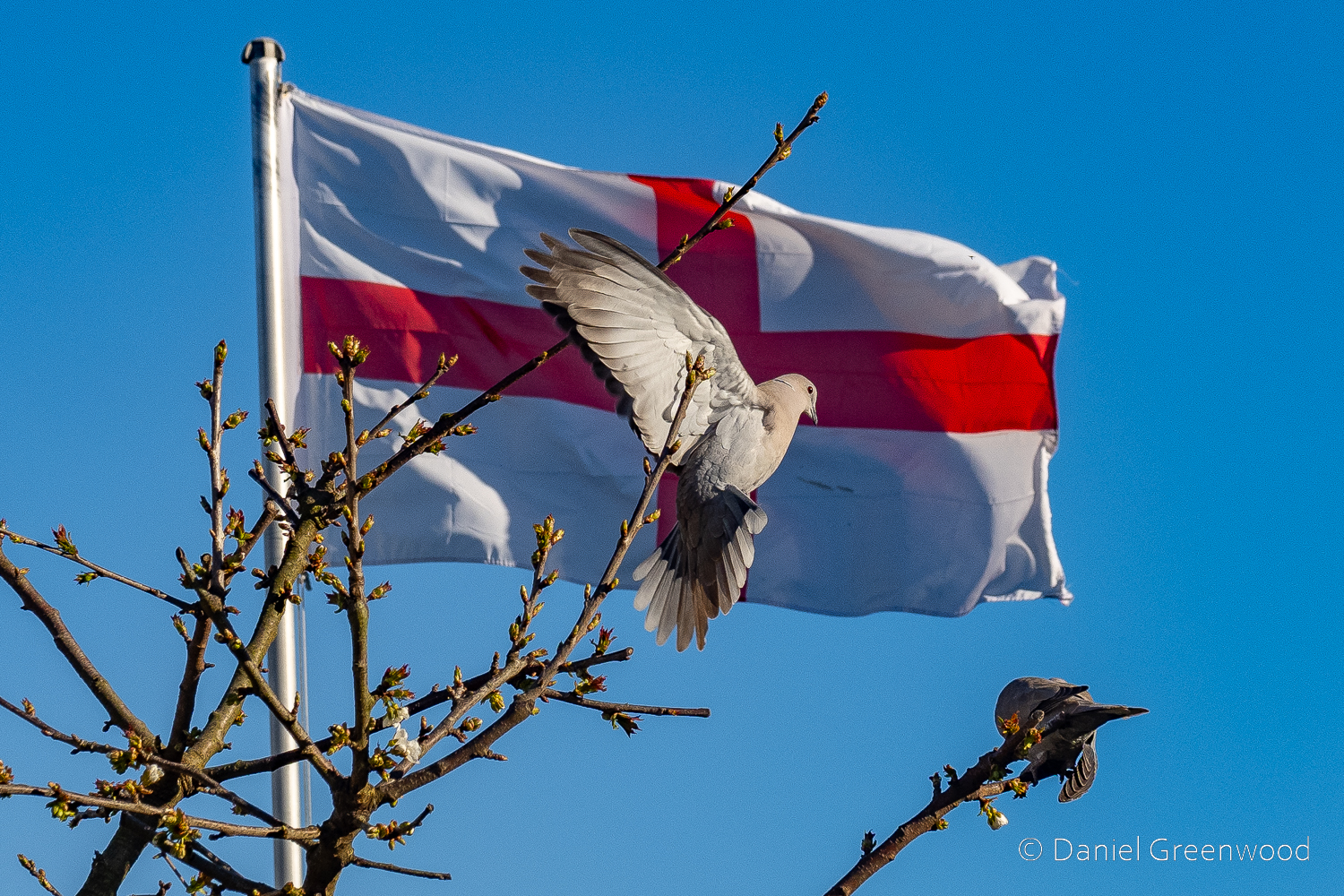
I took this photo of two – yes, two – collared doves with my macro lens. Macro lenses usually often can act as a telephoto lens because you need space between you and the thing you’re photographing to ensure you don’t spook the subject. The flag isn’t mine, as you may have guessed if you’ve ever met me or read this blog before 😉

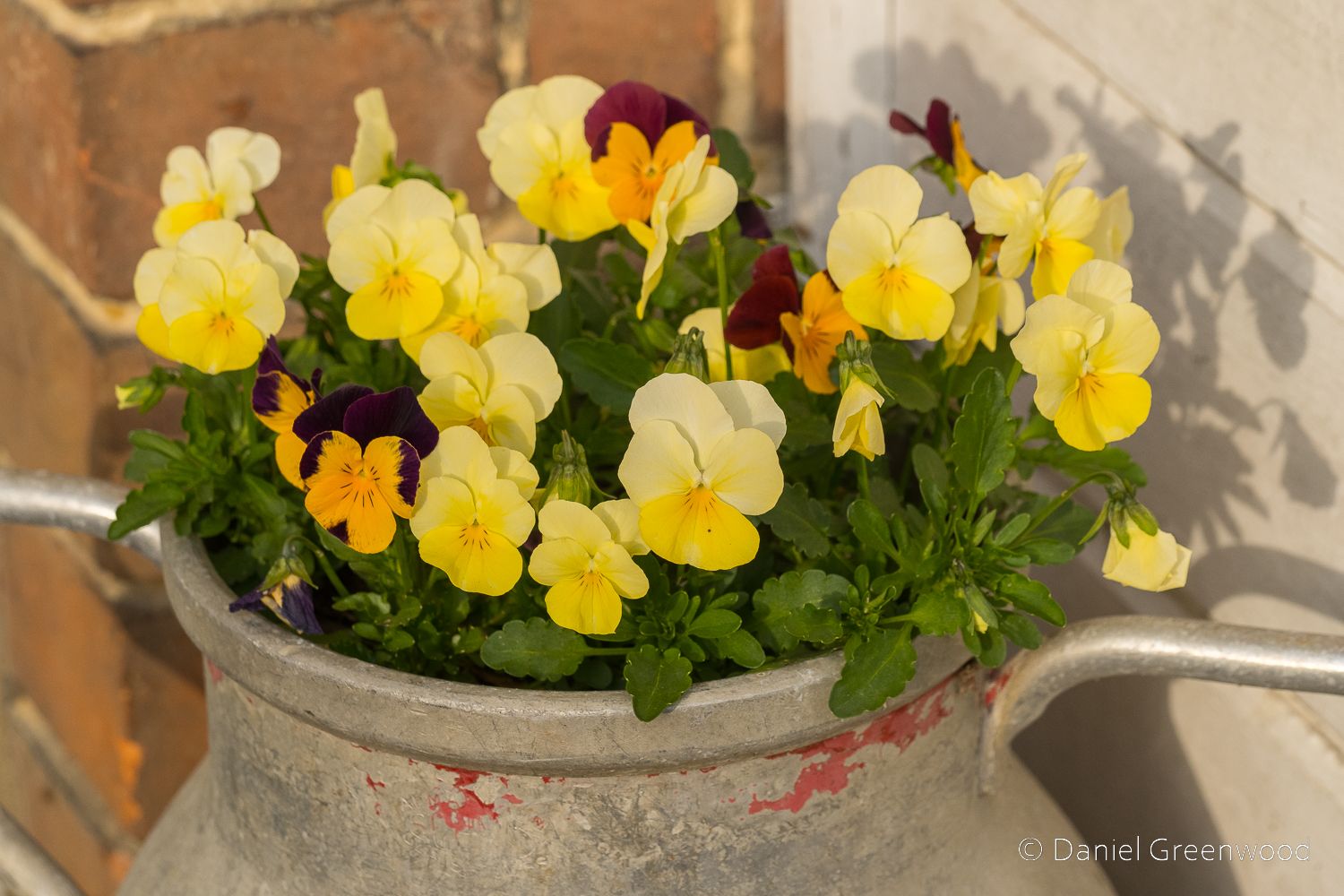
The pansies are doing well in the milk churns, a good place to end.

Thanks for reading.

Macro

Spring 2025 arrives

Five years ago we were facing up to the Covid-19 lockdowns. In response to the stay-at-home orders I began a weekly macro blog, an assignment from the gods? No, just our Supreme Leader at the time Boris Johnson and his better half in Public Health Chris Whitty.

While I can’t promise weekly blogs due to work and life commitments, it’s definitely time to dust off the macro lens after its winter slumber and step out into the garden to see what’s happening!

As ever, there’s far more going on than you might think. I also think it’s important that we look at and try to understand invertebrates when this misinformation is coming from the leader of the country (I know it could be worse, but get your facts straight, folks).

We depend on nature and our ecosystems and their wildlife for our food, clean water, fresh air and function. Wildlife has a right to exist and the world does not revolve around our species.

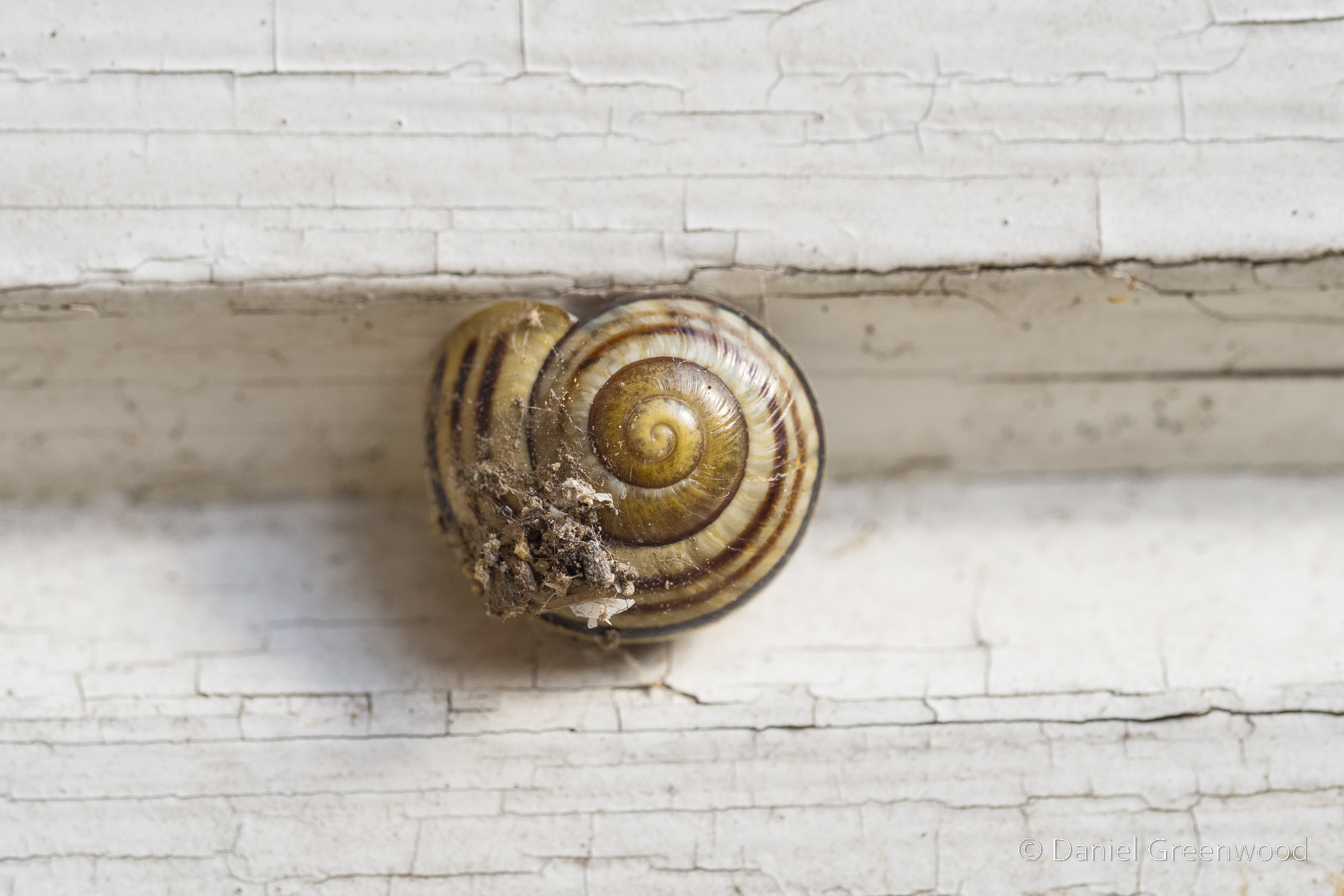
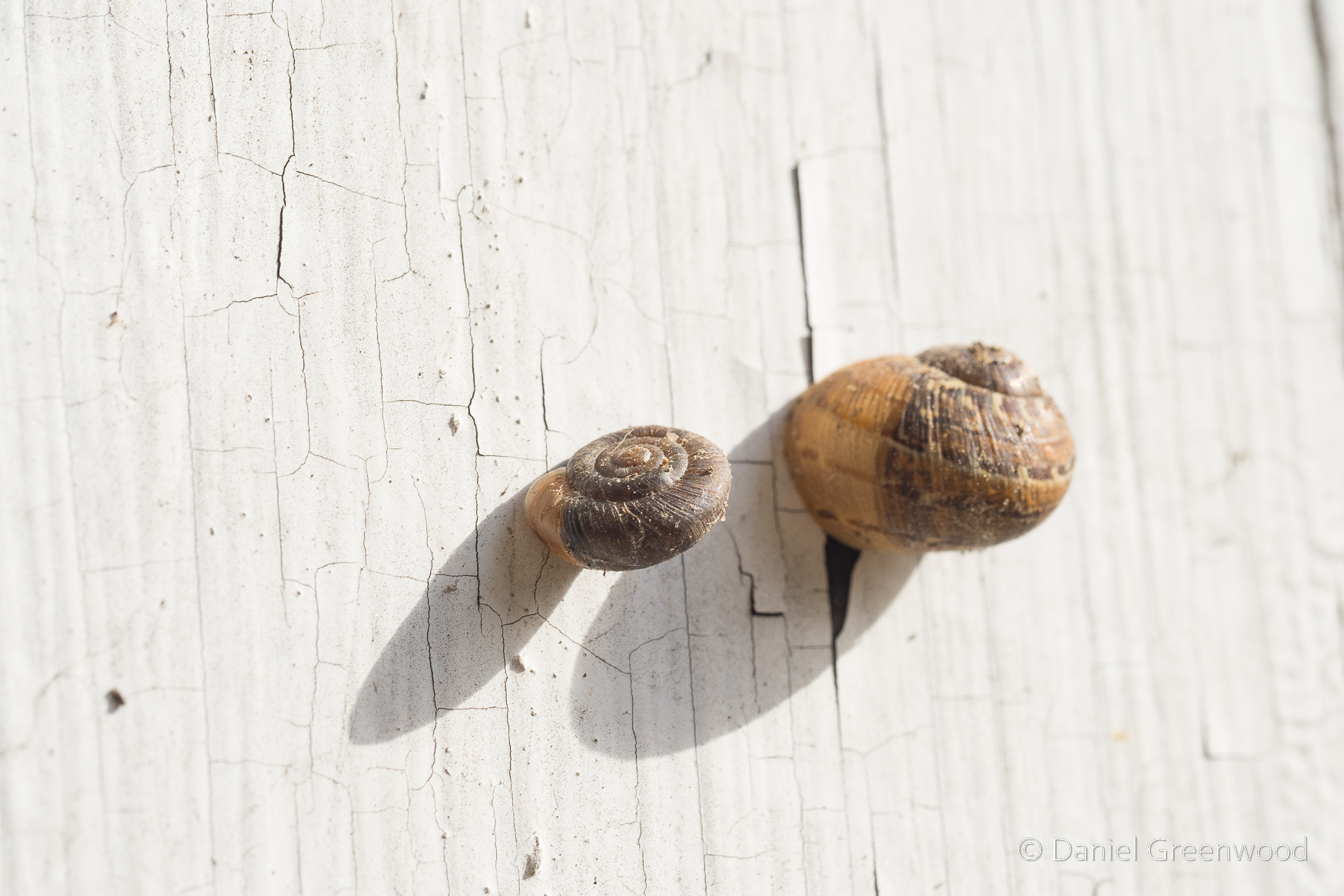
The snails are roosting in our front porch. My wife was wondering if they might be too hot there, as the paint’s white and it can get quite sweltry in there.

It looks to me like something is going on with the shells and they may be roosting to grow their shells. It’s not something I know much about. Please let me know in the comments if you have any info 🙂

We have some nice pansies my wife planted out by our front door. You can see the bee drive-in here with the dark landing marks and the brush of hairs to ensure the pollen of other pansies are retrieved from a visiting bee.

The broom plant flowers in a subtle way, these little yellow petals appearing from the red sepals.

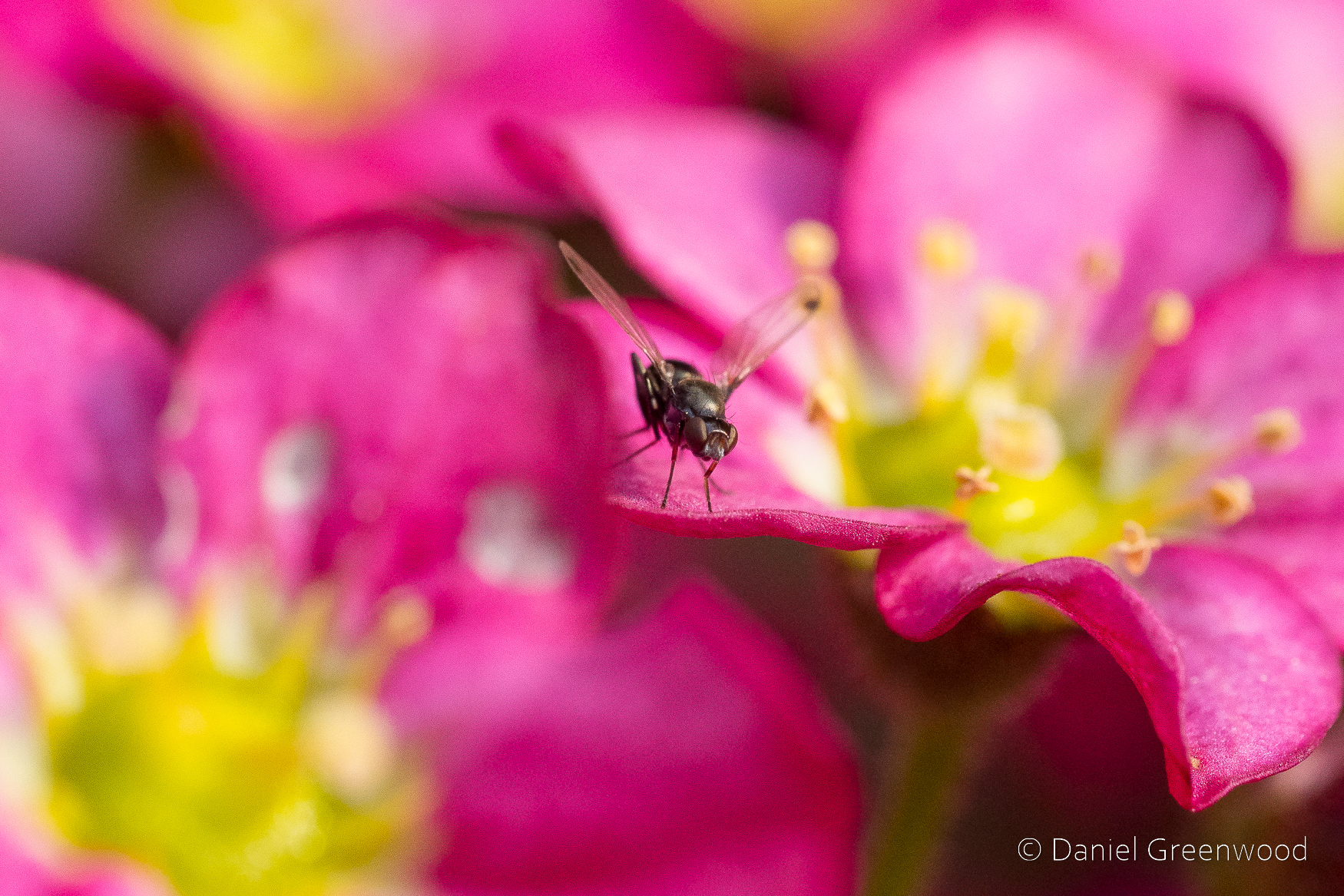
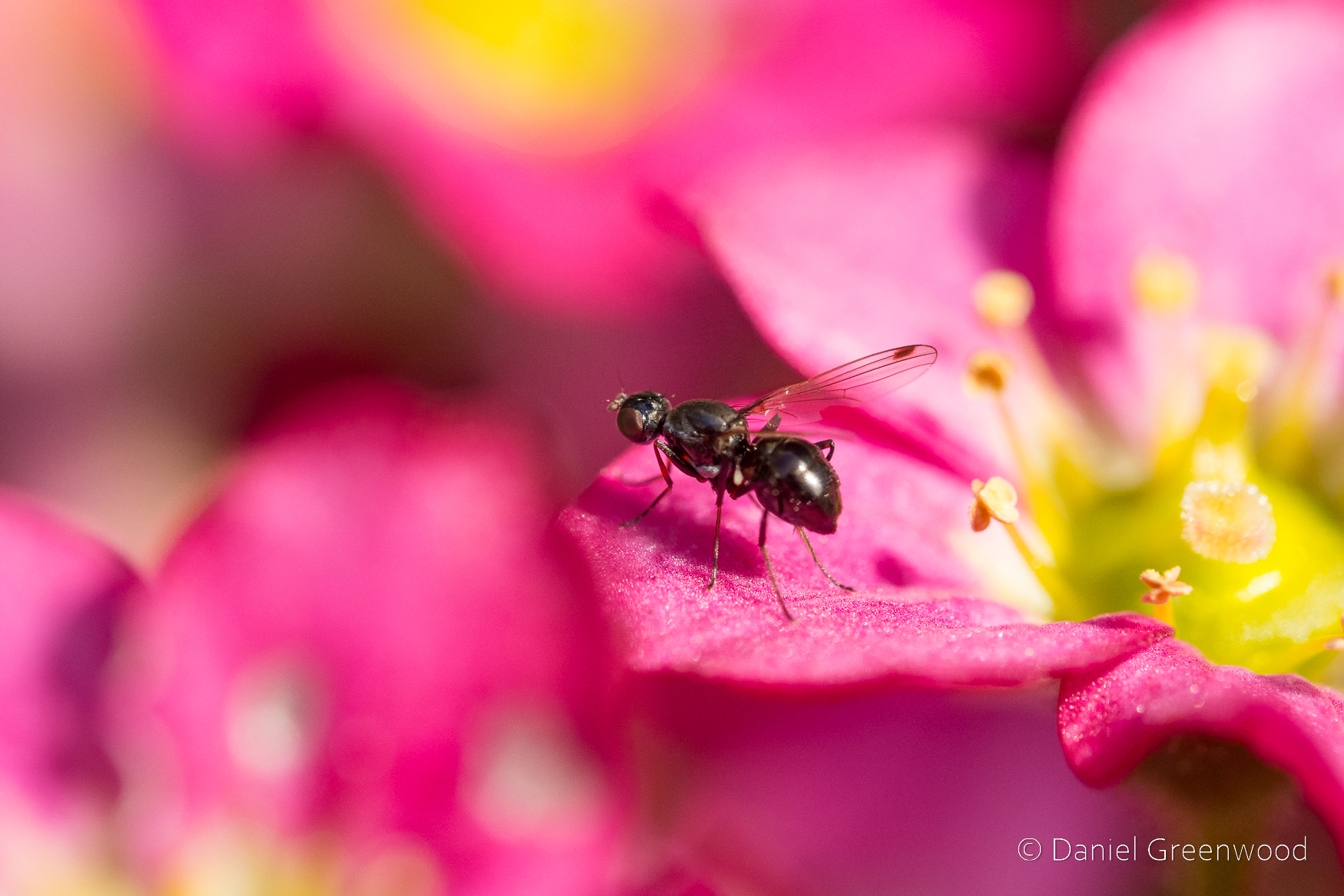
This is a common little fly that seems to stand around on leaves and petals for ages!

Their eyes are very cool, and I enjoyed the single spot in their wings as well. These flowers are some saxifrages my wife bought from the garden centre.

In January on a cold Saturday afternoon I laid or ‘plashed’ the hazel shrub I had planted out in our hedge. It’s a little hedge, but the usual shrub that made up the hedge has died back so I needed to take action. It’s so pleasing (‘pleaching’?) to see the hazel respond so well and new shoots to appear from the lain-down stems.

I also uprooted a sapling that a squirrel had cached as a seed, which is doing well. I planted this out around the time of frosts, which shows hazel’s hardiness. I did know that was the case, but it’s nice to see it come through.

The normal hedge I mentioned is this Skimmia japonica. It’s good for pollinators, no doubt. But it doesn’t seem to last well without pruning.

It was abuzz with drone flies as spring really began to arrive in mid-late March.

These drone flies (Eristalis) are probably the most common winged-insect in our garden at the moment. They’re quite funny I think.

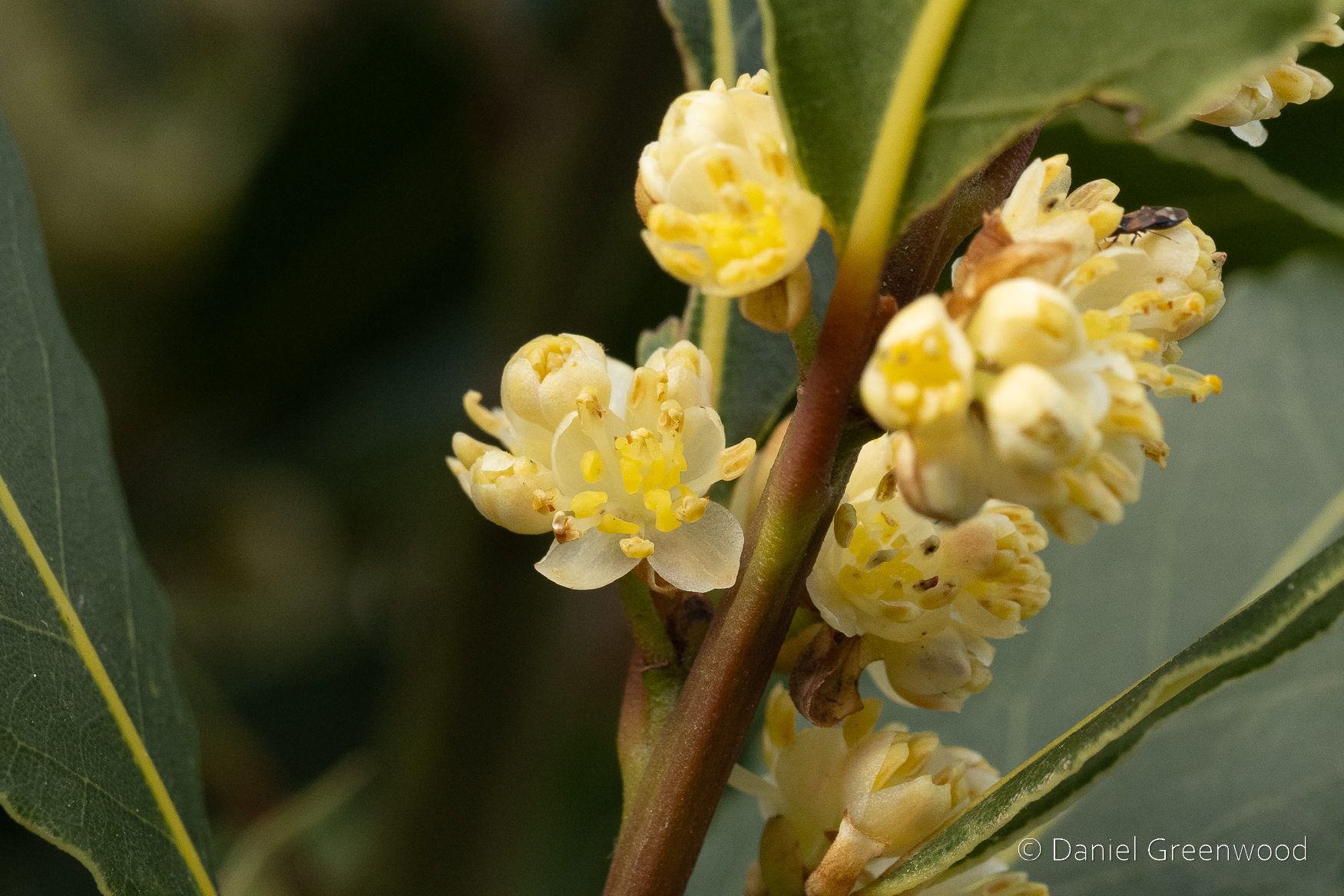
Bay flowers promise so much, but they are quite modest really. I am hoping this provides some decent nectar for any invertebrate that needs it.

I spotted this little crab spider hanging out on one of my thermal t-shirts. It’s probably Misumena vatia, the most common of the crab spiders.

A cat monument in our garden in memory of our cat Kaiser who loved this spot in the flowerbed. The wolf spiders also love this spot because it gets so warm. The white stone of the cat is even warmer than the surrounding soil. I think this may be a male and a female wolf spider, with the male the smaller of the two, with the palps (dark spots at the front of its head, in the cat’s eye!).

The fence next to the cat monument was a helpful basking spot for the first nursery web spider I’ve seen so far this year.

The flowering of our magnolia is short and sharp, but these globular flowers are a delight. Magnolias are very old trees in evolutionary terms, and here’s to another year under their belts.

Thanks for reading.

Macro

10 photos from a decade of macro

A break from my blitz of my usual summer macro posts for something a bit more, monumental.

I’ve been using a dedicated macro lens since 2014, so this year marks my 10 year anniversary.

Now, no one cares about this, and I only just remembered, but it gives me an excuse to share 10 of my favourite invertebrate macro images. I’m not including fungi in this, they are a different game entirely for me.

In no particular order:

Hairy-footed flower bee in Peckham, London (April 2018)

Nikon D750 + Sigma 105mm macro lens

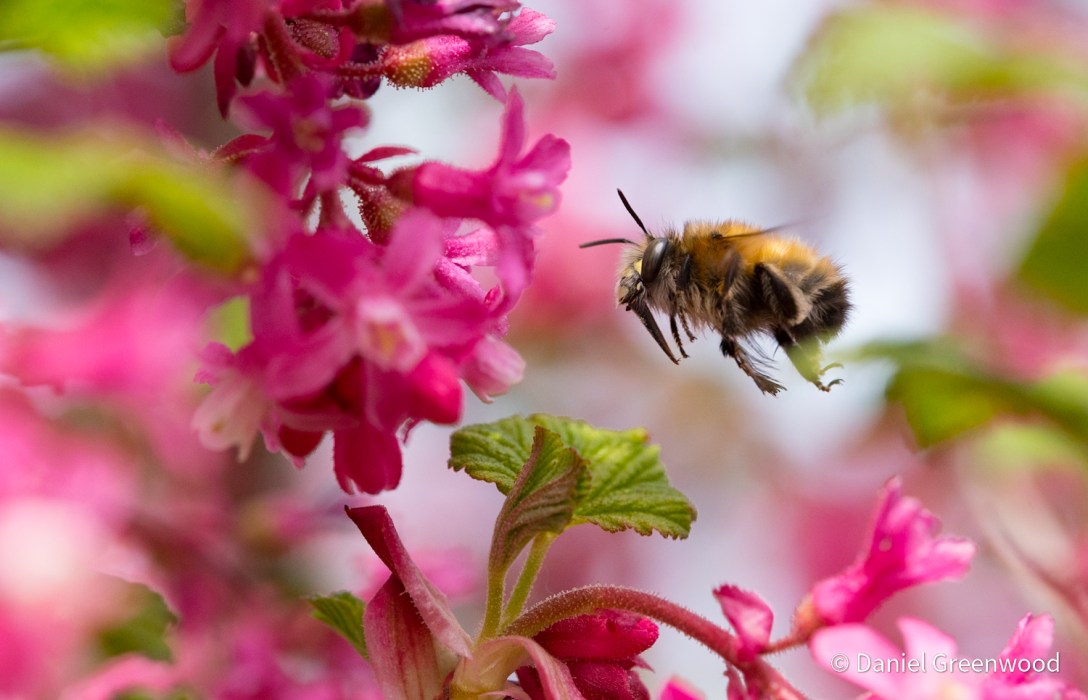
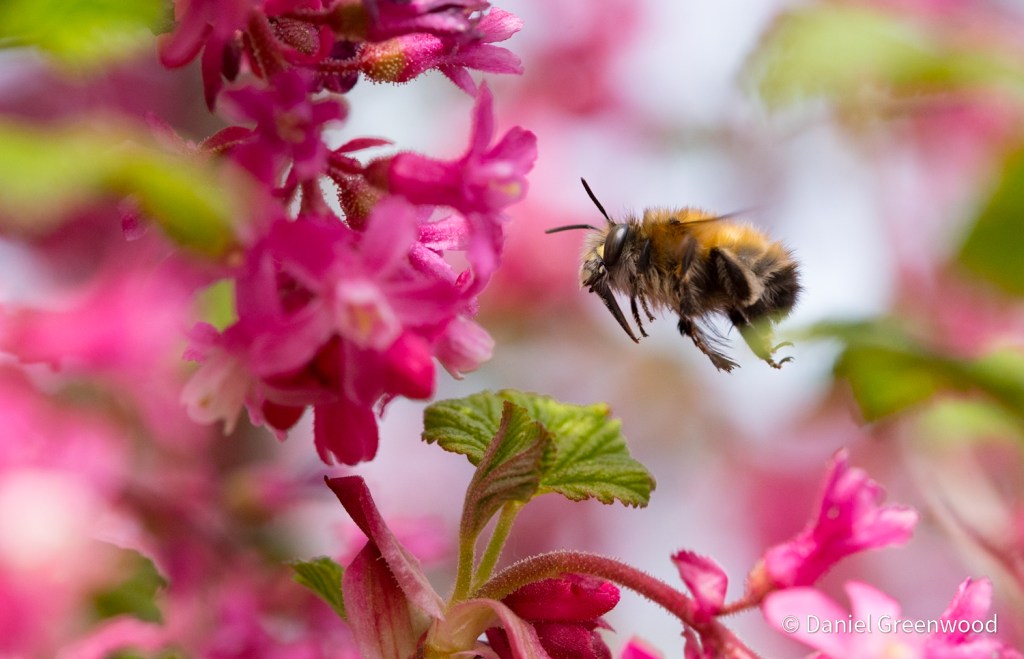
This picture was taken while I worked for London Wildlife Trust at the Centre for Wildlife Gardening in SE London. I knew that hairy-footed flower bees were keen on flowering currant. I got down at a good angle and managed to capture the bee just as it visited the flower. I love the pink of the flowers and the isolated shape of the bee.

Chalcid wasp, West Sussex (August 2021)

Olympus EM-5 Mark III + 60mm macro lens

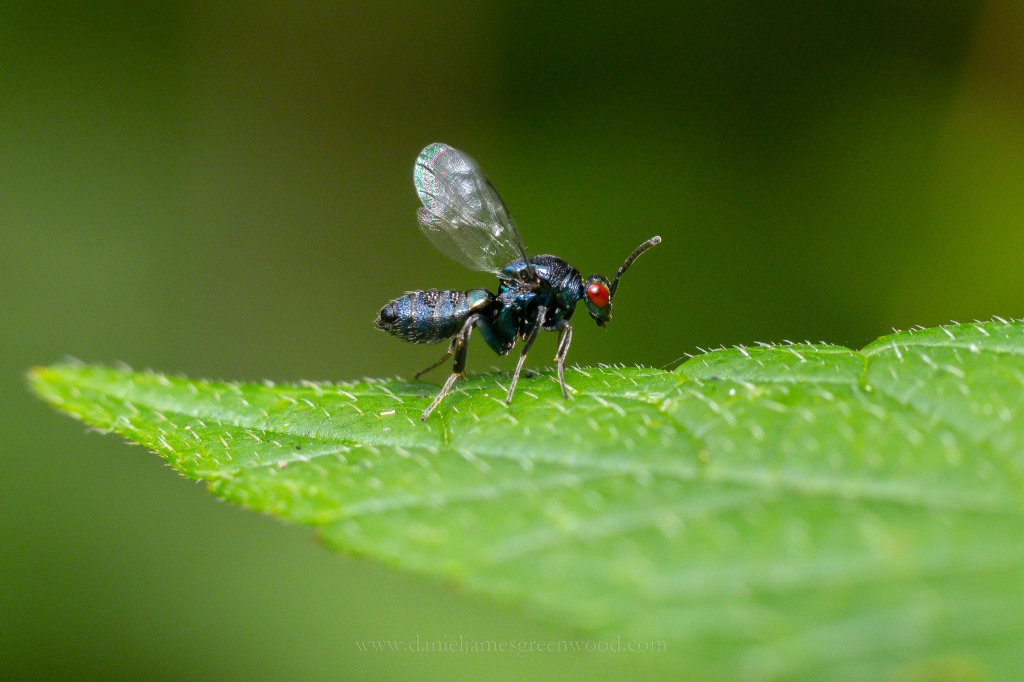
Wasps fascinate me, none more so than the parasitic species which are numbered in the thousands. This little wasp is a chalcid wasp which I saw one grey summer’s afternoon. You can read the post about it here.

Ant harvesting honeydew, my garden in West Sussex (June 2021)

Nikon D5600 + Sigma 105mm macro lens

Ants farm aphids for their honeydew and it’s something I’d always wanted to get a decent photo of. Right by my garden door this garden ant was gathering the honeydew from a group of aphids. I took a number of photos and cropped this one down. I like the glow of the globule and the warm background colours.

Fencepost jumping spider, my garden in West Sussex (June 2021)

Nikon D5600 + Sigma 105mm macro lens

Spiders are an unknown quantity for me but the lockdowns helped me to learn more about this in my house and garden. I was taking some photos after work one night when his large and rather pink jumping spider emerged from my fence. It was such a joy to have it wait so patiently for its close up. See blog here.

Silver-studded blue, South Moravia, Czechia (August 2016)

Nikon D750 + Sigma 105mm macro lens

I have to thank my friend Karel for inspiring me to take the plunge and buy a macro lens. So Czechia, where I first met him, forms a place in my macro story. When visiting there in 2016 my friend Pete and I were introduced to a meadow by Zuzka, our host. The meadow was alive with butterflies and wildflowers. We found hundreds of silver-studded blues, many of them roosting on cooler August days. This is a memory as much as a favourite macro photo. See the blog here.

Javelin wasp, my garden in West Sussex (August 2020)

Nikon D5600 + Sigma 105mm macro lens

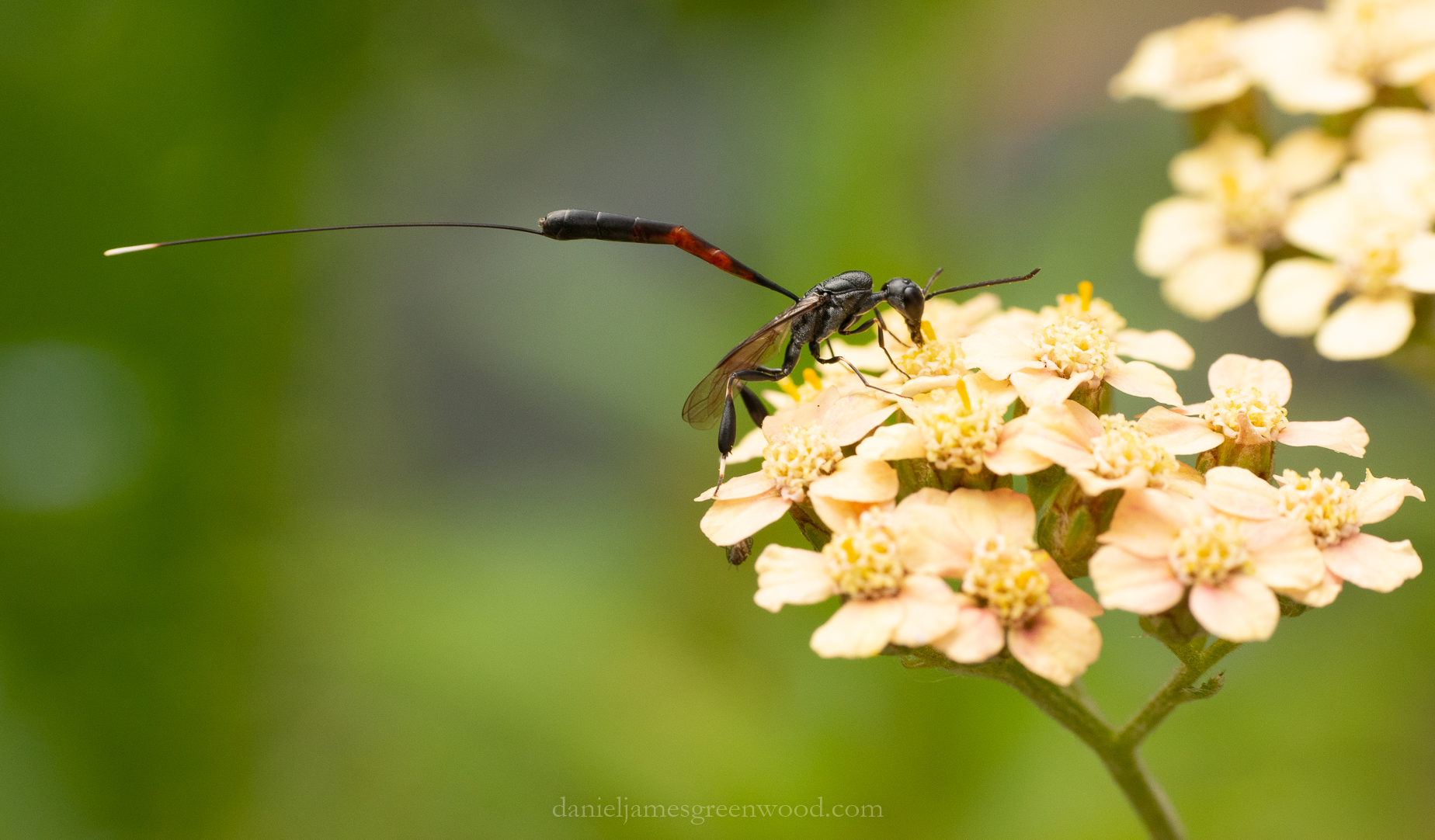
I will always remember this photo because my dad was with me, visiting from London for the day in those strict Covid times. Along with my mum (hello), my neighbours were also there to see this stunning ichneumon – the javelin wasp. It was a rare social moment, and one of the last times I managed to enjoy nature in the company of my dad before he passed away the following year. See the blog here.

Planthopper, my garden in West Sussex (June 2020)

Olympus EM10 MIII + 60mm macro lens

In June 2020 I was taking a macro photo every day. It was a rainy afternoon when I realised I needed to pull a macro pic out of the bag. I opened the garden door and found a grass head a few steps away. Inside it I found this planthopper roosting, so took a few pics and went straight back inside!

Tawny mining bee, my parents’ garden gate in London (April 2017)

Nikon D750 + Sigma 105mm macro lens

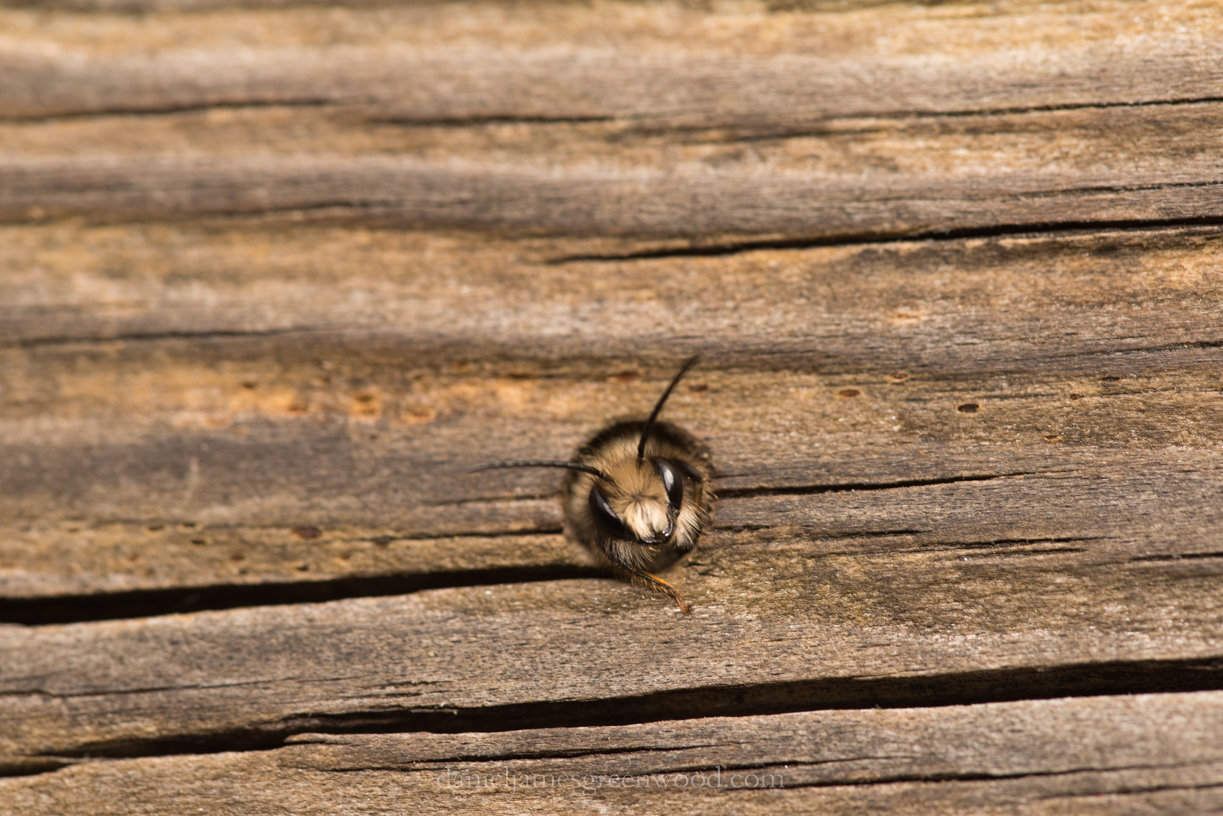
I was staying with my parents during the Easter weekend and keen to explore the macro world in their garden. I noticed some little holes drilled into the garden gate, which had been in place for maybe 50 years. I noticed a bee heading in and out and waited on the step for the bee to emerge. Bingo! This lovely male tawny mining bee popped his head out to say hello.

Plant bug, Coulsdon, Surrey (July 2017)

Nikon D750 + Sigma 105mm macro lens

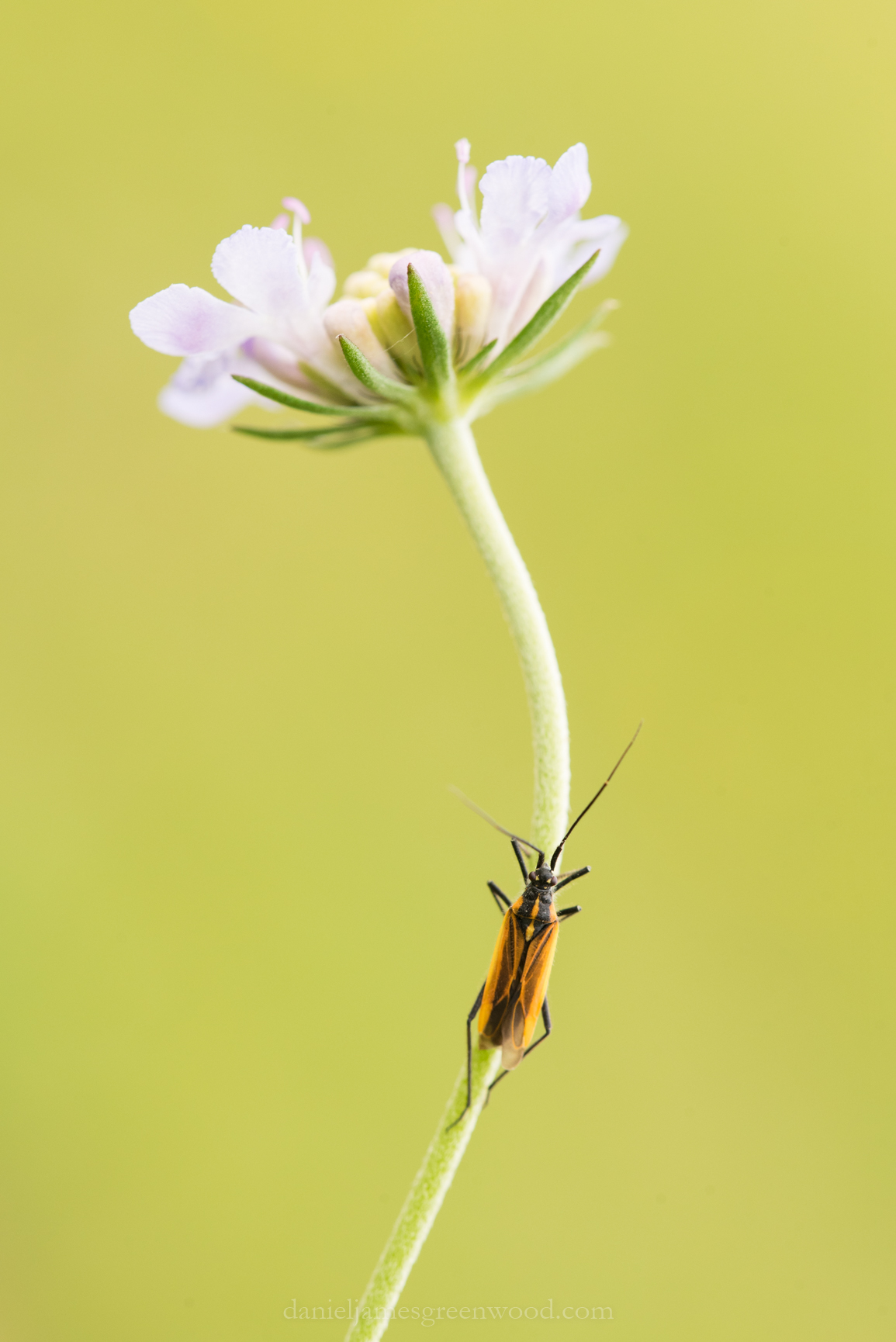
Farthing Downs on the Surrey/London border is where I would spend hours at a time honing my macro skills (basically the art of positioning and then finding subjects, nothing too technical). You could lie on the grass paths and not see anyone for hours. It was also the first place I took my new lens in 2014 (Sigma 105mm) to try it out. One summer’s day I found this plant bug climbing to the top of a scabious flower. It is one of my most accomplished pics and shows full-frame cameras at their most powerful, with beautiful colours and detail. See the blog here.

Paper wasp, South Moravia, Czechia (August 2016)

Nikon D750 + Sigma 105mm macro lens

Another one from my visit to Czechia in 2016. It was a great time for insects and with a more gentle heat than the months preceding. This was my first time seeing a paper wasp. I love these social wasps, which we don’t have in Britain, and I love the way it’s in a bed of wild carrot.
Here’s to another decade in macro.

Thanks for reading and for the support on here. I really appreciate it.

Macro

I write these blogs in my spare time because I want to raise awareness about the beauty and diversity of our landscapes. If you enjoy reading them you can support my blog here.