The javelin wasp returns sharpish

On a Saturday afternoon in early August I was reading a real newspaper, and I happened upon an article about the diversity of wasps.

I nearly choked on my avocado.

The article was outlining how significant wasps are in our world, as controllers of other invertebrates that, in over abundance, would create a damaging imbalance in our farming- and eco-systems.

We should worry about the lack of wasps this summer, the article said. Helena Horton would probably enjoy this blog, to be honest!

As you may have noticed, there are very few images in this post. There’s a reason for that, which I’ll get to. After reading the article I went to put the washing on the line. With a cursory glance at the fennel in the flowerbed I noticed that one of my favourite wasps was visiting.

The javelin wasp (Gasteruption jaculator).

I skipped indoors, grabbed my camera with macro lens and began following the wasp around the fennel flowers. I didn’t get anything worth sharing, until the wasp was spooked and dropped down to cover in some grasses. As you can see above, it then began to clean pollen from its face and antennae. I fired off some pics and then checked them. They were super sharp and beautifully lit by the soft light from the clouds overhead.

There are only two pictures, almost identical but for their crop, because they represent the wasp in the best way I can. Clear, in focus, and sharp.

I have written several times about these ichneumon wasps and their seeding of eggs in live caterpillar hosts. It’s grizzly, but it’s not done out of cruelty.

The insect season is drawing to a close and it’s been a poor one. Hopefully absence may make the heart grow fonder, and action taken at scale to ensure these pollinators, not just honeybees, can be protected.

Thanks for reading.
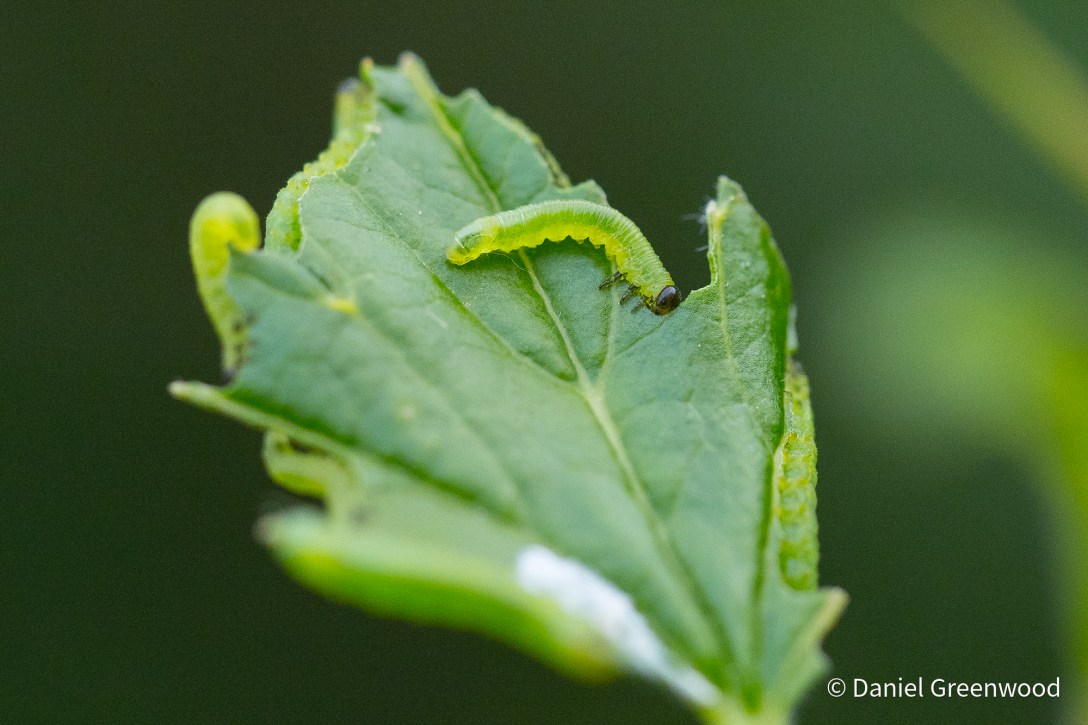
Sawflies munching the gooseberry ๐Ÿ˜‹

In June, my wife called me out to the garden because she’d found something in the gooseberry. Pretty standard.

She has an amazing ability to find things and is especially good at foraging. In this instance she’d found caterpillars munching through the gooseberry leaves.

There was a sense of both amazement at what we were witnessing and fear for the health of the shrub. We don’t survive on gooseberries and the birds almost always get to them first, but you don’t really want your shrub to die. Then again it hasn’t exactly been a raging success, to be honest.

Personally, I always think English gardening culture fails to accept death and decay into the mix, and the important role that plays. Gardens should feed local wildlife, not just be a killing zone for visitors deemed unwelcome.

One summer does not a garden make!

With the help of iNaturalist I understand these to be small gooseberry sawflies (Pristiphora appendiculata). Sawflies are relatives of bees and wasps that are common in gardens and elsewhere.

I do love this view of the sawfly caterpillar nibbling its way through the leaf. When we looked at them on the gooseberry new caterpillars would appear as your eyes adjusted.

In the days that followed I noticed house sparrows hanging from the surrounding raspberries and picking at the gooseberry. That’s a very good meal, especially for fledglings.

Some days later I spotted a new visitor to the gooseberry. I was confident this was a sawfly (not knowing anything about their lifecycle) but unsure if this was one of the caterpillars emerged as an adult insect. I’m not sure, but it’s likely to be an adult small gooseberry sawfly.

As for the gooseberry bush, it looks ‘touch and go’ as football physios say. It’s part of the game of life.

Thanks for reading.

Macro

Zombified fly in the garden ๐ŸงŸโ€โ™‚๏ธ

My garden, West Sussex, June 2024

I’ve posted before about the so-called ‘zombie fungus‘, but that wasn’t in my own garden!

There are a few fungal concepts that have become mainstream in recent years, namely the wood-wide web and ‘zombie’ fungi. The latter has become popularised because of The Last of Us, a programme I haven’t watched and can’t say anymore about. The most famous parasitic fungus that can control its host is cordyceps.

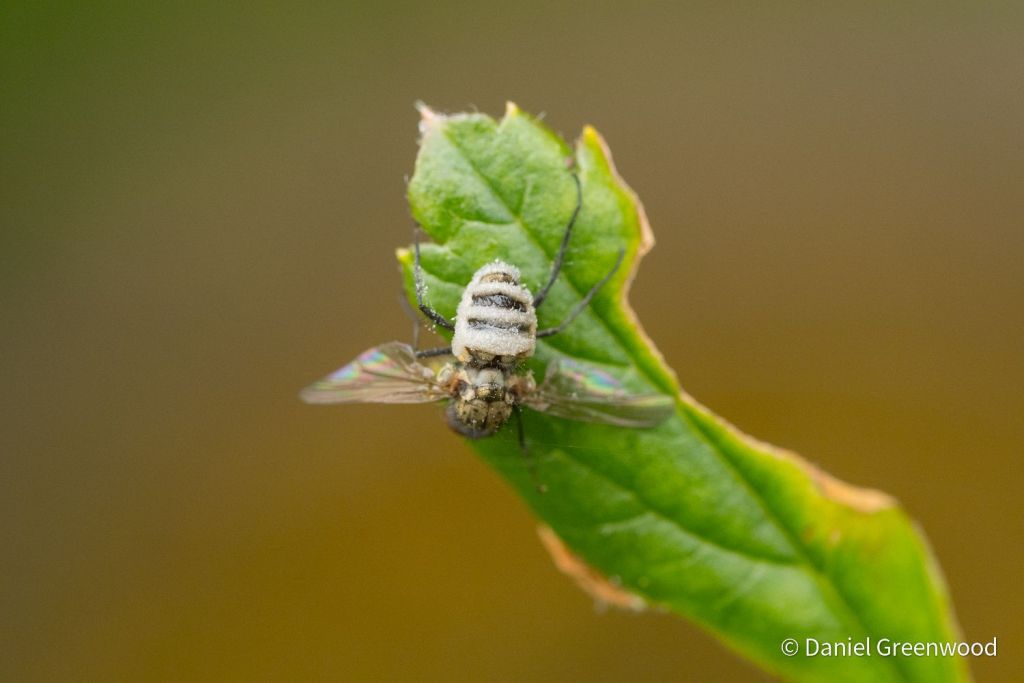
My wife actually found this (not cordyceps) when she was inspecting the gooseberry bush, which was steadily being eaten by sawfly larvae. I’ll post about them next.

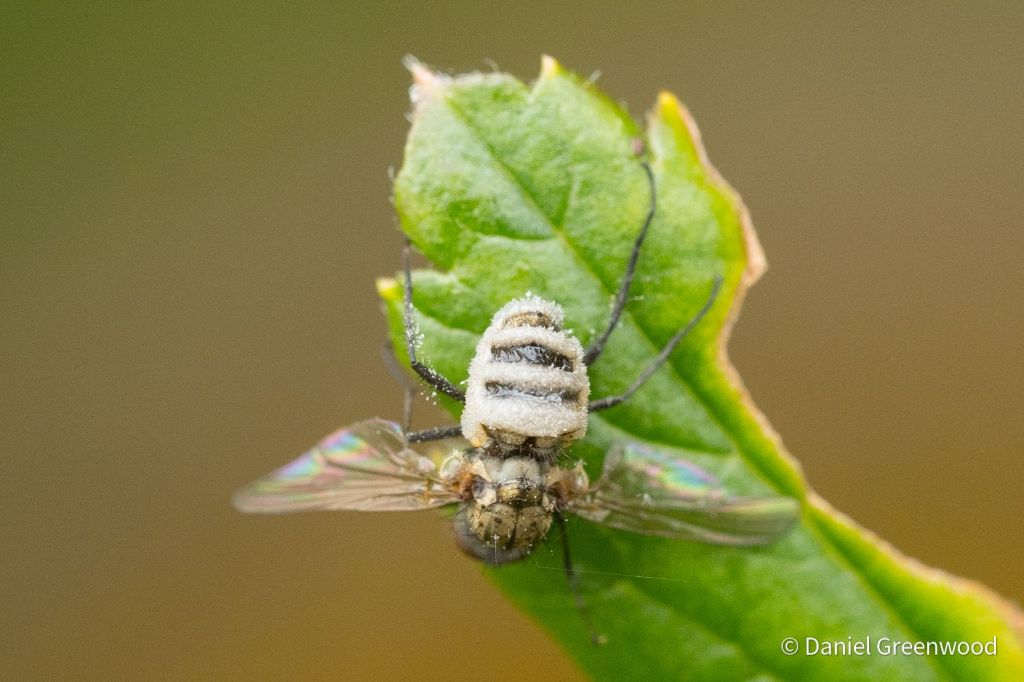
What is this exactly? It’s a fly that has been parasitised by a fungus called Entomophthora. It basically is able to control the movement of the fly by making it move to a prominent position for its final moments, or at least I think that’s what’s happening.

The prominent position then allows the fungus to spread its spores on the wind or from a more beneficial height to reach its next host, however that occurs.

It’s not quite as gory as cordyceps, where a fungal fruiting body rises from the body of its host. It is altogether more macabre and sad-looking, though. Cordyceps can be very colourful.

In reality it is just an example of the immense biological diversity out there, the interactions between two kingdoms – animals and fungi.

Thanks for reading.

Macro | The fungus capable of mind control

First ichneumon wasp of 2024 ๐Ÿ

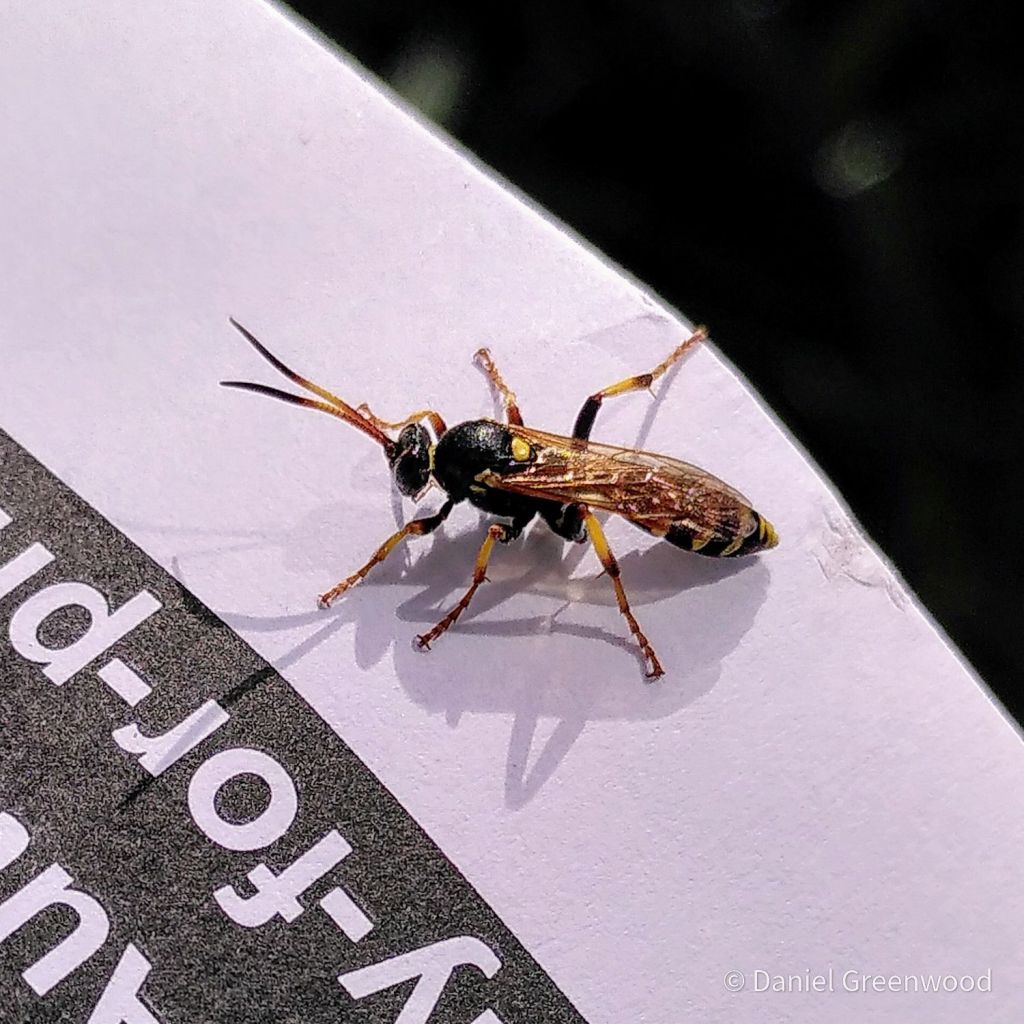
You know it’s spring when the bees and things start getting trapped indoors again. I visited my mum on Easter Sunday and her kitchen (which has lots of windows) turned into a veritable insect survey trap. Not just the ‘horrible flies’ she pointed out, but this lovely ichneumon wasp which I rescued with a glass and a local elections envelope.

Looking at iNaturalist, this is probably a yellow-striped Darwin wasp (Ichneumon xanthorius).

You can probably tell that these are phone pics, I haven’t quite got into proper macro lens work yet this year, but soon! I love the orange-yellow-black fade of the antennae, which is probably where the name ‘xanthoria’ comes from in the scientific name.

Xanthoria is a genus of lichens which are commonly known as sunburst lichens. In Latin it means golden yellow, which is perfect.

And here’s the proof – Xanthoria parietina, a pollution-tolerant lichen that grows everywhere.

Thanks for reading.

First solitary bees of 2024 ๐Ÿ

Four years ago I was starting a weekly Macro Monday photoblog as we entered into the Covid-19 restrictions. Now I reflect on how that extra time helped me to post more regularly on here, and just how hard I find that now in the post-pandemic lifescape.

It’s magnolia season in West Sussex

I’ve not got into macro mode proper yet this year, but a few recent sightings and reasonable phone pics have provided some inspiration.

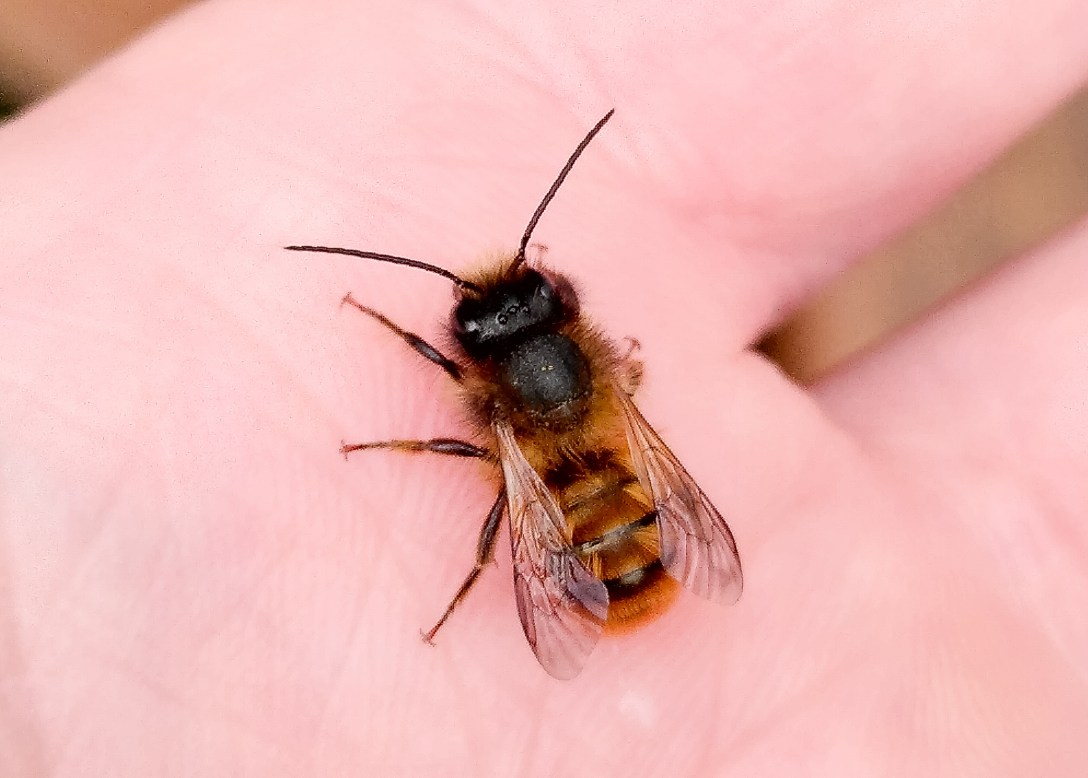
On Saturday 16th March my partner was investigating the state of some of the potted plants in our garden when she found a small bee. I swooped in and enticed it onto my fingertip. It was a red mason bee, the first one I had seen this year.

Red mason bee in the palm of my hand

I placed the little mason bee among some mutant AI primroses that flower weekly throughout the year. Later that evening as we walked out I somehow managed to spot another mason bee sat on the concrete path, looking wet and cold. I picked the bee up and put it into a bonsai tree pot and hid it under a leaf.

The next morning I found it was still there but looking altogether more wet and cold, so again I gave it a ride to the warmer side of the house and back to the primroses.

Then on Monday morning I passed our latest bee hotel installation and saw a hairy-footed flower bee (one of the first bees of the spring) undertaking a session of weather-watching from the cover of a larger bamboo stem.

It’s not often you find these characterful bees stationary, they’re usually zipping around at max speed.

Later, I found yet another red mason bee looking cold and damp on the concrete path. Again, I picked it up and put it on the warmer side of the house.

I’m wondering if this is the same bee every time or if perhaps there are a number of these bees emerging from the old mortar of the exposed side of my house, and that the weather isn’t quite right for them yet.

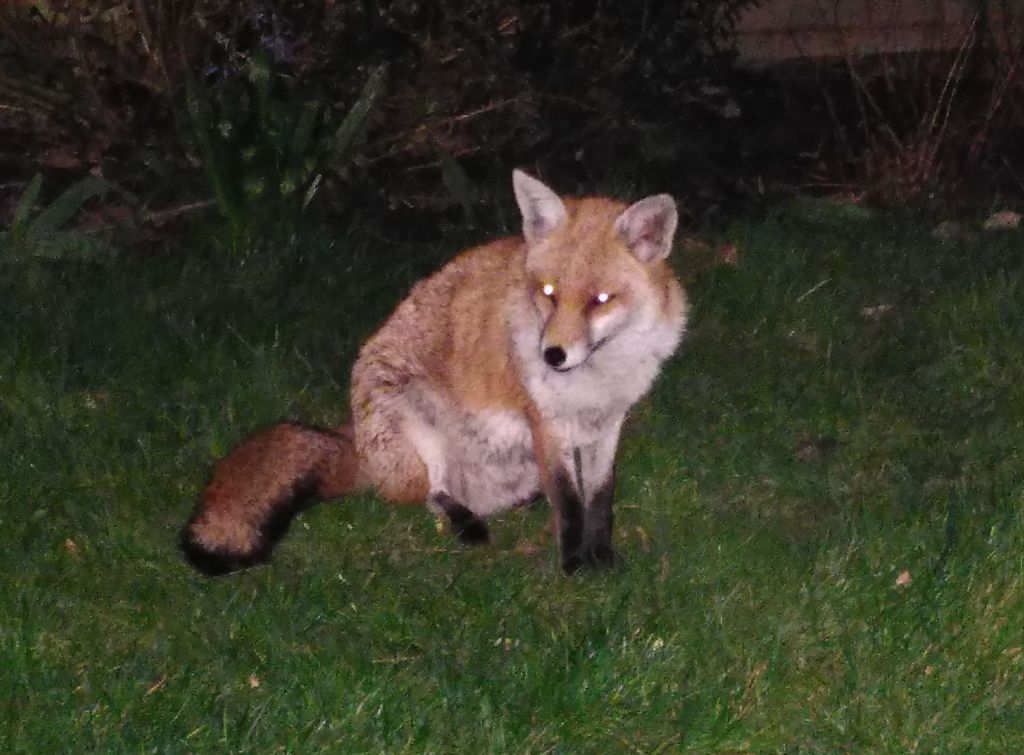
One animal that I also keep finding on the concrete path alongside the house is Socks the fox. Whether she has several other little foxes in tow will be known soon enough.

Thanks for reading.
Hogweed heaven๐Ÿ’ฎ

West Sussex, July 2023

I’ve been trying to keep my macro photos rolling in the absence of June’s one pic each day. It’s a bit like keeping your lawn growing after No Mow May.

Actually, no, it’s harder because you have to be proactive.

By far the best encounter with the macro world this past week was a patch of hogweed along a footpath by the local river. A cyclist went past me as I was taking these photos – even though it was a footpath – and glared at me as if I was doing something truly evil or dangerous to the public.

I have a bike, too, so if that exercised the cycling community, we’re all friends here on djg.com…

Hogweed is a weird plant, in that it’s part of a family that both kills, but also provides edible plant matter. Its sap is photocorrosive (not as bad as its big brother, giant hogweed) but its flowers are very, very good for pollinators. It can also be a bit invasive because it burgeons in places where nitrogen levels are artificially high (probably dog urine here…) therefore most of England.

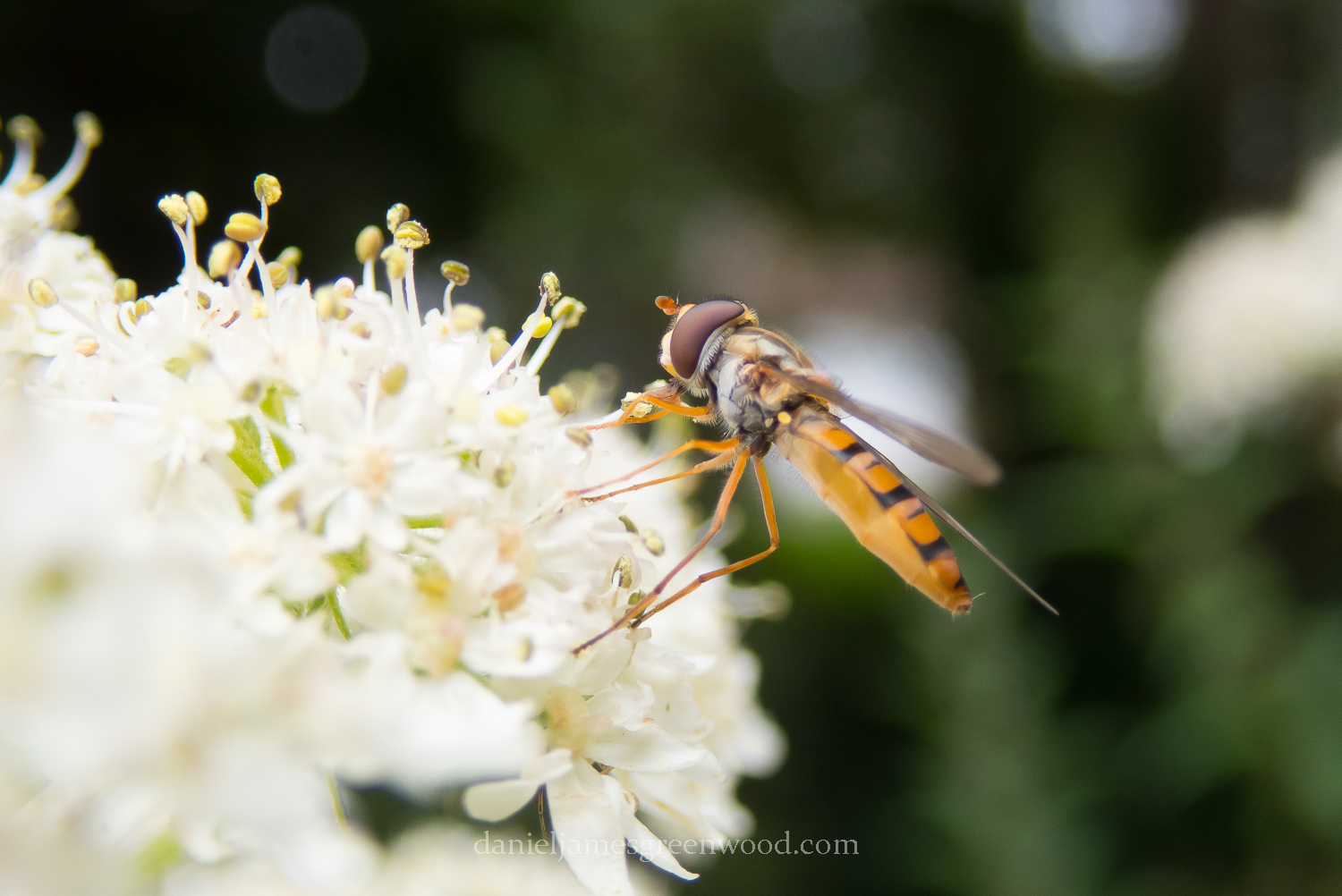
A marmalade hoverfly feeding on the hogweed stamens

A soldier beetle also drinking from the carrot fountain

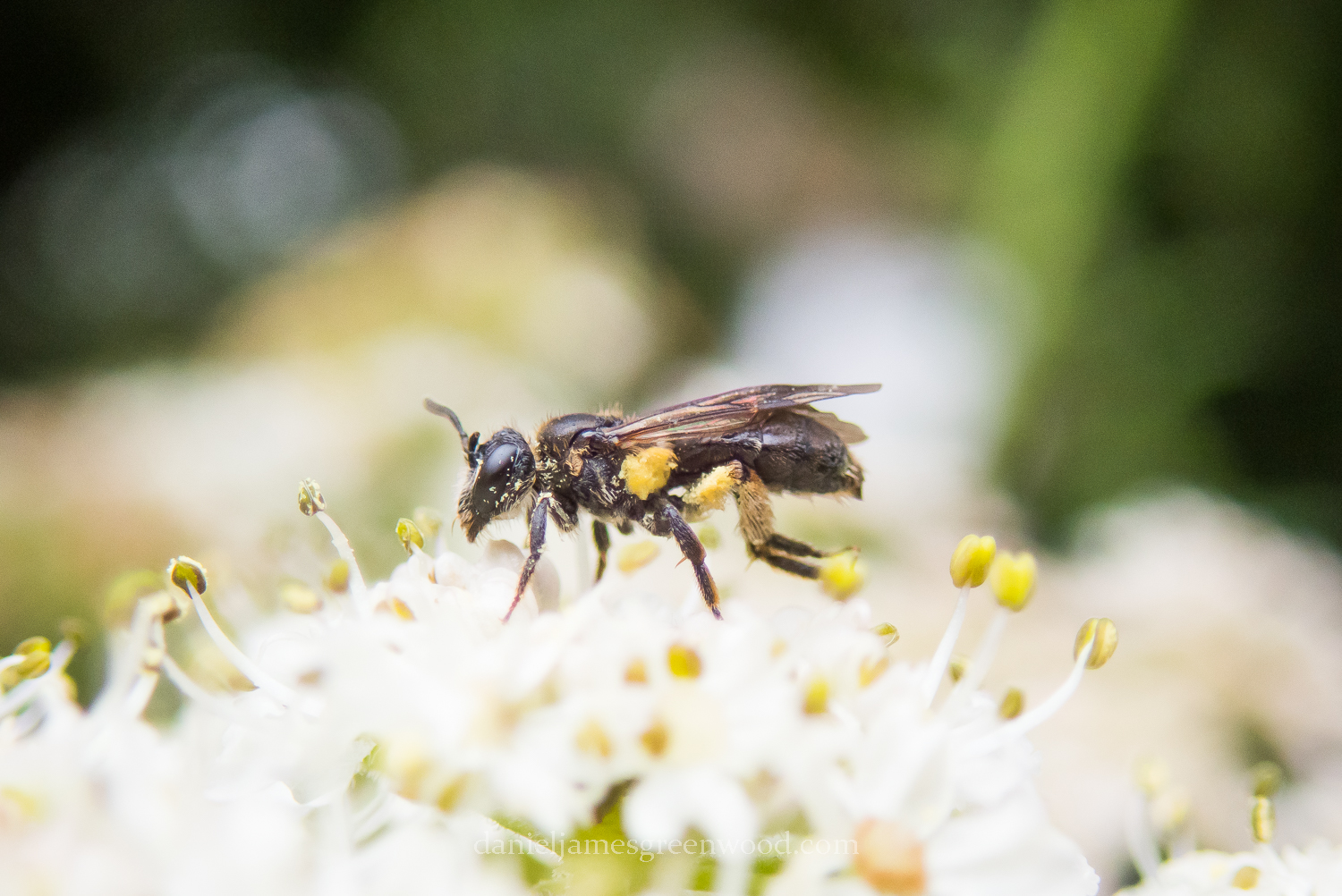
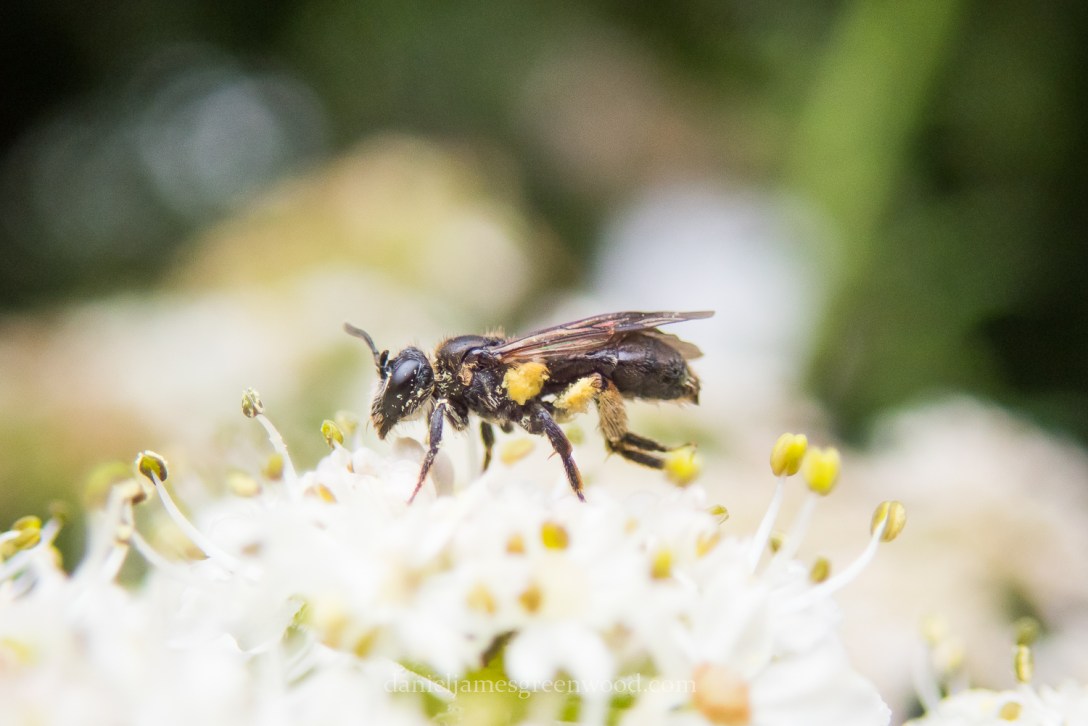
I would say this was maybe an ashy mining bee, but a little faded and low on the ‘ashy’ body hair

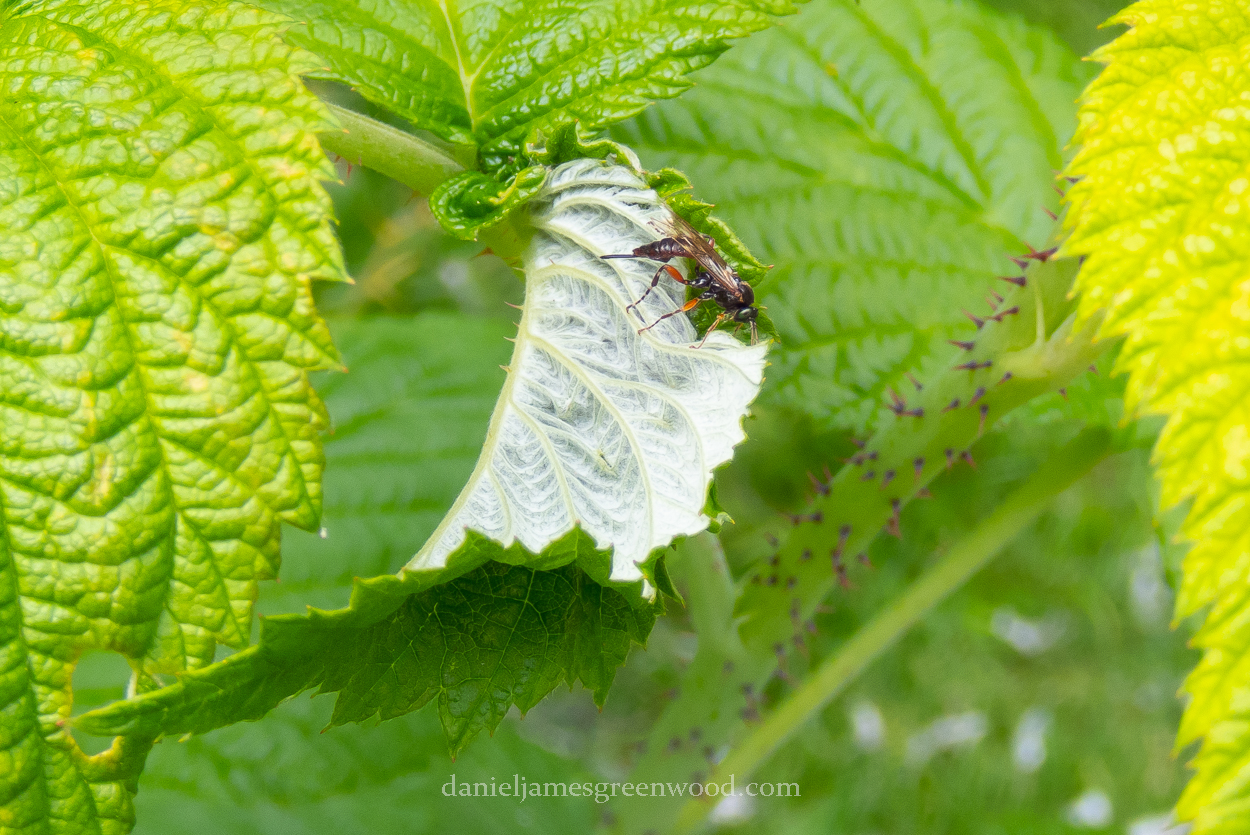
Earlier this week I noticed an ichneumon wasp exploring the raspberry patch in my garden. It was pausing to use its ovipositor on the curled up leaf – presumably the work of some other organism creating a sort of cocoon. I love them!

Thanks for reading

Macro | Ichneumon wasps

#30DaysMacro 2023: final week!

Here we are, another June slipping away and with it another #30DaysWild. Thankfully the humidity has dissipated this week and it’s been more comfortable to spend time outside (for me).

The final week of another June #30DaysMacro challenge, here we go:

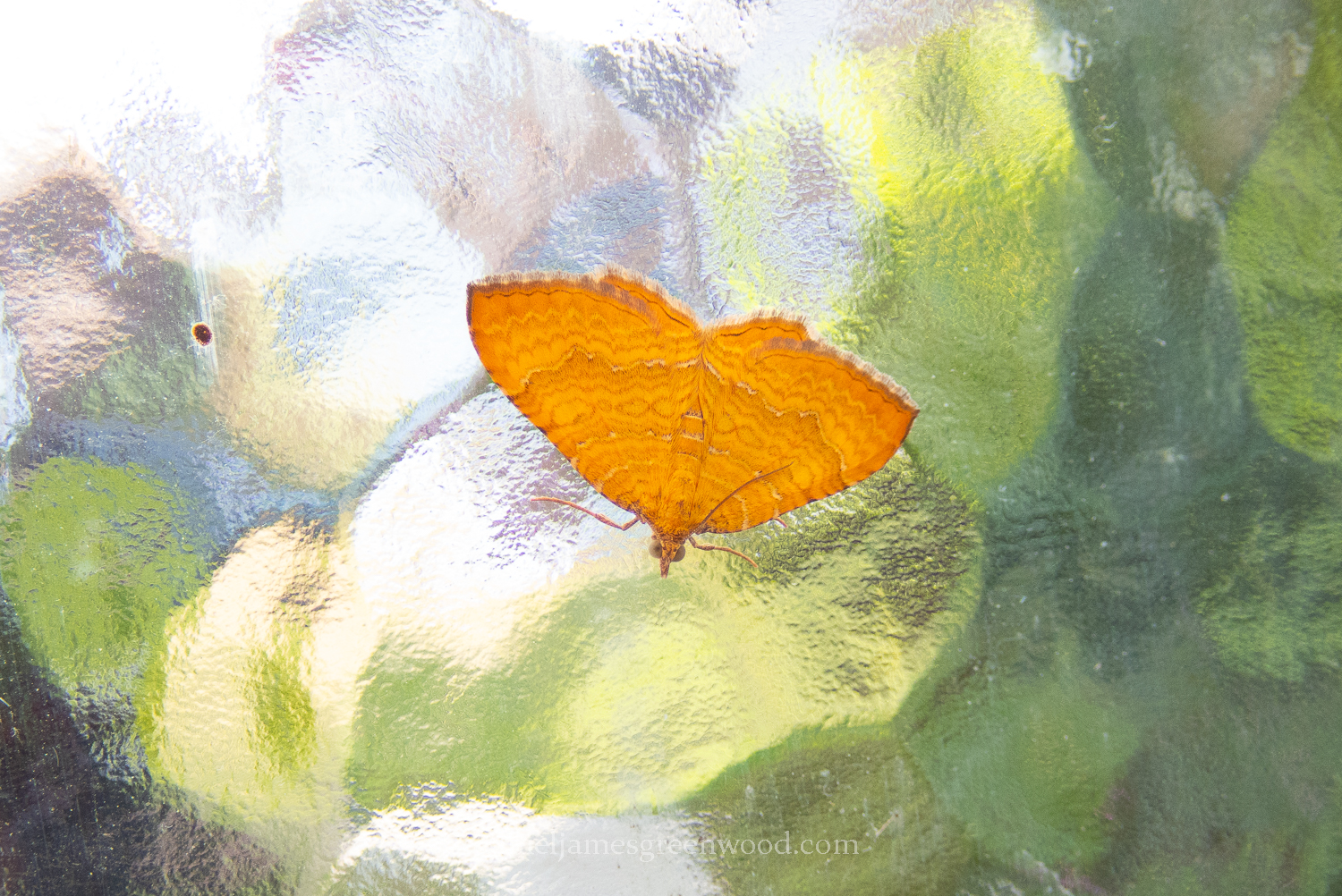
Day 22/30: leaving my mum’s house in SE London I noticed this yellow shell moth on the frosted glass. iNaturalist helped me with the identification.

Day 23/30: the zebra jumping spiders have been absent for me this spring but I am noticing them now. This little charmer was in the garden hedge.

Day 24/30: there have been a new range of bees arriving in my garden as the spring plants shift to summer flowers. The birds-foot trefoil has attracted leafcutter bees like the one above. They have an unusual flight, almost like a kind of hover.

Day 25/30: this was a day of weekend working and several hours travelling, so I had to make do with taking photos in my garden at dusk. I used the built-in flash in the Olympus TG-6 and wasn’t enamoured with the results, mainly because the flash isn’t softened by a diffuser. This mirid bug is out of focus but I enjoy its colours.

Day 26/30: the insect populations seem to be greater now that summer has arrived. Going out of the house first thing has been a good chance to see the range of hoverflies and other bees. This hover was doing that odd leg cleaning ritual and I managed to catch it with ‘legs akimbo’!

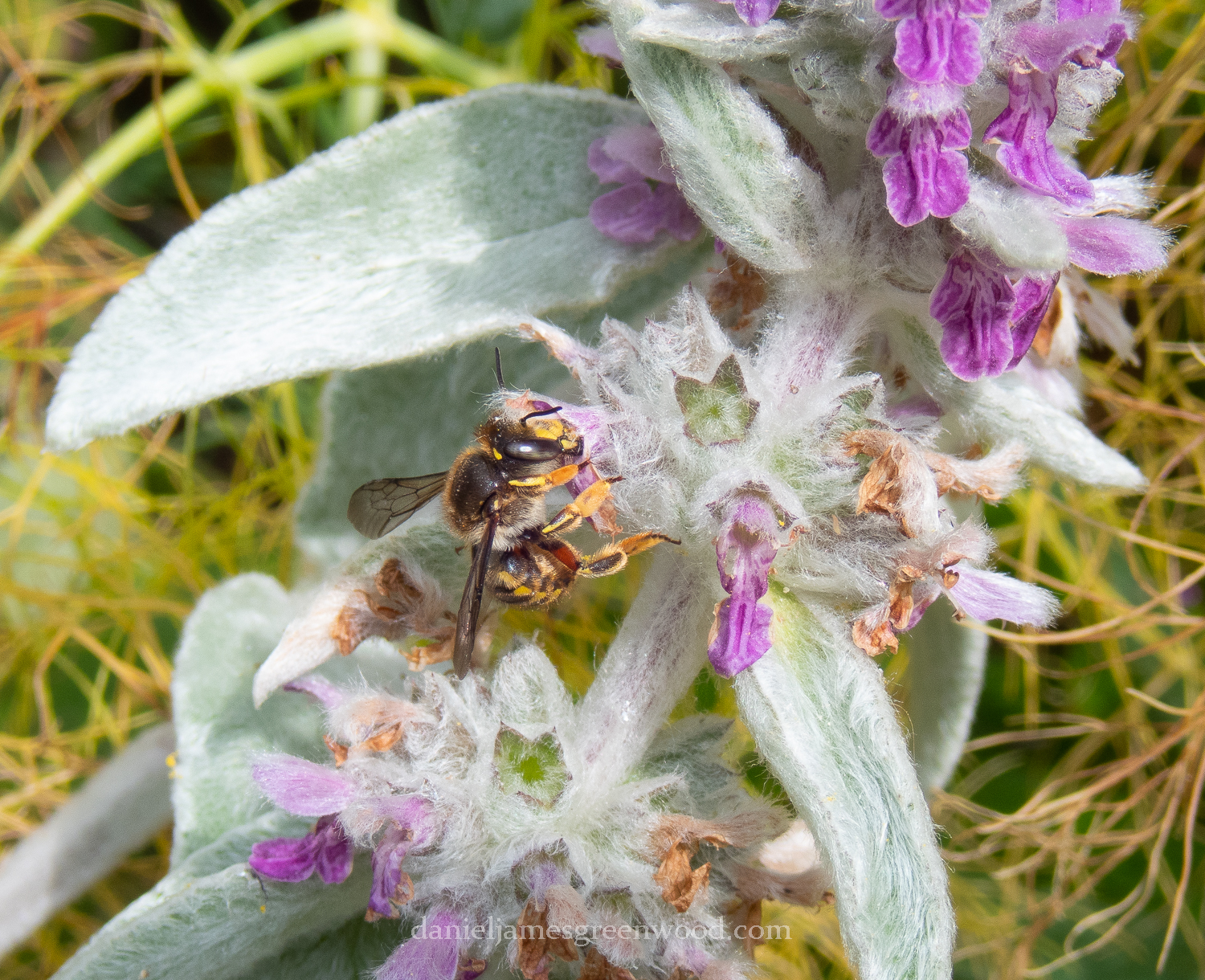
Day 27/30: at last a good show from the wool carder bees. I’ve written about these wonderful bees before – if you want to attract them get yourself some lamb’s ear (not literally), also sold as ‘stachys’.

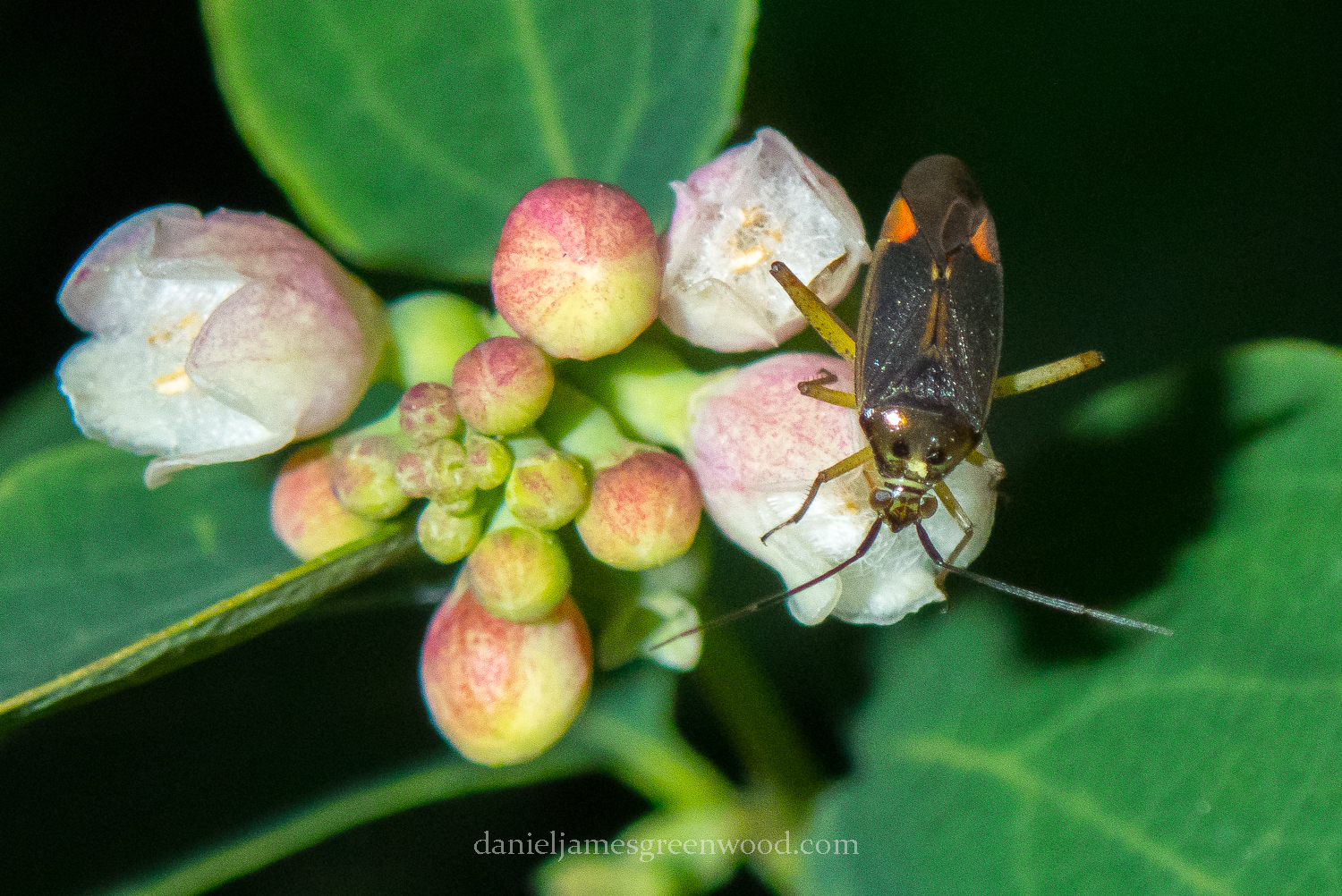
Day 28/30: an evening foray in my mum’s garden late into the evening, in cooler weather. I spotted this mirid bug climbing over the flowers of a snowberry.

Day 29/30: in SE London I found this grasshopper nibbling away on a grass blade. It was far smaller than the photo suggests. The grass was blowing in the breeze which made the focus a bit difficult to pin down, so it’s not the sharpest picture here.

Day 30/30: and so to the final day, one of the few rainy days in June. I was out on the South Downs for a walk and found this pyramidal orchid growing in a laneside verge. A beautiful plant of chalk grassland reaching its peak.

Thanks for reading!

Macro

#30DaysMacro 2023: week three

Here we are, week three of #30DaysMacro as part of #30DaysWild. This week, things took a fungal turn after thunderstorms burst onto the scene.

Day 15/30: a bumblebee feeding on purple loosestrife in a car park in West Sussex. I took two photos all day on the 15th, and this was one of them!

Day 16/30: another day where photo opps were scarce, but I saw this little solitary bee (maybe a Colletes?) on the oxeye daisies in my garden. These daisies have been a massive boost to invert life in my garden this year.

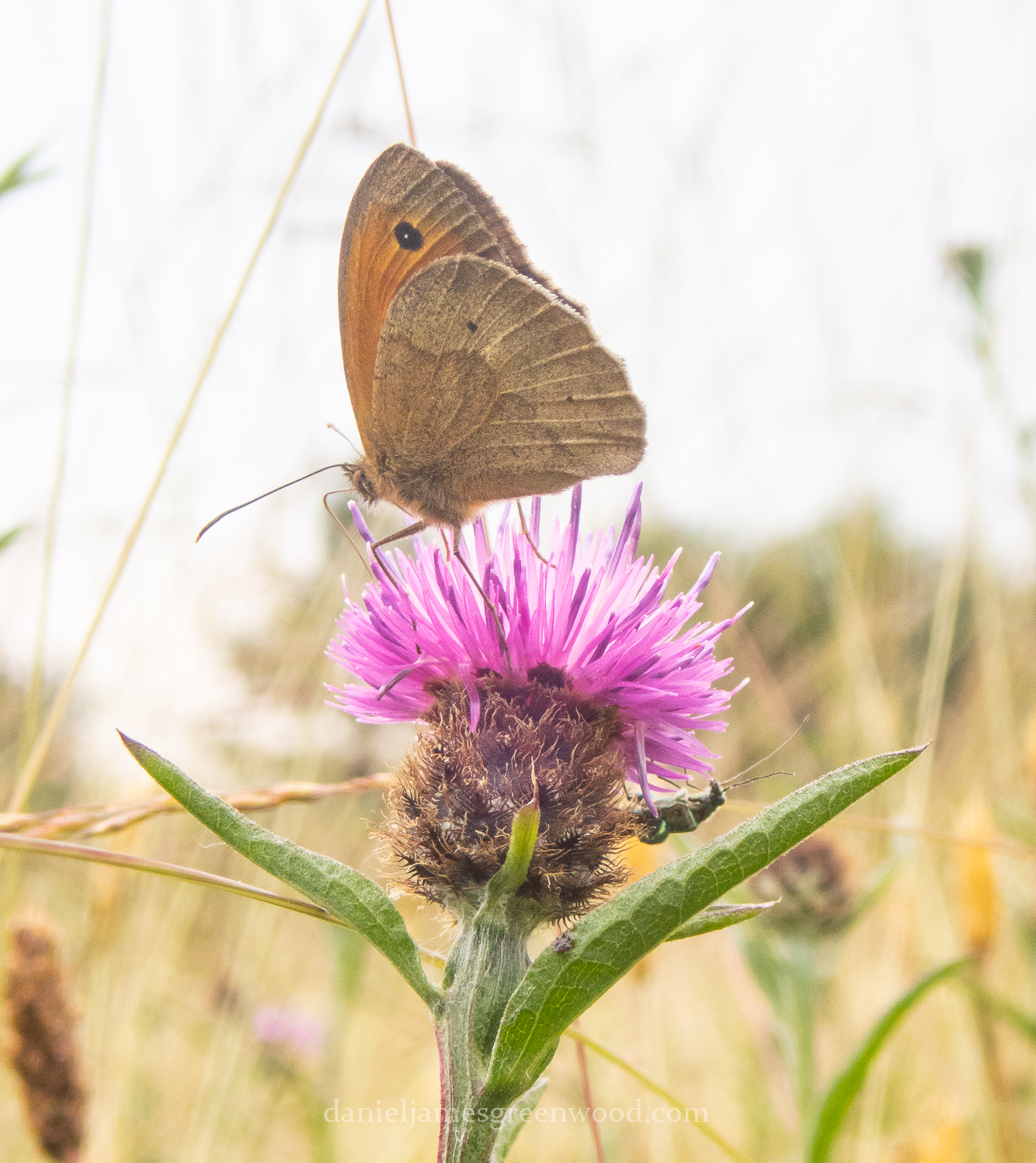
Day 17/30: this photo made me laugh – a meadow brown butterfly on common knapweed in a Wealden meadow in West Sussex. I didn’t notice the green swollen-thighed beetle hanging out below until I put the photo through Lightroom!

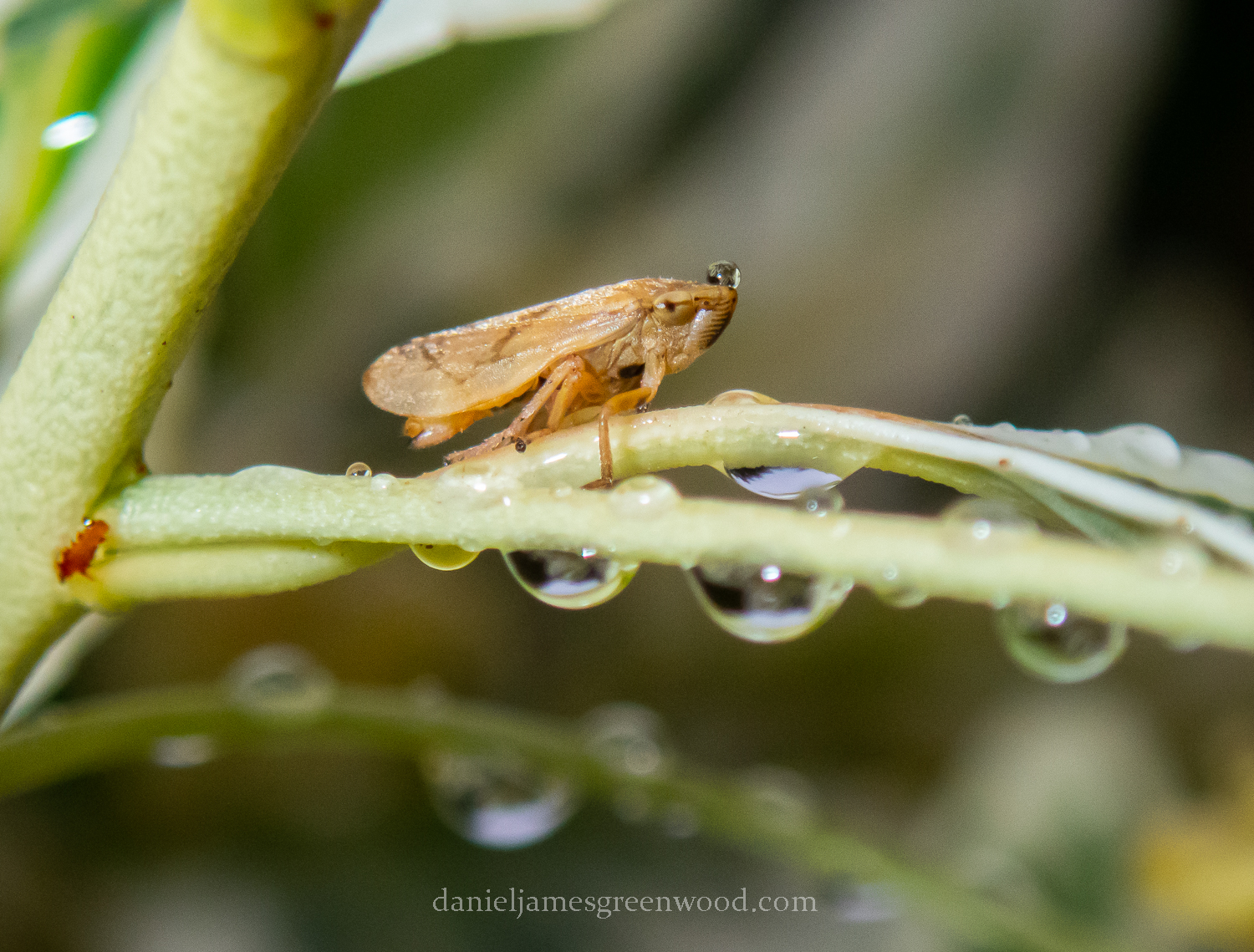
Day 18/30: storms have been the only source of rain recently, and they have been incredibly powerful. After some of that rain, I went looking for some life in the garden and found a common planthopper with a little droplet on their head. I see this as pushing the camera (Olympus Tough TG-6 compact) to the extreme due to lack of light and small size of the subject, and the results are great (though cropped and edited in Lightroom).

Day 19/30: on a lunchtime walk to stretch my legs I found this ashy mining bee foraging from one of the umbellifers that grow alongside my local river.

Day 20/30: things took a turn for the fungal on the 20th, as the rain gave a much-needed drink to the thirsty lichens in my local churchyard.

Day 21/30: the first of the summer/early autumn mushrooms, spindleshank, growing in the place where I learned what they are at Sydenham Hill Wood.

Thanks for reading!

Macro

#30DaysMacro 2023: week one

Happy #30DaysWild! As per the last couple of years I’ll be taking a macro photo – an image greater than 1:1 lifesize magnification – every day in June. I call it #30DaysMacro.

This is one of the best times to look for invertebrate life, and is a nice motivation to get outside, and to share your experiences with others.

The difference for me this year is that I’ll try to take each photo exclusively from a compact camera or my phone. I recently traded in some equipment that was gathering dust and got an Olympus TG-6 Tough compact camera. It’s waterproof, can withstanding being crushed somewhat, but more importantly it has the best macro capabilities available in a compact camera. It will be interesting to see what I can get from it.

Another #30DaysMacro – let’s go! on y va! vamos!

Day 1/30: I had actually forgotten it was June (been busy) and wasn’t thinking of #30DaysWild until after I took this phone pic. The spider was on the rear windscreen wiper of my car in the supermarket car park. It’s one of the running crab spiders.

Day 2/30: a bumblebee with full pollen sacks gathering nectar from the deep flowerheads of yellow flag iris in my small pond.

Day 3/30: a swollen-thighed beetle ‘enters the ring’, the nectar station of an oxeye daisy. I planted these last year and they’ve only flowered in the past few weeks. The small insects on the edges are carpet beetles. They’re there all the time.

Day 4/30: I found this beautiful red cardinal beetle in my family’s garden in SE London, as it rested in the shade of a hazel bush.

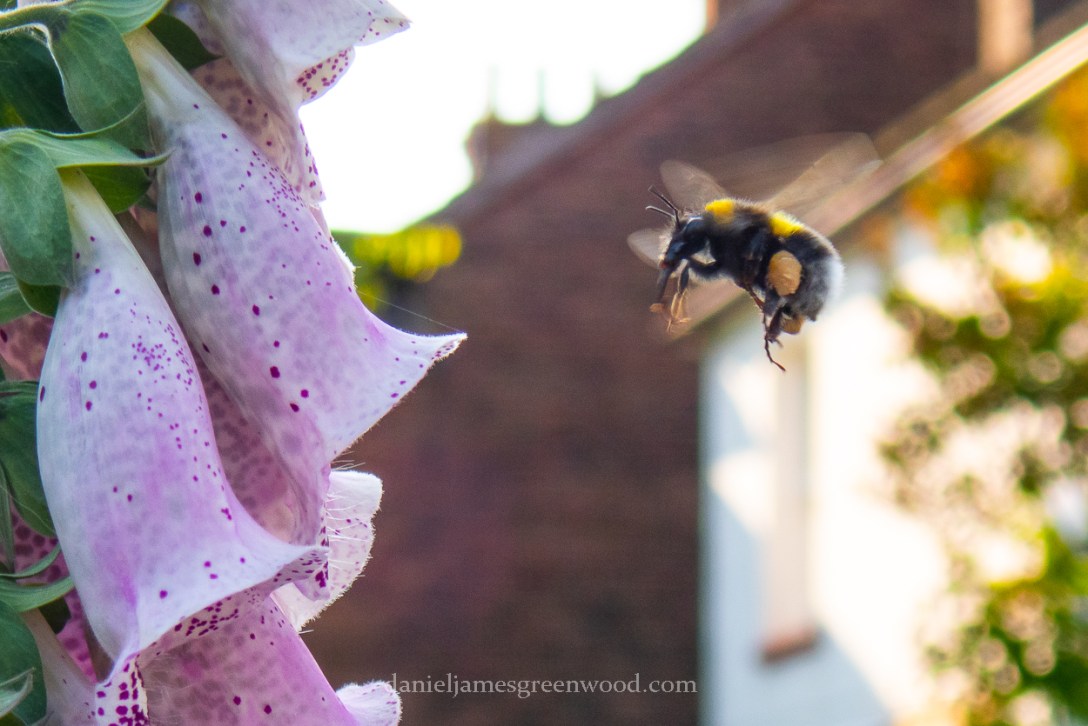
Day 5/30: I was lurking around the borders of my garden where the foxgloves grow, waiting for bumblebees to emerge from the flowers. Luckily this bumblebee chose to hover for a while so my camera could lock on and get the in-flight pics. Impressive for such a little camera!

Day 6/30: in the centre of my town there’s a brick wall that is covered in trailing bellflower. At this time of year it catches the sun wonderfully. I took this photo along the main road and was stopped by a woman who said she often tried to get a similar photo on her way home. Trailing bellflower is native to south-eastern Europe and likes rocky places, brightening dull civic spaces.

Day 7/30: a tortrix micro-moth in Peckham, SE London. I really like the holes in the leaves that surround the moth, and its bluey scales.

Thanks for reading, see you next week!

Macro

A spring epistrophe? ๐Ÿ

Another week of some sun, some showers, and some temperatures that got close to freezing. That sentence may turn out to be a spring epistrophe, but more of that later. In Scotland it reached as low as -5C. April 2023 has been a mishmash of seasons. Here’s what I encountered in my garden on 22nd April.

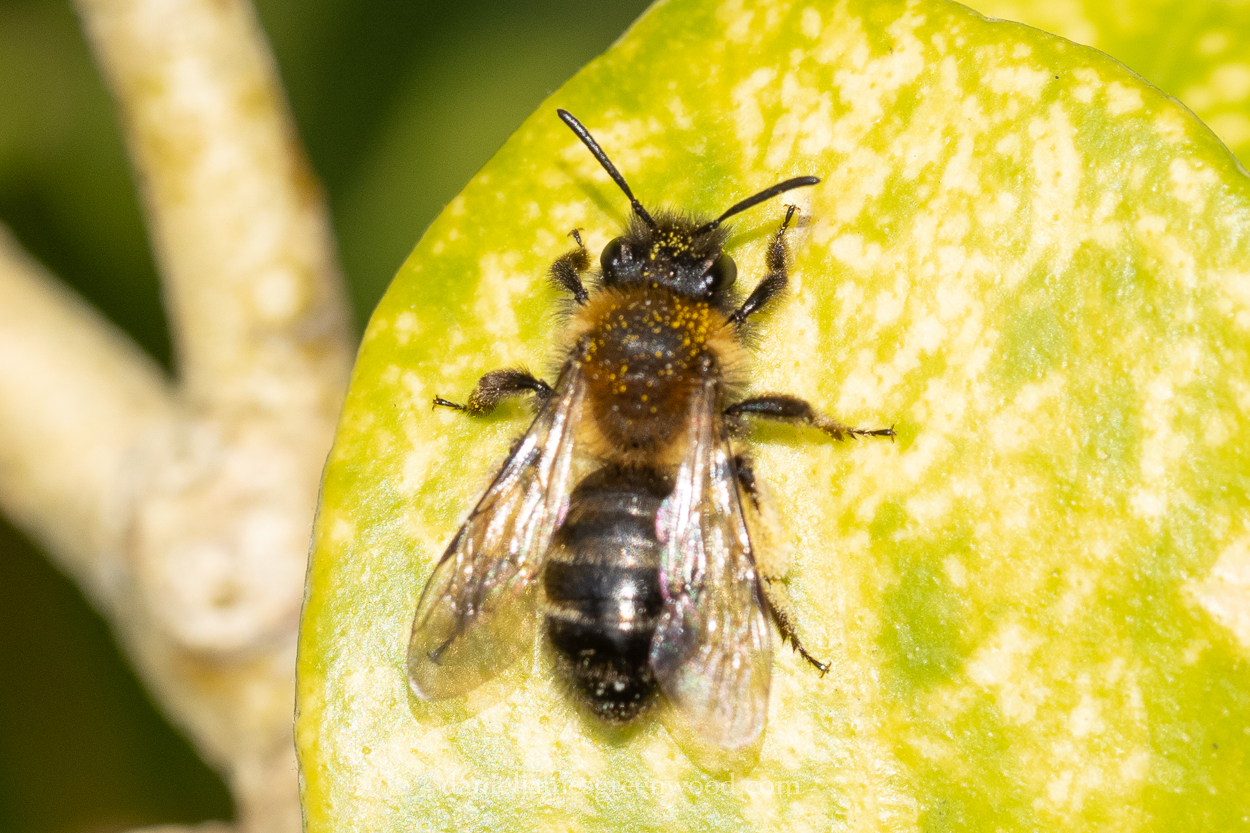
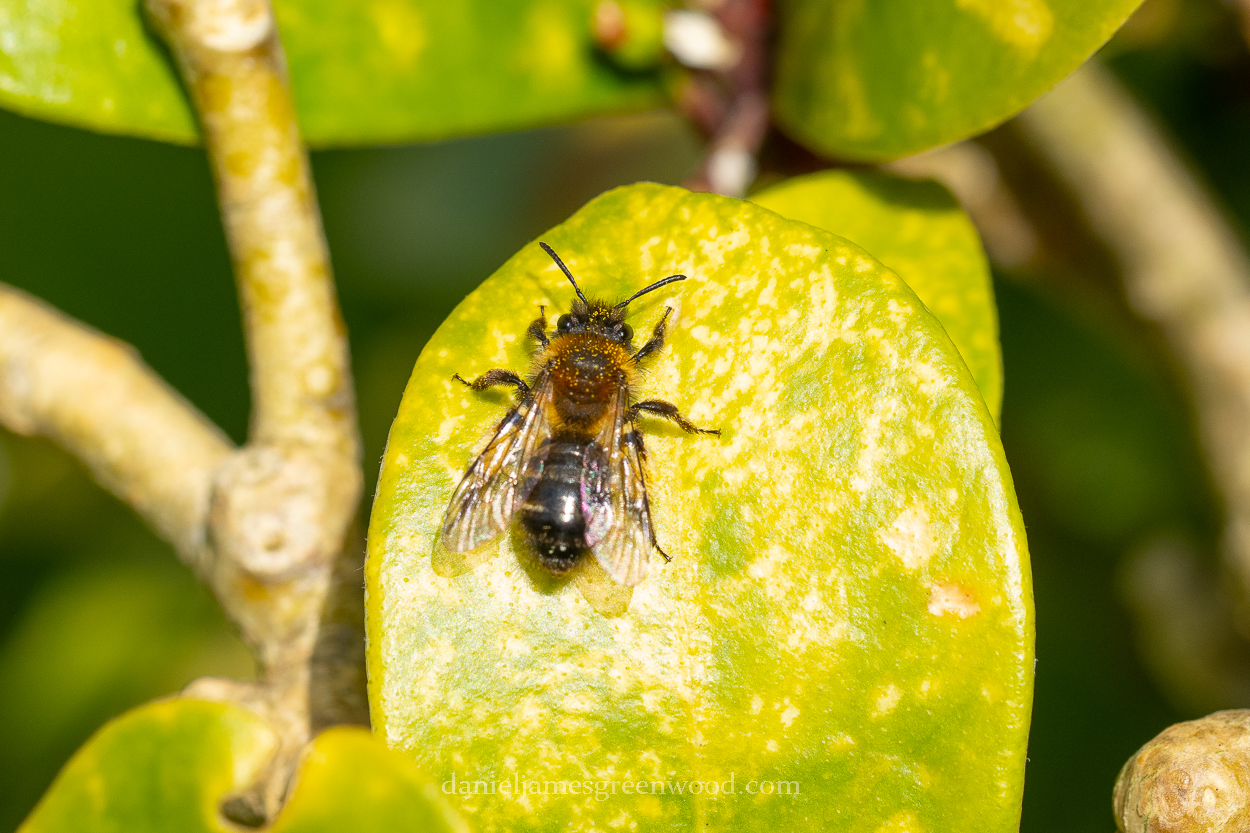
One of the joys of this time of year has to be the red mason bee. They are tricky to catch up with sometimes away from their bee boxes, but I managed to get close enough to this red-haired male in the skimmia hedge.

This is a mining bee that I can recall seeing each year early in the season. I’m not sure of the species, but it has a likeness to the chocolate mining bee.

I tried with this rather slender-shaped mining bee, but it didn’t like Homo sapiens approaching with a camera and macro lens, however small that equipment is nowadays.

He’s not quite in focus but this hairy-footed flower bee stopped for a snap. Never mind his hairy feet, look at those legs! They do look a bit like tiny Highland cows to me.

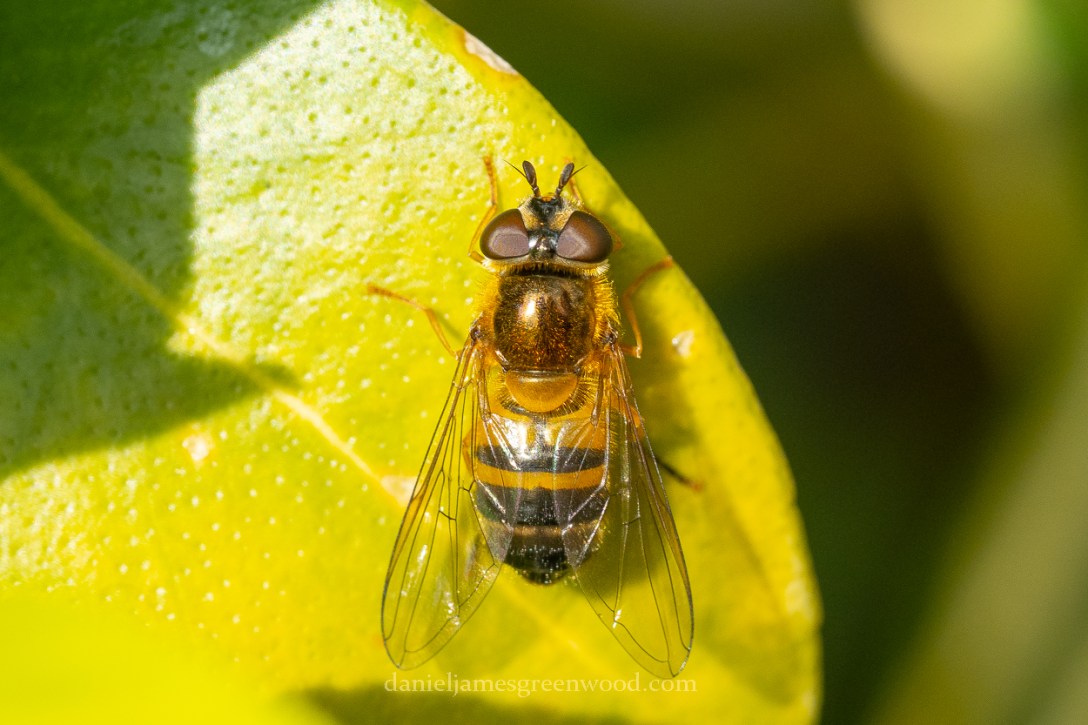
To finish this week’s post, I noticed this medium-sized hoverfly in the skimmia. Putting it on iNaturalist I received a quick response, identifying it as spring epistrophe. It has a huge range, from Sweden to northern Spain, and then as far as Ireland to the Caucasus (Russia). Its name obviously means it’s a spring arrival, but ‘epistrophe’: “repetition of a word or expression at the end of successive phrases, clauses, sentences, or verses especially for rhetorical or poetic effect” – via Miriam-Webster.

I’ll have to listen to the hoverfly more closely next time.

Thanks for reading.
Macro