I’m posting garden macro photos from the 17th and 30th May. I have some really interesting photos from the 31st but that is probably more than one post in itself.
There are a couple of intriguing species I encountered in my garden between mid-late May, one of the very best times to look for our tiny invertebrate friends in this part of the world.
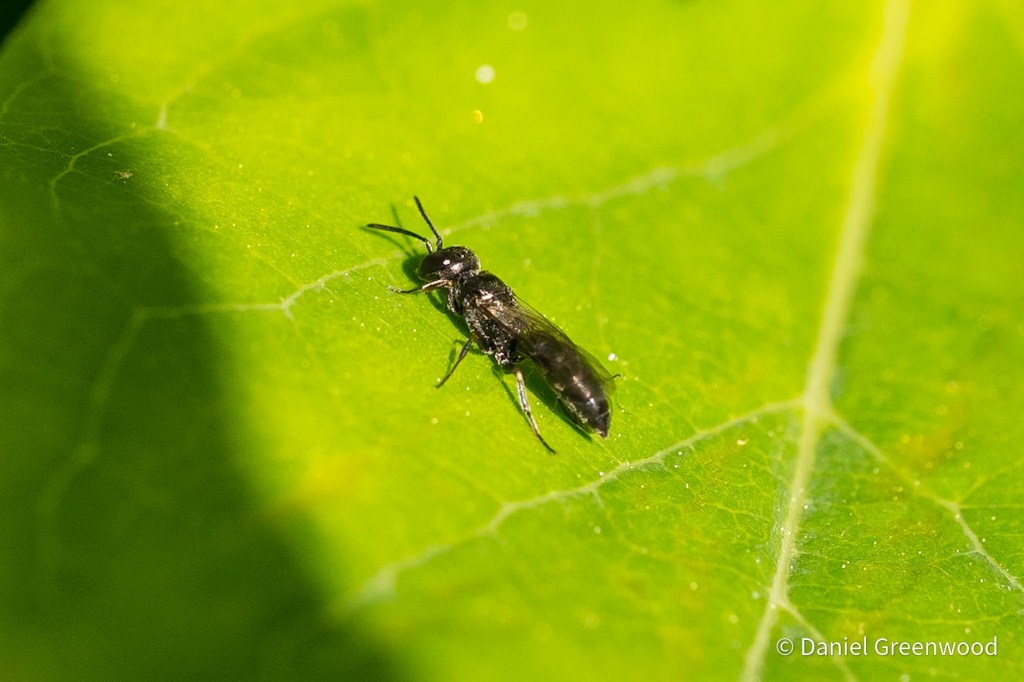
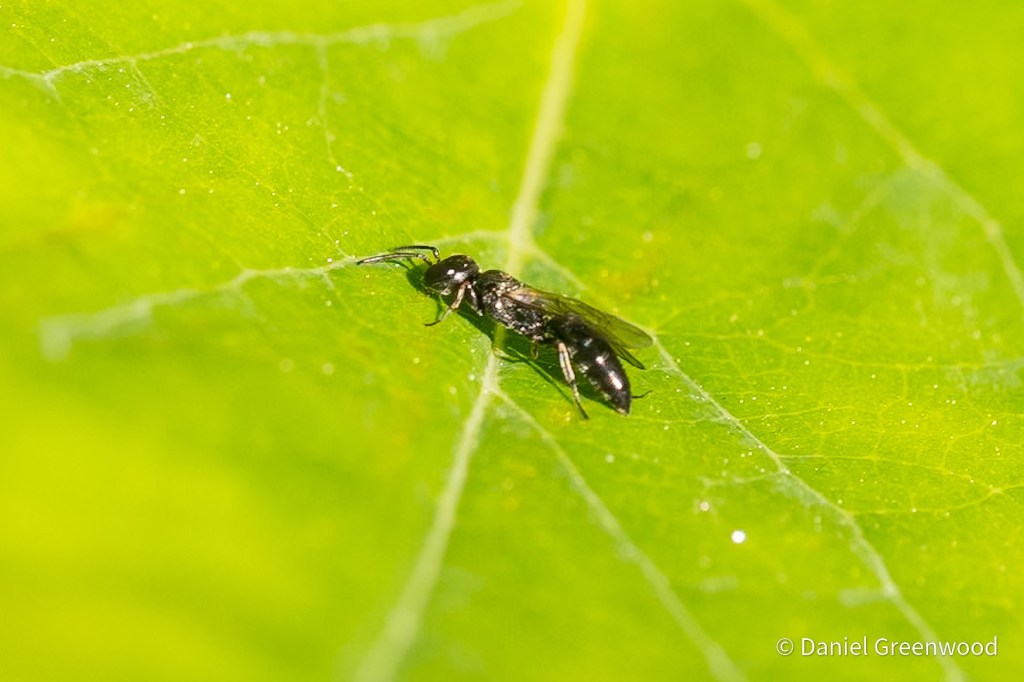
These are by no means great images (I would need extension tubes to increase the magnification) but the species may be an interesting type of wasp. It might be an aphid wasp, which is a group of wasps I haven’t heard of or seen before (there are thousands, even in the nature-depleted UK).
I’ve posted about aphids this year, and have noticed just how good a year they’re having. I listened to this episode of the Food Programme last week on the subject of potatoes, and didn’t realise aphids could trouble potato farmers. Perhaps they need to start gardening for aphid wasps!
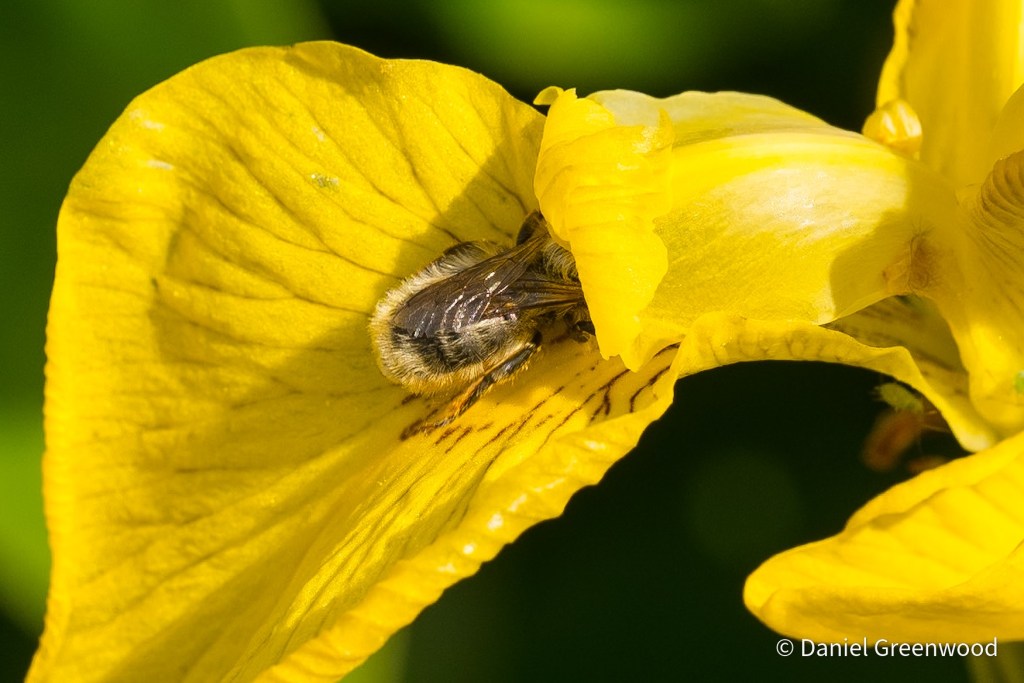
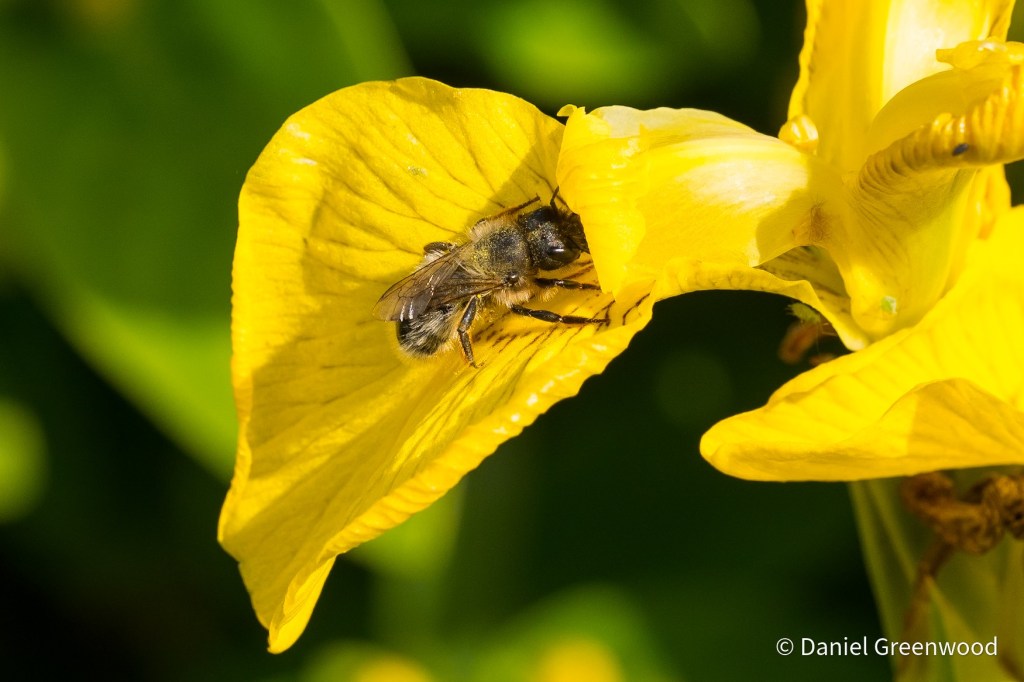
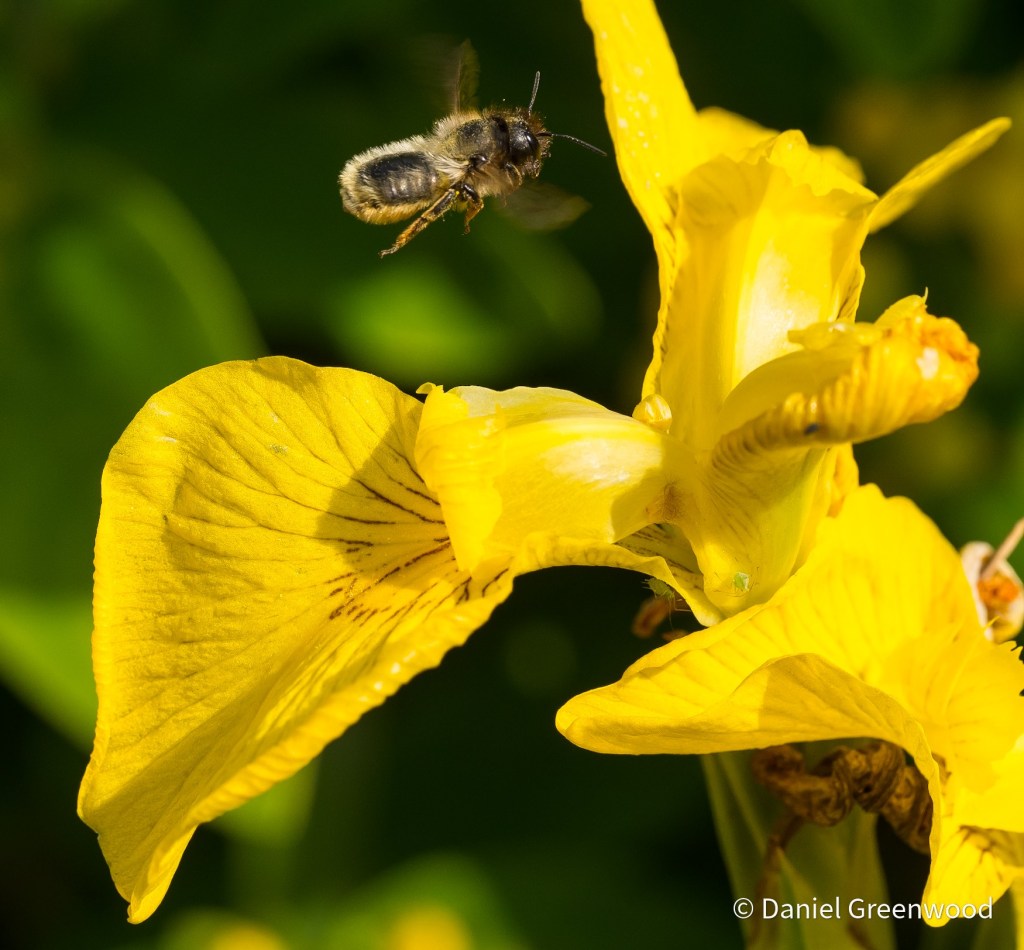
We have a tiny pond which supports frogs and is planted with native aquatic plants. One of those plants is flag iris, which the bigger bees love. I enjoy seeing the bees climb through the yellow petals to nectar on the stamens. This bee is probably in the megachile group, perhaps one of the leafcutter species. Someone on iNaturalist suggests it’s a mason bee, so I’m not sure.
I like how leafcutters are in their own world. They often appear after the red mason bees and hairy-footed flower bees have gone, but they seem like they’ve always been there, so focused are they on their leafcutting tasks.
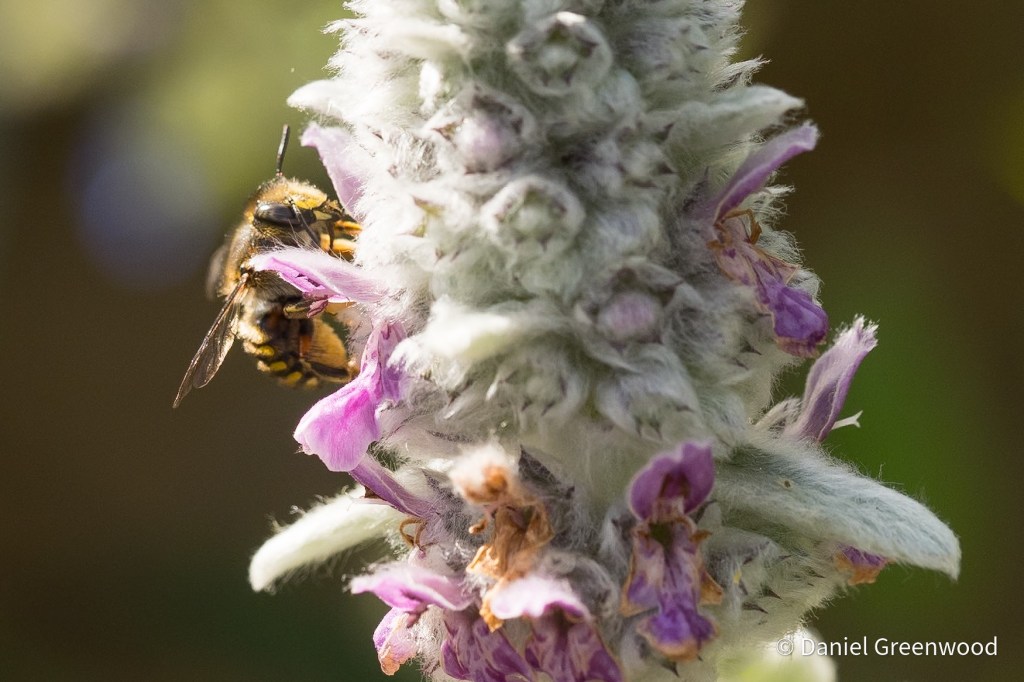
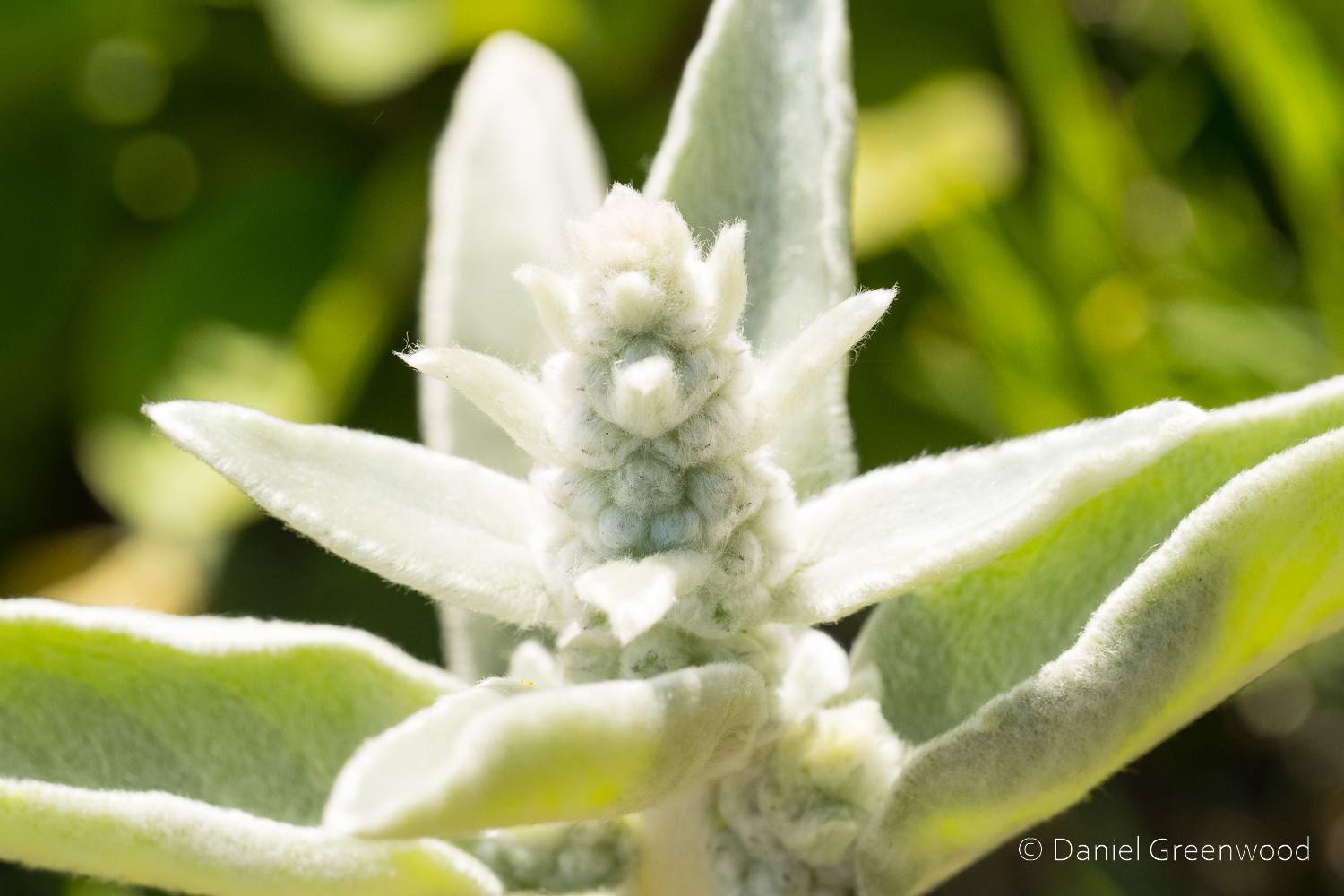
Another welcome sight in the bee world (it’s so much more than honeybees!) are the wool carder bees. I planted this stachys (or lambs ears) for the WCBs in 2020, and they immediately arrived.
Regular readers of this blog may recognise this species from previous posts, who just couldn’t keep out of this week’s post. I used to look like this. These may be an orange-vented mason bee.
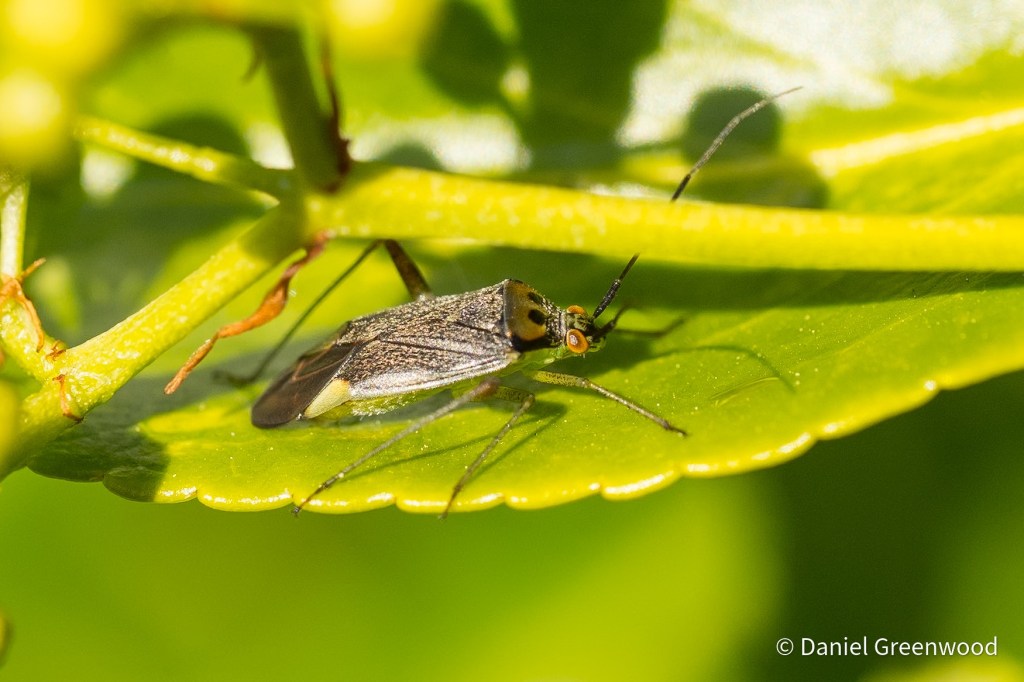
This capsid or mirid bug was chilling in the hedge, as they often do.
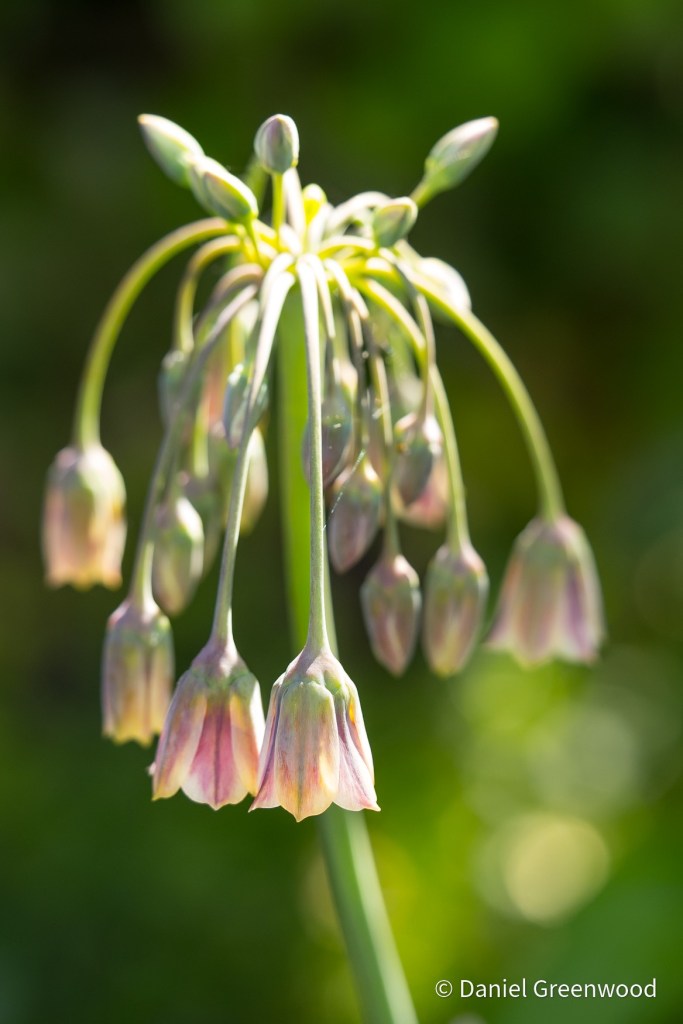
And finally, those trusty honey lilies were looking their best in the evening light, as their flowering period drew to a close.
Next week we’ll see out May with some pretty epic wasp vs. spider scenes and miniscule bees.
Taking macro photos in gardens introduced me to the capsid bugs. This is one. I’ve seen lots of one species in the hedge this year, they are quite ‘alien’-looking in the sci-fi sense.
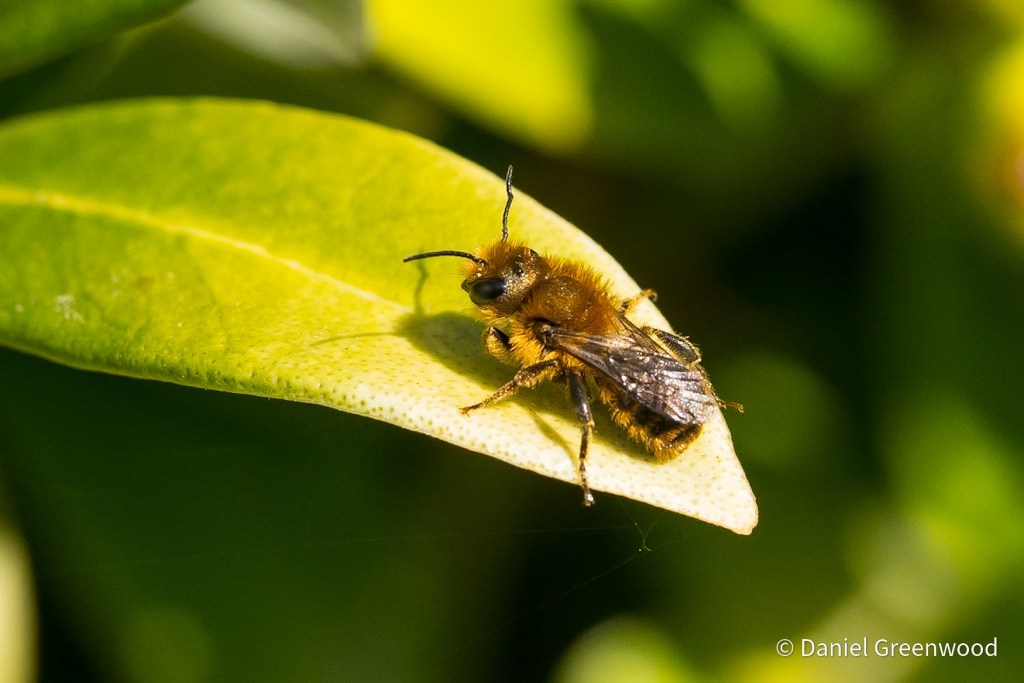
Now to the bees. I spotted what I thought was a blue mason bee on the fence, but instead it may be a different mason bee. Compared with the red mason bees, this species, whatever it is, appears later in the spring and lasts longer until the summer.
I love the light in these pics, and it’s all au naturale. Someone on iNaturalist has suggested this is one of the leafcutter bees.
This bee is potentially a little blue carpenter bee. I enjoy the background colours of the rose above…
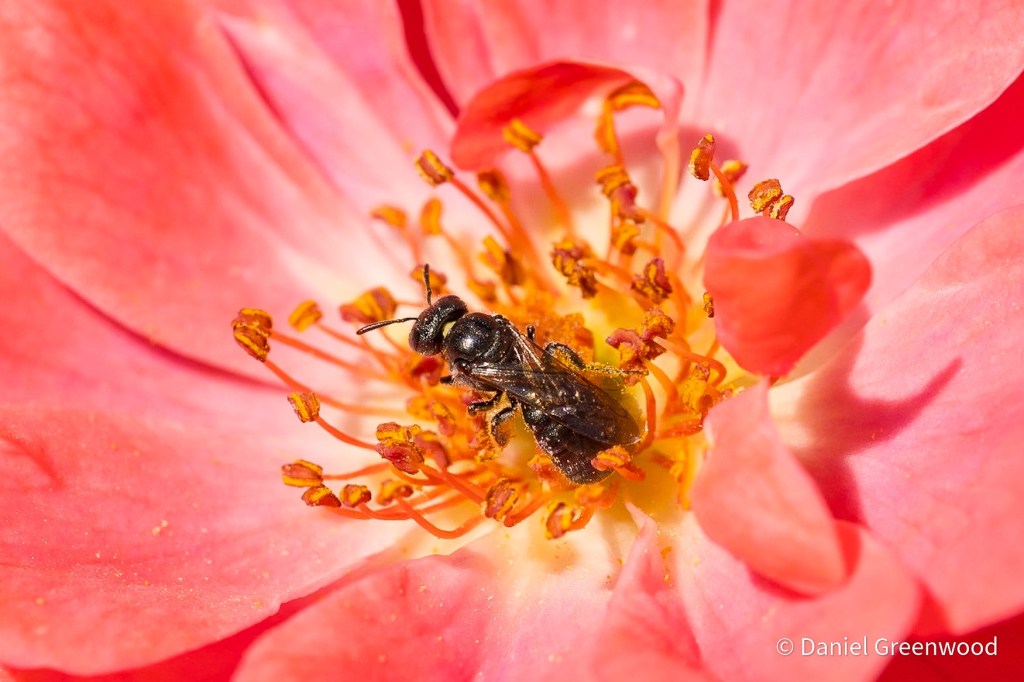
…and the yellow and cream of the honeysuckle. Backgrounds in macro can make a very big impact on the photo. This is a species of sweat bee.
Finally, I didn’t get this little wasp in focus, but I like these brief encounters with random wasps. It reminds me that there is still huge biological diversity in the UK and the world does not revolve around us.
Onto the 15th May 2025, when the bumblebees were beginning to increase as the workers emerged. But we won’t begin there.
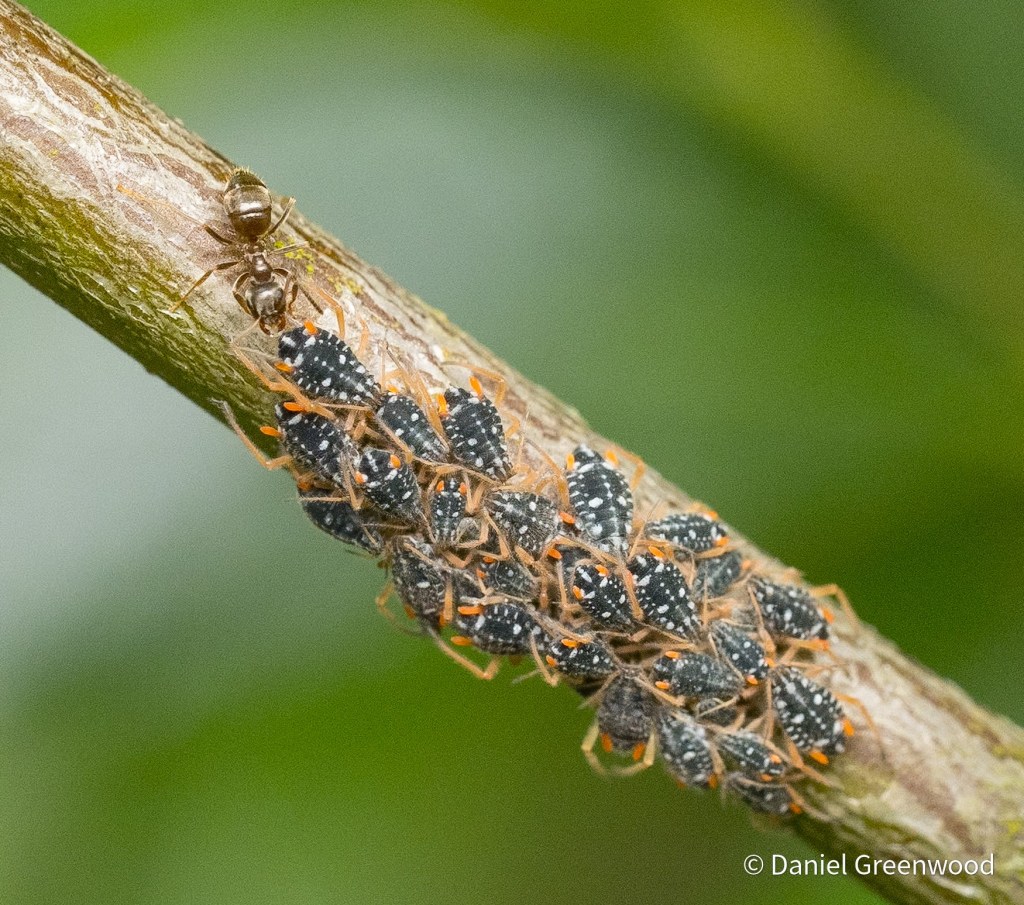
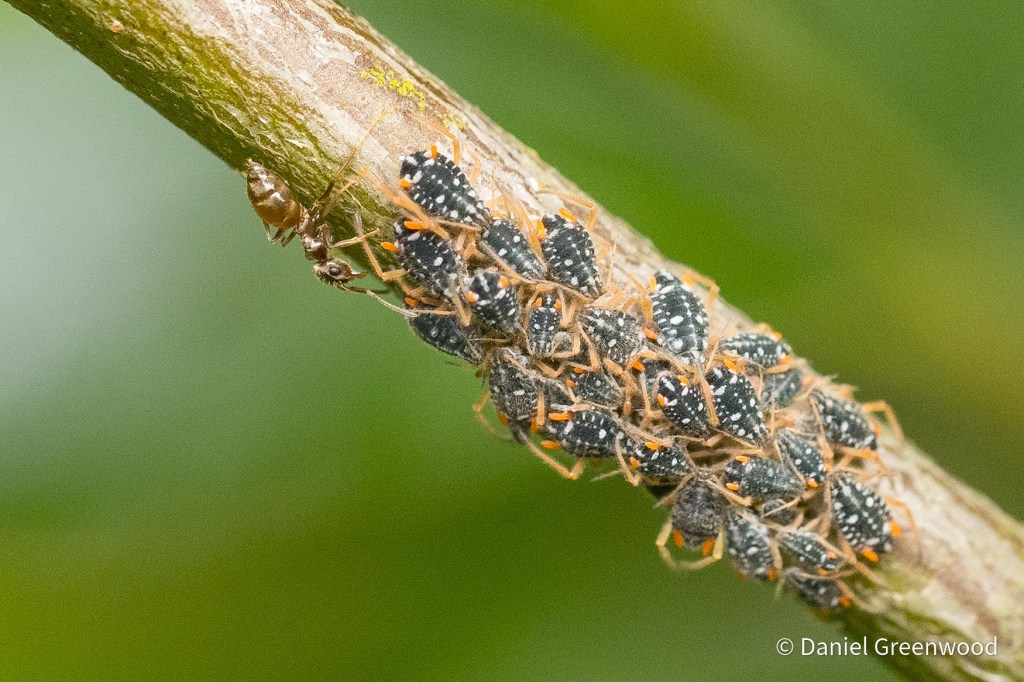
The path to my house is overhung by a self-seeded willow sapling (probably to the annoyance of the postman). One morning I noticed the twigs held a cluster of aphids, tended to by ants.
The ants are probably farming the aphids by providing them with a degree of protection and harvesting the honeydew they excrete. These are probably willow bark aphids but my insect book says there are over 600 species in the UK and many are very hard to identify!
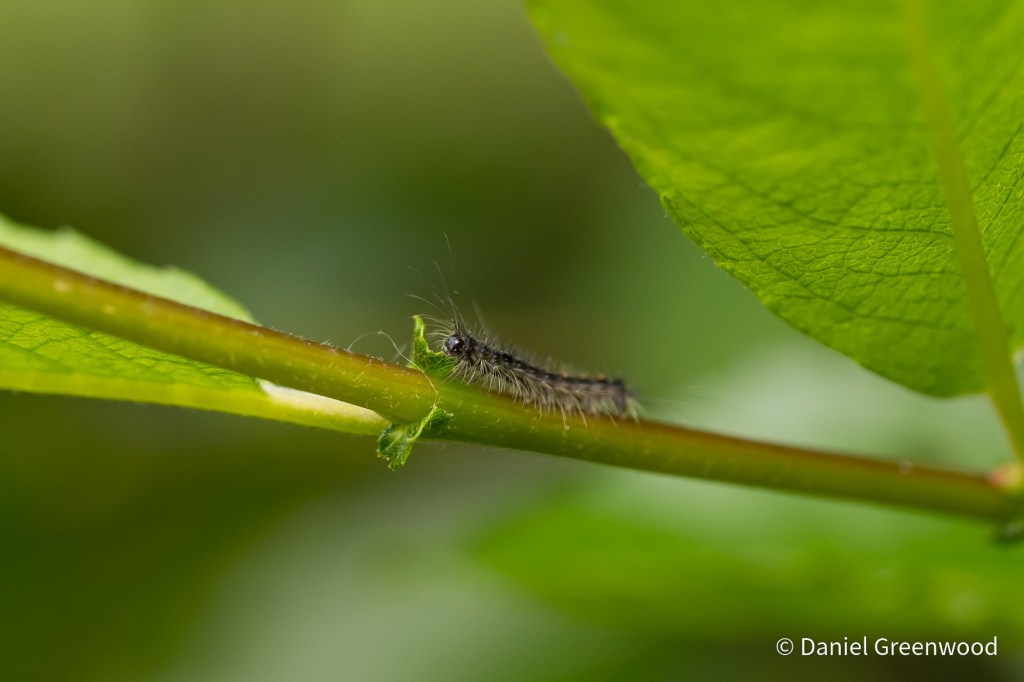
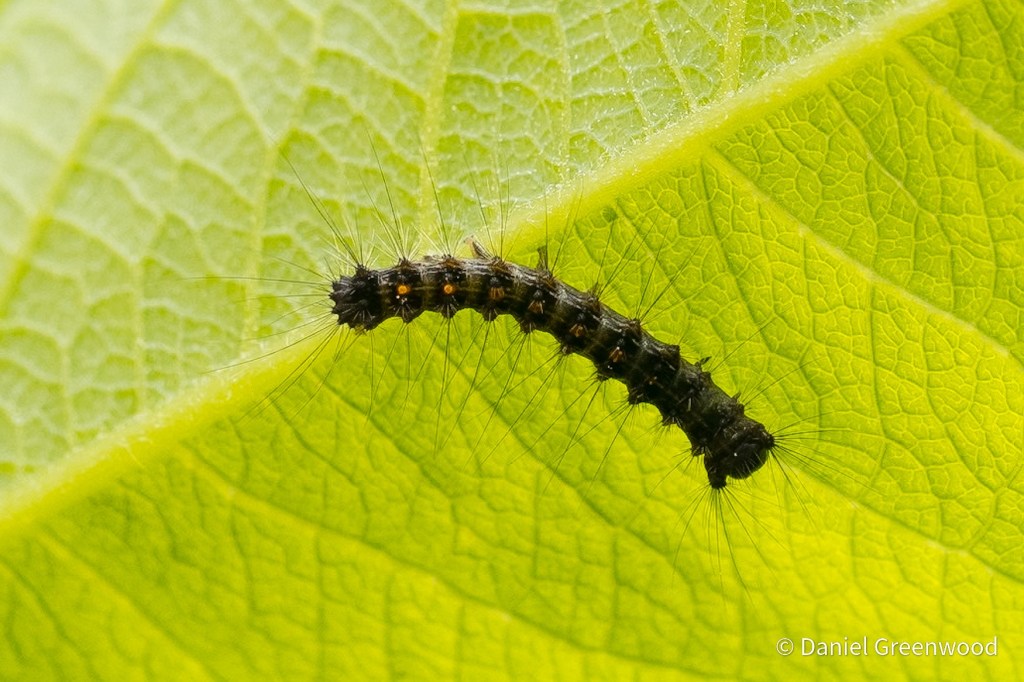
Elsewhere on the willow this little caterpillar was chomping away.
I think this is the same species but I’m not sure what it is. Caterpillars are not a strong area for me.
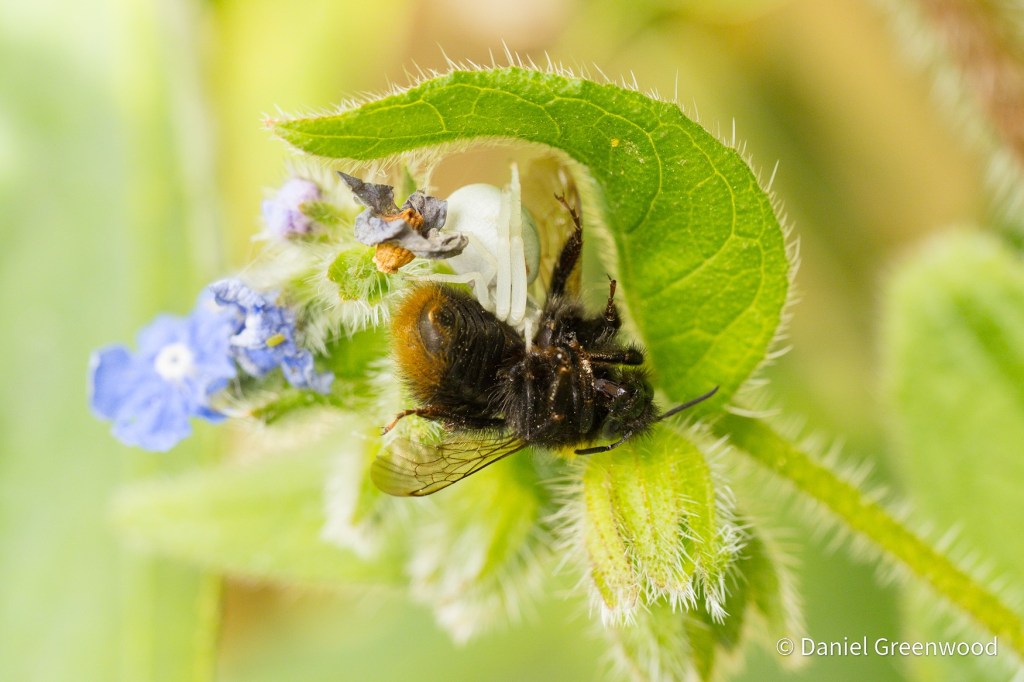
Moving onto bees, I spotted this bee that had been predated by a crab spider (probably Misumena vatia). I am wondering if this might be a cuckoo bumblebee, a kind of mimic that is in fact solitary and raids bumblebee nests, rather than being part of the community. The second photo is from some time later when the spider had moved their prey around.
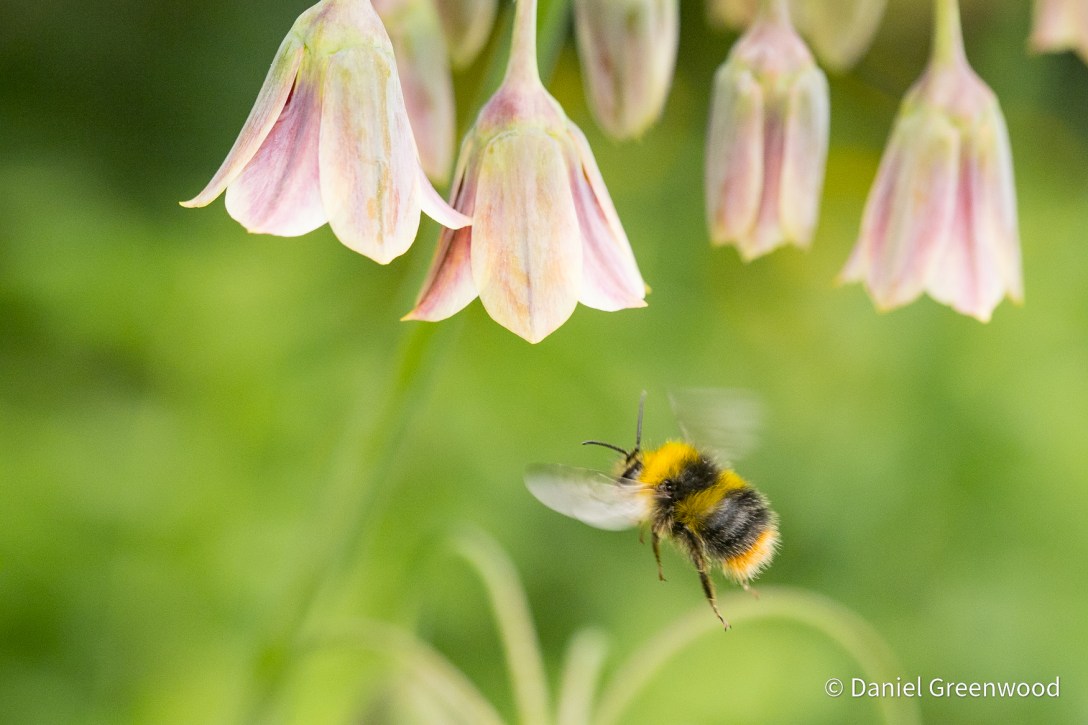
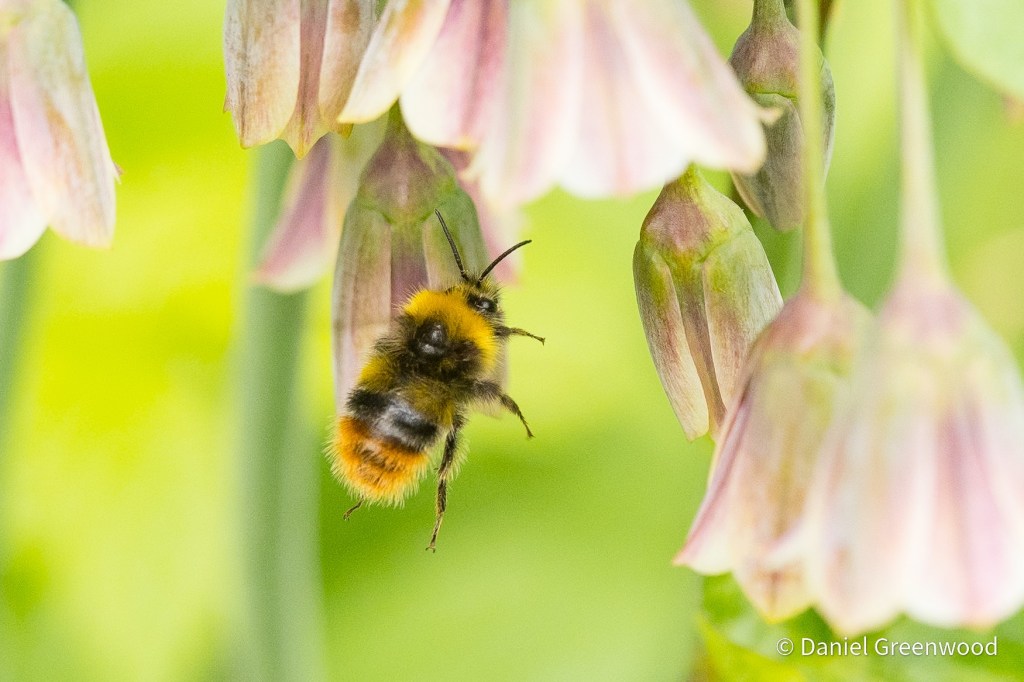
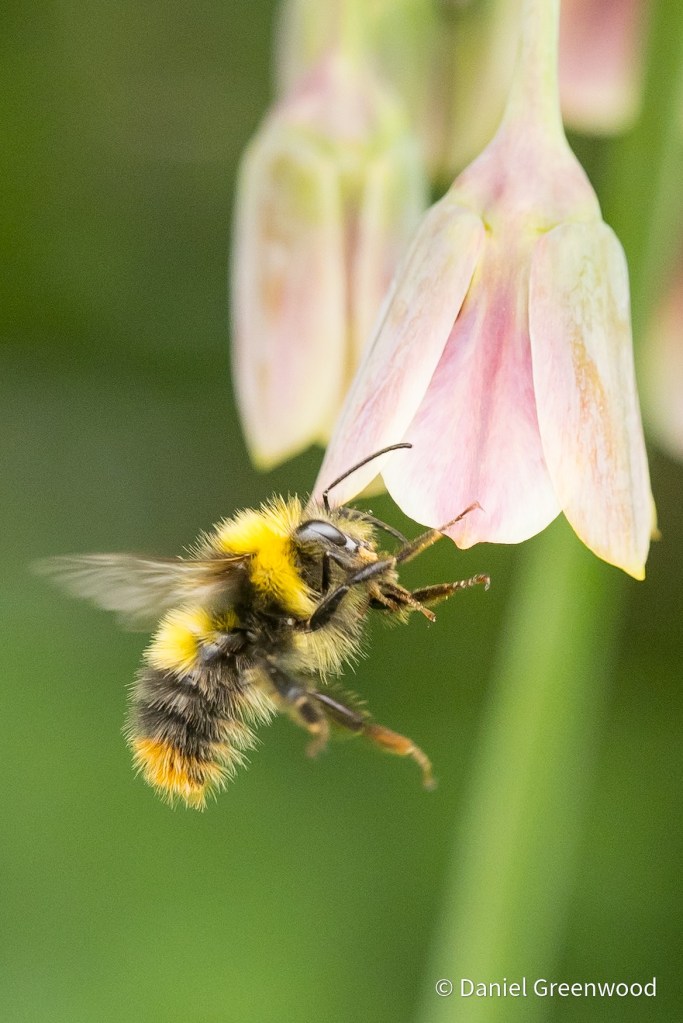
A couple of weeks ago I wrote about the Sicilian honey lilies that have been flowering in my garden. The bumblebees were out in force among these flowers. They seemed to find it a bit difficult to access the flowers from below, but they were foraging en masse. This is one of the first times I’ve used the high speed shutter option on my camera, and it has provided excellent results. I’m not sure of the species, another area I need to brush up on, along with the aphids.
This spider is pregnant, you can see the egg sack. I think it’s a fox spider.
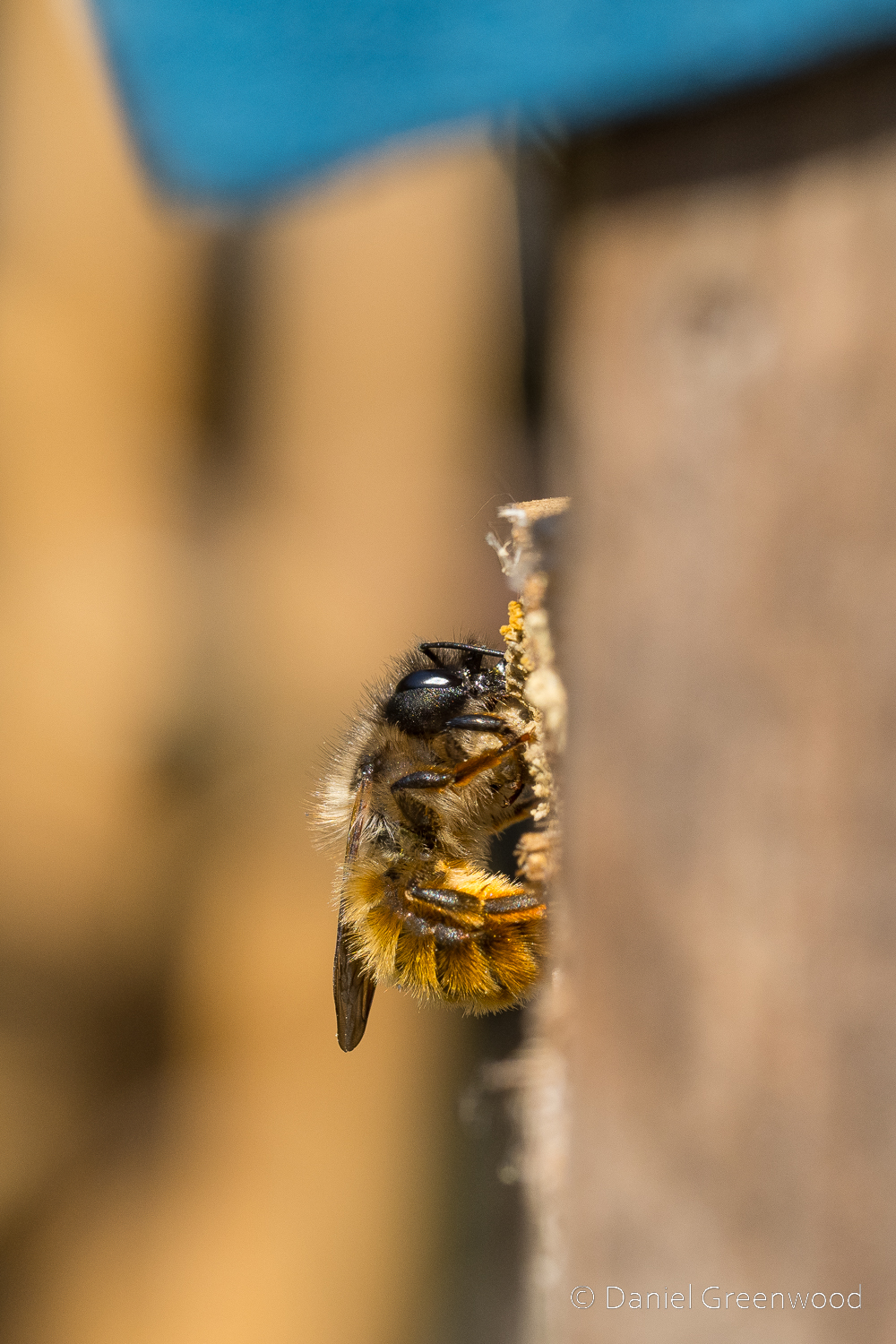
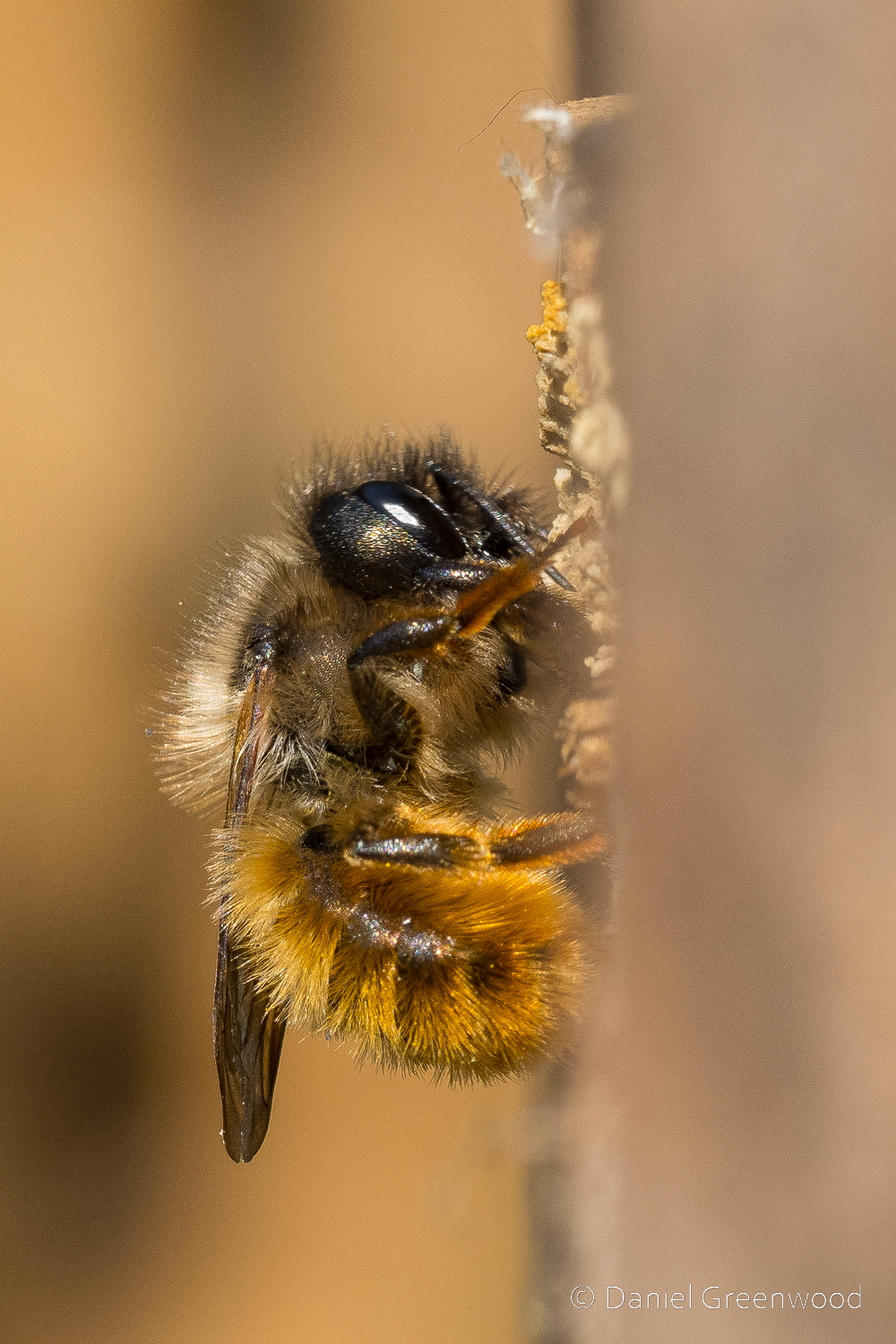
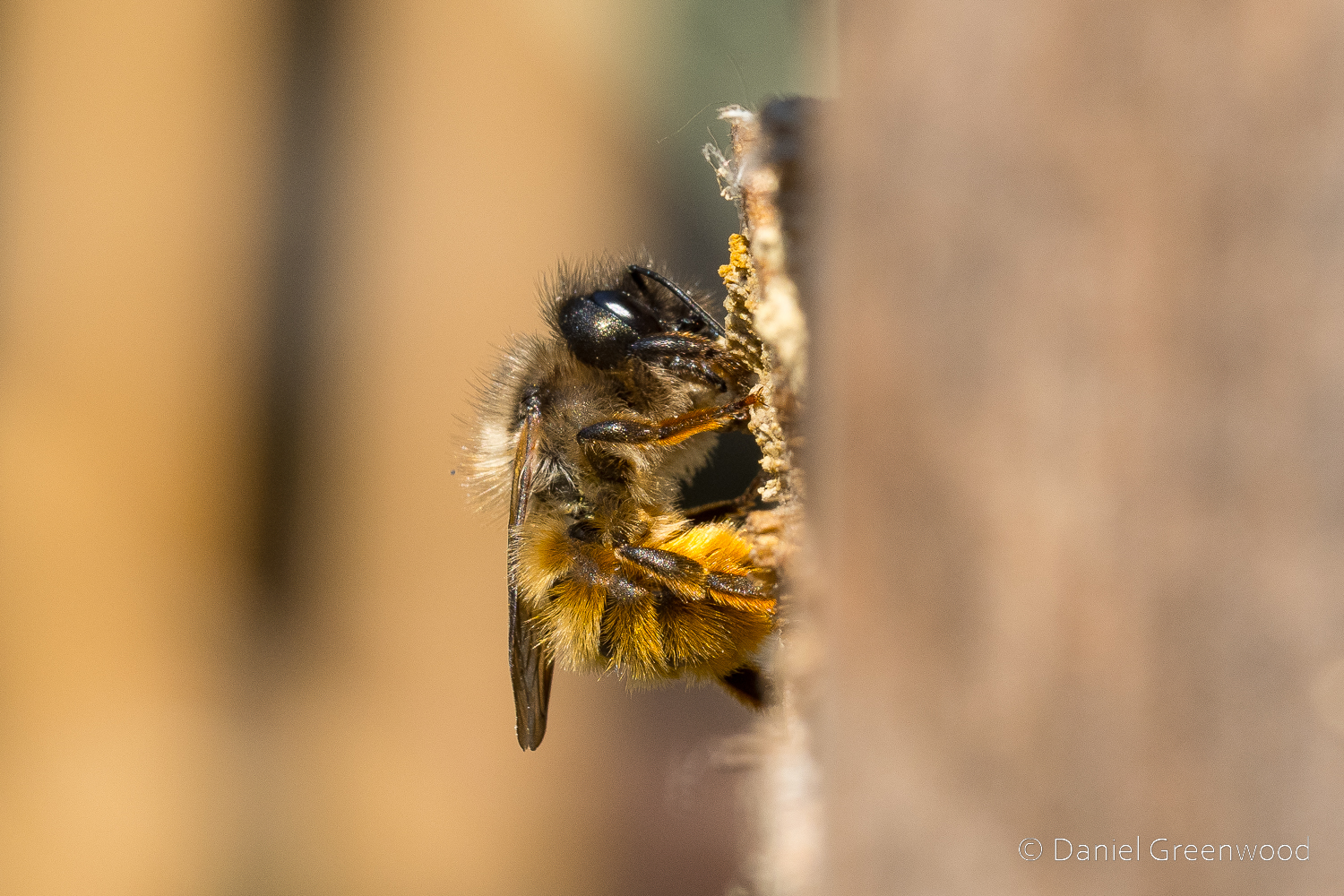
Around 9th May 2025 the red mason bees were working to seal their little chambers shut, as can be seen below.
2024 was a better year for these solitary bees in my garden, with far fewer in 2025. Their numbers will naturally rise and fall over the years. They’re important pollinators, especially in agriculture, so helping them has a wider societal impact for people who desire it.
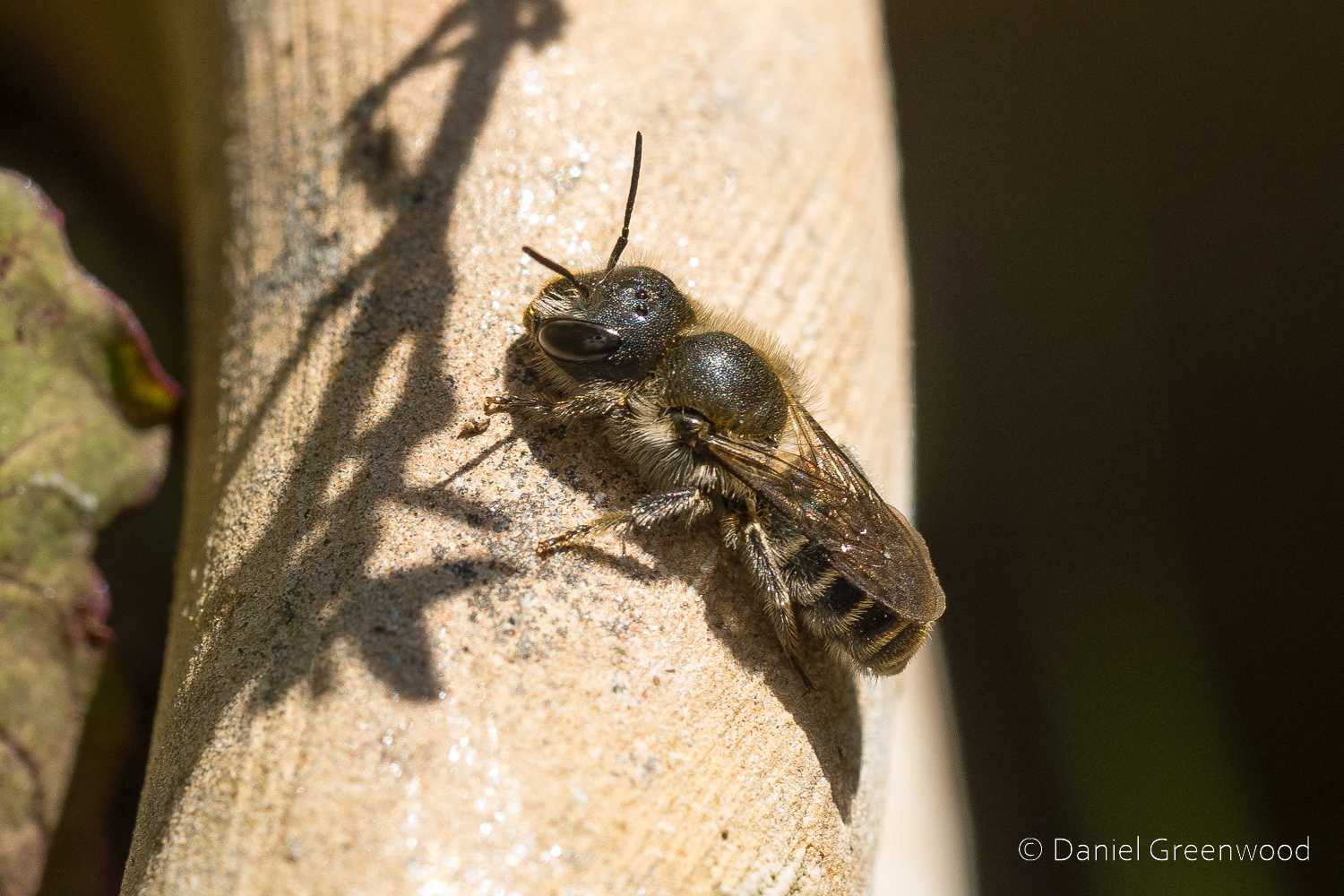
In the first of the hotter spells each year I begin to notice these small bees. They’re usually sunning themselves on the edges of ceramic pots, wooden sleepers or fences. I am fairly sure this is a blue mason bee. They are quite skittish but do often return to the same perch if they can see that you’re not an immediate threat.
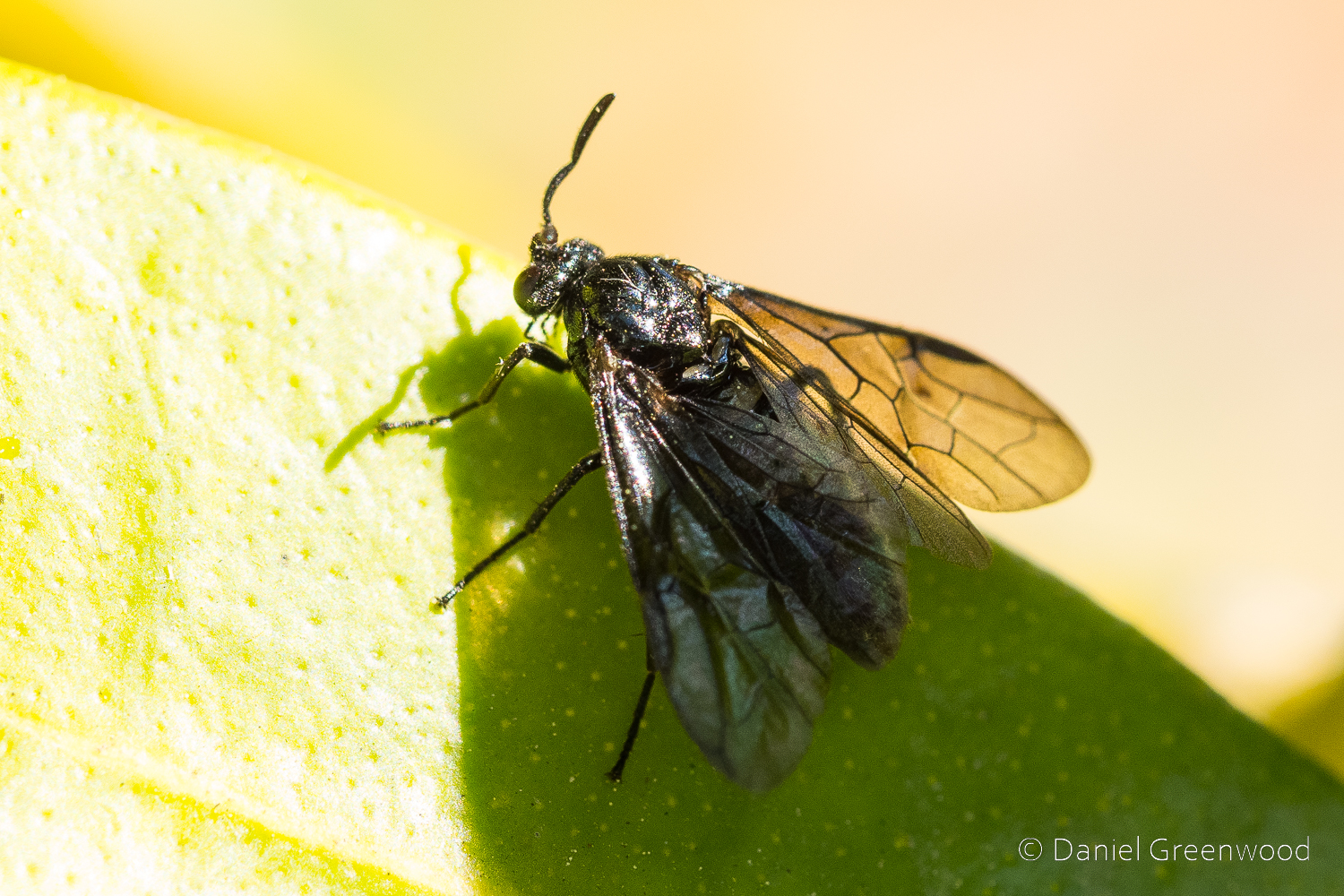
Elsewhere in the order hymenoptera (bees, wasps and ants) I saw this unusual-looking winged-insect hiding in the leaf shade. I’ve had to edit this a bit to bring the shadows out, but it’s a species of sawfly. It seems to have two antennae in the shadow, but for the life of me I can only see one!
I noticed the first swollen-thighed beetle of the year perched on the burgeoning fennel leaves.
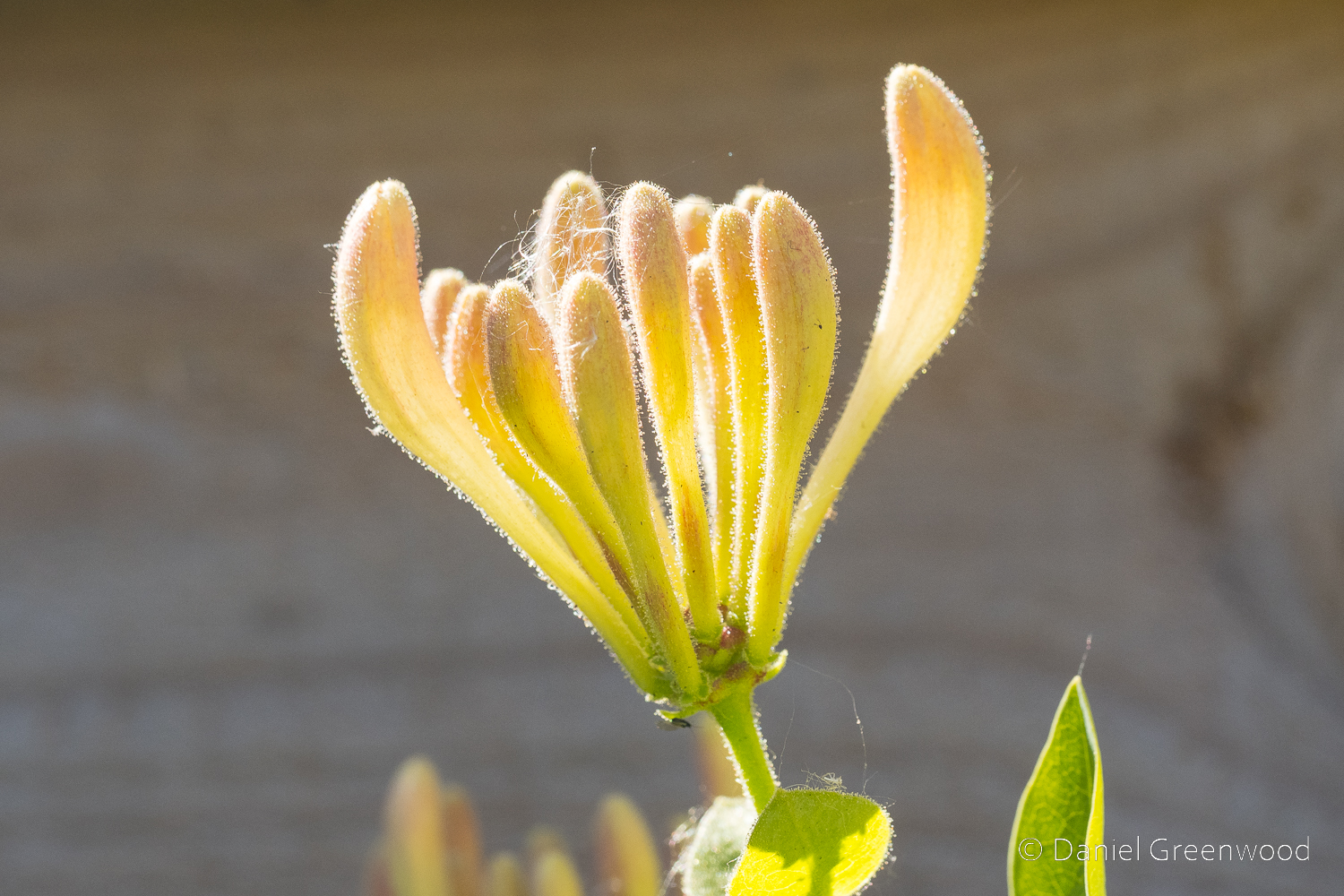
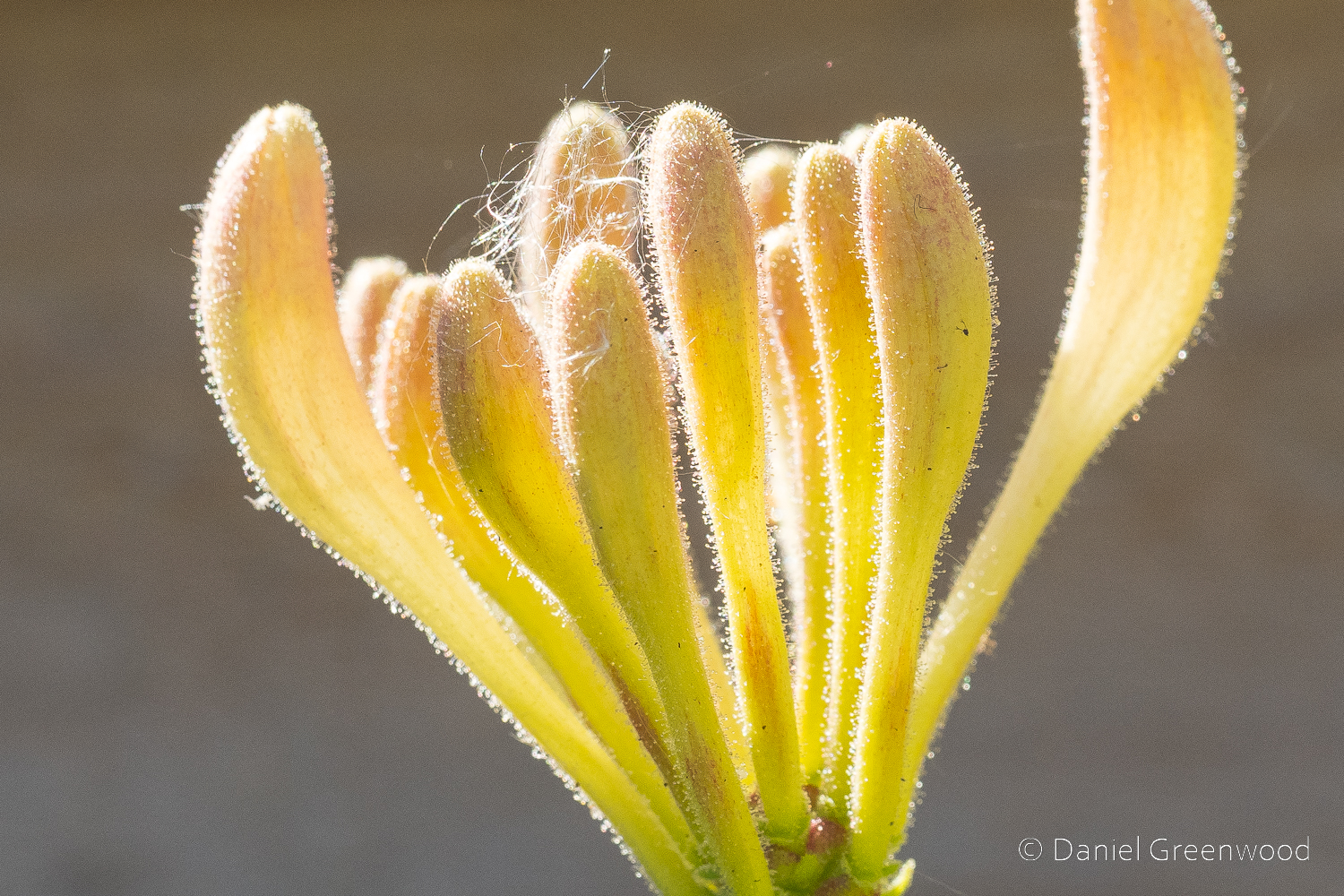
In taking a few pics of this honeysuckle I noticed that there appear to be little sticky nibs on the flowers. I’m wondering if this is to trap pollen when bees visit, or potentially to snare invertebrates in the carnivorous sense. I can’t find anything online about that, but I now know just how invasive it is in North America.
And finally, the trusty Stachys was close to flowering by the 9th May. It looks very cosy and comfy here, ready for the wool carder bees. What I didn’t know about this plant (known as woolly hedgenettle) is that it’s native to Armenia, Iran and Turkey. I bet it has some very cool insects feeding on it there.
The bees are out in force at the moment, so I’m taking a lot more photos. Posts will now be one per day of photos, as there are too many in a week now to cram into one post! You may not care about this.
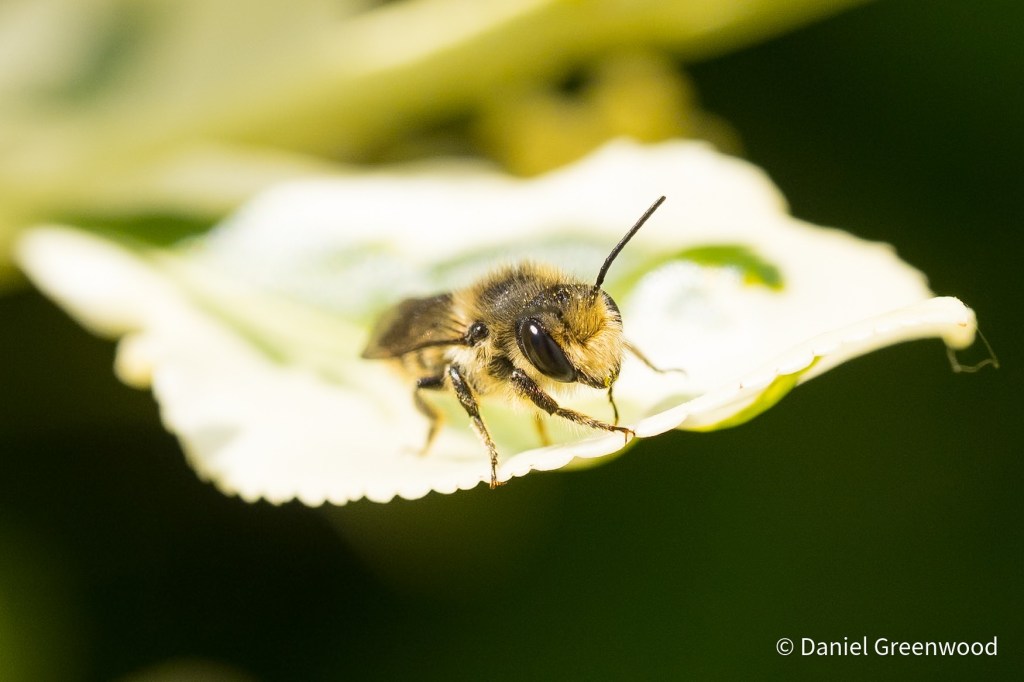
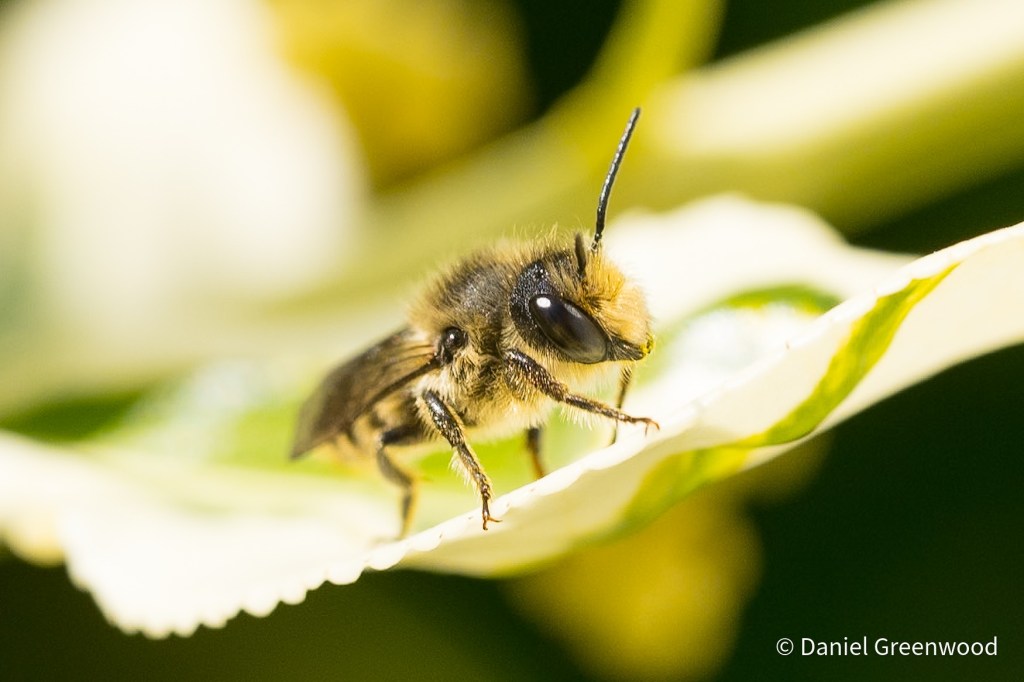
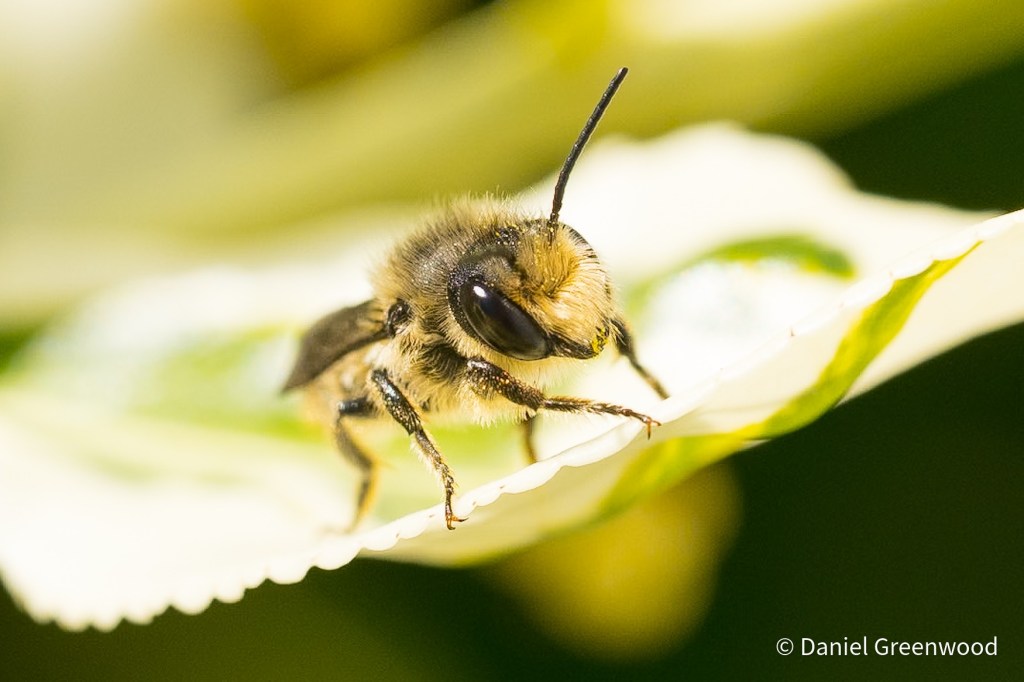
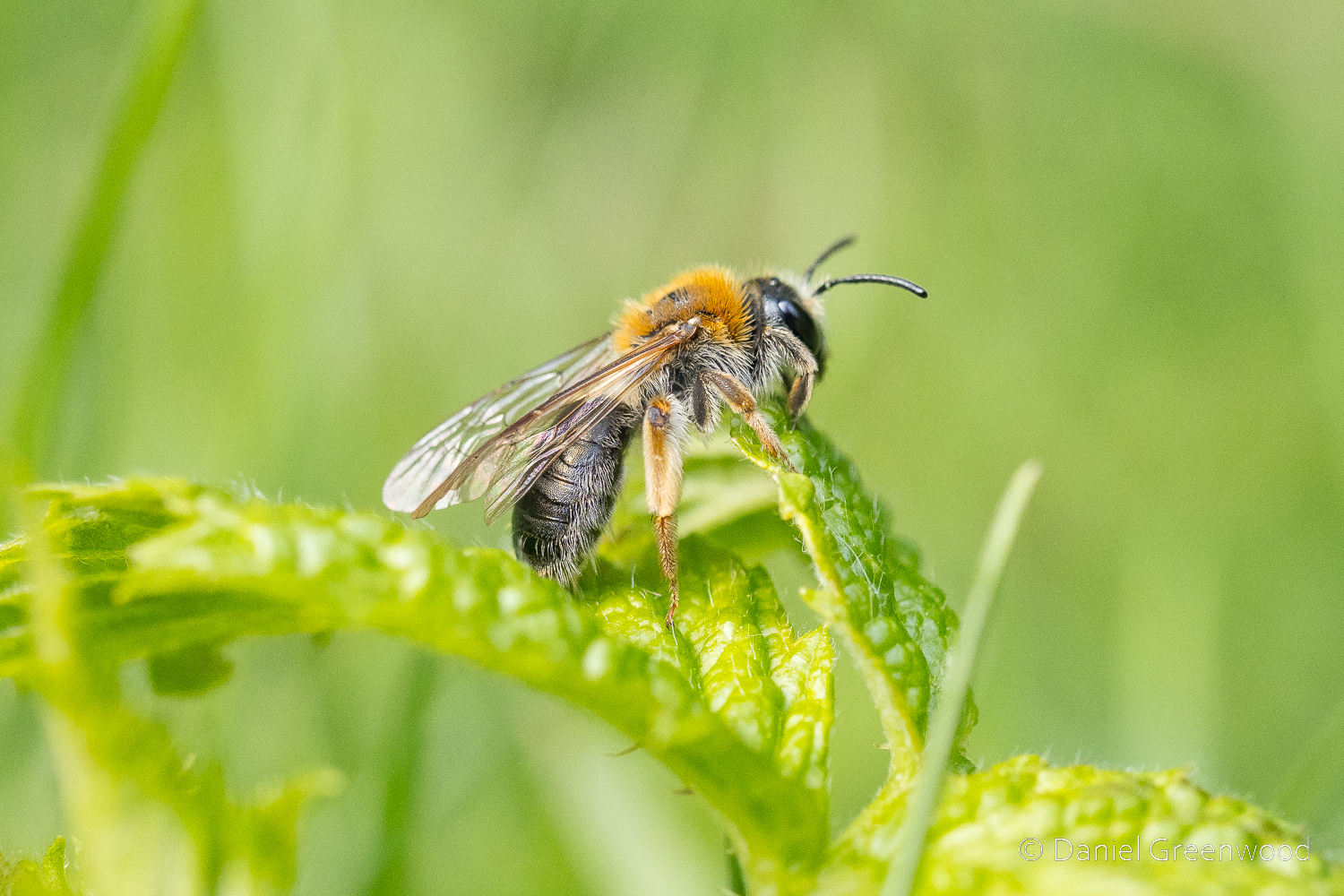
Early one morning before work I noticed a little bee resting on some raspberry leaves in my garden. I grabbed my camera from the house and got some photos. It was early and the temps were low so the bee wasn’t very energised. It may have spent the night there. This is probably early mining bee, which is one of the more common species in SE England from what I know.
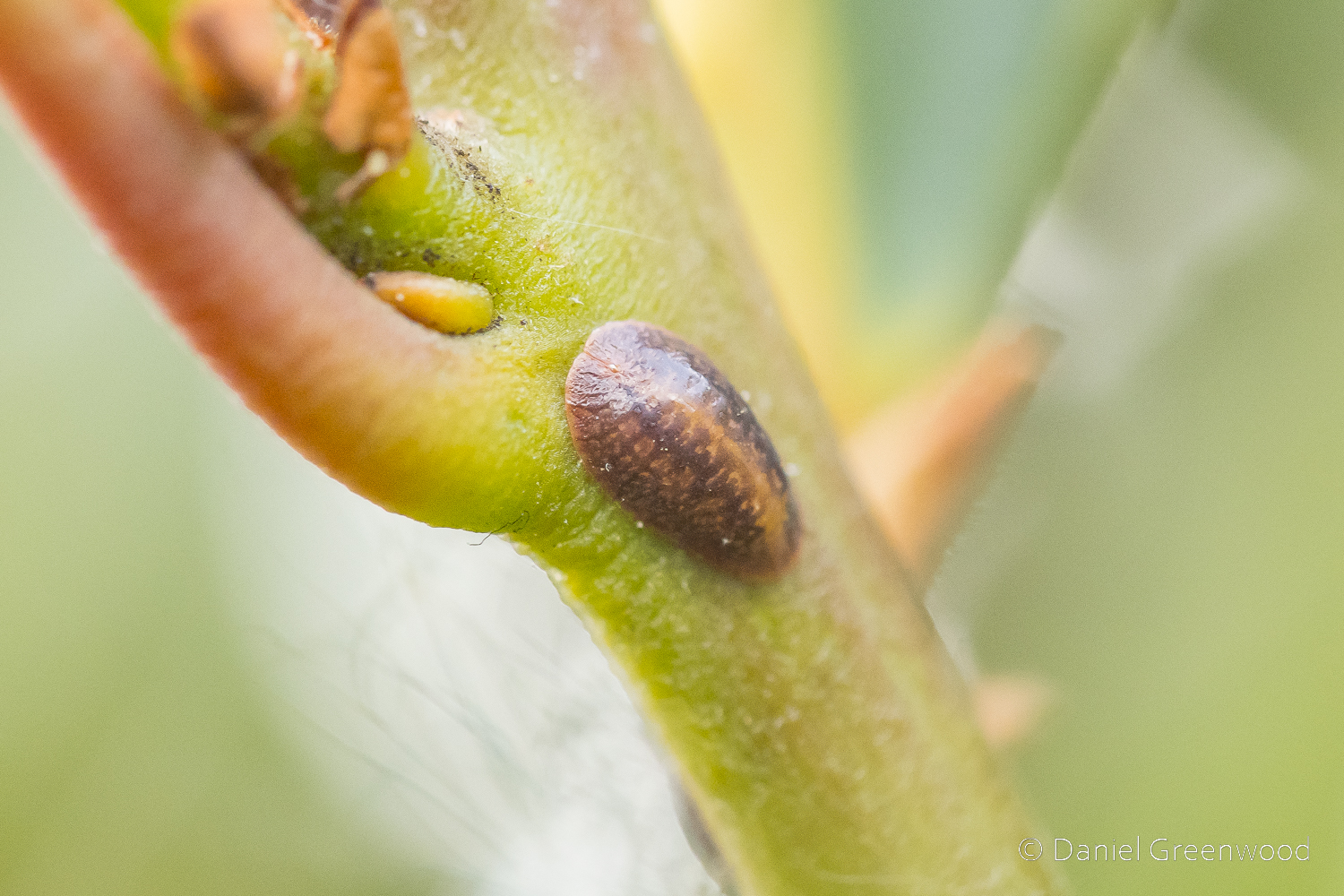
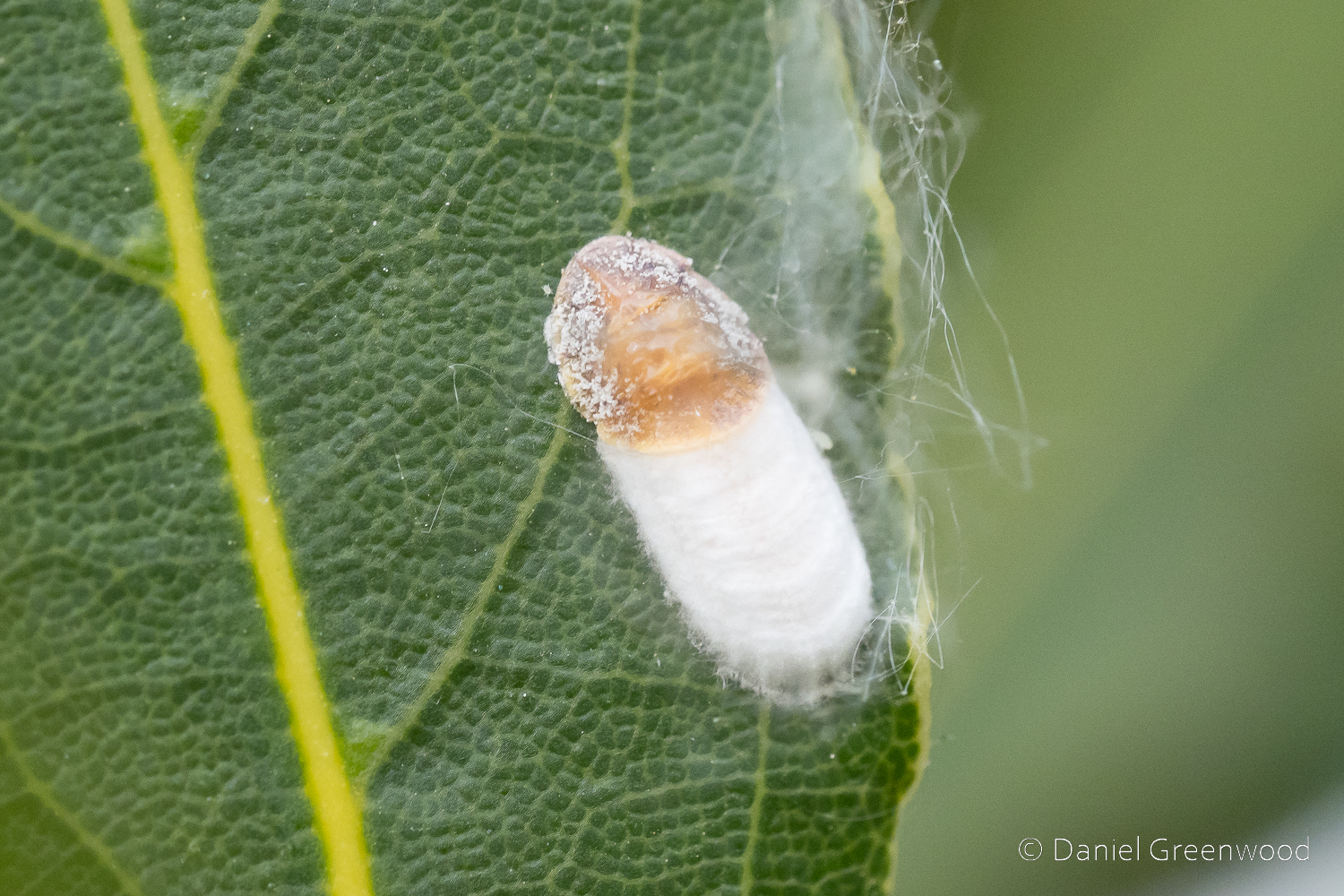
Now then, I think these are scale insects (Coccoidea) in different stages. They’re attached to the stems of plants and also the leaves. Apparently they cause problems in coffee plantations – not a problem for me. Not only do I not drink coffee, it would be impossible to grow it in my garden.
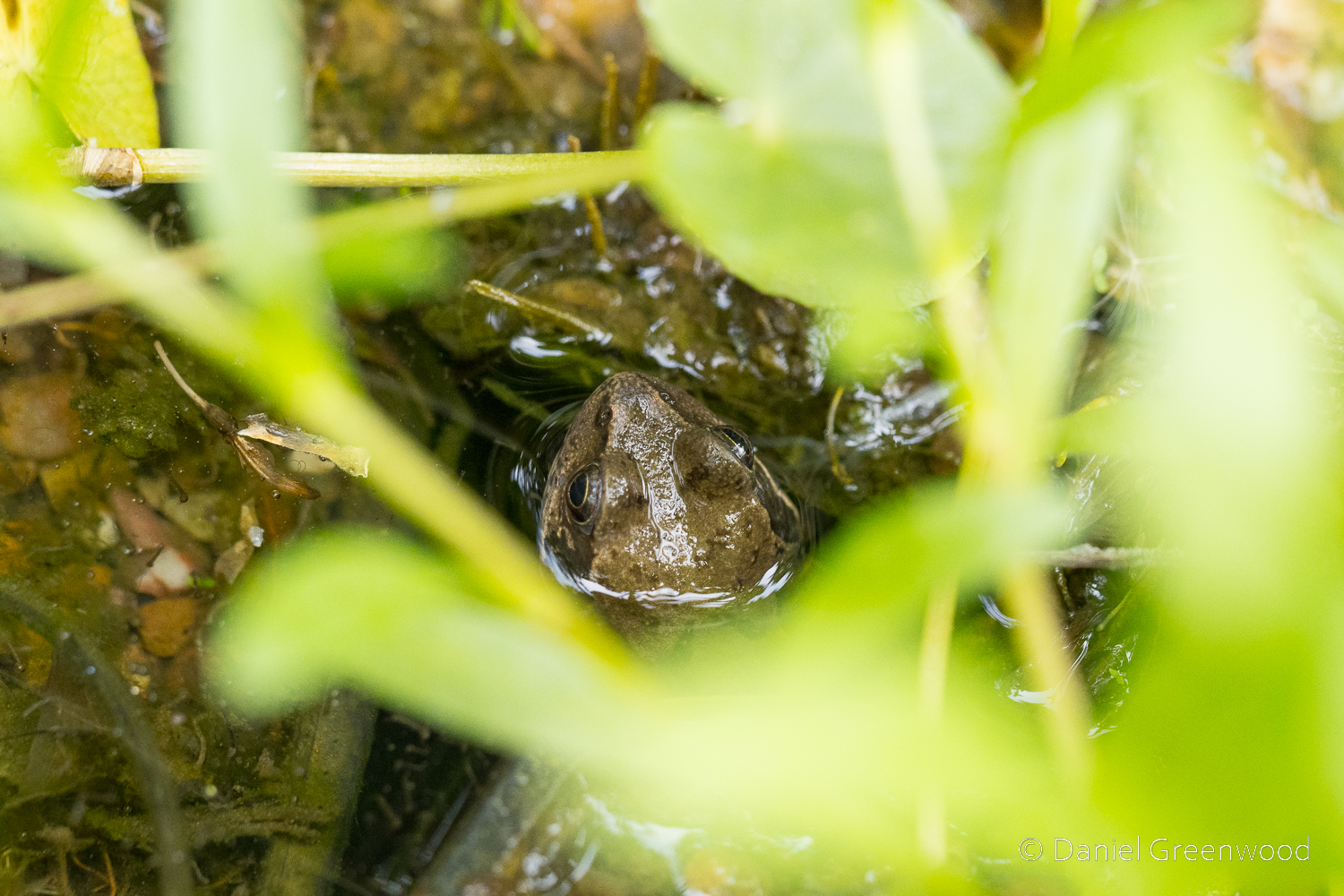
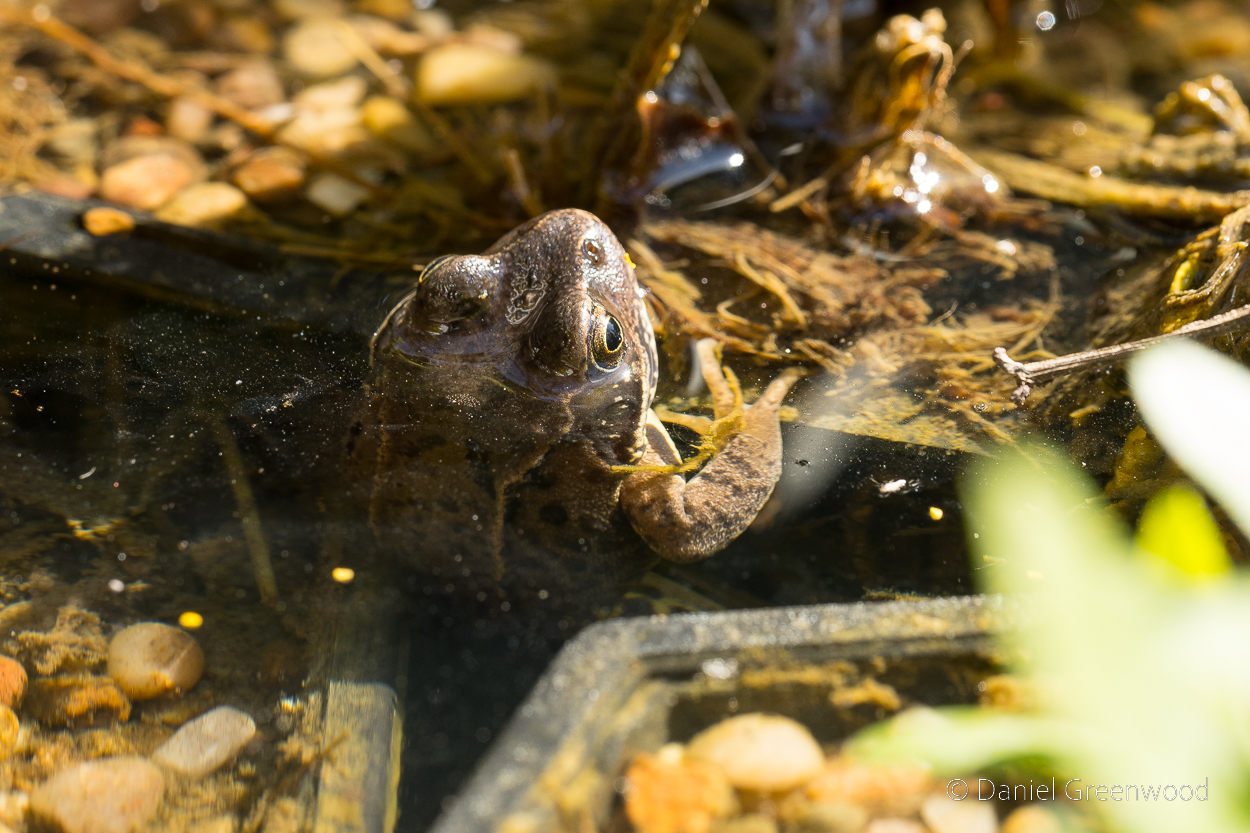
Our frogs have been enjoying the basin pond, as per a recent post. It’s tough for them right now, we’re experiencing extremely dry conditions in southern England and are ‘on track for the driest spring on record‘.
On Friday 11th April I was hanging out in the garden when I glanced over at the small container pond on our brick patio. It’s an old metal wash basin filled with plants and, well, water.
Birds bathe in it, foxes drink from it, and something rather special now lives in it.
The first thing I saw in the ‘pond’ were two eyes looking back at me, and two big arms and webbed hands (are they hands?) holding onto one of the plastic plant containers.
It’s been so dry for the time of year, wildlife is really suffering with the lack of water. If you have the chance to build any kind of pond you should do it! We don’t have enough space in our garden to dig a ‘proper pond’, but we have been able to use a container we bought at an antique dealer. Without it, where would the frog go?
Elsewhere I’ve noticed the number of drone flies has ebbed a bit, but there are still plenty around. This is probably a tapered-drone fly, a species of hoverfly.
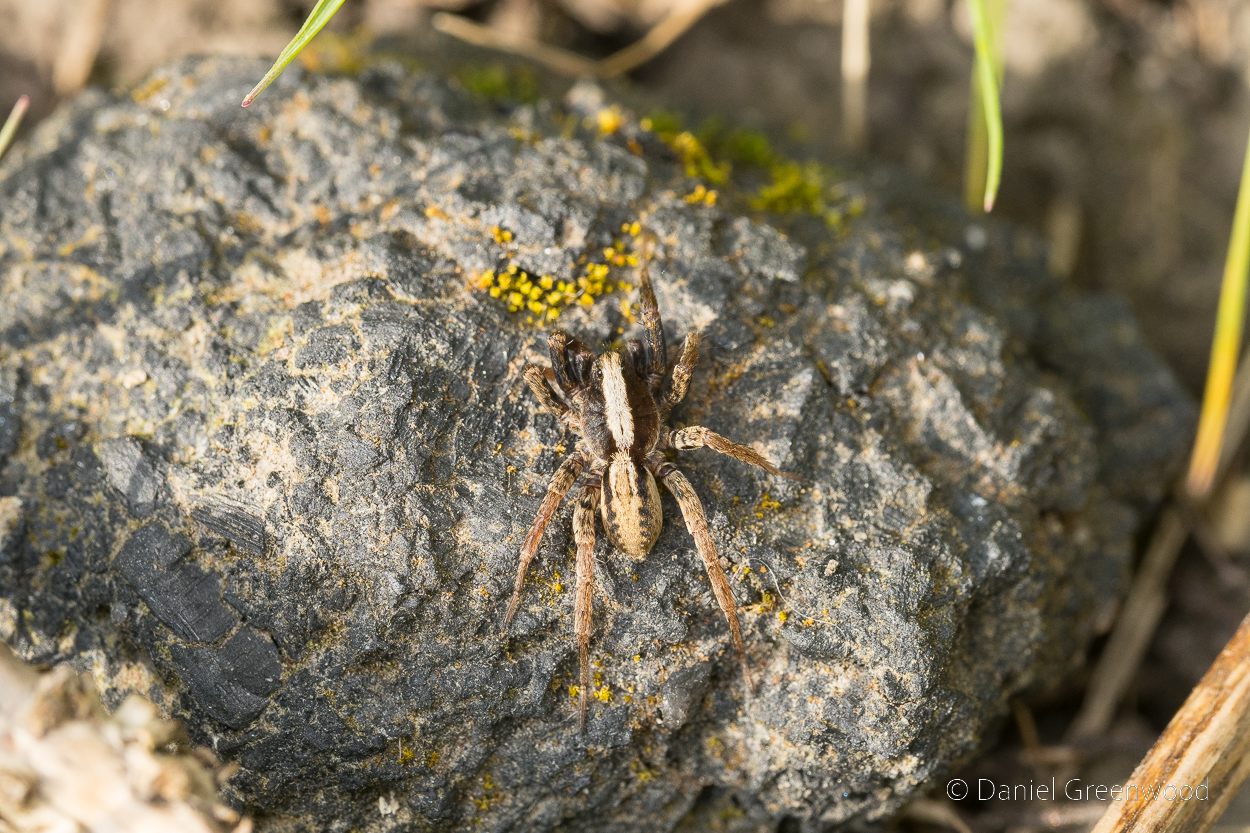
Sitting on this piece of charcoal (which you may notice is now being colonised by a very small moss) was a little spider. iNaturalist has suggested this is a fox spider.
It’s rather cuddly isn’t it? No?
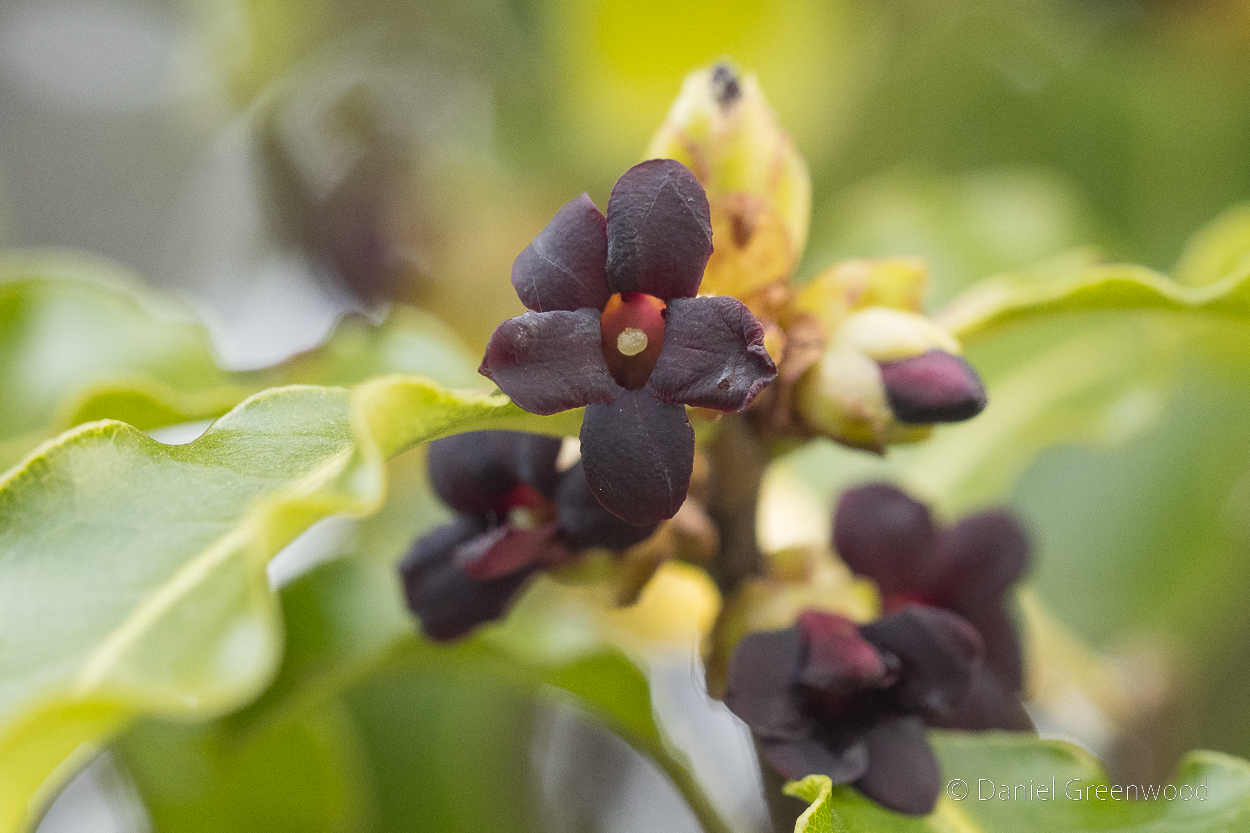
At night we’ve begun to notice a powerful fragrance around the house. It’s a bit like honeysuckle but is probably a cheesewood, a species of plant from New Zealand. This grows in a neighbouring garden but reaches over to us. It’s absolutely covered in pollinators and the smell- wow. It doesn’t seem to be invasive so could be a good option for your garden if you like pollinator-friendly shrubs.
Five years ago we were facing up to the Covid-19 lockdowns. In response to the stay-at-home orders I began a weekly macro blog, an assignment from the gods? No, just our Supreme Leader at the time Boris Johnson and his better half in Public Health Chris Whitty.
While I can’t promise weekly blogs due to work and life commitments, it’s definitely time to dust off the macro lens after its winter slumber and step out into the garden to see what’s happening!
As ever, there’s far more going on than you might think. I also think it’s important that we look at and try to understand invertebrates when this misinformation is coming from the leader of the country (I know it could be worse, but get your facts straight, folks).
We depend on nature and our ecosystems and their wildlife for our food, clean water, fresh air and function. Wildlife has a right to exist and the world does not revolve around our species.
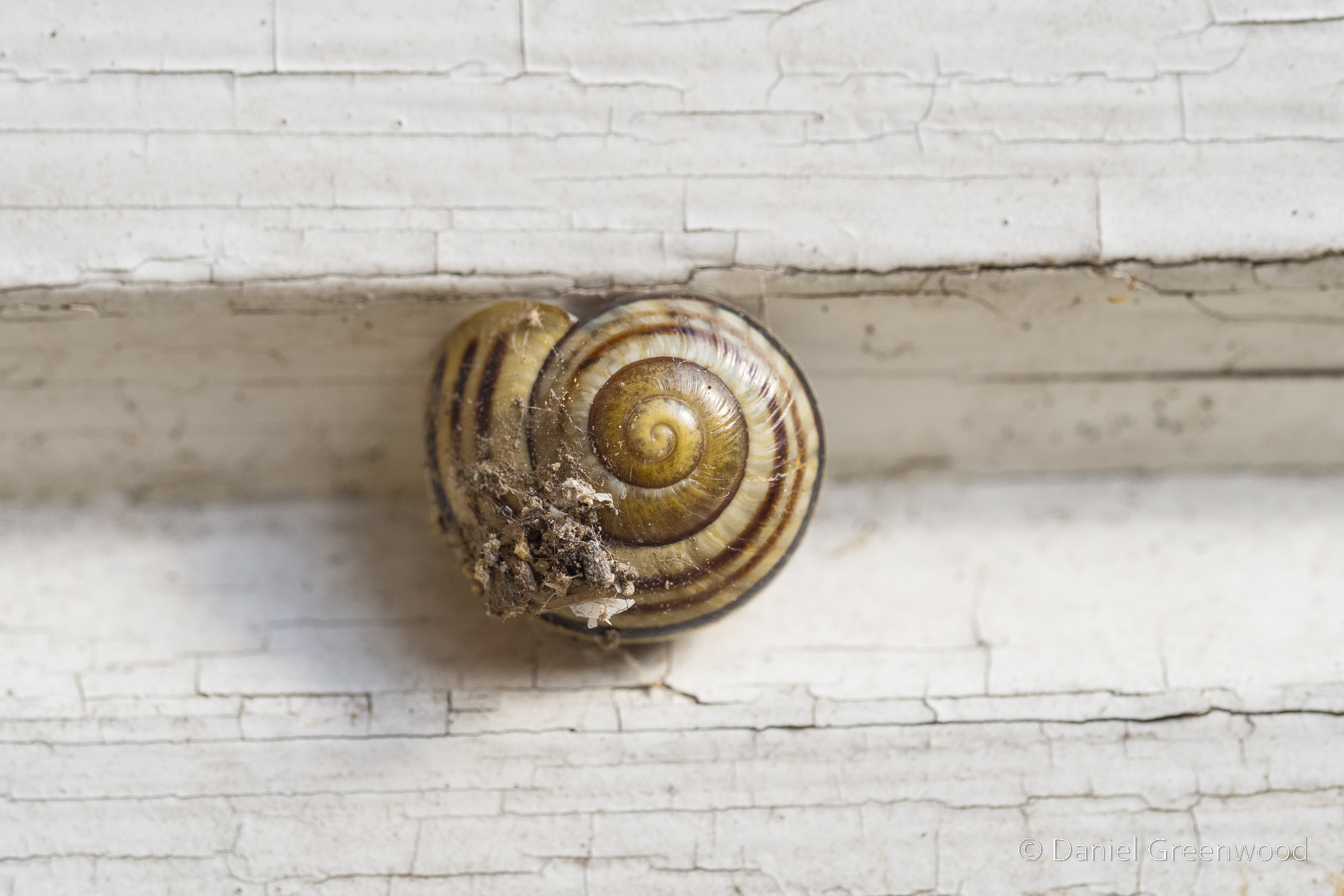
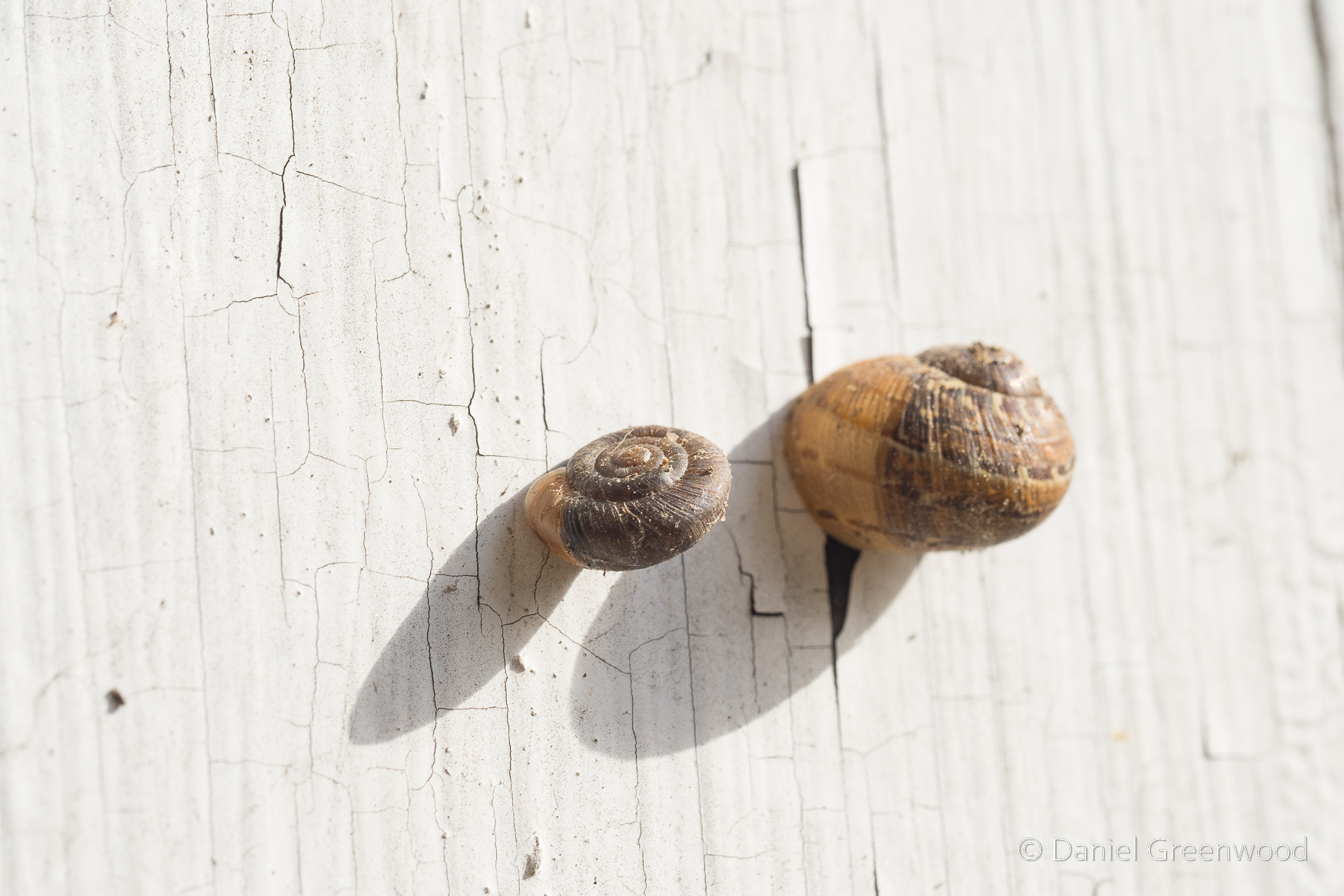
The snails are roosting in our front porch. My wife was wondering if they might be too hot there, as the paint’s white and it can get quite sweltry in there.
It looks to me like something is going on with the shells and they may be roosting to grow their shells. It’s not something I know much about. Please let me know in the comments if you have any info 🙂
We have some nice pansies my wife planted out by our front door. You can see the bee drive-in here with the dark landing marks and the brush of hairs to ensure the pollen of other pansies are retrieved from a visiting bee.
The broom plant flowers in a subtle way, these little yellow petals appearing from the red sepals.
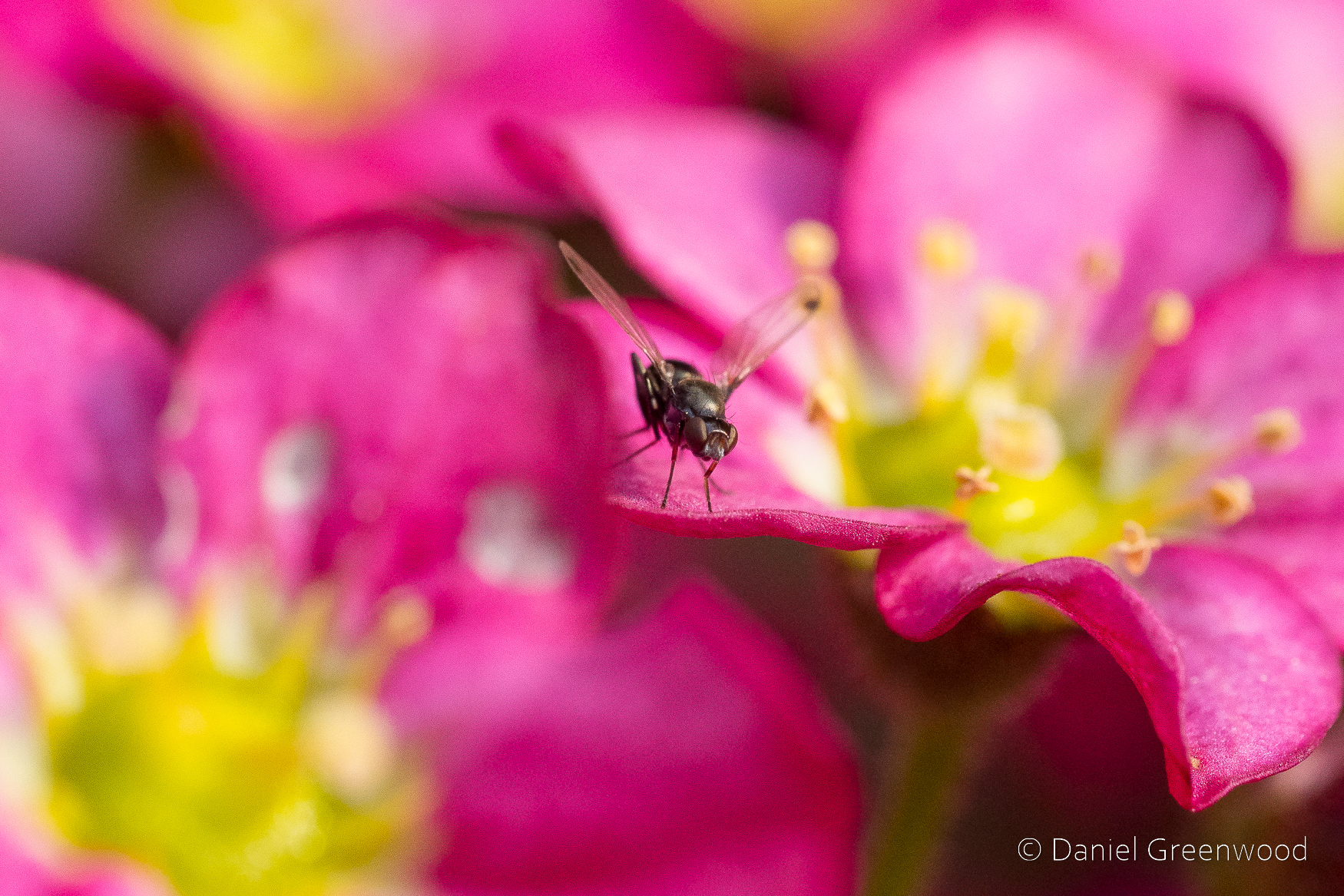
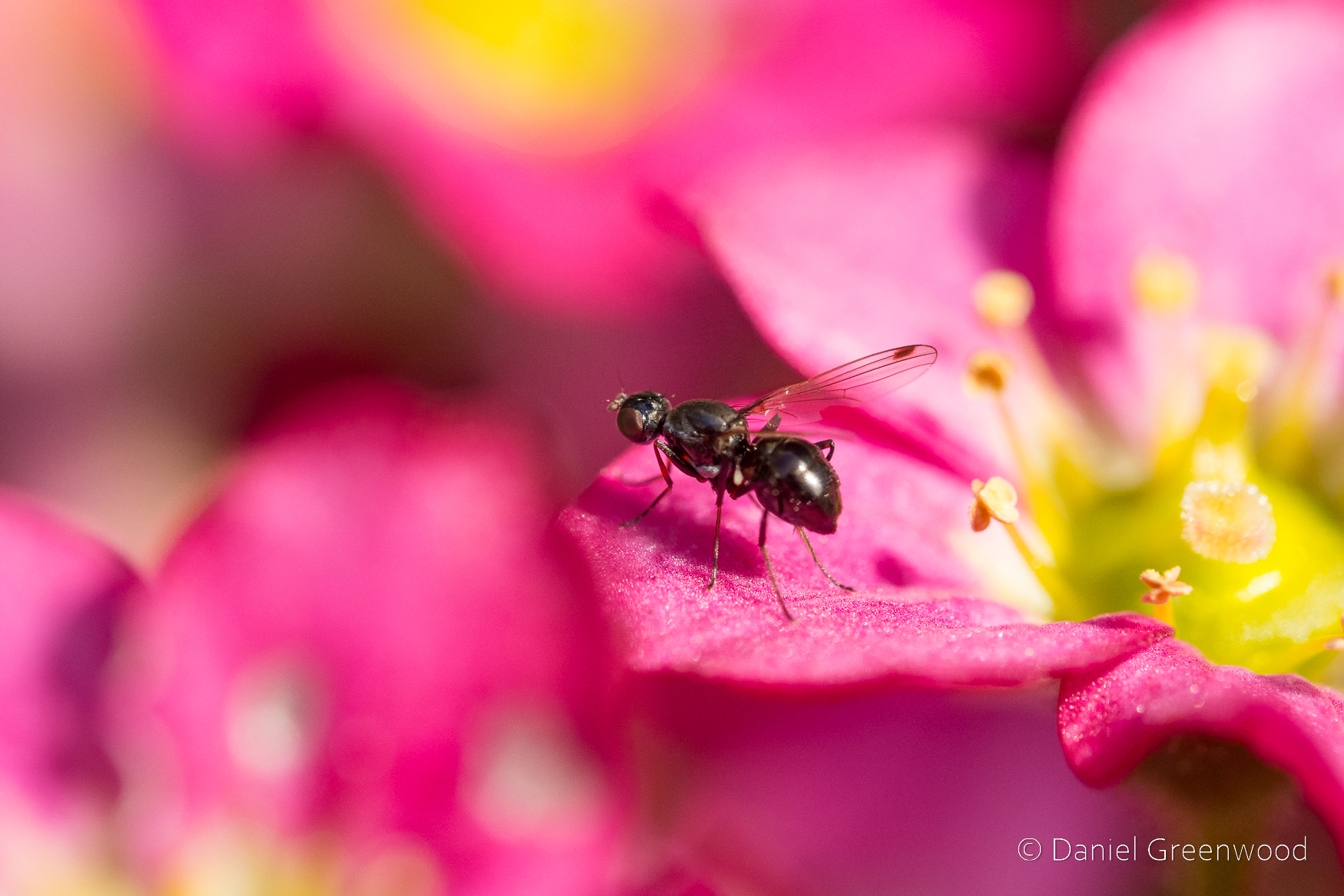
This is a common little fly that seems to stand around on leaves and petals for ages!
Their eyes are very cool, and I enjoyed the single spot in their wings as well. These flowers are some saxifrages my wife bought from the garden centre.
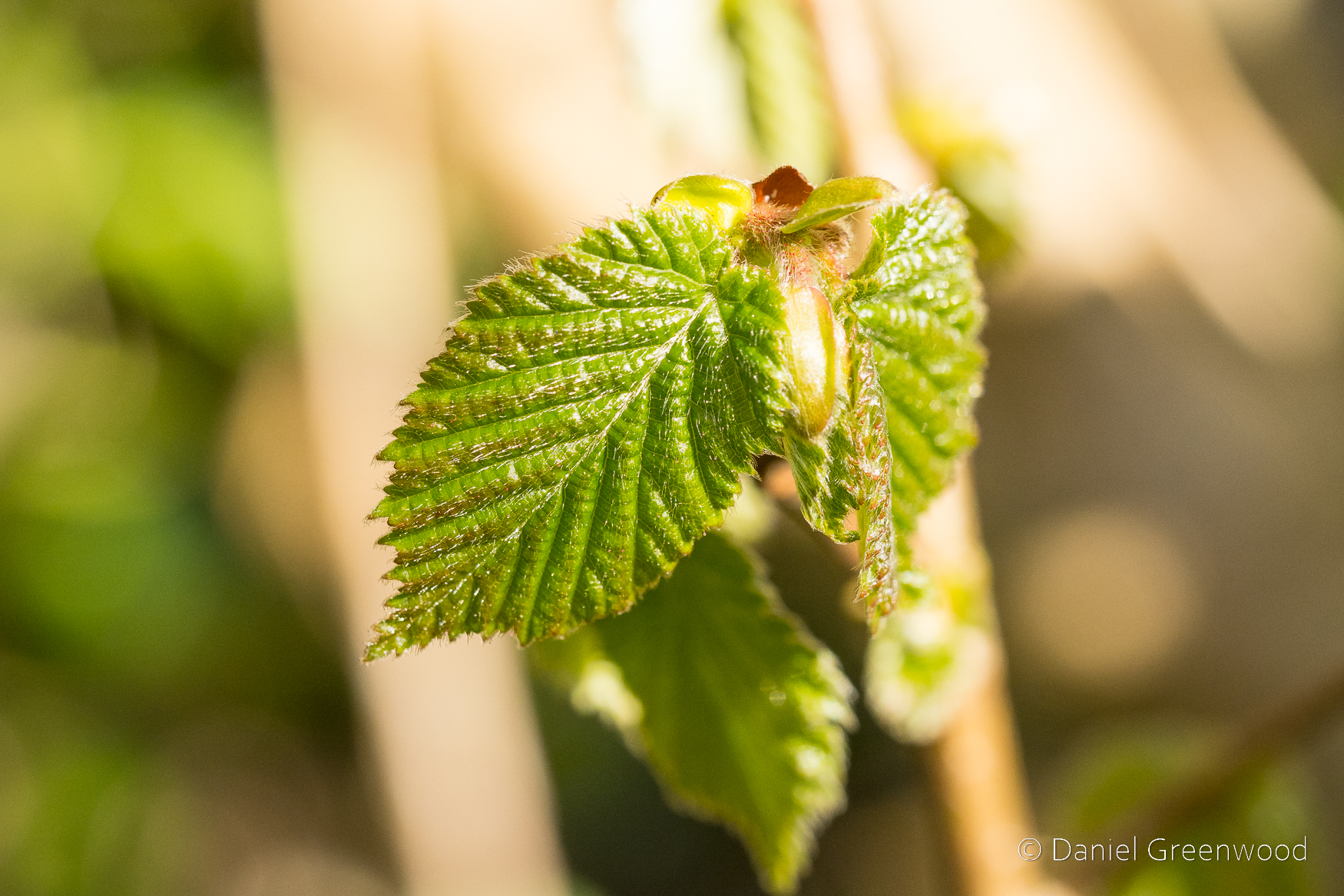
In January on a cold Saturday afternoon I laid or ‘plashed’ the hazel shrub I had planted out in our hedge. It’s a little hedge, but the usual shrub that made up the hedge has died back so I needed to take action. It’s so pleasing (‘pleaching’?) to see the hazel respond so well and new shoots to appear from the lain-down stems.
I also uprooted a sapling that a squirrel had cached as a seed, which is doing well. I planted this out around the time of frosts, which shows hazel’s hardiness. I did know that was the case, but it’s nice to see it come through.
The normal hedge I mentioned is this Skimmia japonica. It’s good for pollinators, no doubt. But it doesn’t seem to last well without pruning.
It was abuzz with drone flies as spring really began to arrive in mid-late March.
These drone flies (Eristalis) are probably the most common winged-insect in our garden at the moment. They’re quite funny I think.
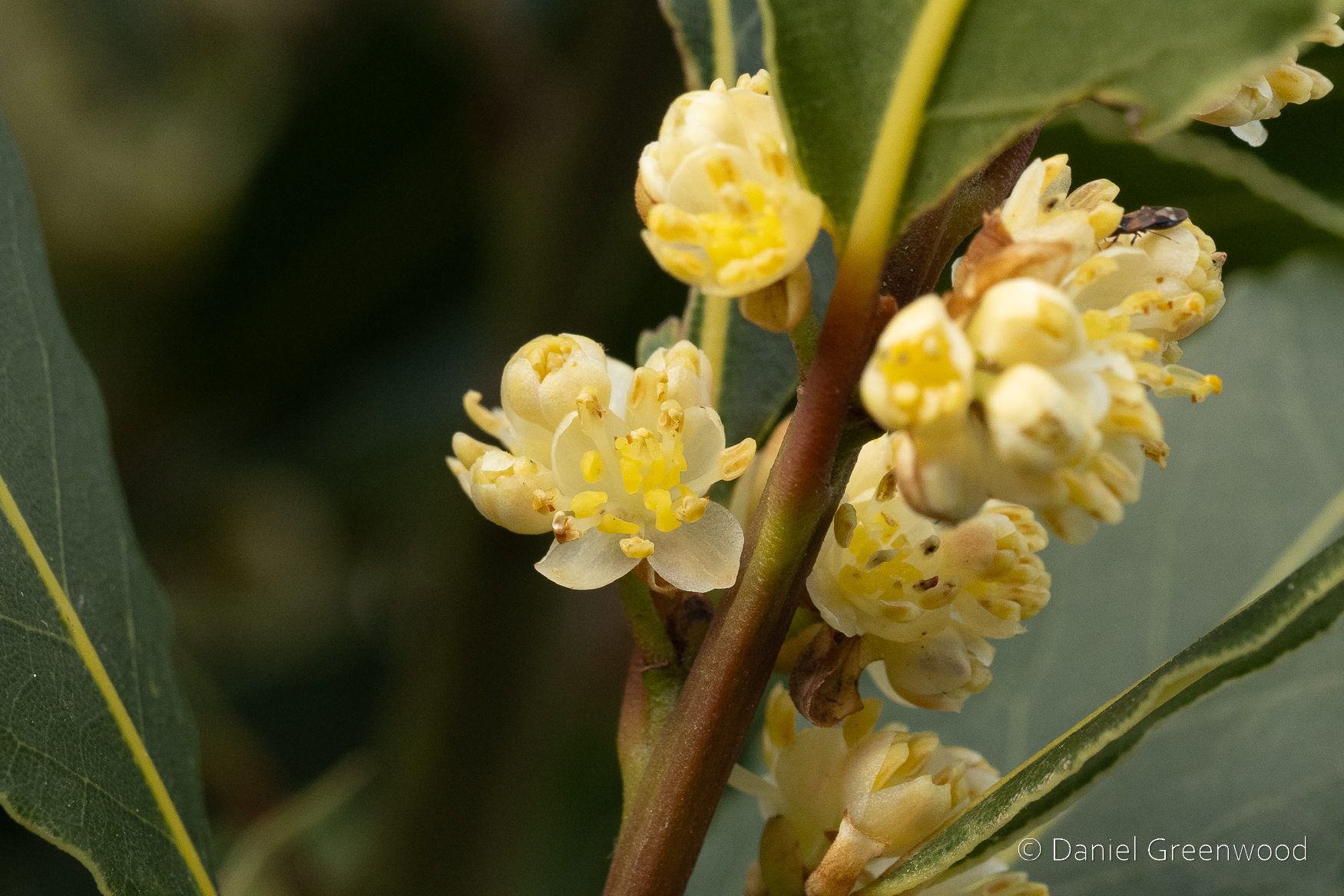
Bay flowers promise so much, but they are quite modest really. I am hoping this provides some decent nectar for any invertebrate that needs it.
I spotted this little crab spider hanging out on one of my thermal t-shirts. It’s probably Misumena vatia, the most common of the crab spiders.
A cat monument in our garden in memory of our cat Kaiser who loved this spot in the flowerbed. The wolf spiders also love this spot because it gets so warm. The white stone of the cat is even warmer than the surrounding soil. I think this may be a male and a female wolf spider, with the male the smaller of the two, with the palps (dark spots at the front of its head, in the cat’s eye!).
The fence next to the cat monument was a helpful basking spot for the first nursery web spider I’ve seen so far this year.
The flowering of our magnolia is short and sharp, but these globular flowers are a delight. Magnolias are very old trees in evolutionary terms, and here’s to another year under their belts.
In May 2024 my wife and I went on our interrail honeymoon to the Jungfrau region of the Swiss Alps. I am finally ready to post my photos from the trip, starting with some macro photos. I’ve popped in some short videos here to give a bit more texture and sound to bring things to life.
My cat whispering wife
It was an incredible trip, all done by rail there and back. The nostalgia is already with me.
In addition, I’m aiming to post about the spring alpine flowers and the amazing sycamore wood pasture. Hopefully one each week. I posted about the smattering of fungi back in May on Fungi Friday.
On the trip I took only one lens with me, one capable of pretty much any photography between 12-45mm (equivalent to 24-90mm in full frame cameras). That includes excellent close up capabilities. I also had a pocket compact camera and my phone.
The meadows were in full bloom, days from being cut for hay to feed the alpine cattle through the winter months.
Breathtaking alpine meadows
Oxeye daisies with the Wetterhorn (I think) in the background. This pic is taken with my Olympus TG-6 compact.
It was nice to see the variations in the grassland species in the different locations. At about 1200m up these meadows were packed with umbellifers. They make up the wash of white here. This meadow must have been impacted by the snowmelt as it nourishes the foothills in spring.
The typical mix around Grindelwald was one of red clover, scabious, oxeye daisy and hawkbits.
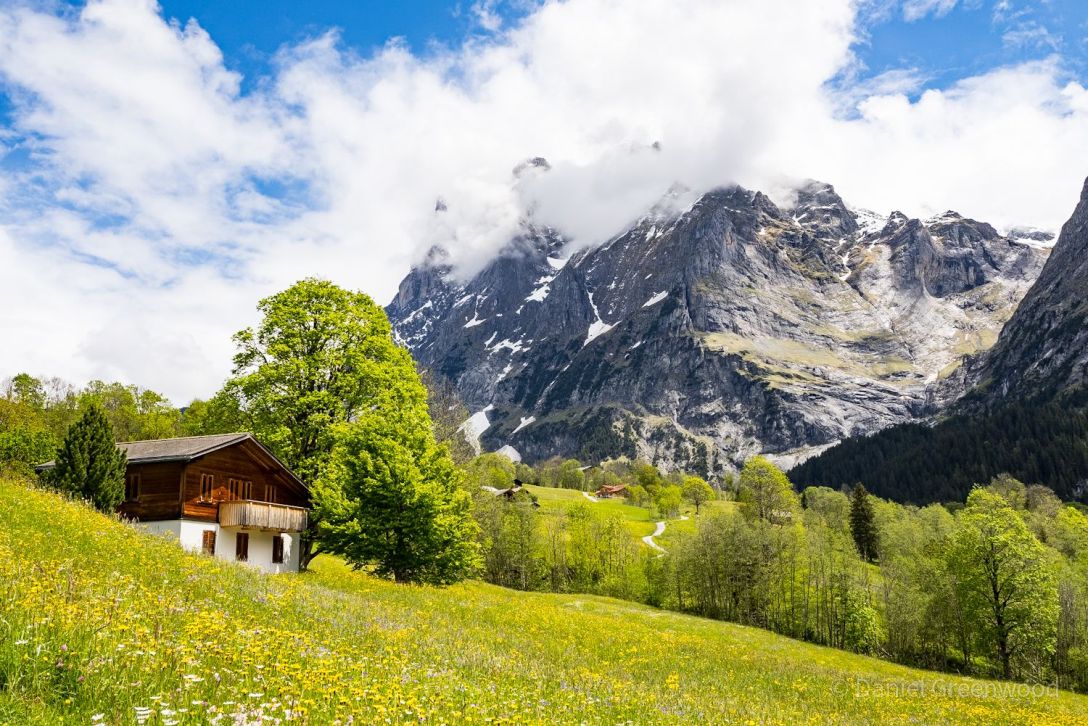
The Eiger looms over chalet homes and rich hay meadows. You can see the allure of Switzerland. High living standards and abundant nature.
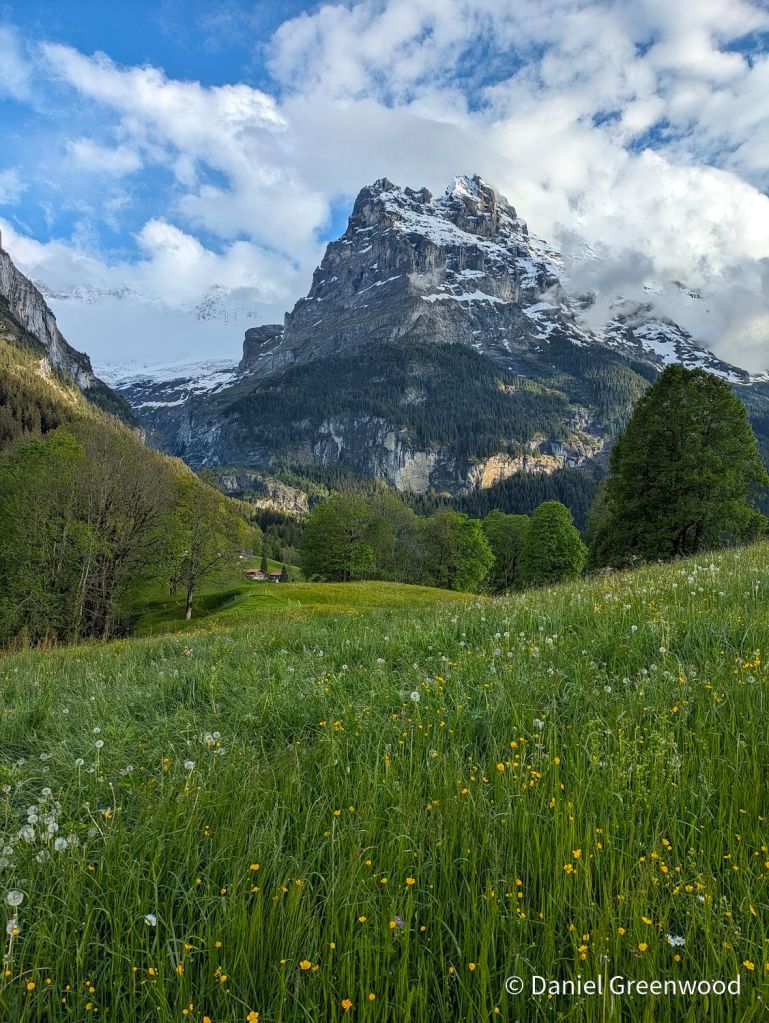
It is a breathtaking place, as this beautiful phone pic suggests (as in the phone’s capabilities!). This meadow was one that lacked the diversity of others, with the dandelions being evidence of nutrient enrichment, which encourages more vigorous plants at the expense of others. The most diverse meadows will have lower levels of nutrients in the soil.
The Grindelwald meadows were at a height of around 1000m. They were peaking and very loud at times. Just listen to this:
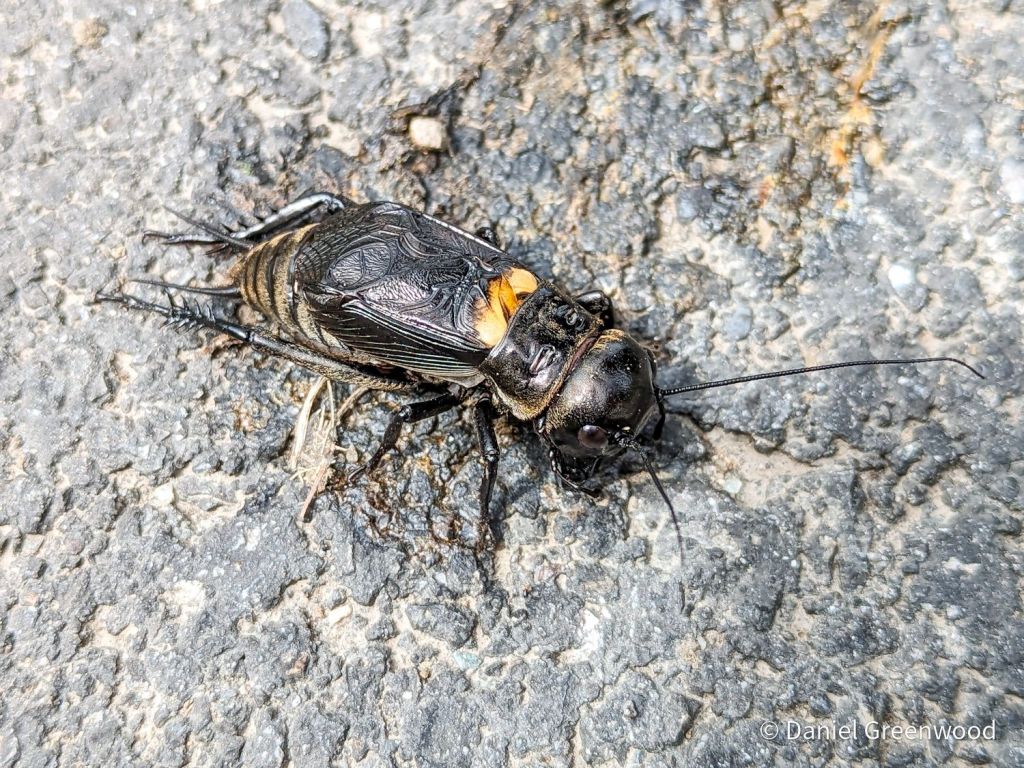
It was a chorus of crickets, not something that we get in England much anymore. The management of these meadows follows a largely medieval practice of haymaking, though it is now mechanised:
This is probably a family cutting and collecting the hay. This photo was taken from a cable car heading up to Männlichen.
Now onto the invertebrates that lived in the meadows.
Bush crickets
The sound in the meadows was made by the European field cricket, a species that has received support via conservation projects close to me in West Sussex. According to the iNaturalist page it’s flightless, so when it becomes locally extinct it struggles to repopulate lost ground. In the UK it has suffered from the decline in heathland, its favoured habitat. The cricket above was travelling across a lane to reach another meadow. There were a number of them squashed by vehicles. It’s unavoidable.
Moths and butterflies
During a walk in the valley woods at the foot of the mountain this green-veined white butterfly (I think) was on the wing. The main butterfly we saw was the swallowtail, but they were too fast, restless and far away for my lens to reach.
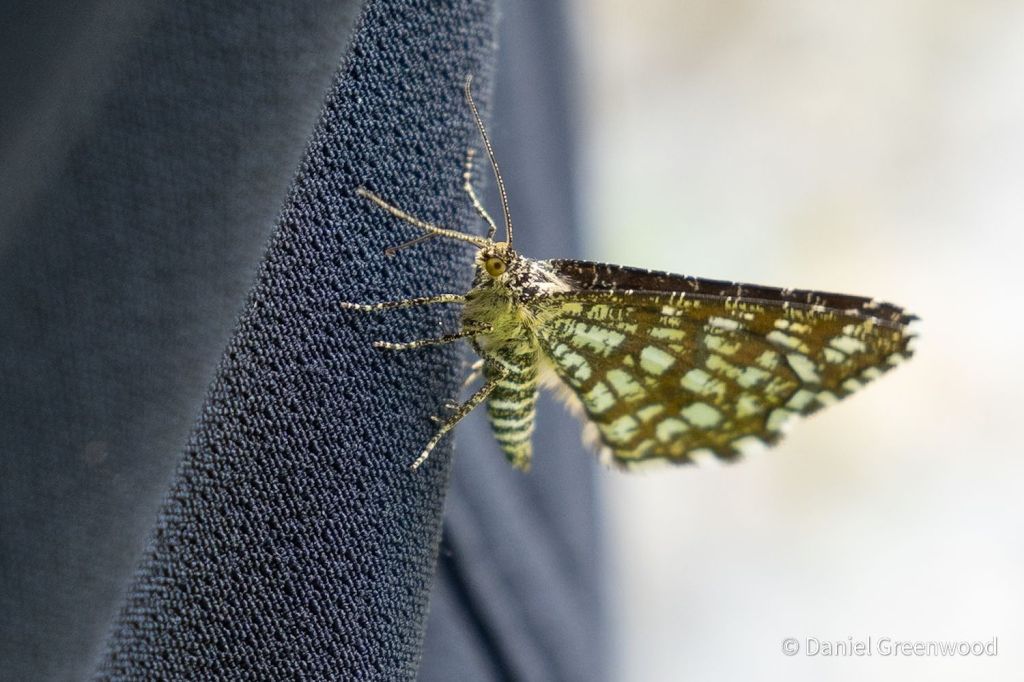
In stark contrast, this latticed heath moth alighted on my actual lens before being coaxed onto my trousers:
This is a species we also have in southern England.
Wasps and sawflies
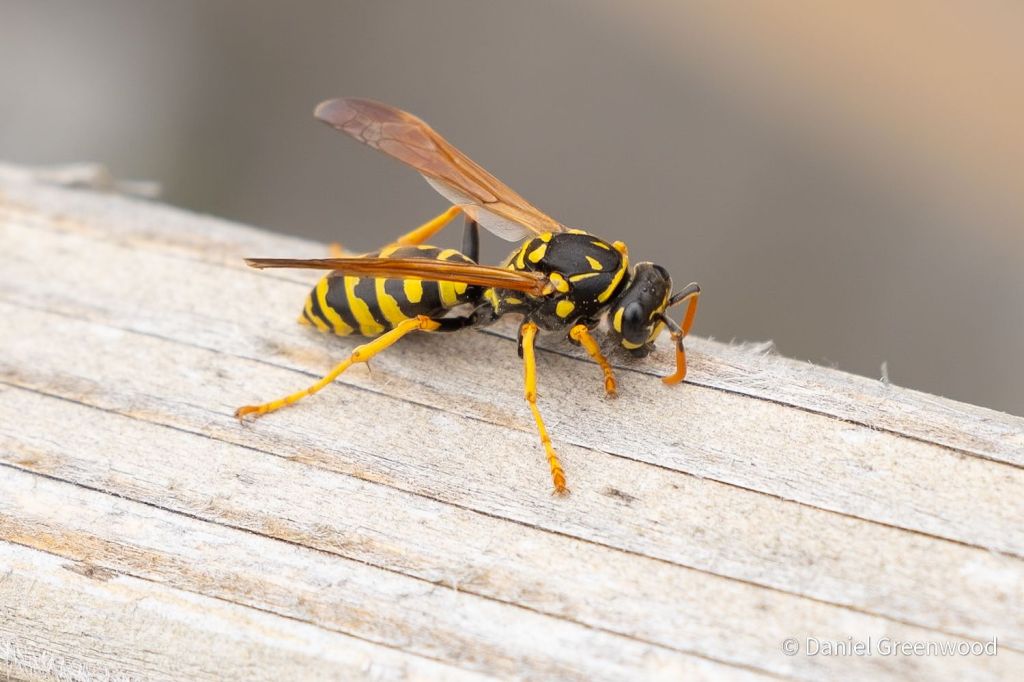
One insect you don’t see in the UK, as far as I know, is the European paper wasp.
They have a lovely orange hue to their antennae, feet and wings. I’ve seen them before in Czechia making nests in residential post boxes. Here you can see one gathering wood shavings for nest building.
Meadow cranesbill was another common flower in the – you guessed it – meadows. I noticed that one area we passed when returning to our accommodation had a number of cranesbills that held sawflies in their flowerheads. The iNaturalist sawfly oracles have decided this is Tenthredo koehleri.
Beetles
Beetles are not my strong point, unless they are from Liverpool. This is a species of click beetle from what I know, visiting an oxeye daisy flower.
Spiders
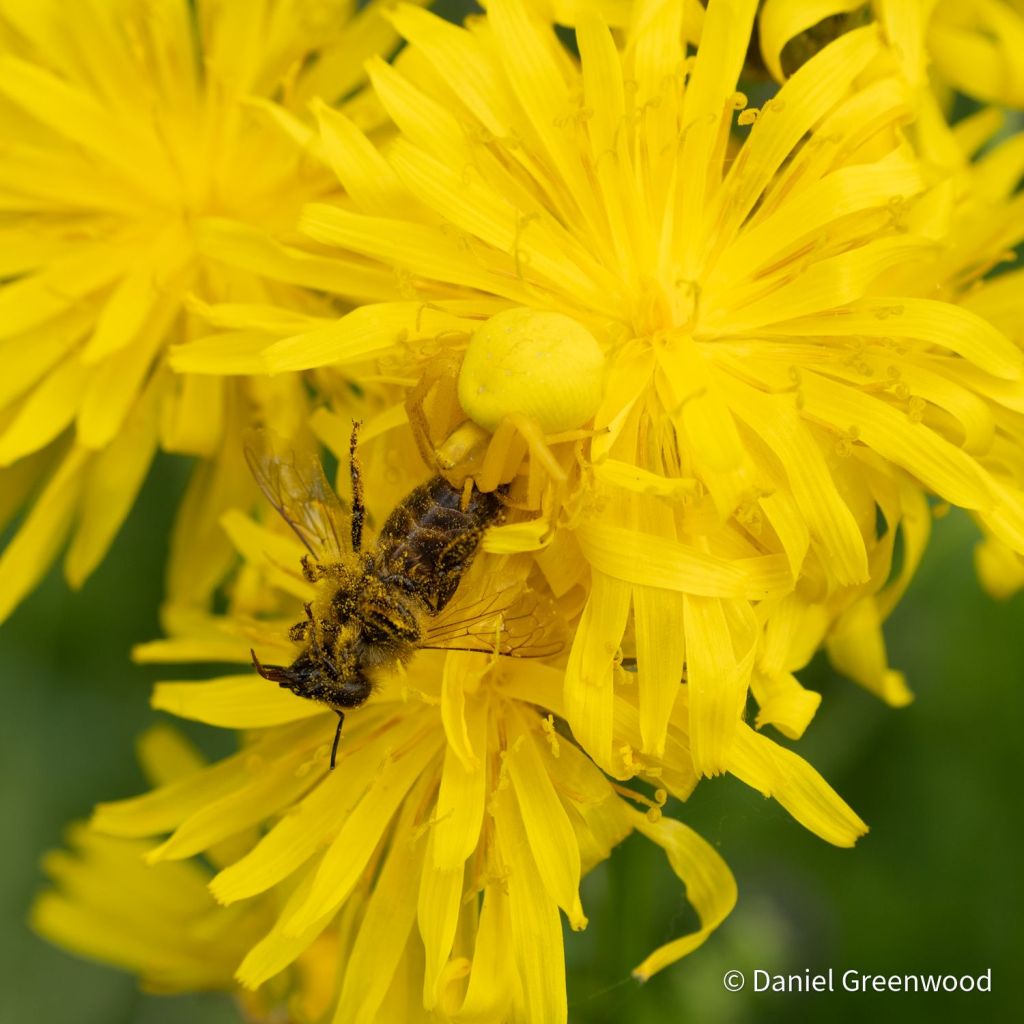
Now, I did mention those beardy daisies the hawkbits, earlier. I’m not up on my ID with these plants, but I did spot a crab spider which had joined in their colouring and caught a honeybee (I think) in one of the flowerheads. This was a statk example of how they can change their complexion to camouflage themselves in certain plants.
That’s all I really managed in the macro photos stakes. There’s much more to come from the Swiss Alps though.
Thanks for reading.
I write these blogs in my spare time because I want to raise awareness about the beauty and diversity of our landscapes. If you enjoy reading themyou can support my blog here.
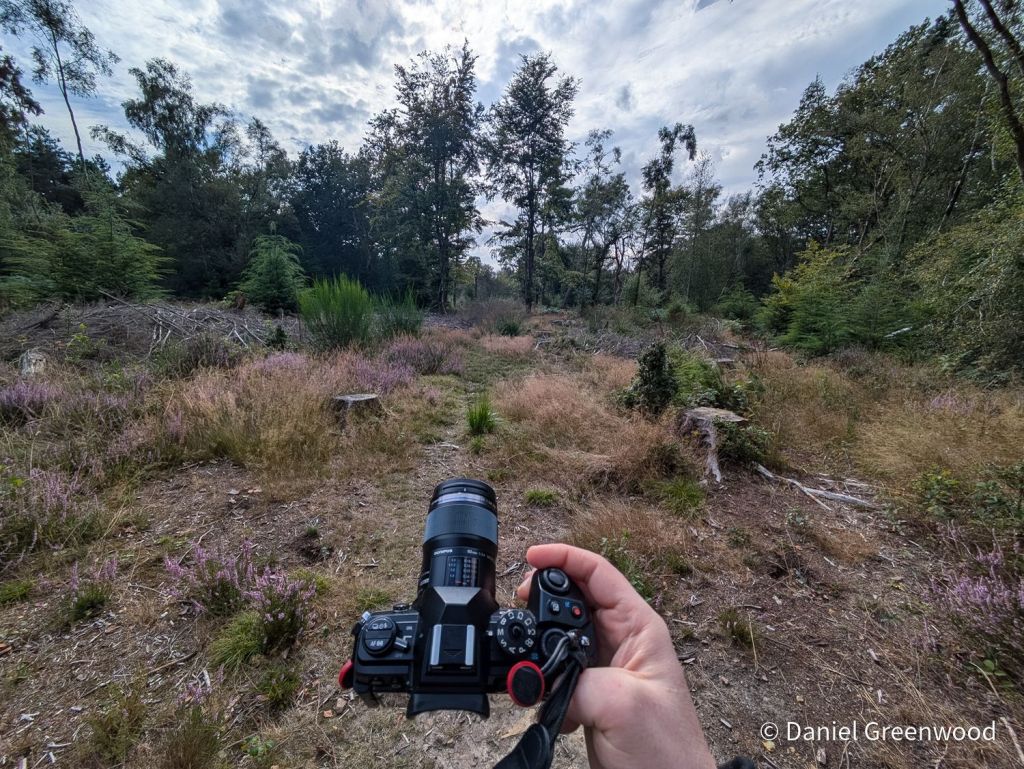
I had some hours to take one Friday afternoon in August and so headed to my local heathy woodland to seek out some summer fungi.
I found zero mushrooms, but did learn that summer wasn’t quite over.
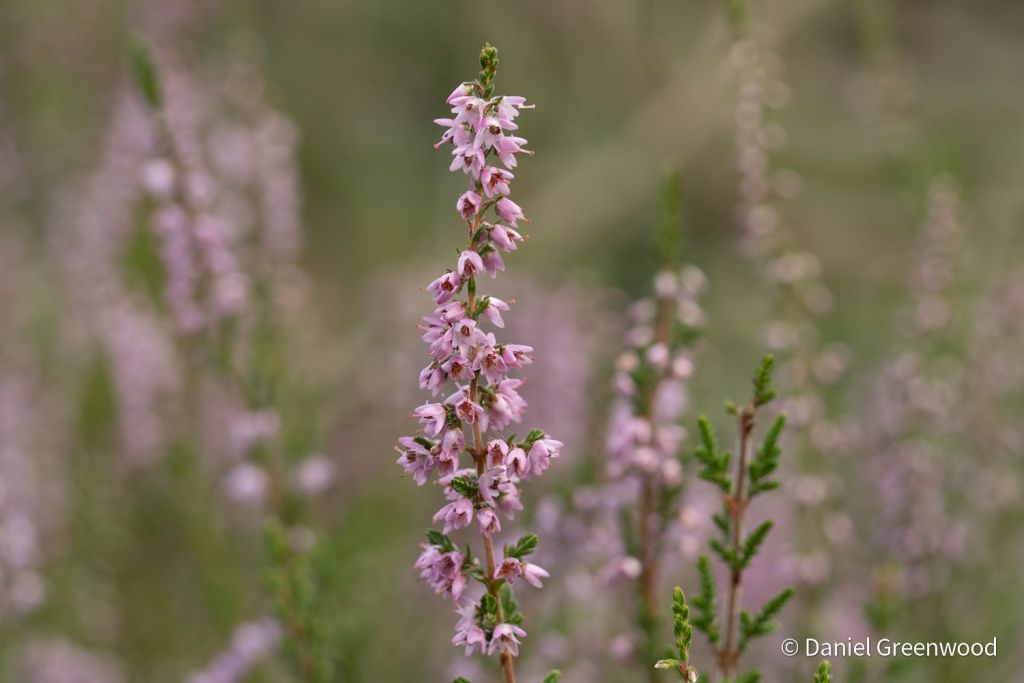
In a clearing created a few years ago by the removal of non-native conifers, a heathland has flourished. Sussex, like other southern counties, once had far more heathland before it was either built on or converted to coniferous forestry (like this particular site).
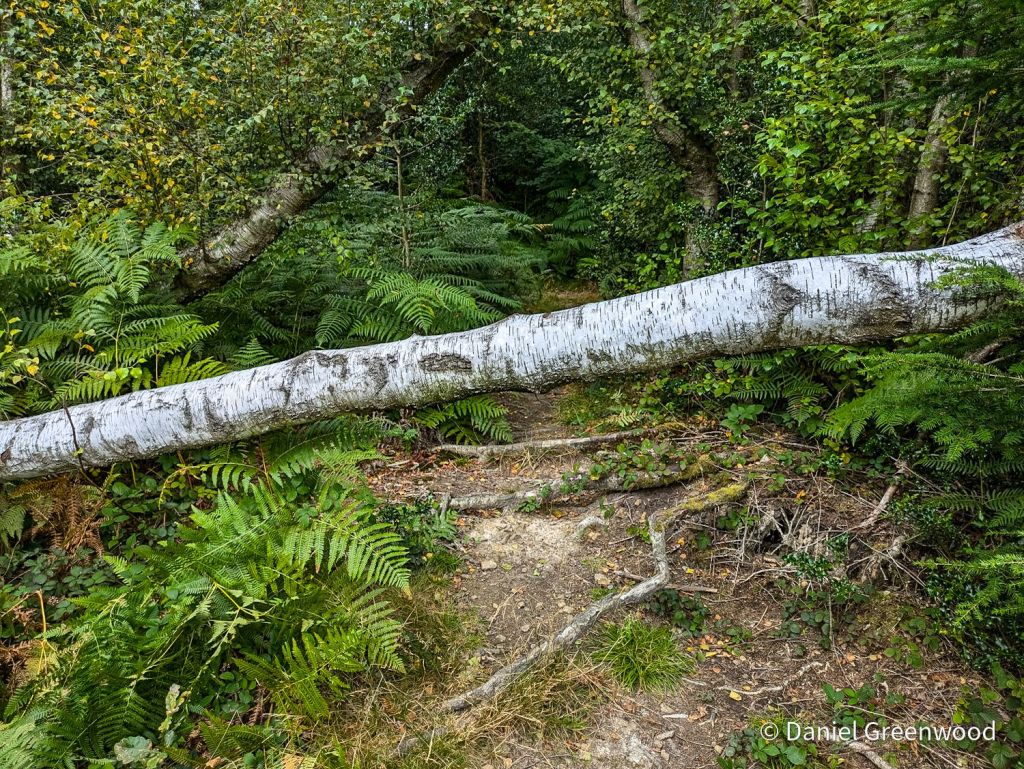
This little patch of restored heathland was zinging with insect life, not least on a fallen birch tree.
Enter: the magic birch tree. Or at least sunbathe on it.
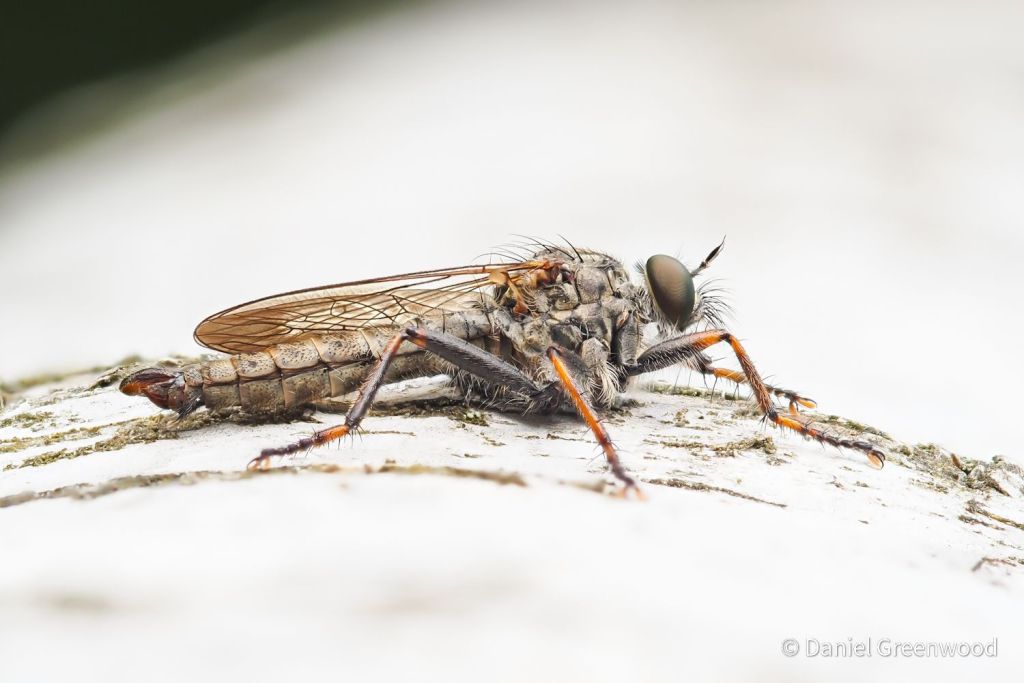
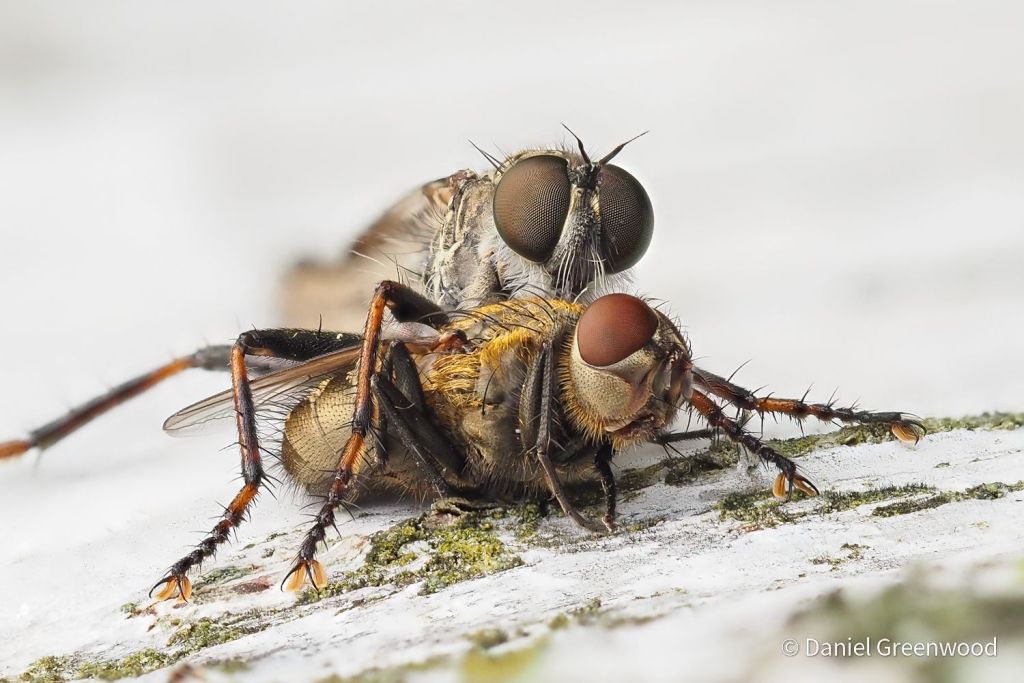
I revered it in such a way because it was providing roosting space for one of my favourite subjects – robberflies!
I managed to get my best ever photos of robberflies here, thanks to the capabilities of my camera, and a little bit of that famous fencepost knowledge.
Robberflies are predators of other flies, but also wasps. The photo above was taken using an in-built function of the camera to stack about 15 photos together to create a seamlessly in-focus image. It worked to great effect here.
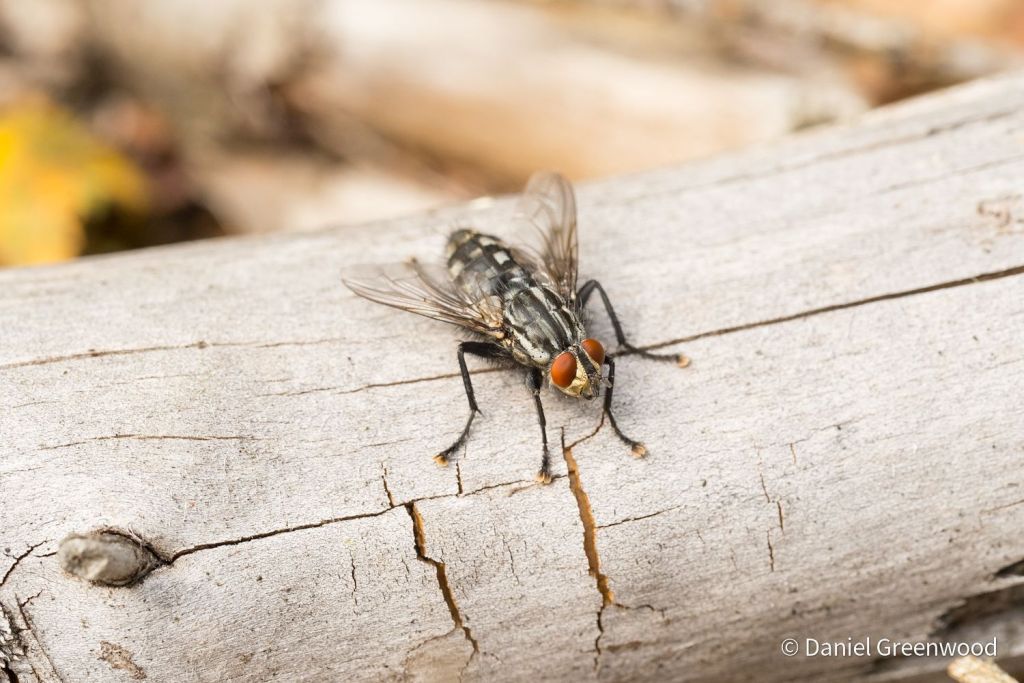
Less dramatic was this flesh-fly, one that is actually quite smart in their black and white get-up with red compound eyes.
On the toe of my shoe a hoverfly that looked like a scuba diver was resting.
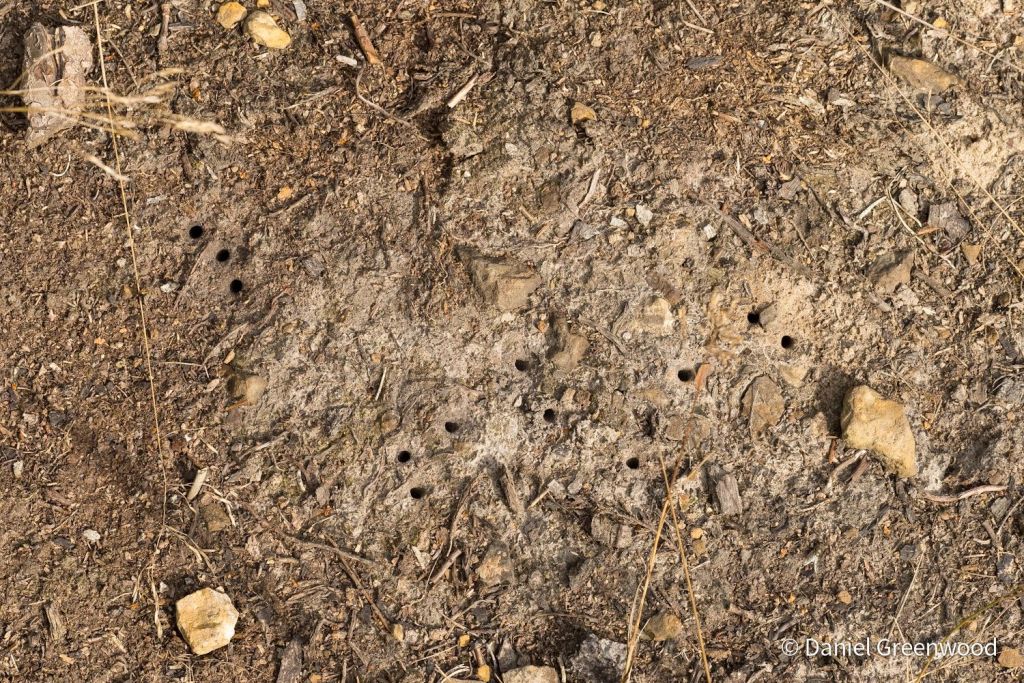
There was plenty of evidence of burrowing insects in the form of these pilot holes.
I didn’t get to see who lived here. Probably solitary wasps or bees.
What this blog can never express is the sheer number of grasshoppers. Every footsteps sent insects like the one above flying for the safety of a grassy tussock.
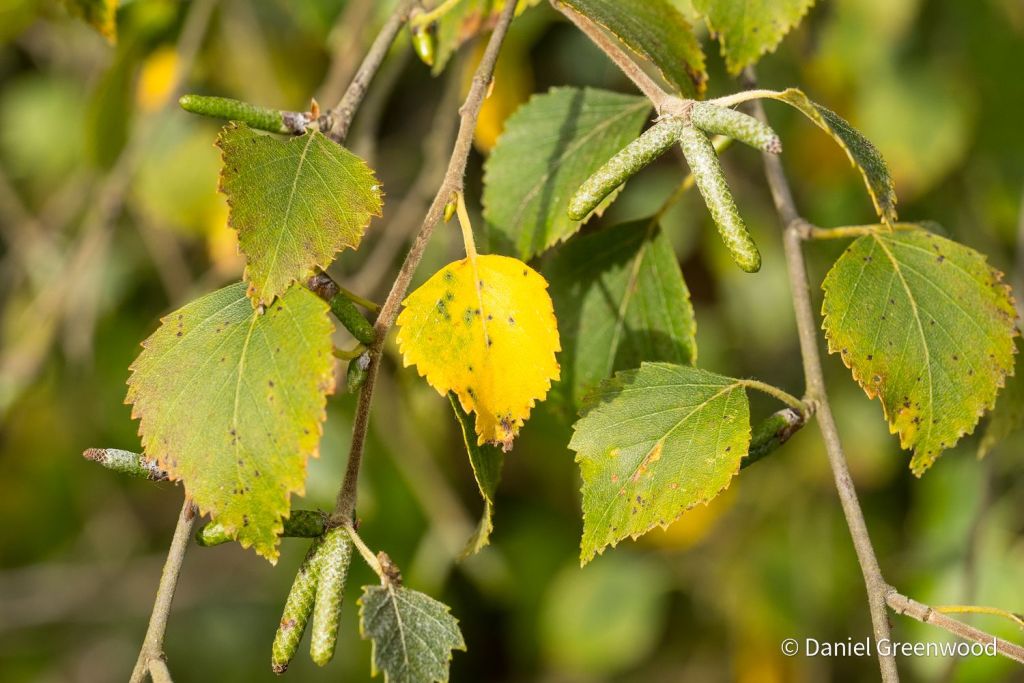
The birches were showing signs of autumn and its inexorable approach.
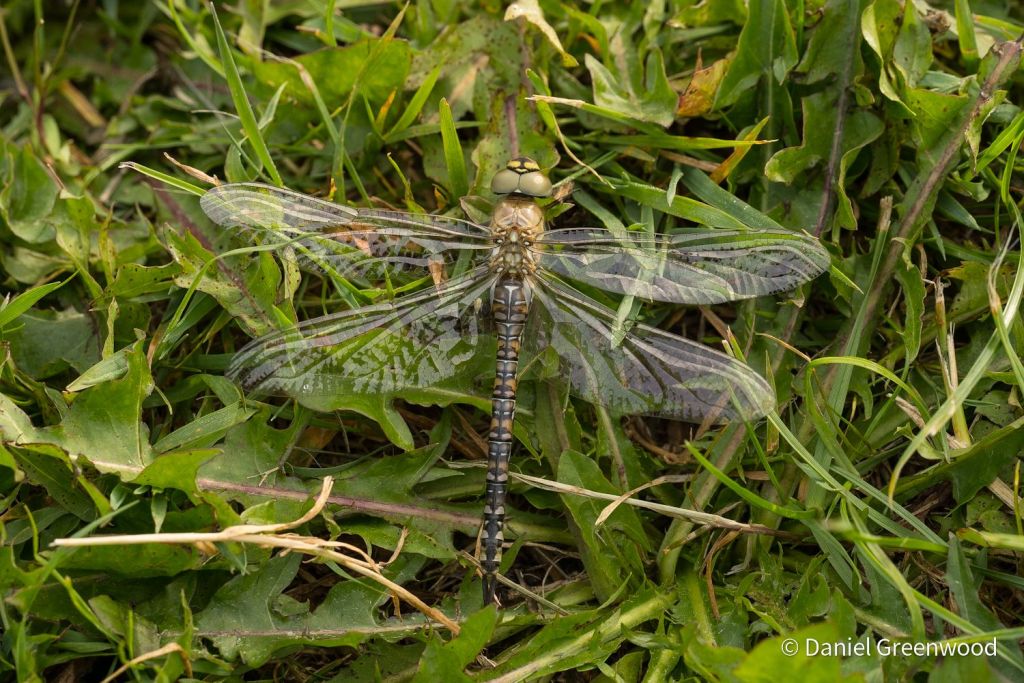
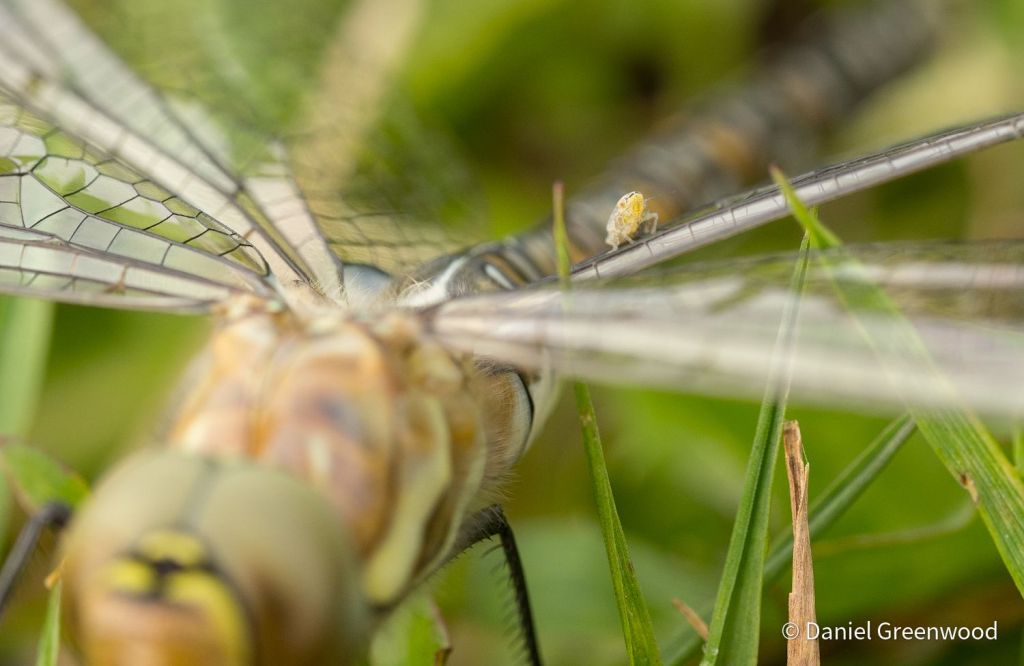
In August I was camping in West Sussex. On the final morning I opened the tent door and nearly stepped on a dragonfly that was resting in the grass outside.
It had been a cloudy night and the ground was very dry compared with the previously dew-laden start.
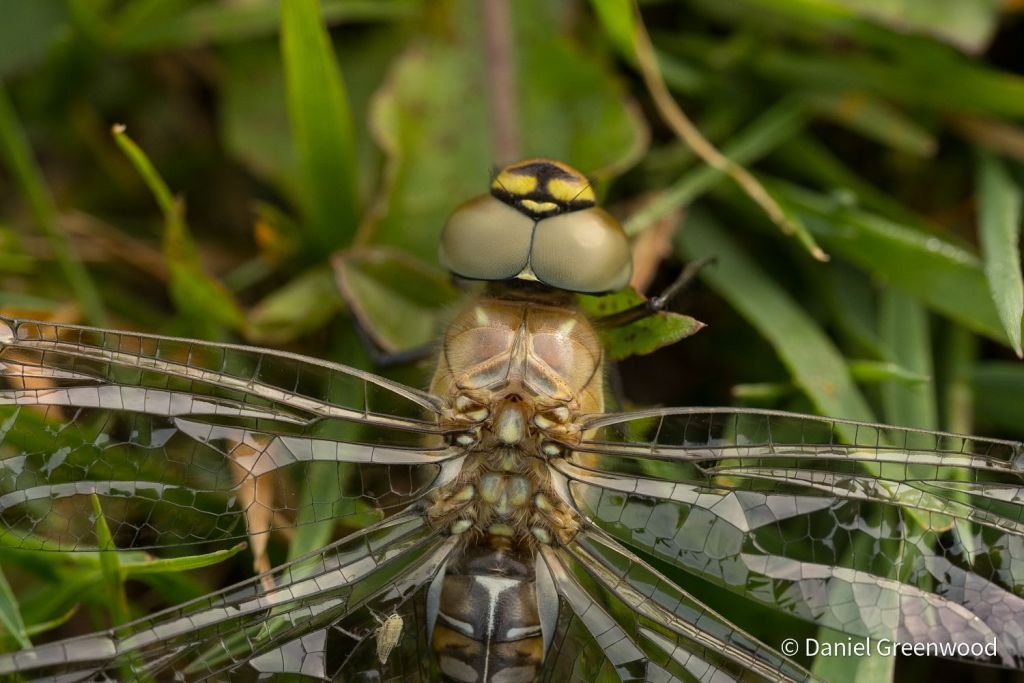
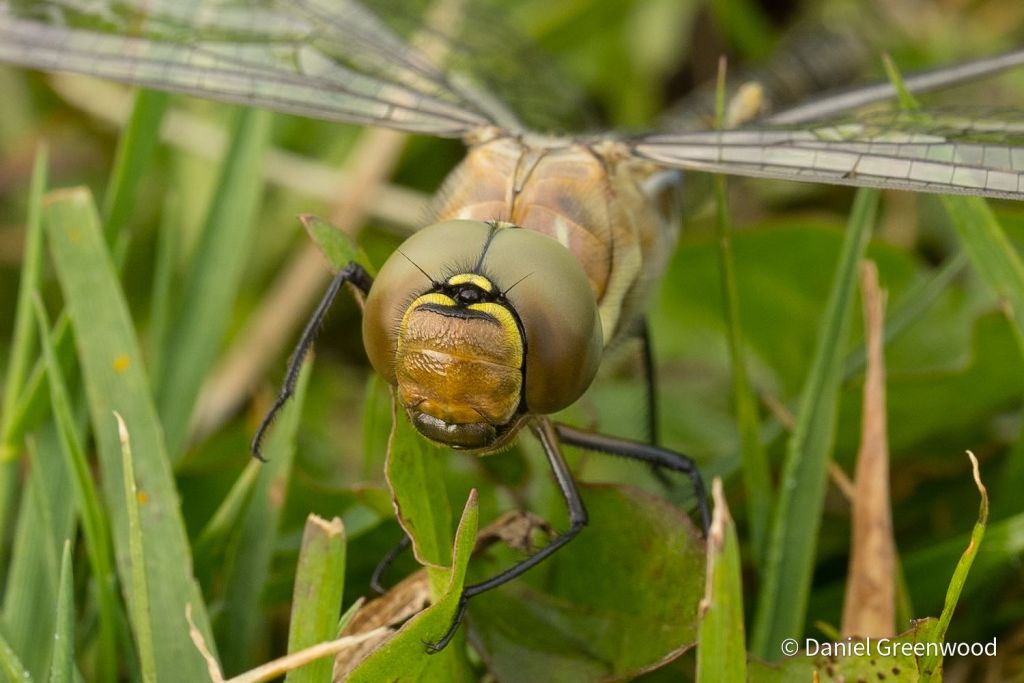
The dragonfly is probably a migrant hawker (Aeshna mixta) and is known to breed in SE England. As its name suggests it can also migrate to England from southern Europe.
It’s a dream to find a dragonfly in such a restful state, although the insect is vulnerable. It was in the right place however, especially if it wanted its portrait done.
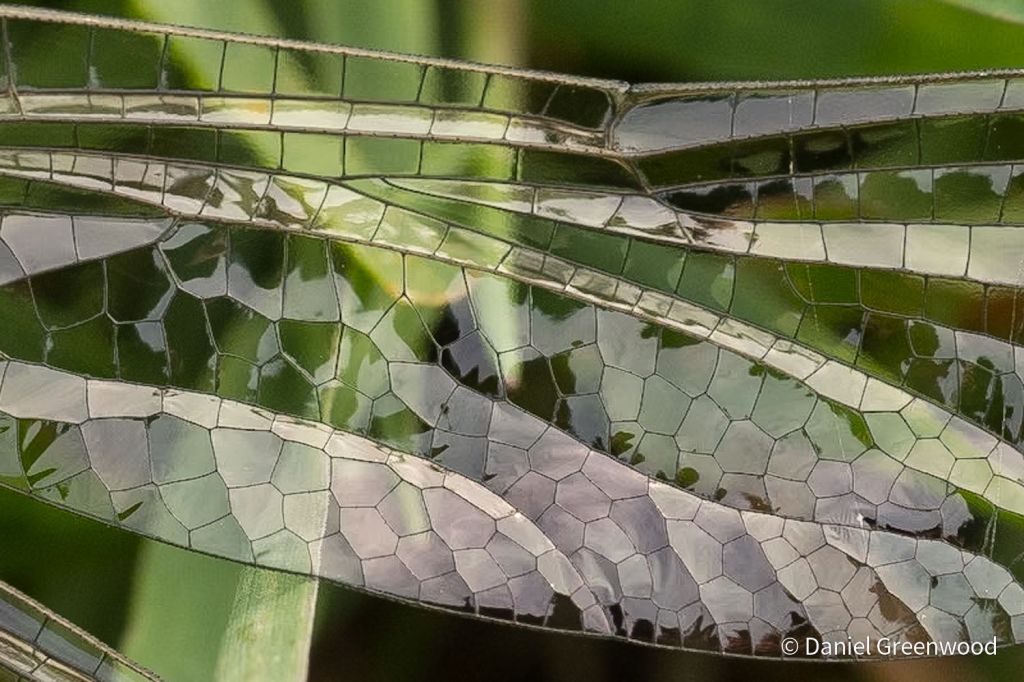
It was an excellent opportunity to look at the wings of the dragonfly close up. They are renowned for their beauty and likeness to stained glass.
By looking at the wings I noticed that a planthopper bug had leapt aboard the dragonfly.
Here’s a closer view. I’m not sure of the species but it’s one I don’t remember seeing before.
A day earlier we had walked along the River Adur, famous for its connection at Knepp Wildland. It was good to see some more wasps around, with so few of them being reported this year.
The wasp is scrapping a layer of wood from a handrail or fence post to be used in the construction of a nest. You can see the ball below its mandibles above.
What a lot of hard work, worthy of my respect that’s for sure.













































 Unlocking Landscapes