I’m posting garden macro photos from the 17th and 30th May. I have some really interesting photos from the 31st but that is probably more than one post in itself.
There are a couple of intriguing species I encountered in my garden between mid-late May, one of the very best times to look for our tiny invertebrate friends in this part of the world.
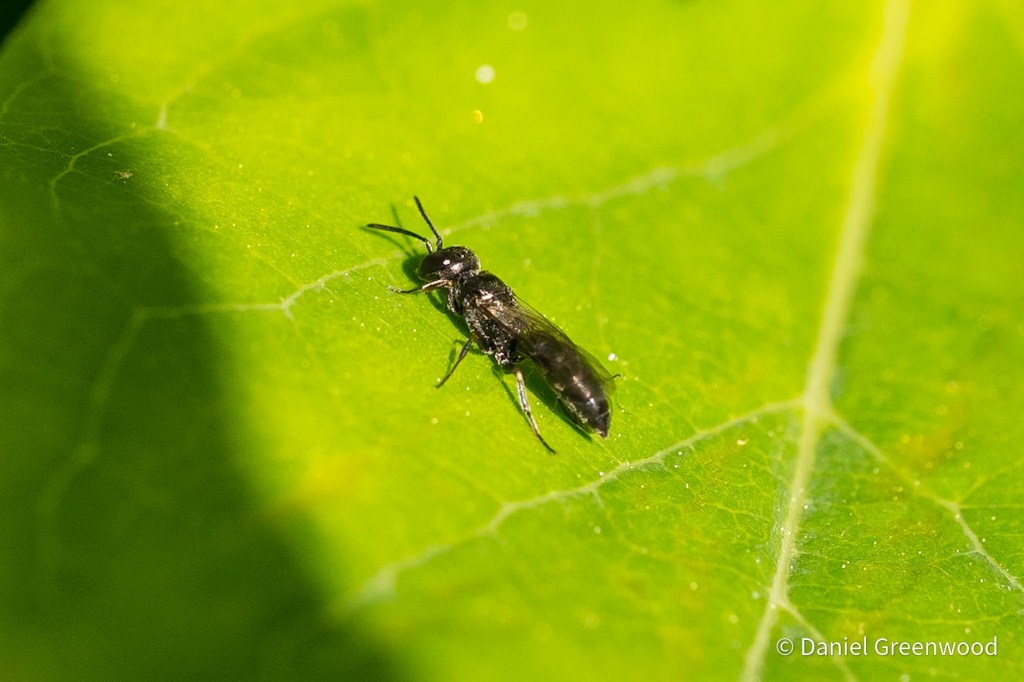
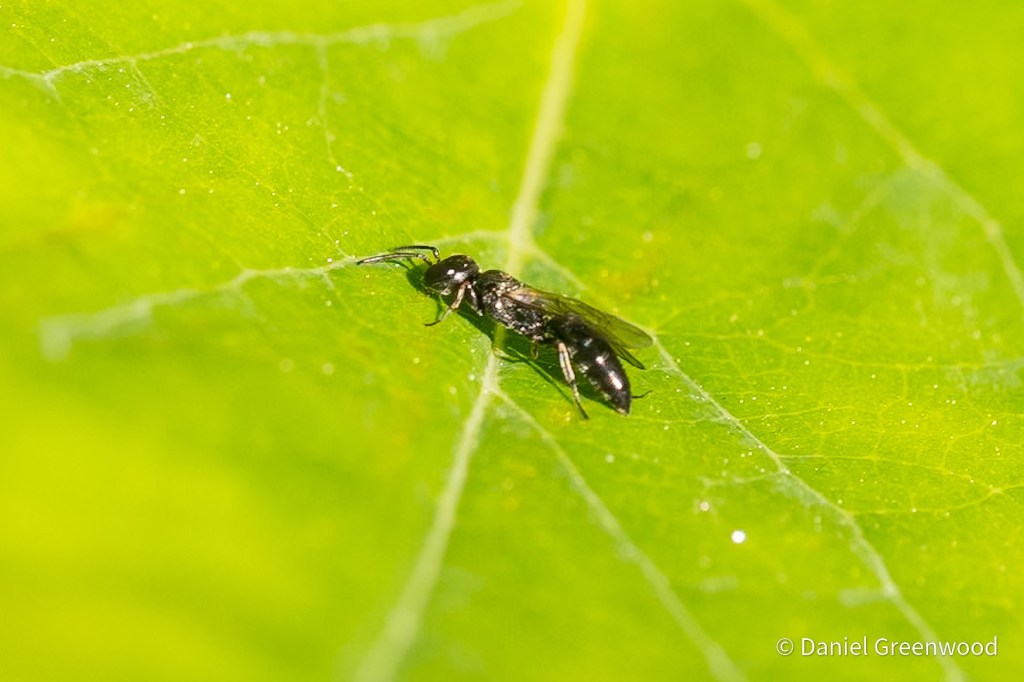
These are by no means great images (I would need extension tubes to increase the magnification) but the species may be an interesting type of wasp. It might be an aphid wasp, which is a group of wasps I haven’t heard of or seen before (there are thousands, even in the nature-depleted UK).
I’ve posted about aphids this year, and have noticed just how good a year they’re having. I listened to this episode of the Food Programme last week on the subject of potatoes, and didn’t realise aphids could trouble potato farmers. Perhaps they need to start gardening for aphid wasps!
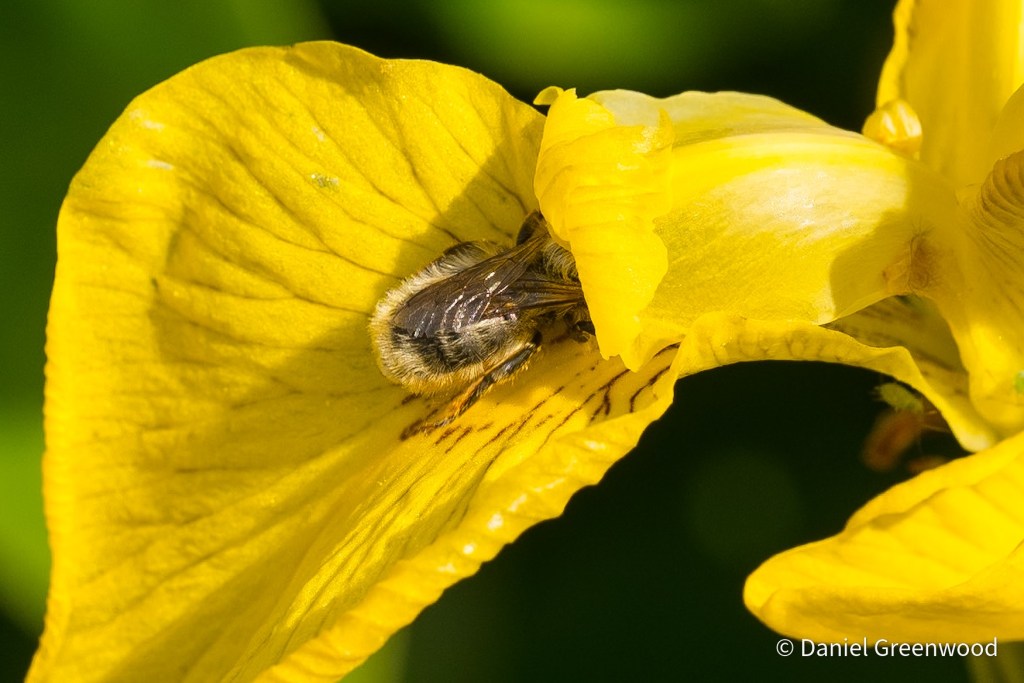
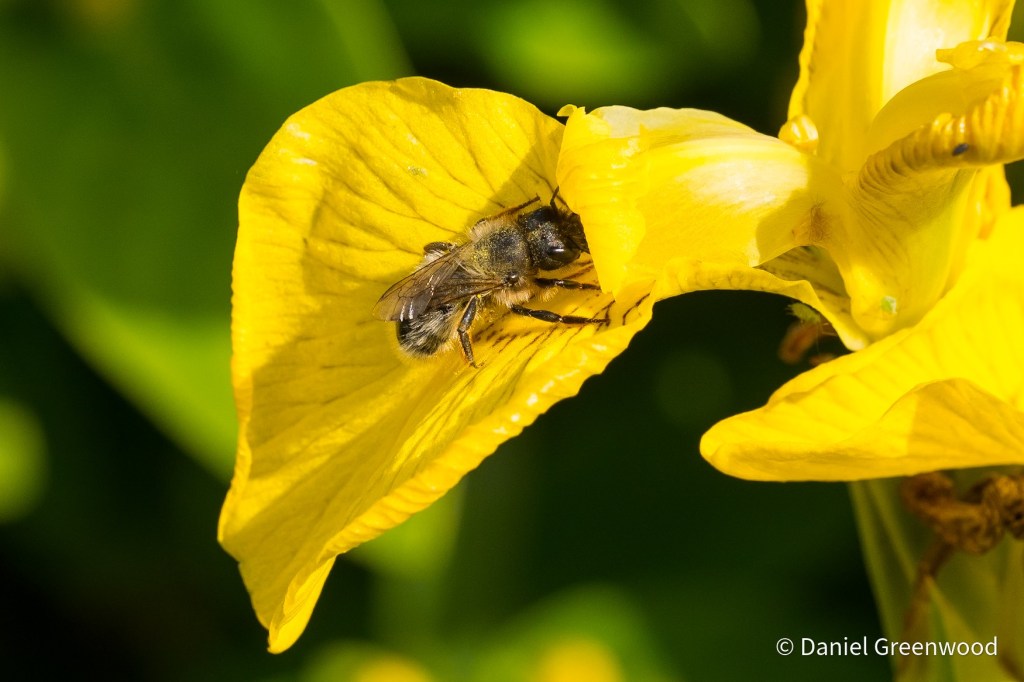
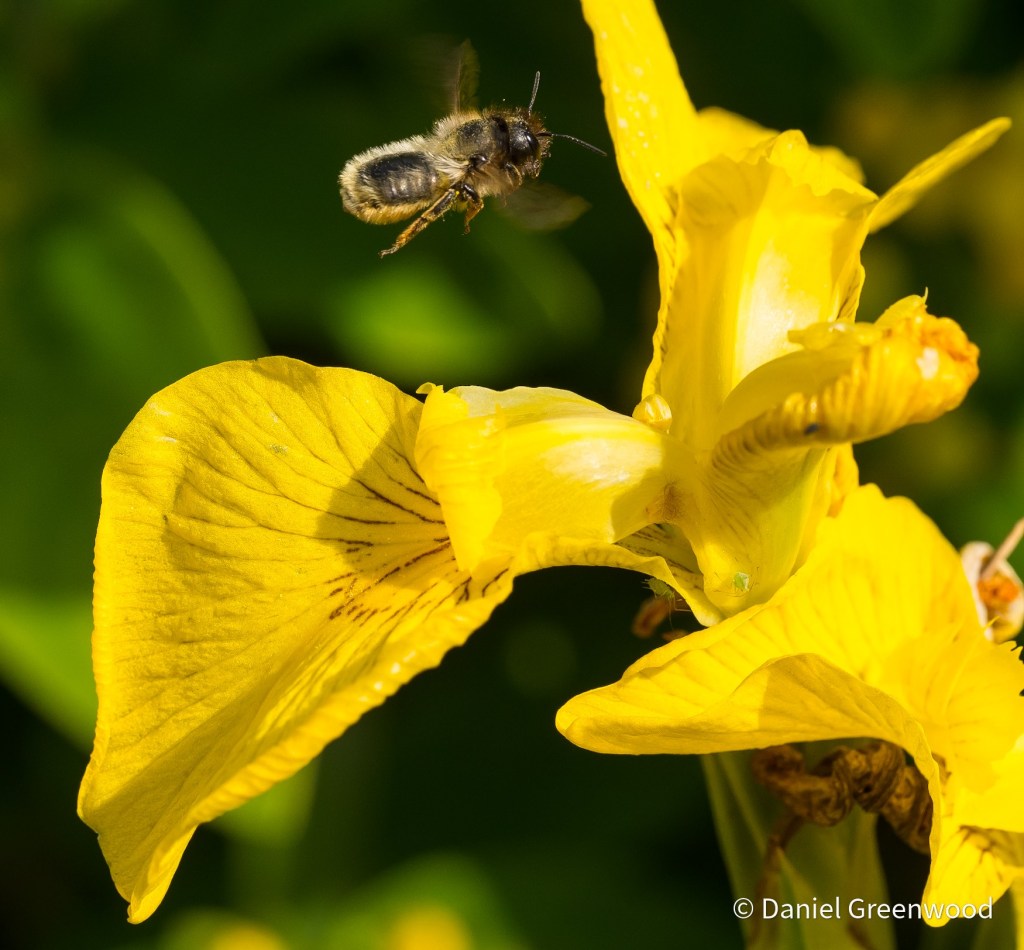
We have a tiny pond which supports frogs and is planted with native aquatic plants. One of those plants is flag iris, which the bigger bees love. I enjoy seeing the bees climb through the yellow petals to nectar on the stamens. This bee is probably in the megachile group, perhaps one of the leafcutter species. Someone on iNaturalist suggests it’s a mason bee, so I’m not sure.
I like how leafcutters are in their own world. They often appear after the red mason bees and hairy-footed flower bees have gone, but they seem like they’ve always been there, so focused are they on their leafcutting tasks.
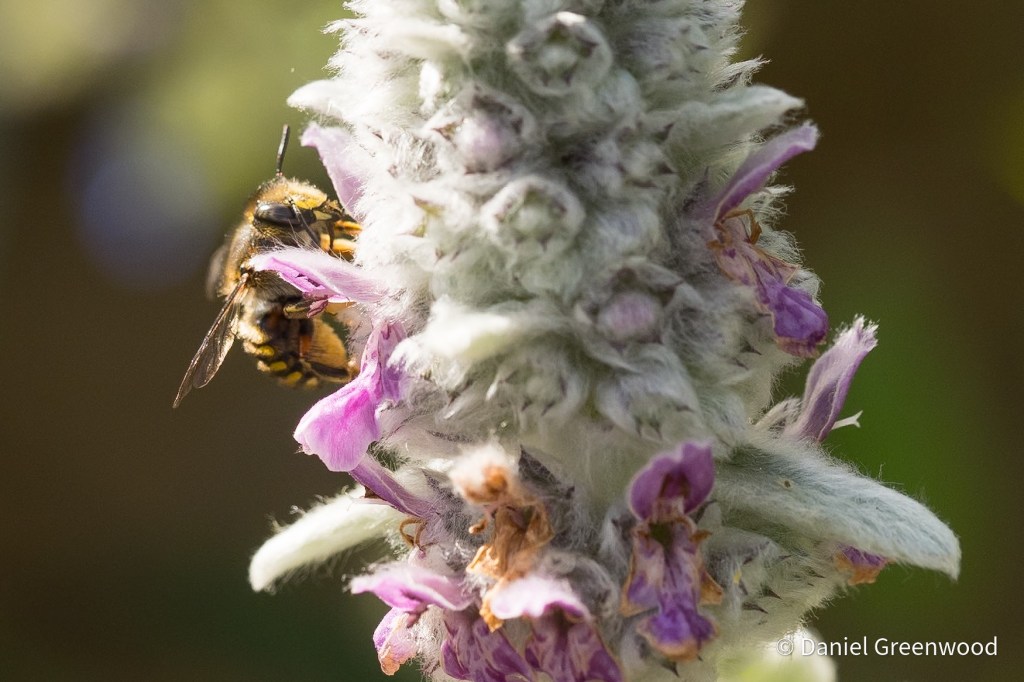
Another welcome sight in the bee world (it’s so much more than honeybees!) are the wool carder bees. I planted this stachys (or lambs ears) for the WCBs in 2020, and they immediately arrived.
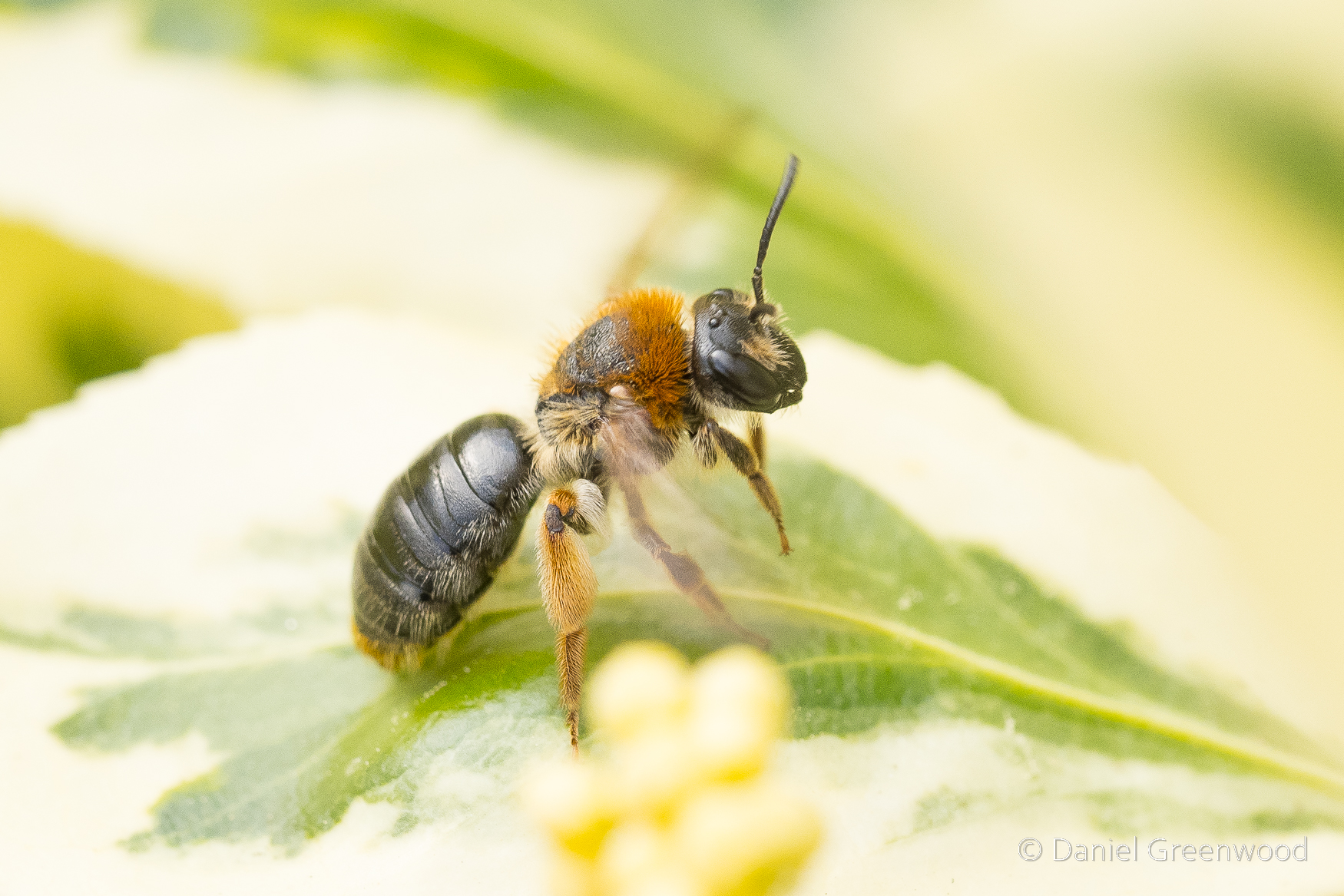
Regular readers of this blog may recognise this species from previous posts, who just couldn’t keep out of this week’s post. I used to look like this. These may be an orange-vented mason bee.
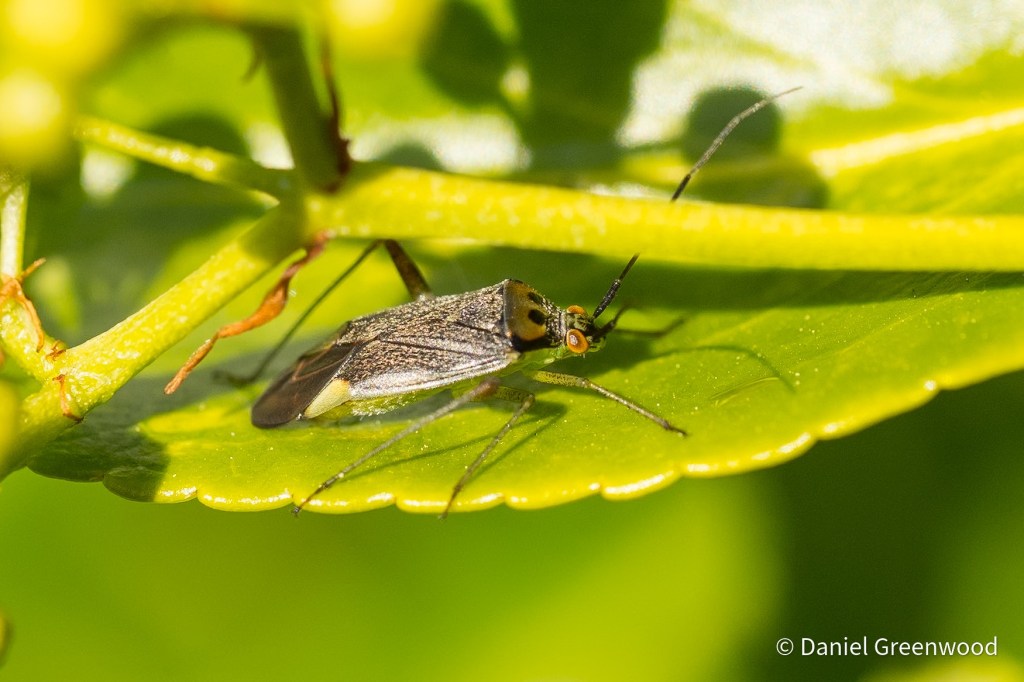
This capsid or mirid bug was chilling in the hedge, as they often do.
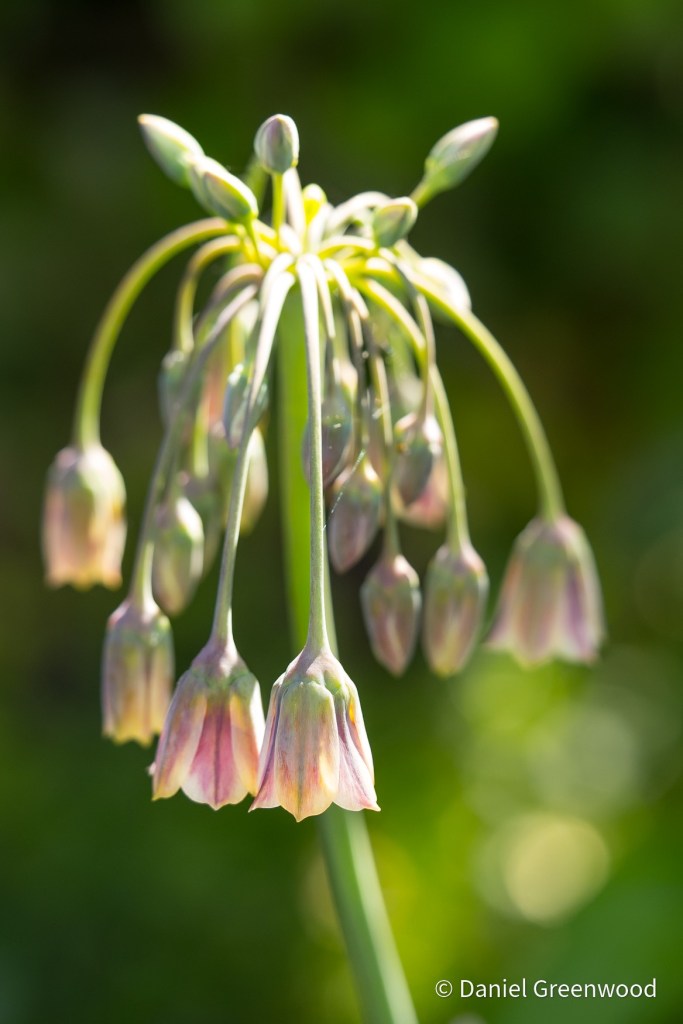
And finally, those trusty honey lilies were looking their best in the evening light, as their flowering period drew to a close.
Next week we’ll see out May with some pretty epic wasp vs. spider scenes and miniscule bees.
Taking macro photos in gardens introduced me to the capsid bugs. This is one. I’ve seen lots of one species in the hedge this year, they are quite ‘alien’-looking in the sci-fi sense.
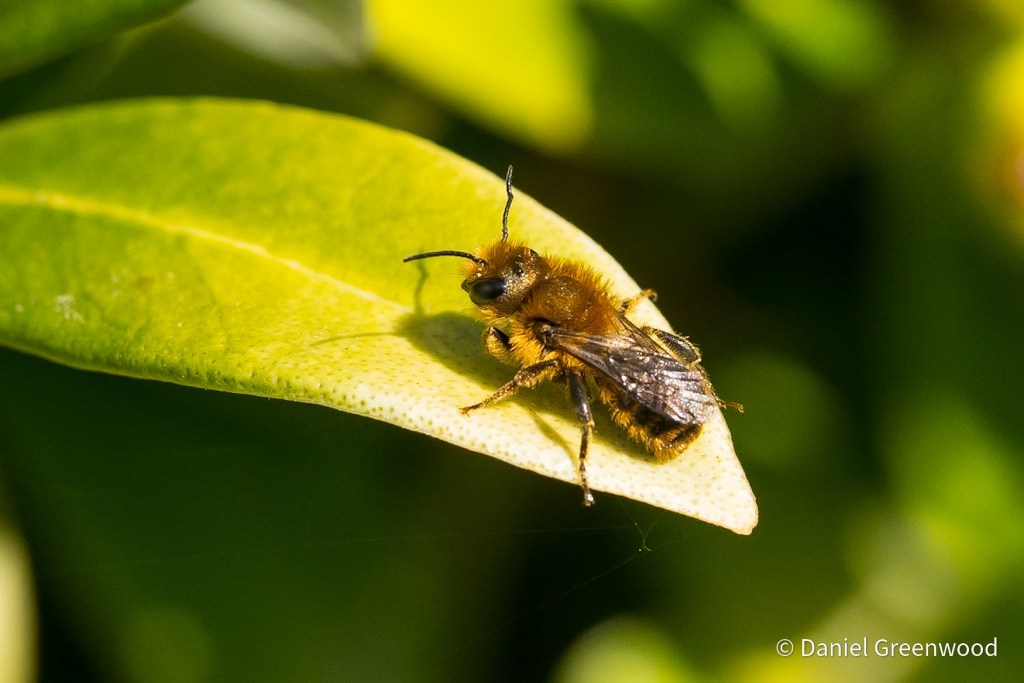
Now to the bees. I spotted what I thought was a blue mason bee on the fence, but instead it may be a different mason bee. Compared with the red mason bees, this species, whatever it is, appears later in the spring and lasts longer until the summer.
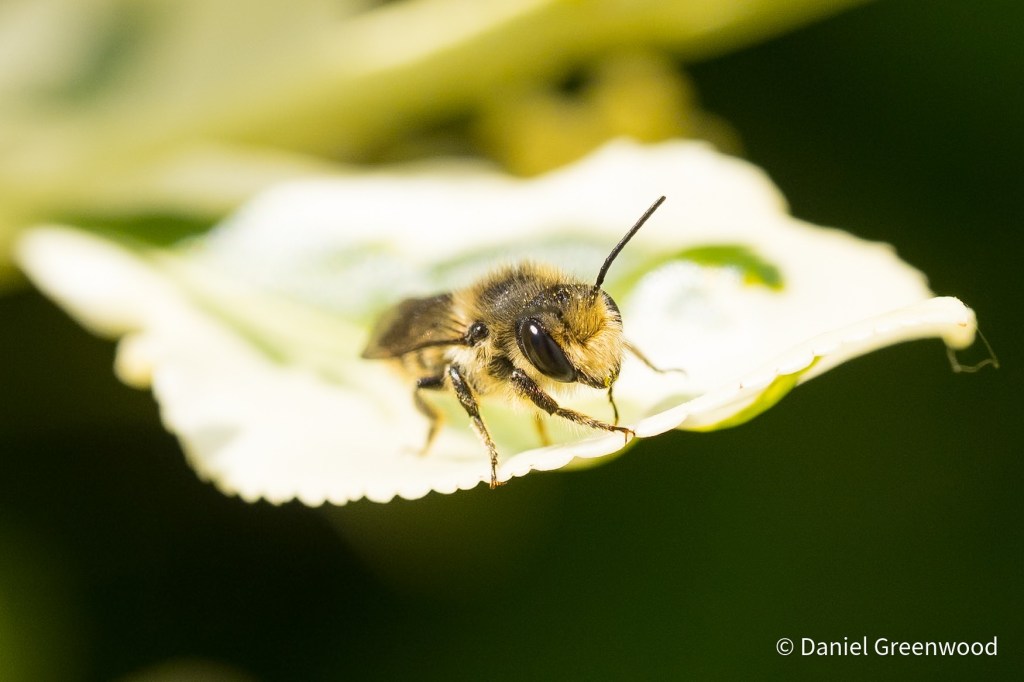
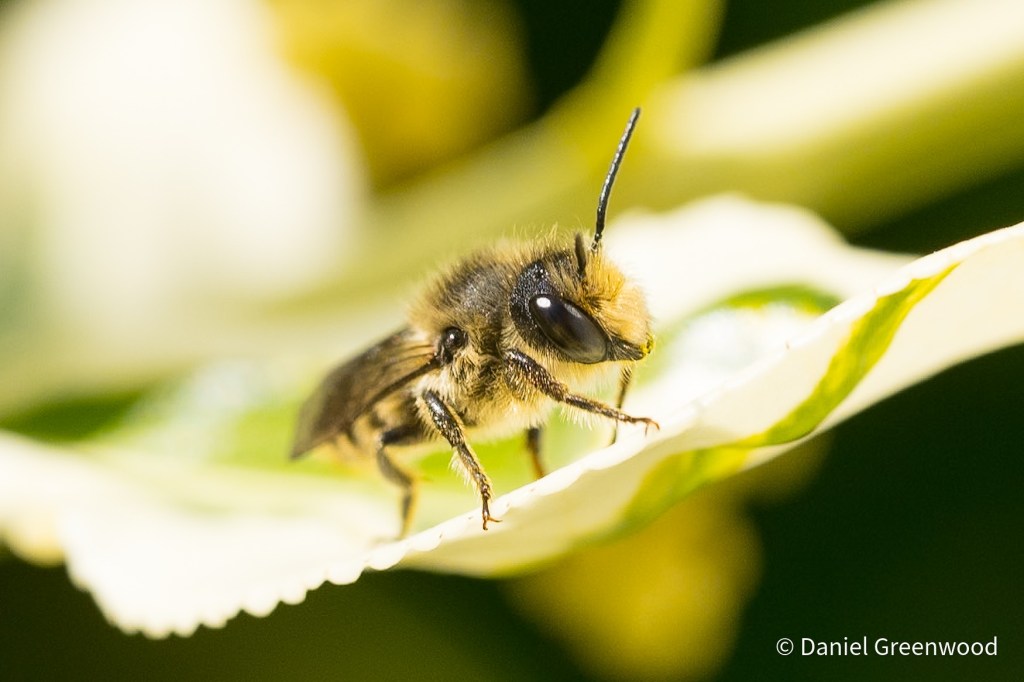
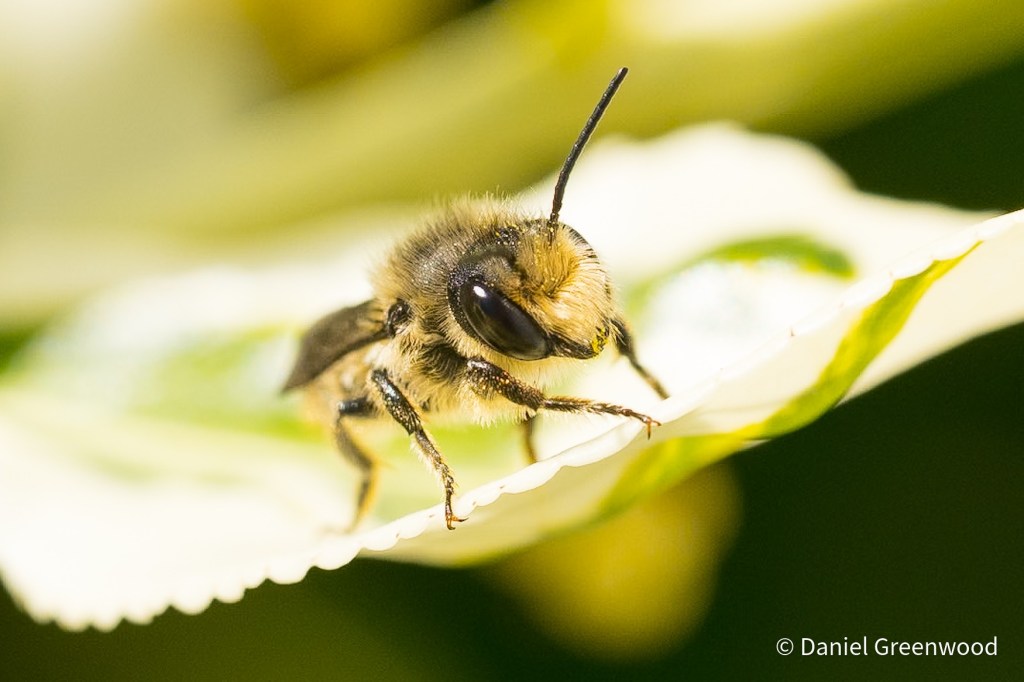
I love the light in these pics, and it’s all au naturale. Someone on iNaturalist has suggested this is one of the leafcutter bees.
This bee is potentially a little blue carpenter bee. I enjoy the background colours of the rose above…
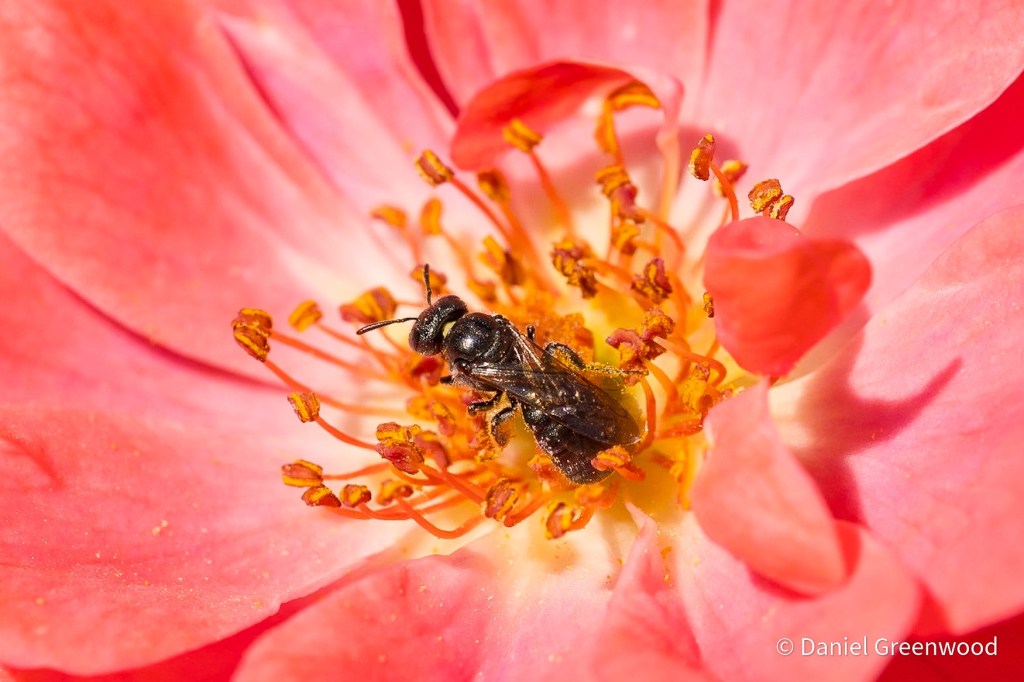
…and the yellow and cream of the honeysuckle. Backgrounds in macro can make a very big impact on the photo. This is a species of sweat bee.
Finally, I didn’t get this little wasp in focus, but I like these brief encounters with random wasps. It reminds me that there is still huge biological diversity in the UK and the world does not revolve around us.
Onto the 15th May 2025, when the bumblebees were beginning to increase as the workers emerged. But we won’t begin there.
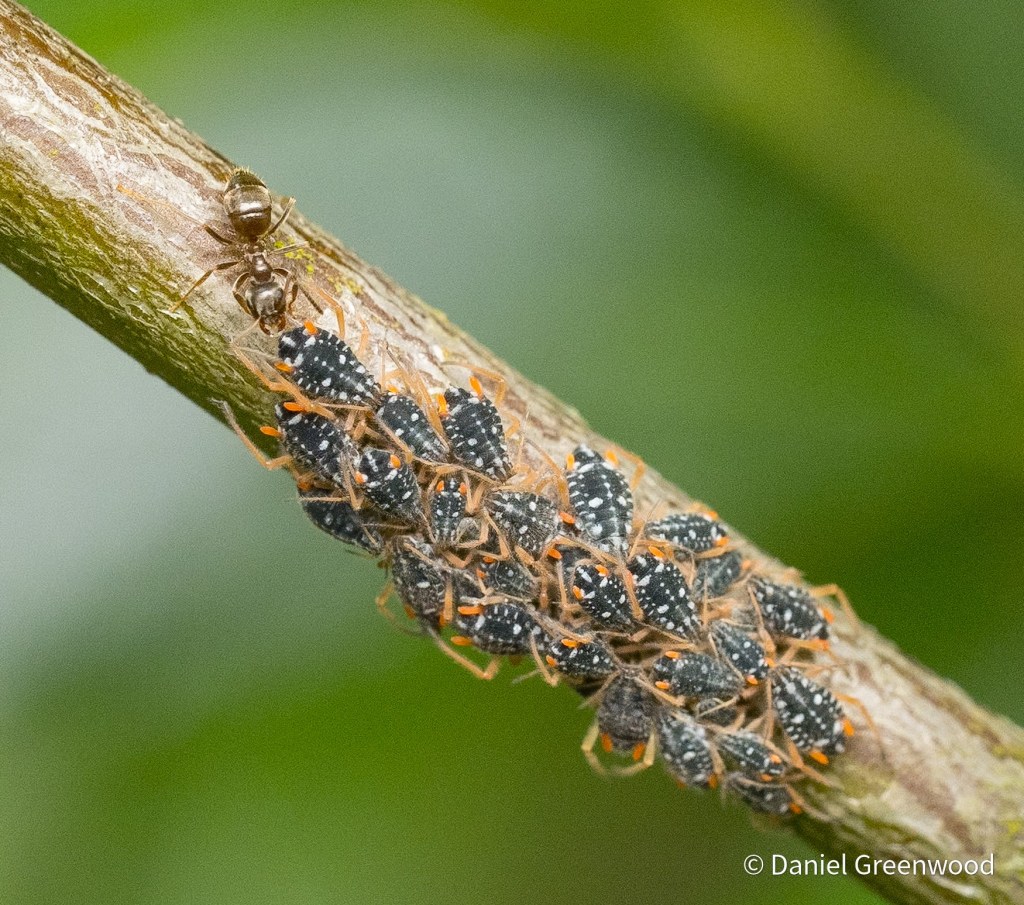
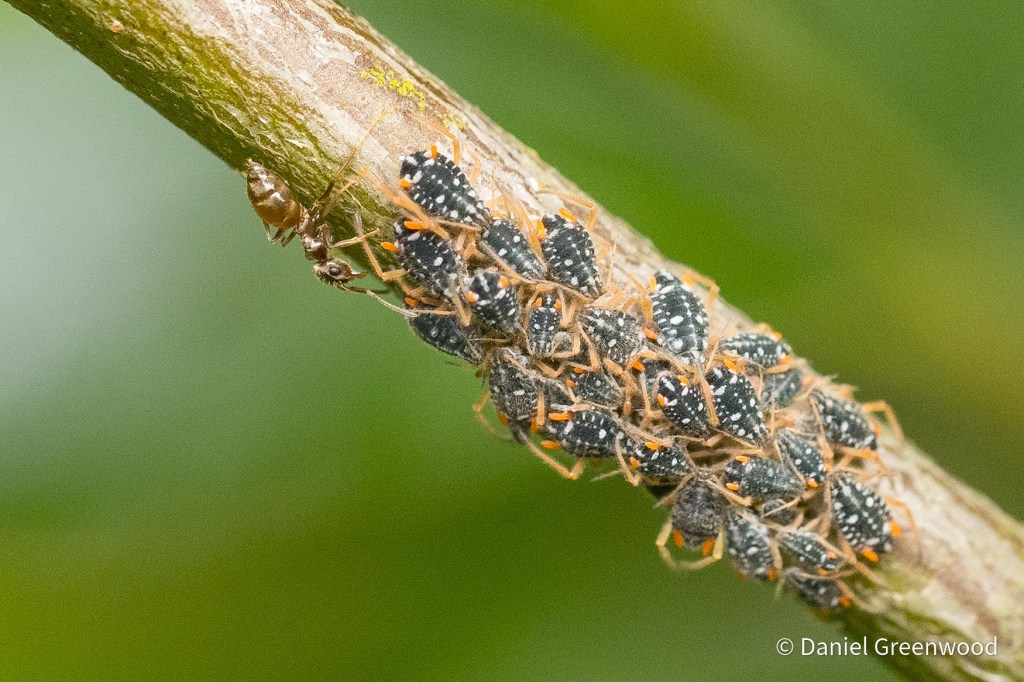
The path to my house is overhung by a self-seeded willow sapling (probably to the annoyance of the postman). One morning I noticed the twigs held a cluster of aphids, tended to by ants.
The ants are probably farming the aphids by providing them with a degree of protection and harvesting the honeydew they excrete. These are probably willow bark aphids but my insect book says there are over 600 species in the UK and many are very hard to identify!
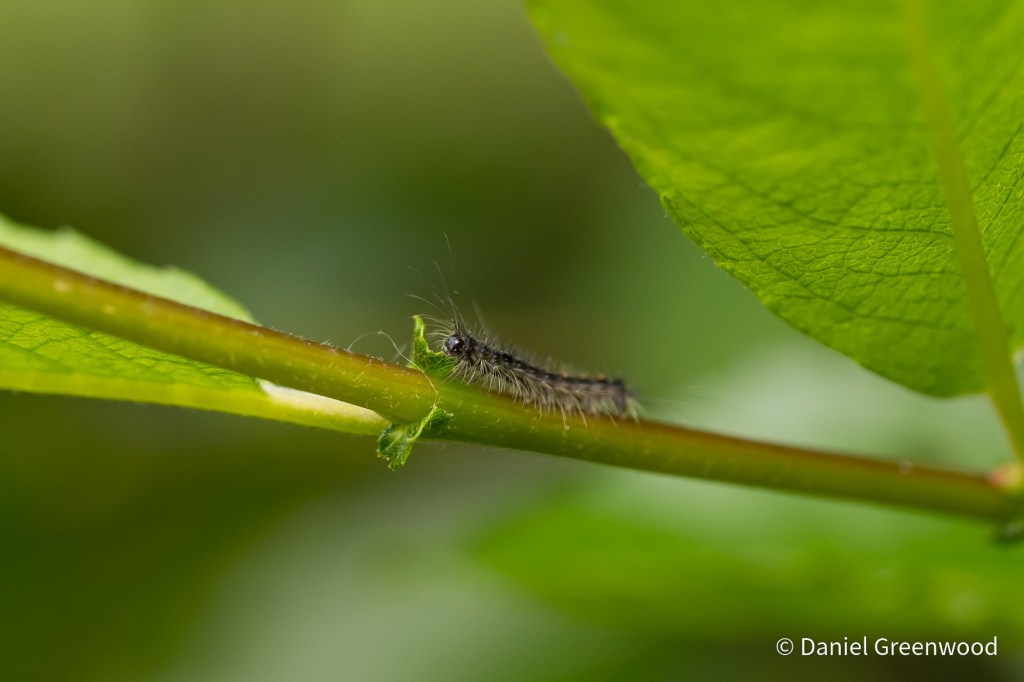
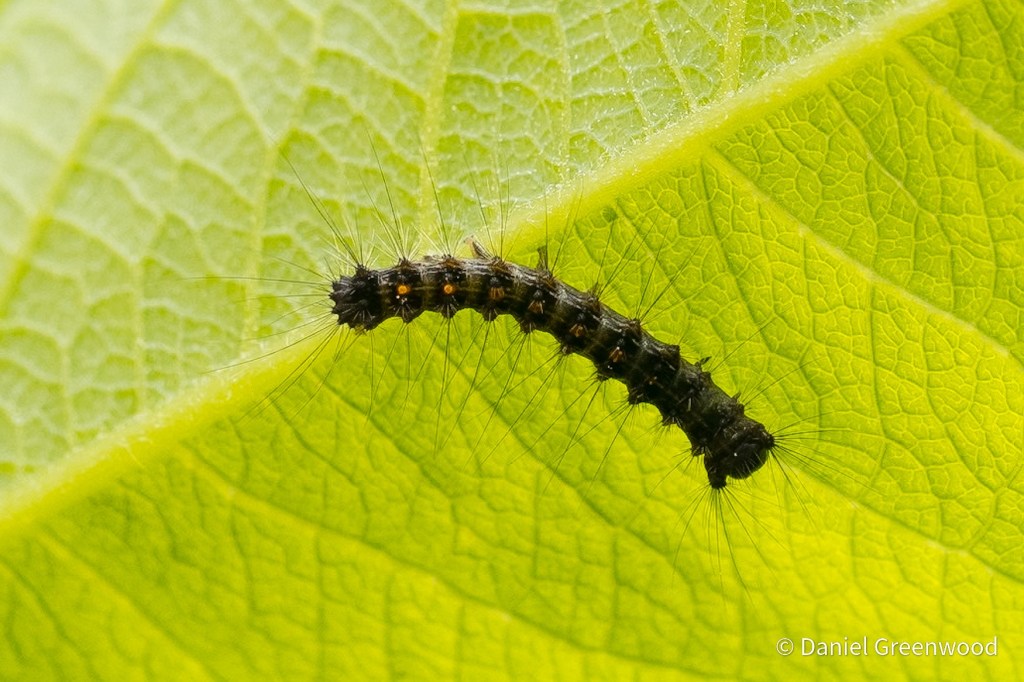
Elsewhere on the willow this little caterpillar was chomping away.
I think this is the same species but I’m not sure what it is. Caterpillars are not a strong area for me.
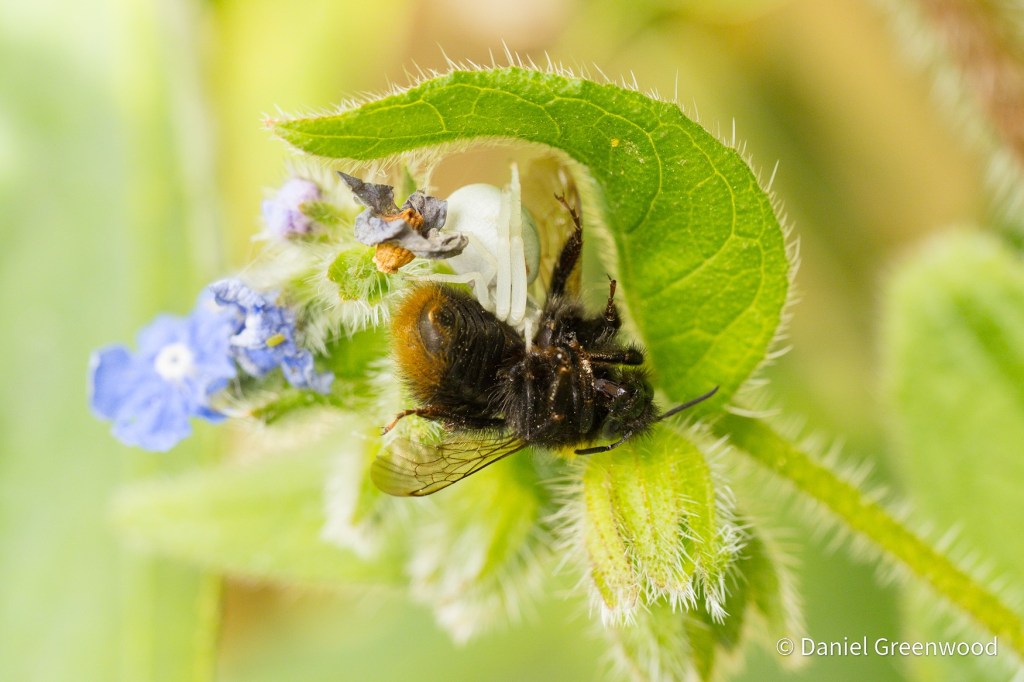
Moving onto bees, I spotted this bee that had been predated by a crab spider (probably Misumena vatia). I am wondering if this might be a cuckoo bumblebee, a kind of mimic that is in fact solitary and raids bumblebee nests, rather than being part of the community. The second photo is from some time later when the spider had moved their prey around.
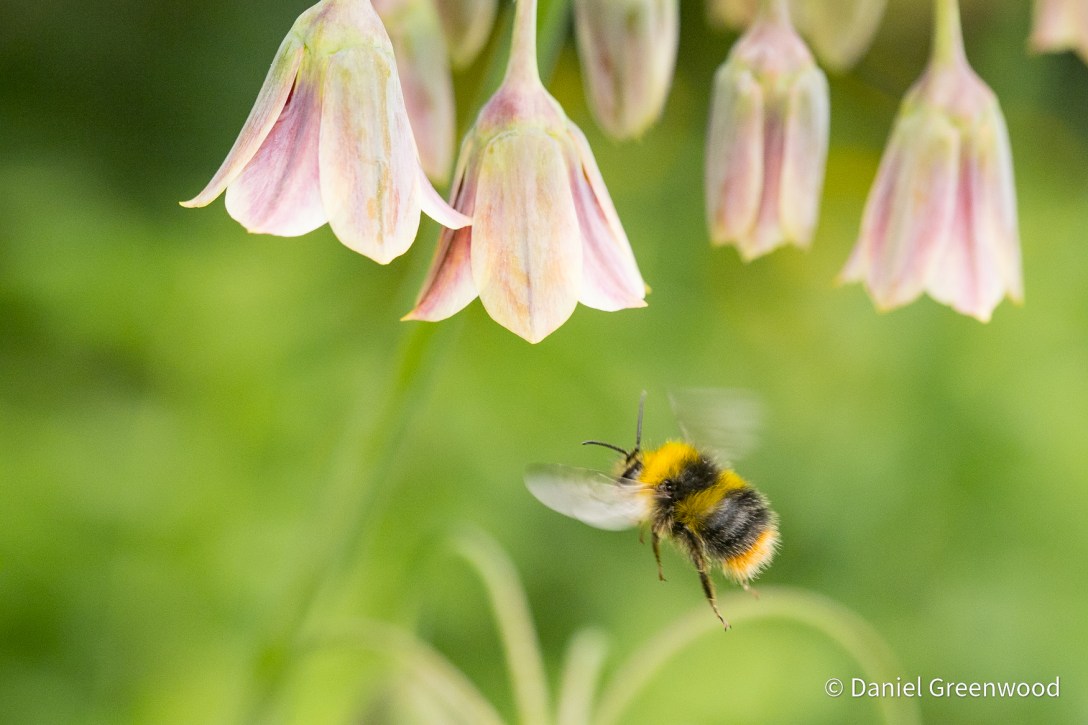
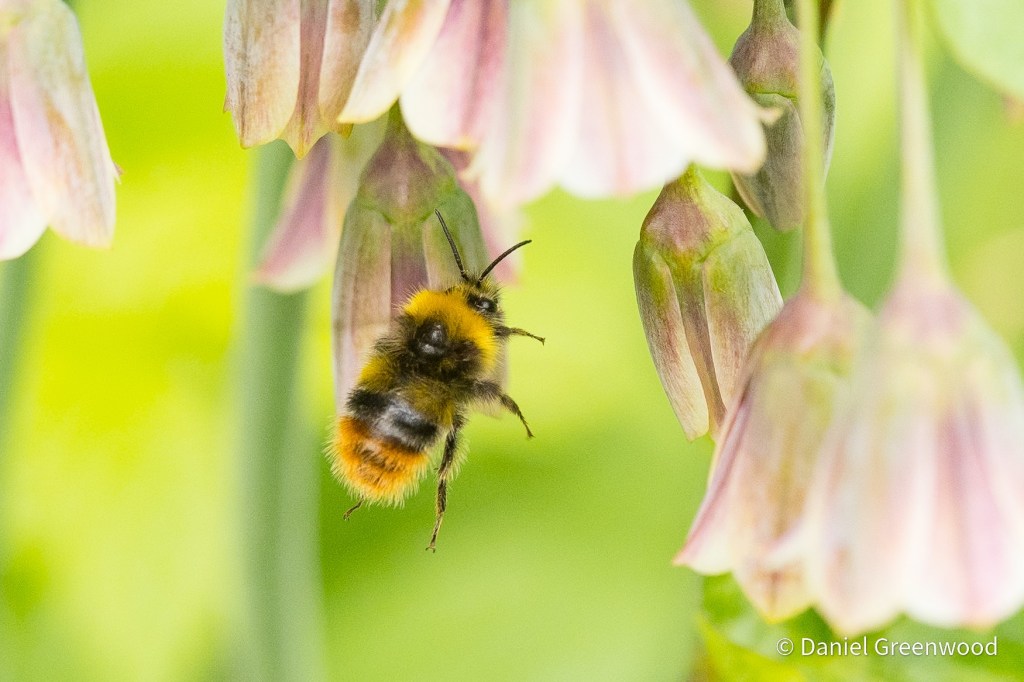
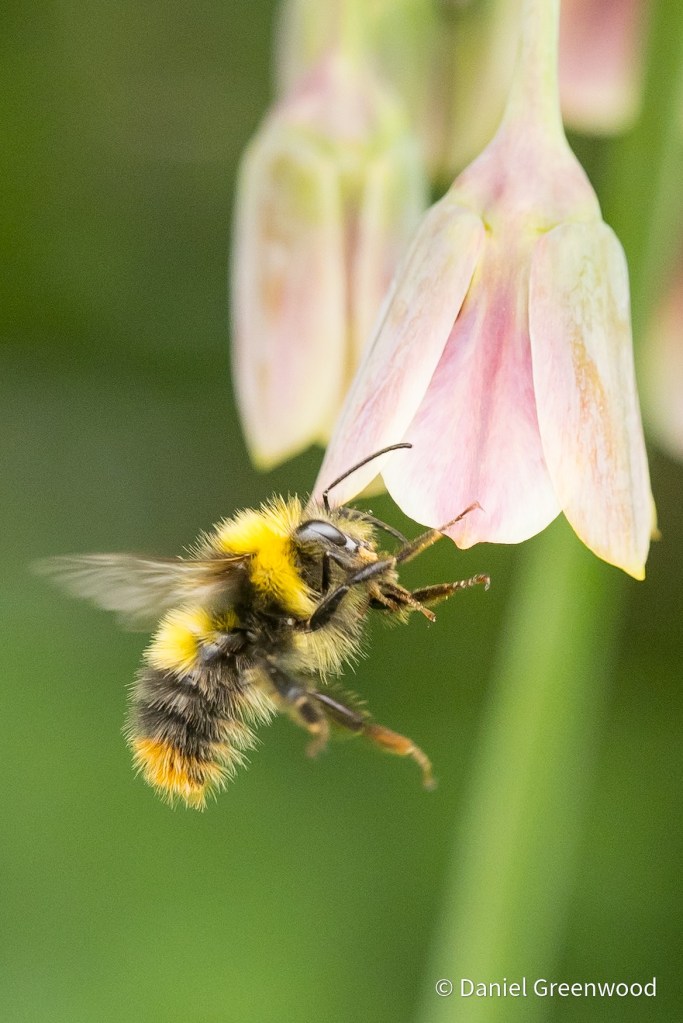
A couple of weeks ago I wrote about the Sicilian honey lilies that have been flowering in my garden. The bumblebees were out in force among these flowers. They seemed to find it a bit difficult to access the flowers from below, but they were foraging en masse. This is one of the first times I’ve used the high speed shutter option on my camera, and it has provided excellent results. I’m not sure of the species, another area I need to brush up on, along with the aphids.
This spider is pregnant, you can see the egg sack. I think it’s a fox spider.
May has been a very productive month for macro photos for me, especially in my garden. These photos were taken on 8th May 2025 in that town garden in West Sussex.
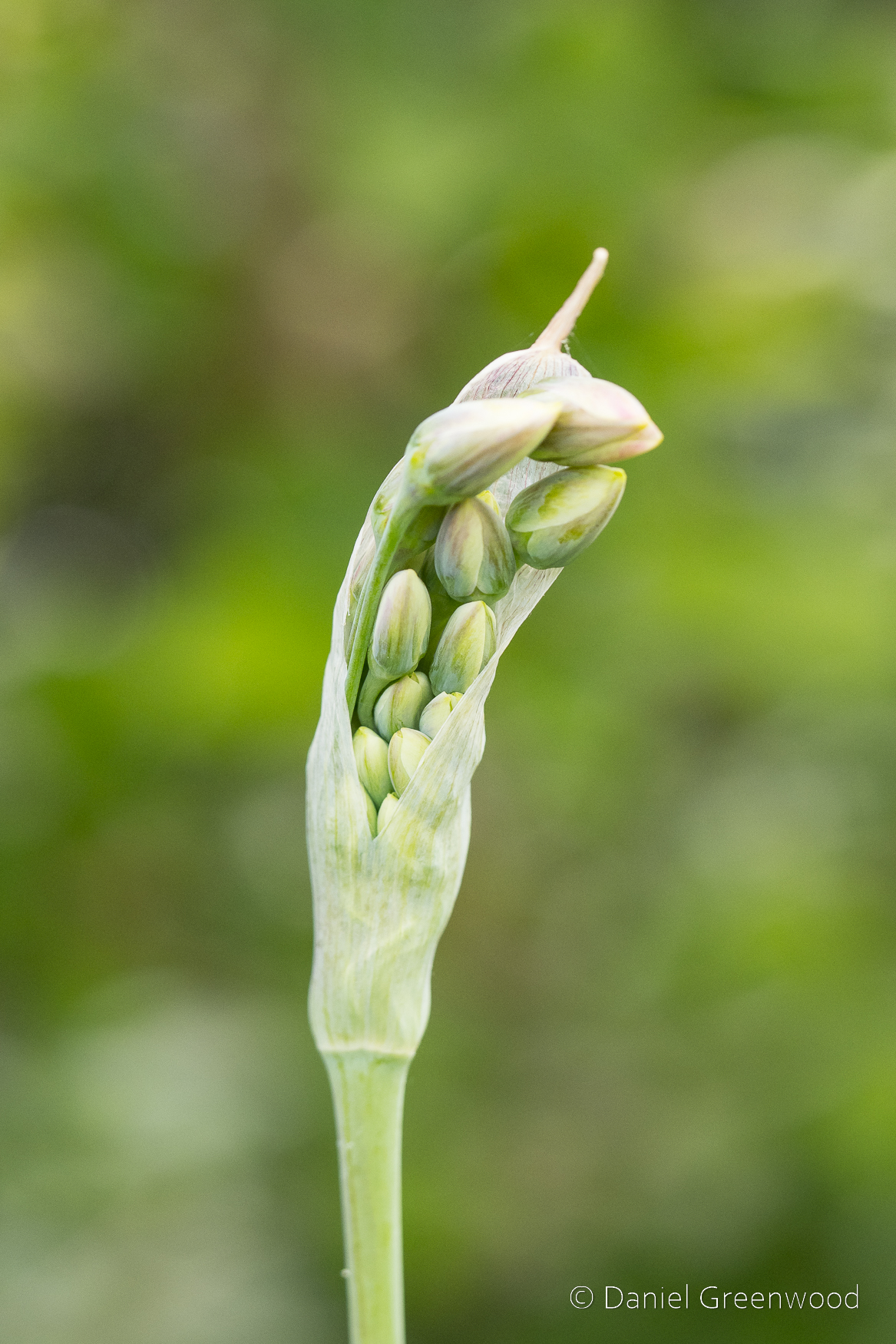
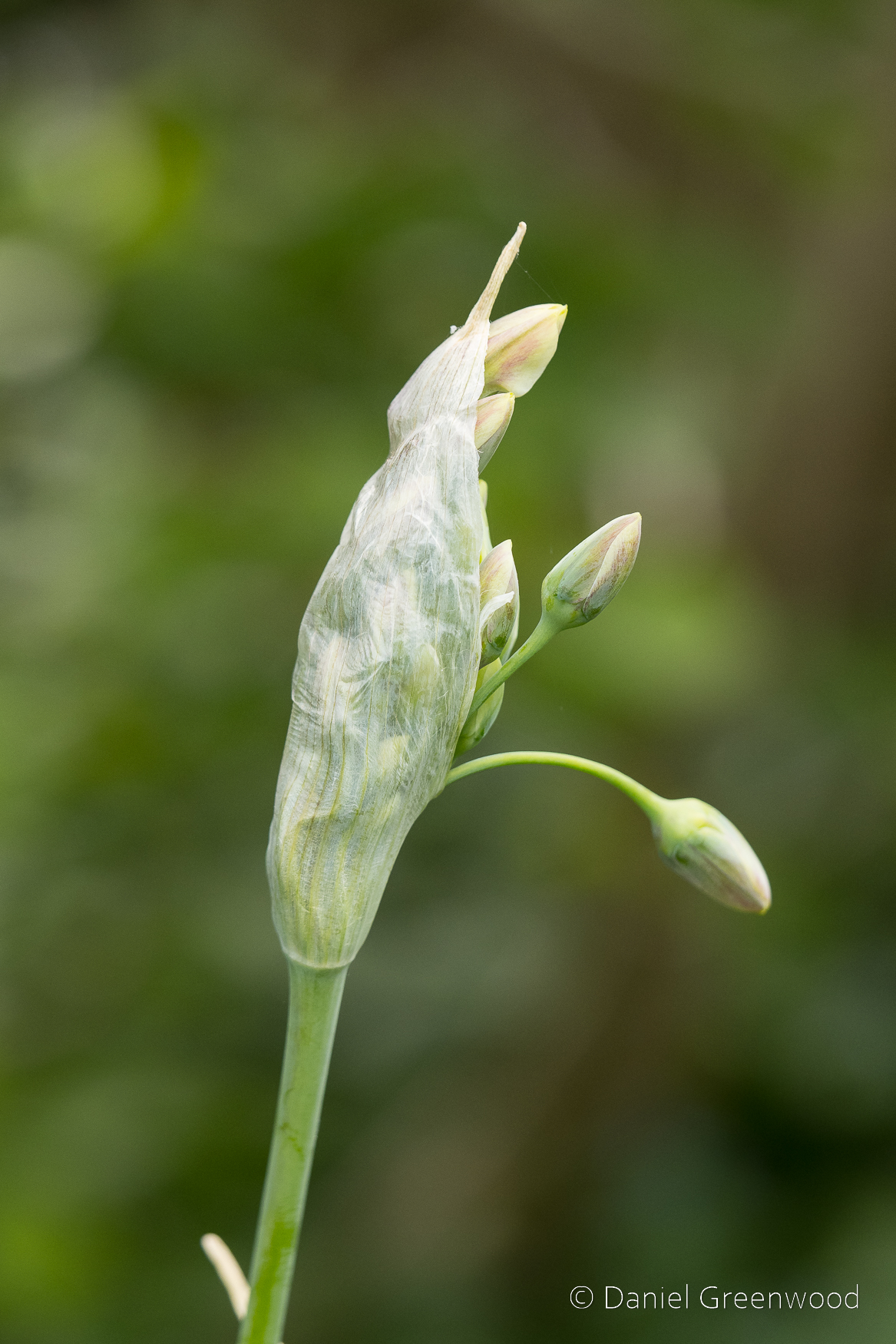
We have a flowerbed for growing berries that is also home to these unusual alliums (honey garlic or Sicilian honey lily). On the 8th May they were just beginning to unseal themselves, releasing the flower heads. I have bee-heavy photos of this plant to share of the following days, and this spring has made me realise just how attractive this allium is for bees. The bumblebees can’t get enough! Stay tuned.
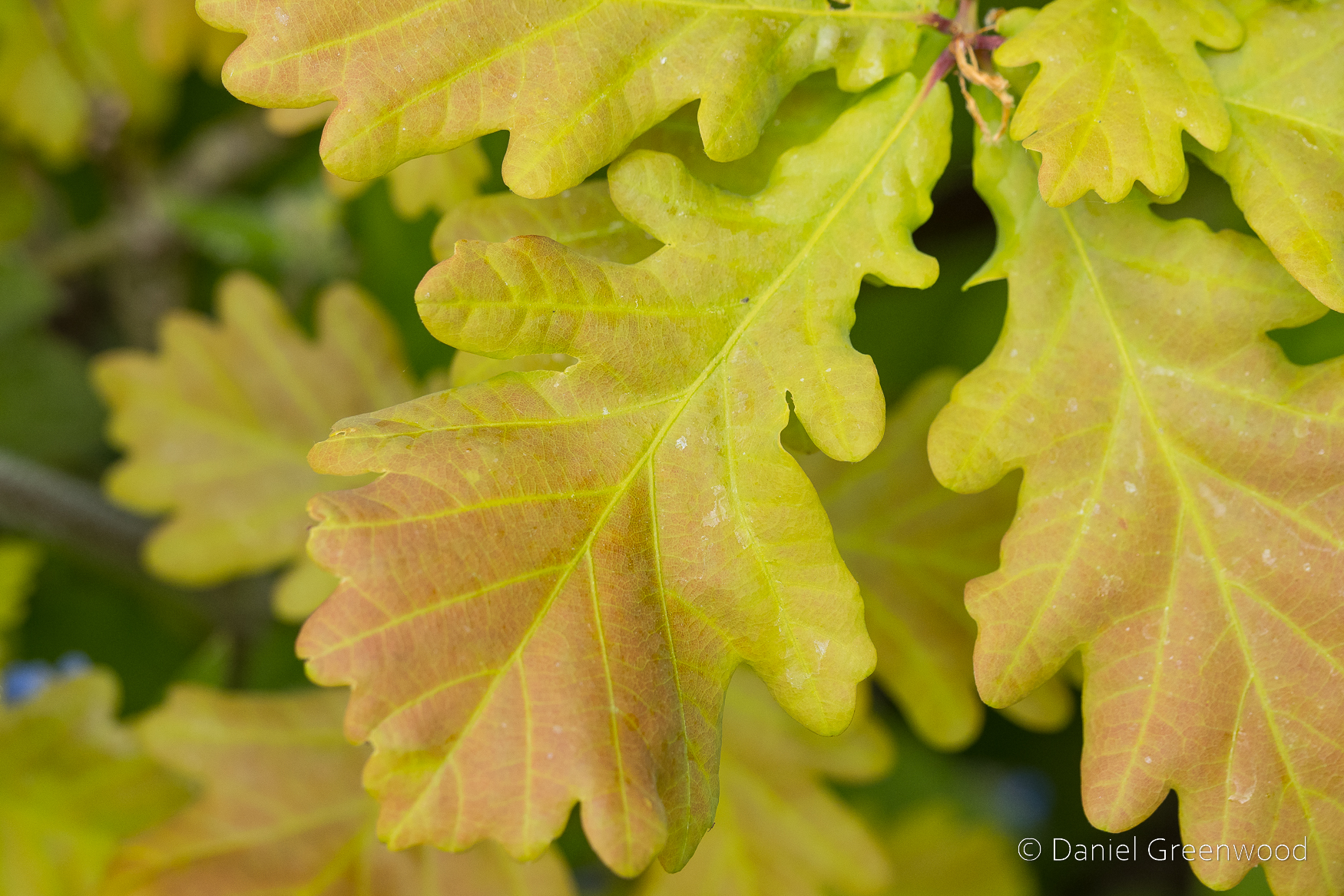
The oaks were in full-leaf by this point, this sapling somewhere between the red, yellow and green.
I don’t know what this invertebrate is or was, but I’ve seen it over the years attached to the stems of broom (which had such a good year in 2025). I am guessing it’s a species of moth that has pupated into an adult moth, and that this is the chrysalis. #NoMothExpert.
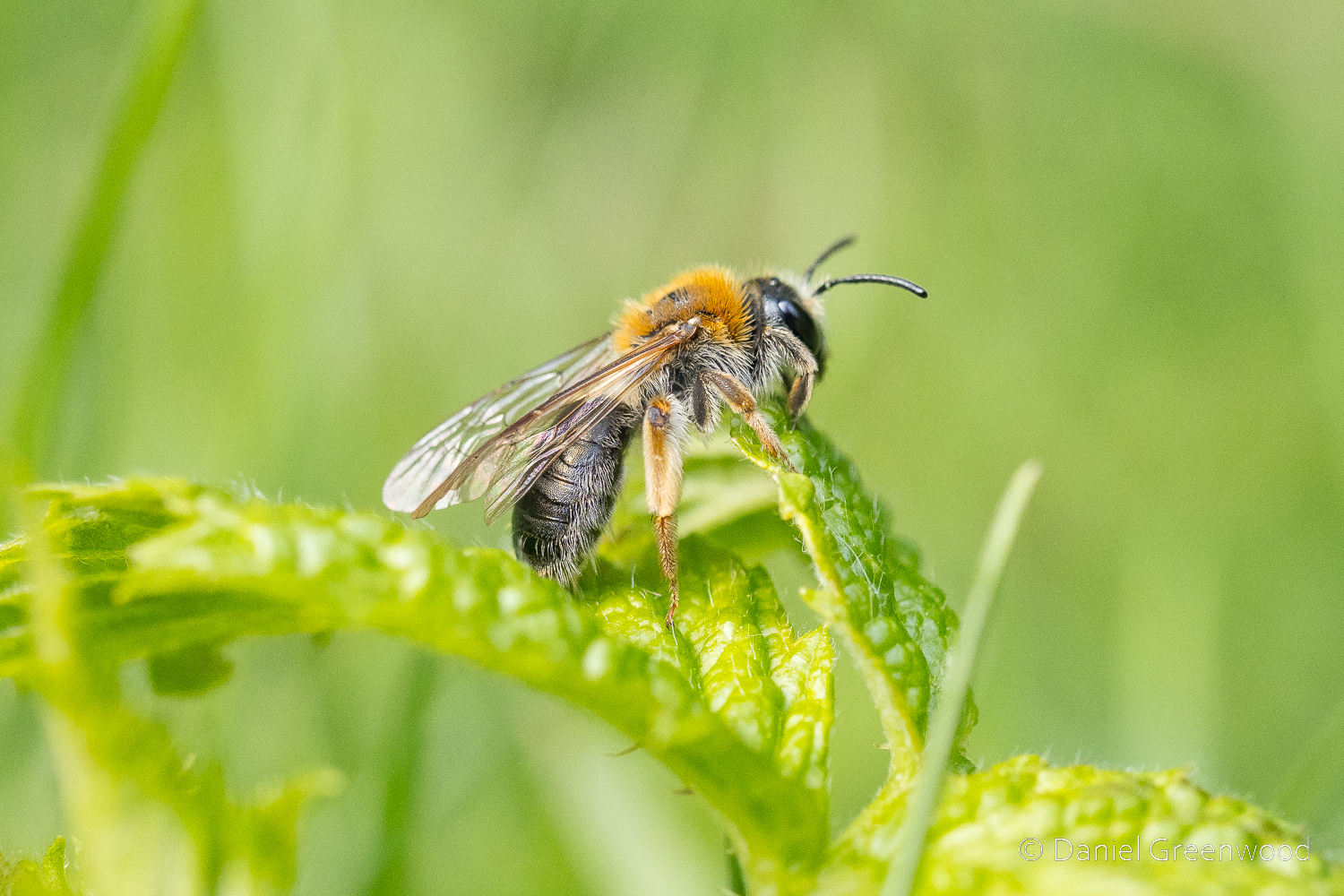
I think this may actually be the same early mining bee I posted about last week! Not sure.
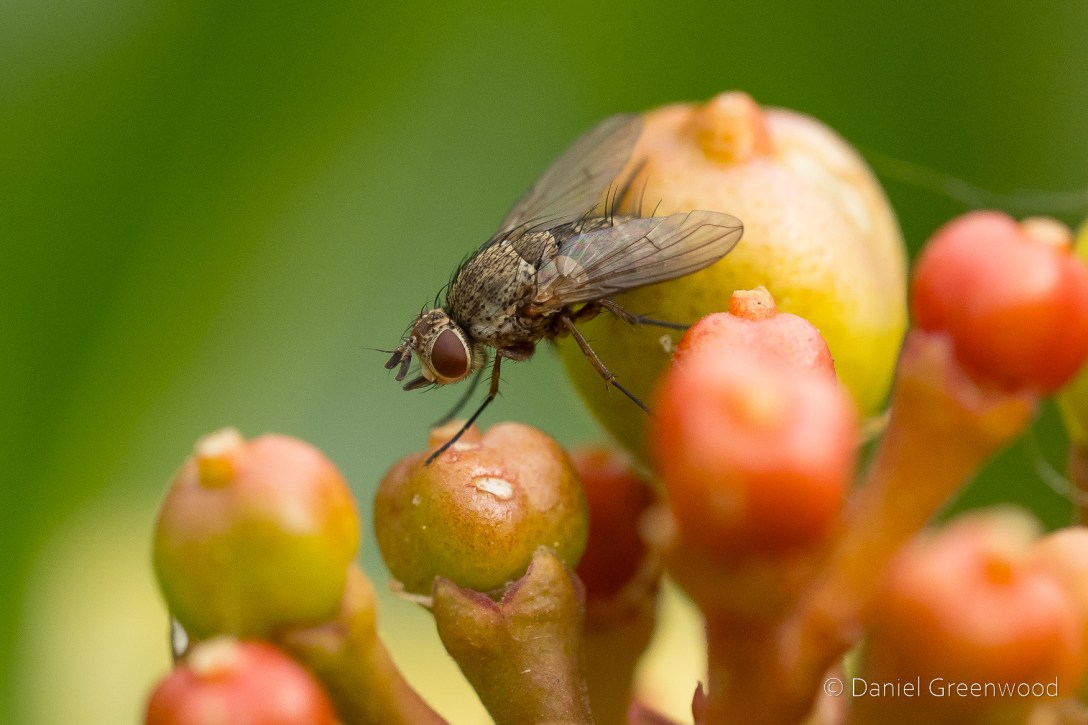
I really like this photo of a fly (no ID yet). I wonder if that’s some kind of sugary solution on the berries. I enjoy the fly’s awkward splaying between fruit. Why not?
The light was working against me here as our friend was on the underside of a leaf. This is one of the Issus planthoppers. It doesn’t look like it, but the head is in focus.
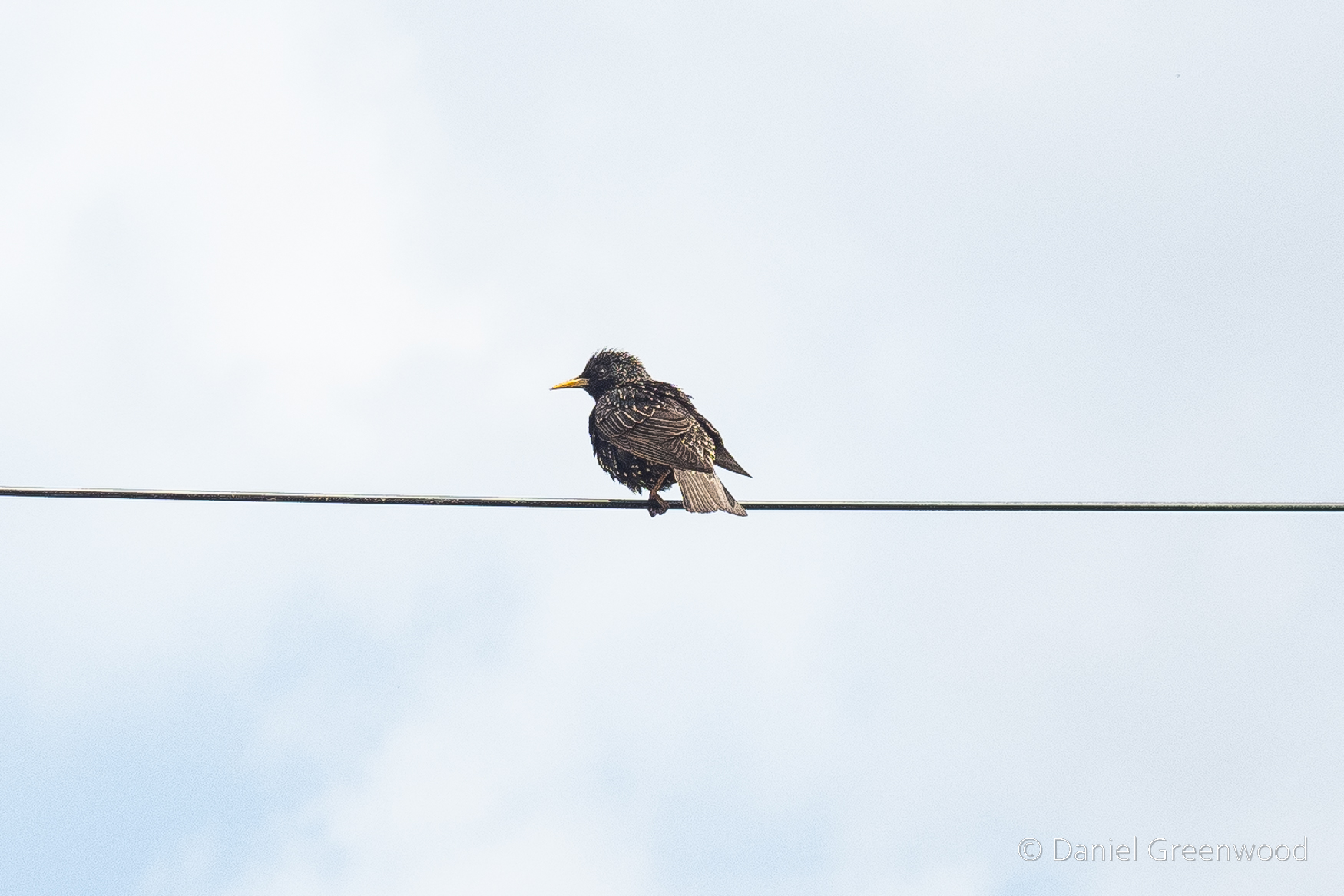
And finally, the starlings were still feeding the nestlings at this point, quite an tiring time for them. They are one of my favourite birds, but are in serious decline (51% between 1995 and 2016) due to habitat loss and historic use of pesticides. You can help them by not using things like Roundup (glyphosate), by putting out fresh water for them to drink/bathe in, and potentially putting up a nestbox if you can.
The bees are out in force at the moment, so I’m taking a lot more photos. Posts will now be one per day of photos, as there are too many in a week now to cram into one post! You may not care about this.
Early one morning before work I noticed a little bee resting on some raspberry leaves in my garden. I grabbed my camera from the house and got some photos. It was early and the temps were low so the bee wasn’t very energised. It may have spent the night there. This is probably early mining bee, which is one of the more common species in SE England from what I know.
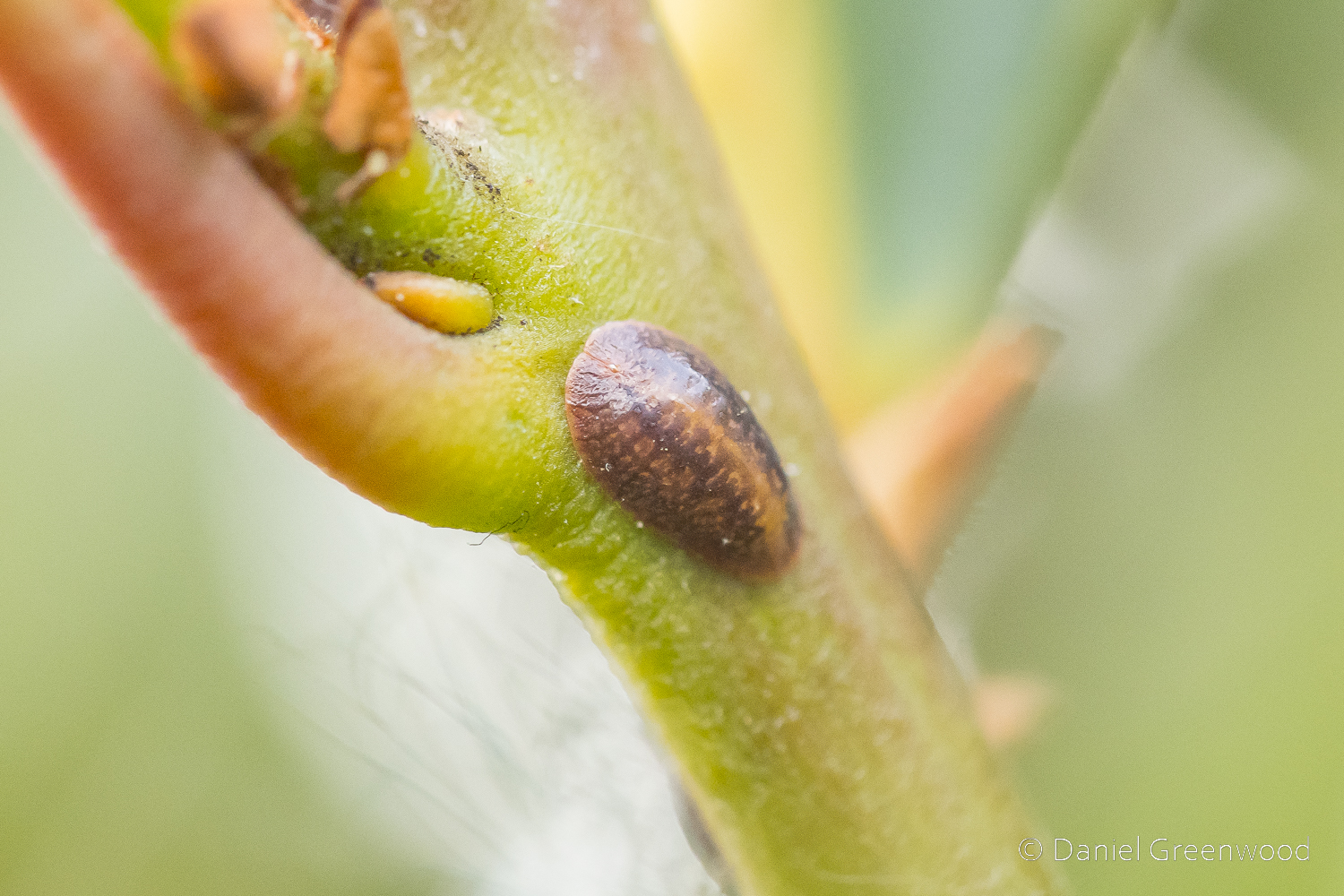
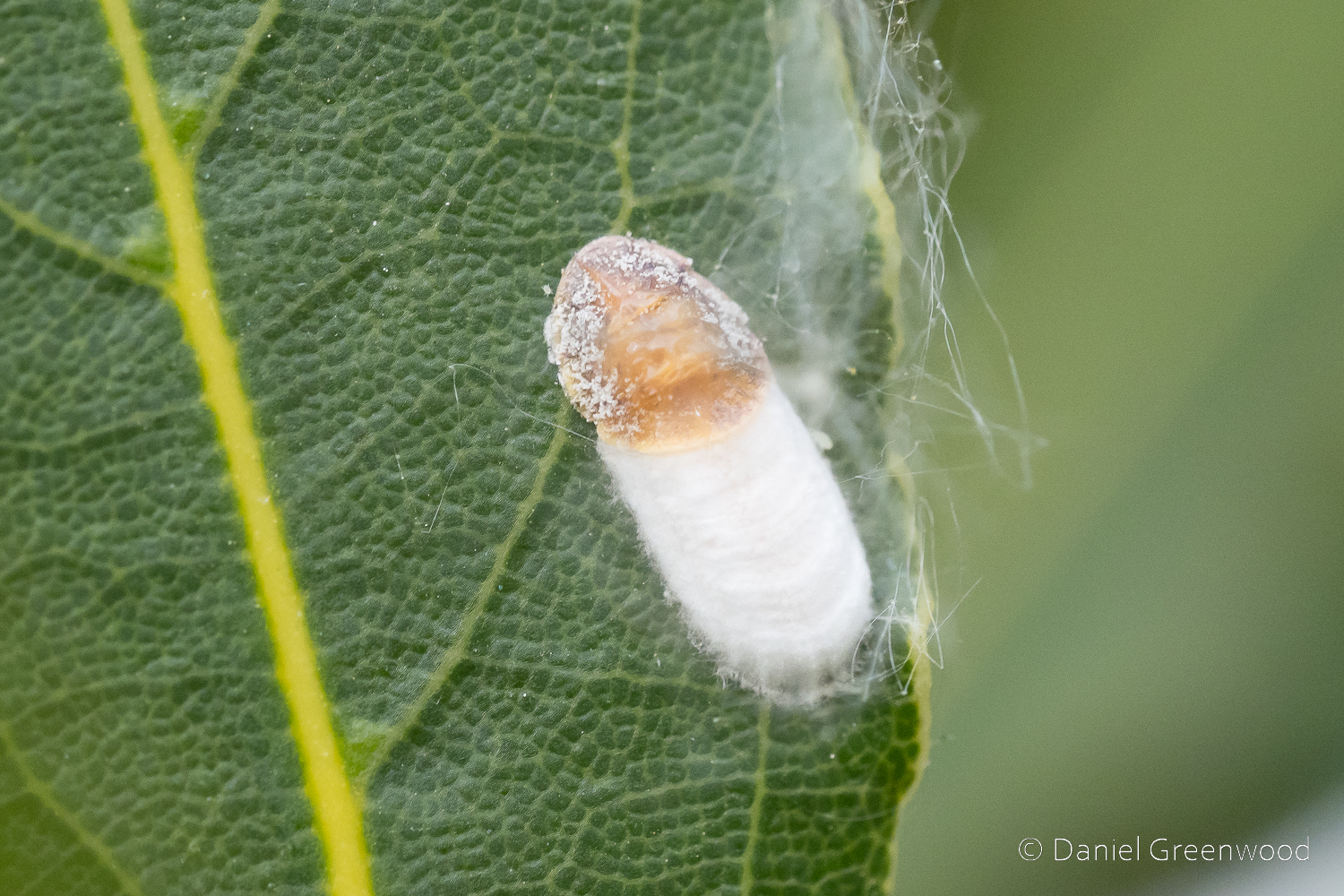
Now then, I think these are scale insects (Coccoidea) in different stages. They’re attached to the stems of plants and also the leaves. Apparently they cause problems in coffee plantations – not a problem for me. Not only do I not drink coffee, it would be impossible to grow it in my garden.
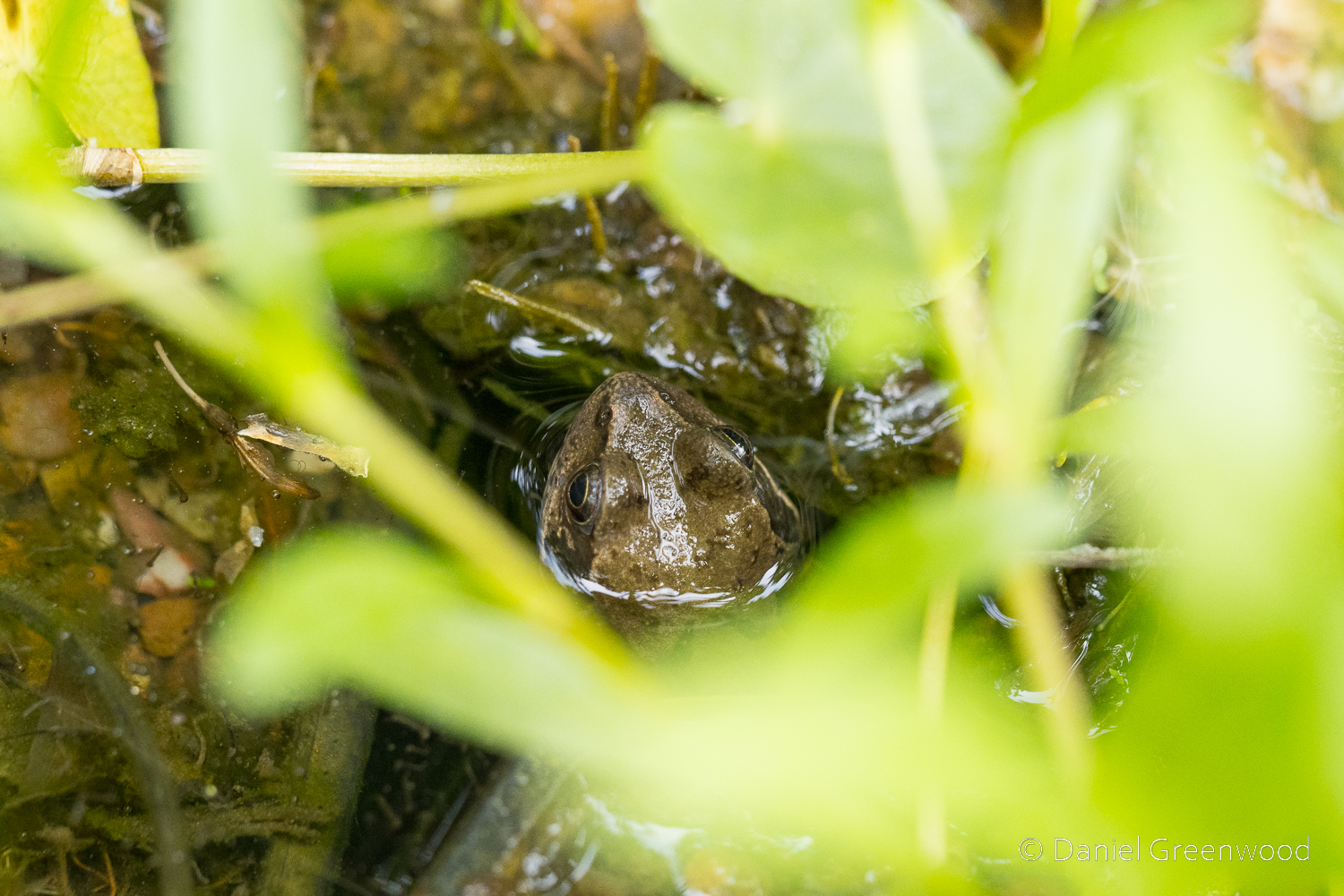
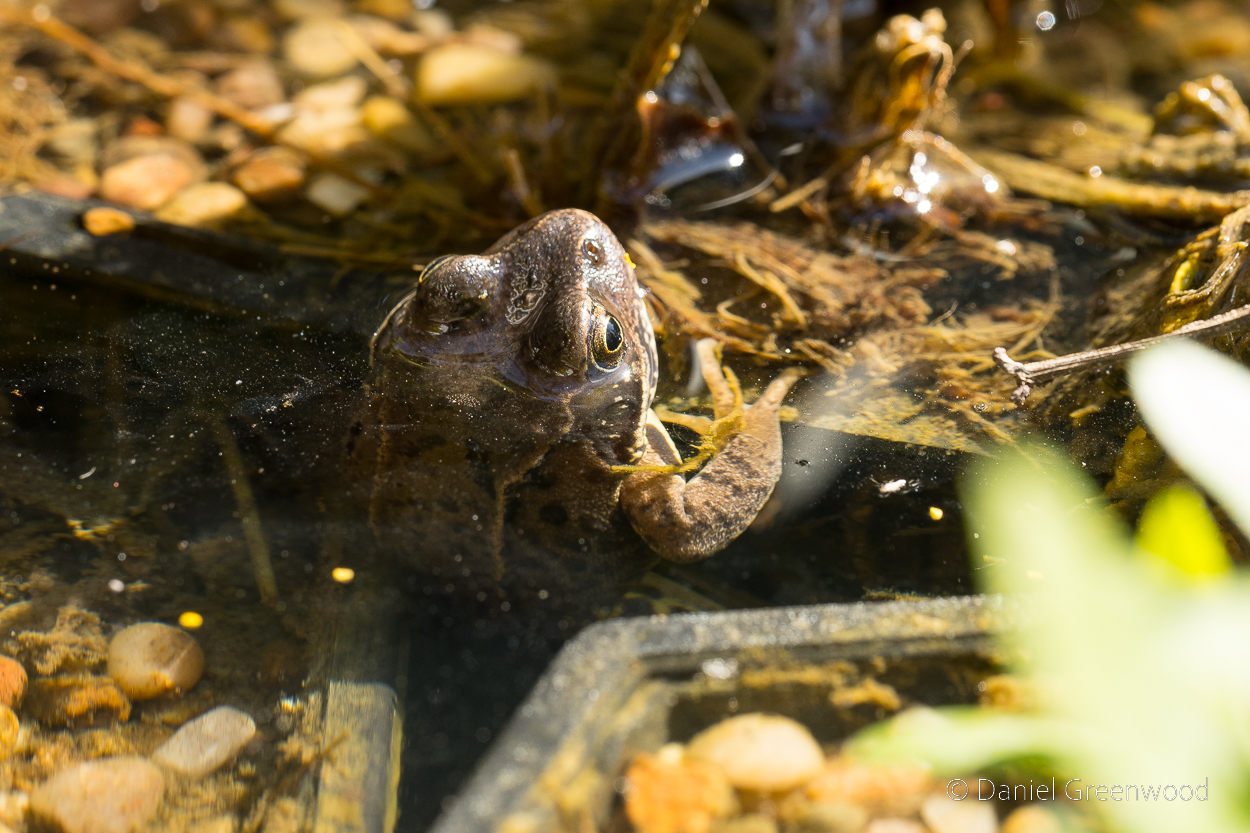
Our frogs have been enjoying the basin pond, as per a recent post. It’s tough for them right now, we’re experiencing extremely dry conditions in southern England and are ‘on track for the driest spring on record‘.
On Friday 11th April I was hanging out in the garden when I glanced over at the small container pond on our brick patio. It’s an old metal wash basin filled with plants and, well, water.
Birds bathe in it, foxes drink from it, and something rather special now lives in it.
The first thing I saw in the ‘pond’ were two eyes looking back at me, and two big arms and webbed hands (are they hands?) holding onto one of the plastic plant containers.
It’s been so dry for the time of year, wildlife is really suffering with the lack of water. If you have the chance to build any kind of pond you should do it! We don’t have enough space in our garden to dig a ‘proper pond’, but we have been able to use a container we bought at an antique dealer. Without it, where would the frog go?
Elsewhere I’ve noticed the number of drone flies has ebbed a bit, but there are still plenty around. This is probably a tapered-drone fly, a species of hoverfly.
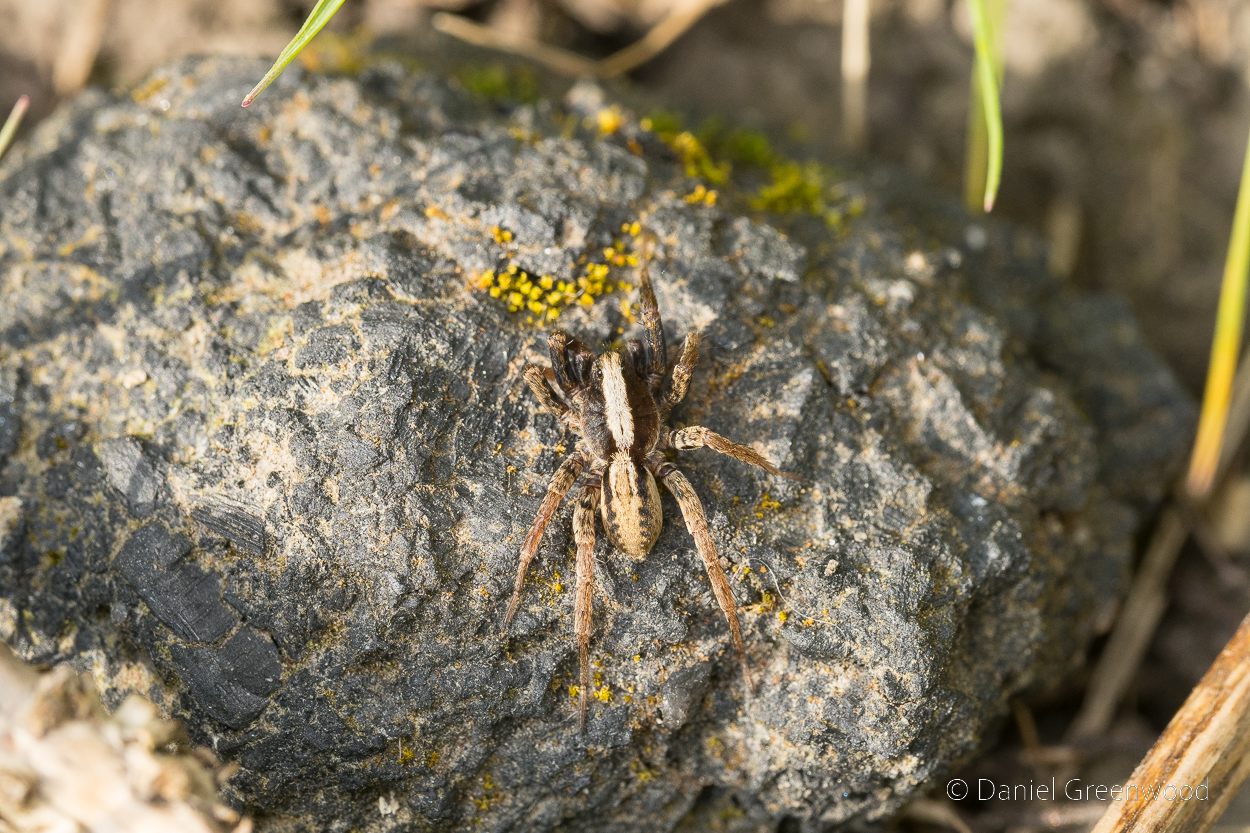
Sitting on this piece of charcoal (which you may notice is now being colonised by a very small moss) was a little spider. iNaturalist has suggested this is a fox spider.
It’s rather cuddly isn’t it? No?
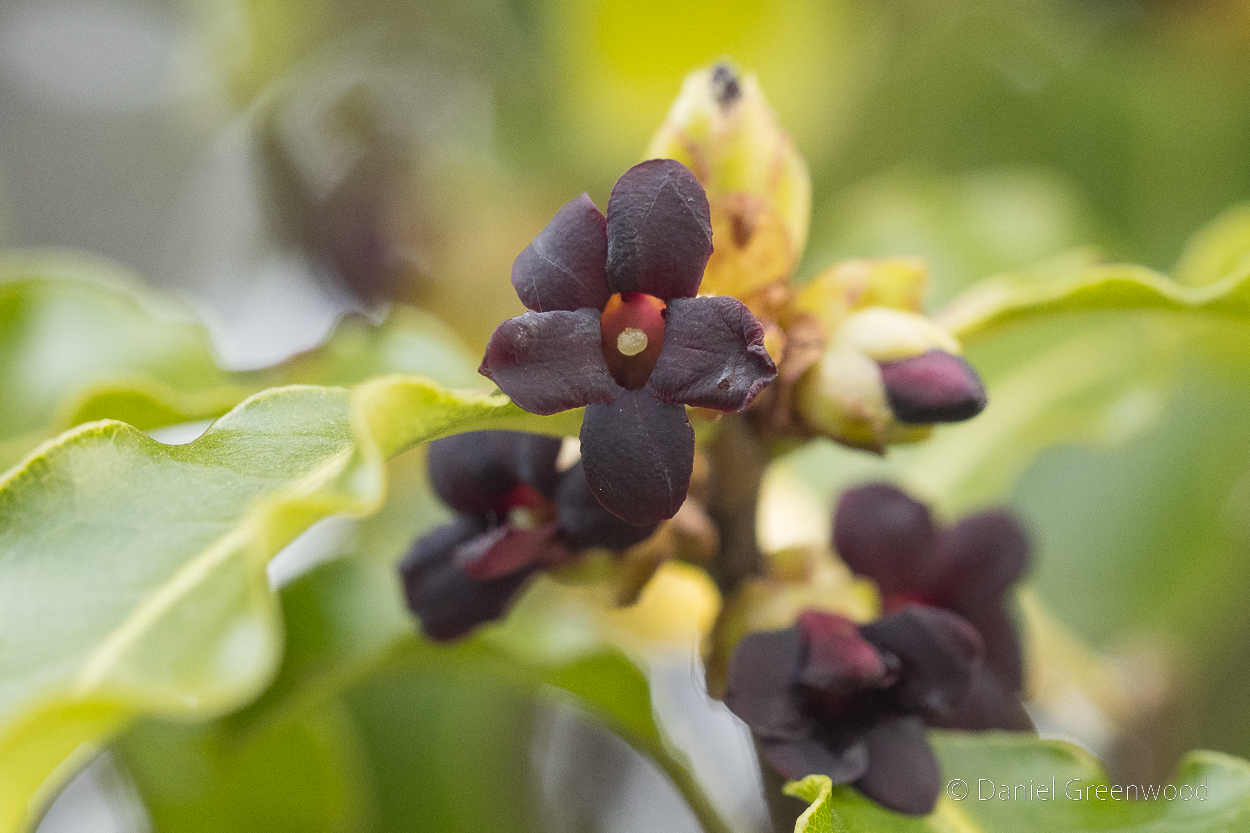
At night we’ve begun to notice a powerful fragrance around the house. It’s a bit like honeysuckle but is probably a cheesewood, a species of plant from New Zealand. This grows in a neighbouring garden but reaches over to us. It’s absolutely covered in pollinators and the smell- wow. It doesn’t seem to be invasive so could be a good option for your garden if you like pollinator-friendly shrubs.
In May 2024 my wife and I went on our interrail honeymoon to the Jungfrau region of the Swiss Alps. I am finally ready to post my photos from the trip, starting with some macro photos. I’ve popped in some short videos here to give a bit more texture and sound to bring things to life.
My cat whispering wife
It was an incredible trip, all done by rail there and back. The nostalgia is already with me.
In addition, I’m aiming to post about the spring alpine flowers and the amazing sycamore wood pasture. Hopefully one each week. I posted about the smattering of fungi back in May on Fungi Friday.
On the trip I took only one lens with me, one capable of pretty much any photography between 12-45mm (equivalent to 24-90mm in full frame cameras). That includes excellent close up capabilities. I also had a pocket compact camera and my phone.
The meadows were in full bloom, days from being cut for hay to feed the alpine cattle through the winter months.
Breathtaking alpine meadows
Oxeye daisies with the Wetterhorn (I think) in the background. This pic is taken with my Olympus TG-6 compact.
It was nice to see the variations in the grassland species in the different locations. At about 1200m up these meadows were packed with umbellifers. They make up the wash of white here. This meadow must have been impacted by the snowmelt as it nourishes the foothills in spring.
The typical mix around Grindelwald was one of red clover, scabious, oxeye daisy and hawkbits.
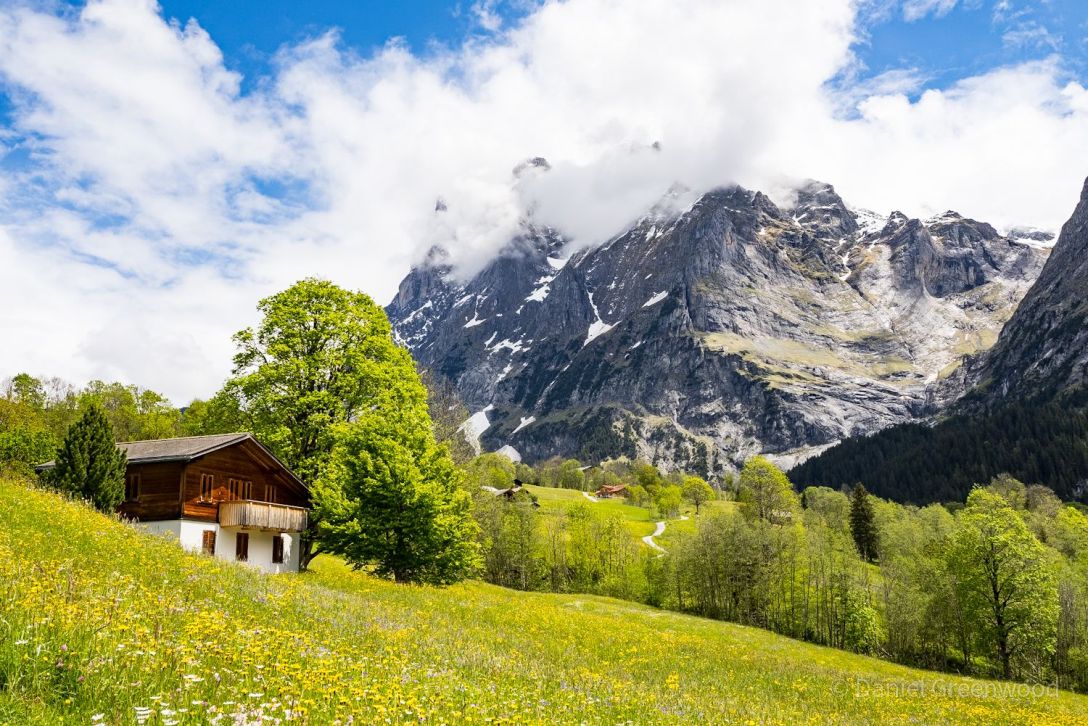
The Eiger looms over chalet homes and rich hay meadows. You can see the allure of Switzerland. High living standards and abundant nature.
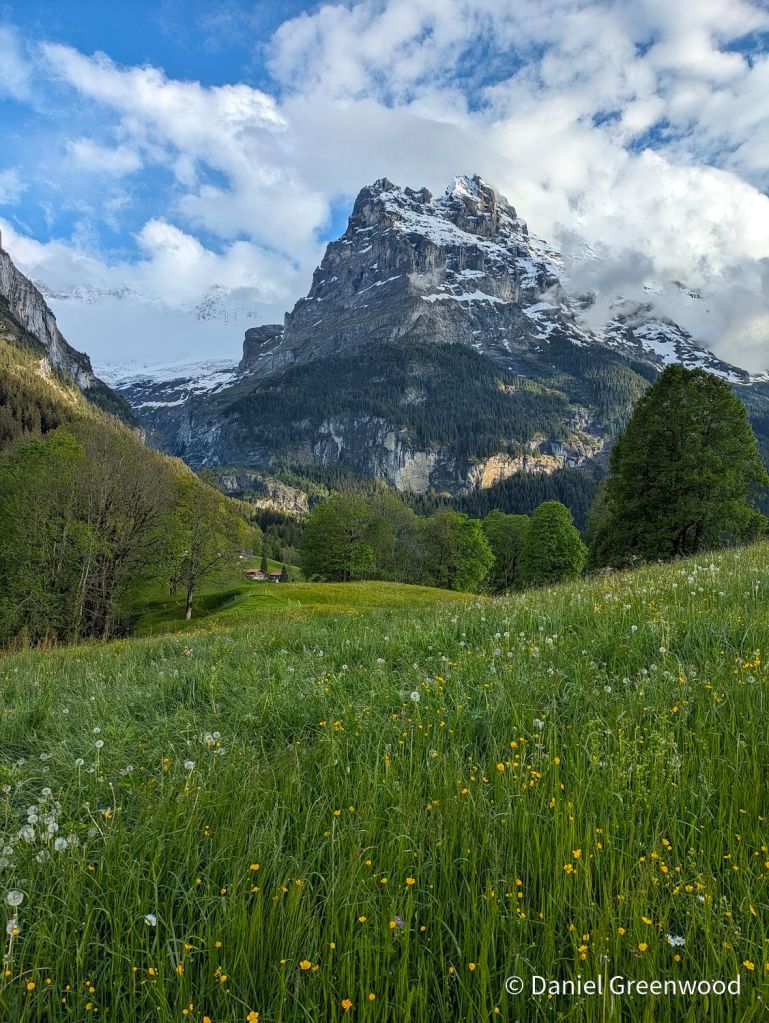
It is a breathtaking place, as this beautiful phone pic suggests (as in the phone’s capabilities!). This meadow was one that lacked the diversity of others, with the dandelions being evidence of nutrient enrichment, which encourages more vigorous plants at the expense of others. The most diverse meadows will have lower levels of nutrients in the soil.
The Grindelwald meadows were at a height of around 1000m. They were peaking and very loud at times. Just listen to this:
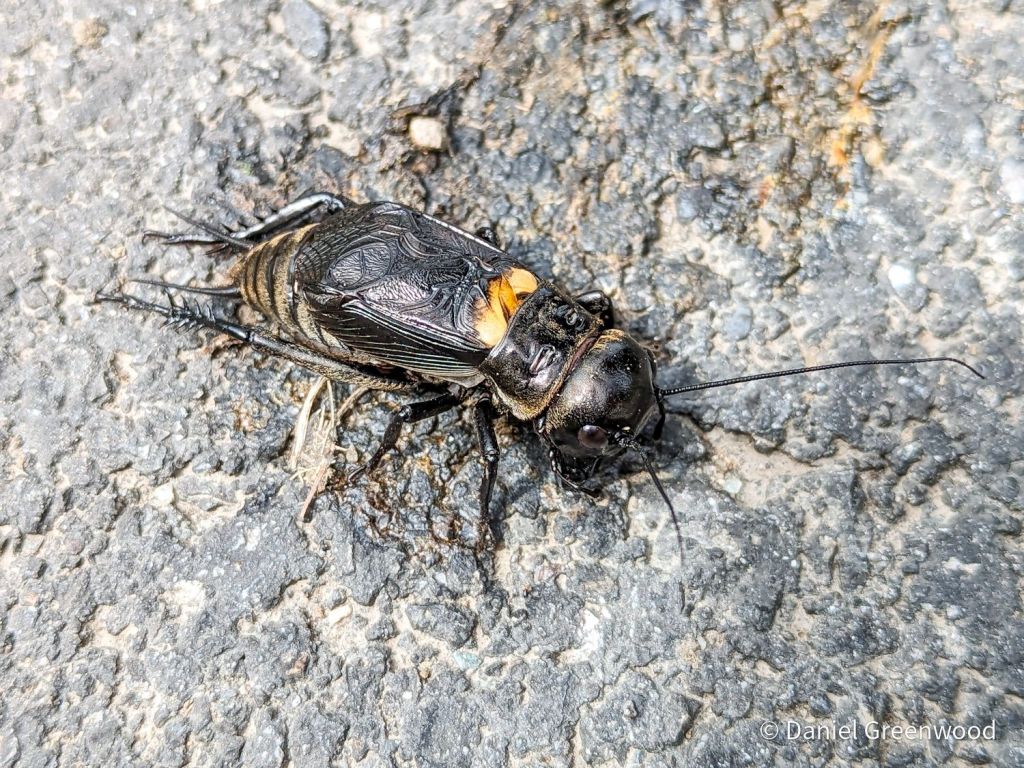
It was a chorus of crickets, not something that we get in England much anymore. The management of these meadows follows a largely medieval practice of haymaking, though it is now mechanised:
This is probably a family cutting and collecting the hay. This photo was taken from a cable car heading up to Männlichen.
Now onto the invertebrates that lived in the meadows.
Bush crickets
The sound in the meadows was made by the European field cricket, a species that has received support via conservation projects close to me in West Sussex. According to the iNaturalist page it’s flightless, so when it becomes locally extinct it struggles to repopulate lost ground. In the UK it has suffered from the decline in heathland, its favoured habitat. The cricket above was travelling across a lane to reach another meadow. There were a number of them squashed by vehicles. It’s unavoidable.
Moths and butterflies
During a walk in the valley woods at the foot of the mountain this green-veined white butterfly (I think) was on the wing. The main butterfly we saw was the swallowtail, but they were too fast, restless and far away for my lens to reach.
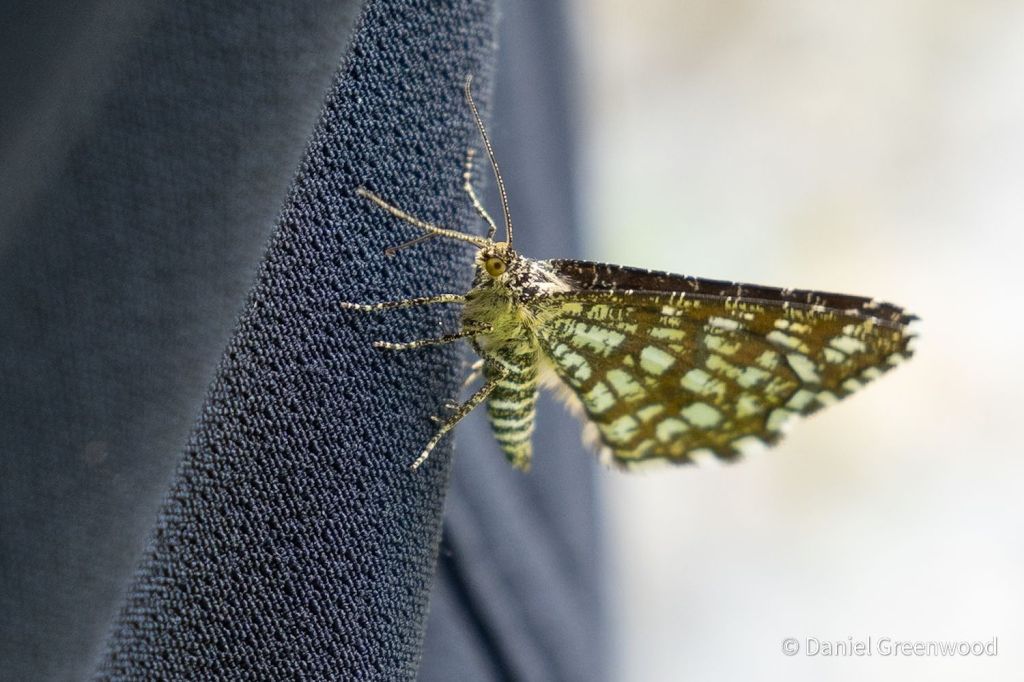
In stark contrast, this latticed heath moth alighted on my actual lens before being coaxed onto my trousers:
This is a species we also have in southern England.
Wasps and sawflies
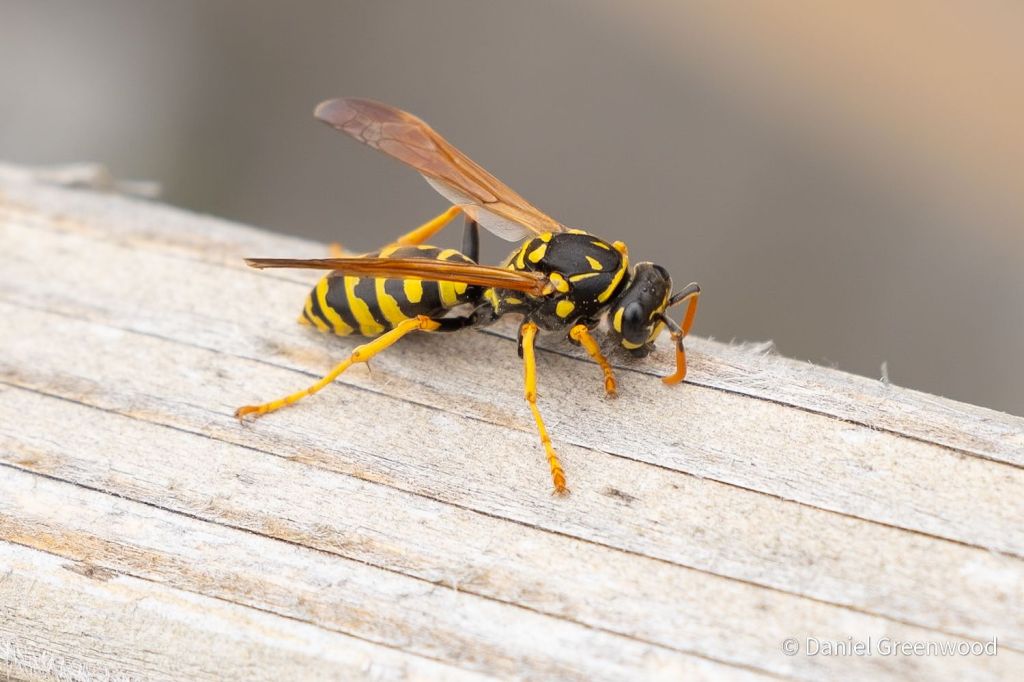
One insect you don’t see in the UK, as far as I know, is the European paper wasp.
They have a lovely orange hue to their antennae, feet and wings. I’ve seen them before in Czechia making nests in residential post boxes. Here you can see one gathering wood shavings for nest building.
Meadow cranesbill was another common flower in the – you guessed it – meadows. I noticed that one area we passed when returning to our accommodation had a number of cranesbills that held sawflies in their flowerheads. The iNaturalist sawfly oracles have decided this is Tenthredo koehleri.
Beetles
Beetles are not my strong point, unless they are from Liverpool. This is a species of click beetle from what I know, visiting an oxeye daisy flower.
Spiders
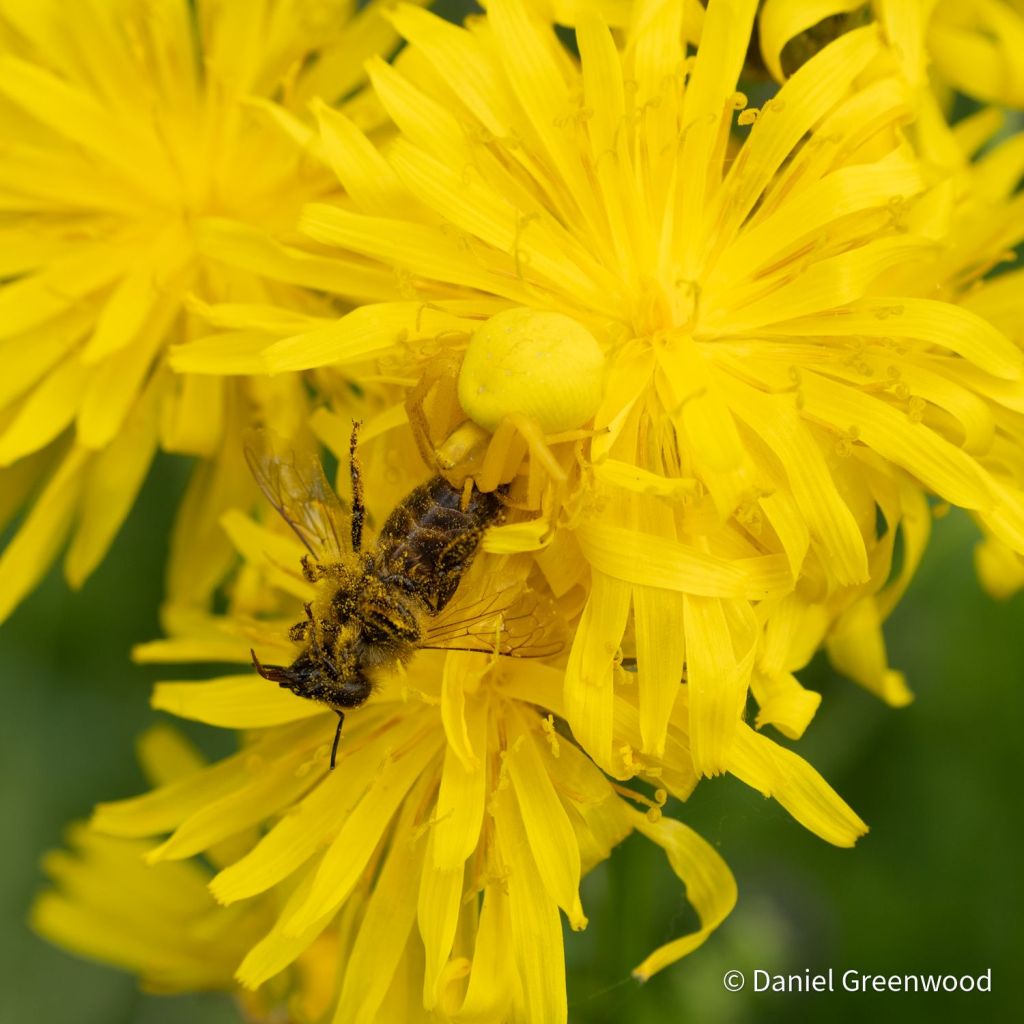
Now, I did mention those beardy daisies the hawkbits, earlier. I’m not up on my ID with these plants, but I did spot a crab spider which had joined in their colouring and caught a honeybee (I think) in one of the flowerheads. This was a statk example of how they can change their complexion to camouflage themselves in certain plants.
That’s all I really managed in the macro photos stakes. There’s much more to come from the Swiss Alps though.
Thanks for reading.
I write these blogs in my spare time because I want to raise awareness about the beauty and diversity of our landscapes. If you enjoy reading themyou can support my blog here.
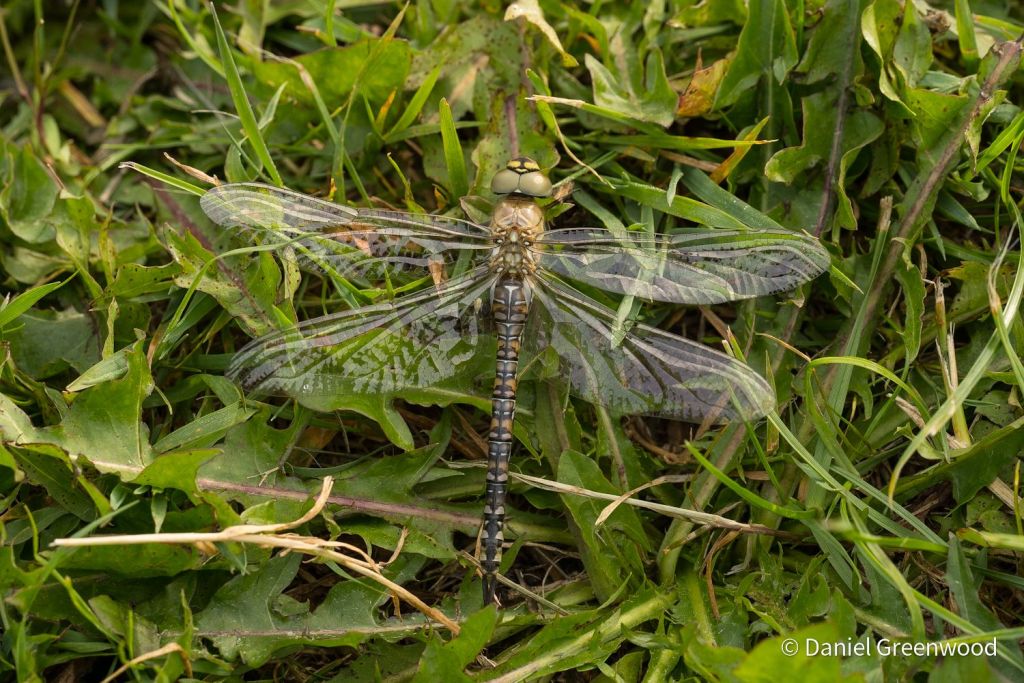
In August I was camping in West Sussex. On the final morning I opened the tent door and nearly stepped on a dragonfly that was resting in the grass outside.
It had been a cloudy night and the ground was very dry compared with the previously dew-laden start.
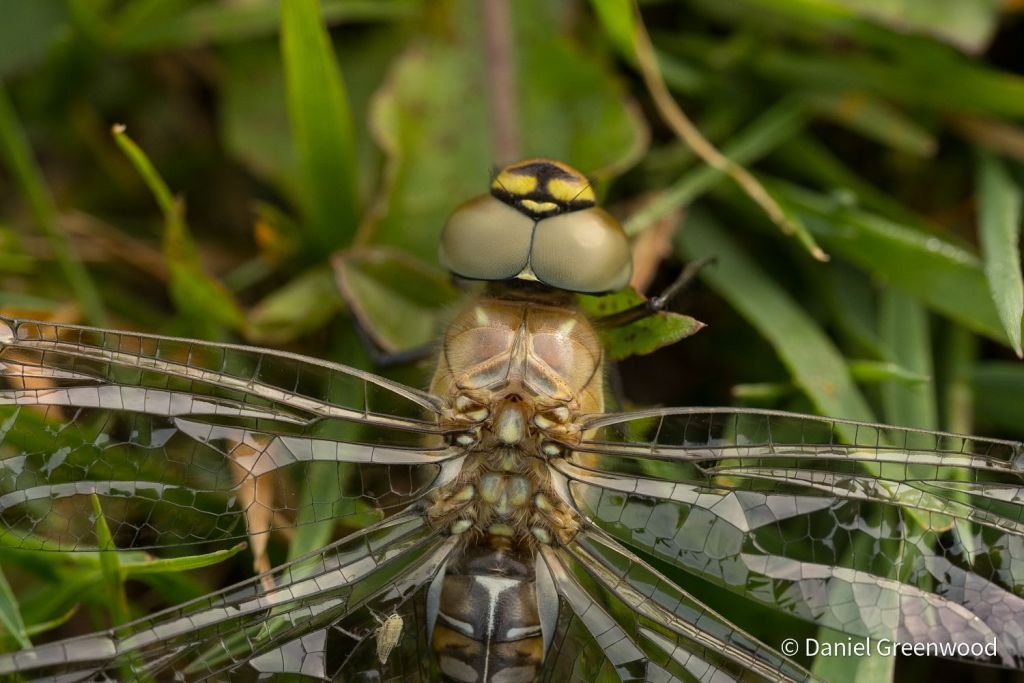
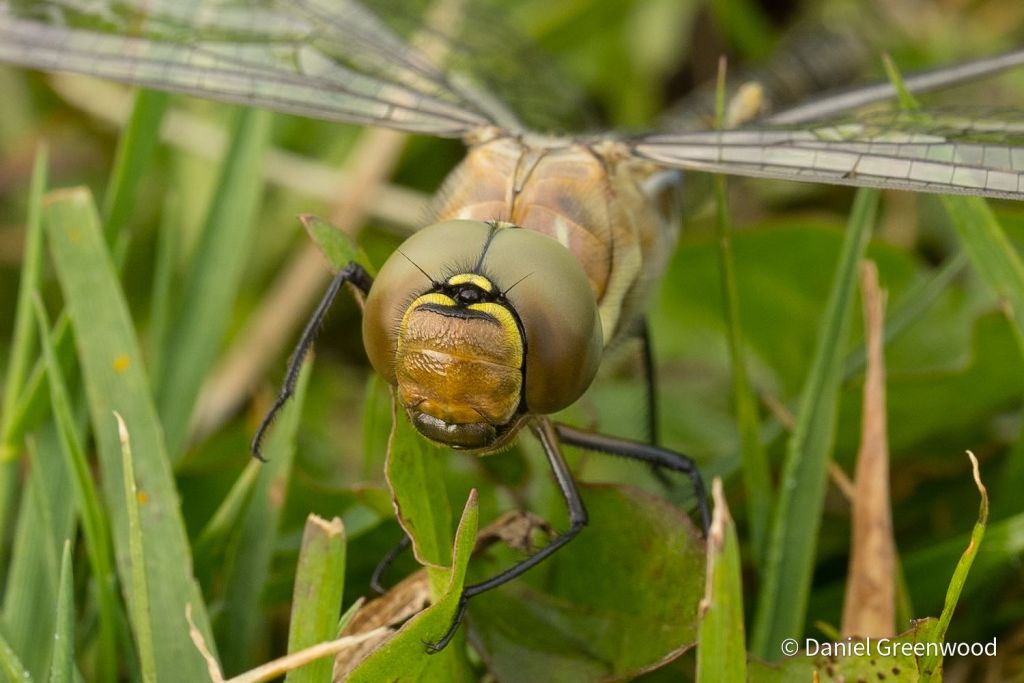
The dragonfly is probably a migrant hawker (Aeshna mixta) and is known to breed in SE England. As its name suggests it can also migrate to England from southern Europe.
It’s a dream to find a dragonfly in such a restful state, although the insect is vulnerable. It was in the right place however, especially if it wanted its portrait done.
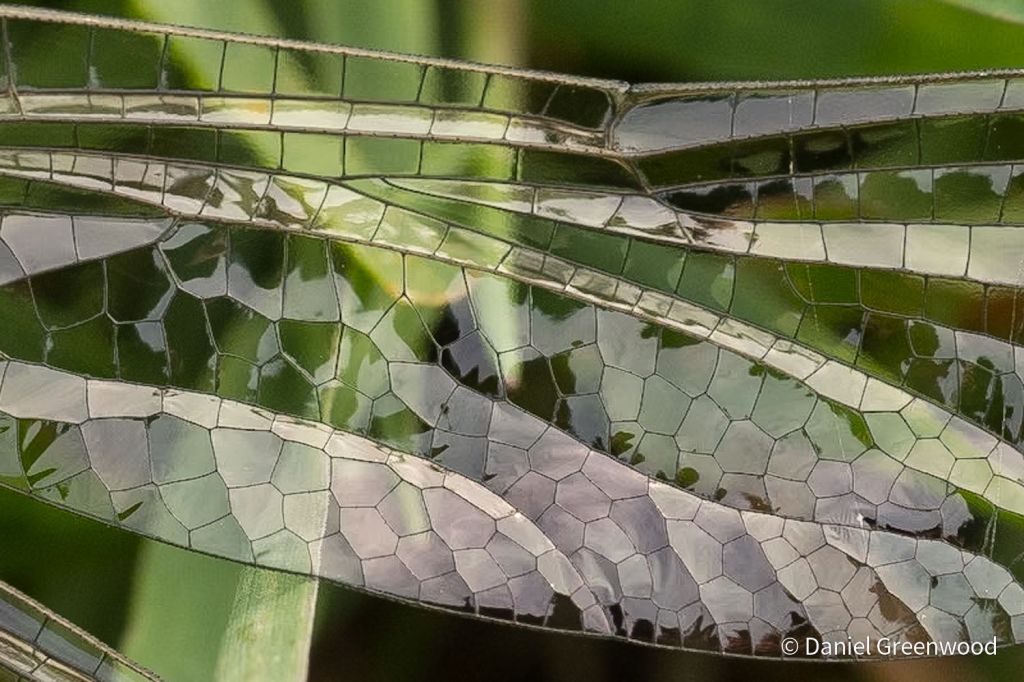
It was an excellent opportunity to look at the wings of the dragonfly close up. They are renowned for their beauty and likeness to stained glass.
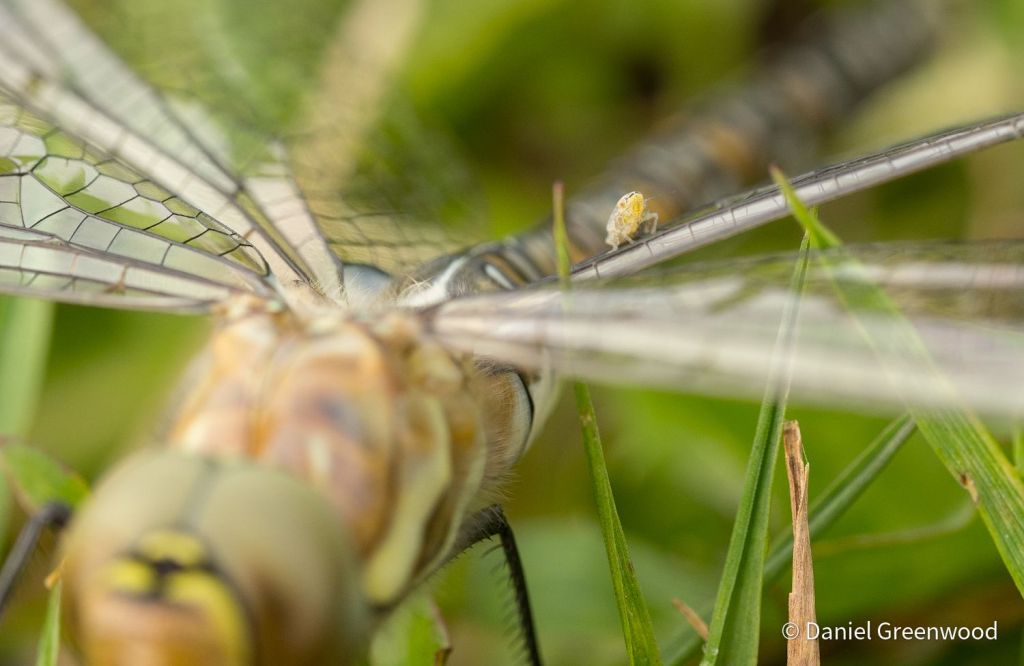
By looking at the wings I noticed that a planthopper bug had leapt aboard the dragonfly.
Here’s a closer view. I’m not sure of the species but it’s one I don’t remember seeing before.
A day earlier we had walked along the River Adur, famous for its connection at Knepp Wildland. It was good to see some more wasps around, with so few of them being reported this year.
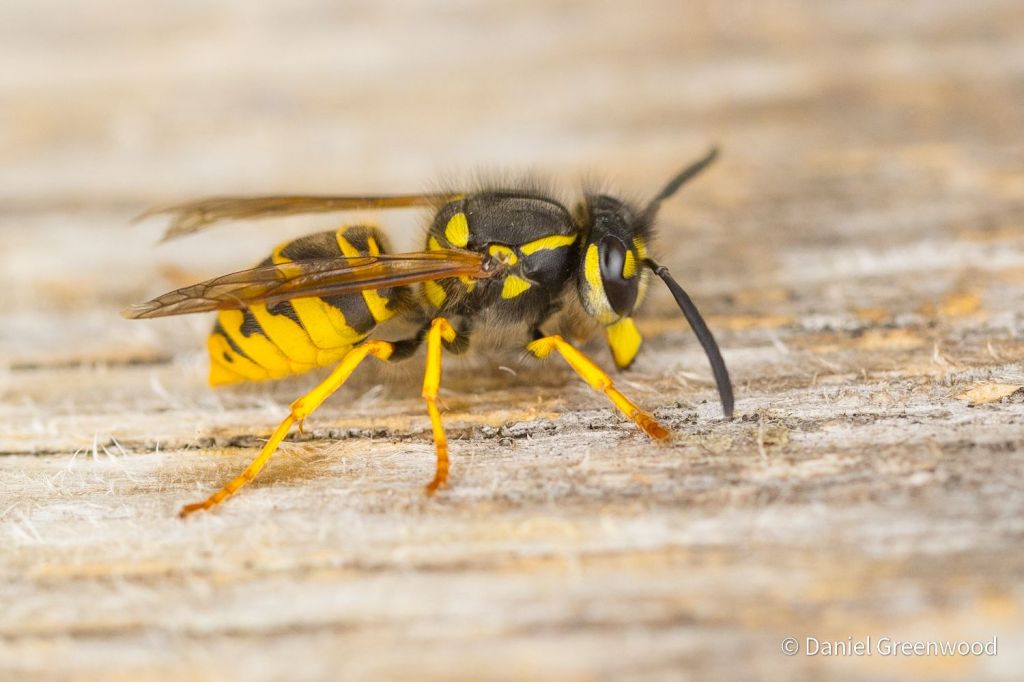
The wasp is scrapping a layer of wood from a handrail or fence post to be used in the construction of a nest. You can see the ball below its mandibles above.
What a lot of hard work, worthy of my respect that’s for sure.
The article was outlining how significant wasps are in our world, as controllers of other invertebrates that, in over abundance, would create a damaging imbalance in our farming- and eco-systems.
We should worry about the lack of wasps this summer, the article said. Helena Horton would probably enjoy this blog, to be honest!
As you may have noticed, there are very few images in this post. There’s a reason for that, which I’ll get to. After reading the article I went to put the washing on the line. With a cursory glance at the fennel in the flowerbed I noticed that one of my favourite wasps was visiting.
I skipped indoors, grabbed my camera with macro lens and began following the wasp around the fennel flowers. I didn’t get anything worth sharing, until the wasp was spooked and dropped down to cover in some grasses. As you can see above, it then began to clean pollen from its face and antennae. I fired off some pics and then checked them. They were super sharp and beautifully lit by the soft light from the clouds overhead.
There are only two pictures, almost identical but for their crop, because they represent the wasp in the best way I can. Clear, in focus, and sharp.
The insect season is drawing to a close and it’s been a poor one. Hopefully absence may make the heart grow fonder, and action taken at scale to ensure these pollinators, not just honeybees, can be protected.
Warnham Local Nature Reserve, West Sussex, July 2024
I was making my first meaningful trip out to a wild space after being ill with Covid, to see if I could concentrate enough on taking some macro pics. Thankfully there were some very docile bugs pleading for their close up. Here you go, team.
I’ve missed a lot of the macro season this year, what has probably been one of the ‘worst’ summers in this part of England. Lots of rain, quite cool, clear lack of insects. I’m only just getting over brain fog so not able to compute how worrying the insect declines are right now. It seems that approving the use of bee-killing pesticides without appropriate risk assessment doesn’t help.
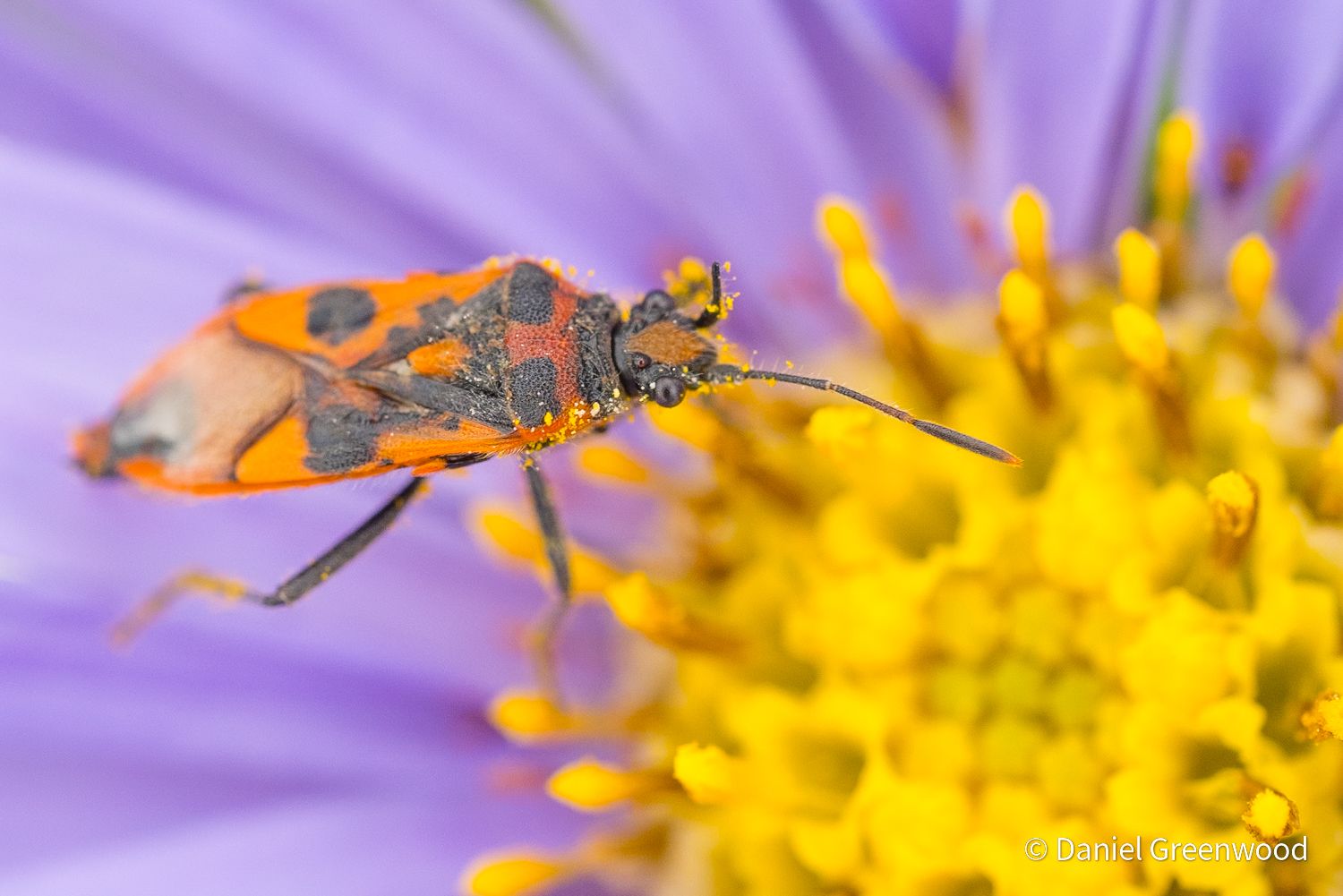
I was fortunate to spot this cinnamon bug nectaring in the flowerhead of a Michaelmas daisy within a few minutes of my visit to Warnham Local Nature Reserve. I love how this pollinating beetles get so covered by the pollen. It’s a bit like me after eating a choc ice.
Though flies are feared and reviled for their connections with unpleasant organic matter in this world, some of them are very interesting to look at. Many of them also tend to be pollinators. It’s not all about the bees. This fly is probably Nowickia ferox, which feeds on flowers. Moth fans – look away now. Their larvae develop in the dark arches moth.
Dock bugs are a common sight in southern England, especially in flowery grasslands and meadows. They are very easy to photograph – they’re like the mushrooms of the insect world, slow moving, if at all. How trusting.
Elsewhere, this mid-summer period is one of hoverflies, many which looked very similar to the untrained eye (this one) but which can be nice subjects among the flowers of hogweed and other umbellifers.
I was pleased with this photo of a dancefly as it nectared on some ailing hogweed flowers. That is one heck of a proboscis. The light is very soft and the background is a serene green.
Over the years (I’ve been using a dedicated macro lens since 2014) I’ve learned about species behaviour, and how a little bit of knowledge can really help you to find wildlife. In terms of invertebrates, I remember a blog written about fenceposts and how they were a good place to find roosting insects. This is solid advice.
During this visit, in the forefront of my mind was a past, failed attempt to photograph a robberfly where it sat on a handrail. On that same handrail I didn’t find a robberfly, but instead my mother and father-in-law, which was also nice. But, that wasn’t the end of the story…
Turning to head home, realising how fatigued I was, and lacking in normal, basic levels of energy, I spotted something. A robberfly was sat on a different handrail! It’s so pleasing to have this sense of validation for my fencepost knowledge.
In the world of wasps, we are of course in the throes of the UK Media Silly Season (despite there being a General Election, potential dictatorship in the US, and far-right riots across the UK!) and wasps are in the news. Interestingly the mwin story is, where are they?
iNaturalist users think the wasp above is a German wasp. What you can see is the wasp gathering wood shavings for a nest. But that wasn’t the only wasp I saw.
July and August are good months to see the iconic ichneumon wasps. I absolutely love them, an interest which was deepened by reading The Snoring Bird (I recommend it). I wasn’t fast enough for this ichneumon to really get a strong pic, but this will do.
Even worse was this attempt to photograph one of the Gasteruption ichneumons. People, I am just too short for plants that want to grow this tall. I do enjoy the bokeh here though (circular light in the background). Take that, full-frame cameras!
So, all in all a decent showing for a fatigued individual.
Thanks for reading.
Photos taken with Olympus EM1 Mark III and 60mm f2.8 macro lens, edited in Lightroom.










































 Unlocking Landscapes