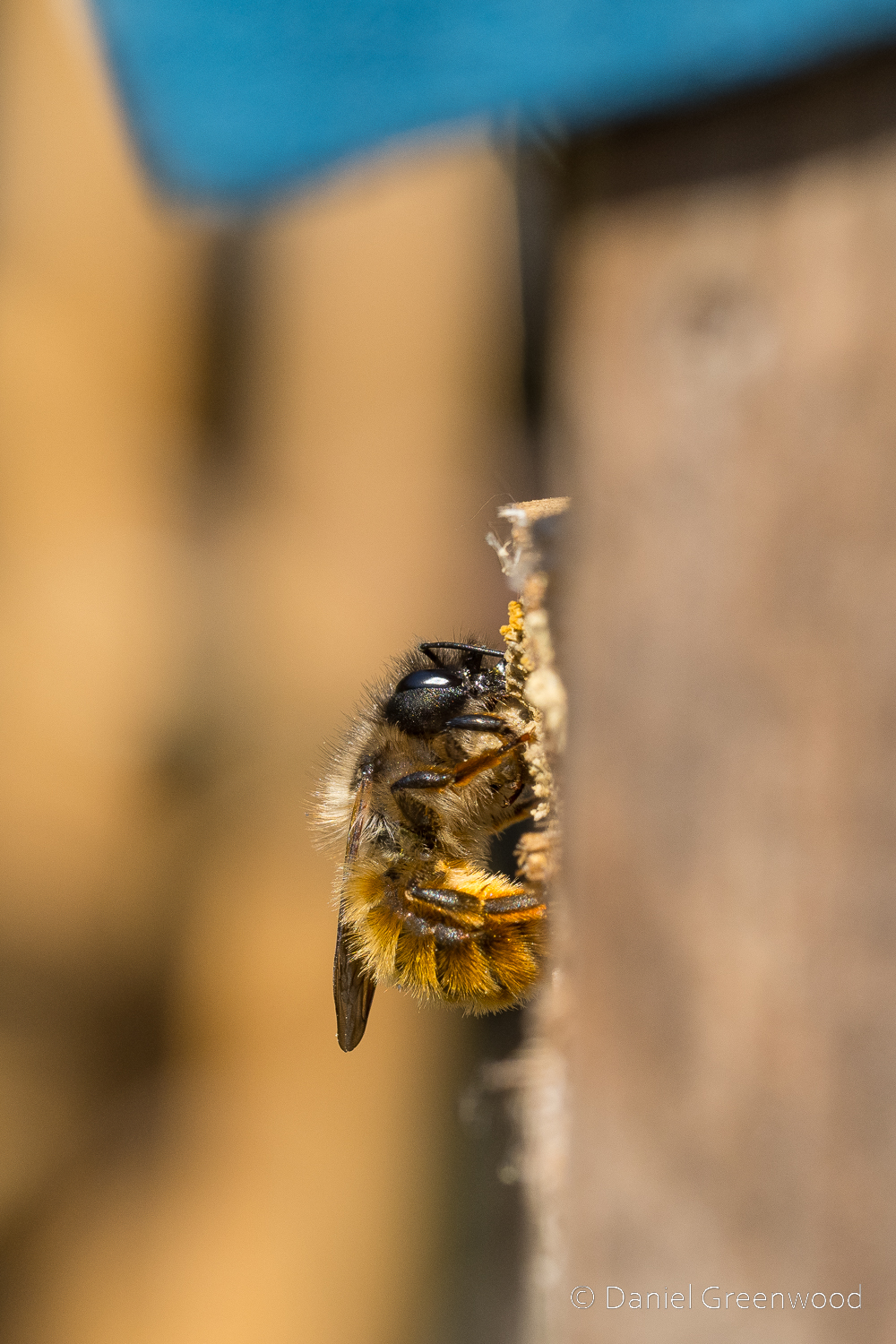
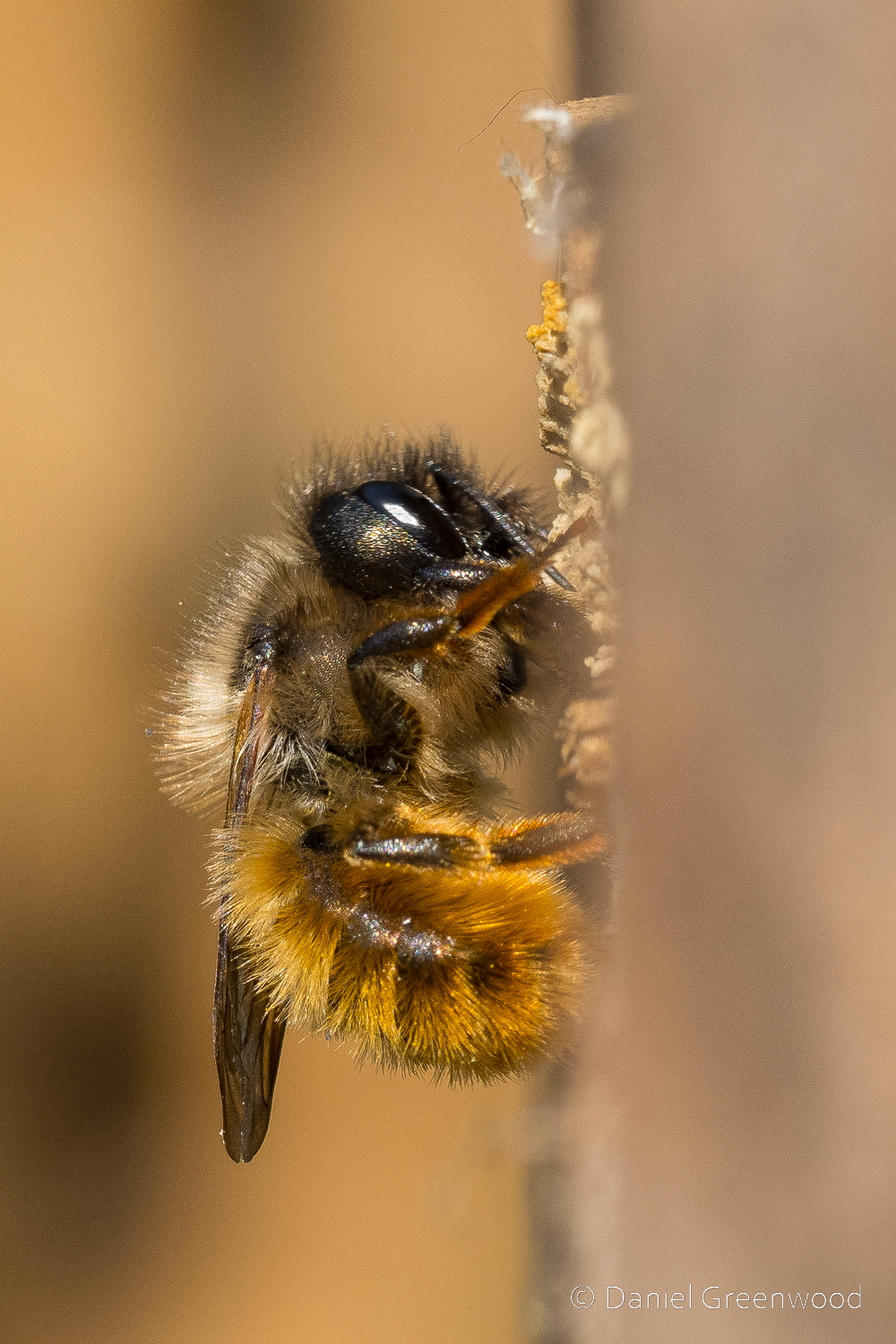
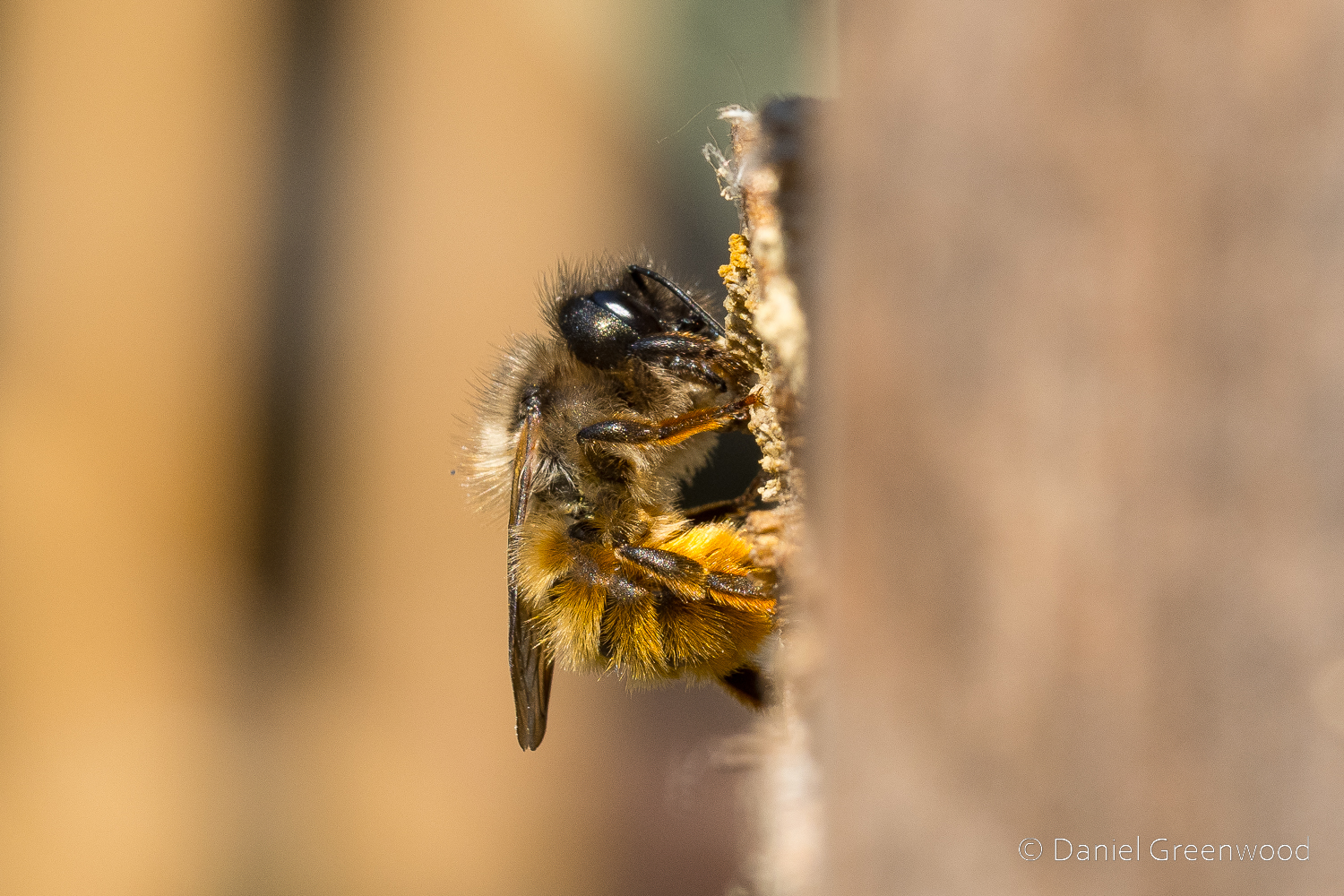
Around 9th May 2025 the red mason bees were working to seal their little chambers shut, as can be seen below.
2024 was a better year for these solitary bees in my garden, with far fewer in 2025. Their numbers will naturally rise and fall over the years. They’re important pollinators, especially in agriculture, so helping them has a wider societal impact for people who desire it.
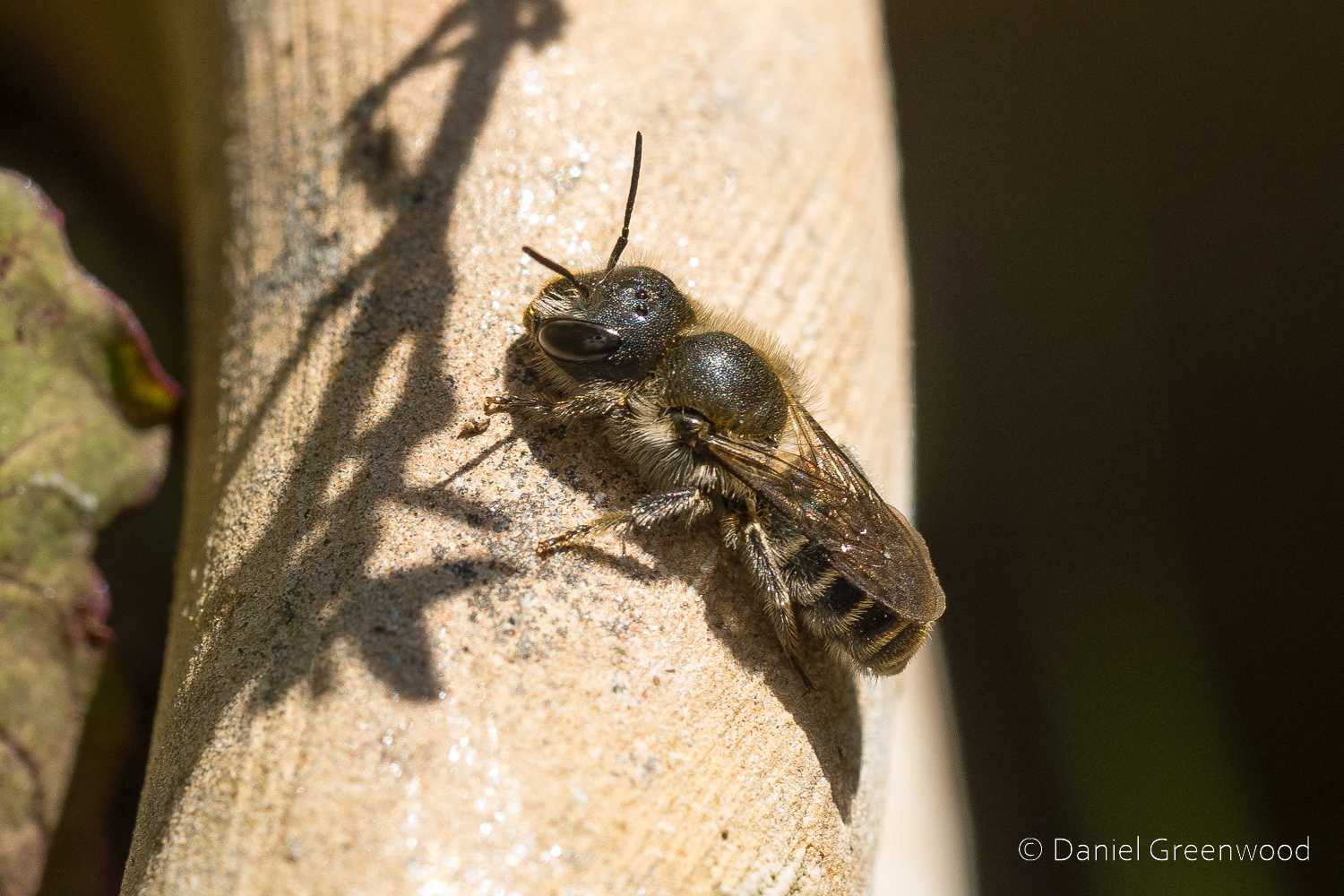
In the first of the hotter spells each year I begin to notice these small bees. They’re usually sunning themselves on the edges of ceramic pots, wooden sleepers or fences. I am fairly sure this is a blue mason bee. They are quite skittish but do often return to the same perch if they can see that you’re not an immediate threat.
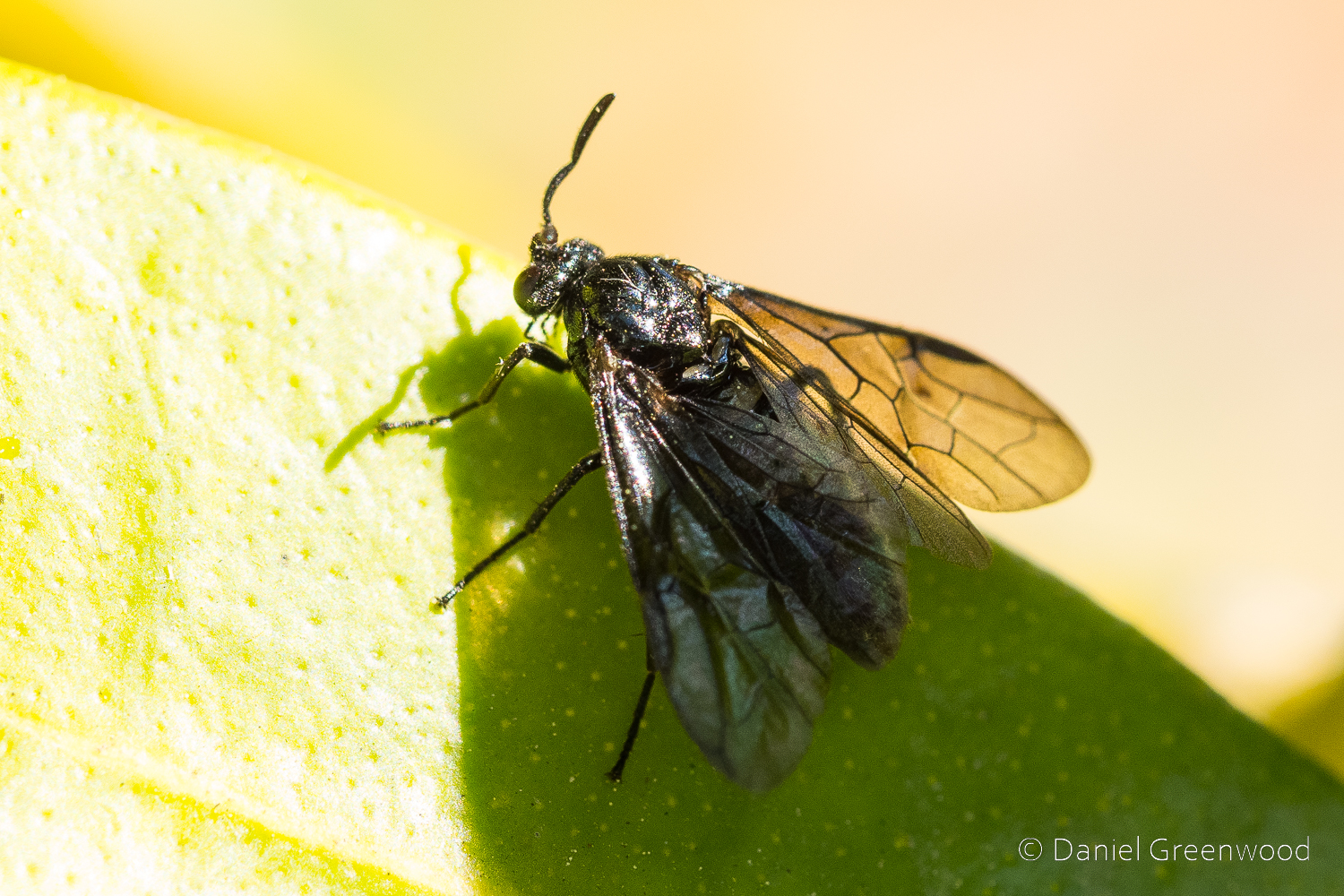
Elsewhere in the order hymenoptera (bees, wasps and ants) I saw this unusual-looking winged-insect hiding in the leaf shade. I’ve had to edit this a bit to bring the shadows out, but it’s a species of sawfly. It seems to have two antennae in the shadow, but for the life of me I can only see one!
I noticed the first swollen-thighed beetle of the year perched on the burgeoning fennel leaves.
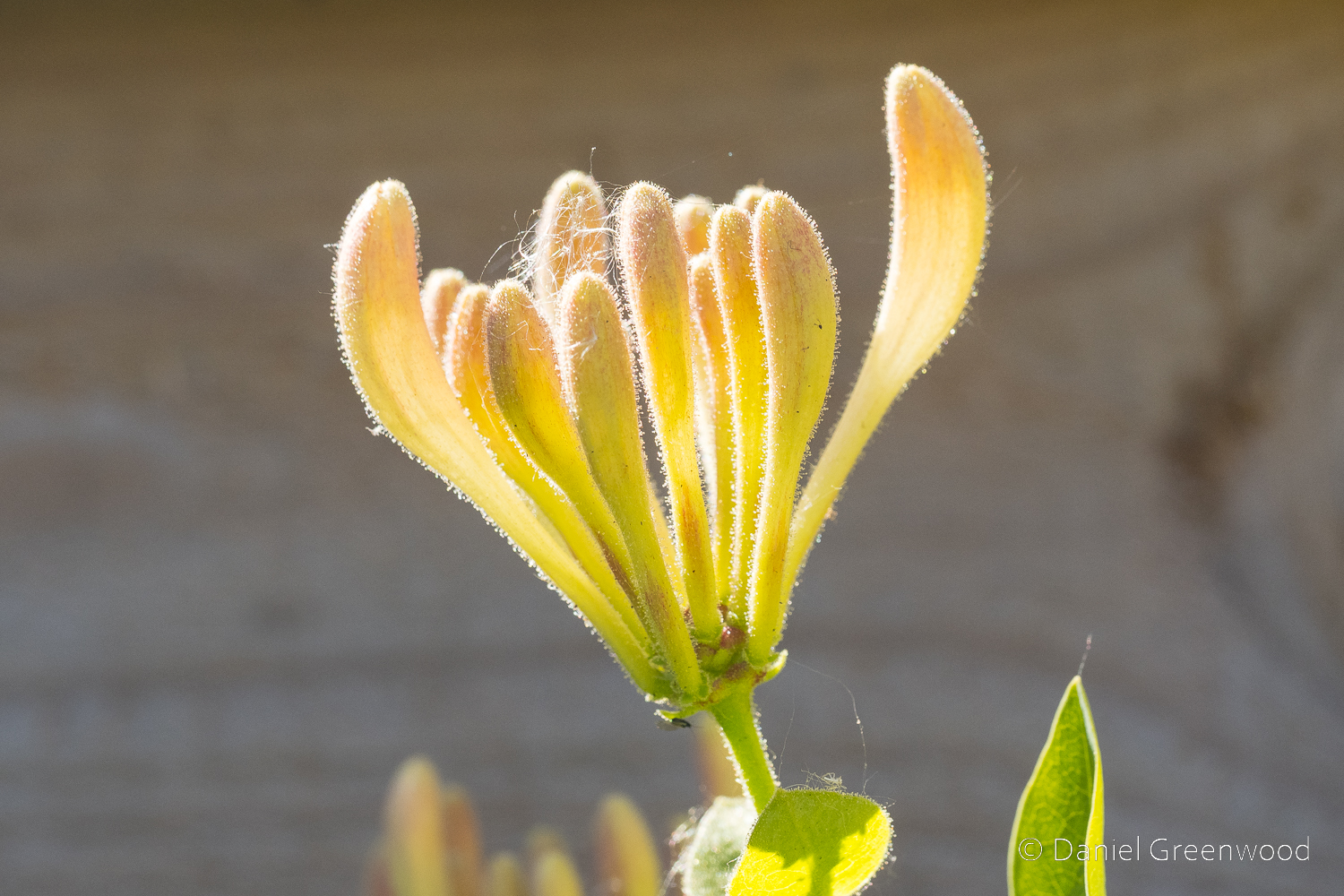
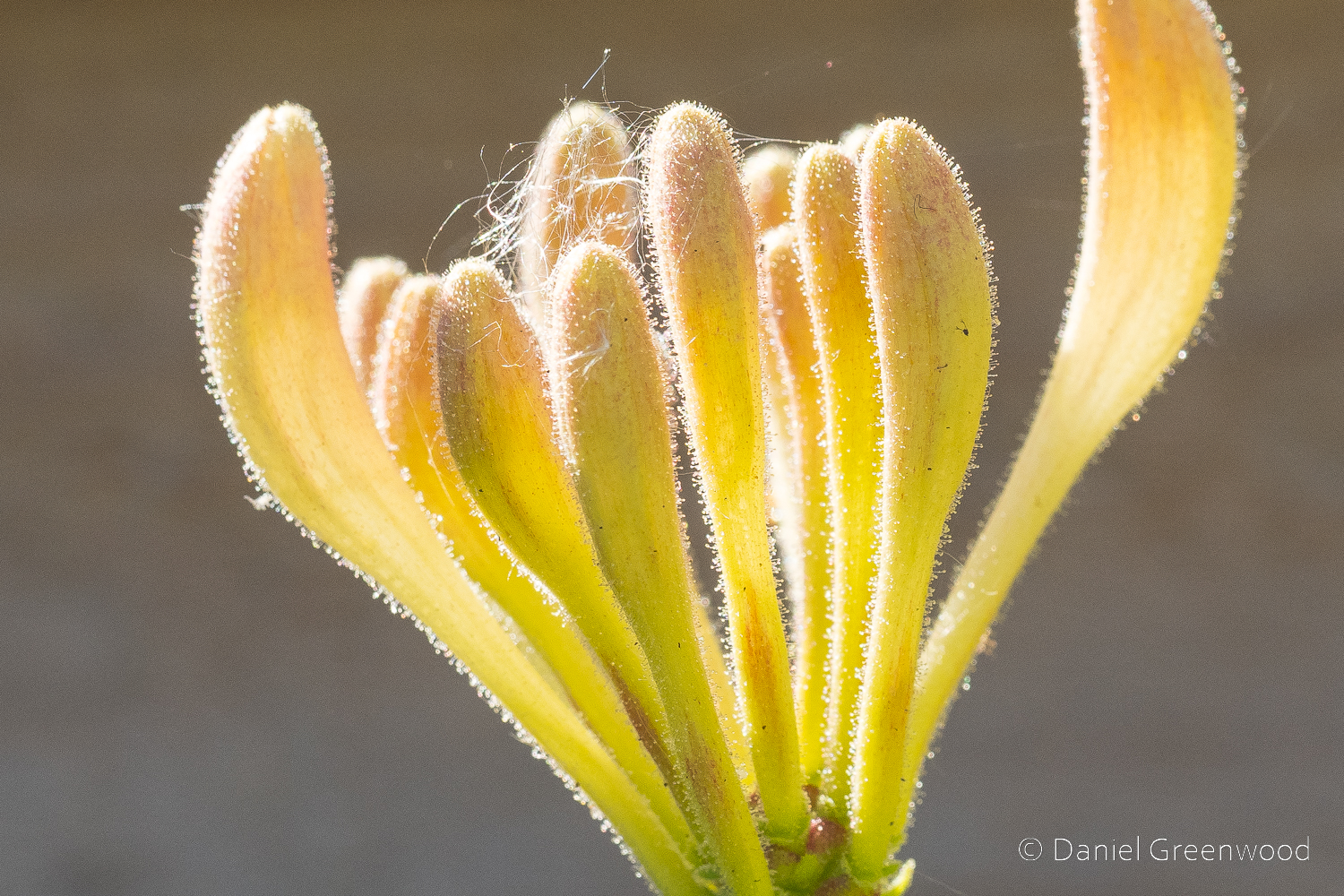
In taking a few pics of this honeysuckle I noticed that there appear to be little sticky nibs on the flowers. I’m wondering if this is to trap pollen when bees visit, or potentially to snare invertebrates in the carnivorous sense. I can’t find anything online about that, but I now know just how invasive it is in North America.
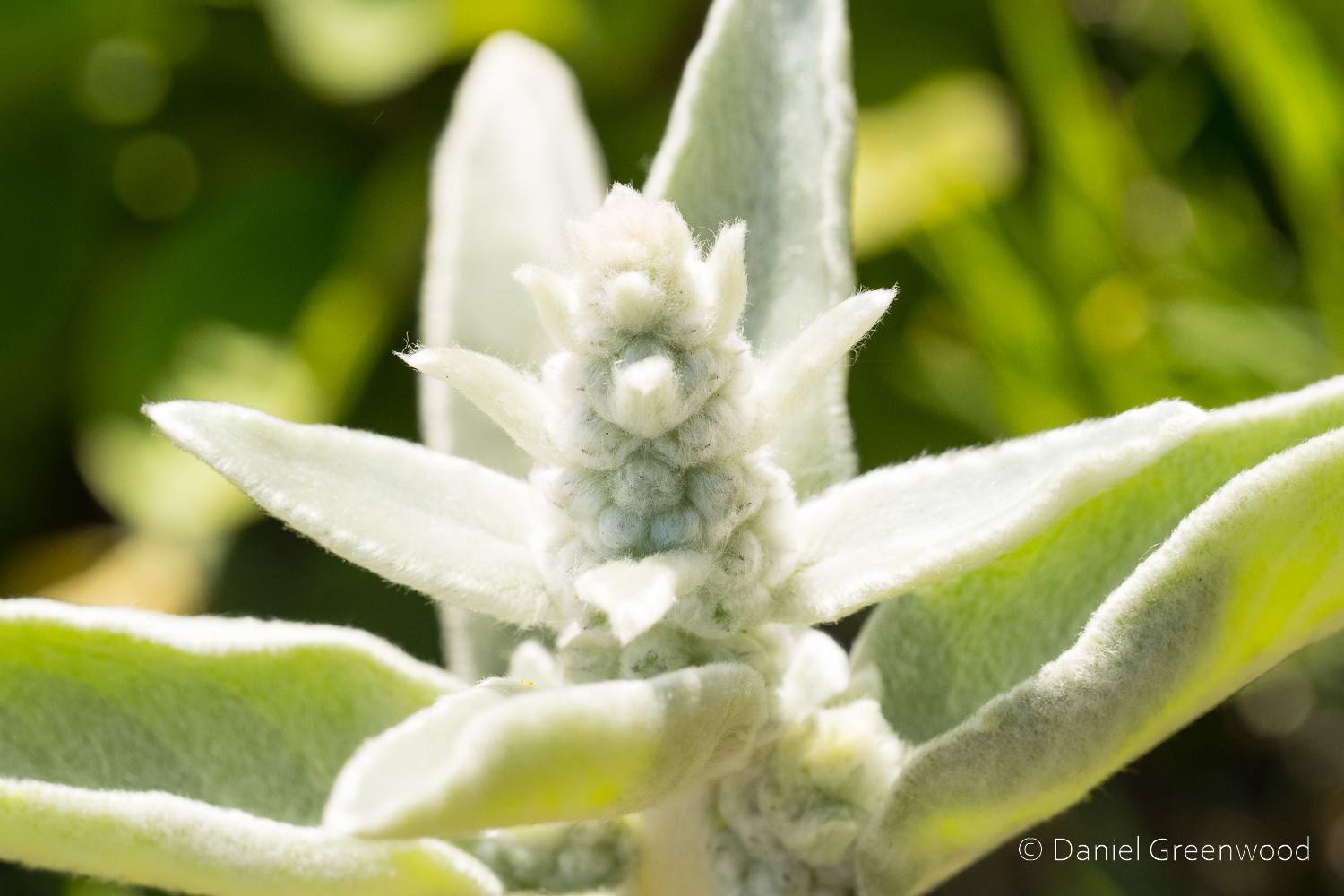
And finally, the trusty Stachys was close to flowering by the 9th May. It looks very cosy and comfy here, ready for the wool carder bees. What I didn’t know about this plant (known as woolly hedgenettle) is that it’s native to Armenia, Iran and Turkey. I bet it has some very cool insects feeding on it there.
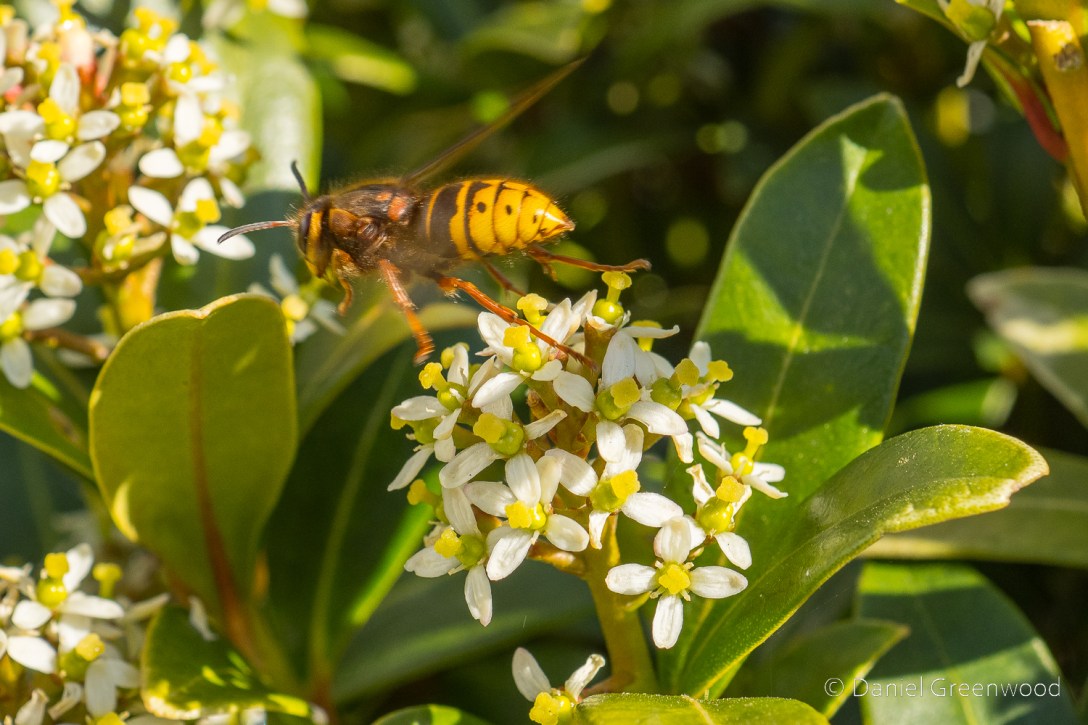
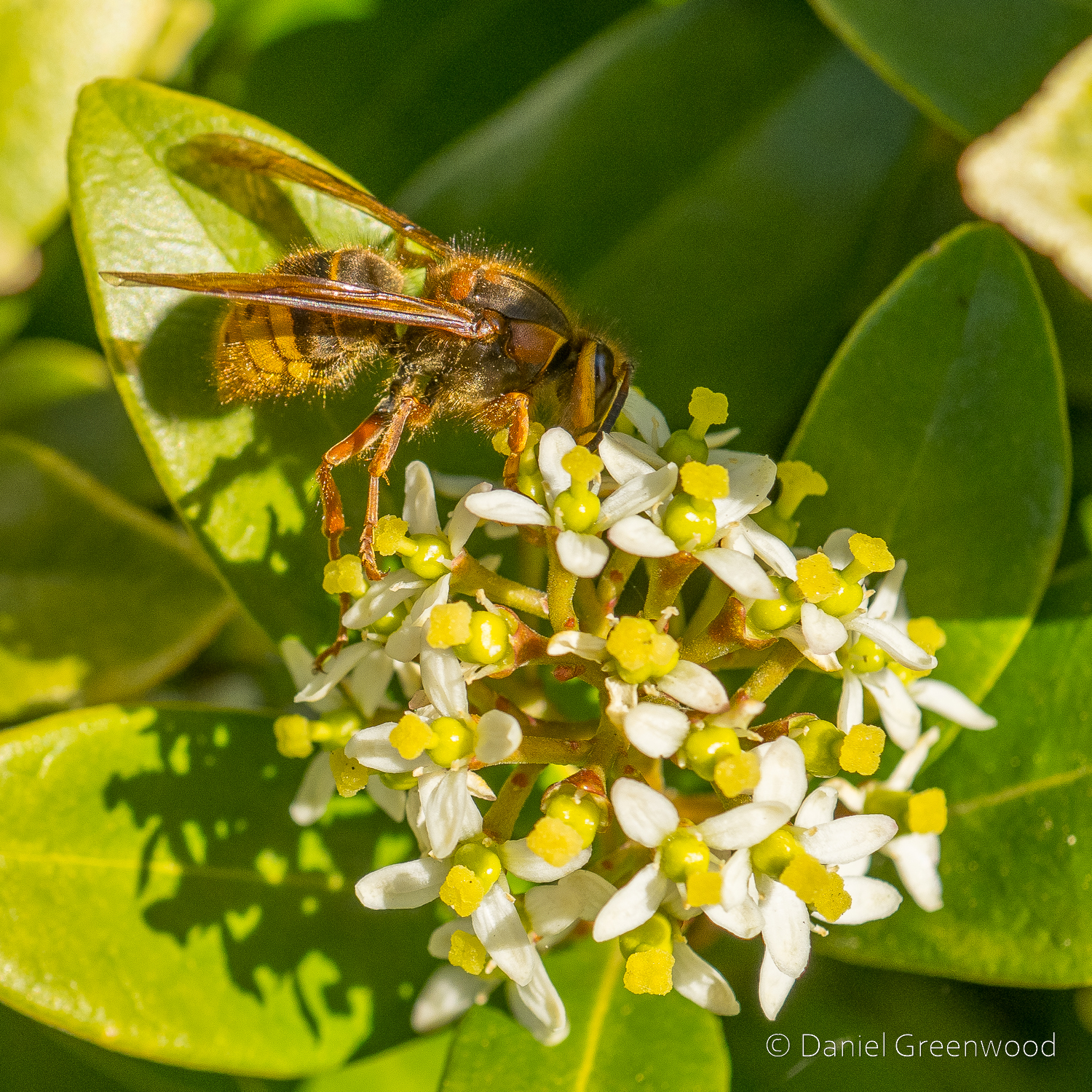
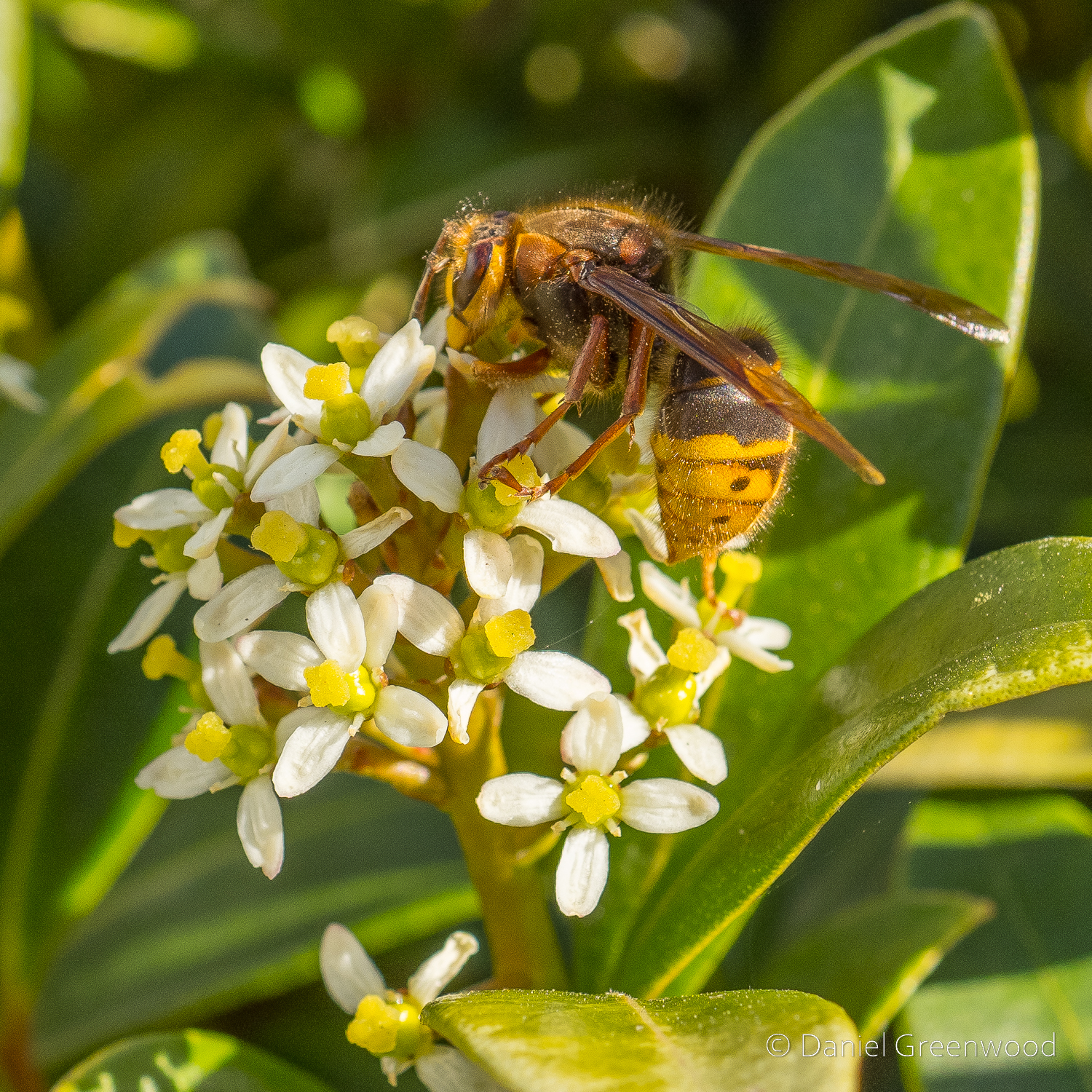
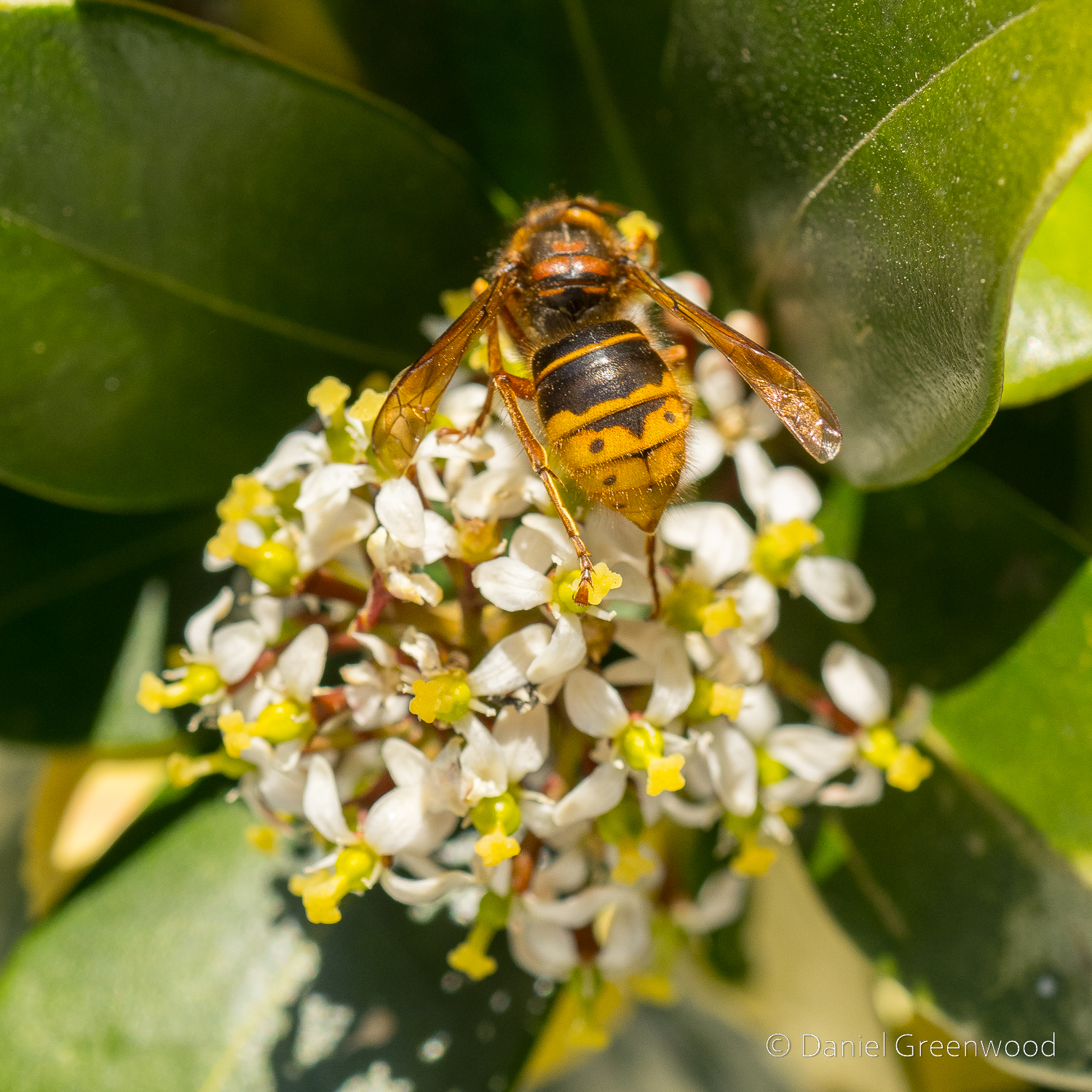
I was sitting in my garden when a large, wasp-like insect zoomed into view. It dropped into the skimmia and began nectaring on the flowers.
‘Hornet!’ I called out, but trying to be quiet enough not to spook the insect. I captured these images, convinced it was a hornet, the first I had ever seen in my garden.
When I popped a crude phone photo (not the world class images above) onto iNaturalist I began to have second thoughts. The first suggestions were for a species of wasp, the median wasp. That is now the consensus, and so my hornet drought goes on. But it is a beautiful thing.
My house is quite old, built in the 1840s. The path outside our door is known as a ‘twitten’, a Sussex colloquial name for a little footpath. The path is bricked (like many of them are) and always flushes with spring flowers. Lesser celandine and grape hyacinth are two of the species that enjoy the margins.
Does this rose regrowth remind you of a certain American President?
A few holes have appeared in the lawn. I haven’t seen who created these mini-bunkers but I am confident they’re mining bees of some kind.
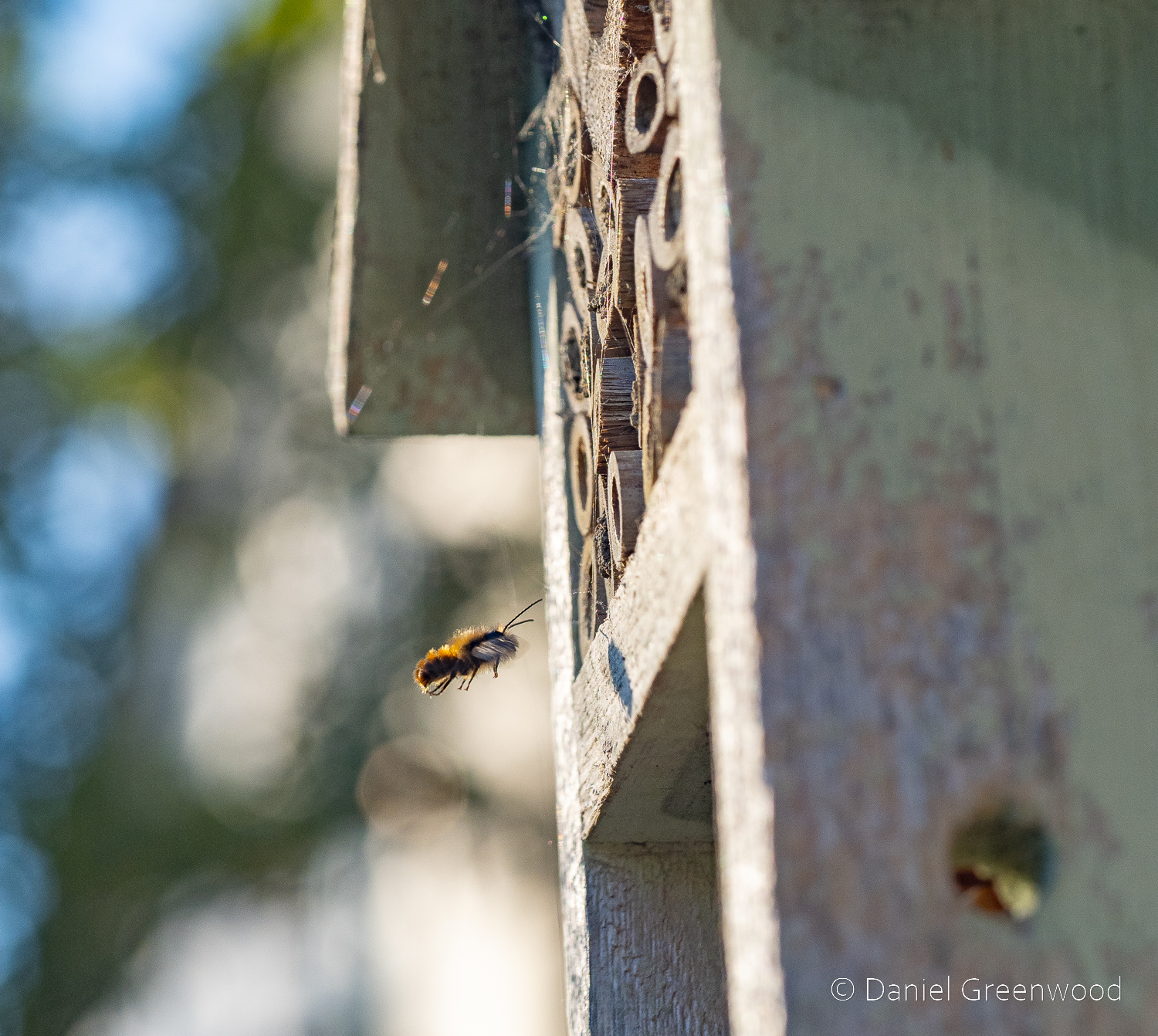
The red mason bees have been rather slow to appear this year and many of the bamboo slots are still sealed. Some of the bees have been hovering around the entrances, as above.
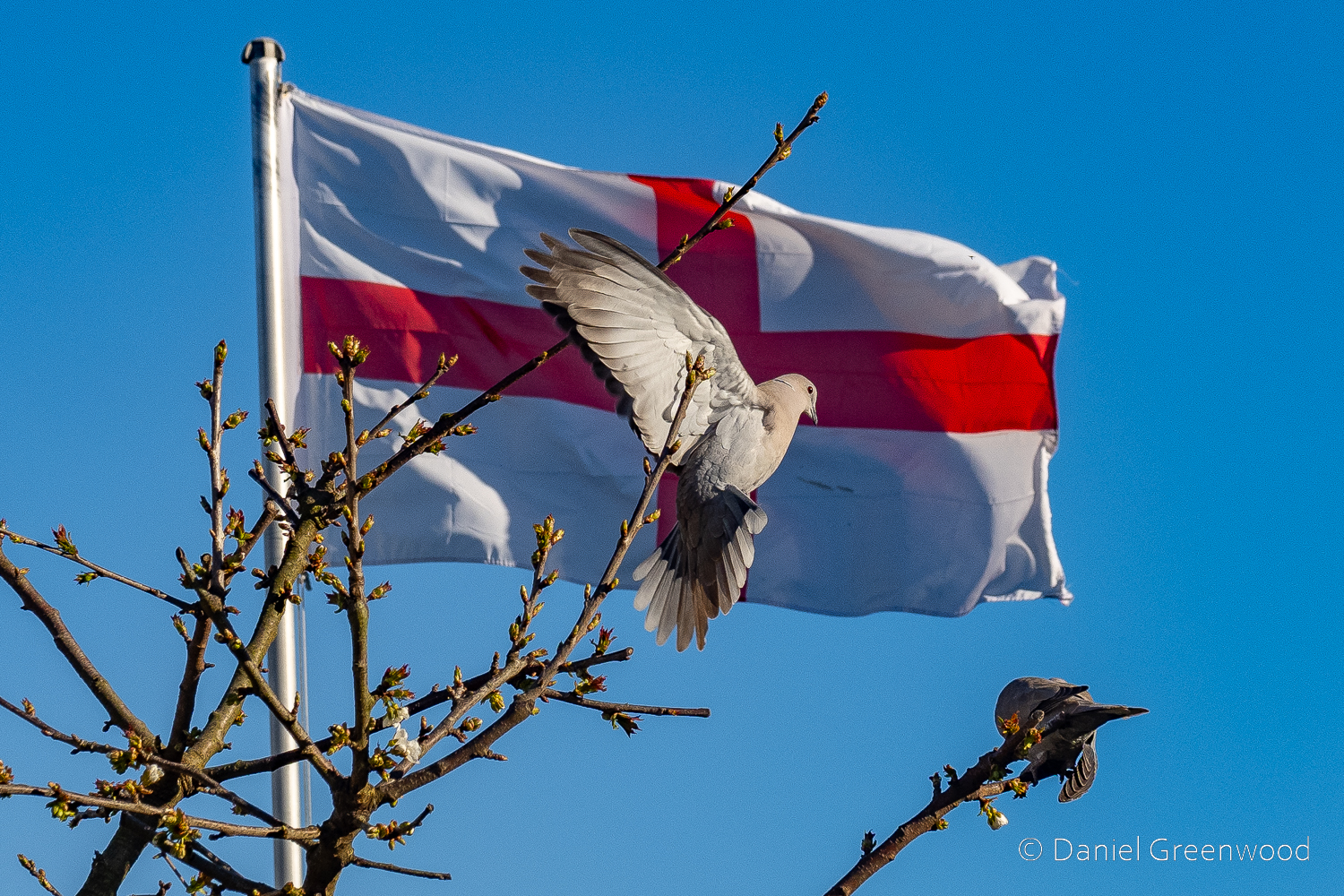
I took this photo of two – yes, two – collared doves with my macro lens. Macro lenses usually often can act as a telephoto lens because you need space between you and the thing you’re photographing to ensure you don’t spook the subject. The flag isn’t mine, as you may have guessed if you’ve ever met me or read this blog before 😉
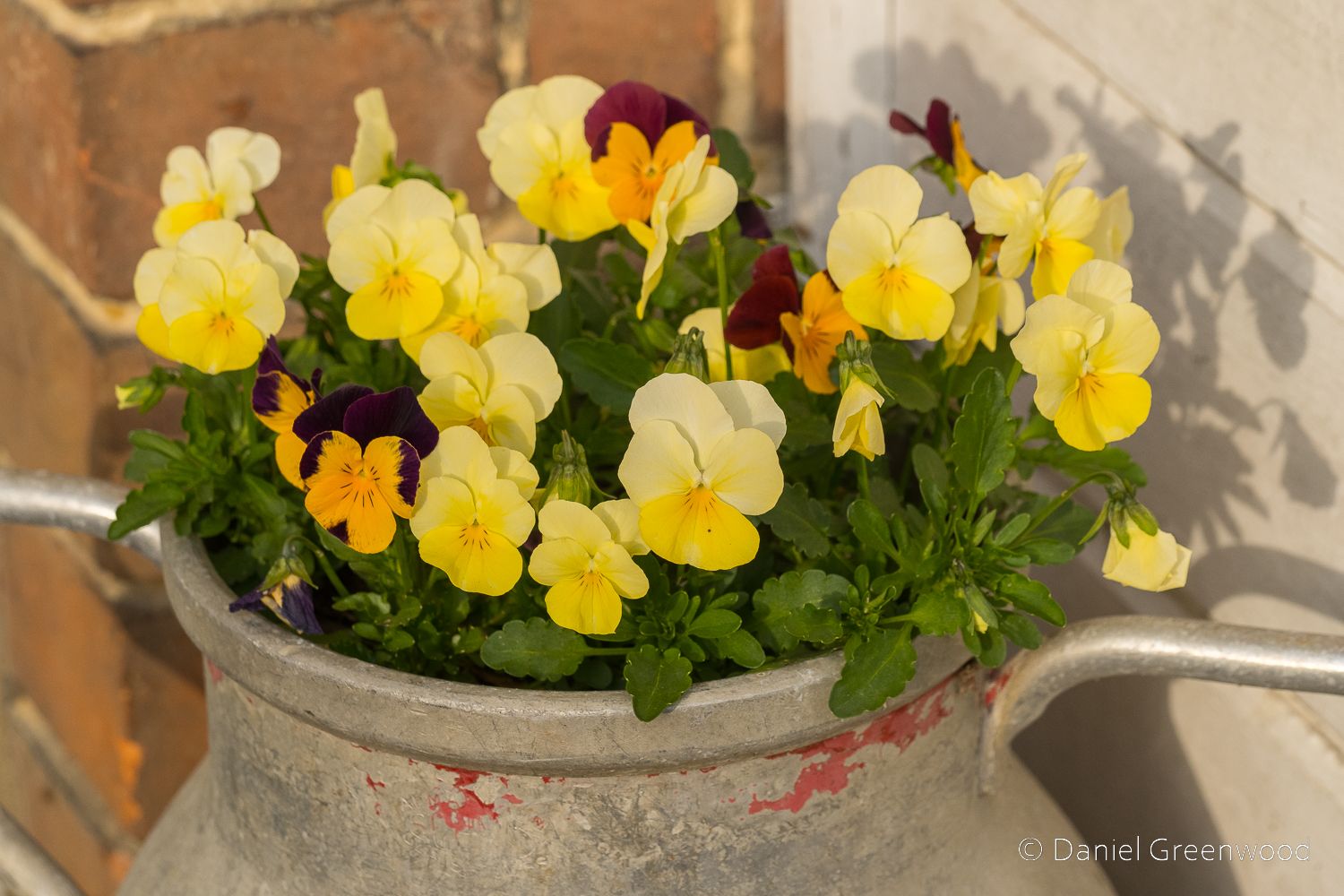
The pansies are doing well in the milk churns, a good place to end.
Four years ago I was starting a weekly Macro Monday photoblog as we entered into the Covid-19 restrictions. Now I reflect on how that extra time helped me to post more regularly on here, and just how hard I find that now in the post-pandemic lifescape.
It’s magnolia season in West Sussex
I’ve not got into macro mode proper yet this year, but a few recent sightings and reasonable phone pics have provided some inspiration.
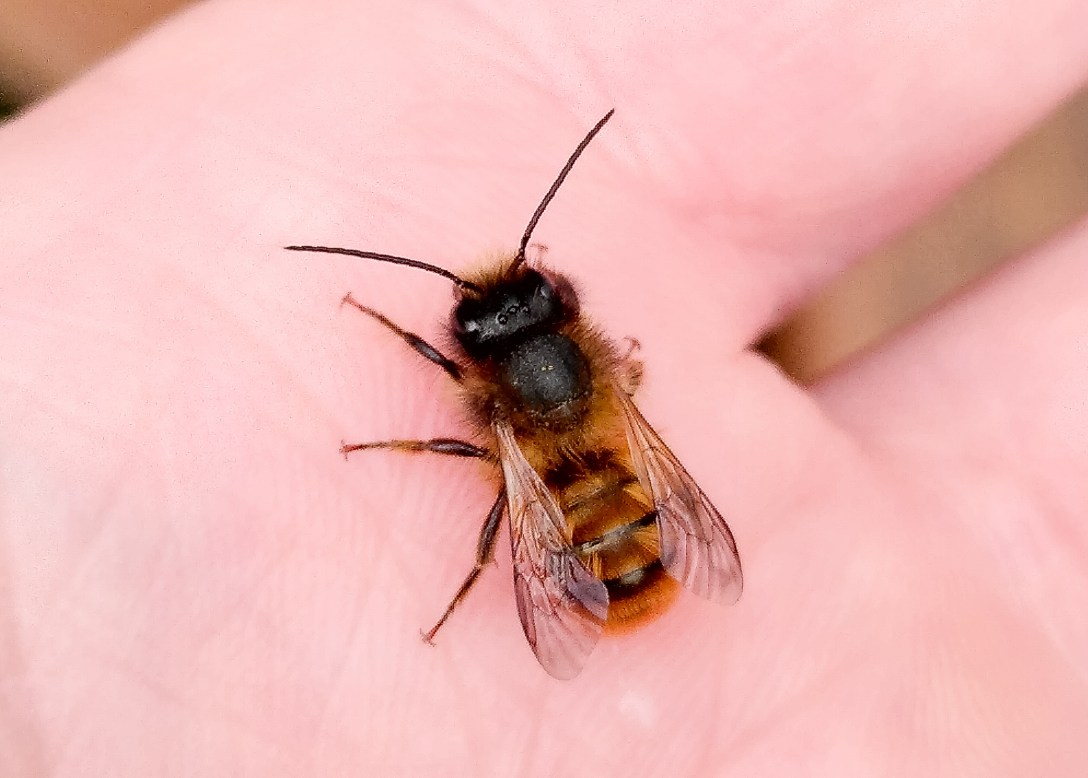
On Saturday 16th March my partner was investigating the state of some of the potted plants in our garden when she found a small bee. I swooped in and enticed it onto my fingertip. It was a red mason bee, the first one I had seen this year.
Red mason bee in the palm of my hand
I placed the little mason bee among some mutant AI primroses that flower weekly throughout the year. Later that evening as we walked out I somehow managed to spot another mason bee sat on the concrete path, looking wet and cold. I picked the bee up and put it into a bonsai tree pot and hid it under a leaf.
The next morning I found it was still there but looking altogether more wet and cold, so again I gave it a ride to the warmer side of the house and back to the primroses.
Then on Monday morning I passed our latest bee hotel installation and saw a hairy-footed flower bee (one of the first bees of the spring) undertaking a session of weather-watching from the cover of a larger bamboo stem.
It’s not often you find these characterful bees stationary, they’re usually zipping around at max speed.
Later, I found yet another red mason bee looking cold and damp on the concrete path. Again, I picked it up and put it on the warmer side of the house.
I’m wondering if this is the same bee every time or if perhaps there are a number of these bees emerging from the old mortar of the exposed side of my house, and that the weather isn’t quite right for them yet.
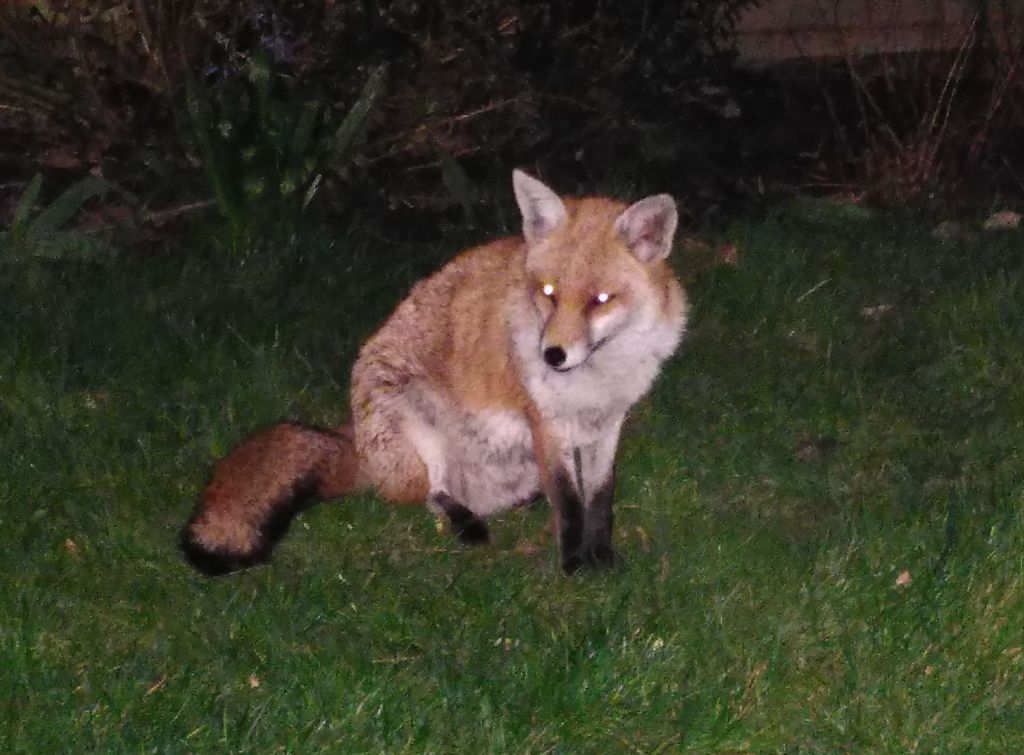
One animal that I also keep finding on the concrete path alongside the house is Socks the fox. Whether she has several other little foxes in tow will be known soon enough.
Happy Easter to both of my readers. Hope you and your loved ones are well and that the social distancing is proving manageable. Apologies if this is appearing twice, I was so prepared that I accidentally scheduled an unfinished version of this three days early.
The temperatures have entered the insect realm now and what was tentative in making an appearance in recent weeks is now flying around on its in-built magic carpet. More of those later.
I have been trying out a new toy, a diffuser for my flashgun. I bought it on Ebay for less than a fiver and it so far has made a massive difference. All the images seen here have been taken with the combination above. It looks hilarious. I’m generally using my Nikon D5600 and Sigma 105mm macro at the moment when nipping out into my small garden at lunch times. It has a crop-sensor which crunches the megapixels into a smaller image, excellent for macro. Attached to the front is a Raynox macro attachment which gives extra magnification.
More good news. After three years of trying at three different properties a red mason bee has finally found my bee hotel to be sufficient accommodation. Expect to see more of them as the spring progresses and I develop my lurking technique. The key I’ve found is that the location of the bee hotel recieves almost constant direct sun and faces south. Even if it faces south but the available sun sometimes gets blocked, it probably isn’t good enough.
This is the single greatest insect hotel I’ve ever seen. It belongs to a forestry academic in the Czech Republic on the farm where he lives in Bohemia. It’s about 6ft high and has logs, bricks and lots of clay which many insects love. I spent about an hour lurking around it one warm August morning and the diversity of insect life on it blew my mind. This is what I would some day like to construct for myself. But in the meantime the typical shop-bought bee hotel will have to do.
I’ve been spending more time hanging around my stachys plant and it keeps coming up with the goods. God only knows what it will be like when it flowers. I could probably do a whole blogpost about it. It’s da bomb. It has the common name of lamb’s ear which is perfect for this time of year. It’s also known as silver carpet (more like magic carpet). This is a groundbug that was perched on a leaf tip, perhaps it’s a birch catkin bug.
Deeper within the silver carpet I found a capsid bug climbing vertically up through the plant. It took lots of attempts to get this picture. I love the labyrinthine or cave-like feel.
I’ve recently re-watched The Little Mermaid and this empty spider skin or casing looks to me like one of the lost souls held by Ursula at the bottom of the sea! Those eyes are haunting.
I’ve been pushing the extreme close-ups to the limit of my equipment. This insect looks somewhat like a relative of a mosquito or gnat. It was absolutely miniscule, barely visible to the naked eye.
Most triumphant aphid of the week is this character here, claiming the sliver-carpet for itself. I read once that aphids can be carried across continents by sudden upsurges in windflow that draw them up into the sky and then, who knows.
I’ve also ventured further into the back of the garden where it’s cooler and there are different plants growing. This leafhopper made a lovely contrast with the velvety leaves that are unfurling in the shade. I enjoy the cartoon eyes.
A few days later I found what I expect are planthoppers in their metamorphic stage, moving from larvae to adult insect.
This one was incredible up close, like some kind of armoured beast from a sci-fi programme in the early-1990s. I had toys that looked just like this when I was a child.
Looking equally angry (and rather punk-like) this picture winged fly was poised to take off. As spring progresses, each week will start to show different species of plants and therefore insects. The first butterflies are on the wing now, so let’s see what happens!











 Unlocking Landscapes