Wasps vs. spiders

Saturday 31st May felt like a passing of the seasons, with spring departing and summer arriving. That could be seen in the invertebrate world, with more summer species out there in my garden.

This post is generally wasps and spiders, with some lovely little bees to calm you down afterwards.

As ever, some of these things are so ridiculously small that without magnification (in my case a macro lens) you (I) wouldn’t necessarily see them.

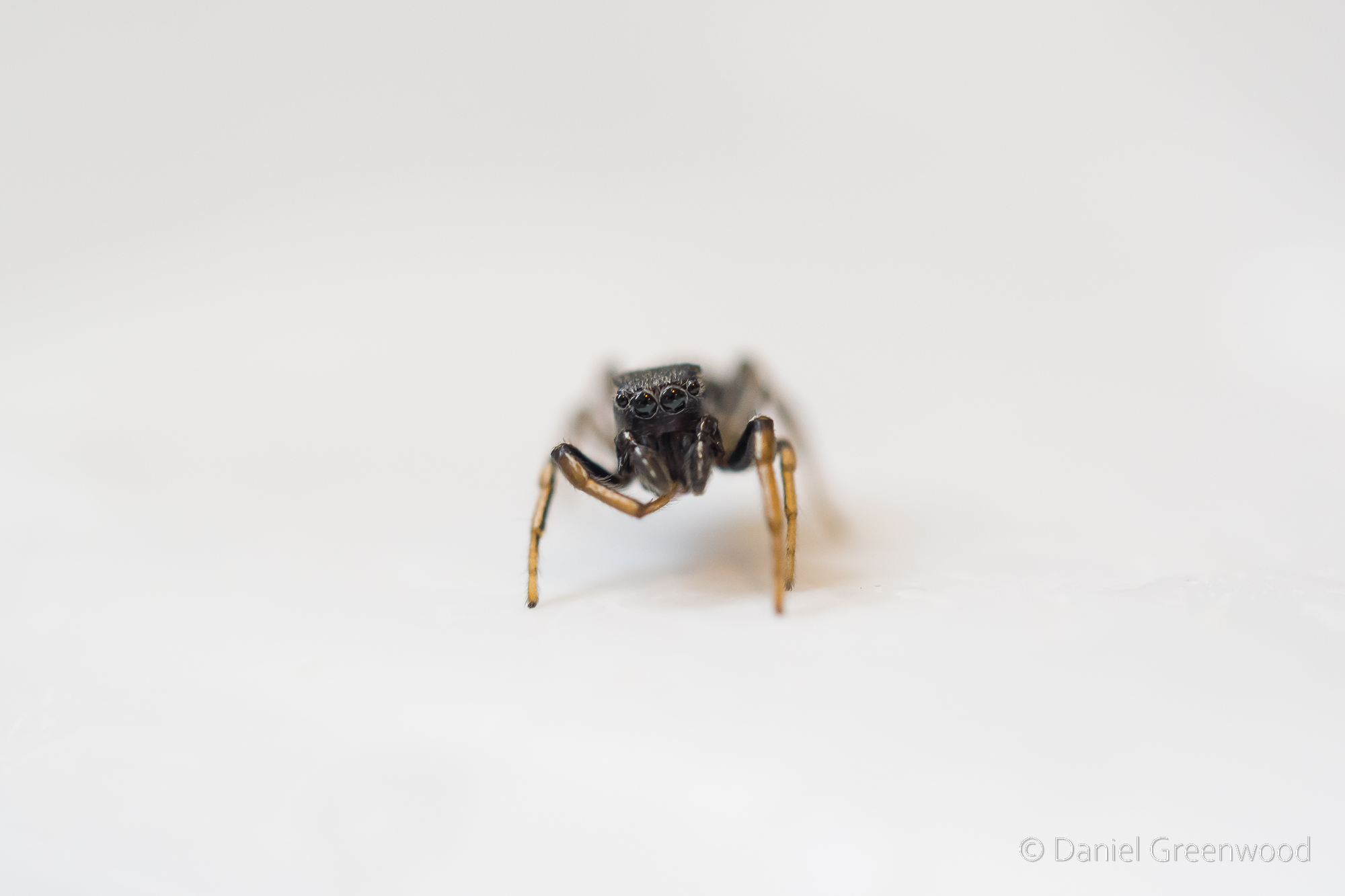
I should have known it was going to be a good photography day when this little jumping spider appeared in my kitchen sink! The light was rubbish so I’ve had to draw out the shadows and ‘de-noise’ these photos a bit. I’m unsure of the exact species, but I do get an apparently uncommon oak jumping spider in my garden/near the house sometimes, and this may be one.

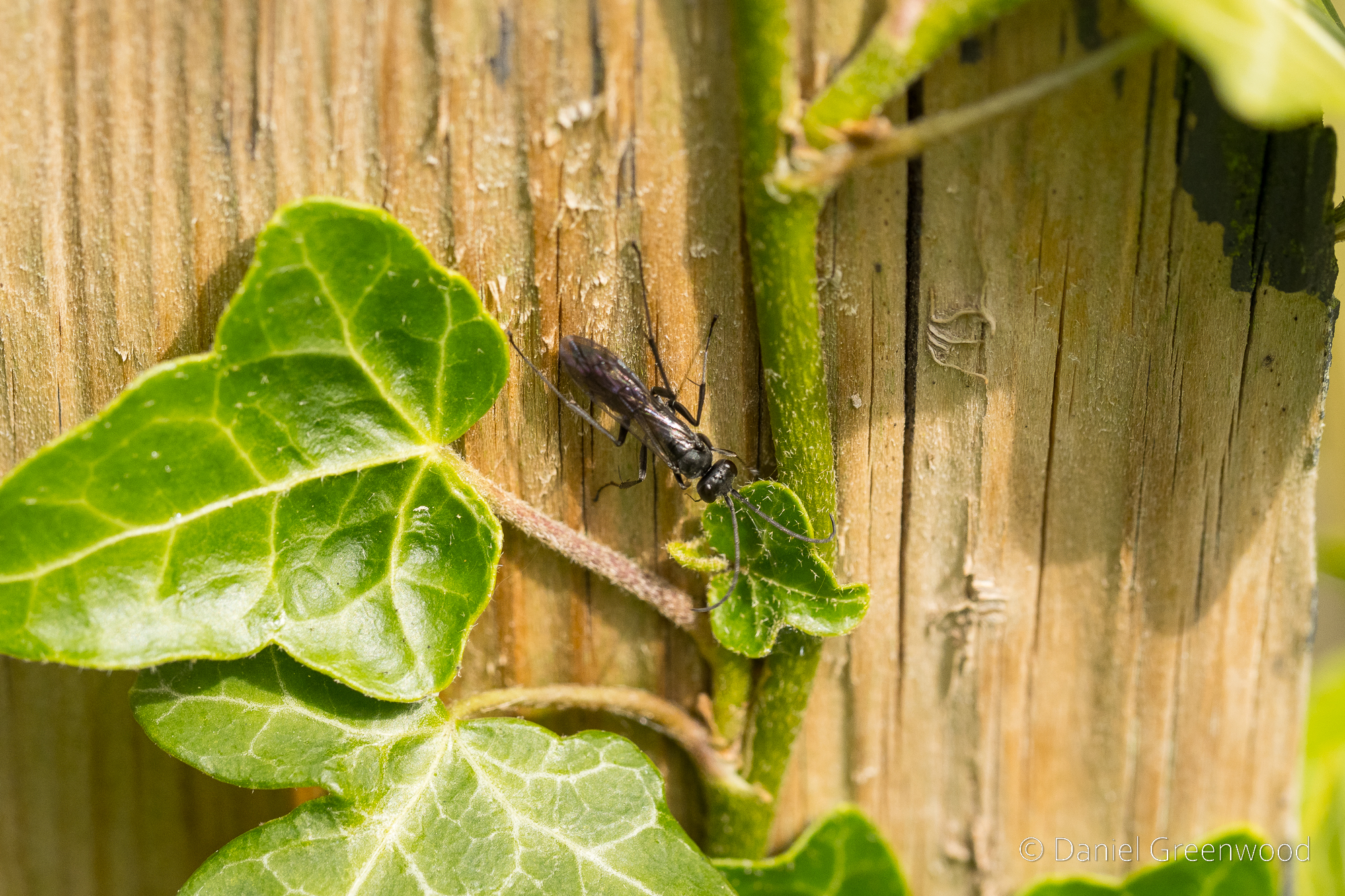
While we’re on spiders, here’s a wasp – a spider-hunting wasp! I’ve learned that sitting down on the grass by a shrub for 15 minutes isn’t just a forest-bathing exercise, it’s also a good way to allow the life to move around you. One fence post was being explored by this very busy spider-hunter. And then, something amazing happened.

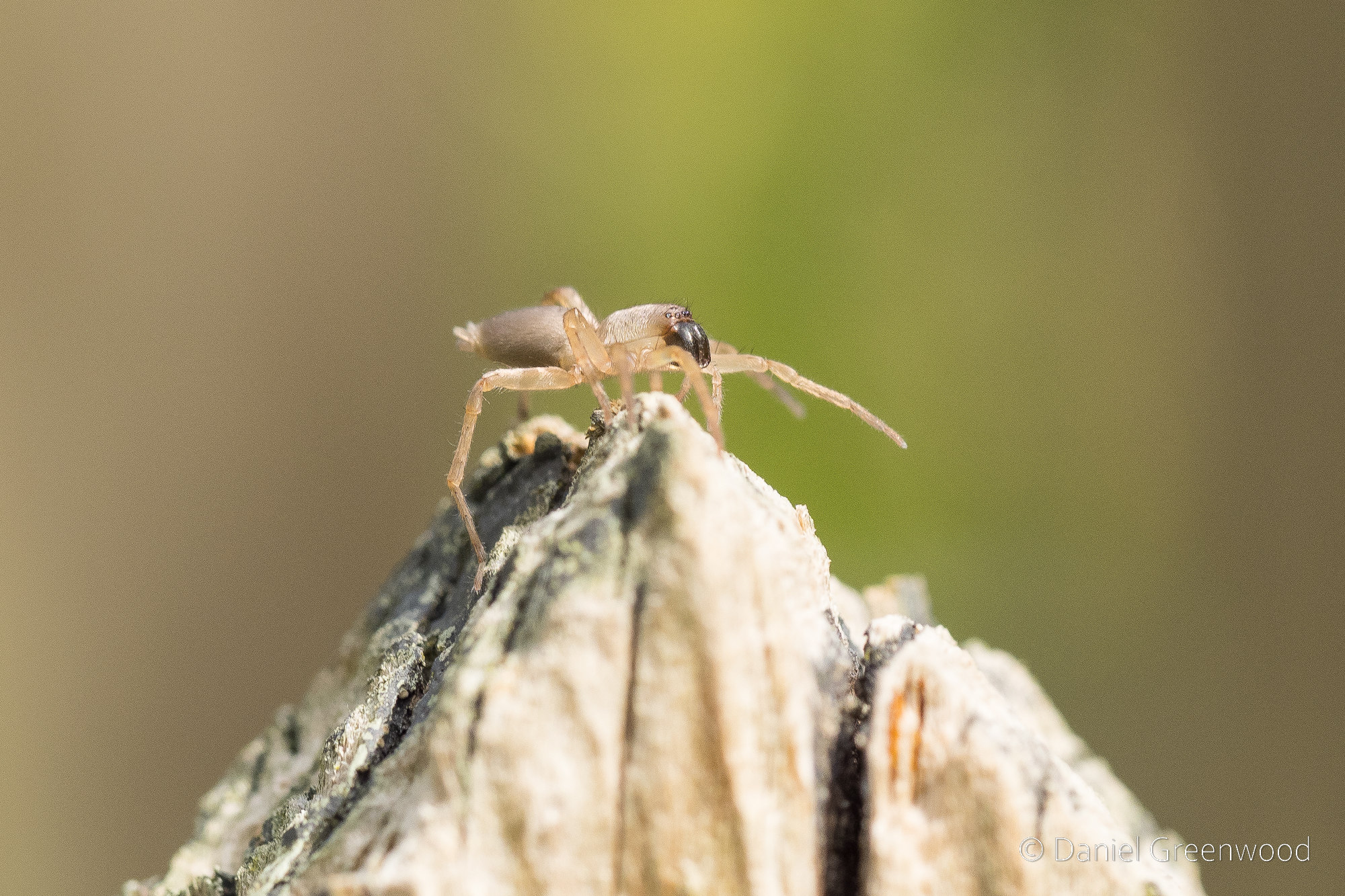
On a vacant fencepost (that’s just how I consider them now) a spider appeared at the top. The spider-hunting wasp saw their moment and burst onto the post, but missed the spider by milliseconds!

The spider-hunting wasps paralyse their prey and then carry them away to a cache. It’s pretty grizzly, but if you think that wasps have been in existence for over 100million years, and spiders, gosh, they’ve been around for over 300million (humans 200k and unlikely to make 1million at this rate), it’s something that’s been going on for a long time. If you’re annoyed about one species of wasp bothering you, imagine how spiders felt when 100million years later a spider-hunting wasp evolves from nowhere!
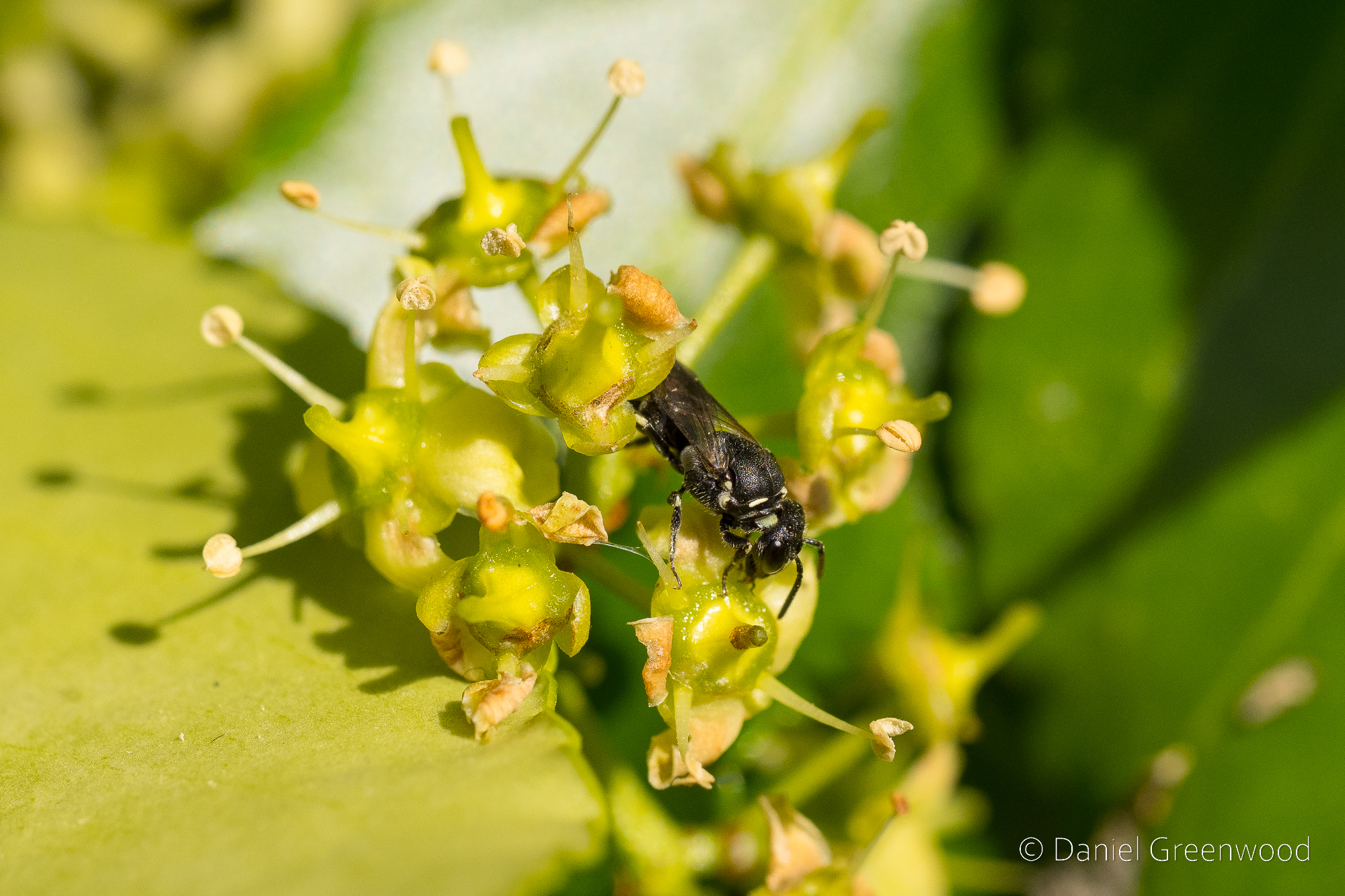
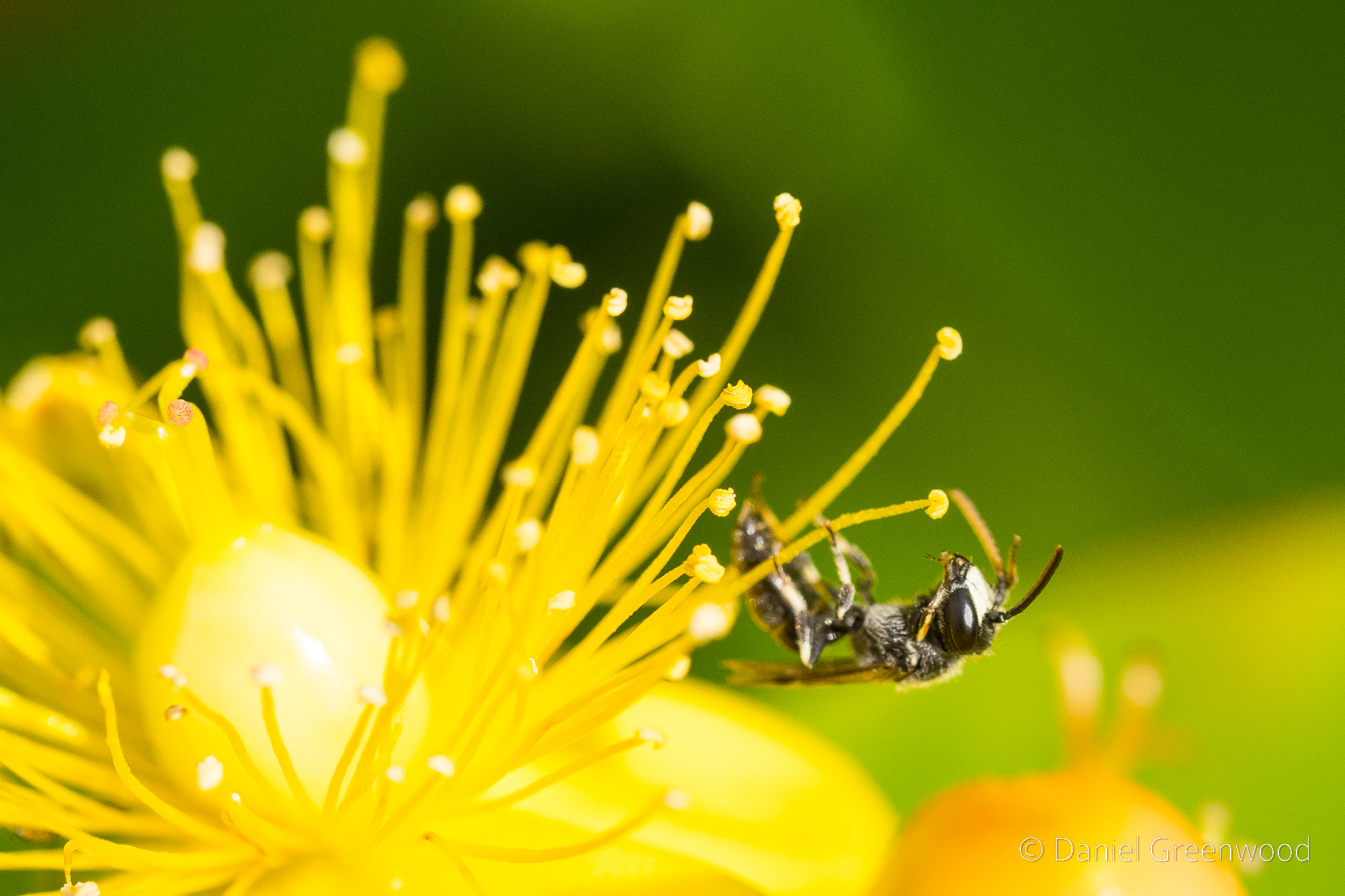
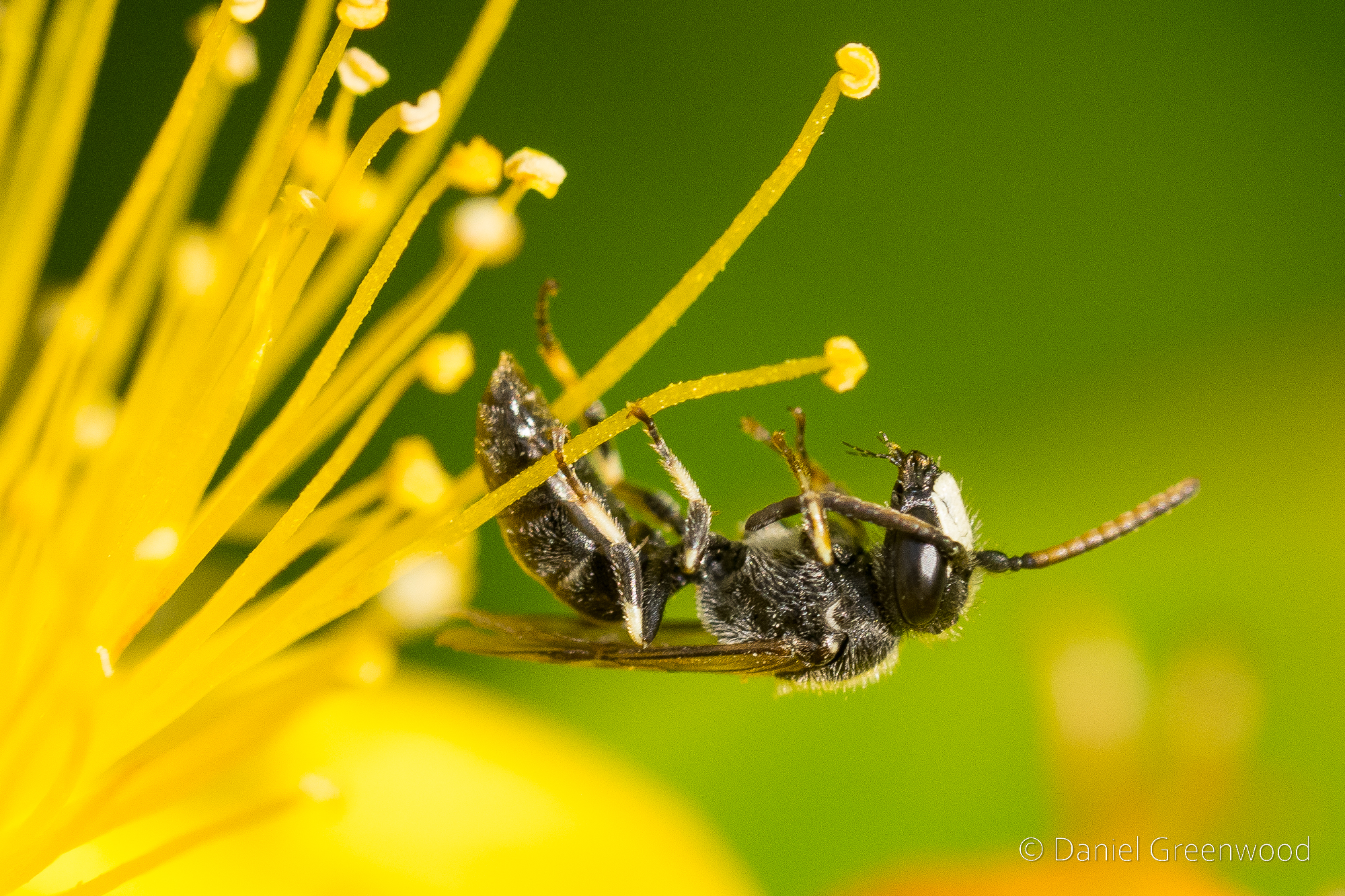
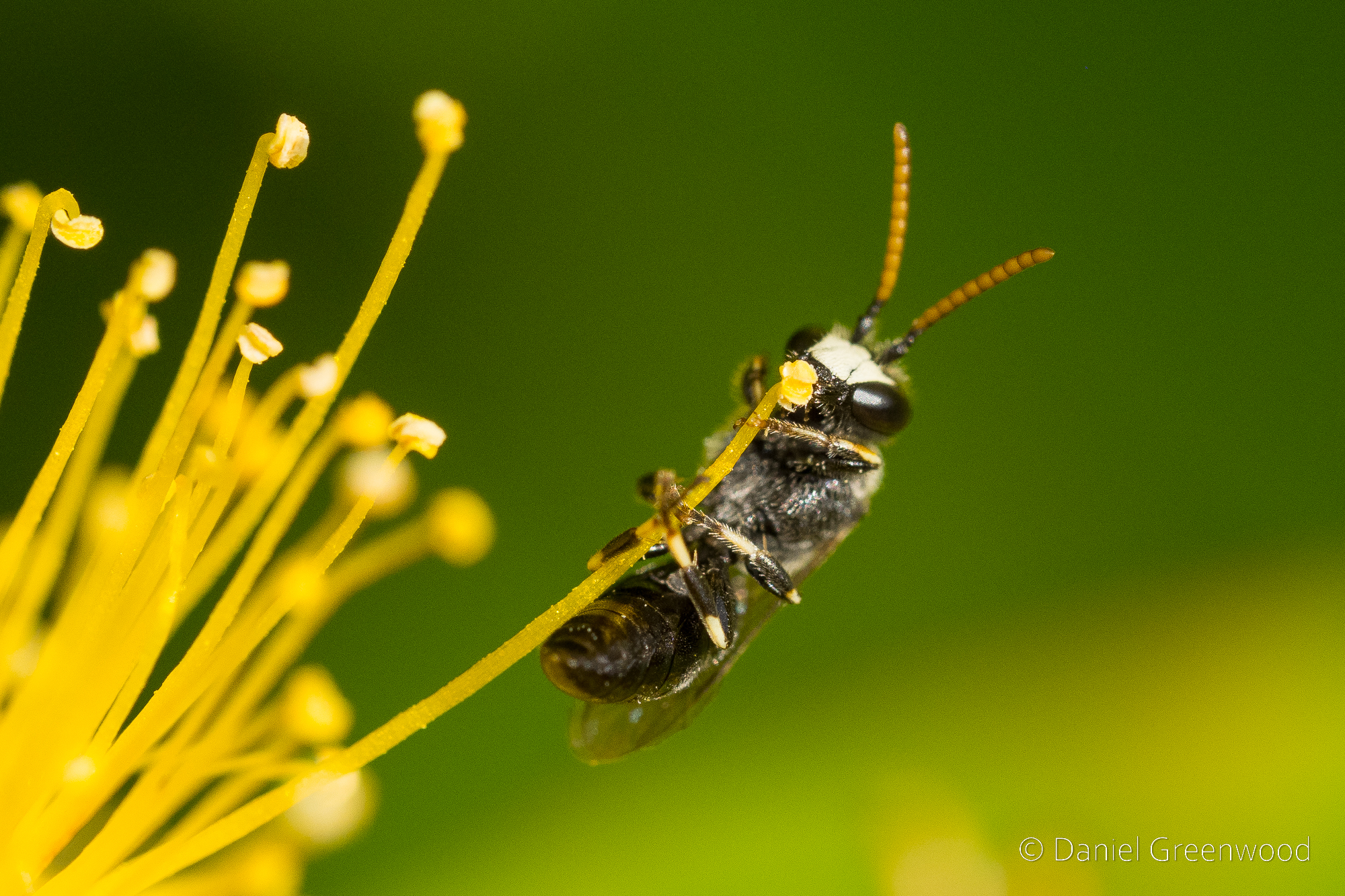
This is around the time when I begin to notice the very tiny yellow-faced bees (Hylaeus). I’m happy to identify them to that level, and don’t really take it any further.

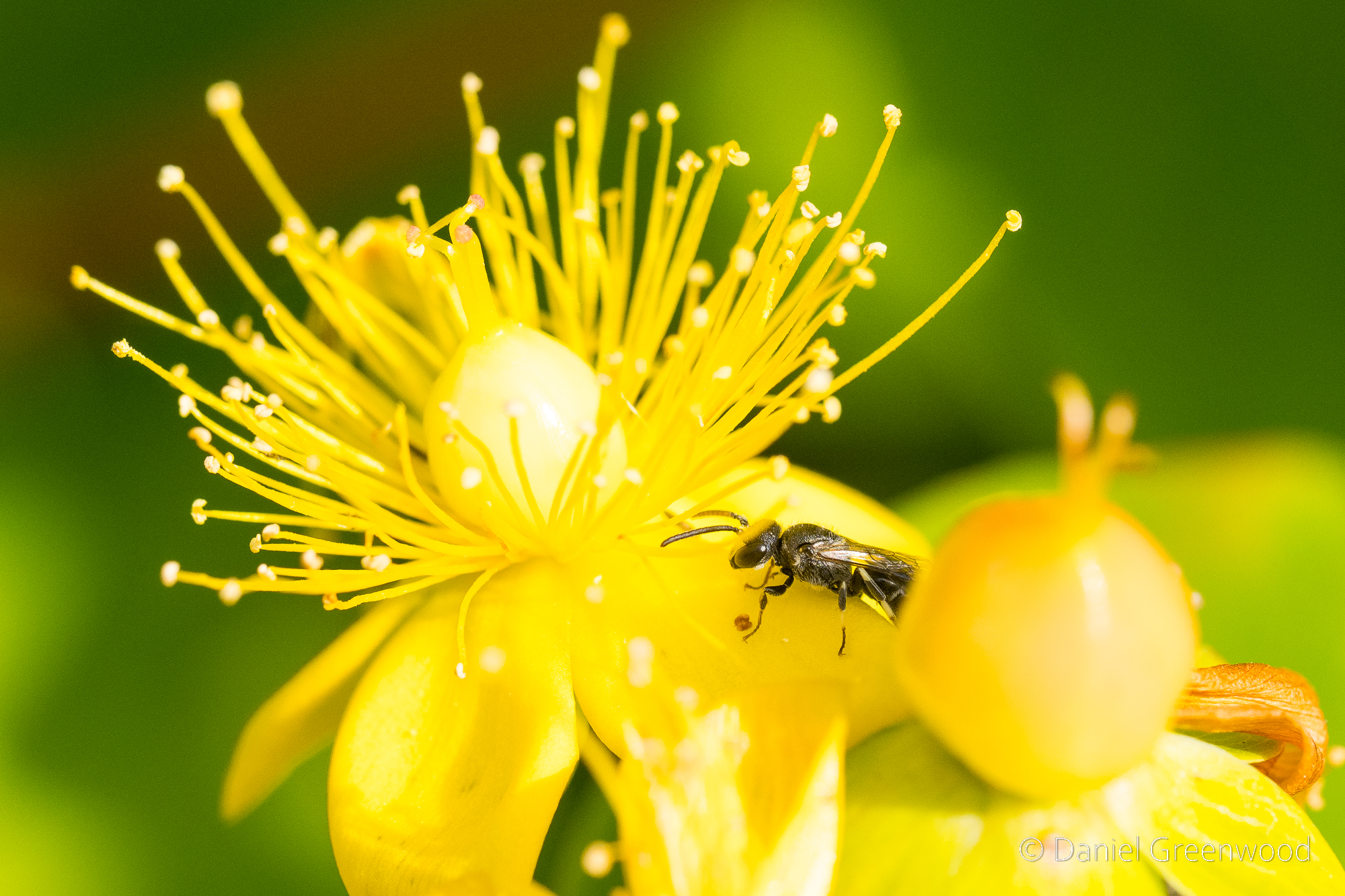
And here we have some of the ‘best’ images I’ve taken this year. This yellow-faced bee is probably less than 4mm in length. Here it’s nectaring on the stamens of a cultivated garden hypericum. This was grown from a cutting taken from my grandmother-in-law’s garden and is a very good plant for pollinators, though it does need maintaining. I love the way the bee uses the stamen a bit like an Elvis impersonator on a standing microphone. Ah-huh-huh.

Here’s a bumblebee for scale!

I don’t think I’ve seen as many honey bees as in recent years, but there was a glut of them around May. There are reports of problems in the U.S. this year (bit of an understatement, considering who’s running things there).
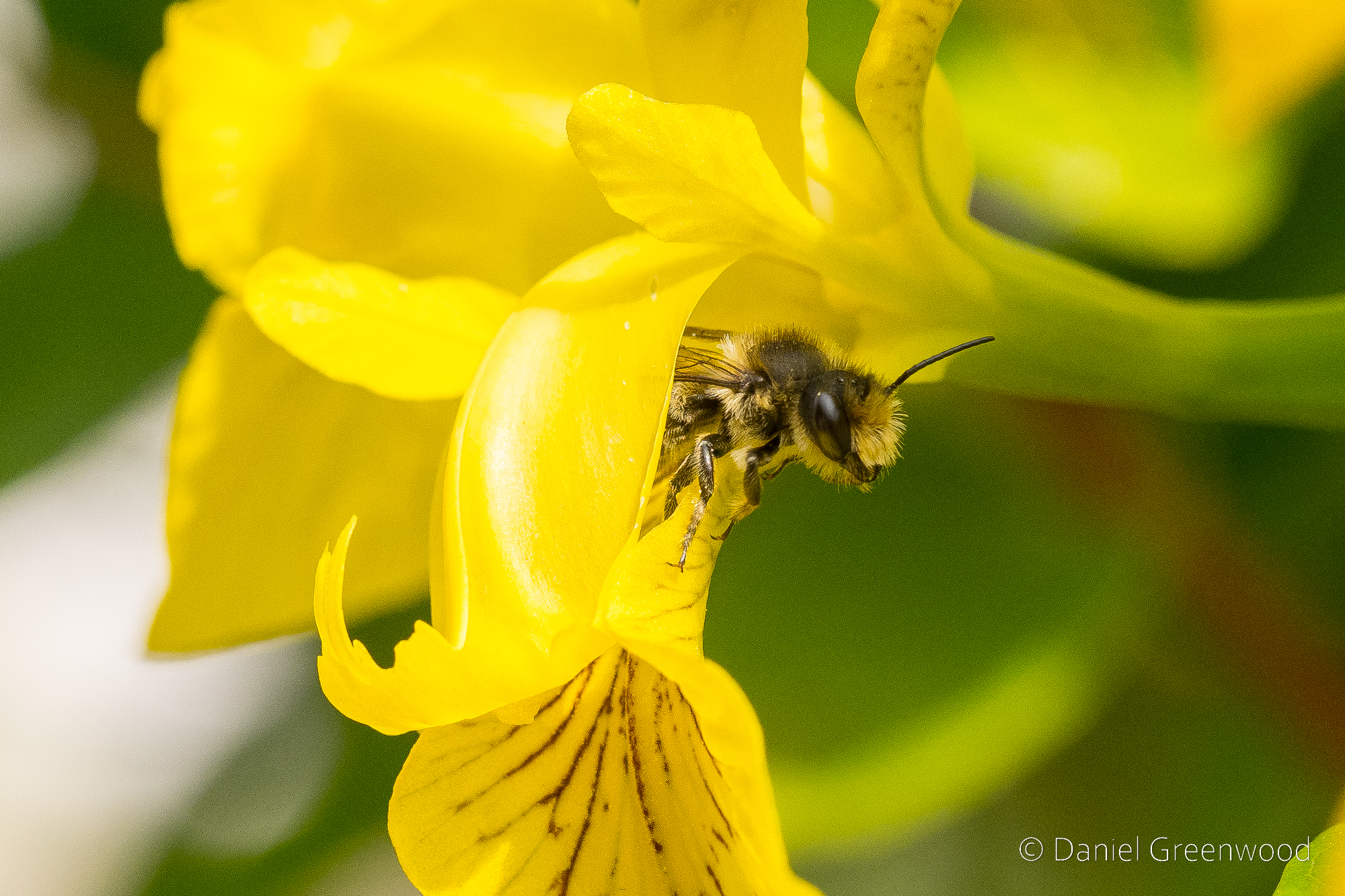
This solitary bee was visiting the flag iris in our little pond. I do enjoy the bee’s sideways escape. Not sure of the species, might be one of the Andrena mining bees.

I will now make like this bee and leave it there. Thanks for reading.
Macro | Support my work

Macro 📷: the fencepost jumping spider

Another week and it’s another spider post. This time, it’s a spider that also likes posts.

One evening a couple of weeks ago I had logged off from work and went out into the garden to look at something other than an email. It was a warm evening and the sun was dipping below the surrounding roofs. I noticed a blemish on the fence, a place of macro dreams.

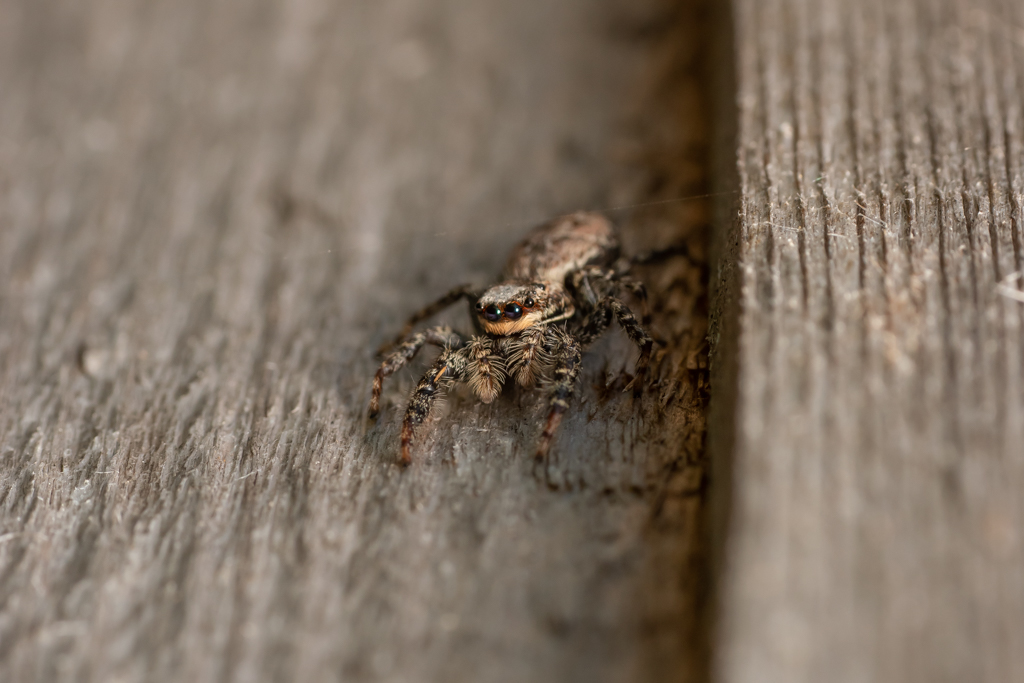
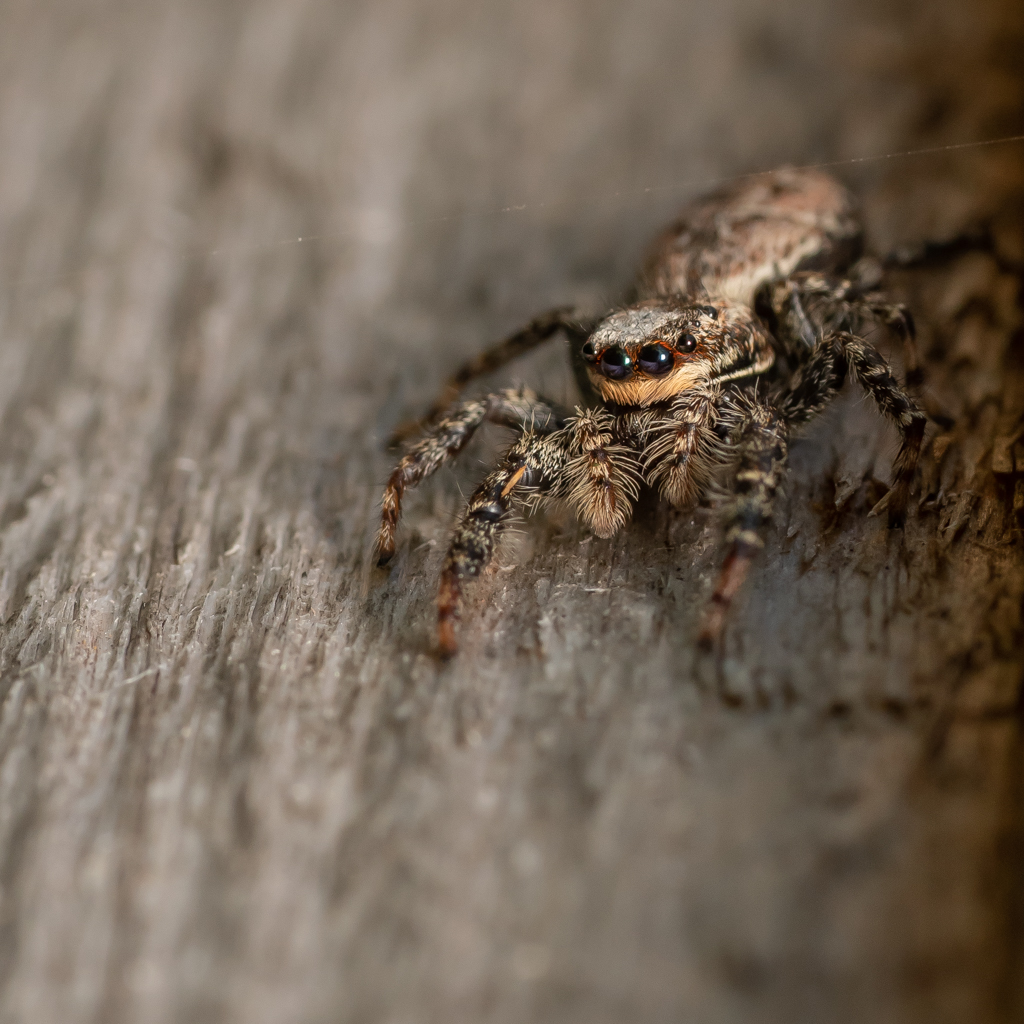
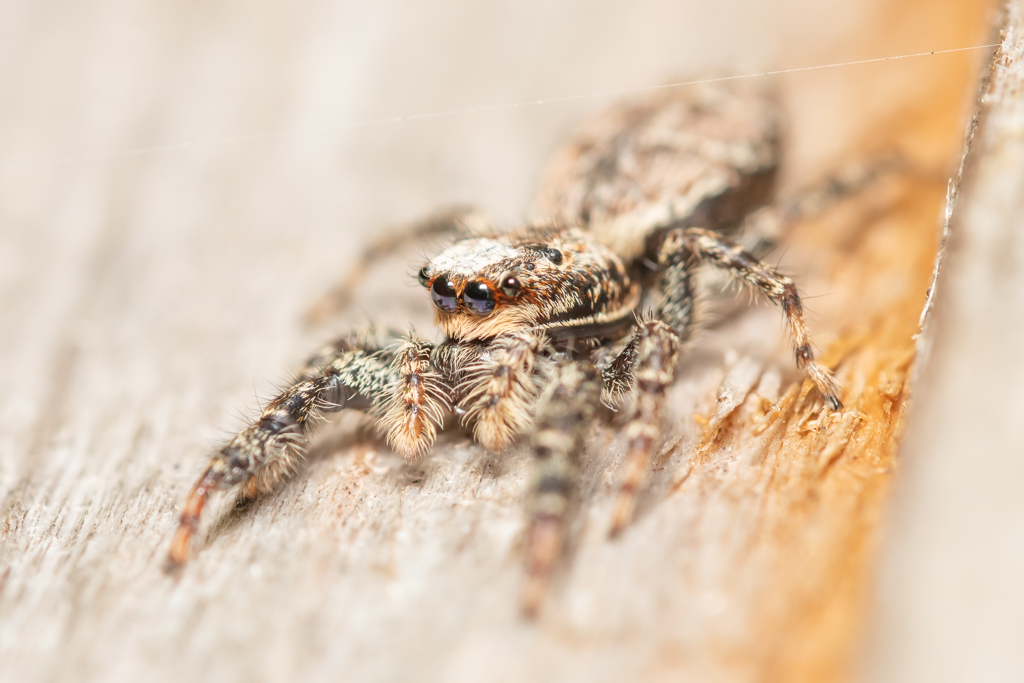
I identified the blemish immediately as a jumping spider but one bigger than the usual crowd. Even better, it was sitting still!

The grey-brown colouring of the spider helped to camouflage it against the sun-bleached wood of the fence. It was no surprise at all, when looking at my spider book later, that I learned this was a fencepost jumping spider!

Finding a jumping spider as relaxed as this and in an accessible position can raise the adrenaline levels, meaning you can lose composure and not get images that are in focus. That said, probably about 90% of macro photos I take are out of focus because the range is wafer thin. The stars aligned this time, however.

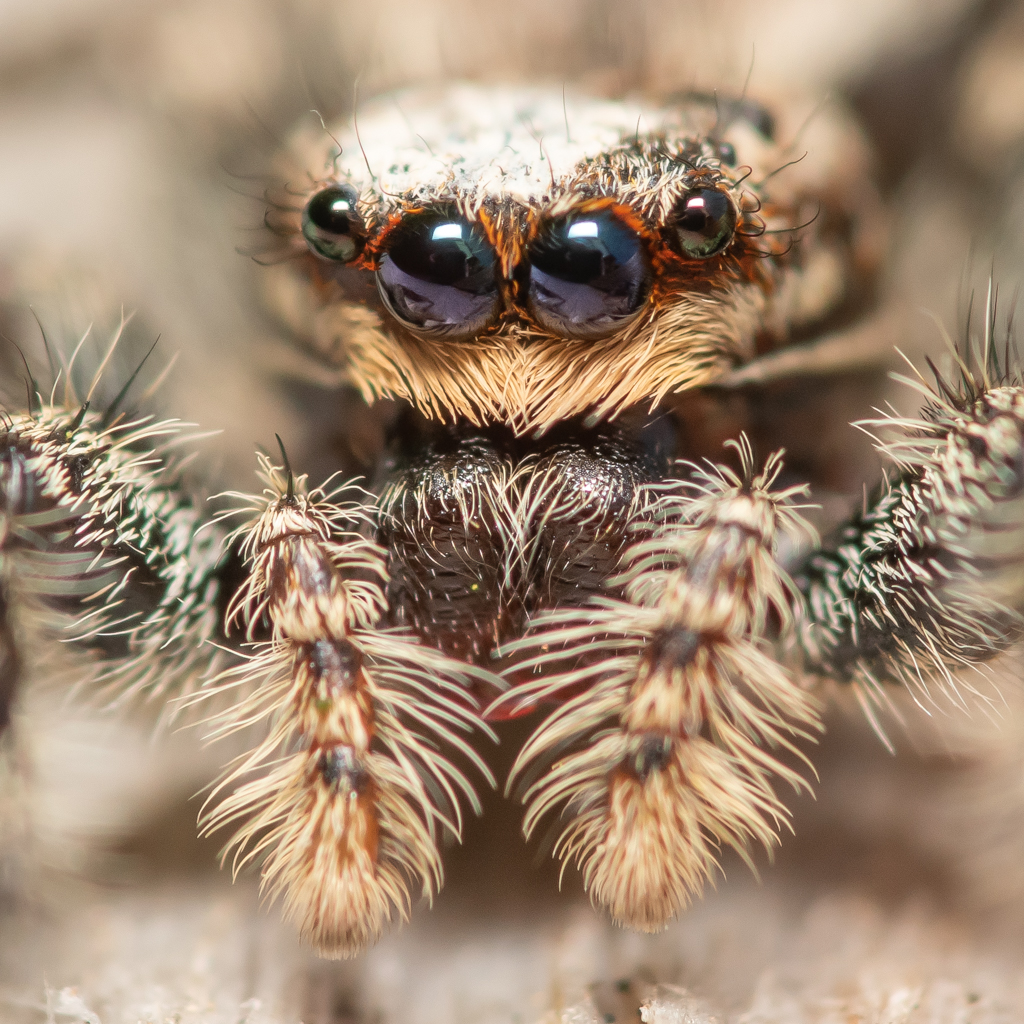
The spider was so still that there were no issues. It seemed quite interested by me and looked straight down the lens, as far as I could tell.

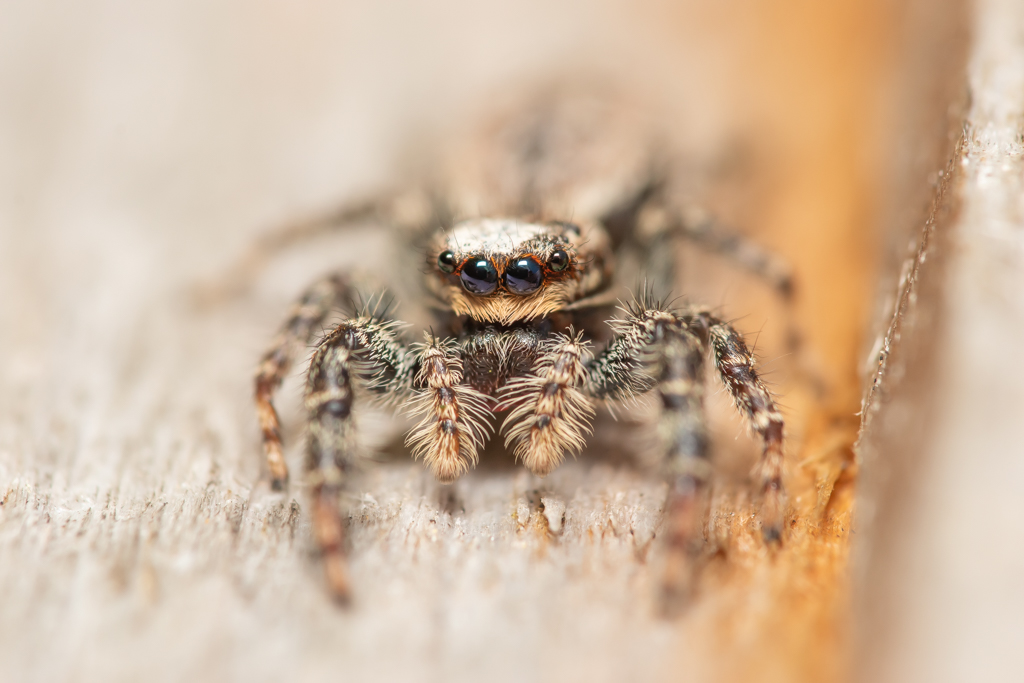
One of these images will certainly go down as portfolio worthy, at least in terms of happy memories. And really there’s no better place to end this post than looking into the eyes of Britain’s largest jumping spider!

I hope you like (my) posts, too.

Thanks for reading.

Equipment used: Nikon D5600, Sigma 105mm f2.8 macro, Nikon SB-700 flash, Raynox-250 macro adaptor. Photos edited in Adobe Lightroom.

More macro

Recent macro posts

Wasps vs. spiders

This post is generally wasps and spiders, with some lovely little bees to calm you down afterwards.

Macro 📷: the zebra in the room

I know that this blog has focused a lot on spiders this year. My spider knowledge is basic and these posts, their photos and required dip into spider ecology (arachnology) helps me to improve that knowledge. I recently purchased a spider ID guide (Britain’s Spiders by Bee, Oxford and Smith) and it’s helped me to gradually open a better understanding of these, well, misunderstood animals. I do wonder how much the tales of antipodean killer spiders has made people in England, where there are no venomous native spiders, needlessly fearful. Of course it’s different for arachnophobes.

My favourite group of spiders are the jumping spiders, the salticids. The first jumper I ever saw or photographed was one of the zebra spiders, of which we have three species in the UK. You can only identify them with microscopic assessment of their genitals, which is beyond this blog. Regardless, I found a zebra spider on the wall of my living room, which I now appreciate is just a giant invertebrate trap. I have actually also had a starling find its way in.

I knew this would be a good chance to try and get some good photos of the spider because there are few places to hide. I helped the spider onto my finger tip which, though the photo isn’t focused properly, does show how small (and harmless) it is.

And here is a reminder to you all of how most macro photos come out – out of focus. I suppose it’s half the fun.

Zebra spiders are beautiful inverts. Their name obviously comes from their black and white patterning.

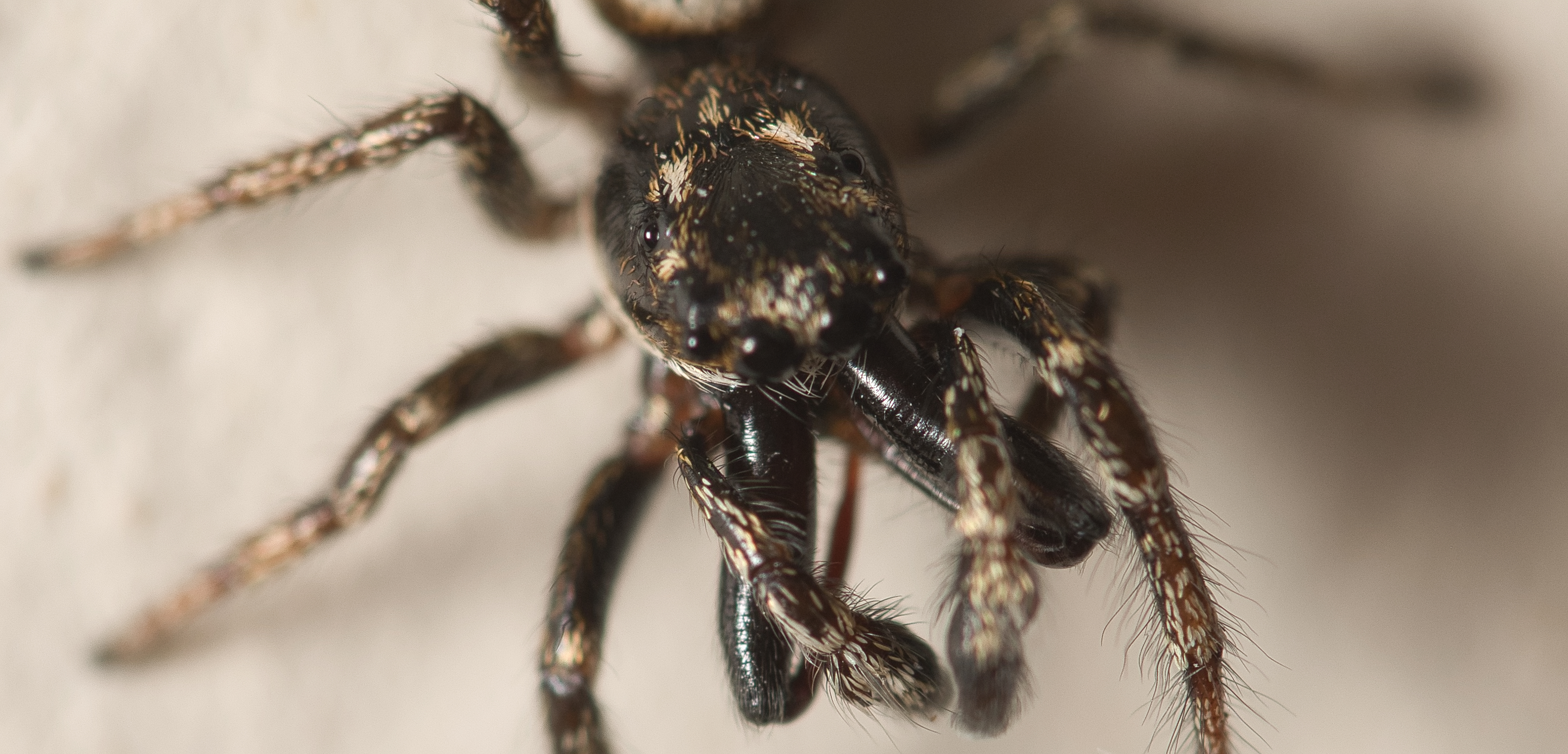
One part of the spider that I really wanted to share is its fangs. They are seen below the pedipalps, what are effectively reporoductive organs for spiders. I presume the spider was hunting for prey, or perhaps even looking for a mate.

I helped the spider back out onto the windowsill where it wandered along the draught excluding brush. I hope it found what it was looking for (unless you were the thing it was looking for!).

Thanks for reading.

More macro