
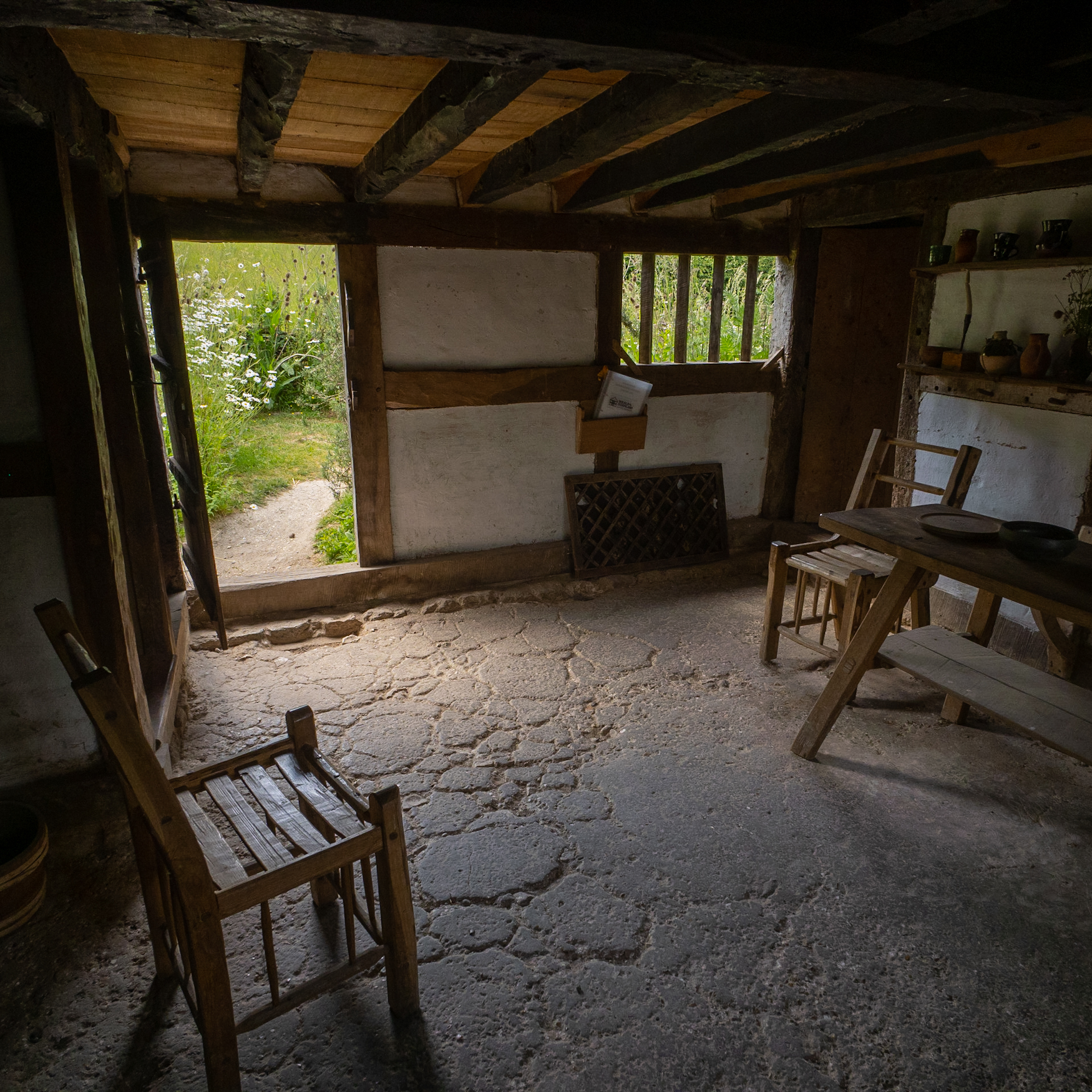
In June I spent some time at the Weald & Downland Living Museum in Singleton, West Sussex. I was trying out a new wide-angle lens and in the perfect place to do so. I focused on Poplar Cottage, one of the most attractive ‘installations’ at the museum. Below are some images and also the italicised text which is written in the cottage’s binder, and therefore copyright Weald & Downland Living Museum.

Poplar Cottage was originally built on a small plot of common land on the edge of Washington Common in West Sussex. It is a building of a distinctive type with a hipped roof at one end and a gabled roof at the other. The gabled end originally contained a smoke bay.
Washington is a village at the foot of the South Downs in West Sussex, near Chanctonbury Ring. Its name relates to “Wassa’s people” rather than a place renowned for cleaning.

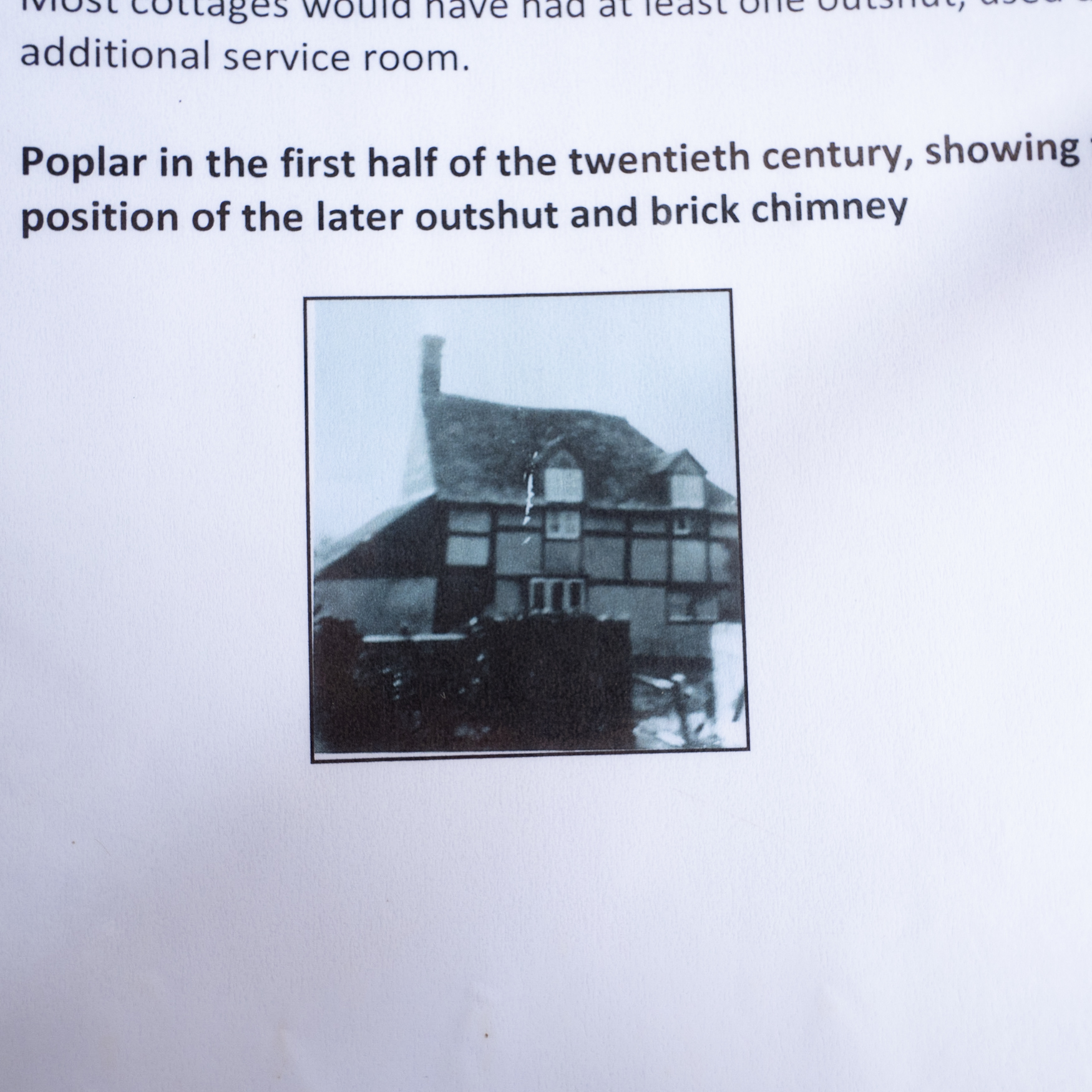
This cottage type is associated with ‘wasteland’ or ‘wayside’ encroachment onto common land. The earliest occupants of the cottage are likely to have been husbandmen or rural craftsmen. Husbandmen were socially inferior to yeomen but superior to labourers.


Many cottagers engaged in small-scale craft activities, like making wooden hoops for barrels or spars for thatching, or indeed shoe-making. We have evidence to suggest that a shoe-maker may have lived here in the 17th century.


Thanks for reading.
 Unlocking Landscapes