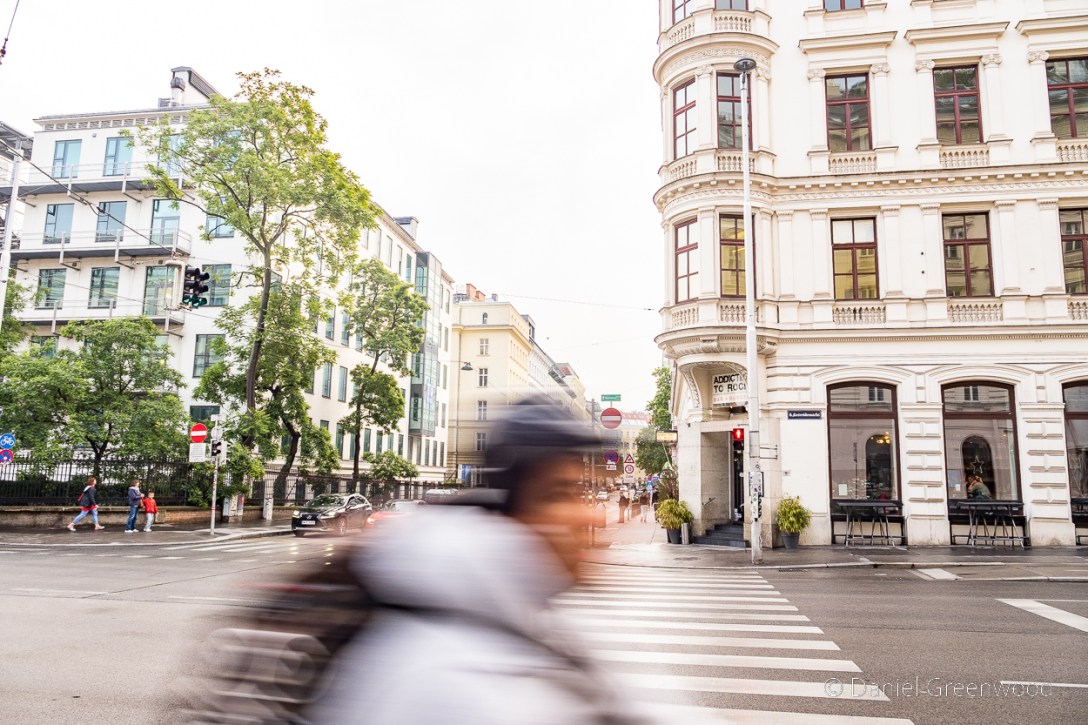
Vienna, Austria, May 2024
This post exhibits my photos taken in the Austrian capital during spring of 2024. The photos are all taken in one day, as my wife and I made our way around the tram network. We started at the Hofburg Gardens (Volksgarten) next to the Ringstrasse. We then moved to the Belvedere, finishing up at Café Sperl.
Vienna is a place of deep historical significance that I’m not in a position to do justice, so I’m just sharing what I saw.
I’m absolutely learning about the contents of the images while I write this, so mistakes may abound! I link to more information where relevant.
Volksgarten
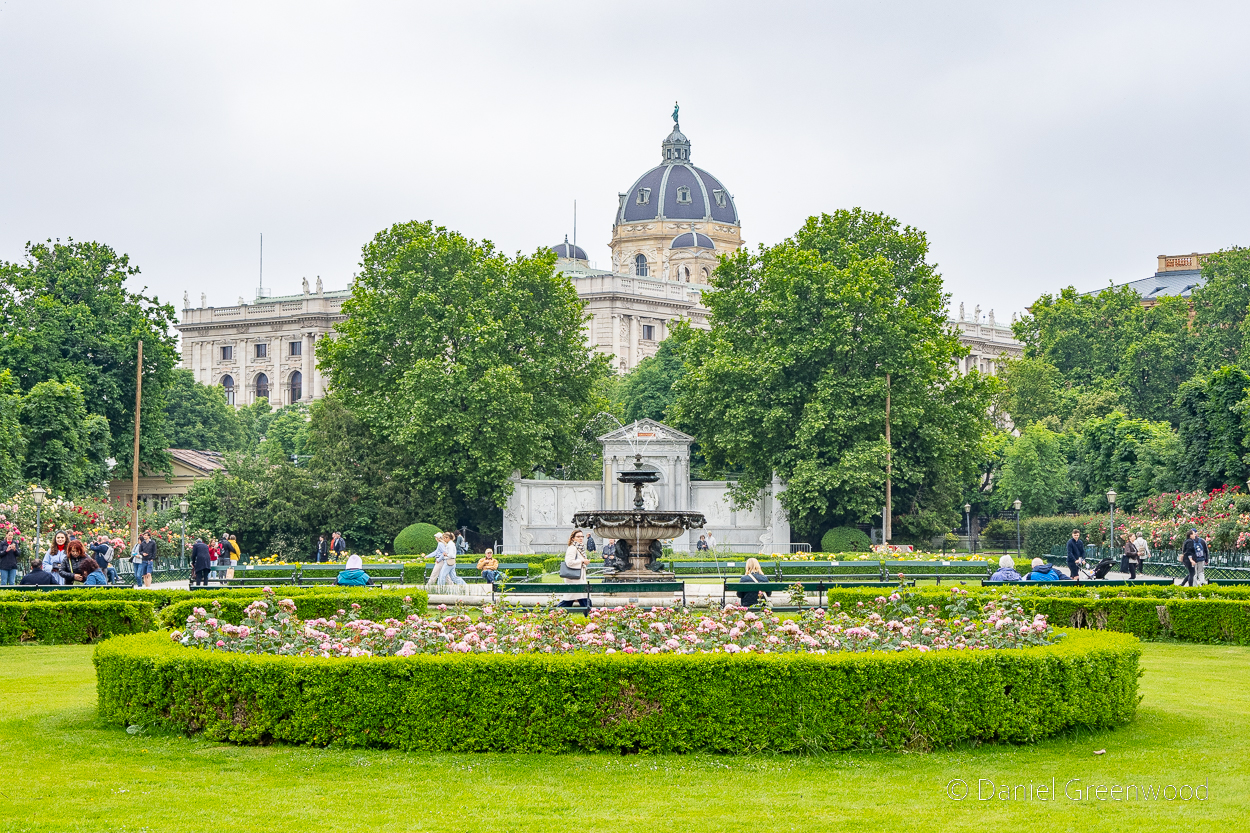
The Volksgarten was constructed in the place of buildings destroyed by the French Napoleonic army in 1809.
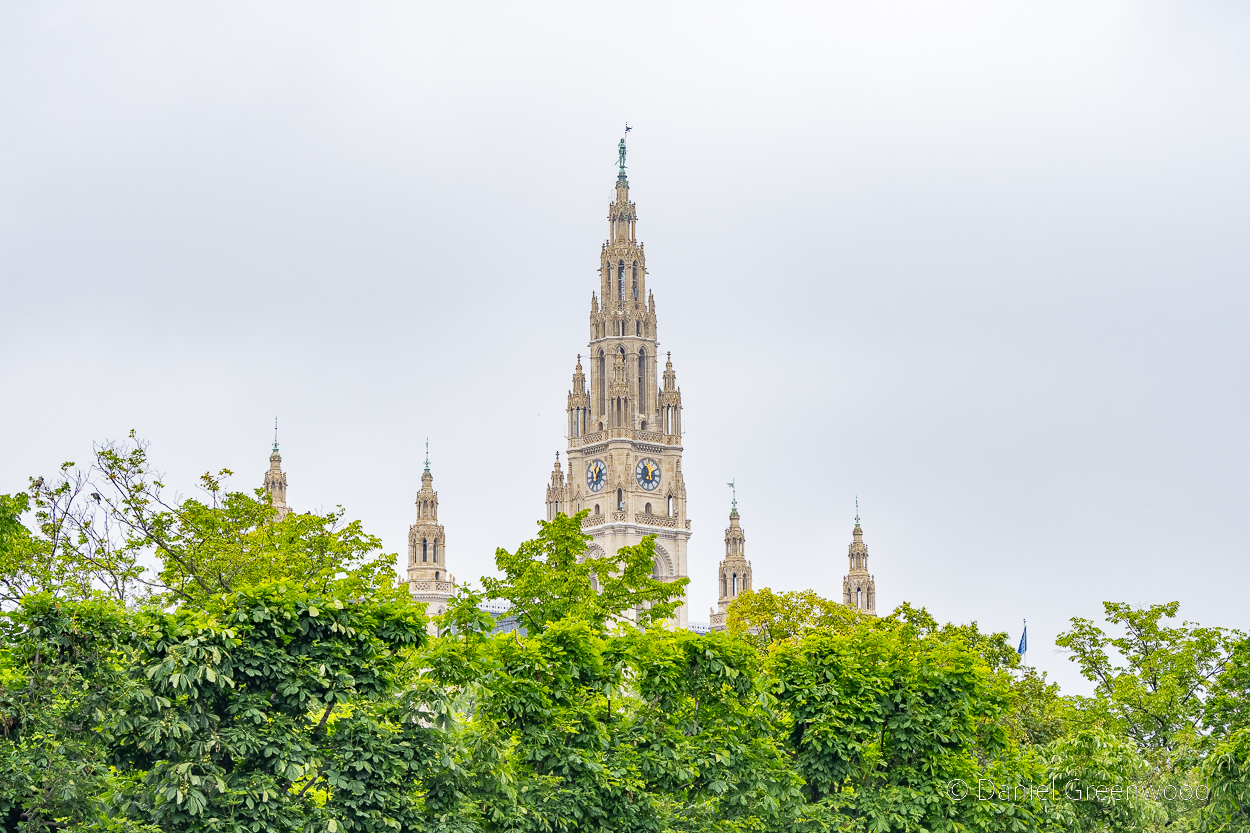
Vienna City Hall rises over the treeline, what appear to be a mixture of horse chestnut and lime trees.
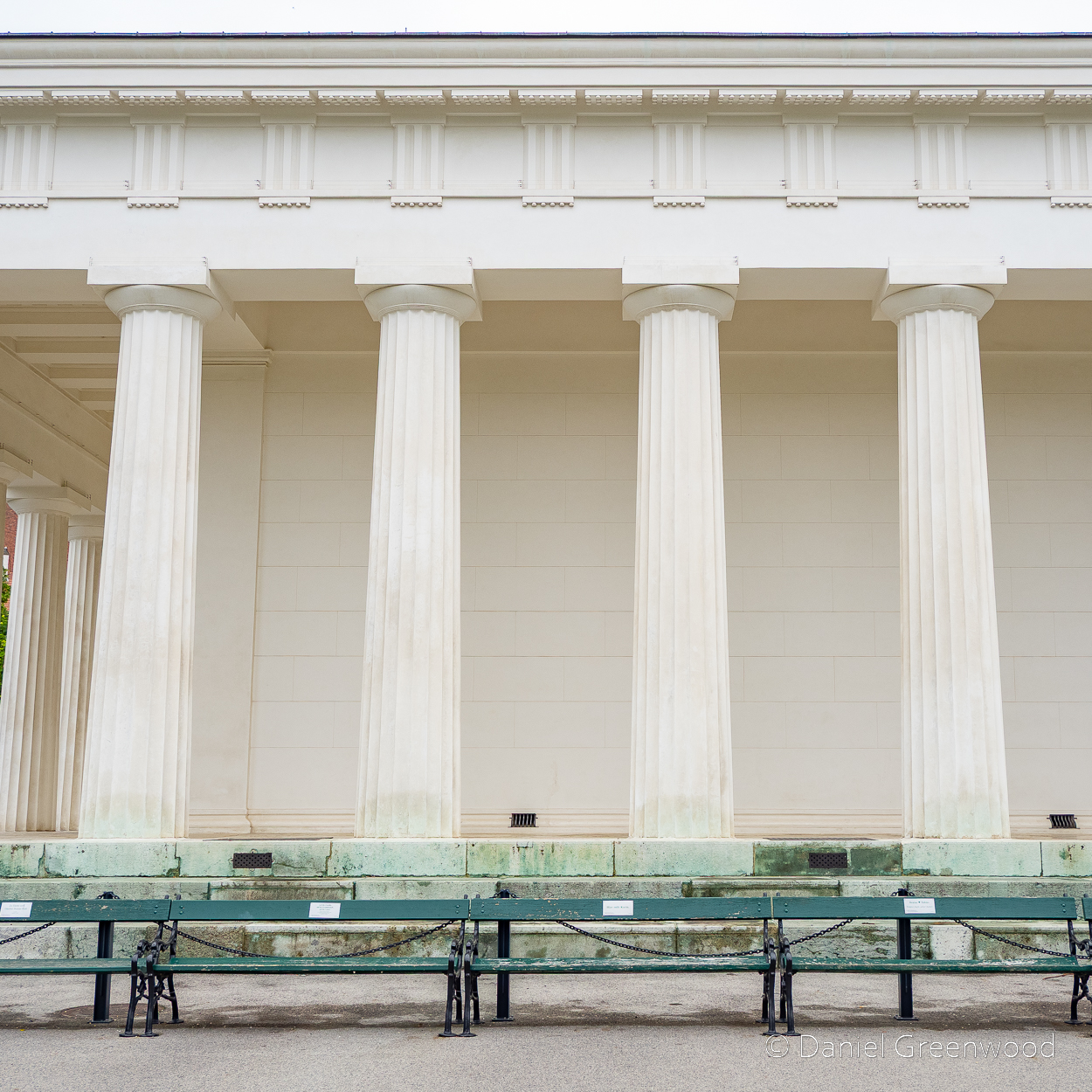
The Temple of Theseus was constructed before the reopening in 1823, built to hold a statue of Theseus slaying the Centaur.
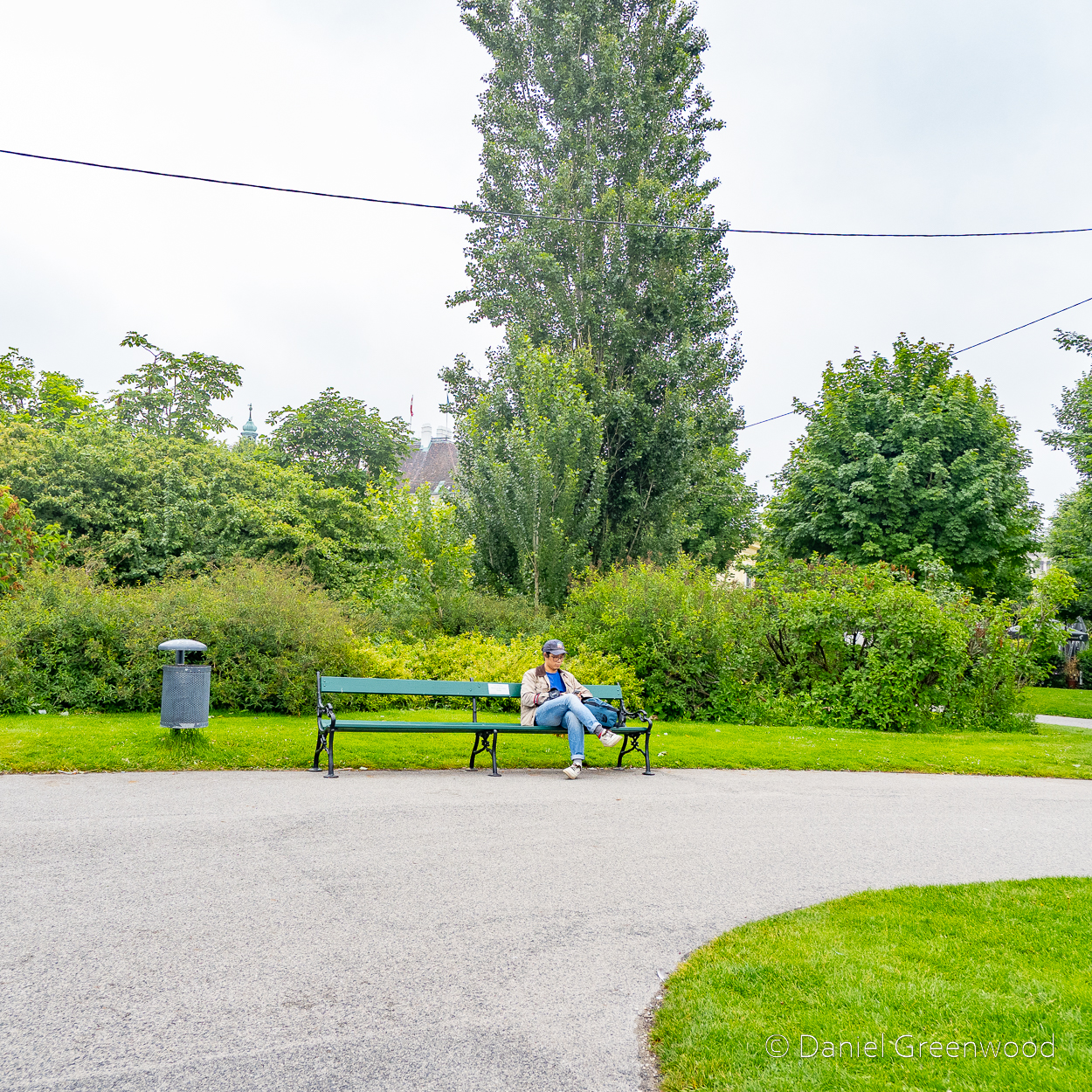
Just someone chilling out on a bench.
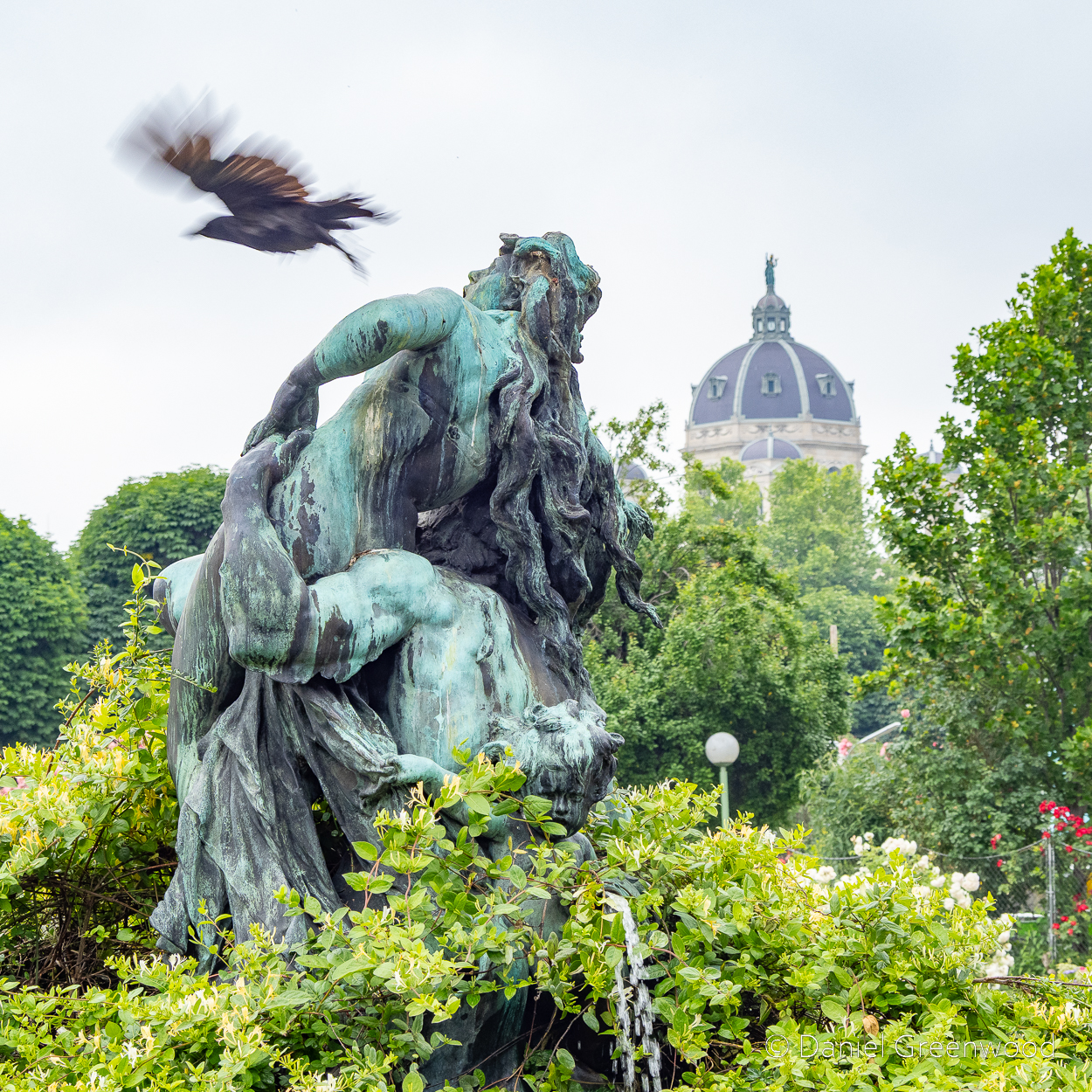
I suppose it’s fitting that the crow shares the image with the dome of the Natural History Museum!
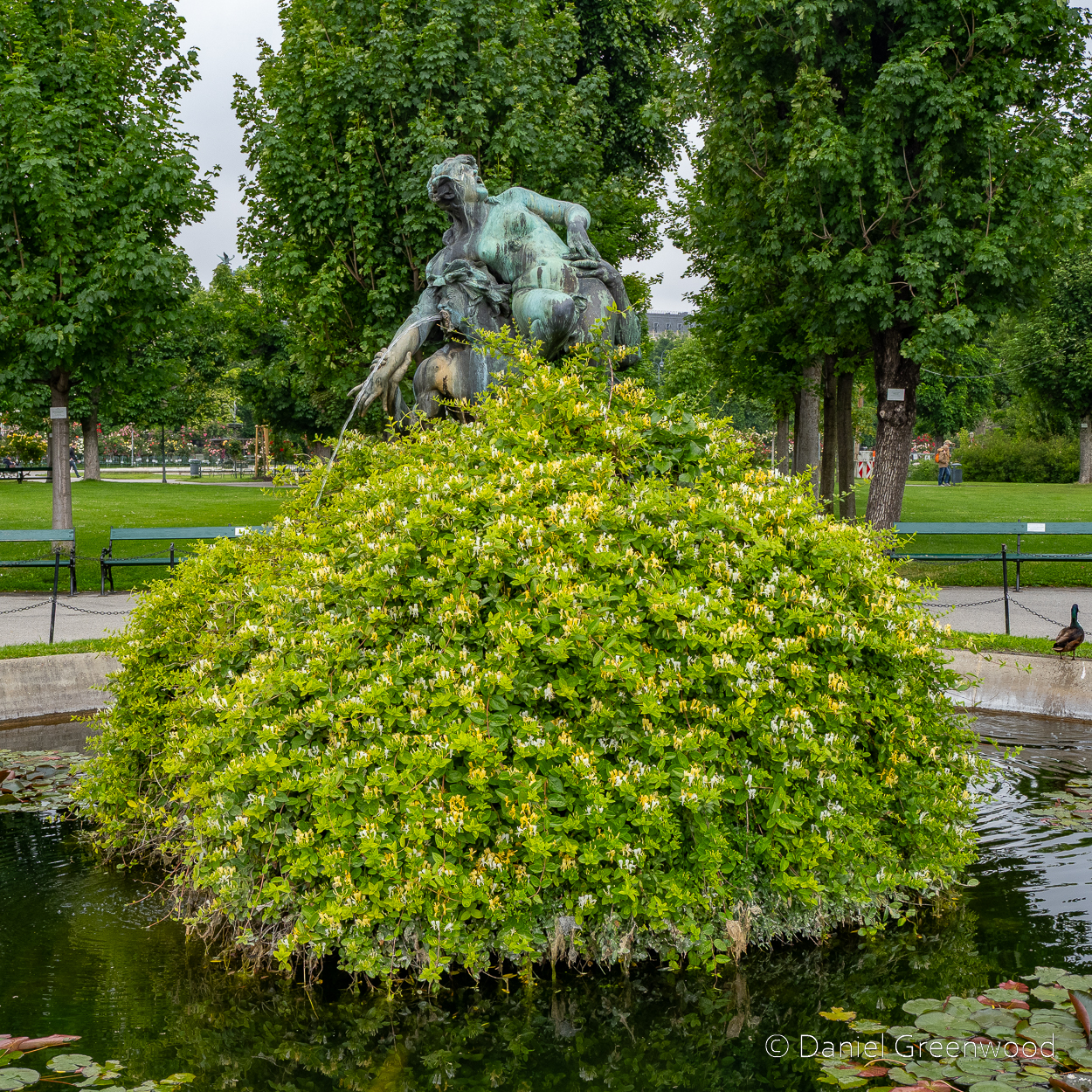
That statue is of Triton und Nymphenbrunnen (Triton and a Nymph), surrounded by an impressive honeysuckle dome.
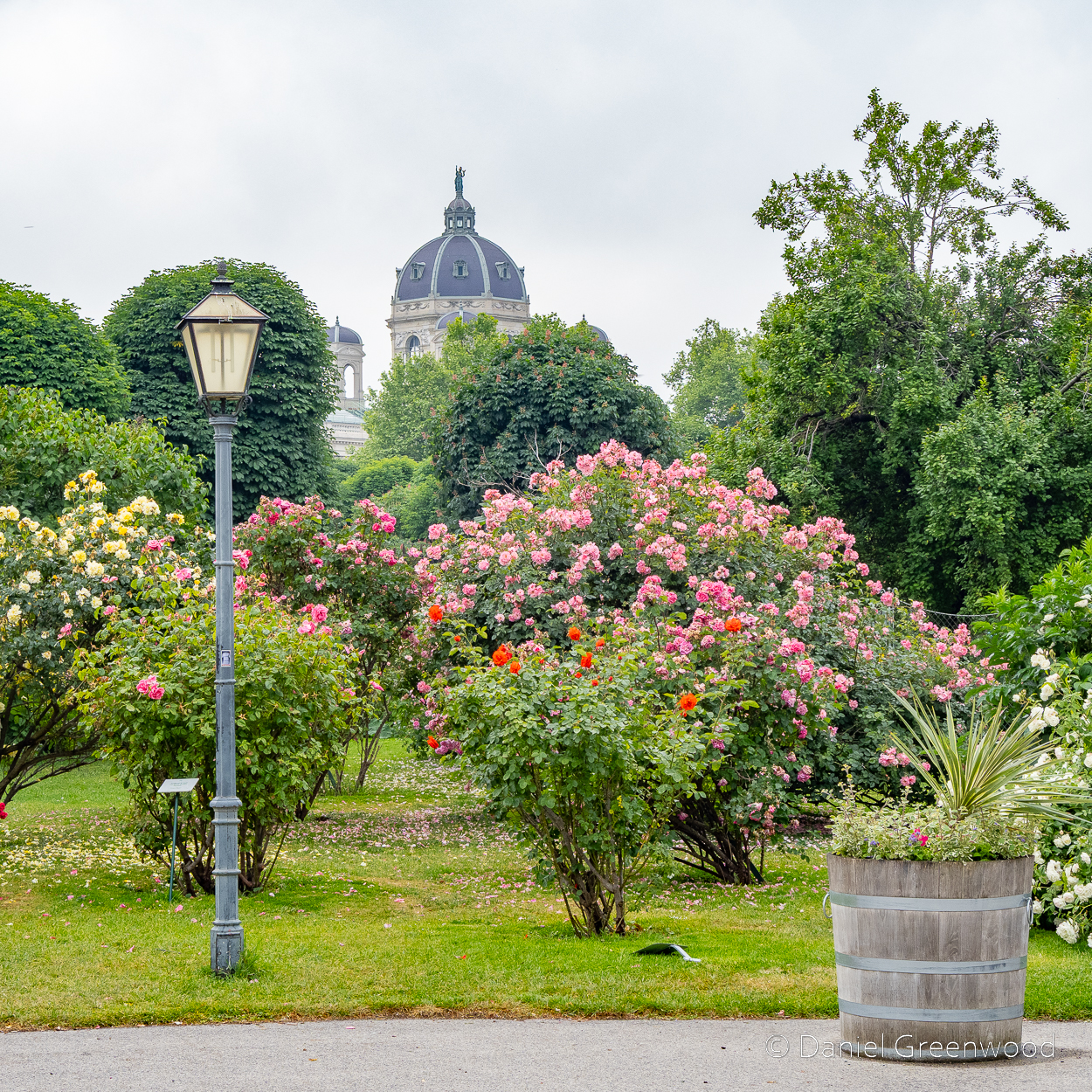
The Natural History Museum once more, above a sea of rose bushes in the English Garden.
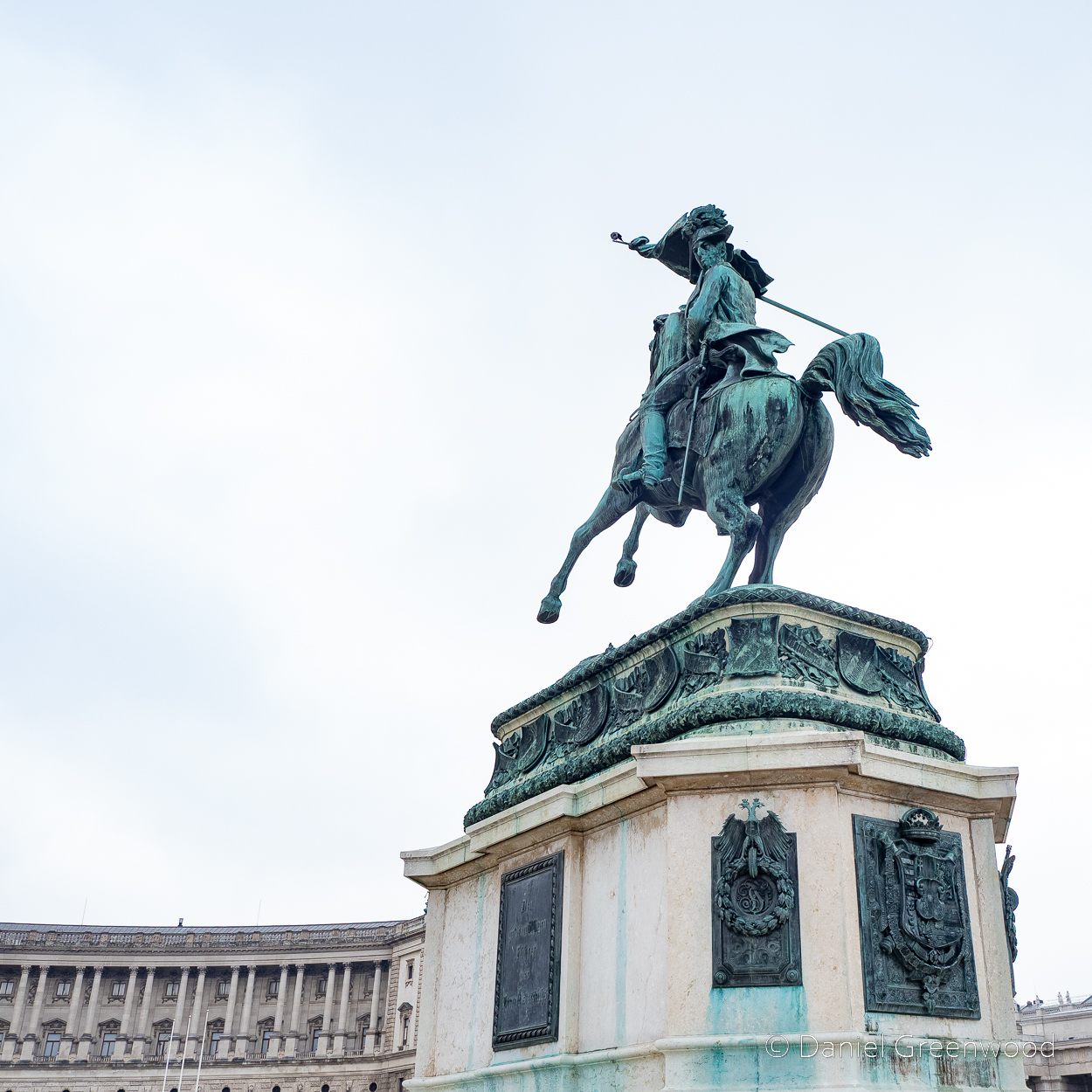
Archduke Karl perhaps not so happy to have his picture taken. I didn’t realise these installations are known as ‘equestrian statues’. Makes sense.
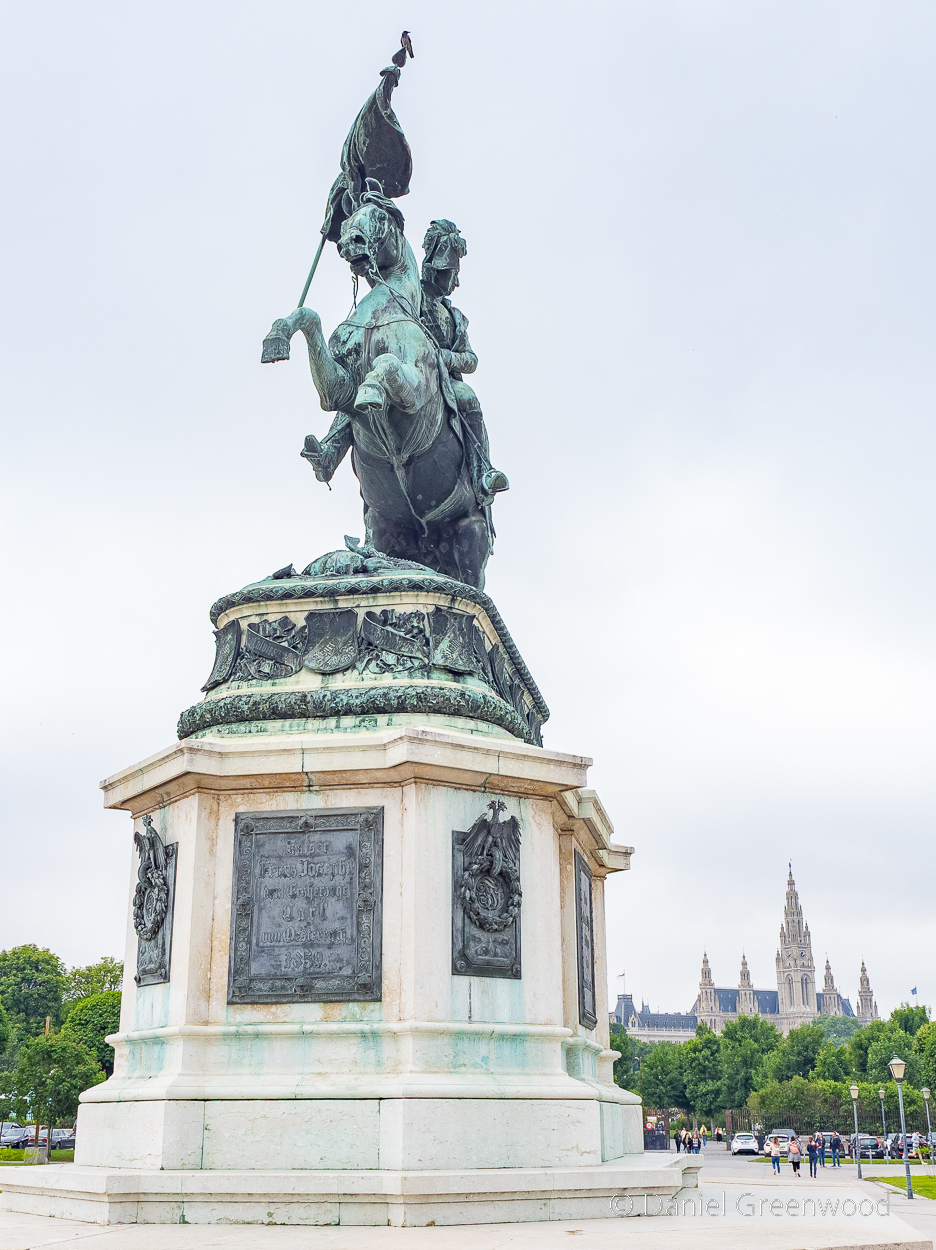
From this angle there’s a better view of the City Hall.
The Hofburg
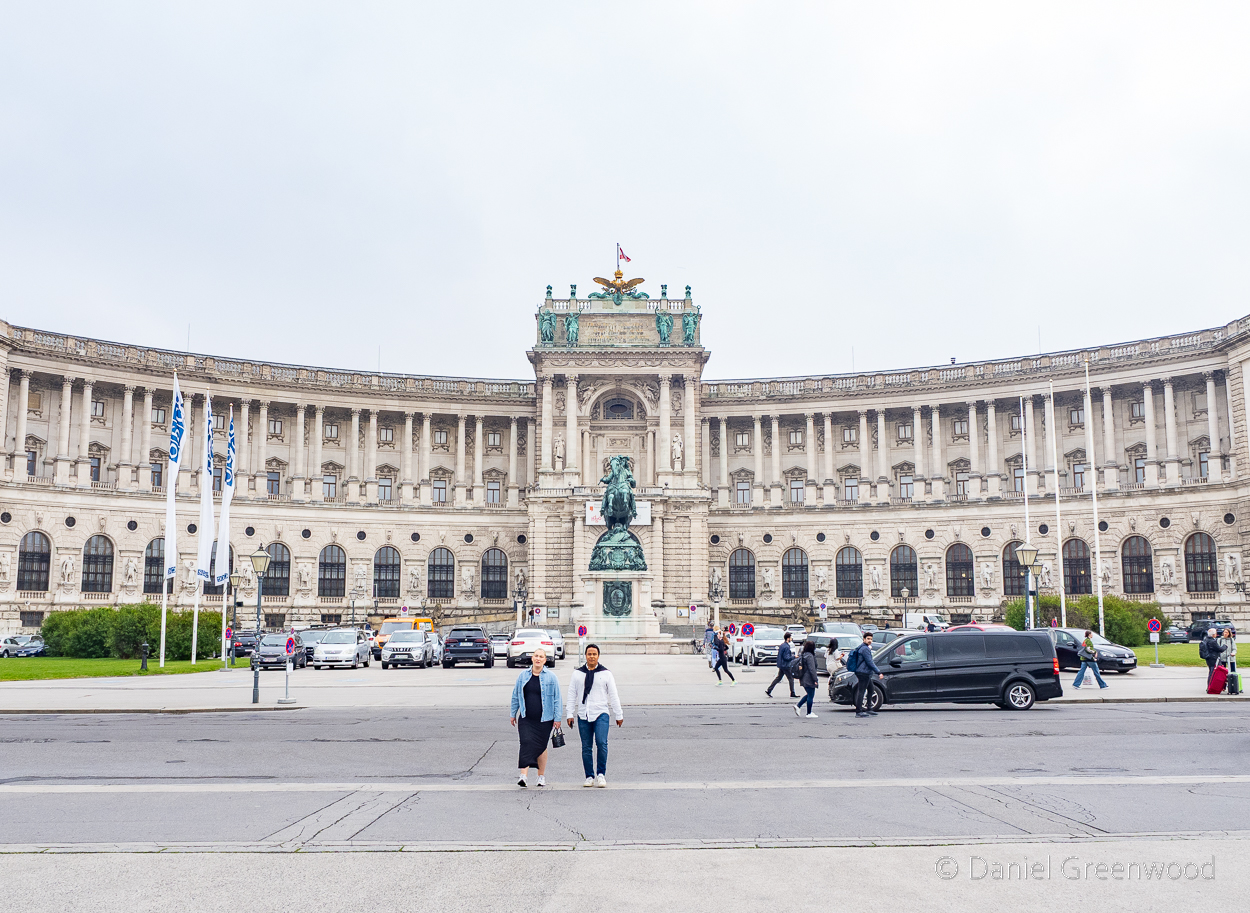
The Neue Burg Wing, now home to museums, is where Adolf Hitler spoke to crowds after ‘the Anschluss‘, the annexation of Austria by the Nazis in their attempt to build a fascist greater Germany.
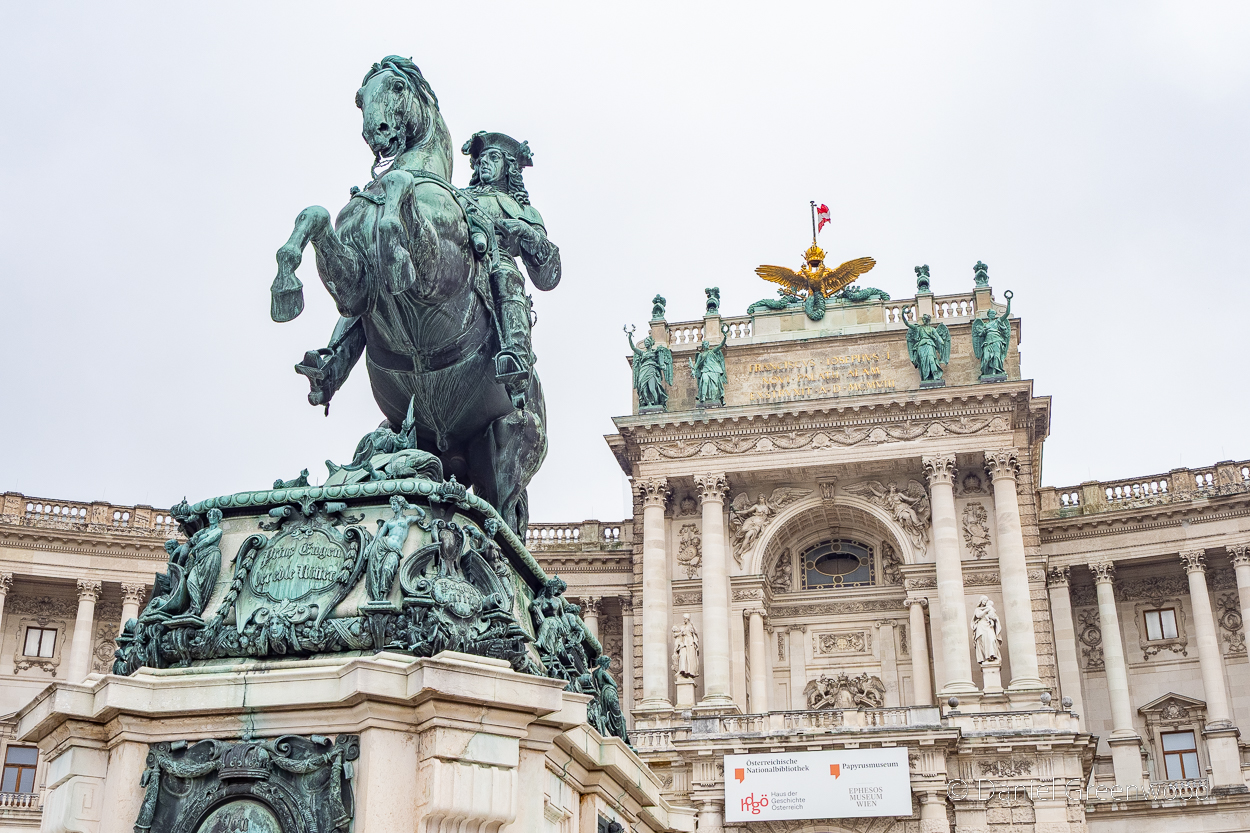
The Prince Eugene monument. You could spend all day photographing all the statues.
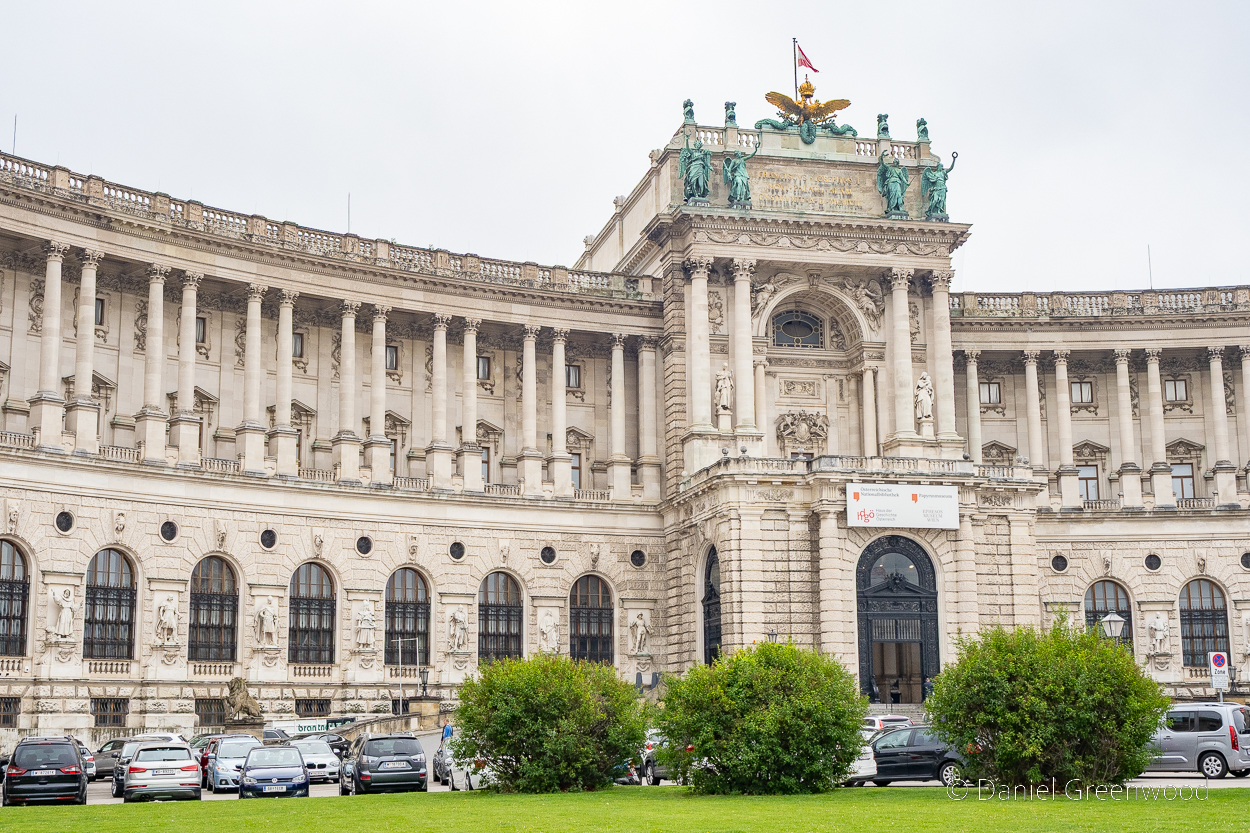
It’s extremely imposing, which I suppose is the point.
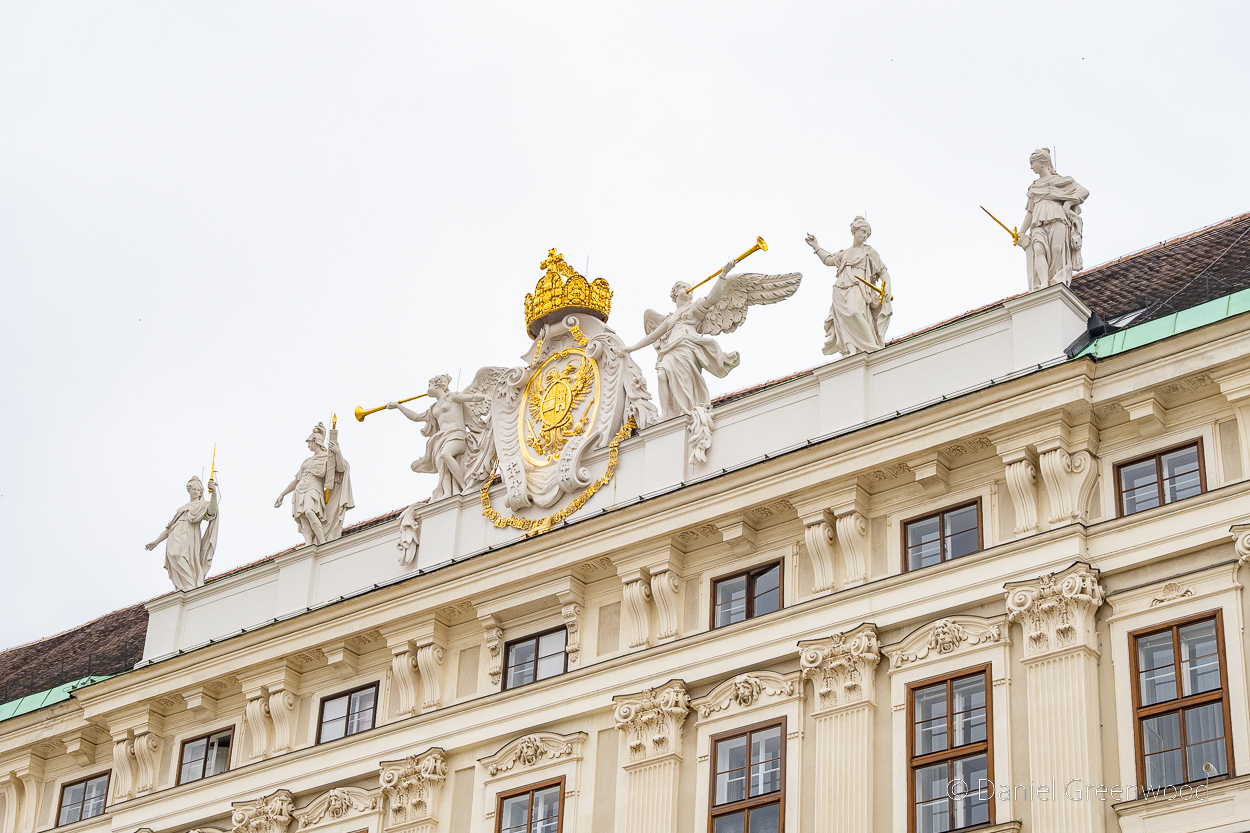
Moving into the older sections of the Hofburg complex, I was intrigued by the roof of the Imperial Chancellery Wing. Not something I have written before. I think this is what Gen-Z call ‘roof goals’.
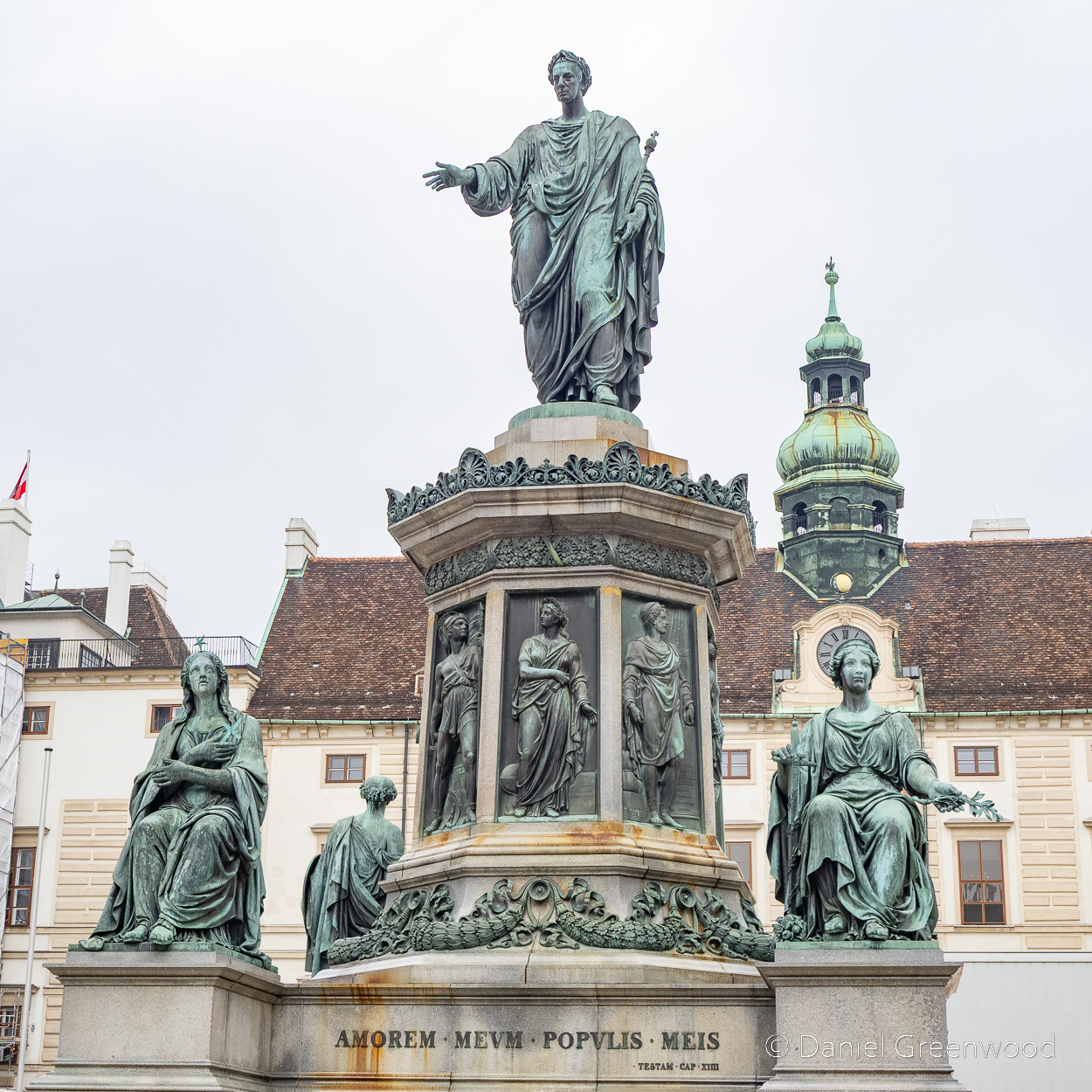
The Emperor Franz I monument was erected in 1846. He ruled from 1792 to 1835, during the Napoleonic Wars, which were not much fun for someone in his position.
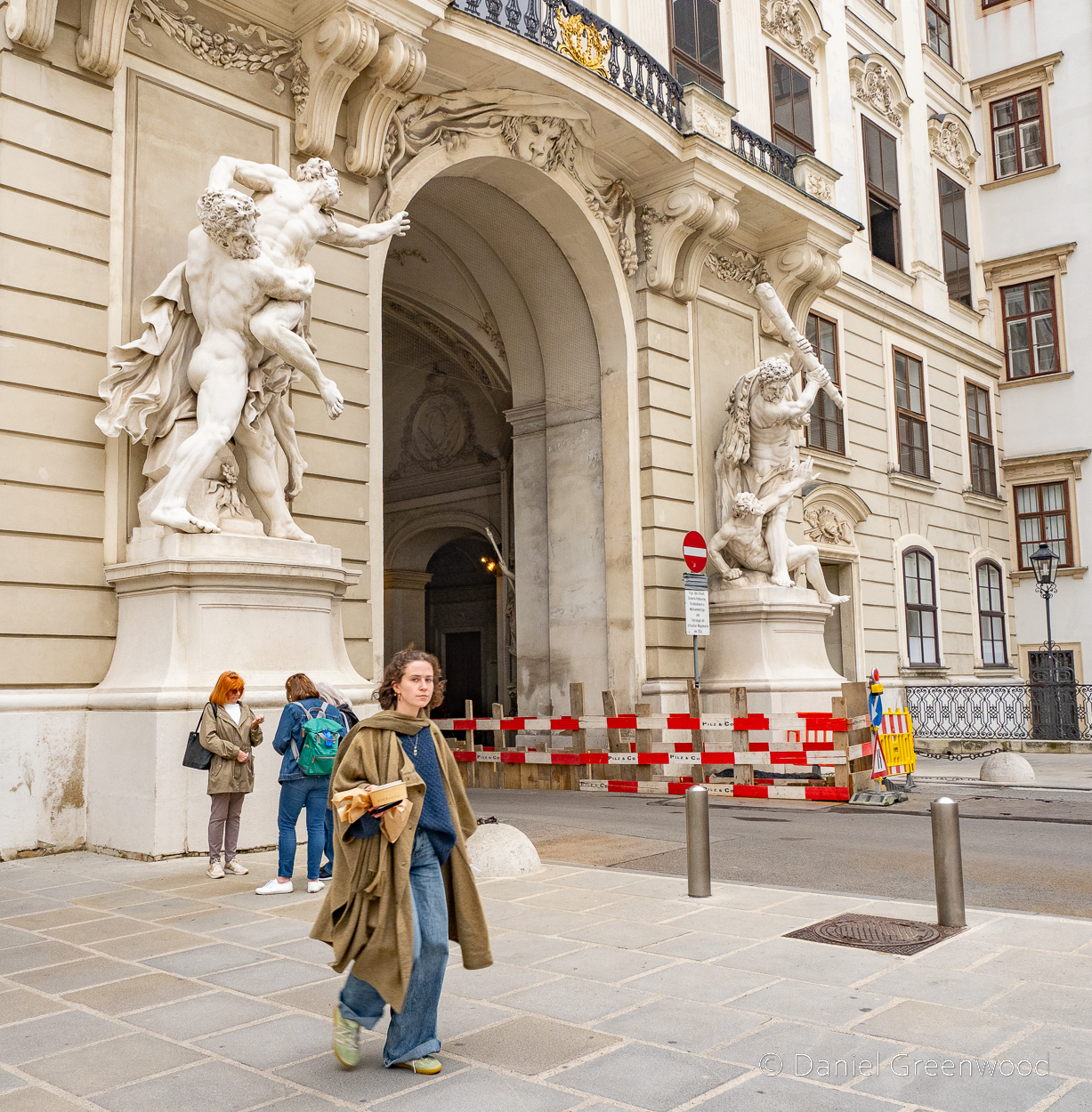
Lunchtime in Michaelerplatz.
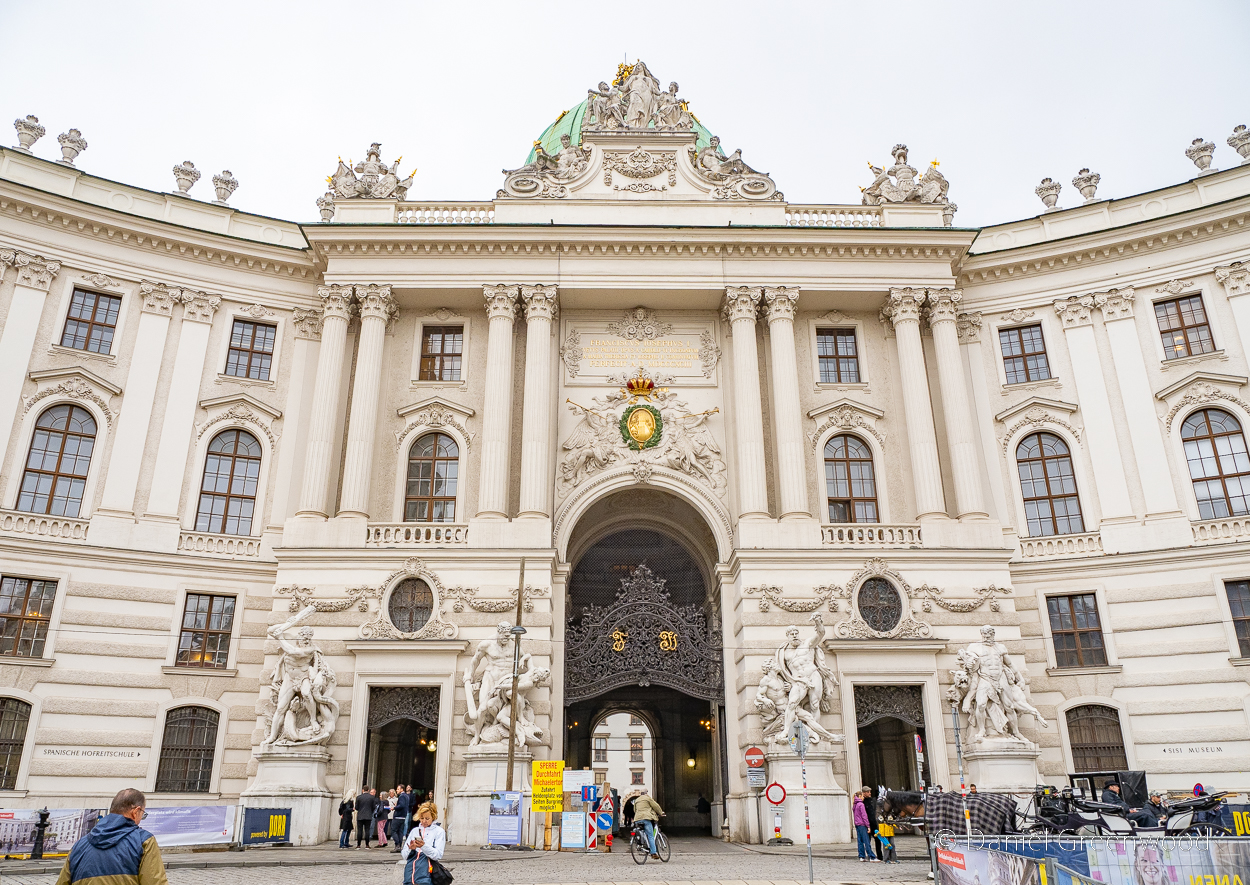
Looking back at the Hofburg Palace from Michaelerplatz. You can imagine the horses and carts passing through the carriageway in the middle there, as they did for hundreds of years during Habsburg rule.
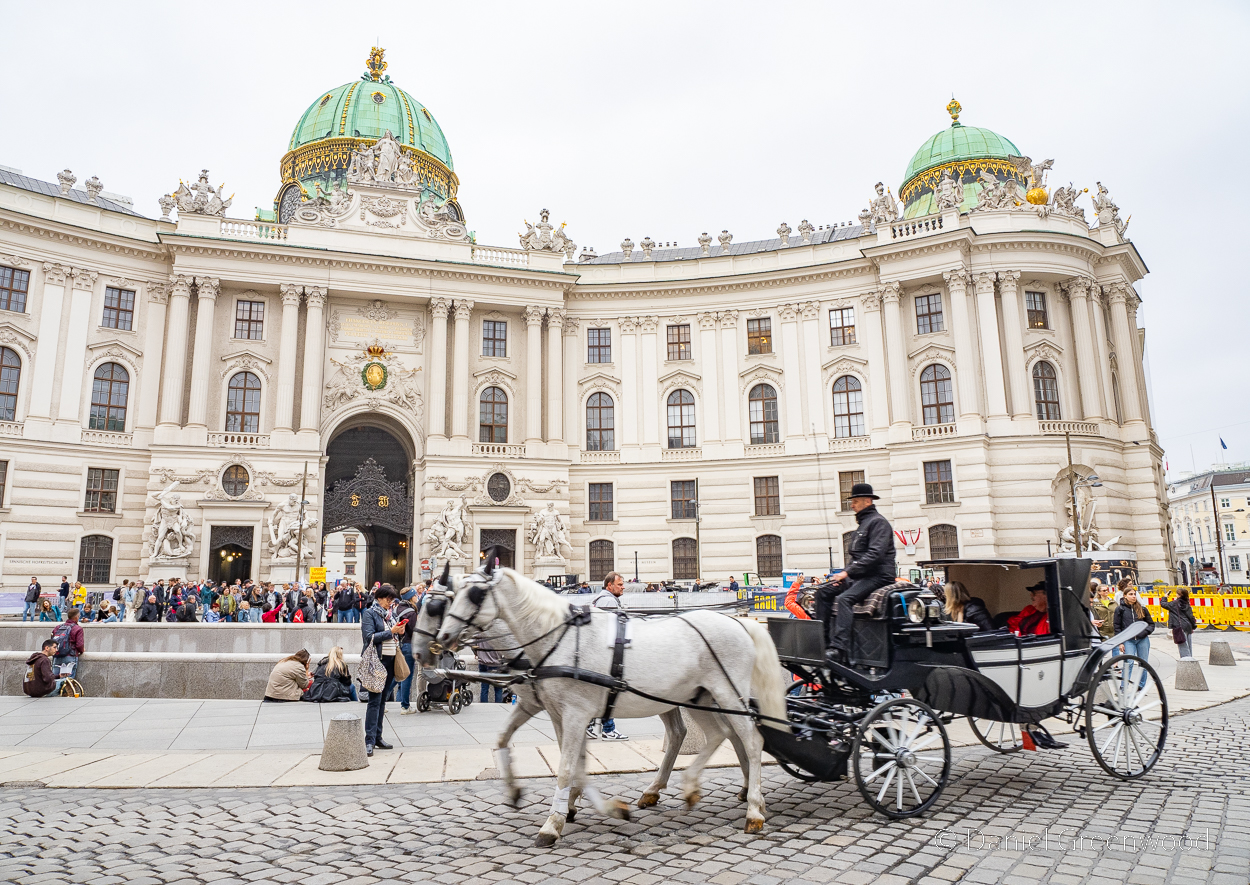
It was from here that the Habsburgs reigned from the 13th century, at first as rulers of the Austrian patrimonial lands, from 1452 as emperors of the Holy Roman Empire, and finally as emperors of Austria from 1806 until the end of the monarchy in 1918.
Sisi Museum
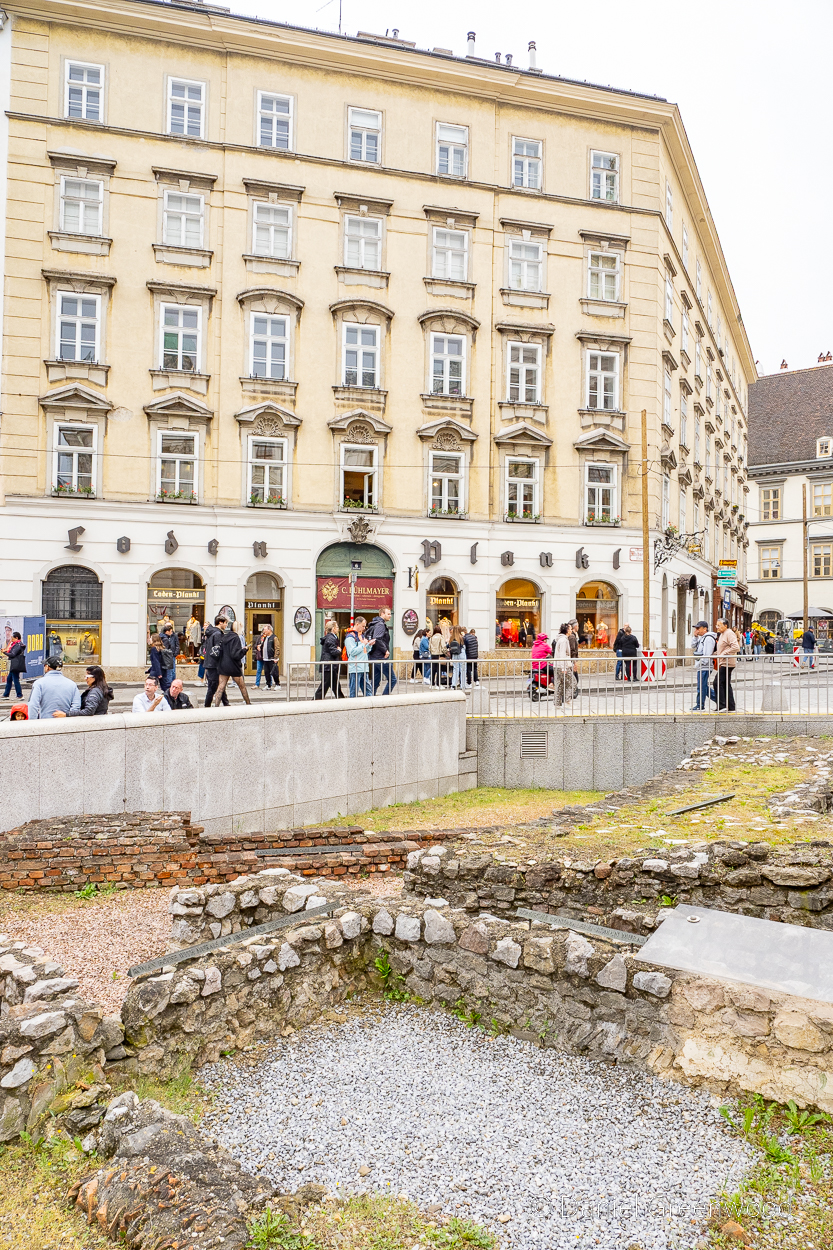
We had to be careful not to fall down into the Roman ruins that were discovered underneath Michaelerplatz!
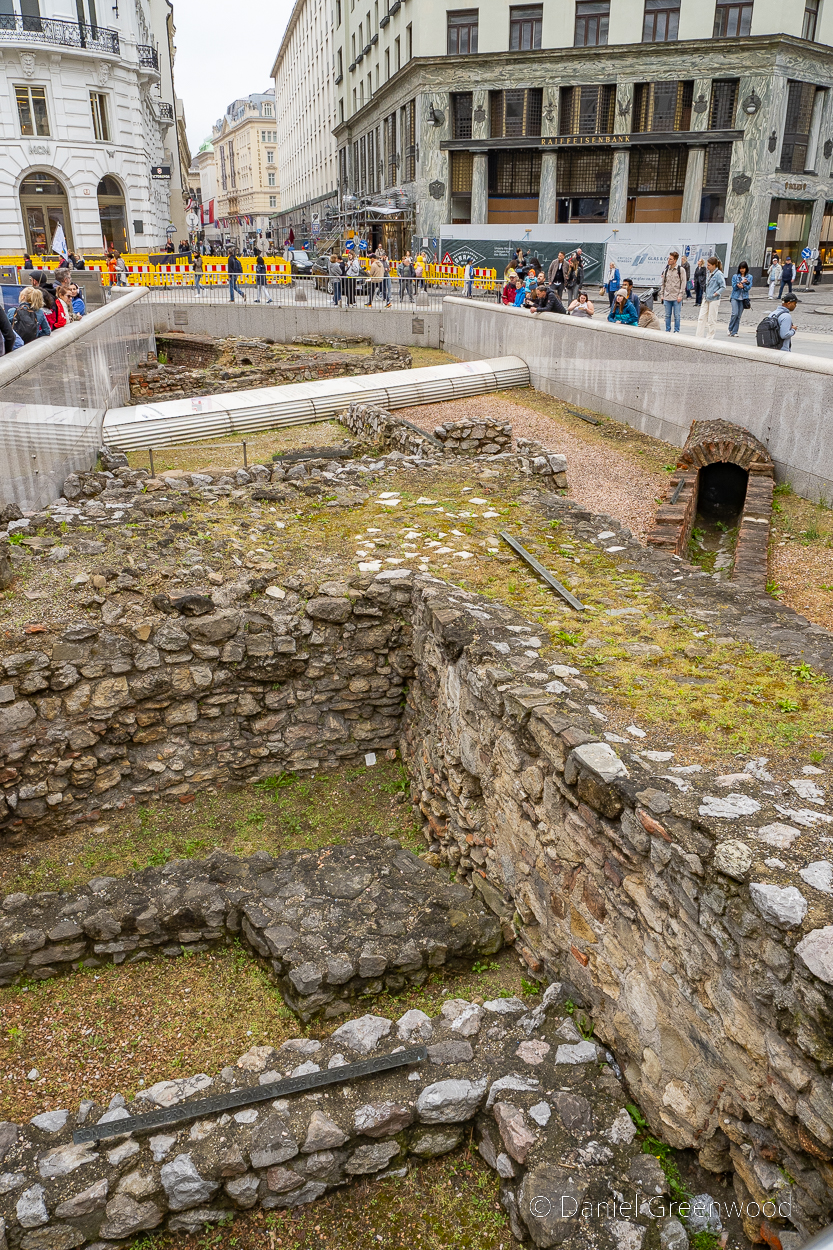
These walls are remnants of the Vindobona Roman camp, where Marcus Aurelius himself perished from a virus in AD 180.
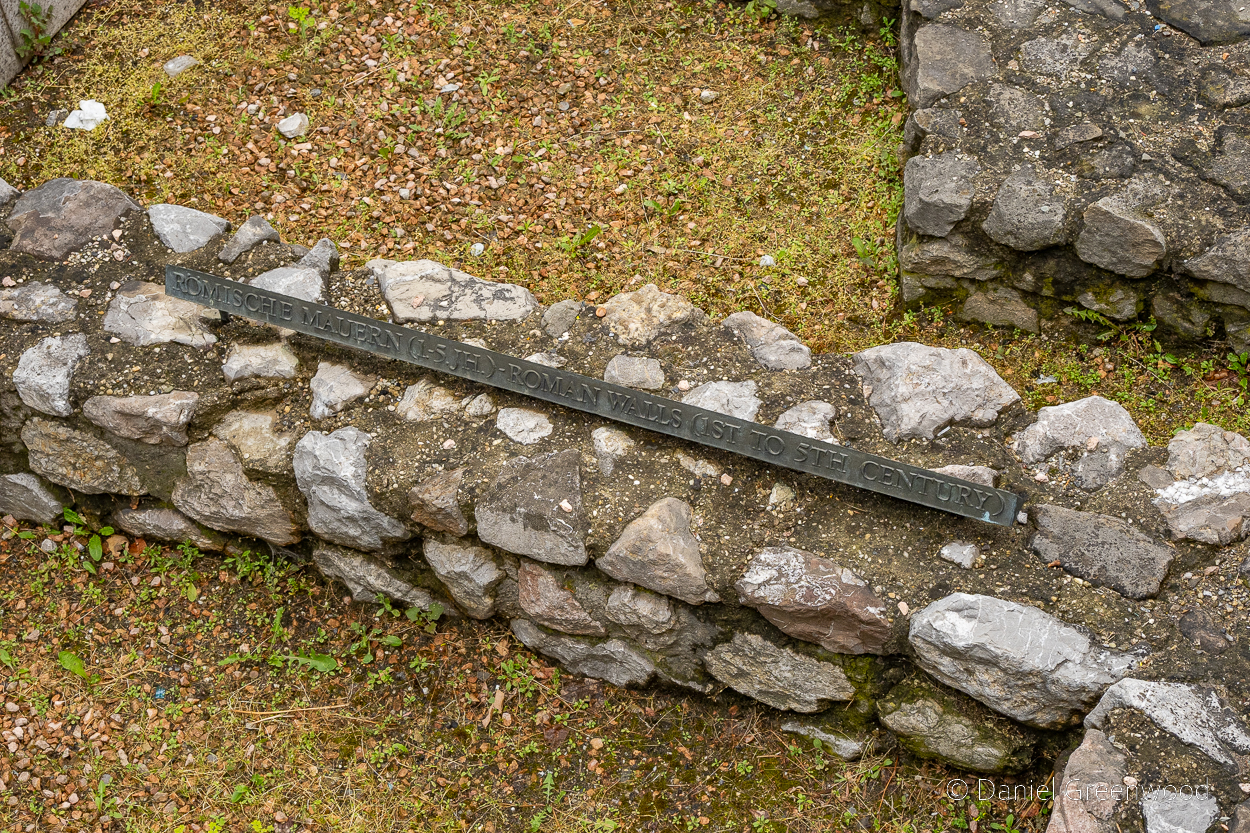
The iron fixture reads: ‘Roman walls (1st to 5th century)’.
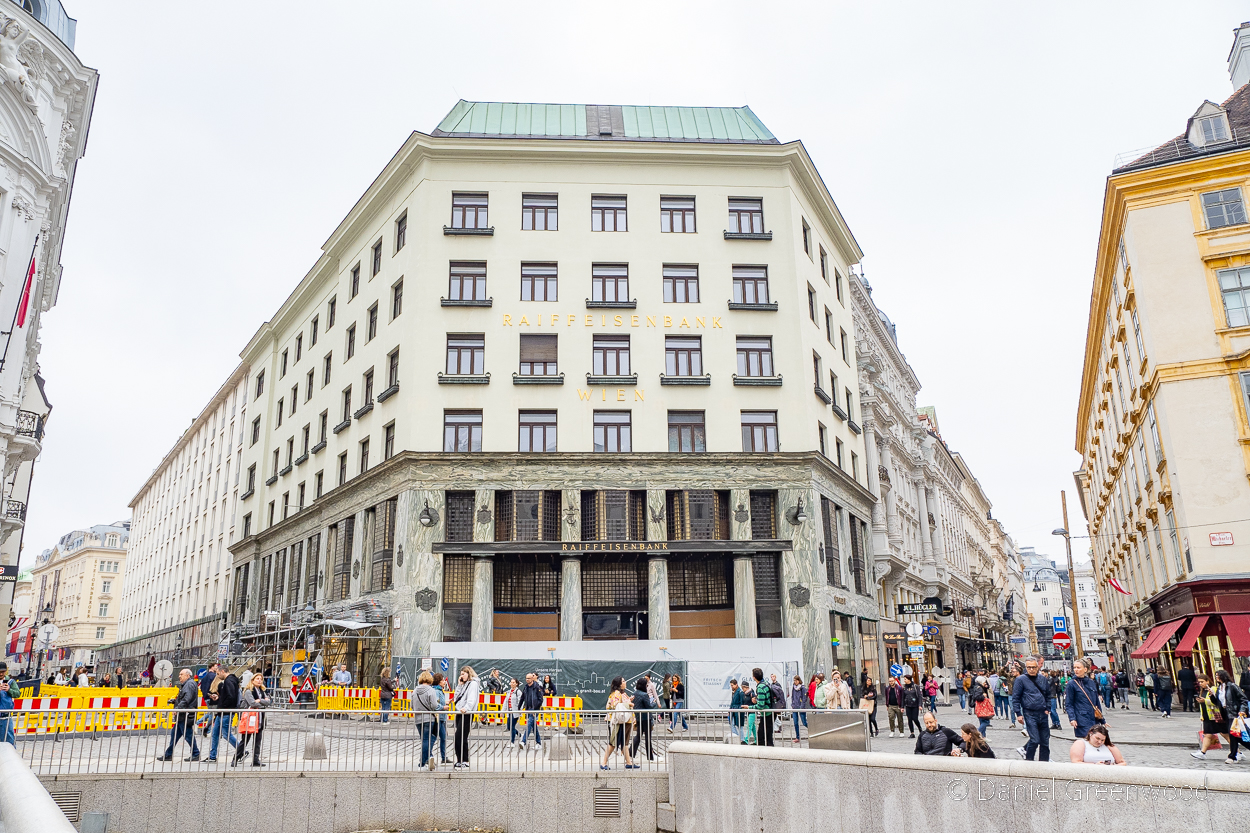
The Looshaus is of course not a Roman structure, and when it was unveiled it caused outrage among the old fashioned Viennese. Apparently Emperor Franz Joseph wasn’t a fan. It’s now considered a Viennese Modernist masterpiece.
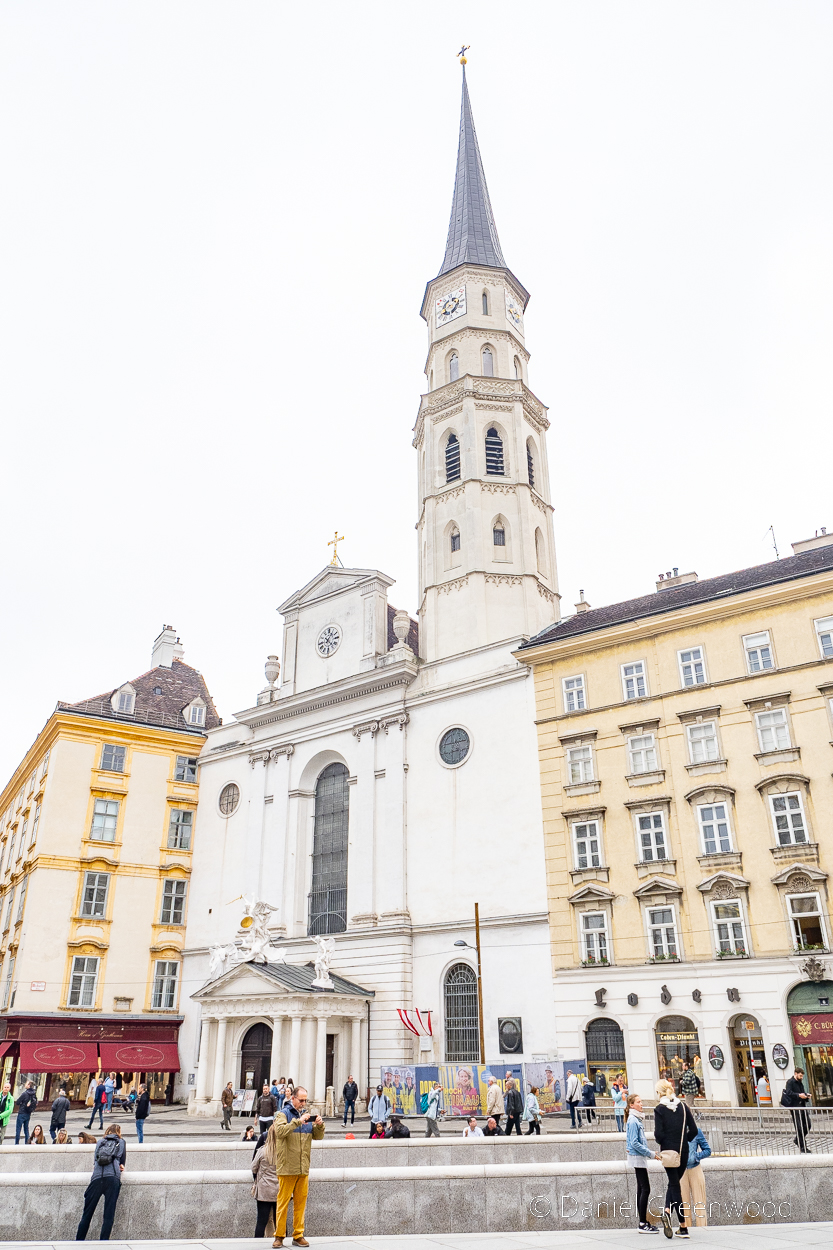
The great Austrian composer Joseph Haydn lived in lodgings near to St. Michael’s Church.
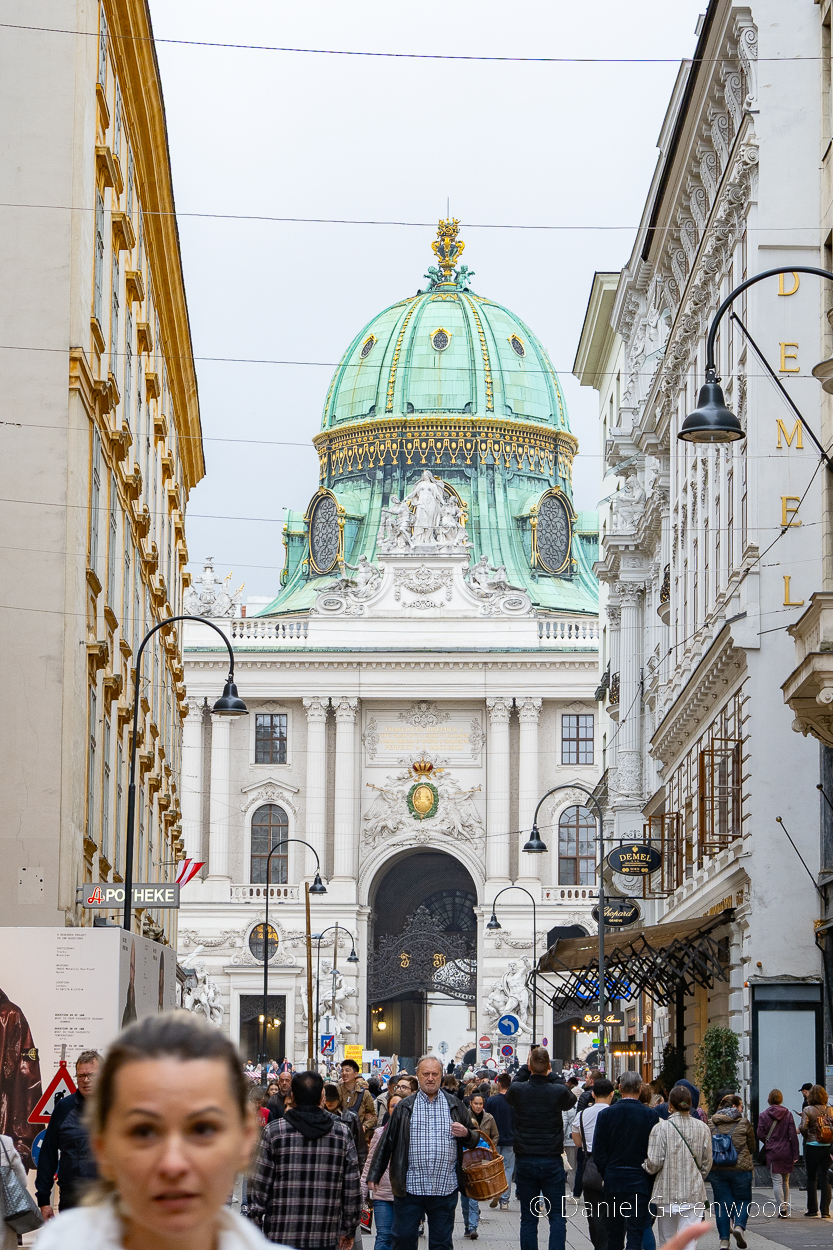
A look back towards the Hofburg Palace as we left the area. I don’t know why that man has a basket but I appreciate it.
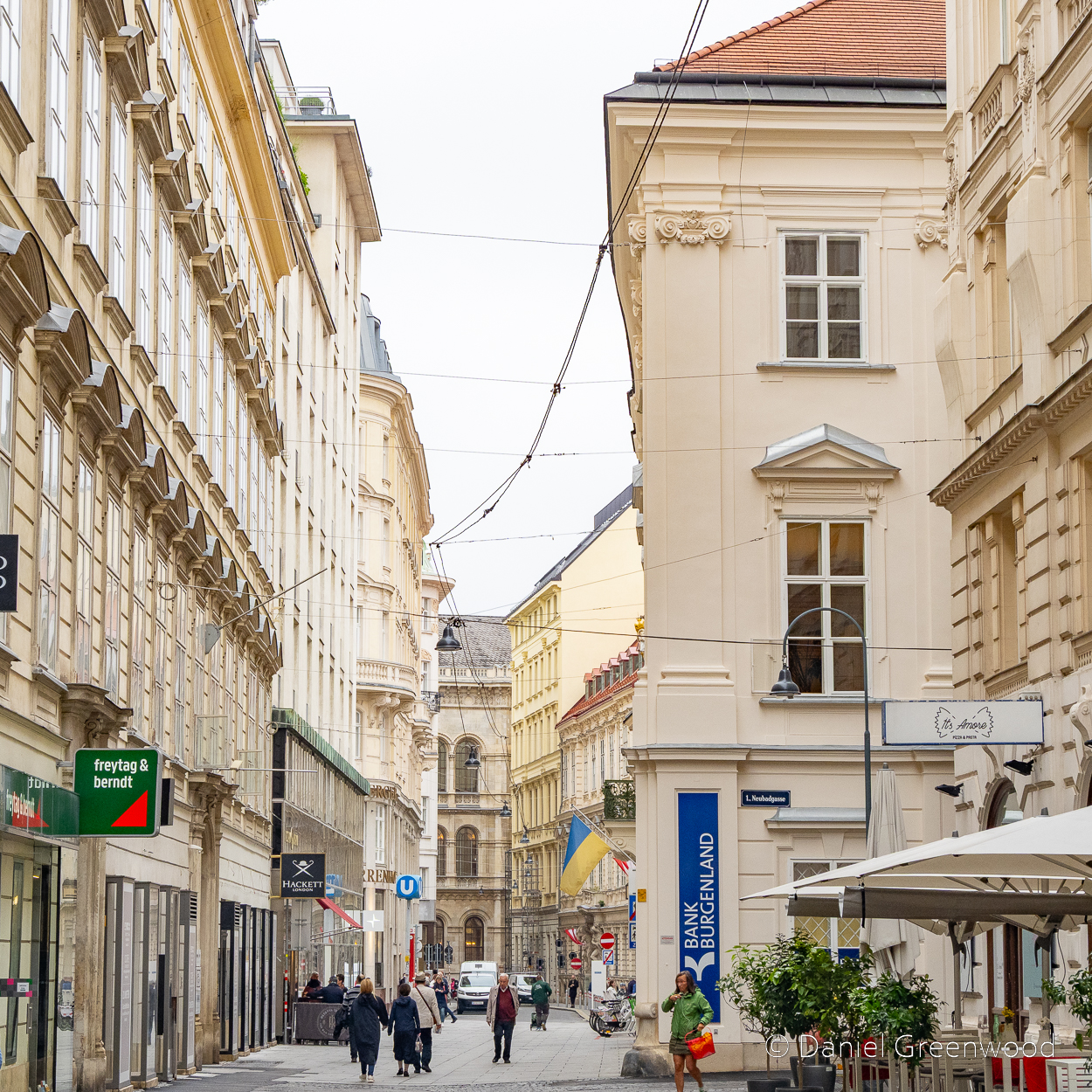
These Habsburg cities are all wires and windows.
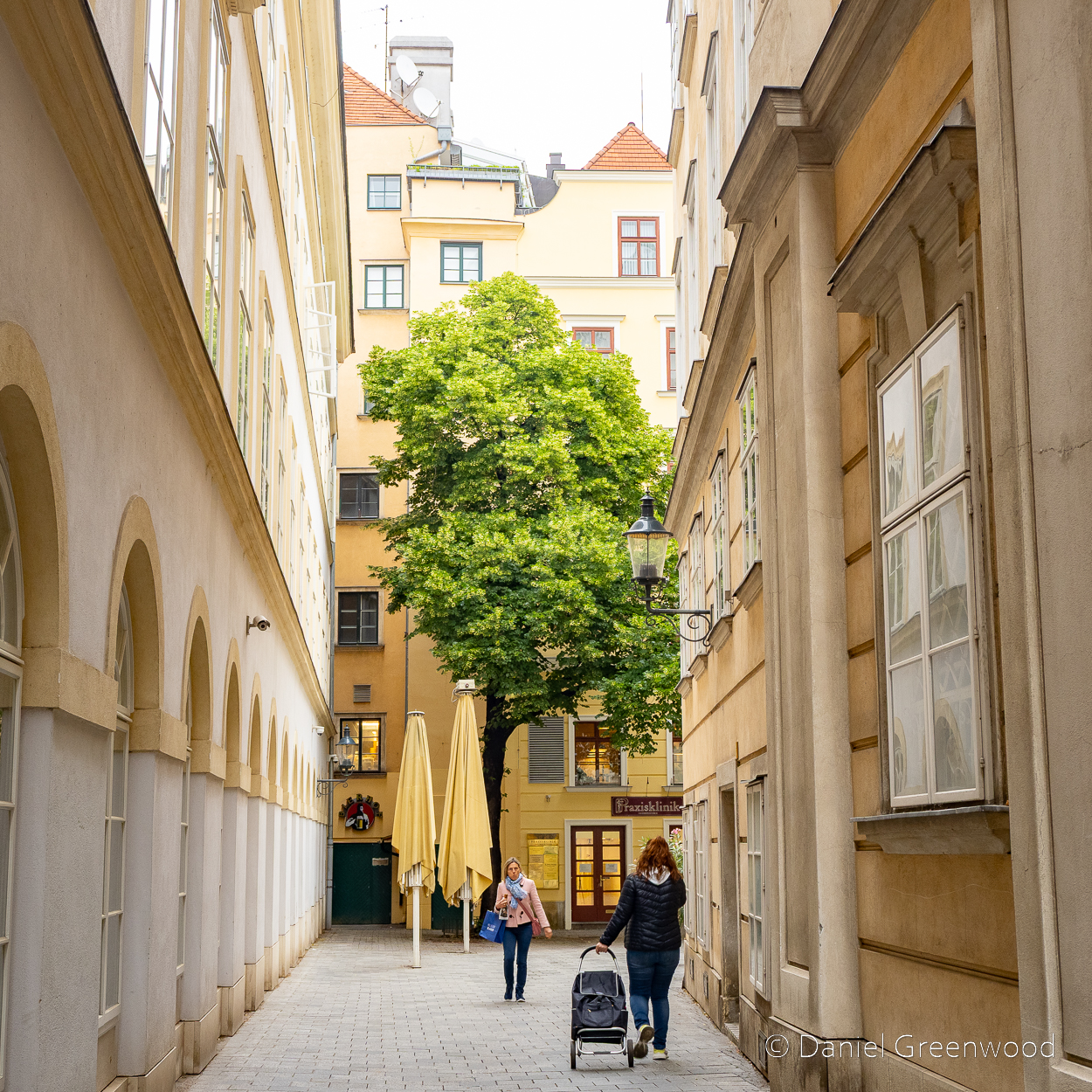
A lime tree (Tilia) living happily in an alleyway.
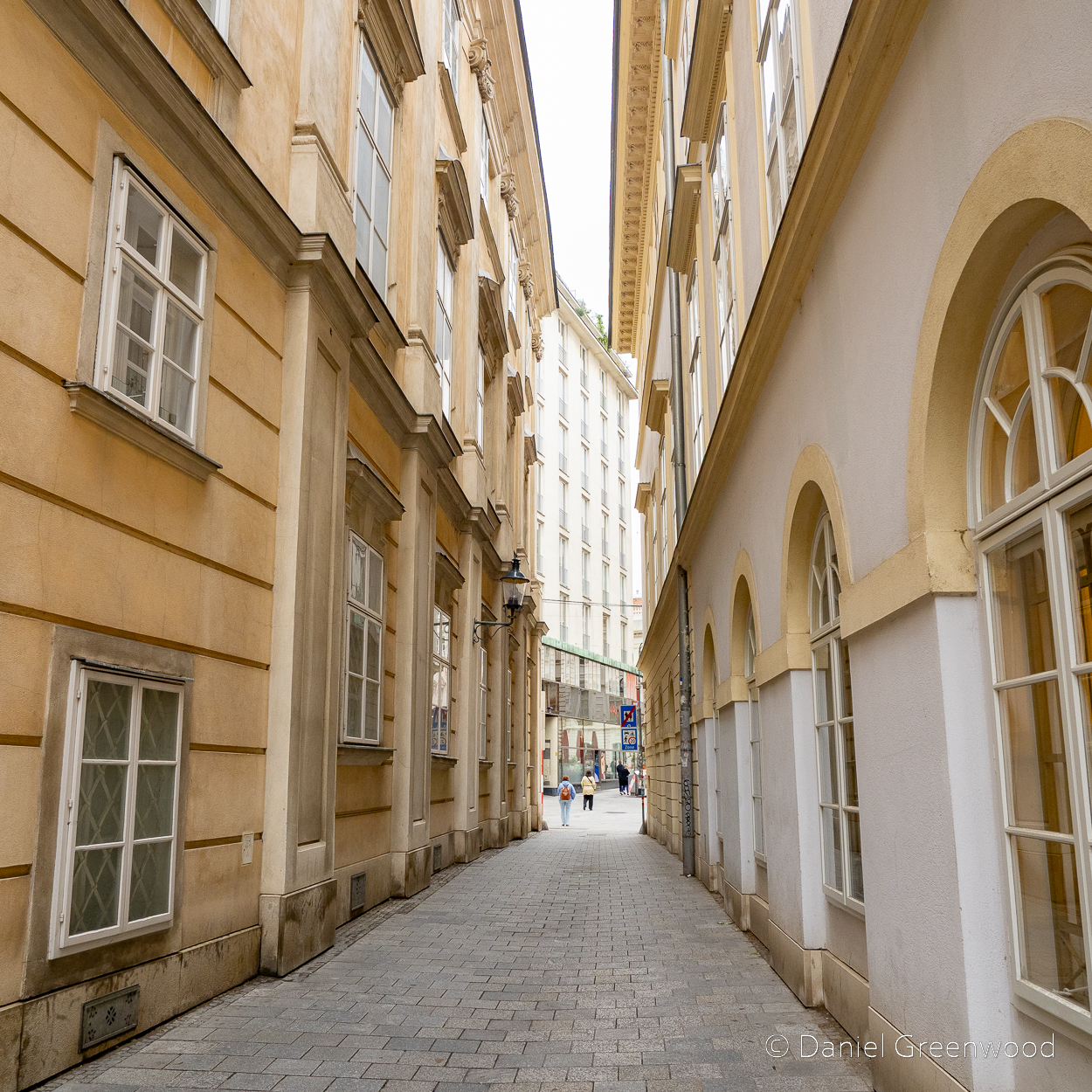
You could spend all day photographing these Viennese alleys.
The Belvedere
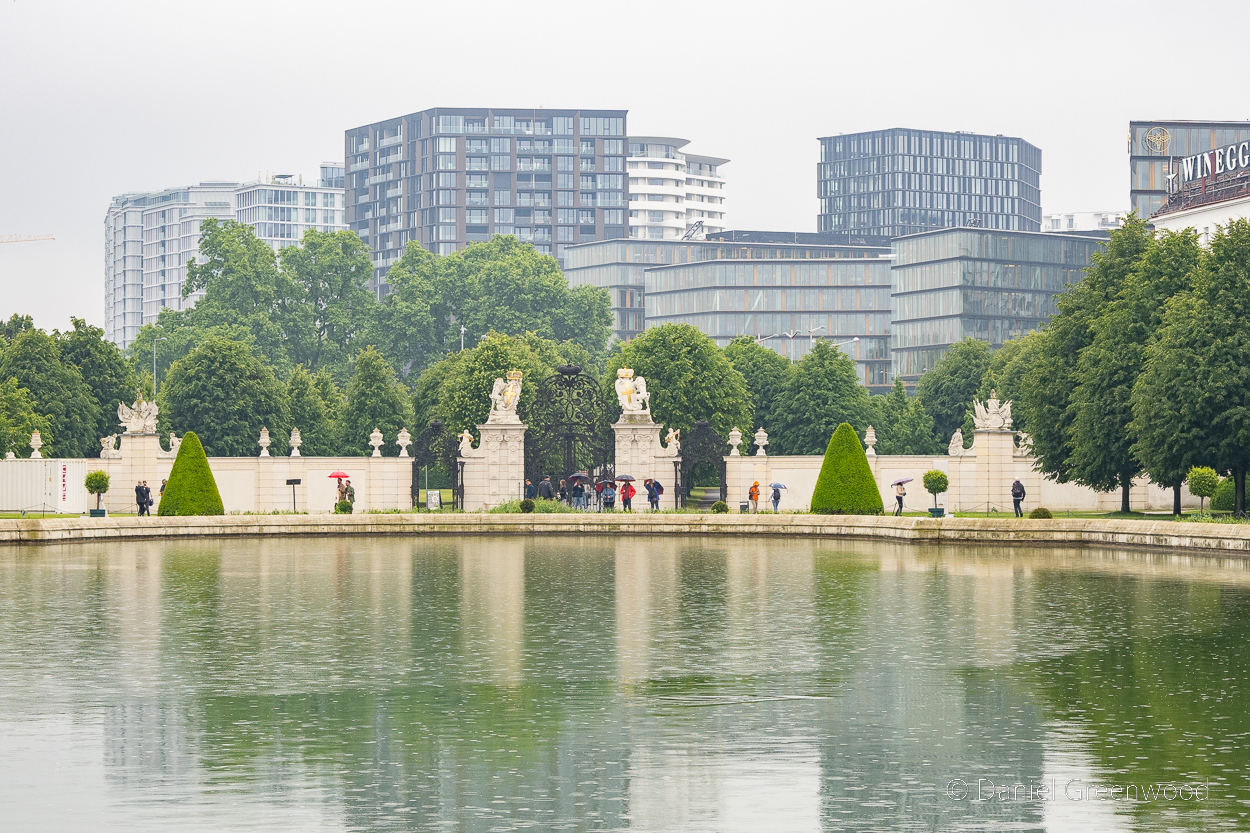
Spring rain arriving with us at the Belvedere.
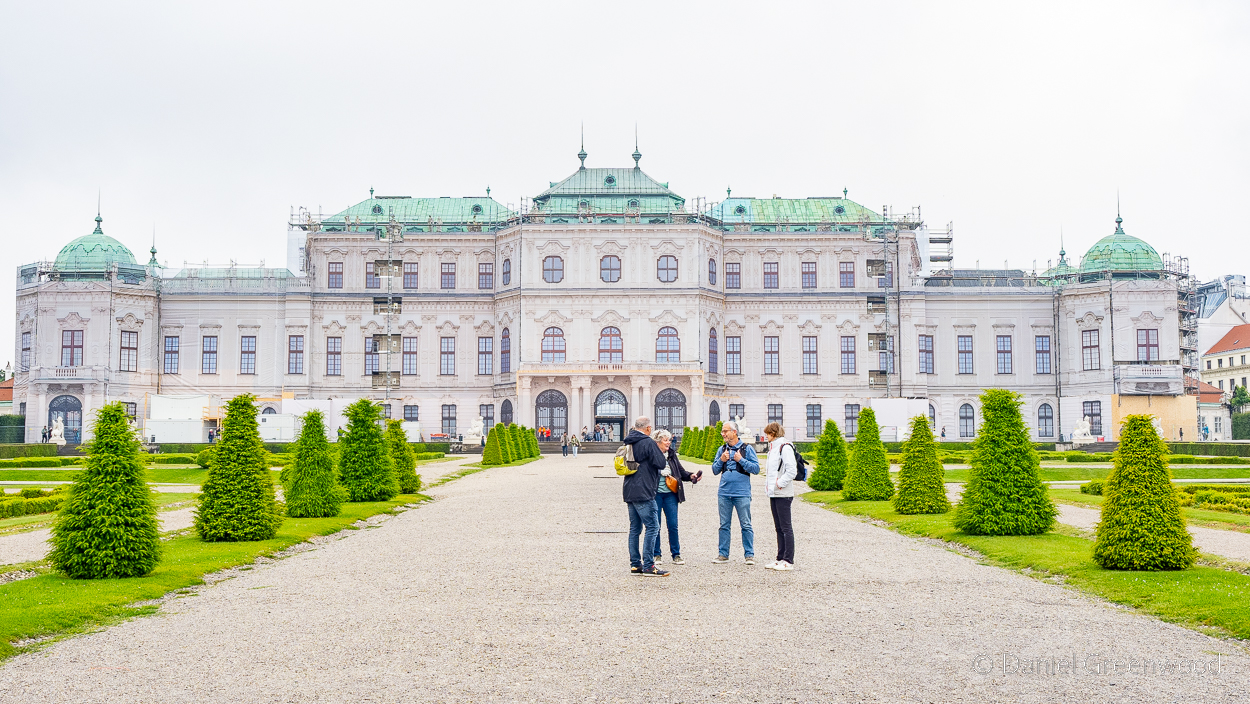
The Upper Belvedere wrapped in scaffolding ingeniously hidden by printed screening of the building! It was built in the early 1700s as the summer residence of Prince Eugene of Savoy. Not too shabby. According to the DK Eyewitness guide to Vienna, the copper roofs are in the shape of ‘Turkish tents, a sly allusion’ to Prince Eugene’s victories against the Turkish military in 1683.
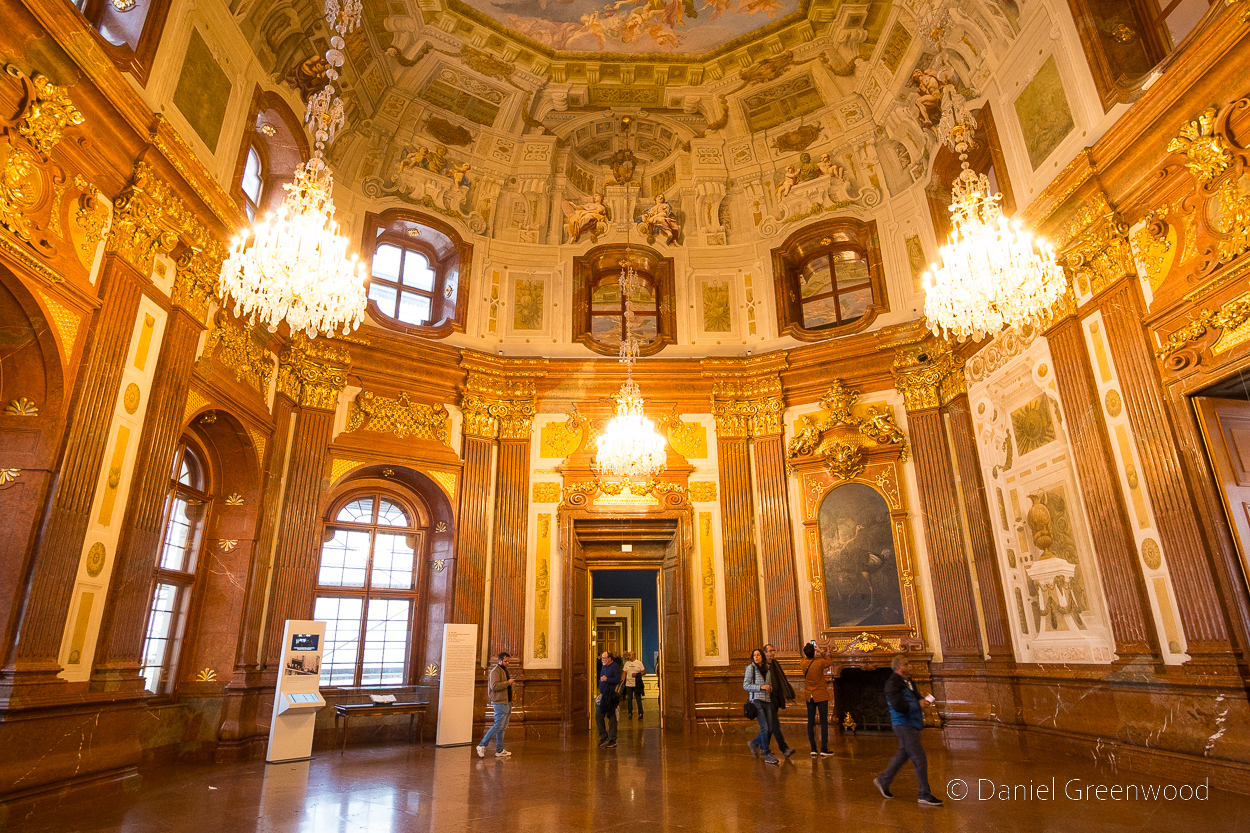
We headed inside to see The Kiss by Gustav Klimt, and many other treasures.
The Marble Hall — the two-storey ceremonial hall at the centre of the palace’s garden front, sheathed in red-brown marble beneath a painted ceiling — is where, on 15 May 1955, the foreign ministers of four occupying powers and of Austria signed the Austrian State Treaty, restoring the country as a free, sovereign and democratic state after seventeen years of annexation, war and occupation
Schloss Belvedere
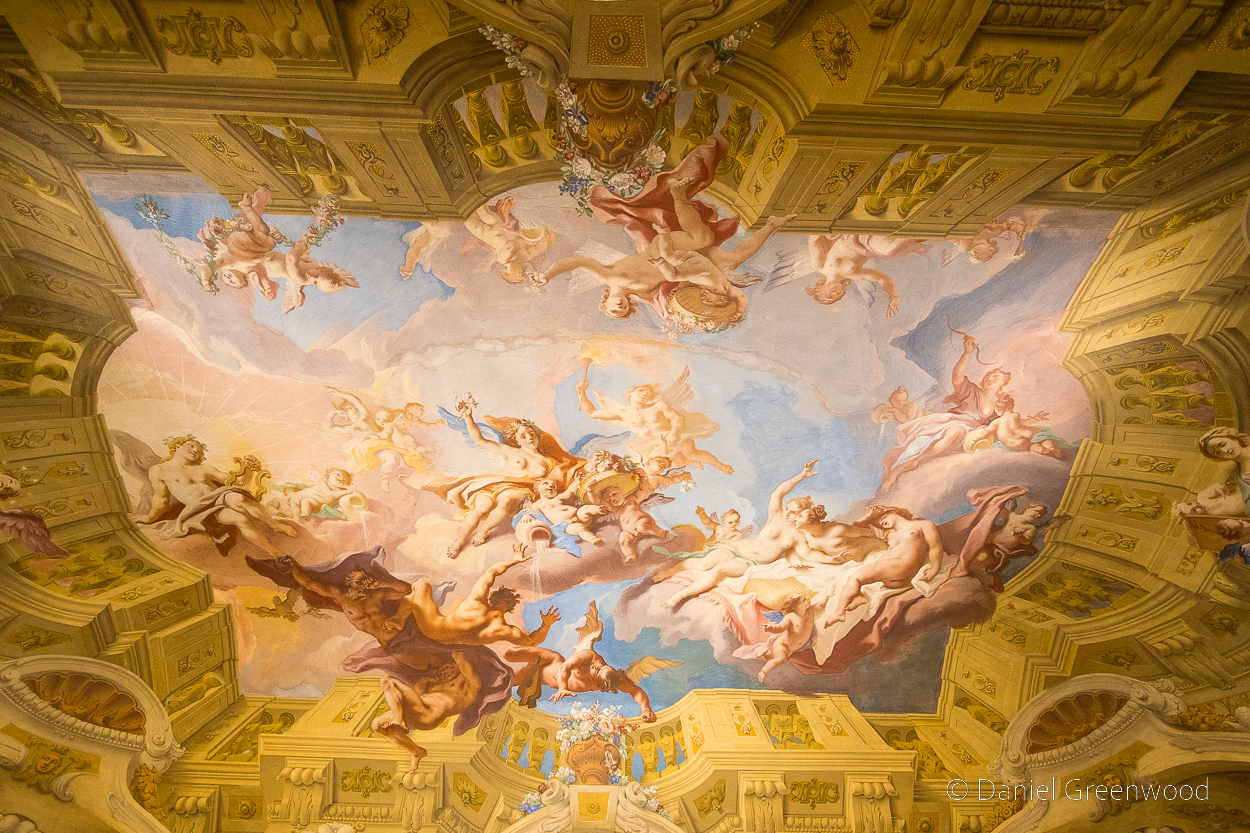
One of the ceiling frescoes painted by Carlo Innocenzo Carlone in the 1720s.
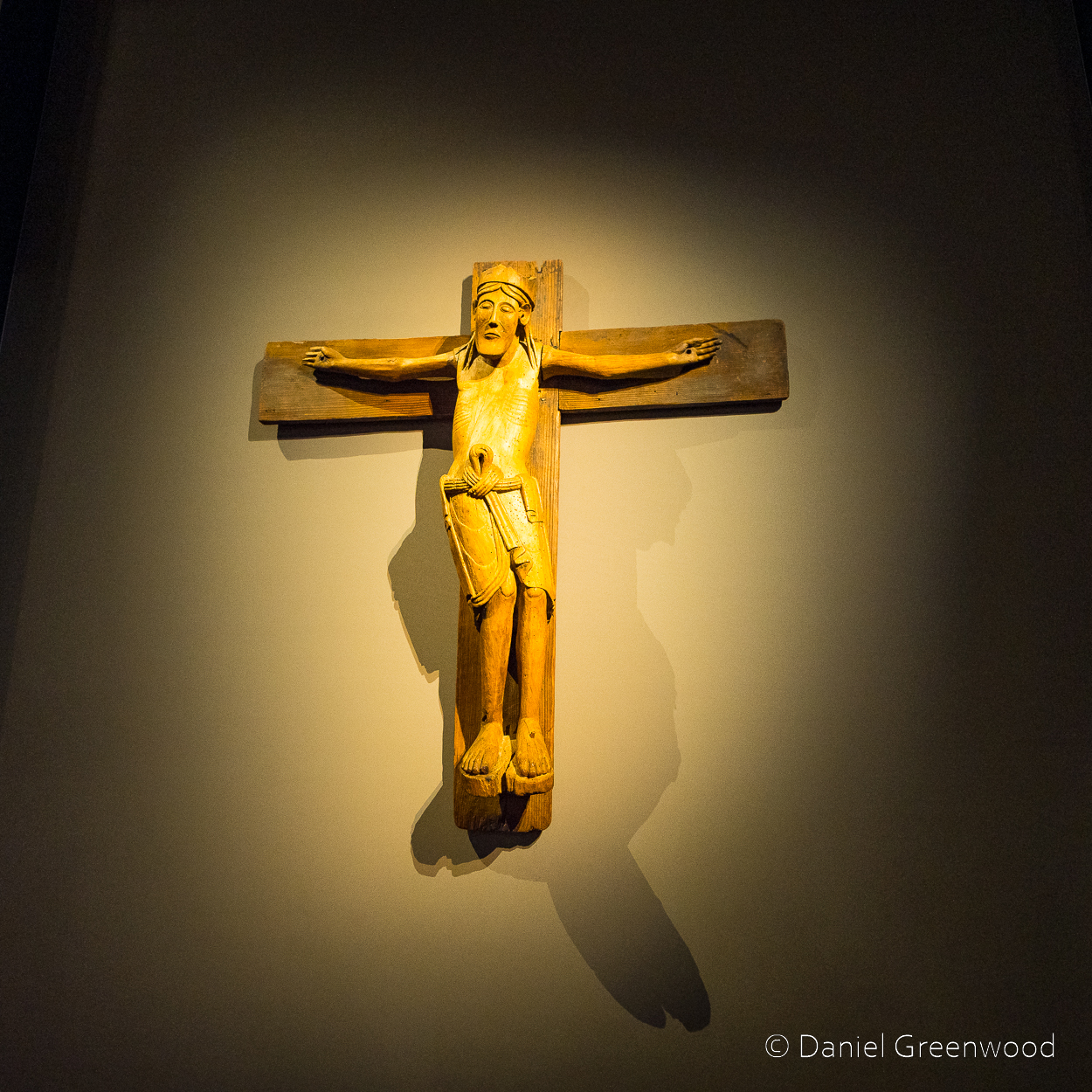
The Stammerberg Crucifix is from the 1200s! It’s the oldest remaining piece of Tyrolean wood carving (Tyrol is an area of Austria near Innsbruck and the Italian border), and the oldest item at the Belvedere.
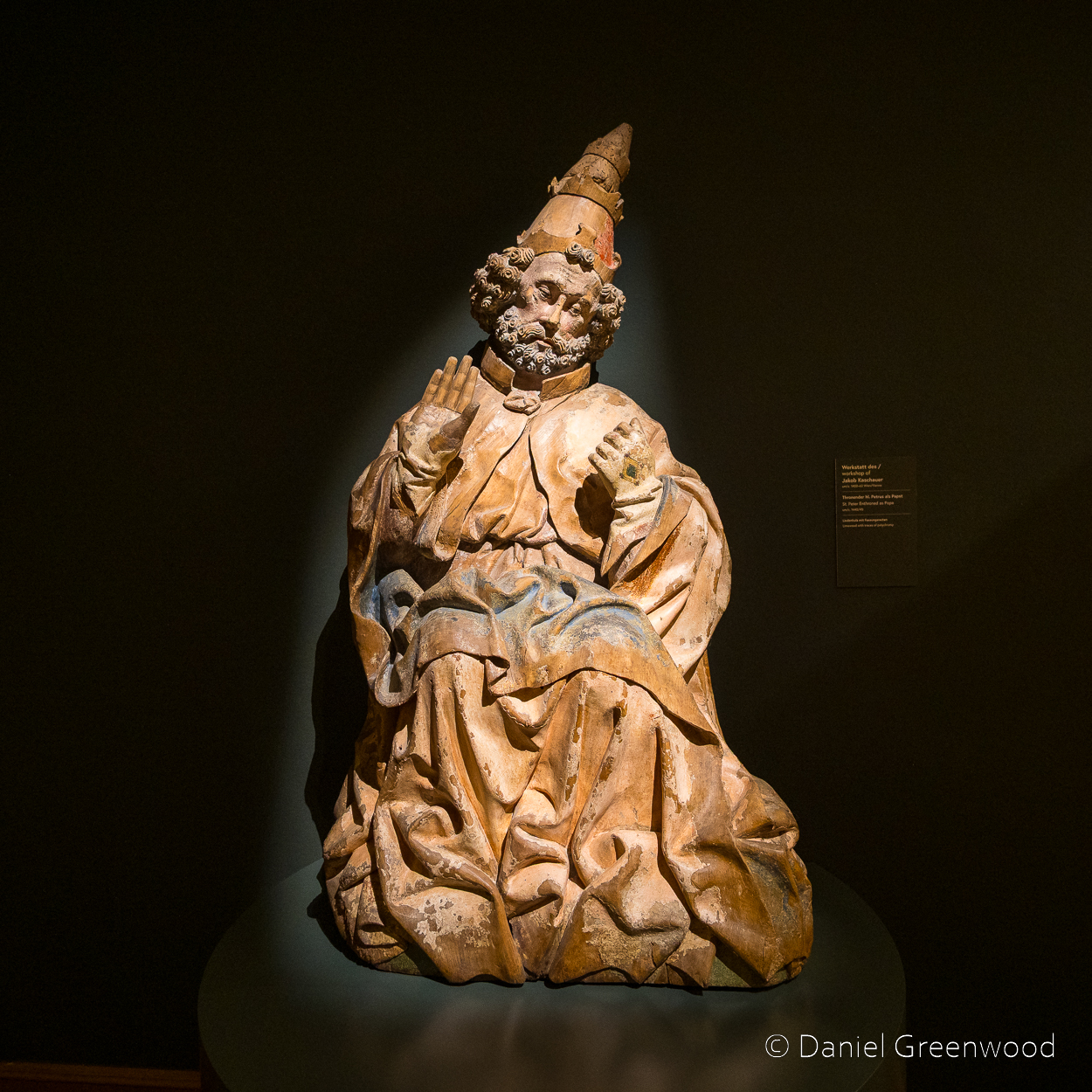
Saint Peter Enthroned as Pope, a wooden sculpture by Jakob Kaschauer from the 1500s.
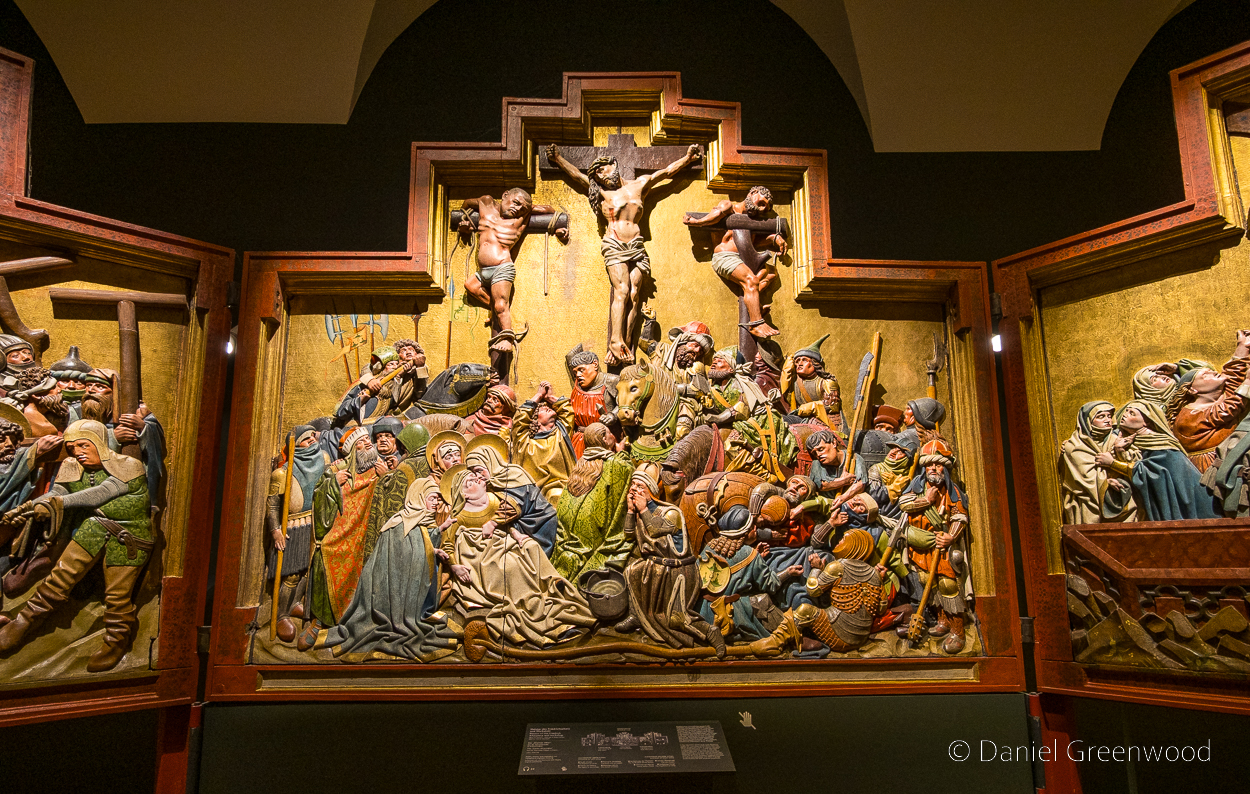
The Znojmo Alter (1400s). Znojmo is a place in South Moravia, Czechia, which is not far at all from Austria. I can’t find any further info about this carved piece. Apologies to the experts, this is of course only the centrepiece.
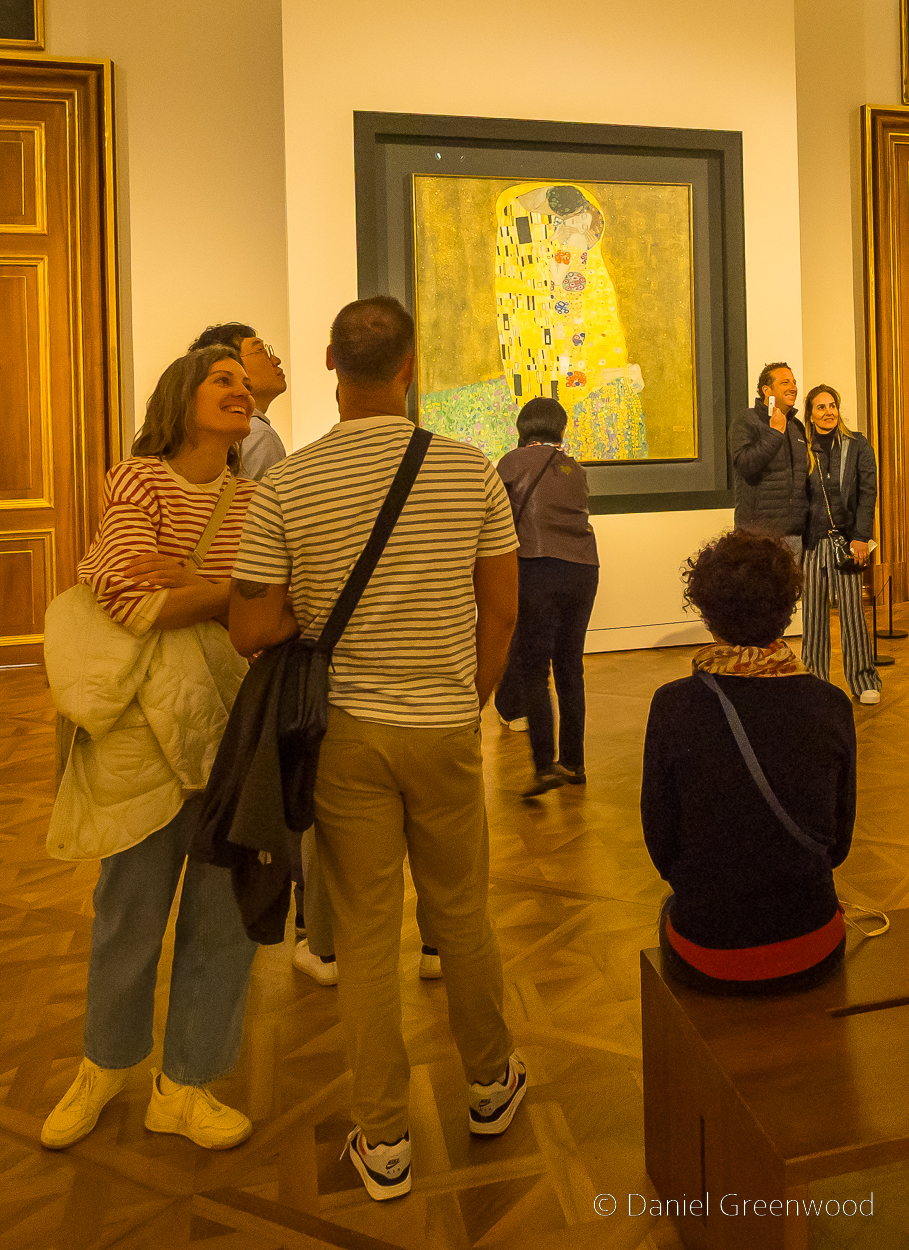
And there it is – The Kiss by Gustav Klimt. You’re not going to get an unbroken view of the painting, and I liked having people smiling around it.
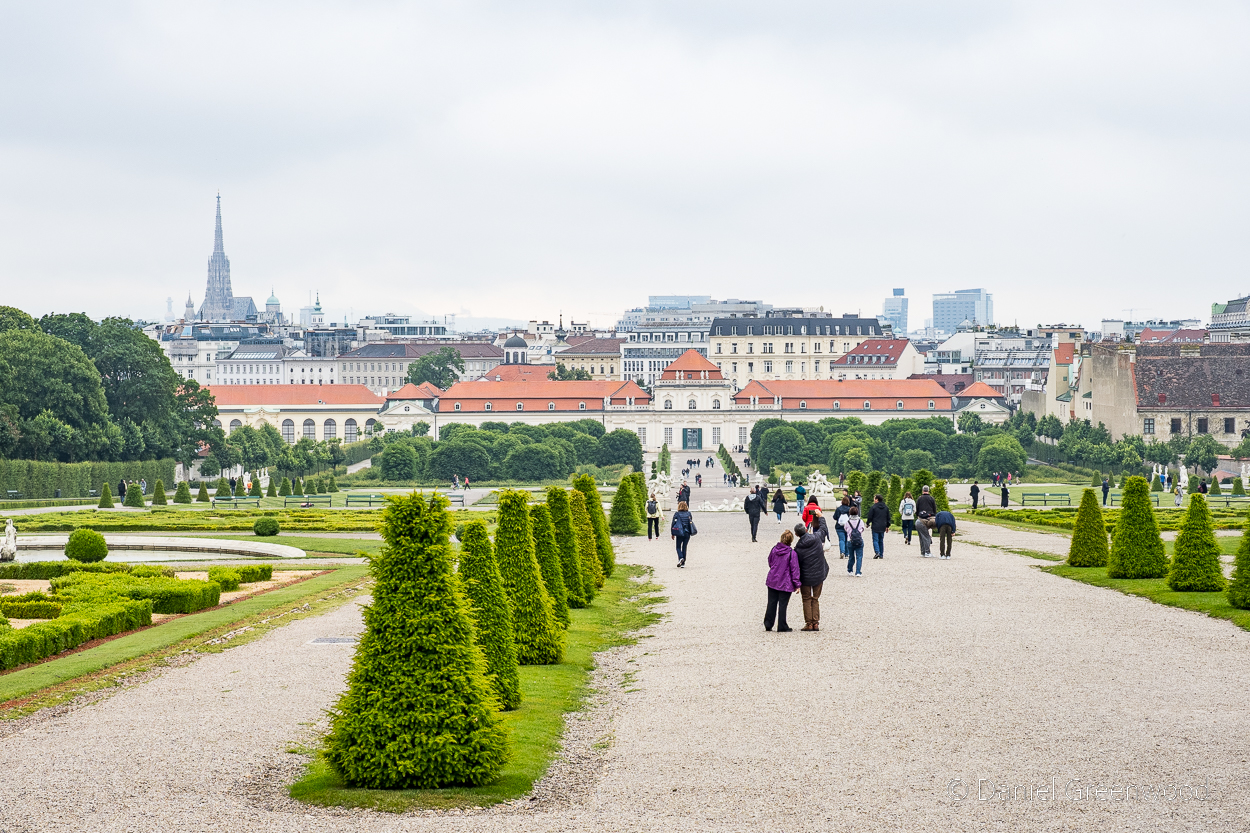
Back out in the Belvedere Gardens, with a view to the Lower Belvedere (built in 1716) and the wider city. I wish London had protected its skyline (our, my skyline, as a native Londoner) from the horrendous glass garbage that has been thrown up since 2005. The spire in the distance is the majestic St. Stephens Cathedral.
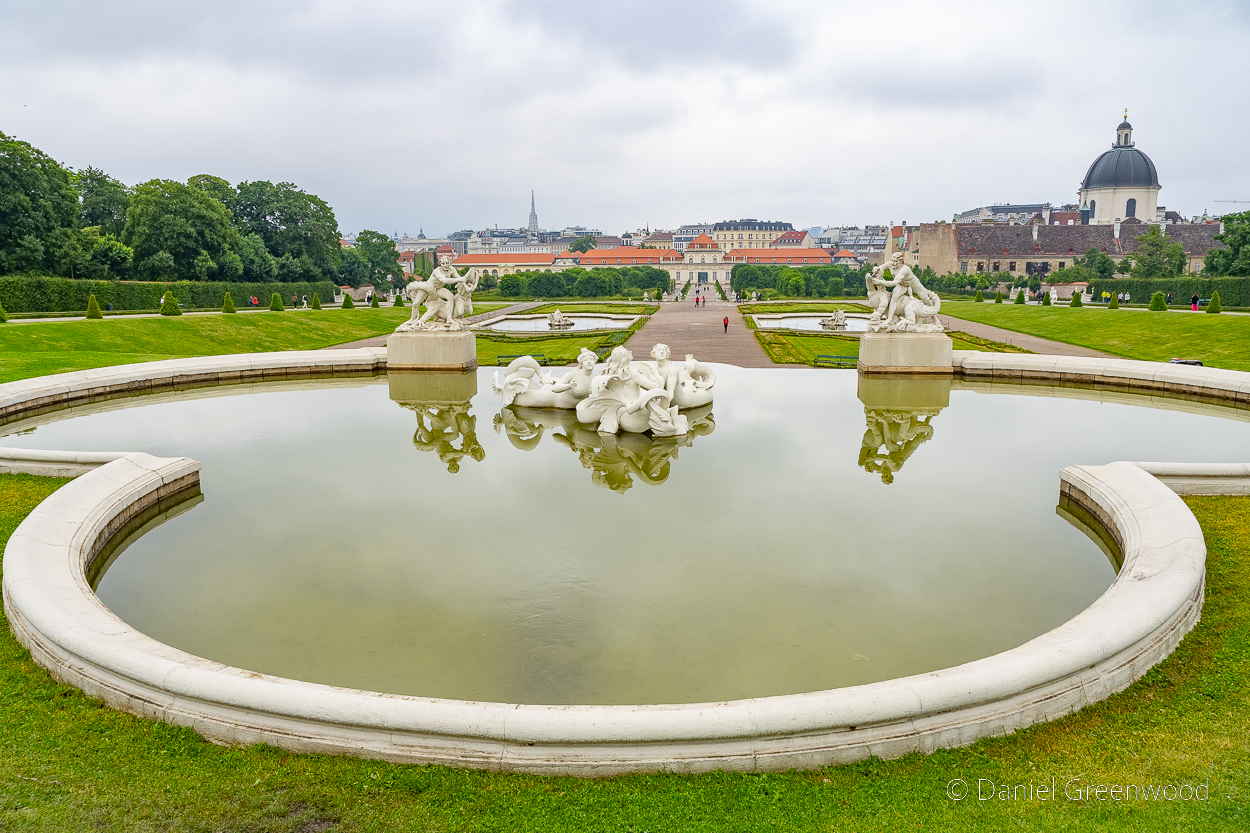
I enjoyed the reflection here.
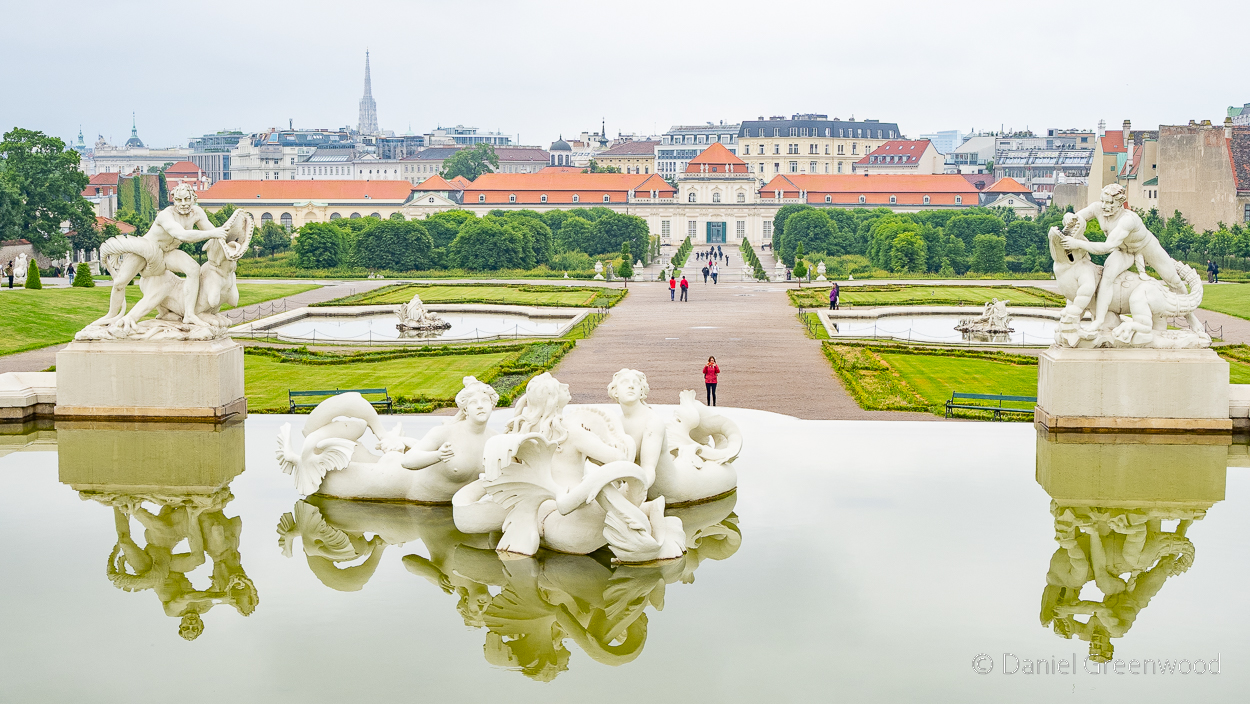
…but I think this one is the stronger photo. It’s playful and the framing is more effective.
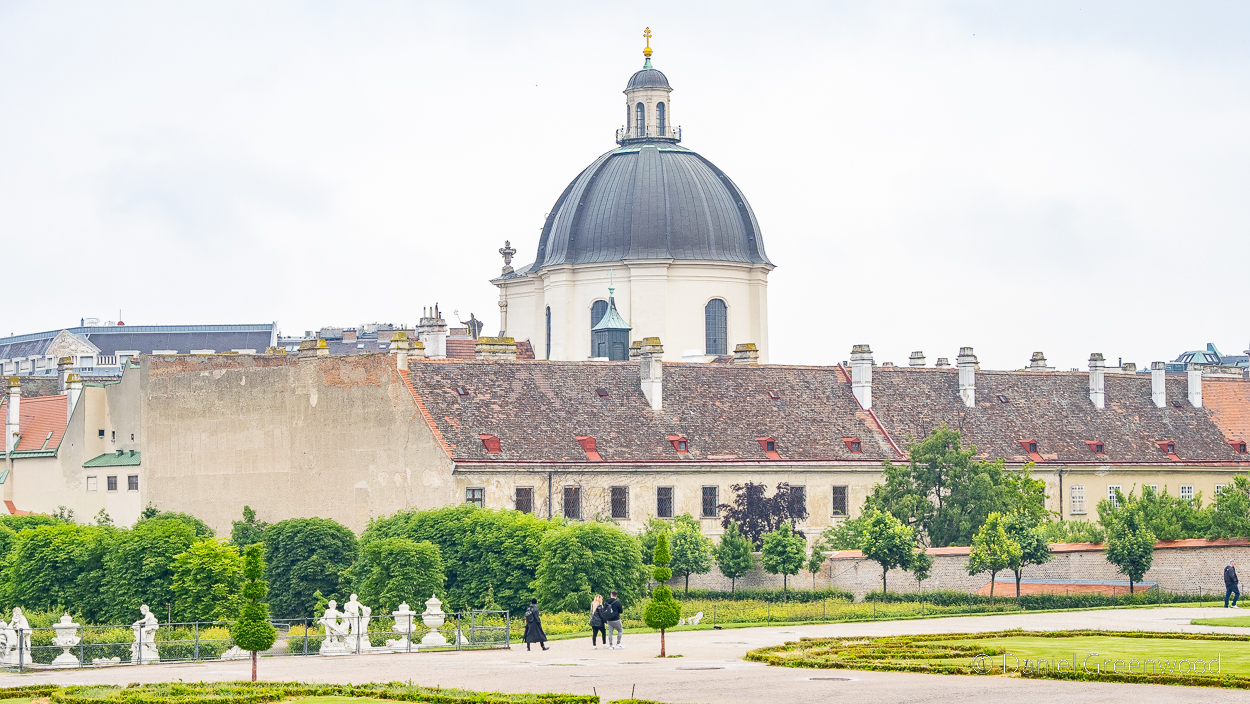
The Salesian Church dome overlooks the walls of the Belvedere Gardens.
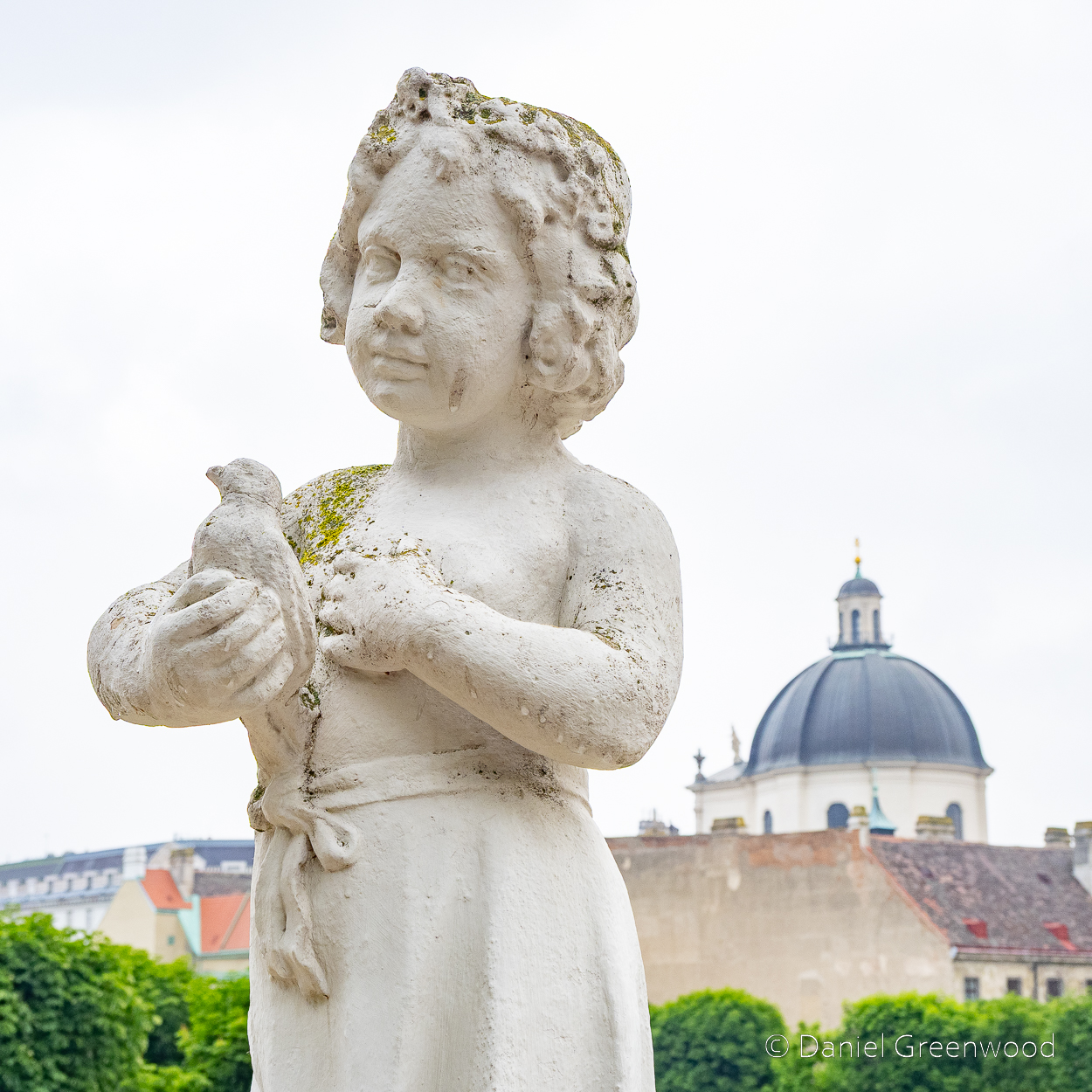
A bird in hand (and lichens on the shoulder)…
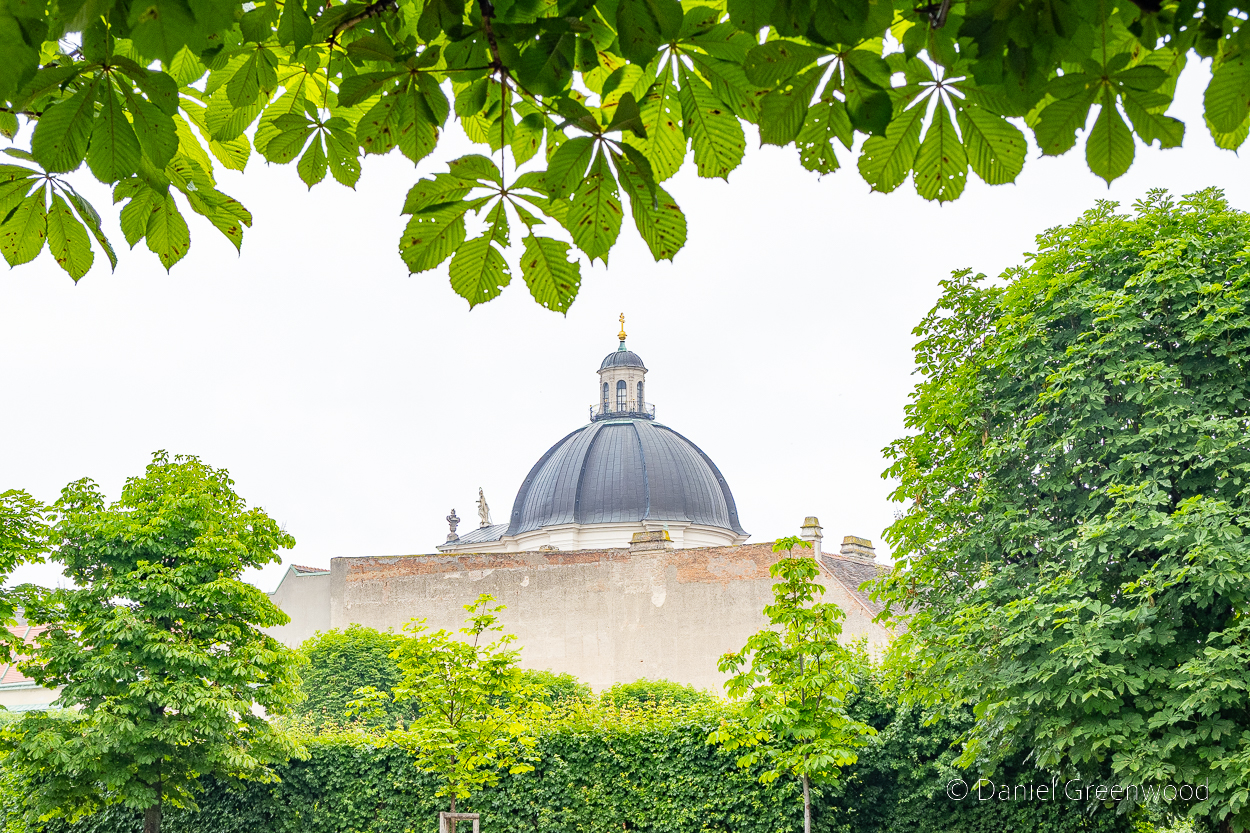
The Silesian Church popping up again, but I like the horse chestnut leaves (well nibbled, by the way) fringing the top of the frame.
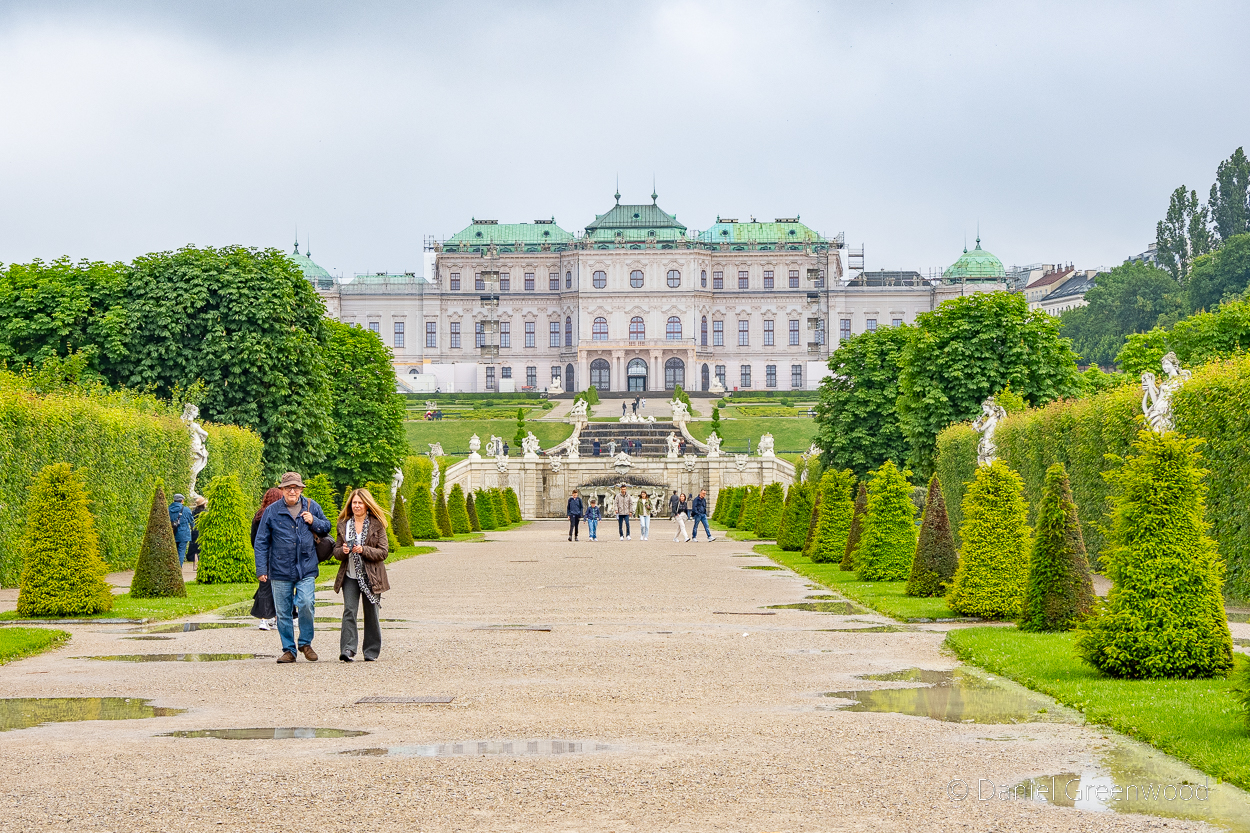
A look back up the main pathway to the Upper Belvedere, which you would never know had scaffolding on it. Bravo.
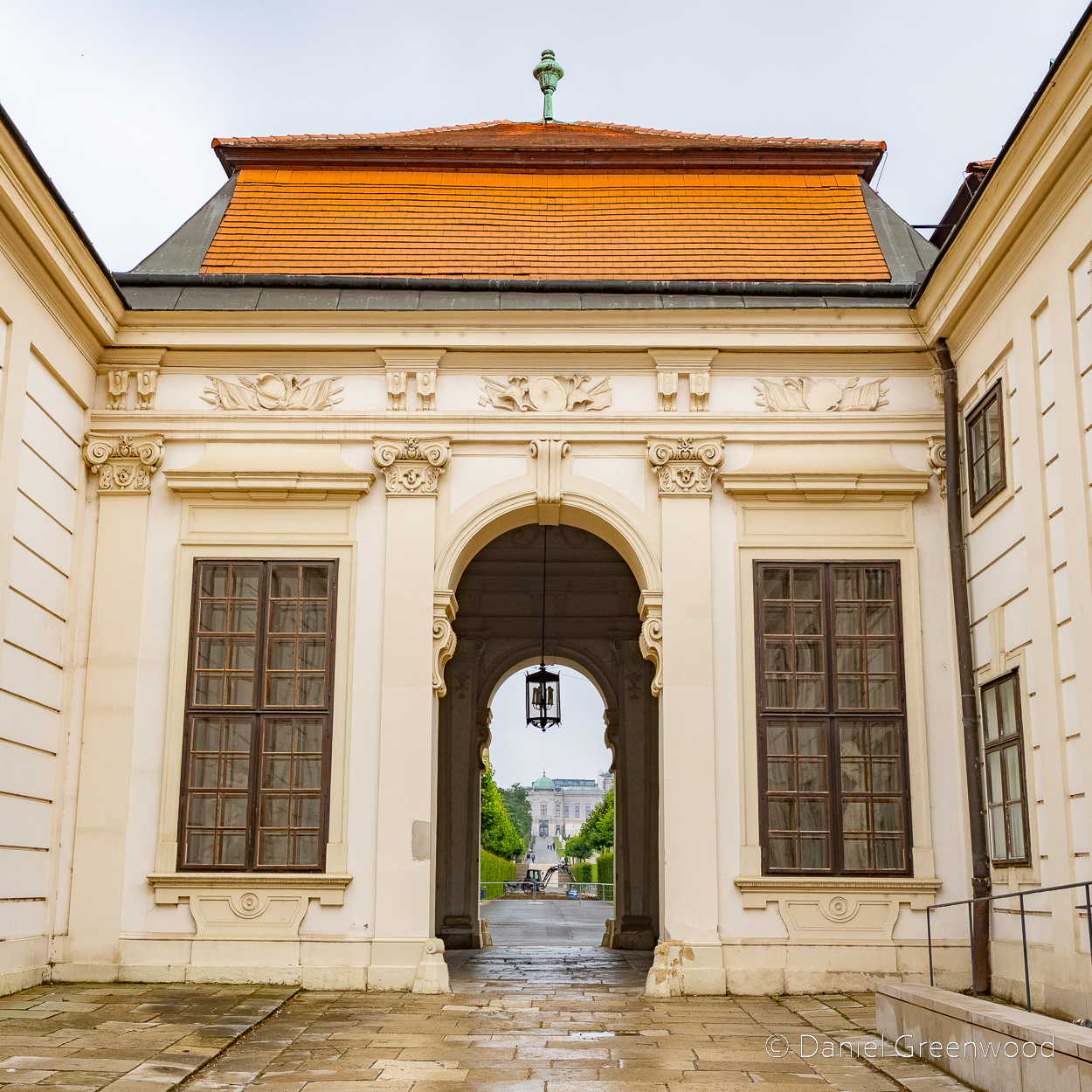
One of the gates to the Lower Belvedere, as we made our way back out to the tram stop.
Walking to Cafe Sperl
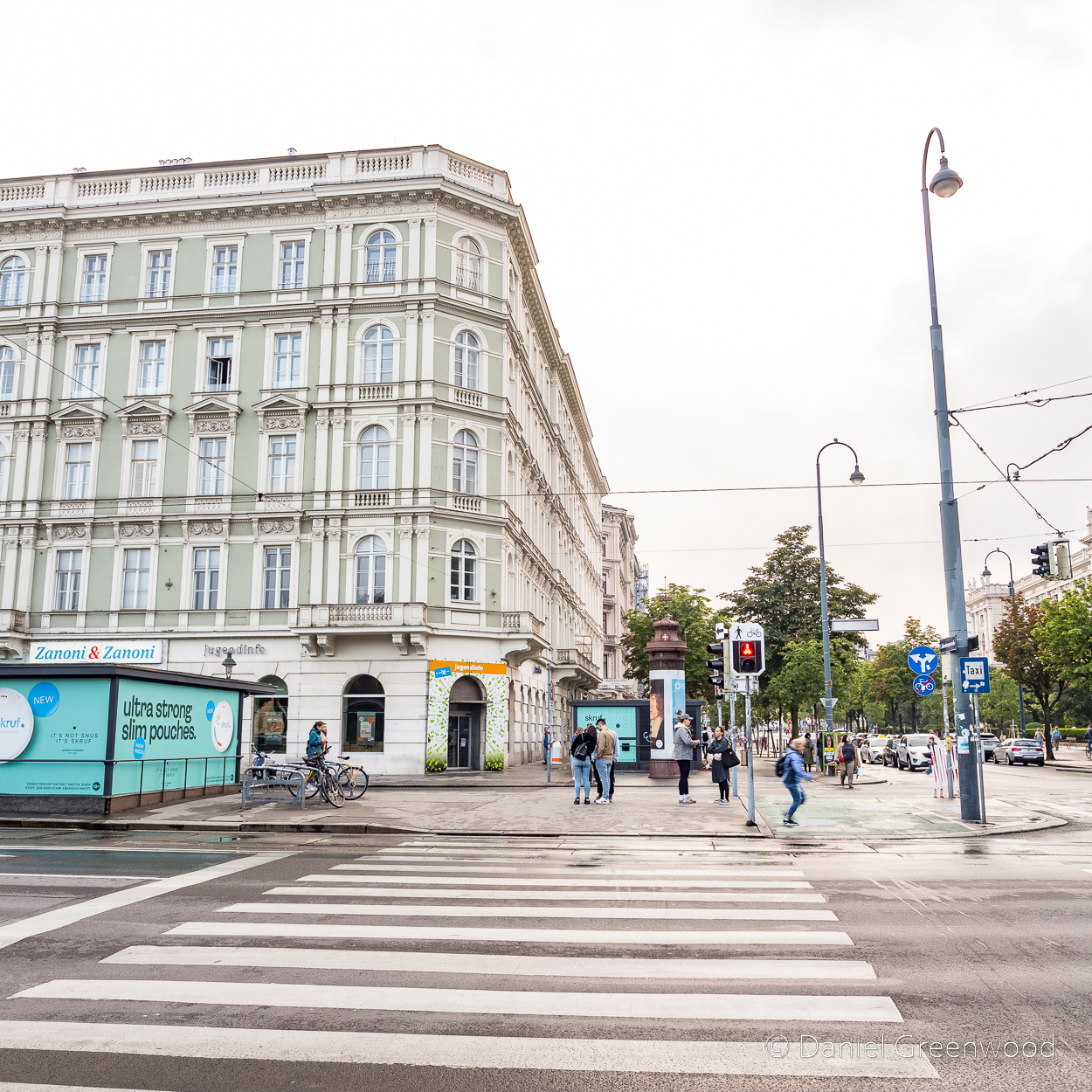
We took the tram to the Burgring and walked the short distance to Café Sperl.
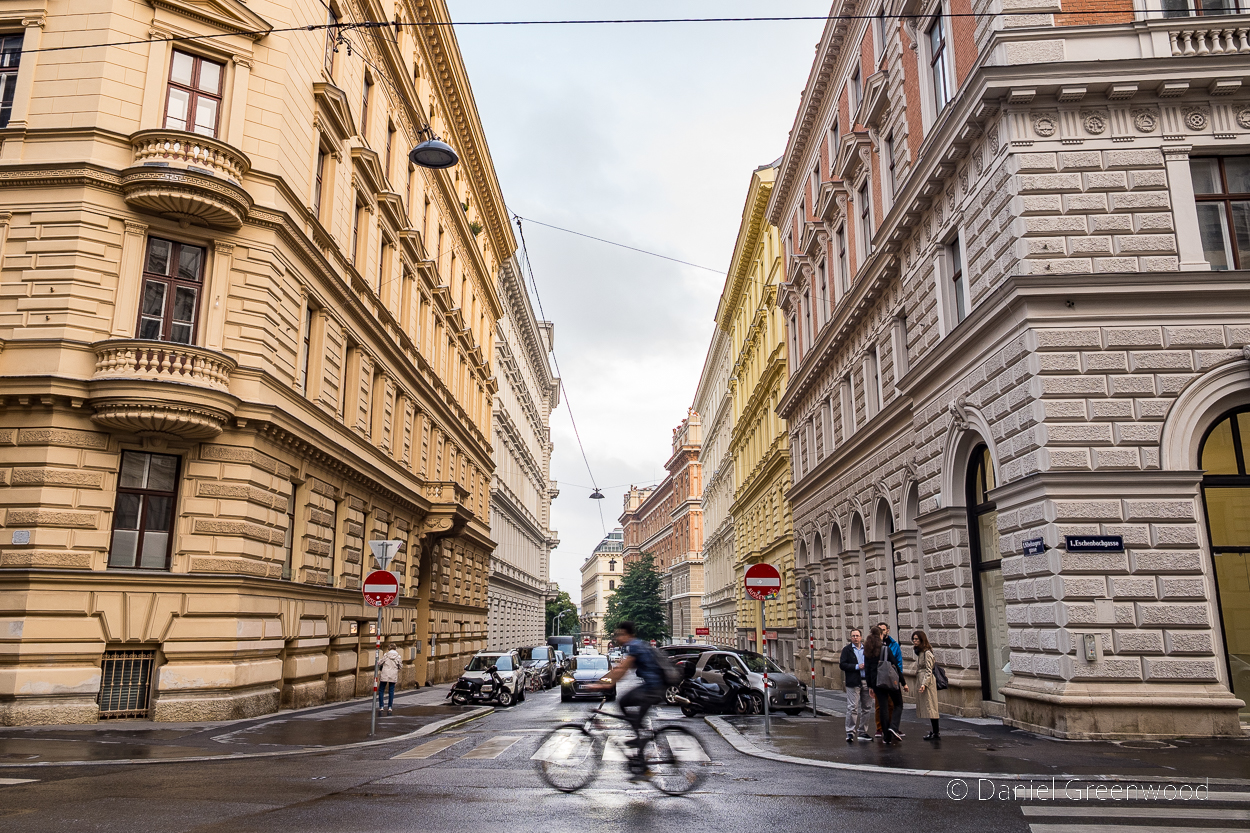
Peering down Nibelungengasse
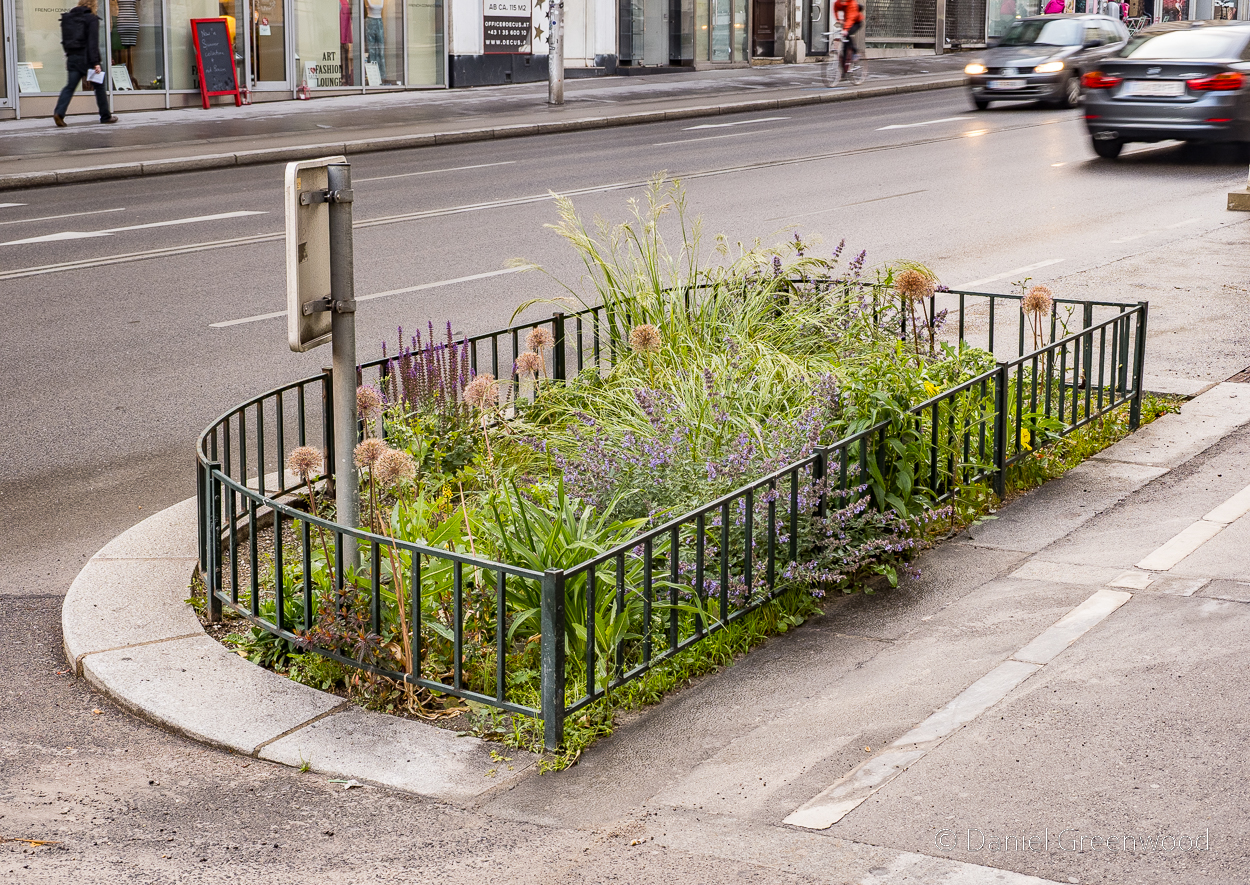
These little pockets of green space are a welcome break from the stone and concrete.
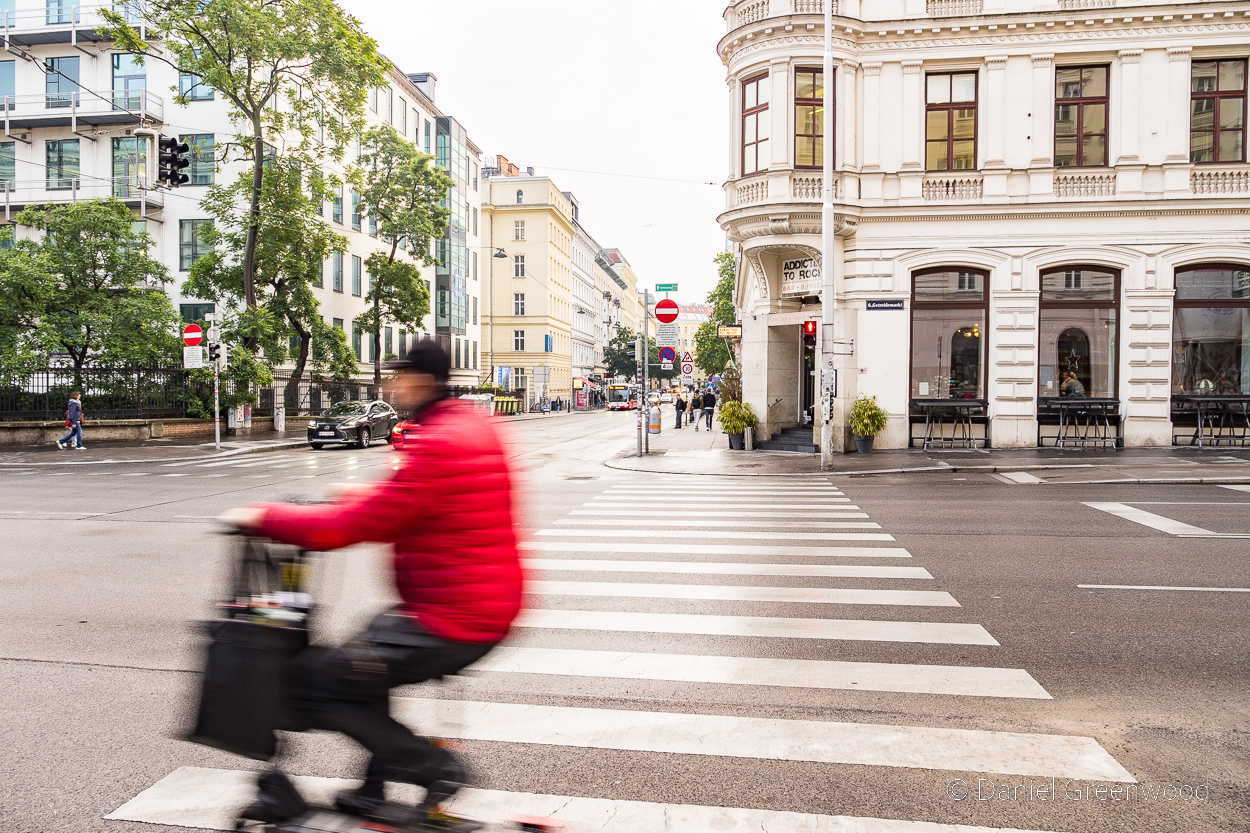
A man zooms past on an e-scooter with a seat.
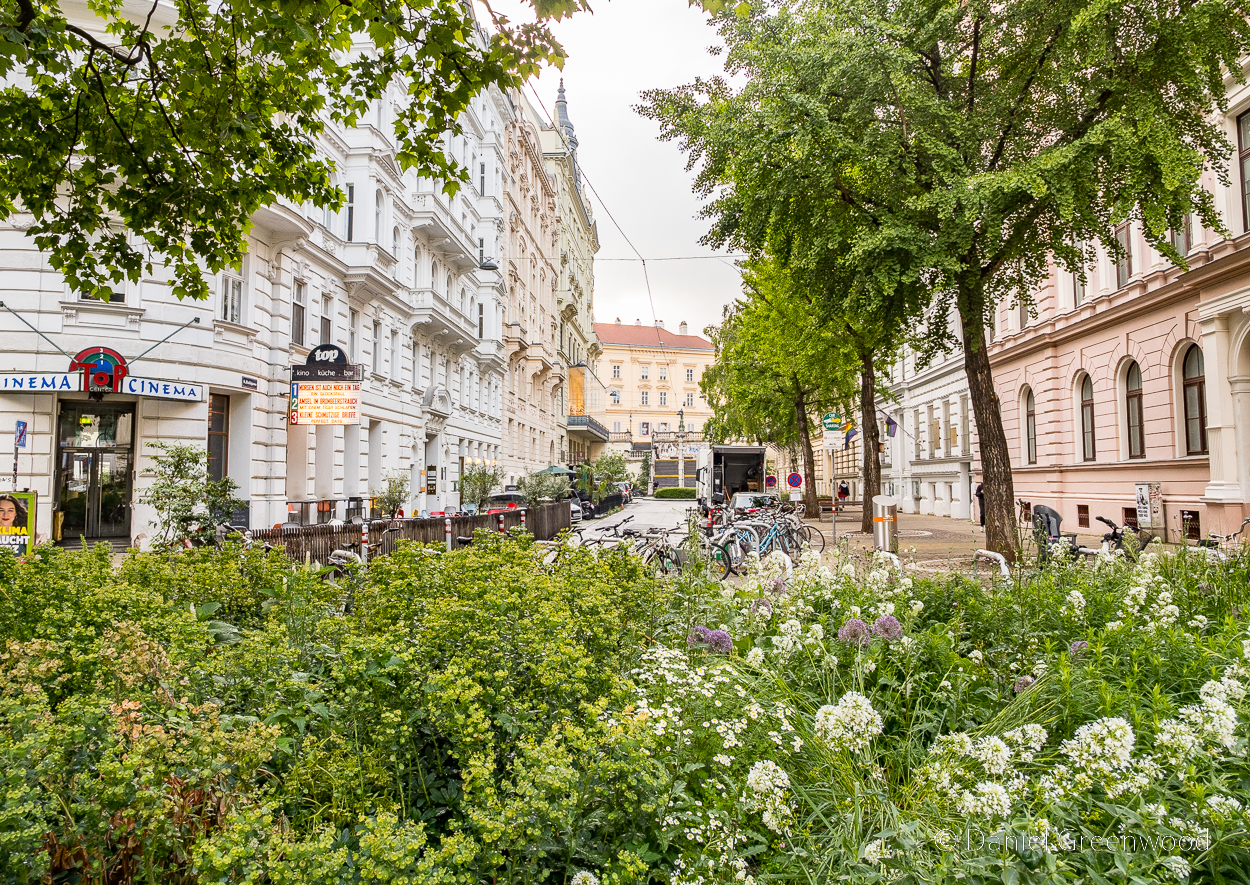
It’s good to see these eruptions of flowers, with what look likes a spurge on the left, with a mixture of alliums, daisies andf more on the right. The trees on the right look like gingkos.
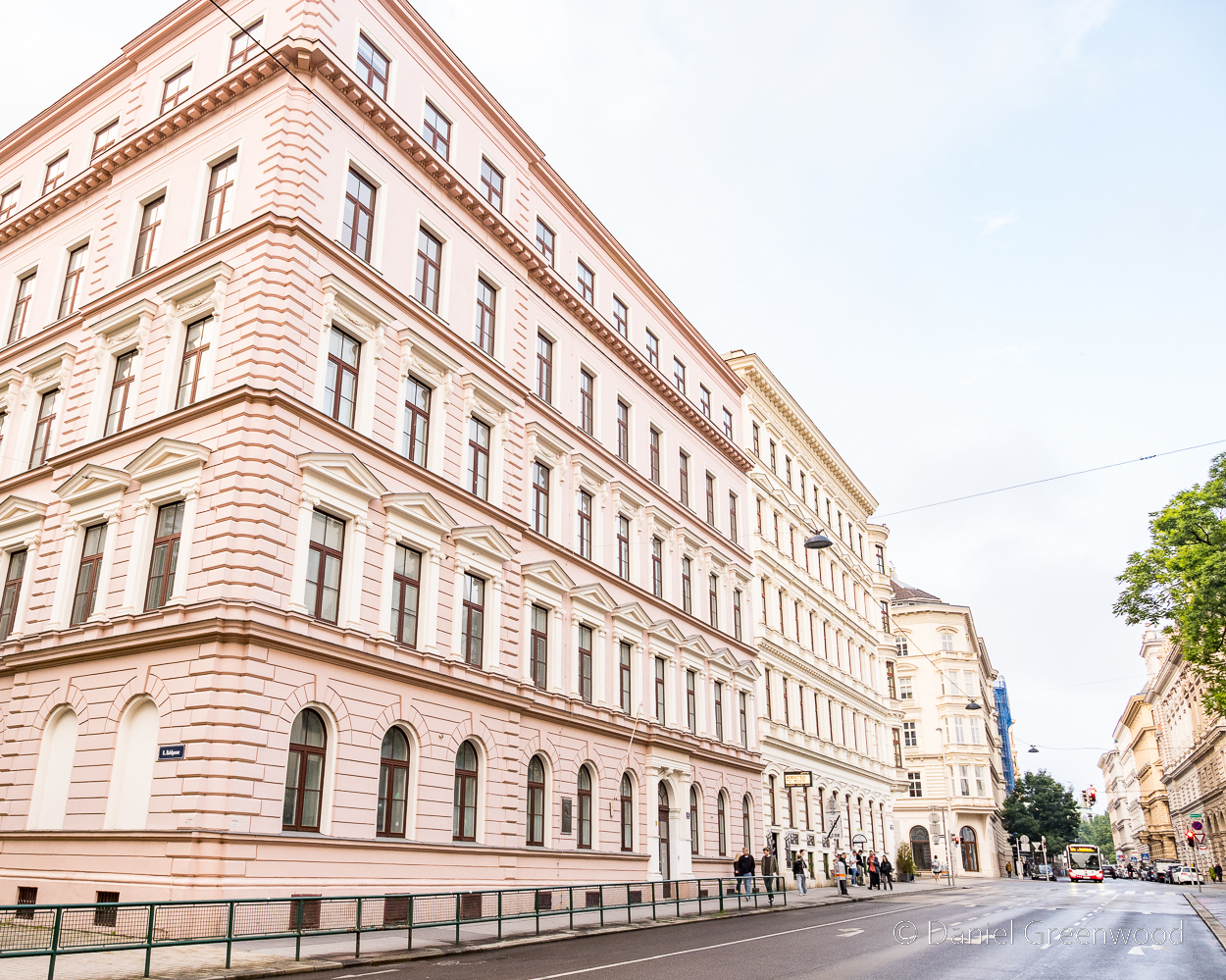
This building looks like a cake.
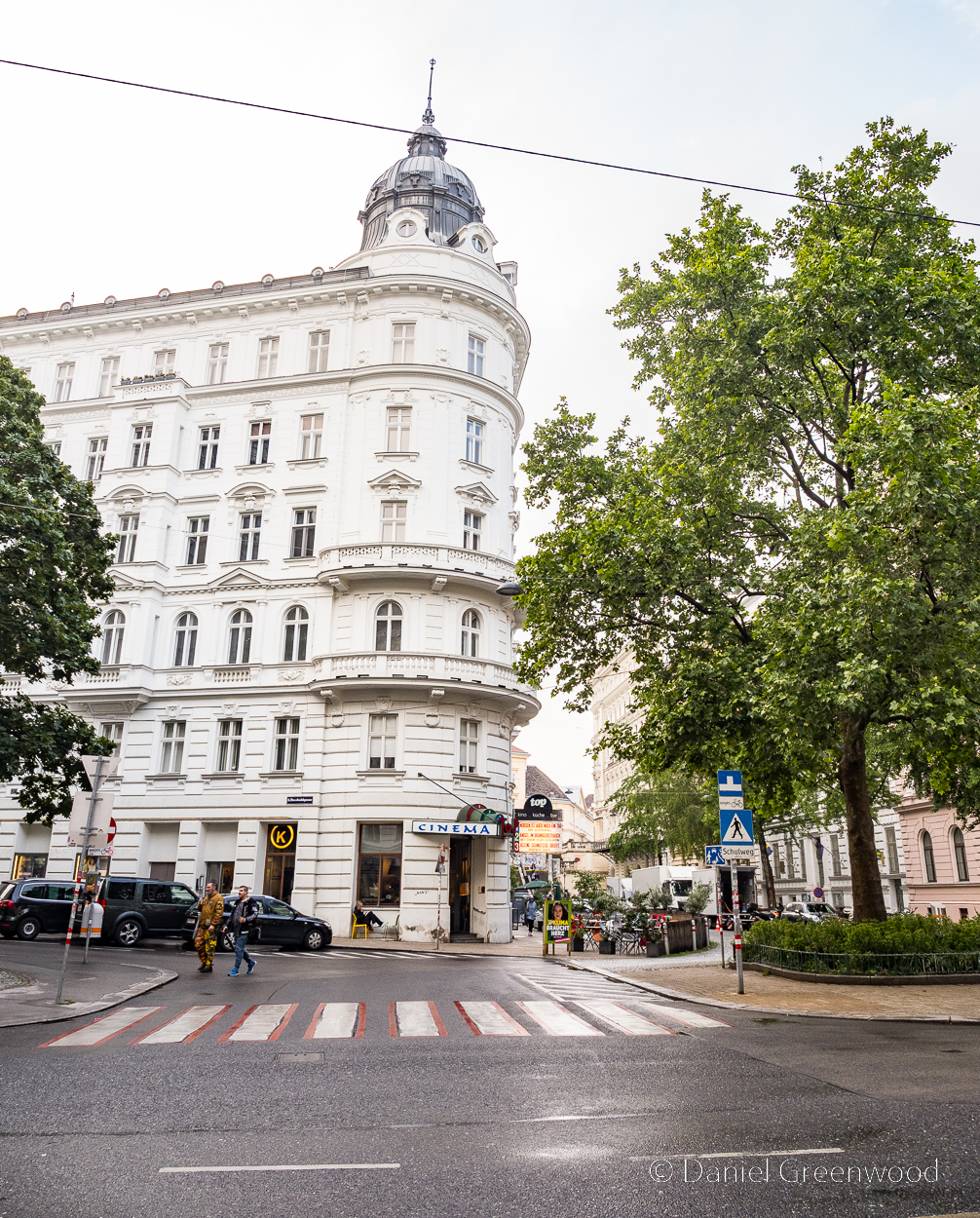
A cinema with a fine tower, standing next to a lime tree (‘linden’ in that part of the world).
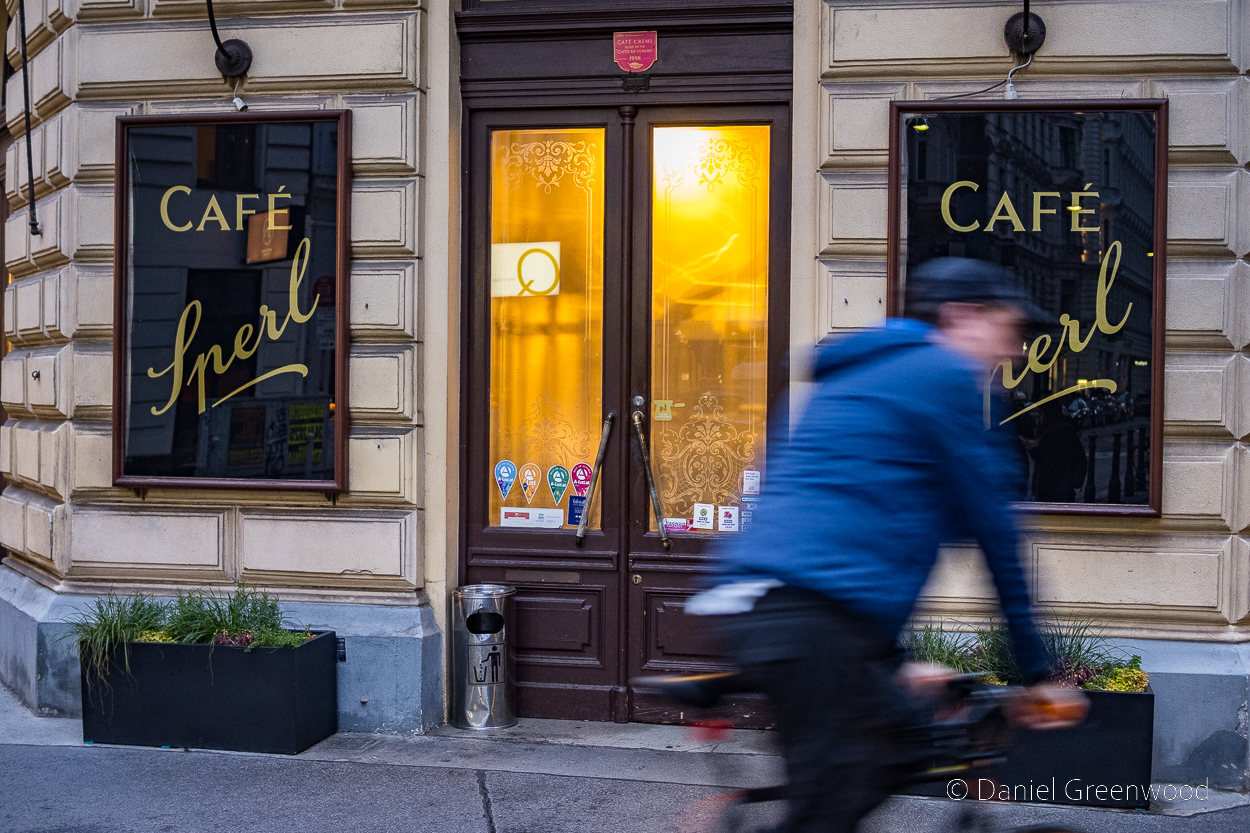
The famous Café Sperl.
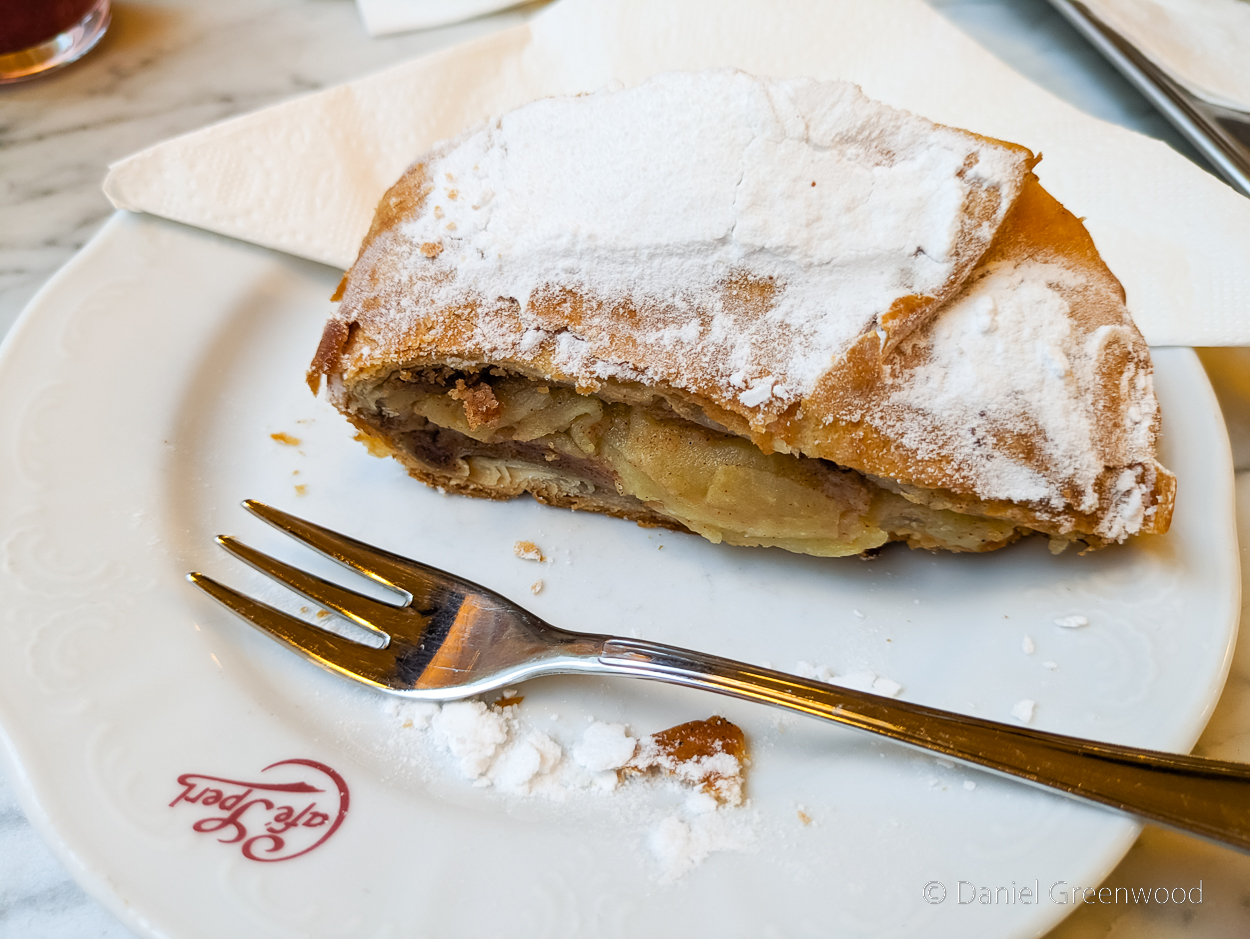
If I didn’t include a photo of apfelstrudl I’d probably get complaints, so here you are!
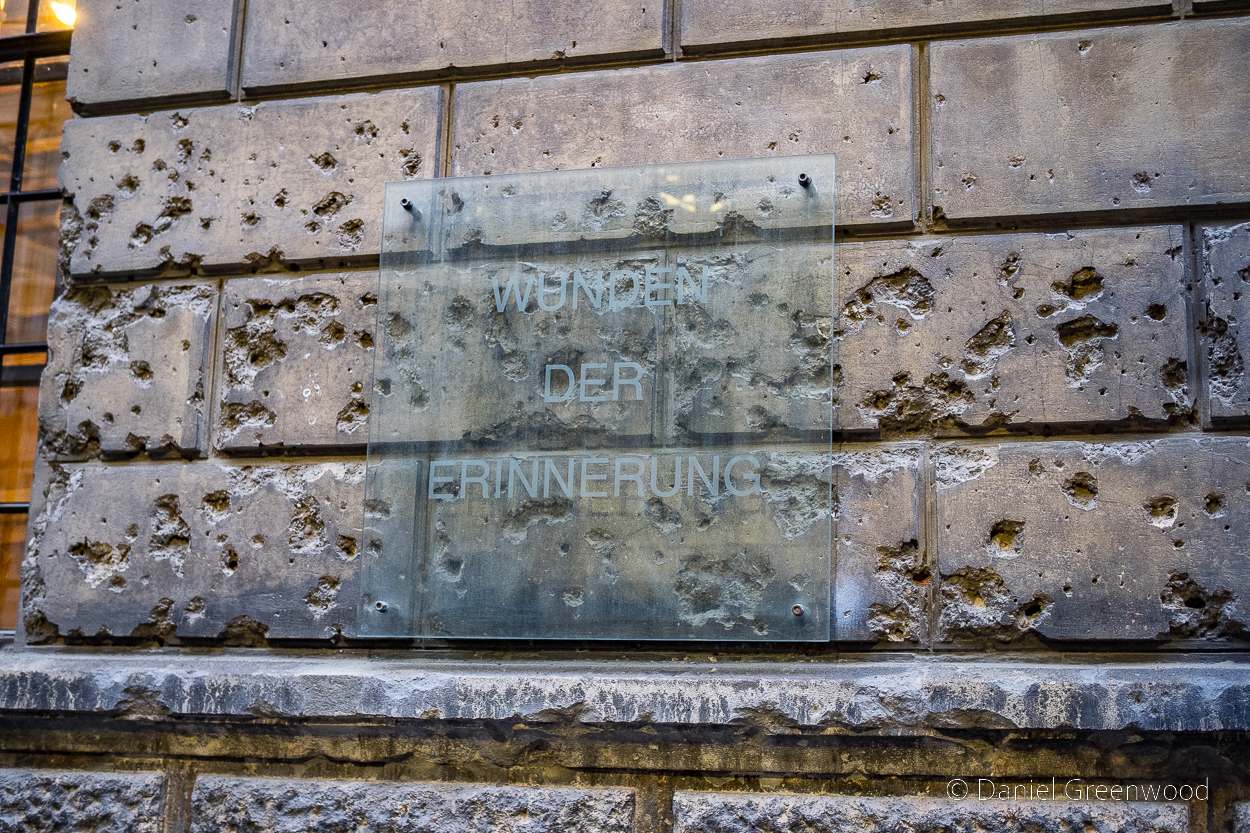
Around the corner from Café Sperl was this stark ‘installation’. ‘Wunden Der Erinnerung’ – ‘Wounds of Memory’. This is an arts installation that covers a number of cities in Europe to remind people of the horror of the Second World War:
The transparency directs the viewer’s gaze not to the artwork itself, but to the damage to the building or sculpture. The title “Wounds of Memory” places the wartime destruction within the context of the war without promoting a museum-like effect. By locating the work in public space, the war and its consequences remain present in the everyday environment.
Wikipedia
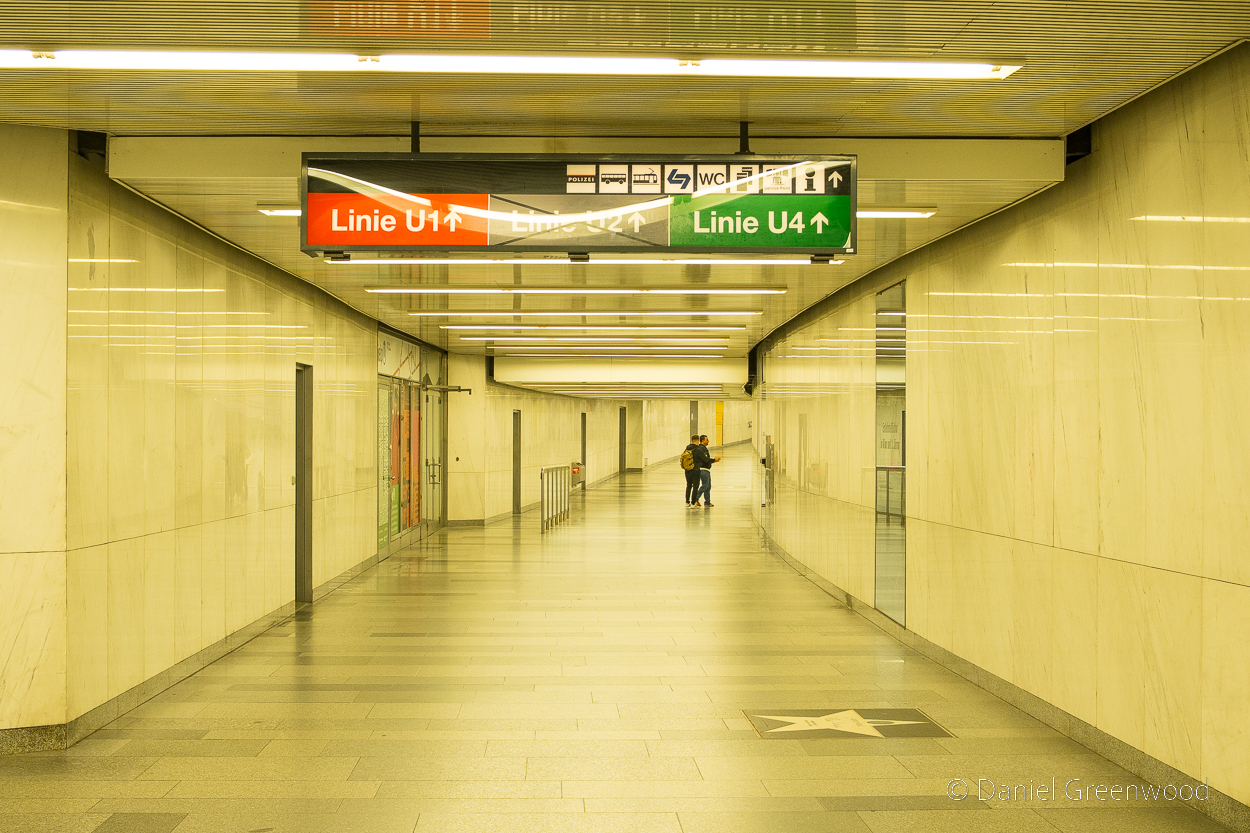
Going underground as we headed home for the evening.
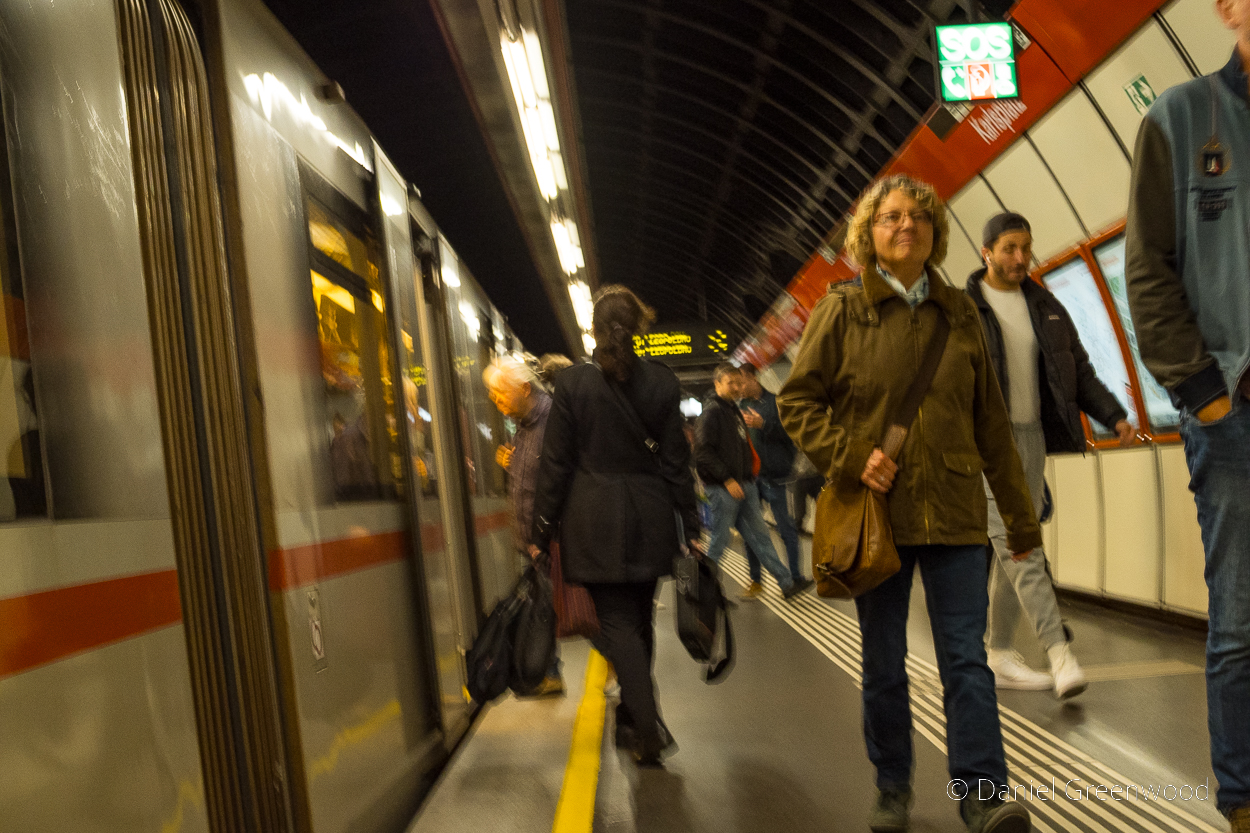
Life on the U-Bahn platform.
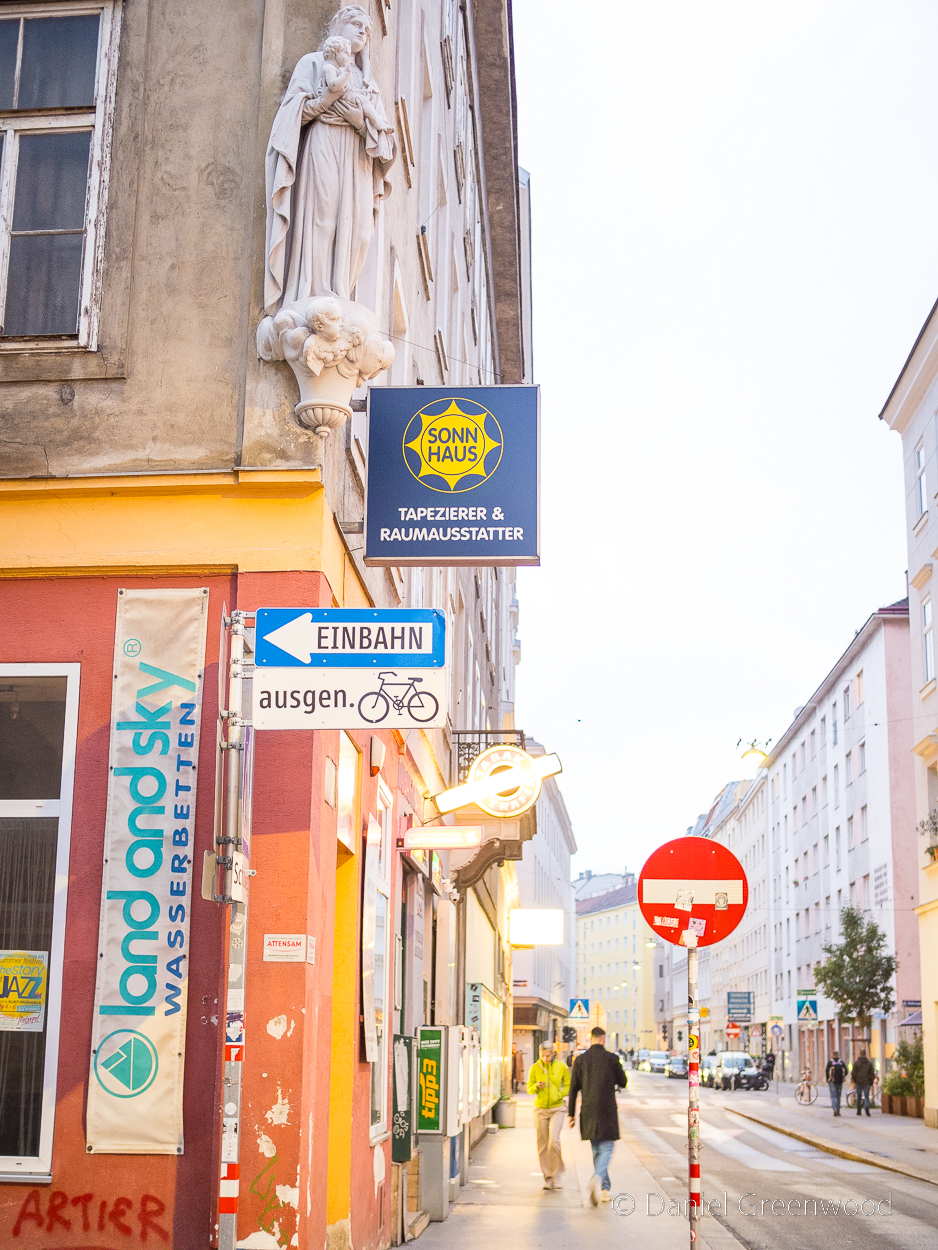
It’s not the best example, but I love these statues of the Virgin Mary on street corners, which I noticed in Vienna.
Residents and religious guilds placed statues of the Virgin Mary on their buildings as a public sign of faith, devotion, and protection. More than just decorative, these figures were meant to bless the street below and provide spiritual comfort to all who passed
The Roaming Boomers
That’s probably a good place to end, with a blessing from Vienna.
Thanks for reading. Here are some more of my Austria photoblogs:

