North Downs diary: All of May’s icons

London’s mini heatwave has closed its doors, great grey clouds entomb the downs. In my mind the meadows have all flowered and gone, so quickly has the psuedo-summer taken root. Sunday’s 27 degrees felt more like July than May. Gladly, at Farthing Downs all of May’s icons can be found: meadow buttercups, silverweed, yellowhammers singing in flowering hawthorns, cowslips moving to seed. A strange song emanates from the young trees grown too woody for livestock to graze. At first I think it might be swallows passing through, zipping and chattering, then perhaps baby birds. Swifts swoop overhead but no other hirundines are here.

The chattering song continues and I move closer. In ash, bramble and oak twigs the white throat of that very bird flashes. It jumps up onto a branch and I photograph it, a white bud or bug of some kind in its bill. The whitethroat has travelled from Africa to be here on the North Downs, a journey we cannot quite comprehend. Except we Europeans too came from Africa, but it took some 60-100,000 years to do it rather than a few months.

This whitethroat is not alone. Behind me is a bigger clump of trees and scrub, a thicket of ash trees riddled with canker. I’m listening to a song that I expect to hear in passing every April here, like a little chain tinkling, or some early mechanical clock. It’s a lesser whitethroat, another arrival from Africa. But I can’t see it, listening closely for a sign of whether it’s under cover or out in the open. I give up. A kestrel appears from over the whitethroats’ bushes, gliding, hovering and slipping off.

North Downs diary

North Downs diary: Skylarks lift from the turf

This slideshow requires JavaScript.

Rainfall on the downs. Still the jackdaws toe the grasslands in their flock, still green woodpeckers cut arcs across the landscape, still the spring’s song builds in hedgerow blackbird music. Linnets flock to the small bushes of rose and hawthorn, skylarks lift from the turf, dropping back down onto the grassy mounds of anthills. So few flowers, but rosettes are massing at the margin of soil and sky, the dropwort, rattle and eyebrights feeding on the thinnest layer of nutrients, readying to flower. But the rain still falls and so I make for Devilsden Wood where bluebells have peeled from green to that almost purplish colour. Our common name feels a little inadequate. But then that’s the joy of common names, there are so many, they each tell a tale of our senses through time. Wood anemones, probably my favourite flower, were known as windflowers because people thought that they only opened their petals when the wind blew. Here they bloom in their little flocks amidst dogs mercury and more bluebells.

North Downs diary: The pendulum has swung

This slideshow requires JavaScript.

Explore my North Downs Diary

Farthing Downs & Happy Valley, March 2016

A motorbike oozes across the road that runs through Farthing Downs, its deep, unsettling groan scatters woodpigeons and magpies from the branches of trees. When it’s over another sound breaks through: a male yellowhammer. Its song is never quite the ‘little bit of bread and no cheese’ it’s accepted as, but the mnemonic is so memorable that those of us who might not have known it ever existed can remark upon it, can seek it out. The bird is a silhouette, a blackhammer in a hawthorn bush against the bold march sun.

Winter’s decorations still remain, it is a time of flux. The cropped green grasslands and anthills look like a sheet, the racket of chalky wildflowers hidden below. If you didn’t know this was chalk grassland now you wouldn’t expect much else to come. Redwings dot the tree lines, their calls which were in October nocturnal now add to a soundscape that includes the spring skylark, high up above my head, marking out a territory that signals an intent to force new life. I see two of these birds. The skylark is one I hear or see only every few months. Its song has no hint of monotony. But one that I have missed this winter and can hear day after day in spring is the blackbird. From trees that separate Farthing Downs and New Hill it lights the valley with its gentle verses. The shadows grow long, reaching into the blackbird’s dreamy hedgeland.

In Happy Valley the hazel trees’ tails mass like wigs. Looking closely, the buds are cocked ready to leaf, some with the purple tongues of flowers poking out. The yellow grains of pollen that have come from the dangling tails can be seen. I flick the tails to help. The twigs of hawthorns are coloured yellow and blue by Xanthoria parietina. Trying to get a close up photo of the fruiting cups, the apothecia, I find the ‘roosting’ buttons of ladybirds. Who would ever see them here? Dogs, voles, mice, flowers, lichens. Surely only the most inquisitive birds would ever find them.

In the shelter of scrub the primroses bloom in old dogwood leaves. I love this time, the birds singing from the woods and trees, the first flowers breaking the rule of death and decay. No doubt, spring and summer have plenty of that to offer, but at least now the pendulum has swung the other way.

The shifting sands of the River Morava

Morava-3

South Moravia is a region of the Czech Republic that borders with Slovakia and Austria. I have visited on two occasions, in July 2013 and then the following April. The region gets its name from the Morava, one of Europeโ€™s lesser known rivers, a tributary of the Danube. Over time it has been straightened for industry, though some of its natural meanders do still exist, I find its influence on the surrounding landscape to be fascinating both historically and ecologically. The impact of communism on the landscapes of Central and Eastern Europe are clear. Small fields were opened up and collected, taken under state control. The rivers were canalised and wetlands drained for agriculture. The similarities to post-war capitalism are strong: it was the case of two warring ideologies attempting to increase and establish their populations with similar technologies and agricultural industries. The advances in agriculture, sanitation and medicine meant that, despite hundreds of millions of deaths in the Second and First World Wars, the population of the earth tripled in the 20th century. The irrevocable โ€˜tamingโ€™ of continental and Eastern Europeโ€™s natural landscapes, and loss of traditional management techniques which in fact sustained many of the richest habitats, was thought to be largely complete by the 1980s. That generalised view, however, does not give the full picture. Nature is adaptable and human perspectives change, as South Moraviaโ€™s landscapes show.

Morava meanders-2

The Google Earth view of the Moravaโ€™s natural meanders at Bzenec. A now vegetated oxbow lake can be seen in the โ€˜oโ€™ shape next to the โ€˜Sโ€™ shape in the mid left-centre. The impact of post-war industry was felt across Europeโ€™s waterways, though the damming of the Danube was to be undertaken most severely only by the 1990s. Many rivers lost their natural meanders, straightened to aid the passage of goods and people. The Morava is an excellent example of this change. The only remaining natural meanders of the Morava can be found on the edges of Bzenecka Doubrava, a pine plantation established on the riverโ€™s sandy edgelands. The sandy conditions were created by the Morava, the river having deposited sand throughout the landscape over thousands of years. When I visited in July 2013 the trees at the edges of the river were collapsing into the water as the sand slowly eroded the banks. This way new meanders could be formed if given the chance, the silting up of the edges thinning the watercourse and increasing the erosion on the opposite side through the increase in the pace of the waterโ€™s flow. Itโ€™s unlikely that the river will be given free reign, however, as the neighbouring plantation is of economic importance. Perhaps the riverโ€™s power will be too great in this case.
Morava-4

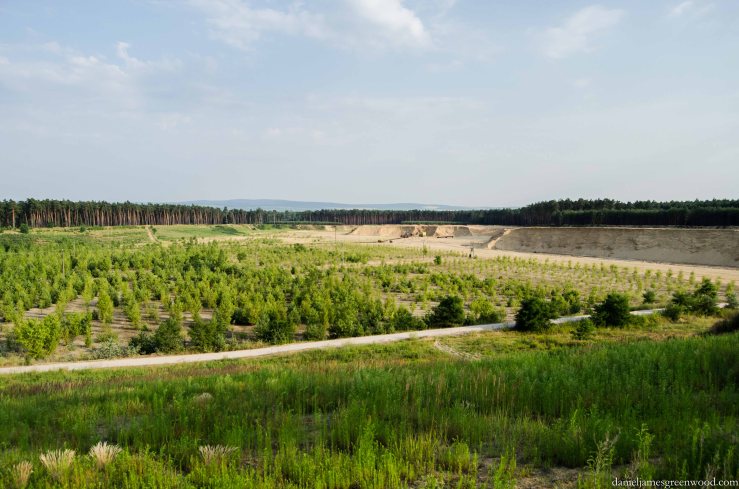
The riverโ€™s work has also given people the chance to exploit these vast deposits of sand. Very close to the river was a working mine. But nature has not lost out completely here, the sand was being mined by sand martins (Riparia riparia)ย which in turn were being hunted by hobbies (Falco subbuteo) and their nests excavated from above by foxes (Vulpes vulpes). The mined areas as seen in the image above were being replanted with broadleaved tree species.
Morava 4-13

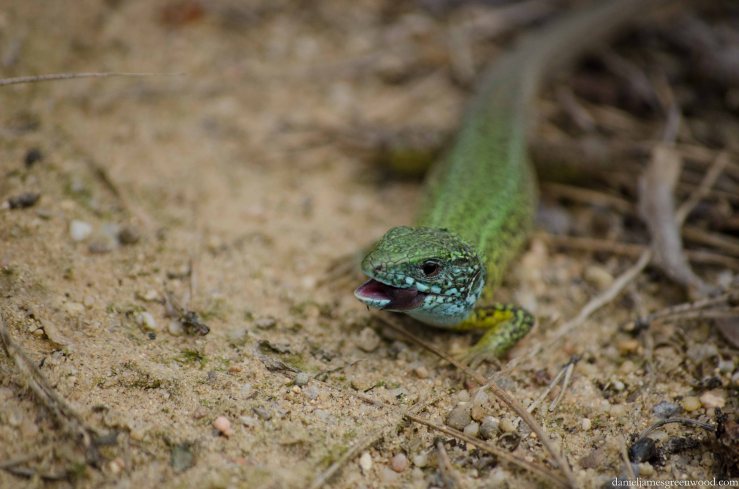
I photographed the sand mine from Vรกtรฉ pรญsky, a protected area known as โ€˜the Moravian Saharaโ€™. Green lizards (Lacerta viridis), with their beautiful blue mouths and green-yellow bodies snuck out from pieces of deadwood to eat ants and have their picture taken.

Morava 4-14

My friend Karel ล imeฤek knows this landscape inside out. You would be forgiven for thinking the wildlife knew him just as well. He found a pine hawkmoth in the grasslands of Vรกtรฉ pรญsky. Karel has campaigned for many years to protect this post-industrial landscape โ€“ the likes of which would be built on without much thought in the UK nowadays โ€“ and he has successfully achieved designations to protect habitats in Bzenecka Doubrava for nightjar (Caprimulgus Europaeus). This nocturnal, African migrant is threatened by the proposal for a new motorway through the area.
Morava-7

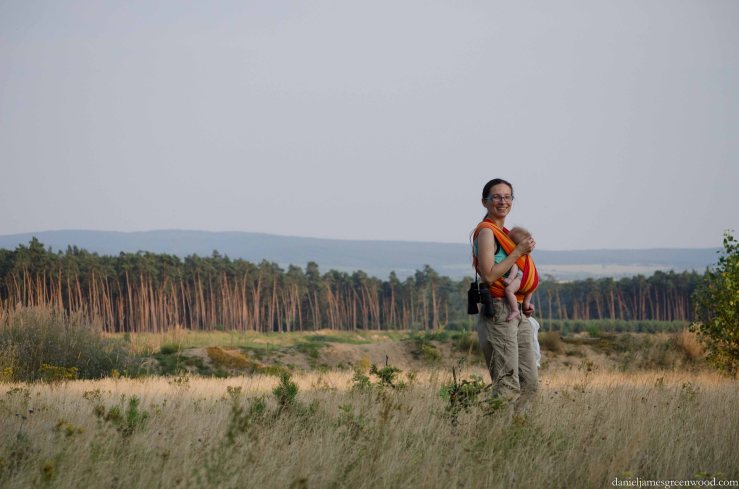
Vรกtรฉ pรญsky is a protected landscape, and Karel, along with fellow Moravian conservation-supremo Zuzka Veverkova said that entomologists from all over the country would visit to study the invertebrates

Morava-5

In July the flowerheads of hareโ€™s-foot clover (Trifolium arvense)ย were being fed upon by the eastern bath white butterfly (Pontia edusa)

Morava-6

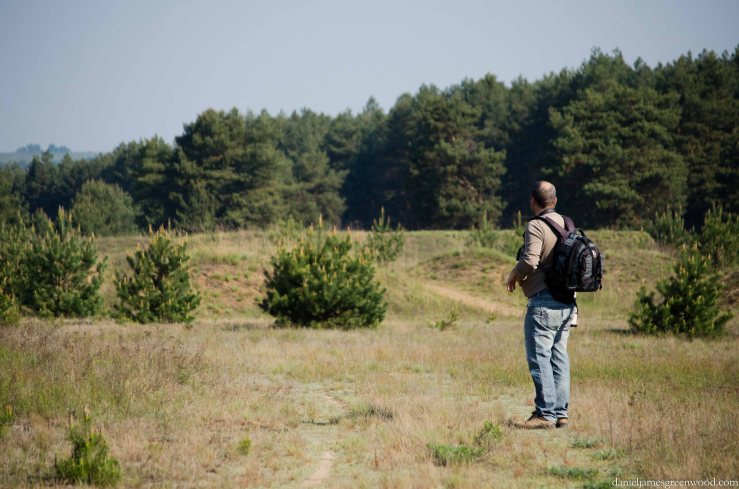
The surrounding pine trees were crisscrossed by red squirrel (Sciurus vulgaris), jays (Garrulous glandarius)ย and golden orioles (Oriolus oriolus). The cacophony of the sand mineโ€™s alarm, rupturing the almost pastoral peace of the Moravaโ€™s sandlands, drew a black woodpecker (Dryocopus martius)ย  across the horizon. It was the first I had ever seen, a giant bird in comparison to British woodpeckers
Morava 5-1

Returning the following spring, Karel took us to a former military site which had โ€˜returned to natureโ€™. Here woodlark (Lullula arborea), whinchat (Saxicola rubetra)ย and golden oriole were found, along with many more insects
Morava 4-4

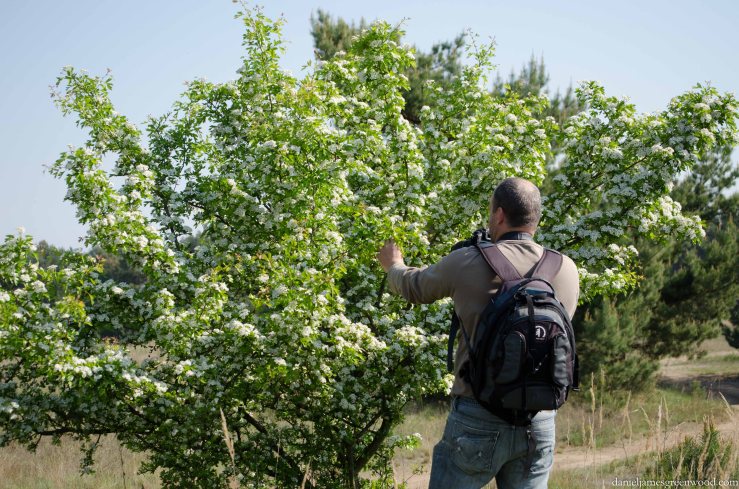
Karel sought out a flowering hawthorn tree that was teeming with insects: bright blue beetles, butterflies, bees, wasps and hornets all feasting on the mayflowerโ€™s goodness. Returning home to English hawthorns I could not help but see the sheer paucity of insects, compared with the Czech abundance of life in the same tree

Morava 4-3

Small copper butterflies (Lycaena phlaeas)ย were to be found on flowers across the old military site

Morava 4-6

The map butterfly (Araschnia levana) is another common species found in this part of South Moravia and even as far east as Japan. It’s not one that can be found in the UK
Morava 4-5

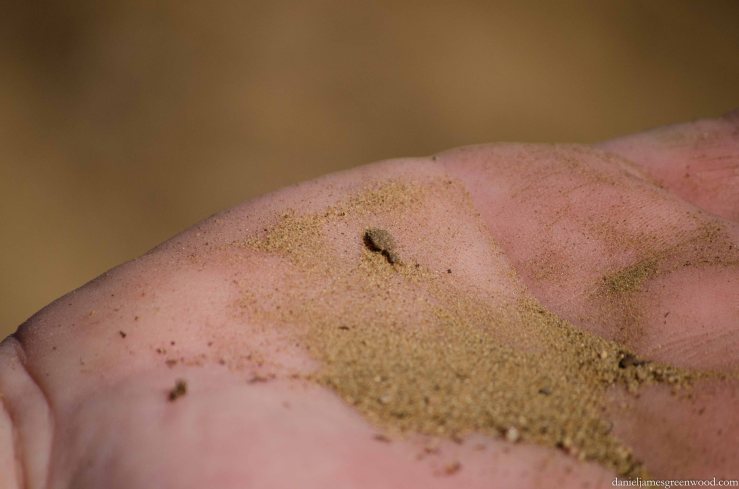
In general I would be trying to catch up with the last thing Karel had seen when he would call out to show me something new. He had burrowed into a small area of sand to uncover an ant-lion, the larvae of a species closely related to the lacewings (Neuroptera). The ant-lion hides in the sand and waits for the vibrations of an antโ€™s footsteps above, creating a vacuum in the sandโ€™s centre and picking the insect off. Micro-stories hidden within sands shifted by the mighty Morava

Morava 4-7

In May Karel drove us along the edges of the straightened river and pointed out some of its remaining floodplain habitats. Tributaries had been canalised, lined by beds of Phragmites reeds. Other parts of the floodplain had been turned over to monoculture crops but good areas of willow wood pasture remained, much like some of the more attractive English rural parklands. These willow trees were the favoured nesting sites for great grey shrike (Lanius excubitor)

Morava 4-11

One thing I love about the Czech Republic is the rough edges of its municipalities. This โ€˜untidinessโ€™ has been lost from much of England through compulsive use of herbicides on city and suburban streets and mowing. Beyond the fact that more spaces were allowed to rough up, the naturally greater diversity of plant species meant that beautiful insects were seen in all places. Alongside the Morava this common clubtail dragonfly (Gomphus vulgatissimus) perched in the full glare of the morning sun

Morava 4-8

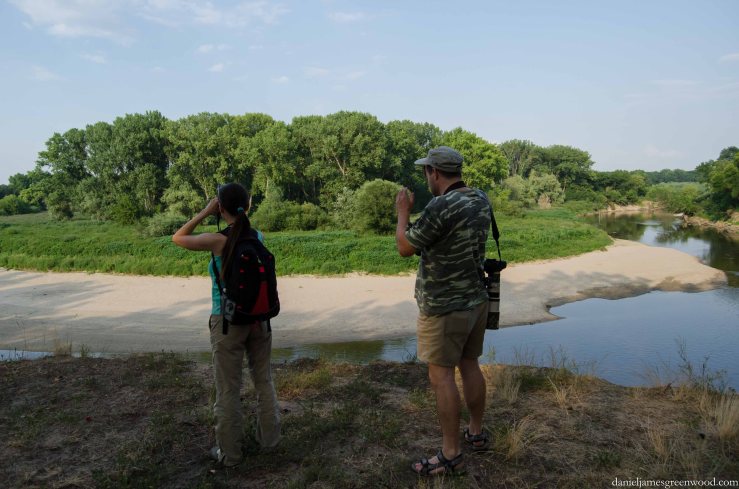
We walked down to the riverโ€™s edge on a national Czech holiday (men at one of the local petrol stations were sat outside drinking beer at 8am, fair play) and kayakers were making their way along the river
Morava 2-8

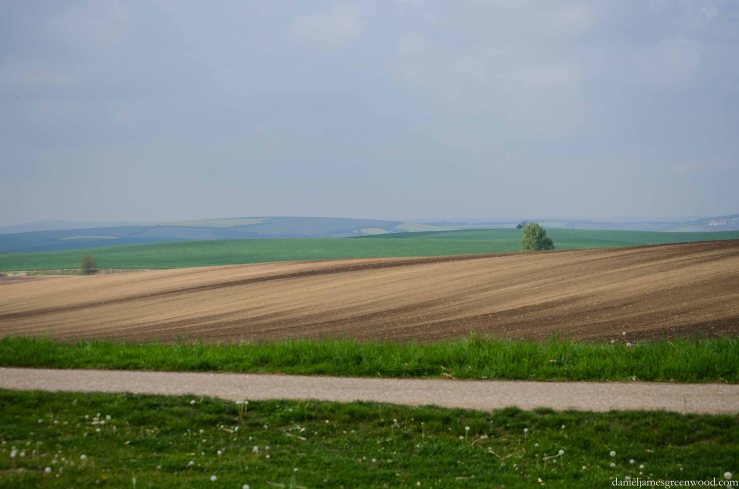
As the Morava is a tributary of the Danube, it also has tributaries of its own. One of the larger towns outside Brno in South Moravia is Kyjov, home to the Kyjovka. Above is an image of the Kyjovka valley, the landscape redrawn by the flow of water and ice over thousands of years.
Morava 3-1

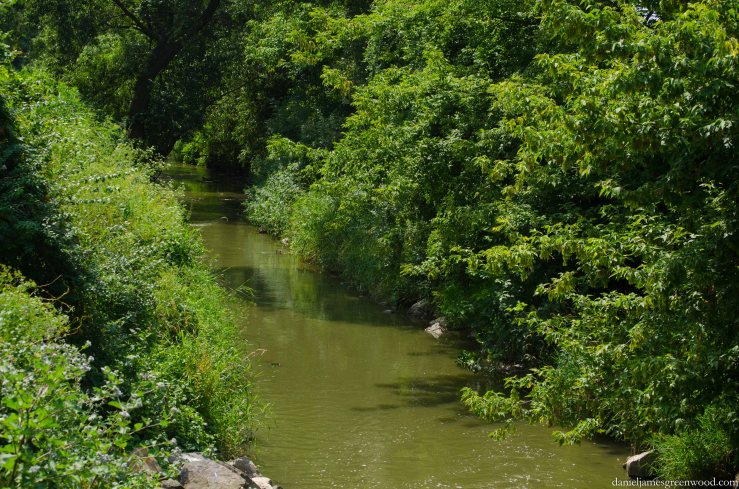
The Kyjovka at Mutฤ›nice

Morava 2-3

The Kyjovka is a special river for me because it has a very interesting story to tell. Its waters have been harnessed to make an area of fishponds in the village of Mutฤ›nice, a few miles south of Kyjov. Karel introduced me to the fishponds, a wonderful place for birds but also for another animal, the beaver (Castor fiber). Beavers managed to return to South Moravia via the Morava from the Danube and then from the Morava to the Kyjovka. The story goes that the beavers began to cause problems for the owners of the fishponds by digging channels between the ponds and mixing up the fish stocks. The beaver is iconicย for many conservationists because it alters the landscape in ways that benefit many species, even us. But for fishpond owners who wanted to keep fish separate, they were a problem. The owners captured the beavers and interred them in a local zoo. But the beavers escaped the night they were captured and returned to the fishponds. They are now well established
Morava 2-5

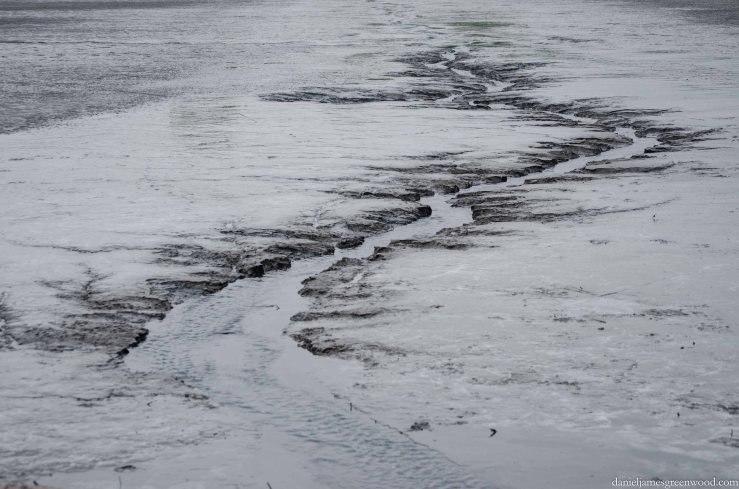
In May Karel pointed out channels of water flowing through the mudflats of the fishponds. There were other more direct channels created by beavers
Morava 2-6

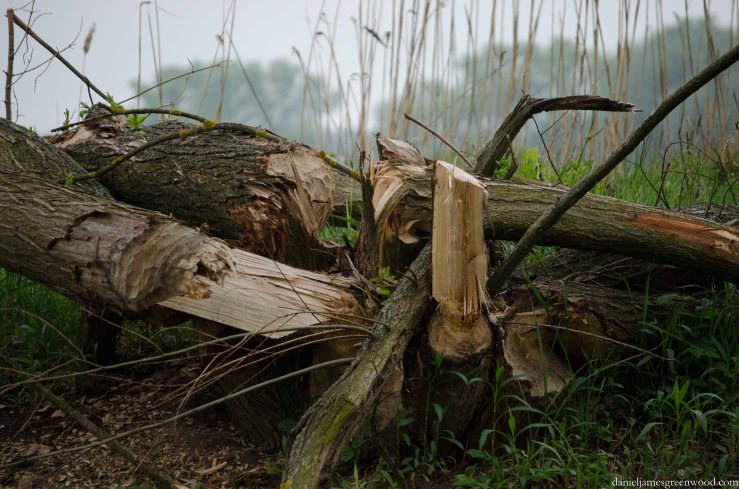
The main worry for British landowners (who now have to accept that beavers are back) is the impact that the animals have through their natural tree-felling behaviour. Beavers have very sharp front teeth which are kept in good condition by the front bottom teeth which act to sharpen them as would a whetstone sharpen metal. Beavers create dams in rivers which slow the passage of water and prevent flooding in settlements further downstream. The dams also provide spawning grounds for fish and micro-habitats for invertebrates. They gnaw through the bark of poplar and willow, waiting for the moment when the tree will fall to escape. The light brought in โ€“ much like when we coppice woodland trees โ€“ nourishes the wild plants and herbs on the riverbank increasing the diversity of species and diversifying the habitat structure. The trees grow back from their bases and can live longer than many standards trees. Trees like willow collapse often anyway and the beaver is just speeding up the cycle of a natural process
penduline tit blog-1

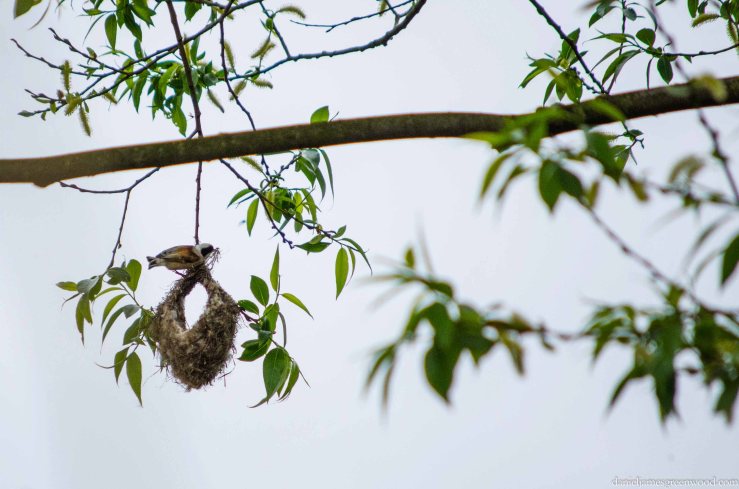
The willows that did remain upright (and there were many) were being used by the penduline tit (Remiz pendulinus). This charming bird builds its nest from the beardy seeds of poplar, as well as old grasses. The timing of poplars producing seed and the nesting of this bird exemplify the beautifully serene symbiosis between birds and native trees, and the utter dependence on certain trees that many birds have. I had always wanted to see this bird and once again I had Karel to thank

Morava 2-2

Karel was not the only ornithologist at Mutฤ›nice. A group of men had spent the night at the fishponds preparing for a public event on the morning that we came in April 2014. They were ringing birds using a mist net to try and raise awareness about wildlife in South Moravia. One of the birds caught was a common sandpiper (Actitis hypoleucos), it was soon let go, the bird zipping off towards the water

Morava 2-1

Reed warbler (Acrocephalus scirpaceus) was one of the more common species to be caught in the nets, which cause no harm to the birds. In the woodland at the edges of the fishponds, nightingales (Luscinia megarhynchos) sang and I managed to glimpse the shadow of one dropping down through the leaves. But the nightingaleโ€™s song was not the most dominant. The surface of the fishponds were pocked by the eyes of marsh frog (Pelophylax ridibundus), their calls were like nothing I had ever heard. They dominated the soundscape to the point that even the cuckoo struggled to break their dominance

Morava 2-4

On the edge of the fishponds is an area of woodland where black stork (Ciconia nigra) could be seen perched, overlooking the ponds. They are massive birds and, like their cousins the white stork (Ciconia ciconia), migrate to Europe in spring from Africa.

Morava 2-10

Karel knew an oak tree in the woods that was the favoured nesting place for a black stork. We wandered in through the light, grassy woodland in a fog of St. Markโ€™s fly (Bibio marci) and attendant mosquitoes. The stork did arrive but Karel did not want us to stay. A few months later Karel emailed to say that the black stork had raised young but it was eaten by a pine martenย (Martes martes)

Morava 2-9

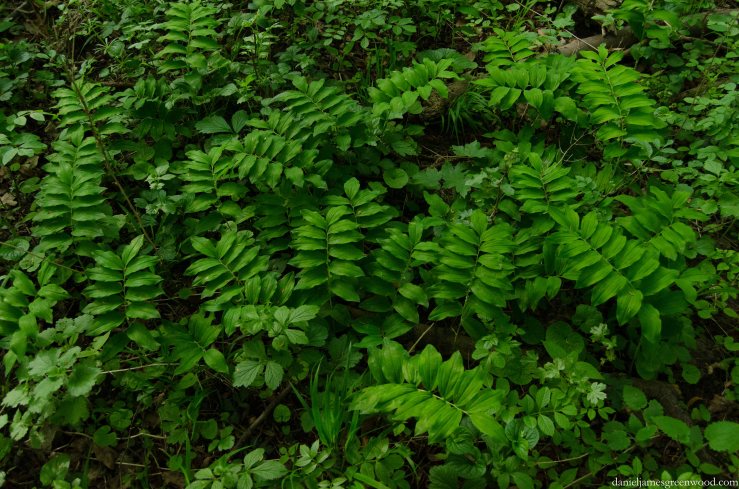
The woodland floor was rich in wildflowers, with Solomonโ€™s seal (Polygonatum multiflorum) growing in mini-thickets

Morava 2-7

I looked out to the edge of the wood, the fishponds and its storks behind us. At the end of the track was the bright yellow of flowering oilseed rape and grey pylons. I thought of how suddenly this diverse habitat, with all its insects, flowers, trees and birds ended in pesticide-laden monoculture, of how quickly the land lost its vitality, its character. With my feet in the Moravaโ€™s sands, I thought of how much the river had done to change this landscape and how much people were changing it again. Nevertheless, in the woods, fishponds, the valleys and estuaries the story of the Morava and its wildlifeย is there to be told


My fungal year: 2015

Autumn 2015 in southern England began with a prolonged dry period reminiscent of 2011. This meant that a lot of fungus was late to fruit. Other than a September burst of honey fungus, there was little to see until the rain came and enriched the thirsty mycelia of British woods and meadows. Here is my year in mushrooms:

Fungi 2015 blog pics-4
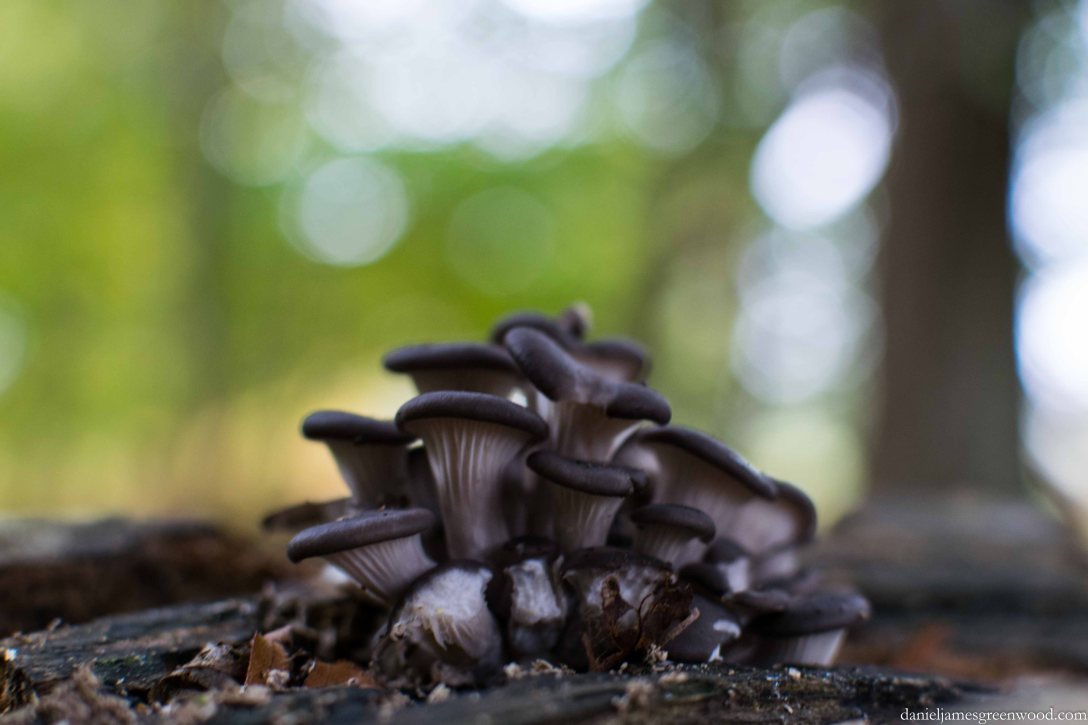
Oyster mushrooms, Pleurotus ostreatus

One of my favourite things to photograph is mushrooms, yet the act of closing the shutter is often only a small part of the experience. I can go looking for mushrooms and sometimes come away with very few photos. I have to walk until I find something, heading to the right place at the right time of year to find it. I know plenty of fungi enthusiasts who pick and cut mushrooms to identify them, a key process in understanding a species. As a photographer I see no reason for me to pick them. I’m much happier leaving the specimen where it is so someone else can come along and enjoy it, as short-lived as many fruiting bodies are. If it’s a fungal foray to raise awareness and celebrate mushrooms, picking them is great.

Fungi 2015 blog pics-7-2
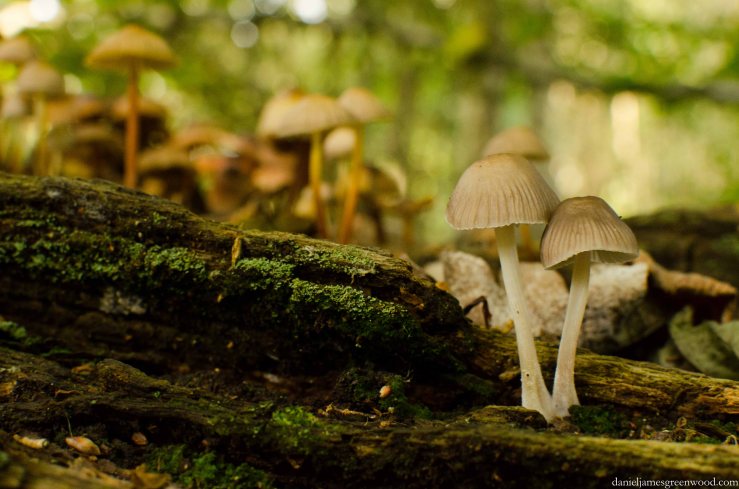
Bonnet mushrooms, Mycena on a dead oak tree

September to November is the right time to head out looking for the larger spreads of mushrooms, though they can be found all year round. I find enormous pleasure in that early autumn period when the moisture levels are right (fungal fruiting bodies are 90% water) and fungus abounds from every fallen tree, even the most barren of parkland funked out by funnels, inkcaps and fairy-rings.

Fungi 2015 blog pics-5
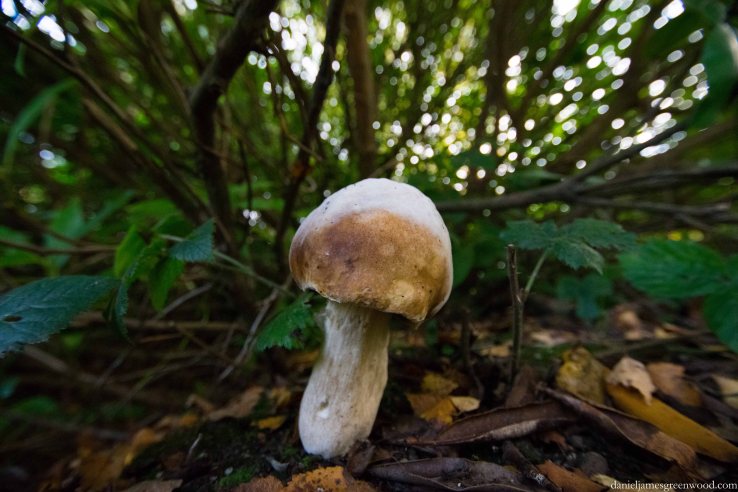
One of the most sought-after edible mushrooms is the cep, Boletus edulis

I found a cep, Boletus edulis under a rhododendron bush in the New Forest in October. It didn’t quite match the images of bountiful porcinis (the Italian name for the cep, also known as the penny bun) but I still had no desire to take it home with me. Fungi engages people like very few wild plants or animals can, mainly because they are renowned for their edibility and their poison. From my understanding, mushroom picking is not as popular in England as it is in Poland, Estonia, the Czech Republic, France or Italy. Indeed, perhaps it is the Mediterranean influence over British culinary culture that has seen mushrooms become such a hot topic in debates about sustainable foraging. In Britain we lack the vast wooded landscapes of Transylvania, of the Tatras, Dolomites or Pyrenees. Perhaps our landscape is mycologically impoverished.

Fungi 2015 blog pics-3-2
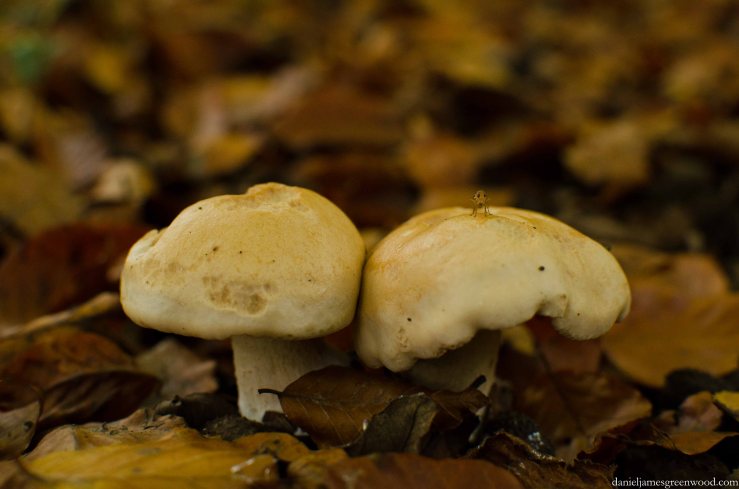
An inkcap, Coprinus or brittlestem, Psathyrella, I wasn’t quite sure

One thing that always interests me is a land manager’s attitude to foraging mushrooms. The City of London own many excellent nature reserves on the outskirts of the city and they have a no picking policy. Likewise many urban nature reserves discourage visitors from picking mushrooms. The Forestry Commission have a mushroom code, allowing only a certain weight of mushrooms to be picked and the clear message that only mature fruiting bodies should be plucked. It depends what your interest is, but as an observer I err on the side that fungi has an important role to play in an ecosystem and should largely be left alone, especially in urban nature reserves. At the same time I appreciate that it’s unproven that collecting mushrooms has any meaningful impact on the mycelium itself. As a conservationist, I tend to support the land manager’s picking only with permission, as difficult to enforce as it may be.

Fungi 2015 blog pics-1-3
A fly you’ll often find on the cap of a mushroom

Fungi has a massive role in the health of woods. Species like beech, birch and oak have a strong dependency on fungi to provide them with nutrients and minerals that are otherwise impossible to retrieve from the soil. The mycelium of a fungus which fruits from the soil lives underground. The mycelium is made up of hyphae which extend through the soil, feeding on decomposing matter. The hyphae sheath the root hairs of a tree and a trade takes place between tree and fungus, a symbiotic relationship. The tree can delegate where the hyphae should extend in search of nutrients. The hyphae can then pass the nutrients into the tree via the root hairs. Water is often passed in return to the hyphae to nourish the mycelium and make the production of fruiting bodies (mushrooms) all the more possible. Experiments have been done to show that these mychorrizal relationships boost the growth of trees greatly. This is why the idea to dig up trees and replant them elsewhere to protect ancient woods is impossible. The soil is crucial. Trees are not everything.

Fungi 2015 blog pics-3
A cup fungus

Fungi has made me think very carefully about the camera equipment I use. The diversity of species means that there are an array of lenses and cameras you can use. There is no perfect set up. I use a Sigma 105mm f2.8 macro lens to capture the smallest of mushrooms. Lying on my stomach in the New Forest revealed many incredible things hidden away that I would otherwise not have noticed. A macro lens, though often a costly investment, can open up a new appreciation for nature.

Fungi 2015 blog pics-1
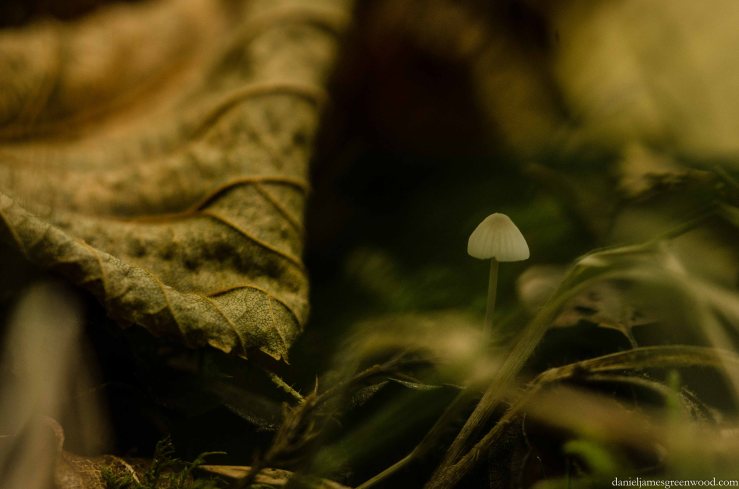
A tiny species of bonnet, Mycena

Some of my favourite species to photograph are bonnets (Mycena) and parachutes (Mirasmius). They are so incredibly tiny but so common, simply searching for them is an adventure. Again, the best place for these is woods with a thick layer of leaf litter, but they can also be found on mossy logs, and even on the end of sticks.

Fungi 2015 blog pics-5-2
Twig parachute, Mirasmiellus ramealis

At the RSPB’s Blean Woods in Kent I crouched for many minutes, fearful of dogs weeing on me, to photograph this twig parachute. It measured barely a few millimetres across. I found it because I knew where to look. My knees ache still.

Fungi 2015 blog pics-2-3
Orange peel fungus, Aleuria aurantia

Not all fungi is especially beautiful or in beautiful places. Many mushrooms are in poor condition because their time in the limelight is very short and they are affected directly by weather and other environmental factors. Slugs eat them, flies mate on them, people step on them. I found this orange peel fungus (Aleuria aurantia) on an embankment near Oxted, Kent outside a haulage company depot. The bank had been denuded of trees, their stumps poisoned. But the thing about nature is that it doesn’t care about how crap a place looks if the opportunity for propagation exists. This fungus looked more like some plastic debris half submerged in the ground.

Fungi blog pics-8
Lycogola terrestre

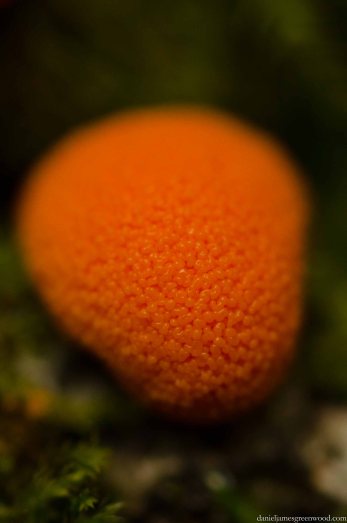
Also not all of the beautiful fungus you find is actually fungus. One spot I return to each year, a dank log pile next to a path in some dark beech woodland, is lit up by Lycogola terrestre. This is no fungus but instead a slime mould. This is an extreme close up of one of the fruiting bodies which appears on a bed of moss in a very small area.

Camberwell Old Cem blog pic-1
Shaggy inkcaps, Coprinus comatus growing next to new burial plots

Another of fungi’s pleasures is an ability to surprise. Millions of spores are released by a single mushroom (30,000 million an hour by a mature bracket fungus) and so it is unsurprising to find mushrooms growing in the streets. At Camberwell Old Cemetery in south-London, four-year-old burial space has been a successful breeding ground for shaggy inkcap (Coprinus comatus). I used a 300mm telephoto lens to photograph the scene above. Seeing as the graves were newly-laid I didn’t want to intrude.

The wreckage of waxcaps blog pics-3
Honey waxcap, Hygrocybe reidii

The best grasslands to find fungi are either ancient grasslands like Farthing Downs where I photographed this honey waxcap, or church yards. Waxcaps (Hygrocybe) are a strong indicator of the age of grassland. There are over 1000 species in the UK, their burst of colour in the winter doldrums add life to otherwise dormant meadows. The mild winter this year meant that waxcaps were fruiting alongside field scabious, knapweed and even yellow rattle on Farthing Downs.

Church yard coral blog pic-1
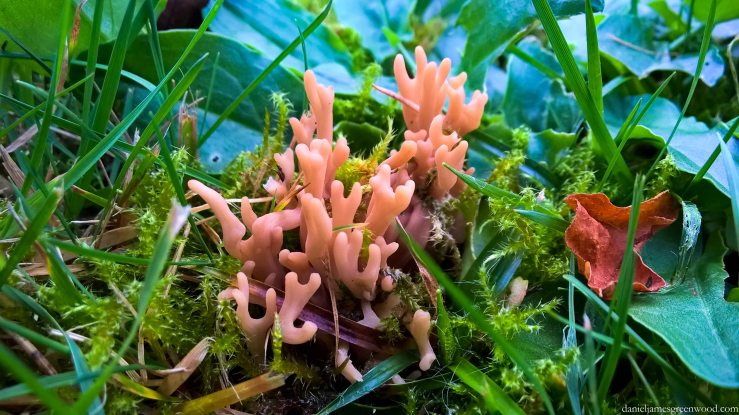
Coral fungus growing in the lawn of a Dorset church yard

In church yards the lack of grazing pressure and the ‘respectful’ management of the turf means that there are likely to be well established mycelia under the graveyard lawns. These are excellent hunting grounds for corals, Ramaria. The problem is they’re often so small it can be difficult to get a good image from a cumbersome DSLR. Instead I use my camera phone to try and get a closer look. It has a fancy in-built lens and can manual focus as if turning the focus ring of a DSLR lens by using the screen. The results were very pleasing.

Ashtead Common blog pic-1
An ancient pollard oak on Ashtead Common

The best places to find fungi are woods and meadows, generally those that are either ancient or relatively well established nature reserves which are sensitively managed. One of the new places I visited was Ashtead Common in Surrey. Ashtead Common is a Site of Special Scientific Interest (SSSI) and National Nature Reserve (NNR), mainly designated for its ancient pollard oaks. This collection of old trees means the diversity of fungal and invertebrate life is very high. The City of London manage their reserves very well indeed and Ashtead Common proved to be one of the best early sites to visit.

Blean Woods blog pic-1
The rich leaf litter in Blean Woods

RSPB’s Blean Woods NNR is a wonderful place for wildlife in general, not merely fungi. It is a vast network of woods that flank the city of Canterbury adding a level of sylvan mystery. Blean Woods is broken up into different habitats, with spots of heathland, birch and sweet chestnut coppice which provide vital nesting opportunities for nightingales and enough light when cut to support common cow wheat, the food plant of the endangered heath fritillary butterfly. In October the woodland floor was covered by a sea of black mushrooms that, I discovered later, were horn of plenty (Craterellus cornucopioides).

New Forest blog pic-1
Roydon Woods

It’s hard to say there is a best place to find mushrooms due to the transient way the fruiting bodies appear. My favourite place has to be the New Forest in Hampshire. The above image is of the Wildlife Trusts’ Roydon Woods NNR, an ancient broadleaved wood very close to Brockenhurst. The New Forest was probably like Ashtead Common in centuries past, with a structure more reminiscent of wood pasture (or savannah) where the trees were less close together and the grasslands were sunnier and luxurious. Roydon Woods has the feel of a landscape that is untouched by people, though such a thing does not exist today. It is possible to spend a day there and meet very few visitors but all manner of mushrooms.

Photography: Nomada rufipes

Nomada rufipes

Nomada rufipes, a cleptoparasitic bee that I spotted on Farthing Downs on the edge of London. It steals from an Andrena bee to survive, but I only saw it drinking nectar from the heads of these ragwort flowers.