
Tag: Wildlife
Essay: Why do people hate ivy?

I remember when I first became interested in woodland. Through my lack of knowledge and understanding I thought ivy was a tree-killing force that scaled a trunk like a cancer and had no other purpose. I looked at the fat stalks of ivy growing on a poplar in a nearby park and thought it might be an idea to cut them. In my local area there are people who go around doing just that.
The fact is that ivy is fantastic for wildlife. When ivy grows up the front of a house and sparrows are nearby they’ll use it. Blackcaps, one of my favourite songbirds, nest in it. Entire bat colonies can roost in it. Hoverflies, bees, butterflies, they all use it for different means, be it a leaf to perch on or flowers to drink nectar from. Walking in Crystal Palace Park recently I was passed by a man remarking to his friend about a line of trees with ivy growing up them:
‘Look at those trees,’ he said, his companion turning to look. ‘The ivy grows up them and just kills them off. I’m thinking of writing a letter.’
This is one of the biggest misunderstandings about ivy – it is not merely some dark demon from a tree-hating underworld, it flowers, too. In fact, the main reason it is even anywhere near a tree is because a songbird or woodpigeon has sat in the tree and evacuated its seed. It produces food eaten by a good number of birds and attracts insects that birds can feed to their babies. Beautiful and exciting birds like firecrests target it for food and shelter in winter when they pass through parts of the British Isles.
A tree brought down in a wood will give life to wildflowers and wake some that have lain dormant in the soil
Ivy does add extra weight to a tree and, in some cases, can weigh a tree down making it more liable to windblow during a storm. But the issue isn’t with the ivy it’s with us, Homo sapiens. In woodlands, it is completely natural for a tree to fall down, it’s good. The new light that will hit the woodland floor will improve the structural diversity, particularly in British woodlands that, since the Second World War, have gone largely unmanaged and have become overgrown as our economy has grown to rely more and more on imported materials.
A tree brought down in a wood will give life to wildflowers and wake some that have lain dormant in the soil, unable to flower because of the previous tree’s leaf shade. In the street, however, a fallen tree could mean death, damages and lawsuits. For all our love of woodlands and forests, perhaps the sight of new woodland is something that kindles a deep fear inside us, as if the open land is being overtaken, changing at a pace and in a manner that we’re uncomfortable with. Personally I find woodland reclaiming old developments and ‘wastelands’ as something to feel good about. It tells me the world can function without our intervention and can recover. Nature can make even the most barren place into a leafy oasis given time.
The chap I overheard in Crystal Palace later remarked on a c.200-year-old horse chestnut standing tall and true, though surrounded by ground dwelling ivy. If he had seen a horse chestnut wounded by blight, a disease spreading through global trade, might he have turned his ire on Environment Minister Owen Paterson for not tightening restrictions on imports? In the case of the healthy, happy horse chestnut, does it not suggest that what we love (or this man at least) is the splendour of individual trees, their maturity, their completeness. The common understanding of nature’s life cycle is a single sapling to a mature tree, without any notion of the stuff that might happen in between, the decay and lost limbs, all part of the picture. After a recent trip to the decidedly untidy West of Ireland, I read this quote from Oliver Cromwell on the state of the Irish landscape in Neil Hegarty’s The Story of Ireland:
‘For to what purpose was it to plow or sow, where there was little or no Prospect of reaping? – To improve where the Tenant had no Property? This universal Neglect of Husbandry covered the Face of the Kingdoms with thickets of Woods and Briars; and with those Vast extended Boggs, which are not natural but only the Excrescences and Scabs of the Body, occasioned by Uncleanliness and Sloth.’ (Page 136).
Cromwell couldn’t have been more wrong, though his rhetoric is plainly political. Those Irish ‘Boggs’ are one of the planet’s many ways of storing carbon dioxide emitted by the felling of woodlands (which thanks to the English has occurred in Scotland and Ireland through centuries of invasion and land grab) and is something we as a species are scrambling to mimic. Today we look at those bogs with a greater understanding, if not thanks. In County Mayo some are being turned into reserves, home to merlin, otter and grouse. But the main thing here has been capitalised by Cromwell’s old English: Neglect.
People get angry and feel they’re being forgotten when their grass isn’t cut by the council, when the neighbour hasn’t trimmed the hedge on their side, when the ivy suffocating those trees hasn’t been cut. Often these are measures to boost bee numbers and reinstate lost habitat for birds and bats. In England, if we are to help bees, birds and butterflies, we need to address our obsession with tidiness. In the natural world it does not equal good hygiene or ‘Cleanliness’, an untidy garden means more birds, more bees and more butterflies.
In Cromwell’s case it was the language of war, a debasing of another country and culture, rather than a comment on wildlife gardening. I don’t think it’s far off, mind you. If we are to overcome our uneasiness about ivy and trees we’ll need to loosen our grip, leave the mower in the shed one year and look at the benefits of the plant, the good it does for wildlife in these most ecologically trying of times. I like to think my original, misguided concern for trees came from a good place and has developed into something more reasonable having taken time to consider the bigger picture of the natural world.
Blue tit

The silence overcomes us

– Loch Garten, Scotland, November 2012
Bar a few cars passing us on the approach road there is no one here. And but for the track itself, the birch, heather and lichen covered Scot’s pine exude a sense of ancient wilderness. There are no human trails through the heather and soggy mounds of moss, only a few signs of other mammals escaping into the wilder regions. Some odourless spraint we discover at our feet intrigues us: pine marten, otter? I don’t know. A bit further back, we watched a red squirrel hug the trunk of a pine, climbing a branch higher as we took steps closer. The images we’re fed in England of confiding creatures doesn’t match the shy nature of these Scottish animals.
The sound of chainsaws is moaning, unending. It may be work that will help these famously mistreated woodlands, cleared with such fervour by the English, but the noise is irritating. We turn into Loch Garten and our minds to the capercaillie, a member of the grouse family which is renowned for the defence of its territory to all comers. Our host in Aviemore showed us a photograph in the guesthouse lobby of a celebrity capercaillie that entertained the masses in the 1990s. Anyone who passed the field bordering the bird’s pinewood territory would be met with a fanfare of its black tail feathers, not unlike a peacock. The framed photograph in the lobby showed that the bird lacked a tail feather. This led to uproar locally – someone’s dog had attached the bird and it had lost its feather. That, however, proved to be untrue. A local farmer had put out feed for his horse in the field next to the capercaillie’s dwelling, and the bird had begun to join the horse for dinner. Eventually, the horse grew tired of the charismatic grouse eating its food and bit it on the arse. Mystery solved. There is no chance of us witnessing such scenes today at Loch Garten.
But what’s to be enjoyed in the absence of the Cairngorms’ other celebrity birds, the ospreys that travel here from Africa to breed? The Loch itself. The roots of mature pines spread freely from the soil as the opening of the Loch appears before us: the gentle movement of its surface, the image of Craiggowrie in the distance, the silence overcomes us. How peculiar that silence can feel louder than chainsaws. Nan Shepherd wrote about it up in the mountains but here it is lapping on the water at just a few hundred feet. The movement of the water’s edge does not end there, it moves across the sandy soil, into the pine forest, rippling through me. From the bordering pine forest comes the cheerful trill of a crested tit, it sounds like the only thing on earth. The pines on the waterfront have beard lichens snagged in in their branches, so much like the facial hair of miniature woodland elders, dark green and bright blue. The gnarled dead wood of the pine holds their ghastly expressions. We turn on our heels and head for the depths of Abernethy Forest.
Robin and gorse flowers, Exmoor

© Daniel James Greenwood 2013
Birds?

Gull
 © Daniel James Greenwood 2013
Ring necked parakeet

One Tree Hill
© Daniel James Greenwood 2013
Even under snow
Featured on The New Nature
– Farthing Downs & New Hill, London, February 2013
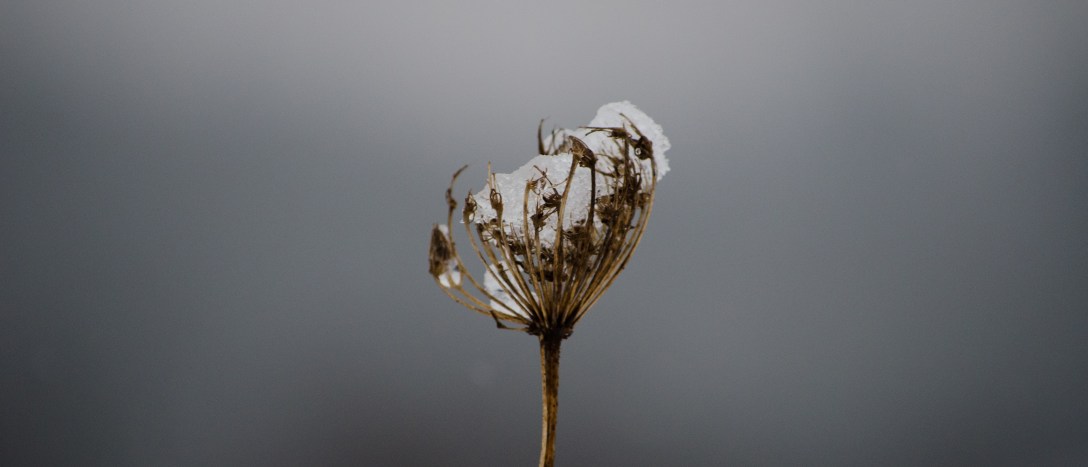
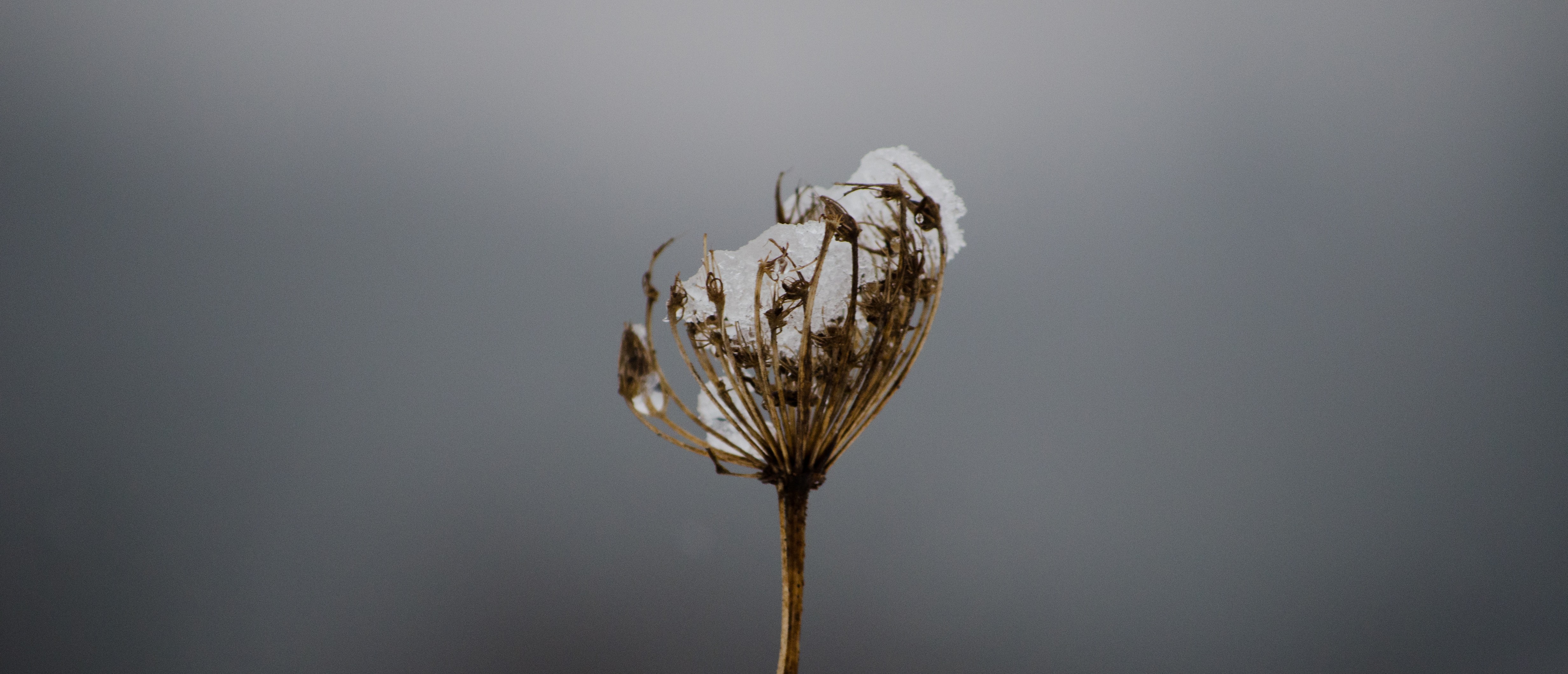
Snow covers the Downs. From the town comes the agitated clamour of traffic and, somewhere, the eagerness of a chainsaw. The layer of snow is fresh, renewed by flakes heavier out here on London’s periphery. Beneath my feet the seeds of field scabious, knapweed, yellow rattle and marjoram wait for the thaw, warm in the soil. Just as winter’s onslaught can’t be held off, nor can spring and summer wildflowers be maligned for long. The small pockets of woodland lack the crunch of the open Downs. The snow has melted quickly there, the ivy bright in the tree-dark, a young oak drips loudly, the sound heard out in the snowscape. Winter’s renaissance will be short lived.
A flock of some forty jackdaws whip around in the white sky. They have seen Farthing Downs at its brightest, remaining here to make something of it, even under snow. Their image is otherworldly, as if the past is being ripped out and unleashed, helpless, across the sky. A car passes in the lane blaring tunes, stopping, the driver steps out – at first I think to accost me and perhaps the camera – kneeling down he photographs his car with his phone, front and behind. Two magpies are flushed into the air. He steps in and rolls away. The snow melts and flows in a stream down the chalky hollow of the woodland descending to Happy Valley, heavy droplets falling from gleaming hazel coppices and blackened hawthorn. The world is working.
© Daniel James Greenwood 2013
Short-eared owl


© Daniel James Greenwood 2013
 Unlocking Landscapes