
Comma
Writing, photography and more by Daniel Greenwood
This article was featured in the News Shopper
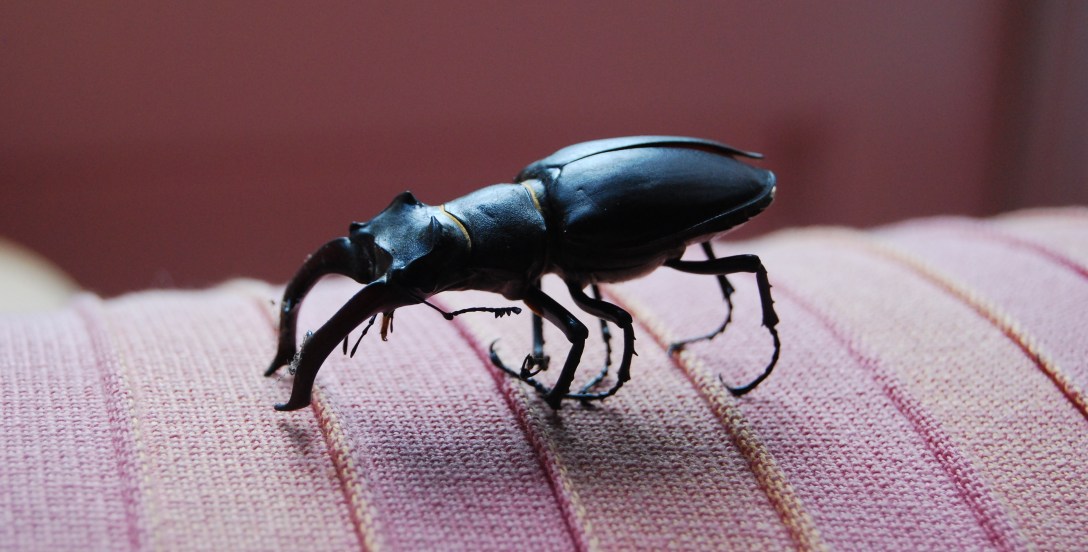
Growing up in Lewisham as a kid, the sight of a stag beetle on the pavement was not unusual. You can see where insects get the name ‘mini-beasts’ when you look at this particular creature: its huge mandibles give it a sense of outward aggression, as if it’s constantly spoiling for a fight. When you witness a stag flying around the impression is of a veritable thug who’s had too much to drink. But stag beetles are perfectly harmless and have, like much of Britain’s wildlife, suffered immense declines since the Second World War. Why is this? Stag beetles are dependent on rotting wood in woodland habitats. The suburban sprawl of the post-war period saw extensive loss of habitat, ancient woods were felled and grubbed out and the ensuing countryside tidy-up has been so damaging to our wildlife, particularly for our bees and butterflies. But, funnily enough, London is a great place to find stag beetles, particularly Lewisham and Southwark. In the past week I’ve seen three male stag beetles, two of them in flight looking for a mate and one dead on a doorstep. The heavy rain and summer break-outs have created good opportunities to view male stags flying around, as windy and wet weather is unsuitable for a cruising stag dude. London Wildlife Trust has launched a campaign to map the distribution of stag beetles in the city, and people have been sending in their sightings in the hundreds. It seems there’s a real affection for this mini-monster amongst Londoners, it’s ignited people’s interest in wildlife, rekindling memories of childhood, when stags were more common (and, apparently, treated very unfairly!). It’s also interesting a new-wave of wildlife watchers who can take the lead on protecting this precious species in the decades to come.
What can you do to help stag beetles after you’ve let London Wildlife Trust know about your sighting? If you have a garden, allow a wild fringe to evolve and create deadwood piles near trees to mimic a woodland habitat. If you have a tree that’s dead or been felled, let the part of the wood or at least the stump remain there. It’s all about keeping things messy. It’s a good idea to keep your cat in from dusk onwards, when the beetles are likely to be roaming. If you don’t own a garden why not join a local Friends of group for a park or nature reserve and help to create stag beetle habitat, or set an area aside for them in your community garden. Stags beetles need our help, and by finding out where they are today we can help to protect and promote them for the foreseeable future.
More information:

Photograph by Martin Brewer
— Nunhead Cemetery, London, April 2012
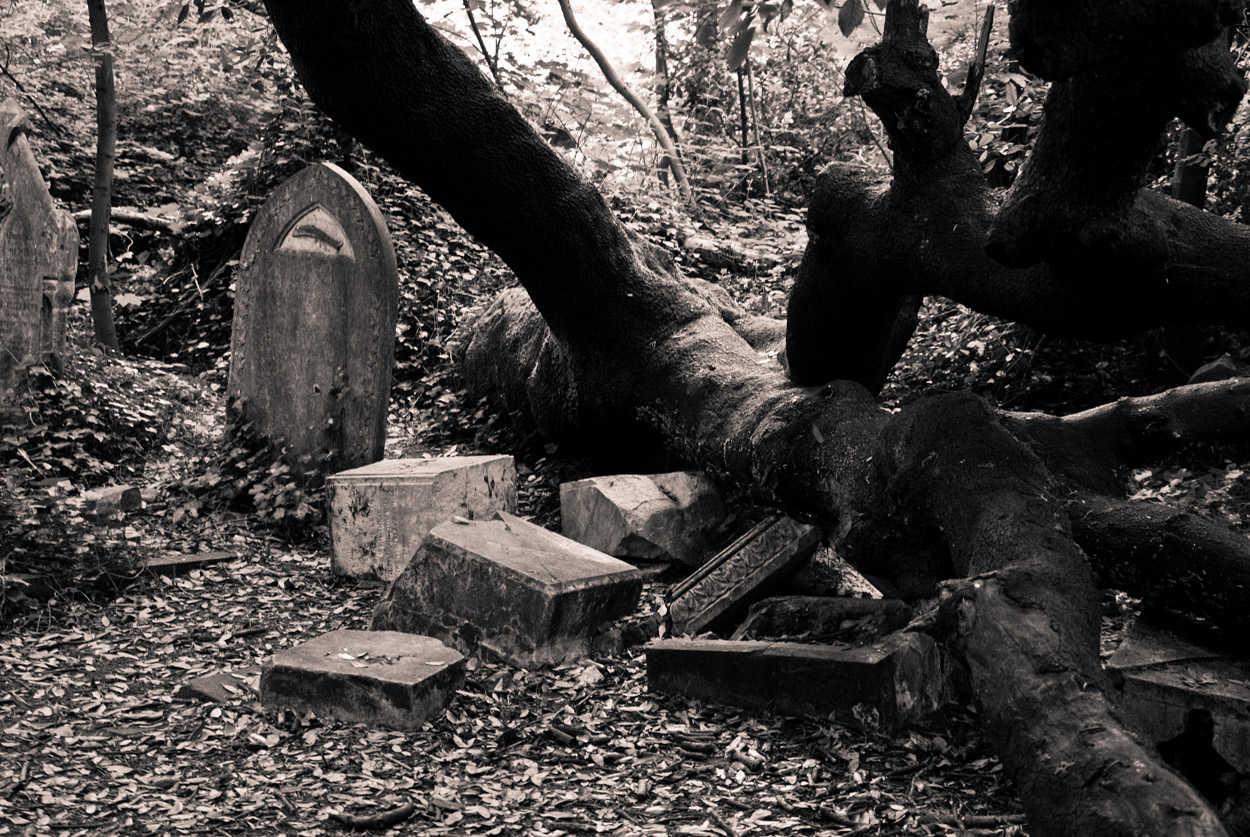
In the cemetery won by sycamore and rendered woodland, two male song thrush are duelling with one another, throwing out tunes, rewriting and rollicking the black cloud with their language. This mysterious, handsome thrush is to me like a singing pudding endowed with flight. I leave them to it. My ears are working overtime, the scene dripping, the algae glows on the trunks of dark trees, the moss is vibrant on the gravestones appearing as shipwrecks at the bottom of an ocean. The denseness of the trees squeezes the sound: blue tit trill, the calling great tit and guttural canon of the crow marking the enclosure of forthcoming leaves and canopy. A family, their dog muddied, happy, intoxicated by the aroma of wet woodland, people relaxed, even pleased – woodland puts us back into our bodies. The sun inches out and makes crystals from the droplets of fallen rain, there is the feeling that the soil is sighing from the torrents. Deep refreshment has touched the natural world. My waterproof holds drops of water that leave strange dents in the material, my jeans are darker now. Wait – a song ending, a sweet, fluty refrain. Silence. Woodland dripping, I retrace my steps back down the path. The song comes from a leafless ash canopy – descending, descending, falling apart. Willow warbler. I see it, its long tail and constant hopping between branches. How far has it come? It sings again and moves on. The matt black storm clouds progress, the inkling of lightning, the thunderous thump.
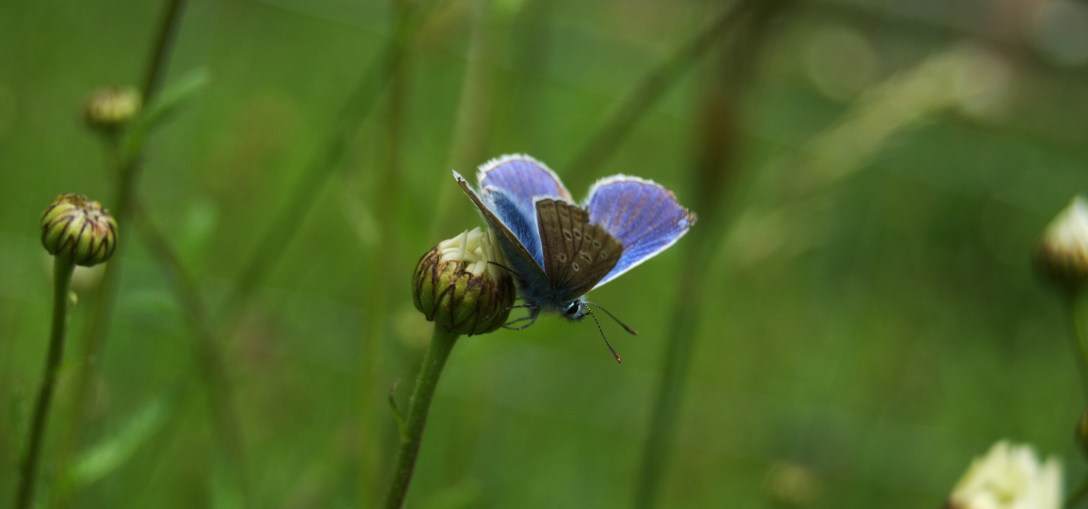
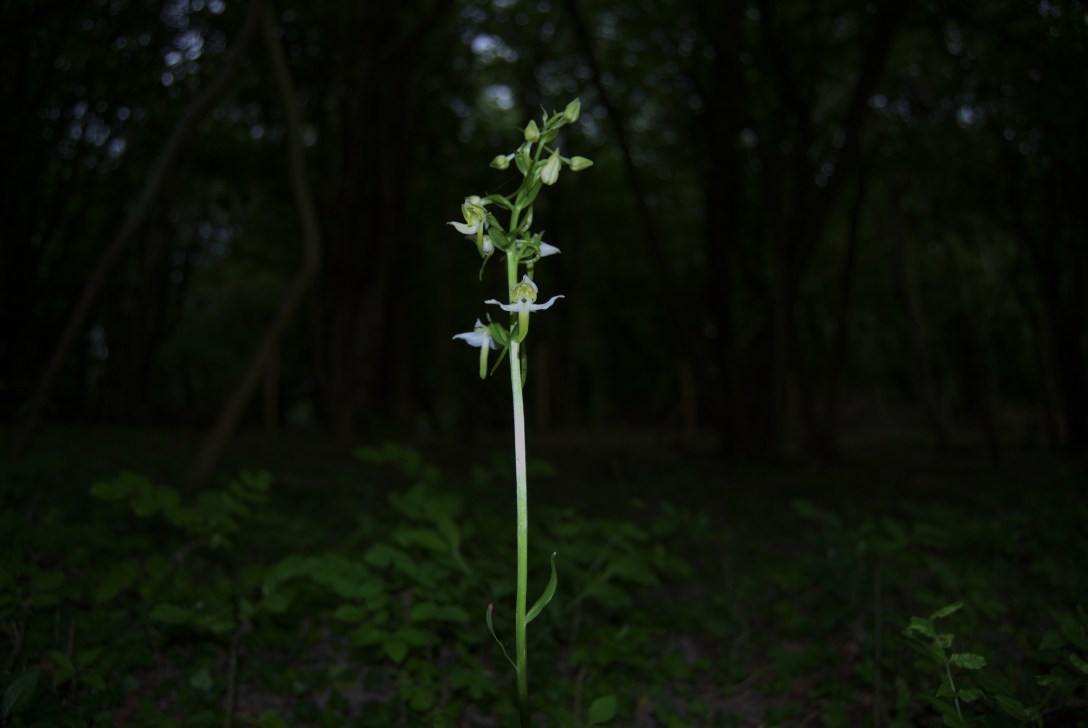
On Saturday (9th June 2012) London Wildlife Trust and the Old Surrey Downs Project held the annual Hutchinson’s Bank open day. With the Heritage Lottery Funded From Thorn to Orchid Project, Hutchinson’s Bank has been managed instensively by both local and travelling volunteers over the past 12 months to remove the encroaching scrub of young trees which, if left unchecked, will shade-out the foodplants of a diverse array of butterflies. Here are some of the butterflies encountered on the day, many of which will thrive thanks to the ongoing management of the 35 acre reserve. The small blue and dingy skipper are two butterflies suffering severe declines nationally.

Small blue (Cupido minimus)

Brimstone (Gonepteryx rhamni)

Green hairstreak (Callophrys rubi)

Dingy skipper (Erynnis tages)

Small heath (Coenonympha pamphilus)

Common blue (Polyommatus icarus)

This is an endangered species


– Farthing Downs, London, May 2012
The slope is exhausting. I push against my knees in order to reach the plateau without panting. Though it’s not as steep as it sounds, a flock of jackdaws glide in and bounce across the grass adding to my sense of human weakness. Turning back to look, it’s barely a slope, just an awkward drop down into the woodland below. In the distance, a world far, far away, the nearly-complete Shard and the Gherkin look like grey wreckage. The path ahead is bordered by two strips of scrub and small trees, in the open land across the road cutting through the downs a skylark is rolling out its splatter of trills and warbling. The bramble has come to life around me, a mouse or vole too quick for my eyes crosses to the other side. I swallow the air – it’s Croydon, but it tastes like the countryside. Beyond the dip into woodland Happy Valley opens out and up again, a vista of wildflower meadows and a fringe of trees. There is a hint of the hillsides of west Dorset within the boundary of The City of London. A pair of linnet alight in a small hawthorn, dull brown with specs of mud on their breasts, the red crown yet to come into full colour. They match the day – grey, brown, muddied. The aborted song of a bunting is coming from the branches above them, the striking colour of a yellowhammer sings from the still wintry scrub. It calls and calls, turning its head to look, not minding me at all, another arrives in a hurry.
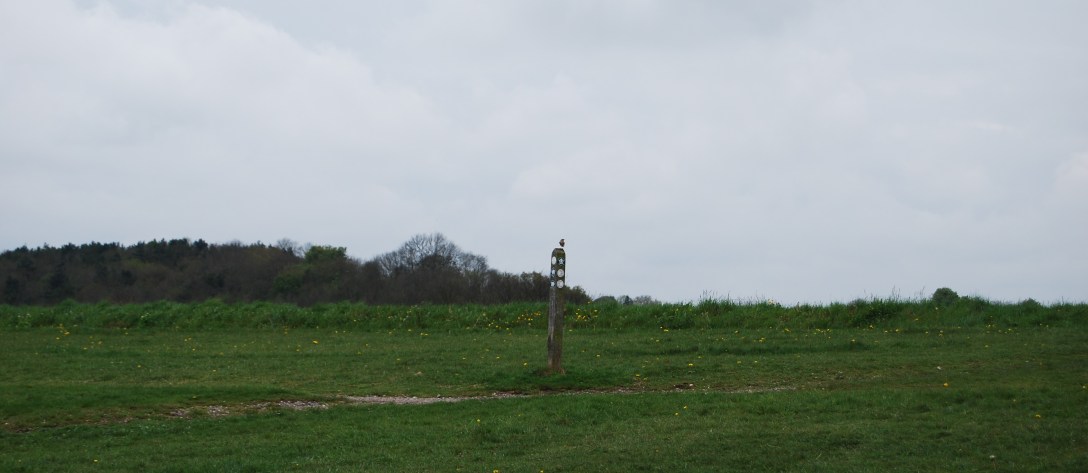
The full view of Farthing Downs is open now as I continue to wander along the eastern flank. Two swifts newly arrived in the country dart about, twisting and turning, their black wings flapping a little like penguins under water. There are people over the surmount, people walking, people on horses, people with dogs. I approach a gate where a woman and her daughter are struggling with their dogs, one bounding around as if it’s been cooped-up for months. Right in front of me a wheatear drops in, landing on the small mound of an anthill. This robin-sized chat has travelled from Africa to be here in Croydon and will soon be moving to its northern breeding ground. The bird is nervous – the sprinting dog has been released upon the downs but it doesn’t notice the migrant wheatear, instead it runs at me full-pelt, swerving to my side, cracking its skull against my forearm. The lady who owns it has stepped in her other dog’s poo in trying to clean it up and is wiping her foot across the grass, grimacing. I’m muttering to myself – this is the first wheatear I’ve ever seen in the United Kingdom. The bird bursts into flight, landing on a fence post. I marvel at its feat of migration.
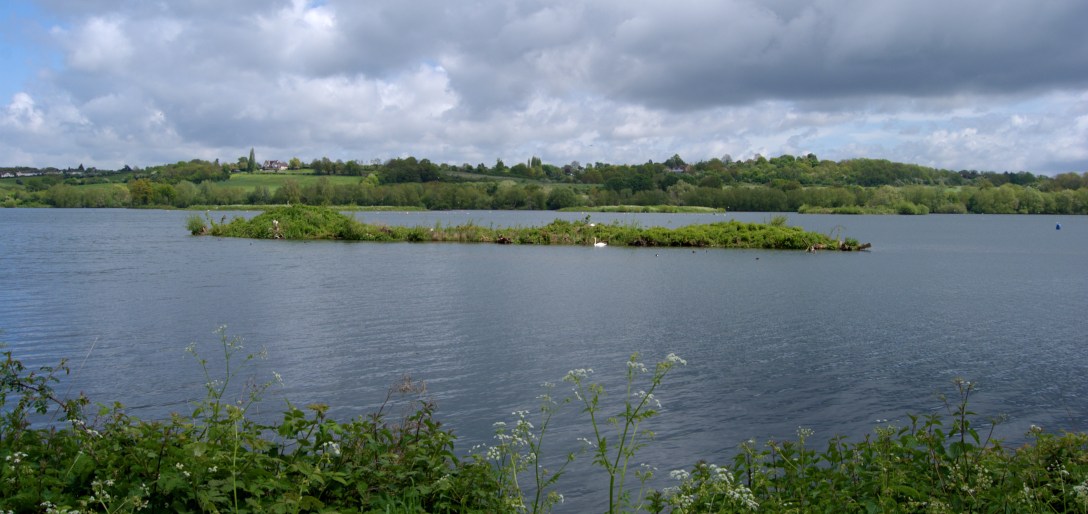
Broadwater Lake is situated in the Mid-Colne Valley a Sight of Special Scientific Interest (SSSI), the lake is managed by Herts & Middlesex Wildlife Trust. This is one of a number of nature reserves in England which is set to be developed for High Speed Rail 2. For more information please follow this link to the Wildlife Trusts’ website.


 Unlocking Landscapes