The cranes aren’t flying

March 2012 631

– Lakenheath Fen, Suffolk, March 2012

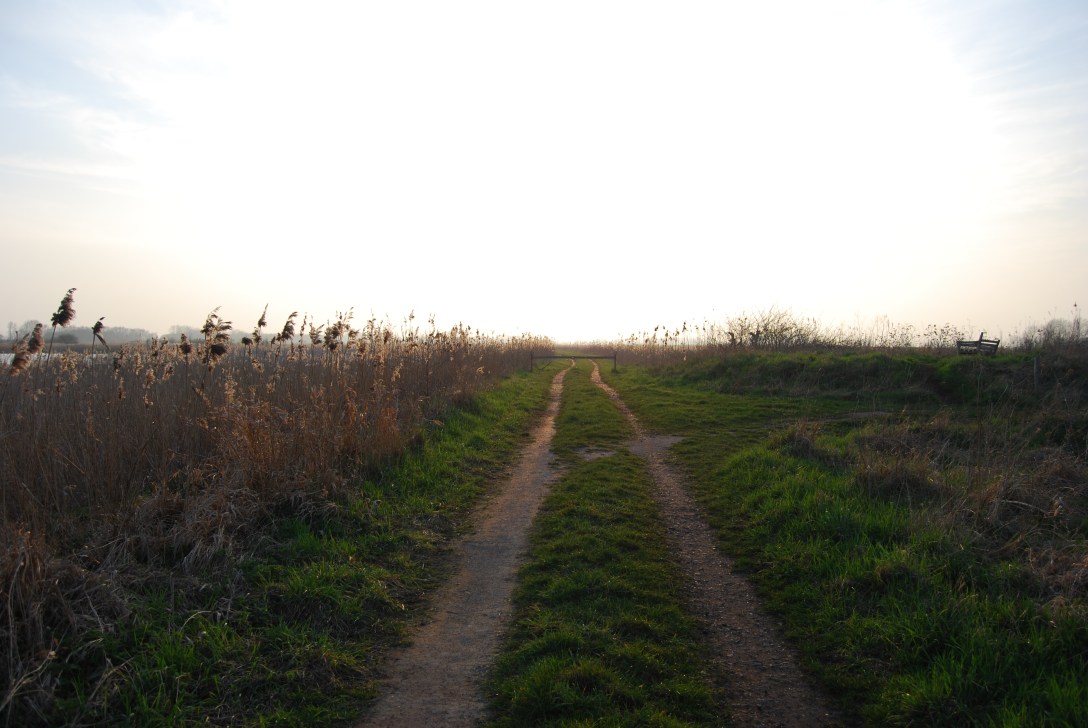
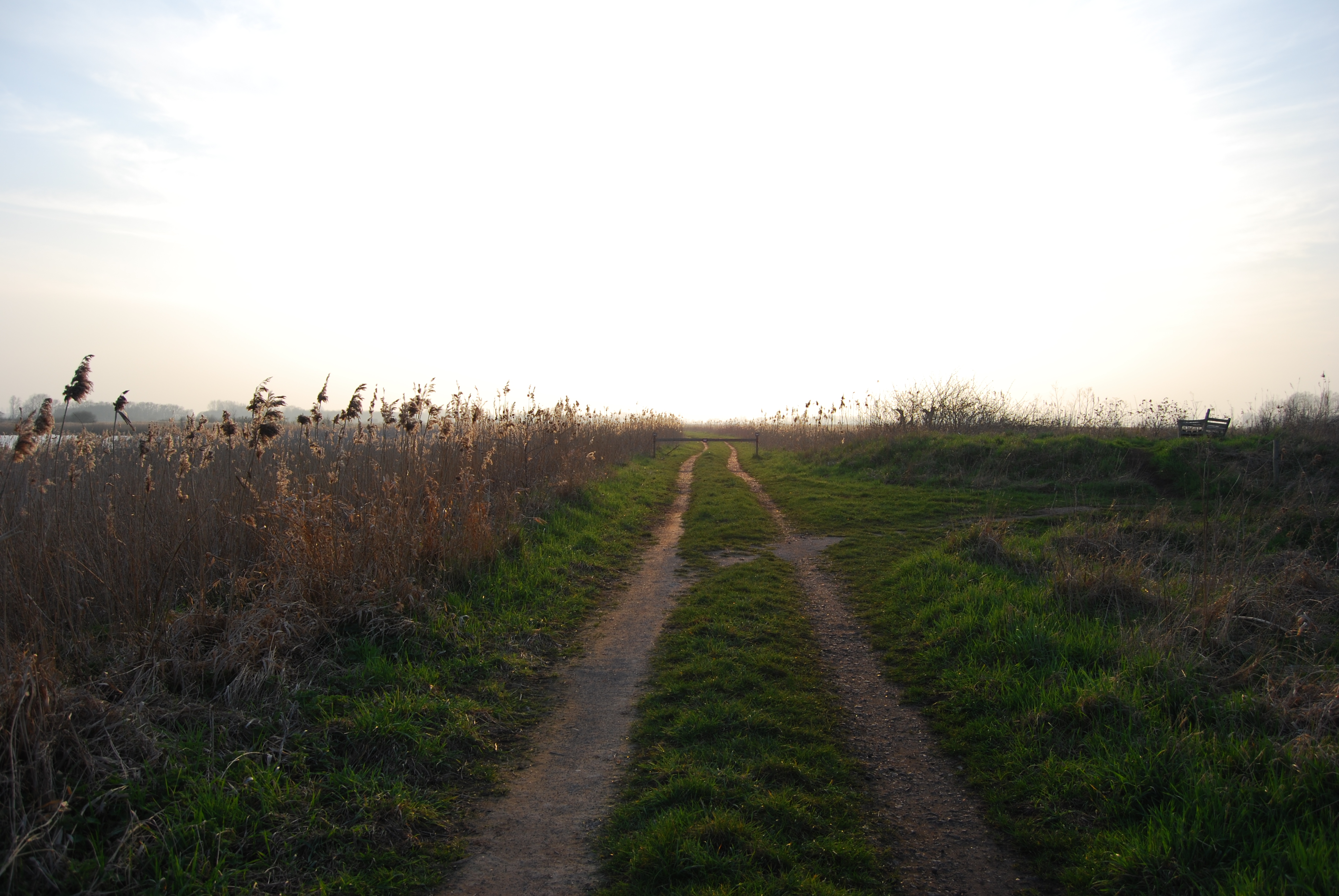
We’re standing on the raised bank overlooking Lakenheath’s reedbeds. It’s a warm, clear day but cooling gusts of wind disturb the peace, ushering us away from the viewpoint. On calmer days bearded tits move across the tops of the reeds, today they’ll be down in the cover. We pass a rigid poplar plantation famed for its golden orioles which breed here in spring, what is perhaps the only nesting site in the United Kingdom. The trees grow out of swamp and some of them have collapsed, the soil clinging to the upturned roots making the poplars look like toy soldiers left supine by a child’s swooping palm. The trees have sent suckers out along the horizontal trunk meaning a new layer of woodland is growing from the body of one of the fallen, a new understory naturally occurring from a man-made habitat.

The cover of the plantation lessens the wind somewhat, a green woodpecker yaffles from the cover of the trees. Along the bank are anthills home to yellow meadow ant. I’m with David Norfolk, a friend and expert ornithologist, and he tells me these are rare. The hills could be hundreds of years old. ‘They wouldn’t exist in today’s farmland,’ he says. ‘A tractor will destroy them’. He takes a small chunk of the mound and golden-coloured ants move busily across the grey soil held in his fingertips. On the other side of the bank a blue river runs away to where the sun is going, a flock of oystercatchers pass, chattering as they fly against the flow. On the riverbank near to us pristine white feathers are strewn like discarded quills around the skeleton of a mute swan. David has seen it before: ‘That’ll be a fox kill.’

We’re alerted to a faint, hoarse bird call wafting from beyond the poplars where a swathe of reeds stand for perhaps 200m all the way around. We stand to face the reeds and the wood beyond where trees have collapsed, fieldfares pass through on migration north on their return to Scandinavia. We hear it again, the muffled, bugling call of a crane. I have longed to see or hear these birds, Russian symbols of peace in the aftermath of Hitler and Stalin’s tyranny. The poet Anna Akhmatova described hearing cranes as she lay in her sickbed, the birds fleeing the dry autumnal fields after the harvest. Our cranes are not forthcoming but David is convinced they’re here. I’m prepared to wait until dark.

A group of men in their sixties arrive and we point out the vague sound of the crane, but they look in the opposite direction, instead to the sun setting over the lake. I suggest to another man that the cranes can be heard, he complains that he needs to sit down. ‘That’s a dog barking,’ he retorts. Bearded tits are pinging in the reeds, a water rail is squealing like a pig. We follow the path back to the start. The bugling goes on, it has to be cranes. But the beardies are closer and closer and even louder now. ‘Watch for their flight between the reeds,’ David says.And here they go, the pale brown flash and long tail, something I’ve never seen before. From behind us a crane calls clearly into the lilac sky.

F16s tear up the sunset with their apocalyptic thunder, a train careers along the bank next to us, the two carriages a little pathetic-looking and exposed in this vast open space. The lights shine inside, juxtaposed against the light dying down around us. The sun is stuck behind a strip of cloud and its colour cannot be revealed, jackdaws are roosting noisily in the poplar plantation, the green woodpecker continues its laughing fit, escaping its perch in an undulating flight overhead. The water rail is squealing still, a kingfisher bolts around a swoop of reeds. Two giant birds appear from the path we’ve just taken, grey and white. It has to be! Two cranes, flying together, approaching us on the bank, moving across. They are within a stone’s throw… but the joy evaporates. They’re swans and it’s a trick of the light.
The flavour of open landfill

– Beddington Farmlands, London, April 2012

We walk a clay-coloured path towards the landfill and stop to listen to the subsong of a whitethroat newly-arrived in the country. It sings from the obscurity of bramble and other scrub, evidently practicing before it’s ready to give its best rendition. We leave it and head for the hill. To the left is a gravel pit blocked by fencing, a hillside of green grass and garbage growing up and out of it on the bank. At times I fail to differentiate the flagging bin liners from the crows and jackdaws which gather in vast numbers, picking through the bits and pieces. On the track there’s a Nike basketball shoe and the Caucasian limb of a Barbie doll, a cassette tape of ‘90s Wimbledon and a plastic water bottle. This has been carried-over by the wind and evidently the landfill is not being contained. And then it touches my face, the sickening flavour of open landfill, like the whiff of pure alcohol. If I’d eaten I’m sure I’d be gagging, I hold my nose and breathe through my mouth.

At the surmount we can see everything – the Crystal Palace ridge, now recolonized by trees after the Great Exhibition’s twilight stay in the heights of south-east London, and Addington Hills in south Croydon, an undulating snapshot of landscape. Down below we can see the crows feeding on the recent landfill, clinging to the fence as a buffeting wind moves across, it’s too cold on the eyes to look through binoculars. The landfill slopes down towards a large pool with islands scattered throughout. It’s manmade, the aim to lure migrating birds like yellow wagtails, one of which passes overhead, and provide habitat for snipe, plovers and terns. The scene is teeming with life, herons at every corner, gulls, ducks, all living amongst one another. From the landfill perimeter garbage has escaped, a stream of multi-coloured items leading to the water where a white swan is preening its wings. I look across the water to the opposite side where a crude tin hut has been constructed by the Beddington Farmlands Bird Group, they’re gathered at the water’s edge, telescopes, cameras and binoculars to hand. Behind them is a feeding station supporting London’s only colony of tree sparrows but they can’t be picked out with the naked eye from up here. On one side of the water you have people who devote their lives to caring for wildlife, and on the other side the waste which so harms ecosystems. And somehow wildlife can live with the crap we don’t want, the plastic, the rotting food and even our stool. But the question remains: can we?

Woodland Diary: Sycamore coppicing

Holly blue

This was the first workday for the Friends of One Tree Hill (FrOTH). We coppiced 10 sycamore (Acer pseudoplatanus) trees and cut back the bramble (Rubus frusticosus) which is so dominant on the site.

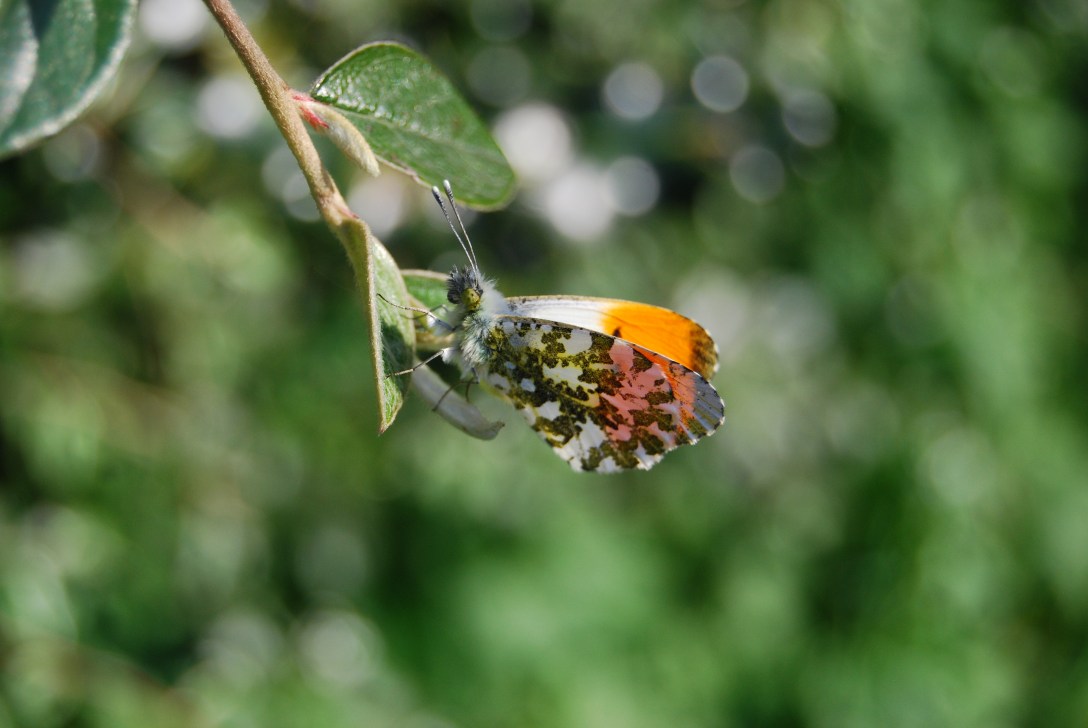
In the case of sycamore we were felling trees of some thirty-feet or more in height that were competing with the sessile oak trees (Quercus patraea). These oaks are regenerating on the slope of the south-facing hill and are slow growers compared to the highly successful sycamore. We felled the trees also to allow light in and let the herb layer regenerate. This is a technique which helps insects and butterflies in particular.

PlantLife reports that by 2002 97% of British broadleaf woodland had become high forest. In 1951 that figure was at 51%. This means that most of our woodland is dark and overgrown generally because humans have stopped relying on woodland as a resource for firewood, furniture, grazing of livestock and so on. One of the great misconceptions about woodland is that felling a tree is somehow a bad thing when, on the contrary, wildlife flourishes when trees are cut down in moderation and sunlight can get in to bring life to the woodland floor.

One ancient tradition which has gone out of fashion is the art of coppicing. This is a process of cutting a tree down to its base, generally of hazel (Corylus avellana) or ash (Fraxinus excelsior), which means that the tree shoots new, straight growths. These poles were used for a variety of things, often as fencing.

Sycamore is not a typical coppice tree, but the stumps we cut down to in One Tree Hill will shoot similar growths in the spring and summer. In the meantime the wood we have cut will be used either to make log piles for beetles and other bugs to inhabit, otherwise the material will be used to make handrails or dead hedges in the wood.

The point of managing a wood in this way is to show that using the material, i.e. trees, is not a negative thing and can boost wildlife in the short term. The Pearl-bordered fritillary (Boloria euphrosyne) is one butterfly which saw a decline in numbers after the tradition of coppicing declined in the 20th century after we began to rely on gas to heat our homes and use wood imported from overseas. You can see that a tree has been coppiced if you spot thin shoots and the hairy green leaves of a hazel. 

This technique is renowned for its benefits for wildflowers such as wild primrose (Primula vulgaris) and bluebells (Hyacinthoides non-scripta) which can burst into life when the coppice is cut. These are plants indicative of ancient woodland and seeing as One Tree Hill is located in the area which was once part of London’s Great North Wood, we are hoping that some plants, in certain areas, could reappear one day, not to mention the wildlife which feeds from them. Sydenham Hill & Dulwich Woods and Dulwich Upper Wood are two fragments of the Great North Wood which have ancient woodland flora growing there, and have done for thousands of years. Perhaps one day One Tree Hill can be in a similar vein of health.