Fungi Friday 19th February 2021
In Sussex we’ve been treated to snow and ice, followed by a sudden jump in temperatures to something spring-like. For mushrooms, it must be a confusing time. It definitely is for this manshroom.
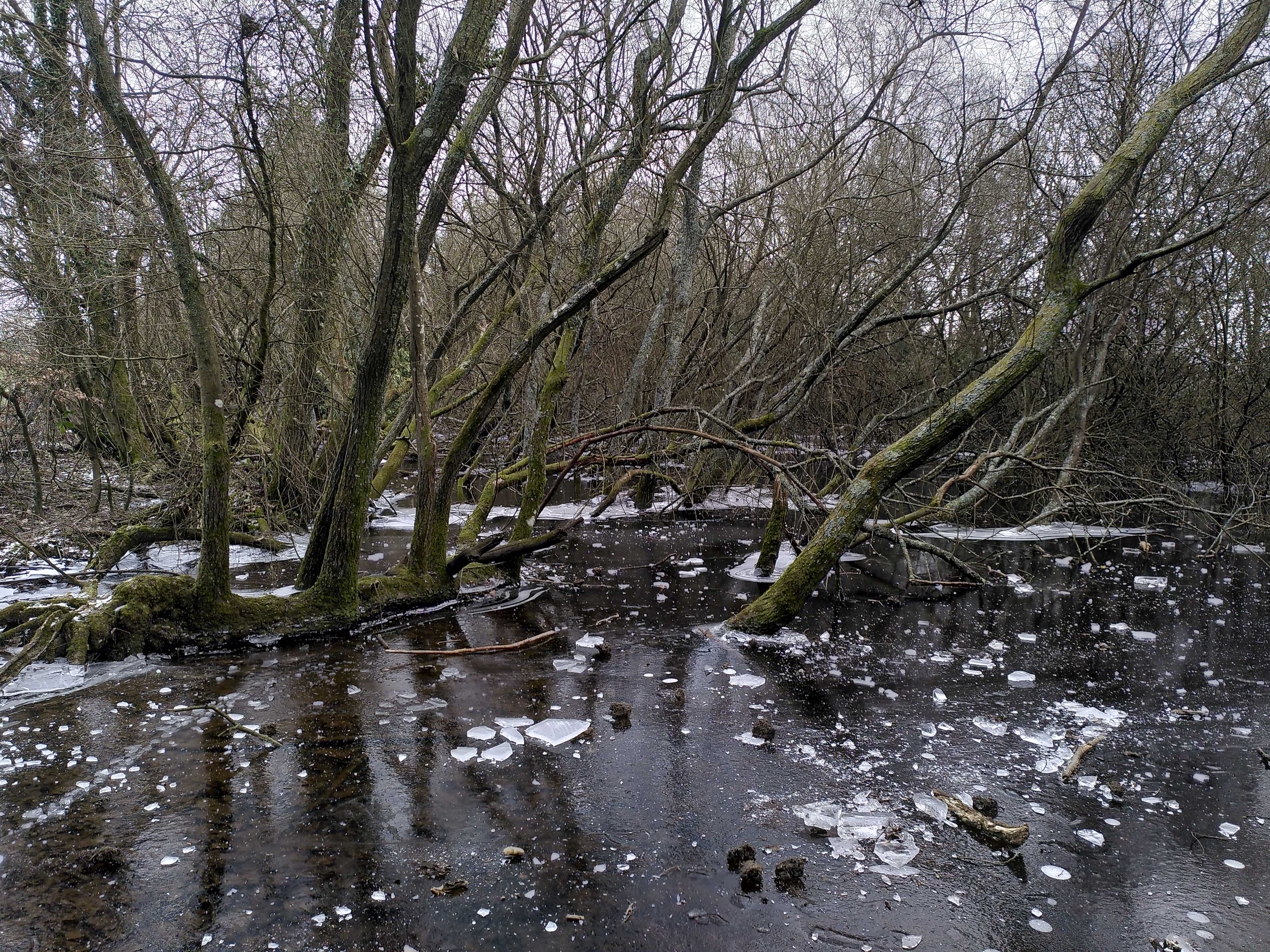
Today’s post is brought to you by phone pics. I’ve been a bit confused by messaging around lockdown laws in the UK, where it’s unclear if you can do photography at all. It’s just not that important, though. People are suffering beyond my comprehension and in England our National Health Service is under incredible pressure. I’m lucky and I do not take for granted the privilege I have in being able to access the countryside within a few miles of walking.

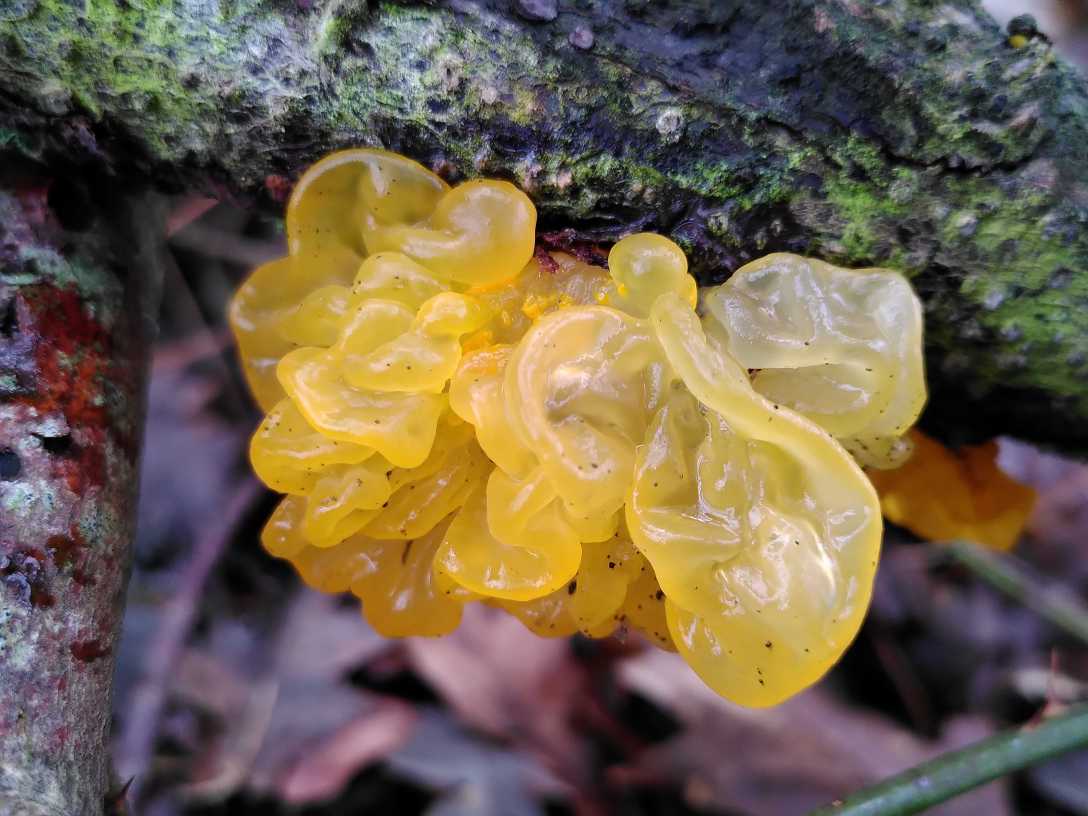
For the benefit of international readers, in England we’re supposed to only do walks from home or those involving a short journey. I’ve not been to my usual local woods in a while, but I can get to the edges of them or at least some mature, tree-lined avenues within a couple of miles whilst keeping away from other people. The standout fungus during walks this winter has been yellow brain, Tremella mesenterica. It is such a beautiful fungus and so unusual to see something so bright in the dark scenes of an English winter.

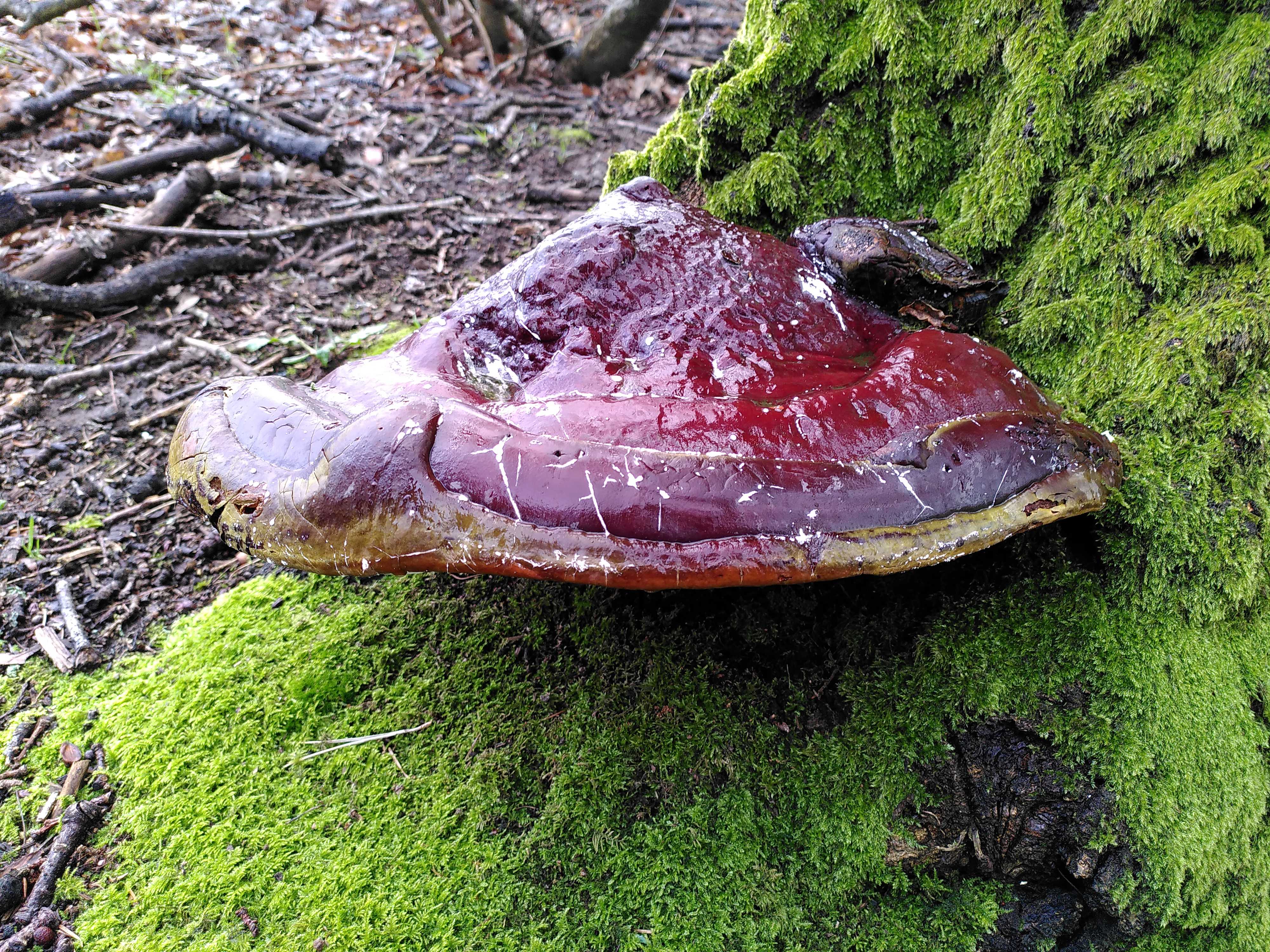
There’s a reason so few soil-based mushrooms are found in winter – the ground freezes and most fungal hyphae are unable to move through the frozen substrate. Fungi that grow from dead wood or other material can continue to do their thing. This rather pooed-upon bracket fungus is known in the UK as lacquered bracket. On social media you see lots of American accounts raving about reishis. There is even a website dedicated to the species under that name.

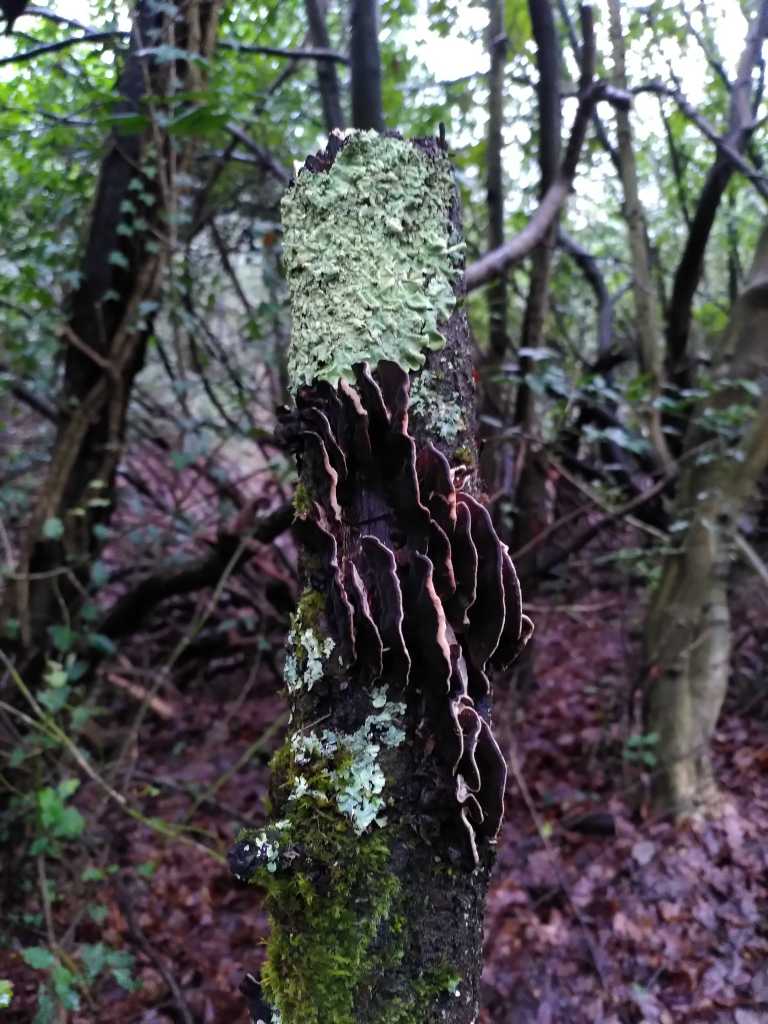
I wrote a little bit about turkey tail last week, and this week’s post is late because I entertained the idea of a turkey tail post in itself but eventually didn’t have the time. I think this is turkey tail. It’s quite a variable species so if you don’t know the basic features, can be confused with others. I’m it that camp.

Jelly ear has to be one of the species people notice first. It was my first ever #FungiFriday post! It looks like a body part, is tactile, non-toxic and grows on a common European tree – elder (Sambucus nigra). It’s also very common in urban woodlands and green spaces, which means it reaches a wider audience.
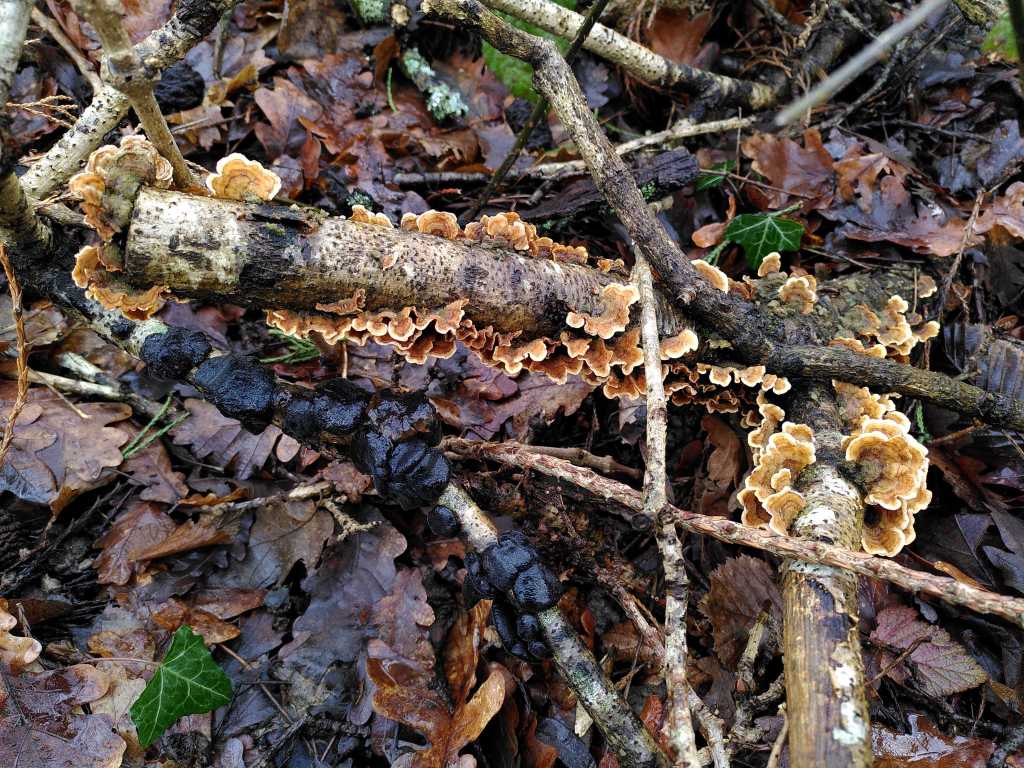
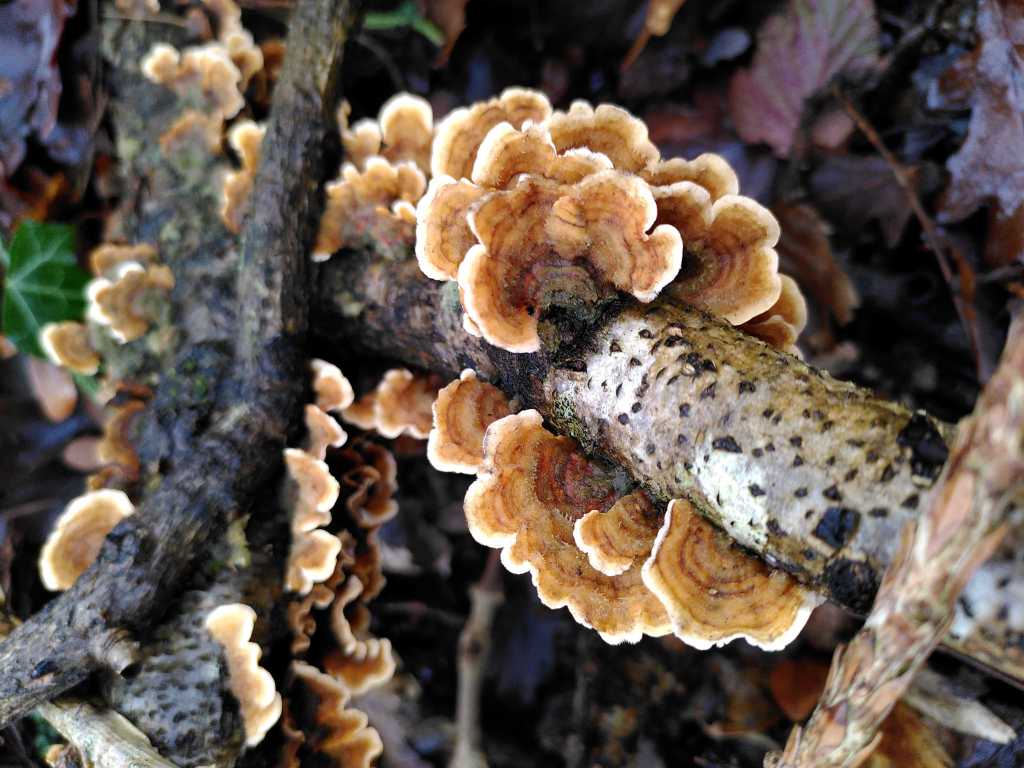

Quite similar to turkey tail is the Stereum family. This is probably hairy curtain crust (yep) and is very common in these months when rainfall is high and temperatures are hovering between 5-15 degrees Celsius.


On a longer local walk I found this veteran beech tree. It had a massive bracket fungus growing at its waist. This fungus had become very woody in texture, which shows how they can survive cold weather. I’d like to get back to see it when it starts to build up its next layer. You can read more about bracket fungi here.
Thanks for reading.
Recent posts

The ruins of Brambletye
A walk from Forest Row to the Brambletye ruins in Ashdown Forest, with some ancient woodland and rocky outcrops scattered along the way.
Winter-spring 2026: the loud lie
What I am experiencing culturally in this rather wet winter of 2025-26
Arun valley oaks around Billingshurst
A long ramble (in both senses) around the oaken landscapes of Billingshurst, including the Wey & Arun Canal
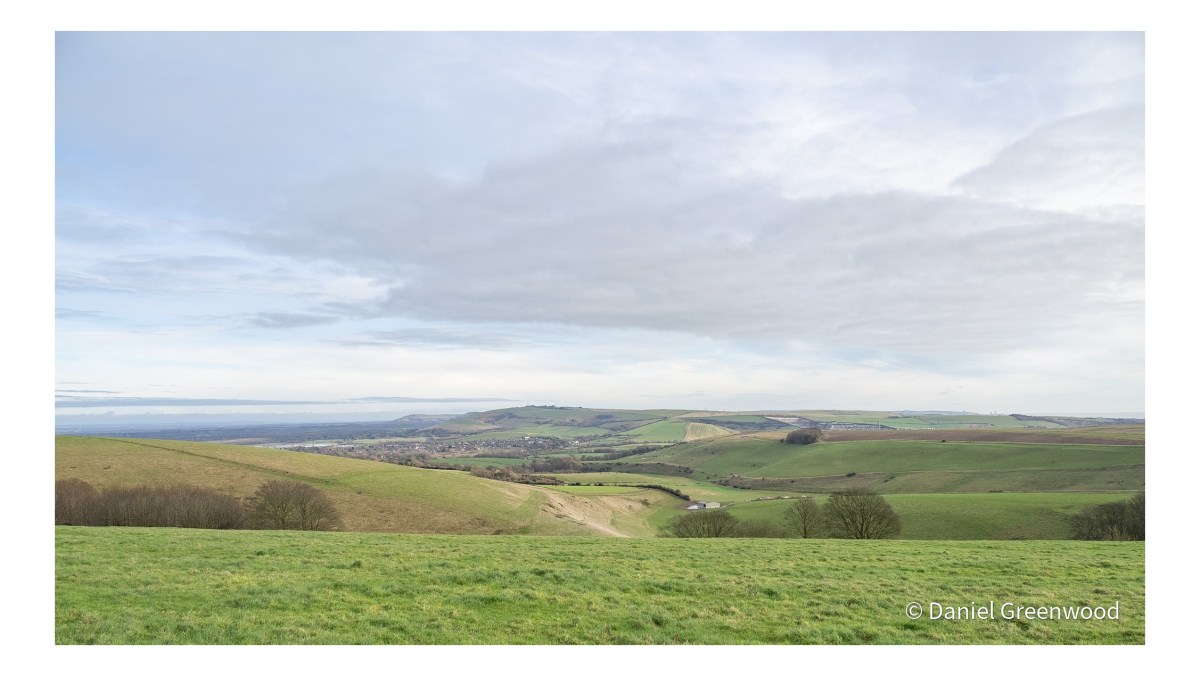
Along the South Downs from Washington to Bramber
This is a long post with a lot of South Downs history in it. There’s history here you can touch that dates back over 1000 years.
Something went wrong. Please refresh the page and/or try again.

 Unlocking Landscapes
Fascinating as always.
Thank you John