I got to spend the afternoon wandering around the Adur valley recently. The River Adur runs through West Sussex where it reaches the sea at Shoreham. There are wonderful views of the South Downs, especially from the area I was wandering around.
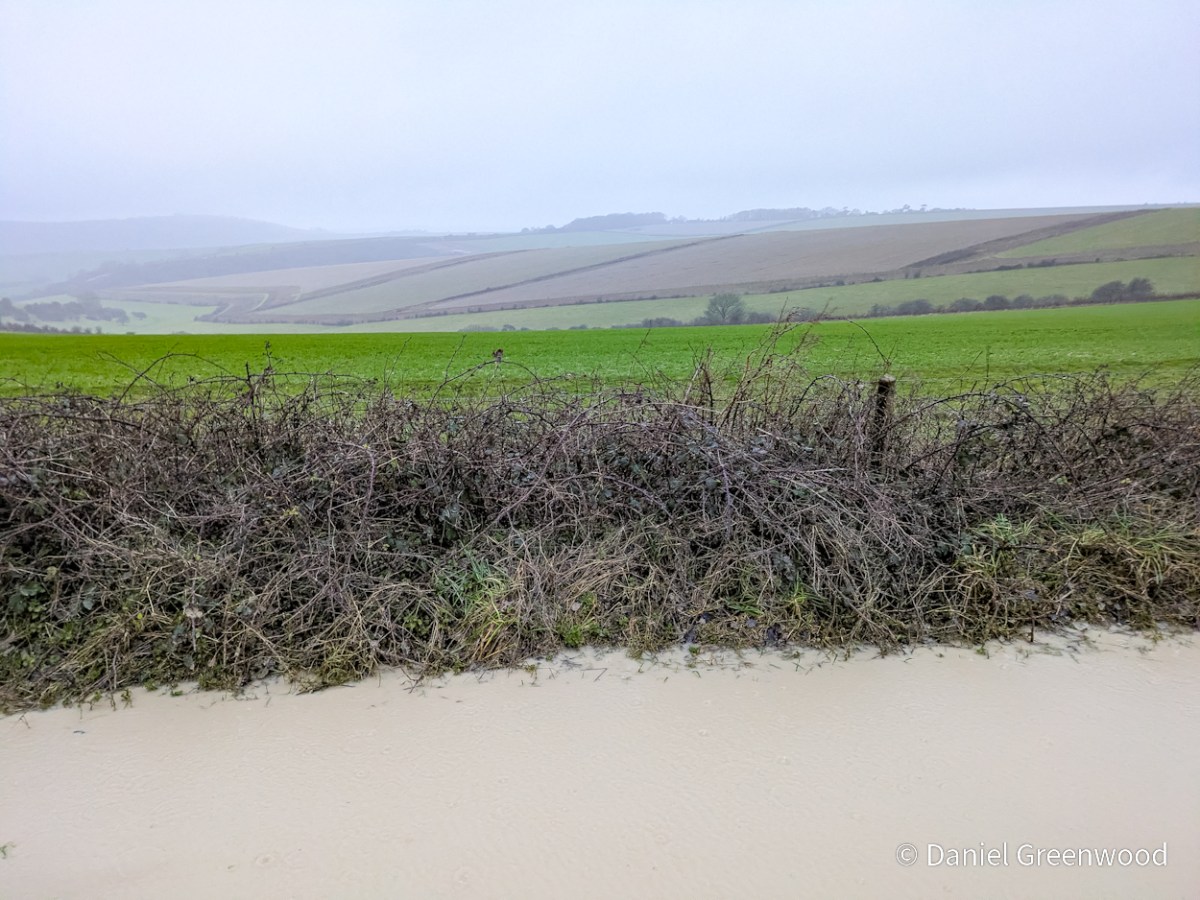
Truleigh Hill on the South Downs, seen from the Adur valley
This landscape fascinates me because it was once a much wider and wilder estuary. The town of Steyning had its own port, but the river’s margins and the marsh has become farmland. Looking at the maps you can see Rye Farm, with Rye potentially from the West Saxon word for ‘island’, just as it once would have been when surrounded by water or wetlands.
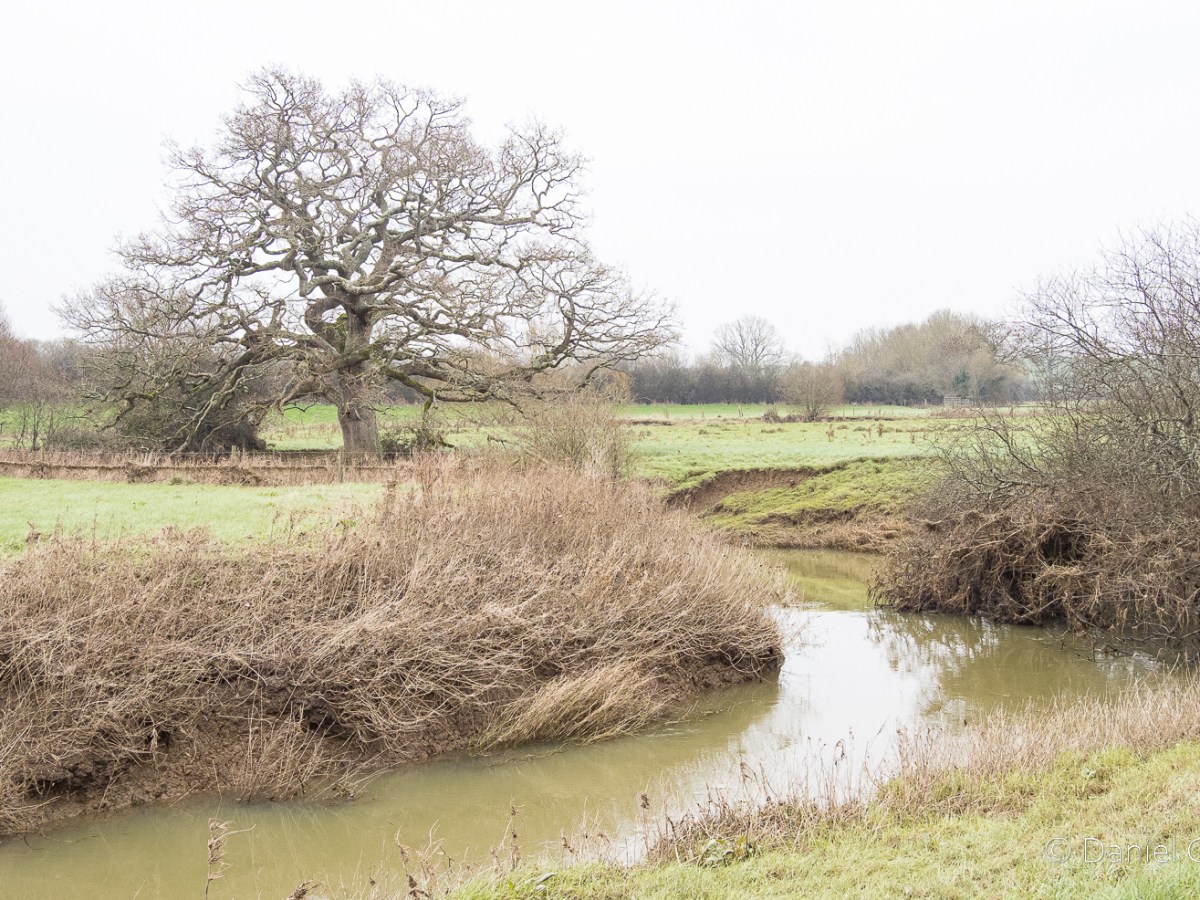
The River Adur
It was the end of a very rainy period and the insect life was out in force. There were hundreds of bumblebees on tufted vetch in the damp margins and probably thousands of newly emerged grasshoppers.
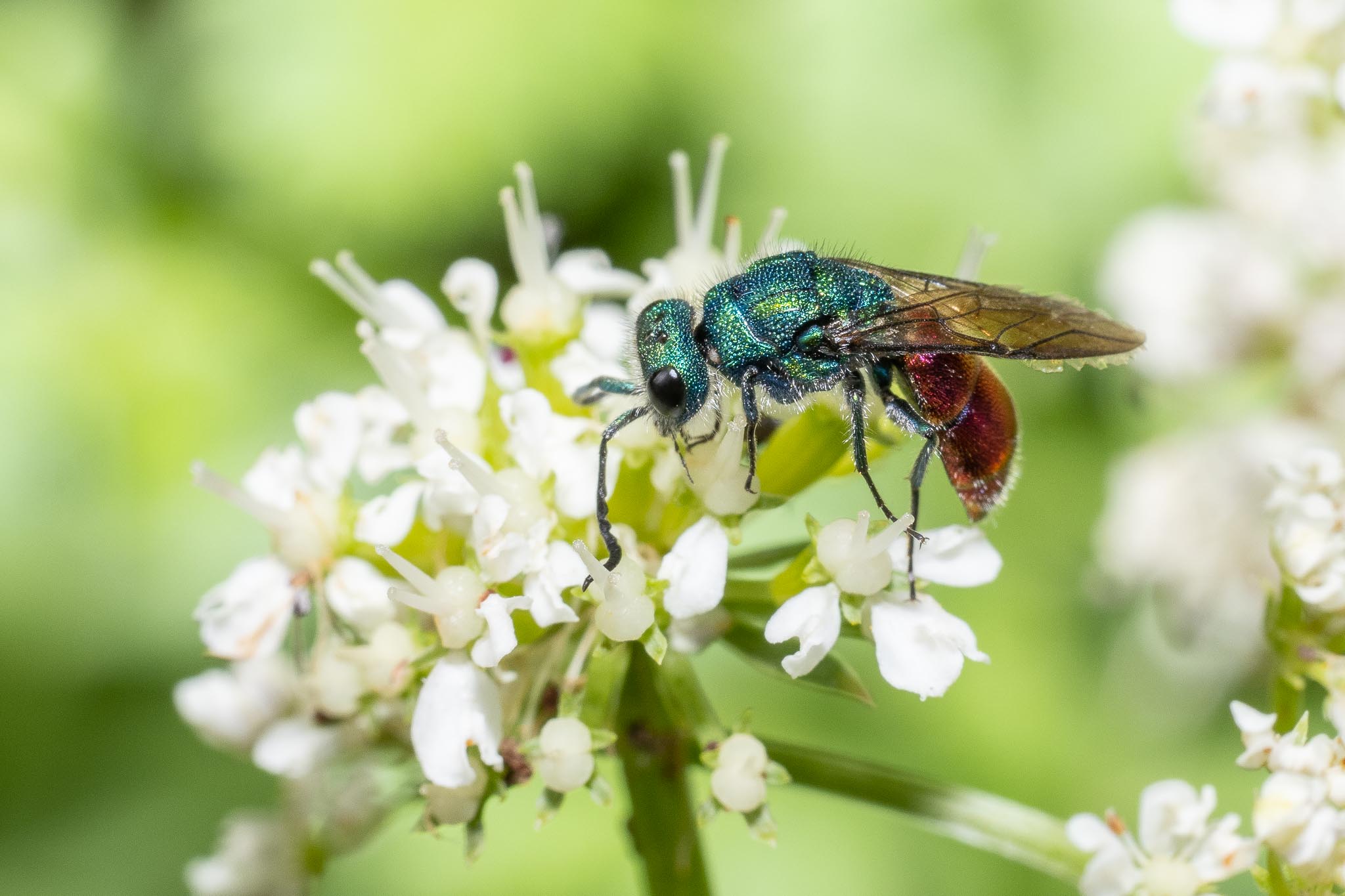
I wasn’t alone on this walk and so couldn’t linger too long. But along one of the lanes I found some umbellifers. On one flowerhead there was the unmistakable green and red of a ruby-tailed wasp!
They are stunning insects – with metallic blue-green thorax and a ruby-red abdomen.
The wasp was feeding on hogweed, a popular plant with pollinators.
This is a better view of the ruby abdomen.
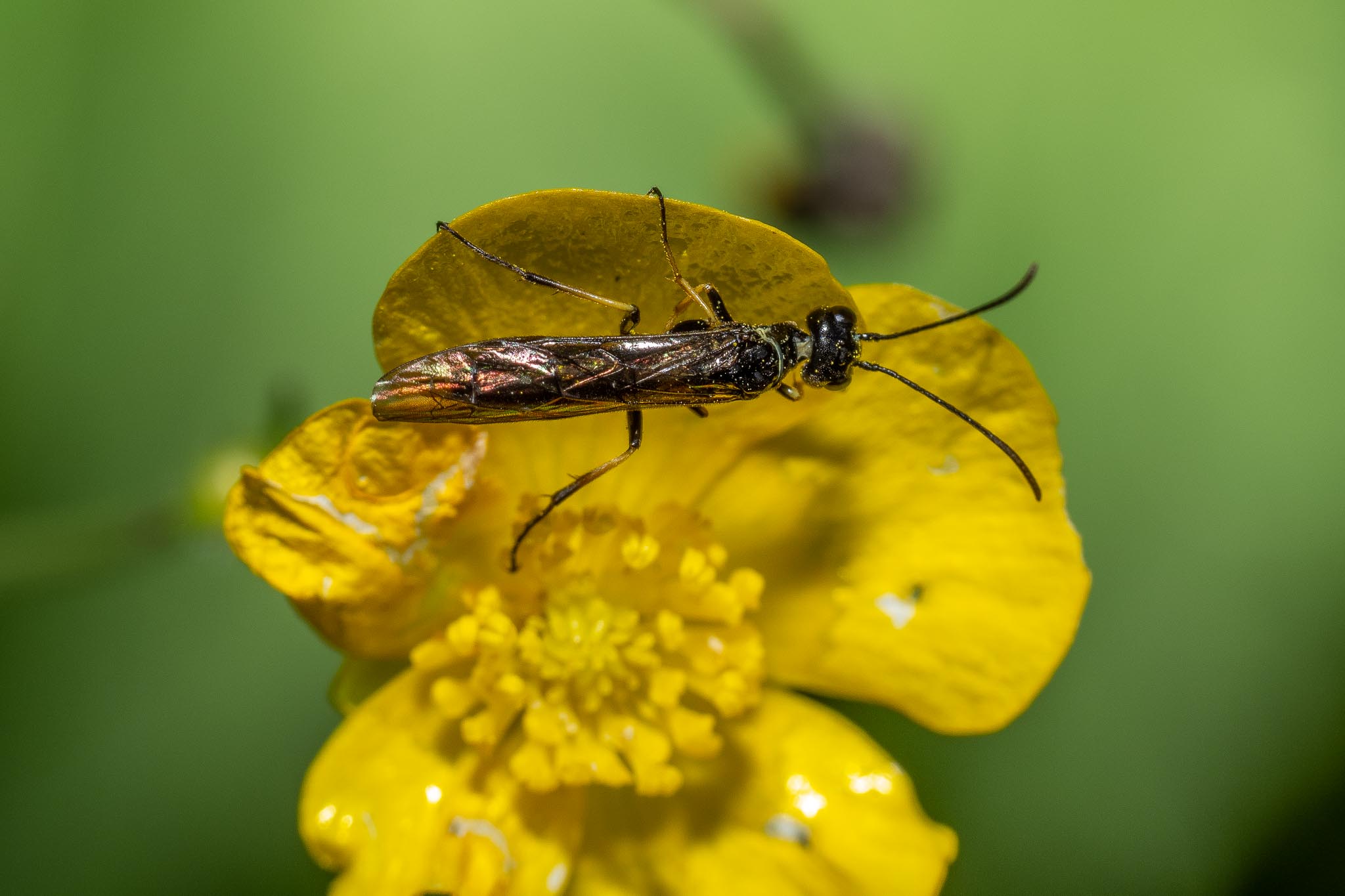
There were just so many insects out and about, it was a joy but also a massive distraction. Buttercups are often the favoured haunt of sawflies – the earliest relative of wasps. This is a species in a group of rather elongated sawflies.
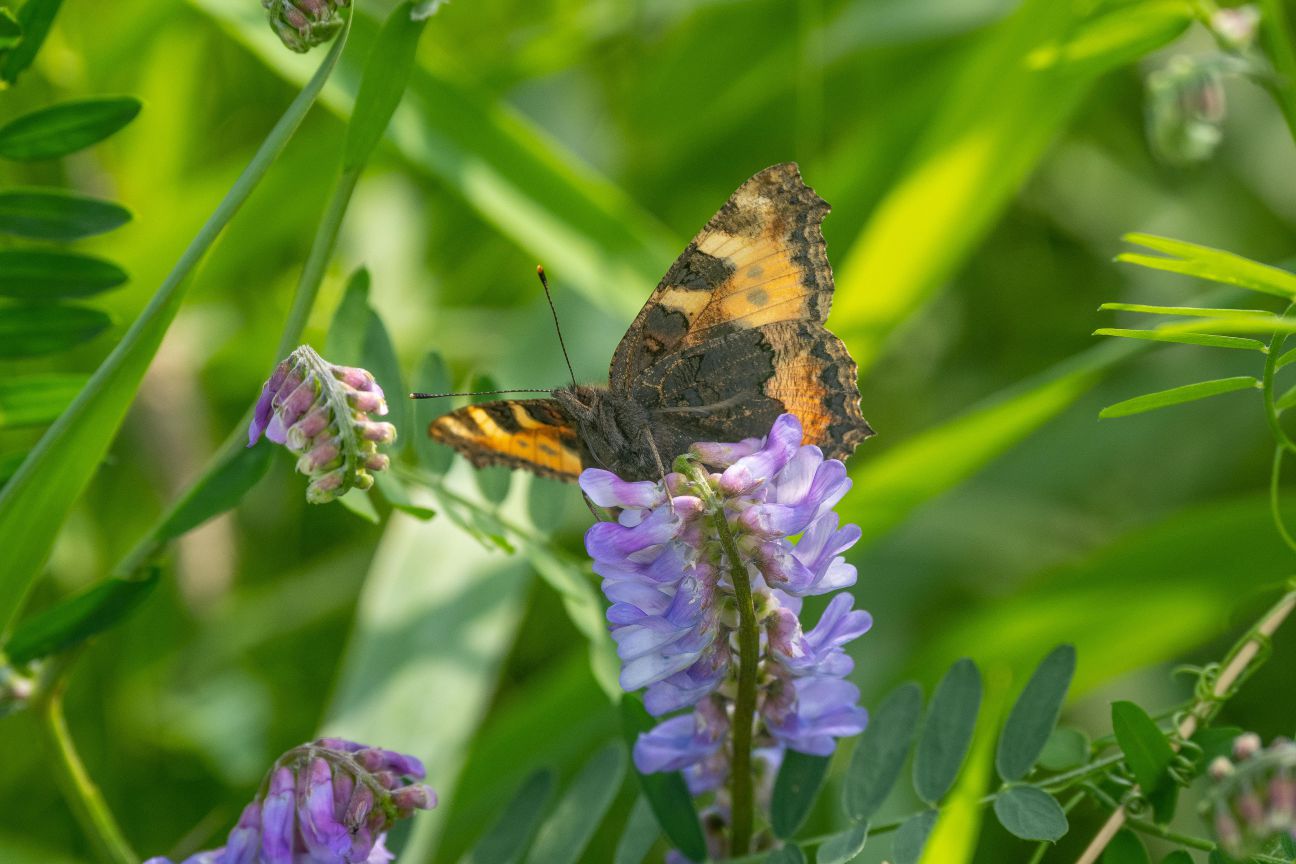
Tufted vetch was growing in the flowery margins where the bumblebees were in great number. There were also large numbers of small tortoiseshell butterflies.
On a fence near the river a blue damselfly was eating some kind of bug. It was so focused on chewing its prey that I could get very close indeed.
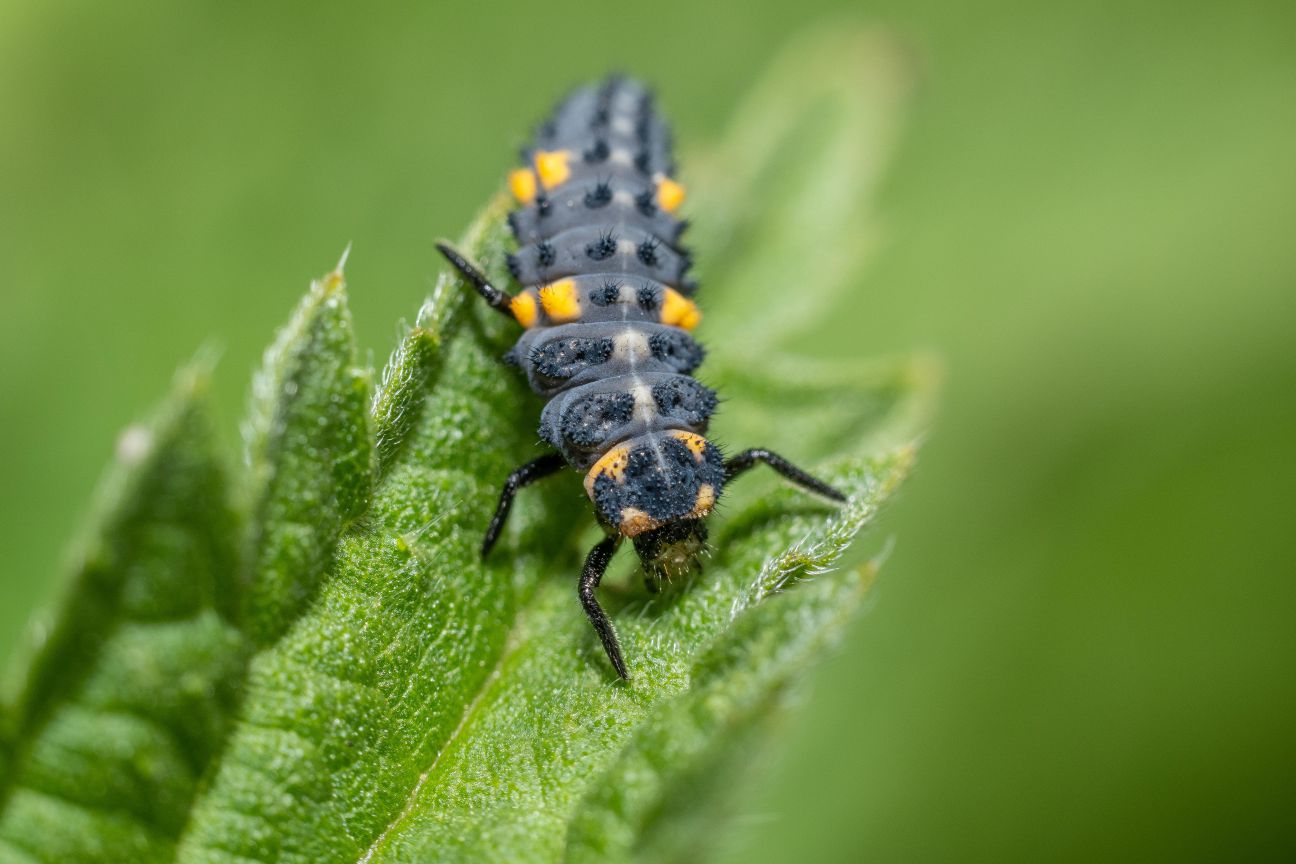
The number of ladybird larvae was also great, with many either on the hunt for aphids or setting themselves up for their metamorphosis.
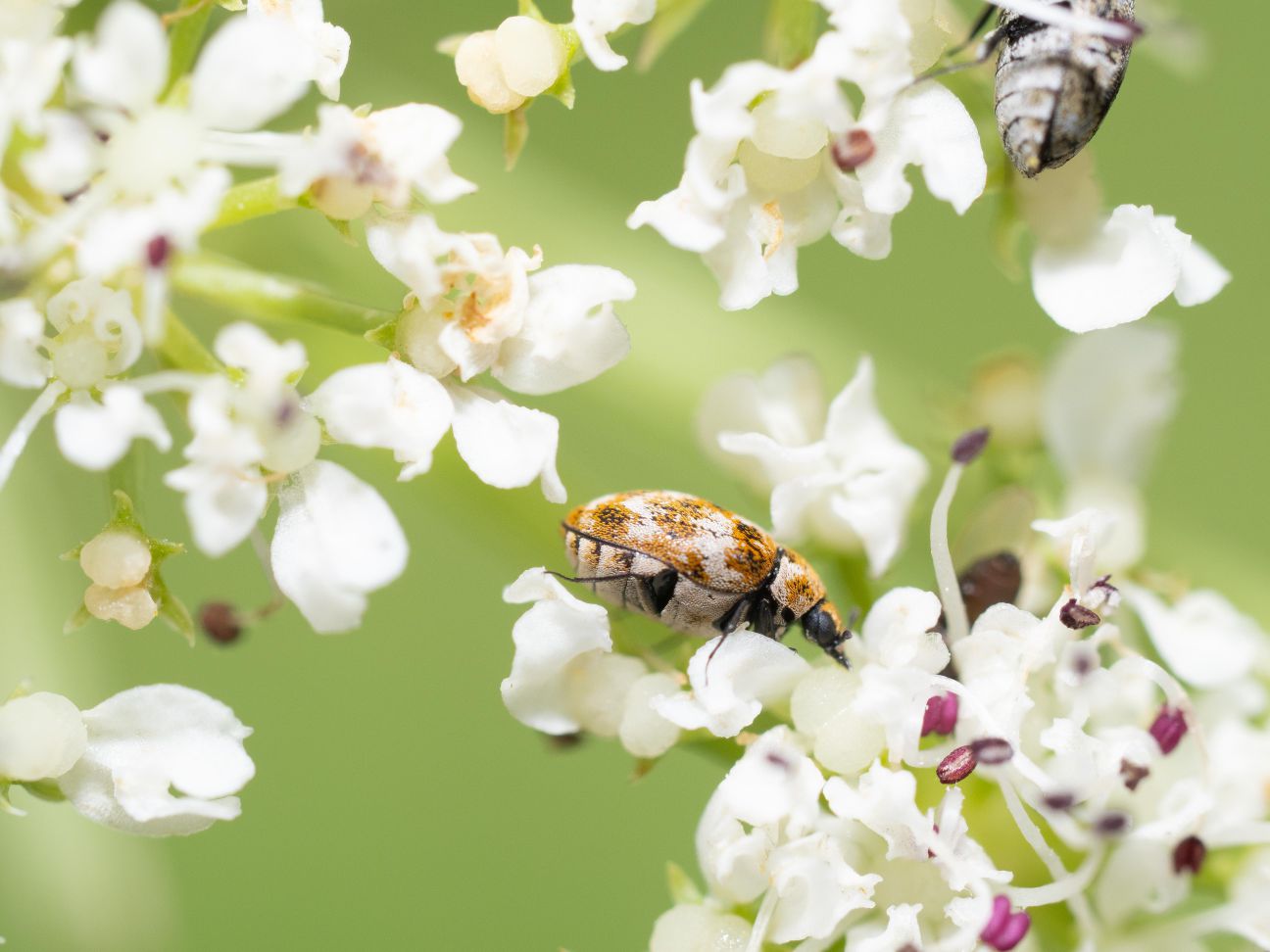
Elsewhere on hogweed I found these carpet beetles. They are very, very small and can’t seem to tear themselves away from the nectar.
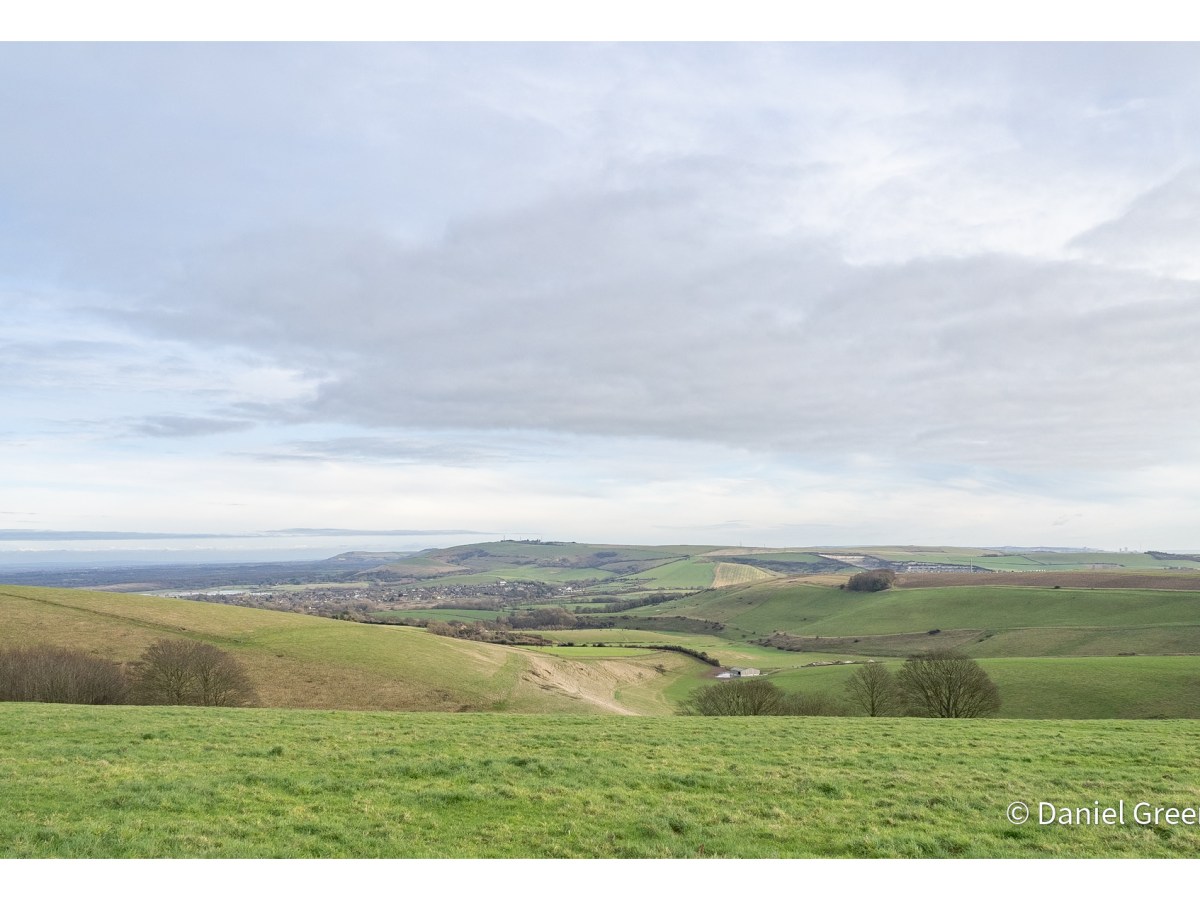
The Adur Valley with Chanctonbury Ring in the distance on the South Downs
On the last day of May I set off on a walk into the High Weald not far from where I live. It was spring at its height, with warm weather more like the summer months to come. I waited until the late afternoon to head out for a couple of reasons. Firstly, I don’t love walking in the heat, secondly, the light is better for photography when the sun’s glare has softened.
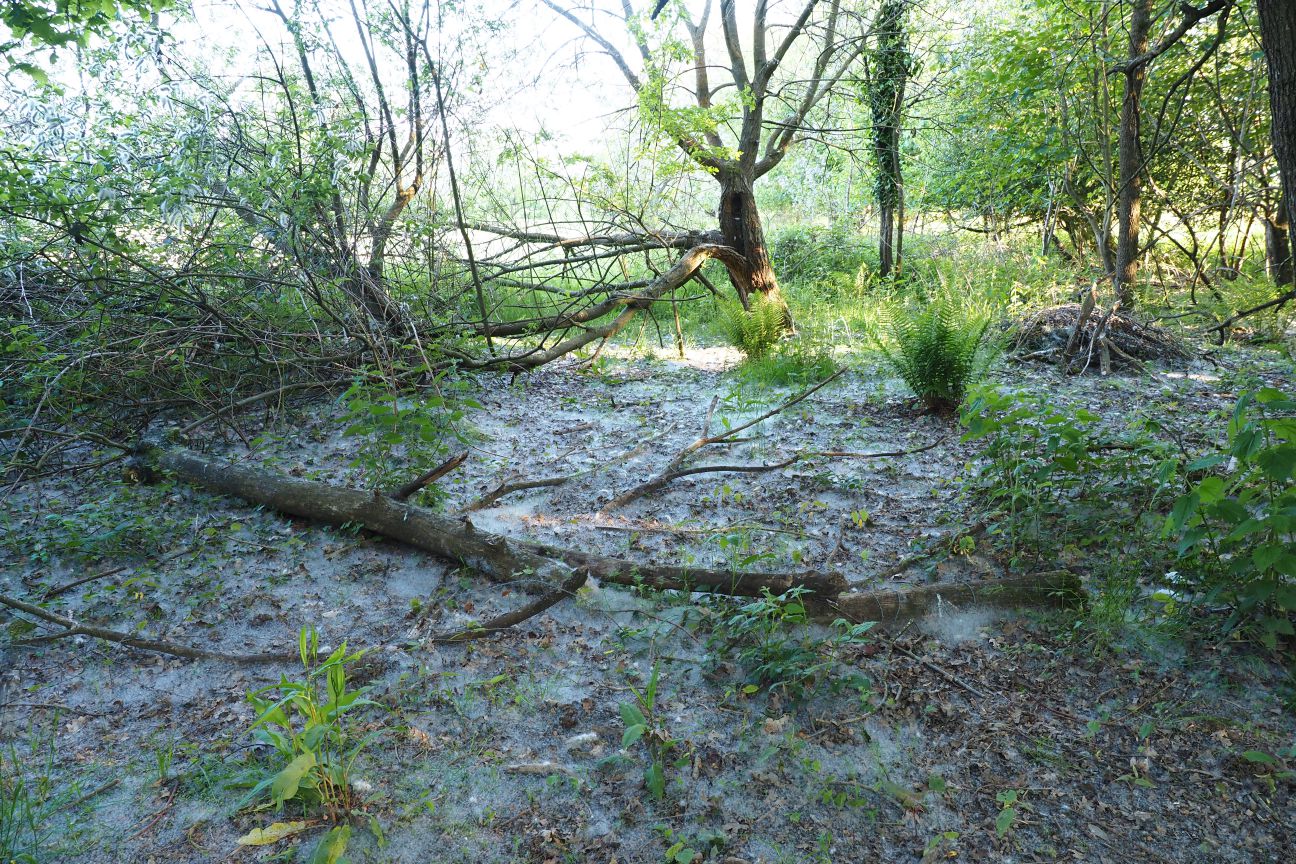
The willows had begun to release their seeds, the ground covered in a coat of white fluff. This seed dispersal is what makes willow so effective. The catkins are pollinated by bees, flies and other insects, which then produce the seeds. The same effect comes from poplars, which are willow relatives.
Hawthorn peaks around the end of May and I always look for insects on its nectar-rich flowers. I didn’t have a macro lens at the time but with my zoom found this large sawfly nectaring. Sawflies are relatives of bees and wasps, though sawflies actually came first. Their reputation is usually defined by the behaviour of the larvae of a species which can eat roses. You can of course say the same about many other species, moths for example.
The High Weald is home to a lot of Scots pine, where it succeeds the once open heathland. I have always been confused by the ‘native range’ of pine, whether it is naturally occurring in places like the Weald. It was planted for forestry, especially on the heaths, though it is not being harvest in the same way here anymore. Pines are gymnosperms which came before the flowering plants (angiosperms). They evolved over 300 million years ago, whereas angiosperms ‘arrived’ 130million years ago.
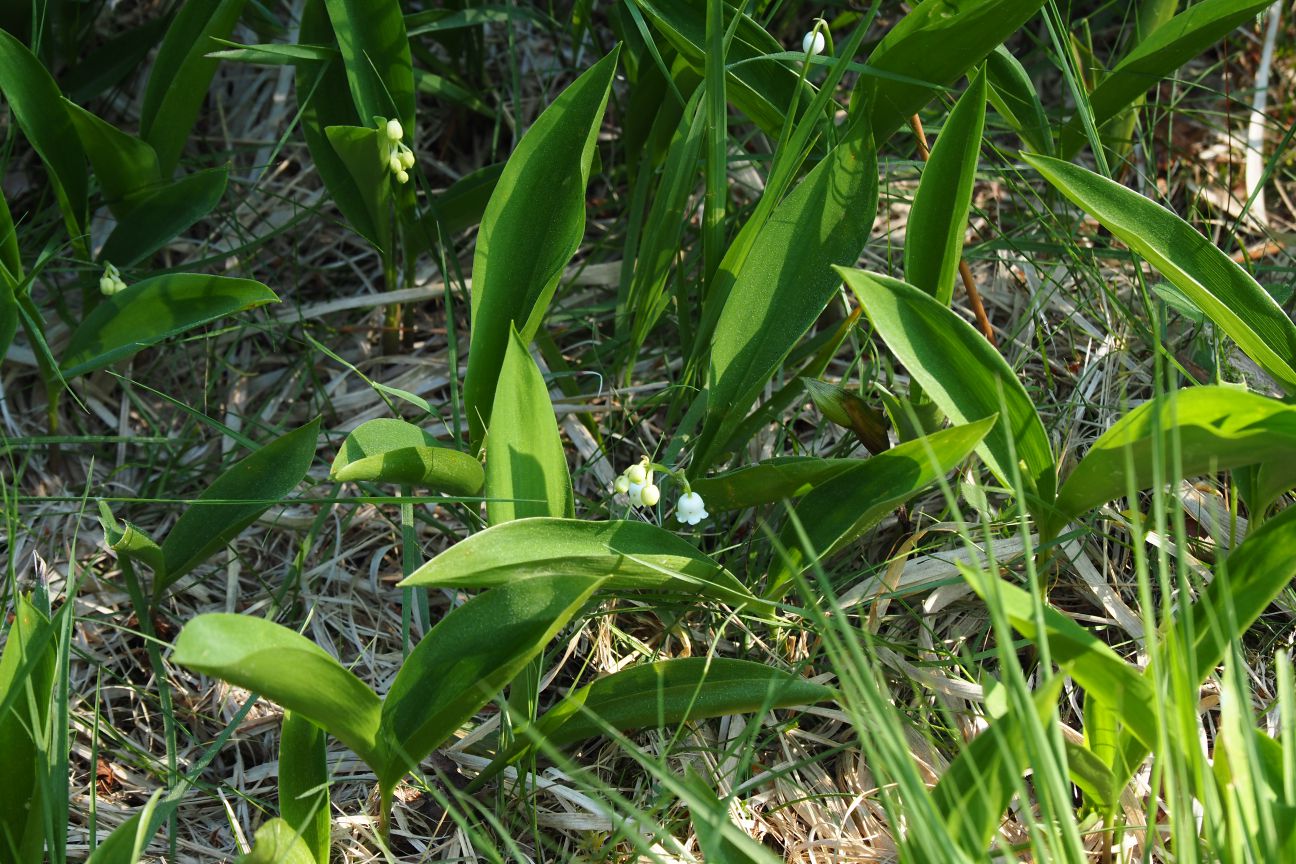
A flowering plant I was hoping to find on this walk was lily of the valley. Last year I found this beautiful plant in the very same spot. Someone who works on this site told me that it may be evidence of earlier human settlement because it was once cultivated for perceived medical purposes. That would require a blog in itself!
Having spent several years working, walking and hanging around in woodlands, you become accustomed to hearing certain birds and learn about their behaviour. One call I’m unlikely to forget is that of the great spotted woodpecker nestling. I was walking along a track, mostly minding my own business, when I heard the piping of the little woodpunks. There didn’t seem to be many suitable trees around, but the birds were definitely there.
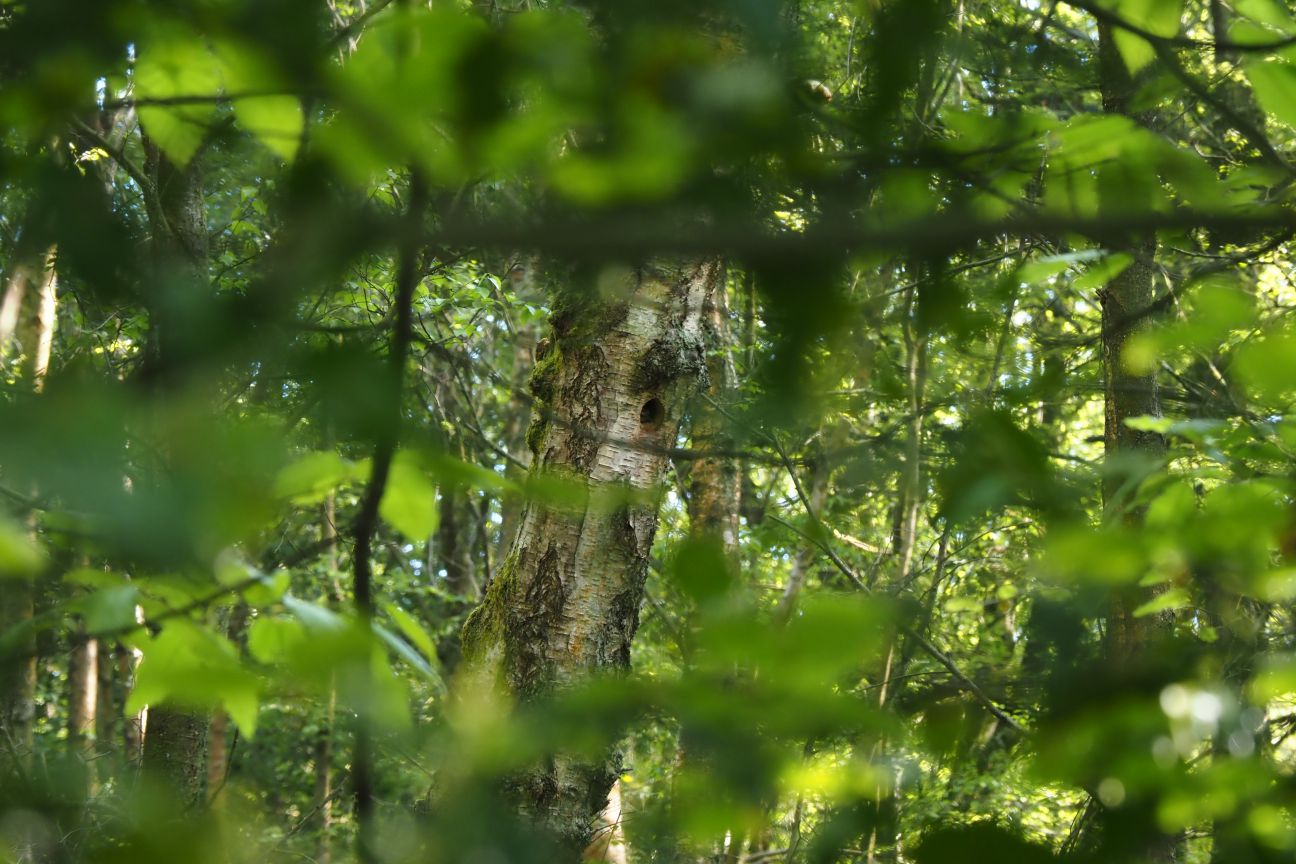
Continuing down the path I saw that a hole had been made in this standing dead birch tree. I could hear a nestling but also another woodpecker nearby, outside of a nest. I used the foliage seen here to hide for a while – still on a footpath – and see what would happen.
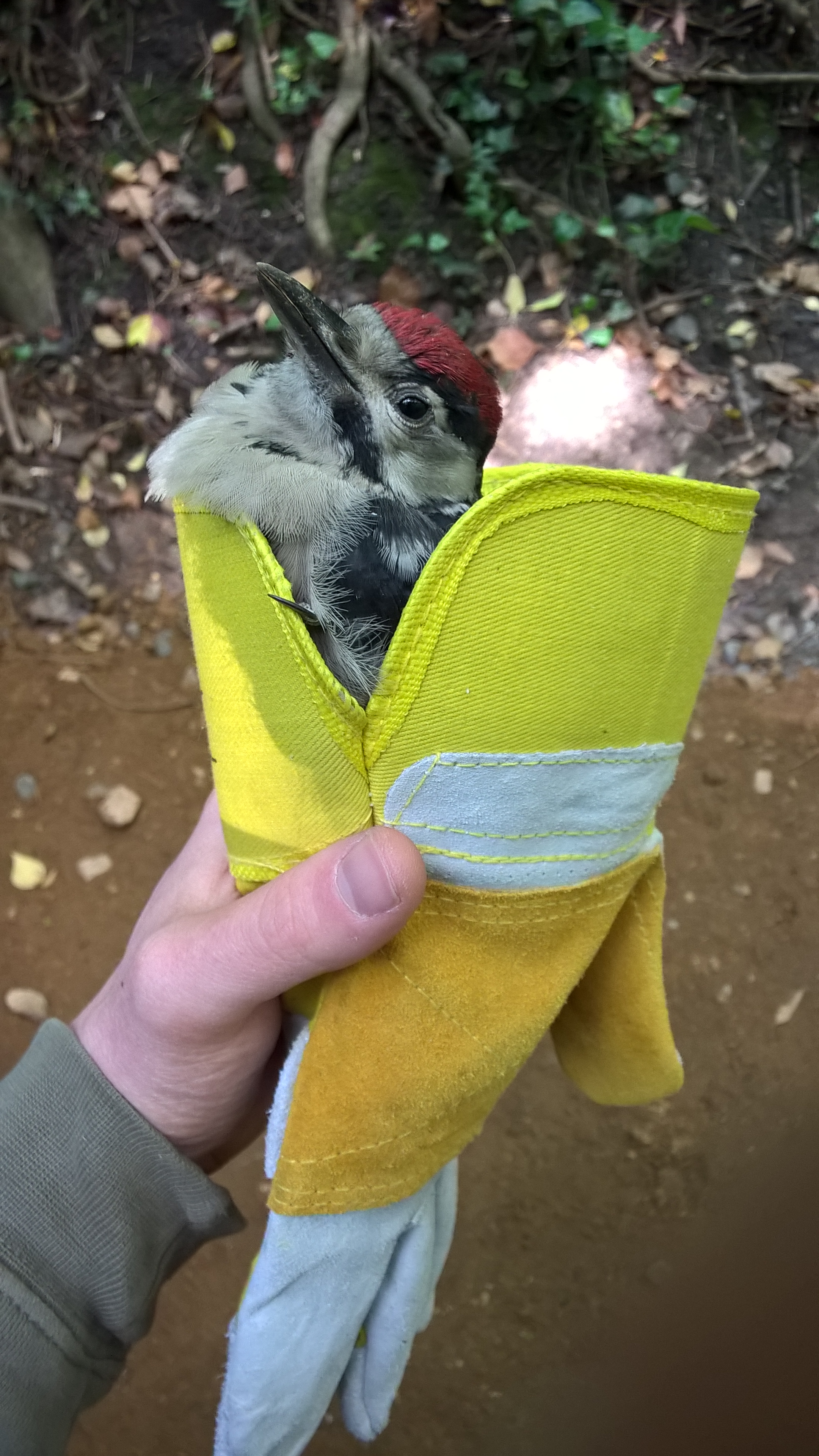
The nestling soon popped its little head out of the tree hole, calling for its next meal. They are beautiful little birds. I did once have the chance to see one up close after it fell out of a nest:
They are beautiful, reptile-like birds. I once said to a colleague who was also a herpetologist that they look reptilian.
He scolded me: ‘they are reptilian!’
The Wealden woodpunk did get its dinner after a while. A parent bird returned to pass food between bills. It was such an incredible thing to witness and all the more special because I had not expected to see it that day. It was also interesting to see the role of fungi in this breeding opportunity. The birch tree had been softened internally (if not actually ‘killed’) by birch polypore, a type of bracket fungus. I received several other examples from people in London of great spotted woodpeckers breeding in standing dead birch trees. It should be a lesson to people managing woodlands or birchy landscapes such as heathland – this is an important tree species in the wider ecosystem.
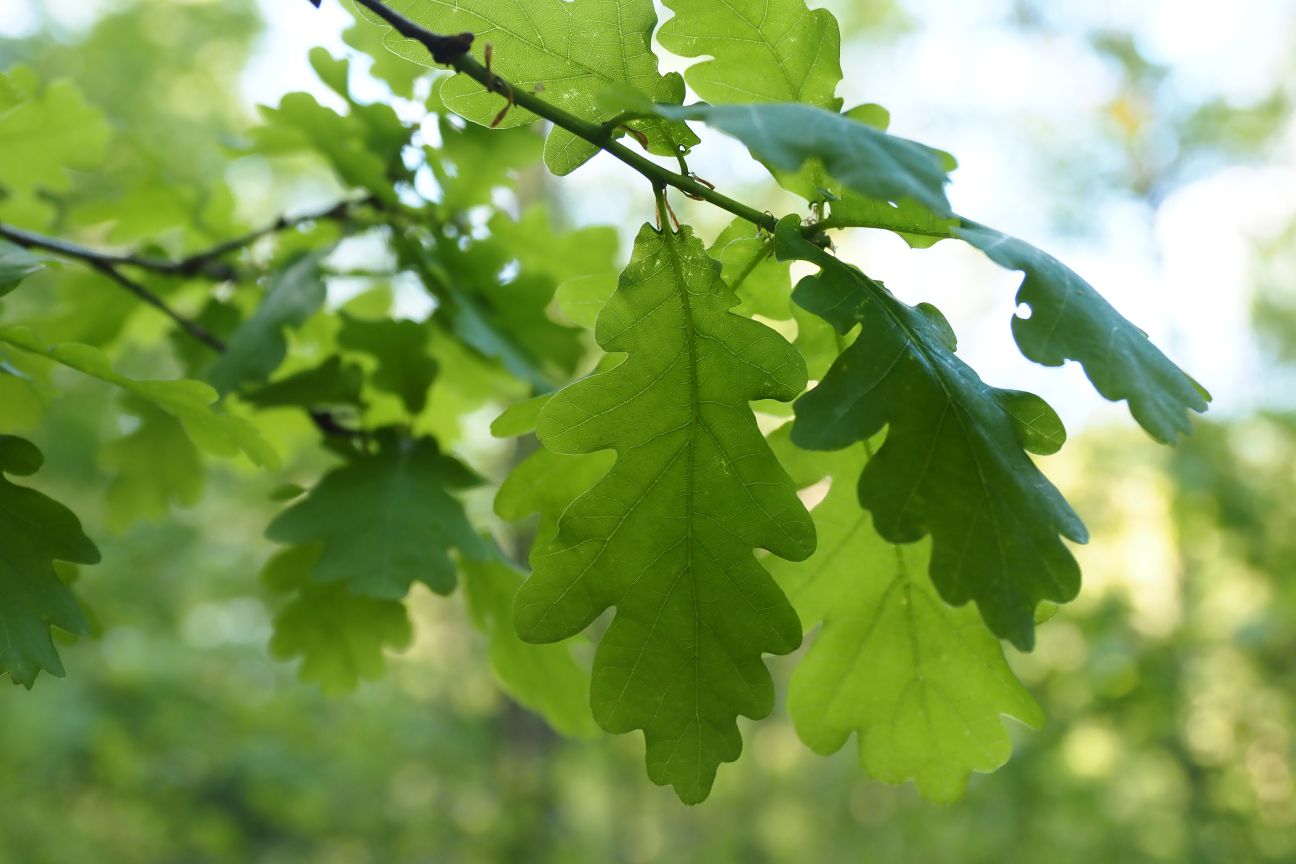
The first oak leaves were out in that lovely fresh green, which will soon turn more leathery and a deeper shade.
New holly leaves were appearing also, like little flames or woodpecker crests in the shade.
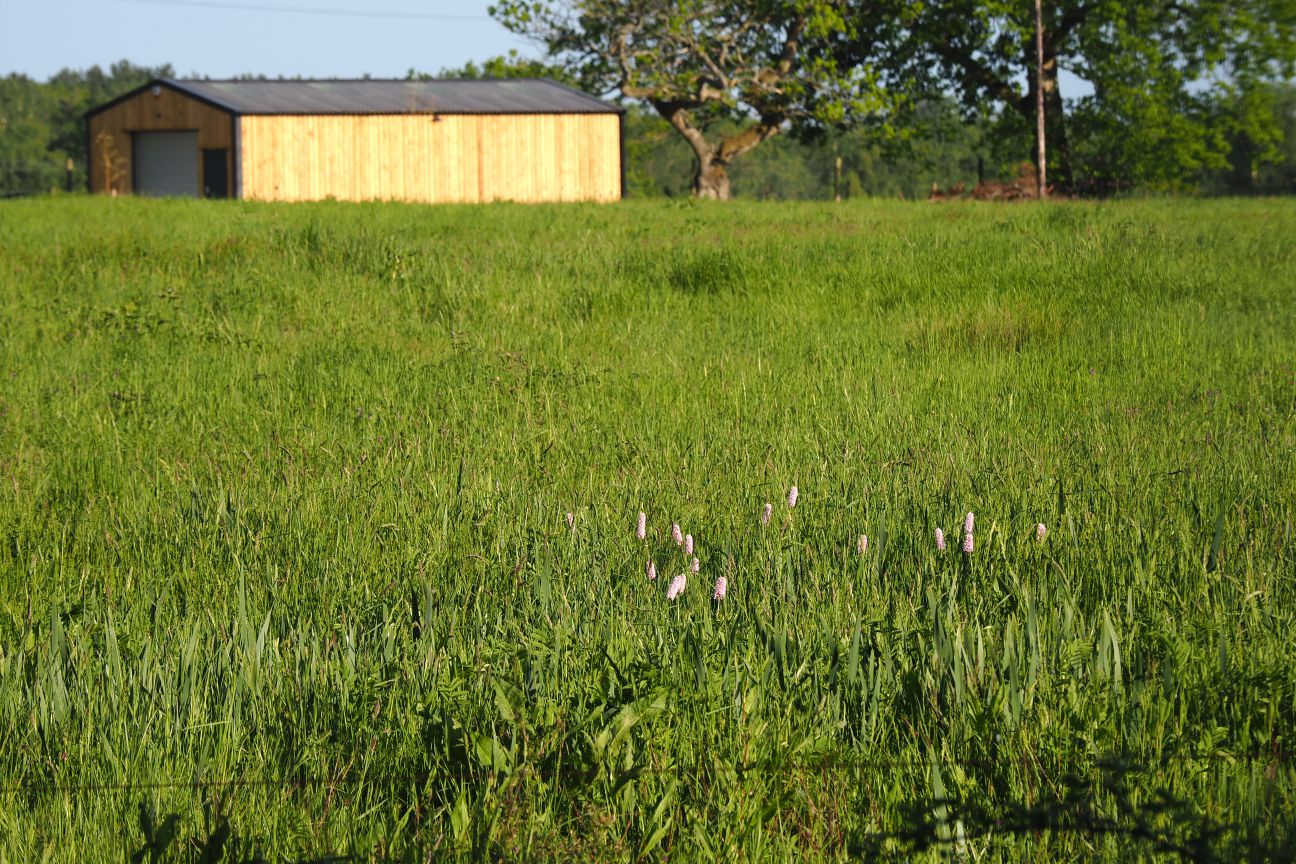
On the return home from the woods, I noticed these large spikes of orchids in a field. A new farm building had been built in the background. At the edge of this field, alongside the footpath I was on, the landowner had tried to plant leyland cypress and laurel, probably the worst things to plant in this landscape, next to rhododendron (which was nearby anyway). It seemed so mean-spirited to block the view of this expanse and its rare flowers for people passing by. Do people know how privileged they are to own land like this in England?
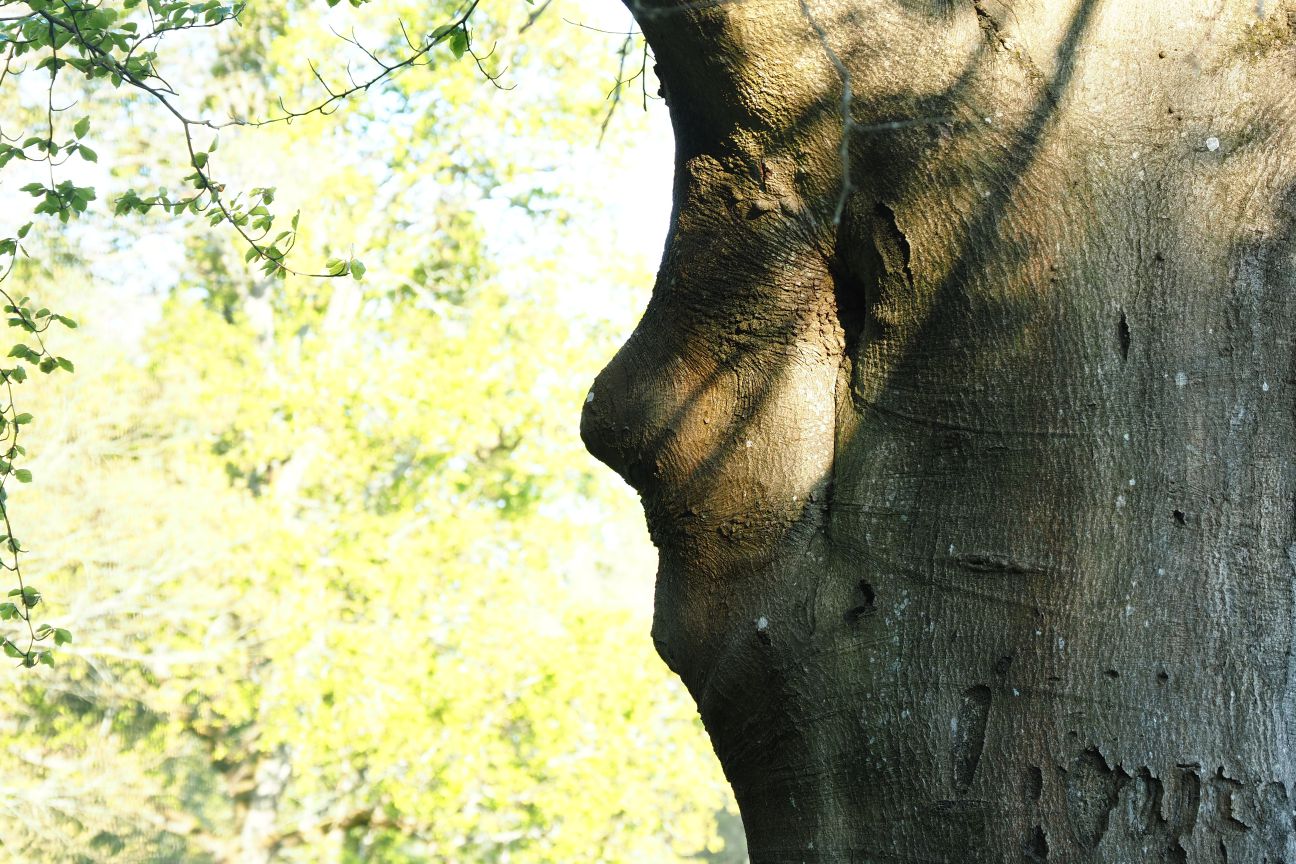
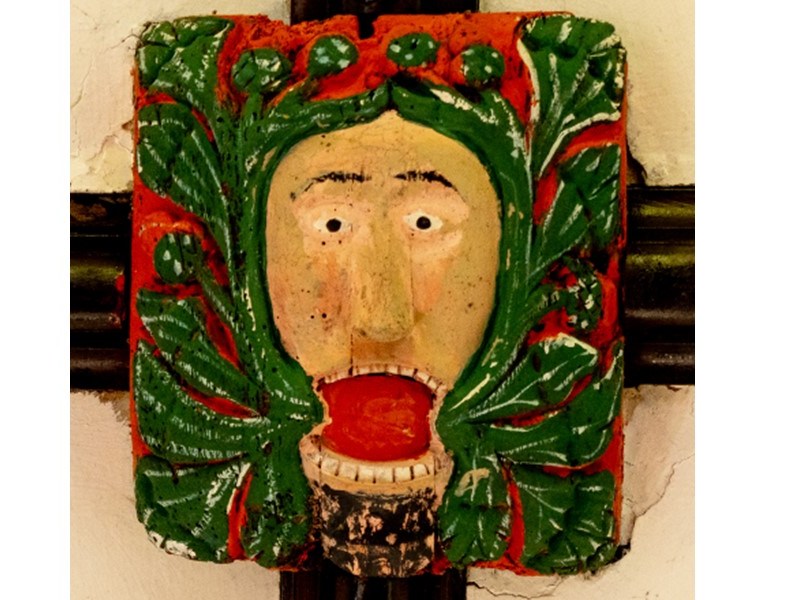
I know this beech tree agreed with me (yes, it’s been a long year). Or at least that’s what its facial expression seemed to suggest.
I’ve had a burst of American visitors in recent days (to my blog, not my house). So thanks for visiting, y’all, and sorry about the year you’ve had. You may have noticed I’ve slipped to monthly posts on here. Between April and October I posted blogs every Monday without pause, which is a tricky task…
Another week and it’s another spider post. This time, it’s a spider that also likes posts.
One evening a couple of weeks ago I had logged off from work and went out into the garden to look at something other than an email. It was a warm evening and the sun was dipping below the surrounding roofs. I noticed a blemish on the fence, a place of macro dreams.
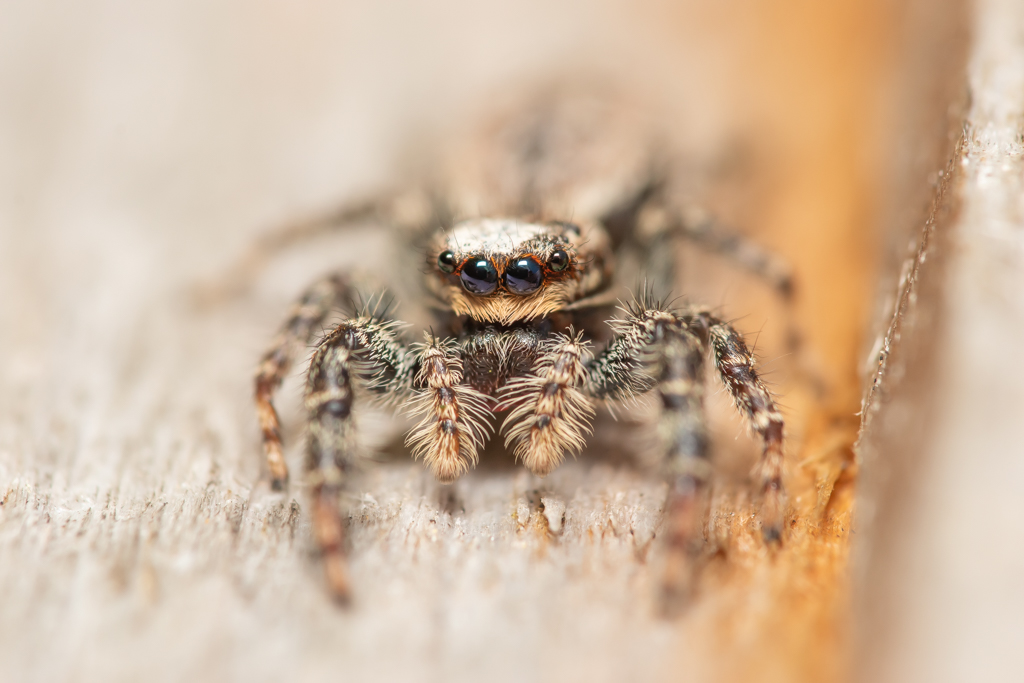
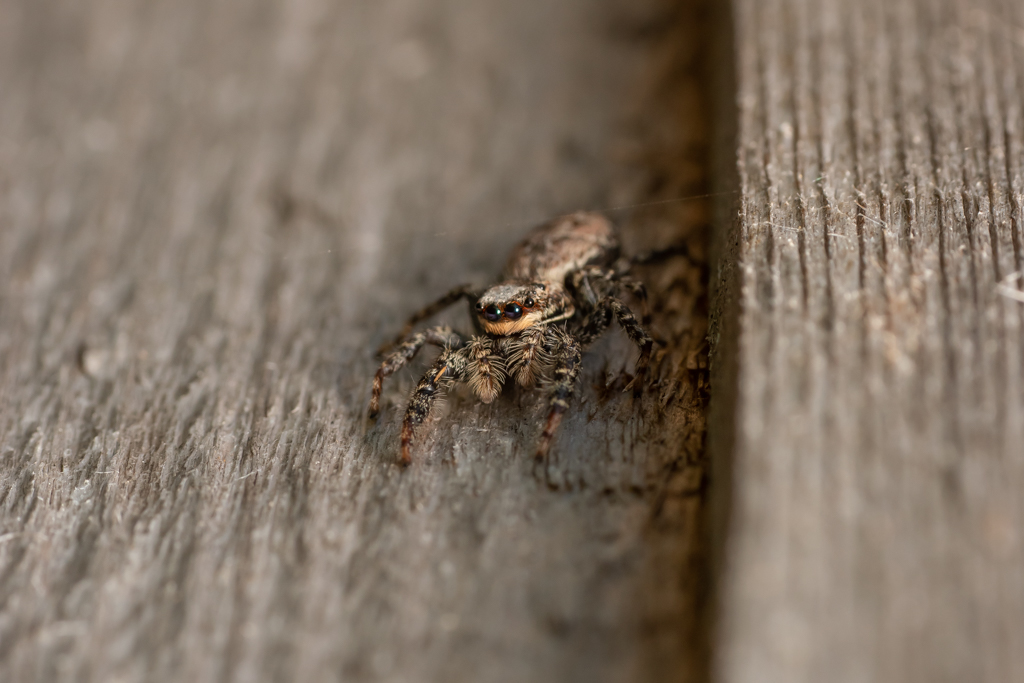
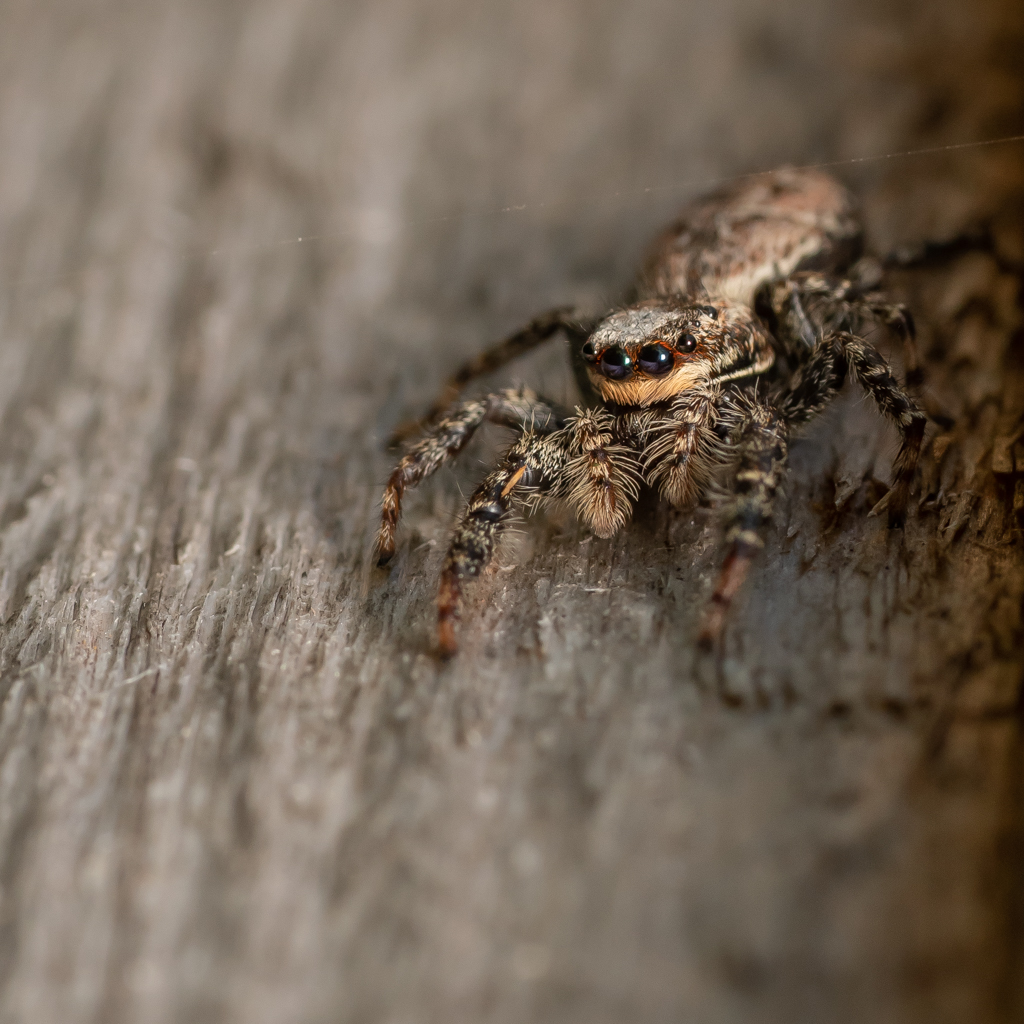
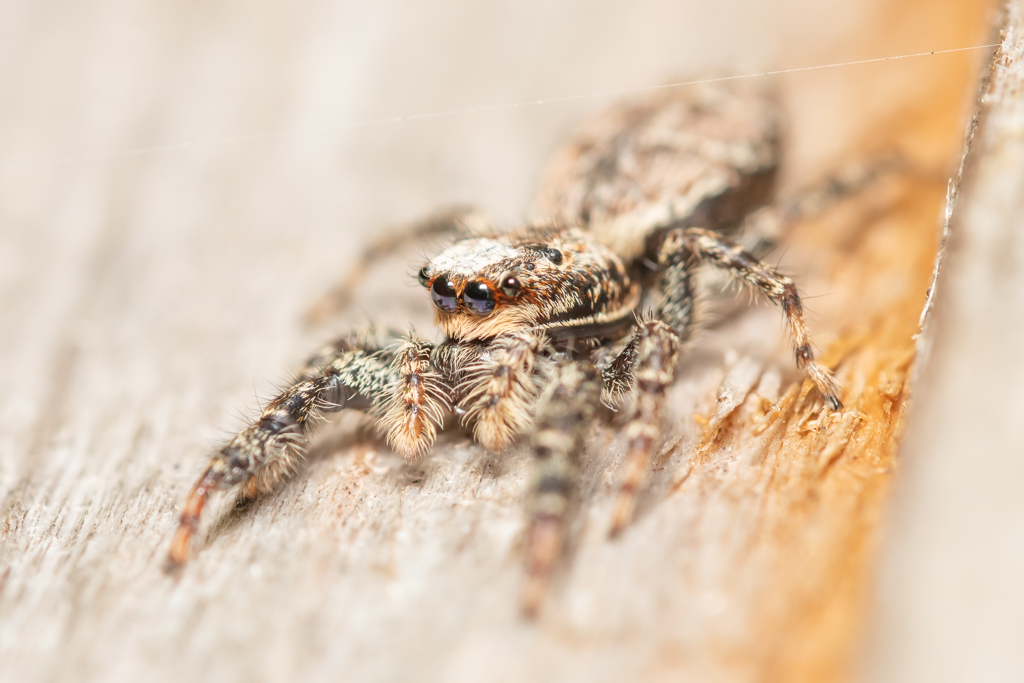
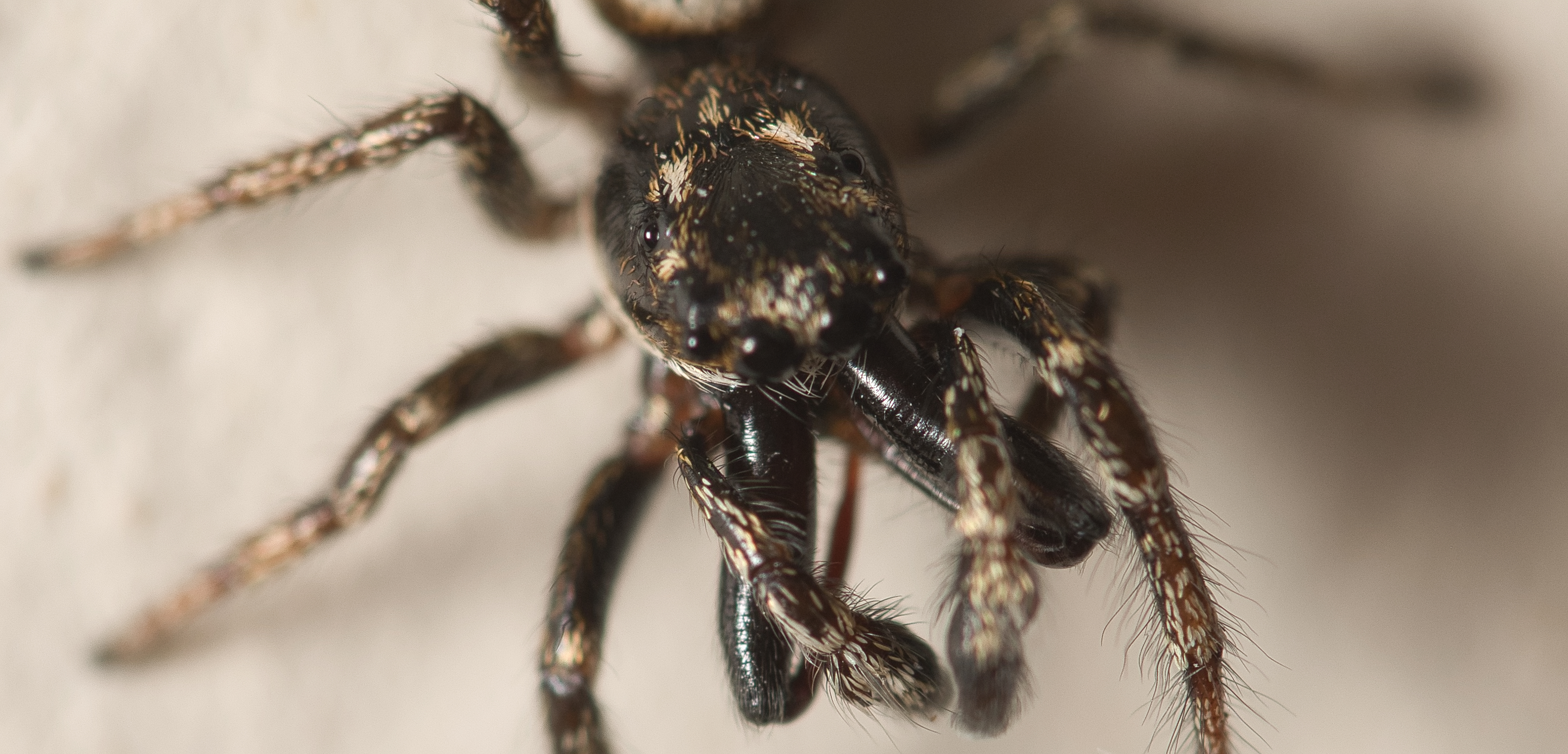
I identified the blemish immediately as a jumping spider but one bigger than the usual crowd. Even better, it was sitting still!
The grey-brown colouring of the spider helped to camouflage it against the sun-bleached wood of the fence. It was no surprise at all, when looking at my spider book later, that I learned this was a fencepost jumping spider!
Finding a jumping spider as relaxed as this and in an accessible position can raise the adrenaline levels, meaning you can lose composure and not get images that are in focus. That said, probably about 90% of macro photos I take are out of focus because the range is wafer thin. The stars aligned this time, however.
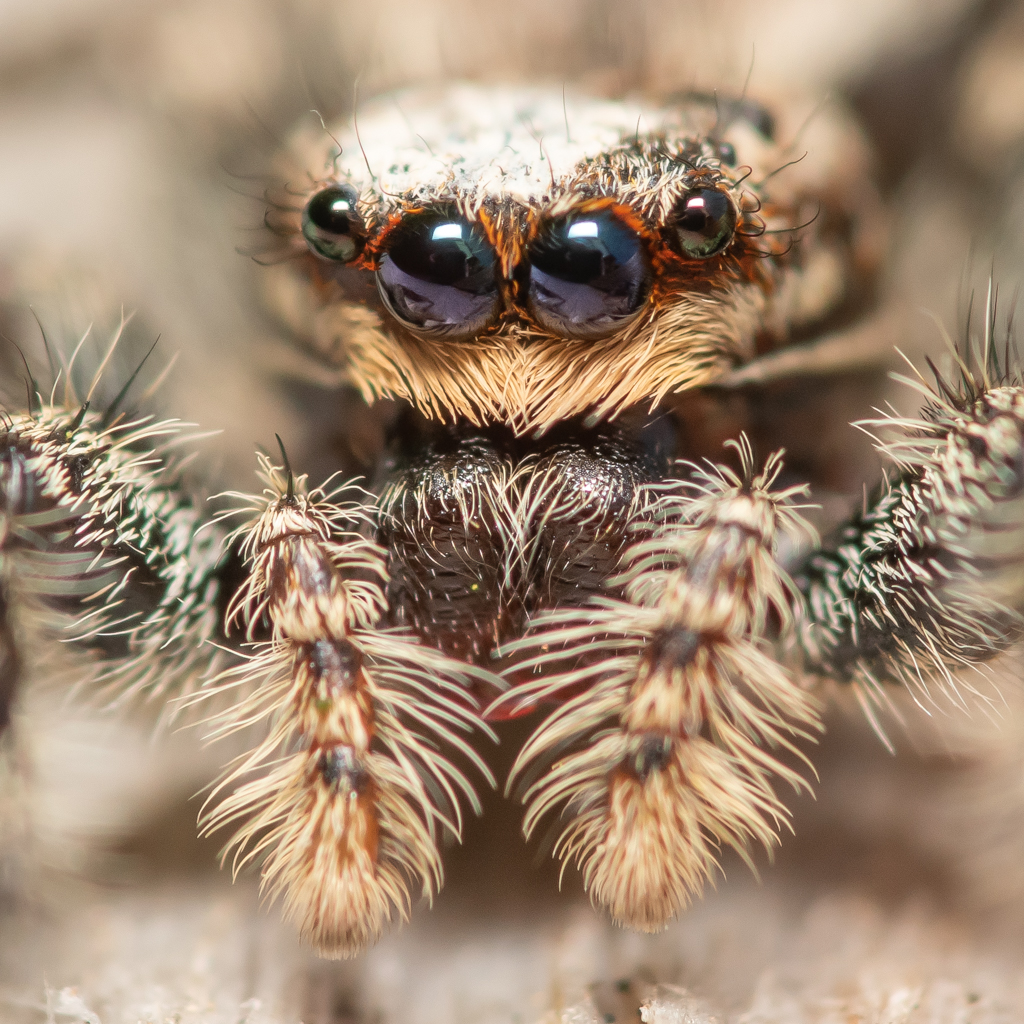
The spider was so still that there were no issues. It seemed quite interested by me and looked straight down the lens, as far as I could tell.
One of these images will certainly go down as portfolio worthy, at least in terms of happy memories. And really there’s no better place to end this post than looking into the eyes of Britain’s largest jumping spider!
I have a third booklet of poems which are not far off being ready but I’ve written very little in the past year. My pandemic mind has not helped me to write anything, or to read any poetry either.
That changed when I started reading the Penguin book of Haikua few months ago. It definitely inspired me. I found the 5/7/5 syllable structure to be simple enough for my stay at home mind. That said, I don’t keep to strict rhyming systemsanyway as I find that too restrictive most of the time.
I first learned about haiku when studying creative writing at university. It was great to get back into it again. Here is a selection:
Coronavirus, once an ogre in the woods, now walks among us
who predicted this? a whole year of hidden life, of feeding the cat
why has this happened when we thought we knew it all but we knew nothing
January days never much light to be had but the darkness fades
coffee-coloured mud still holds panes of brittle ice that break underfoot
the pond is frozen wind moves the willow branches listen: the ice cracks
bullfinch pink, perching, it travels through the pine trees the female follows
streaming over stone the gill flows through the woodland taking everything
primroses ready to open flowers again to mark the season
hairy-footed bees cruising around the flowers searching for a mate
peregrine falcon passing over where I live (thankful I’m human)
the headless pigeon: nobody knows who killed it or who took its head
a storm came at lunch sudden whipping back of trees raindrops splattered glass
face masks in gutters did people mean to drop them? one had shit on it
gulls cry from the roof sparrowhawk sails overhead followed by a crow
at dusk the wagtails together on the rooftops one by one they fly
when will it all end? will there be a ringing bell or will it change us
what if we are trapped if this is our punishment for taking too much
when will we hug our mothers, fathers, our children, when will it be safe?
oak trees black at dusk clouds build on the horizon the river flows on
a trespassing drone seen off by a grey heron both in silhouette
waiting on the news you expect the worst of it but the sun rises
I know that this blog has focused a lot on spiders this year. My spider knowledge is basic and these posts, their photos and required dip into spider ecology (arachnology) helps me to improve that knowledge. I recently purchased a spider ID guide (Britain’s Spiders by Bee, Oxford and Smith) and it’s helped me to gradually open a better understanding of these, well, misunderstood animals. I do wonder how much the tales of antipodean killer spiders has made people in England, where there are no venomous native spiders, needlessly fearful. Of course it’s different for arachnophobes.
My favourite group of spiders are the jumping spiders, the salticids. The first jumper I ever saw or photographed was one of the zebra spiders, of which we have three species in the UK. You can only identify them with microscopic assessment of their genitals, which is beyond this blog. Regardless, I found a zebra spider on the wall of my living room, which I now appreciate is just a giant invertebrate trap. I have actually also had a starling find its way in.
I knew this would be a good chance to try and get some good photos of the spider because there are few places to hide. I helped the spider onto my finger tip which, though the photo isn’t focused properly, does show how small (and harmless) it is.
And here is a reminder to you all of how most macro photos come out – out of focus. I suppose it’s half the fun.
Zebra spiders are beautiful inverts. Their name obviously comes from their black and white patterning.
One part of the spider that I really wanted to share is its fangs. They are seen below the pedipalps, what are effectively reporoductive organs for spiders. I presume the spider was hunting for prey, or perhaps even looking for a mate.
I helped the spider back out onto the windowsill where it wandered along the draught excluding brush. I hope it found what it was looking for (unless you were the thing it was looking for!).
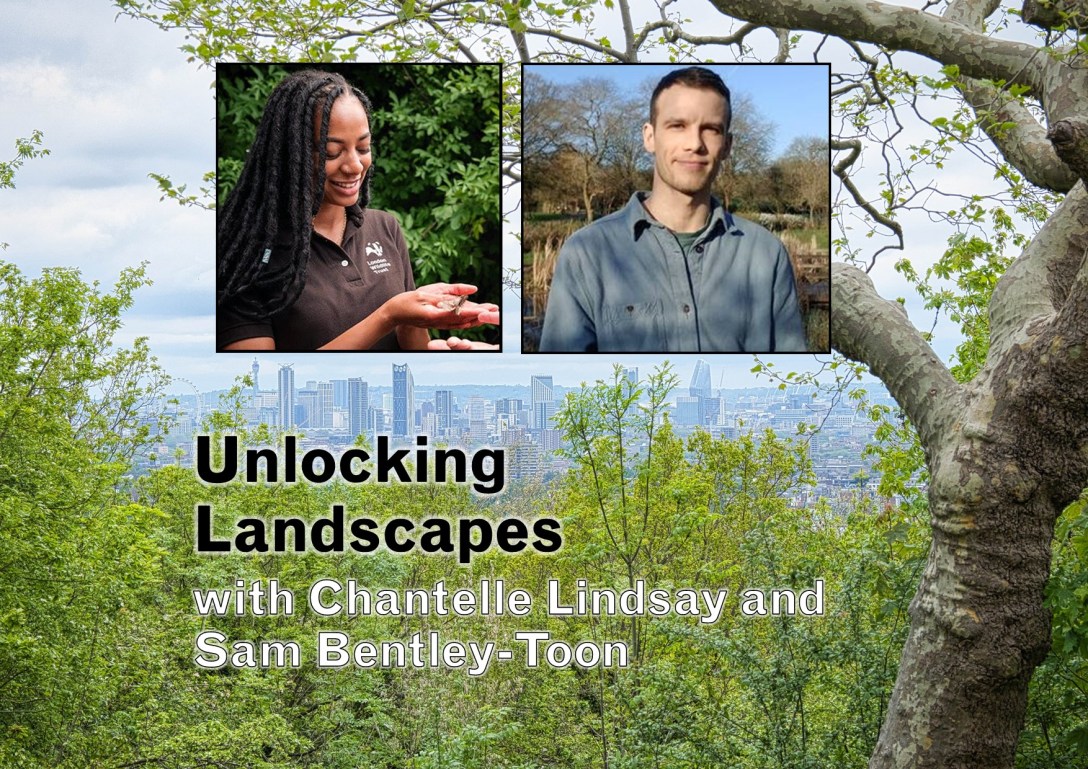
In this episode, I am delighted to welcome Chantelle Lindsay and Sam Bentley-Toon. Chantelle and Sam are environmental professionals who worked together on London Wildlife Trust’s Great North Wood project. You can also listen via these podcast providers:
Chantelle and Sam share their experiences of protecting and managing south London’s ancient woodlands. They talk about their passion for volunteering and some of the challenges that woodland conservation in London involves.
We also discuss rewilding in a London context and whether beavers could possibly be returning to London.
Since recording this podcast, Sam has moved on to work on London’s rivers and Chantelle has become a minor-celebrity with her brilliant appearances on Blue Peter and a Great North Wood-focused segment on BBC’s Springwatch.
People like Sam and Chantelle are lesser known in the conservation world, but they are having big impacts at a community level. Their contribution to our understanding and enjoyment of landscapes is really special and should not be underestimated. Of course, you can say the same for many people the world over, and just it’s such a pleasure to be able to feature people like Chantelle and Sam on this podcast.
Thanks for tuning in and I hope you enjoy the episode.
Just a note that throughout June I’m posting a macro photo each day for the Wildlife Trusts’ #30DaysWild campaign, which you can keep up with here!
There has been a clear shift in the invertebrate world and it’s resulted in a lot of macro photos for me. So much so that I can’t fit them all in one post and will need to post more than once a week!
After early May’s heavy downpours, warmer weather arrived towards the end of the month and with that the insects, spiders and other arthropods. Summer feels closer now, with June being that tipping point between cooler spring weather and the hot mess of July.
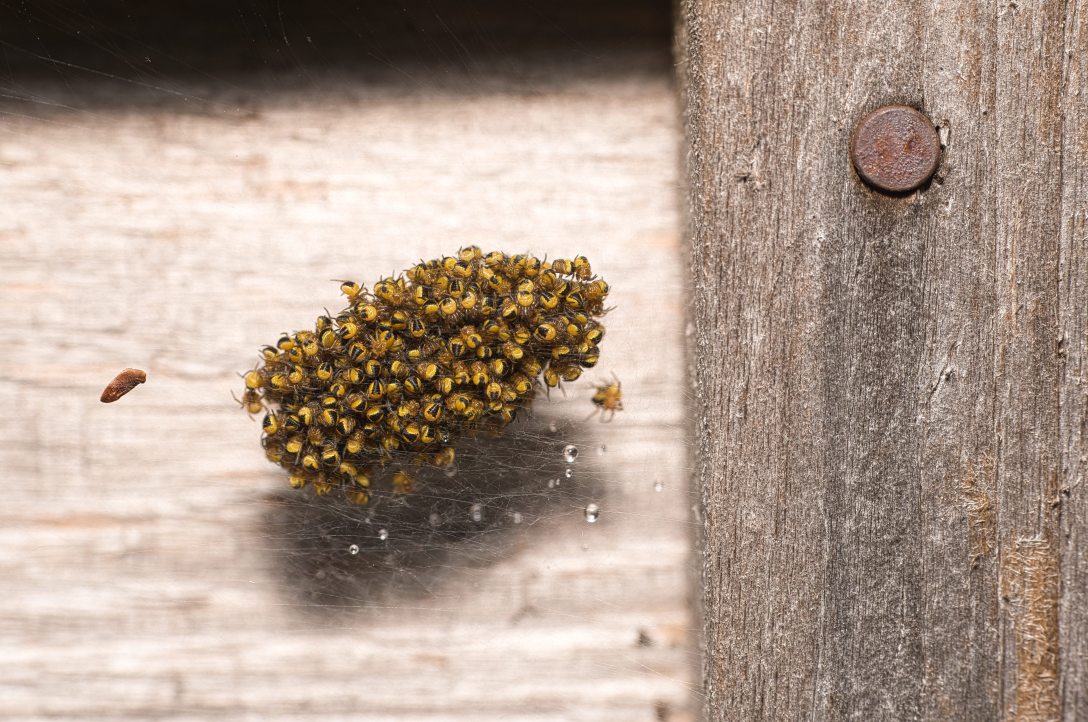
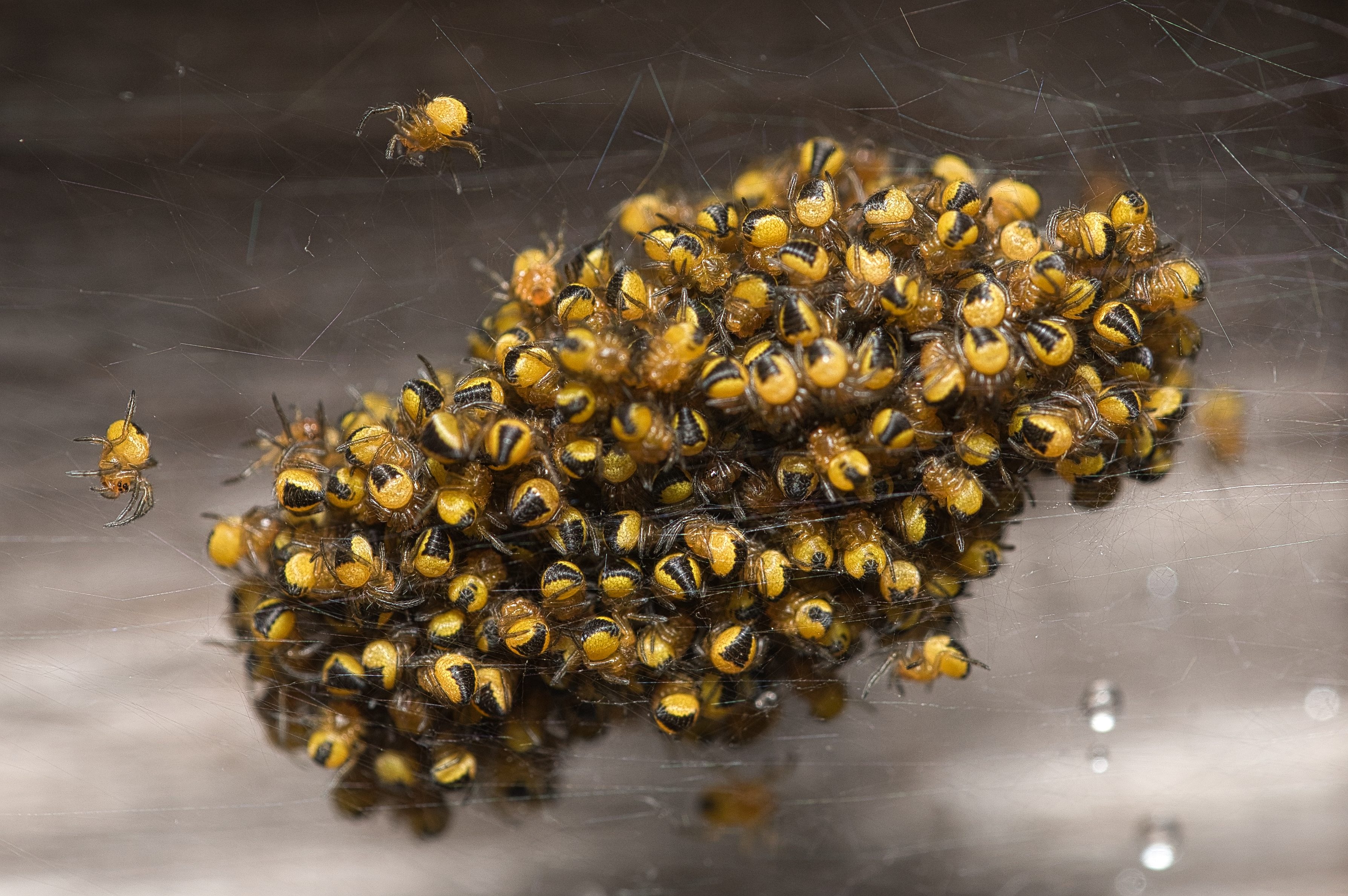
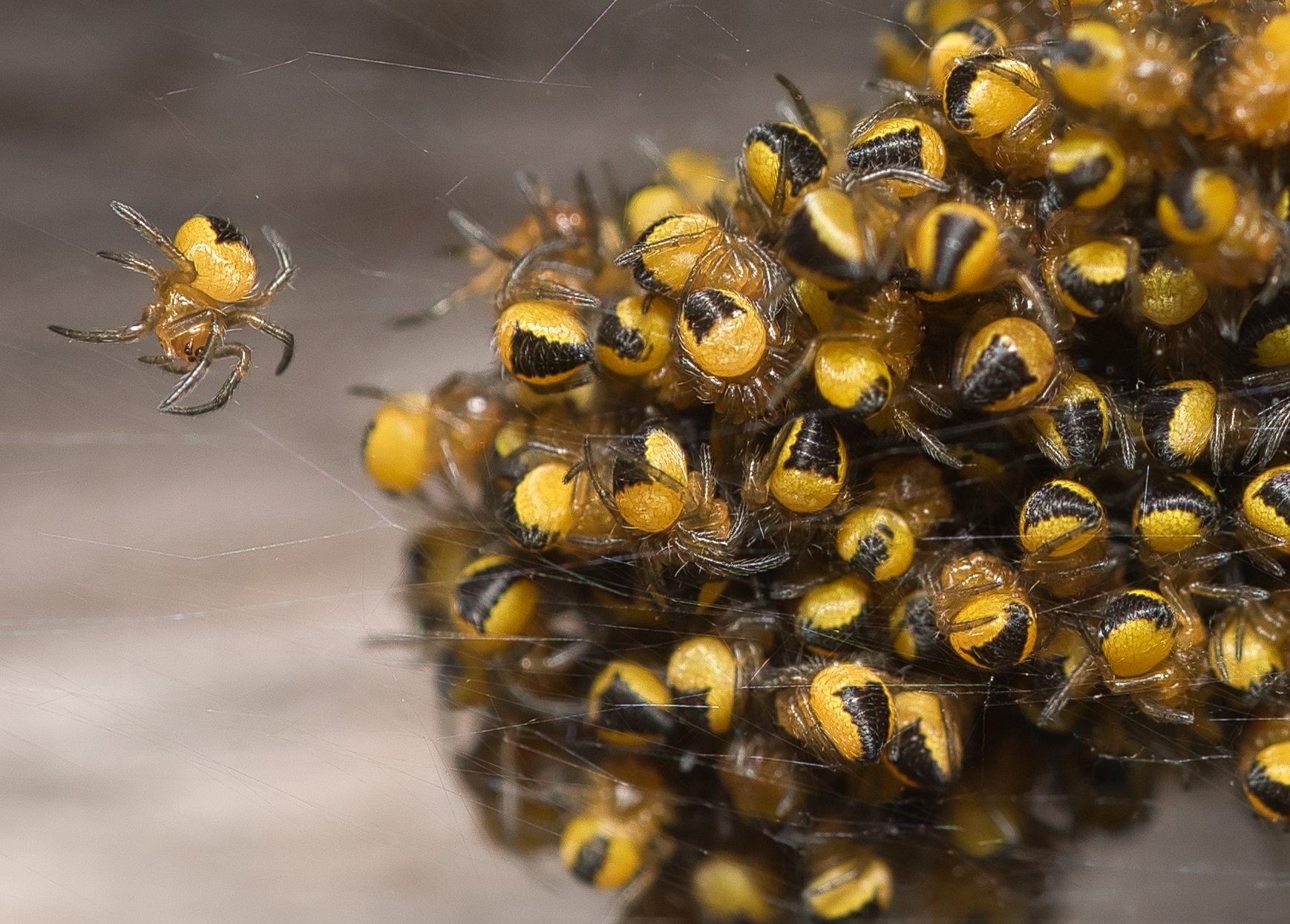
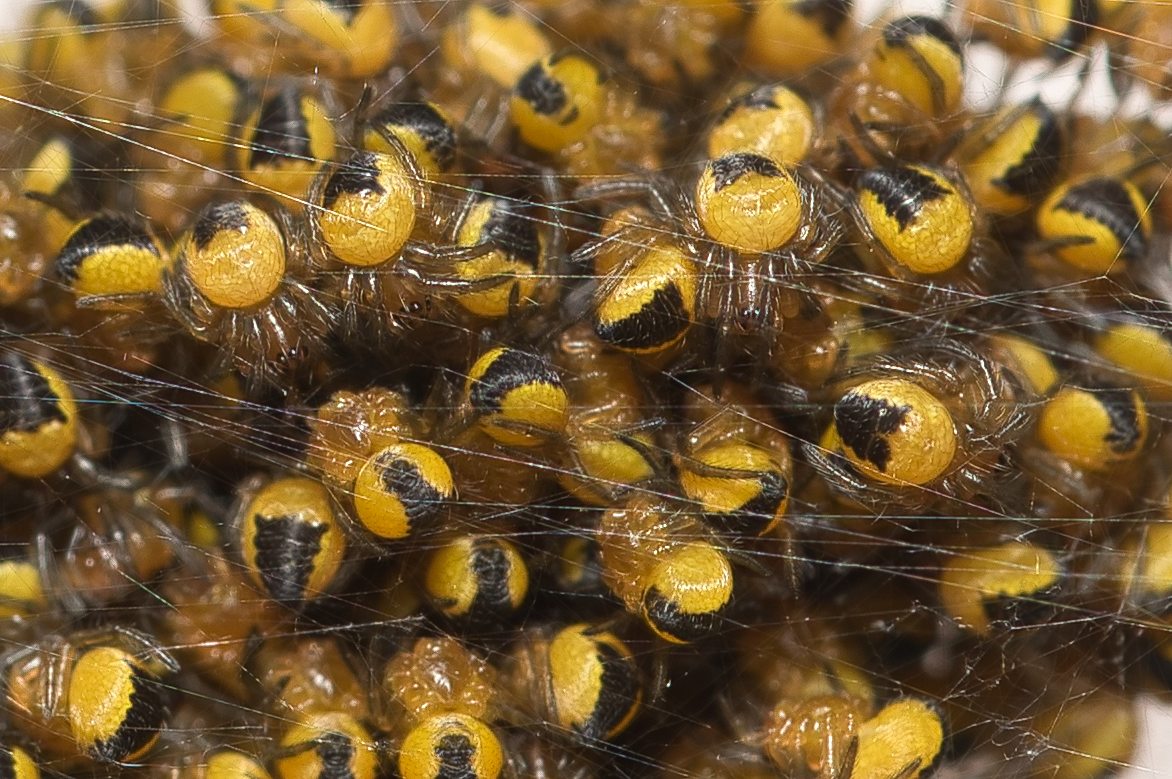
One day last week I noticed a small clutter of, well, things on the garden fence. From a distance they looked like a smudge. At closer viewing they were tiny spiders all bundled together. This will be quite disconcerting to some people perhaps, including a friend of mine who I hide social media posts from because of his arachnophobia. I don’t have that problem luckily and I’m fascinated by spiders.
I had no idea what the spiders were until I submitted the record to iNaturalist and then waited for a suggestion. I leafed through my new spider book and landed on a page with the same image as the one that heads this post. They are garden spider spiderlings! The scientific name is Araneus diadematus.
It is pretty amazing that they will develop to be such large spiders, holding their places in webs over the summer months. Imagine the biomass of flies and other insects this clutch will manage to consume over the months ahead. Then again, many of them will be taken as prey themselves by birds and other insects. Don’t forget there are such things as spider-hunting wasps.
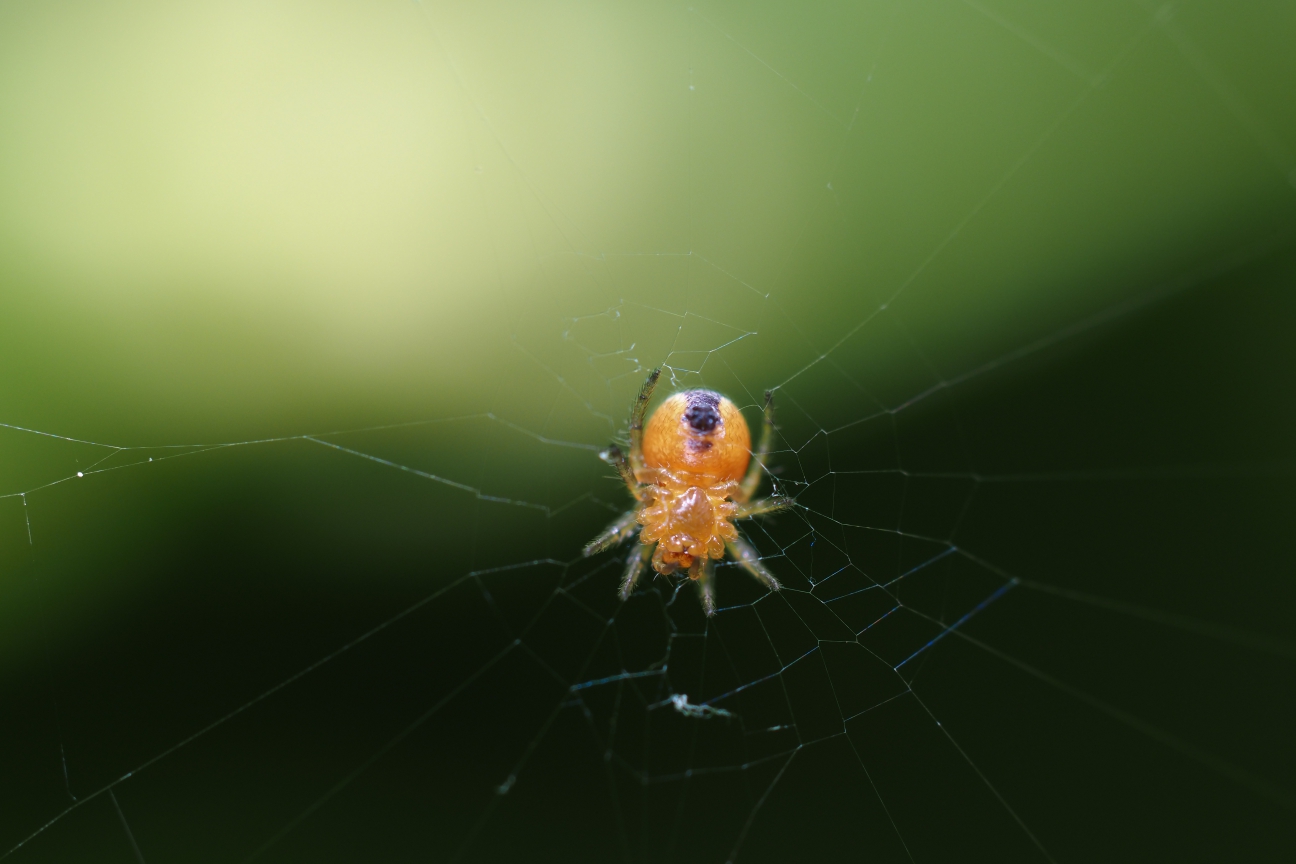
Here is one of those spiderlings (I am guessing) having set up its own web on the other side of the garden (approx. 3-4 metres).
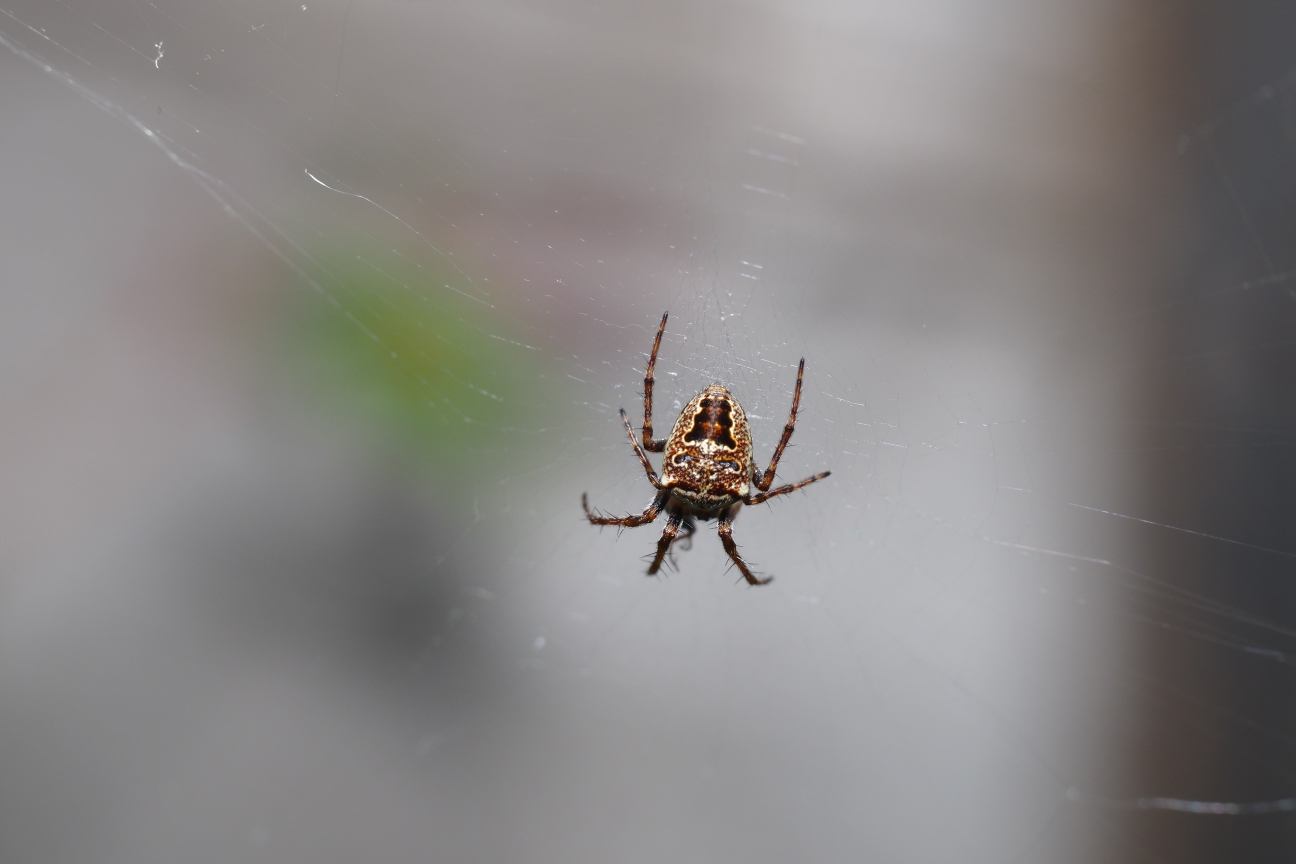
And here was one of the adults garden spiders. I don’t know enough about the ecology of this species to say if this could be the parent or one which appeared earlier in the spring. One thing is assured – they will be getting much bigger and by August you won’t be able to miss them.
Here’s my seasonal update of stuff you don’t need to know about, but then welcome to the Internet. What I’m writing Soon I will be self-publishing my third poetry collection, Fool’s Wood. It’s seven years since my last one and this collection has taken longer because of LIFE. There will be a booklet and also…
Here’s another entry in my slow-blogging Oak Timbers series. You can view my galleries and posts archive here. I visited Salisbury in Wiltshire (south-west England) for the first time in 2023 and was really charmed by the place. If you’re interested in this kind of thing, Salisbury is the place for you. Here’s a gallery…
I’m getting into more of a routine of recording and editing audio, so here is the latest episode of Unlocking Landscapes. Listen on Podbean or via the usual platforms. Also via YouTube: https://youtu.be/y1K9Pqx68to?si=B-Fdhf3sdDH35Z8w Following on from July’s rather optimistic fungi walk, I popped back to the same area of ancient Wealden woodland to see if…
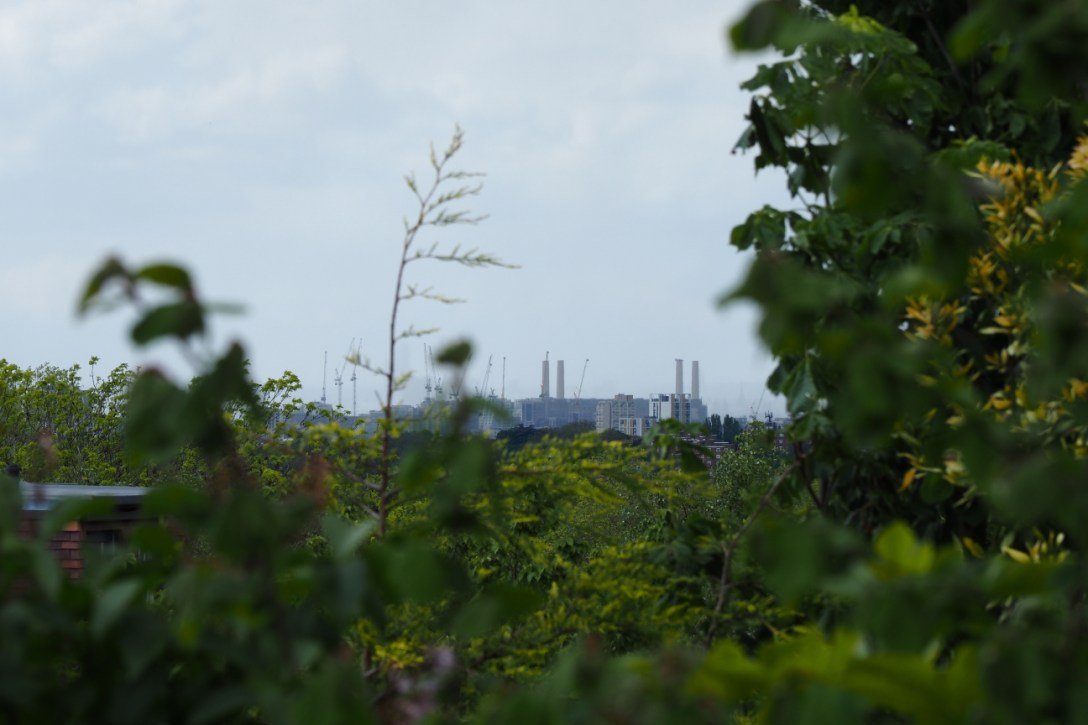
I visited the family home last week and, despite heavy rain most of the time, managed to spend an hour papping the inverts in the garden. The garden has good views of London’s ever-changing (and IMO, degrading) skyline, not that the inverts much care. The view is a bizarre localised battleground, with neighbours trying to annoy their nemeses by blocking the view where they can, usually with trees. My parents also received a letter once passively offering to pay for tree surgeons to cut their trees down so a neighbour could enjoy this view. Otherwise, London’s gardens are quickly become outdoor rooms, if all your indoor rooms contained plastic grass and a Porsche.
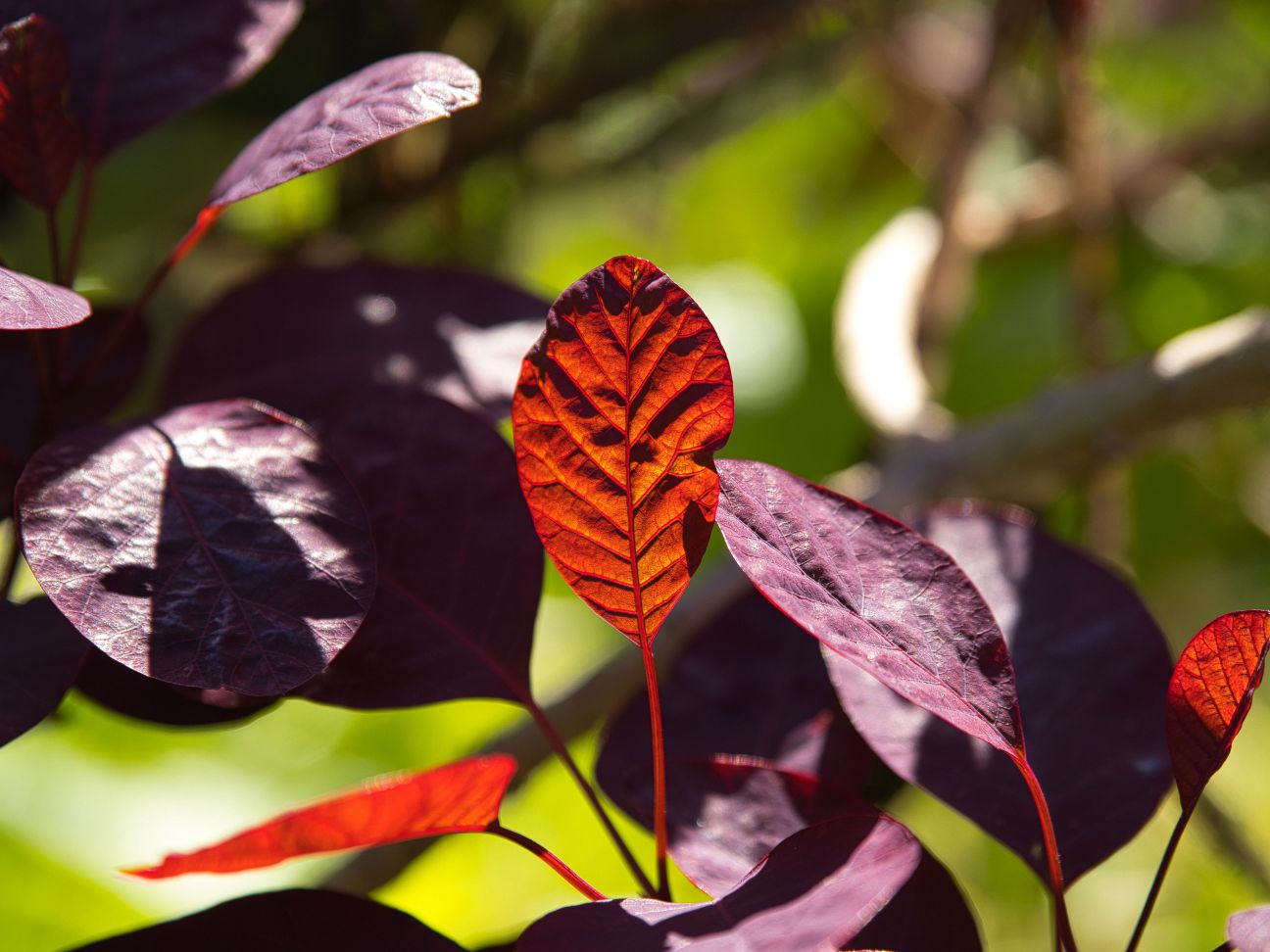
Smokebush looking lovely in the low evening light
The garden was quite aggressively rewilded in recent years (👀) and has become particularly rich in birdlife. It’s a mixture of small trees, hedges, shady and sunny areas, with ornamental plants like smokebush and the otherwise invasive snowberry, but also lots of self-seeded wildflowers.
Female hairy-footed flower bee having a bask
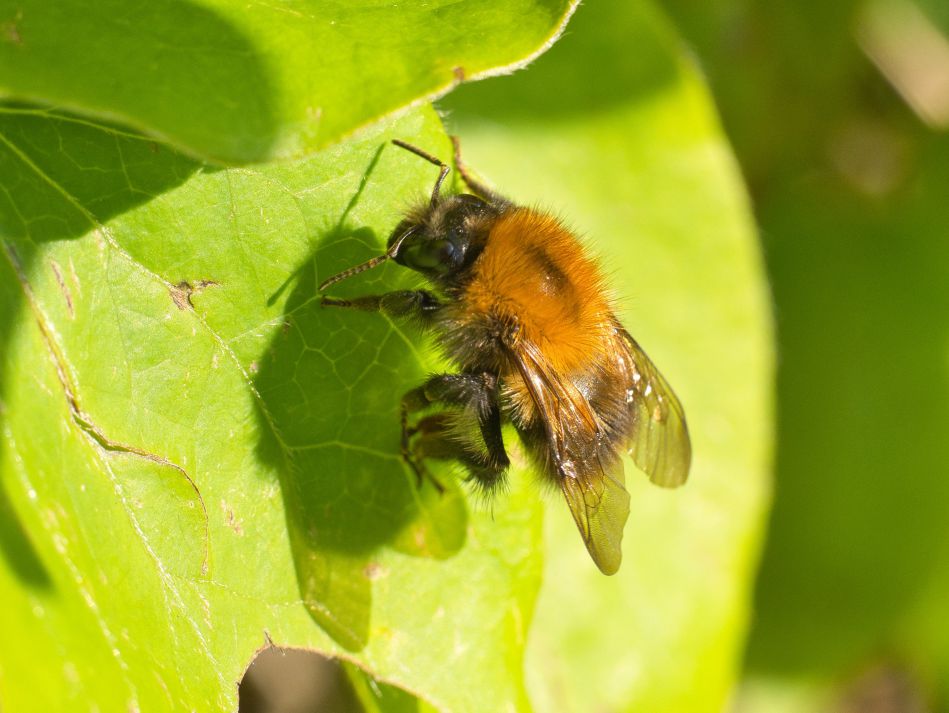
I find that early evening, on what has been a warm or sunny day is a really good time to look for inverts. Particularly if there’s a shrub or hedge with some of the low evening sun. All the life photographed here was on the combination of elder, bramble, snowberry and hawthorn that made up the garden’s boundary hedge. My first species was this female hairy-footed flower bee, often mistaken for a bumblebee. She is solitary, and she is usually being followed by a male bee. I haven’t seen any males in the past week, so I think their time has been and gone for 2021. It’s the work of the female bees to now finalise the chambers and food caches for next year’s brood.
Common carder bee
One of the most common bees in London is seen here, the common carder bee. This gingery bee was also basking and preening in the low-slung sun. They are fairly easy to identify if you can acquaint yourself with their ‘ginger’ thorax. Don’t quote me on that.
Marmalade hoverfly
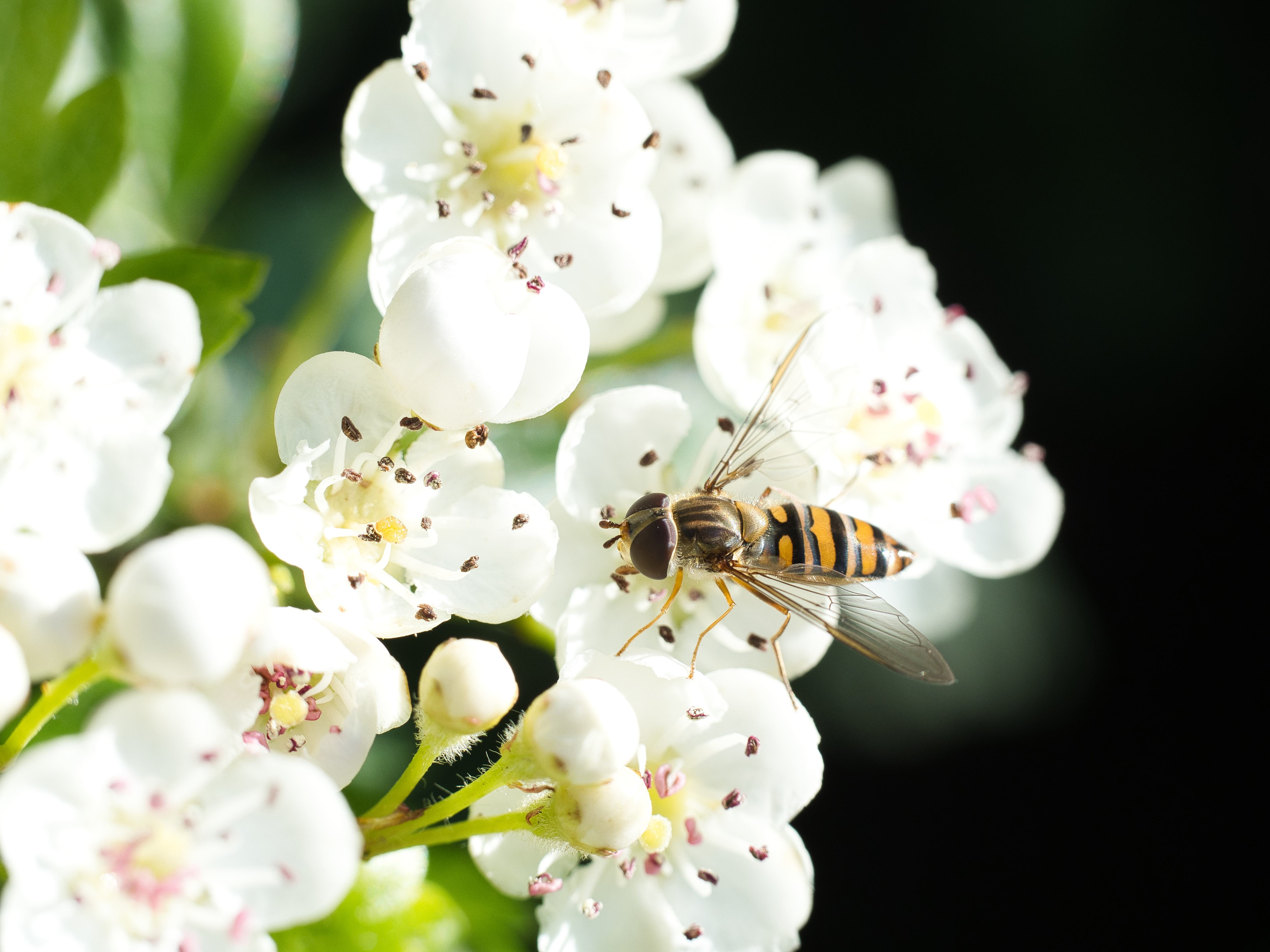
The hawthorn was blossoming and a marmalade hoverfly was feeding on the flowers. It was nice to see, as English hawthorns appear to be falling silent, in comparison to those in Europe. This is a really very common hoverfly.
Here it is again, having stocked up on nectar. They get their name from the orange and yellow abdomen.
Gammoptera ruficornis, named after its red antennae
Though I was seeing mainly common species, I found one that I’d never seen before. It’s always nice to see a longhorn beetle and this species,Gammoptera ruficornis, was new to me. It was first feeding on the hawthorn flowers but then moved to bask on this leaf. It gets its name from its red antennae, hence the ‘rufi’ in the scientific name.
A planthopper in the Issus genus
This is a planthopper in a stage of metamorphosis, I think, before it becomes an adult. Having read about this genus, Issus, I’ve learned that this group have biological versions of gears. They are the only animals to use gears, other than those invented by us humans. Amazing! They use the gears to hop or propel themselves to such great distances:
This video gives an insight into the jumping prowess of these insects.
I’ve covered spiders (well, one) a lot in the past couple of weeks. I found a couple of spiders in the London garden with this one in the process of feeding on what appears to be a former caterpillar.
The magic of macro is of course its ability to ‘blow up’ something like an insect to a size far greater than that seen by the naked eye. This is a speckled bush cricket nymph and, I promise you, with that green on green was almost impossible to see. It reminded me again of the power of patience and of looking more closely.
Really pleased to share this 45 minute Zoom talk I did for Bell House, an educational charity based in London, earlier this month. All the photos here are mine (bar one).
The talk includes a general intro to the ecology and culture of fungi in the UK with a spin through some common species to find.
Thanks to Bell House for giving me the opportunity to speak.
After a year of lockdowns and Covid waves, I managed to visit London again for a couple of days in what could be the wettest May on record in the UK. May can often be unsettled and is still spring after all, so we shouldn’t be too surprised. That said, I’ve never known it this stormy.
Camberwell Old Cemetery
London is renowned for its wild cemeteries with Nunhead being one of the most famous. One of my favourites is Camberwell Old Cemetery, a haven for uncommon local bird species like green woodpecker, stock dove and mistle thrush. These are species which like open, parkland style habitats with rich grasslands alongside older or veteran trees to nest in.
St. Paul’s Cathedral and the Shard as seen from the cemetery
It has some good views of London’s skyline in places, with quite interesting correlations between tombstones and skyscrapers.
A Victorian gravestone resting against the stumpof a horse chestnut
This isn’t something that happens by accident. I can’t tell you how many times in the past I lobbied for these grasslands to be allowed to grow where possible or appropriate. Many times in May I would walk through and find the evidence of strimmed grass where flowers had flourished days previously. It’s a matter of communication with grounds staff but also the political will from people in managerial and leadership roles. There’s also the matter of complaints, the sense of things being ‘unkempt’ and ‘wasteland’.
The demand to mow everything is ingrained in English society. It’s a destructive tendency that reduces biodiversity on many levels, however much unintended. The success of initiatives like #NoMowMay are a sign that things are beginning to change and ecological literacy is developing in society. In places like Camberwell Old Cemetery it’s a ‘no-brainer’ because this is old meadowland and it’s been grown and cut once a year, or so, for hundreds of years.
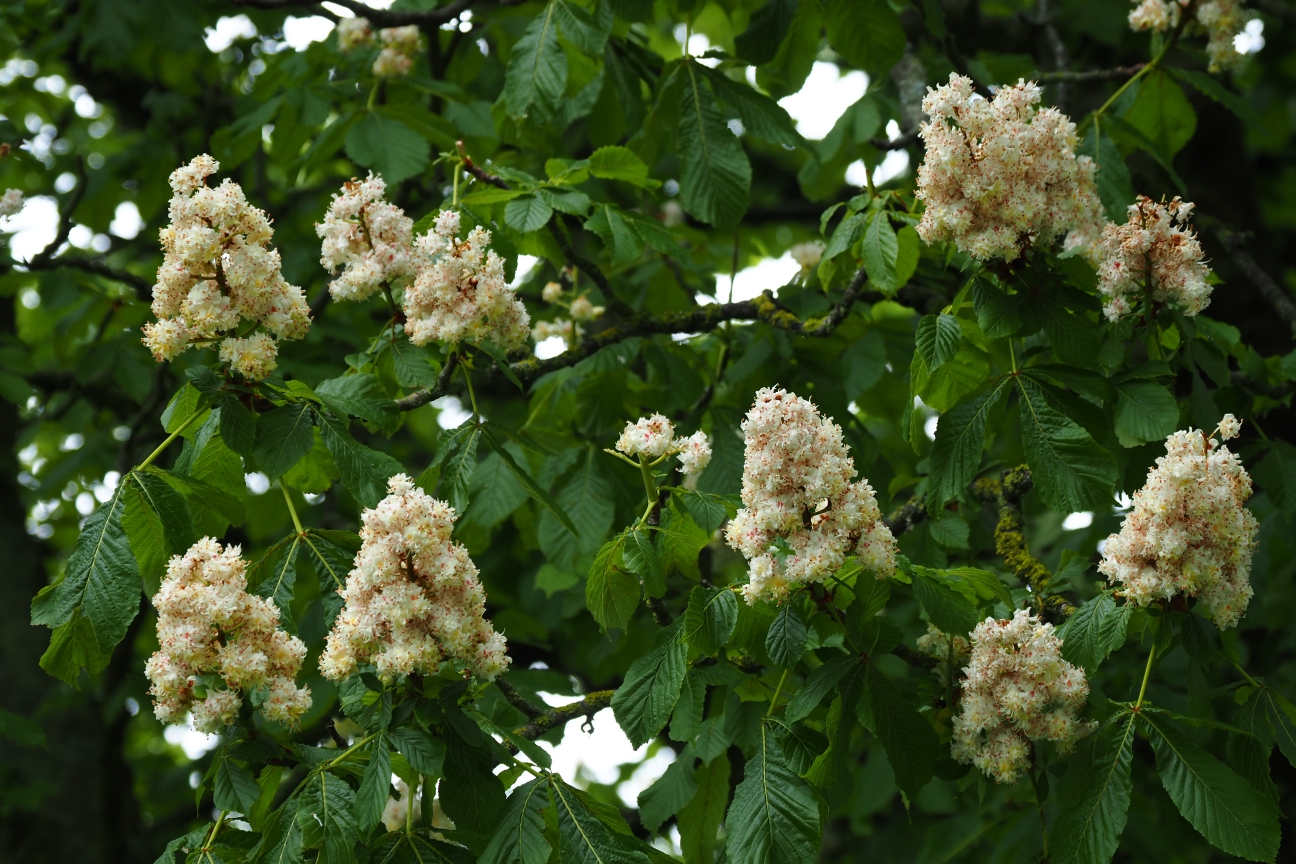
It’s not just in the grasslands that flowers are appearing at this time of year. Many of our trees are angiosperms (flowering plants) and horse chestnut is one of May’s most attractive.
Up close these flowers can look like orchids, sometimes.
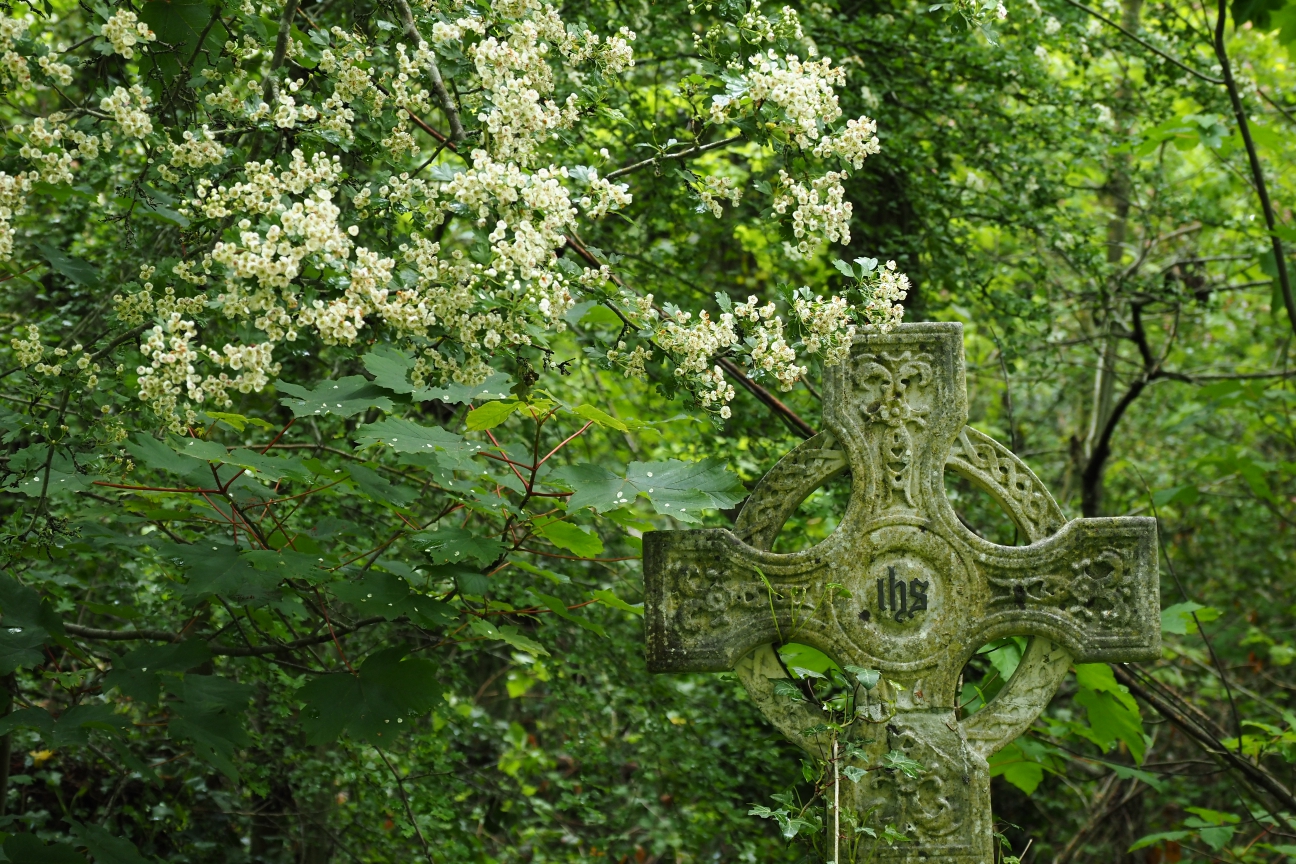
In England we have a tree that is also named after the month. One of hawthorn’s folk names is ‘may’. The ‘haw’ refers to the fruit, the ‘thorn’ the tree’s prickly nature. I wonder if the climate crisis may turn hawthorn into ‘april’.
It’s an exceptionally good tree for invertebrates.
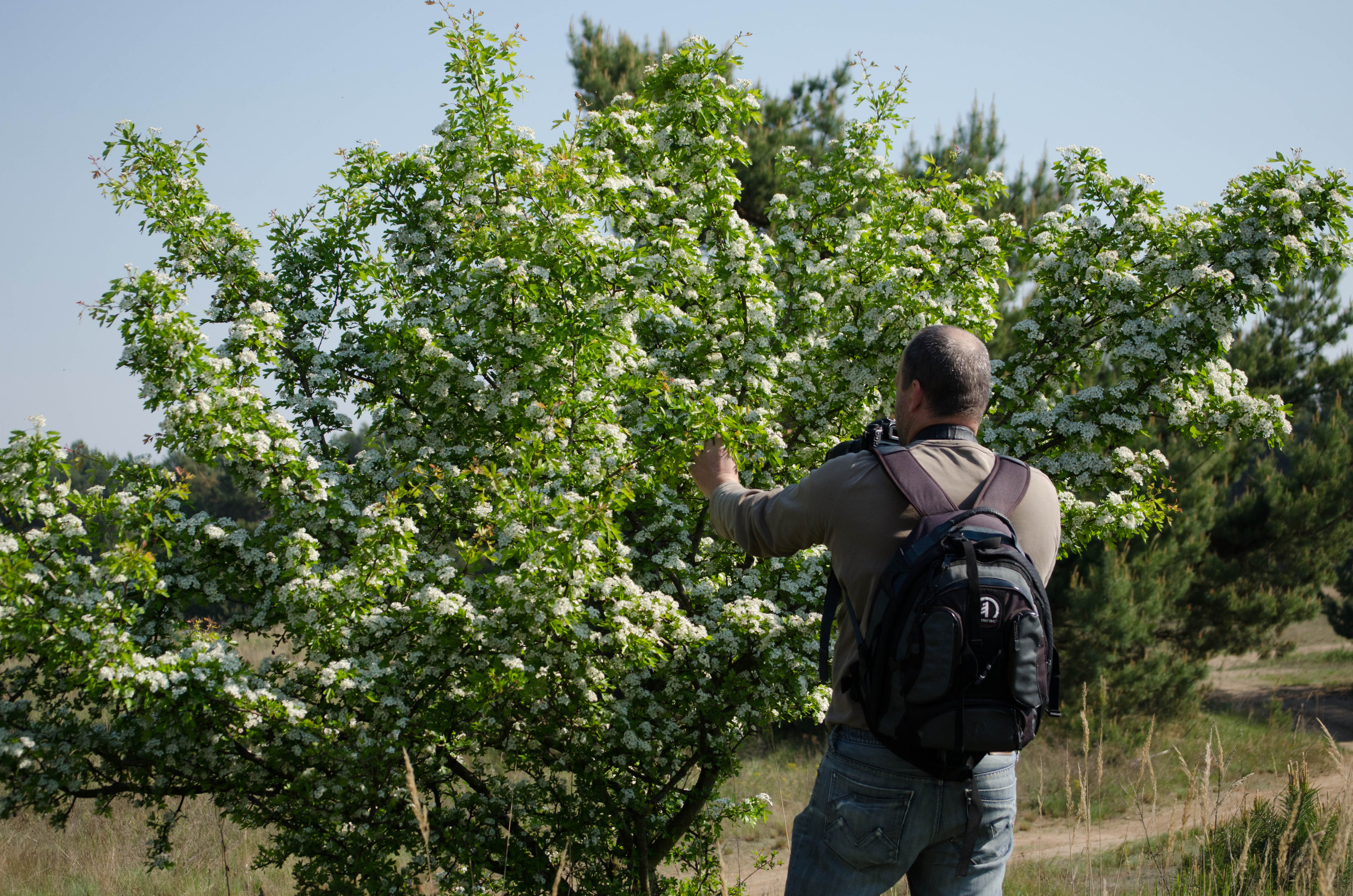
In Czechia, my friend Karel recommended checking the flowers of hawthorn if you’re looking for insects. He wasn’t wrong. This tree was covered in large beetles, hornets, wasps, butterflies and bees, all nectaring on it. We lack that biomass and diversity in the UK, perhaps because we stopped allowing our grasslands to flower. At least we now have #NoMowMay to help us on our way.
There’s an old hawthorn growing in my family’s garden. That evening I had a look for invertebrates on the shrubs and flowers. It was a relief, in a way, to find the flowers of the hawthorn were being pollinated by a marmalade fly. Our hawthorn still has something to offer in the wettest of Mays.




















 Unlocking Landscapes