
Coulsdon, London
writing and photography by Daniel Greenwood
Coulsdon, London

As featured in The Earthlines Review:
Crystal Palace, London, March 2013
It’s 6:30 am. We’re strolling along the Crystal Palace ridge, a chunk of wild land made up of all kinds of plants, a few notorious for their invasive, disruptive nature. Bramble and nettle are frost-encrusted, brightened as the ice turns to dew in the occasional spillage of sunlight that greets us from the south. When it does appear we bathe in it like a gift from the gods, droning as maybe druids would. The willow catkins are clean through now, many dew-laden, droplets elongating as gravity weighs. Last spring we listened to the call of a lesser whitethroat as it dinked in and out of these willows, its common cousin, the whitethroat, performed mating rituals in a bower of buddleia, diving into the cover of bramble at the farthest tip of the palace’s former standing, now marked by a solitary white bracket. Buddleia grows on the ridge in large sprigs, still harbouring last year’s brown cones of flowers that will be purple in a few months. Elder leaves escape their buds a little early in this still wintry weather, green sleeves unfurled but perhaps thinking the better of it. The mutilated stalks of Japanese knotweed are the only signs of intervention but for discarded beer cans and a few muddy desire lines. The scene is punctuated by crows sat idly in birch and sycamore trees that have grown in the cracks of the palace’s old stairways, immortalised in stone. These walkways, presided over by headless statues and sphinxes, are now engulfed by green and yellow lichens. As for the living, we aren’t the only people visiting: dog walkers, joggers, cyclists, commuters all make their passes before us. A dog with a stick in its mouth accosts us out of curiosity as we regard a song thrush singing in an ash tree, the dog turning its head and smacking fellow birdwatcher Lisa on the back of her leg. It seemed to hurt.
The view below is of open parkland where crows and black headed gulls saunter, pulling worms from the always waterlogged ground. Every so often the crows leave their perches in the palace’s trees, returning a few minutes later with large morsels of white bread in their bills. It’s almost impossible to see if a bird returns to its perch, such is their uniform blackness. This is the highest point in south London, higher still is the television mast that reaches upwards into the sky. Last year we watched a peregrine falcon using the mast’s very top as a perch, a pair of sparrowhawks coasted from even higher. The memory brings vertiginous feelings. The view is south to the North Downs, the Dartford Crossing to the east, visible in the orange morning sky. Chimneys and flues are blowing white smoke up into the air, beyond the Crystal Palace athletics stadium, a site that without the development of the Olympic Stadium in east London would be England’s national athletics arena. Unbeknownst to most, a long distance marathon has taken place here for millennia. Migrant birds have historically chosen the Crystal Palace ridge as a spot to drop in on, with swallow, redstart, willow warbler, chiffchaff, blackcap, whitethroat and wheatear having been recorded in recent years.

The Crystal Palace’s relocation to Penge from its original siting at Hyde Park was completed in 1854 and caused a global stir, attracting visitors from all over. The Crystal Palace High Level railway was built to serve the palace, a trainline which has now been reclaimed by nature in the form of Sydenham Hill Wood, Brenchley Gardens and the Horniman Nature Trail. The Crystal Palace burnt down in 1936 and the trainline was closed in 1954, leaving a footprint of paths interrupted by housing estates at the ghosts of Lordship Lane and Upper Sydenham stations. Train tunnels were built underneath roads and excavated through the ancient Dulwich and Penge woodlands, now home to bats like the brown long-eared. Go back a few hundred years and Crystal Palace would be entirely different, even further than its enclosure as Penge Place in the early 1800s, and its original incarnation as Penge Common. Penge translates from the Gaelic as ‘the end of the wood’, a wood that was known as The Great North Wood, a landscape of commons and coppices that stretched from Deptford to Selhurst. It was deemed ‘North’ because it was the great wood north of Croydon, a thriving market town. Locals from the surrounds would make trips here to Penge Common to listen to nightingales, a bird that has disappeared from the area, and is suffering similarly staggering declines nationally.
Perhaps there is some irony in the fact that Crystal Palace fills me with a sense of nostalgia, for the Arcadian past of Penge and the Great North Wood. It’s an emotion that the Victorians made their own as a visit to nearby Dulwich Upper Wood and Sydenham Hill Wood proves. The Victorian villas built along the Sydenham Hill ridge are now gone, their footprints straddled by regenerating hornbeam, oak and new woodlands of sycamore and ash sprouting from the basements, as well as the invasive laurel and rhododendron planted in their gardens. At Sydenham Hill Wood a small folly remains, a remnant of the Sydenham Hoo and a feature of its vast ornamental garden. There’s a picture on the Internet that shows this very garden, with a small shrubby evergreen which now stands as a mature cedar of Lebanon. I share Victorian nostalgia instead for a world that much of their development denuded. The Crystal Palace brought unprecedented change to the Great North Wood. But then there are records from the time of the Crystal Palace High Level railway suggesting that in the immediate aftermath of the development birdlife still thrived. Bullfinch, tree pipit, wryneck, spotted flycatcher and wood warbler were all known to nest in the area, and some locals will point to the fact that bullfinch and spotted flycatcher only stopped breeding in the area in the late twentieth century following a national trend. In the grounds of the palace tree pipit and hawfinch were breeding birds, the latter thought to have bred in Sydenham Hill and Dulwich Woods until the 1980s. What concerns me about the run off from the Crystal Palace’s legacy is how the ridge will be treated in the next 100 years.

There is a masterplan to redevelop Crystal Palace Park and bring the ridge into the same aesthetic bracket as the lake and waterfall features that remain from Joseph Paxton’s pleasure gardens down at the bottom end of the park. In previous decades there were proposals for a casino and other grandiose leisure complexes which have disappeared from the agenda due to public opposition and lack of funds. Some of the park, registered as Metropolitan Open Land, is being earmarked for the development of apartments, a decision upheld by the High Court in June 2012, to the grave disappointment of the Open Spaces Society, the Crystal Palace Community Association and London Wildlife Trust. What makes the Crystal Palace ridge unique is the lesson it can teach us about our design, about what truly lasts. The Crystal Palace was a grand and ambitious venture but like the villas painted across the Sydenham Hill ridge a mile away, it was too grand to last. Looking here at giant stone stairwells with pioneer woodland trees like birch and sycamore escaping from the cracks, headless statues reawakened by the figure of a perching crow, and the only remnant of the palace’s outer shell sitting alone on the wildflower-enveloped ridge, the feeling is not one of defeat. Over on the grass banks of Crystal Palace Parade where buses terminate and begin journeys to places like Elephant and Castle and Blackheath, a line of plane trees was planted to signify the footprint of the old palace. The masterplan includes proposals to plant a new tree palace along the ridge and to landscape it. If this is handled without due care and consideration, it could lead to the loss of good, wild habitat home to breeding song thrush, dunnock, blackcap, chiffchaff and whitethroat amongst all the other wild plants and creatures thriving in a space where wildlife has been allowed to thrive without much intervention. The palace has grown back in its own way, in the birch and sycamore palace escaping from the cracks in the steps, yet to reach the old palace’s heights. In truth, I wonder why we are so desperate to master the land, to make a statement of it. There is more pleasure in observing the movements of wild birds each spring, in listening to their songs, than in attempting to control them. I hope there comes a point where we can step back and allow the land to recover from our past mistakes. For us birdwatchers it will be a case of watching, listening and waiting.

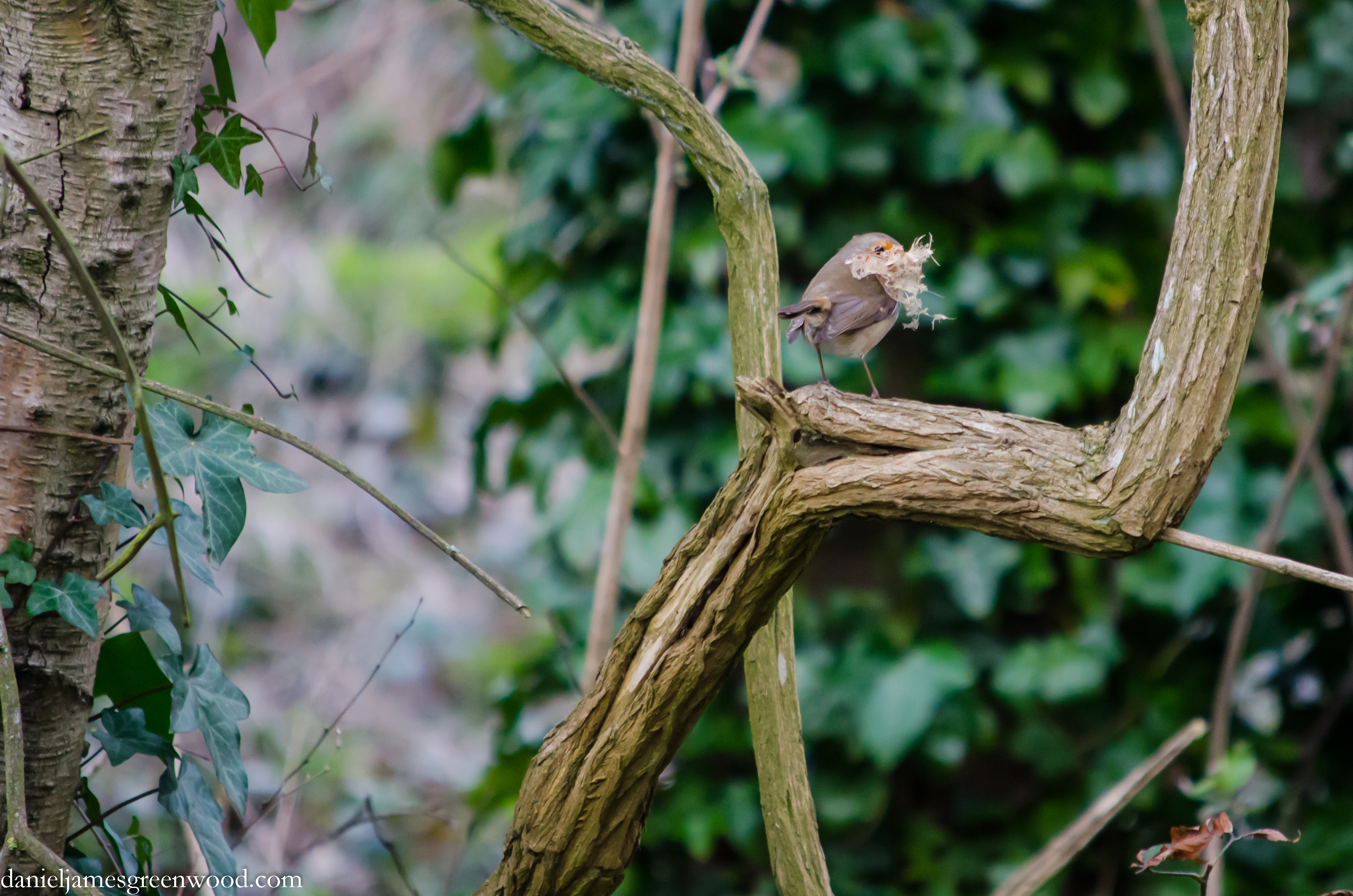 Crystal Palace Park, London

Dublin Port, Ireland

I remember when I first became interested in woodland. Through my lack of knowledge and understanding I thought ivy was a tree-killing force that scaled a trunk like a cancer and had no other purpose. I looked at the fat stalks of ivy growing on a poplar in a nearby park and thought it might be an idea to cut them. In my local area there are people who go around doing just that.
The fact is that ivy is fantastic for wildlife. When ivy grows up the front of a house and sparrows are nearby they’ll use it. Blackcaps, one of my favourite songbirds, nest in it. Entire bat colonies can roost in it. Hoverflies, bees, butterflies, they all use it for different means, be it a leaf to perch on or flowers to drink nectar from. Walking in Crystal Palace Park recently I was passed by a man remarking to his friend about a line of trees with ivy growing up them:
‘Look at those trees,’ he said, his companion turning to look. ‘The ivy grows up them and just kills them off. I’m thinking of writing a letter.’
This is one of the biggest misunderstandings about ivy – it is not merely some dark demon from a tree-hating underworld, it flowers, too. In fact, the main reason it is even anywhere near a tree is because a songbird or woodpigeon has sat in the tree and evacuated its seed. It produces food eaten by a good number of birds and attracts insects that birds can feed to their babies. Beautiful and exciting birds like firecrests target it for food and shelter in winter when they pass through parts of the British Isles.
A tree brought down in a wood will give life to wildflowers and wake some that have lain dormant in the soil
Ivy does add extra weight to a tree and, in some cases, can weigh a tree down making it more liable to windblow during a storm. But the issue isn’t with the ivy it’s with us, Homo sapiens. In woodlands, it is completely natural for a tree to fall down, it’s good. The new light that will hit the woodland floor will improve the structural diversity, particularly in British woodlands that, since the Second World War, have gone largely unmanaged and have become overgrown as our economy has grown to rely more and more on imported materials.
A tree brought down in a wood will give life to wildflowers and wake some that have lain dormant in the soil, unable to flower because of the previous tree’s leaf shade. In the street, however, a fallen tree could mean death, damages and lawsuits. For all our love of woodlands and forests, perhaps the sight of new woodland is something that kindles a deep fear inside us, as if the open land is being overtaken, changing at a pace and in a manner that we’re uncomfortable with. Personally I find woodland reclaiming old developments and ‘wastelands’ as something to feel good about. It tells me the world can function without our intervention and can recover. Nature can make even the most barren place into a leafy oasis given time.
The chap I overheard in Crystal Palace later remarked on a c.200-year-old horse chestnut standing tall and true, though surrounded by ground dwelling ivy. If he had seen a horse chestnut wounded by blight, a disease spreading through global trade, might he have turned his ire on Environment Minister Owen Paterson for not tightening restrictions on imports? In the case of the healthy, happy horse chestnut, does it not suggest that what we love (or this man at least) is the splendour of individual trees, their maturity, their completeness. The common understanding of nature’s life cycle is a single sapling to a mature tree, without any notion of the stuff that might happen in between, the decay and lost limbs, all part of the picture. After a recent trip to the decidedly untidy West of Ireland, I read this quote from Oliver Cromwell on the state of the Irish landscape in Neil Hegarty’s The Story of Ireland:
‘For to what purpose was it to plow or sow, where there was little or no Prospect of reaping? – To improve where the Tenant had no Property? This universal Neglect of Husbandry covered the Face of the Kingdoms with thickets of Woods and Briars; and with those Vast extended Boggs, which are not natural but only the Excrescences and Scabs of the Body, occasioned by Uncleanliness and Sloth.’ (Page 136).
Cromwell couldn’t have been more wrong, though his rhetoric is plainly political. Those Irish ‘Boggs’ are one of the planet’s many ways of storing carbon dioxide emitted by the felling of woodlands (which thanks to the English has occurred in Scotland and Ireland through centuries of invasion and land grab) and is something we as a species are scrambling to mimic. Today we look at those bogs with a greater understanding, if not thanks. In County Mayo some are being turned into reserves, home to merlin, otter and grouse. But the main thing here has been capitalised by Cromwell’s old English: Neglect.
People get angry and feel they’re being forgotten when their grass isn’t cut by the council, when the neighbour hasn’t trimmed the hedge on their side, when the ivy suffocating those trees hasn’t been cut. Often these are measures to boost bee numbers and reinstate lost habitat for birds and bats. In England, if we are to help bees, birds and butterflies, we need to address our obsession with tidiness. In the natural world it does not equal good hygiene or ‘Cleanliness’, an untidy garden means more birds, more bees and more butterflies.
In Cromwell’s case it was the language of war, a debasing of another country and culture, rather than a comment on wildlife gardening. I don’t think it’s far off, mind you. If we are to overcome our uneasiness about ivy and trees we’ll need to loosen our grip, leave the mower in the shed one year and look at the benefits of the plant, the good it does for wildlife in these most ecologically trying of times. I like to think my original, misguided concern for trees came from a good place and has developed into something more reasonable having taken time to consider the bigger picture of the natural world.

Ox Mountains, Co. Mayo, Ireland
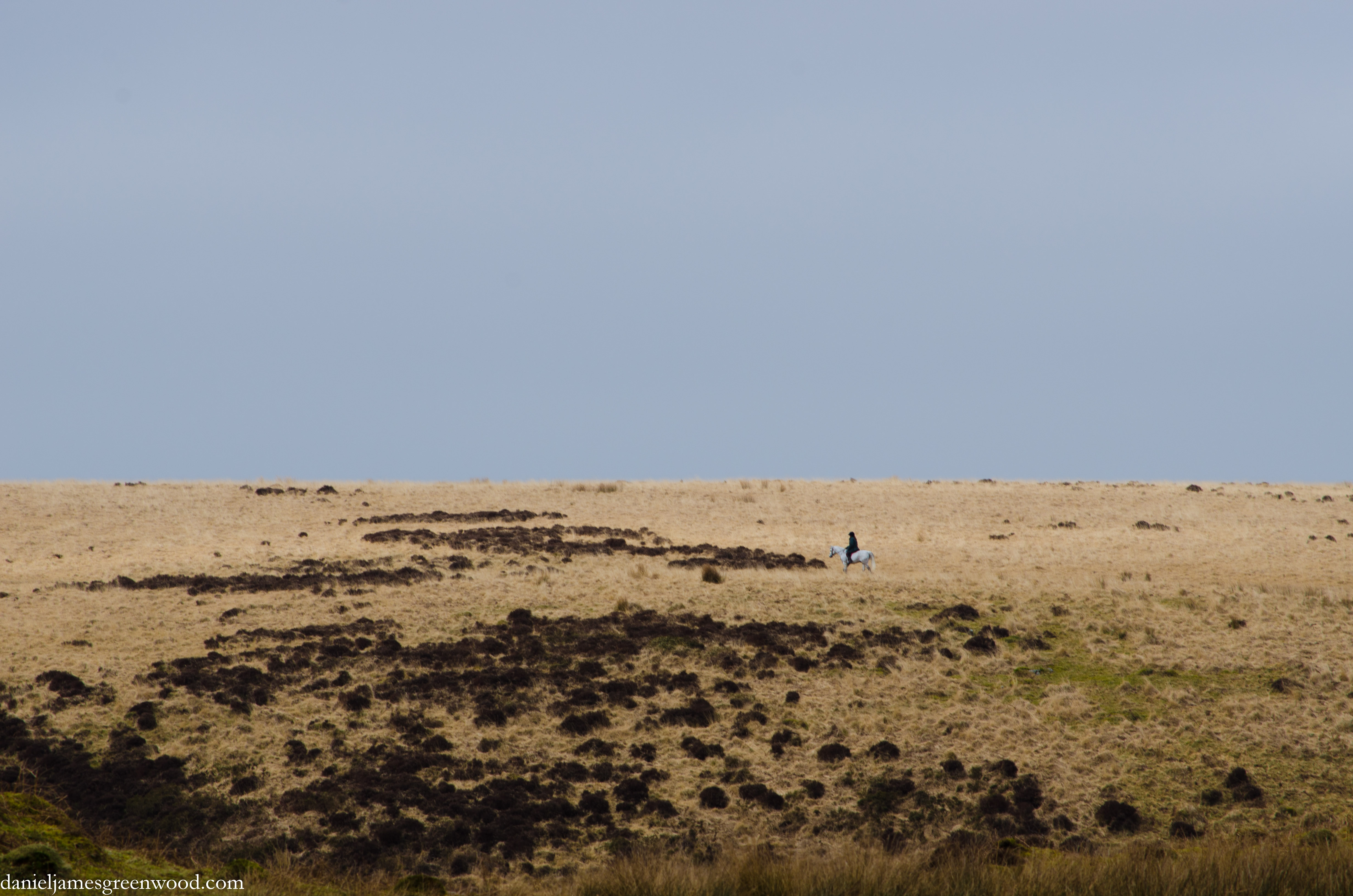
Exmoor National Park
© Daniel James Greenwood 2013
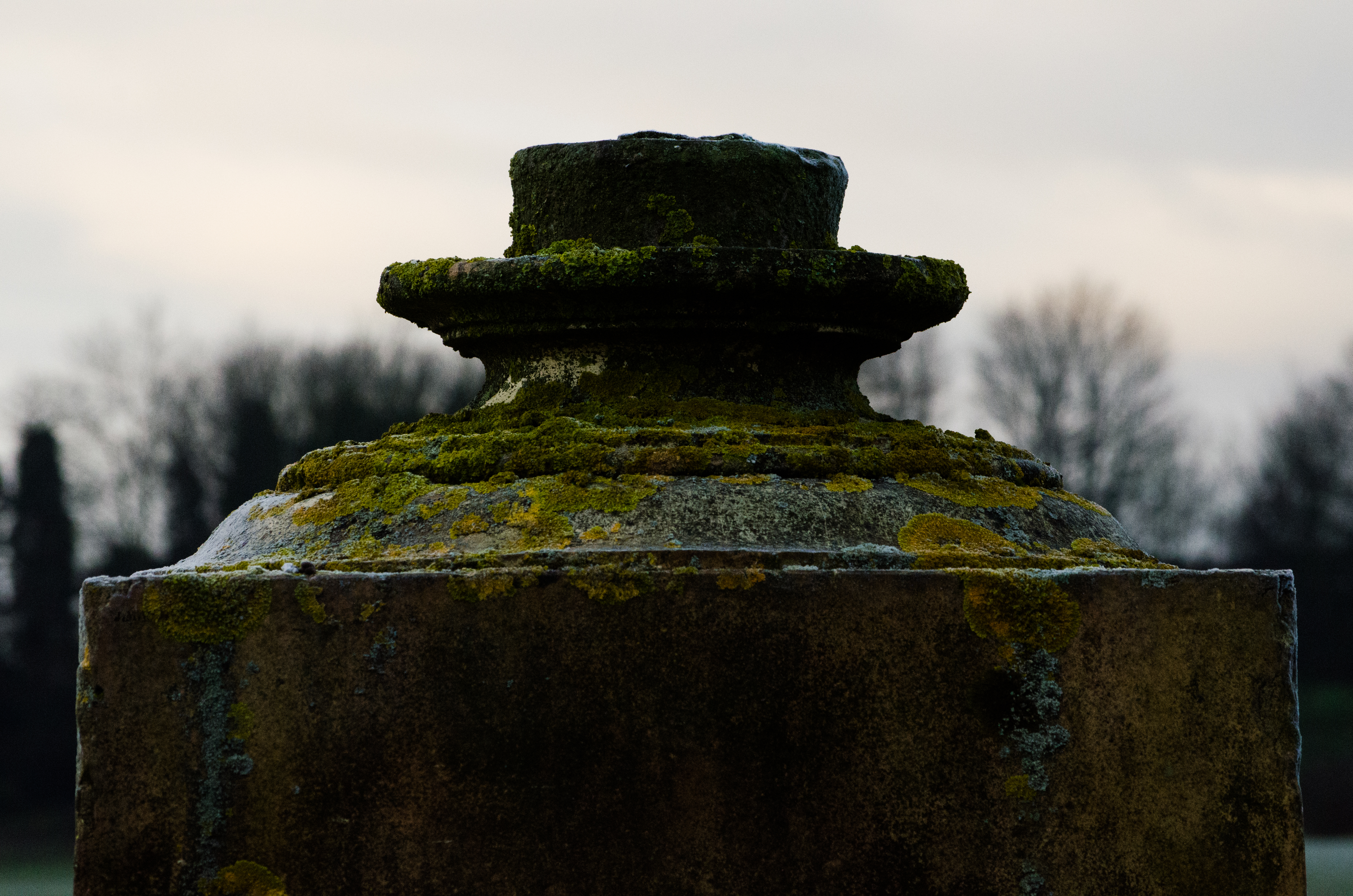
© Daniel James Greenwood 2013

Last year I was commissioned to write this piece about the four seasons in Sydenham Hill Wood. Woodlands are beautiful, yes, but the lives of their inhabitants are not as gentle or pleasant as we might like to think. Here are my four dispatches.
Along the trackbed of the disused railway wild garlic grows. It’s a remnant of the wood’s ancient lineage, its deep green is welcome refreshment on a grey spring afternoon such as this. Every so often you find other indicators of the wood’s age. Wood anemone are growing in isolated clumps and English bluebells, too, some hybridising with the Spanish garden variety. The hornbeam standing along the track is another pointer to the old age of Sydenham Hill Wood.
Above our heads is another species sure to have been breeding here for some time. There are three tawny owl chicks sitting in the top of a large ash tree not yet in leaf, and through the bare branches we have a clear view of them. They snuggle into their plump, downy coat of feathers, calling to their parents, with rasping voices you might not expect them to make.
The wood’s bird community is watching, not least because the tawny owls are the top predator in the wood and one of the chicks’ parents is nearby trying to make a kill. Last week we found a crow’s head by the pond and it now appears likely that the adult tawny that spawned the trio above is the culprit. The birds know it too: there is an anxious din of woodland birds – woodpecker, crow, robin, great tit, blue tit, ring-necked parakeet, nuthatch – as the rufous adult tawny emerges from its hiding place.
The chicks are further along than expected, they move one at a time over our heads and closer to mum or dad, their spread of primary wing feathers giving them a tactile appearance, each like a finger. The parakeets are the most successful in bothering the young owls as they shriek and dive around them, the vibrancy of these exotically coloured birds muted by the task, on a dour afternoon in the spring wood.
The leaves of trees under torchlight are sticky with honeydew, a little like our faces, damp with sweat and bothered by mosquitoes. I swat them away. The wood is perspiring, wet with aphids. The air is thick with the funk of wild garlic that has flowered and gone. Stars are appearing in the ocean of night sky. A dot of light moves across the expanse. Is it a satellite?
A male tawny owl calls from acres away. We blow through a hazel whistle carved in a fashion to mimic the owl, and the bird itself responds in kind, edging closer and closer to us after each play of the whistle, its voice becoming clearer: What’s the time Mr. Owl? Now there is no foliage between us and anxiety stirs. We decide it’s better to stop in case the tawny thinks we’re another male. They are renowned for their aggression in protecting territory.
With the wood under the spell of darkness, the industrial world is reduced to a dreamy wash. Beyond the lining of trees could be an endless wildwood or an open pasture – the imagination runs free in the absence of engines and electric light. Some centuries ago the old woodland was felled and turned into farmland that skylarks, corn bunting, lapwing, turtle dove and cuckoo would have colonised. These birds are now absent from land that is used for cricket, golf and rugby.
From the glade’s sleeping bed of rosebay willowherb the great ghost of a hawkmoth ascends. I swoop the child’s pond-dipping net I am holding towards the monstrous insect, bringing the net and my knees to the ground. I carefully peel it away from the grass, revealing only shadows. The mysteries of the night wood remain.
We’re sitting around the moth trap again tonight. A large flock of crows are returning to a roost in the direction of Dulwich Park. There’s something about vast movements of crows, it gives the sense of an ending. In old times this would have been the signal to down tools at the close of a day labouring, ‘when the crow flies’, as they used to say.
The insect numbers have visibly dropped since summer but the pipistrelle bat hunting just above our heads shows there must be enough for them to eat. The twilight is metallic blue, stars are lanterns in the sky untouched by trees.
We’re surrounded by oak woodland, with smatterings of birch, ash, willow and hornbeam. We can only hope the darkening wood conjures something beautiful for us to behold. The leaves around us are soon to fall and even in this fading light you can sense the change, nature exhausted after the sex of spring and summer’s heat. A hobby flies the same path as the bat, catching a moth in midair.
Night falls. Nocturnal mammals begin their movement through the leaf litter, their sound much bigger than they actually are. A moth has been drawn to the bulb of our moth trap and we retrieve it in a clear plastic pot. It’s medium-sized, purple and mustard in colour. It’s the barred-sallow. This moth has evolved to match the leaves of autumn, but it’s early, many of the trees are still verdant green. We release the insect and it disappears into the dark.
A slender pathway cuts through the ground layer of ivy, most likely to have been forged by a train of foxes. A large ash has been pulled down by the wind, the underside of the ivy leaves wrapped around it are a fresh colour, like the flesh of a lime fruit. To the side a den has been made with string tied to the rotting logs that rest against a tree in a tepee form. Sometimes people spend a night in the wood and so the sign of a tent or den surrounded by food packaging and drinks bottles is not unusual. There isn’t much litter to be found tonight, other than things the ivy has subsumed, bottles or cans taken in by the soil or blown over from the road. Spiders make a home for themselves in empty bottles and the woodlouse is a common inhabitant of an old shoe. Now the leaves of premature bluebells peek through the earth and we take care not to trample.
We come upon a clearing around a large yew tree, the soil cleared of ivy and plant life by the acidity and shading of the tree’s needles. The trunk is rippled and worn like an old doll’s limb. It’s one of a line of yews that would have been a hedge in the grand Victorian garden that was once here. The villas were built in the 1800s, but too grandiose to last, they were abandoned during the Second World War and, deemed unsafe, were eventually bulldozed into the earth. The ground dips to reveal the whitish bricks of a wall and a trail of broken glass. Behind us is a group of silver birch trees, quarantined amidst layers of ivy and the yew. These birch look like they’re waiting for something.
The other side of the wall shows a support structure for the terrace of the old Victorian villa, where the slow life of the woodland has been allowed to resume. A blackbird calls in the canopy and a great tit sings its winter song down in the woodland glade. The sun is setting low through the slope of trees. It’s time to go home.

