Blog

Sawflies munching the gooseberry ๐Ÿ˜‹

In June, my wife called me out to the garden because she’d found something in the gooseberry. Pretty standard.

She has an amazing ability to find things and is especially good at foraging. In this instance she’d found caterpillars munching through the gooseberry leaves.

There was a sense of both amazement at what we were witnessing and fear for the health of the shrub. We don’t survive on gooseberries and the birds almost always get to them first, but you don’t really want your shrub to die. Then again it hasn’t exactly been a raging success, to be honest.

Personally, I always think English gardening culture fails to accept death and decay into the mix, and the important role that plays. Gardens should feed local wildlife, not just be a killing zone for visitors deemed unwelcome.

One summer does not a garden make!

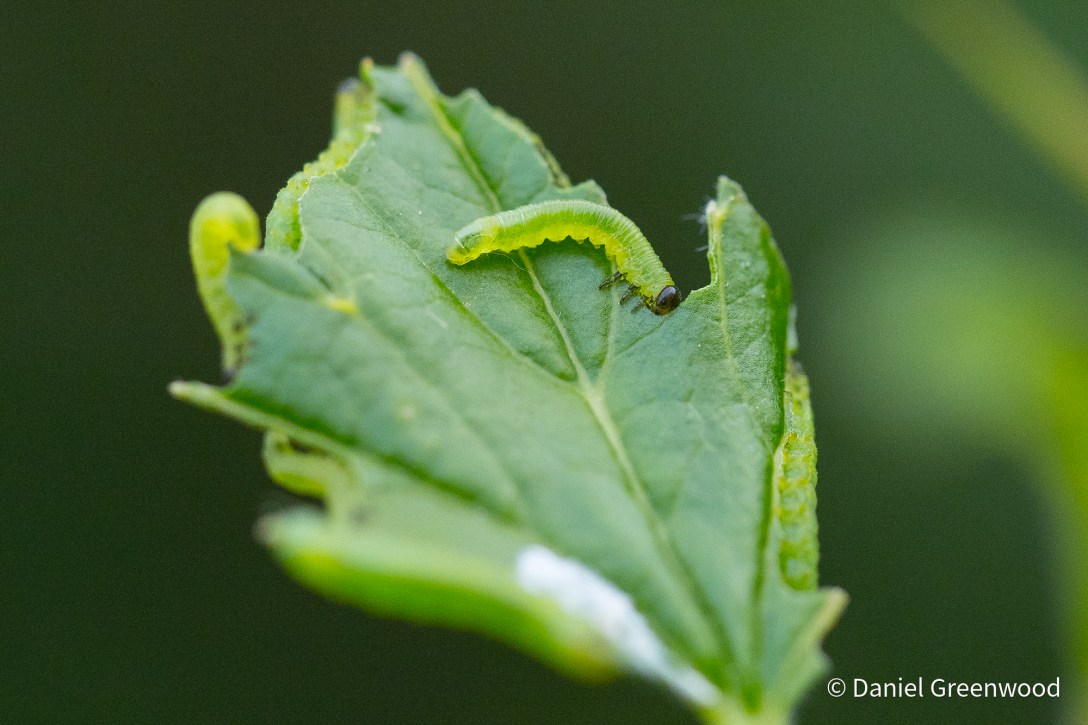
With the help of iNaturalist I understand these to be small gooseberry sawflies (Pristiphora appendiculata). Sawflies are relatives of bees and wasps that are common in gardens and elsewhere.

I do love this view of the sawfly caterpillar nibbling its way through the leaf. When we looked at them on the gooseberry new caterpillars would appear as your eyes adjusted.

In the days that followed I noticed house sparrows hanging from the surrounding raspberries and picking at the gooseberry. That’s a very good meal, especially for fledglings.

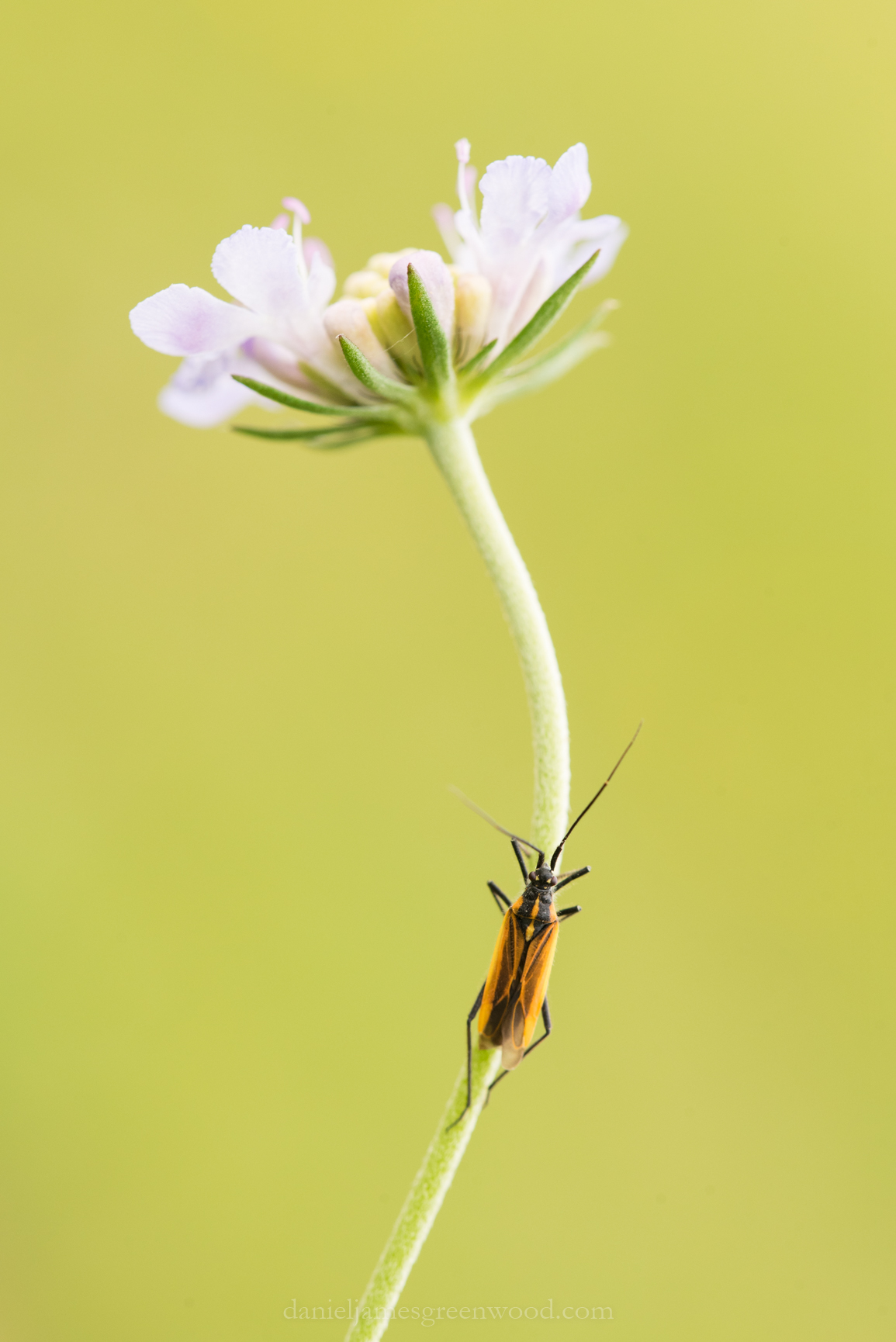
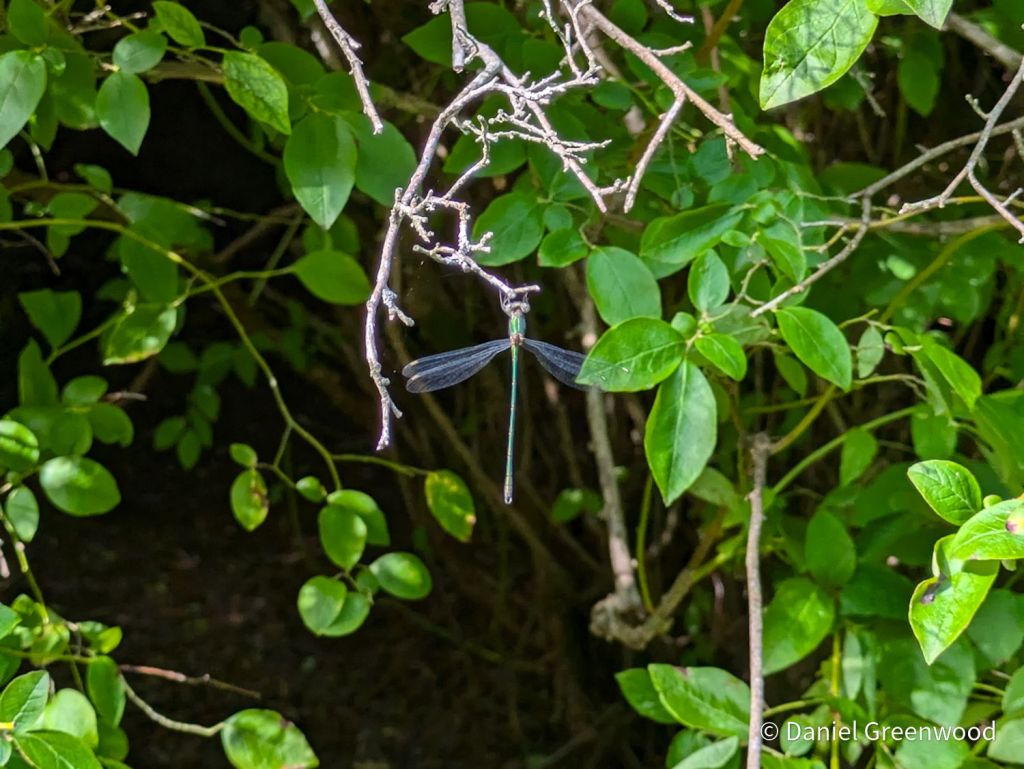
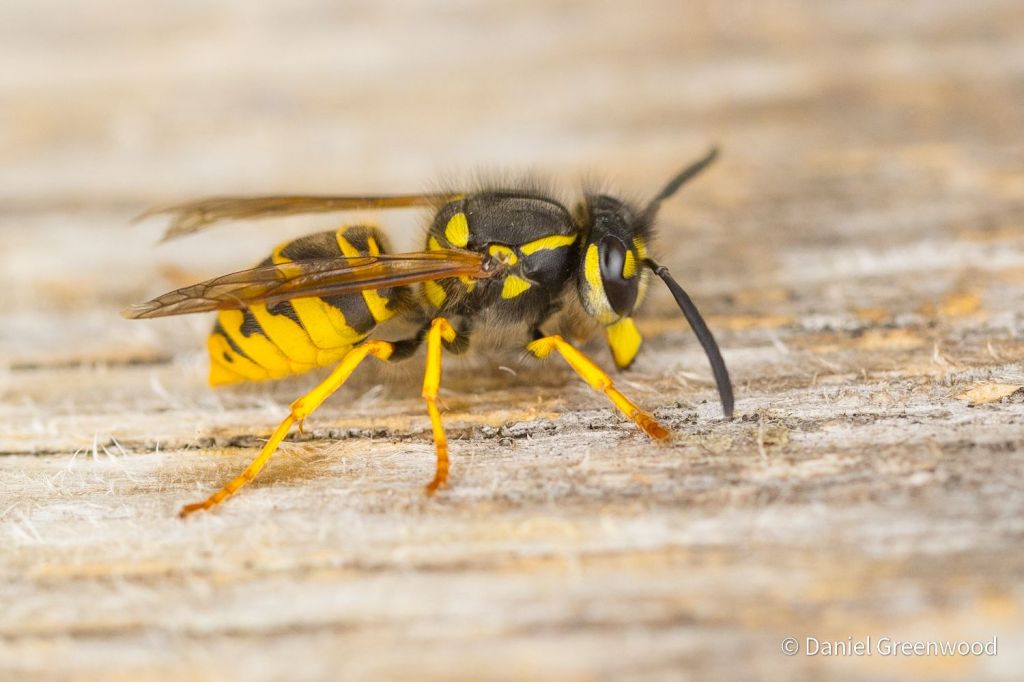
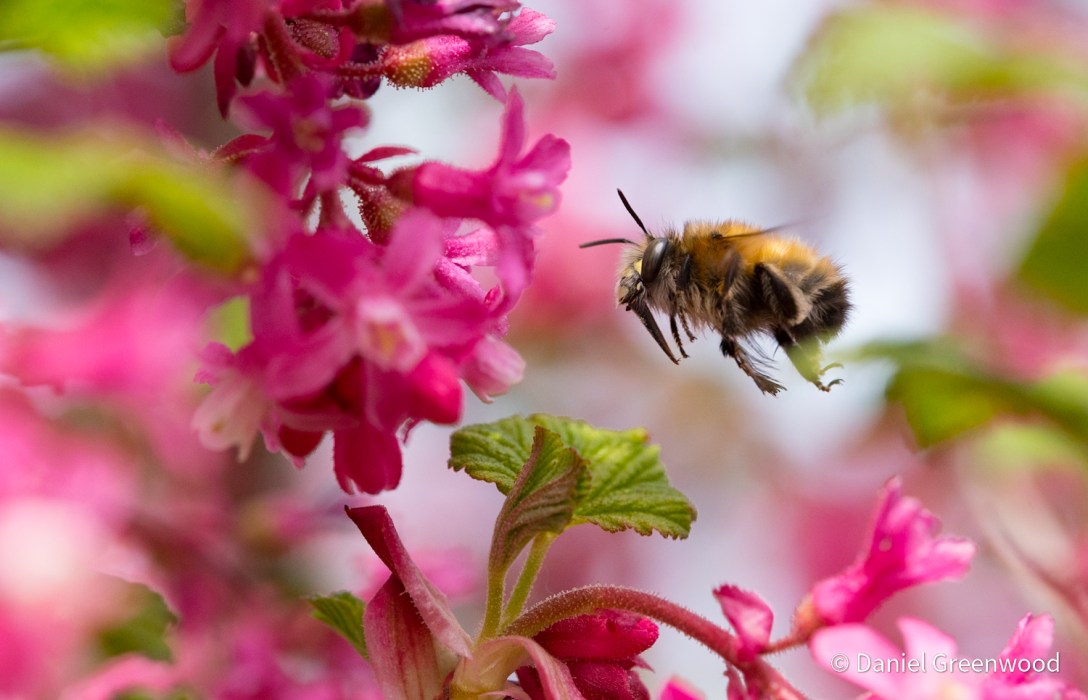
Some days later I spotted a new visitor to the gooseberry. I was confident this was a sawfly (not knowing anything about their lifecycle) but unsure if this was one of the caterpillars emerged as an adult insect. I’m not sure, but it’s likely to be an adult small gooseberry sawfly.

As for the gooseberry bush, it looks ‘touch and go’ as football physios say. It’s part of the game of life.

Thanks for reading.

Macro

Zombified fly in the garden ๐ŸงŸโ€โ™‚๏ธ

My garden, West Sussex, June 2024

I’ve posted before about the so-called ‘zombie fungus‘, but that wasn’t in my own garden!

There are a few fungal concepts that have become mainstream in recent years, namely the wood-wide web and ‘zombie’ fungi. The latter has become popularised because of The Last of Us, a programme I haven’t watched and can’t say anymore about. The most famous parasitic fungus that can control its host is cordyceps.

My wife actually found this (not cordyceps) when she was inspecting the gooseberry bush, which was steadily being eaten by sawfly larvae. I’ll post about them next.

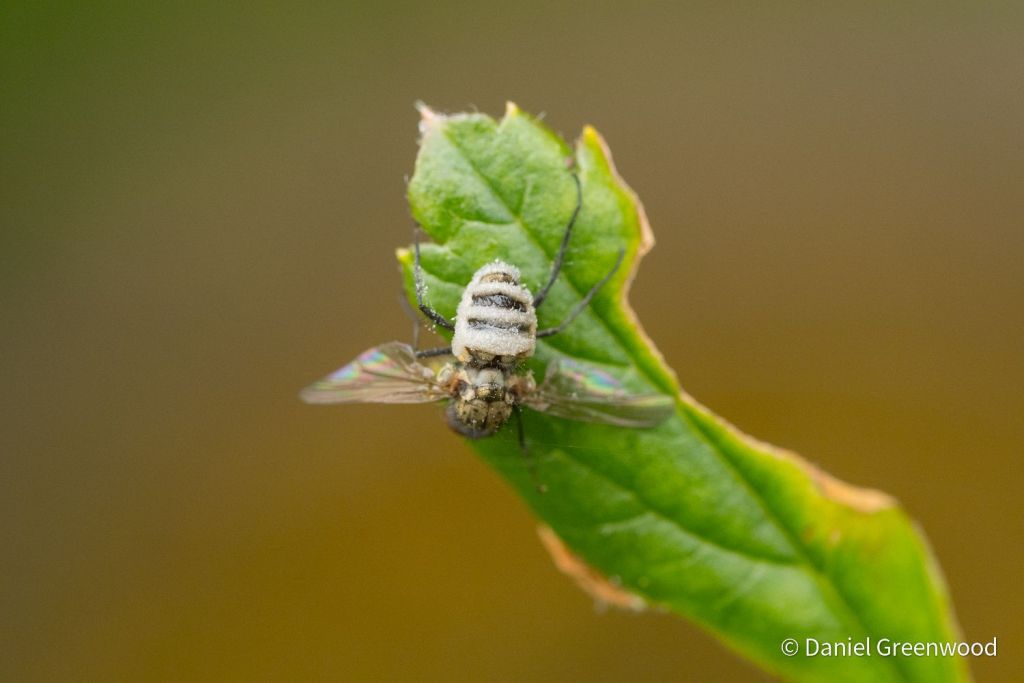
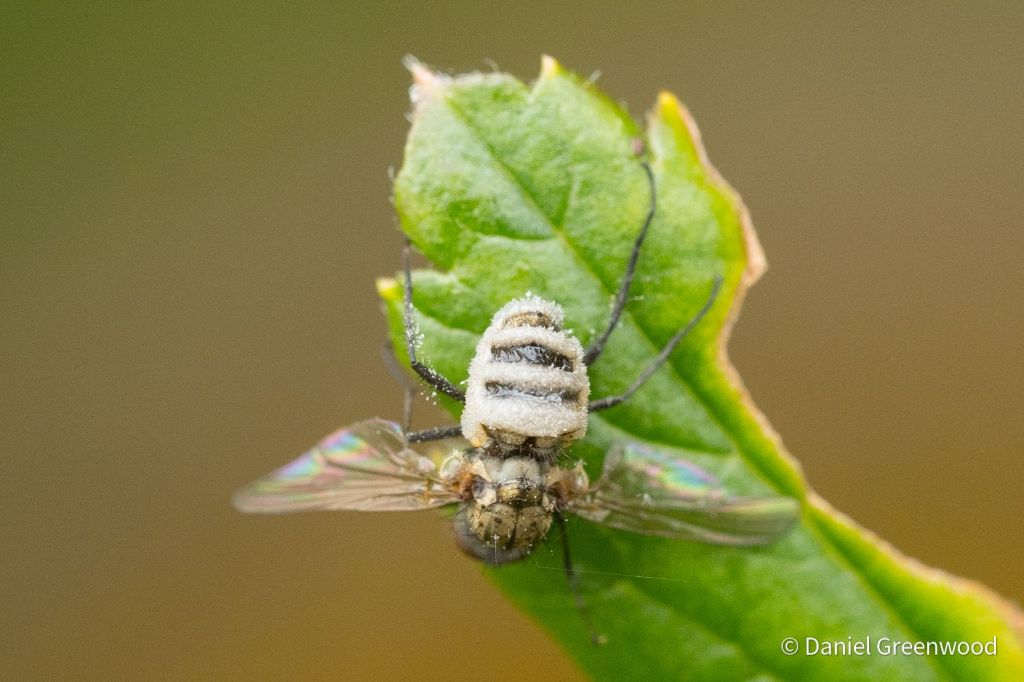
What is this exactly? It’s a fly that has been parasitised by a fungus called Entomophthora. It basically is able to control the movement of the fly by making it move to a prominent position for its final moments, or at least I think that’s what’s happening.

The prominent position then allows the fungus to spread its spores on the wind or from a more beneficial height to reach its next host, however that occurs.

It’s not quite as gory as cordyceps, where a fungal fruiting body rises from the body of its host. It is altogether more macabre and sad-looking, though. Cordyceps can be very colourful.

In reality it is just an example of the immense biological diversity out there, the interactions between two kingdoms – animals and fungi.

Thanks for reading.

Macro | The fungus capable of mind control

Solitary bees at Nymans ๐Ÿ

National Trust Nymans, June 2024

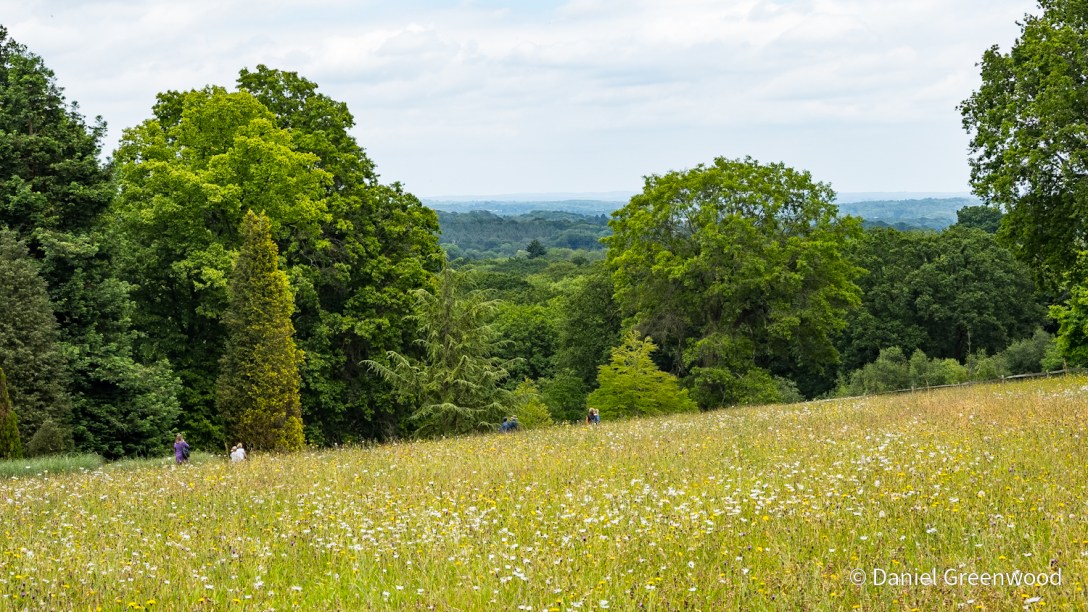
Nymans is a National Trust garden in the western edge of the High Weald. There are great views across Mid Sussex towards the South Downs. This visit was just for a general walk, but it quickly dawned on me that it could be a chance for some macro.

I had my Olympus 12-45mm lens with me which can work really well as a macro lens. Bingo!

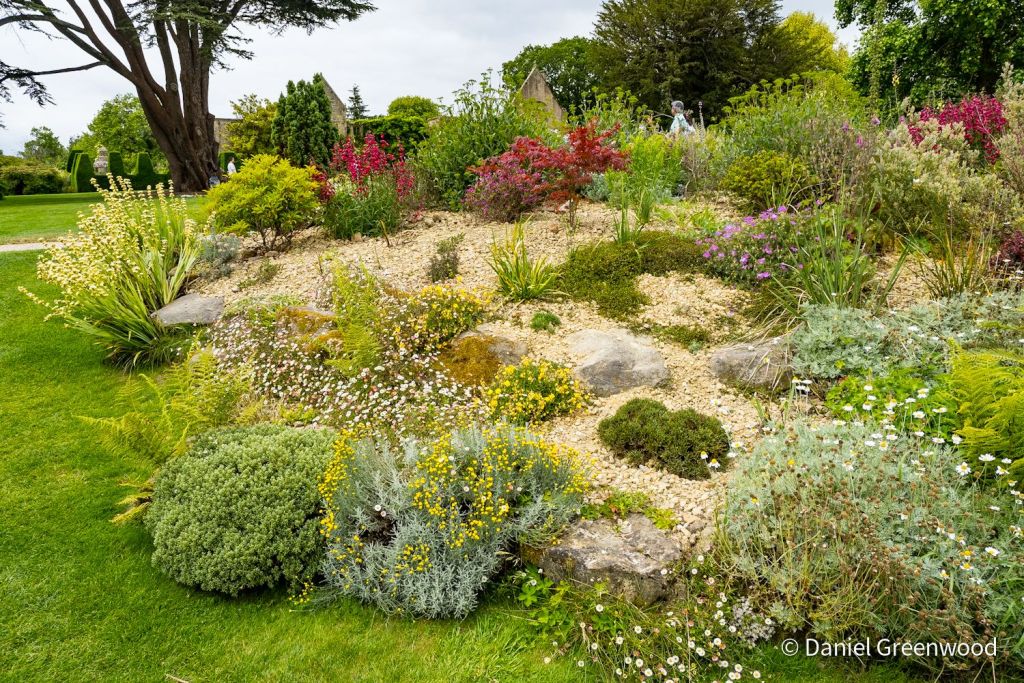
Nymans has a lovely array of rock gardens and extravagant flowering borders.

The common spotted orchids were peaking, as you can see, the flowers turning to seed.

I realised this visit could be interesting for macro when we spotted this caterpillar munching on a knapweed leaf. It’s the larva of a sawfly, rather than a moth or butterfly.

Elsewhere on the knapweed was this small robberfly. I love seeing this striking group of flies, they make great subjects. They also strike, in the predatory sense.

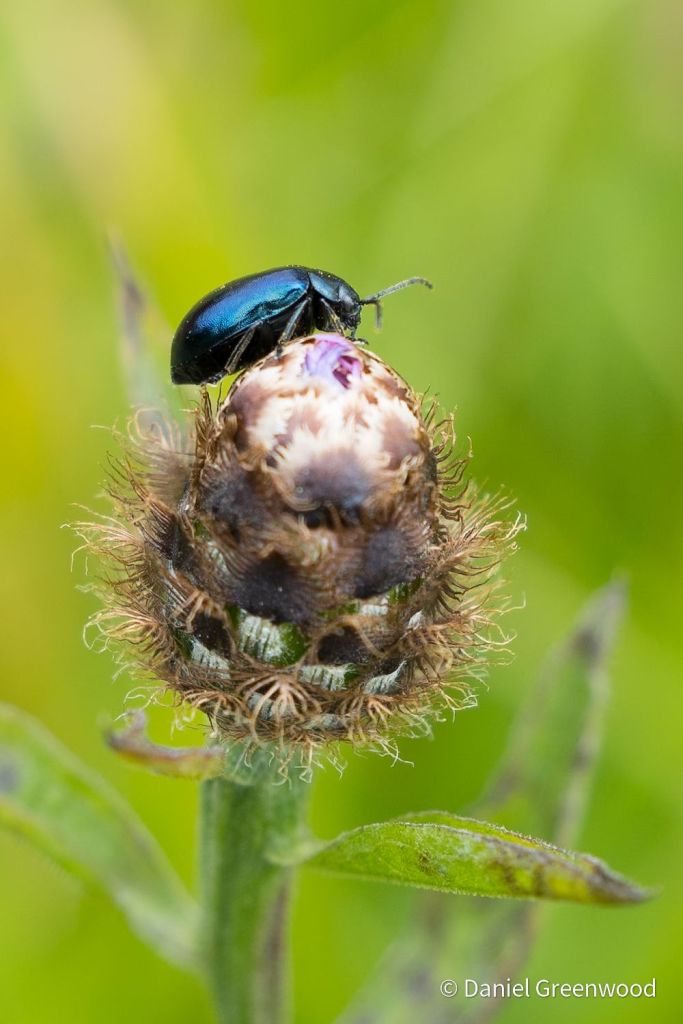
I’ve seen loads of alder leaf beetles since moving to Sussex but I usually see them in towns. It’s always nice to see one in a meadow.

There were a number of small bees around. I think this is one of the bronze furrow bees.

In the head of a meadow cranesbill was this rather dozy little solitary bee. I pulled the petal to the side, as you can see here, to see if it had been caught by a spider. It hadn’t, it was just still.

Nymans has rose gardens, where I found this solitary bee trying to make sense of the maze of petals. Life, eh?

Thanks for reading.

Macro

Cemetery cinnabar moth caterpillar

I started drafting this blog while unknowingly coming down with COVID, and now can’t remember what I wanted to say…

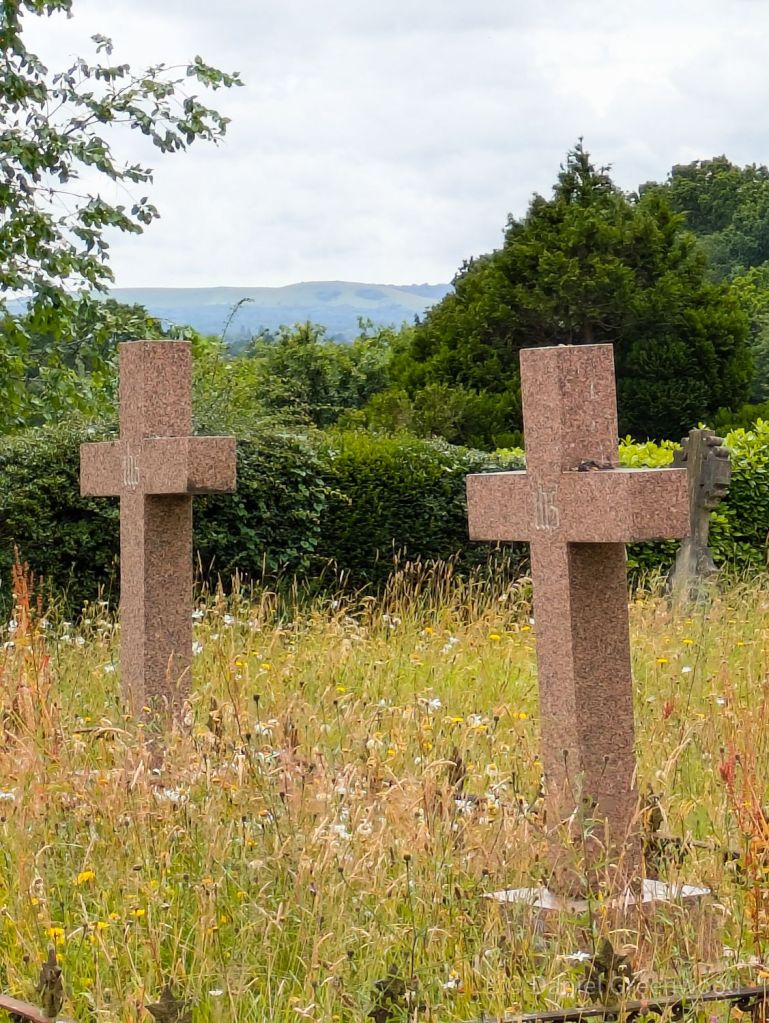
Nevertheless, the photos here are a few phone pics from a wonderful churchyard in Haywards Heath in West Sussex.

The churchyard has views of the South Downs, in this case towards Wolstonbury Hill. I was actually going to be walking there for the coming weekend but the virus has robbed me of that dream. I must spend less time hugging 5G phone masts.

Again, I am so impressed by the detail that the newer phone cameras can achieve. This is probably a furrow bee (I think sometimes referred to as sweat bees?) in a common knapweed flower head. Did you know that daisies are some of the most evolutionarily-recent flowers and they make use of multiple florets, as seen here. Bees are impressed.
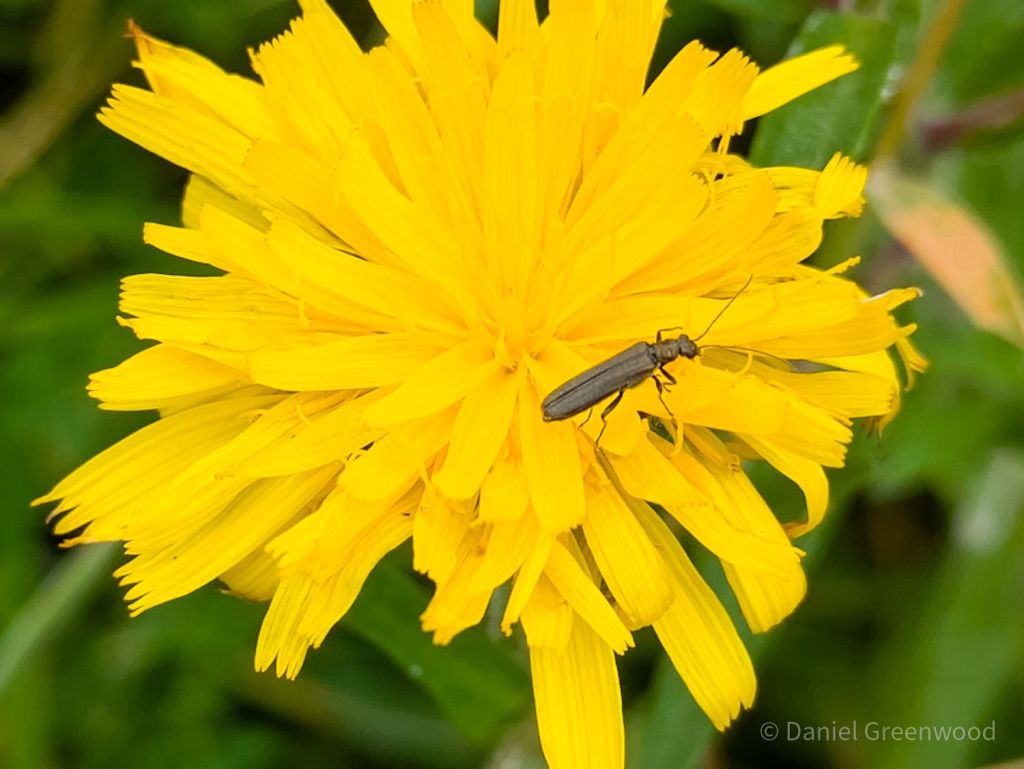
Hawksbeard or hawkbits (too ill to check) abound in these Sussex Weald grasslands. This is an Oedemera beetle, so a relative of the iconic swollen-thighed beetle. You may have seen him pumping iron in your local gym.

The nicest find was among the ragwort, a plant that inspires those on the margins of society, and upsets those who worry about their livestock being poisoned by it.

This is a cinnabar moth caterpillar, like the socks of some experimental Netherlands football kit. Their homestrip warns of their toxicity, so I had a sandwich for lunch on this occasion, just to be safe. Not that it made any difference! #Sick

Thanks for reading.

Macro

Tiny wasp, long tail

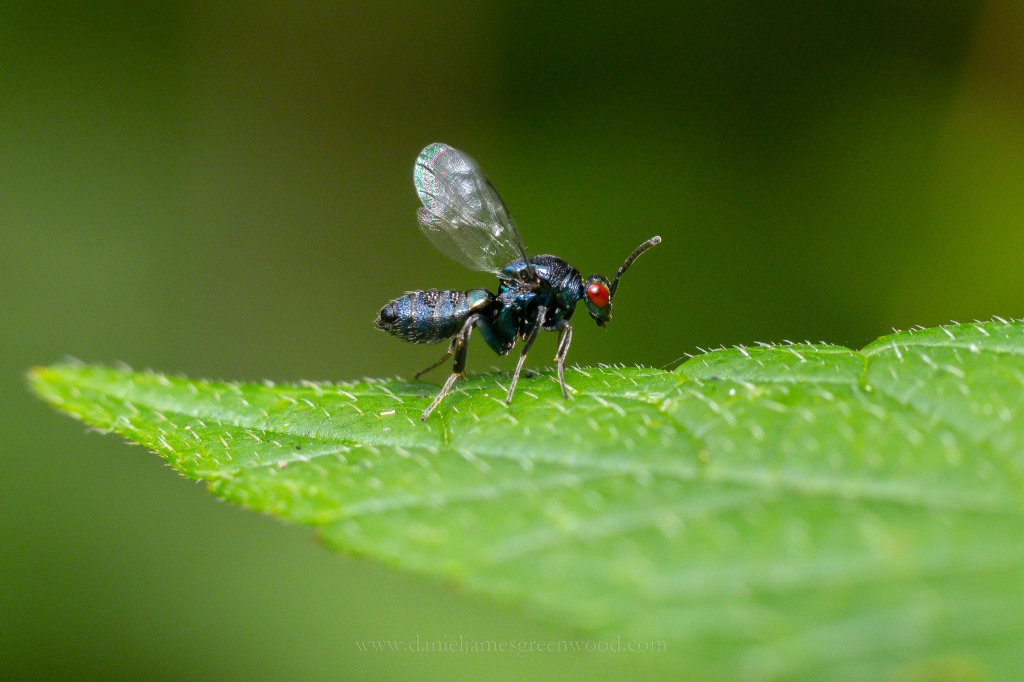
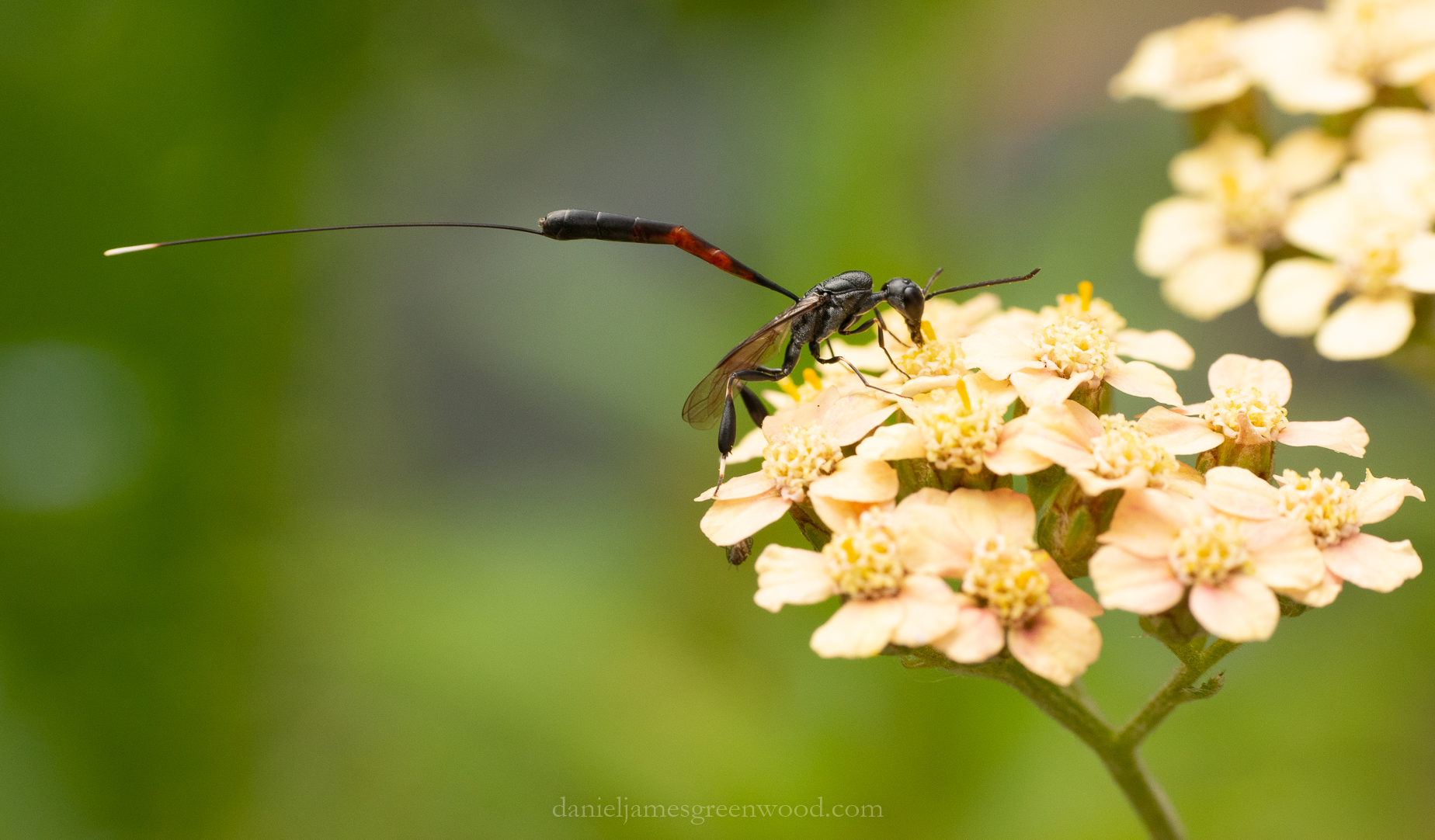
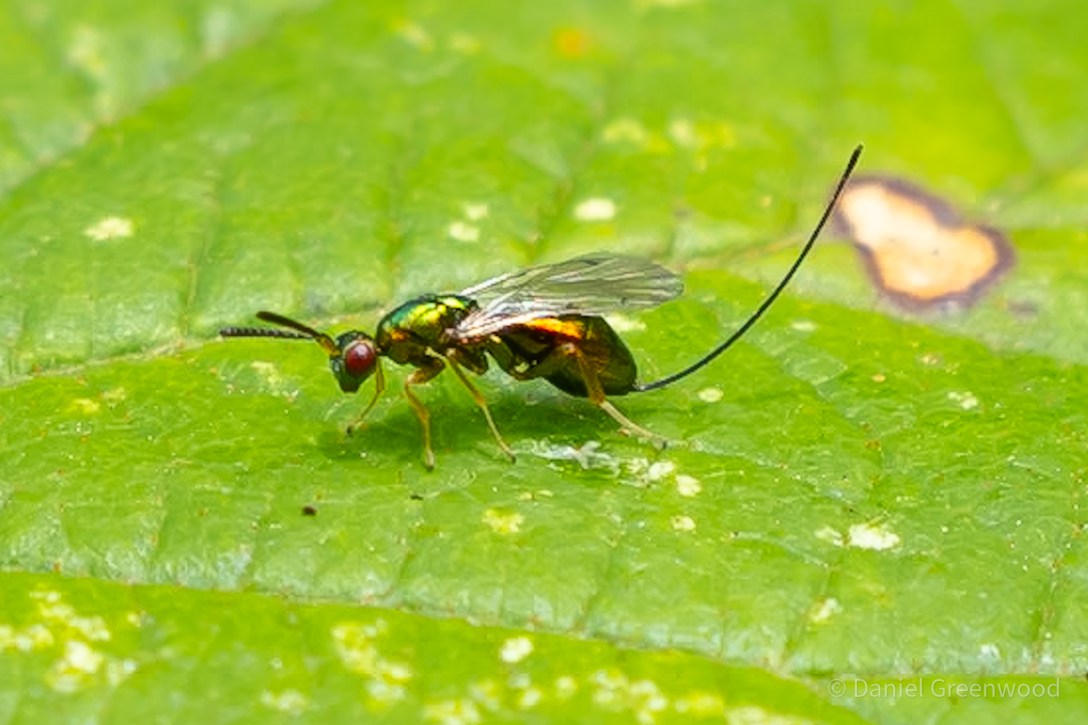
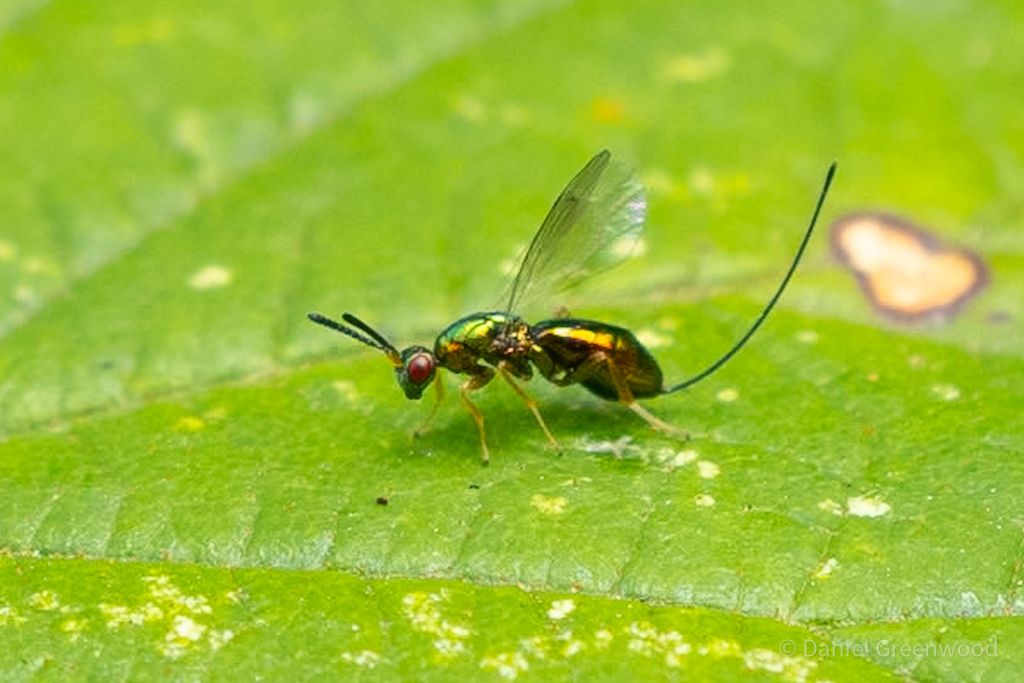
I was out for a walk the other day and found myself in among some brambles. I stopped to look at the leaves and noticed some miniscule insects flitting around. One was perched on a leaf, its long tail extending up in a crescent.

My first thought was that it was one of the Chalcid wasps which I posted about 3 years ago. This wasp has a weird significance for me. In 2021 I scheduled that post before my father (a great supporter of this blog over the years) was admitted to hospital.

A Chalcid wasp photographed in 2021

I was knocked out of that crisis zone for a couple of seconds by notifications about a blog I’d written, cued up and forgotten about. Those tiny wasps seemed so insignificant and irrelevant then, but here they still are, doing their thing as they have done for millions of years.

According to iNaturalist this is a species in the Torymidae family. Well, in an election week, that wasn’t what I was expecting. I now work in a politically restricted job, and wish to be as clear as Michael Gove that this is not a campaign ad for those true blue heroes of our great nation.

The wasps are parasites, so make of that what you will. I didn’t name them!

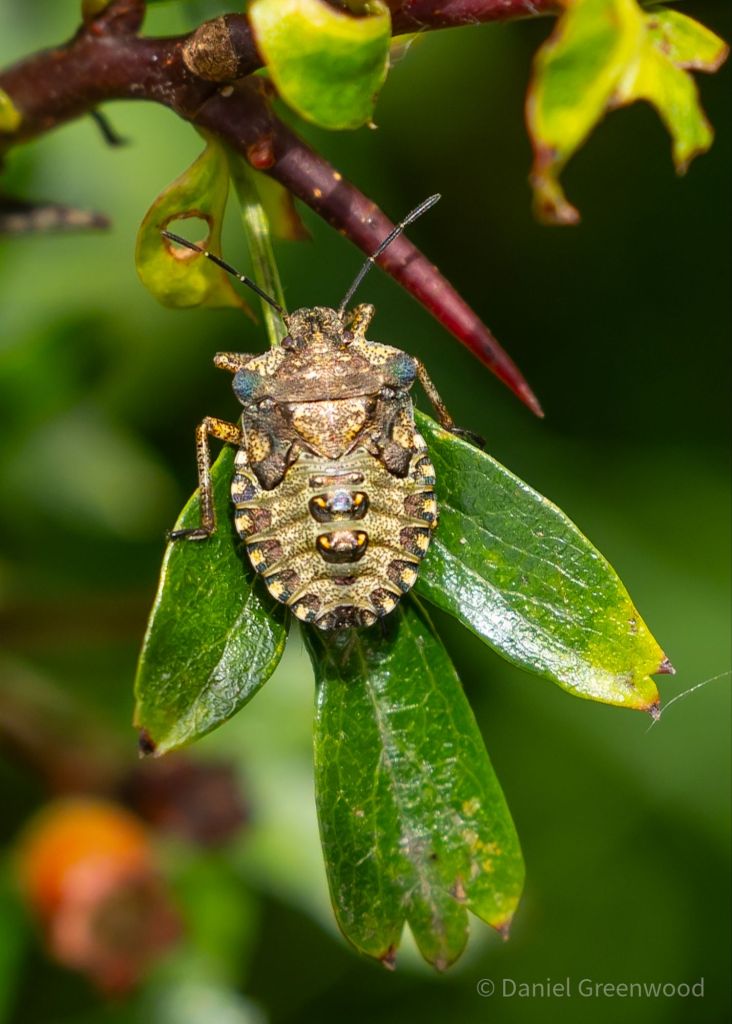
Elsewhere I found a few shield bugs sunbathing. These are forest bug nymphs.

And this longhorn beetle, a family of insects I love to see. They’re always quite busy in my experience, heading off in every direction.

Thanks for reading.

Macro

Camera juggling in the mud ๐Ÿคณ

I recently upgraded my phone from a Fairphone 3+ to a G**gle Pixel 7a. The Fairphone dream is dead for me. I bought the Fairphone 3+ looking for a sustainable option that would last a long time and be invested in. Instead two new models were soon released and the 3+ was effectively archived.

The Fairphone 4 and 5 are just too big and expensive, but the company have pushed sustainability and human rights up the agenda. Surely people shouldn’t be getting a new phone every year. I would argue it’s irresponsible due to the sensitive materials required and the shady employment practices across the production line.

I don’t think I would be interested in smartphones if they didn’t have cameras. Phones are thought to have killed off much of the entry-level camera market, especially when they are so good now and storage and sharing has become digital.

Back in 2002 I took Media Studies A-Level and we were taught about ‘convergence’, the coming together of all manner of tech into single devices. Photography has been a key part of that process. Radios, TVs, typewriters, even people’s jobs have disappeared into phones. This has been predicted for a long time.

So can anyone who considers themselves a photographer (always sounds very serious and self-important, doesn’t it) ignore phone photography? I don’t think so. Especially because Instagram has become the prime mechanism for professional photographers to promote their work.

Also, I’m writing this blog post on my phone!

Anyway, here are some of the first images I captured on the evil Pixel 7a. The camera is exceptional.

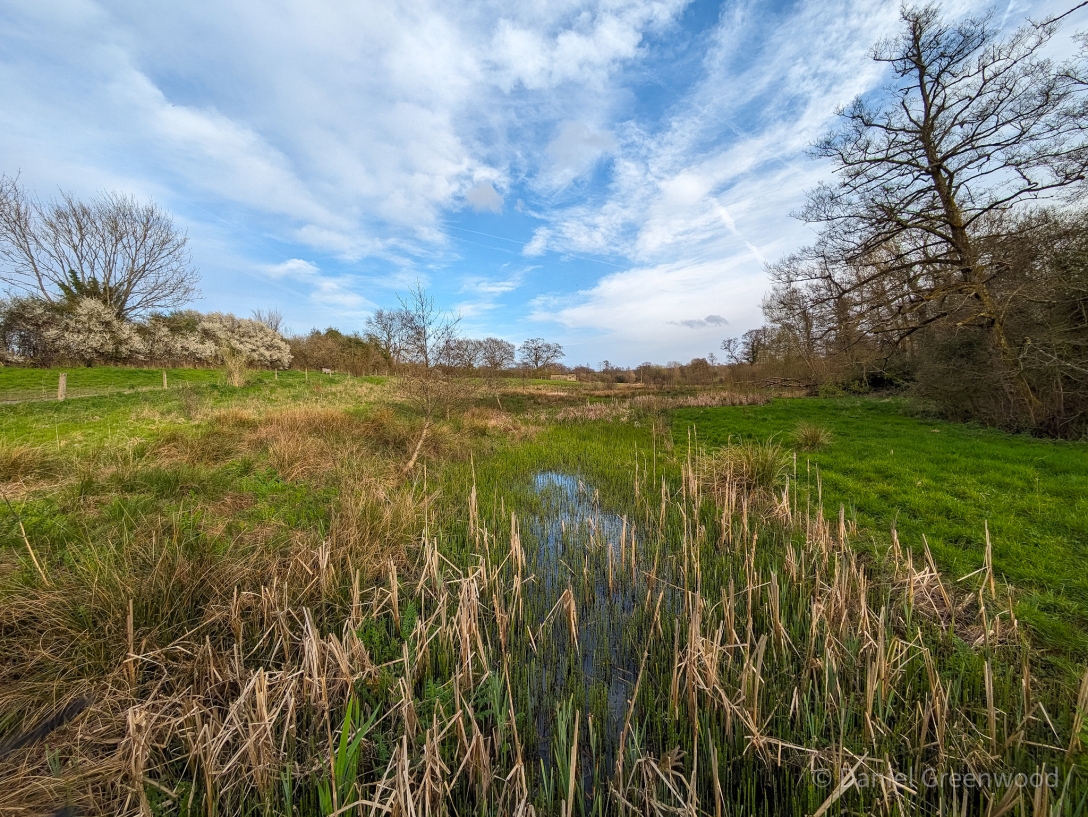
One thing that recent camera phones are doing so well is controlling glare. The sky here would be ‘blown out’ or over-exposed in normal images taken on a camera. AI is working here, I expect, to effectively take two images – one exposing for the foreground, a second for the sky. It can look quite over-edited, but for random snaps it’s really helpful.

Another interesting change with newer phone cameras is the inclusion of a wide angle lens. This lens type is probably one of the most controversial in the world of photography, because they’re rarely needed, heavy, expensive and often have extreme barrel distortion on either side of the image. Ever been at the far end of a photo taken with a wide angle lens? You probably looked quite warped!

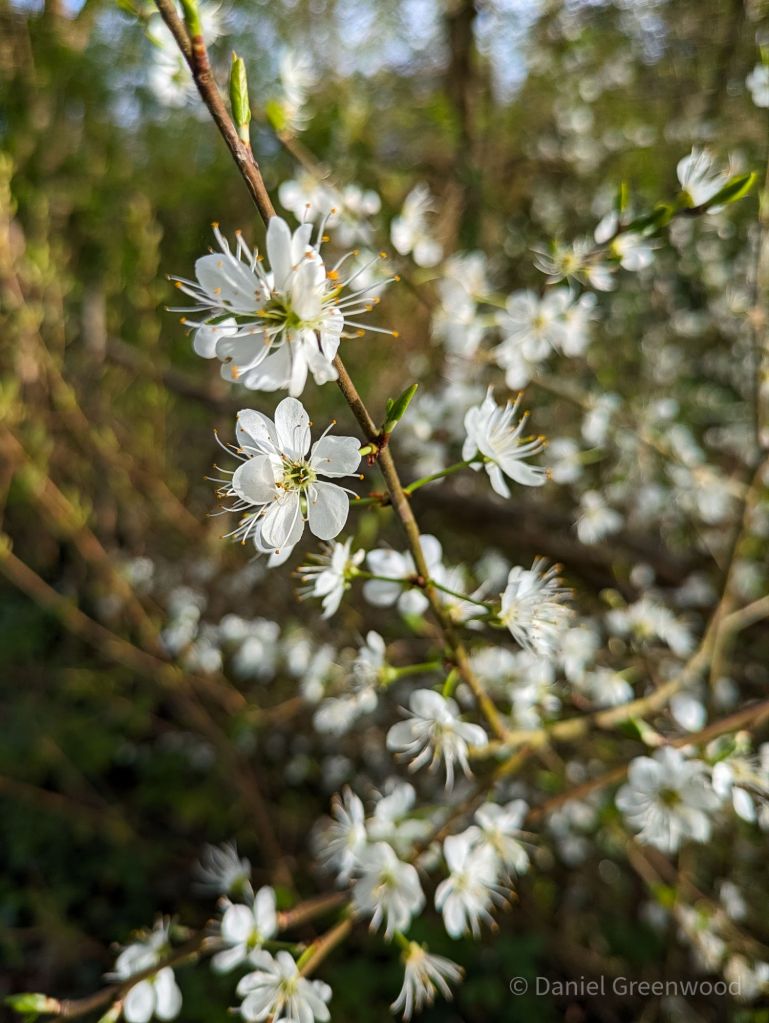
One thing that impresses with the Pixel 7a is the autofocus. These blackthorn flowers were blowing in the wind and yet the detail is so good.

Lichens are a great thing to photograph because they stand still and can be very attractive subjects. I was considering stretching my budget for a Pixel 8 Pro because it had a macro function. Reviews of the 7a said that it can focus closely, and that is true, to a degree. Also it sounded like the AI in that phone maybe does too much.

One potential block on macro potential is that the phone seems to do auto noise reduction. That can make these weirdly impressionist details were the AI is trying to hide graininess from a high ISO. I’ve noticed it a couple of times and it’s not ideal. The detail and focus is otherwise really good. This is not what the tech people call ‘flagship’ or top of the range.

All in all, I am amazed by what this camera can do. It is so much better than the Fairphone 3+, which shows how quickly cameras are developing in phones.

Would this phone make me sell my standalone camera? No way. Lenses and sensors of mirrorless, standalone cameras can’t be matched by phones currently. It just provides a great option for capturing nice images on the go. It’s going to be especially good for fungi.

Thanks for reading.

Oh, Fairphone.

First ichneumon wasp of 2024 ๐Ÿ

You know it’s spring when the bees and things start getting trapped indoors again. I visited my mum on Easter Sunday and her kitchen (which has lots of windows) turned into a veritable insect survey trap. Not just the ‘horrible flies’ she pointed out, but this lovely ichneumon wasp which I rescued with a glass and a local elections envelope.

Looking at iNaturalist, this is probably a yellow-striped Darwin wasp (Ichneumon xanthorius).

You can probably tell that these are phone pics, I haven’t quite got into proper macro lens work yet this year, but soon! I love the orange-yellow-black fade of the antennae, which is probably where the name ‘xanthoria’ comes from in the scientific name.

Xanthoria is a genus of lichens which are commonly known as sunburst lichens. In Latin it means golden yellow, which is perfect.

And here’s the proof – Xanthoria parietina, a pollution-tolerant lichen that grows everywhere.
Thanks for reading.

First solitary bees of 2024 ๐Ÿ

Four years ago I was starting a weekly Macro Monday photoblog as we entered into the Covid-19 restrictions. Now I reflect on how that extra time helped me to post more regularly on here, and just how hard I find that now in the post-pandemic lifescape.

It’s magnolia season in West Sussex

I’ve not got into macro mode proper yet this year, but a few recent sightings and reasonable phone pics have provided some inspiration.

On Saturday 16th March my partner was investigating the state of some of the potted plants in our garden when she found a small bee. I swooped in and enticed it onto my fingertip. It was a red mason bee, the first one I had seen this year.

Red mason bee in the palm of my hand

I placed the little mason bee among some mutant AI primroses that flower weekly throughout the year. Later that evening as we walked out I somehow managed to spot another mason bee sat on the concrete path, looking wet and cold. I picked the bee up and put it into a bonsai tree pot and hid it under a leaf.

The next morning I found it was still there but looking altogether more wet and cold, so again I gave it a ride to the warmer side of the house and back to the primroses.

Then on Monday morning I passed our latest bee hotel installation and saw a hairy-footed flower bee (one of the first bees of the spring) undertaking a session of weather-watching from the cover of a larger bamboo stem.

It’s not often you find these characterful bees stationary, they’re usually zipping around at max speed.

Later, I found yet another red mason bee looking cold and damp on the concrete path. Again, I picked it up and put it on the warmer side of the house.

I’m wondering if this is the same bee every time or if perhaps there are a number of these bees emerging from the old mortar of the exposed side of my house, and that the weather isn’t quite right for them yet.

One animal that I also keep finding on the concrete path alongside the house is Socks the fox. Whether she has several other little foxes in tow will be known soon enough.

Thanks for reading.

White-tailed eagles at Pulborough

Pulborough Brooks, West Sussex, February 2024

Looking out over the Brooks, two dark bird-shapes soar against the faint outline of the South Downs. Below them are green conifers and leafless oaks.

Buzzards, I think.

A woman approaches me from behind and stands to the side of me. ‘Dude,’ she says. ‘There’re eagles out there!โ€™.

I look through my binoculars again but can’t see any sign of white-tailed eagles (it’s not going to be golden eagle). They’re known to hang around the wetlands of Amberley and Pulborough, having been reintroduced to the Isle of Wight in recent years. This is an ideal place for them.

The images Iโ€™m looking for are brown and white Muppet-like characters, as I remember seeing them in Hungary and Czechia. Never before in Britain, though.

The eagle messenger tells me to head down to some of the hides where โ€˜someone will have a scopeโ€™.

I march down there and drop into the first hide, benches packed out. But people are only looking down at the bank right outside where a snipe stands still against the grass. There is no eagle energy here.
A man with a telescope and tripod on his shoulder and a camera around his neck walks down the path towards me. I ask about the eagles. Theyโ€™ve gone off somewhere, he says, wishing he could be more help.

Heading to the next hide, which I recognise as the one the eagle messenger told me to stop off at, there’s palpable excitement among the benches. I find a spare seat and ask the woman next to me – is everyone looking for eagles?

She smiles, pointing out where they had just been seen. I listen as others describe their apparent return to view. Against the South Downs two dark shapes soar. Then I realise it – Iโ€™d already seen them, before I even knew what they were.
They weren’t buzzards, they were white-tailed eagles.

Sussex Weald

February sunset in the Arun valley

Amberley, West Sussex, February 2024

Here’s the best image I captured while waiting for the sun to disappear over the Downs recently. To the right hand side of the image (north) you can see the Arun flooding the area known as Amberley Wildbrooks. It was surprisingly mild up there but as the sun slid away the cool air arrived with the moon. Red kites floated overhead and trains echoed through the valley on their way to Arundel. A beautiful evening in a special place.