The fabric of time

Devilsden Wood

Farthing Downs, London, September 2013

Standing on the track leading into Devilsden Wood I look to the ground for dryness, somewhere that hasn’t been soaked by this perpetual rainfall. I see fallen ivy leaves that appear like cuts of leather when really they are crisp under foot. Dog shit, too, the new waybread for the modern ancient footway. I hate the stuff. My waterproof sheds its load onto my jeans and it’s wait and become cold or move and receive woodland raindrops, some chucked from the canopy of mature yew, ash and beech, some fifty feet up. When they get behind glasses, these droplets shock the senses.

It’s fungi season, the signpost of falling temperatures, not too cold but a shift from the sultry summer. I gawp at log piles with an explosion of mushroom caps, marked by striping and shapes that would define them to those who understood them. But still, I spy an oysterling appearing from a rotting trunk and feel that in two years of woodland obsession I have at least learned something about this magical animal that appears so fleetingly it could almost be through the fabric of time, a monitor on how we’re doing. Checking the sole of my boot again, we’re crap. I wipe it off in a mud puddle. The rain has not lessened. I head back out from the dark, autumn-beckoning woodland and onto the wet warfare of the Downs. The change in mind is clear, the atmosphere of a woodland changes you. It is not like the open land, so much a canvas for human experimentation, our impact on woodlands is never so clear as the plough’s to the open landscape. A woodland to all but a minority could have been in that state for millenia, before human time. The wood is a wild city, with nature’s social housing, swimming pools and fast food. It was our home once, too. There is the semblance of a summer out here, yellow rattle not yet rattling, knapweed funked-out in pinkish purple, even a bit of scabious. These wildflowers have something of January’s left over Christmas decorations about them. A car passes along the lane. Woodpigeons are striking through the rainy sky, turning their wings and bodies at an angle – to avoid the direction of the rain? – always as individuals. These birds cut several different figures in a year – hurried, panicked on the wing, or else male birds cutting arcs out of the sky as they display to females long into the summer recesses. Now they could be migrating, they could be hunted. Mostly they are gorging on elderberries outside my bedroom window.

On the Downs a flock of goldfinch are startled into the sky like pieces of a broken vase put back, its smash rewound and fixed. They sit in a small hawthorn bush and I look more closely. On the end of a branch, clear and possibly not so fearful of man is a juvenile, all grey on the head, interested in looking but unaware of the perils of being watched. My advances fracture them once more and I’m left with a snapshot of their escape into the landscape captured on my camera.

Something new

Fly orchid 4

Farthing Downs & New Hill, London, July 2013

On the Downs the butterflies are immediately evident, the week old broods of meadow brown ferry amongst the long grasses, rarely stopping to feed on flowers. Breeding season is ending but still the song of skylarks comes from over the slope, some ancient language remembered, its translation lost. Greater yellow rattle blooms now, the spring buttercups lost to a swathe of Yorkshire fog and other grasses I don’t know. The suntan lotion on my arms acts as an adhesive, my skin covered with seeds. The grasshoppers are conjuring up their rickety, wooden percussion. I am hopeless in finding them, except for one that hops between seed heads, a micro Tarzan in this meadow jungle. But where are the people? A man drives a BMW sports car along the lane, revving its engine. I know where I’d rather be. Men in England are bare chested at the slightest chance and here a couple stroll along the lane drinking from big bottles of water. The tattoo stamped on the man’s back stands out in this simple landscape of slopes and flowers.

Lovers

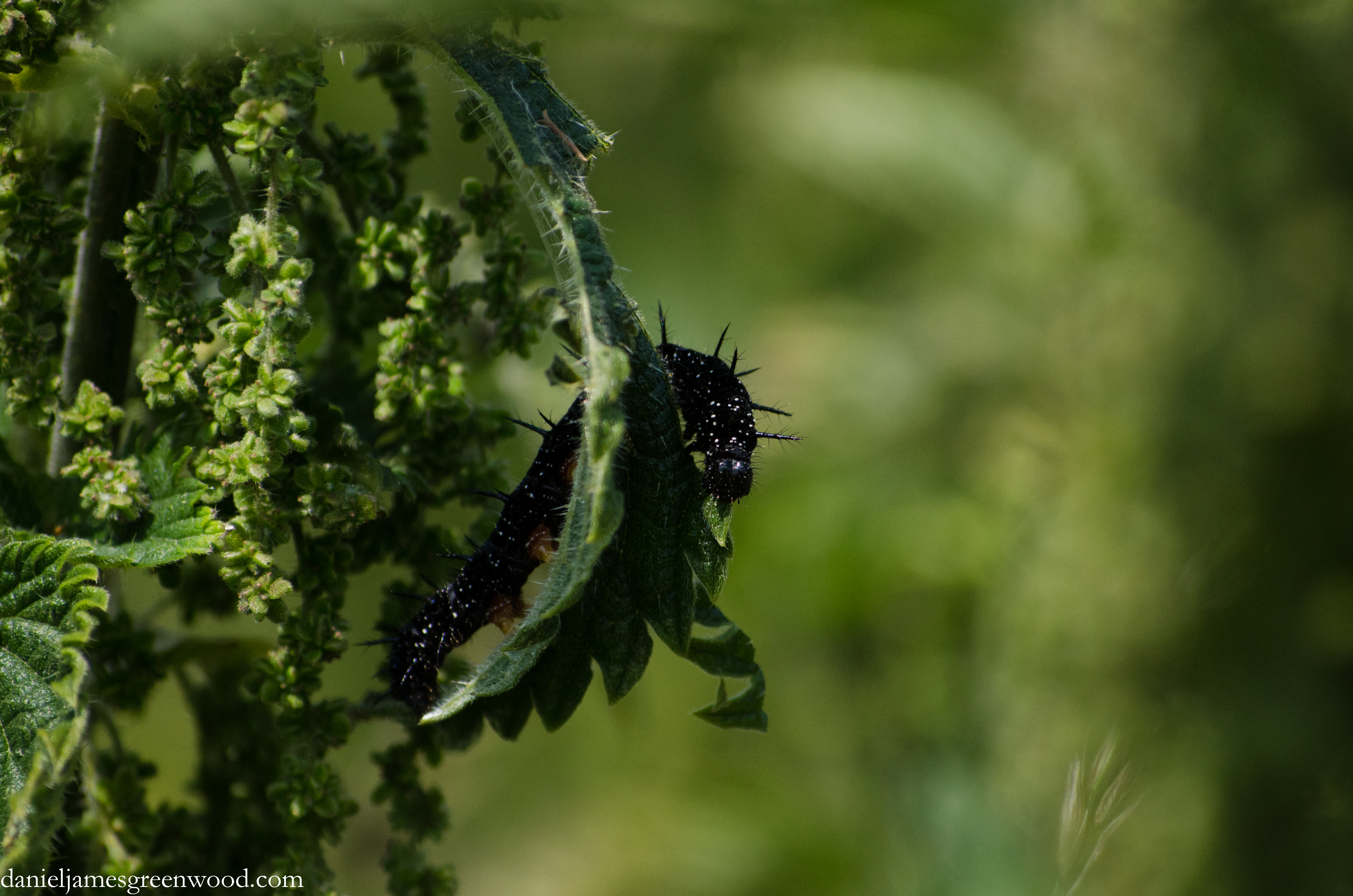
Ghostly day-flying moths spread at my every step through the long grass. Bumblebees forage on clovers, dropwort and yellow rattle, small heath butterflies appear again, two fly together, eager to fulfil their short lives with as much fornication as is possible. I cut back on to the path I know best. A chiffchaff sings in the hedgeline at the bottom of the hill, a single blackbird and a whitethroat, too. Thereโ€™s no sign of spring’s willow warblers or their clutch of young. A crowd of peacock caterpillars munch through nettle leaves, leaving only the dreadlocks of flowers. A yellowhammer appears from across the lane, landing in a small hawthorn bush, its strong yellow plumage brighter than dandelions, a South American yellow, and at its brightest here. I take a few photos. Along with skylarks, this is a bird I have to travel to see, when once, before my time, you might have woken to it flocking in the hedges and fields.

Peackock caterpillar

Leaving the Downs I enter the chalky wooded hollows at the bottom of the slope, with tor grass growing along the track, an indicator of the calcareous soil. My sweat cools with the breeze that slips through here. In the dappled shade I scan the path edges for orchids, black bryony creeping out from the darkened hedges. And there it is: the fly orchid. I change lenses and struggle to get the image right, sweat dripping, bringing lotion down my face. But it’s beautiful to look at – a bit like a bumblebee pinned and proffered by the long spike, with its little eyes and short antennae. A family are passing behind the hedge, discussing how to control the dog.

‘She’s pulling me down into these weird places,’ says the mother.

‘Just let her off the lead, let her off the lead,’ the dad says.

They arrive on the path heading down hill. Their daughter warns the dog to stay with them. I only see the mother, she’s dressed in an apricot coloured dress and heeled shoes. She’s young and glamorous, so fitting with the array of flowers bursting from the hillside.

‘Who needs Box Hill when you can come here, eh?’ says the dad. They disappear down towards Happy Valley.

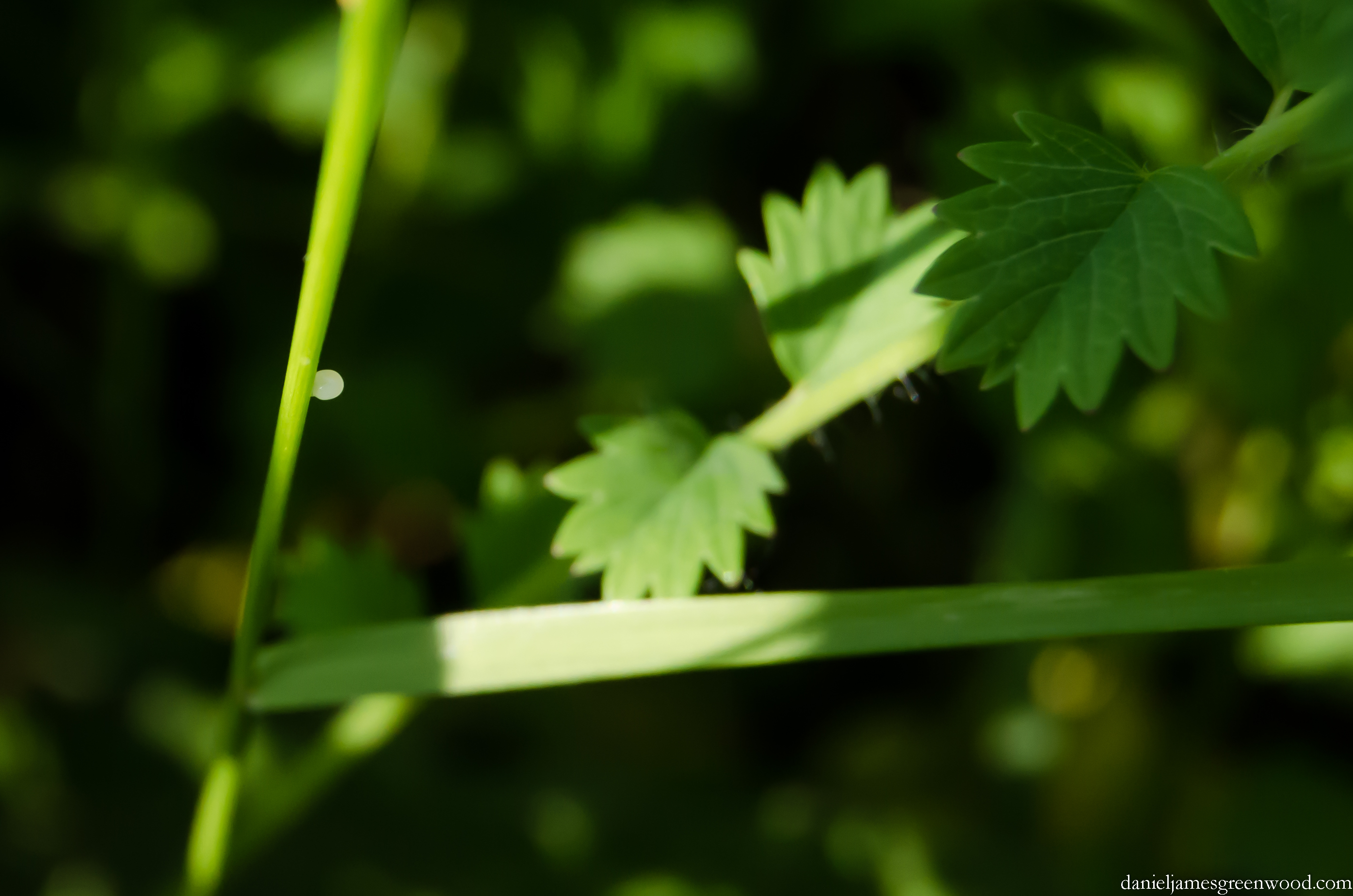
Speckled wood egg crop 1

I carry on along the ridge and settle on the desire line drawn down the hill and through the flowers. Ringlets move through the meadow, the first I’ve seen this year. They move at the same time and, stitched together, they are a tapestry of flickering wings. In my silence and stillness wildlife begins to move around me, perhaps more trusting. I see more plants now: twayblades, common spotted orchid, salad burnet, marjoram, ox eye daisy, rough hawkbit and bladder campion with its inflated, balloon like calyx-tubes. The wind blows through the trees. A speckled wood butterfly flaps about me, its wings audible as it hits my khaki shorts and leaf stalks. It clasps hold of a spear-like grass stem and curves its abdomen, laying a tiny pearl of an egg. This, for me, is something new.

A profusion of buttercups

Meadow buttercups
Meadow buttercup

Farthing Downs, London, June 2013

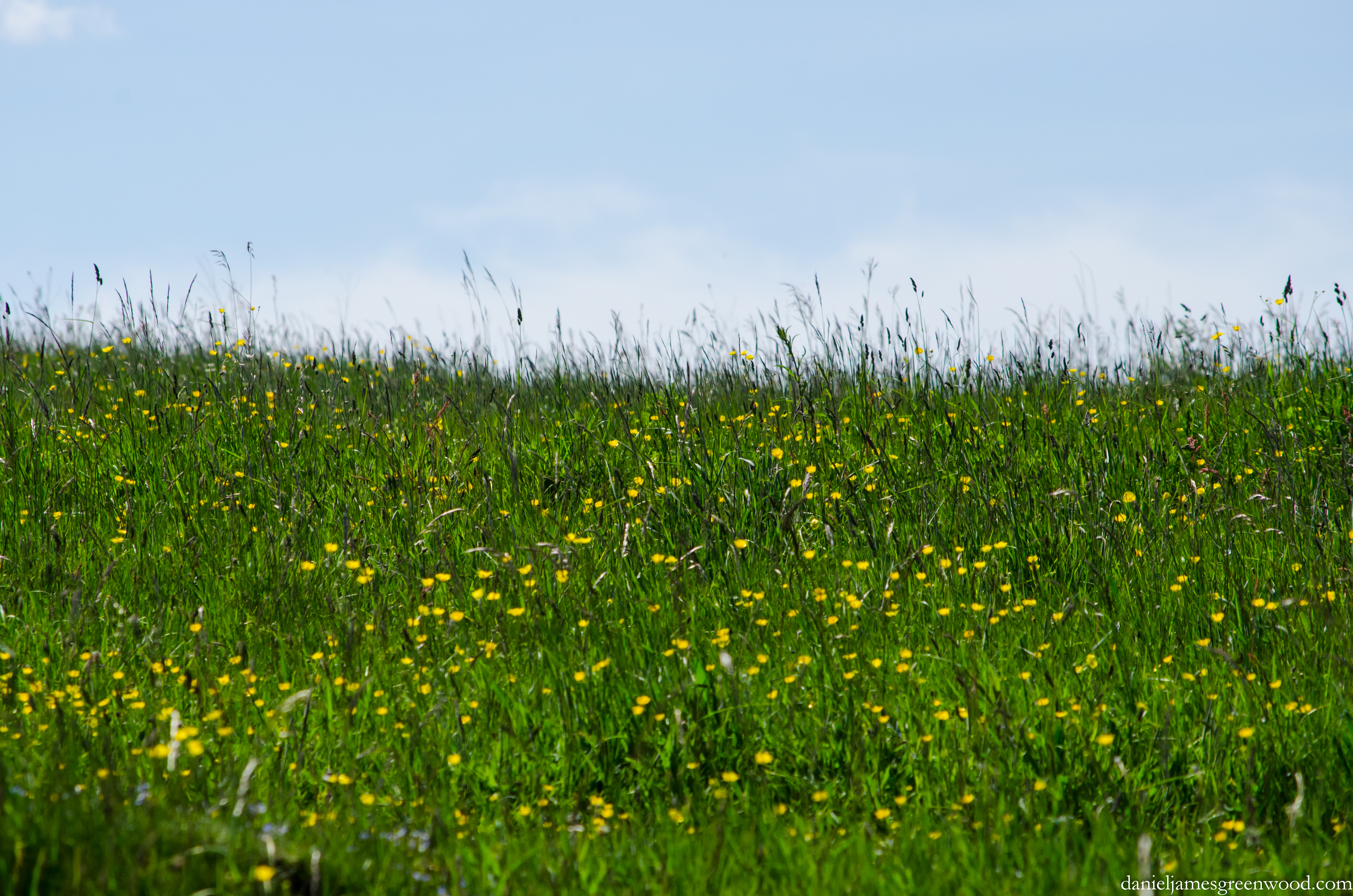
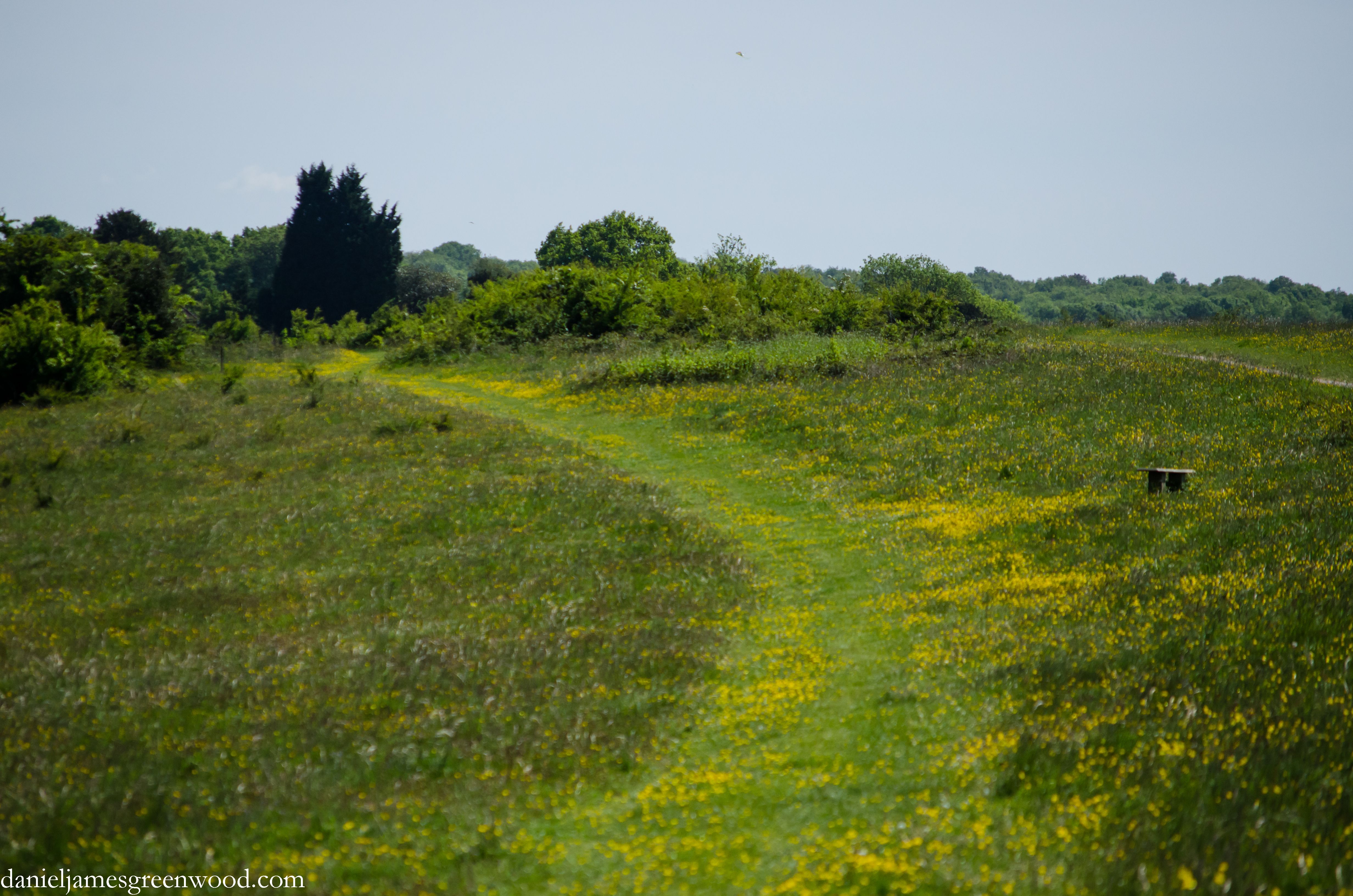
Stepping on to the Downs, a marked change has taken place in the two weeks since I’ve been here. The grass has lost its wintry edge and there grows a profusion of meadow buttercups. On the woody margins white butterflies steer themselves through the day, the slight of a cool breeze will no doubt register with them. A man is sitting on a bench taking pronounced drags from a spliff. I imagine ushering him to the gate as does someone wanting to be in a room alone. What is that link with landscape and human solitude.

A holly blue flutters about in a restless fashion, unwilling to perch, itself ushering me away, perhaps. I take the hint. The jackdaws are still here, so faithful to this place, much more so than me. This is why wildlife is so deserving of the land, perhaps more so than we. It doesnโ€™t have a choice. Last time I watched them in a snowy sky but now they move through the ankle high wildflowers like shadows. They call out and burst free into the air when I enter into their field of vision.

Willow warbler crop 1
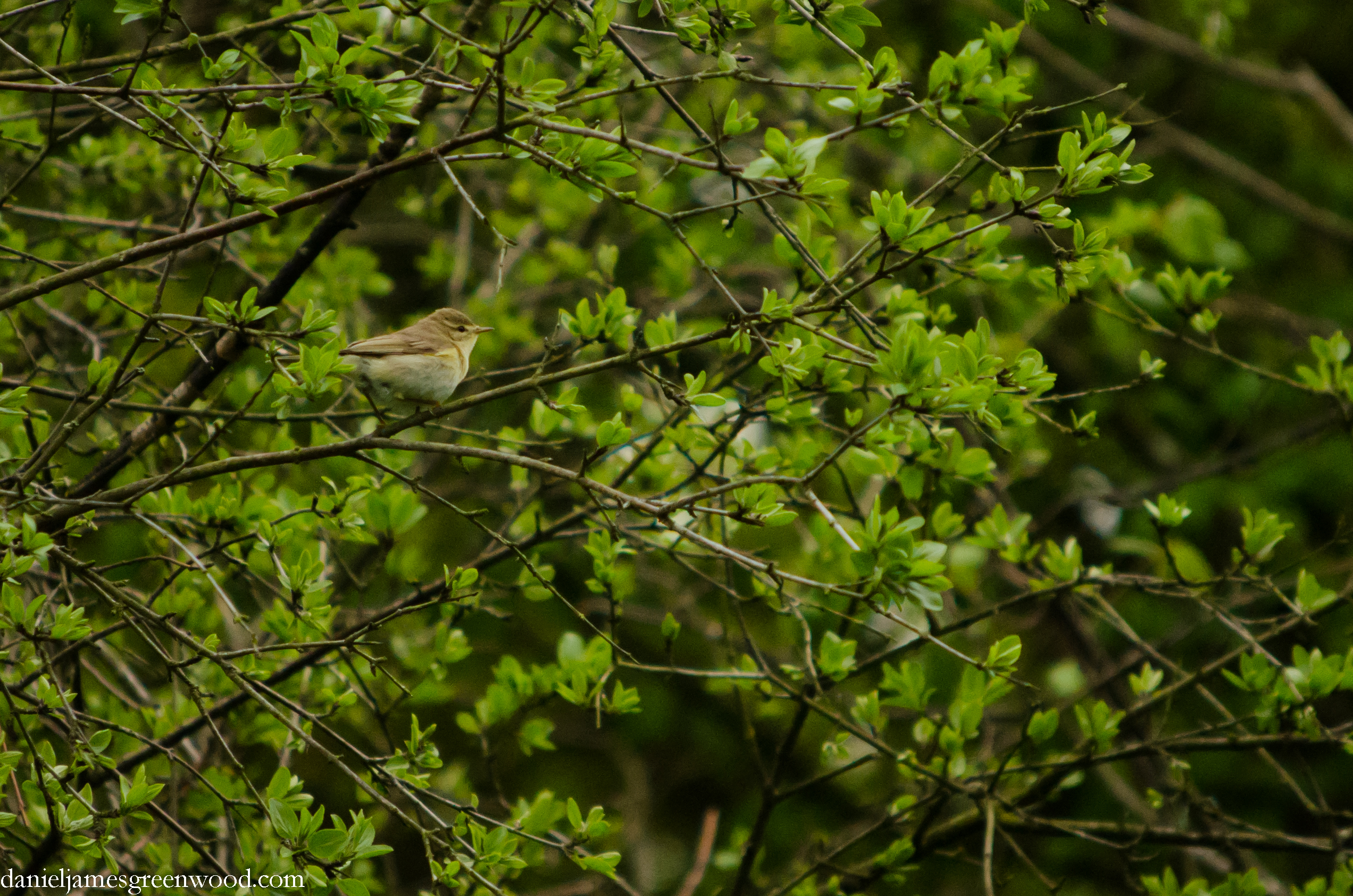
Willow warbler

I walk into the scrubby chunk of woodland that the path cuts through. I am struck by the change, the green, the lividness of the living. A woody, leafless hawthorn reminds me that both states remain all year round. Chiffchaffs are calling to each other up ahead, followed by the only slightly different voice of a willow warbler, a bird almost identical to the others. I sit in the shade on the edge of the path and listen. A willow warbler appears from the bush and lands on the branch of a young hazel tree. It has some insects in its bill and it whistles incessantly, huuu-eet. I take a picture and sit still. After a short wait a green woodpecker yaffles and the willow warbler dives into the long grass and bramble. Two weeks ago this bird did the same but without food in its bill. Now itโ€™s feeding silent young down there in the thorns and tussocks. A couple pass me where I sit.

โ€˜Are you looking for a lesser spotted whatever-it-is?โ€™ the lady asks.

I explain the situation, pleased they don’t think I’m up to no good. Her partner turns to me: ‘I know you.’

โ€˜And I know you.โ€™

We remind ourselves of when and where from. We both agree things have improved since then. They leave happily, I get up and carry on through Farthing Downs.

Farthing Downs in June 1
Farthing Downs

The yearโ€™s first brood of small heath butterflies have hatched on the Downs. A pair rest on separate patches of bare soil created by livestock, conducting the heat of the sun. They live as adults for as little as seven days and I admire their freedom, their lolling and landing, they circle me, perhaps jittery when I move but not much bothered. They are orange smudges against the green downland. I sit with them. A soldier beetle clambers up a blade of grass and wrestles with its own weight, a clumsy, dim creature, it straddles the seed head, whirs its antennae and unleashes its wings from its black backpack, struggling into the air.

Soldier beetle
Soldier beetle

The sound of ravens

Exmoor 10


On the moor we peer

Down into the fields,

Gorse hedges like

Shaven sideburns,


Small yellow pea flowers

Greet us. In the valley,

The sound of ravens

Carries, their voices


Meet us on the road,

Never their shape.

The inner-life of the

Moor is a little croak


From a big crow:

Kronk, kronk,

Kronk.

ยฉ Daniel James Greenwood 2013