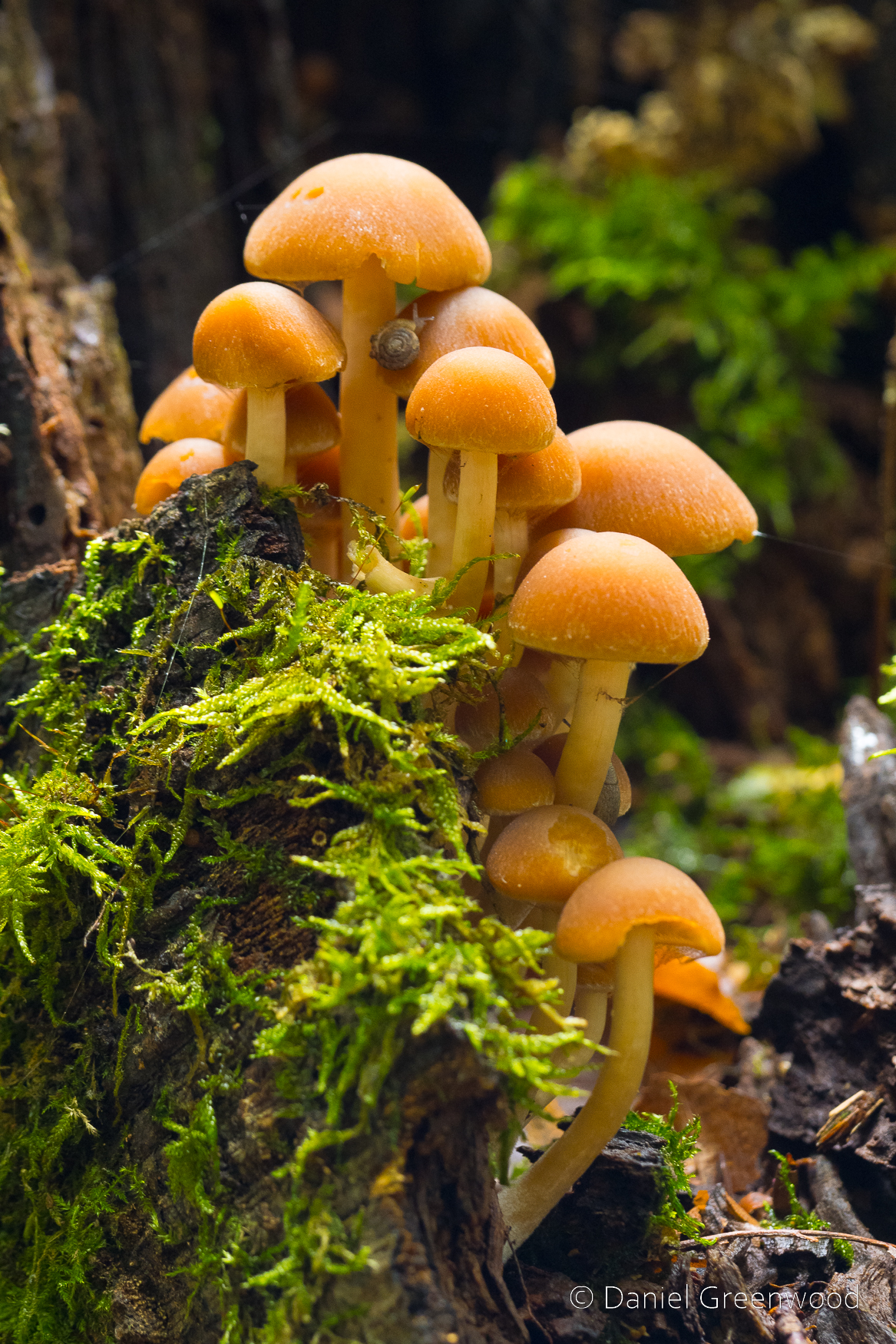
Following on from July’s rather optimistic fungi walk, I popped back to the same area of ancient Wealden woodland to see if the rain had brought any mushrooms. Indeed, it had!
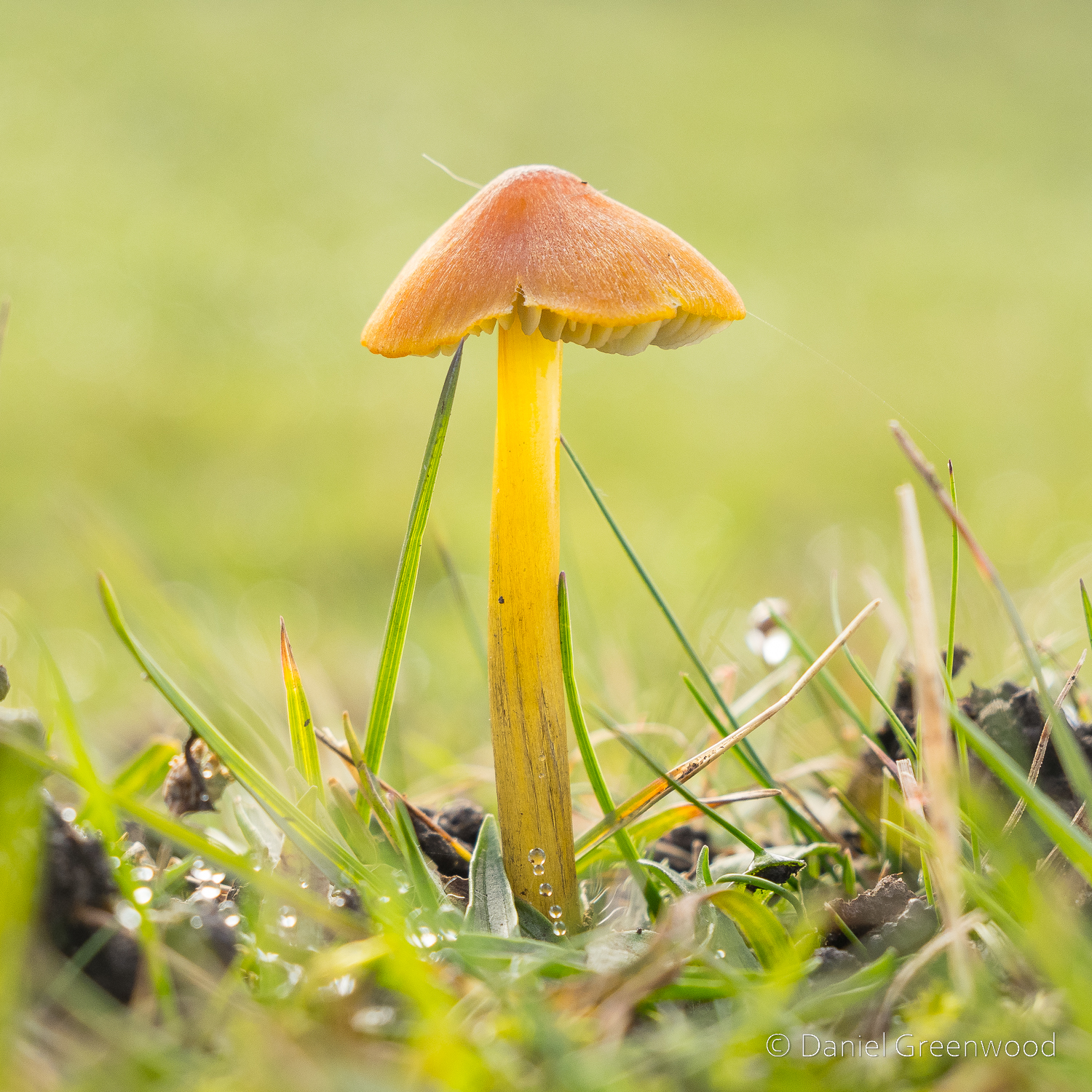
Also, I refer to a species here as shaggy scalycap, but it appears to be something scarce – flaming scalycap.
The episode is about 20 minutes long. I hope you enjoy the sounds of the woodland, which include the wings of a woodpigeon nearly taking my head off and, er, the sound of heather.
See more mushrooms on my dedicated fungi photography blog:FungiFriday.co.uk
This is the first of a series of posts I’ve been working on covering national relationships with mushrooms. It’s just a bit of fun (no flag waving here, folks), but there’s definitely some interesting stuff to share.
I’m posting at a time in England when nationalist sentiment is being stirred up by politicians and far-right agitators, some of whom cover both those categories. For me, nationality can never be more than a small part of my identity. Perhaps that’s because England, my home nation, has such a broad history of internationalism, empire and colonialism, and nationalism is the precursor to fascism on the political spectrum. In fact, in England you will find far more resonance with regional identities (Cornwall, Devon, Liverpool, Bristol, Birmingham, etc.) than you ever will Englishness.
England is one of the most diverse countries in the world (typified by London’s long history of migrant communities) which actually makes it a great place to discuss fungi with people, as well as to live and grow up in. Different countries and the cultures within them have such diverse approaches to mushrooms in the culinary and cultural senses, I find it all so fascinating.
Fungi in England are a magnet for people from a lot of different backgrounds, and a positive place to build communities of like-minded people regardless of their birthplace or ethnicity.
I’d welcome more views, anecdotes and ideas about mushrooms in England in the comments ☺️
English names for fungi
Fungi, mushrooms, toadstools (this one is easy)
Are people mycophiles (lovers) or mycophobes (haters) in England?
Mycophobes, but it’s changing. People are generally curious about fungi, keen to learn about edibles, ecology and understand which ones are poisonous! There is deep suspicion about mushrooms in the wild and many people think that even touching them can result in illness. The recent mushroom murder story in Australia was in the headlines in the UK and had widespread interest.
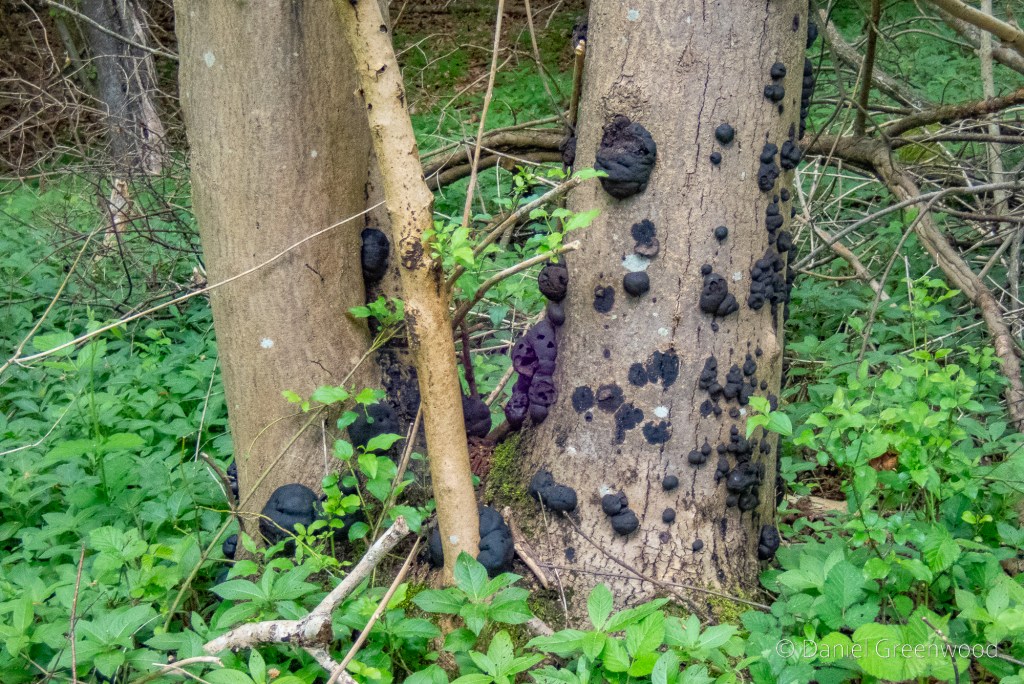
King Alfred’s cakes
English fungi folklore
King Alfred’s Cakes are a fungus that grow on decaying ash trees. They look like burnt loaves of bread, which links to the story of King Alfred’s time spent hiding from the Vikings among the peasantry.
The name ‘toadstool’ is Anglo-Saxon (Germanic) in origin and may come from the fact that fly agaric appears warty like a toad. ‘Tod’ means death in German. Toads are toxic (if you were every silly enough to try and eat one), stool of course means a seat. Toadstools were and still are used to refer to toxic mushrooms like fly agaric, which is poisonous.
Fairy rings are said to have a place in British folklore, caused by the fairy ring champignon in parks and grasslands, rather than supernatural beings (right?).
A fairy ring in southern English parkland
One emerging myth of the reactionary media is the ‘gang of foragers’ seeking to pick every single mushroom in Epping Forest and then selling the good ones to fancy restaurants. I’ve never seen it in the decade or so I’ve been scouring the woods (Epping Forest on occasion, for photos not forage) and I wonder if it’s overblown. There have been some people charged for foraging in Epping Forest as it’s City of London land and their byelaws are stringent.
In modern terms, beefsteak is known to have been confused for body parts in urban woodlands, leading people to (apparently) report their finds to the police. They are rather convincing.
Hedgehog mushrooms with their ‘spines’ removed before cooking
Culinary importance
Mushrooms as food are becoming more popular with vegan and vegetarian diets, environmentalism, and information around health benefits of mushrooms. People are also growing their own through the grow at home kits.
In England we’ve become far more urbanised than some European countries, as well as other UK countries, so there is not a strong landscape connection running through the generations anymore.
Hedgehog mushrooms ready to eat
People buy button mushrooms in the supermarket and a very small percentage of the population forage for them. This has visibly increased due to migration from mycophilic countries such as Poland, and some East Asian countries. This can cause conflict when some English people in particular react angrily to people ‘stealing’ mushrooms. I think Napoleon called the English ‘a nation of shopkeepers’. Was he right?
Most mushroom dishes have been imported in terms of pizza, French stews, and Japanese stir fries (shiitake). Mushroom soup is a grey, blended gloop that I am personally averse to. I like my mushrooms sliced in soup only!
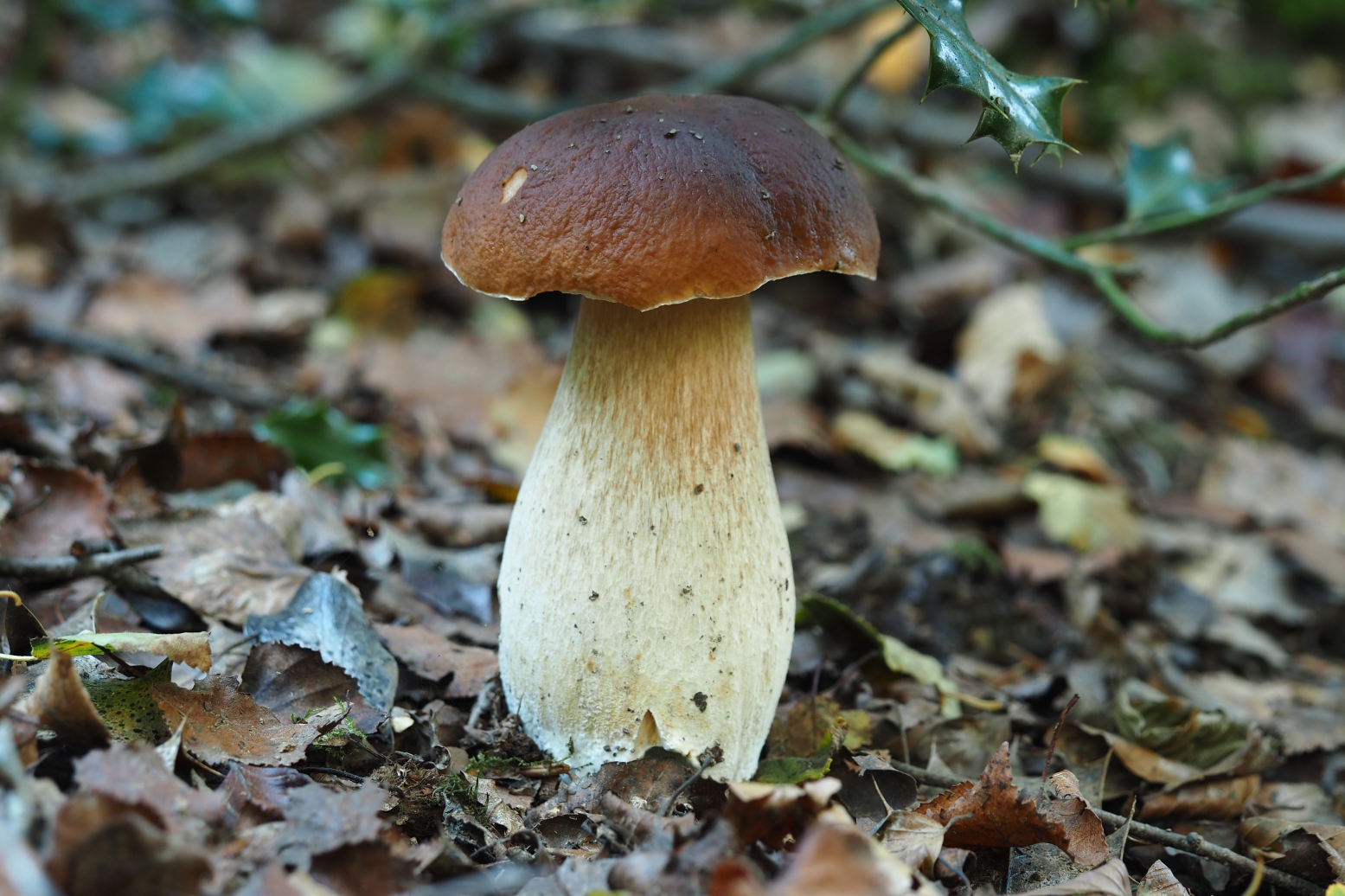
Boletus edulis, AKA porcini, pennybun, or cep.
There is a growing demand for ceps/porcini, chanterelles, oysters and lion’s mane because of fashion, interest in wild food and the monetary value of some of these species.
Mushrooms are seen as a good meat replacement because they are protein, but I don’t know how effectively they replace meat-based proteins. Quorn contains mycoprotein, a popular foodstuff for veggies.
St. George’s mushroom
Cultural uses
The only fungus with a claim to being the national mushroom of England is St. George’s mushroom, which fruits around St. George’s Day every April. It’s also edible. Interestingly St. George never visited England but was a Roman soldier of allegedly Greek descent. According to Wikipedia “Bosnia and Herzegovina, Bulgaria, Georgia, Ukraine, Malta, Ethiopia, the regions of Catalonia and Aragon, and the cities of Moscow and Beirut have claimed George as their patron saint.”
Wild mushrooms are not really picked for any cultural purpose anymore, but fly agaric was once turned into a paste or mush when combined with milk, attracting flies as an insecticide so they would no longer be a nuisance indoors – hence the name ‘fly’ agaric.
Shaggy inkcap was used for ink, as its name suggests.
Giant puffballs were once used as footballs – and probably rugby balls – but who knows how long that could last.
I suppose the increase in micro-dosing of psilocybe mushrooms (possession is still illegal in England) is a burgeoning cultural and medical experiment.
Is there ‘mushroom’ for fungi in England?
England is home to a lot of ancient woodland but it lacks legal protection other than designations of Sites of Special Scientific Interest and nature reserves.
As in much of Europe and North America, intensive farming has caused declines in grassland and woodland fungi through the use of fertilisers and pesticides that, when combined, reduce invertebrate, bacterial and fungal diversity in soils.
English land managers have cleared woodlands of dead and decaying trees since 1945, resulting in further declines in fungi and their dependent species (invertebrates in particular). But things have been changing and awareness is growing about the role of fungi and the styles of land management that help them (‘rewilding’ being one). Also, places like the New Forest National Park act as reservoirs of fungal diversity which may be able to repopulate other areas in time.
In the main England is looking at further losses of ancient woodland and grassland, unless farming issues can be addressed. We haven’t even mentioned the climate crisis which is of course a global issue. It will mean English woods become drier and the species mix changes, so fungi will need to adapt to survive.
On a positive note the increasing understanding and appreciation of fungi is likely to help share environmental policy, if the vested interests of fossil fuel extractors and other destructive industries can be challenged.
I noticed some good news about ash trees recently and wanted to share my experience of a difficult decade for the European ash (Fraxinus excelsior, referred to here as ‘ash’), as well as some of the photos I’ve taken of this iconic tree. Working through this post, I’ve realised just how many images I’ve compiled down the years. I’ve also realised just how much I care about this tree as a species, and how painful it is to see it effectively being erased from the landscape by disease.
Ash is one of the first tree species that I really began to notice and tried to understand ecologically and culturally. When I started to take notice of wild trees, I saw that ash was everywhere in south London, seeding in railway sidings, parks, gardens, and woods. I’ve cut them down (not particularly big ones), planted them, pollarded them, photographed them and breathed their oxygen (obviously most people in the UK have!).
What do ash trees mean to people?
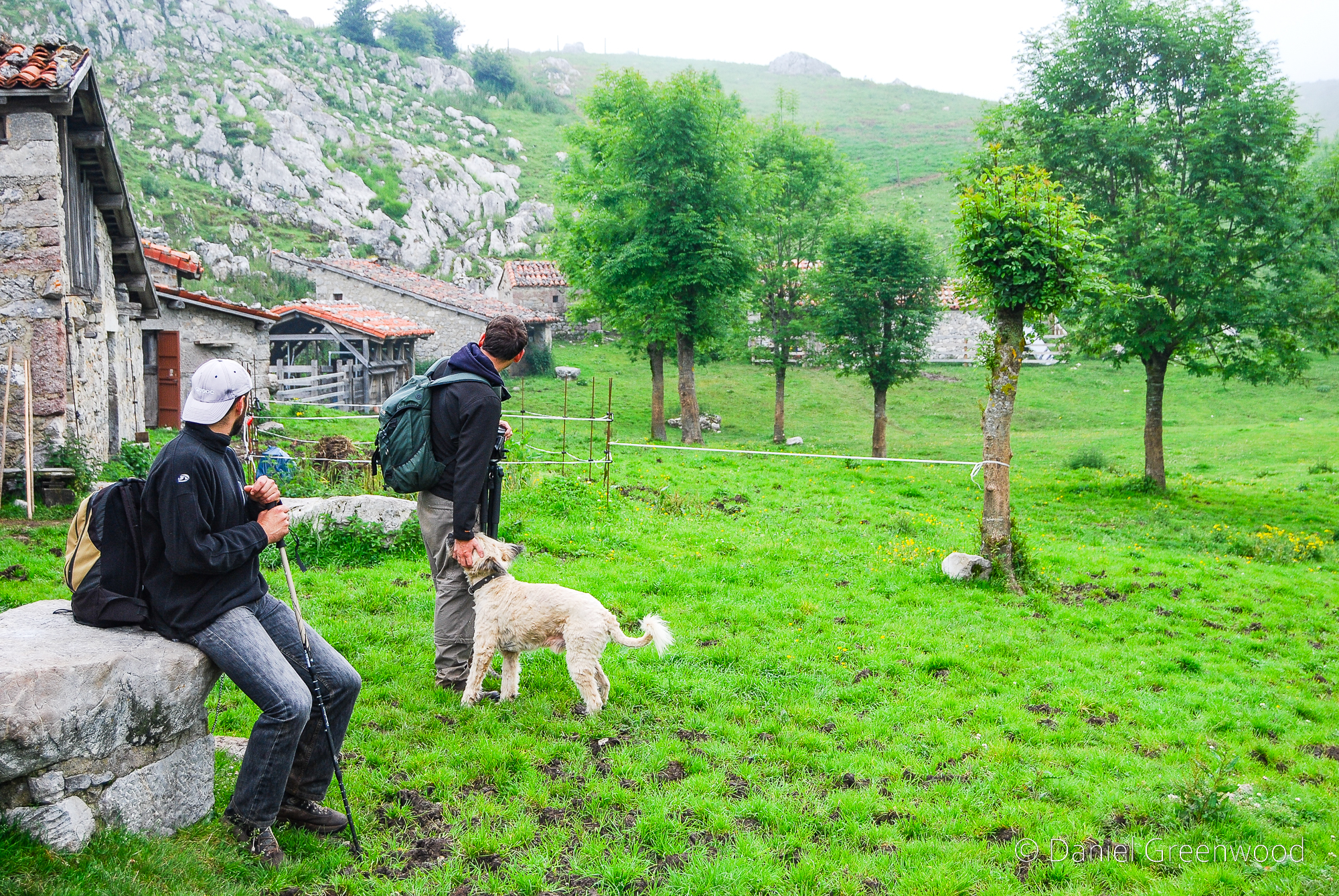
Pollarded (or shredded?) ash trees outside shepherd’s huts in Asturias, Spain in June 2011
I’d like to start overseas, as ash dieback is Europe-wide problem.
This week it was 14 years since I visited Los Picos de Europe (The Peaks of Europe National Park) in Asturias, Northern Spain as a volunteer.
The photo above came up in my ‘memories’ and it was only then that I remembered the ash trees. This was a remote village high in the mountains where people were making cheese (they didn’t want the name of the village to be shared online). The ash trees here are pollards, with the branches cut back to make a single stick of a trunk. It’s probably severe enough to be considered ‘shredding’, which Oliver Rackham wrote about.
Lollipop ash trees growing close to the old shepherd’s huts in a remote part of the Picos de Europa, June 2011
The reason this is done is to provide food for sheep – the fresh green growth of new ash leaves, which they love.
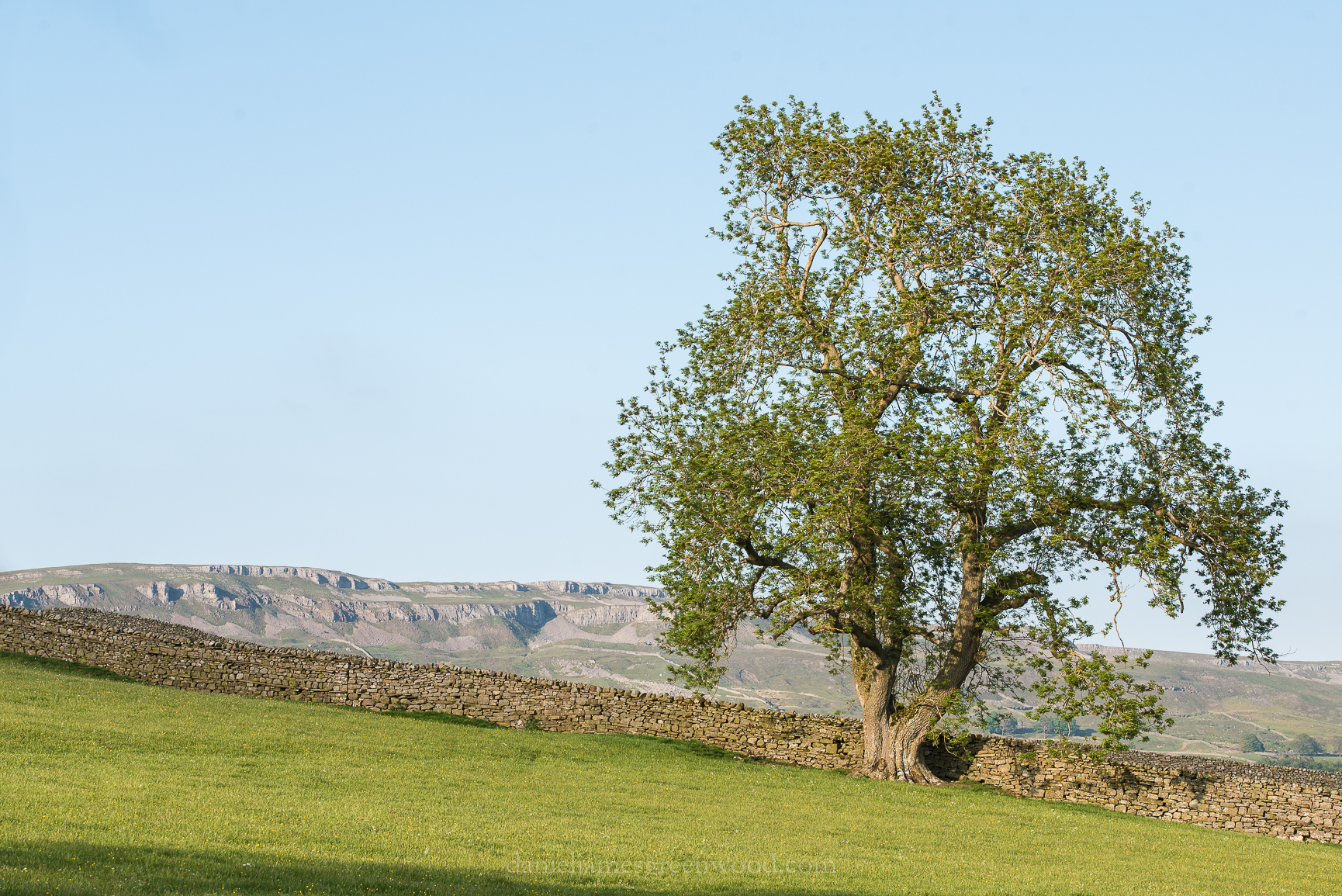
A massive pollarded ash tree next to a restored hay barn in Wensleydale, Yorkshire in 2018
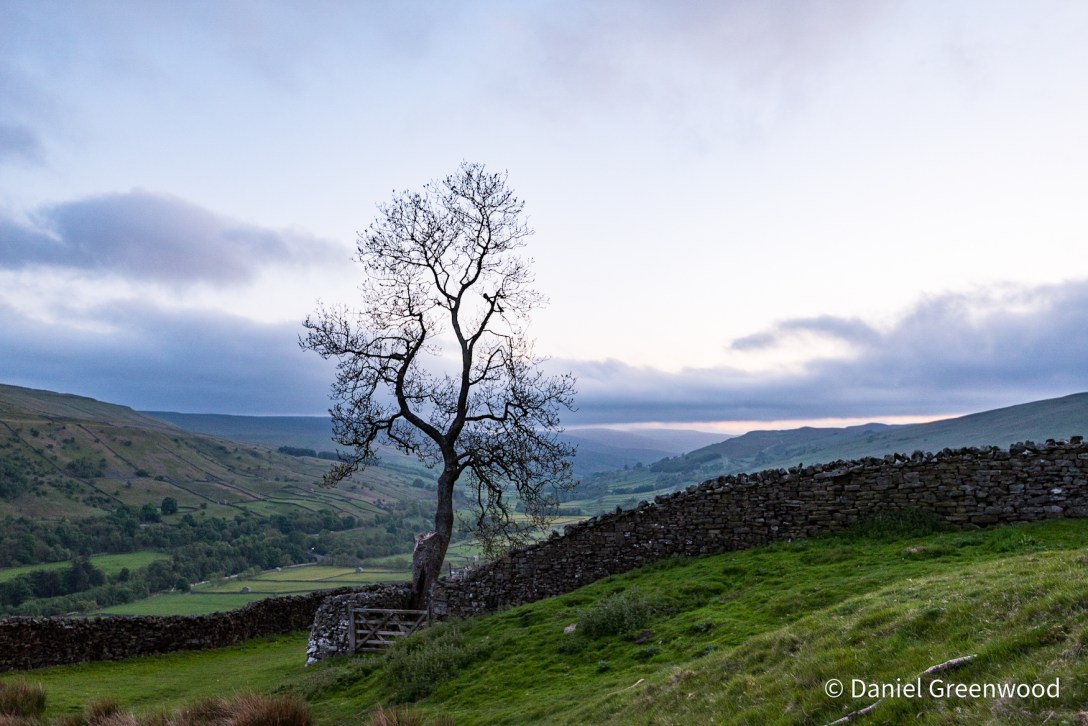
Interestingly, it’s similar in the Yorkshire Dales, where ash trees are abundant (see above and header image) and so are sheep. During one holiday in the Dales, I remember seeing a sheep climbing up a wall in order to nibble the leaves of an ash. What is also interesting to me, is that this is the same model of livestock grazing which spread from the Middle East, across Europe and into Britain thousands of years ago. It doesn’t sound dissimilar to the spread of ash dieback.
A typically large ash stool in a former hedgeline or boundary, coppiced or laid for many years (near Reeth in the Yorkshire Dales, 2019)
It’s not uncommon to see very large ash stools (old trees that have been regularly felled for timber) in boundary lines in places like Yorkshire, Sussex and Kent. I’m sure their coppicing was probably to provide ample feed to sheep, as in Northern Spain, above.
Dartmoor, Devon in 2023
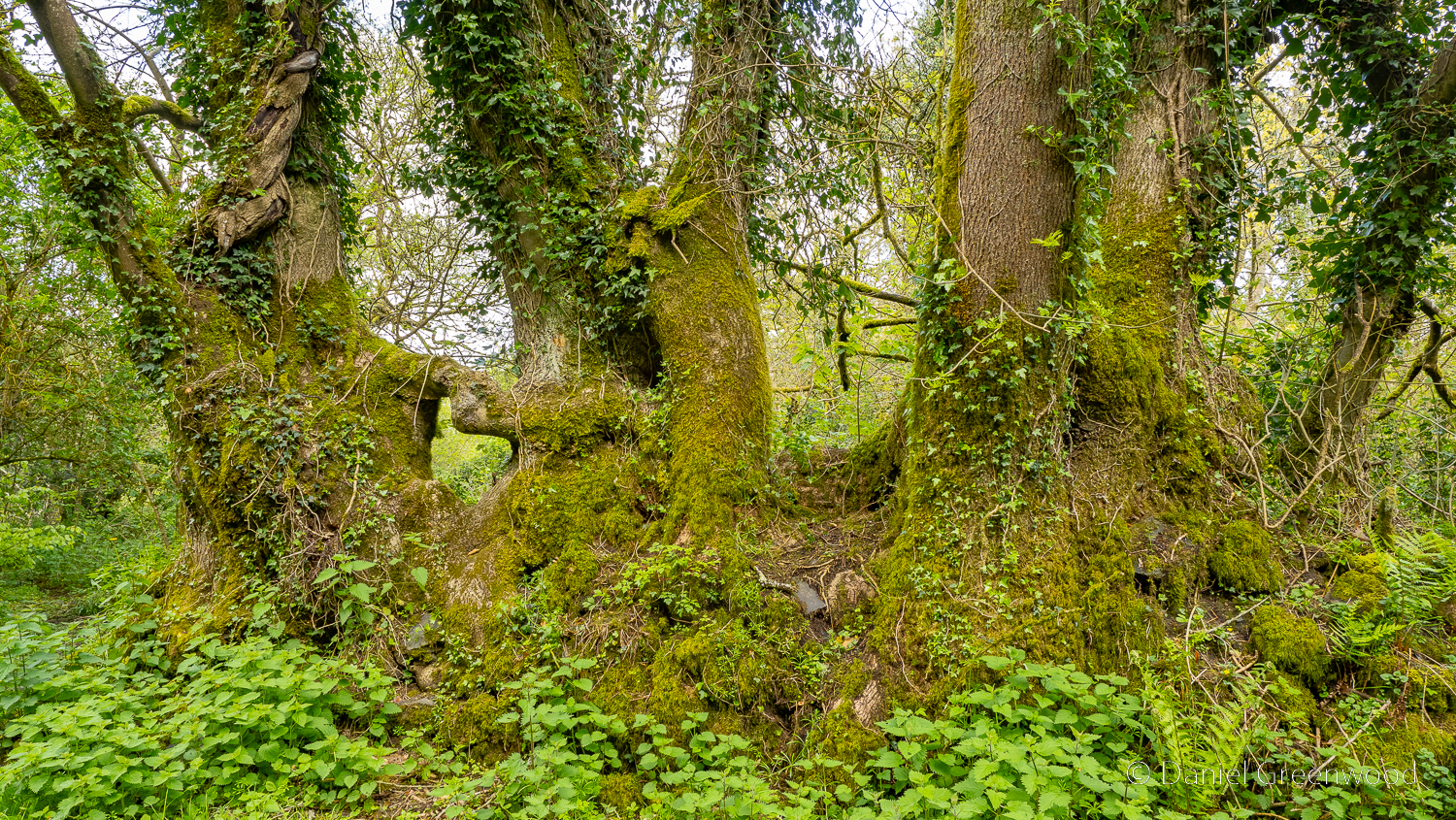
This mammoth ash in Dartmoor National Park in Devon is possibly the biggest I’ve ever seen.
What do ash trees mean to wildlife?
A diseased ash tree with a large number of King Alfred’s Cakes fungi growing on the main trunk in Sussex in 2023
The fungus King Alfred’s Cakes has benefited in the short-term from an explosion in dead ash wood to colonise. The longer-term picture for fungi and lichen is not so good. Ash has a number of lichens that depend on it in places like the Lake District (my knowledge doesn’t extend very far here) which needs living trees.
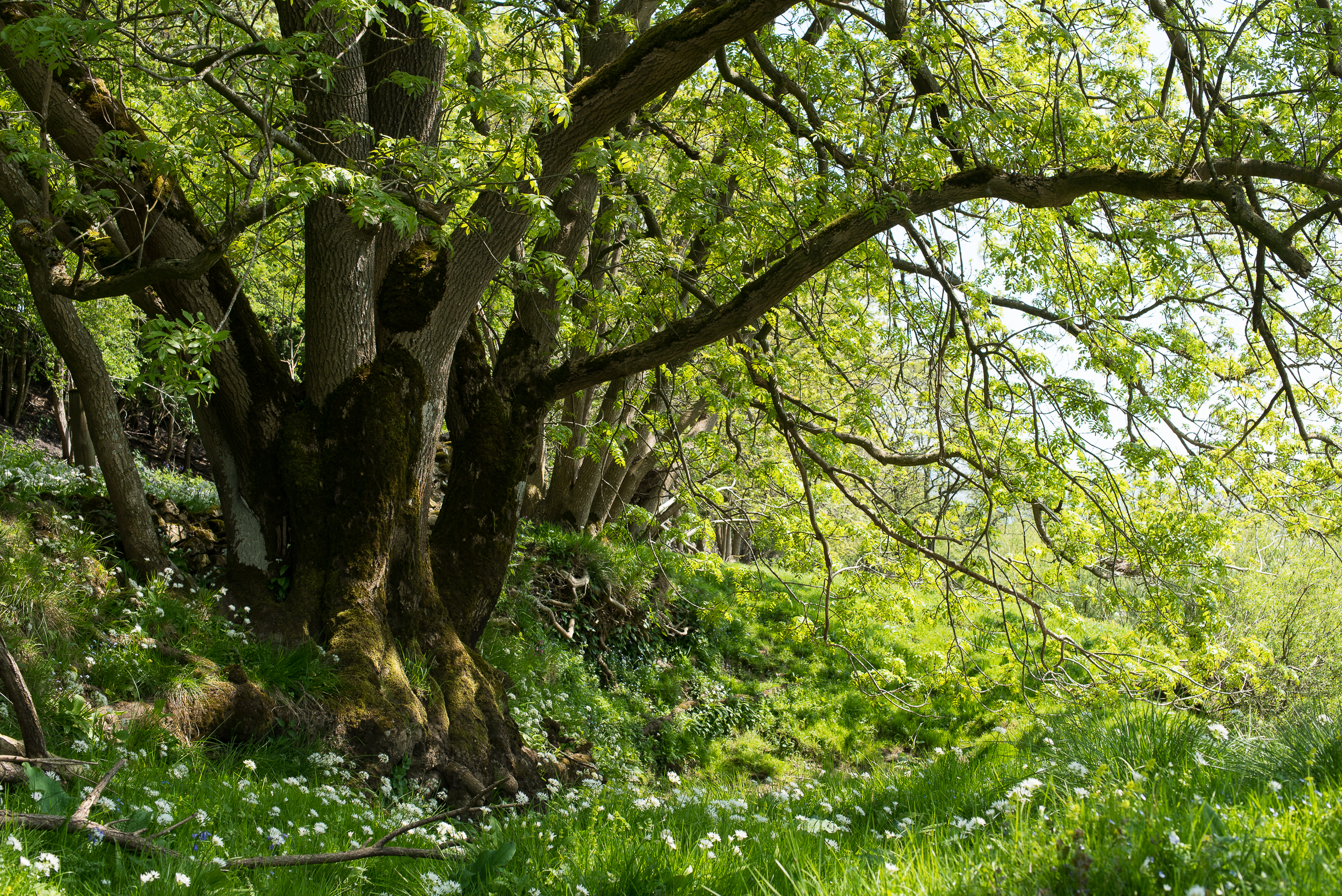
A mossy ash surrounded by wild garlic in Wensleydale, Yorkshire in May 2018
Ash benefits ancient woodland flowers that arrive early in spring because the leaves are compound (they have leaflets, not broad leaves) and allow light into the woodland floor. Species like wood anemone and wild garlic do particularly well in their dappled early spring light.
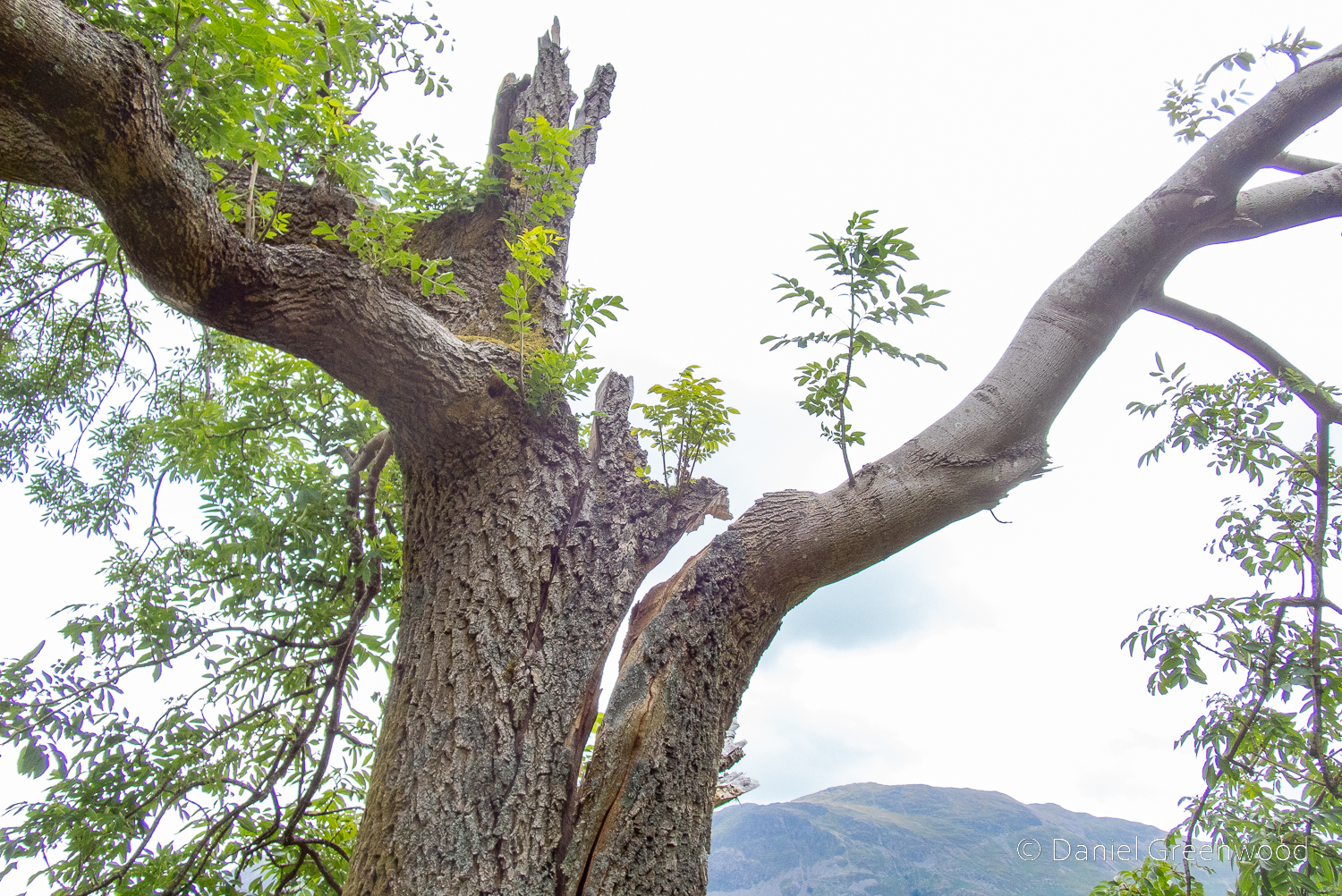
Magnificent veteran ash tree with Ullswater behind it in the Lake District. The top trunk of the tree has collapsed on some farm equipment in the background (2023)
I’ve encountered several ash down the years that have been for the chop on reasonable safety grounds in London, but then have been saved by the fact bats are living in them.
Bats can live under loose bark, in woodpecker holes (which are often found in older ash) and in large crevices. This magnificent ash was near Ullswater in the Lake District and had suffered what the tree officers would deem a catastrophic failure, but the woodland ecologists would be licking their lips at!
The Timeline
2012: when ash dieback arrived in Britain
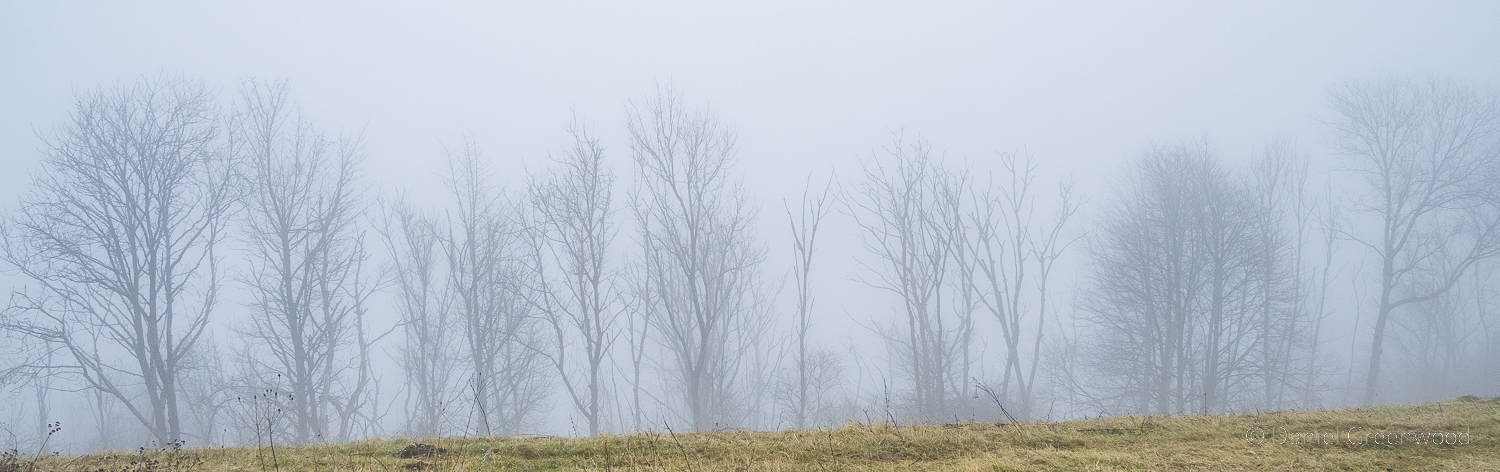
A range of leafless ash trees alongside the South Downs Way near Ditchling in November 2024
One afternoon in the autumn of 2012 I was finishing my working day in the woods when I noticed the dying-back of an ash sapling. The stem had lesions and the leaves were drooping. It was my first year as a community woodland officer and ash tree seedlings were so numerous we actually had to pull them up in certain places. They were the epitome of a sometimes invasive British plant.
The first time I saw and photographed ash dieback disease in Sydenham Hill Wood,autumn 2012
At the time we needed to report every new sighting to the Forestry Commission (as it was then), to help map the spread of this devastating disease. It spread so quickly that reporting became redundant, as were widespread protection measures. I remember someone remarking that asking people to clean their boots would be about as effective as asking the birds to clean their feet.
2017: ash dieback decimates the South Downs
Leafless diseased ash trees above Steyning, seen from the South Downs Way in February 2023
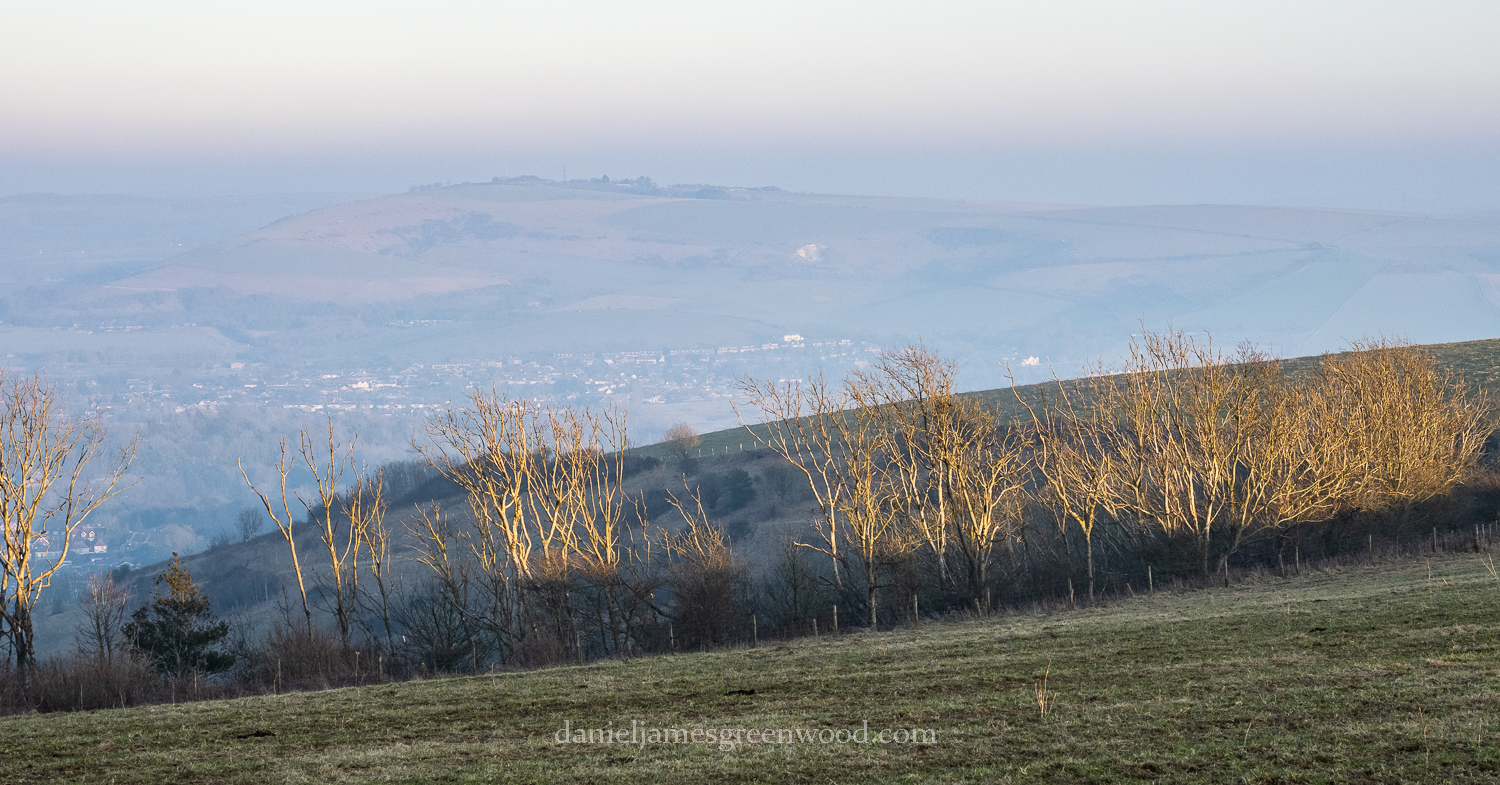
It was only really when I moved to Sussex to work in the South Downs National Park that the real impact dawned on me.
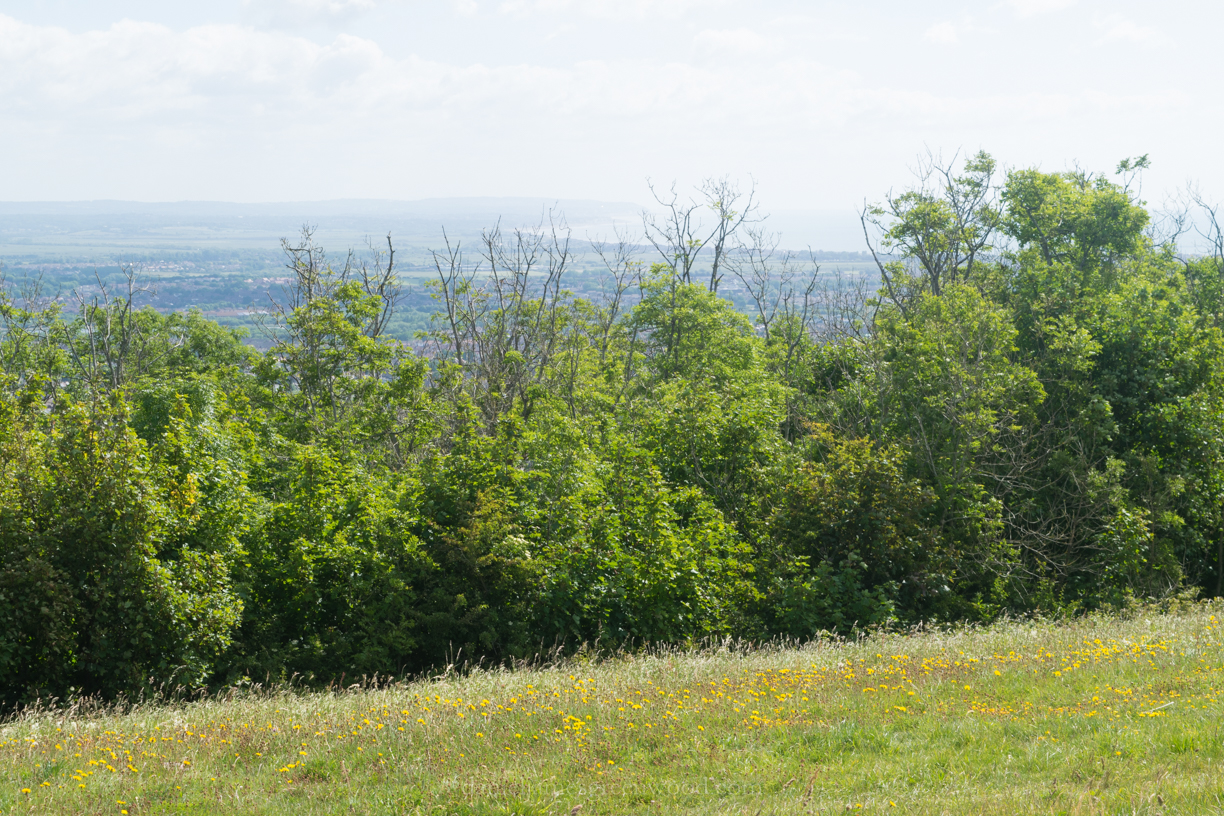
Eastbourne appearing beyond infected ash trees in June 2017
During a walk with the South Downs Eastern Area Ranger team, I was taken aback by the way declining ash trees were opening up views of the coastal town of Eastbourne. It has continued to progress since then.
A young ash tree experiencing ash dieback from the top-down on the South Downs, May 2019
Groves of once green ash woodlands and verdant hedgerow trees were dying en masse. In the past few years trees along highways have been felled due to the threat to public safety from these brittle, dead trees overhanging roads, paths and properties.
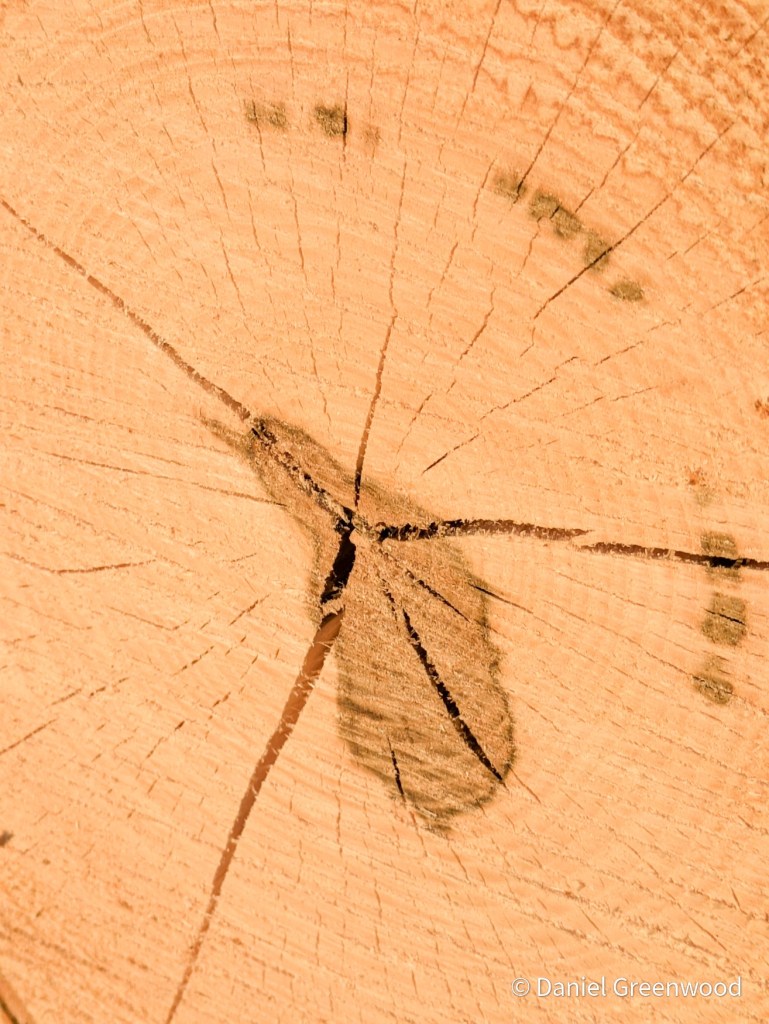
Heartwood decay visible in piled ash logs shortly after being felled, July 2025
The main concern is how the decay enters the heartwood (as above) and causes structural failure even within living trees, meaning the ash are more likely to fall unexpectedly. I spoke to a council tree officer who said that there have been a number of fatalities of tree workers due to ash trees. It’s tragic.
A diseased ash tree that had fallen across a footpath in the South Downs, logged and cleared in February 2023
But how did ash dieback get to Britain? Fungi spread through spores, tiny particles that ‘seed’ in appropriate places and then grow into a living fungus that produces fruiting bodies. The fruiting bodies (mushrooms, to most people) then produce the spores. The ash dieback fungus is native to Asia, but there’s no way it could get to Europe alone. People helped it, accidentally, to arrive in Europe over 30 years ago. In Britain, it may have been helped by the process of growing UK saplings in Dutch hot houses, alongside infected ash saplings, and bringing them back to the UK.
2024: signs of resistance
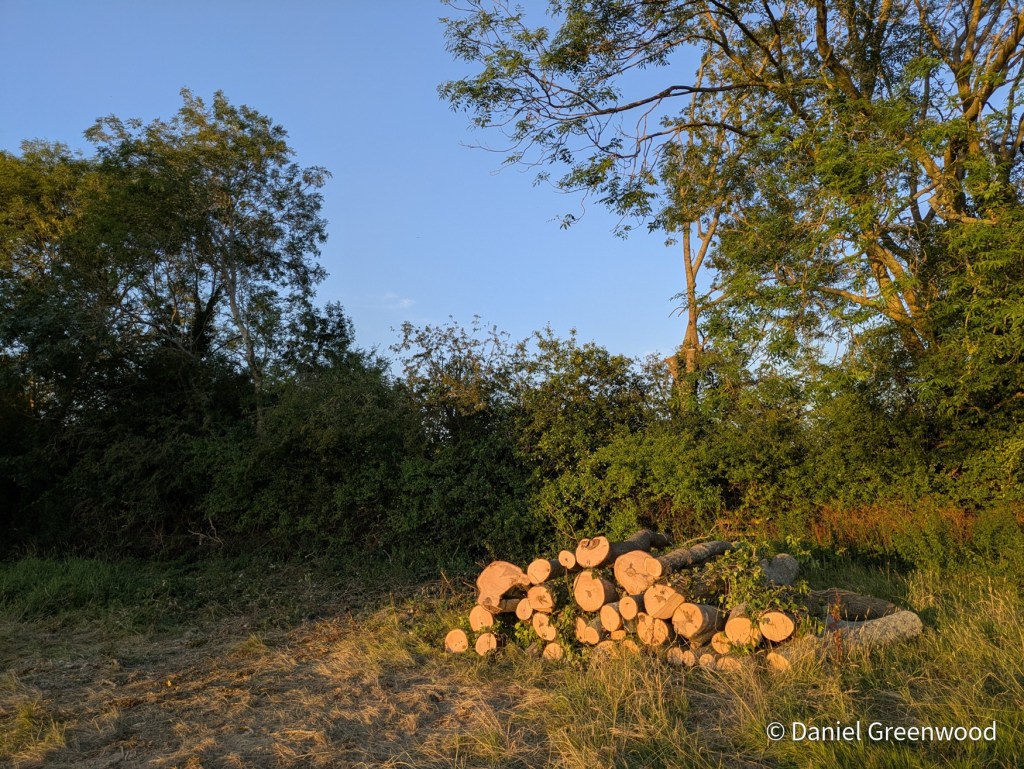
This phone pic was taken in July 2025 when my local green space had been subject to ash removal. The logs show the scars of the disease (see previous) but the scene is not one of disaster. There are healthy ash trees on either side that are surviving and, indeed, thriving considering what they are up against.
That is something The Living Ash Project have been logging(!) – trees showing mild symptoms and overcoming the dieback.
This rather optimistic article highlights more of the positive steps, and advanced scientific interventions being made to save ash trees.
Ash trees in isolated areas, away from ash woodlands, may be in a much better position (literally) to survive the disease epidemic because they are not overwhelmed by spores from ash leaf litter found in thick leaf litter.
A turning point for ash trees?
A mature ash tree in Wensleydale, Yorkshire in May 2018
The news for ash trees in 2025 is much more promising.
An article in The Guardian reports that ash trees in Britain are showing signs of evolving genetic strains of ash that will not succumb to the fungus. This means ash trees could return to the landscape in due course, though not in the same way.
Other research has shown that some isolated ash trees are surviving. I can vouch for this – there’s an ash tree in my mum’s garden (c.15 years old) in London that I’ve trimmed back once before. It is flourishing, so much so that the neighbours are asking for it to be cut down again. Welcome to London.
Large ash in the Howgill Fells, Yorkshire Dales (close to Cumbria) in 2019
There is also a plea on the back of the latest research for woodlands to be allowed to regenerate on their own. Many people will be keen to point out the role of ‘rewilding’ in helping this process. In many cases it’s just a matter of leaving woodlands in certain places to do their thing, probably behind some fencing.
Here’s hoping that ash trees can be saved across Europe and wild trees are given the space to do their thing. In the end they may outlive us.
This is a showcase of the posh mushroom pics I gathered with my proper camera during a visit to the wonderful Dartmoor National Park in November 2024. Mad props to my wife who is chief squirrel during these Devonian photo forages.
The photos were taken on Sunday 10th November 2024.
I write these blogs in my spare time because I want to raise awareness about the beauty and diversity of fungi. If you enjoy reading them you can support my blog here.
A reminder that I am not encouraging people to pick or remove mushrooms in these areas. You could very easily clear all the mushrooms we saw within minutes. I think that would be sad because it would mean other people wouldn’t get to see them and learn or be inspired by them. I think with rare species like waxcaps that are featured here, we should be taking photos and submitting them to apps like iNaturalist or Plantlife’s waxcap campaign. In some areas that would be illegal anyway, due to site protections.
While I don’t believe 2024 will go down as a vintage mushroom season, there were a lot of lovely waxcaps to be found on the moor in a place we’ve been visiting since 2016. Moorlands seem to be quite good for waxcaps, not that I know why, and also for lichens because they are rocky, wet and the air is fresh.
I’ll post the images in chronological order for my own sanity.
This is the landscape where the fungi lived – moorland with a view towards the Teign estuary.
The first fungal find were these eyelash cups (Scutellinia) growing on animal dung! Plenty more dungi to come.
Waxcaps make up the crux of the mushrooms we found. These beauties are butter waxcaps (Hygrocybe ceracea).
Not to be outdone, some very photogenic sulphur tuft (Hypholoma fasciculare) were found as we climbed the moor.
These mottlegills (Panaeolus) are quite common in places with grazing livestock like Dartmoor ponies.
My best guess is that this was one of the moss bells (Galerina).
These lichens are beautiful. I don’t see them very often because I have to travel west see moorland. They’re probably gritty British soldier lichens (Cladonia floerkeana).
I’m unsure what this species is, but it’s a beauty.
As we approached the more remote moorland (in terms of people living out there) the waxcaps began to appear in the cropped turf. This is another example of how important grazing to some degree is, and how it mimics very ancient processes. These mushrooms would not grow in closed-canopy woodlands.
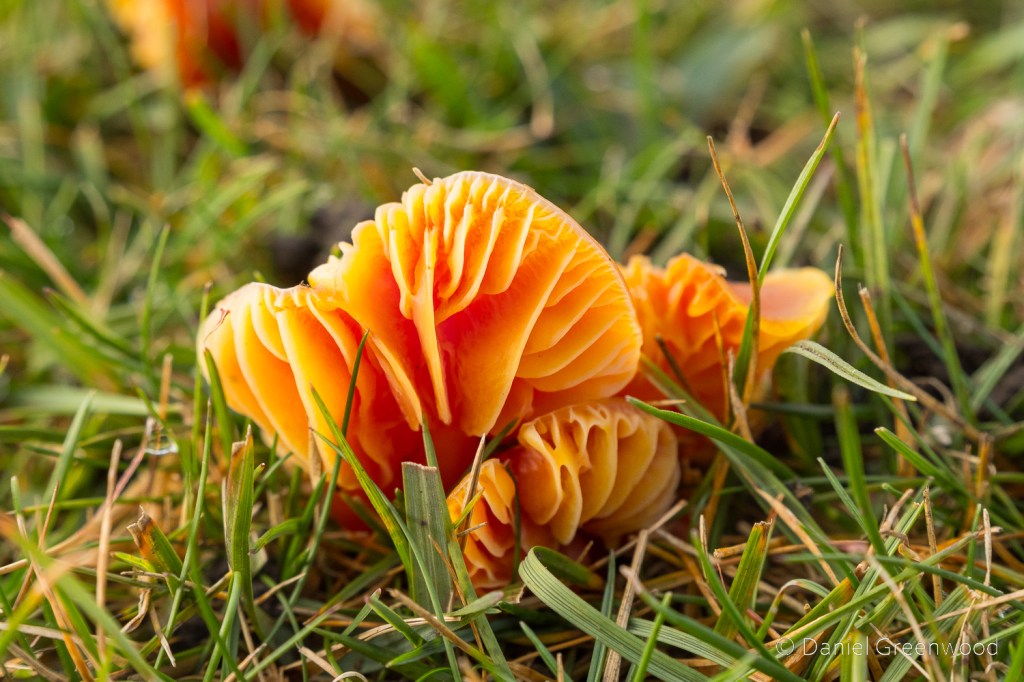
This is one of the red waxcaps, but I’m unsure if it’s honey waxcap or not. It looks too orange for scarlet waxcap.
This is one of several species under the umbrella of blackening waxcap or witches’ bonnet (Hygrocybe conica complex).
This is a species I only really see in the west of England or Ireland. It’s one of the dog lichens (Peltigera).
These are crimson waxcaps (Hygrocybe punicea), stunning mushrooms indeed. There were some young men passing by who stopped to admire the colours of these impressive shrooms.
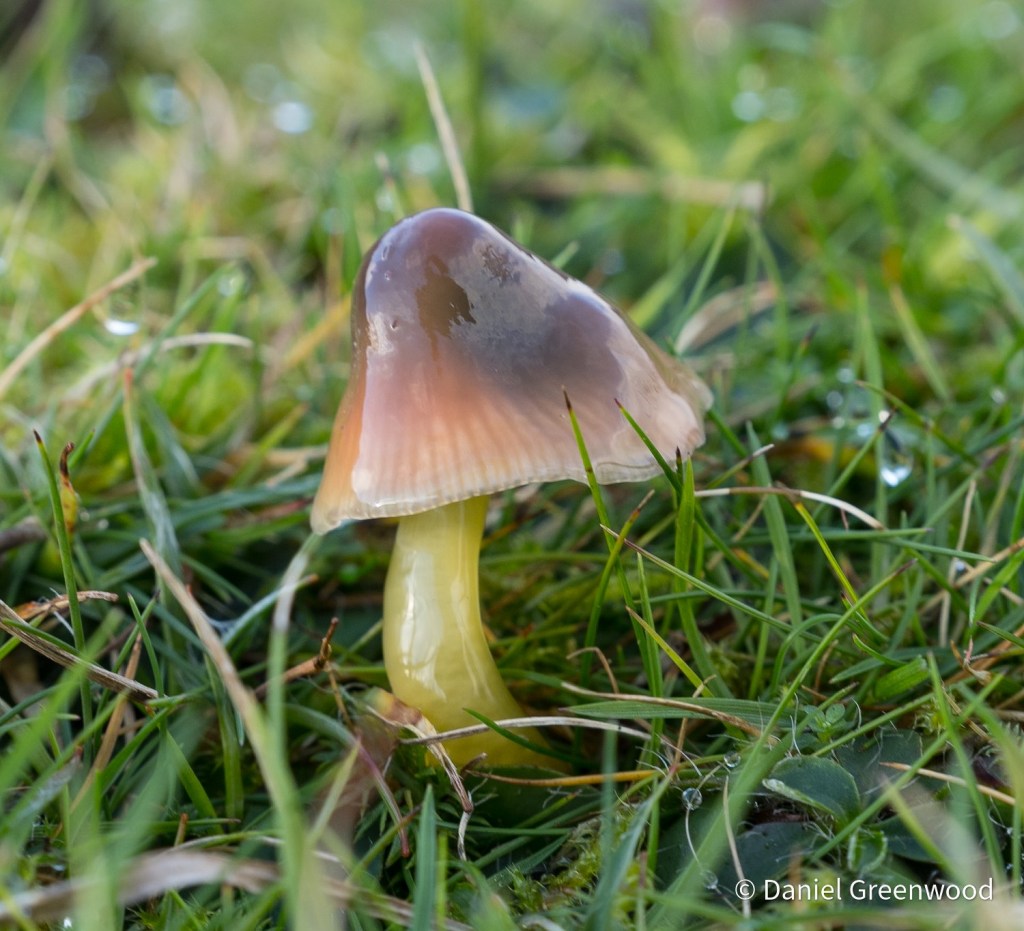
I don’t have an identification yet for this gorgeous waxcap and the closest I can guess is a colour variation of parrot waxcap (Gliophorus psittacinus).
This is meadow waxcap (Hygrocybe pratensis), often fan-like, always best photographed from ground level.
I’m not up on my corals and suchlike, but these are probably in this family.
The walk ended in a little graveyard, great places for waxcaps, by the way. That was evidenced again by this clutch of what I would say were scarlet waxcaps (Hygrocybe coccinea).
Phew!
Thanks for reading.
I write these blogs in my spare time because I want to raise awareness about the beauty and diversity of fungi. If you enjoy reading themyou can support my blog here.
This time five years ago I was hunkering down into my Macro Monday blog series as the pandemic locked down on us all. Now we are at the short end of the lean mushroom season. Spring is about to, well, spring, so the temperatures will rise and fungi will fruit again in modest numbers.
With that in mind, I made a right fool of myself with my neighbour this week. But then again, at least I’m not threatening them with military invasion and putting tariffs on the bird identification information I share.
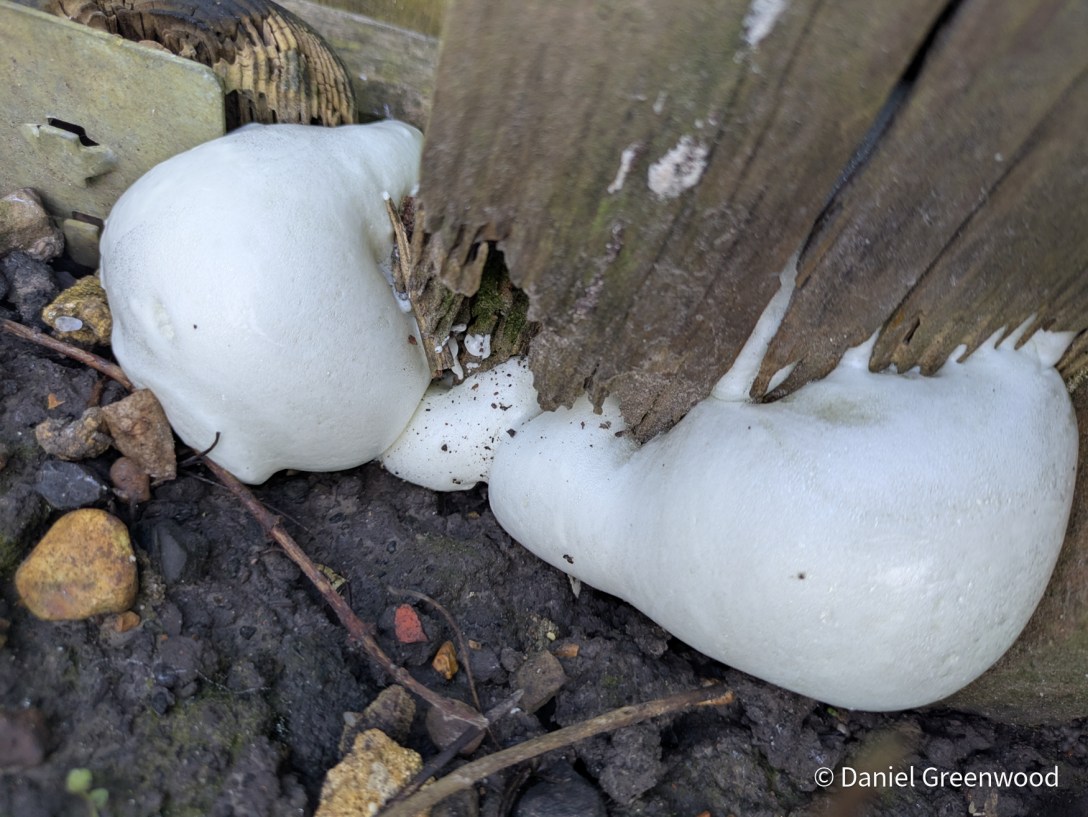
No, instead I got excited about what I thought was false puffball (Enteridium lycoperdon), a species of slime mould (not actually fungi, but growing in the same way and places) that can be observed at this time of year.
On the way out for my morning walk, I spotted some white mushrooming thing at the bottom of my neighbour’s fencepost. Wow, I thought, false puffball on our doorstep!
The organism was white, had appeared quite quickly, and was growing in a damp location on decaying wood. Perfect!
I sent some photos over to my neighbour to say what I’d seen. Obviously he had no idea what I was on about, and so he checked with his roofer who confirmed they had sprayed expanding foam (in two seriously random locations, in my defence) while working on the house the other day.
If false puffball is what it says it is, does that now mean that expanding foam is false false puffball?
For comparison, here’s the real thing from back in that fateful month of March 2020:
One thing I have learned from this process of misidentification is that my blog appears quite high up in the rankings on Google for ‘false puffball’. It comes at a time when Google emailed me to ask if they could feature some of my photos on their store blog and do an interview.
‘What’s in it for me and my phone,’ I asked.
One of the richest companies in the world, and it turns out they don’t want to pay to use your images or harness your knowledge and experience. What a bunch of puffballs. I hope you appreciate it’s the principle here that matters. Remember those, principles?
So it goes that the only way I have ever been paid as a photographer is when you lovely people ‘buy me coffee’ via my Ko-fi page. Thank you to everyone who has supported me.
Anyway, I hope Google like these absolutely stunning false puffball images. Shot on a Gaggle Tinsel 35c. Feel free to use guys! 🙂
Another year completed and lessons learned. Creatively I have found a balance with my equipment and the actual process of photography. I’m into my 6th year of working with Micro Four Thirds cameras and lenses, giving more space to enjoy the process of gathering photos – walking – because the equipment is light.
Cameras used include Olympus EM-5 Mark III, Oly EM-1 Mark III, Olympus TG-6 Tough compact camera, and Pixel 7a phone camera.
These photos should show the range of things I like to take pics of – not just mushrooms! 😂
With the privileges available to me – health, location, resources, freedom of expression – here are my photographic highlights of 2024:
January
I did a couple of long walks in Sussex at the beginning of the year, exploring some new locations around the South Downs. I visited St. Botolphs church for the first time, one of Sussex’s special ones among thousands of already significant churches. Last year I set up a gallery for my fledging church photographs project which can be viewed here.
February
This felt like the moment of the light returning after the dark winter months. The Downs at Amberley are my gateway to the South Downs, and walking here is always worth the gentle climb.
March
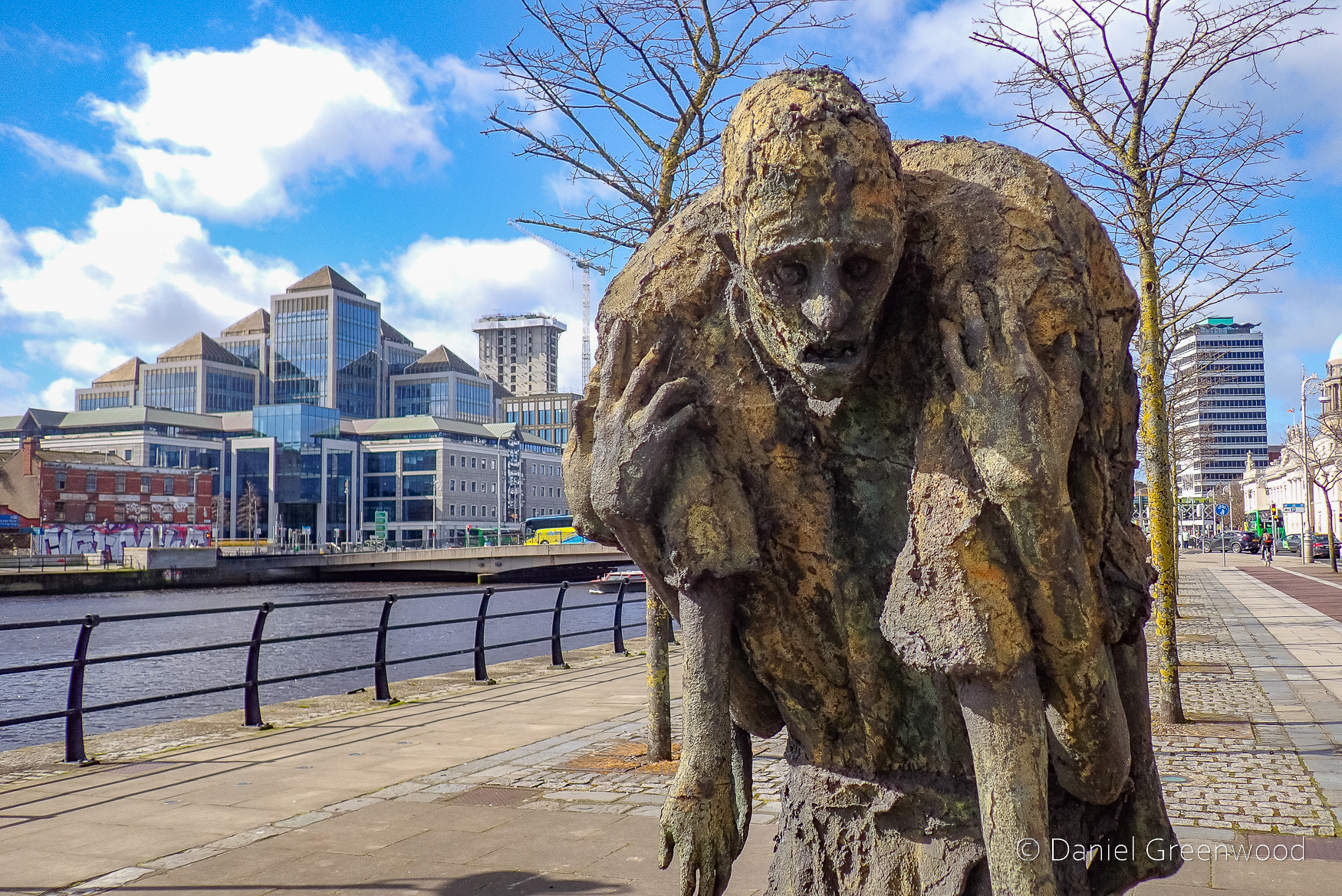
In March I visited Dublin for a weekend and took in the sights along the great river Liffey.
For a friend’s birthday we spent the weekend in York, which gave me a chance to take some compact camera pics of a few of the oak timber framed buildings. I’ve added a gallery for my ‘Oak Timbers’ project here.
April
I got married in April so there wasn’t time for much beyond the odd local walk. I was trying out my new Pixel 7a, bought because of its value and reported image quality. The camera is spectacular, I just wish it wasn’t a G**gle product. I blogged about it here.
May
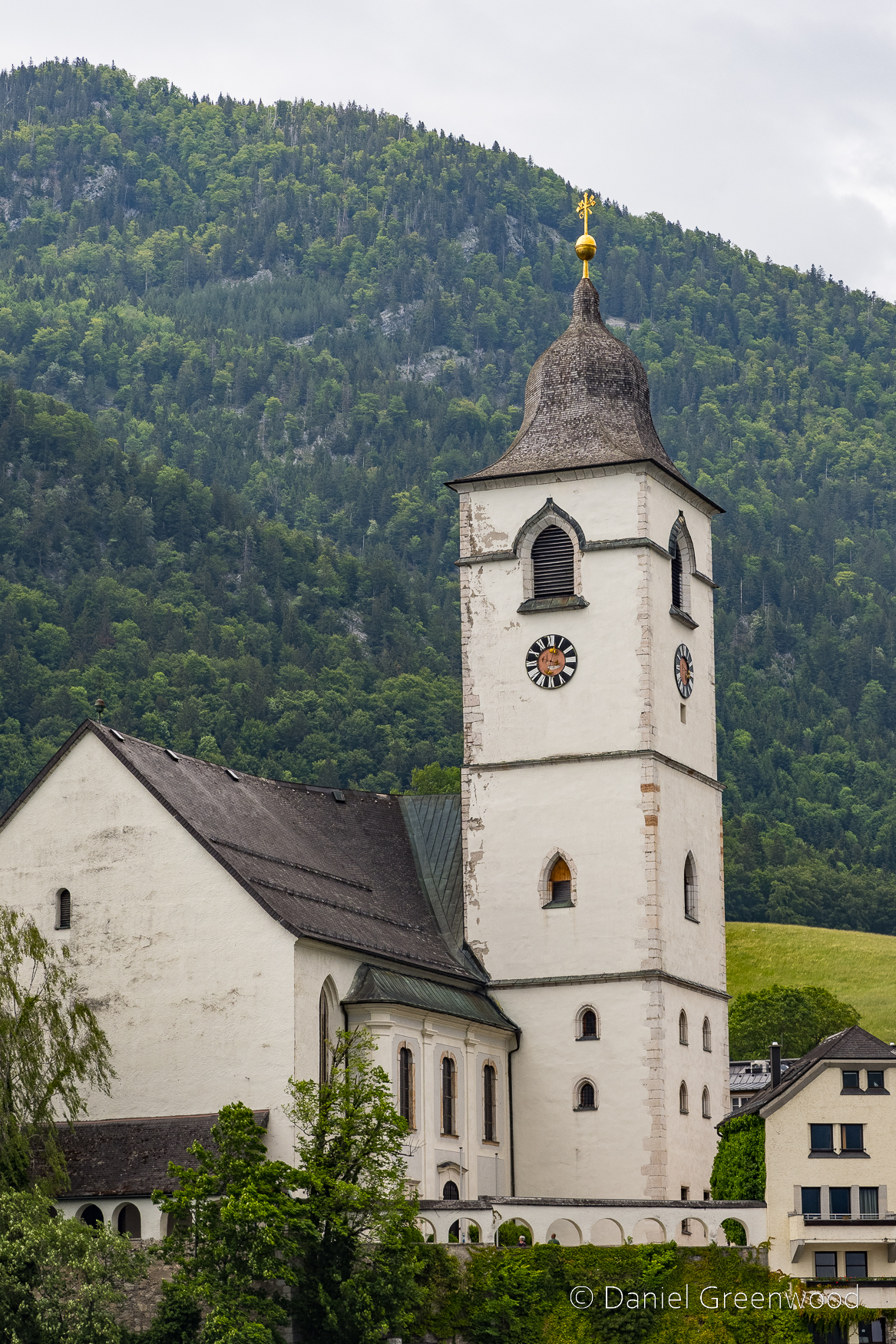
Ah, memories. In May we went on our honeymoon to Austria and Switzerland, all by train. You may be sick of reading about that! I am definitely not sick of blogging about it though!
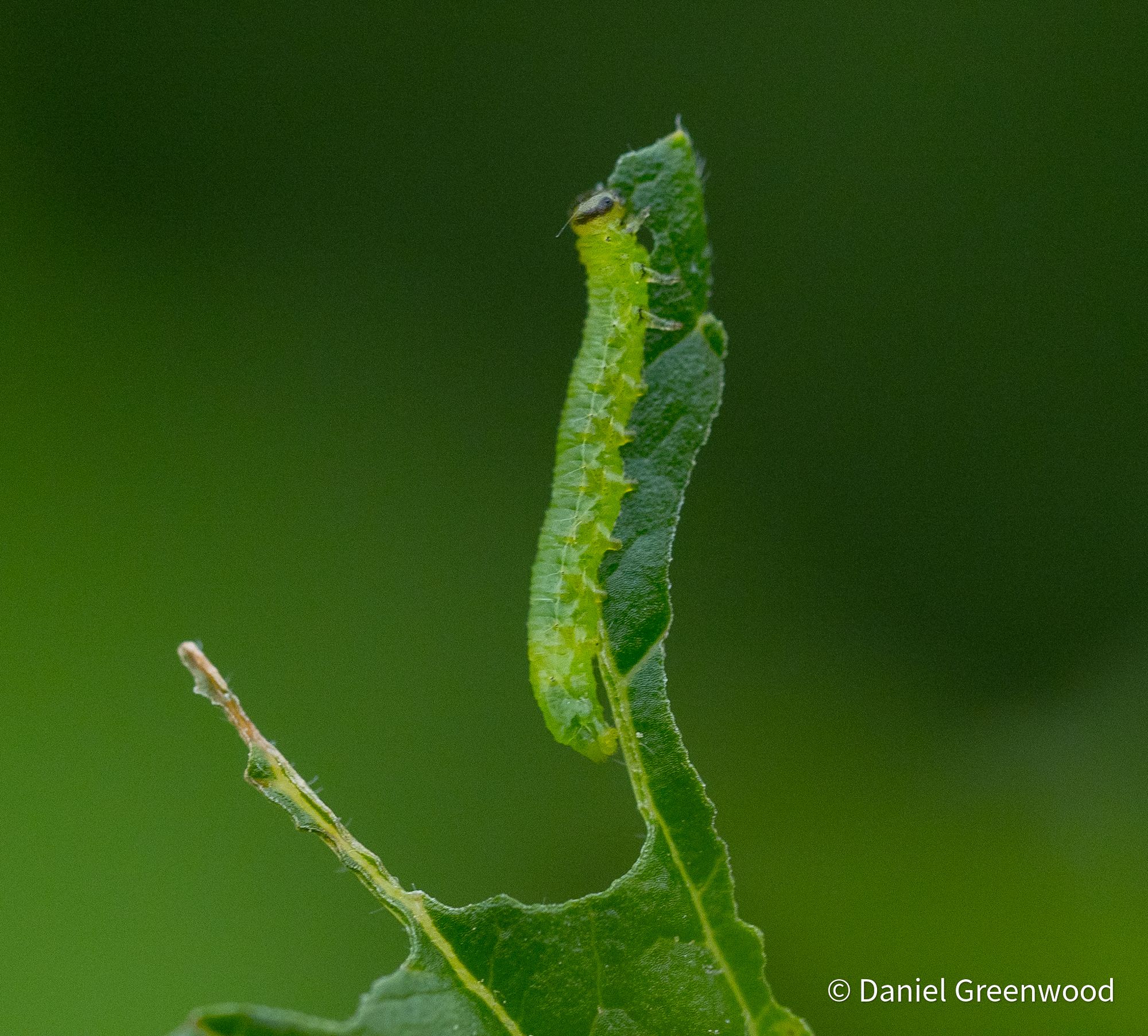
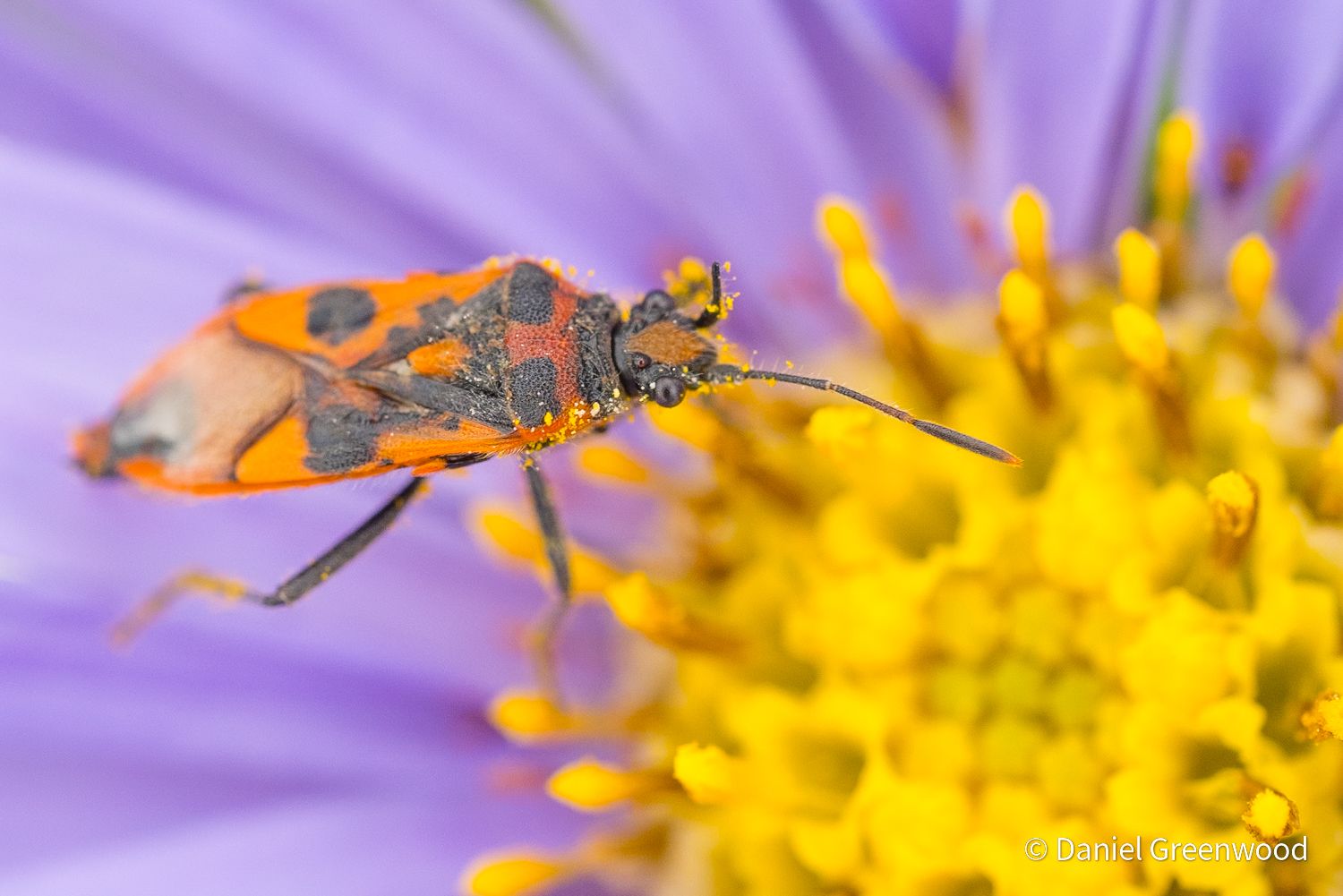
A bit of a lost month for photography because I started (yet another) new job and had to settle into a new routine. The highlight was probably these sawfly larvae which ate through some of the leaves on my gooseberry. Blog here.
July
“July, July, it never seemed so strange”, as the Decemberists sang. I caught Covid and didn’t really get back to normal for 3 months afterwards (Vitamin D is very important, people). My macro work was reduced by the evil contagion but I did find some nice bugs near home to share.
August
I managed to pap some pretty fine inverts in August, with this beautiful ichneumon wasp seen in my garden. I’ve not got anywhere near enough out of my Olympus EM-1 Mark iii and 60mm macro, but this showed just how good Micro Four Thirds cameras are for macro.
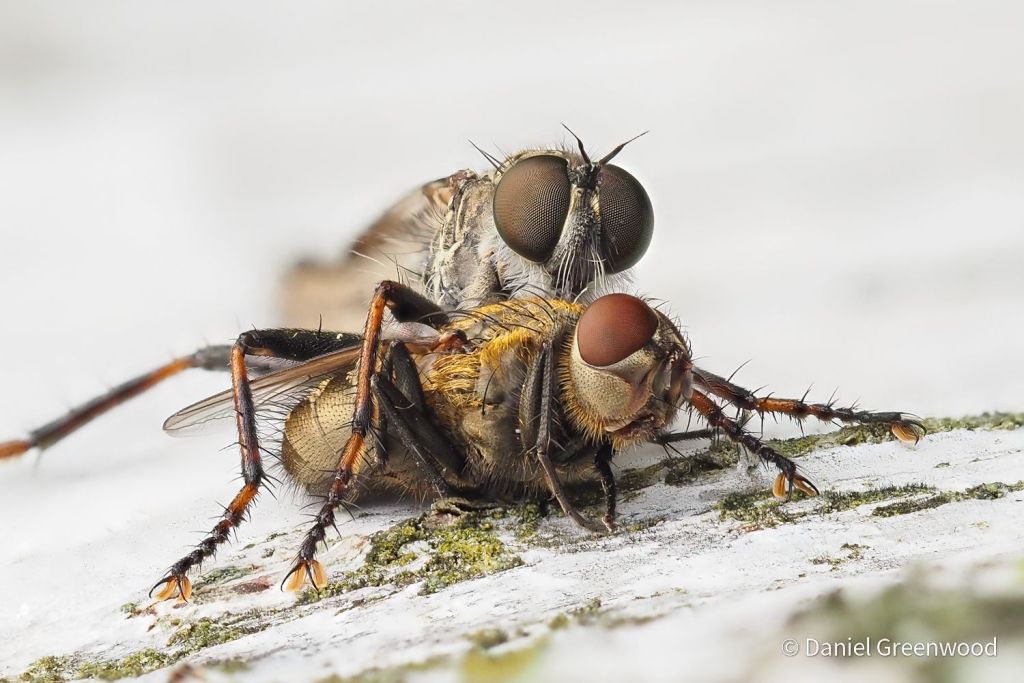
Another strongpoint for M43 cameras is that they can ‘stack’ images internally, something now copied by the big hitters. This is a composite of about 10 photos the camera has laced together to ensure the depth of field covers a deeper focus range. It means more of the, rather gruesome, subject can be seen in detail.
September
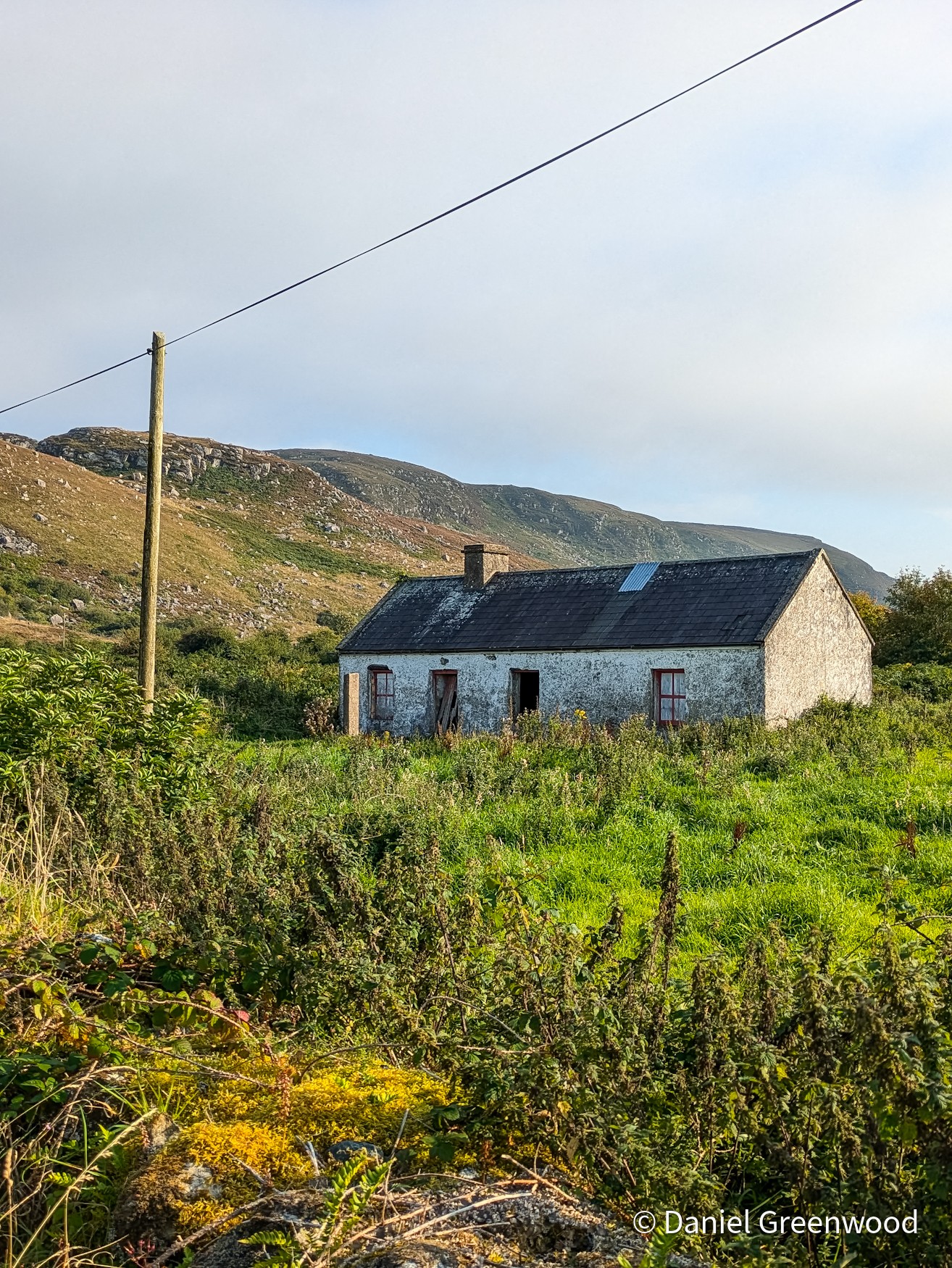
In September I made my first ever visit to the iconic sea stacks at Downpatrick Head on the North Mayo Coast in Ireland. Mayo has an international dark skies designation so I was able to mess around with the Milky Way. But for the astro photo I haven’t processed these images yet so here are a couple of phone photos.
October
As I have lamented on my Fungi Friday blog, 2024 was not the best mushroom season. But there are always things to find out there. I found this knocked over fly agaric, which was in perfect condition, ready for its portrait.
November
Autumn is a time for Dartmoor for me and my wife, and despite colds we managed some walks onto the moors in the National Park. We found an amazing array of waxcaps, like the crimsons above, which you can see in full on Fungi Friday.
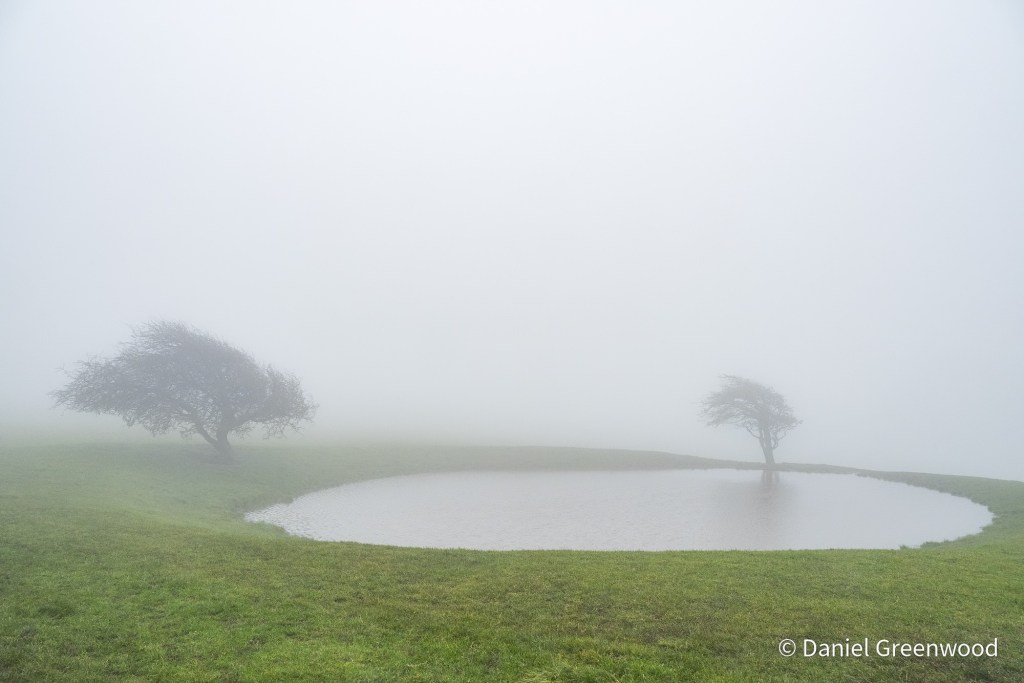
On the last day of November I hiked with my South Downs amigo from Ditchling into the mist. This is the much-photographed Ditchling dew pond, shrouded in mist.
December
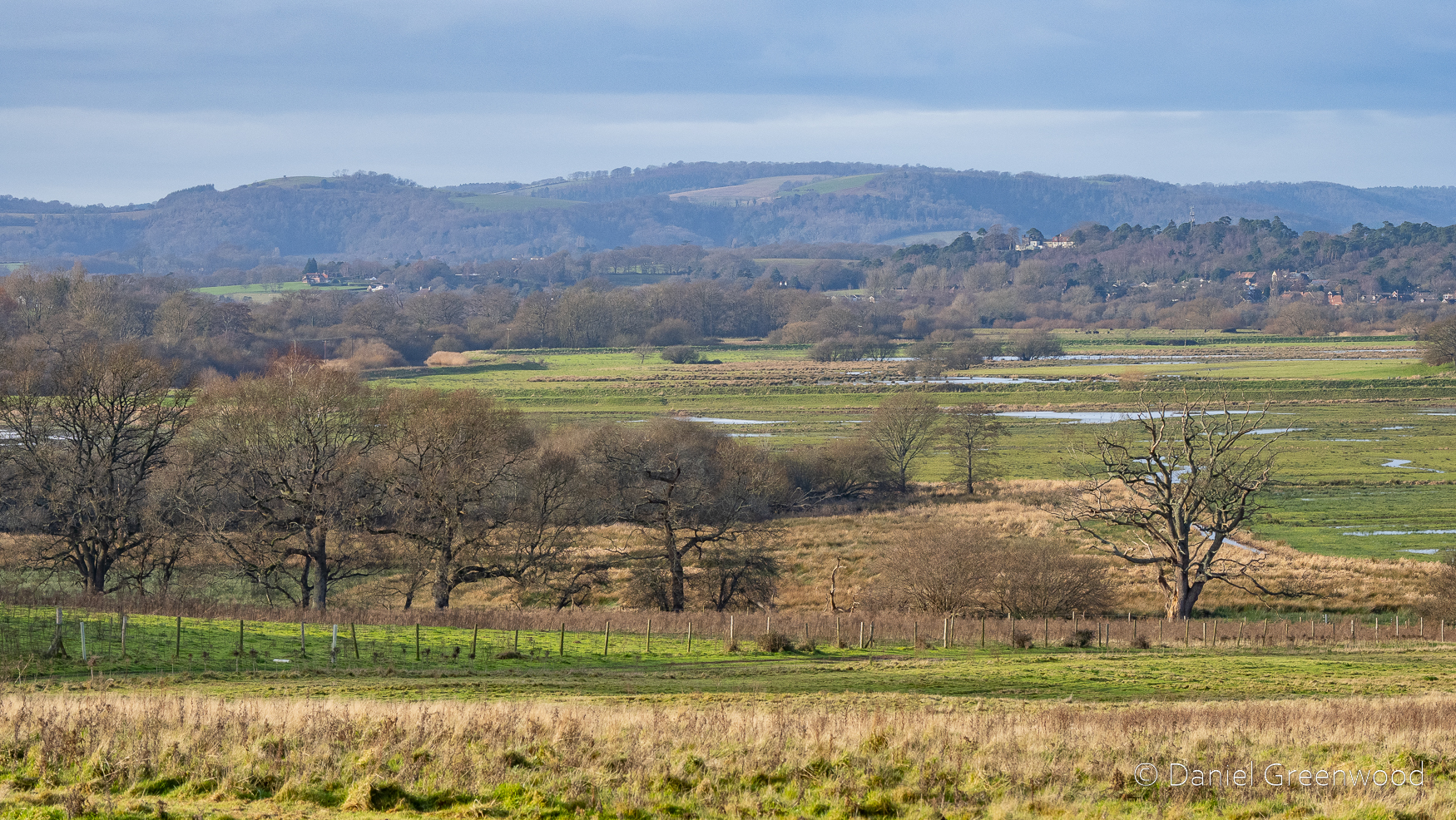
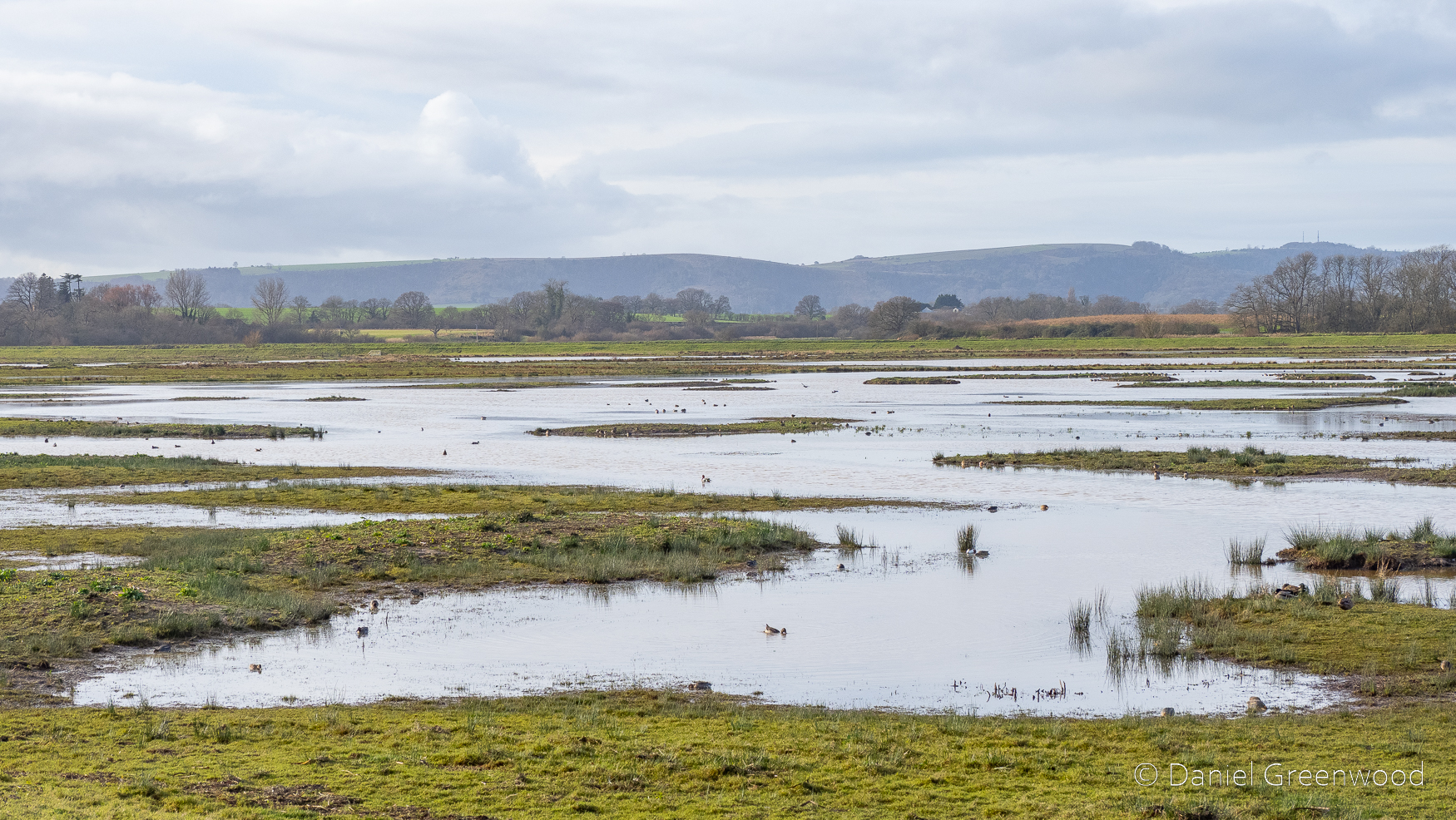
The weather in December was very grey and damp, and all the Christmas demands gave me only one meaningful walk – to Pulborough Brooks in West Sussex.
Thanks for all your support in 2024 and wishing you peace and happiness in 2025.
I’ve posted before about the so-called ‘zombie fungus‘, but that wasn’t in my own garden!
There are a few fungal concepts that have become mainstream in recent years, namely the wood-wide web and ‘zombie’ fungi. The latter has become popularised because of The Last of Us, a programme I haven’t watched and can’t say anymore about. The most famous parasitic fungus that can control its host is cordyceps.
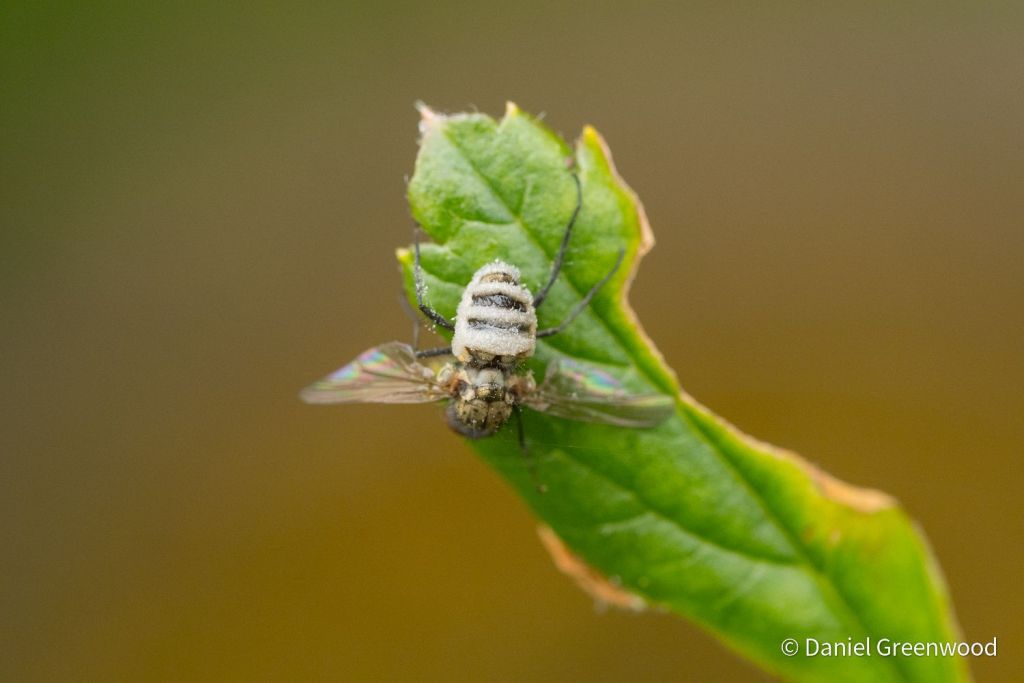
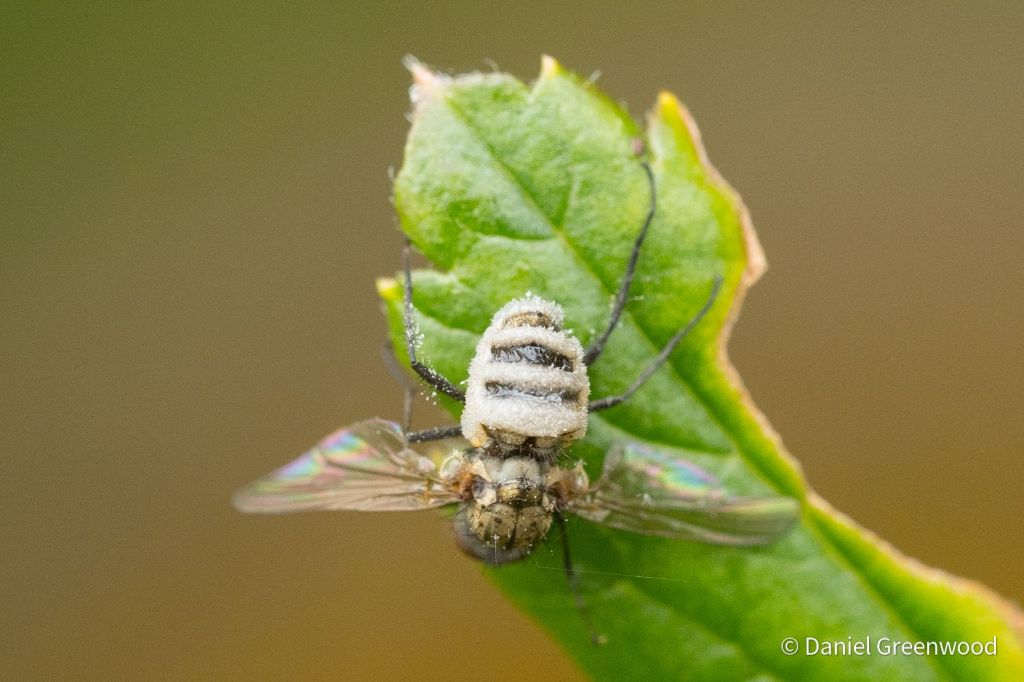
My wife actually found this (not cordyceps) when she was inspecting the gooseberry bush, which was steadily being eaten by sawfly larvae. I’ll post about them next.
What is this exactly? It’s a fly that has been parasitised by a fungus called Entomophthora. It basically is able to control the movement of the fly by making it move to a prominent position for its final moments, or at least I think that’s what’s happening.
The prominent position then allows the fungus to spread its spores on the wind or from a more beneficial height to reach its next host, however that occurs.
It’s not quite as gory as cordyceps, where a fungal fruiting body rises from the body of its host. It is altogether more macabre and sad-looking, though. Cordyceps can be very colourful.
In reality it is just an example of the immense biological diversity out there, the interactions between two kingdoms – animals and fungi.
On Saturday 21st October I led a fungi walk in the Bramshott area for the South Downs National Park’s Heathlands Reunited project. Thanks to Olivia and Dan for setting the walk and guiding us on the day.
It was a chilly and showery day with breaks of sunshine to light up the birch and bracken.
Autumn had crashed in with its typical rain and leaf fall. I think the early mushroom season has been shortened by the hot September and sudden shift to seasonal storms. Just a thought.
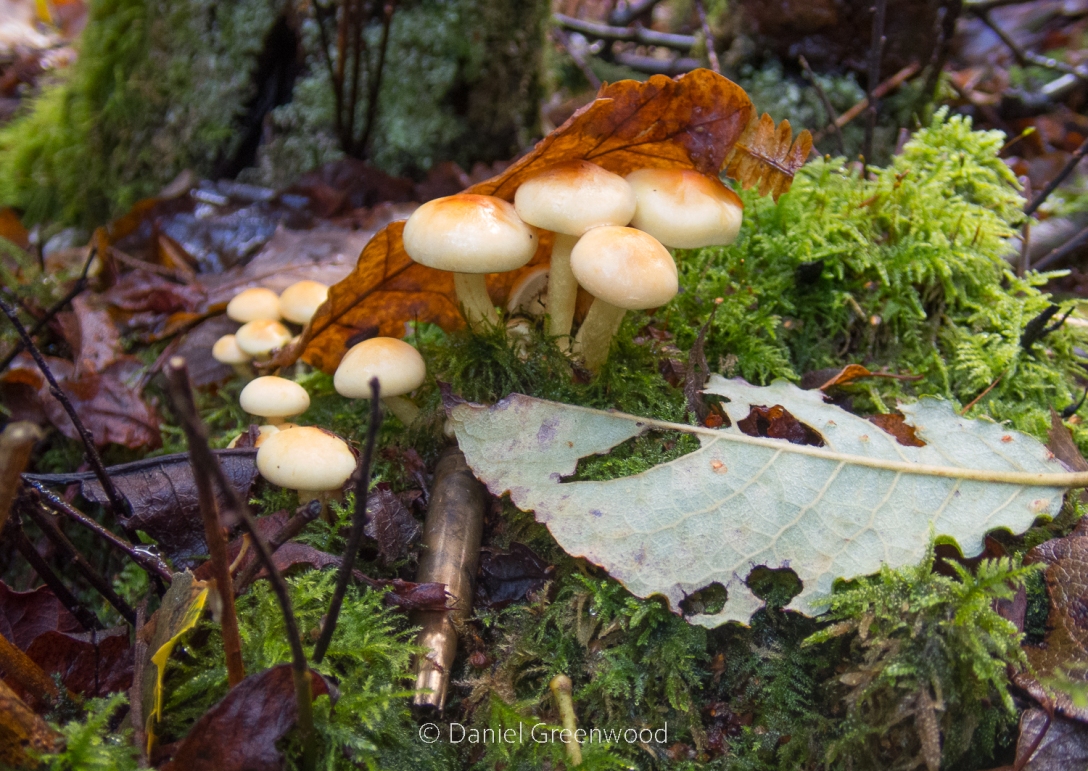
Sulphur tuft was one of the first mushrooms encountered, among a whole load of small grey/brown mushrooms that I wasn’t able to ID on the spot.
This looks to me like one of the grey spotted amanitas but after a bit of a downpour.
This is very probably a blusher, amanita rubescens. You can see a slight pink hue at this premature stage.
Fly agarics were slow to show but when the walk passed through grassy open woodland, they abounded. This one was almost like a russula with its typical white veil remnants
Amanita citrina, the false deathcap, was one of the most common mushrooms on the walk. It was abundant in the areas of beech woodland and also the open, grassy birch and oak woodland.
I’m not sure which waxcap this is, but heath waxcap, Gliophorus laetus, would make sense because it’s a waxcap on a heath!
This was one of the few red russulas, though there were tens of different-coloured varieties along the way. Sometimes the only mushroom around was a russula.
This was a very large mushroom under an oak tree. I’ve not seen this species before but am leaning towards an ID of giant funnel, Aspropaxillus giganteus.
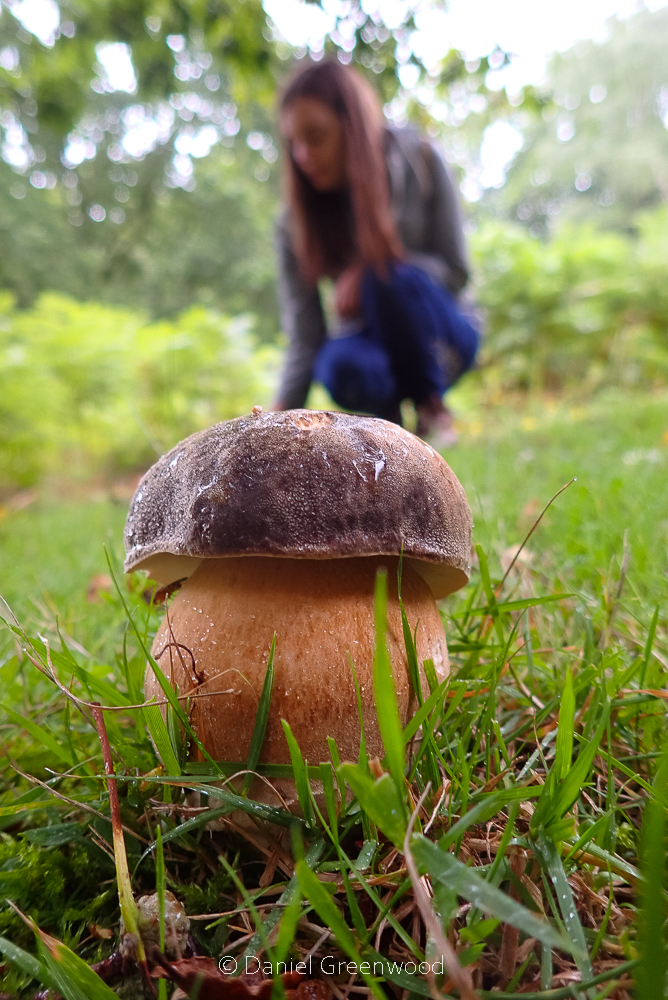
The only cep, Boletus edulis, in the whole area. I think most of these have been picked for the pot already by other visitors.
This nicely shows the change that occurs in blackening waxcap, Hygrocybe conica. It looks like a jelly sweet to begin with then becoming rather liquorice.
One picture that sums up the status of this wooded heath – an empty blank bullet casing underneath sulphur tuft.
I was in the New Forest National Park camping for a couple of nights in August. The rainy July in southern England gave me great hope of finding some nice shrooms in what is one of England’s mushroom wonderlands. It didn’t disappoint!
Bolete bonanza
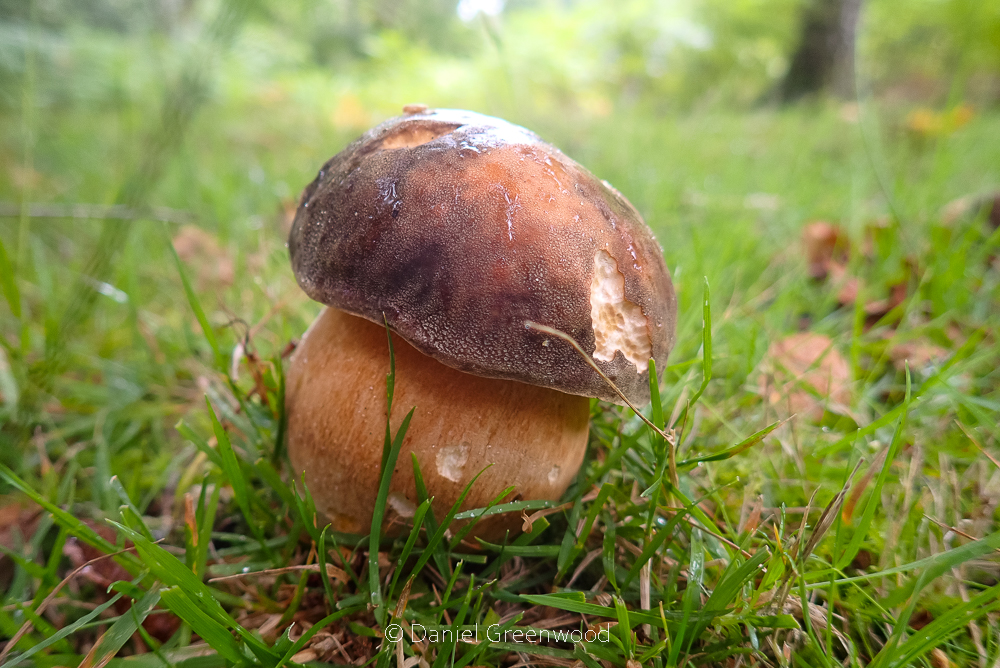
I was so happy to find these boletes, one having already been uprooted. They were the perfect shape and just an absolute joy to see. I have been told these are ceps, but I’m not entirely sure if they’re not another species. I’m unclear on the variety among cep-like boletes, and if the colouring isn’t indicative of another species.
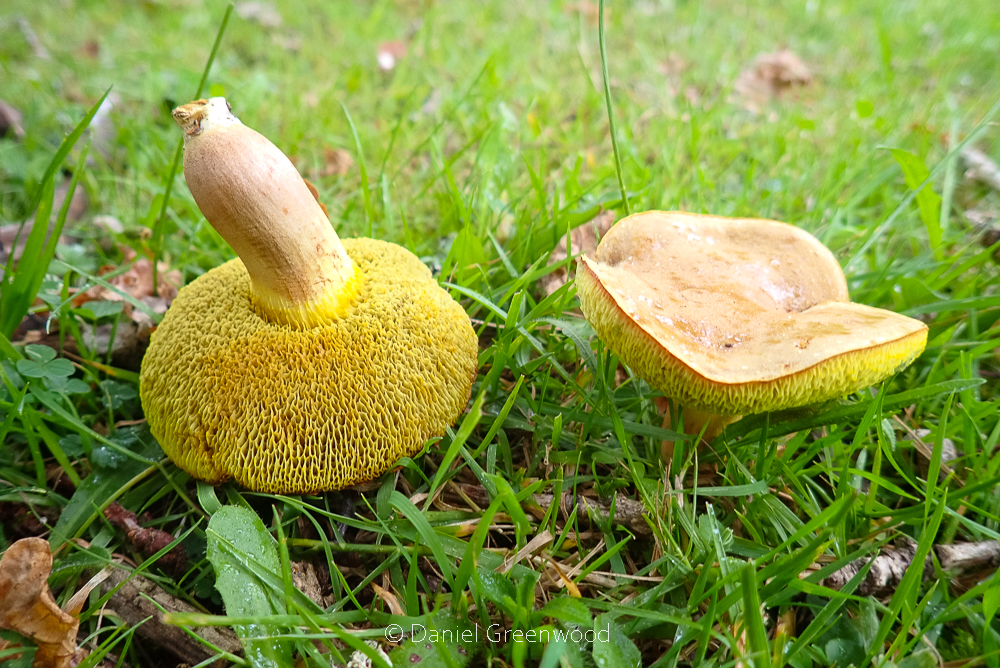
These lovely yellow-pored boletes are in the genus Xerocomus.
About half a mile or less away we found this beauty sitting alone among the grass and leaf litter. It’s an orange bolete. It doesn’t appear to have a distinct association with one species of tree, but this area was common in oak and birch.
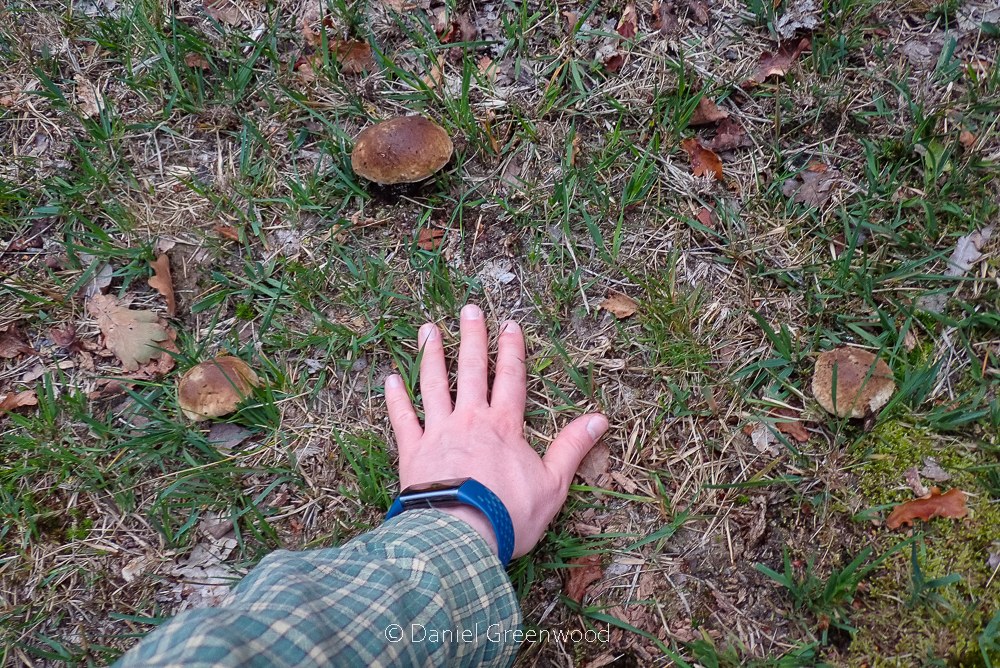
Much later that day, on the return stretch, we found this well-camouflaged group of what I am sure are ceps due to their colouring and other diagnostic features.
You can see the distinctive webbing on the stipe here, and the pennybun cap is all you need really:
As the evening drew in, I found this orange bolete that may have been picked by a deer (there was a herd in the area).
Webcaps
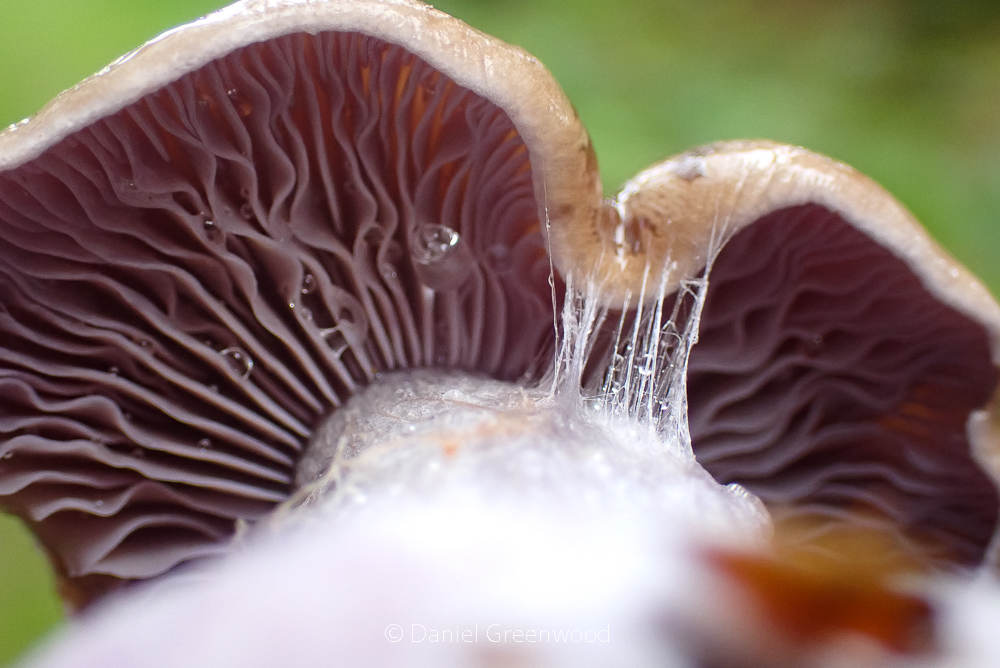
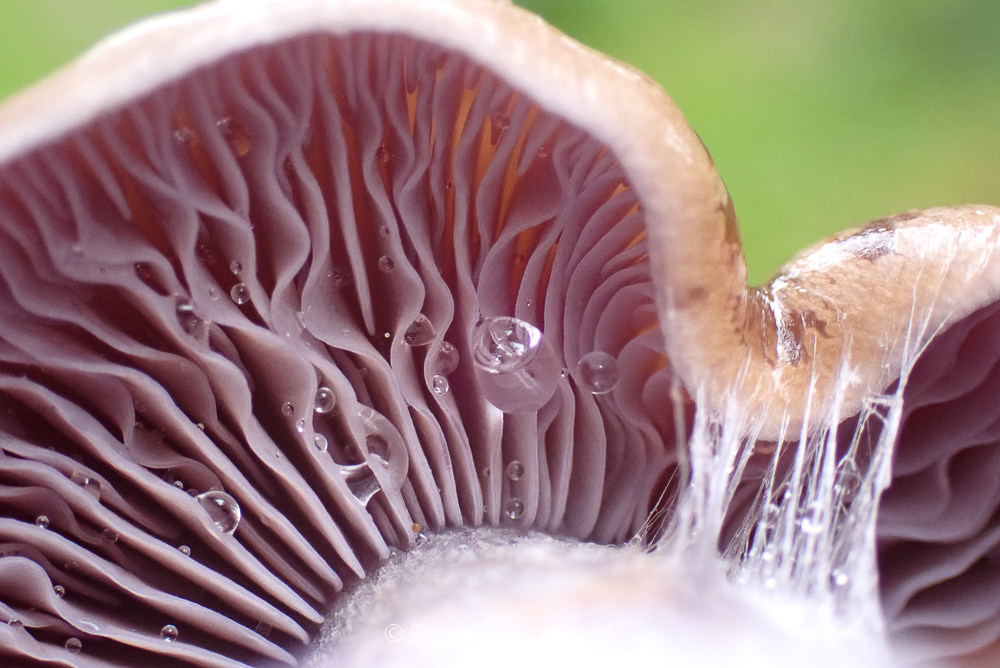
Earlier in the day, while passing between two plantations on a grassy ride, I noticed this uprooted mushroom on the ground. Two bites had been taken from it, probably by deer or a small mammal. The remnants of the veil between the cap and stipe, covering the gills, gave me the thought that this was a webcap. The gills were very beautiful, embellished by the water droplets.
iNaturalist has come back with an ID of webcap subsect ‘Purpurascentes‘. I can’t find any other info on the subgroup distinction.
Rustgills
Rustgills are a group I’m not particularly familiar with. Having developed my fungi knowledge in isolated city woodlands, I didn’t really see rustgills until I moved to Sussex and spent time in larger areas of woodland. This patch was unavoidable. No wonder there is a species known as the spectacular rustgill.
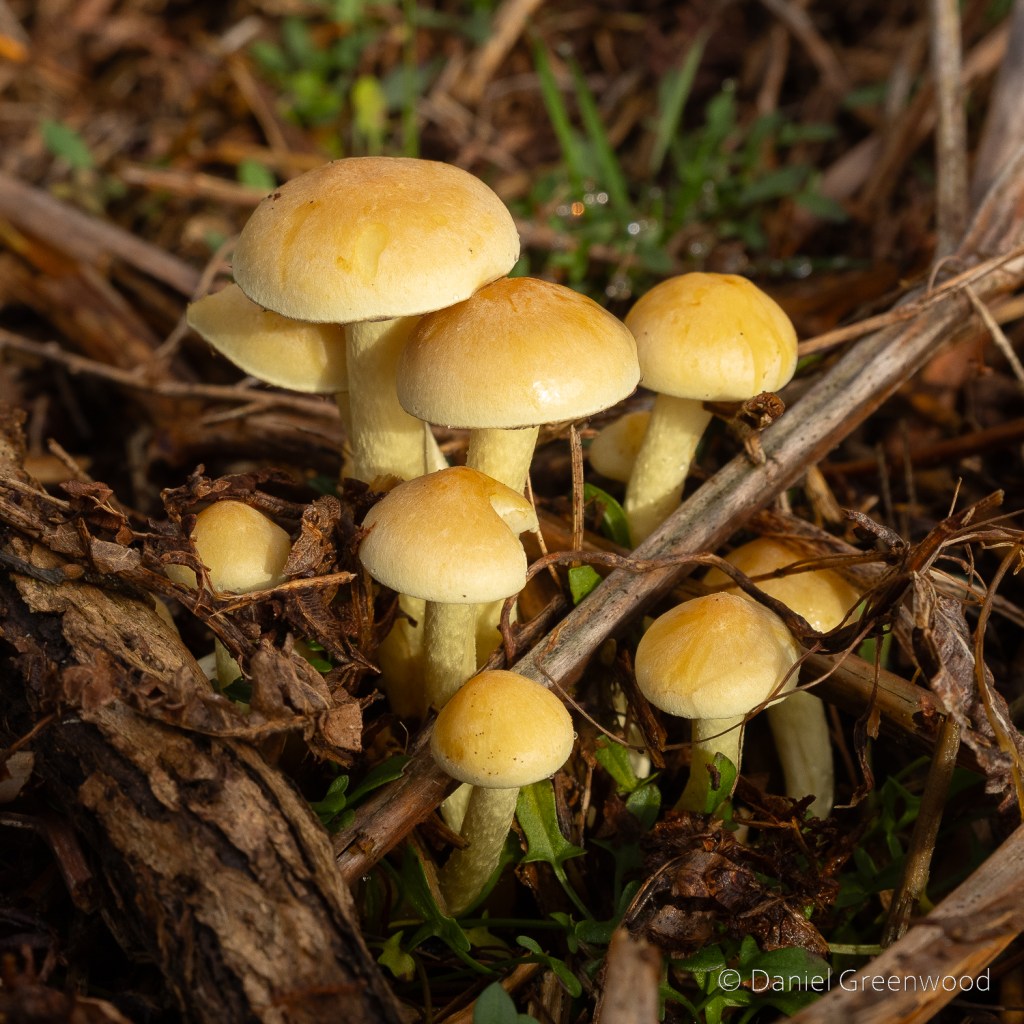
Rustgills are in the genus Gymnophilus. They’re confusable with scalycaps (Stropharia) due to shape and colour.
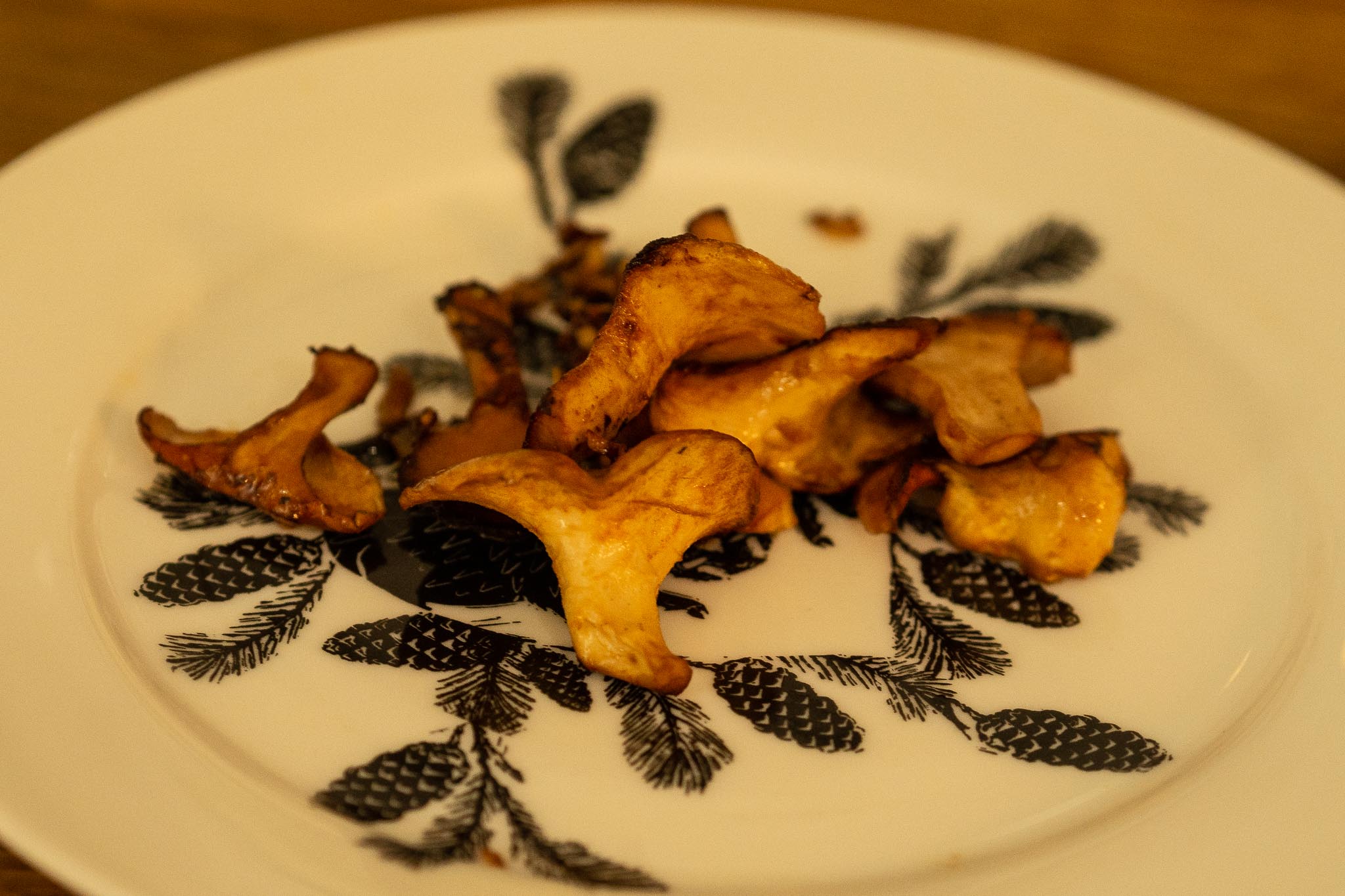
Chantarelles
And finally some golden chantarelles, already nibbled by slugs and uprooted, probably by deer (as I have said 1000 times in this post!).
The New Forest has a “no pick” policy and there are concerns about illegal, commercial-scale picking for posh restaurants, just FYI. All of these mushrooms had already been “naturally” uprooted(probably by deer).
This walk will be a good way to learn about the common species of fungi in woodlands, their ecology and cultural significance. Though we won’t be picking mushrooms to eat, there will be some guidance around edibility generally as a safety guide. This is a great site for fungi with a lot of the ‘big-hitters’ and other unusual species to be found.


























































 Unlocking Landscapes