
Nomada rufipes, a cleptoparasitic bee that I spotted on Farthing Downs on the edge of London. It steals from an Andrena bee to survive, but I only saw it drinking nectar from the heads of these ragwort flowers.
Writing, photography and more by Daniel Greenwood
Nomada rufipes, a cleptoparasitic bee that I spotted on Farthing Downs on the edge of London. It steals from an Andrena bee to survive, but I only saw it drinking nectar from the heads of these ragwort flowers.


Coulsdon, London, August 2015
The woodpigeons take flight as the gunshots ripple through the air from a neighbouring farm. I heard a little girl say, with great sincerity, that she wanted to come back to the downs with her sled when it snows, ‘I love it here,’ she said. So, what gives the fool with a gun his pleasure? It’s a question that needs answering the world over. But it’s not just pigeons that disappear into the trees at the sound of ammunition, a sharp-winged kestrel evacuated a tree in the middle of this hillside meadow, slipping into nearby Devilsden Wood like a compact disc. Thankfully the insects and wildflowers aren’t fussed by the gunfire, instead common blue butterflies drink from wild marjoram, a hornet mimic hoverfly, Volucella inanis, does the same. A white tailed bumblebee’s heft droops the heads of yellow rattle, still flowering low. From amidst the flowers birch, willow and ash leaf like little green fires ready to burn these grasslands up into centuries of shade. The man with the strimmer will hold back their revolution with those of his machine. If only the ammonia stench from the grazing cow’s dung could be cut back like vegetation. When you step in it, it follows you around wherever you go. At least I’ll have a carriage to myself on the train home.
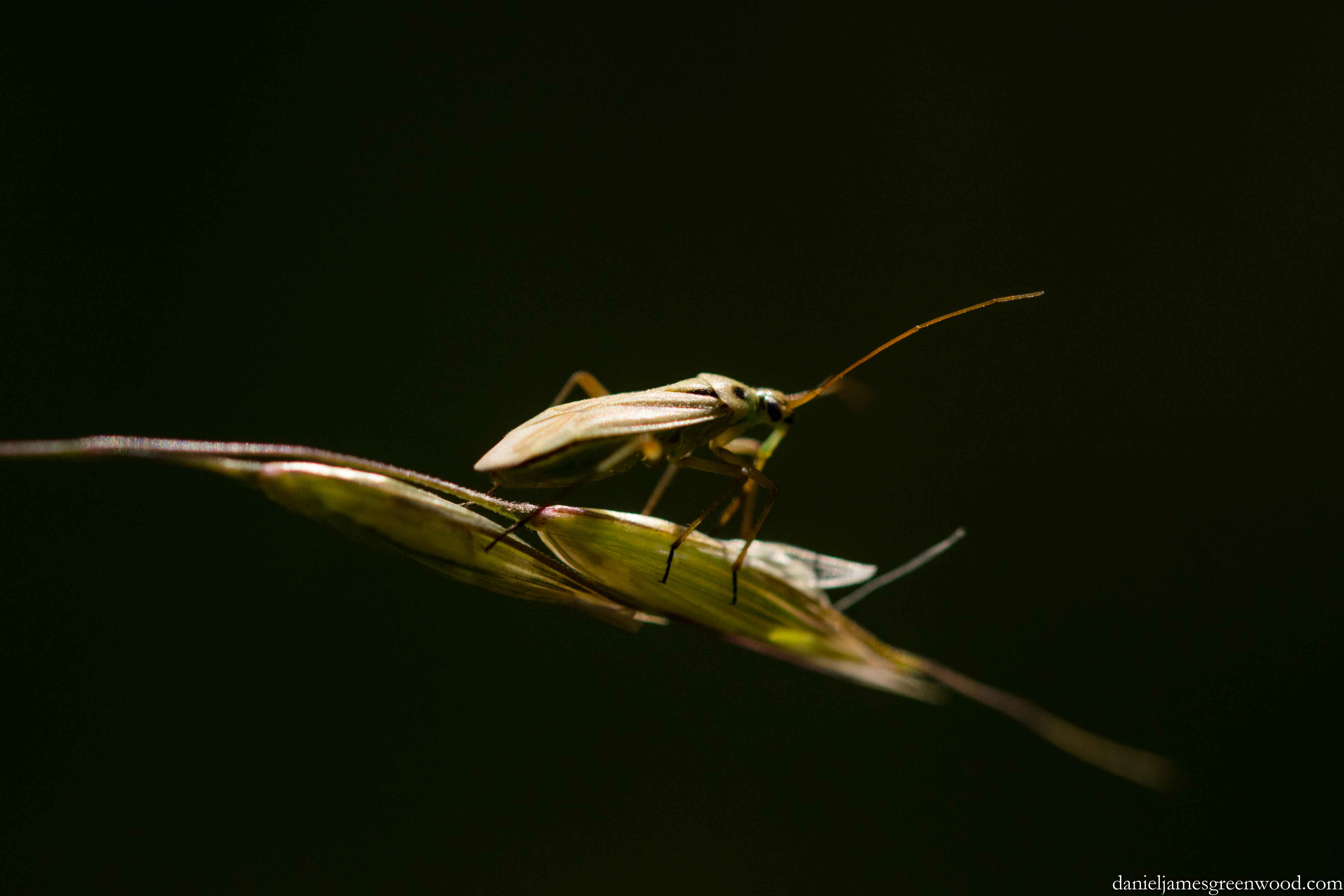
Capsid bug, Farthing Downs, July 2015
My love affair with these bugs continues, mainly because they appear so often and they’re straightforward to identify. Not that I know which capsid bug this is.

Marbled white on scabious, Happy Valley, Croydon, June 2015

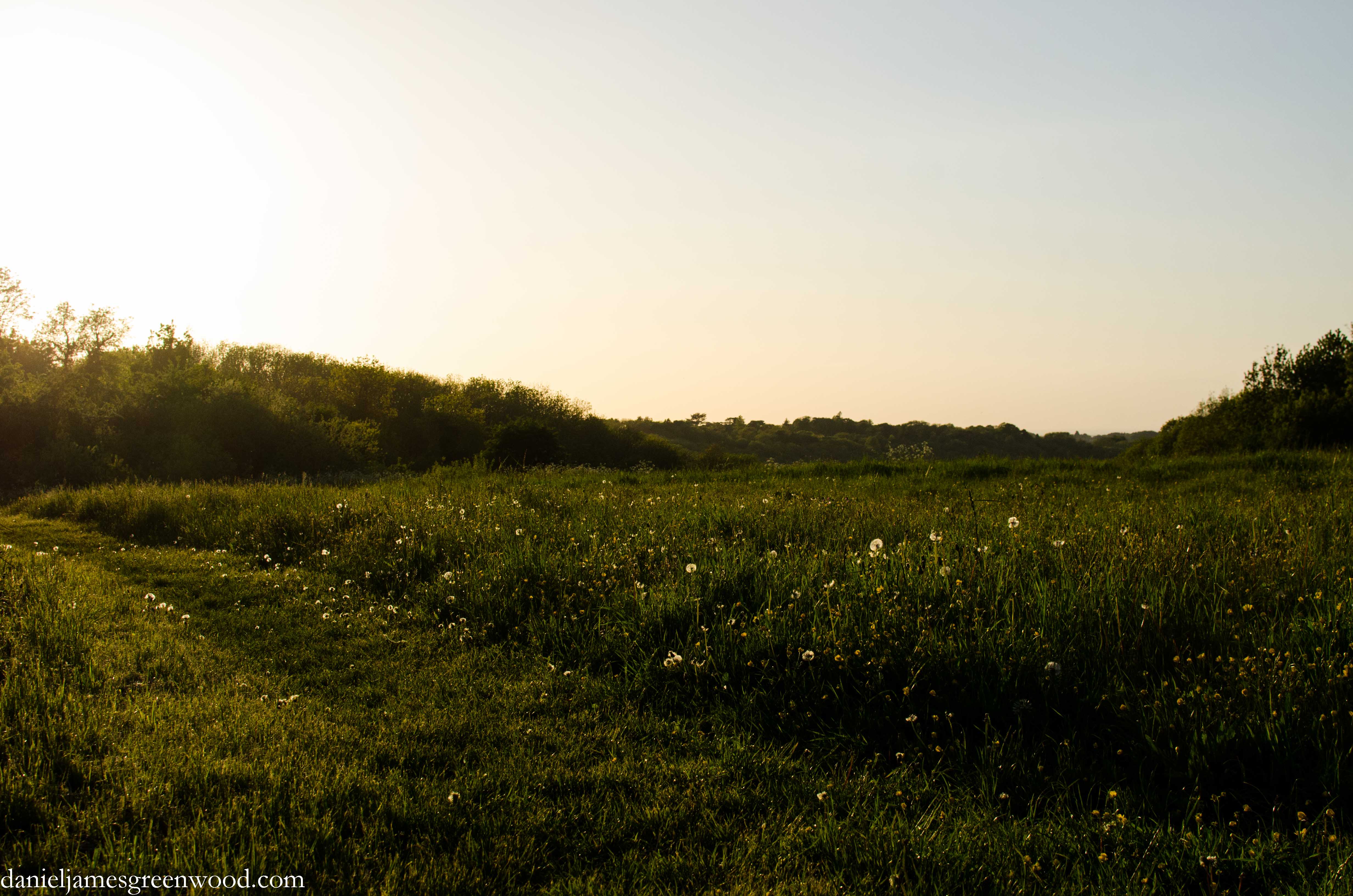
Evening meadows, Farthing Downs, London, June 2015
It’s that time of year when the meadows are reaching their height. Here you can see the yellow rattle in flower, soon field scabious will appear to be fed on by burnet moths and bumblebees.
Please click through for more of my pictures of Farthing Downs on Flickr

Beetle on grass blade, near Otford, Kent, England, May 2015
I am walking the North Downs Way back to front, upside down and inside out. This beetle was doing its best to remain on a blade of grass at the side of the path near to the village of Otford. It succeeded. I am struggling to identify it.
Please click through to see more pictures of the North Downs Way on Flickr.

The Secret Garden, Sevenoaks, England, May 2015
I am walking the North Downs Way back to front, upside down and inside out. This is a view to Chevening House, where the British Foreign Secretary resides, currently Conservative Phillip Hammond. I’d rather be on foot.
Click through for my album of North Downs Way pictures on Flickr.

Happy Valley, Croydon, June 2015
Sicus ferrugineus is a thick-faced fly that I found here feeding on a common spotted orchid in a meadow. Its young are parasitic, it lays its eggs on bees.

The North Downs, Coulsdon, May 2015
Entering onto the Downs, a group of teenagers are fixing their upturned bikes in the buttercups and silverweed. They spill out onto the lane, calling across to each other when a car comes past. It’s evening and the sun hits the mounds of anthills overgrown by birds-foot trefoil and speedwell. The glowing yellow and blue petals are a precursor to the summer yet to hit these chalky meadows, their flowers like a stash of forgotten jewels. From the strip of trees and bushes that separates Farthing Downs from New Hill, a flow of blackbird music runs, moving here and there as the wind tugs and carries their songs to different places. A red fox slips into the hedgerow. Song thrushes evade the wind with their daggers and trills. Up ahead, a pair of young women pose on the path, and only until a few paces ahead do I see the selfie-stick with their phone on the end. Disappearing off, knowing they aren’t alone, they throw a few more statuettes to their camera, before slinging hand bags back into the crooks of their arms. Skylarks call from up on high, one with its wings and bill working as if it all depended on that verse. In the hawthorns the linnets ping and pang, a green woodpecker lifts up from the turf and submerges itself in some oak scrub. The magpies tread through short tufts of meadowland coloured by buttercups and the hot red stems of salad burnet, still yet to leaf. Before me is Happy Valley, its wayfaring trees flowering in white spots on the hillside. Slipping off into the chalk hollow that will lead to Devilsden Wood, the defiant song thrush sings into the tunnel of hazel and yew, a master of this underworld. On the track before me is a light brown toad, sitting in the middle of the path. Like a baby it crawls towards me and nuzzles in against the side of my boot. I remove my foot and let it continue its journey into the undergrowth.
In Devilsden Wood I feel the first hints of the evening cooling, the sun having reddened my skin in the open land. The new, hardening green leaves of beech explode in the canopy where the light hits them, the few slithers of sky that can be seen between their branches leaves nicks of light along the trackway. A couple with their two sons walk with sticks, picking their way through the undergrowth to find new paths and treasure. The bluebells hum purple in the dark hazel coppices, brightened in part by the helmets of yellow archangel and splashes of stitchwort. The wood ends and the buttercup meadows of Happy Valley simmer at the break of trees. A man and a woman stroll the way I have come with butterfly nets in their hands, a happy day spent on the Downs, I am sure.

The route leads back into sun dappled bluebell woods swamped by bramble. Two dogs shoot past from behind a small mound and I’m taken by surprise. Meeting company in the dark wood I waste no time breaking out again into the valley. On the hill that will take me to Coulsdon Common, two lads are rolling down, swearing as their tumble takes a surprising turn. At the bottom of the hill waits a girl with hands on hips, as if deciding between them who she will choose when their race climaxes. The lad with long black hair and grunge hoodie lies on his back, raising himself up on his elbows. The girl jockeys him and lies back. They rest in the sun-draining valley like a pair of Siamese twins. I pass them and head towards Coulsdon Common, overtaking a man in his seventies:
‘Evening,’ I say.
‘Good evening, sir!’ he fires back, as if still in the military. He stops, casting his eyes across the flowering meadow to the scene of a white gazeebo in a garden where a PA system amplifies a ceremony of some sort. He is a lone figure on that track, wearing a cap and winter coat. On Coulsdon Common the goal posts gape in shade as the sun breaks through the branches, illuminating the grasses: cocks foot and meadow foxtail. It’s approaching eight o’clock and so I chunter on, passing Saturday evening strollers fresh from an afternoon in the Fox pub. A man drives a mower along the verges, a clutch of bluebells given a stay of execution around a fencepost. I drop down into Rydons Lane past houses with vast lawns dotted with wildflowers left over from their previous incarnation as meadowland or wood. The absurdity of suburbia strikes its note – carp ponds, seven cars, gates with intercoms. I leave on an incline swallowed by yew trees and bursting with chalk, a Labrador storming past me. A voice blurs with the tree dark.
‘He’s over here,’ I shout.
‘Oh, thanks mate,’ is the reply of a man in a white t-shirt, stranded amidst dogs mercury.
I walk through a familiar farm where women ride horses, a Jaguar parked close by. In winter these fields are boggied by the deep clefts of horse hooves, now they are sealed by the heat of a hot day’s sun. Crossing a stile I arrive in a field where a man smokes a cigarette at a pathway in from his house, evidently in need of some silence and peace, he does not see me. I follow the mowed path alongside a hedge of poplar suckers, beyond a dead oak and its dead ivy which has only collapsed in the past year. In need of a snack I sit on the grass and notice paths which I had not seen before. A young, fresh red fox bounds into view, skipping as if from something invisible to the human eye. It sees me and stops, staring, unsure of what I might do. But I’m only here to sit and chew a Tunnock’s Caramel. I watch it through my binoculars, its image framed by buttercups and hedges, a house at the field’s edge. Insects move in small clouds along the edge of the mower’s reach.
On Hayes Lane I dodge speeding cars and see that patches of wild garlic are being harvested with scissors, hollow stalks standing leafless on the verge. Their thoughtful foraging will make no dent in this robust lily, a plant flowering in profusion along the trackways from here to Canterbury in spring. At the entrance to Kenley Common a song thrush rises to a protruding branch, smashing a snail against the wood. It drops it and flies away. Taking a closer look I see the snail still curled up in its brittle, fractured home. The Common is not empty, the same spreads of buttercup full with human life. A man lies on his stomach in the flowers calling for his dog to run towards him, the remaining sunlight channelling straight down his lens. I look at the English oaks, swelling woods and distant wounds of chalk quarry and wonder what draws us so readily to gather professional images of our pets. With time on my mind I snatch a glimpse of the Caterham valley and head towards Whyteleafe, the remainder of the Common swamped in the shady wood pasture by cow parsley. The wood of mature ash and wayfaring trees are bright white, naked limbs in the twilight. At the end of my walk a poorly, urban fox cub nips into the road, pausing to watch me, like its healthier meadow counterpart, to see what I might do. I watch it disappear into the avenue of parked cars and take the pavement down to catch the next train home.

 Unlocking Landscapes