The Bavarian Forest: Butterflies meet the melting snow

Falkenstein djg-1

In April 2014 I visited the Bavarian Forest, a landscape which, combined with the neighbouring Bohemian Forest in Czechia is the largest area of protected woodland in Europe. The Bavarian Forest or Bayerischer Wald, contains populations of lynx. In recent decades an outbreak of the spruce bark-beetle has devastated areas of conifer woodland. It is a remnant of the once vast Hercynian Forest.

The Bavarian Forest, Germany, April 2014

They burst from the slabs of granite like stony pillars. They are beech trees and they mask the view on all sides. They are giants imprisoning me on the path to Groβer Falkenstein. They are elephant limbs, they are victims of metaphor. Beneath them is a sea of copper and golden brown. The wind moves through last year’s fallen leaves and I think for a moment that it may be the sound of footsteps. Chunks of shining granite and smatterings of plant life break the spell of the endless leaves. Wood anemones, even this high, have opened their petals to the sun breaking through these yet leafing beeches.

I’ve travelled here over land and left the anemones coming towards the end of their annual cycle in London’s oldest woods. We have that in common, then, both species attempting to move through the woods of western Europe. Back home, I do my best to help them. Amidst my minute understanding of German and the feeling of isolation that brings as a lone traveller, I do get a sense of home from these white buttercups. Wood anemone is not the only plant to have made it up here, wood sorrel, one of the most common wildflowers in the Bavarian Forest, sits with its flower heads drooping, its leaves like the club from a pack of cards, still to be revealed. I continue on, touched by vertiginous thoughts as the path slaloms through the beeches, the mountainside steepening.
Falkenstein djg-2

A stream channels its music to my ear and the familiar spread of marsh marigold, a buttercup that I’ve planted in the marshy woods back home and dunked into my parents’ enamel sink-pond by the kitchen window. Yesterday I feared hypothermia in the snow around Zwiesel’s mountains but today I’m in a t-shirt and a large orange butterfly bursts across the stream. It drives around me in a circle, never taking a moment to rest, it must still be too cold for it to pause too long. Butterflies need a body temperature of about 32 degrees to fly and forage properly. They often hold their wings out to trap hot air and warm their hairy bodies. It’s not as simple a manner of basking as it may seem. I think it’s a silver-washed fritillary.

I have come to the continent with a sense of something missing from England’s wildlife. This butterfly is one that was more common in England but has declined. It is a butterfly of woodland rides, laying its eggs on dog violets, plants which grow in my front garden and in our local woods. Last August in London I visited the doomed Heygate Estate in the Elephant and Castle to shadow an invertebrate survey with local entomologist, Richard ‘Bugman’ Jones. Led through the fencing by private security guards with gigantic German shepherds caged in the boot, we stepped out onto the parkland under the shade of cherries and mature London plane trees. The flicker of a butterfly’s wing caught my eye and Richard threw his net into the air. Looking at the contents we discovered a silver-washed fritillary. I could not quite believe it.

Czech Rep 2016 blog-432

There is a sudden drop in temperature as I turn up the path, a chill wind skis across. In the shadows beneath boulders sits the remnants of yesterday’s snow. The spruce trees return, the snow thickening, slush on stone a recipe for serious injury. This is primary spruce woodland, or natural forest, formed without the helping hand of humans. However, the dominance of spruce lower down is due to the intervention of foresters (förster) in the first half of the twentieth century, as in England, when timber was needed to fuel either side of the world wars. It is telling – one of war’s casualties are woods.

From the boulders comes the drip of melting snow. Through the trees I see a large house that marks Groβer Falkenstein’s height of 1315m. A whisper passes through the highest spruce trees. A number of trees have been felled, the stumps cut with chainsaws. The ‘step cut’ in the stumps is still there, the torn wooden ‘hinge’ which the forester leaves intact and that helps guide the tree in the right direction when falling, throws up splinters.

Falkenstein djg-3

I hear voices, laughter and that peculiar zenith-community that exists atop well-attended mountains of this kind. Four happy Germans appear to be double dating. I sit on a picnic bench by a cleared space of spruce, the scene hazy at best, the cloud cloaking the valley below. I hear a dunnock singing, a shy garden bird that instead nests in dense upland spruce plantations in this part of Europe. I eat some nuts and chocolate and head past a lady walking a hund, to the other side of the peak. The snow is deep, I clamber over spruce trunks to get to a plateau. One path back down has been closed due to nesting peregrine falcons. In London, 2014 holds 27 pairs.

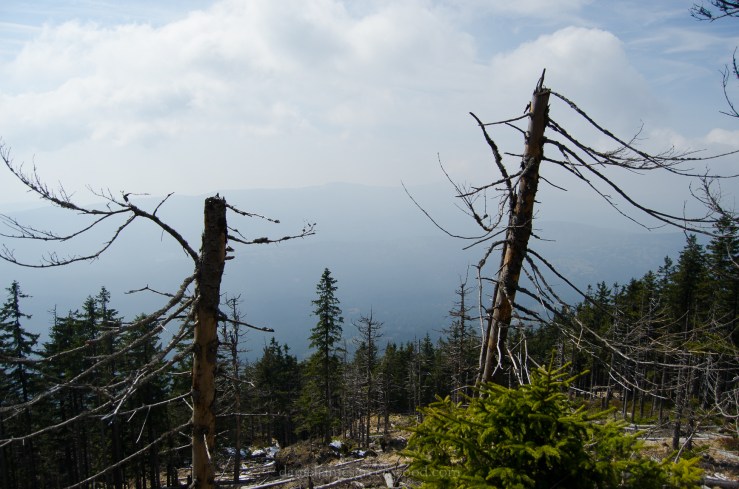
I take a seat down on some soft, dead grasses, all around me are the dead and rotting stands of spruce said to have been killed by a spruce bark beetle outbreak. Many of the trees have been allowed to rest for fungi and other smaller, subtler wildlife, one of any woodland ecosystem’s most important aspects – the recyclers. I take it all in – the hazy folds of mountains, the glistening rooftops of immaculate Bavarian churches and towns. I head off and down through the spruce woods, under the song of the ring ouzel and firecrest. This path will take me to the realm of the lynx.
Land of the lousewort: healing a broken landscape in the White Carpathians

Czechia 2017 lo-res djg-118

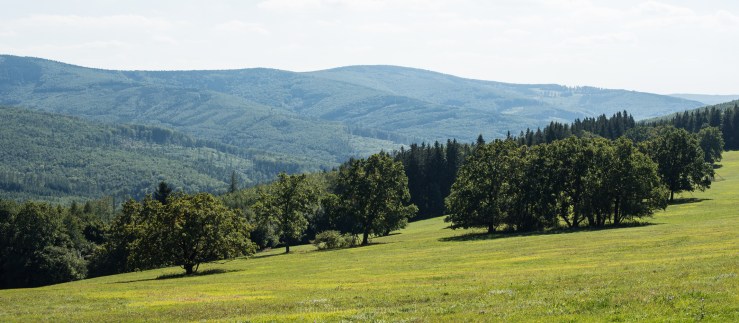
In September 2017 I visited the White Carpathians on the Czech side of the Czech-Slovak border. The White Carpathians hold wood pasture meadows with the highest plant diversity on Earth per square metre. This is a landscape heavily impacted by people but may be fairly close to the pre-human ‘wildernesses’ of Europe. Here conservation efforts have yielded great success in preserving part of a once international wildlife corridor.

The White Carpathians, Czechia (a.k.a Czech Rep.), September 2017

The sun beats down on the village of Vápenky and in the trees high winds blow off from over the White Carpathians. The sky is a deep, summer blue but in the orchards the colours of autumn are appearing. The meadows are dry and grain-coloured, red apples and green pears drop into the cropped grass.

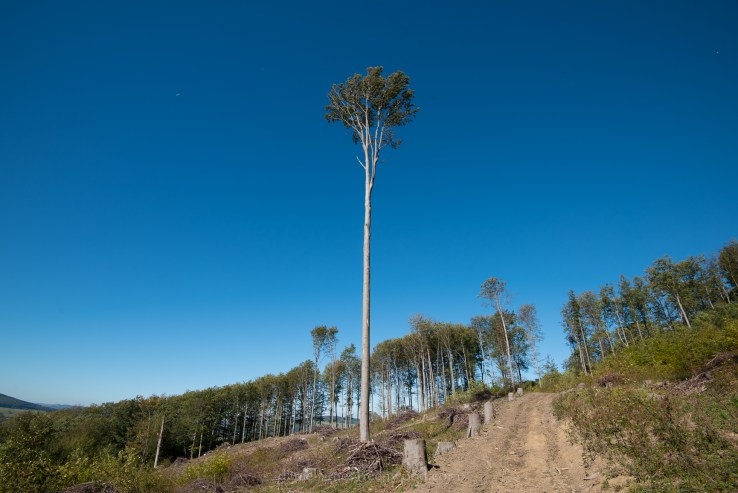
We follow the forestry road through tall beech woods that stand like the framework of a cathedral incomplete. The wind lashes them but some stillness rests in the opening low between the silver-grey trunks. The limestone quarry track bends up and over into a clearing where the forestry machines have deeply rutted the road. They have also cleared the trees but for one long, thin beech that stands alone, its bark bleached by the sun.

The landscape of a recently deforested area is shocking, wreckage. But this industry is one of the most important in the whole of Czechia. Many lives are sustained by it. Still, I wish we could find a way for horses to still remain an integral part – something I’ve seen in Romania – and that its culture was not so macho, chauvinist and driven by putting profit above good ecological stewardship.

Czechia 2017 lo-res djg-64

The clearing of trees has opened up views of the valley, showing forested mountains and peach rooftops. For a country that is nowhere near as pious as neighbours Poland and Germany, each village or town has it church, climbing above all else.

We are looking for a nature reserve called Porážky but our map failed to show the road we were taking some time ago. We speak to a Czech woman heading down a track with freshly picked parasol mushrooms in her hand. She points us back up the trackway, fingernails cut and painted indigo, her hair dyed reddish-brown.

The end of forestry land is always marked by a boost in tree diversity. Here hornbeam, a tree of no forestry value, grows. So too hazel, oak and small-leaved lime – the Czech national tree. These are all species of the pre-industrial forestry age, wildwood species of great use to human hand and hearth, but not the modern machine.

Light breaks through the edging of broadleaved wood to reveal grasslands and the sky atop the hill. Again the wind gusts. Reaching its top we enter Porážky, the protected area of wood pasture we had hoped to find. The landscape is cropped grass and single oaks. You would have not the slightest idea that these are the richest meadows on earth.

They are a man-made and exploited habitat, but they are the truest symbol of harmony between people and nature. In fact, they may even be closer to what the pre-human woodland landscape of Europe was like, due to the cropping of large, roaming groups of wild grazing animals we have now made extinct. ‘Rewilding’ in its purest or most puritanical form wants that world back.

Czechia 2017 lo-res djg-100

The White Carpathians are the lowest lying, most westerly extent of the Carpathians massif, stretching east to Romania where they reach their zenith. It is a landscape that holds great mystery, wildness and fascinating human cultures. What a life it could be to travel back and forth across the range, witnessing its wildlife and spending time with the people making a living from its soils, woods and meadows.

Eddie, my hiking companion, and I, have been to their furthest point, and there, too, are found meadows of great diversity. In Romania ancient traditions are dying out as people move to cities – what contrarily is thought to be the driving force behind the return of wolf, bear and other megafauna – the rewilder’s dream. In the White Carpathians conservation initiatives have led to the protection of the meadows and their continued management.

Two days ago we visited the headquarters of the Bílé Karpaty protected landscape area or CHKO in Veselí nad Moravou where we learned that one of the great successes for the organisation has been the return of orchards to the landscape. Vast tracts of this landscape have been returned from arable farming to species-rich grassland, righting wrongs of the post-war Soviet era. Fruit trees have returned because they offer something in return to local people – fruit.

Here in Moravia the Czechs have achieved great things. Grasslands are the most threatened habitat in the world, due to intensive agriculture, afforestation and development, and they have succeeded in both conserving what remains and bringing it back in other areas.

I have recently taken an interest in the Twitter account of Tibor Hartel, an ecologist in Romania whose work includes the mapping of ancient wood pasture. Unlike Czechia, Romanian wood pasture is poorly protected and local groups and individuals must act independently to save these amazing places often, it would seem, without government help. Imagine that this landscape once ran across the Carpathians, from Moravia, through the Ukraine, to Transylvania in the eastern corner of Europe. Even Prince Charles has taken an interest.

Czechia 2017 lo-res djg-94

Walking through Porážky it has the feel of an English parkland, the single oaks dotted amongst the green. I first visited here in 2014, hiking over the meadows with Libor Ambrozek, the former Czech Environment Minister and then head of the White Carpathians protected landscape area, or CHKO. I was blown away, the sheer abundance of orchids and the fact of its singular richness. In May 2014 a storm blew in and we were drenched in the open pasture. Today the wind overwhelms and the sun bears down, the glare intense.

Jays pass almost every few seconds, back and forth to stash acorns. They are in the process of ‘scatter-hoarding’the act of burying acorns in places that may well one day grow into the new oak trees of this landscape. These are birds in an autumn-pique. Beyond them buzzards soar but the wind deters the smaller species. In the grasslands clouded yellow butterflies feed on knapweeds and dandelions, red admirals bolt from the dark plantations. We find a single aspen, its trunk crooked, whipped north by decades of strong winds. Half its canopy shows red in its leaves.

To many this kind of landscape is at odds with the contemporary ethic of rewilding, or ‘allowing land to return to its natural state’. If that were to happen here many species would become extinct. One plant clinging on, Pedicularis exaltata, a species of lousewort, is only found in this area away from other localities in Belarus, Ukraine and Romania. Its presence suggests a once-continuous wood pasture landscape across the Carpathians between the Czech-Slovak border and eastern Romania. It can’t be seen today as it flowers in spring and summer. Instead the ground is dotted with meadow saffron, a pink crocus.

Czechia 2017 lo-res djg-85

The wood pasture as it looks today was created and ‘refined’ thousands of years ago by people clearing woodland – likely of oak, ash, hornbeam and hazel – to allow their domesticated cattle and goats and Mesopotamian sheep to graze. At least that is the common understanding, for could the presence of large, roaming groups of wild horses, bison, elk and other herbivores have meant a landscape more open than the idea of coast-to-coast closed canopy woodland? Compared with today’s measure, the deforestation work of our species was sustainable deforestation due to the population sparsity, moving a possibly more dense wildwood to something more open in places.

The current management and conservation of wood pasture relates to the belief that habitats which are species-rich are the ones which are most important and valuable. But they need to be maintained. If their management involves local people, provides sustenance and perhaps employment, it will work, especially in a place like Czechia. This may lack the perceived poetry of rewilding, but its practicality brings results: the continued existence of the world’s most important wildflower meadows and all the other chains of life which depend on them.

With thanks to my travel companion Eddie Chapman, friend and guardian Zuzana Veverkova, Ivana Jongepierova and everyone at the CHKO office.


The bells of Easter are ringing in the New Forest

Roydon Woods, The New Forest, April 2017

It’s Easter Monday and the sun breaks through the generic forecast of cloud, cloud and cloud. So too the bells of St. Nicholas’s church, reputedly the oldest in the whole of the New Forest. Bluebells swarm around graves, one reinstated in bright white stone. Sunglasses are needed to read the inscription. Bluebells and greater stitchwort spread out on the roadside banks and ditches, the fresh green feeling of spring is present here. The bells are clanging away for miles, oaks pushing out leaves after flowers.

Entering Roydon Woods the bluebells offer their spring greeting, washing off every now and then, where leaves and old bracken stems colour the woodland floor brown instead. The lilies have been trampled in places by badgers cutting across the margins of fallen trees and fencelines under dark. The bracken unfurls its prehistoric leaves, for how many millions of years has that been true, some in heart shapes fit for Instagram and greenwashing marketing campaigns. The urge is irresistible. In a place like this, at a time like this, it is difficult not to rejoice in the manner of the church at this time of year. Whatever your religious persuasion, it is hard not to feel a sense of something good making a long awaited return.

It is that time when those with less tolerance for heat jig between sun hat and tea cosy. It is the best of both worlds, and not expected to be the same again until autumn. The British summer usually dispels that generalisation. The birdsong has lifted, many species can be heard: blackcap, willow warbler, chiffchaff, coal, great and blue tit, robin, wren, nuthatch and the hammering of woodpeckers. The paths slaloms through Roydon Woods, at its edges oaks give way to holly, ash and birch. From these trees comes a sound I had hoped to hear for years in Britain. It is a quickfire piping that I have only personally heard in Poland and the Czech Republic. It is a lesser spotted woodpecker.

With binoculars I watch the point from which the call came, and sure enough the bird appears. White horizontal lines scar its black back, it is the size of perhaps a big chaffinch or a small thrush. This, the New Forest, is one of its final remaining strongholds in Britain. It has disappeared from woods in south London and across England for reasons not quite known or substantiated. The increase of their greater cousins and the general lack of available habitat for them may be the defining explanations. Walking on through Roydon Woods, lesser spots continue to call and hammer. I feel I know this ancient place a little more deeply now.

New Forest archive

Woodlands: BBC Open Country on One Tree Hill

OTH oaks-1

In December I did some recording with BBC Radio 4’s Open Country, presented by David Lindo and featuring The River Effra, the London National Park City and Queen’s Wood. It was great to be able to represent the Friends of One Tree Hill and London Wildlife Trust on the programme. Please listen here: http://www.bbc.co.uk/programmes/b088fx30

You can read my photo essay about One Tree Hill here: The Honor Oaks


Oaks of London: Sketch for Hounslow oak

6tag_111116-193625.jpg

Tree: Old common boundary of Hounslow Heath, Hounslow, west London, November 2016
Species: English oak, Quercus robur
Age: Between 200-300 years?
Status: Under attack

This phone photo was all I could take at the time of this sprawling specimen, so let’s consider it a sketch. It was on the western edge of Hounslow Heath in west London. I know less about west London’s natural history than the south, though I am familiar with the Crane valley. This oak is probably a coppice or a felled, accidental coppice, which has regrown. It is well-climbed but showed signs of charring from fire at the base. Gorse nearby had been burnt in what are considered arson attacks. In many ways the fact this tree is not older and more cavernous and has fewer points of entry for fire may protect it. Hopefully the arsonists – common in urban nature reserves – grow out of it or else are prosecuted.

Oaks of London archive

Photography: Halloween in the New Forest, October 2016

new-forest-october-2016-lo-res-17

This post is part of my Woodlands project

View my full gallery of New Forest photos on Flickr

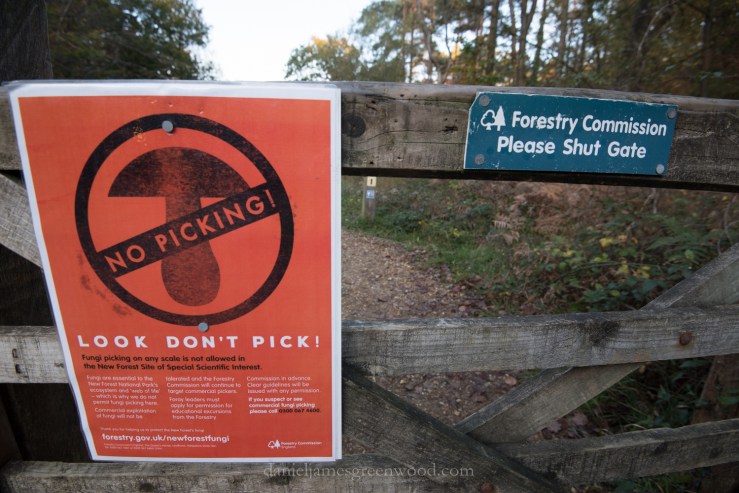
One of the great rewards of cultivating an interest in wildlife is the freshness and newness, the constant change. In spring it’s the woodland flowers breaking through the soil, in summer the bees, wasps and butterflies, and in autumn I seek out mushrooms on the woodland floor. This autumn, however, has not given the third kingdom of biological life, the fungi, what it needs. It has been very dry in the south of England. In October 2015 clouded and trooping funnels were romping across the woodland floor but this year there is very little soil-based fungi. Thanks to the astute minds of woodland conservationists who leave deadwood ‘in situ’ there are still mushrooms to be found and photographed for those of us who seek it. As I’ve said before, I’m not a forager for no good reason other than that I just enjoy photographing mushrooms. The New Forest has received publicity recently for its mushrooms and the Forestry Commission’s ban on all picking.

new-forest-october-2016-lo-res-162

Sure enough the signs were up when entering Forestry Commission land. I put similar signs up in my professional life and wish more people would respect the landowner’s wishes. But I sympathise with both sides in this case. Peter Marren argues that the Forestry Commission do more damage than a forager ever could with the use of heavy duty forestry machinery. Mushrooms are just the fruiting body of the fungus itself and the most important thing for any soil-based fungus is the mycelium in the soil. When heavy machinery is used in a forestry setting the soil is churned up and the mycelium destroyed. Even when the biggest band of foragers comes to raid the nest, they will only really be doing what the organism wants – spreading the spores released by the mushroom and leaving the mycelium intact. I sympathise with both arguments and feel that Marren may have the edge scientifically.

new-forest-october-2016-lo-res-30

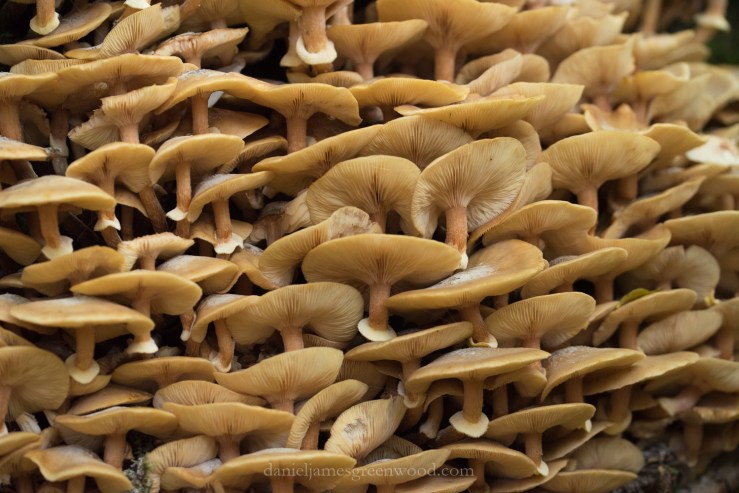
Conservation debates aside, there were lots of mushrooms to be seen. It has only been in the final weeks of October that honey fungus (Armillaria) has begun to appear and I came across large spreads of this most attractive and demonised mushroom. It is necrotrophic and often takes more from a tree than it gives in return in the symbiotic sense, meaning that the tree can often fail. It’s a native species often indicative of ancient woodland, so it’s been killing and breaking down trees for millions of years in Europe. But when it costs people money, people get angry.

new-forest-october-2016-lo-res-157

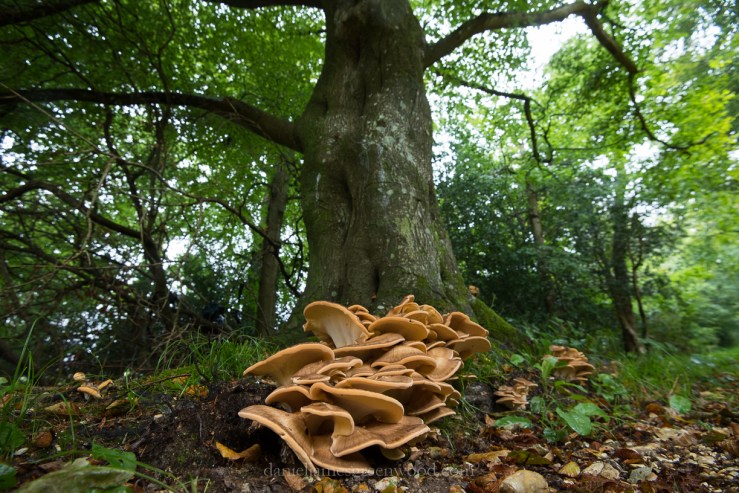
Honey fungus is the common name for a number of different types which are more difficult to identify straight away. I came across this charming clutch at the base of a beech tree. To think that fungi is in the fossil record as far back as 700 million years ago, while the Homo genus we have evolved from broke from other primates 3 million years ago. I feel we owe these unthinkably ancient organisms respect, which means not taking more than we should and protecting their habitats and allowing them to be, well, mushrooms. I think this species is Armillaria mellea owing to the ring and the colouring in the centre of the cap.

new-forest-october-2016-lo-res-78

Though I have complained about the lack of fungi this autumn on the soil sulphur tuft (Hypholoma fasciculare) has had a great year. It took it a while to come out last autumn but it has been first past the post this time. It is one of our most common species, found on the surface of logs and fallen trees.

new-forest-october-2016-lo-res-68

Looking back at this macro image of a bonnet mushroom (Mycena) I noticed the small shower of spores leaving the gills and flowing off towards the left. I’ve never seen a mushroom with a cap do this and certainly did not notice until I looked more closely later. To think one of those spores could end up producing a beautiful mushroom like this somewhere nearby.

new-forest-october-2016-lo-res-103

Spore dropping mushrooms are known as basidiomycetes, pointing to the basidium which, in mushrooms with gills, is where the spores are produced. Alternatively ascomycetes are spore shooters and myxomycetes are slime moulds, which aren’t fungus at all. Still there? On Halloween you could be forgiven for thinking these were the fangs of a vampire mushroom. But vampires don’t exist, and it’s a mushroom. This is a species from the genus Amanita.

new-forest-october-2016-lo-res-105

Though it can be disappointing if you’ve travelled a long way to see a big show of mushrooms in the woods and find nothing much, there is pleasure in finding  a little mushroom down in the leaf litter. This little bonnet was sticking its head above a parapet made of beech leaf litter, hence the brown and faintly orange blur throughout the image.

new-forest-october-2016-lo-res-86

Somewhat more incongruous and rock like was this earth ball in the genus Schleroderma.

new-forest-october-2016-lo-res-55

No, I am not saying this is a mushroom. It’s the reproductive parts of a moss seeking to spread its spores across the woodland.

new-forest-october-2016-lo-res-41

In the plant kingdom the bracken, such an important resource for people and their animals in the New Forest, was rainbow-like. The greens were so dark they almost appeared blue.

new-forest-october-2016-lo-res-122

The New Forest is an ancient landscape that supports species of conservation importance across Europe. In England the wild service tree (Sorbus torminalis) is far less common than it once was but Roydon Woods NNR is a good place to find the odd individual tree. I had never seen its autumn colour until this year.

new-forest-october-2016-lo-res-147

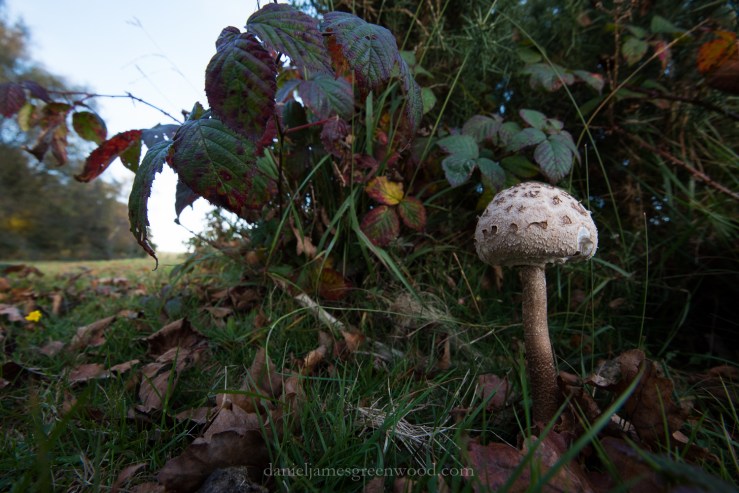
Out of the woods I found this parasol mushroom hiding in the shelter of bramble. If this was a tabloid article there would be a band of European foragers coming round the corner there with sacks full of mushrooms. There was only a lady walking her dog.

new-forest-october-2016-lo-res-168

One of the things to remember at this time of year is how quickly the light fades. On Halloween bats were hunting at 4 o’clock, ready for their upcoming hibernation. Is this why they are such a key part of Halloween’s iconography, because they hunt so close to dusk in autumn we come into contact with them, their shapes imprinted in our minds. I left with the shapes of New Forest ponies grazing the misty horizon of Balmers Lawn, imprinted upon my camera’s memory card.

See more in my New Forest archive


Oaks of London: Rural remnants of Dulwich Park

dulwich-park-oaks-22-8-16-lo-res-26

Trees: Old field boundaries of Dulwich Park, Southwark, London, September 2016
Species: English oak, Quercus robur
Age: Between 200-500 years?
Status: Fair

dulwich-park-oaks-22-8-16-lo-res-55

This sizeable boundary oak lost a limb in a recent storm but it should be able to recover. It’s important to remember that many ancient trees lose their heartwood through storm damage, lightning strikes or by other means. It is also very pleasing to see that the fallen limb has been left to decay next to the tree. Southwark Council are generally good at doing this where conservation policies make it to grounds maintenance.

dulwich-park-oaks-22-8-16-lo-res-43

One of the more intriguing trees is this heavily belted pollard oak. I like to call it the toilet oak. It has put on a lot of bulgewood over the centuries as it’s had to reach out to the light. My images are slightly distorted by the 10-24mm wide angle lens I use, seen in the lean of the toilet block. It seems in fair condition despite the erosion around its base, likely from the soles of children’s shoes as they climb it.

dulwich-park-oaks-22-8-16-lo-res-42

In the fenced nature reserve area is a neat line of former field boundary oaks from the time of farmland smallholdings, likely dating further back to when this was Dulwich Common. These oaks also show a great deal of bulgewood from the interal shifting of the tree’s woody fibres as it has reached out towards the light. They once grew in full sunlight, undeterred.

dulwich-park-oaks-22-8-16-lo-res-37

The one nearest the gate has all the signs of recovering from lost limbs, epicormic growth and the need to put on bulgewood. Immediate trouble for this tree is coming from the yew growing on the right hand side.

dulwich-park-oaks-22-8-16-lo-res-41

It’s an impressive pollard, probably about 300 years old. It is reaching for the light outside the nature reserve.

dulwich-park-oaks-22-8-16-lo-res-33

The furthest oak has lost one of its limbs and has a large wound in the heart of the tree. I can’t underline enough how important this is as a habitat feature for the fungi and invertebrates. It is a major wound but it should be able to recover over time now that the excess weight has been lost.

dulwich-park-oaks-22-8-16-lo-res-26

The largest of the oaks is this fine one next to the boating lake. I remember this well from childhood (decades not centuries). It has fairly complete leaf cover, so few signs of stress despite its closeness to the path and amenities.

dulwich-park-oaks-22-8-16-lo-res-19

The trunk shows the bulge of a former limb, the buttresses at the base holding the tree steady. When I photographed the oak it had been marked by the business card of a commercial dog walker.

Oaks of London archive
I’m leading a tree walk at Dulwich Park on Saturday 29th October 2016 
Dulwich Society
Dulwich Park Friends
My oaks of London gallery on Flickr

Oaks of London: The Beulah Spa oak

beulah-spa-oak-7-9-16-1

Tree: The Beulah Spa oak, Croydon, London, October 2016
Species: English oak, Quercus robur
Age: Between 300-600 years
Status: Good

Next up on my slow-motion journey through the oaks of London is another of the Great North Wood oaks. This was shown to me by Jo Wright and Sam Bentley-Toon.

This oak is a confusing one. At first sight it appears to be an ancient pollard, possibly 500-600 years of age. Closer examination shows that it may actually be a coppice or regrown fell, meaning it’s more like 300 years old at most. Oliver Rackham pointed out that coppiced oaks can look like pollards in the way other species would appear to be pollarded.

It’s situated in Spa Wood (or the Lawns) in South Norwood. It is certainly a remnant of the Beulah Spa, created in the 1840s before the opening of the Crystal Palace. Therefore it is another Great North Wood oak.

Links: History of the Beulah Spa – Norwood Society


Photography: Blean Woods, September 2016

Having been continually wooded for hundreds, if not thousands of years the Blean is an area steeped in history which is unusually well documented. The continuity in woodland cover has also resulted in the creation an immensely rich habitat. Almost all of the 11 square miles of woodland comprising the Blean complex is classified as ancient woodland, which contains an enormous variety of biodiversity. Its value for wildlife is recognised at a national level with over half of the Blean being designated a Site of Special Scientific Interest; further to this, approximately one third is designated as a Special Area of Conservation, affording it protection at a European Level. – Blean Woods official website

blean-september-2016-lo-res-djg-16

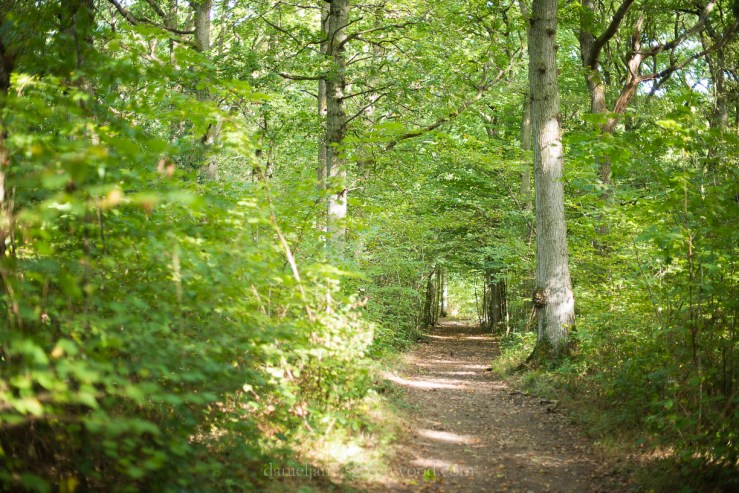
Along a pathway, sessile oaks pale with algae, a sign of clean air

blean-september-2016-lo-res-djg-7

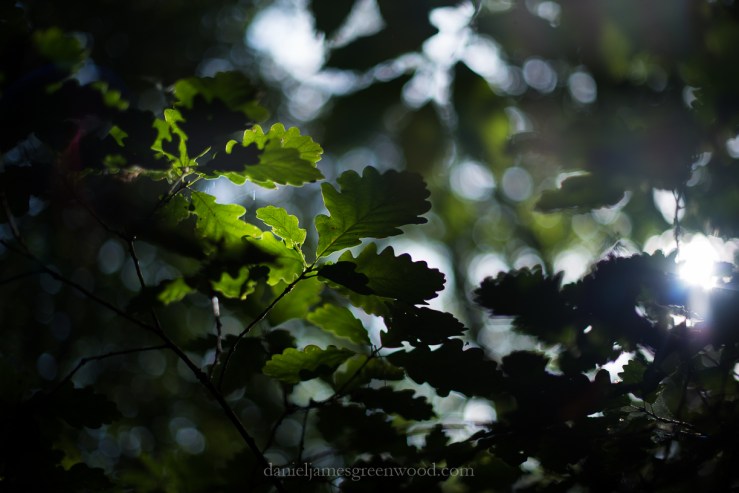
Sunlight through sessile oak leaves

blean-september-2016-lo-res-djg-13

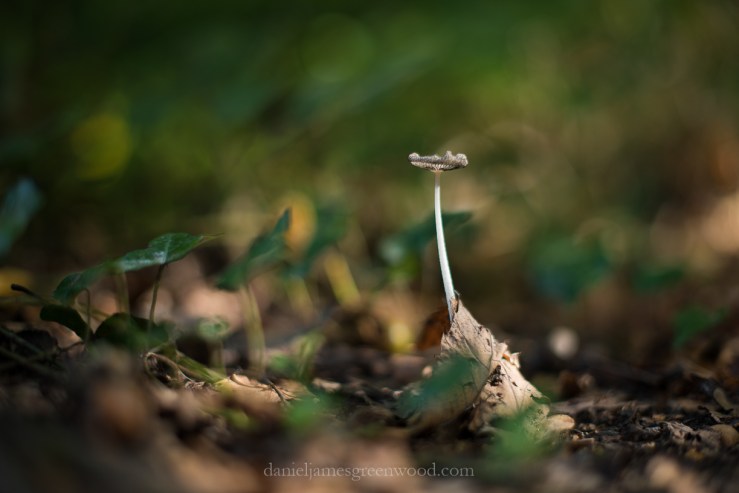
One of very few mushrooms, a species of Coprinus inkcap

blean-september-2016-lo-res-djg-18

Coppice with standards: the piles of timber are sweetchestnut cut (I think) last year, the spring-summer growth can be seen

blean-september-2016-lo-res-djg-19

September is a beautiful month, the light has a spring-like quality about it. This gorse caught my eye where it grows in the areas of heathland in Blean Woods

blean-september-2016-lo-res-djg-2

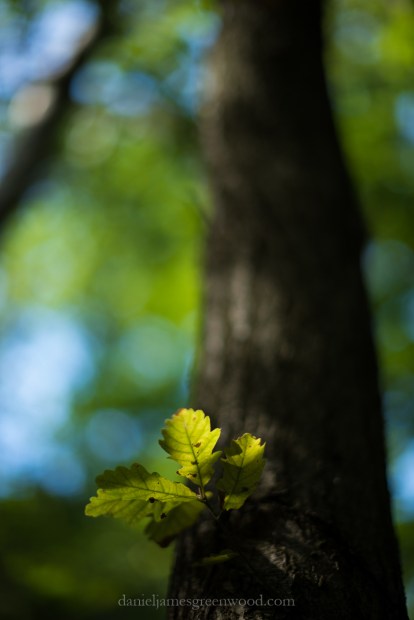
Some epicormic growth on a sessile oak. I shot this at f1.4 with my 50mm lens to try and highlight the woodland ‘bokeh’

blean-september-2016-lo-res-djg-27

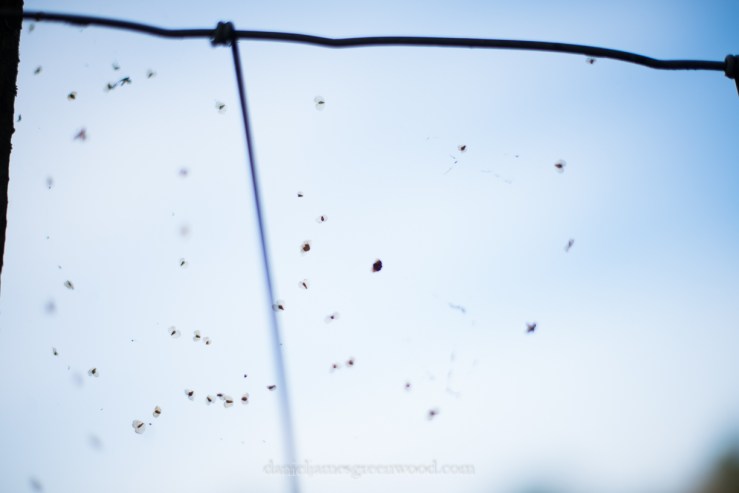
Blean has lots of birch, much of it coppiced. On the pathway between Canterbury and Blean the strongest signs of autumn were the seeds (of which I took many back home with me accidentally, and to me look like little flies in flight)…

blean-september-2016-lo-res-djg-28

…and the leaves tangled in spiders webs

blean-september-2016-lo-res-djg-29

The orchards, of which there are a fair chunk running between Blean and Canterbury, were heavy with apples, the ground littered with hundreds of decaying fruits.

I’ve recorded a lo-fi folk song about Blean Woods, which you can listen to here:

Photography: The New Forest, September 2016

New Forest September 2016 lo-res-26

This is part of my Woodlands project

View my full gallery of New Forest photos on Flickr

I hadn’t managed to visit the New Forest since May, when redstarts sang in the woods and the stitchwort and bluebells flourished under the trees. A lot has changed since then, Britain having voted by 52%-48% to leave the European Union. I am pro-EU and on the morning after the vote took place I felt a degree of sadness that The New Forest voted to leave. Why sadness? The New Forest is one of the EU Habitats Directives Natura 2000 sites which is specially recognised for its importance across the whole of Europe. One of the main barbs of the Leave campaign was that somehow the EU was an attack on individual freedoms, especially of local, unique communities in Britain. I disagree with this. The Natura 2000 website recognises that the New Forest is designated as a Special Area for Conservation because of the role that local people play in managing its habitats:

The quality of the habitats of the New Forest, and the rich diversity of species which they support, is dependent upon the management activities of the various owners and occupiers. Of fundamental importance is the persistence of a pastoral economy based on the existence of Rights of Common. The commoners’ stock, mainly cattle and ponies, roam freely over extensive areas of the New Forest, playing a vital role in keeping open habitats free of scrub and controlling the more aggressive species such as bracken (Pteridium aquilinum) and purple-moor grass (Molinia caerulea), and maintaining the richness and variety of heathland and wood pasture habitats.

Then again, don’t ask me what I think about the antics of the Leave campaign, nor the failures of Jeremy Corbyn and David Cameron in alerting people to the importance that the EU holds/held for the environment. If you’re interested there is a petition asking for the EU environmental protections to be upheld if/when Britain leaves the EU. Yet again our politicians and political system have failed to protect the environment.

New Forest September 2016 lo-res-1

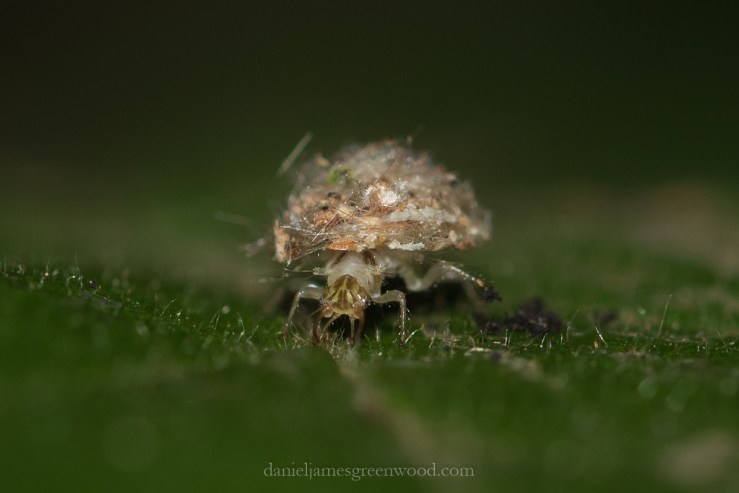
The Hampshire and Isle of Wight Wildlife Trust’s Roydon Woods is one of my favourite reserves to visit. It was silent but for a few flocks of blue tit and long-tailed tit, and one of only a few insects I found was this lacewing larvae (Neuroptera). It was carrying this backpack around, what I think is tied together by the downy hairs of leaves, possibly willow or hazel.

New Forest September 2016 lo-res-9

Autumn is a special time, though there has been little rain in recent weeks, there were several large bracket fungi to be found. This is a newly emerging chicken of the woods (Laetiporus sulphureus).

New Forest September 2016 lo-res-12

The solitude of the New Forest – most areas away from campsites, car parks and cycling routes are largely devoid of visitors during the week – means you can encounter some wonderful things. I looked up to find a roe deer (Capreolus capreolus) watching me, half way between a field and the woods. There is a clear browsing line in the New Forest and very little natural regeneration of trees because deer and other herbivores, generally New Forest ponies and other livestock, are eating the new growth. Chris Packham has recently said that the New Forest is dying because of over-grazing.

New Forest September 2016 lo-res-19

It’s not often that you come across a perfect specimen of a mushroom. Fruiting bodies are short-lived and very quickly deteriorate. To find this giant polypore (Meripilus giganteus) was a moment of sheer joy. As I’ve said in my fungi round-up for last year, I don’t pick them, just photograph them. I’m not precious about this nor hyper-critical of mushroom picking, I just prefer that other people and indeed animals can enjoy them. This mushroom was about 2ft in length and just beside the path. I hope others manage to see it before it decays.

New Forest September 2016 lo-res-32

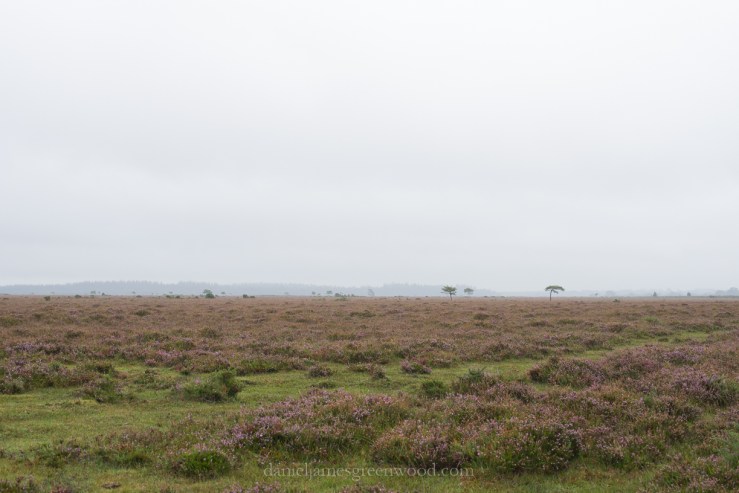
Out on Beaulieu Heath it was drizzling and grey. Stonechats were low in the leftovers of gorse, a flock of medium-sized birds flew overhead and down into the heather which I couldn’t identify. Horseflies dive bombed from the woody margins, the sound of their wings is unmistakable and unnerving. They only want one thing. Along a denser edge of trees and scrub a hare burst free, then came a stoat, turning on its heels at lightning speed to return to the cover of bramble. Spotted flycatcher was also a nice sight at the corner of Lodge Heath.

New Forest September 2016 lo-res-40

In the Frame Heath Inclosure forestry operations were underway with mature sessile oaks (Quercus patraea) being harvested. I’ve been reading about the Forestry Commission’s attempts to remove broadleaf species like this from the Forest in the 20th century. It took ministerial intervention and local opposition to stop a near complete shift to conifer plantation.

New Forest September 2016 lo-res-45

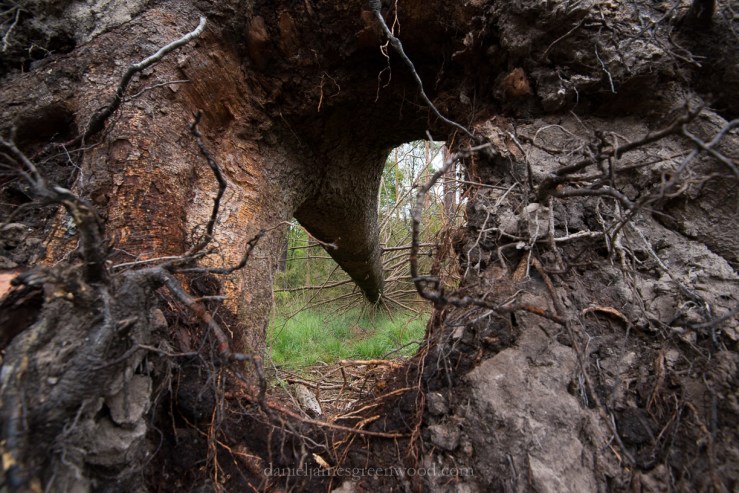
Sitka spruce (Picea sitkensis) is one of the preferred species for foresters. They are shallow rooted trees liable to windthrow in more open landscapes. This spruce had been taken down by just that, a large hole bored through its middle where the soil had fallen away.

New Forest September 2016 lo-res-37

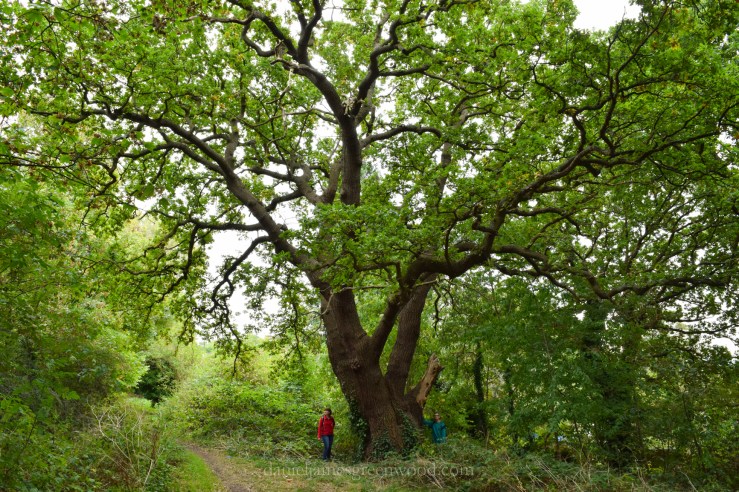
The gentle giants of English oak (Quercus robur) are far ‘happier’ standing alone in the landscape. The reason they are not surrounded by regenerating trees is because of the aforementioned grazing taking place around it. Give me these beautiful old trees any day over a spruce or pine monoculture. We should be thankful to all the people who have fought to fend off intrusive forestry practices in the Forest.

New Forest September 2016 lo-res-56

It is these ancient and veteran trees that makes the Forest so unique in Europe. The number of these old trees draws the breath, in areas which are not Inclosures where oak, pine or spruce are planted in regimental fashion for timber, there are just so many of them to be found.

New Forest September 2016 lo-res-68

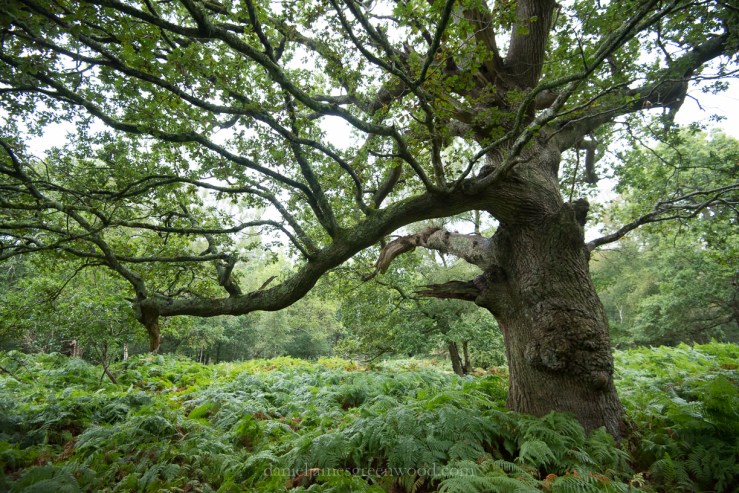
Balmerlawn is close to Brockenhurst and hosts two spectacular old English oaks. This one has a trunk about 6ft and I would approximate it to be over 500 years old.

New Forest September 2016 lo-res-73

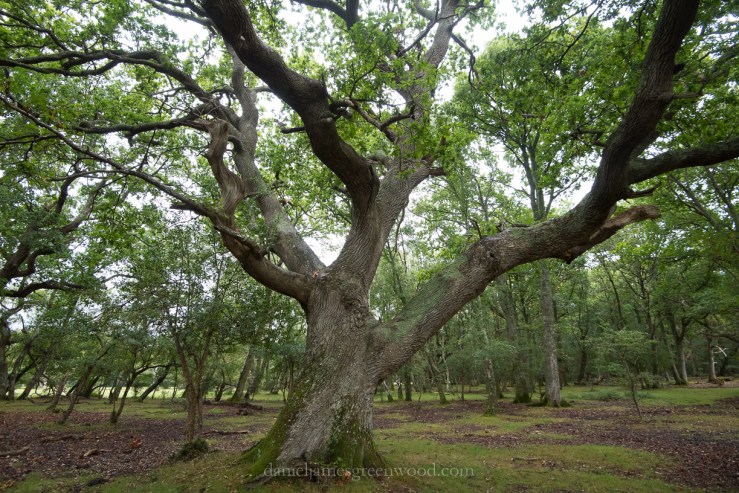
Next door to it is a younger oak with a massive ‘wolf branch’ as arborists call it, reaching out towards the road. Where it swoops closest to the ground there are two patches where the grass has been worn away by kids jumping up and down over the years. It’s a dream to climb.