
I’m back from my annual visit to the west of Ireland. I managed a couple of day trips to forage for photos, which will crystallise later this year into dedicated posts, all being well.
Like many people I enjoy the Blind Boy Podcast, none more so when I have the headspace to take in all that gets said in an episode. I listened to this hilarious one with Chris O’Dowd, including a couple of brilliant stories about rural island. Avoid if you don’t like swearing 😬
I also absolutely tore through A Star Called Henry by Roddy Doyle (1999) while away. If you need any evidence that fiction can be a great way to learn about history, this novel is it.
All the pics here are taken on my Pixel 7a (which Google tried to get me to promote FOR FREE). It’s an exceptionally good camera I think.

Ballina is a place I like to visit, built around the mighty River Moy. You may recognise this scene because Joe Biden gave a speech from the church steps.
There’s an excellent bookshop in Ballina called Pangur Ban which you must visit and support if you’re in town.

I liked this sign and admired the blue tiles. Almost Everton blue, you might say. I don’t eat seafood though, can’t cope with it.

Nearby at Killala Bay I had a lovely walk along the shore. There were sandwich terns, rock pipits, oystercatchers, and curlews here (and the wind, always.) These are the beaches I love – wild and smelling of the sea. There will be a dedicated macro blog for my finds here.

Now then, the bard of Mayo Seán Lysaght has released his latest book – Unveiling the Sun. It’s a collection of more than two decades worth of short writings, describing walks and nature observations in the Nephin Beg area near Westport. I recorded a podcast with Seán exactly 3 years ago which you can listen to here (or by searching ‘Walking to Lough Conn with Seán Lysaght’ on any podcast platform).
I’ve read the first chapter (January) of Seán’s new book and I am enjoying the insight into a part of Mayo I don’t know so well but love to visit.

And just like that, here we are in the Nephin Beg mountains of Wild Nephin National Park. There’s a fantastic café here which is open in the spring and summer, closing at some point in the early autumn. I probably have a macro blog for here as well.
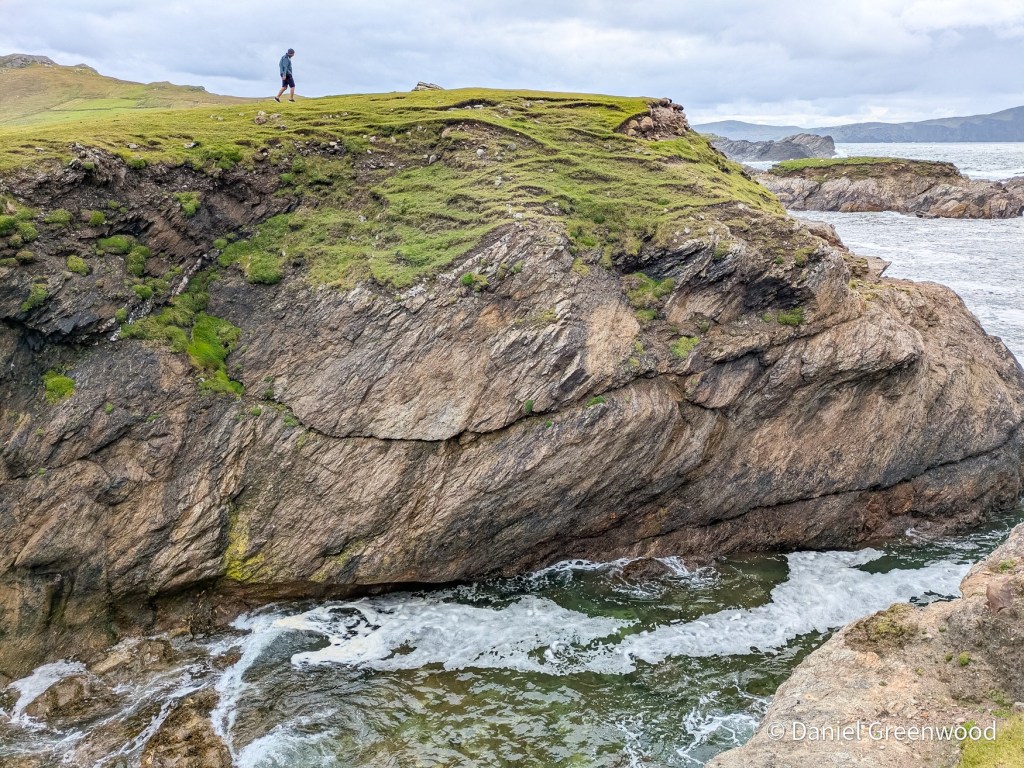
From Ballycroy I continued on to Achill Island, one of the most westerly points of Europe, and the Wild Atlantic Way (more a car touring route than a footpath). I tried some isolated rock and surf photos with my macro lens which I’ll share later on. I posted about Achill a few years ago.

On the drive around the island I passed this beautiful cottage with a thatched roof clinging on. I hope they’re able to repair it, which is evidently a longer term plan. Thatch is very expensive to maintain in England but I reckon there’s some local knowledge still lingering here on Achill. It’s facing the Atlantic Ocean so it has quite a lot to cope with!
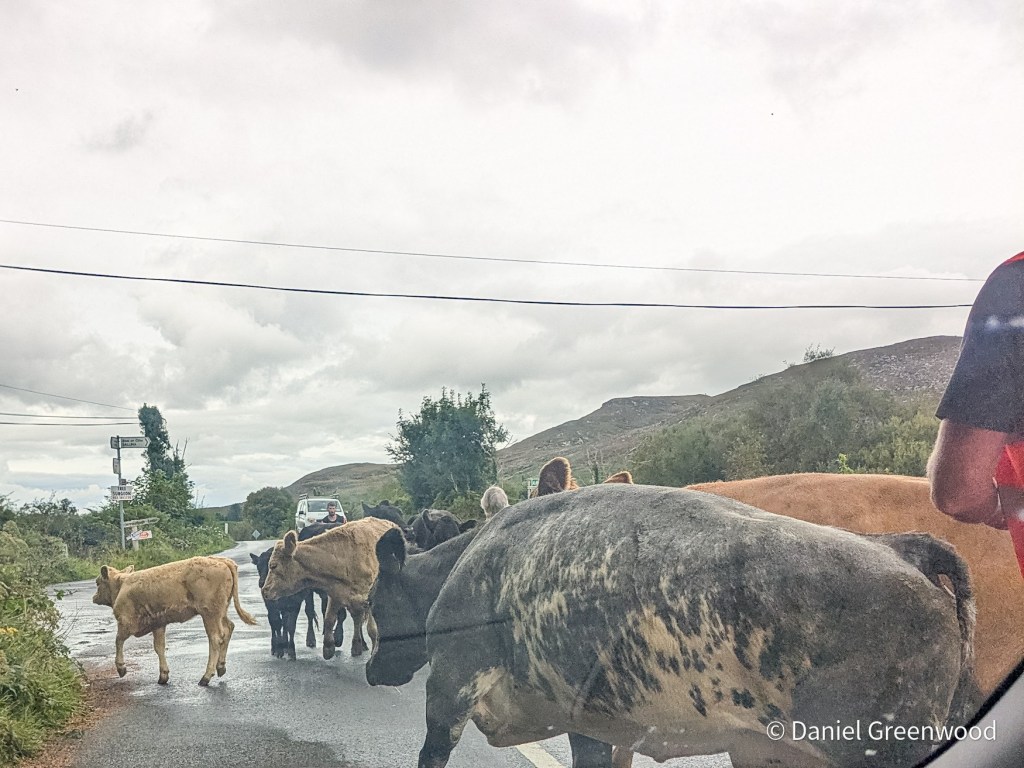
Back on home territory near the Ox Mountains I was forced to park up to allow these cattle to cross the road. I am sure that cattle have begun to replace sheep in this part of Mayo in recent years.
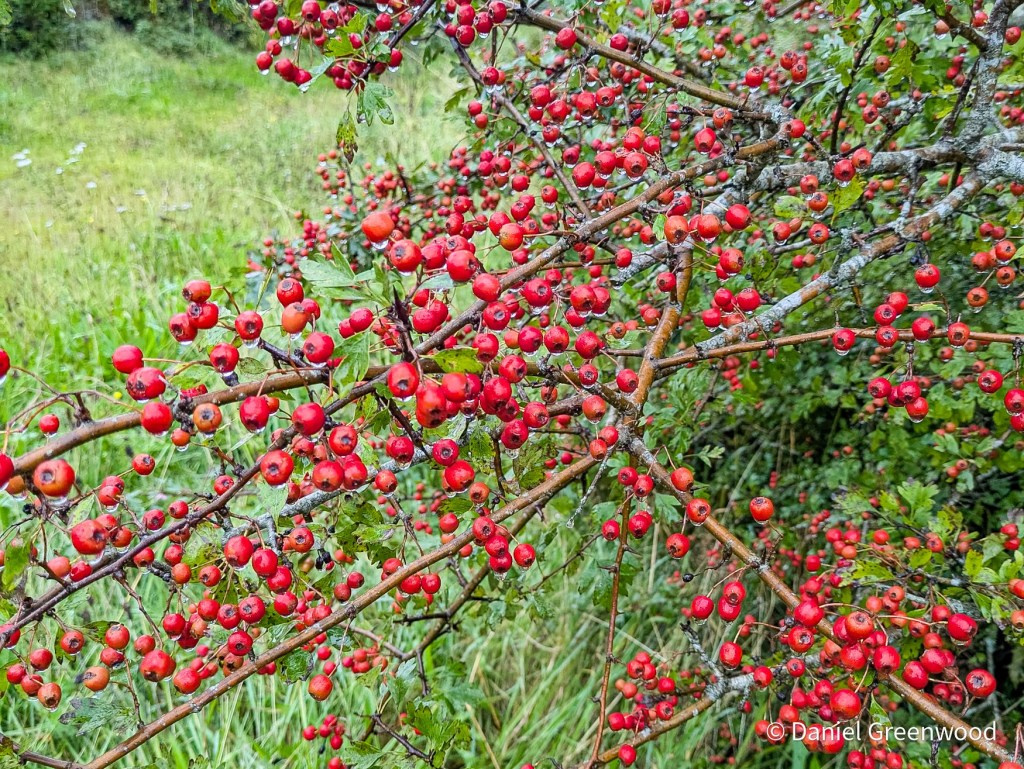
The number of hawthorn berries was amazing. This has been a bountiful year for wild fruit.

The bramble has had a very good year as well, creeping through doors opened by winter storms.

I saw quite a lot of red admirals around.

My aunt sent me a photo recently of a green-veined white where she lives in Mayo, and I saw plenty myself. In Sussex there have been lots of large whites this year, but in Ireland the green-veined were by far the more common pierid.

On the evening before I came home, I went out for a walk along the mountain path and found these huge moth caterpillars. They are buff-tips, the ones that look like broken twigs when they are adult moths. It was a highlight of the trip actually, watching these massive caterpillars munching on willow leaves.
Thanks for reading.



 Unlocking Landscapes