Earlier this week I went for a short walk around part of the Sussex Weald to see if any mushrooms had popped up. We’ve experienced one of the driest springs on record and the warmest June for England, as well as three heatwaves already! Me and mushrooms don’t need three heatwaves, thanks.
Mushrooms need rain, warmth and moisture to thrive, and after a downpour earlier in the day I thought it might be worth having a look. Here’s what happened:
At the beginning you can hear my water bottle in my bag and a great spotted woodpecker ‘kicking’
I began in the presence of Bambi, or a fallow deer
I’ve been making an effort to go for a walk in my local slice of the Sussex Weald before work in recent weeks. The impact it has on my brain, body and soul is profound, having lost my connection with woodland somewhat recently.
Early spring is a special time in woodland, watching the the leaves appear, the first spring birds, and the woodland flowers. It is so much better than those hot, shady and sterile days of summer, in my view.
The chiffchaffs have been arriving, but the song thrush rules this chunk of the Weald. Its repeated phrases echo through the still leafless branches.
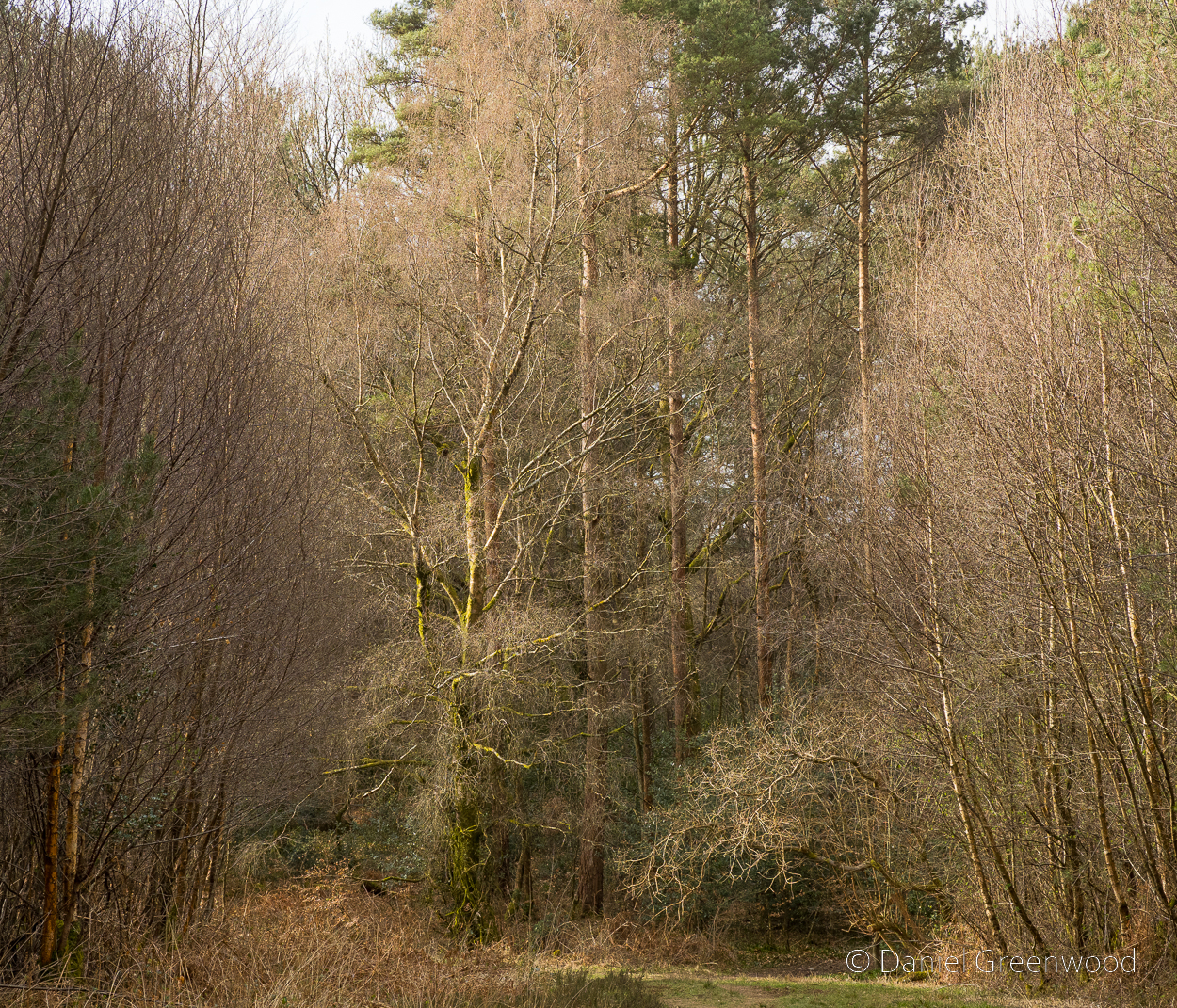
Wild branches against ranks of pine and birch.
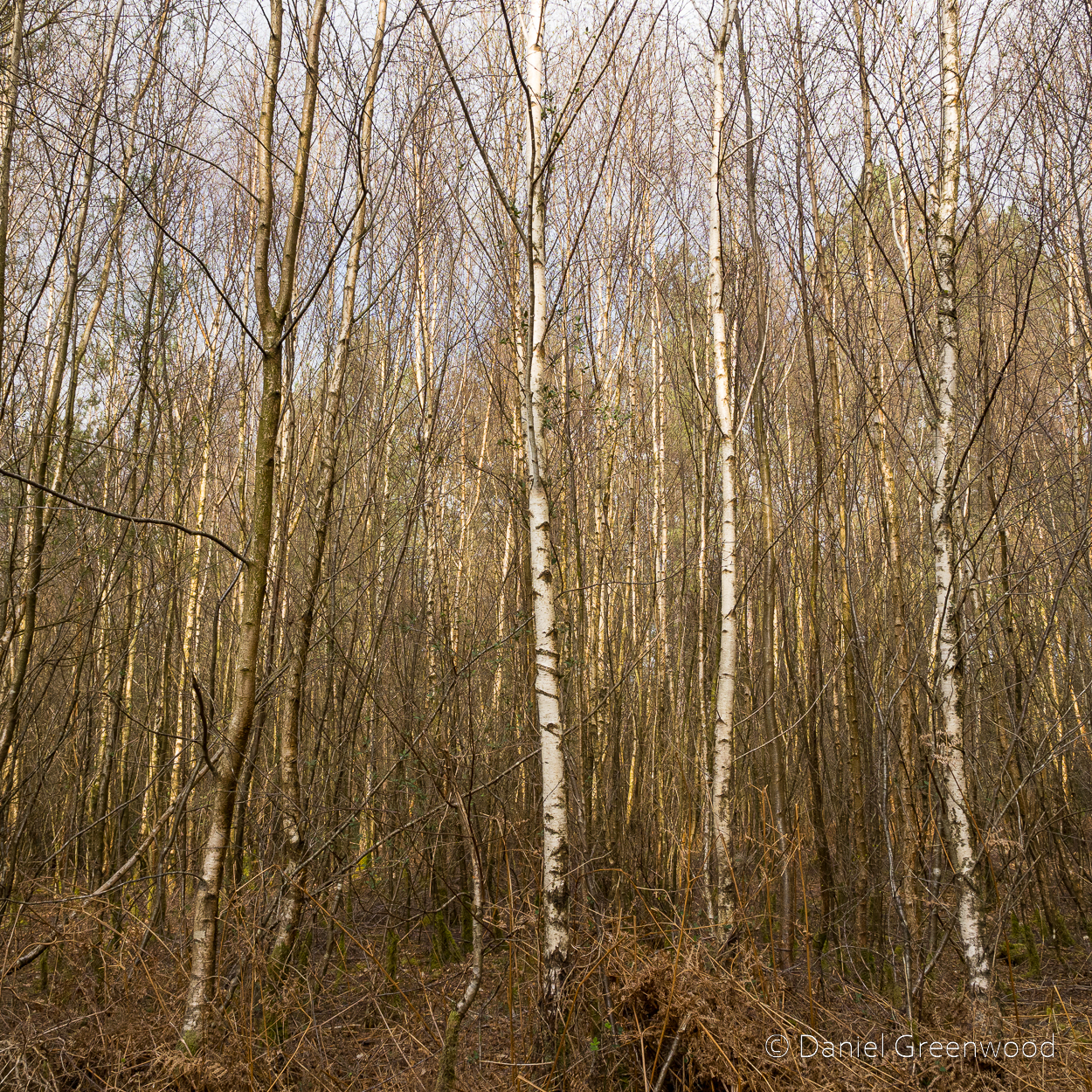
Those birches, growing on old heathland, waiting for the onset of new leaves.
A birch tree harassed by honeysuckle, catching the morning light.
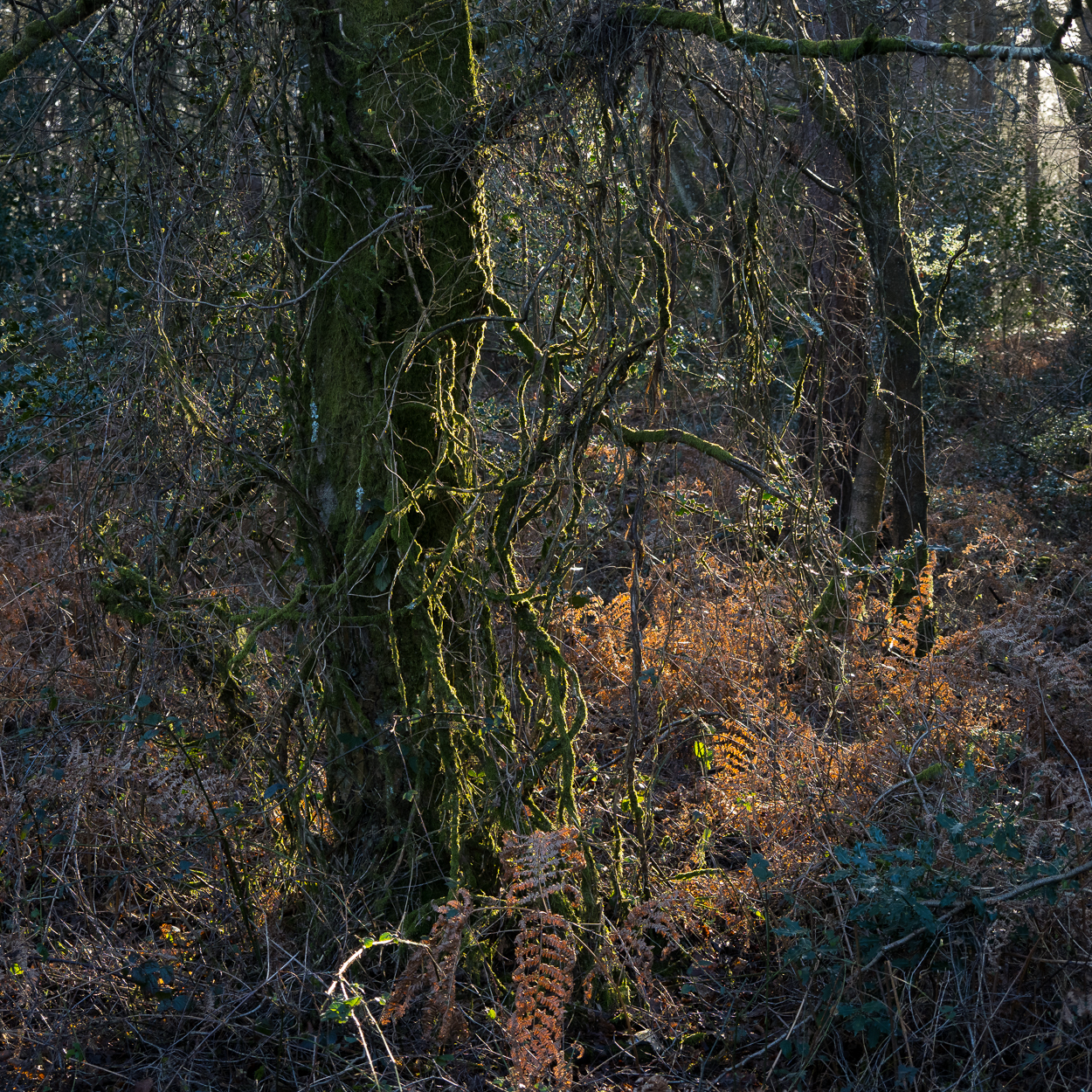
A green beech tree with lots of moss and algae.
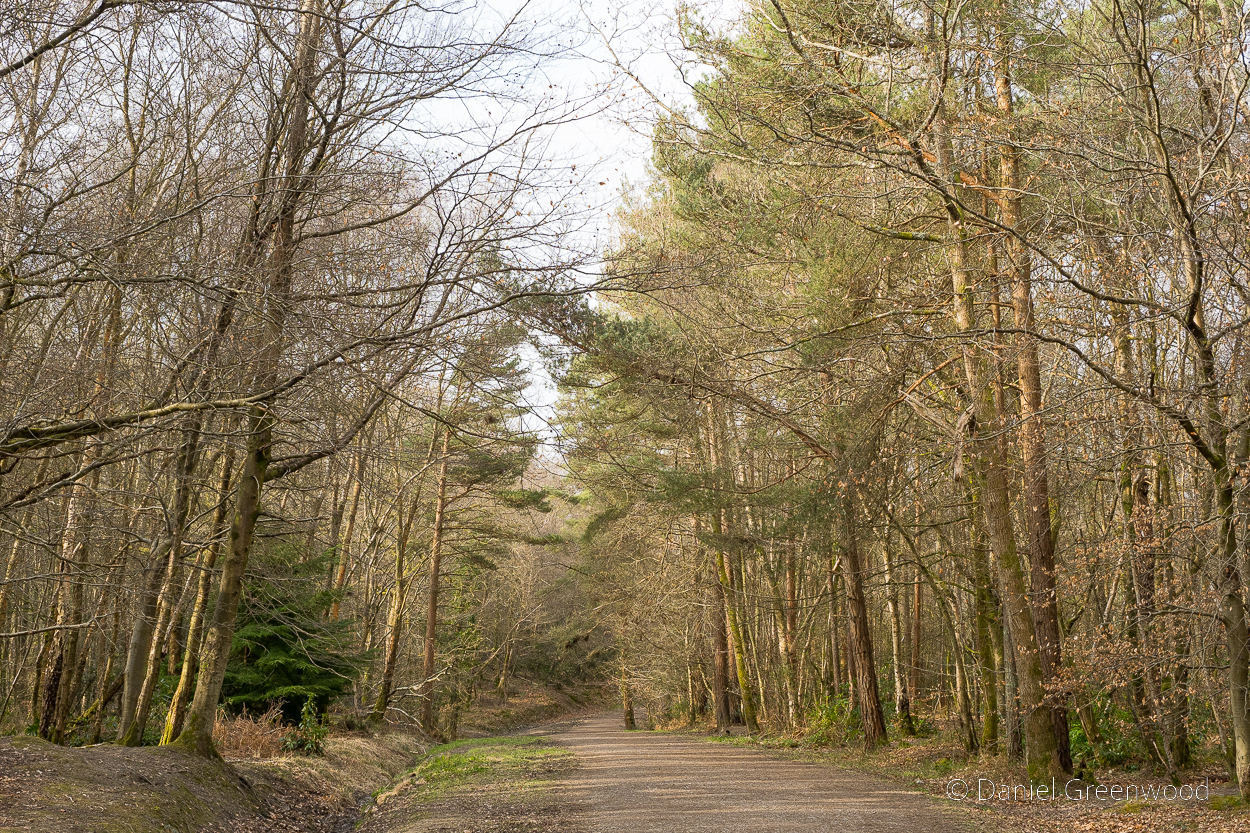
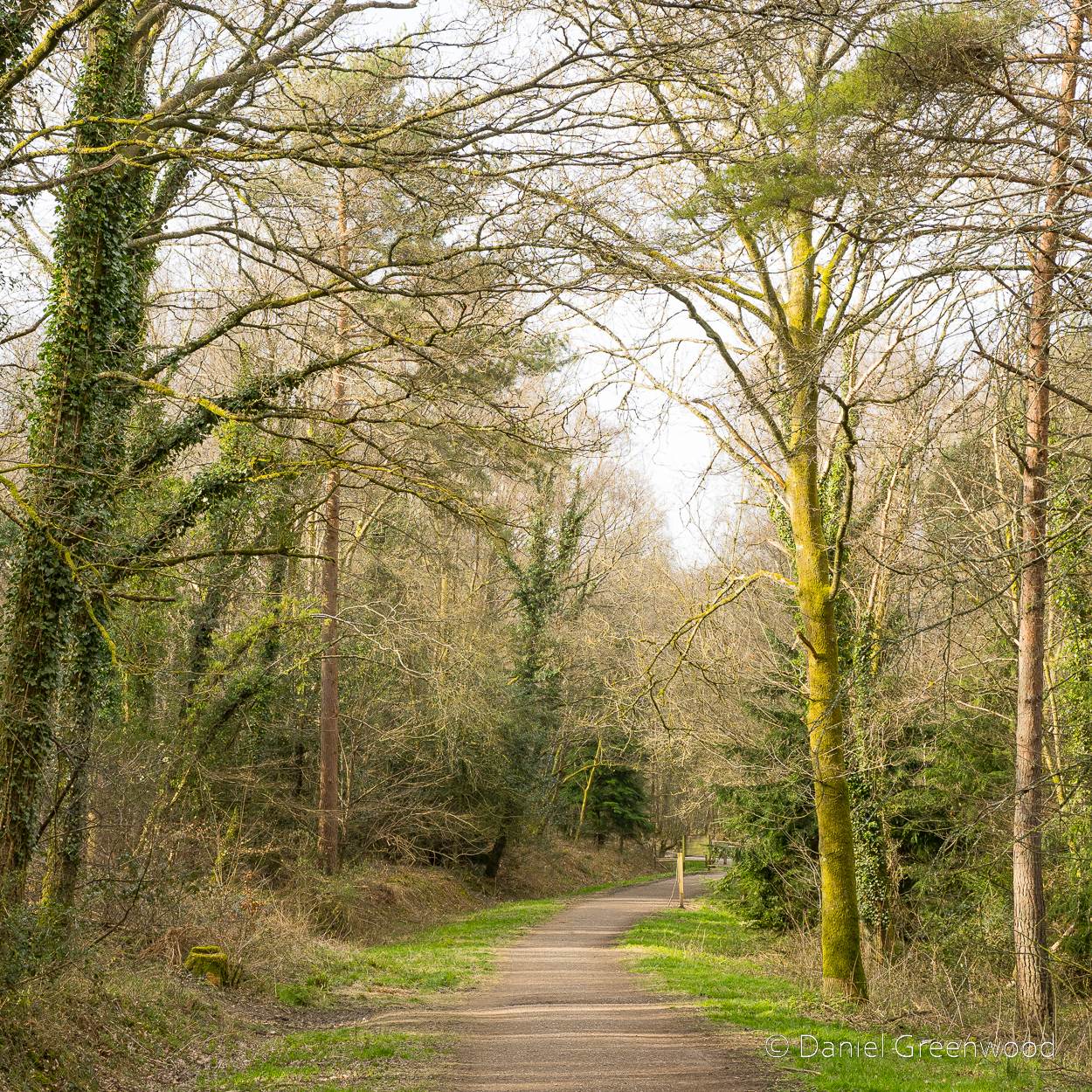
The ride, with pines reaching across on either side.
Silver birches among bluebell leaves.
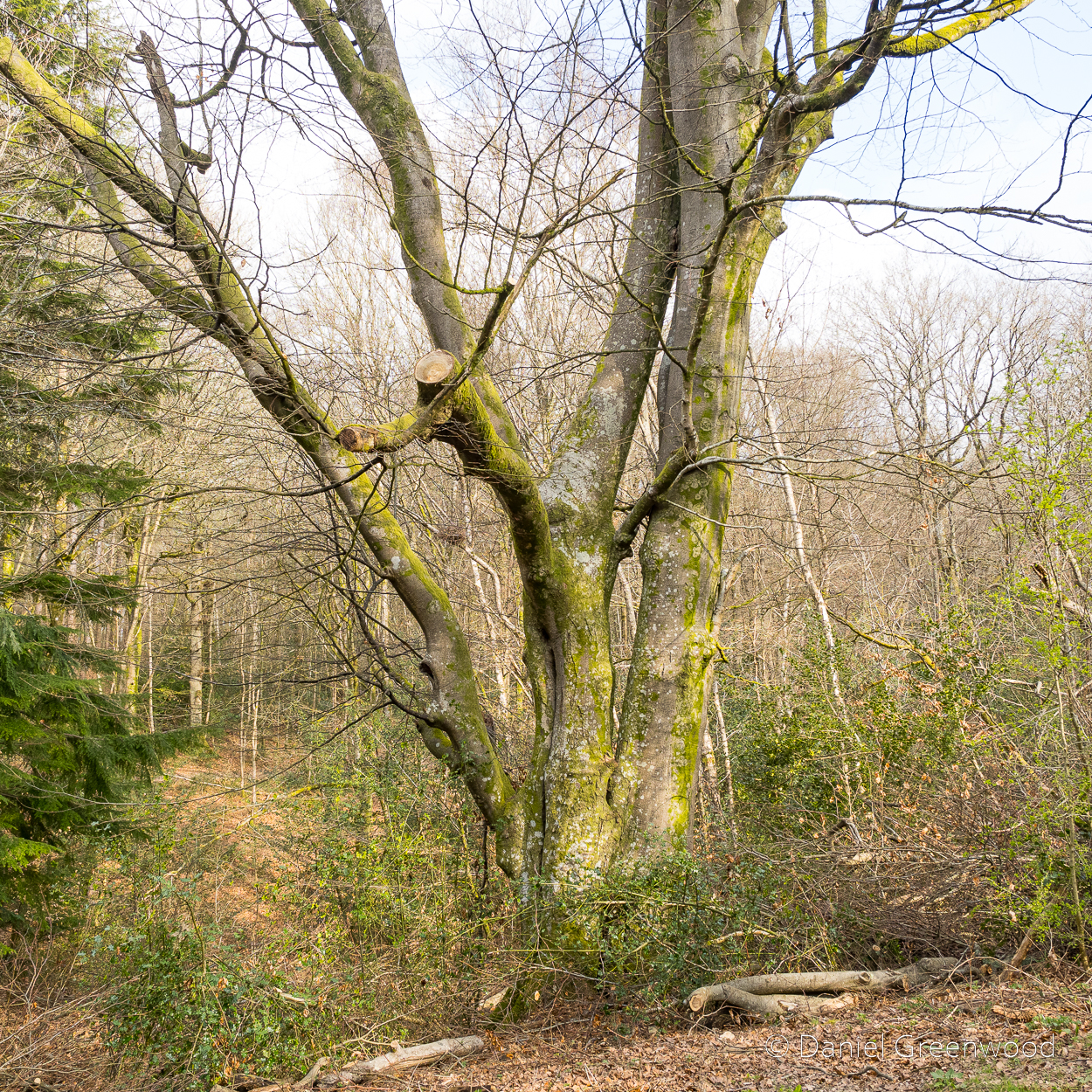
An old beech tree.
Bluebell leaves appearing below a mess of beech twigs and old leaves.
The grassy banks of the woodland ride. I often hear firecrest singing along these edges where the ivy climbs and a few evergreen trees like the cypresses grow.
I had some hours to take one Friday afternoon in August and so headed to my local heathy woodland to seek out some summer fungi.
I found zero mushrooms, but did learn that summer wasn’t quite over.
In a clearing created a few years ago by the removal of non-native conifers, a heathland has flourished. Sussex, like other southern counties, once had far more heathland before it was either built on or converted to coniferous forestry (like this particular site).
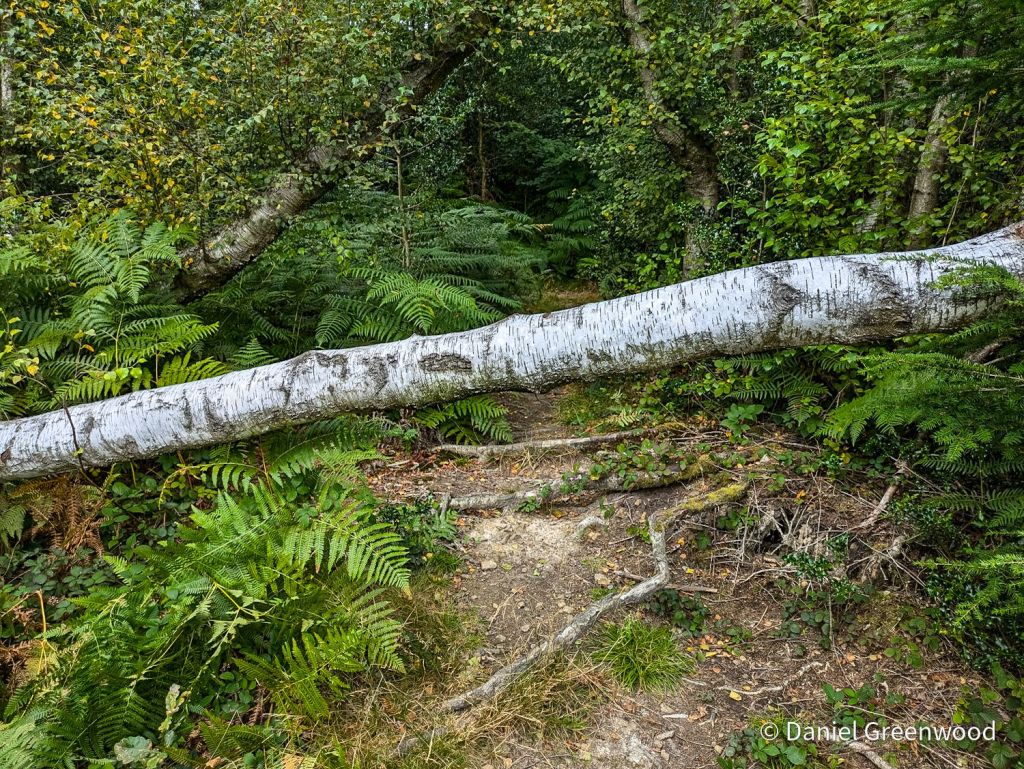
This little patch of restored heathland was zinging with insect life, not least on a fallen birch tree.
Enter: the magic birch tree. Or at least sunbathe on it.
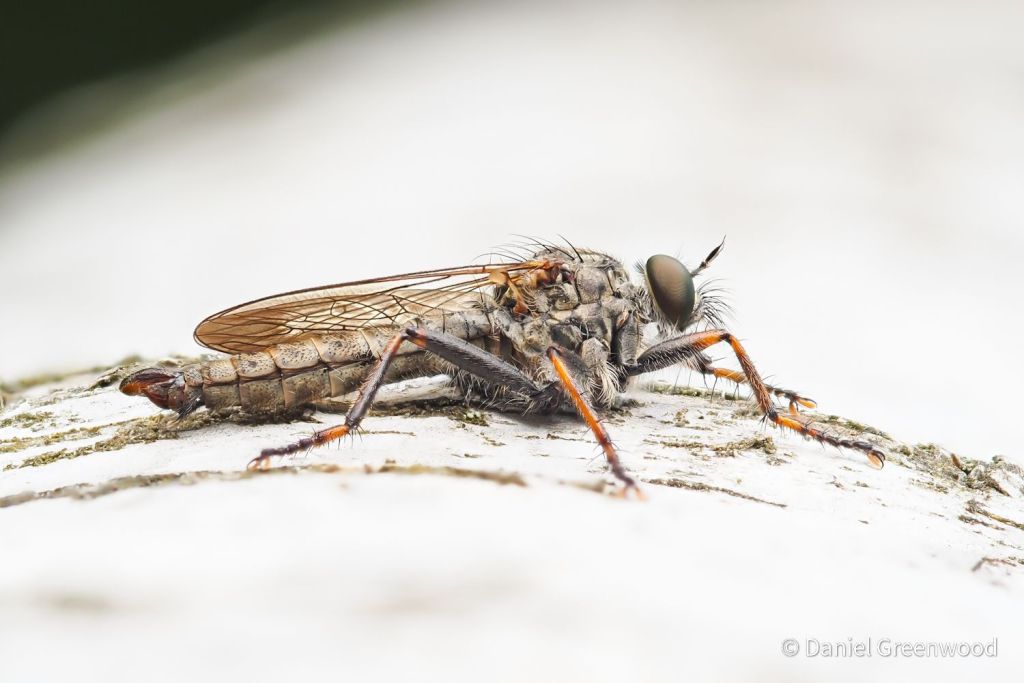
I revered it in such a way because it was providing roosting space for one of my favourite subjects – robberflies!
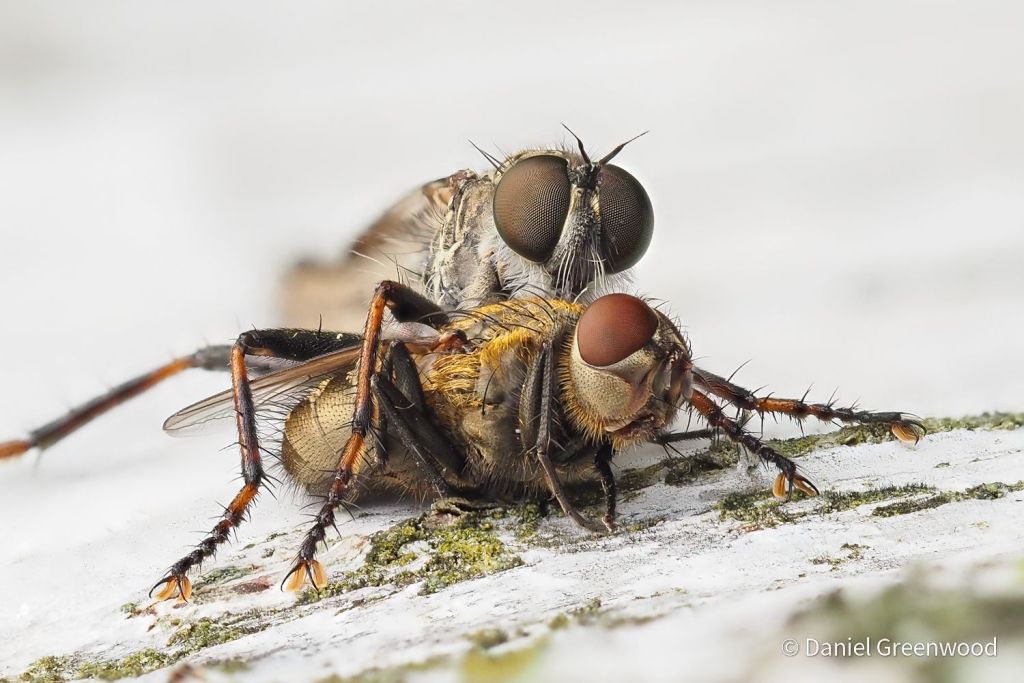
I managed to get my best ever photos of robberflies here, thanks to the capabilities of my camera, and a little bit of that famous fencepost knowledge.
Robberflies are predators of other flies, but also wasps. The photo above was taken using an in-built function of the camera to stack about 15 photos together to create a seamlessly in-focus image. It worked to great effect here.
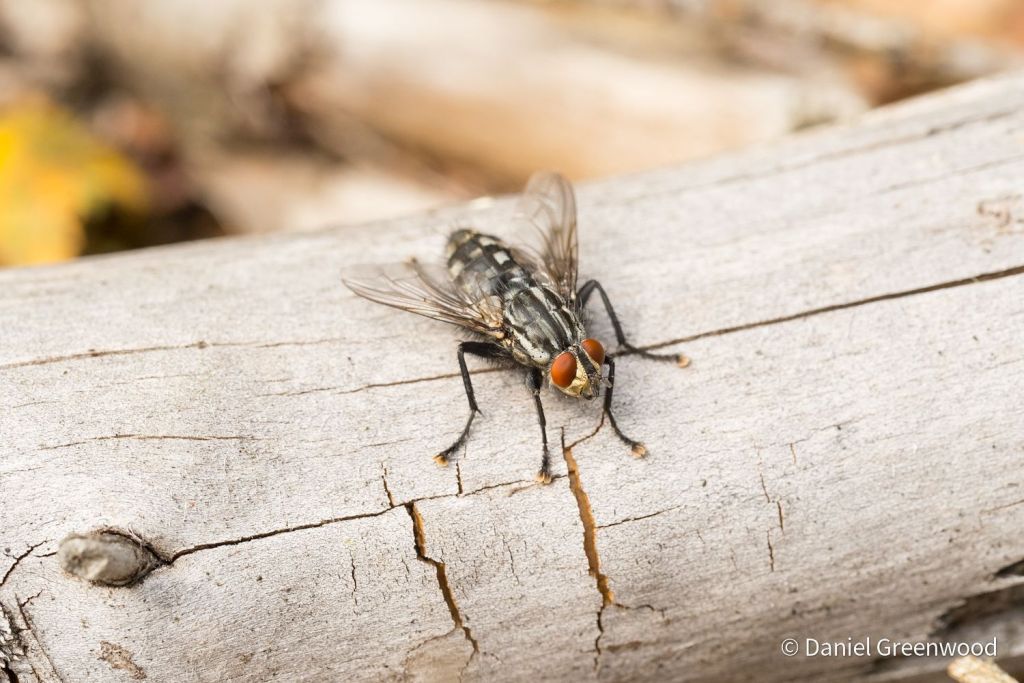
Less dramatic was this flesh-fly, one that is actually quite smart in their black and white get-up with red compound eyes.
On the toe of my shoe a hoverfly that looked like a scuba diver was resting.
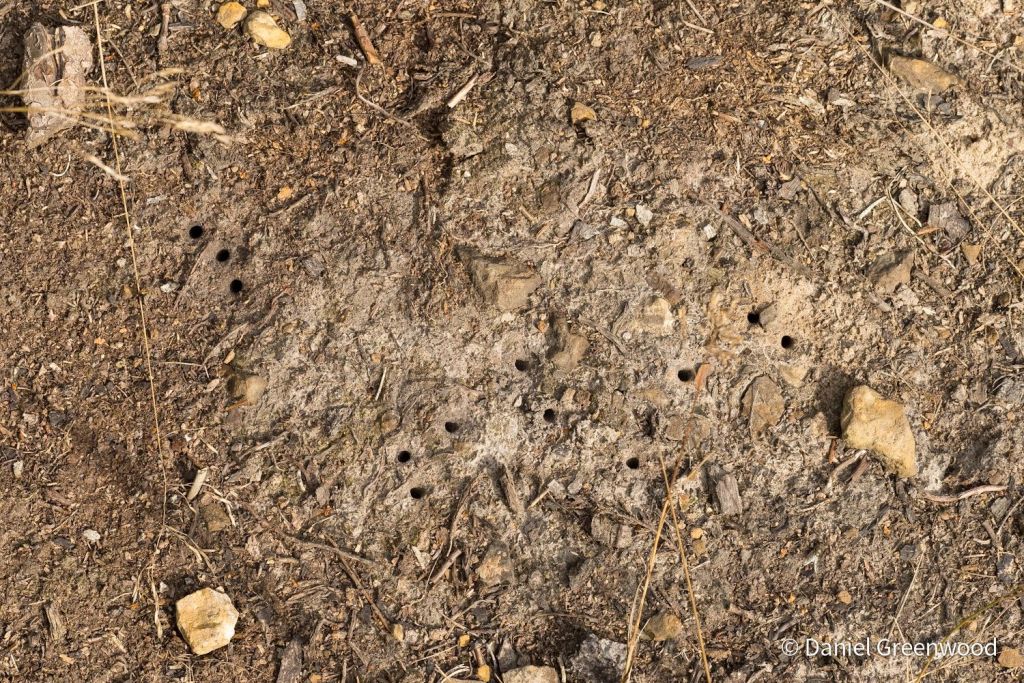
There was plenty of evidence of burrowing insects in the form of these pilot holes.
I didn’t get to see who lived here. Probably solitary wasps or bees.
What this blog can never express is the sheer number of grasshoppers. Every footsteps sent insects like the one above flying for the safety of a grassy tussock.
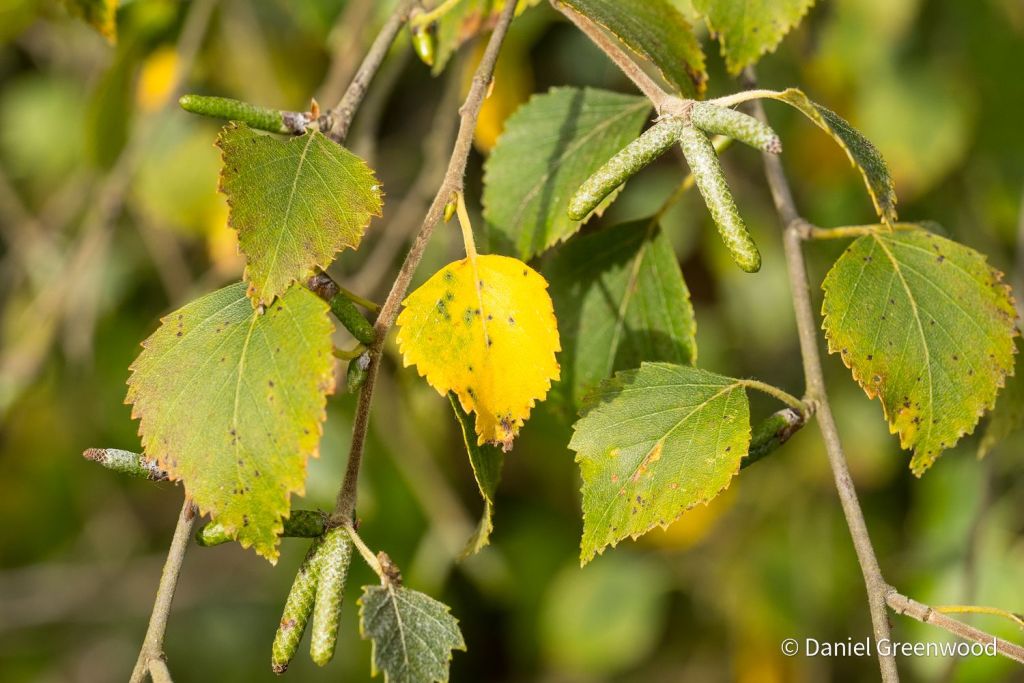
The birches were showing signs of autumn and its inexorable approach.
At the entrance to the woodland a sign warns of forestry activities. It’s time to expect deep rutting to the tracks and soil, and conifers pulled out of this vast area of afforested heathland, and old oak and beech woodland.
A song thrush lifts up from the track and onto a nearby branch. Their lives are bitter battles of survival in January. In early spring their music travels the woods and fields, parks and gardens. The bird stoops on the branch, eyeing me in that wild way.
The sun is shining and the birches gleam white in the treetops.
Pine needles are bleached to an almost aquamarine.
On the main trackway the machine rutting appears from a tract of maturing pine, oak and birch. A track churned-out by huge tyres and now full of milky-brown rainwater. The tyres, inevitably, have dug up sections of ditches where fleabane, hemp agrimony and common spotted orchids abound in summer.
Then again, this trackway and its ditches were likely created for the forestry works, so it’s maybe a case of swings and roundabouts. The extraction works are set to end here in the near future, no doubt to allow the woodland to move at its own pace. Plantation trees will be replaced by self-seeded birch, and the jays’ forgotten oak cache, if the deer don’t eat them.
There is something unexpectedly wild about forestry landscapes, their lack of obvious human culture. There is not much coppicing here, not much lopping or billhooking. No dining tables are set by charcoal burners, or mud huts packed up inside clearings.
No one is claiming it for their own, not even the foresters.
It’s been a very busy summer so far for me of working and commuting. I had a free afternoon and so headed to my local dreamspace, but with no mushrooms on the mind – literally or figuratively.
Red admiral (phone pic)
The number of butterflies was remarkable, perhaps the sense of doom about 2023’s poor invertebrate spring had dampened my expectations too much. There were red admirals, skippers, whites of course, and even a white admiral on the sandy track. White admiral is something I don’t see that often, mainly because I lived in London for so long. Then again, it is cropping up in SE London now, which is interesting.
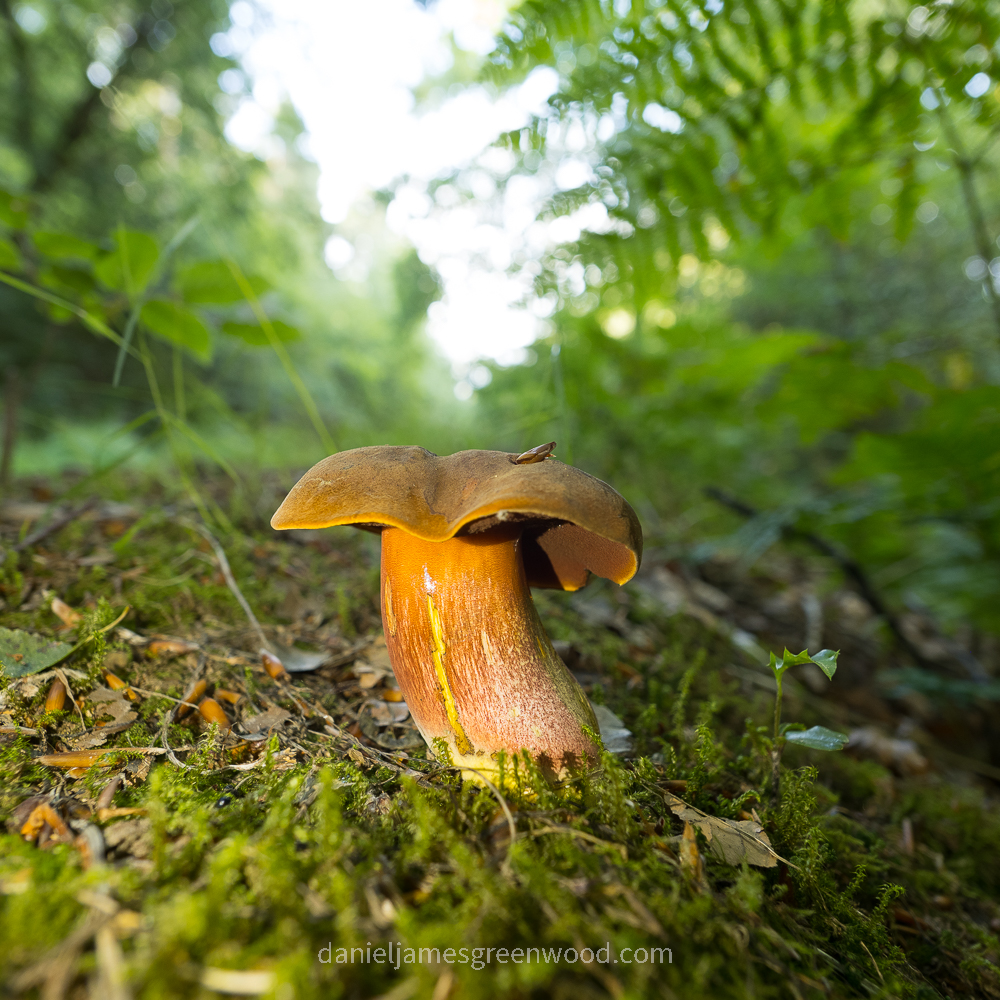
I was enjoying the sense of a butterfly summer, when I nearly spilled my invisible coffee at the sight of a deep red mushroom on the edge of the track.
Mushrooms, so abrupt, unapologetic. They know how welcome they are, even if you don’t realise it yourself at the time.
This was one of the summery, colourful boletes that can be found at this time of year. It’s probably a neoboletus, but my iNaturalist record is without community input and I haven’t had the time to do any research myself. So it remains an unknown jewel.
A few paces away was a more common and typical summer shroom, what I would guess is a blusher.
This short walk on the edge of the High Weald was notable for its green-ness, surely close to peaking as August nears.
We’re lucky over here that we aren’t experiencing the mega burns and record high temperatures of Greece, Italy and Arizona. You have to wonder how some of our fungi will cope with the drought and the impact on our woods. No doubt fungi will outlive humans in the long, long run (they can survive and thrive in nuclear reactors) but the heat can’t be good for the health of our woods which may struggle to adapt to pace and intensity of change.
When are we going to see serious action on climate, rather than flip-flopping by both major political parties? The kind of urgency we saw in crisis-managing COVID-19? Am I destined to see meaningful environmental policy remain as a marginal ideal in my lifetime?
No doubt fungi will rise into conservation thinking beyond the obsession with bringing back questionable, extinct species. But will that be too late as the heat rises and the woods burn?
Fungi, ever-resilient, have been found to benefit from burning in Australia, but of course that is just a handful of species.
It would be foolish no to follow one of the key messages fungi can teach us: don’t forget the present, you never know what might pop up.
On a recent visit to a local woodland, I accidentally stumbled into teletubbyland. I don’t mean some bizarre, super-rich person’s eco village, simply that I had bumped into one of the characters from this incredibly weird but very popular childrens TV programme.
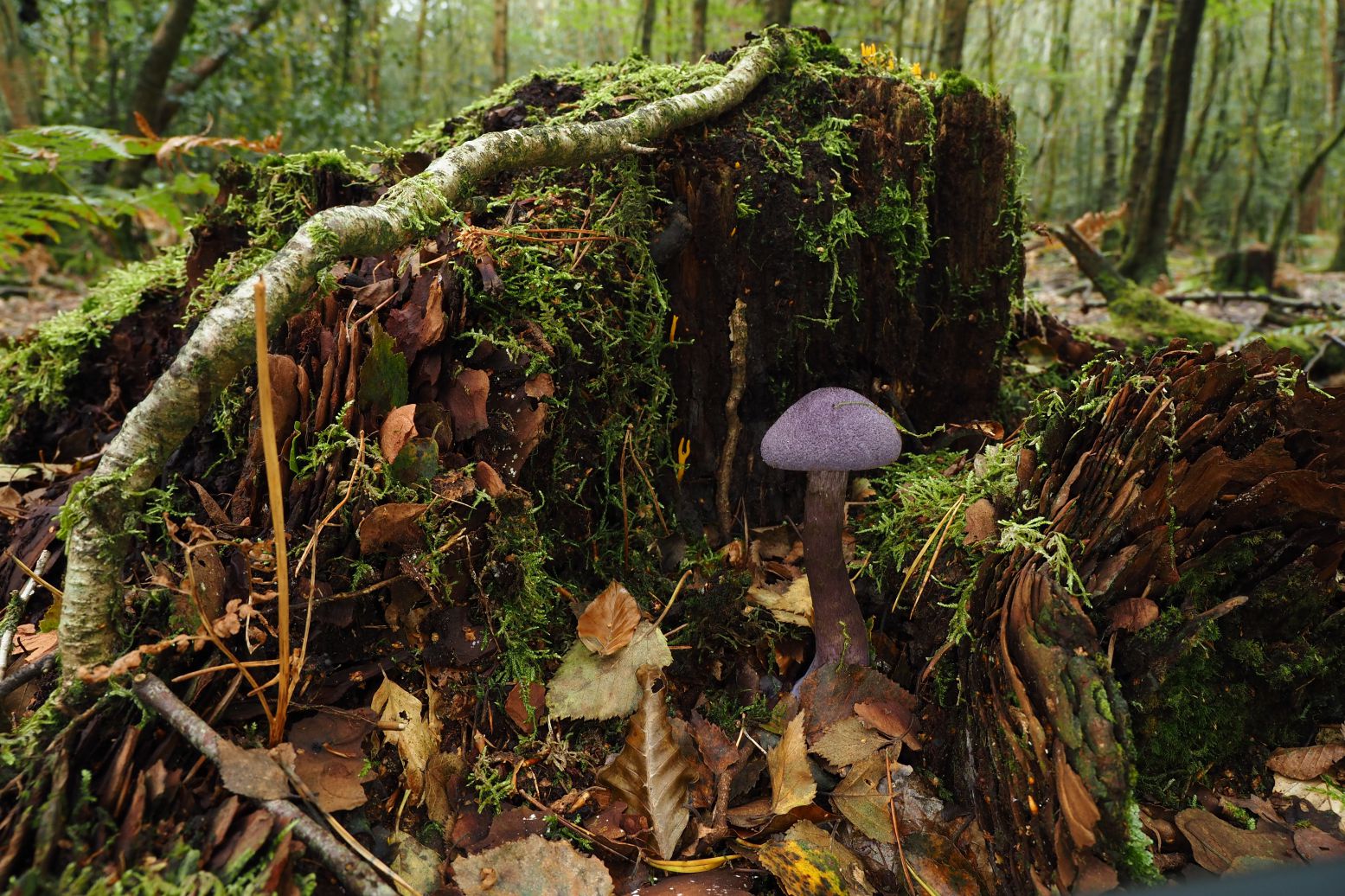
Violet webcap
Of course I’m not actually seriously saying that some giant purple baby thing with an antenna on its head was hanging out in the woods – wouldn’t surprise you though, really – but something in its image. I’m talking about a violet webcap (Cortinarius violacious).
Moving to less colourful characters, in the same area I found a large community of bolete mushrooms, a mix of bay bolete (Imlera badia) and ceps (Boletus edulis). I didn’t pick any if you were wondering, but I did take some pictures!
This is a rather tellytubby-esque bolete, with its friends in the background. There were huge numbers of fungi here, a lovely thing to see. I posted about these recently.
Fly agaric
Of course it would be wrong to leave the wild emojis out of this post, which appear to be having a very good year indeed.
I was doing the rather annoying thing of using two cameras for this walk, which meant having hands full but trying to crouch down and not tumble downhill at the same time. I used my wider angle zoom lens for this lovely little russula. The sunlight touched its cap at the perfcet moment to create some very nice highlighting. More and more I think I prefer images where the mushroom can be seen within its habitat.
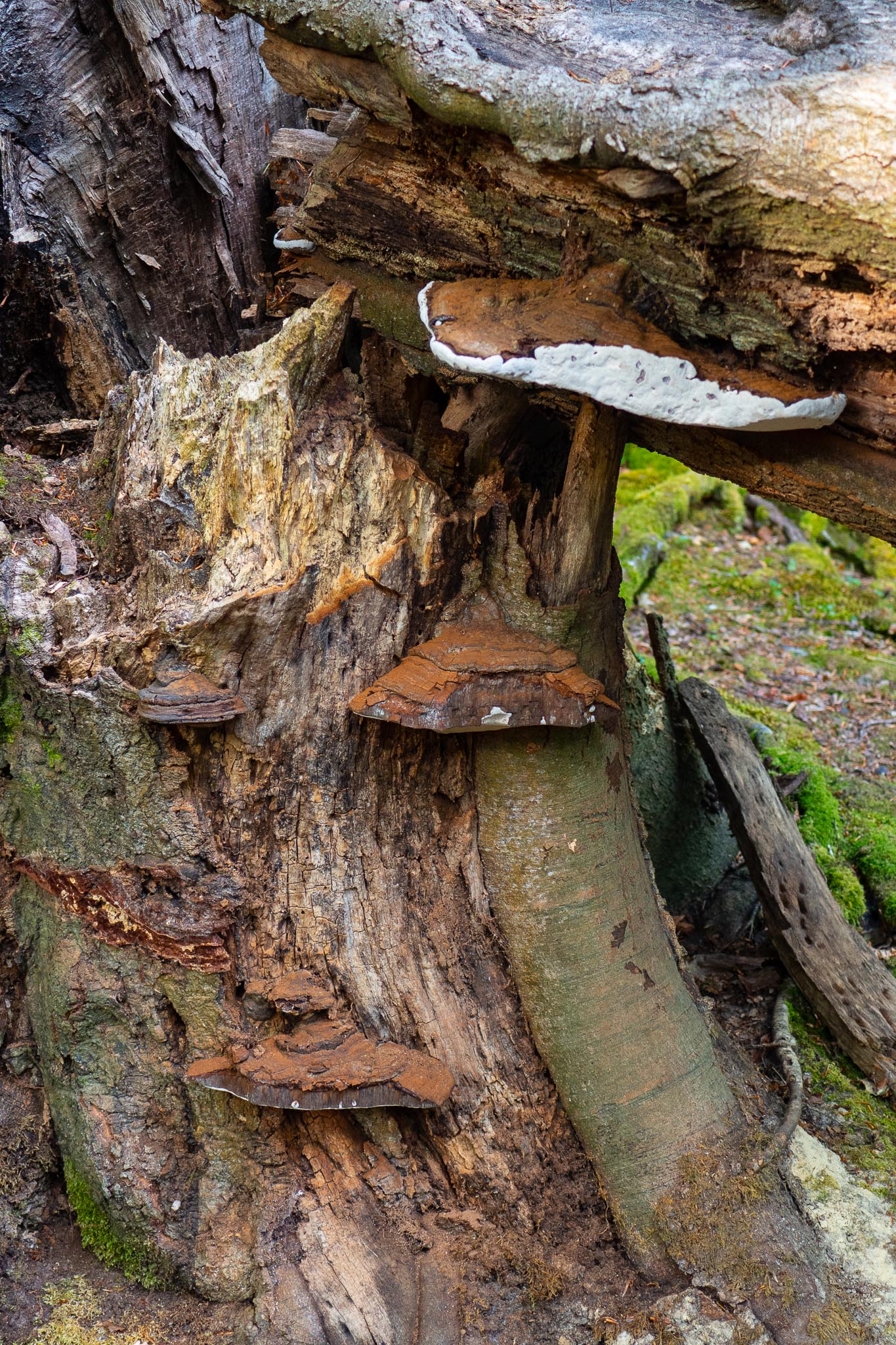
Here’s some more interesting perspective. I couldn’t work out what this bracket fungus was from afar. It was growing in the barkless section of a beech tree that had part collapsed.
This illustrates it a bit better. I’ve not done any work to try and identify it just yet so am not sure of the species. As ever, if you do know please pop me a comment below.
I struggled to get a picture I was entirely happy with here. This is a false deathcap (Amanita citrina), a common species in oak and beech woodlands. This one was in perfect condition. The light from the sun in the background was quite harsh. I used my phone torch to highlight the gills and stipe.
Here’s the mushroom again from above. You can see the veil remnants on the cap, which have become attached after it broke through from the ‘egg’ seen at the base of the stipe. Looking at the iNaturalist page it says this species is about to be broken up, taxonomically, into several species!
There were many fine Russula mushrooms to be found, and many not so fine. They were perhaps at every couple of footsteps in this part of the woodland. I’m not sure of the species exactly but I like the droplets and the colour of the cap. Russulas also have lovely clean stipes when they first arrive. Doesn’t last though!
I took some mushrooms that had been naturally uprooted home to identify them. I was quite interested in this little group and picked one to take back for ID. Looking through my books and using iNaturalist, I think they are a species of chanterelle. Probably Craterellus cinereus or Craterelluscornucopioides.
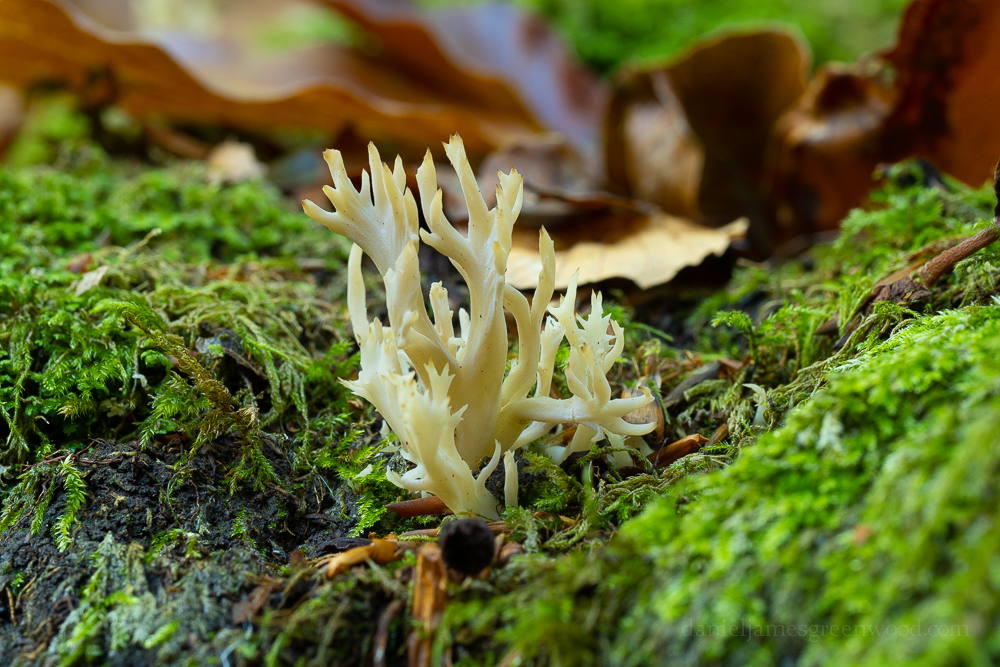
Moving even further away from the more typical gilled fungi, I found a nice little grouping of coral fungi. The above look to me like little white fires in the moss. I’m not sure of the species.
These are about as far away from teletubbyland as you’re going to get in this blogpost, so a good place to end.
Hi everyone! After a bit of a break from podcasting, it’s great to release a new episode of Unlocking Landscapes. This has taken a while to edit but it’s a really relaxing one I think. So much so that I actually fell asleep when listening to one of the drafts a few months ago.
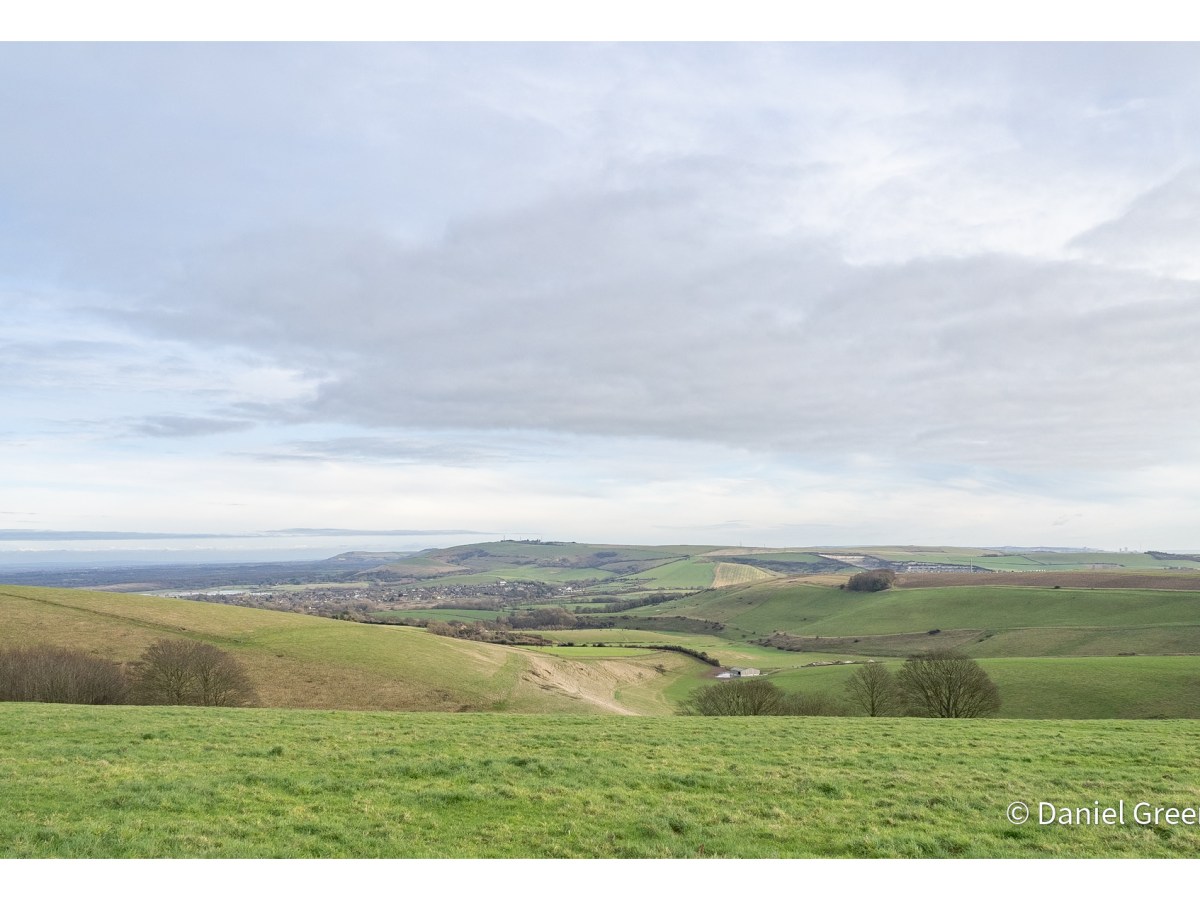
In May 2021 I walked 8 miles into the Sussex Weald to see if I could hear a cuckoo. The weather was fine and there were loads of birds out, many of them in full song. This is an episode best listened to through headphones so you can hear the birdsong, the wind through the trees and the buzzing of bees in the woodland landscape of the High Weald. It’s an immersive episode with a guided walk feel, focusing on listening to the surrounding landscape.
A couple of weeks ago I decided to try an outdoor recording for Unlocking Landscapes. This walk was 8 miles in total from my front door to visit a nearby area of woodland in the Sussex Weald:
Please subscribe to the Unlocking Landscapes YouTube here.
You can tell from the podcast that this latest English lockdown has affected my lung capacity, I’m a bit breathy at times! There’s only so much editing you can do though. One to remember for future episodes.
Anyway, the areas of interest in this episode are:
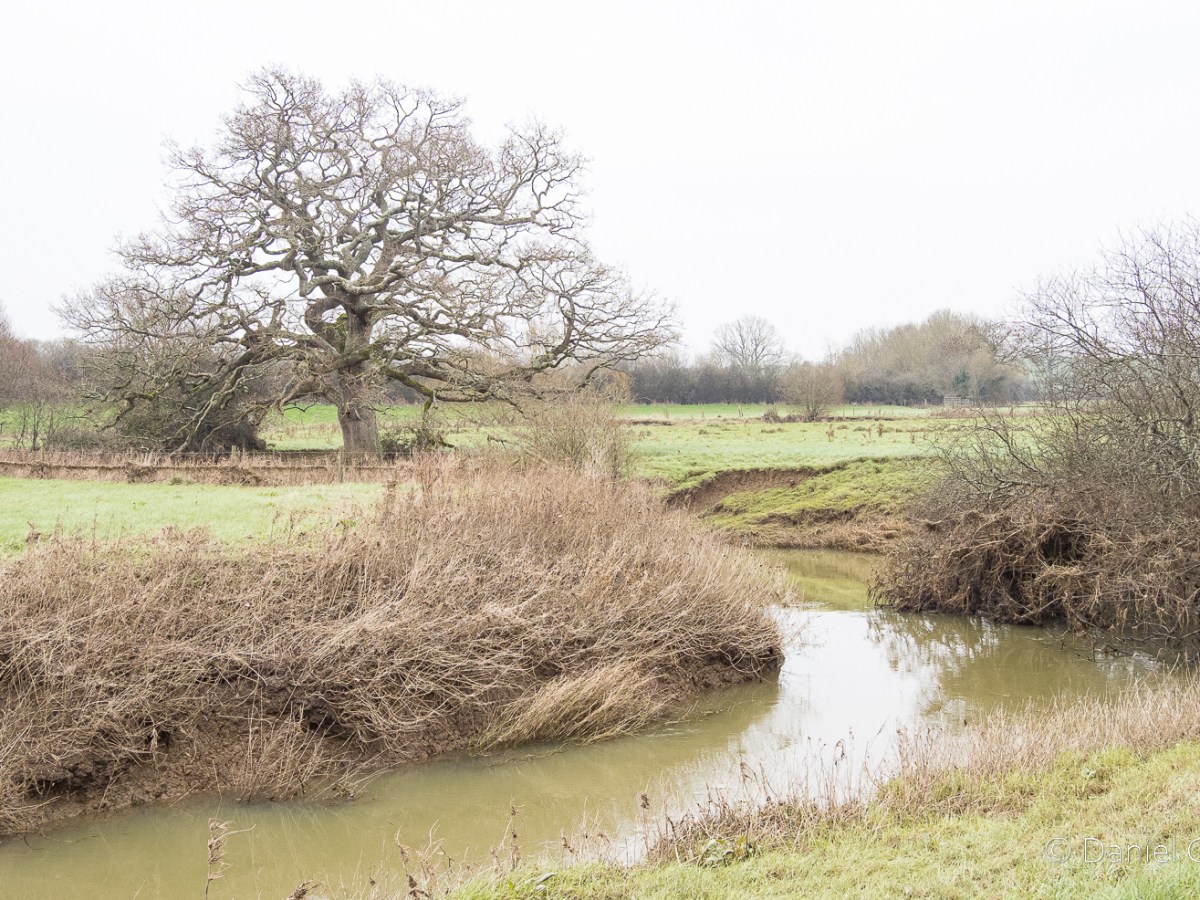
Woodland streams, known in this area as ‘gills’
Heathlands and plantations
Wood ants
Sphagnum moss bogs
Ancient and veteran trees, especially beech (Fagus sylvatica)
I’d love to know what you think of this episode and if you’d like to hear more in future. You can comment below or email me at unlockinglandscapes@gmail.com
Thanks so much for listening and I hope you enjoy.
In April I have a podcast with the writer Julian Hoffman. It went so well it’s in two fascinating parts. You can see more about Julian here.
I have some other great guests and episodes lined up, can’t wait to share all that.
Cheers, Daniel
Episode recorded and edited by Daniel Greenwood in the West Sussex High Weald
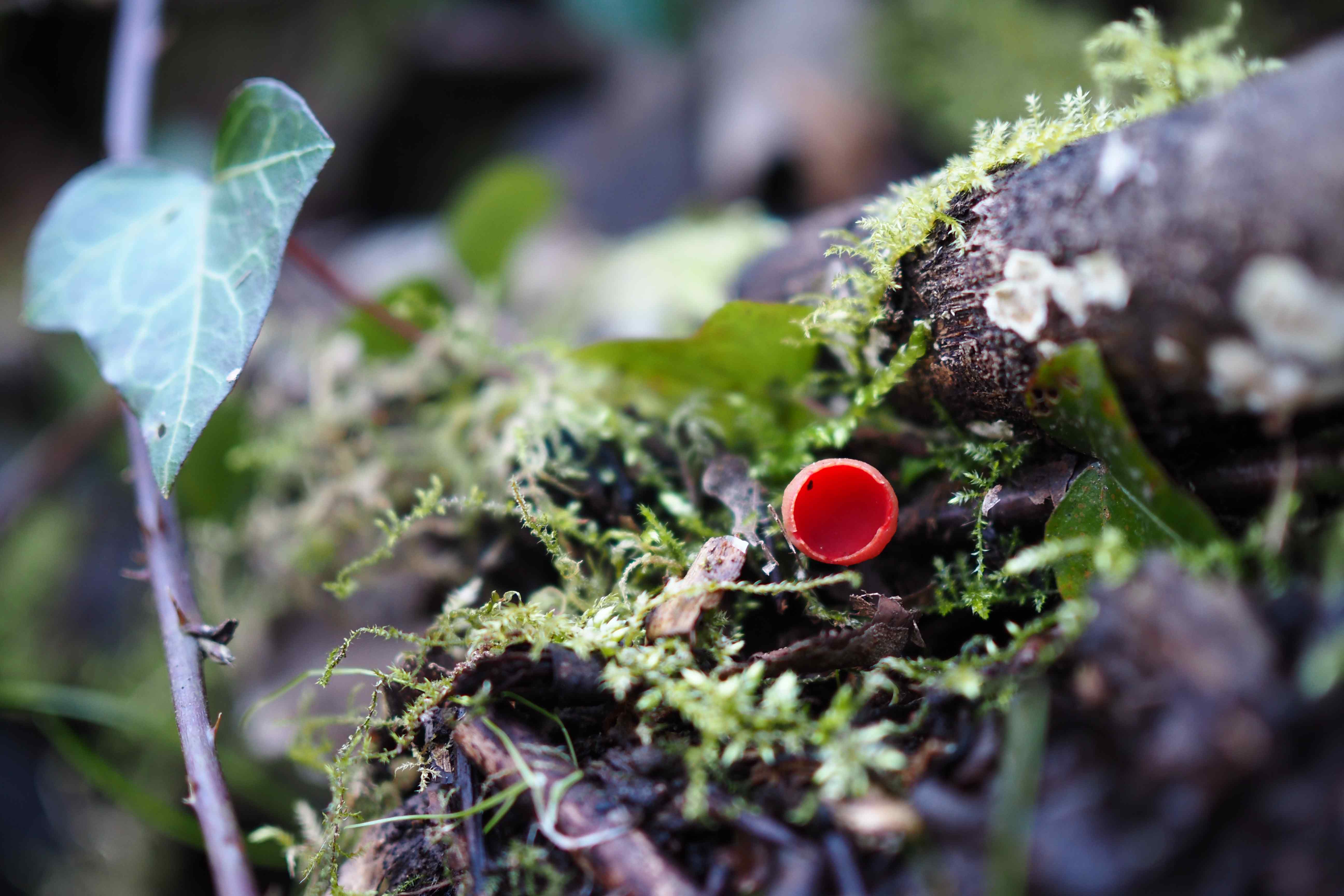
On social media in recent weeks one of the dominant fungi photographed has been a bright red cup fungus. This species is one of the most visually stunning, standing out like an elf’s sore thumb in a winter wood. I’m talking about scarlet elf cup.
I visited an area of woodland I have featured many times here, but a place I haven’t been to this year. I don’t know why, it’s close to home but usually requires a car journey because it’s awkwardly difficult to walk to. It’s a mixed ancient woodland with a stream running through it and heathland on its upper slopes.
In the UK heathland is a sandy habitat dominated by heather and pine. In terms, dry lowland heath is rarer than rainforest.
This woodland is managed with the support of volunteers. I don’t know the people who do the good work there but they clearly spend a good amount of time building what I know as dead hedges. These are barriers or piles of cuttings, branches, twigs and sometimes logs. They are there mainly to protect sensitive areas of soil where ancient woodland plants grow. It’s to keep people on the paths, which is best for the health of a woodland overall. These dead hedges also happen to be excellent habitat for wildlife like fungi.
From my experience in the woods and by looking at other people’s photos, I would say scarlet elf cups are happiest in damp, shaded areas. I would even say they are so keen on dampness that alongside streams and rivers is usually a good place to find them. This was a bit of a way from a stream but it ticked all the other boxes. You can see here that it’s growing from a small stick.
This is a nice example of this gorgeous fungus (not something you hear often enough). They grow on something similar to a stem but are a different set of fungi to the usual stipe-based mushrooms. Cup fungi are ‘ascomycetes’ (ask-oh-my-seets) and are spore shooters. ‘Basidiomycetes’ are spore droppers, most of them being the gilled mushroom types.
This area probably had hundreds of scarlet elf cups growing in this long stretch of dead hedge. It will be good habitat for lots of other species as well, including invertebrates and sometimes they’re big enough for small birds like wrens to nest in. The specimen above was snug as a shroom in a trug.
From what I know it’s an edible species, but I wasn’t about to clean out all these fungi from their wild habitat. I had mushrooms in my fridge that were a couple of days close to their best!
I’ve had a burst of American visitors in recent days (to my blog, not my house). So thanks for visiting, y’all, and sorry about the year you’ve had. You may have noticed I’ve slipped to monthly posts on here. Between April and October I posted blogs every Monday without pause, which is a tricky task…
At last the rain has arrived. But did it bring a deluge of the mushroom kind? On a lovely clear evening after work I went to the woods to find out.
Even in dry times there is one fungus that will not desert you. Artist’s bracket is a bracket fungus in the family Ganoderma. It gets its common name from the fact you can draw on the sporey underside of the fungus, usually something like noughts and crosses. I’ve seen these fungi get to be huge but in most places they are usually broken off by human hands.
They have the ability to renew themselves, though, as this one above has begun to do. I read somewhere that this fungus produces 30billion spores an hour. Suppose I’ve taken a few home with me then.
After rain like we’ve had in the past week in southern England, you don’t dream of bracket fungi. Or do you?
Walking along a path in an area of open woodland my eyes nearly popped out of my head when I saw this massive dryad’s saddle sprouting from a dead sycamore tree. This area has been hammered by the combination of no rain and heavy footfall impacting after clearance work of sycamore has taken place, so I wasn’t considering the possibility of fungi being present.
This is a fungus to find at this time of year. Due to its size, it will often find you. It’s an edible species but probably not at this stage. I’m writing this rather bleary eyed because I’ve spent the past couple of days researching the cultural heritage of oak trees for a talk I gave this week. Little did I know that dryad actually means ‘oak tree nypmh’, rather than simply ‘wood nymph’. The idea is that a nymph, or woodland sprite, or fairy, would sit on this bracket and hurl abuse at passers-by.
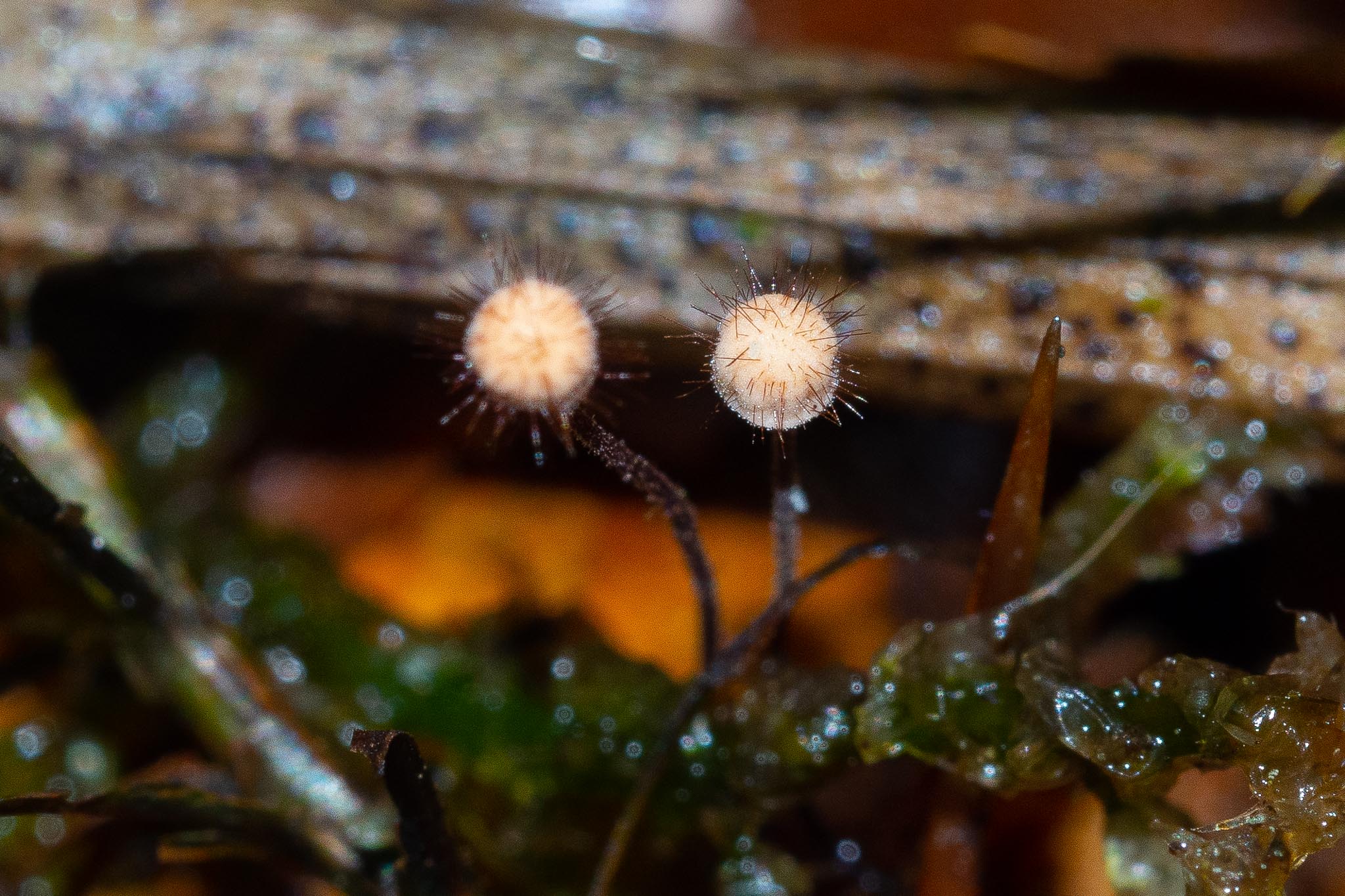
I was looking down at some moss on the woodland floor when I discovered these baffling, miniscule mushrooms. They were about the size of a grain of rough sea salt. On their caps were these spikes, at first thought perhaps another fungus or mould growing on top.
It just made me realise how much we can miss, these were some of the smallest fruiting bodies I’ve ever seen. I have no idea what they are.
Next door was something a little larger, probably a bonnet of some kind. I don’t have the knowledge to get any closer than that. Again, this wasn’t much bigger than the weird fruiting dudes alongside it.
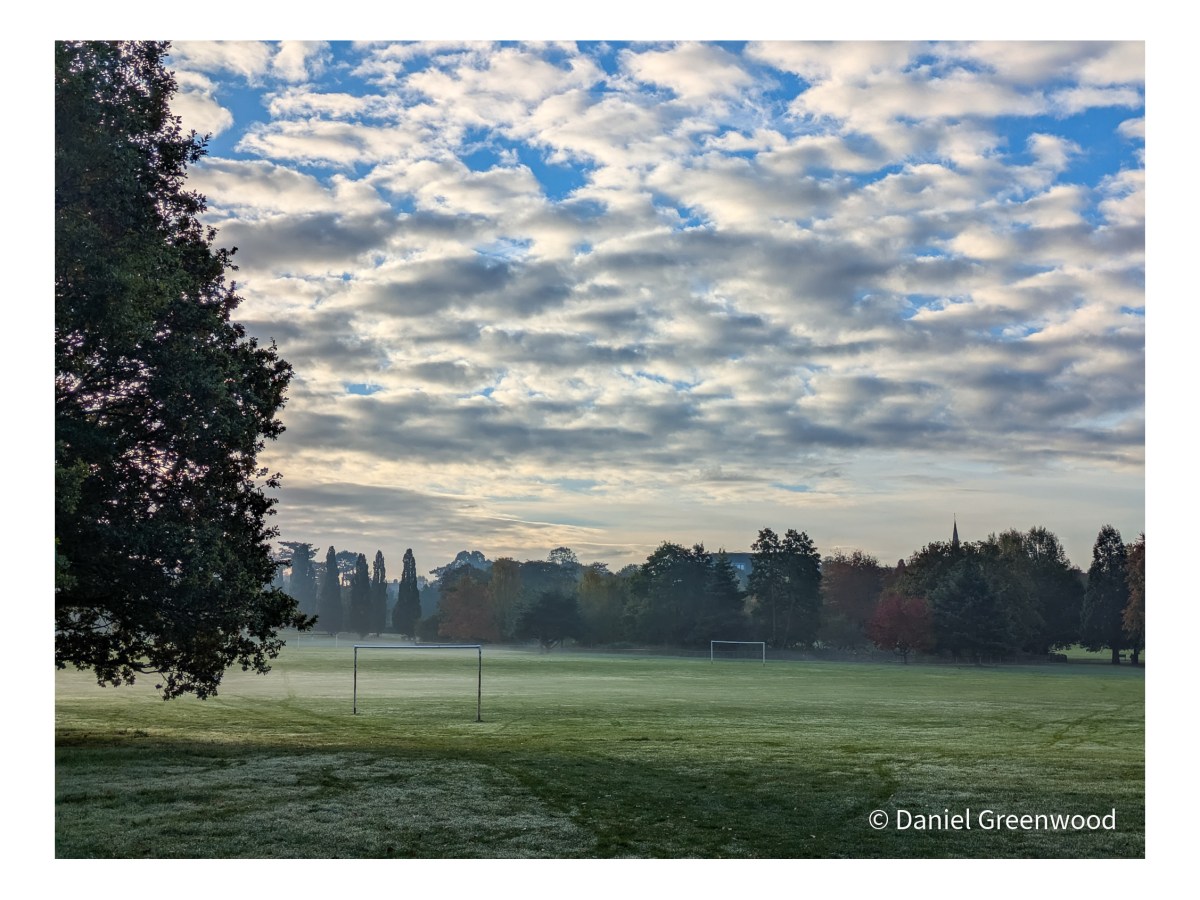
After a good couple of hours searching, it was time to head home. Dramatic clouds built over the heath, perhaps with more rain to feed the fungi. We shall see.



























 Unlocking Landscapes