On the corner of the street, a mass of ivy was spilling over a wall. It was an explosion of leaves and flowers, sound and smell. The flowers were alive with insects: hoverflies, honeybees, bumblebees, and that ivy specialist, the ivy bee.
I hadn’t seen many ivy bees before, and wasn’t aware they were now so far into the centre of London. They nectared in a frantic fashion, with at least two having been captured by a massive garden spider that scarpered when it realised how close I was to its web.
At this time of year very few plants are flowering, and none like the ivy can. Even so, ivy in London has an awful reputation. People hate it, calling it a parasite and tree killer.
Some years ago a man gave me his opinion by leaning in and whispering that he had seen it sucking the sap from a tree, like it was some dark truth kept hidden from the world.
In reality it’s not a tree killer and it’s not a parasite. But like so many things in society now, people will believe what they want, regardless of the facts.
In a wood near to this jungle of ivy, mature growths of it have been found hacked and severed by visitors acting on their instincts without reason (or permission).
I remember a local tree surgeon unloading on me one morning when I was in the woods about to start a working day, telling me how terrible ivy was at that location. I was taken aback by the man’s strength of feeling and let him say his piece. When he had finished I asked if I could go and start my day’s work.
“You didn’t like that, did you?” he said.
Is it any wonder tree surgeons don’t like ivy? I’m sure many appreciate its place in the ecosystem, a habitat for bats, birds, insects and autumnal nectar for pollinators. But to a tree surgeon it makes your work so much harder, what is already one of the most dangerous and brutal jobs available in the UK. I suppose I had just expected someone who works with trees all day to have a little more imagination and ecological flexibility.
I’ve made the faux-pas while leading guided walks of talking about the value of ivy nectar to honeybees and been informed that it’s not so good for them. One very polite beekeeper corrected me and said that the nectar can crystallise too quickly in the hive and leave the bees to starve. For wild pollinators there is no such problem, of course. The beekeeper said the issue was mostly where the only nectar source was ivy.
Should ivy be cut off trees in some cases? Of course. But is it often framed for crimes it didn’t commit? Yes, all the time.
I remember driving with my parents through Ireland back in 2008, when I knew very little about trees. Ivy was everywhere and I worried it was going to harm the trees. I later learned that the story is different.
Ivy often grows on trees that are in decline, meaning more light comes through the canopy, encouraging the growth upwards. Then when the tree does die, there stands the ivy, ‘throttling’, ‘suffocating’, ‘killing’, as some hyperbolise. In high winds ivy can act like a sail, and trees do come down.
In my experience it is often life-giving.
People come to nature looking for absolutes, but just end up finding more questions and often being humbled. The trick is to embrace the ambiguity, your own lack of knowledge and mastery of any given subject.
Personally, I was thankful for that final flush of insect buzz on an unseasonably warm September morning. Who do I thank for that? That’ll be the ivy.
I spent a couple of days in the Lake District in July and was indeed blown away by those mighty hills, and the rain.
This very short post is one of lamentation, in truth, seeing as I managed to scare away an interesting insect waiting for its free portraits.
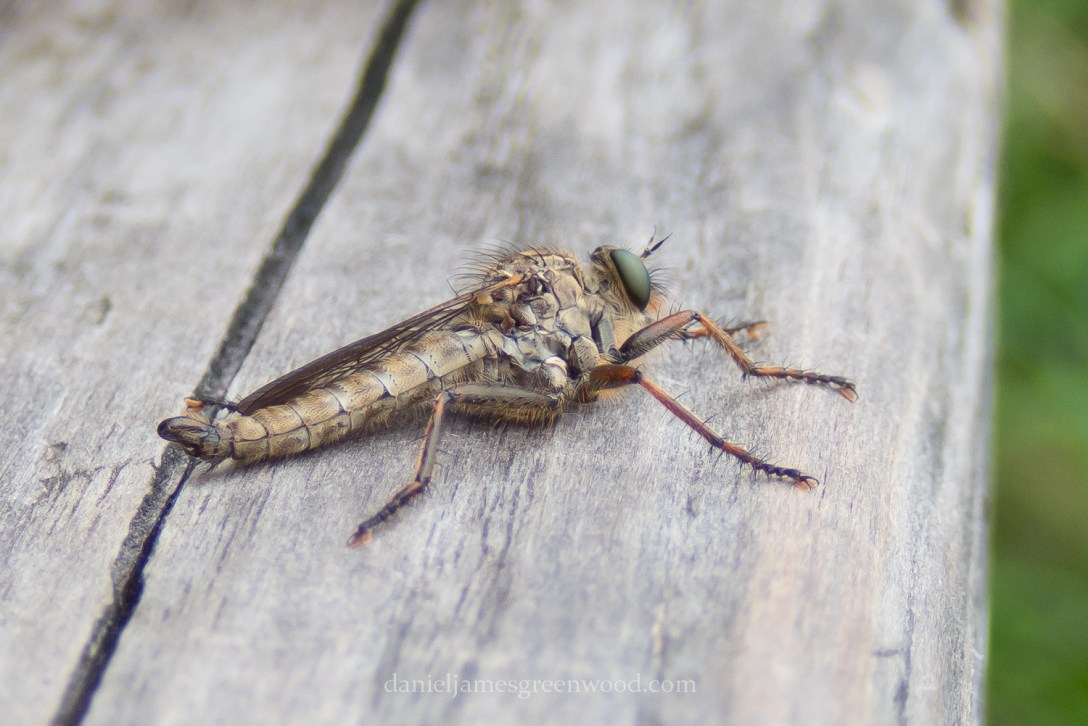
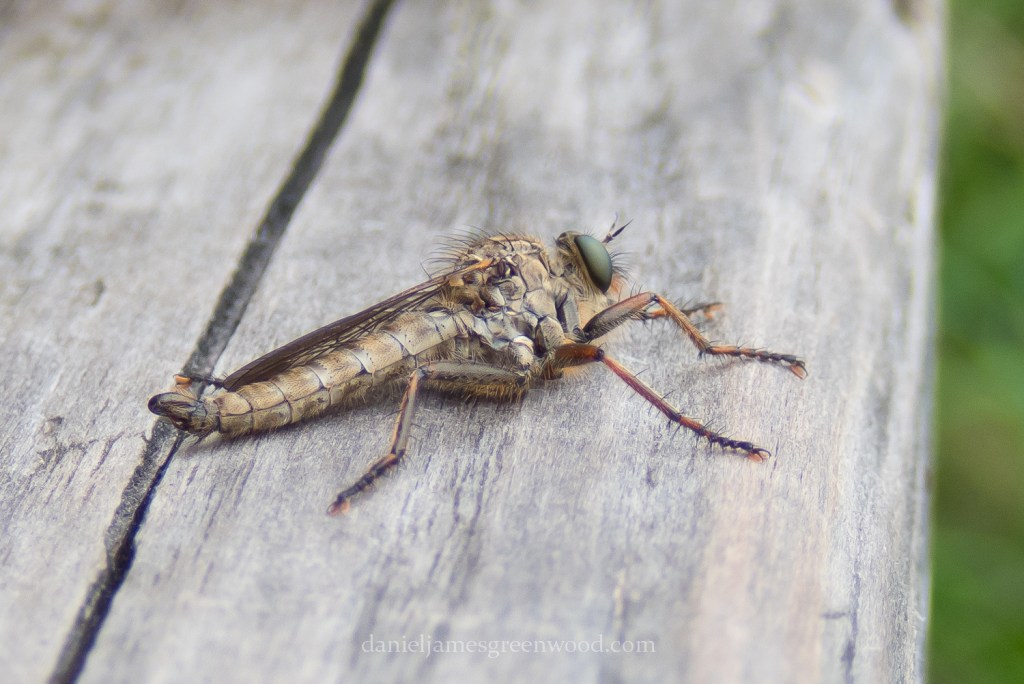
On a walk that crossed through Grisedale (a stunning valley), I passed a gate alongside a lane. I spotted the lingering shape of large insect on the gate’s top rail.
I was so happy to see this, but didn’t contain my excitement enough. Approaching what turned out to be a robberfly, I spooked it and it flew far, far away. It had been so chilled and the lighting was perfect, so I could have got some really nice pics.
Robberflies are predatory flies and are some of the most photogenic insects you can find in the UK. They are also not hugely common which gives them an air of respectability and intrigue.
I told my friend that this had effectively ruined the walk, and nothing could salvage it now.
This was wrong though because Ullswater (above) was just a mile away and we got on a boat which felt like something from Jurassic Park minus the dinosaur threat. But the pain of disturbing that robberfly was real, one must contain oneself next time.
I’ve been trying to keep my macro photos rolling in the absence of June’s one pic each day. It’s a bit like keeping your lawn growing after No Mow May.
Actually, no, it’s harder because you have to be proactive.
By far the best encounter with the macro world this past week was a patch of hogweed along a footpath by the local river. A cyclist went past me as I was taking these photos – even though it was a footpath – and glared at me as if I was doing something truly evil or dangerous to the public.
I have a bike, too, so if that exercised the cycling community, we’re all friends here on djg.com…
Hogweed is a weird plant, in that it’s part of a family that both kills, but also provides edible plant matter. Its sap is photocorrosive (not as bad as its big brother, giant hogweed) but its flowers are very, very good for pollinators. It can also be a bit invasive because it burgeons in places where nitrogen levels are artificially high (probably dog urine here…) therefore most of England.
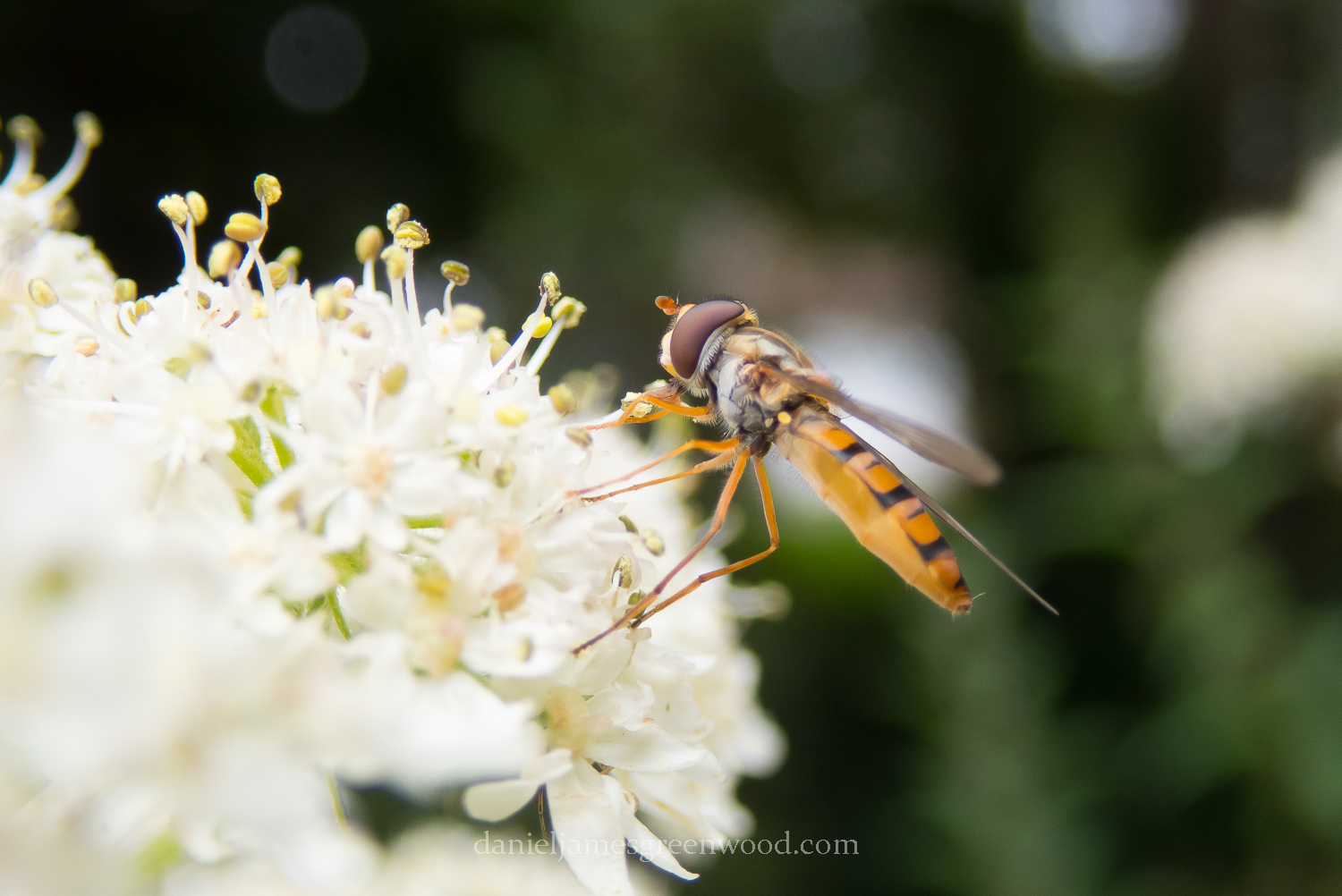
A marmalade hoverfly feeding on the hogweed stamens
A soldier beetle also drinking from the carrot fountain
I would say this was maybe an ashy mining bee, but a little faded and low on the ‘ashy’ body hair
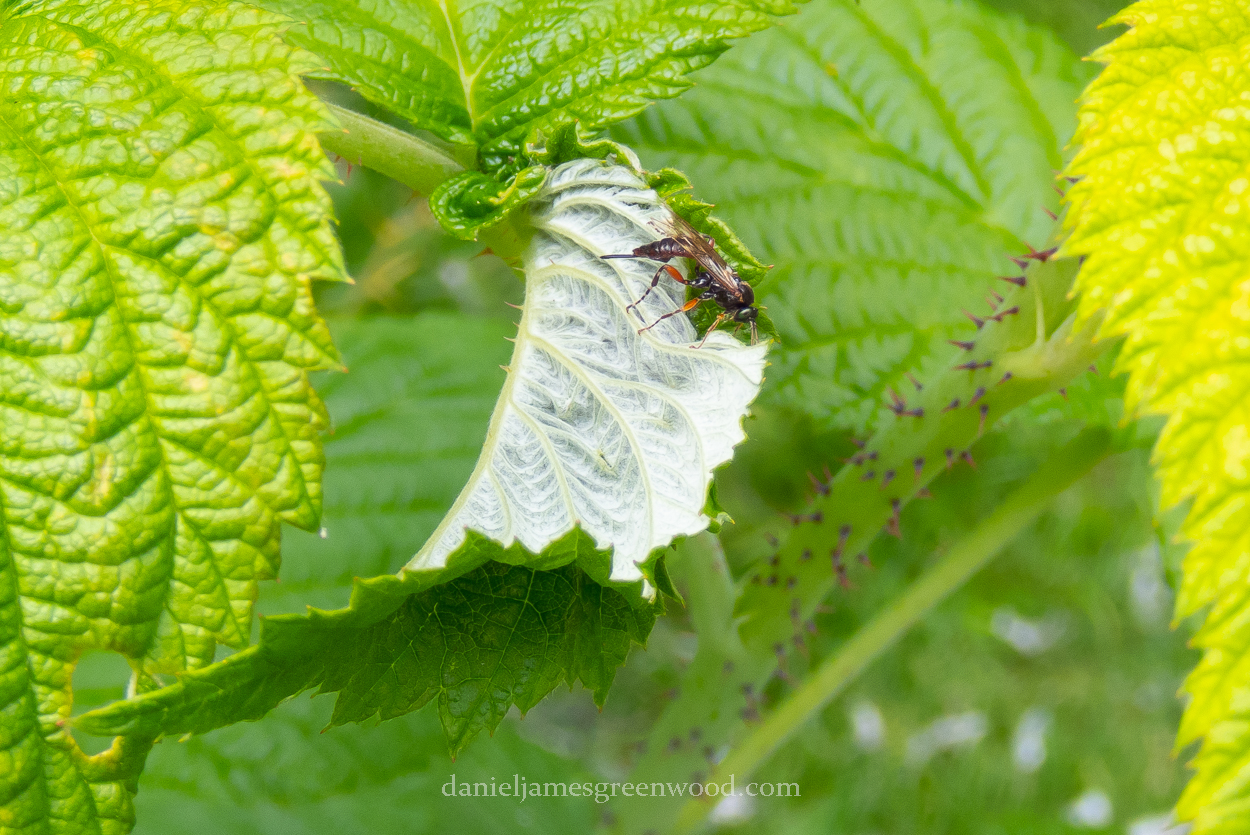
Earlier this week I noticed an ichneumon wasp exploring the raspberry patch in my garden. It was pausing to use its ovipositor on the curled up leaf – presumably the work of some other organism creating a sort of cocoon. I love them!
Here we are, another June slipping away and with it another #30DaysWild. Thankfully the humidity has dissipated this week and it’s been more comfortable to spend time outside (for me).
The final week of another June #30DaysMacro challenge, here we go:
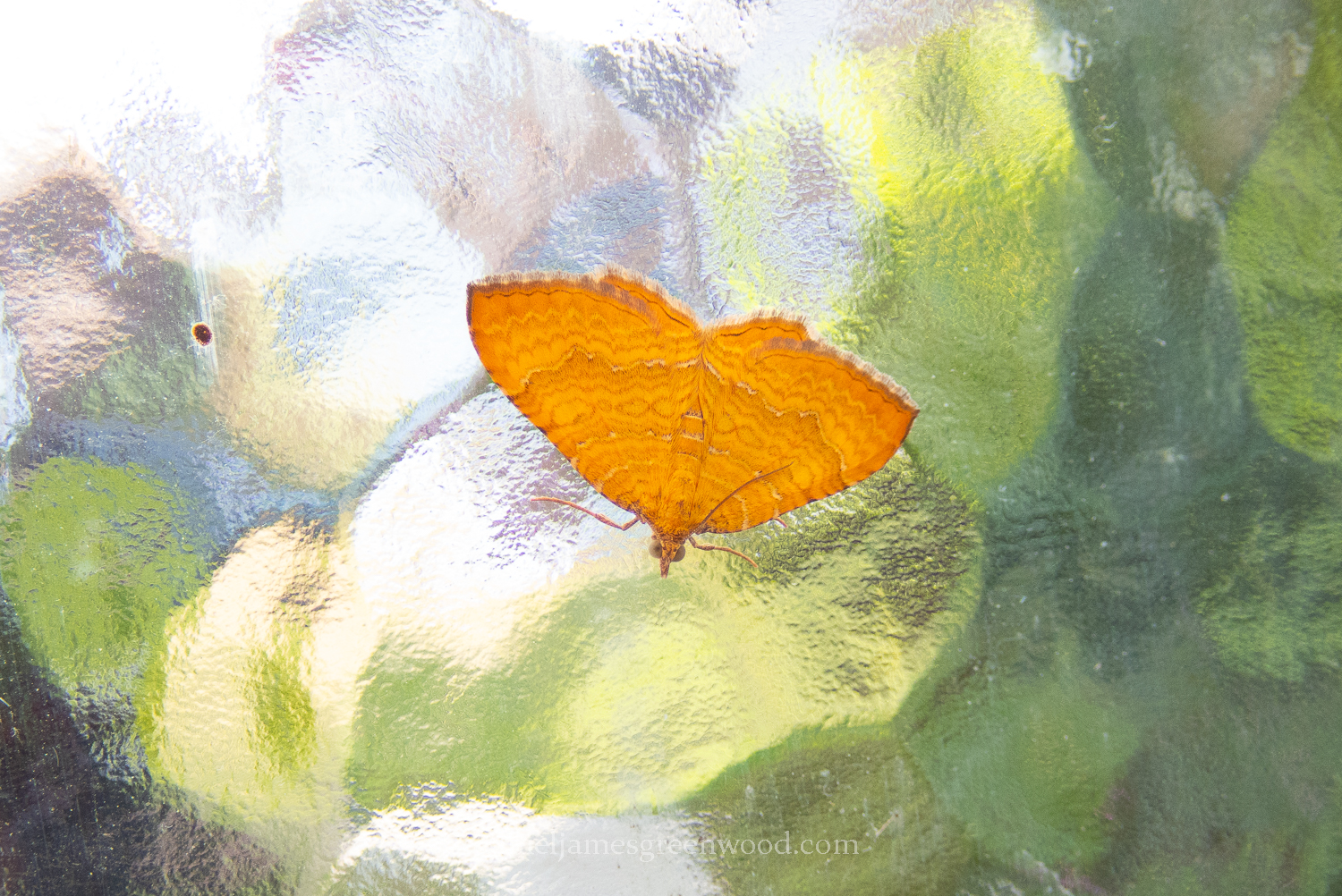
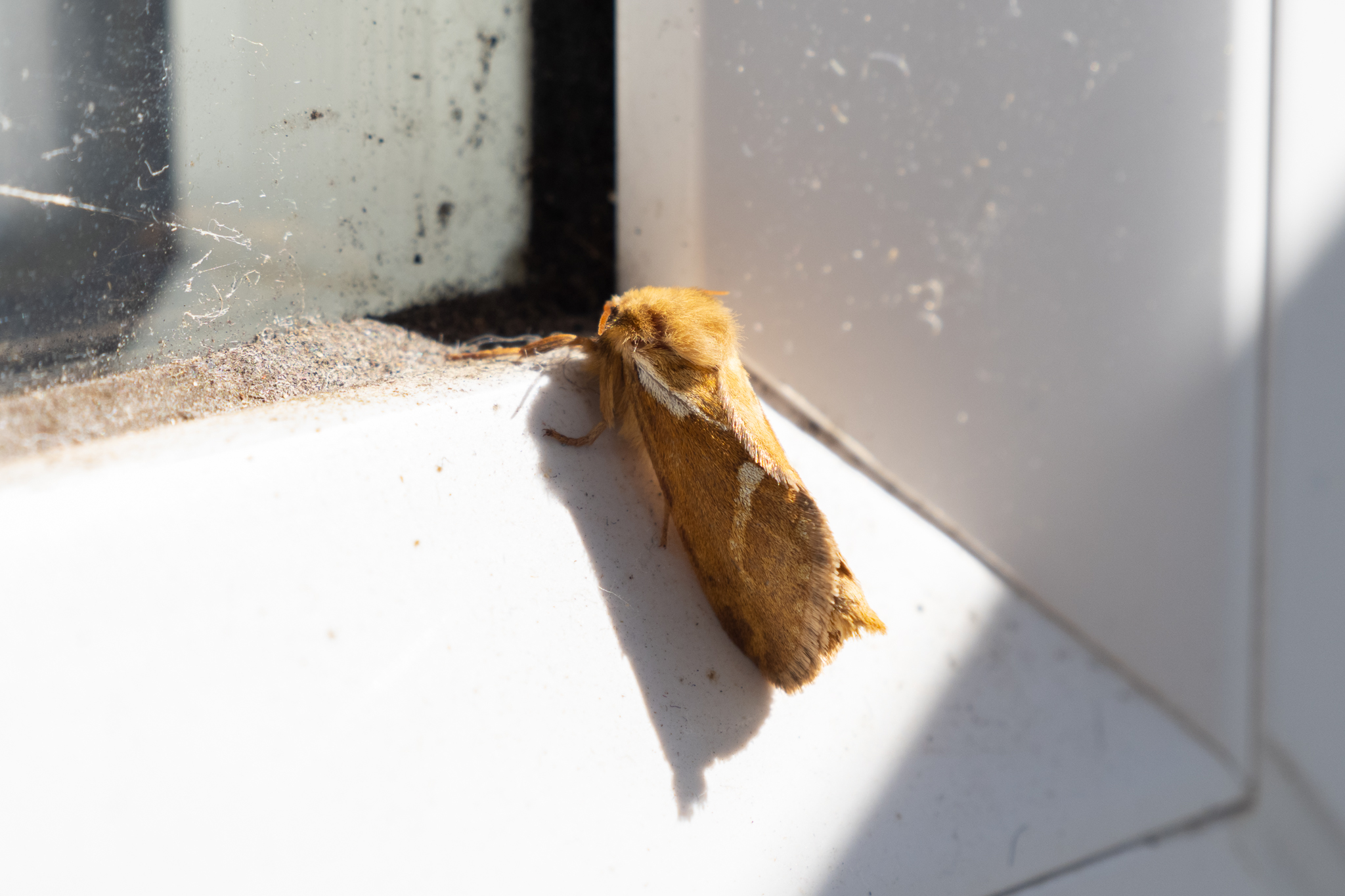
Day 22/30: leaving my mum’s house in SE London I noticed this yellow shell moth on the frosted glass. iNaturalist helped me with the identification.
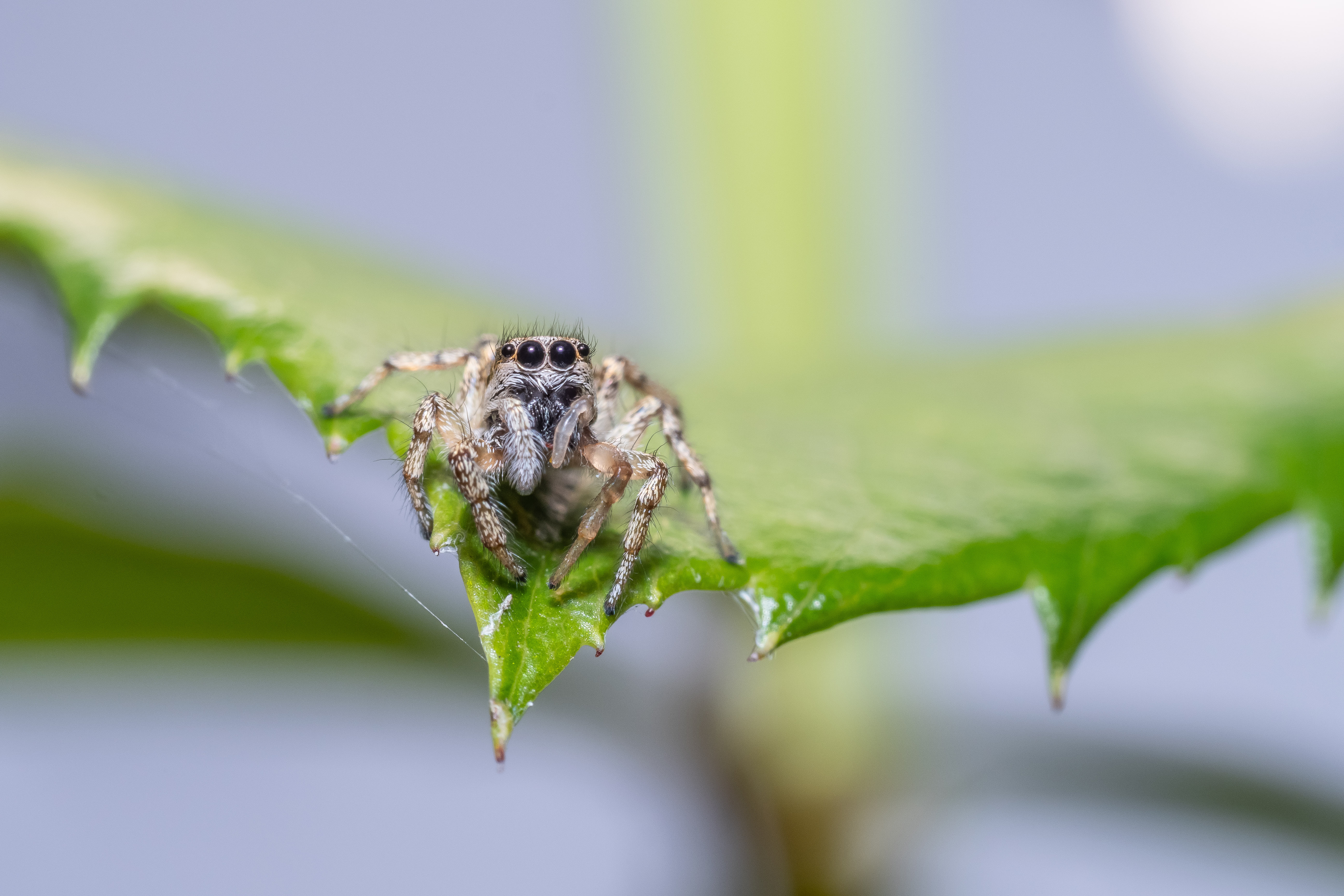
Day 23/30: the zebra jumping spiders have been absent for me this spring but I am noticing them now. This little charmer was in the garden hedge.
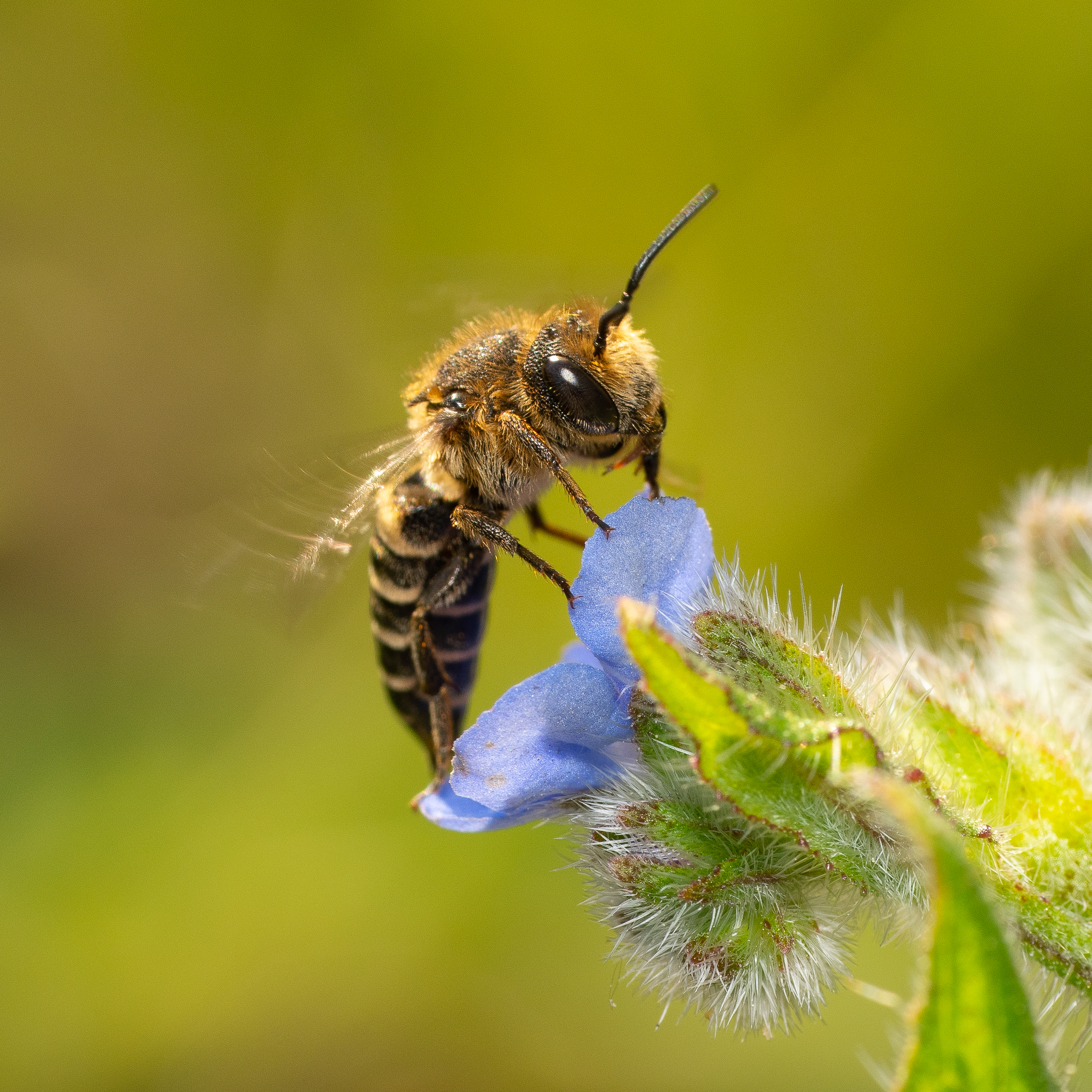
Day 24/30: there have been a new range of bees arriving in my garden as the spring plants shift to summer flowers. The birds-foot trefoil has attracted leafcutter bees like the one above. They have an unusual flight, almost like a kind of hover.
Day 25/30: this was a day of weekend working and several hours travelling, so I had to make do with taking photos in my garden at dusk. I used the built-in flash in the Olympus TG-6 and wasn’t enamoured with the results, mainly because the flash isn’t softened by a diffuser. This mirid bug is out of focus but I enjoy its colours.
Day 26/30: the insect populations seem to be greater now that summer has arrived. Going out of the house first thing has been a good chance to see the range of hoverflies and other bees. This hover was doing that odd leg cleaning ritual and I managed to catch it with ‘legs akimbo’!
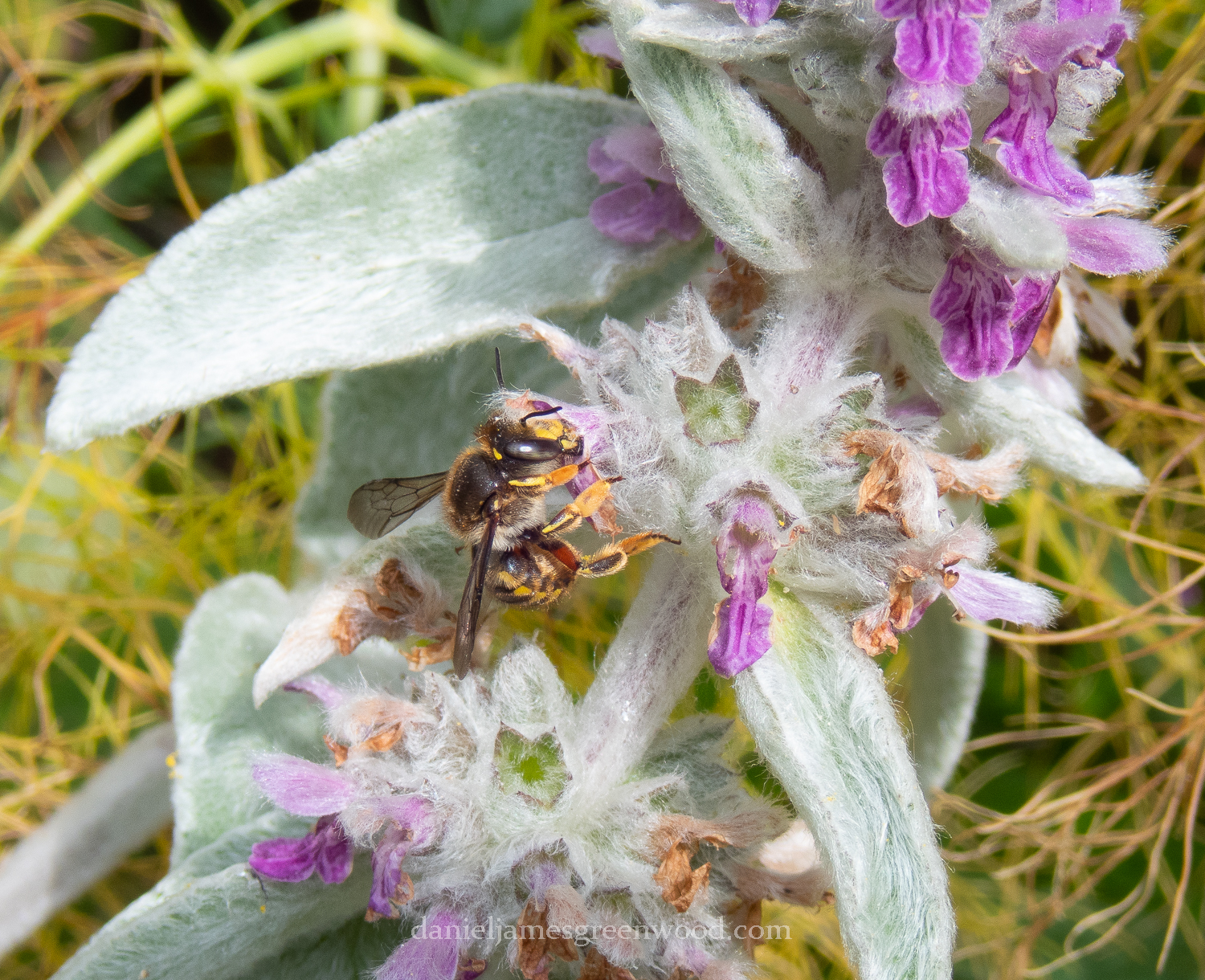
Day 27/30: at last a good show from the wool carder bees. I’ve written about these wonderful bees before – if you want to attract them get yourself some lamb’s ear (not literally), also sold as ‘stachys’.
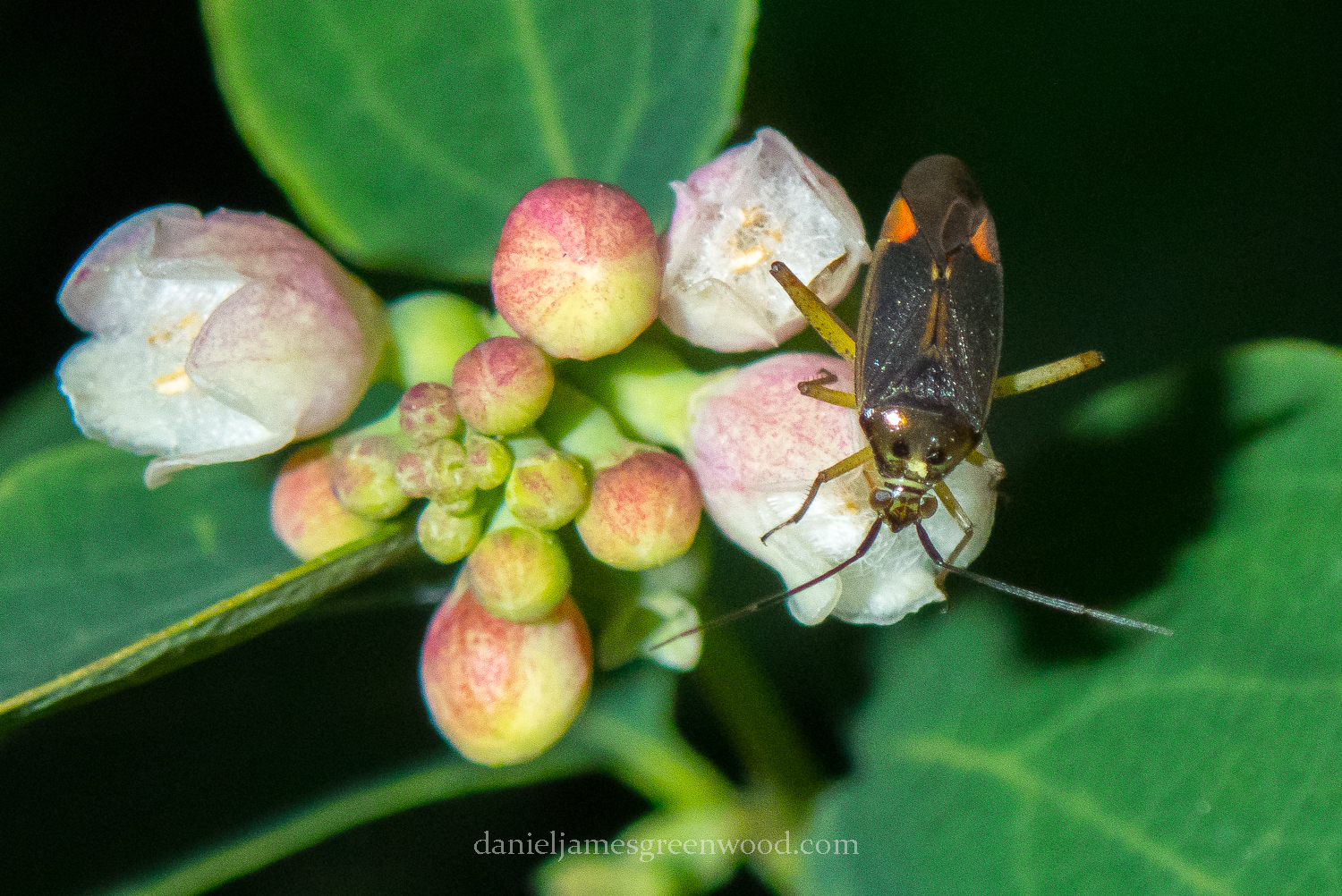
Day 28/30: an evening foray in my mum’s garden late into the evening, in cooler weather. I spotted this mirid bug climbing over the flowers of a snowberry.
Day 29/30: in SE London I found this grasshopper nibbling away on a grass blade. It was far smaller than the photo suggests. The grass was blowing in the breeze which made the focus a bit difficult to pin down, so it’s not the sharpest picture here.
Day 30/30: and so to the final day, one of the few rainy days in June. I was out on the South Downs for a walk and found this pyramidal orchid growing in a laneside verge. A beautiful plant of chalk grassland reaching its peak.
Here we are, week three of #30DaysMacro as part of #30DaysWild. This week, things took a fungal turn after thunderstorms burst onto the scene.
Day 15/30: a bumblebee feeding on purple loosestrife in a car park in West Sussex. I took two photos all day on the 15th, and this was one of them!
Day 16/30: another day where photo opps were scarce, but I saw this little solitary bee (maybe a Colletes?) on the oxeye daisies in my garden. These daisies have been a massive boost to invert life in my garden this year.
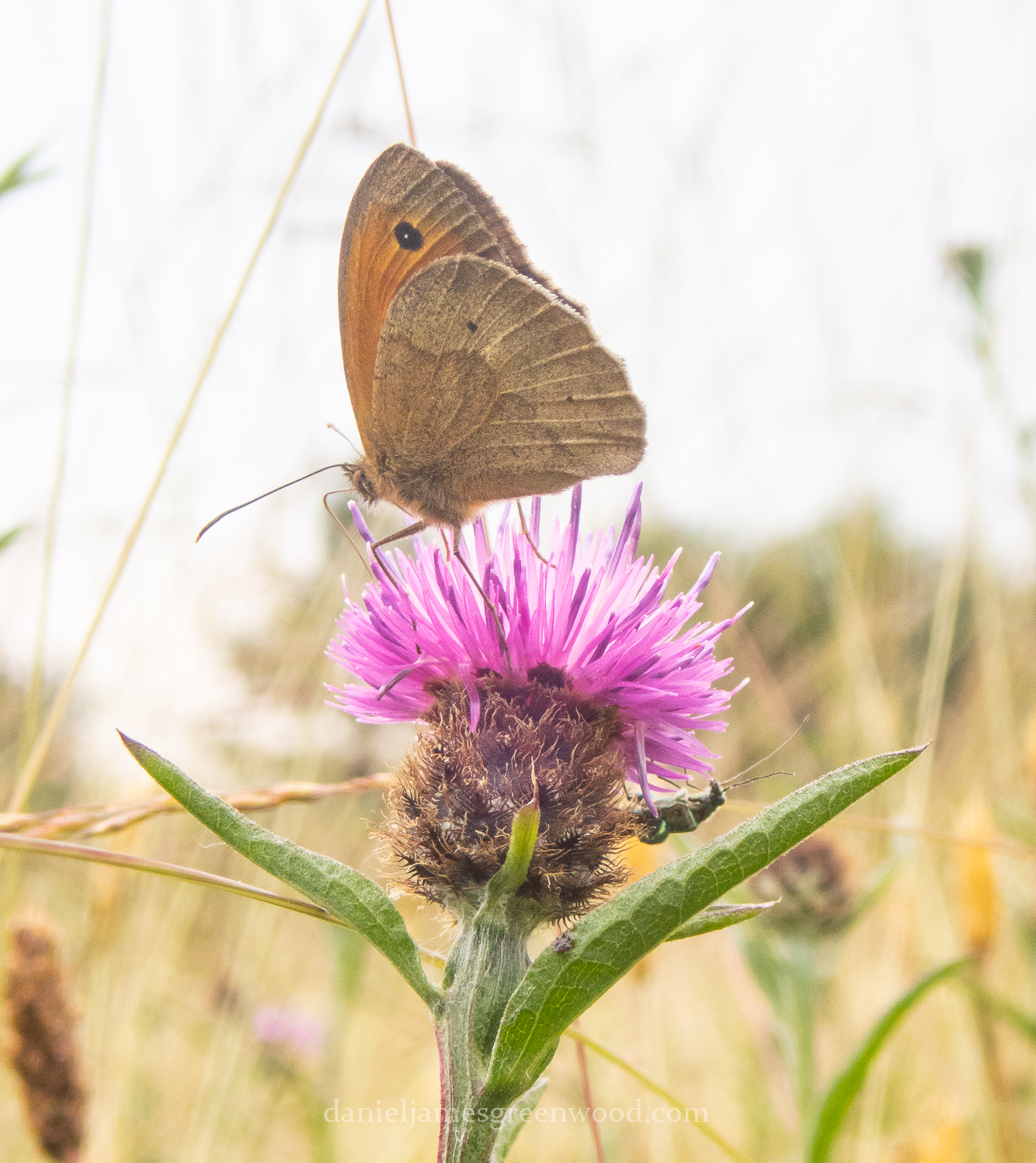
Day 17/30: this photo made me laugh – a meadow brown butterfly on common knapweed in a Wealden meadow in West Sussex. I didn’t notice the green swollen-thighed beetle hanging out below until I put the photo through Lightroom!
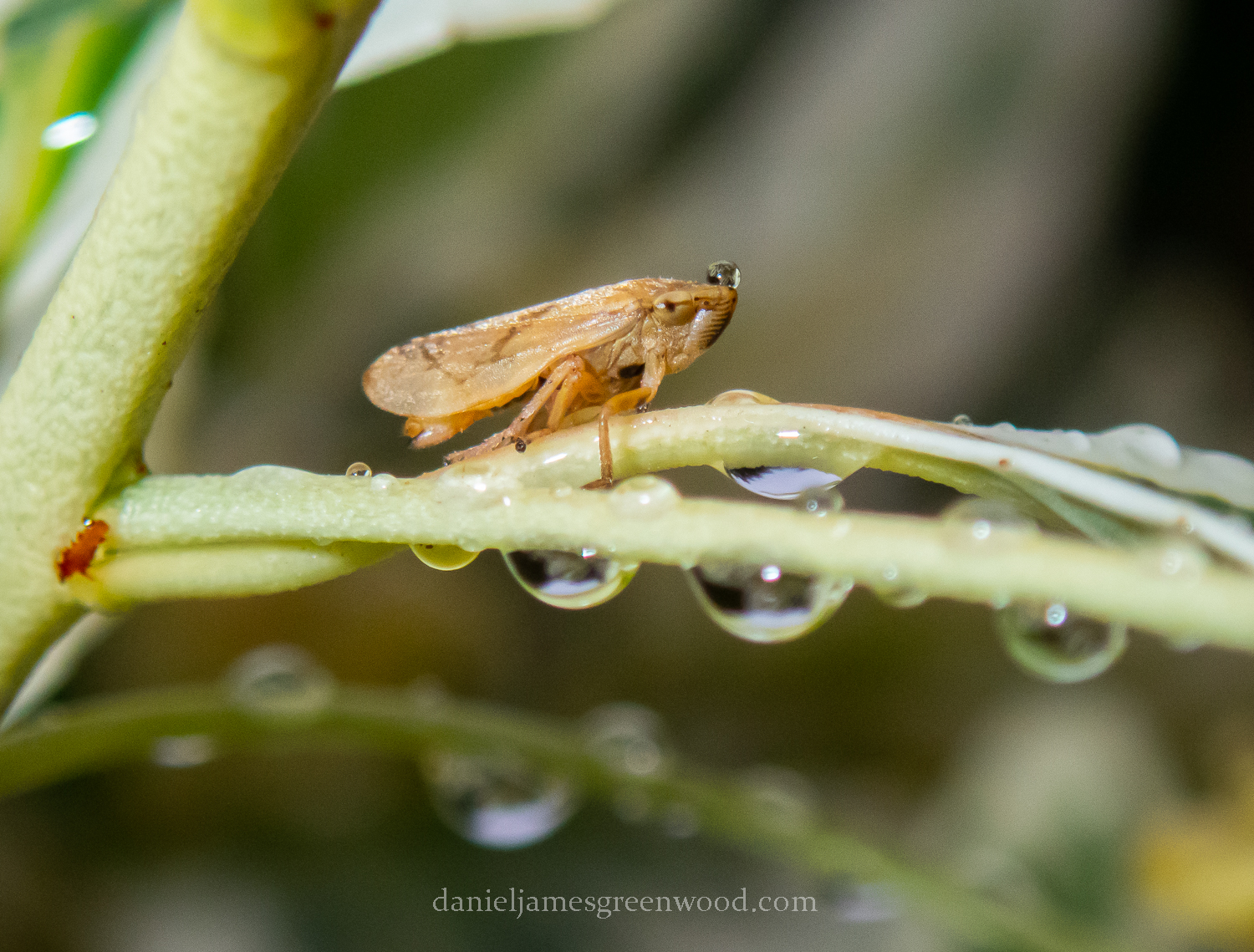
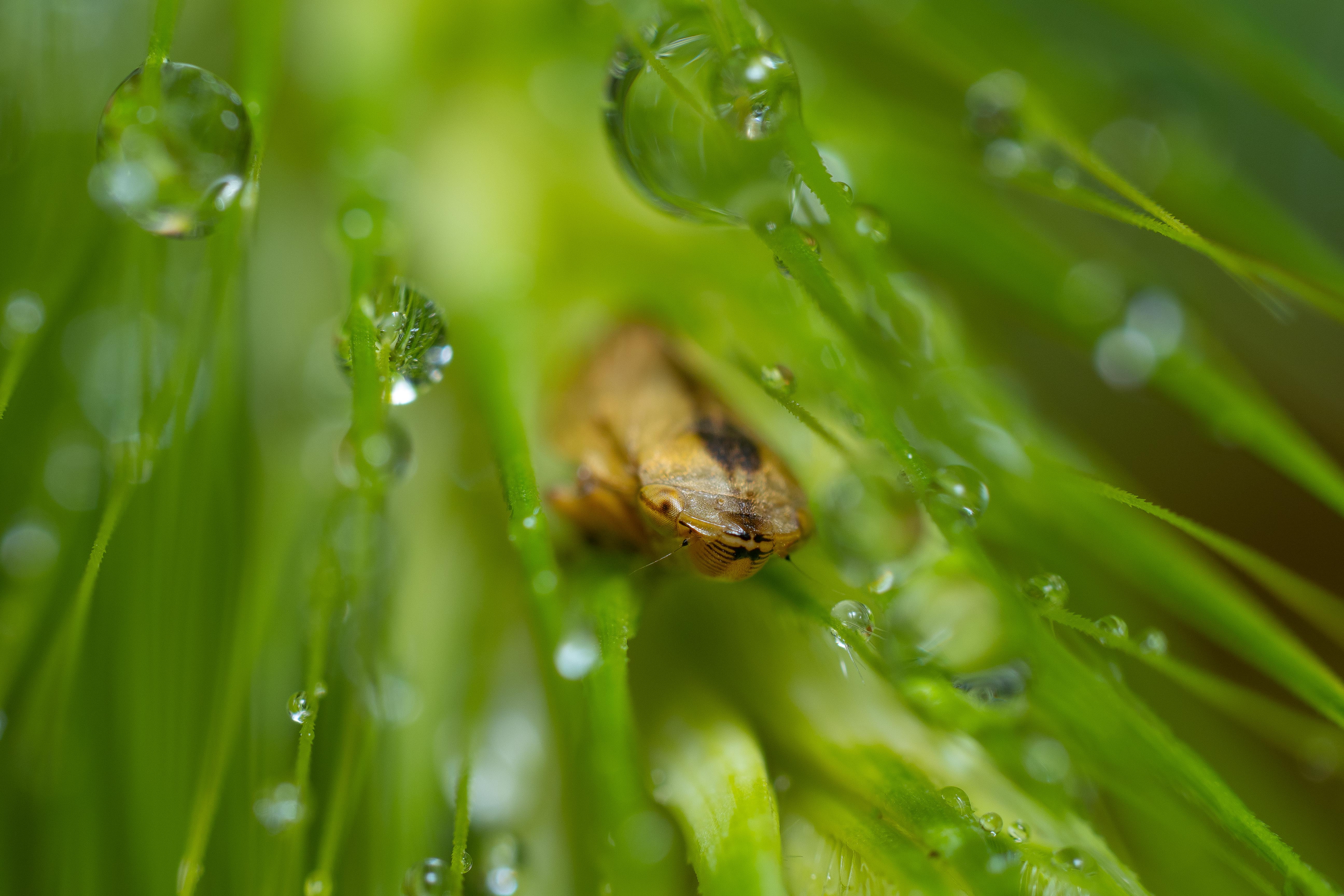
Day 18/30: storms have been the only source of rain recently, and they have been incredibly powerful. After some of that rain, I went looking for some life in the garden and found a common planthopper with a little droplet on their head. I see this as pushing the camera (Olympus Tough TG-6 compact) to the extreme due to lack of light and small size of the subject, and the results are great (though cropped and edited in Lightroom).
Day 19/30: on a lunchtime walk to stretch my legs I found this ashy mining bee foraging from one of the umbellifers that grow alongside my local river.
Day 20/30: things took a turn for the fungal on the 20th, as the rain gave a much-needed drink to the thirsty lichens in my local churchyard.
Day 21/30: the first of the summer/early autumn mushrooms, spindleshank, growing in the place where I learned what they are at Sydenham Hill Wood.
This blog often complains about the poor understanding in England regarding wasps. I began drafting this post in the midst of what’s known as ‘the silly season’, when Britain’s tabloid newspapers turn their guns on gulls, wasps and spiders, with a seasonal vacuum in news. However, in a global pandemic there is no real vacuum in news, and there is no way I’m going to go looking through those rags for stories I know are rubbish. Perhaps it’s my Scouse heritage.
What I didn’t expect was for YouGov to run a poll on the most hated invertebrates in the UK. I don’t understand how this helps in a time when invert populations – which we depend on for survival – are crashing. You know what they say, don’t trust the polls. Unless it’s the most recent ones in which case please God let it be true.
Moving on.
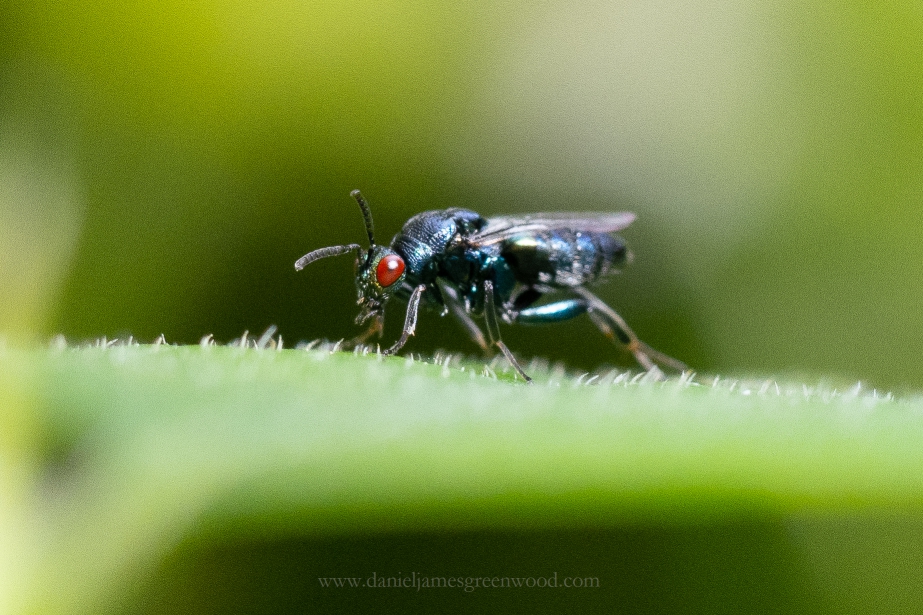
Yes, you guessed it, this is another post about wasps. This time, it’s some of the smallest wasps in the world. The group I encountered, and which are shown here, could amount to a total of 500,000 species, with about 470,000 of those species unknown to science. Do you need help picking your jaw off the floor?
Reminder: we are just the one species, Homo sapiens.
You have to think sometimes – imagine all the ecological networks and relationships between species which we actually have no idea about. In places of the highest biodiversity, they’re being made extinct by the loss of habitat, before we even know they exist. Jair Bolsonaro has more to answer for than we may yet realise.
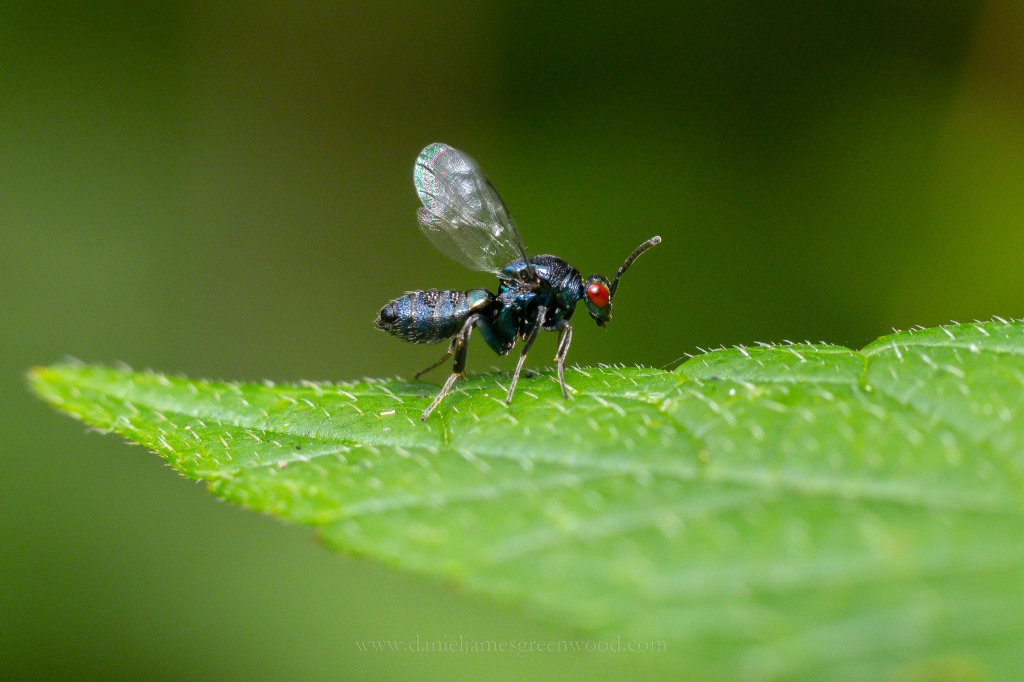
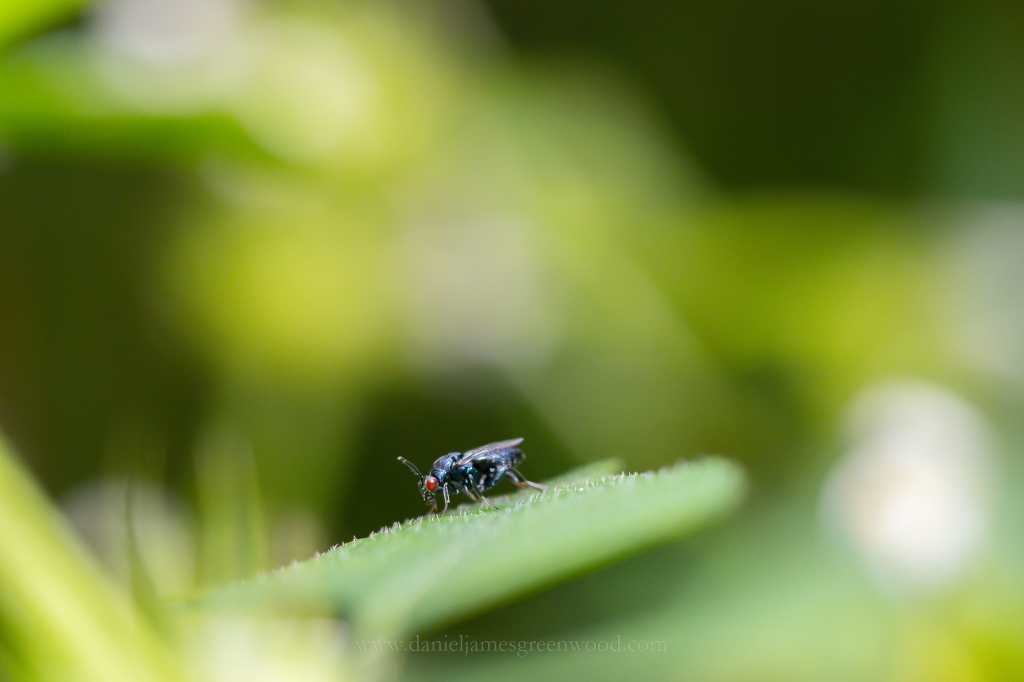
The wasp photographed here is now a species I know thanks to iNaturalist – a chalcid wasp in the genus Ormyrus. ‘Chalcid’ comes from the Greek word for ‘copper’ because they have a metallic appearance.
Back in August I visited a nature reserve local to me. The meadows had far more seed heads than flowers and I wasn’t intending to see a huge amount of invertebrate life. I give up on birds around July when they go on their holidays, usually low in a bush somewhere.
In actual fact I found a lot of species, many of them quite happy to be photographed, though of course not yet understanding of what a photograph is. I was drawn to a large area of dead nettle, a family so big there are many plants I just don’t know the names of yet.
Looking at some of the leaves of the plant, I noticed something about 3-5mm in length, resting on the leaf. When I looked through the macro lens and additional extension tube, which magnifies the view further, I could see it was a type of wasp.
This wasp is obviously a great deal bigger than that. That said, I couldn’t see that it had red eyes without some magnification.
Chalcid wasps are parasitic species, as outlined by their Wikipedia entry:
Most of the species are parasitoids of other insects, attacking the egg or larval stage of their host, though many other life cycles are known. These hosts are to be found in at least 12 different insect orders including Lepidoptera (butterflies and moths), Diptera (true flies), Coleoptera (beetles), Hemiptera (true bugs), and other Hymenoptera, as well as two orders of Arachnida, and even one family of nematodes.
Now I don’t know much about the very small wasps, and one thing I really didn’t know was just how small they get. Some species of wasps are smaller than the width of a human hair, or even smaller than a single-celled organism!
Perhaps they’ll be the ones to get pilloried during 2022’s tabloid silly season. In truth, I doubt it.
In June 2021 I undertook a variant (not that kind of variant) of the Wildlife Trusts’ 30 Days Wild campaign. I decided to try a month-long project of taking a macro photo every day: #30DaysMacro.
It was a lot of work, mainly in processing and tweeting the photos to keep up with the community aspect. But it reminded me of the importance of making time for yourself each day, even if only for 5-10 minutes, to go outside and look at things other than a computer or phone.
In the past 18 months my salaried work has become screen-based, when once I used to spend several days outdoors each week talking to people and monitoring wildlife. It’s not healthy, but it’s a byproduct of UK lockdowns.
I feel a bit as if this was such an intensive assignment that it has burned me out a bit photography-wise, among everything else happening in Brexitland (it didn’t come home in the end 🦁🦁🦁). I definitely hurt my back from some poorly considered leaning over waist-high hedges (bending with my lower back, not knees, etc.).
Almost all the photos were taken in my small urban garden, with a handful taken away from home. All were in Sussex. I am adamant that travelling for macro is often unwise, depending on your focus. Macro takes a lot of time and if photographing wildlife, you need to know your patch. Otherwise you spend ages trying to understand the landscape when you could be taking photos.
Below I go through the photo captured each day. Hopefully this post unclogs my macro blogs, which have been waiting on this monster post for a while now.
Thanks for taking a look and I hope it inspires you to consider the wilder things in life.
1st June 2021: aphids protecting their young (I think) on the underside of a sycamore leaf.
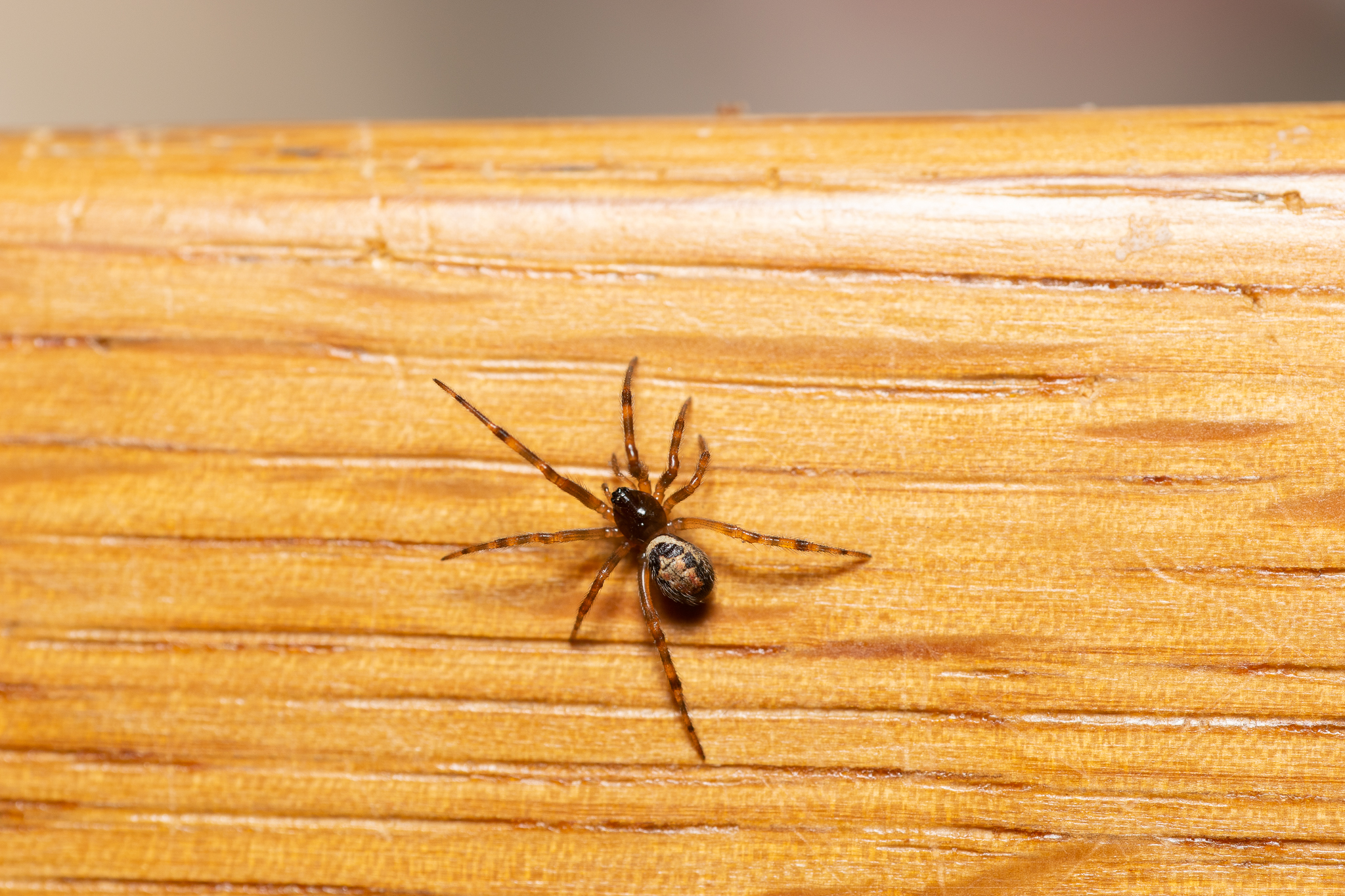
2nd June 2021: a noble false widow spider in my porch. There is a whole lot of hysteria about this species, which has actually been in the UK since the 1800s. It has caused me no trouble.
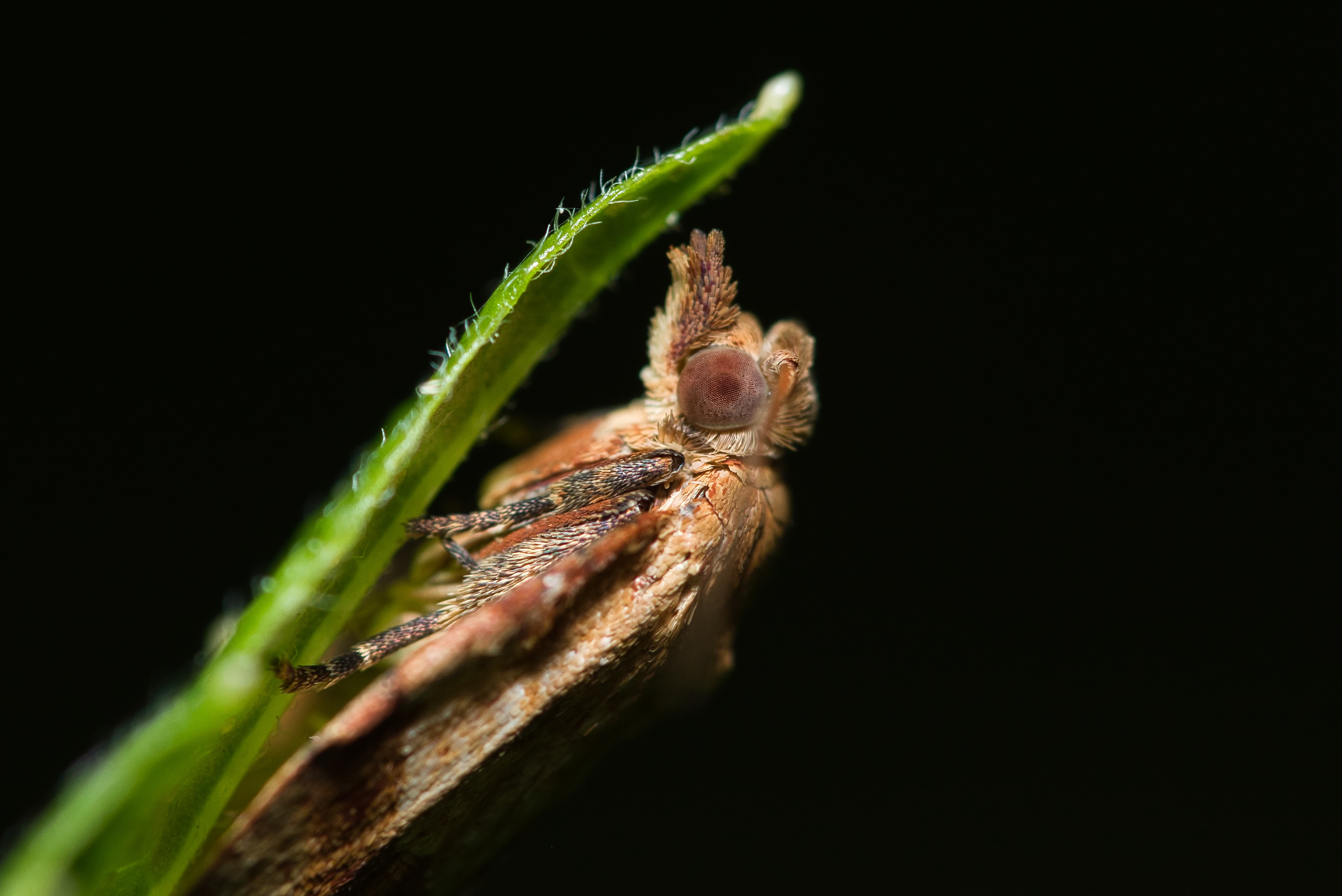
3rd June 2021: a moth resting on a leaf at dusk. I was working quite hard to get this pic and as the temperature fell it calmed a bit and let me get close.
4th June 2021: a noble false widow spider on my kitchen surface ledge. The weather wasn’t great on this day, so I had to find something in my house!
5th June 2021: a red and black froghopper in the South Downs near Alfriston. I walked 20 miles on this day for Macmillan Cancer Support and found this lovely hopper snoozing in the field edge.
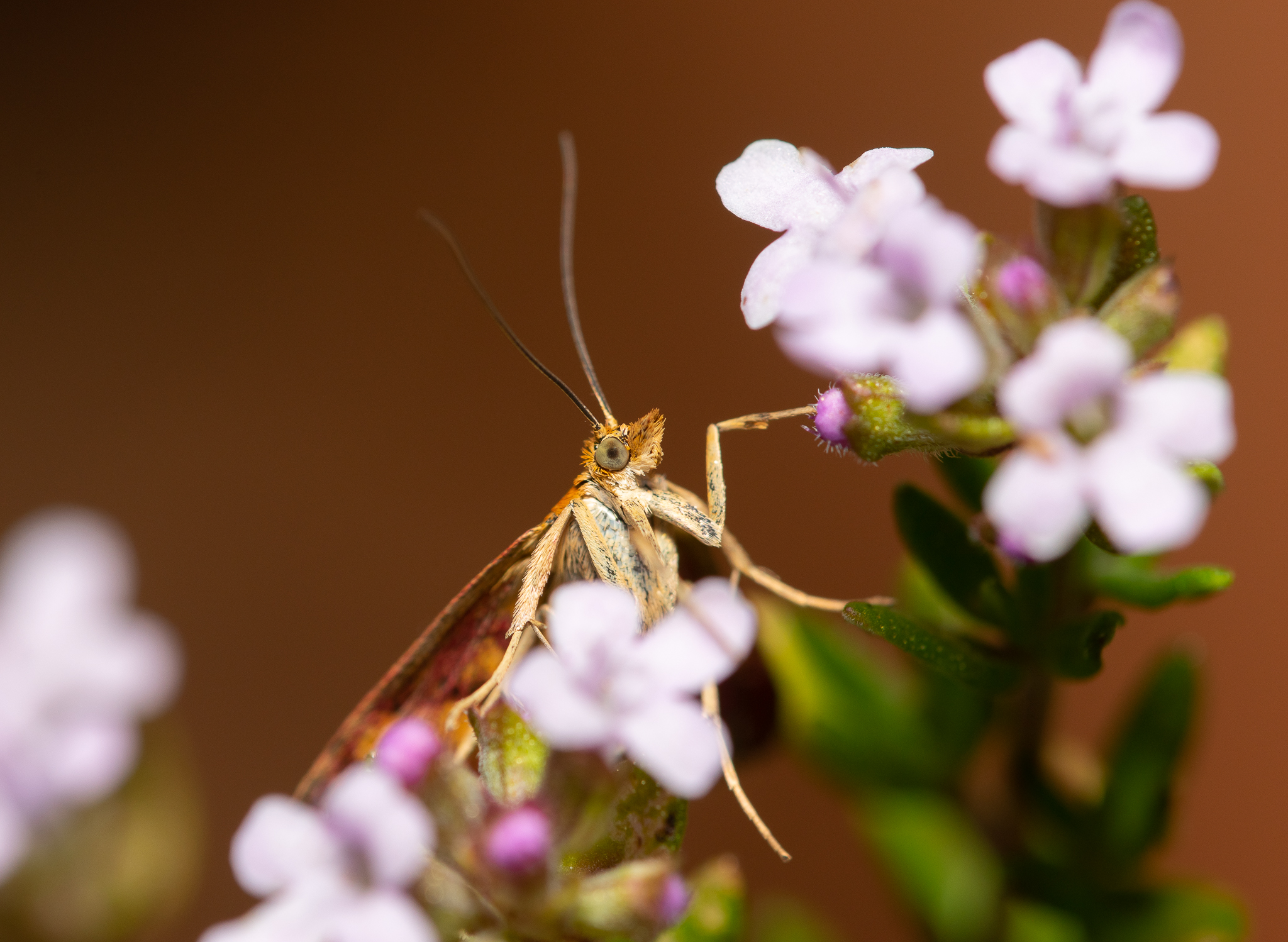
6th June 2021: a mint moth selecting its preferred thyme flower. This is one of the more common or visible day-flying moths I encounter.
7th June 2021: a green shieldbug, the most common of its kind in my garden.
8th June 2021: one of the highlights – a fencepost jumping spider in my garden (on the fence!). I wrote a post (lol) about this encounter which you can read here.
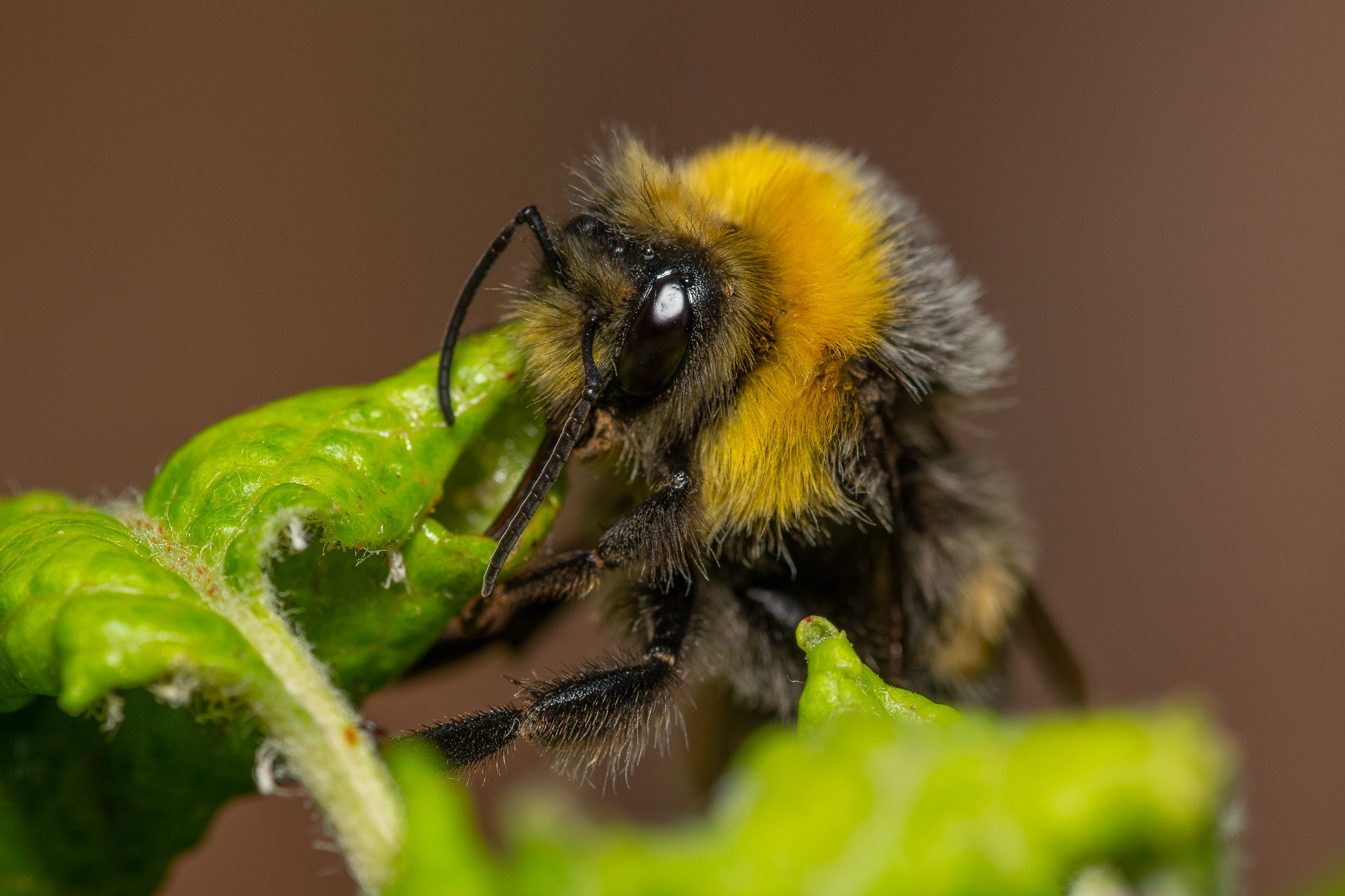
9th June 2021: a bumblebee worker drinking aphid honeydew from the curled leaves of an apple tree in my garden. This was fascinating behaviour, with many bees of different species visiting this tree to nectar. I posted it on Twitter and a lot of people got in touch to say they were seeing the same thing. Glad I shared.
10th June 2021: a wonderful caterpillar in my green alkanet patch. I’ve not attempted an ID yet.
11th June 2021: this is a fly I see often in the garden. It is so cool. Its wings often whirr around its body as it walks around a leaf.
12th June 2021: a weekend away in East Sussex, met this well-travelled painted lady butterfly along a country lane.
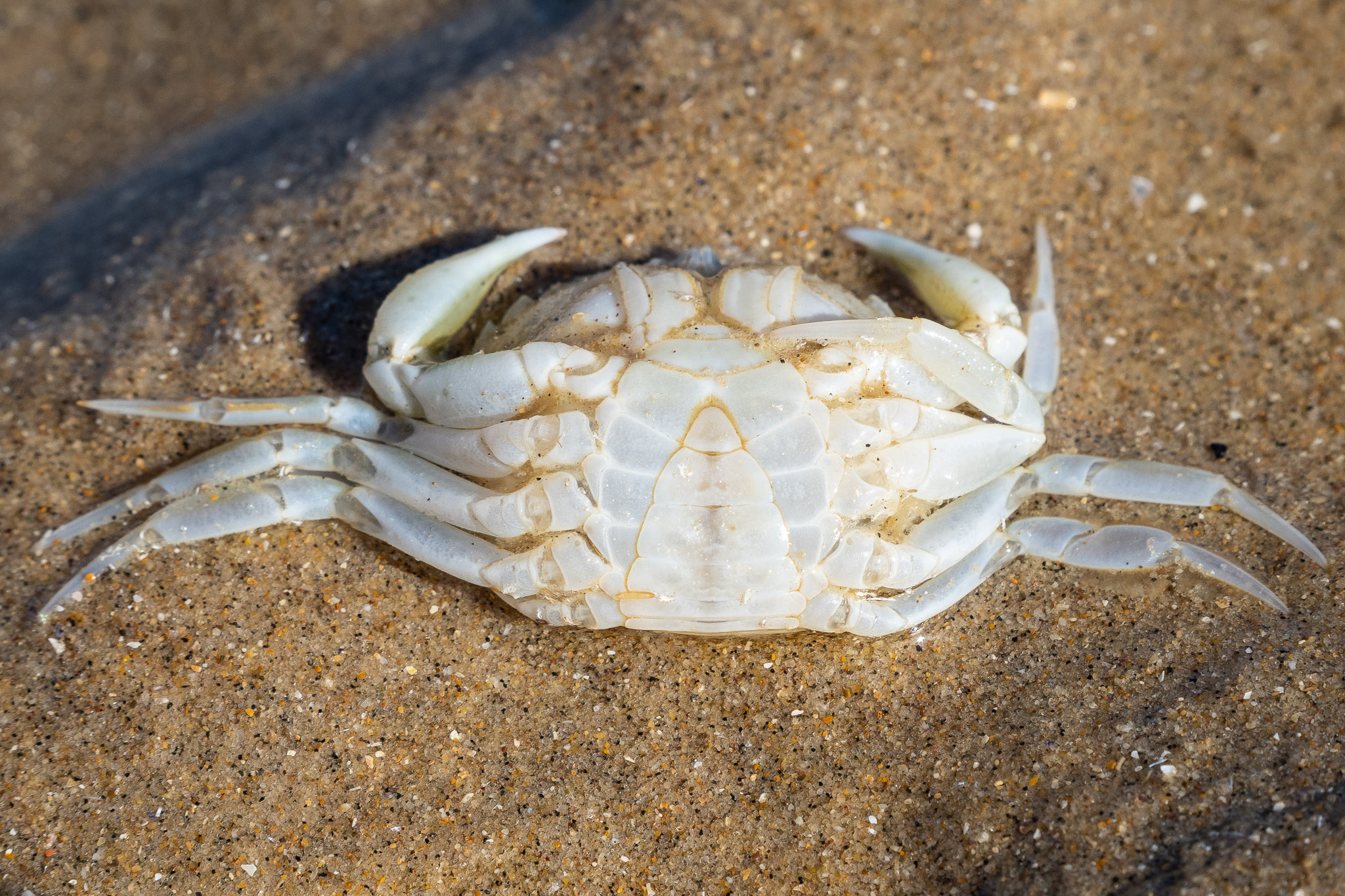
13th June 2021: the carapace of a European green crab at Rye Bay.
14th June 2021: a beautiful gingery moth that spent the weekend looking after my house for me. Not sure of the species.
15th July 2021: the halfway point and an exciting find. I spotted a bee in the garden which looked unusual. Having got a photo I saw that it was a sharp-tailed bee. Delighted to have this in my garden as I’ve never seen one before and it was a new species for the garden list.
16th June 2021: green nettle weevils are funny. They play hide and seek sometimes. This weevil was happy enough to have its photo taken for a little while.
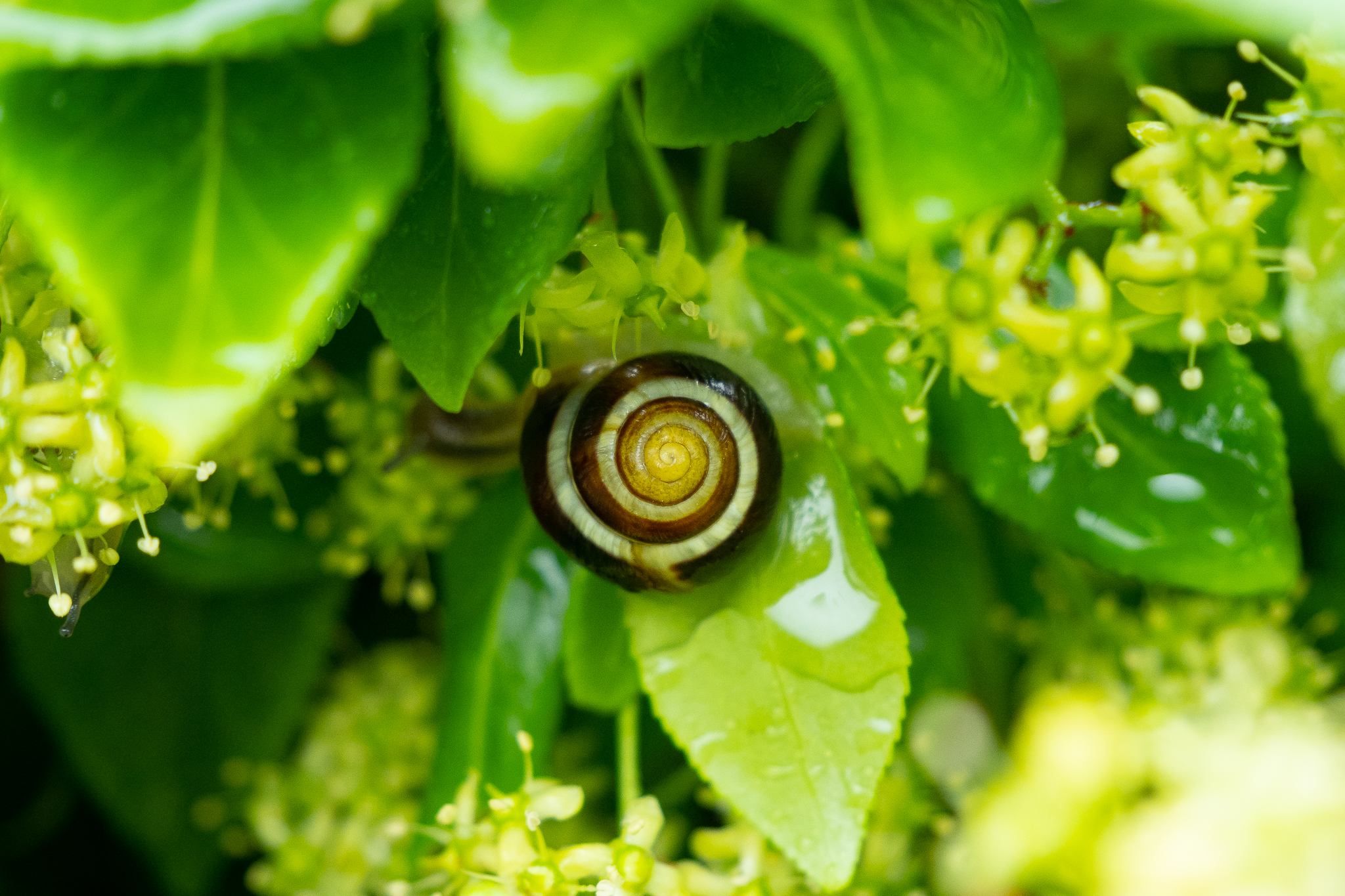
17th June 2021: a wet and rainy day when I thought a photo might not be possible. The hedge in my garden was alive with these beautiful snails. I opened the aperture to allow blur to occur and highlight the swirling shell.
18th June 2021: common jelly spot grows on the bird table in my garden. After enough rain has fallen it bursts back to life and probably chucks out some spores.
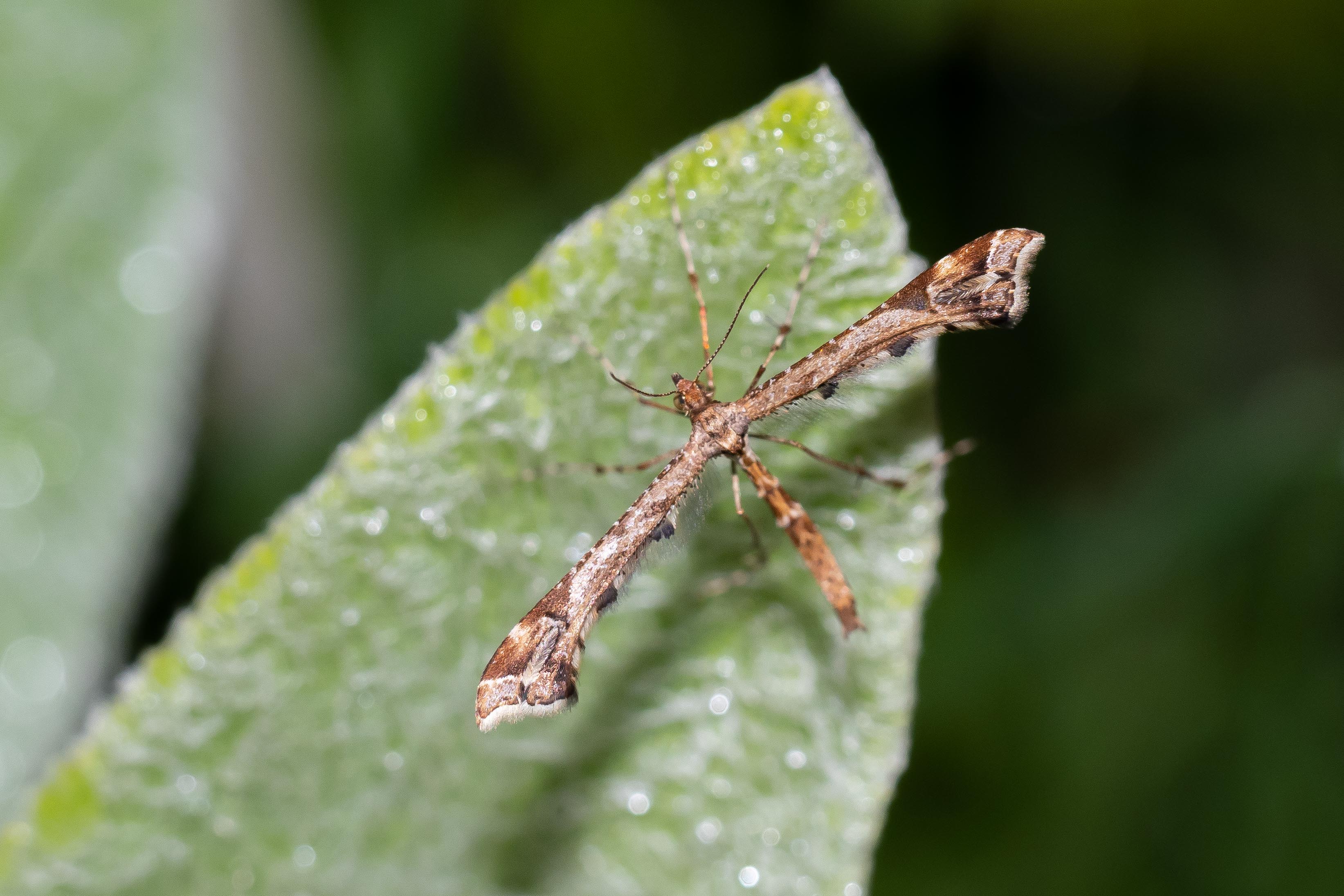
19th June 2021: a plume moth on another wet one in the garden. I love the pattern on this species, which I think may be a beautiful plume.
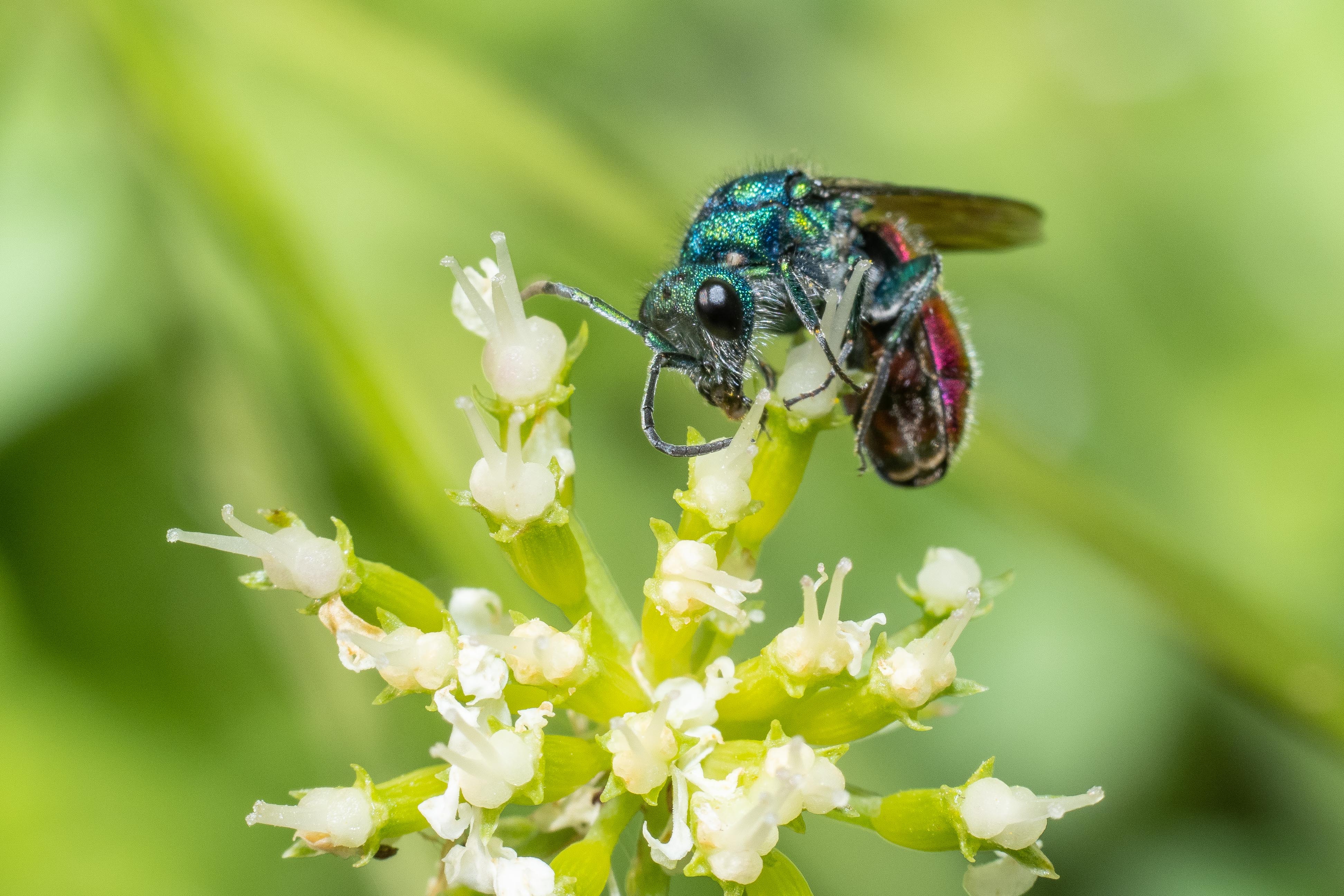
20th June 2021: a trip to the Adur Valley which I blogged about here. A ruby-tailed wasp, one of the most beautiful insects in the UK.
21st June 2021: another rainy day. I have learned how to find meadow spittlebugs in grass heads in recent years after finding one just outside my back door.
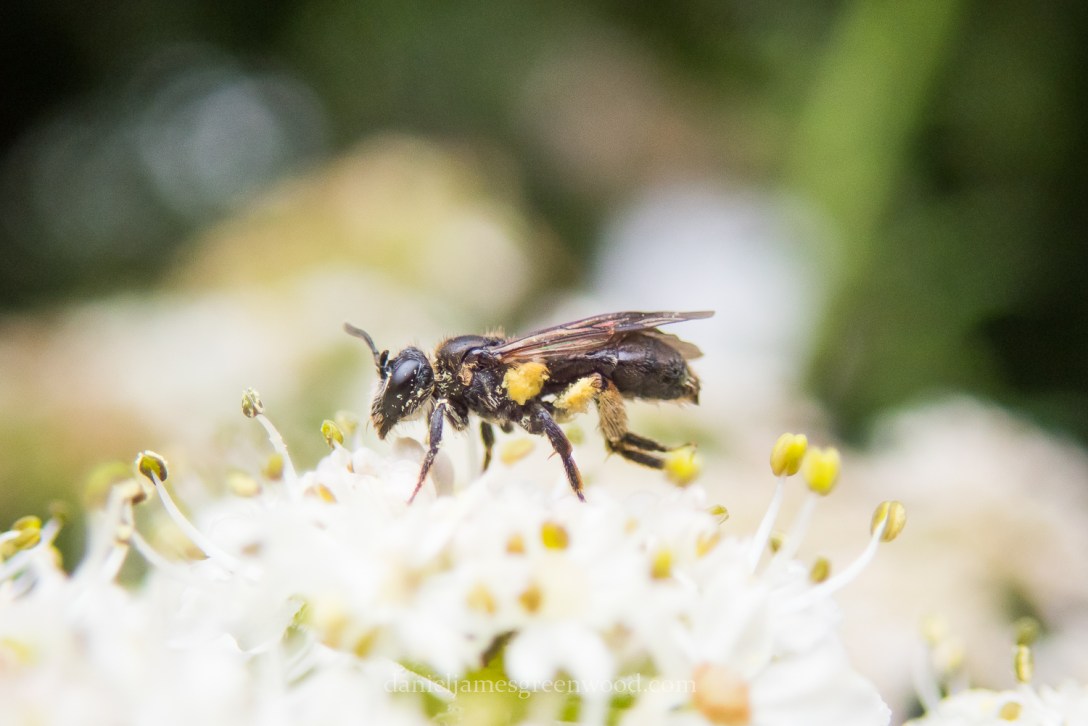
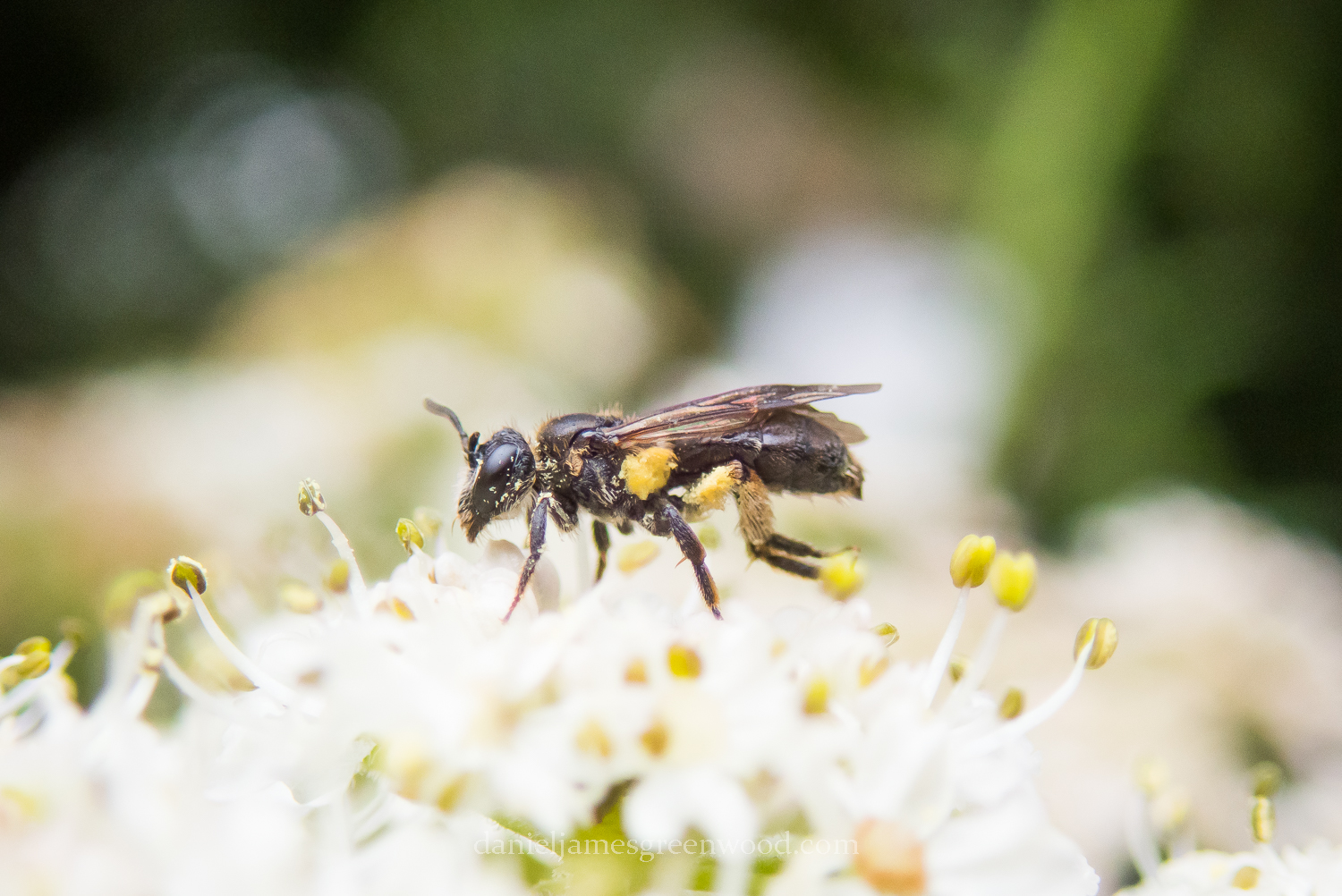
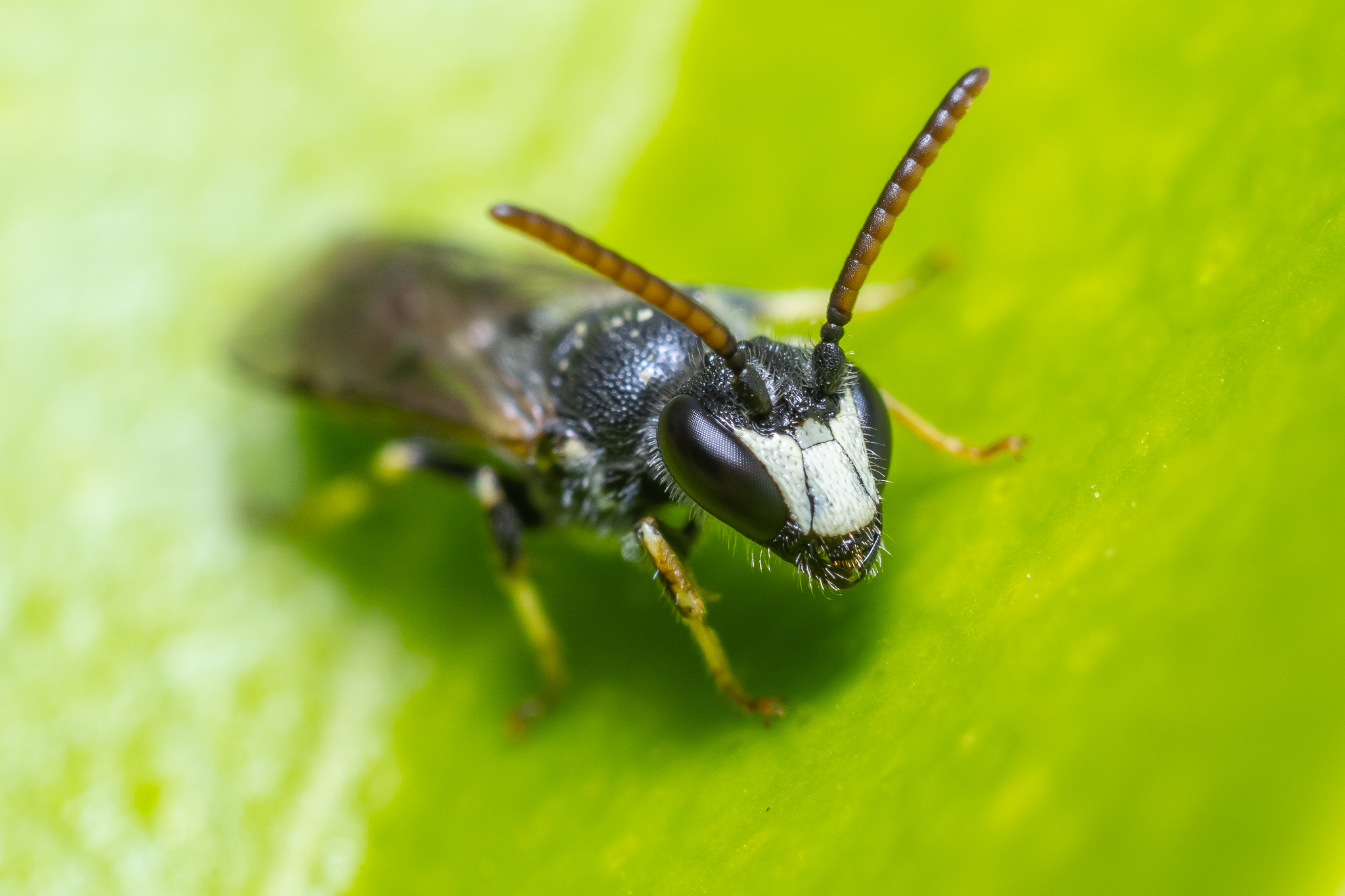
22nd June: a hairy masked bee (perhaps the American name), one of the yellow-faced bees, Hylaeus. These are tiny bees and not easy to photograph.
23rd June: one of my favourite partners in macro, a zebra jumping spider. They’re devilishly tricky to get in focus sometimes. I think this is just out, but I like its posture.
24th June: a running crab spider waiting for its lunch delivery. The fly behind probably didn’t know it was there.
25th June: another highlight which caused quite a lot of back strain! Here you can see an ant harvesting (and I think consuming) the honey dew from aphids they have farmed. This needs a blog all to itself to go through the amazing ecology of these two species.
26th June: I went to my local nature reserve, a farm managed by the council, to look for some different types of arthropod (insects and spiders, basically). It was hard work but I got some decent images. I like this one because it looks like this beetle is attempting to get better signal! This visit needs its own blog post as well.
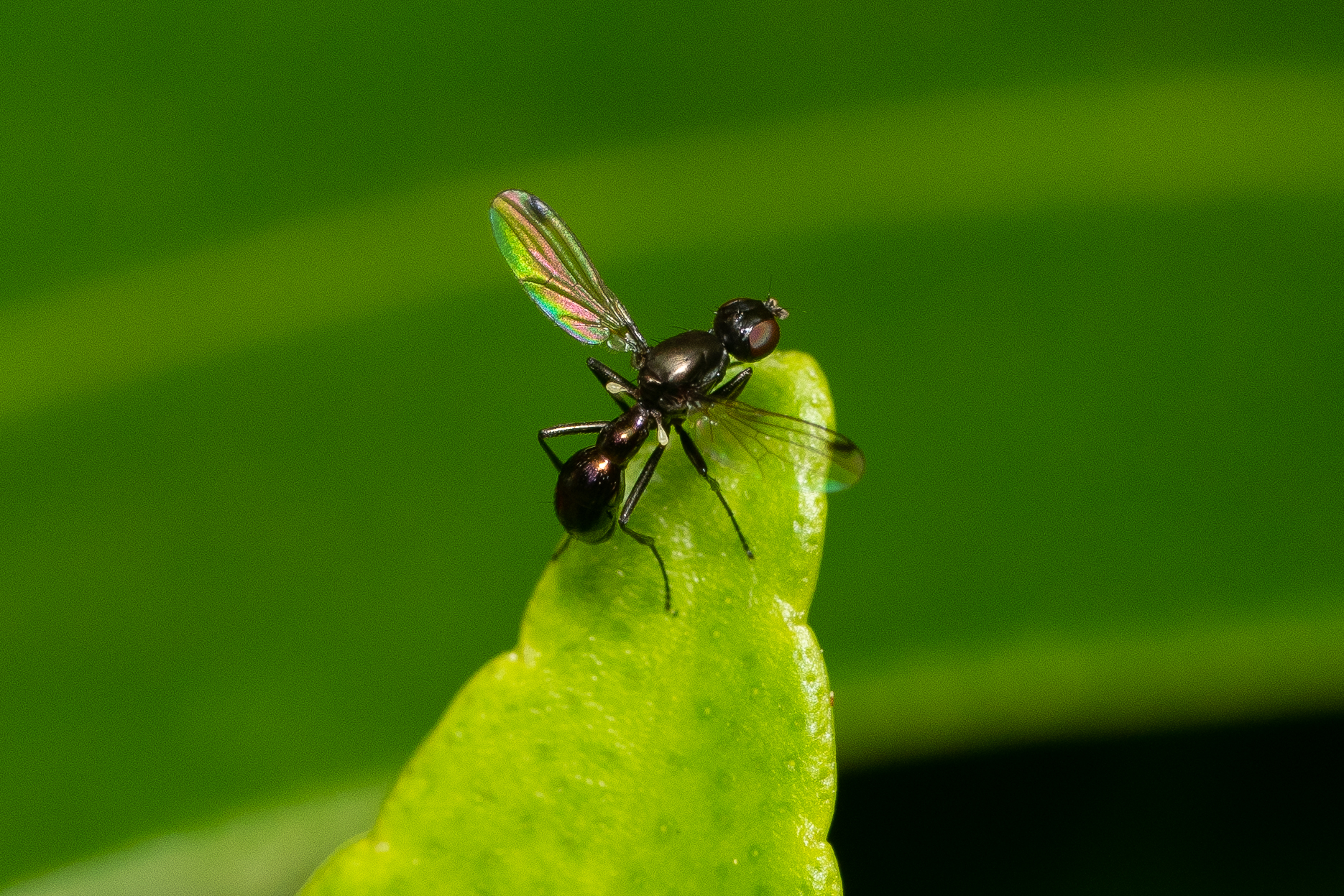
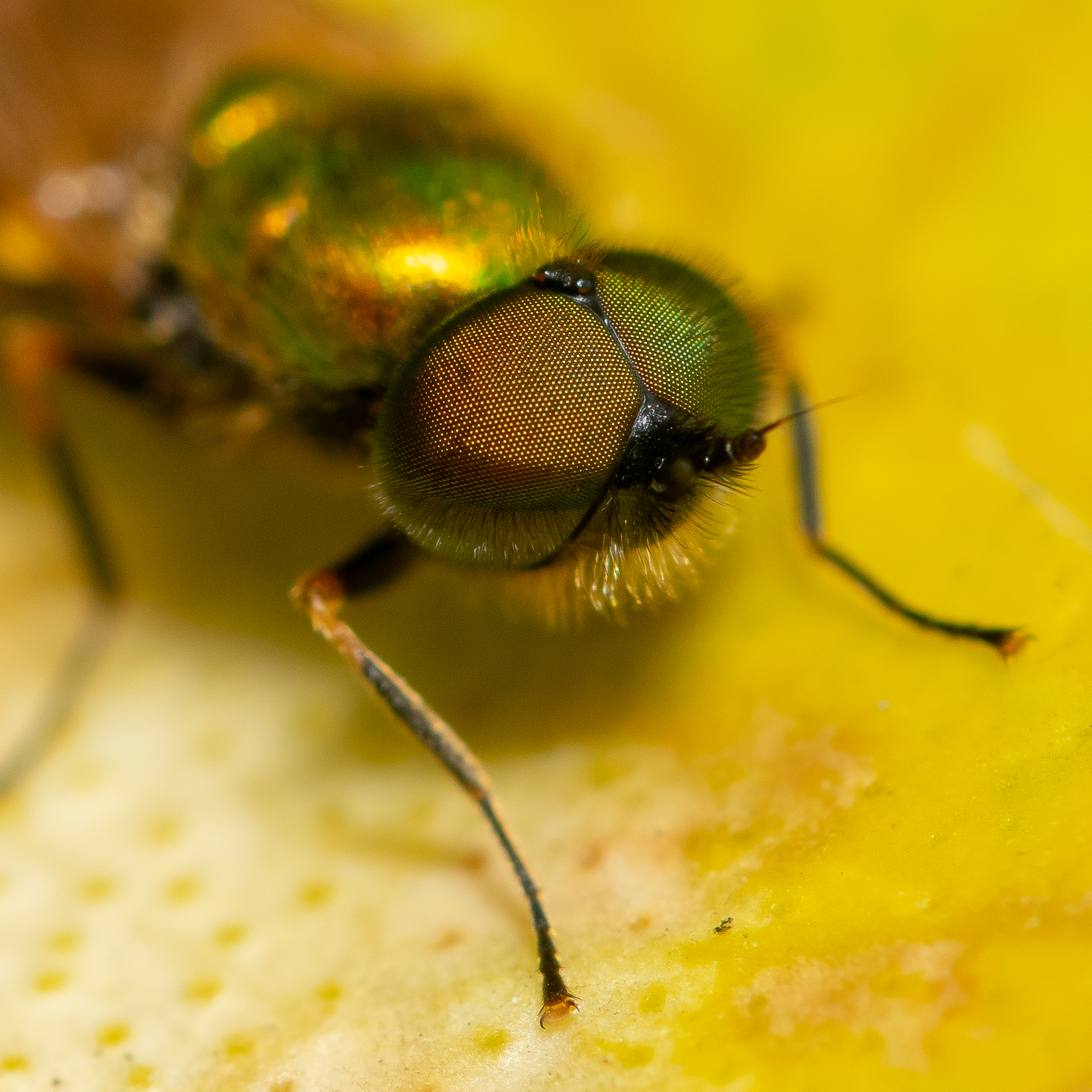
27th June: I was tired after my macro outing the day before but managed to find this small green fly in my garden. I like its 1980s robot-like compound eyes.
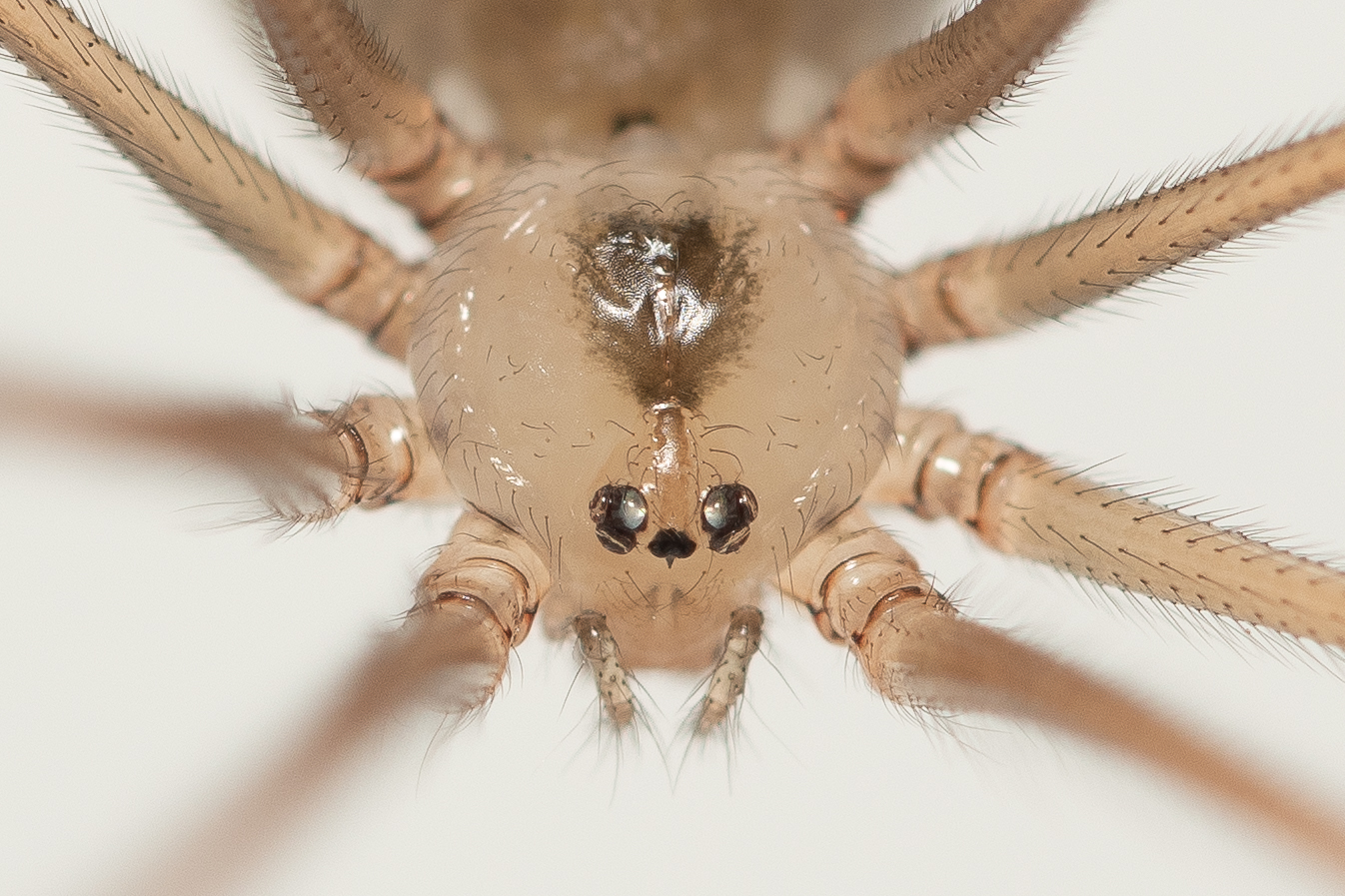
28th June: I had been observing a large, dangly spider that lives in the corner of my kitchen for several weeks. I decided to get a closer look and was amazed by what I found. This is a cellar or daddy longlegs spider. They are from the tropics and are well established in the UK, having been here for hundreds of years. This also needs its own post!
29th June: I planted stachys (lamb’s ears) especially for this species, the wool carder bee. I haven’t seen much of them this year but they did show up towards the end of June. I love them, they’re also easy to photograph in cooler weather as they just clamp on to the flowers and chill. I blogged about them in 2020.
30th June 2021: and so the final day. I dropped by a favourite Sussex Wildlife Trust reserve on the way home, which I posted about here. This tiny slug was having a good look at me as I searched for mushrooms and slime moulds. It felt like a good reminder that as much as I was watching the wildlife, it was also watching me.
Thanks for making it this far and I hope you will spend some time out there looking out for insects, spiders, slugs and snails. They need us.
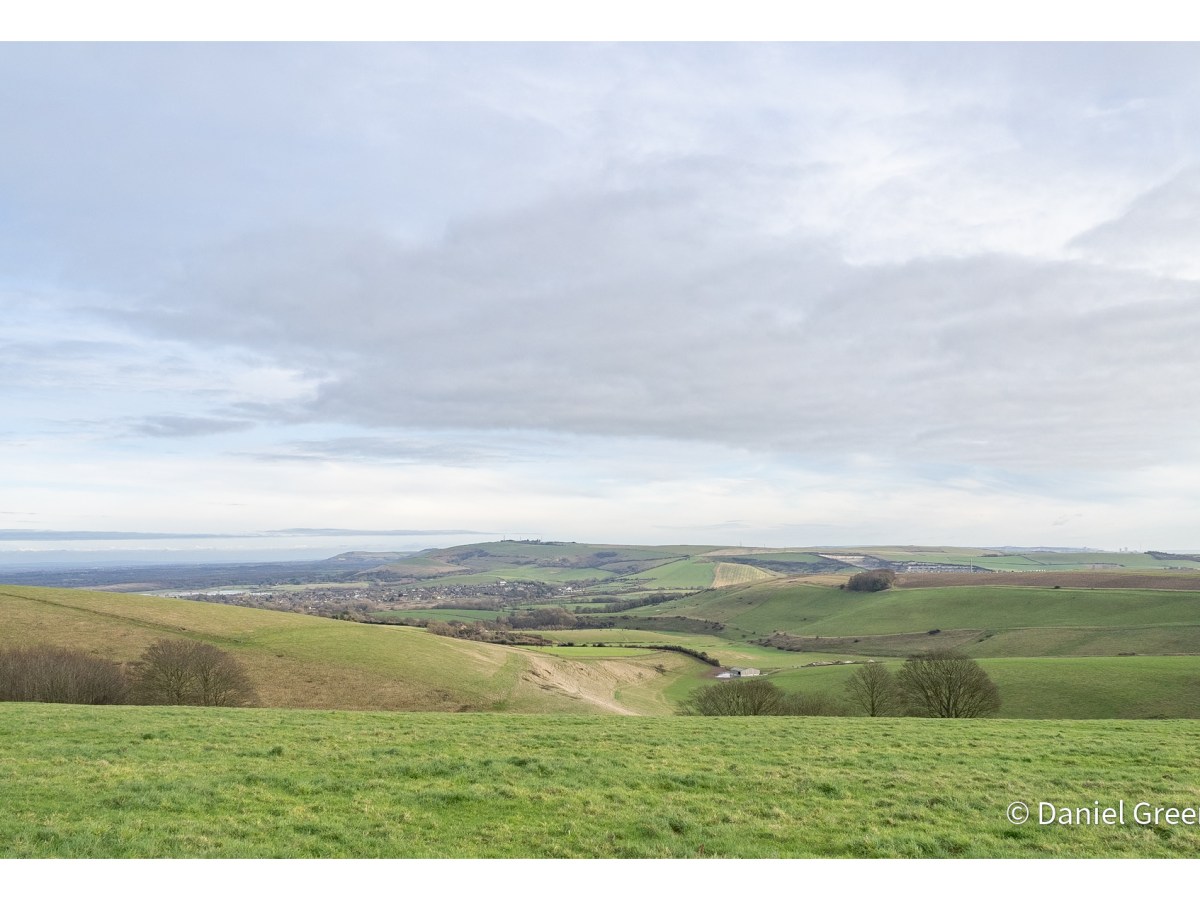
I got to spend the afternoon wandering around the Adur valley recently. The River Adur runs through West Sussex where it reaches the sea at Shoreham. There are wonderful views of the South Downs, especially from the area I was wandering around.
Truleigh Hill on the South Downs, seen from the Adur valley
This landscape fascinates me because it was once a much wider and wilder estuary. The town of Steyning had its own port, but the river’s margins and the marsh has become farmland. Looking at the maps you can see Rye Farm, with Rye potentially from the West Saxon word for ‘island’, just as it once would have been when surrounded by water or wetlands.
The River Adur
It was the end of a very rainy period and the insect life was out in force. There were hundreds of bumblebees on tufted vetch in the damp margins and probably thousands of newly emerged grasshoppers.
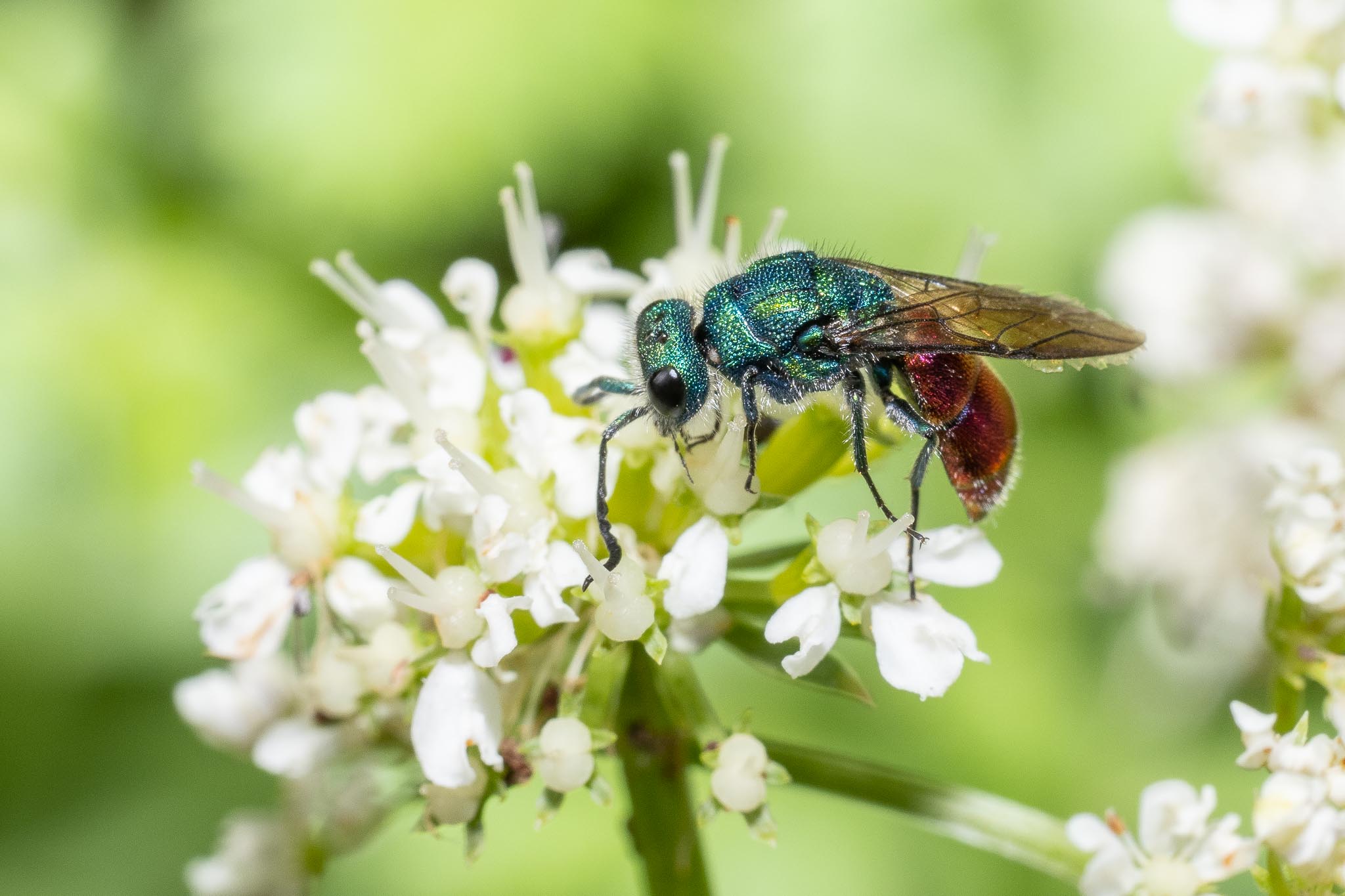
I wasn’t alone on this walk and so couldn’t linger too long. But along one of the lanes I found some umbellifers. On one flowerhead there was the unmistakable green and red of a ruby-tailed wasp!
They are stunning insects – with metallic blue-green thorax and a ruby-red abdomen.
The wasp was feeding on hogweed, a popular plant with pollinators.
This is a better view of the ruby abdomen.
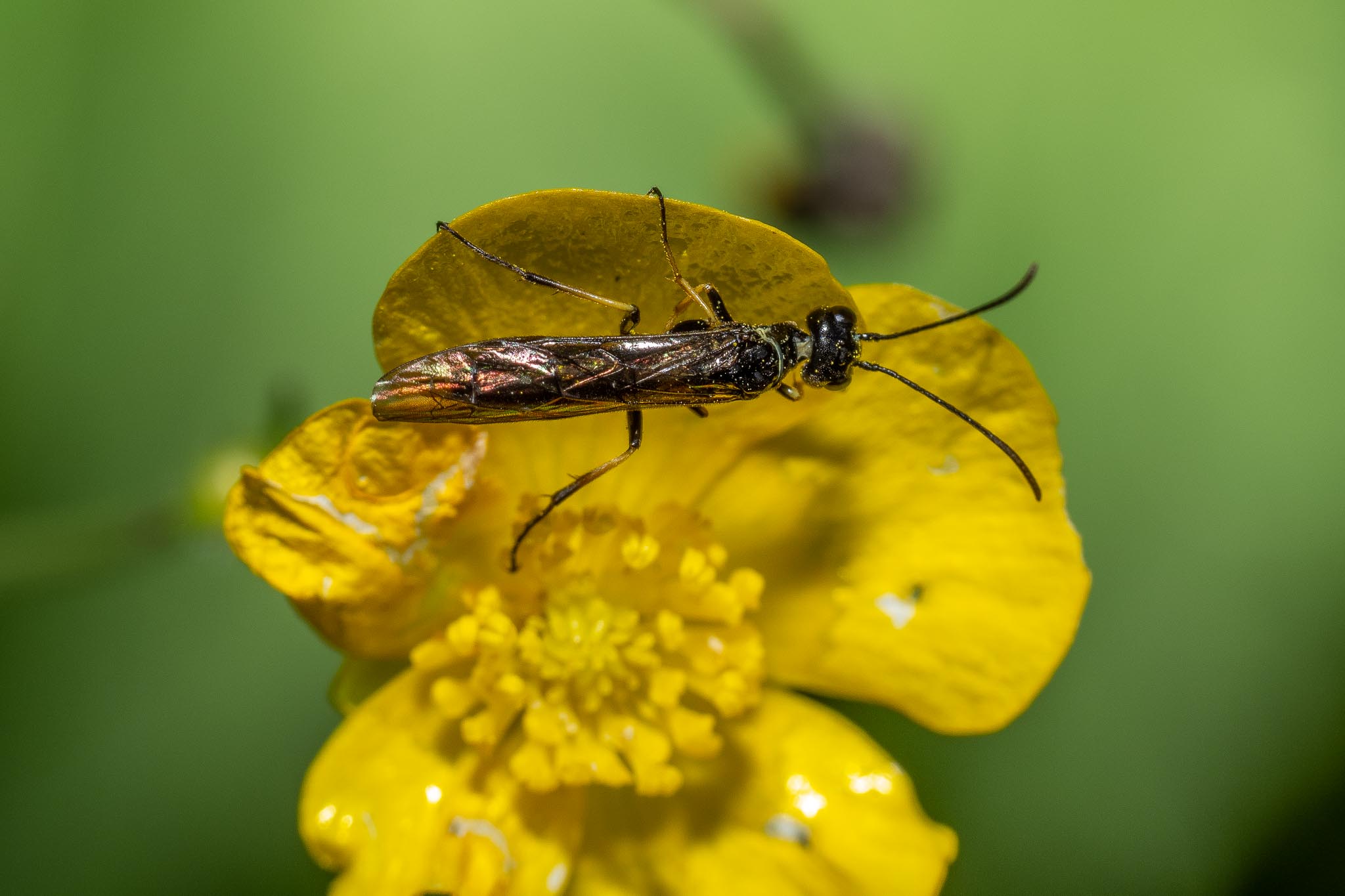
There were just so many insects out and about, it was a joy but also a massive distraction. Buttercups are often the favoured haunt of sawflies – the earliest relative of wasps. This is a species in a group of rather elongated sawflies.
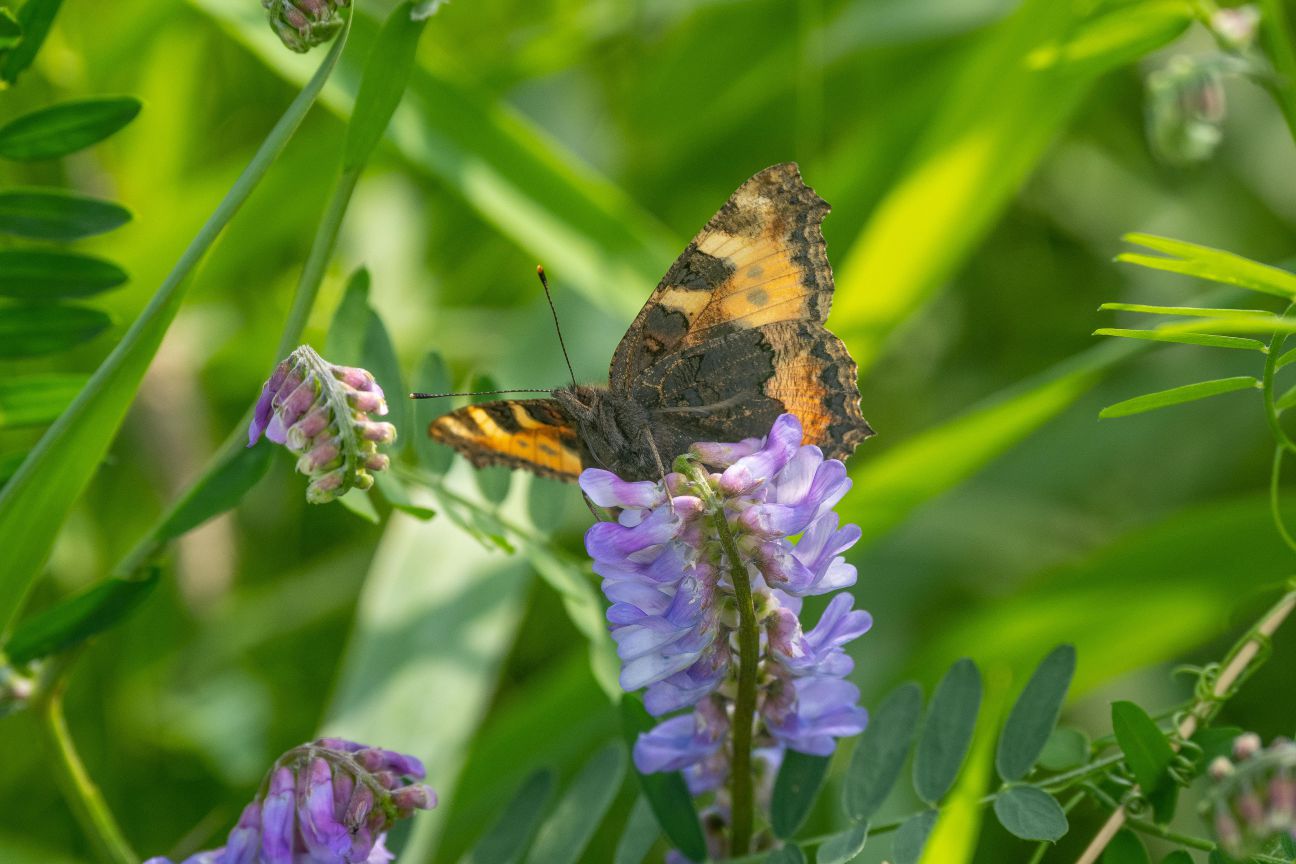
Tufted vetch was growing in the flowery margins where the bumblebees were in great number. There were also large numbers of small tortoiseshell butterflies.
On a fence near the river a blue damselfly was eating some kind of bug. It was so focused on chewing its prey that I could get very close indeed.
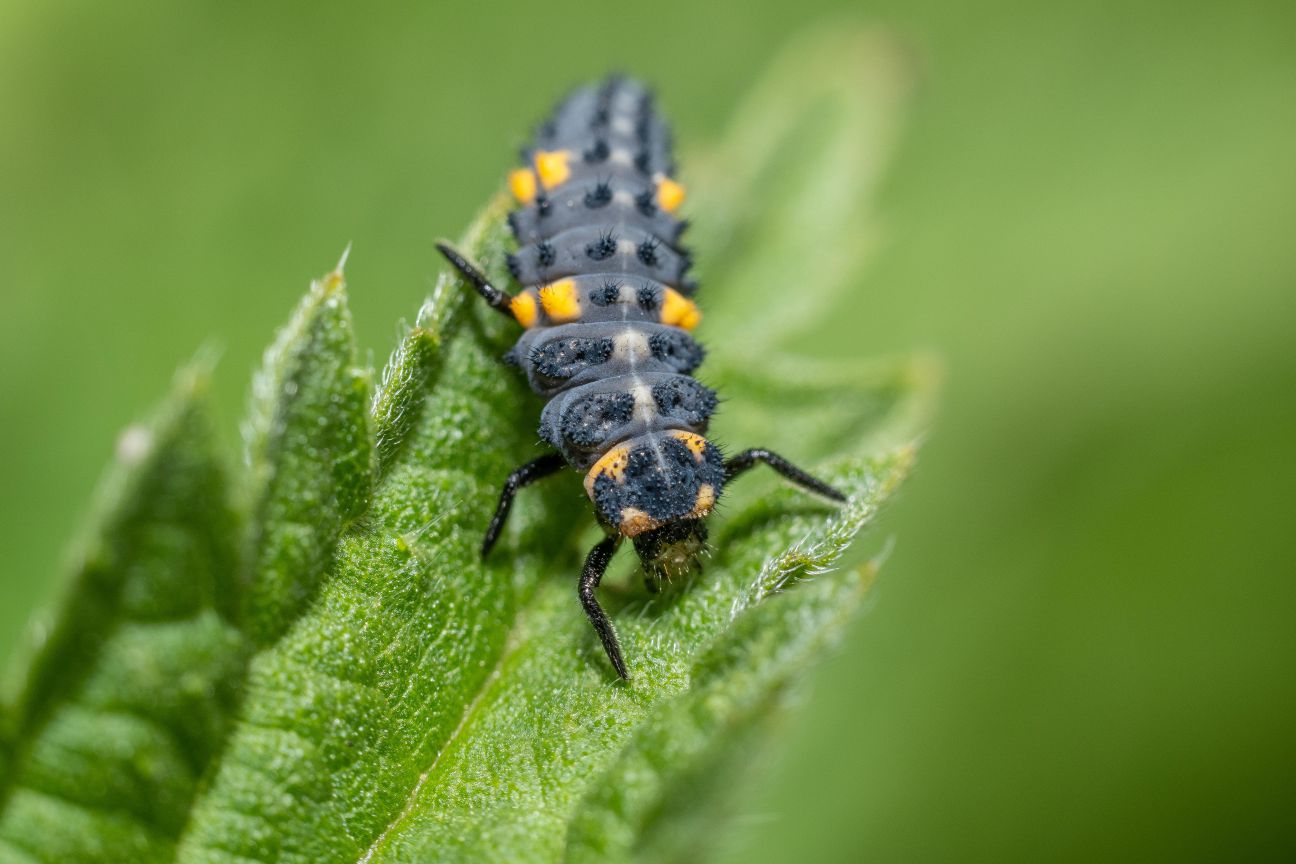
The number of ladybird larvae was also great, with many either on the hunt for aphids or setting themselves up for their metamorphosis.
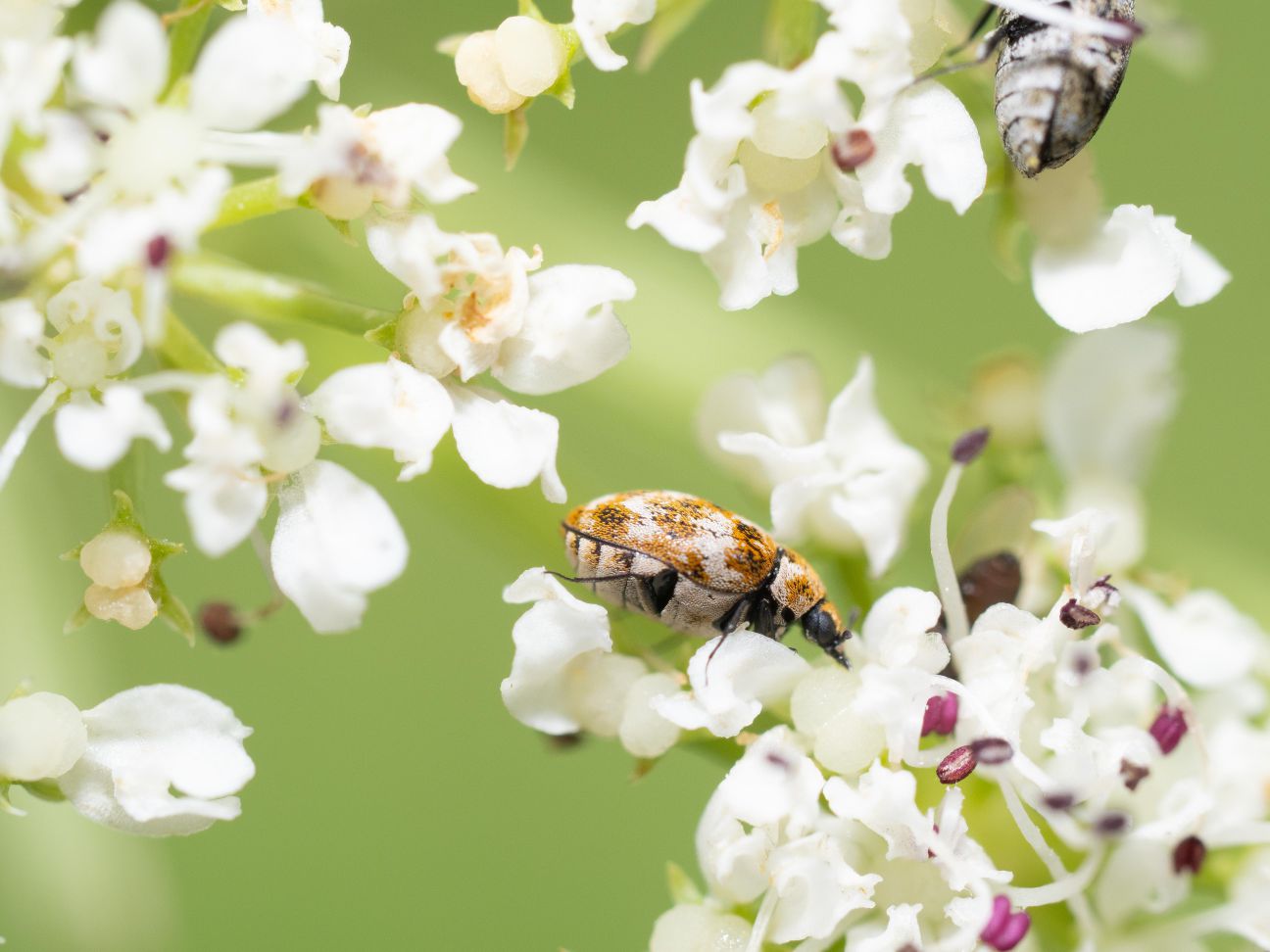
Elsewhere on hogweed I found these carpet beetles. They are very, very small and can’t seem to tear themselves away from the nectar.
The Adur Valley with Chanctonbury Ring in the distance on the South Downs
One of the things I love about the insect season in England is the diversity. We are surrounded with doom messaging around wildlife in the UK – it really is too much – but that’s what you get if you only look for birds. The invertebrate world is far richer, more complex and fundamental.
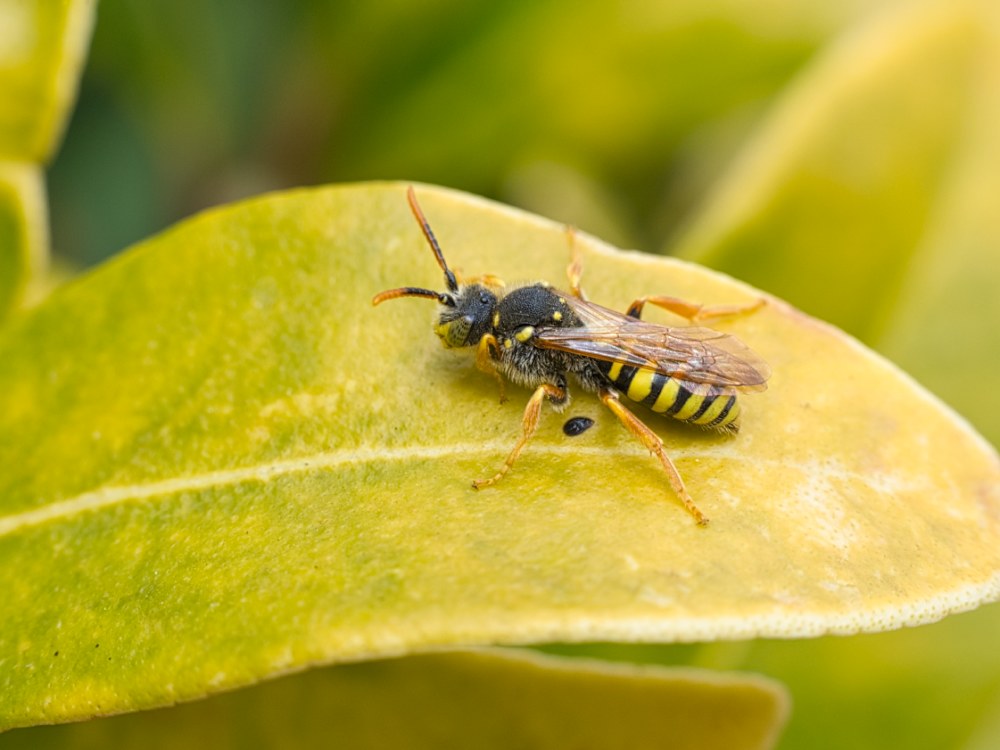
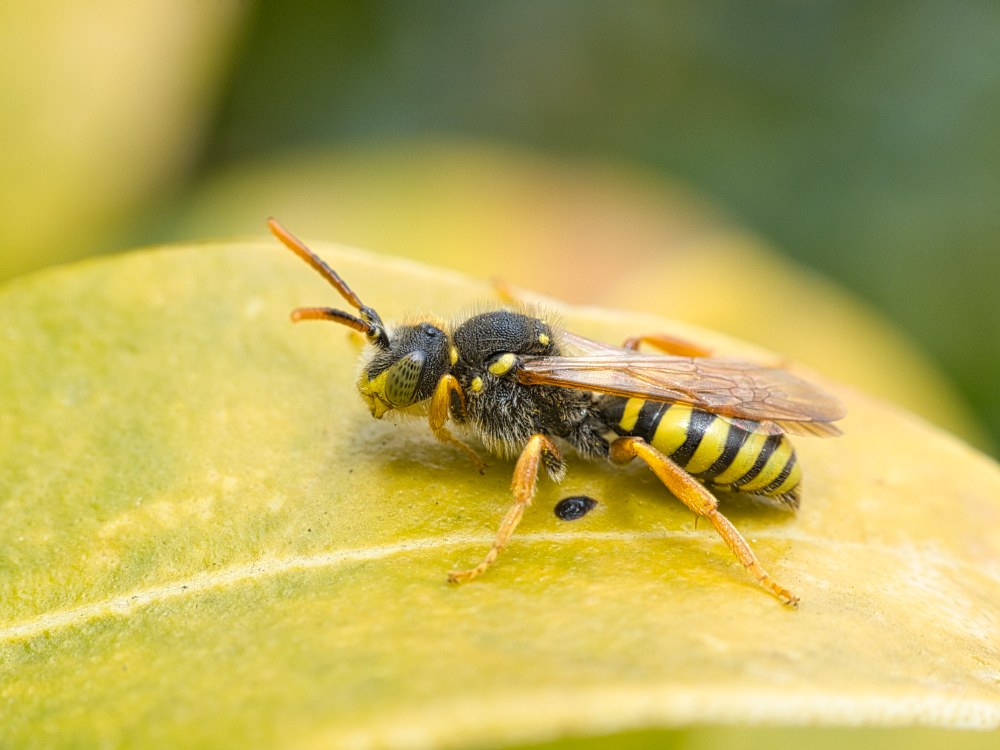
In April and May the first of the nomad bees make their appearances. I spend a lot of time making a fool of myself trying to keep up with these solitary bees. They are extremely beautiful and very cool-looking. Twice in April I witnessed nomad bees in my garden and on both occasions they passed me by.
One afternoon while #WorkingFromHome I went downstairs for a break. I noticed an insect on the inside of the windowpane. It was a nomad bee! I couldn’t believe my luck. I grabbed my camera and attempted to get some photos of this now very slow bee (it was a cool, wet and grey day). I got some average images and then decided it was time to get this bee back into the wild. I ushered it onto my hand and found that it didn’t want to leave my skin. It gave me a great opportunity to take some better images. I’m not sure of the species, they are difficult to separate.
I had another bee-break but this time in my garden and on a better day. There was so much happening in the hedge I didn’t know where to look. I saw three nomad bees flying around and resting but never long enough for me to get a decent pic.
The sun dipped in momentarily and the cooler air forced the nomad bee to remain on this leaf. I got as close as possible. When I submitted the photo to iNaturalist someone suggested it was Gooden’s nomad bee. That’s… Goodenough for me. Now do people see why iNaturalist is so much more preferable to iRecord? You get help with your identifications, not just thanks but no thanks from our man in the shires.
What do nomad bees do? They’re parasites of solitary bees, with some species laying their eggs in the sites of others. Their eggs hatch and the larvae consumes the eggs of the host, before eating its food stash. Not nice in human terms (because we’re all so lovely) but definitely something that has been occurring for many millions of years.
I’ve had a burst of American visitors in recent days (to my blog, not my house). So thanks for visiting, y’all, and sorry about the year you’ve had. You may have noticed I’ve slipped to monthly posts on here. Between April and October I posted blogs every Monday without pause, which is a tricky task…
Naturally, last week I summed up this spring and summer of invertebrate life in my garden, thinking it was all over. I was sitting outside one lunchtime, enjoying the kind of sun that doesn’t burn my very pale skin for once. I had seen something flying around that didn’t quite look like a fly and was too small for a bumblebee.
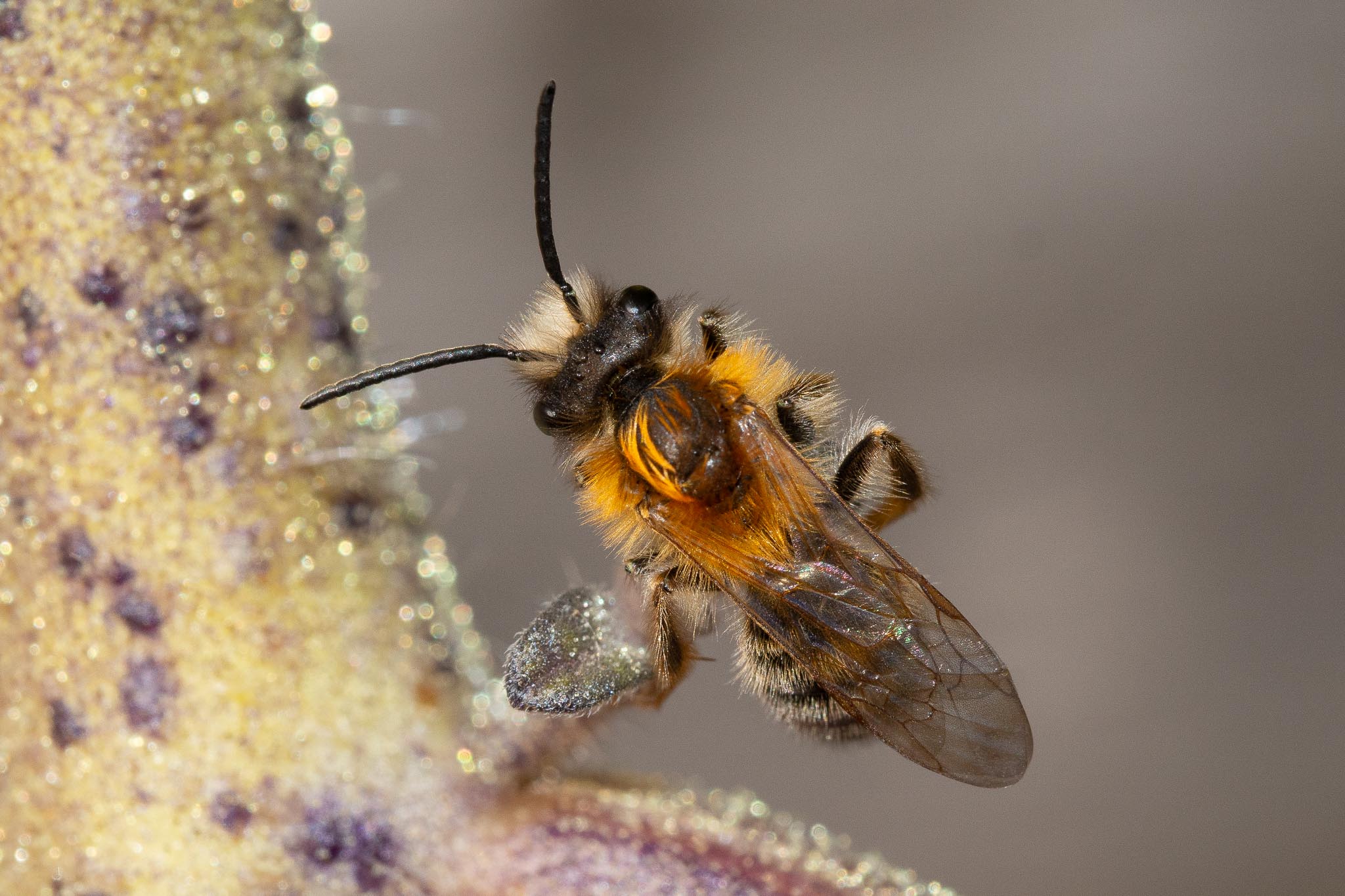
I didn’t pay too much attention to it and went to check on my tomatoes. It was there that I noticed a small bee holding on to a short leaflet of one of the tomato plants. I was really surprised, it looked like a solitary bee. Almost all of their flight seasons have come to an end.
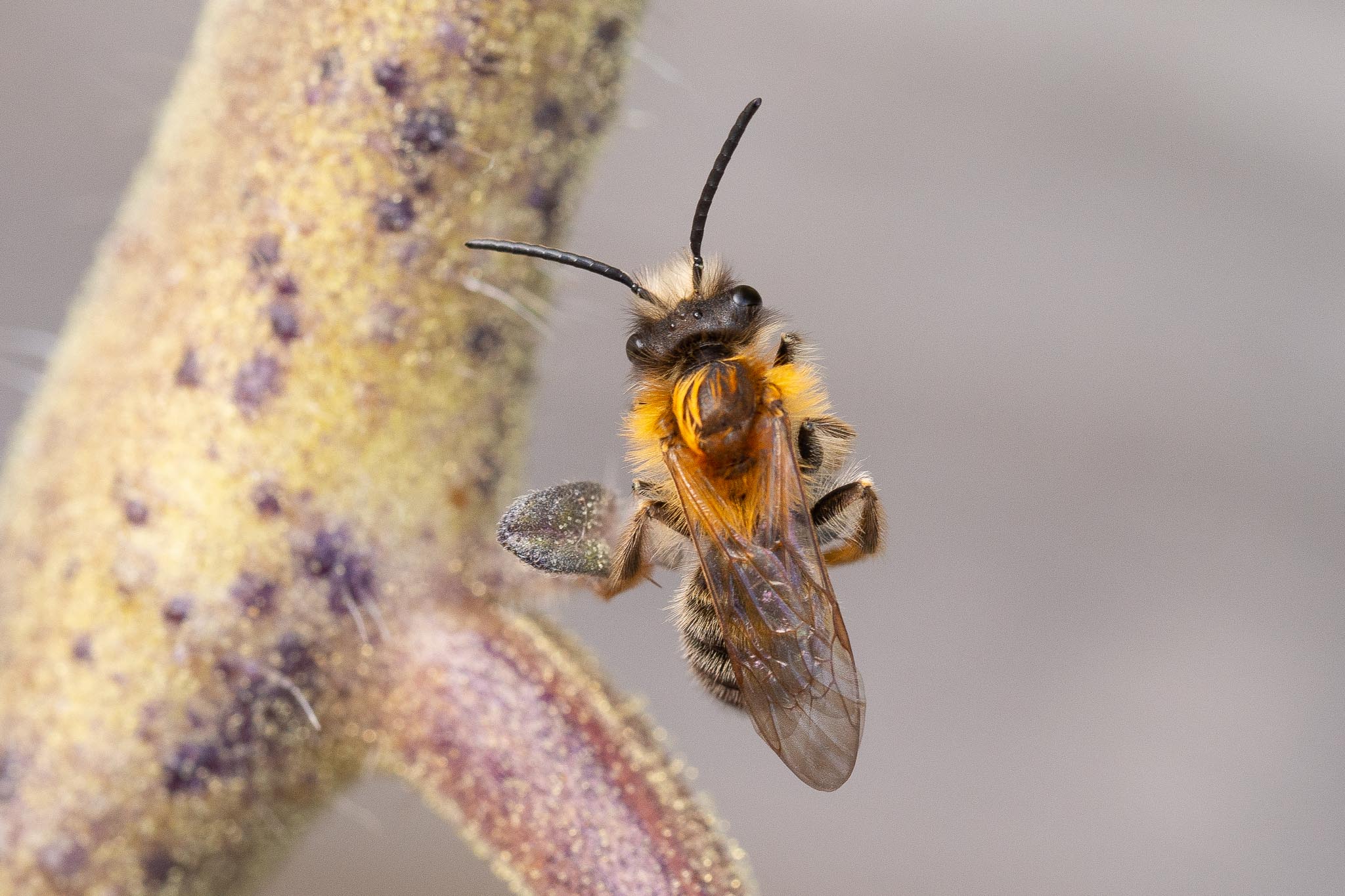
I have a couple of insect books but in October I can’t bring myself to leaf through them. But in this case I had to. I couldn’t work out what the species was. It didn’t really match most of the species, except for one group: the colletes. They have a common name of ‘plasterer bees’ and their most famous species is the ivy bee, which I haven’t ever encountered. The bee above was in Peckham in south-east London at a special wildlife garden managed by London Wildlife Trust. It’s feeding on tansy.
It was lovely to see this bee and for it to pose so obligingly. If you know what it is please let me know!

































 Unlocking Landscapes