Podcast: is ivy good or bad for trees?

I’ve started recording episodes again for my podcast Unlocking Landscapes. The latest episode is one about ivy and trees, a subject I find very interesting – I know a lot of people do.

You can listen here on YouTube or just search on any podcast-streaming platform:

The episode is only ten minutes and covers the following:

  • What ivy looks like
  • The ecology of ivy
  • Managing ivy on trees
  • Myths and misinformation about ivy
  • When people commit crimes against ivy(!)
  • Wildlife supported by ivy

My aim is to post once a quarter, recordings to take place outdoors, be quite focused and to be around 10 minutes long.

Thanks for listening!

Macro: As autumn beckons, ivy brings the bees 🐝

East Dulwich, London, September 2023

On the corner of the street, a mass of ivy was spilling over a wall. It was an explosion of leaves and flowers, sound and smell. The flowers were alive with insects: hoverflies, honeybees, bumblebees, and that ivy specialist, the ivy bee. 

I hadn’t seen many ivy bees before, and wasn’t aware they were now so far into the centre of London. They nectared in a frantic fashion, with at least two having been captured by a massive garden spider that scarpered when it realised how close I was to its web.

At this time of year very few plants are flowering, and none like the ivy can. Even so, ivy in London has an awful reputation. People hate it, calling it a parasite and tree killer.

Some years ago a man gave me his opinion by leaning in and whispering that he had seen it sucking the sap from a tree, like it was some dark truth kept hidden from the world.

In reality it’s not a tree killer and it’s not a parasite. But like so many things in society now, people will believe what they want, regardless of the facts.

In a wood near to this jungle of ivy, mature growths of it have been found hacked and severed by visitors acting on their instincts without reason (or permission).

I remember a local tree surgeon unloading on me one morning when I was in the woods about to start a working day, telling me how terrible ivy was at that location. I was taken aback by the man’s strength of feeling and let him say his piece. When he had finished I asked if I could go and start my day’s work.

“You didn’t like that, did you?” he said.

Is it any wonder tree surgeons don’t like ivy? I’m sure many appreciate its place in the ecosystem, a habitat for bats, birds, insects and autumnal nectar for pollinators. But to a tree surgeon it makes your work so much harder, what is already one of the most dangerous and brutal jobs available in the UK. I suppose I had just expected someone who works with trees all day to have a little more imagination and ecological flexibility.

I’ve made the faux-pas while leading guided walks of talking about the value of ivy nectar to honeybees and been informed that it’s not so good for them. One very polite beekeeper corrected me and said that the nectar can crystallise too quickly in the hive and leave the bees to starve. For wild pollinators there is no such problem, of course. The beekeeper said the issue was mostly where the only nectar source was ivy.

Should ivy be cut off trees in some cases? Of course. But is it often framed for crimes it didn’t commit? Yes, all the time.

I remember driving with my parents through Ireland back in 2008, when I knew very little about trees. Ivy was everywhere and I worried it was going to harm the trees. I later learned that the story is different.

Ivy often grows on trees that are in decline, meaning more light comes through the canopy, encouraging the growth upwards. Then when the tree does die, there stands the ivy, ‘throttling’, ‘suffocating’, ‘killing’, as some hyperbolise. In high winds ivy can act like a sail, and trees do come down.

In my experience it is often life-giving.

People come to nature looking for absolutes, but just end up finding more questions and often being humbled. The trick is to embrace the ambiguity, your own lack of knowledge and mastery of any given subject.

Personally, I was thankful for that final flush of insect buzz on an unseasonably warm September morning. Who do I thank for that? That’ll be the ivy.

Thanks for reading.

Why do people hate ivy?

Essay: Why do people hate ivy?

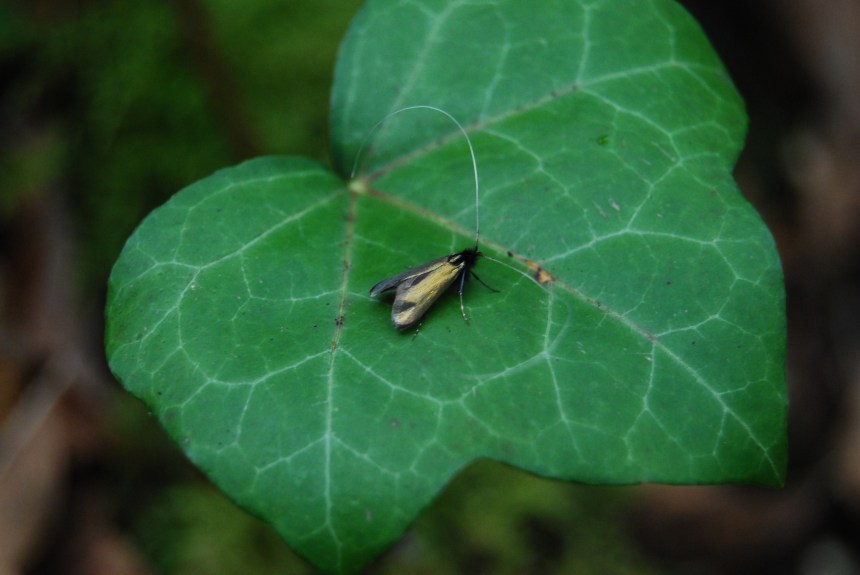
Ivy leaf

I remember when I first became interested in woodland. Through my lack of knowledge and understanding I thought ivy was a tree-killing force that scaled a trunk like a cancer and had no other purpose. I looked at the fat stalks of ivy growing on a poplar in a nearby park and thought it might be an idea to cut them. In my local area there are people who go around doing just that.

The fact is that ivy is fantastic for wildlife. When ivy grows up the front of a house and sparrows are nearby they’ll use it. Blackcaps, one of my favourite songbirds, nest in it. Entire bat colonies can roost in it. Hoverflies, bees, butterflies, they all use it for different means, be it a leaf to perch on or flowers to drink nectar from. Walking in Crystal Palace Park recently I was passed by a man remarking to his friend about a line of trees with ivy growing up them:

‘Look at those trees,’ he said, his companion turning to look. ‘The ivy grows up them and just kills them off. I’m thinking of writing a letter.’

This is one of the biggest misunderstandings about ivy – it is not merely some dark demon from a tree-hating underworld, it flowers, too. In fact, the main reason it is even anywhere near a tree is because a songbird or woodpigeon has sat in the tree and evacuated its seed. It produces food eaten by a good number of birds and attracts insects that birds can feed to their babies. Beautiful and exciting birds like firecrests target it for food and shelter in winter when they pass through parts of the British Isles.

A tree brought down in a wood will give life to wildflowers and wake some that have lain dormant in the soil

Ivy does add extra weight to a tree and, in some cases, can weigh a tree down making it more liable to windblow during a storm. But the issue isn’t with the ivy it’s with us, Homo sapiens. In woodlands, it is completely natural for a tree to fall down, it’s good. The new light that will hit the woodland floor will improve the structural diversity, particularly in British woodlands that, since the Second World War, have gone largely unmanaged and have become overgrown as our economy has grown to rely more and more on imported materials.

A tree brought down in a wood will give life to wildflowers and wake some that have lain dormant in the soil, unable to flower because of the previous tree’s leaf shade. In the street, however, a fallen tree could mean death, damages and lawsuits. For all our love of woodlands and forests, perhaps the sight of new woodland is something that kindles a deep fear inside us, as if the open land is being overtaken, changing at a pace and in a manner that we’re uncomfortable with. Personally I find woodland reclaiming old developments and ‘wastelands’ as something to feel good about. It tells me the world can function without our intervention and can recover. Nature can make even the most barren place into a leafy oasis given time.

The chap I overheard in Crystal Palace later remarked on a c.200-year-old horse chestnut standing tall and true, though surrounded by ground dwelling ivy. If he had seen a horse chestnut wounded by blight, a disease spreading through global trade, might he have turned his ire on Environment Minister Owen Paterson for not tightening restrictions on imports? In the case of the healthy, happy horse chestnut, does it not suggest that what we love (or this man at least) is the splendour of individual trees, their maturity, their completeness. The common understanding of nature’s life cycle is a single sapling to a mature tree, without any notion of the stuff that might happen in between, the decay and lost limbs, all part of the picture. After a recent trip to the decidedly untidy West of Ireland, I read this quote from Oliver Cromwell on the state of the Irish landscape in Neil Hegarty’s The Story of Ireland:

‘For to what purpose was it to plow or sow, where there was little or no Prospect of reaping? – To improve where the Tenant had no Property? This universal Neglect of Husbandry covered the Face of the Kingdoms with thickets of Woods and Briars; and with those Vast extended Boggs, which are not natural but only the Excrescences and Scabs of the Body, occasioned by Uncleanliness and Sloth.’ (Page 136).

Cromwell couldn’t have been more wrong, though his rhetoric is plainly political. Those Irish ‘Boggs’ are one of the planet’s many ways of storing carbon dioxide emitted by the felling of woodlands (which thanks to the English has occurred in Scotland and Ireland through centuries of invasion and land grab) and is something we as a species are scrambling to mimic. Today we look at those bogs with a greater understanding, if not thanks. In County Mayo some are being turned into reserves, home to merlin, otter and grouse. But the main thing here has been capitalised by Cromwell’s old English: Neglect.

People get angry and feel they’re being forgotten when their grass isn’t cut by the council, when the neighbour hasn’t trimmed the hedge on their side, when the ivy suffocating those trees hasn’t been cut. Often these are measures to boost bee numbers and reinstate lost habitat for birds and bats. In England, if we are to help bees, birds and butterflies, we need to address our obsession with tidiness. In the natural world it does not equal good hygiene or ‘Cleanliness’, an untidy garden means more birds, more bees and more butterflies.

In Cromwell’s case it was the language of war, a debasing of another country and culture, rather than a comment on wildlife gardening. I don’t think it’s far off, mind you. If we are to overcome our uneasiness about ivy and trees we’ll need to loosen our grip, leave the mower in the shed one year and look at the benefits of the plant, the good it does for wildlife in these most ecologically trying of times. I like to think my original, misguided concern for trees came from a good place and has developed into something more reasonable having taken time to consider the bigger picture of the natural world.

Woodland Diary: Litter picking in lost gardens

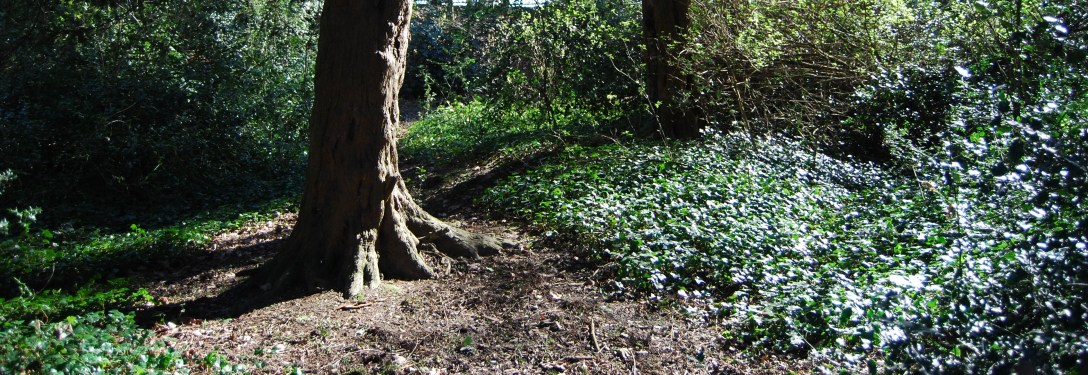
A slender pathway cuts through the ground layer of ivy, more likely to have been forged by a train of foxes. A large ash has been pulled down by the wind, the underside of the ivy leaves are a fresh colour, like the flesh of a lime. To the side a den has been made, with string tied to the rotting logs which rest against a tree in a tepee form. It can be the case that the people spend a night in the wood to qualify for a homeless shelter and so the sign of a tent or den surrounded by food packaging and drinks bottles is not unusual. There isn’t much litter to be found, other than things the ivy has subsumed, bottles or cans missed previously and taken in by the soil, or blown over from the road. Spiders make a home for themselves in empty bottles and the woodlouse is a common inhabitant of an old shoe.

We toe the path which leads around the ridge. It’s just ivy, above and below, masking the trees and the woodland floor. On the ground the leaves of premature bluebells peek through the earth and we take care not to trample. The coming of spring is a time of year to be cherished, the very thought leavens the darkness of long winter nights.

The ivy ends and a clearing opens up around a large yew tree, the soil cleared of life by the acidity and shading of the tree’s needles. The trunk is rippled and worn like an old doll’s limb, its circumference suggests it could be a few hundred years old. A line of tall yews appear as we move on, what must have been a hedge in a garden, turning into a right-angle. The ground dips to reveal the whitish bricks of a wall and a trail of broken glass. Behind us is a tall group of silver birch trees, quarantined amidst layers of ivy and the yew. These birch look like they’re waiting for something.

The other side of the wall shows a support structure for the terrace of an old Victorian villa, where people would have taken tea and listened for the hammering of woodpeckers in January, the repertoire of the song thrush in spring, and the call of the woodlark. A century ago they would have sat listening to the voices leading Britain to war. Now we look out from over the wall at wildness regenerated. Trees collapsed and left to rot down as fodder for bugs and beetles. The slow life of the woodland has been allowed to resume. A blackbird calls in the canopy and a great tit sings its winter song down in the woodland glade. The sun is setting low through the slope of trees. It’s time to go home.