Wasps vs. spiders

Saturday 31st May felt like a passing of the seasons, with spring departing and summer arriving. That could be seen in the invertebrate world, with more summer species out there in my garden.

This post is generally wasps and spiders, with some lovely little bees to calm you down afterwards.

As ever, some of these things are so ridiculously small that without magnification (in my case a macro lens) you (I) wouldn’t necessarily see them.

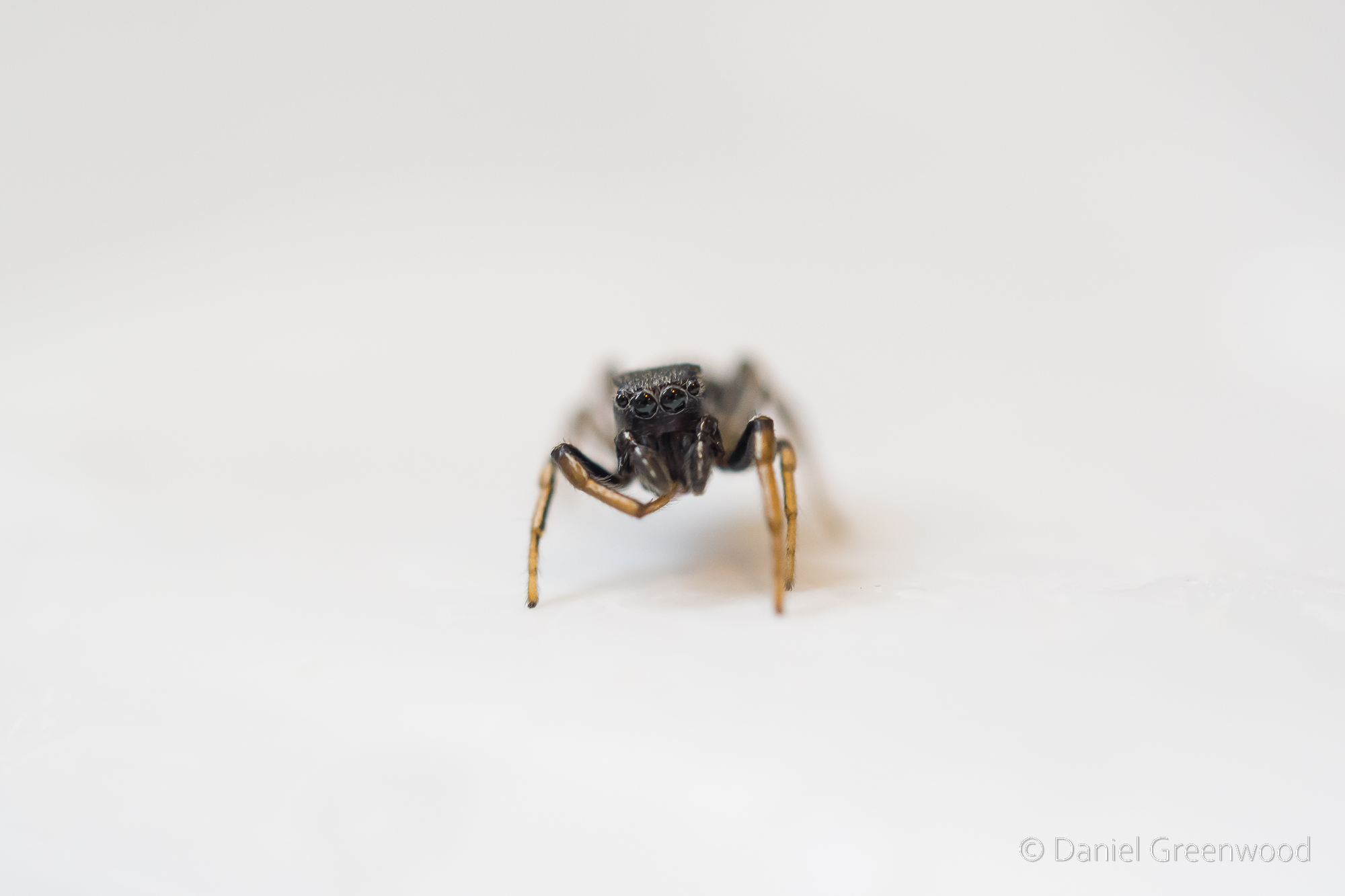
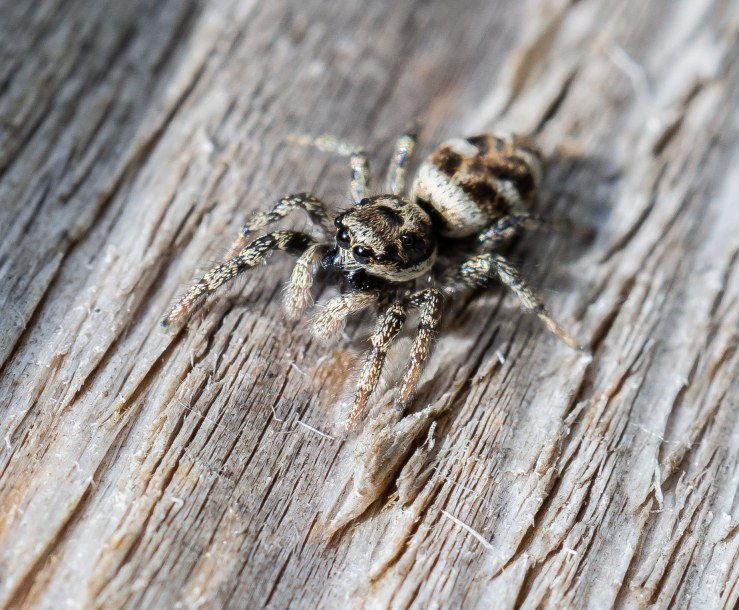
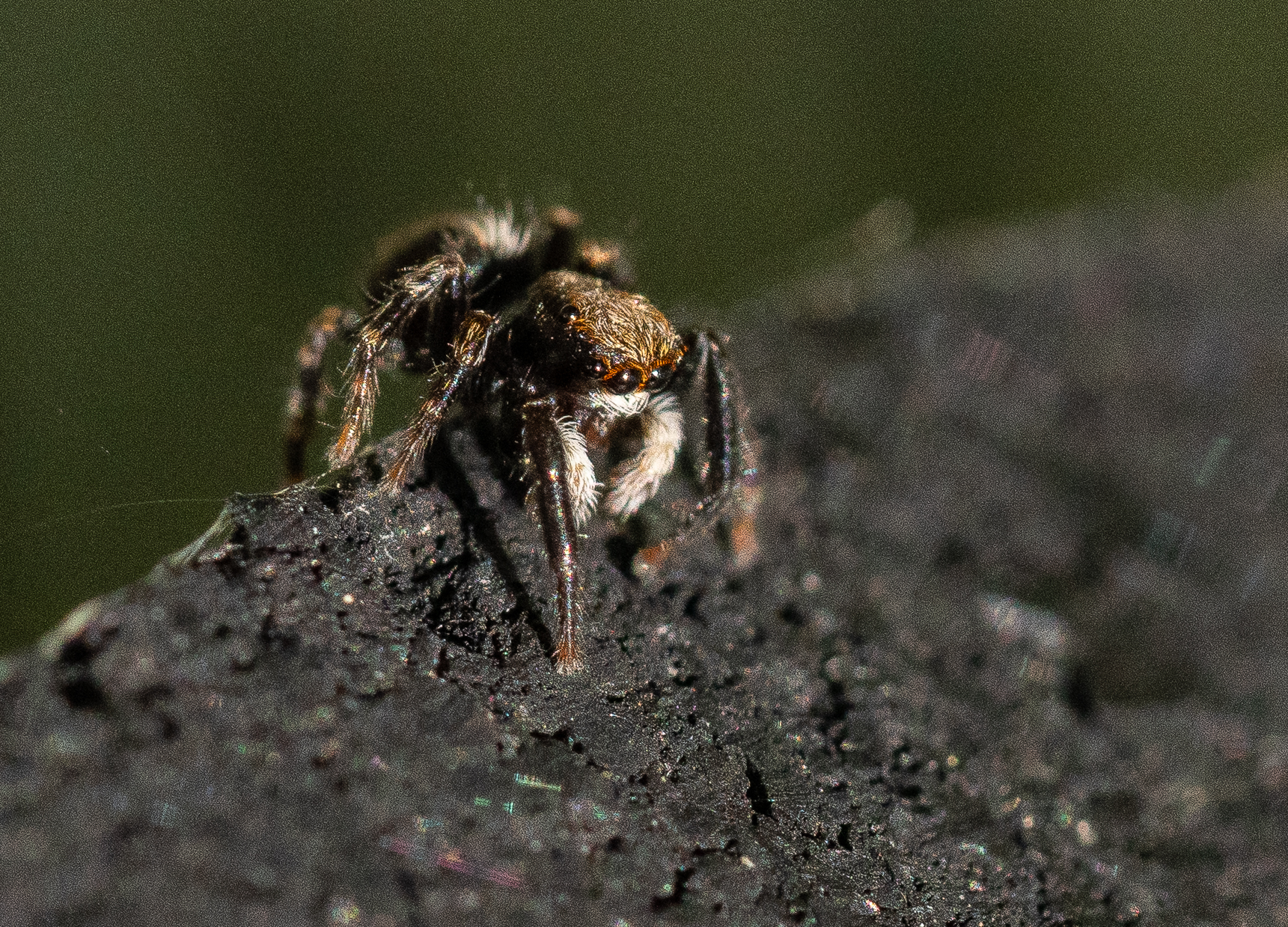
I should have known it was going to be a good photography day when this little jumping spider appeared in my kitchen sink! The light was rubbish so I’ve had to draw out the shadows and ‘de-noise’ these photos a bit. I’m unsure of the exact species, but I do get an apparently uncommon oak jumping spider in my garden/near the house sometimes, and this may be one.

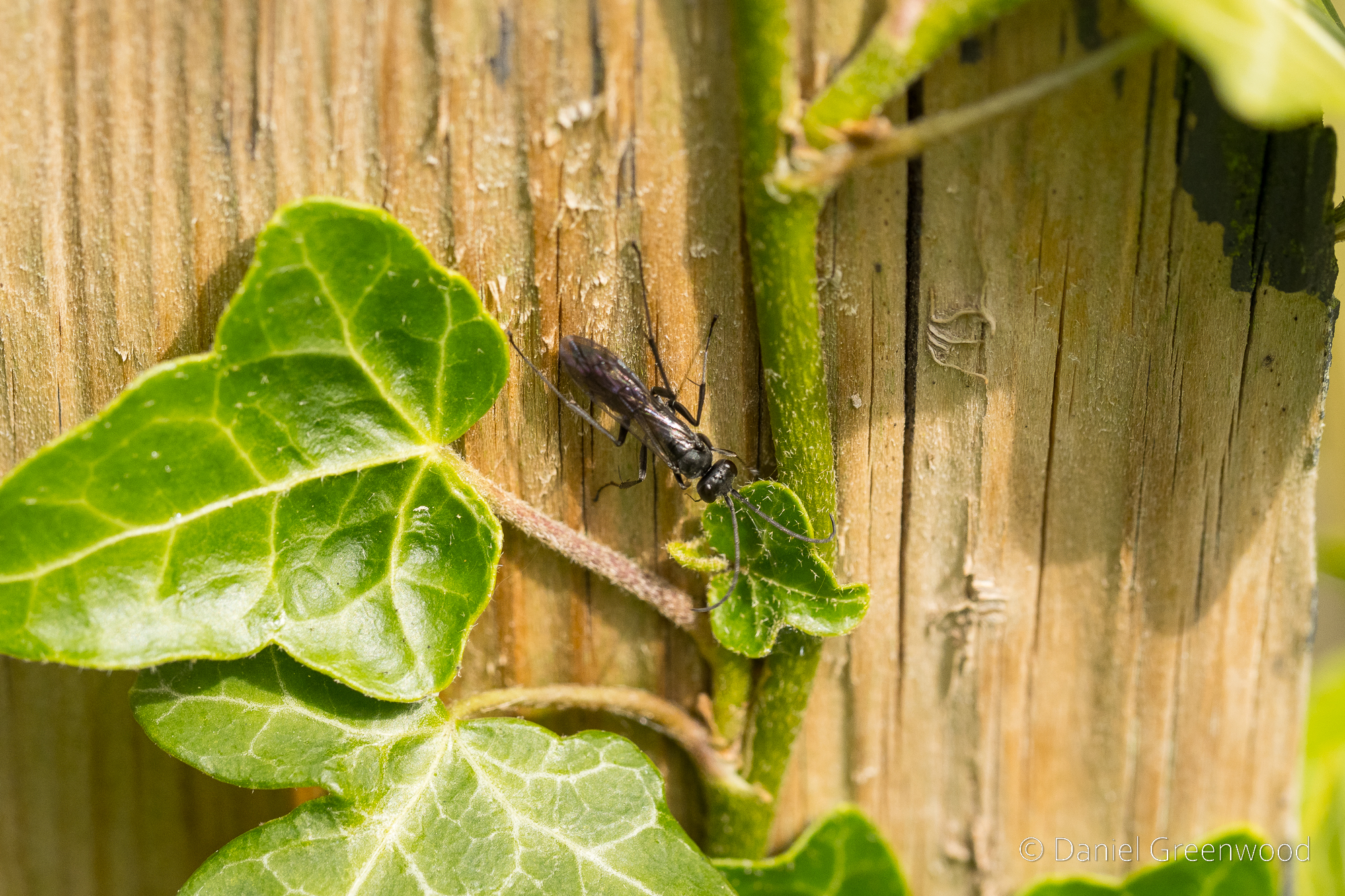
While we’re on spiders, here’s a wasp – a spider-hunting wasp! I’ve learned that sitting down on the grass by a shrub for 15 minutes isn’t just a forest-bathing exercise, it’s also a good way to allow the life to move around you. One fence post was being explored by this very busy spider-hunter. And then, something amazing happened.

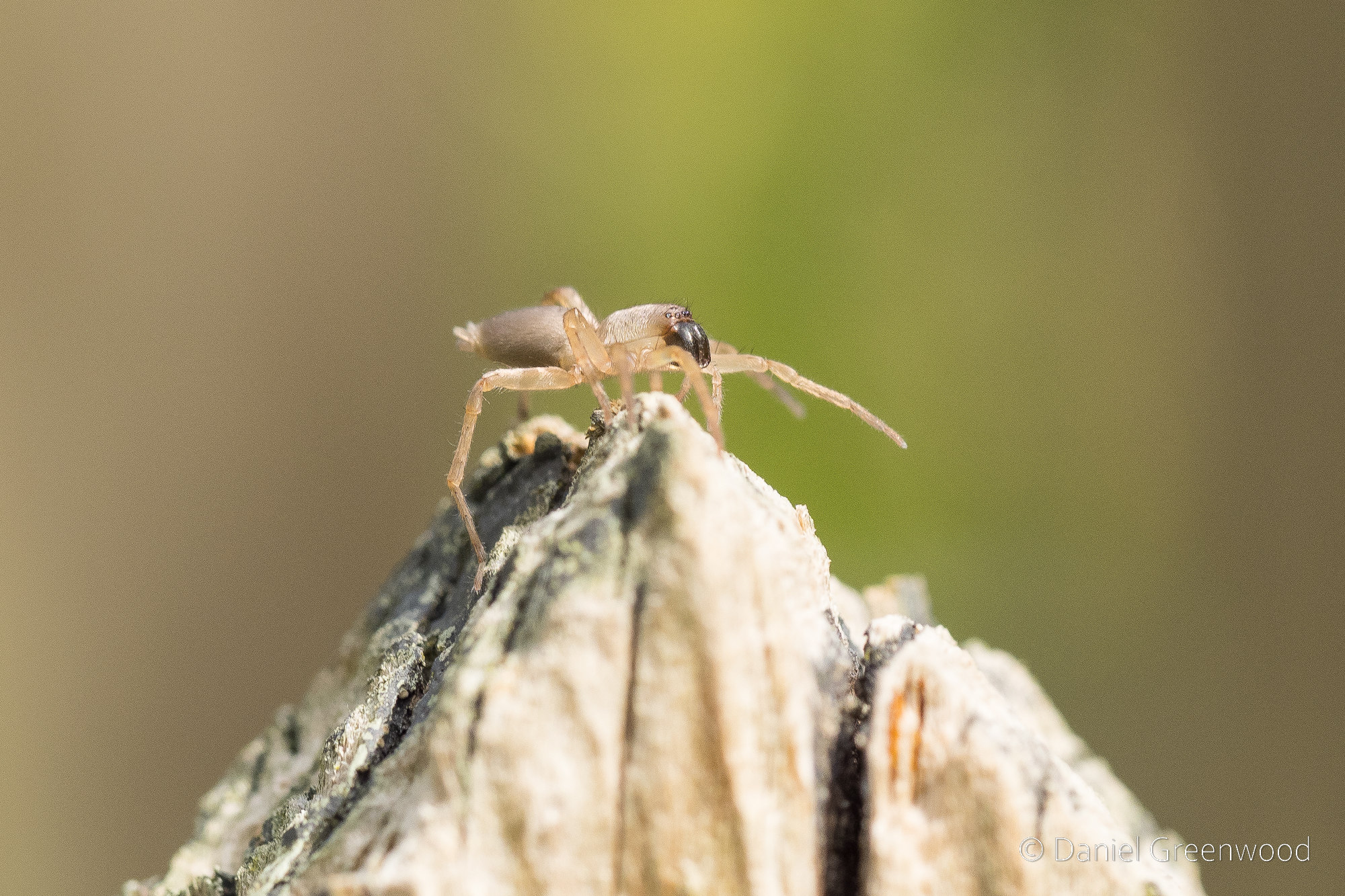
On a vacant fencepost (that’s just how I consider them now) a spider appeared at the top. The spider-hunting wasp saw their moment and burst onto the post, but missed the spider by milliseconds!

The spider-hunting wasps paralyse their prey and then carry them away to a cache. It’s pretty grizzly, but if you think that wasps have been in existence for over 100million years, and spiders, gosh, they’ve been around for over 300million (humans 200k and unlikely to make 1million at this rate), it’s something that’s been going on for a long time. If you’re annoyed about one species of wasp bothering you, imagine how spiders felt when 100million years later a spider-hunting wasp evolves from nowhere!
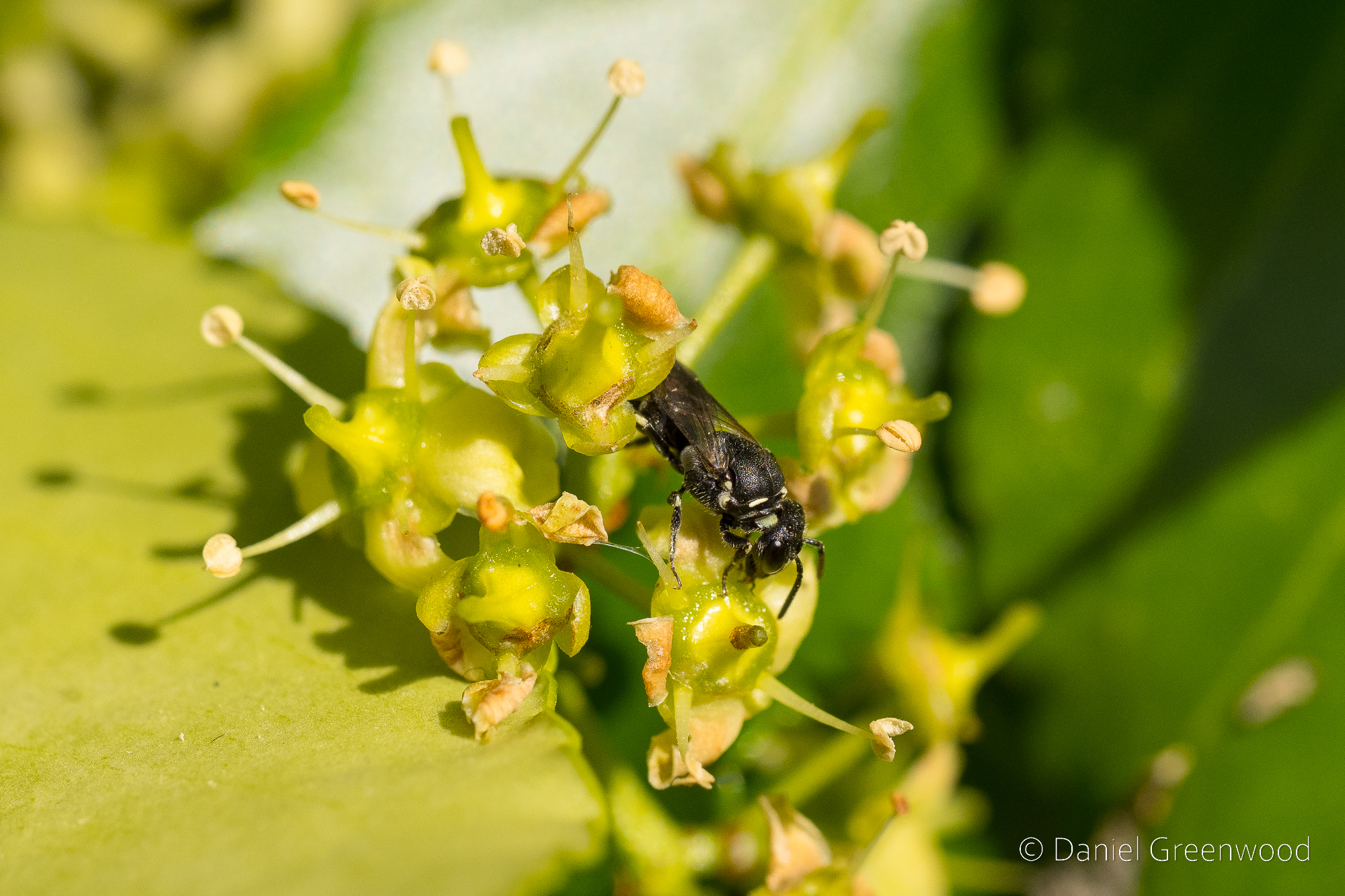
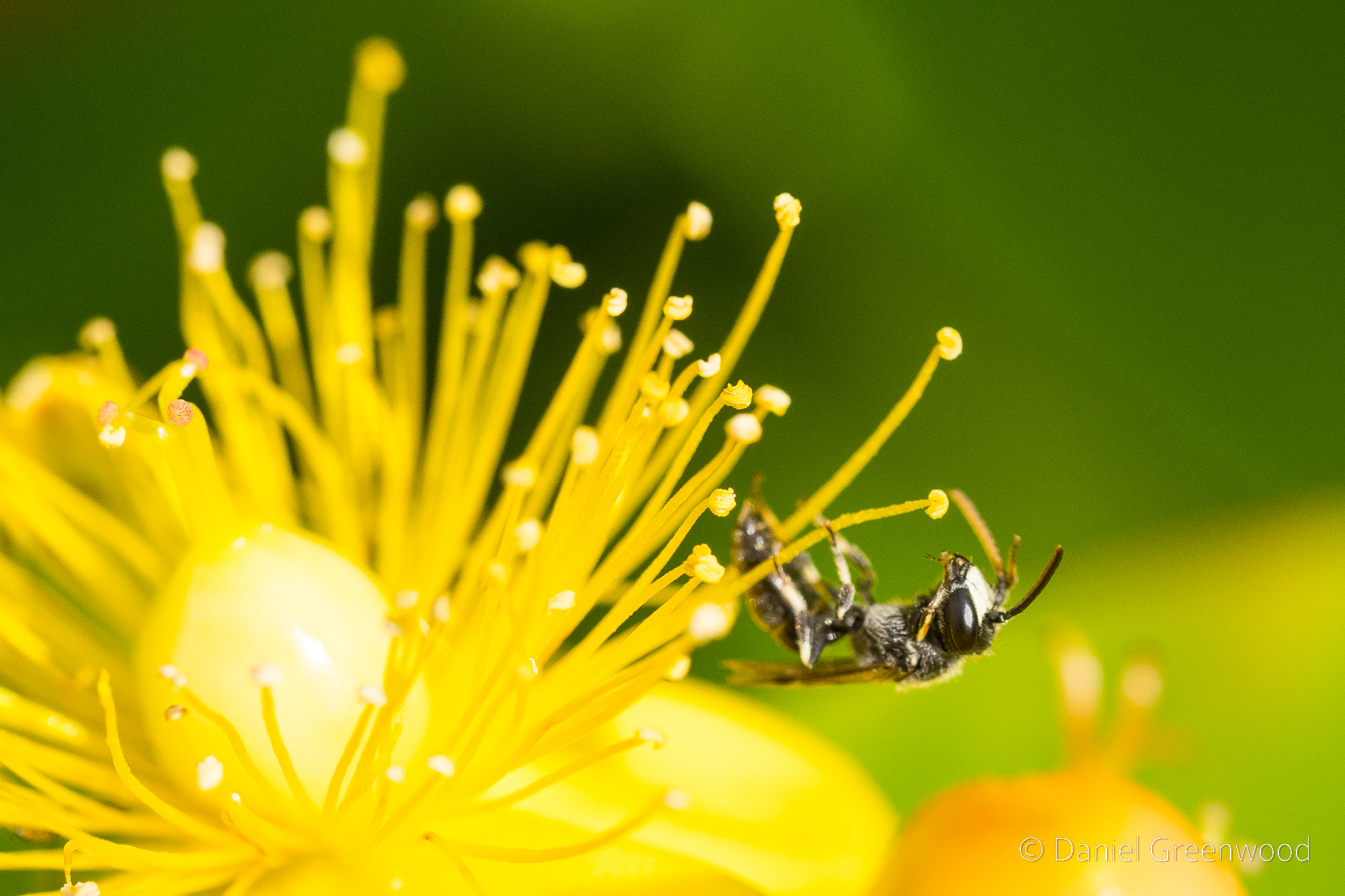
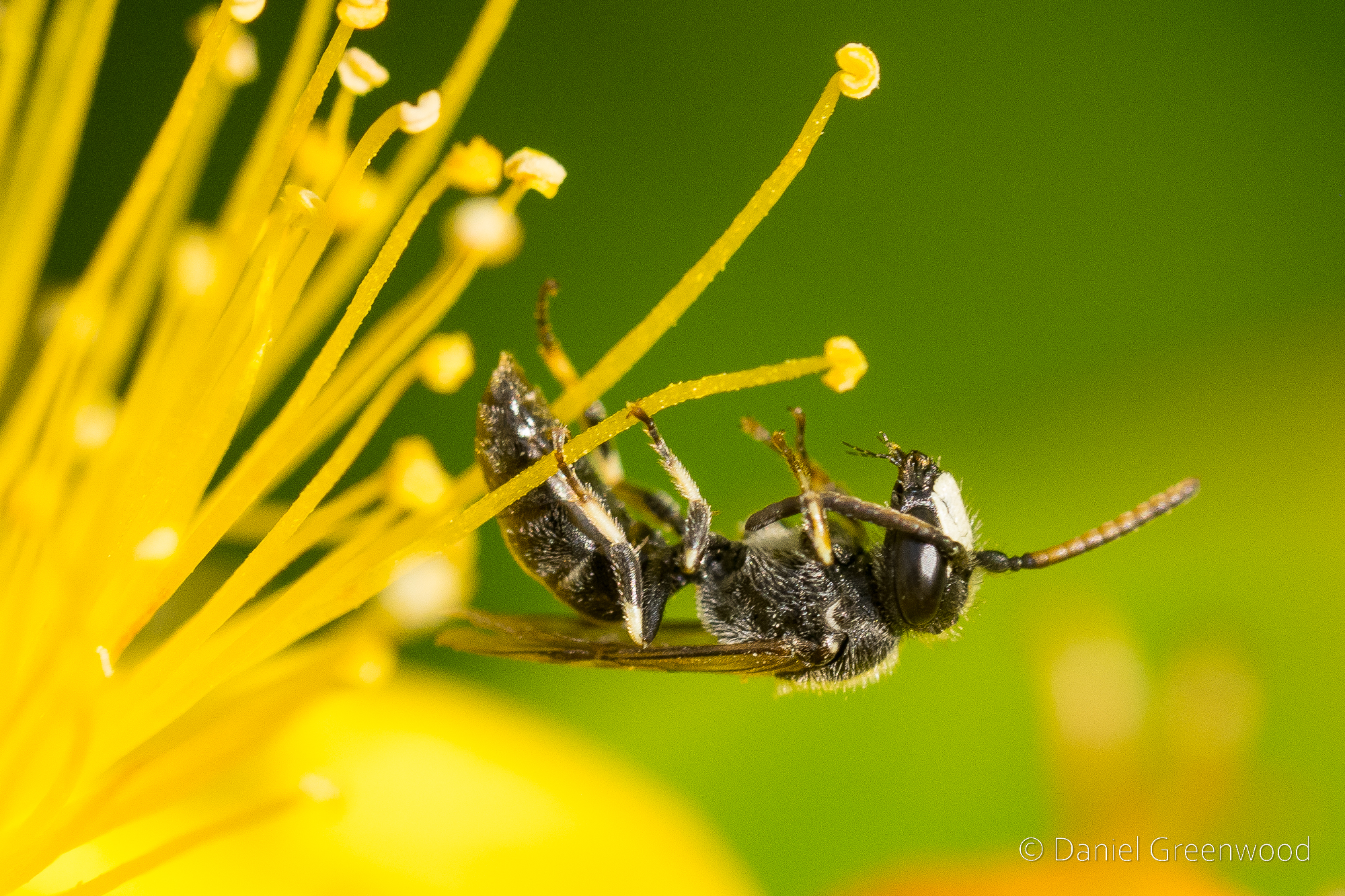
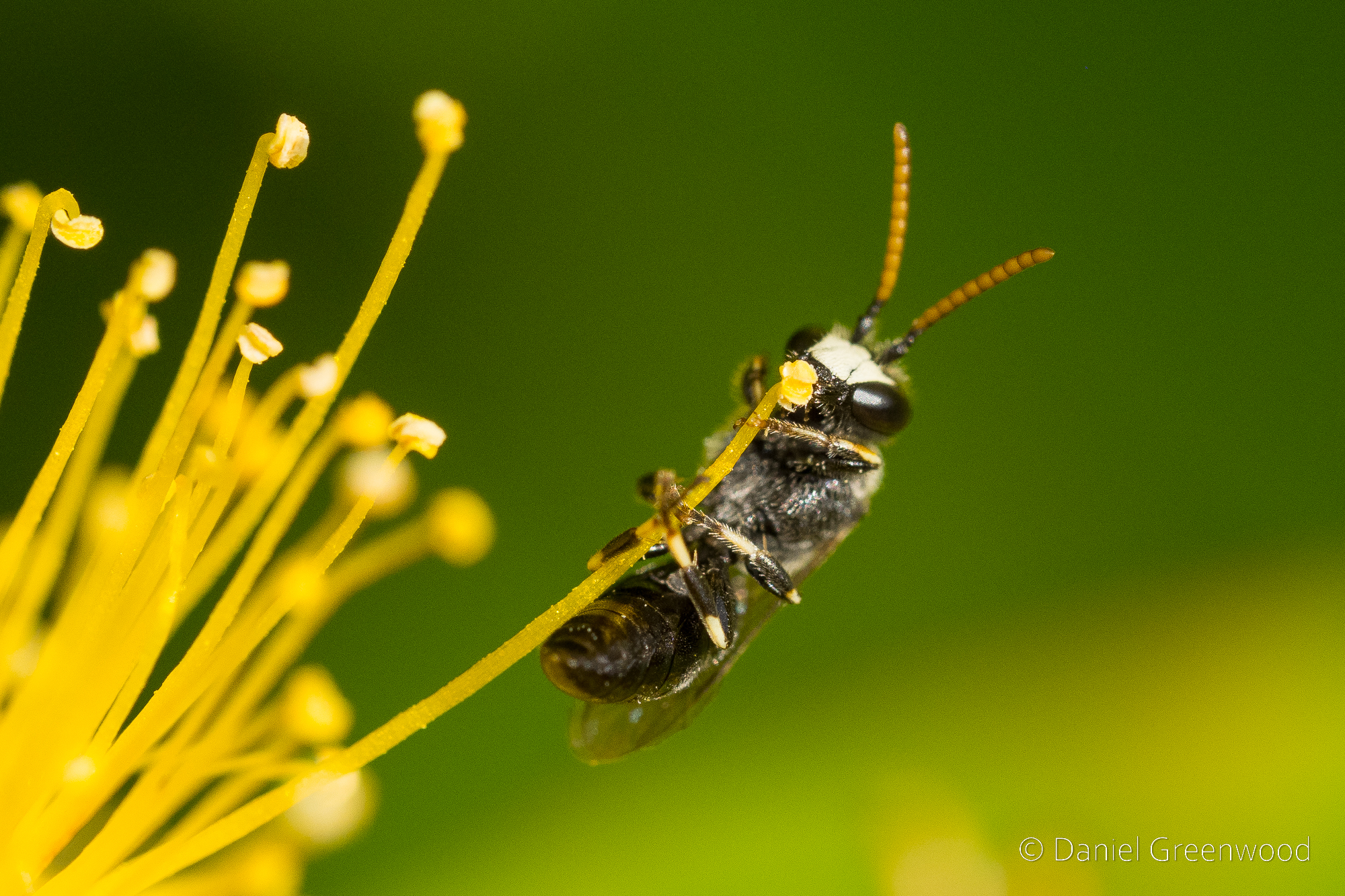
This is around the time when I begin to notice the very tiny yellow-faced bees (Hylaeus). I’m happy to identify them to that level, and don’t really take it any further.

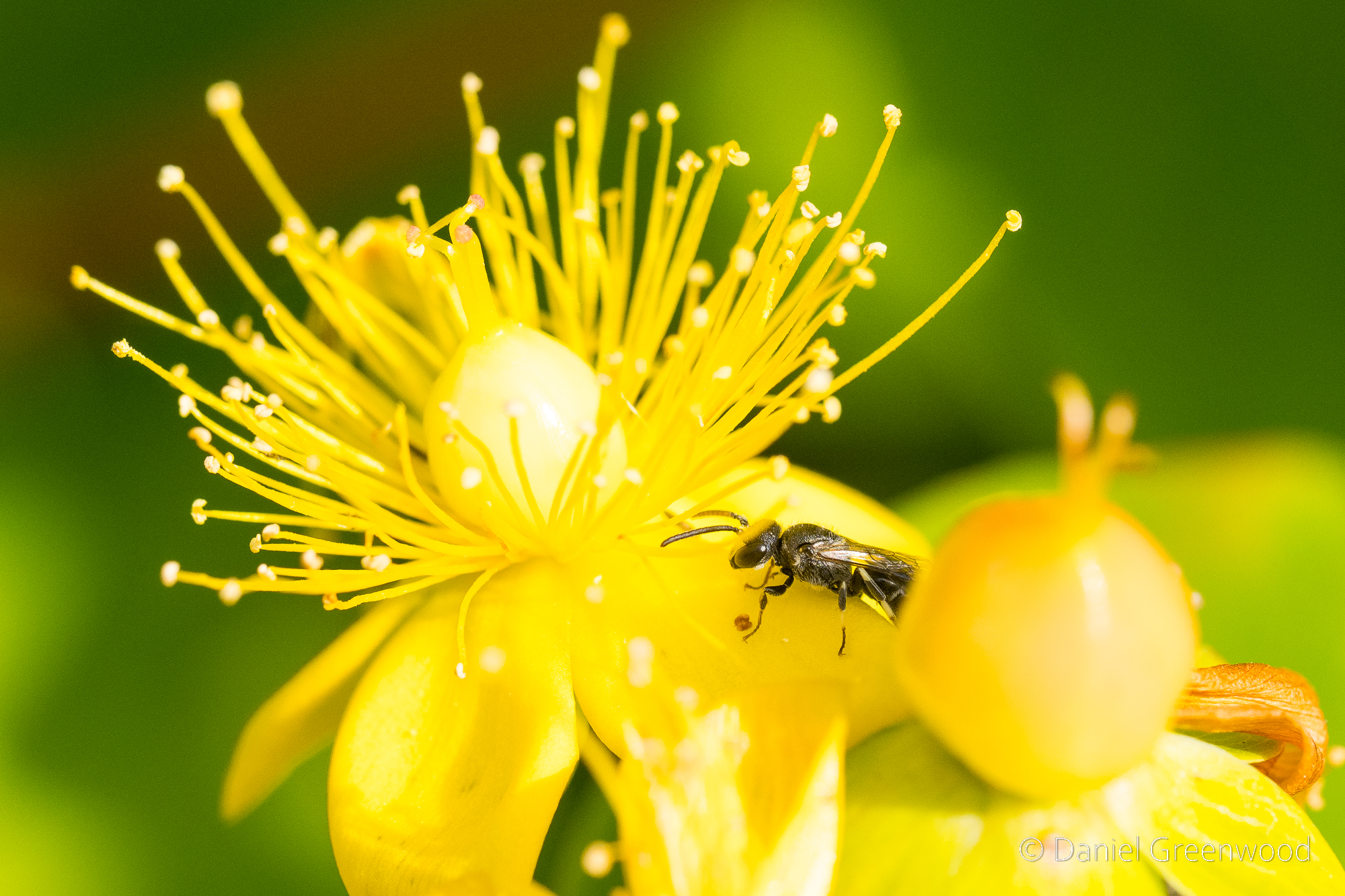
And here we have some of the ‘best’ images I’ve taken this year. This yellow-faced bee is probably less than 4mm in length. Here it’s nectaring on the stamens of a cultivated garden hypericum. This was grown from a cutting taken from my grandmother-in-law’s garden and is a very good plant for pollinators, though it does need maintaining. I love the way the bee uses the stamen a bit like an Elvis impersonator on a standing microphone. Ah-huh-huh.

Here’s a bumblebee for scale!

I don’t think I’ve seen as many honey bees as in recent years, but there was a glut of them around May. There are reports of problems in the U.S. this year (bit of an understatement, considering who’s running things there).
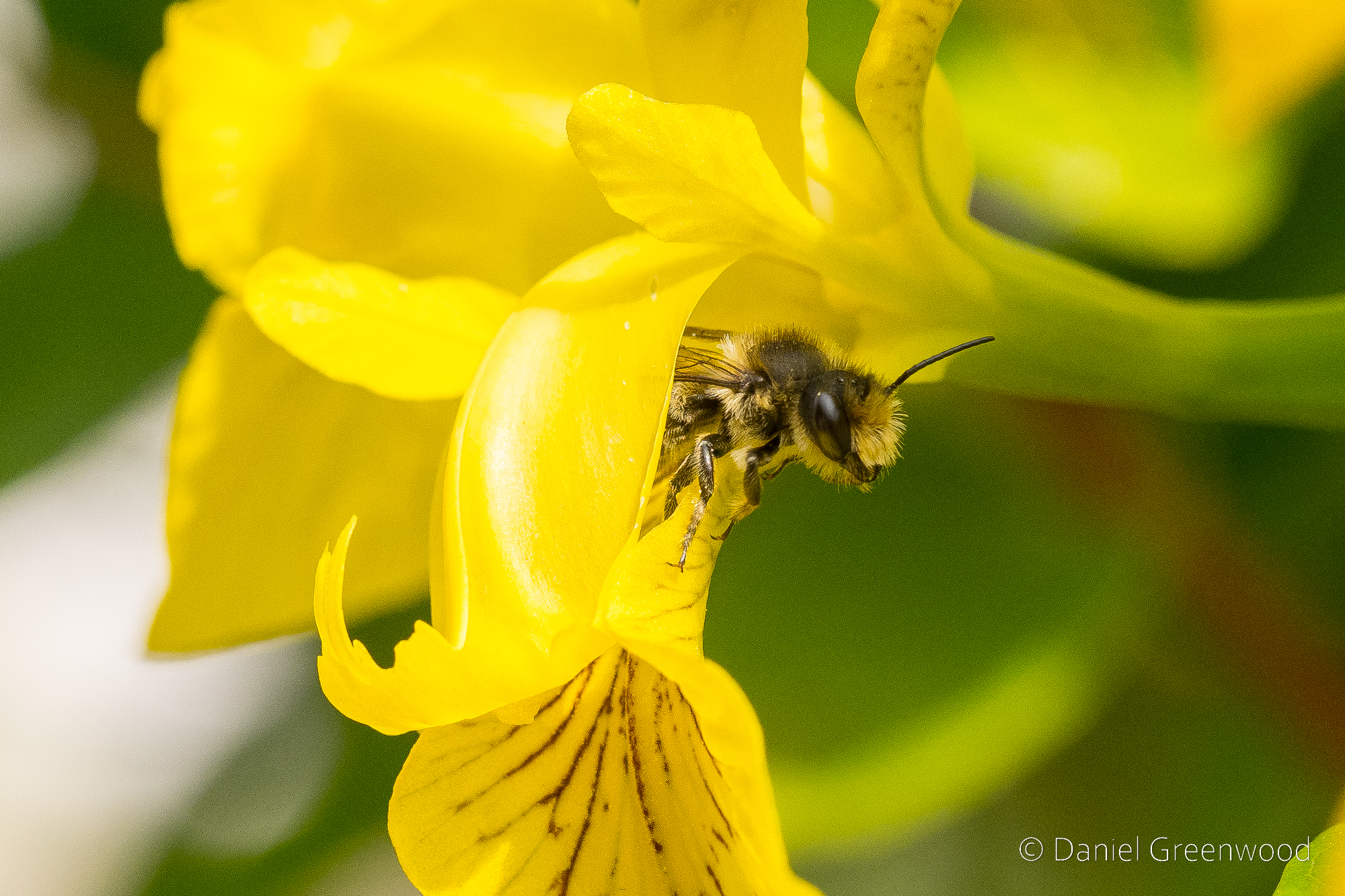
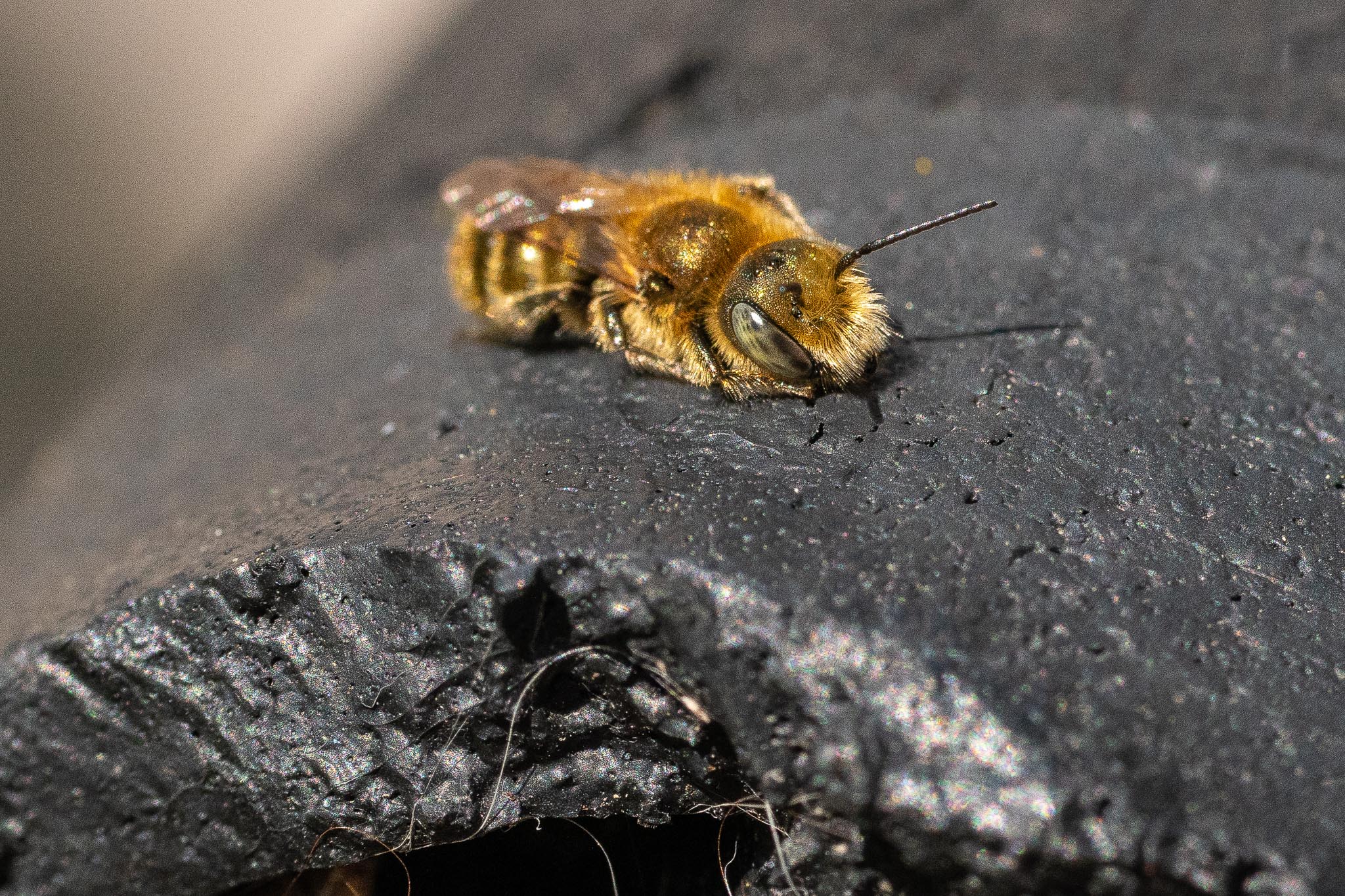
This solitary bee was visiting the flag iris in our little pond. I do enjoy the bee’s sideways escape. Not sure of the species, might be one of the Andrena mining bees.

I will now make like this bee and leave it there. Thanks for reading.

Macro | Support my work

Macro 📷: is that a nationally scarce spider sitting on the fence?

*Update: this record has now been accepted as correct by the county expert and has become official 😁*

Most of the jumping spiders I find in my garden are sitting on the fence, LITERALLY.

The jumping spiders are a group of beautiful arachnids (spiders and arachnids are not insects FYI) that are renowned for their cartoon eyes and ‘cuteness’. There is something very ‘floofy’ about them. This video by Thomas Shahan has some lovely images of some American species:

I love to see them in my house, exploring the doors and window frames. One got into difficulty recently and was captured as prey by another window-dwelling species. Even the indoor parts of our homes are wild places at macro level.

Most of my macro is getting done through intensive 5 minute breaks during my working day, in which I take rushed and low quality photos (as seen here). I am stuck at a computer all week at the moment and these micro-macro garden safaris are keeping me ‘productive’.

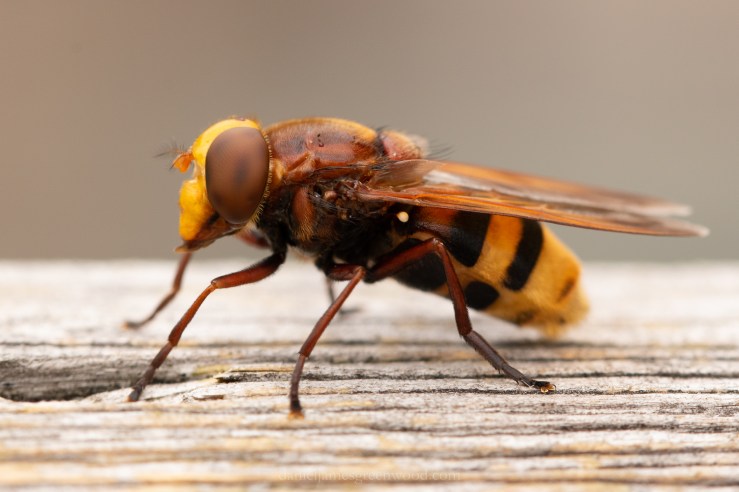
I spent some of the time checking out one of the fences where I’ve found lots of interesting species like hornet-mimic hoverflies, digger wasps and jumping spiders (above).

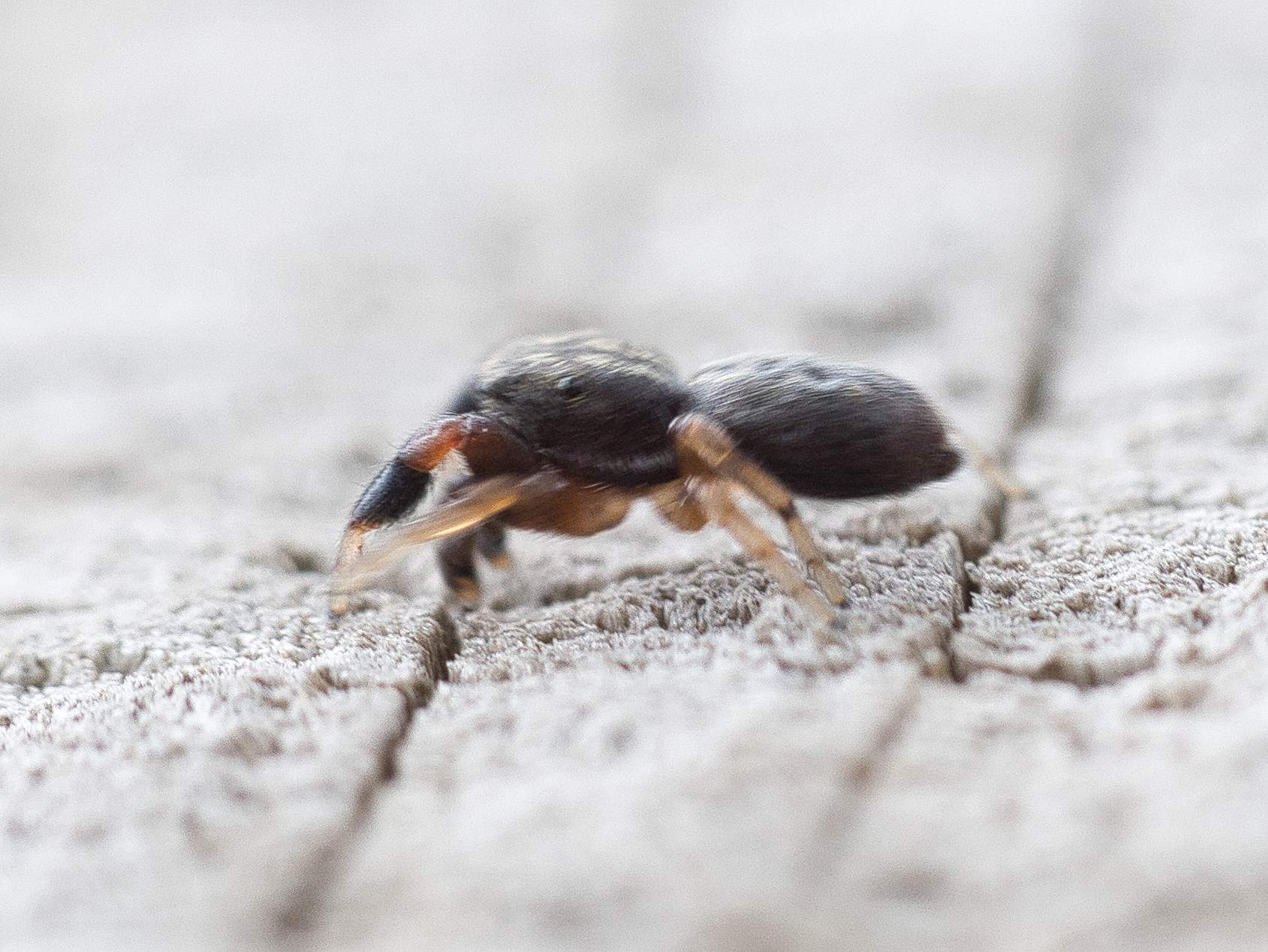
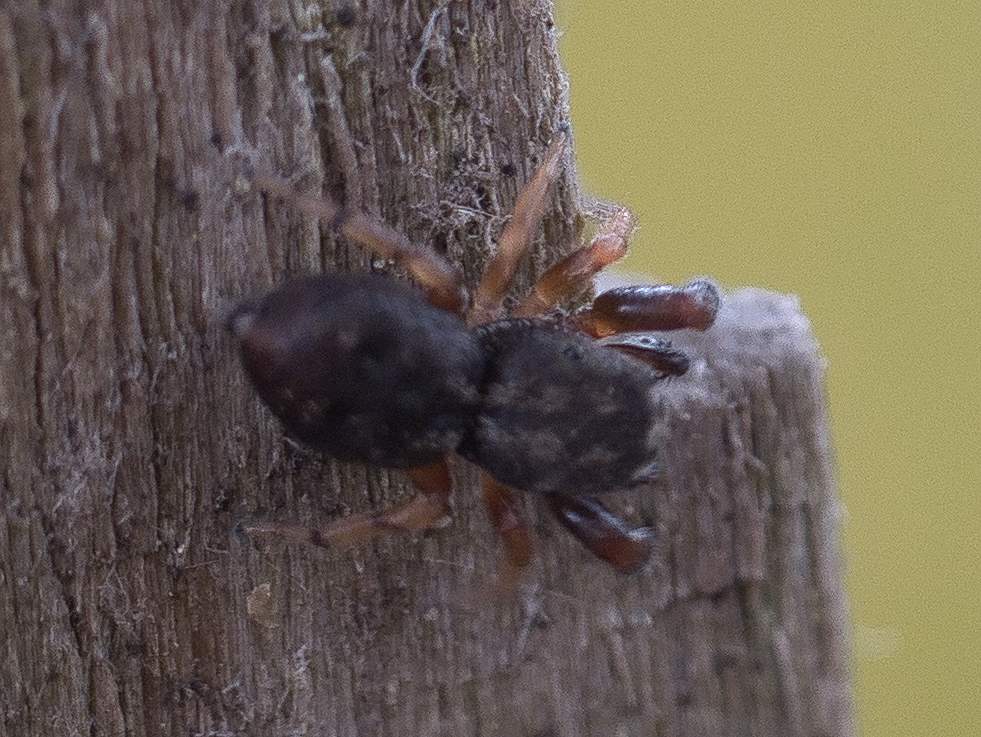
During one break I noticed a tiny jumping spider exploring one of the posts and attempted some snaps. The pics are grainy and nowhere near portfolio quality, but that’s not what matters here. I put the photos on iNaturalist and an Italian spider expert gave an ID of Ballus chalybeius.

I tweeted the British Arachnological Society and they were happy enough that it was this family, with only one species within that family in the UK. Looking at the map of their records, it has not yet been recorded in this part of West Sussex. It’s also Nationally Scarce. Bingo!

One of conservation’s big problems in the UK is its insularity and misanthropic tendencies. Thankfully organisations like BAS are active on sites like Twitter to speak up for spiders and to engage with people online. Nature conservation in the UK is claimed to be better when bigger and more joined up. You could say the same for its ability to communicate and gather information. That’s me off the fence, then.

Thanks for reading.

More macro

Macro Monday: there’s a parasitic wasp in my camomile tea

Ichneumon-20-4-2020-lo-res-6

Macro Monday 27th April 2020

It’s true that I started last week’s post with a parasitic wasp in my living room. That phrase is enough to make most of the UK faint. This week it happened again. But rest assured, there are other species to enjoy this week.

Ichneumon-20-4-2020-lo-res-1-2

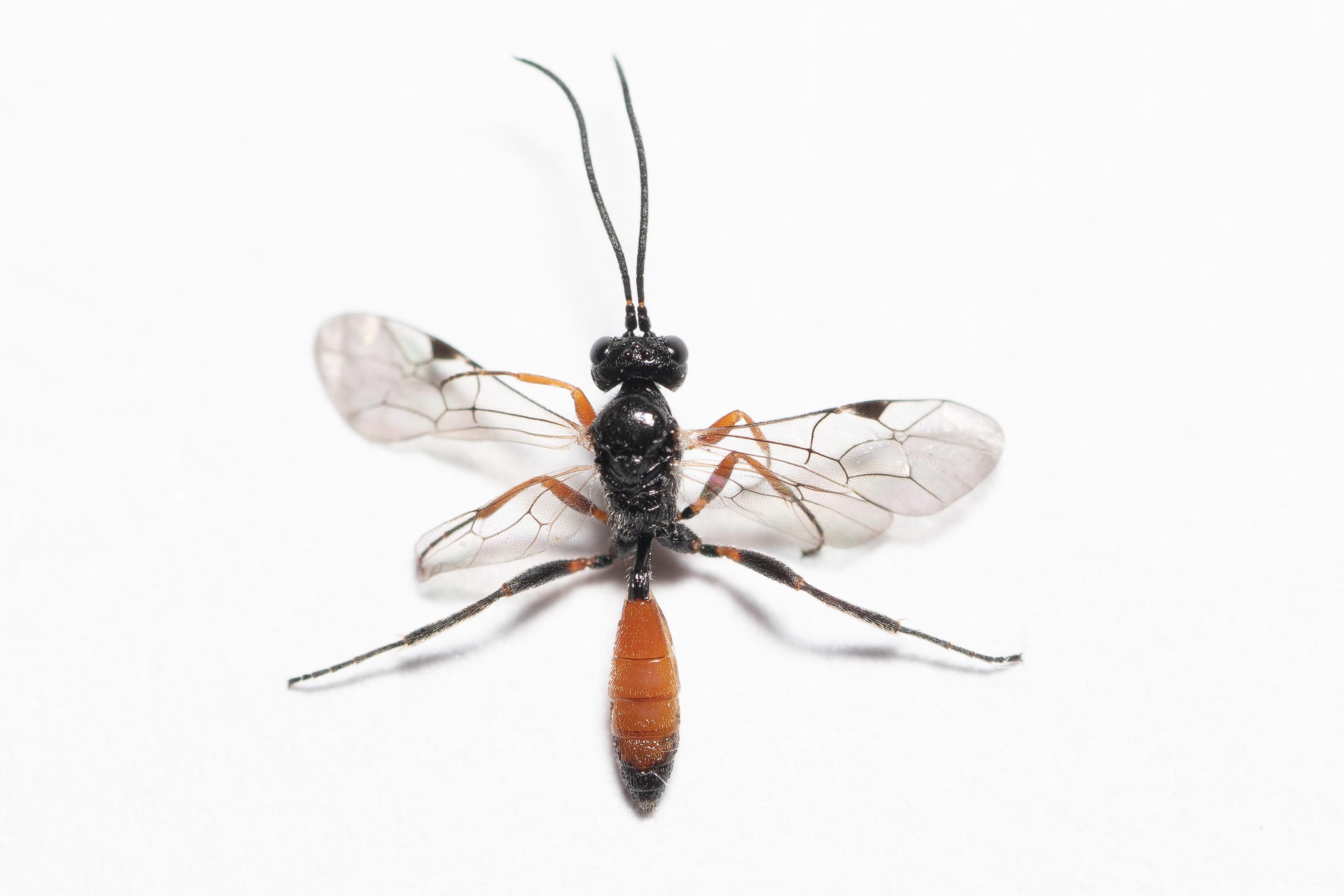
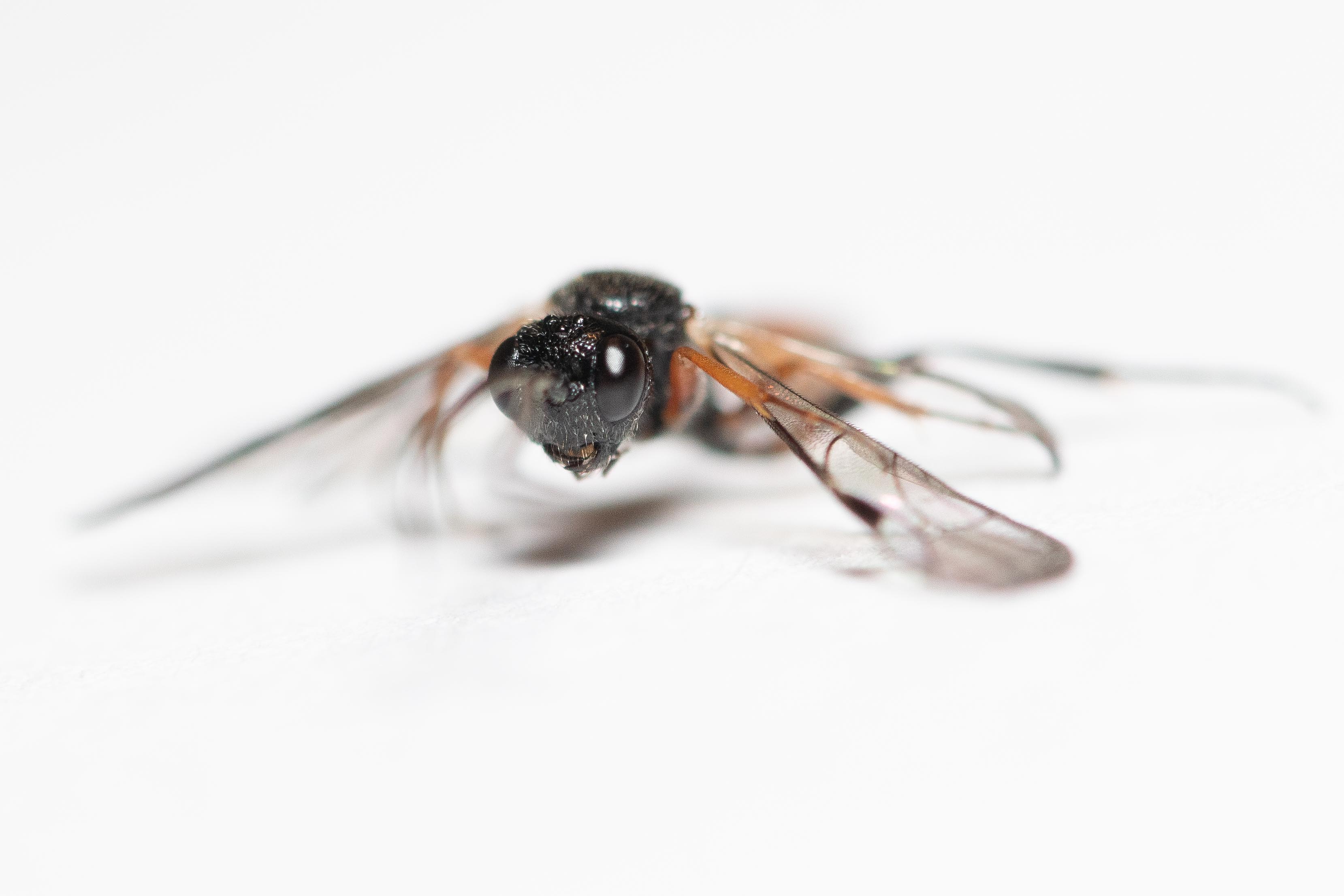
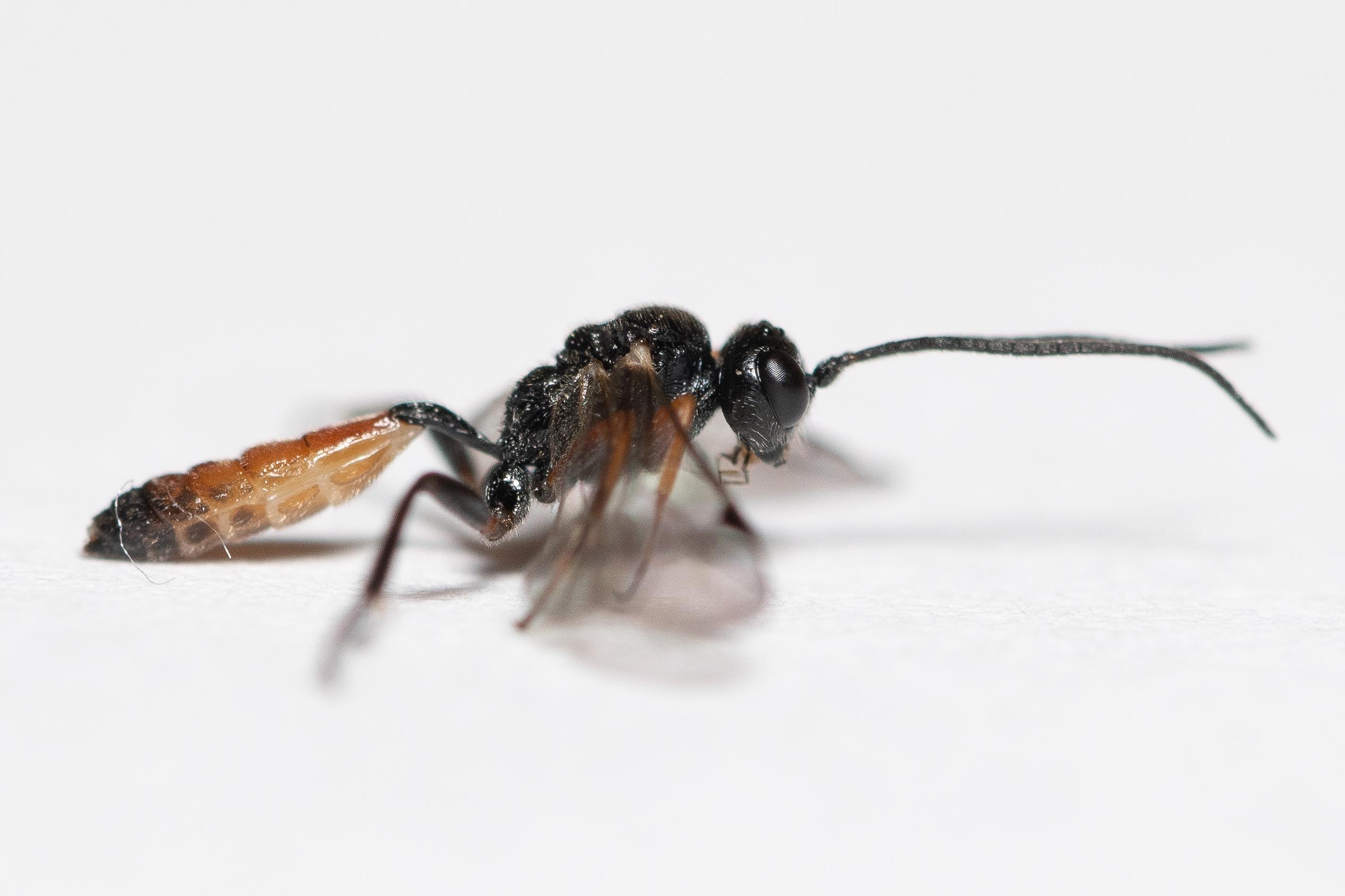
When I see an insect trapped indoors, I am the sort of person who needs to try and let them all out before being able to sleep at night. I accept that is probably a compulsive behaviour reflecting an anxiety disorder. In this instance I didn’t get the chance. I went to drink from my camomile tea, dear reader, and there was a small insect floating in the water.

Ichneumon-20-4-2020-lo-res-3

I plucked the insect out of my tea and it lay perfectly splayed on my fingertip. It was a tiny ichneumon wasp, a group of insects which I went into more detail about last week. As it dried out its beautiful form began to appear. I found a piece of paper and placed it on the white surface. My cameras are now living in the living room so they were close by and I took a few snaps. It was a beautiful specimen. I am not intending to try and identify it because I will probably get told off by the local Hymenopterist via iRecord.

GDN-19-4-2020-lo-res-03

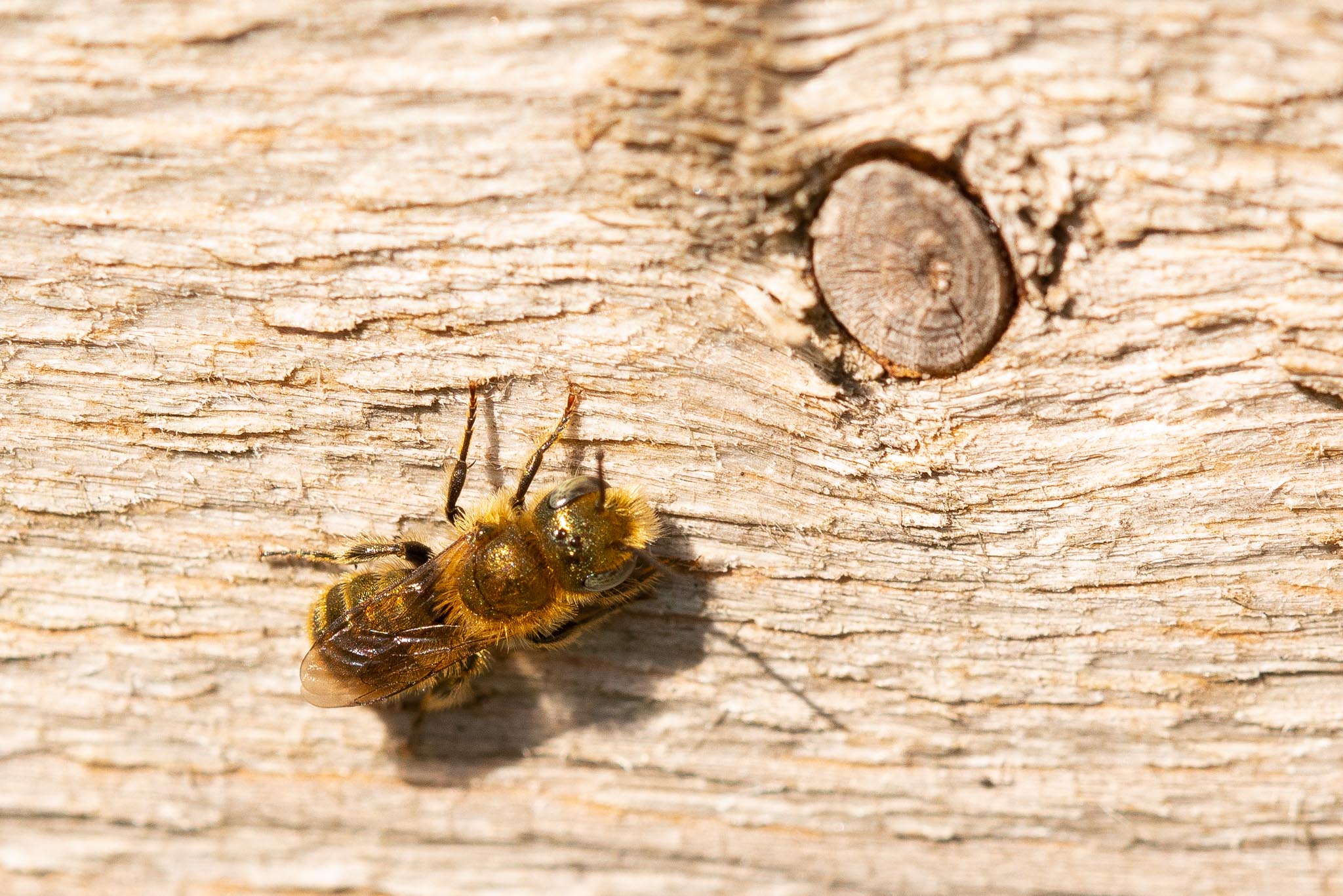
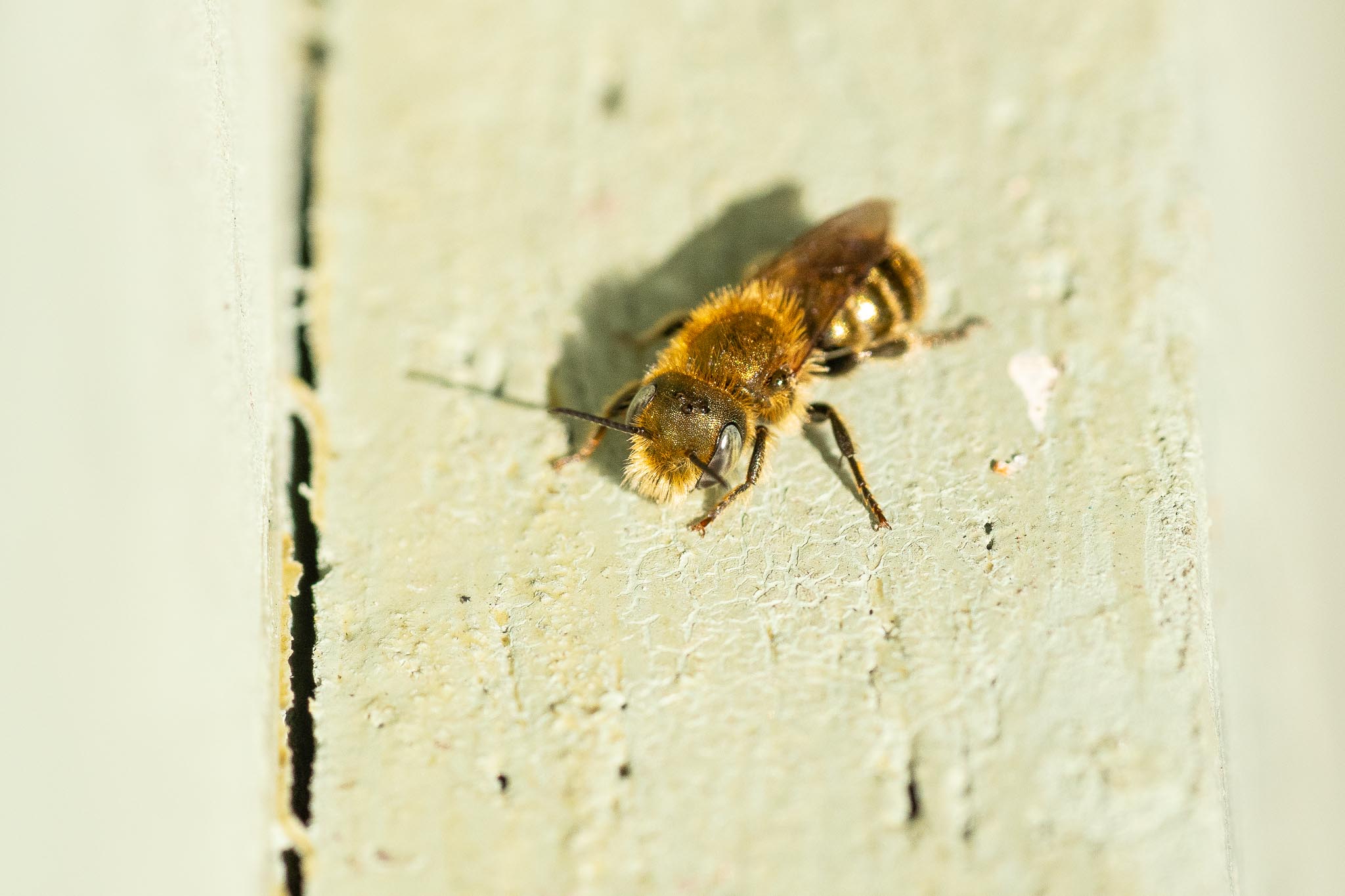
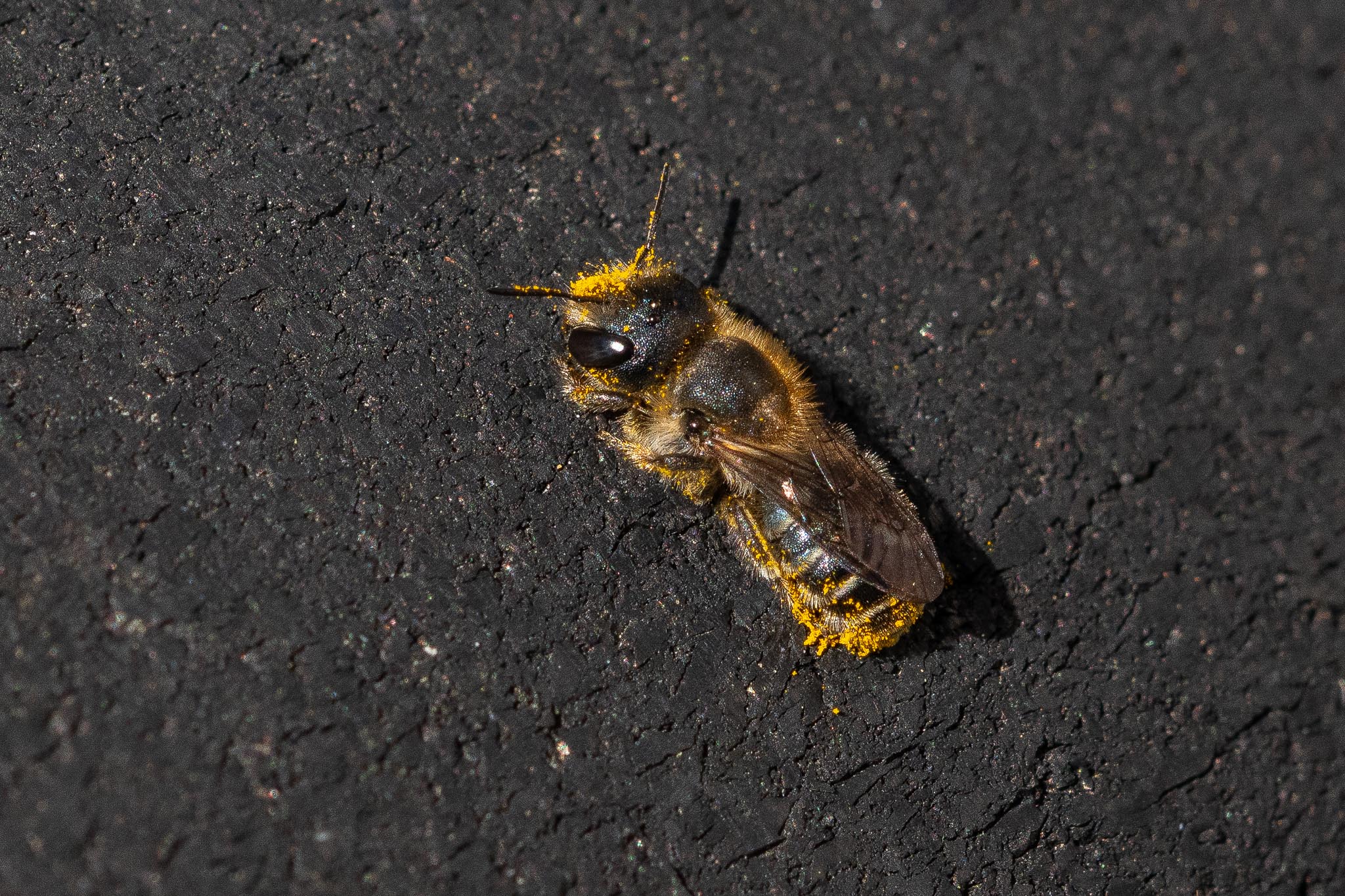
My time in the garden in the past week has largely been spent chasing this small bee around. It’s probably a male blue mason bee with the Latin name of Osmia caerulescens. Another book is telling me (not literally) that it’s Osmia leaiana. They have large green-blue eyes and zip around for a while before settling down on a hot surface like a cat in a sun patch.

GDN-19-4-2020-lo-res-05

To say this tiny solitary bee gave me the run around is probably understatement of the lockdown era next to ‘drinking disinfectant will not help you’.

GDN-19-4-2020-lo-res-29

The bee liked to rest just long enough on a surface for me to get there. I had to approach it with exactly the right camera settings and focus on my lens to be able to get a decent photo. The satisfaction of getting a decent image was massive. Little wins and all that.

GDN-19-4-2020-lo-res-20

I think this is a female blue mason bee having a bit of a rest on the roof of the logstore. Safe to say the highlights of the past six weeks in many ways have been getting an in-focus photograph of an insect like this.

GDN-19-4-2020-hi-res-16

The internet is awash with stunning photos of jumping spiders. They are cute and fluffy with massive cartoon eyes. This was the best attempt I made at getting something in focus. I don’t believe in taking them out of the wild for a photography shoot – the ichneumon wasp doesn’t count! – so I am trying to get them in focus in the wilds of my woodstore shelf roof. If there is any type of spider that will help people get over a fear of spiders, it should be this one.

GDN-19-4-2020-hi-res-09

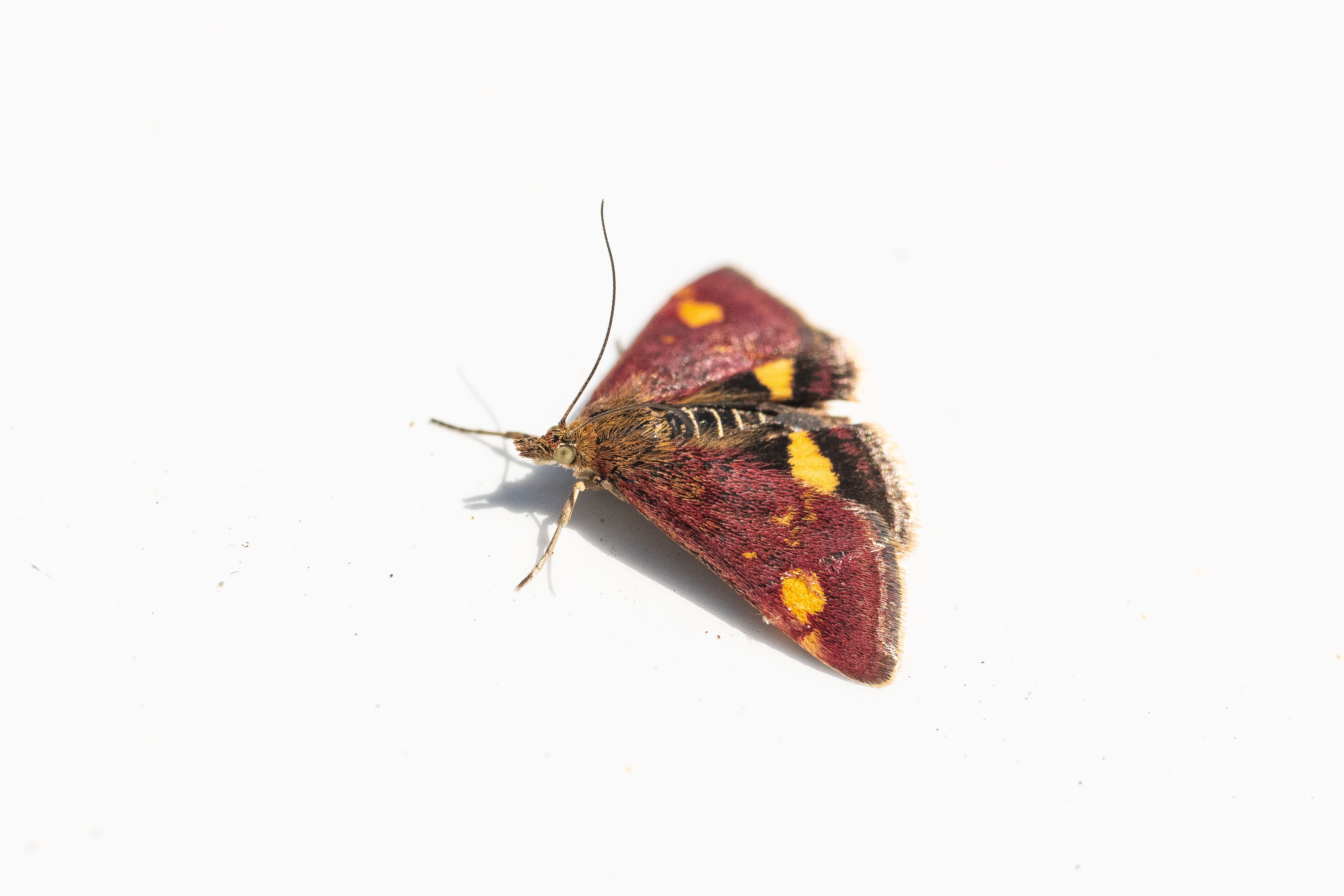
My car hasn’t moved very much in the past 6 weeks but it’s proving useful for insects basking in the afternoon sun. This mint moth was doing just that on the bonnet.

D56_8238

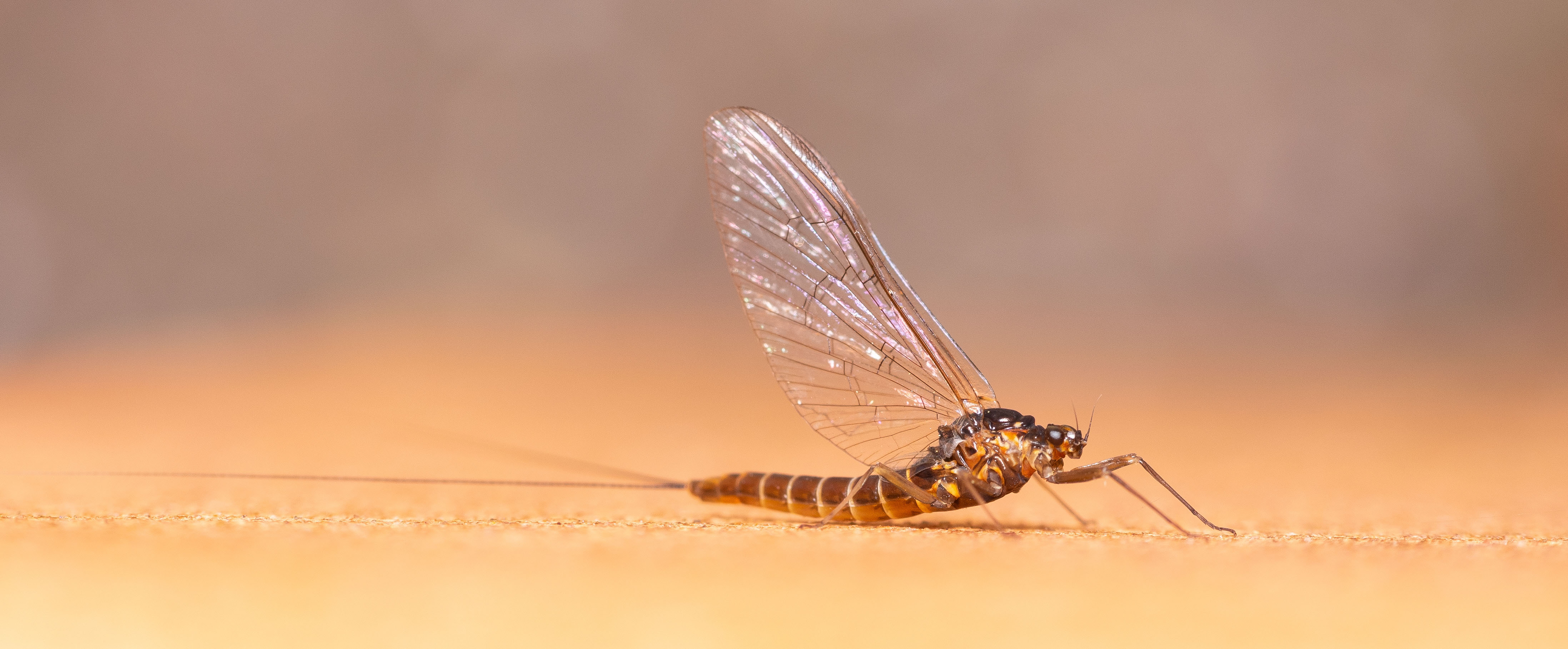
The biggest surprise in the garden this week was spotted early one morning before I started work. On the side of a hexagonal flower pot I noticed some unusual wing shapes. I realised it was an insect and nipped inside to get my camera. It was in the shade and temperatures were only just rising. It was a mayfly, one of 51 species in the UK. I know very little about this group of insects other than that they appear en-masse over rivers and that they only live for one day. How did it get to my garden? The River Arun is ten minutes walk away but it was a real joy to think it had used my garden to shelter for half its short life.

Thanks for reading.

More macro