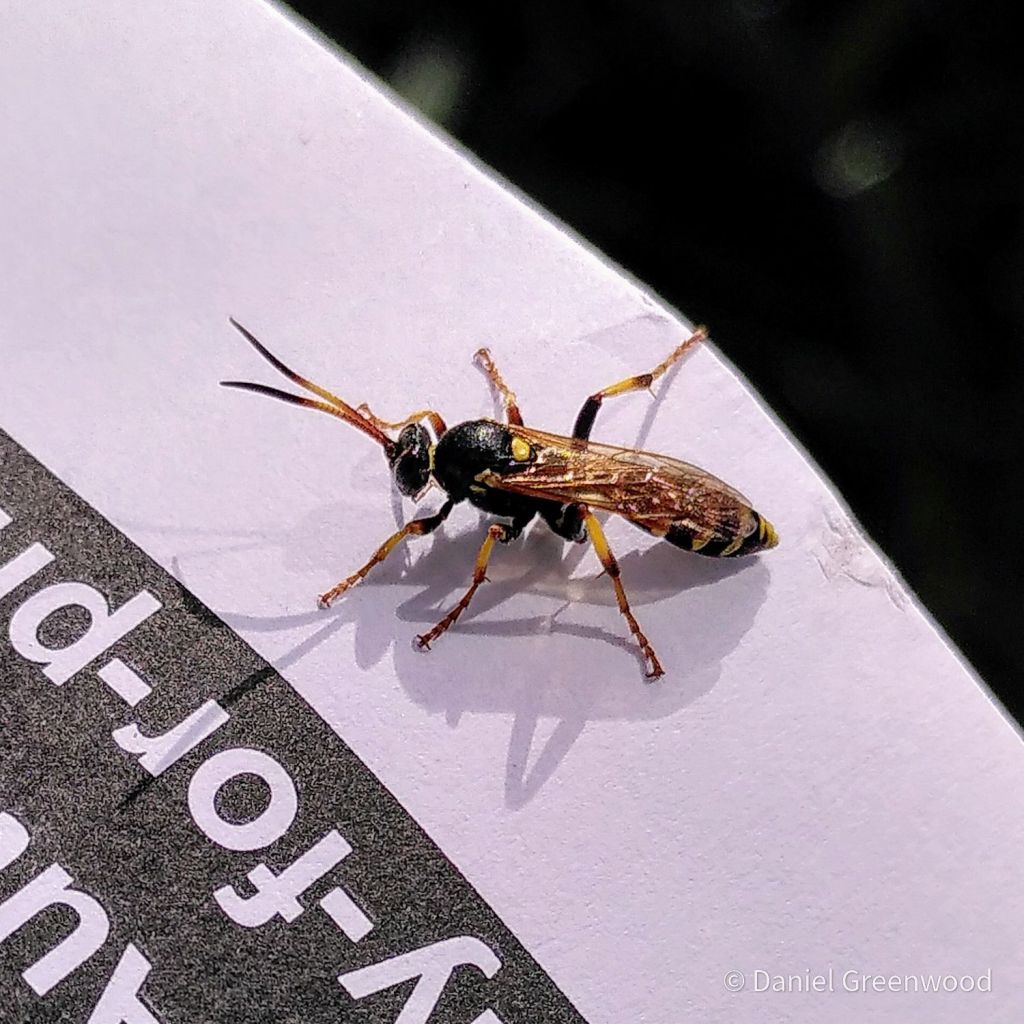
You know it’s spring when the bees and things start getting trapped indoors again. I visited my mum on Easter Sunday and her kitchen (which has lots of windows) turned into a veritable insect survey trap. Not just the ‘horrible flies’ she pointed out, but this lovely ichneumon wasp which I rescued with a glass and a local elections envelope.
You can probably tell that these are phone pics, I haven’t quite got into proper macro lens work yet this year, but soon! I love the orange-yellow-black fade of the antennae, which is probably where the name ‘xanthoria’ comes from in the scientific name.
Xanthoria is a genus of lichens which are commonly known as sunburst lichens. In Latin it means golden yellow, which is perfect.
And here’s the proof – Xanthoria parietina, a pollution-tolerant lichen that grows everywhere.
On the corner of the street, a mass of ivy was spilling over a wall. It was an explosion of leaves and flowers, sound and smell. The flowers were alive with insects: hoverflies, honeybees, bumblebees, and that ivy specialist, the ivy bee.
I hadn’t seen many ivy bees before, and wasn’t aware they were now so far into the centre of London. They nectared in a frantic fashion, with at least two having been captured by a massive garden spider that scarpered when it realised how close I was to its web.
At this time of year very few plants are flowering, and none like the ivy can. Even so, ivy in London has an awful reputation. People hate it, calling it a parasite and tree killer.
Some years ago a man gave me his opinion by leaning in and whispering that he had seen it sucking the sap from a tree, like it was some dark truth kept hidden from the world.
In reality it’s not a tree killer and it’s not a parasite. But like so many things in society now, people will believe what they want, regardless of the facts.
In a wood near to this jungle of ivy, mature growths of it have been found hacked and severed by visitors acting on their instincts without reason (or permission).
I remember a local tree surgeon unloading on me one morning when I was in the woods about to start a working day, telling me how terrible ivy was at that location. I was taken aback by the man’s strength of feeling and let him say his piece. When he had finished I asked if I could go and start my day’s work.
“You didn’t like that, did you?” he said.
Is it any wonder tree surgeons don’t like ivy? I’m sure many appreciate its place in the ecosystem, a habitat for bats, birds, insects and autumnal nectar for pollinators. But to a tree surgeon it makes your work so much harder, what is already one of the most dangerous and brutal jobs available in the UK. I suppose I had just expected someone who works with trees all day to have a little more imagination and ecological flexibility.
I’ve made the faux-pas while leading guided walks of talking about the value of ivy nectar to honeybees and been informed that it’s not so good for them. One very polite beekeeper corrected me and said that the nectar can crystallise too quickly in the hive and leave the bees to starve. For wild pollinators there is no such problem, of course. The beekeeper said the issue was mostly where the only nectar source was ivy.
Should ivy be cut off trees in some cases? Of course. But is it often framed for crimes it didn’t commit? Yes, all the time.
I remember driving with my parents through Ireland back in 2008, when I knew very little about trees. Ivy was everywhere and I worried it was going to harm the trees. I later learned that the story is different.
Ivy often grows on trees that are in decline, meaning more light comes through the canopy, encouraging the growth upwards. Then when the tree does die, there stands the ivy, ‘throttling’, ‘suffocating’, ‘killing’, as some hyperbolise. In high winds ivy can act like a sail, and trees do come down.
In my experience it is often life-giving.
People come to nature looking for absolutes, but just end up finding more questions and often being humbled. The trick is to embrace the ambiguity, your own lack of knowledge and mastery of any given subject.
Personally, I was thankful for that final flush of insect buzz on an unseasonably warm September morning. Who do I thank for that? That’ll be the ivy.
I’ve been trying to keep my macro photos rolling in the absence of June’s one pic each day. It’s a bit like keeping your lawn growing after No Mow May.
Actually, no, it’s harder because you have to be proactive.
By far the best encounter with the macro world this past week was a patch of hogweed along a footpath by the local river. A cyclist went past me as I was taking these photos – even though it was a footpath – and glared at me as if I was doing something truly evil or dangerous to the public.
I have a bike, too, so if that exercised the cycling community, we’re all friends here on djg.com…
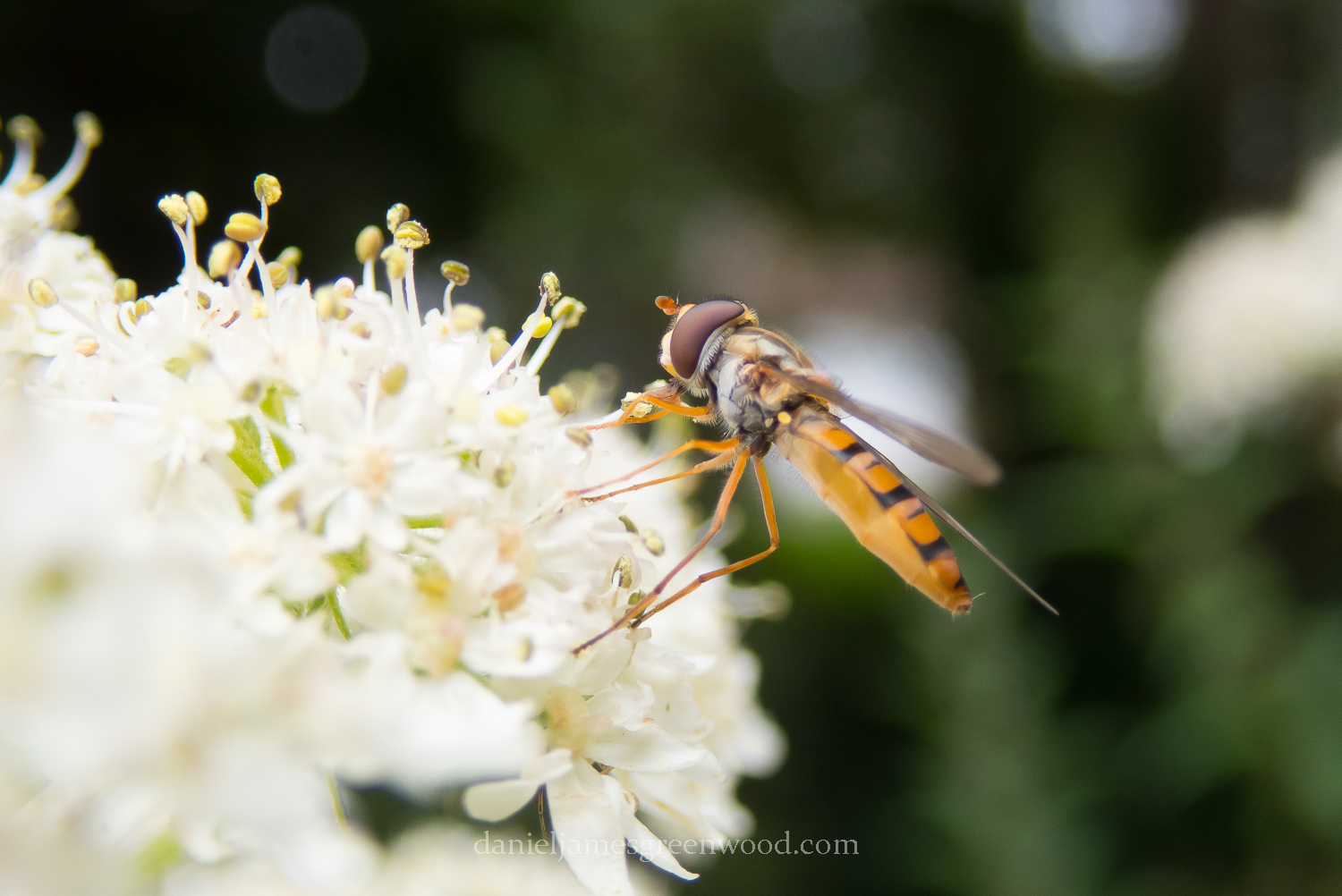
Hogweed is a weird plant, in that it’s part of a family that both kills, but also provides edible plant matter. Its sap is photocorrosive (not as bad as its big brother, giant hogweed) but its flowers are very, very good for pollinators. It can also be a bit invasive because it burgeons in places where nitrogen levels are artificially high (probably dog urine here…) therefore most of England.
A marmalade hoverfly feeding on the hogweed stamens
A soldier beetle also drinking from the carrot fountain
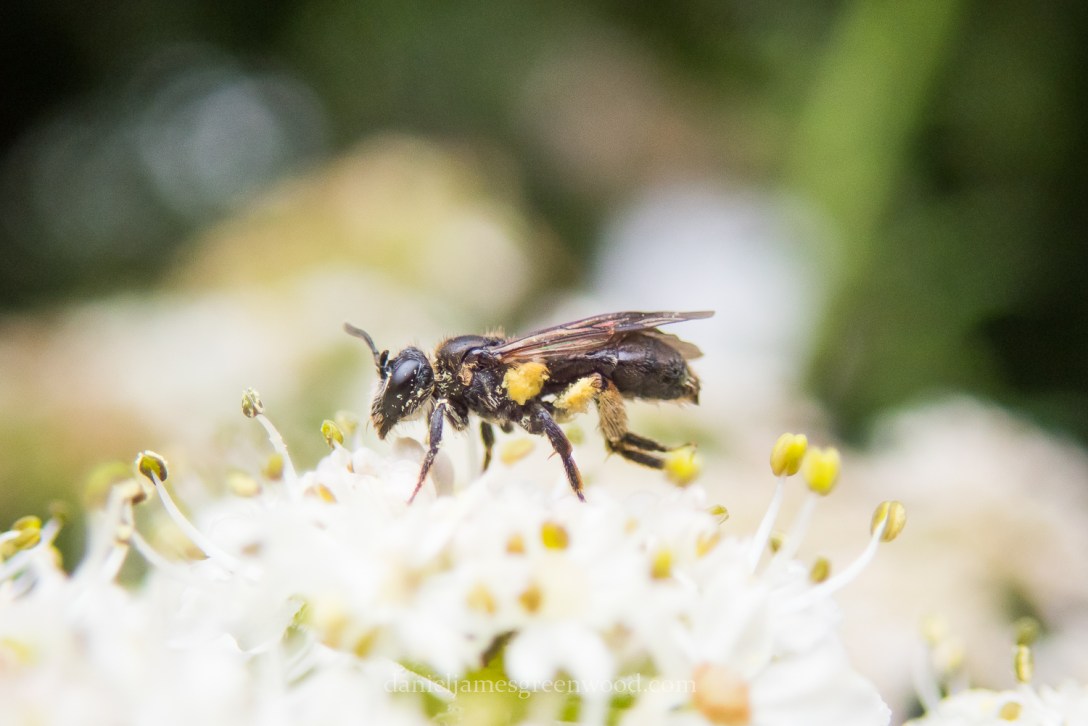
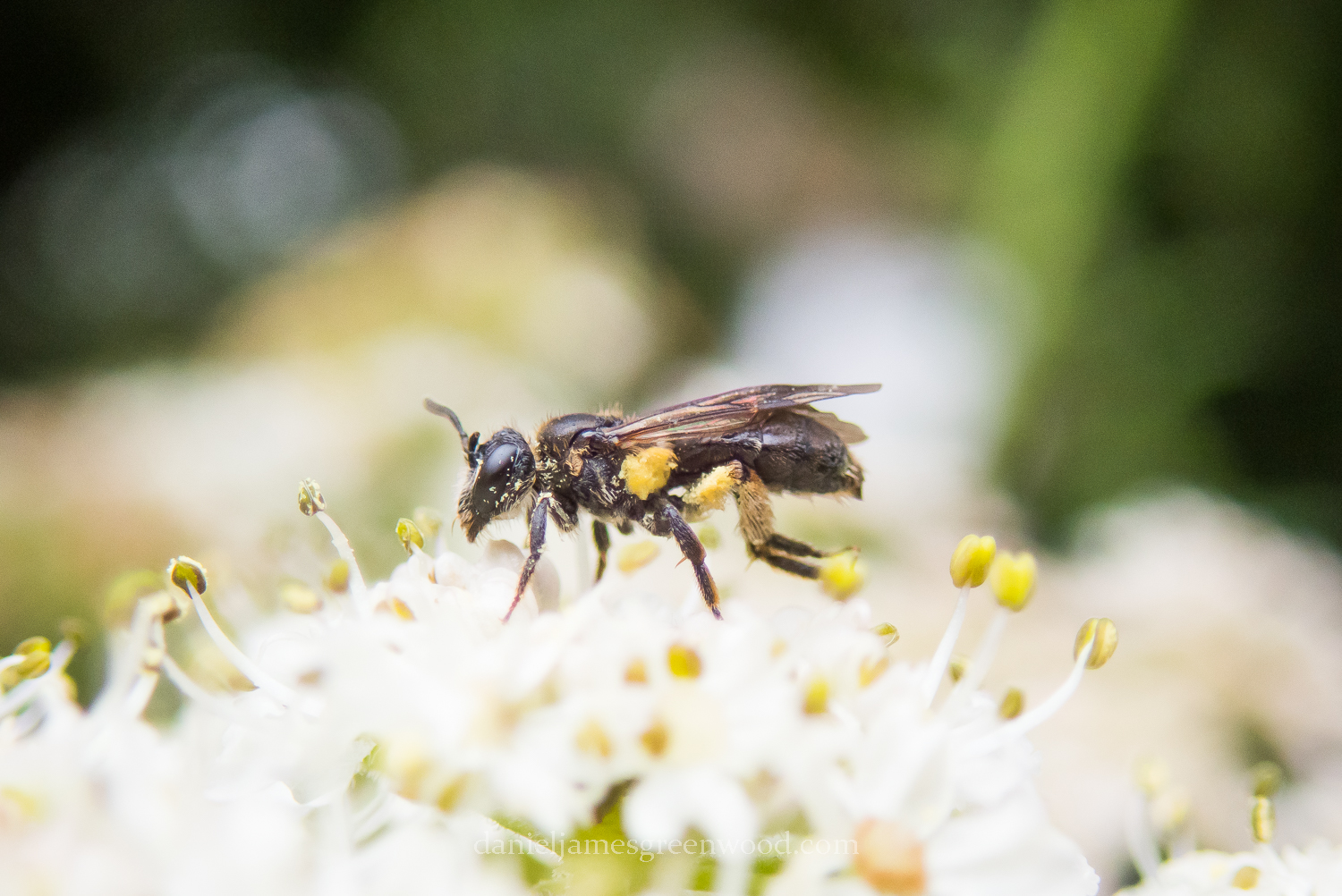
I would say this was maybe an ashy mining bee, but a little faded and low on the ‘ashy’ body hair
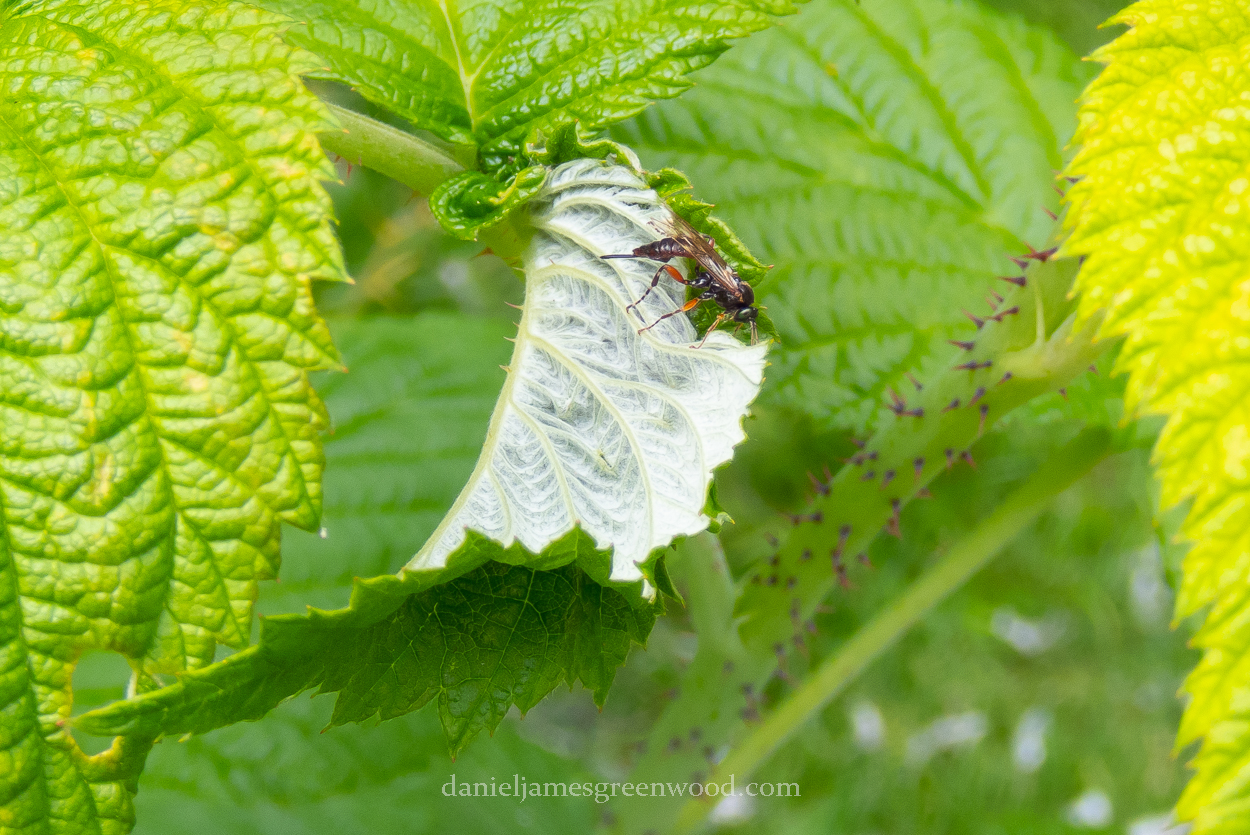
Earlier this week I noticed an ichneumon wasp exploring the raspberry patch in my garden. It was pausing to use its ovipositor on the curled up leaf – presumably the work of some other organism creating a sort of cocoon. I love them!
Here we are, another June slipping away and with it another #30DaysWild. Thankfully the humidity has dissipated this week and it’s been more comfortable to spend time outside (for me).
The final week of another June #30DaysMacro challenge, here we go:
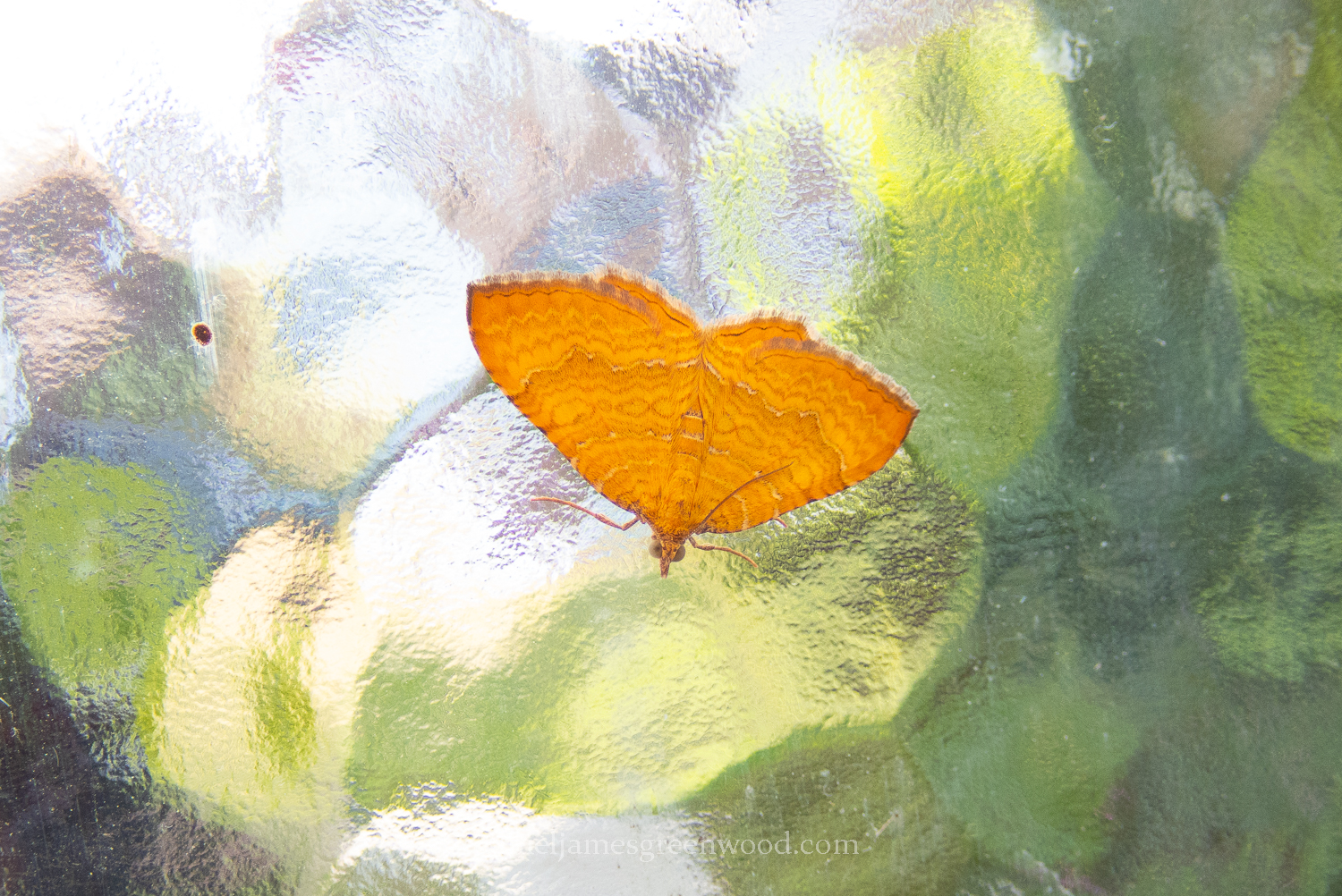
Day 22/30: leaving my mum’s house in SE London I noticed this yellow shell moth on the frosted glass. iNaturalist helped me with the identification.
Day 23/30: the zebra jumping spiders have been absent for me this spring but I am noticing them now. This little charmer was in the garden hedge.
Day 24/30: there have been a new range of bees arriving in my garden as the spring plants shift to summer flowers. The birds-foot trefoil has attracted leafcutter bees like the one above. They have an unusual flight, almost like a kind of hover.
Day 25/30: this was a day of weekend working and several hours travelling, so I had to make do with taking photos in my garden at dusk. I used the built-in flash in the Olympus TG-6 and wasn’t enamoured with the results, mainly because the flash isn’t softened by a diffuser. This mirid bug is out of focus but I enjoy its colours.
Day 26/30: the insect populations seem to be greater now that summer has arrived. Going out of the house first thing has been a good chance to see the range of hoverflies and other bees. This hover was doing that odd leg cleaning ritual and I managed to catch it with ‘legs akimbo’!
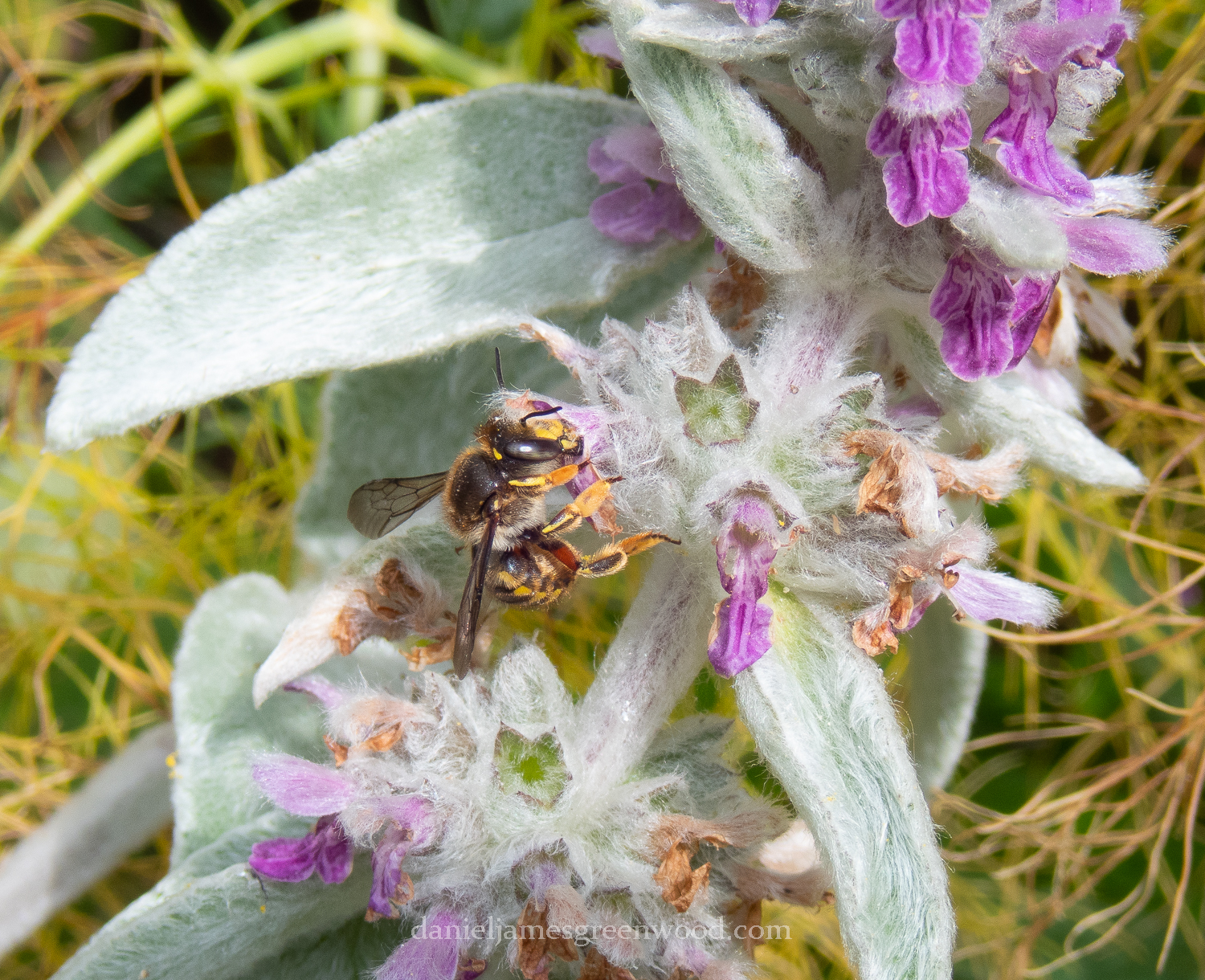
Day 27/30: at last a good show from the wool carder bees. I’ve written about these wonderful bees before – if you want to attract them get yourself some lamb’s ear (not literally), also sold as ‘stachys’.
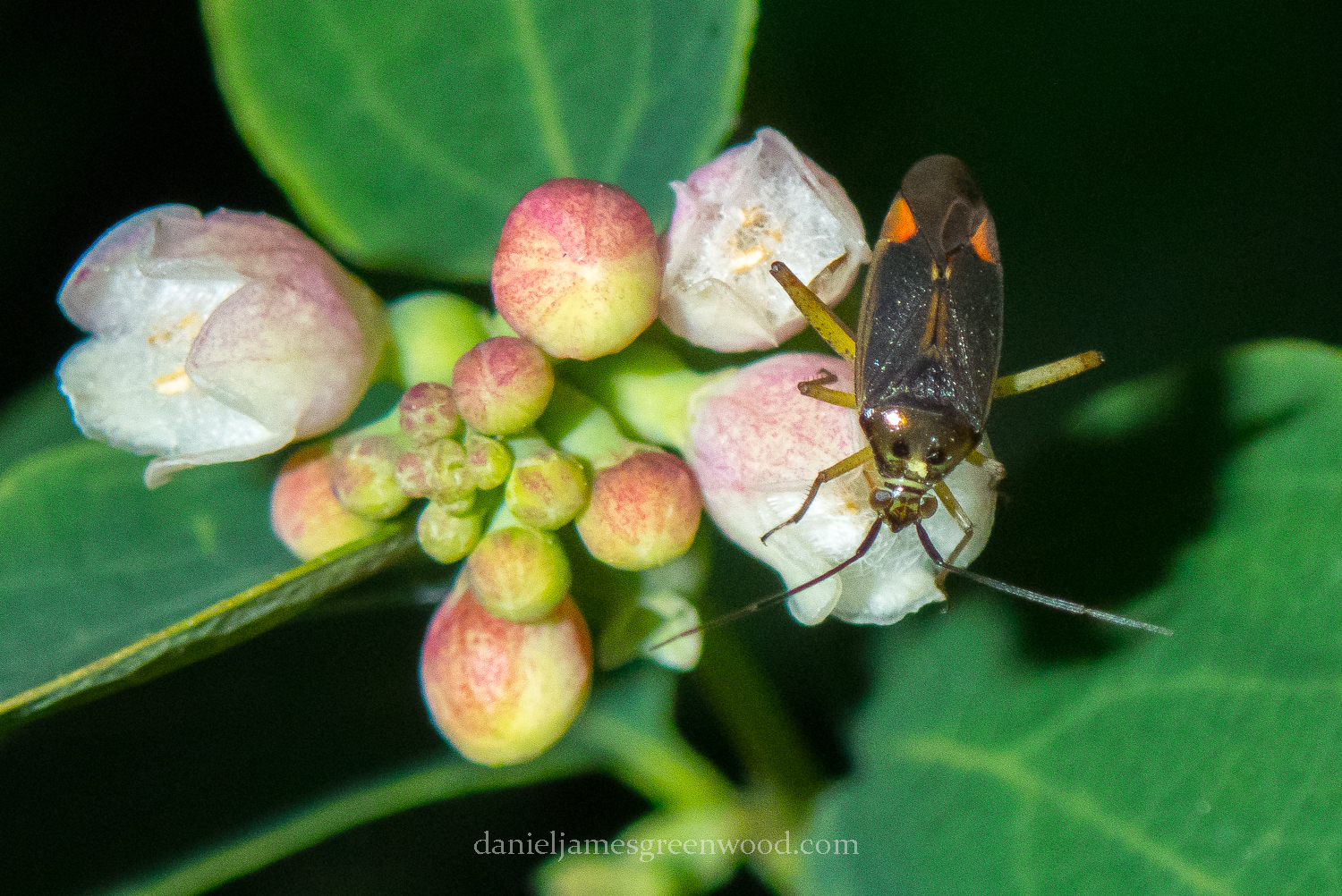
Day 28/30: an evening foray in my mum’s garden late into the evening, in cooler weather. I spotted this mirid bug climbing over the flowers of a snowberry.
Day 29/30: in SE London I found this grasshopper nibbling away on a grass blade. It was far smaller than the photo suggests. The grass was blowing in the breeze which made the focus a bit difficult to pin down, so it’s not the sharpest picture here.
Day 30/30: and so to the final day, one of the few rainy days in June. I was out on the South Downs for a walk and found this pyramidal orchid growing in a laneside verge. A beautiful plant of chalk grassland reaching its peak.
Here we are, week three of #30DaysMacro as part of #30DaysWild. This week, things took a fungal turn after thunderstorms burst onto the scene.
Day 15/30: a bumblebee feeding on purple loosestrife in a car park in West Sussex. I took two photos all day on the 15th, and this was one of them!
Day 16/30: another day where photo opps were scarce, but I saw this little solitary bee (maybe a Colletes?) on the oxeye daisies in my garden. These daisies have been a massive boost to invert life in my garden this year.
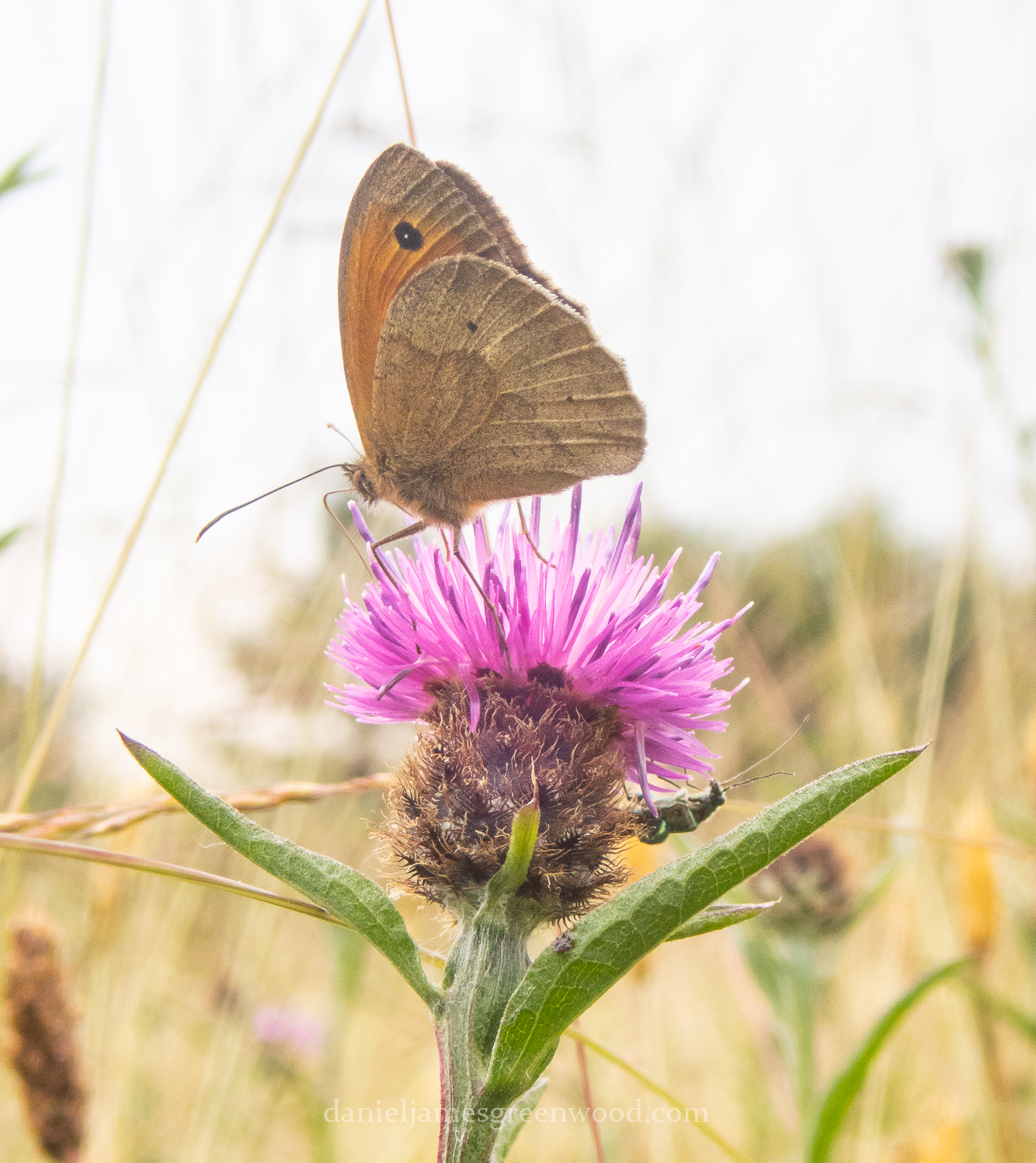
Day 17/30: this photo made me laugh – a meadow brown butterfly on common knapweed in a Wealden meadow in West Sussex. I didn’t notice the green swollen-thighed beetle hanging out below until I put the photo through Lightroom!
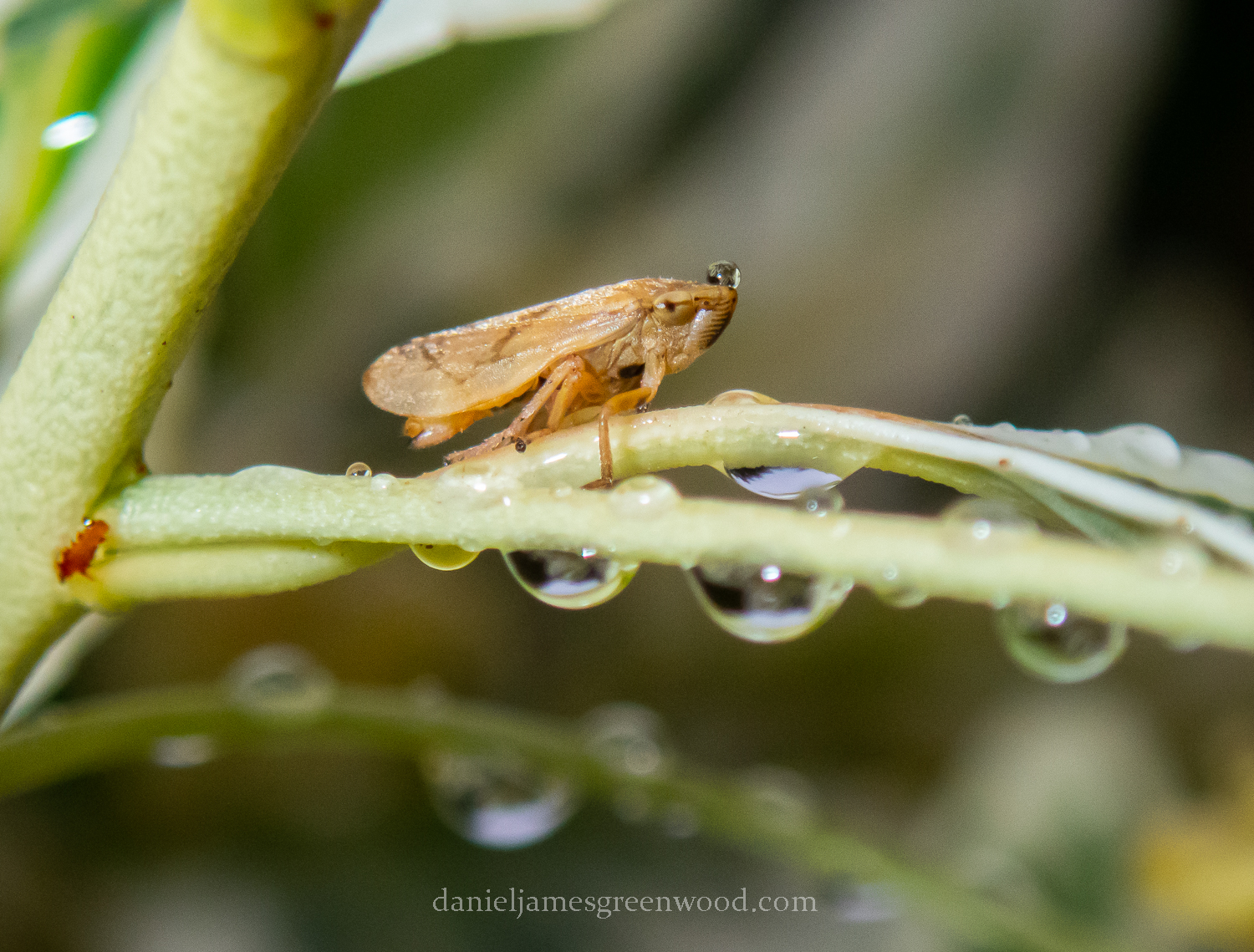
Day 18/30: storms have been the only source of rain recently, and they have been incredibly powerful. After some of that rain, I went looking for some life in the garden and found a common planthopper with a little droplet on their head. I see this as pushing the camera (Olympus Tough TG-6 compact) to the extreme due to lack of light and small size of the subject, and the results are great (though cropped and edited in Lightroom).
Day 19/30: on a lunchtime walk to stretch my legs I found this ashy mining bee foraging from one of the umbellifers that grow alongside my local river.
Day 20/30: things took a turn for the fungal on the 20th, as the rain gave a much-needed drink to the thirsty lichens in my local churchyard.
Day 21/30: the first of the summer/early autumn mushrooms, spindleshank, growing in the place where I learned what they are at Sydenham Hill Wood.
Happy #30DaysWild! As per the last couple of years I’ll be taking a macro photo – an image greater than 1:1 lifesize magnification – every day in June. I call it #30DaysMacro.
This is one of the best times to look for invertebrate life, and is a nice motivation to get outside, and to share your experiences with others.
The difference for me this year is that I’ll try to take each photo exclusively from a compact camera or my phone. I recently traded in some equipment that was gathering dust and got an Olympus TG-6 Tough compact camera. It’s waterproof, can withstanding being crushed somewhat, but more importantly it has the best macro capabilities available in a compact camera. It will be interesting to see what I can get from it.
Another #30DaysMacro – let’s go! on y va! vamos!
Day 1/30: I had actually forgotten it was June (been busy) and wasn’t thinking of #30DaysWild until after I took this phone pic. The spider was on the rear windscreen wiper of my car in the supermarket car park. It’s one of the running crab spiders.
Day 2/30: a bumblebee with full pollen sacks gathering nectar from the deep flowerheads of yellow flag iris in my small pond.
Day 3/30: a swollen-thighed beetle ‘enters the ring’, the nectar station of an oxeye daisy. I planted these last year and they’ve only flowered in the past few weeks. The small insects on the edges are carpet beetles. They’re there all the time.
Day 4/30: I found this beautiful red cardinal beetle in my family’s garden in SE London, as it rested in the shade of a hazel bush.
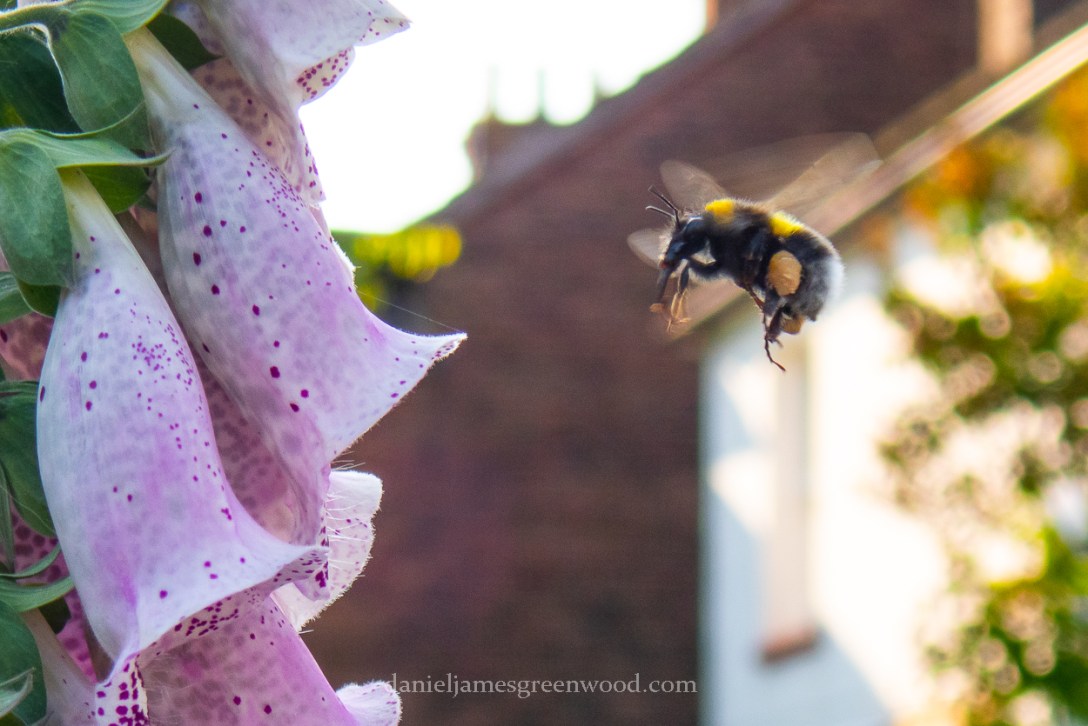
Day 5/30: I was lurking around the borders of my garden where the foxgloves grow, waiting for bumblebees to emerge from the flowers. Luckily this bumblebee chose to hover for a while so my camera could lock on and get the in-flight pics. Impressive for such a little camera!
Day 6/30: in the centre of my town there’s a brick wall that is covered in trailing bellflower. At this time of year it catches the sun wonderfully. I took this photo along the main road and was stopped by a woman who said she often tried to get a similar photo on her way home. Trailing bellflower is native to south-eastern Europe and likes rocky places, brightening dull civic spaces.
Day 7/30: a tortrix micro-moth in Peckham, SE London. I really like the holes in the leaves that surround the moth, and its bluey scales.
I’ve helped build a lot of ‘dead hedges’ in my time. Basically ‘fences’ of wood and branches piled between two posts. They happen to be particularly supportive of fungi, along with amphibians and sometimes even nesting birds.
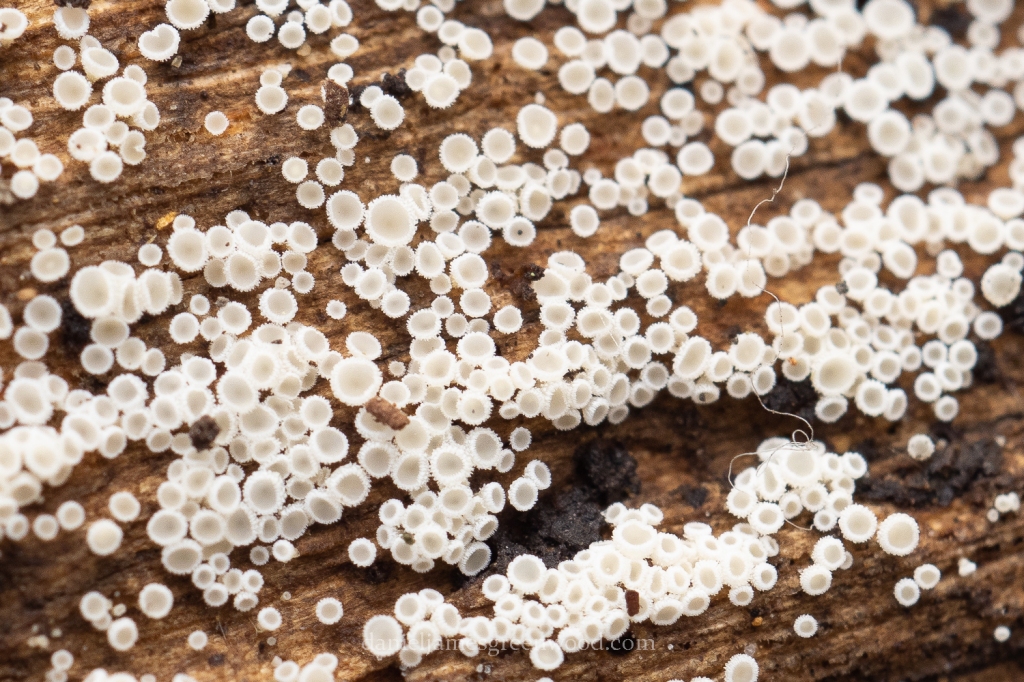
Whilst constructing one on a chilly January afternoon I noticed one of the logs had a smattering of cup fungi. Looking more closely I guessed that these were a type of cup fungus known as snowy disco (Lachnum virgineum). It’s one of the fungus names that really makes people smile, and not in a weird way for once.
Then again, it does sound like a night club in Reykjavic.
I referred to my fungi tomes for more information on the snowy disco, and found that there were actually rather a lot of these tiny but very classy-looking fungi in Europe.
Cup fungi are a different group to the typical gilled mushrooms or ‘basidiomycetes’ that drop spores. The cup fungi are ‘ascomycetes’ – the type found in lichen complexes – shoot their spores from an ‘ascus’ (plural – ‘asci’) instead.
It’s just another reminder that for those who can, it’s a much better environmental option to leave fallen wood in a woodland so the disco can do its thing.
And so to the final week of the 30 days of macro photography challenge. You can see week one, week two, and week three, by clicking their names.
Day 22/30: a seed of unknown origin resting on a fennel stem. I think it looks like Einstein!Day 23/30: I didn’t manage to get this photo of a green nettle weevil in focus but the colours on its body are incredible. Perhaps it was a bit older and so had lost some scales.
Day 24/30: the very next day I found another green nettle weevil on my green wheelie bin! I don’t think it’s the same one, but it was posing perfectly and in focus this time. I always want to eye in focus with invertebrate photos.
Day 25/30: something that needs its own post here. It’s a fly that’s succumbed to entomophthora fungus, a parasitic species. I was astonished to find this having read about this kind of thing before, but never expecting to see it.
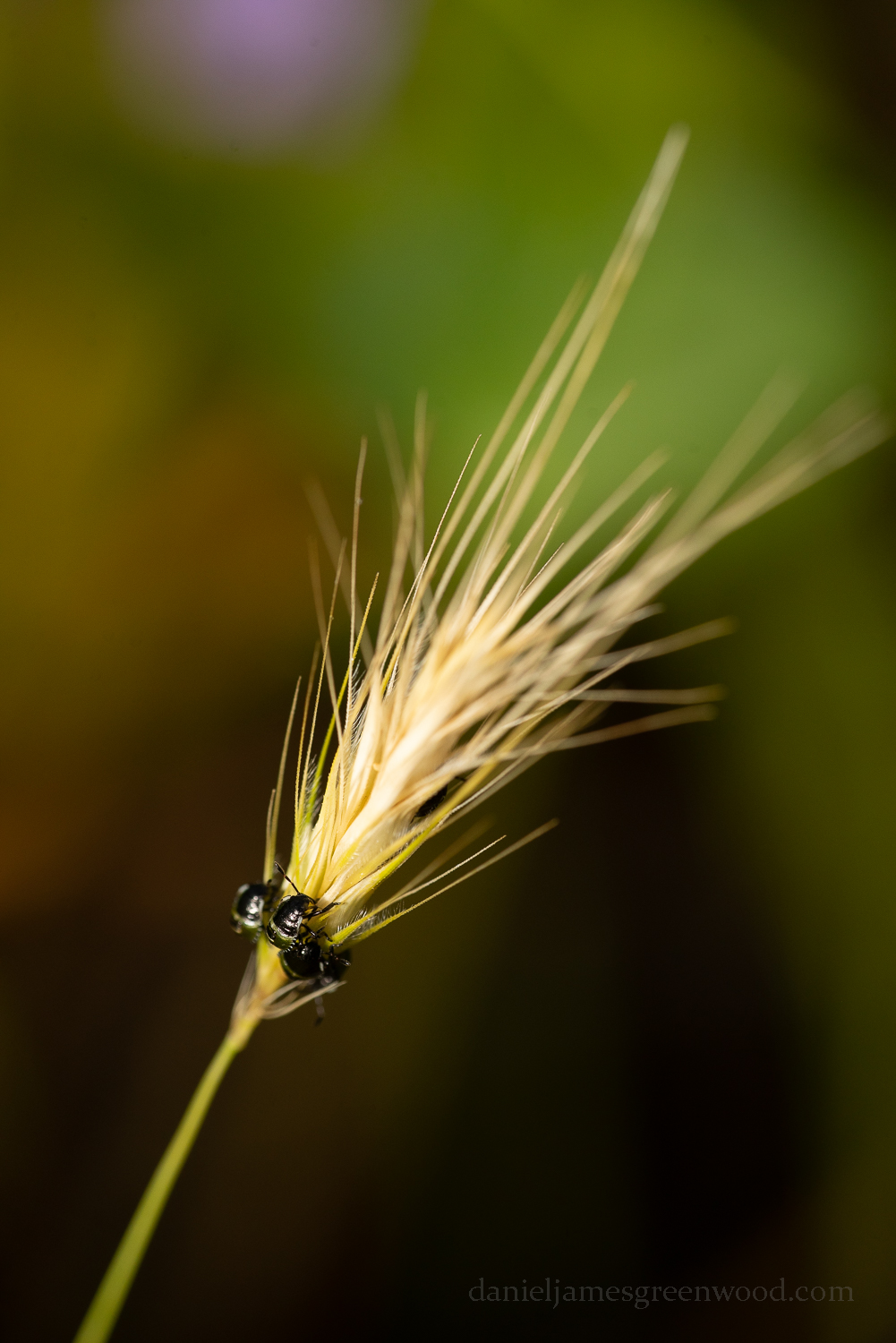
Day 26/30: in my garden as the light began to fade, I spotted these shieldbug nymphs on a grass head. They’re probably green shieldbugs, even though they’re black at this stage.
Day 27/30: another evening photo, this time of a green mirid bug in some rather posh mallow flowers.
Day 28/30: nettles are great for invertebrates. This is a nursery web spider garden her nest web, which will contain her eggs before they hatch into spiderlings. Hence the name ‘nursery web.’
Day 29/30: I took some photos of a large slug eating the remains of some pigeon feathers but I opted for this one instead. I took a similar image towards the beginning of this challenge, so it felt fitting that the hedgerow-snail-shell-portal-to-another-world would be opening once more as it neared the end.
Day 30/30: I spent the morning in a very nice woodland in Hampshire for the final day of the challenge. I witnessed many inverts at a period when I couldn’t photograph them, but when I had five minutes I found this leaf beetle exploring the edge of its world.
Day 15/30: looking around my Mum’s garden in London, I was harnessing the softer evening light and hoping some insects would come and bask. Lo and behold, this large red damselfly flew over my shoulder and landed on a leaf half an arm’s length away!
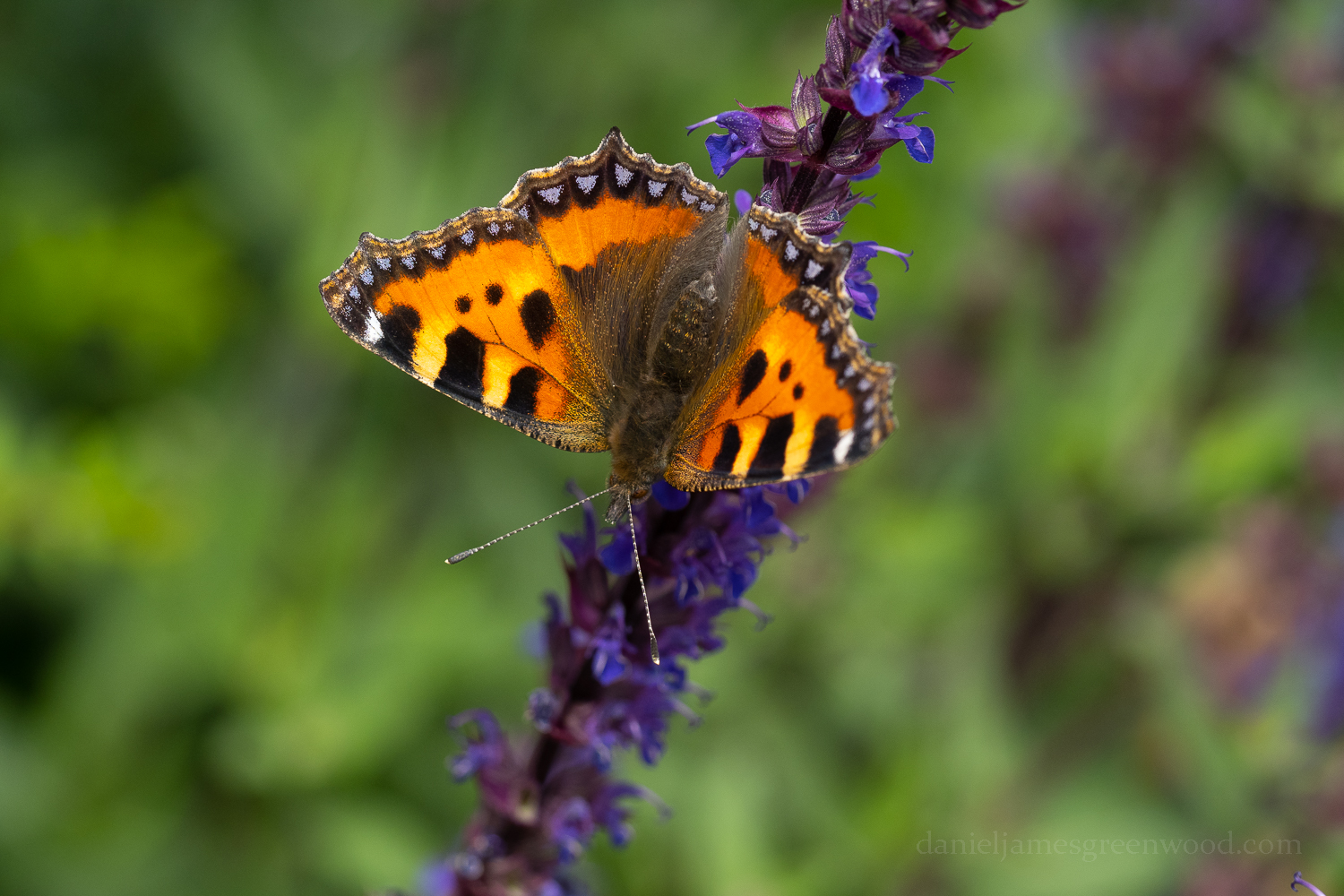
Day 16/30: I’m not convinced 2022 is a particularly good insect year in the SE of England, but small tortoiseshells have been out in force this year. This one was on a salvia at Polesdon Lacey in the North Downs.
Day 17/30: at Rye Harbour Nature Reserve in East Sussex, I notice peacock butterfly caterpillars racing across the concrete causeway. Somehow, this caterpillar had been hugely unlucky, with its head being trampled on by a foot or a bike. There was a bloke zipping around on an ebike that looked like a motorcycle, which may have been what squashed it. Other caterpillars did make it across, where they were headed I have no idea.
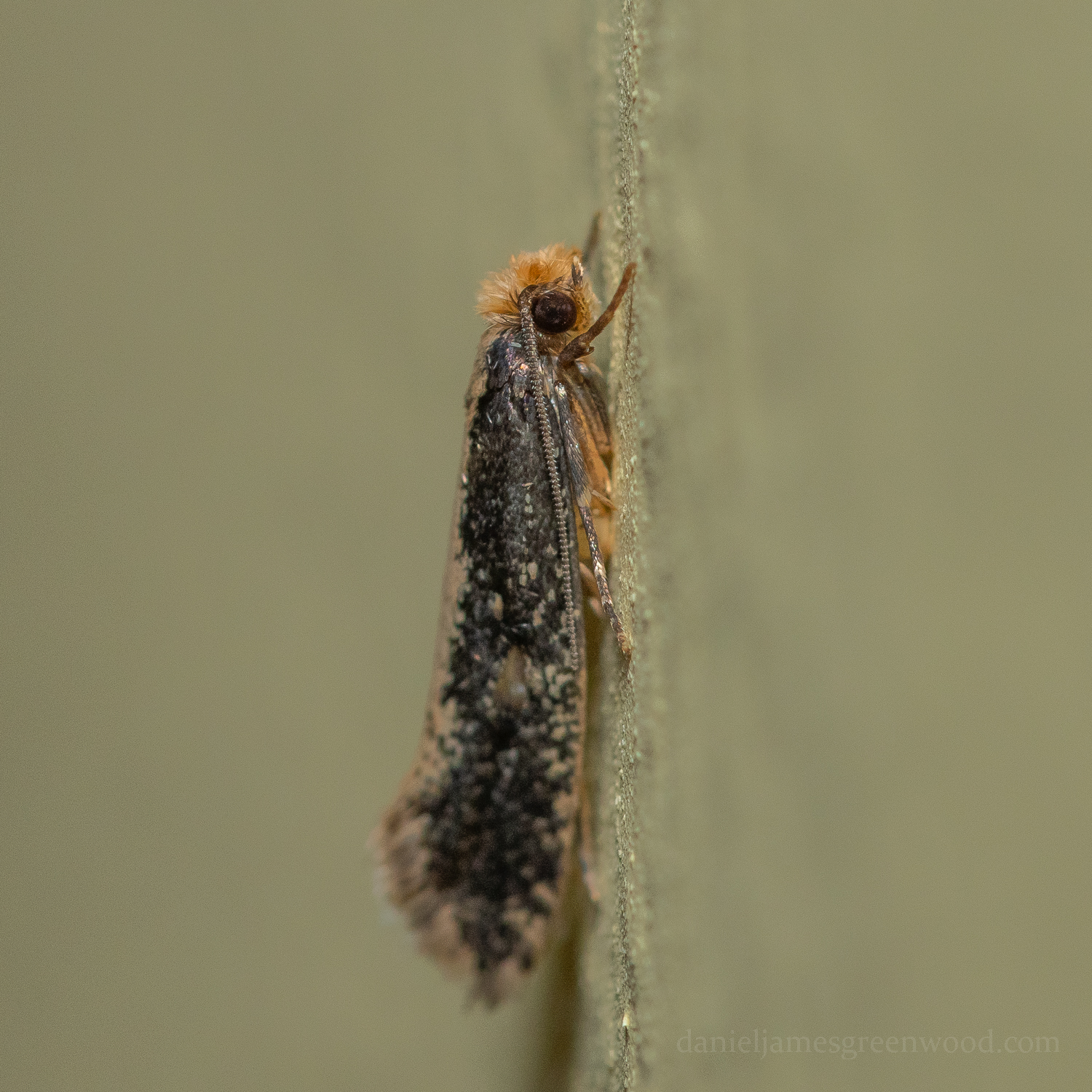
Day 18/30: the difficulty of a photo challenge each day is managing your expectations and trying to keep things simple. I took this photo of a micro-moth in my house at about 9pm or later. At first it looked like a little smudge but with the benefit of flash and a bit of editing, it has red hair like me!
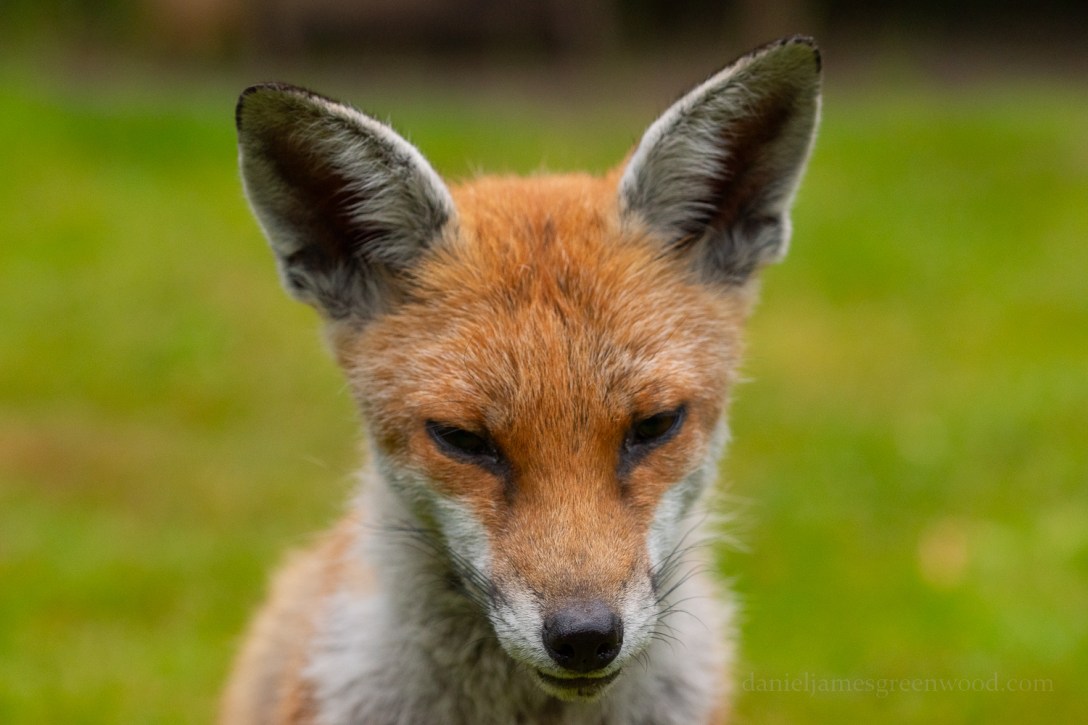
Day 19/30: speaking of red hair, I was taking some macro photos in my garden when a fox that visits us most evenings came as close as she ever has. She always comes to sniff my camera but her boldness suprised me. I recorded this video quickly on my phone. It got quite a lot of traction on Twitter which was quite exhausting but nice that people are interested in foxes.
Day 20/30: at lunchtime I went to a nature reserve within walking distance and found lots of damselflies gallivanting in a nettle patch. This blue damselflies were focused enough for me to get quite close and take a photo.
Day 21/30: I like this photo because the fennel leaves and stems make it look quite abstract. This is probably a meadow spittlebug, a common leafhopper. I took this one after sundown.
I’ve been slow to post week two of my June 2022 macro challenge, mainly due to offline and online duties. But don’t worry, the photos are still being taken and I’m on track to get it all done!
Day 8/30: some heavy rain in West Sussex brought some of the more ephemeral mushrooms out into the open air. These mower’s mushrooms (also known also brown mottlegill) appeared for a day or so after a downpour on my unmown lawn. It has been so hot and dry that the lawn has barely even grown anyway to be honest!
Day 9/30: I spent a good few hours walking around a local woodland expecting miracles (“assumption is a curse” as an old school friend used to say). Instead I just remembered how difficult woodland invertebrate macro can be. It was only until I got out onto the heathland, where the sun hit the woodland edge, that I saw more interesting things. This pic above isn’t perfect, it’s a bit shaky I think, but I do love the story. Ants and aphids have mutualistic relationships which allow the ants to harvest honeydew and the aphids to be protected from predators and also disease. The ants can remove diseased aphids to stop outbreaks. Amazing!
Day 10/30: This was one of those days when I was out and about doing other things but had a camera with a lens with me that did macro. This is a lesser stag beetle clinging to the corner of a brick wall.
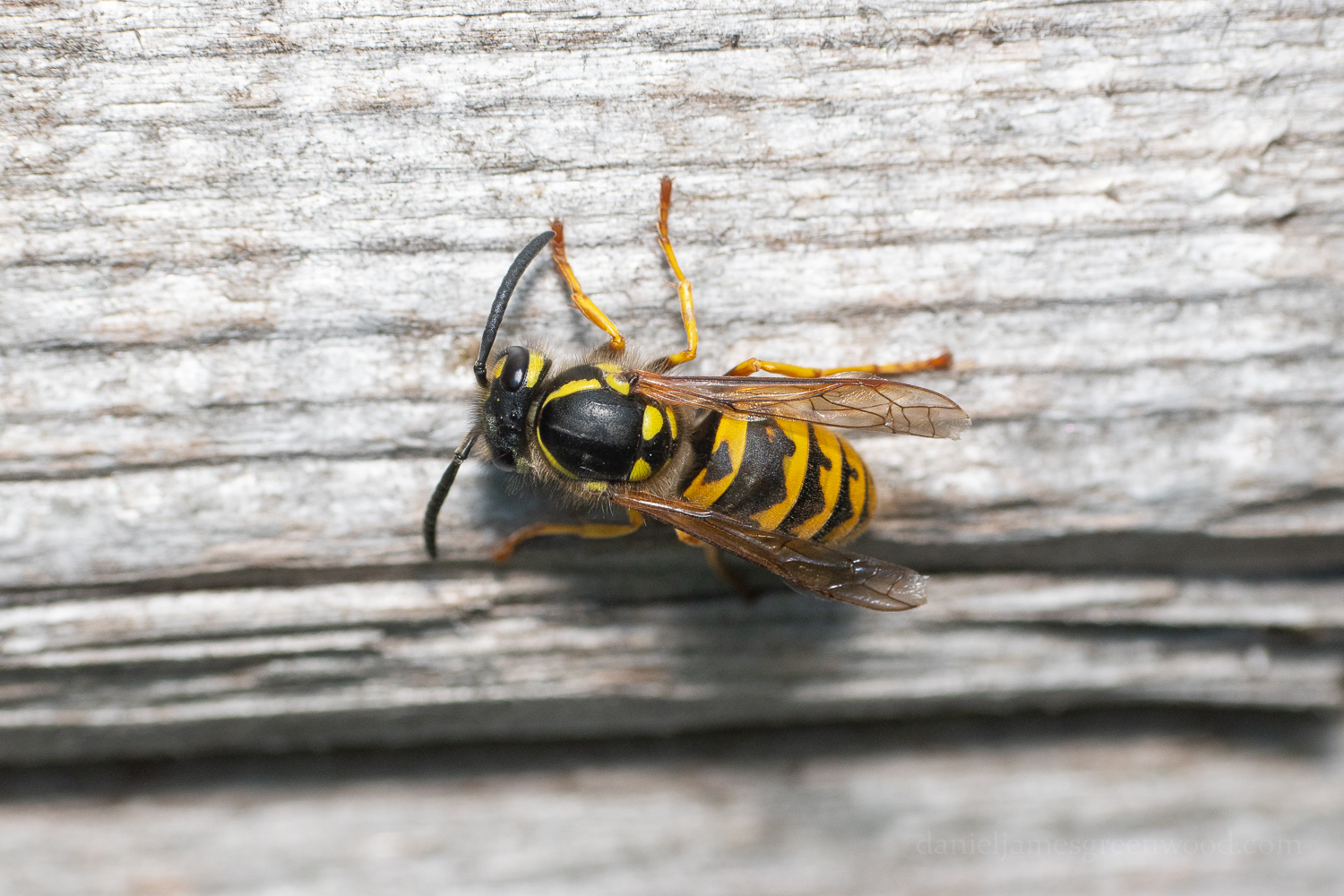
Day 11/30: I only managed to venture out into my garden as night was falling. I found an absolutely miniscule wasp of some kind, as well as a typical yellowjacket harvesting wood shavings from the fence. The bug is probably a mirid or plant bug growing into an adult.
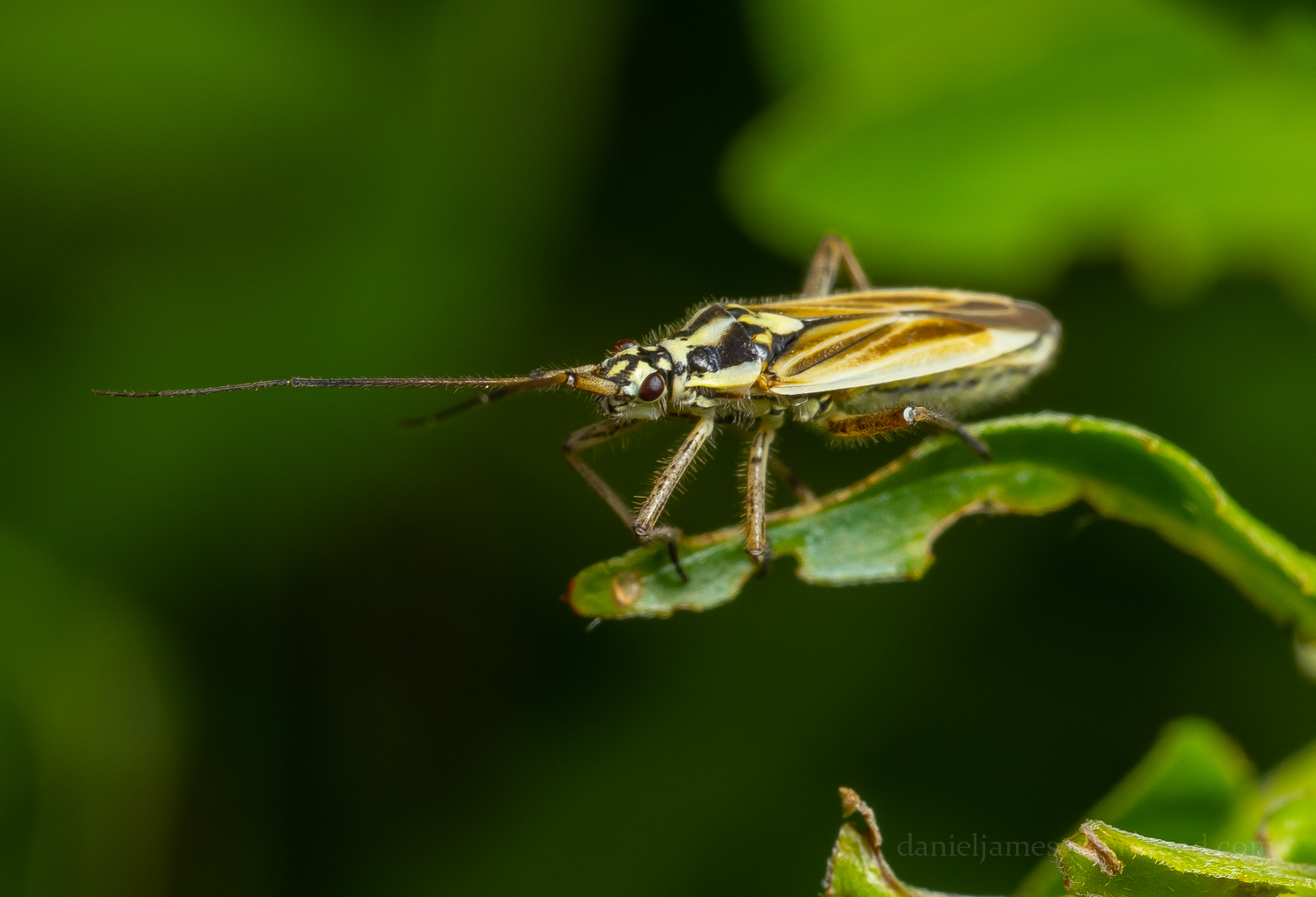
Day 12/30: in my garden again and I found this quite beautiful mirid bug.
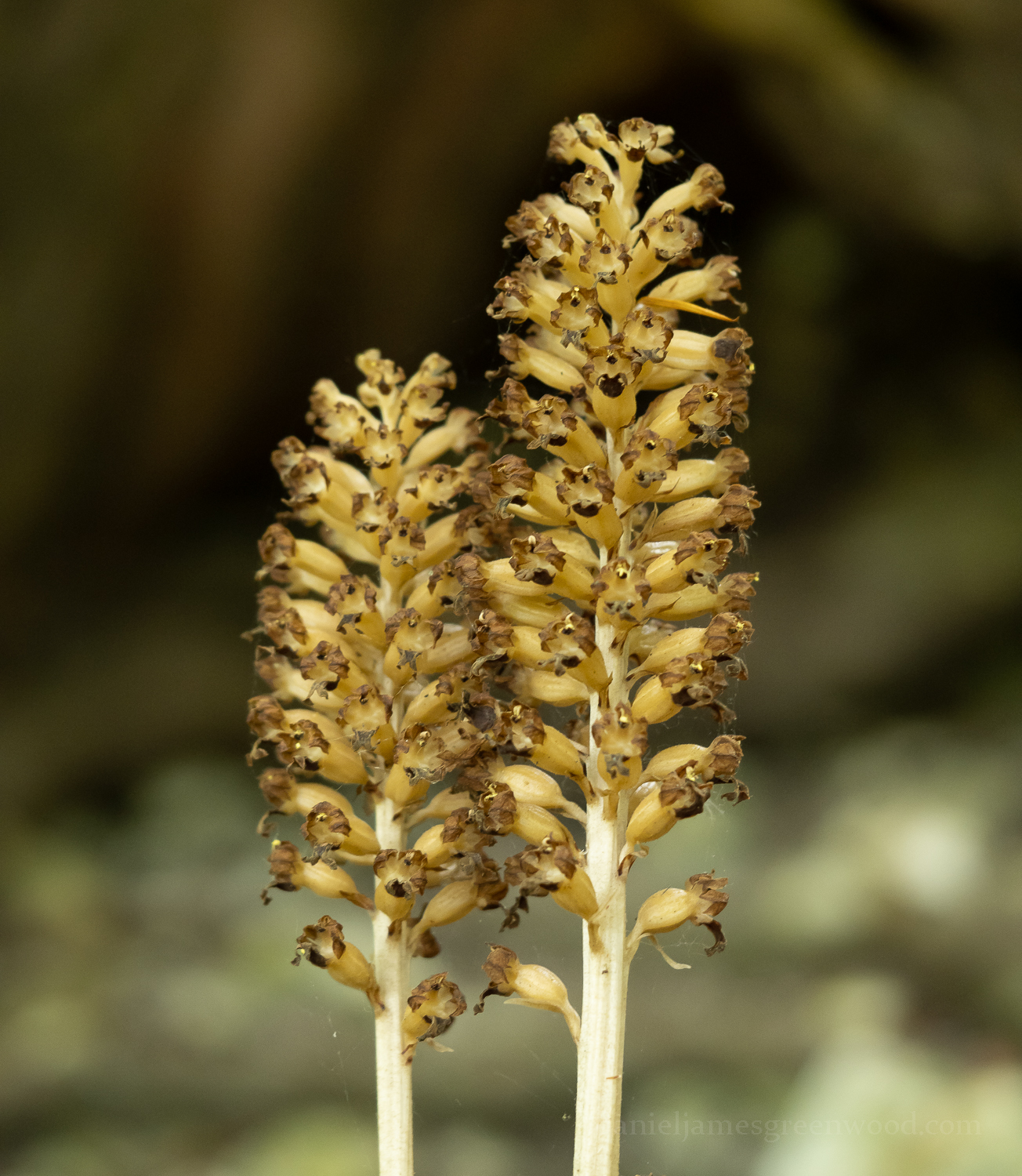
Day 13/30: venturing out for a long-distance walk in the Surrey Hills, I was amazed to find bird’s nest orchids growing under some yew trees on chalk. I have never seen this orchid before and wasn’t ever expecting to see it. The delights of hiking or rambling over longer distances, especially in June.
Day 14/30: back in the garden with the mirid bugs. This was a very small, perhaps juvenile of some kind, pottering about on a very hairy hazel leaf in my garden.
I’ve had a burst of American visitors in recent days (to my blog, not my house). So thanks for visiting, y’all, and sorry about the year you’ve had. You may have noticed I’ve slipped to monthly posts on here. Between April and October I posted blogs every Monday without pause, which is a tricky task…
Here’s my seasonal update of stuff you don’t need to know about, but then welcome to the Internet. What I’m writing Soon I will be self-publishing my third poetry collection, Fool’s Wood. It’s seven years since my last one and this collection has taken longer because of LIFE. There will be a booklet and also…






























 Unlocking Landscapes