Earlier this week I went for a short walk around part of the Sussex Weald to see if any mushrooms had popped up. We’ve experienced one of the driest springs on record and the warmest June for England, as well as three heatwaves already! Me and mushrooms don’t need three heatwaves, thanks.
Mushrooms need rain, warmth and moisture to thrive, and after a downpour earlier in the day I thought it might be worth having a look. Here’s what happened:
At the beginning you can hear my water bottle in my bag and a great spotted woodpecker ‘kicking’
I began in the presence of Bambi, or a fallow deer
It’s been a very busy summer so far for me of working and commuting. I had a free afternoon and so headed to my local dreamspace, but with no mushrooms on the mind – literally or figuratively.
Red admiral (phone pic)
The number of butterflies was remarkable, perhaps the sense of doom about 2023’s poor invertebrate spring had dampened my expectations too much. There were red admirals, skippers, whites of course, and even a white admiral on the sandy track. White admiral is something I don’t see that often, mainly because I lived in London for so long. Then again, it is cropping up in SE London now, which is interesting.
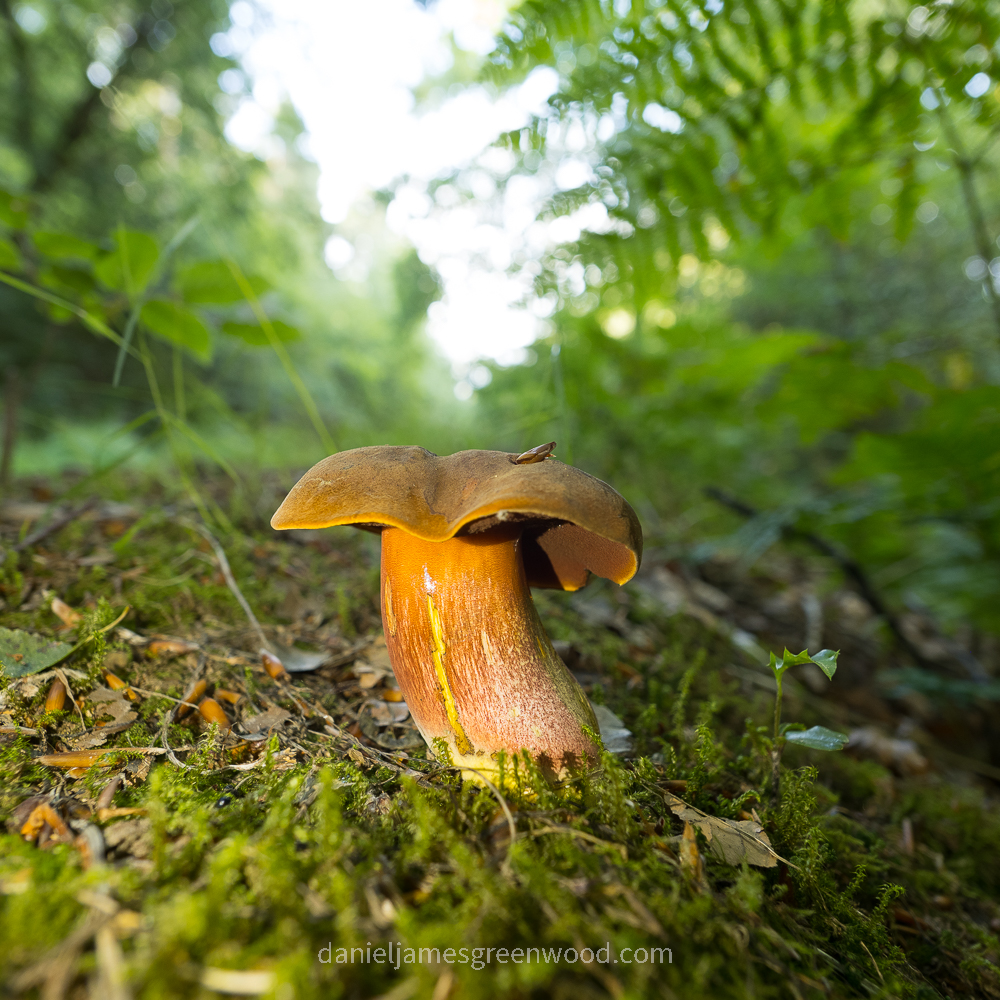
I was enjoying the sense of a butterfly summer, when I nearly spilled my invisible coffee at the sight of a deep red mushroom on the edge of the track.
Mushrooms, so abrupt, unapologetic. They know how welcome they are, even if you don’t realise it yourself at the time.
This was one of the summery, colourful boletes that can be found at this time of year. It’s probably a neoboletus, but my iNaturalist record is without community input and I haven’t had the time to do any research myself. So it remains an unknown jewel.
A few paces away was a more common and typical summer shroom, what I would guess is a blusher.
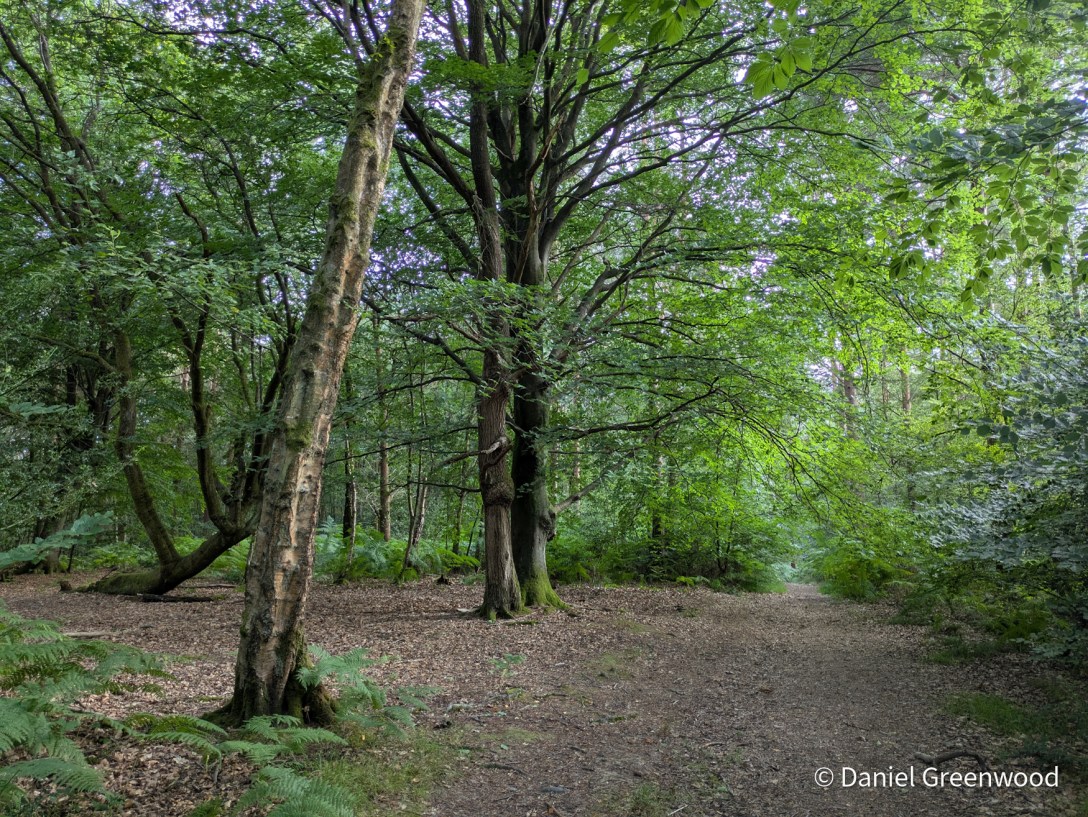
This short walk on the edge of the High Weald was notable for its green-ness, surely close to peaking as August nears.
We’re lucky over here that we aren’t experiencing the mega burns and record high temperatures of Greece, Italy and Arizona. You have to wonder how some of our fungi will cope with the drought and the impact on our woods. No doubt fungi will outlive humans in the long, long run (they can survive and thrive in nuclear reactors) but the heat can’t be good for the health of our woods which may struggle to adapt to pace and intensity of change.
When are we going to see serious action on climate, rather than flip-flopping by both major political parties? The kind of urgency we saw in crisis-managing COVID-19? Am I destined to see meaningful environmental policy remain as a marginal ideal in my lifetime?
No doubt fungi will rise into conservation thinking beyond the obsession with bringing back questionable, extinct species. But will that be too late as the heat rises and the woods burn?
Fungi, ever-resilient, have been found to benefit from burning in Australia, but of course that is just a handful of species.
It would be foolish no to follow one of the key messages fungi can teach us: don’t forget the present, you never know what might pop up.
No nationalism was expounded in the making of this blogpost.
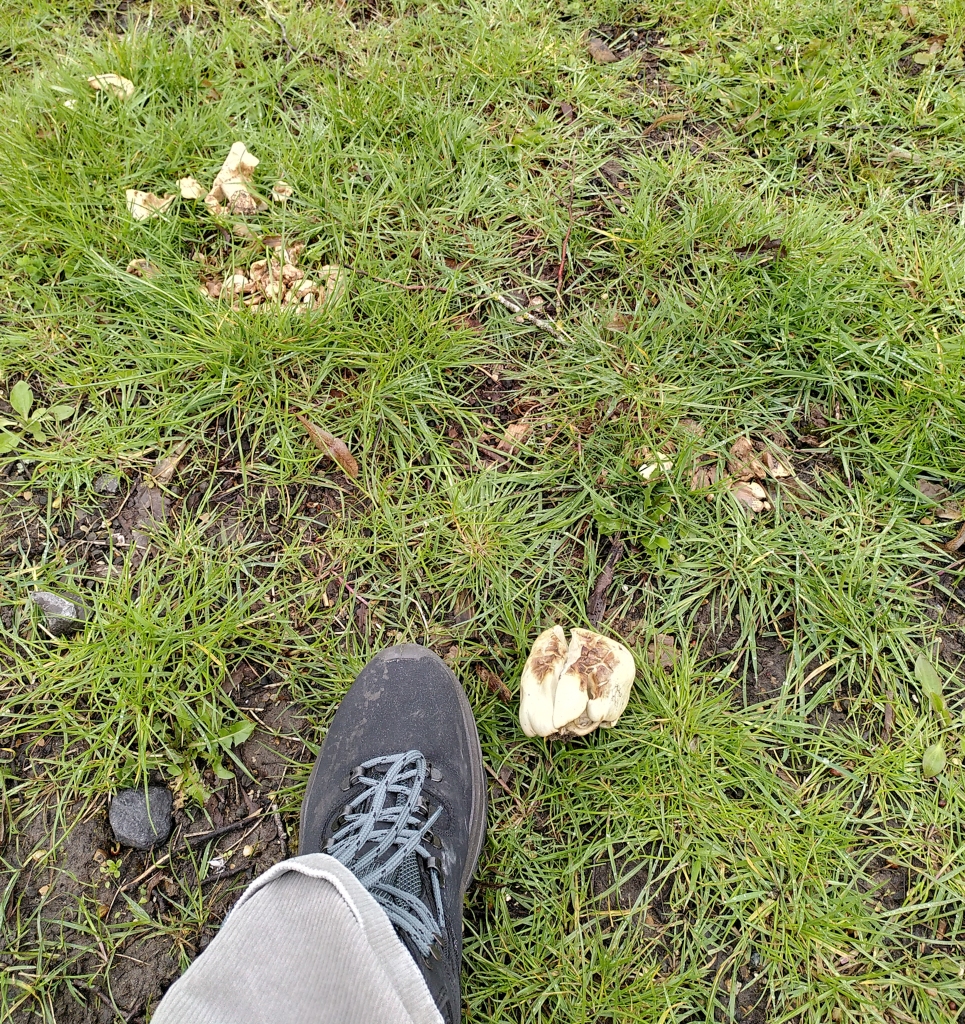
On a recent visit to the National Trust’s Nymans Gardens I spotted some big, cream-coloured things in the lawns near the car park. No, these were not scones or cream cakes, or even pasties discarded by visitors. It clicked almost immediately for me that these might be St. George’s mushroom – and guess what? I found them on 23rd April, St. George’s Day!
That is definitely the most enthusiasm I have offered for this national day. If it were to be made a holiday, then we can talk.
Spring can be a time of shrooms, as the frosts end and the temperatures rise. We’ve had quite a lot of rain this spring in SE England and so some mushrooms will fruit in response. St. George’s mushroom is one of those springshrooms.
Like many people in the UK my sense of personal identity is not straightforward, and I don’t celebrate St. George’s Day. I have strong Irish roots and as a Londoner of 50% Scouse parentage I feel an affinity with a more regional, culturally complex identity, rather than one of red and white, chest-thumping ‘Englishness’, whatever that is.
It makes me wonder though – is this England’s unofficial national mushroom?
A simple online search shows up no such award, which is probably a good thing. Surely that accolade should go to honey fungus!
You may not be surprised to find that its common name changes depending on its location. In Germany the mushroom fruits in May and is known as Maipilz. That means ‘May mushroom’. In fairness to Maipilz, that’s only 8 days later.
St. George’s mushroom is also edible. I didn’t pick or eat this one, and it’s not on my radar to do so anytime soon. The above seems to have been nibbled free in actual fact. Also, I wouldn’t encourage people to forage from National Trust properties generally because I don’t want to get banned.
The cap turns brown over time making it look like a barbecued chicken piece
St. George’s mushroom appears to enjoy garden lawns, so if you’re lucky you may have one popping up outside your front/garden door. As ever, you should be cautious about eating wild white mushrooms as there are several toxic species which can be confused for edible ones.
On 24th October 2022 I spent the morning taking photos of fungi in the Sussex Weald, and was treated to one of the final flourishes of the season. There had been heavy rainfall in recent days and the beech leaf fall had begun, meaning that the mushrooms were beginning to disappear. This often marks the end of the main mushroom glut in autumn, from my experience.
To fast forward to the end, just as I was on my way out of the woods and putting my camera away, I noticed what looked like discarded tissue in a ditch at the edge of the track.
I soon realised that these were white saddles (Helvella crispa).
This is a very unusual looking fungus and isn’t the typical gilled mushroom despite their appearance of having a stipe and something resembling a cap. They’re actually ascomycete fungi, so spore-shooters, rather than the often gilled basidiomycetes.
The sun shifted into the line of this false deathcap (Amanita citrina – about to become several different species!) and made a very nice autumn scene.
Brittlegills are some of the most photogenic little mushrooms, largely due to their clean stipe and gills, and fruit gum-like caps. I’m not sure of this species but I like it.
On a recent visit to a local woodland, I accidentally stumbled into teletubbyland. I don’t mean some bizarre, super-rich person’s eco village, simply that I had bumped into one of the characters from this incredibly weird but very popular childrens TV programme.
Violet webcap
Of course I’m not actually seriously saying that some giant purple baby thing with an antenna on its head was hanging out in the woods – wouldn’t surprise you though, really – but something in its image. I’m talking about a violet webcap (Cortinarius violacious).
Moving to less colourful characters, in the same area I found a large community of bolete mushrooms, a mix of bay bolete (Imlera badia) and ceps (Boletus edulis). I didn’t pick any if you were wondering, but I did take some pictures!
This is a rather tellytubby-esque bolete, with its friends in the background. There were huge numbers of fungi here, a lovely thing to see. I posted about these recently.
Fly agaric
Of course it would be wrong to leave the wild emojis out of this post, which appear to be having a very good year indeed.
I was doing the rather annoying thing of using two cameras for this walk, which meant having hands full but trying to crouch down and not tumble downhill at the same time. I used my wider angle zoom lens for this lovely little russula. The sunlight touched its cap at the perfcet moment to create some very nice highlighting. More and more I think I prefer images where the mushroom can be seen within its habitat.
Here’s some more interesting perspective. I couldn’t work out what this bracket fungus was from afar. It was growing in the barkless section of a beech tree that had part collapsed.
This illustrates it a bit better. I’ve not done any work to try and identify it just yet so am not sure of the species. As ever, if you do know please pop me a comment below.
I struggled to get a picture I was entirely happy with here. This is a false deathcap (Amanita citrina), a common species in oak and beech woodlands. This one was in perfect condition. The light from the sun in the background was quite harsh. I used my phone torch to highlight the gills and stipe.
Here’s the mushroom again from above. You can see the veil remnants on the cap, which have become attached after it broke through from the ‘egg’ seen at the base of the stipe. Looking at the iNaturalist page it says this species is about to be broken up, taxonomically, into several species!
There were many fine Russula mushrooms to be found, and many not so fine. They were perhaps at every couple of footsteps in this part of the woodland. I’m not sure of the species exactly but I like the droplets and the colour of the cap. Russulas also have lovely clean stipes when they first arrive. Doesn’t last though!
I took some mushrooms that had been naturally uprooted home to identify them. I was quite interested in this little group and picked one to take back for ID. Looking through my books and using iNaturalist, I think they are a species of chanterelle. Probably Craterellus cinereus or Craterelluscornucopioides.
Moving even further away from the more typical gilled fungi, I found a nice little grouping of coral fungi. The above look to me like little white fires in the moss. I’m not sure of the species.
These are about as far away from teletubbyland as you’re going to get in this blogpost, so a good place to end.
I’ve had a burst of American visitors in recent days (to my blog, not my house). So thanks for visiting, y’all, and sorry about the year you’ve had. You may have noticed I’ve slipped to monthly posts on here. Between April and October I posted blogs every Monday without pause, which is a tricky task…
From over a decade of speaking to (often random) people about nature, wildlife, landscape, etc., I’ve noticed that one of the things that really surprises or troubles people is when things grow on/in other things.
On this list I would include trees, insects and fungi.
It’s messy out there – a West Sussex heathland, October 2022
The understanding that insects grew inside other insects was enough for Charles Darwin to doubt his own faith. The idea that cuckoo hatchlings are hard-wired to chuck out the eggs of the dunnocks, wrens, pipits or warblers it shares a nest with, is also deeply disturbing to people.
Imagine how you’re going to feel about mushrooms that grow from other mushrooms. Prepare yourself.
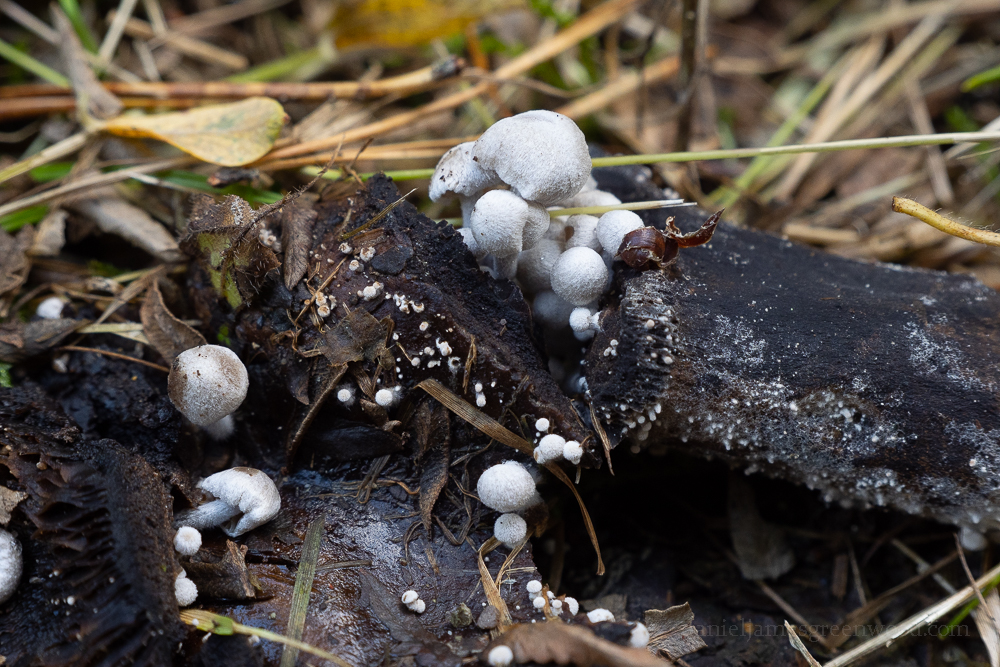
At least twice now I’ve found a white fungus growing from black mushrooms in the woodlands of the Sussex Weald. The first time was a few years ago on a National Trust property, on what turned out to be powdery piggyback fungus (Asterophora lycoperdoides) growing on the caps of blackening brittlegill (Russula nigricans).
The image above was taken on what may well be that species, but I’ve not done any work on identifying either of them. From the images I would guess it was more likely to be silky piggyback (Asterophora parasitica) which has a nice write-up here.
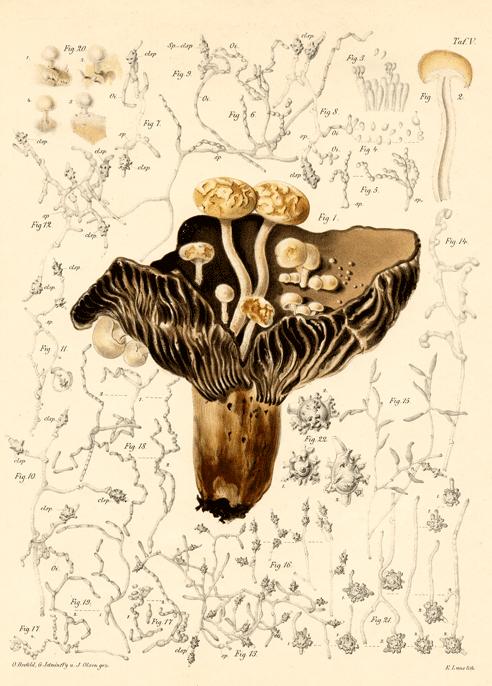
“The classic Asterophora picture is probably plate 5 in part 8 of Oscar Brefeld’s Untersuchungen aus dem Gesammtgebiete der Mykologie, published in 1889″ (via Australian National Herbarium)
Piggyback fungi are parasitic due to the fact that they ‘invade’ the tissue of mushroom fruiting bodies. It should be obvious, due to the prevalence of fungi in our world, that fungi grows on just about everything. But it’s rarely illustrated in such an elfin manner. Mould on a mushroom doesn’t have the same allure as ‘little mushroom guys’.
Elsewhere on this walk I spotted two common species gracing us with their presence for the first time this season. One of those was another parasitic species, but this one is much more well known and seemingly reviled in some quarters.
This is one of the honey fungi (Armillaria) which only this weekend (15th October ’22) was described as ‘the most destructive fungal disease in the UK’ by the Royal Horticultural Society. That, to my understanding, is not true. The only way to deal with that is in another blog post so we can crown the actual most destructive fungal disease in the UK. If you can’t wait for that, one of the most viewed blogs on this website is this one about honey fungus which I wrote previously.
Don’t worry though, this website is not a greatest hits archives just yet!
The Most Destructive Fungal Disease in the UK is quite beautiful when it appears in its natural habitat of ancient oak woodland.
Another fungus that decided to show its face is the common puffball (Lycoperdonperlatum). This is an edible species that I usually find alongside footpaths but is also often presented deeper into woodlands (sounds like a Yo La Tengo song). It always reminds me of the submarine rolls my parents would buy me from M&S as a kid during Saturday trips to the shopping centre.
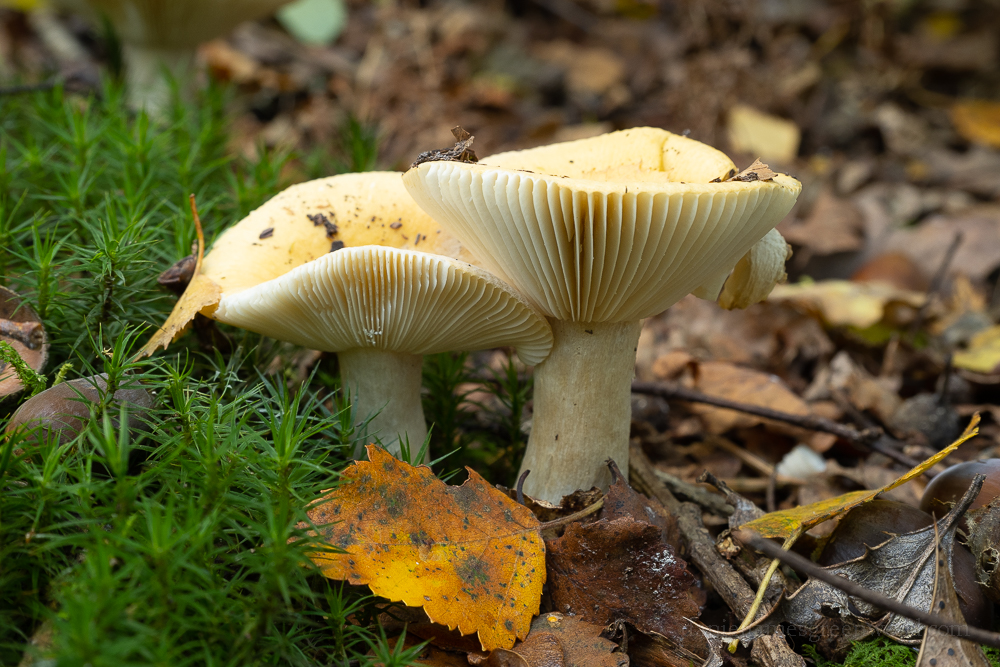
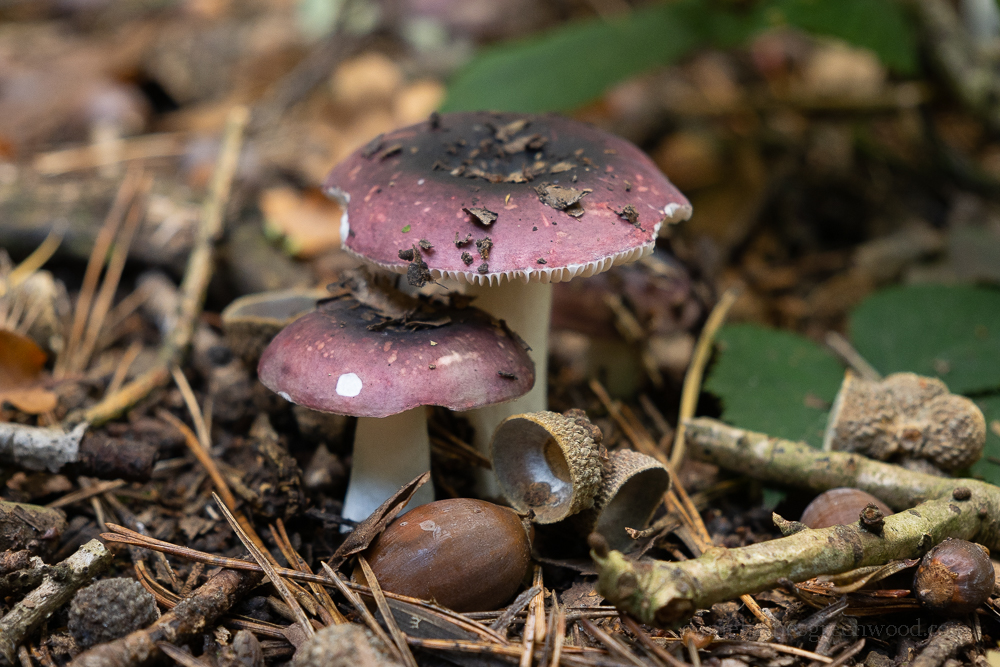
Russulas have already made an appearance in this post with the shrooms they’re giving a piggyback to. I would say it’s been a strong year for this group of difficult to identify fungi, but they are often out in good numbers. This is a family that can be found with a clean, white stipe and white, brittle gills.
To finish, I went to check in on the stairway to mushroom heaven that I posted about last week. It was quite amazing to see that these edible stepping stones remained. Evidently the foragers in this particular woodland are few and far between, be they human or squirrel.
Here’s my seasonal update of stuff you don’t need to know about, but then welcome to the Internet. What I’m writing Soon I will be self-publishing my third poetry collection, Fool’s Wood. It’s seven years since my last one and this collection has taken longer because of LIFE. There will be a booklet and also…
Here’s another entry in my slow-blogging Oak Timbers series. You can view my galleries and posts archive here. I visited Salisbury in Wiltshire (south-west England) for the first time in 2023 and was really charmed by the place. If you’re interested in this kind of thing, Salisbury is the place for you. Here’s a gallery…
I’m getting into more of a routine of recording and editing audio, so here is the latest episode of Unlocking Landscapes. Listen on Podbean or via the usual platforms. Also via YouTube: https://youtu.be/y1K9Pqx68to?si=B-Fdhf3sdDH35Z8w Following on from July’s rather optimistic fungi walk, I popped back to the same area of ancient Wealden woodland to see if…
This is your annual fly agaric appreciation post featuring some special guests.
It was so good in the woods on the 2nd October that I went out again the following day, what turned out to be the 3rd October. I encountered my first fly agarics of the season. I’ve written about the cultural ‘theories’ around this fungus before which you might be interested to read. Apparently they aren’t the reason that Father Christmas dresses in red and white or that reindeer fly, but I just want it to be true.
I’d seen lots of excited posts on Twitter showing fly agaric popping up across the UK. It was pretty clear that it would also be the same story locally to me. Fly agarics seem to fruit in waves, with September being a surprisingly good month for them.
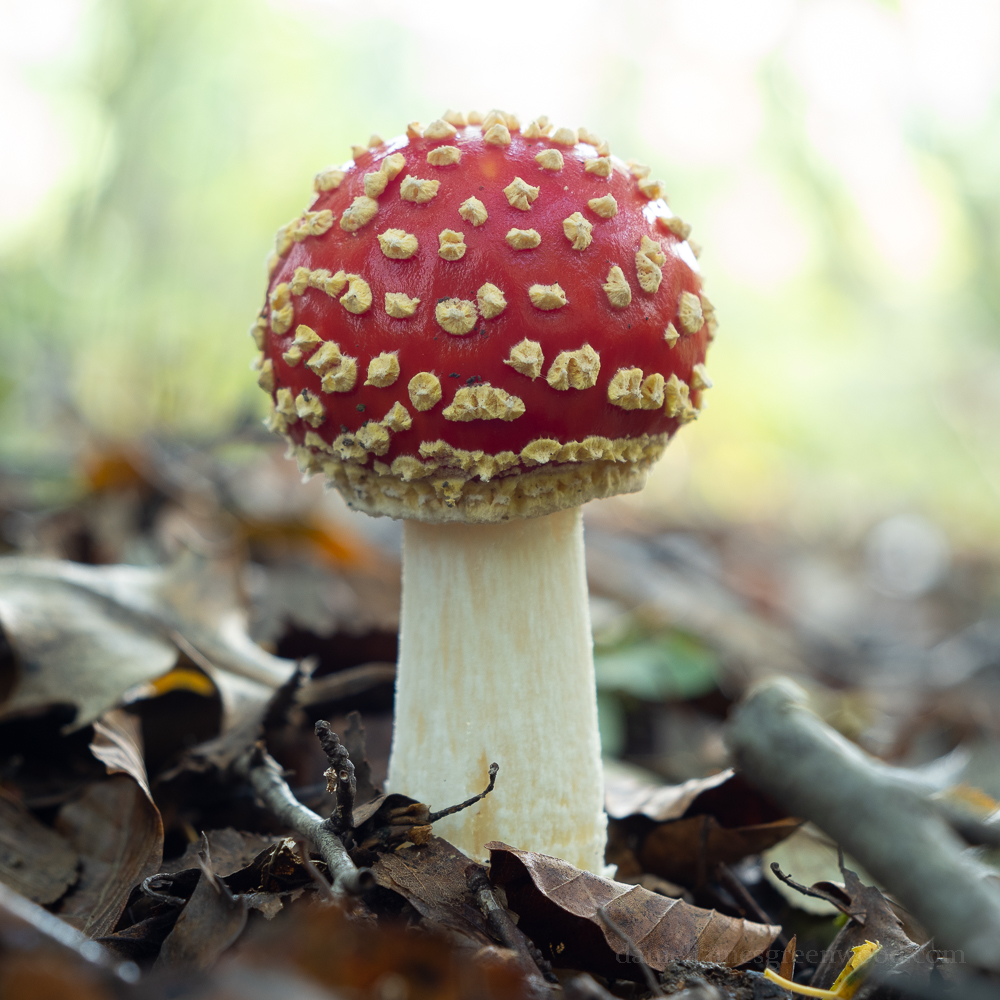
One path I often follow may as well be signposted as mushroom alley, as each autumn it is studded with species like fly agaric and other Amanitas. Though something has eaten bits of this specimen, it’s important to remember it’s a pretty toxic mushroom that comes from a bad family. Fly agaric’s sinister uncles and aunts include destroying angel and deathcap. Panthercap is the cousin who you don’t hear about for a while but who is definitely not good news. Joking aside, these mushrooms are benign to look at, it’s just when you try and eat them that there might be a problem.
That said, they are by far one of the most beautiful mushrooms around. You have to wonder what someone who doesn’t know this thing exists must think when they see them pop up. They’re found in lots of different habitats (and may actually be invasive outside their native range) so that surprise encounter will surely touch someone.
“OMG, they have wild emojis here!”
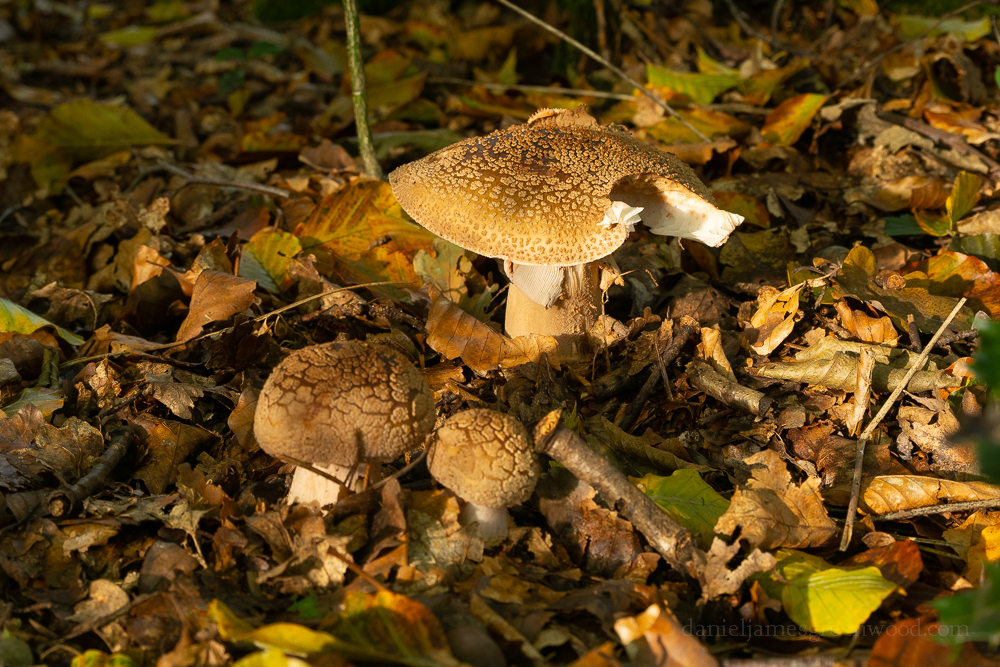
Nearby were yet more untrustwothy Amanitas, such as this grey-spotted amanita or panther cap. You decide. It’s definitely not a blusher because its stipe isn’t rosy…
Here’s some good parenting, taking the kids out for an evening walk. Whether these are blusher or grey-spotted amanita is the accomplished mycologist’s guess.
Not too far away from that was a grisette, kindly showing off its wings from which it appears but is unable to adapt to flight. Perhaps it’s only a matter of time. That said, fungi do fly due to their spores being pretty much everywhere.
Soothing tree image to allow a moment of calm…
Another narcissist of the fungal kingdom was on fine fruiting form. Porcelain fungus is one-that-almost-always-grows-on-beech-trees. It seems like a lot of the big old beech trees near to me keep collapsing which allows to you to get nice clearance underneath a family of this photogenic fungus. What I mean here is that the limbs are raised off the ground. The situation with the beech trees actually isn’t good, because they’re significant ancient/veteran trees and would take hundreds of years to replace. I just don’t have that sort of time at the moment.
Have I written about this beautifully mucusy fungus before? Well I should have done. It’s actually edible from what I’ve read though you’d need to remove the viscidy stuff on the cap. They’re related to velvet shank, an absolute babe of the mushroom world, hence their photogenicity. I’ve never used that word before.
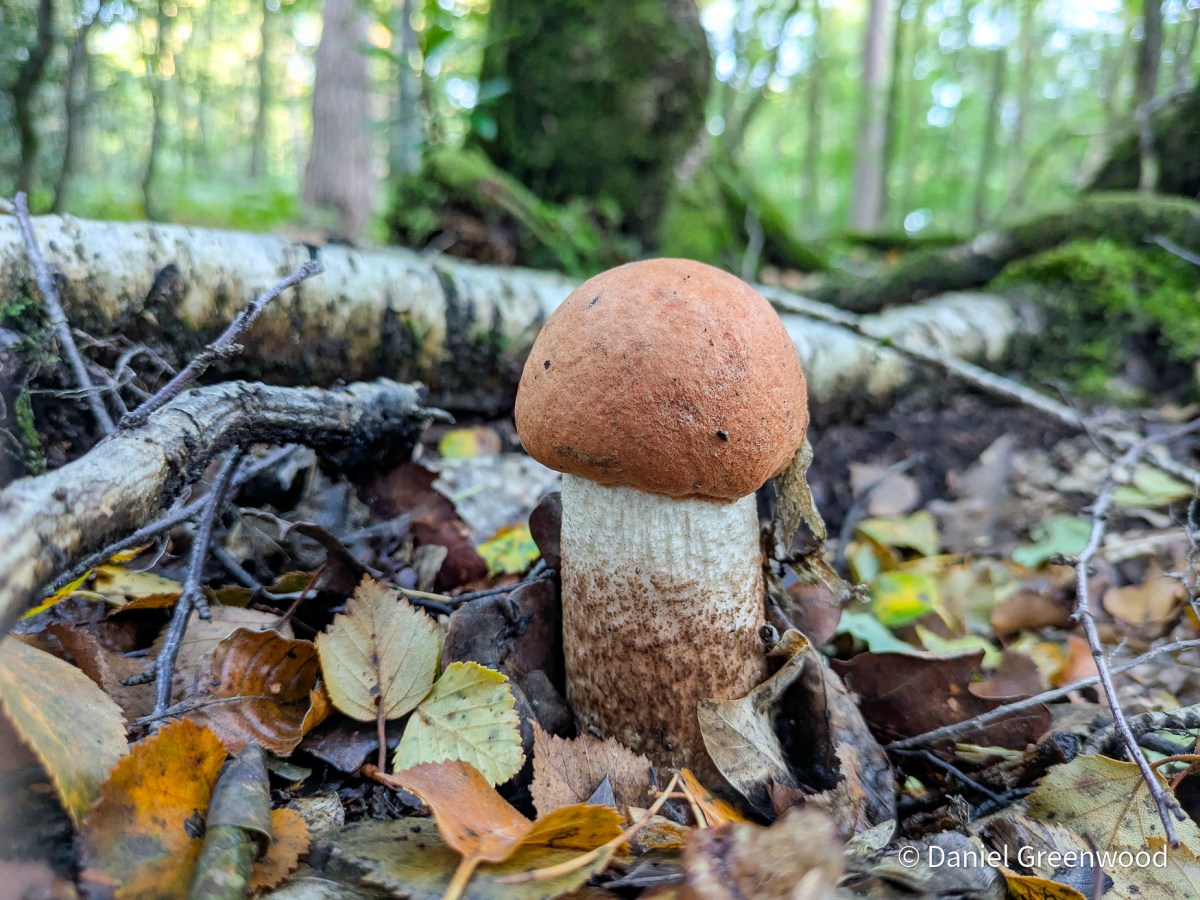
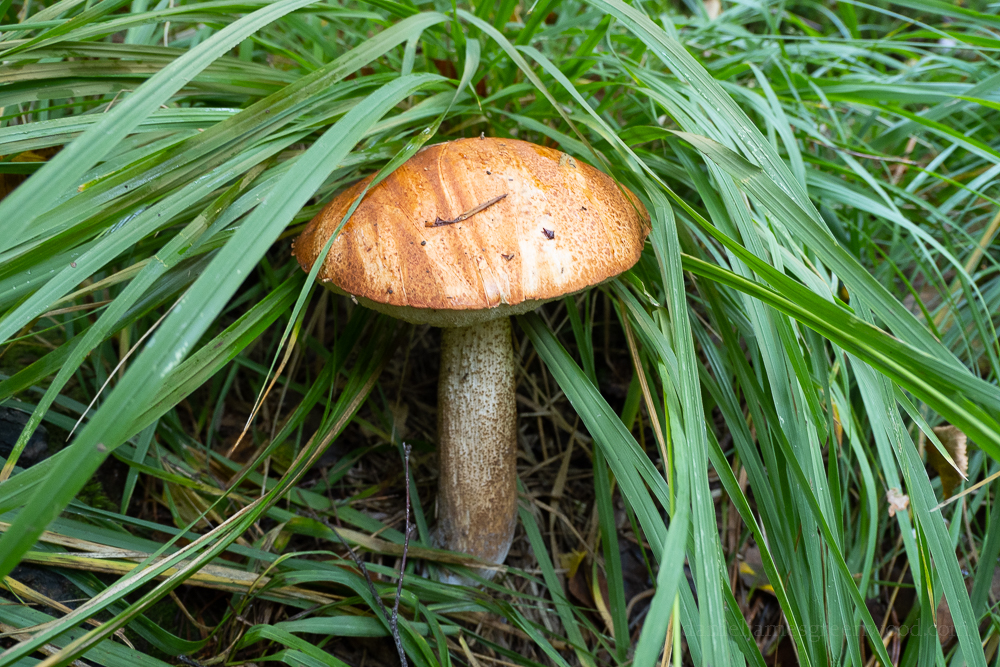
I’ve been seeing a lot of birch boletes this autumn, but they’re never in good condition. This orange birch bolete was growing under some lush grass growth. As all boletes do, it has pores not gills. At this point you realise how much impact you can have with-three-words.
This is how most of these boletes appear to me, nothing like the baskets that people show off on Instagram from countries like R****a or Poland.
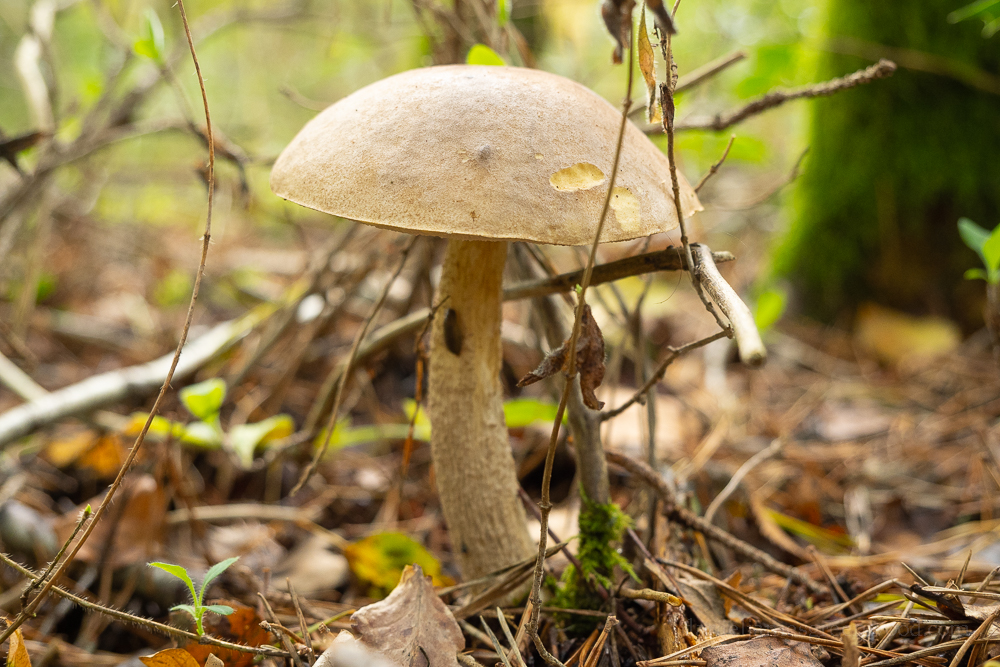
Here we have brown birch bolete, one that always has a disappointment in store when you look under the bonnet. It doesn’t scream “nom, nom, nom” to me. I don’t think that out of focus slug minds too much, though.
In almost the same spot last year I found some nice tangerine-coloured mushrooms like this. I think they’re probably gymno-something or other, but I don’t encounter them often enough to peg their ID down properly.
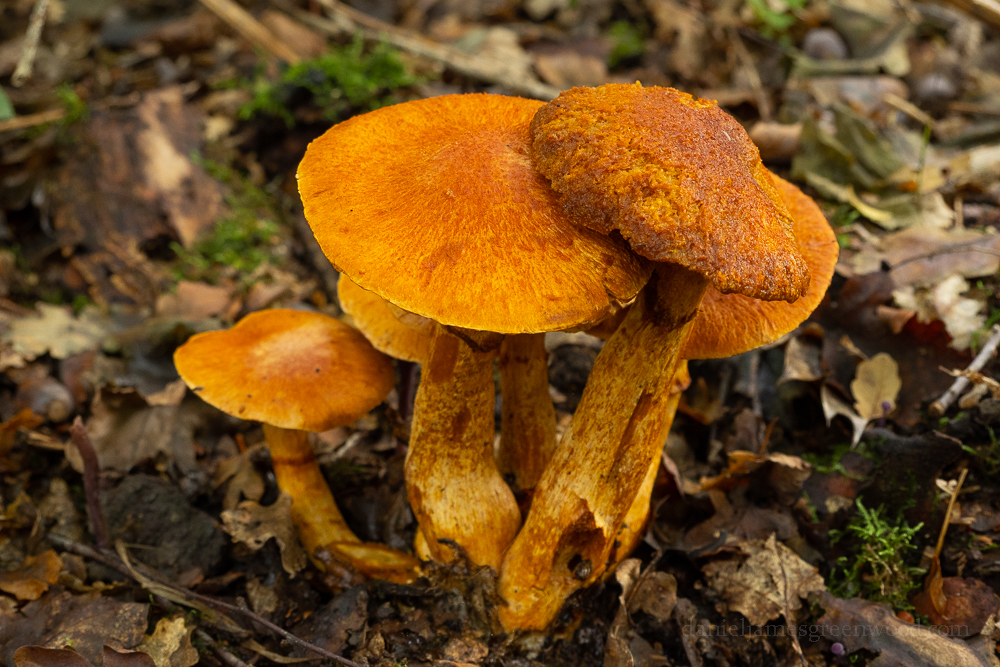
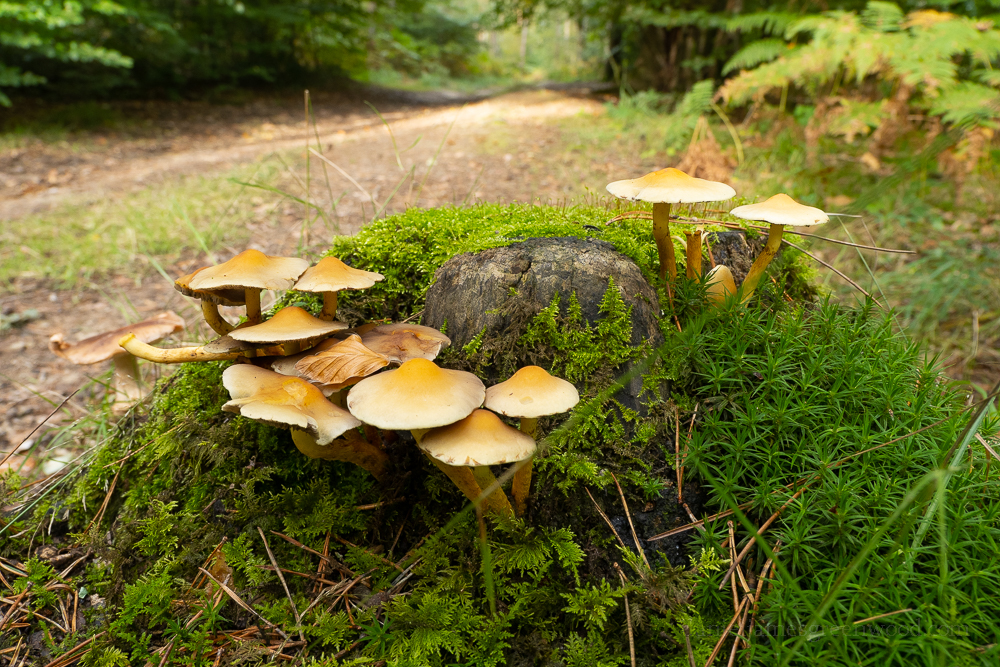
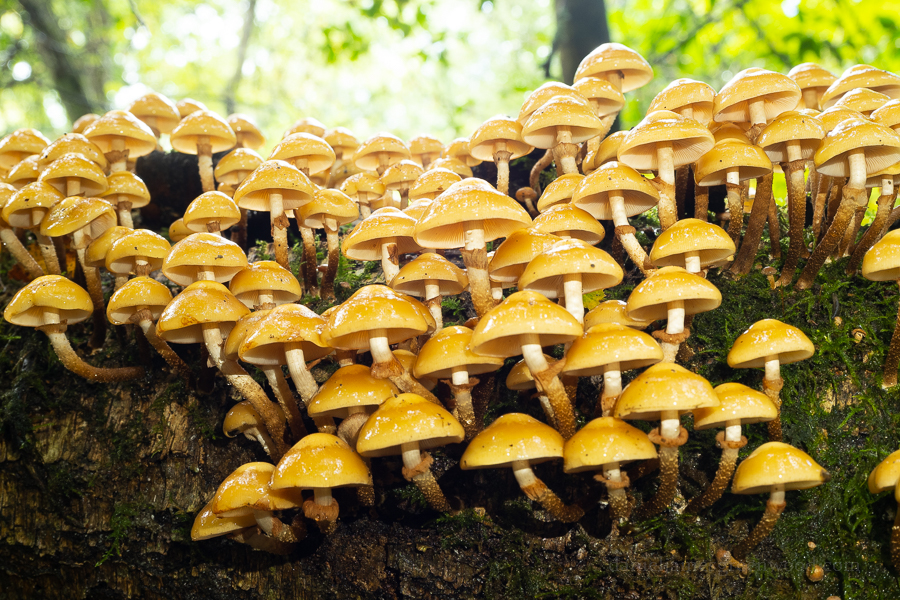
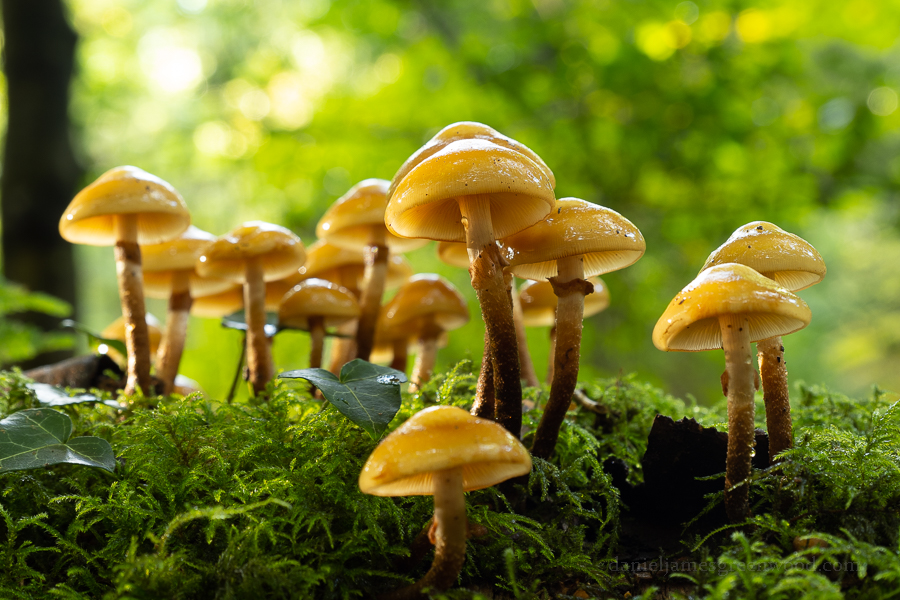
This is a good place to end, where the world will probably end: surrounded by sulphur tuft. This species is having a good year, and it knows it.
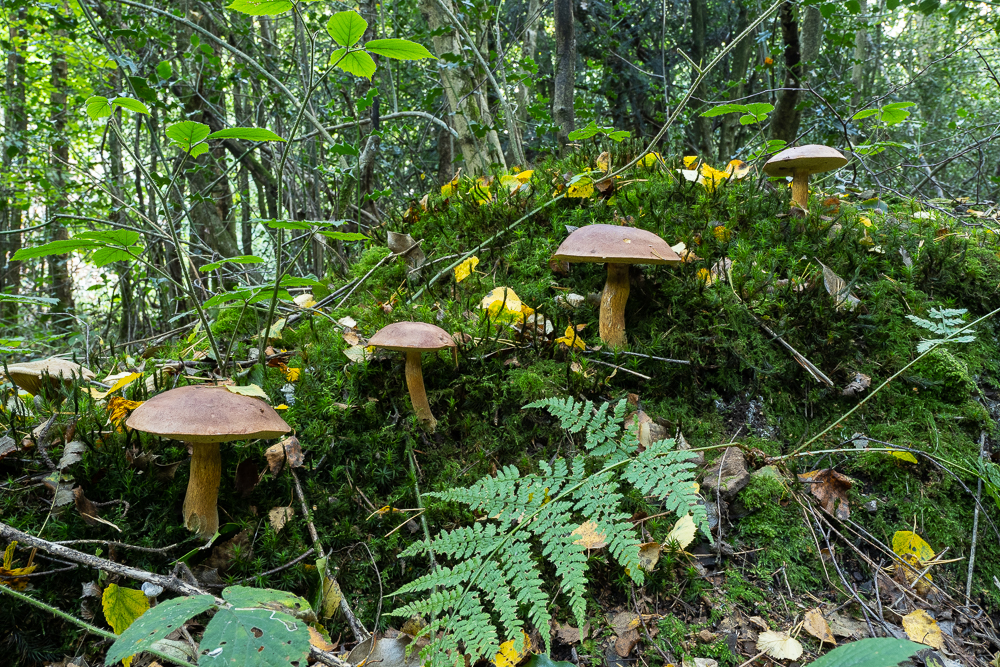
I was visiting a local and very popular woodland on 2nd October when I discovered an incredible scene, like something out of a folk tale. To the side of the path were four bay bolete mushrooms (Imleria badia) growing on the mossy mound created by a fallen tree. They were aligned in some hilariously synchronised arc from the bottom left to the top right.
Bay bolete
I couldn’t believe that no one else had noticed this display, seeing as it was so close to the footpath and there were lots of families in the area. I suppose it makes a difference that I was actively looking for this sort of thing. This species is bay bolete, an edible mushroom in that most famous of families, which I have found before in Sussex but never in such a photogenic state. I didn’t pick the mushrooms.
Another important way to identify boletes and their relatives (or allies, as they are oddly known), is to look for pores rather than gills under the cap, as can be seen above.
They really were a joy to find! These kinds of encounters are what make this time of year so special.
Sheathed woodtuft, lit with my phone camera torch
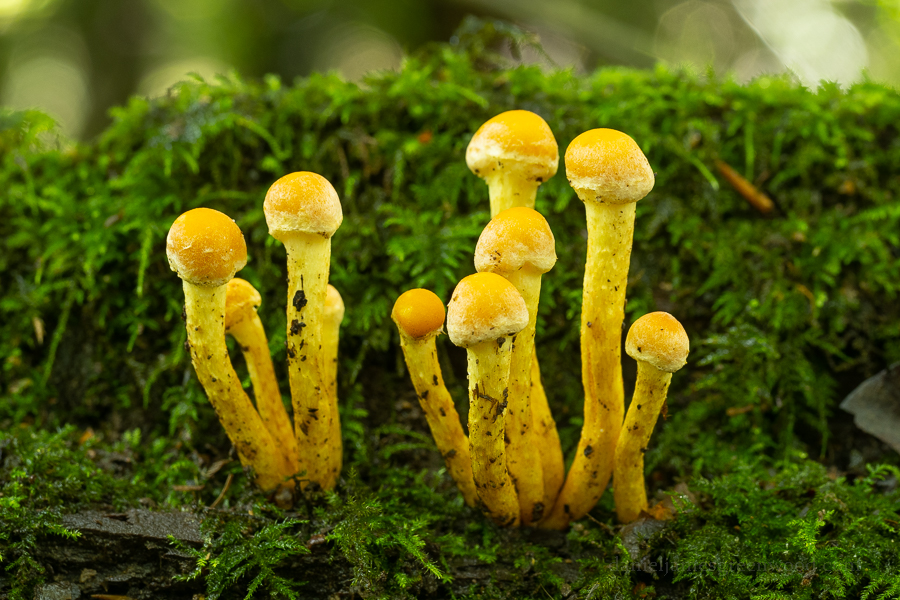
There were more great mushrooms sightings to be found during this walk, what will probably go down as one of the best days of the season for me. This is a gathering of sheathed woodtuft (Kuehneromyces mutabilis) on a fallen tree. This is known to be edible but can be confused with the drop-dead poisonous funeral bell (Galerina marginata).
The lighting and recent wash of rain made the mushrooms lovely to look at. Once again you can see where the idea for lampshades probably came from.
Behind the scenes of my mushroom photo– I use a ‘gorilla pod’ mini tripod and a mirrorless camera, usually with a slow shutterspeed, low ISO and ‘small’ aperture (around f8-11)
I got into an interesting conversation with a man who approached me when he saw I was taking photos of this patch. He said he had been taking photos of mushrooms for years with his phone, and that this would be a very good year because ‘the rollrims were out’.
Potential rollrim (Paxillus) mushrooms
I think the mushrooms above are rollrims, a group that are renowned for their inedibility and toxicity. The man I spoke to was convinced that their abundance was a pointer to a strong showing to come from the mushrooms. That’s new information for me, and something I will consider as the season progresses.
I judge the potential of a mushroom season by the amount of rain. For example, the woods now (10th October) look as dry as summer only days after heavy downpours. I would put this down to drought in the local area and the lack of deeper levels of water that trees can draw up and provide to the fungi around them or the wider ecosystem. Trees are known to trade water with mushrooms in return for certain minerals and things they can’t capture alone. The rain had swelled some of the gills (streams, as they’re known in Sussex) that had remained dry throughout the summer.
I found one rather boggy area to be covered in thousands of an orange species which I’m not able to identify.
Here’s a closer view for anyone who may have an idea – please let me know in the comments!
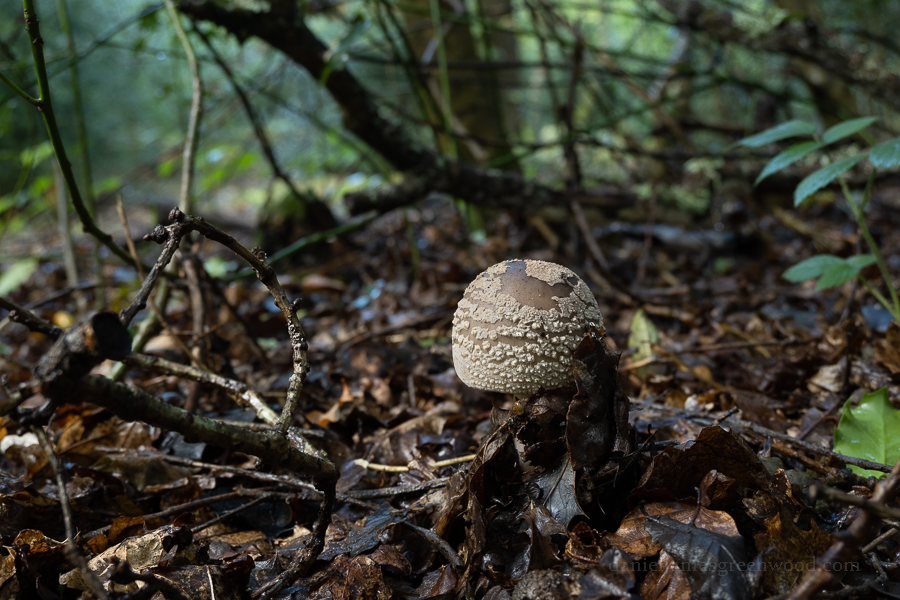
Blushers (Amanita rubescens) were out in force, with some really beautiful specimens to be found. This very nicely set mushroom caught the late afternoon light from its position in moss. I would consider this a portfolio mushroom image!
Another nice species to find is porcelain fungus (Oudemansiella mucida) which almost always occurs on dead beech wood (Fagus sylvatica). Nice images of these mushrooms can be achieved when you focus your lens on the underside of the cap to see the dramatic gills.
These days when mushrooms dominate the woodland floor are a reminder that you need to keep pushing yourself to learn more, and not just about the colourful and common species. The better quality leaf litter was, well, littered with grey and brown-capped fungi that I am unable to identify. The photo above gives a good example. I’m not sure if these are Russula or something else.
Under the hollies there were lots of Amanitas appearing, with this potentially being a grey-spotted amanita (Amanita excelsa var. spissa).
Sulphur tuft (Hypholoma fasciculare) was as common as it usually is, probably making up about 15% of all sightings. It’s a very nice species to photograph due to its colour and the shapes of the mushrooms when young.
These bonnets (Mycena) were a nice find, very hard to miss alongside a main path on a mossy branch. The one on the left really does look like an alien spacecraft.
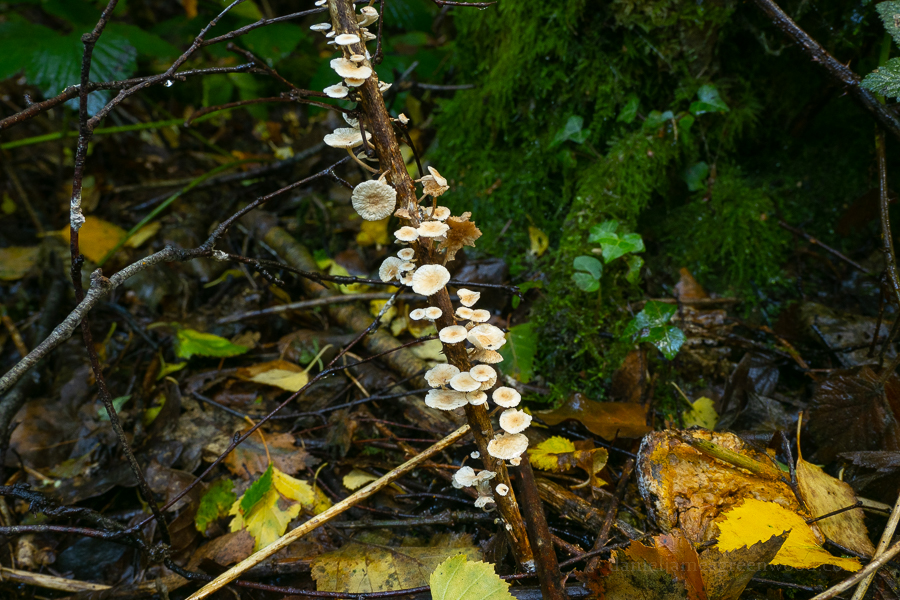
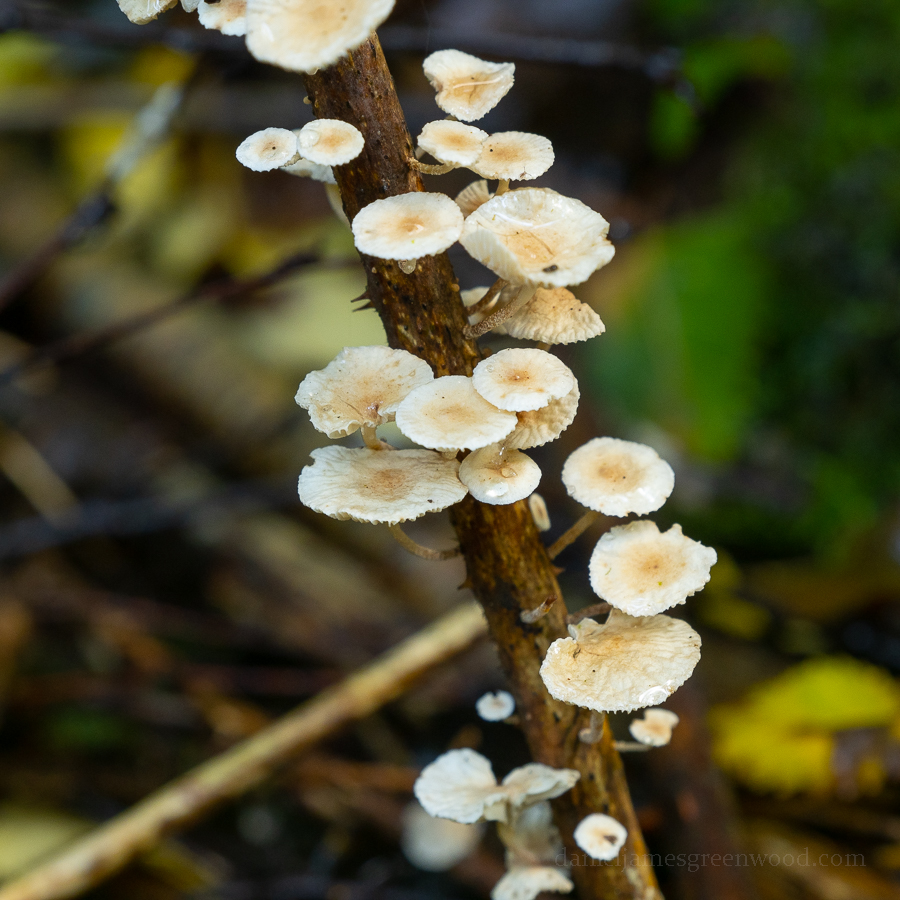
To finish, one of my favourite things to see at this time of year is the twig parachute (Collybiopsis ramealis). You can potentially take some incredible images with this species, as it sprouts along twigs and other bits of wood.
I didn’t do that on this occasion(!), but the most important thing is to get out there and experience this fleeting time of year. The mushrooms are calling.
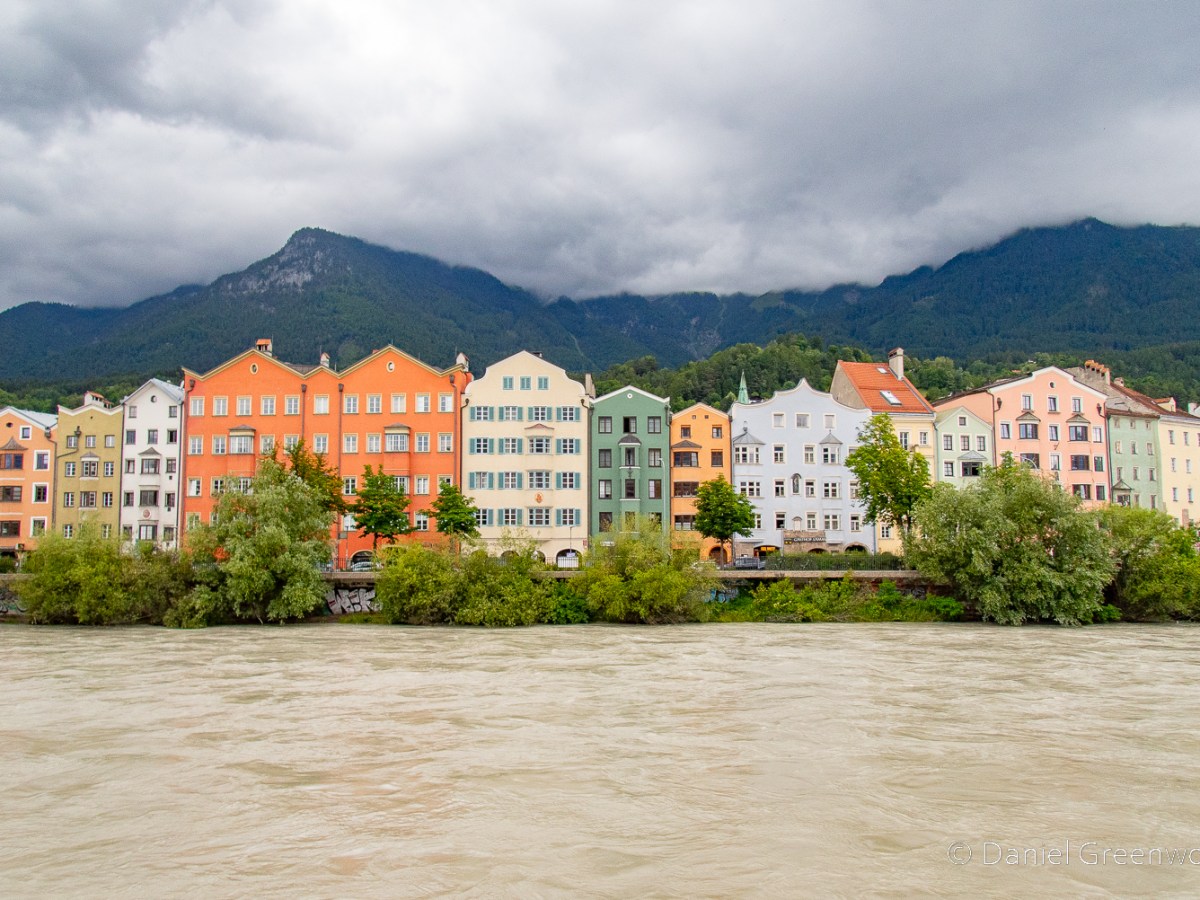
Innsbruck, Tyrol, Austria, June 2025 This is a longer post of the images I captured during a recent visit to Innsbruck in the Austrian Alps. We travelled to Innsbruck on a sleeper train from Amsterdam. It’s such a great experience and is significantly lower in carbon emissions compared with flying. If you consider the fact…
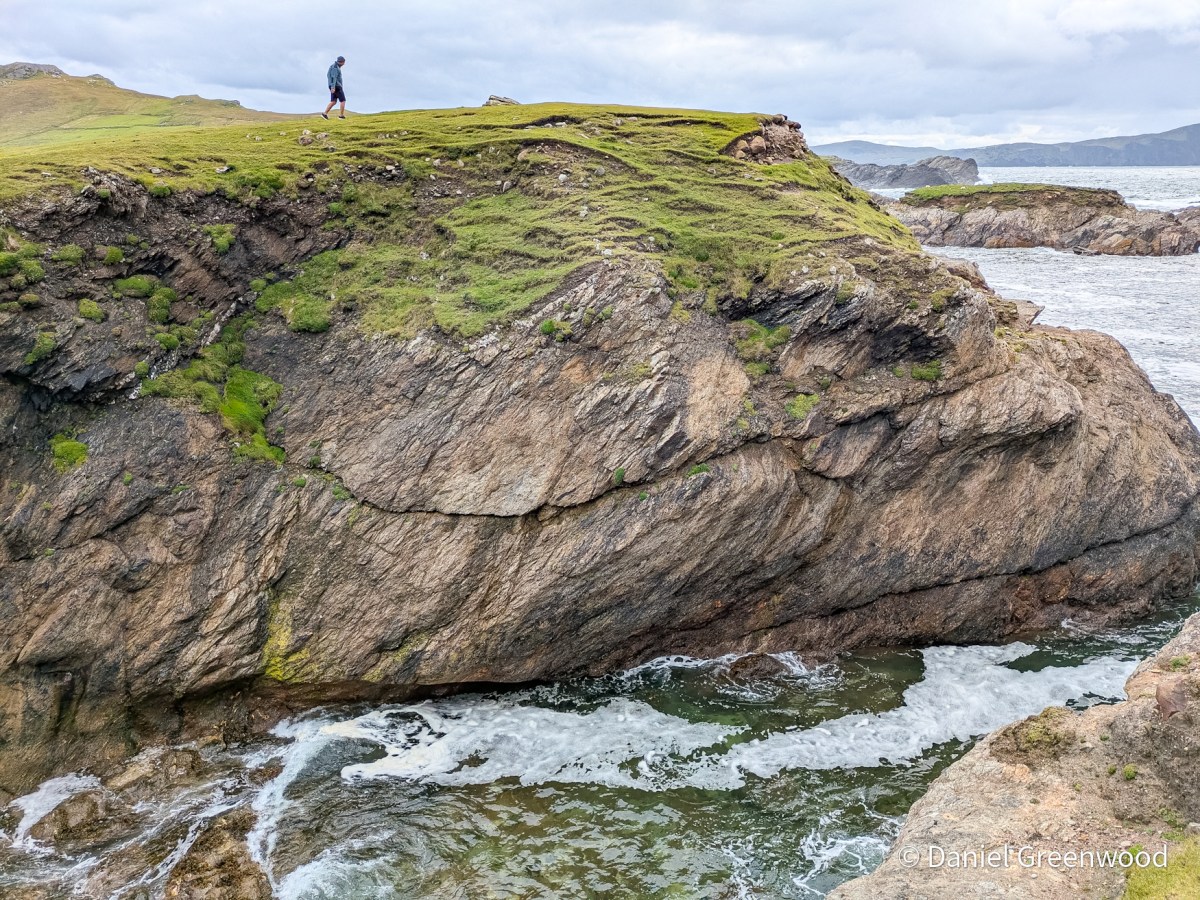
I’m back from my annual visit to the west of Ireland. I managed a couple of day trips to forage for photos, which will crystallise later this year into dedicated posts, all being well. Like many people I enjoy the Blind Boy Podcast, none more so when I have the headspace to take in all…
This is the first of a series of posts I’ve been working on covering national relationships with mushrooms. It’s just a bit of fun, but there’s definitely some interesting stuff to share.





























 Unlocking Landscapes