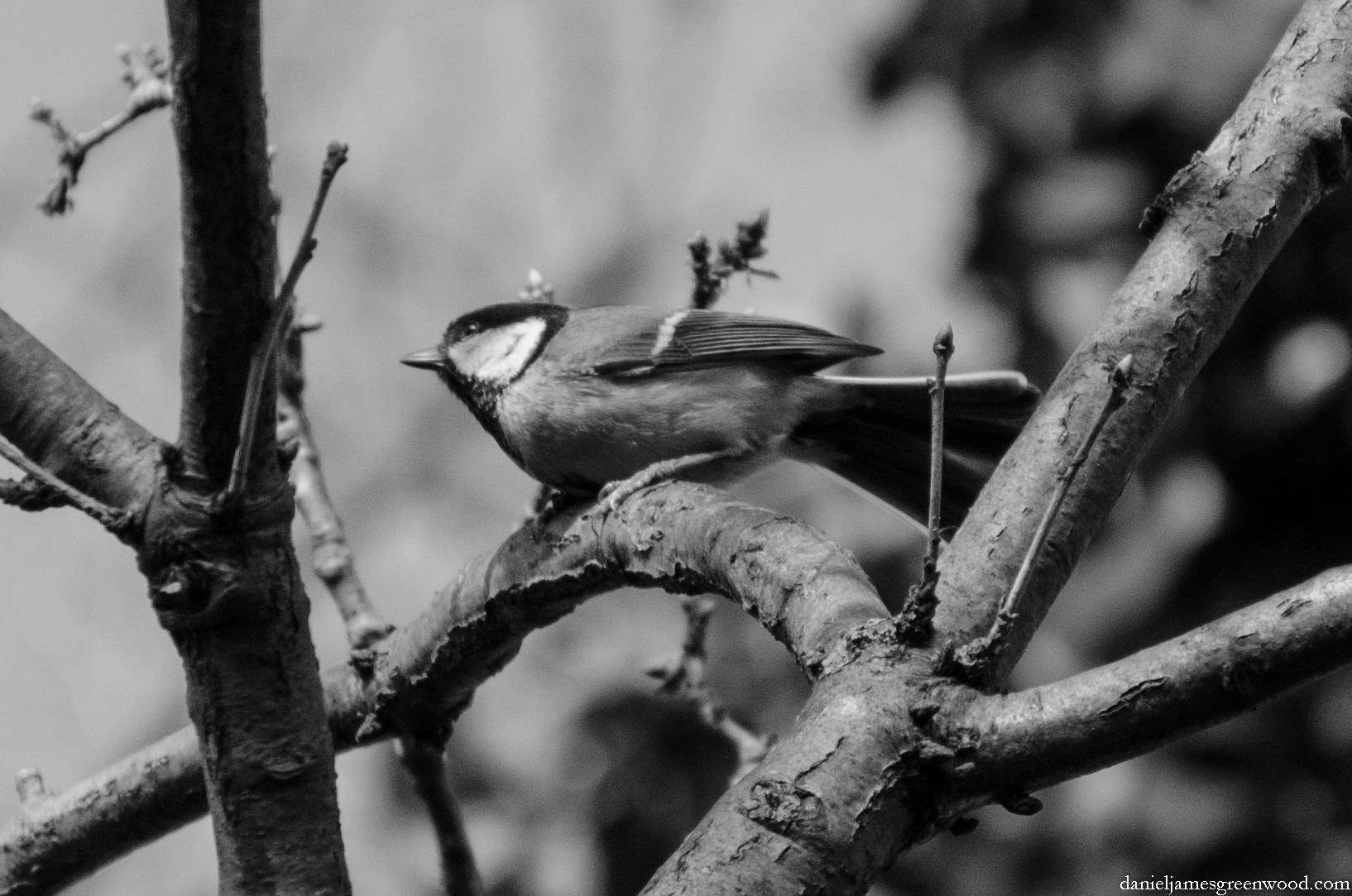
Gathered from the grass, it was
robbed from the box
early by the cat
and toyed with in
the clover.
Tentatively he picks it up
in his hand and climbs the
tree to put the baby bird back.
© Daniel James Greenwood 2015
Writing, photography and more by Daniel Greenwood
Gathered from the grass, it was
robbed from the box
early by the cat
and toyed with in
the clover.
Tentatively he picks it up
in his hand and climbs the
tree to put the baby bird back.
© Daniel James Greenwood 2015
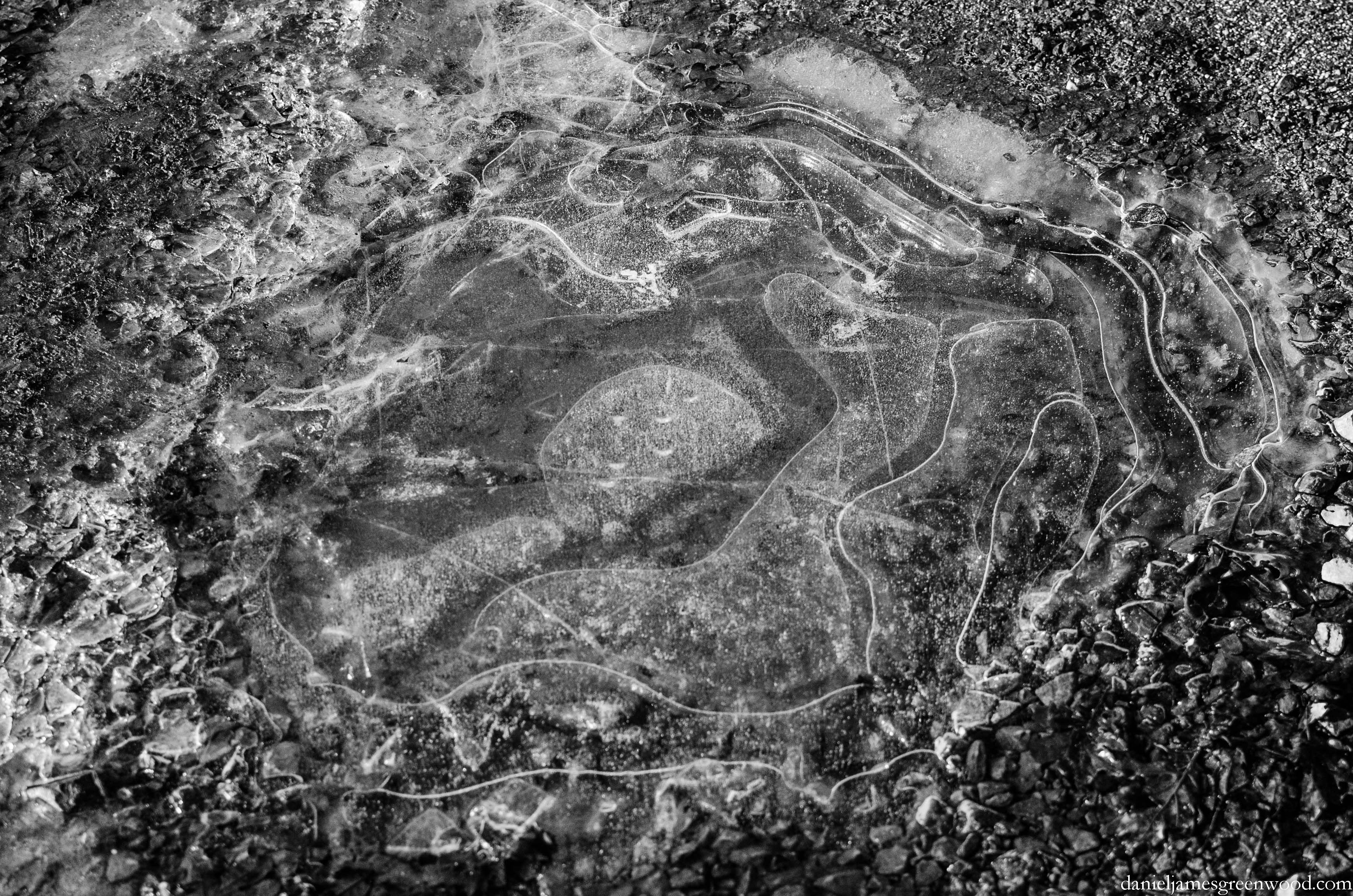
Crock and clenk!
The sound of ice on ice,
crack! Her toes breaking
shards, bergs, islands
that slide off into an ocean
of brown mud and field
water, the falling sun
caught, frozen in the rink
of rainfall captured and
exhibited like some
petty show of power.
John Keats (1795-1821) died aged 25 thinking himself a failed poet. Today he is revered as a great. I mine his poems for evocations of nature, the nightingales, the bees ‘bustling down in the bluebells’, and his recurring musk rose. For these moments, from a wet and gloomy winter, I find great pleasure in peering back 200 years to Keats’s descriptions of a London that had not yet swallowed Hampstead entirely, or my borough, the 800-year-old parish of Lewisham. In Keats’ Ode to a Nightingale, he describes much of what makes birdsong a cure for human pains, the continuity of wildlife and nature gives us a place in the world, for we are not the first to hear a blackbird, song thrush or nightingale sing, nor will we be the last:
Thou was not born for death, immortal Bird!
No hungry generations tread thee down;
The voice I hear this passing night was heard
In ancient days by emperor and clown (p. 220[i])
Birds do not discriminate against any audience, their songs can be heard by any person who happens to be passing, be it the song of a robin singing at midnight in central London or a nightingale firing in the morning from a blackthorn hedge in a Dorset field. And perhaps real nature conservation has this at its heart, though often unsaid from a fear of sounding eccentric or elitist. Nature is vital to humanity in many ways, humanity is inseparable from nature, but in dealing with dissonance and social discord brought about by contemporary austerity and financial inequality, its inclusiveness is what makes it most relevant to us living in the 21st century. The song of the blackbird can be heard by anyone who might happen to hear it, more so if conservation is supported by communities and authorities.

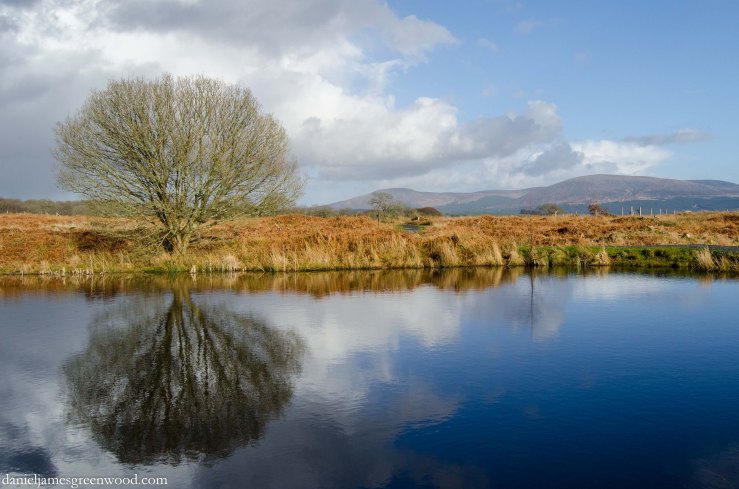
On a recent visit to Dumfries and Galloway in south-western Scotland I brought Andrew Motion’s hefty biography of Keats with me. It appears more and more that it is not so much Keats’ poems I like the most, but the many aspects of his story, which poetry seems such a big part of. He lived a very short and full life, his published poems barracked by what we might today equate with critics or journalists of the propagandist right’s ilk. And many people thought that he had died from the heavy blows of his critics. Motion points to his wildly ambitious walking tour of Scotland and Ireland, arguing that it was the conditions a weary and exhausted Keats experienced on the Isle of Mull that began his descent into critical illness. Keats had embarked on a mission to collect experiences to influence his writing, and he was astounded by Scotland’s sublime mountains and wild landscapes. He ‘forgot himself’ and found that nature took away all resentment he might have for other people, or his critics, at that time:
The space, the magnitude of mountains and waterfalls are well imagined before one sees them; but this countenance or intellectual tone must surpass every imagination and defy any remembrance. I shall learn poetry here and shall henceforth write more than ever, for the abstract endeavour of being able to add a mite to that mass of beauty which is harvested from these grand materials, by the finest spirits, and put into ethereal existence for the relish of one’s own fellows. […] these scenes make man appear little. I never forgot my stature so completely – I live in the eye, and my imagination, surpassed, is at rest. (p. 269)
Keats has been knocked down by nature’s visual power and, eventually, by its impacts on his body. He cracks open the heart of the genre of nature writing. Surely the whole point of casting nature as the central theme in anything is so that ‘these scenes make man appear little.’ In the face of the sublime image of Scottish mountains, human problems are made to feel minute. It’s the same feeling people experience today in British woods, on those same Scottish mountains and by the sea. Surely if Keats were alive today his thoughts might have turned to conservation of larger landscape areas – in the same way that his biographer, Andrew Motion, once Poet Laureate, now works for the Campaign to Protect Rural England, defending National Parks from a development lobby which seems to hold sway with government. National Parks are an idea created by John Muir, the Scottish adventurer who helped to found Yosemite National Park with his grand and flawed ideas of wilderness. In Scotland, protected landscape areas such as the Trossachs National Park, Cairngorms National Park and Galloway Forest Park are key to preserving the impact of those places on the human mind, at the same time protecting their prehistoric ecosystems and wildlife. A National Park or protected landscape area is an admission or celebration of the fact that nature can show us how small we really are. For John Keats and visitors to mountains today, if underestimated or not treated with respect these landscapes and their conditions can kill.
[i] The Complete Poems of John Keats, Wordsworth Poetry Library, 2001
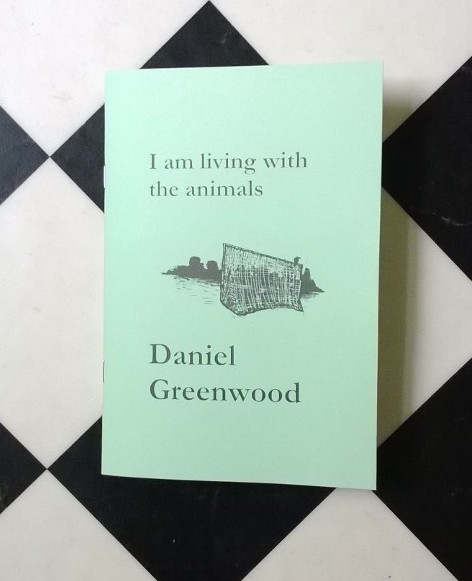
I am living with the animals is my first collection of poems, self-published in October 2014. It is 34 pages long and has 21 poems in it.
The poems were thought of and written whilst in places as far apart as urban south London, the mountains of northern Spain, the highlands of Scotland and the Norfolk and Dorset countryside. It was started in 2011.
Nature is everywhere in our lives and is intrinsically linked to our own well-being and existence. I hope you like nature more after reading some of these.
The cover illustration is by Henrietta MacPhee
Thank you,
Daniel

On the moor we peer
Down into the fields,
Gorse hedges like
Shaven sideburns,
Small yellow pea flowers
Greet us. In the valley,
The sound of ravens
Carries, their voices
Meet us on the road,
Never their shape.
The inner-life of the
Moor is a little croak
From a big crow:
Kronk, kronk,
Kronk.
I watch the nettles in the garden,
Moved by the mercy
Of a heat-wave gust,
Holly blue blown into sky
Like petals to sea.
Stinging nettles, to shake
The stems with my fist,
Touch the new tips,
It’s hot agony,
A pain known to children,
Accepted as a given –
Where people lay their
Bed sheets, nettles walk.
Dreadlocks of cream seed let
Out puffs into the August
Air, faint as smoke
Or perfume,
Never letting wind burst the casings,
This a release of the
Stinging nettle’s making.
The hotel garden,
where the man hocks the moon
from the back of his throat,
below a dying yew sending out
final needles from its pollarded elbows.
Brockenhurst.
The boredom of the night field,
ponies tasting the cricket green,
wet between their teeth,
the dew brightens their goofy enamel.
For us: the big bat darkness
of oak woodland,
lichens ogling from tiny
ovals of eyes –
the air here is clean.
The fire was built in
the embers of song
thrush, the tilt
of stars and
overflowing April
moon.
Smoke and darkness,
left out somehow
from the image of
fire’s mystery, its
coming and going,
killing and scaling,
of landscapes,
smoke can also
mean hurt.
A curly-headed mass
of hair reveals
pan-pipes, a swooning
tune of a young
man, brought here
to judge the pull of
the people.
I confess I bow,
mostly, to the
call of the tawny.
As with fires, as
with light, people
fade into night
and sleep, and caverns
of orange appear
between logs,
chambers of nature’s
tinsel.
A roe deer darkness
is one of atavistic
terror for the city-dweller,
the plodding white tush
in leaf litter.
So I stare into fire and I wonder,
which part of the wood,
will the flames kindle under.
Swifts spread across
the sky and stop,
part starfish
brought by a retreating
surf, pigeons bolting
from a setting,
behind cloud.
Always, always,
the world is a
painting.
I listen to the tits
pleading from the nest
box, one bird out
and the other bird
in, a single note
between them.
Hawthorn flowers
are a tree lit
by snow in the
middle of May,
but is spring or
winter late?
I worry that the
old tree is dying,
that a part
of my youth might
not outlive me.
Happiness is the sound
of swifts screeching,
the migrants testing
the evening,
spring’s ending
brought on
by the declining
surf of sky,
or sea?
Arriving
a figure gliding
across the bluish
sky at sundown
smudged mascara
the tears of a falcon
neck twisting
a speckled sail
against the April
evening
lover of gothic
feathered gargoyle
blue hooded dwarf
winged child on the church roof.
 Unlocking Landscapes