Fungi: Bedgebury Pinetum โ€“ one of the best places for fungi in England?ย ๐ŸŒฒ

Bedgebury Pinetum, Kent, September 2023

Disclaimer: this blog is now riding high in the search engines under the tag ‘Kent Fungi’ (not sure why, to be honest). On the back of this Forestry England contacted me to ask for me to point out to any readers that foraging is an offence, or more specifically:

Bedgebury Pinetum is protected by Forestry Commission bylaws that prohibit the damage or removal of any plant on site.’

While this is a photography and mycology post and not a foraging blog, it’s important that if you do go looking for fungi at Bedgebury that you don’t get caught out. Regardless of the fact that fungi are not plants, I think that byelaw must include fungi for some taxonomically archaic reason. I’ve written about this wider issue here. Thanks.

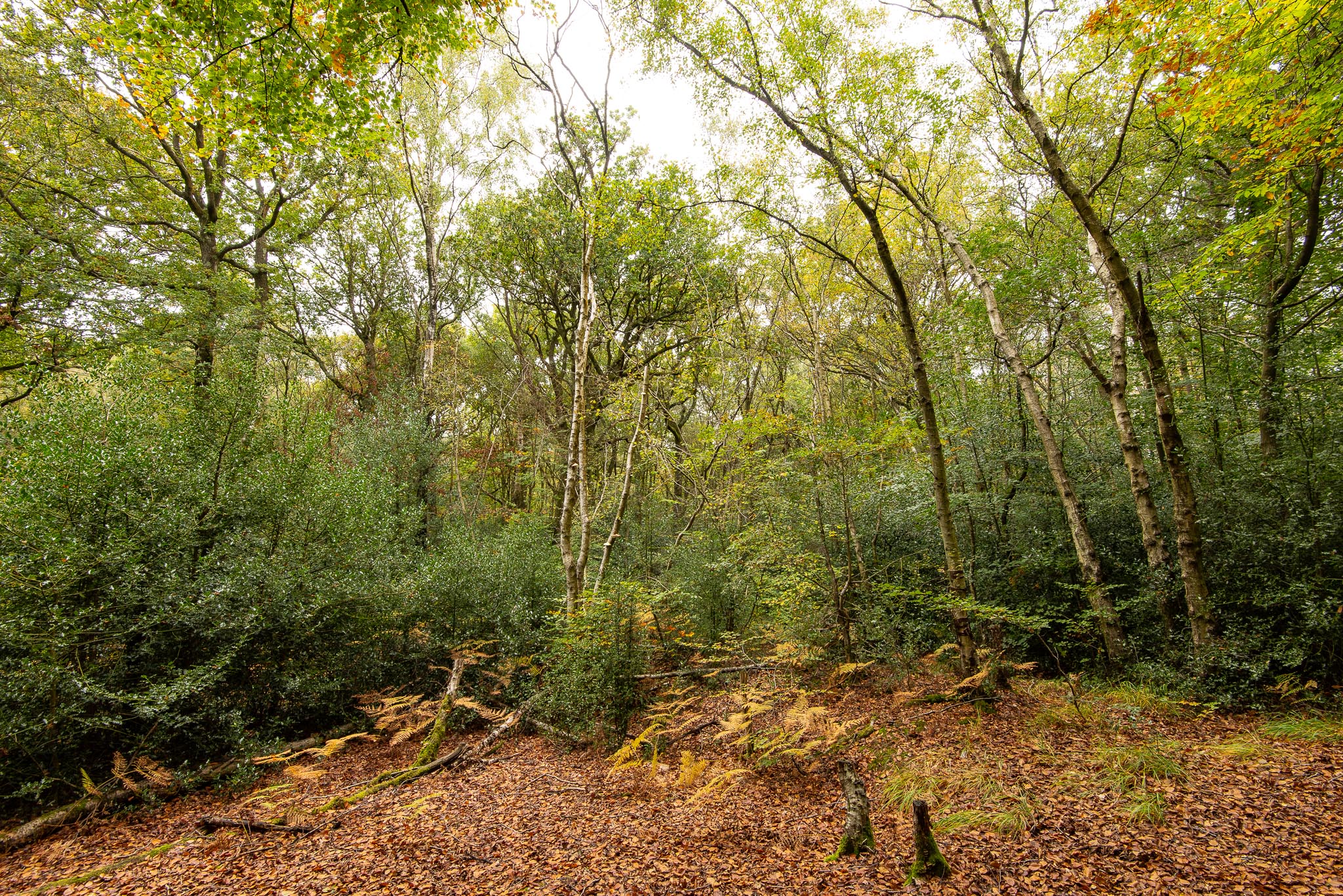
I visited Bedgebury Pinetum in Kent for the first time in early September 2023. It was impressive to see a noticeboard highlighting the Pinetum as one of ‘the best places for fungi in the country’!

Here’s the proof:

It has 12,000 specimen trees and a ‘world-leading collection of conifers’

Tell you what, though – they were not wrong about the dragonflies. The most impressive sight of the visit was dragonflies swarming on the margins of a field of, erm, monkey puzzles! Here’s the video:

It was dry and rather hot so I don’t think the Pinetum was at its best in the funga stakes, compared with the dragons.

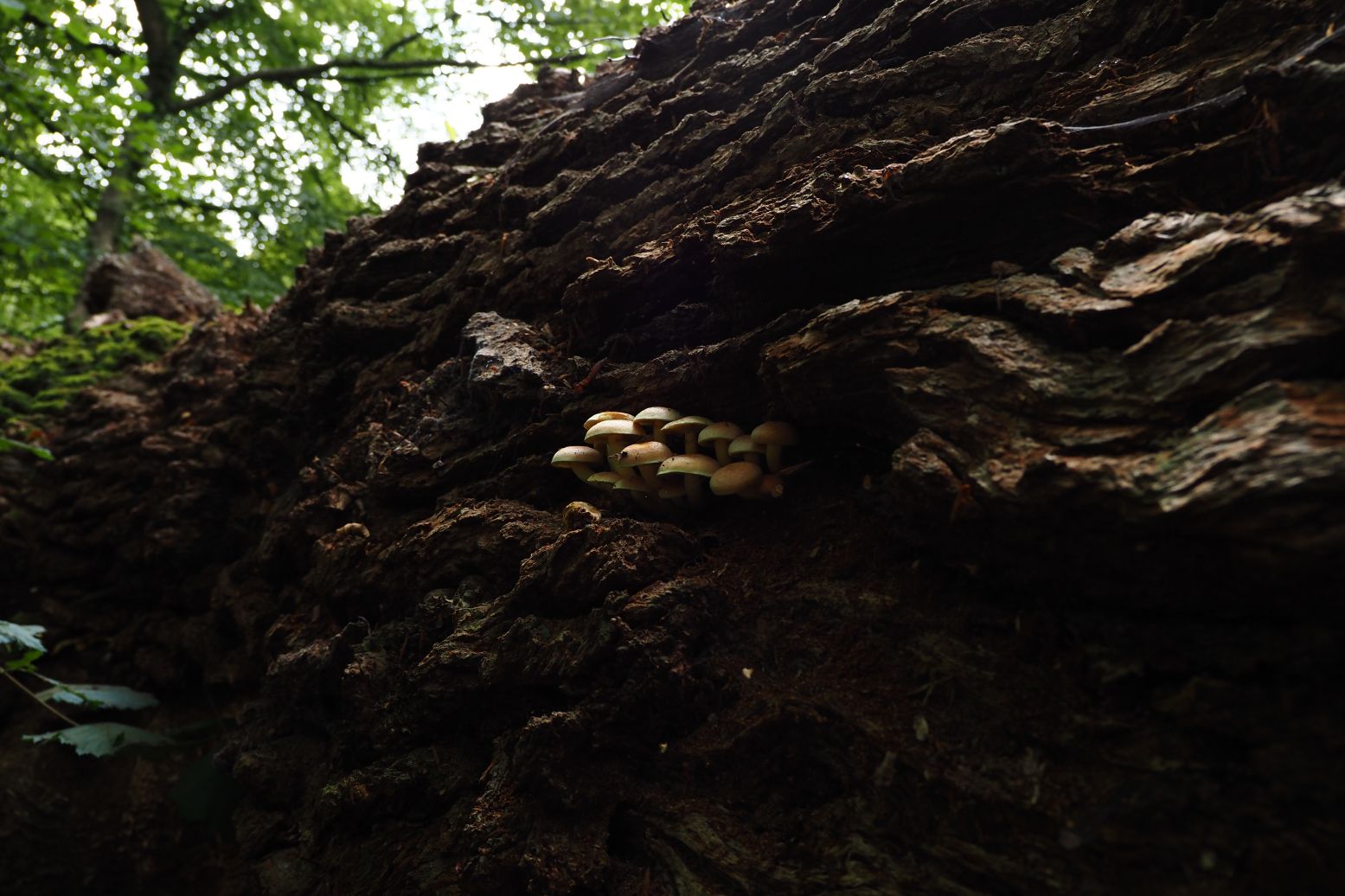
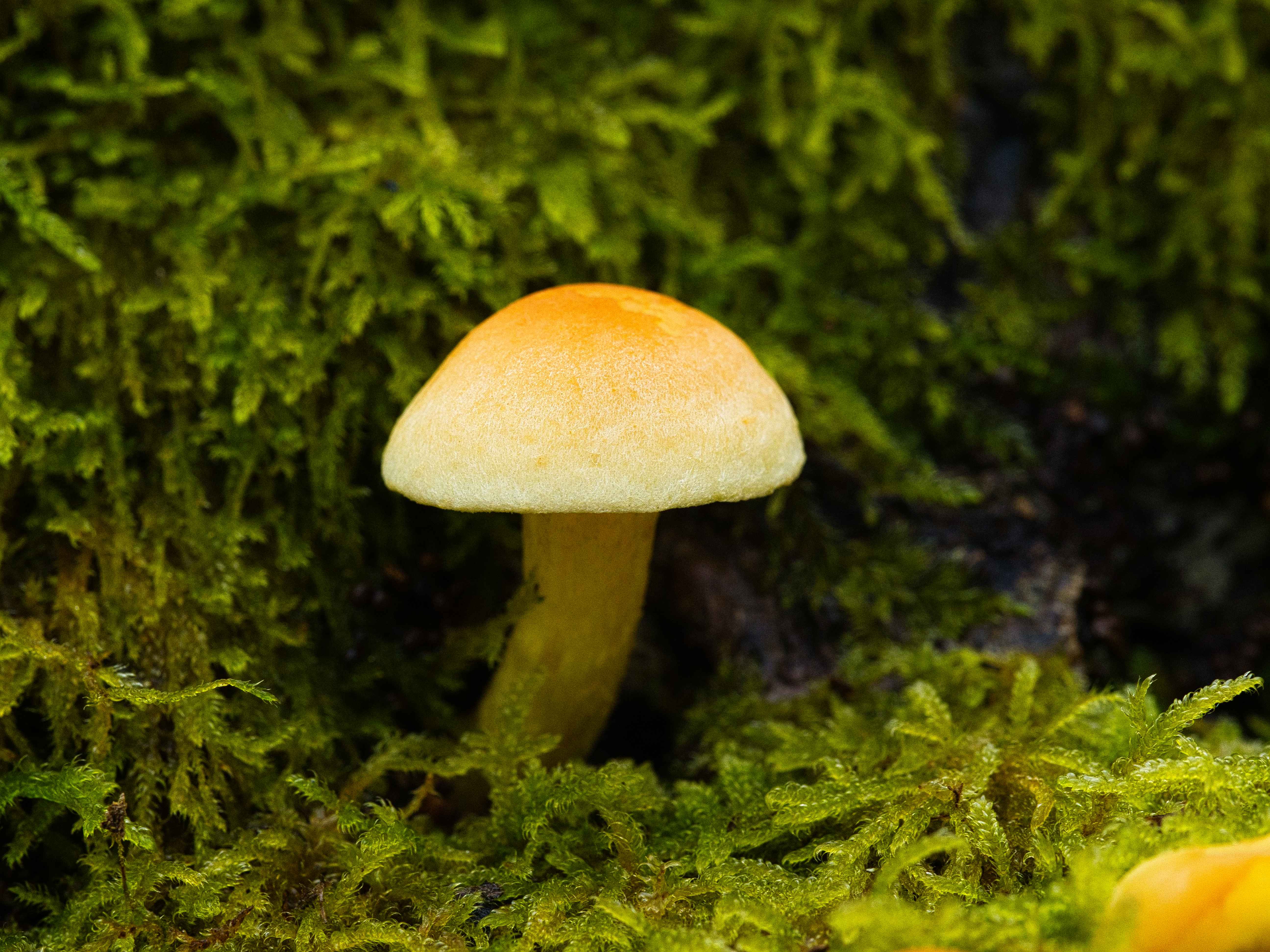
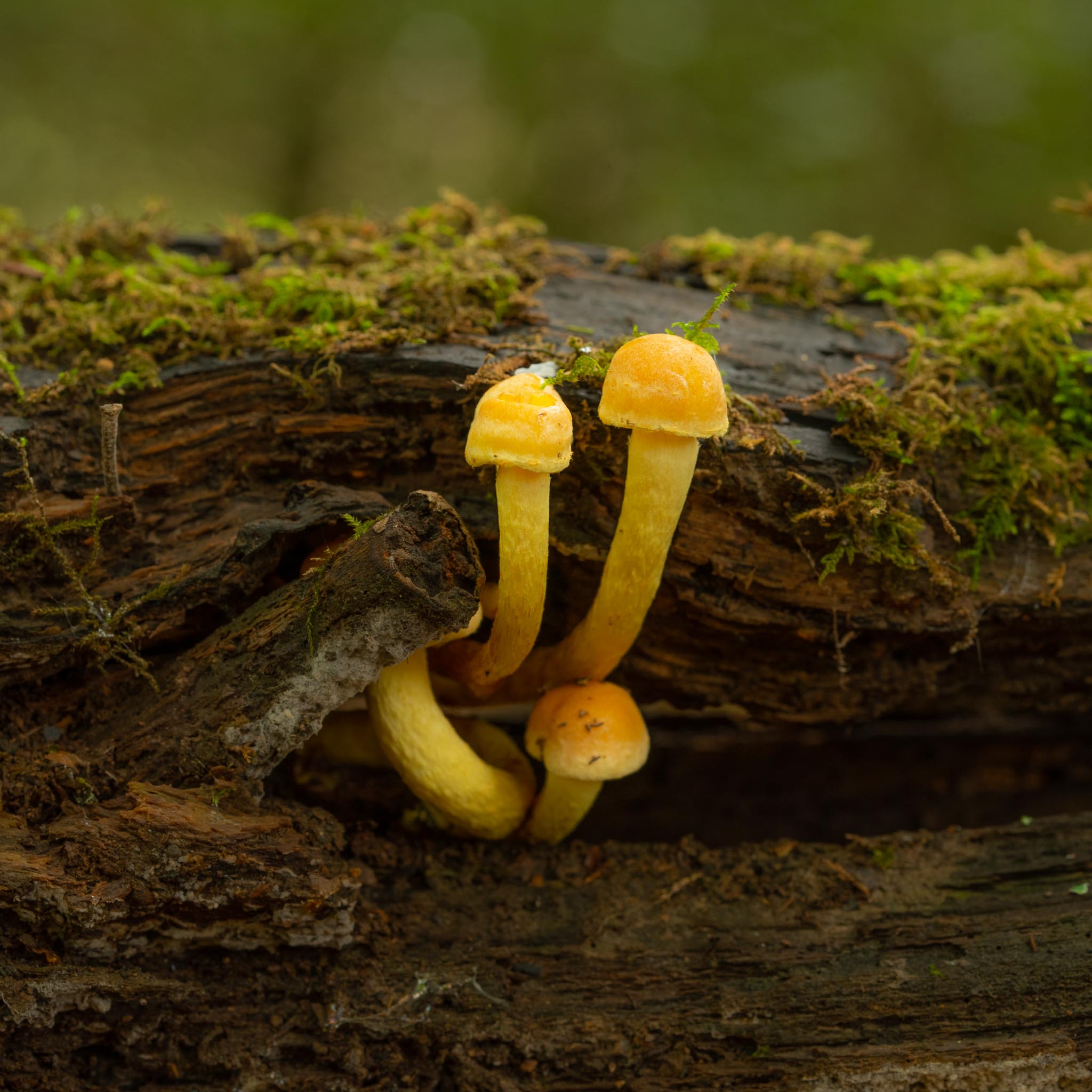
As usual, I wasn’t there to forage, just to photograph. I don’t think Forestry England are fans of foraging on their sites. One of the first sightings of the visit was that common species in this part of the world – sulphur tuft.

I haven’t seen brick or conifer tuft yet, to my knowledge, so was wondering if this landscape where conifers were so dominant might change that. Looking at the gills and the caps, I don’t think I’m there yet.

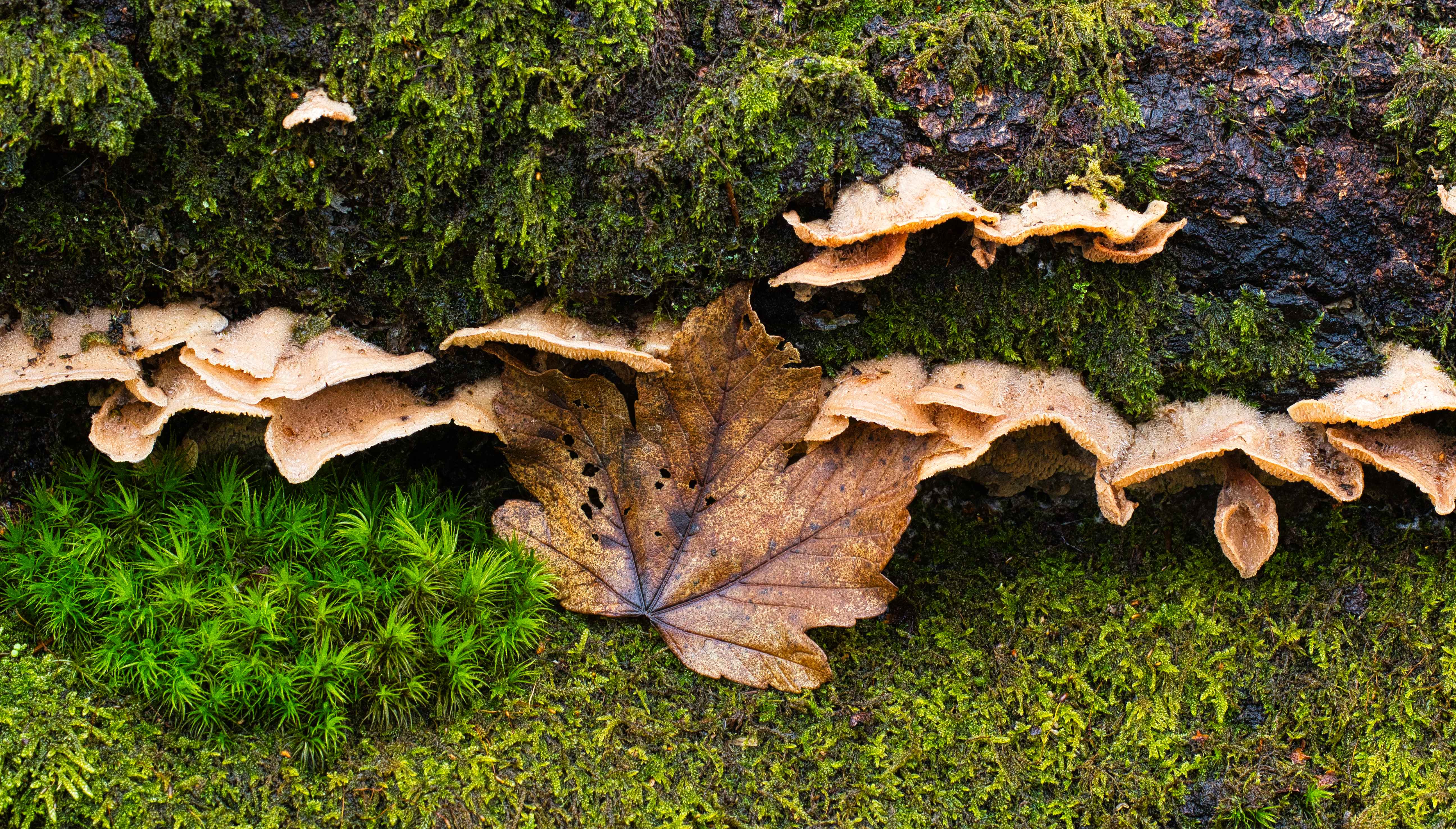
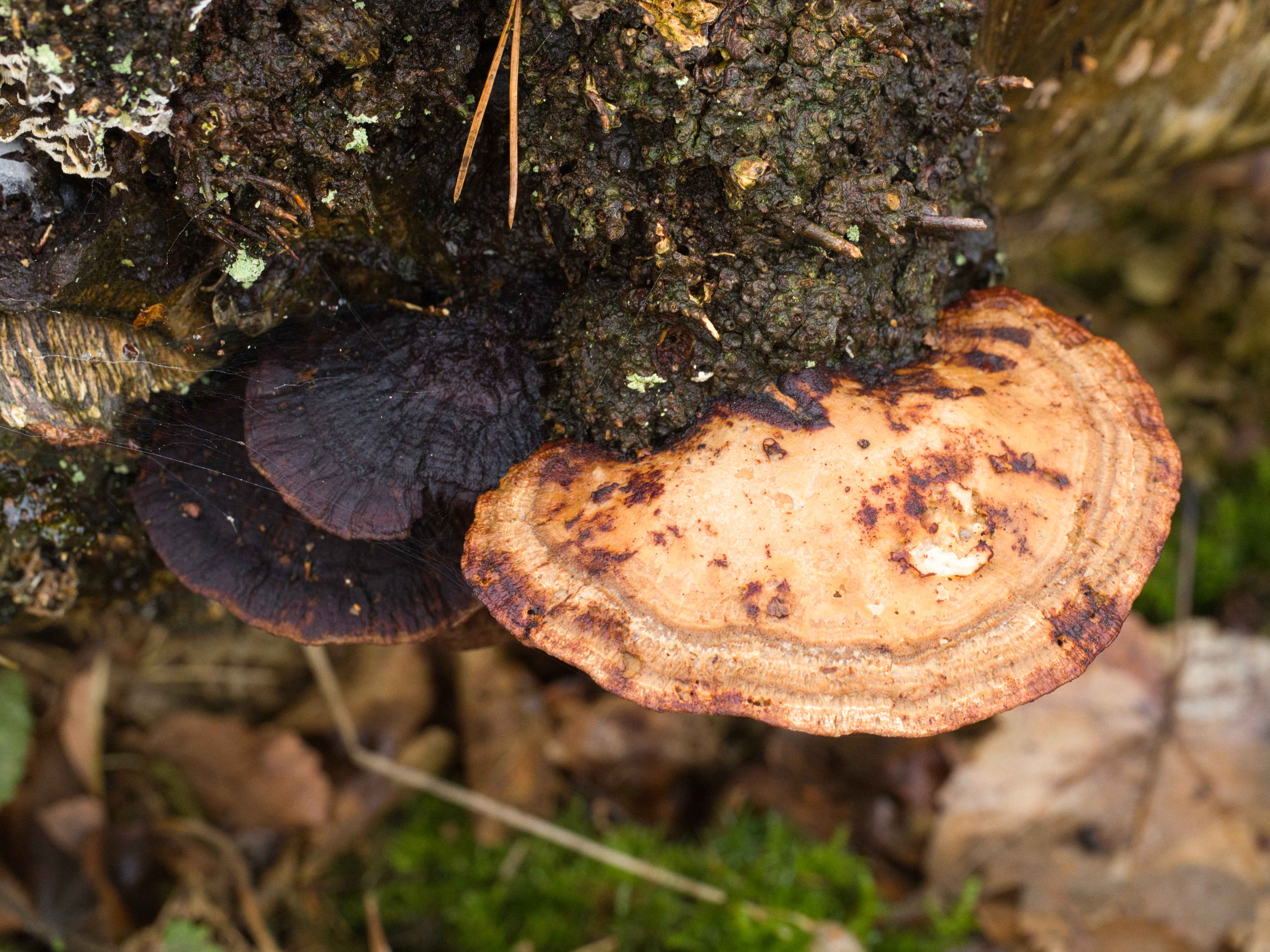
Here’s the nice early stages of a bracket, which I haven’t identified yet. Might be a mazegill.

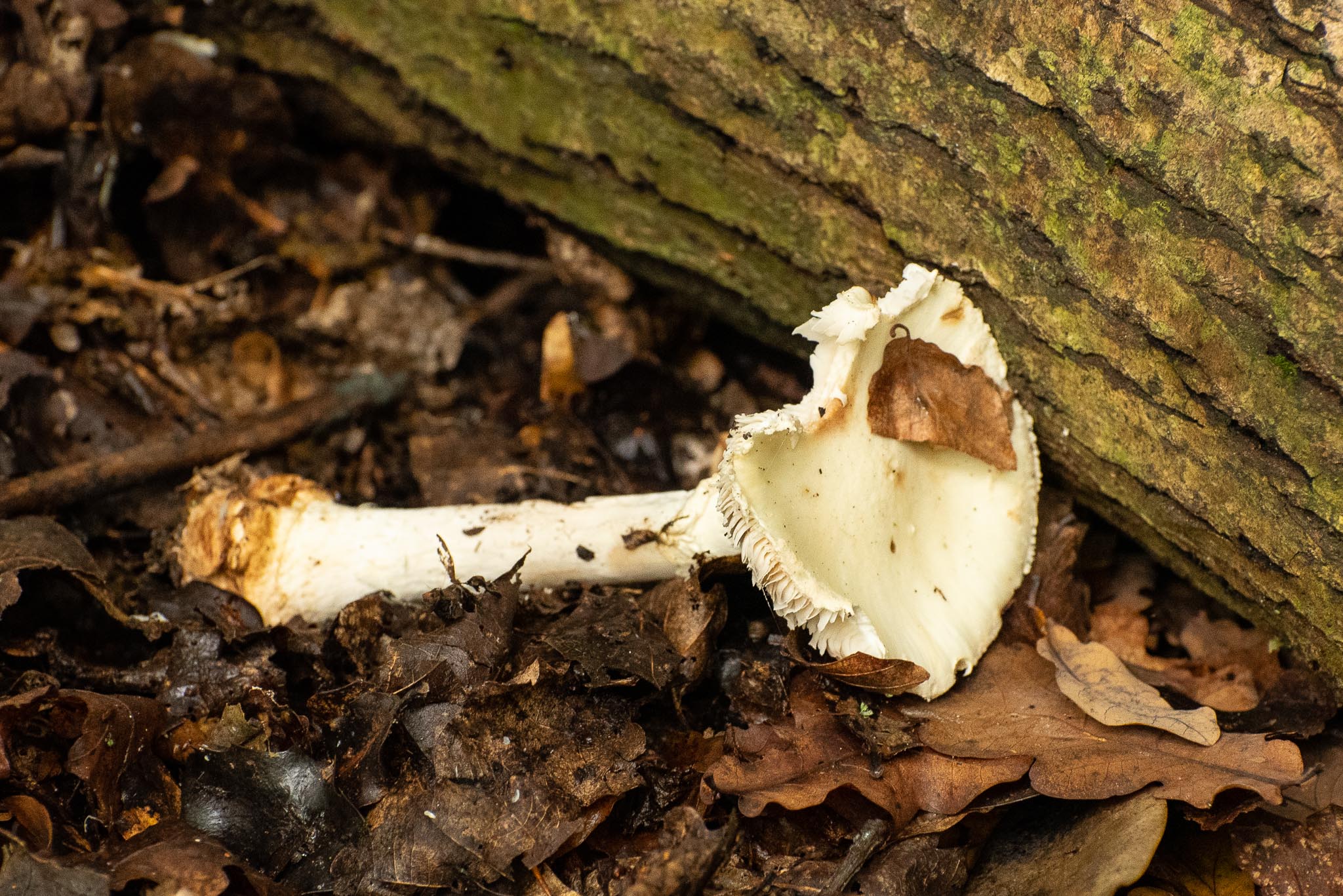
Tawny grisette is a lovely early Amanita. There were a couple at Bedgebury.

I have cobbled these together, even though they’re in different stages. I think they’re in the Clitocybe group, and are very likely funnels. The habitat and seasons are right, and the features look right (gills). It seems that there has been a taxonomic shake-up with this group, but it’s beyond this blogpost (and author!) to go into detail on that. Please comment if you have any suggestions.

It’s easy enough to plop these mushrooms into the ‘dungi’ category, and am confident that they’re mottlegills (Panaeolus). I’m half suspicous that the pale-capped shroom is a yellow fieldcap, rather than a saturated older fruiting body, just hanging out in the dung.

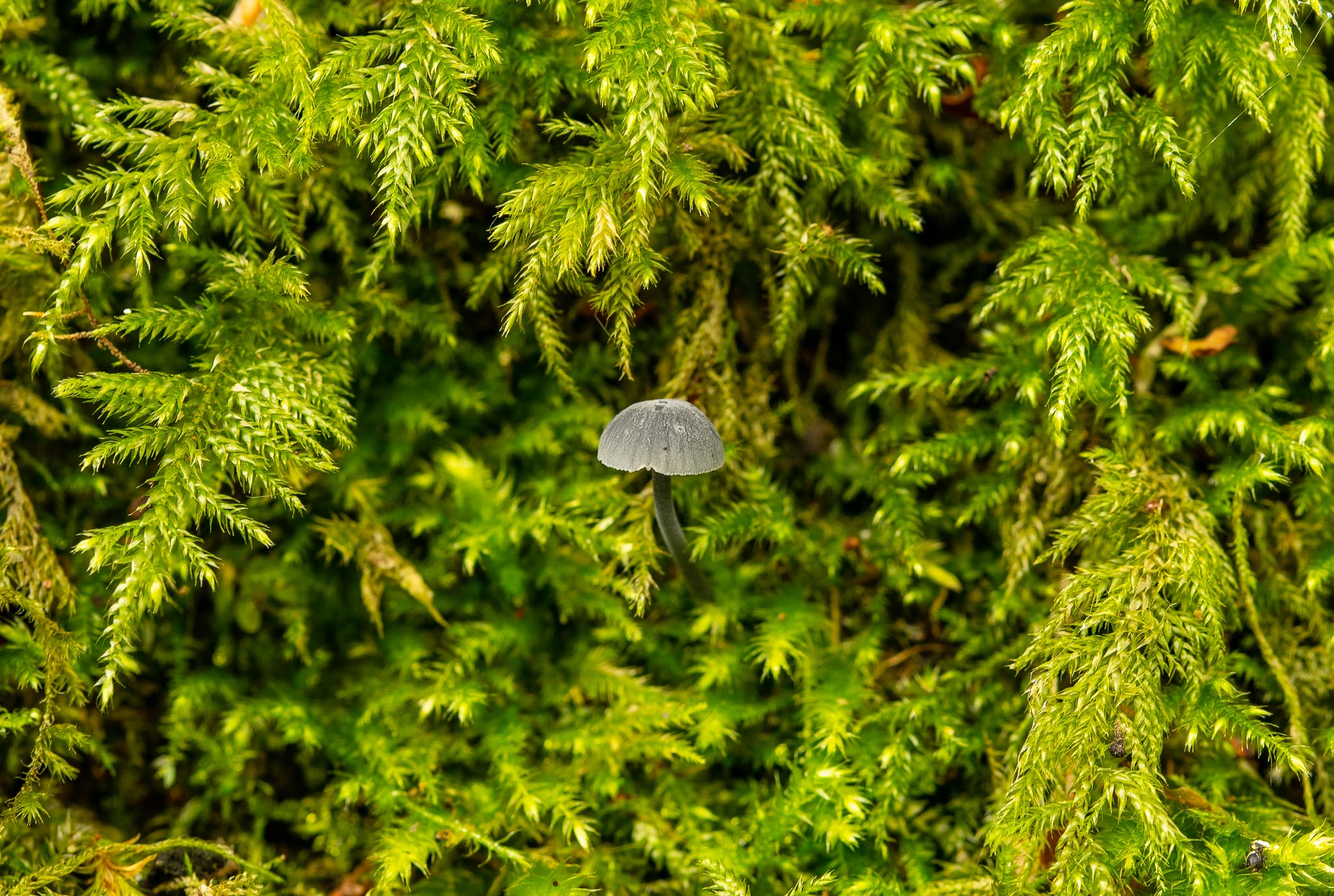
I haven’t done much work on trying to identify these yet, but they look like a group I am not familiar with. They were growing under an unusual type of turkey oak, but I don’t think there will be a mycelial connection there. Then again, what do I know.

So was it one of the best places to see fungi in England? I have no idea, but it will definitely be a good place to visit in the autumn months. Bear in mind the car parking fee is about ยฃ14, and I don’t know about public transport links in the area.

Thanks for reading.

This is a version of a previously-published post on my fungi blog.

Fungi

You may also be interested in:
Fungi ๐Ÿ„: September deathcaps

This week Iโ€™ve been researching an article about deadly mushrooms. That post will appear here at some point but I felt like I needed to fit in some quality time with fungi in real life, especially as we have technically entered autumn. I visited somewhere in the Sussex Low Weald which is one of the most reliable fungi reserves I know.

In reality I found almost nothing, but for one of the most deadly mushrooms in the business: the deathcap (Amanita phalloides).

I found these two deathcaps growing close together underneath a beech tree. There was something so very strange about this, seeing as I’d spent the previous day reading about them, and only the second time I’ve encountered the species. Both sightings were in September. The bite taken out of one of the mushrooms is a good pointer to the fact that other animals can eat this fungus and not die. Unlike many people who have sadly passed away after mistaking this fungus for something edible.

To find mushrooms to photograph in these dry periods, one of the best bets is to seek out large deadwood, particularly wood in shade. Sulphur tuft was the other mushroom I found, another toxic species. Seriously, what is that all about! Back off, nature.

In truth, sulphur tuft is one of the most photogenic species you can find. At this time of year when there is less rain it looks fantastic. It’s also supposed to be bioluminescent, glow-in-the-dark:

Barisandi, CC BY-SA 4.0 https://creativecommons.org/licenses/by-sa/4.0, via Wikimedia Commons

If you’re interested in that, this excellent podcast episode of The Mushroom Hour is a must listen. I learned that it could be the case that many more species of fungi were once bioluminescent. Over time, they have lost it.

Lichens are, fundamentally, ascomycote fungi. This means that they are much happier in wet weather. I was looking around an old oak stump when I found this beautiful heart-shaped Usnea lichen.

It’s nice to end on a fungus that won’t kill you.

Thanks for reading. Don’t eat poisonous mushrooms.

More mushrooms

#FungiFriday: streams and shrooms in Sussex

Fungi Friday 11th December 2020

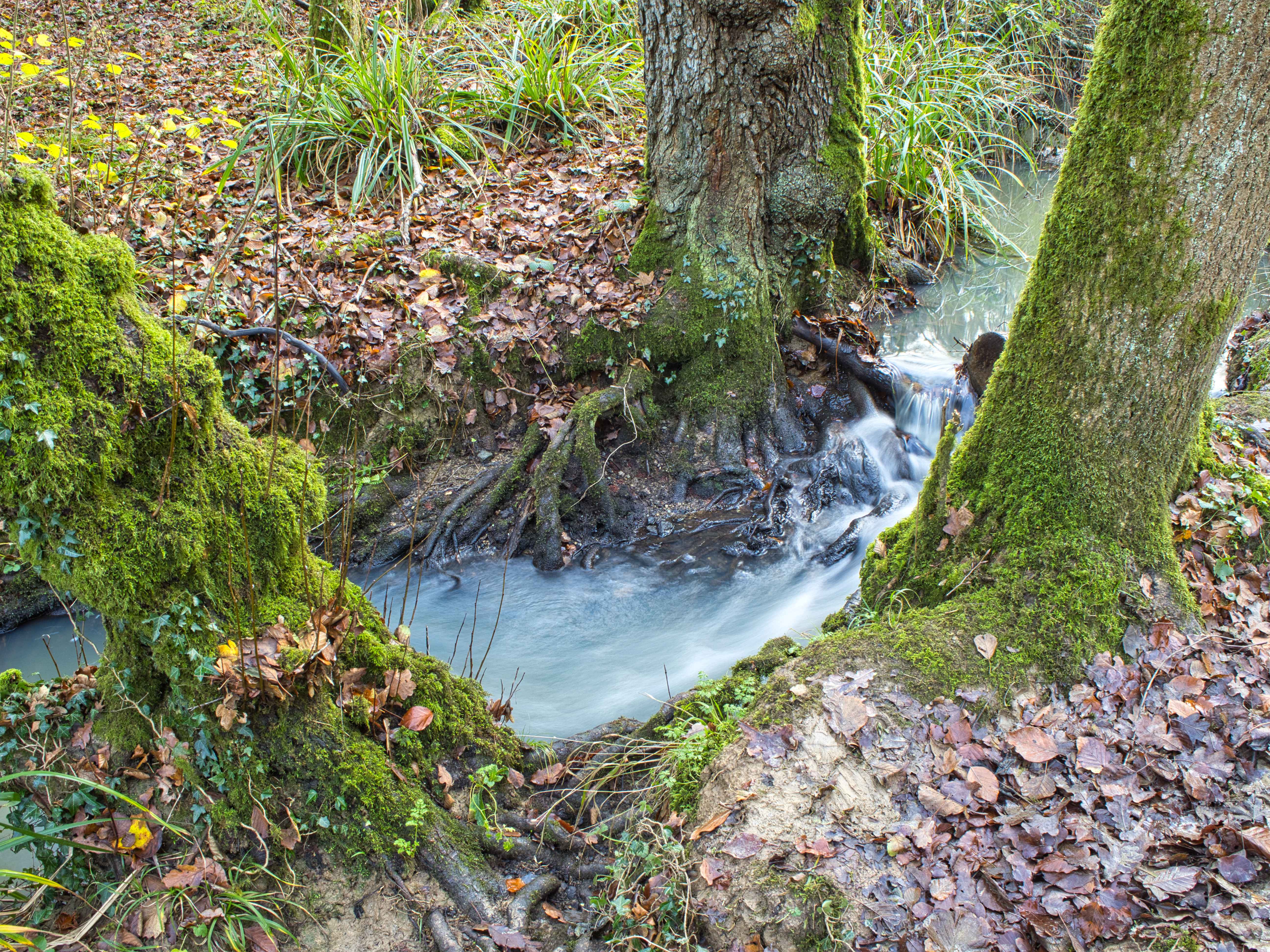
There is something special about woodlands in December. For wildlife, they can be a forbidding and barren place, which is why so many birds now move to warmer urban areas for food and shelter at this time of year. I’ve spent a good amount of time in woodland recently and the amount of fungi was a pleasant surprise. The gills in the Sussex Weald (a local name for a stream, plural) were gushing after lots of rain. They kept good company on their edges – mushrooms.

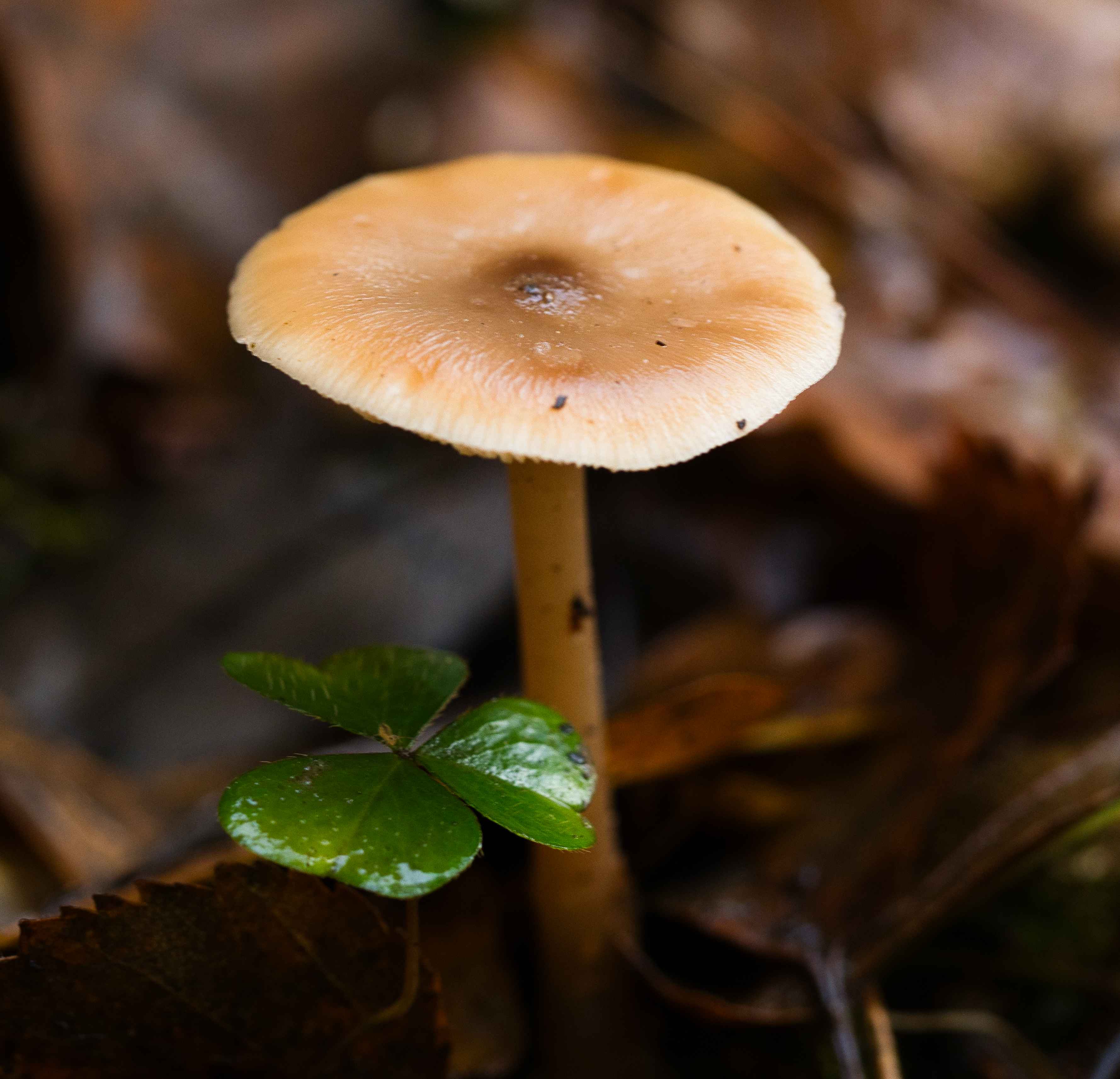
I spent a couple of hours following the edge of a network of Wealden gills. I found a number of smaller mushrooms along the edges of the gushing gills, like this very dapper looking mushroom with a wood sorrel bowtie. You may also notice a tiny springtail on the plant! The word gill is also used in Scotland and northern England, where it’s often spelled ‘ghyll’.

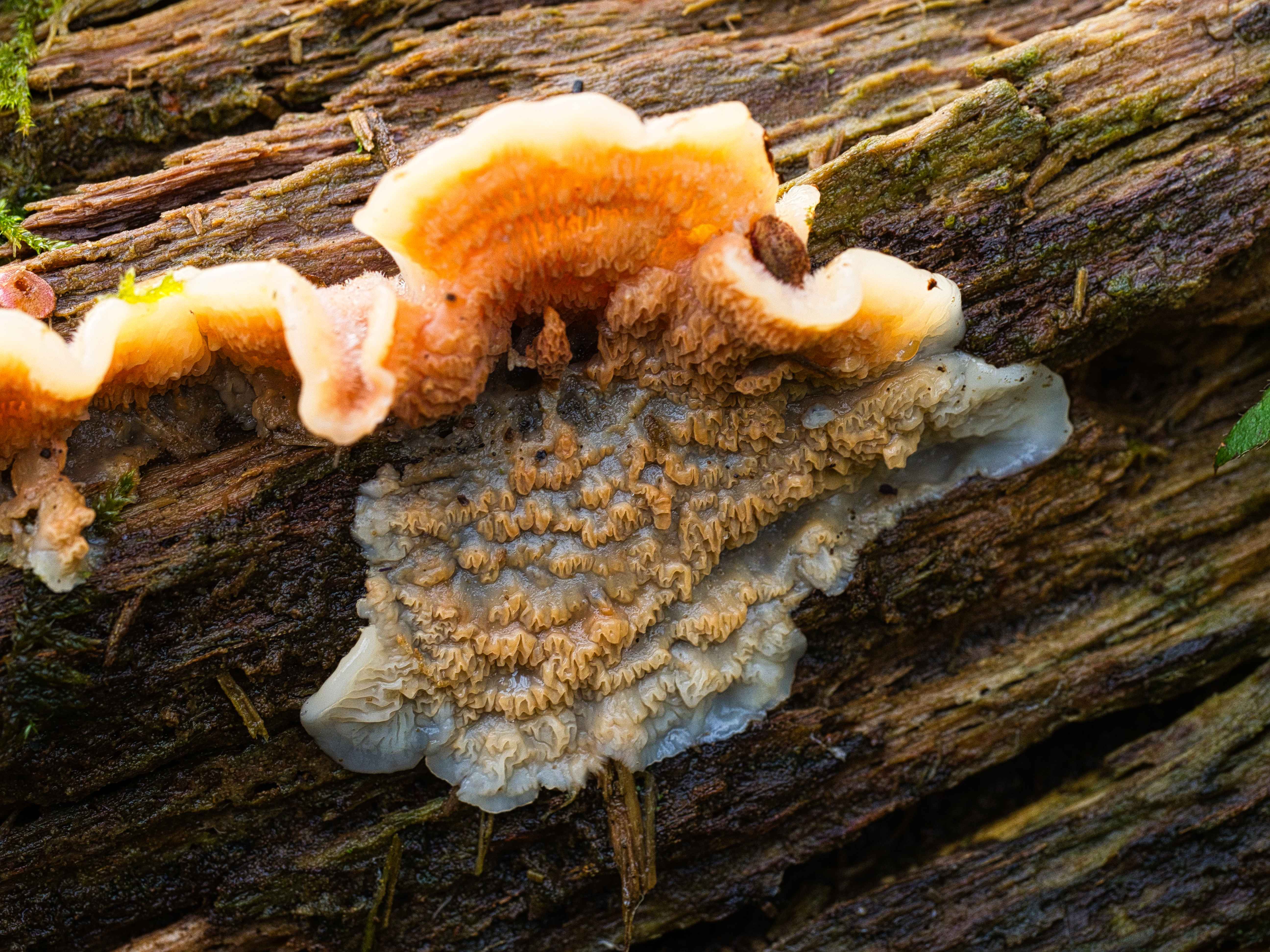
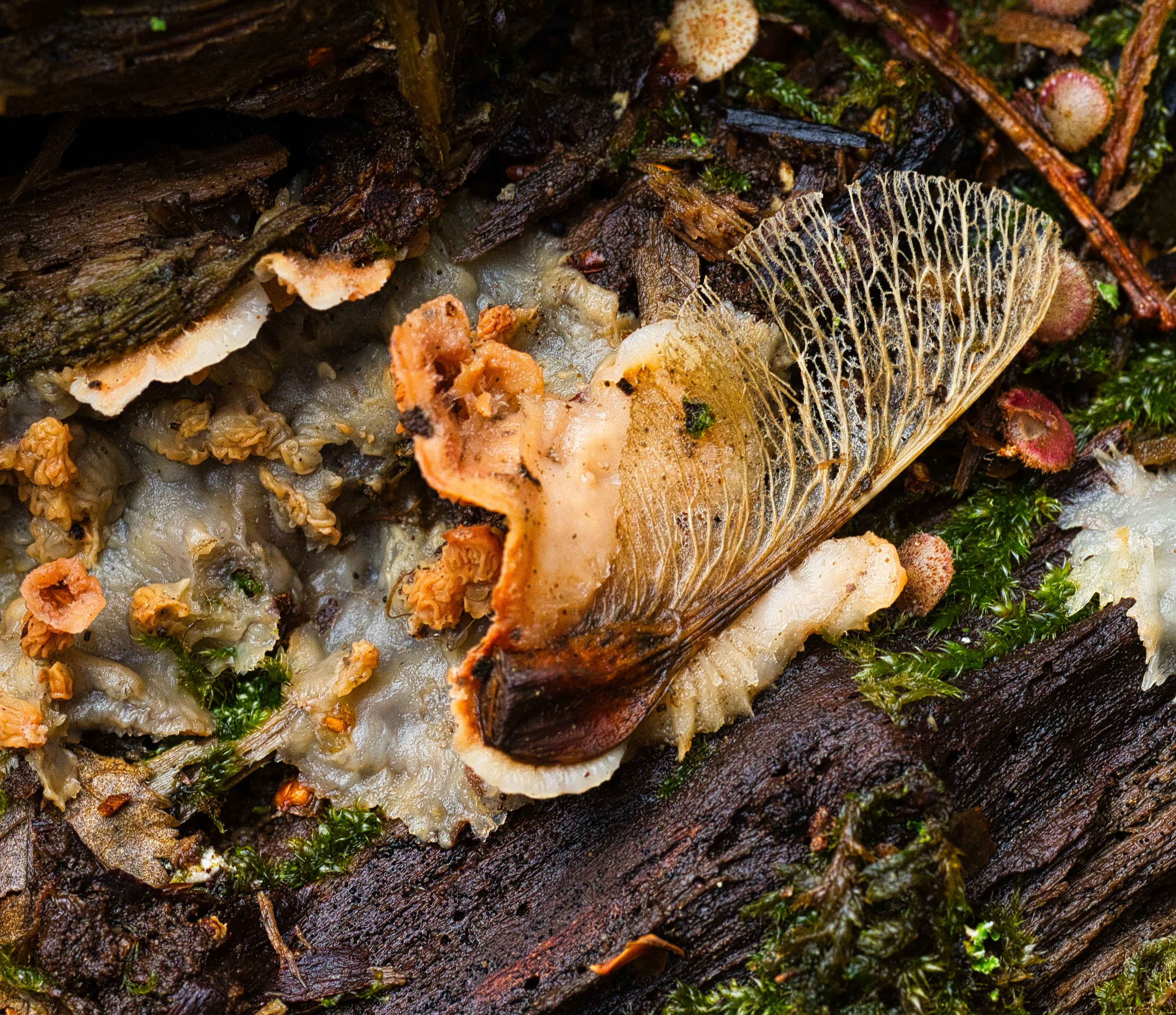
Something that really caught my eye was the work of this wrinkled crust fungus, which is its actual name.

Fungi’s main function (fungtion?) in a woodland is to break down organic matter into soil and other minerals and nutrients which can support other species. It was fascinating to see this fungus ingesting (perhaps) organic waste material in its path. In this case it was consuming a sycamore seed.

Nearby, another specimen of the fungus was getting to work on a sycamore leaf.

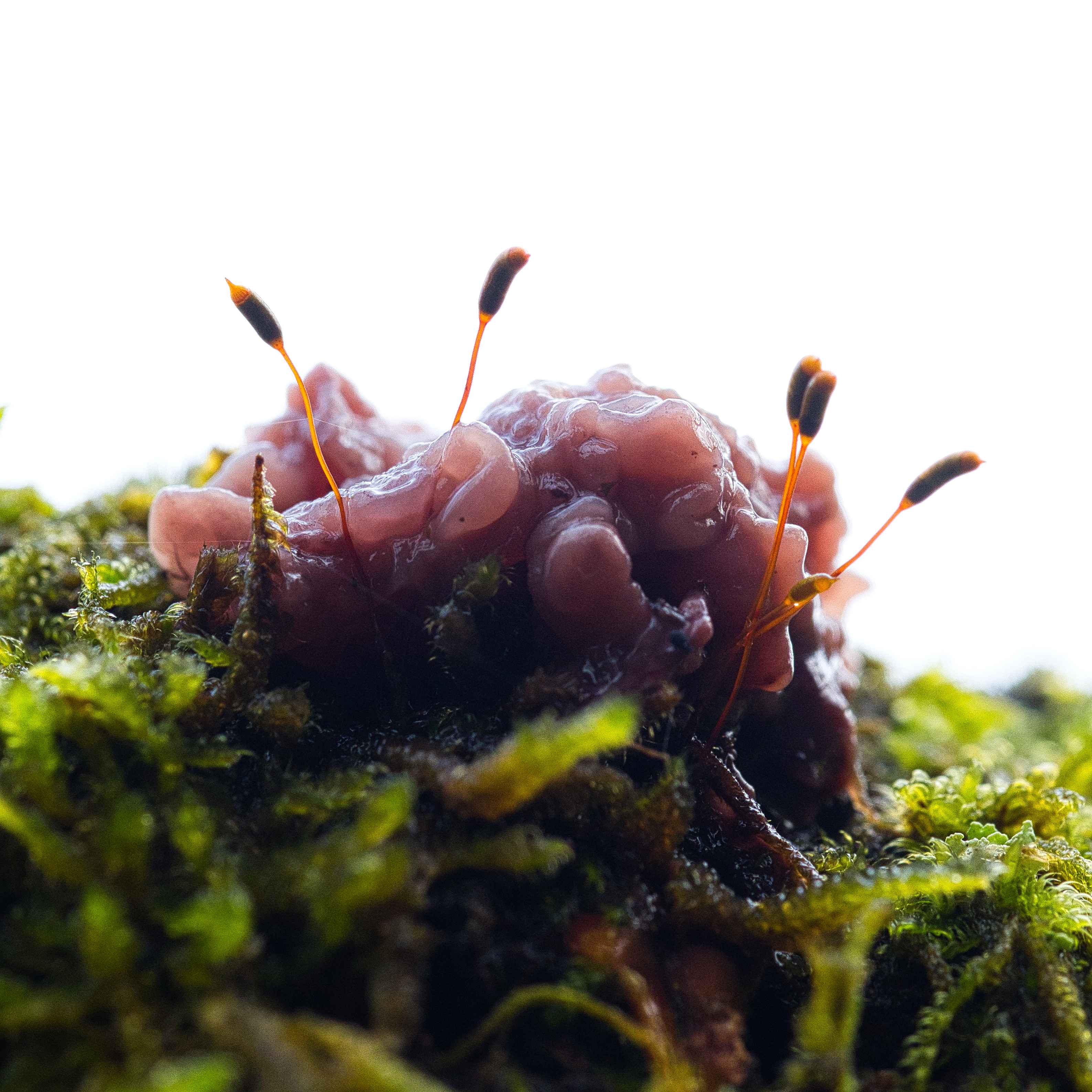
On a tree growing over the gill, this purply jellydisc looked like something out of a 1950s b-movie horror film. I think it’s the moss’s sporophytes that make it look so low-budget sci-fi.

I think you probably get what I mean.

I had my binoculars with me for this walk and they were very useful in, unsurprisingly, spotting things from a distance. Without them I would have missed a fallen birch tree that was covered in many species of fungi, as well as slime moulds and mosses. Above is a species of either trametes or stereum, two kinds of smaller polypore.

There was a helpful illustration of blushing bracket’s lifecycle, moving from a pale coloured fruiting body, to red and then something much darker. That’s a long blush.

Sulphur tuft is a very common species which seems able to tough it out through the colder months. I have seen so much of it recently.

Though it may look nice, it’s a toxic fungus, so don’t get any ideas.

Take nothing but photographs, in this instance. Give nothing but likes and nice comments.

Thanks for reading.

More mushrooms

#FungiFriday: looking for mosshrooms

Fungi Friday 23rd October 2020

I want to start by saying thank you to everyone who stopped by last week to read my click-bait post about honey fungus. The post had nearly 200 views in one day, which is a huge amount for this blog and broke the single day record. My blog could have nearly twice the number of visitors as in 2019, probably due to the fact I have had more time to walk locally taking photos and to spend time writing these posts. Otherwise I would be stuck in a car driving to and from an office I probably didn’t even need to visit so often.

I think the fact more people are working from home could be key to protecting local green spaces going forward. In the UK ‘lockdown’, as the period of late-March and most of April and May 2020 are known, millions of people discovered their local green spaces. If people value something close to home, they will learn about it and in their stewardship, nurture and defend it. I discovered fungi close to home, and I’ve sought it closer and closer ever since.

This week I visited a nearby area of oak and beech woodland in the High Weald of Sussex. I’ll admit it now, I was disappointed. This time last year I encountered many more species than I could find this year. I think fungi in Sussex are paying the price for a very dry spring and summer period. I did warn you. That said, I did find some small things that were happy to pose for a photo. Above is sulphur tuft, one of the most common species you can find.

This is black bulgar, a rather odd species that seems to explode in October on large fallen branches. The first time I saw this, it had appeared on the fallen limb of a massive oak tree which had come down that summer.

This rather unsightly mushroom did get my heart racing at first. I thought it was perhaps my first local deathcap, but really I think it’s the false deathcap. It has the classic Amanita bulb at the base. I think the colouring of the cap is wrong for deathcap and it has some of the brownish scales of the false deathcap, on the cap.

When the ground isn’t producing the shrooms needed at this time of year, I look to the moss growing on tree trunks. You can often find very small mushrooms there, perhaps bonnets (mycena) or galerinas. The moss holds on to the rainfall for longer, meaning fungi, some of which are parasitic on moss, can prosper. Let’s call them… mosshrooms!

This lovely little mosshroom had actually snapped but I rotated the image for effect.

This beautiful little grey-blue mushroom epitomises the mossy shroomlet. As you can see from the moss fronds, it was very small indeed.

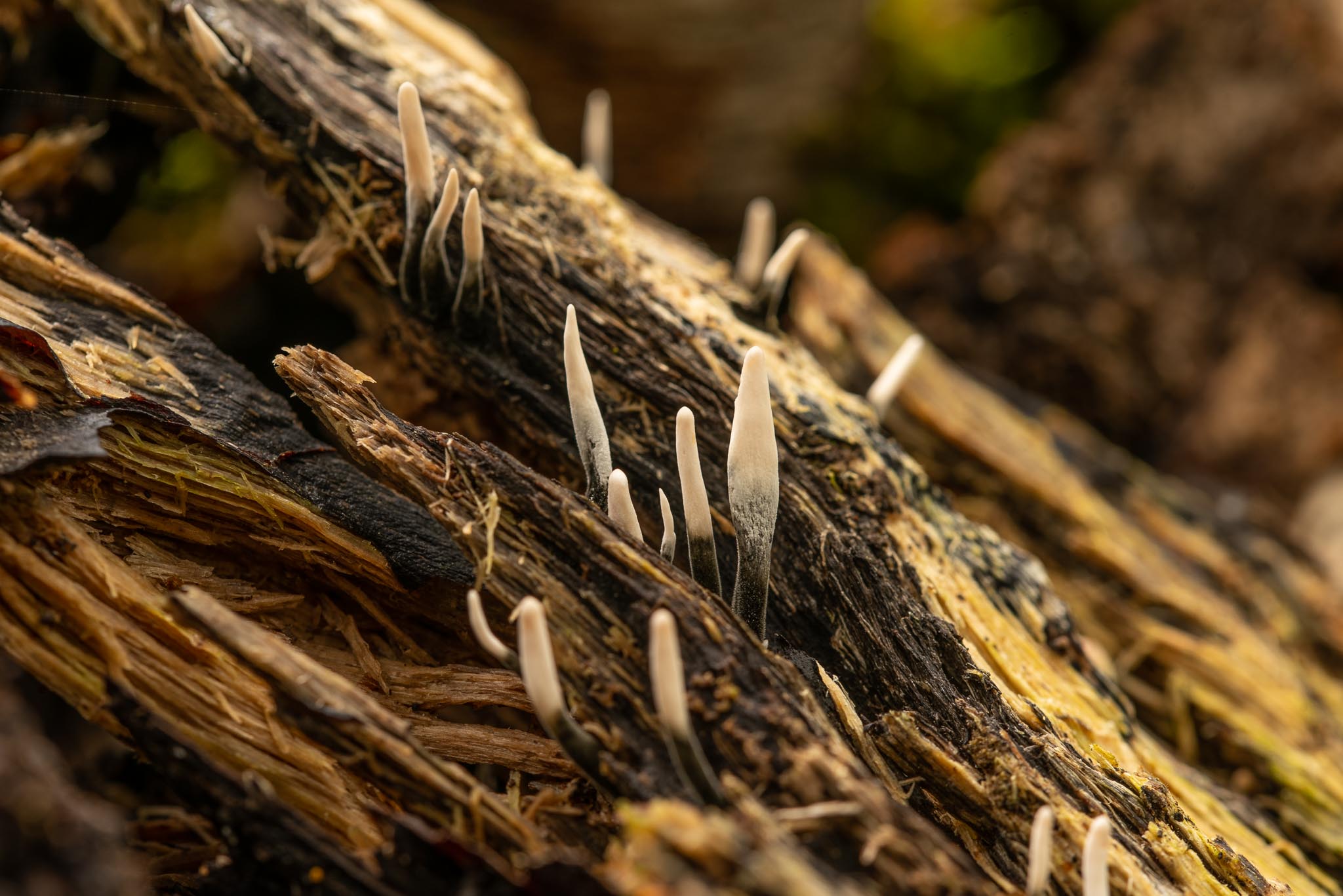
One of my first #FungiFriday blogs was about candlesnuff fungus. It looks quite neat at the stage seen above, when it is first beginning to fruit. In dry conditions you can flick the white ‘wick’ and the spores appear as smoke from a snuffed candle.

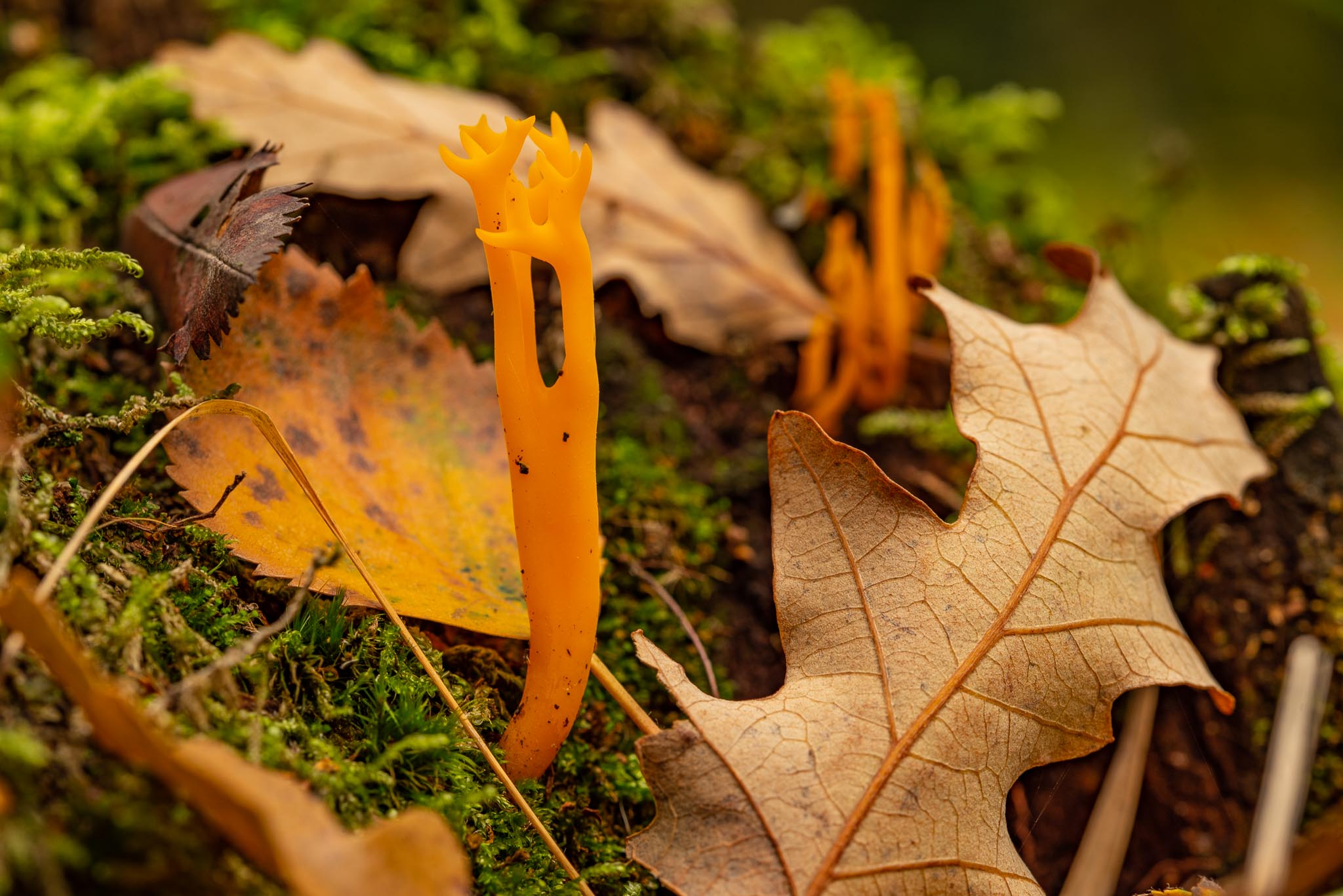
A similar type of fungus was this yellow staghorn, a common species. It was growing down on a mossed-over stump on the woodland floor. That oak leaf on the right (I think Turkey oak, Quercus cerris) is so beautiful.

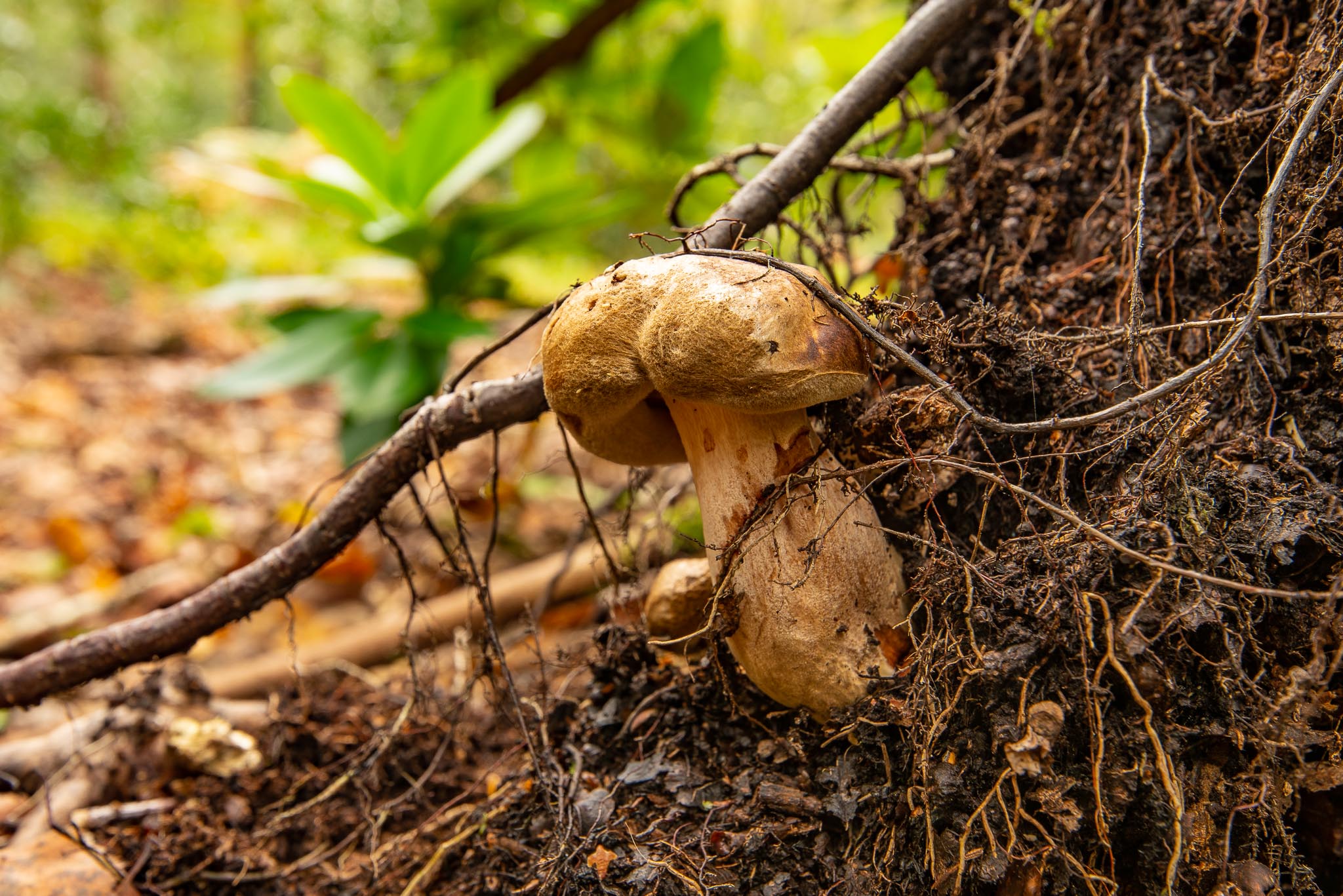
The most unusual find was in the raised rootplate of a rhododendron. From above they looked like potatoes. I am fairly confident this is a cep, Boletus edulis. It is, of course, also known as porcini and is one of the most sought after edible mushrooms. Foraging is not something I do commonly, so I left it there to grow on its merry way.

This scraggly crew are a common but no less beautiful mushroom – amethyst deceiver. They are easy to identify due to their colour and size and are a very common species in the UK. I do find that they are happier in older, more stable woodland. Aren’t we all?

Thanks for reading.

More mushrooms

#FungiFriday: is it even a mushroom?

OLYMPUS DIGITAL CAMERA

Fungi Friday 19th June 2020

I headed to the woods again this week to see how the Amanita from last week’s post was faring. There had been almost no rain again until that point. The woodland floor was crunchy and dry. It never feels good seeing a woodland like that.

OLYMPUS DIGITAL CAMERA

I was surprised to see that the mushroom hadn’t advanced. It was still encased in its bone-dry veil. I had a closer look to see if it even was a mushroom and found that it was actually attached to the soil through fungal roots. It was a learning point – I thought that even without water a mushroom can advance. Evidently it’s very difficult and sometimes they can’t.

OLYMPUS DIGITAL CAMERA

It’s worth saying that fungal fruiting bodies (usually ‘mushrooms’) are 90% water. The photo above shows a woodland stream (‘gill’ in the Weald). It has been an exceptionally dry spring.

OLYMPUS DIGITAL CAMERA

A good indicator of how much potential there is to find fungi can be seen in bracket or polypores on trees. This is probably hairy curtain crust which is looking as sorry as you’ll find it.

OLYMPUS DIGITAL CAMERA

Despite the super-dry conditions I did find more fungi. It was one of the most common species in the UK – sulphur tuft.

OLYMPUS DIGITAL CAMERA

These are places where fungi can fruit in these conditions. The inside of a decaying oak tree stays cool and damp, especially with holly surrounding to create shade and thus cool.

OLYMPUS DIGITAL CAMERA

You can see how hungry the local slugs are. To humans this is a poisonous species, so don’t be a slug. Even though these had been heavily munched, it’s nice to see a shroom. Rain has come in the past 24 hours, so it will be interesting to see how things might change in the next few days.

Thanks for reading.

More mushrooms