Mid-August: the woods sit between seasons. Leaves are not yet turning, the soil is dry and the leaf litter brittle. Even so, mushrooms are pushing through. I turn off the hard track to cross over the ghyll that cuts through the woodland, one of many dammed further down for the ancient iron industries that hammered this landscape several centuries ago.
Today no such industry exists but the streams still flow. In fact, from this area of the High Weald, some of Sussex’s great rivers rise and head off on their respective journeys: the Arun, the Adur and the Ouse.
Sitting on the bank, I notice fungi on fallen wood but also in the soil. They are terracotta hedgehogs, mushrooms with spikes where the gills or pores are found on other species. They’re a delicious edible mushroom.
When the iron industries were at full pelt here some 400-500 years ago, there was immigration of skilled workers from France. They brought knowledge unavailable to iron workers here in Sussex, with some tensions developing with the local workforce. On 21st January 1556, ‘Peter’ a French collier was ‘cruelly murdered’ (Weir-Wilson, 2021: p.45).
I wonder if those French men and women picked hedgehogs here, a species that’s treated as a delicacy in France. The Belgian father of a friend of mine messaged me on social media when I posted a photo of these mushrooms:
‘Pied de mouton,’ he said. ‘Clean then blanch them for 2min. Drain and keep. Fry 2 shallots and 1 garlic in butter (or oil). Butter tastes better.’
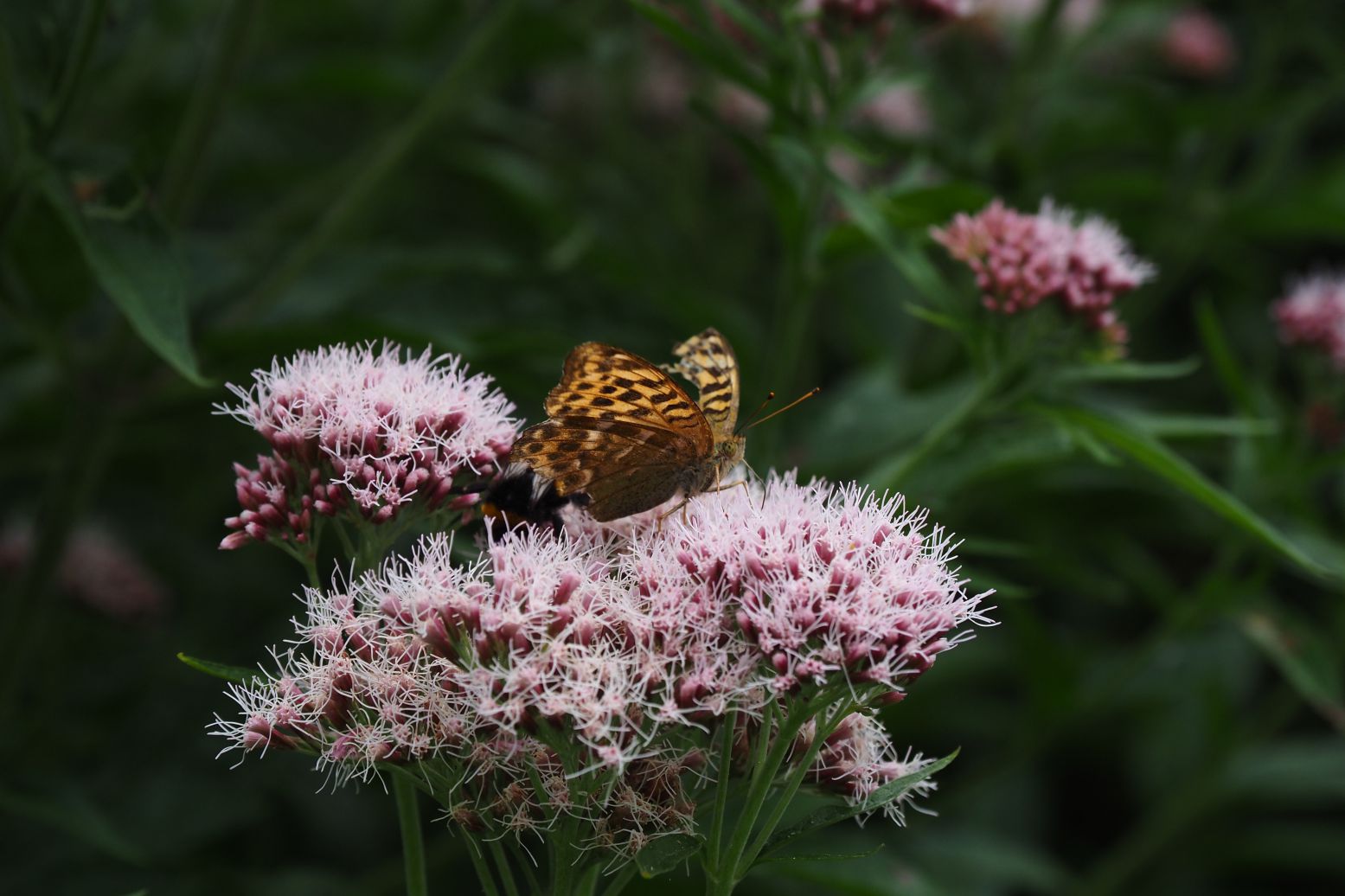
Deeper into the woodland there are the first signs of heather beginning to flower. The birdsong has dwindled but the edges of the rides burst with flowers that are covered in insects. A broken and battered fritillary butterfly nectars on hemp agrimony flowers as if for the first time. I watch to see if a butterfly with so many pecks taken from its wings can even fly, but it does, high into the overcast sky.
Further along the ride hogweed has built a great white canopy. The droneflies – a honeybee mimic – drink nectar in their tens, fizzing as they switch from one umbel to another. That’s when I notice the long, drooping antennae of a longhorn beetle, doing the very same thing. I can’t take my eyes from it, as it clambers over the small inflorescences.
After walking along the endless forestry road, I slip back into the woodland to an area of birchy bog and broken beeches. It’s quiet and still in here. Unlike the final bursts of summer flowers on the open forest rides, autumn can be found among the birch trees.
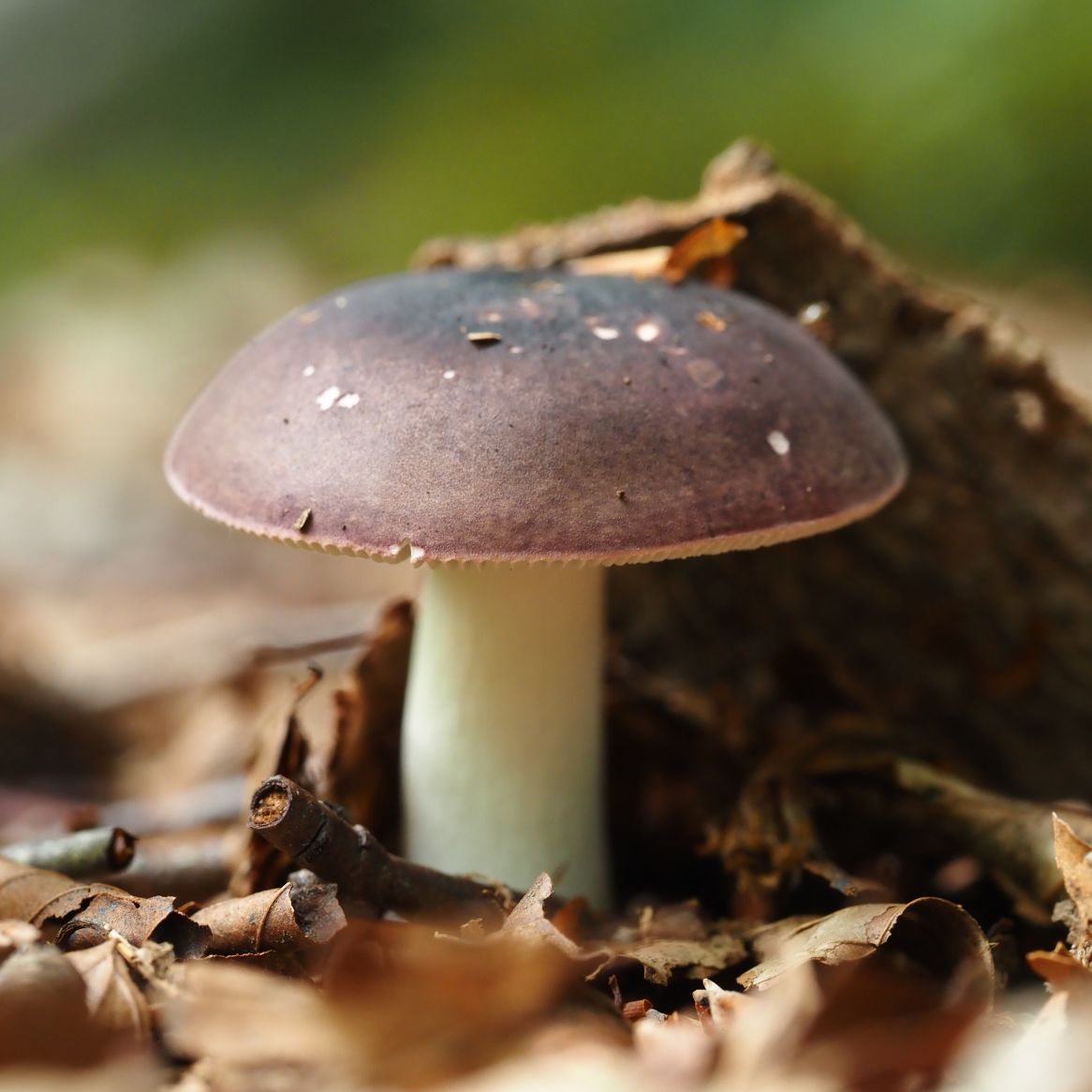
First there is a bolete with its pores and cap that has begun to turn upwards, growing from a stump. There’s a Leccinum or birch bolete of some sort standing tall (for its kind) in the soil. There are Russulas yellow, red, green and purple. These hard to identify fungi are a mental bridge between summer and autumn. They are also a welcome meal for squirrels and whatever can get there first.
It’s a reminder that the seasons are not concrete. There is give and take, building blocks can come tumbling down. Seasonal signs come with species appearing, some that pass like ships in the night.
This week I’ve been researching an article about deadly mushrooms. That post will appear here at some point but I felt like I needed to fit in some quality time with fungi in real life, especially as we have technically entered autumn. I visited somewhere in the Sussex Low Weald which is one of the most reliable fungi reserves I know.
In reality I found almost nothing, but for one of the most deadly mushrooms in the business: the deathcap (Amanita phalloides).
I found these two deathcaps growing close together underneath a beech tree. There was something so very strange about this, seeing as I’d spent the previous day reading about them, and only the second time I’ve encountered the species. Both sightings were in September. The bite taken out of one of the mushrooms is a good pointer to the fact that other animals can eat this fungus and not die. Unlike many people who have sadly passed away after mistaking this fungus for something edible.
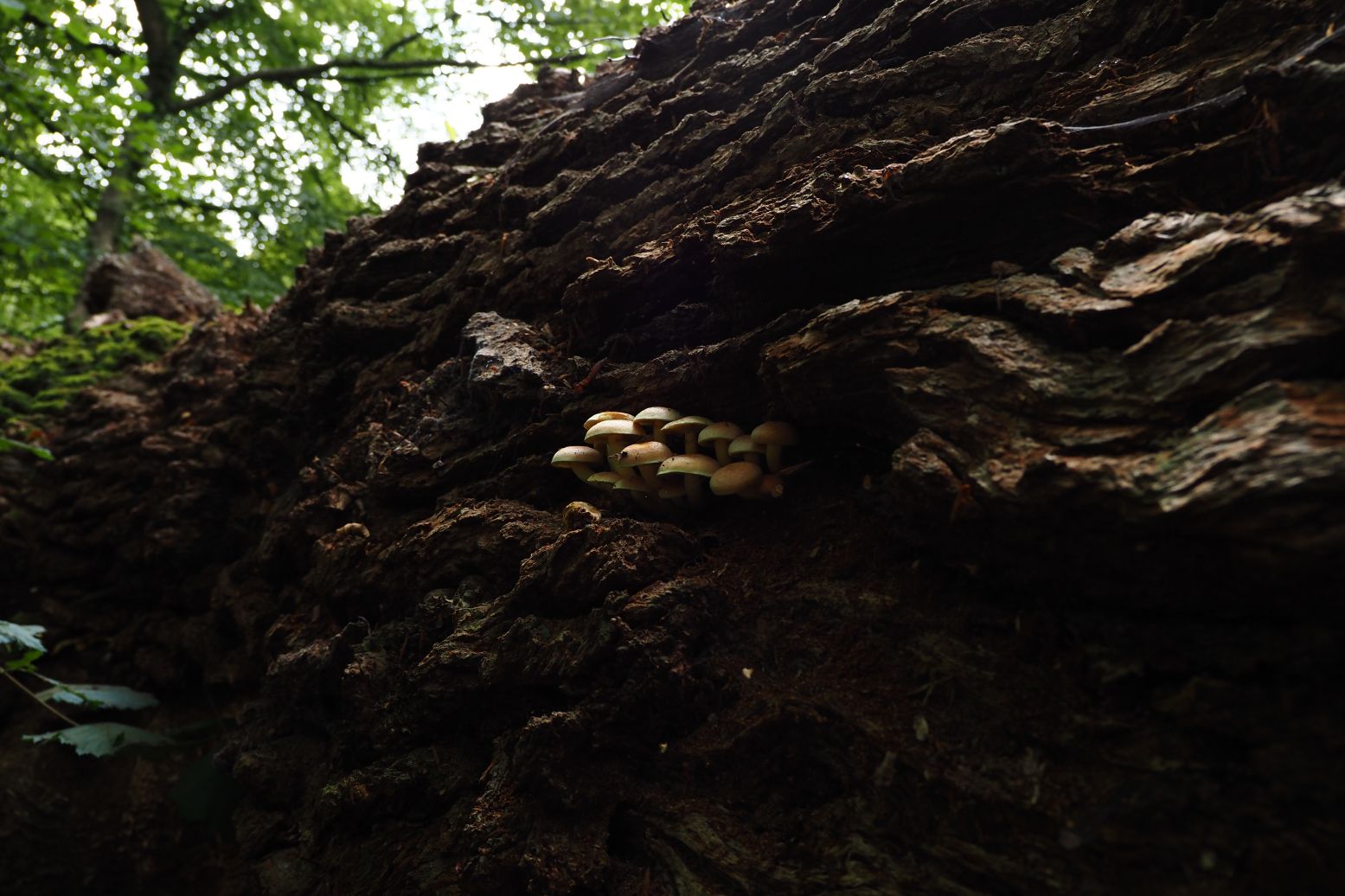
To find mushrooms to photograph in these dry periods, one of the best bets is to seek out large deadwood, particularly wood in shade. Sulphur tuft was the other mushroom I found, another toxic species. Seriously, what is that all about! Back off, nature.
In truth, sulphur tuft is one of the most photogenic species you can find. At this time of year when there is less rain it looks fantastic. It’s also supposed to be bioluminescent, glow-in-the-dark:
If you’re interested in that, this excellent podcast episode of The Mushroom Hour is a must listen. I learned that it could be the case that many more species of fungi were once bioluminescent. Over time, they have lost it.
Lichens are, fundamentally, ascomycote fungi. This means that they are much happier in wet weather. I was looking around an old oak stump when I found this beautiful heart-shaped Usnea lichen.
It’s nice to end on a fungus that won’t kill you.
Thanks for reading. Don’t eat poisonous mushrooms.
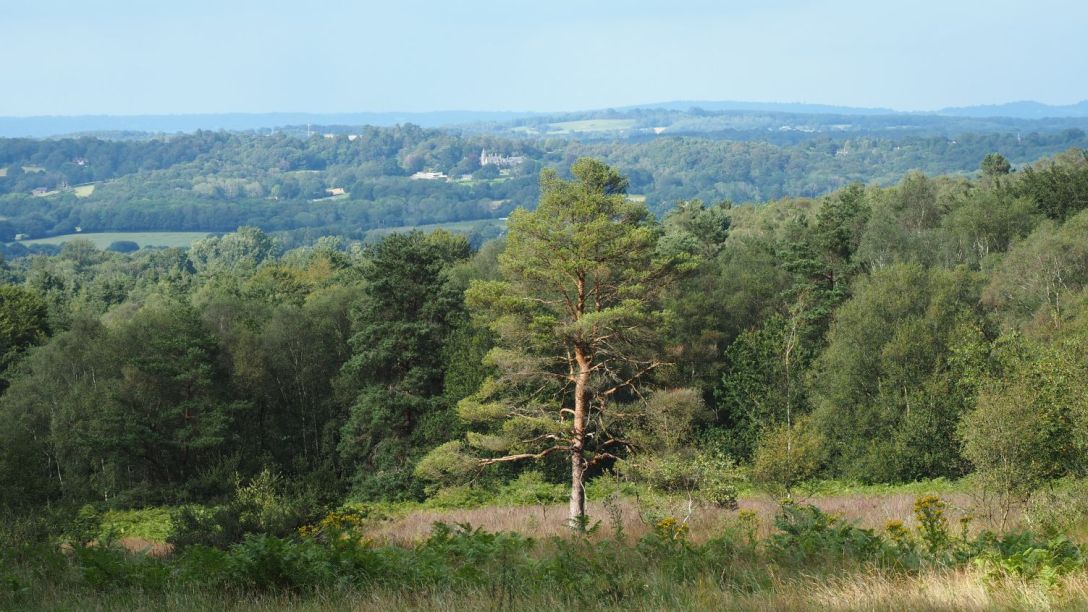
I was lucky enough to have a couple of hours to spend in Ashdown Forest last week. The light was beautiful and the views expansive across this famous part of the Sussex Weald. For those who don’t know, Ashdown Forest was the inspiration for A.A. Milne’s Winnie the Pooh. I very nearly titled this blog ‘Winnie the shroom bear’.
The mushroom situation at the moment in Sussex is one of a twilight late summer boom, with not really enough rain recently to feed the fungi and maintain the fruiting window. However, where there is shade there is moisture and therefore there is hope.
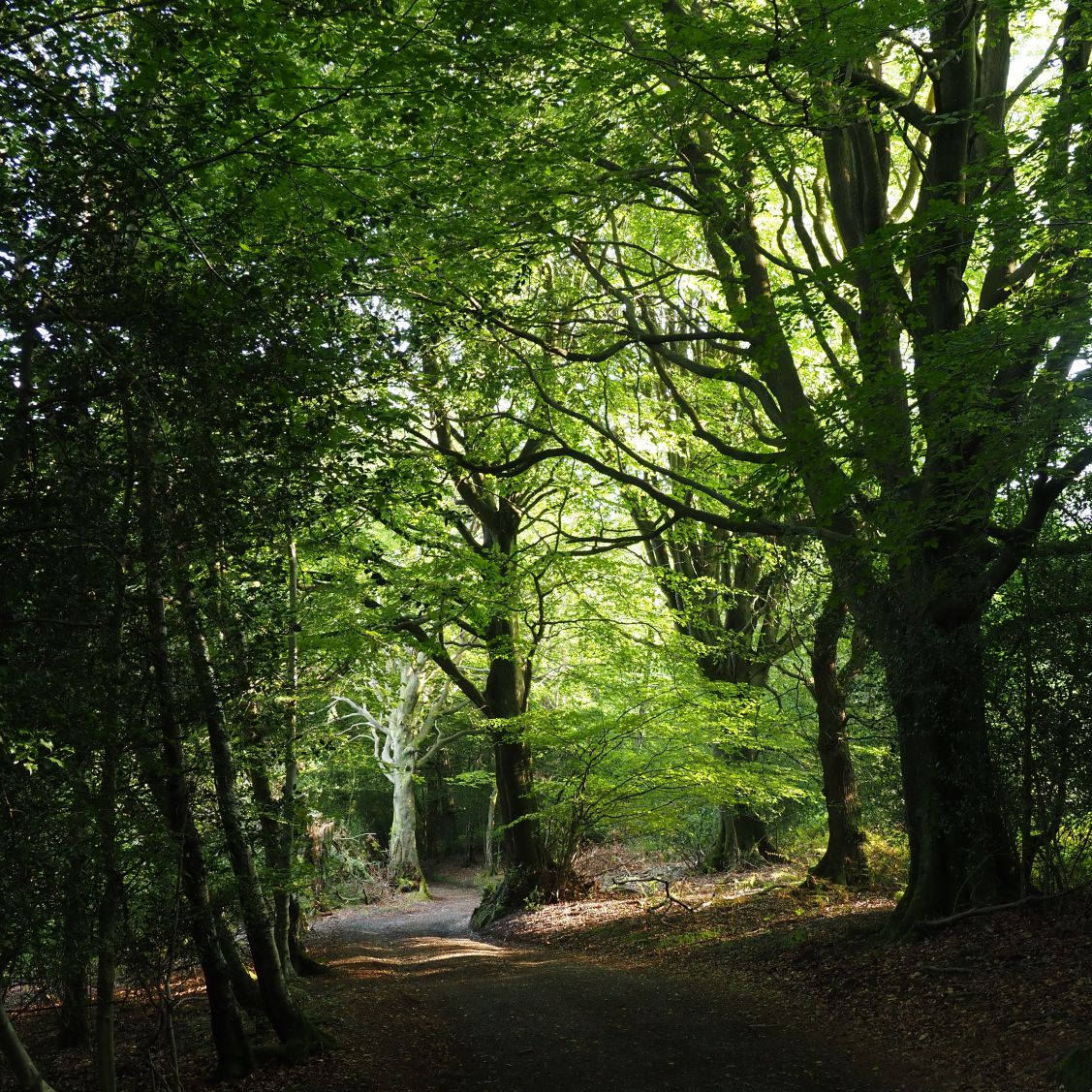
I followed a path into the woodland, away from Ashdown Forest’s famous heathlands. The ground did look quite dry, so I wasn’t expecting to find too much growing from the soil.
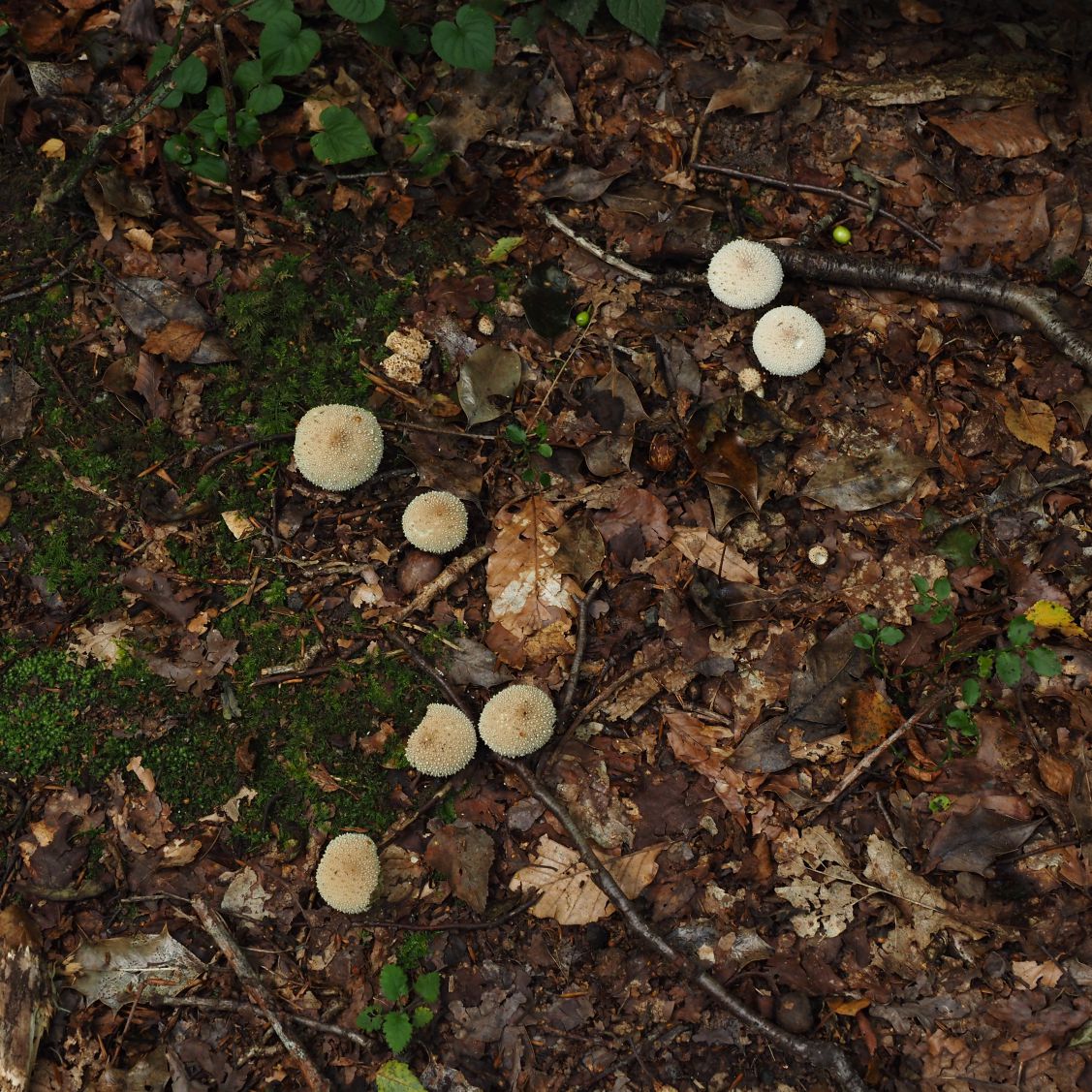
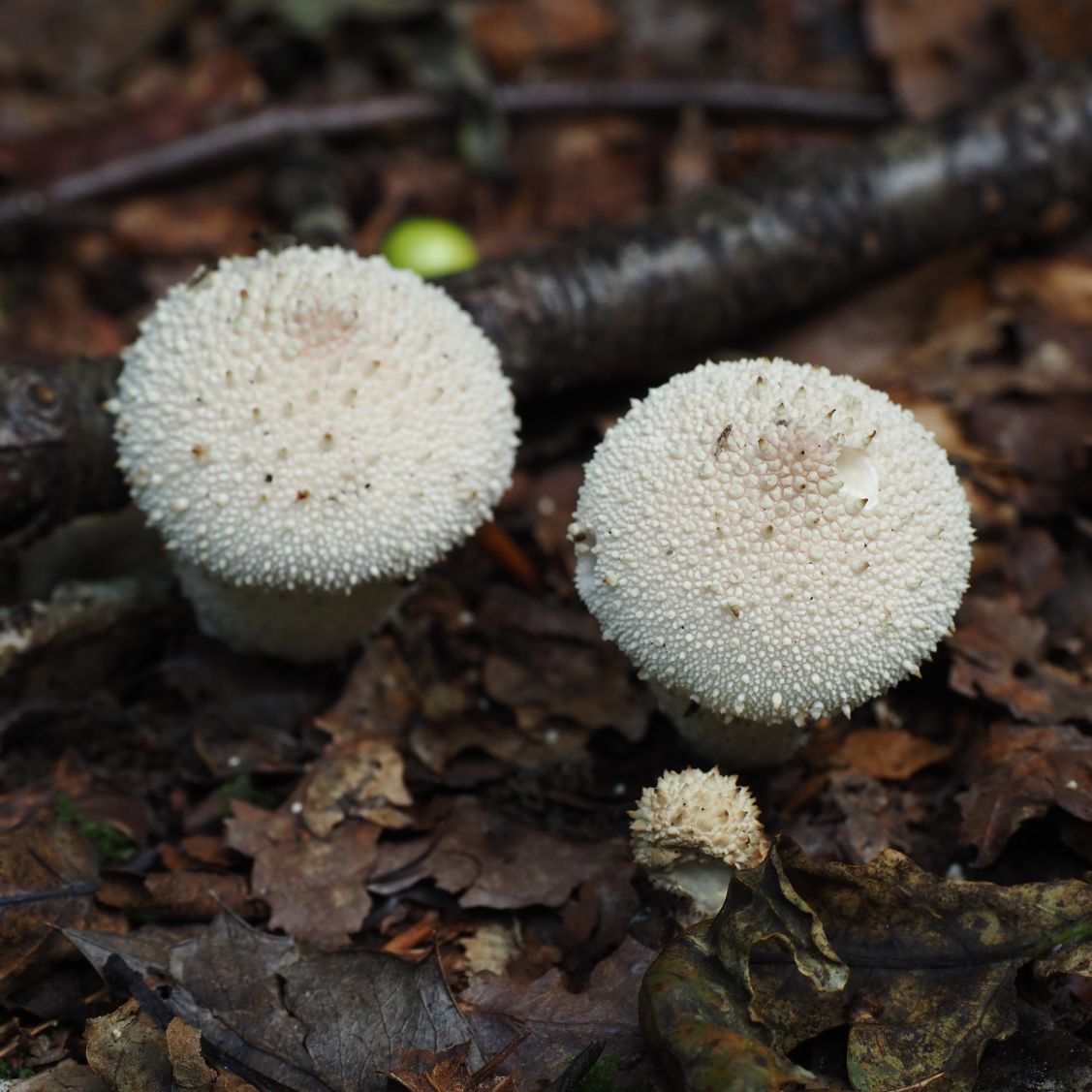
My first sighting was, in fact, in the soil. In the shade at the edge of the path I found a group of common puffballs.
This is an edible species, and though two looked in fairly good condition, I wasn’t looking to forage for food.
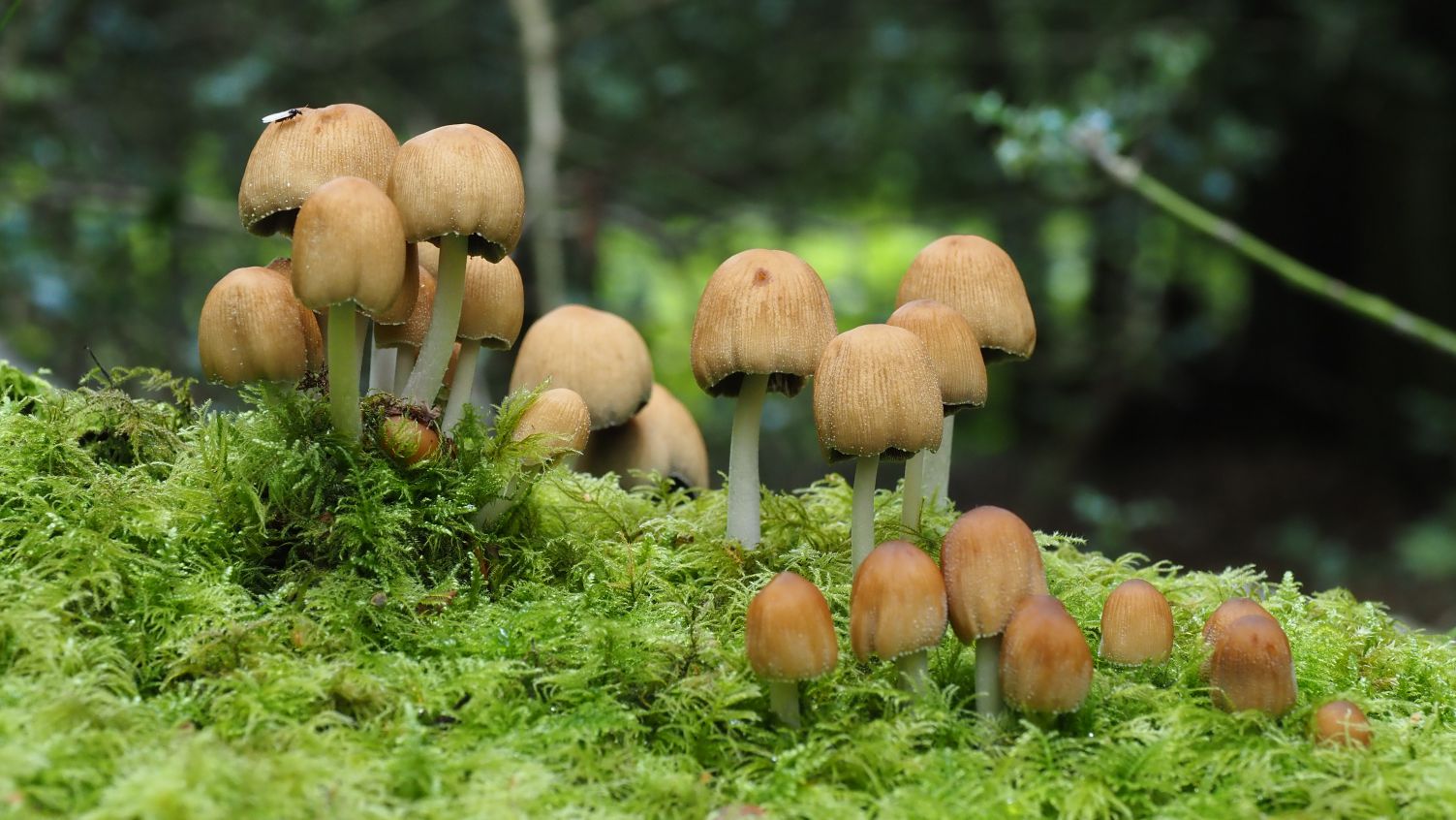
On the opposite side of the path a piece of wood was covered in feather moss. The moss was home to a gathering of glistening inkcap mushrooms. They were in wonderful condition, with varying stages of growth in the bright green bed of bryophytes.
Under a beech tree I noticed some large fallen wood sitting in heavy shade. This is always a good place to find fungi because there will be high levels of moisture and damp throughout the year. Especially under beech which casts heavy shade through its leafing phase.
My guess for this species would be stump puffball which grows in large numbers on decaying wood. From a distance they looked like fairy inkcap, but were of course much larger when looking properly. As I knelt down to take these photos, the sunlight broke through on occasion and then faded away. It was a fateful fungi photo.
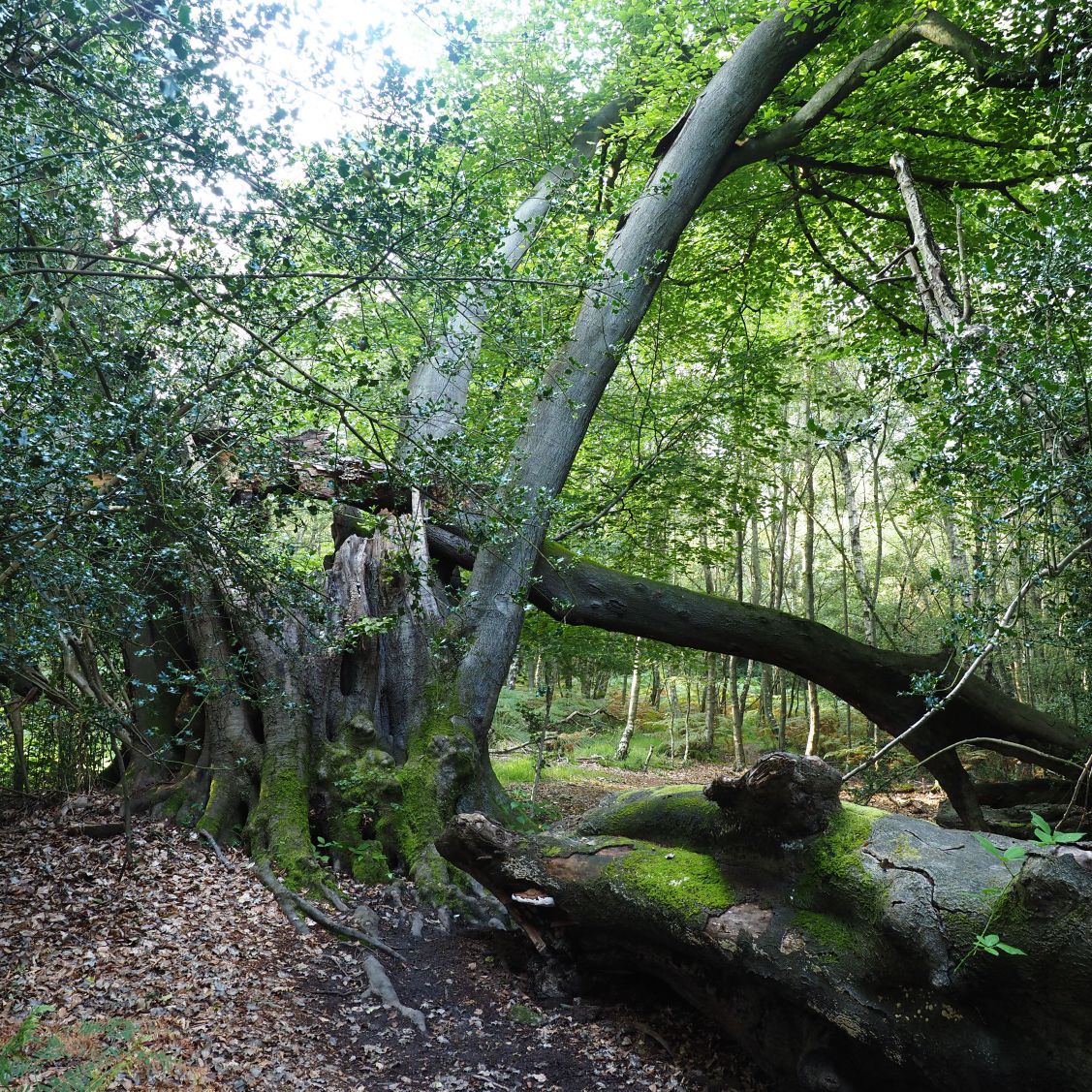
Off of the path, as I considered whether there was enough time to take things a bit deeper into the woodland, I found an incredible beech tree. This looked like an old beech pollard (regularly cut high) or perhaps a coppice (regularly cut to the stump for regrowth). It had lost a huge limb which lay in front of it, providing a home for a Ganoderma bracket fungus, as so many beech trees both standing and fallen do.
I don’t know Ashdown Forest at all well. It feels to me quite an elusive place. This short walk allowed me to experience more of its quiet allure. I hadn’t expected to see so many unusual beech trees, which would probably qualify as veteran with the discerning experts out there.
This is another wonderful beech tree which has experienced damage to its trunk. The image above shows the tree’s own ‘aerial’ roots feeding of its own decaying wood. No doubt fungi has its role here in helping the tree roots to feed on itself by softening up the wood with its own decay processes.
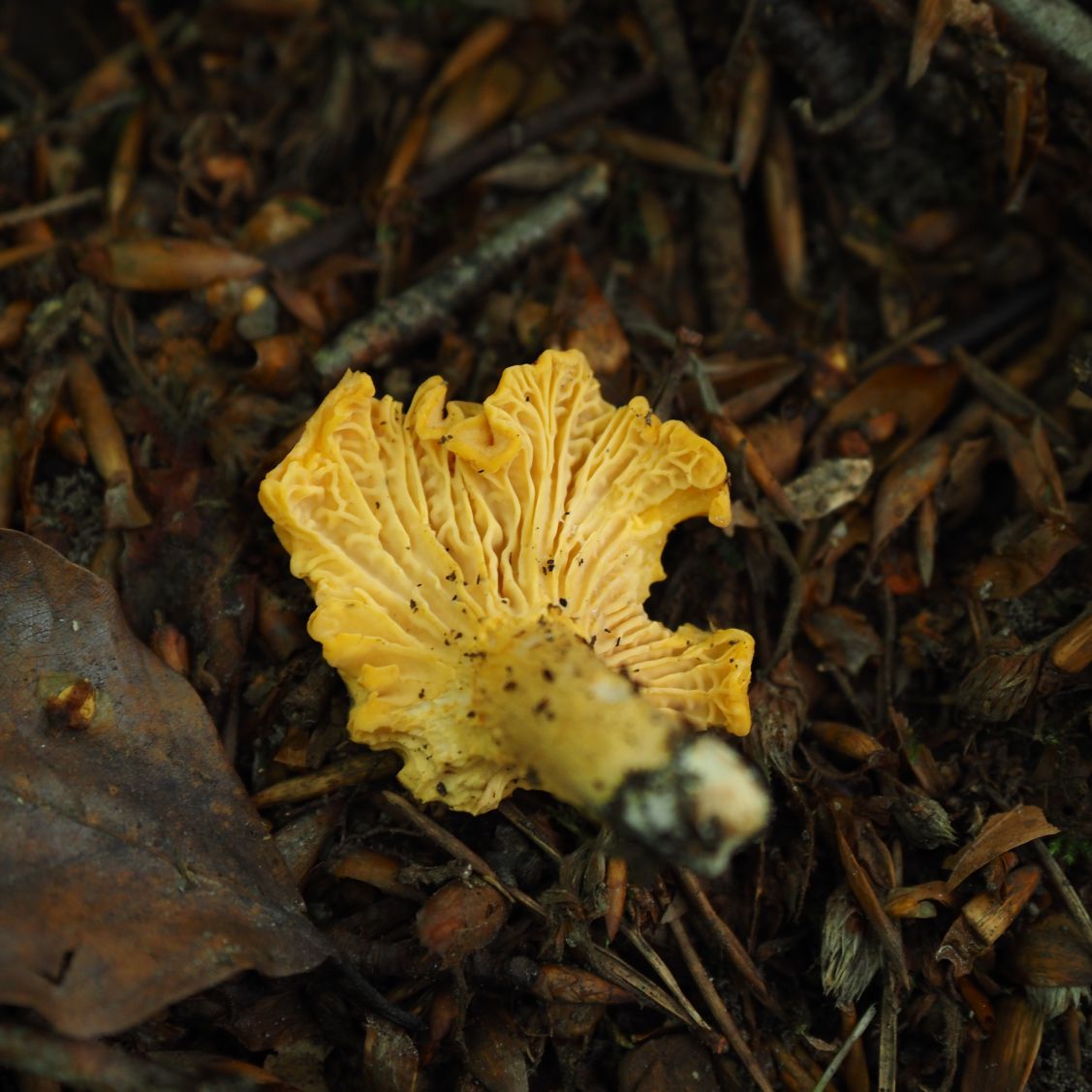
My hour was up and I had to head back to the car park. On the return leg I noticed some very small yellow mushrooms on the bank built up along the footpath. It clicked that they were probably chantarelles. I looked at the gills of one that had fallen loose and could confirm they were. There is a beech leaf in the left of the image above which provides scale – they really were tiny.
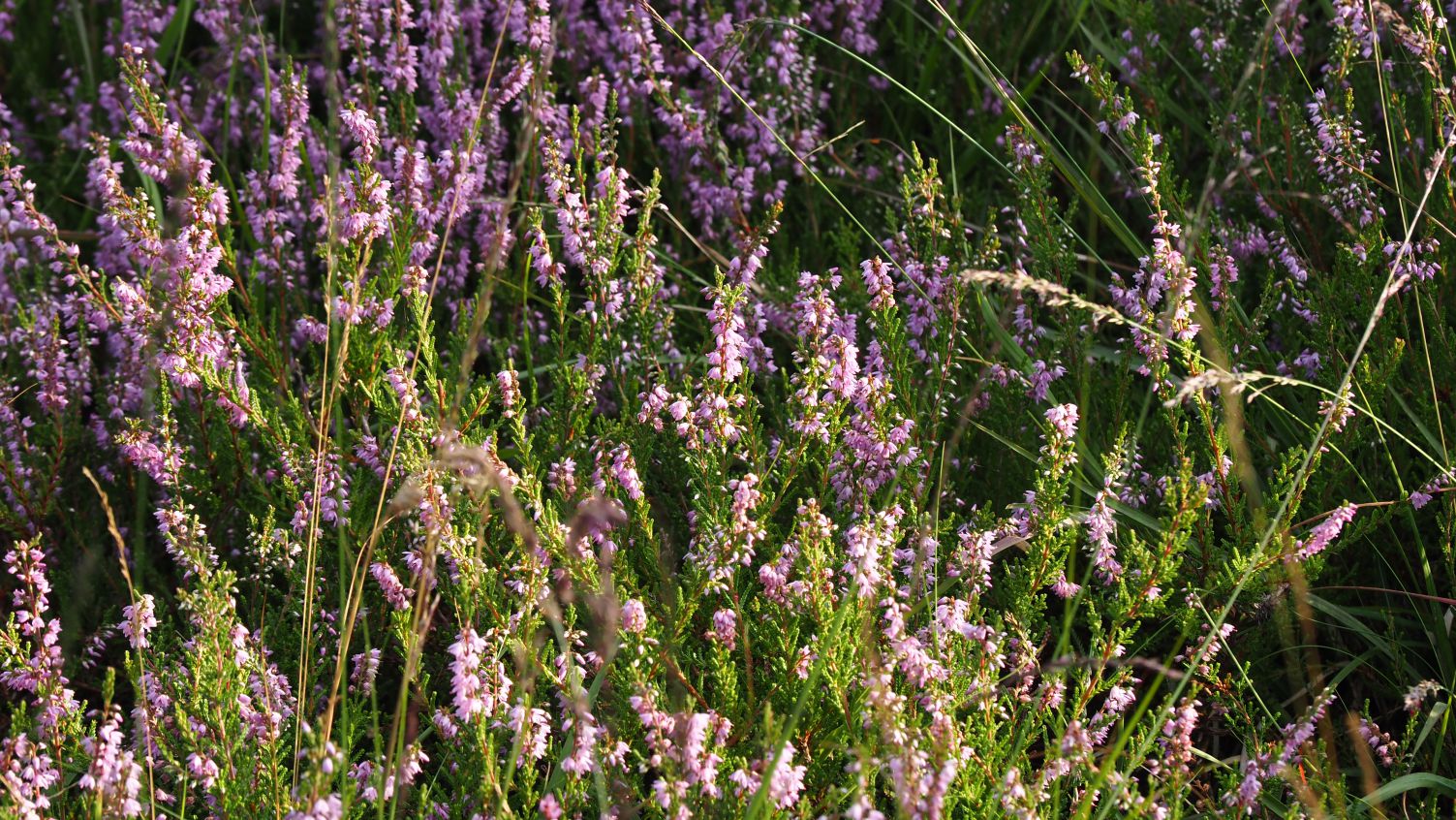
On the way out I noticed the heather was flowering, one of the final acts of summer. It’s always good when there are shrooms on show to support this darkening shift in seasons. The days are getting shorter, the leaves will soon be on the turn and the mushrooms will be arriving.
On several occasions I’ve had the pleasure of visiting the village of Appledore on the Kent side of the Kent/Sussex border. It’s where the Weald, a core subject area for this blog, moves between the two counties. A lot of what’s featured here is in the realm of Romney Marsh because of the connecting history of the landscape, at the south-eastern edge of the Weald. You can see a great interactive timeline of the history of Romney Marsh here.
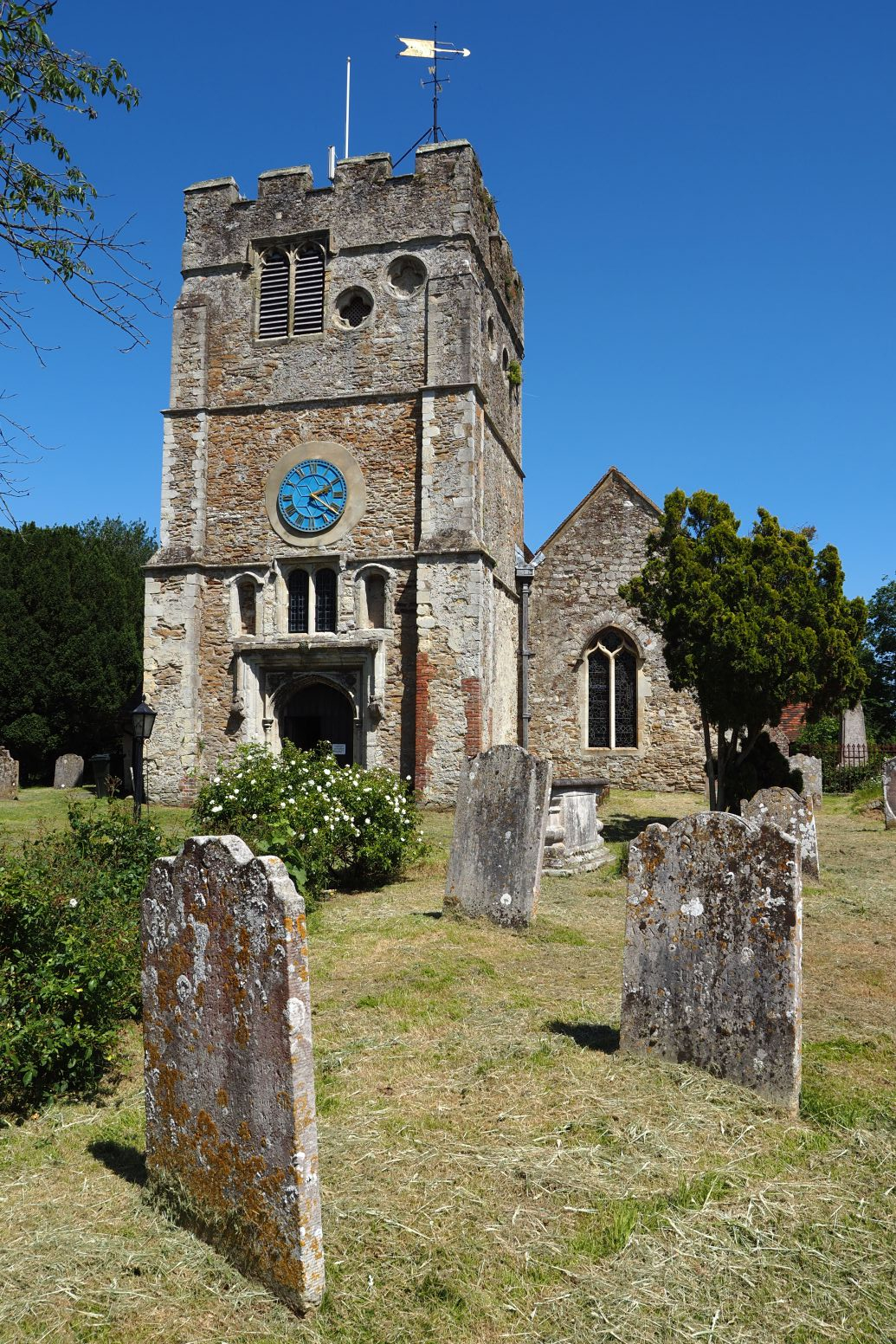
The Church of St Peter and St Paul, Appledore, Kent
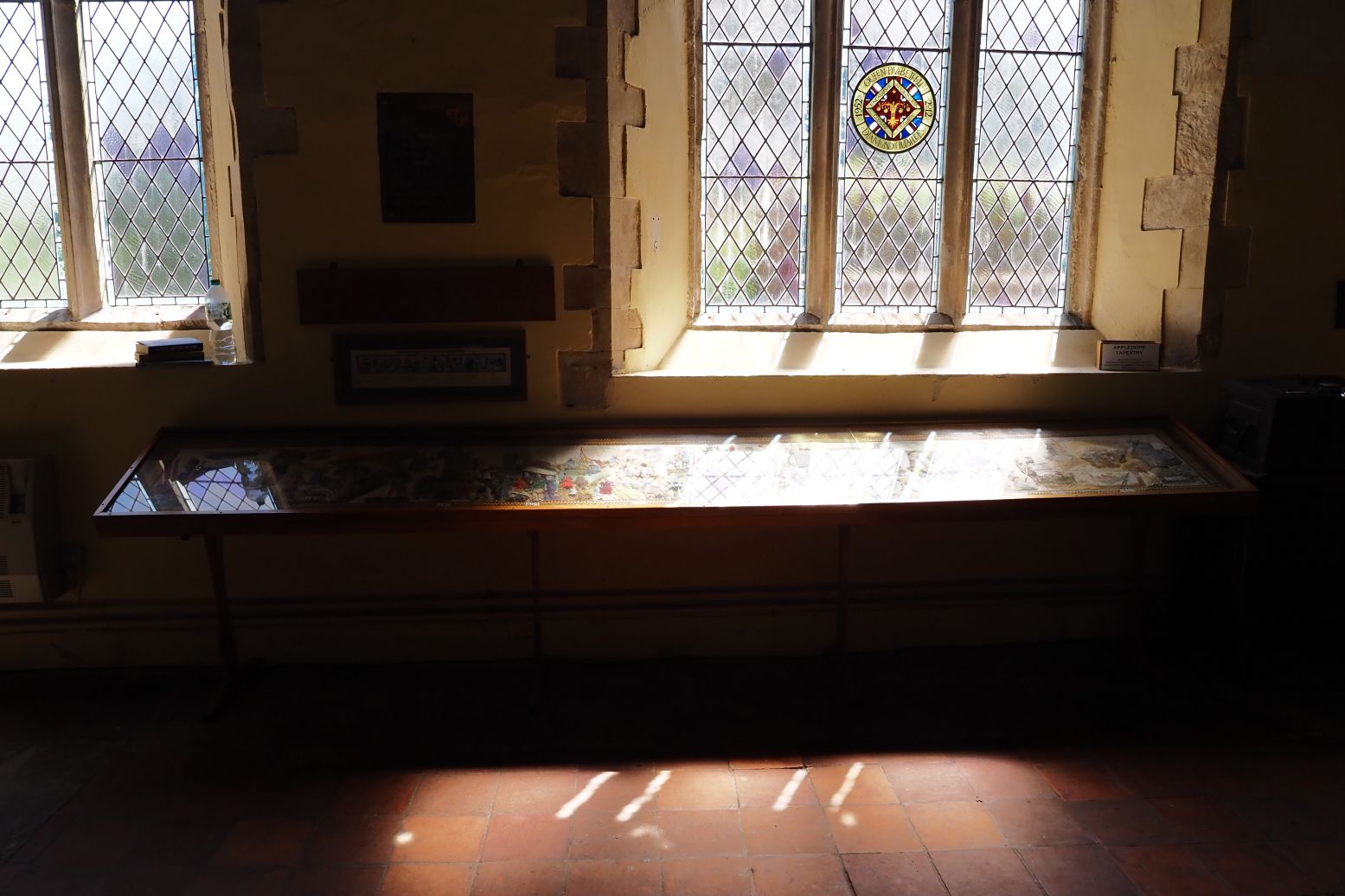
Churches are some of the most important cultural and historic places in England today. I personally find them very peaceful and welcome places to drop into, or shelter, often when out on a walk somewhere. The village of Appledore has a church steeped in history: The Church of St. Peter and St. Paul. Inside, there is a tapestry which was completed in 1988 to celebrate the church’s 800th birthday.
I don’t know much about tapestries beyond the obvious Bayeux Tapestry most English children studied at school, depicting the Norman Conquest of England in 1066. But this tapestry is a great achievement and contains beautiful details, documenting the incredible history of this part of what is now called England.
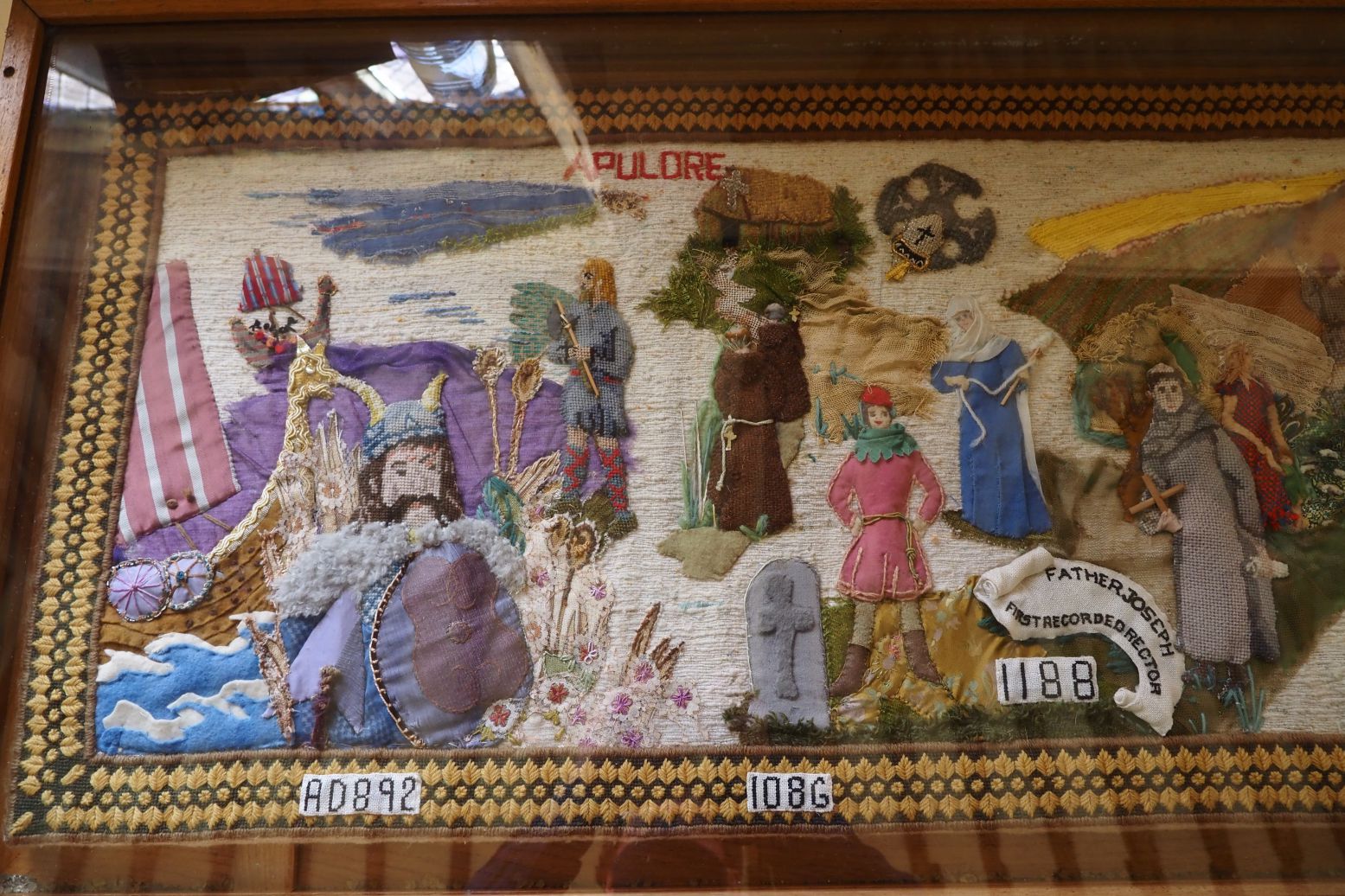
The tapestry begins with trouble for the local Anglo-Saxons, when 5000 vikings arrived from Denmark in the year 892 via the River Rother (the eastern Rother, rather than the West Sussex/East Hampshire Rother).
Scandinavian raiders had first dropped into England at Lindisfarne, Northumberland in 793, when they sacked the monasteries, killed the monks and took their valuables. At this point Appledore was known as Apuldre, meaning ‘apple tree’ in Old English. The Vikings would have definitely been interested in the apple trees. Here we can also see depictions of 1086 when the Domesday Book was completed after the Norman Conquest of 1066.
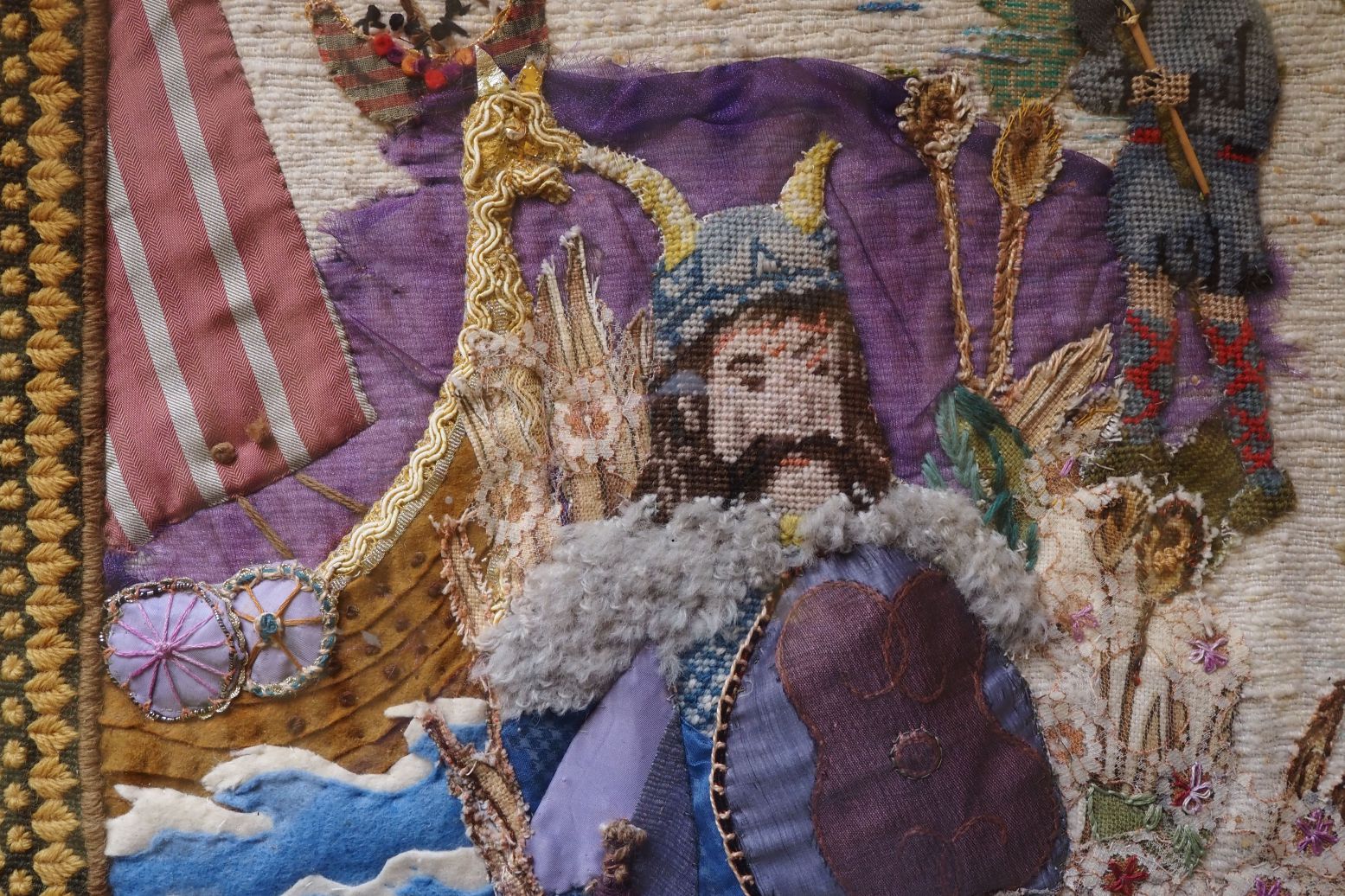
This is a little bit what I looked like after lockdown hairdresser restrictions were in place for several months, minus the beard. The detail is excellent, with the use of different materials to bring the scene to life, not least the viking man’s fleece.
To the left is an Anglo-Saxon man (with stereotypical, but not necessarily accurate, golden hair) watching as the vikings appeared, with axe in hand. Next to the old name for ‘Apuldre’ you can see what must have been the original church, a wooden building of Anglo-Saxon origin. Many Anglo-Saxon churches were destroyed and rebuilt in stone by the Norman invaders.
1188 shows us the first recorded rector, Father Joseph. The landscape behind appears to show a farmed landscape with reeds being cut from the wetlands of Romney Marsh. The English Knight may indicate the King Henry III leading an army to France.
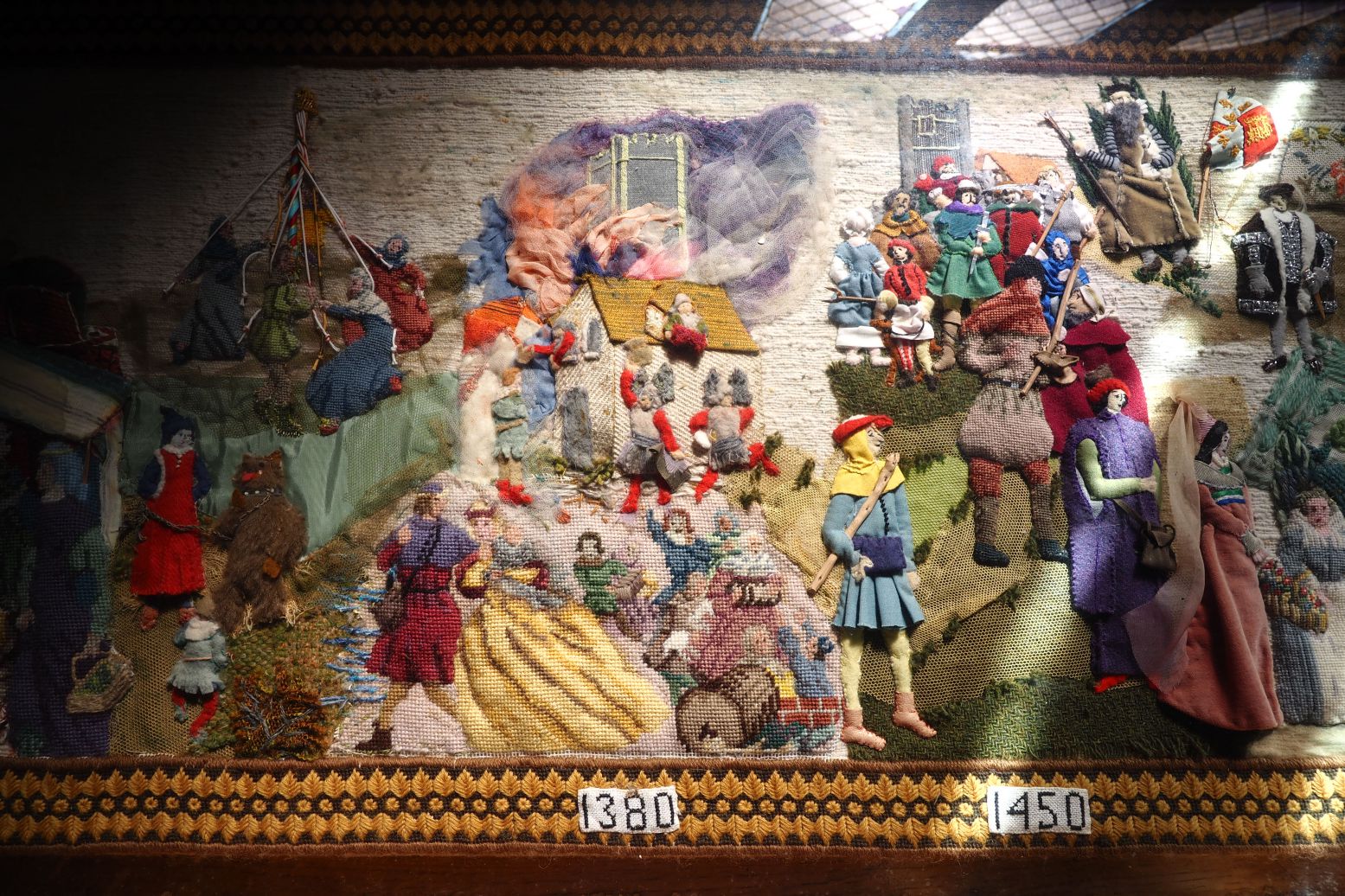
1380 highlights the burning of the church by French soldiers. I can’t find any other information on this other than it being described as a ‘raid’. There is long-running beef between England and France, with this part of Kent/Sussex vulnerable because it was so close to the Channel. In the top right you can see Henry VIII (1491-1547) hanging out.
Let’s take a look at those flames in greater detail. I think it’s likely the colours in the tapestry have been dimmed by its positioning next to the window, which makes the fire seem less severe.
In 1450 we see a group of people partaking in what I am guessing is Jack Cade’s Rebellion. This was a similar uprising to that of the Peasant’s Revolt in 1380:
Leading an army of men from south-eastern England, the rebellion’s namesake and leader Jack Cade marched on London in order to force the government to reform the administration and remove from power the “traitors” deemed responsible for bad governance. It was the largest popular uprising to take place in England during the 15th century.
Kaufman, Alexander L. (2009). The Historical Literature of the Jack Cade Rebellion. Burlington: Ashgate, p. 1. via Wikipedia
Here we see the detail of a bear being kept for baiting or entertainment. The expression on the girl’s face and her hands in pockets show a level of disdain for the poor bear. I like the detail in the chain, despite what it’s depicting.
I don’t know if Shakespeare (1564-1616), top left across from Elizabeth, visited Appledore but his work and legacy stands over the time. I’m not sure who is getting happily married in 1650.
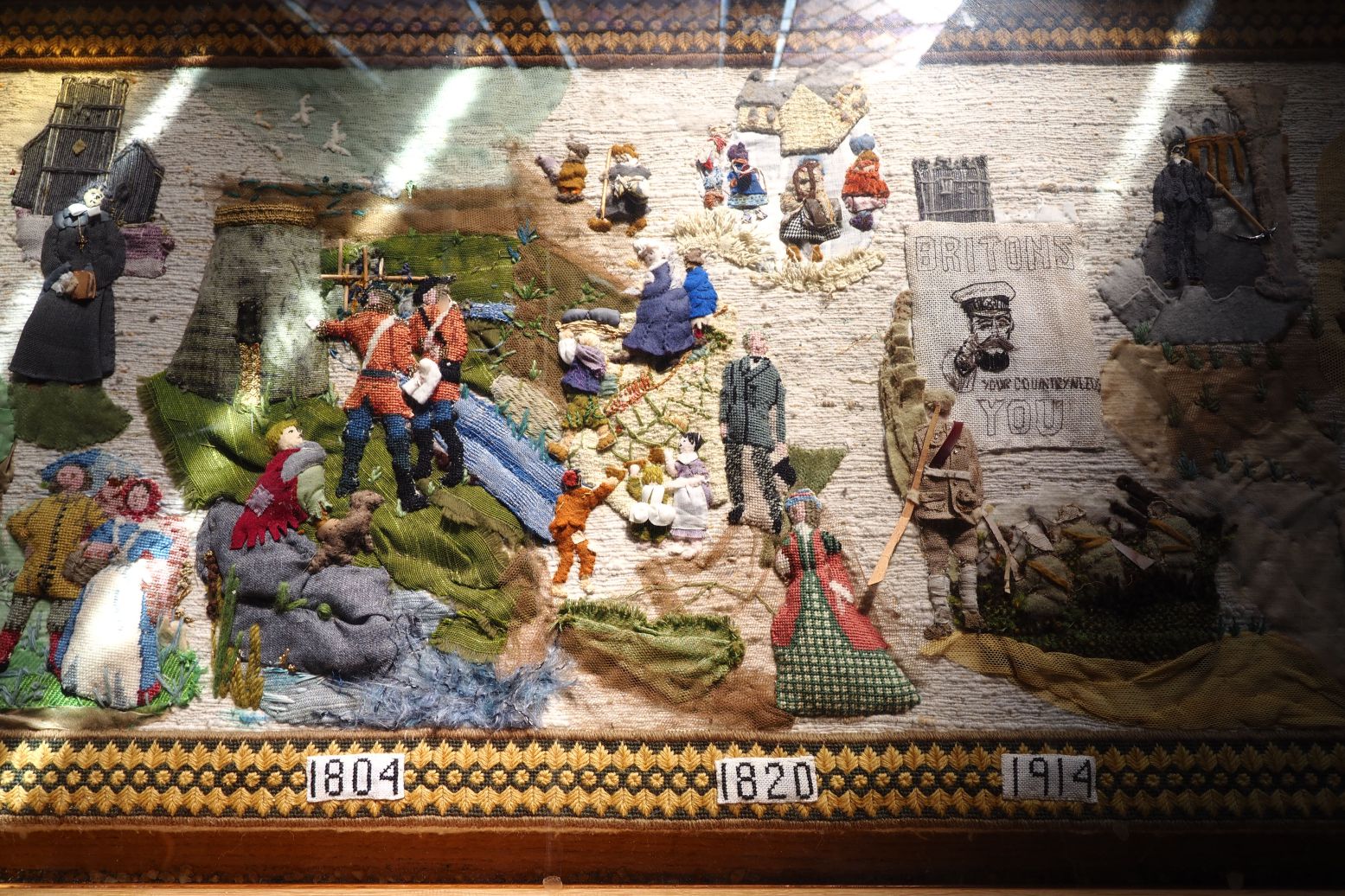
In 1804 we can see the development of the Royal Military Canal in Romney Marsh, which began on the 30th October at Seabrook, Kent. It was built to slow any invasion from Napoleon’s Army, which was a big worry at that time. You can now walk 28 miles of the Military Canal.
In 1914 we see the call-up for the First World War (1914-18), which was not a long journey for anyone living in coastal Kent or Sussex. I’m struggling to work out the chap with the pick-axe in the top right, however. I can appreciate it’s an industrial image, with what may look like a viaduct in the background.
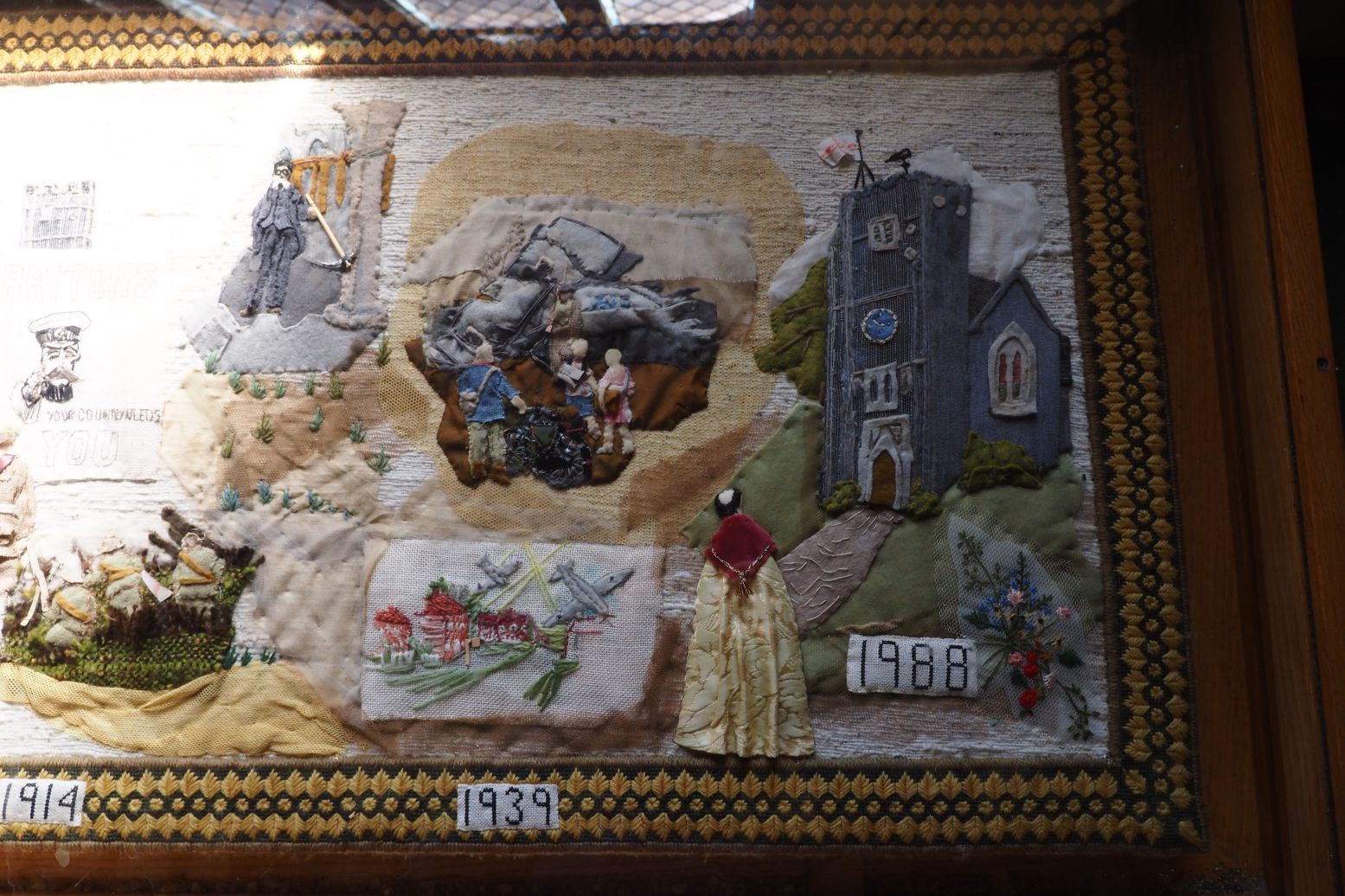
This detail could confuse you as it looks a bit like the church collapsed. In actual fact it’s a German military plane that has been shot down in the Second World War (1939-45).
In 1988 the tapestry was completed, with the vicar of the time standing at the end of the path admiring the building and all it has been through.
You can buy a leaflet which describes the tapestry in detail, but obviously I bought it and then lost it!
If this wonderful tapestry has taught me anything, it’s that peace between England and France has not always been there. England has always been a very sought-after place. Its cultures have always been diverse, rather than the mono-ethnic notions trumpeted today by ultra-nationalists.
I may come back to update this post when I get new information and will note any edits.
In June 2021 I undertook a variant (not that kind of variant) of the Wildlife Trusts’ 30 Days Wild campaign. I decided to try a month-long project of taking a macro photo every day: #30DaysMacro.
It was a lot of work, mainly in processing and tweeting the photos to keep up with the community aspect. But it reminded me of the importance of making time for yourself each day, even if only for 5-10 minutes, to go outside and look at things other than a computer or phone.
In the past 18 months my salaried work has become screen-based, when once I used to spend several days outdoors each week talking to people and monitoring wildlife. It’s not healthy, but it’s a byproduct of UK lockdowns.
I feel a bit as if this was such an intensive assignment that it has burned me out a bit photography-wise, among everything else happening in Brexitland (it didn’t come home in the end 🦁🦁🦁). I definitely hurt my back from some poorly considered leaning over waist-high hedges (bending with my lower back, not knees, etc.).
Almost all the photos were taken in my small urban garden, with a handful taken away from home. All were in Sussex. I am adamant that travelling for macro is often unwise, depending on your focus. Macro takes a lot of time and if photographing wildlife, you need to know your patch. Otherwise you spend ages trying to understand the landscape when you could be taking photos.
Below I go through the photo captured each day. Hopefully this post unclogs my macro blogs, which have been waiting on this monster post for a while now.
Thanks for taking a look and I hope it inspires you to consider the wilder things in life.
1st June 2021: aphids protecting their young (I think) on the underside of a sycamore leaf.
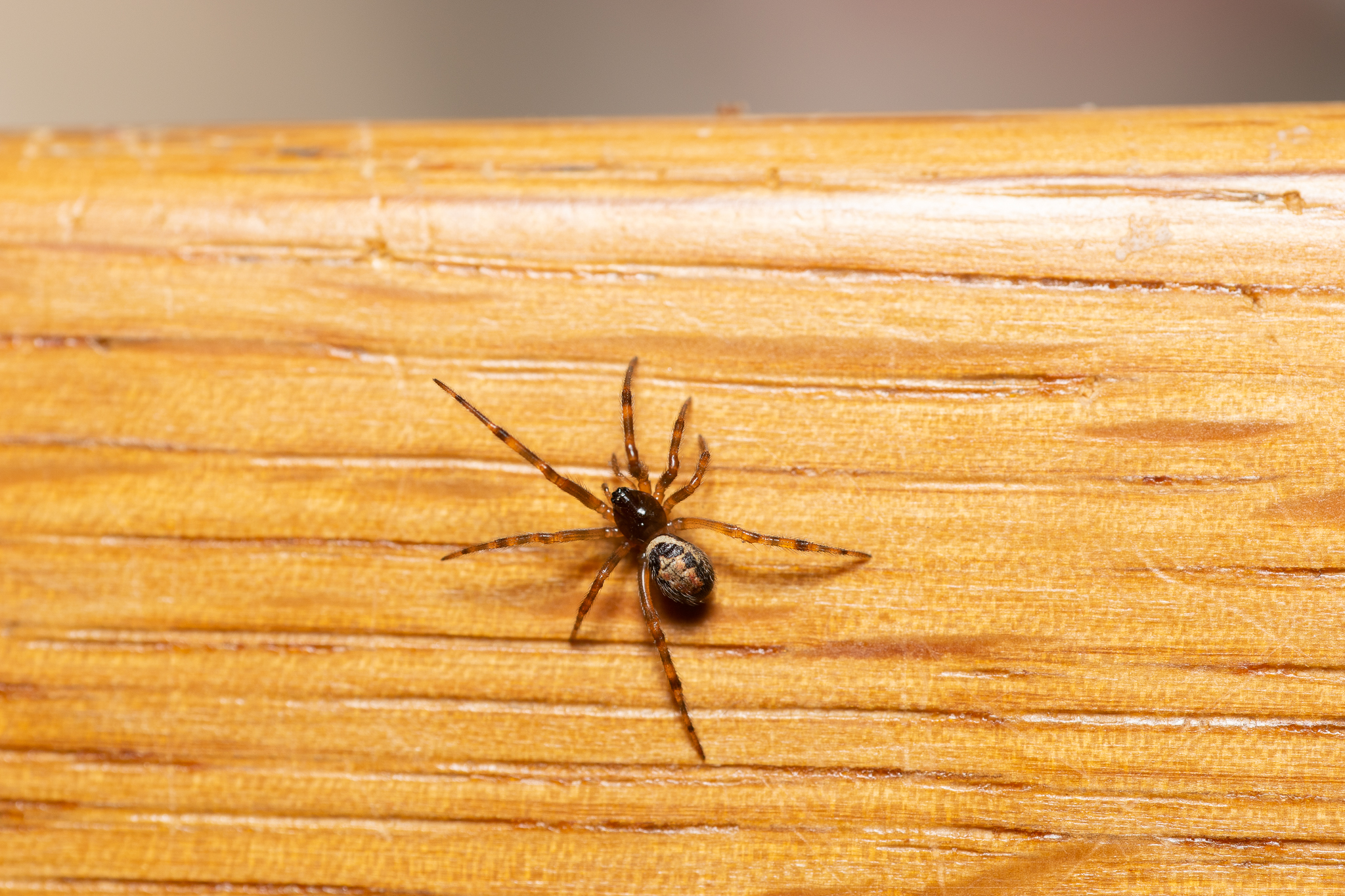
2nd June 2021: a noble false widow spider in my porch. There is a whole lot of hysteria about this species, which has actually been in the UK since the 1800s. It has caused me no trouble.
3rd June 2021: a moth resting on a leaf at dusk. I was working quite hard to get this pic and as the temperature fell it calmed a bit and let me get close.
4th June 2021: a noble false widow spider on my kitchen surface ledge. The weather wasn’t great on this day, so I had to find something in my house!
5th June 2021: a red and black froghopper in the South Downs near Alfriston. I walked 20 miles on this day for Macmillan Cancer Support and found this lovely hopper snoozing in the field edge.
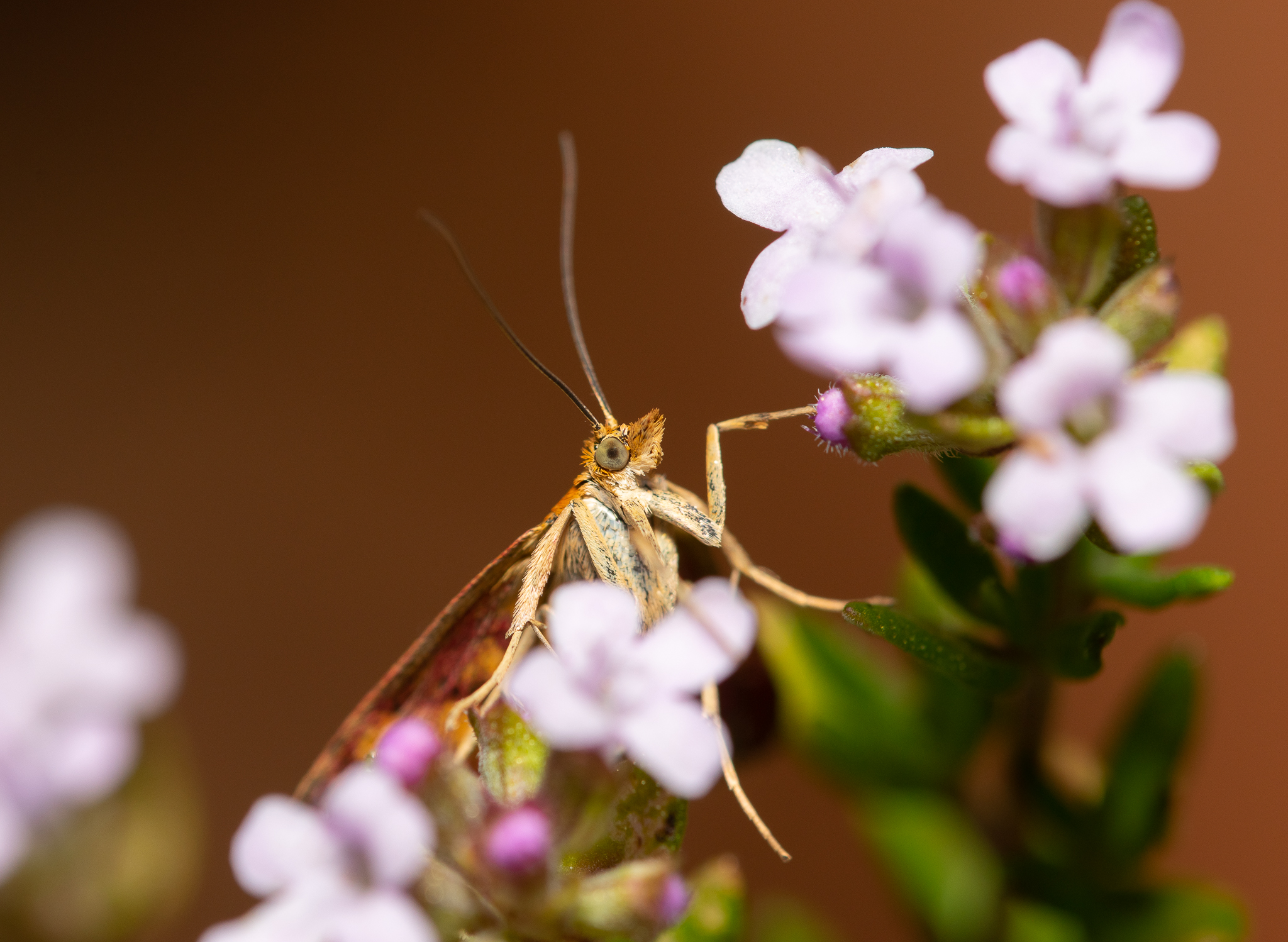
6th June 2021: a mint moth selecting its preferred thyme flower. This is one of the more common or visible day-flying moths I encounter.
7th June 2021: a green shieldbug, the most common of its kind in my garden.
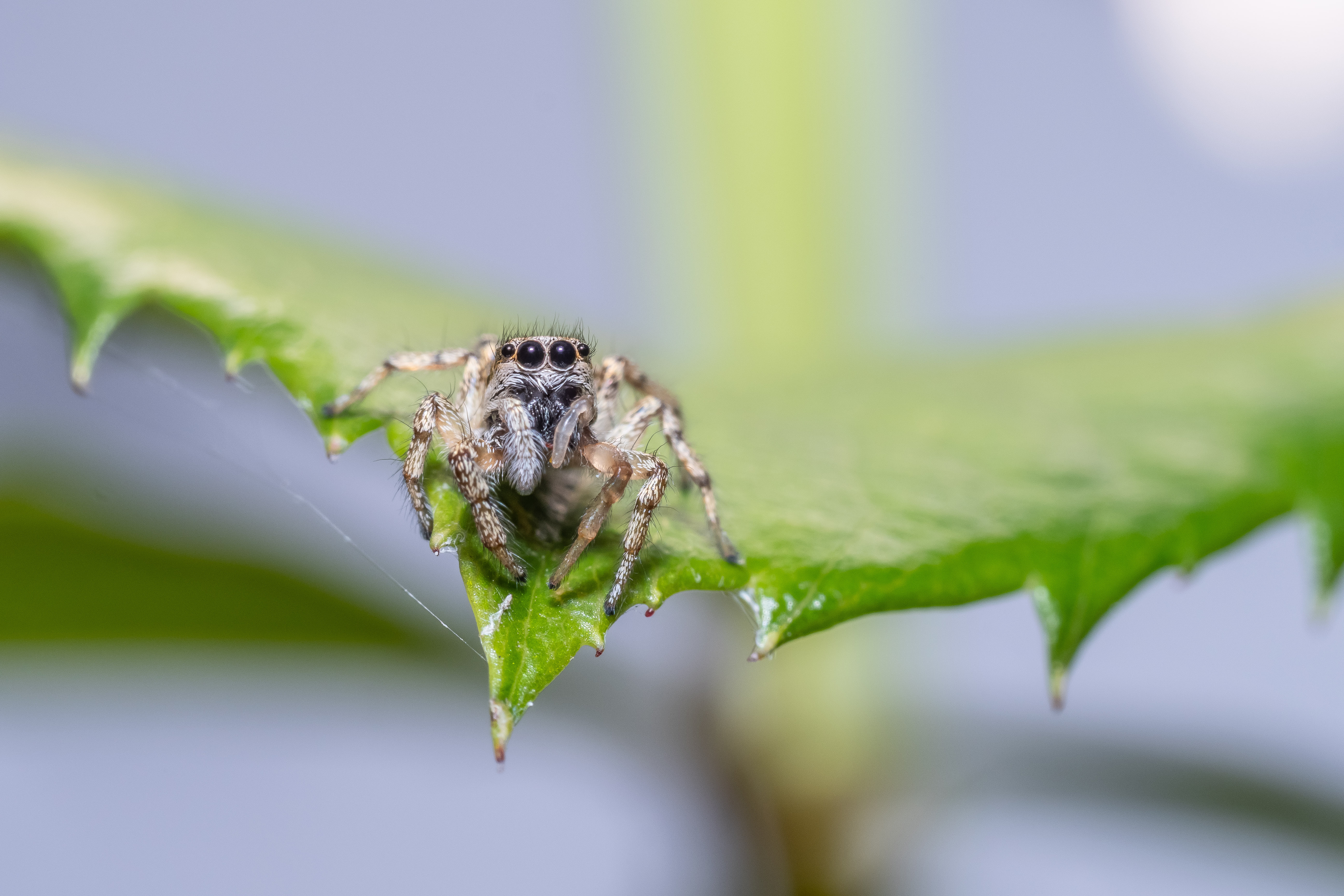
8th June 2021: one of the highlights – a fencepost jumping spider in my garden (on the fence!). I wrote a post (lol) about this encounter which you can read here.
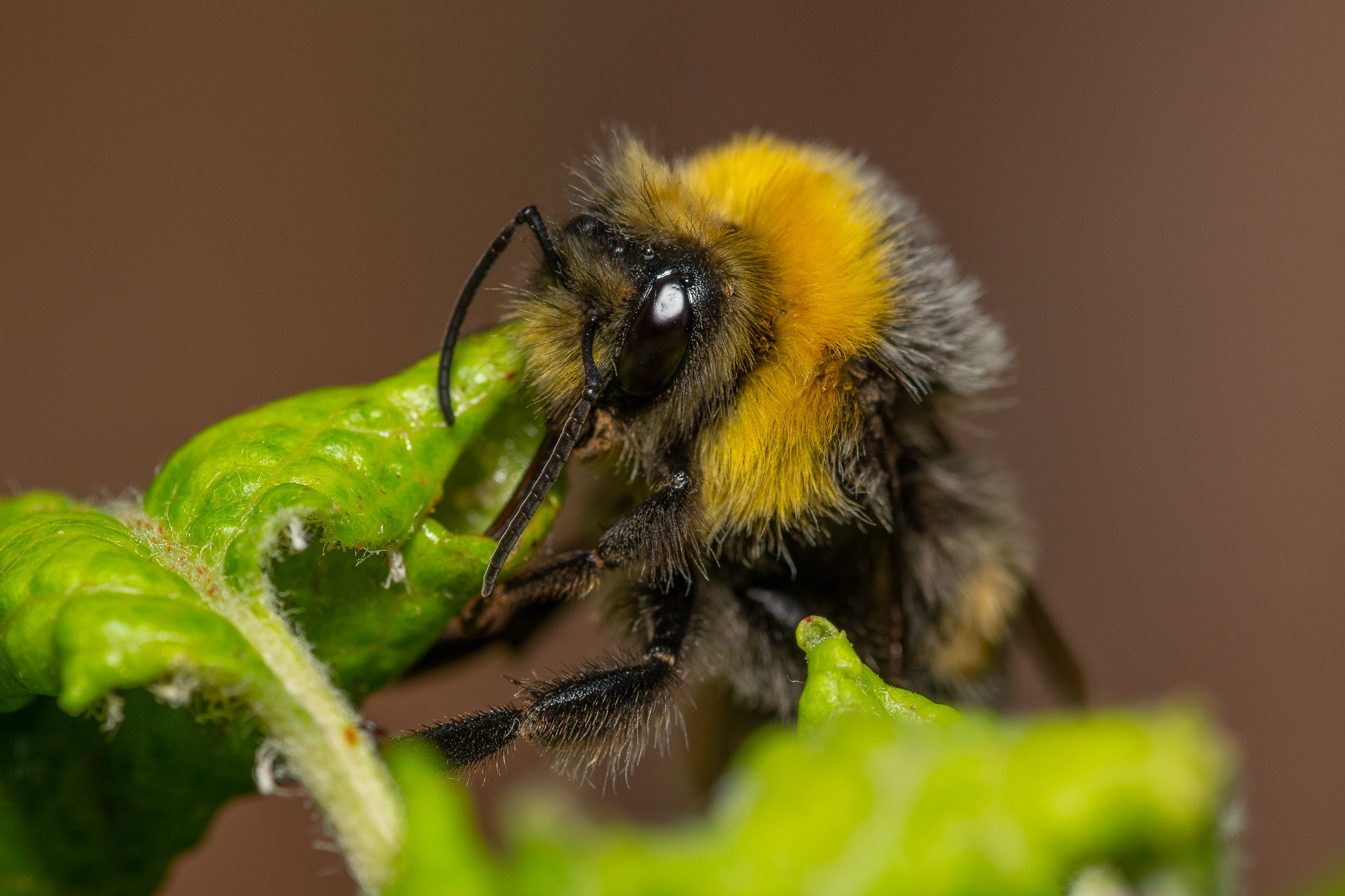
9th June 2021: a bumblebee worker drinking aphid honeydew from the curled leaves of an apple tree in my garden. This was fascinating behaviour, with many bees of different species visiting this tree to nectar. I posted it on Twitter and a lot of people got in touch to say they were seeing the same thing. Glad I shared.
10th June 2021: a wonderful caterpillar in my green alkanet patch. I’ve not attempted an ID yet.
11th June 2021: this is a fly I see often in the garden. It is so cool. Its wings often whirr around its body as it walks around a leaf.
12th June 2021: a weekend away in East Sussex, met this well-travelled painted lady butterfly along a country lane.
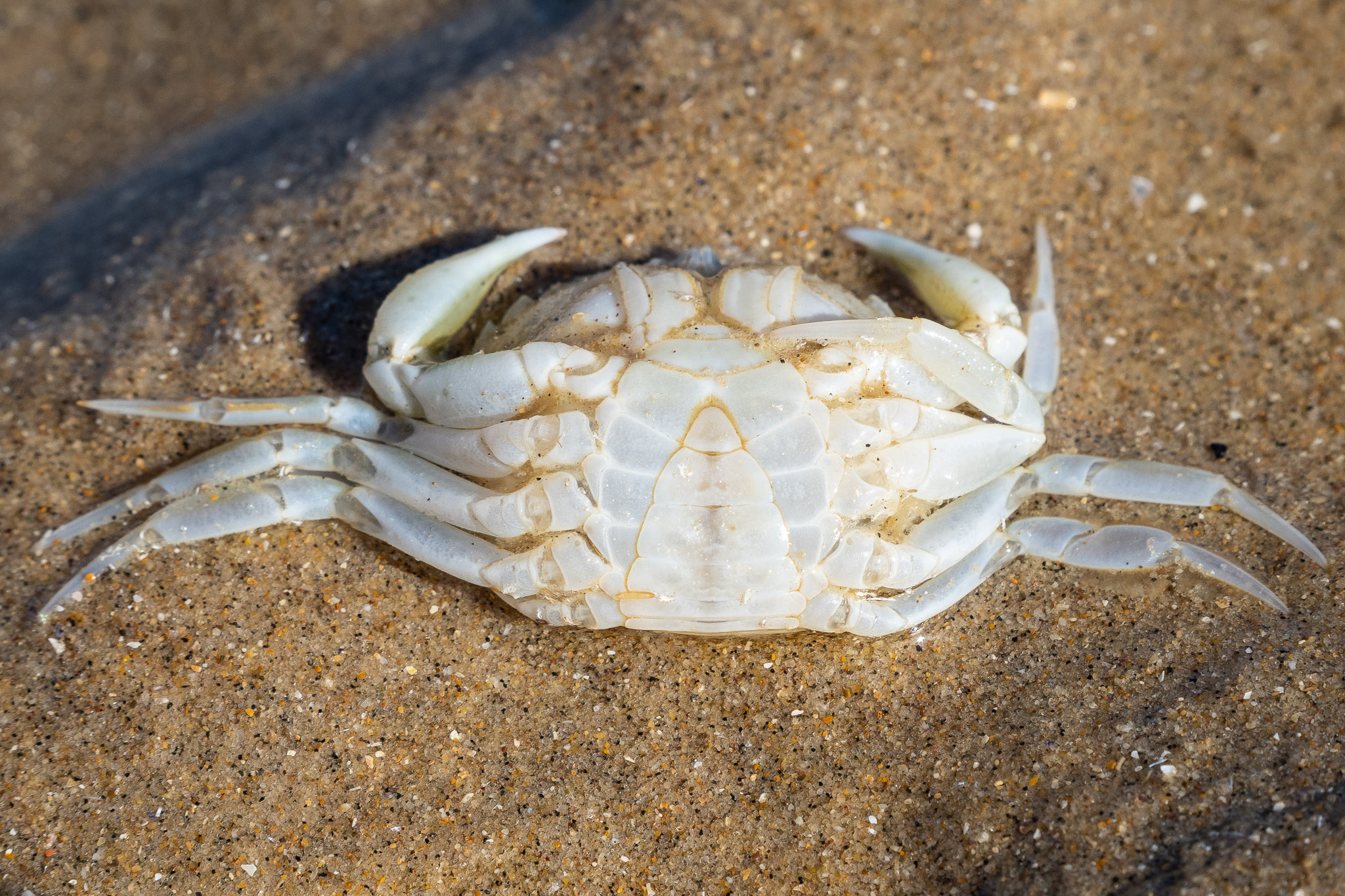
13th June 2021: the carapace of a European green crab at Rye Bay.
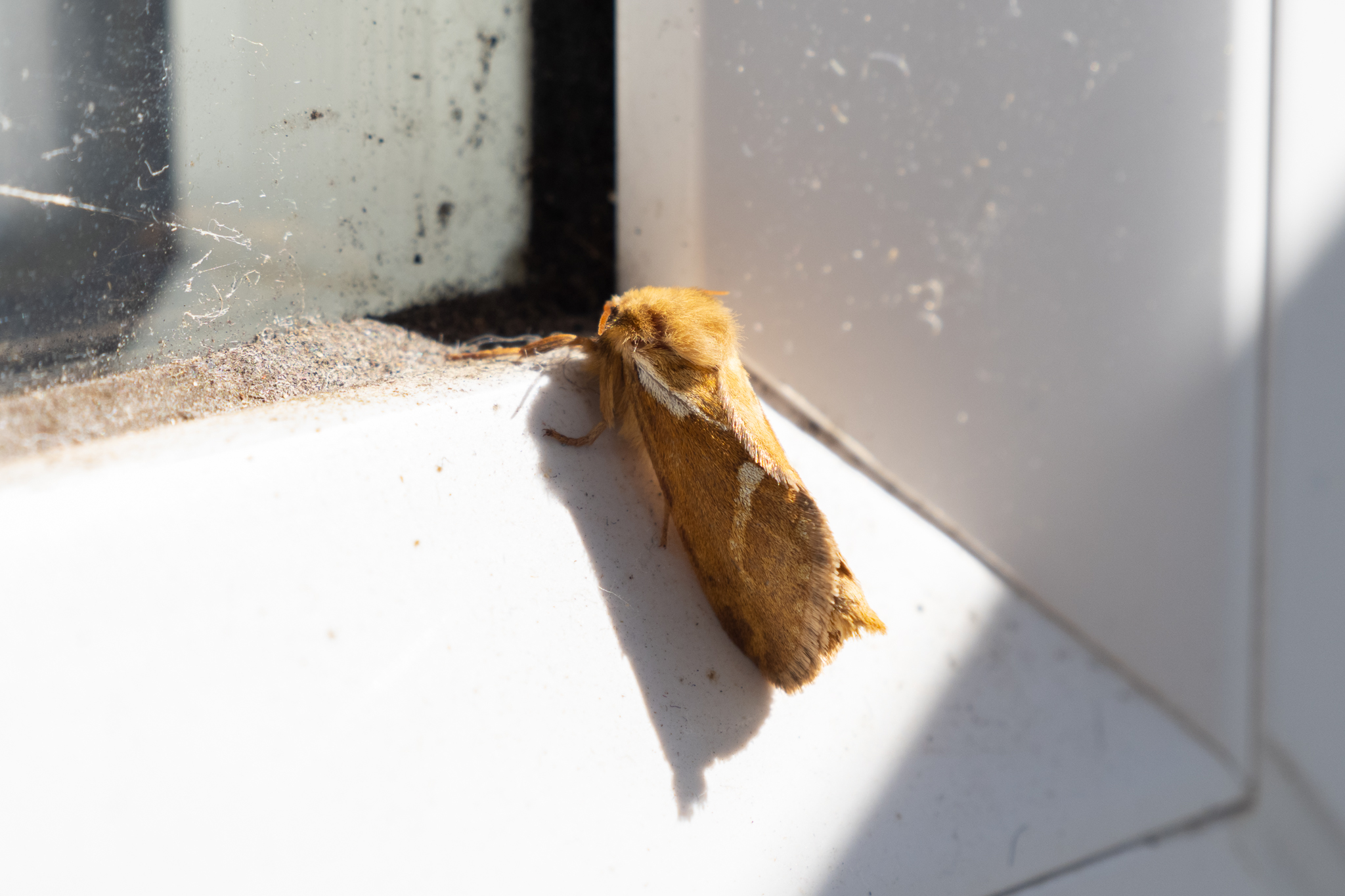
14th June 2021: a beautiful gingery moth that spent the weekend looking after my house for me. Not sure of the species.
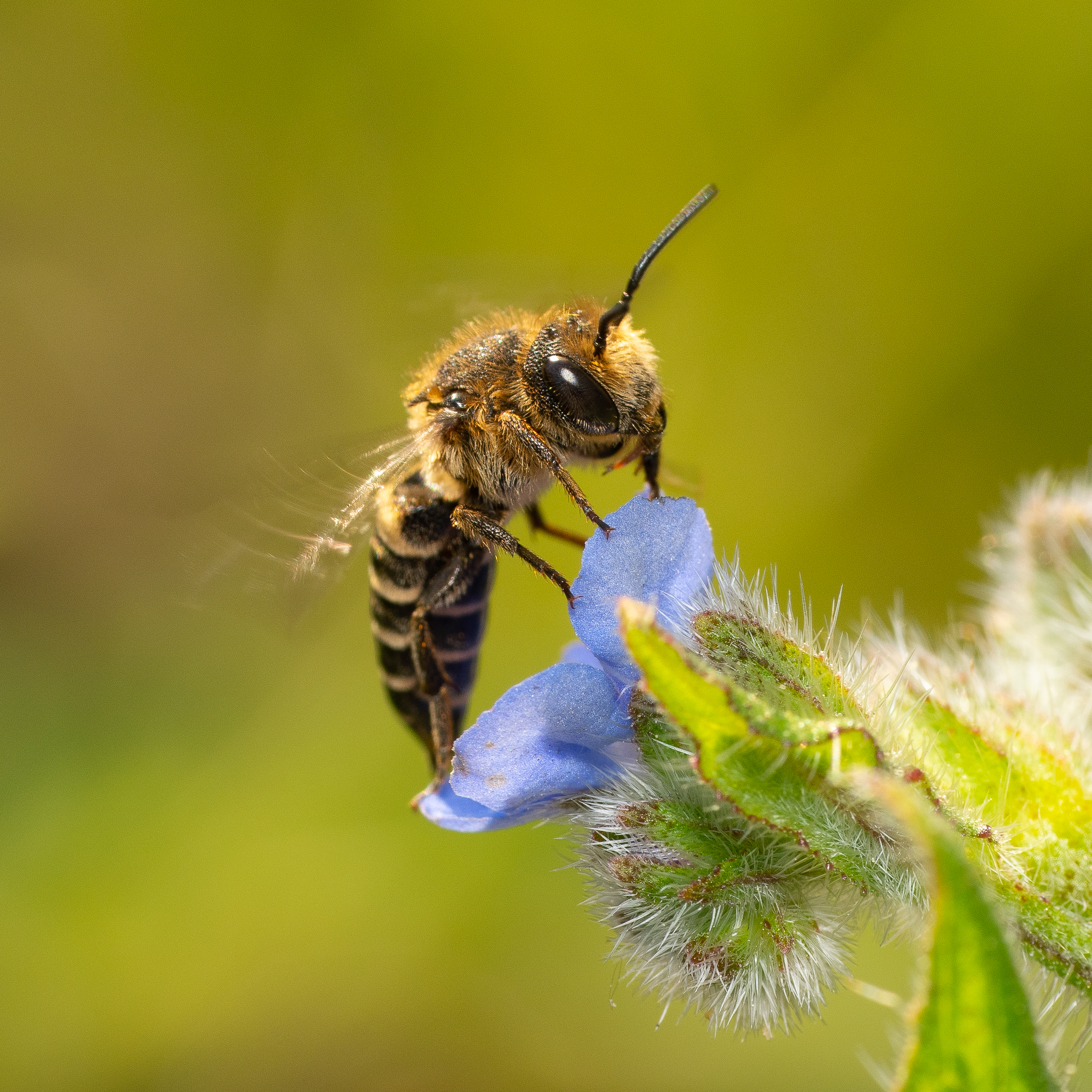
15th July 2021: the halfway point and an exciting find. I spotted a bee in the garden which looked unusual. Having got a photo I saw that it was a sharp-tailed bee. Delighted to have this in my garden as I’ve never seen one before and it was a new species for the garden list.
16th June 2021: green nettle weevils are funny. They play hide and seek sometimes. This weevil was happy enough to have its photo taken for a little while.
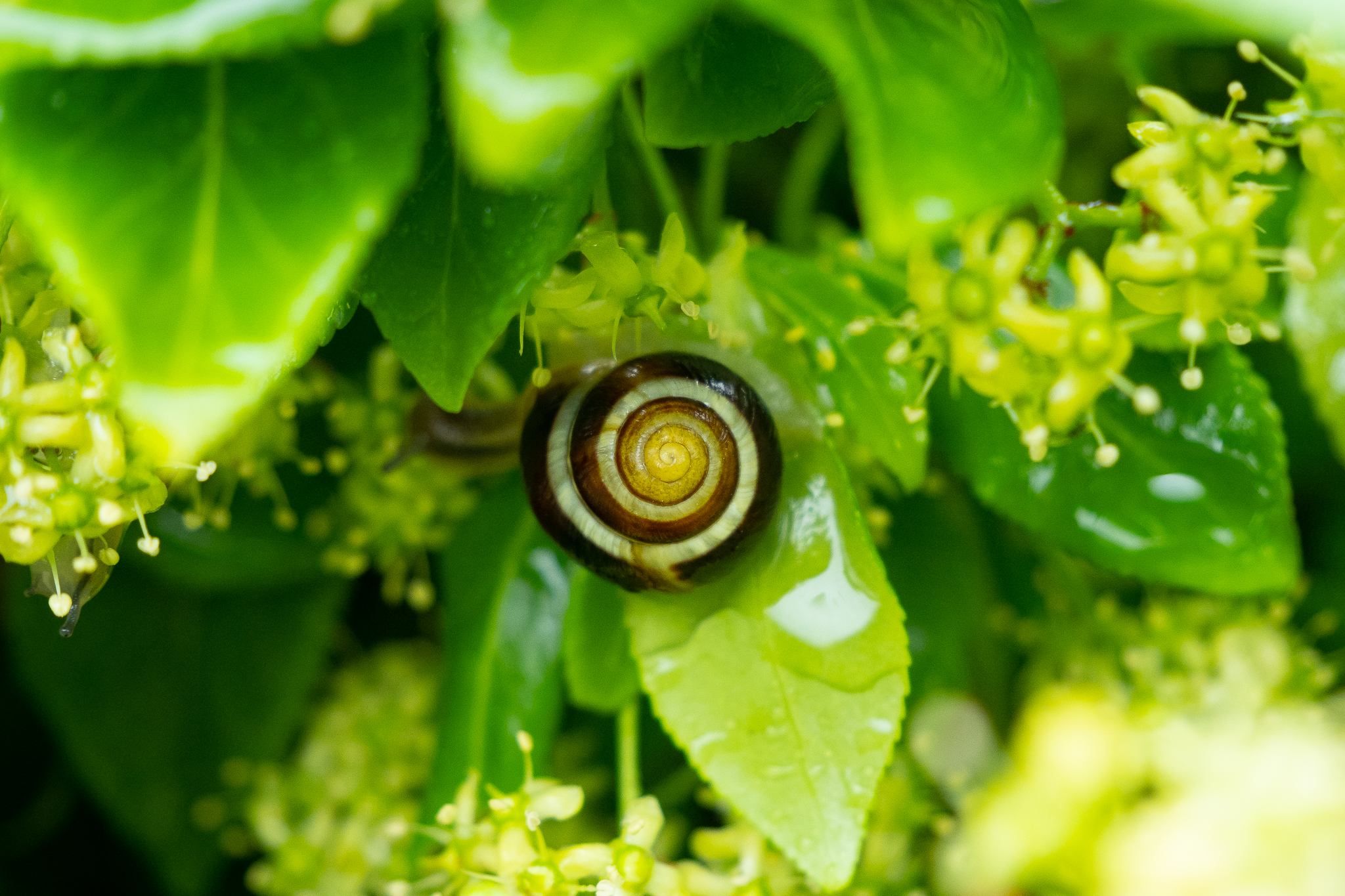
17th June 2021: a wet and rainy day when I thought a photo might not be possible. The hedge in my garden was alive with these beautiful snails. I opened the aperture to allow blur to occur and highlight the swirling shell.
18th June 2021: common jelly spot grows on the bird table in my garden. After enough rain has fallen it bursts back to life and probably chucks out some spores.
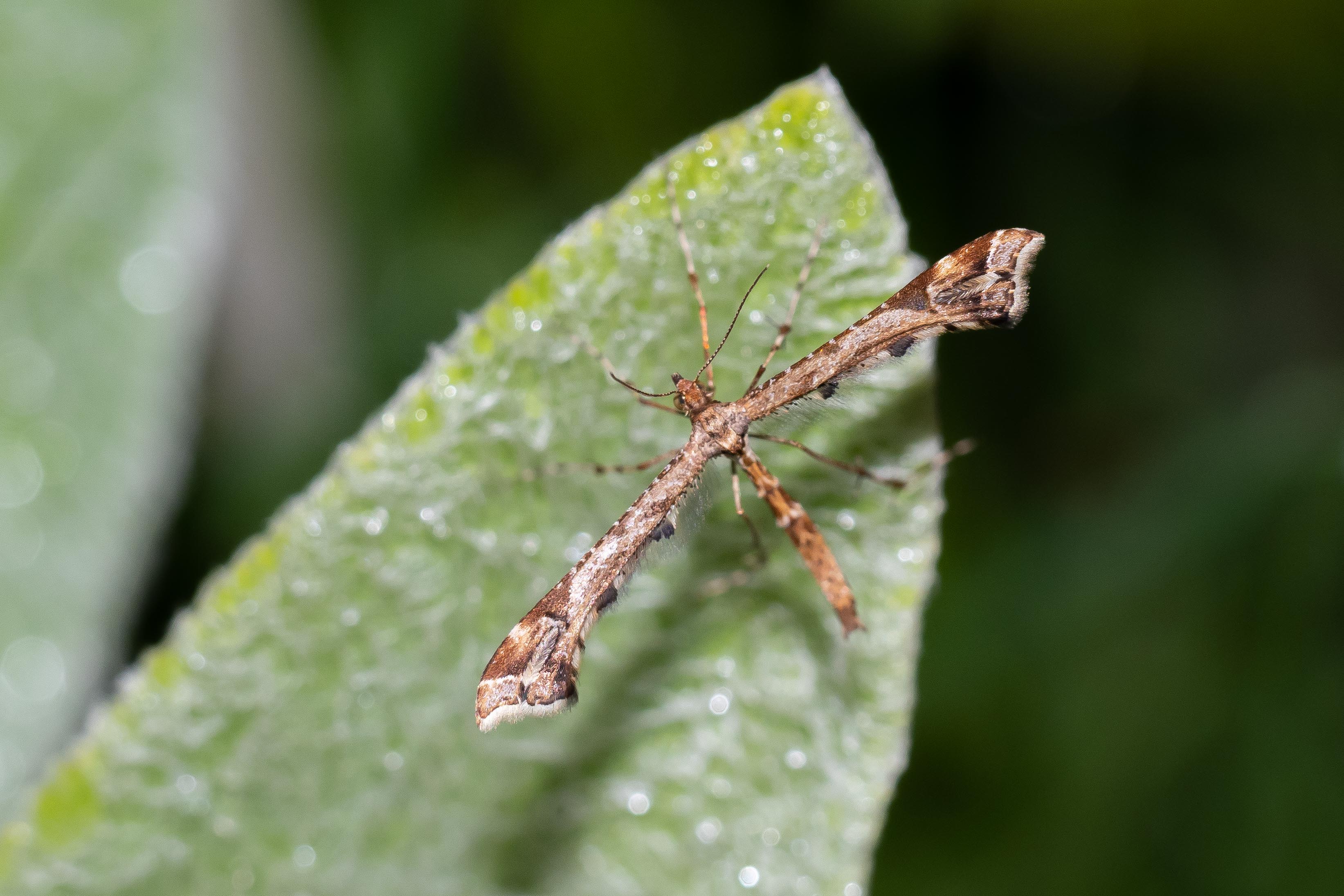
19th June 2021: a plume moth on another wet one in the garden. I love the pattern on this species, which I think may be a beautiful plume.
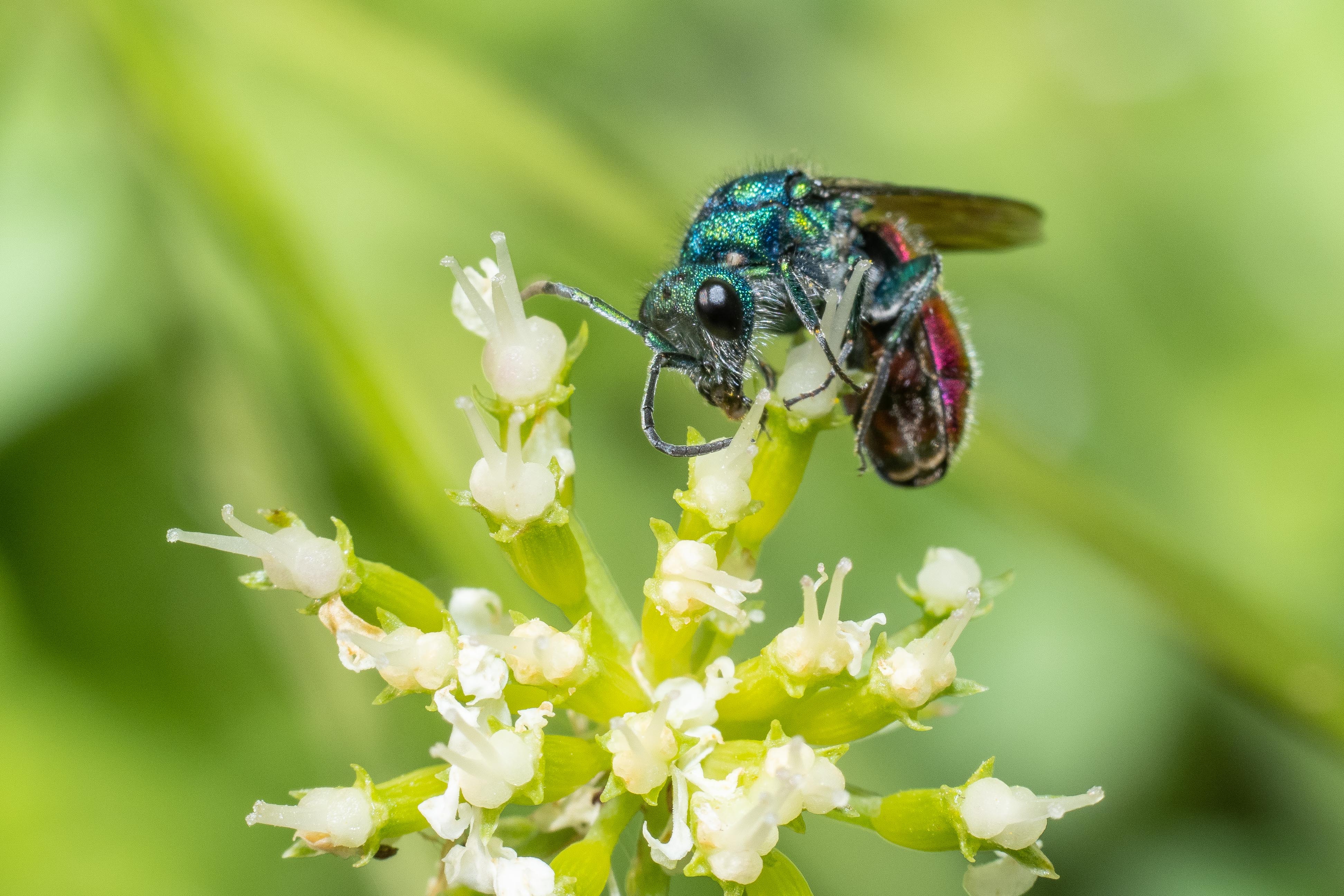
20th June 2021: a trip to the Adur Valley which I blogged about here. A ruby-tailed wasp, one of the most beautiful insects in the UK.
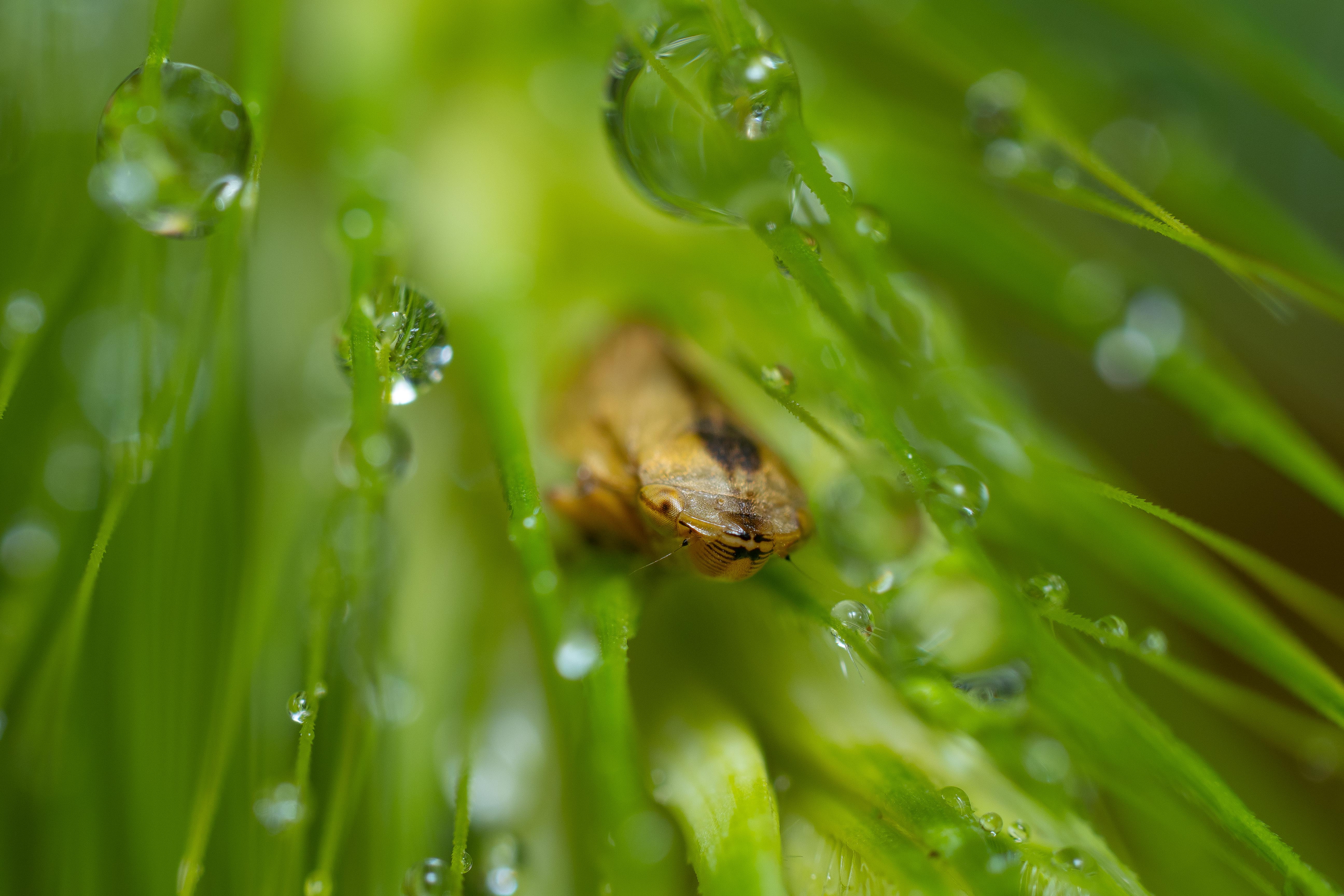
21st June 2021: another rainy day. I have learned how to find meadow spittlebugs in grass heads in recent years after finding one just outside my back door.
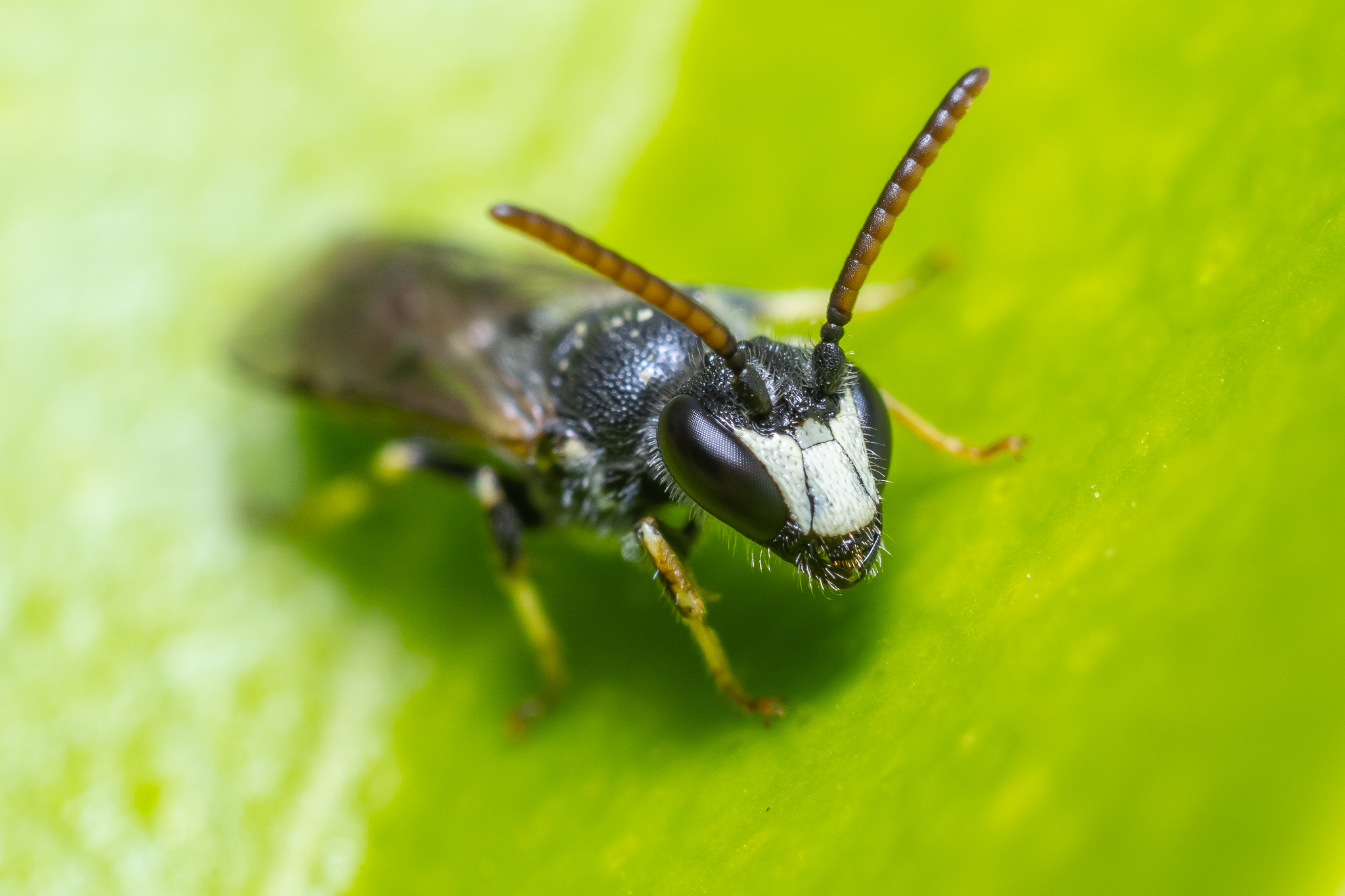
22nd June: a hairy masked bee (perhaps the American name), one of the yellow-faced bees, Hylaeus. These are tiny bees and not easy to photograph.
23rd June: one of my favourite partners in macro, a zebra jumping spider. They’re devilishly tricky to get in focus sometimes. I think this is just out, but I like its posture.
24th June: a running crab spider waiting for its lunch delivery. The fly behind probably didn’t know it was there.
25th June: another highlight which caused quite a lot of back strain! Here you can see an ant harvesting (and I think consuming) the honey dew from aphids they have farmed. This needs a blog all to itself to go through the amazing ecology of these two species.
26th June: I went to my local nature reserve, a farm managed by the council, to look for some different types of arthropod (insects and spiders, basically). It was hard work but I got some decent images. I like this one because it looks like this beetle is attempting to get better signal! This visit needs its own blog post as well.
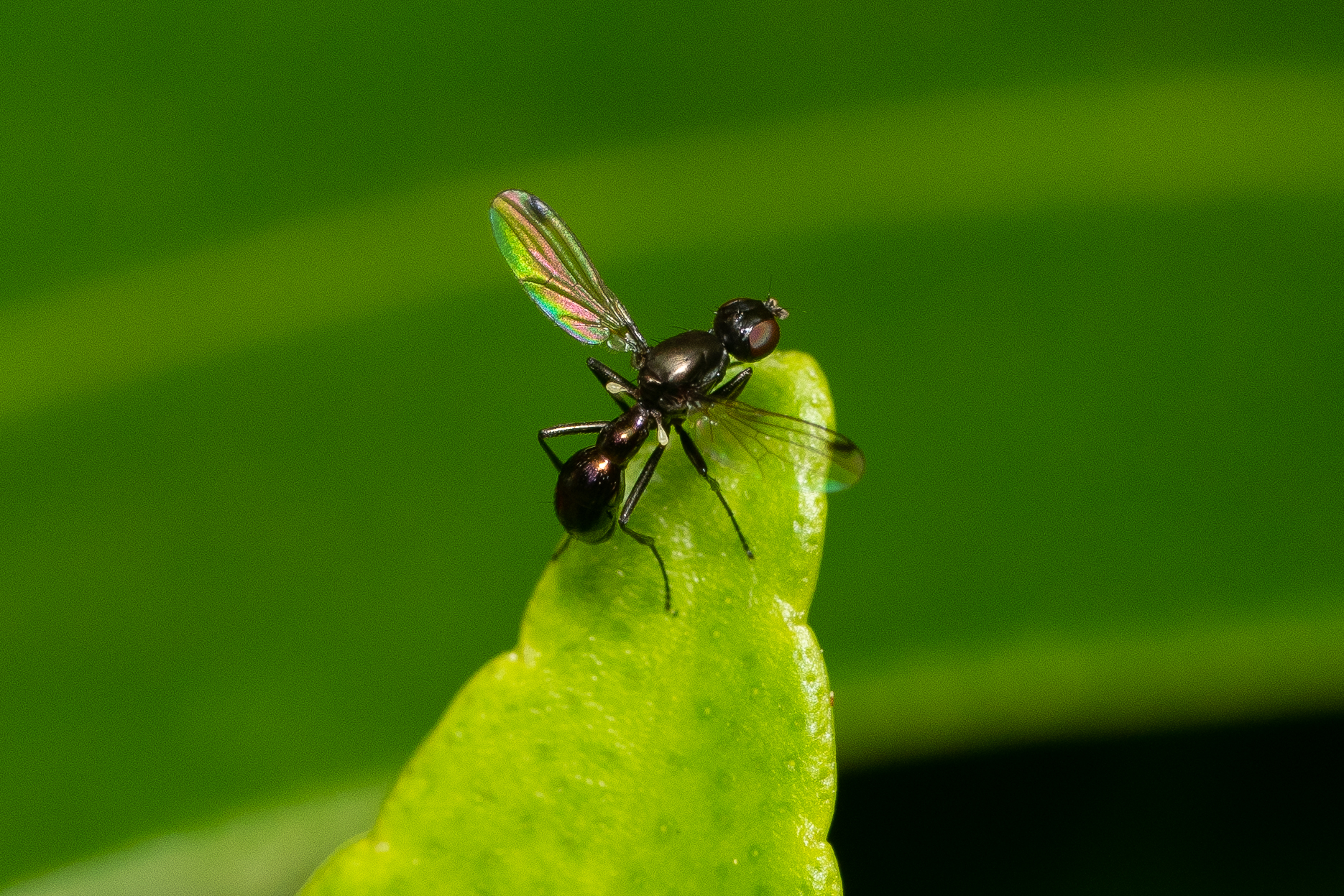
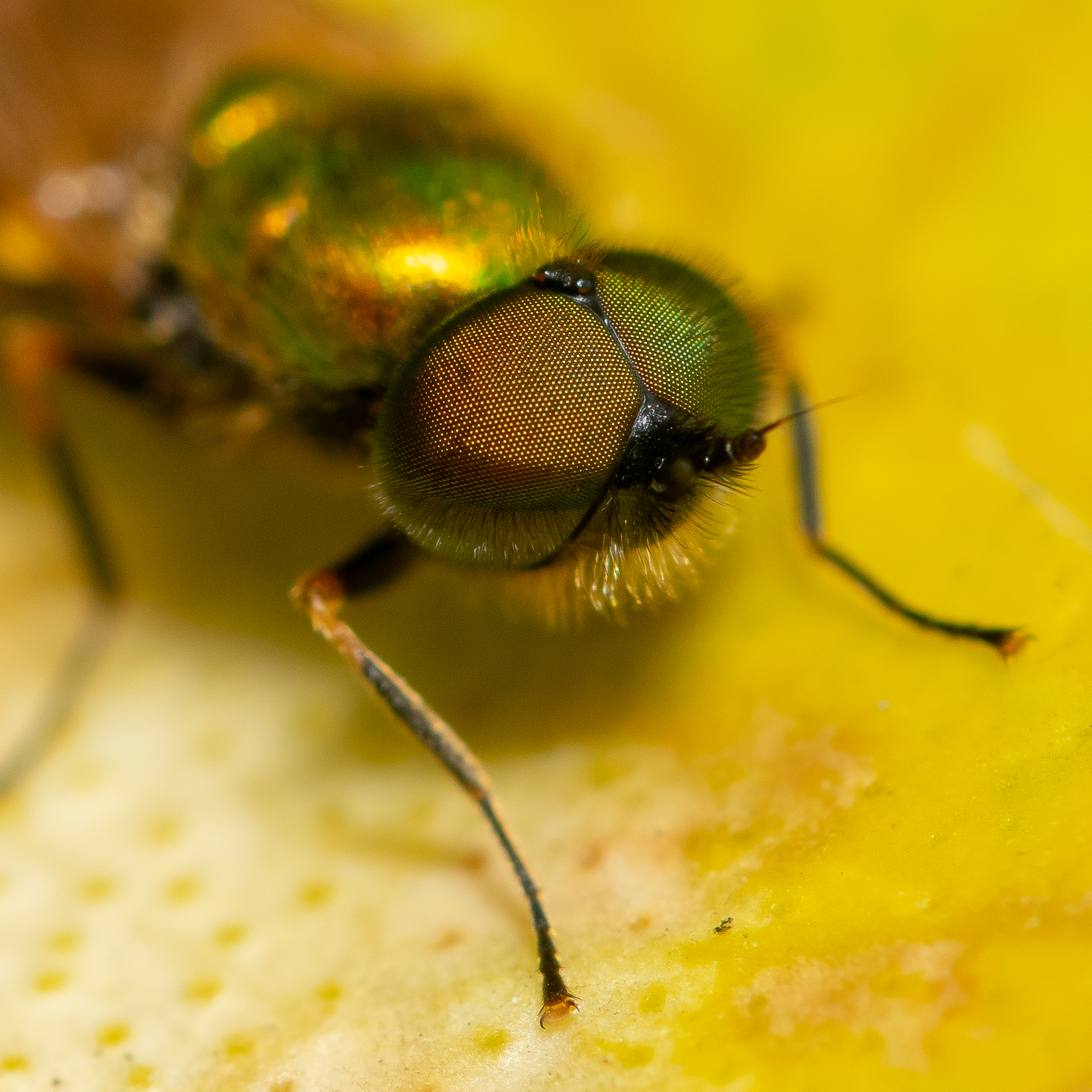
27th June: I was tired after my macro outing the day before but managed to find this small green fly in my garden. I like its 1980s robot-like compound eyes.
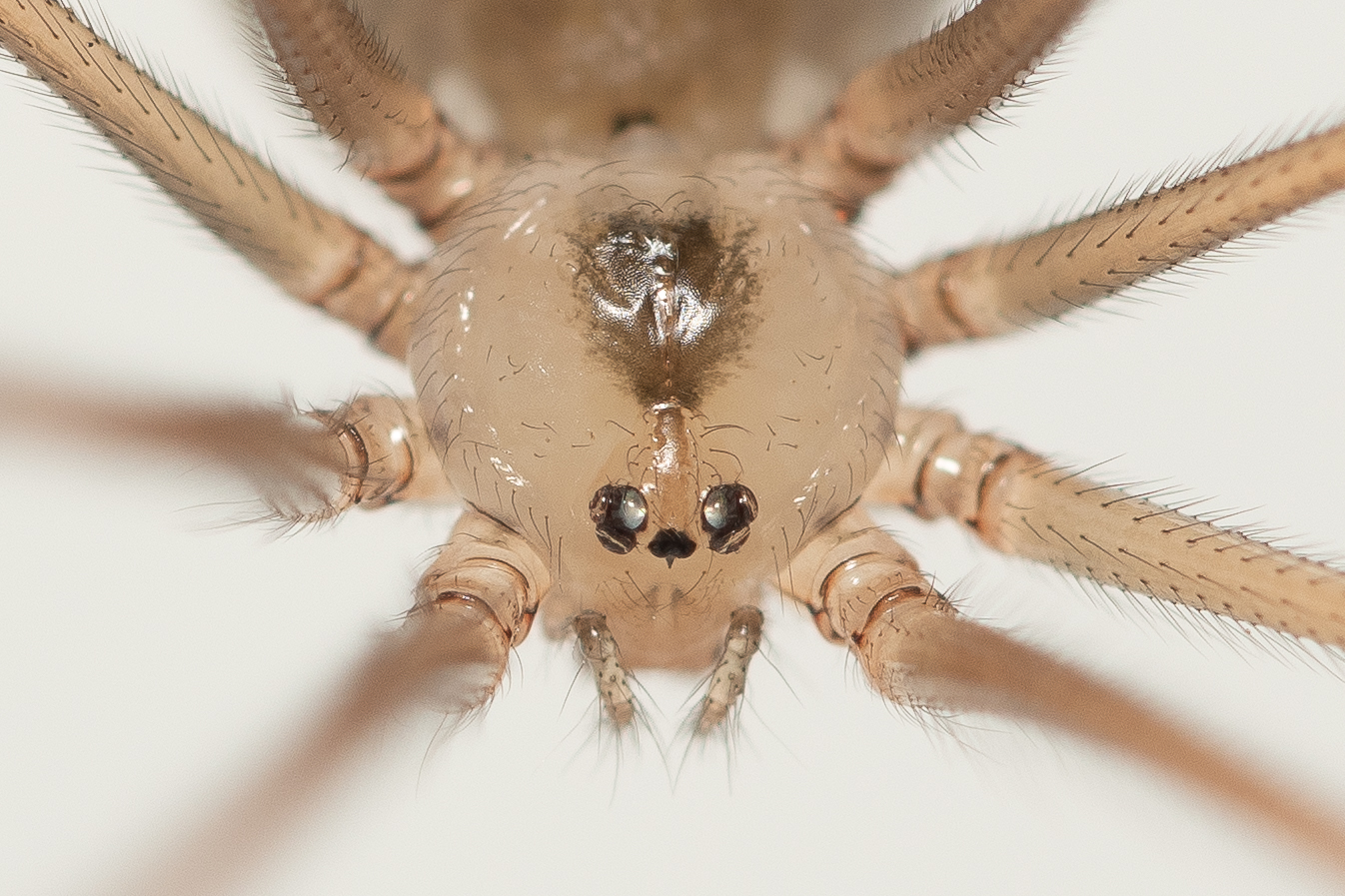
28th June: I had been observing a large, dangly spider that lives in the corner of my kitchen for several weeks. I decided to get a closer look and was amazed by what I found. This is a cellar or daddy longlegs spider. They are from the tropics and are well established in the UK, having been here for hundreds of years. This also needs its own post!
29th June: I planted stachys (lamb’s ears) especially for this species, the wool carder bee. I haven’t seen much of them this year but they did show up towards the end of June. I love them, they’re also easy to photograph in cooler weather as they just clamp on to the flowers and chill. I blogged about them in 2020.
30th June 2021: and so the final day. I dropped by a favourite Sussex Wildlife Trust reserve on the way home, which I posted about here. This tiny slug was having a good look at me as I searched for mushrooms and slime moulds. It felt like a good reminder that as much as I was watching the wildlife, it was also watching me.
Thanks for making it this far and I hope you will spend some time out there looking out for insects, spiders, slugs and snails. They need us.
The ruins of Fountains Abbey sit on lawns that look as good as modern football pitches. It’s boiling hot and most people hide in the shade. This doesn’t feel like northern England.
The story of Fountain’s Abbey begins on the 27th December 1132 but abbeys have been in existence in northern England since the 600s. The abbey was founded under the Cistercian Order and monks had to serve as ‘a choir monk in prayer or as a laybrother in manual work’ (National Trust (NT), 2011).
The abbey and its residents lived through tough times: financial problems, livestock disease, climate change, raiding Scots and the onset of the plague. The plague hit around 1349-50 and killed a third of the abbey’s residents (NT, 2011).
On this hot day the ruins emit a welcome cool, tunnelling a gentle breeze that slips through the valley of the the River Skell. Skell is a non-English placename:
The name is from the Old Norse skjallr, meaning “resounding”, from its swift and noisy course. In the Middle Ages the river was known as “Heaven Water”, presumably from its association with Fountains Abbey.
Smith, A.H. (1962). The Place-names of the West Riding of Yorkshire. 7. Cambridge University Press. pp. 137–138.
Yorkshire can sometimes feel like another country to southerners, so strong are its cultural links to Scandinavia. It’s the same for the rest of England, with the Viking territory of ‘The Danelaw’ once reaching down to the River Lea, just north of London, and covering large swathes of England.
The ruins alongside the River Skell
Monasteries in England were dissolved after Henry VIII’s falling out with the Pope over his divorce from Catherine of Aragon. The abbey was surrendered in November 1539. After the monks moved on, the land and its materials were sold off. The stained glass windows and other valuable elements were crudely removed by the new owners. The abbey was ruined in a way to make it unfit for religious practices.
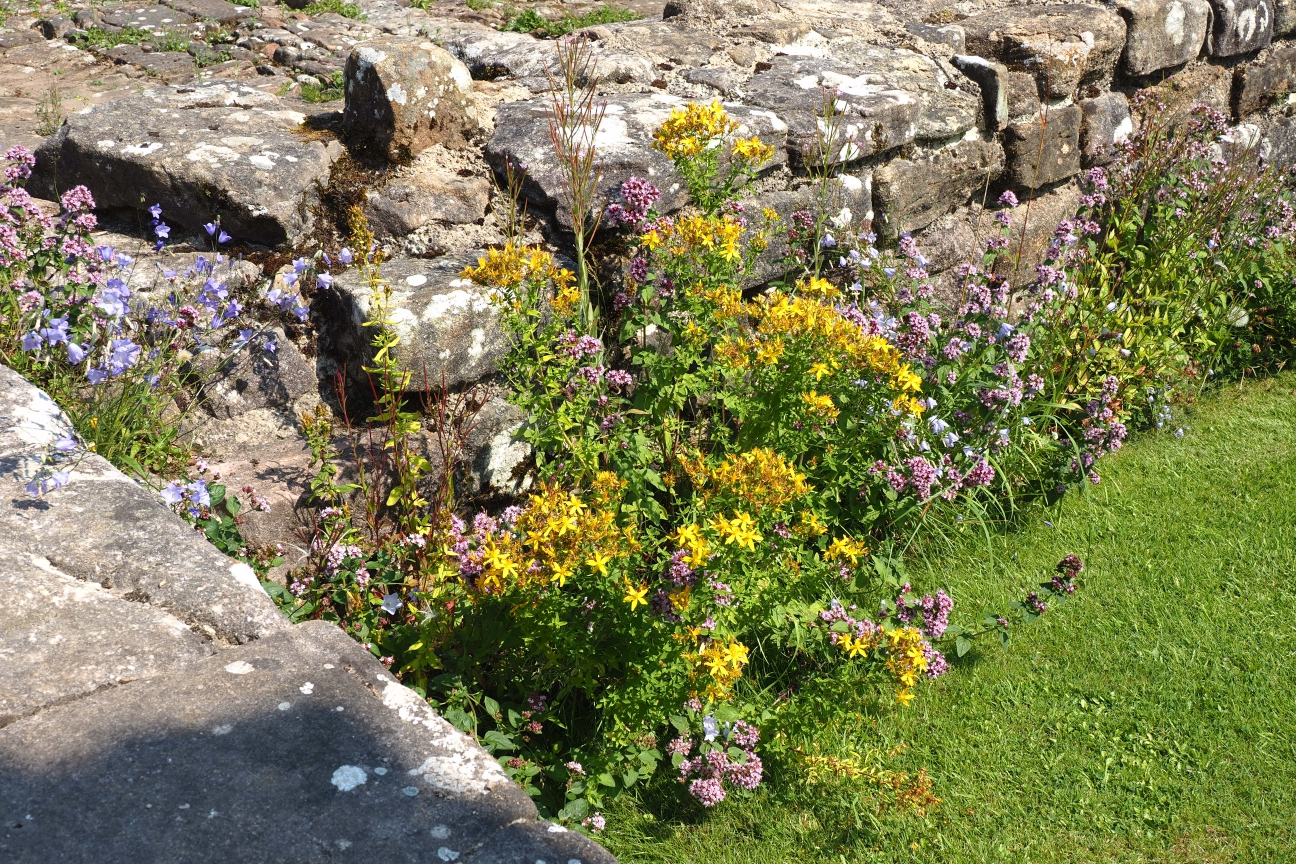
Inside the walls of the abbey, wildflowers burst from pockets of stonework: wild marjoram, black knapweed, St. John’s wort, field scabious and harebell. These flowers have taken root in substrates within the crevices of the masonry. They have prime positions to receive full sun, and are sheltered from some of the elements. It’s a great place to live.
Marjoram in its happy place
I wonder why these plants are here, perhaps their medicinal value. No doubt they were cultivated and used by the monks who spent their lives here. I like to think the prevalence of marjoram (known in a culinary sense as oregano), St. John’s wort and scabious are due to their prior importance in the day-to-day lives of the monks.
My uncle recently sent me a copy of The Treadwell’s Book of Plant Magic by Christina Oakley Harrington. It has a lot to say about these plants.
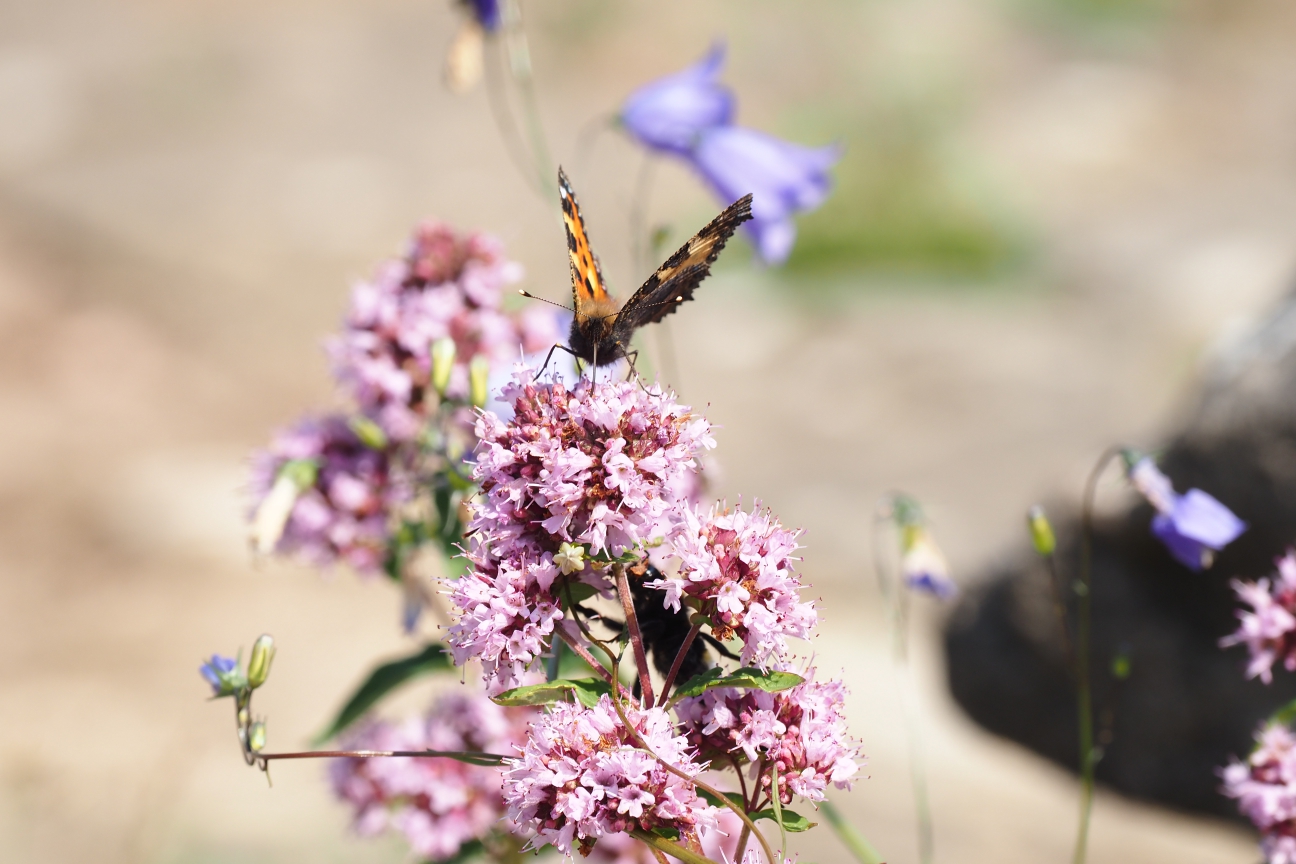
Small tortoiseshell butterfly nectaring on marjoram
I know that marjoram is a delicious herb. I grow it in a pot in my garden for pollinators and it’s something I nibble on when visiting the chalk grasslands of southern England, where it lives. According to Treadwell’s, it has high magical value, something which I can’t be sure was of interest to the monks at Fountain’s Abbey, who were obviously not pagan in the way previously settling Vikings were. It is thought that pagan beliefs of pre-Christian England did persist in people’s outlook. The connections people have with nature would have been safe spaces for those beliefs to persist.
Scabious gets its common name from the fact it was once used to treat skin ailments. The flowerheads eventually become scratchy after flowering and were once used on the skin.
St. John’s wort among marjoram and harebells
St. John’s wort is a famous medicinal herb, another species which can be found in chalk grasslands in southern England, and in other areas throughout Britain. There are a number of different species. According to Treadwell’s it’s one of the most important and protective plants in magic folklore.
In its medical use, Wikipedia says:
“The red, oily extract of Hypericum perforatum has been used in the treatment of wounds, including by the Knights Hospitaller, the Order of St John, after battles in the Crusades, which is most likely where the name derived.[19][21]“
It is also used to treat depression.
Ragwort grows high from masonry
Ragwort does not have many supporters in England, which is a shame because it could be key to providing a fundamental nectar source for pollinators across the UK. This is particularly true of towns and cities away from grazing animals. It’s disliked because it has toxic properties which can go undetected in cut hay and then be consumed unknowingly by livestock, accumulating to cause organ failure. Its proponents (for ecological reasons) have created a website in its defence.
According to Treadwell’s, in Ireland it’s known as ‘fairies’ horse’. This is because:
it is believed that witches and fairies ride on it as if it were a horse, flying through the air at night
The Treadwell’s Book of Plant Magic, Christina Oakley Harrington (p.106)
The seeds definitely fly through the air because the plant grows in some of the highest parts of the masonry. Swifts screech in flight as they shoot past those higher outcrops, perhaps feeding on some of the many insects that nectar on the plant’s flowers.
One thing I learned here, and that I’ll never forget, is that urine was once used by the monks at the abbey. It was collected and used as a dye, for leather tanning and also for wool treatments. A urine pot was found near perfectly preserved.
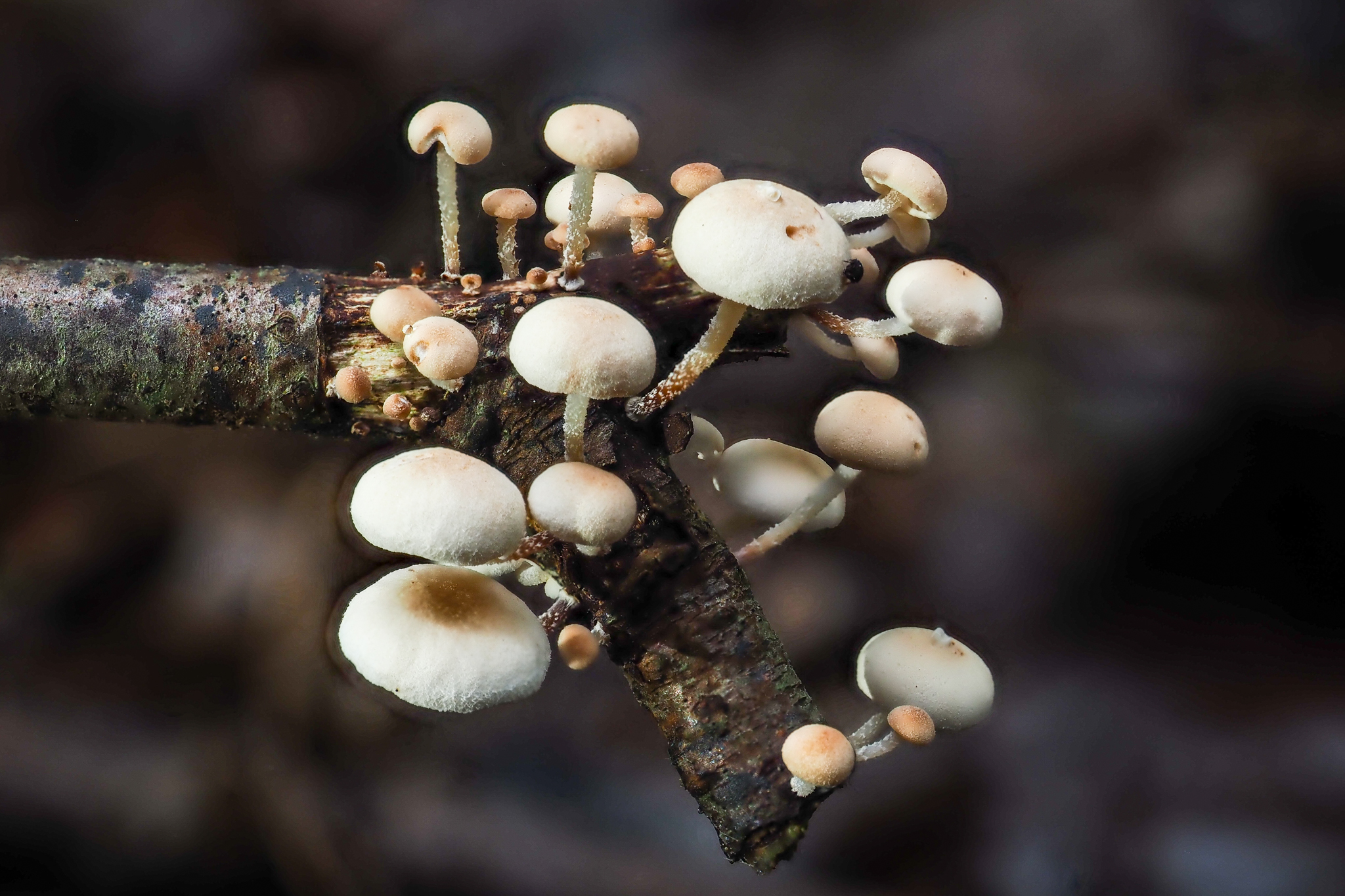
A few weeks ago I visited a local woodland with high hopes for a summer burst of mushrooms. A couple of years ago in July this woodland was showing up some great soil-based mushrooms, species like blusher (Amanita rubescens) and the brittlestems (Russula). Though I didn’t find that this time, there were huge numbers of one species – twig parachute (Marasmiellus ramealis).
The image above is one taken with my camera’s in-built focus stacking, as illustrated below. It takes several images at different focus points and blends them to provide an image which is completely in focus (I don’t know why the halo-effect is happening, for info). With this cluster of mushrooms it’s able to tell the whole story.
When I posted this pic on social media, a couple of people came back with their own descriptions: Julian Hoffman called them “amazing woodland unicycles”, which has to be my favourite. In respect to my aunt who may be reading this, she got there first with “bicycle wheels”.
The set-up needed to get this image is a camera like an Olympus E-M5 which has in-built focus stacking, a small tripod-like thing, some extra lighting and a remote shutter release. You also obviously need a mushroom. The remote trigger allows you to take a photo at very slow shutter speeds which are susceptible to blurring if there is movement. That’s the beauty of fungi and other stationary subjects, you don’t need a huge full-frame camera with exceptional low-light ability. You can just use slow shutter speeds instead.
Though it is of course not fungi, this was another focus-stacking subject on that walk in the woods. Alongside a footpath, on a piece of wood being used as edging, I found this dog vomit slime mould (Fuligo septica)… yes that’s its common name. It was in the process of covering the surface of the wood and extracting nutrients and minerals along the way. Look at the networks of slime as they build across the wood.
And here is another of the VIP behind the scenes phone photos. It’s nice to put the image in context. A vari-angle screen is also incredibly helpful in these situations. If you want any advice on this kind of fungal or slime mould photography, do post a question in the comments and I’ll happily let you know what works for me.
By the way, I was using a 30mm macro lens (60mm outside of Micro Four Thirds camera/lens config). You can actually see the settings if you look at the screen.
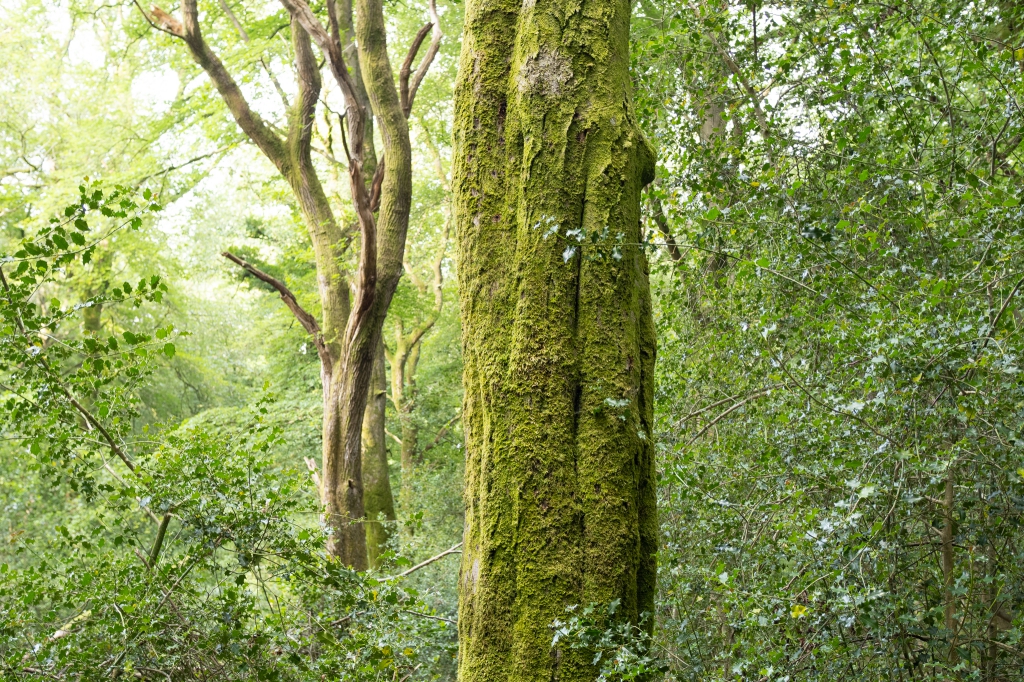
Last week I dropped in on a favourite Sussex Wildlife Trust woodland. It’s a place I only ever visit when travelling to or from work. It’s a place with a funny name, The Mens. It’s even funnier when I tell others I’m going to The Mens after work. The name is said to derive from the word ‘common’, a place where local people would have had foraging and grazing rights in centuries past. It’s now a significant ancient woodland in the Sussex Low Weald, holding National Nature Reserve status. It’s special because of its naturally occuring beech and holly, though I’m no expert on its specifics. It is a uniquely beautiful woodland. It is highly sensitive, and when I go I do my best to treat it with a high level of respect and care.
It’s one of the few places in SE/central southern England outside of the New Forest, that I have visited, where moss and algae cover tree trunks. Above is the typical assemblage of mature beech, oak and a surrounding sea of holly.
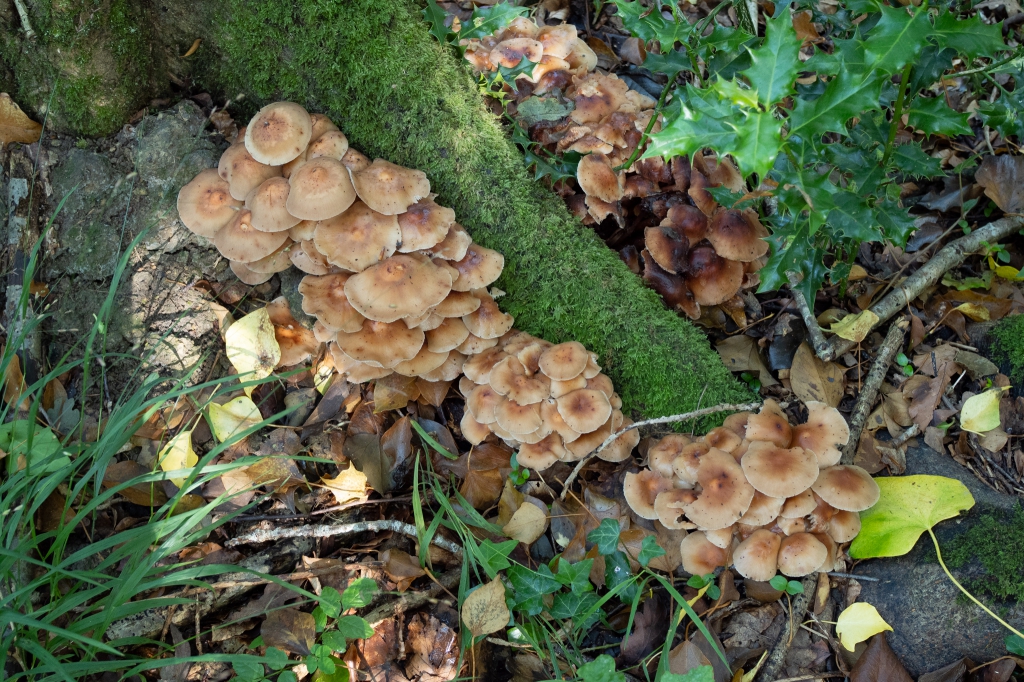
You can see indicators of how many mushrooms are likely to be in fruit when you first enter a reserve. I saw the above within the first few paces. It’s is a mushroom called spindleshankGymnopilus fusipes (to my knowledge, happy to be corrected), which grows around the buttresses of oak trees. In a separate recent walk, it was the most common fungus I saw, and so is enjoying a key fruiting period.
In terms of tree health, I wouldn’t say it was a ‘good’ sign because there is some decay going on and it is defined as a parasitic species. In a woodland like this, it is normal and part of the life of the woodland. It helps to disconnect ourselves from our normal notions of life and death when in woodlands, it doesn’t play out in the same way there. Dead and decaying trees are crucial to a woodland’s life and longevity.
Spindleshank is often first seen like the group below, bursting on the scene. It is probably attached to a root or piece of wood under the soil.
This was the only fruiting mushroom I found during the short walk but there was a large abundance of slime moulds growing on fallen wood and some standing trees.
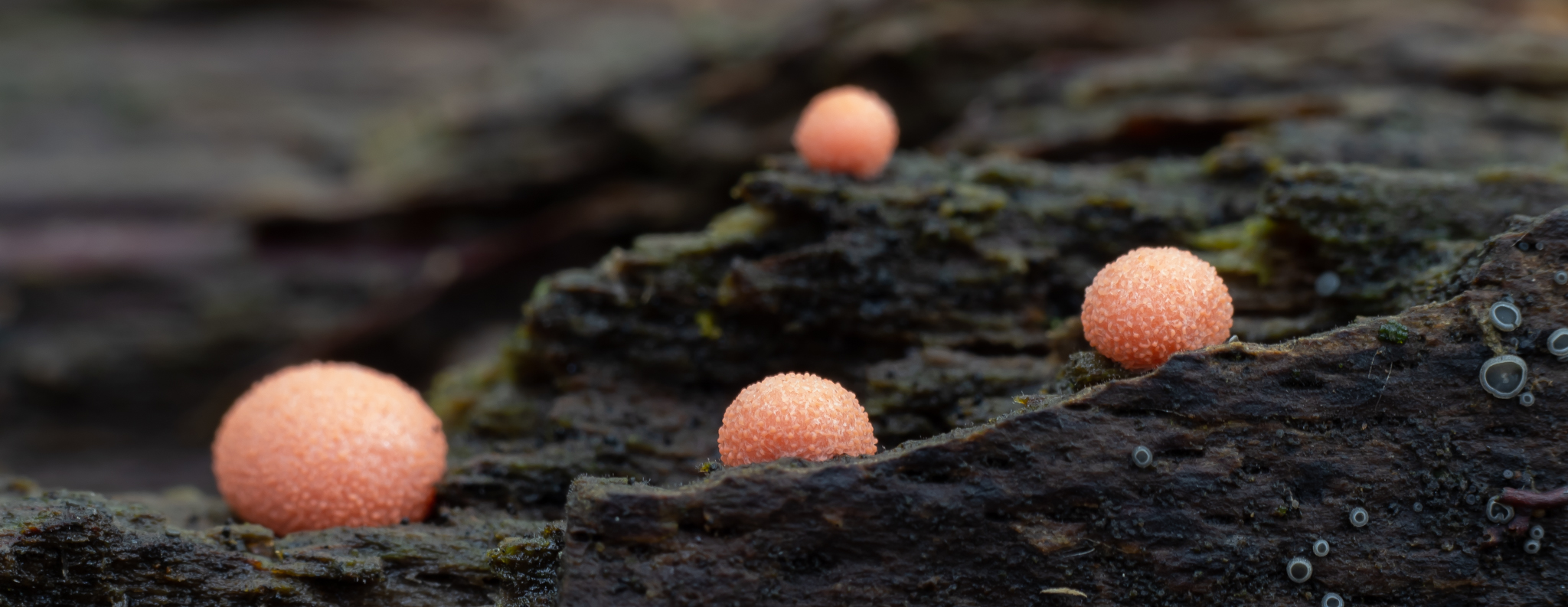
These orangey-pink blobs are a slime mould known as wolf’s milk Lycogala epidendrum. It’s famous because you can pop it and it emits a gunk of the same colour. It’s quite cool.
You will find it on decaying wood that has been in situ for several years, often in shady and damp conditions.
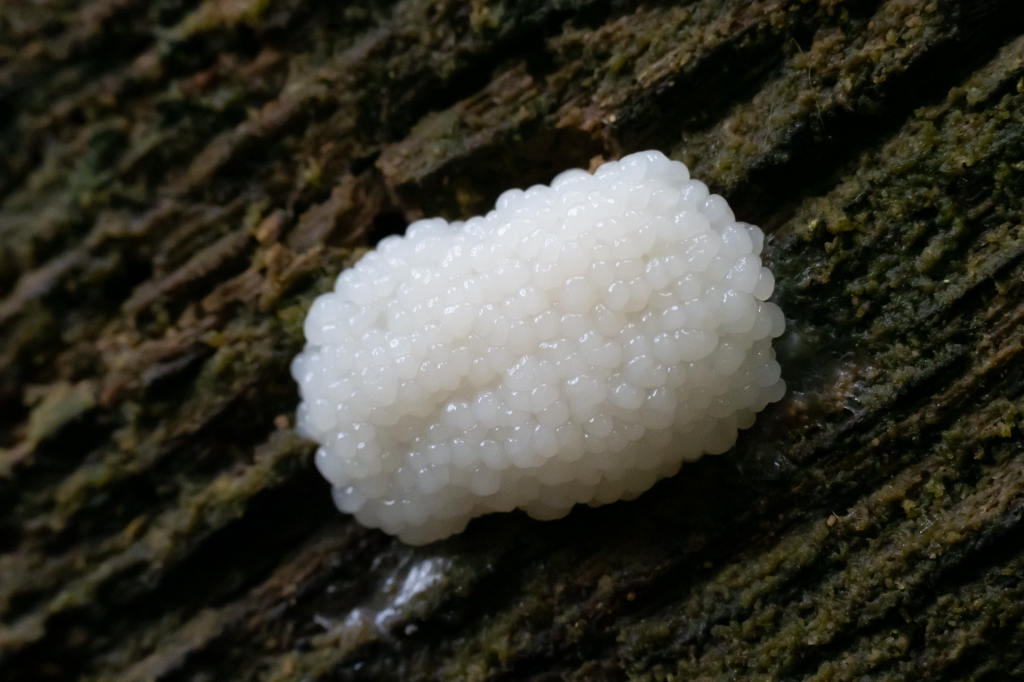
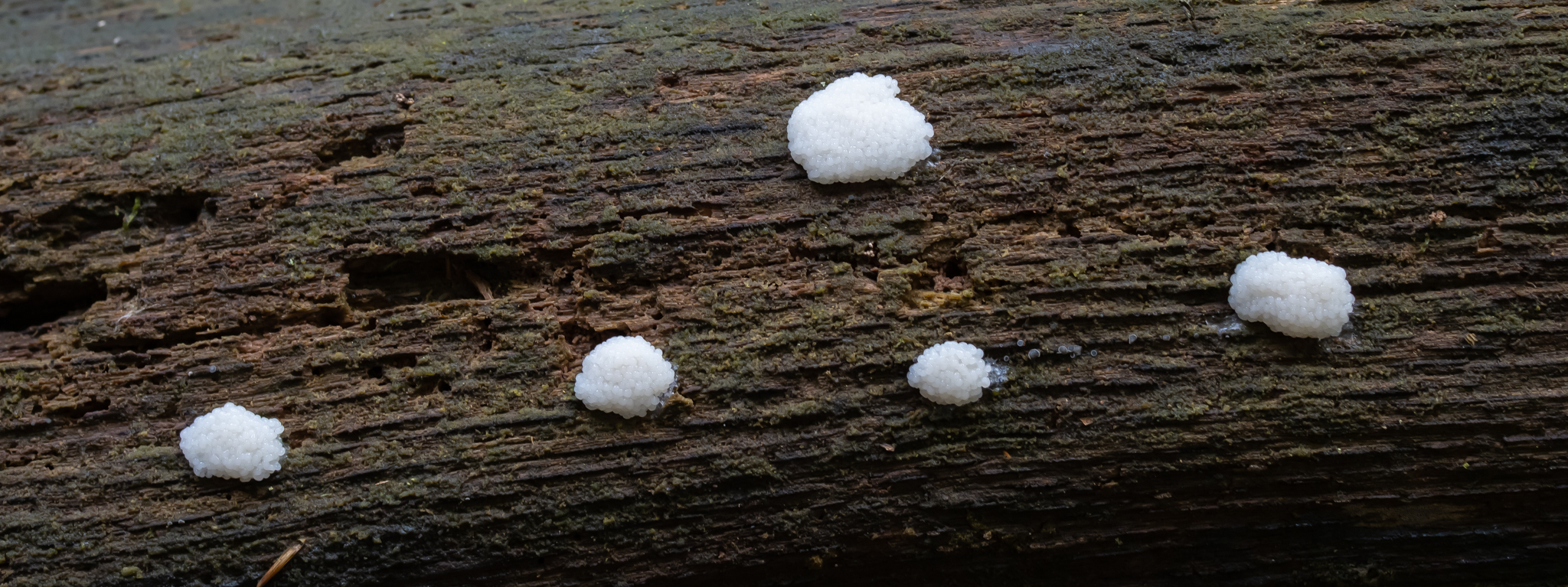
This species looks a bit like slug eggs. As with most slime mould I find, I’m not sure of the species.
We have had a very wet time of it in southern England, which should be cause for celebration, really. This same species was making the most of the conditions.
Behind the scenes on the slime mould shoot
My camera is capable of doing in-camera focus stacking. This means it can take several images at different focus depths and merge them together to make an image with everything in focus. This is a dream come true for macro photography, especially when the subject is so tiny.
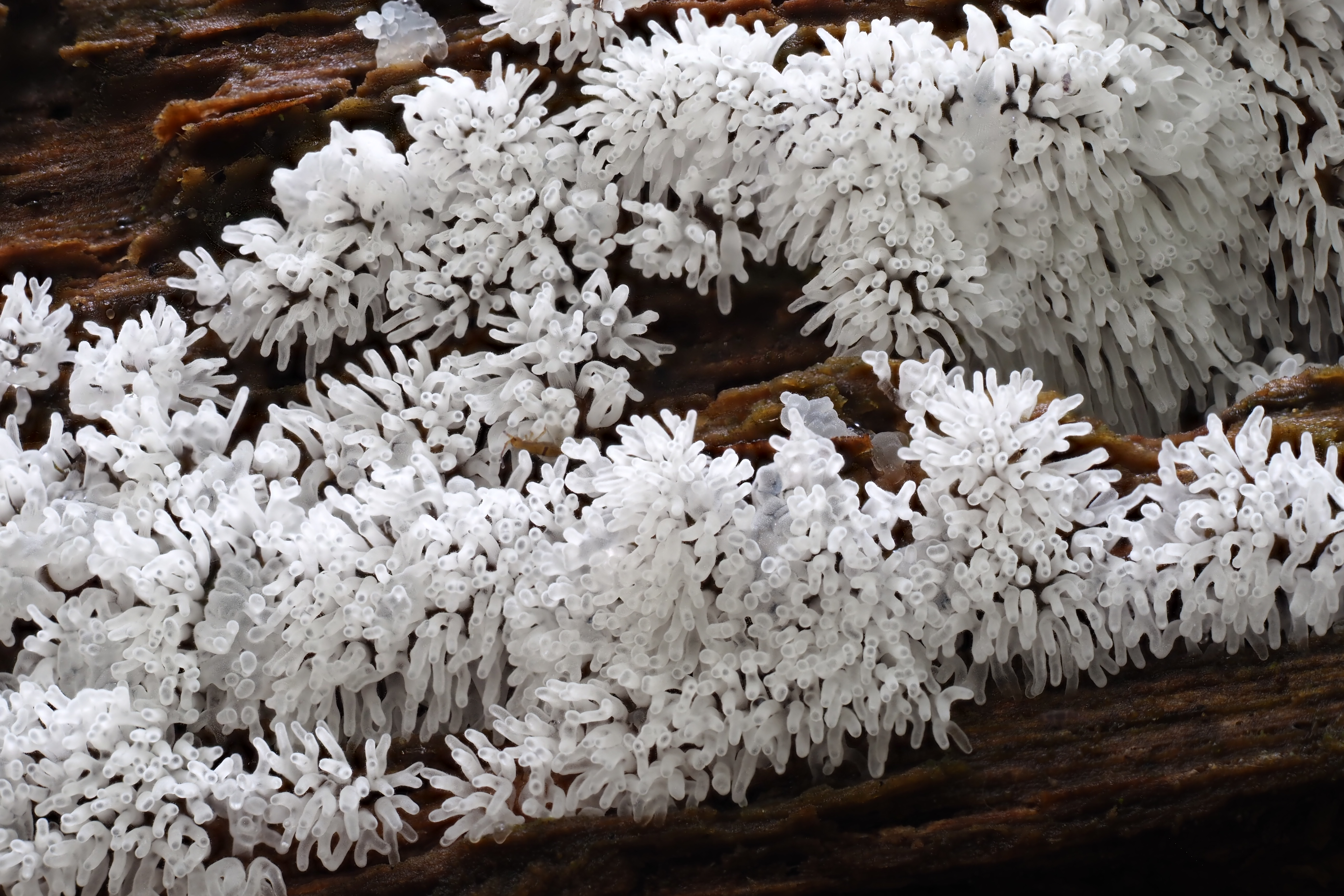
This is a species of coral slime mould. I have seen so much of this in the past few days spent walking in oak woodlands in West Sussex. It’s clearly striking while the woodland is wet.
In this episode I’m joined by my good friend Eddie Chapman as we recount a visit to the Great Hungarian Plain.
Eddie is a devoted rambler and part-time rapper who lives in Glasgow, Scotland. He grew up in the Derbyshire town of Chesterfield and developed a love for the landscape through hiking in the nearby Peak District. Eddie now spends his walking time bagging munros in the Scottish Highlands.
Listen to the audio file here:
Watch the audio slideshow on YouTube here:
This is part one of two episodes covering a trip Eddie and I undertook across Hungary and Romania in 2015. In part one we recount our travels through the Great Hungarian Plain, en route to the Romanian Carpathians.
It’s a light-hearted episode with recollections of unusual experiences, including owl-headed body-builders, fire water and rural sports bars.
We saw some incredible wildlife in one of Europe’s most important landscapes – the Great Hungarian Plain – and would definitely recommend it if you’re into birds. But do listen to what we did wrong if you’re planning a visit!











































 Unlocking Landscapes