Dartmoor waxcaps

This is a showcase of the posh mushroom pics I gathered with my proper camera during a visit to the wonderful Dartmoor National Park in November 2024. Mad props to my wife who is chief squirrel during these Devonian photo forages.

The photos were taken on Sunday 10th November 2024.

I write these blogs in my spare time because I want to raise awareness about the beauty and diversity of fungi. If you enjoy reading them you can support my blog here.

A reminder that I am not encouraging people to pick or remove mushrooms in these areas. You could very easily clear all the mushrooms we saw within minutes. I think that would be sad because it would mean other people wouldn’t get to see them and learn or be inspired by them. I think with rare species like waxcaps that are featured here, we should be taking photos and submitting them to apps like iNaturalist or Plantlife’s waxcap campaign. In some areas that would be illegal anyway, due to site protections.

While I don’t believe 2024 will go down as a vintage mushroom season, there were a lot of lovely waxcaps to be found on the moor in a place we’ve been visiting since 2016. Moorlands seem to be quite good for waxcaps, not that I know why, and also for lichens because they are rocky, wet and the air is fresh.

I’ll post the images in chronological order for my own sanity.

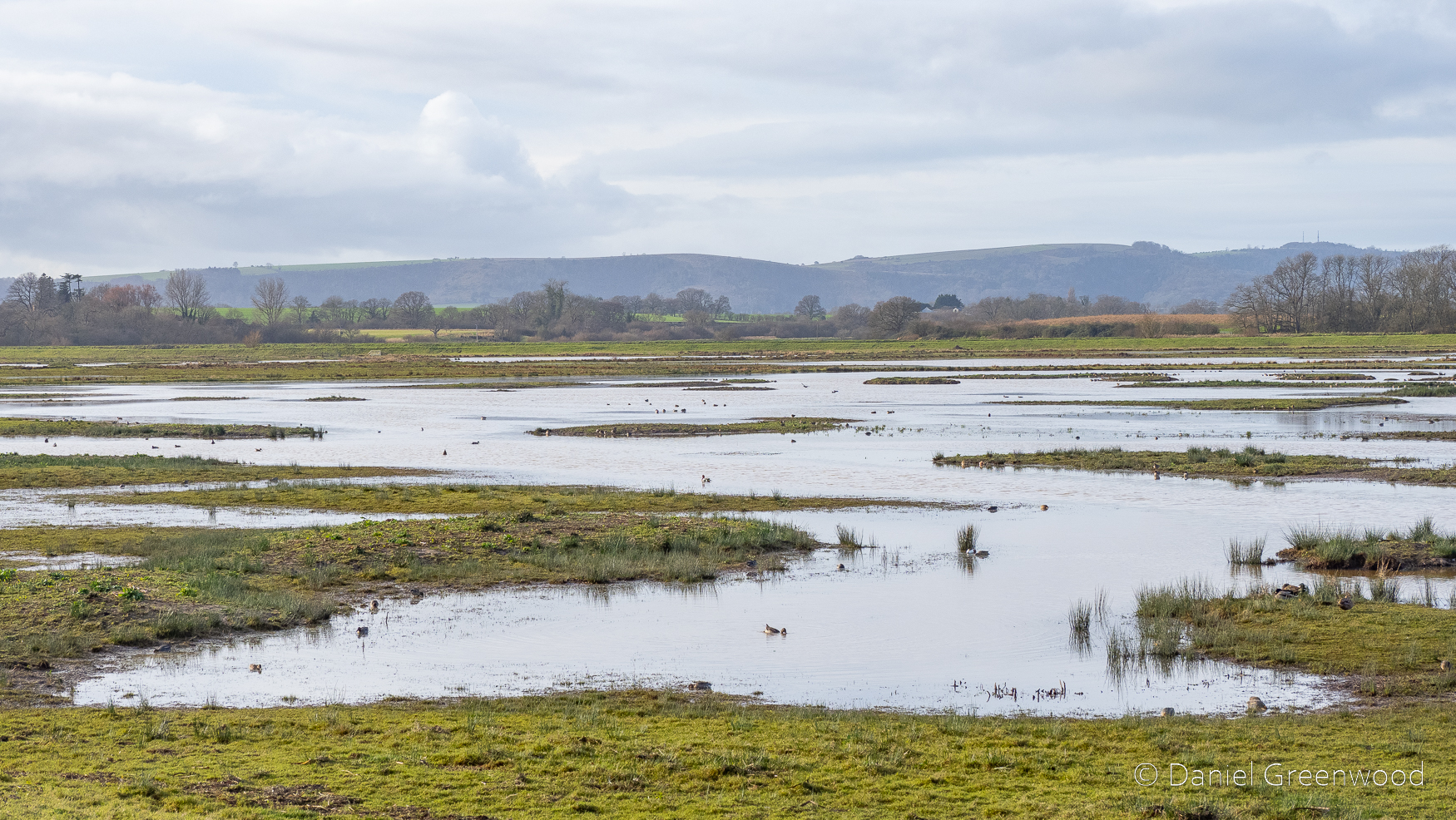
This is the landscape where the fungi lived – moorland with a view towards the Teign estuary.

The first fungal find were these eyelash cups (Scutellinia) growing on animal dung! Plenty more dungi to come.

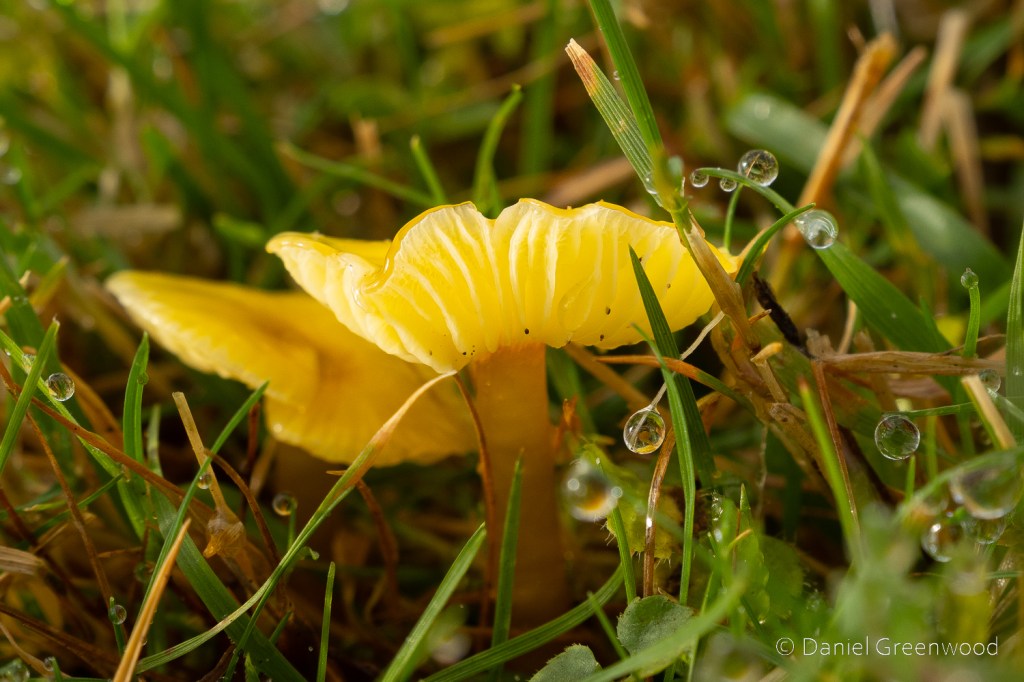
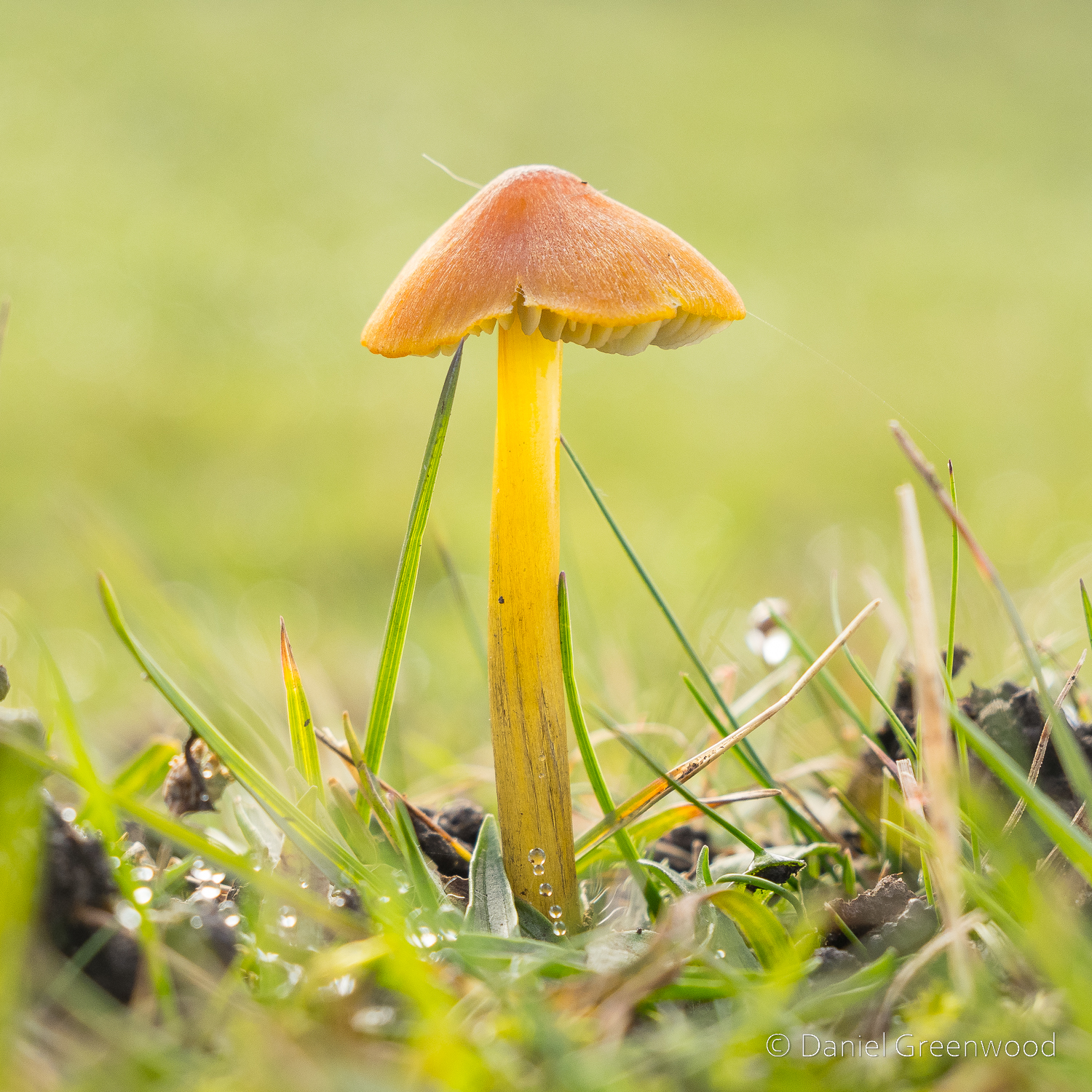
Waxcaps make up the crux of the mushrooms we found. These beauties are butter waxcaps (Hygrocybe ceracea).
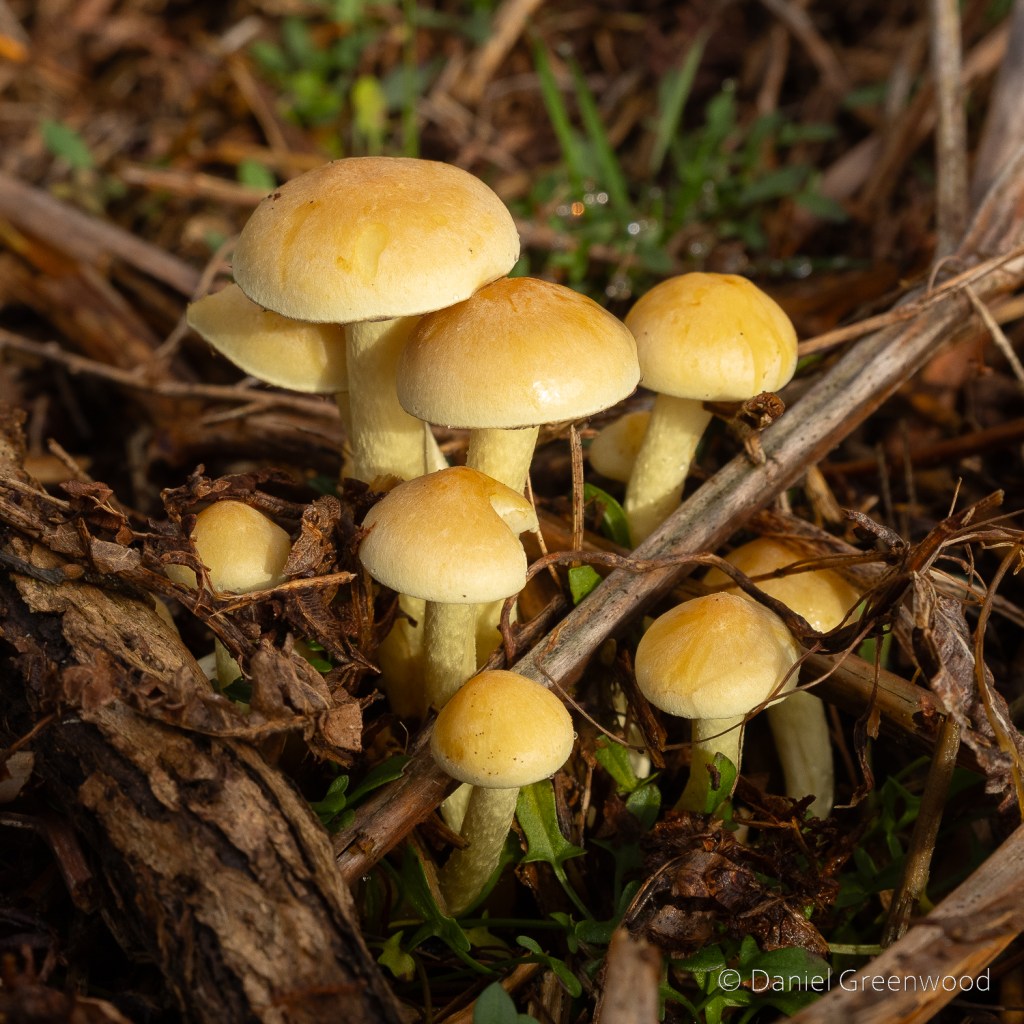
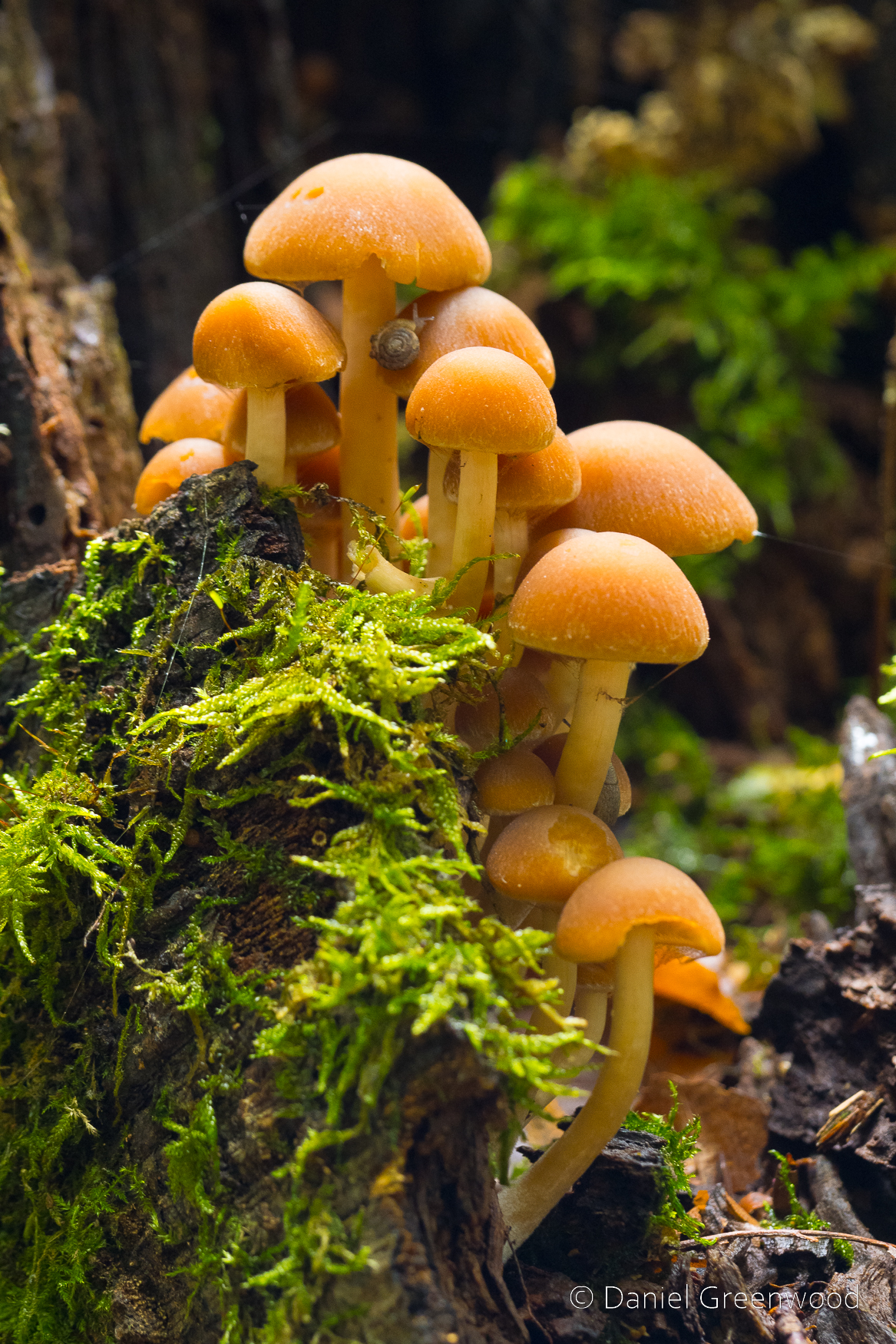
Not to be outdone, some very photogenic sulphur tuft (Hypholoma fasciculare) were found as we climbed the moor.

These mottlegills (Panaeolus) are quite common in places with grazing livestock like Dartmoor ponies.

My best guess is that this was one of the moss bells (Galerina).

These lichens are beautiful. I don’t see them very often because I have to travel west see moorland. They’re probably gritty British soldier lichens (Cladonia floerkeana).

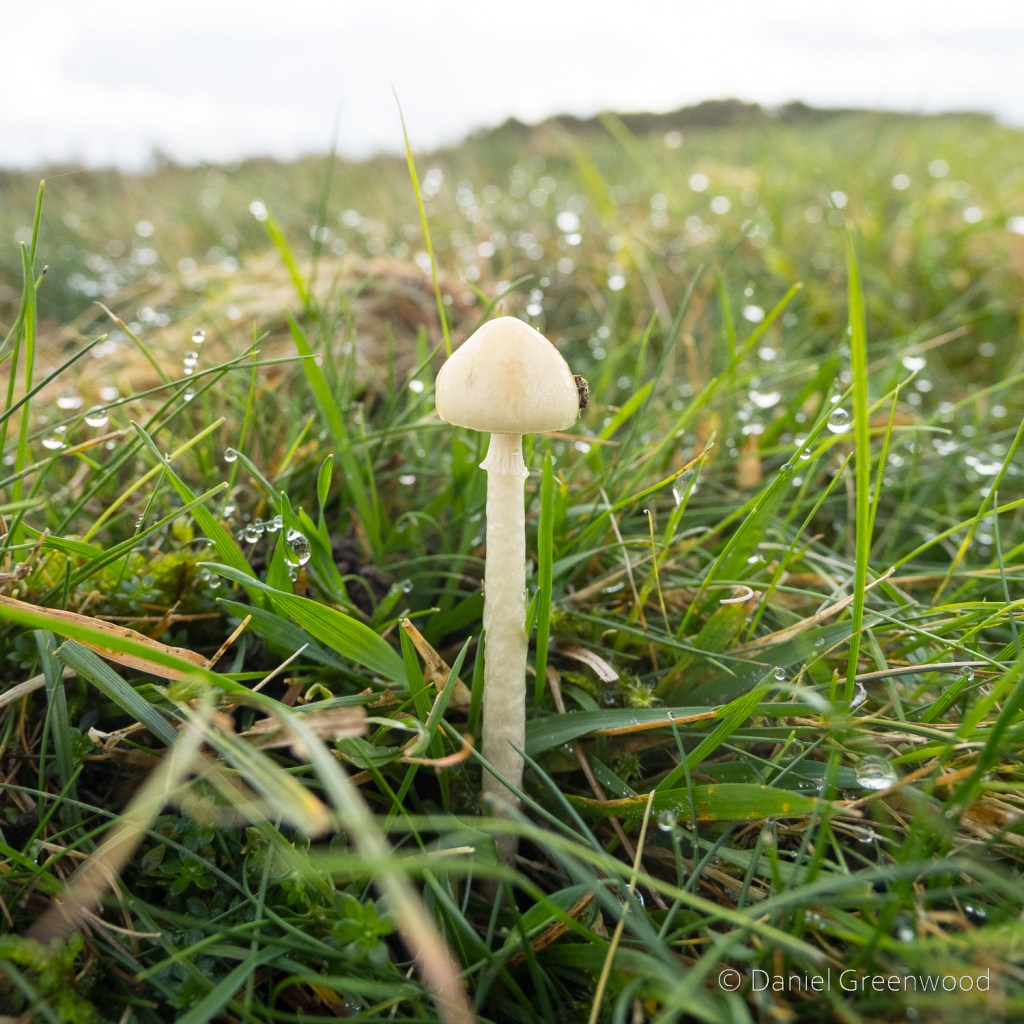
I’m unsure what this species is, but it’s a beauty.

As we approached the more remote moorland (in terms of people living out there) the waxcaps began to appear in the cropped turf. This is another example of how important grazing to some degree is, and how it mimics very ancient processes. These mushrooms would not grow in closed-canopy woodlands.
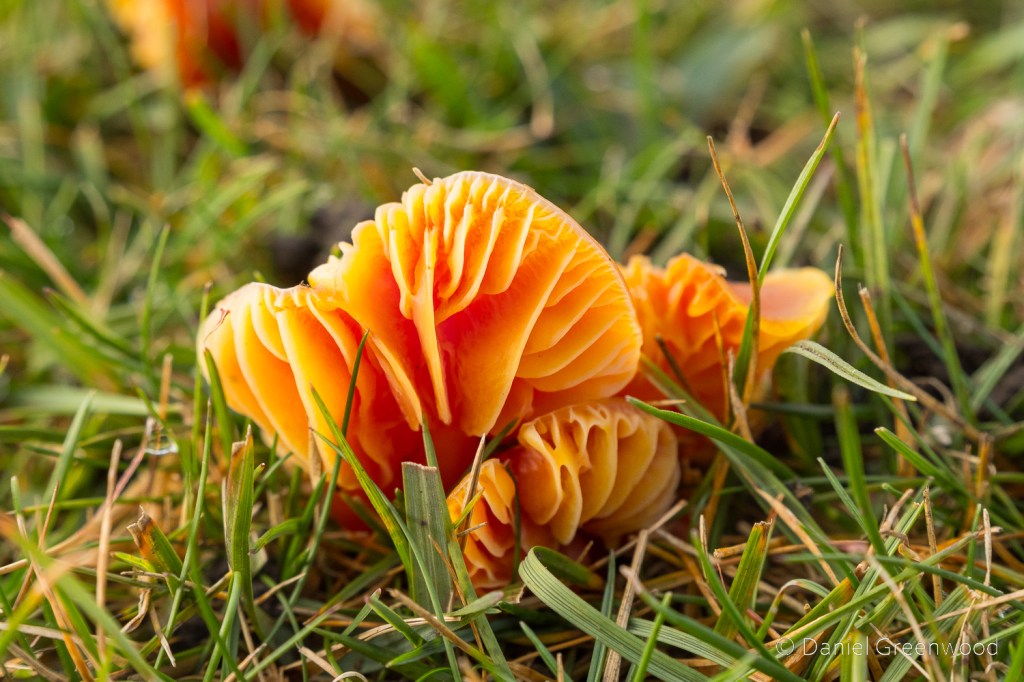
This is one of the red waxcaps, but I’m unsure if it’s honey waxcap or not. It looks too orange for scarlet waxcap.

This is one of several species under the umbrella of blackening waxcap or witches’ bonnet (Hygrocybe conica complex).

This isn’t an award winning image but it’s likely to be meadow coral (Calvulinopsis corniculata).

This is a species I only really see in the west of England or Ireland. It’s one of the dog lichens (Peltigera).

These are crimson waxcaps (Hygrocybe punicea), stunning mushrooms indeed. There were some young men passing by who stopped to admire the colours of these impressive shrooms.

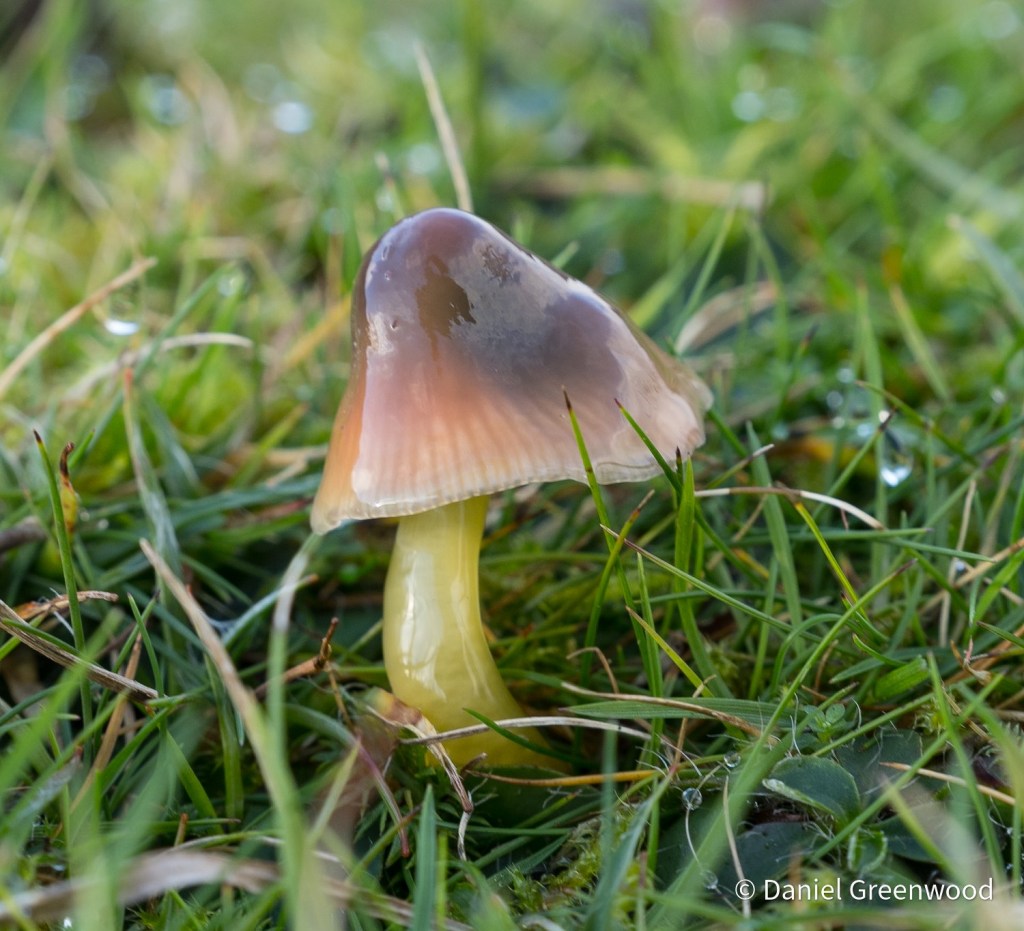
I don’t have an identification yet for this gorgeous waxcap and the closest I can guess is a colour variation of parrot waxcap (Gliophorus psittacinus).
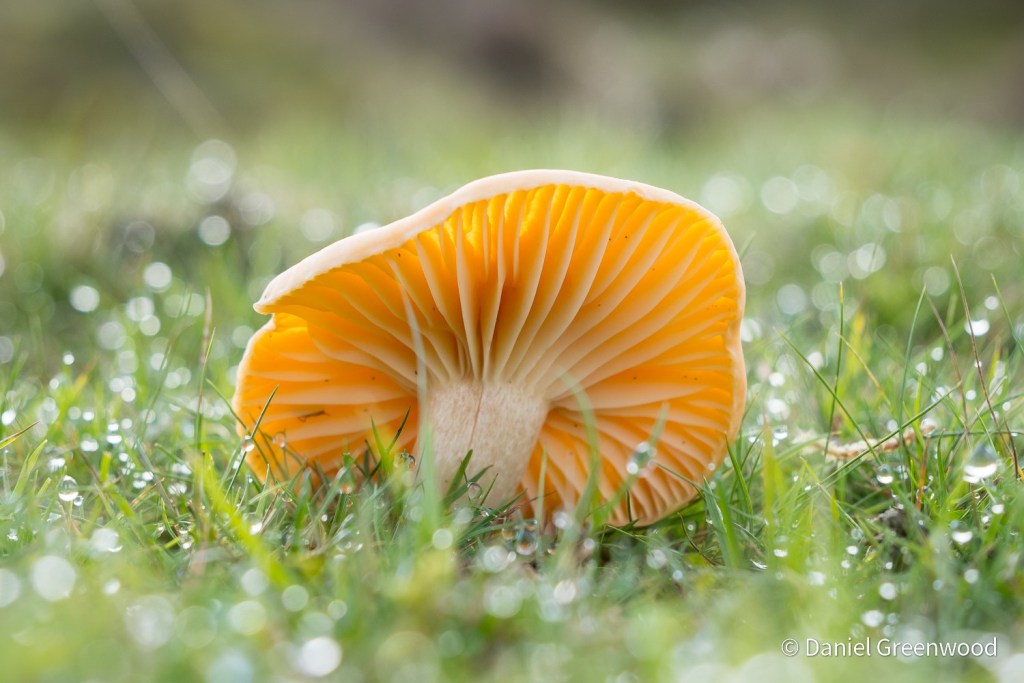
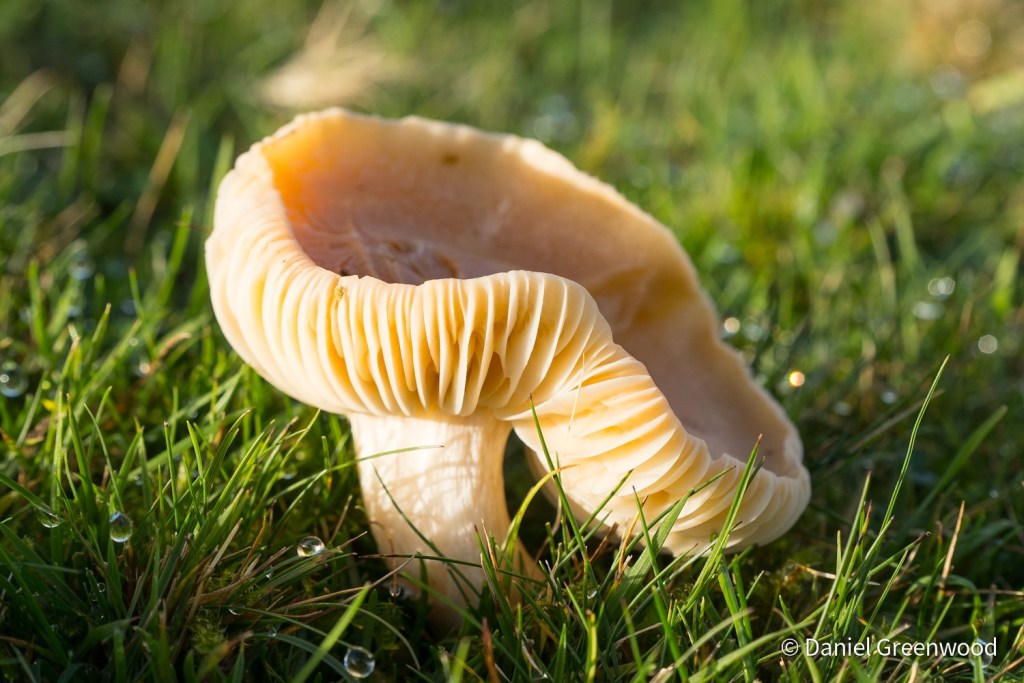
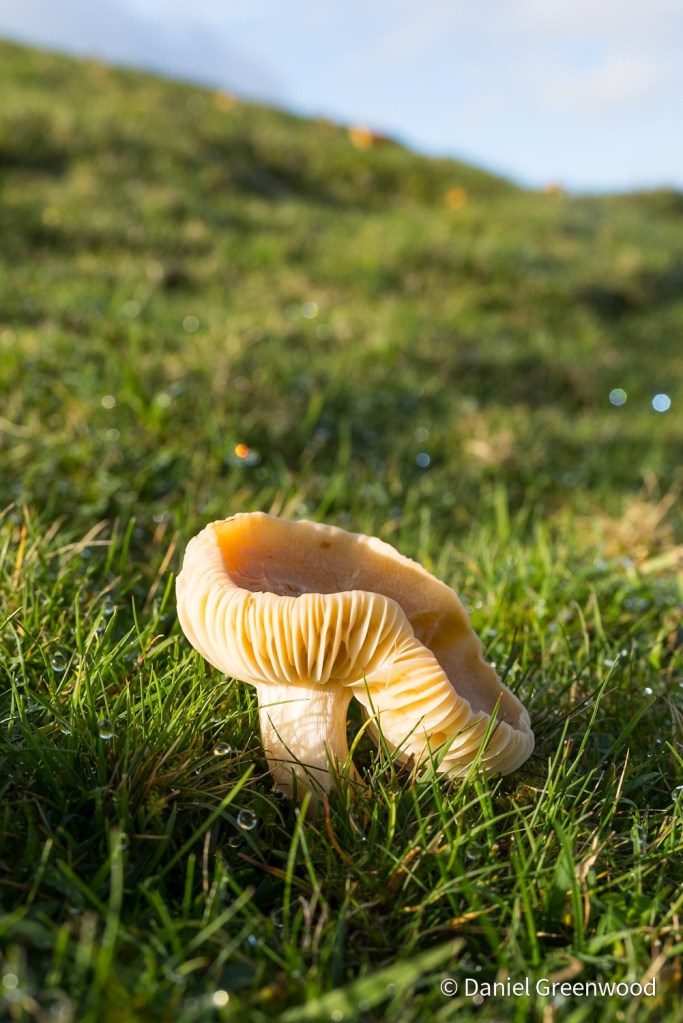
This is meadow waxcap (Hygrocybe pratensis), often fan-like, always best photographed from ground level.

I think this is golden waxcap (Hygrocybe chlorophana).
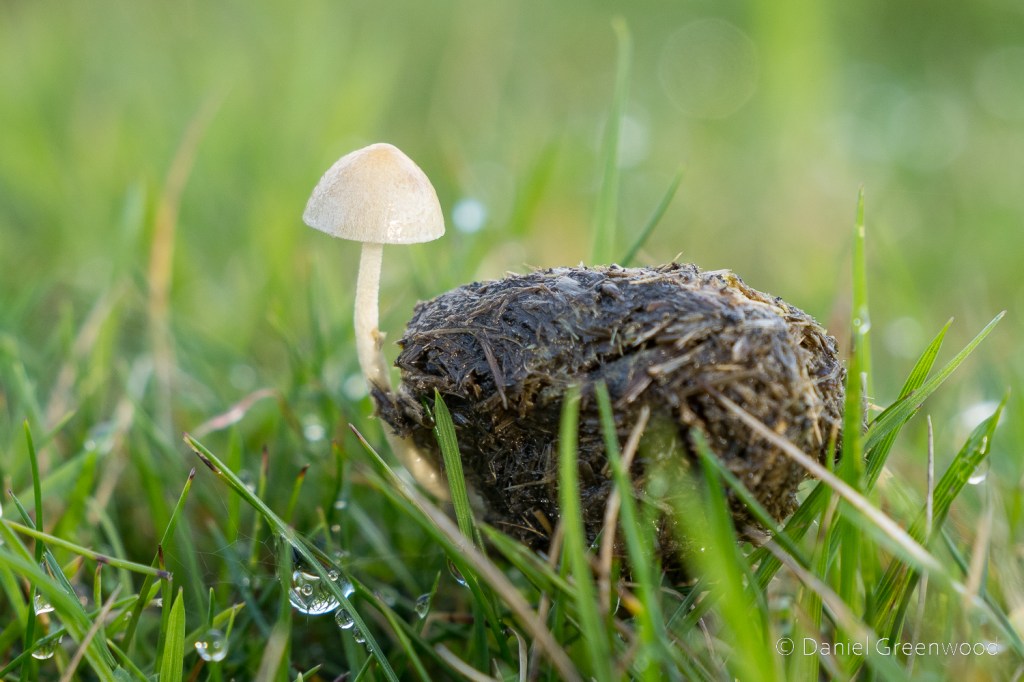
Now we’re back at the dungi. This was a very small mushroom, growing on a rabbit or hare dropping.

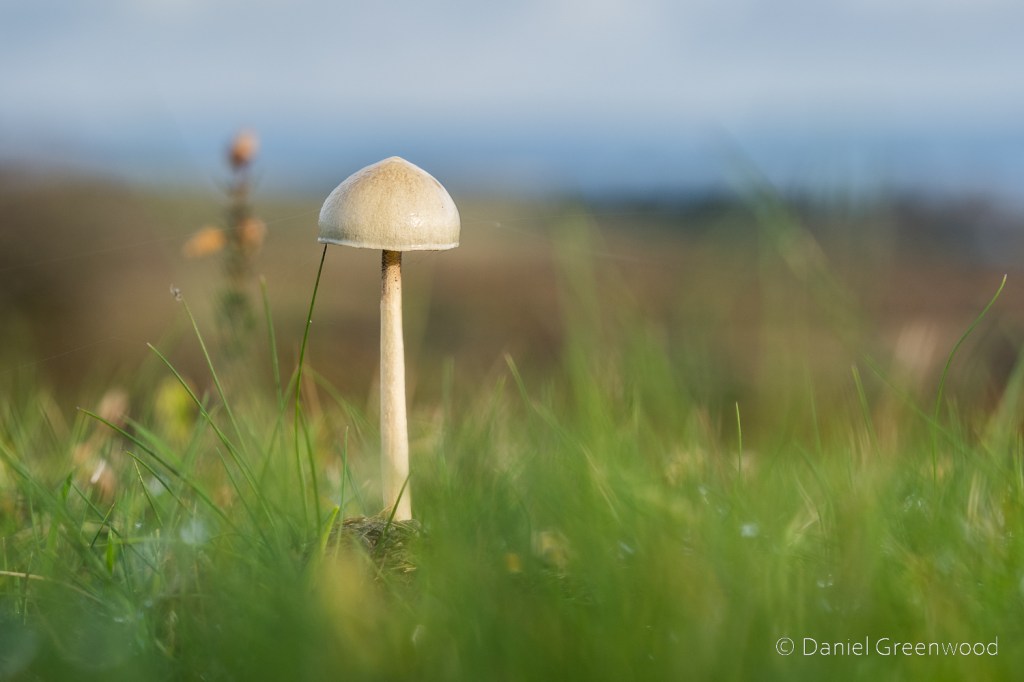
These are probably dung roundhead (Protostropharia semigloblata). Despite the animal dung, they’re beautiful!
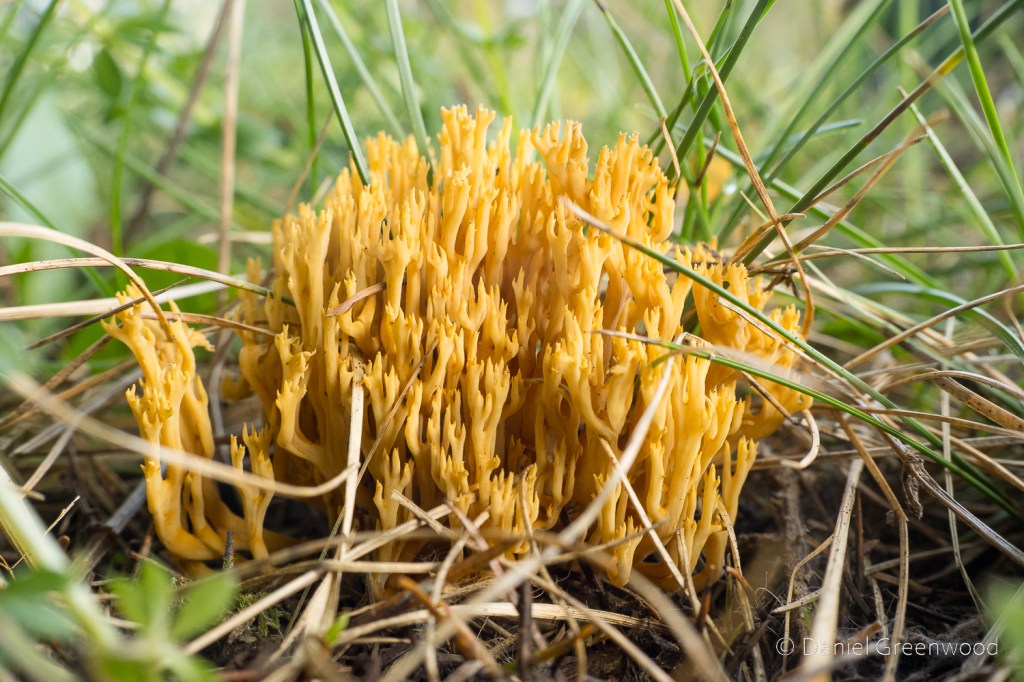
I’m not up on my corals and suchlike, but these are probably in this family.

The walk ended in a little graveyard, great places for waxcaps, by the way. That was evidenced again by this clutch of what I would say were scarlet waxcaps (Hygrocybe coccinea).

Phew!

Thanks for reading.

I write these blogs in my spare time because I want to raise awareness about the beauty and diversity of fungi. If you enjoy reading them you can support my blog here.

My 2024 in photography

Another year completed and lessons learned. Creatively I have found a balance with my equipment and the actual process of photography. I’m into my 6th year of working with Micro Four Thirds cameras and lenses, giving more space to enjoy the process of gathering photos – walking – because the equipment is light.

Cameras used include Olympus EM-5 Mark III, Oly EM-1 Mark III, Olympus TG-6 Tough compact camera, and Pixel 7a phone camera.

These photos should show the range of things I like to take pics of – not just mushrooms! 😂

With the privileges available to me – health, location, resources, freedom of expression – here are my photographic highlights of 2024:

January

I did a couple of long walks in Sussex at the beginning of the year, exploring some new locations around the South Downs. I visited St. Botolphs church for the first time, one of Sussex’s special ones among thousands of already significant churches. Last year I set up a gallery for my fledging church photographs project which can be viewed here.

February

This felt like the moment of the light returning after the dark winter months. The Downs at Amberley are my gateway to the South Downs, and walking here is always worth the gentle climb.

March

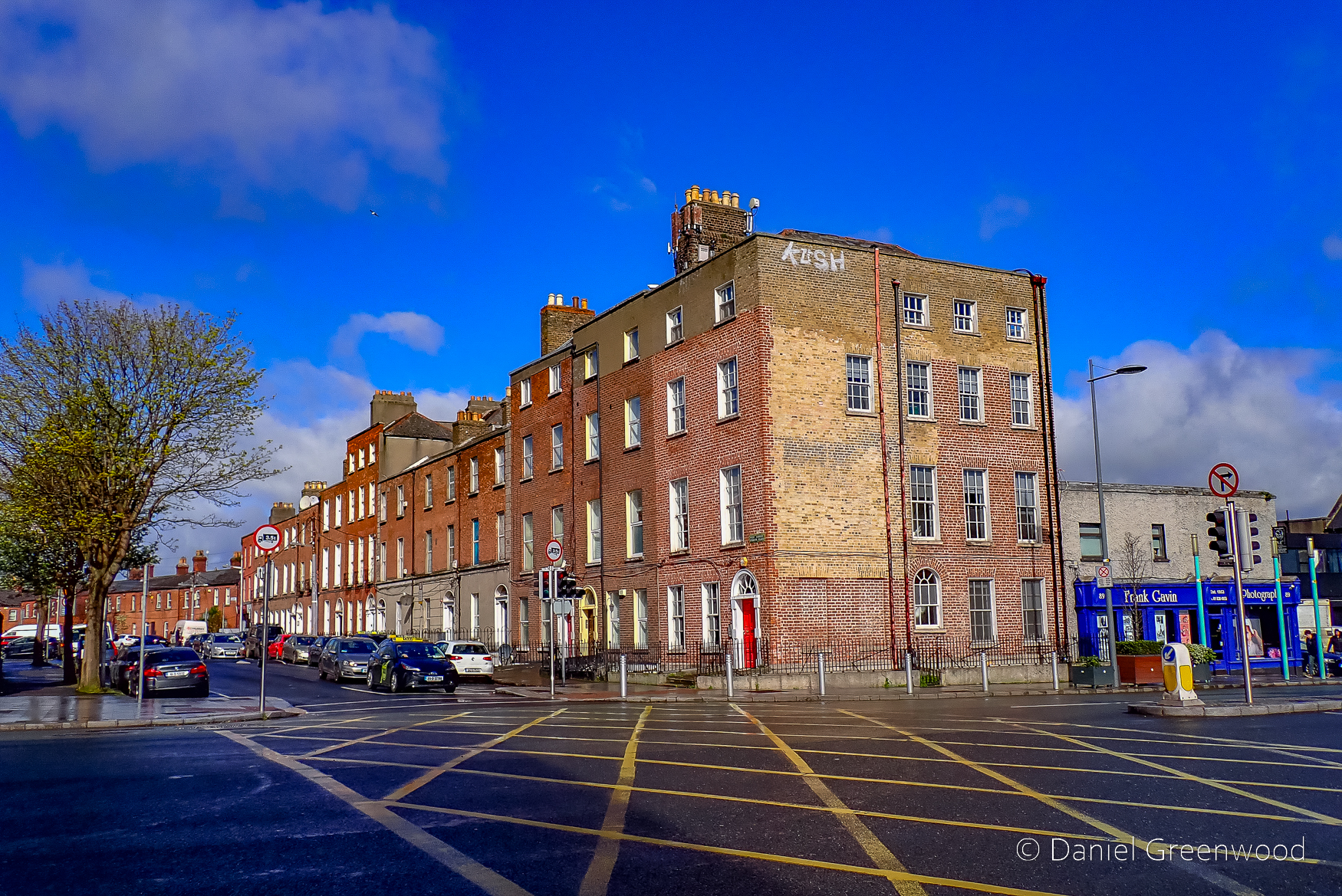
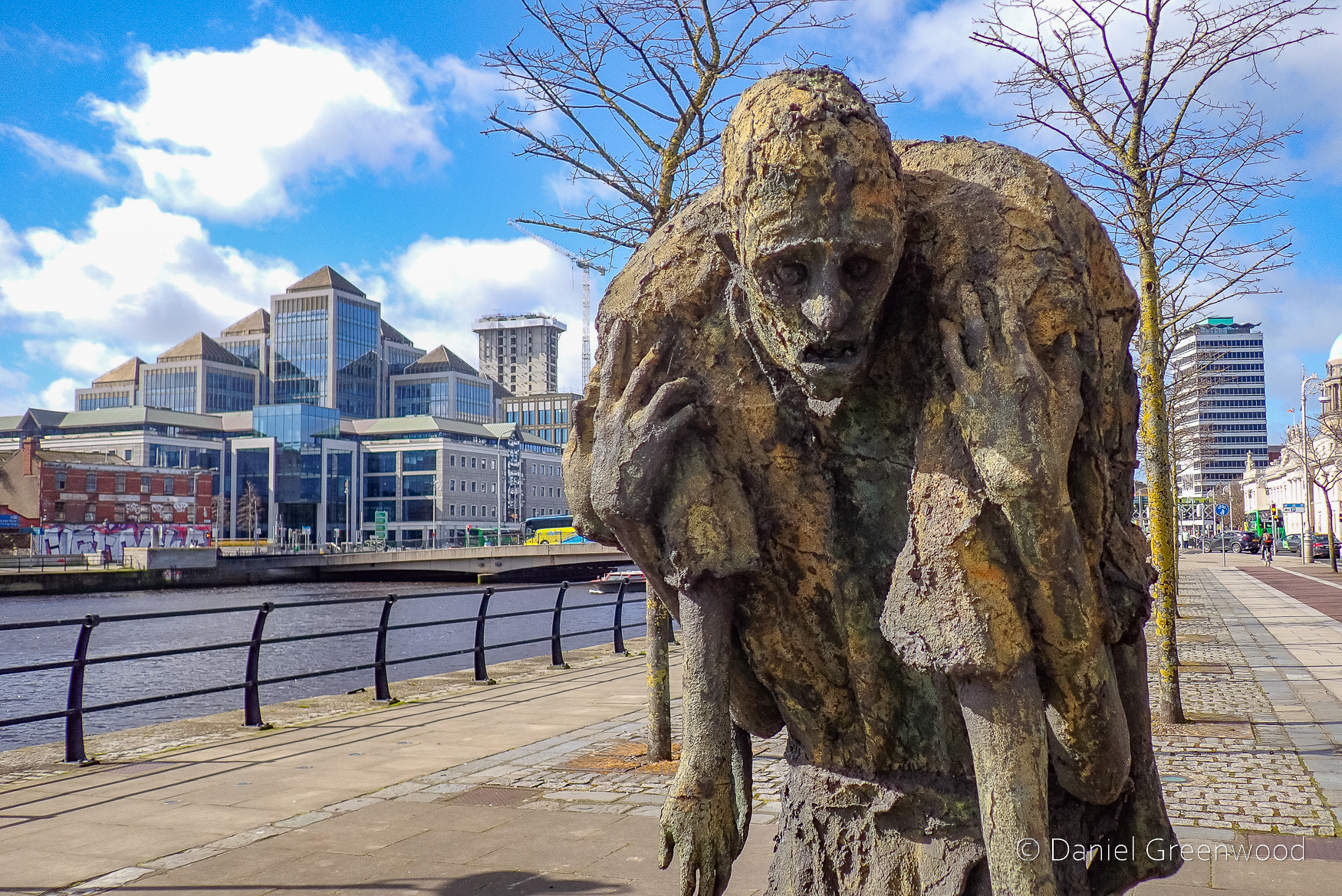
In March I visited Dublin for a weekend and took in the sights along the great river Liffey.

For a friend’s birthday we spent the weekend in York, which gave me a chance to take some compact camera pics of a few of the oak timber framed buildings. I’ve added a gallery for my ‘Oak Timbers’ project here.

April

I got married in April so there wasn’t time for much beyond the odd local walk. I was trying out my new Pixel 7a, bought because of its value and reported image quality. The camera is spectacular, I just wish it wasn’t a G**gle product. I blogged about it here.

May

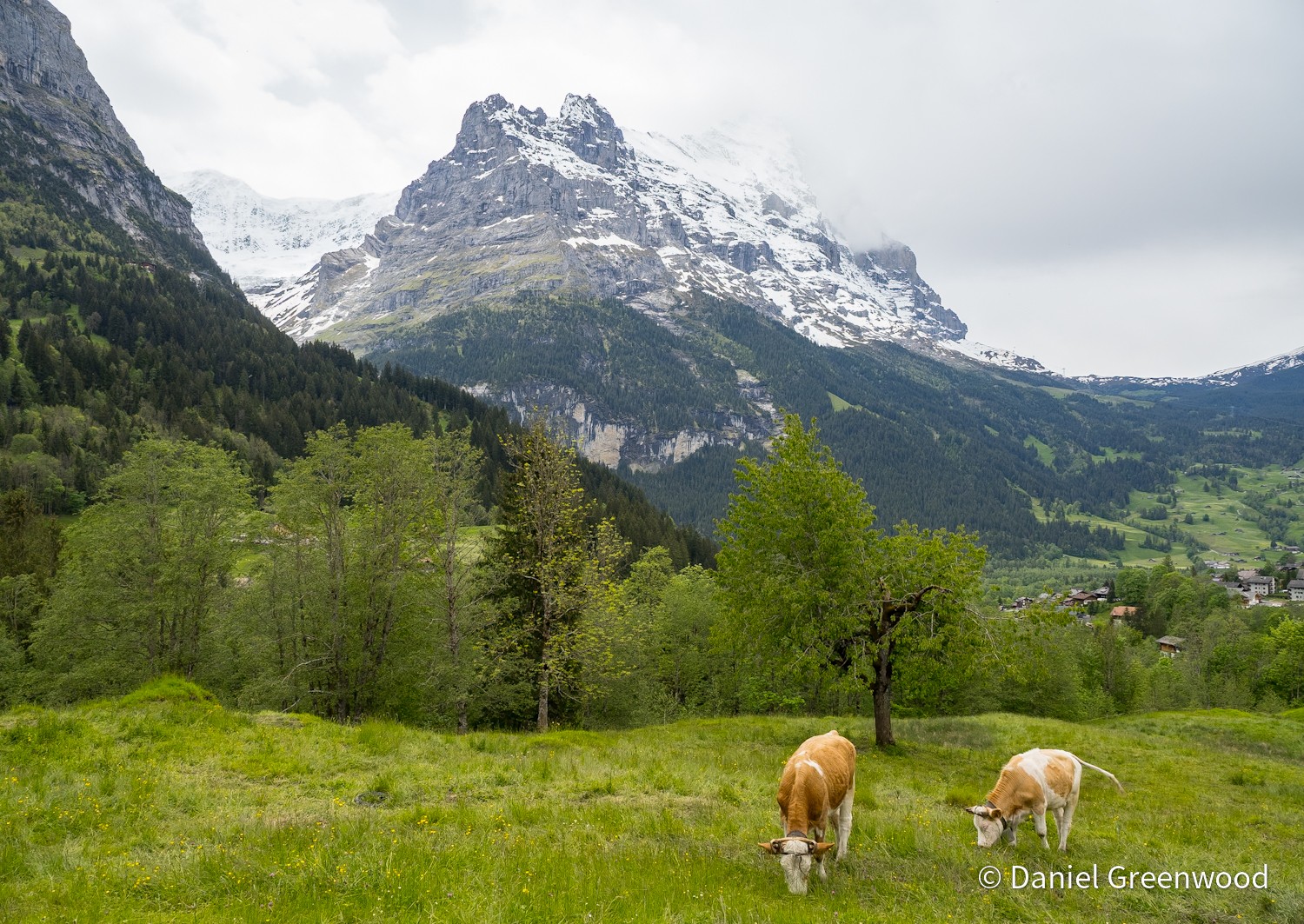
Ah, memories. In May we went on our honeymoon to Austria and Switzerland, all by train. You may be sick of reading about that! I am definitely not sick of blogging about it though!

This was one of those one-off photos experiences. Thankfully the weather held and we saw the mountains in much of their glory.

June

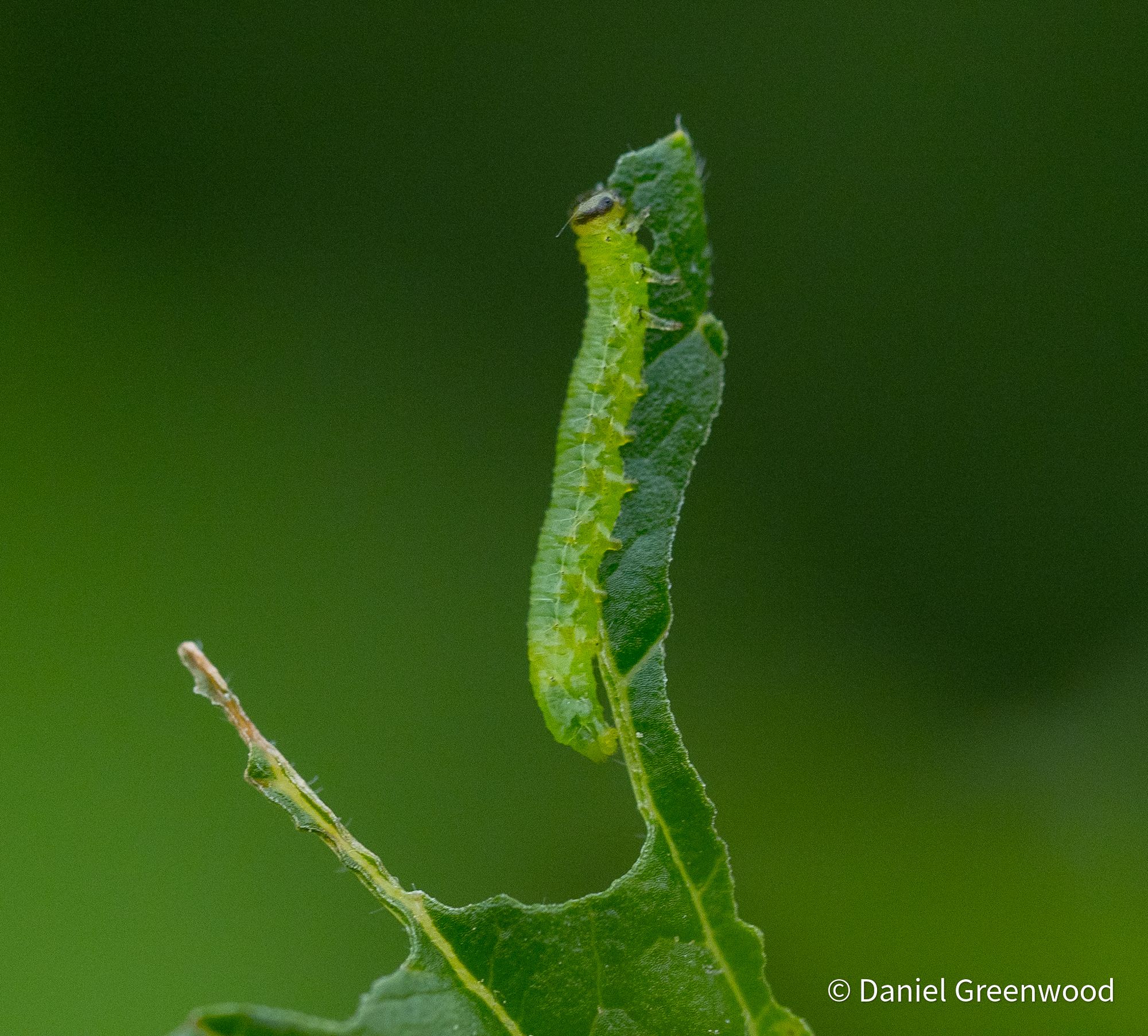
A bit of a lost month for photography because I started (yet another) new job and had to settle into a new routine. The highlight was probably these sawfly larvae which ate through some of the leaves on my gooseberry. Blog here.

July

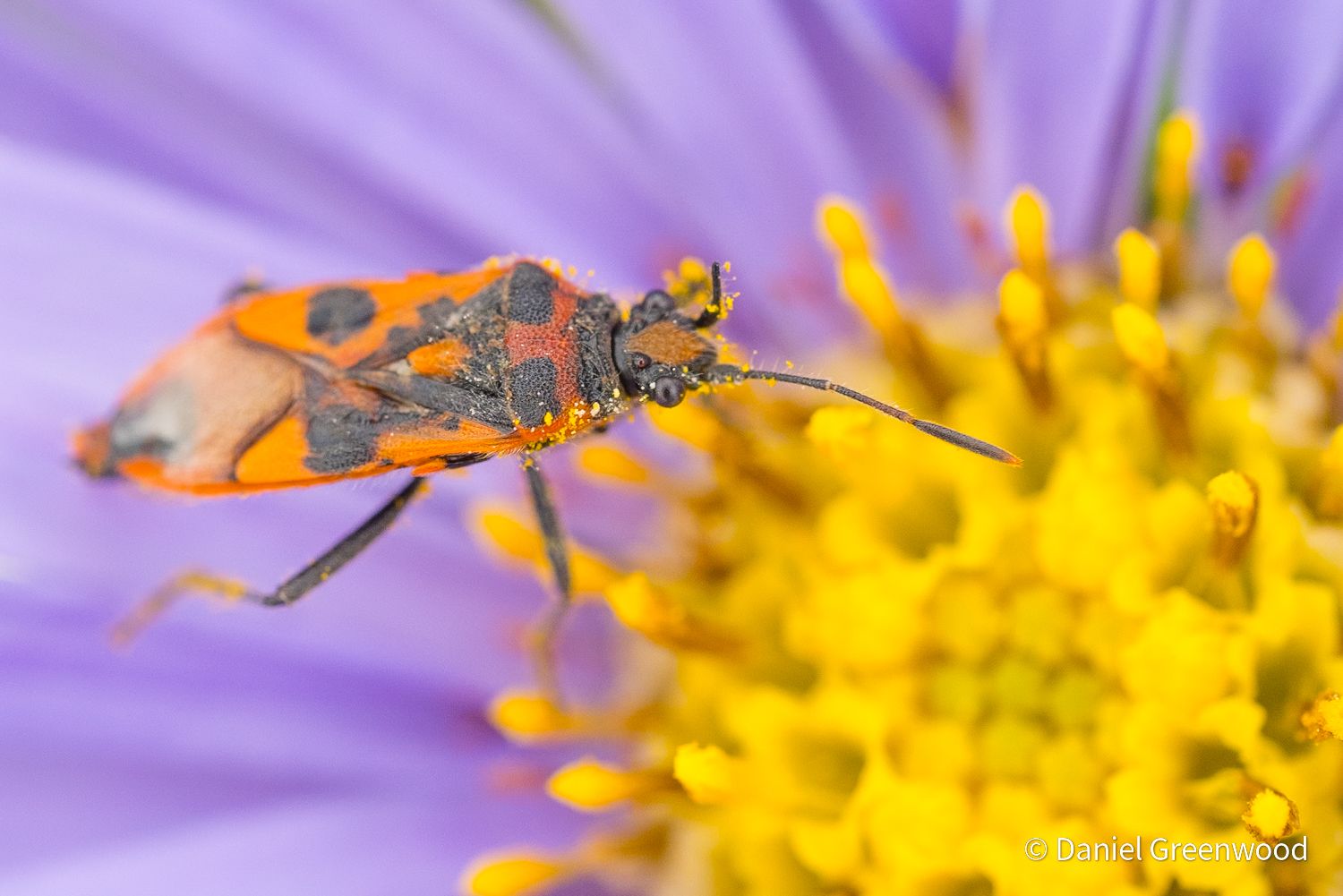
“July, July, it never seemed so strange”, as the Decemberists sang. I caught Covid and didn’t really get back to normal for 3 months afterwards (Vitamin D is very important, people). My macro work was reduced by the evil contagion but I did find some nice bugs near home to share.

August

I managed to pap some pretty fine inverts in August, with this beautiful ichneumon wasp seen in my garden. I’ve not got anywhere near enough out of my Olympus EM-1 Mark iii and 60mm macro, but this showed just how good Micro Four Thirds cameras are for macro.

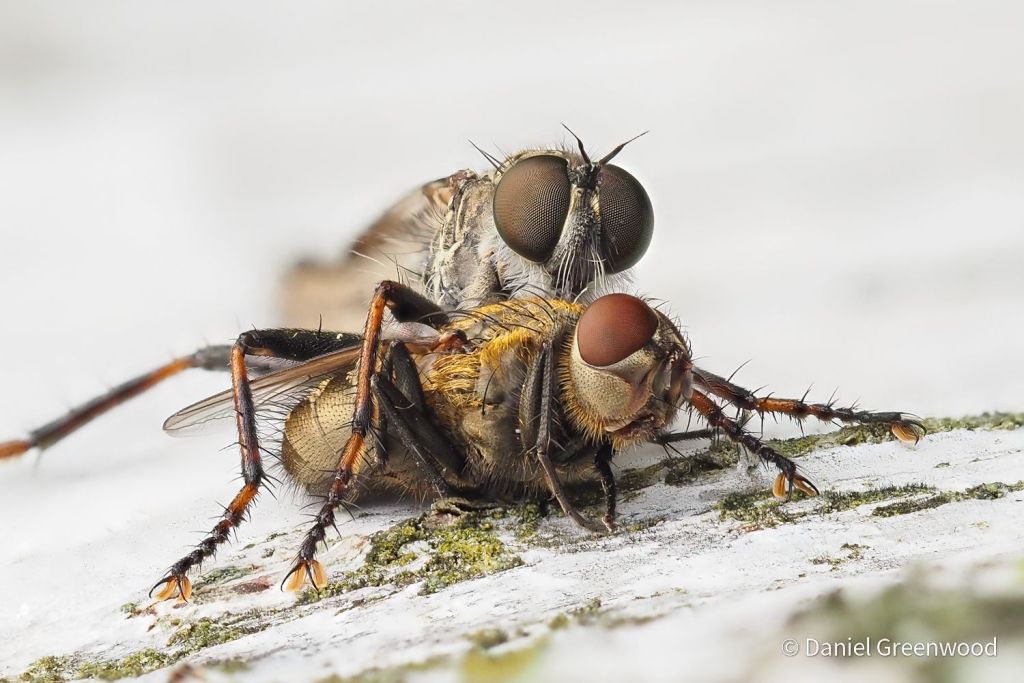
Another strongpoint for M43 cameras is that they can ‘stack’ images internally, something now copied by the big hitters. This is a composite of about 10 photos the camera has laced together to ensure the depth of field covers a deeper focus range. It means more of the, rather gruesome, subject can be seen in detail.

September

In September I made my first ever visit to the iconic sea stacks at Downpatrick Head on the North Mayo Coast in Ireland. Mayo has an international dark skies designation so I was able to mess around with the Milky Way. But for the astro photo I haven’t processed these images yet so here are a couple of phone photos.

October

As I have lamented on my Fungi Friday blog, 2024 was not the best mushroom season. But there are always things to find out there. I found this knocked over fly agaric, which was in perfect condition, ready for its portrait.

November

Autumn is a time for Dartmoor for me and my wife, and despite colds we managed some walks onto the moors in the National Park. We found an amazing array of waxcaps, like the crimsons above, which you can see in full on Fungi Friday.

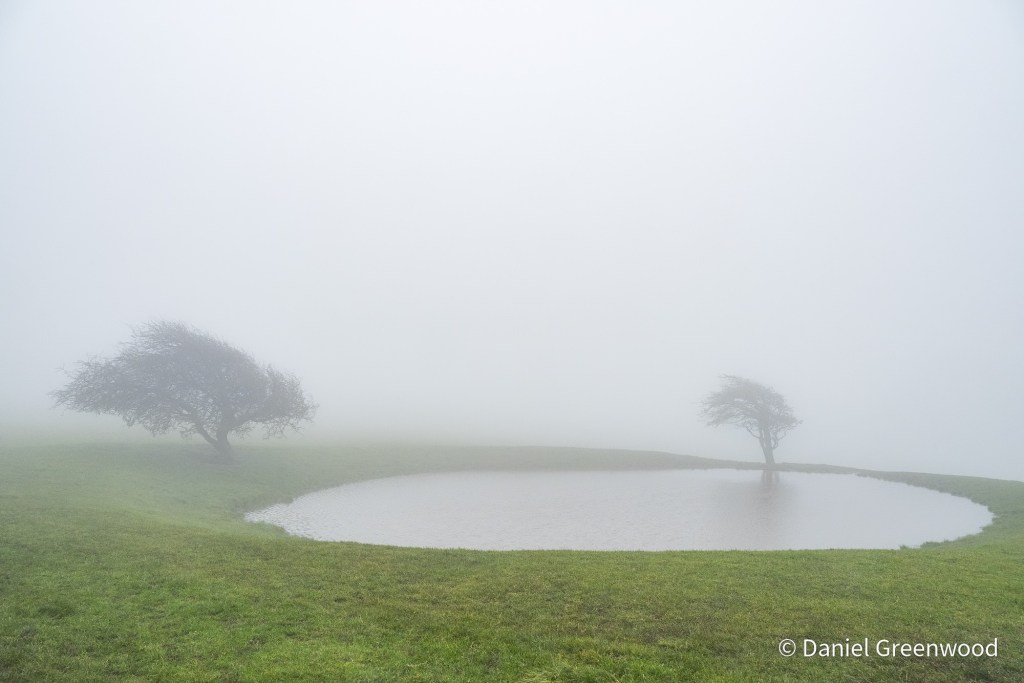
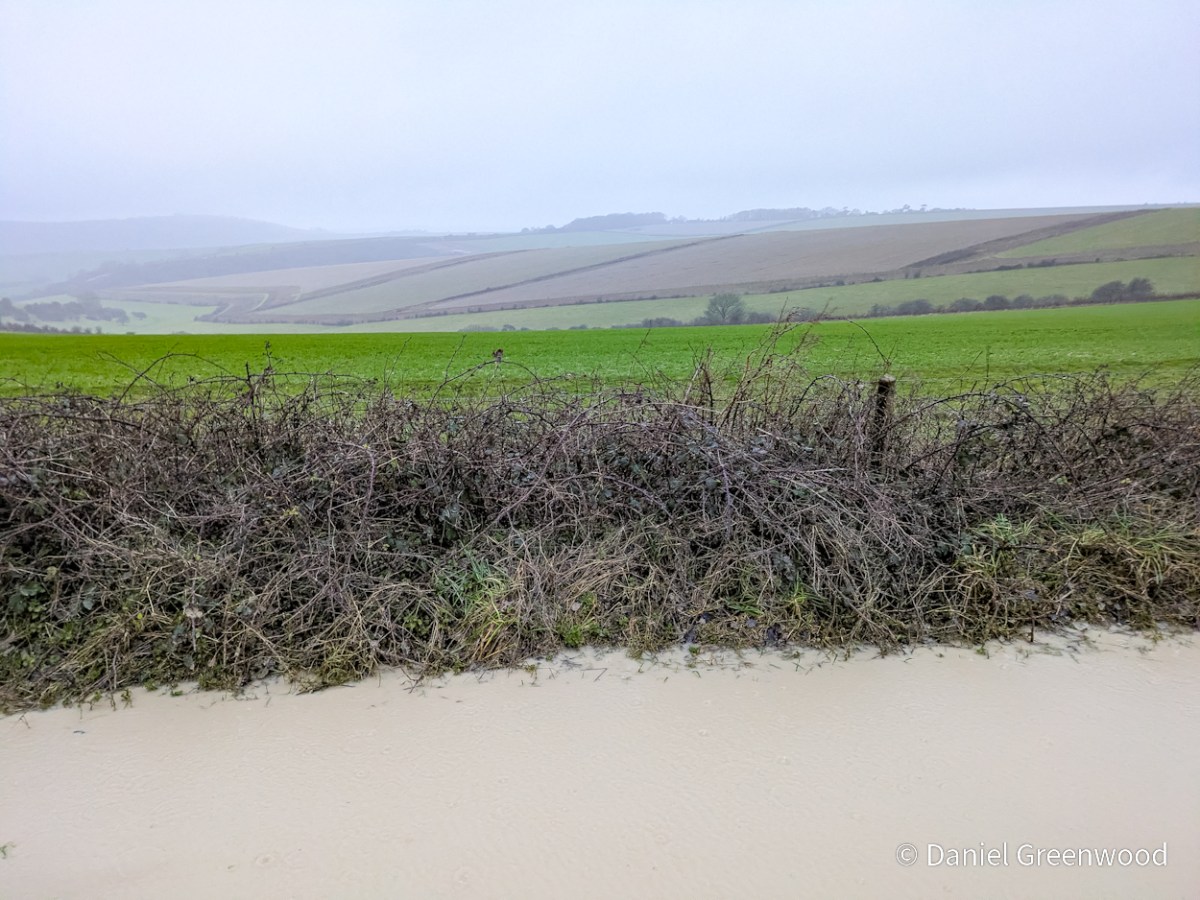
On the last day of November I hiked with my South Downs amigo from Ditchling into the mist. This is the much-photographed Ditchling dew pond, shrouded in mist.

December

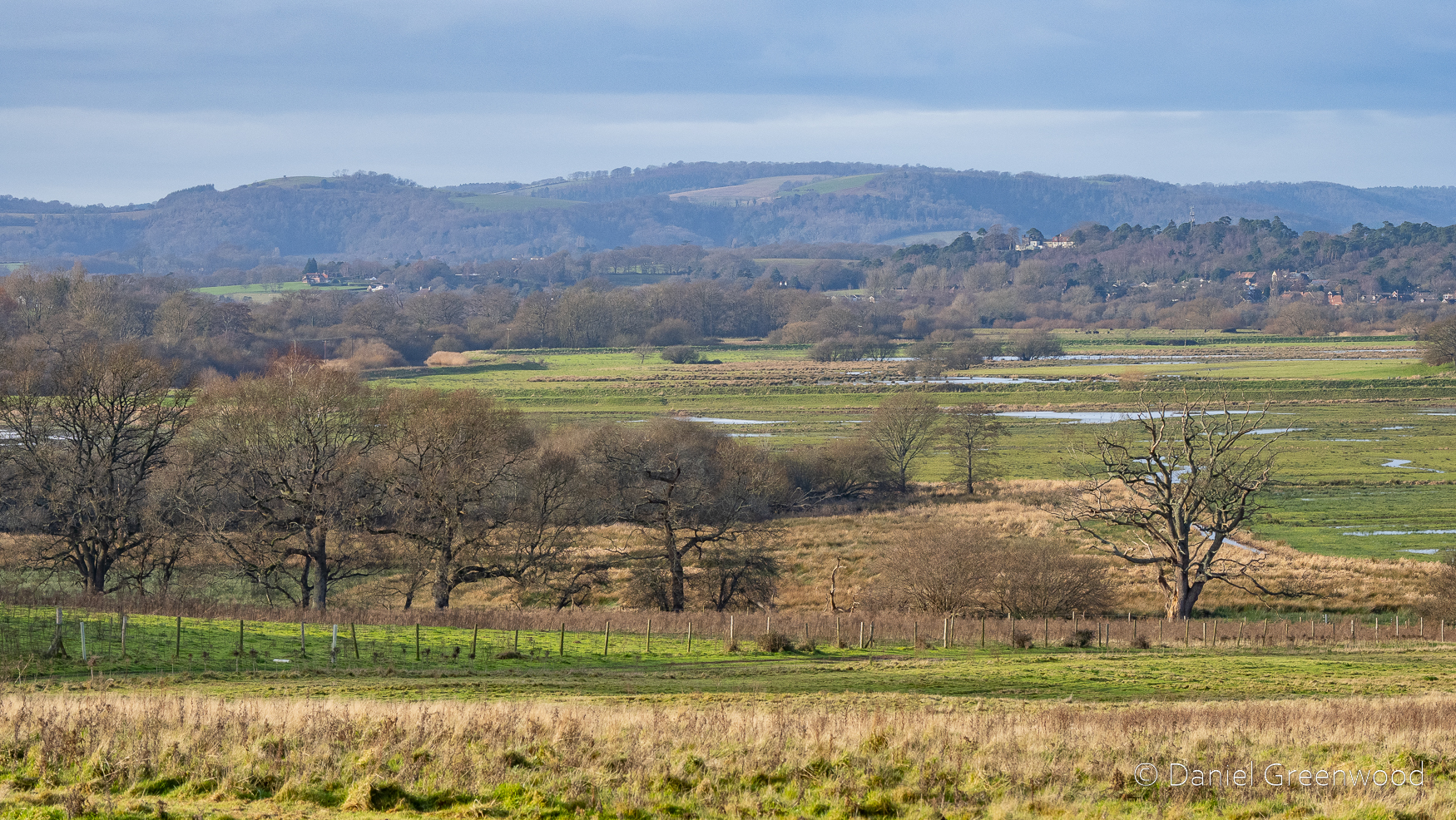
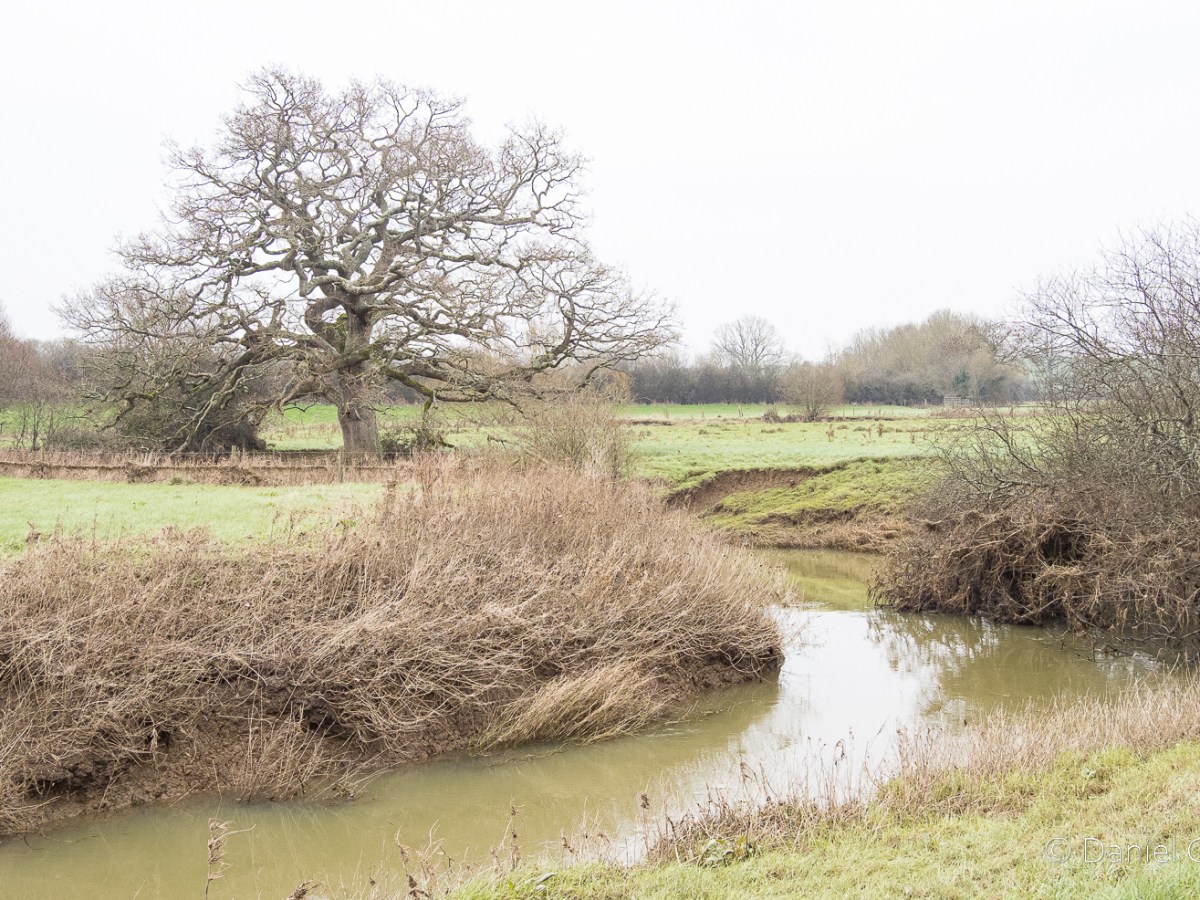
The weather in December was very grey and damp, and all the Christmas demands gave me only one meaningful walk – to Pulborough Brooks in West Sussex.

Thanks for all your support in 2024 and wishing you peace and happiness in 2025.

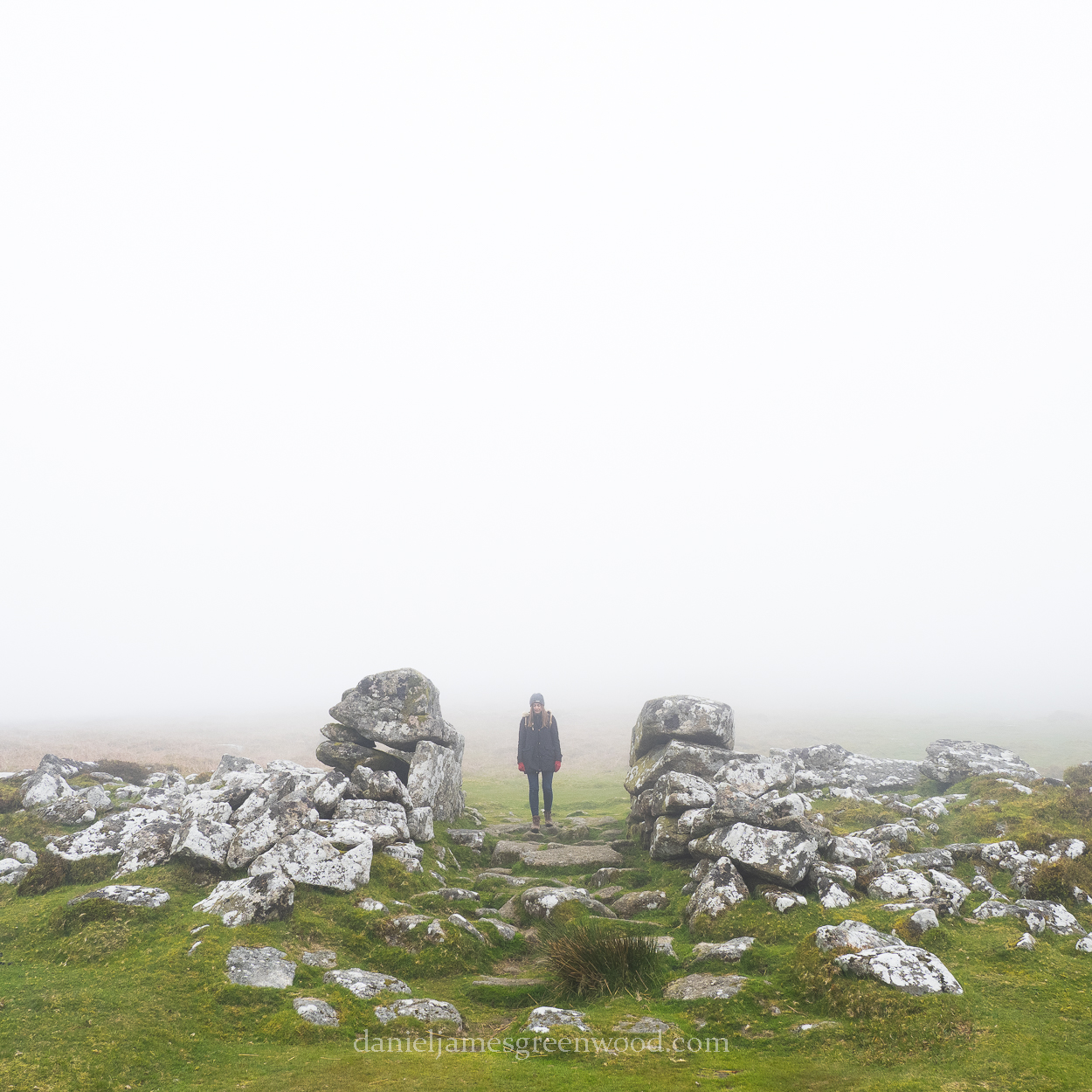
Dartmoor: finding Grimspound in the mist 🛖

Dartmoor, Devon, May 2023

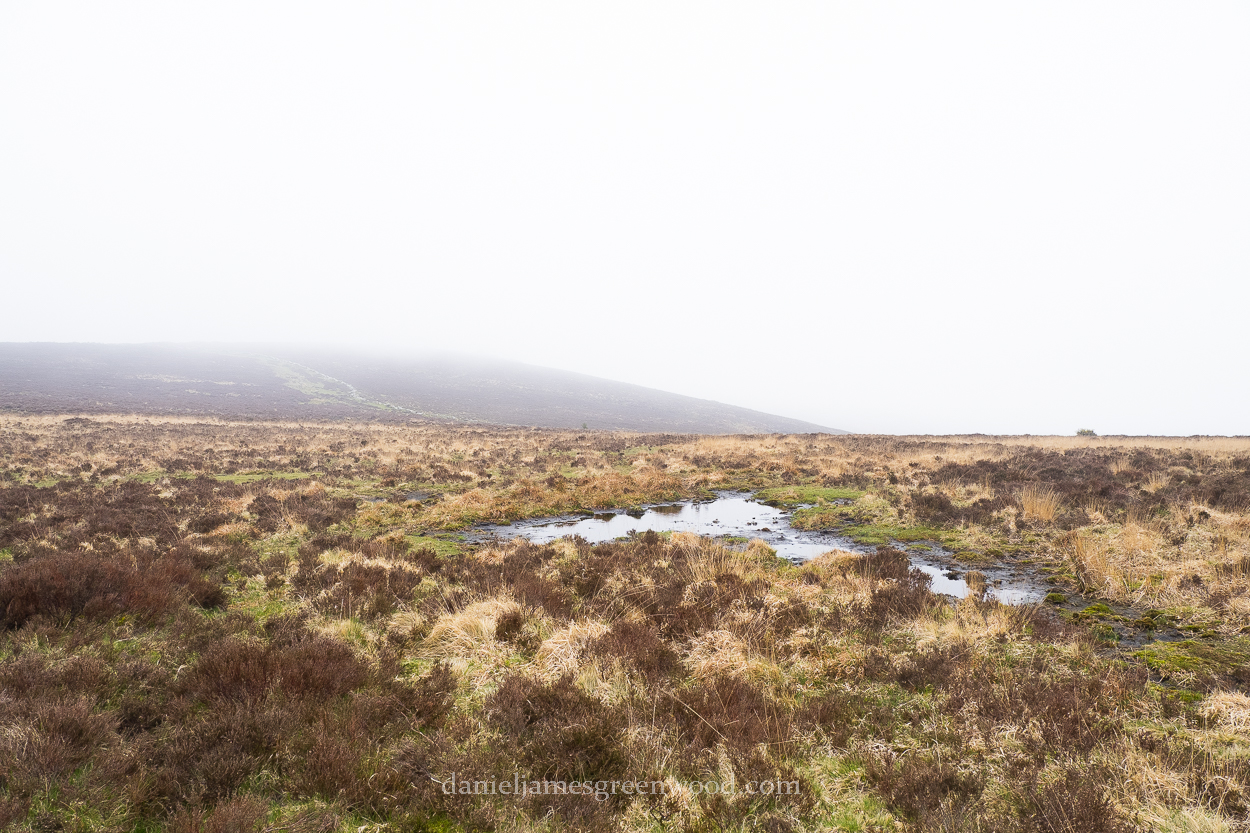
It was a misty morning high on Dartmoor. We began walking from Bennett’s Cross, passing Birch Tor and heading through wintry heather moorland. The white tails of wheatears burst across the paths as we disturbed them. Their journeys here are some of the longest undertaken by any migratory animal on the planet.

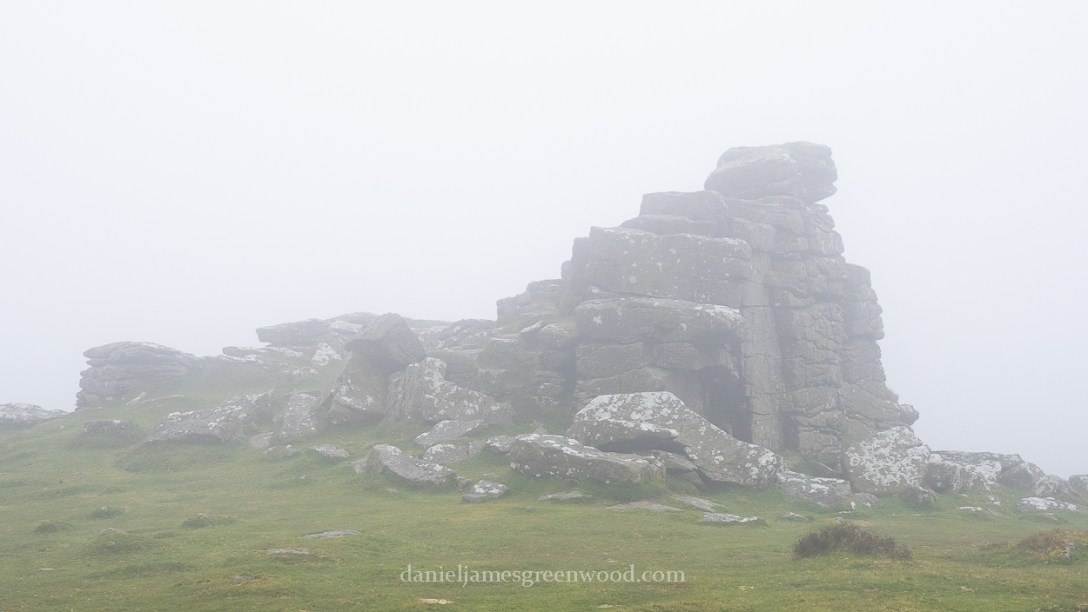
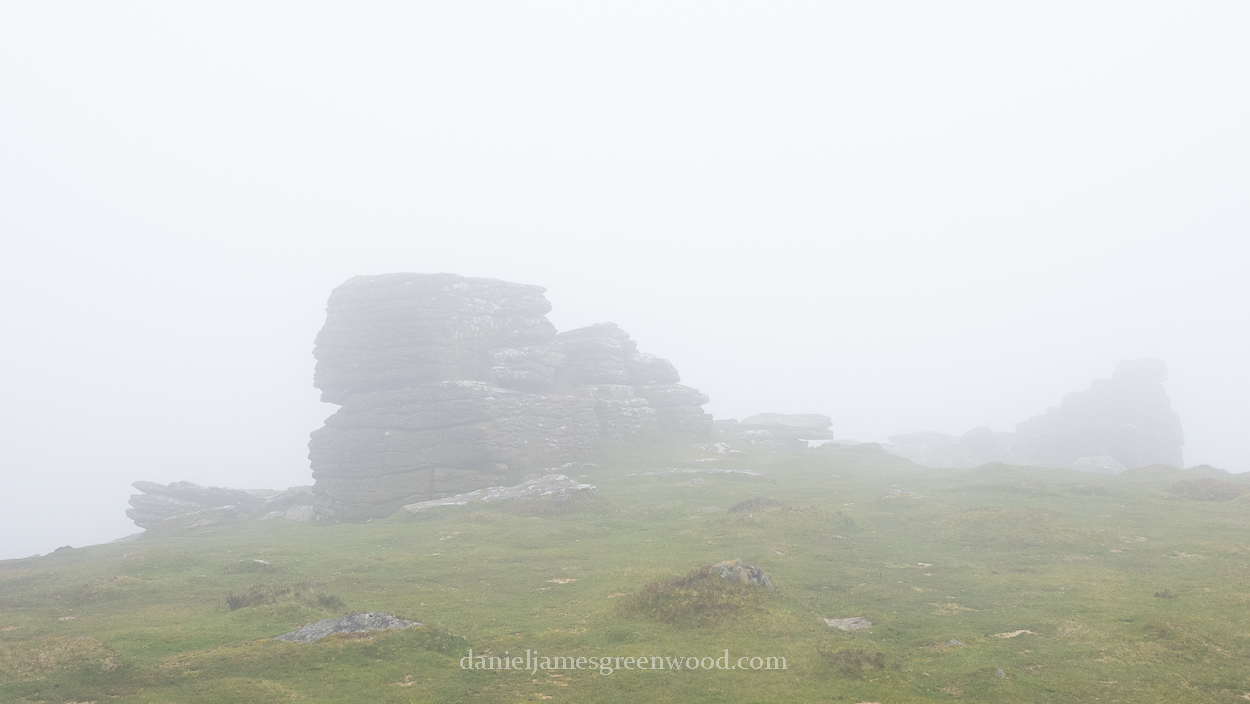
After a short plateau in the moor we crossed a quiet road and ascended Hookney Tor. Here the mist came in from the north, sucking up the wider moor, and the long stone wall that framed views in that direction. We switched east to pick up the unsigned Two Moors Way and walked between the rocky eruptions of Hookney Tor.

As we continued down on the Two Moors Way, a grey bird cut across the edge of the visible moor, some 25ft ahead, before the land was hidden by the mist. It was a male cuckoo, another African bird looking for a mate to breed in this harsh terrain.

The cuckoo slid away into the mist and we headed south for our prize – the 3000 year old settlement of Grimspound.

Approaching, only the collapsed stones of the outer enclosure were visible, painted white by the crust lichens that thrive on Dartmoor stone. In the distance we could hear the voices of other visitors to this ancient place. A family were visiting, posing for photos inside one of the small enclosures that had been rebuilt.

Entering into the ring of fallen stones, the smaller huts came into view. This wall will have been intended to protect the inhabitants and their livestock from wild animals like wolves (now long extinct) and any attacks from other people.

Thanks for reading.

Dartmoor

Night photography: an Orionid meteor in Dartmoor’s dark skies ☄️

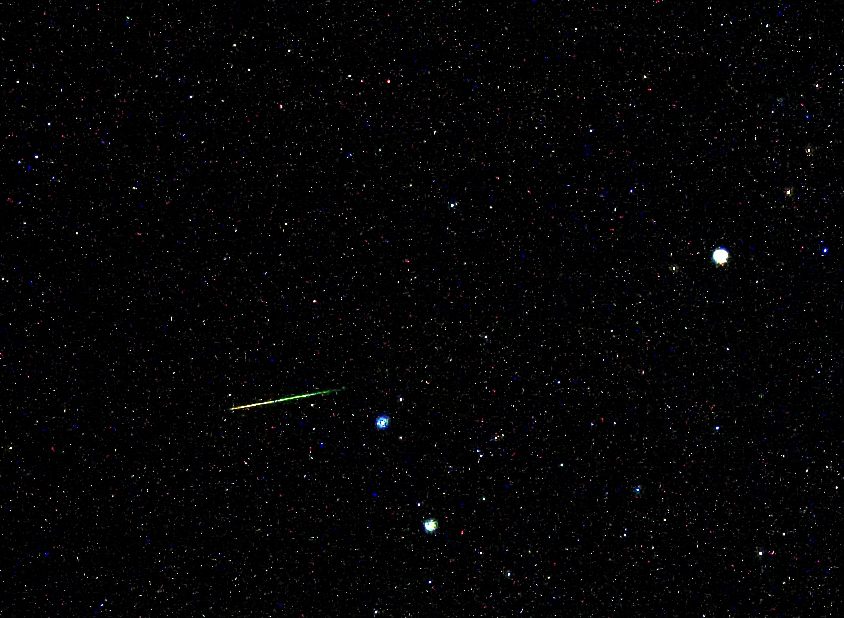
On Sunday 30th October I was admiring Jupiter in Dartmoor’s pitch black skies when what looked like a satellite skimmed above the tower of the illuminated church (header photo only viewable in browser).

At first thought it was a satellite due to its steady glide, but then satellites don’t usually burn up in the atmosphere, which is what this object did.

Orionid meteor by Brocken Inaglory via Wikimedia Commons

It later turned out that the trail of light was part of the Orionid meteor shower. Above is a photo kindly donated to Wikimedia Commons to illustrate it.

This Orionid was seen outside the peak for this shower. It was even more lucky because the weather surrounding those nights had been pretty much torrential rain and the night sky had been tucked away behind cloud.

The Orionids aren’t anything to do with the constellation of Orion directly, but are so named because they appear nearby and their naming helps people (like me) to locate them. These meteors are actually fragments of Hally’s Comet, which you may have heard of.

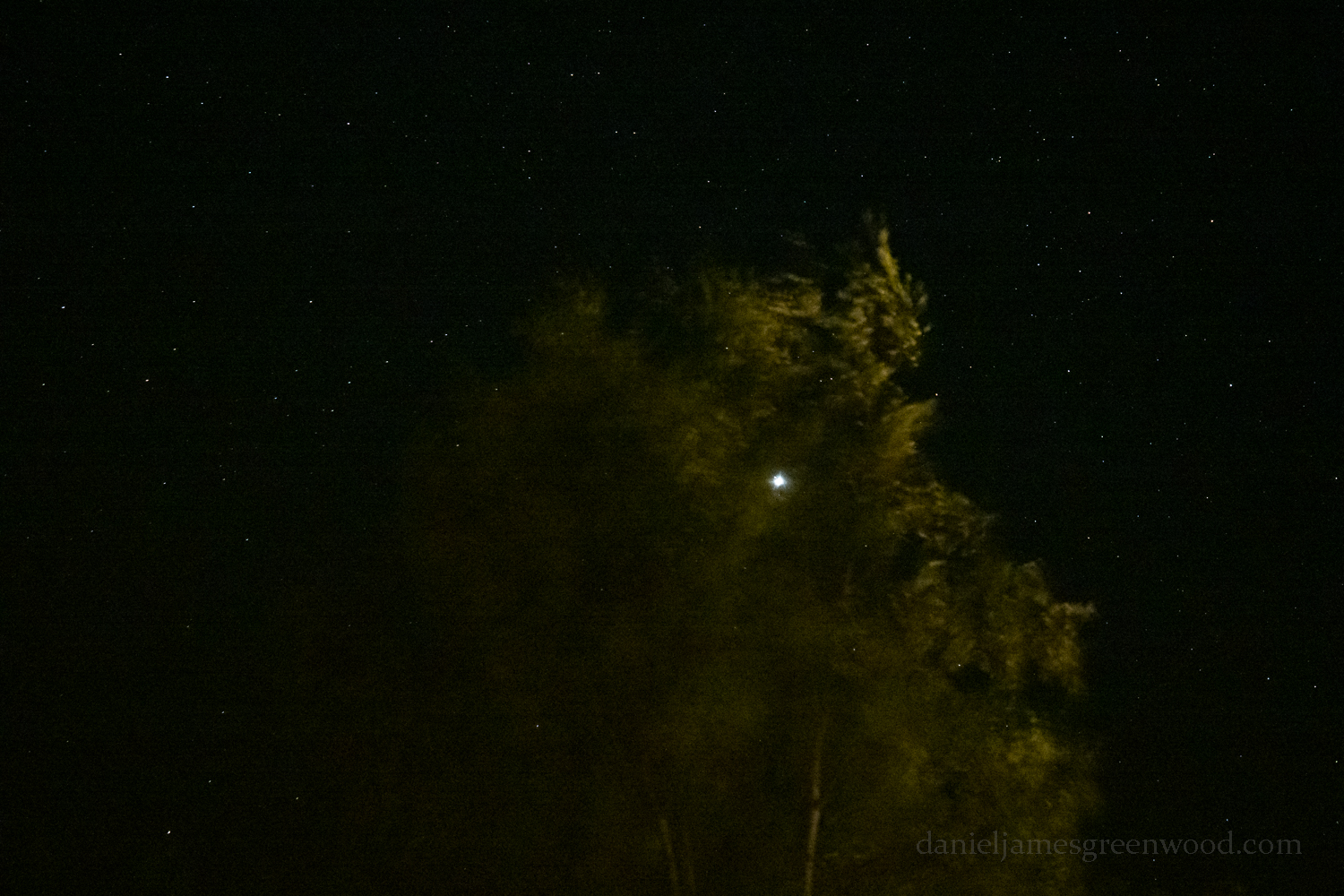
Jupiter seen through the leaves of a silver birch tree (Dartmoor, November 2022)

This is a great time to observe the night sky and take in all the night has to offer. Redwings are arriving in their thousands and can be heard even over the most built-up and light-polluted parts of the UK. While the Orionid meteor flashed across the sky, redwings were covering the night sky in their own, invisible but audible way.

A few nights later the skies cleared after days of heavy rain and high winds. This gave a good chance to look at Orion, which was fixed perfectly from the back of where I was staying at the time of viewing:

The constellation of Orion: Dartmoor November 2022

Cropping a bit closer you can see the fierce glow of the Orion Nebula in the bottom right-hand part of the image:

Also prominent and not too far from Orion was the Pleiades:

The Pleiades: Dartmoor, November 2022

I’m using a new camera (Olympus EM-1 MIII) at the moment which has the ability to autofocus stars with a special feature. It didn’t actually work that well for me, though I was taking these photos handheld and may have had the settings wrong. It was a spur of the moment kind of thing, as much as my astrophotography attempts are to be honest!

I was really drawn to this large bright star to the left-hand side(!) of Orion. I need to be better at noting the locations of stars in relation to other constellations. Looking at Stellarium I think it’s either Mars or Betelgeuse.

Thanks for gazing.

Further reading: Night photography

Latest from the Blog

November 2025: beware of pity

I’ve had a burst of American visitors in recent days (to my blog, not my house). So thanks for visiting, y’all, and sorry about the year you’ve had. You may have noticed I’ve slipped to monthly posts on here. Between April and October I posted blogs every Monday without pause, which is a tricky task…